AB 386: School facilities: Efficiency and Sustainability Projects for Schools Pilot Program.
- Session Year: 2017-2018
- House: Assembly
- Latest Version Date: 2018-07-03
Existing law expresses legislative findings and declarations that it is in the interest of the state and its residents for the state to aid school districts in finding cost-effective methods of conserving energy in school buildings maintained by school districts.
The California Clean Energy Jobs Act, an initiative approved by the voters as Proposition 39 at the November 6, 2012, statewide general election, provided for the transfer of $550,000,000 annually from the General Fund to the Clean Energy Job Creation Fund for 5 fiscal years beginning with the 201314 fiscal year. Moneys in the Job Creation Fund are available, upon appropriation by the Legislature, for the purposes of funding eligible projects that create jobs in the state by improving energy efficiency and expanding clean energy generation. Existing law provides provided for the allocation of available moneys to local educational agencies and community college districts.
This bill would appropriate $20,000,000 establish the Efficiency and Sustainability Projects for Schools Pilot Program to provide funding, upon appropriation, to the Department of Education for allocation to school districts and community college districts for a pilot program for energy efficiency and water conservation projects. The bill would specify that a school district or community college district is eligible for those moneys only if it has applied for or received funding pursuant to the California Clean Energy Jobs Act and does certain things in connection with those energy efficiency projects, including, partners with an institution of higher education to provide energy efficiency project-based learning opportunities for pupils enrolled in kindergarten or any of grades 1 to 12, inclusive, or for students enrolled at a community college; leverages private investment; and utilizes state-approved apprenticeship programs and ensures access to those programs for qualified veterans who were honorably discharged.
(2)Moneys appropriated by this bill would be applied toward the minimum funding requirements for school districts and community college districts imposed by Section 8 of Article XVI of the California Constitution.(1)Existing law expresses legislative findings and declarations that it is in the interest of the state and its residents for the state to aid school districts in finding cost-effective methods of conserving energy in school buildings maintained by school districts.
The California Clean Energy Jobs Act, an initiative approved by the voters as Proposition 39 at the November 6, 2012, statewide general election, provided for the transfer of $550,000,000 annually from the General Fund to the Clean Energy Job Creation Fund for 5 fiscal years beginning with the 201314 fiscal year. Moneys in the Job Creation Fund are available, upon appropriation by the Legislature, for the purposes of funding eligible projects that create jobs in the state by improving energy efficiency and expanding clean energy generation. Existing law provides for the allocation of available moneys to local educational agencies and community college districts.
This bill would appropriate $20,000,000 to the Department of Education for allocation to school districts and community college districts for a pilot program for energy efficiency and water conservation projects. The bill would specify that a school district or community college district is eligible for those moneys only if it has received funding pursuant to the California Clean Energy Jobs Act and does certain things in connection with those energy efficiency projects, including, partners with an institution of higher education to provide energy efficiency project-based learning opportunities for pupils enrolled in kindergarten or any of grades 1 to 12, inclusive, or for students enrolled at a community college; leverages private investment; and utilizes state-approved apprenticeship programs and ensures access to those programs for qualified veterans who were honorably discharged.
(2)Moneys appropriated by this bill would be applied toward the minimum funding requirements for school districts and community college districts imposed by Section 8 of Article XVI of the California Constitution.
Existing law requires the State Department of Social Services, subject to the availability of funding, to contract with qualified nonprofit legal services organizations to provide legal services to unaccompanied, undocumented minors, as defined, who are transferred to the care and custody of the federal Office of Refugee Resettlement and who are present in this state. Existing law requires that the contracts meet certain conditions.This bill would, subject to the availability of funding in the annual Budget Act, require the department to either contract with a qualified nonprofit legal services organization, or contract with a nonprofit agency to administer funding to nonprofit legal services organization subcontractors, to provide legal services to deported veterans, as defined. The bill would also authorize the department to include postconviction relief services to deported veterans in the contract. The bill would require the entities providing services pursuant to these contracts to meet specified conditions. The bill would establish the Veteran Reentry Assistance Fund, a continuously appropriated fund, to accept donations from private foundations and other philanthropic entities for the purpose of expanding the number of individuals who may be provided legal services pursuant to these provisions. By establishing a new continuously appropriated fund, this bill would make an appropriation.Existing law requires the State Department of Social Services, subject to the availability of funding, to contract with qualified nonprofit legal services organizations to provide legal services to unaccompanied, undocumented minors, as defined, who are transferred to the care and custody of the federal Office of Refugee Resettlement and who are present in this state. Existing law requires that the contracts meet certain conditions.
This bill would would, subject to the availability of funding in the annual Budget Act, require the department to either contract with a qualified nonprofit legal services organization, or contract with a nonprofit agency to administer funding to nonprofit legal services organization subcontractors, to provide legal services to deported veterans, as defined. The bill would also authorize the department to include postconviction relief services to deported veterans in the contract. The bill would require the entities providing services pursuant to these contracts to meet specified conditions. The bill would establish the Veteran Reentry Assistance Fund, a continuously appropriated fund, to accept donations from private foundations and other philanthropic entities for the purpose of expanding the number of individuals who may be provided legal services pursuant to these provisions. By establishing a new continuously appropriated fund, this bill would make an appropriation. The bill would appropriate an unspecified sum from the General Fund to the department for the purpose of implementing these provisions.
This bill would declare that it is to take effect immediately as an urgency statute.Existing law requires the State Department of Social Services, subject to the availability of funding, to contract with qualified nonprofit legal services organizations to provide legal services to unaccompanied, undocumented minors, as defined, who are transferred to the care and custody of the federal Office of Refugee Resettlement and who are present in this state. Existing law requires that the contracts meet certain conditions.
This bill would require the department to either contract with a qualified nonprofit legal services organization, or contract with a nonprofit agency to administer funding to nonprofit legal services organization subcontractors, to provide legal services to deported veterans, as defined. The bill would also authorize the department to include postconviction relief services to deported veterans in the contract. The bill would require the entities providing services pursuant to these contracts to meet specified conditions. The bill would establish the Veteran Reentry Assistance Fund, a continuously appropriated fund, to accept donations from private foundations and other philanthropic entities for the purpose of expanding the number of individuals who may be provided legal services pursuant to these provisions. By establishing a new continuously appropriated fund, this bill would make an appropriation. The bill would appropriate an unspecified sum from the General Fund to the department for the purpose of implementing these provisions.
This bill would declare that it is to take effect immediately as an urgency statute.
Existing law requires the State Department of Social Services, subject to the availability of funding, to contract with qualified nonprofit legal services organizations to provide legal services to unaccompanied, undocumented minors, as defined, who are transferred to the care and custody of the federal Office of Refugee Resettlement and who are present in this state. Existing law requires that the contracts meet certain conditions.
This bill would require the department to either contract with a qualified nonprofit legal services organizations, organization, or contract with a nonprofit agency to administer funding to nonprofit legal services organization subcontractors, to provide legal services to deported veterans, as defined. The bill would also authorize the department to contract with organizations that provide include postconviction relief services to deported veterans. veterans in the contract. The bill would require the entities providing services pursuant to these contracts to meet specified conditions. The bill would establish the Veteran Reentry Assistance Fund, a continuously appropriated fund, to accept donations from private foundations and other philanthropic entities for the purpose of expanding the number of individuals who may be provided legal services pursuant to these provisions. By establishing a new continuously appropriated fund, this bill would make an appropriation. The bill would appropriate an unspecified sum from the General Fund to the department for the purpose of implementing these provisions.
This bill would declare that it is to take effect immediately as an urgency statute.
Existing law requires the State Department of Social Services, subject to the availability of funding, to contract with qualified nonprofit legal services organizations to provide legal services to unaccompanied, undocumented minors, as defined, who are transferred to the care and custody of the federal Office of Refugee Resettlement and who are present in this state. Existing law requires that the contracts meet certain conditions.
This bill would require the department to either contract with qualified nonprofit legal services organizations, or contract with a nonprofit agency to administer funding to nonprofit legal services organization subcontractors, to provide legal services to deported veterans, as defined. The bill would also authorize the department to contract with organizations that provide postconviction relief services to deported veterans. The bill would require the contracts awarded pursuant to these provisions to meet certain the entities providing services pursuant to these contracts to meet specified conditions. The bill would establish the Veteran Reentry Assistance Fund Fund, a continuously appropriated fund, to accept donations from private foundations and other philanthropic entities for the purpose of expanding the number of individuals that who may be provided legal services pursuant to these provisions. By establishing a new continuously appropriated fund, this bill would make an appropriation. The bill would appropriate an unspecified sum from the General Fund to the department for the purpose of implementing these provisions.
Existing law requires the State Department of Social Services, subject to the availability of funding, to contract with qualified nonprofit legal services organizations to provide legal services to unaccompanied, undocumented minors, as defined, who are transferred to the care and custody of the federal Office of Refugee Resettlement and who are present in this state. Existing law requires that the contracts meet certain conditions.
This bill would require the department to either contract with qualified nonprofit legal services organizations, or contract with a nonprofit agency to administer funding to nonprofit legal services organization subcontractors, to provide legal services to deported veterans, as defined. The bill would also authorize the department to contract with organizations that provide postconviction relief services to immigrants. deported veterans. The bill would require the contracts awarded pursuant to these provisions to meet certain conditions. The bill would establish the Veteran Reentry Assistance Fund to accept donations from private foundations and other philanthropic entities for the purpose of expanding the number of individuals that may be provided legal services pursuant to these provisions. The bill would appropriate an unspecified sum from the General Fund to the department for the purpose of implementing these provisions.
Existing law requires the State Department of Social Services, subject to the availability of funding, to contract with qualified nonprofit legal services organizations to provide legal services to unaccompanied, undocumented minors, as defined, who are transferred to the care and custody of the federal Office of Refugee Resettlement and who are present in this state. Existing law requires that the contracts meet certain conditions.
This bill would require the department to either contract with qualified nonprofit legal services organizations, or contract with a nonprofit agency to administer funding to nonprofit legal services organization subcontractors, to provide legal services to deported veterans, as defined. The bill would also authorize the department to contract with organizations that provide postconviction relief services to immigrants. The bill would require the contracts awarded pursuant to these provisions to meet certain conditions. The bill would establish the Veteran Reentry Assistance Fund to accept donations from private foundations and other philanthropic entities for the purpose of expanding the number of individuals that may be provided legal services pursuant to these provisions. The bill would appropriate an unspecified sum from the General Fund to the department for the purpose of implementing these provisions.
(a)The sum of twenty million dollars ($20,000,000) is hereby appropriated from the General Fund Efficiency and Sustainability Projects for Schools Pilot Program is hereby established for the purpose of providing funding to the department department, subject to an appropriation by the Legislature, for allocation to school districts serving kindergarten or any of grades 1 to 12, inclusive, and community college districts for a pilot program to fund energy efficiency or water sustainability projects, including, but not necessarily limited to, renewable energy, water reclamation, or water conservation projects.
(b)A school district or community college district shall be eligible for moneys appropriated pursuant to subdivision (a) only if it has applied for or received funding pursuant to the California Clean Energy Jobs Act (Division 16.3 (commencing with Section 26200) of the Public Resources Code) and does all of the following in connection with the energy efficiency or water sustainability project for which it seeks additional funding:
(1)Partners with an institution of higher education for the purposes of providing energy efficiency project-based learning opportunities for pupils enrolled in kindergarten or any of grades 1 to 12, inclusive, or for students enrolled at a community college.
(2)Leverages private investment in addition to the moneys appropriated pursuant to paragraph (1) of subdivision (a) of Section 26205 of the Public Resources Code.
(3)Utilizes state-approved apprenticeship programs and ensures access to those programs for qualified veterans who were honorably discharged.
(c)For the purposes of making the computations required by Section 8 of Article XVI of the California Constitution, the moneys appropriated pursuant to this section shall be deemed to be General Fund revenues appropriated for school districts and community college districts, respectively, as defined in subdivision (f) of Section 41202, and included within the total allocations to school districts and community college districts from General Fund proceeds of taxes appropriated pursuant to Article XIIIB, as defined in subdivision (e) of Section 41202.(a)The sum of twenty million dollars ($20,000,000) is hereby appropriated from the General Fund to the department for allocation to school districts serving kindergarten or any of grades 1 to 12, inclusive, and community college districts for a pilot program to fund energy efficiency or water sustainability projects, including, but not necessarily limited to, renewable energy, water reclamation, or water conservation projects.
(b)A school district or community college district shall be eligible for moneys appropriated pursuant to subdivision (a) only if it has received funding pursuant to the California Clean Energy Jobs Act (Division 16.3 (commencing with Section 26200) of the Public Resources Code) and does all of the following in connection with the energy efficiency or water sustainability project for which it seeks additional funding:
(1)Partners with an institution of higher education for the purposes of providing energy efficiency project-based learning opportunities for pupils enrolled in kindergarten or any of grades 1 to 12, inclusive, or for students enrolled at a community college.
(2)Leverages private investment in addition to the moneys appropriated pursuant to paragraph (1) of subdivision (a) of Section 26205 of the Public Resources Code.
(3)Utilizes state-approved apprenticeship programs and ensures access to those programs for qualified veterans who were honorably discharged.
(c)For the purposes of making the computations required by Section 8 of Article XVI of the California Constitution, the moneys appropriated pursuant to this section shall be deemed to be General Fund revenues appropriated for school districts and community college districts, respectively, as defined in subdivision (f) of Section 41202, and included within the total allocations to school districts and community college districts from General Fund proceeds of taxes appropriated pursuant to Article XIIIB, as defined in subdivision (e) of Section 41202.
SECTION 1.The heading of Article 1 (commencing with Section 13300) is added to Chapter 5.6 of Part 3 of Division 9 of the Welfare and Institutions Code, to read:1.Immigration ServicesSEC. 2.Article 2 (commencing with Section 13400) is added to Chapter 5.6 of Part 3 of Division 9 of the Welfare and Institutions Code, to read:2.Legal Services For Deported Veterans13400.For purposes of this article, the following definitions apply:(a)Department means the State Department of Social Services.(b)Deported veteran means a veteran who was deported from the United States pursuant to Section 237 of the Immigration and Nationality Act (8 U.S.C. Sec. 1227) and is ineligible for admission pursuant to Section 212 of the Immigration and Nationality Act (8 U.S.C. Sec. 1182).(c)Veteran means an individual who has received an honorable discharge from the Armed Forces of the United States.13402.(a)Subject to the availability of funding in the annual Budget Act, the department shall either contract directly with one qualified nonprofit legal services organization, or contract with a nonprofit agency to administer funding to nonprofit legal services organization subcontractors, to provide legal services to deported veterans for assistance with the reentry process.(b)For purposes of this article, a deported veteran is eligible to receive the legal services described in subdivision (a) if the veteran provides acceptable evidence of current or prior California residency, including, but not limited to, any of the following:(1)Graduation from a high school or attaining the equivalent to high school graduation in California.(2)Attendance at a community college or a university in California.(3)Fulfilling all or part of the United States Armed Forces basic training in California.(4)Being stationed in California while serving as an active duty member of the United States Armed Forces.(5)Established California residency prior to being deported.(6)Employment in California.(7)A spouse, child, or immediate family member is currently living in California.(8)One or more of the deported veterans children is enrolled in a school in California.(9)One or more of the deported veterans children was born in California.13406.(a)The contract awarded pursuant to Section 13402 shall be executed either with a nonprofit agency that will administer the contract through nonprofit legal services organization subcontractors that meet both of the following requirements or directly with a nonprofit legal services organization that meets both of the following requirements:(1)Have at least one of the following:(A)A minimum of three years of experience in representing individuals in applications relating to the reentry process.(B)A minimum of three years of experience as an organization providing legal assistance with the reentry process.(C)Experience as a federal subcontractor for immigration representation.(D)Experience working with or under the supervision of an organization, including a legal training or a technical assistance organization, that has significant experience in applications relating to the reentry process.(2)Are accredited by the Board of Immigration Appeals under the United States Department of Justices Executive Office for Immigration Review or meet the requirements to receive funding from the Trust Fund Program administered by the State Bar of California.(b)The department may include the provision of postconviction relief services to deported veterans in the contract awarded pursuant to Section 13402.(c)The department may include case coordination and placement services in the contract awarded pursuant to Section 13402 to ensure that all individuals eligible for representation receive that representation in a timely fashion.13408.The Veteran Reentry Assistance Fund is hereby established in the State Treasury to accept donations from private foundations and other philanthropic entities for the purpose of expanding the number of individuals who may be provided legal services through contracts entered into by the department pursuant to this article. Notwithstanding Section 13340 of the Government Code, all moneys in the fund are continuously appropriated to the department without regard to fiscal year for purposes of Section 13402.For purposes of this article, the following definitions apply:
(a)Department means the State Department of Social Services.
(b)Deported veteran means a veteran who was deported from the United States pursuant to Section 237 of the Immigration and Nationality Act (8 U.S.C. Sec. 1227) and is ineligible for admission pursuant to Section 212 of the Immigration and Nationality Act (8 U.S.C. Sec. 1182).
(c)Veteran means an individual who has received an honorable discharge from the Armed Forces of the United States.
13402.(a)The Subject to the availability of funding in the annual Budget Act, the department shall either contract directly with one qualified nonprofit legal services organization, or contract with a nonprofit agency to administer funding to nonprofit legal services organization subcontractors, to provide legal services to deported veterans for assistance with the reentry process.
(b)For purposes of this article, a deported veteran is eligible to receive the legal services described in subdivision (a) if the veteran provides acceptable evidence of current or prior California residency, including, but not limited to, any of the following:
(1)Graduation from a high school or attaining the equivalent to high school graduation in California.
(2)Attendance at a community college or a university in California.
(3)Fulfilling all or part of the United States Armed Forces basic training in California.
(4)Being stationed in California while serving as an active duty member of the United States Armed Forces.
(5)Established California residency prior to being deported.
(6)Employment in California.
(7)A spouse, child, or immediate family member is currently living in California.
(8)One or more of the deported veterans children is enrolled in a school in California.
(9)One or more of the deported veterans children was born in California.
13406.(a)The contract awarded pursuant to Section 13402 shall be executed either with a nonprofit agency that will administer the contract through nonprofit legal services organization subcontractors that meet both of the following requirements or directly with a nonprofit legal services organization that meets both of the following requirements:
(1)Have at least one of the following:
(A)A minimum of three years of experience in representing individuals in applications relating to the reentry process.
(B)A minimum of three years of experience as an organization providing legal assistance with the reentry process.
(C)Experience as a federal subcontractor for immigration representation.
(D)Experience working with or under the supervision of an organization, including a legal training or a technical assistance organization, that has significant experience in applications relating to the reentry process.
(2)Are accredited by the Board of Immigration Appeals under the United States Department of Justices Executive Office for Immigration Review or meet the requirements to receive funding from the Trust Fund Program administered by the State Bar of California.
(b)The department may include the provision of postconviction relief services to deported veterans in the contract awarded pursuant to Section 13402.
(c)The department may include case coordination and placement services in the contract awarded pursuant to Section 13402 to ensure that all individuals eligible for representation receive that representation in a timely fashion.
13408.The Veteran Reentry Assistance Fund is hereby established in the State Treasury to accept donations from private foundations and other philanthropic entities for the purpose of expanding the number of individuals who may be provided legal services through contracts entered into by the department pursuant to this article. Notwithstanding Section 13340 of the Government Code, all moneys in the fund are continuously appropriated to the department without regard to fiscal year for purposes of Section 13402.
SEC. 3.The sum of ____ dollars ($____) is hereby appropriated from the General Fund to the State Department of Social Services for the purposes of implementing this act.SEC. 4.This act is an urgency statute necessary for the immediate preservation of the public peace, health, or safety within the meaning of Article IV of the California Constitution and shall go into immediate effect. The facts constituting the necessity are:In order to expedite the provision of legal services to veterans who have been deported and are currently unable to return to their homes in the United States, it is necessary that this bill take effect immediately.For purposes of this article, the following definitions apply:
(a)Department means the State Department of Social Services.
(b)Deported veteran means a veteran who was deported from the United States pursuant to Section 237 of the Immigration and Nationality Act (8 U.S.C. Sec. 1227) and is ineligible for admission pursuant to Section 212 of the Immigration and Nationality Act (8 U.S.C. Sec. 1182).
(c)Veteran has the same meaning as defined in Section 18540.4 of the Government Code. means an individual who has received an honorable discharge from the Armed Forces of the United States.
13402.(a)The department shall either contract directly with one qualified nonprofit legal services organization, or contract with a nonprofit agency to administer funding to nonprofit legal services organization subcontractors, to provide legal services to deported veterans for assistance with the reentry process.
(b)For purposes of this article, a deported veteran is eligible to receive the legal services described in subdivision (a) if the veteran provides acceptable evidence of current or prior California residency, including, but not limited to, any of the following:
(1)Graduation from a high school or attaining the equivalent to high school graduation in California.
(2)Attendance at a community college or a university in California.
(3)Fulfilling all or part of the United States Armed Forces basic training in California.
(4)Being stationed in California while serving as an active duty member of the United States Armed Forces.
(5)Established California residency prior to being deported.
(6)Employment in California.
(7)A spouse, child, or immediate family member is currently living in California.
(8)One or more of the deported veterans children is enrolled in a school in California.
(9)One or more of the deported veterans children was born in California.
13406.(a)The contract awarded pursuant to Section 13402 shall be executed either with a nonprofit agency that will administer the contract through nonprofit legal services organization subcontractors that meet both of the following requirements or directly with a nonprofit legal services organization that meets both of the following requirements:
(1)Have at least one of the following:
(A)A minimum of three years of experience in representing individuals in applications relating to the reentry process.
(B)A minimum of three years of experience as an organization providing legal assistance with the reentry process.
(C)Experience as a federal subcontractor for immigration representation.
(D)Experience working with or under the supervision of an organization, including a legal training or a technical assistance organization, that has significant experience in applications relating to the reentry process.
(2)Are accredited by the Board of Immigration Appeals under the United States Department of Justices Executive Office for Immigration Review or meet the requirements to receive funding from the Trust Fund Program administered by the State Bar of California.
(b)The department may include the provision of postconviction relief services to deported veterans in the contract awarded pursuant to Section 13402.
(c)The department may include case coordination and placement services in the contract awarded pursuant to Section 13402 to ensure that all individuals eligible for representation receive that representation in a timely fashion.
13408.The Veteran Reentry Assistance Fund is hereby established in the State Treasury to accept donations from private foundations and other philanthropic entities for the purpose of expanding the number of individuals who may be provided legal services through contracts entered into by the department pursuant to this article. Notwithstanding Section 13340 of the Government Code, all moneys in the fund are continuously appropriated to the department without regard to fiscal year for purposes of Section 13402.
SEC. 3.The sum of ____ dollars ($____) is hereby appropriated from the General Fund to the State Department of Social Services for the purposes of implementing this act.
SEC. 4.This act is an urgency statute necessary for the immediate preservation of the public peace, health, or safety within the meaning of Article IV of the California Constitution and shall go into immediate effect. The facts constituting the necessity are:
In order to expedite the provision of legal services to veterans who have been deported and are currently unable to return to their homes in the United States, it is necessary that this bill take effect immediately.
For purposes of this article, the following definitions apply:
(a)Department means the State Department of Social Services.
(b)Deported veteran means a veteran who was deported from the United States pursuant to Section 237 of the Immigration and Nationality Act (8 U.S.C. Sec. 1227) and is ineligible for admission pursuant to Section 212 of the Immigration and Nationality Act (8 U.S.C. Sec. 1182).
(c)Veteran has the same meaning as defined in Section 18540.4 of the Government Code.
13402.(a)The department shall either contract directly with one qualified nonprofit legal services organizations, organization, or contract with a nonprofit agency to administer funding to nonprofit legal services organization subcontractors, to provide legal services to deported veterans for assistance with the reentry process.
(b)For purposes of this article, a deported veteran is eligible to receive the legal services described in subdivision (a) if the veteran provides acceptable evidence of current or prior California residency, including, but not limited to, any of the following:
(1)Graduation from a high school or attaining the equivalent to high school graduation in California.
(2)Attendance at a community college or a university in California.
(3)Fulfilling all or part of the United States Armed Forces basic training in California.
(4)Being stationed in California while serving as an active duty member of the United States Armed Forces.
(5)Established California residency prior to being deported.
(6)Employment in California.
(7)A spouse, child, or immediate family member is currently living in California.
(8)One or more of the deported veterans children is enrolled in a school in California.
(9)One or more of the deported veterans children was born in California.
(c)By ____, the department shall request proposals for agencies to act as the umbrella agency in order to determine whether an umbrella agency model is more efficient than contracting directly with individual organizations.13406.(a)Contracts The contract awarded pursuant to Section 13402 shall be executed either with a nonprofit agency that will administer the contract through nonprofit legal services organization subcontractors that meet both of the following requirements or directly with a nonprofit legal services organizations organization that meet meets both of the following requirements:
(1)Have at least one of the following:
(A)A minimum of three years of experience in representing individuals in applications relating to the reentry process.
(B)A minimum of three years of experience as an organization providing legal assistance with the reentry process.
(C)Experience as a federal subcontractor for immigration representation.
(D)Experience working with or under the supervision of an organization, including a legal training or a technical assistance organization, that has significant experience in applications relating to the reentry process.
(2)Are accredited by the Board of Immigration Appeals under the United States Department of Justices Executive Office for Immigration Review or meet the requirements to receive funding from the Trust Fund Program administered by the State Bar of California.
(b)(1)The department may contract with organizations that provide include the provision of postconviction relief services to deported veterans. veterans in the contract awarded pursuant to Section 13402.
(2)For purposes of this subdivision, organizations that provide postconviction relief services include, but are not limited to, nonprofit legal services organizations awarded funding pursuant to subdivision (a), clean slate service providers, or criminal defense organizations that will file postconviction relief motions and petitions in Californias courts.(c)The department may contract with organizations that provide include case coordination and placement services in the contract awarded pursuant to Section 13402 to ensure that all individuals eligible for representation pursuant to a contract entered into under this article receive that representation in a timely fashion.
13408.(a)The Veteran Reentry Assistance Fund is hereby established in the State Treasury to accept donations from private foundations and other philanthropic entities for the purpose of expanding the number of individuals who may be provided legal services through contracts entered into by the department pursuant to this article. Notwithstanding Section 13340 of the Government Code, all moneys in the fund are continuously appropriated to the department without regard to fiscal year for purposes of this section. Section 13402.
(b)Notwithstanding the requirements of Section 13406, the department may utilize moneys in the Veteran Reentry Assistance Fund to contract with a private attorney who is a member of the American Immigration Lawyers Association for the purpose of providing legal services, if the private attorney demonstrates that, within the past five years, he or she has been substantially involved in the practice of immigration and nationality law, as described in Section 2.0 and Section 3.0 of the California State Bar Standards for Certification and Recertification in Immigration and Nationality Law (as revised November 19, 2010). A private attorney does not need to be certified by the State Bar of California as a specialist in immigration and nationality law in order to qualify for a contract described in this section.SEC. 3.The sum of ____ dollars ($____) is hereby appropriated from the General Fund to the State Department of Social Services for the purposes of implementing this act.
SEC. 4.This act is an urgency statute necessary for the immediate preservation of the public peace, health, or safety within the meaning of Article IV of the California Constitution and shall go into immediate effect. The facts constituting the necessity are:
In order to expedite the provision of legal services to veterans who have been deported and are currently unable to return to their homes in the United States, it is necessary that this bill take effect immediately.
For purposes of this article, the following definitions shall apply:
(a)Department means the State Department of Social Services.
(b)Deported veteran means a veteran who was deported from the United States pursuant to Section 237 of the Immigration and Nationality Act (8 U.S.C. Sec. 1227), (8 U.S.C. Sec. 1227) and is ineligible for admission pursuant to Section 212 of the Immigration and Nationality Act ( 8 U.S.C. Sec. 1182), or both. (8 U.S.C. Sec. 1182).
(c)Veteran has the same meaning as defined in Section 18540.4 of the Government Code.
13402.(a)The department shall either contract directly with qualified nonprofit legal services organizations, or contract with a nonprofit agency to administer funding to nonprofit legal services organization subcontractors, to provide legal services to deported veterans for assistance with the reentry process.
(b)For purposes of this article, a deported veteran is eligible to receive the legal services described in subdivision (a) if the veteran provides acceptable evidence of current or prior California residency, including, but not limited to, any of the following:
(1)Graduation from a high school or attaining the equivalent to high school graduation in California.
(2)Attendance at a community college or a university in California.
(3)Fulfilling all or part of the United States Armed Forces basic training in California.
(4)Being stationed in California while serving as an active duty member of the United States Armed Forces.
(5)Established California residency prior to being deported.
(6)Employment in California.
(7)A spouse, child, or immediate family member is currently living in California.
(8)One or more of the deported veterans children is enrolled in a school in California.
(9)One or more of the deported veterans children was born in California.
(b)(c)By ____, the department shall request proposals for agencies to act as the umbrella agency in order to determine whether an umbrella agency model is more efficient than contracting directly with individual organizations.
13406.(a)Contracts awarded pursuant to Section 13402 shall be executed either with a nonprofit agency that will administer the contract through nonprofit legal services organization subcontractors that meet both of the following requirements or directly with nonprofit legal services organizations that meet both of the following requirements:
(1)Have at least one of the following:
(A)A minimum of three years of experience in representing individuals in applications relating to the reentry process.
(B)A minimum of three years of experience as an organization providing legal assistance with the reentry process.
(C)Experience as a federal subcontractor for immigration representation.
(D)Experience working with or under the supervision of an organization, including a legal training or a technical assistance organization, that has significant experience in applications relating to the reentry process.
(2)Are accredited by the Board of Immigration Appeals under the United States Department of Justices Executive Office for Immigration Review or meet the requirements to receive funding from the Trust Fund Program administered by the State Bar of California.
(b)(1)The department may contract with organizations that provide postconviction relief services to deported veterans.
(2)For purposes of this subdivision, organizations that provide postconviction relief services include, but are not limited to, nonprofit legal services organizations awarded funding pursuant to subdivision (a), clean slate service providers, or criminal defense organizations that will file postconviction relief motions and petitions in Californias courts.
(c)The department may contract with organizations that provide case coordination and placement services to ensure that all individuals eligible for representation pursuant to a contract entered into under this article receives receive that representation in a timely fashion.
13408.(a)The Veteran Reentry Assistance Fund is hereby established in the State Treasury to accept donations from private foundations and other philanthropic entities for the purpose of expanding the number of individuals that who may be provided legal services through contracts entered into by the department pursuant to this article. Notwithstanding Section 13340 of the Government Code, all moneys in the fund are continuously appropriated to the department without regard to fiscal year for purposes of this section.
(b)Notwithstanding the requirements of Section 13406, the department may utilize moneys in this fund the Veteran Reentry Assistance Fund to contract with a private attorney who is a member of the American Immigration Lawyers Association for the purpose of providing legal services, if the private attorney demonstrates that, within the past five years, he or she has been substantially involved in the practice of immigration and nationality law, as described in Section 2.0 and Section 3.0 of the California State Bar Standards for Certification and Recertification in Immigration and Nationality Law (as revised November 19, 2010). A private attorney does not need to be certified by the State Bar of California as a specialist in immigration and nationality law in order to qualify for a contract described in this section.
SEC. 3.The sum of ____ dollars ($____) is hereby appropriated from the General Fund to the State Department of Social Services for the purposes of implementing this act.
For purposes of this article, the following definitions shall apply:
(a)Department means the State Department of Social Services.
(b)Deported veteran means a veteran who was deported from the United States pursuant to Section 237 of the Immigration and Nationality Act (8 U.S.C. Sec. 1227). 1227), is ineligible for admission pursuant to Section 212 of the Immigration and Nationality Act ( 8 U.S.C. Sec. 1182), or both.
(c)Veteran has the same meaning as defined in Section 18540.4 of the Government Code.
13402.(a)The department shall either contract directly with qualified nonprofit legal services organizations, or contract with a nonprofit agency to administer funding to nonprofit legal services organization subcontractors, to provide legal services to deported veterans. veterans for assistance with the reentry process.
(b)By ____, the department shall request proposals for agencies to act as the umbrella agency in order to determine whether an umbrella agency model is more efficient than contracting directly with individual organizations.
13406.(a)Contracts awarded pursuant to Section 13402 shall be executed either with a nonprofit agency that will administer the contract through nonprofit legal services organization subcontractors that meet both of the following requirements or directly with nonprofit legal services organizations that meet both of the following requirements:
(1)(A)Have significant experience in representing individuals in applications relating to the reentry process after being removed from the United States pursuant to Section 237 of the Immigration and Nationality Act (8 U.S.C. Sec. 1227).(B)For the purposes of this paragraph, significant experience means at least one of the following:(i)A minimum of five years of experience as an organization.(1)Have at least one of the following:
(A)A minimum of three years of experience in representing individuals in applications relating to the reentry process.
(B)A minimum of three years of experience as an organization providing legal assistance with the reentry process.
(ii)(C)Experience as a federal subcontractor for immigration representation.
(iii)(D)Experience working with or under the supervision of an organization, including a legal training or a technical assistance organization, that has significant experience in applications relating to the reentry process after being removed from the United States. process.
(2)Are accredited by the Board of Immigration Appeals under the United States Department of Justices Executive Office for Immigration Review or meet the requirements to receive funding from the Trust Fund Program administered by the State Bar of California.
(b)(1)The department may contract with organizations that provide postconviction relief services to immigrants. deported veterans.
(2)Organizations with contracts described in this subdivision may be For purposes of this subdivision, organizations that provide postconviction relief services include, but are not limited to, nonprofit legal services organizations awarded funding pursuant to subdivision (a), clean slate service providers providers, or criminal defense organizations that will file postconviction relief motions and petitions in Californias courts.
(c)The department may contract with organizations that provide case coordination and placement services to ensure that all individuals eligible for representation pursuant to a contract entered into under this article receives that representation in a timely fashion.
13408.(a)The Veteran Reentry Assistance Fund is hereby established in the State Treasury to accept donations from private foundations and other philanthropic entities for the purpose of expanding the number of individuals that may be provided legal services through contracts entered into by the department pursuant to this article.
(b)Notwithstanding the requirements of Section 13406, the department may utilize moneys in this fund to contract with a private attorney who is a member of the American Immigration Lawyers Association for the purpose of providing legal services, if the private attorney demonstrates that, within the past five years, he or she has been substantially involved in the practice of immigration and nationality law, as described in Section 2.0 and Section 3.0 of the California State Bar Standards for Certification and Recertification in Immigration and Nationality Law (as revised November 19, 2010). A private attorney does not need to be certified by the State Bar of California as a specialist in immigration and nationality law in order to qualify for a contract described in this section.
SEC. 3.The sum of ____ dollars ($____) is hereby appropriated from the General Fund to the State Department of Social Services for the purposes of implementing this act.
For purposes of this article, the following definitions shall apply:
(a)Department means the State Department of Social Services.
(b)Deported veteran means a veteran who was deported from the United States pursuant to Section 237 of the Immigration and Nationality Act (8 U.S.C. Sec. 1227).
(c)Veteran has the same meaning as defined in Section 18540.4 of the Government Code.
13402.(a)The department shall either contract directly with qualified nonprofit legal services organizations, or contract with a nonprofit agency to administer funding to nonprofit legal services organization subcontractors, to provide legal services to deported veterans.
(b)By ____, the department shall request proposals for agencies to act as the umbrella agency in order to determine whether an umbrella agency model is more efficient than contracting directly with individual organizations.
13406.(a)Contracts awarded pursuant to Section 13402 shall be executed either with a nonprofit agency that will administer the contract through nonprofit legal services organization subcontractors that meet both of the following requirements or directly with nonprofit legal services organizations that meet both of the following requirements:
(1)(A)Have significant experience in representing individuals in applications relating to the reentry process after being removed from the United States pursuant to Section 237 of the Immigration and Nationality Act (8 U.S.C. Sec. 1227).
(B)For the purposes of this paragraph, significant experience means at least one of the following:
(i)A minimum of five years of experience as an organization.
(ii)Experience as a federal subcontractor for immigration representation.
(iii)Experience working with or under the supervision of an organization, including a legal training or a technical assistance organization, that has significant experience in applications relating to the reentry process after being removed from the United States.
(2)Are accredited by the Board of Immigration Appeals under the United States Department of Justices Executive Office for Immigration Review or meet the requirements to receive funding from the Trust Fund Program administered by the State Bar of California.
(b)(1)The department may contract with organizations that provide postconviction relief services to immigrants.
(2)Organizations with contracts described in this subdivision may be clean slate service providers or criminal defense organizations that will file postconviction relief motions and petitions in Californias courts.
(c)The department may contract with organizations that provide case coordination and placement services to ensure that all individuals eligible for representation pursuant to a contract entered into under this article receives that representation in a timely fashion.
13408.(a)The Veteran Reentry Assistance Fund is hereby established in the State Treasury to accept donations from private foundations and other philanthropic entities for the purpose of expanding the number of individuals that may be provided legal services through contracts entered into by the department pursuant to this article.
(b)Notwithstanding the requirements of Section 13406, the department may utilize moneys in this fund to contract with a private attorney who is a member of the American Immigration Lawyers Association for the purpose of providing legal services, if the private attorney demonstrates that, within the past five years, he or she has been substantially involved in the practice of immigration and nationality law, as described in Section 2.0 and Section 3.0 of the California State Bar Standards for Certification and Recertification in Immigration and Nationality Law (as revised November 19, 2010). A private attorney does not need to be certified by the State Bar of California as a specialist in immigration and nationality law in order to qualify for a contract described in this section.
SEC. 3.The sum of ____ dollars ($____) is hereby appropriated from the General Fund to the State Department of Social Services for the purposes of implementing this act.
|
Date
|
Status
|
|---|---|
| Aug 16, 2018 | In committee: Held under submission. |
| Aug 6, 2018 | In committee: Referred to APPR. suspense file. |
| Jul 3, 2018 | Read second time and amended. Re-referred to Com. on APPR. |
| Jul 2, 2018 | From committee: Amend, and do pass as amended and re-refer to Com. on APPR. (Ayes 7. Noes 0.) (June 27). |
| Jun 20, 2018 | Re-referred to Com. on ED. |
| Jun 14, 2018 | Re-referred to Com. on RLS. pursuant to Senate Rule 29.10(c). |
| Jun 12, 2018 | Read second time. Ordered to third reading. |
| Jun 11, 2018 | From inactive file. |
| Sep 15, 2017 | Ordered to inactive file at the request of Senator Monning. |
| Sep 5, 2017 | Read second time. Ordered to third reading. |
| Sep 1, 2017 | From committee: Do pass. (Ayes 5. Noes 0.) (September 1). |
| Aug 21, 2017 | In committee: Referred to APPR. suspense file. |
| Jul 12, 2017 | From committee: Do pass and re-refer to Com. on APPR. (Ayes 7. Noes 0.) (July 11). Re-referred to Com. on APPR. |
| Jun 14, 2017 | From committee: Do pass and re-refer to Com. on JUD. (Ayes 4. Noes 0.) (June 13). Re-referred to Com. on JUD. |
| May 18, 2017 | Referred to Coms. on HUMAN S. and JUD. |
| May 8, 2017 | In Senate. Read first time. To Com. on RLS. for assignment. |
| May 8, 2017 | Read third time. Passed. Ordered to the Senate. (Ayes 69. Noes 0. Page 1418.) |
| May 4, 2017 | Read third time and amended. Ordered to third reading. (Page 1374.) |
| Apr 20, 2017 | Read third time and amended. Ordered to third reading. (Page 1134.) |
| Apr 17, 2017 | Read second time. Ordered to third reading. |
| Apr 6, 2017 | Read second time and amended. Ordered returned to second reading. |
| Apr 5, 2017 | From committee: Amend, and do pass as amended. (Ayes 12. Noes 2.) (April 5). |
| Mar 30, 2017 | Re-referred to Com. on APPR. |
| Mar 29, 2017 | From committee chair, with author's amendments: Amend, and re-refer to Com. on APPR. Read second time and amended. |
| Mar 21, 2017 | Re-referred to Com. on APPR. |
| Mar 20, 2017 | Read second time and amended. |
| Mar 16, 2017 | From committee: Amend, and do pass as amended and re-refer to Com. on APPR. (Ayes 8. Noes 1.) (March 14). |
| Feb 21, 2017 | Referred to Com. on JUD. |
| Feb 10, 2017 | From printer. May be heard in committee March 12. |
| Feb 9, 2017 | Read first time. To print. |
|
Date
|
Description
|
Location
|
Votes
|
|
|---|---|---|---|---|
| Aug 6, 2018 | Placed on suspense file | Senate Standing Committee on Appropriations |
Passed |
|
| Jun 27, 2018 | Do pass as amended, but first amend, and re-refer to the Committee on [Appropriations] | Senate Standing Committee on Education |
Passed |
|
| Sep 1, 2017 | Do pass | Senate Standing Committee on Appropriations |
Passed |
|
| Aug 21, 2017 | Placed on suspense file | Senate Standing Committee on Appropriations |
Passed |
|
| Jul 11, 2017 | Do pass, but first be re-referred to the Committee on [Appropriations] | Senate Standing Committee on Judiciary |
Passed |
|
| Jun 13, 2017 | Do pass, but first be re-referred to the Committee on [Judiciary] | Senate Standing Committee on Human Services |
Passed |
|
| May 8, 2017 | AB 386 GONZALEZ FLETCHER Assembly Third Reading | Assembly Floor |
Passed |
|
| Apr 5, 2017 | Do pass as amended. | Assembly Standing Committee on Appropriations |
Passed |
|
| Mar 14, 2017 | Do pass as amended and be re-referred to the Committee on [Appropriations] | Assembly Standing Committee on Judiciary |
Passed |
This list shows positions taken on this bill by organizations on the date displayed, which is linked to the original source.
Positions by individuals are not included.
|
Organization
|
Position
|
Date
|
|---|---|---|
| American Civil Liberties Union of California | ** Support | Sep 4, 2017 |
| American Veterans | * Support | Mar 14, 2017 |
| Asian Pacific American Legal Center/California Immigrant Policy Center | * Support | Jul 11, 2017 |
| California Attorneys For Criminal Justice | ** Support | Sep 4, 2017 |
| California Chapter National Association of Social Workers | * Support | Jul 11, 2017 |
| California Immigrant Policy Center | ** Support | Sep 4, 2017 |
| California State Association Of Electrical Workers | ** Support | Jun 26, 2018 |
| California State Pipe Trades Council | ** Support | Jun 26, 2018 |
| Courage Campaign | ** Support | Mar 11, 2017 |
| East Side Union High School District | ** Support | Jun 26, 2018 |
| International Brotherhood Electrical Workers | ** Support | Jun 26, 2018 |
| National Association of Social Workers | ** Support | Sep 4, 2017 |
| Western States Council Of Sheet Metal Workers | ** Support | Jun 26, 2018 |
SENATE COMMITTEE ON APPROPRIATIONS
Senator Anthony Portantino, Chair
2017 - 2018 Regular Session
AB 386 (Gonzalez Fletcher) – School facilities: Efficiency and Sustainability Projects
Version: July 3, 2018 | Policy Vote: HUMAN S. 4 - 0, JUD. 7 - 0, ED. 7 - 0 |
Urgency: No | Mandate: No |
Hearing Date: August 6, 2018 | Consultant: Lenin Del Castillo |
This bill meets the criteria for referral to the Suspense File.
Bill Summary:
This bill would establish the Efficiency and Sustainability Projects for Schools Pilot Program to fund energy efficiency and water conservation projects for school and community college districts.
Fiscal Impact:
- While the establishment of the program would be subject to an appropriation, this bill would result in General Fund cost pressure in the low tens of millions of dollars to fund it.
- To the extent that the program is funded, the California Department of Education (CDE) estimates General Fund costs of $168,000 and one position to administer the program.
Background:
Proposition 39 was passed in November 2012, enacting the California Clean Energy Jobs Act (Act) which changed the way multistate corporations are taxed in California and provided for the use of these new revenues. From 2013-14 through 2017-18, half of the annual revenue (up to $550 million) raised from the measure must be transferred to a new Clean Energy Job Creation Fund. Moneys are to be made available to fund projects that create jobs in California, improve energy efficiency and expand clean energy generation.
The Act includes an outline of the type of eligible projects that could be included at public schools, colleges, universities, and other public buildings and for job training and workforce development purposes and public-private partnerships. The Act also specifies criteria applicable to all fund expenditures, including the management of project selection and oversight and a requirement that projects be selected on the basis of in-state job creation and energy benefits, cost-effectiveness (total benefits greater than project costs over time, including non-energy benefits).
Proposed Law:
This bill would establish the Efficiency and Sustainability Projects for Schools Pilot Program, subject to an appropriation, for allocation to K-12 school districts and community college districts to fund energy efficiency or water sustainability projects, including, but not limited to, renewable energy, water reclamation, or water conservation projects.
This bill specifies that a school district or community college district shall be eligible for funding only if it has applied for or received funding pursuant to the California Clean Energy Jobs Act and does all of the following in connection with the energy efficiency or water sustainability project for which it seeks additional funding:
- Partners with an institution of higher education for the purposes of providing energy efficiency project-based learning opportunities for pupils enrolled in kindergarten or any of grades 1 to 12, inclusive, or for students enrolled at a community college.
- Leverages private investments in addition to those appropriated under the Clean Energy Jobs Act.
- Utilizes state-approved apprenticeship programs and ensures access to those programs for qualified veterans who were honorably discharged.
-- END --
SENATE COMMITTEE ON EDUCATION
Senator Benjamin Allen, Chair
2017 - 2018 Regular
Bill No: Hearing Date: June 27, 2018
Author: | Gonzalez Fletcher | ||
Version: |
| ||
Urgency: | Fiscal: | ||
Consultant: | |||
Subject:
NOTE: This bill has been amended to replace its contents and this is the first time the bill is being heard in its current form.
SUMMARY
This bill would appropriate $20 million General Fund to create a pilot program for the California Department of Education to fund energy efficiency and water sustainability projects and school and community college districts.
BACKGROUND
In November 2012, the voters passed Proposition 39, enacting the California Clean Energy Jobs Act (Act) which changed the way multistate corporations are taxed in California and provided for the use of the new revenues this change would generate. Elements of the Act include the following:
- From 2013-14 through 2017-18, half of the annual revenue (up to $550 million) raised from the measure must be transferred to a new Clean Energy Job Creation Fund (Fund). Moneys in the fund are to be available for appropriation to fund projects that create jobs in California, improving energy efficiency and expanding clean energy generation.
- An outline of the type of eligible projects that could be included at public schools, colleges, universities, and other public buildings and for job training and workforce development purposes and public-private partnerships.
- Criteria applicable to all fund expenditures which includes that:
- Project selection and oversight be managed by state and local government agencies with expertise in managing energy projects and programs.
- Projects be selected on the basis of in-state job creation and energy benefits, cost-effectiveness (total benefits greater than project costs over time, including non-energy benefits).
- Contract requirements to identify project specifications, costs, and project energy savings.
- All projects are subject to audit.
- Program overhead costs are capped at four percent.
- Funds only be appropriated to agencies with established expertise in managing energy projects and programs.
- All funded programs be required to coordinate with the California Energy Commission (CEC) and the California Public Utilities Commission (PUC) in order to avoid duplication and leverage existing energy efficiency and clean energy efforts.
ANALYSIS
This bill would appropriate $20 million General Fund to create a pilot program for the California Department of Education (CDE) to fund energy efficiency and water sustainability projects and school and community college districts. Specifically, this bill:
- Appropriates $20 million Proposition 98 General Fund to the CDE for allocation to school districts serving kindergarten or any of grades 1 to 12, inclusive, and community college districts for a pilot program to fund energy efficiency or water sustainability projects, including, but not necessarily limited to, renewable energy, water reclamation, or water conservation projects.
- Specifies that a school district or community college district shall be eligible for funding only if it has received funding pursuant to the California Clean Energy Jobs Act and does all of the following in connection with the energy efficiency or water sustainability project for which it seeks additional funding:
- Partners with an institution of higher education for the purposes of providing energy efficiency project-based learning opportunities for pupils enrolled in kindergarten or any of grades 1 to 12, inclusive, or for students enrolled at a community college.
- Leverages private investments in addition to those appropriated under the Clean Energy Jobs Act.
- Utilizes state-approved apprenticeship programs and ensures access to those programs for qualified veterans who were honorably discharged.
STAFF COMMENTS
- Need for the bill. According to the author, “In recent years, California has become a pioneer in reducing emissions, utilizing renewable energies and fuels, and being more energy efficient overall. An example is Proposition 39, also known as the California Clean Energy Jobs Act, which California voters approved in 2012. This passage of the proposition increased state revenues by $1 billion annually, with half of the revenues over the next five years spent on energy efficiency projects. Of the remaining revenues, a significant portion likely would be spent on schools. The implementation of Proposition 39 itself was established through Senate Budget Trailer Bill SB 73 of 2013.
Despite the additional funding for energy efficiency projects through Proposition 39, energy efficiency in schools is still a large work in progress. To address this issue and help improve the energy efficiency of California’s schools, AB 386 will, upon appropriation by the Legislature, establish the Efficiency and Sustainability Projects for Schools Pilot Program. This pilot program will incentivize the combination of energy efficiency and project-based learning, along with private investment and apprenticeship opportunities for returning U.S. veterans. This strategy will allow school districts to make water efficiency and reclamation projects more viable, thereby saving important dollars that could be better used in other ways to improve the educational experience of our children.”
- California Clean Energy Jobs Act. The California Clean Energy Jobs changed the corporate income tax code and allocates projected revenue to California's General Fund and the Clean Energy Job Creation Fund for five fiscal years, beginning in 2013-14. Under the initiative, roughly up to $550 million annually is available for appropriation by the Legislature for eligible projects to improve energy efficiency and expand clean energy generation in schools.
Eligible local educational agencies (LEAs)—including county offices of education, school districts, charter schools and state special schools—can request funding by submitting an energy expenditure plan application to the California Energy Commission. For the first year, there is an option to receive part or all of a school's allocation for energy savings planning purposes. The Energy Commission approves plans and works with the California Department of Education, which subsequently distributes funds after plans have been approved.
This bill specifies that school and community college districts are eligible for funding under the program only if they received funding pursuant to the California Clean Energy Jobs Act.
- Project based learning. Project-based learning involves students in an extended process of inquiry in response to a real-world problem. During the inquiry process, students work collaboratively, in teams or small groups, to complete complex tasks that result in authentic products, events, or presentations to an audience. Generally, project based learning has five key characteristics:
- Outcomes are tied to curriculum and learning goals.
- Essential questions and problems lead students to the central concepts of the subject.
- Investigations and research involve inquiry and knowledge building.
- Students are responsible for designing and managing much of their own learning.
- Projects are based on authentic, real-world problems and questions that students care about.
This bill requires grant recipients, in connection with the energy efficiency or water sustainability project for which they seek funding, to partner with institutions of higher education to provide energy efficiency project-based learning for students.
- Apprenticeship programs. Existing law requires the Division of Apprenticeship Standards of the Department of Industrial Relations, in partnership with community college Chancellor’s Office, to develop and implement innovative apprenticeship training demonstration projects in high-growth industries in emerging and transitioning occupations that meet local labor market needs and that are validated by current labor market data.
This bill requires grant recipients to utilize state-approved apprenticeship programs and ensure access to those programs for qualified veterans who were honorably discharged.
- Proposed author amendments. The author would like to amend the bill to (1) establish the program as the Efficiency and Sustainability Projects for Schools Pilot Program, and (2) specify that the program shall be subject to an appropriation being made in the annual Budget Act. If it is the desire of the Committee to pass this measure, staff recommends that the bill be amended, consistent with the author’s intent.
SUPPORT
California State Association of Electrical Workers
California State Pipe Trades Council
East Side Union High School District
International Brotherhood Electrical Workers
Western States Council of Sheet Metal Workers
OPPOSITION
None received
-- END --
Office of Senate Floor Analyses (916) 651-1520 Fax: (916) 327-4478 | AB |
THIRD READING
Bill No: AB 386
:
SENATE HUMAN SERVICES COMMITTEE: 4-0, 6/13/17
AYES: Wiener, Glazer, Newman, Nguyen
NO VOTE RECORDED: Berryhill
SENATE JUDICIARY COMMITTEE: 7-0, 7/11/17
AYES: Jackson, Moorlach, Anderson, Hertzberg, Monning, Stern, Wieckowski
SENATE APPROPRIATIONS COMMITTEE: 5-0, 9/1/17
AYES: Lara, Beall, Bradford, Hill, Wiener
NO VOTE RECORDED: Bates, Nielsen
ASSEMBLY FLOOR: 69-0, 5/8/17 - See last page for vote
DIGEST:
This bill requires the California Department of Social Services (CDSS), subject to annual funding, to provide legal services to deported veterans through a contract, as specified. This bill authorizes CDSS to include postconviction relief services to deported veterans in the contract. This bill establishes the Veteran Reentry Assistance Fund, a continuously appropriated fund, to accept donations from private foundations and other philanthropic entities to expand the number of individuals who may be provided legal services, as specified.
Existing federal law:
- Defines the process and criteria for the federal government to determine the inadmissibility or deportability of an alien, and establishes process and criteria for the detention and removal of aliens, including timelines, and consideration of an alien’s safety in determining a removal plan.
- Requires due process be provided to anyone facing a crime, a right that various courts have interpreted to include immigrants facing deportation. (5th Amendment, US Constitution) (Zadvydas v. Davis, 533 U.S. 678 (2001))
- Protects asylum seekers by prohibiting the federal government from returning to their home countries people who have fled persecution on account of race, religion, nationality, political opinion, or membership in a particular social group.
Existing state law:
- Requires CDSS, subject to the availability of funding from the annual Budget Act, to contract with qualified nonprofit legal services organizations to provide legal services to unaccompanied undocumented minors in California who are transferred to the care and custody of the federal Office of Refugee Resettlement.
- Requires CDSS to contract with nonprofit organizations to provide legal representation to California immigrants in applying for or renewing Deferred Action for Childhood Arrivals (DACA) status, subject to available funding.
- Requires CDSS, subject to available funding, to provide grants to organizations to provide free education and outreach information, services, and materials about DACA, naturalization, or other immigration remedies.
This bill:
- Defines a “deported veteran” to be a veteran who was deported from the United States, as specified, and is ineligible for admission to the United States under federal immigration law, as specified.
- Defines a veteran to mean an individual who has received an honorable discharge from the Armed Forces of the United States.
- Requires CDSS, subject to the availability of funding in the annual Budget Act, to either contract directly with a qualified nonprofit legal services organization, or a nonprofit agency to administer funding to provide legal services to deported veterans for assistance with the reentry process.
- Establishes a veteran’s eligibility to receive legal services if the veteran provides acceptable evidence of current or prior California residency, including but not limited to any of the following:
- Graduation from a high school or attaining the equivalent to high school graduation in California.
- Attendance at a community college or a university in California.
- Fulfilling all or part of the United States Armed Forces basic training in California.
- Being stationed in California while serving as an active duty member of the United States Armed Forces.
- Established California residency prior to being deported.
- Employment in California.
- A spouse, child, or immediate family member is currently living in California.
- One or more of the deported veteran’s children is enrolled in a school in California.
- One or more of the deported veteran’s children was born in California.
- Requires the CDSS contractor or subcontractors to have at least one of the following:
- A minimum of three years of experience in representing individuals in applications relating to the reentry process.
- A minimum of three years of experience as an organization providing legal assistance with the reentry process.
- Experience as a federal subcontractor for immigration representation.
- Experience working with or under the supervision of an organization, including a legal training or a technical assistance organization that has significant experience in applications relating to the reentry process.
- Requires the contractor or subcontractors to be accredited by the Board of Immigration Appeals under the US Department of Justice’s Executive Office for Immigration Review or meet the requirements to receive funding from the Trust Fund Program administered by the State Bar of California.
- Permits CDSS to include the provision of post-conviction relief services to deported veterans, as specified.
- Permits CDSS to include case coordination and placement services in the contract to ensure that all individuals eligible for representation receive that representation in a timely fashion.
- Establishes the Veteran Reentry Assistance Fund in the State Treasury to accept donations from private foundations and other philanthropic entities for the purpose of expanding the number of individuals who may be provided legal services through contracts entered into by the department pursuant to this article, as specified.
Background
Immigration
California is home to more than 10 million immigrants – about one-fourth of the nation’s total, according to a recent report by the Public Policy Institute of California (PPIC). About 49 percent of immigrant residents are naturalized citizens, and another 26 percent have another legal immigrant status, including green cards and visas, according to PPIC.
More than half of California immigrants who are eligible to naturalize, have been in the United States for at least 20 years, according to the Center for Migration Studies in New York. The California Immigrant Policy Center reports that nearly three-quarters of noncitizens live in a household that also includes citizens, and almost half of all California children have at least one immigrant parent.
Noncitizen military personnel. Immigrants have served in the military since the American Revolution. By the 1840s, foreign-born soldiers were half of all military recruits, and in World War I, foreign-born troops comprised 10 percent of the U.S. armed forces and represented 46 countries. As recently as 2012, there were 24,000 noncitizens in the military, with 5,000 lawful permanent residents enlisting every year. A July 2016 report by the American Civil Liberties Union (ACLU) of California, “Discharged, then Discarded: How U.S. veterans are banished by the country they swore to protect,” examines stories of 59 deported U.S. veterans and recommends federal and state statutory changes, including those in this bill.
Citizenship for Military Members
The US Citizenship and Immigration Services within the Department of Homeland Security provides instructions for military veterans about applying for citizenship, and the federal agency’s website notes that “generally, a person who has served honorably in the U.S. armed forces at any time may be eligible to apply for naturalization,” as specified. To qualify, military veterans must have served at least one day of wartime service or one year of peacetime service, and meet the following criteria:
- Have served honorably in active-duty status, or as a member of the Selected Reserve of the Ready Reserve, for any amount of time during a designated period of hostilities and, if separated from the U.S. armed forces, have been separated honorably
- Have been lawfully admitted as a permanent resident at any time after enlistment or induction,OR have been physically present in the United States or certain territories at the time of enlistment or induction
- Be able to read, write, and speak basic English
- Have a knowledge of U.S. history and government
- Have been a person of good moral character during all relevant periods under the law
- Have an attachment to the principles of the U.S. Constitution and be well disposed to the good order and happiness of the U.S. during all relevant periods under the law
According to the ACLU report, many deported veterans mistakenly believed, or were led to believe, that their enlistment automatically conferred citizenship upon them, and did not realize that they had to take extra steps to become naturalized citizens. In 1996, federal changes under the Illegal Immigration Reform and Immigration Responsibility Act removed judicial discretion from immigration proceedings, stripping judges of the ability to consider a veteran’s military service in deciding whether to proceed with deportation proceedings.
Removal Proceedings
The U.S. Immigration and Customs Enforcement agency, reported that it removed 240,255 aliens in 2016, a two percent increase over 2015, but a 24 percent decrease from 2014. The leading countries of origin were Mexico, Guatemala, Honduras, and El Salvador.
Various federal courts have held that immigrants are entitled to due process in deportation proceedings, although immigrants are not legally entitled to counsel. There is a significant shortage of legal representation in California removal proceedings. According to a June 2016 report by the California Coalition for Universal Representation, 68 percent of the 110,131 detained immigrants in California between 2012 and 2015 were unrepresented. The same report shows that immigrants with counsel had success more than five times as often as their unrepresented counterparts in detention and deportation proceedings.
Post-conviction relief
The 1996 act also created a list of crimes that are considered to be mandatory deportable crimes, including some drug offenses and crimes of violence. The ACLU argues that this creates an extreme hardship for US veterans, many of whom are suffering from Post-Traumatic Stress Disorder from their military service and have become involved with drugs or had episodes of anger, resulting in arrest and conviction.
California this year began addressing concerns that immigrants may be pleading guilty to crimes that require deportation without realizing the consequences of their actions. AB 813 (Gonzalez, Chapter 739, Statutes of 2016) enables immigrants who are no longer in custody to challenge an unlawful criminal conviction in state court, echoing actions of 44 other states and the federal government. The new statute does not guarantee a reversal of a conviction but does provide an opportunity for immigrants to present their cases in court. Various state and federal cases have upheld this right. This bill permits attorneys for veterans who are facing deportation to address underlying criminal convictions through a post-conviction relief process.
Federal Immigration Assistance in California
CDSS began operating the Federal Immigration Assistance program in July 2015, with an authorized budget of $15 million. Funds have been awarded to 60 nonprofit contractors for four purposes, including to help applicants obtain DACA, or other legal immigration remedies and to help applicants with naturalization. Other uses of the funding are to provide legal training and technical assistance to CDSS contractors who are providing immigration legal services and to provide education and outreach to immigrant communities about DACA, naturalization and other immigration remedies.
Similar to the requirements in this bill, contractors under CDSS-administered immigration assistance programs must be nonprofit organizations with a minimum of three years’ experience handling immigration cases. Contractors must be recognized and accredited by the Board of Immigration Appeals under the U.S. Department of Justice’s Executive Office for Immigration Review or meets the requirements to receive funding from the Trust Fund Program administered by the State Bar of California.
FISCAL EFFECT: Appropriation: Fiscal Com.: Local:
According to the Senate Appropriations Committee, there are unknown, significant costs to award fund moneys to contracted legal services organizations (GF), if money is made available in the state budget. Additionally, there are ongoing significant costs to CDSS in the hundreds of thousands of dollars for additional workload for program development and administrative resources needed to issue the contracts. (GF) It also found unknown, but potentially significant costs to CDSS for administrative resources needed to maintain the Veteran Reentry Assistance Fund. (GF)
American Civil Liberties Union of California
California Attorneys for Criminal Justice
California Immigrant Policy Center
National Association of Social Workers
None received
ASSEMBLY FLOOR: 69-0, 5/8/17
AYES: Acosta, Aguiar-Curry, Arambula, Baker, Berman, Bigelow, Bloom, Bocanegra, Bonta, Burke, Caballero, Calderon, Cervantes, Chau, Chávez, Chiu, Choi, Chu, Cooley, Cooper, Cunningham, Dababneh, Dahle, Daly, Eggman, Flora, Frazier, Friedman, Cristina Garcia, Eduardo Garcia, Gipson, Gloria, Gomez, Gonzalez Fletcher, Gray, Grayson, Holden, Irwin, Jones-Sawyer, Kalra, Lackey, Levine, Limón, Low, Maienschein, Mathis, Mayes, McCarty, Mullin, Muratsuchi, Nazarian, Obernolte, O'Donnell, Quirk, Quirk-Silva, Reyes, Ridley-Thomas, Rodriguez, Rubio, Salas, Santiago, Steinorth, Mark Stone, Thurmond, Ting, Voepel, Weber, Wood, Rendon
NO VOTE RECORDED: Travis Allen, Brough, Chen, Fong, Gallagher, Harper, Kiley, Medina, Melendez, Patterson, Waldron
9/4/17 13:02:54
**** END ****
SENATE COMMITTEE ON APPROPRIATIONS
Senator Ricardo Lara, Chair
2017 - 2018 Regular Session
AB 386 (Gonzalez Fletcher) - Legal services for deported veterans
Version: May 4, 2017 | Policy Vote: HUMAN S. 4 - 0, JUD. 7 - 0 |
Urgency: No | Mandate: No |
Hearing Date: August 21, 2017 | Consultant: Debra Cooper |
This bill meets the criteria for referral to the Suspense File.
Bill Summary:
AB 386 would require the California Department of Social Services (CDSS), subject to the availability of funding in the annual budget, to provide legal services to deported veterans through a contract, as specified. This bill would also establish the Veteran Reentry Assistance Fund, a continuously appropriated fund, to accept donations from private foundations and other philanthropic entities for the purpose of expanding the number of individuals who may be provided legal services.
Fiscal Impact:
- In the event that funding is made available in the annual budget, there would be unknown, significant costs to award fund moneys to contracted legal services organizations (GF).
- Ongoing significant costs to CDSS in the hundreds of thousands of dollars for additional workload for program development and administrative resources needed to issue the contracts. (GF)
- Unknown, but potentially significant costs to CDSS for administrative resources needed to maintain the Veteran Reentry Assistance Fund. (GF)
Background:
According to a 2016 report by the American Civil Liberties Union (ACLU), about 70,000 noncitizens enlisted into active duty service between 1999 and 2008 (or about 4% of all new enlistments). The U.S. Citizenship and Immigration Services within the Department of Homeland Security provides instructions for military veterans about applying for citizenship. The federal agency’s website notes that “generally, a person who has served honorably in the U.S. armed forces at any time may be eligible to apply for naturalization,” under certain conditions. According to the ACLU report, many deported veterans mistakenly believed that their enlistment automatically conferred citizenship and did not realize that they had to take extra steps to become naturalized citizens.
In 2015, CDSS began operating the Federal Immigration Assistance Program, with an authorized budget of $15 million. Funds have been awarded to 60 nonprofit contractors for helping applicants obtain DACA or other legal immigration remedies, helping applicants with naturalization, providing legal training and technical assistance to CDSS contractors who are providing immigration legal services, and providing education and outreach to immigrant communities about DACA, naturalization and other immigration remedies.
Proposed Law:
This bill would:
- Require CDSS, subject to the availability of funding in the annual Budget Act, to either contract directly with one qualified nonprofit legal services organization, or contract with a nonprofit agency to administer funding to nonprofit legal services organization subcontractors, to provide legal services to deported veterans for assistance with the reentry process;
- Provide that a deported veteran is eligible to receive the legal services if the veteran provides acceptable evidence of current or prior California residency;
- Require the contract awarded to be executed either with a nonprofit agency that will administer the contract through nonprofit legal services organization subcontractors or directly with a nonprofit legal services organization that have specified experiences and are accredited by the Board of Immigration Appeals under the United States Department of Justice’s Executive Office for Immigration Review or meet the requirements to receive funding from the Trust Fund Program administered by the State Bar of California;
- Establish in the State Treasury the Veteran Reentry Assistance Fund, a continuously appropriated fund, to accept donations from private foundations and other philanthropic entities for the purpose of expanding the number of individuals who may be provided legal services through contracts entered into by CDSS.
Related Legislation:
SB 6 (Hueso, 2017) would establish the Due Process for All Act, and appropriate $12 million to CDSS to provide legal services to individuals facing deportation. The bill authorizes CDSS to contract with qualified nonprofit legal services organizations and nonprofit agencies, and establishes the California Universal Representation Trust Fund to accept donations for expanding the number of individuals who may be provided legal services under the act. This bill is pending in the Assembly Judiciary Committee.
SB 54 (De León, 2017) would create the California Values Act, and bar state or local resources from being used for immigration enforcement and prohibit state or local law enforcement agencies from detaining or transferring anyone for deportation without a judicial warrant. This bill is pending in the Assembly Appropriations Committee.
SB 89 (Committee on Budget and Fiscal Review, Chapter 24, Statutes of 2017) created a program within CDSS to help immigrants obtain immigration relief, as specified.
AB 813 (Gonzalez, Chapter 739, Statutes of 2016) created a mechanism of post-conviction relief for a person to vacate a conviction following a guilty plea based on error damaging his or her ability to meaningfully understand, defend against, or knowingly accept the immigration consequences of the conviction.
SB 79 (Committee on Budget and Fiscal Review, Chapter 20, Statutes of 2015) created a program within CDSS whereby immigrants could receive naturalization services, DACA services, DAPA services, and help with other immigration remedies.
SB 873 (Committee on Budget and Fiscal Review, Chapter 685, Statutes of 2014) created a program within CDSS to provide legal services to Unaccompanied Minors.
Staff Comments:
In July 2015, with an authorized budget of $15 million, CDSS began operating the Federal Immigration Assistance Program to provide qualified nonprofits with the resources to offer education, outreach, and legal services to lawful permanent residents eligible for citizenship and to immigrants eligible for deferred action under former President Obama’s Executive Orders. A trailer bill from this year’s budget discussions included an additional $30 million over the next three years to provide immigration services to eligible immigrants who presently reside or formerly resided in California. The deported veteran population specified in this bill would therefore be covered under that trailer bill language.
It is uncertain how many deported veterans would use the services provided for in this bill. Providing legal assistance is anticipated to cost an average about $5,000 per case.
-- END --
Senator Hannah-Beth Jackson, Chair
2017-2018 Regular Session
Bill No: AB 386 (Author:Gonzalez Fletcher)
Version: May 4, 2017
Hearing Date: July 11, 2017
Fiscal: Yes
Urgency: No
Consultant: MEC
SUBJECT
Legal services for deported veterans
DESCRIPTION
This bill would require the California Department of Social Services (CDSS), subject to annual funding, to provide legal services to deported veterans through a contract, as specified. The bill would authorize CDSS to include postconviction relief services to deported veterans in the contract. It also would establish the Veteran Reentry Assistance Fund, a continuously appropriated fund, to accept donations from private foundations and other philanthropic entities to expand the number of individuals who may be provided legal services, as specified.
BACKGROUND
There are a number of Veterans of the U.S. armed forces who put their lives on the line for this country when they were Legal Permanent Residents, but nonetheless have been deported to their countries of birth. These individuals were eligible to become naturalized citizens when they were in the military and should have received help to become naturalized citizens. Indeed, approximately 8,000 Legal Permanent Residents became citizens in 2015. But, Legal Permanent Residents don’t become citizens automatically. And, veterans who fail to go through the process of becoming citizens because, for example, they have no help with the process, can be deported later on.
Aiming to aid Veterans who have been deported, this bill would require the California Department of Social Services (CDSS), subject to annual funding, to provide legal services to deported veterans through a contract, as specified, would authorize CDSS to include postconviction relief services to deported veterans in the contract, and would establish the Veteran Reentry Assistance Fund, a continuously appropriated fund, to accept donations from private foundations and other philanthropic entities to expand the number of individuals who may be provided legal services, as specified.
This bill passed the Senate Human Services Committee on a 4 to 0 vote.
CHANGES TO EXISTING LAW
Existing law requires the State Department of Social Services (DSS), subject to the availability of funding, to contract with qualified nonprofit legal services organizations to provide legal services to unaccompanied, undocumented minors, as defined, who are transferred to the care and custody of the federal Office of Refugee Resettlement and who are present in this state. (Welf. & Inst. Code Sec. 13300(a).)
Existing law requires the DSS to provide grants to organizations to provide services to persons residing in, or formerly residing in, California for: services to assist with DACA applications; services to obtain other immigration remedies; and services to assist with the naturalization process and any appeals arising from the process. (Welf. & Inst. Sec. 1303.)
Existing law for purposes of the DSS grant program, defines “immigration remedies” as including U-visas, T-visas, special immigrant juvenile status, Violence Against Women Act self-petitions, family-based petitions, cancellation of removal, and asylum, or other remedies that may also include remedies necessary to enable pursuit of immigration protections. (Welf. & Inst. Code Sec. 1303(c)(4).)
Existing law provides that funds available for these legal services shall not be used to provide legal services to individuals convicted of, or who are currently appealing a conviction for, a violent felony, as specified. (Welf. & Inst. Code Sec. 1303(c) (3) (A) (i).)
Existing law provides, under the Fifth Amendment to the U.S. Constitution, that a person shall not be deprived of life, liberty, or property without due process of law. (U.S. Const., 5th Amend.)
Existing law holds that once an alien enters the country, the legal circumstance changes, for the Due Process Clause applies to all persons within the United States, including aliens, whether their presence here is lawful, unlawful, temporary, or permanent. (Zadvydas v. Davis, 533 U.S. 678 (2001).)
Existing law provides that youth may have temporary protection from deportation and work authorization for two-year periods, as specified. (See Janet Napolitano, June 15, 2012 policy memorandum announcing the DACA program, <https://www.dhs.gov/xlibrary/assets/s1-exercising-prosecutorial-discretion-individuals-who-came-to-us-as-children.pdf> [as of Dec. 1, 2016].)
Existing law provides that victims of certain crimes may obtain immigration relief through a Victim of Crime Visa (U-Visa) and victims of human trafficking may obtain immigration relief through a Victim of Trafficking Visa (T-Visa). (8 U.S.C. Sec. 1101(a)(15)(U); 8 U.S.C. Sec. 1101(a)(15)(T).)
Existing law provides immigration relief that relies on a state’s interest in the welfare of children by providing for Special Immigrant Juvenile Status where a state determines that reunification with one or both of the immigrant’s parents is not viable due to abuse, neglect, abandonment, or similar basis found under state law and that it would not be in the child’s best interest to return to their home country. (8 U.S.C. Sec. 1101 (a)(27)(J).)
Existing case law holds that immigrant detainees with mental disabilities who are facing deportation and who are unable to adequately represent themselves are entitled to qualified legal representatives provided by the federal government for representation during all phases of their immigration proceedings, including appeals and custody hearings. (Franco-Gonzalez v. Holder, 2015 U.S. Dist. Lexis 179622.)
Existing law defines violent crimes for certain purposes. (Pen. Code Sec. 667.5(c).)
Existing law provides that the Department of Social Services, subject to the availability of funding from the annual Budget Act, shall contract with qualified nonprofit legal services organizations to provide legal services to unaccompanied undocumented minors who are transferred to the care and custody of the federal Office of Refugee Resettlement and who are present in this state. (Welf. & Inst. Code Sec. 13300(a).)
Existing law provides that the Department of Social Services, subject to the availability of funding from the annual Budget Act, shall contract with qualified nonprofit legal services organizations to provide legal services to Californians applying for Deferred Action for Parents of Americans (DAPA), Deferred Action for Childhood Arrivals (DACA), naturalization, and other immigration relief. (Welf. & Inst. Code Sec. 13303 et seq.)
This bill would, subject to the availability of funding in the annual Budget Act, require DSS to either contract with a qualified nonprofit legal services organization, or contract with a nonprofit agency to administer funding to nonprofit legal services organization subcontractors, to provide legal services to deported veterans, as defined.
This bill would also authorize the department to include postconviction relief services to deported veterans in the contract.
This bill would require the entities providing services pursuant to these contracts to meet specified conditions.
This bill would establish the Veteran Reentry Assistance Fund, a continuously appropriated fund, to accept donations from private foundations and other philanthropic entities for the purpose of expanding the number of individuals who may be provided legal services pursuant to these provisions.
COMMENT
1. Stated need for this bill
According to the author:
Assembly bill 386 will provide legal representation to honorably discharged veterans with ties to California that have been deported out of the country. This bill will potentially allow these men and women who served honorably in our military their reentry to the United States. The funding provided under this bill will enable immigrant rights organizations and legal service providers to work with these deported veterans in identifying options as a way to create a second chance for veterans.
In support, the California Attorneys for Criminal Justice explains:
From 1999 to 2008, there were approximately 70,000 noncitizens serving in the U.S. military. [ . . . ] These veterans risked their lives and many still feel the aftershock of such wars in the form of post-traumatic stress and other psychological disorders. Furthermore, the VA provides these veterans with benefits as being part of an active military member. However; once they are deported, they no longer receive these benefits.
In support, the California Immigrant Policy Center writes:
This bill seeks to address a major issue impacting men and women that have served in the military and end up being deported out of the country for committing an “aggravated felony”, which may be a result of receiving bad legal counsel, unemployment, substance abuse, or the adverse effects associated with post-traumatic stress.
Unfortunately, an increase of deportations occurred after the passage of the Illegal Immigration Reform and Immigrant Responsibility Act of 1996 since it expanded the list of deportable offenses while eliminating judiciary discretion on deportation cases. The elimination of the discretion created an extreme hardship for veterans facing deportation since they aren’t able to use their previous military service as a way to seek justice. In most cases, a deportation could’ve been prevented if they were properly guided by the Department of Defense in pursuing naturalization since most are under the impression that it is an automatic process.
The legal services provided to deported veterans under AB 386 will enable them to explore their options and determine their eligibility to return home to their families.
A report by the American Civil Liberties Union of California entitled, “Discharged, then Discarded, How U.S. veterans are banished by the country they swore to protect” included the following findings:
- nearly all deported veterans have left behind families in the U.S.;
- the federal government failed to ensure that service members were naturalized during military careers or shortly thereafter;
- the federal government lost, misplaced, or failed to file the applications of many veterans who applied for naturalization;
- veterans who failed to become citizens during their service became subject to deportation and permanently barred from obtaining citizenship after being convicted of a crime upon return to civilian life;
- changes to immigration laws in the 1990s that expanded types of criminal convictions that can lead to deportation and eliminated the discretionary authority of immigration judges to consider other factors, made veterans who did not naturalize subject to deportation and permanent banishment from the U.S. if they committed crimes;
- U.S. Immigration and Customs Enforcement fails to exercise discretion when pursuing deportation action against veterans, despite a 2004 memo instructing the agency to do so;
- deportations have denied veterans comprehensive medical care they would have received in the U.S.;
- due to inaction and lack of cooperation between the Department of Veterans Affairs and the State Department, no deported veteran who was not already receiving their VA disability compensation and pension before their deportation has been able to obtain those benefits after deportation, nor have they been able to obtain the VA foreign medical assistance they are due by law; and
- veterans facing deportation are often forced to represent themselves in deportation proceedings. (Bardis Vakili, Jennie Pasquarella, Tony Marcano, A report by the American Civil Liberties Union of California, Discharged then Discarded how U.S. veterans are banished by the country they swore to protect, July 2016, at 3.)
Military service entitles veterans to citizenship. However, according to the study, in “many cases, these were minor offenses committed by veterans who succumbed to the difficulties of readjusting to civilian life and paid their debt to society. Had they been naturalized, as they should have been, after being honorably discharged, they would not have been forced to settle a second debt – lifetime banishment from the United States.” (Id. at 2-3.)
Aiming to aid people who put their lives on the line for the United States by serving in the U.S. armed forces who have been deported from the U.S., this bill would require the California Department of Social Services (CDSS), subject to annual funding, to provide legal services to deported veterans through a contract, as specified; would authorize CDSS to include postconviction relief services to deported veterans in the contract; and would establish the Veteran Reentry Assistance Fund, a continuously appropriated fund, to accept donations from private foundations and other philanthropic entities to expand the number of individuals who may be provided legal services.
Support: American Civil Liberties Union of California; California Attorneys for Criminal Justice; California Immigrant Policy Center; National Association of Social Workers
Opposition: None Known
HISTORY
Source: Author
Related Pending Legislation:
SB 6 (Hueso, 2017) would establish the Due Process for All Act, and appropriate $12 million to CDSS to provide legal services to individuals facing deportation. The bill authorizes CDSS to contract with qualified nonprofit legal services organizations and nonprofit agencies, and establishes the California Universal Representation Trust Fund to accept donations for expanding the number of individuals who may be provided legal services under the act. This bill is currently in the Assembly Committee on Judiciary.
SB 31 (Lara, 2017) would create the California Religious Freedom Act and direct California state and local governments to refrain from initiating, participating in, or assisting with any program to create a religious list, registry, or database, or using information about people’s national origin or ethnicity to achieve the same basic purpose. This bill is currently on the suspense file in the Assembly Appropriations Committee.
SB 54 (De León, 2017) would create the California Values Act, and bar state or local resources from being used for immigration enforcement and prohibit state or local law enforcement agencies from detaining or transferring anyone for deportation without a judicial warrant. This bill is currently in the Assembly Appropriations Committee.
Prior Legislation:
SB 89 (Committee on Budget and Fiscal Review, Ch. 24, Stats. 2017) created a program within the Department of Social Services to help immigrants obtain immigration relief, as specified.
SB 79 (Committee on Budget and Fiscal Review, Ch. 20, Stats. 2015) created a program within the Department of Social Services whereby immigrants could receive naturalization services, DACA services, DAPA services, and help with other immigration remedies.
SB 873 (Committee on Budget and Fiscal Review, Ch. 685, Stats. of 2014) created a program within the Department of Social Services to provide legal services to Unaccompanied Minors.
AB 813 (Gonzalez, Ch. 739, Stats. 2016) created a mechanism of post-conviction relief for a person to vacate a conviction following a guilty plea based on error damaging his or her ability to meaningfully understand, defend against, or knowingly accept the immigration consequences of the conviction.
AB 1352 (Eggman, Ch. 646, Stats. 2016) required a court to permit a defendant, who was granted deferred entry of judgment on or after January 1, 1997, and who has performed satisfactorily during the period in which deferred entry of judgment was granted and for whom the criminal charge or charges were dismissed, to withdraw his or her plea and enter a plea of not guilty.
Prior Vote:
Senate Human Services Committee (Ayes 4, Noes 0)
Assembly Floor (Ayes 69, Noes 0)
Assembly Appropriations Committee (Ayes 12, Noes 2)
Assembly Judiciary Committee (Ayes 8, Noes 1)
**************
SENATE COMMITTEE ON HUMAN SERVICES
Senator Wiener, Chair
2017 - 2018 Regular
Bill No: AB 386
Author: | Gonzalez Fletcher | ||
Version: | May 4, 2017 | Hearing Date: | June 13, 2017 |
Urgency: | No | Fiscal: | Yes |
Consultant: | Mareva Brown | ||
Subject: Legal services for deported veterans
SUMMARY
This bill requires the California Department of Social Services (CDSS), subject to annual funding, to provide legal services to deported veterans through a contract, as specified. The bill authorizes CDSS to include postconviction relief services to deported veterans in the contract. It establishes the Veteran Reentry Assistance Fund, a continuously appropriated fund, to accept donations from private foundations and other philanthropic entities to expand the number of individuals who may be provided legal services, as specified.
ABSTRACT
Existing federal law:
- Defines the process and criteria for the federal government to determine the inadmissibility or deportability of an alien (8 USC § 1229a), and establishes process and criteria for the detention and removal of aliens, including timelines, and consideration of an alien’s safety in determining a removal plan. (8 USC § 1231)
- Requires due process be provided to anyone facing a crime, a right that various courts have interpreted to include immigrants facing deportation. (5th Amendment, US Constitution) (Zadvydas v. Davis, 533 U.S. 678 (2001))
- Establishes a protection for people who have fled persecution because of race, religion, nationality, political opinion, or membership in a particular social group. (UN General Assembly, Universal Declaration of Human Rights, Dec. 10, 1948, 217A(III), Art. 14.)
- Protects asylum seekers by prohibiting the federal government from returning to their home countries people who have fled persecution on account of race, religion, nationality, political opinion, or membership in a particular social group. (8 USC § 1101(a)(42)(A))
Existing state law:
- Requires CDSS, subject to the availability of funding from the annual Budget Act, to contract with qualified nonprofit legal services organizations to provide legal services to unaccompanied undocumented minors in California who are transferred to the care and custody of the federal Office of Refugee Resettlement. (WIC 13300(a))
- Requires CDSS to contract with nonprofit organizations to provide legal representation to California immigrants in applying for or renewing Deferred Action for Childhood Arrivals (DACA) status, subject to available funding. (WIC 13303, et seq.)
- Requires CDSS, subject to available funding, to provide grants to organizations to provide free education and outreach information, services, and materials about DACA, naturalization, or other immigration remedies. (WIC 13305)
This bill:
- Defines a “deported veteran” to be a veteran who was deported from the United States, as specified, and is ineligible for admission to the United States under federal immigration law, as specified.
- Defines a veteran to mean an individual who has received an honorable discharge from the Armed Forces of the United States.
- Requires CDSS, subject to the availability of funding in the annual Budget Act, to either contract directly with a qualified nonprofit legal services organization, or a nonprofit agency to administer funding to provide legal services to deported veterans for assistance with the reentry process.
- Establishes a veteran’s eligibility to receive legal services if the veteran provides acceptable evidence of current or prior California residency, including but not limited to any of the following:
- Graduation from a high school or attaining the equivalent to high school graduation in California.
- Attendance at a community college or a university in California.
- Fulfilling all or part of the United States Armed Forces basic training in California.
- Being stationed in California while serving as an active duty member of the United States Armed Forces.
- Established California residency prior to being deported.
- Employment in California.
- A spouse, child, or immediate family member is currently living in California.
- One or more of the deported veteran’s children is enrolled in a school in California.
- One or more of the deported veteran’s children was born in California.
- Requires the CDSS contractor or subcontractors to have at least one of the following:
- A minimum of three years of experience in representing individuals in applications relating to the reentry process.
- A minimum of three years of experience as an organization providing legal assistance with the reentry process.
- Experience as a federal subcontractor for immigration representation.
- Experience working with or under the supervision of an organization, including a legal training or a technical assistance organization that has significant experience in applications relating to the reentry process.
- Requires the contractor or subcontractors to be accredited by the Board of Immigration Appeals under the US Department of Justice’s Executive Office for Immigration Review or meet the requirements to receive funding from the Trust Fund Program administered by the State Bar of California.
- Permits CDSS to include the provision of postconviction relief services to deported veterans, as specified.
- Permits CDSS to include case coordination and placement services in the contract to ensure that all individuals eligible for representation receive that representation in a timely fashion.
- Establishes the Veteran Reentry Assistance Fund in the State Treasury to accept donations from private foundations and other philanthropic entities for the purpose of expanding the number of individuals who may be provided legal services through contracts entered into by the department pursuant to this article, as specified.
FISCAL IMPACT
According to the Assembly Appropriations Committee, this bill will result in unknown cost pressure to the General Fund.
BACKGROUND AND DISCUSSION
Purpose of the bill:
According to the author, AB 386 will provide legal representation to honorably discharged veterans with ties to California who have been deported. The author states that this bill will enable immigrant rights organizations and legal service providers to work with deported veterans in identifying ways to earn re-entry to the United States as a way to create a second chance for veterans. The author writes, “It is unacceptable that our country does not allow these men and women to have a second chance given their service as veterans to our country.”
Immigration
California is home to more than 10 million immigrants – about one-fourth of the nation’s total, according to a recent report by the Public Policy Institute of California.[1] More than one-quarter of the state’s residents were born in a foreign country. About 49 percent of immigrant residents are naturalized citizens, and another 26 percent have another legal immigrant status, including green cards and visas, according to PPIC. Nearly three-quarters of noncitizens live in a household that also includes citizens, and almost half of all California children have at least one immigrant parent, according to data compiled by the California Immigrant Policy Center.
More than half of California immigrants who are eligible to naturalize, have been in the United States for at least 20 years, according to data from the Center for Migration Studies in New York. According to a 2014 report by the California Immigrant Policy Center, undocumented immigrants contributed $130 billion to country’s gross domestic product. The same report showed that immigrants in California produce 31 percent of the state’s Gross Domestic Product – nearly $650 billion annually.
Noncitizen military personnel
About 70,000 noncitizens enlisted into active duty service between 1999 and 2008, or roughly 4 percent of all new enlistments, according to a July 2016 report by the American Civil Liberties Union (ACLU) of California. The report, “Discharged, then Discarded: How U.S. veterans are banished by the country they swore to protect,” examines the stories of 59 deported U.S. veterans and makes a series of recommendations for federal and state statutory changes, including the substance of this bill.
It notes that since the American Revolution, immigrants have served in the military. By the 1840s, foreign-born soldiers were half of all military recruits, and in World War I, foreign-born troops comprised 10 percent of the U.S. armed forces and represented 46 countries. As recently as 2012, there were 24,000 noncitizens in the military, with 5,000 lawful permanent residents enlisting every year.
Citizenship for Military Members
The US Citizenship and Immigration Services within the Department of Homeland Security provides instructions for military veterans about applying for citizenship, and the federal agency’s website notes that “generally, a person who has served honorably in the U.S. armed forces at any time may be eligible to apply for naturalization,” as specified.[2] To qualify, military veterans must have served at least one day of wartime service or one year of peacetime service, and meet the following criteria:
- Have served honorably in active-duty status, or as a member of the Selected Reserve of the Ready Reserve, for any amount of time during a designated period of hostilities and, if separated from the U.S. armed forces, have been separated honorably
- Have been lawfully admitted as a permanent resident at any time after enlistment or induction, OR have been physically present in the United States or certain territories at the time of enlistment or induction
- Be able to read, write, and speak basic English
- Have a knowledge of U.S. history and government
- Have been a person of good moral character during all relevant periods under the law
- Have an attachment to the principles of the U.S. Constitution and be well disposed to the good order and happiness of the U.S. during all relevant periods under the law
According to the ACLU report, many deported veterans mistakenly believed, or were led to believe, that their enlistment automatically conferred citizenship upon them, and did not realize that they had to take extra steps to become naturalized citizens. In 1996, federal changes under the Illegal Immigration Reform and Immigration Responsibility Act removed judicial discretion from immigration proceedings, stripping judges of the ability to consider a veteran’s military service in deciding whether to proceed with deportation proceedings.
Removal Proceedings
The U.S. Immigration and Customs Enforcement (ICE) agency, reported that it removed 240,255 aliens in 2016, a two percent increase over 2015, but a 24 percent decrease from 2014. The leading countries of origin were Mexico, Guatemala, Honduras, and El Salvador.
Various federal courts have held that immigrants are entitled to due process in deportation proceedings, although immigrants are not legally entitled to counsel. There is a significant shortage of legal representation in California removal proceedings. According to a June 2016 report by the California Coalition for Universal Representation, 68 percent of the 110,131 detained immigrants in California between 2012 and 2015 were unrepresented.[3] The same report shows that immigrants with counsel had success more than five times as often as their unrepresented counterparts in detention and deportation proceedings.
Post-conviction relief
The 1996 act also created a list of crimes that are considered to be mandatory deportable crimes, including some drug offenses and crimes of violence. The ACLU argues that this creates an extreme hardship for US veterans, many of whom are suffering from Post-Traumatic Stress Disorder from their military service and have become involved with drugs or had episodes of anger, resulting in arrest and conviction.
California this year began addressing concerns that immigrants may be pleading guilty to crimes that require deportation without realizing the consequences of their actions. AB 813 (Gonzalez, Chapter 739, Statutes of 2016) enables immigrants who are no longer in custody to challenge an unlawful criminal conviction in state court, echoing actions of 44 other states and the federal government. The new statute does not guarantee a reversal of a conviction but does provide an opportunity for immigrants to present their cases in court. Various state and federal cases have upheld this right. This bill permits attorneys for veterans who are facing deportation to address underlying criminal convictions through a post-conviction relief process.
Federal Immigration Assistance in California
CDSS began operating the Federal Immigration Assistance program in July 2015, with an authorized budget of $15 million. Funds have been awarded to 60 nonprofit contractors for four purposes, including to help applicants obtain DACA, or other legal immigration remedies and to help applicants with naturalization. Other uses of the funding are to provide legal training and technical assistance to CDSS contractors who are providing immigration legal services and to provide education and outreach to immigrant communities about DACA, naturalization and other immigration remedies.
Similar to the requirements in this bill, contractors under CDSS-administered immigration assistance programs must be nonprofit organizations with a minimum of three years’ experience handling immigration cases. Contractors must be recognized and accredited by the Board of Immigration Appeals under the U.S. Department of Justice’s Executive Office for Immigration Review or meets the requirements to receive funding from the Trust Fund Program administered by the State Bar of California.
Related legislation:
SB 6 (Hueso, 2017) would establish the Due Process for All Act, and appropriate $12 million to CDSS to provide legal services to individuals facing deportation. The bill authorizes CDSS to contract with qualified nonprofit legal services organizations and nonprofit agencies, and establishes the California Universal Representation Trust Fund to accept donations for expanding the number of individuals who may be provided legal services under the act.
SB 31 (Lara, 2017) would create the California Religious Freedom Act and direct California state and local governments to refrain from initiating, participating in, or assisting with any program to create a religious list, registry, or database, or using information about people’s national origin or ethnicity to achieve the same basic purpose.
SB 54 (De León, 2017) would create the California Values Act, and bar state or local resources from being used for immigration enforcement and prohibit state or local law enforcement agencies from detaining or transferring anyone for deportation without a judicial warrant.
AB 813 (Gonzalez, Chapter 739, Statutes of 2016) Creates a mechanism of post-conviction relief for a person to vacate a conviction following a guilty plea based on error damaging his or her ability to meaningfully understand, defend against, or knowingly accept the immigration consequences of the conviction.
AB 1352 (Eggman, Chapter 646, Statutes of 2016) requires a court to permit a defendant, who was granted deferred entry of judgment (DEJ) on or after January 1, 1997, and who has performed satisfactorily during the period in which DEJ was granted and for whom the criminal charge or charges were dismissed, to withdraw his or her plea and enter a plea of not guilty.
COMMENTS
Double-referral: This bill is double-referred to the Senate Judiciary Committee if it passes this committee.
Current budget discussions include language that grants authority and funding for the items included in this bill. Should these items be included in the Budget and Trailer bills, the author may want to re-evaluate this bill.
PRIOR VOTES
Assembly Floor: | 69 - 0 |
Assembly Appropriations Committee: | 12 - 2 |
Assembly Judiciary Committee: | 8 - 1 |
POSITIONS
Support:
California Immigrant Policy Center
National Association of Social Workers
The American Civil Liberties Union of California
Oppose:
None received.
-- END --
Hayes, Joseph, “Immigration in California,” January 2017. ↑
https://www.uscis.gov/military/citizenship-military-personnel-family-members/citizenship-military-members ↑
“California’s Due Process Crisis: Access to Legal Counsel for Detained Immigrants,” The California Coalition for Universal Representation, June 2016. ↑
ASSEMBLY THIRD READING
ATR Bill Id:AB 386
Author:(Gonzalez Fletcher)
As Amended Ver:May 4, 2017
2/3 vote. Urgency
Committee | Votes | Ayes | Noes |
Judiciary | 8-1 | Mark Stone, Chau, Chiu, Cristina Garcia, Holden, Kalra, Reyes, Ting | Kiley |
Appropriations | 12-2 | Gonzalez Fletcher, Bloom, Bocanegra, Bonta, Calderon, Chau, Eggman, Friedman, Eduardo Garcia, Gray, Muratsuchi, Reyes | Fong, Obernolte |
SUMMARY: Requires the Department of Social Services to contract or subcontract with a qualified nonprofit legal services organization to provide legal services to deported veterans seeking to apply for reentry to the United States. Specifically, this bill:
- Requires the Department of Social Services (Department), subject to the availability of funding in the annual Budget Act, to contract directly with one qualified nonprofit legal services organization, or contract with a nonprofit agency to administer funding to nonprofit legal services organization subcontractors, to provide legal services to deported veterans for assistance with the reentry process.
- Defines "deported veteran" to mean a veteran who was deported from the United States pursuant to Section 237 of the Immigration and Nationality Act (8 United States Code (U.S.C.) Section 1227), is inadmissible under Section 212 of the Immigration and Nationality Act (8 U.S.C. Section 1227), or both.
- Defines "veteran" to mean means an individual who has received an honorable discharge from the Armed Forces of the United States.
- Requires a nonprofit legal services organization contracted or subcontracted to provide these services to meet both of the following requirements:
- Have at least one of the following levels of experience:
- A minimum of three years of experience in representing individuals in applications relating to the reentry process.
- A minimum of three years of experience as an organization providing legal assistance with the reentry process.
- Experience as a federal subcontractor for immigration representation.
- Experience working with or under the supervision of an organization, including a legal training or a technical assistance organization, that has significant experience in applications relating to the reentry process.
- Be accredited by the Board of Immigration Appeals under the United States Department of Justice's Executive Office for Immigration Review or meet the requirements to receive funding from the Trust Fund Program administered by the State Bar of California.
- Have at least one of the following levels of experience:
- Authorizes the Department to include the provision of postconviction relief services to deported veterans in the contract awarded pursuant to 1) above.
- Authorizes the Department to include case coordination and placement services in the contract awarded pursuant to 1), above, to ensure that all individuals eligible for representation receive that representation in a timely fashion.
- Establishes the Veteran Reentry Assistance Fund (VRAF) within the State Treasury to accept donations from private foundations and other philanthropic entities for the purpose of expanding the number of individuals that may be provided legal services through contracts entered into by the Department pursuant to this bill.
FISCAL EFFECT: According to the Assembly Appropriations Committee, unknown cost pressure to the General Fund.
COMMENTS: In order to increase the availability of legal counsel to deported veterans, this urgency bill would require the Department of Social Services to contract directly with one qualified nonprofit legal services organization, or contract with a nonprofit agency to administer funding to nonprofit legal services organization subcontractors, to provide legal services to deported veterans. Recent amendments to the bill provide that this requirement is subject to the availability of funding in the annual Budget Act, rather than being funded out of the General Fund. The bill also authorizes the Department to include in the contract the provision of postconviction relief services, case coordination, and placement services, and establishes an assistance fund within the State Treasury to accept donations to implement these provisions. For reasons described below, the author contends that these measures are necessary to enable a second chance for deported veterans and give them a real opportunity to obtain reentry into the United States.
Background on the predicament facing deported U.S. military veterans and their need for legal services. According to the ACLU (American Civil Liberties Union) of California, roughly 70,000 noncitizens enlisted into active military service between 1999 and 2008, representing about 4% of all new enlistments. As recently as 2012, there were 24,000 noncitizens in the military, with 5,000 lawful permanent residents enlisting every year. (ACLU of California, "Discharged, Then Discarded" (July 2016), p. 13; Available at https://www.aclusandiego.org/wp-content/uploads/2016/07/DischargedThenDiscarded-ACLUofCA.pdf). Advocates working with the ACLU reported being in contact with a total of 239 deported veterans from at least 34 countries during preparation of the ACLU report. (Id. at p. 9.) One of the most striking injustices in the case of many deported veterans is that their deportation should have never happened but for the fact that, according to the ACLU, the federal government failed to ensure that these service members were naturalized during their military careers although nearly all of them were eligible to do so during their service. (Id. at p.3) Instead, the ACLU contends, the federal government's failure to provide clear and accurate information about naturalization resulted in many veterans believing their military service automatically conferred citizenship, or in some cases the government lost or mishandled their applications for naturalization. (Id.)
According to the author, this bill is intended to provide a second chance for some veterans deported for crimes that may have been partly attributed to adverse effects of unemployment, substance abuse, or post-traumatic stress. The author contends that the increase of deportations following the elimination of judicial discretion under the Illegal Immigration Reform and Immigrant Responsibility Act of 1996, combined with expansion of the list of deportable offenses, created an extreme hardship for veterans facing deportation since they could not use their previous military service as a way to seek justice. The author states:
It is unacceptable that our country does not allow these men and women to have a second chance given their service as veterans to our country. This bill will provide legal representation to veterans that have been deported out of the country as a way to potentially allow them reentry to the United States. The funding provided under this bill will enable immigrant rights organizations and legal service providers to work with these deported veterans in identifying options as a way to create a second chance for veterans.
This bill seeks to provide deported veterans with access to legal service providers, contracted by the state, who are qualified to assist with the difficult process of applying for reentry into the U.S. Reentry into the United States is the primary goal of nearly every deported veteran, to return to the country where they lived much of their lives and to be reunited with the families they were forced to leave behind. However, the ultimate decision whether any deported person may be granted reentry into the United States still lies with the U.S. Citizenship and Immigration Services (USCIS), and the application process and legal hurdles to reentry after deportation are daunting. The assistance of legal counsel in immigration proceedings does not, of course, guarantee the desired outcome, but has been shown to increase the prospects of success. One study found that detained immigrants facing deportation who have legal counsel succeed more than five times as often in challenging their deportation than those who are unrepresented—a proportion estimated to be 68% of all detained immigrants in California (The California Coalition for Universal Representation, "California's Due Process Crisis: Access to Legal Counsel for Detained Immigrants" (June 2016), p.1. Available at: http://www.publiccounsel.org/tools/assets/files/0783.pdf).
In order to increase the availability of legal counsel to deported veterans, this bill would require the Department of Social Services to directly contract with a single qualified nonprofit legal services organization to provide legal services to deported veterans. Alternatively the department could contract with a nonprofit agency to administer funding to multiple qualified nonprofit legal services organization subcontractors, to provide legal services to deported veterans. The bill clarifies that the "legal services" to be provided under this bill are specifically legal services to assist deported veterans with the reentry process.
The bill limits direct contracting to one contract with a single nonprofit legal services organization, rather than multiple organizations, in order to save significant administrative costs. The bill also authorizes the Department to include in that contract the provision of postconviction relief services as well as case coordination and placement services for deported veterans. Postconviction services can help the deported veteran's chances of reentry, if such relief is obtained, because it is the underlying criminal convictions that are responsible for deportation in the first place and that operate to permanently bar that person's possible reentry absent any change in status.
The bill is modeled, in part, after current law that similarly requires the Department to contract with nonprofit legal services organizations to provide legal services to certain unaccompanied undocumented minors present in California, as specified. (Welfare & Institutions Code Sections 13300 to 13306.) As recently amended, for the purpose of implementing these provisions, the bill no longer appropriates an amount of money from the General Fund but will instead be subject to the availability of funding in the annual Budget Act. It also establishes a special assistance fund in the State Treasury to accept voluntary donations that may also be used for implementation.
Qualifications of experience for legal services organizations that may contract to provide services. Finally, the bill provides specific qualifications of experience for those organizations seeking to contract or subcontract with the Department to provide legal services to deported veterans. In addition to meeting the existing accreditation requirement, the organization must have at least one of the following levels of experience: 1) A minimum of three years of experience in representing individuals in applications relating to the reentry process; 2) A minimum of three years of experience as an organization providing legal assistance with the reentry process; 3) Experience as a federal subcontractor for immigration representation; or 4) Experience working with or under the supervision of an organization, including a legal training or a technical assistance organization, that has significant experience in applications relating to the reentry process.
Analysis Prepared by: Anthony Lew / JUD. / (916) 319-2334 FN: 0000228
ASSEMBLY THIRD READING
ATR Bill Id:AB 386
Author:(Gonzalez Fletcher)
As Amended Ver:April 20, 2017
2/3 vote. Urgency
Committee | Votes | Ayes | Noes |
Judiciary | 8-1 | Mark Stone, Chau, Chiu, Cristina Garcia, Holden, Kalra, Reyes, Ting | Kiley |
Appropriations | 12-2 | Gonzalez Fletcher, Bloom, Bocanegra, Bonta, Calderon, Chau, Eggman, Friedman, Eduardo Garcia, Gray, Muratsuchi, Reyes | Fong, Obernolte |
SUMMARY: Requires the Department of Social Services to contract or subcontract with a qualified nonprofit legal services organization to provide legal services to deported veterans seeking to apply for reentry to the United States, and makes an appropriation for this purpose. Specifically, this bill:
- Requires the Department of Social Services (Department) to contract directly with one qualified nonprofit legal services organization, or contract with a nonprofit agency to administer funding to nonprofit legal services organization subcontractors, to provide legal services to deported veterans for assistance with the reentry process.
- Defines "deported veteran" to mean a veteran who was deported from the United States pursuant to Section 237 of the Immigration and Nationality Act (8 United States Code (U.S.C.) Section 1227), is inadmissible under Section 212 of the Immigration and Nationality Act (8 U.S.C. Section 1227), or both.
- Defines "veteran" to mean means an individual who has received an honorable discharge from the Armed Forces of the United States.
- Requires a nonprofit legal services organization contracted or subcontracted to provide these services to meet both of the following requirements:
- Have at least one of the following levels of experience:
- A minimum of three years of experience in representing individuals in applications relating to the reentry process.
- A minimum of three years of experience as an organization providing legal assistance with the reentry process.
- Experience as a federal subcontractor for immigration representation.
- Experience working with or under the supervision of an organization, including a legal training or a technical assistance organization, that has significant experience in applications relating to the reentry process.
- Be accredited by the Board of Immigration Appeals under the United States Department of Justice's Executive Office for Immigration Review or meet the requirements to receive funding from the Trust Fund Program administered by the State Bar of California.
- Have at least one of the following levels of experience:
- Authorizes the Department to include the provision of postconviction relief services to deported veterans in the contract awarded pursuant to 1) above.
- Authorizes the Department to include case coordination and placement services in the contract awarded pursuant to 1), above, to ensure that all individuals eligible for representation receive that representation in a timely fashion.
- Establishes the Veteran Reentry Assistance Fund (VRAF) within the State Treasury to accept donations from private foundations and other philanthropic entities for the purpose of expanding the number of individuals that may be provided legal services through contracts entered into by the Department pursuant to this bill.
- Appropriates a sum of money, in an amount to be determined later, from the General Fund to the Department of Social Services for the purposes of implementing this act.
FISCAL EFFECT: According to the Assembly Appropriations Committee:
- General Fund (GF) appropriation of an unspecified amount to provide legal services for deported veterans. If the program created by this bill were to provide legal assistance for 200 deported veterans at an average cost of $5,000 each, the cost of legal services would be $1 million.
- GF costs of about $600,000 annually to support five staff members at the Department to administer the program.
- Spending of an unknown amount for the Department supported by donations received and continuously appropriated in the VRAF.
COMMENTS: In order to increase the availability of legal counsel to deported veterans, this urgency bill would require the Department of Social Services to contract directly with one qualified nonprofit legal services organization, or contract with a nonprofit agency to administer funding to nonprofit legal services organization subcontractors, to provide legal services to deported veterans. The bill also authorizes the Department to include in the contract the provision of postconviction relief services, case coordination, and placement services. To implement these provisions, the bill appropriates an amount of money (yet to be determined) from the General Fund to the Department, and establishes an assistance fund within the State Treasury to accept donations. For reasons described below, the author contends that these measures are necessary to enable a second chance for deported veterans and give them a real opportunity to obtain reentry to the United States.
Background on the predicament facing deported U.S. military veterans and their need for legal services. According to the ACLU (American Civil Liberties Union) of California, roughly 70,000 noncitizens enlisted into active military service between 1999 and 2008, representing about 4% of all new enlistments. As recently as 2012, there were 24,000 noncitizens in the military, with 5,000 lawful permanent residents enlisting every year.
(ACLU of California, "Discharged, Then Discarded" (July 2016), p. 13; Available at https://www.aclusandiego.org/wp-content/uploads/2016/07/DischargedThenDiscarded-ACLUofCA.pdf). Advocates working with the ACLU reported being in contact with a total of 239 deported veterans from at least 34 countries during preparation of the ACLU report. (Id. at p. 9.) One of the most striking injustices in the case of many deported veterans is that their deportation should have never happened but for the fact that, according to the ACLU, the federal government failed to ensure that these service members were naturalized during their military careers although nearly all of them were eligible to do so during their service. (Id. at p.3) Instead, the ACLU contends, the federal government's failure to provide clear and accurate information about naturalization resulted in many veterans believing their military service automatically conferred citizenship, or in some cases the government lost or mishandled their applications for naturalization. (Id.)
According to the author, this bill is intended to provide a second chance for some veterans deported for crimes that may have been partly attributed to adverse effects of unemployment, substance abuse, or post-traumatic stress. The author contends that the increase of deportations following the elimination of judicial discretion under the Illegal Immigration Reform and Immigrant Responsibility Act of 1996, combined with expansion of the list of deportable offenses, created an extreme hardship for veterans facing deportation since they could not use their previous military service as a way to seek justice. The author states:
It is unacceptable that our country does not allow these men and women to have a second chance given their service as veterans to our country. This bill will provide legal representation to veterans that have been deported out of the country as a way to potentially allow them reentry to the United States. The funding provided under this bill will enable immigrant rights organizations and legal service providers to work with these deported veterans in identifying options as a way to create a second chance for veterans.
This bill seeks to provide deported veterans with access to legal service providers, contracted by the state, who are qualified to assist with the difficult process of applying for reentry into the U.S. Reentry into the United States is the primary goal of nearly every deported veteran, to return to the country where they lived much of their lives and to be reunited with the families they were forced to leave behind. However, the ultimate decision whether any deported person may be granted reentry into the United States still lies with the U.S. Citizenship and Immigration Services (USCIS), and the application process and legal hurdles to reentry after deportation are daunting. The assistance of legal counsel in immigration proceedings does not, of course, guarantee the desired outcome, but has been shown to increase the prospects of success. One study found that detained immigrants facing deportation who have legal counsel succeed more than five times as often in challenging their deportation than those who are unrepresented—a proportion estimated to be 68% of all detained immigrants in California (The California Coalition for Universal Representation, "California's Due Process Crisis: Access to Legal Counsel for Detained Immigrants" (June 2016), p.1. Available at: http://www.publiccounsel.org/tools/assets/files/0783.pdf).
In order to increase the availability of legal counsel to deported veterans, this bill would require the Department of Social Services to directly contract with a single qualified nonprofit legal services organization to provide legal services to deported veterans. Alternatively the department could contract with a nonprofit agency to administer funding to multiple qualified nonprofit legal services organization subcontractors, to provide legal services to deported veterans. Recent amendments to the bill limit direct contracting to one contract with a single nonprofit legal services organization, rather than multiple organizations, in order to save significant administrative costs. The bill also authorizes the Department to include in that contract the provision of postconviction relief services as well as case coordination and placement services for deported veterans. Postconviction services can help the deported veteran's chances of reentry, if such relief is obtained, because it is the underlying criminal convictions that are responsible for deportation in the first place and that operate to permanently bar that person's possible reentry absent any change in status.
The bill is modeled, in part, after current law that similarly requires the Department to contract with nonprofit legal services organizations to provide legal services to certain unaccompanied undocumented minors present in California, as specified. (Welfare & Institutions Code Sections 13300 to 13306.) In addition to specifying the minimal requirements of experience and accreditation that nonprofit legal services organizations must have in order to contract with the Department to provide services to deported veterans, the bill also appropriates an amount of money (to be determined later) from the General Fund for the purpose of implementing these provisions, and establishes a special assistance fund in the State Treasury to accept voluntary donations that may also be used for implementation.
Recent amendments add an urgency clause and clarify the eligibility of deported veterans to receive legal services and post-conviction relief services under this bill. Recent amendments to the bill clarify that the term "veteran" means an individual who has received an honorable discharge from the U.S. Armed Forces, and that "deported veteran" means a veteran who was deported pursuant to Section 237 of the Immigration and Nationality Act (8 U.S.C. Sec. 1227), is inadmissible under Section 212 of the Immigration and Nationality Act (8 U.S.C. Sec. 1182), or both. In addition, the amendments clarify that the "legal services" to be provided under this bill are specifically legal services to assist deported veterans with the reentry process. Finally, the bill was recently amended to contain an urgency clause in order to expedite the provision of legal services to deported veterans.
Qualifications of experience for legal services organizations that may contract to provide services. As recently amended, the bill provides specific qualifications of experience for those organizations seeking to contract or subcontract with the Department to provide legal services to deported veterans. In addition to meeting the existing accreditation requirement, the organization must have at least one of the following levels of experience: 1) A minimum of three years of experience in representing individuals in applications relating to the reentry process; 2) A minimum of three years of experience as an organization providing legal assistance with the reentry process; 3) Experience as a federal subcontractor for immigration representation; or 4) Experience working with or under the supervision of an organization, including a legal training or a technical assistance organization, that has significant experience in applications relating to the reentry process.
Analysis Prepared by: Anthony Lew / JUD. / (916) 319-2334 FN: 0000146
ASSEMBLY THIRD READING
ATR Bill Id:AB 386
Author:(Gonzalez Fletcher)
As Amended Ver:April 6, 2017
2/3 vote. Urgency
Committee | Votes | Ayes | Noes |
Judiciary | 8-1 | Mark Stone, Chau, Chiu, Cristina Garcia, Holden, Kalra, Reyes, Ting | Kiley |
Appropriations | 12-2 | Gonzalez Fletcher, Bloom, Bocanegra, Bonta, Calderon, Chau, Eggman, Friedman, Eduardo Garcia, Gray, Muratsuchi, Reyes | Fong, Obernolte |
SUMMARY: Requires the Department of Social Services to contract or subcontract with a qualified nonprofit legal services organization to provide legal services to deported veterans seeking to apply for reentry to the United States, and makes an appropriation for this purpose. Specifically, this bill:
- Requires the Department of Social Services (Department) to contract directly with one qualified nonprofit legal services organization, or contract with a nonprofit agency to administer funding to nonprofit legal services organization subcontractors, to provide legal services to deported veterans for assistance with the reentry process.
- Defines "deported veteran" to mean a veteran who was deported from the United States pursuant to Section 237 of the Immigration and Nationality Act (8 United States Code (U.S.C.) Section 1227), is inadmissible under Section 212 of the Immigration and Nationality Act (8 U.S.C. Section 1227), or both.
- Requires a nonprofit legal services organization contracted or subcontracted to provide these services to meet both of the following requirements:
- Have at least one of the following levels of experience:
- A minimum of three years of experience in representing individuals in applications relating to the reentry process.
- A minimum of three years of experience as an organization providing legal assistance with the reentry process.
- Experience as a federal subcontractor for immigration representation.
- Experience working with or under the supervision of an organization, including a legal training or a technical assistance organization, that has significant experience in applications relating to the reentry process.
- Be accredited by the Board of Immigration Appeals under the United States Department of Justice's Executive Office for Immigration Review or meet the requirements to receive funding from the Trust Fund Program administered by the State Bar of California.
- Have at least one of the following levels of experience:
- Authorizes the Department to include the provision of postconviction relief services to deported veterans in the contract awarded pursuant to 1) above.
- Authorizes the Department to include case coordination and placement services in the contract awarded pursuant to 1), above, to ensure that all individuals eligible for representation receive that representation in a timely fashion.
- Establishes the Veteran Reentry Assistance Fund (VRAF) within the State Treasury to accept donations from private foundations and other philanthropic entities for the purpose of expanding the number of individuals that may be provided legal services through contracts entered into by the Department pursuant to this bill.
- Appropriates a sum of money, in an amount to be determined later, from the General Fund to the Department of Social Services for the purposes of implementing this act.
FISCAL EFFECT: According to the Assembly Appropriations Committee:
- General Fund (GF) appropriation of an unspecified amount to provide legal services for deported veterans. If the program created by this bill were to provide legal assistance for 200 deported veterans at an average cost of $5,000 each, the cost of legal services would be $1 million.
- GF costs of about $600,000 annually to support five staff members at the Department to administer the program.
- Spending of an unknown amount for the Department supported by donations received and continuously appropriated in the VRAF.
COMMENTS: In order to increase the availability of legal counsel to deported veterans, this urgency bill would require the Department of Social Services to contract directly with one qualified nonprofit legal services organization, or contract with a nonprofit agency to administer funding to nonprofit legal services organization subcontractors, to provide legal services to deported veterans. The bill also authorizes the Department to include in the contract the provision of postconviction relief services, case coordination, and placement services. To implement these provisions, the bill appropriates an amount of money (yet to be determined) from the General Fund to the Department, and establishes an assistance fund within the State Treasury to accept donations. For reasons described below, the author contends that these measures are necessary to enable a second chance for deported veterans and give them a real opportunity to obtain reentry to the United States.
Background on the predicament facing deported U.S. military veterans and their need for legal services. According to the ACLU (American Civil Liberties Union) of California, roughly 70,000 noncitizens enlisted into active military service between 1999 and 2008, representing about 4% of all new enlistments. As recently as 2012, there were 24,000 noncitizens in the military, with 5,000 lawful permanent residents enlisting every year. (ACLU of California, "Discharged, Then Discarded" (July 2016), p. 13; Available at https://www.aclusandiego.org/wp-content/uploads/2016/07/DischargedThen Discarded-ACLUofCA.pdf) The ACLU report documents 59 cases of veterans who have either been deported from the country, or who are facing deportation, and describes the predicament that these deported veterans find themselves in.
The total number of U.S. veterans who have been deported or who are currently fighting deportation, is not known for certain, contends the ACLU, because U.S. Immigration and Customs Enforcement (ICE) fails to track the number of veterans it puts into deportation proceedings and that it actually deports. Advocates working with the ACLU reported being in contact with a total of 239 deported veterans from at least 34 countries during preparation of the ACLU report. (Id. at p. 9.) One of the most striking injustices in the case of many deported veterans is that their deportation should have never happened but for the fact that, according to the ACLU, the federal government failed to ensure that these service members were naturalized during their military careers although nearly all of them were eligible to do so during their service. (Id. at p.3) Instead, the ACLU contends, the federal government's failure to provide clear and accurate information about naturalization resulted in many veterans believing their military service automatically conferred citizenship, or in some cases the government lost or mishandled their applications for naturalization. (Id.)
According to the author, this bill is intended to provide a second chance for some veterans deported for crimes that may have been partly attributed to adverse effects of unemployment, substance abuse, or post-traumatic stress. The author contends that the increase of deportations following the elimination of judicial discretion under the Illegal Immigration Reform and Immigrant Responsibility Act of 1996, combined with expansion of the list of deportable offenses, created an extreme hardship for veterans facing deportation since they could not use their previous military service as a way to seek justice. The author states:
It is unacceptable that our country does not allow these men and women to have a second chance given their service as veterans to our country. This bill will provide legal representation to veterans that have been deported out of the country as a way to potentially allow them reentry to the United States. The funding provided under this bill will enable immigrant rights organizations and legal service providers to work with these deported veterans in identifying options as a way to create a second chance for veterans.
This bill seeks to provide deported veterans with access to legal service providers, contracted by the state, who are qualified to assist with the difficult process of applying for reentry into the U.S. Reentry into the United States is the primary goal of nearly every deported veteran, to return to the country where they lived much of their lives and to be reunited with the families they were forced to leave behind. However, the ultimate decision whether any deported person may be granted reentry into the United States still lies with the U.S. Citizenship and Immigration Services (USCIS), and the application process and legal hurdles to reentry after deportation are daunting. The assistance of legal counsel in immigration proceedings does not, of course, guarantee the desired outcome, but has been shown to increase the prospects of success. One study found that detained immigrants facing deportation who have legal counsel succeed more than five times as often in challenging their deportation than those who are unrepresented—a proportion estimated to be 68% of all detained immigrants in California (The California Coalition for Universal Representation, "California's Due Process Crisis: Access to Legal Counsel for Detained Immigrants" (June 2016), p.1. Available at: http://www.publiccounsel.org/tools/assets/files/0783.pdf).
In order to increase the availability of legal counsel to deported veterans, this bill would require the Department of Social Services to directly contract with a single qualified nonprofit legal services organization to provide legal services to deported veterans. Alternatively the department could contract with a nonprofit agency to administer funding to multiple qualified nonprofit legal services organization subcontractors, to provide legal services to deported veterans. Recent amendments to the bill limit direct contracting to one contract with a single nonprofit legal services organization, rather than multiple organizations, in order to save significant administrative costs. The bill also authorizes the Department to include in that contract the provision of postconviction relief services as well as case coordination and placement services for deported veterans. Postconviction services can help the deported veteran's chances of reentry, if such relief is obtained, because it is the underlying criminal convictions that are responsible for deportation in the first place and that operate to permanently bar that person's possible reentry absent any change in status.
The bill is modeled, in part, after current law that similarly requires the Department to contract with nonprofit legal services organizations to provide legal services to certain unaccompanied undocumented minors present in California, as specified. (Welfare & Institutions Code Sections 13300 to 13306.) In addition to specifying the minimal requirements of experience and accreditation that nonprofit legal services organizations must have in order to contract with the Department to provide services to deported veterans, the bill also appropriates an amount of money (to be determined later) from the General Fund for the purpose of implementing these provisions, and establishes a special assistance fund in the State Treasury to accept voluntary donations that may also be used for implementation.
Recent amendments add an urgency clause and clarify the eligibility of deported veterans to receive legal services and post-conviction relief services under this bill. Recent amendments to the bill clarify that the term "deported veteran" is defined to mean "a veteran who was deported pursuant to Section 237 of the Immigration and Nationality Act (8 U.S.C. Sec. 1227), is inadmissible under Section 212 of the Immigration and Nationality Act (8 U.S.C. Sec. 1182), or both." In addition, the amendments clarify that the "legal services" to be provided under this bill are specifically legal services to assist deported veterans with the reentry process. Finally, the bill was recently amended to contain an urgency clause in order to expedite the provision of legal services to deported veterans.
Qualifications of experience for legal services organizations that may contract to provide services. As recently amended, the bill provides specific qualifications of experience for those organizations seeking to contract or subcontract with the Department to provide legal services to deported veterans. In addition to meeting the existing accreditation requirement, the organization must have at least one of the following levels of experience: 1) A minimum of three years of experience in representing individuals in applications relating to the reentry process; 2) A minimum of three years of experience as an organization providing legal assistance with the reentry process; 3) Experience as a federal subcontractor for immigration representation; or 4) Experience working with or under the supervision of an organization, including a legal training or a technical assistance organization, that has significant experience in applications relating to the reentry process.
Analysis Prepared by: Anthony Lew / JUD. / (916) 319-2334 FN: 0000094
Date of Hearing: April 5, 2017
ASSEMBLY COMMITTEE ON APPROPRIATIONS
Lorena Gonzalez Fletcher, Chair
ABPCA Bill Id:AB 386
Author:(Gonzalez Fletcher) – As Amended Ver:March 29, 2017
Policy Committee: | Judiciary | Vote: | 8 - 1 |
|
| ||
|
|
Urgency: No State Mandated Local Program: No Reimbursable: No
SUMMARY:
This bill requires the Department of Social Services (DSS) to contract or subcontract with qualified nonprofit legal service organizations to provide legal services to deported veterans seeking to apply for reentry to the United States, and makes an appropriation for this purpose. Specifically, this bill:
- Appropriates an unspecified amount from the General Fund to DSS to provide legal services for deported veterans.
- Requires DSS to contract with qualified nonprofit legal services organizations that meet specific requirements to provide assistance with the reentry process to deported veterans who were California residents.
- Permits DSS to contract with organizations that provide postconviction relief services to deported veterans and to contract with organizations that provide case coordination services to ensure that all eligible deported veterans receive representation in a timely fashion.
- Establishes the Veteran Reentry Assistance Fund (VRAF) within the State Treasury to accept donations from private foundations and other philanthropic entities for the purpose of expanding the number of individuals that may be provided legal services through contracts entered into by DSS pursuant to this bill.
FISCAL EFFECT:
- General Fund appropriation of an unspecified amount to provide legal services for deported veterans. If the program created by this bill were to provide legal assistance for 200 deported veterans at an average cost of $5,000 each, the cost of legal services would be $1 million.
- GF costs of about $600,000 annually to support five staff members at DSS to administer the program.
- Spending of an unknown amount for DSS supported by donations received and continuously appropriated in the VRAF.
COMMENTS:
- Background. The U.S. allows certain individuals who are not citizens, such as permanent legal residents, to enlist in the U.S. military. It is the policy of the federal government to provide an expedited process for naturalizing—meaning granting citizenship—to active and some former military service members.
However, a July 2016 report by the American Civil Liberties Union (ACLU) of California alleges that the federal government has not provided adequate resources to assist military service members with the process of naturalizing. In addition, the report indicates that some service members were incorrectly informed that they had automatically been granted citizenship by virtue of their honorable military service and therefore these individuals did not pursue the necessary steps to naturalize.
As a result, there are some U.S. veterans that did not naturalize during their military service or soon after, despite being eligible to become citizens. In some cases, these veterans have subsequently committed a crime that causes them to be subject to deportation under U.S. immigration law. Given the complexity of the immigration system, these deported veterans are unlikely to reenter the U.S. without legal assistance. This means that they cannot access necessary services through the Veteran’s Administration, such as medical care for injuries sustained during their military service.
- Purpose. This bill creates a program at DSS to provide legal assistance to assist deported veterans with the reentry process. According to the author, “AB 386 creates a unique opportunity for veterans seeking to reenter the country after being deported in the event that a deported veteran is pardoned of their underlying deportable offense or otherwise experiences a change in legal circumstances. The legal services provided to deported veterans will enable them to explore their options and determine their eligibility to return home to their families.”
- Related Legislation. SB 6 (Hueso), on Senate floor, appropriates $12 million GF to DSS to provide legal services to individuals facing deportation. While SB 6 provides services to a larger population of individuals, the bill as currently written focuses on providing services to individuals who are in deportation proceedings, but have not yet been deported. Thus, it appears that SB 6, if it were to pass, would not provide legal services to veterans that have already been deported, as this bill seeks to do.
AB 3 (Bonta), in this committee, appropriates an unspecified amount from the GF to DSS to provide legal services that enhance the efforts of county public defenders to inform defendants in criminal cases of the immigration consequences of their case and various options to resolve their criminal case. Similar to SB 6, because AB 3 focuses on providing services to individuals who are still in the U.S., if it were to pass, it would not appear to provide legal services to veterans that have already been deported, as this bill seeks to do.
- Proposed Amendments. As proposed to be amended, this bill would contain an urgency clause in order to expedite the provision of legal services to veterans who have been deported and are currently unable to return to their homes in the U.S. In addition, the committee
recommends amendments to limit the requirements of the program to one contract for legal services for deported veterans in order to reduce administrative costs.
Analysis Prepared by: Jessica Peters / APPR. / (916) 319-2081
Date of Hearing: March 14, 2017
ASSEMBLY COMMITTEE ON JUDICIARY
Mark Stone, Chair
ABPCA Bill Id:AB 386
Author:(Gonzalez Fletcher) – As Introduced Ver:February 9, 2017
As Proposed to be Amended
SUBJECT: LEGAL SERVICES FOR DEPORTED VETERANS
KEY ISSUE: IN ORDER TO POSSIBLY ENABLE A SECOND CHANCE FOR U.S. MILITARY VETERANS WHO HAVE BEEN DEPORTED, SHOULD THE DEPARTMENT OF SOCIAL SERVICES ESTABLISH A PROGRAM TO CONTRACT WITH QUALIFIED NONPROFIT ORGANIZATIONS TO PROVIDE LEGAL SERVICES TO DEPORTED VETERANS who are SEEKING REENTRY TO the UNITED STATES?
SYNOPSIS
According to the author, there is a small but increasing population of U.S. veterans who have either been deported from the country, or are facing deportation, as detailed in a comprehensive investigative report published by the ACLU of California in July of 2016. Citing this report, the author contends that the increase in deportation among veterans is largely attributable to unforgiving amendments made in 1996 to federal immigration laws that not only began to require deportation for a long list of criminal offenses, but also eliminated judicial discretion that previously allowed immigration judges to consider previous military service in sparing veterans from deportation. The injustice of this situation is compounded, supporters of the bill claim, because the federal government failed to provide clear and accurate information about naturalization, resulting in many veterans mistakenly believing their military service automatically conferred citizenship. Had these veterans been naturalized as they should have been, while serving or shortly after being honorably discharged, many of them would not have been subject to deportation later in life, after sometimes minor criminal convictions.
Supporters of the bill, including the ACLU and the California Immigrant Policy Center, believe strongly that, in light of these factors and their previous service, deported veterans should be afforded a second chance and the opportunity to obtain reentry to the United States. Without a lawyer trained in immigration law to help navigate the complex reentry process, however, a deported veteran stands very little chance of getting a second chance to return to his family in the U.S. Therefore, in order to increase the availability of legal counsel to deported veterans, this bill would require the Department of Social Services to contract (or subcontract, as specified) with qualified nonprofit legal services organizations to provide legal services to deported veterans. The bill also authorizes the Department to contract with appropriate organizations that provide postconviction relief services to deported veterans. Proposed author's amendments clarify the eligibility of deported veterans to receive services under this bill, and revise the qualifications of experience that legal services organizations are required to have in order to contract with the Department to provide services. There is no known opposition to this bill.
SUMMARY: Requires the Department of Social Services to contract or subcontract with qualified nonprofit legal services organizations to provide legal services to deported veterans seeking to apply for reentry to the United States, and makes an appropriation for this purpose. Specifically, this bill:
- Requires the Department of Social Services (Department) to contract directly with qualified nonprofit legal services organizations, or contract with a nonprofit agency to administer funding to nonprofit legal services organization subcontractors, to provide legal services to deported veterans for assistance with the reentry process.
- Defines “deported veteran” to mean a veteran who was deported from the United States pursuant to Section 237 of the Immigration and Nationality Act (8 U.S.C. Sec. 1227), is inadmissible under Section 212 of the Immigration and Nationality Act (8 U.S.C. Sec. 1227), or both.
- Requires the nonprofit legal services organizations contracted or subcontracted to provide these services to meet both of the following requirements:
- Have at least one of the following levels of experience:
- A minimum of three years of experience in representing individuals in applications relating to the reentry process.
- A minimum of three years of experience as an organization providing legal assistance with the reentry process.
- Experience as a federal subcontractor for immigration representation.
- Experience working with or under the supervision of an organization, including a legal training or a technical assistance organization, that has significant experience in applications relating to the reentry process.
- Be accredited by the Board of Immigration Appeals under the United States Department of Justice’s Executive Office for Immigration Review or meet the requirements to receive funding from the Trust Fund Program administered by the State Bar of California.
- Have at least one of the following levels of experience:
- Permits the Department to contract with organizations that provide postconviction relief services to deported veterans, and further provides that these organizations include, but are not limited to, nonprofit legal services providers awarded funding pursuant to this act, clean slate service providers, or criminal defense organizations that will file postconviction relief motions and petitions in California’s courts.
- Permits the Department to contract with organizations that provide case coordination and placement services to ensure that all individuals eligible for representation pursuant to a contract entered into under this act receives that representation in a timely fashion.
- Establishes the Veteran Reentry Assistance Fund (VRAF) within the State Treasury to accept donations from private foundations and other philanthropic entities for the purpose of expanding the number of individuals that may be provided legal services through contracts entered into by the Department pursuant to this bill.
- Authorizes the department, notwithstanding other requirements in this act, to utilize moneys in the VRAF to contract with a private attorney who is a member of the American Immigration Lawyers Association for the purpose of providing legal services, if the private attorney demonstrates that, within the past five years, he or she has been substantially involved in the practice of immigration and nationality law, as specified.
- Appropriates a sum of money, in an amount to be determined later, from the General Fund to the Department of Social Services for the purposes of implementing this act.
EXISTING LAW:
- Specifies conditions for deportability of aliens who have been admitted to the United States, including applicable waivers to these provisions. (Section 237 of the Immigration and Nationality Act (8 U.S.C. Sec. 1227).)
- Requires the Department of Social Services, subject to the availability of funding from the annual Budget Act, to contract with qualified nonprofit legal services organizations to provide legal services to unaccompanied undocumented minors who are transferred to the care and custody of the federal Office of Refugee Resettlement and who are present in California. (Welfare & Institutions Code Section 13300 (a). All further references are to this code unless otherwise stated.)
- Requires the Department of Social Services, subject to the availability of funding from the annual Budget Act, to contract with qualified nonprofit legal services organizations to provide legal services to Californians applying for Deferred Action for Parents of Americans (DAPA), Deferred Action for Childhood Arrivals (DACA), naturalization, and other immigration relief. (Sections 13303 to 13306.)
- Provides that contracts or grants awarded pursuant to Items 2 and 3 (as well as under this bill) shall be exempt from personal services contracting requirements, the Public Contract Code and the State Contracting Manual, and shall not be subject to the approval of the Department of General Services. Further provides that the client information and records of legal services provided pursuant to this bill shall be subject to the requirements of Section 10850 and shall be exempt from inspection under the California Public Records Act. (Section 13302 (a) to (c).)
- Provides that the state shall be immune from liability resulting from implementation of Chapter 5.6 (which includes this bill.) (Section 13302 (d).)
FISCAL EFFECT: As currently in print this bill is keyed fiscal.
COMMENTS: In order to increase the availability of legal counsel to deported veterans, this bill would require the Department of Social Services (Department) to contract or subcontract, as specified, with qualified nonprofit legal services organizations to provide legal services to deported veterans. The bill also authorizes the Department to contract with appropriate organizations that provide postconviction relief services to deported veterans, and importantly, to seek to obtain funds to implement this much-needed delivery of services to deported veterans. For reasons described below, the author contends that these measures are necessary to enable a second chance for deported veterans and give them a real opportunity to obtain reentry to the United States.
Background on the predicament facing deported U.S. military veterans and their need for legal services. According to the ACLU of California, roughly 70,000 noncitizens enlisted into active military service between 1999 and 2008, representing about 4% of all new enlistments. As recently as 2012, there were 24,000 noncitizens in the military, with 5,000 lawful permanent residents enlisting every year. (ACLU of California, "Discharged, Then Discarded" (July 2016), p. 13; Available at https://www.aclusandiego.org/wp-content/uploads/2016/07/DischargedThen Discarded-ACLUofCA.pdf)
The ACLU report documents 59 cases of veterans who have either been deported from the country, or who are facing deportation, and describes the predicament that these deported veterans find themselves in:
(I)n the last 20 years, untold numbers of immigrant veterans who took an oath of allegiance and served in the U.S. military with honor have been, and continue to be, unceremoniously deported. The overwhelming majority of these veterans were Lawful Permanent Residents (LPRs, individuals who have their green cards and reside in the U.S. permanently) who were brought to the U.S. as children. Nearly all were eligible for citizenship at the time of their service or immediately upon discharge. Some did not apply because they believed themselves to already be citizens by virtue of their service and oath, a belief that in some cases was reinforced by their recruiters. Others did apply, but their cases were lost in an unwieldy mass of red tape. In some cases, notices of eligibility for citizenship never reached the veterans through their deployments and transfers.
Like many other soldiers, these immigrant veterans were not immune from the difficulties that come with reintegrating into civilian life. Faced with unemployment, psychological trauma, and the absence of the discipline and support they found in the military, many ran afoul of the legal system. But while U.S. citizen veterans who commit crimes get to return home after paying their debt to society, many immigrant veterans are seized by immigration authorities and deported. Their deportations have largely been the result of the harsh 1996 amendments to immigration laws that mandate detention and deportation for a vast list of crimes deemed “aggravated felonies.” The amendments stripped immigration judges, who previously could consider factors like service in the U.S. military, of discretion to offer a second chance.
These deportations wreak profound havoc on veterans and their families. Their children live and struggle with the loss of a parent. The veterans themselves are unable to access the medical and other benefits they have earned – often the difference between life and death. And deportation to some countries can thrust veterans back into war zones, exposing them to threats, recruitment, and physical harm at the hands of cartels and gangs. (Id. at p. 7-8.)
The total number of U.S. veterans who have been deported or who are currently fighting deportation, is not known for certain, contends the ACLU, because U.S. Immigration and Customs Enforcement (ICE) fails to track the number of veterans it puts into deportation proceedings and that it actually deports. Advocates working with the ACLU reported being in contact with a total of 239 deported veterans from at least 34 countries during preparation of the ACLU report. (Id. at p. 9.) One of the most striking injustices in the case of many deported veterans is that their deportation should have never happened but for the fact that, according to the ACLU, the federal government failed to ensure that these service members were naturalized during their military careers although nearly all of them were eligible to do so during their service. (Id. at p.3) Instead, the ACLU contends, the federal government's failure to provide clear and accurate information about naturalization resulted in many veterans believing their military service automatically conferred citizenship, or in some cases the government lost or mishandled their applications for naturalization. (Id.)
According to the author, this bill is intended to provide a second chance for some veterans deported for crimes that may have been partly attributed to adverse effects of unemployment, substance abuse, or post-traumatic stress. The author contends that the increase of deportations following the elimination of judicial discretion under the Illegal Immigration Reform and Immigrant Responsibility Act of 1996, combined with expansion of the list of deportable offenses, created an extreme hardship for veterans facing deportation since they could not use their previous military service as a way to seek justice. The author states:
It is unacceptable that our country does not allow these men and women to have a second chance given their service as veterans to our country. AB 386 will provide legal representation to veterans that have been deported out of the country as a way to potentially allow them reentry to the United States. The funding provided under this bill will enable immigrant rights organizations and legal service providers to work with these deported veterans in identifying options as a way to create a second chance for veterans.
This bill seeks to provide deported veterans with access to legal service providers, contracted by the state, who are qualified to assist with the difficult process of applying for reentry into the U.S. Reentry into the United States is the primary goal of nearly every deported veteran, to return to the country where they lived much of their lives and to be reunited with the families they were forced to leave behind. However, the ultimate decision whether any deported person may be granted reentry into the United States still lies with the U.S. Citizenship and Immigration Services (USCIS), and the application process and legal hurdles to reentry after deportation are daunting. The assistance of legal counsel in immigration proceedings does not, of course, guarantee the desired outcome, but has been shown to increase the prospects of success. One study found that detained immigrants facing deportation who have legal counsel succeed more than five times as often in challenging their deportation than those who are unrepresented—a proportion estimated to be 68% of all detained immigrants in California (The California Coalition for Universal Representation, "California's Due Process Crisis: Access to Legal Counsel for Detained Immigrants" (June 2016), p.1. Available at: http://www.publiccounsel.org/tools/assets/files/0783.pdf).
In order to increase the availability of legal counsel to deported veterans, this bill would require the Department of Social Services to contract (or subcontract, as specified) with qualified nonprofit legal services organizations to provide legal services to deported veterans. As proposed to be amended, the bill also authorizes the Department to contract with appropriate organizations that provide postconviction relief services to deported veterans. These services can help the deported veteran's chances of reentry, if such relief is obtained, because it is an underlying criminal conviction or convictions that are responsible for deportation in the first place, and that operate to permanently bar that person's possible reentry absent any change in status.
The bill is modeled, in part, after existing law that similarly requires the Department to contract with nonprofit legal services organizations to provide legal services to certain unaccompanied undocumented minors present in California, as specified. (Welfare & Institutions Code Sections 13300 to 13306.) In addition to specifying the minimal requirements of experience and accreditation that nonprofit legal services organizations must have in order to contract with the Department to provide services to deported veterans, the bill also appropriates an amount of money (to be determined later) from the General Fund for the purpose of implementing these provisions, and establishes a special assistance fund in the State Treasury to accept voluntary donations that may also be used for implementation.
Proposed amendments clarify the eligibility of deported veterans to receive legal services and post-conviction relief services under this bill. As currently in print, a deported veteran who is eligible for legal services under this bill is defined as a veteran who was deported from the U.S. pursuant to Section 237 of the Immigration and Nationality Act (8 U.S.C. Sec. 1227). While this definition is thought to cover most deported veterans, advocates note that it does not cover individuals who served in the military while undocumented, voluntarily left the country, but then have not been allowed to reenter. These veterans are similarly situated as those currently falling under the definition of deported veteran, although they were never actually deported under Section 237 of the INA. Accordingly, as proposed to be amended, the term "deported veteran" is defined to mean "a veteran who was deported pursuant to Section 237 of the Immigration and Nationality Act (8 U.S.C. Sec. 1227), is inadmissible under Section 212 of the Immigration and Nationality Act (8 U.S.C. Sec. 1182), or both."
In addition, the author proposes to amend the bill to clarify that the "legal services" that service organizations contract with the Department to provide under this bill are not any and all legal services generally, but specifically legal services to assist deported veterans with the reentry process. Similarly, the author proposes to amend the bill to clarify that the department may contract with organizations that provide postconviction relief services specifically to deported veterans, rather than to immigrants generally.
Finally, the bill does not specifically require a deported veteran to have any nexus to California, though that may already be contemplated by the author. As currently in print, the bill could be read to make eligible for legal services any veteran deported from the U.S., including veterans from other states who have no family or have never even lived in California. The author may wish to further clarify her intent with respect to deported veterans having some nexus to California.
Proposed amendments revise the qualifications of experience for legal services organizations that may contract to provide services. Author's proposed amendments revise the qualifications of experience for those organizations seeking to contract or subcontract with the Department to provide legal services. As proposed to be amended, in addition to meeting the existing accreditation requirement, the organization must have at least one of the following levels of experience: (1) A minimum of three years of experience in representing individuals in applications relating to the reentry process; (2) A minimum of three years of experience as an organization providing legal assistance with the reentry process; (3) Experience as a federal subcontractor for immigration representation; or (4) Experience working with or under the supervision of an organization, including a legal training or a technical assistance organization, that has significant experience in applications relating to the reentry process.
Related pending legislation. SB 6 (Hueso) would require the Department of Social Services to either contract with qualified nonprofit legal services organizations, or contract with a nonprofit agency to administer funding to nonprofit legal services organization subcontractors, to provide legal services to individuals in removal proceedings who are not otherwise entitled to legal representation under an existing local, state, or federal program. SB 6 is currently in the Senate Appropriations Committee.
REGISTERED SUPPORT / OPPOSITION:
Support
ACLU
California Immigrant Policy Center
Courage Campaign
Opposition
None on file
Analysis Prepared by: Anthony Lew / JUD. / (916) 319-2334
Discussed in Hearing
 1H
Senate Standing Committee on Appropriations
 1H
Senate Standing Committee on Appropriations
 4MIN
Senate Standing Committee on Judiciary
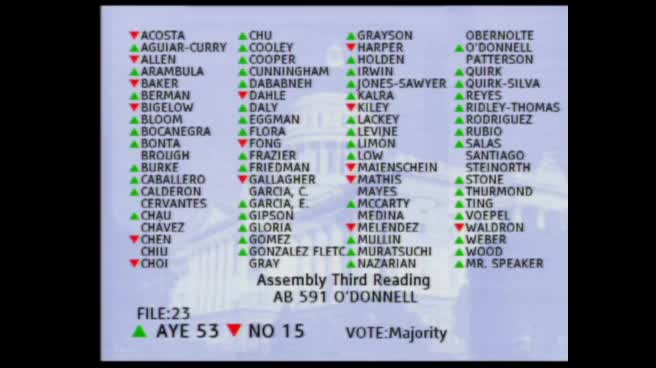 13MIN
Assembly Floor
 1MIN
Assembly Floor
 2MIN
Assembly Standing Committee on Appropriations
 15MIN
Assembly Standing Committee on Judiciary
 15MIN
Assembly Standing Committee on Judiciary
Bill Author


