AB 547: California Prompt Payment Act: disabled veteran business enterprises.
- Session Year: 2017-2018
- House: Assembly
- Latest Version Date: 2017-09-15
The California Prompt Payment Act requires a state agency that acquires property or services pursuant to a contract with a business, including any approved change order or contract amendment, to make payment to the person or business on the date required by contract and within 45 days of receipt of an undisputed invoice or be subject to a late payment penalty, as provided. The act applies to all state agencies.
This bill would require state agencies to pay an undisputed invoice from a certified disabled veteran business enterprise that is also a small business, as defined, within 30 days of initial receipt. The bill would require a state agency to submit a claim on an undisputed invoice to the Controller for payment within 15 calendar days of the agencys receipt. If an agency fails to submit a correct claim schedule within 15 days of receiving an invoice, and payment is not made within 30 days of receipt, the bill would require the agency to pay penalties from its funds, as specified. The bill would create similar penalties and procedures to be applied to the Controller if the Controller fails to make payment within 15 days of receipt of a correct claim schedule and payment is not made within 30 days of agency receipt of an undisputed invoice.
The California Prompt Payment Act requires a state agency that acquires property or services pursuant to a contract with a business, including any approved change order or contract amendment, to make payment to the person or business on the date required by contract and within 45 days of receipt of an undisputed invoice or be subject to a late payment penalty, as provided. The act applies to all state agencies.
This bill would require state agencies to pay an undisputed invoice from a certified disabled veteran business enterprise, enterprise that is also a small business, as defined, within 30 days of initial receipt. The bill would require a state agency to submit a claim on an undisputed invoice to the Controller for payment within 15 calendar days of the agencys receipt. If an agency fails to submit a correct claim schedule within 15 days of receiving an invoice, and payment is not made within 30 days of receipt, the bill would require the agency to pay penalties from its funds, as specified. The bill would create similar penalties and procedures to be applied to the Controller if the Controller fails to make payment within 15 days of receipt of a correct claim schedule and payment is not made within 30 days of agency receipt of an undisputed invoice.
The California Prompt Payment Act requires a state agency that acquires property or services pursuant to a contract with a business, including any approved change order or contract amendment, to make payment to the person or business on the date required by contract and within 45 days of receipt of an undisputed invoice or be subject to a late payment penalty, as provided. The act applies to all state agencies.
This bill would require state agencies to pay an undisputed invoice from a certified disabled veteran business enterprises, enterprise, as defined, within 30 days of receiving the invoice. initial receipt. The bill would require a state agency to submit a claim on an undisputed invoice to the Controller for payment within 15 calendar days of the agencys receipt. If an agency fails to submit a correct claim schedule within 15 days of receiving an invoice, and payment is not made within 30 days of receipt, the bill would require the agency to pay penalties from its funds, as specified. The bill would create similar penalties and procedures to be applied to the Controller if the Controller fails to make payment within 15 days of receipt of a correct claim schedule and payment is not made within 30 days of agency receipt of an undisputed invoice.
The California Prompt Payment Act requires a state agency that acquires property or services pursuant to a contract with a business, including any approved change order or contract amendment, to make payment to the person or business on the date required by contract and within 45 days of receipt of an undisputed invoice or be subject to a late payment penalty, as provided. The act applies to all state agencies.
This bill would require state agencies to pay certified disabled veteran business enterprises, as defined, within 15 30 days of receiving the invoice.
The California Prompt Payment Act requires a state agency that acquires property or services pursuant to a contract with a business, including any approved change order or contract amendment, to make payment to the person or business on the date required by contract and within 45 days of receipt of an undisputed invoice or be subject to a late payment penalty, as provided. The act applies to all state agencies.
This bill would require state agencies to pay certified disabled veteran business enterprises, as defined, within 15 days of receiving the invoice.
(a)This chapter shall be known and may be cited as the California Prompt Payment Act.
(b)It is the intent of the Legislature that state agencies pay properly submitted, undisputed invoices, refunds, or other undisputed payments due to individuals within 45 days of receipt or notification thereof, or automatically calculate and pay the appropriate late payment penalties as specified in this chapter.
(c)In the case of contracts with disabled veteran-owned business enterprises, it is the intent of the Legislature that state agencies pay properly submitted, undisputed invoices, refunds, or other undisputed payments due to individuals within 30 days of receipt or notification thereof or automatically calculate and pay the appropriate late payment penalties as specified in this chapter.
(d)Notwithstanding any other law, this chapter shall apply to all state agencies, including, but not limited to, the Public Employees Retirement System, the State Teachers Retirement System, the Treasurer, and the Department of General Services.
SEC. 2.Section 927.14 is added to the Government Code, to read:927.14.(a)An undisputed invoice from a certified disabled veteran business enterprise that is also a small business, both as defined in Section 14837, shall be paid within 30 calendar days of initial receipt pursuant to the requirements and conditions of this chapter and subject to the specific requirements of this section.
(b)(1)A claim on an undisputed invoice received by a state agency shall be submitted to the Controller for payment within 15 calendar days of the agencys receipt of the invoice.
(2)If the state agency fails to submit a correct claim schedule to the Controller within 15 days of receiving an undisputed invoice, and payment is not issued within 30 calendar days from the state agencys receipt of an undisputed invoice, the state agency shall pay applicable penalties. The penalty shall cease to accrue on the date the state agency submits the claim schedule to the Controller for payment or pays the claimant directly, and shall be paid for out of the state agencys support appropriation. The claimant shall be paid a penalty at a rate of 10 percent above the United States Prime Rate on June 30 of the prior fiscal year, beginning on and after the 16th calendar day following receipt of the undisputed invoice.
(3)On an exception basis, state agencies may avoid payment of penalties for failure to submit a correct claim schedule to the Controller by paying the claimant directly from the state agencys revolving fund within 30 calendar days following the agencys receipt of the undisputed invoice.
(c)The Controller shall pay claimants within 15 calendar days of receipt of a correct claim schedule from the state agency. If the Controller fails to make payment within 15 calendar days of receipt of the claim schedule from a state agency, and payment is not issued within 30 calendar days from state agency receipt of an undisputed invoice, the Controller shall pay applicable penalties to the claimant without requiring that the claimant submit an invoice for these amounts. Penalties shall cease to accrue on the date full payment is made and shall be paid for out of the Controllers funds. The Controller shall pay to the claimant a penalty at a rate of 10 percent above the United States Prime Rate on June 30 of the prior fiscal year, beginning on and after the 16th calendar day following receipt of the claim schedule from the state agency.
(a)This chapter shall be known and may be cited as the California Prompt Payment Act.
(b)It is the intent of the Legislature that state agencies pay properly submitted, undisputed invoices, refunds, or other undisputed payments due to individuals within 45 days of receipt or notification thereof, or automatically calculate and pay the appropriate late payment penalties as specified in this chapter.
(c)In the case of contracts with disabled veteran-owned business enterprises, it is the intent of the Legislature that state agencies pay properly submitted, undisputed invoices, refunds, or other undisputed payments due to individuals within 30 days of receipt or notification thereof or automatically calculate and pay the appropriate late payment penalties as specified in this chapter.
(d)Notwithstanding any other law, this chapter shall apply to all state agencies, including, but not limited to, the Public Employees Retirement System, the State Teachers Retirement System, the Treasurer, and the Department of General Services.
SEC. 2.Section 927.14 is added to the Government Code, to read:927.14.(a)An undisputed invoice from a certified disabled veteran business enterprise, enterprise that is also a small business, both as defined in Section 14837, shall be paid within 30 calendar days of initial receipt pursuant to the requirements and conditions of this chapter and subject to the specific requirements of this section.
(b)(1)A claim on an undisputed invoice received by a state agency shall be submitted to the Controller for payment within 15 calendar days of the agencys receipt of the invoice.
(2)If the state agency fails to submit a correct claim schedule to the Controller within 15 days of receiving an undisputed invoice, and payment is not issued within 30 calendar days from the state agencys receipt of an undisputed invoice, the state agency shall pay applicable penalties. The penalty shall cease to accrue on the date the state agency submits the claim schedule to the Controller for payment or pays the claimant directly, and shall be paid for out of the state agencys support appropriation. The claimant shall be paid a penalty at a rate of 10 percent above the United States Prime Rate on June 30 of the prior fiscal year, beginning on and after the 16th calendar day following receipt of the undisputed invoice.
(3)On an exception basis, state agencies may avoid payment of penalties for failure to submit a correct claim schedule to the Controller by paying the claimant directly from the state agencys revolving fund within 30 calendar days following the agencys receipt of the undisputed invoice.
(c)The Controller shall pay claimants within 15 calendar days of receipt of a correct claim schedule from the state agency. If the Controller fails to make payment within 15 calendar days of receipt of the claim schedule from a state agency, and payment is not issued within 30 calendar days from state agency receipt of an undisputed invoice, the Controller shall pay applicable penalties to the claimant without requiring that the claimant submit an invoice for these amounts. Penalties shall cease to accrue on the date full payment is made and shall be paid for out of the Controllers funds. The Controller shall pay to the claimant a penalty at a rate of 10 percent above the United States Prime Rate on June 30 of the prior fiscal year, beginning on and after the 16th calendar day following receipt of the claim schedule from the state agency.
(a)This chapter shall be known and may be cited as the California Prompt Payment Act.
(b)It is the intent of the Legislature that state agencies pay properly submitted, undisputed invoices, refunds, or other undisputed payments due to individuals within 45 days of receipt or notification thereof, or automatically calculate and pay the appropriate late payment penalties as specified in this chapter.
(c)In the case of contracts with disabled veteran-owned business enterprises, it is the intent of the Legislature that state agencies pay properly submitted, undisputed invoices, refunds, or other undisputed payments due to individuals within 30 days of receipt or notification thereof or automatically calculate and pay the appropriate late payment penalties as specified in this chapter.
(c)(d)Notwithstanding any other provision of law, this chapter shall apply to all state agencies, including, but not limited to, the Public Employees Retirement System, the State Teachers Retirement System, the Treasurer, and the Department of General Services.
SECTION 1.SEC. 2.Section 927.14 is added to the Government Code, to read:927.14.State agencies shall pay properly submitted, undisputed invoices from (a)An undisputed invoice from a certified disabled veteran business enterprises, enterprise, as defined in Section 14837, shall be paid within 30 calendar days of initial receipt. receipt pursuant to the requirements and conditions of this chapter and subject to the specific requirements of this section.
(b)(1)A claim on an undisputed invoice received by a state agency shall be submitted to the Controller for payment within 15 calendar days of the agencys receipt of the invoice.
(2)If the state agency fails to submit a correct claim schedule to the Controller within 15 days of receiving an undisputed invoice, and payment is not issued within 30 calendar days from the state agencys receipt of an undisputed invoice, the state agency shall pay applicable penalties. The penalty shall cease to accrue on the date the state agency submits the claim schedule to the Controller for payment or pays the claimant directly, and shall be paid for out of the state agencys support appropriation. The claimant shall be paid a penalty at a rate of 10 percent above the United States Prime Rate on June 30 of the prior fiscal year, beginning on and after the 16th calendar day following receipt of the undisputed invoice.
(3)On an exception basis, state agencies may avoid payment of penalties for failure to submit a correct claim schedule to the Controller by paying the claimant directly from the state agencys revolving fund within 30 calendar days following the agencys receipt of the undisputed invoice.
(c)The Controller shall pay claimants within 15 calendar days of receipt of a correct claim schedule from the state agency. If the Controller fails to make payment within 15 calendar days of receipt of the claim schedule from a state agency, and payment is not issued within 30 calendar days from state agency receipt of an undisputed invoice, the Controller shall pay applicable penalties to the claimant without requiring that the claimant submit an invoice for these amounts. Penalties shall cease to accrue on the date full payment is made and shall be paid for out of the Controllers funds. The Controller shall pay to the claimant a penalty at a rate of 10 percent above the United States Prime Rate on June 30 of the prior fiscal year, beginning on and after the 16th calendar day following receipt of the claim schedule from the state agency.
State agencies shall pay properly submitted, undisputed invoices from certified disabled veteran business enterprises, as defined in Section 14837, within 15 30 calendar days of initial receipt.
REVISIONS: HeadingLine 2.State agencies shall pay properly submitted, undisputed invoices from certified disabled veteran business enterprises, as defined in Section 14837, within 15 calendar days of initial receipt.
|
Date
|
Status
|
|---|---|
| Jan 12, 2018 | Stricken from file. |
| Jan 3, 2018 | Consideration of Governor's veto pending. |
| Oct 10, 2017 | Vetoed by Governor. |
| Sep 25, 2017 | Enrolled and presented to the Governor at 12 p.m. |
| Sep 14, 2017 | In Assembly. Ordered to Engrossing and Enrolling. |
| Sep 14, 2017 | Read third time. Passed. Ordered to the Assembly. |
| Sep 12, 2017 | Ordered to special consent calendar. |
| Sep 5, 2017 | Read second time. Ordered to third reading. |
| Sep 1, 2017 | From committee: Do pass. (Ayes 7. Noes 0.) (September 1). |
| Aug 21, 2017 | In committee: Referred to APPR. suspense file. |
| Jul 11, 2017 | From committee: Do pass and re-refer to Com. on APPR. with recommendation: To Consent Calendar. (Ayes 6. Noes 0.) (July 11). Re-referred to Com. on APPR. |
| Jun 27, 2017 | From committee: Do pass and re-refer to Com. on V.A. with recommendation: To Consent Calendar. (Ayes 13. Noes 0.) (June 27). Re-referred to Com. on V.A. |
| Jun 14, 2017 | Referred to Coms. on G.O. and V.A. |
| Jun 1, 2017 | In Senate. Read first time. To Com. on RLS. for assignment. |
| May 31, 2017 | Read third time. Passed. Ordered to the Senate. (Ayes 77. Noes 0. Page 1940.) |
| May 30, 2017 | Read second time. Ordered to third reading. |
| May 26, 2017 | From committee: Amend, and do pass as amended. (Ayes 16. Noes 0.) (May 26). |
| May 17, 2017 | In committee: Set, first hearing. Referred to APPR. suspense file. |
| May 3, 2017 | Re-referred to Com. on APPR. |
| May 2, 2017 | Read second time and amended. |
| May 1, 2017 | From committee: Amend, and do pass as amended and re-refer to Com. on APPR. with recommendation: To Consent Calendar. (Ayes 7. Noes 0.) (April 25). |
| Apr 18, 2017 | Coauthors revised. |
| Mar 29, 2017 | Re-referred to Com. on J., E.D., & E. |
| Mar 28, 2017 | Read second time and amended. |
| Mar 27, 2017 | From committee: Amend, and do pass as amended and re-refer to Com. on J., E.D., & E. (Ayes 7. Noes 0.) (March 22). |
| Feb 27, 2017 | Referred to Coms. on A. & A.R. and J., E.D., & E. |
| Feb 15, 2017 | From printer. May be heard in committee March 17. |
| Feb 14, 2017 | Read first time. To print. |
|
Date
|
Description
|
Location
|
Votes
|
|
|---|---|---|---|---|
| Sep 14, 2017 | Special Consent Calendar # AB547 | Senate Floor |
Passed |
|
| Sep 1, 2017 | Do pass | Senate Standing Committee on Appropriations |
Passed |
|
| Aug 21, 2017 | Placed on suspense file | Senate Standing Committee on Appropriations |
Passed |
|
| Jul 11, 2017 | Do pass, but first be re-referred to the Committee on [Appropriations] with the recommendation: To Consent Calendar | Senate Standing Committee on Veterans Affairs |
Passed |
|
| Jun 27, 2017 | Do pass, but first be re-referred to the Committee on [Veterans Affairs] with the recommendation: To Consent Calendar | Senate Standing Committee on Governmental Organization |
Passed |
|
| May 31, 2017 | AB 547 CHÁVEZ Assembly Third Reading | Assembly Floor |
Passed |
|
| May 26, 2017 | Do pass as amended. | Assembly Standing Committee on Appropriations |
Passed |
|
| Apr 25, 2017 | Do pass as amended, and be re-referred to the Committee on [Appropriations] with recommendation: To Consent Calendar | Assembly Standing Committee on Jobs, Economic Development, and the Economy |
Passed |
|
| Mar 22, 2017 | Do pass as amended and be re-referred to the Committee on [Jobs, Economic Development, and the Economy] | Assembly Standing Committee on Accountability and Administrative Review |
Passed |
This list shows positions taken on this bill by organizations on the date displayed, which is linked to the original source.
Positions by individuals are not included.
|
Organization
|
Position
|
Date
|
|---|---|---|
| 2020vet intelligent logistics solutions | ** Support | Sep 4, 2017 |
| American G.I. Forum of California | ** Support | Sep 4, 2017 |
| American Legion, Department Of California | ** Support | Sep 4, 2017 |
| amvets, department of america | ** Support | Sep 4, 2017 |
| Arktos Incorporated | ** Support | Mar 20, 2017 |
| arktos, inc. | ** Support | Sep 4, 2017 |
| associated builders and contractors, central california chapter | ** Support | Sep 4, 2017 |
| Associated Builders and Contractors, San Diego Chapter | ** Support | Sep 4, 2017 |
| associated builders and contractors, southern california chapter | ** Support | Sep 4, 2017 |
| California Association Of County Veterans Service Officers | ** Support | Sep 4, 2017 |
| California Chapters of American Fire Sprinkler Association | ** Support | Sep 4, 2017 |
| California Council of Chapters | ** Support | Sep 4, 2017 |
| California State Commanders Veterans Council | ** Support | Sep 4, 2017 |
| CFR & Associates | ** Support | Sep 4, 2017 |
| CommTech Systems, Inc. | ** Support | Sep 4, 2017 |
| Global Blue DVBE | ** Support | Jul 6, 2017 |
| gold blue dvbe | ** Support | Sep 4, 2017 |
| Independent Roofing Contractors of California, Inc. | ** Support | Sep 4, 2017 |
| iron kite technologies, inc. | ** Support | Sep 4, 2017 |
| KKO Labs Construction | ** Support | Mar 20, 2017 |
| kko labs, inc. | ** Support | Sep 4, 2017 |
| m.a.g. management services, inc. | ** Support | Sep 4, 2017 |
| Military Officers Association of America | ** Support | Sep 4, 2017 |
| Northwestern Fire Support LLC | ** Support | Mar 20, 2017 |
| nothwestern fire support llc | ** Support | Sep 4, 2017 |
| Plumbing-Heating-Cooling Contractors Association of California | ** Support | Sep 4, 2017 |
| The Sanberg Group, Inc. | ** Support | Sep 4, 2017 |
| The Sandberg Group, Inc. | ** Support | Mar 20, 2017 |
| Veteran Enhanced Technology Solutions | ** Support | Sep 4, 2017 |
| Vietnam Veterans Of America, California State Council | ** Support | Sep 4, 2017 |
| Western Electrical Contractors Association | ** Support | Sep 4, 2017 |
GOVERNOR'S VETO
GV Bill Id:AB 547
Author:(Chávez)
As Enrolled Ver:September 15, 2017
2/3 vote
Committee | Votes | Ayes | Noes |
Accountability | 7-0 | Eggman, Lackey, Burke, Flora, Frazier, Medina, Quirk-Silva | |
Jobs | 7-0 | Quirk-Silva, Travis Allen, Berman, Cervantes, Grayson, Rodriguez, Steinorth | |
Appropriations | 16-0 | Gonzalez Fletcher, Bigelow, Bloom, Bocanegra, Bonta, Brough, Calderon, McCarty, Quirk, Fong, Friedman, Gallagher, Eduardo Garcia, Gray, Muratsuchi, Reyes |
|
ASSEMBLY: | 77-0 | (May 31, 2017) | SENATE | 40-0 | (September 14, 2017) |
SUMMARY: Requires state agencies to pay properly submitted, undisputed invoices from a disabled veteran business enterprise that is also a small business (DVBE/SB) within 30 days of receiving the invoice and makes invoices from dually-certified DVBE/SBs that are not paid within 30 days subject to penalty rates similar to those already paid to SBs.
EXISTING LAW:
- Establishes the Prompt Payment Act, which requires state agencies to pay properly submitted, undisputed invoices within 45 calendar days of initial receipt. If this requirement is not met, state departments must automatically calculate and pay the appropriate late payment penalties, as specified, including higher payment penalties provided to small businesses and nonprofit organizations.
- Permits a state agency to dispute an invoice for reasonable cause within 15 working days of receipt.
- Requires a state agency to issue a payment request for an undisputed invoice to the State Controller's Office (SCO) within 30 days of receipt.
- Establishes a DVBE and SB certification program administered by the Department of General Services (DGS).
FISCAL EFFECT: According to the Assembly Appropriations Committee:
- Unknown costs, potentially significant, to impacted state agencies required to process invoices from approximately 1,800 DVBEs in a shorter timeframe. This cost will vary by agency depending on the number of DVBE contracts each has and the timing of the claims submitted. There are approximately 2,000 DVBEs in the state, of which approximately 90% are SBs.
- Negligible costs to the SCO assuming the vendor is identified as a qualified DVBE when the invoice is sent. The bill does not impact the amount of time the SCO has to pay a claim.
- Unknown penalty costs to state agencies to the extent there is an increase in the number of late payments under the new accelerated payment system.
- Unknown penalty costs to state agencies, likely minor, to the extent there is an increase in the amount paid in late penalty fees under the new penalty fees system. Approximately 90% of DVBEs already receive the penalty amount in this bill due to their SB status.
- Minor and absorbable costs to state agencies to update invoice review and processing procedures.
COMMENTS: Current law generally requires state agencies to pay undisputed invoices within 45 calendar days. This bill shortens this payment timeline to 30 calendar days if the undisputed invoice is from a DBVE that is also a SB.
The author states that "timely payment of services rendered is good business. Simply shortening the prompt payment terms to 30 days for invoices from dually-certified DVBE/SBs means they will not have to finance most, if not all, of their business with the state up front."
According to DGS, the current 45 day period can be divided into two main phases: a 30-day period for the invoiced state agency and a 15-day period for the SCO.
Within 30 days of receipt of an undisputed invoice, the invoiced state agency must issue a payment request to the SCO. The invoice can only be disputed within 15 days of receipt. DGS reports that this 15-day window allows the invoiced state agency to inspect and review the goods or services provided to ensure they conform to the contract requirements.
Under the requirements of this bill, the invoiced state agency will have 15 days to inspect and review the goods or services from the DVBE/SB, process the invoice and request payment from the SCO. The SCO will continue to have 15 days to pay the claim.
The Prompt Payment Act requires small businesses and nonprofits to be paid a higher late payment penalty than other businesses. There were 2,043 certified DVBEs in fiscal year (FY) 2015-16, about 90% of which are also certified SBs. This means that when an undisputed invoice is paid late, most DVBEs already receive the higher penalty rate, which, in FY 2016-17 is 13.50% annually, compared to 1.31% annually for all other businesses.
This bill would require the state to pay invoices within 30 days when submitted by a disabled veteran business enterprise that is also small business.
The Prompt Payment Act already requires invoices to be paid within 45 days. While I am supportive of our small disabled veteran business enterprises, I think that it is important for the state to continue to focus on making timely payments on all state contracts.
Rather than introducing a new process that could undo the state's progress, I would simply encourage state agencies to accelerate payments on invoices whenever possible.
Analysis Prepared by: Cassie Royce / A. & A.R. / (916) 319-3600 FN: 0002481
Office of Senate Floor Analyses (916) 651-1520 Fax: (916) 327-4478 | AB |
THIRD READING
Bill No: AB 547
:
SENATE GOVERNMENTAL ORG. COMMITTEE: 13-0, 6/27/17
AYES: Dodd, Berryhill, Bradford, Cannella, Gaines, Galgiani, Glazer, Hill, Hueso, Lara, Mendoza, Portantino, Vidak
SENATE VETERANS AFFAIRS COMMITTEE: 6-0, 7/11/17
AYES: Newman, Dodd, Hueso, Nguyen, Roth, Wilk
NO VOTE RECORDED: Nielsen
SENATE APPROPRIATIONS COMMITTEE: 7-0, 9/1/17
AYES: Lara, Bates, Beall, Bradford, Hill, Nielsen, Wiener
ASSEMBLY FLOOR: 77-0, 5/31/17 - See last page for vote
DIGEST: This bill requires state agencies to pay properly submitted, undisputed invoices from a disabled veteran business enterprise that is also a small business (DVBE/SB) within 30 days of receiving the invoice.
ANALYSIS:
Existing law:
- Requires, under the California Prompt Payment Act, a state agency that acquires property or services pursuant to a contract with a business to make payment to the person or business on the date required by contract and within 45 days of receipt of an undisputed invoice, or be subject to a late payment, as provided.
- Requires a late payment penalty to be paid to the claimant of an undisputed invoice that is not paid within 45 days. Two penalty rates are set in existing law, as follows:
- 10% above the US Prime Rate for payment delays to any of the following:
- Certified SB;
- Nonprofit public benefit corporation;
- SB that provides services or equipment under the Medical program; and
- Nonprofit organization that was awarded a grant or contract in an amount less than $500,000.
- 1% above the pooled Money Investment Account daily rate on June 30th, of the prior fiscal year, not to exceed 15%, for payment delays for all other businesses.
- 10% above the US Prime Rate for payment delays to any of the following:
- Permits a state agency to dispute an invoice for reasonable cause within 15 working days of receipt.
- Requires a state agency to issue a payment request for an undisputed invoice to the State Controller’s Office (SCO) within 30 days of receipt.
- Establishes the Office of Small Business and Disabled Veteran Business Enterprise Services and prescribes duties for the office, which include maintaining a bidders list of SBs and DVBEs and identifying which SBs also qualify as microbusinesses.
- Defines a “small business” to mean an independently owned and operated business that is not dominant in its field of operation, the principal office of which is located in California, the officers of which are domiciled in California, and which, together with affiliates, has 100 or fewer employees, and average annual gross receipts of $10 million or less over the previous three years, or is a manufacturer, as defined, and has 100 or fewer employees.
- Defines a “DVBE” to mean an enterprise that is at least 51% owned by one or more disabled veterans and the daily business operations are managed and controlled by one or more disabled veterans. For certification purposes a “disabled veteran” is a veteran of the U.S. military, naval, or air service who resides in California and has a service-connected disability of at least 10% or more.
This bill:
- Requires state agencies to pay properly submitted, undisputed invoices from a DVBE that is also a SB, within 30 days of receiving the invoice.
- Provides that a claim on an undisputed invoice received by a state agency shall be submitted to the SCO for payment within 15 calendar days of the agency’s receipt of the invoice.
- Establishes penalty rates to be applied to DBVE invoices not paid within 30 days, similar to those currently paid to SBs.
Background
Purpose of the bill. According to the author’s office, “AB 547 would require state agencies to pay properly submitted, undisputed invoices from a DVBE/SB within 30 days of receiving the invoice and makes invoices from DBVE/SBs that are not paid within 30 days subject to penalty rates similar to those already paid to SBs. This 30-day time period is consistent with the federal government payment cycle for all businesses.”
The Small Business Procurement Act. The Small Business Procurement Act states that DVBE participation is strongly encouraged to address the special needs of disabled veterans seeking rehabilitation and training through entrepreneurship, and to recognize the sacrifices of California's disabled military veterans. Statute sets an annual 3% DVBE participation goal, and a 25% goal is set through executive order for SBs and microbusinesses.
The California Prompt Payment Act requires the state to pay a properly submitted, undisputed invoice within 45 days of receipt. An invoiced state agency has 15 days in which to inspect and review the goods or services and, if necessary, dispute the invoice. The agency has 30 days, including the 15-day inspection period, to process the invoice and request payment by the SCO. Once it receives that request, the SCO has 15 days to pay the claim.
If the entire process takes more than 45 days, penalties accrue. Penalties are calculated as a percentage of the invoice value. Higher penalties apply when the contractor is a certified SB or a nonprofit meeting specified criteria. An undisputed invoice from these SBs and nonprofit vendors are assessed at a penalty of 10% above the US Prime Rate, as compared to a rate of 1% above the pooled Money Investment Account for all other vendors.
The Department of General Services reports there were 2,043 certified DVBEs in fiscal year 2015-16, about 90% of which are also certified SBs. This means that when an undisputed invoice is paid late, most DVBEs already receive the higher penalty rate, which, in FY 2016-17 is 13.50% annually, compared to 1.31% annually for all other businesses.
Related/Prior Legislation
SB 605 (Galgiani, 2017) revises the definition of “small business” and “microbusiness” for purposes of Small Business Procurement Act by increasing the dollar amount threshold for a SB to $15 million and for a microbusiness to $5 million and requires those dollar amounts to be adjusted to reflect changes in the California Consumer Price Index biennially. (Pending on the Assembly Appropriations Suspense File)
SB 1176 (Galgiani, 2016) would have revised the definition of “small business” and “microbusiness” for purposes of the Small Business Procurement Act by increasing the dollar amount threshold for a SB to $15 million and for a microbusiness to $5 million and requires those dollar amounts to be adjusted to reflect changes in the CPI. In addition, the bill would have revised the definition of a SB by specifying that, for the purposes of public works contracts, a SB means a business with 200 or fewer employees and average annual gross receipts of $25 million or less over the previous three years. (Vetoed by Governor Brown)
SB 115 (Florez, Chapter 451, Statutes of 2005) established a DVBE participation incentive to bidders that would be mandatory for all state agencies.
FISCAL EFFECT: Appropriation: Fiscal Com.: Local:
According to the Senate Appropriations Committee, unknown, potentially significant costs to impacted state agencies that are required to process invoices from DVBEs in a shorter time frame. This cost will vary by agency depending on the number of DVBE contracts each agency has. Agencies with a higher volume of DVBE contracts may be obliged to increase workload to process the invoices in a shorter timeframe.
Also, unknown, potentially significant penalty costs to state agencies to the extent that there is an increase in the number of and/or amount paid in late payments under the new accelerated payment system.
Finally, minor and absorbable costs to state agencies to update invoice review and processing procedures.
2020Vet Intelligent Logistics Solutions
American G.I. Forum of California
American Legion, Department of California
AMVETS, Department of America
ARKTOS, Inc.
Associated Builders and Contractors, Central California Chapter
Associated Builders and Contractors, San Diego Chapter
Associated Builders and Contractors, Southern California Chapter
California Association of County Veterans Service Officers
California Chapters of American Fire Sprinkler Association
California Council of Chapters
California State Commanders Veterans Council
CFR & Associates
CommTech Systems, Inc.
Gold Blue DVBE
Independent Roofing Contractors of California, Inc.
Iron Kite Technologies, Inc.
KKO Labs, Inc.
M.A.G. Management Services, Inc.
Military Officers Association of America
Nothwestern Fire Support LLC
Plumbing-Heating-Cooling Contractors Association of California
The Sanberg Group, Inc.
Veteran Enhanced Technology Solutions
Vietnam Veterans of America, California State Council
Western Electrical Contractors Association
None received
ARGUMENTS IN SUPPORT: Supporters argue that the biggest issue they face is the ability to secure funding for projects. They argue that many DVBE owners do not pursue opportunities due to a lack of capital and funding and believe that this bill helps to address that issue.
ASSEMBLY FLOOR: 77-0, 5/31/17
AYES: Acosta, Aguiar-Curry, Travis Allen, Arambula, Baker, Berman, Bigelow, Bloom, Bocanegra, Bonta, Brough, Burke, Caballero, Calderon, Cervantes, Chau, Chávez, Chen, Chiu, Chu, Cooley, Cooper, Cunningham, Dababneh, Dahle, Daly, Flora, Fong, Frazier, Friedman, Gallagher, Cristina Garcia, Eduardo Garcia, Gipson, Gloria, Gomez, Gonzalez Fletcher, Gray, Grayson, Harper, Holden, Irwin, Jones-Sawyer, Kalra, Kiley, Lackey, Levine, Limón, Low, Maienschein, Mathis, Mayes, McCarty, Medina, Mullin, Muratsuchi, Nazarian, Obernolte, O'Donnell, Patterson, Quirk, Quirk-Silva, Reyes, Ridley-Thomas, Rodriguez, Rubio, Salas, Santiago, Steinorth, Mark Stone, Thurmond, Ting, Voepel, Waldron, Weber, Wood, Rendon
NO VOTE RECORDED: Choi, Eggman, Melendez
9/4/17 13:02:57
**** END ****
SENATE COMMITTEE ON
Senator Ricardo Lara, Chair
2017 - 2018 Regular Session
AB 547 (Chávez) - California Prompt Payment Act: disabled veteran business enterprises
Version: | Policy Vote: |
Urgency: | Mandate: |
Hearing Date: | Consultant: |
This bill meets the criteria for referral to the Suspense File.
Bill Summary:
AB 547 would expedite state payment to vendors, whenever a state agency receives a properly submitted, undisputed invoice from a vendor firm, which is dually certified as a disabled veteran business enterprise (DVBE) and a small business.
Fiscal Impact:
- Unknown, potentially significant costs to impacted state agencies that are required to process invoices from DVBEs in a shorter time frame. This cost will vary by agency depending on the number of DVBE contracts each agency has. Agencies with a higher volume of DVBE contracts may be obliged to increase workload to process the invoices in a shorter timeframe. (GF and special funds)
- Unknown, potentially significant penalty costs to state agencies to the extent that there is an increase in the number of and/or amount paid in late payments under the new accelerated payment system. (GF)
- Minor and absorbable costs to state agencies to update invoice review and processing procedures.
Background:
Existing law, under the California Prompt Payment Act, requires state agencies to submit payment for items or services contractually delivered by a person or business no later than the date required by contract and within 45 days of receipt of an undisputed invoice, or be subject to late payment penalties – penalties are calculated as a percentage of the invoice value. Higher penalties apply when the contractor is a certified small business or a nonprofit organization meeting specified criteria.
An invoiced state agency has 15 days in which to inspect and review the goods or services and, if necessary, dispute the invoice. The agency has 30 days, including the 15 day inspection period, to process the invoice and request payment by the State Controller’s Office (SCO). Once it receives that request, the SCO has 15 days to pay the claim.
The DVBE program addresses the special needs of disabled veterans seeking rehabilitation and training through entrepreneurship. The DVBE program requires that, individually and collectively, all state governmental entities that award contracts for goods and services expend at least 3% of the annual value of all their contracts on DVBEs certified by DGS.
DGS reports that there were 2,043 certified DVBEs in fiscal year 2015-16, about 90% of which were also certified small businesses.
Proposed Law:
This bill would:
- Require that state agencies pay properly submitted, undisputed invoices from a DVBE that is also a small business, within 30 days of receiving the invoice;
- Provide that a claim on an undisputed invoice received by a state agency shall be submitted to the SCO for payment within 15 calendar days of the agency’s receipt of the invoice;
- Establish penalty rates to be applied to DVBE invoices no paid within 30 days, similar to those currently paid to small businesses.
Related Legislation:
SB 605 (Galgiani, 2017) would revise the definition of “small business” and “microbusiness” for purposes of Small Business Procurement Act by increasing the dollar amount threshold for a small business to $15 million and for a microbusiness to $5 million and would require those dollar amounts to be adjusted to reflect changes in the California Consumer Price Index (CPI) biennially. This bill is pending in the Assembly Appropriations Committee.
SB 1176 (Galgiani, 2016) would have revised the definition of “small business” and “microbusiness” for purposes of the Small Business Procurement Act by increasing the dollar amount threshold for a small business to $15 million and for a microbusiness to $5 million and would have required those dollar amounts to be adjusted to reflect changes in the CPI. Additionally, this bill would have revised the definition of a small business by specifying that, for the purposes of public works contracts, a small business means a business with 200 or fewer employees and average annual gross receipts of $25 million or less over the previous three years. This bill was vetoed by Governor Brown.
SB 983 (Correa, 2007) would have revised the definition of small business, for purposes of the Prompt Payment Act, to include a DVBE, making DVBEs eligible for the higher late payment penalties granted to small businesses. This bill was held in the Assembly Appropriations Committee.
SB 159 (Wyland, 2007) would have revised the definition of small business, for purposes of the Prompt Payment Act, to include a DVBE, making DVBEs eligible for the higher late payment penalties granted to small businesses. This bill was held in the Assembly Appropriations Committee.
-- END --
SENATE COMMITTEE ON
Senator Josh Newman, Chair
2017 - 2018 Regular
Bill No: Hearing Date: 7/11/17
Author: | Chávez | ||
Version: | Amended | ||
Urgency: | Fiscal: | ||
Consultant: | |||
Subject:
DESCRIPTION
Summary:
This bill expedites state payment to vendors, whenever a state agency receives a properly submitted, undisputed invoice from a vendor firm, which is dually certified as a disabled veteran business enterprise (DVBE) and a small business (SB).
Existing law:
- Requires, under the California Prompt Payment Act, a state agency that acquires property or services pursuant to a contract with a business to ensure payment to the person or business on the date required by contract and within 45 days of receipt of an undisputed invoice, or be subject to a late payment, as provided.
- Requires a late payment penalty to be paid to the claimant of an undisputed invoice that is not paid within 45 days. Two penalty rates are set in existing law, as follows:
- Ten percent above the US Prime Rate for payment delays to any of the following:
- Certified SB;
- Nonprofit public benefit corporation;
- SB that provides services or equipment under the Medical program; and
- Nonprofit organization that was awarded a grant or contract in an amount less than $500,000.
- Ten percent above the pooled Money Investment Account daily rate on June 30 of the prior fiscal year, not to exceed 15%, for payment delays for all other businesses.
- Ten percent above the US Prime Rate for payment delays to any of the following:
- Permits a state agency to dispute an invoice for reasonable cause within 15 working days of receipt.
- Requires a state agency to issue a payment request for an undisputed invoice to the State Controller’s Office (SCO) within 30 days of receipt.
- Establishes the Office of Small Business and Disabled Veteran Business Enterprise Services and prescribes duties for the office, which include maintaining a bidders list of SBs and DVBEs, and identifying which SBs also qualify as microbusinesses.
- Defines a SB to mean an independently owned and operated business that is not dominant in its field of operation, the principal office of which is located in California, the officers of which are domiciled in California, and which, together with affiliates, has 100 or fewer employees, and average annual gross receipts of $10 million or less over the previous three years, or is a manufacturer, as defined, and has 100 or fewer employees.
- Defines a DVBE to mean an enterprise that is at least 51% owned by one or more disabled veterans and the daily business operations are managed and controlled by one or more disabled veterans. For certification purposes a “disabled veteran” is a veteran of the U.S. military, naval, or air service who resides in California and has a service-connected disability rated by the U.S. Department of Veterans Affairs between 10 percent and 100 percent.
This bill:
- Requires state agencies to pay properly submitted, undisputed invoices from a DVBE that is also a SB, within 30 days of receiving the invoice.
- Provides that a claim on an undisputed invoice received by a state agency shall be submitted to the SCO for payment within 15 calendar days of the agency’s receipt of the invoice.
- Establishes penalty rates to be applied to DBVE invoices not paid within 30 days, similar to those currently paid to SBs.
BACKGROUND
California Prompt Payment Act. The Prompt Payment Act requires state agencies to submit payment for items or services contractually delivered by a person or business no later than the date required by contract between the agency and entity being contracted with. It requires state agencies to pay properly submitted, undisputed invoices within 45 calendar days of initial receipt. If the requirement is not met, state departments must automatically calculate and pay the appropriate late payment penalties. DGS statistics indicates that the biggest cause for payment delays is that “end users” who receive goods and services do not approve and forward invoices to accounting offices in a timely manner. The Prompt Payment Act requires payment of an undisputed invoice within 45 days of receipt at the location identified in the purchase document as “billed to” or “invoice submitted to” for payment.
Disabled Veteran Business Enterprise Program. The Small Business Procurement Act states that DVBE participation is strongly encouraged to address the special needs of disabled veterans seeking rehabilitation and training through entrepreneurship, and to recognize the sacrifices of California's disabled military veterans. The program covers all contract awarding entities in state government and requires these entities to submit an annual report detailing DVBE participation in their contracting. Each state agency is required to try to award at least three percent of its contracts to certified DVBEs. The three-percent minimum contracting goal is the cornerstone of the DVBE program. In addition to the participation goals, DVBEs enjoy a five-percent bid preference which allows their bids to be upwards of five-percent higher than a non-DVBE firm and yet, still be competitive. According to the Department of General Services, for the last three years, the state has reached the three-percent DVBE contracting participation goal. Certified DVBEs have increased to over 1,300. This increase is attributed mostly to the construction industry.
COMMENT
Author Comments:
"The timely payment of services rendered is good business. Simply shortening the prompt payment terms to 30 days for invoices from dually-certified DVBE/SBs means they will not have to finance most, if not all, of their business with the state up front. Currently, California State Departments are required to provide payment in 45 days. The vast majority of certified DVBE’s are small businesses, many of which depend on these payments to cover their expenses and stay afloat."
Committee Comments:
AB 547’s provisions extend Prompt Payment Act protections only to dually-certified DVBE/SBs that are prime contractors, which submit invoices to awarding departments.
Many, perhaps most, DVBE/SBs are subcontractor. Unless the prime contractor also is a DVBE/SB, the bill’s expedited payment provisions would not benefit DVBE/SB subcontractors.
Prior/Related Legislation:
SB 839 (Correa, 2014) requires that state agencies awarding contracts to DVBEs to report to DGS the amount paid directly to DVBE prime contractors as well as indirectly to subcontractors, pursuant to the contracts, rather than reporting the cumulative amount awarded in total to DVBEs. (Held on Suspense, Senate Appropriations Committee)
SB 297 (Roth, 2013) proposes raising the DVBE state contracting participation goal from three-percent of all contracts to five-percent. (Held in Assembly Committee on Jobs, Economic Development and the Economy)
SB 719 (Correa, 2013) requires contract awarding departments that utilize DVBEs three percent contracting goal, and utilize the soon to be up and running Financial Information System for California (FI$Cal) to report the DVBE dollar amounts expended each year to DGS. (Held on Suspense, Assembly Appropriations Committee)
SB 643 (Denham, 2009) adds “disabled veteran business enterprises” to the list of businesses covered under the Prompt Payment Act. (Held on Suspense, Senate Appropriations Committee)
SB 983 (Correa, 2008) This bill would have revised the definition of small business, for purposes of the Prompt Payment Act, to include a DVBE in order to make DVBEs eligible for the higher late payment penalties granted to small businesses. (Held on Suspense, Assembly Appropriations Committee)
POSITIONS
Sponsor: Author
Support:
American G.I. Forum of California
American Legion, Department of California
AMVETS, Department of America
ARKTOS, Inc.
Associated Builders and Contractors, Central California Chapter
Associated Builders and Contractors, Southern California Chapter
Associated Builders and Contractors, San Diego Chapter
California Association of County Veterans Service Officers
California Chapters of American Fire Sprinkler Association
California State Commanders Veterans Council
CFR & Associates
CommTech Systems, Inc.
Global Blue DVBE
Independent Roofing Contractors of California, Inc.
Iron Kite Technologies, Inc.
KKO Labs, Inc.
M.A.G. Management Services, Inc.
Military Officers Association of America
Nothwestern Fire Support LLC
Plumbing-Heating-Cooling Contractors Association of California
The Sanberg Group, Inc.
Veteran Enhanced Technology Solutions
Vietnam Veterans of America, California State Council
Western Electrical Contractors Association
2020Vet Intelligent Logistics Solutions
Oppose: None received
-- END --
SENATE COMMITTEE ON GOVERNMENTAL ORGANIZATION
Senator Bill Dodd
Chair
2017 - 2018 Regular
Bill No: AB Hearing Date: 6/27/2017
Author: | Chávez, et al. | ||
Version: | Amended | ||
Urgency: | Fiscal: | ||
Consultant: | |||
SUBJECT:
DIGEST: This bill requires state agencies to pay properly submitted, undisputed invoices from a disabled veteran business enterprise that is also a small business (DVBE/SB) within 30 days of receiving the invoice.
ANALYSIS:
Existing law:
- Requires, under the California Prompt Payment Act, a state agency that acquires property or services pursuant to a contract with a business to make payment to the person or business on the date required by contract and within 45 days of receipt of an undisputed invoice, or be subject to a late payment, as provided.
- Requires a late payment penalty to be paid to the claimant of an undisputed invoice that is not paid within 45 days. Two penalty rates are set in existing law, as follows:
- 10% above the US Prime Rate for payment delays to any of the following:
- Certified SB;
- Nonprofit public benefit corporation;
- SB that provides services or equipment under the Medical program; and
- Nonprofit organization that was awarded a grant or contract in an amount less than $500,000.
- 1% above the pooled Money Investment Account daily rate on June 30th, of the prior fiscal year, not to exceed 15%, for payment delays for all other businesses.
- 10% above the US Prime Rate for payment delays to any of the following:
- Permits a state agency to dispute an invoice for reasonable cause within 15 working days of receipt.
- Requires a state agency to issue a payment request for an undisputed invoice to the State Controller’s Office (SCO) within 30 days of receipt.
- Establishes the Office of Small Business and Disabled Veteran Business Enterprise Services and prescribes duties for the office, which include maintaining a bidders list of SBs and DVBEs and identifying which SBs also qualify as microbusinesses.
- Defines a “small business” to mean an independently owned and operated business that is not dominant in its field of operation, the principal office of which is located in California, the officers of which are domiciled in California, and which, together with affiliates, has 100 or fewer employees, and average annual gross receipts of $10 million or less over the previous three years, or is a manufacturer, as defined, and has 100 or fewer employees.
- Defines a “DVBE” to mean an enterprise that is at least 51% owned by one or more disabled veterans and the daily business operations are managed and controlled by one or more disabled veterans. For certification purposes a “disabled veteran” is a veteran of the U.S. military, naval, or air service who resides in California and has a service-connected disability of at least 10% or more.
This bill:
- Requires state agencies to pay properly submitted, undisputed invoices from a DVBE that is also a SB, within 30 days of receiving the invoice.
- Provides that a claim on an undisputed invoice received by a state agency shall be submitted to the SCO for payment within 15 calendar days of the agency’s receipt of the invoice.
- Establishes penalty rates to be applied to DBVE invoices not paid within 30 days, similar to those currently paid to SBs.
Background
Purpose of the bill. According to the author’s office, “AB 547 would require state agencies to pay properly submitted, undisputed invoices from a DVBE/SB within 30 days of receiving the invoice and makes invoices from DBVE/SBs that are not paid within 30 days subject to penalty rates similar to those already paid to SBs. This 30-day time period is consistent with the federal government payment cycle for all businesses.”
The Small Business Procurement Act. The Small Business Procurement Act states that DVBE participation is strongly encouraged to address the special needs of disabled veterans seeking rehabilitation and training through entrepreneurship, and to recognize the sacrifices of California's disabled military veterans. Statute sets an annual 3% DVBE participation goal, and a 25% goal is set through executive order for SBs and microbusinesses.
The California Prompt Payment Act requires the state to pay a properly submitted, undisputed invoice within 45 days of receipt. An invoiced state agency has 15 days in which to inspect and review the goods or services and, if necessary, dispute the invoice. The agency has 30 days, including the 15-day inspection period, to process the invoice and request payment by the SCO. Once it receives that request, the SCO has 15 days to pay the claim.
If the entire process takes more than 45 days, penalties accrue. Penalties are calculated as a percentage of the invoice value. Higher penalties apply when the contractor is a certified SB or a nonprofit meeting specified criteria. An undisputed invoice from these SBs and nonprofit vendors are assessed at a penalty of 10% above the US Prime Rate, as compared to a rate of 1% above the pooled Money Investment Account for all other vendors.
DGS reports there were 2,043 certified DVBEs in fiscal year 2015-16, about 90% of which are also certified SBs. This means that when an undisputed invoice is paid late, most DVBEs already receive the higher penalty rate, which, in FY 2016-17 is 13.50% annually, compared to 1.31% annually for all other businesses.
Prior/Related Legislation
SB 605 (Galgiani, 2017) would revise the definition of “small business” and “microbusiness” for purposes of Small Business Procurement Act (Act) by increasing the dollar amount threshold for a SB to $15 million and for a microbusiness to $5 million and requires those dollar amounts to be adjusted to reflect changes in the California Consumer Price Index (CPI) biennially. (Pending in Assembly Jobs, Economic Development, and the Economy)
SB 1176 (Galgiani, 2016) would have revised the definition of “small business” and “microbusiness” for purposes of the Act by increasing the dollar amount threshold for a SB to $15 million and for a microbusiness to $5 million and requires those dollar amounts to be adjusted to reflect changes in the CPI. In addition, this bill would have revised the definition of a SB by specifying that, for the purposes of public works contracts, a SB means a business with 200 or fewer employees and average annual gross receipts of $25 million or less over the previous three years. (Vetoed by Governor Brown)
SB 115 (Florez, Chapter 451, Statutes of 2005) established a DVBE participation incentive to bidders that would be mandatory for all state agencies.
FISCAL EFFECT: Appropriation: No Fiscal Com.: Yes Local: No
SUPPORT:
American G.I. Forum of California
American Legion, Department of California
AMVETS, Department of America
ARKTOS, Inc.
Associated Builders and Contractors, Central California Chapter
Associated Builders and Contractors, Southern California Chapter
Associated Builders and Contractors, San Diego Chapter
California Association of County Veterans Service Officers
California Chapters of American Fire Sprinkler Association
California Council of Chapters
California State Commanders Veterans Council
CFR & Associates
CommTech Systems, Inc.
Gold Blue DVBE
Independent Roofing Contractors of California, Inc.
Iron Kite Technologies, Inc.
KKO Labs, Inc.
M.A.G. Management Services, Inc.
Military Officers Association of America
Nothwestern Fire Support LLC
Plumbing-Heating-Cooling Contractors Association of California
The Sanberg Group, Inc.
Veteran Enhanced Technology Solutions
Vietnam Veterans of America, California State Council
Western Electrical Contractors Association
2020Vet Intelligent Logistics Solutions
OPPOSITION:
None received
ARGUMENTS IN SUPPORT: Supporters argue that the biggest issue they face is the ability to secure funding for projects. They argue that many DVBE owners do not pursue opportunities due to a lack of capital and funding and believe that this bill helps to address that issue.
DUAL REFERRAL: Senate Veterans Affairs Committee
ASSEMBLY THIRD READING
ATR Bill Id:AB 547
Author:(Chávez)
As Amended Ver:
Majority vote
Committee | Votes | Ayes | Noes |
Accountability | 7-0 | Eggman, Lackey, Burke, Flora, Frazier, Medina, Quirk-Silva | |
Jobs | 7-0 | Quirk-Silva, Travis Allen, Berman, Cervantes, Grayson, Rodriguez, Steinorth | |
Appropriations | 16-0 | Gonzalez Fletcher, Bigelow, Bloom, Bocanegra, Bonta, Brough, Calderon, McCarty, Quirk, Fong, Friedman, Gallagher, Eduardo Garcia, Gray, Muratsuchi, Reyes |
|
SUMMARY: Requires state agencies to pay properly submitted, undisputed invoices from a disabled veteran business enterprise that is also a small business (DVBE/SB) within 30 days of receiving the invoice and makes invoices from dually-certified DVBE/SBs that are not paid within 30 days subject to penalty rates similar to those already paid to SBs.
EXISTING LAW:
- Establishes the Prompt Payment Act, which requires state agencies to pay properly submitted, undisputed invoices within 45 calendar days of initial receipt. If this requirement is not met, state departments must automatically calculate and pay the appropriate late payment penalties, as specified, including higher payment penalties provided to small businesses and nonprofit organizations.
- Permits a state agency to dispute an invoice for reasonable cause within 15 working days of receipt.
- Requires a state agency to issue a payment request for an undisputed invoice to the State Controller's Office (SCO) within 30 days of receipt.
- Establishes a DVBE and SB certification program administered by the Department of General Services (DGS).
FISCAL EFFECT: According to the Assembly Appropriations Committee:
- Unknown costs, potentially significant, to impacted state agencies required to process invoices from approximately 1,800 DVBEs in a shorter timeframe. This cost will vary by agency depending on the number of DVBE contracts each has and the timing of the claims submitted. There are approximately 2,000 DVBEs in the state, of which approximately 90% are SBs.
- Negligible costs to the SCO assuming the vendor is identified as a qualified DVBE when the invoice is sent. The bill does not impact the amount of time the SCO has to pay a claim.
- Unknown penalty costs to state agencies to the extent there is an increase in the number of late payments under the new accelerated payment system.
- Unknown penalty costs to state agencies, likely minor, to the extent there is an increase in the amount paid in late penalty fees under the new penalty fees system. Approximately 90% of DVBEs already receive the penalty amount in this bill due to their SB status.
- Minor and absorbable costs to state agencies to update invoice review and processing procedures.
COMMENTS: Current law generally requires state agencies to pay undisputed invoices within 45 calendar days. This bill shortens this payment timeline to 30 calendar days if the undisputed invoice is from a DBVE that is also a SB.
The author states that "timely payment of services rendered is good business. Simply shortening the prompt payment terms to 30 days for invoices from dually-certified DVBE/SBs means they will not have to finance most, if not all, of their business with the state up front."
According to DGS, the current 45 day period can be divided into two main phases: a 30-day period for the invoiced state agency and a 15-day period for the SCO.
Within 30 days of receipt of an undisputed invoice, the invoiced state agency must issue a payment request to the SCO. The invoice can only be disputed within 15 days of receipt. DGS reports that this 15-day window allows the invoiced state agency to inspect and review the goods or services provided to ensure they conform to the contract requirements.
Under the requirements of this bill, the invoiced state agency will have 15 days to inspect and review the goods or services from the DVBE/SB, process the invoice and request payment from the SCO. The SCO will continue to have 15 days to pay the claim.
DGS reports that there is currently no statewide policy that requires agencies to accelerate or expedite payments to particular types of contractors. In the event that timely payment does not occur, the invoiced state agency must pay the appropriate late payment penalties.
The Prompt Payment Act requires small businesses and nonprofits to be paid a higher late payment penalty than other businesses. There were 2,043 certified DVBEs in fiscal year (FY) 2015-16, about 90% of which are also certified SBs. This means that when an undisputed invoice is paid late, most DVBEs already receive the higher penalty rate, which, in FY 2016-17 is 13.50% annually, compared to 1.31% annually for all other businesses.
Analysis Prepared by: Cassie Royce / A. & A.R. / (916) 319-3600 FN: 0000715
Date of Hearing: May 17, 2017
ASSEMBLY COMMITTEE ON APPROPRIATIONS
Lorena Gonzalez Fletcher, Chair
ABPCA Bill Id:AB 547
Author:(Chávez) – As Amended Ver:May 2, 2017
Policy Committee: | Accountability and Administrative Review | Vote: | 7 - 0 |
Jobs, Economic Development, and the Economy | 7 - 0 | ||
|
|
Urgency: No State Mandated Local Program: No Reimbursable: No
SUMMARY:
This bill modifies the California Prompt Payment Act. Specifically, this bill:
- Requires a state agency to pay an undisputed, properly submitted invoice by a disabled veteran business enterprise (DVBE) within 30 days of receipt. The invoiced state agency will have 15 days to inspect and review the goods or services, process the invoice and request payment from the State Controller's Office (SCO). The SCO will continue to have 15 days to pay the claim.
- Establishes penalty rates to be applied to DVBE invoices not paid within 30 days, similar to with those paid to small businesses.
FISCAL EFFECT:
- Unknown costs, potentially significant, to impacted state agencies required to process invoices from approximately 2,000 DVBEs in a shorter timeframe. This cost will vary by agency depending on the number of DVBE contracts each has and the timing of the claims submitted.
- Negligible costs to the SCO assuming the vendor is identified as a DVBE when the invoice is sent. The bill does not impact the amount of time the SCO has to pay a claim.
- Unknown penalty costs to state agencies to the extent there is an increase in the number of late payments under the new accelerated payment system.
- Unknown penalty costs to state agencies, likely minor, to the extent there is an increase in the amount paid in late penalty fees under the new penalty fees system. Approximately 90% of DVBEs already receive the penalty amount in this bill due to their small business status.
- Minor and absorbable costs to state agencies to update invoice review and processing procedures.
COMMENTS:
- Purpose. Current law generally requires state agencies to pay undisputed invoices within 45 calendar days. This bill shortens this payment timeline to 30 calendar days if the undisputed invoice is from a DBVE. The author states that "timely payment of services rendered is good business. Simply shortening the prompt payment terms to 30 days for invoices from DVBEs means they will not have to finance most, if not all, of their business with the state up front."
- Background. The Small Business Procurement Act states that DVBE participation is strongly encouraged to address the special needs of disabled veterans seeking rehabilitation and training through entrepreneurship, and to recognize the sacrifices of California's disabled military veterans. Statute sets an annual 3% DVBE participation goal, and a 25% goal is set through executive order for small businesses and microbusinesses.
The California Prompt Payment Act requires the state to pay a properly submitted, undisputed invoice within 45 days of receipt. An invoiced state agency has 15 days in which to inspect and review the goods or services and, if necessary, dispute the invoice. The agency has 30 days, including the 15-day inspection period, to process the invoice and request payment by the SCO. Once it receives that request, the SCO has 15 days to pay the claim.
If the entire process takes more than 45 days, penalties accrue. Penalties are calculated as a percentage of the invoice value. Higher penalties apply when the contractor is certified small business or a nonprofit meeting specified criteria. An undisputed invoiced from these small business and nonprofit vendors are assessed at a penalty of 10% above the US Prime Rate, as compared to a rate of 1% above the pooled Money Investment Account for all other vendors.
DGS reports there were 2,043 certified DVBEs in fiscal year 2015-16, about 90% of which are also certified small businesses. This means that when an undisputed invoice is paid late, most DVBEs already receive the higher penalty rate, which, in FY 2016-17 is 13.50% annually, compared to 1.31% annually for all other businesses.
- Prior Legislation. SB 983 (Correa) and SB 159 (Wyland), both of the of 2007-08 Legislative Session, would have revised the definition of small business, for purposes of the Prompt Payment Act, to include a DVBE in order to make DVBEs eligible for the higher late payment penalties granted to small businesses. Both measures were held on Suspense in this Committee.
Analysis Prepared by: Jennifer Swenson / APPR. / (916) 319-2081
Date of Hearing: April 25, 2017
ASSEMBLY COMMITTEE ON JOBS, ECONOMIC DEVELOPMENT, AND THE ECONOMY
Sharon Quirk-Silva, Chair
ABPCA Bill Id:AB 547 (
Author:Chávez) – As Amended Ver:March 28, 2017
SUBJECT: California Prompt Payment Act: disabled veteran business enterprises
SUMMARY: Requires state agencies to pay properly submitted, undisputed invoices from certified disabled veteran business enterprises (DVBEs) within 30 calendar days of receiving the invoice.
EXISTING LAW:
- Establishes the Prompt Payment Act, which requires the payment of undisputed invoices within 45 calendar days of initial receipt.
- Permits a state agency to dispute an invoice for reasonable cause within 15 working days of receipt.
- Requires a state agency to issue a payment request for an undisputed invoice to the State Controller's Office (SCO) within 30 days of receipt and requires the SCO to pay claimants within 15 days of receiving a correct claim schedule from a state agency.
- Requires a late payment penalty to be paid to the claimant of an undisputed invoice that is not paid within 45 days. Two penalty rates are set in existing law, as follows:
- 10% above the US Prime Rate for payment delays to a:
- Certified small business;
- Nonprofit public benefit corporation;
- Small business that provides services or equipment under the Medical program; and
- Nonprofit organization that was awarded a grant or contract in an amount less than $500,000.
- 1% above the pooled Money Investment Account daily rate on June 30 of the prior fiscal year, not to exceed 15%, for payment delays for all other businesses.
- 10% above the US Prime Rate for payment delays to a:
- Requires the cost of any late payment penalty be born by the state agency if it failed to submit the undisputed invoice to the SCO within 30 days and/or the SCO, if it failed to issue the payment within 15 days of receiving the undisputed invoice from the state entity.
- Permits a state agency to dispute an invoice for reasonable cause, including a discrepancy between the invoice and the contract, a discrepancy between the invoice and what the contractor has delivered, lack of sufficient documentation supporting the invoiced amount, or an improperly executed invoice.
- Requires the Department of General Services (DGS) to annually report on late payment penalties that were paid by each state agency.
- Establishes a DVBE certification program, administered by DGS, and sets a 3% statutory goal for DVBE participation in state procurement activities. Defines a certified DVBE as a business that is at least 51% controlled by a person or persons who have been certified by the federal government as having a service-related disability of at least 10%, and is domiciled in California.
FISCAL EFFECT: Unknown
POLICY FRAME:
Small businesses play an essential role with California's $2.4 trillion economy. Several studies show that net job growth is most significant among businesses with less than 20 employees. During recessions, small businesses are often the last employers to lay individuals off and the earliest to make new hires as the economy improves. California's targeted procurement programs for small businesses and DVBEs represent an important and cost efficient means for stabilizing and growing businesses.
These small size businesses face unique impediments in accessing capital through traditional financing institutions, and too often have to resort to high interest loans and factoring companies to raise working capital to complete state contracts. Existing law provides that all undisputed invoices are to be paid within 45 calendar days and sets a higher late payment penalty for a prime contractor that is a certified small business or a specified nonprofit, than for all other businesses.
This bill proposes include certified DVBE's within the group of businesses that receive the higher late payment rate, as well as creating a fast-track payment timeline for certified DVBEs of 30 days rather than the state's current standard of 45 days.
The analysis includes information on the California small business economy, the state and federal prompt payment requirements, and the state DVBE targeted procurement program. Amendments are suggested in Comment 6, which more closely align the author's intent with language in the bill.
COMMENTS:
- Small Business Procurement and Contract Act: The Small Business Procurement and Contract Act (Small Business Procurement Act), administered through DGS, was implemented more than 30 years ago to establish a small business preference within the state's procurement process that would increase the number of contracts between the state and small businesses. A DBVE component was added in 1989.
The Small Business Procurement Act states that it is the policy of the State of California that the state aid the interests of small businesses in order to preserve free competitive enterprise and to ensure that a fair portion of the total purchases and contracts of the state be placed with these enterprises. The statute further states that DVBE participation is strongly encouraged to address the special needs of disabled veterans seeking rehabilitation and training through entrepreneurship, and to recognize the sacrifices of California's disabled military veterans. Statute sets an annual 3% DVBE participation goal, and a 25% goal is set through executive order for small businesses and microbusinesses.
In 2015-16 there were 25,834 certified small businesses and microbusinesses and 1,736 certified DVBEs. A majority of DVBEs are small size firms with 75.4% of DVBEs holding a dual certification as a DVBE and microbusiness and 9.6% having a dual DVBE and small business certification. The remaining 15% of DVBEs operate with only a single DVBE certification and most likely represent larger size firms.
- Prompt Payment Program: In 2015-16, 159 state departments reported entering into $8.1 billion in state procurement activities. Approximately $2.5 billion was awarded to contracts that included small business bidders as either a prime or subprime.
While the state constitution prohibits the advance payment for goods and services, state law requires invoices on delivered goods and services to be paid promptly, which is generally understood to be within 45 days. To encourage a state agency to "promptly" pay contracts, a late payment penalty is assessed for every day the payment is made beyond 45 days.
Reflective of the financial challenges smaller size vendor face in fronting the costs of material and labor to undertake a state contract, existing law sets a higher late payment penalty for contracts with primes that are a certified small business, small business Medical vendor, and nonprofits with contracts valued at under $500,000. An undisputed invoiced from these small business and nonprofit vendors are assessed at a penalty of 10% above the US Prime Rate, as compared to a rate of 1% above the pooled Money Investment Account for all other vendors. In 2016-17, this annual interest rate deferential is 13.5% vs. 1.58%.
As an example: Under the higher penalty calculation for a small business and nonprofit prime vendor, an invoice for $10,000 that is 90 days late would incur a penalty of $332.91, [($10,000X.0003699) X 90]. That same contract with another prime business would be $38.97 [($10,000X.0000433) X 90].
These late payment penalties are required to be reported to DGS and aggregated into an annual report. State agencies that fail to report are also cited in the annual report. In 2015-16, 2,926 invoices were paid later than 45 days for a total of late payment penalties of $377,635.09. This represents 0.0003% of all invoices processed in the fiscal year. Invoices from small businesses were significantly more likely to be paid late, representing 66% of all late penalty occurrences and 58% of dollars paid for late payments. Below is a chart displaying more detail on the 2015-16 late payments.
Late Payment Penalties Paid by State Departments (FY 2015-16) | ||
Vendor Category | Number of Occurrences | Value of Late Payments |
Small Businesses | 1,940 | $219,493.72 |
Other Businesses | 986 | $158,141.37 |
Total | 2,926 | $377,635.09 |
Source: DGS, Prompt Payment Report 2105-16 | ||
The chart above reflects a state agency response rate of 82%, 138 out of 168 state entities reporting. While 30 agencies did not report to DGS, the following 26 state agencies failed to report and are identified by DGS as having paid late payment penalties in 2015-16: California African-American Museum; California Arts Council; Commission on Asian & Pacific Islander American Affairs; Conservation Corps; Department of Conservation; California Energy Commission; Department of Finance; Fish and Game Commission; Department of Food and Agriculture; Energy Efficient State Property Rev FD, General Services; California Horse Racing Board; Department of Housing and Community Development; California Law Revision Commission; Legislative Counsel Bureau; California State Library; Office of the Lt. Governor; Managed Risk Medical Insurance Board; Department of Military; Commission on Peace Officers Standards and Training; Board of Pilot Commissioners; Office of Planning and Research; California Public Utilities Commission; State Public Works Board; Department of Social Services Foster Care; and Department of State Hospitals (Sacramento).
- Dividing the Payment Workload: When a state agency receives an invoice from a vendor, the agency has a duty to ensure the delivered good or service meets the standard set in the initial order, plus any modifications. The state agency is given 15 working days from the receipt of the invoice, or delivery of property or service (whichever is later) to dispute the invoice and notify the vendor of any deficiencies. If the invoice is disputed, the time clock for paying the invoice stops until the dispute is resolved.
In processing an undisputed invoice, existing law specifies that the state agency has 30 of the 45 calendar days to process the invoice and send appropriate documentation to the SCO, who is allotted the remaining 15 calendar days for the claim audit and warrant generation process.
As discussed above, existing law includes a cost deterrent for state agencies and the SCO in not meeting these deadlines with a late payment penalty beginning to accrue on the 46th day. The cost of the penalty accrues to which or both of the entities that fail to meet their deadline, 30 days for the state agency or 15 days for the SCO.
As an alternative, a state agency may elect to pay the undisputed invoice using a revolving fund process in order to take advantage of potential discounts or to avoid accruing late payment penalties. In this instance, the state agency may use the entire 45 day period themselves.
AB 547 provides that the state agency is required to pay a certified DVBE vendor within 30 days of receiving an undisputed invoice. Amendments are suggested in Comment 6 to clarify how this time is divided between the state agency and the SCO and as to the general applicability of other provisions in the Prompt Payment Act.
- Creating a New Prompt Payment Standard: While state law sets a 45-day payment cycle AB 547 sets a 30-day payment cycle for DVBEs. This 30-day time period is consistent with the federal government payment cycle for all businesses. The federal government also has an accelerated payment policy of 15 days for undisputed invoices from small business vendors, among others.
Unlike the state Prompt Payment Act, the federal government sets a single late penalty rate for all vendors. The current federal rate is 2.5% and is regularly set for each six-month period by Secretary of the Treasury. For comparison, the 2016-17 state penalty interest rate is 13.5% for small business and certain nonprofits and 1.58% for all others.
Prior legislation, SB 983 (2008) and SB 159 (2007), added certified DVBEs to the list of vendors who are designated to receive the higher state late payment penalty. This bill not only proposes awarding the certified DVBE the higher penalty rate, it also calls for an expedited payment term.
In making this differentiation, the bill establishes a third category of prompt payment requirements. Some concerns have been raised as to whether this increases the complexity of the state payment process. Given that there were only 260 certified DVBEs that were not already certified as a small business in 2015-16, the financial impact to the state would likely be very limited.
- The DVBE Program: The 3% DVBE procurement participation goal applies to the state agency or department's overall contracting activities in the given fiscal year and may be achieved by awarding state contracts to DVBEs as prime contractors or when DVBEs are used as a subcontractor.
Awarding departments have an option of including DVBE participation in every contract or making alternative arrangements, as long as the 3% objective is met at the end of the year. Each agency and department is required to designate a small business and DVBE contracting liaison to facilitate it in meeting the 3% DVBE goal and the 25% small business goal.
Departments also have the option of offering a 1% to 5% contracting incentive to strengthen the competitiveness of DVBE primes and non-DVBE primes that subcontract with DVBEs. Although not currently being utilized, statute includes authority for bidders that are unable or unwilling to include a DVBE in a contract to submit a utilization plan to DGS that commits the businesses to using DVBEs in the future. DGS is authorized to audit businesses that submit utilization plans to ensure compliance.
State departments that fail to meet the annual 3% goal can have their delegated contracting authority removed, although DGS has never removed program authority solely based on an agency or department's failure to meet its DVBE contracting goal.
DGS' has a range of responsibilities relating to the implementation of the DVBE Program including:
Certification of DVBEs (2,043 DVBEs certified in 2015-16);
- Certification of small businesses and microbusinesses (25,824 small businesses and microbusinesses certified in 2015-16);
- Outreach to the potential bidders and the veteran community (191 events in FY 2015-16);
- Marketing of the DVBE program to state agencies;
- Partnering with CalVet on meetings with departments that are not meeting participation goals.
- Consulting with the California Procurement Contracting Academy on the DVBE training of state contracting staff;
- Preparation of an annual consolidated report on DVBE, small business, and microbusinesses participation within state contracting activities; and
- Program oversight to identify abuses by bidders and failures to preform by state agencies.
In a further effort to increase oversight and enhance small business and DVBE contracting activities DGS and the California Department of Veterans Affairs, met with 13 departments during 2015-16 that did not achieve one or both of their goals, including:
- High spend state entities with over $20 million in annual contracting: California High Speed Rail Authority; California Public Utilities Commission, and the Office of Systems Integration.
- Small and medium-spend state entities with under $20 million in annual contracts: Agricultural Labor Relations Board; California Housing Finance Agency; California Arts Council; California Human Resources/State Personnel Board; California Science Center; Delta Stewardship Council; Department of Managed Health Care; Governor's Office of Business and Economic Development; Office of Environmental Health Hazard Assessment; and the California Coastal Conservancy.
Below are charts displaying five years of DVBE participation rates. The charts include information on mandatory reporting entities and all reporting entities. Under both reporting metrics, it appears that the state is consistently meeting its DVBE procurement participation goals.
DVBE Five-Year Contracting Activity – Mandated Agencies (dollars in millions) | ||||
Fiscal Year | Total Contract Dollars | Total DVBE Dollars | Total DVBE Percent | Total DVBE Contracts |
2015-16 | $5,855 | $274 | 4.67% | 18,638 |
2014-15 | $8,105 | $314 | 3.87% | 16,192 |
2013-14 | $6,566 | $241 | 3.67% | 12,777 |
2012-13 | $7,151 | $216 | 3.03% | 14,907 |
2011-12 | $7,173 | $340 | 4.74% | 16,246 |
Average | $6,970 | $277 | 4.00% | 15,752 |
Source: DGS Consolidated Reports for specified contracting periods | ||||
DVBE Five-Year Contracting Activity – All Reporting Agencies (dollars in in millions) | ||||
Fiscal Year | Total Contract Dollars | Total DVBE Dollars | Total DVBE Percent | Total DVBE Contracts |
2015-16 | $8,090 | $349 | 4.41% | 21,739 |
2014-15 | $10,073 | $407 | 4.04% | 18,228 |
2013-14 | $8,233 | $299 | 3.64% | 14,305 |
2012-13 | $8,573 | $267 | 3.12% | 16,776 |
2011-12 | $8,508 | $373 | 4.39% | 17,835 |
Average | $8,695 | $339 | 3.92% | 17776 |
Source: DGS Consolidated Reports for specified contracting periods | ||||
While the year-to-year percentages are useful to review, it is also important to note that consistency among which agencies report or even which agencies believe that they are mandated to report varies. As an example, in 2011-12 86% of the mandatory reporting entities reported their contracting activity to DGS. For 2013-14, 2014-15, and 2015-16 only 80% of mandatory reporters provided the required data to DGS.
- Proposed Amendments: The committee may wish to address a number of technical issues to clarify the operations of this measure. Staff suggested amendments are outlined below.
- Modify legislative intent to reflect the new DVBE payment standard.
- Specify that the penalty rate for a certified DVBE is the same rate as it currently provided to certified small businesses.
- Specify that the state agency has 15 days to process the undisputed invoice and send appropriate documentation to the Controller, unless the state agency is directly paying the invoice.
- Confirm that the Controller has the same 15 days to pay an undisputed invoice and the same conditions for paying the penalty as provided in existing law.
- Related Legislation: Below is a list of bills from the current and prior sessions.
- SB 115 (Florez) DVBE Incentive: This bill specifies that DGS is the administering agency of the California DVBE program and directs the department to prepare policies for the use of DVBE incentives for state procurement contracts. Status: Signed by the Governor, Chapter 451, Statutes of 2005.
- AB 170 (Papan) Prompt Payment Act: This bill established the California Prompt Payment Act. Status: Signed by the Governor, Chapter 360, Statutes of 1997.
- SB 983 (Correa) Prompt payment Act of 2008: This bill would have revised the definition of small business, for purposes of the Prompt Payment Act, to include a DVBE in order to make DVBEs eligible for the higher late payment penalties granted to small businesses. Status: Held on the Assembly Appropriations Committee's Suspense File, 2008.
- SB 159 (Wyland) Prompt payment Act of 2007: This bill would have revised the definition of small business, for purposes of the Prompt Payment Act, to include a DVBE in order to make DVBEs eligible for the higher late payment penalties granted to small businesses. Status: Held on the Assembly Appropriations Committee's Suspense File, 2007.
- SB 1517 (Dills) DVBE 3% Goal: This bill establishes the 3% DVBE participation goal in state procurement contracting. Status: Signed by the Governor, Chapter 1207, Statutes of 1989
- Double Referral: The Assembly Rules Committee has referred this measure to the Assembly Committee on Accountability and Administrative Review (AAR) and the Assembly Committee on Jobs, Economic Development and the Economy. This measure passed AAR on a 7 to 0 vote.
REGISTERED SUPPORT / OPPOSITION:
Support
None on File
Opposition
None on File
Analysis Prepared by: Toni Symonds / J., E.D., & E. /
Date of Hearing: March 22, 2017
ASSEMBLY COMMITTEE ON ACCOUNTABILITY AND ADMINISTRATIVE REVIEW
Susan Talamantes Eggman, Chair
ABPCA Bill Id:AB 547 (
Author:Chávez) – As Introduced Ver:February 14, 2017
SUBJECT: California Prompt Payment Act: disabled veteran business enterprises
SUMMARY: Requires state agencies to pay properly submitted, undisputed invoices from certified disabled veteran business enterprises (DVBEs) within 15 calendar days of receiving the invoice.
EXISTING LAW:
- Establishes the Prompt Payment Act, which requires state agencies to pay properly submitted, undisputed invoices within 45 calendar days of initial receipt. If this requirement is not met, state departments must automatically calculate and pay the appropriate late payment penalties, as specified, including higher payment penalties provided to small businesses and nonprofit organizations.
- Permits a state agency to dispute an invoice for reasonable cause within 15 working days of receipt.
- Requires a state agency to issue a payment request for an undisputed invoice to the State Controller's Office (SCO) within 30 days of receipt.
- Establishes a DVBE certification program administered by the Department of General Services (DGS). Defines a certified DVBE as a business that is at least 51% controlled by a person or persons who have been certified by the federal government as having a service-related disability of at least 10%, and is domiciled in California.
FISCAL EFFECT: Unknown
COMMENTS: Current law generally requires state agencies to pay undisputed invoices within 45 calendar days. This bill shortens this payment timeline to 15 calendar days if the undisputed invoice is from a DBVE.
The author states that "timely payment of services rendered is good business. Simply shortening the prompt payment terms to 15 days for invoices from DVBEs means they will not have to finance most, if not all, of their business with the state up front."
According to DGS, the current 45 day period can be divided into two main phases: a 30-day period for the invoiced state agency and a 15-day period for the SCO.
Within 30 days of receipt of an undisputed invoice, the invoiced state agency must issue a payment request to the SCO. The invoice can only be disputed within 15 days of receipt. DGS reports that this 15-day window allows the invoiced state agency to inspect and review the goods or services provided to ensure they conform to the contract requirements.
DGS indicates that reducing the entire payment process to 15 days will greatly reduce the amount of time the invoiced state agency has to review and inspect goods and services, for the invoiced agency’s accounting staff to process the invoice and request payment, and for the SCO to issue payment.
DGS adds that there is currently no statewide policy that requires agencies to accelerate or expedite payments to particular types of contractors. In the event that timely payment does not occur, the invoiced state agency must pay the appropriate late payment penalties.
The Prompt Payment Act requires small businesses and nonprofits to be paid a higher late payment penalty than other businesses. DGS reports there were 2,043 certified DVBEs in fiscal year (FY) 2015-16, about 90% of which are also certified small businesses. This means that when an undisputed invoice is paid late, most DVBEs already receive the higher penalty rate, which, in FY 2016-17 is 13.50% annually, compared to 1.31% annually for all other businesses.
PRIOR LEGISLATION: SB 983 (Correa) of 2008 and SB 159 (Wyland) of 2007 would have revised the definition of small business, for purposes of the Prompt Payment Act, to include a DVBE in order to make DVBEs eligible for the higher late payment penalties granted to small businesses. Both measures were held on the Assembly Appropriations Committee's Suspense File.
COMMITTEE STAFF RECOMMENDATION: The federal prompt payment rule requires federal agencies to pay properly submitted invoices within 30 calendar days after receipt. The author may wish to consider an amendment that changes the payment processing timeline proposed in this bill from 15 calendar days to 30 calendar days instead to mirror the federal rule.
DOUBLE REFERRAL. This bill is double referred. Should it pass this committee, it will be re-referred to the Assembly Jobs, Economic Development and the Economy Committee.
REGISTERED SUPPORT / OPPOSITION:
Support
2020 Vet Intelligent Logistics Solutions
Arktos Incorporated
CommTech Systems, Inc.
Global Blue DVBE, Inc.
KKO Labs Construction
Northwestern Fire Support LLC
The Sandberg Group, Inc.
Veteran Enhanced Technology Solutions
Opposition
None on file.
Analysis Prepared by: Cassie Royce / A. & A.R. /
Discussed in Hearing
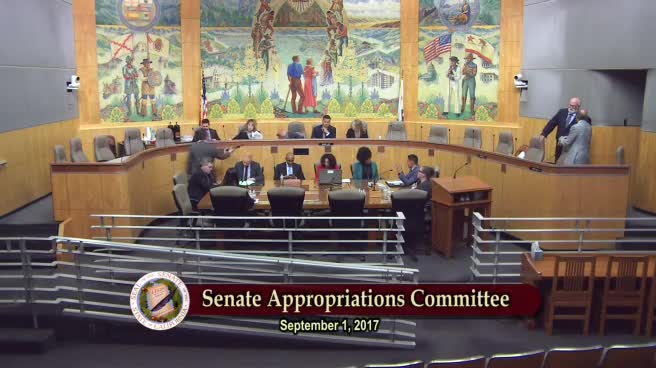 1H
Senate Standing Committee on Appropriations
 1MIN
Assembly Floor
 1H
Assembly Standing Committee on Appropriations
 3MIN
Assembly Standing Committee on Accountability and Administrative Review
Bill Author


