AB 550: State Long-Term Care Ombudsman Program: funding.
- Session Year: 2017-2018
- House: Assembly
- Latest Version Date: 2018-01-22
Existing law, as part of the Mello-Granlund Older Californians Act, establishes the Office of the State Long-Term Care Ombudsman, under the direction of the State Long-Term Care Ombudsman, in the California Department of Aging. Existing law provides for the Long-Term Care Ombudsman Program under which funds are allocated to local ombudsman programs to assist elderly persons in long-term health care facilities and residential care facilities by, among other things, investigating and seeking to resolve complaints against these facilities. Existing law requires the department to allocate federal and state funds for local ombudsman programs according to a specified distribution, but prohibits the department from allocating less than $35,000 per fiscal year, except in areas with fewer than 10 facilities and fewer than 500 beds.
This bill would increase the base allocation for local ombudsman programs to $100,000 per fiscal year. The bill would appropriate $2,250,000 from the General Fund to the California Department of Aging for the purpose of increasing base allocation funding for that purpose. year in any year in which funds are made available for allocation, as specified.
Existing law, as part of the Mello-Granlund Older Californians Act, establishes the Office of the State Long-Term Care Ombudsman, under the direction of the State Long-Term Care Ombudsman, in the California Department of Aging. Existing law provides for the Long-Term Care Ombudsman Program under which funds are allocated to local ombudsman programs to assist elderly persons in long-term health care facilities and residential care facilities by, among other things, investigating and seeking to resolve complaints against these facilities. Existing law requires the department to allocate federal and state funds for local ombudsman programs according to a specified distribution, but prohibits the department from allocating less than $35,000 per fiscal year, except in areas with fewer than 10 facilities and fewer than 500 beds.
This bill would increase the base allocation for local ombudsman programs to $100,000 per fiscal year. The bill would appropriate $2,250,000 from the General Fund to the California Department of Aging for the purpose of increasing base allocation funding for that purpose.
(a)(1)The department shall allocate all federal and state funds for local ombudsman programs according to the following distribution, but shall not allocate less than one-hundred thousand dollars ($100,000) per fiscal year, year in any year in which funds are made available for allocation, except for an area where there are fewer than 10 facilities and fewer than 500 beds.
(2)An allocation to an area where there are fewer than 10 facilities and fewer than 500 beds shall not be less than the base allocation contained in the Budget Act of 1986.
(3)After the base allocation, remaining funds shall be distributed in accordance with subdivision (b).
(b)(1)Fifty percent of the funds shall be allocated to each local program based on the number of facilities served by the program in proportion to the total number of facilities in the state.
(2)Forty percent of the funds shall be allocated based on the number of beds within the local programs area of service in proportion to the total number of beds in the state.
(3)Ten percent of the funds shall be allocated based on the total square miles within each local programs area of service in proportion to the total number of square miles in the state.
SEC. 2.The sum of two million two hundred fifty thousand dollars ($2,250,000) is hereby appropriated from the General Fund to the California Department of Aging for the purpose of increasing base allocation funding for the State Long-Term Care Ombudsman program.(a)(1)The department shall allocate all federal and state funds for local ombudsman programs according to the following distribution, but shall not allocate less than thirty-five thousand dollars ($35,000) one-hundred thousand dollars ($100,000) per fiscal year, except for an area where there are less fewer than 10 facilities and less fewer than 500 beds.
(2)An allocation to an area where there are less fewer than 10 facilities and less fewer than 500 beds shall not be less than the base allocation contained in the Budget Act of 1986.
(3)After the base allocation, remaining funds shall be distributed in accordance with subdivision (b).
(b)(1)Fifty percent of the funds shall be allocated to each local program based on the number of facilities served by the program in proportion to the total number of facilities in the state.
(2)Forty percent of the funds shall be allocated based on the number of beds within the local programs area of service in proportion to the total number of beds in the state.
(3)Ten percent of the funds shall be allocated based on the total square miles within each local programs area of service in proportion to the total number of square miles in the state.
SEC. 2.The sum of two million two hundred fifty thousand dollars ($2,250,000) is hereby appropriated from the General Fund to the California Department of Aging for the purpose of increasing base allocation funding for the State Long-Term Care Ombudsman program.
|
Date
|
Status
|
|---|---|
| Mar 15, 2018 | Referred to Com. on HUMAN S. |
| Jan 29, 2018 | In Senate. Read first time. To Com. on RLS. for assignment. |
| Jan 29, 2018 | Read third time. Passed. Ordered to the Senate. |
| Jan 23, 2018 | Read second time. Ordered to third reading. |
| Jan 22, 2018 | Read second time and amended. Ordered returned to second reading. |
| Jan 18, 2018 | From committee: Amend, and do pass as amended. (Ayes 17. Noes 0.) (January 18). |
| Apr 26, 2017 | In committee: Set, first hearing. Referred to APPR. suspense file. |
| Apr 5, 2017 | From committee: Do pass and re-refer to Com. on APPR. (Ayes 7. Noes 0.) (April 4). Re-referred to Com. on APPR. |
| Feb 27, 2017 | Referred to Com. on AGING & L.T.C. |
| Feb 15, 2017 | From printer. May be heard in committee March 17. |
| Feb 14, 2017 | Read first time. To print. |
|
Date
|
Description
|
Location
|
Votes
|
|
|---|---|---|---|---|
| Jan 29, 2018 | AB 550 REYES Assembly Third Reading | Assembly Floor |
Passed |
|
| Jan 18, 2018 | Do pass as amended. | Assembly Standing Committee on Appropriations |
Passed |
|
| Apr 4, 2017 | Do pass and be re-referred to the Committee on [Appropriations] | Assembly Standing Committee on Aging and Long-Term Care |
Passed |
This list shows positions taken on this bill by organizations on the date displayed, which is linked to the original source.
Positions by individuals are not included.
|
Organization
|
Position
|
Date
|
|---|---|---|
| Area 1 Agency on Aging | ** Support | Mar 30, 2017 |
| Area 12 Agency on Aging | ** Support | Mar 30, 2017 |
| California Advocates for Nursing Home Reform | ** Support | Mar 30, 2017 |
| California Association Of Area Agencies On Aging | ** Support | Mar 30, 2017 |
| California Long-Term Care Ombudsman Association Sponsor | ** Support | Mar 30, 2017 |
| california long-term care ombudsman association - sponsor | ** Support | Mar 30, 2017 |
| Choice in Aging | ** Support | Mar 30, 2017 |
| Congress of California Seniors | ** Support | Mar 30, 2017 |
| Consumer Federation Of California | ** Support | Mar 30, 2017 |
| County Welfare Directors Association of California | ** Support | Mar 30, 2017 |
| Disability Rights California | ** Support | Mar 30, 2017 |
| Fresno-Madera Long Term Care Ombudsman Program | ** Support | Mar 30, 2017 |
| Institute on Aging | ** Support | Mar 30, 2017 |
| Johnson Moore Trial Lawyers | ** Support | Mar 30, 2017 |
| Marin County Commission on Aging | ** Support | Mar 30, 2017 |
| Mother Lode Long-Term Care Ombudsman Program | ** Support | Mar 30, 2017 |
| Numerous individuals . | ** Support | Mar 30, 2017 |
| Ombudsman Services of Contra Costa | ** Support | Mar 30, 2017 |
| Ombudsman Services of San Mateo County, Inc. | ** Support | Mar 30, 2017 |
| Senior Advocacy Services | ** Support | Mar 30, 2017 |
| Sierra Senior Providers, Inc. | ** Support | Mar 30, 2017 |
| Sonoma County Area Agency on Aging | ** Support | Mar 30, 2017 |
| Sonoma County Human Services Department | ** Support | Mar 30, 2017 |
| WISE & Healthy Aging Long-Term Care Ombudsman Program | ** Support | Mar 30, 2017 |
ASSEMBLY THIRD READING
ATR Bill Id:AB 550
Author:(Reyes)
As Amended Ver:January 22, 2018
Majority vote
Committee | Votes | Ayes | Noes |
Aging | 7-0 | Kalra, Voepel, Acosta, Caballero, Gipson, Gloria, Gray | |
Appropriations | 17-0 | Gonzalez Fletcher, Bigelow, Bloom, Bonta, Brough, Calderon, Carrillo, Chau, Eggman, Fong, Friedman, Gallagher, Eduardo Garcia, Jones-Sawyer, Obernolte, Quirk, Reyes |
|
SUMMARY: This bill increases the base allocation for local ombudsman programs from $35,000 to $100,000 per fiscal year in any year in which funds are made available for allocation.
EXISTING LAW:
As part of the Mello-Granlund Older Californians Act, establishes the Office of the State Long-Term Care Ombudsman, under the direction of the State Long-Term Care (LTC) Ombudsman, in the California Department of Aging.
- Provides for the Long-Term Care Ombudsman Program, under which funds are allocated to local ombudsman programs to assist elderly persons in long-term health care facilities and residential care facilities by, among other things, investigating and seeking to resolve complaints against these facilities.
- Requires the department to allocate federal and state funds for local ombudsman programs according to a specified distribution, but prohibits the department from allocating less than $35,000 per fiscal year, except in areas with fewer than 10 facilities and fewer than 500 beds.
FISCAL EFFECT: According to the Assembly Appropriations Committee, negligible fiscal effect. A higher base allocation would be provided in years in which there is funding provided for the purpose.
COMMENTS:
Author's Statement: "The current funding allocation for the LTC Ombudsman organization was established in 1989, and the existing formula has not been updated for inflation in 27 years. It does not reflect the growing cost of conducting business in California. In order to serve the current need and to increase services for the growing population of seniors in long-term care, it is critical that a realistic base funding allocation be put in place."
Background: Authority for the Office of the State Long-Term Care Ombudsman (OSLTCO) comes from the Federal Older Americans Act and Older Californians Act. The OSLTCO develops policy and provides oversight to 35 local Long-Term Care Ombudsman programs. In California, LTC Ombudsman organizations monitor and assist residents in both skilled nursing facilities (nursing homes) and residential care facilities for the elderly (assisted living facilities). The role of the Ombudsman is to advocate for the residents, promote residents’ rights and provide assurances that facilities comply with state and federal laws.
The LTC Ombudsman Program serves as the first line of defense for residents of care facilities and provides on-site monitoring of facility conditions and resident well-being. Ombudsmen are trained to spot systemic problems and to develop personal rapport with residents who may be afraid to report problems or abuse. Ombudsmen are able to intervene on behalf of a resident and identify, investigate and resolve complaints before they result in more serious and costly cases of abuse and neglect. This is particularly important to the 60% of residents without family members visiting to observe care and report problems.
The LTC Ombudsman Program investigates every complaint it receives. Elder and dependent adult abuse and neglect cases (approximately 12% of the cases) continue to be the highest priority investigations. Less serious complaints take days or weeks for the Ombudsman to contact the complainant and investigate. Some investigations of complaints are experiencing significant delays. Many small issues grow into bigger more costly complaints due to the lack of quick intervention. There is no data regarding the length of these delays.
In 2016, the statewide funding allocation for the 35 local ombudsman programs was $8.3 million. According to The Ombudsman, that money was used to:
- Maintain 41 offices;
- Provide 24 hour crisis hot-line response;
- Conduct quarterly unannounced monitoring visits to 1,251 skilled nursing facilities, and 7,535 residential care facilities;
- Investigate 40,589 complains;
- Informational consultations to 53,203 individuals and another 11,497 informational consultations to facility staff;
- Conduct 661 community education events; and,
- Conduct 70 volunteer training certifications.
Analysis Prepared by: Barry Brewer / AGING & L.T.C. / (916) 319-3990 FN: 0002559
Date of Hearing: April 26, 2017
ASSEMBLY COMMITTEE ON APPROPRIATIONS
Lorena Gonzalez Fletcher, Chair
ABPCA Bill Id:AB 550
Author:(Reyes) – As Introduced Ver:February 14, 2017
Policy Committee: | Aging and Long Term Care | Vote: | 7 - 0 |
|
|
Urgency: No State Mandated Local Program: No Reimbursable: No
SUMMARY:
This bill increases the base allocation for local ombudsman programs from $35,000 to $100,000 per fiscal year by appropriating $2.25 million from the General Fund to the California Department of Aging for that purpose.
FISCAL EFFECT:
$2.25 GF ongoing to increase funding for local ombudsman programs. This bill makes a one-time appropriation in an amount sufficient to increase the base allocations for 2018-19. Subsequent appropriations would need to be made in future fiscal years, in order to comply with the higher base allocation amount without affecting current funding levels for counties funded at levels higher than the current base amount.
COMMENTS:
- Purpose. The author indicates the current minimum funding allocation, established in 1989, has not kept up with rising costs and is inadequate to serve the current need and the growing number of seniors in long-term care facilities. This bill intends to increase the minimum allocation in order to ensure each local program has a base funding amount adequate to sustain at least one full-time employee.
- Background. State and federal law establish an Office of the State Long-Term Care (LTC) Ombudsman, which provides oversight to 35 local LTC ombudsman programs. These programs advocate for the rights of facility residents, monitor conditions in facilities, and work to ensure facilities comply with applicable laws and meet residents' needs. Ombudsman programs generally cultivate a collaborative relationship with facilities to meet these goals, but they have significant legal rights and responsibilities with respect to protecting and advocating for residents. They also train volunteers to assist with these duties.
- Funding. Funding for the state LTC Ombudsman and local programs is provided by a number of fund sources, including the GF, federal funds, and special funds related to LTC facility licensure, quality improvement, and penalties. Funding for local programs has decreased from $11 million in 2007-08 to $8.8 million in 2016-17. Existing law establishes a formula for base allocations to each of 35 programs, with additional funds distributed according to facility counts and geographic factors. Funding does not automatically increase based on demand or increased costs.
Analysis Prepared by: Lisa Murawski / APPR. / (916) 319-2081
Date of Hearing: April 4, 2017
ASSEMBLY COMMITTEE ON AGING AND LONG-TERM CARE
Ash Kalra, Chair
ABPCA Bill Id:AB 550 (
Author:Reyes) – As Introduced Ver:February 14, 2017
SUBJECT: State Long-Term Care Ombudsman Program: funding.
SUMMARY: This bill increases the base allocation for local ombudsman programs from $35,000 to $100,000 per fiscal year by appropriating $2,250,000 from the General Fund to the California Department of Aging for that purpose.
EXISTING LAW:
- As part of the Mello-Granlund Older Californians Act, establishes the Office of the State Long-Term Care Ombudsman, under the direction of the State Long-Term Care Ombudsman, in the California Department of Aging.
- Provides for the Long-Term Care Ombudsman Program, under which funds are allocated to local ombudsman programs to assist elderly persons in long-term health care facilities and residential care facilities by, among other things, investigating and seeking to resolve complaints against these facilities.
- Requires the department to allocate federal and state funds for local ombudsman programs according to a specified distribution, but prohibits the department from allocating less than $35,000 per fiscal year, except in areas with fewer than 10 facilities and fewer than 500 beds.
FISCAL EFFECT: Unknown.
COMMENTS:
Author’s Statement: “The current funding allocation for the LTC Ombudsman organization was established in 1989, and the existing formula has not been updated for inflation in 27 years. It does not reflect the growing cost of conducting business in California. In order to serve the current need and to increase services for the growing population of seniors in long-term care, it is critical that a realistic base funding allocation be put in place.”
Background: Authority for the Office of the State Long-Term Care Ombudsman (OSLTCO) comes from the Federal Older Americans Act and Older Californians Act. The OSLTCO develops policy and provides oversight to 35 local Long-Term Care Ombudsman programs. In California, Long Term Care (LTC) Ombudsman organizations monitor and assist residents in both skilled nursing facilities (nursing homes) and residential care facilities for the elderly (assisted living facilities). The role of the Ombudsman is to advocate for the residents, promote residents’ rights and provide assurances that facilities comply with state and federal laws.
The LTC Ombudsman Program serves as the first line of defense for residents of care facilities and provides on-site monitoring of facility conditions and resident well-being. Ombudsmen are trained to spot systemic problems and to develop personal rapport with residents who may be afraid to report problems or abuse. Ombudsmen are able to intervene on behalf of a resident and identify, investigate and resolve complaints before they result in more serious and costly cases of abuse and neglect. This is particularly important to the 60% of residents without family members visiting to observe care and report problems.
The LTC Ombudsman Program investigates every complaint it receives. Elder and dependent adult abuse and neglect cases (approximately 12% of the cases) continue to be the highest priority investigations. Less serious complaints take days or weeks for the Ombudsman to contact the complainant and investigate. Some investigations of complaints are experiencing significant delays. Many small issues grow into bigger more costly complaints due to the lack of quick intervention. There is no data regarding the length of these delays.
In 2016, the statewide funding allocation for the 35 local ombudsman programs was $8.3M. According to The Ombudsman, that money was used to:
- Maintain 41 offices;
- Provide 24 hour crisis hot-line response;
- Conduct quarterly unannounced monitoring visits to 1,251 skilled nursing facilities, and 7,535 residential care facilities;
- Investigate 40,589 complains;
- Informational consultations to 53,203 individuals and another 11,497 informational consultations to facility staff;
- Conduct 661 community education events; and,
- Conduct 70 volunteer training certifications.
While the program has received some resources from special fund accounts and a $1 million allocation in General Funds in 2015, this only allowed the funding base for an office to be maintained at $35,000. Although it allowed the programs to keep their doors open it resulted in a cost to the ability of the ombudsmen program to be proactive. In 2007 the program had 183 full time equivalent employees with 170 actual full time employees and only a handful of part time employees. In 2016 the program had 133 full time employees but only 70 of them were actual full time employees. With this reduction in staff and increase calls to investigate complaints the programs placed more staff out in the field for complaint investigations. This has resulted in fewer human beings to answer phone calls, limited office hours and less instant access of supervisors for the volunteer when they are out in the field.
Furthermore, with the reduction in staff, local programs are conducting fewer trainings classes to certify new volunteers. As natural attrition occurs, the program is experiencing a reduction in Ombudsman volunteers, who perform the same advocacy function as paid staff. In 2004 the program had 1,300 certified volunteers. In 2016 the program dropped to below 750 volunteers. This impacts the programs’ ability to respond to complaints from residents and their family members and delays response time to investigate complaints, and also reduces the number of quarterly unannounced visits.
In 2007-2008, prior to the loss of $3.8million in general funds local LTC Ombudsman Programs investigated 54,032 complaints. In 2016 local programs investigated 41,788 complaint investigations, 1,200 more investigations than 2015, but still 12,244 fewer complaints than in 2007-2008 were monitored at the suggested standard.
The California Long-Term Care Ombudsman Association (CLTCOA) has a budget request for $1million from the State Health Facility Citation Account. This does not reflect an increase to the program budget but instead a third year of one-time only funding to keep the programs at the funding level of 2015.
The LTC Ombudsman Programs do receive $2.8 million in federal funds which are included in the $8.3 million 2016 statewide funding allocation for the 35 local ombudsman programs. These funds are considered discretionary in nature and as such are vulnerable to reduction or elimination. The program was subjected to a reduction in federal support from the federal sequestration, which has yet to be fully restored.
Arguments in Support: Writing in support of this bill, The Congress of California Seniors states “An adequately funded ombudsman program is a vital part of the long-term care safety net. When ombudsman programs are able to fulfill their state and federal service mandates, not only do care facility residents benefit from a higher quality of life and care, but the state is also able to reduce costs for new complaints that would otherwise be referred directly to the licensing agencies. This increase to the program base allows for the minimal level of supervisory staff needed to recruit, support and retain ombudsman volunteers who in turn protect and improve the lives of California residents in long-term care facilities.”
Arguments in Opposition: None.
REGISTERED SUPPORT / OPPOSITION:
Support
California Long-Term Care Ombudsman Association (CLTCOA) – Sponsor
Area 1 Agency on Aging
Area 12 Agency on Aging
California Advocates for Nursing Home Reform (CANHR)
California Association of Area Agencies on Aging
Choice in Aging
Congress of California Seniors (CCS)
Consumer Federation of California (CFC)
County Welfare Directors Association of California
Disability Rights California
Fresno-Madera Long Term Care Ombudsman Program
Johnson Moore Trial Lawyers
Institute on Aging
Long-Term Care Ombudsman Program of Lake & Mendocino Counties
Long-Term Care Ombudsman Services of San Luis Obispo County
Marin County Commission on Aging
Mother Lode Long-Term Care Ombudsman Program
Ombudsman Services of Contra Costa
Ombudsman Services of San Mateo County, Inc.
Planning and Services Area 2 Area Agency on Aging
Santa Cruz and San Benito Counties Long-Term Care Ombudsman Program
Senior Advocacy Services
Sierra Senior Providers, Inc.
Sonoma County Area Agency on Aging
Sonoma County Human Services Department
WISE & Healthy Aging Long-Term Care Ombudsman Program
Numerous individuals (100s).
Opposition
None on file.
Analysis Prepared by: Barry Brewer / AGING & L.T.C. / (916) 319-3990
Discussed in Hearing
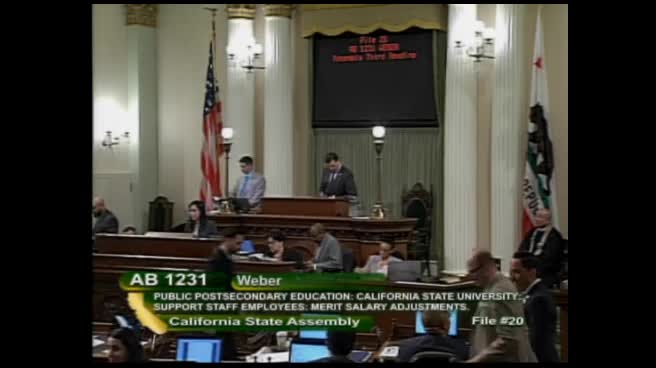 2MIN
Assembly Floor
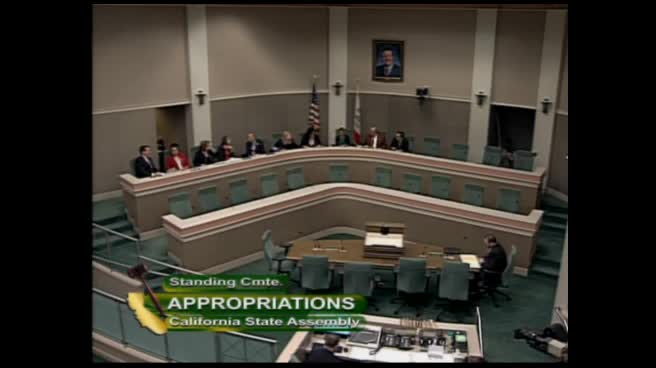 21MIN
Assembly Standing Committee on Appropriations
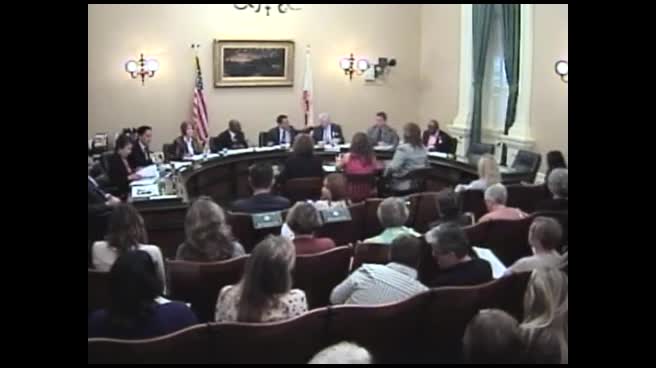 8MIN
Assembly Standing Committee on Aging and Long-Term Care
Bill Author

Bill Co-Author(s):