AB 651: Nonprofit health facilities: sale of assets: Attorney General approval.
- Session Year: 2017-2018
- House: Assembly
- Latest Version Date: 2017-10-14
Existing law requires a nonprofit corporation, as defined, that operates or controls a health facility, as defined, or operates or controls a facility that provides similar health care to provide written notice to, and obtain the written consent of, the Attorney General prior to selling or otherwise disposing of a material amount of its assets to a for-profit corporation or entity, to a mutual benefit corporation or entity, or to another nonprofit corporation or entity.
This bill would require the notice to the Attorney General to include a list of the primary languages spoken at the facility and the threshold languages for Medi-Cal beneficiaries, as determined by the State Department of Health Care Services for the county in which the facility is located. The bill also would authorize the Attorney General to require the components of the written notice be provided in any of those languages. This bill would apply to specified health facilities regardless of whether they are currently operating or providing health care services or have a suspended license.
Existing law provides that the Attorney General has discretion to give consent to, give conditional consent to, or to not consent to, the agreement or transaction and requires the Attorney General to consider any factors he or she deems relevant, including, but not limited to, whether the terms are fair and reasonable.
This bill would require the Attorney General to consider whether the agreement or transaction may create a significant effect on the availability and accessibility of cultural interests provided by the facility in the affected community.
Existing law requires the Attorney General to conduct one or more public meetings prior to issuing its decision whether to consent to the proposed agreement or transaction, to issue a notice of the public meeting, as specified, and, in any case, to issue its decision within 60 days of the receipt of the written notice from the public benefit corporation, subject to one additional 45-day extension under specified circumstances.
The bill instead would require the Attorney General to issue the decision within 90 days of the receipt of the written notice from the nonprofit corporation. The bill also would require the Attorney General to provide the notice to the public in English and in the primary languages spoken at the facility and the threshold languages for Medi-Cal beneficiaries for the county in which the facility is located, as specified.
This bill would authorize the Attorney General to enforce the conditions imposed on the Attorney Generals consent to a specified agreement or transaction. This bill also would entitle the Attorney General to specific performance, injunctive relief, and other equitable remedies a court deems appropriate, and to recover its attorneys fees and costs incurred.
This bill would incorporate additional changes to Sections 5914 and 5920 of the Corporations Code proposed by SB 687 to be operative only if this bill and SB 687 are enacted and this bill is enacted last.
Existing law requires a nonprofit corporation, as defined, that operates or controls a health facility, as defined, or operates or controls a facility that provides similar health care to provide written notice to, and obtain the written consent of, the Attorney General prior to selling or otherwise disposing of a material amount of its assets to a for-profit corporation or entity, to a mutual benefit corporation or entity, or to another nonprofit corporation or entity.
This bill would require the notice to the Attorney General to include a list of the primary languages spoken at the facility and the threshold languages for Medi-Cal beneficiaries, as determined by the State Department of Health Care Services for the county in which the facility is located. The bill also would authorize the Attorney General to require the components of the written notice be provided in any of those languages. This bill would apply to specified health facilities regardless of whether they are currently operating or providing health care services or have a suspended or canceled license.
Existing law provides that the Attorney General has discretion to give consent to, give conditional consent to, or to not consent to, the agreement or transaction and requires the Attorney General to consider any factors he or she deems relevant, including, but not limited to, whether the terms are fair and reasonable.
This bill would require the Attorney General to consider whether the agreement or transaction may create a significant effect on the availability and accessibility of cultural interests provided by the facility in the affected community.
Existing law requires the Attorney General to conduct one or more public meetings prior to issuing its decision whether to consent to the proposed agreement or transaction, to issue a notice of the public meeting, as specified, and, in any case, to issue its decision within 60 days of the receipt of the written notice from the public benefit corporation, subject to one additional 45-day extension under specified circumstances.
The bill instead would require the Attorney General to issue the decision within 90 days of the receipt of the written notice from the nonprofit corporation. The bill also would require the Attorney General to provide the notice to the public in English and in the primary languages spoken at the facility and the threshold languages for Medi-Cal beneficiaries for the county in which the facility is located, as specified.
This bill would authorize the Attorney General to enforce the conditions imposed on the Attorney Generals consent to a specified agreement or transaction. This bill also would entitle the Attorney General to specific performance, injunctive relief, and other equitable remedies a court deems appropriate, and to recover its attorneys fees and costs incurred.
Existing law requires a nonprofit corporation, as defined, that operates or controls a health facility, as defined, or operates or controls a facility that provides similar health care to provide written notice to, and obtain the written consent of, the Attorney General prior to selling or otherwise disposing of a material amount of its assets to a for-profit corporation or entity, to a mutual benefit corporation or entity, or to another nonprofit corporation or entity.
This bill would require the notice to the Attorney General to include a list of the primary languages spoken at the facility and the threshold languages for Medi-Cal beneficiaries, as determined by the State Department of Health Care Services for the county in which the facility is located. The bill also would authorize the Attorney General to require the components of the written notice be provided in any of those languages. This bill would apply to specified health facilities regardless of whether they are currently operating or providing health care services or have a suspended or canceled license.
Existing law provides that the Attorney General has discretion to give consent to, give conditional consent to, or to not consent to, the agreement or transaction and requires the Attorney General to consider any factors he or she deems relevant, including, but not limited to, whether the terms are fair and reasonable.
This bill would require the Attorney General to consider whether the agreement or transaction may have create a significant effect on the availability and accessibility of cultural interests provided by the facility in the affected community.
Existing law requires the Attorney General to conduct one or more public meetings prior to issuing its decision whether to consent to the proposed agreement or transaction, to issue a notice of the public meeting, as specified, and, in any case, to issue its decision within 60 days of the receipt of the written notice from the public benefit corporation, subject to one additional 45-day extension under specified circumstances.
The bill instead would require the Attorney General to issue its the decision within 90 days of the receipt of the written notice from th the nonprofit corporation. The bill also would require the Attorney General to provide the notice to the public in English and in the primary languages spoken at the facility and the threshold languages for Medi-Cal beneficiaries for the county in which the facility is located, as specified.
This bill would authorize the Attorney General to enforce the conditions imposed on the Attorney Generals consent to a specified agreement or transaction. This bill also would entitle the Attorney General to specific performance, injunctive relief, and other equitable remedies a court deems appropriate, and to recover its attorneys fees and costs incurred.
Existing law requires any nonprofit corporation that is subject to the Nonprofit Public Benefit Corporation Law a nonprofit corporation, as defined, that operates or controls a health facility, as defined, or operates or controls a facility that provides similar health care to provide written notice to, and obtain the written consent of, the Attorney General prior to selling or otherwise disposing of a material amount of its assets to a for-profit corporation or entity, to a mutual benefit corporation or entity, or to another nonprofit corporation or entity.
This bill would require the notice to the Attorney General from the public benefit corporation to include a list of all languages widely spoken in the primary languages spoken at the facility and the threshold languages for Medi-Cal beneficiaries, as determined by the State Department of Health Care Services for the county in which the facility is located and authorizes located. The bill also would authorize the Attorney General to require the written notice be provided in any of those languages.
Existing law provides that the Attorney General has discretion to give conditional consent or to not consent to consent to, give conditional consent to, or to not consent to, the agreement or transaction and requires the Attorney General to consider any factors he or she deems relevant, including, but not limited to, whether the terms are fair and reasonable.
This bill would require the Attorney General to consider whether the agreement or transaction will have an adverse impact on significant cultural interests in may have a significant effect on the availability and accessibility of cultural interests provided by the facility in the affected community.
Existing law requires the Attorney General to conduct one or more public meetings prior to issuing its decision whether to consent to the proposed agreement or transaction, to issue a notice of the public meeting, as specified, and, in any case, to issue its decision within 60 days of the receipt of the written notice from the public benefit corporation, subject to one additional 45-day extension under specified circumstances.
The bill instead would require the Attorney General to issue its decision within 90 days of the receipt of the written notice from the public benefit corporation and nonprofit corporation. The bill also would require the Attorney General to provide the notice to the public in English and any other language that is widely spoken in the county where the facility is located. in the primary languages spoken at the facility and the threshold languages for Medi-Cal beneficiaries for the county in which the facility is located, as specified.
Existing law requires any nonprofit corporation that is subject to the Nonprofit Public Benefit Corporation Law that operates or controls a health facility, as defined, or operates or controls a facility that provides similar health care to provide written notice to, and obtain the written consent of, the Attorney General prior to selling or otherwise disposing of a material amount of its assets to a for-profit corporation or entity, to a mutual benefit corporation or entity, or to another nonprofit corporation or entity.
This bill would require the notice to the Attorney General from the public benefit corporation to include a list of all languages widely spoken in the county in which the facility is located and authorizes the Attorney General to require the written notice be provided in any of those languages.
Existing law provides that the Attorney General has discretion to give conditional consent or to not consent to the agreement or transaction and requires the Attorney General to consider any factors he or she deems relevant, including, but not limited to, whether the terms are fair and reasonable.
This bill would require the Attorney General to consider whether the agreement or transaction will have an adverse impact on significant cultural interests in the affected community.
Existing law requires the Attorney General to conduct one or more public meetings prior to issuing its decision whether to consent to the proposed agreement or transaction, to issue a notice of the public meeting, as specified, and, in any case, to issue its decision within 60 days of the receipt of the written notice from the public benefit corporation, subject to one additional 45-day extension under specified circumstances.
The bill instead would require the Attorney General to issue its decision within 90 days of the receipt of the written notice from the public benefit corporation and would require the Attorney General to provide the notice to the public in English and any other language that is widely spoken in the county where the facility is located.
(a)(1)Any nonprofit corporation that is defined in Section 5046 and operates or controls a health facility, as defined in Section 1250 of the Health and Safety Code, or operates or controls a facility that provides similar health care, regardless of whether it is currently operating or providing health care services or has a suspended license, shall be required to provide written notice to, and to obtain the written consent of, the Attorney General prior to entering into any agreement or transaction to do either of the following:
(A)Sell, transfer, lease, exchange, option, convey, or otherwise dispose of, its assets to a for-profit corporation or entity or to a mutual benefit corporation or entity when a material amount of the assets of the nonprofit corporation are involved in the agreement or transaction.
(B)Transfer control, responsibility, or governance of a material amount of the assets or operations of the nonprofit corporation to any for-profit corporation or entity or to any mutual benefit corporation or entity.
(2)The substitution of a new corporate member or members that transfers the control of, responsibility for, or governance of the nonprofit corporation shall be deemed a transfer for purposes of this article. The substitution of one or more members of the governing body, or any arrangement, written or oral, that would transfer voting control of the members of the governing body, shall also be deemed a transfer for purposes of this article.
(b)The notice to the Attorney General provided for in this section shall include and contain the information the Attorney General determines is required. The notice, including any other information provided to the Attorney General under this article, and that is in the public file, shall be made available by the Attorney General to the public in written form, as soon as is practicable after it is received by the Attorney General. The notice shall include a list of the primary languages spoken at the facility and the threshold languages for Medi-Cal beneficiaries, as determined by the State Department of Health Care Services for the county in which the facility is located. The Attorney General may require the nonprofit corporation to provide certain components of the notice in any of these languages.
(c)This section shall not apply to a nonprofit corporation if the agreement or transaction is in the usual and regular course of its activities or if the Attorney General has given the corporation a written waiver of this section as to the proposed agreement or transaction.
(d)This section shall apply to any foreign nonprofit corporation that operates or controls a health facility, as defined in Section 1250 of the Health and Safety Code, or a facility that provides similar health care, regardless of whether it is currently operating or providing health care services or has a suspended license.
SEC. 1.5.Section 5914 of the Corporations Code is amended to read:5914.(a)(1)Any nonprofit corporation that is defined in Section 5046 and operates or controls a health facility, as defined in Section 1250 of the Health and Safety Code, or operates or controls a facility that provides similar health care, regardless of whether it is currently operating or providing health care services or has a suspended license, shall be required to provide written notice to, and to obtain the written consent of, the Attorney General prior to entering into any agreement or transaction to do any of the following:
(A)Sell, transfer, lease, exchange, option, convey, or otherwise dispose of, its assets to a for-profit corporation or entity or to a mutual benefit corporation or entity when a material amount of the assets of the nonprofit corporation are involved in the agreement or transaction.
(B)Transfer control, responsibility, or governance of a material amount of the assets or operations of the nonprofit corporation to any for-profit corporation or entity or to any mutual benefit corporation or entity.
(C)Sell, transfer, lease, exchange, option, convey, or otherwise dispose of the assets resulting from the reduction or elimination of emergency medical services provided at an emergency center licensed pursuant to Sections 1254, 1255, and 1277 of the Health and Safety Code to a for-profit corporation or entity or to a mutual benefit corporation or entity after the Attorney General gives, pursuant to Section 5940, consent or conditional consent to the reduction or elimination of emergency medical services.
(2)The substitution of a new corporate member or members that transfers the control of, responsibility for, or governance of the nonprofit corporation shall be deemed a transfer for purposes of this article. The substitution of one or more members of the governing body, or any arrangement, written or oral, that would transfer voting control of the members of the governing body, shall also be deemed a transfer for purposes of this article.
(b)The notice to the Attorney General provided for in this section shall include and contain the information the Attorney General determines is required. The notice, including any other information provided to the Attorney General under this article, and that is in the public file, shall be made available by the Attorney General to the public in written form, as soon as is practicable after it is received by the Attorney General. The notice shall include a list of the primary languages spoken at the facility and the threshold languages for Medi-Cal beneficiaries, as determined by the State Department of Health Care Services for the county in which the facility is located. The Attorney General may require the nonprofit corporation to provide certain components of the notice in any of these languages.
(c)(1)This section shall not apply to a nonprofit corporation if the agreement or transaction is in the usual and regular course of its activities or if the Attorney General has given the corporation a written waiver of this section as to the proposed agreement or transaction, except that this subdivision shall not apply to subparagraph (C) of paragraph (1) of subdivision (a).
(2)The Attorney General shall review and consent to the sale, transfer, lease, exchange, option, conveyance, or disposal of any assets resulting from a qualifying nonprofit corporations reduction or elimination of emergency medical services that occurred on or after January 1, 2016, provided the Attorney General did not already consent to the transfer, lease, exchange, option, conveyance, or disposal of those assets pursuant to either this section or Section 5920 and those assets remain under the control of the qualifying nonprofit corporation as of the effective date of the act adding this paragraph, notwithstanding the fact that the Attorney General did not review or consent to the closure or reduction pursuant to Section 5940.
(d)This section shall apply to any foreign nonprofit corporation that operates or controls a health facility, as defined in Section 1250 of the Health and Safety Code, or a facility that provides similar health care, regardless of whether it is currently operating or providing health care services or has a suspended license.
(e)This section shall not be construed to allow the Attorney General to authorize emergency medical services to be provided by a facility that does not meet the requirements of Section 1798.175 of the Health and Safety Code or is not licensed to provide emergency medical services pursuant to Sections 1254, 1255, and 1277 of the Health and Safety Code or to authorize a nonprofit general acute care hospital to reduce operations to provide emergency medical services without providing 24-hour inpatient care with basic services, including, but not limited to, medical, nursing, surgical, anesthesia, laboratory, radiology, pharmacy, and dietary services. This section shall not be construed to authorize, allow for, or permit operation of an emergency department that does not meet the definition in Section 128700 of the Health and Safety Code. This section shall not be construed to authorize, allow for, or permit emergency medical services to be provided that do not meet the requirements for standby, basic, or comprehensive emergency medical services, as defined in Article 6 (commencing with Section 70401) of Chapter 1 of Division 5 of Title 22 of the California Code of Regulations.
SEC. 2.Section 5915 of the Corporations Code is amended to read:5915.Within 90 days of the receipt of the written notice required by Section 5914, the Attorney General shall notify the public benefit corporation in writing of the decision to consent to, give conditional consent to, or not consent to the agreement or transaction. The Attorney General may extend this period for one additional 45-day period if any of the following conditions are satisfied:
(a)The extension is necessary to obtain information pursuant to subdivision (a) of Section 5919.
(b)The proposed agreement or transaction is substantially modified after the first public meeting conducted by the Attorney General in accordance with Section 5916.
(c)The proposed agreement or transaction involves a multifacility health system serving multiple communities, rather than a single facility.
SEC. 3.Section 5916 of the Corporations Code is amended to read:5916.Prior to issuing any written decision referred to in Section 5915, or giving a written waiver under subdivision (c) of Section 5914, the Attorney General shall conduct one or more public meetings, one of which shall be in the county in which the facility is located, to hear comments from interested parties. At least 14 days before conducting the public meeting, the Attorney General shall provide written notice of the time and place of the meeting through publication in one or more newspapers of general circulation in the affected community and to the board of supervisors of the county in which the facility is located. This notice shall be provided in English and in the primary languages spoken at the facility and the threshold languages for Medi-Cal beneficiaries, as determined by the State Department of Health Care Services for the county in which the facility is located. If a substantive change in the proposed agreement or transaction is submitted to the Attorney General after the initial public meeting, the Attorney General may conduct an additional public meeting to hear comments from interested parties with respect to that change.
SEC. 4.Section 5917 of the Corporations Code is amended to read:5917.The Attorney General shall have discretion to consent to, give conditional consent to, or not consent to any agreement or transaction described in subdivision (a) of Section 5914. In making the determination, the Attorney General shall consider any factors that the Attorney General deems relevant, including, but not limited to, whether any of the following apply:
(a)The terms and conditions of the agreement or transaction are fair and reasonable to the nonprofit corporation.
(b)The agreement or transaction will result in inurement to any private person or entity.
(c)Any agreement or transaction that is subject to this article is at fair market value. In this regard, fair market value means the most likely price that the assets being sold would bring in a competitive and open market under all conditions requisite to a fair sale, the buyer and seller, each acting prudently, knowledgeably and in their own best interest, and a reasonable time being allowed for exposure in the open market.
(d)The market value has been manipulated by the actions of the parties in a manner that causes the value of the assets to decrease.
(e)The proposed use of the proceeds from the agreement or transaction is consistent with the charitable trust on which the assets are held by the health facility or by the affiliated nonprofit health system.
(f)The agreement or transaction involves or constitutes any breach of trust.
(g)The Attorney General has been provided, pursuant to Section 5250, with sufficient information and data by the nonprofit corporation to evaluate adequately the agreement or transaction or the effects thereof on the public.
(h)The agreement or transaction may create a significant effect on the availability or accessibility of health care services to the affected community.
(i)The proposed agreement or transaction is in the public interest.
(j)The agreement or transaction may create a significant effect on the availability and accessibility of cultural interests provided by the facility in the affected community.
SEC. 5.Section 5920 of the Corporations Code is amended to read:5920.(a)(1)Any nonprofit corporation that is defined in Section 5046 and operates or controls a health care facility, as defined in Section 1250 of the Health and Safety Code, or operates or controls a facility that provides similar health care, regardless of whether it is currently operating or providing health care services or has a suspended license, shall be required to provide written notice to, and to obtain the written consent of, the Attorney General prior to entering into any agreement or transaction to do either of the following:
(A)Sell, transfer, lease, exchange, option, convey, or otherwise dispose of, its assets to another nonprofit corporation or entity when a material amount of the assets of the nonprofit corporation are involved in the agreement or transaction.
(B)Transfer control, responsibility, or governance of a material amount of the assets or operations of the nonprofit corporation to another nonprofit corporation or entity.
(2)The substitution of a new corporate member or members that transfers the control of, responsibility for, or governance of the nonprofit corporation, the substitution of one or more members of the governing body that would transfer voting control of the members of the governing body, or any arrangement, written or oral, that would transfer voting control of the entity shall be deemed a transfer for purposes of this article.
(b)The notice to the Attorney General provided for in this section shall contain the information the Attorney General determines is required. The notice, including any other information provided to the Attorney General under this article, and that is the public file, shall be made available by the Attorney General to the public in written form, as soon as is practicable after it is received by the Attorney General. The notice to the Attorney General shall include a list of the primary languages spoken at the facility and the threshold languages for Medi-Cal beneficiaries as determined by the State Department of Health Care Services for the county in which the facility is located. The Attorney General may require the nonprofit corporation to provide certain components of the notice in any of those languages.
(c)This section shall not apply to a nonprofit corporation if the agreement or transaction is in the usual and regular course of its activities or if the Attorney General has given the corporation a written waiver of this section as to the proposed agreement or transaction.
(d)This section shall apply to any foreign nonprofit corporation that operates or controls a health facility, as defined in Section 1250 of the Health and Safety Code, or a facility that provides similar health care, regardless of whether it is currently operating or providing health care services or has a suspended license.
(e)This section shall not apply to an agreement or transaction if the other party to the agreement or transaction is an affiliate, as defined in Section 5031, of the transferring nonprofit corporation or entity, and the corporation or entity has given the Attorney General 20 days advance notice of the agreement or transaction.
SEC. 5.5.Section 5920 of the Corporations Code is amended to read:5920.(a)(1)Any nonprofit corporation that is defined in Section 5046 and operates or controls a health care facility, as defined in Section 1250 of the Health and Safety Code, or operates or controls a facility that provides similar health care, regardless of whether it is currently operating or providing health care services or has a suspended license, shall be required to provide written notice to, and to obtain the written consent of, the Attorney General prior to entering into any agreement or transaction to do any of the following:
(A)Sell, transfer, lease, exchange, option, convey, or otherwise dispose of, its assets to another nonprofit corporation or entity when a material amount of the assets of the nonprofit corporation are involved in the agreement or transaction.
(B)Transfer control, responsibility, or governance of a material amount of the assets or operations of the nonprofit corporation to another nonprofit corporation or entity.
(C)Sell, transfer, lease, exchange, option, convey, or otherwise dispose of the assets resulting from the reduction or elimination of emergency medical services provided at an emergency center licensed pursuant to Sections 1254, 1255, and 1277 of the Health and Safety Code to another nonprofit corporation or entity after the Attorney General gives, pursuant to Section 5940, consent or conditional consent to the reduction or elimination of emergency medical services.
(2)The substitution of a new corporate member or members that transfers the control of, responsibility for, or governance of the nonprofit corporation, the substitution of one or more members of the governing body that would transfer voting control of the members of the governing body, or any arrangement, written or oral, that would transfer voting control of the entity shall be deemed a transfer for purposes of this article.
(b)The notice to the Attorney General provided for in this section shall contain the information the Attorney General determines is required. The notice, including any other information provided to the Attorney General under this article, and that is the public file, shall be made available by the Attorney General to the public in written form, as soon as is practicable after it is received by the Attorney General. The notice to the Attorney General shall include a list of the primary languages spoken at the facility and the threshold languages for Medi-Cal beneficiaries as determined by the State Department of Health Care Services for the county in which the facility is located. The Attorney General may require the nonprofit corporation to provide certain components of the notice in any of those languages.
(c)(1)This section shall not apply to a nonprofit corporation if the agreement or transaction is in the usual and regular course of its activities or if the Attorney General has given the corporation a written waiver of this section as to the proposed agreement or transaction, except that this subdivision shall not apply to subparagraph (C) of paragraph (1) of subdivision (a).
(2)The Attorney General shall review and consent to the sale, transfer, lease, exchange, option, conveyance, or disposal of any assets resulting from a qualifying nonprofit corporations reduction or elimination of emergency medical services that occurred on or after January 1, 2016, provided the Attorney General did not already consent to the transfer, lease, exchange, option, conveyance, or disposal of those assets pursuant to either this section or Section 5914 and those assets remain under the control of the qualifying nonprofit corporation as of the effective date of the act adding this paragraph, notwithstanding the fact that the Attorney General did not review or consent to the closure or reduction pursuant to Section 5940.
(d)This section shall apply to any foreign nonprofit corporation that operates or controls a health facility, as defined in Section 1250 of the Health and Safety Code, or a facility that provides similar health care, regardless of whether it is currently operating or providing health care services or has a suspended license.
(e)This section shall not apply to an agreement or transaction if the other party to the agreement or transaction is an affiliate, as defined in Section 5031, of the transferring nonprofit corporation or entity, and the corporation or entity has given the Attorney General 20 days advance notice of the agreement or transaction.
(f)This section shall not be construed to allow the Attorney General to authorize emergency medical services to be provided by a facility that does not meet the requirements of Section 1798.175 of the Health and Safety Code or is not licensed to provide emergency medical services pursuant to Sections 1254, 1255, and 1277 of the Health and Safety Code or to authorize a nonprofit general acute care hospital to reduce operations to provide emergency medical services without providing 24-hour inpatient care with basic services, including, but not limited to, medical, nursing, surgical, anesthesia, laboratory, radiology, pharmacy, and dietary services. This section shall not be construed to authorize, allow for, or permit operation of an emergency department that does not meet the definition in Section 128700 of the Health and Safety Code. This section shall not be construed to authorize, allow for, or permit emergency medical services to be provided that do not meet the requirements for standby, basic, or comprehensive emergency medical services, as defined in Article 6 (commencing with Section 70401) of Chapter 1 of Division 5 of Title 22 of the California Code of Regulations.
SEC. 6.Section 5921 of the Corporations Code is amended to read:5921.Within 90 days of the receipt of the written notice required by Section 5920, the Attorney General shall notify the nonprofit corporation in writing of the decision to consent to, give conditional consent to, or not consent to the agreement or transaction. The Attorney General may extend this period for one additional 45-day period if any of the following conditions are satisfied:
(a)The extension is necessary to obtain relevant information from any state agency, experts, or consultants.
(b)The proposed agreement or transaction is substantially modified after the first public meeting conducted by the Attorney General in accordance with Section 5922.
(c)The proposed agreement or transaction involves a multifacility health system serving multiple communities, rather than a single facility.
SEC. 7.Section 5922 of the Corporations Code is amended to read:5922.Prior to issuing any written decision referred to in Section 5921, or giving a written waiver under subdivision (c) of Section 5914, the Attorney General shall conduct one or more public meetings, one of which shall be in the county in which the facility is located, to hear comments from interested parties. At least 14 days before conducting the public meeting, the Attorney General shall provide written notice of the time and place of the meeting through publication in one or more newspapers of general circulation in the affected community and to the board of supervisors of the county in which the facility is located. This notice shall be provided in English and in the primary languages spoken at the facility and the threshold languages for Medi-Cal beneficiaries as determined by the State Department of Health Care Services for the county in which the facility is located. If a substantive change in the proposed agreement or transaction is submitted to the Attorney General after the initial public meeting, the Attorney General may conduct an additional public meeting to hear comments from interested parties with respect to that change.
SEC. 8.Section 5923 of the Corporations Code is amended to read:5923.The Attorney General shall have discretion to consent to, give conditional consent to, or not consent to any agreement or transaction described in subdivision (a) of Section 5920. In making the determination, the Attorney General shall consider any factors that the Attorney General deems relevant, including, but not limited to, whether any of the following apply:
(a)The terms and conditions of the agreement or transaction are fair and reasonable to the nonprofit corporation.
(b)The agreement or transaction will result in inurement to any private person or entity.
(c)Fair market value of the agreement or transaction, meaning the most likely price that the assets being sold would bring in a competitive and open market under all conditions requisite to a fair sale, the buyer and seller, each acting prudently, knowledgeably, and in their own best interest, and a reasonable time being allowed for exposure in the open market.
(d)The market value has been manipulated by the actions of the parties in a manner that causes the value of the assets to decrease.
(e)The proposed use of the proceeds from the agreement or transaction is consistent with the charitable trust on which the assets are held by the health facility or by the affiliated nonprofit health system.
(f)The agreement or transaction involves or constitutes any breach of trust.
(g)The Attorney General has been provided, pursuant to Section 5250, with sufficient information and data by the nonprofit public benefit corporation to evaluate adequately the agreement or transaction or the effects thereof on the public.
(h)The agreement or transaction may create a significant effect on the availability or accessibility of health care services to the affected community.
(i)The proposed agreement or transaction is in the public interest.
(j)The agreement or transaction may create a significant effect on the availability and accessibility of cultural interests provided by the facility in the affected community.
SEC. 9.Section 5926 is added to the Corporations Code, to read:5926.The Attorney General may enforce conditions imposed on the Attorney Generals consent to an agreement or transaction pursuant to Section 5914 or 5920 to the fullest extent provided by law. In addition to any legal remedies the Attorney General may have, the Attorney General shall be entitled to specific performance, injunctive relief, and other equitable remedies a court deems appropriate for breach of any of the conditions and shall be entitled to recover its attorneys fees and costs incurred in remedying each violation.
SEC. 10.Section 1.5 of this bill incorporates amendments to Section 5914 of the Corporations Code proposed by both this bill and Senate Bill 687. That section of this bill shall only become operative if (1) both bills are enacted and become effective on or before January 1, 2018, (2) each bill amends Section 5914 of the Corporations Code, and (3) this bill is enacted after Senate Bill 687, in which case Section 1 of this bill shall not become operative.
SEC. 11.Section 5.5 of this bill incorporates amendments to Section 5920 of the Corporations Code proposed by both this bill and Senate Bill 687. That section of this bill shall only become operative if (1) both bills are enacted and become effective on or before January 1, 2018, (2) each bill amends Section 5920 of the Corporations Code, and (3) this bill is enacted after Senate Bill 687, in which case Section 5 of this bill shall not become operative.
(a)(1)Any nonprofit corporation that is defined in Section 5046 and operates or controls a health facility, as defined in Section 1250 of the Health and Safety Code, or operates or controls a facility that provides similar health care, regardless of whether it is currently operating or providing health care services or has a suspended license, shall be required to provide written notice to, and to obtain the written consent of, the Attorney General prior to entering into any agreement or transaction to do either of the following:
(A)Sell, transfer, lease, exchange, option, convey, or otherwise dispose of, its assets to a for-profit corporation or entity or to a mutual benefit corporation or entity when a material amount of the assets of the nonprofit corporation are involved in the agreement or transaction.
(B)Transfer control, responsibility, or governance of a material amount of the assets or operations of the nonprofit corporation to any for-profit corporation or entity or to any mutual benefit corporation or entity.
(2)The substitution of a new corporate member or members that transfers the control of, responsibility for, or governance of the nonprofit corporation shall be deemed a transfer for purposes of this article. The substitution of one or more members of the governing body, or any arrangement, written or oral, that would transfer voting control of the members of the governing body, shall also be deemed a transfer for purposes of this article.
(b)The notice to the Attorney General provided for in this section shall include and contain the information the Attorney General determines is required. The notice, including any other information provided to the Attorney General under this article, and that is in the public file, shall be made available by the Attorney General to the public in written form, as soon as is practicable after it is received by the Attorney General. The notice shall include a list of the primary languages spoken at the facility and the threshold languages for Medi-Cal beneficiaries, as determined by the State Department of Health Care Services for the county in which the facility is located. The Attorney General may require the nonprofit corporation to provide certain components of the notice in any of these languages.
(c)This section shall not apply to a nonprofit corporation if the agreement or transaction is in the usual and regular course of its activities or if the Attorney General has given the corporation a written waiver of this section as to the proposed agreement or transaction.
(d)This section shall apply to any foreign nonprofit corporation that operates or controls a health facility, as defined in Section 1250 of the Health and Safety Code, or a facility that provides similar health care, regardless of whether it is currently operating or providing health care services or has a suspended license.
SEC. 1.5.Section 5914 of the Corporations Code is amended to read:5914.(a)(1)Any nonprofit corporation that is defined in Section 5046 and operates or controls a health facility, as defined in Section 1250 of the Health and Safety Code, or operates or controls a facility that provides similar health care, regardless of whether it is currently operating or providing health care services or has a suspended license, shall be required to provide written notice to, and to obtain the written consent of, the Attorney General prior to entering into any agreement or transaction to do either any of the following:
(A)Sell, transfer, lease, exchange, option, convey, or otherwise dispose of, its assets to a for-profit corporation or entity or to a mutual benefit corporation or entity when a material amount of the assets of the nonprofit corporation are involved in the agreement or transaction.
(B)Transfer control, responsibility, or governance of a material amount of the assets or operations of the nonprofit corporation to any for-profit corporation or entity or to any mutual benefit corporation or entity.
(C)Sell, transfer, lease, exchange, option, convey, or otherwise dispose of the assets resulting from the reduction or elimination of emergency medical services provided at an emergency center licensed pursuant to Sections 1254, 1255, and 1277 of the Health and Safety Code to a for-profit corporation or entity or to a mutual benefit corporation or entity after the Attorney General gives, pursuant to Section 5940, consent or conditional consent to the reduction or elimination of emergency medical services.
(2)The substitution of a new corporate member or members that transfers the control of, responsibility for, or governance of the nonprofit corporation shall be deemed a transfer for purposes of this article. The substitution of one or more members of the governing body, or any arrangement, written or oral, that would transfer voting control of the members of the governing body, shall also be deemed a transfer for purposes of this article.
(b)The notice to the Attorney General provided for in this section shall include and contain the information the Attorney General determines is required. The notice, including any other information provided to the Attorney General under this article, and that is in the public file, shall be made available by the Attorney General to the public in written form, as soon as is practicable after it is received by the Attorney General. The notice shall include a list of the primary languages spoken at the facility and the threshold languages for Medi-Cal beneficiaries, as determined by the State Department of Health Care Services for the county in which the facility is located. The Attorney General may require the nonprofit corporation to provide certain components of the notice in any of these languages.
(c)(1)This section shall not apply to a nonprofit corporation if the agreement or transaction is in the usual and regular course of its activities or if the Attorney General has given the corporation a written waiver of this section as to the proposed agreement or transaction. transaction, except that this subdivision shall not apply to subparagraph (C) of paragraph (1) of subdivision (a).
(2)The Attorney General shall review and consent to the sale, transfer, lease, exchange, option, conveyance, or disposal of any assets resulting from a qualifying nonprofit corporations reduction or elimination of emergency medical services that occurred on or after January 1, 2016, provided the Attorney General did not already consent to the transfer, lease, exchange, option, conveyance, or disposal of those assets pursuant to either this section or Section 5920 and those assets remain under the control of the qualifying nonprofit corporation as of the effective date of the act adding this paragraph, notwithstanding the fact that the Attorney General did not review or consent to the closure or reduction pursuant to Section 5940.
(d)This section shall apply to any foreign nonprofit corporation that operates or controls a health facility, as defined in Section 1250 of the Health and Safety Code, or a facility that provides similar health care. care, regardless of whether it is currently operating or providing health care services or has a suspended license.
(e)This section shall not be construed to allow the Attorney General to authorize emergency medical services to be provided by a facility that does not meet the requirements of Section 1798.175 of the Health and Safety Code or is not licensed to provide emergency medical services pursuant to Sections 1254, 1255, and 1277 of the Health and Safety Code or to authorize a nonprofit general acute care hospital to reduce operations to provide emergency medical services without providing 24-hour inpatient care with basic services, including, but not limited to, medical, nursing, surgical, anesthesia, laboratory, radiology, pharmacy, and dietary services. This section shall not be construed to authorize, allow for, or permit operation of an emergency department that does not meet the definition in Section 128700 of the Health and Safety Code. This section shall not be construed to authorize, allow for, or permit emergency medical services to be provided that do not meet the requirements for standby, basic, or comprehensive emergency medical services, as defined in Article 6 (commencing with Section 70401) of Chapter 1 of Division 5 of Title 22 of the California Code of Regulations.
SEC. 2.Section 5915 of the Corporations Code is amended to read:5915.Within 90 days of the receipt of the written notice required by Section 5914, the Attorney General shall notify the public benefit corporation in writing of the decision to consent to, give conditional consent to, or not consent to the agreement or transaction. The Attorney General may extend this period for one additional 45-day period if any of the following conditions are satisfied:
(a)The extension is necessary to obtain information pursuant to subdivision (a) of Section 5919.
(b)The proposed agreement or transaction is substantially modified after the first public meeting conducted by the Attorney General in accordance with Section 5916.
(c)The proposed agreement or transaction involves a multifacility health system serving multiple communities, rather than a single facility.
SEC. 3.Section 5916 of the Corporations Code is amended to read:5916.Prior to issuing any written decision referred to in Section 5915, or giving a written waiver under subdivision (c) of Section 5914, the Attorney General shall conduct one or more public meetings, one of which shall be in the county in which the facility is located, to hear comments from interested parties. At least 14 days before conducting the public meeting, the Attorney General shall provide written notice of the time and place of the meeting through publication in one or more newspapers of general circulation in the affected community and to the board of supervisors of the county in which the facility is located. This notice shall be provided in English and in the primary languages spoken at the facility and the threshold languages for Medi-Cal beneficiaries, as determined by the State Department of Health Care Services for the county in which the facility is located. If a substantive change in the proposed agreement or transaction is submitted to the Attorney General after the initial public meeting, the Attorney General may conduct an additional public meeting to hear comments from interested parties with respect to that change.
SEC. 4.Section 5917 of the Corporations Code is amended to read:5917.The Attorney General shall have discretion to consent to, give conditional consent to, or not consent to any agreement or transaction described in subdivision (a) of Section 5914. In making the determination, the Attorney General shall consider any factors that the Attorney General deems relevant, including, but not limited to, whether any of the following apply:
(a)The terms and conditions of the agreement or transaction are fair and reasonable to the nonprofit corporation.
(b)The agreement or transaction will result in inurement to any private person or entity.
(c)Any agreement or transaction that is subject to this article is at fair market value. In this regard, fair market value means the most likely price that the assets being sold would bring in a competitive and open market under all conditions requisite to a fair sale, the buyer and seller, each acting prudently, knowledgeably and in their own best interest, and a reasonable time being allowed for exposure in the open market.
(d)The market value has been manipulated by the actions of the parties in a manner that causes the value of the assets to decrease.
(e)The proposed use of the proceeds from the agreement or transaction is consistent with the charitable trust on which the assets are held by the health facility or by the affiliated nonprofit health system.
(f)The agreement or transaction involves or constitutes any breach of trust.
(g)The Attorney General has been provided, pursuant to Section 5250, with sufficient information and data by the nonprofit corporation to evaluate adequately the agreement or transaction or the effects thereof on the public.
(h)The agreement or transaction may create a significant effect on the availability or accessibility of health care services to the affected community.
(i)The proposed agreement or transaction is in the public interest.
(j)The agreement or transaction may create a significant effect on the availability and accessibility of cultural interests provided by the facility in the affected community.
SEC. 5.Section 5920 of the Corporations Code is amended to read:5920.(a)(1)Any nonprofit corporation that is defined in Section 5046 and operates or controls a health care facility, as defined in Section 1250 of the Health and Safety Code, or operates or controls a facility that provides similar health care, regardless of whether it is currently operating or providing health care services or has a suspended license, shall be required to provide written notice to, and to obtain the written consent of, the Attorney General prior to entering into any agreement or transaction to do either of the following:
(A)Sell, transfer, lease, exchange, option, convey, or otherwise dispose of, its assets to another nonprofit corporation or entity when a material amount of the assets of the nonprofit corporation are involved in the agreement or transaction.
(B)Transfer control, responsibility, or governance of a material amount of the assets or operations of the nonprofit corporation to another nonprofit corporation or entity.
(2)The substitution of a new corporate member or members that transfers the control of, responsibility for, or governance of the nonprofit corporation, the substitution of one or more members of the governing body that would transfer voting control of the members of the governing body, or any arrangement, written or oral, that would transfer voting control of the entity shall be deemed a transfer for purposes of this article.
(b)The notice to the Attorney General provided for in this section shall contain the information the Attorney General determines is required. The notice, including any other information provided to the Attorney General under this article, and that is the public file, shall be made available by the Attorney General to the public in written form, as soon as is practicable after it is received by the Attorney General. The notice to the Attorney General shall include a list of the primary languages spoken at the facility and the threshold languages for Medi-Cal beneficiaries as determined by the State Department of Health Care Services for the county in which the facility is located. The Attorney General may require the nonprofit corporation to provide certain components of the notice in any of those languages.
(c)This section shall not apply to a nonprofit corporation if the agreement or transaction is in the usual and regular course of its activities or if the Attorney General has given the corporation a written waiver of this section as to the proposed agreement or transaction.
(d)This section shall apply to any foreign nonprofit corporation that operates or controls a health facility, as defined in Section 1250 of the Health and Safety Code, or a facility that provides similar health care, regardless of whether it is currently operating or providing health care services or has a suspended license.
(e)This section shall not apply to an agreement or transaction if the other party to the agreement or transaction is an affiliate, as defined in Section 5031, of the transferring nonprofit corporation or entity, and the corporation or entity has given the Attorney General 20 days advance notice of the agreement or transaction.
SEC. 5.5.Section 5920 of the Corporations Code is amended to read:5920.(a)(1)Any nonprofit corporation that is defined in Section 5046 and operates or controls a health care facility, as defined in Section 1250 of the Health and Safety Code, or operates or controls a facility that provides similar health care, regardless of whether it is currently operating or providing health care services or has a suspended license, shall be required to provide written notice to, and to obtain the written consent of, the Attorney General prior to entering into any agreement or transaction to do either any of the following:
(A)Sell, transfer, lease, exchange, option, convey, or otherwise dispose of, its assets to another nonprofit corporation or entity when a material amount of the assets of the nonprofit corporation are involved in the agreement or transaction.
(B)Transfer control, responsibility, or governance of a material amount of the assets or operations of the nonprofit corporation to another nonprofit corporation or entity.
(C)Sell, transfer, lease, exchange, option, convey, or otherwise dispose of the assets resulting from the reduction or elimination of emergency medical services provided at an emergency center licensed pursuant to Sections 1254, 1255, and 1277 of the Health and Safety Code to another nonprofit corporation or entity after the Attorney General gives, pursuant to Section 5940, consent or conditional consent to the reduction or elimination of emergency medical services.
(2)The substitution of a new corporate member or members that transfers the control of, responsibility for, or governance of the nonprofit corporation, the substitution of one or more members of the governing body that would transfer voting control of the members of the governing body, or any arrangement, written or oral, that would transfer voting control of the entity shall be deemed a transfer for purposes of this article.
(b)The notice to the Attorney General provided for in this section shall contain the information the Attorney General determines is required. The notice, including any other information provided to the Attorney General under this article, and that is the public file, shall be made available by the Attorney General to the public in written form, as soon as is practicable after it is received by the Attorney General. The notice to the Attorney General shall include a list of the primary languages spoken at the facility and the threshold languages for Medi-Cal beneficiaries as determined by the State Department of Health Care Services for the county in which the facility is located. The Attorney General may require the nonprofit corporation to provide certain components of the notice in any of those languages.
(c)(1)This section shall not apply to a nonprofit corporation if the agreement or transaction is in the usual and regular course of its activities or if the Attorney General has given the corporation a written waiver of this section as to the proposed agreement or transaction. transaction, except that this subdivision shall not apply to subparagraph (C) of paragraph (1) of subdivision (a).
(2)The Attorney General shall review and consent to the sale, transfer, lease, exchange, option, conveyance, or disposal of any assets resulting from a qualifying nonprofit corporations reduction or elimination of emergency medical services that occurred on or after January 1, 2016, provided the Attorney General did not already consent to the transfer, lease, exchange, option, conveyance, or disposal of those assets pursuant to either this section or Section 5914 and those assets remain under the control of the qualifying nonprofit corporation as of the effective date of the act adding this paragraph, notwithstanding the fact that the Attorney General did not review or consent to the closure or reduction pursuant to Section 5940.
(d)This section shall apply to any foreign nonprofit corporation that operates or controls a health facility, as defined in Section 1250 of the Health and Safety Code, or a facility that provides similar health care. care, regardless of whether it is currently operating or providing health care services or has a suspended license.
(e)This section shall not apply to an agreement or transaction if the other party to the agreement or transaction is an affiliate, as defined in Section 5031, of the transferring nonprofit corporation or entity, and the corporation or entity has given the Attorney General 20 days advance notice of the agreement or transaction.
(f)This section shall not be construed to allow the Attorney General to authorize emergency medical services to be provided by a facility that does not meet the requirements of Section 1798.175 of the Health and Safety Code or is not licensed to provide emergency medical services pursuant to Sections 1254, 1255, and 1277 of the Health and Safety Code or to authorize a nonprofit general acute care hospital to reduce operations to provide emergency medical services without providing 24-hour inpatient care with basic services, including, but not limited to, medical, nursing, surgical, anesthesia, laboratory, radiology, pharmacy, and dietary services. This section shall not be construed to authorize, allow for, or permit operation of an emergency department that does not meet the definition in Section 128700 of the Health and Safety Code. This section shall not be construed to authorize, allow for, or permit emergency medical services to be provided that do not meet the requirements for standby, basic, or comprehensive emergency medical services, as defined in Article 6 (commencing with Section 70401) of Chapter 1 of Division 5 of Title 22 of the California Code of Regulations.
SEC. 6.Section 5921 of the Corporations Code is amended to read:5921.Within 90 days of the receipt of the written notice required by Section 5920, the Attorney General shall notify the nonprofit corporation in writing of the decision to consent to, give conditional consent to, or not consent to the agreement or transaction. The Attorney General may extend this period for one additional 45-day period if any of the following conditions are satisfied:
(a)The extension is necessary to obtain relevant information from any state agency, experts, or consultants.
(b)The proposed agreement or transaction is substantially modified after the first public meeting conducted by the Attorney General in accordance with Section 5922.
(c)The proposed agreement or transaction involves a multifacility health system serving multiple communities, rather than a single facility.
SEC. 7.Section 5922 of the Corporations Code is amended to read:5922.Prior to issuing any written decision referred to in Section 5921, or giving a written waiver under subdivision (c) of Section 5914, the Attorney General shall conduct one or more public meetings, one of which shall be in the county in which the facility is located, to hear comments from interested parties. At least 14 days before conducting the public meeting, the Attorney General shall provide written notice of the time and place of the meeting through publication in one or more newspapers of general circulation in the affected community and to the board of supervisors of the county in which the facility is located. This notice shall be provided in English and in the primary languages spoken at the facility and the threshold languages for Medi-Cal beneficiaries as determined by the State Department of Health Care Services for the county in which the facility is located. If a substantive change in the proposed agreement or transaction is submitted to the Attorney General after the initial public meeting, the Attorney General may conduct an additional public meeting to hear comments from interested parties with respect to that change.
SEC. 8.Section 5923 of the Corporations Code is amended to read:5923.The Attorney General shall have discretion to consent to, give conditional consent to, or not consent to any agreement or transaction described in subdivision (a) of Section 5920. In making the determination, the Attorney General shall consider any factors that the Attorney General deems relevant, including, but not limited to, whether any of the following apply:
(a)The terms and conditions of the agreement or transaction are fair and reasonable to the nonprofit corporation.
(b)The agreement or transaction will result in inurement to any private person or entity.
(c)Fair market value of the agreement or transaction, meaning the most likely price that the assets being sold would bring in a competitive and open market under all conditions requisite to a fair sale, the buyer and seller, each acting prudently, knowledgeably, and in their own best interest, and a reasonable time being allowed for exposure in the open market.
(d)The market value has been manipulated by the actions of the parties in a manner that causes the value of the assets to decrease.
(e)The proposed use of the proceeds from the agreement or transaction is consistent with the charitable trust on which the assets are held by the health facility or by the affiliated nonprofit health system.
(f)The agreement or transaction involves or constitutes any breach of trust.
(g)The Attorney General has been provided, pursuant to Section 5250, with sufficient information and data by the nonprofit public benefit corporation to evaluate adequately the agreement or transaction or the effects thereof on the public.
(h)The agreement or transaction may create a significant effect on the availability or accessibility of health care services to the affected community.
(i)The proposed agreement or transaction is in the public interest.
(j)The agreement or transaction may create a significant effect on the availability and accessibility of cultural interests provided by the facility in the affected community.
SEC. 9.Section 5926 is added to the Corporations Code, to read:5926.The Attorney General may enforce conditions imposed on the Attorney Generals consent to an agreement or transaction pursuant to Section 5914 or 5920 to the fullest extent provided by law. In addition to any legal remedies the Attorney General may have, the Attorney General shall be entitled to specific performance, injunctive relief, and other equitable remedies a court deems appropriate for breach of any of the conditions and shall be entitled to recover its attorneys fees and costs incurred in remedying each violation.
SEC. 10.Section 1.5 of this bill incorporates amendments to Section 5914 of the Corporations Code proposed by both this bill and Senate Bill 687. That section of this bill shall only become operative if (1) both bills are enacted and become effective on or before January 1, 2018, (2) each bill amends Section 5914 of the Corporations Code, and (3) this bill is enacted after Senate Bill 687, in which case Section 1 of this bill shall not become operative.
SEC. 11.Section 5.5 of this bill incorporates amendments to Section 5920 of the Corporations Code proposed by both this bill and Senate Bill 687. That section of this bill shall only become operative if (1) both bills are enacted and become effective on or before January 1, 2018, (2) each bill amends Section 5920 of the Corporations Code, and (3) this bill is enacted after Senate Bill 687, in which case Section 5 of this bill shall not become operative.
(a)(1)Any nonprofit corporation that is defined in Section 5046 and operates or controls a health facility, as defined in Section 1250 of the Health and Safety Code, or operates or controls a facility that provides similar health care, regardless of whether it is currently operating or providing health care services or has a suspended or canceled license, shall be required to provide written notice to, and to obtain the written consent of, the Attorney General prior to entering into any agreement or transaction to do either of the following:
(A)Sell, transfer, lease, exchange, option, convey, or otherwise dispose of, its assets to a for-profit corporation or entity or to a mutual benefit corporation or entity when a material amount of the assets of the nonprofit corporation are involved in the agreement or transaction.
(B)Transfer control, responsibility, or governance of a material amount of the assets or operations of the nonprofit corporation to any for-profit corporation or entity or to any mutual benefit corporation or entity.
(2)The substitution of a new corporate member or members that transfers the control of, responsibility for, or governance of the nonprofit corporation shall be deemed a transfer for purposes of this article. The substitution of one or more members of the governing body, or any arrangement, written or oral, that would transfer voting control of the members of the governing body, shall also be deemed a transfer for purposes of this article.
(b)The notice to the Attorney General provided for in this section shall include and contain the information the Attorney General determines is required. The notice, including any other information provided to the Attorney General under this article, and that is in the public file, shall be made available by the Attorney General to the public in written form, as soon as is practicable after it is received by the Attorney General. The notice shall include a list of the primary languages spoken at the facility and the threshold languages for Medi-Cal beneficiaries, as determined by the State Department of Health Care Services for the county in which the facility is located. The Attorney General may require the nonprofit corporation to provide certain components of the notice in any of these languages.
(c)This section shall not apply to a nonprofit corporation if the agreement or transaction is in the usual and regular course of its activities or if the Attorney General has given the corporation a written waiver of this section as to the proposed agreement or transaction.
(d)This section shall apply to any foreign nonprofit corporation that operates or controls a health facility, as defined in Section 1250 of the Health and Safety Code, or a facility that provides similar health care, regardless of whether it is currently operating or providing health care services or has a suspended or canceled license.
SEC. 2.Section 5915 of the Corporations Code is amended to read:5915.Within 90 days of the receipt of the written notice required by Section 5914, the Attorney General shall notify the public benefit corporation in writing of the decision to consent to, give conditional consent to, or not consent to the agreement or transaction. The Attorney General may extend this period for one additional 45-day period if any of the following conditions are satisfied:
(a)The extension is necessary to obtain information pursuant to subdivision (a) of Section 5919.
(b)The proposed agreement or transaction is substantially modified after the first public meeting conducted by the Attorney General in accordance with Section 5916.
(c)The proposed agreement or transaction involves a multifacility health system serving multiple communities, rather than a single facility.
SEC. 3.Section 5916 of the Corporations Code is amended to read:5916.Prior to issuing any written decision referred to in Section 5915, or giving a written waiver under subdivision (c) of Section 5914, the Attorney General shall conduct one or more public meetings, one of which shall be in the county in which the facility is located, to hear comments from interested parties. At least 14 days before conducting the public meeting, the Attorney General shall provide written notice of the time and place of the meeting through publication in one or more newspapers of general circulation in the affected community and to the board of supervisors of the county in which the facility is located. This notice shall be provided in English and in the primary languages spoken at the facility and the threshold languages for Medi-Cal beneficiaries, as determined by the State Department of Health Care Services for the county in which the facility is located. If a substantive change in the proposed agreement or transaction is submitted to the Attorney General after the initial public meeting, the Attorney General may conduct an additional public meeting to hear comments from interested parties with respect to that change.
SEC. 4.Section 5917 of the Corporations Code is amended to read:5917.The Attorney General shall have discretion to consent to, give conditional consent to, or not consent to any agreement or transaction described in subdivision (a) of Section 5914. In making the determination, the Attorney General shall consider any factors that the Attorney General deems relevant, including, but not limited to, whether any of the following apply:
(a)The terms and conditions of the agreement or transaction are fair and reasonable to the nonprofit corporation.
(b)The agreement or transaction will result in inurement to any private person or entity.
(c)Any agreement or transaction that is subject to this article is at fair market value. In this regard, fair market value means the most likely price that the assets being sold would bring in a competitive and open market under all conditions requisite to a fair sale, the buyer and seller, each acting prudently, knowledgeably and in their own best interest, and a reasonable time being allowed for exposure in the open market.
(d)The market value has been manipulated by the actions of the parties in a manner that causes the value of the assets to decrease.
(e)The proposed use of the proceeds from the agreement or transaction is consistent with the charitable trust on which the assets are held by the health facility or by the affiliated nonprofit health system.
(f)The agreement or transaction involves or constitutes any breach of trust.
(g)The Attorney General has been provided, pursuant to Section 5250, with sufficient information and data by the nonprofit corporation to evaluate adequately the agreement or transaction or the effects thereof on the public.
(h)The agreement or transaction may create a significant effect on the availability or accessibility of health care services to the affected community.
(i)The proposed agreement or transaction is in the public interest.
(j)The agreement or transaction may create a significant effect on the availability and accessibility of cultural interests provided by the facility in the affected community.
SEC. 5.Section 5920 of the Corporations Code is amended to read:5920.(a)(1)Any nonprofit corporation that is defined in Section 5046 and operates or controls a health care facility, as defined in Section 1250 of the Health and Safety Code, or operates or controls a facility that provides similar health care, regardless of whether it is currently operating or providing health care services or has a suspended or canceled license, shall be required to provide written notice to, and to obtain the written consent of, the Attorney General prior to entering into any agreement or transaction to do either of the following:
(A)Sell, transfer, lease, exchange, option, convey, or otherwise dispose of, its assets to another nonprofit corporation or entity when a material amount of the assets of the nonprofit corporation are involved in the agreement or transaction.
(B)Transfer control, responsibility, or governance of a material amount of the assets or operations of the nonprofit corporation to another nonprofit corporation or entity.
(2)The substitution of a new corporate member or members that transfers the control of, responsibility for, or governance of the nonprofit corporation, the substitution of one or more members of the governing body that would transfer voting control of the members of the governing body, or any arrangement, written or oral, that would transfer voting control of the entity shall be deemed a transfer for purposes of this article.
(b)The notice to the Attorney General provided for in this section shall contain the information the Attorney General determines is required. The notice, including any other information provided to the Attorney General under this article, and that is the public file, shall be made available by the Attorney General to the public in written form, as soon as is practicable after it is received by the Attorney General. The notice to the Attorney General shall include a list of the primary languages spoken at the facility and the threshold languages for Medi-Cal beneficiaries as determined by the State Department of Health Care Services for the county in which the facility is located. The Attorney General may require the nonprofit corporation to provide certain components of the notice in any of those languages.
(c)This section shall not apply to a nonprofit corporation if the agreement or transaction is in the usual and regular course of its activities or if the Attorney General has given the corporation a written waiver of this section as to the proposed agreement or transaction.
(d)This section shall apply to any foreign nonprofit corporation that operates or controls a health facility, as defined in Section 1250 of the Health and Safety Code, or a facility that provides similar health care, regardless of whether it is currently operating or providing health care services or has a suspended or canceled license.
(e)This section shall not apply to an agreement or transaction if the other party to the agreement or transaction is an affiliate, as defined in Section 5031, of the transferring nonprofit corporation or entity, and the corporation or entity has given the Attorney General 20 days advance notice of the agreement or transaction.
SEC. 6.Section 5921 of the Corporations Code is amended to read:5921.Within 90 days of the receipt of the written notice required by Section 5920, the Attorney General shall notify the nonprofit corporation in writing of the decision to consent to, give conditional consent to, or not consent to the agreement or transaction. The Attorney General may extend this period for one additional 45-day period if any of the following conditions are satisfied:
(a)The extension is necessary to obtain relevant information from any state agency, experts, or consultants.
(b)The proposed agreement or transaction is substantially modified after the first public meeting conducted by the Attorney General in accordance with Section 5922.
(c)The proposed agreement or transaction involves a multifacility health system serving multiple communities, rather than a single facility.
SEC. 7.Section 5922 of the Corporations Code is amended to read:5922.Prior to issuing any written decision referred to in Section 5921, or giving a written waiver under subdivision (c) of Section 5914, the Attorney General shall conduct one or more public meetings, one of which shall be in the county in which the facility is located, to hear comments from interested parties. At least 14 days before conducting the public meeting, the Attorney General shall provide written notice of the time and place of the meeting through publication in one or more newspapers of general circulation in the affected community and to the board of supervisors of the county in which the facility is located. This notice shall be provided in English and in the primary languages spoken at the facility and the threshold languages for Medi-Cal beneficiaries as determined by the State Department of Health Care Services for the county in which the facility is located. If a substantive change in the proposed agreement or transaction is submitted to the Attorney General after the initial public meeting, the Attorney General may conduct an additional public meeting to hear comments from interested parties with respect to that change.
SEC. 8.Section 5923 of the Corporations Code is amended to read:5923.The Attorney General shall have discretion to consent to, give conditional consent to, or not consent to any agreement or transaction described in subdivision (a) of Section 5920. In making the determination, the Attorney General shall consider any factors that the Attorney General deems relevant, including, but not limited to, whether any of the following apply:
(a)The terms and conditions of the agreement or transaction are fair and reasonable to the nonprofit corporation.
(b)The agreement or transaction will result in inurement to any private person or entity.
(c)Fair market value of the agreement or transaction, meaning the most likely price that the assets being sold would bring in a competitive and open market under all conditions requisite to a fair sale, the buyer and seller, each acting prudently, knowledgeably, and in their own best interest, and a reasonable time being allowed for exposure in the open market.
(d)The market value has been manipulated by the actions of the parties in a manner that causes the value of the assets to decrease.
(e)The proposed use of the proceeds from the agreement or transaction is consistent with the charitable trust on which the assets are held by the health facility or by the affiliated nonprofit health system.
(f)The agreement or transaction involves or constitutes any breach of trust.
(g)The Attorney General has been provided, pursuant to Section 5250, with sufficient information and data by the nonprofit public benefit corporation to evaluate adequately the agreement or transaction or the effects thereof on the public.
(h)The agreement or transaction may create a significant effect on the availability or accessibility of health care services to the affected community.
(i)The proposed agreement or transaction is in the public interest.
(j)The agreement or transaction may create a significant effect on the availability and accessibility of cultural interests provided by the facility in the affected community.
SEC. 9.Section 5926 is added to the Corporations Code, to read:5926.The Attorney General may enforce conditions imposed on the Attorney Generals consent to an agreement or transaction pursuant to Section 5914 or 5920 to the fullest extent provided by law. In addition to any legal remedies the Attorney General may have, the Attorney General shall be entitled to specific performance, injunctive relief, and other equitable remedies a court deems appropriate for breach of any of the conditions and shall be entitled to recover its attorneys fees and costs incurred in remedying each violation.
(a)(1)Any nonprofit corporation that is defined in Section 5046 and operates or controls a health facility, as defined in Section 1250 of the Health and Safety Code, or operates or controls a facility that provides similar health care, regardless of whether it is currently operating or providing health care services or has a suspended or canceled license, shall be required to provide written notice to, and to obtain the written consent of, the Attorney General prior to entering into any agreement or transaction to do either of the following:
(A)Sell, transfer, lease, exchange, option, convey, or otherwise dispose of, its assets to a for-profit corporation or entity or to a mutual benefit corporation or entity when a material amount of the assets of the nonprofit corporation are involved in the agreement or transaction.
(B)Transfer control, responsibility, or governance of a material amount of the assets or operations of the nonprofit corporation to any for-profit corporation or entity or to any mutual benefit corporation or entity.
(2)The substitution of a new corporate member or members that transfers the control of, responsibility for, or governance of the nonprofit corporation shall be deemed a transfer for purposes of this article. The substitution of one or more members of the governing body, or any arrangement, written or oral, that would transfer voting control of the members of the governing body, shall also be deemed a transfer for purposes of this article.
(b)The notice to the Attorney General provided for in this section shall include and contain the information the Attorney General determines is required. The notice, including any other information provided to the Attorney General under this article, and that is in the public file, shall be made available by the Attorney General to the public in written form, as soon as is practicable after it is received by the Attorney General. The notice shall include a list of the primary languages spoken at the facility and the threshold languages for Medi-Cal beneficiaries, as determined by the State Department of Health Care Services for the county in which the facility is located. The Attorney General may require the nonprofit corporation to provide certain components of the notice in any of these languages.
(c)This section shall not apply to a nonprofit corporation if the agreement or transaction is in the usual and regular course of its activities or if the Attorney General has given the corporation a written waiver of this section as to the proposed agreement or transaction.
(d)This section shall apply to any foreign nonprofit corporation that operates or controls a health facility, as defined in Section 1250 of the Health and Safety Code, or a facility that provides similar health care. care, regardless of whether it is currently operating or providing health care services or has a suspended or canceled license.
SEC. 2.Section 5915 of the Corporations Code is amended to read:5915.Within 90 days of the receipt of the written notice required by Section 5914, the Attorney General shall notify the public benefit corporation in writing of the decision to consent to, give conditional consent to, or not consent to the agreement or transaction. The Attorney General may extend this period for one additional 45-day period if any of the following conditions are satisfied:
(a)The extension is necessary to obtain information pursuant to subdivision (a) of Section 5919.
(b)The proposed agreement or transaction is substantially modified after the first public meeting conducted by the Attorney General in accordance with Section 5916.
(c)The proposed agreement or transaction involves a multifacility health system serving multiple communities, rather than a single facility.
SEC. 3.Section 5916 of the Corporations Code is amended to read:5916.Prior to issuing any written decision referred to in Section 5915, or giving a written waiver under subdivision (c) of Section 5914, the Attorney General shall conduct one or more public meetings, one of which shall be in the county in which the facility is located, to hear comments from interested parties. At least 14 days before conducting the public meeting, the Attorney General shall provide written notice of the time and place of the meeting through publication in one or more newspapers of general circulation in the affected community and to the board of supervisors of the county in which the facility is located. This notice shall be provided in English and in the primary languages spoken at the facility and the threshold languages for Medi-Cal beneficiaries, as determined by the State Department of Health Care Services for the county in which the facility is located. If a substantive change in the proposed agreement or transaction is submitted to the Attorney General after the initial public meeting, the Attorney General may conduct an additional public meeting to hear comments from interested parties with respect to that change.
SEC. 4.Section 5917 of the Corporations Code is amended to read:5917.The Attorney General shall have discretion to consent to, give conditional consent to, or not consent to any agreement or transaction described in subdivision (a) of Section 5914. In making the determination, the Attorney General shall consider any factors that the Attorney General deems relevant, including, but not limited to, whether any of the following apply:
(a)The terms and conditions of the agreement or transaction are fair and reasonable to the nonprofit corporation.
(b)The agreement or transaction will result in inurement to any private person or entity.
(c)Any agreement or transaction that is subject to this article is at fair market value. In this regard, fair market value means the most likely price that the assets being sold would bring in a competitive and open market under all conditions requisite to a fair sale, the buyer and seller, each acting prudently, knowledgeably and in their own best interest, and a reasonable time being allowed for exposure in the open market.
(d)The market value has been manipulated by the actions of the parties in a manner that causes the value of the assets to decrease.
(e)The proposed use of the proceeds from the agreement or transaction is consistent with the charitable trust on which the assets are held by the health facility or by the affiliated nonprofit health system.
(f)The agreement or transaction involves or constitutes any breach of trust.
(g)The Attorney General has been provided, pursuant to Section 5250, with sufficient information and data by the nonprofit corporation to evaluate adequately the agreement or transaction or the effects thereof on the public.
(h)The agreement or transaction may create a significant effect on the availability or accessibility of health care services to the affected community.
(i)The proposed agreement or transaction is in the public interest.
(j)The agreement or transaction may have create a significant effect on the availability and accessibility of cultural interests provided by the facility in the affected community.
SEC. 5.Section 5920 of the Corporations Code is amended to read:5920.(a)(1)Any nonprofit corporation that is defined in Section 5046 and operates or controls a health care facility, as defined in Section 1250 of the Health and Safety Code, or operates or controls a facility that provides similar health care, regardless of whether it is currently operating or providing health care services or has a suspended or canceled license, shall be required to provide written notice to, and to obtain the written consent of, the Attorney General prior to entering into any agreement or transaction to do either of the following:
(A)Sell, transfer, lease, exchange, option, convey, or otherwise dispose of, its assets to another nonprofit corporation or entity when a material amount of the assets of the nonprofit corporation are involved in the agreement or transaction.
(B)Transfer control, responsibility, or governance of a material amount of the assets or operations of the nonprofit corporation to another nonprofit corporation or entity.
(2)The substitution of a new corporate member or members that transfers the control of, responsibility for, or governance of the nonprofit corporation, the substitution of one or more members of the governing body that would transfer voting control of the members of the governing body, or any arrangement, written or oral, that would transfer voting control of the entity shall be deemed a transfer for purposes of this article.
(b)The notice to the Attorney General provided for in this section shall contain the information the Attorney General determines is required. The notice, including any other information provided to the Attorney General under this article, and that is the public file, shall be made available by the Attorney General to the public in written form, as soon as is practicable after it is received by the Attorney General. The notice to the Attorney General shall include a list of the primary languages spoken at the facility and the threshold languages for Medi-Cal beneficiaries as determined by the State Department of Health Care Services for the county in which the facility is located. The Attorney General may require the nonprofit corporation to provide certain components of the notice in any of those languages.
(c)This section shall not apply to a nonprofit corporation if the agreement or transaction is in the usual and regular course of its activities or if the Attorney General has given the corporation a written waiver of this section as to the proposed agreement or transaction.
(d)This section shall apply to any foreign nonprofit corporation that operates or controls a health facility, as defined in Section 1250 of the Health and Safety Code, or a facility that provides similar health care. care, regardless of whether it is currently operating or providing health care services or has a suspended or canceled license.
(e)This section shall not apply to an agreement or transaction if the other party to the agreement or transaction is an affiliate, as defined in Section 5031, of the transferring nonprofit corporation or entity, and the corporation or entity has given the Attorney General 20 days advance notice of the agreement or transaction.
SEC. 6.Section 5921 of the Corporations Code is amended to read:5921.Within 90 days of the receipt of the written notice required by Section 5920, the Attorney General shall notify the nonprofit corporation in writing of the decision to consent to, give conditional consent to, or not consent to the agreement or transaction. The Attorney General may extend this period for one additional 45-day period if any of the following conditions are satisfied:
(a)The extension is necessary to obtain relevant information from any state agency, experts, or consultants.
(b)The proposed agreement or transaction is substantially modified after the first public meeting conducted by the Attorney General in accordance with Section 5922.
(c)The proposed agreement or transaction involves a multifacility health system serving multiple communities, rather than a single facility.
SEC. 7.Section 5922 of the Corporations Code is amended to read:5922.Prior to issuing any written decision referred to in Section 5921, or giving a written waiver under subdivision (c) of Section 5914, the Attorney General shall conduct one or more public meetings, one of which shall be in the county in which the facility is located, to hear comments from interested parties. At least 14 days before conducting the public meeting, the Attorney General shall provide written notice of the time and place of the meeting through publication in one or more newspapers of general circulation in the affected community and to the board of supervisors of the county in which the facility is located. This notice shall be provided in English and in the primary languages spoken at the facility and the threshold languages for Medi-Cal beneficiaries as determined by the State Department of Health Care Services for the county in which the facility is located. If a substantive change in the proposed agreement or transaction is submitted to the Attorney General after the initial public meeting, the Attorney General may conduct an additional public meeting to hear comments from interested parties with respect to that change.
SEC. 8.Section 5923 of the Corporations Code is amended to read:5923.The Attorney General shall have discretion to consent to, give conditional consent to, or not consent to any agreement or transaction described in subdivision (a) of Section 5920. In making the determination, the Attorney General shall consider any factors that the Attorney General deems relevant, including, but not limited to, whether any of the following apply:
(a)The terms and conditions of the agreement or transaction are fair and reasonable to the nonprofit corporation.
(b)The agreement or transaction will result in inurement to any private person or entity.
(c)Fair market value of the agreement or transaction, meaning the most likely price that the assets being sold would bring in a competitive and open market under all conditions requisite to a fair sale, the buyer and seller, each acting prudently, knowledgeably, and in their own best interest, and a reasonable time being allowed for exposure in the open market.
(d)The market value has been manipulated by the actions of the parties in a manner that causes the value of the assets to decrease.
(e)The proposed use of the proceeds from the agreement or transaction is consistent with the charitable trust on which the assets are held by the health facility or by the affiliated nonprofit health system.
(f)The agreement or transaction involves or constitutes any breach of trust.
(g)The Attorney General has been provided, pursuant to Section 5250, with sufficient information and data by the nonprofit public benefit corporation to evaluate adequately the agreement or transaction or the effects thereof on the public.
(h)The agreement or transaction may create a significant effect on the availability or accessibility of health care services to the affected community.
(i)The proposed agreement or transaction is in the public interest.
(j)The agreement or transaction may have create a significant effect on the availability and accessibility of cultural interests provided by the facility in the affected community.
SEC. 9.Section 5926 is added to the Corporations Code, to read:5926.The Attorney General may enforce conditions imposed on the Attorney Generals consent to an agreement or transaction pursuant to Section 5914 or 5920 to the fullest extent provided by law. In addition to any legal remedies the Attorney General may have, the Attorney General shall be entitled to specific performance, injunctive relief, and other equitable remedies a court deems appropriate for breach of any of the conditions and shall be entitled to recover its attorneys fees and costs incurred in remedying each violation.
(a)(1)Any nonprofit corporation that is defined in Section 5046 and operates or controls a health facility, as defined in Section 1250 of the Health and Safety Code, or operates or controls a facility that provides similar health care, shall be required to provide written notice to, and to obtain the written consent of, the Attorney General prior to entering into any agreement or transaction to do either of the following:
(A)Sell, transfer, lease, exchange, option, convey, or otherwise dispose of, its assets to a for-profit corporation or entity or to a mutual benefit corporation or entity when a material amount of the assets of the nonprofit corporation are involved in the agreement or transaction.
(B)Transfer control, responsibility, or governance of a material amount of the assets or operations of the nonprofit corporation to any for-profit corporation or entity or to any mutual benefit corporation or entity.
(2)The substitution of a new corporate member or members that transfers the control of, responsibility for, or governance of the nonprofit corporation shall be deemed a transfer for purposes of this article. The substitution of one or more members of the governing body, or any arrangement, written or oral, that would transfer voting control of the members of the governing body, shall also be deemed a transfer for purposes of this article.
(b)The notice to the Attorney General provided for in this section shall include and contain the information the Attorney General determines is required. The notice, including any other information provided to the Attorney General under this article, and that is in the public file, shall be made available by the Attorney General to the public in written form, as soon as is practicable after it is received by the Attorney General. The notice shall include a list of all languages widely spoken in a county in which a health facility subject to transaction the primary languages spoken at the facility and the threshold languages for Medi-Cal beneficiaries, as determined by the State Department of Health Care Services for the county in which the facility is located. The Attorney General may require the nonprofit corporation to provide the notice in any of these languages.
(c)This section shall not apply to a nonprofit corporation if the agreement or transaction is in the usual and regular course of its activities or if the Attorney General has given the corporation a written waiver of this section as to the proposed agreement or transaction.
(d)This section shall apply to any foreign nonprofit corporation that operates or controls a health facility, as defined in Section 1250 of the Health and Safety Code, or a facility that provides similar health care.
SEC. 2.Section 5915 of the Corporations Code is amended to read:5915.Within 90 days of the receipt of the written notice required by Section 5914, the Attorney General shall notify the public benefit corporation in writing of the decision to consent to, give conditional consent to, or not consent to the agreement or transaction. The Attorney General may extend this period for one additional 45-day period if any of the following conditions are satisfied:
(a)The extension is necessary to obtain information pursuant to subdivision (a) of Section 5919.
(b)The proposed agreement or transaction is substantially modified after the first public meeting conducted by the Attorney General in accordance with Section 5916.
(c)The proposed agreement or transaction involves a multifacility health system serving multiple communities, rather than a single facility.
SEC. 3.Section 5916 of the Corporations Code is amended to read:5916.Prior to issuing any written decision referred to in Section 5915, the Attorney General shall conduct one or more public meetings, one of which shall be in the county in which the facility is located, to hear comments from interested parties. At least 14 days before conducting the public meeting, the Attorney General shall provide written notice of the time and place of the meeting through publication in one or more newspapers of general circulation in the affected community and to the board of supervisors of the county in which the facility is located. This notice shall be provided in English and in any other language that is the widely spoken language in the county in which the facility is located, as contained in the notice pursuant to subdivision (b) of Section 9514. the primary languages spoken at the facility and the threshold languages for Medi-Cal beneficiaries, as determined by the State Department of Health Care Services for the county in which the facility is located. If a substantive change in the proposed agreement or transaction is submitted to the Attorney General after the initial public meeting, the Attorney General may conduct an additional public meeting to hear comments from interested parties with respect to that change.
SEC. 4.Section 5917 of the Corporations Code is amended to read:5917.The Attorney General shall have discretion to consent to, give conditional consent to, or not consent to any agreement or transaction described in subdivision (a) of Section 5914. In making the determination, the Attorney General shall consider any factors that the Attorney General deems relevant, including, but not limited to, whether any of the following apply:
(a)The terms and conditions of the agreement or transaction are fair and reasonable to the nonprofit corporation.
(b)The agreement or transaction will result in inurement to any private person or entity.
(c)Any agreement or transaction that is subject to this article is at fair market value. In this regard, fair market value means the most likely price that the assets being sold would bring in a competitive and open market under all conditions requisite to a fair sale, the buyer and seller, each acting prudently, knowledgeably and in their own best interest, and a reasonable time being allowed for exposure in the open market.
(d)The market value has been manipulated by the actions of the parties in a manner that causes the value of the assets to decrease.
(e)The proposed use of the proceeds from the agreement or transaction is consistent with the charitable trust on which the assets are held by the health facility or by the affiliated nonprofit health system.
(f)The agreement or transaction involves or constitutes any breach of trust.
(g)The Attorney General has been provided, pursuant to Section 5250, with sufficient information and data by the nonprofit corporation to evaluate adequately the agreement or transaction or the effects thereof on the public.
(h)The agreement or transaction may create a significant effect on the availability or accessibility of health care services to the affected community.
(i)The proposed agreement or transaction is in the public interest.
(j)The agreement or transaction may have an adverse impact on significant cultural interests a significant effect on the availability and accessibility of cultural interests provided by the facility in the affected community.
SEC. 5.Section 5920 of the Corporations Code is amended to read:5920.(a)(1)Any nonprofit corporation that is defined in Section 5046 and operates or controls a health care facility, as defined in Section 1250 of the Health and Safety Code, or operates or controls a facility that provides similar health care, shall be required to provide written notice to, and to obtain the written consent of, the Attorney General prior to entering into any agreement or transaction to do either of the following:
(A)Sell, transfer, lease, exchange, option, convey, or otherwise dispose of, its assets to another nonprofit corporation or entity when a material amount of the assets of the nonprofit corporation are involved in the agreement or transaction.
(B)Transfer control, responsibility, or governance of a material amount of the assets or operations of the nonprofit corporation to another nonprofit corporation or entity.
(2)The substitution of a new corporate member or members that transfers the control of, responsibility for, or governance of the nonprofit corporation, the substitution of one or more members of the governing body that would transfer voting control of the members of the governing body, or any arrangement, written or oral, that would transfer voting control of the entity shall be deemed a transfer for purposes of this article.
(b)The notice to the Attorney General provided for in this section shall contain the information the Attorney General determines is required. The notice, including any other information provided to the Attorney General under this article, and that is the public file, shall be made available by the Attorney General to the public in written form, as soon as is practicable after it is received by the Attorney General. The notice to the Attorney General shall include a list of all languages widely spoken in a county in which the health facility subject to the transaction is located. the primary languages spoken at the facility and the threshold languages for Medi-Cal beneficiaries as determined by the State Department of Health Care Services for the county in which the facility is located. The Attorney General may require the nonprofit corporation to provide the notice in any of those languages.
(c)This section shall not apply to a nonprofit corporation if the agreement or transaction is in the usual and regular course of its activities or if the Attorney General has given the corporation a written waiver of this section as to the proposed agreement or transaction.
(d)This section shall apply to any foreign nonprofit corporation that operates or controls a health facility, as defined in Section 1250 of the Health and Safety Code, or a facility that provides similar health care.
(e)This section shall not apply to an agreement or transaction if the other party to the agreement or transaction is an affiliate, as defined in Section 5031, of the transferring nonprofit corporation or entity, and the corporation or entity has given the Attorney General 20 days advance notice of the agreement or transaction.
SEC. 6.Section 5921 of the Corporations Code is amended to read:5921.Within 90 days of the receipt of the written notice required by Section 5920, the Attorney General shall notify the nonprofit corporation in writing of the decision to consent to, give conditional consent to, or not consent to the agreement or transaction. The Attorney General may extend this period for one additional 45-day period if any of the following conditions are satisfied:
(a)The extension is necessary to obtain relevant information from any state agency, experts, or consultants.
(b)The proposed agreement or transaction is substantially modified after the first public meeting conducted by the Attorney General in accordance with Section 5922.
(c)The proposed agreement or transaction involves a multifacility health system serving multiple communities, rather than a single facility.
SEC. 7.Section 5922 of the Corporations Code is amended to read:5922.Prior to issuing any written decision referred to in Section 5921, the Attorney General shall conduct one or more public meetings, one of which shall be in the county in which the facility is located, to hear comments from interested parties. At least 14 days before conducting the public meeting, the Attorney General shall provide written notice of the time and place of the meeting through publication in one or more newspapers of general circulation in the affected community and to the board of supervisors of the county in which the facility is located. This notice shall be provided in English and in any other language that is the widely spoken language in the county in which the facility is located, as contained in the notice pursuant to subdivision (b) of Section 5920. the primary languages spoken at the facility and the threshold languages for Medi-Cal beneficiaries as determined by the State Department of Health Care Services for the county in which the facility is located. If a substantive change in the proposed agreement or transaction is submitted to the Attorney General after the initial public meeting, the Attorney General may conduct an additional public meeting to hear comments from interested parties with respect to that change.
SEC. 8.Section 5923 of the Corporations Code is amended to read:5923.The Attorney General shall have discretion to consent to, give conditional consent to, or not consent to any agreement or transaction described in subdivision (a) of Section 5920. In making the determination, the Attorney General shall consider any factors that the Attorney General deems relevant, including, but not limited to, whether any of the following apply:
(a)The terms and conditions of the agreement or transaction are fair and reasonable to the nonprofit corporation.
(b)The agreement or transaction will result in inurement to any private person or entity.
(c)Fair market value of the agreement or transaction, meaning the most likely price that the assets being sold would bring in a competitive and open market under all conditions requisite to a fair sale, the buyer and seller, each acting prudently, knowledgeably, and in their own best interest, and a reasonable time being allowed for exposure in the open market.
(d)The market value has been manipulated by the actions of the parties in a manner that causes the value of the assets to decrease.
(e)The proposed use of the proceeds from the agreement or transaction is consistent with the charitable trust on which the assets are held by the health facility or by the affiliated nonprofit health system.
(f)The agreement or transaction involves or constitutes any breach of trust.
(g)The Attorney General has been provided, pursuant to Section 5250, with sufficient information and data by the nonprofit public benefit corporation to evaluate adequately the agreement or transaction or the effects thereof on the public.
(h)The agreement or transaction may create a significant effect on the availability or accessibility of health care services to the affected community.
(i)The proposed agreement or transaction is in the public interest.
(j)The agreement or transaction may have an adverse impact on significant cultural interests a significant effect on the availability and accessibility of cultural interests provided by the facility in the affected community.
(a)(1)Any nonprofit corporation that is defined in Section 5046 and operates or controls a health facility, as defined in Section 1250 of the Health and Safety Code, or operates or controls a facility that provides similar health care, shall be required to provide written notice to, and to obtain the written consent of, the Attorney General prior to entering into any agreement or transaction to do either of the following:
(A)Sell, transfer, lease, exchange, option, convey, or otherwise dispose of, its assets to a for-profit corporation or entity or to a mutual benefit corporation or entity when a material amount of the assets of the nonprofit corporation are involved in the agreement or transaction.
(B)Transfer control, responsibility, or governance of a material amount of the assets or operations of the nonprofit corporation to any for-profit corporation or entity or to any mutual benefit corporation or entity.
(2)The substitution of a new corporate member or members that transfers the control of, responsibility for, or governance of the nonprofit corporation shall be deemed a transfer for purposes of this article. The substitution of one or more members of the governing body, or any arrangement, written or oral, that would transfer voting control of the members of the governing body, shall also be deemed a transfer for purposes of this article.
(b)The notice to the Attorney General provided for in this section shall include and contain the information the Attorney General determines is required. The notice, including any other information provided to the Attorney General under this article, and that is in the public file, shall be made available by the Attorney General to the public in written form, as soon as is practicable after it is received by the Attorney General. The notice shall include a list of all languages widely spoken in a county in which a health facility subject to transaction is located. The Attorney General may require the nonprofit corporation to provide the notice in any of these languages.
(c)This section shall not apply to a nonprofit corporation if the agreement or transaction is in the usual and regular course of its activities or if the Attorney General has given the corporation a written waiver of this section as to the proposed agreement or transaction.
(d)This section shall apply to any foreign nonprofit corporation that operates or controls a health facility, as defined in Section 1250 of the Health and Safety Code, or a facility that provides similar health care.
SEC. 2.Section 5915 of the Corporations Code is amended to read:5915.Within 60 90 days of the receipt of the written notice required by Section 5914, the Attorney General shall notify the public benefit corporation in writing of the decision to consent to, give conditional consent to, or not consent to the agreement or transaction. The Attorney General may extend this period for one additional 45-day period if any of the following conditions are satisfied:
(a)The extension is necessary to obtain information pursuant to subdivision (a) of Section 5919.
(b)The proposed agreement or transaction is substantially modified after the first public meeting conducted by the Attorney General in accordance with Section 5916.
(c)The proposed agreement or transaction involves a multifacility health system serving multiple communities, rather than a single facility.
SEC. 3.Section 5916 of the Corporations Code is amended to read:5916.Prior to issuing any written decision referred to in Section 5915, the Attorney General shall conduct one or more public meetings, one of which shall be in the county in which the facility is located, to hear comments from interested parties. At least 14 days before conducting the public meeting, the Attorney General shall provide written notice of the time and place of the meeting through publication in one or more newspapers of general circulation in the affected community and to the board of supervisors of the county in which the facility is located. This notice shall be provided in English and in any other language that is the widely spoken language in the county in which the facility is located, as contained in the notice pursuant to subdivision (b) of Section 9514. If a substantive change in the proposed agreement or transaction is submitted to the Attorney General after the initial public meeting, the Attorney General may conduct an additional public meeting to hear comments from interested parties with respect to that change.
SEC. 4.Section 5917 of the Corporations Code is amended to read:5917.The Attorney General shall have discretion to consent to, give conditional consent to, or not consent to any agreement or transaction described in subdivision (a) of Section 5914. In making the determination, the Attorney General shall consider any factors that the Attorney General deems relevant, including, but not limited to, whether any of the following apply:
(a)The terms and conditions of the agreement or transaction are fair and reasonable to the nonprofit corporation.
(b)The agreement or transaction will result in inurement to any private person or entity.
(c)Any agreement or transaction that is subject to this article is at fair market value. In this regard, fair market value means the most likely price that the assets being sold would bring in a competitive and open market under all conditions requisite to a fair sale, the buyer and seller, each acting prudently, knowledgeably and in their own best interest, and a reasonable time being allowed for exposure in the open market.
(d)The market value has been manipulated by the actions of the parties in a manner that causes the value of the assets to decrease.
(e)The proposed use of the proceeds from the agreement or transaction is consistent with the charitable trust on which the assets are held by the health facility or by the affiliated nonprofit health system.
(f)The agreement or transaction involves or constitutes any breach of trust.
(g)The Attorney General has been provided, pursuant to Section 5250, with sufficient information and data by the nonprofit corporation to evaluate adequately the agreement or transaction or the effects thereof on the public.
(h)The agreement or transaction may create a significant effect on the availability or accessibility of health care services to the affected community.
(i)The proposed agreement or transaction is in the public interest.
(j)The agreement or transaction may have an adverse impact on significant cultural interests in the affected community.
SEC. 5.Section 5920 of the Corporations Code is amended to read:5920.(a)(1)Any nonprofit corporation that is defined in Section 5046 and operates or controls a health care facility, as defined in Section 1250 of the Health and Safety Code, or operates or controls a facility that provides similar health care, shall be required to provide written notice to, and to obtain the written consent of, the Attorney General prior to entering into any agreement or transaction to do either of the following:
(A)Sell, transfer, lease, exchange, option, convey, or otherwise dispose of, its assets to another nonprofit corporation or entity when a material amount of the assets of the nonprofit corporation are involved in the agreement or transaction.
(B)Transfer control, responsibility, or governance of a material amount of the assets or operations of the nonprofit corporation to another nonprofit corporation or entity.
(2)The substitution of a new corporate member or members that transfers the control of, responsibility for, or governance of the nonprofit corporation, the substitution of one or more members of the governing body that would transfer voting control of the members of the governing body, or any arrangement, written or oral, that would transfer voting control of the entity shall be deemed a transfer for purposes of this article.
(b)The notice to the Attorney General provided for in this section shall contain the information the Attorney General determines is required. The notice, including any other information provided to the Attorney General under this article, and that is the public file, shall be made available by the Attorney General to the public in written form, as soon as is practicable after it is received by the Attorney General. The notice to the Attorney General shall include a list of all languages widely spoken in a county in which the health facility subject to the transaction is located. The Attorney General may require the nonprofit corporation to provide the notice in any of those languages.
(c)This section shall not apply to a nonprofit corporation if the agreement or transaction is in the usual and regular course of its activities or if the Attorney General has given the corporation a written waiver of this section as to the proposed agreement or transaction.
(d)This section shall apply to any foreign nonprofit corporation that operates or controls a health facility, as defined in Section 1250 of the Health and Safety Code, or a facility that provides similar health care.
(e)This section shall not apply to an agreement or transaction if the other party to the agreement or transaction is an affiliate, as defined in Section 5031, of the transferring nonprofit corporation or entity, and the corporation or entity has given the Attorney General 20 days advance notice of the agreement or transaction.
SEC. 6.Section 5921 of the Corporations Code is amended to read:5921.Within 60 90 days of the receipt of the written notice required by Section 5920, the Attorney General shall notify the nonprofit corporation in writing of the decision to consent to, give conditional consent to, or not consent to the agreement or transaction. The Attorney General may extend this period for one additional 45-day period if any of the following conditions are satisfied:
(a)The extension is necessary to obtain relevant information from any state agency, experts, or consultants.
(b)The proposed agreement or transaction is substantially modified after the first public meeting conducted by the Attorney General in accordance with Section 5922.
(c)The proposed agreement or transaction involves a multifacility health system serving multiple communities, rather than a single facility.
SEC. 7.Section 5922 of the Corporations Code is amended to read:5922.Prior to issuing any written decision referred to in Section 5921, the Attorney General shall conduct one or more public meetings, one of which shall be in the county in which the facility is located, to hear comments from interested parties. At least 14 days before conducting the public meeting, the Attorney General shall provide written notice of the time and place of the meeting through publication in one or more newspapers of general circulation in the affected community and to the board of supervisors of the county in which the facility is located. This notice shall be provided in English and in any other language that is the widely spoken language in the county in which the facility is located, as contained in the notice pursuant to subdivision (b) of Section 5920. If a substantive change in the proposed agreement or transaction is submitted to the Attorney General after the initial public meeting, the Attorney General may conduct an additional public meeting to hear comments from interested parties with respect to that change.
SEC. 8.Section 5923 of the Corporations Code is amended to read:5923.The Attorney General shall have discretion to consent to, give conditional consent to, or not consent to any agreement or transaction described in subdivision (a) of Section 5920. In making the determination, the Attorney General shall consider any factors that the Attorney General deems relevant, including, but not limited to, whether any of the following apply:
(a)The terms and conditions of the agreement or transaction are fair and reasonable to the nonprofit corporation.
(b)The agreement or transaction will result in inurement to any private person or entity.
(c)Fair market value of the agreement or transaction, meaning the most likely price that the assets being sold would bring in a competitive and open market under all conditions requisite to a fair sale, the buyer and seller, each acting prudently, knowledgeably, and in their own best interest, and a reasonable time being allowed for exposure in the open market.
(d)The market value has been manipulated by the actions of the parties in a manner that causes the value of the assets to decrease.
(e)The proposed use of the proceeds from the agreement or transaction is consistent with the charitable trust on which the assets are held by the health facility or by the affiliated nonprofit health system.
(f)The agreement or transaction involves or constitutes any breach of trust.
(g)The Attorney General has been provided, pursuant to Section 5250, with sufficient information and data by the nonprofit public benefit corporation to evaluate adequately the agreement or transaction or the effects thereof on the public.
(h)The agreement or transaction may create a significant effect on the availability or accessibility of health care services to the affected community.
(i)The proposed agreement or transaction is in the public interest.
(j)The agreement or transaction may have an adverse impact on significant cultural interests in the affected community.
|
Date
|
Status
|
|---|---|
| Oct 14, 2017 | Chaptered by Secretary of State - Chapter 782, Statutes of 2017. |
| Oct 14, 2017 | Approved by the Governor. |
| Sep 20, 2017 | Enrolled and presented to the Governor at 4:30 p.m. |
| Sep 12, 2017 | Assembly Rule 77(a) suspended. |
| Sep 11, 2017 | In Assembly. Concurrence in Senate amendments pending. May be considered on or after September 13 pursuant to Assembly Rule 77. |
| Sep 11, 2017 | Read third time. Passed. Ordered to the Assembly. |
| Sep 7, 2017 | Read second time. Ordered to third reading. |
| Sep 6, 2017 | Read third time and amended. Ordered to second reading. |
| Sep 5, 2017 | Read second time. Ordered to third reading. |
| Sep 1, 2017 | From committee: Do pass. (Ayes 5. Noes 2.) (September 1). |
| Aug 21, 2017 | In committee: Referred to APPR. suspense file. |
| Jul 18, 2017 | Read second time and amended. Re-referred to Com. on APPR. |
| Jul 17, 2017 | From committee: Amend, and do pass as amended and re-refer to Com. on APPR. (Ayes 5. Noes 2.) (July 11). |
| Jul 6, 2017 | From committee: Do pass and re-refer to Com. on JUD. (Ayes 7. Noes 2.) (July 5). Re-referred to Com. on JUD. |
| Jun 27, 2017 | From committee chair, with author's amendments: Amend, and re-refer to committee. Read second time, amended, and re-referred to Com. on HEALTH. |
| May 24, 2017 | Referred to Coms. on HEALTH and JUD. |
| May 15, 2017 | In Senate. Read first time. To Com. on RLS. for assignment. |
| May 15, 2017 | Read third time. Passed. Ordered to the Senate. (Ayes 58. Noes 18. Page 1539.) |
| May 11, 2017 | Read second time. Ordered to third reading. |
| May 10, 2017 | From committee: Do pass. (Ayes 12. Noes 5.) (May 10). |
| Apr 18, 2017 | From committee: Do pass and re-refer to Com. on APPR. (Ayes 10. Noes 1.) (April 18). Re-referred to Com. on APPR. |
| Apr 3, 2017 | Re-referred to Com. on JUD. |
| Mar 30, 2017 | Read second time and amended. |
| Mar 29, 2017 | From committee: Amend, and do pass as amended and re-refer to Com. on JUD. (Ayes 11. Noes 1.) (March 28). |
| Mar 2, 2017 | Referred to Coms. on HEALTH and JUD. |
| Feb 15, 2017 | From printer. May be heard in committee March 17. |
| Feb 14, 2017 | Read first time. To print. |
|
Date
|
Description
|
Location
|
Votes
|
|
|---|---|---|---|---|
| Sep 12, 2017 | AB 651 MURATSUCHI Concurrence in Senate Amendments | Assembly Floor |
Passed |
|
| Sep 11, 2017 | Assembly 3rd Reading AB651 Muratsuchi By Lara | Senate Floor |
Passed |
|
| Sep 1, 2017 | Do pass | Senate Standing Committee on Appropriations |
Passed |
|
| Aug 21, 2017 | Placed on suspense file | Senate Standing Committee on Appropriations |
Passed |
|
| Jul 11, 2017 | Do pass as amended, but first amend, and re-refer to the Committee on [Appropriations] | Senate Standing Committee on Judiciary |
Passed |
|
| Jul 5, 2017 | Do pass, but first be re-referred to the Committee on [Judiciary] | Senate Standing Committee on Health |
Passed |
|
| May 15, 2017 | AB 651 MURATSUCHI Assembly Third Reading | Assembly Floor |
Passed |
|
| May 10, 2017 | Do pass. | Assembly Standing Committee on Appropriations |
Passed |
|
| Apr 18, 2017 | Do pass and be re-referred to the Committee on [Appropriations] | Assembly Standing Committee on Judiciary |
Passed |
|
| Mar 28, 2017 | Do pass as amended, and be re-referred to the Committee on [Judiciary] with recommendation: To Consent Calendar | Assembly Standing Committee on Health |
Passed |
|
| Mar 28, 2017 | Do pass as amended and be re-referred to the Committee on [Judiciary] | Assembly Standing Committee on Health |
Passed |
This list shows positions taken on this bill by organizations on the date displayed, which is linked to the original source.
Positions by individuals are not included.
|
Organization
|
Position
|
Date
|
|---|---|---|
| 187 individuals | ** Support | Sep 8, 2017 |
| Attorney General Becerra | ** Support | Sep 8, 2017 |
| California Hospital Association | ** Against | Sep 8, 2017 |
| California Pan-Ethnic Health Network Health Access California | ** Support | Sep 8, 2017 |
| Health Access California | ** Support | Jul 5, 2017 |
| Koreisha Senior Care and Advisory | ** Support | Sep 4, 2017 |
| Koreisha Senior Care and Advocacy | ** Support | Sep 8, 2017 |
| Magna Systems, Inc. | ** Support | Sep 8, 2017 |
| NARAL Pro-Choice California | ** Support | Sep 8, 2017 |
| Numerous individuals | ** Support | Apr 14, 2017 |
| Numerous individuals | ** Support | Apr 14, 2017 |
| Planned Parenthood Affiliates Of California | ** Support | Sep 8, 2017 |
| State Council of the Service Employees International Union | ** Support | Sep 8, 2017 |
| western center on law and poverty | ** Support | Sep 8, 2017 |
CONCURRENCE IN SENATE AMENDMENTS
CSA1 Bill Id:AB 651
Author:(Muratsuchi)
As Amended Ver:September 6, 2017
Majority vote
ASSEMBLY: | 58-18 | (May 15, 2017) | SENATE: | 27-13 | (September 11, 2017) |
Original Committee Reference: HEALTH
SUMMARY: Extends the time frame the Attorney General (AG) has to approve or reject the proposed sale of a nonprofit health facility from 60 to 90 days, requires the public notice of a hearing regarding the proposed sale be provided in English, the primary languages spoken at the facility, and the threshold languages for Medi-Cal as determined by the Department of Health Care Services for the county in which the facility is located. Requires the AG to consider whether the sale will have a significant effect on the availability and accessibility of cultural interests provided by the facility in the affected community.
The Senate amendments clarify that the AG has the authority to consent to proposed transactions regardless of whether the facility has a suspended license; require the AG to hold a public hearing before granting a waiver to consent; and, clarify the AG's authority to enforce the conditions of the transaction.
FISCAL EFFECT: According to the Senate Appropriations Committee, ongoing costs of about $150,000 per year for the Department of Justice (DOJ) to review proposed transactions and to ensure the required notices are translated into required languages (reimbursements). DOJ indicates that it anticipates ongoing costs of about $350,000 per year due to this bill. This bill makes several changes to the process for review and consent by the AG. The most significant change, in terms of workload for the DOJ, is to extend the requirement for review to health facilities that have a suspended license. In theory, this will make additional facilities subject to review. Senate Appropriations Committee staff is only aware of one instance in recent years in which a health facility with a suspended license was proposed for sale. Therefore, the Committee staff does not anticipate very large increase in the number of reviews that will occur under this bill. There will, however, be increased costs to DOJ to ensure that documents are appropriately translated and that cultural issues are considered during future reviews.
COMMENTS: According to the author, the AG is, by law, required to approve the sale of nonprofit health care facilities to for profit buyers and that since the AG's role in overseeing these transactions was first conceptualized, the proposed transactions have become more complex and numerous. The author states that this has resulted in an increased amount of time needed for review by the AG. The author concludes that this bill is designed to provide modest but crucial updates to the AG's oversight authority to account for our increasingly diverse senior population, and will help to ensure that seniors receive culturally sensitive care.
- AG review of nonprofit transactions. California law requires the AG's review and consent for any sale or transfer of a health care facility owned or operated by a nonprofit corporation whose assets are held in public trust. This requirement covers health care facilities that are licensed to provide 24-hour care, such as hospitals and skilled nursing facilities. The review process includes public meetings and, when necessary, preparation of expert reports. The AG's decision often requires the continuation of existing levels of charity care, continued operation of emergency rooms and other essential services, and other actions necessary to avoid adverse effects on healthcare in the local community.
- Keiro Senior HealthCare (Keiro). In 2015, Keiro, a nonprofit senior care facility established to provide broader care and nursing home services to the Japanese American community, was sold to a for profit organization. Keiro was originally created to serve elderly Japanese Americans, many of whom lost everything when they were incarcerated during World War II. After final approval of the sale, a number of community members felt as though they were not given a chance to have their voices heard, and that they were not given enough notice, in the most commonly spoken language, Japanese.
Health Access California (HAC) supports this bill because it will require notices regarding public meetings regarding proposed facility transactions to be provided in languages commonly spoken in the county where the facility is located. HAC states that this will give limited English proficient consumers the opportunity to meaningfully participate in the AG's review process and voice any concerns about how the transaction might impact them and the local community.
Western Center on Law and Poverty notes that according to the 2011 United States Census Bureau, 44% of Californians, or 15 million people, speak a language other than English at home and by requiring a public notice of a hearing to be provided not only in English, but in the languages spoken by the community, this bill will help insure that the Californians affected by the sale of a nonprofit facility receive culturally sensitive care.
The California Hospital Association (CHA) is opposed to this bill and states that there is no public policy purpose to impose the additional costs and delays of AG review of a transaction involving a non-operating health facility. CHA notes that there are no patients, employees, or medical supplies or equipment; only a building and the ground underneath it. CHA concludes that this bill seeks to impose regulatory oversight to a routine real estate transaction that is likely under the jurisdiction of the federal bankruptcy courts.
Analysis Prepared by: Lara Flynn / HEALTH / (916) 319-2097 FN: 0001822
Office of Senate Floor Analyses (916) 651-1520 Fax: (916) 327-4478 | AB |
THIRD READING
Bill No: AB 651
: 9/6/17
SENATE HEALTH COMMITTEE: 7-2, 7/5/17
AYES: Hernandez, Atkins, Leyva, Mitchell, Monning, Newman, Roth
NOES: Nguyen, Nielsen
SENATE JUDICIARY COMMITTEE: 5-2, 7/11/17
AYES: Jackson, Hertzberg, Monning, Stern, Wieckowski
NOES: Moorlach, Anderson
SENATE APPROPRIATIONS COMMITTEE: 5-2, 9/1/17
AYES: Lara, Beall, Bradford, Hill, Wiener
NOES: Bates, Nielsen
ASSEMBLY FLOOR: 58-18, 5/15/17 - See last page for vote
DIGEST:
This bill revises provisions of law requiring nonprofit corporations that operate a health facility to obtain the consent of the Attorney General (AG) prior to entering into any agreement to sell or otherwise transfer control of the facility to another entity, by giving the AG an additional 30 days to review the transaction, requiring the notice of the public comment hearings to be provided in different languages, requiring the AG to consider the impact on cultural interests of the affected community, and requiring the review of health facility transactions regardless of whether or not the nonprofit corporation has a suspended license.
Senate Floor Amendments of 9/6/17 add double-jointing language to avoid chaptering out conflicts with SB 687 (Skinner).
Existing law:
- Requires any nonprofit corporation that operates or controls a health facility, as defined, to provide written notice to, and obtain the written consent of, the AG prior to entering into any agreement or transaction to do either of the following:
- Sell, transfer, lease, exchange, option, convey, or otherwise dispose of, its assets to a for-profit corporation or entity, or another nonprofit corporation; or,
- Transfer control, responsibility, or governance of a material amount of the assets or operations of the nonprofit corporation to any for-profit corporation or entity, or another nonprofit corporation.
- Requires the AG, within 60 days of the receipt of a written notice of a proposed transaction involving a nonprofit health facility, to notify the nonprofit corporation in writing of the decision to consent to, give conditional consent to, or not consent to the agreement or transaction.
- Permits the AG to extend the 60-day deadline described above for one additional 45-day period if specified conditions are satisfied.
- Requires the AG to conduct one or more public meetings to hear comments from interested parties prior to issuing any written decision regarding a transaction involving a nonprofit health facility.
- Provides the AG with the discretion to consent to, give conditional consent to, or not consent to any agreement or transaction involving a nonprofit health facility based on the consideration of any factors that the AG deems relevant.
- Prohibits the AG from consenting to a health facility transaction in which the seller restricts the type or level of medical services that may be provided at the health facility that is the subject of the transaction.
- Specifies the AG is entitled to reimbursement from either the selling or the acquiring nonprofit corporation, depending upon which one the burden of compliance falls, for all actual, reasonable, and direct costs incurred in monitoring ongoing compliance with the terms and conditions of the transaction, including contract and administrative costs.
- Requires the Department of Health Care Services (DHCS) to determine when a limited-English-proficient population meets the requirement for translation services for certain Medi-Cal beneficiaries using specified numeric thresholds.
This bill:
- Extends, from 60 days to 90 days from the receipt of a notice of a proposed transaction, the time in which the AG must notify a nonprofit corporation that operates or controls a health facility in writing of the decision to consent or not consent to a transaction of health facility assets from the nonprofit corporation to a for-profit corporation or another nonprofit corporation.
- Specifies that the requirement of a nonprofit corporation that operates or controls a health facility to obtain the consent of the AG prior to a transaction of the health facility assets applies regardless of whether the nonprofit corporation is currently operating or providing health care services, or whether it has a suspended license.
- Requires the notice that a nonprofit corporation is required to provide the AG prior to entering into a transaction with a for-profit corporation or another nonprofit corporation, and which the AG is required to make available to the public, to include a list of the primary languages spoken at the facility and the threshold languages for Medi-Cal beneficiaries, as determined by DHCS for the county in which the facility is located. Permits the AG to require the nonprofit corporation to provide certain components of the notice in any of these languages.
- Applies the requirement that the AG conduct one or more public meetings to hear public comment, to the ability of the AG to give a nonprofit corporation a written waiver of the review requirements, so that the AG would have to conduct a public meeting prior to granting a waiver.
- Requires the notice that the AG is required to publish of the public comment meeting regarding a health facility transaction to be provided in English and in the primary languages spoken at the facility and the threshold languages for Medi-Cal beneficiaries for the county in which the facility is located.
- Adds, to the list of factors that the AG may use to determine whether or not to give consent to a nonprofit health facility transaction, whether the agreement or transaction creates a significant effect on the availability and accessibility of cultural interests provided by the facility in the affected community.
- Permits the AG to enforce conditions imposed on the AG’s consent to an agreement or transaction involving a nonprofit health facility to the fullest extent provided by law. Requires the AG, in addition to any legal remedies it may have, to be entitled to specific performance, injunctive relief, and other equitable remedies a court deems appropriate for breach of any of the conditions and to be entitled to recover its attorney’s fees and costs incurred in remedying each violation.
- Incorporates amendments made by SB 687 (Skinner), to be enacted only if both bills are signed into law, to avoid chaptering-out conflicts with that bill.
Comments
- Author’s statement. According to the author, the AG is, by law, required to approve the sale of nonprofit health care facilities to for profit buyers. Since the AG’s role in overseeing these transactions was first conceptualized, the proposed transactions have become more complex and numerous, with a notable spike observed in recent years. A number of these transactions have involved facilities originally established to serve elderly immigrant communities requiring culturally sensitive and language-appropriate services. This has resulted in an increased amount of time needed for review by the AG. This bill extends the time that the AG has to approve or reject a nonprofit health facility transaction from 60 to 90 days, requires public notice of a hearing to be provided in English and any other language that is widely spoken in the county where the facility is located, and requires the AG to consider whether the transaction will have an adverse impact on the significant cultural interests of the affected community. This bill is designed to provide modest but crucial updates to the AG’s oversight authority to account for our increasingly diverse senior population, and will help to ensure that seniors receive culturally sensitive care.
- AG review. As described in existing law above, California law requires the AG's review and consent for any sale or transfer of a health care facility owned or operated by a nonprofit corporation whose assets are held in public trust. The review process includes public meetings and, when necessary, preparation of expert reports. The AGs decision often requires the continuation of existing levels of charity care, continued operation of emergency rooms and other essential services, and other actions necessary to avoid adverse effects on healthcare in the local community. Specifically, the law provides the AG with the discretion to consent or not consent to, or give conditional extent to, any agreement or transaction involving a nonprofit health facility based on the consideration of any factors the AG deems relevant, including:
- Whether the agreement or transaction is at fair market value;
- Whether the proposed use of the proceeds from the transaction is consistent with the charitable trust on which the assets are held by the health facility or by the affiliated nonprofit health system;
- Whether the transaction would create significant effects on the availability or accessibility of health care services to the affected community; or,
- Whether the transaction is in the public interest.
The law also prohibits the AG from consenting to a health facility transaction in which the seller restricts the type or level of medical services that may be provided at the health facility that is the subject of the transaction. The AG is authorized to contract with experts when deciding whether to give consent, or to monitor ongoing compliance with the terms of any transaction, and requires the nonprofit corporation to reimburse the AG for all reasonable and necessary costs to conduct the review or monitoring ongoing compliance.
According to the author, in 2015, Keiro Senior HealthCare (Keiro), a nonprofit senior care facility established to provide broader care and nursing home services to the Japanese American community, was sold to a for-profit organization. Keiro was originally created to serve elderly Japanese Americans, many of whom lost everything when they were incarcerated during World War II. After final approval of the sale, a number of community members felt as though they were not given a chance to have their voices heard, and that they were not given enough notice, in the most commonly spoken language, Japanese. Keiro Services submitted a request, on May 28, 2015, for a waiver of the notice and consent requirements to sell its four facilities (which included two nursing homes, an intermediate care facility, and a retirement home) to Pacifica Companies, LLC. The AG granted the consent with specified conditions on September 2, 2015. Among the conditions imposed on the sale were a requirement that the future owners could not turn around and sell or transfer the facilities without AG approval for at least five years; that the four facilities continue to be operated and maintained as currently licensed for five years; the purchasers be certified to participate in Medi-Cal and provide the same level of service to Medi-Cal beneficiaries for five years; and that the buyers maintain and operate the facilities in a culturally sensitive manner of the Japanese American community, as specified, also for five years. As the author notes, because the AG granted its consent as part of a waiver request, there was no requirement to hold a public comment hearing. This bill addresses this concern by requiring a public hearing even when the AG waives the formal review process. The author states that there remains concern in the community that because the purchaser is a private real estate company, once the five years on the AG’s conditions of consent expires, the purchaser may choose to develop the property for something other than long-term health care services.
- Is a closed health facility with a suspended license still a health facility? Recent amendments to this bill, among other things, apply the AG review and consent process to a nonprofit facility “regardless of whether it is currently operating or providing health care services or has a suspended license.” This issue came up in a recent transaction involving Gardens Regional Hospital and Medical Center (Gardens Hospital), which filed for Chapter 11 bankruptcy in June of 2016. As part of the bankruptcy process, and while still operating as a hospital, Gardens Hospital sought to sell the facility to a for-profit entity, Strategic Global Management, Inc. Under its review and consent process, the AG approved the sale, but imposed certain conditions, including minimum levels of charity care. After several rounds of negotiations where the buyer attempted to reduce the charity care obligations, the transaction was terminated, and Gardens Hospital, running out of money to operate the hospital, closed the facility on February 2, 2017 and placed its general acute care license in suspense. Following closure, Gardens Hospital again sought to sell the assets of the hospital, including the suspended hospital license, and licenses and permits relating the pharmacy and laboratory. The proposed purchaser, American Specialty Management Group, intended to seek reinstatement of the suspended license, and open a new hospital on the premises. Gardens Hospital argued in the bankruptcy court that it was not required to obtain the consent of the AG to sell the assets, because the hospital is closed and no longer qualifies as a “health facility.” The AG disagreed, arguing that if this were the case, it would enable other nonprofit facilities to temporarily cease operations for purposes of selling their assets free of the AG’s review and consent, which would permit assets intended for charitable purposes to be acquired by for-profit entities without proper oversight. On May 15, 2017, the federal bankruptcy judge hearing the case ruled that assets of a closed hospital are not a “health facility” within the meaning of the provisions of law governing AG review and consent, and that Gardens Hospital was therefore not required to obtain the consent of the AG prior to selling those assets.
FISCAL EFFECT: Appropriation: Fiscal Com.: Local:
According to the Senate Appropriations Committee, there are ongoing costs of about $150,000 per year for the Department of Justice (DOJ) to review proposed transactions and to ensure the required notices are translated into required languages (reimbursements).
DOJ indicates that it anticipates ongoing costs of about $350,000 per year due to this bill. This bill makes several changes to the process for review and consent by the Attorney General. The most significant change, in terms of workload for the DOJ, is to extend the requirement for review to health facilities that have a suspended license. In theory, this will make additional facilities subject to review. Senate Appropriations Committee staff is only aware of one instance in recent years in which a health facility with a suspended license was proposed for sale. Therefore, the Committee staff does not anticipate very large increase in the number of reviews that will occur under this bill. There will, however, be increased costs to DOJ to ensure that documents are appropriately translated and that cultural issues are considered during future reviews.
Attorney General Becerra
California Pan-Ethnic Health Network
Health Access California
Koreisha Senior Care and Advocacy
Magna Systems, Inc.
NARAL Pro-Choice California
Planned Parenthood Affiliates of California
State Council of the Service Employees International Union
Western Center on Law and Poverty
187 individuals
California Hospital Association
ARGUMENTS IN SUPPORT: The California Pan-Ethnic Health Network (CPEHN) states in support that this bill extends the time the AG has to approve or reject a transaction from 60 to 90 days, requires public notice of a hearing to be provided not only in English, but in the languages spoken by the health care recipient in the community, and requires the AG to consider whether the transaction will have an adverse impact on the cultural interests of the affected community. According to CPEHN, more than 40% of Californians speak a language other than English at home, and one in five Californians are Limited English Proficient (LEP). For LEP seniors, CPEHN states that access to translated materials and language assistance is a critical part of remaining connected to their community, and this bill will strengthen the AG’s oversight authority to account for our increasingly diverse senior population. Health Access California states in support that having the notice available in languages commonly spoken gives LEP consumers the opportunity to meaningfully participate in the AG’s review process and voice any concerns about the transaction. Health Access California states the requirement to consider any adverse impact on cultural interests is an important consideration for facilities, particularly nursing homes that provide culturally appropriate care for ethnic communities. Koreisha Senior Care and Advocacy states in support that some nonprofit transaction involve facilities originally established to serve elderly immigrant communities requiring culturally sensitive and language-appropriate services, and this bill will help ensure that seniors receive culturally sensitive health care. Planned Parenthood Affiliates of California states in support that this is an important measure to protect reproductive health services and more broadly, to ensure continued health care access in communities that experience the merger of local hospitals.
ARGUMENTS IN OPPOSITION: The California Hospital Association (CHA) states in opposition to the recent amendments that there is no public policy purpose to impose the additional costs and delays of AG review of a transaction involving a non-operating health facility. CHA states that the fact that the health facility has closed or has lost its license indicates financial distress and the inability to provide continued health care services. According to CHA, there are no patients, there are no employees, and there are no medical supplies or equipment. What remains is essentially a building and the ground underneath it. CHA states that this bill seeks to impose AG oversight to a routine real estate transaction that is likely under the jurisdiction of federal bankruptcy courts. According to CHA, it is not operationally or economically feasible for a health facility to close or give up its license merely for the sake of avoiding conditions placed by the AG on the sale of that facility. In order to stop operating, health facilities must either discharge patients or ensure they are relocated to suitable alternative facilities, remaining employees must be terminated, medications remaining in the pharmacy must be returned to suppliers, and complex medical equipment, which is often leased, must be returned. CHA states that the true value in a health facility is in its ongoing operations, which would be destroyed by closure or relinquishing a license. Finally, CHA states that AG oversight to protect charitable assets is not necessary when a closed facility is sold, often in bankruptcy court. The assets from the sale of what is now a pure real estate transaction return to the selling entity, which by law must use the proceeds for its charitable purpose.
ASSEMBLY FLOOR: 58-18, 5/15/17
AYES: Aguiar-Curry, Arambula, Baker, Berman, Bloom, Bocanegra, Bonta, Brough, Burke, Caballero, Calderon, Cervantes, Chau, Chiu, Chu, Cooley, Cooper, Cunningham, Dababneh, Daly, Eggman, Frazier, Friedman, Cristina Garcia, Eduardo Garcia, Gipson, Gloria, Gomez, Gonzalez Fletcher, Gray, Grayson, Irwin, Jones-Sawyer, Kalra, Levine, Limón, Low, Maienschein, McCarty, Medina, Mullin, Muratsuchi, Nazarian, O'Donnell, Quirk, Quirk-Silva, Reyes, Ridley-Thomas, Rodriguez, Rubio, Salas, Santiago, Mark Stone, Thurmond, Ting, Weber, Wood, Rendon
NOES: Acosta, Travis Allen, Bigelow, Chávez, Chen, Dahle, Fong, Gallagher, Harper, Kiley, Lackey, Mathis, Mayes, Melendez, Obernolte, Patterson, Voepel, Waldron
NO VOTE RECORDED: Choi, Flora, Holden, Steinorth
9/8/17 20:07:09
**** END ****
Office of Senate Floor Analyses (916) 651-1520 Fax: (916) 327-4478 | AB |
THIRD READING
Bill No: AB 651
:
SENATE HEALTH COMMITTEE: 7-2, 7/5/17
AYES: Hernandez, Atkins, Leyva, Mitchell, Monning, Newman, Roth
NOES: Nguyen, Nielsen
SENATE JUDICIARY COMMITTEE: 5-2, 7/11/17
AYES: Jackson, Hertzberg, Monning, Stern, Wieckowski
NOES: Moorlach, Anderson
SENATE APPROPRIATIONS COMMITTEE: 5-2, 9/1/17
AYES: Lara, Beall, Bradford, Hill, Wiener
NOES: Bates, Nielsen
ASSEMBLY FLOOR: 58-18, 5/15/17 - See last page for vote
DIGEST:
This bill revises provisions of law requiring nonprofit corporations that operate a health facility to obtain the consent of the Attorney General (AG) prior to entering into any agreement to sell or otherwise transfer control of the facility to another entity, by giving the AG an additional 30 days to review the transaction, requiring the notice of the public comment hearings to be provided in different languages, requiring the AG to consider the impact on cultural interests of the affected community, and requiring the review of health facility transactions regardless of whether or not the nonprofit corporation has a suspended license.
Existing law:
- Requires any nonprofit corporation that operates or controls a health facility, as defined, to provide written notice to, and obtain the written consent of, the AG prior to entering into any agreement or transaction to do either of the following:
- Sell, transfer, lease, exchange, option, convey, or otherwise dispose of, its assets to a for-profit corporation or entity, or another nonprofit corporation; or,
- Transfer control, responsibility, or governance of a material amount of the assets or operations of the nonprofit corporation to any for-profit corporation or entity, or another nonprofit corporation.
- Requires the AG, within 60 days of the receipt of a written notice of a proposed transaction involving a nonprofit health facility, to notify the nonprofit corporation in writing of the decision to consent to, give conditional consent to, or not consent to the agreement or transaction.
- Permits the AG to extend the 60-day deadline described above for one additional 45-day period if specified conditions are satisfied.
- Requires the AG to conduct one or more public meetings to hear comments from interested parties prior to issuing any written decision regarding a transaction involving a nonprofit health facility.
- Provides the AG with the discretion to consent to, give conditional consent to, or not consent to any agreement or transaction involving a nonprofit health facility based on the consideration of any factors that the AG deems relevant.
- Prohibits the AG from consenting to a health facility transaction in which the seller restricts the type or level of medical services that may be provided at the health facility that is the subject of the transaction.
- Specifies the AG is entitled to reimbursement from either the selling or the acquiring nonprofit corporation, depending upon which one the burden of compliance falls, for all actual, reasonable, and direct costs incurred in monitoring ongoing compliance with the terms and conditions of the transaction, including contract and administrative costs.
- Requires the Department of Health Care Services (DHCS) to determine when a limited-English-proficient population meets the requirement for translation services for certain Medi-Cal beneficiaries using specified numeric thresholds.
This bill:
- Extends, from 60 days to 90 days from the receipt of a notice of a proposed transaction, the time in which the AG must notify a nonprofit corporation that operates or controls a health facility in writing of the decision to consent or not consent to a transaction of health facility assets from the nonprofit corporation to a for-profit corporation or another nonprofit corporation.
- Specifies that the requirement of a nonprofit corporation that operates or controls a health facility to obtain the consent of the AG prior to a transaction of the health facility assets applies regardless of whether the nonprofit corporation is currently operating or providing health care services, or whether it has a suspended license.
- Requires the notice that a nonprofit corporation is required to provide the AG prior to entering into a transaction with a for-profit corporation or another nonprofit corporation, and which the AG is required to make available to the public, to include a list of the primary languages spoken at the facility and the threshold languages for Medi-Cal beneficiaries, as determined by DHCS for the county in which the facility is located. Permits the AG to require the nonprofit corporation to provide certain components of the notice in any of these languages.
- Applies the requirement that the AG conduct one or more public meetings to hear public comment, to the ability of the AG to give a nonprofit corporation a written waiver of the review requirements, so that the AG would have to conduct a public meeting prior to granting a waiver.
- Requires the notice that the AG is required to publish of the public comment meeting regarding a health facility transaction to be provided in English and in the primary languages spoken at the facility and the threshold languages for Medi-Cal beneficiaries for the county in which the facility is located.
- Adds, to the list of factors that the AG may use to determine whether or not to give consent to a nonprofit health facility transaction, whether the agreement or transaction creates a significant effect on the availability and accessibility of cultural interests provided by the facility in the affected community.
- Permits the AG to enforce conditions imposed on the AG’s consent to an agreement or transaction involving a nonprofit health facility to the fullest extent provided by law. Requires the AG, in addition to any legal remedies it may have, to be entitled to specific performance, injunctive relief, and other equitable remedies a court deems appropriate for breach of any of the conditions and to be entitled to recover its attorney’s fees and costs incurred in remedying each violation.
Comments
- Author’s statement. According to the author, the AG is, by law, required to approve the sale of nonprofit health care facilities to for profit buyers. Since the AG’s role in overseeing these transactions was first conceptualized, the proposed transactions have become more complex and numerous, with a notable spike observed in recent years. A number of these transactions have involved facilities originally established to serve elderly immigrant communities requiring culturally sensitive and language-appropriate services. This has resulted in an increased amount of time needed for review by the AG. This bill extends the time that the AG has to approve or reject a nonprofit health facility transaction from 60 to 90 days, requires public notice of a hearing to be provided in English and any other language that is widely spoken in the county where the facility is located, and requires the AG to consider whether the transaction will have an adverse impact on the significant cultural interests of the affected community. This bill is designed to provide modest but crucial updates to the AG’s oversight authority to account for our increasingly diverse senior population, and will help to ensure that seniors receive culturally sensitive care.
- AG review. As described in existing law above, California law requires the AG's review and consent for any sale or transfer of a health care facility owned or operated by a nonprofit corporation whose assets are held in public trust. The review process includes public meetings and, when necessary, preparation of expert reports. The AGs decision often requires the continuation of existing levels of charity care, continued operation of emergency rooms and other essential services, and other actions necessary to avoid adverse effects on healthcare in the local community. Specifically, the law provides the AG with the discretion to consent or not consent to, or give conditional extent to, any agreement or transaction involving a nonprofit health facility based on the consideration of any factors the AG deems relevant, including:
- Whether the agreement or transaction is at fair market value;
- Whether the proposed use of the proceeds from the transaction is consistent with the charitable trust on which the assets are held by the health facility or by the affiliated nonprofit health system;
- Whether the transaction would create significant effects on the availability or accessibility of health care services to the affected community; or,
- Whether the transaction is in the public interest.
The law also prohibits the AG from consenting to a health facility transaction in which the seller restricts the type or level of medical services that may be provided at the health facility that is the subject of the transaction. The AG is authorized to contract with experts when deciding whether to give consent, or to monitor ongoing compliance with the terms of any transaction, and requires the nonprofit corporation to reimburse the AG for all reasonable and necessary costs to conduct the review or monitoring ongoing compliance.
According to the author, in 2015, Keiro Senior HealthCare (Keiro), a nonprofit senior care facility established to provide broader care and nursing home services to the Japanese American community, was sold to a for-profit organization. Keiro was originally created to serve elderly Japanese Americans, many of whom lost everything when they were incarcerated during World War II. After final approval of the sale, a number of community members felt as though they were not given a chance to have their voices heard, and that they were not given enough notice, in the most commonly spoken language, Japanese. Keiro Services submitted a request, on May 28, 2015, for a waiver of the notice and consent requirements to sell its four facilities (which included two nursing homes, an intermediate care facility, and a retirement home) to Pacifica Companies, LLC. The AG granted the consent with specified conditions on September 2, 2015. Among the conditions imposed on the sale were a requirement that the future owners could not turn around and sell or transfer the facilities without AG approval for at least five years; that the four facilities continue to be operated and maintained as currently licensed for five years; the purchasers be certified to participate in Medi-Cal and provide the same level of service to Medi-Cal beneficiaries for five years; and that the buyers maintain and operate the facilities in a culturally sensitive manner of the Japanese American community, as specified, also for five years. As the author notes, because the AG granted its consent as part of a waiver request, there was no requirement to hold a public comment hearing. This bill addresses this concern by requiring a public hearing even when the AG waives the formal review process. The author states that there remains concern in the community that because the purchaser is a private real estate company, once the five years on the AG’s conditions of consent expires, the purchaser may choose to develop the property for something other than long-term health care services.
- Is a closed health facility with a suspended license still a health facility? Recent amendments to this bill, among other things, apply the AG review and consent process to a nonprofit facility “regardless of whether it is currently operating or providing health care services or has a suspended license.” This issue came up in a recent transaction involving Gardens Regional Hospital and Medical Center (Gardens Hospital), which filed for Chapter 11 bankruptcy in June of 2016. As part of the bankruptcy process, and while still operating as a hospital, Gardens Hospital sought to sell the facility to a for-profit entity, Strategic Global Management, Inc. Under its review and consent process, the AG approved the sale, but imposed certain conditions, including minimum levels of charity care. After several rounds of negotiations where the buyer attempted to reduce the charity care obligations, the transaction was terminated, and Gardens Hospital, running out of money to operate the hospital, closed the facility on February 2, 2017 and placed its general acute care license in suspense. Following closure, Gardens Hospital again sought to sell the assets of the hospital, including the suspended hospital license, and licenses and permits relating the pharmacy and laboratory. The proposed purchaser, American Specialty Management Group, intended to seek reinstatement of the suspended license, and open a new hospital on the premises. Gardens Hospital argued in the bankruptcy court that it was not required to obtain the consent of the AG to sell the assets, because the hospital is closed and no longer qualifies as a “health facility.” The AG disagreed, arguing that if this were the case, it would enable other nonprofit facilities to temporarily cease operations for purposes of selling their assets free of the AG’s review and consent, which would permit assets intended for charitable purposes to be acquired by for-profit entities without proper oversight. On May 15, 2017, the federal bankruptcy judge hearing the case ruled that assets of a closed hospital are not a “health facility” within the meaning of the provisions of law governing AG review and consent, and that Gardens Hospital was therefore not required to obtain the consent of the AG prior to selling those assets.
FISCAL EFFECT: Appropriation: Fiscal Com.: Local:
According to the Senate Appropriations Committee, there are ongoing costs of about $150,000 per year for the Department of Justice (DOJ) to review proposed transactions and to ensure the required notices are translated into required languages (reimbursements).
DOJ indicates that it anticipates ongoing costs of about $350,000 per year due to this bill. This bill makes several changes to the process for review and consent by the Attorney General. The most significant change, in terms of workload for the DOJ, is to extend the requirement for review to health facilities that have a suspended license. In theory, this will make additional facilities subject to review. Senate Appropriations Committee staff is only aware of one instance in recent years in which a health facility with a suspended license was proposed for sale. Therefore, the Committee staff does not anticipate very large increase in the number of reviews that will occur under this bill. There will, however, be increased costs to DOJ to ensure that documents are appropriately translated and that cultural issues are considered during future reviews.
Attorney General Becerra
California Pan-Ethnic Health Network
Health Access California
Koreisha Senior Care and Advisory
Magna Systems, Inc.
NARAL Pro-Choice California
Planned Parenthood Affiliates of California
State Council of the Service Employees International Union
Western Center on Law and Poverty
187 individuals
OPPOSITION: (Verified 8/30/17)
California Hospital Association
ARGUMENTS IN SUPPORT: The California Pan-Ethnic Health Network (CPEHN) states in support that this bill extends the time the AG has to approve or reject a transaction from 60 to 90 days, requires public notice of a hearing to be provided not only in English, but in the languages spoken by the health care recipient in the community, and requires the AG to consider whether the transaction will have an adverse impact on the cultural interests of the affected community. According to CPEHN, more than 40% of Californians speak a language other than English at home, and one in five Californians are Limited English Proficient (LEP). For LEP seniors, CPEHN states that access to translated materials and language assistance is a critical part of remaining connected to their community, and this bill will strengthen the AG’s oversight authority to account for our increasingly diverse senior population. Health Access California states in support that having the notice available in languages commonly spoken gives LEP consumers the opportunity to meaningfully participate in the AG’s review process and voice any concerns about the transaction. Health Access California states the requirement to consider any adverse impact on cultural interests is an important consideration for facilities, particularly nursing homes that provide culturally appropriate care for ethnic communities. Koreisha Senior Care and Advocacy states in support that some nonprofit transaction involve facilities originally established to serve elderly immigrant communities requiring culturally sensitive and language-appropriate services, and this bill will help ensure that seniors receive culturally sensitive health care. Planned Parenthood Affiliates of California states in support that this is an important measure to protect reproductive health services and more broadly, to ensure continued health care access in communities that experience the merger of local hospitals.
ARGUMENTS IN OPPOSITION: The California Hospital Association (CHA) states in opposition to the recent amendments that there is no public policy purpose to impose the additional costs and delays of AG review of a transaction involving a non-operating health facility. CHA states that the fact that the health facility has closed or has lost its license indicates financial distress and the inability to provide continued health care services. According to CHA, there are no patients, there are no employees, and there are no medical supplies or equipment. What remains is essentially a building and the ground underneath it. CHA states that this bill seeks to impose AG oversight to a routine real estate transaction that is likely under the jurisdiction of federal bankruptcy courts. According to CHA, it is not operationally or economically feasible for a health facility to close or give up its license merely for the sake of avoiding conditions placed by the AG on the sale of that facility. In order to stop operating, health facilities must either discharge patients or ensure they are relocated to suitable alternative facilities, remaining employees must be terminated, medications remaining in the pharmacy must be returned to suppliers, and complex medical equipment, which is often leased, must be returned. CHA states that the true value in a health facility is in its ongoing operations, which would be destroyed by closure or relinquishing a license. Finally, CHA states that AG oversight to protect charitable assets is not necessary when a closed facility is sold, often in bankruptcy court. The assets from the sale of what is now a pure real estate transaction return to the selling entity, which by law must use the proceeds for its charitable purpose.
ASSEMBLY FLOOR: 58-18, 5/15/17
AYES: Aguiar-Curry, Arambula, Baker, Berman, Bloom, Bocanegra, Bonta, Brough, Burke, Caballero, Calderon, Cervantes, Chau, Chiu, Chu, Cooley, Cooper, Cunningham, Dababneh, Daly, Eggman, Frazier, Friedman, Cristina Garcia, Eduardo Garcia, Gipson, Gloria, Gomez, Gonzalez Fletcher, Gray, Grayson, Irwin, Jones-Sawyer, Kalra, Levine, Limón, Low, Maienschein, McCarty, Medina, Mullin, Muratsuchi, Nazarian, O'Donnell, Quirk, Quirk-Silva, Reyes, Ridley-Thomas, Rodriguez, Rubio, Salas, Santiago, Mark Stone, Thurmond, Ting, Weber, Wood, Rendon
NOES: Acosta, Travis Allen, Bigelow, Chávez, Chen, Dahle, Fong, Gallagher, Harper, Kiley, Lackey, Mathis, Mayes, Melendez, Obernolte, Patterson, Voepel, Waldron
NO VOTE RECORDED: Choi, Flora, Holden, Steinorth
9/4/17 13:02:59
**** END ****
SENATE COMMITTEE ON
Senator Ricardo Lara, Chair
2017 - 2018 Regular Session
AB 651 (Muratsuchi) - Nonprofit health facilities: sale of assets: Attorney General approval
Version: | Policy Vote: |
Urgency: | Mandate: |
Hearing Date: | Consultant: |
This bill meets the criteria for referral to the Suspense File.
Bill Summary:
AB 651 would revise the requirements for the review and consent of the Attorney General for any sale or transfer of a health facility operated by a non-profit entity. The bill would require certain notices to be provided in languages other than English. The bill would make health facilities with a suspended license subject to review.
Fiscal Impact:
Staff anticipates ongoing costs of about $150,000 per year for the Department of Justice to review proposed transactions and to ensure the required notices are translated into required languages (reimbursements).
The Department of Justice indicates that it anticipates ongoing costs of about $350,000 per year due to the bill. The bill makes several changes to the process for review and consent by the Attorney General. The most significant change, in terms of workload for the Department of Justice, is to extend the requirement for review to health facilities that have a suspended license. In theory, this will make additional facilities subject to review. Staff is only aware of one instance in recent years in which a health facility with a suspended license was proposed for sale. Therefore, staff does not anticipate very large increase in the number of reviews that will occur under the bill. There will, however, be increased costs to the Department to ensure that documents are appropriately translated and that cultural issues are considered during future reviews.
Background:
Under current law, the review and consent of the Attorney General is required for any sale or transfer of a health care facility owned or operated by a non-profit corporation whose assets are held in public trust. Current law gives the Attorney General discretion to consent to the sale, give conditional consent, or to withhold consent. Conditional consent from the Attorney General can include requirements such as requiring the continued provision of charity care by the hospital, continued operation of an emergency department, or other requirements to avoid adverse impacts on the health care system in the community. Under current law, the costs incurred by the Attorney General must be reimbursed by the non-profit corporation.
In 2016, Gardens Regional Hospital and Medical Center filed for bankruptcy and attempted to sell the hospital to a for-profit entity. Through the existing review process, the Attorney General attempted to impose conditions on the proposed purchaser of the hospital. The buyer subsequently terminated the purchase. The hospital was then closed and the hospital’s license was voluntarily suspended. Through the bankruptcy proceeding, Gardens Hospital again tried to sell the facility. The bankruptcy court ruled that the hospital was no longer a health facility subject to review by the Attorney General, since it was no longer operating as a health facility.
Proposed Law:
AB 651 would revise the requirements for the review and consent of the Attorney General for any sale or transfer of a health facility operated by a non-profit entity.
Specific provisions of the bill would:
- Require the review of a proposed sale or transfer of a health facility owned by a non-profit entity, regardless of whether the facility is currently operating or a has a suspended license;
- Authorize the Attorney General to require certain public notices related to a proposed transfer to be provided in specified languages (languages used primarily in the facility and the county in which the facility is located);
- Require the Attorney General to consider whether a proposed transaction may impact the availability and accessibility of cultural interests provided by the facility.
Related Legislation:
SB 687 (Skinner) would require any non-profit corporation that operates a health facility that includes an emergency center to obtain the consent of the Attorney General prior to a planned elimination or reduction in the level of emergency medical services provided. That bill is pending in the Assembly.
Staff Comments:
Due to changes in the health care marketplace and increasingly stringent seismic safety standards on hospitals, many hospitals in the state are at risk of closure in coming years. This bill would not apply to closed hospitals that have surrendered their license.
-- END --
Senator Hannah-Beth Jackson, Chair
2017-2018 Regular Session
Bill No: AB 651 (Author:Muratsuchi)
Version: June 27, 2017
Hearing Date: July 11, 2017
Fiscal: Yes
Urgency: No
Consultant: MS
SUBJECT
Nonprofit health facilities: sale of assets: Attorney General approval
DESCRIPTION
Existing law requires a nonprofit corporation that operates or controls a health facility to provide written notice to and obtain the written consent of the Attorney General prior to selling or otherwise disposing of a material amount of its assets to a for-profit corporation or entity, a mutual benefit corporation, or to another nonprofit corporation, regardless of whether it is currently operating or providing health care services or has a suspended or canceled license. This bill would make several changes to existing law regarding this sale or other disposal of a material amount of assets by a nonprofit corporation that operates or controls a health facility. Specifically this bill would:
- require the notice provided by the nonprofit corporation to the Attorney General include a list of the primary languages spoken at the facility and the threshold languages for Medi-Cal beneficiaries, as determined by the State Department of Health Care Services for the county in which the facility is located;
- require the Attorney General provide notice of the public meeting to be held on the proposed closure or sale in English and those primary or threshold languages;
- extend the period of time the Attorney General has to issue a written decision regarding the sale or disposal to within 90 days of the receipt of the written notice from the nonprofit corporation; and
- require the Attorney General consider whether the agreement or transaction may have significant effect on the availability and accessibility of cultural interests provided by the facility in the affected community.
BACKGROUND
Since 1997, California law has required nonprofit health facilities that are subject to public benefit corporation law to obtain written consent from the Attorney General (AG) prior to entering into an agreement to sell, transfer, lease, exchange, option, convey, or otherwise dispose of assets, or transfer control or governance of assets. Additionally, the AG is required to conduct at least one public meeting in the county where the health facility is located before issuing a written opinion making the determination whether to consent to, give conditional consent to, or not consent to any elimination or reduction of emergency medical services. The AG has also had the ability to contract with experts regarding information needed to make this determination and obtain reimbursement for the costs of this contract from the health facilities being reviewed since 1997 (AB 3101, Isenberg, Ch. 1105, Stats. 1996).
This bill would make several changes to existing law regarding AG review of the sale or other disposal of a material amount of assets by a nonprofit corporation that operates or controls a health facility. This bill would require the AG’s review of the sale or other disposal of a material amount of assets by a nonprofit corporation that operates or controls a health facility regardless of whether the nonprofit corporation is currently operating or providing health care services of has a suspended or canceled license. This bill would provide the AG additional time to approve or reject the proposed sale of a nonprofit health facility, extending the time allowed for the AG’s review from 60 to 90 days. It would require the public notice of a hearing regarding the proposed sale to be provided in additional languages and would require the AG to consider whether the sale would have an adverse impact on the significant cultural interests in the affected community. Additionally, this bill would require a nonprofit corporation that operates or controls a health facility, when providing the AG with written notice of any proposed plan to sell, lease, exchange, option, convey, or otherwise dispose of its assets to a for-profit corporation, to include in that notice a list of the primary languages spoken at the facility and the threshold languages for Medi-Cal beneficiaries, as determined by the State Department of Health Care Services for the county in which the facility is located.
CHANGES TO EXISTING LAW
Existing law provides that any nonprofit corporation that operates or controls a health facility shall be required to provide written notice to, and obtain the written consent of, the Attorney General prior to entering into any agreement or transaction to do either of the following:
- sell, transfer, lease, exchange, option, convey, or otherwise dispose of, its assets to a for-profit corporation or entity or to a mutual benefit corporation or entity when a material amount of the assets of the nonprofit corporation are involved in the agreement or transaction; and/or
- transfer control, responsibility, or governance of a material amount of the assets or operations of the nonprofit corporation to any for-profit corporation or entity or to any mutual benefit corporation or entity. (Corp. Code Sec. 5914(a)(1).)
Existing law deems the substitution of a new corporate member or members that transfers the control of, responsibility for, or governance of the nonprofit corporation a transfer for the purposes of this article. Additionally, the substitution of one or more members of the governing body, or the arrangement, written or oral, that would transfer voting control of the members of the governing body, shall also be deemed a transfer. (Corp. Code Sec. 5914(a)(2).)
Existing law provides for the notice provided to the Attorney General to include and contain the information the Attorney General determines is required. The notice and any other information provided to the Attorney General, and in the public file, shall be made available to the public in written form by the Attorney General as soon as is practicable. (Corp. Code Sec. 5914(b).)
Existing law provides for the Attorney General to give a corporation a written waiver of this section as to a proposed agreement or transition and shall not apply to a nonprofit corporation if the agreement or transaction is in the usual and regular course of its activities. (Corp. Code Sec. 5914(c).)
Existing law provides for the same notice requirements that apply to any agreement or transaction regarding the transfer or sale of a nonprofit health facility’s assets to a for-profit corporation also apply to the transfer or sale of a nonprofit health facility’s assets to another nonprofit corporation. (Corp. Code Sec. 5920.)
Existing law provides for an exception from these notice requirements for an agreement or transaction if the other party to the agreement or transaction is an affiliate of the transferring nonprofit corporation or entity, and the nonprofit corporation or entity has given the Attorney General 20 days of advance notice of the agreement or transaction. (Corp. Code Sec. 5920(e).)
Existing law provides that the Attorney General shall have the discretion to consent to, give conditional consent to, or not consent to any agreement or transaction regarding the sale or disposal of a nonprofit health facility’s assets. In making this determination the Attorney General shall consider any factors the Attorney General deems relevant, including, but not limited to, whether any of the following apply:
- the terms and conditions of the agreement or transaction are fair and reasonable to the nonprofit corporation;
- the proposed agreement or transaction is in the public interest; and
- the agreement or transaction may create a significant effect on the availability or accessibility of health care services to the affected community. (Corp. Code Secs. 5917, 5921.)
Existing law provides that prior to issuing a written decision regarding the Attorney General’s response to the sale or disposal of a nonprofit health facility’s assets, the Attorney General shall conduct one or more public meetings in the county where the facility is located and hear comments from interested parties. Notice of this meeting has to be posted, as provided. (Corp. Code Sec. 5922.)
Existing law defines “health facility” as meaning a facility, place, or building that is organized, maintained, and operated for the diagnosis, care, prevention, and treatment of human illness, physical or mental, including convalescence and rehabilitation and including care during and after pregnancy, or for any one or more of these purposes, for one or more persons, to which the persons are admitted for a 24-hour stay or longer. The following types of facilities are included:
- general acute care hospital;
- acute psychiatric hospital;
- skilled nursing facility;
- intermediate care facility;
- intermediate care facility/developmentally disabled habilitative;
- special hospital;
- intermediate care facility/developmentally disabled;
- intermediate care facility/developmentally disabled-nursing;
- congregate living health facility;
- correctional treatment center;
- nursing facility;
- intermediate care facility/developmentally disabled-continuous nursing; and
- hospice facility. (Health & Saf. Code Sec. 1250.)
This bill would provide that any non-profit corporation that operates or controls a health care facility shall be required to provide written notice to and obtain the written consent of the AG prior to entering into any agreement or transaction to any proposed plan to sell, lease, exchange, option, convey, or otherwise dispose of its assets to a for-profit corporation or nonprofit corporation, regardless of whether it is currently operating or providing health care services or has a suspended or canceled license.
This bill would provide that a nonprofit corporation that operates or controls a health facility, when providing the AG with written notice of any proposed plan to sell, lease, exchange, option, convey, or otherwise dispose of its assets to a for-profit corporation or nonprofit corporation, to include in that notice a list of the primary languages spoken at the facility and the threshold languages for Medi-Cal beneficiaries, as determined by the State Department of Health Care Services for the county in which the facility is located.
This bill would provide that the Attorney General shall, within 90 days from the written notice from the nonprofit corporation, notify the nonprofit corporation in writing of the decision to consent to, give conditional consent to, or not consent to the agreement or transaction.
This bill would provide that the written notice informing the local community of a public meeting relating to any proposed plan by a nonprofit corporation that operates the health facility to sell, lease, exchange, option, convey, or otherwise dispose of its assets to a for-profit corporation or nonprofit corporation, be provided in English and in the primary languages spoken at the facility and the threshold languages for Medi-Cal beneficiaries, as determined by the State Department of Health Care Services for the county in which the facility is located.
This bill would provide for the Attorney General, in making a decision to consent to, give conditional consent to, or not consent to any agreement or transaction regarding the sale or other disposal of a health facility operated by a nonprofit corporation, to consider whether the agreement or transaction may have a significant effect on the availability and accessibility of cultural interests provided by the facility in the affected community.
COMMENT
- Stated need for this bill
According to the Author:
The Attorney General is, by law, required to review and approve the sale of nonprofit health care facilities to for-profit buyers. A number of these sale transactions have involved facilities originally established to serve elderly immigrant communities requiring culturally sensitive and language-appropriate services.
As part of the approval process, the Attorney General conducts one or more public hearings, one of which must be in the county where the facility is located, to hear comments from health care recipients and their families, stakeholders, and the community. The written notice of these hearings, including their time and location, may not be in a language spoken by the health care recipients or community members. This can lead to immigrant communities being left out not only of the hearings, but of the Attorney General’s review and approval process.
This bill is designed to strengthen the Attorney General’s oversight authority to account for our increasingly diverse senior population, and will help to ensure that seniors receive culturally sensitive care.
- Need for extended time for review and response
The AG’s office reports that the number of transactions regarding the nonprofit corporations’ sale or disposal of assets related to their operation of a health facility are increasing with each passing year. Furthermore, the AG’s office believe the complexities of these transactions are increasing as well. For example, in 2012 the AG’s office spent 280 hours on nonprofit health facility transactions. That number rose to 1,330 hours in 2013.
By increasing the time the AG has to issue a written decision giving the AG’s consent to, conditional consent to, or withholding consent from any agreement or transaction regarding the sale or disposal of a nonprofit health facility’s assets to 90 days, this bill would ensure the AG’s office has more time to adequately assess the complexities of the transaction. This benefits the communities impacted by allowing more time for all factors to be adequately considered.
- Increasing the cultural competency contained in the review
Additionally, this bill would require the notice provided by the nonprofit corporation to the AG include a list of the primary languages spoken at the facility and the threshold languages for Medi-Cal beneficiaries, as determined by the State Department of Health Care Services for the county in which the facility is located. These languages would also be utilized for posting the public notice required for the public meetings the AG’s office must hold when reviewing the nonprofit’s sale or other disposal of health facility assets. These provisions would help alert the AG’s office to the diversity of the community in which the health facility is located. This in turn will assist the AG’s office in determining whether the agreement or transaction may have a significant effect on the availability and accessibility of cultural interests provided by the facility in the affected community, as provided for in this bill.
In support of these changes, the California Pan-Ethnic Health Network states:
California’s population is one of the most diverse in the country, especially with respect to language needs. More than 40% of Californians speak a language other than English at home and one in five Californians are Limited English Proficient (LEP), meaning they speak English less than very well.
For LEP seniors, access to translated materials and language assistance is a critical part of remaining connected to their community. We know that the strong social ties that community centers facilitate are key to maintaining health for our diverse senior population. This bill is designed to strengthen the Attorney General’s oversight authority to account for our increasingly diverse senior population, and will help to ensure that seniors receive culturally sensitive care. For these reasons, CPEHN supports AB 651 (Muratsuchi).
In support, Health Access California states:
AB 651 also requires the Attorney General to consider whether the transaction has an adverse impact on significant cultural interests in the communities affected by the transaction. This is an important consideration for facilities, particularly nursing homes that provide culturally appropriate care for ethnic communities and ensure that residents do not face difficulties in transition, inefficient communication, discrimination, isolation, misdiagnosis and inappropriate food services. Facilities also must be aware of cultural customs and rituals so they do not create life threatening situations for their residents. We believe it is appropriate for the Attorney General to consider whether a transaction would negatively impact the culturally appropriate services available to communities. We applaud Assemblymember Muratsuchi’s efforts to make the Attorney General’s review of nonprofit health facility transactions more accessible to LEP consumers and are pleased to support AB 651.
- Application of AG review
As recently amended, this bill would require a nonprofit corporation that operates or controls a health care facility to provide written notice to and obtain written consent of the AG prior to entering into any proposed agreement to sell, lease, exchange, option, convey, or otherwise dispose of its assets to a for-profit corporation or nonprofit corporation, regardless of whether it is currently operating or providing health care services or has a suspended or canceled license. Additionally, this bill would require any foreign nonprofit corporation that operates or controls a health facility to provide notice and obtain the written consent of the AG prior to entering any such agreement regardless of whether it is currently operating or providing health care services or has a suspended or canceled license.
In support, the Attorney General’s office writes:
AB 651 strengthens current law, making clear that the Attorney General has the ability to review all nonprofit healthcare facility transactions to protect patients and the community affected by the transaction. The amendments to AB 651 provide clarity on the Attorney General’s important oversight in reviewing healthcare transactions. The California Department of Justice believes that these changes will protect patients and the community served by the hospitals and underscores the importance of the Attorney General’s role in protecting patient’s rights.
Per the request of the Senate Committee on Health, the author agreed to take the following amendment that would remove the AG’s review of these agreements when they pertain to a non-profit health facility with a canceled license. The author agreed to take these amendments in this Committee because of timing requirements. The AG would still be required to receive notice of and provide written consent to agreements regardless of the facility is currently operating or providing health care services or has a suspended license.
Proposed amendments:
On page 3, line 4 strike “or canceled”
On page 4, line 8 strike “or canceled”
On page 6, line 16 strike “or canceled”
On page 7, line 17 strike “or canceled”
In support, Health Access California writes:
We strongly support AB 651, as proposed to be amended in the Senate Judiciary Committee, which would clarify that the AG’s review of nonprofit health facilities includes those facilities that have suspended their license. A hospital or nursing facility with a suspended license still possesses substantial assets that are held in public trust, including its tangible assets (building, land, equipment) and intangible assets (trademark, reputation, contracts). The AG must be able to assure that what the California Hospital Association refers to as “just a real estate transaction” does not result in the loss of nonprofit charitable assets that rightfully belong to a community. Rigorous oversight over the valuation of such transactions prevents private inurement (employees, board members, attorneys, accountants, or other consultants should not be enriched) and ensures that an appropriate level of funding is available for future charitable activities. Finally, clarifying that the sale of facilities with suspended licenses is subject to AG review ensures that nonprofit hospitals and their for-profit buyers do not exploit the lack of clarity in the law to avoid the AG’s oversight.
In opposition, the California Hospital Association (CHA) writes:
It is not operationally and economically feasible for a health facility to close or give up its license to operate merely for the sake of avoiding conditions placed by the Attorney General on the sale of that facility. Health facilities are not easily and frivolously opened and closed. In order to stop operating, the health facility must either discharge patients or ensure they are relocated to suitable alternative facilities. Any remaining employee must be terminated. Medications remaining in the pharmacy must be returned to suppliers. Complex medical equipment, which is often leased, must be returned. In addition, closing or terminating care at a health facility must comply with health and safety regulations enforced by on-site surveys from the California Department of Public Health to ensure an orderly and safe shutdown. As a result of this complexity, the true value in a health facility is in its ongoing operations, which would be destroyed by closure or relinquishing a license. A hospital would not shut-down operations merely to avoid conditions imposed by the Attorney General.
Support: California Attorney General, Xavier Becerra; California Pan-Ethnic Health Network; Health Access California; Koreisha Senior Care and Advocacy; Magna Systems, Inc.; NARAL Pro-Choice California; Planned Parenthood Affiliates of California; Western Center on Law & Poverty; 187 individuals
Opposition: California Hospital Association
HISTORY
Source: Author
Related Pending Legislation: SB 687 (Skinner, 2017) would require a nonprofit corporation that operates a health facility that includes a licensed emergency center to obtain the consent of the AG prior to a planned elimination or reduction in the level of emergency services provided. This bill is the Assembly Judiciary Committee.
Prior Legislation:
SB 1094 (Lara, 2014) would have provided an additional 30 days for the AG to review proposed transactions involving nonprofit health facilities. This bill would also have allowed the AG to enforce the conditions of an approved agreement, and to amend the conditions of an agreement or transaction involving a nonprofit health facility if a party to the transaction or agreement made material misrepresentations to the AG. Finally, this bill would have required the AG, prior to imposing an amended condition, to provide the parties to the agreement written notice of the proposed condition and allowed the parties 30 days to respond. SB 1094 was vetoed by the Governor.
SB 932 (Bowen, Ch. 65, Stats. 2003) prohibits the AG from consenting to an agreement or transaction involving the sale, transfer, lease, or other disposition of a health facility owned by a nonprofit corporation to a for-profit corporation, a mutual benefit corporation or another nonprofit corporation, if the seller restricts the type or level of medical services that may be provided at the facility.
AB 890 (Cedillo, Ch. 427, Stats. 2002) subjects health facilities owned by religious corporations to the same requirements as other nonprofit hospitals with regard to obtaining the consent of the AG prior to transferring hospital ownership. The bill also adds to the factors that may be considered by the AG when considering transfers of a health facility from one nonprofit to another nonprofit, and clarifies that the AG may collect the costs of the review from either the transferring or receiving entity.
AB 254 (Cedillo, Ch. 850, Stats. 1999) requires nonprofit health facilities to obtain the consent of the AG prior to the sale, transfer, or lease of a material amount of assets to another nonprofit corporation.
AB 3101 (Isenberg, Ch. 1105, Stats. 1996) requires nonprofit health facilities that are subject to public benefit corporation law to obtain written consent from the AG prior to entering into an agreement to (1) sell, transfer, lease, exchange, option, convey, or otherwise dispose of assets, or (2) transfer control or governance of assets. AB 3101 requires the AG to conduct at least one public meeting in the county where the facility is located, to contract with experts, and to obtain reimbursement for the costs from health facilities being reviewed.
Prior Vote:
Senate Health Committee (Ayes 7, Noes 2)
Assembly Floor (Ayes 58, Noes 18)
Assembly Appropriations Committee (Ayes 12, Noes 5)
Assembly Judiciary Committee (Ayes 10, Noes 1)
Assembly Health Committee (Ayes 11, Noes 1)
**************
SENATE COMMITTEE ON HEALTH
Senator Ed Hernandez, O.D., Chair
BILL NO: AB 651
AUTHOR: | Muratsuchi | ||
VERSION: | June 27, 2017 | ||
HEARING DATE: | July 5, 2017 | ||
CONSULTANT: | Vincent D. Marchand | ||
SUBJECT: Nonprofit health facilities: sale of assets: Attorney General approval
SUMMARY:
Revises provisions of law requiring nonprofit corporations that operate a health facility to obtain the consent of the Attorney General (AG) prior to entering into any agreement to sell or otherwise transfer control of the facility to another entity, by giving the AG an additional 30 days to review the transaction, requiring the notice of the public comment hearings to be provided in different languages, requiring the AG to consider the impact on cultural interests of the affected community, and requiring the review of nonprofit health facility transactions regardless of whether or not the nonprofit corporation has a suspended or cancelled license.
Existing law:
- Requires any nonprofit corporation that operates or controls a health facility, as defined, to provide written notice to, and obtain the written consent of, the AG prior to entering into any agreement or transaction to do either of the following:
- Sell, transfer, lease, exchange, option, convey, or otherwise dispose of, its assets to a for-profit corporation or entity, or another nonprofit corporation; or,
- Transfer control, responsibility, or governance of a material amount of the assets or operations of the nonprofit corporation to any for-profit corporation or entity, or another nonprofit corporation.
- Requires the AG, within 60 days of the receipt of a written notice of a proposed transaction involving a nonprofit health facility, to notify the nonprofit corporation in writing of the decision to consent to, give conditional consent to, or not consent to the agreement or transaction.
- Permits the AG to extend the 60-day deadline described above for one additional 45-day period if any of the following conditions are satisfied: the extension is necessary to obtain specified information, the proposed transaction is substantially modified after the first public meeting conducted by the AG, or the proposed transaction involves a multifacility health system serving multiple communities.
- Requires the AG to conduct one or more public meetings to hear comments from interested parties prior to issuing any written decision regarding a transaction involving a nonprofit health facility.
- Provides the AG with the discretion to consent to, give conditional consent to, or not consent to any agreement or transaction involving a nonprofit health facility based on the consideration of any factors that the AG deems relevant, including but not limited to:
- Whether the agreement or transaction is at fair market value;
- Whether the proposed use of the proceeds from the transaction is consistent with the charitable trust on which the assets are held by the health facility or by the affiliated nonprofit health system;
- Whether the transaction would create significant effects on the availability or accessibility of health care services to the affected community; or,
- Whether the transaction is in the public interest.
- Prohibits the AG from consenting to a health facility transaction in which the seller restricts the type or level of medical services that may be provided at the health facility that is the subject of the transaction.
- Specifies the AG is entitled to reimbursement from either the selling or the acquiring nonprofit corporation, depending upon which one the burden of compliance falls, for all actual, reasonable, and direct costs incurred in monitoring ongoing compliance with the terms and conditions of the transaction, including contract and administrative costs. Requires the AG to be entitled to this reimbursement for up to two years after any time period specified in the terms or conditions.
- Requires the Department of Health Care Services (DHCS) to determine when a limited-English-proficient population meets the requirement for translation services for certain Medi-Cal beneficiaries using specified numeric thresholds.
This bill:
- Extends, from 60 days to 90 days from the receipt of a notice of a proposed transaction, the time in which the AG must notify a nonprofit corporation that operates or controls a health facility in writing of the decision to consent or not consent to a transaction of health facility assets from the nonprofit corporation to a for-profit corporation or another nonprofit corporation.
- Specifies that the requirement of a nonprofit corporation that operates or controls a health facility to obtain the consent of the AG prior to a transaction of the health facility assets applies regardless of whether the nonprofit corporation is currently operating or providing health care services, or whether it has a suspended or cancelled license.
- Requires the notice that a nonprofit corporation is required to provide the AG prior to entering into a transaction with a for-profit corporation or another nonprofit corporation, and which the AG is required to make available to the public, to include a list of the primary languages spoken at the facility and the threshold languages for Medi-Cal beneficiaries, as determined by DHCS for the county in which the facility is located. Permits the AG to require the nonprofit corporation to provide certain components of the notice in any of these languages.
- Applies the requirement that the AG conduct one or more public meetings to hear public comment, to the ability of the AG to give a nonprofit corporation a written waiver of the review requirements, so that the AG would have to conduct a public meeting prior to granting a waiver.
- Requires the notice that the AG is required to publish of the meeting to hear public comment regarding a nonprofit health facility transaction to be provided in English and in the primary languages spoken at the facility and the threshold languages for Medi-Cal beneficiaries for the county in which the facility is located.
- Adds, to the list of factors that the AG may use to determine whether or not to give consent to a nonprofit health facility transaction, whether the agreement or transaction creates a significant effect on the availability and accessibility of cultural interests provided by the facility in the affected community.
- Permits the AG to enforce conditions imposed on the AG’s consent to an agreement or transaction involving a nonprofit health facility to the fullest extent provided by law. Requires the AG, in addition to any legal remedies it may have, to be entitled to specific performance, injunctive relief, and other equitable remedies a court deems appropriate for breach of any of the conditions and to be entitled to recover its attorney’s fees and costs incurred in remedying each violation.
FISCAL EFFECT:
According to the Assembly Appropriations Committee, estimated costs of $20,000 (General Fund) annually to the Charitable Trusts Section of the Department of Justice for translation services and to slightly expand the scope of the review.
PRIOR VOTES:
Assembly Floor: | 58 - 18 |
Assembly Appropriations Committee: | 12 - 5 |
Assembly Health Committee: | 11 - 1 |
COMMENTS:
- Author’s statement. According to the author, the AG is, by law, required to approve the sale of nonprofit health care facilities to for profit buyers. Since the AG’s role in overseeing these transactions was first conceptualized, the proposed transactions have become more complex and numerous, with a notable spike observed in recent years. A number of these transactions have involved facilities originally established to serve elderly immigrant communities requiring culturally sensitive and language-appropriate services. This has resulted in an increased amount of time needed for review by the AG. This bill extends the time that the AG has to approve or reject a nonprofit health facility transaction from 60 to 90 days, requires public notice of a hearing to be provided in English and any other language that is widely spoken in the county where the facility is located, and requires the AG to consider whether the transaction will have an adverse impact on the significant cultural interests of the affected community. This bill is designed to provide modest but crucial updates to the AG’s oversight authority to account for our increasingly diverse senior population, and will help to ensure that seniors receive culturally sensitive care.
- AG review. As described in existing law above, California law requires the AG's review and consent for any sale or transfer of a health care facility owned or operated by a nonprofit corporation whose assets are held in public trust. The review process includes public meetings and, when necessary, preparation of expert reports. The AGs decision often requires the continuation of existing levels of charity care, continued operation of emergency rooms and other essential services, and other actions necessary to avoid adverse effects on healthcare in the local community. Specifically, the law provides the AG with the discretion to consent to, give conditional extent to, or not consent to any agreement or transaction involving a nonprofit health facility based on the consideration of any factors that the AG deems relevant, including but not limited to:
- Whether the agreement or transaction is at fair market value;
- Whether the proposed use of the proceeds from the transaction is consistent with the charitable trust on which the assets are held by the health facility or by the affiliated nonprofit health system;
- Whether the transaction would create significant effects on the availability or accessibility of health care services to the affected community; or,
- Whether the transaction is in the public interest.
The law also prohibits the AG from consenting to a health facility transaction in which the seller restricts the type or level of medical services that may be provided at the health facility that is the subject of the transaction. The AG is authorized to contract with experts when deciding whether to give consent to a transaction, or to monitor ongoing compliance with the terms and conditions of any transaction, and requires the nonprofit corporation to reimburse the AG for all reasonable and necessary costs to conduct the review or monitoring ongoing compliance.
- Background. According to the author, in 2015, Keiro Senior HealthCare (Keiro), a nonprofit senior care facility established to provide broader care and nursing home services to the Japanese American community, was sold to a for-profit organization. Keiro was originally created to serve elderly Japanese Americans, many of whom lost everything when they were incarcerated during World War II. After final approval of the sale, a number of community members felt as though they were not given a chance to have their voices heard, and that they were not given enough notice, in the most commonly spoken language, Japanese.
Keiro Services submitted a request, on May 28, 2015, for a waiver of the notice and consent requirements to sell its four facilities (which included two nursing homes, an intermediate care facility, and a retirement home) to Pacifica Companies, LLC. The AG granted the consent with specified conditions on September 2, 2015. Among the conditions imposed on the sale were a requirement that the future owners could not turn around and sell or transfer the facilities without AG approval for at least five years; that the four facilities continue to be operated and maintained as currently licensed for five years; the purchasers be certified to participate in Medi-Cal and provide the same level of service to Medi-Cal beneficiaries for five years; and that the buyers maintain and operate the facilities in a culturally sensitive manner of the Japanese American community, as specified, also for five years.
As the author notes, because the AG granted its consent as part of a waiver request, there was no requirement to hold a public comment hearing. This legislation addresses this concern by requiring a public hearing even when the AG waives the formal review process. The author states that there remains concern in the community that because the purchaser, Pacifica Companies, is a private real estate company, once the five years on the AG’s conditions of consent runs out, the purchaser may choose to develop the property for something other than the provision of long-term health care services.
- Is a closed health facility with a suspended license still a health facility? Recent amendments to this bill, among other things, apply the AG review and consent process to a nonprofit facility “regardless of whether it is currently operating or providing health care services or has a suspended or cancelled license.” This issue came up in a recent transaction involving Gardens Regional Hospital and Medical Center (Gardens Hospital), which filed for Chapter 11 bankruptcy in June of 2016. As part of the bankruptcy process, and while still operating as a hospital, Gardens Hospital sought to sell the facility to a for-profit entity, Strategic Global Management, Inc. Under its review and consent process, the AG approved the sale, but imposed certain conditions, including minimum levels of charity care. After several rounds of negotiations where the buyer attempted to reduce the charity care obligations, the transaction was terminated, and Gardens Hospital, running out of money to operate the hospital, closed the facility on February 2, 2017 and placed its general acute care license in suspense.
Following closure, Gardens Hospital again sought to sell the assets of the hospital, including the suspended hospital license, and licenses and permits relating the pharmacy and laboratory. The proposed purchaser, American Specialty Management Group, intends to seek reinstatement of the suspended license, and open a new hospital on the premises. Gardens Hospital argued in the bankruptcy court that it was not required to obtain the consent of the AG to sell the assets, because the hospital is closed and no longer qualifies as a “health facility.” The AG disagreed, arguing that if this were the case, it would enable other nonprofit facilities to temporarily cease operations for purposes of selling their assets free of the AG’s review and consent, which would permit assets intended for charitable purposes to be acquired by for-profit entities without proper oversight. On May 15, 2017, the federal bankruptcy judge hearing the case ruled that assets of a closed hospital are not a “health facility” within the meaning of the provisions of law governing AG review and consent, and that Gardens Hospital was therefore not required to obtain the consent of the AG prior to selling those assets.
This decision prompted a recent article in the Healthcare Law Blog, entitled To Report or Not Report – Is It Really a Question? According to this article, the Gardens Hospital decision is currently being considered, discussed, and appealed for its conclusions regarding the AG’s ability to oversee nonprofit health facility transaction. According to this article, the lack of AG oversight is not reason enough to pursue the Gardens Hospital course of action in closing the facility, but it does tip the scales in favor of the termination or suspension of a hospital’s license to avoid the potential pitfalls associated with AG review. - Examples of AG enforcement of conditions of approval. Recent amendments to this bill, in addition to applying the AG review and consent process to nonprofit facilities that have suspended or cancelled licenses, also provided the AG with the ability to enforce conditions imposed on a transaction. Specifically, the amendments specify that in addition to any legal remedies the AG has, the AG is entitled to specific performance, injunctive relief, and “other equitable remedies a court deems appropriate for breach of any of the conditions and to be entitled to recover its attorney’s fees and costs incurred in remedying each violation.” The following are some examples of where the AG has utilized existing authority to enforce conditions that were imposed as part of approved hospital transactions.
- People v. Tenet HealthSystems DFH, Inc. (2002)
The AG gave conditional approval to Tenet HealthSystems (a for-profit corporation) to purchase two acute care hospitals from Daniel Freeman Hospitals, Inc., (a nonprofit entity). Two of the conditions required Tenet to engage in a "comprehensive assessment and planning process" and to consult with the governing authority prior to eliminating or transferring any significant medical service. Tenet attempted to close Daniel Freeman Marina Hospital, the emergency room, and the Psychiatric and Rehabilitation Units without conducting the comprehensive assessment. The AG obtained an injunction prohibiting the closure and ultimately a settlement was reached, which resulted in the hospital staying open following eight months of litigation. - People v. Daniel Freeman Hospitals, Inc. (2003)
Prior to their sale to Tenet HealthSystems, the two hospitals were affiliated with the Catholic Church. As part of the transfer, a covenant running with the land was inserted into the deeds for each of the hospitals, purporting to restrict any future operator from violating the Catholic Ethical and Religious Directives. The AG conditionally approved the transaction but informed the parties that the covenants were not enforceable and reserved the right to bring an action to limit their scope and duration. Ultimately, the AG filed an action and the parties stipulated to the entry of a judgment confirming that the covenant was unenforceable, but only after an estimated 690 staff hours were expended over the course of over a year. - Sherman Oaks Health System (2006)
The AG conditionally approved the sale of Sherman Oaks Hospital to Healthcare (Prime). One of the conditions required Prime to conduct an evaluation of the geropsychiatric unit and provide it to the Department of Justice before making a final decision about the continuation of this service. Prime was required to operate the unit until it submitted the evaluation to the AG. Prime attempted to close the unit before preparing the report. The AG filed an action which resulted in a settlement including the preparation of the required report and payment by Prime of $200,000 to the Sherman Oaks Hospital Foundation to supplement the Foundation's work with seniors and caregivers with regard to Alzheimer's Disease and other disabilities affecting the elderly. This settlement came over a year following the filing of the complaint. - Double referral. This bill is double referred. Should it pass out of this committee, it will be referred to Judiciary Committee.
- Related legislation. SB 687 (Skinner) requires a nonprofit corporation that operates a health facility that includes a licensed emergency center to obtain the consent of the AG prior to a planned elimination or reduction in the level of emergency medical services provided. SB 687 passed the Senate Health Committee by a vote of 6-2 on April 19, 2017, and is in the Assembly.
- Prior legislation. SB 1094 (Lara of 2014) would have provided an additional 30 days for the AG to review proposed transactions involving nonprofit health facilities. This bill would also have allowed the AG to enforce the conditions of an approved agreement, and to amend the conditions of an agreement or transaction involving a nonprofit health facility if a party to the transaction or agreement made material misrepresentations to the AG. Finally, this bill would have required the AG, prior to imposing an amended condition, to provide the parties to the agreement written notice of the proposed condition and allowed the parties 30 days to respond. SB 1094 was vetoed by the Governor.
SB 932 (Bowen, Chapter 65, Statutes of 2003) prohibits the AG from consenting to an agreement or transaction involving the sale, transfer, lease or other disposition of a health facility owned by a nonprofit corporation to a for-profit corporation, a mutual benefit corporation or another nonprofit corporation, if the seller restricts the type or level of medical services that may be provided at the facility.
AB 890 (Cedillo, Chapter 427, Statutes of 2002) subjects health facilities owned by religious corporations to the same requirements as other nonprofit hospitals with regard to obtaining the consent of the AG prior to transferring hospital ownership. The bill also adds to the factors that may be considered by the AG when considering transfers of a health facility from one nonprofit to another nonprofit, and clarifies that the AG may collect the costs of the review from either the transferring or receiving entity.
AB 254 (Cedillo, Chapter 850, Statutes of 1999) requires nonprofit health facilities to obtain the consent of the AG prior to the sale, transfer or lease of a material amount of assets to another nonprofit corporation.
AB 3101 (Isenberg, Chapter 1105, Statutes of 1996) requires profit health facilities that are subject to public benefit corporation law to obtain written consent from the AG prior to entering into an agreement to (1) sell, transfer, lease, exchange, option, convey, or otherwise dispose of assets, or (2) transfer control or governance of assets. AB 3101 requires the AG to conduct at least one public meeting in the county where the facility is located, to contract with experts, and to obtain reimbursement for the costs from health facilities being reviewed.
- Support. The California Pan-Ethnic Health Network (CPEHN) states in support that this bill would extend the time the AG has to approve or reject a transaction from 60 to 90 days, require public notice of a hearing to be provided not only in English, but in the languages spoken by the health care recipient in the community, and requires the AG to consider whether the transaction will have an adverse impact on the cultural interests of the affected community. According to CPEHN, more than 40% of Californians speak a language other than English at home, and one in five Californians are Limited English Proficient (LEP). For LEP seniors, CPEHN states that access to translated materials and language assistance is a critical part of remaining connected to their community, and this bill will strengthen the AG’s oversight authority to account for our increasingly diverse senior population. Health Access California states in support that having the notice available in languages commonly spoken gives LEP consumers the opportunity to meaningfully participate in the AG’s review process and voice any concerns about the transaction. Health Access California states the requirement to consider any adverse impact on cultural interests is an important consideration for facilities, particularly nursing homes that provide culturally appropriate care for ethnic communities. Koreisha Senior Care and Advocacy states in support that some nonprofit transaction involve facilities originally established to serve elderly immigrant communities requiring culturally sensitive and language-appropriate services, and this bill will help ensure that seniors receive culturally sensitive health care. Planned Parenthood Affiliates of California states in support that this is an important measure to protect reproductive health services and more broadly, to ensure continued health care access in communities that experience the merger of local hospitals.
- Opposition. The California Hospital Association (CHA) states in opposition to the recent amendments that there is no public policy purpose to impose the additional costs and delays of AG review of a transaction involving a non-operating health facility. CHA states that the fact that the health facility has closed or has lost its license indicates financial distress and the inability to provide continued health care services. According to CHA, there are no patients, there are no employees, and there are no medical supplies or equipment. What remains is essentially a building and the ground underneath it. CHA states that this bill seeks to impose AG oversight to a routine real estate transaction that is likely under the jurisdiction of federal bankruptcy courts. According to CHA, it is not operationally or economically feasible for a health facility to close or give up its license merely for the sake of avoiding conditions placed by the AG on the sale of that facility. In order to stop operating, health facilities must either discharge patients or ensure they are relocated to suitable alternative facilities, remaining employees must be terminated, medications remaining in the pharmacy must be returned to suppliers, and complex medical equipment, which is often leased, must be returned. CHA states that the true value in a health facility is in its ongoing operations, which would be destroyed by closure or relinquishing a license. Finally, CHA states that AG oversight to protect charitable assets is not necessary when a closed facility is sold, often in bankruptcy court. The assets from the sale of what is now a pure real estate transaction return to the selling entity, which by law must use the proceeds for its charitable purpose. Regarding the recent amendments pertaining to enforcement remedies, CHA states that existing law appropriate gives the AG broad authority to enforce conditions for consent of a transaction, and the recent amendments confuse this authority. CHA states that the Legislature has not applied this provision to other similar regulatory and enforcement bodies, and there is no policy reason why health facility transactions should be singled out.
- Policy comment. Recent amendments to this bill apply the review and consent requirements related to nonprofit health facility transactions to nonprofit corporations even when the license of the health facility is suspended or cancelled. As described above, a recent case involving a hospital that had gone bankrupt and suspended its license led to a judge in the bankruptcy proceeding deciding that the AG did not have the authority to review and consent to the transaction in question because the license was suspended and it was no longer operating as a health facility. The AG’s office views this decision as creating a loophole where one did not exist before. However, these amendments go beyond facilities where the license has been suspended, and also give the AG the ability to consent to transactions where a license has been terminated. Health facilities that close often suspend a license, because it is easier to resurrect a license from suspension and begin operating as a health facility again. However, if a license has been cancelled, it is no longer a health facility at all, and any entity wishing to reopen a health facility would have to start a new license application. Theoretically, these amendments could mean that a hospital could decide to close, for whatever reason, and terminate their license, but the AG would be able to continue to have final say over the disposition of those assets, and could control who was able to purchase the property, even when it is no longer licensed as a health facility. The author may wish to consider narrowing this provision, either by applying it only to suspended licenses, and/or limiting it to a certain length of time after the facility stops providing health care services.
SUPPORT AND OPPOSITION:
Support: California Pan-Ethnic Health Network (CPEHN)
Health Access California
Koreisha Senior Care and Advisory
Magna Systems, Inc.
NARAL Pro-Choice California
Planned Parenthood Affiliates of California
Western Center on Law and Poverty
187 individuals
Oppose: California Hospital Association
-- END --
SENATE COMMITTEE ON HEALTH
Senator Ed Hernandez, O.D., Chair
BILL NO: AB 651
AUTHOR: | Muratsuchi | ||
VERSION: | June 27, 2017 | ||
HEARING DATE: | July 5, 2017 | ||
CONSULTANT: | Vincent D. Marchand | ||
SUBJECT: Nonprofit health facilities: sale of assets: Attorney General approval
SUMMARY:
Revises provisions of law requiring nonprofit corporations that operate a health facility to obtain the consent of the Attorney General (AG) prior to entering into any agreement to sell or otherwise transfer control of the facility to another entity, by giving the AG an additional 30 days to review the transaction, requiring the notice of the public comment hearings to be provided in different languages, requiring the AG to consider the impact on cultural interests of the affected community, and requiring the review of nonprofit health facility transactions regardless of whether or not the nonprofit corporation has a suspended or cancelled license.
Existing law:
- Requires any nonprofit corporation that operates or controls a health facility, as defined, to provide written notice to, and obtain the written consent of, the AG prior to entering into any agreement or transaction to do either of the following:
- Sell, transfer, lease, exchange, option, convey, or otherwise dispose of, its assets to a for-profit corporation or entity, or another nonprofit corporation; or,
- Transfer control, responsibility, or governance of a material amount of the assets or operations of the nonprofit corporation to any for-profit corporation or entity, or another nonprofit corporation.
- Requires the AG, within 60 days of the receipt of a written notice of a proposed transaction involving a nonprofit health facility, to notify the nonprofit corporation in writing of the decision to consent to, give conditional consent to, or not consent to the agreement or transaction.
- Permits the AG to extend the 60-day deadline described above for one additional 45-day period if any of the following conditions are satisfied: the extension is necessary to obtain specified information, the proposed transaction is substantially modified after the first public meeting conducted by the AG, or the proposed transaction involves a multifacility health system serving multiple communities.
- Requires the AG to conduct one or more public meetings to hear comments from interested parties prior to issuing any written decision regarding a transaction involving a nonprofit health facility.
- Provides the AG with the discretion to consent to, give conditional consent to, or not consent to any agreement or transaction involving a nonprofit health facility based on the consideration of any factors that the AG deems relevant, including but not limited to:
- Whether the agreement or transaction is at fair market value;
- Whether the proposed use of the proceeds from the transaction is consistent with the charitable trust on which the assets are held by the health facility or by the affiliated nonprofit health system;
- Whether the transaction would create significant effects on the availability or accessibility of health care services to the affected community; or,
- Whether the transaction is in the public interest.
- Prohibits the AG from consenting to a health facility transaction in which the seller restricts the type or level of medical services that may be provided at the health facility that is the subject of the transaction.
- Specifies the AG is entitled to reimbursement from either the selling or the acquiring nonprofit corporation, depending upon which one the burden of compliance falls, for all actual, reasonable, and direct costs incurred in monitoring ongoing compliance with the terms and conditions of the transaction, including contract and administrative costs. Requires the AG to be entitled to this reimbursement for up to two years after any time period specified in the terms or conditions.
- Requires the Department of Health Care Services (DHCS) to determine when a limited-English-proficient population meets the requirement for translation services for certain Medi-Cal beneficiaries using specified numeric thresholds.
This bill:
- Extends, from 60 days to 90 days from the receipt of a notice of a proposed transaction, the time in which the AG must notify a nonprofit corporation that operates or controls a health facility in writing of the decision to consent or not consent to a transaction of health facility assets from the nonprofit corporation to a for-profit corporation or another nonprofit corporation.
- Specifies that the requirement of a nonprofit corporation that operates or controls a health facility to obtain the consent of the AG prior to a transaction of the health facility assets applies regardless of whether the nonprofit corporation is currently operating or providing health care services, or whether it has a suspended or cancelled license.
- Requires the notice that a nonprofit corporation is required to provide the AG prior to entering into a transaction with a for-profit corporation or another nonprofit corporation, and which the AG is required to make available to the public, to include a list of the primary languages spoken at the facility and the threshold languages for Medi-Cal beneficiaries, as determined by DHCS for the county in which the facility is located. Permits the AG to require the nonprofit corporation to provide certain components of the notice in any of these languages.
- Applies the requirement that the AG conduct one or more public meetings to hear public comment, to the ability of the AG to give a nonprofit corporation a written waiver of the review requirements, so that the AG would have to conduct a public meeting prior to granting a waiver.
- Requires the notice that the AG is required to publish of the meeting to hear public comment regarding a nonprofit health facility transaction to be provided in English and in the primary languages spoken at the facility and the threshold languages for Medi-Cal beneficiaries for the county in which the facility is located.
- Adds, to the list of factors that the AG may use to determine whether or not to give consent to a nonprofit health facility transaction, whether the agreement or transaction creates a significant effect on the availability and accessibility of cultural interests provided by the facility in the affected community.
- Permits the AG to enforce conditions imposed on the AG’s consent to an agreement or transaction involving a nonprofit health facility to the fullest extent provided by law. Requires the AG, in addition to any legal remedies it may have, to be entitled to specific performance, injunctive relief, and other equitable remedies a court deems appropriate for breach of any of the conditions and to be entitled to recover its attorney’s fees and costs incurred in remedying each violation.
FISCAL EFFECT:
According to the Assembly Appropriations Committee, estimated costs of $20,000 (General Fund) annually to the Charitable Trusts Section of the Department of Justice for translation services and to slightly expand the scope of the review.
PRIOR VOTES:
Assembly Floor: | 58 - 18 |
Assembly Appropriations Committee: | 12 - 5 |
Assembly Health Committee: | 11 - 1 |
COMMENTS:
- Author’s statement. According to the author, the AG is, by law, required to approve the sale of nonprofit health care facilities to for profit buyers. Since the AG’s role in overseeing these transactions was first conceptualized, the proposed transactions have become more complex and numerous, with a notable spike observed in recent years. A number of these transactions have involved facilities originally established to serve elderly immigrant communities requiring culturally sensitive and language-appropriate services. This has resulted in an increased amount of time needed for review by the AG. This bill extends the time that the AG has to approve or reject a nonprofit health facility transaction from 60 to 90 days, requires public notice of a hearing to be provided in English and any other language that is widely spoken in the county where the facility is located, and requires the AG to consider whether the transaction will have an adverse impact on the significant cultural interests of the affected community. This bill is designed to provide modest but crucial updates to the AG’s oversight authority to account for our increasingly diverse senior population, and will help to ensure that seniors receive culturally sensitive care.
- AG review. As described in existing law above, California law requires the AG's review and consent for any sale or transfer of a health care facility owned or operated by a nonprofit corporation whose assets are held in public trust. The review process includes public meetings and, when necessary, preparation of expert reports. The AGs decision often requires the continuation of existing levels of charity care, continued operation of emergency rooms and other essential services, and other actions necessary to avoid adverse effects on healthcare in the local community. Specifically, the law provides the AG with the discretion to consent to, give conditional extent to, or not consent to any agreement or transaction involving a nonprofit health facility based on the consideration of any factors that the AG deems relevant, including but not limited to:
- Whether the agreement or transaction is at fair market value;
- Whether the proposed use of the proceeds from the transaction is consistent with the charitable trust on which the assets are held by the health facility or by the affiliated nonprofit health system;
- Whether the transaction would create significant effects on the availability or accessibility of health care services to the affected community; or,
- Whether the transaction is in the public interest.
The law also prohibits the AG from consenting to a health facility transaction in which the seller restricts the type or level of medical services that may be provided at the health facility that is the subject of the transaction. The AG is authorized to contract with experts when deciding whether to give consent to a transaction, or to monitor ongoing compliance with the terms and conditions of any transaction, and requires the nonprofit corporation to reimburse the AG for all reasonable and necessary costs to conduct the review or monitoring ongoing compliance.
- Background. According to the author, in 2015, Keiro Senior HealthCare (Keiro), a nonprofit senior care facility established to provide broader care and nursing home services to the Japanese American community, was sold to a for-profit organization. Keiro was originally created to serve elderly Japanese Americans, many of whom lost everything when they were incarcerated during World War II. After final approval of the sale, a number of community members felt as though they were not given a chance to have their voices heard, and that they were not given enough notice, in the most commonly spoken language, Japanese.
Keiro Services submitted a request, on May 28, 2015, for a waiver of the notice and consent requirements to sell its four facilities (which included two nursing homes, an intermediate care facility, and a retirement home) to Pacifica Companies, LLC. The AG granted the consent with specified conditions on September 2, 2015. Among the conditions imposed on the sale were a requirement that the future owners could not turn around and sell or transfer the facilities without AG approval for at least five years; that the four facilities continue to be operated and maintained as currently licensed for five years; the purchasers be certified to participate in Medi-Cal and provide the same level of service to Medi-Cal beneficiaries for five years; and that the buyers maintain and operate the facilities in a culturally sensitive manner of the Japanese American community, as specified, also for five years.
As the author notes, because the AG granted its consent as part of a waiver request, there was no requirement to hold a public comment hearing. This legislation addresses this concern by requiring a public hearing even when the AG waives the formal review process. The author states that there remains concern in the community that because the purchaser, Pacifica Companies, is a private real estate company, once the five years on the AG’s conditions of consent runs out, the purchaser may choose to develop the property for something other than the provision of long-term health care services.
- Is a closed health facility with a suspended license still a health facility? Recent amendments to this bill, among other things, apply the AG review and consent process to a nonprofit facility “regardless of whether it is currently operating or providing health care services or has a suspended or cancelled license.” This issue came up in a recent transaction involving Gardens Regional Hospital and Medical Center (Gardens Hospital), which filed for Chapter 11 bankruptcy in June of 2016. As part of the bankruptcy process, and while still operating as a hospital, Gardens Hospital sought to sell the facility to a for-profit entity, Strategic Global Management, Inc. Under its review and consent process, the AG approved the sale, but imposed certain conditions, including minimum levels of charity care. After several rounds of negotiations where the buyer attempted to reduce the charity care obligations, the transaction was terminated, and Gardens Hospital, running out of money to operate the hospital, closed the facility on February 2, 2017 and placed its general acute care license in suspense.
Following closure, Gardens Hospital again sought to sell the assets of the hospital, including the suspended hospital license, and licenses and permits relating the pharmacy and laboratory. The proposed purchaser, American Specialty Management Group, intends to seek reinstatement of the suspended license, and open a new hospital on the premises. Gardens Hospital argued in the bankruptcy court that it was not required to obtain the consent of the AG to sell the assets, because the hospital is closed and no longer qualifies as a “health facility.” The AG disagreed, arguing that if this were the case, it would enable other nonprofit facilities to temporarily cease operations for purposes of selling their assets free of the AG’s review and consent, which would permit assets intended for charitable purposes to be acquired by for-profit entities without proper oversight. On May 15, 2017, the federal bankruptcy judge hearing the case ruled that assets of a closed hospital are not a “health facility” within the meaning of the provisions of law governing AG review and consent, and that Gardens Hospital was therefore not required to obtain the consent of the AG prior to selling those assets.
This decision prompted a recent article in the Healthcare Law Blog, entitled To Report or Not Report – Is It Really a Question? According to this article, the Gardens Hospital decision is currently being considered, discussed, and appealed for its conclusions regarding the AG’s ability to oversee nonprofit health facility transaction. According to this article, the lack of AG oversight is not reason enough to pursue the Gardens Hospital course of action in closing the facility, but it does tip the scales in favor of the termination or suspension of a hospital’s license to avoid the potential pitfalls associated with AG review. - Examples of AG enforcement of conditions of approval. Recent amendments to this bill, in addition to applying the AG review and consent process to nonprofit facilities that have suspended or cancelled licenses, also provided the AG with the ability to enforce conditions imposed on a transaction. Specifically, the amendments specify that in addition to any legal remedies the AG has, the AG is entitled to specific performance, injunctive relief, and “other equitable remedies a court deems appropriate for breach of any of the conditions and to be entitled to recover its attorney’s fees and costs incurred in remedying each violation.” The following are some examples of where the AG has utilized existing authority to enforce conditions that were imposed as part of approved hospital transactions.
- People v. Tenet HealthSystems DFH, Inc. (2002)
The AG gave conditional approval to Tenet HealthSystems (a for-profit corporation) to purchase two acute care hospitals from Daniel Freeman Hospitals, Inc., (a nonprofit entity). Two of the conditions required Tenet to engage in a "comprehensive assessment and planning process" and to consult with the governing authority prior to eliminating or transferring any significant medical service. Tenet attempted to close Daniel Freeman Marina Hospital, the emergency room, and the Psychiatric and Rehabilitation Units without conducting the comprehensive assessment. The AG obtained an injunction prohibiting the closure and ultimately a settlement was reached, which resulted in the hospital staying open following eight months of litigation. - People v. Daniel Freeman Hospitals, Inc. (2003)
Prior to their sale to Tenet HealthSystems, the two hospitals were affiliated with the Catholic Church. As part of the transfer, a covenant running with the land was inserted into the deeds for each of the hospitals, purporting to restrict any future operator from violating the Catholic Ethical and Religious Directives. The AG conditionally approved the transaction but informed the parties that the covenants were not enforceable and reserved the right to bring an action to limit their scope and duration. Ultimately, the AG filed an action and the parties stipulated to the entry of a judgment confirming that the covenant was unenforceable, but only after an estimated 690 staff hours were expended over the course of over a year. - Sherman Oaks Health System (2006)
The AG conditionally approved the sale of Sherman Oaks Hospital to Healthcare (Prime). One of the conditions required Prime to conduct an evaluation of the geropsychiatric unit and provide it to the Department of Justice before making a final decision about the continuation of this service. Prime was required to operate the unit until it submitted the evaluation to the AG. Prime attempted to close the unit before preparing the report. The AG filed an action which resulted in a settlement including the preparation of the required report and payment by Prime of $200,000 to the Sherman Oaks Hospital Foundation to supplement the Foundation's work with seniors and caregivers with regard to Alzheimer's Disease and other disabilities affecting the elderly. This settlement came over a year following the filing of the complaint. - Double referral. This bill is double referred. Should it pass out of this committee, it will be referred to Judiciary Committee.
- Related legislation. SB 687 (Skinner) requires a nonprofit corporation that operates a health facility that includes a licensed emergency center to obtain the consent of the AG prior to a planned elimination or reduction in the level of emergency medical services provided. SB 687 passed the Senate Health Committee by a vote of 6-2 on April 19, 2017, and is in the Assembly.
- Prior legislation. SB 1094 (Lara of 2014) would have provided an additional 30 days for the AG to review proposed transactions involving nonprofit health facilities. This bill would also have allowed the AG to enforce the conditions of an approved agreement, and to amend the conditions of an agreement or transaction involving a nonprofit health facility if a party to the transaction or agreement made material misrepresentations to the AG. Finally, this bill would have required the AG, prior to imposing an amended condition, to provide the parties to the agreement written notice of the proposed condition and allowed the parties 30 days to respond. SB 1094 was vetoed by the Governor.
SB 932 (Bowen, Chapter 65, Statutes of 2003) prohibits the AG from consenting to an agreement or transaction involving the sale, transfer, lease or other disposition of a health facility owned by a nonprofit corporation to a for-profit corporation, a mutual benefit corporation or another nonprofit corporation, if the seller restricts the type or level of medical services that may be provided at the facility.
AB 890 (Cedillo, Chapter 427, Statutes of 2002) subjects health facilities owned by religious corporations to the same requirements as other nonprofit hospitals with regard to obtaining the consent of the AG prior to transferring hospital ownership. The bill also adds to the factors that may be considered by the AG when considering transfers of a health facility from one nonprofit to another nonprofit, and clarifies that the AG may collect the costs of the review from either the transferring or receiving entity.
AB 254 (Cedillo, Chapter 850, Statutes of 1999) requires nonprofit health facilities to obtain the consent of the AG prior to the sale, transfer or lease of a material amount of assets to another nonprofit corporation.
AB 3101 (Isenberg, Chapter 1105, Statutes of 1996) requires profit health facilities that are subject to public benefit corporation law to obtain written consent from the AG prior to entering into an agreement to (1) sell, transfer, lease, exchange, option, convey, or otherwise dispose of assets, or (2) transfer control or governance of assets. AB 3101 requires the AG to conduct at least one public meeting in the county where the facility is located, to contract with experts, and to obtain reimbursement for the costs from health facilities being reviewed.
- Support. The California Pan-Ethnic Health Network (CPEHN) states in support that this bill would extend the time the AG has to approve or reject a transaction from 60 to 90 days, require public notice of a hearing to be provided not only in English, but in the languages spoken by the health care recipient in the community, and requires the AG to consider whether the transaction will have an adverse impact on the cultural interests of the affected community. According to CPEHN, more than 40% of Californians speak a language other than English at home, and one in five Californians are Limited English Proficient (LEP). For LEP seniors, CPEHN states that access to translated materials and language assistance is a critical part of remaining connected to their community, and this bill will strengthen the AG’s oversight authority to account for our increasingly diverse senior population. Health Access California states in support that having the notice available in languages commonly spoken gives LEP consumers the opportunity to meaningfully participate in the AG’s review process and voice any concerns about the transaction. Health Access California states the requirement to consider any adverse impact on cultural interests is an important consideration for facilities, particularly nursing homes that provide culturally appropriate care for ethnic communities. Koreisha Senior Care and Advocacy states in support that some nonprofit transaction involve facilities originally established to serve elderly immigrant communities requiring culturally sensitive and language-appropriate services, and this bill will help ensure that seniors receive culturally sensitive health care. Planned Parenthood Affiliates of California states in support that this is an important measure to protect reproductive health services and more broadly, to ensure continued health care access in communities that experience the merger of local hospitals.
- Opposition. The California Hospital Association (CHA) states in opposition to the recent amendments that there is no public policy purpose to impose the additional costs and delays of AG review of a transaction involving a non-operating health facility. CHA states that the fact that the health facility has closed or has lost its license indicates financial distress and the inability to provide continued health care services. According to CHA, there are no patients, there are no employees, and there are no medical supplies or equipment. What remains is essentially a building and the ground underneath it. CHA states that this bill seeks to impose AG oversight to a routine real estate transaction that is likely under the jurisdiction of federal bankruptcy courts. According to CHA, it is not operationally or economically feasible for a health facility to close or give up its license merely for the sake of avoiding conditions placed by the AG on the sale of that facility. In order to stop operating, health facilities must either discharge patients or ensure they are relocated to suitable alternative facilities, remaining employees must be terminated, medications remaining in the pharmacy must be returned to suppliers, and complex medical equipment, which is often leased, must be returned. CHA states that the true value in a health facility is in its ongoing operations, which would be destroyed by closure or relinquishing a license. Finally, CHA states that AG oversight to protect charitable assets is not necessary when a closed facility is sold, often in bankruptcy court. The assets from the sale of what is now a pure real estate transaction return to the selling entity, which by law must use the proceeds for its charitable purpose. Regarding the recent amendments pertaining to enforcement remedies, CHA states that existing law appropriate gives the AG broad authority to enforce conditions for consent of a transaction, and the recent amendments confuse this authority. CHA states that the Legislature has not applied this provision to other similar regulatory and enforcement bodies, and there is no policy reason why health facility transactions should be singled out.
- Policy comment. Recent amendments to this bill apply the review and consent requirements related to nonprofit health facility transactions to nonprofit corporations even when the license of the health facility is suspended or cancelled. As described above, a recent case involving a hospital that had gone bankrupt and suspended its license led to a judge in the bankruptcy proceeding deciding that the AG did not have the authority to review and consent to the transaction in question because the license was suspended and it was no longer operating as a health facility. The AG’s office views this decision as creating a loophole where one did not exist before. However, these amendments go beyond facilities where the license has been suspended, and also give the AG the ability to consent to transactions where a license has been terminated. Health facilities that close often suspend a license, because it is easier to resurrect a license from suspension and begin operating as a health facility again. However, if a license has been cancelled, it is no longer a health facility at all, and any entity wishing to reopen a health facility would have to start a new license application. Theoretically, these amendments could mean that a hospital could decide to close, for whatever reason, and terminate their license, but the AG would be able to continue to have final say over the disposition of those assets, and could control who was able to purchase the property, even when it is no longer licensed as a health facility. The author may wish to consider narrowing this provision, either by applying it only to suspended licenses, and/or limiting it to a certain length of time after the facility stops providing health care services.
SUPPORT AND OPPOSITION:
Support: California Pan-Ethnic Health Network (CPEHN)
Health Access California
Koreisha Senior Care and Advisory
Magna Systems, Inc.
NARAL Pro-Choice California
Planned Parenthood Affiliates of California
Western Center on Law and Poverty
187 individuals
Oppose: None received
-- END --
ASSEMBLY THIRD READING
ATR Bill Id:AB 651
Author:(Muratsuchi)
As Amended Ver:March 30, 2017
Majority vote
Committee | Votes | Ayes | Noes |
Health | 11-1 | Wood, Maienschein, Bonta, Berman, Limón, McCarty, Nazarian, Quirk-Silva, Rodriguez, Santiago, Thurmond | Gallagher |
Judiciary | 10-1 | Mark Stone, Cunningham, Chau, Chiu, Cristina Garcia, Holden, Kalra, Maienschein, Reyes, Ting | Kiley |
SUMMARY: Extends the time frame that the Attorney General (AG) has to approve or reject the proposed sale of a nonprofit health facility from 60 to 90 days, requires that public notice of a hearing regarding the proposed sale be provided in English, the primary languages spoken at the facility, and the threshold languages for Medi-Cal as determined by the Department of Health Care Services for the county in which the facility is located. Requires the AG to consider whether the sale will have a significant effect on the availability and accessibility of cultural interests provided by the facility in the affected community.
FISCAL EFFECT: According to the Assembly Appropriations Committee, estimated costs of $20,000 (General Fund) annually to the Charitable Trusts Section of the Department of Justice for translation services and to slightly expand the scope of the review.
COMMENTS: According to the author, the AG is, by law, required to approve the sale of nonprofit health care facilities to for profit buyers and that since the AG's role in overseeing these transactions was first conceptualized, the proposed transactions have become more complex and numerous. The author states that this has resulted in an increased amount of time needed for review by the AG. The author concludes that this bill is designed to provide modest but crucial updates to the AG's oversight authority to account for our increasingly diverse senior population, and will help to ensure that seniors receive culturally sensitive care.
- AG review of nonprofit transactions. California law requires the AG's review and consent for any sale or transfer of a health care facility owned or operated by a nonprofit corporation whose assets are held in public trust. This requirement covers health care facilities that are licensed to provide 24-hour care, such as hospitals and skilled nursing facilities. The review process includes public meetings and, when necessary, preparation of expert reports. The AG's decision often requires the continuation of existing levels of charity care, continued operation of emergency rooms and other essential services, and other actions necessary to avoid adverse effects on healthcare in the local community.
- Keiro Senior HealthCare. In 2015, Keiro Senior HealthCare (Keiro), a nonprofit senior care facility established to provide broader care and nursing home services to the Japanese American community, was sold to a for profit organization. Keiro was originally created to serve elderly Japanese Americans, many of whom lost everything when they were incarcerated during World War II. After final approval of the sale, a number of community members felt as though they were not given a chance to have their voices heard, and that they were not given enough notice, in the most commonly spoken language, Japanese.
Health Access California (HAC) supports this bill because it will require notices regarding public meetings regarding proposed facility transactions to be provided in languages commonly spoken in the county where the facility is located. HAC states that this will give limited English proficient consumers the opportunity to meaningfully participate in the AG's review process and voice any concerns about how the transaction might impact them and the local community.
Western Center on Law and Poverty notes that according to the 2011 United States Census Bureau, 44% of Californians, or 15 million people, speak a language other than English at home and by requiring a public notice of a hearing to be provided not only in English, but in the languages spoken by the community, this bill will help insure that the Californians affected by the sale of a nonprofit facility receive culturally sensitive care.
There is no opposition to this bill.
Analysis Prepared by: Lara Flynn / HEALTH / (916) 319-2097 FN: 0000318
Date of Hearing: May 10, 2017
ASSEMBLY COMMITTEE ON APPROPRIATIONS
Lorena Gonzalez Fletcher, Chair
ABPCA Bill Id:AB 651
Author:(Muratsuchi) – As Amended Ver:March 30, 2017
Policy Committee: | Health | Vote: | 11 - 1 |
Judiciary | 10 - 1 | ||
|
|
Urgency: No State Mandated Local Program: No Reimbursable: No
SUMMARY:
This bill makes minor changes to the Attorney General's (AG’s) review of sale of nonprofit health facilities. Specifically, this bill:
- Extends the time the AG has to approve or reject the proposed sale of a nonprofit health facility from 60 to 90 days.
- Requires public notice of a hearing regarding the proposed sale to be provided in additional languages.
- Requires the AG to consider whether the sale would have an adverse impact on the significant cultural interests in the affected community.
FISCAL EFFECT:
Estimated costs of $20,000 GF annually to the Charitable Trusts Section of the Department of Justice for translation services and to slightly expand the scope of the review.
COMMENTS:
- Purpose. According to the author, additional time is necessary for the AG’s review because of the increased number and complexity of these transactions. Furthermore, supporters of the bill point out that California’s population is increasingly diverse and elderly. The bill is supported by a number of health care advocates and senior groups and has no opposition.
- Keiro Senior HealthCare. In 2015, Keiro Senior HealthCare (Keiro), a nonprofit senior care facility, was sold to a for-profit organization. Keiro was originally created to serve elderly Japanese Americans, many of whom lost everything when they were incarcerated during World War II. After final approval of the sale, a number of community members felt as though they were not given a chance to have their voices heard, and that they were not given enough notice in their most commonly spoken language, Japanese.
Analysis Prepared by: Lisa Murawski / APPR. / (916) 319-2081
Date of Hearing: April 18, 2017
ASSEMBLY COMMITTEE ON JUDICIARY
Mark Stone, Chair
ABPCA Bill Id:AB 651
Author:(Muratsuchi) – As Amended Ver:March 30, 2017
SUBJECT: NONPROFIT HEALTH FACILITIES: SALE OF ASSETS: ATTORNEY GENERAL APPROVAL
KEY ISSUES:
- SHOULD THE TIME IN WHICH THE ATTORNEY GENERAL IS REQUIRED BY LAW TO APPROVE, REJECT, OR APPROVE WITH CONDITIONS, THE TRANSFER OF MATERIAL ASSETS OF A NONPROFIT HEALTH FACILITY BE EXTENDED FROM 60 DAYS TO 90 DAYS, and should the attorney general be required to consider the impact of the transfer on the cultural interests of the community AFFECTED BY THE PROPOSED TRANSFER in such a review?
- SHOULD NOTICEs regarding THE proposed transfer of the Nonprofit health facility’s assets BE PROVIDED IN THE primary languages spoken at the facility and the threshold languages for Medi-Cal beneficiaries?
SYNOPSIS
Existing law requires any nonprofit corporation that operates or controls a health facility, or operates or controls a facility that provides similar health care, to provide written notice to, and to obtain the written consent of, the Attorney General (AG) prior to entering into any agreement or transaction that would transfer a material amount of the assets. Existing law also requires the AG, within 60 days of the receipt of the written notice from the health facility, to notify the public benefit corporation in writing of the decision to consent to, give conditional consent to, or not consent to the agreement or transaction. According to the author, additional time is necessary for the AG’s review because of the increased number and complexity of these transactions. For example, in the period between 2012 and 2014, the number of hours required for the AG to review these transactions increased from 280 to 1,540 hours. Furthermore, the supporters of the bill point out that California’s population is increasingly diverse and elderly. More than 40% of Californians speak a language other than English at home and one in five Californians are Limited English Proficient (LEP). Elder care facilities that provide culturally appropriate care for ethnic communities may face difficulties in transition because of inefficient communication, discrimination, isolation, misdiagnosis and inappropriate food services.
This bill proposes to modify the law in the following ways: (1) extend the time that the AG has to approve or reject the proposed sale of a nonprofit health facility from 60 to 90 days; (2) requires public notice of a hearing regarding the proposed sale to be provided in additional languages; and (3) requires the AG to consider whether the sale would have an adverse impact on the significant cultural interests in the affected community. The bill is supported by a number of health care advocates and senior groups and has no opposition on file.
SUMMARY: Extends the time that the Attorney General (AG) has to approve or reject the proposed sale of a nonprofit health facility from 60 to 90 days; requires public notice of a hearing regarding the proposed sale to be provided in additional languages; and requires the AG to consider whether the sale would have an adverse impact on the significant cultural interests in the affected community. Specifically, this bill:
- Extends the time in which the AG is required to notify the public benefit corporation in writing of the decision to consent to, give conditional consent to, or not consent to the agreement or transaction that would sell, transfer, lease, exchange, option, convey, or otherwise dispose of, its assets to a for-profit corporation or entity or to a mutual benefit corporation or entity when a material amount of the assets of the nonprofit corporation are involved in the agreement or transaction from 60 days to 90 days.
- Requires the AG to consider, in making his or her decision whether to consent to, give conditional consent to, or not consent to the agreement or transaction described in 1), above, whether the agreement or transaction would have “a significant effect on the availability and accessibility of cultural interests provided by the facility in the affected community.”
- Requires a nonprofit corporation that operates or controls a health facility, when providing the AG with written notice of any proposed plan to sell, lease, exchange, option, convey, or otherwise dispose of its assets to a for-profit corporation, to include in that notice a list of the primary languages spoken at the facility and the threshold languages for Medi-Cal beneficiaries, as determined by the State Department of Health Care Services for the county in which the facility is located.
- Authorizes the AG to require the nonprofit corporation to provide the notice in 2), above, in any of the languages listed in the notice.
- Requires the AG to provide written notice of public meetings held regarding the proposed sale in English and any other language that is the widely spoken language in the county in which the facility is located.
EXISTING LAW:
- Requires any nonprofit corporation that operates or controls a health facility, or operates or controls a facility that provides similar health care, to provide written notice to, and to obtain the written consent of, the AG prior to entering into any agreement or transaction to do either of the following:
- Sell, transfer, lease, exchange, option, convey, or otherwise dispose of, its assets to a for-profit corporation or entity or to a mutual benefit corporation or entity when a material amount of the assets of the nonprofit corporation are involved in the agreement or transaction.
- Transfer control, responsibility, or governance of a material amount of the assets or operations of the nonprofit corporation to any for-profit corporation or entity or to any mutual benefit corporation or entity. (Corporations Code Section 5914 (a).)
- Requires the AG, within 60 days of the receipt of the written notice required by 1), above, to notify the public benefit corporation in writing of the decision to consent to, give conditional consent to, or not consent to the agreement or transaction. (Corporations Code Section 5915 (a).)
- Allows the AG to extend this period for one additional 45-day period under specified circumstances. (Ibid.)
- Requires the AG, prior to issuing any written decision, to conduct one or more public meetings, one of which shall be in the county in which the facility is located, to hear comments from interested parties and to provide, at least 14 days before conducting the public meeting, written notice of the time and place of the meeting through publication in one or more newspapers of general circulation in the affected community and to the board of supervisors of the county in which the facility is located. (Corporations Code Section 5916.)
- Provides the AG with discretion to consent to, give conditional consent to, or not consent to any agreement or transaction; requires the AG to consider any factors that he or she deems relevant, including whether specified circumstances apply, including whether the proposed agreement or transaction is in the public interest. (Corporations Code Section 5917.)
FISCAL EFFECT: As currently in print this bill is keyed fiscal.
COMMENTS: This bill seeks to give the AG additional time to approve or reject the proposed sale of a nonprofit health facility, extending the time allowed for the AG’s review from 60 to 90 days. It also requires public notice of a hearing regarding the proposed sale to be provided in additional languages and requires the AG to consider whether the sale would have an adverse impact on the significant cultural interests in the affected community. According to the author, these changes are necessary because “proposed transactions have become more complex and numerous, with a notable spike observed in recent years.” According to the author, in 2012, the AG spent just 280 hours on nonprofit health facility transactions. In 2013, however, the AG expended 1,330 hours on such transactions and estimated that 1,540 hours would be expended in 2014.
Furthermore, according to the author, “A number of these transactions have involved facilities originally established to serve elderly immigrant communities requiring culturally sensitive and language-appropriate services,” and therefore necessitating additional time for the AG’s review:
This bill extends the time that the Attorney General has to approve or reject a non-profit health facility transaction from 60 to 90 days, requires public notice of a hearing to be provided not only in English but in the languages spoken by the health care recipient community, and requires the Attorney General to consider whether the transaction will have an adverse impact on the significant cultural interests of the affected community.
AB 651 is designed to provide modest but crucial updates to the Attorney General’s oversight authority to account for our increasingly diverse senior population, and will help to ensure that seniors receive culturally sensitive care.
Status of regulations promulgated by the AG’s Office, dealing with these transactions. SB 1094 (Lara) of 2014 would have provided an additional 30 days to the AG for the review of proposed transactions involving nonprofit health facilities. It also would have allowed the AG to enforce the conditions of an approved agreement and to amend the conditions of an agreement or transaction involving a nonprofit health facility if a party to the transaction or agreement made material misrepresentations to the AG. Finally, SB 1094 would have required the AG, prior to imposing an amended condition, to provide the parties to the agreement written notice of the proposed condition and allow the parties 30 days to respond. SB 1094 was vetoed by Governor Brown, whose veto message read, in part:
This bill would expand the Attorney General's power to review and impose conditions on the sale or transfer of nonprofit hospitals and their assets.
For nearly two decades, the Attorney General has had the authority to approve, deny or place conditions on these transactions in order to evaluate potential impacts on a community's access to health care services and safeguard - as much as possible - those assets that have been held in the public trust. Occasionally, disputes pertaining to the conditions of approval arise after a transaction has been approved, and the Attorney General must appeal to the courts to impose the remedy.
The Attorney General's office is currently in the process of revising regulations pertaining to these transactions. We should wait until these new regulations are implemented before deciding what adjustments, if any, are needed to improve the approval process for nonprofit hospital sales.
On June 2, 2015, the AG’s proposed regulations were approved by the Office of Administrative Law (with the exception of subsection (i), which was disapproved for failure to meet “clarity” standard of Government Code section 11349.1 (a)(3) (Register 2015, No. 23)), and are in effect as of October, 2015. (11 CCR § 999.5.) According to the AG’s Initial Statement of Reasons for the proposed regulations:
The proposed amendments are intended to assist the Attorney General in better understanding the potential effects on the communities served by the health facility proposing to be transferred.
The proposed amendments are also intended to assure that members of the public are informed about the transaction and the health care services that might be impacted so that the public may participate in the process in a meaningful way. The proposed amendments will ensure that the Attorney General will be provided with sufficient information to allow the Attorney General to make an informed decision and to increase public access to information regarding the proposed transaction. (https://oag.ca.gov/sites/all/files/agweb/pdfs/charities/statutes/np_health_isor.pdf)
It is unknown by the Committee whether the AG has a position on this bill.
ARGUMENTS IN SUPPORT: Health Access notes that it “sponsored much of the underlying legislation that grants the Attorney General the authority to review, approve, or deny these transactions and has represented the consumer interest in the Attorney General’s review of pending transactions.” According to Health Access, the bill’s requirement for the AG to consider whether the transaction has an adverse impact on significant cultural interests in the communities affected by the transaction “is an important consideration for facilities . . ., particularly nursing homes that provide culturally appropriate care for ethnic communities and ensure that residents do not face difficulties in transition, inefficient communication, discrimination, isolation, misdiagnosis and inappropriate food services. Facilities also must be aware of cultural customs and rituals so they do not create life threatening situations for their residents.”
Similarly, the California Pan-Ethnic Health Network writes the following in support of the bill:
California’s population is one of the most diverse in the country, especially with respect to language needs. More than 40% of Californians speak a language other than English at home and one in five Californians are Limited English Proficient (LEP), meaning they speak English less than very well.
For LEP seniors, access to translated materials and language assistance is a critical part of remaining connected to their community. We know that the strong social ties that community centers facilitate are key to maintaining health for our diverse senior population. This bill is designed to strengthen the Attorney General’s oversight authority to account for our increasingly diverse senior population, and will help to ensure that seniors receive culturally sensitive care.
OTHER PRIOR SIMILAR LEGISLATION: SB 932 (Bowen), Chapter 65, Statutes of 2003, prohibits the AG from consenting to an agreement or transaction involving the sale, transfer, lease or other disposition of a health facility owned by a nonprofit corporation to a for-profit corporation, a mutual benefit corporation or another nonprofit corporation, if the seller restricts the type or level of medical services that may be provided at the facility.
AB 890 (Cedillo), Chapter 427, Statutes of 2002, subjects health facilities owned by religious corporations to the same requirements as other nonprofit hospitals with regard to obtaining the consent of the AG prior to transferring hospital ownership. AB 890 also adds to the factors that may be considered by the AG when considering transfers of a health facility from one nonprofit to another nonprofit, and clarifies that the AG may collect the costs of the review from either the transferring or receiving entity.
AB 254 (Cedillo), Chapter 850, Statutes of 1999, requires nonprofit health facilities to obtain the consent of the AG prior to the sale, transfer, or lease of a material amount of assets to another nonprofit corporation.
AB 3101 (Isenberg), Chapter 1105, Statutes of 1996, requires nonprofit health facilities that are subject to public benefit corporation law to obtain written consent from the AG prior to entering into an agreement to: i) sell, transfer, lease, exchange, option, convey, or otherwise dispose of assets; or, ii) transfer control or governance of assets. AB 3101 requires the AG to conduct at least one public meeting in the county where the facility is located, to contract with experts, and to obtain reimbursement for the costs from health facilities being reviewed.
REGISTERED SUPPORT / OPPOSITION:
Support
California Pan Ethnic Health Network
Health Access California
Koreisha Senior Care and Advisory
Magna Systems, Inc.
NARAL Pro-Choice California
Western Center on Law and Poverty
Numerous individuals
Opposition
None on file
Analysis Prepared by: Alison Merrilees / JUD. / (916) 319-2334
Date of Hearing: March 28, 2017
ASSEMBLY COMMITTEE ON HEALTH
Jim Wood, Chair
ABPCA Bill Id:AB 651
Author:(Muratsuchi) – As Introduced Ver:February 14, 2017
SUBJECT: Nonprofit health facilities: sale of assets: Attorney General approval.
SUMMARY: Extends the time frame that the Attorney General (AG) has to approve or reject the proposed sale of a nonprofit health facility from 60 to 90 days, requires that public notice of a hearing regarding the proposed sale be provided in English and any other language that is widely spoken in the county where the facility is located, and requires the AG to consider whether the sale will have an adverse impact on the significant cultural interests in the affected community. Specifically, this bill:
- Requires a nonprofit corporation that operates or controls a health facility, when providing the AG with written notice of any proposed plan to sell, lease, exchange, option, convey, or otherwise dispose of its assets to a for profit corporation, to include in that notice a list of all languages widely spoken in a county in which a health facility subject to transaction is located.
- Authorizes the AG to require the nonprofit corporation to provide the notice in 1) above in any of the languages listed in the notice.
- Requires the AG to provide written notice of public meetings held regarding the proposed sale in English and any other language that is the widely spoken language in the county in which the facility is located.
EXISTING LAW:
- Requires a nonprofit corporation that operates or controls a health facility, as defined, to provide written notice to, and obtain the written consent of the AG prior to entering into any agreement or transaction to do either of the following:
- Sell, transfer, lease, exchange, option, convey, or otherwise dispose of, its assets to a for profit corporation or entity or mutual benefit corporation; or,
- Sell, transfer, lease, exchange, option, convey, or otherwise dispose of, its assets to a for profit corporation or entity or mutual benefit corporation; or,
b) Transfer control, responsibility, or governance of a material amount of the assets or operations of the nonprofit corporation to any for profit corporation or entity, or mutual benefit corporation.
- Requires the AG, within 60 days of receipt of a written notice of a proposed transaction involving a nonprofit health facility, to notify the nonprofit corporation of their decision to consent to, give conditional consent to, or not consent to the agreement or transaction and allows the AG to extend this period for one additional 45 day period if necessary to obtain additional information.
- Grants the AG the discretion to consent to, give conditional consent to, or not consent to any agreement or transaction involving a nonprofit health facility based on the consideration of any factors that the AG deems relevant, including, but not limited to whether or not the terms and conditions of the agreement or transaction are fair and reasonable to the nonprofit corporation, the agreement or transaction is at fair market value, or the agreement or transaction may create a significant effect on the availability or accessibility of health care services to the affected community.
- Requires the AG, prior to issuing a decision regarding the proposed transaction, to conduct one or more public meetings, one of which must be in the county in which the facility is located.
- Prohibits the AG from consenting to an agreement in which the seller restricts the type or level of medical services that may be provided, and allows the AG to contract with experts or consultants to assist in reviewing the proposed agreement or transaction, and requires the nonprofit corporation to pay for all contract costs.
FISCAL EFFECT: This bill has not yet been analyzed by a fiscal committee.
COMMENTS:
- PURPOSE OF THIS BILL. According to the author, the AG is, by law, required to approve the sale of nonprofit health care facilities to for profit buyers and that since the AG’s role in overseeing these transactions was first conceptualized, the proposed transactions have become more complex and numerous. The author states that this has resulted in an increased amount of time needed for review by the AG. The author concludes that this bill is designed to provide modest but crucial updates to the AG’s oversight authority to account for our increasingly diverse senior population, and will help to ensure that seniors receive culturally sensitive care.
- BACKGROUND.
- AG review of nonprofit transactions. As noted above, California law requires the AG's review and consent for any sale or transfer of a health care facility owned or operated by a nonprofit corporation whose assets are held in public trust. This requirement covers health care facilities that are licensed to provide 24-hour care, such as hospitals and skilled nursing facilities. The review process includes public meetings and, when necessary, preparation of expert reports. The AGs decision often requires the continuation of existing levels of charity care, continued operation of emergency rooms and other essential services, and other actions necessary to avoid adverse effects on healthcare in the local community.
- Keiro Senior HealthCare. In 2015, Keiro Senior HealthCare (Keiro), a nonprofit senior care facility established to provide broader care and nursing home services to the Japanese American community, was sold to a for profit organization. Keiro was originally created to serve elderly Japanese Americans, many of whom lost everything when they were incarcerated during World War II. After final approval of the sale, a number of community members felt as though they were not given a chance to have their voices heard, and that they were not given enough notice, in the most commonly spoken language, Japanese.
- SUPPORT. Health Access California (HAC) supports this bill because it will require notices regarding public meetings regarding proposed facility transactions to be provided in languages commonly spoken in the county where the facility is located. HAC states that this will give limited English proficient consumers the opportunity to meaningfully participate in the AG's review process and voice any concerns about how the transaction might impact them and the local community.
Western Center on Law and Poverty notes that according to the 2011 U.S. Census Bureau, 44% of Californians, or 15 million people, speak a language other than English at home and by requiring a public notice of a hearing to be provided not only in English, but in the languages spoken by the community, this bill will help insure that the Californians affected by the sale of a nonprofit facility receive culturally sensitive care. - PREVIOUS LEGISLATION.
- SB 1094 (Lara) of 2014 would have provided an additional 30 days for the AG to review proposed transactions involving nonprofit health facilities; allowed the AG to enforce the conditions of an approved agreement, and to amend the conditions of an agreement or transaction involving a nonprofit health facility if a party to the transaction or agreement made material misrepresentations to the AG. Would have required the AG, prior to imposing an amended condition, to provide the parties to the agreement written notice of the proposed condition and allow the parties 30 days to respond. SB 1094 was vetoed by Governor Brown, whose veto message read, in part:
This bill would expand the Attorney General's power to review and impose conditions on the sale or transfer of nonprofit hospitals and their assets.
For nearly two decades, the Attorney General has had the authority to approve, deny or place conditions on these transactions in order to evaluate potential impacts on a community's access to health care services and safeguard - as much as possible - those assets that have been held in the public trust. Occasionally, disputes pertaining to the conditions of approval arise after a transaction has been approved, and the Attorney General must appeal to the courts to impose the remedy.
The Attorney General's office is currently in the process of revising regulations pertaining to these transactions. We should wait until these new regulations are implemented before deciding what adjustments, if any, are needed to improve the approval process for nonprofit hospital sales.
- SB 932 (Bowen), Chapter 65, Statutes of 2003, prohibits the AG from consenting to an agreement or transaction involving the sale, transfer, lease or other disposition of a health facility owned by a nonprofit corporation to a for profit corporation, a mutual benefit corporation or another nonprofit corporation, if the seller restricts the type or level of medical services that may be provided at the facility.
- AB 890 (Cedillo), Chapter 427, Statutes of 2002, subjects health facilities owned by religious corporations to the same requirements as other nonprofit hospitals with regard to obtaining the consent of the AG prior to transferring hospital ownership. AB 890 also adds to the factors that may be considered by the AG when considering transfers of a health facility from one nonprofit to another nonprofit, and clarifies that the AG may collect the costs of the review from either the transferring or receiving entity.
- AB 254 (Cedillo), Chapter 850, Statutes of 1999, requires nonprofit health facilities to obtain the consent of the AG prior to the sale, transfer, or lease of a material amount of assets to another nonprofit corporation.
- AB 3101 (Isenberg), Chapter 1105, Statutes of 1996, requires nonprofit health facilities that are subject to public benefit corporation law to obtain written consent from the AG prior to entering into an agreement to: i) sell, transfer, lease, exchange, option, convey, or otherwise dispose of assets; or, ii) transfer control or governance of assets. AB 3101 requires the AG to conduct at least one public meeting in the county where the facility is located, to contract with experts, and to obtain reimbursement for the costs from health facilities being reviewed.
- SUGGESTED AMENDMENTS.
- As currently drafted this bill requires nonprofit organizations to provide the AG with a list of all languages widely spoken in the county in which a health facility subject to transaction is located. In order to ensure all appropriate languages are included in the notice, the Committee may wish to amend this bill to specify that the nonprofit facility provide the AG with the list of primary languages spoken at the facility and the threshold languages for Medi-Cal beneficiaries as determined by the State Department of Health Care Services for the county in which the facility is located.
- Other technical and non-substantive amendments.
- As currently drafted this bill requires nonprofit organizations to provide the AG with a list of all languages widely spoken in the county in which a health facility subject to transaction is located. In order to ensure all appropriate languages are included in the notice, the Committee may wish to amend this bill to specify that the nonprofit facility provide the AG with the list of primary languages spoken at the facility and the threshold languages for Medi-Cal beneficiaries as determined by the State Department of Health Care Services for the county in which the facility is located.
- DOUBLE REFERRAL. This bill is double referred: upon passage in this Committee, this bill will be referred to the Assembly Judiciary Committee.
REGISTERED SUPPORT / OPPOSITION:
Support
California Pan-Ethnic Health Network
Health Access California
Koreisha Senior Care and Advocacy
NARAL Pro-Choice California
Western Center on Law and Poverty
Opposition
None on file.
Analysis Prepared by: Lara Flynn / HEALTH / (916) 319-2097
Discussed in Hearing
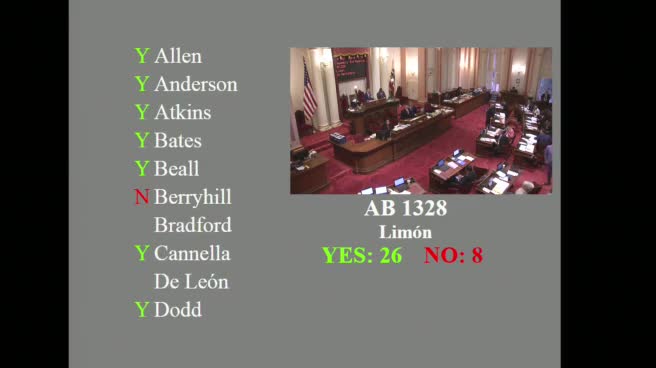 2MIN
Senate Floor
 1H
Senate Standing Committee on Appropriations
 10MIN
Senate Standing Committee on Judiciary
 16MIN
Senate Standing Committee on Health
 13MIN
Senate Budget and Fiscal Review Subcommittee No. 4 on State Administration and General Government
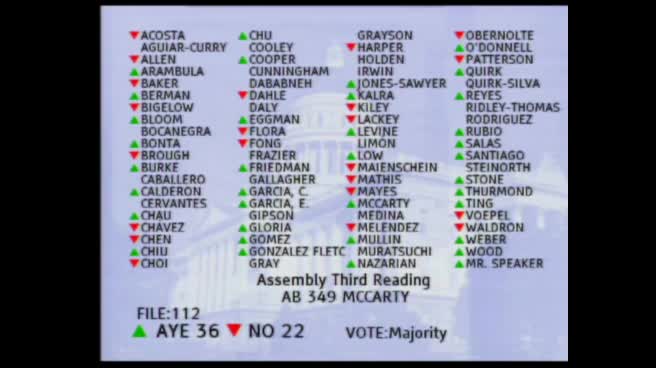 1MIN
Assembly Floor
 2MIN
Assembly Standing Committee on Appropriations
 11MIN
Assembly Standing Committee on Judiciary
Bill Author

Bill Co-Author(s):