AB 785: Firearms: possession of firearms by convicted persons.
- Session Year: 2017-2018
- House: Assembly
- Latest Version Date: 2017-10-14
Existing law generally prohibits a person who has been convicted of certain misdemeanors from possessing a firearm within 10 years of the conviction. Under existing law, a violation of this prohibition is a crime, punishable by imprisonment in a county jail not exceeding one year or in the state prison, by a fine not exceeding $1,000, or by both that imprisonment and fine. Existing law, as a result of Proposition 63, an initiative measure approved by the voters at the November 8, 2016, statewide general election, codifies these provisions in separate, nonconflicting, identically numbered sections.
This bill would reorganize these provisions by incorporating these nonconflicting provisions into the section as amended by Proposition 63 and would repeal the other section as obsolete. The bill would also repeal an obsolete reference to a repealed misdemeanor.
Existing law makes it a misdemeanor to, by force or threat of force, interfere with another persons free exercise of any constitutional right or privilege because of the other persons actual or perceived race, religion, national origin, disability, gender, or sexual orientation. Existing law also makes it a misdemeanor to knowingly deface, damage, or destroy the property of another person, for the purpose of intimidating or interfering with the exercise of any of those constitutional rights because of those specified characteristics.
This bill would also add to the list of misdemeanors, the conviction for which is subject to the prohibition on possessing a firearm within 10 years of the conviction, the above-referenced interference with the exercise of civil rights, as specified. Because a violation of this provision would be a crime, this bill would impose a state-mandated local program.
The California Constitution requires the state to reimburse local agencies and school districts for certain costs mandated by the state. Statutory provisions establish procedures for making that reimbursement.
This bill would provide that no reimbursement is required by this act for a specified reason.
Existing law generally prohibits a person who has been convicted of certain misdemeanors from possessing a firearm within 10 years of the conviction. Under existing law, a violation of this prohibition is a crime, punishable by imprisonment in a county jail not exceeding one year or in the state prison, by a fine not exceeding $1,000, or by both that imprisonment and fine. Existing law, as a result of Proposition 63, an initiative measure approved by the voters at the November 8, 2016, statewide general election, codifies these provisions in separate, nonconflicting, identically numbered sections.
This bill would reorganize these provisions by incorporating these nonconflicting provisions into the section as amended by Proposition 63 and would repeal the other section as obsolete. The bill would also repeal an obsolete reference to a repealed misdemeanor.
Existing law makes it a misdemeanor to, by force or threat of force, interfere with another persons free exercise of any constitutional right or privilege because of the other persons actual or perceived race, religion, national origin, disability, gender, or sexual orientation.
This bill would also add to the list of misdemeanors, the conviction for which is subject to the prohibition on possessing a firearm within 10 years of the conviction, the above-referenced interference with the exercise of civil rights, as specified. Because a violation of this provision would be a crime, this bill would impose a state-mandated local program.
The California Constitution requires the state to reimburse local agencies and school districts for certain costs mandated by the state. Statutory provisions establish procedures for making that reimbursement.
This bill would provide that no reimbursement is required by this act for a specified reason.
Existing law generally prohibits a person who has been convicted of certain misdemeanors from possessing a firearm within 10 years of the conviction. Under existing law, a violation of this prohibition is a crime, punishable by imprisonment in a county jail not exceeding one year or in the state prison, by a fine not exceeding $1,000, or by both that imprisonment and fine. Existing law, as a result of Proposition 63, an initiative measure approved by the voters at the November 8, 2016, statewide general election, codifies these provisions in separate, nonconflicting, identically numbered sections.
This bill would reorganize these provisions by incorporating these nonconflicting provisions into the section as amended by Proposition 63 and would repeal the other section as obsolete. The bill would also repeal an obsolete reference to a repealed misdemeanor.
Existing law makes it a misdemeanor to, by force or threat of force, interfere with another persons free exercise of any constitutional right or privilege because of the other persons actual or perceived race, religion, national origin, disability, gender, or sexual orientation. Existing law also makes it a misdemeanor to knowingly deface, damage, or destroy the property of another person, for the purpose of intimidating or interfering with the exercise of any of those constitutional rights because of those specified characteristics.
This bill would also add to the list of misdemeanors, the conviction for which is subject to the prohibition on possessing a firearm within 10 years of the conviction, the above-referenced interference with the exercise of civil rights, as specified. Because a violation of this provision would be a crime, this bill would impose a state-mandated local program.
The California Constitution requires the state to reimburse local agencies and school districts for certain costs mandated by the state. Statutory provisions establish procedures for making that reimbursement.
This bill would provide that no reimbursement is required by this act for a specified reason.
Existing law generally prohibits a person who has been convicted of certain misdemeanors from possessing a firearm within 10 years of the conviction. Under existing law, a violation of this prohibition is a crime, punishable by imprisonment in a county jail not exceeding one year or in the state prison, by a fine not exceeding $1,000, or by both that imprisonment and fine. Existing law, as a result of Proposition 63, an initiative measure approved by the voters at the November 8, 2016, statewide general election, codifies these provisions in separate, nonconflicting, identically numbered sections.
This bill would reorganize these provisions by incorporating these nonconflicting provisions into the section as amended by Proposition 63 and would repeal the other section as obsolete. The bill would also repeal an obsolete reference to a repealed misdemeanor.
Existing law makes it a misdemeanor to, by force or threat of force, interfere with another persons free exercise of any constitutional right or privilege because of the other persons actual or perceived race, religion, national origin, disability, gender, or sexual orientation. Existing law also makes it a misdemeanor to knowingly deface, damage, or destroy the property of another person, for the purpose of intimidating or interfering with the exercise of any of those constitutional rights because of those specified characteristics.
This bill would also add to the list of misdemeanors, the conviction for which is subject to the prohibition on possessing a firearm within 10 years of the conviction, the above-referenced interference with the exercise of civil rights, as specified. Because a violation of this provision would be a crime, this bill would impose a state-mandated local program.
The California Constitution requires the state to reimburse local agencies and school districts for certain costs mandated by the state. Statutory provisions establish procedures for making that reimbursement.
This bill would provide that no reimbursement is required by this act for a specified reason.
(a)Except as provided in Section 29855 or subdivision (a) of Section 29800, any person who has been convicted of, or has an outstanding warrant for, a misdemeanor violation of Section 71, 76, 136.1, 136.5, or 140, subdivision (d) of Section 148, subdivision (f) of Section 148.5, Section 171b, paragraph (1) of subdivision (a) of Section 171c, Section 171d, 186.28, 240, 241, 242, 243, 243.4, 244.5, 245, 245.5, 246.3, 247, 273.5, 273.6, 417, 417.6, 422, 422.6, 626.9, 646.9, 830.95, 17500, 17510, 25300, 25800, 30315, or 32625, subdivision (b) or (d) of Section 26100, or Section 27510, or Section 8100, 8101, or 8103 of the Welfare and Institutions Code, any firearm-related offense pursuant to Sections 871.5 and 1001.5 of the Welfare and Institutions Code, Section 490.2 if the property taken was a firearm, or of the conduct punished in subdivision (c) of Section 27590, and who, within 10 years of the conviction, or if the individual has an outstanding warrant, owns, purchases, receives, or has in possession or under custody or control, any firearm is guilty of a public offense, punishable by imprisonment in a county jail not exceeding one year or in the state prison, by a fine not exceeding one thousand dollars ($1,000), or by both that imprisonment and fine.
(b)The court, on forms prescribed by the Department of Justice, shall notify the department of persons subject to this section. However, the prohibition in this section may be reduced, eliminated, or conditioned as provided in Section 29855 or 29860.
SEC. 2.Section 29805 of the Penal Code, as amended by Section 46 of Chapter 17 of the Statutes of 2017, is repealed.SEC. 3.No reimbursement is required by this act pursuant to Section 6 of Article XIIIB of the California Constitution because the only costs that may be incurred by a local agency or school district will be incurred because this act creates a new crime or infraction, eliminates a crime or infraction, or changes the penalty for a crime or infraction, within the meaning of Section 17556 of the Government Code, or changes the definition of a crime within the meaning of Section 6 of Article XIIIB of the California Constitution.
(a)Except as provided in Section 29855 or subdivision (a) of Section 29800, any person who has been convicted of, or has an outstanding warrant for, a misdemeanor violation of Section 71, 76, 136.1, 136.5, or 140, subdivision (d) of Section 148, subdivision (f) of Section 148.5, Section 171b, paragraph (1) of subdivision (a) of Section 171c, Section 171d, 186.28, 240, 241, 242, 243, 243.4, 244.5, 245, 245.5, 246.3, 247, 273.5, 273.6, 417, 417.6, 422, 422.6, 626.9, 646.9, or 830.95, subdivision (a) of former Section 12100, as that section read at any time from when it was enacted by Section 3 of Chapter 1386 of the Statutes of 1988 to when it was repealed by Section 18 of Chapter 23 of the Statutes of 1994, Section 830.95, 17500, 17510, 25300, 25800, 30315, or 32625, subdivision (b) or (d) of Section 26100, or Section 27510, or Section 8100, 8101, or 8103 of the Welfare and Institutions Code, any firearm-related offense pursuant to Sections 871.5 and 1001.5 of the Welfare and Institutions Code, Section 490.2 if the property taken was a firearm, or of the conduct punished in subdivision (c) of Section 27590, and who, within 10 years of the conviction, or if the individual has an outstanding warrant, owns, purchases, receives, or has in possession or under custody or control, any firearm is guilty of a public offense, which shall be punishable by imprisonment in a county jail not exceeding one year or in the state prison, by a fine not exceeding one thousand dollars ($1,000), or by both that imprisonment and fine. The court, on forms prescribed by the Department of Justice, shall notify the department of persons subject to this section. However, the prohibition in this section may be reduced, eliminated, or conditioned as provided in Section 29855 or 29860.
(b)The court, on forms prescribed by the Department of Justice, shall notify the department of persons subject to this section. However, the prohibition in this section may be reduced, eliminated, or conditioned as provided in Section 29855 or 29860.
SEC. 2.Section 29805 of the Penal Code, as amended by Section 46 of Chapter 17 of the Statutes of 2017, is repealed.29805.(a)Except as provided in Section 29855 or subdivision (a) of Section 29800, any person who has been convicted of, or has an outstanding warrant for, a misdemeanor violation of Section 71, 76, 136.1, 136.5, or 140, subdivision (d) of Section 148, subdivision (f) of Section 148.5, Section 171b, paragraph (1) of subdivision (a) of Section 171c, Section 171d, 186.28, 240, 241, 242, 243, 243.4, 244.5, 245, 245.5, 246.3, 247, 273.5, 273.6, 417, 417.6, 422, 626.9, 646.9, or 830.95, subdivision (a) of former Section 12100, as that section read at any time from when it was enacted by Section 3 of Chapter 1386 of the Statutes of 1988 to when it was repealed by Section 18 of Chapter 23 of the Statutes of 1994, Section 17500, 17510, 25300, 25800, 30315, or 32625, subdivision (b) or (d) of Section 26100, or Section 27510, or Section 8100, 8101, or 8103 of the Welfare and Institutions Code, any firearm-related offense pursuant to Sections 871.5 and 1001.5 of the Welfare and Institutions Code, or of the conduct punished in subdivision (c) of Section 27590, and who, within 10 years of the conviction, or if the individual has an outstanding warrant, owns, purchases, receives, or has in possession or under custody or control, any firearm is guilty of a public offense, which shall be punishable by imprisonment in a county jail not exceeding one year or in the state prison, by a fine not exceeding one thousand dollars ($1,000), or by both that imprisonment and fine.(b)The court, on forms prescribed by the Department of Justice, shall notify the department of persons subject to this section. However, the prohibition in this section may be reduced, eliminated, or conditioned as provided in Section 29855 or 29860.SEC. 3.No reimbursement is required by this act pursuant to Section 6 of Article XIIIB of the California Constitution because the only costs that may be incurred by a local agency or school district will be incurred because this act creates a new crime or infraction, eliminates a crime or infraction, or changes the penalty for a crime or infraction, within the meaning of Section 17556 of the Government Code, or changes the definition of a crime within the meaning of Section 6 of Article XIIIB of the California Constitution.
SECTION 1.Section 29805 of the Penal Code, as amended on November 8, 2016, by initiative Proposition 63, Section 11.2, is amended to read:29805.(a)Except as provided in Section 29855 or subdivision (a) of Section 29800, any person who has been convicted of a misdemeanor violation of Section 71, 76, 136.1, 136.5, or 140, subdivision (d) of Section 148, subdivision (f) of Section 148.5, Section 171b, paragraph (1) of subdivision (a) of Section 171c, Section 171d, 186.28, 240, 241, 242, 243, 243.4, 244.5, 245, 245.5, 246.3, 247, 273.5, 273.6, 417, 417.6, 422, 422.6, 626.9, 646.9, 830.95, 17500, 17510, 25300, 25800, 30315, or 32625, subdivision (b) or (d) of Section 26100, or Section 27510, or Section 8100, 8101, or 8103 of the Welfare and Institutions Code, any firearm-related offense pursuant to Sections 871.5 and 1001.5 of the Welfare and Institutions Code, Section 490.2 if the property taken was a firearm, or of the conduct punished in subdivision (c) of Section 27590, and who, within 10 years of the conviction, owns, purchases, receives, or has in possession or under custody or control, any firearm is guilty of a public offense, which shall be punishable by imprisonment in a county jail not exceeding one year or in the state prison, by a fine not exceeding one thousand dollars ($1,000), or by both that imprisonment and fine.(b)The court, on forms prescribed by the Department of Justice, shall notify the department of persons subject to this section. However, the prohibition in this section may be reduced, eliminated, or conditioned as provided in Section 29855 or 29860.SEC. 2.Section 29805 of the Penal Code, as amended by Section 2 of Chapter 47 of the Statutes of 2016, is repealed.SEC. 3.No reimbursement is required by this act pursuant to Section 6 of Article XIIIB of the California Constitution because the only costs that may be incurred by a local agency or school district will be incurred because this act creates a new crime or infraction, eliminates a crime or infraction, or changes the penalty for a crime or infraction, within the meaning of Section 17556 of the Government Code, or changes the definition of a crime within the meaning of Section 6 of Article XIIIB of the California Constitution.(a)Except as provided in Section 29855 or subdivision (a) of Section 29800, any person who has been convicted of a misdemeanor violation of Section 71, 76, 136.1, 136.5, or 140, subdivision (d) of Section 148, subdivision (f) of Section 148.5, Section 171b, paragraph (1) of subdivision (a) of Section 171c, Section 171d, 186.28, 240, 241, 242, 243, 243.4, 244.5, 245, 245.5, 246.3, 247, 273.5, 273.6, 417, 417.6, 422, subdivision (a) of Section 422.6, Section 626.9, 646.9, 830.95, 17500, 17510, 25300, 25800, 30315, or 32625, subdivision (b) or (d) of Section 26100, or Section 27510, or Section 8100, 8101, or 8103 of the Welfare and Institutions Code, any firearm-related offense pursuant to Sections 871.5 and 1001.5 of the Welfare and Institutions Code, Section 490.2 if the property taken was a firearm, or of the conduct punished in subdivision (c) of Section 27590, and who, within 10 years of the conviction, owns, purchases, receives, or has in possession or under custody or control, any firearm is guilty of a public offense, which shall be punishable by imprisonment in a county jail not exceeding one year or in the state prison, by a fine not exceeding one thousand dollars ($1,000), or by both that imprisonment and fine.
(b)The court, on forms prescribed by the Department of Justice, shall notify the department of persons subject to this section. However, the prohibition in this section may be reduced, eliminated, or conditioned as provided in Section 29855 or 29860.
SEC. 2.Section 29805 of the Penal Code, as amended by Section 2 of Chapter 47 of the Statutes of 2016, is repealed.SEC. 3.No reimbursement is required by this act pursuant to Section 6 of Article XIIIB of the California Constitution because the only costs that may be incurred by a local agency or school district will be incurred because this act creates a new crime or infraction, eliminates a crime or infraction, or changes the penalty for a crime or infraction, within the meaning of Section 17556 of the Government Code, or changes the definition of a crime within the meaning of Section 6 of Article XIIIB of the California Constitution.
(a)Except as provided in Section 29855 or subdivision (a) of Section 29800, any person who has been convicted of a misdemeanor violation of Section 71, 76, 136.1, 136.5, or 140, subdivision (d) of Section 148, subdivision (f) of Section 148.5, Section 171b, paragraph (1) of subdivision (a) of Section 171c, Section 171d, 186.28, 240, 241, 242, 243, 243.4, 244.5, 245, 245.5, 246.3, 247, 273.5, 273.6, 417, 417.6, 422, 422,6, subdivision (a) of Section 422.6, Section 626.9, 646.9, 830.95, 17500, 17510, 25300, 25800, 30315, or 32625, subdivision (b) or (d) of Section 26100, or Section 27510, or Section 8100, 8101, or 8103 of the Welfare and Institutions Code, any firearm-related offense pursuant to Sections 871.5 and 1001.5 of the Welfare and Institutions Code, Section 490.2 if the property taken was a firearm, or of the conduct punished in subdivision (c) of Section 27590, and who, within 10 years of the conviction, owns, purchases, receives, or has in possession or under custody or control, any firearm is guilty of a public offense, which shall be punishable by imprisonment in a county jail not exceeding one year or in the state prison, by a fine not exceeding one thousand dollars ($1,000), or by both that imprisonment and fine.
(b)The court, on forms prescribed by the Department of Justice, shall notify the department of persons subject to this section. However, the prohibition in this section may be reduced, eliminated, or conditioned as provided in Section 29855 or 29860.
SEC. 2.Section 29805 of the Penal Code, as amended by Section 2 of Chapter 47 of the Statutes of 2016, is repealed.SEC. 3.No reimbursement is required by this act pursuant to Section 6 of Article XIIIB of the California Constitution because the only costs that may be incurred by a local agency or school district will be incurred because this act creates a new crime or infraction, eliminates a crime or infraction, or changes the penalty for a crime or infraction, within the meaning of Section 17556 of the Government Code, or changes the definition of a crime within the meaning of Section 6 of Article XIIIB of the California Constitution.
(a)Except as provided in Section 29855 or subdivision (a) of Section 29800, any person who has been convicted of a misdemeanor violation of Section 71, 76, 136.1, 136.5, or 140, subdivision (d) of Section 148, subdivision (f) of Section 148.5, Section 171b, paragraph (1) of subdivision (a) of Section 171c, Section 171d, 186.28, 240, 241, 242, 243, 243.4, 244.5, 245, 245.5, 246.3, 247, 273.5, 273.6, 417, 417.6, 422, 422,6, 626.9, 646.9, or 830.95, subdivision (a) of former Section 12100, as that section read at any time from when it was enacted by Section 3 of Chapter 1386 of the Statutes of 1988 to when it was repealed by Section 18 of Chapter 23 of the Statutes of 1994, Section 17500, 17510, 25300, 25800, 30315, or 32625, subdivision (b) or (d) of Section 26100, or Section 27510, or Section 8100, 8101, or 8103 of the Welfare and Institutions Code, any firearm-related offense pursuant to Sections 871.5 and 1001.5 of the Welfare and Institutions Code, Section 490.2 if the property taken was a firearm, or of the conduct punished in subdivision (c) of Section 27590, and who, within 10 years of the conviction, owns, purchases, receives, or has in possession or under custody or control, any firearm is guilty of a public offense, which shall be punishable by imprisonment in a county jail not exceeding one year or in the state prison, by a fine not exceeding one thousand dollars ($1,000), or by both that imprisonment and fine. The court, on forms prescribed by the Department of Justice, shall notify the department of persons subject to this section. However, the prohibition in this section may be reduced, eliminated, or conditioned as provided in Section 29855 or 29860.
(b)The court, on forms prescribed by the Department of Justice, shall notify the department of persons subject to this section. However, the prohibition in this section may be reduced, eliminated, or conditioned as provided in Section 29855 or 29860.
SEC. 2.Section 29805 of the Penal Code, as amended by Section 2 of Chapter 47 of the Statutes of 2016, is repealed.29805.(a)Except as provided in Section 29855 or subdivision (a) of Section 29800, any person who has been convicted of a misdemeanor violation of Section 71, 76, 136.1, 136.5, or 140, subdivision (d) of Section 148, subdivision (f) of Section 148.5, Section 171b, paragraph (1) of subdivision (a) of Section 171c, Section 171d, 186.28, 240, 241, 242, 243, 243.4, 244.5, 245, 245.5, 246.3, 247, 273.5, 273.6, 417, 417.6, 422, 626.9, 646.9, or 830.95, subdivision (a) of former Section 12100, as that section read at any time from when it was enacted by Section 3 of Chapter 1386 of the Statutes of 1988 to when it was repealed by Section 18 of Chapter 23 of the Statutes of 1994, Section 17500, 17510, 25300, 25800, 30315, or 32625, subdivision (b) or (d) of Section 26100, or Section 27510, or Section 8100, 8101, or 8103 of the Welfare and Institutions Code, any firearm-related offense pursuant to Sections 871.5 and 1001.5 of the Welfare and Institutions Code, or of the conduct punished in subdivision (c) of Section 27590, and who, within 10 years of the conviction, owns, purchases, receives, or has in possession or under custody or control, any firearm is guilty of a public offense, which shall be punishable by imprisonment in a county jail not exceeding one year or in the state prison, by a fine not exceeding one thousand dollars ($1,000), or by both that imprisonment and fine.(b)The court, on forms prescribed by the Department of Justice, shall notify the department of persons subject to this section. However, the prohibition in this section may be reduced, eliminated, or conditioned as provided in Section 29855 or 29860.SEC. 3.No reimbursement is required by this act pursuant to Section 6 of Article XIIIB of the California Constitution because the only costs that may be incurred by a local agency or school district will be incurred because this act creates a new crime or infraction, eliminates a crime or infraction, or changes the penalty for a crime or infraction, within the meaning of Section 17556 of the Government Code, or changes the definition of a crime within the meaning of Section 6 of Article XIIIB of the California Constitution.
|
Date
|
Status
|
|---|---|
| Oct 14, 2017 | Chaptered by Secretary of State - Chapter 784, Statutes of 2017. |
| Oct 14, 2017 | Approved by the Governor. |
| Sep 19, 2017 | Enrolled and presented to the Governor at 3 p.m. |
| Sep 11, 2017 | Senate amendments concurred in. To Engrossing and Enrolling. |
| Sep 6, 2017 | In Assembly. Concurrence in Senate amendments pending. May be considered on or after September 8 pursuant to Assembly Rule 77. |
| Sep 6, 2017 | Read third time. Passed. Ordered to the Assembly. |
| Sep 5, 2017 | Read second time. Ordered to third reading. |
| Sep 1, 2017 | From committee: Amend, and do pass as amended. (Ayes 7. Noes 0.) (September 1). |
| Jun 26, 2017 | In committee: Referred to suspense file. |
| Jun 15, 2017 | From committee chair, with author's amendments: Amend, and re-refer to committee. Read second time, amended, and re-referred to Com. on APPR. |
| Jun 12, 2017 | From committee chair, with author's amendments: Amend, and re-refer to committee. Read second time, amended, and re-referred to Com. on APPR. |
| Jun 6, 2017 | From committee: Do pass and re-refer to Com. on APPR. (Ayes 7. Noes 0.) (June 6). Re-referred to Com. on APPR. |
| May 18, 2017 | Referred to Com. on PUB. S. |
| May 4, 2017 | In Senate. Read first time. To Com. on RLS. for assignment. |
| May 4, 2017 | Read third time. Passed. Ordered to the Senate. (Ayes 67. Noes 0. Page 1376.) |
| Apr 27, 2017 | Read second time. Ordered to third reading. |
| Apr 26, 2017 | From committee: Do pass. (Ayes 14. Noes 0.) (April 26). |
| Mar 28, 2017 | From committee: Do pass and re-refer to Com. on APPR. (Ayes 7. Noes 0.) (March 28). Re-referred to Com. on APPR. |
| Mar 2, 2017 | Referred to Com. on PUB. S. |
| Feb 16, 2017 | From printer. May be heard in committee March 18. |
| Feb 15, 2017 | Read first time. To print. |
|
Date
|
Description
|
Location
|
Votes
|
|
|---|---|---|---|---|
| Sep 11, 2017 | AB 785 JONES-SAWYER Concurrence in Senate Amendments | Assembly Floor |
Passed |
|
| Sep 6, 2017 | Assembly 3rd Reading AB785 Jones-Sawyer By Jackson | Senate Floor |
Passed |
|
| Sep 1, 2017 | Do pass as amended | Senate Standing Committee on Appropriations |
Passed |
|
| Jun 26, 2017 | Placed on suspense file | Senate Standing Committee on Appropriations |
Passed |
|
| Jun 6, 2017 | Do pass, but first be re-referred to the Committee on [Appropriations] | Senate Standing Committee on Public Safety |
Passed |
|
| May 4, 2017 | AB 785 JONES-SAWYER Assembly Third Reading | Assembly Floor |
Passed |
|
| Apr 26, 2017 | Do pass. | Assembly Standing Committee on Appropriations |
Passed |
|
| Mar 28, 2017 | Do pass and be re-referred to the Committee on [Appropriations] | Assembly Standing Committee on Public Safety |
Passed |
This list shows positions taken on this bill by organizations on the date displayed, which is linked to the original source.
Positions by individuals are not included.
|
Organization
|
Position
|
Date
|
|---|---|---|
| Alameda County District Attorney Nancy O'Malley | * Indeterminate | Apr 17, 2018 |
| All Saints Church | ** Support | Mar 27, 2017 |
| California District Attorneys Association | ** Support | Sep 4, 2017 |
| California Judicial Council | * Support | Apr 17, 2018 |
| California News Publishers Association | * Against | Apr 17, 2018 |
| California Public Defender Association | * Indeterminate | Apr 17, 2018 |
| CHIRLA-Coalition for Humane Immigrant Rights | * Support | Apr 17, 2018 |
| City and County of San Francisco | * For If Amend | Apr 17, 2018 |
| Coalition Against Gun Violence | ** Support | Sep 4, 2017 |
| Courage Campaign | ** Support | Sep 4, 2017 |
| Friends Committee On Legislation Of California | ** Support | Sep 4, 2017 |
| Law Center to Prevent Gun Violence | ** Support | Sep 4, 2017 |
| Neighbors United to Protect Our Communities | ** Support | Sep 4, 2017 |
| San Fransisco District Attorney's Office | * Support | Apr 17, 2018 |
| Santa Barbara County Coalition | ** Support | Sep 4, 2017 |
| Santiago County District Attorney | * Support | Apr 17, 2018 |
| Violence Prevention Coalition | ** Support | Sep 4, 2017 |
| Women Against Gun Violence | ** Support | Sep 4, 2017 |
| Women For: Orange County | ** Support | Sep 4, 2017 |
CONCURRENCE IN SENATE AMENDMENTS
CSA1 Bill Id:AB 785
Author:(Jones-Sawyer)
As Amended Ver:September 1, 2017
Majority vote
ASSEMBLY: | 67-0 | (May 4, 2017) | SENATE: | 40-0 | (September 6, 2017) |
Original Committee Reference: PUB. S.
SUMMARY: Adds two hate crimes to the list of misdemeanors that result in a ban on the right to possess a firearm for 10 years.
The Senate amendment incorporates changes made to Penal Code Section 29805 by AB 103 (Budget Committee) Chapter 17, Statutes of 2017, a budget trailer bill that took effect on June 27, 2017.
EXISTING LAW:
- Provides that certain people are prohibited from owning or possessing a firearm for life, including:
- Anyone convicted of a felony;
- Anyone addicted to a narcotic drug;
- Any juvenile convicted of a violent crime with a gun and tried in adult court;
- Any person convicted of a federal crime that would be a felony in California and sentenced to more than 30 days in prison, or a fine of more than $1,000;
- Anyone convicted of certain violent misdemeanors, e.g., assault with a firearm; inflicting corporal injury on a spouse or significant other, or brandishing a firearm in the presence of a police officer.
- Provides that a violation of a lifetime ban on possession of a firearm is a felony.
- Provides that anyone convicted of numerous misdemeanors involving violence or threats of violence are subject to a ten-year ban on possession of a firearm. Provides that a violation of these provisions is an alternate felony/misdemeanor.
- Provides, under federal law, that certain people are prohibited from owning or possessing a firearm: Any person who:
- Has been convicted in any court of, a crime punishable by imprisonment for a term exceeding one year;
- Is a fugitive from justice;
- Is an unlawful user of or addicted to any controlled substance, as defined;
- Has been adjudicated as a mental defective or who has been committed to a mental institution;
- Being an alien is illegally or unlawfully in the United States; or except as specified, has been admitted to the United States under a nonimmigrant visa, as defined;
- Has been discharged from the Armed Forces under dishonorable conditions;
- Having been a citizen of the United States, has renounced his citizenship;
- Is subject to a court order that:
- was issued after a hearing of which such person received actual notice, and at which such person had an opportunity to participate;
- restrains such person from harassing, stalking, or threatening an intimate partner of such person or child of such intimate partner or person, or engaging in other conduct that would place an intimate partner in reasonable fear of bodily injury to the partner or child; and
- includes a finding that such person represents a credible threat to the physical safety of such intimate partner or child; or
- by its terms explicitly prohibits the use, attempted use, or threatened use of physical force against such intimate partner or child that would reasonably be expected to cause bodily injury; or
- Has been convicted in any court of a misdemeanor crime of domestic violence
AS PASSED BY THE ASSEMBLY, this bill:
- Added the misdemeanor to, by force or threat of force, interfere with another person's free exercise of any constitutional right or privilege because of the other person's actual or perceived race, religion, national origin, disability, gender, or sexual orientation to the list of offenses that result in a ban on the right to possess a firearm for 10 years.
- Added the misdemeanor to knowingly deface, damage, or destroy the property of another person, for the purpose of intimidating or interfering with the exercise of any of those constitutional rights because of those specified characteristics to the list of misdemeanors that can result in a ban on the right to possess a firearm for ten years.
- Deleted duplicative provisions creating alternative versions of Penal Code Section 29805 resulting from the enactment of AB 1695 (Bonta), Chapter 47, Statutes of 2016 and Proposition 63 and consolidates and provisions into one code section reflecting the enactment of Proposition 63 and AB 1695.
FISCAL EFFECT: According to the Senate Appropriations Committee:
- State prison: Unknown, potential increase in state costs (General Fund) for new commitments to state prison for persons found in violation of the possession ban because of offenses added to the ban by this bill. The 2017-18 per capita cost to house a person in a state prison is $75,560 annually, with an annual marginal rate per inmate of between $10,000 and $12,000. The average contract-prison rate cost per inmate is about $29,000 annually. The actual costs would depend on how many defendants are sentenced to prison.
- County jail: Potential increase in non-reimbursable local incarceration costs (local funds) for new commitments to county jail for persons found in violation of the possession ban because of offenses added to the ban by this bill.
- Court: Minor and absorbable costs (General Fund) to the court to notify the Department of Justice of the specified misdemeanor convictions. Unknown costs to adjudicate any criminal charges brought for violating the possession ban because of an offense added to the ban by this bill.
- Department of Justice: Minor and absorbable costs to DOJ to include individuals convicted of the specified misdemeanors to the firearms prohibition database system.
COMMENTS: According to the author, "Under existing law, individuals convicted of violent misdemeanors and misdemeanors that involve the use or threatened use of a firearm, are generally prohibited from possessing or acquiring firearms for 10 years after conviction, unless they successfully petition a court to restore their firearm eligibility.
"The problem is, the list of misdemeanors prohibiting individuals from owning or possessing a firearm overlooks [Penal Code] Section 422.6, which makes it unlawful to use force or threats of force to 'willfully injure, intimidate, interfere with, oppress, or threaten another person' based on that person's 'race or ethnicity, religion, nationality, disability, gender, or sexual orientation.'
"Those convicted under this violent hate crime statute are not prohibited from possessing or acquiring guns. The absurd result is that existing California law prohibits people convicted of crimes like assault or battery from owning guns for 10 years unless they were convicted of a hate crime for committing the same acts on the basis of bigotry. These individuals present a unique and growing threat to public safety and are not the 'law-abiding, responsible citizens' that the Supreme Court deemed entitled to exercise the right to bear arms under the Second Amendment.
"At least six states (Delaware, Maryland, Massachusetts, Minnesota, New Jersey, and Oregon) have enacted laws to prohibit violent hate crime misdemeanants from possessing and acquiring firearms. As a leader in enacting laws to prevent gun violence, it is time California joins these states."
Analysis Prepared by: Gregory Pagan / PUB. S. / (916) 319-3744 FN: 0001817
Office of Senate Floor Analyses (916) 651-1520 Fax: (916) 327-4478 | AB |
THIRD READING
Bill No: AB 785
Amended: 9/1/17 in Senate
SENATE PUBLIC SAFETY COMMITTEE: 7-0, 6/6/17
AYES: Skinner, Anderson, Bradford, Jackson, Mitchell, Stone, Wiener
SENATE APPROPRIATIONS COMMITTEE: 7-0, 9/1/17
AYES: Lara, Bates, Beall, Bradford, Hill, Nielsen, Wiener
ASSEMBLY FLOOR: 67-0, 5/4/17 - See last page for vote
DIGEST:
This bill adds two hate crimes to the list of misdemeanors that result in a ban on the right to possess a firearm for 10 years.
Existing law:
- Provides that certain people are prohibited from owning or possessing a firearm for life, including: (Penal Code §§ 29800, 23515 and 29805.)
- Anyone convicted of a felony;
- Anyone addicted to a narcotic drug;
- Any juvenile convicted of a violent crime with a gun and tried in adult court;
- Any person convicted of a federal crime that would be a felony in California and sentenced to more than 30 days in prison, or a fine of more than $1,000;
- Anyone convicted of certain violent misdemeanors, e.g., assault with a firearm; inflicting corporal injury on a spouse or significant other, or brandishing a firearm in the presence of a police officer.
- Provides that a violation of a lifetime ban on possession of a firearm is a felony. (Penal Code §§ 29800, 23515 and 29805.)
- Provides that anyone convicted of numerous misdemeanors involving violence or threats of violence are subject to a ten-year ban on possession of a firearm. Provides that a violation of these provisions is an alternate felony/misdemeanor. (Penal Code § 29805.)
- Provides that any person taken into custody, assessed, and admitted to a designated facility due to that person being found to be a danger to themselves or others as a result of a mental disorder, is prohibited from possessing a firearm during treatment and for five years from the date of their discharge. Provides that a violation of these provisions is an alternate felony/misdemeanor. (Welfare and Institutions Code, §§ 8100 and 8103(f).)
- Provides that persons who are bound by a temporary restraining order or injunction or a protective order issued under the Family Code or the Welfare and Institutions Code, may be prohibited from firearms ownership for the duration of that court order. Provides that the violation of these provisions is a wobbler or a misdemeanor, as specified. (Penal Code, § 29825.)
- Requires that firearms dealers obtain certain identifying information from firearms purchasers and forward that information, via electronic transfer to Department of Justice (DOJ) to perform a background check on the purchaser to determine whether he or she is prohibited from possessing a firearm. (Penal Code, § 28160-28220.)
- Requires that, upon receipt of the purchaser’s information, DOJ shall examine its records, as well as those records that it is authorized to request from the State Department of Mental Health pursuant to Section 8104 of the Welfare and Institutions Code, in order to determine if the purchaser is prohibited from purchasing a firearm. (Penal Code § 28220.)
- Requires firearms to be centrally registered at time of transfer or sale by way of transfer forms centrally compiled by the DOJ. DOJ is required to keep a registry from data sent to DOJ indicating who owns what firearm by make, model, and serial number and the date thereof. (Penal Code § 11106(a) and (c).)
- Requires the Attorney General to establish and maintain an online database to be known as Armed Prohibited Persons System (APPS). The purpose of the file is to cross-reference persons who have ownership or possession of a firearm on or after January 1, 1991, as indicated by a record in the Consolidated Firearms Information System, and who, subsequent to the date of that ownership or possession of a firearm, fall within a class of persons who are prohibited from owning or possessing a firearm. The information contained in APPS shall only be available to specified entities through the California Law Enforcement Telecommunications System, for the purpose of determining if persons are armed and prohibited from possessing firearms. (Penal Code § 30000.)
- Provides, under federal law, that certain people are prohibited from owning or possessing a firearm: (18 USC § 922(g).) Any person who:
- Has been convicted in any court of, a crime punishable by imprisonment for a term exceeding one year;
- Is a fugitive from justice;
- Is an unlawful user of or addicted to any controlled substance, as defined;
- Has been adjudicated as a mental defective or who has been committed to a mental institution;
- Being an alien is illegally or unlawfully in the United States; or except as specified, has been admitted to the United States under a nonimmigrant visa, as defined;
- Has been discharged from the Armed Forces under dishonorable conditions;
- Having been a citizen of the United States, has renounced his citizenship; and
- Is subject to a specified court order.
This bill:
- Adds the misdemeanor to, by force or threat of force, interfere with another person’s free exercise of any constitutional right or privilege because of the other person’s actual or perceived race, religion, national origin, disability, gender, or sexual orientation to the list of offenses that result in a ban on the right to possess a firearm for ten years.
- Adds the misdemeanor to knowingly deface, damage, or destroy the property of another person, for the purpose of intimidating or interfering with the exercise of any of those constitutional rights because of those specified characteristics to the list of misdemeanors that can result in a ban on the right to possess a firearm for ten years.
Background
Current state and federal laws prohibit persons who have been convicted of specific crimes from owning or possessing firearms. For example, anyone convicted of any felony offense is prohibited for life from firearms ownership under both federal and state law. (18 U.S.C. Section 922(g); Penal Code Section 29800.) California goes further and imposes a 10-year firearms prohibition on persons convicted of numerous misdemeanor offenses that involve either violence or the threat of violence. (Penal Code Section 29805.) Additionally, anyone who has been found to be a danger to themselves or others due to mental illness is subject to a five-year prohibition [Welfare and Institutions Code Sections 8100, 8103(f)], and people under domestic violence restraining orders are subject to a prohibition for the duration of that court order. (Penal Code Section 29825.) This bill would expand the number of misdemeanor convictions resulting in a 10-year prohibition by adding two offenses related to misdemeanor hate crimes provisions. In recent years there have been other attempts to expand this list that were vetoed by Governor Brown.
SB 347 (Jackson, 2015-2016 Legislative Session) would have added specified firearms and ammunition related criminal offenses to the list of misdemeanors that result in the defendant being prohibited from possessing a firearm for 10 years. These offenses included such things as dealing in handguns without a license, selling any ammunition to a person under 21 years of age, bringing or carrying ammunition onto school grounds, and petty theft if the property taken was a firearm. SB 347 was vetoed by the Governor. The Governor issued the following message with his veto: "Each of these bills creates a new crime - usually by finding a novel way to characterize and criminalize conduct that is already proscribed. This multiplication and particularization of criminal behavior creates increasing complexity without commensurate benefit. Over the last several decades, California's criminal code has grown to more than 5,000 separate provisions, covering almost every conceivable form of human misbehavior. During the same period, our jail and prison populations have exploded. Before we keep going down this road, I think we should pause and reflect on how our system of criminal justice could be made more human, more just and more cost-effective."
SB 755 (Wolk, 2013-2014 Legislative Session) would have added specified offenses to the list of misdemeanors that result in a 10-year prohibition on firearms possession, and added certain misdemeanors related to substance abuse for which a violation of two or more within a three-year period will result in a 10-year prohibition on firearms possession. SB 755 was vetoed by the Governor. The Governor issued the following message with his veto: "This bill adds substance-abuse offenses and court orders to undergo mental health outpatient treatment to criteria that result in a ten year prohibition on firearms possession. I am not persuaded that it is necessary to bar gun ownership on the basis of crimes that are non-felonies, non-violent and do not involve misuse of a firearm."
Unlike the other recent attempts to expand the 10-year prohibitions for violating specified misdemeanors, this bill adds two discreet offenses that are much more closely related to the existing offenses that trigger the existing 10-year ban. The existing ban is for misdemeanors involving violence and threats of violence. This bill triggers the ban for a misdemeanor crime involving violence, threats, or threatening behavior.
FISCAL EFFECT: Appropriation: Fiscal Com.: Local:
According to the Senate Appropriations Committee:
- State prison: Unknown, potential increase in state costs (General Fund) for new commitments to state prison for persons found in violation of the possession ban because of offenses added to the ban by this bill. The 2017-18 per capita cost to house a person in a state prison is $75,560 annually, with an annual marginal rate per inmate of between $10,000 and $12,000. The average contract-prison rate cost per inmate is about $29,000 annually. The actual costs would depend on how many defendants are sentenced to prison.
- County jail: Potential increase in non-reimbursable local incarceration costs (local funds) for new commitments to county jail for persons found in violation of the possession ban because of offenses added to the ban by this bill.
- Court: Minor and absorbable costs (General Fund) to the court to notify the Department of Justice of the specified misdemeanor convictions. Unknown costs to adjudicate any criminal charges brought for violating the possession ban because of an offense added to the ban by this bill.
- Department of Justice: Minor and absorbable costs to DOJ to include individuals convicted of the specified misdemeanors to the firearms prohibition database system.
Brady Campaign to Prevent Gun Violence, San Fernando Valley Chapter;
California Chapters of the Brady Campaign to Prevent Gun Violence
California District Attorneys Association
Coalition Against Gun Violence
Courage Campaign
Friends Committee on Legislation of California
Law Center to Prevent Gun Violence
Neighbors United to Protect Our Communities
Santa Barbara County Coalition
Violence Prevention Coalition
Women Against Gun Violence
Women For: Orange County
None received
ASSEMBLY FLOOR: 67-0, 5/4/17
AYES: Acosta, Aguiar-Curry, Arambula, Baker, Berman, Bloom, Bocanegra, Bonta, Burke, Caballero, Calderon, Cervantes, Chau, Chiu, Choi, Chu, Cooley, Cooper, Cunningham, Dababneh, Dahle, Daly, Eggman, Flora, Fong, Frazier, Friedman, Gallagher, Eduardo Garcia, Gipson, Gloria, Gomez, Gonzalez Fletcher, Gray, Grayson, Holden, Irwin, Jones-Sawyer, Kalra, Kiley, Lackey, Levine, Limón, Low, Maienschein, Mathis, McCarty, Medina, Mullin, Muratsuchi, Nazarian, O'Donnell, Quirk, Quirk-Silva, Reyes, Rodriguez, Rubio, Salas, Santiago, Steinorth, Mark Stone, Thurmond, Ting, Voepel, Weber, Wood, Rendon
NO VOTE RECORDED: Travis Allen, Bigelow, Brough, Chávez, Chen, Cristina Garcia, Harper, Mayes, Melendez, Obernolte, Patterson, Ridley-Thomas, Waldron
Prepared by: Gabe Caswell / PUB. S. /
9/4/17 12:33:35
SENATE COMMITTEE ON
Senator Ricardo Lara, Chair
2017 - 2018 Regular Session
AB 785 (Jones-Sawyer) - Firearms: possession of firearms by convicted persons
Version: | Policy Vote: |
Urgency: | Mandate: |
Hearing Date: | Consultant: |
Bill Summary:
AB 785 would add two hate crimes to the list of misdemeanor convictions that result in a ten-year ban on the possession of firearm.
*********** ANALYSIS ADDENDUM – SUSPENSE FILE ***********
The following information is revised to reflect amendments
adopted by the committee on September 1, 2017
Fiscal Impact:
- State prison: Unknown, potential increase in state costs (General Fund) for new commitments to state prison for persons found in violation of the possession ban because of offenses added to the ban by this bill. The 2017-18 per capita cost to house a person in a state prison is $75,560 annually, with an annual marginal rate per inmate of between $10,000 and $12,000. The average contract-prison rate cost per inmate is about $29,000 annually. The actual costs would depend on how many defendants are sentenced to prison.
- County jail: Potential increase in non-reimbursable local incarceration costs (local funds) for new commitments to county jail for persons found in violation of the possession ban because of offenses added to the ban by this bill.
- Court: Minor and absorbable costs (General Fund) to the court to notify the Department of Justice of the specified misdemeanor convictions. Unknown costs to adjudicate any criminal charges brought for violating the possession ban because of an offense added to the ban by this bill.
- Department of Justice: Minor and absorbable costs to DOJ to include individuals convicted of the specified misdemeanors to the firearms prohibition database system.
Author Amendments:
Incorporate changes made by a recently-enacted budget trailer bill.
-- END --
SENATE COMMITTEE ON
Senator Ricardo Lara, Chair
2017 - 2018 Regular Session
AB 785 (Jones-Sawyer) - Firearms: possession of firearms by convicted persons
Version: | Policy Vote: |
Urgency: | Mandate: |
Hearing Date: | Consultant: |
This bill meets the criteria for referral to the Suspense File.
Bill Summary:
AB 785 would add two hate crimes to the list of misdemeanor convictions that result in a ten-year ban on the possession of firearm.
Fiscal Impact:
- State prison: Potential increase in state costs (General Fund) for new commitments to state prison for persons found in violation of the possession ban because of offenses added to the ban by this bill. To the extent that the provisions of this measure lead to even one additional commitment to state prison, it would result in additional General Fund costs of $75,560 annually to house that person in a state institution.
- County jail: Potential increase in non-reimbursable local incarceration costs (local funds) for new commitments to county jail for persons found in violation of the possession ban because of offenses added to the ban by this bill.
- Court: Minor and absorbable costs (General Fund) to the court to notify the Department of Justice of the specified misdemeanor convictions. Unknown costs to adjudicate any criminal charges brought for violating the possession ban because of an offense added to the ban by this bill.
- Department of Justice (DOJ): Minor and absorbable costs to DOJ to include individuals convicted of the specified misdemeanors to the firearms prohibition database system.
Background:
Existing law generally prohibits a person who has been convicted of certain misdemeanors from possessing a firearm within ten years of the conviction. Under existing law, a violation of this prohibition is a crime, punishable by imprisonment in a county jail not exceeding one year or in the state prison, by a fine not exceeding $1,000, or by both the imprisonment and fine.
Proposed Law:
This bill would add the following misdemeanor hate crimes to the ten-year ban on the possession of firearm:
- To interfere, by force or threat of force, with another person’s free exercise of any constitutional right or privilege because of the other person’s actual or perceived race, religion, national origin, disability, gender, or sexual orientation;
- To knowingly deface, damage, or destroy the property of another person, for the purpose of intimidating or interfering with the exercise of any of those constitutional rights because of those specified characteristics.
Related Legislation:
SB 347 (Jackson, 2015) would have added specified firearms- and ammunition-related criminal offenses to the ten-year firearms possession ban. SB 347 was vetoed by the governor.
SB 755 (Wolk, 2013) would have added certain misdemeanor convictions related to substance abuse to the ten-year firearms possession ban. SB 755 would vetoed by the governor.
-- END --
SENATE COMMITTEE ON PUBLIC SAFETY
Senator Nancy Skinner, Chair
2017 - 2018 Regular
Bill No: AB 785 Hearing Date: June 6, 2017
Author: | Jones-Sawyer | ||
Version: | February 15, 2017 | ||
Urgency: | No | Fiscal: | Yes |
Consultant: | GC | ||
Subject: Firearms: Possession of Firearms by Convicted Persons
HISTORY
Source: Law Center to Prevent Gun Violence
Prior Legislation: SB 347 (Jackson) Vetoed 2016
SB 755 (Wolk) Vetoed 2013
Support: Brady Campaign to Prevent Gun Violence, San Fernando Valley Chapter;
California Chapters of the Brady Campaign to Prevent Gun Violence; California District Attorneys Association; Coalition Against Gun Violence, Santa Barbara County Coalition; Courage Campaign; Neighbors United to Protect Our Communities; Violence Prevention Coalition; Women Against Gun Violence
Opposition: None known
Assembly Floor Vote: 67 - 0
PURPOSE
The purpose of this bill is to add two hate crimes to the list of misdemeanors that result in a ban on the right to possess a firearm for ten years.
Existing law provides that certain people are prohibited from owning or possessing a firearm for life, including: (Penal Code §§ 29800, 23515 and 29805.)
- Anyone convicted of a felony;
- Anyone addicted to a narcotic drug;
- Any juvenile convicted of a violent crime with a gun and tried in adult court;
- Any person convicted of a federal crime that would be a felony in California and sentenced to more than 30 days in prison, or a fine of more than $1,000;
- Anyone convicted of certain violent misdemeanors, e.g., assault with a firearm; inflicting corporal injury on a spouse or significant other, or brandishing a firearm in the presence of a police officer.
- Anyone convicted of a felony;
Existing law provides that a violation of a lifetime ban on possession of a firearm is a felony. (Penal Code §§ 29800, 23515 and 29805.)
Existing law provides that anyone convicted of numerous misdemeanors involving violence or threats of violence are subject to a ten-year ban on possession of a firearm. Provides that a violation of these provisions is an alternate felony/misdemeanor. (Penal Code § 29805.)
Existing law provides that any person taken into custody, assessed, and admitted to a designated facility due to that person being found to be a danger to themselves or others as a result of a mental disorder, is prohibited from possessing a firearm during treatment and for five years from the date of their discharge. Provides that a violation of these provisions is an alternate felony/misdemeanor. (Welfare and Institutions Code, §§ 8100 and 8103(f).)
Existing law provides that persons who are bound by a temporary restraining order or injunction or a protective order issued under the Family Code or the Welfare and Institutions Code, may be prohibited from firearms ownership for the duration of that court order. Provides that the violation of these provisions is a wobbler or a misdemeanor, as specified. (Penal Code, § 29825.)
Existing law requires that firearms dealers obtain certain identifying information from firearms purchasers and forward that information, via electronic transfer to Department of Justice (DOJ) to perform a background check on the purchaser to determine whether he or she is prohibited from possessing a firearm. (Penal Code, § 28160-28220.)
Existing law requires that, upon receipt of the purchaser’s information, DOJ shall examine its records, as well as those records that it is authorized to request from the State Department of Mental Health pursuant to Section 8104 of the Welfare and Institutions Code, in order to determine if the purchaser is prohibited from purchasing a firearm. (Penal Code § 28220.)
Existing law requires firearms to be centrally registered at time of transfer or sale by way of transfer forms centrally compiled by the DOJ. DOJ is required to keep a registry from data sent to DOJ indicating who owns what firearm by make, model, and serial number and the date thereof. (Penal Code § 11106(a) and (c).)
Existing law requires the Attorney General to establish and maintain an online database to be known as Armed Prohibited Persons System (APPS). The purpose of the file is to cross-reference persons who have ownership or possession of a firearm on or after January 1, 1991, as indicated by a record in the Consolidated Firearms Information System (CFIS), and who, subsequent to the date of that ownership or possession of a firearm, fall within a class of persons who are prohibited from owning or possessing a firearm. The information contained in APPS shall only be available to specified entities through the California Law Enforcement Telecommunications System, for the purpose of determining if persons are armed and prohibited from possessing firearms. (Penal Code § 30000.)
Existing federal law provides, that certain people are prohibited from owning or possessing a firearm: (18 USC § 922(g).) Any person who:
- Has been convicted in any court of, a crime punishable by imprisonment for a term exceeding one year;
- Is a fugitive from justice;
- Is an unlawful user of or addicted to any controlled substance, as defined;
- Has been adjudicated as a mental defective or who has been committed to a mental institution;
- Being an alien is illegally or unlawfully in the United States; or except as specified, has been admitted to the United States under a nonimmigrant visa, as defined;
- Has been discharged from the Armed Forces under dishonorable conditions;
- Having been a citizen of the United States, has renounced his citizenship;
- Is subject to a specified court order.
This bill adds the misdemeanor to, by force or threat of force, interfere with another person’s free exercise of any constitutional right or privilege because of the other person’s actual or perceived race, religion, national origin, disability, gender, or sexual orientation to the list of offenses that result in a ban on the right to possess a firearm for ten years.
This bill adds the misdemeanor to knowingly deface, damage, or destroy the property of another person, for the purpose of intimidating or interfering with the exercise of any of those constitutional rights because of those specified characteristics to the list of misdemeanors that can result in a ban on the right to possess a firearm for ten years.
COMMENTS
1. Need for This Bill
According to the author:
Violent extremists and hate groups often use firearms as tools of force and intimidation. Recent mass murders targeting our nation’s LGBT, African American, and religious minority communities – shootings at the nightclub in Orlando, an historic church in Charleston, and a Sikh temple in Oak Creek - were among the deadliest hate crimes ever committed in our nation’s history. These are just a few of the most horrific examples of a larger, alarming trend.
Between 2010 and 2014, roughly 43,000 hate crimes were committed in the United States involving the use or threatened use of a gun. Since 2014, these incidents have become more numerous and more vicious, with the largest recent increase in California and across the country, occurring in rates of violent hate crimes.
Studies have documented that people who have committed violent crimes in the past, are much more likely to commit subsequent acts of violence. Researchers have also found that Californians with a prior conviction for a violent misdemeanor were 9 times more likely to commit subsequent violent crimes and also 9 times more likely to commit subsequent firearm offenses.
People who have committed violent hate crimes are an even greater risk to public safety because “individuals who commit hate crimes tend to escalate their conduct in order to ensure their message is received by the targeted individual or community.” These patterns clearly underscore the need to ensure that individuals who have already escalated their hateful conduct, and who have been duly convicted of violent hate crimes, are temporarily prevented from possessing or acquiring guns after being convicted.
Under existing law, individuals convicted of violent misdemeanors and misdemeanors that involve the use or threatened use of a firearm, are generally prohibited from possessing or acquiring firearms for 10 years after conviction, unless they successfully petition a court to restore their firearm eligibility.
The problem is, the list of misdemeanors prohibiting individuals from owning or possessing a firearm overlooks Section 422.6, which makes it unlawful to use force or threats of force to 'willfully injure, intimidate, interfere with, oppress, or threaten another person based on that person’s race or ethnicity, religion, nationality, disability, gender, or sexual orientation.
Those convicted under this violent hate crime statute are not prohibited from possessing or acquiring guns. The absurd result is that existing California law prohibits people convicted of crimes like assault or battery from owning guns for 10 years unless they were convicted of a hate crime for committing the same acts on the basis of bigotry. These individuals present a unique and growing threat to public safety and are not the 'law-abiding, responsible citizens' that the Supreme Court deemed entitled to exercise the right to bear arms under the Second Amendment.
At least six states (Delaware, Maryland, Massachusetts, Minnesota, New Jersey, and Oregon) have enacted laws to prohibit violent hate crime misdemeanants from possessing and acquiring firearms. As a leader in enacting laws to prevent gun violence, it is time California joins these states.
2. Firearms Prohibitions for Misdemeanor Offenses
As detailed above, current state and federal laws prohibit persons who have been convicted of specific crimes from owning or possessing firearms. For example, anyone convicted of any felony offense is prohibited for life from firearms ownership under both federal and state law. (18 U.S.C. Section 922(g); Penal Code Section 29800.) California goes further and imposes a 10-year firearms prohibition on persons convicted of numerous misdemeanor offenses that involve either violence or the threat of violence. (Penal Code Section 29805.) Additionally, anyone who has been found to be a danger to themselves or others due to mental illness is subject to a five-year prohibition [Welfare and Institutions Code Sections 8100, 8103(f)], and people under domestic violence restraining orders are subject to a prohibition for the duration of that court order. (Penal Code Section 29825.) This bill would expand the number of misdemeanor convictions resulting in a 10-year prohibition by adding two offenses related to misdemeanor hate crimes provisions. In recent years there have been other attempts to expand this list that were vetoed by Governor Brown.
- SB 347: SB 347 (Jackson), of the 2015-2016 Legislative Session, would have added specified firearms and ammunition related criminal offenses to the list of misdemeanors that result in the defendant being prohibited from possessing a firearm for ten years. These offenses included such things as dealing in handguns without a license, selling any ammunition to a person under 21 years of age, bringing or carrying ammunition onto school grounds, and petty theft if the property taken was a firearm. SB 347 was vetoed by the governor. The governor issued the following message with his veto: "Each of these bills creates a new crime - usually by finding a novel way to characterize and criminalize conduct that is already proscribed. This multiplication and particularization of criminal behavior creates increasing complexity without commensurate benefit. Over the last several decades, California's criminal code has grown to more than 5,000 separate provisions, covering almost every conceivable form of human misbehavior. During the same period, our jail and prison populations have exploded. Before we keep going down this road, I think we should pause and reflect on how our system of criminal justice could be made more human, more just and more cost-effective."
- SB 755: SB 755 (Wolk), of the 2013-2014 Legislative Session, would have added specified offenses to the list of misdemeanors that result in a ten year prohibition on firearms possession, and adds certain misdemeanors related to substance abuse for which a violation of two or more within a three-year period will result in a ten year prohibition on firearms possession. SB 755 was vetoed by the governor. The governor issued the following message with his veto: "This bill adds substance-abuse offenses and court orders to undergo mental health outpatient treatment to criteria that result in a ten year prohibition on firearms possession. I am not persuaded that it is necessary to bar gun ownership on the basis of crimes that are non-felonies, non-violent and do not involve misuse of a firearm."
Unlike the other recent attempts to expand the ten year prohibitions for violating specified misdemeanors, this legislation adds two discreet offenses that are much more closely related to the existing offenses that trigger the existing ten year ban. The existing ban is for misdemeanors involving violence and threats of violence. This bill would trigger the ban for a misdemeanor crime involving violence, threats, or threatening behavior.
-- END –
ASSEMBLY THIRD READING
ATR Bill Id:AB 785
Author:(Jones-Sawyer)
As Introduced Ver:February 15, 2017
Majority vote
Committee | Votes | Ayes | Noes |
Public Safety | 7-0 | Jones-Sawyer, Lackey, Cunningham, Gonzalez Fletcher, Quirk, Rubio, Santiago | |
Appropriations | 14-0 | Gonzalez Fletcher, Bigelow, Bloom, Bocanegra, Bonta, McCarty, Chau, Eggman, Fong, Friedman, Eduardo Garcia, Gray, Muratsuchi, Reyes |
SUMMARY: Adds two hate crimes to the list of misdemeanors that result in a ban on the right to possess a firearm for 10 years. Specifically, this bill:
- Adds the misdemeanor to, by force or threat of force, interfere with another person's free exercise of any constitutional right or privilege because of the other person's actual or perceived race, religion, national origin, disability, gender, or sexual orientation to the list of offenses that result in a ban on the right to possess a firearm for 10 years.
- Adds the misdemeanor to knowingly deface, damage, or destroy the property of another person, for the purpose of intimidating or interfering with the exercise of any of those constitutional rights because of those specified characteristics to the list of misdemeanors that can result in a ban on the right to possess a firearm for ten years.
EXISTING LAW:
- Provides that certain people are prohibited from owning or possessing a firearm for life, including:
- Anyone convicted of a felony;
- Anyone addicted to a narcotic drug;
- Any juvenile convicted of a violent crime with a gun and tried in adult court;
- Any person convicted of a federal crime that would be a felony in California and sentenced to more than 30 days in prison, or a fine of more than $1,000;
- Anyone convicted of certain violent misdemeanors, e.g., assault with a firearm; inflicting corporal injury on a spouse or significant other, or brandishing a firearm in the presence of a police officer.
- Provides that a violation of a lifetime ban on possession of a firearm is a felony.
- Provides that anyone convicted of numerous misdemeanors involving violence or threats of violence are subject to a ten-year ban on possession of a firearm. Provides that a violation of these provisions is an alternate felony/misdemeanor.
- Provides, under federal law, that certain people are prohibited from owning or possessing a firearm: Any person who:
- Has been convicted in any court of, a crime punishable by imprisonment for a term exceeding one year;
- Is a fugitive from justice;
- Is an unlawful user of or addicted to any controlled substance, as defined;
- Has been adjudicated as a mental defective or who has been committed to a mental institution;
- Being an alien is illegally or unlawfully in the United States; or except as specified, has been admitted to the United States under a nonimmigrant visa, as defined;
- Has been discharged from the Armed Forces under dishonorable conditions;
- Having been a citizen of the United States, has renounced his citizenship;
- Is subject to a court order that:
- was issued after a hearing of which such person received actual notice, and at which such person had an opportunity to participate;
- restrains such person from harassing, stalking, or threatening an intimate partner of such person or child of such intimate partner or person, or engaging in other conduct that would place an intimate partner in reasonable fear of bodily injury to the partner or child; and
- includes a finding that such person represents a credible threat to the physical safety of such intimate partner or child; or
- by its terms explicitly prohibits the use, attempted use, or threatened use of physical force against such intimate partner or child that would reasonably be expected to cause bodily injury; or
- Has been convicted in any court of a misdemeanor crime of domestic violence
FISCAL EFFECT: According to Assembly Appropriations Committee:
- No significant fiscal impact on the Department of Justice.
- Minor nonreimbursable local costs for enforcement and incarcerations, offset to a degree by fee revenue.
COMMENTS: According to the author, "Under existing law, individuals convicted of violent misdemeanors and misdemeanors that involve the use or threatened use of a firearm, are generally prohibited from possessing or acquiring firearms for 10 years after conviction, unless they successfully petition a court to restore their firearm eligibility.
"The problem is, the list of misdemeanors prohibiting individuals from owning or possessing a firearm overlooks [Penal Code] Section 422.6, which makes it unlawful to use force or threats of force to 'willfully injure, intimidate, interfere with, oppress, or threaten another person' based on that person's 'race or ethnicity, religion, nationality, disability, gender, or sexual orientation.'
"Those convicted under this violent hate crime statute are not prohibited from possessing or acquiring guns. The absurd result is that existing California law prohibits people convicted of crimes like assault or battery from owning guns for 10 years unless they were convicted of a hate crime for committing the same acts on the basis of bigotry. These individuals present a unique and growing threat to public safety and are not the 'law-abiding, responsible citizens' that the Supreme Court deemed entitled to exercise the right to bear arms under the Second Amendment.
"At least six states (Delaware, Maryland, Massachusets, Minnesota, New Jersey, and Oregon) have enacted laws to prohibit violent hate crime misdemeanants from possessing and acquiring firearms. As a leader in enacting laws to prevent gun violence, it is time California joins these states."
Analysis Prepared by: Gabriel Caswell / PUB. S. / (916) 319-3744 FN: 0000179
Date of Hearing: April 26, 2017
ASSEMBLY COMMITTEE ON APPROPRIATIONS
Lorena Gonzalez Fletcher, Chair
ABPCA Bill Id:AB 785
Author:(Jones-Sawyer) – As Introduced Ver:February 15, 2017
Policy Committee: | Public Safety | Vote: | 7 - 0 |
|
| ||
|
|
Urgency: No State Mandated Local Program: Yes Reimbursable: No
SUMMARY:
This bill adds the following two hate crimes to the list of misdemeanors that result in a ten-year ban on the right to possess a firearm:
- To interfere, by force or threat of force, with another person’s free exercise of any constitutional right or privilege because of the other person’s actual or perceived race, religion, national origin, disability, gender, or sexual orientation; and
- To knowingly deface, damage, or destroy the property of another person, for the purpose of intimidating or interfering with the exercise of any of those constitutional rights because of those specified characteristics.
FISCAL EFFECT:
- No significant fiscal impact on the Department of Justice (DOJ).
- Minor nonreimbursable local costs for enforcement and incarcerations, offset to a degree by fee revenue.
COMMENTS:
- Background and Purpose. Current law provides that certain people are prohibited from owning or possessing a firearm for life, based on convictions of specified offenses. Current law also provides that anyone convicted of numerous misdemeanors involving violence or threats of violence are subject to a ten-year ban on possession of a firearm. And it also provides that a violation of these provisions is an alternate felony/misdemeanor.
The DOJ is required to establish and maintain an online database to be known as the Armed Prohibited Persons System (APPS). The purpose of the file is to cross-reference persons who have ownership or possession of a firearm on or after January 1, 1991, as indicated by a record in the Consolidated Firearms Information System (CFIS), and who, subsequent to the date of that ownership or possession of a firearm, fall within a class of persons who are prohibited from owning or possessing a firearm.
In recent years there have been other attempts to expand this list that were vetoed by Governor Brown. Unlike the other recent attempts to expand the ten-year prohibitions for violating specified misdemeanors, AB 785 adds two discreet offenses that are much more closely related to the existing offenses that trigger the existing ten-year ban. The existing ban is for misdemeanors involving violence and threats of violence. AB 785 triggers the ban for a misdemeanor crime involving violence, threats, or threatening behavior.
- Prior Legislation. SB 347 (Jackson), of the 2015-2016 Legislative Session, would have added specified firearms and ammunition misdemeanor offenses to the list of misdemeanors that result in the defendant being prohibited from possessing a firearm for ten years. SB 347 was vetoed by the Governor. In part, the Governor stated, “Over the last several decades, California's criminal code has grown to more than 5,000 separate provisions, covering almost every conceivable form of human misbehavior. During the same period, our jail and prison populations have exploded. Before we keep going down this road, I think we should pause and reflect on how our system of criminal justice could be made more human, more just and more cost-effective."
SB 755 (Wolk), of the 2013-2014 Legislative Session, would have added specified offenses to the list of misdemeanors that result in a 10-year prohibition on firearms possession, and adds certain misdemeanors related to substance abuse for which a violation of two or more within a three-year period will result in a 10-year prohibition on firearms possession. SB 755 was vetoed by the Governor. In part, the Governor stated, “I am not persuaded that it is necessary to bar gun ownership on the basis of crimes that are non-felonies, non-violent and do not involve misuse of a firearm."
Analysis Prepared by: Pedro Reyes / APPR. / (916) 319-2081
Date of Hearing:
Counsel: Gabriel Caswell
ASSEMBLY COMMITTEE ON PUBLIC SAFETY
Reginald Byron Jones-Sawyer, Sr., Chair
ABPCA Bill Id:AB 785
Author:(Jones-Sawyer) – As Introduced Ver:February 15, 2017
SUMMARY:
Adds two hate crimes to the list of misdemeanors that result in a ban on the right to possess a firearm for ten years. Specifically, this bill:
- Adds the misdemeanor to, by force or threat of force, interfere with another person’s free exercise of any constitutional right or privilege because of the other person’s actual or perceived race, religion, national origin, disability, gender, or sexual orientation to the list of offenses that result in a ban on the right to possess a firearm for ten years.
- Adds the misdemeanor to knowingly deface, damage, or destroy the property of another person, for the purpose of intimidating or interfering with the exercise of any of those constitutional rights because of those specified characteristics to the list of misdemeanors that can result in a ban on the right to possess a firearm for ten years.
EXISTING LAW:
- Provides that certain people are prohibited from owning or possessing a firearm for life, including: (Pen. Code, §§ 29800, 23515 and 29805.)
- Anyone convicted of a felony;
- Anyone addicted to a narcotic drug;
- Any juvenile convicted of a violent crime with a gun and tried in adult court;
- Any person convicted of a federal crime that would be a felony in California and sentenced to more than 30 days in prison, or a fine of more than $1,000;
- Anyone convicted of certain violent misdemeanors, e.g., assault with a firearm; inflicting corporal injury on a spouse or significant other, or brandishing a firearm in the presence of a police officer.
- Anyone convicted of a felony;
- Provides that a violation of a lifetime ban on possession of a firearm is a felony. (Pen. Code, §§ 29800, 23515 and 29805.)
- Provides that anyone convicted of numerous misdemeanors involving violence or threats of violence are subject to a ten-year ban on possession of a firearm. Provides that a violation of these provisions is an alternate felony/misdemeanor. (Pen. Code, § 29805.)
- Provides that any person taken into custody, assessed, and admitted to a designated facility due to that person being found to be a danger to themselves or others as a result of a mental disorder, is prohibited from possessing a firearm during treatment and for five years from the date of their discharge. Provides that a violation of these provisions is an alternate felony/misdemeanor. (Welf. and Inst. Code, §§ 8100 and 8103(f).)
- Provides that persons who are bound by a temporary restraining order or injunction or a protective order issued under the Family Code or the Welfare and Institutions Code, may be prohibited from firearms ownership for the duration of that court order. Provides that the violation of these provisions is a wobbler or a misdemeanor, as specified. (Pen. Code, § 29825.)
- Requires that firearms dealers obtain certain identifying information from firearms purchasers and forward that information, via electronic transfer to Department of Justice (DOJ) to perform a background check on the purchaser to determine whether he or she is prohibited from possessing a firearm. (Pen. Code, § 28160-28220.)
- Requires that, upon receipt of the purchaser’s information, DOJ shall examine its records, as well as those records that it is authorized to request from the State Department of Mental Health pursuant to Section 8104 of the Welfare and Institutions Code, in order to determine if the purchaser is prohibited from purchasing a firearm. (Pen. Code, § 28220.)
- Requires firearms to be centrally registered at time of transfer or sale by way of transfer forms centrally compiled by the DOJ. DOJ is required to keep a registry from data sent to DOJ indicating who owns what firearm by make, model, and serial number and the date thereof. (Pen. Code, § 11106(a) and (c).)
- Requires the Attorney General to establish and maintain an online database to be known as Armed Prohibited Persons System (APPS). The purpose of the file is to cross-reference persons who have ownership or possession of a firearm on or after January 1, 1991, as indicated by a record in the Consolidated Firearms Information System (CFIS), and who, subsequent to the date of that ownership or possession of a firearm, fall within a class of persons who are prohibited from owning or possessing a firearm. The information contained in APPS shall only be available to specified entities through the California Law Enforcement Telecommunications System, for the purpose of determining if persons are armed and prohibited from possessing firearms. (Pen. Code, § 30000.)
- Provides that the Prohibited Armed Persons File database shall function as follows: (Pen. Code, § 30000.)
- Upon entry into the Automated Criminal History System of a disposition for a conviction of any felony, a conviction for any firearms-prohibiting charge specified in Chapter 2 (commencing with Section 29800), a conviction for an offense described in Chapter 3 (commencing with Section 29900), a firearms prohibition pursuant to Section 8100 or 8103 of the Welfare and Institutions Code, or any firearms possession prohibition identified by the federal National Instant Criminal Background Check System, DOJ shall determine if the subject has an entry in CFIS indicating possession or ownership of a firearm on or after January 1, 1991 or an assault weapon registration, or a .50 BMG rifle registration;
- Upon an entry into any department automated information system that is used for the identification of persons who are prohibited by state or federal law from acquiring, owning, or possessing firearms, the department shall determine if the subject has an entry in CFIS indicating ownership or possession of a firearm on or after January 1, 1991, or an assault weapon registration, or a .50 BMG rifle registration;
- If the department determines that, pursuant to subdivision (a) or (b), the subject has an entry in the CFIS indicating possession or ownership of a firearm on or after January 1, 1991 or an assault weapon registration, or a .50 BMG rifle registration, the following information shall be entered into APPS:
- The subject’s name;
- The subject’s date of birth;
- The subject’s physical description;
- Any other identifying information regarding the subject that is deemed necessary by the Attorney General;
- The basis of the firearms possession prohibition; and,
- A description of all firearms owned or possessed by the subject, as reflected by the Consolidated Firearms Information System.
- The subject’s name;
- Upon entry into the Automated Criminal History System of a disposition for a conviction of any felony, a conviction for any firearms-prohibiting charge specified in Chapter 2 (commencing with Section 29800), a conviction for an offense described in Chapter 3 (commencing with Section 29900), a firearms prohibition pursuant to Section 8100 or 8103 of the Welfare and Institutions Code, or any firearms possession prohibition identified by the federal National Instant Criminal Background Check System, DOJ shall determine if the subject has an entry in CFIS indicating possession or ownership of a firearm on or after January 1, 1991 or an assault weapon registration, or a .50 BMG rifle registration;
- Provides, under federal law, that certain people are prohibited from owning or possessing a firearm: (18 USC § 922(g).) Any person who:
- Has been convicted in any court of, a crime punishable by imprisonment for a term exceeding one year;
- Is a fugitive from justice;
- Is an unlawful user of or addicted to any controlled substance, as defined;
- Has been adjudicated as a mental defective or who has been committed to a mental institution;
- Being an alien is illegally or unlawfully in the United States; or except as specified, has been admitted to the United States under a nonimmigrant visa, as defined;
- Has been discharged from the Armed Forces under dishonorable conditions;
- Having been a citizen of the United States, has renounced his citizenship;
- Is subject to a court order that:
- was issued after a hearing of which such person received actual notice, and at which such person had an opportunity to participate;
- restrains such person from harassing, stalking, or threatening an intimate partner of such person or child of such intimate partner or person, or engaging in other conduct that would place an intimate partner in reasonable fear of bodily injury to the partner or child; and
- includes a finding that such person represents a credible threat to the physical safety of such intimate partner or child; or
- by its terms explicitly prohibits the use, attempted use, or threatened use of physical force against such intimate partner or child that would reasonably be expected to cause bodily injury; or
- Has been convicted in any court of a misdemeanor crime of domestic violence
- includes a finding that such person represents a credible threat to the physical safety of such intimate partner or child; or
- was issued after a hearing of which such person received actual notice, and at which such person had an opportunity to participate;
- Has been convicted in any court of, a crime punishable by imprisonment for a term exceeding one year;
FISCAL EFFECT:
Unknown
COMMENTS:
- Author's Statement: According to the author, "Under existing law, individuals convicted of violent misdemeanors and misdemeanors that involve the use or threatened use of a firearm, are generally prohibited from possessing or acquiring firearms for 10 years after conviction, unless they successfully petition a court to restore their firearm eligibility.
"The problem is, the list of misdemeanors prohibiting individuals from owning or possessing a firearm overlooks Section 422.6, which makes it unlawful to use force or threats of force to 'willfully injure, intimidate, interfere with, oppress, or threaten another person' based on that person’s 'race or ethnicity, religion, nationality, disability, gender, or sexual orientation.'
"Those convicted under this violent hate crime statute are not prohibited from possessing or acquiring guns. The absurd result is that existing California law prohibits people convicted of crimes like assault or battery from owning guns for 10 years unless they were convicted of a hate crime for committing the same acts on the basis of bigotry. These individuals present a unique and growing threat to public safety and are not the 'law-abiding, responsible citizens' that the Supreme Court deemed entitled to exercise the right to bear arms under the Second Amendment.
"At least six states (Delaware, Maryland, Massachusets, Minnesota, New Jersey, and Oregon) have enacted laws to prohibit violent hate crime misdemeanants from possessing and acquiring firearms. As a leader in enacting laws to prevent gun violence, it is time California joins these states."
- Firearms Prohibitions for Misdemeanor Offenses: As detailed above, current state and federal laws prohibit persons who have been convicted of specific crimes from owning or possessing firearms. For example, anyone convicted of any felony offense is prohibited for life from firearms ownership under both federal and state law. [18 U.S.C. Section 922(g); Pen. Code, Section 29800.] California goes further and imposes a 10-year firearms prohibition on persons convicted of numerous misdemeanor offenses that involve either violence or the threat of violence. (Pen. Code, Section 29805.) Additionally, anyone who has been found to be a danger to themselves or others due to mental illness is subject to a five-year prohibition [Welfare and Institutions Code Sections 8100, 8103(f)], and people under domestic violence restraining orders are subject to a prohibition for the duration of that court order. (Pen. Code, Section 29825.) This bill would expand the number of misdemeanor convictions resulting in a 10-year prohibition by adding two offenses related to misdemeanor hate crimes provisions. In recent years there have been other attempts to expand this list that were vetoed by Governor Brown.
- SB 347: SB 347 (Jackson), of the 2015-2016 Legislative Session, would have added specified firearms and ammunition related criminal offenses to the list of misdemeanors that result in the defendant being prohibited from possessing a firearm for ten years. These offenses included such things as dealing in handguns without a license, selling any ammunition to a person under 21 years of age, bringing or carrying ammunition onto school grounds, and petty theft if the property taken was a firearm. SB 347 was vetoed by the governor. The governor issued the following message with his veto: "Each of these bills creates a new crime - usually by finding a novel way to characterize and criminalize conduct that is already proscribed. This multiplication and particularization of criminal behavior creates increasing complexity without commensurate benefit. Over the last several decades, California's criminal code has grown to more than 5,000 separate provisions, covering almost every conceivable form of human misbehavior. During the same period, our jail and prison populations have exploded. Before we keep going down this road, I think we should pause and reflect on how our system of criminal justice could be made more human, more just and more cost-effective."
- SB 755: SB 755 (Wolk), of the 2013-2014 Legislative Session, would have added specified offenses to the list of misdemeanors that result in a ten year prohibition on firearms possession, and adds certain misdemeanors related to substance abuse for which a violation of two or more within a three-year period will result in a ten year prohibition on firearms possession. SB 755 was vetoed by the governor. The governor issued the following message with his veto: "This bill adds substance-abuse offenses and court orders to undergo mental health outpatient treatment to criteria that result in a ten year prohibition on firearms possession. I am not persuaded that it is necessary to bar gun ownership on the basis of crimes that are non-felonies, non-violent and do not involve misuse of a firearm."
Unlike the other recent attempts to expand the ten year prohibitions for violating specified misdemeanors, this legislation adds two discreet offenses that are much more closely related to the existing offenses that trigger the existing ten year ban. The existing ban is for misdemeanors involving violence and threats of violence. This bill would trigger the ban for a misdemeanor crime involving violence, threats, or threatening behavior.
- Argument in Support: According to The California Chapters of the Brady Campaign to Prevent Gun Violence, "Using force or a threat of force against a person, or damaging or defacing property, because of a person’s race, religion, national origin, disability, gender or sexual orientation harms not only the physical, but also the spiritual, social and economic health of families and communities. Such hate crimes often occur to threaten and terrorize members of historically vulnerable communities and, unfortunately, their frequency and viciousness are increasing. In California, the total number of hate crime events, offenses, victims, and suspects increased in 2015, with the biggest jumps involving a bias against a religion or Hispanic ethnicity.[1]
"Between 2010 and 2014, approximately 43,000 hate crimes were committed in the United States involving the use or threatened use of a gun.[2] Hate-motivated criminals with guns are particularly threatening as the firearm increases the intimidation and fear, as well as the potential lethality of an incident. Past violent criminal behavior is considered to be a predictor of subsequent acts of violence. In fact, research has found that Californians with a prior conviction for a violent misdemeanor were 9 times as likely to commit subsequent violent crimes and also 9 times as likely to commit subsequent firearm offences.[3] Furthermore, those who have committed hate crimes tend to escalate their conduct,[4] so it is particularly important that hate-motivated criminals be disarmed.
"Under existing California law, individuals convicted of violent misdemeanors and misdemeanors that involve the use or threatened use of firearms, are generally prohibited from possessing or acquiring firearms for ten years after conviction. This prohibition does not apply to those convicted of a misdemeanor hate crime. Unbelievably, those who commit violent misdemeanors may keep their gun if the offense is, instead, charged as a hate crime. AB 785 will close this gap in the law by adding a ten-year firearm prohibition to a misdemeanor hate crime conviction.
"White supremacists with guns is personal for many of our Brady chapter members. Our Cleveland School Remembers/Stockton Chapter was founded by teachers who were working at the school when Patrick Purdy shot and killed five young schoolchildren and wounded 32 others in the schoolyard in 1989. It was later reported that Purdy had hatred toward Asian immigrants; the victims were predominantly Cambodian and Vietnamese children, who had come with their families to the United States as refugees. And on August 10, 1999, a neo-Nazi who wanted to kill Jews went to the North Valley Jewish Community Center in Granada Hills, where summer day camp was being held for several hundred children. Five people were injured, including 3 young boys, a 16-year-old camp counselor, and a receptionist. After leaving the Center, the shooter murdered a Filipino-American postal worker who was delivering mail. Our San Fernando Valley Chapter of the Brady Campaign was formed shortly after the shooting and has been in continuous existence ever since.
"Sadly, these high-profile hate-motivated shootings keep happening – at a Sikh temple in Oak Creek, Wisconsin, in a church in Charleston, South Carolina, at a night club in Orlando, Florida, and, recently, at a bar in Olathe, Kansas – plus many more, most of which we never hear about. Incendiary language from the current President is, unfortunately, fueling even more hatred and fear.
"Extreme hate and guns are a deadly combination that puts individuals, their communities, and the public at risk. AB 785 advances our core mission of reducing firearm injury and death by keeping firearms out of dangerous hands. The California Brady Campaign Chapters stand in strong support and thank you for carrying this important measure."
- Prior Legislation:
- SB 347 (Jackson), of the 2015-2016 legislative session, would have added specified firearms and ammunition misdemeanor offenses to the list of misdemeanors that result in the defendant being prohibited from possessing a firearm for ten years. SB 347 was vetoed by the governor.
- SB 755 (Wolk), of the 2013-2014 legislative session, would have added specified offenses to the list of misdemeanors that result in a 10-year prohibition on firearms possession, and adds certain misdemeanors related to substance abuse for which a violation of two or more within a three-year period will result in a 10-year prohibition on firearms possession. SB 755 was vetoed by the governor.
- SB 347 (Jackson), of the 2015-2016 legislative session, would have added specified firearms and ammunition misdemeanor offenses to the list of misdemeanors that result in the defendant being prohibited from possessing a firearm for ten years. SB 347 was vetoed by the governor.
REGISTERED SUPPORT / OPPOSITION:
Support
Law Center to Prevent Gun Violence (Sponsor)
All Saints Church
Brady Campaign to Prevent Gun Violence, San Fernando Valley Chapter
California Chapters of the Brady Campaign to Prevent Gun Violence
California District Attorneys Association
Coalition Against Gun Violence
Courage Campaign
Neighbors United to Protect Our Communities
Violence Prevention Coalition
Women Against Gun Violence
Opposition
None
Analysis Prepared by:
Gabriel Caswell / PUB. S. /
Cal. Dept. of Justice, “Hate Crime in California, 2015” p. 5 (Jul. 2016). ↑
Based on analysis of data from the National Crime Victimization Survey (NCVS). Center for American Progress, “Hate and Guns, A Terrifying Combination,” p.9 (Feb. 2016). ↑
Garen Wintemute, et al, “Prior Misdemeanor Convictions as a Risk Factor for Later Violence and Firearm Related Criminal Activity Among Authorized Purchasers of Handguns,” Journal of American Medical Association, Table 5 (1998). ↑
Levin and McDevitt, Hate Crimes Revisited, p. 79. ↑
Discussed in Hearing
 14MIN
Assembly Standing Committee on Judiciary
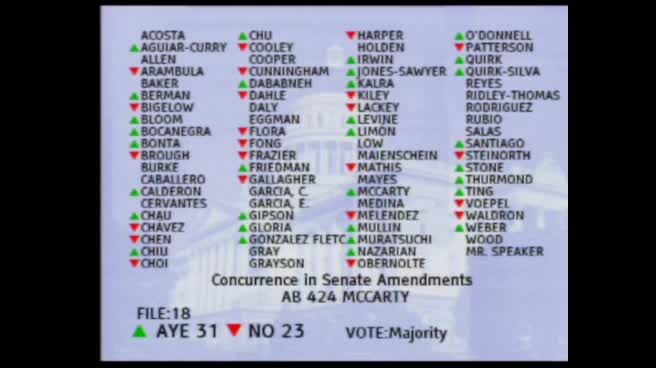 46SEC
Assembly Floor
 1MIN
Senate Floor
 1H
Senate Standing Committee on Appropriations
 12MIN
Senate Standing Committee on Public Safety
 2MIN
Assembly Floor
 1MIN
Assembly Standing Committee on Appropriations
 10MIN
Assembly Standing Committee on Public Safety
Bill Author

Bill Co-Author(s):