AB 822: Institutional purchasers: sale of California produce.
- Session Year: 2017-2018
- House: Assembly
- Latest Version Date: 2017-10-14
Under existing law, price, fitness, and quality being equal, any body, officer, or other person charged with the purchase, or permitted or authorized to purchase supplies for the use of the state, or of any of its institutions or offices, or for the use of any county or city, is required to always prefer supplies, defined to include produce, that are grown, manufactured, or produced in the state, and is required to next prefer supplies partially manufactured, grown, or produced in the state.
This bill would remove produce grown or partially grown in the state from this requirement. The bill would require all California state-owned or state-run institutions, except public universities and colleges and school districts, to purchase agricultural products grown in California when the bid or price of the California-grown agricultural product does not exceed by more than 5% the lowest bid or price for an agricultural product produced outside the state and the quality of the produce is comparable. This bill would also require the institutions, when they solicit or intend to accept a bid or price for agricultural products grown outside the state, to accept the bid or price from a vendor that packs or processes these agricultural products in the state before accepting a bid or price from a vendor that packs or processes these agricultural products outside of the state when specified conditions are met. This bill would require a school district that solicits bids for the purchase of an agricultural product to accept a bid or price for that agricultural product when it is grown in California before accepting a bid or price for an agricultural product that is grown outside the state when the bid or price of the California-grown agricultural product does not exceed the lowest bid or price for an agricultural product produced outside the state and the quality of the produce is comparable.
This act shall be known, and may be cited, as the Choose California Produce Act.
SEC. 2.Chapter 7 (commencing with Section 58595) is added to Part 1 of Division 21 of the Food and Agricultural Code, to read:7.Institutional Purchasers of Agricultural Products58595.(a)All California state-owned or state-run institutions, except public universities and colleges and school districts, that solicit bids for the purchase of an agricultural product shall accept a bid or price for that agricultural product when it is grown in California before accepting a bid or price for an agricultural product that is grown outside the state, when both of the following are met:
(1)The bid or price of the California-grown agricultural product does not exceed by more than 5 percent the lowest bid or price for an agricultural product produced outside the state.
(2)The quality of the California-grown agricultural product is comparable to that agricultural produce produced outside the state.
(b)All California state-owned or state-run institutions, except public universities and colleges and school districts, that intend to accept a bid or price for agricultural products grown outside the state shall accept the bid or price from a vendor that packs or processes these agricultural products in the state before accepting a bid or price from a vendor that packs or processes these agricultural products outside of the state, when both of the following are met:
(1)The bid or price of the agricultural product grown outside the state and packed or processed in the state does not exceed by more than 5 percent the lowest bid or price for the agricultural product packed or processed outside the state.
(2)The quality of the agricultural product packed or processed in the state is comparable to those packed or processed outside the state.
(c)A school district that solicits bids for the purchase of an agricultural product shall accept a bid or price for that agricultural product when it is grown in California before accepting a bid or price for an agricultural product that is grown outside the state, when both of the following are met:
(1)The bid or price of the California-grown agricultural product does not exceed the lowest bid or price for an agricultural product produced outside the state.
(2)The quality of the California-grown agricultural product is comparable to that agricultural produce produced outside the state.
(d)This section shall only apply to a contract to purchase agricultural products for a value that is less than the value of the threshold for supplies and services for which California has obligated itself under the Agreement on Government Procurement of the World Trade Organization.
SEC. 3.Section 4330 of the Government Code is amended to read:4330.As used in this article, supplies includes goods, wares, merchandise, and manufactures.
SEC. 4.Section 4331 of the Government Code is amended to read:4331.Price, fitness, and quality being equal, any body, officer, or other person charged with the purchase, or permitted or authorized to purchase supplies for the use of the state, or of any of its institutions or offices, or for the use of any county or city shall always prefer supplies manufactured or produced in the state, and shall next prefer supplies partially manufactured or produced in the state.
This act shall be known, and may be cited, as the Choose California Produce Act.
SEC. 2.Chapter 7 (commencing with Section 58595) is added to Part 1 of Division 21 of the Food and Agricultural Code, to read:7.Institutional Purchasers of Agricultural Products58595.(a)All California state-owned or state-run institutions, except public universities and colleges and school districts, that solicit bids for the purchase of an agricultural product shall accept a bid or price for that agricultural product when it is grown in California before accepting a bid or price for an agricultural product that is grown outside the state, as long as when both of the following are met:
(1)The bid or price of the California-grown agricultural product does not exceed by more than 5 percent the lowest bid or price for an agricultural product produced outside the state.
(2)The quality of the California-grown agricultural product is comparable to that agricultural produce produced outside the state.
(b)All California state-owned or state-run institutions, except public universities and colleges and school districts, that intend to accept a bid or price for agricultural products grown outside the state shall accept the bid or price from a vendor that packs or processes these agricultural products in the state before accepting a bid or price from a vendor that packs or processes these agricultural products outside of the state, as long as when both of the following are met:
(1)The bid or price of the agricultural product grown outside the state and packed or processed in the state does not exceed by more than 5 percent the lowest bid or price for the agricultural product packed or processed outside the state.
(2)The quality of the agricultural product packed or processed in the state is comparable to those packed or processed outside the state.
(c)A school district that solicits bids for the purchase of an agricultural product shall accept a bid or price for that agricultural product when it is grown in California before accepting a bid or price for an agricultural product that is grown outside the state, as long as when both of the following are met:
(1)The bid or price of the California-grown agricultural product does not exceed the lowest bid or price for an agricultural product produced outside the state.
(2)The quality of the California-grown agricultural product is comparable to that agricultural produce produced outside the state.
(d)This section shall only apply to a contract to purchase agricultural products for a value that is less than the value of the threshold for supplies and services for which California has obligated itself under the Agreement on Government Procurement of the World Trade Organization.
SEC. 3.Section 4330 of the Government Code is amended to read:4330.As used in this article, supplies includes goods, wares, merchandise, and manufactures.
SEC. 4.Section 4331 of the Government Code is amended to read:4331.Price, fitness, and quality being equal, any body, officer, or other person charged with the purchase, or permitted or authorized to purchase supplies for the use of the state, or of any of its institutions or offices, or for the use of any county or city shall always prefer supplies manufactured or produced in the state, and shall next prefer supplies partially manufactured or produced in the state.
This act shall be known, and may be cited, as the Choose California Produce Act.
SEC. 2.Chapter 7 (commencing with Section 58595) is added to Part 1 of Division 21 of the Food and Agricultural Code, to read:7.Institutional Purchasers of Agricultural Products58595.(a)All California state-owned or state-run institutions, except public universities and colleges and school districts, that solicit bids for the purchase of an agricultural product shall accept a bid or price for that agricultural product when it is grown in California before accepting a bid or price for an agricultural product that is grown outside the state, as long as both of the following are met:
(1)The bid or price of the California-grown agricultural product does not exceed by more than 5 percent the lowest bid or price for an agricultural product produced outside the state.
(2)The quality of the California-grown agricultural product is comparable to that agricultural produce produced outside the state.
(b)All California state-owned or state-run institutions, except public universities and colleges and school districts, that intend to accept a bid or price for agricultural products grown outside the state shall accept the bid or price from a vendor that packs or processes these agricultural products in the state before accepting a bid or price from a vendor that packs or processes these agricultural products outside of the state, as long as both of the following are met:
(1)The bid or price of the agricultural product grown outside the state and packed or processed in the state does not exceed by more than 5 percent the lowest bid or price for the agricultural product packed or processed outside the state.
(2)The quality of the agricultural product packed or processed in the state is comparable to those packed or processed outside the state.
(c)A school district that solicits bids for the purchase of an agricultural product shall accept a bid or price for that agricultural product when it is grown in California before accepting a bid or price for an agricultural product that is grown outside the state, as long as both of the following are met:
(1)The bid or price of the California-grown agricultural product does not exceed the lowest bid or price for an agricultural product produced outside the state.
(2)The quality of the California-grown agricultural product is comparable to that agricultural produce produced outside the state.
(d)This section shall only apply to a contract to purchase agricultural products for a value that is less than the value of the threshold for supplies and services for which California has obligated itself under the Agreement on Government Procurement of the World Trade Organization.
SEC. 3.Section 4330 of the Government Code is amended to read:4330.As used in this article, supplies includes goods, wares, merchandise, and manufactures.
SEC. 4.Section 4331 of the Government Code is amended to read:4331.Price, fitness fitness, and quality being equal, any body, officer, or other person charged with the purchase, or permitted or authorized to purchase supplies for the use of the state, or of any of its institutions or offices, or for the use of any county or city shall always prefer supplies manufactured or produced in the state, and shall next prefer supplies partially manufactured or produced in the state.
This act shall be known, and may be cited, as the Choose California Produce Act.
SEC. 2.Chapter 7 (commencing with Section 58595) is added to Part 1 of Division 21 of the Food and Agricultural Code, to read:7.Institutional Purchasers of Agricultural Products58595.(a)All California state-owned or state-run institutions, except public universities and colleges and school districts, that solicit bids for the purchase of an agricultural product shall accept a bid or price for that agricultural product when it is grown in California before accepting a bid or price for an agricultural product that is grown outside the state, as long as both of the following are met:
(1)The bid or price of the California-grown agricultural product does not exceed by more than 5 percent the lowest bid or price for an agricultural product produced outside the state.
(2)The quality of the California-grown agricultural product is comparable to that agricultural produce produced outside the state.
(b)All California state-owned or state-run institutions, except public universities and colleges and school districts, that intend to accept a bid or price for agricultural products grown outside the state shall accept the bid or price from a vendor that packs or processes these agricultural products in the state before accepting a bid or price from a vendor that packs or processes these agricultural products outside of the state, as long as both of the following are met:
(1)The bid or price of the agricultural product grown outside the state and packed or processed in the state does not exceed by more than 5 percent the lowest bid or price for the agricultural product packed or processed outside the state.
(2)The quality of the agricultural product packed or processed in the state is comparable to those packed or processed outside the state.
(c)A school district that solicits bids for the purchase of an agricultural product shall accept a bid or price for that agricultural product when it is grown in California before accepting a bid or price for an agricultural product that is grown outside the state, as long as both of the following are met:
(1)The bid or price of the California-grown agricultural product does not exceed the lowest bid or price for an agricultural product produced outside the state.
(2)The quality of the California-grown agricultural product is comparable to that agricultural produce produced outside the state.
(d)This section shall only apply to a contract to purchase agricultural products for a value that is less than the value of the threshold for supplies and services for which California has obligated itself under the Agreement on Government Procurement of the World Trade Organization.
SEC. 3.Section 4330 of the Government Code is amended to read:4330.As used in this article, supplies includes goods, wares, merchandise, manufactures, and produce. and manufactures.
SEC. 4.Section 4331 of the Government Code is amended to read:4331.Price, fitness and quality being equal, any body, officer, or other person charged with the purchase, or permitted or authorized to purchase supplies for the use of the State, state, or of any of its institutions or offices, or for the use of any county or city shall always prefer supplies grown, manufactured, manufactured or produced in the State, state, and shall next prefer supplies partially manufactured, grown, manufactured or produced in the State. state.
REVISIONS: HeadingLine 1.|
Date
|
Status
|
|---|---|
| Oct 14, 2017 | Chaptered by Secretary of State - Chapter 785, Statutes of 2017. |
| Oct 14, 2017 | Approved by the Governor. |
| Sep 19, 2017 | Enrolled and presented to the Governor at 3 p.m. |
| Sep 11, 2017 | Senate amendments concurred in. To Engrossing and Enrolling. |
| Sep 7, 2017 | In Assembly. Concurrence in Senate amendments pending. May be considered on or after September 9 pursuant to Assembly Rule 77. |
| Sep 7, 2017 | Read third time. Passed. Ordered to the Assembly. |
| Sep 5, 2017 | Read second time. Ordered to third reading. |
| Sep 1, 2017 | From committee: Do pass. (Ayes 7. Noes 0.) (September 1). |
| Jul 17, 2017 | In committee: Referred to APPR. suspense file. |
| Jul 10, 2017 | From committee chair, with author's amendments: Amend, and re-refer to committee. Read second time, amended, and re-referred to Com. on APPR. |
| Jun 27, 2017 | From committee chair, with author's amendments: Amend, and re-refer to committee. Read second time, amended, and re-referred to Com. on AGRI. |
| Jul 6, 2017 | From committee: Do pass and re-refer to Com. on APPR. (Ayes 4. Noes 0.) (July 6). Re-referred to Com. on APPR. |
| Jun 27, 2017 | From committee: Do pass and re-refer to Com. on AGRI. (Ayes 13. Noes 0.) (June 27). Re-referred to Com. on AGRI. |
| Jun 14, 2017 | Referred to Coms. on G.O. and AGRI. |
| Jun 1, 2017 | In Senate. Read first time. To Com. on RLS. for assignment. |
| May 31, 2017 | Read third time. Passed. Ordered to the Senate. (Ayes 76. Noes 0. Page 1896.) |
| May 26, 2017 | Coauthors revised. |
| Apr 26, 2017 | In committee: Set, first hearing. Referred to APPR. suspense file. |
| Apr 6, 2017 | From committee: Do pass and re-refer to Com. on APPR. with recommendation: To Consent Calendar. (Ayes 9. Noes 0.) (April 5). Re-referred to Com. on APPR. |
| Mar 22, 2017 | From committee: Do pass and re-refer to Com. on AGRI. (Ayes 7. Noes 0.) (March 22). Re-referred to Com. on AGRI. |
| Mar 2, 2017 | Referred to Coms. on A. & A.R. and AGRI. |
| Feb 16, 2017 | From printer. May be heard in committee March 18. |
| Feb 15, 2017 | Read first time. To print. |
|
Date
|
Description
|
Location
|
Votes
|
|
|---|---|---|---|---|
| Sep 11, 2017 | AB 822 CABALLERO Concurrence in Senate Amendments | Assembly Floor |
Passed |
|
| Sep 7, 2017 | Assembly 3rd Reading AB822 Caballero et al. By Galgiani | Senate Floor |
Passed |
|
| Sep 1, 2017 | Do pass | Senate Standing Committee on Appropriations |
Passed |
|
| Jul 17, 2017 | Placed on suspense file | Senate Standing Committee on Appropriations |
Passed |
|
| Jul 6, 2017 | Do pass, but first be re-referred to the Committee on [Appropriations] | Senate Standing Committee on Agriculture |
Passed |
|
| Jun 27, 2017 | Do pass, but first be re-referred to the Committee on [Agriculture] | Senate Standing Committee on Governmental Organization |
Passed |
|
| May 31, 2017 | AB 822 CABALLERO Assembly Third Reading | Assembly Floor |
Passed |
|
| May 26, 2017 | Do pass. | Assembly Standing Committee on Appropriations |
Passed |
|
| Apr 5, 2017 | Do pass and be re-referred to the Committee on [Appropriations] with recommendation: To Consent Calendar | Assembly Standing Committee on Agriculture |
Passed |
|
| Mar 22, 2017 | Do pass and be re-referred to the Committee on [Agriculture] | Assembly Standing Committee on Accountability and Administrative Review |
Passed |
This list shows positions taken on this bill by organizations on the date displayed, which is linked to the original source.
Positions by individuals are not included.
|
Organization
|
Position
|
Date
|
|---|---|---|
| African-American Farmers of California | ** Support | Sep 4, 2017 |
| Agricultural Council Of California | ** Support | Sep 4, 2017 |
| Almond Alliance of California | ** Support | Sep 4, 2017 |
| Association Of California Egg Farmers | ** Support | Sep 4, 2017 |
| California Apple Commission | ** Support | Sep 4, 2017 |
| California Association Of Wheat Growers | ** Support | Sep 4, 2017 |
| California Bean Shippers Association | ** Support | Sep 4, 2017 |
| California Blueberry Commission | ** Support | Sep 4, 2017 |
| California Citrus Mutual | ** Support | Sep 4, 2017 |
| California Cotton Ginners and Growers Association | ** Support | Sep 4, 2017 |
| California Cut Flower Commission | ** Support | Sep 4, 2017 |
| California Dairies, Inc. | ** Support | Sep 4, 2017 |
| California Farm Bureau Federation | ** Support | Sep 4, 2017 |
| California Grain and Feed Association | ** Support | Sep 4, 2017 |
| California League of Food Processors | ** Support | Sep 4, 2017 |
| california nursery and garden centers | ** Support | Sep 4, 2017 |
| California Pear Growers Association | ** Support | Sep 4, 2017 |
| California Pork Producers Association | ** Support | Sep 4, 2017 |
| California Poultry Federation | ** Support | Sep 4, 2017 |
| California Seed Association | ** Support | Sep 4, 2017 |
| California State Floral Association | ** Support | Sep 4, 2017 |
| California Warehouse Association | ** Support | Sep 4, 2017 |
| California Women for Agriculture | ** Support | Sep 4, 2017 |
| California Wool Growers Association | ** Support | Sep 4, 2017 |
| Far West Equipment Dealers Association | ** Support | Sep 4, 2017 |
| Nisei Farmers League | ** Support | Sep 4, 2017 |
| Sacramento Farm Bureau | ** Support | Sep 4, 2017 |
| Western Agricultural Processors Association | ** Support | Sep 4, 2017 |
| Western Plant Health Association | ** Support | Sep 4, 2017 |
| Western United Dairymen | ** Support | Sep 4, 2017 |
CONCURRENCE IN SENATE AMENDMENTS
CSA1 Bill Id:AB 822
Author:(Caballero and Gonzalez Fletcher)
As Amended Ver:July 10, 2017
Majority vote
ASSEMBLY: | 76-0 | (May 31, 2017) | SENATE: | 39-0 | (September 7, 2017) |
Original Committee Reference: A. & A.R.
SUMMARY: Provides bid preferences for the state's purchases of California-grown or California-packed or processed agricultural products.
The Senate amendments add coauthors and make technical changes.
EXISTING LAW requires that when price, fitness, or quality are equal, the state shall purchase supplies grown, manufactured, or produced in state instead of out of state. However, this section, Government Code 4030-4334, has been inoperative since the 1970s in response to a court ruling.
FISCAL EFFECT: According to the Senate Appropriations Committee:
Significant, ongoing costs to the state of $1.5 million to $2.0 million per year. These costs include:
- Administrative costs to the Department of General Services (DGS), in the hundreds of thousands of dollars, to review bids for contracts that the department manages to determine and verify where the agricultural products provided would be grown, processed and packaged to determine if one of the bid preferences should apply, and to ensure that when a contract is awarded based one of the bid preferences, that products were either grown or packaged and processed in California.
- Increases in food costs for state-owned and state-run institutions, at potentially hundreds of thousands of dollars more each year per institution.
Analysis Prepared by: Scott Herbstman / A. & A.R. / (916) 319-3600 FN: 0001808
Office of Senate Floor Analyses (916) 651-1520 Fax: (916) 327-4478 | AB |
THIRD READING
Bill No: AB 822
:
SENATE GOVERNMENTAL ORG. COMMITTEE: 13-0, 6/27/17
AYES: Dodd, Berryhill, Bradford, Cannella, Gaines, Galgiani, Glazer, Hill, Hueso, Lara, Mendoza, Portantino, Vidak
SENATE AGRICULTURE COMMITTEE: 4-0, 7/6/17
AYES: Galgiani, Wilk, Dodd, Pan
NO VOTE RECORDED: Berryhill
SENATE APPROPRIATIONS COMMITTEE: 7-0, 9/1/17
AYES: Lara, Bates, Beall, Bradford, Hill, Nielsen, Wiener
ASSEMBLY FLOOR: 76-0, 5/31/17 - See last page for vote
SOURCE: California Farm Bureau Federation
DIGEST: This bill requires all California state-owned or state-run institutions, except public universities and colleges and school districts, to purchase agricultural products grown in California when the bid or price of the California-grown agricultural product does not exceed, by more than 5%, the lowest bid or price for an agricultural product produced outside the state and the quality of the produce is comparable.
ANALYSIS:
Existing law:
- Requires that when price, fitness, or quality is equal, the state shall purchase supplies grown, manufactured, or produced in-state instead of out-of-state. However, this section has been inoperative since the 1970s in response to a court ruling.
- Grants, through the Small Business Procurement and Contract Act, preference for small businesses and microbusiness in the award of a contract for goods, services, or information technology to the state and in the construction of state facilities.
This bill:
- Requires all California state-owned or state-run institutions, except public universities and colleges and school districts, that solicit bids for agricultural products to accept the bid for the product grown in California, instead of outside of the state, if the price of the California product does not exceed the price of the out-of-state product by more than 5%, and if the quality of the California product is comparable to the out-of-state product.
- Requires all California state-owned or state-run institutions, except public universities and colleges and school districts, that intend to purchase agricultural products from outside of the state to purchase products that were packed or processed in California instead of those packed or processed out-of-state as long as the price for the in-state product does not exceed the out-of-state product by more than 5% and the quality is comparable.
- Requires school districts that solicit bids for agricultural products to purchase California-grown products over out-of-state products if the cost of the California products does not exceed the price of the out-of-state product, and if the quality is comparable.
- Provides that the provisions of this bill shall only apply to a contract to purchase agricultural products for a value that is less than the value of the threshold for supplies and services for which California has obligated itself under the Agreement on Government Procurement of the World Trade Organization.
Comments
Purpose of the bill. According to the author’s office, “California spends nearly $300 million annually on food purchasing and California schools are estimated to spend between $500 and nearly $700 million annually on direct food purchases. That is nearly $1 billion that the state could be directing towards supporting California farmers and their employees by purchasing California grown food. AB 822 would ask California to take a leadership role in promoting the purchase of California’s high quality agricultural products by creating a state purchasing preference to promote the purchase of California grown food and agricultural products by California’s state agencies.”
California’s agriculture. California is the country’s largest agricultural producer and exporters. California’s agricultural industry is also a major player in the State and the nation as a whole. According to the California Department of Food and Agriculture, over a third of the country’s vegetables and two-thirds of the country’s fruits and nuts are grown in California. In 2015, 77,500 farms operated in California and received $47.1 billion for their output.
In 2013, the California agriculture industry employed an estimated 350,000 workers. According to data compiled by the Assembly Committee on Jobs, Economic Development and the Economy, the agriculture value chains, accounts for nearly three million jobs in California. In 2011, agriculture support was the largest component of the value chain with 1.4 million jobs. This includes activities related to agriculture including farming, veterinary services, implement manufacturing, irrigation, and technical consulting.
Previous attempts. Previous legislative attempts to grant a purchasing preference for California grown agricultural commodities, or other California produced products, have either been vetoed or held in the Legislature. For example, in 2013, the Legislature passed AB 199 (Holden, 2013) with nearly unanimous support. However, Governor Brown vetoed the bill and stated that, “this bill would require the state to implement a preference for agricultural products grown in California and offered by a California company. This preference would be difficult to comply with and quite onerous. Every purchase, even a single bag of apples, would be affected.”
In addition, Governor Brown stated that, “I strongly support California's agricultural industry and encourage all state-run institutions to support local farmers and businesses. In fact, state growers and processors have no trouble competing for - and winning - the state's business. Today, approximately half of all food the Department of General Services purchases for state institutions comes from California, without a preference or a mandate.”
Related/Prior Legislation
AB 199 (Holden, 2013) would have created the Choose California Act to give preference for California grown agricultural products. (Vetoed by Governor Brown)
AB 1960 (Ma, 2010) would have encouraged state agencies to purchase California produced, or produced and processed, fruit, nuts, and vegetables if the price is equal to or less than, imported fruits, nuts, and vegetables. (Held in the Senate Rules Committee)
AB 2994 (Frommer, 2004) would have required state agencies to give preference to the purchase of lumber and certain solid wood products harvested from forests in California when price, fitness, and quality are equal. (Vetoed by Governor Schwarzenegger)
AB 801 (Salinas, 2001) would have required California state-owned or state-run institutions to purchase agricultural products grown in California before those that are grown out-of-state, provided the prices for California grown products do not exceed the lowest price of products grown outside California by more than 5%. It also included California public schools, but only when price and quality were equal to products grown outside of California. (Vetoed by Davis)
SB 1893 (Perata, 2000) would have required state agencies and school districts to purchase agricultural products produced in California if the cost and quality are equal or superior to those produced outside California. If California products were not found to be equal, preference was to be given to products produced in other states over foreign products, if the cost and quality are equal. (Held in the Senate Appropriations Suspense File)
FISCAL EFFECT: Appropriation: Fiscal Com.: Local:
According to the Senate Appropriations Committee, this bill will result in significant, ongoing costs to the state of $1.5 million to $2.0 million per year. These costs include administrative costs to the Department of General Services, in the hundreds of thousands of dollars, to review bids for contracts that the department manages to determine and verify where the agricultural products provided would be grown, processed and packaged to determine if one of the bid preferences should apply, and to ensure that when a contract is awarded based on the bid preferences, that products were either grown or packaged and processed in California.
In addition, this bill increases food costs for state-owned and state-run institutions, at potentially hundreds of thousands of dollars more each year per institution.
California Farm Bureau Federation (source)
African-American Farmers of California
Agricultural Council of California
Almond Alliance of California
Association of California Egg Farmers
California Apple Commission
California Association of Wheat Growers
California Bean Shippers Association
California Blueberry Commission
California Citrus Mutual
California Cotton Ginners and Growers Association
California Cut Flower Commission
California Dairies, Inc.
California Grain and Feed Association
California League of Food Processors
California Nursery and Garden Centers
California Pear Growers Association
California Pork Producers Association
California Poultry Federation
California Seed Association
California State Floral Association
California Warehouse Association
California Women for Agriculture
California Wool Growers Association
Far West Equipment Dealers Association
Nisei Farmers League
Sacramento Farm Bureau
Western Agricultural Processors Association
Western Plant Health Association
Western United Dairymen
None received
ARGUMENTS IN SUPPORT: According to the California Farm Bureau Federation, “in recent years, California has continued to increase regulatory burdens and other costs on California farmers and ranchers. Just last year California adopted unprecedented expanded overtime rules for farm employees along with adopting the nation’s highest minimum wage. California has the highest farm wage and workplace protections in the nation including paid rest periods, workers compensation insurance coverage, paid sick leave, collective bargaining rights and more. The costs of these programs are in addition to the costs farmers face to meet California’s stringent environmental regulations.”
Supporters also argue that, “California should recognize the investment farmers and ranchers make in meeting these high standards and commit to supporting California producers and the employees who work on our farms and ranches by purchasing California grown products.”
ASSEMBLY FLOOR: 76-0, 5/31/17
AYES: Acosta, Aguiar-Curry, Travis Allen, Arambula, Baker, Berman, Bigelow, Bloom, Bocanegra, Bonta, Brough, Burke, Caballero, Calderon, Cervantes, Chau, Chávez, Chen, Chiu, Chu, Cooley, Cooper, Cunningham, Dababneh, Dahle, Daly, Flora, Fong, Frazier, Friedman, Gallagher, Cristina Garcia, Eduardo Garcia, Gipson, Gloria, Gomez, Gonzalez Fletcher, Gray, Grayson, Harper, Holden, Irwin, Jones-Sawyer, Kalra, Kiley, Lackey, Levine, Limón, Low, Maienschein, Mathis, Mayes, McCarty, Medina, Mullin, Muratsuchi, Nazarian, O'Donnell, Patterson, Quirk, Quirk-Silva, Reyes, Ridley-Thomas, Rodriguez, Rubio, Salas, Santiago, Steinorth, Mark Stone, Thurmond, Ting, Voepel, Waldron, Weber, Wood, Rendon
NO VOTE RECORDED: Choi, Eggman, Melendez, Obernolte
9/4/17 12:53:28
**** END ****
SENATE COMMITTEE ON APPROPRIATIONS
Senator Ricardo Lara, Chair
2017 - 2018 Regular Session
AB 822 (Caballero) - Institutional purchasers: sale of California produce
Version: July 10, 2017 | Policy Vote: G.O. 13 - 0, AGRI. 4 - 0 |
Urgency: No | Mandate: No |
Hearing Date: July 17, 2017 | Consultant: Debra Cooper |
This bill meets the criteria for referral to the Suspense File.
Bill Summary:
AB 822 would require all California state-owned or state-run institutions, except public universities and colleges and school districts, to give bid preferences to California-grown agricultural products, when the bid price does not exceed by more than 5% the lowest bid price for an agricultural product produced outside the state.
Fiscal Impact:
Significant, ongoing costs to the state of $1.5 million to $2.0 million per year. These costs include:
- Administrative costs to the Department of General Services (DGS), in the hundreds of thousands of dollars, to review bids for contracts that the department manages to determine and verify where the agricultural products provided would be grown, processed and packaged to determine if one of the bid preferences should apply, and to ensure that when a contract is awarded based one of the bid preferences, that products were either grown or packaged and processed in California.
- Increases in food costs for state-owned and state-run institutions, at potentially hundreds of thousands of dollars more each year per institution.
Background:
Each year, the state contracts billions of dollars for goods and services. Existing law provides a purchasing preference to California products over out-of-state products if other factors like price and quality are the same. DGS manages over 50 food commodity contracts utilized by state-owned and state-run institutions.
California is the country’s largest agriculture producer and exporter. In 2015, 77,500 farms operated in California, and in 2013, the California agriculture industry employed an estimated 350,000 workers.
Proposed Law:
This bill would;
- Require all California state-owned or state-run institutions, except public universities and colleges and school districts, that solicit bids for the purchase of an agricultural product to accept a bid or price for that agricultural product when it is grown in California before accepting a bid or price for an agricultural product that is grown outside the state, when both of the following are met:
- The bid or price of the California-grown agricultural product does not exceed by more than 5% the lowest bid or price for an agricultural product produced outside the state;
- The quality of the California-grown agricultural product is comparable to that agricultural produce produced outside the state;
- Require that all California state-owned or state-run institutions, except public universities and colleges and school districts, that intend to accept a bid or price for agricultural products grown outside the state to accept the bid or price from a vendor that packs or processes these agricultural products in the state before accepting a bid or price from a vendor that packs or processes these agricultural products outside of the state, when both of the following are met:
- The bid or price of the agricultural product grown outside the state and packed or processed in the state does not exceed by more than 5% the lowest bid or price for the agricultural product packed or processed outside the state;
- The quality of the agricultural product packed or processed in the state is comparable to those packed or processed outside the state;
- Require that a school district that solicits bids for the purchase of an agricultural product to accept a bid or price for that agricultural product when it is grown in California before accepting a bid or price for an agricultural product that is grown outside the state, when both of the following are met:
- The bid or price of the California-grown agricultural product does not exceed the lowest bid or price for an agricultural product produced outside the state;
- The quality of the California-grown agricultural product is comparable to that agricultural produce produced outside the state;
- Provide that the provisions of this bill only apply to a contract to purchase agricultural products for a value that is less than the value of the threshold for supplies and services for which California has obligated itself under the Agreement on Government Procurement of the World Trade Organization.
Related Legislation:
AB 199 (Holden, 2013) would have created the Choose California Act to give preference for California grown agricultural products. This bill was vetoed by Governor Brown with the following veto message: “This bill would require the state to implement a preference for agricultural products grown in California and offered by a California company. This preference would be difficult to comply with and quite onerous. Every purchase, even a single bag of apples, would be affected. I strongly support California's agricultural industry and encourage all state-run institutions to support local farmers and businesses. In fact, state growers and processors have no trouble competing for - and winning - the state's business. Today, approximately half of all food the Department of General Services purchases for state institutions comes from California, without a preference or a mandate.”
AB 1960 (Ma, 2010) would have encouraged state agencies to purchase California produced, or produced and processed, fruit, nuts, and vegetables if the price is equal to or less than, imported fruits, nuts, and vegetables. This bill was held in the Senate Rules Committee.
AB 2994 (Frommer, 2004) would have required state agencies to give preference to the purchase of lumber and certain solid wood products harvested from forests in California when price, fitness, and quality are equal. This bill was vetoed by Governor Schwarzenegger with the following veto message: “The preferences imposed by this bill could result in costly legal challenges, retaliation by other states and nations, and bid protests from those claiming the preference should be granted and those objecting to it.”
AB 801 (Salinas, 2001) would have required California state-owned or state-run institutions to purchase agricultural products grown in California before those that are grown out-of-state, provided the prices for California grown products do not exceed the lowest price of products grown outside California by more than 5%. It also included California public schools, but only when price and quality were equal to products grown outside of California. This bill was vetoed by Governor Davis.
SB 1893 (Perata, 2000) would have required state agencies and school districts to purchase agricultural products produced in California if the cost and quality are equal or superior to those produced outside California. If California products were not found to be equal, preference was to be given to products produced in other states over foreign products, if the cost and quality are equal. This bill was held in the Senate Appropriations Committee.
Staff Comments:
The administrative requirement the bill creates has many of the same workload impacts as a specific bid preference, including the following:
- Every time the state purchases “agricultural products,” as defined, a buyer would need to obtain, review, evaluate, and potentially request additional information on the origin of the products being bid;
- In solicitations that include a protest process (this includes all DGS food solicitations), disputes over the provenance of a supplier’s product could lead to bid protests;
- In all cases, there would need to be some degree of compliance monitoring to ensure that suppliers were not misrepresenting their products’ provenance or substituting products from out of state. This is further complicated by the fact that agricultural products are not necessarily labeled with the state of origin.
DGS states that, in 2016, of the DGS-managed food commodity contracts, $14.6 million was spent on dried fruit, frozen fruits and vegetables, bulk grains, dried legumes, frozen potato and onion products, dehydrated potatoes, milled rice, spices and sugar. A full 5% increase in food costs would result in more than an additional $700,000 spent by the state.
Additionally, state-owned and state-run institutions have delegated authority to contract for food commodities (such as fresh produce) not covered by DGS-managed contracts. The largest food purchaser, the Department of Corrections and Rehabilitation, estimates a potential $500,000 increase in food costs. Other purchasers (ex. Department of State Hospitals, California Department of Veterans Affairs, California Highway Patrol, California Department of Transportation, and California Department of Forestry and Fire Protection) may also see an increase in food costs, resulting in the state paying hundreds of thousands of dollars more each year.
-- END --
SENATE COMMITTEE ON AGRICULTURE
Senator Cathleen Galgiani, Chair
2017 - 2018 Regular
Bill No: AB 822 Hearing Date: 7/6/17
Author: | Caballero | ||
Version: | 6/27/17 Amended | ||
Urgency: | No | Fiscal: | Yes |
Consultant: | Anne Megaro | ||
Subject: Institutional purchasers: sale of California produce
SUMMARY
:
This bill would require all California state-owned or state-run institutions, except public universities and colleges and school districts, to give bid preferences to California-grown agricultural products, as specified.
BACKGROUND AND EXISTING LAW
:
California is the top-producing agricultural state in the nation, growing and harvesting over 400 crop and livestock products and accounting for approximately one-third of the nation’s supply of vegetables and two-thirds of the nation's fruits and nuts. In 2015, California’s 77,500 farmers and ranchers received $47 billion in farm-gate value (cash receipts) for their products and employed over 400,000 people (California Agricultural Statistics Review 2015-2016; California Employment Development Department).
Existing state law:
- Requires state and local governments to give preference to purchasing supplies grown, manufactured, or produced in California if price, fitness, and quality of similar non-California products are equal (Government Code § 4330 et seq.). However, the California Attorney General concluded that this law was unconstitutional (53 Op.Atty.Gen. 72, 2-11-70).
PROPOSED LAW
:
This bill:
- Requires all state-owned or state-run institutions, except public universities and colleges and school districts, to give bid preference to California-grown agricultural products, as long as the California product does not exceed the lowest bid by more than 5% and the quality is comparable to the out-of-state products.
- Requires all state-owned or state-run institutions, except public universities and colleges and school districts, to give bid preference to California vendors that pack or process out-of-state agricultural products, as long as the California vendor’s bid for does not exceed the lowest out-of-state bid by more than 5% and the quality of the product is comparable to those packed or processed out of state.
- Requires a school district to give bid preference to California-grown agricultural products as long as the California product does not exceed the lowest bid for out-of-state products and the quality of the product is comparable to the non-California products.
- Requires compliance with California’s obligations for supplies and services as agreed to under the Agreement on Government Procurement of the World Trade Organization.
- Removes “produce” from the definition of supplies for purposes of state bidding requirements.
ARGUMENTS IN SUPPORT:
According to the author, “California has passed numerous environmental and worker protection laws that arguably go much further than any other state or nation, yet the state doesn’t actively support California farmers and ranchers who are meeting these high standards or the farm employees that work in agriculture by having a policy to buy California agricultural products. AB 822 would ask California to take a leadership role in promoting the purchase of California’s high quality agricultural products by creating a state purchasing preference to promote the purchase of California grown food and agricultural products by California’s state agencies.
“Over a third of the country's vegetables and two-thirds of the country's fruits and nuts are grown in California. California farmers grow the healthful foods that we want people to eat. The state should be supporting the farmers and their employees that grow these high-quality foods by purchasing them. Promoting California grown agricultural products through state purchasing sets a positive model for all citizens to emulate to help support California farmers and their employees through purchasing decisions. California’s economy benefits when state institutions direct purchasing power towards California grown products and growers reinvest this money back into the economy and their local communities. California spends nearly $300 million annually on food purchasing and California’s schools are estimated to spend between $500 and nearly $700 million annually on direct food purchases. That’s nearly $1 billion that the state could be directing towards supporting California farmers and their employees by purchasing California grown food.”
COMMENTS
:
Previous legislation. Similar bills have also enjoyed nearly unanimous support and have been presented to the governor in previous years; however, these bills have all been vetoed. Most recently, Governor Brown vetoed AB 199 in 2013. His veto message states, “This bill would require the state to implement a preference for agricultural products grown in California and offered by a California company. This preference would be difficult to comply with and quite onerous. Every purchase, even a single bag of apples, would be affected. I strongly support California's agricultural industry and encourage all state-run institutions to support local farmers and businesses. In fact, state growers and processors have no trouble competing for - and winning - the state's business. Today, approximately half of all food the Department of General Services purchases for state institutions comes from California, without a preference or a mandate.”
Similarly, Governor Schwarzenegger vetoed AB 2294 in 2004, which would have required preference to purchase California lumber. His veto message states, “The preferences imposed by this bill could result in costly legal challenges, retaliation by other states and nations, and bid protests from those claiming the preference should be granted and those objecting to it.”
RELATED LEGISLATION
:
AB 199 (Holden) of 2013. Would have required state entities, other than universities and colleges and school districts, to give preference to purchasing agricultural products grown in California when the bid or price of the product was equal to the price, fitness, and quality of a similar product grown out of state. Vetoed.
AB 1960 (Ma) of 2010. Would have encouraged all state-owned and state-run institutions to purchase California-grown or processed fruits, nuts, and vegetables, as long as the price did not exceed the lowest price quoted for an out-of-state product. Held in the Senate Rules Committee.
AB 2994 (Frommer) of 2004. Would have required any state agency that contracts for or acquires lumber or other solid wood products to give preference to California-harvested products if price, fitness, and quality were equal to similar non-California products. Vetoed.
AB 801 (Salinas) of 2001. Would have required state entities, other than school districts, to give preference to purchasing agricultural products grown or processed in California when the bid or price of the product is not more than 5% above the lowest bid of a similar product grown out of state. Would have required school districts to give preference to California products if the price was equal to a similar out-of-state product. Vetoed.
PRIOR ACTIONS
:
Senate Governmental Organization Committee: | 13 - 0 |
Assembly Floor: | 76 - 0 |
Assembly Appropriations Committee: | 17 - 0 |
Assembly Accountability and Administrative Review Committee: | 7 - 0 |
SUPPORT
:
California Farm Bureau Federation (sponsor)
African-American Farmers of California
Agricultural Council of California
Almond Alliance of California
Association of California Egg Farmers
California Apple Commission
California Association of Wheat Growers
California Bean Shippers Association
California Blueberry Commission
California Citrus Mutual
California Cotton Ginners and Growers Association
California Cut Flower Commission
California Dairies, Inc.
California Grain and Feed Association
California League of Food Processors
California Nursery and Garden Centers
California Pear Growers Association
California Pork Producers Association
California Poultry Federation
California Seed Association
California State Floral Association
California Warehouse Association
California Women for Agriculture
California Wool Growers Association
Far West Equipment Dealers Association
Nisei Farmers League
Western Agricultural Processors Association
Western Plant Health Association
Western United Dairymen
OPPOSITION
:
None received
-- END --
SENATE COMMITTEE ON GOVERNMENTAL ORGANIZATION
Senator Bill Dodd
Chair
2017 - 2018 Regular
Bill No: 822 Hearing Date: 6/27/2017
Author: | , et al. | ||
Version: | 2/15/2017 Introduced | ||
Urgency: | No | Fiscal: | Yes |
Consultant: | Felipe Lopez | ||
SUBJECT: Institutional purchasers: sale of California produce
DIGEST: This bill requires all California state-owned or state-run institutions, except public universities and colleges and school districts, to purchase agricultural products grown in California when the bid or price of the California-grown agricultural product does not exceed, by more than 5%, the lowest bid or price for an agricultural product produced outside the state and the quality of the produce is comparable.
ANALYSIS:
Existing law:
- Requires that when price, fitness, or quality is equal, the state shall purchase supplies grown, manufactured, or produced in-state instead of out-of-state. However, this section has been inoperative since the 1970s in response to a court ruling.
- Grants, through the Small Business Procurement and Contract Act, preference for small businesses and microbusiness in the award of a contract for goods, services, or information technology to the state and in the construction of state facilities.
This bill:
- Requires all California state-owned or state-run institutions, except public universities and colleges and school districts, that solicit bids for agricultural products to accept the bid for the product grown in California, instead of outside of the state, if the price of the California product does not exceed the price of the out-of-state product by more than 5%, and if the quality of the California product is comparable to the out-of-state product.
- Requires all California state-owned or state-run institutions, except public universities and colleges and school districts, that intend to purchase agricultural products from outside of the state to purchase products that were packed or processed in California instead of those packed or processed out-of-state as long as the price for the in-state product does not exceed the out-of-state product by more than 5% and the quality is comparable.
- Requires school districts that solicit bids for agricultural products to purchase California-grown products over out-of-state products if the cost of the California products does not exceed the price of the out-of-state product, and if the quality is comparable.
- Provides that the provisions of this bill shall only apply to a contract to purchase agricultural products for a value that is less than the value of the threshold for supplies and services for which California has obligated itself under the Agreement on Government Procurement of the World Trade Organization.
Background
Purpose of the bill. According to the author’s office, “California spends nearly $300 million annually on food purchasing and California schools are estimated to spend between $500 and nearly $700 million annually on direct food purchases. That is nearly $1 billion that the state could be directing towards supporting California farmers and their employees by purchasing California grown food. AB 822 would ask California to take a leadership role in promoting the purchase of California’s high quality agricultural products by creating a state purchasing preference to promote the purchase of California grown food and agricultural products by California’s state agencies.”
California’s agriculture. California is the country’s largest agricultural producer and exporters. California’s agricultural industry is also a major player in the State and the nation as a whole. According to the California Department of Food and Agriculture, over a third of the country’s vegetables and two-thirds of the country’s fruits and nuts are grown in California. In 2015, 77,500 farms operated in California and received $47.1 billion for their output.
In 2013, the California agriculture industry employed an estimated 350,000 workers. According to data compiled by the Assembly Committee on Jobs, Economic Development and the Economy, the agriculture value chains, accounts for nearly 3 million jobs in California. In 2011, agriculture support was the largest component of the value chain with 1.4 million jobs. This includes activities related to agriculture including farming, veterinary services, implement manufacturing, irrigation, and technical consulting.
Previous attempts. Previous legislative attempts to grant a purchasing preference for California grown agricultural commodities, or other California produced products, have either been vetoed or held in the Legislature. For example, in 2013, the Legislature passed AB 199 (Holden, 2013) with nearly unanimous support. However, Governor Brown vetoed the meause and stated that, “this bill would require the state to implement a preference for agricultural products grown in California and offered by a California company. This preference would be difficult to comply with and quite onerous. Every purchase, even a single bag of apples, would be affected.”
In addition, Governor Brown stated that, “I strongly support California's agricultural industry and encourage all state-run institutions to support local farmers and businesses. In fact, state growers and processors have no trouble competing for - and winning - the state's business. Today, approximately half of all food the Department of General Services purchases for state institutions comes from California, without a preference or a mandate.”
Prior/Related Legislation
AB 199 (Holden, 2013) would have created the Choose California Act to give preference for California grown agricultural products. (Vetoed by Governor Brown)
AB 1960 (Ma, 2010) would have encouraged state agencies to purchase California produced, or produced and processed, fruit, nuts, and vegetables if the price is equal to or less than, imported fruits, nuts, and vegetables. (Held in Senate Rules Committee)
AB 2994 (Frommer, 2004) would have required state agencies to give preference to the purchase of lumber and certain solid wood products harvested from forests in California when price, fitness, and quality are equal. (Vetoed by Governor Schwarzenegger)
AB 801 (Salinas, 2001) would have required California state-owned or state-run institutions to purchase agricultural products grown in California before those that are grown out-of-state, provided the prices for California grown products do not exceed the lowest price of products grown outside California by more than 5%. It also included California public schools, but only when price and quality were equal to products grown outside of California. (Vetoed by Davis)
SB 1893 (Perata, 2000) would have required state agencies and school districts to purchase agricultural products produced in California if the cost and quality are equal or superior to those produced outside California. If California products were not found to be equal, preference was to be given to products produced in other states over foreign products, if the cost and quality are equal. (Held in Senate Appropriations Suspense File)
FISCAL EFFECT: Appropriation: Fiscal Com.: Local:
SUPPORT:
California Farm Bureau Federation (Source)
African-American Farmers of California
Agricultural Council of California
Almond Alliance of California
Association of California Egg Farmers
California Apple Commission
California Association of Wheat Growers
California Bean Shippers Association
California Blueberry Commission
California Citrus Mutual
California Cotton Ginners and Growers Association
California Cut Flower Commission
California Grain and Feed Association
California League of Food Processors
California Nursery and Garden Centers
California Pear Growers Association
California Pork Producers Association
California Poultry Federation
California Seed Association
California State Floral Association
California Warehouse Association
California Women for Agriculture
California Wool Growers Association
Far West Equipment Dealers Association
Nisei Farmers League
Western Agricultural Processors Association
Western Plant Health Association
Western United Dairymen
OPPOSITION:
None received
ARGUMENTS IN SUPPORT: According to the California Farm Bureau Federation, “in recent years, California has continued to increase regulatory burdens and other costs on California farmers and ranchers. Just last year California adopted unprecedented expanded overtime rules for farm employees along with adopting the nation’s highest minimum wage. California has the highest farm wage and workplace protections in the nation including paid rest periods, workers compensation insurance coverage, paid sick leave, collective bargaining rights and more. The costs of these programs are in addition to the costs farmers face to meet California’s stringent environmental regulations.”
Supporters also argue that, “California should recognize the investment farmers and ranchers make in meeting these high standards and commit to supporting California producers and the employees who work on our farms and ranches by purchasing California grown products.”
DUAL REFERRAL: Senate Agriculture Committee
ASSEMBLY THIRD READING
ATR Bill Id:AB 822
Author:(Caballero)
As Introduced Ver:February 15, 2017
Majority vote
Committee | Votes | Ayes | Noes |
Accountability | 7-0 | Eggman, Lackey, Burke, Flora, Frazier, Medina, Quirk-Silva | |
Agriculture | 9-0 | Caballero, Aguiar-Curry, Flora, Gallagher, Gray, Irwin, Jones-Sawyer, Quirk, Salas | |
Appropriations | 17-0 | Gonzalez Fletcher, Bigelow, Bloom, Bocanegra, Bonta, Brough, Calderon, McCarty, Quirk, Fong, Friedman, Gallagher, Eduardo Garcia, Gray, Muratsuchi, Obernolte, Reyes |
|
SUMMARY: Provides bid preferences for the state's purchases of California-grown or California-packed or processed agricultural products. Specifically, this bill:
- Requires California state-owned and state-run institutions that solicit bids for agricultural products to accept the bid for the product grown in California instead of outside of the state if the price of the California product does not exceed the price of the out-of-state product by more than 5%, and if the quality of the California product is comparable to the out-of-state one.
- Requires California state-owned and state-run institutions that intend to purchase agricultural products from outside of the state to purchase products that were packed or processed in California instead of those packed or processed out of state as long as the price for the in-state product does not exceed the out-of-state one by more than 5% and the quality is comparable.
- Excludes public universities and colleges, and school districts from the two above requirements.
- Requires school districts that solicit bids for agricultural products to purchase California-grown products over out-of-state products if the cost of the California products does not exceed the price of the out-of-state product, and if the quality is comparable.
EXISTING LAW requires that when price, fitness, or quality are equal, the state shall purchase supplies grown, manufactured, or produced in state instead of out of state. However, this section, Government Code 4030-4334, has been inoperative since the 1970s in response to a court ruling.
FISCAL EFFECT: According to the Assembly Appropriations Committee, significant state costs in the range of $1.5 million to $2.0 million annually across a variety of state-owned and state-run institutions. These costs reflect both the increased costs of agricultural products and the administrative costs of implementing the provisions of this bill. Affected agencies include the Department of General Services (DGS), Department of State Hospitals (DSH), California Department of Veteran Affairs (CalVet), California Highway Patrol (CHP), California Department of Transportation (CalTrans), the Department of Forestry and Fire Protection (CAL FIRE), and the California Department of Corrections and Rehabilitation (CDCR).
COMMENTS: This bill provides a preference for the state's purchase of California-grown or California-packed or processed agriculture even if the cost of the products are as much as 5% more expensive than those grown or packed or processed out of state. The 5% preference applies to state-owned and state-run institutions, but does not include public universities and colleges, or school districts.
In order to qualify for the preference, the quality of the California agricultural product must be comparable to that of the out-of-state product.
Additionally, the bill requires school districts to select California-grown agricultural products if the price is the same as the out-of-state products, as long as the quality of the in-state product is comparable and the terms do not violate a specified trade agreement.
The California Farm Bureau Foundation, which is the sponsor of the bill, and the author explain that this bill is necessary since the state has passed laws in recent years that increase the cost to operate farms and ranches in the state. Specifically, recent laws require farmers to pay employees overtime and to phase in a minimum wage of $15 per hour.
According to the author, "California maintains the highest protections for worker health and safety and if we support these standards we should support those businesses and their employees by purchasing their products. . . The high costs of production for California's farmers and ranchers makes it challenging to compete against products produced outside of California. This state should support its important agricultural economy by purchasing agricultural products produced here first."
Agriculture is a major state industry. According to the California Department of Agriculture, the state's farms and ranches received approximately $47 billion for their outputs in 2015.
State law currently provides preferences for when the State contracts with Certified Small Businesses and Disabled Veteran Business Enterprises, but recent efforts to increase preference programs for in-state products have met challenges based on cost, administrative burden, and concerns about potential legal challenges.
Analysis Prepared by: Scott Herbstman / A. & A.R. / (916) 319-3600 FN: 0000617
Date of Hearing: April 26, 2017
ASSEMBLY COMMITTEE ON APPROPRIATIONS
Lorena Gonzalez Fletcher, Chair
ABPCA Bill Id:AB 822
Author:(Caballero) – As Introduced Ver:February 15, 2017
Policy Committee: | Accountability and Administrative Review | Vote: | 7 - 0 |
Agriculture | 9 - 0 |
Urgency: No State Mandated Local Program: No Reimbursable: No
SUMMARY:
This bill provides bid preferences for the state’s purchases of California grown, packed, or processed agricultural products if the cost of those products are within 5% of the costs of similar products from outside of the state. This bill’s provisions do not apply to public universities, colleges, or school districts.
FISCAL EFFECT:
Significant state costs in the range of $1.5 million to $2.0 million annually across a variety of state-owned and state-run institutions. These costs reflect both the increased costs of agricultural products and the administrative costs of implementing the provisions of this bill. Affected agencies include the Department of General Services (DGS), Department of State Hospitals (DSH), California Department of Veteran Affairs (CalVet), California Highway Patrol (CHP), California Department of Transportation (CalTrans), the Department of Forestry and Fire Protection (CAL FIRE), and the California Department of Corrections and Rehabilitation (CDCR).
COMMENTS:
- Background and Purpose. Each year the state contracts billions of dollars for goods and services. Existing state law provides a purchasing preference to California products over out-of-state products if other factors like price and quality are the same.
According to author, the state can do more to support its important agricultural industry by purchasing agricultural products produced in the state first. According to supporters, AB 822 will further strengthen California’s agriculture industry by keeping state tax dollars local.
3) Related legislation. AB 627 (Bigelow) requires that contracts entered into or renewed on or after January 1, 2018, for the supply of food for prisons require that no less than 50 percent of the food supplied is California grown, as specified. This bill requires all 35 Department of CDCR institutions to individually ensure that each of the purchase orders and competitive bids comply with the 50 percent requirement. AB 627 is currently in the Assembly Appropriations Suspense File.
4) Prior Legislation. AB 199 (Holden), of the 2013-2014 Legislative Session, would have required all California state-owned or state-run institutions, except public universities, public schools, and school districts, to purchase agricultural products grown in California to the extent possible from a California company before those that are grown outside of the state. AB 199 was vetoed by the Governor, who issued the following veto message:
“This bill would require the state to implement a preference for agricultural products grown in California and offered by a California company. This preference would be difficult to comply with and quite onerous. Every purchase, even a single bag of apples, would be affected.
I strongly support California's agricultural industry and encourage all state-run institutions to support local farmers and businesses. In fact, state growers and processors have no trouble competing for - and winning - the state's business. Today, approximately half of all food the Department of General Services purchases for state institutions comes from California, without a preference or a mandate.”
Analysis Prepared by: Luke Reidenbach / APPR. / (916) 319-2081
Date of Hearing: April 5, 2017
ASSEMBLY COMMITTEE ON AGRICULTURE
Anna Caballero, Chair
ABPCA Bill Id:AB 822
Author:(Caballero) – As Introduced Ver:February 15, 2017
ADMINISTRATIVE REVIEW 7-0
Ayes: | Eggman, Lackey, Burke, Flora, Frazier, Medina, Quirk-Silva | ||
Nays: |
SUBJECT: Institutional purchasers: sale of California produce.
SUMMARY: Provides bid preferences for the state's purchases of California-grown or California-packed or processed agricultural products. Specifically, this bill:
- Requires California state-owned and state-run institutions that solicit bids for agricultural products to accept the bid for the product grown in California instead of outside of the state if the price of the California product does not exceed the price of the out-of-state product by more than 5%, and if the quality of the California product is comparable to the out-of-state one.
- Requires California state-owned and state-run institutions that intend to purchase agricultural products from outside of the state to purchase products that were packed or processed in California instead of those packed or processed out-of-state as long as the price for the in-state product does not exceed the out-of-state one by more than 5% and the quality is comparable.
- Excludes public universities and colleges, and school districts from the two above requirements.
- Requires school districts that solicit bids for agricultural products to purchase California-grown products over out-of-state products if the cost of the California products does not exceed the price of the out-of-state product, and if the quality is comparable.
EXISTING LAW: Requires that when price, fitness, or quality are equal, the state shall purchase supplies grown, manufactured, or produced in-state instead of out-of-state. However, this section has been inoperative since the 1970s in response to a court ruling.
FISCAL EFFECT: Unknown
COMMENTS: Agriculture is a key California industry that employs more than 330,000 workers and generated $47.4 billion in annual output in 2011. This bill provides a preference for the state's purchase of California-grown or California-packed or processed agriculture even if the cost of the products are as much as 5% more expensive than those grown or packed or processed out-of-state. The 5% preference applies to state-owned and state-run institutions, but does not include public universities and colleges, or school districts..
According to the author, "California maintains the highest protections for worker health and safety and if we support these standards we should support those businesses and their employees by purchasing their products. . . The high costs of production for California’s farmers and ranchers make it challenging to compete against products produced outside of California. This state should support its important agricultural economy by purchasing agricultural products produced here first." Supporters state that with the current economic climate, it is important to keep state tax dollars local. Supporters also state that this preference will give local farmers a fair chance to sell their products within the state, and give a boost to the California farming economy.
Previous legislative attempts to grant purchasing preference for California grown agricultural commodities, or other California produced products, have either been vetoed or held in the Legislature. Reasons for the Governors' vetoes ranged from cost to the general fund, cost to local governments, and concerns that the legislation "could result in costly legal challenges, retaliation by other states and nations, and bid protests from those claiming the preference should be granted and those objecting to it."
PREVIOUS LEGISLATION: AB 199 (Holden) in 2013 provided a similar 5% preference for state purchases of California-grown agricultural products in the early versions of that bill. However, the final version of the bill removed the 5% preference. It required that state-owned and state-run institutions purchase California-grown products instead of those grown out of state if the price was equal to or less than the out-of-state product, and if the availability and delivery schedule of the agricultural product was acceptable. This bill was vetoed by Governor Brown.
AB 1960 (Ma) of 2010, encouraged the State of California and its agencies to purchase California grown, or grown and processed, fruit, nuts and vegetables if the price is equal to or less than, imported fruits, nuts and vegetables. This bill was held in the Senate Rules committee.
AB 2994 (Frommer) of 2004, proposed requiring state agencies to give preference to the purchase of lumber and certain solid wood products harvested from forests in California when price, fitness and quality are equal. This bill was vetoed by Governor Schwarzenegger.
AB 801 (Salinas) of 2001, proposed requiring California state-owned or state-run institutions to purchase agricultural products grown in California before those that are grown outside this state, provided the prices for California grown products do not exceed the lowest price of products grown outside California by more than 5%. It also included California public schools, but only when price and quality were equal to products grown outside California. This bill was vetoed by Governor Davis.
SB 1893 (Perata) of 2000, proposed requiring state agencies and school districts to purchase agricultural products produced in California if the cost and quality are equal or superior to those produced outside California. If California products were not found to be equal, preference was to be given to products produced in other states over foreign products, if the cost and quality are equal. This bill was held on the Senate Appropriations suspense file.
AB 214 (Wiggins) of 1999, proposed establishing preferences for the purchase of U.S. and California manufactured materials, with respect to public works contracts entered into by public entities. The bill was vetoed by Governor Davis.
REGISTERED SUPPORT / OPPOSITION:
Support
California Farm Bureau Federation (sponsor)
Opposition
None on file.
Analysis Prepared by: Victor Francovich / AGRI. / 916-319-2084
Date of Hearing: March 22, 2017
ASSEMBLY COMMITTEE ON ACCOUNTABILITY AND ADMINISTRATIVE REVIEW
Susan Talamantes Eggman, Chair
ABPCA Bill Id:AB 822 (
Author:Caballero) – As Introduced Ver:February 15, 2017
SUBJECT: Institutional purchasers: sale of California produce
SUMMARY: Provides bid preferences for the state's purchases of California-grown or California-packed or processed agricultural products. Specifically, this bill:
- Requires California state-owned and state-run institutions that solicit bids for agricultural products to accept the bid for the product grown in California instead of outside of the state if the price of the California product does not exceed the price of the out-of-state product by more than 5 percent, and if the quality of the California product is comparable to the out-of-state one.
- Requires California state-owned and state-run institutions that intend to purchase agricultural products from outside of the state to purchase products that were packed or processed in California instead of those packed or processed out of state as long as the price for the in-state product does not exceed the out-of-state one by more than 5% and the quality is comparable.
- Excludes public universities and colleges, and school districts from the two above requirements.
- Requires school districts that solicit bids for agricultural products to purchase California-grown products over out-of-state products if the cost of the California products does not exceed the price of the out-of-state product, and if the quality is comparable.
EXISTING LAW requires that when price, fitness, or quality are equal, the state shall purchase supplies grown, manufactured, or produced in state instead of out of state. However, this section, Government Code 4030-4334, has been inoperative since the 1970s in response to a court ruling.
FISCAL EFFECT: Unknown
COMMENTS: This bill provides a preference for the state's purchase of California-grown or California-packed or processed agriculture even if the cost of the products are as much as 5% more expensive than those grown or packed or processed out of state. The 5% preference applies to state-owned and state-run institutions, but does not include public universities and colleges, or school districts.
In order to qualify for the preference, the quality of the California agricultural product must be comparable to that of the out-of-state product.
Additionally, the bill requires school districts to select California-grown agricultural products if the price is the same as the out-of-state products, as long as the quality of the in-state product is comparable and the terms do not violate a specified trade agreement.
The California Farm Bureau Foundation, which is the sponsor of the bill, and the author explain that this bill is necessary since the state has passed laws in recent years that increase the cost to operate farms and ranches in the state. Specifically, recent laws require farmers to pay employees overtime and to phase in a minimum wage of $15 per hour.
According to the author, "California maintains the highest protections for worker health and safety and if we support these standards we should support those businesses and their employees by purchasing their products. . . The high costs of production for California’s farmers and ranchers makes it challenging to compete against products produced outside of California. This state should support its important agricultural economy by purchasing agricultural products produced here first."
Agriculture is a major state industry. According to the California Department of Agriculture, the state's farms and ranches received approximately $47 billion for their outputs in 2015.
State law currently provides preferences for when the State contracts with Certified Small Businesses and Disabled Veteran Business Enterprises, but recent efforts to increase preference programs for in-state products have met challenges based on cost, administrative burden, and concerns about potential legal challenges.
PRIOR LEGISLATION: AB 199 (Holden) in 2013 provided a similar 5% preference for state purchases of California-grown agricultural products in the early versions of that bill. However, the final version of the bill removed the 5% preference. It required that state-owned and state-run institutions purchase California-grown products instead of those grown out of state if the price was equal to or less than the out-of-state product, and if the availability and delivery schedule of the agricultural product was acceptable. The Governor vetoed AB 199, stating in the veto message that "this preference would be difficult to comply with and quite onerous."
DOUBLE REFERRAL: Should this bill pass this committee, it will be re-referred to the Assembly Agriculture Committee.
REGISTERED SUPPORT / OPPOSITION:
Support
California Farm Bureau Federation (sponsor)
Opposition
None on file.
Analysis Prepared by: Scott Herbstman / A. & A.R. /
Discussed in Hearing
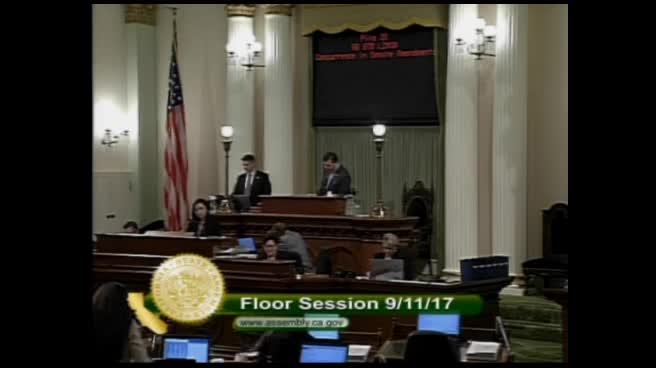 1MIN
Assembly Floor
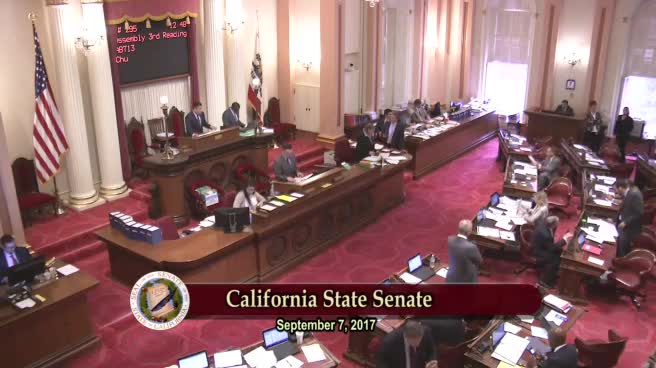 2MIN
Senate Floor
 1H
Senate Standing Committee on Appropriations
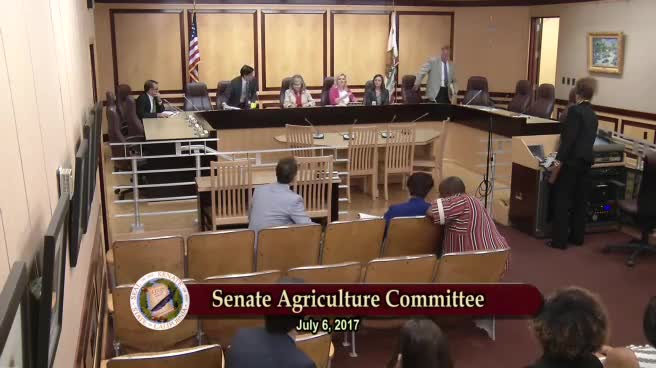 5MIN
Senate Standing Committee on Agriculture
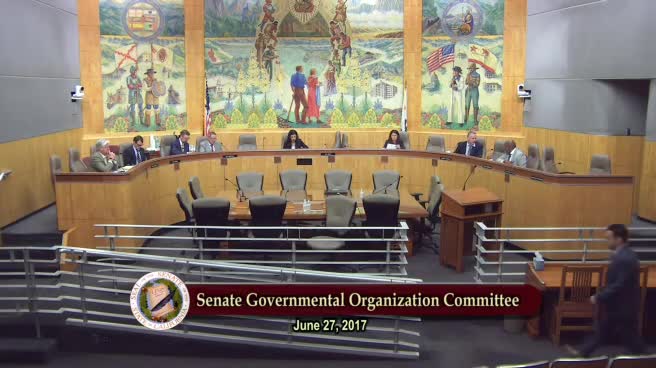 4MIN
Senate Standing Committee on Governmental Organization
 1MIN
Assembly Floor
 1H
Assembly Standing Committee on Appropriations
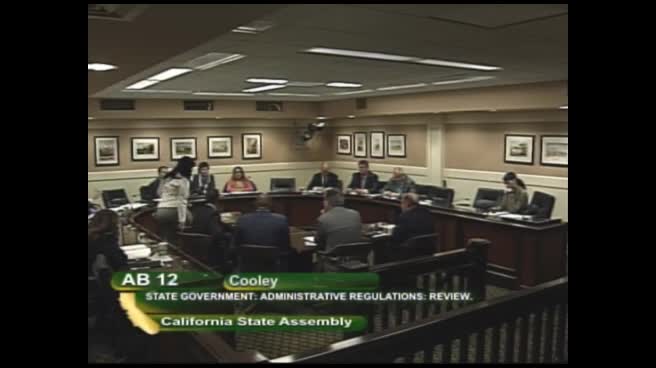 5MIN