AB 878: Juveniles: restraints.
- Session Year: 2017-2018
- House: Assembly
- Latest Version Date: 2017-10-11
Under existing law, a female ward of a local juvenile facility who is known to be pregnant or in recovery from delivery may not be restrained, unless deemed necessary for the safety and security of the inmate, the staff, or the public.
This bill would authorize the use of mechanical restraints on a juvenile during transportation outside of a local secure juvenile facility, camp, ranch, or forestry camp, only upon a determination by the probation department, in consultation with the transporting agency, that restraints are necessary to prevent physical harm to the juvenile or another person or due to a substantial risk of flight. The bill would require a county probation department that chooses to use mechanical restraints other than handcuffs to establish procedures for the documentation of use of mechanical restraints other than handcuffs, including the reasons for the use of those restraints. The bill would authorize the use of mechanical restraints during a juvenile court proceeding if the court determines that the individual juveniles behavior in custody or in court establishes a manifest need to use mechanical restraints to prevent physical harm to the juvenile or another person or due to a substantial risk of flight. The bill would require the court to document the reasons for the use of mechanical restraints in the record. If mechanical restraints are used pursuant to these provisions, the bill would require that the least restrictive form of restraint be used under the circumstances.
Under existing law, a female ward of a local juvenile facility who is known to be pregnant or in recovery from delivery may not be restrained, unless deemed necessary for the safety and security of the inmate, the staff, or the public.
This bill would authorize the use of mechanical restraints on a minor juvenile during transportation outside of a local secure juvenile facility, camp, ranch, or forestry camp, only upon a determination by the probation department, in consultation with the transporting agency, that restraints are necessary to prevent physical harm to the juvenile or another person or due to a substantial risk of flight. The bill would require a county probation department that chooses to use mechanical restraints other than handcuffs to establish procedures for the documentation of use of mechanical restraints other than handcuffs, including the reasons for the use of those restraints. The bill would authorize the use of mechanical restraints during a juvenile court proceeding if the court determines that the individual minors juveniles behavior in custody or in court establishes a manifest need to use mechanical restraints to prevent physical harm to the juvenile or another person or due to a substantial risk of flight. The bill would require the court to document the reasons for the use of mechanical restraints in the record. If mechanical restraints are used pursuant to these provisions, the bill would require that the least restrictive form of restraint be used under the circumstances. The bill would require documentation of the reasons for the use of certain restraints, as specified.
Under existing law, a female ward of a local juvenile facility who is known to be pregnant or in recovery from delivery may not be restrained, unless deemed necessary for the safety and security of the inmate, the staff, or the public.
This bill would prohibit authorize the use of restraints on a minor during transportation outside of a local secure juvenile facility, camp, ranch, or forestry camp, except as provided. only upon a determination that restraints are necessary to prevent physical harm to the juvenile or another person or due to a substantial risk of flight. The bill would authorize the use of restraints during a juvenile court proceeding if the court determines that the individual minors behavior in custody or in court establishes a manifest need to use restraints to prevent flight risk, threats of violence, or disruptive behavior, and would prohibit this determination from being based on the minors custodial status, inadequacy of the courtroom facilities, or the lack of available security personnel. physical harm to the juvenile or another person or due to a substantial risk of flight. If restraints are used pursuant to these provisions, the bill would require that the least restrictive form of restraint be used under the circumstances. The bill would require documentation of the reasons for the use of certain restraints, as specified.
Under existing law, a female ward of a local juvenile facility who is known to be pregnant or in recovery from delivery may not be restrained, unless deemed necessary for the safety and security of the inmate, the staff, or the public.
This bill would prohibit the use of restraints on a minor during transportation outside of a local juvenile facility, camp, ranch, or forestry camp, except as provided, or during a juvenile court proceeding. provided. The bill would authorize the use of restraints during a juvenile court proceeding if the court determines that the individual minors behavior in court establishes a manifest need to use restraints to prevent flight risk, threats of violence, or disruptive behavior, and would prohibit this determination from being based on the minors custodial status, inadequacy of the courtroom facilities, or the lack of available security personnel.
Under existing law, a female ward of a local juvenile facility who is known to be pregnant or in recovery from delivery may not be restrained, unless deemed necessary for the safety and security of the inmate, the staff, or the public.
This bill would prohibit the use of restraints on a minor during transportation outside of a local juvenile facility, camp, ranch, or forestry camp, except as provided, or during a juvenile court proceeding.
(a)(1)Mechanical restraints, including, but not limited to, handcuffs, chains, irons, straitjackets or cloth or leather restraints, or other similar items, may be used on a juvenile detained in or committed to a local secure juvenile facility, camp, ranch, or forestry camp, as established pursuant to Sections 850 and 881, during transportation outside of the facility only upon a determination made by the probation department, in consultation with the transporting agency, that the mechanical restraints are necessary to prevent physical harm to the juvenile or another person or due to a substantial risk of flight.
(2)If a determination is made that mechanical restraints are necessary, the least restrictive form of restraint shall be used consistent with the legitimate security needs of each juvenile.
(3)A county probation department that chooses to use mechanical restraints other than handcuffs on juveniles shall establish procedures for the documentation of their use, including the reasons for the use of those mechanical restraints.
(4)This subdivision does not apply to mechanical restraints used by medical care providers in the course of medical care or transportation.
(b)(1)Mechanical restraints may only be used during a juvenile court proceeding if the court determines that the individual juveniles behavior in custody or in court establishes a manifest need to use mechanical restraints to prevent physical harm to the juvenile or another person or due to a substantial risk of flight.
(2)The burden to establish the need for mechanical restraints pursuant to paragraph (1) is on the prosecution.
(3)If the court determines that mechanical restraints are necessary, the least restrictive form of restraint shall be used and the reasons for the use of mechanical restraints shall be documented in the record.
SECTION 1.Section 210.6 is added to the Welfare and Institutions Code, to read:210.6.(a)(1) Instruments of restraint, including, but not limited to, handcuffs, chains, irons, straitjackets or cloth or leather restraints, and other similar items, may be used on a minor detained in or committed to a local secure juvenile facility, camp, ranch, or forestry camp during transportation outside of the facility only upon a determination made by the probation department, in consultation with the transporting agency, that restraints are necessary to prevent physical harm to the juvenile or another person or due to a substantial risk of flight.(2)If a determination is made that mechanical restraints are necessary, the least restrictive form of restraint shall be used consistent with the legitimate security needs of each minor. In each case in which mechanical restraints other than handcuffs are used, the reasons for the use of restraints and the instrument or instruments of restraint used shall be documented.(3)This subdivision does not apply to restraints used by medical care providers in the course of medical treatment or transportation.(b)(1)Restraints may only be used during a juvenile court proceeding if the court determines that the individual minors behavior in custody or in court establishes a manifest need to use restraints to prevent physical harm to the juvenile or another person or due to a substantial risk of flight.(2)It is the prosecutions burden to demonstrate need.(3)If the court makes a determination that mechanical restraints are necessary, the least restrictive form of restraint shall be used and the reasons for the use of restraints shall be documented on the record.(a)(1)Except as provided in paragraph (2), instruments Instruments of restraint, including, but not limited to, handcuffs, chains, irons, straitjackets or cloth or leather restraints, and other similar items, may not be used on a minor during transportation outside of a local juvenile facility, camp, ranch, or forestry camp. be used on a minor detained in or committed to a local secure juvenile facility, camp, ranch, or forestry camp during transportation outside of the facility only upon a determination made by the probation department, in consultation with the transporting agency, that restraints are necessary to prevent physical harm to the juvenile or another person or due to a substantial risk of flight.
(2)Handcuffs may be used during the transportation of a minor outside of a local juvenile facility, camp, ranch, or forestry camp upon a determination made by the probation department that handcuffs are necessary to prevent physical harm to the juvenile or another person or due to a substantial risk of flight. However, handcuffs may not be fastened behind a minors back. The determination and the reasons for the determination shall be documented.(2)If a determination is made that mechanical restraints are necessary, the least restrictive form of restraint shall be used consistent with the legitimate security needs of each minor. In each case in which mechanical restraints other than handcuffs are used, the reasons for the use of restraints and the instrument or instruments of restraint used shall be documented.
(3)This subdivision does not apply to restraints used by medical care providers in the course of medical treatment or transportation.
(b)(1)Restraints may only be used during a juvenile court proceeding if the court determines that the individual minors behavior in court establishes a manifest need to use restraints to prevent flight risk, threats of violence, or disruptive behavior. custody or in court establishes a manifest need to use restraints to prevent physical harm to the juvenile or another person or due to a substantial risk of flight.
(2)The determination may not be based on the minors custodial status, inadequacy of the courtroom facilities, or the lack of available security personnel.(3)(2)It is the prosecutions burden to demonstrate need.
(4)When(3)If the court makes a determination that restraints are necessary, the least restrictive alternative shall be used. mechanical restraints are necessary, the least restrictive form of restraint shall be used and the reasons for the use of restraints shall be documented on the record.
(a)(1)Except as provided in paragraph (2), instruments of restraint, including, but not limited to, handcuffs, chains, irons, straitjackets or cloth or leather restraints, and other similar items, may not be used on a minor during transportation outside of a local juvenile facility, camp, ranch, or forestry camp.
(2)Handcuffs may be used during the transportation of a minor outside of a local juvenile facility, camp, ranch, or forestry camp upon a determination made pursuant to a standardized assessment instrument developed by the transporting agency by the probation department that handcuffs are necessary to prevent physical harm to the juvenile or another person or due to a substantial risk of flight. However, handcuffs may not be fastened behind a minors back. The determination and the reasons for the determination shall be documented.
(b)Instruments of restraint, including, but not limited to, handcuffs, chains, irons, straitjackets, or cloth or leather restraints, and other similar items, may not be used on a minor during a juvenile court proceeding. Restraints shall be removed prior to the minor being brought into the courtroom and appearing before the juvenile court.(b)(1)Restraints may only be used during a juvenile court proceeding if the court determines that the individual minors behavior in court establishes a manifest need to use restraints to prevent flight risk, threats of violence, or disruptive behavior.
(2)The determination may not be based on the minors custodial status, inadequacy of the courtroom facilities, or the lack of available security personnel.
(3)It is the prosecutions burden to demonstrate need.
(4)When the court makes a determination that restraints are necessary, the least restrictive alternative shall be used.
(a)(1)Except as provided in paragraph (2), instruments of restraint, including, but not limited to, handcuffs, chains, irons, straitjackets or cloth or leather restraints, and other similar items, may not be used on a minor during transportation outside of a local juvenile facility, camp, ranch, or forestry camp.
(2)Handcuffs may be used during the transportation of a minor outside of a local juvenile facility, camp, ranch, or forestry camp upon a determination made pursuant to a standardized assessment instrument developed by the transporting agency that handcuffs are necessary to prevent physical harm to the juvenile or another person or due to a substantial risk of flight. However, handcuffs may not be fastened behind a minors back. The determination and the reasons for the determination shall be documented.
(b)Instruments of restraint, including, but not limited to, handcuffs, chains, irons, straitjackets, or cloth or leather restraints, and other similar items, may not be used on a minor during a juvenile court proceeding. Restraints shall be removed prior to the minor being brought into the courtroom and appearing before the juvenile court.
|
Date
|
Status
|
|---|---|
| Oct 11, 2017 | Chaptered by Secretary of State - Chapter 660, Statutes of 2017. |
| Oct 11, 2017 | Approved by the Governor. |
| Sep 20, 2017 | Enrolled and presented to the Governor at 4:30 p.m. |
| Sep 13, 2017 | Assembly Rule 77(a) suspended. |
| Sep 12, 2017 | In Assembly. Concurrence in Senate amendments pending. May be considered on or after September 14 pursuant to Assembly Rule 77. |
| Sep 11, 2017 | Read third time. Passed. Ordered to the Assembly. |
| Sep 7, 2017 | Read second time. Ordered to third reading. |
| Sep 6, 2017 | Read third time and amended. Ordered to second reading. |
| Jun 28, 2017 | Read second time. Ordered to third reading. |
| Jun 27, 2017 | From committee: Do pass. (Ayes 5. Noes 2.) (June 27). |
| Jun 8, 2017 | Referred to Com. on PUB. S. |
| May 30, 2017 | In Senate. Read first time. To Com. on RLS. for assignment. |
| May 30, 2017 | Read third time. Passed. Ordered to the Senate. (Ayes 41. Noes 30. Page 1855.) |
| May 22, 2017 | Read third time and amended. Ordered to third reading. (Page 1637.) |
| Apr 5, 2017 | Read second time. Ordered to third reading. |
| Apr 4, 2017 | Read second time and amended. Ordered returned to second reading. |
| Apr 3, 2017 | From committee: Amend, and do pass as amended. (Ayes 5. Noes 2.) (March 28). |
| Mar 2, 2017 | Referred to Com. on PUB. S. |
| Feb 17, 2017 | From printer. May be heard in committee March 19. |
| Feb 16, 2017 | Read first time. To print. |
|
Date
|
Description
|
Location
|
Votes
|
|
|---|---|---|---|---|
| Sep 13, 2017 | AB 878 GIPSON Concurrence in Senate Amendments | Assembly Floor |
Passed |
|
| Sep 11, 2017 | Assembly 3rd Reading AB878 Gipson By Jackson | Senate Floor |
Passed |
|
| Jun 27, 2017 | Do pass | Senate Standing Committee on Public Safety |
Passed |
|
| May 30, 2017 | AB 878 GIPSON Assembly Third Reading | Assembly Floor |
Passed |
|
| Mar 28, 2017 | Do pass as amended. | Assembly Standing Committee on Public Safety |
Passed |
This list shows positions taken on this bill by organizations on the date displayed, which is linked to the original source.
Positions by individuals are not included.
|
Organization
|
Position
|
Date
|
|---|---|---|
| American Civil Liberties Union of California | ** Support | Sep 8, 2017 |
| Assembly Floor Vote: 41 - 30 | ** Against | Jun 26, 2017 |
| Avalonbay Communities Inc. | * Indeterminate | Mar 28, 2017 |
| California Attorneys For Criminal Justice | ** Support | Sep 8, 2017 |
| California Public Defenders Association | ** Support | Sep 8, 2017 |
| California State Sheriffs' Association | ** Against | Sep 8, 2017 |
| Center on Juvenile and Criminal Justice | ** Support | Sep 8, 2017 |
| Chief Probation Officers Of California | ** Against | Sep 8, 2017 |
| Children Now | ** Support | Sep 8, 2017 |
| Disability Rights California | ** Support | Sep 8, 2017 |
| John Burton Advocates for Youth | ** Support | Mar 27, 2017 |
| Legal Services for Children | ** Support | Sep 8, 2017 |
| National Association Of Social Workers, California Chapter | ** Support | Sep 8, 2017 |
| National Center for Youth Law | ** Support | Sep 8, 2017 |
| Pacific Juvenile Defender Center | ** Support | Sep 8, 2017 |
| Planned Parenthood Affiliates Of California | ** Support | Sep 8, 2017 |
| Planned Parenthood Mar Monte | ** Support | Sep 8, 2017 |
| Prison Law Office | ** Support | Mar 27, 2017 |
| PURPOSE | ** Against | Jun 26, 2017 |
| Young Women's Freedom Center | ** Support | Mar 27, 2017 |
| Young Womens Freedom Center | ** Support | Mar 27, 2017 |
| Youth Law Center | ** Support | Sep 8, 2017 |
CONCURRENCE IN SENATE AMENDMENTS
CSA1 Bill Id:AB 878
Author:(Gipson)
As Amended Ver:September 6, 2017
Majority vote
ASSEMBLY: | 41-30 | (May 30, 2017) | SENATE: | 21-14 | (September 11, 2017) |
Original Committee Reference: PUB. S.
SUMMARY: Limits the use of restraints to transport a minor from a juvenile detention facility and clarifies when restraints may be used in juvenile court.
The Senate amendments require a county probation department which chooses to use restraints other than handcuffs to establish procedures for documenting their use, including the reasons for use of those restraints.
EXISTING LAW:
- Mandates all facilities of the Division of Juvenile Facilities to ensure the safety and dignity of all youth in their care.
- Requires the Board of Corrections to develop guidelines for the operation and maintenance of nonsecure placement facilities for juveniles alleged or found to be wards of the court.
- Prohibits the restraint of a ward known to be pregnant or in recovery from delivery, except as specified.
- Prohibits the use of restraints on pregnant inmates or those recovering from delivery, as specified.
AS PASSED BY THE ASSEMBLY, this bill:
- Allowed the use of restraints when a minor is being transported outside of a local juvenile detention facility, when the probation department, in consultation with the transporting agency, determines that restraints are necessary to prevent physical harm to the juvenile or another person, or due to a substantial flight risk.
- Required documentation of the decision to use mechanical restraints other than handcuffs and the reasons for that decision and instrument(s) of restraint used.
- Provided that these provisions do not apply to restraints used by medical care providers in the course of treatment or transportation.
- Specified that restraints may only be used during a juvenile court proceeding if the court determines that the individual minor's behavior in custody or in court establishes a manifest need to use restraints to prevent physical harm to the juvenile or another person or due to a substantial risk of flight.
- Specified that it is the prosecution's burden to demonstrate the need for restraints.
- Required the least restrictive means of restraint necessary be used in court and the reasons for the use of restraints documented on the record.
FISCAL EFFECT: Unknown. This bill is keyed non-fiscal by the Legislative Counsel.
COMMENTS: According to the author, "Every day, young people in California who are detained in secure confinement are placed in restraints, including handcuffs, belly belts, and leg shackles, to be transported outside of the hall – for example, to a court appearance or doctor's appointment. Young people may spend hours in restraints as they wait to appear in court or to see a doctor. Once in court, they may remain restrained, impeding their ability to participate in their court hearing. This practice is harmful to young people, especially young people suffering from the effects of trauma and mental illness. It is also contrary to the juvenile court's goal of providing individualized rehabilitative services to young people and is unnecessary to protect young people or ensure public safety.
"AB 878 protects young people from this harmful practice by (1) prohibiting the use of restraints during court appearances; (2) prohibiting the use of restraints except handcuffs when a minor is transported outside of a secure facility; and (3) permitting the use of handcuffs during transportation upon an individualized determination that a particular minor poses a risk to his or her own safety, to public safety, or of flight."
Analysis Prepared by: Sandy Uribe / PUB. S. / (916) 319-3744 FN: 0002280
Office of Senate Floor Analyses (916) 651-1520 Fax: (916) 327-4478 | AB |
THIRD READING
Bill No: AB 878
:
SENATE PUBLIC SAFETY COMMITTEE: 5-2, 6/27/17
AYES: Skinner, Bradford, Jackson, Mitchell, Wiener
NOES: Anderson, Stone
ASSEMBLY FLOOR: 41-30, 5/30/17 - See last page for vote
DIGEST:
This bill limits the use of restraints to transport a minor from a juvenile detention facility and clarifies when restraints may be used in juvenile court.
Senate Floor Amendments of 9/6/17 add clarifying language and make other technical changes.
Existing law:
- Mandates all facilities of the Division of Juvenile Facilities to ensure the safety and dignity of all youth in their care. (Welf. & Inst. Code, § 224.73.)
- Requires the Board of Corrections to develop guidelines for the operation and maintenance of nonsecure placement facilities for juveniles alleged or found to be wards of the court. (Welf. & Inst. Code, § 210.1.)
- Prohibits the restraint of a ward known to be pregnant or in recovery from delivery, except as specified. (Welf. & Inst. Code, § 222, subd. (b).)
- Prohibits the use of restraints on pregnant inmates or those recovering from delivery, as specified. (Pen. Code, § 3407.)
This bill:
- Provides that restraints may be used when a minor is being transported outside of a local juvenile detention facility only upon a determination made by the probation department, in consultation with the transporting agency, that restraints are necessary to prevent physical harm to the juvenile or another person or due to a substantial risk of flight.
- Requires that the least restrictive form of restraint be used consistent with the legitimate security needs of each minor if a determination is made that mechanical restraints are necessary.
- Requires that in each case in which mechanical restraints other than handcuffs are used, the reasons for the use of restraints and the instrument or instruments of restraint used be documented.
- Provides that the above restrictions on restraints do not apply to restraints used by medical care providers in the course of medical treatment or transportation.
- Provides that restraints may only be used during a juvenile court proceeding if the court determines that the individual minor’s behavior in custody or in court establishes a manifest need to use restraints to prevent physical harm to the juvenile or another person or due to a substantial risk of flight.
- Provides that it is the prosecution’s burden to demonstrate the need to use restraints on a minor during a juvenile court proceeding.
- Requires that the least restrictive form of restraint be used and the reasons for the use of restraints be documented on the record if the court makes a determination that mechanical restraints are necessary.
Background
Shackling in the Courtroom: Under federal law, before ordering a person shackled at trial, the trial court must (1) be persuaded by compelling circumstances that some measures are needed to maintain security, and (2) pursue less restrictive alternatives before it imposes physical restraints, which may be used only as a “last resort.” (Castillo v. Stainer (9th Cir. 1992) 983 F.2d 145 147; United States v. Baker (9th Cir. 1993) 10 F.3d 1374, 1401.) Where the trial court is found to have ordered shackling without complying with the necessary criteria, a constitutional violation of the right to due process has occurred. (Castillo v. Stainer, supra, 983 F.2d at 147; Brewster v. Bordenkircher (4th Cir. 1984) F.2d 913, 917.)
The lead California case on shackling in the courtroom is People v. Duran (1976) 16 Cal.3d 282. In Duran the California Supreme Court reaffirmed earlier decisions and held that an “unnecessary show of restraint of an accused in the presence of the jurors is prejudicial. Ordinarily, the defendant should not be manacled or unduly restrained.” (Id., at p. 290; see also Spain v. Rushen (9th Cir. 1989) 883 F.2d 712, 716 [generally, a criminal defendant has a constitutional right to appear before a jury free of shackles].)
“We believe that it is manifest that the shackling of a criminal defendant will prejudice him in the minds of the jurors. When a defendant is charged with any crime, and particularly if he is accused of a violent crime, his appearance before the jury in shackles is likely to lead the jurors to infer that he is a violent person disposed to commit crimes of the type alleged. (See Illinois v. Allen (1970) 397 U.S. 337, 344 [further citations omitted].) The removal of physical restraints is also desirable to assure that ‘ever defendant is … brought before the court with the appearance, dignity, and self-respect of a free and innocent man. [Citations omitted.] Finally, the United States Supreme Court has acknowledged that physical restraints should be used as a last resort not only because of the prejudice created in the jurors’ minds, but also because ‘the use of this technique is itself something of an affront to the very dignity and decorum of judicial proceedings that the judge is seeking to uphold.’ (Illinois v. Allen, supra, 397 U.S. 337, 344….)” (People v. Duran, supra, 16 Cal.3d at p. 290.)
In People v. Hill (1998) 17 Cal.4th 800, the California Supreme Court reiterated that the test for shackling rests upon any showing of unruliness, an announced intent to escape, or evidence of any nonconforming conduct that disrupts or would disrupt the judicial process if unrestrained. (Id. at p. 841.)
In Tiffany A. v. Superior Court (2007) 150 Cal.App.4th 1344, the Court of Appeal discussed shackling in the context of juvenile court proceedings. The minor in Tiffany A. sought a writ of prohibition alleging that policy allowing the use of physical restraints on all minors who appeared in the Lancaster juvenile court violated established law. The Los Angeles County Sheriff’s Department argued juvenile proceedings are different and the necessary showing of need should be particularized as to the individual because there is no jury, and the proceedings are often brief, uncontested and do not involve witnesses. (Id. at p. 1348.) The Court of Appeal held that any decision to shackle a minor during a court proceeding had to be based on the non-conforming conduct and behavior of the individual minor, and had to be made on a case-by-case basis irrespective of the type of hearing or proceeding. (Id. at p. 1359.) The court also noted that it is the prosecution’s burden to demonstrate need. (Id. at p. 1357.)
Similarly, in In re DeShaun M. (2007) 148 Cal.App.4th 1384, 1386-1387, the Court of Appeal held that a minor has a constitutional right to be free of shackles at a jurisdictional hearing, absent a showing of manifest need for their use. The court noted that although primary concern regarding the use of restraints is the resultant prejudice, “that is not the only reason for the limitation of their use. Also of concern is the potential unsettling effect on the defendant and therefore on his ability to present a defense, and ‘the affront to human dignity, the disrespect for the entire judicial system which is incident to unjustifiable use of physical restraints, as well as the effect such restraints have upon a defendant's decision to take the stand.’” (Id. at p. 1387, citations omitted.)
Restraints for Transporting Minors: In Tiffany A., supra, 150 Cal.App.4th at 1350, fn. 4, the court noted that it was not considering the use of physical restraints while transporting minors and that the petitioner did not raise the issue in the petition.
In February 2015, the Chief Probation Officers of California compiled data from a survey on transporting youth from juvenile hall. Forty-nine of out of 58 counties responded to the survey. Out of the 49 respondents, 48 counties affirmatively answered that the probation department transports youth from juvenile hall to court, medical appointments, or elsewhere. And 47 of those county probation departments confirmed that minors are restrained when transported, with the Alameda County Probation Department being the only department indicating that it did not use restraints when transporting minors. It is unclear whether the Santa Cruz County Probation Department uses restraints during transport. The department indicated it did not use restraints, but in the follow up question as to types of restrains, the department answered it used shackles and leg restraints. (See Transporting Youth From Juvenile Hall Survey, February 2015.)
At least one county, Contra Costa, is seeking to change the routine practice of restraining minors to transport them from juvenile hall to juvenile court. The Contra Costa County Probation Department’s current policy is to shackle all juveniles during transport. Acknowledging the controversy surrounding the policy, the Contra Costa County Probation Department is developing a risk assessment tool for transportation which would take into account the nature of a minor’s offense and behavior in juvenile hall, among other factors to help determine whether restraints are necessary. (See M. Beagle, Contra Costa Seeking Alternative to Shackling During Transport of Juveniles, Richmond Confidential, October 30, 2015, -- http://richmondconfidential.org/2015/10/30/contra-costa-hopes-to-change-the-shackling-of-juveniles-in-transportation/ -- [as of 6/20/2017].)
FISCAL EFFECT: Appropriation: Fiscal Com.: Local:
Youth Law Center (source)
American Civil Liberties Union of California
California Attorneys for Criminal Justice
California Public Defenders Association
Center on Juvenile and Criminal Justice
Children Now
Disability Rights California
Legal Services for Children
National Association of Social Workers, California Chapter
National Center for Youth Law
Pacific Juvenile Defender Center
Planned Parenthood Affiliates of California
Planned Parenthood Mar Monte
Planned Parenthood of Orange and San Bernardino Counties, Community Action Fund
California State Sheriffs’ Association
Chief Probation Officers of California
ARGUMENT IN SUPPORT: According to the National Center for Youth Law:
In California, young people who are detained in juvenile hall are often placed in full restraints – handcuffs, a belly belt, and leg shackles – whenever they are transported outside of the hall, to a court appearance or doctor’s appointment, for example. Young people may spend hours in restraints as they wait to appear in court – where they may remain restrained, impeding their ability to communicate effectively with their attorney and focus on the proceedings.
The routine practice of shackling is deeply harmful to young people. Beyond the physical discomfort inherent in being placed in restraints for prolonged periods, the routine use of shackles causes young people grave psychological harm. Young people in the juvenile justice system suffer from high rates of trauma and mental illness, which can be exacerbated by the use of restraints. The routine shackling of juveniles is an inherently humiliating experience for children. It criminalizes young people and can cause them to view themselves as dangerous criminals. These outcomes are contrary to the rehabilitative purpose of the juvenile court. Rather than engaging in practices that stigmatize and harm, the juvenile justice system should be providing supports and services to help young people reach their full potential.
The indiscriminate use of restraints is not necessary to preserve public safety. Only about 10% of juvenile arrests are for violent felonies…. The indiscriminate use of shackling makes little sense, given that the risk the young people pose to public safety is minimal and the potential harm to them is significant….
… These measures are necessary to ensure that indiscriminate and unnecessary use of shackles does not harm young people or impede the rehabilitative goals of the juvenile court.
ARGUMENT IN OPPOSITION: According to the Chief Probation Officers of California:
Probation is charged with the safety and well-being of the youth in our care and custody. It’s important to note that probation has been very successful over the last decade in decreasing juvenile arrest and detention rates and focusing on prevention and diversion. As a result, the kids that [are] in our juvenile facilities, which would therefore be the youth impacted under this bill, are youth that present the highest-risk and highest-needs in the local system.
It is imperative to the safety of all youth being transported, as well as the safety of the transporting officers, that determinations as to what types of restraints are necessary given the circumstances remain with probation and the transportation agency. Instead, AB 878 switches the presumption to say that restraints shall not be used…. Determinations on the use of restraints should continue to be guided by the policies of the probation department and the trained peace officer professionals who are charged with carrying out the duties for the care and custody of youth….
Probation is extremely committed to the youth we serve and remains focused on working with them on treatment services, education, and many other important aspects that are critical to their futures. In the course of probation’s work toward this end, it is necessary to allow probation to make the appropriate determinations as to how best to transport youth to ensure their safety, the safety of other youth being transported at the same time, as well as the safety of staff.
ASSEMBLY FLOOR: 41-30, 5/30/17
AYES: Aguiar-Curry, Berman, Bloom, Bocanegra, Bonta, Burke, Calderon, Chiu, Chu, Cooley, Dababneh, Daly, Friedman, Cristina Garcia, Eduardo Garcia, Gipson, Gloria, Gomez, Gonzalez Fletcher, Grayson, Holden, Jones-Sawyer, Kalra, Levine, Limón, Low, McCarty, Mullin, Nazarian, O'Donnell, Quirk, Reyes, Ridley-Thomas, Rubio, Santiago, Mark Stone, Thurmond, Ting, Weber, Wood, Rendon
NOES: Acosta, Travis Allen, Arambula, Baker, Bigelow, Brough, Caballero, Chávez, Chen, Cunningham, Dahle, Flora, Fong, Gallagher, Gray, Harper, Irwin, Kiley, Lackey, Maienschein, Mathis, Mayes, Melendez, Obernolte, Patterson, Quirk-Silva, Salas, Steinorth, Voepel, Waldron
NO VOTE RECORDED: Cervantes, Chau, Choi, Cooper, Eggman, Frazier, Medina, Muratsuchi, Rodriguez
9/8/17 11:01:04
Office of Senate Floor Analyses (916) 651-1520 Fax: (916) 327-4478 | AB |
THIRD READING
Bill No: AB 878
:
SENATE PUBLIC SAFETY COMMITTEE: 5-2, 6/27/17
AYES: Skinner, Bradford, Jackson, Mitchell, Wiener
NOES: Anderson, Stone
ASSEMBLY FLOOR: 41-30, 5/30/17 - See last page for vote
DIGEST:
This bill limits the use of restraints to transport a minor from a juvenile detention facility and clarifies when restraints may be used in juvenile court.
Existing law:
- Mandates all facilities of the Division of Juvenile Facilities to ensure the safety and dignity of all youth in their care. (Welf. & Inst. Code, § 224.73.)
- Requires the Board of Corrections to develop guidelines for the operation and maintenance of nonsecure placement facilities for juveniles alleged or found to be wards of the court. (Welf. & Inst. Code, § 210.1.)
- Prohibits the restraint of a ward known to be pregnant or in recovery from delivery, except as specified. (Welf. & Inst. Code, § 222, subd. (b).)
- Prohibits the use of restraints on pregnant inmates or those recovering from delivery, as specified. (Pen. Code, § 3407.)
This bill:
- Provides that restraints may be used when a minor is being transported outside of a local juvenile detention facility only upon a determination made by the probation department, in consultation with the transporting agency, that restraints are necessary to prevent physical harm to the juvenile or another person or due to a substantial risk of flight.
- Requires that the least restrictive form of restraint be used consistent with the legitimate security needs of each minor if a determination is made that mechanical restraints are necessary.
- Requires that in each case in which mechanical restraints other than handcuffs are used, the reasons for the use of restraints and the instrument or instruments of restraint used be documented.
- Provides that the above restrictions on restraints do not apply to restraints used by medical care providers in the course of medical treatment or transportation.
- Provides that restraints may only be used during a juvenile court proceeding if the court determines that the individual minor’s behavior in custody or in court establishes a manifest need to use restraints to prevent physical harm to the juvenile or another person or due to a substantial risk of flight.
- Provides that it is the prosecution’s burden to demonstrate the need to use restraints on a minor during a juvenile court proceeding.
- Requires that the least restrictive form of restraint be used and the reasons for the use of restraints be documented on the record if the court makes a determination that mechanical restraints are necessary.
Background
Shackling in the Courtroom:
Under federal law, before ordering a person shackled at trial, the trial court must (1) be persuaded by compelling circumstances that some measures are needed to maintain security, and (2) pursue less restrictive alternatives before it imposes physical restraints, which may be used only as a “last resort.” (Castillo v. Stainer (9th Cir. 1992) 983 F.2d 145 147; United States v. Baker (9th Cir. 1993) 10 F.3d 1374, 1401.) Where the trial court is found to have ordered shackling without complying with the necessary criteria, a constitutional violation of the right to due process has occurred. (Castillo v. Stainer, supra, 983 F.2d at 147; Brewster v. Bordenkircher (4th Cir. 1984) F.2d 913, 917.)
The lead California case on shackling in the courtroom is People v. Duran (1976) 16 Cal.3d 282. In Duran the California Supreme Court reaffirmed earlier decisions and held that an “unnecessary show of restraint of an accused in the presence of the jurors is prejudicial. Ordinarily, the defendant should not be manacled or unduly restrained.” (Id., at p. 290; see also Spain v. Rushen (9th Cir. 1989) 883 F.2d 712, 716 [generally, a criminal defendant has a constitutional right to appear before a jury free of shackles].)
“We believe that it is manifest that the shackling of a criminal defendant will prejudice him in the minds of the jurors. When a defendant is charged with any crime, and particularly if he is accused of a violent crime, his appearance before the jury in shackles is likely to lead the jurors to infer that he is a violent person disposed to commit crimes of the type alleged. (See Illinois v. Allen (1970) 397 U.S. 337, 344 [further citations omitted].) The removal of physical restraints is also desirable to assure that ‘ever defendant is … brought before the court with the appearance, dignity, and self-respect of a free and innocent man. [Citations omitted.] Finally, the United States Supreme Court has acknowledged that physical restraints should be used as a last resort not only because of the prejudice created in the jurors’ minds, but also because ‘the use of this technique is itself something of an affront to the very dignity and decorum of judicial proceedings that the judge is seeking to uphold.’ (Illinois v. Allen, supra, 397 U.S. 337, 344….)” (People v. Duran, supra, 16 Cal.3d at p. 290.)
In People v. Hill (1998) 17 Cal.4th 800, the California Supreme Court reiterated that the test for shackling rests upon any showing of unruliness, an announced intent to escape, or evidence of any nonconforming conduct that disrupts or would disrupt the judicial process if unrestrained. (Id. at p. 841.)
In Tiffany A. v. Superior Court (2007) 150 Cal.App.4th 1344, the Court of Appeal discussed shackling in the context of juvenile court proceedings. The minor in Tiffany A. sought a writ of prohibition alleging that policy allowing the use of physical restraints on all minors who appeared in the Lancaster juvenile court violated established law. The Los Angeles County Sheriff’s Department argued juvenile proceedings are different and the necessary showing of need should be particularized as to the individual because there is no jury, and the proceedings are often brief, uncontested and do not involve witnesses. (Id. at p. 1348.) The Court of Appeal held that any decision to shackle a minor during a court proceeding had to be based on the non-conforming conduct and behavior of the individual minor, and had to be made on a case-by-case basis irrespective of the type of hearing or proceeding. (Id. at p. 1359.) The court also noted that it is the prosecution’s burden to demonstrate need. (Id. at p. 1357.)
Similarly, in In re DeShaun M. (2007) 148 Cal.App.4th 1384, 1386-1387, the Court of Appeal held that a minor has a constitutional right to be free of shackles at a jurisdictional hearing, absent a showing of manifest need for their use. The court noted that although primary concern regarding the use of restraints is the resultant prejudice, “that is not the only reason for the limitation of their use. Also of concern is the potential unsettling effect on the defendant and therefore on his ability to present a defense, and ‘the affront to human dignity, the disrespect for the entire judicial system which is incident to unjustifiable use of physical restraints, as well as the effect such restraints have upon a defendant's decision to take the stand.’” (Id. at p. 1387, citations omitted.)
Restraints for Transporting Minors:
In Tiffany A., supra, 150 Cal.App.4th at 1350, fn. 4, the court noted that it was not considering the use of physical restraints while transporting minors and that the petitioner did not raise the issue in the petition.
In February 2015, the Chief Probation Officers of California compiled data from a survey on transporting youth from juvenile hall. Forty-nine of out of 58 counties responded to the survey. Out of the 49 respondents, 48 counties affirmatively answered that the probation department transports youth from juvenile hall to court, medical appointments, or elsewhere. And 47 of those county probation departments confirmed that minors are restrained when transported, with the Alameda County Probation Department being the only department indicating that it did not use restraints when transporting minors. It is unclear whether the Santa Cruz County Probation Department uses restraints during transport. The department indicated it did not use restraints, but in the follow up question as to types of restrains, the department answered it used shackles and leg restraints. (See Transporting Youth From Juvenile Hall Survey, February 2015.)
At least one county, Contra Costa, is seeking to change the routine practice of restraining minors to transport them from juvenile hall to juvenile court. The Contra Costa County Probation Department’s current policy is to shackle all juveniles during transport. Acknowledging the controversy surrounding the policy, the Contra Costa County Probation Department is developing a risk assessment tool for transportation which would take into account the nature of a minor’s offense and behavior in juvenile hall, among other factors to help determine whether restraints are necessary. (See M. Beagle, Contra Costa Seeking Alternative to Shackling During Transport of Juveniles, Richmond Confidential, October 30, 2015, -- http://richmondconfidential.org/2015/10/30/contra-costa-hopes-to-change-the-shackling-of-juveniles-in-transportation/ -- [as of 6/20/2017].)
FISCAL EFFECT: Appropriation: Fiscal Com.: Local:
Youth Law Center (source)
American Civil Liberties Union of California
California Attorneys for Criminal Justice
California Public Defenders Association
Center on Juvenile and Criminal Justice
Children Now
Disability Rights California
Legal Services for Children
National Association of Social Workers, California Chapter
National Center for Youth Law
Pacific Juvenile Defender Center
Planned Parenthood Affiliates of California
Planned Parenthood Mar Monte
Planned Parenthood of Orange and San Bernardino Counties, Community Action Fund
OPPOSITION: (Verified 6/27/17)
California State Sheriffs’ Association
Chief Probation Officers of California
ARGUMENT IN SUPPORT: According to the National Center for Youth Law:
In California, young people who are detained in juvenile hall are often placed in full restraints – handcuffs, a belly belt, and leg shackles – whenever they are transported outside of the hall, to a court appearance or doctor’s appointment, for example. Young people may spend hours in restraints as they wait to appear in court – where they may remain restrained, impeding their ability to communicate effectively with their attorney and focus on the proceedings.
The routine practice of shackling is deeply harmful to young people. Beyond the physical discomfort inherent in being placed in restraints for prolonged periods, the routine use of shackles causes young people grave psychological harm. Young people in the juvenile justice system suffer from high rates of trauma and mental illness, which can be exacerbated by the use of restraints. The routine shackling of juveniles is an inherently humiliating experience for children. It criminalizes young people and can cause them to view themselves as dangerous criminals. These outcomes are contrary to the rehabilitative purpose of the juvenile court. Rather than engaging in practices that stigmatize and harm, the juvenile justice system should be providing supports and services to help young people reach their full potential.
The indiscriminate use of restraints is not necessary to preserve public safety. Only about 10% of juvenile arrests are for violent felonies…. The indiscriminate use of shackling makes little sense, given that the risk the young people pose to public safety is minimal and the potential harm to them is significant….
… These measures are necessary to ensure that indiscriminate and unnecessary use of shackles does not harm young people or impede the rehabilitative goals of the juvenile court.
ARGUMENT IN OPPOSITION: According to the Chief Probation Officers of California:
Probation is charged with the safety and well-being of the youth in our care and custody. It’s important to note that probation has been very successful over the last decade in decreasing juvenile arrest and detention rates and focusing on prevention and diversion. As a result, the kids that [are] in our juvenile facilities, which would therefore be the youth impacted under this bill, are youth that present the highest-risk and highest-needs in the local system.
It is imperative to the safety of all youth being transported, as well as the safety of the transporting officers, that determinations as to what types of restraints are necessary given the circumstances remain with probation and the transportation agency. Instead, AB 878 switches the presumption to say that restraints shall not be used…. Determinations on the use of restraints should continue to be guided by the policies of the probation department and the trained peace officer professionals who are charged with carrying out the duties for the care and custody of youth….
Probation is extremely committed to the youth we serve and remains focused on working with them on treatment services, education, and many other important aspects that are critical to their futures. In the course of probation’s work toward this end, it is necessary to allow probation to make the appropriate determinations as to how best to transport youth to ensure their safety, the safety of other youth being transported at the same time, as well as the safety of staff.
ASSEMBLY FLOOR: 41-30, 5/30/17
AYES: Aguiar-Curry, Berman, Bloom, Bocanegra, Bonta, Burke, Calderon, Chiu, Chu, Cooley, Dababneh, Daly, Friedman, Cristina Garcia, Eduardo Garcia, Gipson, Gloria, Gomez, Gonzalez Fletcher, Grayson, Holden, Jones-Sawyer, Kalra, Levine, Limón, Low, McCarty, Mullin, Nazarian, O'Donnell, Quirk, Reyes, Ridley-Thomas, Rubio, Santiago, Mark Stone, Thurmond, Ting, Weber, Wood, Rendon
NOES: Acosta, Travis Allen, Arambula, Baker, Bigelow, Brough, Caballero, Chávez, Chen, Cunningham, Dahle, Flora, Fong, Gallagher, Gray, Harper, Irwin, Kiley, Lackey, Maienschein, Mathis, Mayes, Melendez, Obernolte, Patterson, Quirk-Silva, Salas, Steinorth, Voepel, Waldron
NO VOTE RECORDED: Cervantes, Chau, Choi, Cooper, Eggman, Frazier, Medina, Muratsuchi, Rodriguez
6/30/17 13:30:42
SENATE COMMITTEE ON PUBLIC SAFETY
Senator Nancy Skinner, Chair
2017 - 2018 Regular
Bill No: AB 878 Hearing Date: June 27, 2017
Author: | Gipson | ||
Version: | May 22, 2017 | ||
Urgency: | No | Fiscal: | No |
Consultant: | SJ | ||
Subject: Juveniles: Restraints
HISTORY
Source: Youth Law Center
Prior Legislation: AB 2530 (Atkins) Ch. 726, Stats. of 2012
AB 568 (Skinner) Vetoed in 2011
AB 1900 (Skinner) Vetoed in 2010
AB 478 (Lieber) Ch. 608, Stats. of 2005
Support: American Civil Liberties Union of California; California Attorneys for Criminal Justice; California Public Defenders Association; Center on Juvenile and Criminal Justice; Children Now; Disability Rights California; Legal Services for Children; National Association of Social Workers, California Chapter; National Center for Youth Law; Pacific Juvenile Defender Center
Opposition: California State Sheriffs’ Association; Chief Probation Officers of California
Assembly Floor Vote: 41 - 30
PURPOSE
The purpose of this bill is to: (1) limit the use of restraints to transport a minor from a juvenile detention facility; (2) clarify when restraints may be used in juvenile court; (3) require a probation department to document the reason for the use of restraints on a juvenile; and (4) require a court to document on the record the reason for restraining a minor during a juvenile court proceeding.
Existing law mandates all facilities of the Division of Juvenile Facilities to ensure the safety and dignity of all youth in their care. (Welf. & Inst. Code, § 224.73.)
Existing law requires the Board of Corrections to develop guidelines for the operation and maintenance of nonsecure placement facilities for juveniles alleged or found to be wards of the court. (Welf. & Inst. Code, § 210.1.)
Existing law prohibits the restraint of a ward known to be pregnant or in recovery from delivery, except as specified. (Welf. & Inst. Code, § 222, subd. (b).)
Existing law prohibits the use of restraints on pregnant inmates or those recovering from delivery, as specified. (Pen. Code, § 3407.)
This bill provides that restraints may be used when a minor is being transported outside of a local juvenile detention facility only upon a determination made by the probation department, in consultation with the transporting agency, that restraints are necessary to prevent physical harm to the juvenile or another person or due to a substantial risk of flight.
This bill requires that the least restrictive form of restraint be used consistent with the legitimate security needs of each minor if a determination is made that mechanical restraints are necessary,
This bill requires that in each case in which mechanical restraints other than handcuffs are used, the reasons for the use of restraints and the instrument or instruments of restraint used be documented.
This bill provides that the above restrictions on restraints do not apply to restraints used by medical care providers in the course of medical treatment or transportation.
This bill provides that restraints may only be used during a juvenile court proceeding if the court determines that the individual minor’s behavior in custody or in court establishes a manifest need to use restraints to prevent physical harm to the juvenile or another person or due to a substantial risk of flight.
This bill provides that it is the prosecution’s burden to demonstrate the need to use restraints on a minor during a juvenile court proceeding.
This bill requires that the least restrictive form of restraint be used and the reasons for the use of restraints be documented on the record if the court makes a determination that mechanical restraints are necessary.
COMMENTS
1. Need for This Bill
According to the author:
Existing law prohibits restraints on a female ward of a local juvenile facility who is pregnant or in recovery from delivery. Existing law also prohibits the use of restraints on a minor during a court appearance except upon an individualized showing of need.
Existing law does not provide any limitation on the use of restraints when a detained minor who is neither pregnant nor in recovery from delivery is transported outside of a secure facility. It does not restrict the type of restraints which may be used during transportation or prescribe when restraints may be used. With respect to restraints during court appearances, existing law prescribes neither precise criteria for determining when restraints should be used nor a clear process for making a determination of need.
This bill would (1) prohibit the use of restraints during court appearances; (2) prohibit the use of restraints except handcuffs when a minor is transported outside of a secure facility; and (3) permit the use of handcuffs during transportation upon an individualized determination that a particular minor poses a risk to his or her own safety, to public safety, or of flight.
2. Shackling in the Courtroom
Under federal law, before ordering a person shackled at trial, the trial court must (1) be persuaded by compelling circumstances that some measures are needed to maintain security, and (2) pursue less restrictive alternatives before it imposes physical restraints, which may be used only as a “last resort.” (Castillo v. Stainer (9th Cir. 1992) 983 F.2d 145 147; United States v. Baker (9th Cir. 1993) 10 F.3d 1374, 1401.) Where the trial court is found to have ordered shackling without complying with the necessary criteria, a constitutional violation of the right to due process has occurred. (Castillo v. Stainer, supra, 983 F.2d at 147; Brewster v. Bordenkircher (4th Cir. 1984) F.2d 913, 917.)
The lead California case on shackling in the courtroom is People v. Duran (1976) 16 Cal.3d 282. In Duran the California Supreme Court reaffirmed earlier decisions and held that an “unnecessary show of restraint of an accused in the presence of the jurors is prejudicial. Ordinarily, the defendant should not be manacled or unduly restrained.” (Id., at p. 290; see also Spain v. Rushen (9th Cir. 1989) 883 F.2d 712, 716 [generally, a criminal defendant has a constitutional right to appear before a jury free of shackles].)
“We believe that it is manifest that the shackling of a criminal defendant will prejudice him in the minds of the jurors. When a defendant is charged with any crime, and particularly if he is accused of a violent crime, his appearance before the jury in shackles is likely to lead the jurors to infer that he is a violent person disposed to commit crimes of the type alleged. (See Illinois v. Allen (1970) 397 U.S. 337, 344 [further citations omitted].) The removal of physical restraints is also desirable to assure that ‘ever defendant is … brought before the court with the appearance, dignity, and self-respect of a free and innocent man. [Citations omitted.] Finally, the United States Supreme Court has acknowledged that physical restraints should be used as a last resort not only because of the prejudice created in the jurors’ minds, but also because ‘the use of this technique is itself something of an affront to the very dignity and decorum of judicial proceedings that the judge is seeking to uphold.’ (Illinois v. Allen, supra, 397 U.S. 337, 344….)” (People v. Duran, supra, 16 Cal.3d at p. 290.)
In People v. Hill (1998) 17 Cal.4th 800, the California Supreme Court reiterated that the test for shackling rests upon any showing of unruliness, an announced intent to escape, or evidence of any nonconforming conduct that disrupts or would disrupt the judicial process if unrestrained. (Id. at p. 841.)
In Tiffany A. v. Superior Court (2007) 150 Cal.App.4th 1344, the Court of Appeal discussed shackling in the context of juvenile court proceedings. The minor in Tiffany A. sought a writ of prohibition alleging that policy allowing the use of physical restraints on all minors who appeared in the Lancaster juvenile court violated established law. The Los Angeles County Sheriff’s Department argued juvenile proceedings are different and the necessary showing of need should be particularized as to the individual because there is no jury, and the proceedings are often brief, uncontested and do not involve witnesses. (Id. at p. 1348.) The Court of Appeal held that any decision to shackle a minor during a court proceeding had to be based on the non-conforming conduct and behavior of the individual minor, and had to be made on a case-by-case basis irrespective of the type of hearing or proceeding. (Id. at p. 1359.) The court also noted that it is the prosecution's burden to demonstrate need. (Id. at p. 1357.)
Similarly, in In re DeShaun M. (2007) 148 Cal.App.4th 1384, 1386-1387, the Court of Appeal held that a minor has a constitutional right to be free of shackles at a jurisdictional hearing, absent a showing of manifest need for their use. The court noted that although primary concern regarding the use of restraints is the resultant prejudice, “that is not the only reason for the limitation of their use. Also of concern is the potential unsettling effect on the defendant and therefore on his ability to present a defense, and ‘the affront to human dignity, the disrespect for the entire judicial system which is incident to unjustifiable use of physical restraints, as well as the effect such restraints have upon a defendant's decision to take the stand.’” (Id. at p. 1387, citations omitted.)
The bill prohibits the use of restraints on a minor in juvenile court unless the court determines that the individual minor’s behavior in custody or court establishes a manifest need to use restraints to prevent physical harm to the juvenile or another person or due to a substantial risk of flight. This bill requires that the least restrictive form of restraints be used, and requires the court to document the reasons on the record for its determination that restraints are necessary.
3. Restraints for Transporting Minors
In Tiffany A., supra, 150 Cal.App.4th at 1350, fn. 4, the court noted that it was not considering the use of physical restraints while transporting minors and that the petitioner did not raise the issue in the petition.
In February 2015, the Chief Probation Officers of California compiled data from a survey on transporting youth from juvenile hall. Forty-nine of out of 58 counties responded to the survey. Out of the 49 respondents, 48 counties affirmatively answered that the probation department transports youth from juvenile hall to court, medical appointments, or elsewhere. And 47 of those county probation departments confirmed that minors are restrained when transported, with the Alameda County Probation Department being the only department indicating that it did not use restraints when transporting minors.[1] (See Transporting Youth From Juvenile Hall Survey, February 2015.)
At least one county, Contra Costa, is seeking to change the routine practice of restraining minors to transport them from juvenile hall to juvenile court. The Contra Costa County Probation Department’s current policy is to shackle all juveniles during transport. Critics argue that “the indiscriminate use of restraints, particularly when youth are out in public wearing shackles, is damaging and unnecessary.” Acknowledging the controversy surrounding the policy, the Contra Costa County Probation Department is developing a risk assessment tool for transportation which would take into account the nature of a minor’s offense and behavior in juvenile hall, among other factors to help determine whether restraints are necessary. (See M. Beagle, Contra Costa Seeking Alternative to Shackling During Transport of Juveniles, Richmond Confidential, October 30, 2015, <http://richmondconfidential.org/2015/10/30/contra-costa-hopes-to-change-the-shackling-of-juveniles-in-transportation/> [as of 6/20/2017].)
This bill requires an individualized determination made by the probation department, in consultation with the transporting agency, that restraints are necessary to transport a minor to prevent physical harm to the juvenile or another person or due to a substantial risk of flight. The bill requires that the least restrictive means of restraint be used if it is determined that mechanical restraints are necessary, and requires the probation department to document its reasons for restraining an individual minor.
4. Argument in Support
According to the National Center for Youth Law:
In California, young people who are detained in juvenile hall are often placed in full restraints – handcuffs, a belly belt, and leg shackles – whenever they are transported outside of the hall, to a court appearance or doctor’s appointment, for example. Young people may spend hours in restraints as they wait to appear in court – where they may remain restrained, impeding their ability to communicate effectively with their attorney and focus on the proceedings.
The routine practice of shackling is deeply harmful to young people. Beyond the physical discomfort inherent in being placed in restraints for prolonged periods, the routine use of shackles causes young people grave psychological harm. Young people in the juvenile justice system suffer from high rates of trauma and mental illness, which can be exacerbated by the use of restraints. The routine shackling of juveniles is an inherently humiliating experience for children. It criminalizes young people and can cause them to view themselves as dangerous criminals. These outcomes are contrary to the rehabilitative purpose of the juvenile court. Rather than engaging in practices that stigmatize and harm, the juvenile justice system should be providing supports and services to help young people reach their full potential.
The indiscriminate use of restraints is not necessary to preserve public safety. Only about 10% of juvenile arrests are for violent felonies, and the majority of detained youth are detained for misdemeanors or nonviolent felonies. Indeed, most young people who are detained will quickly be released back into their community, and less than 20% of young people who are arrested will be sent to a secure facility. The indiscriminate use of shackling makes little sense, given that the risk the young people pose to public safety is minimal and the potential harm to them is significant.
AB 878 (Gipson) protects young people and public safety by providing that handcuffs only be used in transportation when there has been an individualized determination that they are necessary to protect the young person or the public.
The bill also bars the use of the most harmful forms of restraint, and it eliminates the use of restraints in court so that youth can participate fully in their court hearings. These measures are necessary to ensure that indiscriminate and unnecessary use of shackles does not harm young people or impede the rehabilitative goals of the juvenile court.
5. Argument in Opposition
According to the Chief Probation Officers of California:
Probation is charged with the safety and well-being of the youth in our care and custody. It’s important to note that probation has been very successful over the last decade in decreasing juvenile arrest and detention rates and focusing on prevention and diversion. As a result, the kids that [are] in our juvenile facilities, which would therefore be the youth impacted under this bill, are youth that present the highest-risk and highest-needs in the local system.
It is imperative to the safety of all youth being transported, as well as the safety of the transporting officers, that determinations as to what types of restraints are necessary given the circumstances remain with probation and the transportation agency. Instead, AB 878 switches the presumption to say that restraints shall not be used and only handcuffs can be used upon determination of a standardized assessment. Determinations on the use of restraints should continue to be guided by the policies of the probation department and the trained peace officer professionals who are charged with carrying out the duties for the care and custody of youth….
Probation is extremely committed to the youth we serve and remains focused on working with them on treatment services, education, and many other important aspects that are critical to their futures. In the course of probation’s work toward this end, it is necessary to allow probation to make the appropriate determinations as to how best to transport youth to ensure their safety, the safety of other youth being transported at the same time, as well as the safety of staff.
-- END --
It is unclear whether the Santa Cruz County Probation Department uses restraints during transport. The department indicated it did not use restraints, but in the follow up question as to types of restrains, the department answered it used shackles and leg restraints. ↑
ASSEMBLY THIRD READING
ATR Bill Id:AB 878
Author:(Gipson)
As Amended Ver:May 22, 2017
Majority vote
Committee | Votes | Ayes | Noes |
Public Safety | 5-2 | Jones-Sawyer, Gonzalez Fletcher, Quirk, Rubio, Santiago | Lackey, Cunningham |
SUMMARY: Clarifies when restraints may be used to transport a minor from a juvenile detention facility in juvenile court. Specifically, this bill:
- Allows the use of restraints when a minor is being transported outside of a local juvenile detention facility, when the probation department, in consultation with the transporting agency, determines that restraints are necessary to prevent physical harm to the juvenile or another person, or due to a substantial flight risk.
- Allows the use of restraints when it is necessary to restrain a minor during transport.
- Requires documentation of the decision to use mechanical restraints other than handcuffs and the reasons for that decision and instrument(s) of restraint used.
- Provides that these provisions do not apply to restraints used by medical care providers in the course of treatment or transportation.
- Specifies that restraints may only be used during a juvenile court proceeding if the court determines that the individual minor's behavior in custody or in court establishes a manifest need to use restraints to prevent physical harm to the juvenile or another person or due to a substantial risk of flight.
- Specifies that it is the prosecution's burden to demonstrate the need for restraints.
- Requires the least restrictive means of restraint necessary be used and the reasons for the use of restraints documented on the record.
EXISTING LAW:
- Mandates all facilities of the Division of Juvenile Facilities to ensure the safety and dignity of all youth in their care.
- Requires the Board of Corrections to develop guidelines for the operation and maintenance of nonsecure placement facilities for juveniles alleged or found to be wards of the court.
- Prohibits the restraint of a ward known to be pregnant or in recovery from delivery, except as specified.
- Prohibits the use of restraints on pregnant inmates or those recovering from delivery, as specified.
FISCAL EFFECT: Unknown. This bill is keyed non-fiscal by the Legislative Counsel.
COMMENTS: According to the author, "Every day, young people in California who are detained in secure confinement are placed in restraints, including handcuffs, belly belts, and leg shackles, to be transported outside of the hall – for example, to a court appearance or doctor's appointment. Young people may spend hours in restraints as they wait to appear in court or to see a doctor. Once in court, they may remain restrained, impeding their ability to participate in their court hearing. This practice is harmful to young people, especially young people suffering from the effects of trauma and mental illness. It is also contrary to the juvenile court's goal of providing individualized rehabilitative services to young people and is unnecessary to protect young people or ensure public safety.
"AB 878 protects young people from this harmful practice by 1) prohibiting the use of restraints during court appearances; 2) prohibiting the use of restraints except handcuffs when a minor is transported outside of a secure facility; and 3) permitting the use of handcuffs during transportation upon an individualized determination that a particular minor poses a risk to his or her own safety, to public safety, or of flight."
Analysis Prepared by: Sandy Uribe / PUB. S. / (916) 319-3744 FN: 0000467
ASSEMBLY THIRD READING
ATR Bill Id:AB 878
Author:(Gipson)
As Amended Ver:April 4, 2017
Majority vote
Committee | Votes | Ayes | Noes |
Public Safety | 5-2 | Jones-Sawyer, Gonzalez Fletcher, Quirk, Rubio, Santiago | Lackey, Cunningham |
SUMMARY: Limits the use of restraints to transport a minor from a juvenile detention facility, and clarifies when restraints may be used in juvenile court. Specifically, this bill:
- Prohibits the use of restraints when a minor is being transported outside of a local juvenile detention facility, except when the probation department determines that restraints are necessary to prevent physical harm to the juvenile or another person, or due to a substantial flight risk.
- Allows only the use of handcuffs when it is necessary to restrain a minor during transport, and prohibits the fastening of handcuffs behind a juvenile's back when they are used.
- Requires documentation of the decision to use restraints and the reasons for that decision.
- Specifies that restraints may only be used during a juvenile court proceeding if the court determines that the individual minor's behavior in court establishes a manifest need to use restraints to prevent flight risk, threats of violence, or disruptive behavior.
- Provides that the determination to use restraints may not be based on the minor's custodial status, inadequacy of the courtroom facilities, or the lack of available security personnel.
- Specifies that is the prosecution's burden to demonstrate the need for restraints.
- Requires the least restrictive means of restraint necessary be used.
EXISTING LAW:
- Mandates all facilities of the Division of Juvenile Facilities to ensure the safety and dignity of all youth in their care.
- Requires the Board of Corrections to develop guidelines for the operation and maintenance of nonsecure placement facilities for juveniles alleged or found to be wards of the court.
- Prohibits the restraint of a ward known to be pregnant or in recovery from delivery, except as specified.
- Prohibits the use of restraints on pregnant inmates or those recovering from delivery, as specified.
FISCAL EFFECT: Unknown. This bill is keyed non-fiscal by the Legislative Counsel.
COMMENTS: "Every day, young people in California who are detained in secure confinement are placed in restraints, including handcuffs, belly belts, and leg shackles, to be transported outside of the hall – for example, to a court appearance or doctor's appointment. Young people may spend hours in restraints as they wait to appear in court or to see a doctor. Once in court, they may remain restrained, impeding their ability to participate in their court hearing. This practice is harmful to young people, especially young people suffering from the effects of trauma and mental illness. It is also contrary to the juvenile court's goal of providing individualized rehabilitative services to young people and is unnecessary to protect young people or ensure public safety.
"AB 878 protects young people from this harmful practice by (1) prohibiting the use of restraints during court appearances; (2) prohibiting the use of restraints except handcuffs when a minor is transported outside of a secure facility; and (3) permitting the use of handcuffs during transportation upon an individualized determination that a particular minor poses a risk to his or her own safety, to public safety, or of flight."
Analysis Prepared by: Sandy Uribe / PUB. S. / (916) 319-3744 FN: 0000061
Date of Hearing: March 28, 2017
Counsel: Sandra Uribe
ASSEMBLY COMMITTEE ON
Reginald Byron Jones-Sawyer, Sr., Chair
ABPCA Bill Id:
Author:() – As Ver:
As Proposed to be Amended in Committee
SUMMARY:
Limits the use of restraints to transport a minor from a juvenile detention facility, and clarifies when restraints may be used in juvenile court. Specifically, this bill:
- Prohibits the use of restraints when a minor is being transported outside of a local juvenile detention facility, except when the probation department determines that restraints are necessary to prevent physical harm to the juvenile or another person, or due to a substantial flight risk.
- Allows only the use of handcuffs when it is necessary to restrain a minor during transport, and prohibits the fastening of handcuffs behind a juvenile’s back when they are used.
- Requires documentation of the decision to use restraints and the reasons for that decision.
- Specifies that restraints may only be used during a juvenile court proceeding if the court determines that the individual minor’s behavior in court establishes a manifest need to use restraints to prevent flight risk, threats of violence, or disruptive behavior.
- Provides that the determination to use restraints may not be based on the minor’s custodial status, inadequacy of the courtroom facilities, or the lack of available security personnel.
- Specifies that is the prosecution’s burden to demonstrate the need for restraints.
- Requires the least restrictive means of restraint necessary be used.
EXISTING LAW:
- Mandates all facilities of the Division of Juvenile Facilities to ensure the safety and dignity of all youth in their care. (Welf. & Inst. Code, § 224.73.)
- Requires the Board of Corrections to develop guidelines for the operation and maintenance of nonsecure placement facilities for juveniles alleged or found to be wards of the court. (Welf. & Inst. Code, § 210.1.)
- Prohibits the restraint of a ward known to be pregnant or in recovery from delivery, except as specified. (Welf. & Inst. Code, § 222, subd. (b).)
- Prohibits the use of restraints on pregnant inmates or those recovering from delivery, as specified. (Pen. Code, § 3407.)
FISCAL EFFECT:
Unknown
COMMENTS:
- Author's Statement: According to the author, “Every day, young people in California who are detained in secure confinement are placed in restraints, including handcuffs, belly belts, and leg shackles, to be transported outside of the hall – for example, to a court appearance or doctor’s appointment. Young people may spend hours in restraints as they wait to appear in court or to see a doctor. Once in court, they may remain restrained, impeding their ability to participate in their court hearing. This practice is harmful to young people, especially young people suffering from the effects of trauma and mental illness. It is also contrary to the juvenile court’s goal of providing individualized rehabilitative services to young people and is unnecessary to protect young people or ensure public safety.
“AB 878 protects young people from this harmful practice by (1) prohibiting the use of restraints during court appearances; (2) prohibiting the use of restraints except handcuffs when a minor is transported outside of a secure facility; and (3) permitting the use of handcuffs during transportation upon an individualized determination that a particular minor poses a risk to his or her own safety, to public safety, or of flight.” - Shackling in the Courtroom: Under federal law, before ordering a person shackled at trial, the trial court must (1) be persuaded by compelling circumstances that some measures are needed to maintain security, and (2) pursue less restrictive alternatives before it imposes physical restraints, which may be used only as a “last resort.” (Castillo v. Stainer (9th Cir. 1992) 983 F.2d 145 147; United States v. Baker (9th Cir. 1993) 10 F.3d 1374, 1401.) Where the trial court is found to have ordered shackling without complying with the necessary criteria, a constitutional violation of the right to due process has occurred. (Castillo v. Stainer, supra, 983 F.2d at 147; Brewster v. Bordenkircher (4th Cir. 1984) F.2d 913, 917.)
The lead California case on shackling in the courtroom is People v. Duran (1976) 16 Cal.3d 282. In Duran the California Supreme Court reaffirmed earlier decisions and held that an “unnecessary show of restraint of an accused in the presence of the jurors is prejudicial. Ordinarily, the defendant should not be manacled or unduly restrained.” (Id., at p. 290; see also Spain v. Rushen (9th Cir. 1989) 883 F.2d 712, 716 [generally, a criminal defendant has a constitutional right to appear before a jury free of shackles].)
“We believe that it is manifest that the shackling of a criminal defendant will prejudice him in the minds of the jurors. When a defendant is charged with any crime, and particularly if he is accused of a violent crime, his appearance before the jury in shackles is likely to lead the jurors to infer that he is a violent person disposed to commit crimes of the type alleged. (See Illinois v. Allen (1970) 397 U.S. 337, 344 [further citations omitted].) The removal of physical restraints is also desirable to assure that ‘ever defendant is … brought before the court with the appearance, dignity, and self-respect of a free and innocent man. [Citations omitted.] Finally, the United States Supreme Court has acknowledged that physical restraints should be used as a last resort not only because of the prejudice created in the jurors’ minds, but also because ‘the use of this technique is itself something of an affront to the very dignity and decorum of judicial proceedings that the judge is seeking to uphold.’ (Illinois v. Allen, supra, 397 U.S. 337, 344….)” (People v. Duran, supra, 16 Cal.3d at p. 290.)
In People v. Hill (1998) 17 Cal.4th 800, the California Supreme Court reiterated that the test for shackling rests upon any showing of unruliness, an announced intent to escape, or evidence of any nonconforming conduct that disrupts or would disrupt the judicial process if unrestrained. (Id. at p. 841.)
In Tiffany A. v. Superior Court (2007) 150 Cal.App.4th 1344, the Court of Appeal discussed shackling in the context of juvenile court proceedings. The minor in Tiffany A. sought a writ of prohibition alleging that policy allowing the use of physical restraints on all minors who appeared in the Lancaster juvenile court violated established law. The Los Angeles County Sheriff’s Department argued juvenile proceedings are different and the necessary showing of need should be particularized as to the individual because there is no jury, and the proceedings are often brief, uncontested and do not involve witnesses. (Id. at p. 1348.) The Court of Appeal held that any decision to shackle a minor during a court proceeding had to be based on the non-conforming conduct and behavior of the individual minor, and had to be made on a case-by-case basis irrespective of the type of hearing or proceeding. (Id. at p. 1359.) The court also noted that it is the prosecution's burden to demonstrate need. (Id. at p. 1357.)
Similarly, in In re DeShaun M. (2007) 148 Cal.App.4th 1384, 1386-1387, the Court of Appeal held that a minor has a constitutional right to be free of shackles at a jurisdictional hearing, absent a showing of manifest need for their use. The court noted that although primary concern regarding the use of restraints is the resultant prejudice, “that is not the only reason for the limitation of their use. Also of concern is the potential unsettling effect on the defendant and therefore on his ability to present a defense, and ‘the affront to human dignity, the disrespect for the entire judicial system which is incident to unjustifiable use of physical restraints, as well as the effect such restraints have upon a defendant's decision to take the stand.’” (Id. at p. 1387, citations omitted.)
This bill codifies case law on the use of restraints in juvenile court. The bill prohibits the use of restraints on a minor in juvenile court unless the court determines that the individual minor’s courtroom behavior establishes a need to use them in order to prevent threats of violence, disruptive behavior, or risk of flight.
- Restraints For Transporting Minors: In Tiffany A., supra, 150 Cal.App.4th at 1350, fn. 4, the court noted that it was not considering the use of physical restraints while transporting minors and that the petitioner did not raise the issue in the petition.
In February 2015, the Chief Probation Officers of California compiled data from a survey on transporting youth from juvenile hall. Forty-nine of out of 58 counties responded to the survey. Out of the 49 respondents, 48 counties affirmatively answered that the probation department transports youth from juvenile hall to court, medical appointments, or elsewhere. And 47 of those county probation departments confirmed that minors are restrained when transported, with the Alameda County Probation Department being the only department indicating that it did not use restraints when transporting minors.[1] (See Transporting Youth From Juvenile Hall Survey, February 2015, < http://www.cpoc.org/index.php?option=com_content&view=article&id=119:chief-e-mail-q-s-and-a-s&catid=20:site-content>.)
At least one county, Contra Costa, is seeking to change the routine practice of restraining minors to transport them from juvenile hall to juvenile court. The Contra Costa County Probation Department’s current policy is to shackle all juveniles during transport. Critics argue that “the indiscriminate use of restraints, particularly when youth are out in public wearing shackles, is damaging and unnecessary.” Acknowledging the controversy surrounding the policy, the Contra Costa County Probation Department is developing a risk assessment tool for transportation which would take into account the nature of a minor’s offense and behavior in juvenile hall, among other factors to help determine whether restraints are necessary. (See M. Beagle, Contra Costa Seeking Alternative to Shackling During Transport of Juveniles, Richmond Confidential, October 30, 2015, <http://richmondconfidential.org/2015/10/30/contra-costa-hopes-to-change-the-shackling-of-juveniles-in-transportation/>.)
This bill requires an individualized determination made by the probation department that restraints are necessary to transport a minor, and then only allows the use of handcuffs. The bill also requires the probation department to document its reasons for restraining an individual minor.
- Argument in Support: The Youth Law Center, the sponsor of this bill, writes, “We are sponsoring AB 878 because we believe that indiscriminately shackling young people in transportation and during court appearances is harmful, contrary to the rehabilitative purpose of the juvenile justice system, and unnecessary. AB 878 is a necessary step to protect the young people of California from this harmful and counterproductive practice.
“The use of full-body restraints – handcuffs, belly chains, and leg shackles – causes physical discomfort and even pain, especially when used for an extended period of time. Children placed in shackles have experienced pain, bruising, and cuts from these restraints. Moreover, restraints that restrict children’s range of motion present a risk when young people are transported in motor vehicles or required to, for example, climb stairs. Leg shackles and belly chains can impede young people’s ability to catch themselves when they trip or to remove themselves from a vehicle in the case of an accident.
“The use of restraints is also psychologically harmful, especially for young people in the juvenile justice system, who experience disproportionally high rates of trauma. Many court-involved children and adolescents have experienced prior mental or physical abuse, and the majority have witnessed or been the target of family or community violence. In fact, studies have found that as many as 93% of detained youth have experienced trauma, the rate of PTSD among youth in the juvenile justice system is eight times that of youth in the general population, and over 80% of females in California’s juvenile justice system have been sexually or physically abused. For young people who have experienced such significant trauma, including sexual and physical abuse, the use of handcuffs and shackles is likely to trigger painful memories and undermine progress made toward recovery.
“Young people with mental health conditions are severely affected by the use of shackles – and unfortunately, a disproportionate number of detained young people suffer from mental illness, with up to 70% affected by a mental disorder. For youth with mental illnesses or disorders, such as depression or autism, shackling exacerbates their condition and undermines treatment.
“The routine use of shackles when a detained youth is transported to an off-site medical appointment is especially troubling, given that in California, 63% of hospital stays by detained youth were for a primary mental health diagnosis, compared to 19% of the hospital stays of their non-detained peers. A policy that routinely places in chains children going to the doctor targets the very youth who are most vulnerable to the harms of shackling at a time when they are already in crisis.
“Even where a young person is not struggling with trauma or mental illness, the use of shackles can trigger profound feelings of shame and humiliation. Young people who are transported to and appear in court in shackles must deal with the inherent shame that comes from knowing that the judge, the attorneys, and often family and community members are seeing them in shackles. A child who is shackled to go to a medical appointment must deal with the humiliation of appearing in public looking like he or she is a dangerous criminal. Children may resist attending necessary health appointments altogether to avoid the humiliation and pain of being put in restraints for transport….
“The routine and indiscriminate use of shackles is contrary to the rehabilitative purpose of the juvenile court. The delinquency system is charged with providing young people with ‘care, treatment, and guidance that is consistent with their best interest, that holds them accountable for their behavior, and that is appropriate for their circumstances.’ A child who is removed from his or her parents’ custody is to be provided with ‘custody, care, and discipline as nearly as possible equivalent to that which should have been given by his or her parents.’ Implicit in these responsibilities is a requirement that the individualized needs of youth be considered. The routine and indiscriminate use of restraints in transportation is contrary to the guiding principle that the treatment of youth should respond to their individual needs.” - Argument in Opposition: According to the Chief Probation Officers of California, “Probation is charged with the safety and well-being of the youth in our care and custody. It’s important to note that probation has been very successful over the last decade in decreasing juvenile arrest and detention rates and focusing on prevention and diversion. As a result, the kids that [are] in our juvenile facilities, which would therefore be the youth impacted under this bill, are youth that present the highest-risk and highest-needs in the local system.
“It is imperative to the safety of all youth being transported, as well as the safety of the transporting officers, that determinations as to what types of restraints are necessary given the circumstances remain with probation and the transportation agency. Instead, AB 878 switches the presumption to say that restraints shall not be used and only handcuffs can be used upon determination of a standardized assessment. Determinations on the use of restraints should continue to be guided by the policies of the probation department and the trained peace officer professionals who are charged with carrying out the duties for the care and custody of youth….
“Probation is extremely committed to the youth we serve and remains focused on working with them on treatment services, education, and many other important aspects that are critical to their futures. In the course of probation’s work toward this end, it is necessary to allow probation to make the appropriate determinations as to how best to transport youth to ensure their safety, the safety of other youth being transported at the same time, as well as the safety of staff. For these reasons, we must respectfully oppose AB 878.” - Prior Legislation:
- AB 2530 (Atkins), Chapter 726, Statutes of 2012, prohibits the shackling of inmates and wards incarcerated by the Department of Corrections and Rehabilitation (CDCR) who are known to be pregnant or in recovery after delivery, with leg irons, waist chains, or handcuffs behind the body.
- AB 568 (Skinner), of the 2011-2012 Legislative Session, would have required that pregnant inmates and wards not be shackled by the wrists, ankles, around the abdomen, or to another person, unless deemed necessary for safety, and if necessary, be restrained in the least restrictive way possible. AB 568 was vetoed.
- AB 2530 (Atkins), Chapter 726, Statutes of 2012, prohibits the shackling of inmates and wards incarcerated by the Department of Corrections and Rehabilitation (CDCR) who are known to be pregnant or in recovery after delivery, with leg irons, waist chains, or handcuffs behind the body.
REGISTERED SUPPORT / OPPOSITION:
Support
Youth Law Center (Sponsor)
American Civil Liberties Union
California Attorneys for Criminal Justice
California Public Defenders Association
Center on Juvenile and Criminal Justice
Children Now
Disability Rights California
John Burton Advocates for Youth
National Center for Youth Law
Pacific Juvenile Defender Center
Prison Law Office
Young Women’s Freedom Center
Opposition
California State Sheriffs’ Association
Chief Probation Officers of California
Analysis Prepared by:
It is unclear whether the Santa Cruz County Probation Department uses restraints during transport. The department indicated it did not use restraints, but in the follow up question as to types of restrains, the department answered it used shackles and leg restraints. ↑
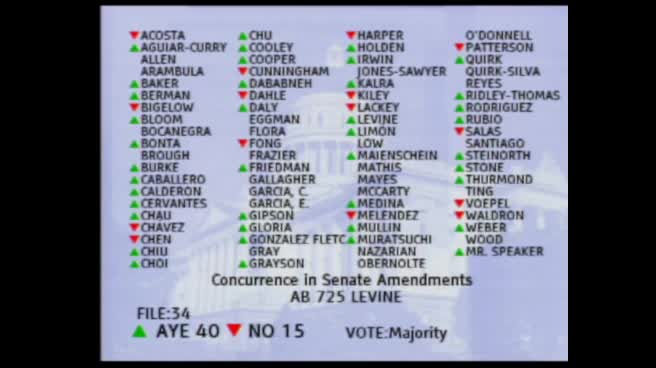

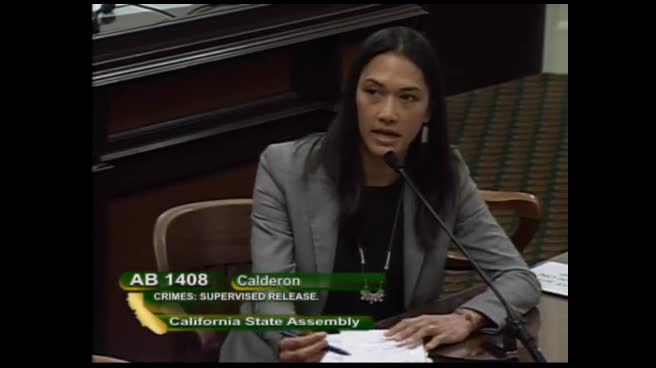
Bill Author

Bill Co-Author(s):