AB 91: High-occupancy vehicle lanes.
- Session Year: 2017-2018
- House: Assembly
- Latest Version Date: 2018-09-18
Existing law authorizes the Department of Transportation to designate certain lanes for the exclusive or preferential use of high-occupancy vehicles. When those exclusive or preferential use lanes are established and double parallel solid lines are in place to the right thereof, existing law prohibits any person driving a vehicle from crossing over those double lines to enter into or exit from the lanes, and entrance or exit from those lanes is authorized only in areas designated for these purposes or where a single broken line is in place to the right of the lanes, except as specified.
This bill would require the department to report to the transportation policy committees of the Legislature, on or before January 1, 2020, on the feasibility and appropriateness of limiting the use of high-occupancy vehicle lanes to high-occupancy vehicles and eligible vehicles, as defined, only during the hours of heavy commuter traffic on both State Route 91 between Interstate 15 and Interstate 215 in the County of Riverside, and State Route 60 in the County of Riverside.
Existing law authorizes the Department of Transportation to designate certain lanes for the exclusive or preferential use of high-occupancy vehicles. When those exclusive or preferential use lanes are established and double parallel solid lines are in place to the right thereof, existing law prohibits any person driving a vehicle from crossing over those double lines to enter into or exit from the lanes, and entrance or exit from those lanes is authorized only in areas designated for these purposes or where a single broken line is in place to the right of the lanes, except as specified.
This bill would prohibit, commencing July 1, 2018, a high-occupancy vehicle lane from being established in the County of Riverside, unless that lane is established as a high-occupancy vehicle lane only during the hours of heavy commuter traffic, as determined by the department. The bill would require any existing high-occupancy vehicle lane in the County of Riverside that is not a toll lane to be modified to operate as a high-occupancy lane under those same conditions. The bill would provide that these provisions apply only if the department, with the concurrence of the Riverside County Transportation Commission and the Southern California Association of Governments, determines that compliance with those provisions does not result in federal financial penalties, disqualification from future funding, or certain costs to local or regional governments. The bill would authorize the department, on or after May 1, 2019, to reinstate 24-hour high-occupancy vehicle lanes in the County of Riverside if the department makes a specified determination, and would require the department to report to the Legislature on the impact on traffic of limiting the use of high-occupancy lanes only during the hours of heavy commuter traffic, as provided in the bill.This bill would require the department to report to the transportation policy committees of the Legislature, on or before January 1, 2020, on the feasibility and appropriateness of limiting the use of high-occupancy vehicle lanes to high-occupancy vehicles and eligible vehicles, as defined, only during the hours of heavy commuter traffic on both State Route 91 between Interstate 15 and Interstate 215 in the County of Riverside, and State Route 60 in the County of Riverside.
Existing law authorizes the Department of Transportation to designate certain lanes for the exclusive or preferential use of high-occupancy vehicles. When those exclusive or preferential use lanes are established and double parallel solid lines are in place to the right thereof, existing law prohibits any person driving a vehicle from crossing over those double lines to enter into or exit from the lanes, and entrance or exit from those lanes is authorized only in areas designated for these purposes or where a single broken line is in place to the right of the lanes, except as specified.
This bill would prohibit, commencing July 1, 2018, a high-occupancy vehicle lane from being established in the County of Riverside, unless that lane is established as a high-occupancy vehicle lane only during the hours of heavy commuter traffic, as determined by the department. The bill would require any existing high-occupancy vehicle lane in the County of Riverside that is not a toll lane to be modified to operate as a high-occupancy lane under those same conditions. The bill would provide that these provisions apply only if the department, with the concurrence of the Riverside County Transportation Commission and the Southern California Association of Governments, determines that compliance with those provisions does not result in federal financial penalties, disqualification from future funding, or certain costs to local or regional governments. The bill would authorize the department, on or after May 1, 2019, to reinstate 24-hour high-occupancy vehicle lanes in the County of Riverside if the department makes a specified determination, and would require the department to report to the Legislature on the impact on traffic of limiting the use of high-occupancy lanes only during the hours of heavy commuter traffic, as provided in the bill.
Existing law authorizes the Department of Transportation to designate certain lanes for the exclusive or preferential use of high-occupancy vehicles. When those exclusive or preferential use lanes are established and double parallel solid lines are in place to the right thereof, existing law prohibits any person driving a vehicle from crossing over those double lines to enter into or exit from the lanes, and entrance or exit from those lanes is authorized only in areas designated for these purposes or where a single broken line is in place to the right of the lanes, except as specified.
This bill would prohibit, commencing July 1, 2018, a high-occupancy vehicle lane from being established in the County of Riverside, unless that lane is established as a high-occupancy vehicle lane only during the hours of heavy commuter traffic, as determined by the department. The bill would require any existing high-occupancy vehicle lane in the County of Riverside that is not a toll lane to be modified to operate as a high-occupancy lane under those same conditions. The bill would provide that these provisions apply only to the extent that they do not endanger federal funding. if the department, with the concurrence of the Riverside County Transportation Commission and the Southern California Association of Governments, determines that compliance with those provisions does not result in federal financial penalties, disqualification from future funding, or certain costs to local or regional governments. The bill would authorize the department, on or after May 1, 2019, to reinstate 24-hour high-occupancy vehicle lanes in the County of Riverside if the department makes a specified determination, and would require the department to report to the Legislature on the impact on traffic of limiting the use of high-occupancy lanes only during the hours of heavy commuter traffic, as provided in the bill.
Existing law authorizes the Department of Transportation to designate certain lanes for the exclusive or preferential use of high-occupancy vehicles. When those exclusive or preferential use lanes are established and double parallel solid lines are in place to the right thereof, existing law prohibits any person driving a vehicle from crossing over those double lines to enter into or exit from the lanes, and entrance or exit from those lanes is authorized only in areas designated for these purposes or where a single broken line is in place to the right of the lanes, except as specified.
This bill would prohibit, commencing July 1, 2018, a high-occupancy vehicle lane from being established in the County of Riverside, unless that lane is established as a high-occupancy vehicle lane only during the hours of heavy commuter traffic, as determined by the department. The bill would require any existing high-occupancy vehicle lane in the County of Riverside that is not a toll lane to be modified to operate as a high-occupancy lane under those same conditions. The bill would provide that these provisions apply only to the extent that they do not endanger federal funding. The bill would authorize the department, on or after May 1, 2019, to reinstate 24-hour high-occupancy vehicle lanes in the County of Riverside if the department makes a specified determination, and would require the department to report to the Legislature on the impact on traffic of limiting the use of high-occupancy lanes only during the hours of heavy commuter traffic, as provided in the bill.
Existing law authorizes the Department of Transportation to designate certain lanes for the exclusive or preferential use of high-occupancy vehicles. When those exclusive or preferential use lanes are established and double parallel solid lines are in place to the right thereof, existing law prohibits any person driving a vehicle from crossing over those double lines to enter into or exit from the lanes, and entrance or exit from those lanes is authorized only in areas designated for these purposes or where a single broken line is in place to the right of the lanes, except as specified.
This bill would prohibit, commencing July 1, 2018, a high-occupancy vehicle lane from being established in the County of Riverside, unless that lane is established as a high-occupancy vehicle lane only during the hours of heavy commuter traffic, as determined by the department. The bill would require any existing high-occupancy vehicle lane in the County of Riverside that is not a toll lane to be modified to operate as a high-occupancy lane under those same conditions. The bill would authorize the department, on or after May 1, 2019, to reinstate 24-hour high-occupancy vehicle lanes in the County of Riverside if the department makes a specified determination, and would require the department to report to the Legislature on the impact on traffic of limiting the use of high-occupancy lanes only during the hours of heavy commuter traffic, as provided in the bill.
(a)The department shall report to the transportation policy committees of the Legislature, in compliance with Section 9795 of the Government Code, on or before January 1, 2020, on the feasibility and appropriateness of limiting the use of high-occupancy vehicle lanes to high-occupancy vehicles and eligible vehicles only during the hours of heavy commuter traffic on both State Route 91 between Interstate 15 and Interstate 215 in the County of Riverside, and State Route 60 in the County of Riverside.
(b)For purposes of this section, eligible vehicle means a vehicle listed by the State Air Resources Board as eligible for a Clean Air Vehicle decal.
(c)The requirement for submitting a report imposed under subdivision (a) is inoperative on January 1, 2024, pursuant to Section 10231.5 of the Government Code.
SECTION 1.Section 149.2 is added to the Streets and Highways Code, to read:149.2.(a)(1)Notwithstanding any other law, except as provided in paragraph (3) and subdivision (c), a high-occupancy vehicle lane shall not be established in the County of Riverside, unless the lane is established as a high-occupancy vehicle lane only during the hours of heavy commuter traffic, as determined by the department.(2)Any existing high-occupancy vehicle lane located in the County of Riverside that is not a toll lane shall be modified to operate as a high-occupancy vehicle lane only during the hours of heavy commuter traffic, as determined by the department.(3)Paragraphs (1) and (2) apply only if the department, with the concurrence of the Riverside County Transportation Commission and the Southern California Association of Governments, determines that compliance with paragraphs (1) and (2) will not result in either of the following:(A)Federal financial penalties or disqualification from future funding.(B)Costs to local or regional governments to supply replacement transportation control measures in the Federal Transportation Improvement Program prepared pursuant to Section 134 of Title 23 of the United States Code.(b)(1)The department shall report to the Legislature, in compliance with Section 9795 of the Government Code, on or before January 1, 2020, on the impact on traffic of limiting the use of high-occupancy vehicle lanes only during the hours of heavy commuter traffic as provided in subdivision (a).(2)The requirement for submitting a report imposed under paragraph (1) is inoperative on January 1, 2024, pursuant to Section 10231.5 of the Government Code.(c)On or after May 1, 2019, if the department determines that there is an adverse impact on safety, traffic conditions, or the environment by limiting the use of high-occupancy vehicle lanes only during the hours of heavy commuter traffic as provided in subdivision (a), the department may submit to the Assembly Committee on Transportation and the Senate Committee on Transportation and Housing a notice of that determination and of the intent to reinstate 24-hour high-occupancy vehicle lanes. The department thereafter may reinstate 24-hour high-occupancy vehicle lanes.(d)Nothing in this section prevents the department or the Riverside County Transportation Commission from developing and operating a high-occupancy toll facility or prevents the commission from approving an application to develop and operate a toll facility pursuant to Section 149.7.(e)This section shall become operative on July 1, 2018.(f)This section shall become inoperative 60 days after the date the Legislature receives the notice described in subdivision (c) and is repealed on January 1 thereafter. The department shall post the date that the Legislature receives this notice on the departments Internet Web site.(a)(1)Notwithstanding any other law, except as provided in paragraph (3) and subdivision (c), a high-occupancy vehicle lane shall not be established in the County of Riverside, unless the lane is established as a high-occupancy vehicle lane only during the hours of heavy commuter traffic, as determined by the department.
(2)Any existing high-occupancy vehicle lane located in the County of Riverside that is not a toll lane shall be modified to operate as a high-occupancy vehicle lane only during the hours of heavy commuter traffic, as determined by the department.
(3)Paragraphs (1) and (2) apply only if the department, with the concurrence of the Riverside County Transportation Commission and the Southern California Association of Governments, determines that compliance with paragraphs (1) and (2) will not result in either of the following:
(A)Federal financial penalties or disqualification from future funding.
(B)Costs to local or regional governments to supply replacement transportation control measures in the Federal Transportation Improvement Program prepared pursuant to Section 134 of Title 23 of the United States Code.
(b)(1)The department shall report to the Legislature, in compliance with Section 9795 of the Government Code, on or before January 1, 2020, on the impact on traffic of limiting the use of high-occupancy vehicle lanes only during the hours of heavy commuter traffic as provided in subdivision (a).
(2)The requirement for submitting a report imposed under paragraph (1) is inoperative on January 1, 2024, pursuant to Section 10231.5 of the Government Code.
(c)On or after May 1, 2019, if the department determines that there is an adverse impact on safety, traffic conditions, or the environment by limiting the use of high-occupancy vehicle lanes only during the hours of heavy commuter traffic as provided in subdivision (a), the department may submit to the Assembly Committee on Transportation and the Senate Committee on Transportation and Housing a notice of that determination and of the intent to reinstate 24-hour high-occupancy vehicle lanes. The department thereafter may reinstate 24-hour high-occupancy vehicle lanes.
(d)Nothing in this section prevents the department or the Riverside County Transportation Commission from developing and operating a high-occupancy toll facility or prevents the commission from approving an application to develop and operate a toll facility pursuant to Section 149.7.
(e)This section shall become operative on July 1, 2018.
(f)This section shall become inoperative 60 days after the date the Legislature receives the notice described in subdivision (c) and is repealed on January 1 thereafter. The department shall post the date that the Legislature receives this notice on the departments Internet Web site.
(a)(1)Notwithstanding any other law, except as provided in paragraph (3) and subdivision (c), a high-occupancy vehicle lane shall not be established in the County of Riverside, unless the lane is established as a high-occupancy vehicle lane only during the hours of heavy commuter traffic, as determined by the department.
(2)Any existing high-occupancy vehicle lane located in the County of Riverside that is not a toll lane shall be modified to operate as a high-occupancy vehicle lane only during the hours of heavy commuter traffic, as determined by the department.
(3)Paragraphs (1) and (2) apply only to the extent that they do not endanger federal funding. if the department, with the concurrence of the Riverside County Transportation Commission and the Southern California Association of Governments, determines that compliance with paragraphs (1) and (2) will not result in either of the following:
(A)Federal financial penalties or disqualification from future funding.
(B)Costs to local or regional governments to supply replacement transportation control measures in the Federal Transportation Improvement Program prepared pursuant to Section 134 of Title 23 of the United States Code.
(b)(1)The department shall report to the Legislature, in compliance with Section 9795 of the Government Code, on or before January 1, 2020, on the impact on traffic of limiting the use of high-occupancy vehicle lanes only during the hours of heavy commuter traffic as provided in subdivision (a).
(2)The requirement for submitting a report imposed under paragraph (1) is inoperative on January 1, 2024, pursuant to Section 10231.5 of the Government Code.
(c)On or after May 1, 2019, if the department determines that there is an adverse impact on safety, traffic conditions, or the environment by limiting the use of high-occupancy vehicle lanes only during the hours of heavy commuter traffic as provided in subdivision (a), the department may submit to the Assembly Committee on Transportation and the Senate Committee on Transportation and Housing a notice of that determination and of the intent to reinstate 24-hour high-occupancy vehicle lanes. The department thereafter may reinstate 24-hour high-occupancy vehicle lanes.
(d)Nothing in this section prevents the department or the Riverside County Transportation Commission from developing and operating a high-occupancy toll facility or prevents the commission from approving an application pursuant to Section 149.7.
(d)(e)This section shall become operative on July 1, 2018.
(e)(f)This section shall become inoperative 60 days after the date the Legislature receives the notice described in subdivision (c) and is repealed on January 1 thereafter. The department shall post the date that the Legislature receives this notice on the departments Internet Web site.
(a)(1)Notwithstanding any other law, except as provided in paragraph (3) and subdivision (c), a high-occupancy vehicle lane shall not be established in the County of Riverside, unless the lane is established as a high-occupancy vehicle lane only during the hours of heavy commuter traffic, as determined by the department.
(2)Any existing high-occupancy vehicle lane located in the County of Riverside that is not a toll lane shall be modified to operate as a high-occupancy vehicle lane only during the hours of heavy commuter traffic, as determined by the department.
(3)Paragraphs (1) and (2) apply only to the extent that they do not endanger federal funding.
(b)(1)The department shall report to the Legislature, in compliance with Section 9795 of the Government Code, on or before January 1, 2020, on the impact on traffic of limiting the use of high-occupancy vehicle lanes only during the hours of heavy commuter traffic as provided in subdivision (a).
(2)The requirement for submitting a report imposed under paragraph (1) is inoperative on January 1, 2024, pursuant to Section 10231.5 of the Government Code.
(c)On or after May 1, 2019, if the department determines that there is an adverse impact on safety, traffic conditions, or the environment by limiting the use of high-occupancy vehicle lanes only during the hours of heavy commuter traffic as provided in subdivision (a), the department may submit to the Assembly Committee on Transportation and the Senate Committee on Transportation and Housing a notice of that determination and of the intent to reinstate 24-hour high-occupancy vehicle lanes. The department thereafter may reinstate 24-hour high-occupancy vehicle lanes.
(d)This section shall become operative on July 1, 2018.
(e)This section shall become inoperative 60 days after the date the Legislature receives the notice described in subdivision (c) and is repealed on January 1 thereafter. The department shall post the date that the Legislature receives this notice on the departments Internet Web site.
(a)(1)Notwithstanding any other law, except as provided in subdivision (c), a high-occupancy vehicle lane shall not be established in the County of Riverside, unless the lane is established as a high-occupancy vehicle lane only during the hours of heavy commuter traffic, as determined by the department.
(2)Any existing high-occupancy vehicle lane located in the County of Riverside that is not a toll lane shall be modified to operate as a high-occupancy vehicle lane only during the hours of heavy commuter traffic, as determined by the department.
(b)(1)The department shall report to the Legislature, in compliance with Section 9795 of the Government Code, on or before January 1, 2020, on the impact on traffic of limiting the use of high-occupancy vehicle lanes only during the hours of heavy commuter traffic as provided in subdivision (a).
(2)The requirement for submitting a report imposed under paragraph (1) is inoperative on January 1, 2024, pursuant to Section 10231.5 of the Government Code.
(c)On or after May 1, 2019, if the department determines that there is an adverse impact on safety, traffic conditions, or the environment by limiting the use of high-occupancy vehicle lanes only during the hours of heavy commuter traffic as provided in subdivision (a), the department may submit to the Assembly Committee on Transportation and the Senate Committee on Transportation and Housing a notice of that determination and of the intent to reinstate 24-hour high-occupancy vehicle lanes. The department thereafter may reinstate 24-hour high-occupancy vehicle lanes.
(d)This section shall become operative on July 1, 2018.
(e)This section shall become inoperative 60 days after the date the Legislature receives the notice described in subdivision (c) and is repealed on January 1 thereafter. The department shall post the date that the Legislature receives this notice on the departments Internet Web site.
|
Date
|
Status
|
|---|---|
| Sep 18, 2018 | Chaptered by Secretary of State - Chapter 468, Statutes of 2018. |
| Sep 18, 2018 | Approved by the Governor. |
| Sep 10, 2018 | Enrolled and presented to the Governor at 3:30 p.m. |
| Aug 30, 2018 | Senate amendments concurred in. To Engrossing and Enrolling. |
| Aug 29, 2018 | In Assembly. Concurrence in Senate amendments pending. |
| Aug 29, 2018 | Read third time. Passed. Ordered to the Assembly. |
| Aug 27, 2018 | Read second time. Ordered to third reading. |
| Aug 24, 2018 | Read third time and amended. Ordered to second reading. |
| Aug 21, 2018 | Read second time. Ordered to third reading. |
| Aug 20, 2018 | From inactive file. |
| Sep 15, 2017 | Ordered to inactive file at the request of Senator Roth. |
| Sep 13, 2017 | Ordered to third reading. |
| Sep 12, 2017 | Ordered to special consent calendar. |
| Sep 5, 2017 | Read second time. Ordered to third reading. |
| Sep 1, 2017 | From committee: Do pass. (Ayes 7. Noes 0.) (September 1). |
| Aug 21, 2017 | In committee: Referred to APPR. suspense file. |
| Jul 12, 2017 | From committee: Do pass and re-refer to Com. on APPR. (Ayes 13. Noes 0.) (July 11). Re-referred to Com. on APPR. |
| Jun 20, 2017 | From committee chair, with author's amendments: Amend, and re-refer to committee. Read second time, amended, and re-referred to Com. on T. & H. |
| Jun 14, 2017 | Referred to Com. on T. & H. |
| Jun 1, 2017 | In Senate. Read first time. To Com. on RLS. for assignment. |
| May 31, 2017 | Read third time. Passed. Ordered to the Senate. (Ayes 73. Noes 1. Page 1951.) |
| May 30, 2017 | Read second time and amended. Ordered returned to second reading. |
| May 26, 2017 | From committee: Amend, and do pass as amended. (Ayes 12. Noes 0.) (May 26). |
| Apr 5, 2017 | In committee: Set, first hearing. Referred to APPR. suspense file. |
| Mar 23, 2017 | Re-referred to Com. on APPR. |
| Mar 22, 2017 | Read second time and amended. |
| Mar 21, 2017 | From committee: Amend, and do pass as amended and re-refer to Com. on APPR. (Ayes 11. Noes 2.) (March 20). |
| Jan 19, 2017 | Referred to Com. on TRANS. |
| Jan 10, 2017 | From printer. May be heard in committee February 9. |
| Jan 9, 2017 | Read first time. To print. |
|
Date
|
Description
|
Location
|
Votes
|
|
|---|---|---|---|---|
| Aug 30, 2018 | AB 91 CERVANTES Concurrence in Senate Amendments | Assembly Floor |
Passed |
|
| Aug 29, 2018 | Assembly 3rd Reading AB91 Cervantes et al. By Roth | Senate Floor |
Passed |
|
| Aug 29, 2018 | With recommendation: That Senate amendments be concurred in. | Assembly Standing Committee on Transportation |
Passed |
|
| Sep 1, 2017 | Do pass | Senate Standing Committee on Appropriations |
Passed |
|
| Aug 21, 2017 | Placed on suspense file | Senate Standing Committee on Appropriations |
Passed |
|
| Jul 11, 2017 | Do pass, but first be re-referred to the Committee on [Appropriations] | Senate Standing Committee on Transportation and Housing |
Passed |
|
| May 31, 2017 | AB 91 CERVANTES Assembly Third Reading | Assembly Floor |
Passed |
|
| May 26, 2017 | Do pass as amended. | Assembly Standing Committee on Appropriations |
Passed |
|
| Mar 20, 2017 | Do pass as amended and be re-referred to the Committee on [Appropriations] | Assembly Standing Committee on Transportation |
Passed |
This list shows positions taken on this bill by organizations on the date displayed, which is linked to the original source.
Positions by individuals are not included.
|
Organization
|
Position
|
Date
|
|---|---|---|
| Riverside County Transportation Commission | ** Against | Apr 4, 2017 |
CONCURRENCE IN SENATE AMENDMENTS
CSA2 Bill Id:AB 91
Author:(Cervantes)
As Amended Ver:August 24, 2018
Majority vote
ASSEMBLY: | 73-1 | (May 31, 2017) | SENATE: | 39-0 | (August 29, 2018) |
COMMITTEE VOTE: | 13-0 | (August 29, 2018) | RECOMMENDATION: | concur |
(TRANS.)
Original Committee Reference: TRANS.
SUMMARY: Requires the Department of Transportation (Caltrans) to report to the Legislature, on or before January 1, 2020, on the feasibility and appropriateness of limiting the hours of high-occupancy vehicle (HOV) lanes in Riverside County.
The Senate amendments delete the contents of the bill and instead require Caltrans to report to the Legislature, on or before January 1, 2020, on the feasibility and appropriateness of limiting the use of HOV lanes to only during the hours of heavy commuter traffic on State Routes 91 and 60 in Riverside County.
AS PASSED BY THE ASSEMBLY, this bill:
- Prohibited, notwithstanding any other law, an HOV lane from being established in Riverside County unless the HOV lane is established on a part-time basis, and requires any existing HOV lanes in Riverside County to be converted to part-time operation.
- Provided exceptions to both of these provisions if Caltrans, with the concurrence of the Riverside County Transportation Commission (RCTC) and the Southern California Association of Governments, determines that compliance with the prohibition or conversion requirements will result in either of the following:
- Federal financial penalties or disqualification from future funding; or,
- Costs to local or regional governments to provide transportation control measures.
- Required Caltrans to report to the Legislature by January 1, 2020, on the impact to traffic by converting these HOV lane segments to part-time operation.
- Provided that, on or after May 1, 2019, if Caltrans determines that part-time operation of these lanes has resulted in an adverse impact on safety, traffic conditions, or the environment, it may notify the Assembly Committee on Transportation and the Senate Committee on Transportation and Housing of its intent to reinstate the lanes to 24-hour operation; thereafter, specifically authorizes Caltrans to reinstate full-time operation of the HOV lanes.
- Specifically provided that nothing in the bill prevents Caltrans or RCTC from developing and operating high-occupancy toll facilities.
- Made provisions requiring the conversion of HOV lanes in Riverside County to part-time HOV operation operative on July 1, 2018, and repeals these same provisions 60 days after Caltrans notifies the Legislature of its intent to reinstate the lanes to 24-hour operation; requires Caltrans to post the date that the Legislature receives the notice on the department's Internet website.
FISCAL EFFECT: Unknown
COMMENTS: The primary purpose of an HOV lane is to increase the total number of people moved through a congested corridor by offering two kinds of incentives: a savings in travel time and a reliable and predictable travel time. Because HOV lanes carry vehicles with a higher number of occupants, they may move significantly more people during congested periods, even when the number of vehicles that use the HOV lane is lower than on the adjoining general-purpose lanes.
State and regional transportation agencies are required to ensure that federally supported highway and transit projects do not cause new air quality violations, worsen existing violations, or delay timely attainment of air quality standards. Consequently, when transportation agencies identify a need to add highway capacity, their options are limited. They often rely on the addition of HOV lanes, which are generally considered a viable solution to adding highway capacity in non-attainment areas – i.e., areas where air quality is worse than the national ambient air quality standards.
In northern California, HOV lanes are generally only operational Monday through Friday during posted peak congestion hours, for example between 6 a.m. - 10 a.m. and 3 p.m. - 7 p.m. All other vehicles may use the lanes during off-peak hours. This is referred to as "part-time" operation. In southern California, HOV lanes are generally separated from other lanes by a buffer zone and, for the most part, are in effect 24 hours a day, seven days a week--referred to as "full-time" operation.
The operational practices vary differently between northern California versus southern California because of traffic volumes and commuter patterns in the two regions. Northern California highways usually experience two weekday congestion periods during peak morning and afternoon commute hours, followed by a long period of non-congestion. Full-time operation would leave the HOV lane relatively unoccupied during off-peak hours and would not constitute an efficient use of the roadway. Southern California normally experiences very long hours of congestion, typically between six to eleven hours per day, with short off-peak traffic hours. Part-time operation under these conditions is generally considered infeasible.
HOV lanes work best where significant roadway congestion during peak periods occurs. Optimum HOV lane usage is generally considered to be about 1,650 vehicles per hour. In contrast, mixed-flow lanes are generally expected optimally to carry between 1,800 and 2,000 vehicles per hour. Experience with HOV lanes from around the country has shown a positive relationship between ridership and travel time savings, suggesting that, as congestion grows, the travelers' willingness to carpool or ride on a bus that uses an HOV lane also grows.
According to the author, "AB 91 seeks to study whether any new carpool lane or existing carpool lane in Riverside County could use 'part-time operation,' which would allow any vehicle to access the carpool lanes during non-peak traffic hours. The data collected through this bill could not only determine the viability of that option, but also be provided to federal regulators in ensuring that Riverside County continues to comply with federal clean air regulations."
Analysis Prepared by: Eric Thronson / TRANS. / (916) 319-2093 FN: 0005127
Office of Senate Floor Analyses (916) 651-1520 Fax: (916) 327-4478 | AB |
THIRD READING
Bill No: AB 91
: 8/24/18
SENATE TRANS. & HOUSING COMMITTEE: 13-0, 7/11/17
AYES: Beall, Cannella, Allen, Atkins, Gaines, McGuire, Mendoza, Morrell, Roth, Skinner, Vidak, Wieckowski, Wiener
SENATE APPROPRIATIONS COMMITTEE: 7-0, 9/1/17
AYES: Lara, Bates, Beall, Bradford, Hill, Nielsen, Wiener
ASSEMBLY FLOOR: 73-1, 5/31/17 - See last page for vote
DIGEST:
This bill requires the State Department of Transportation (Caltrans) to study the feasibility of part-time high-occupancy vehicle (HOV) lanes on certain State Routes in Riverside County, as specified.
Senate Floor Amendments of 8/24/18 remove provisions that require part-time enforcement on new or existing HOV lanes that are not high-occupancy toll lanes on State Routes in Riverside County and further require Caltrans to study the feasibility of establishing part-time HOV lanes on certain portions of State Route (SR) 91 and State Route 60.
Existing law:
- Authorizes Caltrans and local authorities, with respect to highways under their respective jurisdictions, to permit preferential use of highway lanes for HOVs, under specific conditions.
- Requires Caltrans, or the appropriate local entity, to produce engineering reports that estimate the effect of an HOV lane prior to establishing the lane. The reports must evaluate the proposals for safety, congestion, and highway capacity.
- Vests, under federal law, state departments of transportation with responsibility for establishing occupancy requirements for vehicles using HOV lanes, except that the requirement can be no less than two occupants.
This bill requires Caltrans to study the feasibility of establishing part-time HOV lanes on certain portions of State Route 91 and State Route 60 and report to the Legislature on or before January 1, 2020.
Comments
- Purpose. According to the author, “AB 91 seeks to study whether any new carpool lane or existing carpool lane in Riverside County could use “part-time operation,” which would allow any vehicle to access the carpool lanes during non-peak traffic hours. The data collected through this bill could not only determine the viability of that option, but also be provided to federal regulators in ensuring that Riverside County continues to comply with federal clean air regulations.”
- HOV lanes. HOV lanes, also known as carpool or diamond lanes, are a traffic management strategy to promote and encourage ridesharing which, in turn, aims to alleviate vehicle congestion and maximize the people-carrying capacity of the state’s highways. Motorcycles, transit vehicles (i.e. public transit buses) and passenger vehicles with two or more (2+) occupants are allowed to access HOV lanes during their operational hours. Furthermore, an "occupant" is considered any person who occupies a safety restraint device, i.e. seat-belt. HOV operational hours vary in northern and southern parts of the state:
In Northern California, HOV lanes are only operational on Monday thru Friday during posted peak congestion hours, for example: between 6 a.m. - 10 a.m. and 3 p.m. - 7 p.m. All other vehicles may use the lanes during off-peak hours. This is referred to as "part-time" operation.
In Southern California, HOV lanes are generally separated from other lanes by a buffer zone. The HOV lanes are in effect 24-hours a day, 7-days a week, referred to as "full-time" operation.
The difference in north/south operational periods is a result of varied traffic/commute patterns. Northern California highways usually experience two weekday congestion periods during peak morning and afternoon commute hours, followed by a long period of non-congestion. Full-time operation would leave the HOV lane relatively unoccupied during off-peak hours and would not constitute an efficient use of the roadway. On the other hand, Southern California highways typically experience very long hours of congestion, generally between six to eleven hours per day, with short off-peak traffic hours. Part-time operation under these conditions is generally considered impractical.
On top of attempting to eventually improve commute times for Riverside County commuters with initiating this study, the author also introduced this bill, in part, due to the California Transportation Commission’s (CTC) recommendation made in its 2016 annual report to the Legislature. Specifically, CTC recommended that Caltrans review the hours of HOV operation in Southern California as part of the department's statutorily-required report to the Legislature on the degradation status of the HOV lanes on the state highway system.
FISCAL EFFECT: Appropriation: Fiscal Com.: Local:
According to the Senate Appropriations Committee:
- One-time Caltrans costs of approximately $321,000 in 2018-19 to replace HOV lane signage to indicate limited hours of operation. There could be additional costs to the extent existing barriers and other design elements are not compliant with current standards. (State Highway Account)
- Potential future one-time costs of approximately $321,000 for signage replacement to the extent that the lanes are converted back to full-time operation following a Caltrans determination that part-time operation had specified adverse impacts. (State Highway Account)
- One-time Caltrans costs of approximately $50,000 to $75,000 in 2019-20 to report on the impact of limiting HOV lane use to periods of heavy commuter traffic in Riverside County. (State Highway Account)
None received
OPPOSITION: (Verified 8/24/18)
None received
ASSEMBLY FLOOR: 73-1, 5/31/17
AYES: Acosta, Aguiar-Curry, Travis Allen, Arambula, Baker, Berman, Bigelow, Bloom, Bocanegra, Bonta, Brough, Burke, Caballero, Calderon, Cervantes, Chau, Chávez, Chiu, Chu, Cooley, Cooper, Cunningham, Dababneh, Dahle, Daly, Flora, Fong, Friedman, Cristina Garcia, Eduardo Garcia, Gipson, Gloria, Gomez, Gonzalez Fletcher, Gray, Grayson, Harper, Holden, Irwin, Jones-Sawyer, Kalra, Kiley, Lackey, Levine, Limón, Low, Maienschein, Mathis, Mayes, McCarty, Medina, Mullin, Muratsuchi, Nazarian, O'Donnell, Patterson, Quirk, Quirk-Silva, Reyes, Ridley-Thomas, Rodriguez, Rubio, Salas, Santiago, Steinorth, Mark Stone, Thurmond, Ting, Voepel, Waldron, Weber, Wood, Rendon
NOES: Frazier
NO VOTE RECORDED: Chen, Choi, Eggman, Gallagher, Melendez, Obernolte
8/27/18 11:38:38
**** END ****
Office of Senate Floor Analyses (916) 651-1520 Fax: (916) 327-4478 | AB |
THIRD READING
Bill No: AB 91
:
SENATE TRANS. & HOUSING COMMITTEE: 13-0, 7/11/17
AYES: Beall, Cannella, Allen, Atkins, Gaines, McGuire, Mendoza, Morrell, Roth, Skinner, Vidak, Wieckowski, Wiener
SENATE APPROPRIATIONS COMMITTEE: 7-0, 9/1/17
AYES: Lara, Bates, Beall, Bradford, Hill, Nielsen, Wiener
ASSEMBLY FLOOR: 73-1, 5/31/17 - See last page for vote
DIGEST:
This bill modifies high-occupancy vehicle (HOV) lane occupancy requirements in Riverside County, as specified.
Existing law:
- Authorizes the Department of Transportation (Caltrans) and local authorities, with respect to highways under their respective jurisdictions, to permit preferential use of highway lanes for HOVs, under specific conditions.
- Requires Caltrans, or the appropriate local entity, to produce engineering reports that estimate the effect of an HOV lane prior to establishing the lane. The reports must evaluate the proposals for safety, congestion, and highway capacity.
- Vests, under federal law, state departments of transportation with responsibility for establishing occupancy requirements for vehicles using HOV lanes, except that the requirement can be no less than two occupants.
This bill:
- Prohibits, notwithstanding any other law, an HOV lane from being established in Riverside County unless the HOV lane is established on a part-time basis, and requires any existing HOV lanes in Riverside County to be converted to part-time operation.
- Provides exceptions to both of these provisions if the Caltrans, with the concurrence of the Riverside County Transportation Commission (RCTC) and the Southern California Association of Governments, determines that compliance with the prohibition or conversion requirements will result in either of the following:
- Federal financial penalties or disqualification from future funding; or
- Costs to local or regional governments to provide transportation control measures.
- Requires Caltrans to report to the Legislature by January 1, 2020, on the impact to traffic by converting these HOV lane segments to part-time operation.
- Provides that, on or after May 1, 2019, if Caltrans determines that part-time operation of these lanes has resulted in an adverse impact on safety, traffic conditions, or the environment, it may notify the Assembly Committee on Transportation and the Senate Committee on Transportation and Housing of its intent to reinstate the lanes to 24-hour operation; thereafter, specifically authorizes Caltrans to reinstate full-time operation of the HOV lanes.
- Specifically provides that nothing in the bill prevents Caltrans or RCTC from developing and operating high-occupancy toll facilities.
- Makes provisions requiring the conversion of HOV lanes in Riverside County to part-time HOV operation operative on July 1, 2018, and repeals these same provisions 60 days after Caltrans notifies the Legislature of its intent to reinstate the lanes to 24-hour operation; requires Caltrans to post the date that the Legislature receives the notice on its Internet Web site.
Comments
- Purpose. According to the author, “AB 91 seeks to require any new carpool lane or existing carpool lane in Riverside County to use “part-time operation.” This will allow any vehicle to access the carpool lanes during non-peak traffic hours. The 91 Freeway in particular is Riverside’s County’s lifeline to the rest of Southern California. Many residents in Riverside County work in Los Angeles and Orange Counties creating long and frustrating commutes. This bill highlights the need for carpool flexibility and access during non-peak traffic hours to establish a more efficient use of carpool lanes.”
- HOV lanes. HOV lanes, also known as carpool or diamond lanes, are a traffic management strategy to promote and encourage ridesharing which, in turn, aims to alleviate vehicle congestion and maximize the people-carrying capacity of the state’s highways. Motorcycles, transit vehicles (i.e. public transit buses) and passenger vehicles with two or more (2+) occupants are allowed to access HOV lanes during their operational hours. Furthermore, an "occupant" is considered any person who occupies a safety restraint device, i.e. seat-belt. HOV operational hours vary in northern and southern parts of the state:
In Northern California, HOV lanes are only operational on Monday thru Friday during posted peak congestion hours, for example: between 6 a.m. - 10 a.m. and 3 p.m. - 7 p.m. All other vehicles may use the lanes during off-peak hours. This is referred to as "part-time" operation.
In Southern California, HOV lanes are generally separated from other lanes by a buffer zone. The HOV lanes are in effect 24-hours a day, 7-days a week, referred to as "full-time" operation.
The difference in north/south operational periods is a result of varied traffic/commute patterns. Northern California highways usually experience two weekday congestion periods during peak morning and afternoon commute hours, followed by a long period of non-congestion. Full-time operation would leave the HOV lane relatively unoccupied during off-peak hours and would not constitute an efficient use of the roadway. On the other hand, Southern California highways typically experience very long hours of congestion, generally between six to eleven hours per day, with short off-peak traffic hours. Part-time operation under these conditions is generally considered impractical.
On top of attempting to improve commute times for Riverside County commuters, the author also introduced this bill, in part, due to the California Transportation Commission’s (CTC) recommendation made in its 2016 annual report to the Legislature. Specifically, CTC recommended that Caltrans review the hours of HOV operation in Southern California as part of the department's statutorily-required report to the Legislature on the degradation status of the HOV lanes on the state highway system.
- Previously vetoed legislation. Over the years, a number of similar bills have been introduced by the Legislature only to fail passage or be vetoed by the Governor. Most recently, AB 1908 (Harper, 2016) would have prohibited HOV lanes from being established on state highways in southern California unless the lane is established on a part-time basis and would have also required all southern California HOV lanes to be converted from full-time to part-time operation. AB 1908 failed passage in the Assembly Transportation Committee.
In 2015, AB 210 (Gatto) would have required the conversion of HOV lanes on SR 134 and SR 210 from full-time to part-time operation. AB 210 was passed by the Legislature with only one “No” vote recorded on the Assembly Floor. Governor Brown vetoed the bill stating, "I continue to believe that carpool lanes are especially important in Los Angeles County to reduce pollution and maximize the use of freeways. Therefore, we should continue to retain the current 24/7 carpool lane control."
In 2013, the Legislature passed AB 405 (Gatto), a bill identical to AB 210 except for the specified dates. AB 405 received only two “No” votes on both the Assembly and Senate Floors. Governor Brown vetoed the bill stating, "Carpool lanes are especially important in Los Angeles County to reduce pollution and maximize use of freeways. We should retain the current 24/7 carpool lane control."
Lastly, in 2012 the Legislature passed and sent to Governor Brown AB 2200 (Ma), which suspended the HOV lane on eastbound Interstate 80 in the San Francisco Bay Area during the morning commute. That bill was also vetoed by Governor Brown. In his veto message, the governor stated, "Encouraging carpooling is important to reduce pollution and make more efficient use of our highways. This bill goes in a wrong direction."
FISCAL EFFECT: Appropriation: No Fiscal Com.: Yes Local: No
According to the Senate Appropriations Committee:
- One-time Department of Transportation (Caltrans) costs of approximately $321,000 in 2018-19 to replace HOV lane signage to indicate limited hours of operation. There could be additional costs to the extent existing barriers and other design elements are not compliant with current standards. (State Highway Account)
- Potential future one-time costs of approximately $321,000 for signage replacement to the extent that the lanes are converted back to full-time operation following a Caltrans determination that part-time operation had specified adverse impacts. (State Highway Account)
- One-time Caltrans costs of approximately $50,000 to $75,000 in 2019-20 to report on the impact of limiting HOV lane use to periods of heavy commuter traffic in Riverside County. (State Highway Account)
None received
None received
ASSEMBLY FLOOR: 73-1, 5/31/17
AYES: Acosta, Aguiar-Curry, Travis Allen, Arambula, Baker, Berman, Bigelow, Bloom, Bocanegra, Bonta, Brough, Burke, Caballero, Calderon, Cervantes, Chau, Chávez, Chiu, Chu, Cooley, Cooper, Cunningham, Dababneh, Dahle, Daly, Flora, Fong, Friedman, Cristina Garcia, Eduardo Garcia, Gipson, Gloria, Gomez, Gonzalez Fletcher, Gray, Grayson, Harper, Holden, Irwin, Jones-Sawyer, Kalra, Kiley, Lackey, Levine, Limón, Low, Maienschein, Mathis, Mayes, McCarty, Medina, Mullin, Muratsuchi, Nazarian, O'Donnell, Patterson, Quirk, Quirk-Silva, Reyes, Ridley-Thomas, Rodriguez, Rubio, Salas, Santiago, Steinorth, Mark Stone, Thurmond, Ting, Voepel, Waldron, Weber, Wood, Rendon
NOES: Frazier
NO VOTE RECORDED: Chen, Choi, Eggman, Gallagher, Melendez, Obernolte
9/3/17 17:57:11
**** END ****
SENATE COMMITTEE ON
Senator Ricardo Lara, Chair
2017 - 2018 Regular Session
AB 91 (Cervantes) - High-occupancy vehicle lanes
Version: | Policy Vote: |
Urgency: | Mandate: |
Hearing Date: | Consultant: |
This bill meets the criteria for referral to the Suspense File.
Bill Summary:
AB 91 would prohibit the establishment of high-occupancy vehicle (HOV) lanes in Riverside County, unless the hours of operation are restricted to hours of heavy commuter traffic, and require any existing HOV lanes in that county that are not toll lanes to be modified to operate as HOV lanes only during the hours of heavy commuter traffic, as specified.
Fiscal Impact:
- One-time Department of Transportation (Caltrans) costs of approximately $321,000 in 2018-19 to replace HOV lane signage to indicate limited hours of operation. There could be additional costs to the extent existing barriers and other design elements are not compliant with current standards. (State Highway Account)
- Potential future one-time costs of approximately $321,000 for signage replacement to the extent that the lanes are converted back to full-time operation following a Caltrans determination that part-time operation had specified adverse impacts. (State Highway Account)
- One-time Caltrans costs of approximately $50,000 to $75,000 in 2019-20 to report on the impact of limiting HOV lane use to periods of heavy commuter traffic in Riverside County. (State Highway Account)
Background:
Existing law authorizes Caltrans and local authorities to permit preferential use of highway lanes for HOVs under specified conditions, which grants access to vehicles with more than one occupant. Prior to establishing an HOV lane, Caltrans or the local entity must perform engineering studies to evaluate the impacts of the lane designation on safety, congestion, and highway capacity.
In northern California, HOV lanes are only operational Monday through Friday during posted peak congestion hours when commuter traffic is heaviest. All other vehicles may use the lanes during off-peak hours. In southern California, HOV lanes are generally separated from other lanes by a buffer zone, and are operational at all times. These distinct operational practices are due to different traffic volumes and commuter patterns in the two regions. Northern California highways usually experience congestion only during weekday peak commute hours, so full full-time operation would leave the HOV lane relatively unoccupied during off-peak hours and thus not constitute efficient use of the roadway. Southern California normally experiences very long hours of congestion, typically between six to eleven hours per day, with short off-peak traffic hours. Part-time operation of HOV lanes under these conditions is generally considered infeasible.
Proposed Law:
AB 91 would prohibit the establishment of an HOV lane in Riverside County unless the lane is only operational as an HOV lane during hours of heavy commuter traffic, as determined by Caltrans. The bill also requires any existing HOV lane in Riverside County that is not operated as a toll lane to be modified to operate as an HOV lane only during hours of heavy commuter traffic. These prohibitions and requirements would be operative on July 1, 2018 and would only apply if Caltrans, with the concurrence of RCTC and the Southern California Association of Governments determines that limiting the hours of HOV lane operation would not result in specified federal penalties or disqualification from future funding, or costs to local or regional governments to supply replacement transportation control measures, as specified.
The bill would allow Caltrans to reinstate 24-hour HOV lanes on or after May 1, 2019, if it determines that the restricting the hours of operation has an adverse impact on safety, traffic conditions, or the environment, and submits a specified notice to the Legislature.
The bill would also require Caltrans to submit a report to the Legislature by January 1, 2020 on the traffic impact of limiting the use of HOV lanes in Riverside County to hours of heavy commuter traffic.
Related Legislation:
AB 210 (Gatto), which was vetoed by Governor Brown in 2015, would have prohibited the establishment or operation of HOV lanes on specified segments of SR 134 and SR 210 in Los Angeles, unless the operation is limited to hours of heavy commuter traffic, as determined by Caltrans. Governor Brown also vetoed AB 405 (Gatto) in 2013, a measure that was identical to AB 210, except for specified effective dates. In both veto messages, the Governor expressed a belief that carpool lanes are especially important in Los Angeles County to reduce air pollution and maximize the use of freeways, and indicated that the current 24/7 carpool lane controls should continue.
Staff Comments:
The restriction of HOV-lane use to commute hours on SR 60 and SR 91 in Riverside County would require replacement of 12 overhead signs, at a cost of $10,350 each, and 190 ground- or barrier-mounted signs, at a cost of $1,035 each, for a total cost of approximately $321,000 in the 2018-19 fiscal year. Similar costs would be incurred as early as 2019-20, if Caltrans makes a specified determination and reinstates 24-hour restrictions. These costs reflect fabrication and installation costs, as well as costs associated with any necessary lane closures and traffic control measures. There could be additional Caltrans costs, to the extent there is a need to modify barriers and other design elements to meet current standards.
-- END --
SENATE COMMITTEE ON TRANSPORTATION AND HOUSING
Senator Jim Beall, Chair
2017 - 2018 Regular
Bill No: AB 91 Hearing Date: 7/11/2017
Author: | Cervantes | ||
Version: | 6/20/2017 | ||
Urgency: | No | Fiscal: | Yes |
Consultant: | Manny Leon | ||
SUBJECT: High-occupancy vehicle lanes
DIGEST: This bill modifies high-occupancy vehicle (HOV) lane occupancy requirements in Riverside County, as specified.
ANALYSIS:
Existing law:
- Authorizes the Department of Transportation (Caltrans) and local authorities, with respect to highways under their respective jurisdictions, to permit preferential use of highway lanes for HOVs, under specific conditions.
- Requires Caltrans, or the appropriate local entity, to produce engineering reports that estimate the effect of an HOV lane prior to establishing the lane. The reports must evaluate the proposals for safety, congestion, and highway capacity.
- Vests, under federal law, state departments of transportation with responsibility for establishing occupancy requirements for vehicles using HOV lanes, except that the requirement can be no less than two occupants.
This bill:
- Prohibits, notwithstanding any other law, an HOV lane from being established in Riverside County unless the HOV lane is established on a part-time basis, and requires any existing HOV lanes in Riverside County to be converted to part-time operation.
- Provides exceptions to both of these provisions if the Caltrans, with the concurrence of the Riverside County Transportation Commission (RCTC) and the Southern California Association of Governments, determines that compliance with the prohibition or conversion requirements will result in either of the following:
- Federal financial penalties or disqualification from future funding; or
- Costs to local or regional governments to provide transportation control measures.
- Requires Caltrans to report to the Legislature by January 1, 2020, on the impact to traffic by converting these HOV lane segments to part-time operation.
- Provides that, on or after May 1, 2019, if Caltrans determines that part-time operation of these lanes has resulted in an adverse impact on safety, traffic conditions, or the environment, it may notify the Assembly Committee on Transportation and the Senate Committee on Transportation and Housing of its intent to reinstate the lanes to 24-hour operation; thereafter, specifically authorizes Caltrans to reinstate full-time operation of the HOV lanes.
- Specifically provides that nothing in the bill prevents Caltrans or RCTC from developing and operating high-occupancy toll facilities.
- Makes provisions requiring the conversion of HOV lanes in Riverside County to part-time HOV operation operative on July 1, 2018, and repeals these same provisions 60 days after Caltrans notifies the Legislature of its intent to reinstate the lanes to 24-hour operation; requires Caltrans to post the date that the Legislature receives the notice on the department's Internet website.
COMMENTS:
- Purpose. According to the author, “AB 91 seeks to require any new carpool lane or existing carpool lane in Riverside County to use “part-time operation.” This will allow any vehicle to access the carpool lanes during non-peak traffic hours. The 91 Freeway in particular is Riverside’s County’s lifeline to the rest of Southern California. Many residents in Riverside County work in Los Angeles and Orange Counties creating long and frustrating commutes. This bill highlights the need for carpool flexibility and access during non-peak traffic hours to establish a more efficient use of carpool lanes.”
- HOV lanes. HOV lanes, also known as carpool or diamond lanes, are a traffic management strategy to promote and encourage ridesharing which, in turn, aims to alleviate vehicle congestion and maximize the people-carrying capacity of the state’s highways. Motorcycles, transit vehicles (i.e. public transit buses) and passenger vehicles with two or more (2+) occupants are allowed to access HOV lanes during their operational hours. Furthermore, an "occupant" is considered any person who occupies a safety restraint device, i.e. seat-belt. HOV operational hours vary in northern and southern parts of the state:
In Northern California, HOV lanes are only operational on Monday thru Friday during posted peak congestion hours, for example: between 6 a.m. - 10 a.m. and 3 p.m. - 7 p.m. All other vehicles may use the lanes during off-peak hours. This is referred to as "part-time" operation.
In Southern California, HOV lanes are generally separated from other lanes by a buffer zone. The HOV lanes are in effect 24-hours a day, 7-days a week, referred to as "full-time" operation.
The difference in north/south operational periods is a result of varied traffic/commute patterns. Northern California highways usually experience two weekday congestion periods during peak morning and afternoon commute hours, followed by a long period of non-congestion. Full-time operation would leave the HOV lane relatively unoccupied during off-peak hours and would not constitute an efficient use of the roadway. On the other hand, Southern California highways typically experience very long hours of congestion, generally between six to eleven hours per day, with short off-peak traffic hours. Part-time operation under these conditions is generally considered impractical.
On top of attempting to improve commute times for Riverside County commuters, the author also introduced this bill, in part, due to the California Transportation Commission’s (CTC) recommendation made in its 2016 annual report to the Legislature. Specifically, CTC recommended that Caltrans review the hours of HOV operation in Southern California as part of the department's statutorily-required report to the Legislature on the degradation status of the HOV lanes on the state highway system.
- Previously vetoed legislation. Over the years, a number of similar bills have been introduced by the Legislature only to fail passage or be vetoed by the Governor. Most recently, AB 1908 (Harper, 2016) would have prohibited HOV lanes from being established on state highways in southern California unless the lane is established on a part-time basis and would have also required all southern California HOV lanes to be converted from full-time to part-time operation. AB 1908 failed passage in the Assembly Transportation Committee.
In 2015, AB 210 (Gatto) would have required the conversion of HOV lanes on SR 134 and SR 210 from full-time to part-time operation. AB 210 was passed by the Legislature with only one “No” vote recorded on the Assembly Floor. Governor Brown vetoed the bill stating, "I continue to believe that carpool lanes are especially important in Los Angeles County to reduce pollution and maximize the use of freeways. Therefore, we should continue to retain the current 24/7 carpool lane control."
In 2013, the Legislature passed AB 405 (Gatto), a bill identical to AB 210 except for the specified dates. AB 405 received only two “No” votes on both the Assembly and Senate Floors. Governor Brown vetoed the bill stating, "Carpool lanes are especially important in Los Angeles County to reduce pollution and maximize use of freeways. We should retain the current 24/7 carpool lane control."
Lastly, in 2012 the Legislature passed and sent to Governor Brown AB 2200 (Ma), which suspended the HOV lane on eastbound Interstate 80 in the San Francisco Bay Area during the morning commute. That bill was also vetoed by Governor Brown. In his veto message, the governor stated, "Encouraging carpooling is important to reduce pollution and make more efficient use of our highways. This bill goes in a wrong direction."
Assembly votes:
Floor: 73-1
Approps: 12-0
Trans: 11-2
FISCAL EFFECT: Appropriation: Fiscal Com.: Local:
POSITIONS: (Communicated to the committee before noon on Wednesday,
July 5, 2017.)
SUPPORT:
None received.
OPPOSITION:
None received.
-- END --
ASSEMBLY THIRD READING
ATR Bill Id:AB 91
Author:(Cervantes)
As Amended Ver:May 30, 2017
Majority vote
Committee | Votes | Ayes | Noes |
Transportation | 11-2 | Fong, Aguiar-Curry, Baker, Berman, Bocanegra, Daly, Friedman, Harper, Mathis, Nazarian, O'Donnell | Frazier, Medina |
Appropriations | 12-0 | Gonzalez Fletcher, Bloom, Bocanegra, Bonta, Calderon, McCarty, Quirk, Friedman, Eduardo Garcia, Gray, Muratsuchi, Reyes |
|
SUMMARY: Requires conversion of high-occupancy vehicle (HOV) lanes in Riverside County. Specifically, this bill:
- Prohibits, notwithstanding any other law, an HOV lane from being established in Riverside County unless the HOV lane is established on a part-time basis, and requires any existing HOV lanes in Riverside County to be converted to part-time operation.
- Provides exceptions to both of these provisions if the Department of Transportation (Caltrans), with the concurrence of the Riverside County Transportation Commission (RCTC) and the Southern California Association of Governments, determines that compliance with the prohibition or conversion requirements will result in either of the following:
- Federal financial penalties or disqualification from future funding; or
- Costs to local or regional governments to provide transportation control measures.
- Requires Caltrans to report to the Legislature by January 1, 2020, on the impact to traffic by converting these HOV lane segments to part-time operation.
- Provides that, on or after May 1, 2019, if Caltrans determines that part-time operation of these lanes has resulted in an adverse impact on safety, traffic conditions, or the environment, it may notify the Assembly Committee on Transportation and the Senate Committee on Transportation and Housing of its intent to reinstate the lanes to 24-hour operation; thereafter, specifically authorizes Caltrans to reinstate full-time operation of the HOV lanes.
- Specifically provides that nothing in the bill prevents Caltrans or RCTC from developing and operating high-occupancy toll facilities.
- Makes provisions requiring the conversion of HOV lanes in Riverside County to part-time HOV operation operative on July 1, 2018, and repeals these same provisions 60 days after Caltrans notifies the Legislature of its intent to reinstate the lanes to 24-hour operation; requires Caltrans to post the date that the Legislature receives the notice on the department's Internet website.
FISCAL EFFECT: According to the Assembly Appropriations Committee:
- One-time State Highway Account (SHA) costs of about $400,000 for Caltrans to change the signage along HOV lanes in Riverside County to note the part-time hours of operation.
- One-time SHA costs of $50,000 for Caltrans to assess the results of the part-time operation of HOV lanes and report to the Legislature on its findings.
- Potential one-time SHA costs of about $400,000 for Caltrans to change HOV lane signage back to its current form, if the department decides to revert the HOV lanes to 24-hour operation in the future.
COMMENTS: The primary purpose of an HOV lane is to increase the total number of people moved through a congested corridor by offering two kinds of incentives: a savings in travel time and a reliable and predictable travel time. Because HOV lanes carry vehicles with a higher number of occupants, they may move significantly more people during congested periods, even when the number of vehicles that use the HOV lane is lower than on the adjoining general-purpose lanes.
State and regional transportation agencies are required to ensure that federally supported highway and transit projects do not cause new air quality violations, worsen existing violations, or delay timely attainment of air quality standards. Consequently, when transportation agencies identify a need to add highway capacity, their options are limited. They often rely on the addition of HOV lanes, which are generally considered a viable solution to adding highway capacity in non-attainment areas – i.e., areas where air quality is worse than the national ambient air quality standards.
In northern California, HOV lanes are generally only operational Monday through Friday during posted peak congestion hours, for example between 6 a.m. - 10 a.m. and 3 p.m. - 7 p.m. All other vehicles may use the lanes during off-peak hours. This is referred to as "part-time" operation. In southern California, HOV lanes are generally separated from other lanes by a buffer zone. HOV lanes are in effect 24 hours a day, 7 days a week--referred to as "full-time" operation, except for two exceptions:
- The Moreno Valley Freeway, between the east Junction of SR 60 at Interstate 215 and Redlands Boulevard in Moreno Valley, operates Monday through Friday from 6 a.m. to 10 a.m. and 3 p.m. to 7 p.m.
- Previous legislation [AB 1871 (Runner), Chapter 337, Statutes of 2000] created a demonstration project to evaluate part-time use of the HOV lanes on State Route (SR) 14. Caltrans continues to operate part-time HOV lanes on a portion of SR 14.
The operational practices vary differently between northern California versus southern California because of traffic volumes and commuter patterns in the two regions. Northern California highways usually experience two weekday congestion periods during peak morning and afternoon commute hours, followed by a long period of non-congestion. Full-time operation would leave the HOV lane relatively unoccupied during off-peak hours and would not constitute an efficient use of the roadway. Southern California normally experiences very long hours of congestion, typically between six to eleven hours per day, with short off-peak traffic hours. Part-time operation under these conditions is generally considered infeasible.
HOV lanes work best where significant roadway congestion during peak periods occurs. Optimum HOV lane usage is generally considered to be about 1,650 vehicles per hour. In contrast, mixed-flow lanes are generally expected optimally to carry between 1,800 and 2,000 vehicles per hour. Experience with HOV lanes from around the country has shown a positive relationship between ridership and travel time savings, suggesting that, as congestion grows, the travelers' willingness to carpool or ride on a bus that uses an HOV lane also grows.
The author introduced this bill because she believes conversion of the HOV lanes to part-time operation will reduce traffic congestion and help the environment by cutting air pollution caused by freeway congestion.
Please see the policy committee analysis for full discussion of this bill.
Analysis Prepared by: Janet Dawson / TRANS. / (916) 319-2093 FN: 0000787
Date of Hearing: March 20, 2017
ASSEMBLY COMMITTEE ON TRANSPORTATION
Jim Frazier, Chair
ABPCA Bill Id:AB 91 (
Author:Cervantes) – As Amended Ver:March 22, 2017
SUBJECT: High-occupancy vehicle lanes
SUMMARY: Requires conversion of high-occupancy vehicle (HOV) lanes in Riverside County. Specifically, this bill:
- Prohibits, notwithstanding any other law, an HOV lane from being established in Riverside County unless the HOV lane is established on a part-time basis; provides exceptions to this requirement if the California Department of Transportation (Caltrans) makes a specific determination, described below, or if federal funding would be jeopardized.
- Requires any existing HOV lanes in Riverside County to be converted to part-time operation; also provides an exception if federal funding would be jeopardized.
- Requires Caltrans to report to the Legislature by January 1, 2020, on the impact to traffic by converting these HOV lane segments to part-time operation.
- Provides that, on or after May 1, 2019, if Caltrans determines that part-time operation of these lanes has resulted in an adverse impact on safety, traffic conditions, or the environment, it may notify the Assembly Committee on Transportation and the Senate Committee on Transportation and Housing of its intent to reinstate the lanes to 24-hour operation; thereafter, specifically authorizes Caltrans to reinstate full-time operation of the HOV lanes.
- Makes provisions requiring the conversion of HOV lanes in Riverside County to part-time HOV operation operative on July 1, 2018, and repeals these same provisions 60 days after Caltrans notifies the Legislature of its intent to reinstate the lanes to 24-hour operation; requires Caltrans to post the date that the Legislature receives the notice on the department's Internet website.
EXISTING LAW:
- Authorizes Caltrans and local authorities, with respect to highways under their respective jurisdictions, to permit preferential use of highway lanes for HOVs, under specific conditions.
- Requires Caltrans, or the appropriate local entity, to produce engineering reports that estimate the effect of an HOV lane prior to establishing the lane. The reports must evaluate the proposals for safety, congestion, and highway capacity.
- Vests, under federal law, state departments of transportation with responsibility for establishing occupancy requirements for vehicles using HOV lanes, except that the requirement can be no less than two occupants.
FISCAL EFFECT: Caltrans will incur unknown costs to replace signs noting the part-time operation of HOV lanes. Similar costs may have to be incurred again if the HOV lanes revert back to full-time operation.
COMMENTS: The primary purpose of an HOV lane is to increase the total number of people moved through a congested corridor by offering two kinds of incentives: a savings in travel time and a reliable and predictable travel time. Because HOV lanes carry vehicles with a higher number of occupants, they may move significantly more people during congested periods, even when the number of vehicles that use the HOV lane is lower than on the adjoining general-purpose lanes.
State and regional transportation agencies are required to ensure that federally supported highway and transit projects do not cause new air quality violations, worsen existing violations, or delay timely attainment of air quality standards. Consequently, when transportation agencies identify a need to add highway capacity, their options are limited. They often rely on the addition of HOV lanes, which are generally considered a viable solution to adding highway capacity in non-attainment areas—i.e., areas where air quality is worse than the national ambient air quality standards.
In northern California, HOV lanes are generally only operational Monday through Friday during posted peak congestion hours, for example between 6 a.m. - 10 a.m. and 3 p.m. - 7 p.m. All other vehicles may use the lanes during off-peak hours. This is referred to as "part-time" operation. In southern California, HOV lanes are generally separated from other lanes by a buffer zone. HOV lanes are in effect 24 hours a day, 7 days a week--referred to as "full-time" operation, except for two exceptions:
- The Moreno Valley Freeway, between the east Junction of SR 60 at Interstate 215 and Redlands Boulevard in Moreno Valley, operates Monday through Friday from 6 a.m. to 10 a.m. and 3 p.m. to 7 p.m.
- Previous legislation [AB 1871 (Runner), Chapter 337, Statutes of 2000] created a demonstration project to evaluate part-time use of the HOV lanes on State Route (SR) 14. Caltrans continues to operate part-time HOV lanes on a portion of SR 14.
The operational practices vary differently between northern California versus southern California because of traffic volumes and commuter patterns in the two regions. Northern California highways usually experience two weekday congestion periods during peak morning and afternoon commute hours, followed by a long period of non-congestion. Full-time operation would leave the HOV lane relatively unoccupied during off-peak hours and would not constitute an efficient use of the roadway. Southern California normally experiences very long hours of congestion, typically between six to eleven hours per day, with short off-peak traffic hours. Part-time operation under these conditions is generally considered infeasible.
HOV lanes work best where significant roadway congestion during peak periods occurs. Optimum HOV lane usage is generally considered to be about 1,650 vehicles per hour. In contrast, mixed-flow lanes are generally expected optimally to carry between 1,800 and 2,000 vehicles per hour. Experience with HOV lanes from around the country has shown a positive relationship between ridership and travel time savings, suggesting that, as congestion grows, the travelers’ willingness to carpool or ride on a bus that uses an HOV lane also grows.
The author introduced this bill to be responsive to a California Transportation Commission (CTC) recommendation made in its 2016 annual report to the Legislature. Specifically, CTC recommended that Caltrans review the hours of HOV operation in Southern California as part of the department's statutorily-required report to the Legislature on the degradation status of the HOV lanes on the state highway system. Furthermore, the author believes conversion of the HOV lanes to part-time operation will reduce traffic congestion and help the environment by cutting air pollution caused by freeway congestion.
The Riverside County Transportation Commission (RCTC) opposes this bill. RCTC asserts that, because of the volume of bidirectional traffic flow on both SR 60 and SR 91, part-time operation of HOV lanes in Riverside County is not feasible. RCTC further asserts that conversion of the lanes to part-time operation would likely result in the commission having to implement costly replacement transportation control measures in order to maintain compliance with the federal Clean Air Act.
Committee concerns:
- If converting the HOV lanes to part-time operation is determined to undermine the air quality emission benefits, RCTC may be required to implement other measures that would at least equal the emission benefits provided by full-time HOV operations.
- Typically, decisions to substantially change the operational characteristics of HOV lanes are made cooperatively between Caltrans, the regional transportation agency, and the Federal Highway Administration, based on traffic engineering analyses. It was this type of analysis that the CTC was referring to in its administrative recommendation that Caltrans undertake a study to consider converting HOV lanes in Southern California to part-time operation.
Previous legislation: SB 838 (Committee on Budget and Fiscal Review), Chapter 339, Statutes of 2016, directed Caltrans to prepare and submit a report to the Legislature on or before December 1, 2017, on the degradation status of HOV vehicle lanes on the state highway system.
AB 1908 (Harper) of 2016, would have prohibited HOV lanes from being established on state highways in southern California unless the lane is established on a part-time basis; would have required all southern California HOV lanes to be converted from full-time to part-time operation. The bill failed in Assembly Transportation Committee.
AB 210 (Gatto) of 2015, would have required the conversion of HOV lanes on SR 134 and SR 210 from full-time to part-time operation. AB 210 was passed by the Legislature with only one “NO” vote recorded on the Assembly Floor. Governor Brown vetoed the bill stating, "I continue to believe that carpool lanes are especially important in Los Angeles County to reduce pollution and maximize the use of freeways. Therefore, we should continue to retain the current 24/7 carpool lane control."
AB 405 (Gatto) of 2013 was nearly identical to AB 210 (of 2016) and met the same fate.
AB 405 passed the Legislature almost unanimously only to be vetoed by Governor Brown.
AB 2200 (Ma) of 2012 would have suspended the HOV lane on eastbound Interstate 80 in the San Francisco Bay Area during the morning commute. AB 2200 was passed by the Legislature but ultimately vetoed by Governor Brown. In his veto message, the Governor stated, "Encouraging carpooling is important to reduce pollution and make more efficient use of our highways. This bill goes in a wrong direction."
AB 1871 (Runner), Chapter 337, Statutes of 2000, prohibited, until June 1, 2002, HOV lanes from being constructed on SR 14 between the City of Santa Clarita and the City of Palmdale unless the lane was established as an HOV lane only during the hours of heavy commuter traffic. AB 1871 also required the Legislative Analyst Office to report on the traffic impact of the part-time HOV lanes. That report found that limiting the HOV lane to part-time operation had "essentially no effect on traffic congestion, either positive or negative."
REGISTERED SUPPORT / OPPOSITION:
Support
None on file
Opposition
Riverside County Transportation Commission
Analysis Prepared by: Janet Dawson / TRANS. / (916) 319-2093
Date of Hearing: April 5, 2017
ASSEMBLY COMMITTEE ON APPROPRIATIONS
Lorena Gonzalez Fletcher, Chair
ABPCA Bill Id:AB 91
Author:(Cervantes) – As Amended Ver:March 22, 2017
Policy Committee: | Transportation | Vote: | 11 - 2 |
|
|
Urgency: No State Mandated Local Program: No Reimbursable: No
SUMMARY:
This bill requires to the extent federal funds are not endangered, conversion of high-occupancy vehicle (HOV) lanes in Riverside County from operating as HOV lanes 24 hours a day to operating only during hours of heavy commuter traffic. Specifically, this bill:
- Requires existing HOV lanes in Riverside County to be converted to part-time operation during hours of heavy commuter traffic, as determined by the Department of Transportation (Caltrans). As a result, existing HOV lanes would be accessible to all vehicles as general purpose lanes in the hours outside of the commute times identified by Caltrans.
- Prohibits a new HOV lane from being established in Riverside County unless the HOV lane is established on a part-time basis. The bill provides an exception to this requirement if Caltrans makes a specific determination, described below.
- Provides that, on or after May 1, 2019, if Caltrans determines that part-time operation of these lanes has resulted in an adverse impact on safety, traffic conditions, or the environment, it may reinstate full-time operation of the HOV lanes after notifying the Assembly Committee on Transportation and the Senate Committee on Transportation and Housing of its intent to reinstate the lanes to 24-hour operation.
- Requires Caltrans to report to the Legislature by January 1, 2020, on the impact to traffic by converting these HOV lane segments to part-time operation.
- Makes provisions requiring the conversion of HOV lanes in Riverside County to part-time HOV operation operative on July 1, 2018, and repeals these same provisions 60 days after Caltrans notifies the Legislature of its intent to reinstate the lanes to 24-hour operation. This bill also requires Caltrans to post the date that the Legislature receives the notice on the department's website.
FISCAL EFFECT:
- One-time State Highway Account (SHA) costs of about $400,000 for Caltrans to change the signage along HOV lanes in Riverside County to note the part-time hours of operation.
- One-time SHA costs of $50,000 for Caltrans to assess the results of the part-time operation of HOV lanes and report to the Legislature on its findings.
- Potential one-time SHA costs of about $400,000 for Caltrans to change HOV lane signage back to its current form, if the department decides to revert the HOV lanes to 24-hour operation in the future.
COMMENTS:
- Background. In northern California, HOV lanes are generally only operational Monday through Friday during posted peak congestion hours, for example between 6 a.m. - 10 a.m. and 3 p.m. - 7 p.m. All other vehicles may use the lanes during off-peak hours. This is referred to as "part-time" operation. In southern California, HOV lanes are usually separated from other lanes by a buffer zone and are generally in effect 24 hours a day, 7 days a week—referred to as full-time operation—with a couple of exceptions.
- Purpose. The author states that HOV lanes in Riverside County often are empty while late-night traffic jams frustrate drivers. Further the author states that flexibility in carpool lane access would make their use more efficient before and after rush hour.
- Potential Impacts to Federal Air Quality Conformity. In order to be compliant with the federal Clean Air Act, regions that are not currently in compliance with air standards—known as non-attainment regions—must include projects and strategies in their long-range transportation plans for achieving air quality attainment. HOV lanes, which require users to transport more occupants in the vehicle, are one way that regions plan to reach air quality attainment goals.
The Riverside County Transportation Commission (RCTC) indicates that HOV lanes in the county being under full-time operation is part of the region’s plan for achieving air quality attainment. As such, RCTC indicates that the conversion of the lanes to part-time operation would likely result in RCTC needing to implement costly replacement measures in order to maintain conformity with the federal Clean Air Act.
Analysis Prepared by: Jessica Peters / APPR. / (916) 319-2081
Date of Hearing: March 20, 2017
ASSEMBLY COMMITTEE ON TRANSPORTATION
Jim Frazier, Chair
ABPCA Bill Id:AB 91 (
Author:Cervantes) – As Introduced Ver:January 9, 2017
SUBJECT: High-occupancy vehicle lanes
SUMMARY: Requires conversion of high-occupancy vehicle (HOV) lanes in Riverside County. Specifically, this bill:
- Prohibits, notwithstanding any other law, an HOV lane from being established in Riverside County unless the HOV lane is established on a part-time basis; provides an exception to this requirement if the California Department of Transportation (Caltrans) makes a specific determination, described below.
- Requires any existing HOV lanes in Riverside County also to be converted to part-time operation.
- Requires Caltrans to report to the Legislature by January 1, 2020, on the impact to traffic by converting these HOV lane segments to part-time operation.
- Provides that, on or after May 1, 2019, if Caltrans determines that part-time operation of these lanes has resulted in an adverse impact on safety, traffic conditions, or the environment, it may notify the Assembly Committee on Transportation and the Senate Committee on Transportation and Housing of its intent to reinstate the lanes to 24-hour operation; thereafter, specifically authorizes Caltrans to reinstate full-time operation of the HOV lanes.
- Makes provisions requiring the conversion of HOV lanes in Riverside County to part-time HOV operation operative on July 1, 2018, and repeals these same provisions 60 days after Caltrans notifies the Legislature of its intent to reinstate the lanes to 24-hour operation; requires Caltrans to post the date that the Legislature receives the notice on the department's Internet website.
EXISTING LAW:
- Authorizes Caltrans and local authorities, with respect to highways under their respective jurisdictions, to permit preferential use of highway lanes for HOVs, under specific conditions.
- Requires Caltrans, or the appropriate local entity, to produce engineering reports that estimate the effect of an HOV lane prior to establishing the lane. The reports must evaluate the proposals for safety, congestion, and highway capacity.
- Vests, under federal law, state departments of transportation with responsibility for establishing occupancy requirements for vehicles using HOV lanes, except that the requirement can be no less than two occupants.
FISCAL EFFECT: Caltrans will incur unknown costs to replace signs noting the part-time operation of HOV lanes. Similar costs may have to be incurred again if the HOV lanes revert back to full-time operation.
COMMENTS: The primary purpose of an HOV lane is to increase the total number of people moved through a congested corridor by offering two kinds of incentives: a savings in travel time and a reliable and predictable travel time. Because HOV lanes carry vehicles with a higher number of occupants, they may move significantly more people during congested periods, even when the number of vehicles that use the HOV lane is lower than on the adjoining general-purpose lanes.
State and regional transportation agencies are required to ensure that federally supported highway and transit projects do not cause new air quality violations, worsen existing violations, or delay timely attainment of air quality standards. Consequently, when transportation agencies identify a need to add highway capacity, their options are limited. They often rely on the addition of HOV lanes, which are generally considered a viable solution to adding highway capacity in non-attainment areas—i.e., areas where air quality is worse than the national ambient air quality standards.
In northern California, HOV lanes are generally only operational Monday through Friday during posted peak congestion hours, for example between 6 a.m. - 10 a.m. and 3 p.m. - 7 p.m. All other vehicles may use the lanes during off-peak hours. This is referred to as "part-time" operation. In southern California, HOV lanes are generally separated from other lanes by a buffer zone. HOV lanes are in effect 24 hours a day, 7 days a week--referred to as "full-time" operation, except for two exceptions:
- The Moreno Valley Freeway, between the east Junction of SR 60 at Interstate 215 and Redlands Boulevard in Moreno Valley, operates Monday through Friday from 6 a.m. to 10 a.m. and 3 p.m. to 7 p.m.
- Previous legislation [AB 1871 (Runner), Chapter 337, Statutes of 2000] created a demonstration project to evaluate part-time use of the HOV lanes on State Route (SR) 14. Caltrans continues to operate part-time HOV lanes on a portion of SR 14.
The operational practices vary differently between northern California versus southern California because of traffic volumes and commuter patterns in the two regions. Northern California highways usually experience two weekday congestion periods during peak morning and afternoon commute hours, followed by a long period of non-congestion. Full-time operation would leave the HOV lane relatively unoccupied during off-peak hours and would not constitute an efficient use of the roadway. Southern California normally experiences very long hours of congestion, typically between six to eleven hours per day, with short off-peak traffic hours. Part-time operation under these conditions is generally considered infeasible.
HOV lanes work best where significant roadway congestion during peak periods occurs. Optimum HOV lane usage is generally considered to be about 1,650 vehicles per hour. In contrast, mixed-flow lanes are generally expected optimally to carry between 1,800 and 2,000 vehicles per hour. Experience with HOV lanes from around the country has shown a positive relationship between ridership and travel time savings, suggesting that, as congestion grows, the travelers’ willingness to carpool or ride on a bus that uses an HOV lane also grows.
The author introduced this bill to be responsive to a California Transportation Commission (CTC) recommendation made in its 2016 annual report to the Legislature. Specifically, CTC recommended that Caltrans review the hours of HOV operation in Southern California as part of the department's statutorily-required report to the Legislature on the degradation status of the HOV lanes on the state highway system. Furthermore, the author believes conversion of the HOV lanes to part-time operation will reduce traffic congestion and help the environment by cutting air pollution caused by freeway congestion.
The Riverside County Transportation Commission (RCTC) opposes this bill. RCTC asserts that, because of the volume of bidirectional traffic flow on both SR 60 and SR 91, part-time operation of HOV lanes in Riverside County is not feasible. RCTC further asserts that conversion of the lanes to part-time operation would likely result in the commission having to implement costly replacement transportation control measures in order to maintain compliance with the federal Clean Air Act.
Committee concerns and suggested amendments: Typically, decisions to substantially change the operational characteristics of HOV lanes are made cooperatively between Caltrans, the regional transportation agency, and the Federal Highway Administration (FHWA), based on traffic engineering analyses. Were the state to unilaterally change the operational characteristics of HOV lanes in Riverside County, FHWA could technically require repayment of federal funds used to construct the lanes. Furthermore, if converting the HOV lanes to part-time operation is determined to undermine the air quality emission benefits, RCTC may be required to implement other measures that would at least equal the emission benefits provided by full-time HOV operations.
To mitigate these concerns, the committee suggests that the bill be amended to condition its implementation upon ensuring that federal funding would not be jeopardized, as follows:
- On page 2, in line 4, after “in” insert:
paragraph (3) and
- On page 2, between lines 11 and 12, insert:
(3) Paragraphs (1) and (2) apply only to the extent that they do not endanger federal funding.
The author has agreed to accept these amendments in the committee as author's amendments.
Previous legislation: SB 838 (Committee on Budget and Fiscal Review), Chapter 339, Statutes of 2016, directed Caltrans to prepare and submit a report to the Legislature on or before December 1, 2017, on the degradation status of HOV vehicle lanes on the state highway system.
AB 210 (Gatto) of 2015, would have required the conversion of HOV lanes on SR 134 and SR 210 from full-time to part-time operation. AB 210 was passed by the Legislature with only one “NO” vote recorded on the Assembly Floor. Governor Brown vetoed the bill stating, "I continue to believe that carpool lanes are especially important in Los Angeles County to reduce pollution and maximize the use of freeways. Therefore, we should continue to retain the current 24/7 carpool lane control."
AB 405 (Gatto) of 2013 was nearly identical to AB 210 (of 2016) and met the same fate.
AB 405 passed the Legislature almost unanimously only to be vetoed by Governor Brown.
AB 2200 (Ma) of 2012 would have suspended the HOV lane on eastbound Interstate 80 in the San Francisco Bay Area during the morning commute. AB 2200 was passed by the Legislature but ultimately vetoed by Governor Brown. In his veto message, the Governor stated, "Encouraging carpooling is important to reduce pollution and make more efficient use of our highways. This bill goes in a wrong direction."
AB 1871 (Runner), Chapter 337, Statutes of 2000, prohibited, until June 1, 2002, HOV lanes from being constructed on SR 14 between the City of Santa Clarita and the City of Palmdale unless the lane was established as an HOV lane only during the hours of heavy commuter traffic. AB 1871 also required the Legislative Analyst Office to report on the traffic impact of the part-time HOV lanes. That report found that limiting the HOV lane to part-time operation had "essentially no effect on traffic congestion, either positive or negative."
REGISTERED SUPPORT / OPPOSITION:
Support
None on file
Opposition
Riverside County Transportation Commission
Analysis Prepared by: Janet Dawson / TRANS. / (916) 319-2093
Discussed in Hearing
 56SEC
Assembly Floor
 1MIN
Assembly Standing Committee on Transportation
 1MIN
Senate Floor
 1H
Senate Standing Committee on Appropriations
 2MIN
Senate Standing Committee on Transportation and Housing
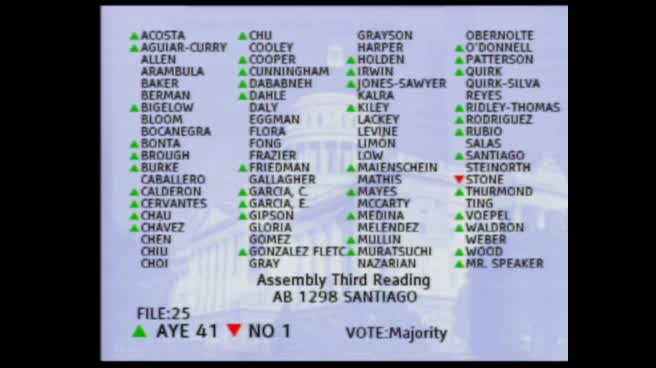 1MIN
Assembly Floor
 1H
Assembly Standing Committee on Appropriations
 21MIN
Assembly Standing Committee on Transportation
Bill Author


