AB 940: Long-term health care facilities: notice.
- Session Year: 2017-2018
- House: Assembly
- Latest Version Date: 2017-09-25
Existing law provides for the licensure and regulation of long-term health care facilities by the State Department of Public Health. Existing law authorizes the department to issue citations for violations of those provisions that are classified according to the nature of the violation. Existing law authorizes a licensee to contest a citation or proposed assessment of a civil penalty under specified provisions.
This bill would require a long-term health care facility to notify the local long-term care ombudsman if a resident is notified in writing of a facility-initiated transfer or discharge from the facility, as specified. The bill would provide that a failure to timely provide a copy of that notice would constitute a class B violation for purposes of a department-issued citation.
Existing law provides for the licensure and regulation of long-term health care facilities by the State Department of Public Health. Existing law authorizes the department to issue citations for violations of those provisions that are classified according to the nature of the violation. Existing law authorizes a licensee to contest a citation or proposed assessment of a civil penalty under specified provisions.
This bill would require a long-term health care facility to notify the local long-term care ombudsman if a resident is notified in writing of a facility-initiated transfer or discharge from the facility, as specified. The bill would provide that a failure to timely provide a copy of that notice would constitute a class B violation for purposes of a department-issued citation. The bill would authorize the department to impose additional penalties under those provisions if the failure to send the notice is intentional.
Existing law provides for the licensure and regulation of long-term health care facilities by the State Department of Public Health. Existing law authorizes the department to issue citations for violations of those provisions that are classified according to the nature of the violation. Existing law authorizes a licensee to contest a citation or proposed assessment of a civil penalty under specified provisions.
This bill would require a long-term health care facility to notify the local long-term care ombudsman any time if a resident is notified in writing of a facility-initiated transfer or discharge from the facility, as specified. The bill would provide that a failure to timely provide a copy of that notice would constitute a class B violation for purposes of a department-issued citation. The bill would authorize the department to impose additional penalties under those provisions if the failure to send the notice is intentional.
Existing law provides for the licensure and regulation of long-term health care facilities by the State Department of Public Health. Existing law authorizes the department to issue citations for violations of those provisions that are classified according to the nature of the violation. Existing law authorizes a licensee to contest a citation or proposed assessment of a civil penalty under specified provisions.
This bill would require a long-term health care facility to notify the local long-term care ombudsman any time a resident is notified in writing of a transfer or discharge from the facility, as specified. The bill would provide that a failure to provide that notice would constitute a class B violation for purposes of a department-issued citation. The bill would authorize the department to impose additional penalties under those provisions if the failure to send the notice is intentional.
(a)Except as provided in subdivision (b), if a resident is notified in writing of a facility-initiated transfer or discharge from a long-term health care facility, the facility shall also send a copy of the notice to the local long-term care ombudsman at the same time notice is provided to the resident or the residents representative.
(b)If a resident is subject to a facility-initiated transfer to a general acute care hospital on an emergency basis, the facility shall provide a copy of the notice to the ombudsman as soon as practicable.
(c)The copy of the notice shall be sent by fax machine or email, as may be directed by the local long-term care ombudsman, unless the facility does not have fax or email capability, in which case the copy of the notice shall be sent by first-class mail, postage prepaid. A facilitys failure to timely send a copy of the notice shall constitute a class B violation, as defined in subdivision (e) of Section 1424.
(d)For the purposes of this section, a facility-initiated transfer or discharge is a transfer or discharge that is initiated by the facility and not by the resident, whether or not the resident agrees to the facilitys decision.
(a)Except as provided in subdivision (b), if a resident is notified in writing of a facility-initiated transfer or discharge from a long-term health care facility, the facility shall also send a copy of the notice to the local long-term care ombudsman at the same time notice is provided to the resident or the residents representative.
(b)If a resident is subject to a facility-initiated transfer to a general acute care hospital on an emergency basis, the facility shall provide a copy of the notice to the ombudsman as soon as practicable.
(c)The copy of the notice shall be sent by fax machine or email, as may be directed by the local long-term care ombudsman, unless the facility does not have fax or email capability, in which case the copy of the notice shall be sent by first-class mail, postage prepaid. A facilitys failure to timely send a copy of the notice shall constitute a class B violation, as defined in subdivision (e) of Section 1424. If the department determines the failure to send a copy of the notice to the ombudsman was intentional, the department may impose additional penalties on the facility pursuant to Section 1424.
(d)For the purposes of this section, a facility-initiated transfer or discharge is a transfer or discharge that is initiated by the facility and not by the resident, whether or not the resident agrees to the facilitys decision.
Any time (a)Except as provided in subdivision (b), if a resident is notified in writing of a facility-initiated transfer or discharge from a long-term health care facility, the facility shall also send a copy of the notice to the local long-term care ombudsman within 24 hours. The at the same time notice is provided to the resident or the residents representative.
(b)If a resident is subject to a facility-initiated transfer to a general acute care hospital on an emergency basis, the facility shall provide a copy of the notice to the ombudsman as soon as practicable.
(c)The copy of the notice shall be sent by fax machine or email, as may be directed by the local long-term care ombudsman, unless the facility does not have fax or email capability, in which case the copy of the notice shall be sent by first-class mail, postage prepaid. A facilitys failure to timely send a copy of the notice within 24 hours shall constitute a class B violation, as defined in subdivision (e) of Section 1424. If the department determines the failure to send a copy of the notice to the ombudsman was intentional, the department may impose additional penalties on the facility pursuant to Section 1424.
(d)For the purposes of this section, a facility-initiated transfer or discharge is a transfer or discharge that is initiated by the facility and not by the resident, whether or not the resident agrees to the facilitys decision.
Any time a resident is notified in writing of a transfer or discharge from a long-term health care facility, the facility shall also send a copy of the notice to the local long-term care ombudsman within 24 hours. The copy shall be sent by fax machine or email, as may be directed by the local long-term care ombudsman, unless the facility does not have fax or email capability, in which case the copy shall be sent by first-class mail, postage prepaid. A facilitys failure to send the notice within 24 hours shall constitute a class B violation, as defined in subdivision (e) of Section 1424. If the department determines the failure to send the notice to the ombudsman was intentional, the department may impose additional penalties on the facility pursuant to Section 1424.
Any time a resident is notified in writing of a transfer or discharge from a long-term health care facility, the facility shall also send a copy of the notice to the local long-term care ombudsman within 24 hours. A facilitys failure to send the notice within 24 hours shall constitute a class B violation, as defined in subdivision (e) of Section 1424. If the department determines the failure to send the notice to the ombudsman was intentional, the department may impose additional penalties on the facility pursuant to Section 1424.
|
Date
|
Status
|
|---|---|
| Sep 25, 2017 | Chaptered by Secretary of State - Chapter 274, Statutes of 2017. |
| Sep 25, 2017 | Approved by the Governor. |
| Sep 12, 2017 | Enrolled and presented to the Governor at 2:30 p.m. |
| Sep 5, 2017 | Senate amendments concurred in. To Engrossing and Enrolling. (Ayes 75. Noes 0.). |
| Aug 31, 2017 | In Assembly. Concurrence in Senate amendments pending. May be considered on or after September 2 pursuant to Assembly Rule 77. |
| Aug 31, 2017 | Read third time. Passed. Ordered to the Assembly. |
| Aug 22, 2017 | Read second time. Ordered to third reading. |
| Aug 21, 2017 | From committee: Be ordered to second reading pursuant to Senate Rule 28.8. |
| Jul 18, 2017 | Read second time and amended. Re-referred to Com. on APPR. |
| Jul 17, 2017 | From committee: Amend, and do pass as amended and re-refer to Com. on APPR. (Ayes 8. Noes 0.) (July 12). |
| Jul 3, 2017 | From committee chair, with author's amendments: Amend, and re-refer to committee. Read second time, amended, and re-referred to Com. on HEALTH. |
| Jun 14, 2017 | Referred to Com. on HEALTH. |
| Jun 1, 2017 | In Senate. Read first time. To Com. on RLS. for assignment. |
| May 31, 2017 | Read third time. Passed. Ordered to the Senate. (Ayes 75. Noes 0. Page 1878.) |
| May 18, 2017 | Read third time and amended. Ordered to third reading. (Page 1612.) |
| Apr 27, 2017 | Read second time. Ordered to third reading. |
| Apr 26, 2017 | From committee: Do pass. (Ayes 16. Noes 0.) (April 26). |
| Apr 5, 2017 | From committee: Do pass and re-refer to Com. on APPR. (Ayes 7. Noes 0.) (April 4). Re-referred to Com. on APPR. |
| Mar 2, 2017 | Referred to Com. on AGING & L.T.C. |
| Feb 17, 2017 | From printer. May be heard in committee March 19. |
| Feb 16, 2017 | Read first time. To print. |
|
Date
|
Description
|
Location
|
Votes
|
|
|---|---|---|---|---|
| Sep 5, 2017 | AB 940 WEBER Concurrence in Senate Amendments | Assembly Floor |
Passed |
|
| Aug 31, 2017 | Assembly 3rd Reading AB940 Weber By Pan | Senate Floor |
Passed |
|
| Jul 12, 2017 | Do pass as amended, but first amend, and re-refer to the Committee on [Appropriations] | Senate Standing Committee on Health |
Passed |
|
| May 31, 2017 | AB 940 WEBER Assembly Third Reading | Assembly Floor |
Passed |
|
| Apr 26, 2017 | Do pass. | Assembly Standing Committee on Appropriations |
Passed |
|
| Apr 4, 2017 | Do pass and be re-referred to the Committee on [Appropriations] | Assembly Standing Committee on Aging and Long-Term Care |
Passed |
This list shows positions taken on this bill by organizations on the date displayed, which is linked to the original source.
Positions by individuals are not included.
|
Organization
|
Position
|
Date
|
|---|---|---|
| Advocacy, Inc. | * Support | Apr 4, 2017 |
| Area 2 Agency on Aging LTC Ombudsman Program | * Support | Apr 4, 2017 |
| area 2 long-term care ombudsman program | ** Support | Aug 23, 2017 |
| California Advocates for Nursing Home Reform | ** Support | Aug 23, 2017 |
| California Alliance For Retired Americans | * Support | Apr 4, 2017 |
| California Association Of Area Agencies On Aging | * Support | Jul 12, 2017 |
| California Association Of Health Facilities | * Neutral | Jul 12, 2017 |
| California Association of Public Authorities | ** Support | Aug 23, 2017 |
| California Catholic Conference, Inc. California Commission on Aging | * Support | Jul 12, 2017 |
| California Commission on Aging | ** Support | Aug 23, 2017 |
| California Continuing Care Residents Association | ** Support | Aug 23, 2017 |
| California Disability Rights | * Indeterminate | Jul 12, 2017 |
| California Long-Term Care Ombudsman Association | ** Support | Aug 23, 2017 |
| California Long-Term Care Ombudsman Association Sponsor | ** Support | Mar 30, 2017 |
| california long-term care ombudsman association - sponsor | ** Support | Mar 30, 2017 |
| Californians for Disability Rights | * Support | Apr 4, 2017 |
| Congress of California Seniors | ** Support | Aug 23, 2017 |
| Consumer Federation Of California | ** Support | Aug 23, 2017 |
| imperial county long term care program | ** Support | Aug 23, 2017 |
| LeadingAge California Oppose Unless Amended | ** Against | Mar 30, 2017 |
| leadingage california - oppose unless amended | ** Against | Mar 30, 2017 |
| Long Term Care Ombudsman Program of Monterey County | ** Support | Aug 23, 2017 |
| Long Term Care Ombudsman Services, San Luis Obispo County | * Support | Apr 4, 2017 |
| Mother Lode Long-Term Care Ombudsman Program | ** Support | Aug 23, 2017 |
| National Association Of Social Workers, California Chapter | ** Support | Aug 23, 2017 |
| Ombudsman Services of Contra Costa | ** Support | Aug 23, 2017 |
| ombudsman services of san mateo county | ** Support | Aug 23, 2017 |
| Stanislaus County Ombudsman Program | * Support | Apr 4, 2017 |
| Various individuals. | ** Support | Mar 30, 2017 |
CONCURRENCE IN SENATE AMENDMENTS
CSA1 Bill Id:AB 940
Author:(Weber)
As Amended Ver:July 18, 2017
Majority vote
ASSEMBLY: | 75-0 | (May 31, 2017) | SENATE: | 38-0 | (August 31, 2017) |
Original Committee Reference: AGING & L.T.C.
SUMMARY: If a resident is notified in writing of a facility initiated transfer or discharge from a long-term health care facility, other than an emergency transfer to a hospital, the facility must also send a copy of the notice to the local long-term care ombudsman at the same time. Specifically, this bill:
- Requires a long term care (LTC) facility, if a resident is notified in writing of a facility-initiated transfer or discharge from the LTC facility, other than an emergency transfer to a hospital, to also send a copy of the notice to the local long-term care ombudsman at the same time the notice is provided to the resident or the resident's representative.
- Specifies that a copy of the notice to the local LTC ombudsman should be sent as soon as practicable if a resident is subject to a facility-initiated transfer to a general acute care hospital on an emergency basis.
- Requires the copy of the notice to be sent by fax machine or email, as directed by the local LTC ombudsman, unless the facility does not have fax or email capability, in which case the copy of the notice is required to be sent by prepaid first class mail.
- Specifies that a facility's failure to timely send the notice shall constitute a class B violation for purposes of a Department of Public Health (department) issued citation.
- Defines that a "facility-initiated transfer or discharge," is a transfer or discharge that is initiated by the facility and not by the resident, whether or not the resident agrees to the facility's decision.
The Senate amendments:
- Specifies that the transfer must be a facility initiated transfer and defines a "facility-initiated transfer or discharge," as a transfer or discharge that is initiated by the facility and not by the resident, whether or not the resident agrees to the facility’s decision.
- Adds that a copy of the notice to the local LTC ombudsman will be provided as soon as practicable if a resident is subject to a facility-initiated transfer to a general acute care hospital on an emergency basis.
- Deletes the provision that would have allowed the department, if it determines that failure to send the notice to the ombudsman was intentional, to impose additional penalties.
EXISTING LAW:
- Provides for the licensure and regulation of long-term health care facilities by the State Department of Public Health.
- Authorizes the department to issue citations for violations of those provisions which are classified, according to the nature of the violation.
- Authorizes a licensee to contest a citation or proposed assessment of a civil penalty under specified provisions.
- Specifies that Class B violations are violations that the state department determines have a direct or immediate relationship to the health, safety, or security of long-term health care facility patients or residents, other than class "AA" or "A" violations.
- A class "B" violation as determined by the state department is one that to causes or under circumstances likely to cause significant humiliation, indignity, anxiety, or other emotional trauma to a patient.
- A class "B" citation is subject to a civil penalty in an amount not less than $100 and not exceeding $1,000 for each and every citation.
- A class "B" citation shall specify the time within which the violation is required to be corrected. If the state department establishes that a violation occurred, the licensee shall have the burden of proving that the licensee did what might reasonably be expected of a long-term health care facility licensee, acting under similar circumstances, to comply with the regulation. If the licensee sustains this burden, then the citation shall be dismissed.
- Provides for the Long-Term Care Ombudsman Program, under which funds are allocated to local ombudsman programs to assist elderly persons in long-term health care facilities and residential care facilities by, among other things, investigating and seeking to resolve complaints against these facilities.
- Involuntary transfer or discharge is discussed in Title 42 of the Code of Federal Regulations (C.F.R.) Section 483.15(c).
- Makes it a requirement of nursing home admission agreements to ensure residents will be given advance written notice of any involuntary transfer or discharge and mandates these notices to be sent to a representative of the Office of the State Long-Term Care Ombudsman in a limited number of cases.
FISCAL EFFECT: According to the Assembly Appropriations Committee:
- Costs to enforce this requirement should be minor and absorbable within the general enforcement operations of the California Department of Public Health Licensure and Certification program (Licensing and Certification Program Fund).
- In the case of facility noncompliance, potential minor penalty revenues (pursuant to Health and Safety Code Section 1417.2, revenues from noncompliance with state law accrue to the State Health Facilities Citation Penalties Account).
COMMENTS:
Author's Statement: According to the author, "Complaint investigations conducted by Local Long-Term Care Ombudsman Programs for improper, unsafe and illegal discharges are a recently growing problem all across the state. In 2016 local programs investigated 1,504 complaints regarding discharge and evictions a 68% increase since 2012.
"Many residents when faced with discharge are not aware of their options. AB 940 ensures California residents of skilled nursing facilities will be afforded a greater opportunity for timely intervention from their local Long-Term Care Ombudsman Program."
Background: In November of 2016 an update in the federal rules regarding 30-day discharge/eviction notifications for residents living in Skilled Nursing Facilities went into effect 42 CFR 483.15(c)(3)(i). The updated rule requires the facility, in addition to providing the notice to the resident, and the representative of the resident, a notice must be sent to the Office of the State Long-Term Care (LTC) Ombudsman. The intent behind this change in the federal rule was to provide these residents an extra level of protection/advocacy by informing the local LTC Ombudsman Program of the discharge.
The federal rules are unclear on a time frame for when the notification must be sent to the LTC Ombudsman and does not specify how the notices should be sent. There is also confusion because it states the notices are to be sent to the Office of the State Long-Term Care Ombudsman and not the representative of the Office of the State Long-Term Care Ombudsman more commonly known as the local LTC Ombudsman Program.
The State Long-Term Care Ombudsman Office develops policy and provides oversight to 35 local Long-Term Care Ombudsman programs. In California, LTC Ombudsman organizations monitor and assist residents in both skilled nursing facilities (nursing homes) and residential care facilities for the elderly (assisted living facilities).
The LTC Ombudsman Program serves as the first line of defense for residents of care facilities and provides on-site monitoring of facility conditions and resident well-being. Ombudsmen are trained to spot systemic problems and to develop personal rapport with residents who may fear reporting problems or abuse. Ombudsmen are able to intervene on behalf of a resident and identify, investigate and resolve complaints before they result in more serious and costly cases of abuse and neglect. This is particularly important to the 60% of residents without family members visiting to observe care and report problems.
Analysis Prepared by: Barry Brewer / AGING & L.T.C. / (916) 319-3990 FN: 0001385
Office of Senate Floor Analyses (916) 651-1520 Fax: (916) 327-4478 | AB 940 |
THIRD READING
Bill No: AB 940
Amended: 7/18/17 in Senate
SENATE HEALTH COMMITTEE: 8-0, 7/12/17
AYES: Hernandez, Nguyen, Atkins, Leyva, Mitchell, Monning, Newman, Roth
NO VOTE RECORDED: Nielsen
SENATE APPROPRIATIONS COMMITTEE: Senate Rule 28.8
ASSEMBLY FLOOR: 75-0, 5/31/17 - See last page for vote
SUBJECT: Long-term health care facilities: notice
SOURCE: California Long-Term Care Ombudsman Association
DIGEST:
This bill requires a long-term health care facility to also notify the local long-term care ombudsman when a resident is notified in writing of a facility-initiated transfer or discharge from the facility.
Existing law:
- Licenses and regulates long-term health care facilities (LTC facilities) by the Department of Public Health (DPH). LTC facilities include skilled nursing facilities, intermediate care facilities, and congregate living health facilities.
- Prohibits a resident of an LTC facility, except in an emergency, from being involuntarily transferred within or discharged from an LTC facility unless he or she is given reasonable notice in writing, and transfer or discharge planning, as required.
- Requires an LTC facility to offer to hold a bed for the resident, for up to seven days, in the event the resident must be transferred to a hospital, and requires the resident or resident’s representative to have 24 hours from receipt of the notice to request the bed hold.
- Prohibits an LTC facility that participates in the Medi-Cal program from transferring or seeking to evict any resident solely as a result of the resident changing his or her manner of purchasing the services from private payment or Medicare to Medi-Cal.
- Establishes a civil penalty structure for LTC facilities, categorized into “AA,” “A,” and “B” violations: “A” violations are where DPH determines that the violation presents either imminent danger of death or serious harm, or a substantial probability that death or serious harm to residents would result; “AA” violations are those that meet the criteria for a class “A” violation that DPH determines was a direct proximate cause of the death of a resident of an LTC facility; and “B” violations are those that DPH determines have a direct or immediate relationship to the health, safety, or security of LTC facility residents. “B” violation penalties range from as low as $100 to as much as $2,000 for skilled nursing and intermediate care facilities, while “AA” violations range from $5,000 to as much as $100,000 for skilled nursing and intermediate care facilities, and can result in license suspension or revocation for repeated violations.
This bill:
- Requires an LTC facility, if a resident is notified in writing of a facility-initiated transfer or discharge from the LTC facility, other than an emergency transfer to a hospital, to also send a copy of the notice to the local long-term care ombudsman at the same time the notice is provided to the resident or the resident’s representative.
- Requires an LTC facility, if a resident is subject to a facility-initiated transfer to a general acute care hospital on an emergency basis, to provide a copy of the notice to the local LTC ombudsman as soon as practicable.
- Requires the copy of the notice to be sent by fax machine or email, as directed by the local LTC ombudsman, unless the facility does not have fax or email capability, in which case the copy of the notice is required to be sent by first class mail.
- Specifies that an LTC facility’s failure to timely send a copy of the notice constitutes a class B violation.
- Defines, for purposes of this bill, a “facility-initiated transfer or discharge,” as a transfer or discharge that is initiated by the facility and not by the resident, whether or not the resident agrees to the facility’s decision.
Comments
- Author’s statement. According to the author, complaint investigations conducted by local long-term care ombudsman programs for improper, unsafe and illegal discharges are a recently growing problem all across the state. In 2016, local programs investigated 1,504 complaints regarding discharge and evictions, a 68% increase since 2012. Many residents when faced with discharge are not aware of their options. This bill will ensure California residents of skilled nursing facilities will be afforded a greater opportunity for timely intervention from their local LTC ombudsman program.
- LTC facilities. LTC facilities include skilled nursing facilities, intermediate care facilities, and congregate living facilities. Intermediate care facilities includes several different licensing categories, including those specifically serving the developmentally disabled at different levels of health care need. According to DPH, there are currently 1,244 licensed skilled nursing facilities with a total of 119,431 beds, 1,183 licensed intermediate care facilities across the various license types with a total of 15,629 beds, and 164 licensed congregate living facilities with 909 beds. Skilled nursing facilities are defined as health facilities that provide skilled nursing care and supportive care to patients whose primary need is for availability of skilled nursing care on an extended basis, and intermediate care facilities are defined as health facilities that provide inpatient care to ambulatory or non-ambulatory patients who have recurring need for skilled nursing supervision and need supportive care, but who do not require the availability of continuous skilled nursing care.
- Notification requirements for facility-initiated transfers and discharges in LTC facilities. LTC facilities are governed by both state law, and by federal Centers for Medicare and Medicaid Services (CMS) regulations as a condition of participation in the Medicare or Medicaid programs. As described above, state law includes reasonable notice requirements prior to being involuntarily transferred or discharged, among other requirements. In some cases, federal requirements are more specific than state requirements. There is a “standard admission agreement” (SAA) for skilled nursing and intermediate care facilities that is published by DPH, which incorporates many of the requirements of both state and federal law. With regard to transfers and discharges, the SAA includes the following required statement:
“Our [the facility’s] written notice of transfer to another facility or discharge against your wishes will be provided 30 days in advance. However, we may provide less than 30 days notice if the reason for the transfer or discharge is to protect your health and safety or the health and safety of other individuals, if your improved health allows for a shorter notice, or if you have been in our facility for less than 30 days. Our written notice will include the effective date, the location to which you will be transferred or discharged, and the reason the action is necessary.”
The SAA also requires the written notice to advise the resident that they have the right to appeal the transfer or discharge to the Department of Health Care Services, and that the facility will provide the name, address and telephone number of the State Long-Term Care Ombudsman.
- Recently updated federal CMS requirements on notification. In May, CMS updated its regulations on notification of LTC facility residents before transfer or discharge by including a requirement that a copy of the required notice of transfer or discharge be sent to the LTC Ombudsman. With regard to facility-initiated transfers and discharges, the new regulations now require, in situations where the facility has decided to discharge the resident while the resident is still hospitalized, to send a copy of the discharge notice to the Office of the State LTC Ombudsman at the same time the notice of discharge is provided to the resident. For other types of facility-initiated discharges, the LTC facility is required to provide notice of discharge to the resident and resident representative along with a copy of the notice to the Office of the State LTC Ombudsman at least 30 days prior to the discharge or as soon as possible, and the copy of the notice to the ombudsman must be sent at the same time notice is provided to the resident. With regard to instances when a resident is temporarily transferred on an emergency basis to a hospital, the regulations require the notice of the transfer to be provided to the resident “as soon as practicable,” and that copies of notices for emergency transfers still be sent to the ombudsman, but permits these copies to be sent “when practicable, such as in a list of residents on a monthly basis.”
- State and local LTC Ombudsprograms. The LTC Ombudsprogram is a federally authorized program, partially funded by the federal government, to advocate for the rights of residents in LTC facilities. In California, there is the Office of the State LTC Ombudsman, which is housed with the Department of Aging, and develops policy and provides oversight to the 35 local Ombudsman Program Coordinators. The Ombudsman’s advocacy role take two forms: (1) to receive and resolve individual complaints and issues by, or on behalf of, LTC facility residents; and, (2) to pursue resident advocacy in the LTC system, its laws, policies, regulations, and administration through public education and consensus building. Residents or their family members can file a complaint directly with the local LTC Ombudsman, and all LTC facilities are required to post, in a conspicuous location, the phone number for the local Ombudsman office and the statewide CRISISline, which is available 24 hours a day, seven days a week to take calls and refer complaints. The local Ombudsprograms are primarily staffed with trained volunteers from the community, with support from the Office of the State Long-Term Care Ombudsman.
The National Association of State Long-Term Care Ombudsman Programs (NASOP), in its comments on the new CMS regulations on notification, stated that inappropriate involuntary discharges are an ongoing and serious problem that LTC Ombudsman representatives have been investigating and working to resolve for many years. According to NASOP, at the national level, problems with discharge and eviction have been the number one complaint that Ombudsman programs handle in nursing facilities. NASOP advocated for the mandatory notice to Ombudsman programs in order to assure that residents have the fastest and easiest possible access to their services when facing possible eviction.
Related/Prior Legislation
SB 75 (Committee on Budget and Fiscal Review, Chapter 18, Statutes of 2015) was the omnibus health trailer bill, and contained changes to implement the 2015-16 Budget. Among the provisions of this bill were requirements that investigations of LTC facilities be completed within 90 days, as specified, until July 1, 2018, at which point investigations would have to be completed within 60 days.
SB 1312 (Alquist, Chapter 895, Statutes of 2006) required inspections and investigations of LTC facilities certified by the CMS to determine compliance with federal standards and California statutes and regulations
SB 339 (Ortiz, Chapter 554, Statutes of 2002) added requirements to LTC facilities transferring a patient due to a change in the status of the license or operation of a LTC facility new requirements, including that the facility be responsible for ensuring that the resident's attending physician, if available, or a facility medical director
FISCAL EFFECT: Appropriation: No Fiscal Com.: Yes Local: No
California Long-Term Care Ombudsman Association (source)
Area 2 Long-Term Care Ombudsman Program
California Advocates for Nursing Home Reform
California Association of Public Authorities
California Commission on Aging
California Continuing Care Residents Association
Congress of California Seniors
Consumer Federation of California
Imperial County Long Term Care Program
Long Term Care Ombudsman Program of Lake & Mendocino Counties
Long Term Care Ombudsman Program of Monterey County
Long Term Care Ombudsman Services of San Luis Obispo County
Mother Lode Long-Term Care Ombudsman Program
National Association of Social Workers, California Chapter
Ombudsman Services of Contra Costa
Ombudsman Services of San Mateo County
OPPOSITION: (Verified 8/22/17)
None received
ARGUMENTS IN SUPPORT: This bill is supported by the California LTC Ombudsman Association (CLTCOA), which states in support that this bill seeks to codify the recent amendment to the federal requirements regarding skilled nursing facility discharge notification for residents receiving care in skilled nursing facilities. CLTCOA states that this bill would provide clarity to the federal rule by specifying that whenever a facility initiates a resident’s discharge or eviction from the facility, a copy of the discharge notice is sent electronically to the local LTC Ombudsman Program. The Congress of California Seniors states in support that in 2016, local Ombudsman programs investigated 1,504 complaints regarding discharge and eviction, which was a 68% increase from 2012. According to the Congress of California Seniors, many residents when faced with discharge are not aware of their options, and this bill ensures that residents will be afforded a greater opportunity for timely intervention by their local LTC Ombudsman Program. The California Commission on Aging states in support that the federal rule is unclear as to the timing of the notification to the LTC Ombudsman, and also notes that the regulation directs notification to the Office of the State LTC Ombudsman, rather than to the local Ombudsman programs, which may cause delays preventing the local Ombudsman from tracking resident transfers. California Advocates for Nursing Home Reform (CANHR) states in support that providing notice to the Ombudsman programs is a good, low-cost method for vetting proposed evictions and better ensuring residents are not dumped into unsafe situations. According to CANHR, this bill simply brings this new federal requirement into California law and adds clarifications consistent with federal interpretive guidance. The California Continuing Care Residents Association states in support that the Ombudsman program serves as the eyes, ears, and advocates for residents, particularly the 60% of residents without family members visiting to observe care and report problems, and that this bill adds an important level of protection when residents are discharged from their care facilities. The California Association of Public Authorities states in support that sending these notices to the LTC Ombudsman will provide added protection to the resident and assist the Ombudsman to keep informed of facility activities.
ASSEMBLY FLOOR: 75-0, 5/31/17
AYES: Acosta, Aguiar-Curry, Arambula, Baker, Berman, Bigelow, Bloom, Bocanegra, Bonta, Brough, Burke, Caballero, Calderon, Cervantes, Chau, Chávez, Chen, Chiu, Chu, Cooley, Cooper, Cunningham, Dababneh, Dahle, Daly, Flora, Fong, Frazier, Friedman, Gallagher, Cristina Garcia, Eduardo Garcia, Gipson, Gloria, Gomez, Gonzalez Fletcher, Gray, Grayson, Holden, Irwin, Jones-Sawyer, Kalra, Kiley, Lackey, Levine, Limón, Low, Maienschein, Mathis, Mayes, McCarty, Medina, Mullin, Muratsuchi, Nazarian, Obernolte, O'Donnell, Patterson, Quirk, Quirk-Silva, Reyes, Ridley-Thomas, Rodriguez, Rubio, Salas, Santiago, Steinorth, Mark Stone, Thurmond, Ting, Voepel, Waldron, Weber, Wood, Rendon
NO VOTE RECORDED: Travis Allen, Choi, Eggman, Harper, Melendez
Prepared by: Vincent D. Marchand / HEALTH / (916) 651-4111
8/23/17 16:25:27
SENATE COMMITTEE ON HEALTH
Senator Ed Hernandez, O.D., Chair
BILL NO: AB 940
AUTHOR: | Weber | ||
VERSION: | July 3, 2017 | ||
HEARING DATE: | July 12, 2017 | ||
CONSULTANT: | Vincent D. Marchand | ||
SUBJECT: Long-term health care facilities: notice
SUMMARY:
Requires a long-term health care facility to also notify the local long-term care ombudsman when a resident is notified in writing of a facility-initiated transfer or discharge from the facility.
Existing law:
- Licenses and regulates long-term health care facilities (LTC facilities) by the Department of Public Health (DPH). LTC facilities include skilled nursing facilities, intermediate care facilities, and congregate living health facilities.
- Prohibits a resident of an LTC facility, except in an emergency, from being involuntarily transferred within or discharged from an LTC facility unless he or she is given reasonable notice in writing, and transfer or discharge planning, as required.
- Requires an LTC facility to offer to hold a bed for the resident, for up to seven days, in the event the resident must be transferred to a hospital, and requires the resident or resident’s representative to have 24 hours from receipt of the notice to request the bed hold.
- Prohibits an LTC facility that participates in the Medi-Cal program from transferring or seeking to evict any resident solely as a result of the resident changing his or her manner of purchasing the services from private payment or Medicare to Medi-Cal.
- Establishes a civil penalty structure for LTC facilities, categorized into “AA,” “A,” and “B” violations: “A” violations are where DPH determines that the violation presents either imminent danger of death or serious harm, or a substantial probability that death or serious harm to residents would result; “AA” violations are those that meet the criteria for a class “A” violation that DPH determines was a direct proximate cause of the death of a resident of an LTC facility; and “B” violations are those that DPH determines have a direct or immediate relationship to the health, safety, or security of LTC facility residents. “B” violation penalties range from as low as $100 to as much as $2,000 for skilled nursing and intermediate care facilities, while “AA” violations range from $5,000 to as much as $100,000 for skilled nursing and intermediate care facilities, and can result in license suspension or revocation for repeated violations.
This bill:
- Requires an LTC facility, if a resident is notified in writing of a facility-initiated transfer or discharge from the LTC facility, other than an emergency transfer to a hospital, to also send a copy of the notice to the local long-term care ombudsman at the same time the notice is provided to the resident or the resident’s representative.
- Requires an LTC facility, if a resident is subject to a facility-initiated transfer to a general acute care hospital on an emergency basis, to provide a copy of the notice to the local LTC ombudsman as soon as practicable.
- Requires the copy of the notice to be sent by fax machine or email, as directed by the local LTC ombudsman, unless the facility does not have fax or email capability, in which case the copy of the notice is required to be sent by first class mail.
- Specifies that an LTC facility’s failure to timely send a copy of the notice constitutes a class B violation, as defined, and if DPH determines the failure was intentional, permits DPH to impose additional penalties as provided for in existing law.
- Defines, for purposes of this bill, a “facility-initiated transfer or discharge,” as a transfer or discharge that is initiated by the facility and not by the resident, whether or not the resident agrees to the facility’s decision.
FISCAL EFFECT:
According to the Assembly Appropriations Committee:
- Costs to enforce this requirement should be minor and absorbable within the general enforcement operations of DPH’s Licensure and Certification program (Licensing and Certification Program Fund).
- In the case of facility noncompliance, potential minor penalty revenues (pursuant to Health and Safety Code Section 1417.2, revenues from noncompliance with state law accrue to the State Health Facilities Citation Penalties Account).
PRIOR VOTES:
Assembly Floor: | 75 - 0 |
Assembly Appropriations Committee: | 16 - 0 |
Assembly Aging and Long Term Care Committee: | 7 - 0 |
COMMENTS:
- Author’s statement. According to the author, complaint investigations conducted by local long-term care ombudsman programs for improper, unsafe and illegal discharges are a recently growing problem all across the state. In 2016, local programs investigated 1,504 complaints regarding discharge and evictions, a 68% increase since 2012. Many residents when faced with discharge are not aware of their options. This bill will ensure California residents of skilled nursing facilities will be afforded a greater opportunity for timely intervention from their local LTC ombudsman program.
- LTC facilities. LTC facilities include skilled nursing facilities, intermediate care facilities, and congregate living facilities. Intermediate care facilities includes several different licensing categories, including those specifically serving the developmentally disabled at different levels of health care need. According to DPH, there are currently 1,244 licensed skilled nursing facilities with a total of 119,431 beds, 1,183 licensed intermediate care facilities across the various license types with a total of 15,629 beds, and 164 licensed congregate living facilities with 909 beds. Skilled nursing facilities are defined as health facilities that provide skilled nursing care and supportive care to patients whose primary need is for availability of skilled nursing care on an extended basis, and intermediate care facilities are defined as health facilities that provide inpatient care to ambulatory or non-ambulatory patients who have recurring need for skilled nursing supervision and need supportive care, but who do not require the availability of continuous skilled nursing care.
- Notification requirements for facility-initiated transfers and discharges in LTC facilities. LTC facilities are governed by both state law, and by federal Centers for Medicare and Medicaid Services (CMS) regulations as a condition of participation in the Medicare or Medicaid programs. As described above, state law includes reasonable notice requirements prior to being involuntarily transferred or discharged, among other requirements. In some cases, federal requirements are more specific than state requirements. There is a “standard admission agreement” (SAA) for skilled nursing and intermediate care facilities that is published by DPH, which incorporates many of the requirements of both state and federal law. With regard to transfers and discharges, the SAA includes the following required statement:
“Our [the facility’s] written notice of transfer to another facility or discharge against your wishes will be provided 30 days in advance. However, we may provide less than 30 days notice if the reason for the transfer or discharge is to protect your health and safety or the health and safety of other individuals, if your improved health allows for a shorter notice, or if you have been in our facility for less than 30 days. Our written notice will include the effective date, the location to which you will be transferred or discharged, and the reason the action is necessary.”
The SAA also requires the written notice to advise the resident that they have the right to appeal the transfer or discharge to the Department of Health Care Services, and that the facility will provide the name, address and telephone number of the State Long-Term Care Ombudsman.
- Recently updated federal CMS requirements on notification. In May, CMS updated its regulations on notification of LTC facility residents before transfer or discharge by including a requirement that a copy of the required notice of transfer or discharge be sent to the LTC Ombudsman. With regard to facility-initiated transfers and discharges, the new regulations now require, in situations where the facility has decided to discharge the resident while the resident is still hospitalized, to send a copy of the discharge notice to the Office of the State LTC Ombudsman at the same time the notice of discharge is provided to the resident. For other types of facility-initiated discharges, the LTC facility is required to provide notice of discharge to the resident and resident representative along with a copy of the notice to the Office of the State LTC Ombudsman at least 30 days prior to the discharge or as soon as possible, and the copy of the notice to the ombudsman must be sent at the same time notice is provided to the resident. With regard to instances when a resident is temporarily transferred on an emergency basis to a hospital, the regulations require the notice of the transfer to be provided to the resident “as soon as practicable,” and that copies of notices for emergency transfers still be sent to the ombudsman, but permits these copies to be sent “when practicable, such as in a list of residents on a monthly basis.”
- State and local LTC Ombudsprograms. The LTC Ombudsprogram is a federally authorized program, partially funded by the federal government, to advocate for the rights of residents in LTC facilities. In California, there is the Office of the State LTC Ombudsman, which is housed with the Department of Aging, and develops policy and provides oversight to the 35 local Ombudsman Program Coordinators. The Ombudsman’s advocacy role take two forms: (1) to receive and resolve individual complaints and issues by, or on behalf of, LTC facility residents; and, (2) to pursue resident advocacy in the LTC system, its laws, policies, regulations, and administration through public education and consensus building. Residents or their family members can file a complaint directly with the local LTC Ombudsman, and all LTC facilities are required to post, in a conspicuous location, the phone number for the local Ombudsman office and the statewide CRISISline, which is available 24 hours a day, seven days a week to take calls and refer complaints. The local Ombudsprograms are primarily staffed with trained volunteers from the community, with support from the Office of the State Long-Term Care Ombudsman.
The National Association of State Long-Term Care Ombudsman Programs (NASOP), in its comments on the new CMS regulations on notification, stated that inappropriate involuntary discharges are an ongoing and serious problem that LTC Ombudsman representatives have been investigating and working to resolve for many years. According to NASOP, at the national level, problems with discharge and eviction have been the number one complaint that Ombudsman programs handle in nursing facilities. NASOP advocated for the mandatory notice to Ombudsman programs in order to assure that residents have the fastest and easiest possible access to their services when facing possible eviction. - Related legislation. SB 481 (Pan) requires that a resident of a LTC facility who has been determined to lack capacity to make health care decisions and there is no person with legal authority to make those decisions on the resident’s behalf, to be notified prior to implementing a medical intervention, of this lack of capacity determination, of the medical intervention that has been prescribed, and of the right of the resident to challenge these determinations in a judicial proceeding. SB 481 passed the Assembly Health Committee by a vote of 16-0 on June 27, 2017.
AB 275 (Wood) revises the procedures for when an LTC facility plans to close or there is otherwise a change in the status of their license resulting in a need to transfer residents by, among other things, requiring written notice to residents to be made 60 days in advance, rather than 30; requiring the facility to hold a community meeting for residents; and adding requirements to the proposed relocation plans that facilities are required to have approved by DPH, including identifying the number of affected residents and identifying the availability of alternative beds within the community as part of the proposed relocation plan. AB 275 passed the Senate Health Committee by a vote of 9-0 on June 7, 2017.
- Prior legislation. SB 75 (Committee on Budget and Fiscal Review, Chapter 18, Statutes of 2015) was the omnibus health trailer bill, and contained changes to implement the 2015-16 Budget. Among the provisions of this bill were requirements that investigations of LTC facilities be completed within 90 days, as specified, until July 1, 2018, at which point investigations would have to be completed within 60 days.
SB 1312 (Alquist, Chapter 895, Statutes of 2006) required inspections and investigations of LTC facilities certified by the CMS to determine compliance with federal standards and California statutes and regulations.
SB 339 (Ortiz, Chapter 554, Statutes of 2002) added requirements to LTC facilities transferring a patient due to a change in the status of the license or operation of a LTC facility new requirements, including that the facility be responsible for ensuring that the resident's attending physician, if available, or a facility medical director, if available, completes the medical assessment of the resident's condition.
- Support. This bill is supported by the California LTC Ombudsman Association (CLTCOA), which states in support that this bill seeks to codify the recent amendment to the federal requirements regarding skilled nursing facility discharge notification for residents receiving care in skilled nursing facilities. CLTCOA states that this bill would provide clarity to the federal rule by specifying that whenever a facility initiates a resident’s discharge or eviction from the facility, a copy of the discharge notice is sent electronically to the local LTC Ombudsman Program. The Congress of California Seniors states in support that in 2016, local Ombudsman programs investigated 1,504 complaints regarding discharge and eviction, which was a 68% increase from 2012. According to the Congress of California Seniors, many residents when faced with discharge are not aware of their options, and this bill ensures that residents will be afforded a greater opportunity for timely intervention by their local LTC Ombudsman Program. The California Commission on Aging states in support that the federal rule is unclear as to the timing of the notification to the LTC Ombudsman, and also notes that the regulation directs notification to the Office of the State LTC Ombudsman, rather than to the local Ombudsman programs, which may cause delays preventing the local Ombudsman from tracking resident transfers. California Advocates for Nursing Home Reform (CANHR) states in support that providing notice to the Ombudsman programs is a good, low-cost method for vetting proposed evictions and better ensuring residents are not dumped into unsafe situations. According to CANHR, this bill simply brings this new federal requirement into California law and adds clarifications consistent with federal interpretive guidance. The California Continuing Care Residents Association states in support that the Ombudsman program serves as the eyes, ears, and advocates for residents, particularly the 60% of residents without family members visiting to observe care and report problems, and that this bill adds an important level of protection when residents are discharged from their care facilities. The California Association of Public Authorities states in support that sending these notices to the LTC Ombudsman will provide added protection to the resident and assist the Ombudsman to keep informed of facility activities.
- Oppose unless amended. The California Association of Health Facilities (CAHF) states that while it appreciates the most recent amendments which go a long way toward alleviating its concerns, it has three remaining amendments that are necessary to ensure the state statute aligns with federal guidance. According to CAHF, the federal guidance for “when practicable” can include providing “a list of residents on a monthly basis,” and requests that the bill be amended to include this additional clarification to provide facilities with direction on the best practice for when is “practicable.” Additionally, CAHF requests language be added to direct state regulators to enforce this bill based on guidance provided by CMS, which would ensure federal rules continue to be aligned with state law and eliminate any confusion for the facilities and regulators. Finally, CAHF requests that the provisions that address the “intentional failure of a facility to send notice” be removed from the bill, which it argues are unnecessary and confusing, since DPH has the ability to use all tools of enforcement when necessary to address violations made by nursing facilities.
SUPPORT AND OPPOSITION:
Support: California Long-Term Care Ombudsman Association (sponsor)
Area 2 Long-Term Care Ombudsman Program
California Advocates for Nursing Home Reform
California Association of Public Authorities
California Commission on Aging
California Continuing Care Residents Association
Congress of California Seniors
Imperial County Long Term Care Program
Long Term Care Ombudsman Services of San Luis Obispo County
Mother Lode Long-Term Care Ombudsman Program
National Association of Social Workers, California Chapter
Ombudsman Services of San Mateo County
Oppose: California Association of Health Facilities (unless amended)
-- END --
ASSEMBLY THIRD READING
ATR Bill Id:AB 940
Author:(Weber)
As Amended Ver:May 18, 2017
Majority vote
Committee | Votes | Ayes | Noes |
Aging | 7-0 | Kalra, Voepel, Acosta, Caballero, Gipson, Gloria, Gray | |
Appropriations | 16-0 | Gonzalez Fletcher, Bigelow, Bloom, Bocanegra, Bonta, Brough, McCarty, Chau, Eggman, Fong, Friedman, Eduardo Garcia, Gray, Muratsuchi, Obernolte, Reyes |
SUMMARY: Any time a resident is notified in writing of a transfer or discharge from a long-term health care facility, the facility shall also send a copy of the notice to the local long-term care ombudsman within 24 hours. Specifically, this bill:
- Requires that any time a resident is notified in writing of a transfer or discharge from a long-term health care facility, the facility shall also send a copy of the notice to the local long-term care ombudsman within 24 hours.
- Specifies that the copy shall be sent by fax machine or email, as may be directed by the local long-term care ombudsman, unless the facility does not have fax or email capability, in which case the copy shall be sent by first-class mail, postage prepaid.
- Specifies that a facility's failure to send the notice within 24 hours shall constitute a class B violation for purposes of a Department of Health issued citation, as defined.
- Allows the department if it determines that failure to send the notice to the ombudsman was intentional to impose additional penalties.
EXISTING LAW:
- Provides for the licensure and regulation of long-term health care facilities by the State Department of Public Health.
- Authorizes the department to issue citations for violations of those provisions which are classified, according to the nature of the violation.
- Authorizes a licensee to contest a citation or proposed assessment of a civil penalty under specified provisions.
- Specifies that Class B violations are violations that the state department determines have a direct or immediate relationship to the health, safety, or security of long-term health care facility patients or residents, other than class "AA" or "A" violations.
- A class "B" violation as determined by the state department is one that to causes or under circumstances likely to cause significant humiliation, indignity, anxiety, or other emotional trauma to a patient.
- A class "B" citation is subject to a civil penalty in an amount not less than $100 and not exceeding $1,000 for each and every citation.
- A class "B" citation shall specify the time within which the violation is required to be corrected. If the state department establishes that a violation occurred, the licensee shall have the burden of proving that the licensee did what might reasonably be expected of a long-term health care facility licensee, acting under similar circumstances, to comply with the regulation. If the licensee sustains this burden, then the citation shall be dismissed.
- Provides for the Long-Term Care Ombudsman Program, under which funds are allocated to local ombudsman programs to assist elderly persons in long-term health care facilities and residential care facilities by, among other things, investigating and seeking to resolve complaints against these facilities.
- Involuntary transfer or discharge is discussed in Title 42 of the Code of Federal Regulations (C.F.R.) Section 483.15(c).
- Makes it a requirement of nursing home admission agreements to ensure residents will be given advance written notice of any involuntary transfer or discharge and mandates these notices to be sent to a representative of the Office of the State Long-Term Care Ombudsman in a limited number of cases.
FISCAL EFFECT: According to the Assembly Appropriations Committee:
- Costs to enforce this requirement should be minor and absorbable within the general enforcement operations of the California Department of Public Health Licensure and Certification program (Licensing and Certification Program Fund).
- In the case of facility noncompliance, potential minor penalty revenues (pursuant to Health and Safety Code Section 1417.2, revenues from noncompliance with state law accrue to the State Health Facilities Citation Penalties Account).
COMMENTS:
Author's Statement: According to the author, "Complaint investigations conducted by Local Long-Term Care Ombudsman Programs for improper, unsafe and illegal discharges are a recently growing problem all across the state. In 2016 local programs investigated 1,504 complaints regarding discharge and evictions a 68% increase since 2012.
"Many residents when faced with discharge are not aware of their options. AB 940 ensures California residents of skilled nursing facilities will be afforded a greater opportunity for timely intervention from their local Long-Term Care Ombudsman Program."
Background: In November of 2016 an update in the federal rules regarding 30-day discharge/eviction notifications for residents living in Skilled Nursing Facilities went into effect 42 CFR 483.15(c)(3)(i). The updated rule requires the facility, in addition to providing the notice to the resident, and the representative of the resident, a notice must be sent to the Office of the State Long-Term Care (LTC) Ombudsman. The intent behind this change in the federal rule was to provide these residents an extra level of protection/advocacy by informing the local LTC Ombudsman Program of the discharge.
The federal rules are unclear on a time frame for when the notification must be sent to the LTC Ombudsman and does not specify how the notices should be sent. There is also confusion because it states the notices are to be sent to the Office of the State Long-Term Care Ombudsman and not the representative of the Office of the State Long-Term Care Ombudsman more commonly known as the local LTC Ombudsman Program.
The State Long-Term Care Ombudsman Office develops policy and provides oversight to 35 local Long-Term Care Ombudsman programs. In California, LTC Ombudsman organizations monitor and assist residents in both skilled nursing facilities (nursing homes) and residential care facilities for the elderly (assisted living facilities).
The LTC Ombudsman Program serves as the first line of defense for residents of care facilities and provides on-site monitoring of facility conditions and resident well-being. Ombudsmen are trained to spot systemic problems and to develop personal rapport with residents who may fear reporting problems or abuse. Ombudsmen are able to intervene on behalf of a resident and identify, investigate and resolve complaints before they result in more serious and costly cases of abuse and neglect. This is particularly important to the 60% of residents without family members visiting to observe care and report problems.
Analysis Prepared by: Barry Brewer / AGING & L.T.C. / (916) 319-3990 FN: 0000438
ASSEMBLY THIRD READING
ATR Bill Id:AB 940
Author:(Weber)
As Introduced Ver:February 16, 2017
Majority vote
Committee | Votes | Ayes | Noes |
Aging | 7-0 | Kalra, Voepel, Acosta, Caballero, Gipson, Gloria, Gray | |
Appropriations | 16-0 | Gonzalez Fletcher, Bigelow, Bloom, Bocanegra, Bonta, Brough, McCarty, Chau, Eggman, Fong, Friedman, Eduardo Garcia, Gray, Muratsuchi, Obernolte, Reyes |
|
SUMMARY: Any time a resident is notified in writing of a transfer or discharge from a long-term health care facility, the facility shall also send a copy of the notice to the local long-term care ombudsman within 24 hours. Specifically, this bill:
- Requires that any time a resident is notified in writing of a transfer or discharge from a long-term health care facility, the facility shall also send a copy of the notice to the local long-term care ombudsman within 24 hours.
- Specifies that a facility's failure to send the notice within 24 hours shall constitute a class B violation for purposes of a Department of Health issued citation, as defined.
- Allows the department if it determines that failure to send the notice to the ombudsman was intentional to impose additional penalties.
EXISTING LAW:
- Provides for the licensure and regulation of long-term health care facilities by the State Department of Public Health.
- Authorizes the department to issue citations for violations of those provisions which are classified, according to the nature of the violation.
- Authorizes a licensee to contest a citation or proposed assessment of a civil penalty under specified provisions.
- Specifies that Class B violations are violations that the state department determines have a direct or immediate relationship to the health, safety, or security of long-term health care facility patients or residents, other than class "AA" or "A" violations.
- A class "B" violation as determined by the state department is one that to causes or under circumstances likely to cause significant humiliation, indignity, anxiety, or other emotional trauma to a patient.
- A class "B" citation is subject to a civil penalty in an amount not less than $100 and not exceeding $1,000 for each and every citation.
- A class "B" citation shall specify the time within which the violation is required to be corrected. If the state department establishes that a violation occurred, the licensee shall have the burden of proving that the licensee did what might reasonably be expected of a long-term health care facility licensee, acting under similar circumstances, to comply with the regulation. If the licensee sustains this burden, then the citation shall be dismissed.
- Provides for the Long-Term Care Ombudsman Program, under which funds are allocated to local ombudsman programs to assist elderly persons in long-term health care facilities and residential care facilities by, among other things, investigating and seeking to resolve complaints against these facilities.
- Involuntary transfer or discharge is discussed in Title 42 of the Code of Federal Regulations (C.F.R.) Section 483.15(c).
- Makes it a requirement of nursing home admission agreements to ensure residents will be given advance written notice of any involuntary transfer or discharge and mandates these notices to be sent to a representative of the Office of the State Long-Term Care Ombudsman in a limited number of cases.
FISCAL EFFECT: According to the Assembly Appropriations Committee:
- Costs to enforce this requirement should be minor and absorbable within the general enforcement operations of the California Department of Public Health Licensure and Certification program (Licensing and Certification Program Fund).
- In the case of facility noncompliance, potential minor penalty revenues (pursuant to Health and Safety Code Section 1417.2, revenues from noncompliance with state law accrue to the State Health Facilities Citation Penalties Account).
COMMENTS:
Author's Statement: According to the author, "Complaint investigations conducted by Local Long-Term Care Ombudsman Programs for improper, unsafe and illegal discharges are a recently growing problem all across the state. In 2016 local programs investigated 1,504 complaints regarding discharge and evictions a 68% increase since 2012.
"Many residents when faced with discharge are not aware of their options. AB 940 ensures California residents of skilled nursing facilities will be afforded a greater opportunity for timely intervention from their local Long-Term Care Ombudsman Program."
Background: In November of 2016 an update in the federal rules regarding 30-day discharge/eviction notifications for residents living in Skilled Nursing Facilities went into effect 42 CFR 483.15(c)(3)(i). The updated rule requires the facility, in addition to providing the notice to the resident, and the representative of the resident, a notice must be sent to the Office of the State Long-Term Care (LTC) Ombudsman. The intent behind this change in the federal rule was to provide these residents an extra level of protection/advocacy by informing the local LTC Ombudsman Program of the discharge.
The federal rules are unclear on a time frame for when the notification must be sent to the LTC Ombudsman and does not specify how the notices should be sent. There is also confusion because it states the notices are to be sent to the Office of the State Long-Term Care Ombudsman and not the representative of the Office of the State Long-Term Care Ombudsman more commonly known as the local LTC Ombudsman Program.
The State Long-Term Care Ombudsman Office develops policy and provides oversight to 35 local Long-Term Care Ombudsman programs. In California, LTC Ombudsman organizations monitor and assist residents in both skilled nursing facilities (nursing homes) and residential care facilities for the elderly (assisted living facilities).
The LTC Ombudsman Program serves as the first line of defense for residents of care facilities and provides on-site monitoring of facility conditions and resident well-being. Ombudsmen are trained to spot systemic problems and to develop personal rapport with residents who may fear reporting problems or abuse. Ombudsmen are able to intervene on behalf of a resident and identify, investigate and resolve complaints before they result in more serious and costly cases of abuse and neglect. This is particularly important to the 60% of residents without family members visiting to observe care and report problems.
Analysis Prepared by: Barry Brewer / AGING & L.T.C. / (916) 319-3990 FN: 0000190
Date of Hearing: April 26, 2017
ASSEMBLY COMMITTEE ON APPROPRIATIONS
Lorena Gonzalez Fletcher, Chair
ABPCA Bill Id:AB 940
Author:(Weber) – As Introduced Ver:February 16, 2017
Policy Committee: | Aging and Long Term Care | Vote: | 7 - 0 |
|
|
Urgency: No State Mandated Local Program: No Reimbursable: No
SUMMARY:
This bill codifies in state law and makes more specific a notification requirement in federal regulations related to nursing home transfers and discharges.
Specifically, this bill requires a long-term care health facility to notify the local long-term care ombudsman when the facility notifies a resident of a transfer or discharge from the facility, and specifies penalties for failure to comply.
FISCAL EFFECT:
- Costs to enforce this requirement should be minor and absorbable within the general enforcement operations of the California Department of Public Health Licensure and Certification program (Licensing and Certification Program Fund).
- In the case of facility noncompliance, potential minor penalty revenues (pursuant to Health and Safety Code 1417.2, revenues from noncompliance with state law accrue to the State Health Facilities Citation Penalties Account).
COMMENTS:
- Purpose. The sponsor of this bill, the California Long-Term Care Ombudsman Association, indicates improper, unsafe, and illegal discharges are a growing problem across the state. The author indicates codifying the federal notification requirement and specifying to whom the notice should be sent will clarify implementation of the federal requirement in California. In addition, providing for specific penalties for noncompliance should improve compliance.
- Background. State and federal law establish an Office of the State Long-Term Care (LTC) Ombudsman, which provides oversight to 35 local LTC ombudsman programs. Ombudsman programs have significant legal rights and responsibilities with respect to protecting and advocating for residents of LTC facilities, including skilled nursing facilities and residential care facilities (assisted living). In November 2016, federal regulations went into effect that require LTC facilities to send a copy of the notice to a representative of the Office of the State LTC Ombudsman.
- Related Legislation. AB 550 (Reyes), also being heard today, increases funding for local LTC ombudsman programs.
Analysis Prepared by: Lisa Murawski / APPR. / (916) 319-2081
Date of Hearing: April 4, 2017
ASSEMBLY COMMITTEE ON AGING AND LONG-TERM CARE
Ash Kalra, Chair
ABPCA Bill Id:AB 940 (
Author:Weber) – As Introduced Ver:February 16, 2017
SUBJECT: Long-term health care facilities: notice.
SUMMARY: Any time a resident is notified in writing of a transfer or discharge from a long-term health care facility, the facility shall also send a copy of the notice to the local long-term care ombudsman within 24 hours. Specifically, this bill:
- Any time a resident is notified in writing of a transfer or discharge from a long-term health care facility, the facility shall also send a copy of the notice to the local long-term care ombudsman within 24 hours.
- A facility’s failure to send the notice within 24 hours shall constitute a class B violation for purposes of a Department of Health issued citation as defined.
- If the department determines failure to send the notice to the ombudsman was intentional, the department may impose additional penalties on the facility.
EXISTING LAW:
- Provides for the licensure and regulation of long-term health care facilities by the State Department of Public Health.
- Authorizes the department to issue citations for violations of those provisions which are classified according to the nature of the violation.
- Authorizes a licensee to contest a citation or proposed assessment of a civil penalty under specified provisions.
- Specifies that Class B violations are violations that the state department determines have a direct or immediate relationship to the health, safety, or security of long-term health care facility patients or residents, other than class “AA” or “A” violations.
- A class “B” violation as determined by the state department is one that to causes or under circumstances likely to cause significant humiliation, indignity, anxiety, or other emotional trauma to a patient.
- A class “B” citation is subject to a civil penalty in an amount not less than one hundred dollars ($100) and not exceeding one thousand dollars ($1,000) for each and every citation.
- A class “B” citation shall specify the time within which the violation is required to be corrected. If the state department establishes that a violation occurred, the licensee shall have the burden of proving that the licensee did what might reasonably be expected of a long-term health care facility licensee, acting under similar circumstances, to comply with the regulation. If the licensee sustains this burden, then the citation shall be dismissed.
- Provides for the Long-Term Care Ombudsman Program, under which funds are allocated to local ombudsman programs to assist elderly persons in long-term health care facilities and residential care facilities by, among other things, investigating and seeking to resolve complaints against these facilities.
- Involuntary transfer or discharge is discussed in section 483.15(c) of Title 42 of the Code of Federal Regulations (C.F.R.).
- Makes it a requirement of nursing home admission agreements to ensure residents will be given advance written notice of any involuntary transfer or discharge and mandates these notices to be sent to a representative of the Office of the State Long- Term Care Ombudsman in a limited number of cases.
FISCAL EFFECT: Unknown.
COMMENTS:
Author’s Statement: According to the author, “Complaint investigations conducted by Local Long-Term Care Ombudsman Programs for improper, unsafe and illegal discharges are a recently growing problem all across the state. In 2016 local programs investigated 1,504 complaints regarding discharge and evictions a 68% increase since 2012.
“Many residents when faced with discharge are not aware of their options. AB 940 ensures California residents of skilled nursing facilities will be afforded a greater opportunity for timely intervention from their local Long-Term Care Ombudsman Program.”
Background: In November of 2016 an update in the federal rules regarding 30-day discharge/eviction notifications for residents living in Skilled Nursing Facilities went into effect 42 CFR 483.15(c)(3)(i). The updated rule requires the facility, in addition to providing the notice to the resident, and the representative of the resident, a notice must be sent to the Office of the State Long-Term Care (LTC) Ombudsman. The intent behind this change in the federal rule was to provide these residents an extra level of protection/advocacy by informing the local LTC Ombudsman Program of the discharge.
The federal rules are unclear on a time frame for when the notification must be sent to the LTC Ombudsman and does not specify how the notices should be sent. There is also confusion because it states the notices are to be sent to the Office of the State Long-Term Care Ombudsman and not the representative of the Office of the State Long-Term Care Ombudsman more commonly known as the local LTC Ombudsman Program.
The State Long-Term Care Ombudsman Office develops policy and provides oversight to 35 local Long-Term Care Ombudsman programs. In California, LTC Ombudsman organizations monitor and assist residents in both skilled nursing facilities (nursing homes) and residential care facilities for the elderly (assisted living facilities).
The LTC Ombudsman Program serves as the first line of defense for residents of care facilities and provides on-site monitoring of facility conditions and resident well-being. Ombudsmen are trained to spot systemic problems and to develop personal rapport with residents who may fear reporting problems or abuse. Ombudsmen are able to intervene on behalf of a resident and identify, investigate and resolve complaints before they result in more serious and costly cases of abuse and neglect. This is particularly important to the 60% of residents without family members visiting to observe care and report problems.
Arguments in Support: Writing in Support of this bill, The California Advocates for Nursing Home Reform states “In 2016, the federal regulations governing nursing homes were updated. New 42 CFR Section 483.15(c)(3) requires copies of transfer or discharge notices be sent to the Long-Term Care Ombudsman program. This was a welcome addition to protect residents from inappropriate, unsafe, or illegal discharges. In an average month, CANHR assists dozens of residents or their families regarding inappropriate transfers and discharges and that is likely only a tiny fraction of the statewide cases. Providing notice to the Ombudsman programs is a good, low-cost method for vetting proposed evictions and better ensuring residents are not dumped into unsafe situations.”
Arguments in Opposition: None.
REGISTERED SUPPORT / OPPOSITION:
Support
California Long-Term Care Ombudsman Association (CLTCOA) – Sponsor
California Advocates for Nursing Home Reform (CANHR)
California Association of Public Authorities (CAPA)
California Continuing Care Residents Association (CALCRA)
Congress of California Seniors (CCS)
Consumer Federation of California (CFC)
Long-Term Care Ombudsman Program of Lake & Mendocino Counties
Long Term Care Ombudsman Program of Monterey County
Ombudsman Services of Contra Costa
Planning and Services Area 2 Area Agency on Aging
Various individuals.
Opposition
LeadingAge California – Oppose Unless Amended
Analysis Prepared by: Barry Brewer / AGING & L.T.C. / (916) 319-3990
Discussed in Hearing
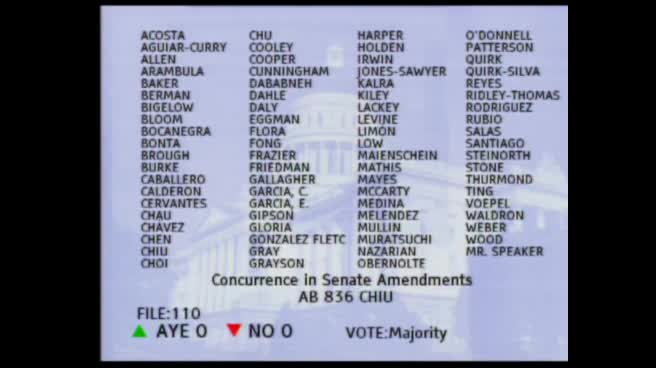 1MIN
Assembly Floor
 2MIN
Senate Floor
 8MIN
Senate Standing Committee on Health
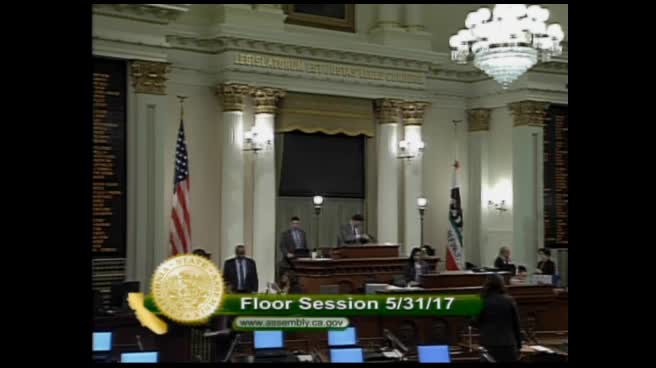 2MIN
Assembly Floor
 1MIN
Assembly Floor
 1MIN
Assembly Standing Committee on Appropriations
 16MIN
Assembly Standing Committee on Aging and Long-Term Care
Bill Author

Bill Co-Author(s):