SB 1050: Exonerated inmates.
- Session Year: 2017-2018
- House: Senate
- Latest Version Date: 2018-09-30
Existing law requires a person to continue to register as a sex offender because of a conviction for specified sex offenses, regardless of whether the persons conviction has been dismissed, as specified, unless the person obtains a certificate of rehabilitation and is not in custody, on parole, or on probation.
This bill would also relieve a person from the requirement to continue to register as a sex offender under those provisions if the person is exonerated, as described, and he or she is not otherwise required to register.
Existing law requires the Department of Corrections and Rehabilitation to assist a person who is exonerated as to a conviction for which he or she is serving a state prison sentence with transitional services, including housing assistance, job training, and mental health services, as applicable, at the time he or she is exonerated.
This bill would require that transitional services be offered within the first week of an individuals exoneration and again within the first 30 days of exoneration. The bill would require the department to assist the exonerated person with enrollment in Medi-Cal and referral of the exonerated person to the Employment Development Department and applicable regional planning units for workforce services. The bill would require the department to assist the exonerated person with enrollment in CalFresh. The bill would also require that exonerated persons who are otherwise ineligible for CalFresh benefits be given priority for receipt of certain CalFresh benefits under a specified exemption, and would require the State Department of Social Services to provide guidance to counties regarding that requirement. By imposing additional duties on counties relating to administering the CalFresh program, the bill would impose a state-mandated local program. The bill would require the Department of Corrections and Rehabilitation to assist the exonerated person with enrollment in the federal supplemental security income benefits program and state supplemental program.
The bill would require each exonerated person to be paid the sum of $1,000 upon release, from funds to be made available upon appropriation by the Legislature for this purpose.
The California Constitution requires the state to reimburse local agencies and school districts for certain costs mandated by the state. Statutory provisions establish procedures for making that reimbursement.
This bill would provide that, if the Commission on State Mandates determines that the bill contains costs mandated by the state, reimbursement for those costs shall be made pursuant to the statutory provisions noted above.
Existing law requires a person to continue to register as a sex offender because of a conviction for specified sex offenses, regardless of whether the persons conviction has been dismissed, as specified, unless the person obtains a certificate of rehabilitation and is not in custody, on parole, or on probation.
This bill would also relieve a person from the requirement to continue to register as a sex offender under those provisions if the person is exonerated, as defined. described, and he or she is not otherwise required to register.
Existing law requires the Department of Corrections and Rehabilitation to assist a person who is exonerated as to a conviction for which he or she is serving a state prison sentence with transitional services, including housing assistance, job training, and mental health services, as applicable, at the time he or she is exonerated.
This bill would require that transitional services be offered within the first week of an individuals exoneration and again within the first 30 days of exoneration. The bill would require the department to assist the exonerated person and, to the extent possible, any qualified family members with enrollment in Medi-Cal and referral of the exonerated person to the Employment Development Department and applicable regional planning units for workforce services. The bill would require the department to assist the exonerated person with enrollment in CalFresh. The bill would also require that exonerated persons who are otherwise ineligible for CalFresh benefits be given priority for receipt of certain CalFresh benefits under a specified exemption, and would require the State Department of Social Services to provide guidance to counties regarding that requirement. By imposing additional duties on counties relating to administering the CalFresh program, the bill would impose a state-mandated local program. The bill would require the Department of Corrections and Rehabilitation to assist the exonerated person and, to the extent possible, any qualified family members with enrollment in the federal supplemental security income benefits program and state supplemental program.
The bill would require each exonerated person to be paid the sum of $1,000 upon release, from funds to be made available upon appropriation by the Legislature for this purpose.
The California Constitution requires the state to reimburse local agencies and school districts for certain costs mandated by the state. Statutory provisions establish procedures for making that reimbursement.
This bill would provide that, if the Commission on State Mandates determines that the bill contains costs mandated by the state, reimbursement for those costs shall be made pursuant to the statutory provisions noted above.
Existing law requires a person to continue to register as a sex offender because of a conviction for specified sex offenses, regardless of whether the persons conviction has been dismissed, as specified, unless the person obtains a certificate of rehabilitation and is not in custody, on parole, or on probation.
This bill would also relieve a person from the requirement to continue to register as a sex offender under those provisions if the person is exonerated, as defined.
Existing law requires the Department of Corrections and Rehabilitation to assist a person who is exonerated as to a conviction for which he or she is serving a state prison sentence with transitional services, including housing assistance, job training, and mental health services, as applicable, at the time he or she is exonerated.
This bill would require that transitional services be offered within the first week of an individuals exoneration and again within the first 30 days of exoneration. The bill would require the department to assist the exonerated person and, to the extent possible, any qualified family members with enrollment in Medi-Cal and referral of the exonerated person to the Employment Development Department and applicable regional planning units for workforce services. The bill would require the department to assist the exonerated person with enrollment in CalFresh and would extend eligibility for an exonerated person without employment to one year. To the extent that the bill would expand eligibility for CalFresh, which is administered by counties, the bill would impose a state-mandated local program. CalFresh. The bill would also require that exonerated persons who are otherwise ineligible for CalFresh benefits be given priority for receipt of certain CalFresh benefits under a specified exemption, and would require the State Department of Social Services to provide guidance to counties regarding that requirement. By imposing additional duties on counties relating to administering the CalFresh program, the bill would impose a state-mandated local program. The bill would require the department Department of Corrections and Rehabilitation to assist the exonerated person and and, to the extent possible, any qualified family members with enrollment in the federal supplemental security income benefits program and state supplemental program.
The bill would require each exonerated person to be paid the sum of $1,000 upon release, from funds to be made available upon appropriation by the Legislature for this purpose. The bill would require the department to notify the Department of Justice that a person meets the definition of exonerated within 24 hours of the department releasing the person from custody. The bill would require the department to update the persons state summary criminal history information with a notation that the person meets the definition of within 24 hours of receiving notice.
The California Constitution requires the state to reimburse local agencies and school districts for certain costs mandated by the state. Statutory provisions establish procedures for making that reimbursement.
This bill would provide that, if the Commission on State Mandates determines that the bill contains costs mandated by the state, reimbursement for those costs shall be made pursuant to the statutory provisions noted above.
Existing law requires the Department of Corrections and Rehabilitation to assist a person who is exonerated as to a conviction for which he or she is serving a state prison sentence with transitional services, including housing assistance, job training, and mental health services, as applicable, at the time he or she is exonerated.
This bill would require that transition transitional services be offered within the first week of an individuals exoneration and again within the first 30 days of exoneration. The bill would require the department to assist the exonerated person with enrollment in Medi-Cal and referral to the Employment Development Department and applicable regional planning units for workforce services. The bill would require the department to assist the exonerated person with enrollment in CalFresh and would extend eligibility for an exonerated person without employment to one year. To the extent that the bill would expand eligibility for CalFresh, which is administered by counties, the bill would impose a state-mandated local program. The bill would require the department to assist the exonerated person and any qualified family members with enrollment in the federal supplemental security income benefits program and state supplemental program.
The bill would require each exonerated person to be paid the sum of $1,000 upon release, from funds to be made available upon appropriation by the Legislature for this purpose. The bill would require the department to notify the Department of Justice that a person meets the definition of exonerated no later than the date within 24 hours of the department releases releasing the person from custody. The bill would require the department to immediately update the persons state summary criminal history information with a notation that the person meets the definition of exonerated. within 24 hours of receiving notice.
The California Constitution requires the state to reimburse local agencies and school districts for certain costs mandated by the state. Statutory provisions establish procedures for making that reimbursement.
This bill would provide that, if the Commission on State Mandates determines that the bill contains costs mandated by the state, reimbursement for those costs shall be made pursuant to the statutory provisions noted above.
Existing law requires the Department of Corrections and Rehabilitation to assist a person who is exonerated as to a conviction for which he or she is serving a state prison sentence with transitional services, including housing assistance, job training, and mental health services, as applicable, at the time he or she is exonerated.
This bill would require that transition services be offered within the first week of an individuals exoneration and again within the first 30 days of exoneration. The bill would require the department to assist the exonerated person with enrollment in Medi-Cal and referral to the Employment Development Department and applicable regional planning units for workforce services. The bill would require the department to assist the exonerated person with enrollment in CalFresh and would extend eligibility for an exonerated person without employment to one year. To the extent that the bill would expand eligibility for CalFresh, which is administered by counties, the bill would impose a state-mandated local program.
The bill would require each exonerated person to be paid the sum of $1,000 upon release, from funds to be made available upon appropriation by the Legislature for this purpose. The bill would require the department to notify the Department of Justice that a person meets the definition of exonerated no later than the date the department releases the person from custody. The bill would require the department to immediately update the persons state summary criminal history information with a notation that the person meets the definition of exonerated.
The California Constitution requires the state to reimburse local agencies and school districts for certain costs mandated by the state. Statutory provisions establish procedures for making that reimbursement.
This bill would provide that, if the Commission on State Mandates determines that the bill contains costs mandated by the state, reimbursement for those costs shall be made pursuant to the statutory provisions noted above.
Existing law provides procedures for a person to make a claim for pecuniary damages for wrongful conviction and incarceration if, among other circumstances, the person has secured a declaration of factual innocence from the court, if the court has found the person factually innocent, or if the person was granted a pardon by the Governor, as specified. This bill would make a technical, nonsubstantive change to those provisions.Existing law provides procedures for a person to make a claim for pecuniary damages for wrongful conviction and incarceration if, among other circumstances, the person has secured a declaration of factual innocence from the court, if the court has found the person factually innocent, or if the person was granted a pardon by the Governor, as specified.
This bill would make a technical, nonsubstantive change to those provisions.
A person required to register pursuant to any provision of the Act shall register in accordance with the Act, regardless of whether the persons conviction has been dismissed pursuant to Section 1203.4, unless the person obtains a certificate of rehabilitation and is entitled to relief from registration pursuant to Section 290.5, or is exonerated pursuant to subdivision (e) of Section 3007.05 of the conviction requiring registration and the person is not otherwise required to register.
SEC. 2.Section 3007.05 of the Penal Code is amended to read:3007.05.(a)The Department of Corrections and Rehabilitation and the Department of Motor Vehicles shall ensure that all eligible inmates released from state prisons have valid identification cards, issued pursuant to Article 5 (commencing with Section 13000) of Chapter 1 of Division 6 of the Vehicle Code.
(b)For purposes of this section, eligible inmate means an inmate who meets all of the following requirements:
(1)The inmate has previously held a California drivers license or identification card.
(2)The inmate has a usable photo on file with the Department of Motor Vehicles that is not more than 10 years old.
(3)The inmate has no outstanding fees due for a prior California identification card.
(4)The inmate has provided, and the Department of Motor Vehicles has verified, all of the following information:
(A)The inmates true full name.
(B)The inmates date of birth.
(C)The inmates social security number.
(D)The inmates legal presence in the United States.
(c)The Department of Corrections and Rehabilitation shall assist a person who is exonerated as to a conviction for which he or she is serving a state prison sentence at the time of exoneration with all of the following:
(1)Transitional services, including housing assistance, job training, and mental health services, as applicable. The services shall be offered within the first week of an individuals exoneration and again within the first 30 days of exoneration. Services shall be provided for a period of not less than six months and not more than one year from the date of release unless the exonerated person qualifies for services beyond one year under existing law.
(2)Enrollment in the Medi-Cal program established pursuant to Chapter 7 (commencing with Section 14000) of Part 3 of Division 9 of the Welfare and Institutions Code.
(3)(A)Enrollment in the CalFresh program established pursuant to Chapter 10 (commencing with Section 18900) of Part 6 of Division 9 of the Welfare and Institutions Code.
(B)Exonerated persons who are ineligible for CalFresh benefits pursuant to the federal Supplemental Nutrition Assistance Program limitation specified in subsection (o) of Section 2015 of Title 7 of the United States Code shall be given priority for receipt of the 15-percent exemption specified in paragraph (6) of subsection (o) of Section 2015 of Title 7 of the United States Code. The State Department of Social Services shall issue guidance to counties regarding that requirement.
(4)Referral to the Employment Development Department and applicable regional planning units for workforce services.
(5)Enrollment in the federal supplemental security income benefits program pursuant to Title XVI of the federal Social Security Act (42 U.S.C. Sec. 1381 et seq.) and state supplemental program pursuant to Title XVI of the federal Social Security Act and Chapter 3 (commencing with Section 12000) of Part 3 of Division 9 of the Welfare and Institutions Code.
(d)In addition to any other payment to which he or she is entitled to by law, each person who is exonerated shall be paid the sum of one thousand dollars ($1,000) upon his or her release, from funds to be made available upon appropriation by the Legislature for this purpose.
(e)For the purposes of this section, exonerated means the person has been convicted and subsequently one of the following occurred:
(1)A writ of habeas corpus concerning the person was granted on the basis that the evidence unerringly points to innocence, or the persons conviction was reversed on appeal on the basis of insufficient evidence.
(2)A writ of habeas corpus concerning the person was granted pursuant to Section 1473, either resulting in dismissal of the criminal charges for which he or she was incarcerated or following a determination that the person is entitled to release on his or her own recognizance, or to bail, pending retrial or pending appeal.
(3)The person was given an absolute pardon by the Governor on the basis that the person was innocent.
SEC. 3.If the Commission on State Mandates determines that this act contains costs mandated by the state, reimbursement to local agencies and school districts for those costs shall be made pursuant to Part 7 (commencing with Section 17500) of Division 4 of Title 2 of the Government Code.
A person required to register pursuant to any provision of the Act shall register in accordance with the Act, regardless of whether the persons conviction has been dismissed pursuant to Section 1203.4, unless the person obtains a certificate of rehabilitation and is entitled to relief from registration pursuant to Section 290.5, or is exonerated pursuant to subdivision (e) of Section 3007.05. 3007.05 of the conviction requiring registration and the person is not otherwise required to register.
SEC. 2.Section 3007.05 of the Penal Code is amended to read:3007.05.(a)The Department of Corrections and Rehabilitation and the Department of Motor Vehicles shall ensure that all eligible inmates released from state prisons have valid identification cards, issued pursuant to Article 5 (commencing with Section 13000) of Chapter 1 of Division 6 of the Vehicle Code.
(b)For purposes of this section, eligible inmate means an inmate who meets all of the following requirements:
(1)The inmate has previously held a California drivers license or identification card.
(2)The inmate has a usable photo on file with the Department of Motor Vehicles that is not more than 10 years old.
(3)The inmate has no outstanding fees due for a prior California identification card.
(4)The inmate has provided, and the Department of Motor Vehicles has verified, all of the following information:
(A)The inmates true full name.
(B)The inmates date of birth.
(C)The inmates social security number.
(D)The inmates legal presence in the United States.
(c)The Department of Corrections and Rehabilitation shall assist a person who is exonerated as to a conviction for which he or she is serving a state prison sentence at the time of exoneration with all of the following:
(1)Transitional services, including housing assistance, job training, and mental health services, as applicable. The services shall be offered within the first week of an individuals exoneration and again within the first 30 days of exoneration. Services shall be provided for a period of not less than six months and not more than one year from the date of release unless the exonerated person qualifies for services beyond one year under existing law.
(2)Enrollment in the Medi-Cal program established pursuant to Chapter 7 (commencing with Section 14000) of Part 3 of Division 9 of the Welfare and Institutions Code, for the individual and, to the extent possible, any qualified family members. Code.
(3)(A)Enrollment in the CalFresh program established pursuant to Chapter 10 (commencing with Section 18900) of Part 6 of Division 9 of the Welfare and Institutions Code.
(B)Exonerated persons who are ineligible for CalFresh benefits pursuant to the federal Supplemental Nutrition Assistance Program limitation specified in subsection (o) of Section 2015 of Title 7 of the United States Code shall be given priority for receipt of the 15-percent exemption specified in paragraph (6) of subsection (o) of Section 2015 of Title 7 of the United States Code. The State Department of Social Services shall issue guidance to counties regarding that requirement.
(4)Referral to the Employment Development Department and applicable regional planning units for workforce services.
(5)Enrollment in the federal supplemental security income benefits program pursuant to Title XVI of the federal Social Security Act (42 U.S.C. Sec. 1381 et seq.) and state supplemental program pursuant to Title XVI of the federal Social Security Act and Chapter 3 (commencing with Section 12000) of Part 3 of Division 9 of the Welfare and Institutions Code, for the individual and, to the extent possible, any qualified family members. Code.
(d)In addition to any other payment to which he or she is entitled to by law, each person who is exonerated shall be paid the sum of one thousand dollars ($1,000) upon his or her release, from funds to be made available upon appropriation by the Legislature for this purpose.
(e)For the purposes of this section, exonerated means the person has been convicted and subsequently one of the following occurred:
(1)A writ of habeas corpus concerning the person was granted on the basis that the evidence unerringly points to innocence, or the persons conviction was reversed on appeal on the basis of insufficient evidence.
(2)A writ of habeas corpus concerning the person was granted pursuant to Section 1473, either resulting in dismissal of the criminal charges for which he or she was incarcerated or following a determination that the person is entitled to release on his or her own recognizance, or to bail, pending retrial or pending appeal.
(3)The person was given an absolute pardon by the Governor on the basis that the person was innocent.
SEC. 3.If the Commission on State Mandates determines that this act contains costs mandated by the state, reimbursement to local agencies and school districts for those costs shall be made pursuant to Part 7 (commencing with Section 17500) of Division 4 of Title 2 of the Government Code.
Any A person required to register pursuant to any provision of the Act shall register in accordance with the Act, regardless of whether the persons conviction has been dismissed pursuant to Section 1203.4, unless the person obtains a certificate of rehabilitation and is entitled to relief from registration pursuant to Section 290.5. 290.5, or is exonerated pursuant to subdivision (e) of Section 3007.05.
SECTION 1.SEC. 2.Section 3007.05 of the Penal Code is amended to read:3007.05.(a)The Department of Corrections and Rehabilitation and the Department of Motor Vehicles shall ensure that all eligible inmates released from state prisons have valid identification cards, issued pursuant to Article 5 (commencing with Section 13000) of Chapter 1 of Division 6 of the Vehicle Code.
(b)For purposes of this section, eligible inmate means an inmate who meets all of the following requirements:
(1)The inmate has previously held a California drivers license or identification card.
(2)The inmate has a usable photo on file with the Department of Motor Vehicles that is not more than 10 years old.
(3)The inmate has no outstanding fees due for a prior California identification card.
(4)The inmate has provided, and the Department of Motor Vehicles has verified, all of the following information:
(A)The inmates true full name.
(B)The inmates date of birth.
(C)The inmates social security number.
(D)The inmates legal presence in the United States.
(c)The Department of Corrections and Rehabilitation shall assist a person who is exonerated as to a conviction for which he or she is serving a state prison sentence at the time of exoneration with all of the following:
(1)Transitional services, including housing assistance, job training, and mental health services, as applicable. The services shall be offered within the first week of an individuals exoneration and again within the first 30 days of exoneration. Services shall be provided for a period of not less than six months and not more than one year from the date of release unless the exonerated person qualifies for services beyond one year under existing law.
(2)Enrollment in the Medi-Cal program established pursuant to Chapter 7 (commencing with Section 14000) of Part 3 of Division 9 of the Welfare and Institutions Code, for the individual and and, to the extent possible, any qualified family members.
(3)(A)Enrollment in the CalFresh program established pursuant to Chapter 10 (commencing with Section 18900) of Part 6 of Division 9 of the Welfare and Institutions Code. To the extent permitted by federal law, notwithstanding any other law, eligibility for an exonerated individual without employment is extended to one year.
(B)Exonerated persons who are ineligible for CalFresh benefits pursuant to the Supplemental Nutrition Assistance Program limitation specified in subsection (o) of Section 2015 of Title 7 of the United States Code shall be given priority for receipt of the 15-percent exemption specified in paragraph (6) of subsection (o) of Section 2015 of Title 7 of the United States Code. The State Department of Social Services shall issue guidance to counties regarding that requirement.
(4)Referral to the Employment Development Department and applicable regional planning units for workforce services.
(5)Enrollment in the federal supplemental security income benefits program pursuant to Title XVI of the federal Social Security Act (42 U.S.C. Sec. 1381 et seq.) and state supplemental program pursuant to Title XVI of the federal Social Security Act and Chapter 3 (commencing with Section 12000) of Part 3 of Division 9 of the Welfare and Institutions Code, for the individual and and, to the extent possible, any qualified family members.
(d)In addition to any other payment to which he or she is entitled to by law, each person who is exonerated shall be paid the sum of one thousand dollars ($1,000) upon his or her release, from funds to be made available upon appropriation by the Legislature for this purpose.
(e)For the purposes of this section, exonerated means the person has been convicted and subsequently one of the following occurred:
(1)A writ of habeas corpus concerning the person was granted on the basis that the evidence unerringly points to innocence, or the persons conviction was reversed on appeal on the basis of insufficient evidence.
(2)A writ of habeas corpus concerning the person was granted pursuant to Section 1473, either resulting in dismissal of the criminal charges for which he or she was incarcerated or following a determination that the person is entitled to release on his or her own recognizance, or to bail, pending retrial or pending appeal.
(3)The person was given an absolute pardon by the Governor on the basis that the person was innocent.
(f)(1)The department shall notify the Department of Justice that a person meets the definition of exonerated as defined in subdivision (e) within 24 hours after the department releases the person from custody.(2)Within 24 hours after receiving notice pursuant to paragraph (1), the Department of Justice shall update the persons state summary criminal history information with a notation that the person meets the definition of exonerated as defined in subdivision (e).SEC. 2.SEC. 3.If the Commission on State Mandates determines that this act contains costs mandated by the state, reimbursement to local agencies and school districts for those costs shall be made pursuant to Part 7 (commencing with Section 17500) of Division 4 of Title 2 of the Government Code.
(a)The Department of Corrections and Rehabilitation and the Department of Motor Vehicles shall ensure that all eligible inmates released from state prisons have valid identification cards, issued pursuant to Article 5 (commencing with Section 13000) of Chapter 1 of Division 6 of the Vehicle Code.
(b)For purposes of this section, eligible inmate means an inmate who meets all of the following requirements:
(1)The inmate has previously held a California drivers license or identification card.
(2)The inmate has a usable photo on file with the Department of Motor Vehicles that is not more than 10 years old.
(3)The inmate has no outstanding fees due for a prior California identification card.
(4)The inmate has provided, and the Department of Motor Vehicles has verified, all of the following information:
(A)The inmates true full name.
(B)The inmates date of birth.
(C)The inmates social security number.
(D)The inmates legal presence in the United States.
(c)The Department of Corrections and Rehabilitation shall assist a person who is exonerated as to a conviction for which he or she is serving a state prison sentence at the time of exoneration with all of the following:
(1)Transitional services, including housing assistance, job training, and mental health services, as applicable. The services shall be offered within the first week of an individuals exoneration and again within the first 30 days of exoneration. Services shall be provided for a period of not less than six months and not more than one year from the date of release unless the exonerated person qualifies for services beyond one year under existing law.
(2)Enrollment in the Medi-Cal program established pursuant to Chapter 7 (commencing with Section 14000) of Part 3 of Division 9 of the Welfare and Institutions Code, for the individual and any qualified family members.
(3)Enrollment in the CalFresh program established pursuant to Chapter 10 (commencing with Section 18900) of Part 6 of Division 9 of the Welfare and Institutions Code. To the extent permitted by federal law, notwithstanding any other law, eligibility for an exonerated individual without employment is extended to one year.
(4)Referral to the Employment Development Department and applicable regional planning units for workforce services.
(5)Enrollment in the federal supplemental security income benefits program pursuant to Title XVI of the federal Social Security Act (42 U.S.C. Sec. 1381 et seq.) and state supplemental program pursuant to Title XVI of the federal Social Security Act and Chapter 3 (commencing with Section 12000) of Part 3 of Division 9 of the Welfare and Institutions Code, for the individual and any qualified family members.
(d)In addition to any other payment to which he or she is entitled to by law, each person who is exonerated shall be paid the sum of one thousand dollars ($1,000) upon his or her release, from funds to be made available upon appropriation by the Legislature for this purpose.
(e)For the purposes of this section, exonerated means the person has been convicted and subsequently one of the following occurred:
(1)A writ of habeas corpus concerning the person was granted on the basis that the evidence unerringly points to innocence, or the persons conviction was reversed on appeal on the basis of insufficient evidence.
(2)A writ of habeas corpus concerning the person was granted pursuant to Section 1473, either resulting in dismissal of the criminal charges for which he or she was incarcerated or following a determination that the person is entitled to release on his or her own recognizance, or to bail, pending retrial or pending appeal.
(3)The person was given an absolute pardon by the Governor on the basis that the person was innocent.
(f)(1)The department shall notify the Department of Justice that a person meets the definition of exonerated as defined in subdivision (e) no later than the date within 24 hours after the department releases the person from custody.
(2)Upon Within 24 hours after receiving notice pursuant to paragraph (1), the Department of Justice shall immediately update the persons state summary criminal history information with a notation that the person meets the definition of exonerated as defined in subdivision (e).
SEC. 2.If the Commission on State Mandates determines that this act contains costs mandated by the state, reimbursement to local agencies and school districts for those costs shall be made pursuant to Part 7 (commencing with Section 17500) of Division 4 of Title 2 of the Government Code.
(a)The Department of Corrections and Rehabilitation and the Department of Motor Vehicles shall ensure that all eligible inmates released from state prisons have valid identification cards, issued pursuant to Article 5 (commencing with Section 13000) of Chapter 1 of Division 6 of the Vehicle Code.
(b)For purposes of this section, eligible inmate means an inmate who meets all of the following requirements:
(1)The inmate has previously held a California drivers license or identification card.
(2)The inmate has a usable photo on file with the Department of Motor Vehicles that is not more than 10 years old.
(3)The inmate has no outstanding fees due for a prior California identification card.
(4)The inmate has provided, and the Department of Motor Vehicles has verified, all of the following information:
(A)The inmates true full name.
(B)The inmates date of birth.
(C)The inmates social security number.
(D)The inmates legal presence in the United States.
(c)The Department of Corrections and Rehabilitation shall assist a person who is exonerated as to a conviction for which he or she is serving a state prison sentence at the time of exoneration with transitional services, including housing assistance, job training, and mental health services, as applicable. The extent of the services shall be determined by the department and shall be provided for a period of not less than six months and not more than one year from the date of release. all of the following:
(1)Transitional services, including housing assistance, job training, and mental health services, as applicable. The services shall be offered within the first week of an individuals exoneration and again within the first 30 days of exoneration. Services shall be provided for a period of not less than six months and not more than one year from the date of release unless the exonerated person qualifies for services beyond one year under existing law.
(2)Enrollment in the Medi-Cal program established pursuant to Chapter 7 (commencing with Section 14000) of Part 3 of Division 9 of the Welfare and Institutions Code, for the individual and any qualified family members.
(3)Enrollment in the CalFresh program established pursuant to Chapter 10 (commencing with Section 18900) of Part 6 of Division 9 of the Welfare and Institutions Code. To the extent permitted by federal law, notwithstanding any other law, eligibility for an exonerated individual without employment is extended to one year.
(4)Referral to the Employment Development Department and applicable regional planning units for workforce services.
(d)In addition to any other payment to which he or she is entitled to by law, each person who is exonerated shall be paid the sum of one thousand dollars ($1,000) upon his or her release, from funds to be made available upon appropriation by the Legislature for this purpose.
(d)(e)For the purposes of this section, exonerated means the person has been convicted and subsequently one of the following occurred:
(1)A writ of habeas corpus concerning the person was granted on the basis that the evidence unerringly points to innocence, or the persons conviction was reversed on appeal on the basis of insufficient evidence.
(2)A writ of habeas corpus concerning the person was granted pursuant to Section 1473, either resulting in dismissal of the criminal charges for which he or she was incarcerated or following a determination that the person is entitled to release on his or her own recognizance, or to bail, pending retrial or pending appeal.
(3)The person was given an absolute pardon by the Governor on the basis that the person was innocent.
(f)(1)The department shall notify the Department of Justice that a person meets the definition of exonerated as defined in subdivision (e) no later than the date the department releases the person from custody.
(2)Upon receiving notice pursuant to paragraph (1), the Department of Justice shall immediately update the persons state summary criminal history information with a notation that the person meets the definition of exonerated as defined in subdivision (e).
SEC. 2.If the Commission on State Mandates determines that this act contains costs mandated by the state, reimbursement to local agencies and school districts for those costs shall be made pursuant to Part 7 (commencing with Section 17500) of Division 4 of Title 2 of the Government Code.
SECTION 1.Section 4900 of the Penal Code is amended to read:4900.A person who, having been convicted of any crime against the state amounting to a felony and imprisoned in the state prison or incarcerated in county jail pursuant to subdivision (h) of Section 1170 for that conviction, is granted a pardon by the Governor for the reason that the crime with which he or she was charged was either not committed at all or, if committed, was not committed by him or her, or who, being innocent of the crime with which he or she was charged for either of the foregoing reasons, shall have served the term or any part thereof for which he or she was imprisoned in state prison or incarcerated in county jail, may, under the conditions provided under this chapter, present a claim against the state to the California Victim Compensation Board for the pecuniary injury sustained by him or her through the erroneous conviction and imprisonment or incarceration.Any A person who, having been convicted of any crime against the state amounting to a felony and imprisoned in the state prison or incarcerated in county jail pursuant to subdivision (h) of Section 1170 for that conviction, is granted a pardon by the Governor for the reason that the crime with which he or she was charged was either not committed at all or, if committed, was not committed by him or her, or who, being innocent of the crime with which he or she was charged for either of the foregoing reasons, shall have served the term or any part thereof for which he or she was imprisoned in state prison or incarcerated in county jail, may, under the conditions provided under this chapter, present a claim against the state to the California Victim Compensation Board for the pecuniary injury sustained by him or her through the erroneous conviction and imprisonment or incarceration.
|
Date
|
Status
|
|---|---|
| Sep 30, 2018 | Chaptered by Secretary of State. Chapter 979, Statutes of 2018. |
| Sep 30, 2018 | Approved by the Governor. |
| Sep 10, 2018 | Enrolled and presented to the Governor at 4 p.m. |
| Aug 30, 2018 | Assembly amendments concurred in. (Ayes 39. Noes 0.) Ordered to engrossing and enrolling. |
| Aug 30, 2018 | Ordered to special consent calendar. |
| Aug 29, 2018 | In Senate. Concurrence in Assembly amendments pending. |
| Aug 29, 2018 | Read third time. Passed. Ordered to the Senate. |
| Aug 21, 2018 | Read second time. Ordered to third reading. |
| Aug 20, 2018 | Read second time and amended. Ordered to second reading. |
| Aug 16, 2018 | From committee: Do pass as amended. (Ayes 12. Noes 0.) (August 16). |
| Aug 8, 2018 | August 8 set for first hearing. Placed on suspense file. |
| Aug 6, 2018 | From committee with author's amendments. Read second time and amended. Re-referred to Com. on APPR. |
| Jun 12, 2018 | From committee: Do pass and re-refer to Com. on APPR. with recommendation: To consent calendar. (Ayes 7. Noes 0.) (June 12). Re-referred to Com. on APPR. |
| Jun 6, 2018 | From committee with author's amendments. Read second time and amended. Re-referred to Com. on PUB. S. |
| May 10, 2018 | Referred to Com. on PUB. S. |
| May 3, 2018 | In Assembly. Read first time. Held at Desk. |
| May 3, 2018 | Read third time. Passed. (Ayes 38. Noes 0.) Ordered to the Assembly. |
| May 1, 2018 | Read second time. Ordered to third reading. |
| Apr 30, 2018 | From committee: Be ordered to second reading pursuant to Senate Rule 28.8. |
| Apr 20, 2018 | Set for hearing April 30. |
| Apr 17, 2018 | From committee: Do pass and re-refer to Com. on APPR. (Ayes 7. Noes 0.) (April 17). Re-referred to Com. on APPR. |
| Apr 5, 2018 | Set for hearing April 17. |
| Apr 4, 2018 | Re-referred to Com. on PUB. S. |
| Mar 21, 2018 | From committee with author's amendments. Read second time and amended. Re-referred to Com. on RLS. |
| Feb 22, 2018 | Referred to Com. on RLS. |
| Feb 13, 2018 | From printer. May be acted upon on or after March 15. |
| Feb 12, 2018 | Introduced. Read first time. To Com. on RLS. for assignment. To print. |
|
Date
|
Description
|
Location
|
Votes
|
|
|---|---|---|---|---|
| Aug 30, 2018 | Unfinished Business SB1050 Lara et al. Concurrence | Senate Floor |
Passed |
|
| Aug 29, 2018 | SB 1050 Lara Senate Third Reading By JONES-SAWYER | Assembly Floor |
Passed |
|
| Aug 16, 2018 | Do pass as amended. | Assembly Standing Committee on Appropriations |
Passed |
|
| Jun 12, 2018 | Do pass and be re-referred to the Committee on [Appropriations] with recommendation: To Consent Calendar | Assembly Standing Committee on Public Safety |
Passed |
|
| May 3, 2018 | Senate 3rd Reading SB1050 Lara et al. | Senate Floor |
Passed |
|
| Apr 17, 2018 | Do pass, but first be re-referred to the Committee on [Appropriations] | Senate Standing Committee on Public Safety |
Passed |
This list shows positions taken on this bill by organizations on the date displayed, which is linked to the original source.
Positions by individuals are not included.
|
Organization
|
Position
|
Date
|
|---|---|---|
| American Civil Liberties Union of California | ** Support | Aug 30, 2018 |
| Anti-police Terror Project | * Support | Apr 17, 2018 |
| Black Lives Matter | * Support | Apr 17, 2018 |
| California Attorneys For Criminal Justice | ** Support | Aug 30, 2018 |
| California Catholic Conference | ** Support | Aug 30, 2018 |
| California Innocence Project | * Support | Apr 17, 2018 |
| California Of Conference Bar Associations | ** Support | Jun 11, 2018 |
| California Public Defenders Association | ** Support | Aug 30, 2018 |
| Californians for Safety and Justice | * Support | Apr 17, 2018 |
| Central Alameda Neighborhood Council | * Support | Apr 17, 2018 |
| Conference of California Bar Associations | ** Support | Jun 11, 2018 |
| Democratic Socialists of America | * Support | Apr 17, 2018 |
| Ella Baker Center Human Rights | ** Support | Aug 30, 2018 |
| Exonerated Nation | ** Support | Aug 30, 2018 |
| Exoneree | * Support | Apr 17, 2018 |
| Law Enforcement Accountability Network | * Support | Apr 17, 2018 |
| Love Not Blood Campaign | * Support | Apr 17, 2018 |
| Martin Luther King Coalition | * Support | Apr 17, 2018 |
| National Association of Social Workers | ** Support | Jun 11, 2018 |
| PACT: People Acting in Community Together | * Support | Apr 17, 2018 |
| self | * Support | Apr 17, 2018 |
| Silicon Valley De-Bug | * Support | Apr 17, 2018 |
| Taxpayers For Improving Public Safety | * Support | Apr 17, 2018 |
| White People for Black Lives | * Support | Apr 17, 2018 |
| Youth Justice Coalition | * Support | Apr 17, 2018 |
Office of Senate Floor Analyses (916) 651-1520 Fax: (916) 327-4478 | SB |
UNFINISHED BUSINESS
Bill No: SB 1050
:
SENATE PUBLIC SAFETY COMMITTEE: 7-0, 4/17/18
AYES: Skinner, Anderson, Bradford, Jackson, Mitchell, Stone, Wiener
SENATE APPROPRIATIONS COMMITTEE: Senate Rule 28.8
SENATE FLOOR: 38-0, 5/3/18
AYES: Allen, Anderson, Atkins, Bates, Beall, Berryhill, Bradford, Cannella, Dodd, Fuller, Gaines, Galgiani, Glazer, Hernandez, Hertzberg, Hill, Hueso, Jackson, Lara, Leyva, McGuire, Mitchell, Monning, Moorlach, Morrell, Newman, Nguyen, Nielsen, Pan, Portantino, Roth, Skinner, Stern, Stone, Vidak, Wieckowski, Wiener, Wilk
NO VOTE RECORDED: De León
ASSEMBLY FLOOR: 78-0, 8/29/18 - See last page for vote
SOURCE: California Attorneys for Criminal Justice
Exonerated Nation
DIGEST:
This bill expands transitional services for exonerated persons and requires exonerated persons to be paid $1000 upon release from incarceration.
Assembly Amendments
1) require the Department of Corrections and Rehabilitation (CDCR) to assist an exonerated person with enrolling for specified benefits; 2) clarify that an exonerated person is no longer required to register as a sex offender; and 3) make other technical amendments.
Existing law:
- Defines “exonerated” to mean the person has been convicted and subsequently one of the following occurred:
- A writ of habeas corpus concerning the person was granted on the basis that the evidence unerringly points to innocence, or the person’s conviction was reversed on appeal on the basis of insufficient evidence;
- A writ of habeas corpus concerning the person was granted, either resulting in dismissal of the criminal charges for which he or she was incarcerated or following a determination that the person is entitled to release on his or her own recognizance, or to bail, pending retrial or pending appeal; or,
- The person was given an absolute pardon by the Governor on the basis that the person was innocent. (Pen. Code 3007.05, subd. (d).)
- Requires the CDCR to assist an exonerated person with transitional services, including housing assistance, job training, and mental health services, as applicable. (Pen. Code, § 3007.05, subd. (c).)
- Provides that the extent of the transitional services shall be determined by CDCR and shall be provided for a period of not less than six months and not more than one year from the date of release. (Id.)
- States that, in addition to any other payment to which he is entitled by law, each prisoner upon his release shall be paid the sum of two hundred dollars, from such appropriations that may be made available for this purpose. (Pen. Code, § 2713.1.)
This bill:
- Amends existing law to specify that CDCR shall provide the following to exonerated persons:
- Transitional services, including housing assistance, job training, and mental health services, as applicable. The services shall be offered within the first week of an individual’s exoneration and again within the first 30 days of exoneration. Services shall be provided for a period of not less than six months and not more than one year from the date of release unless the exonerated person qualifies for services beyond one year under existing law;
- Enrollment in the Medi-Cal program for the individual and any qualified family members;
- Enrollment in the CalFresh program, and extends, to the extent permitted by federal law, notwithstanding any other law, eligibility for an exonerated person without employment to one year; and,
- Referral to the Employment Development Department and applicable regional planning units for workforce services.
- Requires, in addition to any other payment authorized by law, each person who is exonerated be paid $1000 upon his or her release, from funds to be made available upon appropriation by the Legislature for this purpose.
- Requires CDCR to notify the Department of Justice (DOJ) that a person meets the definition of “exonerated” as defined no later than the date that CDCR releases the person from custody.
- States that upon receiving such notice, DOJ shall immediately update the person’s state summary criminal history information with a notation that the person meets the definition of “exonerated” as defined.
FISCAL EFFECT: Appropriation: Fiscal Com.: Local:
According to the Assembly Appropriations Committee:
- Unknown, potentially significant GF costs (potentially over $150,000) for CDCR to locate and assist family members of exonerated persons with enrollment in benefit programs.
- Minor GF costs, likely in the tens of thousands of dollars, for CDCR to provide the $1,000 payment and other services to exonerated persons.
- Unknown potentially reimbursable local mandate for counties to implement changes to CalFresh eligibility. It is unclear whether workload for counties will be significant or rise to the threshold of a reimbursable mandate.
California Attorneys for Criminal Justice (co-source)
Exonerated Nation (co-source)
American Civil Liberties Union of California
California Catholic Conference
California Public Defenders Association
Ella Baker Center Human Rights
OPPOSITION: (Verified 8/27/18)
None received
ASSEMBLY FLOOR: 78-0, 8/29/18
AYES: Acosta, Aguiar-Curry, Travis Allen, Arambula, Baker, Berman, Bigelow, Bloom, Bonta, Brough, Burke, Caballero, Calderon, Carrillo, Cervantes, Chau, Chávez, Chen, Chiu, Choi, Chu, Cooley, Cooper, Cunningham, Dahle, Daly, Flora, Fong, Frazier, Friedman, Gabriel, Gallagher, Cristina Garcia, Eduardo Garcia, Gipson, Gloria, Gonzalez Fletcher, Gray, Grayson, Harper, Holden, Irwin, Jones-Sawyer, Kalra, Kamlager-Dove, Kiley, Lackey, Levine, Limón, Low, Maienschein, Mathis, Mayes, McCarty, Medina, Melendez, Mullin, Nazarian, Obernolte, O'Donnell, Patterson, Quirk, Quirk-Silva, Reyes, Rivas, Rodriguez, Rubio, Salas, Santiago, Steinorth, Mark Stone, Thurmond, Ting, Voepel, Waldron, Weber, Wood, Rendon
NO VOTE RECORDED: Eggman, Muratsuchi
8/30/18 10:29:40
**** END ****
SENATE THIRD READING
STR Bill Id:SB 1050
Author:(Lara and Mitchell)
As Amended Ver:August 20, 2018
Majority vote
SENATE VOTE: 38-0
Committee | Votes | Ayes | Noes |
Public Safety | 7-0 | Jones-Sawyer, Lackey, Carrillo, McCarty, Kiley, Quirk, Weber | |
Appropriations | 12-0 | Gonzalez Fletcher, Bloom, Bonta, Calderon, Carrillo, Chau, Eggman, Friedman, Eduardo Garcia, Nazarian, Quirk, Reyes |
|
SUMMARY: Relieves a person from the requirement of continuing to register as a sex offender if the person is exonerated and requires the California Department of Corrections and Rehabilitation (CDCR) to provide assistance with transitional services to person who is exonerated while serving a state prison sentence. Specifically, this bill:
- Provides that a person required to register pursuant to California's Sex Offender Registration Act shall register, unless the person is exonerated of the conviction requiring registration.
- Requires CDCR to provide transitional services, including housing assistance, job training, and mental health services to exonerees, as applicable.
- States that the transitional services shall be offered within the first week of an individual's exoneration and again within the first 30 days of exoneration.
- Provides that the transitional services shall be provided for a period of not less than six months and not more than one year from the date of release unless the exonerated person qualifies for services beyond one year under existing law.
- Requires CDCR to assist exonerated inmates with enrollment in the Medi-Cal program for the exonerated individual.
- Requires CDCR to assist exonerated inmates with enrollment in the CalFresh program.
- States that, exonerated persons who are ineligible for CalFresh benefits pursuant to the Supplemental Nutrition Assistance Program limitation shall be given priority for receipt of the 15% exemption, as specified, and provides that the State Department of Social Services shall issue guidance to counties regarding this requirement.
- Requires CDCR to refer exonerated inmates to the Employment Development Department and applicable regional planning units for workforce services.
- Requires CDCR to assist exonerated inmates with enrollment in the federal supplemental security income benefits program for the individual.
- Provides that, in addition to any other payment to which he or she is entitled to by law, each person who is exonerated shall be paid $1,000 upon his or her release from incarceration, from funds to be made available upon appropriation by the Legislature.
EXISTING LAW:
- States that whenever a person is convicted of a charge, and the conviction was set aside based upon a determination that the person was factually innocent of the charge, the judge shall order that the records in the case, including records of arrest and detention, be sealed and allows the defendant to state that he or she was not arrested, convicted of that charge or that he or she was found innocent of that charge by the court.
- Requires a person who must register pursuant to California's Sex Offender Registration Act, to register regardless of whether the person's conviction has been dismissed, unless the person obtains a certificate of rehabilitation.
- States that if a person has secured a declaration of factual innocence, the finding shall be sufficient grounds for compensation by the California Victim Compensation (CalVCB).
- Requires the CalVCB to recommend to the Legislature that an appropriation be made, without a hearing, upon receipt of the application.
- Specifies that the rate of compensation be $140 per day of incarceration served subsequent to the claimant's conviction.
- Prohibits this compensation from being considered gross income for state tax purposes.
- States that any person who, having been convicted of any felony and imprisoned in the state prison or county jail for that conviction, is granted a pardon by the Governor for the reason he or she was innocent of the crime with which he or she was convicted, is eligible to present a claim against the state to the CalVCB for the monetary injury sustained by him or her through the erroneous conviction and imprisonment.
- Requires erroneously convicted and pardoned individual to present a claim to the CalVCB against the state within a period of two years after judgment of acquittal or after pardon granted, or after release from custody.
- Requires the Department of Corrections and Rehabilitation to assist a person who is exonerated as to a conviction for which he or she is serving a state prison sentence at the time of exoneration with transitional services, including housing assistance, job training, and mental health services, as applicable.
- Authorizes the CDCR to determine the extent of transitional services to be made applicable.
- Requires that the CDCR provide transitional services to an exonerated person for a period of not less than six months and not more than one year from the date of release.
- Requires the CDCR to establish a case management reentry pilot program for offenders who are likely to benefit from case management reentry strategies designed to address homelessness, joblessness, mental disorders, and developmental disabilities among offenders transitioning from prison into the community.
- Defines ''exonerated'' as a person who has been convicted and subsequently either of the following occurred:
- A writ of habeas corpus concerning the person was granted on the basis that the evidence unerringly points to innocence, or the person's conviction was reversed on appeal on the basis of insufficient evidence;
- A writ of habeas corpus concerning the person was granted, either resulting in dismissal of the criminal charges or following a determination that the person is entitled to release on his or her own recognizance , or to nail pending retrial or pending appeal; or
- The person was given an absolute pardon by the governor on the basis that the person was innocent.
FISCAL EFFECT: According to the Assembly Appropriations Committee:
- Minor General Fund costs, likely in the tens of thousands of dollars, for CDCR to provide the $1,000 payment and other services to exonerated persons.
- Unknown potentially reimbursable local mandate for counties to implement changes to CalFresh eligibility. It is unclear whether workload for counties will be significant or rise to the threshold of a reimbursable mandate.
COMMENTS: According to the author, ''SB 1050 provides critical services to exonerated people upon their release, including access to Medi-Cal, CalFresh, work training programs, and gate money. Since 1989, there have been a total of 199 exonerations in California. Justice failed these 199 people. Upon release, the state fails them again when we do not provide them access to available and much needed public services. This is a critical step to ensure that this already vulnerable population does not fall into homelessness and poverty. The irony is that we already provide all of these resources to people who have committed a crime, but we do not do the same for the innocent. SB 1050 is a common sense measure to support people who have been wronged by our justice system.''
Please see the policy committee analysis for a full discussion of this bill.
Analysis Prepared by: Liah Burnley / PUB. S. / (916) 319-3744 FN: 0004108
Date of Hearing: August 8, 2018
ASSEMBLY COMMITTEE ON APPROPRIATIONS
Lorena Gonzalez Fletcher, Chair
SBPCA Bill Id:SB 1050
Author:(Lara) – As Amended Ver:August 6, 2018
Policy Committee: | Public Safety | Vote: | 7 - 0 |
|
| ||
|
|
Urgency: No State Mandated Local Program: Yes Reimbursable: No
SUMMARY:
This bill requires the California Department of Corrections and Rehabilitation (CDCR) to assist a person who is exonerated if the person is serving a state prison sentence at the time of exoneration. Specifically, this bill:
- Requires CDCR to provide transitional services, including housing assistance, job training, and mental health services to exonerated persons. Provides that the transitional services shall be provided for a period of not less than six months and not more than one year from the date of release unless the exonerated person qualifies for services beyond one year under existing law.
- Requires CDCR to assist exonerated persons with enrollment in the Medi-Cal, CalFresh, and federal supplemental security income benefits programs for the exonerated individual and any qualified family members.
- States that certain exonerated individuals will have priority in a specified waiver to access the CalFresh program and requires the Department of Social Services (DSS) to issue guidance to counties on this provision.
- Requires CDCR to refer exonerated inmates to the Employment Development Department and applicable regional planning units for workforce services.
- Provides that, in addition to any other payment to which he or she is entitled to by law, each person who is exonerated shall be paid $1,000 upon their release from incarceration, from funds to be made available upon appropriation by the Legislature.
- Relieves exonerated persons from the requirement to register as a sex offender if the person was exonerated of the offense that required registration.
FISCAL EFFECT:
- Unknown, potentially significant GF costs (potentially over $150,000) for CDCR to locate and assist family members of exonerated persons with enrollment in benefit programs.
- Minor GF costs, likely in the tens of thousands of dollars, for CDCR to provide the $1,000 payment and other services to exonerated persons.
- Unknown potentially reimbursable local mandate for counties to implement changes to CalFresh eligibility. It is unclear whether workload for counties will be significant or rise to the threshold of a reimbursable mandate.
COMMENTS:
Background and purpose. Wrongfully convicted exonerated persons face many challenging obstacles when re-entering society, including psychological, physical, and financial difficulties. This bill would expand transitional services for exonerated persons, to include enrollment in Medi-Cal and CalFresh, state and federal social security benefits, and referral to Employment Development Department. This bill would also entitle exonerated individuals to receive $1,000 upon release from incarceration and require the DOJ to put a notation on the person’s criminal history information that the person has been exonerated.
Analysis Prepared by: Jessica Peters / APPR. / (916) 319-2081
Date of Hearing: June 12, 2018
Counsel: Liah Burnley
ASSEMBLY COMMITTEE ON PUBLIC SAFETY
Reginald Byron Jones-Sawyer, Sr., Chair
SBPCA Bill Id:SB 1050
Author:(Lara) – As Amended Ver:June 6, 2018
SUMMARY: Requires the California Department of Corrections and Rehabilitation (CDCR) to assist a person who is exonerated as to a conviction for which he or she is serving a state prison sentence at the time of exoneration. Specifically, this bill:
- Requires CDCR to provide transitional services, including housing assistance, job training, and mental health services to exonerees, as applicable.
- States that the transitional services shall be offered within the first week of an individual’s exoneration and again within the first 30 days of exoneration.
- Provides that the transitional services shall be provided for a period of not less than six months and not more than one year from the date of release unless the exonerated person qualifies for services beyond one year under existing law.
- Requires CDCR to assist exonerated inmates with enrollment in the Medi-Cal program for the exonerated individual and any qualified family members.
- Requires CDCR to assist exonerated inmates with enrollment in the CalFresh program.
- States that, to the extent permitted by federal law, eligibility in the CalFresh program for an exonerated individual without employment is extended to one year.
- Requires CDCR to refer exonerated inmates to the Employment Development Department and applicable regional planning units for workforce services.
- Requires CDCR to assist exonerated inmates with enrollment in the federal supplemental security income benefits program for the individual and any qualified family members.
- Provides that, in addition to any other payment to which he or she is entitled to by law, each person who is exonerated shall be paid $1,000 upon his or her release from incarceration, from funds to be made available upon appropriation by the Legislature.
- Requires CDCR to notify the Department of Justice (DOJ) that a person meets the definition of exonerated within 24 hours after the department releases the person from custody.
- States that, within 24 hours of receiving notice that a person meets the definition of exonerated, the DOJ shall immediately update the person’s state summary criminal history information with a notation that the person is exonerated.
EXISTING LAW:
- States that whenever a person is convicted of a charge, and the conviction was set aside based upon a determination that the person was factually innocent of the charge, the judge shall order that the records in the case, including records of arrest and detention, be sealed and allows the defendant to state that he or she was not arrested, convicted of that charge or that he or she was found innocent of that charge by the court. (Pen. Code, § 851.86.)
- States that if a person has secured a declaration of factual innocence, the finding shall be sufficient grounds for compensation by the California Victim Compensation (CalVCB). (Pen. Code, § 851.865.)
- Requires the CalVCB to recommend to the Legislature that an appropriation be made, without a hearing, upon receipt of the application. (Pen. Code, § 851.865.)
- Specifies that the rate of compensation be $140 per day of incarceration served subsequent to the claimant’s conviction. (Pen. Code, § 4904.)
- Prohibits this compensation from being considered gross income for state tax purposes. (Pen. Code, § 4904.)
- States that any person who, having been convicted of any felony and imprisoned in the state prison or county jail for that conviction, is granted a pardon by the Governor for the reason he or she was innocent of the crime with which he or she was convicted, is eligible to present a claim against the state to the CalVCB for the monetary injury sustained by him or her through the erroneous conviction and imprisonment. (Pen. Code, § 4900.)
- Requires erroneously convicted and pardoned individual to present a claim to the CalVCB against the state within a period of two years after judgment of acquittal or after pardon granted, or after release from custody. (Pen. Code, § 4901, subd. (a).)
- Requires the Department of Corrections and Rehabilitation to assist a person who is exonerated as to a conviction for which he or she is serving a state prison sentence at the time of exoneration with transitional services, including housing assistance, job training, and mental health services, as applicable. (Pen. Code, § 3007.05, subd. (c).)
- Authorizes the California Department of Corrections and Rehabilitation (CDCR) to determine the extent of transitional services to be made applicable. (Pen. Code, § 3007.05, subd. (c).)
- Requires that the CDCR provide transitional services to an exonerated person for a period of not less than six months and not more than one year from the date of release. (Pen. Code, § 3007.05, subd. (c).)
- Requires the CDCR to establish a case management reentry pilot program for offenders who are likely to benefit from case management reentry strategies designed to address homelessness, joblessness, mental disorders, and developmental disabilities among offenders transitioning from prison into the community. (Pen. Code, § 3016, subd. (a).)
- Defines “exonerated” as a person who has been convicted and subsequently either of the following occurred:
- A writ of habeas corpus concerning the person was granted on the basis that the evidence unerringly points to innocence, or the person’s conviction was reversed on appeal on the basis of insufficient evidence;
- A writ of habeas corpus concerning the person was granted, either resulting in dismissal of the criminal charges or following a determination that the person is entitled to release on his or her own recognizance , or to nail pending retrial or pending appeal; or
- The person was given an absolute pardon by the governor on the basis that the person was innocent. (Pen. Code, § 3007.05, subd. (d).)
- A writ of habeas corpus concerning the person was granted on the basis that the evidence unerringly points to innocence, or the person’s conviction was reversed on appeal on the basis of insufficient evidence;
FISCAL EFFECT: Unknown.
COMMENTS:
- Author’s Statement: According to the author, “SB 1050 provides critical services to exonerated people upon their release, including access to Medi-Cal, CalFresh, work training programs, and gate money. Since 1989, there have been a total of 199 exonerations in California. Justice failed these 199 people. Upon release, the state fails them again when we do not provide them access to available and much needed public services. This is a critical step to ensure that this already vulnerable population does not fall into homelessness and poverty. The irony is that we already provide all of these resources to people who have committed a crime, but we do not do the same for the innocent. SB 1050 is a common sense measure to support people who have been wronged by our justice system.”
- Transitional Services for Exonerees: Wrongfully convicted exonerees face many challenging obstacles when entering back into society, including psychological, physical, and financial difficulties. As stated by law professor Donna Mckneelen:
The psychological effects of serving time in prison for a crime they did not commit often imposes a heavy burden on the wrongfully convicted. Unjustly serving time in prison often leaves exonerees angry, bitter, frustrated, confused, and scared. Over the long term of their incarceration, many inmates experience personality changes, difficulty in coping with confinement and loss of freedom, and feelings of deep loss and grief for the life they once had. Exoneration often brings conflicting feelings: feeling of relief and happiness on one hand, and feelings of resentment and anger on the other.
Most often, no one apologizes to the exonerees nor takes blame for their situation. In fact, often the public, family members, friends, law enforcement, and others refuse to accept that the exoneree is actually innocent. This stigma leaves the exonerees alone with no one to assist them with recovering what they have lost. An exoneree must often learn to deal with the stigma associated with the crime from which they were exonerated even though they were not the one who committed the crime. (McKneelen, D., Oh Lord Won't You Buy Me A Mercedes Benz?: A Comparison Of State Wrongful Conviction Compensation Statutes (2013) 15 Scholar 185, 187-189.)
Existing law requires CDCR to provide transitional services to an exonerated person. An exonerated person can also petition the court to seal the case and arrest records, however, these records remain accessible by law enforcement officials. Though a step in the right direction, the existing services do not properly compensate an individual who was wrongfully deprived of their liberty.
This bill would expand transitional services for exonerated persons, to include enrollment in Medi-Cal and CalFresh, state and federal social security benefits, and referral to Employment Development Department. This bill would also entitle exonerated individuals to receive $1,000 upon release from incarceration, and require the DOJ to put a notation on the person’s criminal history information that the person has been exonerated.
- Argument in Support: According to the California Public Defenders Association, “SB 1050, if adopted, would require the State of California, through the Department of Corrections, to assist former inmates, released from prison after having been exonerated, with transitional services, including housing assistance, job training, and mental health care, and to assist them with enrollment in Medi-Cal and CalFresh and referrals to the Employment Development Department and applicable regional planning units for workforce services.
“California leads the nation in exonerations as defined by the National Registry of Exonerations with 120, surpassing Illinois (110), Texas (100), and New York (100). According to a study conducted by the California Wrongful Convictions Project, since 1989, courts have exonerated or dismissed convictions against 214 Californians. These wrongful convictions have costed those convicted more than 1,300 years of freedom and taxpayers $129 million ($144 million when prison costs are adjusted for inflation). This figure does not include the costs of legal representation and court proceedings necessary to overturn the convictions.
“Those proven to have been wrongfully convicted spend, on average, more than 14 years behind bars. For these innocent men and women, the agony of prison life is compounded by regret – wondering what they might have made of their lives had they not been wrongfully convicted. They are separated, sometimes forever, from family and friends. They are denied the opportunity to establish themselves and achieve social and professional success. Upon their release into a vastly different world than the one they once knew, they realize that life, and, particularly technology, has passed them by. Without money, housing, transportation, health services or insurance, many become despondent, feeling the pain of their punishment after release even more acutely than while they were wrongfully imprisoned. States have a responsibility to restore the lives of the wrongfully convicted, to the extent possible, by giving them a meaningful chance at success following their release from prison, and SB 1050 is an important step in the right direction.”
- Prior Legislation:
- SB 336 (Anderson), Chapter 728, Statutes of 2017, revised the definition of “exonerated” for the purpose of eligibility for assistance with transitional services to include a person who has been convicted and subsequently was granted a writ of habeas corpus.
- SB 1134 (Leno), Chapter 785, Statutes of 2016, permits a writ of habeas corpus to be prosecuted on the basis of new evidence that is credible, material, presented without substantial delay, and of such decisive force and value that it would have more likely than not changed the outcome of the trial.
- AB 672 (Jones-Sawyer), Obie’s Law, Chapter 403, Statutes of 2015, requires the state to provide exonerees reentry services, including identification cards, housing assistance, job training, and mental health services for no less than 6 months and up to one year.
- SB 618 (Leno), Chapter 800, Statutes of 2013, provides clarity to the process for compensating persons who have been exonerated after serving time incarcerated.
- SB 336 (Anderson), Chapter 728, Statutes of 2017, revised the definition of “exonerated” for the purpose of eligibility for assistance with transitional services to include a person who has been convicted and subsequently was granted a writ of habeas corpus.
REGISTERED SUPPORT / OPPOSITION:
Support
California Attorneys for Criminal Justice (Co-Sponsor)
Exonerated Nation (Co-Sponsor)
American Civil Liberties Union of California
California Catholic Conference, Inc.
California of Conference Bar Associations
California Public Defenders Association
Conference of California Bar Associations
Ella Baker Center for Human Rights
National Association of Social Workers
Opposition
None
Analysis Prepared by: Liah Burnley / PUB. S. / (916) 319-3744
Office of Senate Floor Analyses (916) 651-1520 Fax: (916) 327-4478 | SB |
THIRD READING
Bill No: SB 1050
:
SENATE PUBLIC SAFETY COMMITTEE: 7-0, 4/17/18
AYES: Skinner, Anderson, Bradford, Jackson, Mitchell, Stone, Wiener
SENATE APPROPRIATIONS COMMITTEE: Senate Rule 28.8
SOURCE: California Attorneys for Criminal Justice
Exonerated Nation
DIGEST:
This bill expands transitional services for exonerated persons and requires exonerated persons to be paid $1000 upon release from incarceration.
Existing law:
- Defines “exonerated” to mean the person has been convicted and subsequently one of the following occurred:
- A writ of habeas corpus concerning the person was granted on the basis that the evidence unerringly points to innocence, or the person’s conviction was reversed on appeal on the basis of insufficient evidence;
- A writ of habeas corpus concerning the person was granted, either resulting in dismissal of the criminal charges for which he or she was incarcerated or following a determination that the person is entitled to release on his or her own recognizance, or to bail, pending retrial or pending appeal; or,
- The person was given an absolute pardon by the Governor on the basis that the person was innocent. (Pen. Code 3007.05, subd. (d).)
- Requires the Department of Corrections and Rehabilitation (CDCR) to assist an exonerated person with transitional services, including housing assistance, job training, and mental health services, as applicable. (Pen. Code, § 3007.05, subd. (c).)
- Provides that the extent of the transitional services shall be determined by CDCR and shall be provided for a period of not less than six months and not more than one year from the date of release. (Id.)
- States that, in addition to any other payment to which he is entitled by law, each prisoner upon his release shall be paid the sum of two hundred dollars, from such appropriations that may be made available for this purpose. (Pen. Code, § 2713.1.)
This bill:
- Amends existing law to specify that CDCR shall provide the following to exonerated persons:
- Transitional services, including housing assistance, job training, and mental health services, as applicable. The services shall be offered within the first week of an individual’s exoneration and again within the first 30 days of exoneration. Services shall be provided for a period of not less than six months and not more than one year from the date of release unless the exonerated person qualifies for services beyond one year under existing law;
- Enrollment in the Medi-Cal program for the individual and any qualified family members;
- Enrollment in the CalFresh program, and extends, to the extent permitted by federal law, notwithstanding any other law, eligibility for an exonerated person without employment to one year; and,
- Referral to the Employment Development Department and applicable regional planning units for workforce services.
- Requires, in addition to any other payment authorized by law, each person who is exonerated be paid $1000 upon his or her release, from funds to be made available upon appropriation by the Legislature for this purpose.
- Requires CDCR to notify the Department of Justice (DOJ) that a person meets the definition of “exonerated” as defined no later than the date that CDCR releases the person from custody.
- States that upon receiving such notice, DOJ shall immediately update the person’s state summary criminal history information with a notation that the person meets the definition of “exonerated” as defined.
FISCAL EFFECT: Appropriation: Fiscal Com.: Local:
California Attorneys for Criminal Justice (co-source)
Exonerated Nation (co-source)
American Civil Liberties Union of California
California Catholic Conference
California Public Defenders Association
Ella Baker Center Human Rights
OPPOSITION: (Verified 4/30/18)
None received
5/2/18 15:22:23
**** END ****
SENATE COMMITTEE ON PUBLIC SAFETY
Senator Nancy Skinner, Chair
2017 - 2018 Regular
Bill No: SB 1050 Hearing Date: April 17, 2018
Author: | Lara | ||
Version: | March 21, 2018 | ||
Urgency: | No | Fiscal: | Yes |
Consultant: | SC | ||
Subject: Exonerated Inmates: Transitional Services
HISTORY
Source: Exonerated Nation
Prior Legislation: SB 336 (Anderson), Ch. 728, Stats. 2017
SB 1134 (Leno), Ch.785, Stats. 2016
SB 635 (Nielsen), Ch. 422, Stats. 2015
AB 672 (Jones-Sawyer), Ch. 403, Stats. 2015
SB 1134 (Leno), Ch. 785, Stats. 2016
SB 618 (Leno), Ch. 800, Stats. 2013
Support: California Attorneys for Criminal Justice; California Catholic Conference; California Public Defenders Association; Ella Baker Center Human Rights
Opposition: None known
PURPOSE
The purpose of this bill is to expand transitional services for exonerated persons.
Existing law establishes procedures for the filing and hearing of a petition for a writ of habeas corpus, which allows a person to challenge his or her incarceration or related restraint as unlawful. (Pen. Code, §§ 1474-1508.)
Existing law defines “exonerated” to mean the person has been convicted and subsequently one of the following occurred:
- A writ of habeas corpus concerning the person was granted on the basis that the evidence unerringly points to innocence, or the person’s conviction was reversed on appeal on the basis of insufficient evidence;
- A writ of habeas corpus concerning the person was granted, either resulting in dismissal of the criminal charges for which he or she was incarcerated or following a determination that the person is entitled to release on his or her own recognizance, or to bail, pending retrial or pending appeal; or,
- The person was given an absolute pardon by the Governor on the basis that the person was innocent. (Pen. Code 3007.05, subd. (d).)
Existing law requires the Department of Corrections and Rehabilitation (CDCR) to assist an exonerated person with transitional services, including housing assistance, job training, and mental health services, as applicable. (Pen. Code, § 3007.05, subd. (c).)
Existing law provides that the extent of the transitional services shall be determined by CDCR and shall be provided for a period of not less than six months and not more than one year from the date of release. (Id.)
This bill amends existing law to specify that CDCR shall provide the following to exonerated persons:
- Transitional services, including housing assistance, job training, and mental health services, as applicable. The services shall be offered within the first week of an individual’s exoneration and again within the first 30 days of exoneration. Services shall be provided for a period of not less than six months and not more than one year from the date of release unless the exonerated person qualifies for services beyond one year under existing law;
- Enrollment in the Medi-Cal program for the individual and any qualified family members;
- Enrollment in the CalFresh program, and extends, to the extent permitted by federal law, notwithstanding any other law, eligibility for an exonerated person without employment to one year; and,
- Referral to the Employment Development Department and applicable regional planning units for workforce services.
Existing law provides that any person who, having been convicted of any crime against the state amounting to a felony and imprisoned in the state prison for that conviction, is granted a pardon by the Governor for the reason that the crime with which he or she was charged was either not committed at all or, if committed, was not committed by him or her, or who, being innocent of the crime with which he or she was charged for either of the foregoing reasons, shall have served the term or any part thereof for which he or she was imprisoned, may, as specified, present a claim against the state to the board for the pecuniary injury sustained by him or her through the erroneous conviction and imprisonment. (Pen. Code, § 4900.)
Existing law sets the rate of compensation at $140 per day of incarceration served subsequent to the claimant's conviction, and specifies that this appropriation shall not be considered gross income for state tax purposes. (Pen. Code, § 4904.)
Existing law, states that, in addition to any other payment to which he is entitled by law, each prisoner upon his release shall be paid the sum of two hundred dollars, from such appropriations that may be made available for this purpose. (Pen. Code, § 2713.1.)
This bill requires, in addition to any other payment authorized by law, each person who is exonerated be paid $1000 upon his or her release, from funds to be made available upon appropriation by the Legislature for this purpose.
This bill requires CDCR to notify the Department of Justice (DOJ) that a person meets the definition of “exonerated” as defined no later than the date that CDCR releases the person from custody.
This bill states that upon receiving such notice, DOJ shall immediately update the person’s state summary criminal history information with a notation that the person meets the definition of “exonerated” as defined.
COMMENTS
1. Need for This Bill
According to the author of this bill:
There have been a total of 192 exonerations in California since the year 1989, with the vast majority of these wrongfully convicted individuals serving time in state prison before their convictions were thrown out, collectively losing 1,574 years of their freedom. Exonerated people, due to the unique nature of their imprisonment and release, need and deserve comprehensive, tailored services and benefits.
Current law has established procedures and services for people upon their release from prison by parole or sentence completion in order to assist them as they transition back into society, including job training, employment, healthcare, and stable housing. However, exonerees do not receive the same level of support, including gate money and enrollment in Medi-Cal and CalFresh, making them extremely vulnerable to falling into poverty and homelessness upon their release.
The process by which exonerees are released is often abrupt and unexpected. Whereas people serving determinate sentences and parolees know the exact date of their release and are given resources weeks in advance, exonerated people are usually released with very little prior notice. The court can make a determination of innocence and order the California Department of Corrections and Rehabilitation to release an exonerated person within the time span of a day. The Department has not established a process to enroll exonerees in the same level of services as parolees.
Exonerees also do not currently receive any gate money upon their release. The purpose of gate money is to help individuals immediately upon their release, whether it is to purchase a meal, a bus ticket home, or cover a couple nights in a hotel until they can get connected with friends, family, or support services. In California, people released from prison receive $200 to help them get where they need to go. Exonerees, due to the fact that they are often released with very little notice and do not have time to plan, often face even greater hardship in finding a place to stay upon their release.
When applying for a job, exonerated people face further barriers when their records show a crime they did not commit. It can often be months or even years before an exonerated person has their records updated to reflect their wrongful conviction and release from prison.
2. Transitional Services for Exonerees
A 2008 report by the California Commission on the Fair Administration of Justice addresses some of the obstacles faced by persons who have established their innocence after conviction of a crime in gaining access to post-conviction relief, achieving reintegration into society, and gaining compensation for their wrongful convictions. As to reintegration in particular, the report states:
Ironically, even the limited resources made available to convicted felons who have served their sentences and are released from prison are not available to those whose convictions have been set aside. Parolees are released to the community in which they were arrested or convicted; services such as counseling and assistance in locating housing or jobs are limited to those who remain under parole supervision. But those who are being released because their conviction is set aside, including those who have been found innocent, receive none of these services. Those who have been released back into the community after successfully challenging their convictions, whether innocent or not, face the same obstacles encountered by parolees, and more. Many are afflicted with post-traumatic stress disorder, or other psychological damage resulting from their wrongful incarceration over a long period of time. Of the States with compensation laws, only three – Massachusetts, Louisiana and Vermont – provide for the costs of medical and psychological care. The New York Times recently gathered information on 137 of the 206 imprisoned individuals who have been found innocent by DNA testing from 1989 through 2007. The reporters also researched the compensation claims of all 206. They found that at least 79 of these persons (40%) received no compensation at all. More than half of those who did receive compensation waited two years or longer after exoneration for the first payment. Few received any government services after their release. They typically left prison with less help – prerelease counseling, job training, substance-abuse treatment, housing assistance and other services – than some states offer to paroled prisoners. Most found that authorities were slow to wipe the convictions from their records, if they did so at all. Even those who were well educated and fully employed at the time of their wrongful conviction had difficulty finding work after their release. Roberts & Stanton, A Long Road Back After Exoneration, and Justice is Slow to Make Amends, New York Times, Nov. 25, 2007; Santos & Roberts, Putting a Price on a Wrongful Conviction, New York Times, Dec. 2, 2007.
The Commission recommends that services to assist with reintegration into society be available to all those released from prison after their judgment of conviction has been reversed, vacated or set aside. This would include assistance in locating housing, a cash allowance, clothing, and employment counseling.
(Report and Recommendations on Remedies," pp. 6-8, http://www.ccfaj.org/documents/reports/
incompentence/official/REPORT%20AND%20RECOMMENDATIONS%20ON%20REMEDIES.pdf .)
Although persons who have been wrongfully convicted may file an application with the Victims Compensation Board for compensation ($140 per day of incarceration), that process can take months or years and can ultimately be denied. In the meantime, a person who has been wrongfully convicted and released after spending many years in prison faces the same hurdles to reentering society as anyone else who has been incarcerated in prison, yet they are not provided with the same type of assistance that is given to convicted persons.
In 2015, the Legislature passed “Obie’s Law” which required CDCR to provide transitional services to a wrongfully convicted person, including housing assistance, job training, and mental health services, the extent of which was to be determined by CDCR. (AB 672 (Jones-Sawyer), Ch. 403, Stats. 2015.) The law was inspired by Obie Anthony who was wrongfully convicted and spent 17 years in prison before he was exonerated and released. Prior to SB 672, there were no transitional or reentry services provided to exonerees. This bill expands the transitional services provided to exonerees established by SB 672 and requires the exoneree to be provided $1000 upon his or her release. Under existing law, exonerees do not receive any money upon release from prison, whereas most other inmates receive $200 upon release. The bill also requires CDCR to notify DOJ of the person’s status no later than the person’s date of release and requires DOJ to immediately update the person’s state summary criminal history information with a notation that the person was “exonerated.” According to information provided by the author, currently an exonerated person’s summary criminal history information may not be updated to reflect that they were exonerated for months or even years.
-- END –
Discussed in Hearing
 1MIN
Assembly Floor
 1H
Assembly Standing Committee on Appropriations
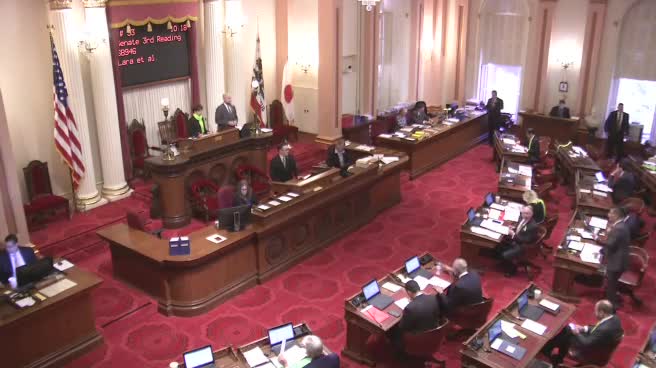 2MIN
Senate Floor
 10MIN
Senate Standing Committee on Public Safety


Bill Co-Author(s):