SB 1168: Juveniles: Division of Juvenile Facilities.
- Session Year: 2017-2018
- House: Senate
- Latest Version Date: 2018-04-02
Existing law prohibits the commitment to the Department of Corrections and Rehabilitation, Division of Juvenile Facilities of a person who has been or is adjudged a ward of the juvenile court, as specified, if the most recent offense alleged in any petition and admitted or found to be true by the court is not any of specified serious or violent offenses, or any of specified sex offenses.
This bill would instead prohibit the commitment to the division of that person if all offenses alleged in the most recent petition and admitted or found to be true by the court are not any of specified serious or violent offenses, or any of specified sex offenses.
Existing law subjects a person under 18 years of age who commits a crime to the jurisdiction of the juvenile court, which may adjudge that person to be a ward of the court, except as specified. Under existing law, juvenile court proceedings to declare a minor a ward of the court are commenced by the filing of a petition by the probation officer, the district attorney after consultation with the probation officer, or the prosecuting attorney, as specified. Existing law requires the juvenile court to order the petition of a minor who is subject to the jurisdiction of the court dismissed if the minor satisfactorily completes a term of probation or an informal program of supervision, as specified, and requires the sealing of records pertaining to that dismissed petition, as specified.This bill would make a technical, nonsubstantive change to one of those provisions.Existing law subjects a person under 18 years of age who commits a crime to the jurisdiction of the juvenile court, which may adjudge that person to be a ward of the court, except as specified. Under existing law, juvenile court proceedings to declare a minor a ward of the court are commenced by the filing of a petition by the probation officer, the district attorney after consultation with the probation officer, or the prosecuting attorney, as specified. Existing law requires the juvenile court to order the petition of a minor who is subject to the jurisdiction of the court dismissed if the minor satisfactorily completes a term of probation or an informal program of supervision, as specified, and requires the sealing of records pertaining to that dismissed petition, as specified.
This bill would make a technical, nonsubstantive change to one of those provisions.
A ward of the juvenile court who meets any condition described below shall not be committed to the Department of Corrections and Rehabilitation, Division of Juvenile Facilities:
(a)The ward is under 11 years of age.
(b)The ward is suffering from any contagious, infectious, or other disease that would probably endanger the lives or health of the other inmates of any facility.
(c)The ward has been or is adjudged a ward of the court pursuant to Section 602, and the most recent offense all offenses alleged in any the most recent petition and admitted or found to be true by the court is are not described in subdivision (b) of Section 707 or subdivision (c) of Section 290.008 of the Penal Code. This subdivision shall be effective on and after September 1, 2007.
All matter omitted in this version of the bill appears in the bill as introduced in the Senate February 14, 2018. (JR11)(a)If a person who has been alleged or found to be a ward of the juvenile court satisfactorily completes (1) an informal program of supervision pursuant to Section 654.2, (2) probation under Section 725, or (3) a term of probation for any offense, the court shall order the petition dismissed. The court shall order sealed all records pertaining to the dismissed petition in the custody of the juvenile court, and in the custody of law enforcement agencies, the probation department, or the Department of Justice. The court shall send a copy of the order to each agency and official named in the order, direct the agency or official to seal its records, and specify a date by which the sealed records shall be destroyed. Each agency and official named in the order shall seal the records in its custody as directed by the order, shall advise the court of its compliance, and, after advising the court, shall seal the copy of the courts order that was received. The court shall also provide notice to the person and the persons counsel that it has ordered the petition dismissed and the records sealed in the case. The notice shall include an advisement of the persons right to nondisclosure of the arrest and proceedings, as specified in subdivision (b).
(b)Upon the courts order of dismissal of the petition, the arrest and other proceedings in the case shall be deemed not to have occurred and the person who was the subject of the petition may reply accordingly to an inquiry by employers, educational institutions, or other persons or entities regarding the arrest and proceedings in the case.
(c)(1)For purposes of this section, satisfactory completion of an informal program of supervision or another term of probation described in subdivision (a) shall be deemed to have occurred if the person has no new findings of wardship or conviction for a felony offense or a misdemeanor involving moral turpitude during the period of supervision or probation and if he or she has not failed to substantially comply with the reasonable orders of supervision or probation that are within his or her capacity to perform. The period of supervision or probation shall not be extended solely for the purpose of deferring or delaying eligibility for dismissal of the petition and sealing of the records under this section.
(2)An unfulfilled order or condition of restitution, including a restitution fine that can be converted to a civil judgment under Section 730.6 or an unpaid restitution fee shall not be deemed to does not constitute unsatisfactory completion of supervision or probation under this section.
(d)A court shall not seal a record or dismiss a petition pursuant to this section if the petition was sustained based on the commission of an offense listed in subdivision (b) of Section 707 that was committed when the individual was 14 years of age or older unless the finding on that offense was dismissed or was reduced to a misdemeanor or to a lesser offense that is not listed in subdivision (b) of Section 707.
(e)If a person who has been alleged to be a ward of the juvenile court has his or her petition dismissed by the court, whether on the motion of the prosecution or on the courts own motion, or if the petition is not sustained by the court after an adjudication hearing, the court shall order sealed all records pertaining to the dismissed petition in the custody of the juvenile court, and in the custody of law enforcement agencies, the probation department, or the Department of Justice. The court shall send a copy of the order to each agency and official named in the order, direct the agency or official to seal its records, and specify a date by which the sealed records shall be destroyed. Each agency and official named in the order shall seal the records in its custody as directed by the order, shall advise the court of its compliance, and, after advising the court, shall seal the copy of the courts order that was received. The court shall also provide notice to the person and the persons counsel that it has ordered the petition dismissed and the records sealed in the case. The notice shall include an advisement of the persons right to nondisclosure of the arrest and proceedings, as specified in subdivision (b).
(f)(1)The court may, in making its order to seal the record and dismiss the instant petition pursuant to this section, include an order to seal a record relating to, or to dismiss, any prior petition or petitions that have been filed or sustained against the individual and that appear to the satisfaction of the court to meet the sealing and dismissal criteria otherwise described in this section.
(2)An individual who has a record that is eligible to be sealed under this section may ask the court to order the sealing of a record pertaining to the case that is in the custody of a public agency other than a law enforcement agency, the probation department, or the Department of Justice, and the court may grant the request and order that the public agency record be sealed if the court determines that sealing the additional record will promote the successful reentry and rehabilitation of the individual.
(g)(1)A record that has been ordered sealed by the court under this section may be accessed, inspected, or utilized only under any of the following circumstances:
(A)By the prosecuting attorney, the probation department, or the court for the limited purpose of determining whether the minor is eligible and suitable for deferred entry of judgment pursuant to Section 790 or is ineligible for a program of supervision as defined in Section 654.3.
(B)By the court for the limited purpose of verifying the prior jurisdictional status of a ward who is petitioning the court to resume its jurisdiction pursuant to subdivision (e) of Section 388.
(C)If a new petition has been filed against the minor for a felony offense, by the probation department for the limited purpose of identifying the minors previous court-ordered programs or placements, and in that event solely to determine the individuals eligibility or suitability for remedial programs or services. The information obtained pursuant to this subparagraph shall not be disseminated to other agencies or individuals, except as necessary to implement a referral to a remedial program or service, and shall not be used to support the imposition of penalties, detention, or other sanctions upon the minor.
(D)Upon a subsequent adjudication of a minor whose record has been sealed under this section and a finding that the minor is a person described by Section 602 based on the commission of a felony offense, by the probation department, the prosecuting attorney, counsel for the minor, or the court for the limited purpose of determining an appropriate juvenile court disposition. Access, inspection, or use of a sealed record as provided under this subparagraph shall not be construed as a reversal or modification of the courts order dismissing the petition and sealing the record in the prior case.
(E)Upon the prosecuting attorneys motion, made in accordance with Section 707, to initiate court proceedings to determine whether the case should be transferred to a court of criminal jurisdiction, by the probation department, the prosecuting attorney, counsel for the minor, or the court for the limited purpose of evaluating and determining if such a transfer is appropriate. Access, inspection, or use of a sealed record as provided under this subparagraph shall not be construed as a reversal or modification of the courts order dismissing the petition and sealing the record in the prior case.
(F)By the person whose record has been sealed, upon his or her request and petition to the court to permit inspection of the records.
(G)By the probation department of any county to access the records for the limited purpose of meeting federal Title IV-B and Title IV-E compliance.
(H)The child welfare agency of a county responsible for the supervision and placement of a minor or nonminor dependent may access a record that has been ordered sealed by the court under this section for the limited purpose of determining an appropriate placement or service that has been ordered for the minor or nonminor dependent by the court. The information contained in the sealed record and accessed by the child welfare worker or agency under this subparagraph may be shared with the court but shall in all other respects remain confidential and shall not be disseminated to any other person or agency. Access to the sealed record under this subparagraph shall not be construed as a modification of the courts order dismissing the petition and sealing the record in the case.
(2)When a record has been sealed by the court based on a dismissed petition pursuant to subdivision (e), the prosecutor, within six months of the date of dismissal, may petition the court to access, inspect, or utilize the sealed record for the limited purpose of refiling the dismissed petition based on new circumstances, including, but not limited to, new evidence or witness availability. The court shall determine whether the new circumstances alleged by the prosecutor provide sufficient justification for accessing, inspecting, or utilizing the sealed record in order to refile the dismissed petition.
(3)Access to, or inspection of, a sealed record authorized by paragraphs (1) and (2) shall not be deemed an unsealing of the record and shall not require notice to any other agency.
(h)(1)This section does not prohibit a court from enforcing a civil judgment for an unfulfilled order of restitution ordered pursuant to Section 730.6. A minor is not relieved from the obligation to pay victim restitution, restitution fines, and court-ordered fines and fees because the minors records are sealed.
(2)A victim or a local collection program may continue to enforce victim restitution orders, restitution fines, and court-ordered fines and fees after a record is sealed. The juvenile court shall have access to records sealed pursuant to this section for the limited purpose of enforcing a civil judgment or restitution order.
(i)This section does not prohibit the State Department of Social Services from meeting its obligations to monitor and conduct periodic evaluations of, and provide reports on, the programs carried under federal Title IV-B and Title IV-E as required by Sections 622, 629 et seq., and 671(a)(7) and (22) of Title 42 of the United States Code, as implemented by federal regulation and state statute.
(j)The Judicial Council shall adopt rules of court, and shall make available appropriate forms, providing for the standardized implementation of this section by the juvenile courts.
|
Date
|
Status
|
|---|---|
| May 25, 2018 | May 25 hearing: Held in committee and under submission. |
| May 18, 2018 | Set for hearing May 25. |
| May 7, 2018 | May 7 hearing: Placed on APPR. suspense file. |
| Apr 27, 2018 | Set for hearing May 7. |
| Apr 25, 2018 | From committee: Do pass and re-refer to Com. on APPR. (Ayes 7. Noes 0.) (April 24). Re-referred to Com. on APPR. |
| Apr 6, 2018 | Set for hearing April 24. |
| Apr 4, 2018 | Re-referred to Com. on PUB. S. |
| Apr 2, 2018 | From committee with author's amendments. Read second time and amended. Re-referred to Com. on RLS. |
| Feb 22, 2018 | Referred to Com. on RLS. |
| Feb 15, 2018 | From printer. May be acted upon on or after March 17. |
| Feb 14, 2018 | Introduced. Read first time. To Com. on RLS. for assignment. To print. |
|
Date
|
Description
|
Location
|
Votes
|
|
|---|---|---|---|---|
| May 7, 2018 | Placed on suspense file | Senate Standing Committee on Appropriations |
Passed |
|
| Apr 24, 2018 | Do pass, but first be re-referred to the Committee on [Appropriations] | Senate Standing Committee on Public Safety |
Passed |
This list shows positions taken on this bill by organizations on the date displayed, which is linked to the original source.
Positions by individuals are not included.
|
Organization
|
Position
|
Date
|
|---|---|---|
| California Public Defenders Association | ** Against | Apr 23, 2018 |
| PURPOSE | ** Against | Apr 23, 2018 |
SENATE COMMITTEE ON APPROPRIATIONS
Senator Ricardo Lara, Chair
2017 - 2018 Regular Session
SB 1168 (Anderson) - Juveniles: Division of Juvenile Facilities
Version: April 2, 2018 | Policy Vote: PUB. S. 7 - 0 |
Urgency: No | Mandate: No |
Hearing Date: May 7, 2018 | Consultant: Shaun Naidu |
This bill meets the criteria for referral to the Suspense File.
Bill Summary:
SB 1168 would allow the commitment of a minor to the Division of Juvenile Justice (DJJ) if any of the offenses alleged against him or her in the most recent petition is found to be true are enumerated in a list of serious or violent offenses or requires registration pursuant to the Sex Offender Registration Act.
Fiscal Impact:
Unknown, potentially-significant costs in the hundreds of thousands of dollars to the millions of dollars annually to house individuals in DJJ who would be sentenced to local custody absent this bill. The proposed 2018-19 per capita cost for housing a minor in a DJJ facility is $303,160; the marginal rate is $62,749. Costs would be offset, in part, by county contributions of $24,000 each county must pay the state for each person from that county who is committed to or under the supervision of DJJ on an annual basis. The actual cost would be dependent on how many minors the juvenile court would sentence to DJJ with the change in placement proposed by SB 1168. If four individuals’ placements are affected by this bill in one year, costs to the state would exceed $1 million. (General Fund)
Background:
Existing law prohibits the commitment to the Department of Corrections and Rehabilitation, Division of Juvenile Facilities of a person who has been or is adjudged a ward of the juvenile court, as specified, if the most recent offense alleged in any petition and admitted or found to be true by the court is not any of specified serious or violent offenses, or any of specified sex offenses.
Proposed Law:
This bill would prohibit the commitment to DJJ of a minor who has been adjudged a ward of the juvenile court if all offenses alleged in the most recent petition and admitted or found to be true by the court are not any of specified serious or violent offenses or any of specified sex offenses.
Related Legislation:
AB 324 (Buchanan, Ch. 7, Stats. 2012) expressly allowed the commitment to DJJ of minors who have been adjudicated to be wards of the juvenile court for a registerable sex offense, as specified, and allowed DJJ to enter into contracts with counties to furnish housing to certain minors who committed a sex offense and are sent to DJJ, as specified.
-- END --
SENATE COMMITTEE ON PUBLIC SAFETY
Senator Nancy Skinner, Chair
2017 - 2018 Regular
Bill No: SB 1168 Hearing Date: April 24, 2018
Author: | Anderson | ||
Version: | April 2, 2018 | ||
Urgency: | No | Fiscal: | Yes |
Consultant: | SJ | ||
Subject: Juveniles: Division of Juvenile Facilities
HISTORY
Source: California District Attorneys Association
Prior Legislation: AB 324 (Buchanan), Ch. 7, Stats. of 2012
SB 81 (Committee on Budget and Fiscal Review), Ch. 175, Stats. of 2007
AB 191 (Committee on Budget), Ch. 257, Stats. of 2007
Support: Unknown
Opposition: California Public Defenders Association
PURPOSE
The purpose of this bill is to permit a person who has been adjudged a ward of the juvenile court, as specified, to be committed to the Department of Corrections and Rehabilitation, Division of Juvenile Facilities (DJF) if one of the offenses alleged in the most recent petition and admitted or found to be true by the court is any of specified serious or violent offenses, or any of specified sex offenses.
Existing law provides that any person who is under 18 years of age when he or she violates any law of this state or of the United States or any ordinance of any city or county of this state defining crime other than an ordinance establishing a curfew based solely on age, is within the jurisdiction of the juvenile court, which may adjudge such person to be a ward of the court, except as provided. (Welf. & Inst. Code (WIC), § 602.)
Existing law prohibits a ward of the juvenile court who meets any condition described below from being committed to the Department of Corrections and Rehabilitation, Division of Juvenile Facilities:
- The ward is under 11 years of age.
- The ward is suffering from any contagious, infectious, or other disease that would probably endanger the lives or health of the other inmates of any facility.
c) The ward has been or is adjudged a ward of the court, and the most recent offense alleged in any petition and admitted or found to be true by the court is not a serious or violent offense as described in Section 707 subdivision (b) or a specified sex offense. (Welf. & Inst. Code, § 733.)
COMMENTS
- Need for This Bill
According to the author:
WIC §733 states that a person can only be sent to DJJ if the “the most recent offense alleged in any petition and admitted or found to be true” is a WIC §707(b) offense. This leads to absurd outcomes as illustrated by a recent Merced County case In re M.V (now before the court of appeals).
In M.V., the minor assaulted his 68-year-old grandmother causing an injury to her arm, a violation of PC 245(a)(4) which is a WIC 707(b) offense. The minor then picked up the victim’s dog and tossed it off the second floor balcony killing the dog. The minor told the victim, “you’re next.” Killing the dog is a violation of PC §597 – animal cruelty.
The minor admitted both charges and was sentenced to DJJ. The case is now up on appeal because the “most recent charge” animal cruelty is not a WIC §707(b) crime. Therefore, the minor cannot be sentenced to DJJ.
The minor’s appeal is completely in line with prior court rulings denying DJJ because the last crime charged in a petition was not a 707(b) offense, see In Re D.B. (2014) 58 Cal. 4th 941. A simple fix to this problem is redraft WIC §733 to state that a minor is eligible for DJJ if the latest petition contains a 707(b) charge.
2. Background: SB 81 (2007)
In 2007, SB 81 was passed and signed into law as part of the budget. That measure included provisions to narrow eligibility for commitment to DJF to the most serious juvenile offenders. Due in part to this “realignment” of the juvenile offender population, the DJF population has dropped dramatically. At the time SB 81 was implemented, there were 2,480 wards at DJF; last month, there were fewer than 700.[1]
The bill’s final floor analysis indicates that the Legislature’s intent was to “stop the intake of youthful offenders adjudicated for non-violent, non-serious offenses (non-707b offenses) to the state Division of Juvenile Facilities within the CDCR on September 1, 2007.” (Sen. Rules Com., Off. of Sen. Floor Analyses, Unfinished Business analysis of Sen. Bill No. 81 (2007-2008 Reg. Sess.) as amended Jul. 20, 2007.)
- WIC section 733 and In re D.B.
WIC section 733 provides:
A ward of the juvenile court who meets any condition described below shall not be committed to the Department of Corrections and Rehabilitation, Division of Juvenile Facilities:
a) The ward is under 11 years of age.
b) The ward is suffering from any contagious, infectious, or other disease that would probably endanger the lives or health of the other inmates of any facility.
c) The ward has been or is adjudged a ward of the court pursuant to Section 602, and the most recent offense alleged in any petition and admitted or found to be true by the court is not described in subdivision (b) of Section 707 or subdivision (c) of Section 290.008 of the Penal Code.
The proponents of the bill argue that WIC section 733 needs to be amended as a result of In re D.B. (58 Cal. 4th 941). In that case, the California Supreme Court held that the plain language of WIC section 733 (c) prohibits a minor from being committed to DJF unless the most recently committed offense that is alleged in any petition and admitted or found true is listed in WIC section 707 (b) or Penal Code section 290.008 (c). The court further held that when a minor is alleged to have committed a series of offenses, including serious or violent offenses, the minor may not be committed to DJF if the last offense in the series is nonviolent. The court explained:
[T]he People contend section 733(c) allows a DJF commitment to be based on any of the offenses alleged in a juvenile’s most recent section 602 petition. This interpretation is both broader and narrower than the language of the statute supports….In essence, the People’s interpretation would invert the statutory language to hold that any offense alleged in the most recent petition can be the basis for DJF eligibility. No matter how sensible this interpretation might be in practice, we may not distort the plain language of the statute to reach that
result.
…In Greg F., we observed: “Although section 733(c) premises eligibility for DJF on the nature of ‘the most recent offense alleged in any petition,’ focusing on the most recently committed offense could lead to arbitrary and potentially absurd results in a multicount case….”
These potential consequences are certainly troubling. However, they are not so absurd that we must override the plain meaning of the statutory language. To justify departing from a literal reading of a clearly worded statute, the results produced must be so unreasonable the Legislature could not have intended them. (See Cassel v. Superior Court (2011) 51 Cal.4th 113, 136 [119 Cal. Rptr. 3d 437, 244 P.3d 1080].) We cannot so conclude here. Section 733(c) was enacted as part of comprehensive realignment legislation. (Greg F., supra, 55 Cal.4th at p. 409.) The Legislature’s primary purpose in enacting the statute was to reduce the number of juvenile offenders housed in state facilities by shifting responsibility to the county level “ ‘for all but the most serious youth offenders.’ ” (In re N.D. (2008) 167 Cal.App.4th 885, 891
[84 Cal. Rptr. 3d 517]; see Greg F., at pp. 409–410.)
When statutory language is unambiguous, we must follow its plain meaning “ ‘ “whatever may be thought of the wisdom, expediency, or policy of the act, even if it appears probable that a different object was in the mind of the legislature.” ’ ” (People v. Weidert (1985) 39 Cal.3d 836, 843 [218 Cal. Rptr. 57, 705 P.2d 380]; see California Teachers Assn. v. Governing Bd. of Rialto Unified School Dist. (1997) 14 Cal.4th 627, 632 [59 Cal. Rptr. 2d 671, 927 P.2d 1175].) The language of section 733(c) is clear. It prohibits a DJF commitment unless the most recent offense alleged in any petition and admitted or found true is listed in section 707(b) or Penal Code section 290.008(c). (§ 733(c).) We are not free to rewrite the law simply because a literal interpretation may produce results of arguable utility. The Legislature, of course, remains free to amend section 733(c) if the language it has enacted is now understood to create unintended consequences. (58 Cal. 4th 941, 947-48).
- What This Bill Does
This bill seeks to address the issue raised in In re D.B. and would amend WIC section 733 to read:
A ward of the juvenile court who meets any condition described below shall not be committed to the Department of Corrections and Rehabilitation, Division of Juvenile Facilities:
(a) The ward is under 11 years of age.
(b) The ward is suffering from any contagious, infectious, or other disease that would probably endanger the lives or health of the other inmates of any facility.
(c) The ward has been or is adjudged a ward of the court pursuant to Section 602, and all offenses alleged in the most recent petition and admitted or found to be true by the court are not described in subdivision (b) of Section 707 or subdivision (c) of Section 290.008 of the Penal Code.
This language is intended to permit a court to commit a minor to DJF if any of the offenses alleged in the most recent petition and admitted or found true by the court is a WIC 707 (b) offense or an offense listed in Penal Code section 290.008. The sponsor of this bill argues that this change is necessary so that a court is not prohibited from committing a minor—who has committed a series of offenses—to DJF solely because the most recent offense is not one that would make the minor eligible for DJF commitment. However, as the court in In re DB noted, the issue that arises in these cases can be avoided. For example, the prosecutor may elect not to allege nonqualifying offenses when doing so would affect a minor’s DJF eligibility. The court also pointed out that prosecutors can dismiss nonqualifying offenses before a jurisdictional finding or as part of plea negotiations.
- Argument in Support
The sponsor of the bill, the California District Attorneys Association, writes:
This bill would clarify the circumstances in which a juvenile who has committed a serious or violent crime may be committed to the Division of Juvenile Justice (DJJ) within the California Department of Corrections and Rehabilitation (CDCR).
Under existing law, Welfare & Institutions Code section 733, a juvenile can only be sent to DJJ if “the most recent offense alleged in any petition and admitted or found to be true” is an offense included within WIC 707(b). These include crimes like murder, robbery, sexual assault by force, and kidnapping. Unfortunately, ambiguity in WIC 733 about petitions that contain both 707(b) and non-707(b) offenses has led to some absurd outcomes.
…These interpretations of WIC 733 would allow for the absurd situation where a juvenile murders someone, then forms the intent to steal the dead person’s wallet, but could not be sentenced to DJJ if both theft and murder were alleged in the same petition, because the theft happened after the murder.
SB 1168 simply provides that if any of the charges found to be true in the most recent sustained petition are for WIC 707(b) offenses, the juvenile may be sentenced to DJJ. This common-sense clarification will keep our communities safe, and help ensure that juvenile offenders are properly placed to receive appropriate treatment and rehabilitative services.
- Argument in Opposition
The California Public Defenders Association writes:
This legislation seeks to fix a problem that does not exist. This legislation would expand the juvenile eligible to be committed to DJF, thereby circumventing one of the main purposes of the comprehensive realignment legislation which enacted this section: reducing the number of juveniles housed in State facilities. Additionally, the current version ensures only the most serious youth offenders are sent to DJF. In In re D.B. (2014) 58 Cal.4th 941, the California Supreme Court explained that any difficulties the current legislation presents to prosecutors can be overcome by taking care in charging and adjudicating juvenile offenses. In re D.B. (2014) 58 Cal.4th 941, 948. Prosecutors can simply not allege a non-qualifying charge. Enabling prosecutors to take less care in their decisions, especially in the prosecution of potentially violent or dangerous youth is not in anyone’s best interest.
-- END --
CDCR, Division of Juvenile Justice Research and Data Analytics, Average Daily Population March 2018. https://www.cdcr.ca.gov/Juvenile_Justice/docs/DJJ_ADP_Monthly_Report_2018/ADP_MONTHLY_REPORT_2018.03.pdf ↑
Discussed in Hearing
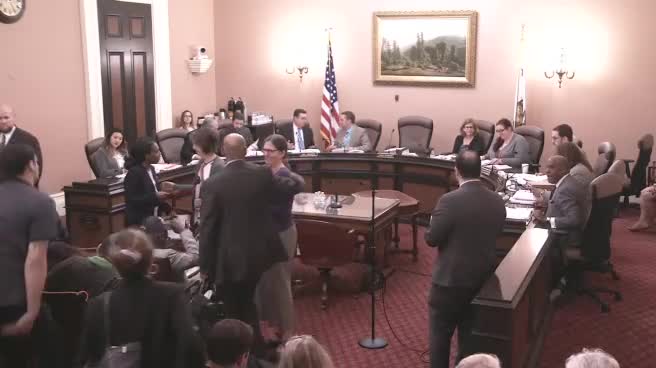 14MIN
Senate Standing Committee on Public Safety
Bill Author

Bill Co-Author(s):