SB 1236: Commercial driver’s license: education.
- Session Year: 2017-2018
- House: Senate
- Latest Version Date: 2018-09-30
Existing law prohibits the Department of Motor Vehicles from issuing a commercial drivers license to any person to operate a commercial motor vehicle unless the person has passed a written and driving test for the operation of a commercial motor vehicle that complies with the minimum standards established by the federal Commercial Motor Vehicle Safety Act of 1986 and specified federal regulations, and has satisfied all other requirements of that act as well as any other requirements imposed by state law.
This bill would require the department, no later than June 5, 2020, to adopt regulations related to entry-level driver training requirements for drivers of commercial motor vehicles including specified minimum hours of behind-the-wheel training and in compliance with the requirements of specified federal regulations.
(a)The department shall, no later than June 5, 2020, adopt regulations related to entry-level driver training requirements for drivers of commercial motor vehicles in compliance with the requirements of Parts 380, 383, and 384 of Title 49 of the Code of Federal Regulations.
(b)The department shall require the course of instruction for entry-level drivers to require an applicant for a class A or B commercial drivers license to complete a minimum of 15 hours of behind-the-wheel training, at least 10 hours of which shall be on a public road. For the purpose of meeting this requirement, every 50 minutes of driving time is deemed to be an hour of training.
(a)The department shall, no later than June 5, 2020, adopt regulations related to entry-level driver training requirements for drivers of commercial motor vehicles in compliance with the requirements of Parts 380, 383, and 384 of Title 49 of the Code of Federal Regulations. The department shall require the course of instruction for entry-level drivers to include, but not be limited to, the following:
(a)An applicant for a class A commercial drivers license shall complete a minimum of 30 hours of behind-the-wheel training, at least 10 hours of which shall be on an off-highway facility and 10 hours of which shall be on a public road. For the purpose of meeting this requirement, every 50 minutes of driving time is deemed to be an hour of training.(b)Notwithstanding subdivision (a), an applicant for a class A commercial drivers license participating in an Employer Testing Program, as defined in Section 25.06 of Title 13 of the California Code of Regulations, shall complete a minimum of 15 hours of behind-the-wheel training. For the purpose of meeting this requirement, every 50 minutes of driving time is deemed to be an hour of training.(c)An(b)The department shall require the course of instruction for entry-level drivers to require an applicant for a class A or B commercial drivers license shall to complete a minimum of 15 hours of behind-the-wheel training, at least seven 10 hours of which shall be on a public road. For the purpose of meeting this requirement, every 50 minutes of driving time is deemed to be an hour of training.
The department shall, no later than June 5, 2020, adopt regulations related to entry-level driver training requirements for drivers of commercial motor vehicles in compliance with the requirements of Parts 380, 383, and 384 of Title 49 of the Code of Federal Regulations. The department shall require the course of instruction for entry-level drivers to include, but not be limited to, the following:
(a)An applicant for a class A commercial drivers license shall complete a minimum of 30 hours of behind-the-wheel training, at least 10 hours of which shall be on an off-highway facility and 10 hours of which shall be on a public road. For the purpose of meeting this requirement, every 50 minutes of driving time is deemed to be an hour of training.
(b)Notwithstanding subdivision (a), an applicant for a class A commercial drivers license participating in an Employer Testing Program, as defined in Section 25.06 of Title 13 of the California Code of Regulations, shall complete a minimum of 15 hours of behind-the-wheel training. For the purpose of meeting this requirement, every 50 minutes of driving time is deemed to be an hour of training.
(c)An applicant for a class B commercial drivers license shall complete a minimum of 15 hours of behind-the-wheel training, at least seven hours of which shall be on a public road. For the purpose of meeting this requirement, every 50 minutes of driving time is deemed to be an hour of training.
|
Date
|
Status
|
|---|---|
| Sep 30, 2018 | Chaptered by Secretary of State. Chapter 984, Statutes of 2018. |
| Sep 30, 2018 | Approved by the Governor. |
| Aug 30, 2018 | Enrolled and presented to the Governor at 5 p.m. |
| Aug 24, 2018 | Assembly amendments concurred in. (Ayes 39. Noes 0.) Ordered to engrossing and enrolling. |
| Aug 23, 2018 | In Senate. Concurrence in Assembly amendments pending. |
| Aug 23, 2018 | Read third time. Passed. Ordered to the Senate. |
| Aug 9, 2018 | Read second time. Ordered to third reading. |
| Aug 8, 2018 | From committee: Do pass. (Ayes 14. Noes 3.) (August 8). |
| Jun 26, 2018 | From committee: Do pass and re-refer to Com. on APPR. (Ayes 13. Noes 0.) (June 25). Re-referred to Com. on APPR. |
| Jun 19, 2018 | From committee with author's amendments. Read second time and amended. Re-referred to Com. on TRANS. |
| Jun 11, 2018 | June 11 set for first hearing canceled at the request of author. |
| Apr 30, 2018 | Referred to Com. on TRANS. |
| Apr 23, 2018 | In Assembly. Read first time. Held at Desk. |
| Apr 23, 2018 | Read third time. Passed. (Ayes 38. Noes 0.) Ordered to the Assembly. |
| Apr 17, 2018 | Read second time. Ordered to third reading. |
| Apr 16, 2018 | From committee: Do pass. (Ayes 7. Noes 0.) (April 16). |
| Apr 9, 2018 | Set for hearing April 16. |
| Mar 20, 2018 | From committee: Do pass and re-refer to Com. on APPR. with recommendation: To consent calendar. (Ayes 11. Noes 0.) (March 20). Re-referred to Com. on APPR. |
| Mar 13, 2018 | Set for hearing March 20. |
| Mar 1, 2018 | Referred to Com. on T. & H. |
| Feb 16, 2018 | From printer. May be acted upon on or after March 18. |
| Feb 15, 2018 | Introduced. Read first time. To Com. on RLS. for assignment. To print. |
|
Date
|
Description
|
Location
|
Votes
|
|
|---|---|---|---|---|
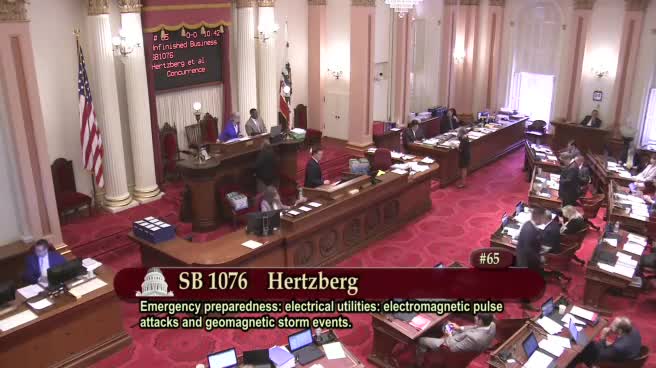
| Aug 24, 2018 | Unfinished Business SB1236 Monning Concurrence | Senate Floor |
Passed |
|
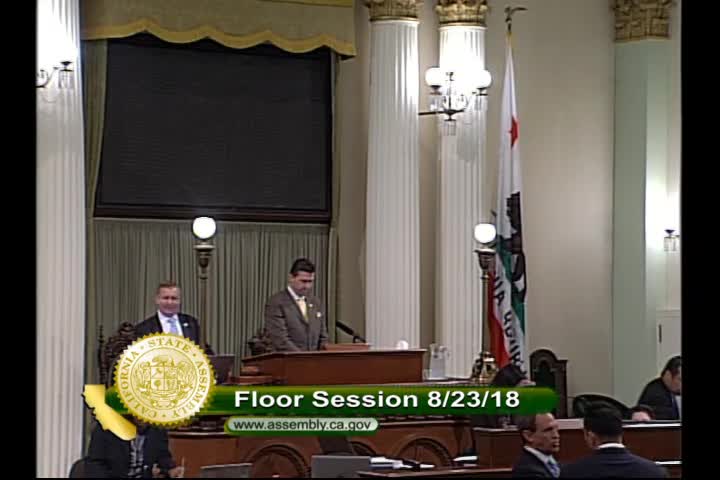
| Aug 23, 2018 | SB 1236 Monning Senate Third Reading By STONE | Assembly Floor |
Passed |
|
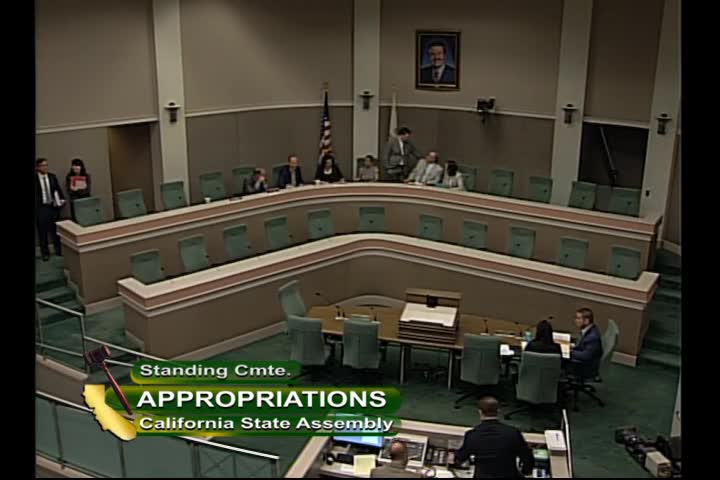
| Aug 8, 2018 | Do pass. | Assembly Standing Committee on Appropriations |
Passed |
|
| Jun 25, 2018 | Do pass and be re-referred to the Committee on [Appropriations] | Assembly Standing Committee on Transportation |
Passed |
|
| Apr 23, 2018 | Senate 3rd Reading SB1236 Monning | Senate Floor |
Passed |
|
| Apr 16, 2018 | Do pass | Senate Standing Committee on Appropriations |
Passed |
|
| Mar 20, 2018 | Do pass, but first be re-referred to the Committee on [Appropriations] with the recommendation: To Consent Calendar | Senate Standing Committee on Transportation and Housing |
Passed |
This list shows positions taken on this bill by organizations on the date displayed, which is linked to the original source.
Positions by individuals are not included.
|
Organization
|
Position
|
Date
|
|---|---|---|
| 3,085 Individuals | ** Support | Aug 23, 2018 |
| AAA Northern California, Nevada, and Utah | ** Support | Aug 23, 2018 |
| Amalgamated Transit Union | ** Support | Aug 23, 2018 |
| Automobile Club of Southern California | ** Support | Aug 23, 2018 |
| California Bus Association | ** Support | Aug 23, 2018 |
| California Teamsters Public Affairs Council | ** Support | Aug 23, 2018 |
| Consumer Attorneys Of California | ** Support | Aug 23, 2018 |
| County of Santa Cruz | ** Support | Aug 23, 2018 |
| Owner Operator Independent Driver's Association | * Support | Apr 16, 2018 |
| Owner-Operator Independent Drivers Association | ** Support | Aug 23, 2018 |
| Santa Cruz County Regional Transportation Commission | ** Support | Aug 23, 2018 |
| Transportation Agency For Monterey County | ** Support | Aug 23, 2018 |
| Truck Safety Coalition | ** Support | Aug 23, 2018 |
| Walk San Francisco | ** Support | Aug 23, 2018 |
Office of Senate Floor Analyses (916) 651-1520 Fax: (916) 327-4478 | SB |
UNFINISHED BUSINESS
Bill No: SB 1236
:
SENATE TRANS. & HOUSING COMMITTEE: 11-0, 3/20/18
AYES: Beall, Cannella, Allen, Dodd, Galgiani, McGuire, Morrell, Roth, Skinner, Wieckowski, Wiener
NO VOTE RECORDED: Gaines, Vidak
SENATE APPROPRIATIONS COMMITTEE: 7-0, 4/16/18
AYES: Lara, Bates, Beall, Bradford, Hill, Nielsen, Wiener
SENATE FLOOR: 38-0, 4/23/18
AYES: Allen, Anderson, Atkins, Bates, Beall, Berryhill, Bradford, Cannella, De León, Dodd, Fuller, Gaines, Galgiani, Glazer, Hernandez, Hertzberg, Hill, Hueso, Jackson, Lara, Leyva, McGuire, Mitchell, Monning, Moorlach, Newman, Nguyen, Nielsen, Pan, Portantino, Roth, Skinner, Stern, Stone, Vidak, Wieckowski, Wiener, Wilk
NO VOTE RECORDED: Morrell
ASSEMBLY FLOOR: 73-3, 8/23/18 - See last page for vote
DIGEST:
This bill requires the state Department of Motor Vehicles (DMV) to adopt regulations relating to entry-level driver training requirements for commercial truck drivers, as specified.
Assembly Amendments
remove the requirement of 30 hours of behind-the-wheel (BTW) training for a Class A commercial driver’s license applicant, and, instead, make the 15-hour BTW requirement applicable to both Class A and Class B, including at least 10 hours on a public road.
Existing federal regulation:
- Establishes minimum training standards for individuals applying for their commercial driver’s license for the first time; applying for an upgrade of their commercial driver’s license; or applying for a hazardous materials, passenger, or school bus endorsement for the first time.
- Requires applicants to complete a prescribed program of instruction provided by an entity that is listed on the Federal Motor Carrier Safety Administration’s (FMCSA) Training Provider Registry.
- Requires that in order to be eligible for listing on the Training Provider Registry, an entity must:
- Utilize a curriculum, facilities, vehicles, and driver training instructors that meet specified criteria.
- Be licensed, certified, registered, or authorized to provide training in accordance with applicable laws and regulations of any state where in-person training is conducted, unless instruction is only offered online.
- Authorizes FMCSA to audit or investigate the training provider’s operations to ensure it meets the criteria in 3) above.
- Requires the entity to register each of its campuses with the Training Provider Registry and to attest that each meets all applicable requirements.
Existing state law:
- Prohibits an individual from operating a commercial motor vehicle unless he or she has in his or her immediate possession a valid commercial driver’s license of the appropriate class.
- Requires a commercial driver’s license for a variety of trucks weighing more than 26,000 pounds, passenger buses, and vehicles carrying hazardous materials.
- Requires an individual, in order to obtain a commercial driver’s license, to successfully complete both a written and driving test that comply with the minimum federal standards to operate a commercial motor vehicle.
- Authorizes DMV to waive the driving test for an individual with military commercial motor vehicle experience if the individual is currently licensed with the U.S. Armed Forces and his or her driving record and experience meet the minimum federal standards.
- Requires DMV to prescribe and conduct commercial written and driving tests, but authorizes DMV to enter into agreements with third-party testers to administer the driving test (the Employer Testing Program (ETP)).
- Exempts members and reservists of the U.S. Armed Forces, National Guard, and U.S. Coast Guard from all commercial driver’s license requirements and sanctions.
This bill:
- Requires DMV, no later than June 5, 2020, to adopt regulations related to entry-level driving training requirements for commercial motor vehicle drivers in compliance with federal Entry Level Driver Training regulations.
- Requires the DMV-approved course of instruction for entry-level drivers to include, for both Class A and Class B applicants, a requirement to complete a minimum of 15 hours of BTW training, including at least 10 hours on a public road. For purposes of this requirement, every 50 minutes of driving is deemed to be one hour of training.
Background
Until last year, federal regulations required an individual to pass a written test and a driving test in order to obtain a commercial driver’s license, but did not require a course of instruction prior to taking these tests. The federal Moving Ahead for Progress in the 21st Century Act (MAP-21), signed by President Obama in 2012, directed the FMCSA to establish new regulations for minimum training requirements for individuals applying for a commercial driver’s license. The FMCSA began holding public meetings in March 2015, published a proposed regulation in March 2016, and published the final rule in December 2016. The new regulation, which took effect on March 21, 2017 (with compliance required by February 7, 2020), requires an individual who is applying for a Class A or Class B commercial driver’s license to receive specified training. The new regulation generally exempts military drivers, farmers, and firefighters, consistent with existing prior federal regulations.
Comments
- Purpose. The author states that while teens seeking a general Class C provisional driver’s license must complete at least 50 hours of BTW training, individuals seeking a commercial driver’s license are not currently required to complete a safety training course or to log any minimum number of BTW hours. BTW training is already an industry best practice standard; among the 10 training programs analyzed by the FMCSA, the number of BTW hours of training for a Class A license averaged 48.5 hours. According to the California Highway Patrol, 10,062 at-fault commercial vehicle collisions were reported in 2014, of which 2,432 resulted in injury and 68 were fatal. One of the fatal accidents in 2014 occurred on Highway 17 when a truck driver lost control and crashed into 10 cars, injuring seven people and killing 25-year-old Daniel McGuire of Santa Cruz. The truck driver’s lack of adequate training was a major factor in the crash. This bill helps ensure that novice truck drivers receive critical BTW training prior to obtaining a commercial driver’s license.
- Current state requirements. Existing state law requires, in line with prior federal regulations, an individual to pass a written test and a driving test in order to obtain a commercial driver’s license, but not to take a course of instruction prior to taking these tests.
- The new wrinkle: BTW training. The primary difference between this bill and the new federal regulation is this bill’s requirement for a commercial driver’s license applicant to complete a specified number of BTW training hours. Although the new federal regulation provides that “the training provider must not issue the certificate unless the driver-trainee demonstrates proficiency in preforming all the BTW skills,” the regulation does not require training courses to include a BTW component.
The original proposed regulation included a minimum of 30 hours of BTW training for Class A trainees and 15 hours for Class B trainees. According to the FMCSA, despite extended discussions, ultimately it was “not able to obtain sufficient quantitative data linking mandatory minimum BTW training hours with positive safety outcomes…” The FMCSA notes it “has an obligation to use the least burdensome means to achieve regulatory objectives.” The FMCSA expects driver trainees to spend approximately 30 and 15 hours BTW demonstrating the required Class A and Class B curricula, based on the experience of driver training organizations it consulted with during the rulemaking process, and notes that it could revisit the issue of mandatory minimum BTW training hours in a future rulemaking.
Less than two weeks after the final rule was issued in December 2016, the Advocates for Highway and Auto Safety, Owner-Operator Independent Drivers Association, Truck Safety Coalition, and Citizens for Reliable and Safe Highways submitted a petition for reconsideration on removal of the minimum BTW requirement. The petition stated that the BTW requirement was included in the original proposed rule because the advisory committee established by the FMCSA reached a consensus that a BTW requirement was an essential piece of the core curricula. The petition also noted that the original MAP-21 legislation required that training include BTW instruction. The FMCSA did not amend the final rule; however, the regulation does not prohibit states from imposing a BTW requirement.
- Trainer requirements. The ETP allows firms that employ commercial drivers to administer driving tests for their employees (but written tests must still be taken through DMV). In order to participate, employers must apply to DMV, obtain DMV approval for examiners and training, and meet specified record retention requirements. In addition, DMV regularly inspects and audits ETP participants. Alternatively, driver training provided through private postsecondary (post-high school) institutions, programs, and courses of instruction are overseen by the state Bureau for Private Postsecondary Education within the Department of Consumer Affairs.
The new federal regulation requires all training providers to register with the FMCSA’s Training Provider Registry. Training providers must, at minimum, offer and teach a curriculum that meets all FMCSA standards. Providers must also meet requirements related to course administration, instructor qualifications, and assessments, issuance of training certificates, and training vehicles and equipment. Training providers will self-certify that they meet all requirements and will electronically submit a registration form affirming, under penalty of perjury, that they will teach the FMCSA-approved curriculum appropriate to the commercial driver’s license class or endorsement.
Related/Prior Legislation
SB 158 (Monning, 2017) would have required the DMV to adopt regulations relating to entry-level driver training requirements for commercial truck drivers, including specified BTW training requirements. The bill was held on the suspense file in the Assembly Appropriations Committee.
SB 344 (Monning, 2015) would have required an individual to successfully complete a DMV-approved course of instruction in order to obtain a commercial driver’s license. The bill died on the suspense file in the Assembly Appropriations Committee.
FISCAL EFFECT: Appropriation: Fiscal Com.: Local:
According to the Assembly Appropriations Committee:
- Costs of about $100,000 (Motor Vehicle Account), for DMV to program information technology systems. In addition, DMV will have minor costs to promulgate regulations.
AAA Northern California, Nevada, and Utah
Amalgamated Transit Union
Automobile Club of Southern California
California Bus Association
California Teamsters Public Affairs Council
Consumer Attorneys of California
County of Santa Cruz
Owner-Operator Independent Drivers Association
Santa Cruz County Regional Transportation Commission
Transportation Agency for Monterey County
Truck Safety Coalition
UPS
Walk San Francisco
3,085 Individuals
OPPOSITION: (Verified 8/23/18)
None received
ARGUMENTS IN SUPPORT: Supporters state that BTW training is a necessary component of a good training program.
ASSEMBLY FLOOR: 73-3, 8/23/18
AYES: Acosta, Aguiar-Curry, Arambula, Baker, Berman, Bloom, Bonta, Burke, Caballero, Calderon, Carrillo, Cervantes, Chau, Chávez, Chiu, Choi, Chu, Cooley, Cooper, Cunningham, Dahle, Daly, Eggman, Flora, Fong, Frazier, Friedman, Gabriel, Gallagher, Cristina Garcia, Eduardo Garcia, Gipson, Gloria, Gonzalez Fletcher, Gray, Grayson, Harper, Holden, Irwin, Jones-Sawyer, Kalra, Kamlager-Dove, Lackey, Levine, Limón, Low, Maienschein, Mathis, Mayes, McCarty, Medina, Melendez, Mullin, Muratsuchi, Nazarian, O'Donnell, Patterson, Quirk, Quirk-Silva, Reyes, Rivas, Rodriguez, Rubio, Salas, Santiago, Mark Stone, Thurmond, Ting, Voepel, Waldron, Weber, Wood, Rendon
NOES: Brough, Obernolte, Steinorth
NO VOTE RECORDED: Travis Allen, Bigelow, Chen, Kiley
8/23/18 17:15:55
**** END ****
SENATE THIRD READING
STR Bill Id:SB 1236
Author:(Monning)
As Amended Ver:June 19, 2018
Majority vote
SENATE VOTE: 38-0
Committee | Votes | Ayes | Noes |
Transportation | 13-0 | Frazier, Fong, Aguiar-Curry, Baker, Berman, Chu, Daly, Friedman, Gipson, Harper, Mathis, Medina, O'Donnell | |
Appropriations | 14-3 | Gonzalez Fletcher, Bloom, Bonta, Calderon, Carrillo, Chau, Eggman, Fong, Friedman, Gallagher, Eduardo Garcia, Nazarian, Quirk, Reyes | Bigelow, Brough, Obernolte |
SUMMARY: Requires the Department of Motor Vehicles (DMV) to adopt federal regulations to strengthen commercial driver training requirements and to require a minimum number of hours of behind-the-wheel (BTW) training for commercial drivers. Specifically, this bill:
- Requires DMV, no later than June 5, 2020, to adopt regulations related to entry-level driving training requirements for commercial motor vehicle drivers in compliance with federal Entry Level Driver Training regulations.
- Requires the DMV-approved course of instruction for entry-level drivers to include, but not be limited to:
- A minimum of 15 hours of BTW training, including at least 10 hours on a public road, for an applicant for a Class A or class B commercial driver's license (CDL).
- Every 50 minutes of driving is deemed to be one hour of training.
FISCAL EFFECT: According to the Assembly Appropriations Committee, costs of about $100,000 (Motor Vehicle Account), for DMV to program information technology systems. In addition, DMV will have minor costs to promulgate regulations.
COMMENTS:
Purpose: According to the Author, "Californians seeking a commercial driver's license (CDL) are currently not required to take any safety training courses, or complete any minimum number of hours of training behind-the-wheel of a commercial vehicle. CDL applicants must simply pass a written test, and a short driving test to receive their license.
"Applicants for a barber's license in California are required to log 1,500 hours of training before being licensed to cut hair. Even teens seeking a general Class C provisional driver's license must log at least 50 hours of training behind the wheel. When it comes to a commercial license, however, California requires no minimum number of hours of behind-the-wheel training for a license to drive an 80,000 pound semi-truck.
"Californians deserve the right to know that the operators of large trucks and vehicles driving next to their families on our public roadways are properly trained and proficient in their understanding of the vehicle. SB 1236 will ensure this, by requiring the Department of Motor Vehicles to adopt regulations to comply with a new federal rule that will require those seeking a CDL, to first complete a certified course of instruction from a commercial driving institution or program offered by an employer. In addition, the bill will require that a minimum number of behind-the-wheel training hours be completed as part of the newly established and required training courses."
Who Needs a CDL? In California, a CDL is required to operate a vehicle that has a gross vehicle weight rating (GVWR) of 26,001 pounds or more; a single vehicle with a GVWR less than 26,000 pounds which is designed, used, or maintained to transport more than 10 passengers; a vehicle towing any vehicle with a GVWR of 10,001 pounds or more; any vehicle that tows more than 1 vehicle or a trailer bus, and any vehicle which requires hazardous material placards or transports hazardous waste.
Commercial Vehicle Safety: Commercial vehicles are heavier than your standard vehicle. An accident involving a commercial vehicle is more likely to cause serious injury or death.
According to the Federal Motor Carrier Safety Administration (FMCSA), in 2016 there were 4,440 large trucks and buses involved in fatal crashes nationwide, a 29% increase from its low in 2009. The number of injury crashes has increased 62% since 2009 to 119,000. In total nearly 30,000 individuals have died in an accident caused by a large truck or bus since 2010.
MAP-21 Federal Regulations: Since the 1980s the federal government has been working on a way to strengthen requirements for obtaining a CDL. In 2012, President Obama signed the Moving Ahead for Progress in the 21st Century Act (MAP-21). As part of MAP-21, FMCSA was tasked with establishing extensive entry-level driver training (ELDT) requirements. The rule became final on March 21, 2017, and gives states until February 7, 2020 to implement the rules. Failure to do so can risk federal highway funding.
The rules established new training standards for new applicants for a Class A or B CDL, those seeking to upgrade their CDL, or someone seeking a hazardous materials, passenger, or school bus endorsement for the first time. The curricula is subdivided into theory (knowledge) and BTW segments. BTW curricula is comprised of range and public road segments and include discrete maneuvers which each driver must proficiently demonstrate to the satisfaction of the instructor. Federal regulations established no minimum number of hours that driver-trainees must spend on any portion of the curricula.
Behind-The-Wheel Requirement: While the federal rule provides no minimum amount of time to complete BTW training, this bill establishes a minimum BTW training requirement that is substantially similar to a proposed regulation that was ultimately removed from the final rule. Rather, the federal government provided a proficiency standard that must be adopted by the test giver.
Please see the policy committee analysis for full discussion of this bill.
Analysis Prepared by: David Sforza / TRANS. / (916) 319-2093 FN: 0003850
Date of Hearing: August 8, 2018
ASSEMBLY COMMITTEE ON APPROPRIATIONS
Lorena Gonzalez Fletcher, Chair
SBPCA Bill Id:SB 1236
Author:(Monning) – As Amended Ver:June 19, 2018
Policy Committee: | Transportation | Vote: | 13 - 0 |
|
| ||
|
|
Urgency: No State Mandated Local Program: No Reimbursable: No
SUMMARY:
This bill requires the Department of Motor Vehicles (DMV) to adopt regulations related to entry-level commercial vehicle drivers consistent with requirements in federal regulations. Specifically, this bill:
- Requires DMV, by June 5, 2020, to adopt regulations related to entry-level driving training requirements for commercial motor vehicle drivers in compliance with federal entry-level driver training regulations.
- Requires the DMV-approved course of instruction for entry-level drivers to include a minimum of 15 hours of behind the wheel training, at least 10 hours of which must be on a public road, for an applicant for a Class A or class B commercial driver’s license (CDL). Specifies that every 50 minutes of driving is deemed to be one hour of training.
FISCAL EFFECT:
Costs of about $100,000 (Motor Vehicle Account), for DMV to program information technology systems. In addition, DMV will have minor costs to promulgate regulations.
COMMENTS:
- Background. Since the 1980s the federal government has been working to strengthen requirements for obtaining a CDL. In 2012, President Obama signed the Moving Ahead for Progress in the 21st Century Act (MAP-21). As part of MAP-21, the Federal Motor Carrier Safety Administration (FMCSA) was tasked with establishing entry-level driver training requirements. FMCSA developed entry-level training requirements and issued a final rule on March 21, 2017. This federal regulation gives states until February 7, 2020, to implement the new FMCSA rule.
- Purpose. This bill implements the FMCSA rule by requiring DMV to adopt implementing regulations. In addition, this bill specifies a minimum number of behind the wheel training hours, a component of driver training requirements that was not included in the FMCSA rules. According to the author:
Californians deserve the right to know that the operators of large trucks and vehicles driving next to their families on our public roadways are properly trained and proficient in their understanding of the vehicle. SB 1236 will ensure this, by requiring the Department of Motor Vehicles to adopt regulations to comply with a new federal rule that will require those seeking a CDL, to first complete a certified course of instruction from a commercial driving institution or program offered by an employer. In addition, the bill will require that a minimum number of behind-the-wheel training hours be completed as part of the newly established and required training courses.
Analysis Prepared by: Jessica Peters / APPR. / (916) 319-2081
Date of Hearing: June 25, 2018
ASSEMBLY COMMITTEE ON TRANSPORTATION
Jim Frazier, Chair
SBPCA Bill Id:SB 1236
Author:(Monning) – As Amended Ver:June 19, 2018
SENATE VOTE: 38-0
SUBJECT: Commercial driver’s license: education
SUMMARY: Requires the Department of Motor Vehicles (DMV) to adopt federal regulations to strengthen commercial driver training requirements and to require a minimum number of hours of behind-the-wheel (BTW) training for commercial drivers. Specifically, this bill:
- Requires DMV, no later than June 5, 2020, to adopt regulations related to entry-level driving training requirements for commercial motor vehicle drivers in compliance with federal Entry Level Driver Training regulations.
- Requires the DMV-approved course of instruction for entry-level drivers to include, but not be limited to:
- A minimum of 15 hours of BTW training, including at least 10 hours on a public road, for an applicant for a Class A or class B commercial driver’s license (CDL).
- Every 50 minutes of driving is deemed to be one hour of training.
EXISTING LAW:
Existing Federal Regulations:
- Establishes minimum training standards for individuals applying for their CDL for the first time; applying for an upgrade of their CDL; or applying for a hazardous materials, passenger, or school bus endorsement for the first time.
- Requires applicants to complete a prescribed program of instruction provided by an entity that is listed on the Federal Motor Carrier Safety Administration’s (FMCSA) Training Provider Registry.
- Requires that, in order to be eligible for listing on the Training Provider Registry, an entity must:
- Utilize a curriculum, facilities, vehicles, and driver training instructors that meet specified criteria.
- Be licensed, certified, registered, or authorized to provide training in accordance with applicable laws and regulations of any state where in-person training is conducted, unless instruction is only offered online.
- Authorizes FMCSA to audit or investigate the training provider’s operations to ensure it meets all existing criteria.
- Requires the entity to register each of its campuses with the Training Provider Registry and to attest that each meets all applicable requirements.
Existing State Law:
- Prohibits an individual from operating a commercial motor vehicle unless he or she has in his or her immediate possession a valid CDL of the appropriate class.
- Requires a Class A license to operate vehicle towing another vehicle with a gross vehicle weight of more than 10,000 pounds, a vehicle towing more than one vehicle, a trailer bus.
- Requires a Class B license to operate a single vehicle with a gross vehicle weight of more than 26,000 pounds, a single vehicle with three or more axles that weighs more than 6,000 pounds. A bus with a gross vehicle weight rating or weight of more than 26,000 pounds (except a trailer bus), a farm labor vehicle and a house car over 40 feet in length.
- Defines a farm labor vehicle as a motor vehicle designed, used, or maintained for the transportation of nine or more farmworkers, in addition to the driver, to or from a place of employment, excluding a vehicle carrying only members of the immediately family, or being operated under specific author by the Public Utilities Commission.
- Requires a CDL for a variety of trucks weighing more than 26,000 lbs., passenger buses, and vehicles carrying hazardous materials.
- Requires an individual, in order to obtain a CDL, to successfully complete both a written and driving test that comply with the minimum federal standards to operate a commercial motor vehicle.
- Authorizes DMV to waive the driving test for an individual with military commercial motor vehicle experience if the individual is currently licensed with the U.S. Armed Forces and his or her driving record and experience meet the minimum federal standards.
- Requires DMV to prescribe and conduct commercial written and driving tests, but authorizes DMV to enter into agreements with third-party testers to administer the driving test (the Employer Testing Program).
- Exempts members and reservists of the U.S. Armed Forces, National Guard, and U.S. Coast Guard from all CDL requirements and sanctions.
FISCAL EFFECT: Unknown
COMMENTS:
Purpose: According to the Author, “Californians seeking a commercial driver’s license (CDL) are currently not required to take any safety training courses, or complete any minimum number of hours of training behind-the-wheel of a commercial vehicle. CDL applicants must simply pass a written test, and a short driving test to receive their license.
“Applicants for a barber’s license in California are required to log 1,500 hours of training before being licensed to cut hair, estheticians must complete 600 hours, and manicurist 400 hours of training. Even teens seeking a general Class C provisional driver’s license must log at least 50 hours of training behind the wheel. When it comes to a commercial license, however, California requires no minimum number of hours of behind-the-wheel training for a license to drive an 80,000 pound semi-truck.
“Californians deserve the right to know that the operators of large trucks and vehicles driving next to their families on our public roadways are properly trained and proficient in their understanding of the vehicle. SB 1236 will ensure this, by requiring the Department of Motor Vehicles to adopt regulations to comply with a new federal rule that will require those seeking a CDL, to first complete a certified course of instruction from a commercial driving institution or program offered by an employer. In addition, the bill will require that a minimum number of behind-the-wheel training hours be completed as part of the newly established and required training courses.”
Who Needs a CDL? In California, a CDL is required to operate a vehicle that has a gross vehicle weight rating (GVWR) of 26,001 pounds or more; a single vehicle with a GVWR less than 26,000 pounds which is designed, used, or maintained to transport more than 10 passengers; a vehicle towing any vehicle with a GVWR of 10,001 pounds or more; any vehicle that tows more than 1 vehicle or a trailer bus, and any vehicle which requires hazardous material placards or transports hazardous waste.
Commercial Vehicle Safety: Commercial vehicles are significantly heavier than your standard vehicle. As a result, an accident involving a commercial vehicle is more likely to cause serious injury or death.
According to the FMCSA, in 2016 there were 4,440 large trucks and buses involved in fatal crashes nationwide, a 29% increase from its low in 2009. The number of injury crashes has increased 62% since 2009 to 119,000. In total nearly 30,000 individuals have died in an accident caused by a large truck or bus since 2010.
Fatal crashes involving large trucks tend to occur in rural areas and on interstate highways. Approximately 61% of all fatal crashes involving large trucks occurred in rural areas, 27% occurred on interstate highways, and 15% fell into both categories by occurring on rural interstate highways.
MAP-21 Federal Regulations: Since the 1980s the federal government has been working on a way to strengthen requirements for obtaining a CDL. In 2012, President Obama signed the Moving Ahead for Progress in the 21st Century Act (MAP-21). As part of MAP-21, FMCSA was tasked with establishing extensive entry-level driver training (ELDT) requirements. The rule became final on March 21, 2017, and gives states until February 7, 2020 to implement the rules. Failure to do so can risk federal highway funding.
The rules established new training standards for new applicants for a Class A or B CDL, those seeking to upgrade their CDL, or someone seeking a hazardous materials, passenger, or school bus endorsement for the first time. The curricula is subdivided into theory (knowledge) and BTW segments. BTW curricula is comprised of range and public road segments and include discrete maneuvers which each driver must proficiently demonstrate to the satisfaction of the instructor. Federal regulations established no minimum number of hours that driver-trainees must spend on any portion of the curricula.
Anyone who is required to have a CDL is required to comply with the new training requirements, including drivers of agricultural vehicles.
Anyone offering a training course must register with FMCSA’s Training Provider Registry, and must offer and teach a curriculum that meets all FMCSA standards. Providers must also meet requirements related to course administration, instructor qualifications, assessments, issuance of training certificates, and training vehicles and equipment. Instructors self-certify under penalty of perjury that they are complying with the requirements.
Behind-The-Wheel Requirement: While the federal rule provides no minimum amount of time to complete BTW training, this bill establishes a minimum BTW training requirement that is substantially similar to a proposed regulation that was ultimately removed from the final rule. Rather, the federal government provided a proficiency standard that must be adopted by the test giver.
Under this bill, an applicant for a Class A or Class B CDL must complete a minimum of 15 hours of BTW training, at least 10 of which must be on public roads. 50 minutes counts toward an hour, so technically a driver could receive 12.5 hours of BTW training and be compliant.
Argument in Support: The California Teamsters Public Affairs Council, states that “BTW training is a necessary component of a good training program. Driving an 80,000 –pound vehicle is not easy and the more experience we can give drivers before they are out on their own significantly enhances the safety of those who will ultimately share the road with them and the drivers themselves.”
Related Legislation: SB 158 (Monning) of 2017, would have required the DMV to adopt regulations relating to entry-level driver training requirements for commercial truck drivers, including specified behind-the-wheel training requirements. SB 158 also would have exempted agricultural drivers from these requirements. SB 158 was held on the Assembly Appropriations Committee suspense file.
SB 344 (Monning) of 2015, would have required an individual to successfully complete a DMV-approved course of instruction in order to obtain a CDL. SB 344 was held on the Assembly Appropriations Committee suspense file.
REGISTERED SUPPORT / OPPOSITION:
Support
AAA Northern California, Nevada & Utah
Automobile Club of Southern California
Amalgamated Transit Union
California Bus Association
California Teamsters Public Affairs Council
Consumer Attorneys of California
County of Santa Cruz
Owner-Operator Independent Drivers Association
Santa Cruz County Regional Transportation Commission
UPS
Walk San Francisco
Opposition
None on file
Analysis Prepared by: David Sforza / TRANS. / (916) 319-2093
Office of Senate Floor Analyses (916) 651-1520 Fax: (916) 327-4478 | SB |
THIRD READING
Bill No: SB 1236
:
SENATE TRANS. & HOUSING COMMITTEE: 11-0, 3/20/18
AYES: Beall, Cannella, Allen, Dodd, Galgiani, McGuire, Morrell, Roth, Skinner, Wieckowski, Wiener
NO VOTE RECORDED: Gaines, Vidak
SENATE APPROPRIATIONS COMMITTEE: 7-0, 4/16/18
AYES: Lara, Bates, Beall, Bradford, Hill, Nielsen, Wiener
DIGEST:
This bill requires the state Department of Motor Vehicles (DMV) to adopt regulations relating to entry-level driver training requirements for commercial truck drivers, as specified.
Existing federal regulation:
- Establishes minimum training standards for individuals applying for their commercial driver’s license for the first time; applying for an upgrade of their commercial driver’s license; or applying for a hazardous materials, passenger, or school bus endorsement for the first time.
- Requires applicants to complete a prescribed program of instruction provided by an entity that is listed on the Federal Motor Carrier Safety Administration’s (FMCSA) Training Provider Registry.
- Requires that in order to be eligible for listing on the Training Provider Registry, an entity must:
- Utilize a curriculum, facilities, vehicles, and driver training instructors that meet specified criteria.
- Be licensed, certified, registered, or authorized to provide training in accordance with applicable laws and regulations of any state where in-person training is conducted, unless instruction is only offered online.
- Authorizes FMCSA to audit or investigate the training provider’s operations to ensure it meets the criteria in 3) above.
- Requires the entity to register each of its campuses with the Training Provider Registry and to attest that each meets all applicable requirements.
Existing state law:
- Prohibits an individual from operating a commercial motor vehicle unless he or she has in his or her immediate possession a valid commercial driver’s license of the appropriate class.
- Requires a commercial driver’s license for a variety of trucks weighing more than 26,000 pounds, passenger buses, and vehicles carrying hazardous materials.
- Requires an individual, in order to obtain a commercial driver’s license, to successfully complete both a written and driving test that comply with the minimum federal standards to operate a commercial motor vehicle.
- Authorizes DMV to waive the driving test for an individual with military commercial motor vehicle experience if the individual is currently licensed with the U.S. Armed Forces and his or her driving record and experience meet the minimum federal standards.
- Requires DMV to prescribe and conduct commercial written and driving tests, but authorizes DMV to enter into agreements with third-party testers to administer the driving test (the Employer Testing Program).
- Exempts members and reservists of the U.S. Armed Forces, National Guard, and U.S. Coast Guard from all commercial driver’s license requirements and sanctions.
This bill:
- Requires DMV, no later than June 5, 2020, to adopt regulations related to entry-level driving training requirements for commercial motor vehicle drivers in compliance with federal Entry Level Driver Training regulations.
- Requires the DMV-approved course of instruction for entry-level drivers to include, but not be limited to:
- A minimum of 30 hours of behind-the-wheel (BTW) training, including at least 10 hours on an off-highway facility and 10 hours on a public road, for an applicant for a Class A commercial driver’s license. If the applicant is participating in the Employer Testing Program, he or she must complete a minimum of 15 hours of BTW training.
- A minimum of 15 hours of BTW training, including at least seven hours on a public road, for an applicant for a Class B commercial driver’s license.
- For both Class A and Class B applicants, every 50 minutes of driving is deemed to be one hour of training.
Background
Until last year, federal regulations required an individual to pass a written test and a driving test in order to obtain a commercial driver’s license, but did not require a course of instruction prior to taking these tests. The federal Moving Ahead for Progress in the 21st Century Act (MAP-21), signed by President Obama in 2012, directed the FMCSA to establish new regulations for minimum training requirements for individuals applying for a commercial driver’s license. The FMCSA began holding public meetings in March 2015, published a proposed regulation in March 2016, and published the final rule in December 2016. The new regulation, which took effect on March 21, 2017 (with compliance required by February 7, 2020), requires an individual who is applying for a Class A or Class B commercial driver’s license to receive specified training. The new regulation generally exempts military drivers, farmers, and firefighters, consistent with existing prior federal regulations.
Comments
- Purpose. The author states that while teens seeking a general Class C provisional driver’s license must complete at least 50 hours of BTW training, individuals seeking a commercial driver’s license are not currently required to complete a safety training course or to log any minimum number of BTW hours. BTW training is already an industry best practice standard; among the 10 training programs analyzed by the FMCSA, the number of BTW hours of training for a Class A license averaged 48.5 hours. According to the California Highway Patrol, 10,062 at-fault commercial vehicle collisions were reported in 2014, of which 2,432 resulted in injury and 68 were fatal. One of the fatal accidents in 2014 occurred on Highway 17 when a truck driver lost control and crashed into 10 cars, injuring seven people and killing 25-year-old Daniel McGuire of Santa Cruz. The truck driver’s lack of adequate training was a major factor in the crash. This bill helps ensure that novice truck drivers receive critical BTW training prior to obtaining a commercial driver’s license.
- Current state requirements. Existing state law, in line with prior federal regulations, requires an individual to pass a written test and a driving test in order to obtain a commercial driver’s license, but not to take a course of instruction prior to taking these tests.
- The new wrinkle: BTW training. The primary difference between this bill and the new federal regulation is this bill’s requirement for a commercial driver’s license applicant to complete a specified number of BTW training hours. Although the new federal regulation provides that “the training provider must not issue the certificate unless the driver-trainee demonstrates proficiency in preforming all the BTW skills,” the regulation does not require training courses to include a BTW component.
The original proposed regulation included a minimum of 30 hours of BTW training for Class A trainees and 15 hours for Class B trainees. According to the FMCSA, despite extended discussions, ultimately it was “not able to obtain sufficient quantitative data linking mandatory minimum BTW training hours with positive safety outcomes…” The FMCSA notes it “has an obligation to use the least burdensome means to achieve regulatory objectives.” The FMCSA expects driver trainees to spend approximately 30 and 15 hours BTW demonstrating the required Class A and Class B curricula, based on the experience of driver training organizations it consulted with during the rulemaking process, and notes that it could revisit the issue of mandatory minimum BTW training hours in a future rulemaking.
Less than two weeks after the final rule was issued in December 2016, the Advocates for Highway and Auto Safety, Owner-Operator Independent Drivers Association, Truck Safety Coalition, and Citizens for Reliable and Safe Highways submitted a petition for reconsideration on removal of the minimum BTW requirement. The petition stated that the BTW requirement was included in the original proposed rule because the advisory committee established by the FMCSA reached a consensus that a BTW requirement was an essential piece of the core curricula. The petition also noted that the original MAP-21 legislation required that training include BTW instruction. The FMCSA did not amend the final rule; however, the regulation does not prohibit states from imposing a BTW requirement.
- Trainer requirements. The Employer Testing Program (ETP) allows firms that employ commercial drivers to administer driving tests for their employees (but written tests must still be taken through DMV). In order to participate, employers must apply to DMV, obtain DMV approval for examiners and training, and meet specified record retention requirements. In addition, DMV regularly inspects and audits ETP participants. Alternatively, driver training provided through private postsecondary (post-high school) institutions, programs, and courses of instruction are overseen by the state Bureau for Private Postsecondary Education within the Department of Consumer Affairs.
The new federal regulation requires all training providers to register with the FMCSA’s Training Provider Registry. Training providers must, at minimum, offer and teach a curriculum that meets all FMCSA standards. Providers must also meet requirements related to course administration, instructor qualifications, assessments, issuance of training certificates, and training vehicles and equipment. Training providers will self-certify that they meet all requirements and will electronically submit a registration form affirming, under penalty of perjury, that they will teach the FMCSA-approved curriculum appropriate to the commercial driver’s license class or endorsement.
Related/Prior Legislation
SB 158 (Monning, 2017) would have required the DMV to adopt regulations relating to entry-level driver training requirements for commercial truck drivers, including specified BTW training requirements. The bill was held on the suspense file in the Assembly Appropriations Committee.
SB 344 (Monning, 2015) would have required an individual to successfully complete a DMV-approved course of instruction in order to obtain a commercial driver’s license. The bill died on the suspense file in the Assembly Appropriations Committee.
FISCAL EFFECT: Appropriation: Fiscal Com.: Local:
According to the Senate Appropriations Committee:
- Moderate one-time DMV programming costs, likely in the range of $100,000 to $150,000 in 2019-20, to add fields related to BTW driver training requirements for commercial driver’s license applicants. (Motor Vehicle Account)
- Likely minor costs to develop and adopt regulations in compliance with federal requirements. (Motor Vehicle Account)
Amalgamated Transit Union
California Bus Association
California Teamsters Public Affairs Council
Consumer Attorneys of California
Owner-Operator Independent Drivers Association
Santa Cruz County Regional Transportation Commission
Walk San Francisco
OPPOSITION: (Verified 4/17/18)
None received
ARGUMENTS IN SUPPORT: Supporters state that BTW training is a necessary component of a good training program.
4/18/18 11:53:41
SENATE COMMITTEE ON
Senator Ricardo Lara, Chair
2017 - 2018 Regular Session
SB 1236 (Monning) - Commercial driver’s license: education
Version: | Policy Vote: |
Urgency: | Mandate: |
Hearing Date: | Consultant: |
This bill does not meet the criteria for referral to the Suspense File.
Bill Summary:
SB 1236 would require the Department of Motor Vehicles (DMV) to adopt regulations by June 5, 2020 regarding commercial vehicle driver training requirements, as specified.
Fiscal Impact:
- Moderate one-time DMV programming costs, likely in the range of $100,000 to $150,000 in 2019-20, to add fields related to behind-the-wheel driver training requirements for commercial driver’s license (CDL) applicants. (Motor Vehicle Account)
- Likely minor costs to develop and adopt regulations in compliance with federal requirements. (Motor Vehicle Account)
Background:
Existing law prohibits an individual from operating a commercial motor vehicle unless he or she has in his or her immediate possession a valid commercial driver’s license of the appropriate class. A person may not be issued a CDL until he or she has passed a written and driving test that complies with the minimum federal standards to operate a commercial motor vehicle. DMV may waive the driving test for an individual with military commercial motor vehicle experience if the individual is currently licensed with the U.S. Armed Forces and his or her driving record and experience meet the minimum federal standards. Members and reservists of the U.S. Armed Forces, National Guard, and U.S. Coast Guard are exempt from all CDL requirements and sanctions. Existing law also authorizes DMV to enter into agreements with third-party testers to administer the driving test, which has been implemented through the Employer Testing Program.
Federal regulations require an individual to successfully pass written and driving tests that meet federal standards in order to obtain a CDL. The federal Moving Ahead for Progress in the 21st Century Act (MAP-21) directed the Federal Motor Carrier Safety Administration (FMCSA) to establish new minimum training requirements for individuals seeking a CDL. FMCSA established a stakeholder committee in 2015 to examine minimum training requirements, including length of classroom and behind-the-wheel experience, accreditation versus certification of commercial driver training programs and schools, curricula for passenger, property and hazardous materials carriers, instructor qualifications, and other areas of consideration. FMCSA published the final rules in December 2016 that establish new requirements for obtaining a CDL; the regulations went into effect on March 21, 2017, and compliance is required by February 7, 2020. Specifically, the new regulations require an individual who is applying for a Class A or Class B CDL for the first time to receive specified training, including completion of a prescribed program of instruction provided by an entity that is listed on FMCSA’s Training Provider Registry. While the proposed rules included a minimum behind-the-wheel training component, the final regulations did not impose that explicit requirement, and instead require generally that a driver-trainee demonstrate proficiency in performing all behind-the-wheel skills.
Proposed Law:
SB 1236 would require DMV to adopt regulations by June 5, 2020 related to entry level training requirements for commercial vehicle drivers, in compliance with specified federal regulations. DMV must require the course of instruction for entry level drivers to include the following:
- An applicant for a Class A CDL must complete a minimum of 30 hours of behind-the-wheel training, at least 10 hours of which must be on an off-highway facility, and 10 hours of which must be on a public road. If the applicant is participating in an Employer Testing Program, he or she must complete a minimum of 30 hours of behind-the-wheel training.
- An applicant for a Class B CDL must complete a minimum of 15 hours of behind-the-wheel training, at least seven of which must be on a public road.
- For purposes of the minimum behind-the-wheel training for both Class A and B applicants, every 50 minutes of driving time would be deemed to be an hour of training.
Related Legislation:
SB 158 (Monning), which was held on the Assembly Appropriations Committee’s Suspense File last year, included nearly identical provisions to this bill, but also included an exemption for farmers, as specified.
SB 344 (Monning), which was held on the Assembly Appropriations Committee’s Suspense File in 2015, would have required an applicant for a CDL to complete a course of instruction approved by the DMV, as specified.
Staff Comments:
This bill would ensure compliance with recently-adopted federal regulations for driver training for entry-level drivers of commercial vehicles by June 5, 2020. The adopted regulations do not explicitly require training programs to require a behind-the-wheel component, but they do specify that a training certificate must not be issued unless the driver-trainee demonstrates proficiency in performing all the behind-the-wheel skills. This bill would require the course of instruction for new CDL applicants to include minimum behind-the-wheel training, as specified. DMV would incur one-time programming costs to add fields related to those behind-the-wheel training requirements. Costs to develop and adopt regulations in compliance with federal requirements would be relatively minor.
-- END --
SENATE COMMITTEE ON TRANSPORTATION AND HOUSING
Senator Jim Beall, Chair
2017 - 2018 Regular
Bill No: Hearing Date: 3/20/2018
Author: | Monning | ||
Version: | 2/15/2018 | ||
Urgency: | No | Fiscal: | Yes |
Consultant: | Erin Riches | ||
SUBJECT:
DIGEST: This bill requires the state Department of Motor Vehicles (DMV) to adopt regulations relating to entry-level driver training requirements for commercial truck drivers, as specified.
ANALYSIS:
Existing federal regulations:
- Establishes minimum training standards for individuals applying for their commercial driver’s license for the first time; applying for an upgrade of their commercial driver’s license; or applying for a hazardous materials, passenger, or school bus endorsement for the first time.
- Requires applicants to complete a prescribed program of instruction provided by an entity that is listed on the Federal Motor Carrier Safety Administration’s (FCMSA) Training Provider Registry.
- Requires that in order to be eligible for listing on the Training Provider Registry, an entity must:
- Utilize a curriculum, facilities, vehicles, and driver training instructors that meet specified criteria.
- Be licensed, certified, registered, or authorized to provide training in accordance with applicable laws and regulations of any state where in-person training is conducted, unless instruction is only offered online.
- Authorizes FCMSA to audit or investigate the training provider’s operations to ensure it meets the criteria in (3).
- Requires the entity to register each of its campuses with the Training Provider Registry and to attest that each meets all applicable requirements.
Existing state law:
- Prohibits an individual from operating a commercial motor vehicle unless he or she has in his or her immediate possession a valid commercial driver’s license of the appropriate class.
- Requires a commercial driver’s license for a variety of trucks weighing more than 26,000 lbs., passenger buses, and vehicles carrying hazardous materials.
- Requires an individual, in order to obtain a commercial driver’s license, to successfully complete both a written and driving test that comply with the minimum federal standards to operate a commercial motor vehicle.
- Authorizes DMV to waive the driving test for an individual with military commercial motor vehicle experience if the individual is currently licensed with the U.S. Armed Forces and his or her driving record and experience meet the minimum federal standards.
- Requires DMV to prescribe and conduct commercial written and driving tests, but authorizes DMV to enter into agreements with third-party testers to administer the driving test (the Employer Testing Program).
- Exempts members and reservists of the U.S. Armed Forces, National Guard, and U.S. Coast Guard from all commercial driver’s license requirements and sanctions.
This bill:
- Requires DMV, no later than June 5, 2020, to adopt regulations related to entry-level driving training requirements for commercial motor vehicle drivers in compliance with federal Entry Level Driver Training regulations.
- Requires the DMV-approved course of instruction for entry-level drivers to include, but not be limited to:
- A minimum of 30 hours of behind-the-wheel (BTW) training, including at least 10 hours on an off-highway facility and 10 hours on a public road, for an applicant for a Class A commercial driver’s license. If the applicant is participating in the Employer Testing Program, he or she must complete a minimum of 15 hours of BTW training.
- A minimum of 15 hours of BTW training, including at least seven hours on a public road, for an applicant for a Class B commercial driver’s license.
- For both Class A and Class B applicants, every 50 minutes of driving is deemed to be one hour of training.
COMMENTS
- Purpose. The author states that while teens seeking a general Class C provisional driver’s license must complete at least 50 hours of training behind the wheel, individuals seeking a commercial driver’s license are not currently required to complete a safety training course or to log any minimum number of hours behind the wheel. BTW training is already an industry best practice standard; among the 10 training programs analyzed by the FCMSA, the number of BTW hours of training for a Class A license averaged 48.5 hours. According to the California Highway Patrol, 10,062 at-fault commercial vehicle collisions were reported in 2014, of which 2,432 resulted in injury and 68 were fatal. One of the fatal accidents in 2014 occurred on Highway 17 when a truck driver lost control and crashed into 10 cars, injuring seven people and killing 25-year-old Daniel McGuire of Santa Cruz. The truck driver’s lack of adequate training was a major factor in the crash. This bill would help ensure that novice truck drivers receive critical BTW training prior to obtaining a commercial driver’s license.
- Current state requirements. Existing state law, in line with prior federal regulations, requires an individual to pass a written test and a driving test in order to obtain a commercial driver’s license, but not to take a course of instruction prior to taking these tests.
- Background: new federal regulations. Until last year, federal regulations required an individual to pass a written test and a driving test in order to obtain a commercial driver’s license, but did not require a course of instruction prior to taking these tests. The federal Moving Ahead for Progress in the 21st Century Act (MAP-21), signed by President Obama in 2012, directed the FCMSA to establish new regulations for minimum training requirements for individuals applying for a commercial driver’s license. The FCMSA began holding public meetings in March 2015, published a proposed regulation in March 2016, and published the final rule in December 2016. The new regulation, which took effect on March 21, 2017 (with compliance required by February 7, 2020), requires an individual who is applying for a Class A or Class B commercial driver’s license to receive specified training. The new regulation generally exempts military drivers, farmers, and firefighters, consistent with existing prior federal regulations.
- The new wrinkle: BTW training. The primary difference between this bill and the new federal regulation is this bill’s requirement for a commercial driver’s license applicant to complete a specified number of BTW training hours. Although the new federal regulation provides that “the training provider must not issue the certificate unless the driver-trainee demonstrates proficiency in preforming all the BTW skills,” the regulation does not require training courses to include a BTW component.
The original proposed regulation included a minimum of 30 hours of BTW training for Class A trainees and 15 hours for Class B trainees. According to the FCMSA, despite extended discussions, ultimately it was “not able to obtain sufficient quantitative data linking mandatory minimum BTW training hours with positive safety outcomes…” The FCMSA notes it “has an obligation to use the least burdensome means to achieve regulatory objectives.” The FCMSA expects driver trainees to spend approximately 30 and 15 hours BTW demonstrating the required Class A and Class B curricula, based on the experience of driver training organizations it consulted with during the rulemaking process, and notes that it could revisit the issue of mandatory minimum BTW training hours in a future rulemaking.
Less than two weeks after the final rule was issued in December 2016, the Advocates for Highway and Auto Safety, Owner-Operator Independent Drivers Association, Truck Safety Coalition, and Citizens for Reliable and Safe Highways submitted a petition for reconsideration on removal of the minimum BTW requirement. The petition stated that the BTW requirement was included in the original proposed rule because the advisory committee established by the FMCSA reached a consensus that a BTW requirement was an essential piece of the core curricula. The petition also noted that the original MAP-21 legislation required that training include BTW instruction. The FCMSA did not amend the final rule; however, the regulation does not prohibit states from imposing a BTW requirement.
- Trainer requirements. The Employer Testing Program (ETP) allows firms that employ commercial drivers to administer driving tests for their employees (but written tests must still be taken through DMV). In order to participate, employers must apply to DMV, obtain DMV approval for examiners and training, and meet specified record retention requirements. In addition, DMV regularly inspects and audits ETP participants. Alternatively, driver training provided through private postsecondary (post-high school) institutions, programs, and courses of instruction are overseen by the state Bureau for Private Postsecondary Education (BPPE) within the Department of Consumer Affairs.
The new federal regulation requires all training providers to register with the FMCSA’s Training Provider Registry. Training providers must, at minimum, offer and teach a curriculum that meets all FCMSA standards. Providers must also meet requirements related to course administration, instructor qualifications, assessments, issuance of training certificates, and training vehicles and equipment. Training providers will self-certify that they meet all requirements and will electronically submit a registration form affirming, under penalty of perjury, that they will teach the FMCSA-approved curriculum appropriate to the commercial driver’s license class or endorsement.
Related Legislation:
SB 158 (Monning, 2017) — would have required the DMV to adopt regulations relating to entry-level driver training requirements for commercial truck drivers, including specified behind-the-wheel training requirements. This bill was held on the suspense file in the Assembly Appropriations Committee.
SB 344 (Monning, 2015) — would have required an individual to successfully complete a DMV-approved course of instruction in order to obtain a commercial driver’s license. This bill died on the suspense file in the Assembly Appropriations Committee.
FISCAL EFFECT: Appropriation: No Fiscal Com.: Yes Local: No
POSITIONS: (Communicated to the committee before noon on Wednesday,
March 14, 2018.)
SUPPORT:
Amalgamated Transit Union
California Bus Association
California Teamsters Public Affairs Council
Consumer Attorneys of California
Owner-Operator Independent Drivers Association
Santa Cruz County Regional Transportation Commission
Walk San Francisco
3,085 individuals
OPPOSITION:
None received.
-- END --
Bill Author

Bill Co-Author(s):