SB 1464: Medi-Cal: benefits: enrollees with special dental care needs.
- Session Year: 2017-2018
- House: Senate
- Latest Version Date: 2018-06-19
Existing law establishes the Medi-Cal program, which is administered by the State Department of Health Care Services, under which qualified low-income individuals receive health care services. The Medi-Cal program is, in part, governed and funded by federal Medicaid program provisions. Existing law provides for a schedule of benefits under the Medi-Cal program, including certain dental services that are referred to as Denti-Cal. Denti-Cal, and dental managed care plans.
This bill would require the department, for Denti-Cal and dental managed care plan beneficiaries with special dental care needs, to provide coverage for behavior management and dental case management necessary to provide dental services as a covered benefit a payment adjustment to providers in the Denti-Cal program, program and for dental managed care plans, as specified. The bill would require the department to establish reimbursement rates for those services when billed in addition to the provision of other dental services for a Denti-Cal beneficiary. The bill would not limit the provision or scope of Denti-Cal services covered under existing law. The bill would require the department to seek any necessary approvals from the federal Centers for Medicare and Medicaid Services to implement the bill. The bill would require the department to implement its provisions only in a manner that is consistent with federal Medicaid law and regulations, and only to the extent that the necessary approvals are obtained and federal financial participation is not jeopardized. The bill would authorize the department to implement, interpret, or make specific its provisions, and any applicable federal waivers and state plan amendments, by means of all-county letters, plan letters, plan or provider bulletins, or similar instructions, without taking regulatory action, and would require the department to subsequently adopt regulations, as specified, by July 1, 2022. The bill would require the department, commencing January 1, 2020, to provide the Legislature with semiannual status reports to the Legislature until regulations have been adopted.
Existing law establishes the Medi-Cal program, which is administered by the State Department of Health Care Services, under which qualified low-income individuals receive health care services. The Medi-Cal program is, in part, governed and funded by federal Medicaid program provisions. Existing law provides for a schedule of benefits under the Medi-Cal program, including certain dental services that are referred to as Denti-Cal.
This bill would require the department to develop a mechanism to identify and designate individuals with chronic medical, physical, mental, behavioral, or developmental conditions or other disabilities that complicate their dental care or require the dental provider to provide additional expertise, actions, and resources. The bill would require the department to establish Medi-Cal aid codes that identify individuals meeting these criteria as enrollees with special dental service needs. The bill would include services described in specified codes from the American Dental Associations Current Dental Terminology dental procedure codes as covered benefits in the Denti-Cal schedule of maximum allowances, and would require the department to establish payment procedures and reimbursement rates for those codes, as specified. department, for Denti-Cal beneficiaries with special dental care needs, to provide coverage for behavior management and dental case management necessary to provide dental services as a covered benefit in the Denti-Cal program, as specified. The bill would require the department to establish reimbursement rates for those services when billed in addition to the provision of other dental services for a Denti-Cal beneficiary. The bill would not limit the provision or scope of Denti-Cal services covered under existing law. The bill would authorize the department to implement, interpret, or make specific its provisions, and any applicable federal waivers and state plan amendments, by means of all-county letters, plan letters, plan or provider bulletins, or similar instructions, without taking regulatory action, and would require the department to subsequently adopt regulations, as specified, by July 1, 2022. The bill would require the department, commencing January 1, 2020, to provide the Legislature with semiannual status reports to the Legislature until regulations have been adopted.
Existing law establishes the Medi-Cal program, which is administered by the State Department of Health Care Services, under which qualified low-income individuals receive health care services. The Medi-Cal program is, in part, governed and funded by federal Medicaid program provisions. Existing law provides for a schedule of benefits under the Medi-Cal program, including certain dental services that are referred to as Denti-Cal.
Existing law expresses the declaration of the Legislature that this state shall foster and promote community services for the economic, social, and personal well-being of its citizens in order to protect elder and dependent adults.This bill would express the intent of the Legislature to enact legislation that would improve access to oral health for all elder and dependent adults.This bill would require the department to develop a mechanism to identify and designate individuals with chronic medical, physical, mental, behavioral, or developmental conditions or other disabilities that complicate their dental care or require the dental provider to provide additional expertise, actions, and resources. The bill would require the department to establish Medi-Cal aid codes that identify individuals meeting these criteria as enrollees with special dental service needs. The bill would include services described in specified codes from the American Dental Associations Current Dental Terminology dental procedure codes as covered benefits in the Denti-Cal schedule of maximum allowances, and would require the department to establish payment procedures and reimbursement rates for those codes, as specified.
Existing law establishes the Medi-Cal program, which is administered by the State Department of Health Care Services, under which qualified low-income individuals receive health care services. The Medi-Cal program is, in part, governed and funded by federal Medicaid program provisions. Existing law provides for a schedule of benefits under the Medi-Cal program, including certain dental services that are referred to as Denti-Cal.
Existing law expresses the declaration of the Legislature that this state shall foster and promote community services for the economic, social, and personal well-being of its citizens in order to protect elder and dependent adults.
This bill would express the intent of the Legislature to enact legislation that would improve access to oral health for all elder and dependent adults.
(a)Denti-Cal is the Medi-Cal dental health care component program that was established soon after the 1966 creation of the Medi-Cal program. Dental services are also provided to beneficiaries enrolled in Medi-Cal dental managed care plans.
(b)According to an audit conducted by the California State Auditor in 2014, only 43.9 percent of children enrolled in the Denti-Cal program had seen a dentist in the previous yeara utilization rate that was the 12th-worst among states that submitted data to the federal Centers for Medicare and Medicaid Services. Eleven California counties either did not have any Denti-Cal providers or did not have any providers willing to accept new child patients covered by Denti-Cal. Additionally, the Little Hoover Commission found that only 26 percent of eligible California adults with fee-for-service Denti-Cal coverage saw a dentist in 2014, according to February 2016 State Department of Health Care Services data.
(c)It is widely recognized that people with significant and chronic medical, physical, mental, behavioral, or developmental conditions or disabilities have greater challenges obtaining dental services and maintaining good oral health than other individuals. Providing care for these individuals very often requires treating providers to spend additional time and furnish other resources to deliver dental services. Denti-Cals current reimbursement structure is based on a healthier population and does not acknowledge the additional costs of providing care for persons with special dental care needs and inhibits providers ability to receive proper payment for their care. As seen in the medical benefit in Medicaid, Medicare, and other payers, payment adjustments can be used to compensate providers that treat higher need patients for the extra time and resources needed to complete these patients care. There is currently no such payment adjustment in Denti-Cal for providers that treat patients with special dental care needs.
(d)It is the intent of the Legislature to provide Denti-Cal coverage for care coordination and behavior management to improve access to dental services for Denti-Cal enrollees a payment adjustment to Denti-Cal and dental managed care providers to address the extra time and management needed to treat patients with special dental service needs. care needs, as described in this section.
SEC. 2.Section 14132.235 is added to the Welfare and Institutions Code, immediately following Section 14132.23, to read:14132.235.(a)For Denti-Cal and dental managed care plan beneficiaries with special dental care needs, the department shall provide coverage for both of the following additional services necessary to provide dental services as a covered benefit in the Denti-Cal program: a payment adjustment to providers.
(1)Behavior management.(2)Dental case management.(b)The department shall establish reimbursement rates for the services the payment adjustment identified in subdivision (a) when billed in addition to the provision of other dental services for a Denti-Cal beneficiary or dental managed care plan enrollee with special dental service needs, to compensate for the additional time and resources required to arrange for, provide for, and follow-up on dental treatment for, these individuals.
(c)Dental providers shall document in the patients medical record the need for the additional services provided pursuant to this section.
(d)As used in this section, the following terms have the following meanings:
(1)Behavior management means the additional time, resources, or techniques required to perform dental procedures for an individual with special dental service needs,(2)Dental case management means the time and effort spent for an individual with special dental service needs in addressing appointment compliance barriers, assisting the individual to attend scheduled appointments by solving transportation challenges or other barriers, and obtaining consent and medical consultation or clearance to perform dental procedures.(3)(1)Denti-Cal or dental managed care plan beneficiary with special dental care needs means a Denti-Cal or dental managed care plan beneficiary with chronic medical, physical, mental, behavioral, or developmental conditions or other disabilities that complicate his or her dental care or require the dental provider to provide additional expertise, actions, and resources.
(2)Payment adjustment means the additional reimbursement provided to Denti-Cal and dental managed care plan providers treating patients with special dental care needs. This payment is an adjustment to compensate for the extra time and resources needed to complete the care needed for Denti-Cal and dental managed care plan beneficiaries with special dental care needs that would not otherwise have been expended on healthier Denti-Cal and dental managed care plan beneficiaries.
(e)This section does not limit the provision of of, or scope of of, Denti-Cal or dental managed care plan services covered under existing law.
(f)The department shall seek any necessary approvals from the federal Centers for Medicare and Medicaid Services to implement this section. The department shall implement this section only in a manner that is consistent with federal Medicaid law and regulations, and only to the extent that the necessary approvals are obtained and federal financial participation is not jeopardized.
(f)(g)Notwithstanding Chapter 3.5 (commencing with Section 11340) of Part 1 of Division 3 of Title 2 of the Government Code, the department may implement, interpret, or make specific this section, and any applicable federal waivers and state plan amendments, by means of all-county letters, plan letters, plan or provider bulletins, or similar instructions, without taking regulatory action. By July 1, 2022, the department shall adopt regulations in accordance with the requirements of Chapter 3.5 (commencing with Section 11340) of Part 1 of Division 3 of Title 2 of the Government Code. Commencing January 1, 2020, the department shall provide a status report to the Legislature on a semiannual basis, in compliance with Section 9795 of the Government Code, until regulations have been adopted.
(a)Denti-Cal is the Medi-Cal dental health care component program that was established soon after the 1966 creation of the Medi-Cal program.
(b)According to an audit conducted by the California State Auditor in 2014, only 43.9 percent of children enrolled in the Denti-Cal program had seen a dentist in the previous yeara utilization rate that was the 12th-worst among states that submitted data to the federal Centers for Medicare and Medicaid Services. Eleven California counties either did not have any Denti-Cal providers or did not have any providers willing to accept new child patients covered by Denti-Cal. Additionally, the Little Hoover Commission found that only 26 percent of eligible California adults with fee-for-service Denti-Cal coverage saw a dentist in 2014, according to February 2016 State Department of Health Care Services data.
(c)It is widely recognized that people with significant and chronic medical, physical, mental, behavioral, or developmental conditions or disabilities have greater challenges obtaining dental services and maintaining good oral health than other individuals. Providing care for these individuals very often requires treating providers spend additional time and furnish other resources to deliver dental services.
(d)It is the intent of the Legislature to establish eligibility and payment to address provide Denti-Cal coverage for care coordination and behavior management to improve access to dental services for Denti-Cal enrollees with special dental service needs.
SEC. 2.Section 14132.235 is added to the Welfare and Institutions Code, immediately following Section 14132.23, to read:14132.235.(a)The department shall develop a mechanism to identify and designate individuals with chronic medical, physical, mental, behavioral, or developmental conditions or other disabilities that complicate their dental care or require the dental provider to provide additional expertise, actions, and resources. The department shall establish Medi-Cal aid codes that identify individuals meeting these criteria as enrollees with special dental service needs.(b)For enrollees with special dental service needs, the department shall include the services described in the following codes from the American Dental Associations Current Dental Terminology (ADA CDT) dental procedure codes, or any updated ADA CDT codes that identify those services, as covered benefits in the Denti-Cal schedule of maximum allowances, and establish payment procedures for the service codes when enrollees receive those services:(1)D9920: Behavior management, by report.(2)D9991: Dental case managementaddressing appointment compliance barriers.(3)D9992: Dental case managementcare coordination.(c)The department shall establish reimbursement rates for the services identified in subdivision (b) when billed in conjunction with the provision of other dental services for an enrollee with special dental service needs, to compensate for the additional time and resources required to arrange for, provide for, and follow up on dental treatment for, these individuals.SEC. 2.Section 14132.235 is added to the Welfare and Institutions Code, immediately following Section 14132.23, to read:14132.235.(a)For Denti-Cal beneficiaries with special dental care needs, the department shall provide coverage for both of the following additional services necessary to provide dental services as a covered benefit in the Denti-Cal program:
(1)Behavior management.
(2)Dental case management.
(b)The department shall establish reimbursement rates for the services identified in subdivision (a) when billed in addition to the provision of other dental services for a Denti-Cal beneficiary with special dental service needs, to compensate for the additional time and resources required to arrange for, provide for, and follow-up on dental treatment for, these individuals.
(c)Dental providers shall document in the patients medical record the need for the additional services provided pursuant to this section.
(d)As used in this section, the following terms have the following meanings:
(1)Behavior management means the additional time, resources, or techniques required to perform dental procedures for an individual with special dental service needs,
(2)Dental case management means the time and effort spent for an individual with special dental service needs in addressing appointment compliance barriers, assisting the individual to attend scheduled appointments by solving transportation challenges or other barriers, and obtaining consent and medical consultation or clearance to perform dental procedures.
(3)Denti-Cal beneficiary with special dental care needs means a Denti-Cal beneficiary with chronic medical, physical, mental, behavioral, or developmental conditions or other disabilities that complicate his or her dental care or require the dental provider to provide additional expertise, actions, and resources.
(e)This section does not limit the provision of or scope of Denti-Cal services covered under existing law.
(f)Notwithstanding Chapter 3.5 (commencing with Section 11340) of Part 1 of Division 3 of Title 2 of the Government Code, the department may implement, interpret, or make specific this section, and any applicable federal waivers and state plan amendments, by means of all-county letters, plan letters, plan or provider bulletins, or similar instructions, without taking regulatory action. By July 1, 2022, the department shall adopt regulations in accordance with the requirements of Chapter 3.5 (commencing with Section 11340) of Part 1 of Division 3 of Title 2 of the Government Code. Commencing January 1, 2020, the department shall provide a status report to the Legislature on a semiannual basis, in compliance with Section 9795 of the Government Code, until regulations have been adopted.
(a)Denti-Cal is the Medi-Cal dental health care component program that was established soon after the 1966 creation of the Medi-Cal program.
(b)According to an audit conducted by the California State Auditor in 2014, only 43.9 percent of children enrolled in the Denti-Cal program had seen a dentist in the previous yeara utilization rate that was the 12th-worst among states that submitted data to the federal Centers for Medicare and Medicaid Services. Eleven California counties either did not have any Denti-Cal providers or did not have any providers willing to accept new child patients covered by Denti-Cal. Additionally, the Little Hoover Commission found that only 26 percent of eligible California adults with fee-for-service Denti-Cal coverage saw a dentist in 2014, according to February 2016 State Department of Health Care Services data.
(c)It is widely recognized that people with significant and chronic medical, physical, mental, behavioral, or developmental conditions or disabilities have greater challenges obtaining dental services and maintaining good oral health than other individuals. Providing care for these individuals very often requires treating providers spend additional time and furnish other resources to deliver dental services.
(d)It is the intent of the Legislature to establish eligibility and payment to address access to dental services for Denti-Cal enrollees with special dental service needs.
SEC. 2.Section 14132.235 is added to the Welfare and Institutions Code, immediately following Section 14132.23, to read:14132.235.(a)The department shall develop a mechanism to identify and designate individuals with chronic medical, physical, mental, behavioral, or developmental conditions or other disabilities that complicate their dental care or require the dental provider to provide additional expertise, actions, and resources. The department shall establish Medi-Cal aid codes that identify individuals meeting these criteria as enrollees with special dental service needs.
(b)For enrollees with special dental service needs, the department shall include the services described in the following codes from the American Dental Associations Current Dental Terminology (ADA CDT) dental procedure codes, or any updated ADA CDT codes that identify those services, as covered benefits in the Denti-Cal schedule of maximum allowances, and establish payment procedures for the service codes when enrollees receive those services:
(1)D9920: Behavior management, by report.
(2)D9991: Dental case managementaddressing appointment compliance barriers.
(3)D9992: Dental case managementcare coordination.
(c)The department shall establish reimbursement rates for the services identified in subdivision (b) when billed in conjunction with the provision of other dental services for an enrollee with special dental service needs, to compensate for the additional time and resources required to arrange for, provide for, and follow up on dental treatment for, these individuals.
SECTION 1.It is the intent of the Legislature to enact legislation that would improve access to oral health for all elder and dependent adults.It is the intent of the Legislature to enact legislation that would improve access to oral health for all elder and dependent adults.
|
Date
|
Status
|
|---|---|
| Aug 16, 2018 | August 16 hearing: Held in committee and under submission. |
| Aug 8, 2018 | August 8 set for first hearing. Placed on suspense file. |
| Jun 27, 2018 | From committee: Do pass and re-refer to Com. on APPR. with recommendation: To consent calendar. (Ayes 15. Noes 0.) (June 26). Re-referred to Com. on APPR. |
| Jun 19, 2018 | From committee with author's amendments. Read second time and amended. Re-referred to Com. on HEALTH. |
| Jun 11, 2018 | Referred to Com. on HEALTH. |
| May 31, 2018 | In Assembly. Read first time. Held at Desk. |
| May 31, 2018 | Read third time. Passed. (Ayes 39. Noes 0.) Ordered to the Assembly. |
| May 29, 2018 | Ordered to special consent calendar. |
| May 25, 2018 | From committee: Do pass. (Ayes 7. Noes 0.) (May 25). |
| May 23, 2018 | Set for hearing May 25. |
| May 22, 2018 | May 22 hearing: Placed on APPR. suspense file. |
| May 14, 2018 | Set for hearing May 22. |
| Apr 25, 2018 | Read second time and amended. Re-referred to Com. on APPR. |
| Apr 24, 2018 | From committee: Do pass as amended and re-refer to Com. on APPR. (Ayes 9. Noes 0.) (April 18). |
| Apr 6, 2018 | Set for hearing April 18. |
| Apr 4, 2018 | Re-referred to Com. on HEALTH. |
| Mar 22, 2018 | From committee with author's amendments. Read second time and amended. Re-referred to Com. on RLS. |
| Mar 8, 2018 | Referred to Com. on RLS. |
| Feb 20, 2018 | From printer. May be acted upon on or after March 22. |
| Feb 16, 2018 | Introduced. Read first time. To Com. on RLS. for assignment. To print. |
|
Date
|
Description
|
Location
|
Votes
|
|
|---|---|---|---|---|
| Jun 26, 2018 | Do pass and be re-referred to the Committee on [Appropriations] with recommendation: To Consent Calendar | Assembly Standing Committee on Health |
Passed |
|
| May 31, 2018 | Special Consent SB1464 | Senate Floor |
Passed |
|
| May 25, 2018 | Do pass | Senate Standing Committee on Appropriations |
Passed |
|
| May 22, 2018 | Placed on suspense file | Senate Standing Committee on Appropriations |
Passed |
|
| Apr 18, 2018 | Do pass as amended, but first amend, and re-refer to the Committee on [Appropriations] | Senate Standing Committee on Health |
Passed |
This list shows positions taken on this bill by organizations on the date displayed, which is linked to the original source.
Positions by individuals are not included.
|
Organization
|
Position
|
Date
|
|---|---|---|
| Alzheimer's Association | ** Support | Jun 22, 2018 |
| Arc and United Cerebral Palsy California Collaboration | ** Support | Jun 22, 2018 |
| Association Of Regional Center Agencies | * Support | Apr 18, 2018 |
| California Commission on Aging | ** Support | Jun 22, 2018 |
| California Dental Association | ** Support | Jun 22, 2018 |
| california dental hygienists' association | ** Support | Jun 22, 2018 |
| California Pan-Ethnic Health Network | ** Support | Jun 22, 2018 |
| Center for Oral Health | ** Support | Jun 22, 2018 |
| Congress of California Seniors | ** Support | May 26, 2018 |
| County Health Executives Association Of California | ** Support | Jun 22, 2018 |
| Gary And Mary West Health Institute | ** Support | Jun 22, 2018 |
| Gary and Mary West Senior Dental Center | ** Support | Jun 22, 2018 |
| Gatepath | ** Support | Apr 16, 2018 |
| Herself | * Support | May 22, 2018 |
| Justice in Aging | ** Support | Jun 22, 2018 |
| National Health Law Program | ** Support | Jun 22, 2018 |
| North Bay Regional Center | * Support | Apr 18, 2018 |
| Peninsula Health Care District | ** Support | Jun 22, 2018 |
| Ravenswood Family Health Center | ** Support | Jun 22, 2018 |
| San Mateo County Board of Supervisors | ** Support | Jun 22, 2018 |
| Sonrisas Dental Health | ** Support | Jun 22, 2018 |
| West Health Institute | ** Support | May 26, 2018 |
| West Health Institute | * Support | May 22, 2018 |
| western center on law & poverty | ** Support | Jun 22, 2018 |
Date of Hearing: August 8, 2018
ASSEMBLY COMMITTEE ON APPROPRIATIONS
Lorena Gonzalez Fletcher, Chair
SBPCA Bill Id:SB 1464
Author:(Wiener) – As Amended Ver:June 19, 2018
Policy Committee: | Health | Vote: | 15 - 0 |
Urgency: No State Mandated Local Program: No Reimbursable: No
SUMMARY:
This bill requires the Department of Health Care Services (DHCS) to provide a payment adjustment to providers for providing dental services to enrollees with special needs.
FISCAL EFFECT:
- Assuming $50-$100 per visit, for the initial year of implementation, Medi-Cal local assistance costs in the range of $12 million to $24 million total funds ($6 million to $12 million GF).
- Ongoing costs would be in the range of $24 million to $48 million total funds ($12 million to $24 million GF), based on the estimated frequency of annual dental visits per year for eligible beneficiaries at $50-$100 per visit.
- Administrative costs are expected to be minor and absorbable (GF/federal).
COMMENTS:
- Purpose. This bill is intended to improve access to care for children and adults with chronic medical, mental, behavioral, or developmental conditions, and disabilities that complicate their dental care, by increasing compensation for providers who treat them.
- Background. Patients with special needs often have higher rates of untreated dental caries, severe gum infections, and missing teeth. Because it is difficult to find providers who can accommodate their needs, they may forgo dental treatment. These patients often require providers to spend additional time and furnish additional resources, resulting in higher associated costs, and some may require multiple visits to complete procedures.
The 2018-19 budget included supplemental payments of $210 million in Proposition 56 revenues to improve payment rates for dental services provided through the Medi-Cal program. In addition, DHCS is conducting a $750 million, five-year Dental Transformation Initiative, which includes incentives and pilot programs to improve dental care in Medi-Cal. This bill would create an additional supplemental payment structure.
Analysis Prepared by: Lisa Murawski / APPR. / (916) 319-2081
Date of Hearing: June 26, 2018
ASSEMBLY COMMITTEE ON HEALTH
Jim Wood, Chair
SBPCA Bill Id:SB 1464
Author:(Wiener) – As Amended Ver:June 19, 2018
SENATE VOTE: 39-0
SUBJECT: Medi-Cal: benefits: enrollees with special dental care needs.
SUMMARY: Requires, for the Medi-Cal dental (Denti-Cal) program, the Department of Health Care Services (DHCS) to provide a payment adjustment to providers for providing dental services to enrollees with special needs. Specifically, this bill:
- Requires DHCS to establish and provide a payment adjustment to providers when billed in addition to the provision of other dental services for a Denti-Cal beneficiary or dental managed care plan enrollee with special needs, to compensate for the additional time and resources required to arrange for, provide for, and follow-up on dental treatment for these individuals.
- Requires dental providers to document in the patient’s medical record the need for the additional services.
- Defines the following terms:
- “Denti-Cal or dental managed care plan beneficiary with special dental care needs” as a beneficiary with chronic medical, physical mental, behavioral, or developmental conditions or other disabilities that complicate his or her dental care or requires the dental provider to provide additional expertise, actions and resources.
- “Payment adjustment” as the additional reimbursement provided to providers treating patients with special dental care needs. This payment is an adjustment to compensate for the extra time and resources needed to complete the care needed for the beneficiaries with special dental care needs that would not otherwise have been expended on healthier beneficiaries.
- Provides that this bill doesn’t limit provision of, or scope of Denti-Cal or dental managed care plan services covered under existing law.
- Requires DHCS to seek necessary approvals from the Centers for Medicare and Medicaid Services (CMS) to implement this bill.
- Requires DHCS to implement this bill only in a manner that is consistent with Medicaid law and regulations and only to the extent that the necessary approvals are obtained and federal financial participation is not jeopardized.
- Allows DHCS to implement, interpret, or make specific this bill and any applicable federal waivers and sate plan amendments by means of all-county letters, plan letters, plan or provider bulletins, or similar instructions without taking regulatory action.
- Requires DHCS to provide a status report to the Legislature on a semiannual basis until regulations have been adopted.
EXISTING LAW:
- Establishes the Medi-Cal program, administered by DHCS, under which qualified low-income individuals receive health care services, including dental services, as specified.
- Establishes a schedule of benefits in the Medi-Cal program, which includes the Early and Periodic Screening, Diagnosis, and Treatment (EPSDT) for any individual under 21 years of age, consistent with the requirements of Federal Medicaid EPSDT law.
- Requires, under federal Medicaid law, EPSDT services to include screening, vision, dental, hearing and other Medicaid health care, diagnostic services, treatment, and other measures to correct or ameliorate defects and physical and mental illnesses and conditions discovered by the screening services.
- Defines, under Medi-Cal, a service as “medically necessary,” or a “medical necessity” as reasonable and necessary to protect life, to prevent significant illness or significant disability, or to alleviate severe pain.
- Requires DHCS, without taking regulatory action, to implement, interpret, or make specific policies and procedures pertaining to the dental fee-for-service (FFS) program and dental managed care plans, as well as applicable federal waivers and state plan amendments, by means of all-county letters, plan letters, plan or provider bulletins, or similar instructions until regulations are adopted.
FISCAL EFFECT: According to the Senate Appropriations Committee, indeterminate costs (in the low-mid tens of millions) for DHCS to establish new aid codes, as costs are dependent on the CMS approval and the reimbursement rate structure for the proposed coverage of services is unknown. The analysis assumes initial costs will be General Fund (GF), until there is a discussion about coverage and analysis also assumes that there may be federal medical assistance percentages, based on a 50-50 match.
COMMENTS:
- PURPOSE OF THIS BILL. According to the author, this bill expands Denti-Cal access for children and adults who have chronic medical, mental, behavioral, or developmental conditions, and disabilities which complicate their dental care by ensuring that providers have more adequate compensation to treat these patients. This bill achieves this by requiring the DHCS give provider’s payment adjustments for the extra time and management they spend on special needs patients. Patients with special needs often have higher rates of untreated dental caries, severe gum infections, and missing teeth since they often are forced to forgo dental treatment. These patients often require providers to spend additional time and furnish additional resources, resulting in higher associated costs, and some may require multiple visits to complete procedures. The author concludes by stating, Denti-Cal’s existing policies and payments, which are based on a healthier population, don’t acknowledge the additional costs of caring for persons with special needs and inhibit providers’ ability to receive proper payment for their care. This bill solves this access issue by giving providers the adequate reimbursements they need to treat this population.
- BACKGROUND. The Medi-Cal Program is administered by DHCS and includes coverage for dental services for children and adults. Adult dental coverage was eliminated in 2009 under AB 5 (Committee on Budget), Chapter 20, Statutes of 2009, which also eliminated other optional benefits for adults that had been covered under Medi-Cal. A more limited adult dental benefit was restored in AB 82 (Budget Committee), Chapter 23, Statutes of 2013, the 2013-14 budget health trailer bill. SB 97 (Budget and Fiscal Review Committee), Chapter 52, Statutes of 2017, the 2017-18 health budget trailer bill, fully restored adult Denti-Cal benefits on January 1, 2018.
In addition to restoration of the adult dental benefit restoration, the 2018 Budget Act (pursuant to Proposition 56) provided funding for supplemental payments for Denti-Cal in both FFS and managed care. Providers who are eligible to provide and bill for one of a specified list of codes will receive an associated supplemental payment equal to 40% of the Denti-Cal FFS rate, in addition to whatever other payment they receive from DHCS in FFS or from the dental health plan as a network provider in managed care. DHCS estimates that the supplemental payments made for services in 2017-18 under this proposal will total approximately $350.6 million total funds ($140 million from Proposition 56).- Denti-Cal delivery models. Denti-Cal uses two different models for delivering dental services: FFS and dental managed care. In contrast to Medi-Cal managed care (where nearly 80% of beneficiaries are enrolled in a Medi-Cal managed care plan), Denti-Cal managed care is only mandatorily implemented in two counties and covers less than 7% of total Medi-Cal enrollment despite broad statutory authority enabling DHCS to implement dental managed care. The two Denti-Cal models are as follows:
- FFS. In the FFS dental model, beneficiaries may receive dental services from any provider who accepts Medi-Cal payments and agrees to see them. Dental providers receive a payment for each service provided to the Medi-Cal beneficiary. FFS Denti-Cal expenditures are projected to be $1.2 billion total funds ($357.6 million GF) in 2017-18.
- Denti-Cal managed care. In the Denti-Cal managed care model, Medi-Cal pays dental plans a set amount per member per month (known as a capitation payment) to provide dental care to beneficiaries enrolled in the plan. Generally, enrollees may only receive services from providers that are within the plan’s provider network.
Only two counties have Denti-Cal managed care. In Sacramento County, almost all children and adults are mandatorily enrolled in a dental plan. If a beneficiary does not choose a dental plan, the beneficiary will be automatically assigned to one. In Los Angeles County, beneficiaries may voluntarily enroll in a dental plan. If a beneficiary in Los Angeles County does not choose to enroll in a dental plan, they are automatically enrolled in FFS. Denti-Cal managed care expenditures are projected to be $133.1 million total funds ($46.9 million GF) in 2017-18. A May 2016 report to the Legislature on Denti-Cal from DHCS indicates approximately 420,000 beneficiaries were enrolled in dental plans in Sacramento County and 512,000 in Los Angeles County.
- Oral Healthcare Disparity for Special Needs Patients. The UCLA Center for Health Policy Research estimated in 2016 that there are more than 703,000 individuals in California with a physical, intellectual, or developmental disability (ID/DD). An article appearing in the Nov/Dec 2017 issue of the Compendium of Continuing Education in Dentistry, entitled “Oral Healthcare for Persons with Intellectual or Developmental Disabilities: Why is There a Disparity” reports that over the past few decades an increase in ID has occurred, with a prevalence of 1.5% to 4% having been reported. In addition to an increase in this population, there has also been a shift in the living arrangements of this community. In the past, many of these individuals resided in institutions, many of which had the ability to provide dental care on site within the institution. More recently, however, many of these individuals have been moved from institutions to their family homes or group homes. This societal change has resulted in a shift to dental services being provided by practitioners or agencies in the community. A recent study examining how patients with DD accessed dental care reported about 40% used private practitioners while another 35% relied on community dental services.
- Denti-Cal delivery models. Denti-Cal uses two different models for delivering dental services: FFS and dental managed care. In contrast to Medi-Cal managed care (where nearly 80% of beneficiaries are enrolled in a Medi-Cal managed care plan), Denti-Cal managed care is only mandatorily implemented in two counties and covers less than 7% of total Medi-Cal enrollment despite broad statutory authority enabling DHCS to implement dental managed care. The two Denti-Cal models are as follows:
When considering the oral health of individuals with ID/DD it is often reported that they have significant dental needs and that these needs are often untreated. In fact, as early as 1979 the National Conference on Dental Care for Handicapped Americans reported that the number one unmet health need for this population was adequate dental care. These unmet dental needs often result in these individuals having poor oral health, with dental needs that are more severe than for individuals without ID/DD. These unmet and significant dental needs often impact the daily activities of these individuals, which has a negative impact on their quality of life. These unmet dental needs appear to include all dental parameters. When looking at oral hygiene, for example, studies show that patients with ID/DD have poorer oral hygiene with more gingivitis and periodontal disease.
Barriers exist that make it challenging for individuals with ID/DD to achieve necessary dental care. These barriers can be grouped into four major categories: patient-centered, provider-centered, financial, and educational. Another barrier to obtaining dental care for individuals with ID/DD is cost. In fact, it is often reported that cost is the single most reported barrier, greater than 40% in some studies. Even if the individual has dental coverage through Medicaid the majority of dentists do not accept Medicaid, although the percentages vary from state to state. Various reasons have been given but often it is reported that Medicaid reimbursements are low and providing care for someone with an ID/DD often may take more time than for a typical patient.
- SUPPORT. The Gary and Mary West Health Institute (West Health), the sponsor of his bill, states expanding access to dental care benefits provided through Denti-Cal for beneficiaries with special needs by instructing the DHCS to provide additional funding to reimburse providers for the extra time and resources necessary to provide critically needed oral healthcare for such patients. West Health notes that appropriately caring for patients with special needs often requires additional time, multiple visits and other modifications compared to healthier patient treatments. Many patients cannot tolerate being in a dental chair long enough to have the necessary services provided due to their disabilities and other may require additional medical screenings at every appointment before treatments can be performed. These factors contribute to additional costs, which are not currently reimbursed under Denti-Cal, limiting the amount of dental practices willing to provide oral care for these beneficiaries. The Center for Oral Health states that Denti-Cal eligible patients seeking dental care frequently have difficulty finding places to use their benefits because many California dentists do not participate in the program, citing low reimbursement and overly burdensome administrative requirements as deterrents. This barrier to care can be even more significant of patients with chronic medical, mental, behavioral or developmental conditions and disabilities who require special attention and care. Finally, the California Dental Association states that currently, Denti-Cal is not able to cover additional costs of caring for persons with special needs. Developing a reimbursement structure that acknowledges the additional treatment time needed for this population will provide much needed financial support for current Denti-Cal providers that are treating patients with special needs and may provide a more sustainable structure for additional dental providers to care for this patient population.
- RELATED LEGISLATION.
- AB 15 (Maienschein) of 2017 would have required DHCS, for the 2017-18 fiscal year, to double Denti-Cal provider reimbursement rates for the 15 most common prevention, treatment, and oral evaluation services based on the average rates per service established in the 2015-16 fiscal year. AB 15 was held in the Assembly Appropriations Committee.
- SB 1148 (Pan) would add silver diamine fluoride, when used as a caries arresting agent, as a benefit under the Denti-Cal, provided specified conditions are met. SB 1148 is pending in the Assembly Appropriations Committee.
- PREVIOUS LEGISLATION.
- SB 1098 (Canella), Chapter 30, Statutes of 2016, required DHCS, by October 1, 2017, to report to the Legislature on progress towards the goal of raising the Denti-Cal utilization rate among eligible child beneficiaries to 60% or greater and identify a date by which DHCS projects this utilization goal will be met. SB 1098 authorized DHCS to include in the report any recommendations for legislative consideration that would assist DHCS in meeting the goal by the specified date, and, if applicable, required DHCS to engage relevant stakeholders in the development of those recommendations.
- AB 2077 (Wood), Chapter 613, Statutes of 2016, requires DHCS to expedite the Denti-Cal provider enrollment process, including an alternative automatic enrollment process for a provider already commercially enrolled, subject to federal approval. Requires automatic deactivation of a dental provider who has not submitted a claim over a continuous 12-month period, (after appropriate notice to the provider). Requires DHCS to monitor access and utilization of Denti-Cal services to assess opportunities to improve access and utilization. Expands and aligns Denti-Cal FFS and Denti-Cal managed care annual reporting requirements, and requires quarterly data reporting requirements. Codifies the data reporting and evaluation requirements for the Dental Transformation Initiative in the state’s “Medi-Cal 2020” Section 1115 waiver.
- SB 75 (Committee on Budget and Fiscal Review), Chapter 18, Statutes of 2015, the health budget trailer bill of 2015, exempted FFS and dental managed care dental services and applicable ancillary services for dates of service on or after July 1, 2015, or the effective date of any necessary federal approvals, whichever is later from the 10% Denti-Cal rate reduction.
- AB 82 (Committee on Budget), Chapter 23, Statutes of 2013, restored partial adult optional dental benefits, including full mouth dentures, effective May 1, 2014.
- SB 694 (Padilla) of 2011 would have established the Statewide Office of Oral Health (Office) within DPH and authorized the Office to conduct a study to assess the safety, quality, cost-effectiveness, and patient satisfaction of expanded dental procedures performed by specified dental health care providers. SB 694 was held on the Assembly Appropriations Committee suspense file.
REGISTERED SUPPORT / OPPOSITION:
Support
Gary and Mary West Health Institute (sponsor)
Alzheimer’s Association
Arc and United Cerebral Palsy California Collaboration
Arthur A. Dugoni School of Dentistry, University of the Pacific
California Commission on Aging
California Dental Association
California Dental Hygienists’ Association
California Pan-Ethnic Health Network
Center for Oral Health
County Health Executives Association of California
Gary and Mary West Senior Dental Center
Justice in Aging
National Health Law Program
Peninsula Health Care District
Ravenswood Family Health Center
San Mateo County Board of Supervisors
Sonrisas Dental Health
Western Center on Law & Poverty
Opposition
None on file.
Analysis Prepared by: Judith Babcock / HEALTH / (916) 319-2097
Office of Senate Floor Analyses (916) 651-1520 Fax: (916) 327-4478 | SB 1464 |
THIRD READING
Bill No: SB 1464
Amended: 4/25/18
SENATE HEALTH COMMITTEE: 9-0, 4/18/18
AYES: Hernandez, Nguyen, Leyva, Mitchell, Monning, Newman, Nielsen, Pan, Roth
SENATE APPROPRIATIONS COMMITTEE: 7-0, 5/25/18
AYES: Lara, Bates, Beall, Bradford, Hill, Nielsen, Wiener
SUBJECT: Medi-Cal: benefits: enrollees with special dental care needs
DIGEST:
This bill requires the Department of Health Care Services (DHCS) to provide coverage for behavior management and dental case management for Denti-Cal beneficiaries with special dental service needs.
Existing law:
- Establishes the Medi-Cal program, administered by the DHCS, under which qualified low-income individuals receive health care services, including dental services, as specified. [WIC §14000, et seq. 14132, 14131.10]
- Establishes a schedule of benefits in the Medi-Cal program, which includes the Early and Periodic Screening, Diagnosis, and Treatment (EPSDT) for any individual under 21 years of age, consistent with the requirements of a specified EPSDT provision of federal Medicaid law. [WIC §14132, 42 U.S.C. §1396d]
- Requires, under federal Medicaid law, EPSDT services to include screening, vision, dental, hearing and other Medicaid health care, diagnostic services, treatment, and other measures to correct or ameliorate defects and physical and mental illnesses and conditions discovered by the screening services. [42 U.S.C. §1396d]
- Defines, under Medi-Cal, a service as “medically necessary,” or a “medical necessity” when it is reasonable and necessary to protect life, to prevent significant illness or significant disability, or to alleviate severe pain. [WIC §14059.5]
This bill:
- Requires DHCS, for Denti-Cal beneficiaries with special dental care needs, to provide coverage for both of the following additional services necessary to provide dental services as a covered benefit in the Denti-Cal program:
- Behavior management; and,
- Dental case management.
- Requires DHCS to establish reimbursement rates for the additional services identified in this bill when billed in addition to the provision of other dental services for a Denti-Cal beneficiary with special dental service needs, to compensate for the additional time and resources required to arrange for, provide for, and follow-up on dental treatment for, these individuals.
- Requires dental providers to document in the patient’s medical record the need for the additional services provided.
- Defines, for purposes of this bill, the following:
- “Behavior management” as the additional time, resources, or techniques required to perform dental procedures for an individual with special dental service needs.
- “Dental case management” as the time and effort spent for an individual with special dental service needs in addressing appointment compliance barriers, assisting the individual to attend scheduled appointments by solving transportation challenges or other barriers, and obtaining consent and medical consultation or clearance to perform dental procedures.
- “Denti-Cal beneficiary with special dental care needs” as a Denti-Cal beneficiary with chronic medical, physical, mental, behavioral, or developmental conditions or other disabilities that complicate his or her dental care or require the dental provider to provide additional expertise, actions, and resources.
- Prohibits this bill from limiting the provision of or scope of Denti-Cal services
covered under existing law. - Permits DHCS to implement, interpret, or make specific this bill, and any applicable federal waivers and state plan amendments, by means of all-county letters, plan letters, plan or provider bulletins, or similar instructions, without taking regulatory action. Requires DHCS, commencing January 1, 2020, to provide a status report to the Legislature on a semiannual basis until regulations have been adopted, and requires regulations to be adopted by July 1, 2022.
- Makes legislative findings about the Denti-Cal program, and states legislative intent to establish eligibility and payment to address access to dental services for Denti-Cal enrollees with special dental service needs.
Comments
- Author’s statement. According to the author, this bill expands Denti-Cal access for children and adults who have chronic medical, mental, behavioral, or developmental conditions and disabilities which complicate their dental care by ensuring providers have more adequate compensation to treat these patients. The bill achieves this by creating new reimbursements for dentists treating Denti-Cal patients with special needs who face unique barriers to finding care. Patients with special needs often have higher rates of untreated dental caries, severe gum infections, and missing teeth since they often are forced to forgo dental treatment. These patients often require providers to spend additional time and furnish additional resources, resulting in higher associated costs, and some may require multiple visits to complete procedures. Denti-Cal’s existing policies and payments, which are based on a healthier population, don’t acknowledge the additional costs of caring for persons with special needs and inhibit providers’ ability to receive proper payment for their care.
- Dental care needs for people with intellectual disabilities. A 2012 study published in the Journal of the American Dental Association stated that the results of studies in which investigators describe the experiences of people with intellectual developmental disabilities (IDD) with particular characteristics (including children, people living in institutions, members of certain ethnic and racial groups, and Special Olympics athletes) suggest that people with IDD are more likely to have poor oral hygiene, periodontal disease and untreated dental caries than are members of the general population. Many characteristics associated with IDD may contribute to an increased risk of experiencing oral disease. These include the presence of cognitive, physical and behavioral limitations that make it difficult to perform daily oral care and cooperate during dental visits, medications that affect oral health, and elevated rates of poverty. These factors may be exacerbated in older adults who lacked access to dental care across the lifespan. Factors associated with oral health status of people with IDD include type of residence and the role of family members or paid caregivers in supporting daily preventive home care and regular dental visits. Inadequate access to dental care owing to financial disincentives, including some associated with Medicaid, the scarcity of dentists and dental hygienists trained to serve patients with special needs, and issues of consent, sometimes involving legal guardianship, also may present barriers to dental care.
FISCAL EFFECT: Appropriation: No Fiscal Com.: Yes Local: No
According to the Senate Appropriations Committee, indeterminate (in the low-mid tens of millions) for DHCS to establish new aid codes, as costs are dependent on the Center for Medicaid Services approval and the reimbursement rate structure for the proposed coverage of services are unknown. The analysis assumes initial costs will be General Fund, until there is a discussion about coverage and analysis also assumes that there may be federal matching assistance percentage, based on a 50-50 match.
West Health Institute (source)
Alzheimer’s Association
California Dental Hygienists’ Association
California Pan-Ethnic Health Network
Congress of California Seniors
Peninsula Health Care District
OPPOSITION: (Verified 5/22/18)
None received
ARGUMENTS IN SUPPORT: This bill is sponsored by the Gary and Mary West Health Institute (West Health Institute), a San Diego-based nonprofit applied medical research organization dedicated to enabling successful aging, to expand access to dental care benefits provided through Denti-Cal for beneficiaries with special needs. This bill requires Denti-Cal reimbursement for the extra time and resources necessary to provide critically-needed oral healthcare for such patients. Currently, West Health Institute argues Denti-Cal’s standardized policies and payments, based on a healthier population, do not acknowledge the additional costs of caring for people with special needs and inhibit providers’ ability to receive proper payment for their care.
The West Health Institute writes that it sees first-hand, the impact of providing high-quality oral healthcare to individuals with special needs through its research collaboration with the Gary and Mary West Senior Dental Center (GMWSDC), which serves low-income individuals. A substantial proportion of the GMWSDC’s patients live with pain, infection and malnutrition due to dental disease, and 85% of these individuals are covered by Denti-Cal. Many have special needs and have not seen a dentist in years due to the costs associated with dental care. Appropriately caring for patients with special needs often requires additional time, multiple visits and other modifications compared to healthier patient treatments. Many cannot tolerate being in a dental chair long enough to have the necessary services provided due to their disabilities and others require additional medical screenings at every appointment before treatments can be performed. These factors contribute to additional costs, which are not currently reimbursed under Denti-Cal, limiting the number of dental practices willing to provide oral care for these beneficiaries. Providing Denti-Cal reimbursement codes will give the vital financial support to Denti-Cal providers currently serving these patients and may incentivize others to deliver this necessary care.
5/26/18 15:26:30
SENATE COMMITTEE ON
Senator Ricardo Lara, Chair
2017 - 2018 Regular Session
SB 1464 (Wiener) - Medi-Cal: benefits: enrollees with special dental care needs
Version: April 25, 2018 | Policy Vote: HEALTH 9 - 0 |
Urgency: No | Mandate: No |
Hearing Date: May 22, 2018 | Consultant: Samantha Lui |
This bill meets the criteria for referral to the Suspense File.
Bill Summary:
Senate Bill 1464 requires, for Denti-Cal beneficiaries with special dental care needs, the Department of Health Care Services to provide coverage for behavior management and dental case management to provide dental services as a covered benefit in the Denti-Cal program.
Fiscal Impact:
- Indeterminate (in the low-mid tens of millions) for the Department of Health Care Services to establish new aid codes, as costs are dependent on the Center for Medicaid Services (CMS) approval and the reimbursement rate structure for the proposed coverage of services are unknown. The analysis assumes initial costs will be General Fund, until there is a discussion about coverage and analysis also assumes that there may be federal FMAP, based on a 50-50 match.
Background:
The DHCS administers the state’s Medicaid program, known as Medi-Cal, which provides coverage for dental services for children and adults. The 2018 Budget Act provided funding for supplemental payments for Denti-Cal in both the fee for service (FFS) and dental managed care. Providers who are eligible to provide and bill for one of a specified list of codes will receive an associated supplemental payment equal to 40% of the Denti-Cal FFS rate, in addition to whatever other payment they receive from DHCS in FFS or from the dental health plan as a network provider in managed care. DHCS estimates that the supplemental payments made for services in 2017-18 under this proposal will total approximately $350.6 million total funds ($140 million from Proposition 56). DHCS most recent data for calendar year 2016 shows that children’s Denti-Cal dental utilization for ages 0-20 was 44.5% and 19.4% for adults.
Proposed Law:
The bill requires, for Denti-Cal beneficiaries with special dental care needs, the DHCS shall provide coverage for behavior management and dental case management to provide dental services as a covered benefit in the Denti-Cal program.
The bill requires DHCS to establish reimbursement rates for the behavior management and/or dental case management services when billed in addition to the provision of other dental services for a Denti-Cal beneficiary with special dental service needs, to compensate for the additional time and resources required to arrange for, provide for, and follow-up on dental treatment for, these individuals.
The bill requires dental providers to document in the patient’s medical record the need for the additional services provided pursuant to the bill.
The bill defines the following terms:
- “Behavior management” means the additional time, resources, or techniques required to perform dental procedures for an individual with special dental service needs,
- “Dental case management” means the time and effort spent for an individual with special dental service needs in addressing appointment compliance barriers, assisting the individual to attend scheduled appointments by solving transportation challenges or other barriers, and obtaining consent and medical consultation or clearance to perform dental procedures.
- “Denti-Cal beneficiary with special dental care needs” means a Denti-Cal beneficiary with chronic medical, physical, mental, behavioral, or developmental conditions or other disabilities that complicate his or her dental care or require the dental provider to provide additional expertise, actions, and resources.
The bill provides that it does not limit the provision of or scope of Denti-Cal services covered under existing law.
The bill also provides for other legislative findings and declarations pertaining to the intent of the bill, indulging providing Denti-Cal coverage for care coordination and behavior management to improve access to dental services for Denti-Cal enrollees with special dental service needs.
Staff Comments:
A 2012 study published in the Journal of the American Dental Association stated that the results of studies in which investigators describe the experiences of people with intellectual developmental disabilities (IDD) with particular characteristics suggest that people with IDD are more likely to have poor oral hygiene, periodontal disease and untreated dental caries than are members of the general population. Many characteristics associated with IDD may contribute to an increased risk of experiencing oral disease. These include the presence of cognitive, physical and behavioral limitations that make it difficult to perform daily oral care and cooperate during dental visits, medications that affect oral health, and elevated rates of poverty.
-- END --
SENATE COMMITTEE ON HEALTH
Senator Ed Hernandez, O.D., Chair
BILL NO: SB 1464
AUTHOR: | Wiener | ||
VERSION: | March 22, 2018 | ||
HEARING DATE: | April 18, 2018 | ||
CONSULTANT: | Scott Bain | ||
SUBJECT: Medi-Cal: benefits: enrollees with special dental service needs.
SUMMARY:
Requires the Department of Health Care Services (DHCS) to develop a mechanism to identify and designate individuals with chronic medical, physical, mental, behavioral, or developmental conditions or other disabilities that complicate their dental care or require the dental provider to provide additional expertise, actions, and resources. Requires DHCS to establish Medi-Cal aid codes that identify these individuals as enrollees with special dental service needs, and would require DHCS to include in its Denti-Cal services three additional dental codes for behavior management and dental case management for these individuals.
Existing law:
- Establishes the Medi-Cal program, administered by the DHCS, under which qualified low-income individuals receive health care services, including dental services, as specified. [WIC §14000 et seq., 14132, 14131.10]
- Establishes a schedule of benefits in the Medi-Cal program, which includes the Early and Periodic Screening, Diagnosis, and Treatment (EPSDT) for any individual under 21 years of age, consistent with the requirements of a specified EPSDT provision of federal Medicaid law. [WIC §14132, 42 U.S.C. §1396d]
- Requires, under federal Medicaid law, EPSDT services to include screening, vision, dental, hearing and other Medicaid health care, diagnostic services, treatment, and other measures to correct or ameliorate defects and physical and mental illnesses and conditions discovered by the screening services. [42 U.S.C. §1396d]
- Defines, under Medi-Cal, a service as “medically necessary,” or a “medical necessity” when it is reasonable and necessary to protect life, to prevent significant illness or significant disability, or to alleviate severe pain. [WIC §14059.5]
- Permits a Denti-Cal provider of services that includes the provision of dental restorative materials to a beneficiary to recommend, after consultation with the beneficiary, a dental restorative material other than the covered benefit of amalgam. [WIC §14132.22]
- Limits dental restorative materials to composite resin, glass ionomer cement, resin ionomer cement, and amalgam, as described on a specified Dental Board of California’s dental materials factsheet. [WIC §14132.22]
- Requires DHCS, without taking regulatory action, to implement, interpret, or make specific policies and procedures pertaining to the dental fee-for-service program and dental managed care plans, as well as applicable federal waivers and state plan amendments, by means of all-county letters, plan letters, plan or provider bulletins, or similar instructions until regulations are adopted. Requires the adoption of regulations by December 31, 2018. [WIC § 14149.8]
This bill:
- Requires DHCS to develop a mechanism to identify and designate individuals with chronic medical, physical, mental, behavioral, or developmental conditions or other disabilities that complicate their dental care or require the dental provider to provide additional expertise, actions, and resources.
- Requires DHCS to establish Medi-Cal aid codes that identify individuals meeting these criteria as enrollees with special dental service needs.
- Requires DHCS, for enrollees with special dental service needs, to include the services described in the following codes from the American Dental Association’s Current Dental Terminology (ADA CDT) dental procedure codes, or any updated ADA CDT codes that identify those services, as covered benefits in the Denti-Cal schedule of maximum allowances, and establish payment procedures for the service codes when enrollees receive those services:
- D9920: Behavior management, by report.
- D9991: Dental case management—addressing appointment compliance barriers.
- D9992: Dental case management—care coordination.
- Requires DHCS to establish reimbursement rates for the services identified in 3) above when billed in conjunction with the provision of other dental services for an enrollee with special dental service needs, to compensate for the additional time and resources required to arrange for, provide for, and follow up on dental treatment for, these individuals.
- Makes legislative findings about the Denti-Cal program, and states legislative intent to establish eligibility and payment to address access to dental services for Denti-Cal enrollees with special dental service needs.
FISCAL EFFECT:
This bill has not been analyzed by a fiscal committee.
COMMENTS:
- Author’s statement. According to the author, this bill expands Denti-Cal access for children and adults who have chronic medical, mental, behavioral, or developmental conditions and disabilities which complicate their dental care by ensuring providers have more adequate compensation to treat these patients. The bill achieves this by creating new reimbursements for dentists treating Denti-Cal patients with special needs who face unique barriers to finding care. Patients with special needs often have higher rates of untreated dental caries, severe gum infections, and missing teeth since they often are forced to forgo dental treatment. These patients often require providers to spend additional time and furnish additional resources, resulting in higher associated costs, and some may require multiple visits to complete procedures. Denti-Cal’s existing policies and payments, which are based on a healthier population, don’t acknowledge the additional costs of caring for persons with special needs and inhibit providers’ ability to receive proper payment for their care.
- Denti-Cal background. The Medi-Cal Program is administered by DHCS and covers dental services for children and adults. Adult dental coverage was eliminated under AB 5 (Committee on Budget, Chapter 20, Statutes of 2009) which also eliminated other optional benefits for adults that had been covered under Medi-Cal. A more limited adult dental benefit was restored under AB 82 (Budget Committee, Chapter 23, Statutes of 2013), the 2013-14 budget health trailer bill. SB 97 (Senate Budget and Fiscal Review Committee, Chapter 52, Statutes of 2017), the 2017-18 health budget trailer bill, fully restored adult Denti-Cal.
In addition to the adult dental benefit restoration, the 2018 Budget Act provided funding for supplemental payments for Denti-Cal in both the fee for service (FFS) and dental managed care. Providers who are eligible to provide and bill for one of a specified list of codes will receive an associated supplemental payment equal to 40% of the Denti-Cal FFS rate, in addition to whatever other payment they receive from DHCS in FFS or from the dental health plan as a network provider in managed care. DHCS estimates that the supplemental payments made for services in 2017-18 under this proposal will total approximately $350.6 million total funds ($140 million from Proposition 56). DHCS most recent data for calendar year 2016 shows that children’s Denti-Cal dental utilization for ages 0-20 was 44.5% and 19.4% for adults. - Dental care needs for people with intellectual disabilities. A 2012 study published in the Journal of the American Dental Association stated that the results of studies in which investigators describe the experiences of people with intellectual developmental disabilities (IDD) with particular characteristics (including children, people living in institutions, members of certain ethnic and racial groups, and Special Olympics athletes) suggest that people with IDD are more likely to have poor oral hygiene, periodontal disease and untreated dental caries than are members of the general population. Many characteristics associated with IDD may contribute to an increased risk of experiencing oral disease. These include the presence of cognitive, physical and behavioral limitations that make it difficult to perform daily oral care and cooperate during dental visits, medications that affect oral health, and elevated rates of poverty. These factors may be exacerbated in older adults who lacked access to dental care across the lifespan. Factors associated with oral health status of people with IDD include type of residence and the role of family members or paid caregivers in supporting daily preventive home care and regular dental visits. Inadequate access to dental care owing to financial disincentives, including some associated with Medicaid, the scarcity of dentists and dental hygienists trained to serve patients with special needs, and issues of consent, sometimes involving legal guardianship, also may present barriers to dental care.
- Medi-Cal aid codes and Denti-Cal ADA CDT codes. This bill DHCS to establish Medi-Cal aid codes that identify individuals with chronic medical, physical, mental, behavioral, or developmental conditions or other disabilities that complicate their dental care or require the dental provider to provide additional expertise, actions, and resources. Medi-Cal has over 200 aid codes now. An aid code is typically used to identify the coverage group and the scope of benefits within a coverage group (for example, full-scope or restricted-scope services). Generally, the aid code also determines the federal Medicaid federal matching assistance percentage (FMAP). The FMAP is the percentage of federal Medicaid matching funds the federal government provides. For example, the aid code M1 is assigned to beneficiaries under the new adult group who are eligible for full-scope services. The state is reimbursed at an FMAP of 94% for services provided to these beneficiaries in 2018, compared to the regular FMAP of 50% for most other beneficiaries DHCS produce an aid code master chart to assist health care providers in identifying the types of services for which Medi-Cal beneficiaries are eligible
This bill also requires DHCS to reimburse in Denti-Cal three additional ADA CDT codes for Denti-Cal beneficiaries with conditions or disabilities that complicate their dental care or require the provider to provide additional expertise, actions and resources. DHCS currently uses CDT 13 including procedure codes, definitions (descriptors) and other data copyrighted by the American Dental Association. D9920 is not a currently covered Denti-Cal benefit, and D991 and D9992 are not listed codes in CDT 13. The three codes referenced are as follows:
- D9920: Behavior management, by report.
May be reported in addition to treatment provided. Should be reported in 15 – minute increments.
b) D9991: Dental case management—addressing appointment compliance barriers.
Individualized efforts to assist a patient to maintain scheduled appointments by solving transportation challenges or other barriers.
c) D9992: Dental case management—care coordination.
Assisting in a patient’s decisions regarding the coordination of oral health care services across multiple providers, provider types, specialty areas of treatment, health care settings, health care organizations and payment systems. This is the additional time and resources expended to provide experience or expertise beyond that possessed by the patient.
- Denti-Cal delivery models. Denti-Cal uses two different models for delivering dental services: FFS and dental managed care. In contrast to Medi-Cal managed care (where nearly 80% of beneficiaries are enrolled in a Medi-Cal managed care plan), Denti-Cal managed care is only mandatorily implemented in two counties and covers less than seven percent of total Medi-Cal enrollment despite broad statutory authority from 1994 enabling DHCS to implement dental managed care. The two Denti-Cal models are as follows:
- FFS. In the FFS dental model, beneficiaries may receive dental services from any provider who accepts Medi-Cal payments and agrees to see them. Dental providers receive a payment for each service provided to the Medi-Cal beneficiary. FFS Denti-Cal expenditures are projected to be $1.2 billion total funds ($357.6 million general fund [GF]) in 2017-18.
- Denti-Cal managed care. In the dental managed care model, Medi-Cal pays dental plans a set amount per member per month (known as a capitation payment) to provide dental care to beneficiaries enrolled in the plan. Generally, enrollees may only receive services from providers that are within the plan’s provider network.
In Sacramento, almost all children and adults are mandatorily enrolled in a dental plan. If a beneficiary does not choose a dental plan, the beneficiary will be automatically assigned to one. In Los Angeles County, beneficiaries may voluntarily enroll in a dental plan. If a beneficiary in Los Angeles County does not choose to enroll in a dental plan, they are automatically enrolled in FFS. DHCS contracts with three plans in each county: Access Dental Plan, Health Net Dental Plan and LIBERTY Dental Plan. Plans are paid a monthly capitation rate that varies by county, population group and age, with payments ranging from $9.37 to $14.39 per person per month (this includes the amount for the managed care organization tax). Denti-Cal managed care expenditures are projected to be $133.1 million total funds ($46.9 million GF) in 2017-18. A May 2016 report to the Legislature on Denti-Cal from DHCS indicates approximately 420,000 beneficiaries were enrolled in dental plans in Sacramento County and 512,000 in Los Angeles County. - Related legislation. SB 1148 (Pan) permits a Denti-Cal provider who provides dental restorative materials to provide for the use of silver diamine fluoride as a caries arresting agent, after consultation with the beneficiary, appropriate informed consent, and as part of a comprehensive treatment plan. SB 1148 is pending in the Senate Appropriations Committee.
- Prior legislation. SB 1098 (Canella, Chapter 30, Statutes of 2016) requires DHCS, by October 1, 2017, to report to the Legislature on progress towards the goal of raising the Denti-Cal utilization rate among eligible child beneficiaries to 60% or greater and identify a date by which DHCS projects this utilization goal will be met. Authorizes DHCS to include in the report any recommendations for legislative consideration that would assist DHCS in meeting the goal by the specified date, and, if applicable, required DHCS to engage relevant stakeholders in the development of those recommendations. DHCS indicates this report is in final review.
AB 2077 (Wood, Chapter 613, Statutes of 2016) requires DHCS to expedite the Denti-Cal provider enrollment process, including an alternative automatic enrollment process for a provider already commercially enrolled, subject to federal approval. Requires automatic deactivation of a dental provider who has not submitted a claim over a continuous 12-month period, after notice to the provider. Requires DHCS to monitor access and utilization of Denti-Cal services to assess opportunities to improve access and utilization. Expands and aligns Denti-Cal fee-for-service and Denti-Cal managed care annual reporting requirements, and requires quarterly data reporting requirements. Requires DHCS, without taking regulatory action, to implement policies and procedures pertaining to the Denti-Cal program by letter and bulletins, without taking regulatory action, until December 31, 2018. Codifies the data reporting and evaluation requirements for the Dental Transformation Initiative in the state’s “Medi-Cal 2020” Section 1115 waiver.
SB 694 (Padilla of 2012) would have established the Statewide Office of Oral Health (Office) within DPH and authorized the Office to conduct a study to assess the safety, quality, cost-effectiveness, and patient satisfaction of expanded dental procedures performed by specified dental health care providers. SB 694 was held on the Assembly Appropriations Committee suspense file.
AB 82 (Committee on Budget, Chapter 23, Statutes of 2013) restores partial adult optional dental benefits, including full mouth dentures, effective May 1, 2014.
SB 75 (Committee on Budget and Fiscal Review, Chapter 18, Statutes of 2015) exempts FFS and dental managed care dental services and applicable ancillary services for dates of service on or after July 1, 2015, or the effective date of any necessary federal approvals, whichever is later from the 10% Denti-Cal rate reduction.
- Support. This bill is sponsored by the Gary and Mary West Health Institute (West Health Institute), a San Diego-based, nonprofit applied medical research organization dedicated to enabling successful aging, to expand access to dental care benefits provided through Denti-Cal for beneficiaries with special needs. This bill would require Denti-Cal reimbursement for the extra time and resources necessary to provide critically-needed oral healthcare for such patients. Currently, Denti-Cal’s standardized policies and payments, based on a healthier population, do not acknowledge the additional costs of caring for people with special needs and inhibit providers’ ability to receive proper payment for their care.
The West Health Institute writes that it sees first-hand, the impact of providing high-quality oral healthcare to individuals with special needs through our research collaboration with the Gary and Mary West Senior Dental Center (GMWSDC), which serves low-income individuals. A substantial proportion of the GMWSDC’s patients live with pain, infection and malnutrition due to dental disease, and 85% of these individuals are covered by Denti-Cal. Many have special needs and have not seen a dentist in years due to the costs associated with dental care. Appropriately caring for patients with special needs often requires additional time, multiple visits and other modifications compared to healthier patient treatments. Many cannot tolerate being in a dental chair long enough to have the necessary services provided due to their disabilities and others require additional medical screenings at every appointment before treatments can be performed. These factors contribute to additional costs, which are not currently reimbursed under Denti-Cal, limiting the number of dental practices willing to provide oral care for these beneficiaries. Providing Denti-Cal reimbursement codes will give the vital financial support to Denti-Cal providers currently serving these patients and may incentivize others to deliver this necessary care. - Support in concept. The California Dental Association (CDA) writes it supports this bill “in concept” stating that while they have technical concerns with the bill language as it is currently in print, CDA is supportive of the intention to increase access to oral health care for patients with special needs. CDA states patients with who require special attention, extra time, or specific behavioral challenges can face significant barriers to receiving medical care, including oral health care. Providing dental care to individuals with severe medical or mental health conditions complicates the treatment process. Treating such persons often requires more time to coordinate with other medical providers and caregivers or extra treatment time to appropriately manage a patient’s behavioral or mental health condition. CDA states it is concerned that the state may not be able to provide certain benefits based on a diagnosis code, even by creating new aid codes to identify appropriate individuals in need of this case management. CDA also wants to ensure that, by creating a covered benefit in Denti-Cal for these needed case management services, the state does not eliminate or restrict other payer sources that can support the provision of care to patients with special needs.
- Amendments. The author is proposing amendments to delete the requirement that DHCS establish a Medi-Cal aid code to identify and designate individual with conditions or disabilities that complicate their medical care, to delete the specific references to the three ADA CDT dental procedure codes and instead describe the benefits in those codes, to add references to these additional services in the uncodified legislative findings, and to require dental providers to chart the need for the new additional services in the patient’s medical record.
SUPPORT AND OPPOSITION:
Support: West Health Institute (sponsor)
Gary and Mary West Senior Dental Center
Gatepath
Justice in Aging
National Health Law Program
Pacific Center for Special Care - University of the Pacific School of Dentistry
Ravenswood Family Health Center
San Mateo County Board of Supervisors
State Long-Term Care Ombudsman
Oppose: None received
-- END --
Discussed in Hearing
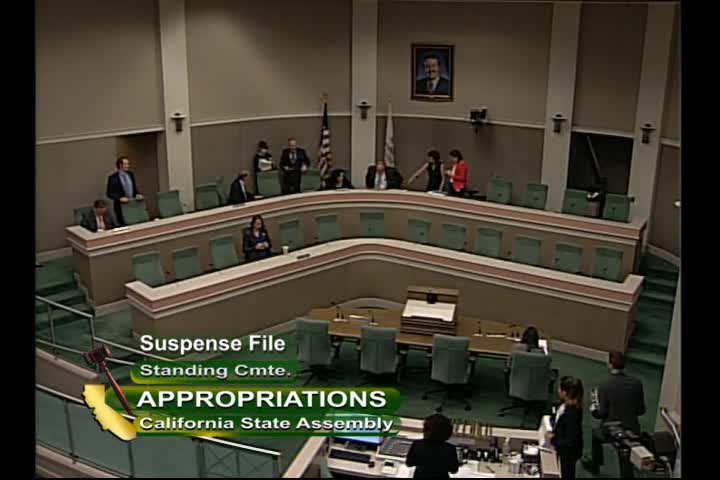 1H
Assembly Standing Committee on Appropriations
 5MIN
Senate Standing Committee on Appropriations
 17MIN
Senate Standing Committee on Health
Bill Author