SB 180: Controlled substances: sentence enhancements: prior convictions.
- Session Year: 2017-2018
- House: Senate
- Latest Version Date: 2017-10-11
Existing law imposes on a person convicted of a violation of, or of conspiracy to violate, specified crimes relating to controlled substances a sentence enhancement to include a full, separate, and consecutive 3-year term for each prior conviction of, or for each prior conviction of conspiracy to violate, specified controlled substances crimes, including possession for sale and purchase for sale of opiates, opium derivatives, and hallucinogenic substances.
This bill would instead limit the above sentence enhancement to only be based on each prior conviction of, or on each prior conviction of conspiracy to violate, the crime of using a minor in the commission of offenses involving specified controlled substances.
(a) Any person convicted of a violation of, or of a conspiracy to violate, Section 11351, 11351.5, or 11352 shall receive, in addition to any other punishment authorized by law, including Section 667.5 of the Penal Code, a full, separate, and consecutive three-year term for each prior felony conviction of, or for each prior felony conviction of conspiracy to violate, Section 11380, whether or not the prior conviction resulted in a term of imprisonment.
(b) Any person convicted of a violation of, or of a conspiracy to violate, Section 11378.5, 11379.5, 11379.6, or 11383 shall receive, in addition to any other punishment authorized by law, including Section 667.5 of the Penal Code, a full, separate, and consecutive three-year term for each prior felony conviction of, or for each prior felony conviction of conspiracy to violate, Section 11380, whether or not the prior conviction resulted in a term of imprisonment.
(c) Any person convicted of a violation of, or of a conspiracy to violate, Section 11378 or 11379 with respect to any substance containing a controlled substance specified in paragraph (1) or (2) of subdivision (d) of Section 11055 shall receive, in addition to any other punishment authorized by law, including Section 667.5 of the Penal Code, a full, separate, and consecutive three-year term for each prior felony conviction of, or for each prior felony conviction of conspiracy to violate, Section 11380, whether or not the prior conviction resulted in a term of imprisonment.
(d) The enhancements provided for in this section shall be pleaded and proven as provided by law.
(e) The conspiracy enhancements provided for in this section shall not be imposed unless the trier of fact finds that the defendant conspirator was substantially involved in the planning, direction, execution, or financing of the underlying offense.
(f) Prior convictions from another jurisdiction qualify for use under this section pursuant to Section 668.
(a) Any person convicted of a violation of, or of a conspiracy to violate, Section 11351, 11351.5, or 11352 shall receive, in addition to any other punishment authorized by law, including Section 667.5 of the Penal Code, a full, separate, and consecutive three-year term for each prior felony conviction of, or for each prior felony conviction of conspiracy to violate, Section 11351, 11351.5, 11352, 11378, 11378.5, 11379, 11379.5, 11379.6, 11380, 11380.5, or 11383, 11380, whether or not the prior conviction resulted in a term of imprisonment.
(b) Any person convicted of a violation of, or of a conspiracy to violate, Section 11378.5, 11379.5, 11379.6, 11380.5, or 11383 shall receive, in addition to any other punishment authorized by law, including Section 667.5 of the Penal Code, a full, separate, and consecutive three-year term for each prior felony conviction of, or for each prior felony conviction of conspiracy to violate, Section 11351, 11351.5, 11352, 11378, 11378.5, 11379, 11379.5, 11379.6, 11380, 11380.5, or 11383, 11380, whether or not the prior conviction resulted in a term of imprisonment.
(c) Any person convicted of a violation of, or of a conspiracy to violate, Section 11378 or 11379 with respect to any substance containing a controlled substance specified in paragraph (1) or (2) of subdivision (d) of Section 11055 shall receive, in addition to any other punishment authorized by law, including Section 667.5 of the Penal Code, a full, separate, and consecutive three-year term for each prior felony conviction of, or for each prior felony conviction of conspiracy to violate, Section 11351, 11351.5, 11352, 11378, 11378.5, 11379, 11379.5, 11379.6, 11380, 11380.5, or 11383, 11380, whether or not the prior conviction resulted in a term of imprisonment.
(d) The enhancements provided for in this section shall be pleaded and proven as provided by law.
(e) The conspiracy enhancements provided for in this section shall not be imposed unless the trier of fact finds that the defendant conspirator was substantially involved in the planning, direction, execution, or financing of the underlying offense.
(f) Prior convictions from another jurisdiction qualify for use under this section pursuant to Section 668.
|
Date
|
Status
|
|---|---|
| Oct 11, 2017 | Chaptered by Secretary of State. Chapter 677, Statutes of 2017. |
| Oct 11, 2017 | Approved by the Governor. |
| Sep 18, 2017 | Enrolled and presented to the Governor at 3 p.m. |
| Sep 13, 2017 | In Senate. Ordered to engrossing and enrolling. |
| Sep 12, 2017 | Read third time. Passed. Ordered to the Senate. |
| Jun 28, 2017 | Read second time. Ordered to third reading. |
| Jun 27, 2017 | From committee: Do pass. (Ayes 4. Noes 2.) (June 27). |
| Jun 13, 2017 | June 13 set for first hearing canceled at the request of author. |
| May 26, 2017 | Referred to Com. on PUB. S. |
| May 16, 2017 | In Assembly. Read first time. Held at Desk. |
| May 15, 2017 | Read third time. Passed. (Ayes 22. Noes 13. Page 1064.) Ordered to the Assembly. |
| Apr 20, 2017 | Read second time. Ordered to third reading. |
| Apr 19, 2017 | From committee: Do pass. (Ayes 5. Noes 2. Page 747.) (April 18). |
| Mar 15, 2017 | Set for hearing April 18. |
| Feb 2, 2017 | Referred to Com. on PUB. S. |
| Jan 25, 2017 | From printer. May be acted upon on or after February 24. |
| Jan 24, 2017 | Introduced. Read first time. To Com. on RLS. for assignment. To print. |
|
Date
|
Description
|
Location
|
Votes
|
|
|---|---|---|---|---|
| Sep 12, 2017 | SB 180 Mitchell Senate Third Reading By KALRA | Assembly Floor |
Passed |
|
| Jun 27, 2017 | Do pass. | Assembly Standing Committee on Public Safety |
Passed |
|
| May 15, 2017 | Senate 3rd Reading SB180 Mitchell et al. | Senate Floor |
Passed |
|
| Apr 18, 2017 | Do pass | Senate Standing Committee on Public Safety |
Passed |
This list shows positions taken on this bill by organizations on the date displayed, which is linked to the original source.
Positions by individuals are not included.
|
Organization
|
Position
|
Date
|
|---|---|---|
| A New Way of Life Re-Entry Project | ** Support | Apr 21, 2017 |
| Abode Services | ** Support | Jun 26, 2017 |
| Access Women's Health Justice | ** Support | Jun 26, 2017 |
| Advocacy Fund | ** Support | Jun 26, 2017 |
| AFSCME Local 3930 | ** Support | Jun 26, 2017 |
| Alameda County Public Defender | ** Support | Apr 21, 2017 |
| alameda county public defender's office | ** Support | Jun 26, 2017 |
| Alliance for Boys & Men of Color | * Support | Apr 18, 2017 |
| Alliance San Diego | ** Support | Jun 26, 2017 |
| American Civil Liberties Union of California | ** Support | Jun 26, 2017 |
| American Federation of Teachers, Local 2121 | ** Support | Jun 26, 2017 |
| American Friends Service Committee | * Support | Jun 27, 2017 |
| Amity Foundation | ** Support | Jun 26, 2017 |
| anne martin center | ** Support | Jun 26, 2017 |
| Anti-Recidivism Coalition | ** Support | Jun 26, 2017 |
| Arts for Incarcerated Youth Network | ** Support | Jun 26, 2017 |
| Asian American Criminal Trial Lawyers Association | ** Support | Jun 26, 2017 |
| Asian American Drug Abuse Program | ** Support | Jun 26, 2017 |
| Asian Law Alliance | ** Support | Jun 26, 2017 |
| Asian Pacific Environmental Network | ** Support | Apr 21, 2017 |
| Asian Prisoner Support Committee | ** Support | Jun 26, 2017 |
| Association For Los Angeles Deputy Sheriffs | ** Against | Jun 26, 2017 |
| Association of Deputy District Attorneys | ** Against | Jun 26, 2017 |
| Bay Area Black Worker Center | ** Support | Jun 26, 2017 |
| Because Black is Still Beautiful | ** Support | Jun 26, 2017 |
| Bend the Arc: A Jewish Partnership for Justice | ** Support | Jun 26, 2017 |
| Berkeley Youth Alternatives | ** Support | Apr 21, 2017 |
| black women for wellness | ** Support | Jun 26, 2017 |
| Black Women Organized for Political Action | ** Support | Jun 26, 2017 |
| California Alliance for Youth and Community Justice | ** Support | Apr 21, 2017 |
| California Association of Alcohol and Drug Program Executives | ** Support | Jun 26, 2017 |
| California Association Of Code Enforcement Officers | ** Against | Jun 26, 2017 |
| California Attorneys For Criminal Justice | ** Support | Jun 26, 2017 |
| California Catholic Conference | ** Support | Jun 26, 2017 |
| California Coalition for Women Prisoners | ** Support | Jun 26, 2017 |
| California College And University Police Chiefs Association | ** Against | Jun 26, 2017 |
| california communities united for restorative youth justice | ** Support | Jun 26, 2017 |
| California District Attorneys Association | ** Against | Jun 26, 2017 |
| California Immigrant Policy Center | ** Support | Jun 26, 2017 |
| California Immigrant Youth Justice Alliance | ** Support | Jun 26, 2017 |
| California Narcotics Officers Association | ** Against | Jun 26, 2017 |
| California Police Chiefs Association | ** Against | Jun 26, 2017 |
| California Prison Focus | ** Support | Jun 26, 2017 |
| California Prison Moratorium Project | ** Support | Jun 26, 2017 |
| California Public Defenders Association | ** Support | Jun 26, 2017 |
| California State Sheriffs' Association | ** Against | Jun 26, 2017 |
| Californians for Safety and Justice | ** Support | Jun 26, 2017 |
| Californians United for a Responsible Budget | ** Support | Jun 26, 2017 |
| Center for Living and Learning | ** Support | Jun 26, 2017 |
| Center on Juvenile and Criminal Justice | ** Support | Jun 26, 2017 |
| City of Refuge Church | ** Support | Jun 26, 2017 |
| City of Richmond, Mayor Tom Butt | ** Support | Apr 21, 2017 |
| Coalition for Humane Immigrant Rights of Los Angeles | ** Support | Apr 21, 2017 |
| Coleman Advocates | ** Support | Apr 21, 2017 |
| Coleman Advocates for Children and Youth | ** Support | Jun 26, 2017 |
| Congregation Beth Israel Judea | ** Support | Jun 26, 2017 |
| Contra Costa County Board of Supervisors, District One | ** Support | Apr 21, 2017 |
| Contra Costa County Racial Justice Coalition | ** Support | Jun 26, 2017 |
| Courage Campaign | ** Support | Jun 26, 2017 |
| Critical Resistance Los Angeles | ** Support | Apr 21, 2017 |
| Downtown Women's Center | ** Support | Jun 26, 2017 |
| Drug Policy Alliance | ** Support | Jun 26, 2017 |
| Eastlake United for Justice | ** Support | Jun 26, 2017 |
| Ella Baker Center For Human Rights | ** Support | Jun 26, 2017 |
| Employee Rights Center | ** Support | Jun 26, 2017 |
| Equal Justice Society | ** Support | Jun 26, 2017 |
| Essie Justice Group | * Support | Apr 18, 2017 |
| Felony Murder Elimination Project | ** Support | Jun 26, 2017 |
| Forward Together | ** Support | Jun 26, 2017 |
| Friends Committee On Legislation Of California | ** Support | Apr 21, 2017 |
| Further The Work | ** Support | Jun 26, 2017 |
| Harm Reduction Services | ** Support | Jun 26, 2017 |
| Healing Dialogue and Action | ** Support | Jun 26, 2017 |
| HIV Education and Prevention Project of Alameda County | ** Support | Apr 21, 2017 |
| HIV Education Prevention Project of Alameda County | ** Support | Jun 26, 2017 |
| Homeless Health Care Los Angeles | ** Support | Apr 21, 2017 |
| Human Rights of the Incarcerated at UC Berkeley | ** Support | Jun 26, 2017 |
| Hunger Action Los Angeles | ** Support | Jun 26, 2017 |
| Immigrant Youth Coalition | ** Support | Jun 26, 2017 |
| International Faith Based Coalition | ** Against | Jun 26, 2017 |
| International Faith Based Coalition | ** Support | Jun 26, 2017 |
| Jewish Youth for Community Action | ** Support | Apr 21, 2017 |
| john gioia, contra costa county supervisor | ** Support | Jun 26, 2017 |
| Justice Now | ** Support | Jun 26, 2017 |
| kehila community synagogue | ** Support | Jun 26, 2017 |
| Kehilla Community Synagogue | ** Support | Apr 21, 2017 |
| La Para TransLatinas | ** Support | Jun 26, 2017 |
| Law Enforcement Action Partnership | ** Support | Apr 21, 2017 |
| law enforcement action project | ** Support | Jun 26, 2017 |
| Law Foundation of Silicon Valley | ** Support | Jun 26, 2017 |
| League Of Women Voters Of California | ** Support | Jun 26, 2017 |
| Los Angeles County Professional Peace Officers Association | ** Against | Jun 26, 2017 |
| Los Angeles Police Protective League | ** Against | Jun 26, 2017 |
| Mexican American Legal Defense Fund | ** Support | Jun 26, 2017 |
| milpa | ** Support | Jun 26, 2017 |
| National Association Of Social Workers, California Chapter | ** Support | Jun 26, 2017 |
| National Center for Youth Law | ** Support | Jun 26, 2017 |
| National Council of Jewish Women, California | ** Support | Jun 26, 2017 |
| National Employment Law Project | ** Support | Apr 21, 2017 |
| Needle Exchange Emergency Distribution | ** Support | Jun 26, 2017 |
| Oakland Rising | ** Support | Jun 26, 2017 |
| office of the mayor, city of richmond | ** Support | Jun 26, 2017 |
| Or Shalom Jewish Community | ** Support | Jun 26, 2017 |
| people's life fund | ** Support | Jun 26, 2017 |
| Positive Women's Network | ** Support | Apr 21, 2017 |
| Positive Womens Network | ** Support | Apr 21, 2017 |
| Prison Law Office | ** Support | Jun 26, 2017 |
| Prison Policy Initiative | ** Support | Jun 26, 2017 |
| Prisoners with Children | * Support | Jun 27, 2017 |
| Project Inform | ** Support | Jun 26, 2017 |
| PURPOSE | ** Against | Apr 17, 2017 |
| Reentry Success Center | ** Support | Jun 26, 2017 |
| Religious Action Center of Reform Judaism | ** Support | Jun 26, 2017 |
| Riverside Sheriffs' Association | ** Against | Jun 26, 2017 |
| Riverside Temple Beth El | ** Support | Jun 26, 2017 |
| Root & Rebound | ** Support | Jun 26, 2017 |
| Roots Community Health Center | ** Support | Jun 26, 2017 |
| Rubicon Programs | ** Support | Jun 26, 2017 |
| safe alternatives to violent enterprises | ** Support | Jun 26, 2017 |
| Safe Alternatives to Violent Environments | ** Support | Apr 21, 2017 |
| San Diego County District Attorney's Office | ** Against | Jun 26, 2017 |
| San Diego LGBT Community Center | ** Support | Apr 21, 2017 |
| San Diego Organizing Project | ** Support | Jun 26, 2017 |
| San Francisco Public Defender | * Support | Apr 18, 2017 |
| Several individuals | ** Support | Apr 21, 2017 |
| SHIELDS for Families | ** Support | Jun 26, 2017 |
| Showing Up for Racial Justice Bay Area Chapter | ** Support | Apr 21, 2017 |
| Starting Over, Inc. | ** Support | Jun 26, 2017 |
| Students for Sensible Drug Policy | ** Support | Jun 26, 2017 |
| surj bay area | ** Support | Jun 26, 2017 |
| Swords to Plowshares | ** Support | Jun 26, 2017 |
| t'ruah | ** Support | Apr 21, 2017 |
| Tarzana Treatment Centers, Inc. | ** Support | Apr 21, 2017 |
| Temple Beth El | ** Support | Jun 26, 2017 |
| Temple Beth El Jewish Community Center | ** Support | Apr 21, 2017 |
| The Gubbio Project | ** Support | Apr 21, 2017 |
| The Kitchen | ** Support | Jun 26, 2017 |
| The Sentencing Project | ** Support | Jun 26, 2017 |
| Think Dignity | ** Support | Jun 26, 2017 |
| Time for Change Foundation | ** Support | Jun 26, 2017 |
| Together to End Solitary Confinement, Santa Cruz | ** Support | Apr 21, 2017 |
| together to end solitary, santa cruz | ** Support | Jun 26, 2017 |
| Transgender Gendervariant Intersex Justice Project | ** Support | Jun 26, 2017 |
| Truah | ** Support | Apr 21, 2017 |
| Trybe Inc. | ** Support | Jun 26, 2017 |
| Urban Habitat | ** Support | Jun 26, 2017 |
| Venice Community Housing Corporation | ** Support | Jun 26, 2017 |
| W. Haywood Burns Institute | ** Support | Jun 26, 2017 |
| wellstone democratic renewal committee | ** Support | Jun 26, 2017 |
| western center on law and poverty | ** Support | Jun 26, 2017 |
| Western Regional Advocacy Project | ** Support | Jun 26, 2017 |
| Women's Foundation of California | ** Support | Jun 26, 2017 |
| Youth for Environmental Safety | ** Support | Apr 21, 2017 |
| Youth for Environmental Sanity | ** Support | Jun 26, 2017 |
| Youth Justice Coalition | ** Support | Apr 21, 2017 |
SENATE THIRD READING
STR Bill Id:SB 180
Author:(Mitchell and Lara)
As Introduced Ver:January 24, 2017
Majority vote
SENATE VOTE: 22-13
Committee | Votes | Ayes | Noes |
Public Safety | 4-2 | Jones-Sawyer, Gonzalez Fletcher, Rubio, Santiago | Lackey, Flora |
SUMMARY: Limits the current three year enhancement for a prior conviction related to the sale or possession for sale of specified controlled substance to convictions for a controlled substance offense where a minor was used or employed in the commission of the offense.
EXISTING LAW:
- Classifies controlled substances in five schedules according to their danger and potential for abuse. Schedule I controlled substances have the greatest restrictions and penalties, including prohibiting the prescribing of a Schedule I controlled substance.
- Provides that any person convicted of, or conspiracy to commit the sale, furnishing, transportation, or possession for sale of cocaine, cocaine base, heroin, or other specified controlled substances shall, in addition to any other punishment, receive a full, separate, and consecutive three year term of imprisonment in a county jail for each prior conviction for sale, possession for sale, manufacturing, possession with the intent to manufacture specified controlled substances, or using a minor in the commission of specified controlled substance offenses.
- Provides that any person convicted of, or conspiracy to commit the sale, possession for sale, the manufacture, possession with the intent to manufacture PCP, or using a minor in the commission of specified offenses related to PCP shall, in addition to any other punishment, receive a full, separate, and consecutive three year term of imprisonment in a county jail for each prior conviction for sale, possession for sale, manufacturing, possession with the intent to manufacture specified controlled substances, or using a minor in the commission of specified controlled substance offenses.
- Provides that every person that transports, imports into the state, sells, furnishes, administers, or gives away, or offers to transport, import into the state, sell, furnish, or give away, or attempts to import into this state or transport cocaine, cocaine base, or heroin, or other specified controlled substances listed in the controlled substance schedule, without a written prescription from a licensed physician, dentist, podiatrist, or veterinarian shall be punished by imprisonment for three, four, or five years.
- States, except as provided, that every person who possesses for sale or purchases for purposes of sale any of the specified controlled substances, including cocaine and heroin, shall be punished by imprisonment in a county jail for two, three, or four years.
- Provides that every person that transports, imports into the state, sells, furnishes, administers, or gives away, or offers to transport, import into the state, sell, furnish, or give away, or attempts to import into this state or transport methamphetamine, or other specified controlled substances listed in the controlled substance schedule, without a written prescription from a licensed physician, dentist, podiatrist, or veterinarian shall be punished by imprisonment for two, three, or four years.
- States that the possession for sale of methamphetamine, and other specified controlled substances is punishable by imprisonment in a county jail for 16 months, or two or three years.
- Provides that any person who manufactures, compounds, converts, produces, derives, processes, or prepares specified controlled substances is guilty of a felony, punishable by imprisonment in the state prison for three, five or seven years.
- Any person who possesses specified chemicals with the intent to manufacture methamphetamine or PCP shall be punished by two, four, or six years in state prison.
FISCAL EFFECT: Unknown. This bill is keyed non-fiscal by the Legislative Counsel.
COMMENTS: According to the author, "Sentencing enhancements do not prevent or reduce drug sales, but do have destabilizing effects on families and communities. Research finds that the length of sentences does not provide any deterrent or significant incapacitation effect; in other words, longer sentences for drug offenses do not reduce recidivism, nor do they affect drug availability. Most people who commit crimes are either unaware of penalties or do not think they will be caught (Russell, Sarah F, "Rethinking Recidivist Enhancements: The Role of Prior Drug Convictions in Federal Sentencing," 43 UC Davis L. Rev. 1135 2010). Research shows that people incarcerated for selling drugs are quickly replaced by other people (U.S. Sentencing Commission, Fifteen Years of Guideline Sentencing: An assessment of how well the federal criminal justice system is achieving the goals of sentencing reform 2004).
"As of 2014, there were at least 1,635 people in county jails across California sentenced to five to ten years. There were at minimum, 124 people sentenced to more than ten years in county jail. The leading causes of these excessive sentences are drug sales, possession for sale, or similar nonviolent drug offenses, which are compounded by cruel and costly sentencing enhancements. (California State Sheriffs Association letter to "Interested Parties" April 25, 2014.) Thousands more are serving such sentences in prison.
"In November 2016, voters overwhelmingly passed Proposition 57, making people in prison with non-violent convictions eligible for parole after completing their base terms – prior to serving time on any sentence enhancements. However, Proposition 57 does not impact people in county jail. Thus, people in county jail can serve longer sentences than those in state prison, even if they have been convicted of the same crime.
"The current policy of sentencing people with nonviolent convictions to long periods of incarceration is an expensive failure that does not reduce the availability of drugs in our communities. Instead, it cripples state and local budgets that should prioritize drug prevention and treatment, education, and employment as our best policies against drug sales and drug use.
"SB 180 will reduce racial disparities in the criminal justice system. Although rates of drug use and sales are comparable across racial lines, people of color are far more likely to be stopped, searched, arrested, prosecuted, convicted, and incarcerated for drug law violations than are whites. (Human Rights Watch, "Decades of Disparity: Drug Arrests and Race in the United States." 2009). Research also shows that prosecutors are twice as likely to pursue a mandatory minimum sentence for Blacks as for whites charged with the same offense (Sonja B Starr and Marit Rehavi, "Mandatory Sentencing and Racial Disparity: Assessing the Role of Prosecutors and the Effects of Booker," Yale Law Journal 123, no. 1 2013).
"However, incarceration can lead to more crime by destabilizing families and communities. Many people who return from incarceration face insurmountable barriers to finding jobs and housing and reintegrating into society. Family members of incarcerated people also struggle with overwhelming debt from court costs, visitation and telephone fees, and diminished family revenue. The longer the sentence, the more severe these problems (Ella Baker Center for Human Rights, "Who Pays? The True Cost of Incarceration on Families" 2015)."
Analysis Prepared by: Gregory Pagan / PUB. S. / (916) 319-3744 FN: 0001067
Date of Hearing: June 27, 2017
Chief Counsel: Gregory Pagan
ASSEMBLY COMMITTEE ON PUBLIC SAFETY
Reginald Byron Jones-Sawyer, Sr., Chair
SBPCA Bill Id:SB 180
Author:(Mitchell) – As Introduced Ver:January 24, 2017
SUMMARY: Limits the current three year enhancement for a prior conviction related to the sale or possession for sale of specified controlled substance to convictions for the manufacture of a controlled substance, or using or employing a minor in the commission of specified controlled substance offenses.
EXISTING LAW:
- Classifies controlled substances in five schedules according to their danger and potential for abuse. Schedule I controlled substances have the greatest restrictions and penalties, including prohibiting the prescribing of a Schedule I controlled substance. (Health & Saf. Code, §§ 11054 to 11058.)
- Provides that any person convicted of, or conspiracy to commit the sale, furnishing, transportation, or possession for sale of cocaine, cocaine base, heroin, or other specified controlled substances shall, in addition to any other punishment, receive a full, separate, and consecutive three year term of imprisonment in a county jail for each prior conviction for sale, possession for sale, manufacturing, possession with the intent to manufacture specified controlled substances, or using a minor in the commission of specified controlled substance offenses. (Health & Saf. Code, § 11370.2, subd. (a).)
- Provides that any person convicted of, or conspiracy to commit the sale, possession for sale, the manufacture, possession with the intent to manufacture PCP, or using a minor in the commission of specified offenses related to PCP shall, in addition to any other punishment, receive a full, separate, and consecutive three year term of imprisonment in a county jail for each prior conviction for sale, possession for sale, manufacturing, possession with the intent to manufacture specified controlled substances, or using a minor in the commission of specified controlled substance offenses. (Health & Saf. Code, § 11370.2, subd. (b).)
- Provides that every person that transports, imports into the state, sells, furnishes, administers, or gives away, or offers to transport, import into the state, sell, furnish, or give away, or attempts to import into this state or transport cocaine, cocaine base, or heroin, or other specified controlled substances listed in the controlled substance schedule, without a written prescription from a licensed physician, dentist, podiatrist, or veterinarian shall be punished by imprisonment for three, four, or five years. (Health & Saf. Code, § 11352, subd. (a).)
- States, except as provided, that every person who possesses for sale or purchases for purposes of sale any of the specified controlled substances, including cocaine and heroin, shall be punished by imprisonment in a county jail for two, three, or four years. (Health & Saf. Code, § 11351.)
- Provides that every person that transports, imports into the state, sells, furnishes, administers, or gives away, or offers to transport, import into the state, sell, furnish, or give away, or attempts to import into this state or transport methamphetamine, or other specified controlled substances listed in the controlled substance schedule, without a written prescription from a licensed physician, dentist, podiatrist, or veterinarian shall be punished by imprisonment for two, three, or four years. (Health & Saf. Code, § 11379, subd. (a).)
- States that the possession for sale of methamphetamine, and other specified controlled substances is punishable by imprisonment in a county jail for 16 months, or two or three years. (Health & Saf. Code, § 11378.)
- Provides that any person who manufactures, compounds, converts, produces, derives, processes, or prepares specified controlled substances is guilty of a felony, punishable by imprisonment in the state prison for three, five or seven years. (Health & Saf. Code, § 11379.6.)
- Any person who possesses specified chemicals with the intent to manufacture methamphetamine or PCP shall be punished by two, four, or six years in state prison. (Health & Saf. Code, § 11383.)
FISCAL EFFECT: Unknown
COMMENTS:
- Author's Statement: According to the author, "Sentencing enhancements do not prevent or reduce drug sales, but do have destabilizing effects on families and communities. Research finds that the length of sentences does not provide any deterrent or significant incapacitation effect; in other words, longer sentences for drug offenses do not reduce recidivism, nor do they affect drug availability. Most people who commit crimes are either unaware of penalties or do not think they will be caught (Russell, Sarah F, “Rethinking Recidivist Enhancements: The Role of Prior Drug Convictions in Federal Sentencing,” 43 UC Davis L. Rev. 1135 2010). Research shows that people incarcerated for selling drugs are quickly replaced by other people (U.S. Sentencing Commission, Fifteen Years of Guideline Sentencing: An assessment of how well the federal criminal justice system is achieving the goals of sentencing reform 2004).
"As of 2014, there were at least 1,635 people in county jails across California sentenced to five to ten years. There were at minimum, 124 people sentenced to more than ten years in county jail. The leading causes of these excessive sentences are drug sales, possession for sale, or similar nonviolent drug offenses, which are compounded by cruel and costly sentencing enhancements. (California State Sheriffs Association letter to “Interested Parties” April 25, 2014.) Thousands more are serving such sentences in prison.
"In November 2016, voters overwhelmingly passed Proposition 57, making people in prison with non-violent convictions eligible for parole after completing their base terms – prior to serving time on any sentence enhancements. However, Proposition 57 does not impact people in county jail. Thus, people in county jail can serve longer sentences than those in state prison, even if they have been convicted of the same crime.
"The current policy of sentencing people with nonviolent convictions to long periods of incarceration is an expensive failure that does not reduce the availability of drugs in our communities. Instead, it cripples state and local budgets that should prioritize drug prevention and treatment, education, and employment as our best policies against drug sales and drug use.
"SB 180 will reduce racial disparities in the criminal justice system. Although rates of drug use and sales are comparable across racial lines, people of color are far more likely to be stopped, searched, arrested, prosecuted, convicted, and incarcerated for drug law violations than are whites. (Human Rights Watch, “Decades of Disparity: Drug Arrests and Race in the United States.” 2009). Research also shows that prosecutors are twice as likely to pursue a mandatory minimum sentence for Blacks as for whites charged with the same offense (Sonja B Starr and Marit Rehavi, “Mandatory Sentencing and Racial Disparity: Assessing the Role of Prosecutors and the Effects of Booker,” Yale Law Journal 123, no. 1 2013).
"However, incarceration can lead to more crime by destabilizing families and communities. Many people who return from incarceration face insurmountable barriers to finding jobs and housing and reintegrating into society. Family members of incarcerated people also struggle with overwhelming debt from court costs, visitation and telephone fees, and diminished family revenue. The longer the sentence, the more severe these problems (Ella Baker Center for Human Rights, “Who Pays? The True Cost of Incarceration on Families” 2015)."
- Controlled Substance Sentence Enhancements: The enhancement for prior drug crime convictions was enacted through AB 2320 (Condit), Chapter 1398, Statutes of 1985. The bill included un-codified legislative intent “to punish more severely those persons who are in the regular business of trafficking in, or production of, narcotics and those persons who deal in large quantities of narcotics as opposed to individuals who have a less serious, occasional, or relatively minor role in this activity.”
The bill - called “The Dealer Statute” - was sponsored by the Los Angeles District Attorney and also included enhancements based on the weight of the drug involved in specified drug commerce crime. The weight enhancement is found in Health and Safety Code Section 11370.4. The Senate Judiciary Committee analysis of the bill set out the sponsor’s explanation that the bill was modeled on particularly harsh federal drug crime laws. The sponsor argued that the bill was necessary to eliminate an incentive for persons “to traffic [in drugs] in California where sentences are significantly lighter than in federal law.” The federal laws to which the sponsor referred were those enacted in the expansion of the war against drugs during the Reagan administration. These laws included reduced judicial discretion through mandatory minimum sentences. In recent years, Congress has passed some sentence reductions, most notably reducing the disparity between cocaine powder crimes and cocaine base crimes.
- Argument in Support: According to the Californians for Safety and Justice, "The Repeal Ineffective Sentence Enhancements (RISE) Act would repeal the three-year sentence enhancement for prior drug convictions, with an exception for convictions involving a minor. This extreme punishment has failed to protect communities or reduce the availability of drugs, but has resulted in overcrowded jails and prisons, harsh sentences, and crippled state and local budgets. By repealing this expensive and ineffective punishment, funds will be freed to reinvest in community programs that actually improve the quality of life and reduce crime.
"The RISE Act would begin to undo the damage of the failed War on Drugs. The long sentences that were central to the drug war strategy utterly failed to reduce drug availability or the number of people harmed in the illicit drug market. Controlled substances are now cheaper and more available than ever before , despite a massive investment of tax revenue and human life in an unprecedented build-up and fill-up of prisons and jails that have devastated low-income communities of color.
"The RISE Act is urgently needed. Counties around the state are building new jails to imprison more people with long sentences, funneling money away from community-based programs and services.
"Since 2007, California has spent $2.5 billion on county jail construction – not including the costs borne by the counties for construction and increased staffing, or the state’s debt service for these high-interest loans. Sheriffs have argued for this expansion by pointing to their growing jail populations, particularly people with long sentences and with mental health and substance use needs. By reforming sentencing enhancements for people with prior drug convictions, SB 180 will address the rationale for costly jail expansion, allowing state and county funds to be invested in programs and services that meet community needs and improve public safety, including community-based mental health and substance treatment, job programs, and affordable housing.
"The RISE Act will reduce racial disparities in the criminal justice system. Although rates of drug use and selling are comparable across racial lines, people of color are far more likely to be stopped, searched, arrested, prosecuted, convicted and incarcerated for drug law violations than whites.
"Further, sentence enhancements based on prior convictions target the poorest and most marginalized people in our communities – those with substance use and mental health needs, and those who, after prior contact with police or imprisonment, have struggled to reintegrate into society."
- Argument in Opposition: According to the Office of the San Diego County District Attorney, "Currently, the Office of National Drug Control Policy reports our nation is in the grips of an opioid epidemic, and California is not immune. In 2013, California hospitals treated more than 11,500 patients suffering an opioid or heroin overdose; this is about one overdose every 45 minutes. Now is not the time to reduce penalties for sales and trafficking of opioids. Other states are actually increasing the penalties for trafficking in certain opioids. Legislation aimed at funding educational and prevention programs to reduce the current opioid addiction epidemic would better serve all Californians.
“SB 180 repeals the current three year sentence enhancement for defendants convicted of specified drug sales and possession for sale crimes who have prior convictions for drug sales or possession for sale offenses. The scenario we will face is one where a defendant with multiple convictions for drug sales or possession for sale, or drug manufacturing offenses would be treated the same as a first time offender. This would include reducing the sentences for those who knowingly manufacture “Norco” pills laced with fentanyl, an opiate about 100 times stronger than heroin. The first time offender may need education or treatment for opioid addiction, while the defendant with multiple convictions for sales should receive punishment.
“Heroin addiction has spiked in recent years, especially for counties along the U.S. – Mexico border. In 2014, more than 300 San Diegans died from heroin overdoses, and the percentages of men and women booked into county jail who tested positive for heroin or other opiates were the highest since tracking began in 2000. The problem is severe enough locally that patrol deputies in the San Diego Sheriff’s Department are now equipped to administer a drug that counteracts the effects of heroin and other opioids. Overall, experts say heroin use in San Diego County is at its highest rate in 15 years. Experts say the resurgent heroin epidemic stems in part from doctors’ over-prescription of legal opioid pain killers such as Oxycodone or its time release cousin, OxyContin. When addicts can no longer afford, or find these particularly addictive over-the-counter drugs, they move on to heroin. Drug cartels are taking notice of the demand and in 2014, law enforcement agencies in the U.S. seized triple the amount of heroin confiscated in 2009. SB 180 will allow these drug dealers to escape the additional punishment they deserve.” - Prior Legislation: SB 966 (Mitchell), of the 2015-2016 Legislative Session, was identical to this bill, and would have eliminated the three year sentence enhancement upon conviction for the sale or possession for sale of specified controlled substances with a prior conviction related to the same. SB 966 failed passage in this Committee.
REGISTERED SUPPORT / OPPOSITION:
Support
Abode Services
Access Support Network of San Luis Obisbo and Monterey Counties
ACCESS Women's Health Justice
Advocacy Fund
Alliance san Diego
Alameda County Public Defender's office
American Civil Liberties Union of California
American Federation of Teachers, Local 2121
American Friend Service Committee
Amity Foundation
Anne Martin Center
Anti-Recidivism Coalition
Arts for Incarcerated Youth network
Asian American Criminal Trial Lawyers Association
Asian American Drug Abuse Program
Asian Law Alliance
Asian Prisoner Support Committee
Bay Area Black Worker Center
Because Black is Still Beautiful
Bend the Arc: A Jewish Partnership for Justice
Black Women for Wellness
Black Women Organized for Political Action
California Association of Alcohol and Drug Program Executives
California Attorneys for Criminal Justice
California Catholic Conference
California Coalition for Women Prisoners
California Communities United for Restorative Youth Justice
California Immigrant Policy Center
California Immigrant Youth Justice Alliance
California Prison Focus
California Prison Moratorium Project
California Public Defenders Association
Californians for Safety and Justice
Californians United for a Responsible Budget
Center for Living and Learning
Center on Juvenile and Criminal Justice
City of Refuge Church
Coleman Advocates for Children and Youth
Congregation Beth Israel Judea
Contra Costa County Racial Justice Coalition
Courage Campaign
Critical Resistance
Downtown Women's Center
Drug Policy Alliance
Eastlake United for Justice
Ella Baker Center for Human Rights
El/La Para TransLatinas
Employee Rights Center
Equal Justice Society
Felony Murder Elimination Project
Forward Together
Further the Work
Harm Reduction Services
Healing Dialogue and Action
HealthRIGHT360
HIV Education Prevention Project of Alameda County
Human Rights Commission of the City and County of San Francisco
Human Rights of the Incarcerated at UC Berkeley
Hunger Action Los Angeles
Immigrant Youth Coalition
International Faith Based Coalition
John Gioia, Contra Costa County Supervisor
Justice Now
Kehila Community Synagogue
Law Enforcement Action Project
Law Foundation of Silicon Valley
League of Women Voters of California
Mexican American Legal Defense Fund (MALDEF)
MILPA
National Association of Social Workers, California Chapter
National Council of Jewish Women, California
National Center for Youth Law
Needle Exchange Emergency Distribution
Oakland Rising
Office of the Mayor, City of Richmond
Or Shalom Jewish Community
People's life Fund
Prison Law Office
Prison Policy Initiative
Project Inform
Reentry Council of the City and County of San Francisco
Reentry Success Center
Religious Action Center of Reform Judaism
Riverside Temple Beth El
Root & Rebound
Roots Community Health Center
Rubicon Programs
Safe Alternatives to Violent Enterprises
San Diego Organizing Project
SHIELDS for Families
Starting Over, Inc.
Students for Sensible Drug Policy
SURJ (Showing Up for Racial Justice) Bay Area
Swords to Plowshares
The Sentencing Project
Temple Beth EL
The Kitchen
Think Dignity
Time for Change Foundation
Together to End Solitary, Santa Cruz
Transgender Gendervariant Intersex Justice Project
Trybe Inc.
UDW/AFSCME Local 3930
Urban Habitat
Venice Community Housing Corporation
W. Haywood Burns institute
Wellstone Democratic Renewal Committee
Western Center on Law and Poverty
Western Regional Advocacy Project
Women's Foundation of California
Youth for Environmental Sanity
56 Private Individuals
Opposition
Association for Los Angeles Deputy Sheriffs
Association of Deputy District Attorneys
California Association of Code Enforcement Officers
California College and University Police Chiefs Association
California District Attorneys Association
California Narcotics Officers Association
California Police Chiefs Association
California State Sheriffs' Association
International Faith Based Coalition
Los Angeles County Probation Officers Union AFSCME Local 685
Los Angeles County Professional Peace Officers Association
Los Angeles Police Protective League
Riverside Sheriffs' Association
San Diego County District Attorney's Office
Analysis Prepared by: Gregory Pagan / PUB. S. / (916) 319-3744
Office of Senate Floor Analyses (916) 651-1520 Fax: (916) 327-4478 | SB |
THIRD READING
Bill No: SB 180
:
SENATE PUBLIC SAFETY COMMITTEE: 5-2, 4/18/17
AYES: Skinner, Bradford, Jackson, Mitchell, Wiener
NOES: Anderson, Stone
SOURCE: American Civil Liberties Union of California
California Public Defenders Association
Californians United for a Responsible Budget
Coalition for Humane Immigrant Rights of Los Angeles
Drug Policy Alliance
Ella Baker Center for Human Rights
Friends Committee on Legislation of California
Legal Services for Prisoners with Children
DIGEST: This bill repeals the current enhancement for specified drug offenses under which a defendant receives an additional three-year term for each prior conviction of any one of a number of specified drug offenses, except in cases where a minor was used in the commission of the prior offense.
Existing law:
- Classifies controlled substances in five schedules according to their medical utility and potential for abuse. Schedule I controlled substances have the greatest restrictions and penalties, including prohibiting the prescribing of a Schedule I controlled substance. (Health & Saf. Code §§ 11054 to 11058.)
- Provides penalties for possession, possession for purposes of sale, and manufacturing, transporting and distributing controlled substances. Sentences for drug offenses are typically subject to Penal Code Section 1170 (h). Convicted persons serve felony sentences in county jails, unless disqualified by a prior serious felony conviction or a sex offender registry requirement. (Health & Saf. Code §§ 11350-11401.)
- Provides that a person convicted of specified drug commerce crimes who has previously been convicted of certain drug crimes, is subject to an additional three-year sentence enhancement for each prior conviction. The sentence is to be served in jail unless the defendant is disqualified from a jail term by a prior serious felony conviction or sex offender registration, or another statute requires a prison term. (Health & Saf. Code § 11370.2.) The enhancement also covers a conviction for conspiracy to commit any of the listed crimes. The qualifying offenses are listed below. All statutory references in the list are to the Health and Safety Code:
- Possession for sale of cocaine, heroin, specified opiates, and other specified drugs - § 11351
- Possession for sale of cocaine base - § 11351.5
- Sale, distribution, or transportation of cocaine, cocaine base, heroin, specified opiates - § 11352
- Possession for sale of methamphetamine or specified other drugs - § 11378
- Sale, distribution, or transportation of methamphetamine or specified other drugs - § 11379
- Possession for sale of PCP - § 11378.5
- Sale, distribution, or transportation of PCP - § 11379.5
- Manufacturing any controlled substance through chemical extraction or synthesis - § 11379.6
- Using a minor in the commission of specified drug offenses - § 11380
- Possession of precursor chemicals with intent to manufacture PCP - § 11383
This bill repeals the three-year sentence enhancement for each of a defendant’s prior convictions for the above listed drug offenses where the defendant is convicted in the current case of one of a number of specified drug offenses, except in cases where the person was convicted of using a minor to commit the prior offense.
Background
The enhancement for prior drug crime convictions was enacted through AB 2320 (Condit, Chapter 1398, Statutes of 1985). The bill included un-codified legislative intent “to punish more severely those persons who are in the regular business of trafficking in, or production of, narcotics and those persons who deal in large quantities of narcotics as opposed to individuals who have a less serious, occasional, or relatively minor role in this activity.” The sponsor of the bill, the Los Angeles District Attorney, argued that the bill was necessary to eliminate an incentive for persons “to traffic [in drugs] in California where sentences are significantly lighter than in federal law.” The federal laws to which the sponsor referred included reduced judicial discretion through mandatory minimum sentences.
Criminal justice experts and commentators have noted that, with regard to sentencing, “a key question for policy development regards whether enhanced sanctions or an enhanced possibility of being apprehended provide any additional deterrent benefits. Research to date generally indicates that increases in the certainty of punishment, as opposed to the severity of punishment, are more likely to produce deterrent benefits.” (Valerie Wright, Ph.D., Deterrence in Criminal Justice Evaluating Certainty vs. Severity of Punishment (November 2010), The Sentencing Project [http://www.sentencingproject.org/doc/Deterrence%20 Briefing%20.pdf].)
Related/Prior Legislation
SB 966 (Mitchell, 2016) would have repealed the current enhancement for specified drug offenses under which a defendant receives an additional three-year term for each prior conviction of any one of a number of specified drug offenses, except in cases where a minor was used in the commission of the prior offense. The bill failed passage in Assembly Public Safety Committee.
FISCAL EFFECT: Appropriation: Fiscal Com.: Local:
American Civil Liberties Union of California (co-source)
California Public Defenders Association (co-source)
Californians United for a Responsible Budget (co-source)
Coalition for Humane Immigrant Rights of Los Angeles (co-source)
Drug Policy Alliance (co-source)
Ella Baker Center for Human Rights (co-source)
Friends Committee on Legislation of California (co-source)
Legal Services for Prisoners with Children (co-source)
Access Support Network of San Luis Obispo and Monterey Counties
Access Women’s Health Justice
Alameda County Public Defender
Alliance San Diego
American Federation of Teachers, Local 2121
American Friends Service Committee
Amity Foundation
A New Way of Life Re-Entry Project
Anti-Recidivism Coalition
Asian American Criminal Trial Lawyers Association
Asian American Drug Abuse Program, Inc.
Asian Pacific Environmental Network
Asian Prisoner Support Committee
Bay Area Black Worker Center
Because Black is Still Beautiful
Bend the Arc: A Jewish Partnership for Justice
Berkeley Youth Alternatives
Black Women Organized for Political Action
California Alliance for Youth and Community Justice
California Association of Alcohol and Drug Program Executives, Inc.
California Attorneys for Criminal Justice
California Catholic Conference
California Coalition for Women Prisoners
California Immigrant Policy Center
California Immigrant Youth Justice Alliance
California Prison Focus
California Prison Moratorium Project
Californians for Safety and Justice
Center for Living and Learning
Center on Juvenile and Criminal Justice
City and County of San Francisco Human Rights Commission
City of Refuge Church
City of Richmond, Mayor Tom Butt
Coleman Advocates
Communities United for Restorative Youth Justice
Congregation Beth Israel Judea
Contra Costa County Board of Supervisors, District One
Contra Costa County Racial Justice Coalition
Courage Campaign
Critical Resistance Los Angeles
Downtown Women’s Center
Eastlake United for Justice
El/La Para TransLatinas
Equal Justice Society
Employee Rights Center
Felony Murder Elimination Project
Forward Together
Further The Work
Harm Reduction Services
Health RIGHT 360
HIV Education and Prevention Project of Alameda County
Homeless Health Care Los Angeles
Human Rights of the Incarcerated at UC Berkeley
Immigrant Youth Coalition
Jewish Youth for Community Action
Justice Now
Kehilla Community Synagogue
Law Enforcement Action Partnership
League of Women Voters of California
National Association of Social Workers, California Chapter
National Center for Youth Law
National Council of Jewish Women, California
National Employment Law Project
Needle Exchange Emergency Distribution
Oakland Rising
Or Shalom Jewish Community
People’s Life Fund
Positive Women’s Network
Prison Law Office
Prison Policy Initiative
Project Inform
Reentry Success Center
Riverside Temple Beth El
Root and Rebound
Roots Community Health Center
Rubicon Programs
Safe Alternatives to Violent Environments
San Diego LGBT Community Center
San Diego Organizing Project
SHIELDS for Families
Showing Up for Racial Justice Bay Area Chapter
Starting Over, Inc.
Students for Sensible Drug Policy
Swords to Plowshares
Tarzana Treatment Centers, Inc.
Temple Beth El Jewish Community Center
The Gubbio Project
The Kitchen
The Sentencing Project
Think Dignity
Time for Change Foundation
Together to End Solitary Confinement, Santa Cruz
Transgender Gendervariant Intersex Justice Project
T’ruah
Trybe Inc.
Urban Habitat
Venice Community Housing Corp.
W. Haywood Burns Institute
Wellstone Democratic Renewal Club
Western Regional Advocacy Project
Women’s Foundation of California
Youth for Environmental Safety
Youth Justice Coalition
Several individuals
OPPOSITION: (Verified 4/20/17)
Association for Deputy District Attorneys
Association for Los Angeles Deputy Sheriffs
California Association of Code Enforcement Officers
California College and University Police Chiefs Association
California District Attorneys Association
California Narcotics Officers Association
California Police Chiefs Association
California State Sheriffs’ Association
International Faith Based Coalition
Los Angeles County Professional Peace Officers Association
Los Angeles Police Protective League
Riverside Sheriffs’ Association
San Diego County District Attorney
ARGUMENTS IN SUPPORT: According to the sponsors of the bill:
The RISE Act would repeal the three-year sentence enhancement for prior drug convictions, with an exception for convictions involving a minor. This extreme punishment has failed to protect communities or reduce the availability of drugs, but has resulted in overcrowded jails and prisons, harsh sentences, and crippled state and local budgets. By repealing this expensive and ineffective punishment, funds will be freed to reinvest in community programs that actually improve the quality of life and reduce crime….The RISE Act is urgently needed. Counties around the state are building new jails to imprison more people with long sentences, funneling money away from community-based programs and services.
Since 2007, California has spent $2.5 billion on county jail construction – not including the costs borne by the counties for construction and increased staffing, or the state’s debt service for these high-interest loans. Sheriffs have argued for this expansion by pointing to their growing jail populations, particularly people with long sentences and with mental health and substance use needs. By reforming sentencing enhancements for people with prior drug convictions, SB 180 will address the rationale for costly jail expansion, allowing state and county funds to be invested in programs and services that meet community needs and improve public safety, including community-based mental health and substance treatment, job programs, and affordable housing.
The RISE Act will reduce racial disparities in the criminal justice system. Although rates of drug use and selling are comparable across racial lines, people of color are far more likely to be stopped, searched, arrested, prosecuted, convicted and incarcerated for drug law violations than whites.
Further, sentence enhancements based on prior convictions target the poorest and most marginalized people in our communities – those with substance use and mental health needs, and those who, after prior contact with police or imprisonment, have struggled to reintegrate into society.
ARGUMENTS IN OPPOSITION: According to California Narcotic Officers Association:
Under current law, we have the ability to impose higher sanctions on those who are hard-core drug traffickers by adding an additional three years for each prior conviction to the current conviction of a trafficker who has been convicted pursuant to Health & Safety Code Sections 11351, 11351.5 or 11352 – opiates, opiate derivatives or hallucinogenic substances. Senate Bill 180 will prevent the imposition of the enhancement for opiate, opiate derivative or hallucinogenic traffickers who have prior drug trafficking convictions. The consequence of Senate Bill 180 will be to treat the career drug trafficker exactly the same as the person who has been convicted of their first offense.
We believe that there is an enhanced level of seriousness posed to a community by career drug traffickers and that the enhanced sentence that is available under current law should be retained. Put another way, there is nothing benign about the drug dealer who systematically preys on the most vulnerable of our society. We do not believe that proponents of the bill have made the case that the arc of social progress is advanced by reducing the accountability of career drug traffickers.
4/21/17 12:50:38
**** END ****
SENATE COMMITTEE ON PUBLIC SAFETY
Senator Nancy Skinner, Chair
2017 - 2018 Regular
Bill No: SB 180 Hearing Date: April 18, 2017
Author: | Mitchell | ||
Version: | January 24, 2017 | ||
Urgency: | No | Fiscal: | No |
Consultant: | SJ | ||
Subject: Controlled Substances: Sentence Enhancements: Prior Convictions
HISTORY
Source: American Civil Liberties Union of California
California Public Defenders Association
Californians United for a Responsible Budget
Coalition for Humane Immigrant Rights of Los Angeles
Drug Policy Alliance
Ella Baker Center for Human Rights
Friends Committee on Legislation of California
Legal Services for Prisoners with Children
Prior Legislation: SB 966 (Mitchell) Failed Assembly Public Safety (2016)
AB 2320 (Condit) Chapter 1398, Stats. 1985
Support: Access Support Network of San Luis Obispo and Monterey Counties; Access Women’s Health Justice; Alameda County Public Defender; American Federation of Teachers, Local 2121; American Friends Service Committee; Amity Foundation; A New Way of Life Re-Entry Project; Anti-Recidivism Coalition; Asian American Criminal Trial Lawyers Association; Asian American Drug Abuse Program, Inc.; Asian Pacific Environmental Network; Asian Prisoner Support Committee; Bay Area Black Worker Center; Because Black is Still Beautiful; Bend the Arc: A Jewish Partnership for Justice; Berkeley Youth Alternatives; Black Women Organized for Political Action; California Alliance for Youth and Community Justice; California Association of Alcohol and Drug Program Executives, Inc.; California Attorneys for Criminal Justice; California Catholic Conference; California Coalition for Women Prisoners; California Immigrant Policy Center; California Immigrant Youth Justice Alliance; California Prison Focus; California Prison Moratorium Project; Center for Living and Learning; Center on Juvenile and Criminal Justice; City and County of San Francisco Human Rights Commission; City of Refuge Church; City of Richmond, Mayor Tom Butt; Coleman Advocates; Communities United for Restorative Youth Justice; Congregation Beth Israel Judea; Contra Costa County Board of Supervisors, District One; Contra Costa County Racial Justice Coalition; Courage Campaign; Critical Resistance Los Angeles; Downtown Women’s Center; Eastlake United for Justice; El/La Para TransLatinas; Equal Justice Society; Felony Murder Elimination Project; Forward Together; Further The Work; Harm Reduction Services; Health RIGHT 360; HIV Education and Prevention Project of Alameda County; Homeless Health Care Los Angeles; Human Rights of the Incarcerated at UC Berkeley; Immigrant Youth Coalition; Jewish Youth for Community Action; Justice Now; Kehilla Community Synagogue; Law Enforcement Action Partnership; National Association of Social Workers, California Chapter; National Center for Youth Law; National Council of Jewish Women, California; National Employment Law Project; Needle Exchange Emergency Distribution; Oakland Rising; Or Shalom Jewish Community; People’s Life Fund; Positive Women’s Network; Prison Law Office; Prison Policy Initiative; Project Inform; Reentry Success Center; Riverside Temple Beth El; Root and Rebound; Roots Community Health Center; Rubicon Programs; Safe Alternatives to Violent Environments; SHIELDS for Families; Starting Over, Inc.; Students for Sensible Drug Policy; Swords to Plowshares; Tarzana Treatment Centers, Inc.; Temple Beth El Jewish Community Center; The Gubbio Project; The Kitchen; The Sentencing Project; Think Dignity; Time for Change Foundation; Together to End Solitary Confinement, Santa Cruz; Transgender Gendervariant Intersex Justice Project; T’ruah; Trybe Inc.; Urban Habitat; Venice Community Housing Corp.; W. Haywood Burns Institute; Wellstone Democratic Renewal Club; Western Regional Advocacy Project; Women’s Foundation of California; Youth for Environmental Safety; Youth Justice Coalition; several individuals
Opposition: Association for Deputy District Attorneys; Association for Los Angeles Deputy Sheriffs; California Association of Code Enforcement Officers; California College and University Police Chiefs Association; California District Attorneys Association; California Narcotics Officers Association; California Police Chiefs Association; California State Sheriffs; Association; International Faith Based Coalition; Los Angeles County Professional Peace Officers Association; Los Angeles Police Protective League; Riverside Sheriffs Association; San Diego County District Attorney
PURPOSE
The purpose of this bill is to repeal the current enhancement for specified drug offenses under which a defendant receives an additional three-year term for each prior conviction of any one of a number of specified drug offenses, except in cases where a minor was used in the commission of the prior offense.
Existing law classifies controlled substances in five schedules according to their medical utility and potential for abuse. Schedule I controlled substances have the greatest restrictions and penalties, including prohibiting the prescribing of a Schedule I controlled substance. (Health & Saf. Code, §§ 11054 to 11058.)
Existing law provides penalties for possession, possession for purposes of sale, and manufacturing, transporting and distributing controlled substances. Sentences for drug offenses are typically subject to Penal Code Section 1170 (h). Convicted persons serve felony sentences in county jails, unless disqualified by a prior serious felony conviction or a sex offender registry requirement. (Health & Saf. Code §§ 11350-11401.)
Existing law provides that a person convicted of certain specified drug commerce crimes who has previously been convicted of any of those crimes, is subject to an additional three-year sentence enhancement for each prior conviction, to be served in jail unless the defendant is disqualified from a jail term by a prior serious felony conviction or sex offender registration, or another statute requires a prison term. (Health & Saf. § 11370.2.) The enhancement also covers a conviction for conspiracy to commit any of the listed crimes. The qualifying offenses are as follows. All statutory references in the list are to the Health and Safety Code:
- Possession for sale of cocaine, heroin, specified opiates, and other specified drugs - § 11351
- Possession for sale of cocaine base - § 11351.5
- Sale, distribution, or transportation of cocaine, cocaine base, heroin, specified opiates - § 11352
- Possession for sale of methamphetamine or specified other drugs - § 11378
- Sale, distribution, or transportation of methamphetamine or specified other drugs - § 11379
- Possession for sale of PCP - § 11378.5
- Sale, distribution, or transportation of PCP - § 11379.5
- Manufacturing any controlled substance through chemical extraction or synthesis - § 11379.6
- Using a minor in the commission of specified drug offenses - § 11380
- Possession of precursor chemicals with intent to manufacture PCP - § 11383
This bill repeals the three-year sentence enhancement for each of a defendant’s prior convictions for the above listed drug offenses where the defendant is convicted in the current case of one of a number of specified drug offenses, except in cases where the person was convicted of using a minor to commit the prior offense.
COMMENTS
1. Need for This Bill
According to the author:
Sentencing enhancements do not prevent or reduce drug sales, but do have destabilizing effects on families and communities. Research finds that the length of sentences does not provide any deterrent or significant incapacitation effect; in other words, longer sentences for drug offenses do not reduce recidivism, nor do they affect drug availability. Most people who commit crimes are either unaware of penalties or do not think they will be caught (Russell, Sarah F, “Rethinking Recidivist Enhancements: The Role of Prior Drug Convictions in Federal Sentencing,” 43 UC Davis L. Rev. 1135 2010). Research shows that people incarcerated for selling drugs are quickly replaced by other people (U.S. Sentencing Commission, Fifteen Years of Guideline Sentencing: An assessment of how well the federal criminal justice system is achieving the goals of sentencing reform 2004).
As of 2014, there were at least 1,635 people in county jails across California sentenced to five to ten years. There were at minimum, 124 people sentenced to more than ten years in county jail. The leading causes of these excessive sentences are drug sales, possession for sale, or similar nonviolent drug offenses, which are compounded by cruel and costly sentencing enhancements. (California State Sheriffs Association letter to “Interested Parties” April 25, 2014.) Thousands more are serving such sentences in prison.
In November 2016, voters overwhelmingly passed Proposition 57, making people in prison with non-violent convictions eligible for parole after completing their base terms – prior to serving time on any sentence enhancements. However, Proposition 57 does not impact people in county jail. Thus, people in county jail can serve longer sentences than those in state prison, even if they have been convicted of the same crime.
The current policy of sentencing people with nonviolent convictions to long periods of incarceration is an expensive failure that does not reduce the availability of drugs in our communities. Instead, it cripples state and local budgets that should prioritize drug prevention and treatment, education, and employment as our best policies against drug sales and drug use.
SB 180 (Mitchell) will reduce racial disparities in the criminal justice system. Although rates of drug use and sales are comparable across racial lines, people of color are far more likely to be stopped, searched, arrested, prosecuted, convicted, and incarcerated for drug law violations than are whites. (Human Rights Watch, “Decades of Disparity: Drug Arrests and Race in the United States.” 2009). Research also shows that prosecutors are twice as likely to pursue a mandatory minimum sentence for Blacks as for whites charged with the same offense (Sonja B Starr and Marit Rehavi, “Mandatory Sentencing and Racial Disparity: Assessing the Role of Prosecutors and the Effects of Booker,” Yale Law Journal 123, no. 1 2013).
However, incarceration can lead to more crime by destabilizing families and communities. Many people who return from incarceration face insurmountable barriers to finding jobs and housing and reintegrating into society. Family members of incarcerated people also struggle with overwhelming debt from court costs, visitation and telephone fees, and diminished family revenue. The longer the sentence, the more severe these problems (Ella Baker Center for Human Rights, “Who Pays? The True Cost of Incarceration on Families” 2015).
2. History of the Enhancement for Prior Drug Offenses
The enhancement for prior drug crime convictions was enacted through AB 2320 (Condit), Chapter 1398, Statutes of 1985. The bill included un-codified legislative intent “to punish more severely those persons who are in the regular business of trafficking in, or production of, narcotics and those persons who deal in large quantities of narcotics as opposed to individuals who have a less serious, occasional, or relatively minor role in this activity.”
The bill - called “The Dealer Statute” - was sponsored by the Los Angeles District Attorney and also included enhancements based on the weight of the drug involved in specified drug commerce crime. The weight enhancement is found in Health and Safety Code Section 11370.4. The Senate Judiciary Committee analysis of the bill set out the sponsor’s explanation that the bill was modeled on particularly harsh federal drug crime laws. The sponsor argued that the bill was necessary to eliminate an incentive for persons “to traffic [in drugs] in California where sentences are significantly lighter than in federal law.” The federal laws to which the sponsor referred were those enacted in the expansion of the war against drugs during the Reagan administration. These laws included reduced judicial discretion through mandatory minimum sentences. In recent years, Congress has passed some sentence reductions, most notably reducing the disparity between cocaine powder crimes and cocaine base crimes.
3. Research on the Deterrence Effect of Sentences Increases
Criminal justice experts and commentators have noted that, with regard to sentencing, “a key question for policy development regards whether enhanced sanctions or an enhanced possibility of being apprehended provide any additional deterrent benefits.
Research to date generally indicates that increases in the certainty of punishment, as opposed to the severity of punishment, are more likely to produce deterrent benefits.[1]
A comprehensive report published in 2014, entitled The Growth of Incarceration in the United States, discusses the effects on crime reduction through incapacitation and deterrence, and describes general deterrence compared to specific deterrence:
A large body of research has studied the effects of incarceration and other criminal penalties on crime. Much of this research is guided by the hypothesis that incarceration reduces crime through incapacitation and deterrence. Incapacitation refers to the crimes averted by the physical isolation of convicted offenders during the period of their incarceration. Theories of deterrence distinguish between general and specific behavioral responses. General deterrence refers to the crime prevention effects of the threat of punishment, while specific deterrence concerns the aftermath of the failure of general deterrence—that is, the effect on reoffending that might result from the experience of actually being punished. Most of this research studies the relationship between criminal sanctions and crimes other than drug offenses. A related literature focuses specifically on enforcement of drug laws and the relationship between those criminal sanctions and the outcomes of drug use and drug prices.[2]
In regard to deterrence, the authors note that in “the classical theory of deterrence, crime is averted when the expected costs of punishment exceed the benefits of offending. Much of the empirical research on the deterrent power of criminal penalties has studied sentence enhancements and other shifts in penal policy. . . .
Deterrence theory is underpinned by a rationalistic view of crime. In this view, an individual considering commission of a crime weighs the benefits of offending against the costs of punishment. Much offending, however, departs from the strict decision calculus of the rationalistic model. Robinson and Darley (2004) review the limits of deterrence through harsh punishment. They report that offenders must have some knowledge of criminal penalties to be deterred from committing a crime, but in practice often do not.”[3]
The authors of the 2014 report discussed above conclude that incapacitation of certain dangerous offenders can have “large crime prevention benefits,” but that incremental, lengthy prison sentences are ineffective for crime deterrence:
Whatever the estimated average effect of the incarceration rate on the crime rate, the available studies on imprisonment and crime have limited utility for policy. The incarceration rate is the outcome of policies affecting who goes to prison and for how long and of policies affecting parole revocation. Not all policies can be expected to be equally effective in preventing crime. Thus, it is inaccurate to speak of the crime prevention effect of incarceration in the singular. Policies that effectively target the incarceration of highly dangerous and frequent offenders can have large crime prevention benefits, whereas other policies will have a small prevention effect or, even worse, increase crime in the long run if they have the effect of increasing postrelease criminality.
4. Argument in Support
According to the sponsors of the bill:
The RISE Act would repeal the three-year sentence enhancement for prior drug convictions, with an exception for convictions involving a minor. This extreme punishment has failed to protect communities or reduce the availability of drugs, but has resulted in overcrowded jails and prisons, harsh sentences, and crippled state and local budgets. By repealing this expensive and ineffective punishment, funds will be freed to reinvest in community programs that actually improve the quality of life and reduce crime….
The RISE Act is urgently needed. Counties around the state are building new jails to imprison more people with long sentences, funneling money away from community-based programs and services.
Since 2007, California has spent $2.5 billion on county jail construction – not including the costs borne by the counties for construction and increased staffing, or the state’s debt service for these high-interest loans. Sheriffs have argued for this expansion by pointing to their growing jail populations, particularly people with long sentences and with mental health and substance use needs. By reforming sentencing enhancements for people with prior drug convictions, SB 180 will address the rationale for costly jail expansion, allowing state and county funds to be invested in programs and services that meet community needs and improve public safety, including community-based mental health and substance treatment, job programs, and affordable housing.
The RISE Act will reduce racial disparities in the criminal justice system. Although rates of drug use and selling are comparable across racial lines, people of color are far more likely to be stopped, searched, arrested, prosecuted, convicted and incarcerated for drug law violations than whites.
Further, sentence enhancements based on prior convictions target the poorest and most marginalized people in our communities – those with substance use and mental health needs, and those who, after prior contact with police or imprisonment, have struggled to reintegrate into society.
5. Argument in Opposition
According to the Association for Los Angeles Deputy Sheriffs, the Association of Deputy District Attorneys, the California Association of Code Enforcement Officers, the California College and University Police Chiefs Association, the California Narcotic Officers Association, the Los Angeles County Professional Peace Officers Association, the Los Angeles Police Protective League, and the Riverside Sheriffs Association:
Under current law, we have the ability to impose higher sanctions on those who are hard-core drug traffickers by adding an additional three years for each prior conviction to the current conviction of a trafficker who has been convicted
pursuant to Health & Safety Code Sections 11351, 11351.5 or 11352 – opiates, opiate derivatives or hallucinogenic substances. Senate Bill 180 will prevent the imposition of the enhancement for opiate, opiate derivative or hallucinogenic traffickers who have prior drug trafficking convictions. The consequence of Senate Bill 180 will be to treat the career drug trafficker exactly the same as the person who has been convicted of their first offense.
We believe that there is an enhanced level of seriousness posed to a community by career drug traffickers and that the enhanced sentence that is available under current law should be retained. Put another way, there is nothing benign about the drug dealer who systematically preys on the most vulnerable of our society. We do not believe that proponents of the bill have made the case that the arc of social progress is advanced by reducing the accountability of career drug traffickers.
-- END –
Valerie Wright, Ph.D., Deterrence in Criminal Justice Evaluating Certainty vs. Severity of Punishment (November 2010), The Sentencing Project (http://www.sentencingproject.org/doc/Deterrence%20Briefing%20.pdf.) ↑
The Growth of Incarceration in the United States (2014), Jeremy Travis, Bruce Western and Steve Redburn, Editors, Committee on Causes and Consequences of High Rates of Incarceration, The National Research Council, p. 131 (citations omitted) (http://johnjay.jjay.cuny.edu/nrc/NAS_report_on_incarceration.pdf,) ↑
Id. at 132-133. ↑
Discussed in Hearing
 9MIN
Assembly Floor
 26MIN
Assembly Standing Committee on Public Safety
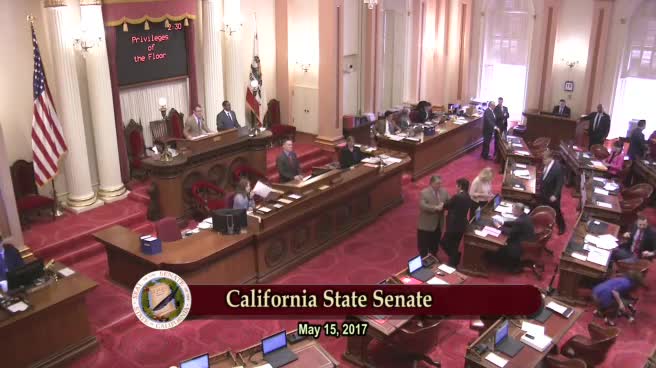 42MIN
Senate Floor
 21MIN




