SB 210: Heavy-Duty Vehicle Inspection and Maintenance Program.
- Session Year: 2017-2018
- House: Senate
- Latest Version Date: 2018-06-19
(1)Existing law requires the State Air Resources Board, in consultation with the Bureau of Automotive Repair and a specified review committee, to adopt regulations requiring owners or operators of heavy-duty diesel motor vehicles to perform regular inspections of their vehicles for excessive emissions of smoke. Existing law requires the state board, in consultation with the State Energy Resources Conservation and Development Commission, to adopt regulations requiring heavy-duty diesel motor vehicles to use emission control equipment and alternative fuels.
This bill would authorize the state board to develop and implement a Heavy-Duty Vehicle Inspection and Maintenance Program for nongasoline heavy-duty onroad motor vehicles, as specified. The bill would authorize the state board to assess a fee and penalties as part of the program. The bill would create the Truck Emission Check (TEC) Fund and the Diesel Emission System Inspection and Smoke Test (DESIST) Account in the fund, Fund, with all the moneys deposited in each the fund to be available upon appropriation.
(2)Existing law generally requires the registration of vehicles by the Department of Motor Vehicles. Under existing law, a violation of the Vehicle Code is an infraction, unless otherwise specified.
This bill, no later than one year after the effective date of a regulation implementing the Heavy-Duty Vehicle Inspection and Maintenance Program, would require the department to confirm that a heavy-duty vehicle, as specified, is compliant with, or exempt from, the program prior to the initial registration, the transfer of ownership, or the renewal of registration, except as specified. The bill would require the state board to notify the department of the vehicles allowed to be registered pursuant to these provisions.
This bill would authorize the department to issue a temporary permit, valid for a specified period and subject to certain conditions, to operate a vehicle for which registration may be refused pursuant to the above-described provisions, as specified. The bill would require the payment of a $50 fee for the temporary permit, to be deposited in the Truck Emission Check (TEC) Fund.
This bill, commencing one year after the effective date of a regulation implementing the Heavy-Duty Vehicle Inspection and Maintenance Program, would require a legal owner or registered owner of the heavy-duty vehicle to maintain a certificate of compliance with the vehicle, with exceptions, and would make a violation of this provision subject to a notice issued by an officer to correct the violation, as specified. The bill would require the driver of the vehicle to present the certificate of compliance for examination upon demand by a peace officer.
This bill would prohibit the operation of a heavy-duty vehicle on a public road in this state if that vehicle has an illuminated malfunction indicator light displaying a specified engine symbol, and would make a violation of this provision subject to a notice issued by an officer to correct the violation on the basis of its designation as a mechanical violation.
This bill would prohibit the operation of a heavy-duty vehicle in a manner resulting in the escape of visible smoke, except during active regeneration.
By creating new crimes, this bill would impose a state-mandated local program.
The California Constitution requires the state to reimburse local agencies and school districts for certain costs mandated by the state. Statutory provisions establish procedures for making that reimbursement.
This bill would provide that no reimbursement is required by this act for a specified reason.
Existing law requires the State Air Resources Board, in consultation with the Bureau of Automotive Repair and a specified review committee, to adopt regulations requiring owners or operators of heavy-duty diesel motor vehicles to perform regular inspections of their vehicles for excessive emissions of smoke. Existing law requires the state board, in consultation with the State Energy Resources Conservation and Development Commission, to adopt regulations requiring heavy-duty diesel motor vehicles to use emission control equipment and alternative fuels.
This bill would authorize the state board to develop and implement a Heavy-Duty Vehicle Inspection and Maintenance Program for nongasoline heavy-duty onroad motor vehicles, as specified. The bill would authorize the state board to assess a fee and penalties as part of the program. The bill would create the Truck Emission Check (TEC) Fund and the Diesel Emission System Inspection and Smoke Test (DESIST) Account in the fund, with all the moneys deposited in each fund to be available upon appropriation.
Existing law, the California Safe Drinking Water Act, requires the State Water Resources Control Board to administer provisions relating to the regulation of drinking water to protect public health, including, but not limited to, conducting research, studies, and demonstration programs relating to the provision of a dependable, safe supply of drinking water, enforcing the federal Safe Drinking Water Act, adoption of implementing regulations, and conducting studies and investigations to assess the quality of water in private domestic water supplies. The act requires the state board to establish a grant program, in consultation with the State Department of Education, to award grants to local educational agencies for the purposes of improving access to, and the quality of, drinking water in public schools serving kindergarten or any of grades 1 to 12, inclusive, and preschools and child day care facilities located on public school property. The act requires the state board to give priority to certain projects.This bill would require priority be given to projects for schools that have tested their drinking water fixtures, and the results show that the drinking water either does not meet the United States Environmental Protection Agency drinking water standards for lead or is above the California maximum contaminant level for any other contaminant, as specified.Existing law, the California Safe Drinking Water Act, requires the State Water Resources Control Board to administer provisions relating to the regulation of drinking water to protect public health, including, but not limited to, conducting research, studies, and demonstration programs relating to the provision of a dependable, safe supply of drinking water, enforcing the federal Safe Drinking Water Act, adoption of implementing regulations, and conducting studies and investigations to assess the quality of water in private domestic water supplies. The act requires the state board to establish a grant program, in consultation with the State Department of Education, to award grants to local educational agencies for the purposes of improving access to, and the quality of, drinking water in public schools serving kindergarten or any of grades 1 to 12, inclusive, and preschools and child day care facilities located on public school property. The act requires the state board to give priority to certain projects.
This bill would require priority be given to projects for schools that have tested their drinking water fixtures, and the results show that the drinking water either does not meet the United States Environmental Protection Agency drinking water standards for lead or is above the California maximum contaminant level for any other contaminant, as specified.
(4)The California Constitution requires the state to reimburse local agencies and school districts for certain costs mandated by the state. Statutory provisions establish procedures for making that reimbursement.This bill would provide that, if the Commission on State Mandates determines that the bill contains costs mandated by the state, reimbursement for those costs shall be made pursuant to the statutory provisions noted above.(1)Existing law requires a school district to provide access to free, fresh drinking water during meal times in school food service areas, unless the governing board of a school district adopts a resolution stating that it is unable to comply with this requirement and demonstrating the reasons why it is unable to comply due to fiscal constraints or health and safety concerns.
This bill would require a school district that has drinking water sources fixtures with drinking water that does not meet the United States Environmental Protection Agency drinking water standards for lead or is above the California maximum contaminant level for any other contaminant contaminant, as specified, to close access to those drinking water sources, fixtures, to provide alternative drinking water sources, as specified, and to notify specified persons if the school district is required to provide those alternative drinking water sources. By imposing additional duties on pupil public schools and school districts, this bill would impose a state-mandated local program.
(2)Under existing law, known as the Lead-Safe Schools Protection Act, the State Department of Public Health is required to perform various activities related to reducing the risk of exposure to lead hazards in public schools, including, among other activities, working with the State Department of Education to develop voluntary guidelines to ensure that lead hazards are minimized in the course of school repair and maintenance programs and abatement procedures.
TheThis bill would prohibit drinking water that does not meet the United States Environmental Protection Agency drinking water standards for lead or is above the California maximum contaminant level for any other contaminant, as specified, from being provided for consumption at a school facility.
(3)Existing law, the California Safe Drinking Water Act, requires the State Water Resources Control Board to administer provisions relating to the regulation of drinking water to protect public health, including, but not limited to, conducting research, studies, and demonstration programs relating to the provision of a dependable, safe supply of drinking water, enforcing the federal Safe Drinking Water Act, adoption of implementing regulations, and conducting studies and investigations to assess the quality of water in private domestic water supplies. The act requires the state board to establish a grant program, in consultation with the State Department of Education, to award grants to local educational agencies for the purposes of improving access to, and the quality of, drinking water in public schools serving kindergarten or any of grades 1 to 12, inclusive, and preschools and child day care facilities located on public school property. The act requires the state board to give priority to certain projects.
This bill would require priority be given to projects for schools that have tested their drinking water sources, fixtures, and the results show that the drinking water either contains lead or does not meet the United States Environmental Protection Agency drinking water standards. standards for lead or is above the California maximum contaminant level for any other contaminant, as specified.
(4)The California Constitution requires the state to reimburse local agencies and school districts for certain costs mandated by the state. Statutory provisions establish procedures for making that reimbursement.
This bill would provide that, if the Commission on State Mandates determines that the bill contains costs mandated by the state, reimbursement for those costs shall be made pursuant to the statutory provisions noted above.
(1)Existing law requires a school district to provide access to free, fresh drinking water during meal times in school food service areas, unless the governing board of a school district adopts a resolution stating that it is unable to comply with this requirement and demonstrating the reasons why it is unable to comply due to fiscal constraints or health and safety concerns.
This bill would require a school district that has drinking water sources with drinking water that does not meet the United States Environmental Protection Agency drinking water standards for lead or any other contaminant to close access to those drinking water sources, to provide alternative drinking water sources, as specified, and to notify specified persons if the school district is required to provide those alternative drinking water sources. By imposing additional duties on pupil schools and school districts, this bill would impose a state-mandated local program.
(2)Under existing law, known as the Lead-Safe Schools Protection Act, the State Department of Public Health is required to perform various activities related to reducing the risk of exposure to lead hazards in public schools, including, among other activities, working with the State Department of Education to develop voluntary guidelines to ensure that lead hazards are minimized in the course of school repair and maintenance programs and abatement procedures.
The bill would prohibit drinking water that does not meet the United States Environmental Protection Agency drinking water standards for lead from being provided at a school facility.
(3)Existing law, the California Safe Drinking Water Act, requires the State Water Resources Control Board to administer provisions relating to the regulation of drinking water to protect public health, including, but not limited to, conducting research, studies, and demonstration programs relating to the provision of a dependable, safe supply of drinking water, enforcing the federal Safe Drinking Water Act, adoption of implementing regulations, and conducting studies and investigations to assess the quality of water in private domestic water supplies. The act requires the state board to establish a grant program, in consultation with the State Department of Education, to award grants to local educational agencies for the purposes of improving access to, and the quality of, drinking water in public schools serving kindergarten or any of grades 1 to 12, inclusive, and preschools and child day care facilities located on public school property. The act requires the state board to give priority to certain projects.
This bill would require priority be given to projects for schools that have tested their drinking water sources, and the results show that the drinking water either contains lead or does not meet the United States Protection Agency drinking water standards.
(4)The California Constitution requires the state to reimburse local agencies and school districts for certain costs mandated by the state. Statutory provisions establish procedures for making that reimbursement.
This bill would provide that, if the Commission on State Mandates determines that the bill contains costs mandated by the state, reimbursement for those costs shall be made pursuant to the statutory provisions noted above.
The Legislature finds and declares all of the following:
(a)Communities in the state are too often exposed to unhealthy air. Communities near hubs of activity, such as warehouses and distribution centers, ports, highways, and roads with high levels of truck traffic, bear the burden of heavy-duty trucks that are not maintained.
(b)Trade corridors, such as those in the Inland Empire and Central Valley, consist of some of the most environmentally disadvantaged cities in the state.
(c)As of 2016, heavy-duty trucks operating in the state emitted nearly 60 percent of all oxides of nitrogen emissions from onroad mobile sources, which are the most significant contributor to both federal ozone and fine particulate matter (PM2.5) air quality standard violations across the sate. Heavy-duty diesel trucks are also the largest source of diesel particulate matter emissions in the state. Diesel particulate matter is a carcinogen and toxic air contaminant. Risks are particularly high in urban areas and along busy roadways where trucks operate.
(d)Statewide, about 12 million residents live in communities that exceed the federal ozone and PM2.5 standards. The health and economic impacts of exposure to elevated levels of ozone and PM2.5 in the state are considerable. Meeting air quality standards will pay substantial dividends in terms of reducing costs associated with emergency room visits and hospitalization, hospitalizations, lost work and school days, and, most importantly, premature mortality.
(e)While the state has made significant progress in improving air quality through existing programs by the state and air pollution control and air quality management districts, further action must be taken to achieve our public health, air quality, and climate goals
(f)The Heavy-Duty Vehicle Inspection and Maintenance Program established by Section 44150 44152 of the Health and Safety Code is a key step in achieving the states goals to improve public health and meeting our environmental imperatives.
(g)It is the intent of the Legislature that the Heavy-Duty Vehicle Inspection and Maintenance Program be developed in partnership between affected state agencies, the public, industry, and other stakeholders. stakeholders to address the inspection of, tampering with, and maintenance of emissions control systems. It is further the intent of the Legislature that the State Air Resources Board work with other relevant agencies in conducting a pilot program prior to the full-scale implementation of the Heavy-Duty Vehicle Inspection and Maintenance Program in order for this program to be developed in a way that minimizes costs to truck owners and fleets; provides a level playing field for industry through effective enforcement; and provides flexibility for the program to adapt as truck technology and industry evolves.
SEC. 2.Chapter 5.5 (commencing with Section 44150) is added to Part 5 of Division 26 of the Health and Safety Code, to read:5.5.Heavy-Duty Vehicle Inspection and Maintenance Program44150.For purposes of this chapter, program means the Heavy-Duty Vehicle Inspection and Maintenance Program established pursuant to Section 44152.
44150.44152.(a)The No later than ____ and to the extent authorized by federal law, the state board, in consultation with the bureau and the Department of Motor Vehicles, may develop and implement shall adopt and implement a regulation for a Heavy-Duty Vehicle Inspection and Maintenance Program for nongasoline heavy-duty onroad motor vehicles with a gross vehicle weight rating of more than 14,000 pounds, as defined by the state board, including, but not limited to, single-vehicle fleets and other vehicles that are registered in another state and but operate in the state. on California roads. In adopting a regulation implementing the program, the state board may shall do all of the following:
(1)Establish test procedures for different motor vehicle model years and emissions control technologies that measure the effectiveness of the control of emissions of oxides of nitrogen, nitrogen and particulate matter, and greenhouse gases. matter. The procedures may include, but are not limited to, procedures for the use of onboard diagnostics systems. system data and test procedures that measure the effectiveness of the control of emissions of greenhouse gases.
(2)Require a motor vehicle to pass the test procedures in order to register or operate in the state. The state board may establish in the regulation full or partial exemptions from the requirements of this section for categories of vehicles it determines on the basis of substantial evidence that the economic costs of compliance substantially outweigh the benefits of compliance, including public health benefits.
(3)Allow a streamlined process for the owner or operator of a vehicle fleet who has an established compliance history. history with the program.
(4)Establish program validation methods for evaluating program effectiveness, fraud investigation, and research purposes. The validation methods may include directing a subset of vehicles for emissions testing.
(5)Develop and implement enforcement methods to ensure continuing compliance with this section and Section 27153 of the Vehicle Code. The enforcement methods may include, but are not limited to, all of the following:
(A)Visual inspections.
(B)Functional inspections.
(C)Requiring emissions testing of vehicles.
(5)Develop(6)Develop, in coordination with the Department of Motor Vehicles, an information technology database to collect and track vehicle test data, assess the data to determine compliance, and regularly generate lists of compliant vehicle identification numbers and transmit them to the Department of Motor Vehicles in order for the Department of Motor Vehicles to issue annual vehicle registration notices. notices to be issued.
(6)Allow for contracting for services to administer any component of the program.(7)Establish licensing standards for persons engaged in the business of inspection, diagnosis, and repair of heavy-duty motor vehicles.(8)Establish a disciplinary and penalty schedule, an appeals process, and a recourse for fraud or incompetence by parties involved in motor vehicle inspections, testing, or repair.(b)The state board may establish licensing standards for persons engaged in the business of the inspection, diagnosis, and repair of heavy-duty motor vehicles. The board also may establish qualification standards or approval, operational, or licensure standards for testing equipment, including protocols, hardware, and software used for the submission of vehicle test data to the state board or its contractors.
(c)(1)As part of the program, the state board shall develop a Heavy-Duty Vehicle Inspection and Maintenance Compliance Certificate. The state board shall issue the certificate to the legal owner, registered owner, or designee of a vehicle that, at the discretion of the state board, meets the requirements of the program so that vehicle owners and operators may easily demonstrate proof of compliance, as required pursuant to Sections 27158.1 and 27158.2 of the Vehicle Code.
(2)The certificate of compliance shall contain information determined to be necessary by the state board that includes, but need not be limited to, all of the following:
(A)Date issued.
(B)Date of expiration.
(C)Name and residence or business address or mailing address of the legal owner or registered owner.
(D)Vehicle identification number assigned to the vehicle.
(E)Description of the vehicle that includes the year, make, and model of the vehicle.
(d)The Department of Transportation, the Department of Food and Agriculture, and the Department of the California Highway Patrol may provide any necessary information to help facilitate the installation of equipment necessary to implement the program.
(e)The state board, the Department of Motor Vehicles, and the Department of Food and Agriculture may develop initiatives for outreach and education to help ensure compliance with the program.
(f)The state board shall request a permit to deploy equipment on the state highway system, as defined in Article 3 (commencing with Section 300) of Chapter 2 of Division 1 of the Streets and Highway Code, in accordance with Chapter 3 (commencing with Section 660) of Division 1 of the Streets and Highways Code, and in cooperation with the Department of the California Highway Patrol.
(g)The state board may inspect vehicles subject to this section in conjunction with the safety and weight enforcement activities of the Department of the California Highway Patrol or at other locations selected by the state board in consultation with the Department of the California Highway Patrol. Inspection locations may include instate private facilities where fleet vehicles are serviced or maintained. The state board and the Department of the California Highway Patrol may conduct these inspections cooperatively or independently, and the state board may contract for assistance in the conduct of these inspections.
(h)(1)The state board may issue a citation to the owner of a vehicle in violation of this section or a regulation promulgated pursuant to this section. The state board may require the operator of a vehicle to submit to a test procedure and may specify that refusal to submit is an admission constituting proof of a violation. The state board may require that, when a citation has been issued pursuant to this section, the owner of a vehicle in violation of the regulation shall be required to correct every deficiency specified in the citation within a timeframe determined by the state board.
(2)When deciding whether to issue a citation, the state board may take into account whether the owner of the vehicle has obtained a temporary permit to operate the vehicle pursuant to Section 4156.5 of the Vehicle Code.
(i)The state board shall provide an owner cited as violating this section an opportunity for an administrative hearing consistent with the process established pursuant to Article 3 (commencing with Section 60065.1) and Article 4 (commencing with Section 60075.1) of Subchapter 1.25 of Chapter 1 of Division 3 of Title 17 of the California Code of Regulations. Following notice and an opportunity for an administrative hearing, the state board, at its discretion, may use the procedure set forth in subdivision (j) of Section 44011.6 for a vehicle owner cited pursuant to this section.
(j)After an order imposing an administrative penalty becomes final pursuant to the hearing procedures identified in subdivision (i) and no petition for a writ of mandate has been filed within the time allotted for seeking judicial review of the order, the state board may apply to the Superior Court for the County of Sacramento for a judgment in the amount of the administrative penalty. The application, which shall include a certified copy of the final order of the administrative hearing officer, shall constitute a sufficient showing to warrant the issuance of the judgment.
44151.44154.(a)The state board shall assess a fee to fund the reasonable costs of implementing the program established pursuant to this chapter.
(b)All fees collected by the state board pursuant to this chapter shall be deposited in the Truck Emission Check (TEC) Fund, which is hereby created in the State Treasury. All moneys in the fund shall be available upon appropriation by the Legislature to the state board for the regulatory purposes of this chapter. the program.
(c)All penalty moneys collected by the state board pursuant to this chapter shall be deposited in the Diesel Emission System Inspection and Smoke Test (DESIST) Account, which is hereby created in the TEC Fund in the State Treasury. All moneys in the account shall be available upon appropriation by the Legislature. Air Pollution Control Fund.
44152.The 44156.Prior to fully implementing the program, the state board, in consultation with the bureau, the Department of Transportation, the Department of Motor Vehicles, the Department of the California Highway Patrol, other interested state agencies, and stakeholders as part of a public process, may shall implement a pilot program prior to fully implementing the program authorized pursuant to this chapter. that develops and demonstrates technologies that show potential for readily bringing vehicles into the program. The state board shall report the findings of the pilot program on its Internet Web site.
SEC. 3.Section 4000.17 is added to the Vehicle Code, immediately following Section 4000.15, to read:4000.17.(a)No later than one year after the effective date of a regulation implementing the Heavy-Duty Vehicle Inspection and Maintenance Program described in Section 44152 of the Health and Safety Code, the department shall confirm, prior to the initial registration, the transfer of ownership, or the renewal of registration, that a heavy-duty vehicle is compliant with, or exempt from, the Heavy-Duty Vehicle Inspection and Maintenance Program.
(b)For purposes of this section, heavy-duty vehicle means a nongasoline heavy-duty onroad motor vehicle with a gross vehicle weight rating of more than 14,000 pounds, as defined by the State Air Resources Board pursuant to Section 44152 of the Health and Safety Code.
(c)Subdivision (a) does not apply to a transfer of ownership and registration under any of the following circumstances:
(1)A motor vehicle registered to a sole proprietorship is transferred to the proprietor as owner.
(2)The transfer is between companies the principal business of which is leasing motor vehicles, if there is no change in the lessee or operator of the motor vehicle or between the lessor and the person who has been, for at least one year, the lessees operator of the motor vehicle.
(3)The transfer is between the lessor and lessee of the motor vehicle, if there is no change in the lessee or operator of the motor vehicle.
(4)An additional individual is added as a registered owner of the motor vehicle.
(d)The State Air Resources Board shall notify the department of the motor vehicles allowed to be registered pursuant to this section.
SEC. 4.Section 4156.5 is added to the Vehicle Code, to read:4156.5.(a)Except as provided in subdivision (b), the department in its discretion may issue a temporary permit to operate a vehicle when a payment of fees has been accepted in an amount to be determined by, and paid to, the department, by the owner or other person in lawful possession of the vehicle, for a vehicle for which registration may be refused pursuant to Section 4000.17. The permit shall be subject to the terms and conditions that the department shall deem appropriate under the circumstances.
(b)The department shall not issue a temporary permit pursuant to subdivision (a) to operate a vehicle for which a certificate of compliance is required pursuant to Section 4000.17, and for which that certificate of compliance has not been issued, unless the department is presented with sufficient evidence, as determined by the department, that the vehicle has failed its most recent inspection pursuant to the Heavy-Duty Vehicle Inspection and Maintenance Program described in Section 44152 of the Health and Safety Code.
(c)Only one temporary permit may be issued pursuant to this section for any vehicle, unless otherwise approved by the State Air Resources Board.
(d)A temporary permit issued pursuant to this section is valid for either 60 days after the expiration of the registration of the vehicle or 60 days after the date that vehicle is removed from nonoperation, whichever is applicable at the time the temporary permit is issued.
(e)(1)A fee of fifty dollars ($50) shall be paid for a temporary permit issued pursuant to this section.
(2)After deducting its administrative costs, the department shall deposit fees collected pursuant to paragraph (1) in the Truck Emission Check (TEC) Fund described in subdivision (b) of Section 44151 of the Health and Safety Code, to be used for regulatory activities under the Heavy-Duty Vehicle Inspection and Maintenance Program.
SEC. 5.Section 24019 is added to the Vehicle Code, to read:24019.(a)A nongasoline heavy-duty onroad motor vehicle with a gross vehicle weight rating of more than 14,000 pounds shall not be operated on a public road in this state if that vehicle has an illuminated malfunction indicator light (MIL) displaying the International Standards Organization (ISO) 2575 engine symbol F01, consistent with subdivision (d) of Section 1971.1 of Title 13 of the California Code of Regulations.
(b)A violation of this section shall be considered a mechanical violation under Section 40610 of the Vehicle Code. A peace officer shall not stop a vehicle solely on suspicion of a violation of this section.
SEC. 6.Section 27153 of the Vehicle Code is amended to read:27153.No (a)A motor vehicle shall not be operated in a manner resulting in the escape of excessive smoke, flame, gas, oil, or fuel residue.
The provisions of this section apply(b)A nongasoline heavy-duty onroad motor vehicle with a gross vehicle weight rating of more than 14,000 pounds shall not be operated in a manner resulting in the escape of visible smoke, except during active regeneration.
(c)This section applies to motor vehicles of the United States or its agencies, to the extent authorized by federal law.
SEC. 7.Section 27158.1 is added to the Vehicle Code, to read:27158.1.(a)Commencing one year after the effective date of a regulation implementing the Heavy-Duty Vehicle Inspection and Maintenance Program described in Section 44152 of the Health and Safety Code, a legal owner or registered owner of a nongasoline heavy-duty onroad motor vehicle with a gross vehicle weight rating of more than 14,000 pounds shall maintain a certificate of compliance, as described in Section 44152 of the Health and Safety Code, or a facsimile or electronic copy thereof, with the vehicle for which the certificate is issued.
(b)Subdivision (a) does not apply when a certificate of compliance is necessarily removed from the vehicle for the purpose of renewal or when the vehicle is left unattended.
(c)A violation of this section shall be cited in accordance with Section 40610.
SEC. 8.Section 27158.2 is added to the Vehicle Code, to read:27158.2.(a)The driver of a nongasoline heavy-duty onroad motor vehicle with a gross vehicle weight rating of more than 14,000 pounds shall present the certificate of compliance, as described in Section 44152 of the Health and Safety Code, or other evidence of the certificate of compliance, of the vehicle under his or her immediate control for examination upon demand by any peace officer.
(b)The driver of the vehicle described in subdivision (a) shall not present to any peace officer a certificate of compliance not issued for that vehicle.
SEC. 9.No reimbursement is required by this act pursuant to Section 6 of Article XIIIB of the California Constitution because the only costs that may be incurred by a local agency or school district will be incurred because this act creates a new crime or infraction, eliminates a crime or infraction, or changes the penalty for a crime or infraction, within the meaning of Section 17556 of the Government Code, or changes the definition of a crime within the meaning of Section 6 of Article XIIIB of the California Constitution.
The Legislature finds and declares all of the following:
(a)Communities in the state are too often exposed to unhealthy air. Communities near hubs of activity, such as warehouses and distribution centers, ports, highways, and roads with high levels of truck traffic, bear the burden of heavy-duty trucks that are not maintained.
(b)Trade corridors, such as those in the Inland Empire and Central Valley, consist of some of the most environmentally disadvantaged cities in the state.
(c)As of 2016, heavy-duty trucks operating in the state emitted nearly 60 percent of all oxides of nitrogen emissions from mobile sources, which are the most significant contributor to both federal ozone and fine particulate matter (PM2.5) air quality standard violations across the sate. Heavy-duty diesel trucks are also the largest source of diesel particulate matter emissions in the state. Diesel particulate matter is a carcinogen and toxic air contaminant. Risks are particularly high in urban areas and along busy roadways where trucks operate.
(d)Statewide, about 12 million residents live in communities that exceed the federal ozone and PM2.5 standards. The health and economic impacts of exposure to elevated levels of ozone and PM2.5 in the state are considerable. Meeting air quality standards will pay substantial dividends in terms of reducing costs associated with emergency room visits and hospitalization, lost work and school days, and, most importantly, premature mortality.
(e)While the state has made significant progress in improving air quality through existing programs by the state and air pollution control and air quality management districts, further action must be taken to achieve our public health, air quality, and climate goals
(f)The Heavy-Duty Vehicle Inspection and Maintenance Program established by Section 44150 of the Health and Safety Code is a key step in achieving the states goals to improve public health and meeting our environmental imperatives.
(g)It is the intent of the Legislature that the Heavy-Duty Vehicle Inspection and Maintenance Program be developed in partnership between affected state agencies, the public, industry, and other stakeholders. It is further the intent of the Legislature for this program to be developed in a way that minimizes costs to truck owners and fleets; provides a level playing field for industry through effective enforcement; and provides flexibility for the program to adapt as truck technology and industry evolves.
SEC. 2.Chapter 5.5 (commencing with Section 44150) is added to Part 5 of Division 26 of the Health and Safety Code, to read:5.5.Heavy-Duty Vehicle Inspection and Maintenance Program44150.(a)The state board, in consultation with the bureau and the Department of Motor Vehicles, may develop and implement a Heavy-Duty Vehicle Inspection and Maintenance Program for nongasoline heavy-duty onroad motor vehicles with a gross vehicle weight rating of more than 14,000 pounds, as defined by the state board, including, but not limited to, single-vehicle fleets and other vehicles that are registered in another state and operate in the state. In implementing the program, the state board may do all of the following:
(1)Establish test procedures for different motor vehicle model years and emissions control technologies that measure the effectiveness of the control of emissions of oxides of nitrogen, particulate matter, and greenhouse gases. The procedures may include, but are not limited to, procedures for the use of onboard diagnostics systems.
(2)Require a motor vehicle to pass the test procedures in order to register or operate in the state.
(3)Allow a streamlined process for the owner or operator of a vehicle fleet who has an established compliance history.
(4)Establish program validation methods for evaluating program effectiveness, fraud investigation, and research purposes. The validation methods may include directing a subset of vehicles for emissions testing.
(5)Develop an information technology database to collect and track vehicle test data, assess the data to determine compliance, and regularly generate lists of compliant vehicle identification numbers and transmit them to the Department of Motor Vehicles in order for the Department of Motor Vehicles to issue annual vehicle registration notices.
(6)Allow for contracting for services to administer any component of the program.
(7)Establish licensing standards for persons engaged in the business of inspection, diagnosis, and repair of heavy-duty motor vehicles.
(8)Establish a disciplinary and penalty schedule, an appeals process, and a recourse for fraud or incompetence by parties involved in motor vehicle inspections, testing, or repair.
44151.(a)The state board shall assess a fee to fund the reasonable costs of implementing the program established pursuant to this chapter.
(b)All fees collected by the state board pursuant to this chapter shall be deposited in the Truck Emission Check (TEC) Fund, which is hereby created in the State Treasury. All moneys in the fund shall be available upon appropriation by the Legislature to the state board for the purposes of this chapter.
(c)All penalty moneys collected by the state board pursuant to this chapter shall be deposited in the Diesel Emission System Inspection and Smoke Test (DESIST) Account, which is hereby created in the TEC Fund in the State Treasury. All moneys in the account shall be available upon appropriation by the Legislature.
44152.The state board, in consultation with the bureau, the Department of Motor Vehicles, and stakeholders as part of a public process, may implement a pilot program prior to fully implementing the program authorized pursuant to this chapter.
SECTION 1.Section 116276 of the Health and Safety Code is amended to read:116276.(a)The state board shall establish a program, in consultation with the State Department of Education, to award grants to local educational agencies for the purposes of improving access to, and the quality of, drinking water in public schools consistent with the Legislatures intent that school facilities be maintained in good repair, as defined in paragraph (1) of subdivision (d) of Section 17002 of the Education Code. Eligible entities shall be limited to local educational agencies serving kindergarten or any of grades 1 to 12, inclusive, and preschools and child day care facilities, as defined in Section 1596.750, located on public school property. The program shall include, but not be limited to, funding for at least one of the following:(1)Installation of water bottle filling stations.(2)Installation or replacement of drinking water fountains with devices that are capable of removing contaminants that are present in the facilitys water supply.(3)Installation of point-of-entry or point-of-use treatment devices for drinking fountains, and up to three years of postinstallation replacement filters, and operation, maintenance, and monitoring of the devices, including training on how to operate and maintain the treatment devices and community outreach and education about their use.(b)The state board shall implement the program by taking actions that include, but are not necessarily limited to, the development of procedures and guidelines for the submission of grant applications and criteria for the evaluation of those applications.(c)(1)In developing the procedure for awarding grants pursuant to this section, the state board shall do all of the following:(A)Set requirements for grant recipients to adopt a program for inspecting and maintaining any water treatment device funded by the grant.(B)Establish a maximum grant amount.(C)Give priority to each of the following:(i)Projects for schools within, or serving pupils from, a small disadvantaged community, as defined in Section 13193.9 of the Water Code.(ii)Projects that have high effectiveness in increasing access to safe drinking water at schools.(iii)Projects for schools that have tested their drinking water fixtures, and the results show that the drinking water either does not meet the United States Environmental Protection Agency drinking water standards for lead or is above the maximum contaminant level for any other contaminant pursuant to Title 22 of the California Code of Regulations.(2)In developing the procedure for awarding grants pursuant to this section, the state board may require applicants to commit additional resources to the project, except that the state board shall not require matching funds for local educational agencies serving small disadvantaged communities or interfere with the prioritization of grant funding to small disadvantaged communities.(d)(1)Procedures and guidelines for the program developed by the state board under this section are not subject to Chapter 3.5 (commencing with Section 11340) of Part 1 of Division 3 of Title 2 of the Government Code.(2)Before finalizing the procedures and guidelines for the distribution of grants pursuant to this section, the state board shall hold at least one public meeting to receive and consider public comment on the draft procedures and guidelines.(e)The state board shall provide technical assistance to applicants, including completing applications, overseeing installations, and assisting with operation and maintenance.(f)A contract entered into under the authority of this section is not subject to Section 10295 of the Public Contract Code.(a)The state board shall establish a program, in consultation with the State Department of Education, to award grants to local educational agencies for the purposes of improving access to, and the quality of, drinking water in public schools consistent with the Legislatures intent that school facilities be maintained in good repair, as defined in paragraph (1) of subdivision (d) of Section 17002 of the Education Code. Eligible entities shall be limited to local educational agencies serving kindergarten or any of grades 1 to 12, inclusive, and preschools and child day care facilities, as defined in Section 1596.750, located on public school property. The program shall include, but not be limited to, funding for at least one of the following:
(1)Installation of water bottle filling stations.
(2)Installation or replacement of drinking water fountains with devices that are capable of removing contaminants that are present in the facilitys water supply.
(3)Installation of point-of-entry or point-of-use treatment devices for drinking fountains, and up to three years of postinstallation replacement filters, and operation, maintenance, and monitoring of the devices, including training on how to operate and maintain the treatment devices and community outreach and education about their use.
(b)The state board shall implement the program by taking actions that include, but are not necessarily limited to, the development of procedures and guidelines for the submission of grant applications and criteria for the evaluation of those applications.
(c)(1)In developing the procedure for awarding grants pursuant to this section, the state board shall do all of the following:
(A)Set requirements for grant recipients to adopt a program for inspecting and maintaining any water treatment device funded by the grant.
(B)Establish a maximum grant amount.
(C)Give priority to each of the following:
(i)Projects for schools within, or serving pupils from, a small disadvantaged community, as defined in Section 13193.9 of the Water Code.
(ii)Projects that have high effectiveness in increasing access to safe drinking water at schools.
(iii)Projects for schools that have tested their drinking water fixtures, and the results show that the drinking water either does not meet the United States Environmental Protection Agency drinking water standards for lead or is above the maximum contaminant level for any other contaminant pursuant to Title 22 of the California Code of Regulations.
(2)In developing the procedure for awarding grants pursuant to this section, the state board may require applicants to commit additional resources to the project, except that the state board shall not require matching funds for local educational agencies serving small disadvantaged communities or interfere with the prioritization of grant funding to small disadvantaged communities.
(d)(1)Procedures and guidelines for the program developed by the state board under this section are not subject to Chapter 3.5 (commencing with Section 11340) of Part 1 of Division 3 of Title 2 of the Government Code.
(2)Before finalizing the procedures and guidelines for the distribution of grants pursuant to this section, the state board shall hold at least one public meeting to receive and consider public comment on the draft procedures and guidelines.
(e)The state board shall provide technical assistance to applicants, including completing applications, overseeing installations, and assisting with operation and maintenance.
(f)A contract entered into under the authority of this section is not subject to Section 10295 of the Public Contract Code.
SEC. 4.If the Commission on State Mandates determines that this act contains costs mandated by the state, reimbursement to local agencies and school districts for those costs shall be made pursuant to Part 7 (commencing with Section 17500) of Division 4 of Title 2 of the Government Code.Drinking water that does not meet the United States Environmental Protection Agency drinking water standards for lead or is above the maximum contaminant level for any other contaminant pursuant to Title 22 of the California Code of Regulations shall not be provided for consumption at a school facility.
SEC. 2.Article 13 15 (commencing with Section 49580) 49595) is added to Chapter 9 of Part 27 of Division 4 of Title 2 of the Education Code, to read:13. 15.Drinking Water49580.49595.(a)A school district that has drinking water sources fixtures with drinking water that does not meet the United States Environmental Protection Agency drinking water standards for lead or is above the maximum contaminant level for any other contaminant pursuant to Title 22 of the California Code of Regulations shall close access to those drinking water sources fixtures immediately upon receipt of test results or notification from the public water system.
(b)(1)If, as a result of closing access to a drinking water source fixture pursuant to subdivision (a), a schoolsite within a school district no longer has the minimum number of drinking fountains required pursuant to Chapter 4 (commencing with Section 401.0) of the California Plumbing Code (Part 5 of Title 24 of the California Code of Regulations), the school district shall provide alternative drinking water sources at that schoolsite.
(2)An alternative drinking water source provided pursuant to this subdivision while the source of contamination is being mitigated may be from plumbed or unplumbed sources. Unplumbed sources may include, but are not limited to, portable water sources and bottled water.
(c)A school district shall notify parents or legal guardians, pupils, teachers, and other school personnel of drinking water test results, immediately upon receipt of those test results, if the school district is required to provide alternative drinking water sources.
SEC. 3.Section 116276 of the Health and Safety Code is amended to read:116276.(a)The state board shall establish a program, in consultation with the State Department of Education, to award grants to local educational agencies for the purposes of improving access to, and the quality of, drinking water in public schools consistent with the Legislatures intent that school facilities be maintained in good repair, as defined in paragraph (1) of subdivision (d) of Section 17002 of the Education Code. Eligible entities shall be limited to local educational agencies serving kindergarten or any of grades 1 to 12, inclusive, and preschools and child day care facilities, as defined in Section 1596.750, located on public school property. The program shall include, but not be limited to, funding for at least one of the following:
(1)Installation of water bottle filling stations.
(2)Installation or replacement of drinking water fountains with devices that are capable of removing contaminants that are present in the facilitys water supply.
(3)Installation of point-of-entry or point-of-use treatment devices for drinking fountains, and up to three years of postinstallation replacement filters, and operation, maintenance, and monitoring of the devices, including training on how to operate and maintain the treatment devices and community outreach and education about their use.
(b)The state board shall implement the program by taking actions that include, but are not necessarily limited to, the development of procedures and guidelines for the submission of grant applications and criteria for the evaluation of those applications.
(c)(1)In developing the procedure for awarding grants pursuant to this section, the state board shall do all of the following:
(A)Set requirements for grant recipients to adopt a program for inspecting and maintaining any water treatment device funded by the grant.
(B)Establish a maximum grant amount.
(C)Give priority to each of the following:
(i)Projects for schools within, or serving pupils from, a small disadvantaged community, as defined in Section 13193.9 of the Water Code.
(ii)Projects that have high effectiveness in increasing access to safe drinking water at schools.
(iii)Projects for schools that have tested their drinking water sources, fixtures, and the results show that the drinking water either contains lead does not meet the United States Environmental Protection Agency drinking water standards for lead or does not meet the United States Protection Agency drinking water standards. is above the maximum contaminant level for any other contaminant pursuant to Title 22 of the California Code of Regulations.
(2)In developing the procedure for awarding grants pursuant to this section, the state board may require applicants to commit additional resources to the project, except that the state board shall not require matching funds for local educational agencies serving small disadvantaged communities or interfere with the prioritization of grant funding to small disadvantaged communities.
(d)(1)Procedures and guidelines for the program developed by the state board under this section are not be subject to Chapter 3.5 (commencing with Section 11340) of Part 1 of Division 3 of Title 2 of the Government Code.
(2)Before finalizing the procedures and guidelines for the distribution of grants pursuant to this section, the state board shall hold at least one public meeting to receive and consider public comment on the draft procedures and guidelines.
(e)The state board shall provide technical assistance to applicants, including completing applications, overseeing installations, and assisting with operation and maintenance.
(f)A contract entered into under the authority of this section is not be subject to Section 10295 of the Public Contract Code.
SEC. 4.If the Commission on State Mandates determines that this act contains costs mandated by the state, reimbursement to local agencies and school districts for those costs shall be made pursuant to Part 7 (commencing with Section 17500) of Division 4 of Title 2 of the Government Code.
Drinking water that does not meet the United States Environmental Protection Agency drinking water standards for lead shall not be provided at a school facility.
SEC. 2.Article 13 (commencing with Section 49580) is added to Chapter 9 of Part 27 of Division 4 of Title 2 of the Education Code, to read:13.Drinking Water49580.(a)A school district that has drinking water sources with drinking water that does not meet the United States Environmental Protection Agency drinking water standards for lead or any other contaminant shall close access to those drinking water sources immediately upon receipt of test results or notification from the public water system.
(b)(1)If, as a result of closing access to a drinking water source pursuant to subdivision (a), a schoolsite within a school district no longer has the minimum number of drinking fountains required pursuant to Chapter 4 (commencing with Section 401.0) of the California Plumbing Code (Part 5 of Title 24 of the California Code of Regulations), the school district shall provide alternative drinking water sources at that schoolsite.
(2)An alternative drinking water source provided pursuant to this subdivision while the source of contamination is being mitigated may be from plumbed or unplumbed sources. Unplumbed sources may include, but are not limited to, portable water sources and bottled water.
(c)A school district shall notify parents or legal guardians, pupils, teachers, and other school personnel of drinking water test results, immediately upon receipt of those test results, if the school district is required to provide alternative drinking water sources.
SEC. 3.Section 116276 of the Health and Safety Code is amended to read:116276.(a)The state board shall establish a program, in consultation with the State Department of Education, to award grants to local educational agencies for the purposes of improving access to, and the quality of, drinking water in public schools consistent with the Legislatures intent that school facilities be maintained in good repair, as defined in paragraph (1) of subdivision (d) of Section 17002 of the Education Code. Eligible entities shall be limited to local educational agencies serving kindergarten or any of grades 1 to 12, inclusive, and preschools and child day care facilities, as defined in Section 1596.750, located on public school property. The program shall include, but not be limited to, funding for at least one of the following:
(1)Installation of water bottle filling stations.
(2)Installation or replacement of drinking water fountains with devices that are capable of removing contaminants that are present in the facilitys water supply.
(3)Installation of point-of-entry or point-of-use treatment devices for drinking fountains, and up to three years of postinstallation replacement filters, and operation, maintenance, and monitoring of the devices, including training on how to operate and maintain the treatment devices and community outreach and education about their use.
(b)The state board shall implement the program by taking actions that include, but are not necessarily limited to, the development of procedures and guidelines for the submission of grant applications and criteria for the evaluation of those applications.
(c)(1)In developing the procedure for awarding grants pursuant to this section, the state board shall do all of the following:
(A)Set requirements for grant recipients to adopt a program for inspecting and maintaining any water treatment device funded by the grant.
(B)Establish a maximum grant amount.
(C)Give priority to each of the following:
(i)Projects for schools within, or serving pupils from, a small disadvantaged community, as defined in Section 13193.9 of the Water Code.
(ii)Projects that have high effectiveness in increasing access to safe drinking water at schools.
(iii)Projects for schools that have tested their drinking water sources, and the results show that the drinking water either contains lead or does not meet the United States Protection Agency drinking water standards.
(2)In developing the procedure for awarding grants pursuant to this section, the state board may require applicants to commit additional resources to the project, except that the state board shall not require matching funds for local educational agencies serving small disadvantaged communities or interfere with the prioritization of grant funding to small disadvantaged communities.
(d)(1)Procedures and guidelines for the program developed by the state board under this section are not be subject to Chapter 3.5 (commencing with Section 11340) of Part 1 of Division 3 of Title 2 of the Government Code.
(2)Before finalizing the procedures and guidelines for the distribution of grants pursuant to this section, the state board shall hold at least one public meeting to receive and consider public comment on the draft procedures and guidelines.
(e)The state board shall provide technical assistance to applicants, including completing applications, overseeing installations, and assisting with operation and maintenance.
(f)A contract entered into under the authority of this section is not be subject to Section 10295 of the Public Contract Code.
SEC. 4.If the Commission on State Mandates determines that this act contains costs mandated by the state, reimbursement to local agencies and school districts for those costs shall be made pursuant to Part 7 (commencing with Section 17500) of Division 4 of Title 2 of the Government Code.
|
Date
|
Status
|
|---|---|
| Jun 25, 2018 | June 25 set for first hearing canceled at the request of author. |
| Jun 19, 2018 | From committee with author's amendments. Read second time and amended. Re-referred to Com. on TRANS. |
| Apr 18, 2018 | From committee: Be re-referred to Com. on TRANS. (Ayes 9. Noes 0.) (April 16). Re-referred to Com. on TRANS. |
| Aug 28, 2017 | Re-referred to Com. on RLS. pursuant to Assembly Rule 96. |
| Aug 23, 2017 | From committee with author's amendments. Read second time and amended. Re-referred to Com. on ED. |
| Jun 12, 2017 | Referred to Coms. on ED. and E.S. & T.M. |
| Jun 1, 2017 | In Assembly. Read first time. Held at Desk. |
| May 31, 2017 | Read third time. Passed. (Ayes 39. Noes 0. Page 1319.) Ordered to the Assembly. |
| May 26, 2017 | Read second time and amended. Ordered to third reading. |
| May 25, 2017 | From committee: Do pass as amended. (Ayes 6. Noes 0. Page 1179.) (May 25). |
| May 19, 2017 | Set for hearing May 25. |
| Apr 17, 2017 | April 17 hearing: Placed on APPR. suspense file. |
| Apr 7, 2017 | Set for hearing April 17. |
| Apr 5, 2017 | From committee: Do pass and re-refer to Com. on APPR. (Ayes 7. Noes 0. Page 622.) (April 5). Re-referred to Com. on APPR. |
| Mar 21, 2017 | Set for hearing April 5. |
| Mar 15, 2017 | Read second time and amended. Re-referred to Com. on EQ. |
| Mar 14, 2017 | From committee: Do pass as amended and re-refer to Com. on EQ. (Ayes 7. Noes 0. Page 370.) (March 8). |
| Feb 23, 2017 | Set for hearing March 8. |
| Feb 9, 2017 | Referred to Coms. on ED. and EQ. |
| Feb 2, 2017 | From printer. May be acted upon on or after March 4. |
| Feb 1, 2017 | Introduced. Read first time. To Com. on RLS. for assignment. To print. |
|
Date
|
Description
|
Location
|
Votes
|
|
|---|---|---|---|---|
| Apr 16, 2018 | Be re-referred to the Committee on [Transportation] | Assembly Standing Committee on Rules |
Passed |
|
| May 31, 2017 | Senate 3rd Reading SB210 Leyva et al. | Senate Floor |
Passed |
|
| May 25, 2017 | Do pass as amended | Senate Standing Committee on Appropriations |
Passed |
|
| Apr 17, 2017 | Placed on suspense file | Senate Standing Committee on Appropriations |
Passed |
|
| Apr 5, 2017 | Do pass, but first be re-referred to the Committee on [Appropriations] | Senate Standing Committee on Environmental Quality |
Passed |
|
| Mar 8, 2017 | Do pass as amended, but first amend, and re-refer to the Committee on [Environmental Quality] | Senate Standing Committee on Education |
Passed |
This list shows positions taken on this bill by organizations on the date displayed, which is linked to the original source.
Positions by individuals are not included.
|
Organization
|
Position
|
Date
|
|---|---|---|
| American Academy of Pediatrics | ** Support | Apr 3, 2017 |
| American Heart Association | ** Support | May 27, 2017 |
| American Stroke Association | ** Support | May 27, 2017 |
| California Association of Joint Power Authorities | * Support | Apr 3, 2017 |
| California School Boards Association | ** Support | May 27, 2017 |
| California State PTA | ** Support | May 27, 2017 |
| Children Now | ** Support | May 27, 2017 |
| Clean Water Action | ** Support | Apr 3, 2017 |
| Community Water Center | ** Support | May 27, 2017 |
| Environmental Working Group | ** Support | Apr 3, 2017 |
| Food Bank of Contra Costa & Solano County | ** Support | May 27, 2017 |
| General Motors LLC | * Support | Mar 8, 2017 |
Office of Senate Floor Analyses (916) 651-1520 Fax: (916) 327-4478 | SB |
THIRD READING
Bill No: SB 210
Amended: 5/26/17
SENATE EDUCATION COMMITTEE: 7-0, 3/8/17
AYES: Allen, Wilk, Galgiani, Leyva, Mendoza, Pan, Vidak
SENATE ENVIRONMENTAL QUALITY COMMITTEE: 7-0, 4/5/17
AYES: Wieckowski, Stone, Bates, Hill, Lara, Skinner, Stern
SENATE APPROPRIATIONS COMMITTEE: 6-0, 5/25/17
AYES: Lara, Bates, Beall, Bradford, Hill, Wiener
NO VOTE RECORDED: Nielsen
DIGEST:
This bill requires the State Water Resources Control Board, as part of its Safe Drinking Water in School Program to establish additional priority criteria in awarding the grants to give priority to projects for schools that have tested their drinking water sources and have contamination issues.
Existing law:
- Provides, under the Childhood Lead Poisoning Prevention Act, services to increase awareness regarding the hazards of lead exposure, reducing lead exposure and increasing the number of children assessed and blood tested for lead poisoning. The Childhood Lead Poisoning Prevention Program offers home visitation, environmental home inspections and nutritional assessments to families of children found to be severely lead-poisoned. (Health and Safety Code § 105275 et. seq.)
- Authorizes, under the federal Safe Drinking Water Act (SDWA), the United States Environmental Protection Agency (EPA) to set standards for drinking water quality and to oversee the states, localities and water suppliers who implement those standards. The California SDWA requires the State Water Resources Control Board (SWRCB) to regulate drinking water and to enforce the federal SDWA and other related regulations. The duties and responsibilities related to the regulation and oversight of drinking water were transferred from the California Department of Public Health to the SWRCB in 2014. (HSC § 116270 et. seq.)
- Requires schools that receive notification from a public water system regarding non-compliance with any primary drinking water standard or a violation of monitoring requirements, to notify school employees, students and parents. (HSC § 116450)
- Prohibits, beginning January 1, 1994, the use of lead-based paint, lead plumbing and solders, or other potential sources of lead contamination in the construction of any new school facility or the modernization or renovation of any existing school facility. (Education Code § 32244)
- Requires the State Department of Health Services (DHS; now called the Department of Public Health) to:
- Conduct a sample survey of schools to determine the likely extent and distribution of lead exposure to children from paint on the school, soil in play areas at the school, drinking water at the tap, and other potential sources. Risk factors include location in relation to high-risk areas, age of the facility, likely use of lead paint in or around the facility, numbers of children enrolled under the age of six, and results of lead screening programs.
- Notify the principal of the school of the survey results within 60 days of the completion of testing. School principals are required to notify the teachers and other school personnel and parents of survey results within 45 days of receiving the survey results.
- Advise any school that has been determined to have significant risk factors for lead, and the school is required to notify teachers, other personnel and parents within 45 days.
- Make recommendations to the Legislature and California Department of Education (CDE) on the feasibility and necessity of conducting statewide lead testing and any additional action needed relating to lead contamination in schools.
- Develop environmental lead testing methods and standards.
- Work with the CDE to develop voluntary guidelines to ensure that lead hazards are minimized in the course of school repair and maintenance and abatement procedures. (EC § 32241, § 32242, and § 32243)
- Conduct a sample survey of schools to determine the likely extent and distribution of lead exposure to children from paint on the school, soil in play areas at the school, drinking water at the tap, and other potential sources. Risk factors include location in relation to high-risk areas, age of the facility, likely use of lead paint in or around the facility, numbers of children enrolled under the age of six, and results of lead screening programs.
- Requires interior and exterior drinking fountains to be functional, accessible, and free of leaks, and with adequate water pressure. Drinking fountain water must be clear and without unusual taste or odor, and have no evidence of moss, mold, or excessive staining. Drinking fountains must appear to have been cleaned each day that the school is in session. (EC § 17002)
- Requires school districts to provide access to free, fresh drinking water during meal times in the food service areas. School districts may adopt a resolution stating that it is unable to comply with this requirement and demonstrate the reasons why it is unable to comply due to fiscal constraints or health and safety concerns. (EC § 38086)
This bill requires the SWRCB, as part of its grant program for improving access to, and the quality of, drinking water in public schools, to establish additional priority criteria in awarding the grants to give priority to projects for schools that have tested their drinking water fixtures, and the results show that the drinking water either does not meet the United States EPA drinking water standards for lead or is above the maximum contaminant level for any other contaminant.
Comments
Safe Drinking Water in Schools Program. The 2016 Budget includes $9.5 million in one-time Proposition 98 funds for the SWRCB to establish a grant program to improve access to and the quality of drinking water in public schools and preschools and day care centers located on public school property. Priority for projects will be given to schools within (or serving pupils from) small, disadvantaged communities and to projects that will increase access to safe drinking water at schools. Grants may be used to install water bottle filling stations, drinking water fountains that remove contaminants, and point-of-entry treatment devices for drinking fountains.
This bill prescribes additional priority for school projects that have tested their drinking water sources, whose results show that the drinking water either does not meet the United States EPA drinking water standards or is above the maximum contaminant level for any other contaminant. Presumably, the SWRCB already has the discretion to take into consideration whether a school has tested for and is found to have contaminated water.
The SWRCB is in the process of drafting program guidelines and is likely to begin accepting applications by the end of June 2017 (with the awarding of grantees possibly in December 2017). Given this timeframe, it does not appear that the additional priority proposed by this bill would have an impact on the initial funding cycle. However, if there are leftover funds from the 2016 Budget appropriation or additional funds are provided for subsequent funding cycles, the new priority criterion would have to be considered.
No existing requirement to test at schoolsites. Existing law requires drinking fountain water to be clear and without unusual taste or odor, and have no evidence of moss, mold, or excessive staining. There is no requirement in existing law regarding the testing of drinking water, for lead or any other contaminants, at schoolsites.
Survey of schools. Existing law requires the DHS (now called the Department of Public Health) to conduct a sample survey of schools to determine the likely extent and distribution of lead exposure to children from paint on the school, soil in play areas at the school, drinking water at the tap, and other potential sources. The DHS conducted a study, beginning in 1994, of the extent of lead contamination in paint, soil and water in California schools. Data was collected from 200 randomly selected schools between 1995 and 1997; the report was submitted to the Legislature in 1998. The report states:
“The EPA has set the action level for lead in drinking water at 15 parts lead per billion (ppb) parts water. The action recommended by the EPA is to remove the drinking water outlet from service immediately until the lead content falls below the action level. Study data indicate that an estimated 18.1 percent of California schools are likely to have lead in drinking water at or above the federal action level. Lead exceeding this level was found at 10.5 percent of schools where the sampled outlet had been used within 24 hours of testing. These findings indicate that in some situations drinking water from school water outlets could contribute to children's lead exposure, and demonstrate a need for monitoring lead from drinking water outlets in schools. Water from outlets that have been left standing for 24 hours are generally more likely to contain higher lead levels than water from outlets that have recently been flushed. However, within the study, this flushing procedure did not always reduce lead content to below the action level. The age of the school was not a significant factor in the amount of lead in drinking water.”
Existing law required the DHS to work with the CDE to develop guidelines to ensure that lead hazards are minimized in the course of school repair and maintenance and abatement procedures. These guidelines were never developed.
FISCAL EFFECT: Appropriation: Fiscal Com.: Local: No
According to the Senate Appropriations Committee, this bill would impose likely minor and absorbable costs for the SWRCB to establish the additional priority criteria.
American Heart Association/American Stroke Association
California School Boards Association
California State PTA
Children Now
Community Water Center
Food Bank of Contra Costa & Solano County
OPPOSITION: (Verified 5/25/17)
5/27/17 17:52:24
SENATE COMMITTEE ON
Senator Ricardo Lara, Chair
2017 - 2018 Regular Session
SB 210 (Leyva) - Pupil health: drinking water
Version: | Policy Vote: |
Urgency: | Mandate: |
Hearing Date: | Consultant: |
*********** ANALYSIS ADDENDUM – SUSPENSE FILE ***********
The following information is revised to reflect amendments
adopted by the committee on May 25, 2017
Bill Summary:
This bill requires the State Water Resources Control Board, as part of its Safe Drinking Water in School Program, to establish additional priority criteria in awarding the grants. Specifically, the board would be required to give priority to projects for schools that have tested their drinking water sources and have contamination issues.
Fiscal Impact:
Likely minor and absorbable costs for the State Water Resources Control Board to establish the additional priority criteria.
Author Amendments:
Remove the bill’s provision that prohibit drinking water that does not meet the United States Environmental Protection Agency drinking water standards for lead from being provided at a school facility. The amendments also remove the requirement for schools that have contaminated water to immediately close access to those drinking water sources.
-- END --
SENATE COMMITTEE ON APPROPRIATIONS
Senator Ricardo Lara, Chair
2017 - 2018 Regular Session
SB 210 (Leyva) - Pupil health: drinking water
Version: March 15, 2017 | Policy Vote: ED. 7 - 0, E.Q. 7 - 0 |
Urgency: No | Mandate: Yes |
Hearing Date: April 17, 2017 | Consultant: Lenin Del Castillo |
This bill meets the criteria for referral to the Suspense File.
Bill Summary:
This bill prohibits drinking water that does not meet the United States Environmental Protection Agency (EPA) drinking water standards for lead from being provided at a school facility, and requires schools that have contaminated water to immediately close access to those drinking water sources. This bill also requires the State Water Resources Control Board, as part of its Safe Drinking Water in School Program to establish additional priority criteria in awarding the grants. Specifically, the board would be required to give priority to projects for schools that have tested their drinking water sources and have contamination issues.
Fiscal Impact:
Unknown state reimbursable mandated costs, likely in the millions in Proposition 98 General Fund, for schools to provide alternative sources of drinking water and provide notifications to parents.
- Likely minor and absorbable costs for the State Water Resources Control Board to establish additional priority criteria.
Background:
Existing law:
- Under the Childhood Lead Poisoning Prevention Act, provides services for the purpose of increasing awareness regarding the hazards of lead exposure, reducing lead exposure and increasing the number of children assessed and their blood tested for lead poisoning. The Childhood Lead Poisoning Prevention Program offers home visitation, environmental home inspections and nutritional assessments to families of children found to be severely lead-poisoned.
- Under the federal Safe Drinking Water Act and California Safe Drinking Water Act, requires drinking water to meet specified standards for contamination (maximum contaminant levels) as set by the EPA or the State Water Resources Control Board.
- Prohibits the use of any pipe, pipe or plumbing fitting or fixture, solder or flux that is not “lead free,” as defined in statute, in the installation or repair of any public water system or any plumbing in a facility providing water for human consumption after January 1, 2010.
- Requires a school district to provide access to free, fresh drinking water during meal times in school food service areas.
- Authorizes the governing board of a school district to adopt a resolution stating that it is unable to comply with the above requirement. The school board must demonstrate the reasons why it is unable to comply due to fiscal constraints or health and safety concerns. The resolution must be publicly noticed on at least two consecutive meeting agendas and approved by at least a majority of the governing board of the school district.
- Under the Lead-Safe Schools Protection Act, the California Department of Public Health is required to perform various activities related to reducing the risk of exposure to lead hazards in public schools, including identification of potential lead exposure risks.
Proposed Law:
This bill:
- Prohibits drinking water that does not meet the United States Environmental Protection Agency (EPA) drinking water standards for lead or is above the maximum contaminant level for other contaminants from being provided at a school facility.
- Requires a school district that has drinking water fixtures with drinking water that does not meet the EPA drinking water standards for lead or any other contaminant to close access to those drinking water sources immediately upon receipt of test results or notification from the public water system.
- Provides that if a schoolsite no longer has the minimum number of drinking fountains required, as specified, the school district shall provide alternative drinking water sources at that schoolsite.
- Provides that an alternative drinking water source may be from plumbed or unplumbed sources, which may include, but are not limited to, portable water sources and bottled water.
- Requires a school district to notify parents or legal guardians, pupils, teachers, and other school personnel of drinking water test results, immediately upon receipt of those test results, if the school district is required to provide alternative drinking water sources.
- Requires the state water board, as part of its grant program for improving access to, and the quality of, drinking water in public schools, to establish additional priority criteria in awarding the grants. Specifically, the board would be required to give priority to projects for schools that have tested their drinking water sources, and the results show that the drinking water either contains lead or does not meet the EPA drinking water standards.
Related Legislation:
SB 334 (Leyva, 2016), similar to this bill, would have prohibited drinking water that does not meet the EPA standards for lead from being provided at a school. This measure was vetoed by the Governor.
Staff Comments:
- This bill will impose a new reimbursable state mandate on schools for its requirement to provide alternative sources of drinking water from plumbed or unplumbed sources and to fulfill the notification requirements. There are a variety of ways in which California’s 10,000 schools may choose to meet the bill’s requirement to provide alternative sources of drinking water. While drinking water may be from plumbed or unplumbed sources, including portable water sources and bottled water, the cost to replace one drinking fountain can be between $15,000 and $20,000. The exact cost will vary depending on the quality and composition of the fountain. The cost of installing a hydration station is estimated to be approximately $1,000, while schools may also choose to fill up water dispensers or provide bottled water which may be less costly. Assuming ten percent of schools elect to install a hydration station or fountain, the costs for implementing this bill could be in the millions in Proposition 98 General Fund. Costs could be more or less depending on how schools choose to comply with the bill’s requirements, but all costs would be reimbursable by the state.
Schools would incur additional reimbursable costs to provide notifications to parents, students, teachers, and other personnel of drinking water test results. Further, compliance with the measure’s prohibition may presumably necessitate testing of every school’s water supply (to the extent a school has not already done so), which would create additional reimbursable costs.
To the extent that a school is serving drinking water during meal times, the school can use federal cafeteria funds. Additionally, the 2016 budget includes $9.5 million in one-time Proposition 98 funds for the State Water Resources Control Board to establish a grant program to improve access to and the quality of drinking water in public schools and preschools and day care centers located on school property. These funds can potentially offset the mandated costs.
-- END --
SENATE COMMITTEE ON ENVIRONMENTAL QUALITY
Senator Wieckowski, Chair
2017 - 2018 Regular
Bill No: SB 210
Author: | Leyva | ||
Version: | 3/15/2017 | Hearing Date: | 4/5/2017 |
Urgency: | No | Fiscal: | Yes |
Consultant: | Rachel Machi Wagoner | ||
SUBJECT: Pupil health: drinking water
ANALYSIS:
Existing law:
- Under the federal Safe Drinking Water Act and California Safe Drinking Water Act, requires drinking water to meet specified standards for contamination (maximum contaminant levels) as set by the United States Environmental Protection Agency (US EPA) or the State Water Resources Control Board (SWRCB).
- Under the California Human Right to Water Act states that all “human beings have the right to safe, clean, affordable, and accessible water.”
- Prohibits the use of any pipe, pipe or plumbing fitting or fixture, solder or flux that is not “lead free,” as defined in statute, in the installation or repair of any public water system or any plumbing in a facility providing water for human consumption after January 1, 2010.
- Requires a school district to provide access to free, fresh drinking water during meal times in school food service areas.
- Authorizes the governing board of a school district to adopt a resolution stating that it is unable to comply with the above requirement. The school board must demonstrate the reasons why it is unable to comply due to fiscal constraints or health and safety concerns. The resolution must be publicly noticed on at least two consecutive meeting agendas and approved by at least a majority of the governing board of the school district.
- Under the Lead-Safe Schools Protection Act, the California Department of Public Health (DPH) is required to perform various activities related to reducing the risk of exposure to lead hazards in public schools, including identification of potential lead exposure risks.
- The Childhood Lead Poisoning Prevention Act provides services for the purpose of increasing awareness regarding the hazards of lead exposure, reducing lead exposure and increasing the number of children assessed and their blood tested for lead poisoning. The Childhood Lead Poisoning Prevention Program offers home visitation, environmental home inspections and nutritional assessments to families of children found to be severely lead-poisoned.
This bill:
- Prohibits drinking water that does not meet the United States Environmental Protection Agency (US EPA) drinking water standards for lead or is above the maximum contaminant level (MCL) for other contaminants from being provided at a school facility.
- Requires a school district that has drinking water fixtures with drinking water that does not meet the US EPA drinking water standards for lead or any other contaminant to close access to those drinking water sources immediately upon receipt of test results or notification from the public water system.
- Provides that if a schoolsite no longer has the minimum number of drinking fountains required, as specified, the school district shall provide alternative drinking water sources at that schoolsite.
- Provides that an alternative drinking water source may be from plumbed or unplumbed sources, which may include, but are not limited to, portable water sources and bottled water.
- Requires a school district to notify parents or legal guardians, pupils, teachers, and other school personnel of drinking water test results, immediately upon receipt of those test results, if the school district is required to provide alternative drinking water sources.
- Requires the state water board, as part of its grant program for improving access to, and the quality of, drinking water in public schools, to establish additional priority criteria in awarding the grants. Specifically, the board would be required to give priority to projects for schools that have tested their drinking water sources, and the results show that the drinking water either contains lead or does not meet the EPA drinking water standards.
Background
- Lead: Recognized Hazards.
Lead has been listed under Proposition 65 since 1987 as a substance that can cause reproductive damage and birth defects, and has been on the list of chemicals known to cause cancer since 1992. Lead is a neurotoxin and is particularly hazardous to children.
Lead in young children even at very minute levels can result in reduced IQ, learning disabilities, attention deficit disorders, behavioral problems, stunted growth, impaired hearing, and kidney damage.
For adults, high levels of exposure to lead can result in kidney problems, high blood pressure, nerve disorders, fertility problems, muscle and joint pain, irritability, memory and concentration problems. Furthermore, pregnant women can pass lead contained in their bodies to their fetuses.
The Centers for Disease Control states there is no evidence of a threshold below which adverse effects are not experienced.
- Lead in Plumbing.
Lead is a common additive in plumbing materials such as lead solder, brass, bronze and other alloys. Any plumbing product containing lead that is in contact with water is a potential source of drinking water contamination.
Lead primarily enters drinking water from the corrosion of plumbing materials that contain lead and are in contact with the water. Lead that leaches from pipes and faucets into drinking water cannot be easily detected nor removed.
As noted above, exposure to lead in drinking water can cause a variety of adverse health effects, especially in children and infants.
- Survey of Schools.
Current law requires the State Department of Health Services (now called DPH) to conduct a sample survey of schools to determine the likely extent and distribution of lead exposure to children from paint on the school, soil in play areas at the school, drinking water at the tap, and other potential sources. The Department of Health Services conducted a study, beginning in 1994, of the extent of lead contamination in paint, soil and water in California schools. Data was collected from 200 randomly selected schools between 1995 and 1997; the report was submitted to the Legislature in 1998. The report states:
The United States Environmental Protection Agency (US EPA) has set the action level for lead in drinking water at 15 parts lead per billion (ppb) parts water. The action recommended by US EPA is to remove the drinking water outlet from service immediately until the lead content falls below the action level. Study data indicate that an estimated 18.1% of California schools are likely to have lead in drinking water at or above the federal action level. Lead exceeding this level was found at 10.5% of schools where the sampled outlet had been used within 24 hours of testing. These findings indicate that in some situations drinking water from school water outlets could contribute to children's lead exposure, and demonstrate a need for monitoring lead from drinking water outlets in schools. Water from outlets that have been left standing for 24 hours are generally more likely to contain higher lead levels than water from outlets that have recently been flushed. However, within the study, this flushing procedure did not always reduce lead content to below the action level. The age of the school was not a significant factor in the amount of lead in drinking water.
Current law requires the DPH to work with the California Department of Education (CDE) to develop guidelines to ensure that lead hazards are minimized in the course of school repair and maintenance and abatement procedures. These guidelines were never developed.
- Los Angeles Unified.
The Los Angeles Unified School District (LAUSD) requires all drinking water fountains, faucets and food service faucets to be flushed for a minimum of 30 seconds prior to the first use each day. Reference Guide REF-3930.3 states:
Water that remains stationary within standard piping for extended periods of time can leach lead out of pipes joined with lead-containing solder as well as brass fixtures or galvanized pipes. Flushing fixtures has been found to be an effective means of reducing lead levels below the Action Level set by the Environmental Protection Agency. Based on past studies and current data, all drinking water fountains, faucets and food service faucets must be flushed for a minimum of 30 seconds prior to the first use each day. Faucets not used for human consumption which are labeled “Hand Wash Only” or “Laboratory Use Only” are not required to be flushed daily.
According to the LAUSD, the district tested drinking fountains for lead annually between 1988 and 2009, but halted testing due to budget reductions. In 2013, the LAUSD Board of Education requested an audit titled “Maintaining School Cleanliness and Safety” after the board expressed concerns about the effectiveness of the district’s cleanliness, safety and custodial programs due to the declining budget for maintenance and operations.
One of the audit’s objectives was to assess the daily flushing of drinking fountains. The audit found, of the 35 schoolsites visited, 23 had drinking fountains inside the classroom; six of the 23 schoolsites did not flush the drinking faucets for a minimum of 30 seconds prior to the first use each day. The audit also found that, although the classroom drinking faucets had not been flushed, the administrators at the six schoolsites had certified that all applicable fixtures had been flushed.
The LAUSD reports it has replaced drinking fountains at 200 schoolsites at a cost of $15,000 - $20,000 per drinking fountain.
- Existing Requirement to Provide Drinking Water.
Current law requires school districts to provide access to free, fresh drinking water during meal times in the food service areas. School districts currently have the authority to adopt a resolution stating that it is unable to comply with this requirement and demonstrate the reasons why it is unable to comply due to fiscal constraints or health and safety concerns. This bill eliminates the ability for school districts to adopt a resolution exempting themselves from providing fresh drinking water during meals. It is unclear how many districts adopted such a resolution, or the reasons for not being able to meet the requirement to provide free, fresh drinking water during meal times.
- Schoolsite Water Testing. Current law requires drinking fountain water to be clear and without unusual taste or odor, and have no evidence of moss, mold, or excessive staining. There is no requirement in current law regarding the testing of drinking water, for lead or any other contaminants, at schoolsites.
However, in January, 2017, the Drinking Water Division of SWRCB in collaboration with the California Department of Education, announces that they will begin testing drinking water in schools (K-12) for lead. Schools may request assistance from their public water system to conduct water sampling for lead and to provide technical assistance if an elevated lead sample site is found.
Additionally, the 2016 budget includes $9.5 million in one-time Proposition 98 funds for SWRCB to establish a grant program to improve access to and the quality of drinking water in public schools and preschools and day care centers located on public school property. Priority for projects will be given to schools within (or serving pupils from) small, disadvantaged communities and to projects that will increase access to safe drinking water at schools. Grants may be used to install water bottle filling stations, drinking water fountains that remove contaminants, and point-of-entry treatment devices for drinking fountains.
Comments
- Purpose of Bill. According to the author, “current law does not require schools to ensure that clean, safe drinking water is available to students during any part of the day other than lunch time. There is also no requirement for schools to test their drinking water fixtures for lead or other contaminants or to take action upon receiving notice of lead or other harmful contaminants in their water sources.
“SWRCB recently announced an initiative that requires all community water systems to provide free school drinking water testing upon request by a school’s officials. SB 210 would prioritize grant funding to fix water infrastructure for the schools that test their drinking water. It would also require schools to take action upon receiving notice of dirty drinking water.
“Parents across California—particularly in disadvantaged areas—continue to be concerned that their children might be exposed to dirty drinking water. There have been numerous reports from across the state regarding contaminated drinking water at schools. Current law does not require schools to take action upon receiving notice of lead or other harmful contaminants in their water sources. This bill would give schools that test their water and have contamination problems priority when applying for clean water relief grants. The bill would also require schools that find significant sources of lead or other harmful contaminants in their water to cut off access to contaminated water sources, provide alternative clean water, and notify parents, staff, and students about water issues present at the schoolsite. By incentivizing schools to test water sources and address contamination through better access to state grants, SB 210 will help to protect our kids from drinking unsafe drinking water.”
Related/Prior Legislation
SB 334 (Leyva, 2015) prohibited drinking water that does not meet the EPA standards for lead from being provided at a school facility. SB 334 also would have required schools that have lead-containing plumbing components to flush all drinking water sources at the beginning of each school day. This measure was vetoed by the Governor with the following message:
I am returning Senate Bill 334 without my signature.
This bill requires a school district that has a drinking water source that does not meet the Environmental Protection Agency's drinking water standards to provide alternative drinking water to their students.
I agree that all California students should have access to safe drinking water but this bill creates a state mandate of uncertain but possibly very large magnitude.
As our first order of business, local schools should understand the nature of their water quality problem, if there is one. Accordingly, I am directing the State Water Resources Control Board to work with school districts and local public water systems to incorporate water quality testing in schools as part of their lead and copper rule. School districts should utilize this information to ensure all students are provided safe water.
AB 496 (Rendon, Chapter 664, Statutes of 2015) authorizes the California Department of Education (CDE) to receive funds from any available state and federal source, to be allocated to school districts to comply with the existing requirement to provide fresh drinking water during meals. AB 496 requires the CDE to identify available sources of funding, including funds for safe drinking water programs administered by the CDE, the State Department of Public Health, the Department of Water Resources, and the State Water Resources Control Board.
SB 1413 (Leno, Chapter 558, Statutes of 2010) requires school districts to provide access to free, fresh drinking water during meal times in the food service areas. School districts may adopt a resolution stating that it is unable to comply with this requirement and demonstrate the reasons why it is unable to comply due to fiscal constraints or health and safety concerns.
DOUBLE REFERRAL:
This measure was heard in Senate Education Committee on March 8, 2017, and passed out of committee with a vote of 7-0.
SOURCE:
Author
SUPPORT:
American Academy of Pediatrics
American Heart Association/American Stroke Association
California Association of Joint Power Authorities
California School Boards Association
California State PTA
Children Now
Clean Water Action
Community Water Center
Environmental Working Group
Physicians for Social Responsibility, San Francisco Bay Area Chapter
OPPOSITION:
None received
-- END --
SENATE COMMITTEE ON EDUCATION
Senator Benjamin Allen, Chair
2017 - 2018 Regular
Bill No: Hearing Date: March 8, 2017
Author: | Leyva | ||
Version: |
| ||
Urgency: | Fiscal: | ||
Consultant: | |||
Subject:
NOTE: This bill has been referred to the Committees on Education and Environmental
Quality. A "do pass" motion should include referral to the Committee on
Environmental Quality.
SUMMARY
This bill prohibits drinking water that does not meet the United States Environmental Protection Agency (EPA) drinking water standards for lead from being provided at a school facility, and requires schools that have contaminated water to immediately close access to those drinking water sources. This bill also requires the State Water Resources Control Board, as part of its Safe Drinking Water in School Program to establish additional priority criteria in awarding the grants. Specifically, the board would be required to give priority to projects for schools that have tested their drinking water sources and have contamination issues.
BACKGROUND
Existing law:
- Provides, under the Childhood Lead Poisoning Prevention Act, services to increase awareness regarding the hazards of lead exposure, reducing lead exposure and increasing the number of children assessed and blood tested for lead poisoning. The Childhood Lead Poisoning Prevention Program offers home visitation, environmental home inspections and nutritional assessments to families of children found to be severely lead-poisoned. (Health and Safety Code § 105275 et. seq.)
- Authorizes, under the federal Safe Drinking Water Act (SDWA), the EPA to set standards for drinking water quality and to oversee the states, localities and water suppliers who implement those standards. The California SDWA requires the State Water Resources Control Board to regulate drinking water and to enforce the federal SDWA and other related regulations. The duties and responsibilities related to the regulation and oversight of drinking water were transferred from the California Department of Public Health to the State Water Resources Control Board in 2014. (HSC § 116270 et. seq.)
- Requires schools that receive notification from a public water system regarding non-compliance with any primary drinking water standard or a violation of monitoring requirements, to notify school employees, students and parents. (HSC § 116450)
- Prohibits, beginning January 1, 1994, the use of lead-based paint, lead plumbing and solders, or other potential sources of lead contamination in the construction of any new school facility or the modernization or renovation of any existing school facility. (Education Code § 32244)
- Requires the State Department of Health Services (now called the Department of Public Health) to:
- Conduct a sample survey of schools to determine the likely extent and distribution of lead exposure to children from paint on the school, soil in play areas at the school, drinking water at the tap, and other potential sources. Risk factors include location in relation to high-risk areas, age of the facility, likely use of lead paint in or around the facility, numbers of children enrolled under the age of six, and results of lead screening programs.
- Notify the principal of the school of the survey results within 60 days of the completion of testing. School principals are required to notify the teachers and other school personnel and parents of survey results within 45 days of receiving the survey results.
- Advise any school that has been determined to have significant risk factors for lead, and the school is required to notify teachers, other personnel and parents within 45 days.
- Make recommendations to the Legislature and California Department of Education (CDE) on the feasibility and necessity of conducting statewide lead testing and any additional action needed relating to lead contamination in schools.
- Develop environmental lead testing methods and standards.
- Work with the CDE to develop voluntary guidelines to ensure that lead hazards are minimized in the course of school repair and maintenance and abatement procedures. (EC § 32241, § 32242, and § 32243)
- Conduct a sample survey of schools to determine the likely extent and distribution of lead exposure to children from paint on the school, soil in play areas at the school, drinking water at the tap, and other potential sources. Risk factors include location in relation to high-risk areas, age of the facility, likely use of lead paint in or around the facility, numbers of children enrolled under the age of six, and results of lead screening programs.
- Requires interior and exterior drinking fountains to be functional, accessible, and free of leaks, and with adequate water pressure. Drinking fountain water must be clear and without unusual taste or odor, and have no evidence of moss, mold, or excessive staining. Drinking fountains must appear to have been cleaned each day that the school is in session. (EC § 17002)
- Requires school districts to provide access to free, fresh drinking water during meal times in the food service areas. School districts may adopt a resolution stating that it is unable to comply with this requirement and demonstrate the reasons why it is unable to comply due to fiscal constraints or health and safety concerns. (EC § 38086)
ANALYSIS
This bill:
- Prohibits drinking water that does not meet the United States Environmental Protection Agency (EPA) drinking water standards for lead from being provided at a school facility.
- Requires a school district that has drinking water sources with drinking water that does not meet the EPA drinking water standards for lead or any other contaminant to close access to those drinking water sources immediately upon receipt of test results or notification from the public water system.
- Provides that if a school site no longer has the minimum number of drinking fountains required, as specified, the school district shall provide alternative drinking water sources at that school site.
- Provides that an alternative drinking water sources may be plumbed or unplumbed sources, which may include, but are not limited to, portable water sources and bottled water.
- Requires a school district to notify parents or legal guardians, pupils, teachers, and other school personnel of drinking water test results, immediately upon receipt of those test results, if the school district is required to provide alternative drinking water sources.
- Requires the state water board, as part of its grant program for improving access to, and the quality of, drinking water in public schools, to establish additional priority criteria in awarding the grants. Specifically, the board would be required to give priority to projects for schools that have tested their drinking water sources, and the results show that the drinking water either contains lead or does not meet the EPA drinking water standards.
STAFF COMMENTS
- Need for the bill. According to the author’s office, “current law does not require schools to ensure that clean, safe drinking water is available to students during any part of the day other than lunch time. There is also no requirement for schools to test their drinking water fixtures for lead or other contaminants or to take action upon receiving notice of lead or other harmful contaminants in their water sources. Unfortunately, chemicals such as lead may be present in drinking water provided at some California schools through water fountains.”
- Safe Drinking Water in Schools Program. The 2016 budget includes $9.5 million in one-time Proposition 98 funds for the State Water Resources Control Board to establish a grant program to improve access to and the quality of drinking water in public schools and preschools and day care centers located on public school property. Priority for projects will be given to schools within (or serving pupils from) small, disadvantaged communities and to projects that will increase access to safe drinking water at schools. Grants may be used to install water bottle filling stations, drinking water fountains that remove contaminants, and point-of-entry treatment devices for drinking fountains.
This bill prescribes additional priority for school projects that have tested their drinking water sources, whose results show that the drinking water either contains lead or does not meet the United States Environmental Protection Agency (EPA) drinking water standards. The Committee may wish to consider whether such a priority is necessary since existing law provides that priority be given to projects that will increase access to safe drinking water at schools. Presumably, the State Water Resources Control Board already has the discretion to take into consideration whether a school has tested for and is found to have contaminated water.
The Committee may also wish to consider the bill’s implications on the existing program. Staff notes that the State Water Resources Control Board is in the process of drafting program guidelines and is likely to begin accepting applications by the end of June 2017 (with the awarding of grantees possibly in December 2017). Given this timeframe, it does not appear that the additional priority proposed by this bill would have an impact on the initial funding cycle. However, if there are leftover funds from the 2016 budget appropriation or additional funds are provided for subsequent funding cycles, the new priority criterion would have to be considered.
- Similar bill vetoed. SB 334 (Leyva, 2015), similar to this measure, would have prohibited drinking water that does not meet the EPA standards for lead from being provided at a school facility. SB 334 also would have required schools that have lead-containing plumbing components to flush all drinking water sources at the beginning of each school day. This measure was vetoed by the Governor with the following message:
I am returning Senate Bill 334 without my signature.
This bill requires a school district that has a drinking water source that does not meet the Environmental Protection Agency's drinking water standards to provide alternative drinking water to their students.
I agree that all California students should have access to safe drinking water but this bill creates a state mandate of uncertain but possibly very large magnitude.
As our first order of business, local schools should understand the nature of their water quality problem, if there is one. Accordingly, I am directing the State Water Resources Control Board to work with school districts and local public water systems to incorporate water quality testing in schools as part of their lead and copper rule. School districts should utilize this information to ensure all students are provided safe water.
It is not clear whether this measure addresses the concerns raised in the veto message for SB 334.
- Author’s amendments. The author wishes to make technical amendments, for which staff concurs, to: utilize the United States Environmental Protection Agency (EPA) drinking water standards for lead only, and the standards pursuant to Title 22 of the California Code of Regulations for other contaminants; and replace water “sources” with “fixtures”.
- No existing requirement to test at schoolsites. Existing law requires drinking fountain water to be clear and without unusual taste or odor, and have no evidence of moss, mold, or excessive staining. There is no requirement in existing law regarding the testing of drinking water, for lead or any other contaminants, at schoolsites.
- Survey of schools. Existing law requires the State Department of Health Services (now called the Department of Public Health) to conduct a sample survey of schools to determine the likely extent and distribution of lead exposure to children from paint on the school, soil in play areas at the school, drinking water at the tap, and other potential sources. The Department of Health Services conducted a study, beginning in 1994, of the extent of lead contamination in paint, soil and water in California schools. Data was collected from 200 randomly selected schools between 1995 and 1997; the report was submitted to the Legislature in 1998. The report states:
The EPA has set the action level for lead in drinking water at 15 parts lead per billion (ppb) parts water. The action recommended by the EPA is to remove the drinking water outlet from service immediately until the lead content falls below the action level. Study data indicate that an estimated 18.1 percent of California schools are likely to have lead in drinking water at or above the federal action level. Lead exceeding this level was found at 10.5 percent of schools where the sampled outlet had been used within 24 hours of testing. These findings indicate that in some situations drinking water from school water outlets could contribute to children's lead exposure, and demonstrate a need for monitoring lead from drinking water outlets in schools. Water from outlets that have been left standing for 24 hours are generally more likely to contain higher lead levels than water from outlets that have recently been flushed. However, within the study, this flushing procedure did not always reduce lead content to below the action level. The age of the school was not a significant factor in the amount of lead in drinking water.
Existing law required the Department of Health Services to work with the California Department of Education to develop guidelines to ensure that lead hazards are minimized in the course of school repair and maintenance and abatement procedures. These guidelines were never developed.
- Los Angeles Unified School District. The Los Angeles Unified School District requires all drinking water fountains, faucets and food service faucets to be flushed for a minimum of 30 seconds prior to the first use each day. Reference Guide REF-3930.3 states:
Water that remains stationary within standard piping for extended periods of time can leach lead out of pipes joined with lead-containing solder as well as brass fixtures or galvanized pipes. Flushing fixtures has been found to be an effective means of reducing lead levels below the Action Level set by the Environmental Protection Agency. Based on past studies and current data, all drinking water fountains, faucets and food service faucets must be flushed for a minimum of 30 seconds prior to the first use each day. Faucets not used for human consumption which are labeled “Hand Wash Only” or “Laboratory Use Only” are not required to be flushed daily.
The Los Angeles Unified School District (LAUSD) tested drinking fountains for lead annually between 1988 and 2009, but halted testing due to budget reductions. In 2013, the LAUSD Board of Education requested an audit titled “Maintaining School Cleanliness and Safety” after the Board expressed concerns about the effectiveness of the district’s cleanliness, safety and custodial programs due to the declining budget for maintenance and operations.
One of the audit’s objectives was to assess the daily flushing of drinking fountains. The audit found, of the 35 school sites visited, 23 had drinking fountains inside the classroom; six of the 23 school sites did not flush the drinking faucets for a minimum of 30 seconds prior to the first use each day. The audit also found that, although the classroom drinking faucets had not been flushed, the administrators at the six school sites had certified that all applicable fixtures had been flushed. The LAUSD reports it has replaced drinking fountains at 200 school sites at a cost of $15,000 - $20,000 per drinking fountain.
SUPPORT
American Heart Association/American Stroke Association
California School Boards Association
California State PTA
Children Now
Community Water Center
Food Bank of Contra Costa & Solano County
OPPOSITION
None received.
-- END --
Discussed in Hearing
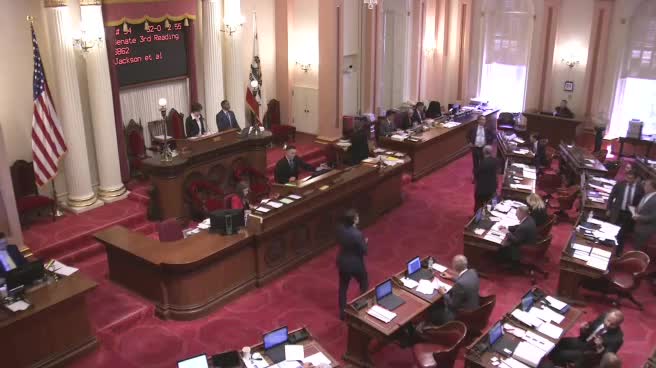 1MIN
Senate Floor
 48MIN
Senate Standing Committee on Appropriations
 46SEC
Senate Standing Committee on Appropriations
 6MIN
Senate Standing Committee on Education
Bill Author

Bill Co-Author(s):
