SB 230: Evidence: commercial sexual offenses.
- Session Year: 2017-2018
- House: Senate
- Latest Version Date: 2017-10-14
Existing law provides that evidence of a persons character is inadmissible when offered to prove his or her conduct on a specified occasion. Existing law creates exceptions to that rule, including that in a criminal action in which the defendant is accused of a sexual offense, evidence of the defendants commission of another sexual offense or offenses is not inadmissible under that rule, except as specified. Existing law defines the term sexual offense as conduct proscribed by various sections of the Penal Code as well as other types of conduct.
This bill would include in the definition of sexual offense for this purpose specified human trafficking sexual offenses.
Existing law provides that evidence of a persons character is inadmissible when offered to prove his or her conduct on a specified occasion. Existing law creates exceptions to that rule, including that in a criminal action in which the defendant is accused of a sexual offense, evidence of the defendants commission of another sexual offense or offenses is not inadmissible under that rule, except as specified. Existing law defines the term sexual offense as conduct proscribed by various sections of the Penal Code as well as other types of conduct.
This bill would create an additional exception to the rule against the admission of character evidence for a commercial sexual offense, which is defined to include specified sexual offenses related to human trafficking, prostitution, and pimping. include in the definition of sexual offense for this purpose specified human trafficking sexual offenses.
Existing law provides that evidence of a persons character is inadmissible when offered to prove his or her conduct on a specified occasion. Existing law creates exceptions to that rule, including that in a criminal action in which the defendant is accused of a sexual offense, evidence of the defendants commission of another sexual offense or offenses is not inadmissible under that rule, except as specified. Existing law defines the term sexual offense as conduct proscribed by various sections of the Penal Code as well as other types of conduct.
This bill would expand the definition of sexual offense for purposes of this create an additional exception to the rule against the admission of character evidence for a commercial sexual offense, which is defined to include specified sexual offences offenses related to human trafficking, prostitution, and pimping.
Existing law provides that evidence of a persons character is inadmissible when offered to prove his or her conduct on a specified occasion. Existing law creates exceptions to that rule, including that in a criminal action in which the defendant is accused of a sexual offense, evidence of the defendants commission of another sexual offense or offenses is not inadmissible under that rule, except as specified. Existing law defines the term sexual offense as conduct proscribed by various sections of the Penal Code as well as other types of conduct.
This bill would expand the definition of sexual offense for purposes of this exception to the rule against the admission of character evidence to include specified sexual offences related to human trafficking, prostitution, and pimping.
(a)In a criminal action in which the defendant is accused of a sexual offense, evidence of the defendants commission of another sexual offense or offenses is not made inadmissible by Section 1101, if the evidence is not inadmissible pursuant to Section 352.
(b)In an action in which evidence is to be offered under this section, the people shall disclose the evidence to the defendant, including statements of witnesses or a summary of the substance of any testimony that is expected to be offered in compliance with the requirements of Section 1054.7 of the Penal Code.
(c)This section does not limit the admission or consideration of evidence under any other section of this code.
(d)As used in this section, the following definitions shall apply:
(1)Sexual offense means a crime under the law of a state or of the United States that involved any of the following:
(A)Any conduct proscribed by subdivision (b) or (c) of Section 236.1, Section 243.4, 261, 261.5, 262, 264.1, 266c, 269, 286, 288, 288a, 288.2, 288.5, or 289, or subdivision (b), (c), or (d) of Section 311.2 or Section 311.3, 311.4, 311.10, 311.11, 314, or 647.6, of the Penal Code.
(B)Any conduct proscribed by Section 220 of the Penal Code, except assault with intent to commit mayhem.
(C)Contact, without consent, between any part of the defendants body or an object and the genitals or anus of another person.
(D)Contact, without consent, between the genitals or anus of the defendant and any part of another persons body.
(E)Deriving sexual pleasure or gratification from the infliction of death, bodily injury, or physical pain on another person.
(F)An attempt or conspiracy to engage in conduct described in this paragraph.
(2)Consent shall have the same meaning as provided in Section 261.6 of the Penal Code, except that it does not include consent which is legally ineffective because of the age, mental disorder, or developmental or physical disability of the victim.
(a)In a criminal action in which the defendant is accused of a sexual offense, evidence of the defendants commission of another sexual offense or offenses is not made inadmissible by Section 1101, if the evidence is not inadmissible pursuant to Section 352.
(b)In an action in which evidence is to be offered under this section, the people shall disclose the evidence to the defendant, including statements of witnesses or a summary of the substance of any testimony that is expected to be offered in compliance with the provisions requirements of Section 1054.7 of the Penal Code.
(c)This section shall does not be construed to limit the admission or consideration of evidence under any other section of this code.
(d)As used in this section, the following definitions shall apply:
(1)Sexual offense means a crime under the law of a state or of the United States that involved any of the following:
(A)Any conduct proscribed by subdivision (b) or (c) of Section 236.1, Section 243.4, 261, 261.5, 262, 264.1, 266c, 269, 286, 288, 288a, 288.2, 288.5, or 289, or subdivision (b), (c), or (d) of Section 311.2 or Section 311.3, 311.4, 311.10, 311.11, 314, or 647.6, of the Penal Code.
(B)Any conduct proscribed by Section 220 of the Penal Code, except assault with intent to commit mayhem.
(C)Contact, without consent, between any part of the defendants body or an object and the genitals or anus of another person.
(D)Contact, without consent, between the genitals or anus of the defendant and any part of another persons body.
(E)Deriving sexual pleasure or gratification from the infliction of death, bodily injury, or physical pain on another person.
(F)An attempt or conspiracy to engage in conduct described in this paragraph.
(2)Consent shall have the same meaning as provided in Section 261.6 of the Penal Code, except that it does not include consent which is legally ineffective because of the age, mental disorder, or developmental or physical disability of the victim.
SECTION 1.Section 1110 is added to the Evidence Code, to read:1110.(a)In a criminal action in which the defendant is accused of a commercial sexual offense, evidence of the defendants commission of another commercial sexual offense or offenses is not made inadmissible by Section 1101, if the evidence is not made inadmissible pursuant to Section 352.(b)In an action in which evidence is to be offered under this section, the people shall disclose the evidence to the defendant, including statements of witnesses or a summary of the substance of any testimony that is expected to be offered in compliance with the provisions of Section 1054.7 of the Penal Code.(c)This section shall not be construed to limit the admission or consideration of evidence under any other section of this code.(d)As used in this section, commercial sexual offense means conduct proscribed by Section 266h or 266i of, or subdivision (b) or (c) of Section 236.1 of, the Penal Code, or any conduct committed outside of this state that, if committed in this state, would constitute a violation of the sections cited in this subdivision.(a)In a criminal action in which the defendant is accused of a commercial sexual offense, evidence of the defendants commission of another commercial sexual offense or offenses is not made inadmissible by Section 1101, if the evidence is not made inadmissible pursuant to Section 352.
(b)In an action in which evidence is to be offered under this section, the people shall disclose the evidence to the defendant, including statements of witnesses or a summary of the substance of any testimony that is expected to be offered in compliance with the provisions of Section 1054.7 of the Penal Code.
(c)This section shall not be construed to limit the admission or consideration of evidence under any other section of this code.
(d)As used in this section, commercial sexual offense means conduct proscribed by Section 266h or 266i of, or subdivision (b) or (c) of Section 236.1 of, the Penal Code, or any conduct committed outside of this state that, if committed in this state, would constitute a violation of the sections cited in this subdivision.
SECTION 1.Section 1108 of the Evidence Code is amended to read:1108.(a)In a criminal action in which the defendant is accused of a sexual offense, evidence of the defendants commission of another sexual offense or offenses is not made inadmissible by Section 1101, if the evidence is not inadmissible pursuant to Section 352.(b)In an action in which evidence is to be offered under this section, the people shall disclose the evidence to the defendant, including statements of witnesses or a summary of the substance of any testimony that is expected to be offered in compliance with the provisions of Section 1054.7 of the Penal Code.(c)This section shall not be construed to limit the admission or consideration of evidence under any other section of this code.(d)As used in this section, the following definitions shall apply:(1)Sexual offense means a crime under the law of a state or of the United States that involved any of the following:(A)Any conduct proscribed by subdivision (b) or (c) of Section 236.1, or Section 243.4, 261, 261.5, 262, 264.1, 266c, 266h, 266i, 269, 286, 288, 288a, 288.2, 288.5, or 289, or subdivision (b), (c), or (d) of Section 311.2, or Section 311.3, 311.4, 311.10, 311.11, 314, or 647.6, of the Penal Code.(B)Any conduct proscribed by Section 220 of the Penal Code, except assault with intent to commit mayhem.(C)Contact, without consent, between any part of the defendants body or an object and the genitals or anus of another person.(D)Contact, without consent, between the genitals or anus of the defendant and any part of another persons body.(E)Deriving sexual pleasure or gratification from the infliction of death, bodily injury, or physical pain on another person.(F)An attempt or conspiracy to engage in conduct described in this paragraph.(2)Consent shall have the same meaning as provided in Section 261.6 of the Penal Code, except that it does not include consent which is legally ineffective because of the age, mental disorder, or developmental or physical disability of the victim.(a)In a criminal action in which the defendant is accused of a sexual offense, evidence of the defendants commission of another sexual offense or offenses is not made inadmissible by Section 1101, if the evidence is not inadmissible pursuant to Section 352.
(b)In an action in which evidence is to be offered under this section, the people shall disclose the evidence to the defendant, including statements of witnesses or a summary of the substance of any testimony that is expected to be offered in compliance with the provisions of Section 1054.7 of the Penal Code.
(c)This section shall not be construed to limit the admission or consideration of evidence under any other section of this code.
(d)As used in this section, the following definitions shall apply:
(1)Sexual offense means a crime under the law of a state or of the United States that involved any of the following:
(A)Any conduct proscribed by subdivision (b) or (c) of Section 236.1, or Section 243.4, 261, 261.5, 262, 264.1, 266c, 266h, 266i, 269, 286, 288, 288a, 288.2, 288.5, or 289, or subdivision (b), (c), or (d) of Section 311.2, or Section 311.3, 311.4, 311.10, 311.11, 314, or 647.6, of the Penal Code.
(B)Any conduct proscribed by Section 220 of the Penal Code, except assault with intent to commit mayhem.
(C)Contact, without consent, between any part of the defendants body or an object and the genitals or anus of another person.
(D)Contact, without consent, between the genitals or anus of the defendant and any part of another persons body.
(E)Deriving sexual pleasure or gratification from the infliction of death, bodily injury, or physical pain on another person.
(F)An attempt or conspiracy to engage in conduct described in this paragraph.
(2)Consent shall have the same meaning as provided in Section 261.6 of the Penal Code, except that it does not include consent which is legally ineffective because of the age, mental disorder, or developmental or physical disability of the victim.
|
Date
|
Status
|
|---|---|
| Oct 14, 2017 | Chaptered by Secretary of State. Chapter 805, Statutes of 2017. |
| Oct 14, 2017 | Approved by the Governor. |
| Sep 12, 2017 | Enrolled and presented to the Governor at 3 p.m. |
| Sep 7, 2017 | Assembly amendments concurred in. (Ayes 39. Noes 0.) Ordered to engrossing and enrolling. |
| Sep 6, 2017 | Ordered to special consent calendar. |
| Sep 5, 2017 | In Senate. Concurrence in Assembly amendments pending. |
| Sep 5, 2017 | Read third time. Passed. Ordered to the Senate. |
| Aug 31, 2017 | Read third time and amended. |
| Jul 13, 2017 | Read second time. Ordered to third reading. |
| Jul 12, 2017 | From committee: Do pass. (Ayes 6. Noes 1.) (July 11). |
| Jun 27, 2017 | June 27 set for first hearing canceled at the request of author. |
| May 22, 2017 | Referred to Com. on PUB. S. |
| May 1, 2017 | In Assembly. Read first time. Held at Desk. |
| May 1, 2017 | Read third time. Passed. (Ayes 37. Noes 0. Page 906.) Ordered to the Assembly. |
| Apr 27, 2017 | Read second time and amended. Ordered to third reading. |
| Apr 26, 2017 | From committee: Do pass as amended. (Ayes 7. Noes 0. Page 855.) (April 25). |
| Apr 6, 2017 | Set for hearing April 25. |
| Apr 4, 2017 | April 4 set for first hearing canceled at the request of author. |
| Mar 9, 2017 | Set for hearing April 4. |
| Feb 16, 2017 | Referred to Com. on PUB. S. |
| Feb 3, 2017 | From printer. May be acted upon on or after March 5. |
| Feb 2, 2017 | Introduced. Read first time. To Com. on RLS. for assignment. To print. |
|
Date
|
Description
|
Location
|
Votes
|
|
|---|---|---|---|---|
| Sep 7, 2017 | Special Consent Calendar # SB230 | Senate Floor |
Passed |
|
| Sep 5, 2017 | SB 230 Atkins Senate Third Reading By GONZALEZ FLETCHER | Assembly Floor |
Passed |
|
| Jul 11, 2017 | Do pass. | Assembly Standing Committee on Public Safety |
Passed |
|
| May 1, 2017 | Senate 3rd Reading SB230 Atkins et al. | Senate Floor |
Passed |
|
| Apr 25, 2017 | Do pass as amended | Senate Standing Committee on Public Safety |
Passed |
This list shows positions taken on this bill by organizations on the date displayed, which is linked to the original source.
Positions by individuals are not included.
|
Organization
|
Position
|
Date
|
|---|---|---|
| Alameda County District Attorney | ** Support | Jul 10, 2017 |
| American Civil Liberties Union | ** Against | Sep 5, 2017 |
| Assembly Floor: 75-1, 9 | ** Against | Sep 5, 2017 |
| Association For Los Angeles Deputy Sheriffs | ** Support | Jul 10, 2017 |
| Association of Deputy District Attorneys | ** Support | Jul 10, 2017 |
| Association Of Orange County Deputy Sheriffs | ** Support | Jul 10, 2017 |
| bilateral safety corridor coalition | ** Support | Jul 10, 2017 |
| California Alliance Of Child And Family Services | ** Support | Jul 10, 2017 |
| California Association Of Code Enforcement Officers | ** Support | Jul 10, 2017 |
| California Attorneys For Criminal Justice | ** Against | Sep 5, 2017 |
| California College And University Police Chiefs Association | ** Support | Jul 10, 2017 |
| California Correctional Peace Officers Association | ** Support | Jul 10, 2017 |
| California District Attorneys Association | ** Support | Sep 5, 2017 |
| California Narcotic Officers Association | ** Support | Jul 10, 2017 |
| California Police Chiefs Association | ** Support | Sep 5, 2017 |
| California Public Defenders Association | ** Against | Sep 5, 2017 |
| California State Sheriffs' Association | ** Support | Jul 10, 2017 |
| California Statewide Law Enforcement Association | ** Support | Jul 10, 2017 |
| Coalition to Abolish Slavery & Trafficking | ** Support | Jul 10, 2017 |
| County Of San Diego | ** Support | Sep 5, 2017 |
| Crime Victims United Of California | ** Support | Sep 5, 2017 |
| end violence against women international | ** Support | Jul 10, 2017 |
| Fraternal Order of Police | ** Support | Jul 10, 2017 |
| Long Beach Police Officers Association | ** Support | Jul 10, 2017 |
| Los Angeles County District Attorney'S Office | ** Support | Jul 10, 2017 |
| Los Angeles County Professional Peace Officers | ** Support | Sep 5, 2017 |
| Los Angeles Police Protective League | ** Support | Jul 10, 2017 |
| narika | ** Support | Jul 10, 2017 |
| No Vote Recorded: Eduardo Garcia, Ridley-Thomas, Steinorth | ** Against | Sep 5, 2017 |
| Noes: Quirk | ** Against | Sep 5, 2017 |
| Peace Officers Research Association Of California | ** Support | Jul 10, 2017 |
| PURPOSE | ** Against | Apr 3, 2017 |
| Sacramento County Deputy Sheriffs' Association | ** Support | Jul 10, 2017 |
| San Diego County District Attorney | ** Support | Sep 5, 2017 |
| State Coalition Of Probation Organizations | ** Support | Jul 10, 2017 |
| the junior league of san diego | ** Support | Jul 10, 2017 |
Office of Senate Floor Analyses (916) 651-1520 Fax: (916) 327-4478 | SB |
UNFINISHED BUSINESS
Bill No: SB 230
:
SENATE PUBLIC SAFETY COMMITTEE: 7-0, 4/25/17
AYES: Skinner, Anderson, Bradford, Jackson, Mitchell, Stone, Wiener
SENATE FLOOR: 37-0, 5/1/17
AYES: Allen, Anderson, Atkins, Bates, Beall, Bradford, Cannella, De León, Dodd, Fuller, Gaines, Galgiani, Glazer, Hernandez, Hertzberg, Hill, Hueso, Jackson, Lara, McGuire, Mendoza, Mitchell, Monning, Moorlach, Morrell, Newman, Nguyen, Nielsen, Pan, Portantino, Skinner, Stern, Stone, Vidak, Wieckowski, Wiener, Wilk
NO VOTE RECORDED: Berryhill, Leyva, Roth
ASSEMBLY FLOOR: 75-1, 9/5/17 - See last page for vote
SOURCE: California District Attorneys Association
San Diego County District Attorney
This bill expands the definition of "sexual offense" to include specified offenses related to human trafficking for purposes of the Evidence Code exception which provides that evidence of another sexual offense is not inadmissible to prove conduct in a current sexual offense action.
Assembly Amendments
place the expansion in the existing Evidence Code Section instead of creating a new section.
Existing law:
- Provides that a court may in its discretion exclude evidence if its probative value is substantially outweighed by the probability that its admission will necessitate undue consumption of time or create substantial danger of undue prejudice, confusing the issues, or misleading the jury. (Evidence Code § 352.)
- Provides that, with certain exceptions, evidence of a person's character or a trait of his or her character, whether in the form of an opinion, evidence of reputation, or evidence of specific instances of his or her conduct, is inadmissible when offered to prove his or her conduct on a specified occasion. (Evidence Code § 1101.)
- Provides that except as specified, evidence of a person's character or a trait of his or her character (whether in the form of an opinion, evidence of reputation, or evidence of specific instances of his or her conduct) is inadmissible when offered to prove his or her conduct on a specified occasion. (Evidence Code § 1101(a).)
- Provides for the admission of evidence that a person committed a crime, civil wrong, or other act when relevant to prove a fact such as motive, opportunity, intent, preparation, plan, knowledge, identity, absence of mistake or accident, or whether a defendant in a prosecution for an unlawful sexual act did not reasonably and in good faith believe that the victim consented. (Evidence Code § 1101(b).)
- Provides that, with certain exceptions, in a criminal action in which the defendant is accused of an offense involving domestic violence, evidence of the defendant's commission of other domestic violence is not made inadmissible by the Evidence Code provision set forth directly above if the evidence is not inadmissible under the general balancing test weighing probative value against the probability that admission of the evidence will necessitate undue consumption of time or will create substantial danger of undue prejudice, confusion, or misleading the jury. (Evidence Code § 1109.)
- Provides that in a criminal action in which the defendant is accused of a sexual offense, as specified, evidence of the defendant's commission of another sexual offense or offenses is admissible to prove the disposition of the defendant if the probative value of the evidence is not outweighed by a substantial danger of undue prejudice. (Evidence Code§ 1108(a).)
This bill expands the definition of "sexual offense" in Evidence Code Section 1108 to include specified offenses related to human trafficking for purposes of the Evidence Code exception which provides that evidence of another sexual offense is not inadmissible to prove conduct in a current sexual offense action.
Background
In general, California common law has always excluded evidence of a person's character or a trait of his/her character (whether in the form of an opinion, evidence of reputation, or evidence of specific instances of his/her conduct) when offered to prove conduct on a specified occasion. This provision is codified in Evidence Code Section 1101(a). "The general theory for excluding this type of evidence is twofold. First, while the evidence is relevant under the general meaning of relevancy, it tends to distract the trier of fact from focusing on the facts at issue. Second, disposition evidence can be very inflammatory and prejudicial. In the classic phrase, this evidence is generally inadmissible precisely because it shows that he/she did it before, he/she did it again." (See also generally 1 Witkin California Evidence 3d ed. section 334.) In criminal actions, there are some exceptions to the general prohibition on the introduction of character evidence. Character evidence is admissible if it is initially introduced by the defense either to prove conduct in conformity with his/her own conduct or with the victim's conduct. Once character evidence is introduced by the defense, then the prosecution can use character evidence to rebut the defense testimony. (Evidence Code Sections 1102 and 1103.) Common law and Evidence Code 1101(b) have allowed the admissibility of evidence that a person committed a crime, civil wrong, or other act when relevant to prove some fact other than his or her disposition of committing such an act, i.e., motive, intent, opportunity, preparation, plan, knowledge, etc.
In 1995, the Legislature created an additional exception to the inadmissibility character evidence by enacting Evidence Code Section 1108 to expand the admissibility of disposition or propensity evidence in sex offense cases. In 1996, the Legislature added a similar provision to allow the admission of evidence that the defendant committed other acts of domestic violence in domestic violence cases. (See Evidence Code Section 1109.)
The legislative history indicates Evidence Code Section 1108 was intended in sex offense cases to relax the evidentiary restraints Evidence Code Section 1101, subdivision (a), imposed to assure that the trier of fact would be made aware of the defendant's other sex offenses in evaluating the victim's and the defendant's credibility. Evidence Code Section 1108 was modeled on Rule 413 of the Federal Rules of Evidence, adopted in 1994, which provided in pertinent part that "(a) In a criminal case in which the defendant is accused of an offense of sexual assault, evidence of the defendant's commission of another offense or offenses of sexual assault is admissible, and may be considered for its bearing on any matter to which it is relevant."
California courts have upheld the validity of both Evidence Code Sections 1108 and 1109. (See: People v. Falsetta (1999) 21 Cal. 4th 903, People v. Fitch (1997) 55 Cal. App. 4th 753.)
This bill creates a new character evidence exception by providing that in a criminal action in which the defendant is accused of a commercial sexual offense, evidence of the defendant’s commission of another commercial sexual offense or offenses is not made inadmissible by Section 1101, if the evidence is not made inadmissible pursuant to Section 352.
FISCAL EFFECT: Appropriation: Fiscal Com.: Local:
California District Attorneys Association (co-source)
San Diego County District Attorney (co-source)
California Police Chiefs Association
County of San Diego
Crime Victims United of California
Los Angeles County Professional Peace Officers
American Civil Liberties Union
California Attorneys for Criminal Justice
California Public Defenders Association
ARGUMENTS IN SUPPORT: According to the co-sponsor, the San Diego County District Attorney:
Cases of human trafficking, pimping, pandering can be notoriously difficult to prosecute because the victims often do not, at least initially, see themselves as such. These victims have been brainwashed by their traffickers and many times recant their previous statements by the time their trafficker’s case reaches court.
Existing law recognizes the difficulties in prosecuting domestic violence and other sex crimes. While Evidence Code section 1101 ordinarily precludes prosecutors from using a prior incident of conduct to prove the charged crime, Evidence Code sections 1108 and 1109 remove this barrier to the prosecution of sex crimes and domestic violence crimes. In doing so, the Evidence Code recognizes that when it comes to sex crimes and domestic violence, the perpetrators often have bene operating in the dark, long before their charged crimes were brought to light. Sections 1108 and 1109 give the court the discretion to allow evidence of these prior acts to be considered in the prosecution of charges sex and domestic violence crimes.
In the past few years we have learned a great deal about human trafficking. According to the groundbreaking 2013 study, by Point Loma Nazarene University, we know that human trafficking is the second largest underground economy after drug trafficking, estimated at $810-million. In San Diego, more than 100 gangs are involved in the commercial exploitation of people, and eight-percent of pimps/sex trafficking facilitators interviewed were involved in gangs. And sadly, the average age of entry into child commercial sexual exploitation is 16 years of age. SB 230 simply brings the crimes of human trafficking, pimping, and pandering into conformity with the practice of allowing this prior acts evidence to be considered in a sex crime prosecution.
SB 230 does not mandate that these prior acts be admitted in any defendant’s trial, it simply give judicial officers the discretion to allow prosecutors to present such testimony in appropriate cases, just as they currently can in other sex and domestic violence cases….
ARGUMENTS IN OPPOSITION: The American Civil Liberties Union opposes this bill stating:
Current law prohibits the use of character evidence, including prior “bad acts,” for the purpose of proving propensity to commit a crime, with the narrow exception that such evidence is allowed in cases charging sexual or intimate family violence. (See Evidence Code section 1101, 1108, and 1109.) SB 230 would allow the use of propensity evidence to prove the charges of human trafficking, pimping and pandering, for the first time allowing propensity evidence to prove a crime motivated by money.
SB 230 proposes a sharp break from long-standing legal practice. As the California Supreme Court has stated:
From the standpoint of historical practice, unquestionably the general rule against admitting [character] evidence is one of long-standing application. [...] The rule excluding evidence of criminal propensity is nearly three centuries old in the common law. (People v. Falsetta (1999) 21 Cal.4th 903, 915.)
Likewise, the Ninth Circuit stated “it seems clear that the general ban on propensity evidence has the requisite historical pedigree to qualify for constitutional status." (United States v. LeMay (9th Cir. 2001) 260 F.3d 1018, 1025.) Any change from this long-standing practice raises serious due process concerns.
The U.S. Supreme Court has not decided whether allowing propensity evidence in sexual assault and intimate family violence cases is constitutional. The California Supreme Court and the Ninth Circuit Court of Appeals have found this to be constitutional, given that the historical record actually supports the conclusion that a “lustful exception” to the rule against admitting propensity evidence was long recognized. The Ninth Circuit observed:
Courts have routinely allowed propensity evidence in sex-offense cases, even while disallowing it in other criminal prosecutions. […] As early as 1858, the Michigan Supreme Court noted that “courts in several of the States have shown a disposition to relax the rule [against propensity evidence] in cases where the offense consists of illicit intercourse between the sexes.” Today, state courts that [do not have an explicit rule allowing admission do so] by resorting to the so-called “lustful disposition” exception, which, in its purest form, is a rule allowing for propensity inferences in sex crime cases. (Id. at pp. 1025-26.)
The theory behind allowing propensity evidence in sexual assault and intimate family violence cases is, in part, based on the belief that the nature of these offenses makes propensity evidence more relevant. (See Id.at p. 915.) The California Supreme Court noted that in the legislative history of the bill allowing the use of propensity evidence in sexual assault cases,” [t]he Legislature ‘declared that the willingness to commit a sexual offense is not common to most individuals; thus, evidence of any prior sexual offenses is particularly probative and necessary for determining the credibility of the witness.’” (Ibid.) Similarly, in assessing the constitutionality of the rule allowing propensity evidence in cases of intimate family violence, the California Courts of Appeal noted, “evidence of other acts is important in domestic violence cases because of the typically repetitive nature of domestic violence crimes.” (People v. Brown (2000) 77 Cal.App.4th 1327, 1333.)
Similar reasoning does not apply to allowing propensity evidence in the types of cases proposed by SB 230. We can find no historical evidence that propensity evidence has been permitted to prove human trafficking, pimping or pandering in the past 300 years. The bill seeks to permit the use of propensity evidence to prove crimes motivated purely by the desire to make money, where there is no evidence of character-based compulsion behind the offense. Indeed, the fact sheet in support of SB 230 states, “more than 100 gangs in San Diego County are engaged in human trafficking, making it the second largest underground economy in the County, estimated at $810 million per year.” Criminal gangs make calculated, financial choices about which criminal enterprise to engage in, pursuing human trafficking and prostitution alongside drug sales and other illegal enterprises. These criminal, commercial enterprises are not pursuing these offenses because they have a particular drive or propensity to engage in sexual exploitation. Rather, they do so purely to make money.
It is important to note that while current law prevents the use of uncharged acts to prove propensity, it does not preclude prosecutors from presenting other “prior bad acts” evidence for other purposes. One guide for prosecutors working on human trafficking cases advises:
While evidence of a defendant’s other “bad acts” or criminal activity is not admissible to show actions in conformity with that behavior, competent evidence can be admissible to show motive, identity, intent, absence of mistake or accident, planning, common plan or scheme.
Prosecutors thus can continue to present character evidence to prove many elements of their case. While we understand the desire to make it even easier for prosecutors to prove these cases, we cannot allow the core principles of due process to be abrogated, no matter how good the intentions.
ASSEMBLY FLOOR: 75-1, 9/5/17
AYES: Acosta, Aguiar-Curry, Travis Allen, Arambula, Baker, Berman, Bigelow, Bloom, Bocanegra, Bonta, Brough, Burke, Caballero, Calderon, Cervantes, Chau, Chávez, Chen, Chiu, Choi, Chu, Cooley, Cooper, Cunningham, Dababneh, Dahle, Daly, Eggman, Flora, Fong, Frazier, Friedman, Gallagher, Cristina Garcia, Gipson, Gloria, Gonzalez Fletcher, Gray, Grayson, Harper, Holden, Irwin, Jones-Sawyer, Kalra, Kiley, Lackey, Levine, Limón, Low, Maienschein, Mathis, Mayes, McCarty, Medina, Melendez, Mullin, Muratsuchi, Nazarian, Obernolte, O'Donnell, Patterson, Quirk-Silva, Reyes, Rodriguez, Rubio, Salas, Santiago, Mark Stone, Thurmond, Ting, Voepel, Waldron, Weber, Wood, Rendon
NOES: Quirk
NO VOTE RECORDED: Eduardo Garcia, Ridley-Thomas, Steinorth
9/5/17 19:13:08
**** END ****
SENATE THIRD READING
STR Bill Id:SB 230
Author:(Atkins)
As Amended Ver:August 31, 2017
Majority vote
SENATE VOTE: 37-0
Committee | Votes | Ayes | Noes |
Public Safety | 6-1 | Jones-Sawyer, Lackey, Flora, Gonzalez Fletcher, Rubio, Santiago | Quirk |
SUMMARY: Expands the definition of "sexual offense" to include specified offenses related to human trafficking for purposes of the Evidence Code exception which provides that evidence of another sexual offense is not inadmissible to prove conduct in a current sexual offense action.
EXISTING LAW:
- Provides that a court may in its discretion exclude evidence if its probative value is substantially outweighed by the probability that its admission will necessitate undue consumption of time or create substantial danger of undue prejudice, confusing the issues, or misleading the jury.
- Provides that, with certain exceptions, evidence of a person's character or a trait of his or her character, whether in the form of an opinion, evidence of reputation, or evidence of specific instances of his or her conduct, is inadmissible when offered to prove his or her conduct on a specified occasion.
- Provides for the admission of evidence that a person committed a crime, civil wrong, or other act when relevant to prove a fact such as motive, opportunity, intent, preparation, plan, knowledge, identity, absence of mistake or accident, or whether a defendant in a prosecution for an unlawful sexual act did not reasonably and in good faith believe that the victim consented.
- Provides that in a criminal action in which the defendant is accused of a sexual offense, evidence of the defendant's commission of another sexual offense is not inadmissible character evidence if the probative value of the evidence is not outweighed by a substantial danger of undue prejudice. (Evidence Code (EVID), Section 1108 (a) 352). Defines a sexual offense, for purposes of this provision, as a crime that involved any of the following:
- Sexual battery;
- Rape;
- Statutory rape;
- Spousal rape;
- Rape in concert;
- Inducing another to engage in a sexual act by fraud or fear;
- Aggravated sexual assault of a child;
- Sodomy;
- Child sexual abuse;
- Oral copulation by force or with a minor;
- Sending harmful matter to a minor;
- Continuous sexual abuse of a child;
- Forcible acts of penetration;
- Distribution or possession for distribution of obscene matter;
- Developing, duplicating, or exchanging child pornography;
- Employment of a child to assist in obscene matter;
- Advertisement of child pornography for sale or distribution;
- Possession of child pornography;
- Indecent exposure;
- Annoying or molesting a minor;
- Assault with intent to commit specified sex offenses;
- Contact, without consent, of any part of defendant's body or an object and the genitals or anus of another;
- Contact, without consent, between the genitals or anus of the defendant and any part of another person's body;
- Deriving sexual pleasure from the infliction of death, bodily injury or physical pain on another person; or,
- An attempt or conspiracy to engage in any of the above conduct.
- Provides that, with certain exceptions, in a criminal action in which the defendant is accused of an offense involving domestic violence, evidence of the defendant's commission of other domestic violence is not inadmissible character evidence, if the probative value of the evidence is not outweighed by a substantial danger of undue prejudice. (EVID Section 1109, (a)(1)). Other acts of dependent or elder abuse are similarly admissible in a prosecution for dependent or elder abuse (EVID Section 1109, (a)(2)), as are other acts of child abuse in a prosecution for child abuse (EVID Section 1109, (a)(3)). Evidence of acts of abuse occurring more than 10 years before the charged offense is inadmissible under this provision, unless the court determines that the admission of this evidence is in the interest of justice.
FISCAL EFFECT: Unknown. This bill is keyed non-fiscal by the Legislative Counsel.
COMMENTS: According to the author, "The heinous crime of sex trafficking is committed in cities big and small, as well as rural areas, up and down our state. That is why we must do everything we can to combat this modern day slavery. SB 230 does this by adding the crimes of sex trafficking, pimping, and pandering to the lists of exceptions to the rule against character evidence at trial.
"SB 230's long overdue amendments to the Evidence Code acknowledge that the challenges with prosecuting crimes of sex trafficking are similar to the challenges with prosecuting the other crimes that are already exceptions to this rule: sexual offenses, crimes of domestic violence, elder and dependent abuse, and child abuse.
"Sex traffickers and pimps establish an intimate relationship of dominance and control over their victims, much like the perpetrators of crimes of domestic violence, elder and dependent abuse, or child abuse. Sex traffickers and pimps typically control their victims' cell phones, their whereabouts, and any money they earn. Worse, they often control victims with drugs or violence.
"Additionally, like child molesters or other predators committing sexual offenses, sex traffickers and pimps use psychological recruitment: grooming their victims, isolating them from their families or social networks, and controlling them. As a result, many victims do not see themselves as victims – at least not initially. Also, many victims are threatened with violence if they agree to testify at trial. For all of these reasons, securing victim testimony in sex trafficking and pimping/pandering trials is incredibly difficult.
"Finally, SB 230 does not require that these prior acts be admitted in any defendant's trial. Instead, it provides judges with the discretion to determine whether such evidence should be admitted on a case by case basis."
Analysis Prepared by: Cheryl Anderson / PUB. S. / (916) 319-3744 FN: 0001458
SENATE THIRD READING
STR Bill Id:SB 230
Author:(Atkins)
As Amended Ver:April 27, 2017
Majority vote
SENATE VOTE: 37-0
Committee | Votes | Ayes | Noes |
Public Safety | 6-1 | Jones-Sawyer, Lackey, Flora, Gonzalez Fletcher, Rubio, Santiago | Quirk |
SUMMARY: Allows the introduction of evidence of another commercial sex offense to prove conduct in a trial where the defendant is accused of committing a commercial sex offense. Specifically, this bill:
- Provides that in a criminal action in which the defendant is accused of a commercial sex offense, evidence of his or her commission of another commercial sex offense is not inadmissible character evidence, if the evidence is not otherwise inadmissible under the general balancing test weighing probative value against the danger of undue prejudice.
- States that an action in which evidence is to be offered under this provision, the people shall disclose the evidence to the defendant, including statements of witnesses or a summary of the substance of any testimony that is expected to be offered in compliance with the provisions for disclosures of criminal discovery.
- States that this provision shall not be construed to limit the admission or consideration of evidence under any other section of the Evidence Code (EVID).
- Defines "commercial sexual offense" as pimping, pandering, and human trafficking for sexual purposes, or any conduct committed outside of this state that, if committed in this state, would constitute a violation of these offenses.
EXISTING LAW:
- Provides that a court may in its discretion exclude evidence if its probative value is substantially outweighed by the probability that its admission will necessitate undue consumption of time or create substantial danger of undue prejudice, confusing the issues, or misleading the jury.
- Provides that, with certain exceptions, evidence of a person's character or a trait of his or her character, whether in the form of an opinion, evidence of reputation, or evidence of specific instances of his or her conduct, is inadmissible when offered to prove his or her conduct on a specified occasion.
- Provides for the admission of evidence that a person committed a crime, civil wrong, or other act when relevant to prove a fact such as motive, opportunity, intent, preparation, plan, knowledge, identity, absence of mistake or accident, or whether a defendant in a prosecution for an unlawful sexual act did not reasonably and in good faith believe that the victim consented.
- Provides that in a criminal action in which the defendant is accused of a sexual offense, evidence of the defendant's commission of another sexual offense is not inadmissible character evidence if the probative value of the evidence is not outweighed by a substantial danger of undue prejudice. (EVID Sections 1108(a), 352.) Defines a sexual offense, for purposes of this provision, as a crime that involved any of the following:
- Sexual battery;
- Rape;
- Statutory rape;
- Spousal rape;
- Rape in concert;
- Inducing another to engage in a sexual act by fraud or fear;
- Aggravated sexual assault of a child;
- Sodomy;
- Child sexual abuse;
- Oral copulation by force or with a minor;
- Sending harmful matter to a minor;
- Continuous sexual abuse of a child;
- Forcible acts of penetration;
- Distribution or possession for distribution of obscene matter;
- Developing, duplicating, or exchanging child pornography;
- Employment of a child to assist in obscene matter;
- Advertisement of child pornography for sale or distribution;
- Possession of child pornography;
- Indecent exposure;
- Annoying or molesting a minor;
- Assault with intent to commit specified sex offenses;
- Contact, without consent, of any part of defendant's body or an object and the genitals or anus of another;
- Contact, without consent, between the genitals or anus of the defendant and any part of another person's body;
- Deriving sexual pleasure from the infliction of death, bodily injury or physical pain on another person; or,
- An attempt or conspiracy to engage in any of the above conduct.
- Provides that, with certain exceptions, in a criminal action in which the defendant is accused of an offense involving domestic violence, evidence of the defendant's commission of other domestic violence is not inadmissible character evidence, if the probative value of the evidence is not outweighed by a substantial danger of undue prejudice. (EVID Section 1109(a)(1)) Other acts of dependent or elder abuse are similarly admissible in a prosecution for dependent or elder abuse (EVID Section 1109(a)(2)), as are other acts of child abuse in a prosecution for child abuse (EVID Section 1109(a)(3)). Evidence of acts of abuse occurring more than 10 years before the charged offense is inadmissible under this provision, unless the court determines that the admission of this evidence is in the interest of justice.
FISCAL EFFECT: Unknown. This bill is keyed non-fiscal by the Legislative Counsel.
COMMENTS: According to the author, "The heinous crime of sex trafficking is committed in cities big and small, as well as rural areas, up and down our state. That is why we must do everything we can to combat this modern day slavery. SB 230 does this by adding the crimes of sex trafficking, pimping, and pandering to the lists of exceptions to the rule against character evidence at trial.
"SB 230's long overdue amendments to the Evidence Code acknowledge that the challenges with prosecuting crimes of sex trafficking are similar to the challenges with prosecuting the other crimes that are already exceptions to this rule: sexual offenses, crimes of domestic violence, elder and dependent abuse, and child abuse.
"Sex traffickers and pimps establish an intimate relationship of dominance and control over their victims, much like the perpetrators of crimes of domestic violence, elder and dependent abuse, or child abuse. Sex traffickers and pimps typically control their victims' cell phones, their whereabouts, and any money they earn. Worse, they often control victims with drugs or violence.
"Additionally, like child molesters or other predators committing sexual offenses, sex traffickers and pimps use psychological recruitment: grooming their victims, isolating them from their families or social networks, and controlling them. As a result, many victims do not see themselves as victims – at least not initially. Also, many victims are threatened with violence if they agree to testify at trial. For all of these reasons, securing victim testimony in sex trafficking and pimping/pandering trials is incredibly difficult.
"Finally, SB 230 does not require that these prior acts be admitted in any defendant's trial. Instead, it provides judges with the discretion to determine whether such evidence should be admitted on a case by case basis."
Analysis Prepared by: Cheryl Anderson / PUB. S. / (916) 319-3744 FN: 0001140
Date of Hearing: July 11, 2017
Counsel: Cheryl Anderson
ASSEMBLY COMMITTEE ON PUBLIC SAFETY
Reginald Byron Jones-Sawyer, Sr., Chair
SBPCA Bill Id:SB 230
Author:(Atkins) – As Amended Ver:April 27, 2017
SUMMARY: Allows the introduction of evidence of another commercial sex offense to prove conduct in a trial where the defendant is accused of committing a commercial sex offense. Specifically, this bill:
- Provides that in a criminal action in which the defendant is accused of a commercial sex offense, evidence of his or her commission of another commercial sex offense is not inadmissible character evidence, if the evidence is not otherwise inadmissible under the general balancing test weighing probative value against the danger of undue prejudice.
- States that an action in which evidence is to be offered under this provision, the people shall disclose the evidence to the defendant, including statements of witnesses or a summary of the substance of any testimony that is expected to be offered in compliance with the provisions for disclosures of criminal discovery.
- States that this provision shall not be construed to limit the admission or consideration of evidence under any other section of the Evidence Code.
- Defines “commercial sexual offense” as pimping, pandering, and human trafficking for sexual purposes, or any conduct committed outside of this state that, if committed in this state, would constitute a violation of these offenses.
EXISTING LAW:
- Provides that a court may in its discretion exclude evidence if its probative value is substantially outweighed by the probability that its admission will necessitate undue consumption of time or create substantial danger of undue prejudice, confusing the issues, or misleading the jury. (Evid. Code, § 352.)
- Provides that, with certain exceptions, evidence of a person’s character or a trait of his or her character, whether in the form of an opinion, evidence of reputation, or evidence of specific instances of his or her conduct, is inadmissible when offered to prove his or her conduct on a specified occasion. (Evid. Code, § 1101, subd. (a).)
- Provides for the admission of evidence that a person committed a crime, civil wrong, or other act when relevant to prove a fact such as motive, opportunity, intent, preparation, plan, knowledge, identity, absence of mistake or accident, or whether a defendant in a prosecution for an unlawful sexual act did not reasonably and in good faith believe that the victim consented. (Evid. Code, § 1101, subd. (b).)
- Provides that in a criminal action in which the defendant is accused of a sexual offense, evidence of the defendant’s commission of another sexual offense is not inadmissible character evidence if the probative value of the evidence is not outweighed by a substantial danger of undue prejudice. (Evid. Code, §§ 1108, subd. (a), 352.) Defines a sexual offense, for purposes of this provision, as a crime that involved any of the following:
- Sexual battery;
- Rape;
- Statutory rape;
- Spousal rape;
- Rape in concert;
- Inducing another to engage in a sexual act by fraud or fear;
- Aggravated sexual assault of a child;
- Sodomy;
- Child sexual abuse;
- Oral copulation by force or with a minor;
- Sending harmful matter to a minor;
- Continuous sexual abuse of a child;
- Forcible acts of penetration;
- Distribution or possession for distribution of obscene matter;
- Developing, duplicating, or exchanging child pornography;
- Employment of a child to assist in obscene matter;
- Advertisement of child pornography for sale or distribution;
- Possession of child pornography;
- Indecent exposure;
- Annoying or molesting a minor;
- Assault with intent to commit specified sex offenses;
- Contact, without consent, of any part of defendant’s body or an object and the genitals or anus of another;
- Contact, without consent, between the genitals or anus of the defendant and any part of another person’s body;
- Deriving sexual pleasure from the infliction of death, bodily injury or physical pain on another person; or,
- An attempt or conspiracy to engage in any of the above conduct. (Evid. Code, § 1108, subd. (d)(1).)
- Sexual battery;
- Provides that, with certain exceptions, in a criminal action in which the defendant is accused of an offense involving domestic violence, evidence of the defendant's commission of other domestic violence is not inadmissible character evidence, if the probative value of the evidence is not outweighed by a substantial danger of undue prejudice. (Evid. Code, § 1109, subd. (a)(1).) Other acts of dependent or elder abuse are similarly admissible in a prosecution for dependent or elder abuse (Evid. Code, § 1109, subd. (a)(2)), as are other acts of child abuse in a prosecution for child abuse (Evid. Code, § 1109, subd. (a)(3)). Evidence of acts of abuse occurring more than 10 years before the charged offense is inadmissible under this provision, unless the court determines that the admission of this evidence is in the interest of justice. (Evid. Code, § 1109, subd. (e).)
FISCAL EFFECT: Unknown
COMMENTS:
- Author's Statement: According to the author, “The heinous crime of sex trafficking is committed in cities big and small, as well as rural areas, up and down our state. That is why we must do everything we can to combat this modern day slavery. SB 230 does this by adding the crimes of sex trafficking, pimping, and pandering to the lists of exceptions to the rule against character evidence at trial.
“SB 230’s long overdue amendments to the Evidence Code acknowledge that the challenges with prosecuting crimes of sex trafficking are similar to the challenges with prosecuting the other crimes that are already exceptions to this rule: sexual offenses, crimes of domestic violence, elder and dependent abuse, and child abuse.
“Sex traffickers and pimps establish an intimate relationship of dominance and control over their victims, much like the perpetrators of crimes of domestic violence, elder and dependent abuse, or child abuse. Sex traffickers and pimps typically control their victims’ cell phones, their whereabouts, and any money they earn. Worse, they often control victims with drugs or violence.
“Additionally, like child molesters or other predators committing sexual offenses, sex traffickers and pimps use psychological recruitment: grooming their victims, isolating them from their families or social networks, and controlling them. As a result, many victims do not see themselves as victims – at least not initially. Also, many victims are threatened with violence if they agree to testify at trial. For all of these reasons, securing victim testimony in sex trafficking and pimping/pandering trials is incredibly difficult.
“Finally, SB 230 does not require that these prior acts be admitted in any defendant’s trial. Instead, it provides judges with the discretion to determine whether such evidence should be admitted on a case by case basis.”
- Evidence Of Other Crimes Or Wrongful Acts And The Propensity Rule: Under Evidence Code section 1101, subdivision (a), evidence of a person’s character or of a trait of his or her character is inadmissible in criminal proceedings to prove his or her conduct on a specified occasion. “This statutory provision makes inadmissible specific evidence that has historically been inadmissible under English and American law.” (21 Cal.Jur.3d (2017) Criminal Law: Trial § 519 [citations omitted].)
“It follows from this general rule that evidence of the defendant’s prior bad acts, including other crimes, is inadmissible to show the defendant’s bad character or predisposition to criminality, that is, to show a propensity to commit crimes in general or a particular class of crimes, or a predisposition to commit the charged offense. Thus, the commission of a crime or of a wrongful act short of a crime cannot be proved by evidence of commission of an unrelated similar crime or wrongful act by the same person at another time and under other circumstances.” (21 Cal.Jur.3d, supra, § 524 [citations omitted].)
- The Rationale For Excluding Propensity Evidence – Inherent Danger Of Prejudice: “Evidence of a defendant’s other crimes or wrongful acts is deemed objectionable, not because it has no appreciable probative value, but because it has too much; that is, the probative value of such evidence is outweighed by its prejudicial effect. The general rule that evidence of other crimes is inadmissible when offered solely to prove criminal disposition or a propensity by the accused to commit the crime charged recognizes that the probative value of such evidence is outweighed by its prejudicial effect. Thus, the basis of the general rule that such evidence is inadmissible is the danger that the trier-of-fact may give excessive weight to evidence of prior criminality, by either allowing it to bear too strongly on the present charge or viewing it as a justification for condemnation irrespective of present guilt.” (21 Cal.Jur.3d, supra, § 525 [citations omitted, emphasis added].)
“The purposes of the general rule... are to avoid placing the defendant in a position of having to defend against crimes with which he or she has not been charged; to guard against the probability that evidence of other criminal acts having little bearing on the question whether the defendant actually committed the crime charged would assume undue proportions and unnecessarily prejudice the defendant in the minds of the jury; and to promote judicial efficiency by restricting proof of extraneous crimes, by avoiding protracted mini-trials to determine the truth or falsity of the prior charge.” (21 Cal.Jur.3d, supra, § 525 [citations omitted].)
“The prejudice which the rule governing the admission of other crimes evidence is designed to avoid is not the prejudice or damage to a defense that naturally flows from relevant, highly probative evidence; rather, the prejudice the rule is designed to avoid applies to evidence which uniquely tends to evoke an emotional bias against the defendant as an individual and which has very little effect on the issues.” (21 Cal.Jur.3d (2017 supp.) Criminal Law: Trial § 525.)
- Evidence of Other Crimes Or Wrongful Acts To Prove A Disputed Fact Other Than A Defendant’s Propensity To Commit Such Acts: The general rule excluding evidence of other crimes or wrongful acts is not without exception. Evidence Code section 1101, subdivision (b), provides: “Nothing in this section prohibits the admission of evidence that a person committed a crime, civil wrong, or other act when relevant to prove some fact (such as motive, opportunity, intent, preparation, plan, knowledge, identity, absence of mistake or accident, or whether a defendant in a prosecution for an unlawful sexual act or attempted unlawful sexual act did not reasonably and in good faith believe that the victim consented) other than his or her disposition to commit such an act.” (Evid. Code, § 1101, subd. (b).) Thus, under Evidence Code section 1101, subdivision (b), evidence that a defendant committed crimes other than those for which he or she is on trial is admissible “when it is logically, naturally, and by reasonable inference relevant to prove some fact at issue, such as motive, intent, preparation, or identity.” (21 Cal.Jur.3d, supra, § 534 [citations omitted].)
Because of the inherent danger of prejudice to the defendant when evidence of an uncharged offense is given to the jury, this type of evidence must be received with caution, and admitted only when its probative value outweighs its prejudicial effect under Evidence Code section 352. (21 Cal.Jur.3d, supra, § 534 [citations omitted]; People v. Ewoldt (1994) 7 Cal.4th 380, 404.) The court must consider whether the probative value of the uncharged acts evidence outweighs the danger it would “‘create substantial danger of undue prejudice, of confusing the issues, or of misleading the jury.’” (Ibid., citing Evid. Code, § 352.) The court should also consider whether the jury will use the evidence for an improper purpose such as punishing the defendant for an uncharged act. (See People v. Ewoldt, supra, 7 Cal.4th at p. 404.)
The prosecution must prove the other crimes or uncharged acts by a preponderance of the evidence. (21 Cal.Jur.3d, supra, § 552 [citations omitted].) Thus, other uncharged acts evidence is admissible, subject to Evidence Code section 352, even where a defendant has been acquitted of the act constituting the evidence. (California Criminal Defense Practice, § 83.12[1][c] (Matthew Bender).)
- Narrowly Drawn Exceptions To The General Rule Prohibiting Propensity Evidence (Evidence Code Sections 1108 & 1109): The Legislature has enacted two narrow exceptions to the general rule prohibiting propensity evidence. In 1996, Evidence Code section 1108 was added to allow introduction of evidence of other acts of sexual misconduct in a prosecution for a sex offense. (Evid. Code, § 1108; AB 882 (Rogan) Chapter 439, Statutes of 1996.) Evidence Code section 1108 was modeled on Rule 413 of the Federal Rules of Evidence (28 U.S.C.), adopted in 1994, which provided in pertinent part that “(a) In a criminal case in which the defendant is accused of an offense of sexual assault, evidence of the defendant’s commission of another offense or offenses of sexual assault is admissible, and may be considered for its bearing on any matter to which it is relevant.” (People v. Falsetta (1999) 21 Cal.4th 903, 912.) Federal rule 414 permits similar “propensity” evidence in child molestation cases. (Ibid.)
In addressing the constitutionality of Rule 414, the Ninth Circuit Court of Appeal noted that courts had historically shown a willingness to relax evidentiary rules in sex cases and allow propensity evidence to reach jurors, while not allowing it in other criminal prosecutions. (United States v. LaMay (9th Cir. 2001) 260 F.3d 1018, 1025-1026.) The court further noted that in states without an evidentiary rule comparable to Rule 414, courts were either willing to stretch exceptions to the ban on character evidence or “resort[ed] to the so-called ‘lustful disposition’ exception, which, in its purest form, is a rule allowing for propensity inferences in sex crime cases. See, e.g., Thomas J. Reed, Reading Gaol Revisited: Admission of Uncharged Misconduct Evidence in Sex Offender Cases, 21 AM. J. CRIM. L. 127, 188 (1993).” (United States v. LaMay, supra, 260 F.3d at pp. 1025-1026.)
In following the federal lead and enacting Evidence Code section 1108, the Legislature “declared that the willingness to commit a sexual offense is not common to most individuals; thus, evidence of any prior sexual offenses is particularly probative and necessary for determining the credibility of the witness.” (Review of Selected 1995 Cal. Legislation (1996) 27 Pacific L.J. 761, 762; see also United States v. Cunningham (7th Cir. 1996) 103 F.3d 553, 556 [“Most people do not have a taste for sexually molesting children.”].) “The Legislature has determined the need for this evidence is ‘critical’ given the serious and secretive nature of sex crimes and the often resulting credibility contest at trial.” (Lungren, Stopping Rapists and Child Molesters by Giving Juries All the Facts--Reforms in Federal and California Law (1995) 17 Prosecutor's Brief 13, 13-14, 23.)’ (People v. Fitch (1997) 55 Cal. App. 4th 172, 181-182 [63 Cal. Rptr. 2d 753], fn. omitted (Fitch)….” (People v. Falsetta, supra, 21 Cal.4th at pp. 912-913.)
In 1996, the Legislature added a similar provision to allow the admission of evidence that the defendant committed other acts of domestic violence in domestic violence cases. (See Evid. Code, § 1109; SB 1876 (Solis) Chapter 261, Statutes of 1996.) The bill analysis for SB 1876 states that “[t]his section is modeled on the recently enacted Evidence Code 1108, which accomplishes the same for evidence of other sexual offenses, in sexual offense prosecutions.” (Assem. Com. on Public Safety, Analysis of Sen. Bill No. 1876 (1995-1996 Reg. Sess.) June 25, 1996, p. 3.) The analysis goes on to state, “Proponents argue that in domestic violence cases, as in sexual offense cases, special evidentiary rules are justified because of the distinctive issues and difficulties of proof in this area. Specifically, evidence of other acts is important in domestic violence cases because of the typically repetitive nature of domestic violence crimes, and because of the acute difficulties of proof associated with frequently uncooperative victims and third-party witnesses who are often children or neighbors who may fear retaliation from the abuser and do not wish to become involved.” (Id. at p. 4 [emphasis added].) In addressing the constitutional validity of Evidence Code section 1109, People v. Hoover (2000) 77 Cal.App.4th 1020, 1027-1028, quoting the Assembly Committee on Public Safety analysis of SB 1876, supra, at pages 3-4, noted, “The propensity inference is particularly appropriate in the area of domestic violence because on-going violence and abuse is the norm in domestic violence cases. Not only is there a great likelihood that any one battering episode is part of a larger scheme of dominance and control, that scheme usually escalates in frequency and severity. Without the propensity inference, the escalating nature of domestic violence is likewise masked.”
The Legislature has similarly enacted laws allowing propensity evidence of abuse of an elder or dependent person (AB 2063 (Zettel) Chapter 517, Statutes of 2000) or child abuse (AB 114 (Cohn) Chapter 464, Statutes of 2005). (See Evid. Code, § 1109, subd. (a)(2) & (3).) The bill analysis for AB 2063 states, “This approach is consistent with California's evidentiary scheme for combating domestic violence.” (Assem. Com. on Public Safety, Analysis of Ass. Bill No. 2063 (1999-2000 Reg. Sess.) April 11, 2000, p. 3.) The bill analysis for AB 114 states, “This recognizes the prevalence of domestic violence perpetrated against all family members, not just children or adults but both.” (Assem. Com. on Public Safety, Analysis of Ass. Bill No. 114 (2005-2006 Reg. Sess.) March 8, 2005, p. 3.)
- Constitutional Considerations: California courts have upheld the validity of both Evidence Code sections 1108 and 1109. In People v. Falsetta, supra, 21 Cal.4th 903, the California Supreme Court held that propensity evidence may be considered in sex crime cases under section 1108 without violating the due process clause because section 1108’s incorporation of the section 352 balancing test prevents an unfair trial. (People v. Brown (2000) 77 Cal.App.4th 1324, 1328 [Evid. Code, §§ 1108 & 1109 are complimentary provisions of the same statutory scheme]; People v. Williams (2008) 159 Cal.App.4th 141 [not unconstitutional to admit propensity evidence in elder abuse case].) The United States Supreme Court has not yet ruled on the issue.
- Need for this Bill and Other Practical Considerations: SB 230 creates an additional exception to the general rule excluding propensity evidence. It allows evidence of other commercial sex offenses to be introduced to prove conduct in a commercial sex offense case. The author states this bill is needed because, as with sex and domestic abuse cases, commercial sex cases are difficult to prove. While Evidence Code section 1108 was prompted in part by proof problems in sex cases, the uncharged sex offense exception has historic roots in the “lustful disposition” exception. (United States v. LaMay, supra, 260 F.3d at pp. 1025-1026 [emphasis added].)While the rationale for the domestic abuse exception in Evidence Code section 1109 was based in part on difficulties of proof, courts denying constitutional challenges to the statute note the repetitive nature of these types of cases, as well as the special nature of these types of cases where “on-going violence and abuse is the norm.” (People v. Hoover, supra, 77 Cal.App.4th 1027-1028 [emphasis added]; see also People v. Brown (2000) 77 Cal.App.4th 1327, 1333.)
Commercial sex offenses are distinguishable. They are economic crimes which are typically motivated by money and not the result of a character-based disposition to commit or repeat commercial sex offenses, in particular. In San Diego, for example, human trafficking is the second largest underground economy, estimated at $810-million per year. (Carpenter and Gates (Jan. 2016). The Nature and Extent of Gang Involvement in Sex
Trafficking in San Diego County, San Diego, CA: University of San Diego and Point Loma
Nazarene University. at pp. 11, 57 <https://www.ncjrs.gov/pdffiles1/nij/grants/249857.pdf [as of June 30, 2017]>.) More than 100 gangs in San Diego are involved in commercial sex offenses. (Id. at pp. 11-12.) Of those interviewed as sex trafficking facilitators, eighty-percent were affiliated with a gang. (Id. at p. 64.)
Proponents of this bill also state that because commercial sex offenders move from jurisdiction to jurisdiction, the prosecution can be precluded from using the offender’s prior activities to prove up his or her current ones. However, current law permits the consolidation of commercial sex offenses occurring in different counties into a single trial if all district attorneys in the counties with jurisdiction agree. Thus it is possible for commercial sex offenses from different jurisdictions to be tried together. (Pen. Code, § 784.7, subd. (c).)
Further, to the extent other commercial sex offenses are relevant to a disputed fact (other than propensity), and subject to Evidence Code sections 352’s balancing test, the evidence is already admissible. (Evid. Code, § 1101, subd. (b).)
SB 230 raises important questions. Should the historical ban on propensity evidence be further eroded to allow evidence of other commercial sex offenses to be introduced as propensity evidence based on the difficult to prove rationale? Is the difficult to prove rationale a slippery slope to creating an exception for all difficult to prove cases, an exception that will all but swallow the rest of the general rule? After all, “[o]pportunities for victim/witness intimidation and other forms of witness tampering exist in almost every criminal case.” (Long, J.D. and Garvey, J.D. (Nov. 2012) No Victim? Don’t Give Up: Creative Strategies in Prosecuting Human Trafficking Cases Using Forfeiture by Wrongdoing and Other Evidence-Based Techniques, Strategies: The Prosecutors’ Newsletter on Violence Against Women Act, at p. 2 <http://www.aequitasresource.org/S_Issue_7_No_Victim-Dont_Give_Up.pdf [as of June 30, 2017]>.) Will further erosion of the prohibition against propensity evidence continue to withstand constitutional scrutiny because it is subject to the balancing test of Evidence Code section 352?
- Arguments in Support:
- According to the San Diego County District Attorney, a Co-sponsor of this bill, “Cases of human trafficking, pimping, and pandering can be notoriously difficult to prosecute because the victims often do not, at least initially, see themselves as such. These victims have been brainwashed by their traffickers and many times recant their previous statements by the time their trafficker’s case reaches court. These crimes often continue for a long period of time before being brought to light.
“Existing law recognizes the same type of difficulties in the prosecution of domestic violence and other sex crimes where the perpetrators also have emotional if not physical control over the victims. As a result, while Evidence Code section 1101 ordinarily precludes prosecutors from using a prior incident of conduct to prove the charged crime, Evidence Code sections 1108 and 1109 give the court the discretion to allow evidence of prior acts to be considered in the prosecution of charged sex and domestic violence crimes. This effectively lifts a barrier to the prosecution of sex crimes and domestic violence crimes – crimes where the perpetrators also have often been operating in the dark, long before their charged crimes are brought to the light.
“SB 230 enacts a new Evidence Code section 1110, which simply gives judicial officers the same discretion to allow prosecutors to present evidence of a defendant’s prior acts of human trafficking, and pimping and pandering, in the prosecution of charged human trafficking, and pimping and pandering cases. SB 230 does not mandate that these prior acts be admitted in any defendant’s criminal trial, and it does not give the judicial officer unfettered discretion. Rather, the evidence is subject to Evidence Code section 352, which requires the court to exclude such evidence where its ‘probative value is substantially outweighed by the probability that its admission will (a) necessitate undue consumption of time or (b) create substantial danger of undue prejudice, of confusing the issues, or misleading the jury.’” - According to the California District Attorneys Association, “SB 230 is necessary to combat the tactics of pimps and human traffickers who will often move to different jurisdictions or secure new victims in order to thwart detection. Human traffickers and pimps often move their victims from jurisdiction to jurisdiction (‘the circuit’) in order to stay one step ahead of law enforcement. Once in a new jurisdiction, they can deny knowledge of their victim’s involvement in prostitution, or secure new victims, disclaiming involvement in any such activities.
“Once in a new jurisdiction, or having secured a new victim, the prosecution can be precluded from using the trafficker’s prior activities to prove up his current ones. This state of the law gives traffickers a distinct advantage – one which perpetrators of other sex crimes, enumerated in EC 1108, do not have. SB 230 will hold the more egregious traffickers, the ones who operate across jurisdictions with multiple victims, accountable by letting the trier of fact consider their entire corporation, not just the carefully parceled out subsidiaries, when assessing a case.”
- According to the San Diego County District Attorney, a Co-sponsor of this bill, “Cases of human trafficking, pimping, and pandering can be notoriously difficult to prosecute because the victims often do not, at least initially, see themselves as such. These victims have been brainwashed by their traffickers and many times recant their previous statements by the time their trafficker’s case reaches court. These crimes often continue for a long period of time before being brought to light.
- Arguments in Opposition:
- According to the American Civil Liberties Union, “Current law prohibits the use of character evidence, including prior ‘bad acts,’ for the purpose of proving propensity to commit a crime, with the narrow exception that such evidence is allowed in cases charging sexual or intimate family violence. (See Evidence Code section 1101, 1108, and 1109.) SB 230 would allow the use of propensity evidence to prove the charges of human trafficking, pimping and pandering, for the first time allowing propensity evidence to prove a crime motivated by money.
“SB 230 proposes a sharp break from long-standing legal practice. As the California Supreme Court has stated:
From the standpoint of historical practice, unquestionably the general rule against admitting [character] evidence is one of long-standing application. [...] The rule excluding evidence of criminal propensity is nearly three centuries old in the common law.
(People v. Falsetta (1999) 21 Cal.4th 903, 915.)
“Likewise, the Ninth Circuit stated ‘it seems clear that the general ban on propensity evidence has the requisite historical pedigree to qualify for constitutional status.’ (United States v. LeMay (9th Cir. 2001) 260 F.3d 1018, 1025.) Any change from this long-standing practice raises serious due process concerns.
“The U.S. Supreme Court has not decided whether allowing propensity evidence in sexual assault and intimate family violence cases is constitutional. The California Supreme Court and the Ninth Circuit Court of Appeals have found this to be constitutional, given that the historical record actually supports the conclusion that a ‘lustful exception’ to the rule against admitting propensity evidence was long recognized. The Ninth Circuit observed:
courts have routinely allowed propensity evidence in sex-offense cases, even while disallowing it in other criminal prosecutions. […] As early as 1858, the Michigan Supreme Court noted that “courts in several of the States have shown a disposition to relax the rule [against propensity evidence] in cases where the offense consists of illicit intercourse between the sexes.” Today, state courts that [do not have an explicit rule allowing admission do so] by resorting to the so-called “lustful disposition” exception, which, in its purest form, is a rule allowing for propensity inferences in sex crime cases.
(Id. at pp. 1025-26.)
“The theory behind allowing propensity evidence in sexual assault and intimate family violence cases is, in part, based on the belief that the nature of these offenses makes propensity evidence more relevant. (See Id.at p. 915.) The California Supreme Court noted that in the legislative history of the bill allowing the use of propensity evidence in sexual assault cases, [sic] [t]he Legislature “declared that the willingness to commit a sexual offense is not common to most individuals; thus, evidence of any prior sexual offenses is particularly probative and necessary for determining the credibility of the witness.” (Ibid.) Similarly, in assessing the constitutionality of the rule allowing propensity evidence in cases of intimate family violence, the California Courts of Appeal noted, ‘evidence of other acts is important in domestic violence cases because of the typically repetitive nature of domestic violence crimes.’ (People v. Brown (2000) 77 Cal.App.4th 1327, 1333.)
“Similar reasoning does not apply to allowing propensity evidence in the types of cases proposed by SB 230. We can find no historical evidence that propensity evidence has been permitted to prove human trafficking, pimping or pandering in the past 300 years. The bill seeks to permit the use of propensity evidence to prove crimes motivated purely by the desire to make money, where there is no evidence of character-based compulsion behind the offense. Indeed, the fact sheet in support of SB 230 states, “more than 100 gangs in San Diego County are engaged in human trafficking, making it the second largest underground economy in the County, estimated at $810 million per year.” Criminal gangs make calculated, financial choices about which criminal enterprise to engage in, pursuing human trafficking and prostitution alongside drug sales and other illegal enterprises. These criminal, commercial enterprises are not pursuing these offenses because they have a particular drive or propensity to engage in sexual exploitation. Rather, they do so purely to make money.
“It is important to note that while current law prevents the use of uncharged acts to prove propensity, it does not preclude prosecutors from presenting other ‘prior bad acts’ evidence for other purposes. One guide for prosecutors working on human trafficking cases advises:
While evidence of a defendant’s other ‘bad acts’ or criminal activity is not admissible to show actions in conformity with that behavior, competent evidence can be admissible to show motive, identity, intent, absence of mistake or accident, planning, common plan or scheme.[1]
“Prosecutors thus can continue to present character evidence to prove many elements of their case. While we understand the desire to make it even easier for prosecutors to prove these cases, we cannot allow the core principles of due process to be abrogated, no matter how good the intentions.”
- According to the California Public Defender’s Association, “….As a policy matter, courts and lawmakers have long recognized that the integrity of our criminal justice system is dangerously compromised in a system of laws which permits a criminal defendant to be convicted of a current charge because of the kind of person he was or because of conduct unrelated to the crime on trial. (E.g., State v. McClain, 240 N.C. 171, 173, 81 S.E.2d 364, 365 (1954) (citing cases going back as far as 1869); State v. Williams, 303 N.C. 507, 513, 279 S.E.2d 592, 596 (1981).)
“But over the past two decades, in response to public outcry regarding high-profile emotionally- charged cases involving domestic violence and sexual assaults and misconceptions about the difficulty prosecutors have securing convictions in these types of cases, the Legislature has permitted exceptions to this rule to be created. Under current law, character evidence can be introduced to prove propensity in cases involving charges of domestic violence (§1109) and in cases involving charges of sexual offenses (§ 1108.) The statute’s definition of a “sexual offense” is already extensive, including every known sexually-motivated crime: “Any conduct proscribed by Section 243.4, 261, 261.5, 262, 264.1, 266c, 269, 286, 288, 288a, 288.2, 288.5, or 289, or subdivision (b), (c), or (d) of Section 311.2 or Section 311.3, 311.4, 311.10, 311.11, 314, or 647.6, of the Penal Code, “Any conduct proscribed by Section 220 of the Penal Code, except assault with intent to commit mayhem,” “Contact, without consent, between any part of the defendant’s body or an object and the genitals or anus of another person,” “Contact, without consent, between the genitals or anus of the defendant and any part of another person’s body.” “Deriving sexual pleasure or gratification from the infliction of death, bodily injury, or physical pain on another person,” or “An attempt or conspiracy to engage in conduct described in this paragraph.” (Evid. Code, § 1108, subd. (d)(1).)
“Senate Bill 230 proposes to add Penal Code section 236.1, subdivisions (b) and (c) (trafficking involving an adult or a minor), 266h (pimping involving an adult or a minor), and 266i (pandering involving an adult or a minor), crimes committed for a mercenary, rather than a sexual purpose, to that already extensive list. There is simply no reason for this. There is no justification for further eviscerating the common-law prohibition against propensity evidence [sic] There is no basis, in research or fact, to believe that such an amendment serves any legitimate government interest.”
- Prior Legislation:
- AB 114 (Cohn) Chapter 464, Statutes of 2005, allowed evidence of uncharged acts of child abuse to be introduced as propensity evidence in another child abuse case.
- AB 141 (Cohn) Chapter 116, Statutes of 2004, expanded the definition of domestic violence, thus allowing use of propensity evidence of uncharged child abuse in the prosecution of another child abuse case.
- AB 2252 (Cohn) Chapter 194, Statutes of 2002, added specified sex crimes to the list of uncharged sex offenses admissible as propensity evidence in another sex offense case.
- AB 380 (Wright) Chapter 517, Statutes of 2001, added aggravated sexual assault of a child to the list of uncharged sex offenses admissible as propensity evidence in another sex offense case.
- AB 2063 (Zettel) Chapter 97, Statues of 1999, allowed evidence of uncharged acts of elder or dependent adult abuse to be introduced as propensity evidence in another elder or dependent adult abuse case, subject to various evidentiary restrictions.
- SB 1876 (Solis) Chapter 261, Statutes of 1996, allowed evidence of uncharged domestic violence to be introduced as propensity evidence in another domestic violence case, as specified.
- SB 882 (Rogan) Chapter 439, Statutes of 1995, allowed evidence of uncharged sex offenses to be introduced as propensity evidence in another sex offense case.
- AB 114 (Cohn) Chapter 464, Statutes of 2005, allowed evidence of uncharged acts of child abuse to be introduced as propensity evidence in another child abuse case.
REGISTERED SUPPORT / OPPOSITION:
Support
California District Attorneys Association (Co-sponsor)
The Office of the San Diego County District Attorney (Co-sponsor)
Alameda County District Attorney
Association of Deputy District Attorneys
Association for Los Angeles Deputy Sheriffs
Association of Orange County Deputy Sheriffs
Bilateral Safety Corridor Coalition
California Alliance of Child and Family Services
California Association of Code Enforcement Officers
California College and University Police Chiefs Association
California Correctional Peace Officers Association
California Police Chiefs Association
California Narcotic Officers Association
California Statewide Law Enforcement Association
California State Sheriffs’ Association
Children’s Advocacy Institute of the University of San Diego School of Law
Coalition to Abolish Slavery & Trafficking
County of San Diego
Crime Victims United of California
End Violence Against Women International
Fraternal Order of Police
Long Beach Police Officers Association
Los Angeles County District Attorney’s Office
Los Angeles County Probation Officers Union AFSCME Local 685
Los Angeles County Professional Peace Officers Association
Los Angeles Police Protective League
Narika
Peace Officers Research Association of California
Sacramento County Deputy Sheriffs’ Association
State Coalition of Probation Organizations
The Junior League of San Diego
Opposition
American Civil Liberties Union of California
California Attorneys for Criminal Justice
California Public Defenders Association
Analysis Prepared by: Cheryl Anderson / PUB. S. / (916) 319-3744
“Jennifer Gentile Long and Teresa Garvey (November 2012) No Victim? Don’t Give Up: Creative Strategies in Prosecuting Human Trafficking Cases Using Forfeiture by Wrongdoing and Other Evidence-Based Techniques, Strategies: The Prosecutors’ Newsletter on Violence Against Women Act, available at http://www.aequitasresource.org/S_Issue_7_No_Victim-Dont_Give_Up.pdf” ↑
Office of Senate Floor Analyses (916) 651-1520 Fax: (916) 327-4478 | SB |
THIRD READING
Bill No: SB 230
Amended:
SENATE PUBLIC SAFETY COMMITTEE: 7-0, 4/25/17
AYES: Skinner, Anderson, Bradford, Jackson, Mitchell, Stone, Wiener
SOURCE: California District Attorneys Association
San Diego County District Attorney
DIGEST: This bill creates a new evidence code section which will provide that evidence of a past commercial sexual offense is not inadmissible to prove conduct in a current commercial sexual offense.
Existing law:
- Provides that a court may in its discretion exclude evidence if its probative value is substantially outweighed by the probability that its admission will necessitate undue consumption of time or create substantial danger of undue prejudice, confusing the issues, or misleading the jury. (Evidence Code § 352.)
- Provides that, with certain exceptions, evidence of a person's character or a trait of his or her character, whether in the form of an opinion, evidence of reputation, or evidence of specific instances of his or her conduct, is inadmissible when offered to prove his or her conduct on a specified occasion. (Evidence Code § 1101.)
- Provides that except as specified, evidence of a person's character or a trait of his or her character (whether in the form of an opinion, evidence of reputation, or evidence of specific instances of his or her conduct) is inadmissible when offered to prove his or her conduct on a specified occasion. (Evidence Code § 1101(a).)
- Provides for the admission of evidence that a person committed a crime, civil wrong, or other act when relevant to prove a fact such as motive, opportunity, intent, preparation, plan, knowledge, identity, absence of mistake or accident, or whether a defendant in a prosecution for an unlawful sexual act did not reasonably and in good faith believe that the victim consented. (Evidence Code § 1101(b).)
- Provides that, with certain exceptions, in a criminal action in which the defendant is accused of an offense involving domestic violence, evidence of the defendant's commission of other domestic violence is not made inadmissible by the Evidence Code provision set forth directly above if the evidence is not inadmissible under the general balancing test weighing probative value against the probability that admission of the evidence will necessitate undue consumption of time or will create substantial danger of undue prejudice, confusion, or misleading the jury. (Evidence Code § 1109.)
- Provides that in a criminal action in which the defendant is accused of a sexual offense, as specified, evidence of the defendant's commission of another sexual offense or offenses is admissible to prove the disposition of the defendant if the probative value of the evidence is not outweighed by a substantial danger of undue prejudice. (Evidence Code§ 1108(a).)
This bill:
- Creates a new Evidence Code section that provides that in a criminal action in which the defendant is accused of a commercial sexual offense, evidence of the defendant’s commission of another commercial sexual offense or offenses is not made inadmissible by Section 1101, if the evidence is not made inadmissible pursuant to Section 352.
- Defines “commercial sexual offense” as pimping, pandering, and human trafficking for sexual purposes.
Background
In general, California common law has always excluded evidence of a person's character or a trait of his/her character (whether in the form of an opinion, evidence of reputation, or evidence of specific instances of his/her conduct) when offered to prove conduct on a specified occasion. This provision is codified in Evidence Code Section 1101(a). "The general theory for excluding this type of evidence is twofold. First, while the evidence is relevant under the general meaning of relevancy, it tends to distract the trier of fact from focusing on the facts at issue. Second, disposition evidence can be very inflammatory and prejudicial. In the classic phrase, this evidence is generally inadmissible precisely because it shows that he/she did it before, he/she did it again." (See also generally 1 Witkin California Evidence 3d ed. section 334.) In criminal actions, there are some exceptions to the general prohibition on the introduction of character evidence. Character evidence is admissible if it is initially introduced by the defense either to prove conduct in conformity with his/her own conduct or with the victim's conduct. Once character evidence is introduced by the defense, then the prosecution can use character evidence to rebut the defense testimony. (Evidence Code Sections 1102 and 1103.) Common law and Evidence Code 1101(b) have allowed the admissibility of evidence that a person committed a crime, civil wrong, or other act when relevant to prove some fact other than his or her disposition of committing such an act, i.e., motive, intent, opportunity, preparation, plan, knowledge, etc.
In 1995, the Legislature created an additional exception to the inadmissibility character evidence by enacting Evidence Code Section 1108 to expand the admissibility of disposition or propensity evidence in sex offense cases. In 1996, the Legislature added a similar provision to allow the admission of evidence that the defendant committed other acts of domestic violence in domestic violence cases. (See Evidence Code Section 1109.)
The legislative history indicates Evidence Code Section 1108 was intended in sex offense cases to relax the evidentiary restraints Evidence Code Section 1101, subdivision (a), imposed to assure that the trier of fact would be made aware of the defendant's other sex offenses in evaluating the victim's and the defendant's credibility. Evidence Code Section 1108 was modeled on Rule 413 of the Federal Rules of Evidence, adopted in 1994, which provided in pertinent part that "(a) In a criminal case in which the defendant is accused of an offense of sexual assault, evidence of the defendant's commission of another offense or offenses of sexual assault is admissible, and may be considered for its bearing on any matter to which it is relevant."
California courts have upheld the validity of both Evidence Code Sections 1108 and 1109. (See: People v. Falsetta (1999) 21 Cal. 4th 903, People v. Fitch (1997) 55 Cal. App. 4th 753.)
This bill creates a new character evidence exception by providing that in a criminal action in which the defendant is accused of a commercial sexual offense, evidence of the defendant’s commission of another commercial sexual offense or offenses is not made inadmissible by Section 1101, if the evidence is not made inadmissible pursuant to Section 352.
FISCAL EFFECT: Appropriation: Fiscal Com.: Local:
California District Attorneys Association (co-source)
San Diego County District Attorney (co-source)
California Police Chiefs Association
County of San Diego
Crime Victims United of California
Los Angeles County Professional Peace Officers
OPPOSITION: (Verified 4/26/17)
American Civil Liberties Union
California Attorneys for Criminal Justice
California Public Defenders Association
ARGUMENTS IN SUPPORT: According to the co-sponsor, the San Diego County District Attorney:
Cases of human trafficking, pimping, pandering can be notoriously difficult to prosecute because the victims often do not, at least initially, see themselves as such. These victims have been brainwashed by their traffickers and many times recant their previous statements by the time their trafficker’s case reaches court.
Existing law recognizes the difficulties in prosecuting domestic violence and other sex crimes. While Evidence Code section 1101 ordinarily precludes prosecutors from using a prior incident of conduct to prove the charged crime, Evidence Code sections 1108 and 1109 remove this barrier to the prosecution of sex crimes and domestic violence crimes. In doing so, the Evidence Code recognizes that when it comes to sex crimes and domestic violence, the perpetrators often have bene operating in the dark, long before their charged crimes were brought to light. Sections 1108 and 1109 give the court the discretion to allow evidence of these prior acts to be considered in the prosecution of charges sex and domestic violence crimes.
In the past few years we have learned a great deal about human trafficking. According to the groundbreaking 2013 study, by Point Loma Nazarene University, we know that human trafficking is the second largest underground economy after drug trafficking, estimated at $810-million. In San Diego, more than 100 gangs are involved in the commercial exploitation of people, and eight-percent of pimps/sex trafficking facilitators interviewed were involved in gangs. And sadly, the average age of entry into child commercial sexual exploitation is 16 years of age. SB 230 simply brings the crimes of human trafficking, pimping, and pandering into conformity with the practice of allowing this prior acts evidence to be considered in a sex crime prosecution.
SB 230 does not mandate that these prior acts be admitted in any defendant’s trial, it simply give judicial officers the discretion to allow prosecutors to present such testimony in appropriate cases, just as they currently can in other sex and domestic violence cases….
ARGUMENTS IN OPPOSITION: The American Civil Liberties Union opposes this bill stating:
Current law prohibits the use of character evidence, including prior “bad acts,” for the purpose of proving propensity to commit a crime, with the narrow exception that such evidence is allowed in cases charging sexual or intimate family violence. (See Evidence Code section 1101, 1108, and 1109.) SB 230 would allow the use of propensity evidence to prove the charges of human trafficking, pimping and pandering, for the first time allowing propensity evidence to prove a crime motivated by money.
SB 230 proposes a sharp break from long-standing legal practice. As the California Supreme Court has stated:
From the standpoint of historical practice, unquestionably the general rule against admitting [character] evidence is one of long-standing application. [...] The rule excluding evidence of criminal propensity is nearly three centuries old in the common law. (People v. Falsetta (1999) 21 Cal.4th 903, 915.)
Likewise, the Ninth Circuit stated “it seems clear that the general ban on propensity evidence has the requisite historical pedigree to qualify for constitutional status." (United States v. LeMay (9th Cir. 2001) 260 F.3d 1018, 1025.) Any change from this long-standing practice raises serious due process concerns.
The U.S. Supreme Court has not decided whether allowing propensity evidence in sexual assault and intimate family violence cases is constitutional. The California Supreme Court and the Ninth Circuit Court of Appeals have found this to be constitutional, given that the historical record actually supports the conclusion that a “lustful exception” to the rule against admitting propensity evidence was long recognized. The Ninth Circuit observed:
courts have routinely allowed propensity evidence in sex-offense cases, even while disallowing it in other criminal prosecutions. […] As early as 1858, the Michigan Supreme Court noted that “courts in several of the States have shown a disposition to relax the rule [against propensity evidence] in cases where the offense consists of illicit intercourse between the sexes.” Today, state courts that [do not have an explicit rule allowing admission do so] by resorting to the so-called “lustful disposition” exception, which, in its purest form, is a rule allowing for propensity inferences in sex crime cases. (Id. at pp. 1025-26.)
The theory behind allowing propensity evidence in sexual assault and intimate family violence cases is, in part, based on the belief that the nature of these offenses makes propensity evidence more relevant. (See Id.at p. 915.) The California Supreme Court noted that in the legislative history of the bill allowing the use of propensity evidence in sexual assault cases,” [t]he Legislature ‘declared that the willingness to commit a sexual offense is not common to most individuals; thus, evidence of any prior sexual offenses is particularly probative and necessary for determining the credibility of the witness.’” (Ibid.) Similarly, in assessing the constitutionality of the rule allowing propensity evidence in cases of intimate family violence, the California Courts of Appeal noted, “evidence of other acts is important in domestic violence cases because of the typically repetitive nature of domestic violence crimes.” (People v. Brown (2000) 77 Cal.App.4th 1327, 1333.)
Similar reasoning does not apply to allowing propensity evidence in the types of cases proposed by SB 230. We can find no historical evidence that propensity evidence has been permitted to prove human trafficking, pimping or pandering in the past 300 years. The bill seeks to permit the use of propensity evidence to prove crimes motivated purely by the desire to make money, where there is no evidence of character-based compulsion behind the offense. Indeed, the fact sheet in support of SB 230 states, “more than 100 gangs in San Diego County are engaged in human trafficking, making it the second largest underground economy in the County, estimated at $810 million per year.” Criminal gangs make calculated, financial choices about which criminal enterprise to engage in, pursuing human trafficking and prostitution alongside drug sales and other illegal enterprises. These criminal, commercial enterprises are not pursuing these offenses because they have a particular drive or propensity to engage in sexual exploitation. Rather, they do so purely to make money.
It is important to note that while current law prevents the use of uncharged acts to prove propensity, it does not preclude prosecutors from presenting other “prior bad acts” evidence for other purposes. One guide for prosecutors working on human trafficking cases advises:
While evidence of a defendant’s other “bad acts” or criminal activity is not admissible to show actions in conformity with that behavior, competent evidence can be admissible to show motive, identity, intent, absence of mistake or accident, planning, common plan or scheme.
Prosecutors thus can continue to present character evidence to prove many elements of their case. While we understand the desire to make it even easier for prosecutors to prove these cases, we cannot allow the core principles of due process to be abrogated, no matter how good the intentions.
Prepared by: Mary Kennedy / PUB. S. /
4/28/17 12:14:24
SENATE COMMITTEE ON PUBLIC SAFETY
Senator Nancy Skinner, Chair
2017 - 2018 Regular
Bill No: SB 230 Hearing Date: April 25, 2017
Author: | Atkins | ||
Version: | February 2, 2017 | ||
Urgency: | No | Fiscal: | No |
Consultant: | MK | ||
Subject: Evidence: Sexual Offenses
HISTORY
Source: California District Attorneys Association
San Diego County District Attorney
Prior Legislation: AB 114 (Cohn) Chapter 464, Stats. 2005
AB 141 (Cohn) Chapter 116, Stats. 2004
AB 2499 (Frommer) Chapter 828, Stats. 2002
AB 2252(Cohn) Chapter 194, Stats. 2002
AB 380 (Wright) Chapter 517, Stats. 2001
AB 2063 (Zettel) Chapter 97, Stats. 1999
SB 1682 (Solis) Chapter 261, Stats. 1998
SB 1876 (Solis) Chapter 261, Stats. 1996
AB 882 (Rogan) Chapter 439, Stats. 1995
Support: California Police Chiefs Association; County of San Diego; Crime Victims United of California; Los Angeles County Professional Peace Officers Association; Peace Officers Research Association of California; State Coalition of Probation Organizations
Opposition: American Civil Liberties Union; California Attorneys for Criminal Justice; California Public Defenders Association
Analysis reflects author’s amendments to be offered in Committee. (See Comment 4)
PURPOSE
The purpose of this bill, as proposed to be amended, is to create a new evidence code section which will provide that evidence of a past commercial sexual offense is not inadmissible to prove conduct in in a current commercial sexual offense.
Existing law provides that a court may in its discretion exclude evidence if its probative value is substantially outweighed by the probability that its admission will necessitate undue consumption of time or create substantial danger of undue prejudice, confusing the issues, or misleading the jury. (Evidence Code § 352.)
Existing law provides that, with certain exceptions, evidence of a person's character or a trait of his or her character, whether in the form of an opinion, evidence of reputation, or evidence of specific instances of his or her conduct, is inadmissible when offered to prove his or her conduct on a specified occasion. (Evidence Code § 1101.)
Existing law provides that except as specified, evidence of a person's character or a trait of his or her character (whether in the form of an opinion, evidence of reputation, or evidence of specific instances of his or her conduct) is inadmissible when offered to prove his or her conduct on a specified occasion. (Evidence Code § 1101(a).)
Existing law provides for the admission of evidence that a person committed a crime, civil wrong, or other act when relevant to prove a fact such as motive, opportunity, intent, preparation, plan, knowledge, identity, absence of mistake or accident, or whether a defendant in a prosecution for an unlawful sexual act did not reasonably and in good faith believe that the victim consented. (Evidence Code § 1101(b).)
Existing law provides that, with certain exceptions, in a criminal action in which the defendant is accused of an offense involving domestic violence, evidence of the defendant's commission of other domestic violence is not made inadmissible by the Evidence Code provision set forth directly above if the evidence is not inadmissible under the general balancing test weighing probative value against the probability that admission of the evidence will necessitate undue consumption of time or will create substantial danger of undue prejudice, confusion, or misleading the jury. (Evidence Code § 1109.)
Existing law provides that in a criminal action in which the defendant is accused of a sexual offense, as specified, evidence of the defendant's commission of another sexual offense or offenses is admissible to prove the disposition of the defendant if the probative value of the evidence is not outweighed by a substantial danger of undue prejudice. (Evidence Code
§ 1108(a).)
Existing law, for the purposes of Evidence Code Section 1108 defines a sexual offense as a crime that involved any of the following:
- Sexual battery
- Rape
- Statutory rape
- Spousal rape
- Rape in concert
- Commission of a sexual act through fear
- Aggravated sexual assault of a child
- Sodomy
- Child sexual abuse
- Oral copulation
- Sending harmful matter to a child
- Continuous sexual abuse of a child
- Bringing obscene matter into the state
- Developing, duplicating, exchanging child pornography
- Using a child to assist in obscene matter
- Distributing child pornography
- Possession of child pornography
- Indecent exposure
- Child molestation
- Assault with intent to commit rape, sodomy or oral copulation
- Contact, without consent, of any part of defendant’s body or an object and the genitals or anus of another.
- Contact, without consent, between the genitals or anus of the defendant and any part of another person’s body.
- Deriving sexual pleasure from the infliction of death, bodily injury or physical pain on another person.
- An attempt or conspiracy to engage in any of the above. (Penal Code § 1108 (d)(1))
This bill, as proposed to be amended, creates a new evidence code section that provides that in a criminal action in which the defendant is accused of a commercial sexual offense, evidence of the defendant’s commission of another commercial sexual offense or offense is not made inadmissible by Section 1101, if the evidence is not made inadmissible pursuant to Section 352.
This bill, as proposed to be amended, defines “commercial sexual offense” as pimping, pandering, and human trafficking for sexual purposes.
COMMENTS
1. Need for This Bill
According to the author:
California is home to three cities on the FBI’s list of the top 13 cities for sex trafficking – San Diego, Los Angeles, and San Francisco. For example, researchers at the University of San Diego and Point Loma Nazarene University have estimated that as many as 8,000 people in the San Diego region alone could be victimized each year.
Evidence Code Section 1101 generally provides that evidence of a person’s character, which includes specific incidents of past conduct, is inadmissible at trial. Yet, existing law recognizes the difficulties in prosecuting sex crimes and crimes of domestic violence, and creates exceptions to this rule in those cases. Currently, under Evidence Code Sections 1108 and 1109, the court has the discretion to allow evidence of prior acts to be considered in the prosecution of sexual offense crimes and crimes of domestic violence.
Cases of human trafficking, pimping, and pandering are notoriously difficult to prosecute due to the nature of both the victims and the traffickers.
Many victims of sex trafficking have been groomed, controlled, and even brainwashed by their traffickers, and do not see themselves as victims – at least not initially. Additionally, many victims are threatened with violence by their traffickers if they agree to come forward to testify at trial. Some of these victims live in the same community as their trafficker and their trafficker’s fellow gang members, which adds credibility to these threats. Thus, securing victim testimony in human trafficking trials is difficult, and many victims recant their statements before a case reaches trial.
Meanwhile, many human traffickers and pimps often move their victims from jurisdiction to jurisdiction (“the circuit”) or secure new victims in order to thwart detection by law enforcement. Once in a new jurisdiction, or having secured a new victim, the prosecution can be precluded from using the trafficker’s prior activities to prove up his current ones. This gives a distinct advantage to the most egregious traffickers, the ones who operate across jurisdictions with multiple victims.
SB 230 adds the crimes of sex trafficking, pimping, and pandering to the list of “sexual offenses” that constitute exceptions to the rule against character evidence at trial. These long overdue amendments to the Evidence Code acknowledge that the challenges with prosecuting crimes of human trafficking are similar to the challenges of prosecuting other sex and domestic violence crimes.
SB 230 does not mandate that these prior acts be admitted in any defendant’s trial. Rather, it gives judges the discretion to allow prosecutors to present such evidence in appropriate cases, just as they can in other sex and domestic violence cases.
Specifically, under Evidence Code Section 352, the court can exclude this evidence where its -- “probative value is substantially outweighed by the probability that its admission will (a) necessitate undue consumption of time or (b) create a substantial danger of undue prejudice, of confusing the issues, or misleading the jury.”
2. History of Evidence Code Section 1108
In general California common law has always excluded evidence of a person's character or a trait of his/her character (whether in the form of an opinion, evidence of reputation, or evidence of specific instances of his/her conduct) when offered to prove conduct on a specified occasion. This provision is codified in Evidence Code section 1101(a). "The general theory for excluding this type of evidence is twofold. First, while the evidence is relevant under the general meaning of relevancy, it tends to distract the trier of fact from focusing on the facts at issue. Second, disposition evidence can be very inflammatory and prejudicial. In the classic phrase, this evidence is generally inadmissible precisely because it shows that he/she did it before, he/she did it again." (See also generally 1 Witkin California Evidence 3d ed. section 334.) In criminal actions, there are some exceptions to the general prohibition on the introduction of character evidence. Character evidence is admissible if it is initially introduced by the defense either to prove conduct in conformity with his/her own conduct or with the victim's conduct. Once character evidence is introduced by the defense, then the prosecution can use character evidence to rebut the defense testimony. (Evidence Code sections 1102 and 1103.) Common law and Evidence Code 1101(b) have allowed the admissibility of evidence that a person committed a crime, civil wrong, or other act when relevant to prove some fact other than his or her disposition of committing such an act, i.e., motive, intent, opportunity, preparation, plan, knowledge, etc.
In 1995, the Legislature created an additional exception to the inadmissibility character evidence by enacting Evidence Code section 1108 to expand the admissibility of disposition or propensity evidence in sex offense cases. In 1996, the Legislature added a similar provision to allow the admission of evidence that the defendant committed other acts of domestic violence in domestic violence cases. (See Evidence Code section 1109.)
The legislative history indicates Evidence Code section 1108 was intended in sex offense cases to relax the evidentiary restraints Evidence Code section 1101, subdivision (a), imposed to assure that the trier of fact would be made aware of the defendant's other sex offenses in evaluating the victim's and the defendant's credibility. Evidence Code section 1108 was modeled on Rule 413 of the Federal Rules of Evidence, adopted in 1994, which provided in pertinent part that "(a) In a criminal case in which the defendant is accused of an offense of sexual assault, evidence of the defendant's commission of another offense or offenses of sexual assault is admissible, and may be considered for its bearing on any matter to which it is relevant."
California courts have upheld the validity of both Evidence Code sections 1108 and 1109. (See: People v. Falsetta (1999) 21 Cal. 4th 903, People v. Fitch (1997) 55 Cal. App. 4th 753.)
3. New Character Evidence Exception
This bill, as proposed to be amended, creates a new character evidence exception by providing that in a criminal action in which the defendant is accused of a commercial sexual offense, evidence of the defendant’s commission of another commercial sexual offense or offenses is not made inadmissible by Section 1101, if the evidence is not made inadmissible pursuant to Section 352.
Are commercial sexual offenses, defined as pimping, pandering, or human trafficking for sexual purposes, offenses similar to those of domestic violence or sex offenses so that character evidence of past behavior should be admissible in a current offense of a similar nature?
4. Author’s amendments
In the Committee the author intends to offer amendments that will gut the current bill and create a new section that will state:
- In a criminal action in which the defendant is accused of a commercial sexual offense, evidence of the defendant’s commission of another commercial sexual offense or offenses is not made inadmissible by Section 1101, if the evidence is not made inadmissible pursuant to Section 352.
- In an action in which evidence is to be offered under this section, the people shall disclose the evidence to the defendant, including statements of witnesses or a summary of the substance of any testimony that is expected to be offered in compliance with the provisions of Section 1054.7 of the Penal Code.
- This section shall not be construed to limit the admission or consideration of evidence under any other section of this code.
- As used in this section, “commercial sexual offense” means conduct proscribed by Penal Code sections 266h, 266i, subdivisions (b), or (c) of section 236.1, or any conduct under the law of a state or of the United States that, if committed under the law of this state, would constitute a violation of the enumerated California statutes.
5. Argument in Support
According to the co-sponsor the San Diego District Attorney:
Cases of human trafficking, pimping, pandering can be notoriously difficult to prosecute because the victims often do not, at least initially, see themselves as such. These victims have been brainwashed by their traffickers and many times recant their previous statements by the time their trafficker’s case reaches court.
Existing law recognizes the difficulties in prosecuting domestic violence and other sex crimes. While Evidence Code section 1101 ordinarily precludes prosecutors from using a prior incident of conduct to prove the charged crime, Evidence Code sections 1108 and 1109 remove this barrier to the prosecution of sex crimes and domestic violence crimes. In doing so, the Evidence Code recognizes that when it comes to sex crimes and domestic violence, the perpetrators often have bene operating in the dark, long before their charged crimes were brought to light. Sections 1108 and 1109 give the court the discretion to allow evidence of these prior acts to be considered in the prosecution of charges sex and domestic violence crimes.
In the past few years we have learned a great deal about human trafficking. According to the groundbreaking 2013 study, by Point Loma Nazarene University, we know that human trafficking is the second largest underground economy after drug trafficking, estimated at $810-million. In San Diego, more than 100 gangs are involved in the commercial exploitation of people, and eight-percent of pimps/sex trafficking facilitators interviewed were involved in gangs. And sadly, the average age of entry into child commercial sexual exploitation is 16 years of age. SB 230 simply brings the crimes of human trafficking, pimping, and pandering into conformity with the practice of allowing this prior acts evidence to be considered in a sex crime prosecution.
SB 230 does not mandate that these prior acts be admitted in any defendant’s trial, it simply give judicial officers the discretion to allow prosecutors to present such testimony in appropriate cases, just as they currently can in other sex and domestic violence cases….
6. Argument in Opposition
The American Civil Liberties Union opposes this bill stating:
Current law prohibits the use of character evidence, including prior “bad acts,” for the purpose of proving propensity to commit a crime, with the narrow exception that such evidence is allowed in cases charging sexual or intimate family violence. (See Evidence Code section 1101, 1108, and 1109.) SB 230 would allow the use of propensity evidence to prove the charges of human trafficking, pimping and pandering, for the first time allowing propensity evidence to prove a crime motivated by money.
SB 230 proposes a sharp break from long-standing legal practice. As the California Supreme Court has stated:
From the standpoint of historical practice, unquestionably the general rule against admitting [character] evidence is one of long-standing application. [...] The rule excluding evidence of criminal propensity is nearly three centuries old in the common law.
(People v. Falsetta (1999) 21 Cal.4th 903, 915.)
Likewise, the Ninth Circuit stated “it seems clear that the general ban on propensity evidence has the requisite historical pedigree to qualify for constitutional status." (United States v. LeMay (9th Cir. 2001) 260 F.3d 1018, 1025.) Any change from this long-standing practice raises serious due process concerns.
The U.S. Supreme Court has not decided whether allowing propensity evidence in sexual assault and intimate family violence cases is constitutional. The California Supreme Court and the Ninth Circuit Court of Appeals have found this to be constitutional, given that the historical record actually supports the conclusion that a “lustful exception” to the rule against admitting propensity evidence was long recognized. The Ninth Circuit observed:
courts have routinely allowed propensity evidence in sex-offense cases, even while disallowing it in other criminal prosecutions. […] As early as 1858, the Michigan Supreme Court noted that “courts in several of the States have shown a disposition to relax the rule [against propensity evidence] in cases where the offense consists of illicit intercourse between the sexes.” Today, state courts that [do not have an explicit rule allowing admission do so] by resorting to the so-called “lustful disposition” exception, which, in its purest form, is a rule allowing for propensity inferences in sex crime cases.
(Id. at pp. 1025-26.)
The theory behind allowing propensity evidence in sexual assault and intimate family violence cases is, in part, based on the belief that the nature of these offenses makes propensity evidence more relevant. (See Id.at p. 915.) The California Supreme Court noted that in the legislative history of the bill allowing the use of propensity evidence in sexual assault cases,” [t]he Legislature ‘declared that the willingness to commit a sexual offense is not common to most individuals; thus, evidence of any prior sexual offenses is particularly probative and necessary for determining the credibility of the witness.’” (Ibid.) Similarly, in assessing the constitutionality of the rule allowing propensity evidence in cases of intimate family violence, the California Courts of Appeal noted, “evidence of other acts is important in domestic violence cases because of the typically repetitive nature of domestic violence crimes.” (People v. Brown (2000) 77 Cal.App.4th 1327, 1333.)
Similar reasoning does not apply to allowing propensity evidence in the types of cases proposed by SB 230. We can find no historical evidence that propensity evidence has been permitted to prove human trafficking, pimping or pandering in the past 300 years. The bill seeks to permit the use of propensity evidence to prove crimes motivated purely by the desire to make money, where there is no evidence of character-based compulsion behind the offense. Indeed, the fact sheet in support of SB 230 states, “more than 100 gangs in San Diego County are engaged in human trafficking, making it the second largest underground economy in the County, estimated at $810 million per year.” Criminal gangs make calculated, financial choices about which criminal enterprise to engage in, pursuing human trafficking and prostitution alongside drug sales and other illegal enterprises. These criminal, commercial enterprises are not pursuing these offenses because they have a particular drive or propensity to engage in sexual exploitation. Rather, they do so purely to make money.
It is important to note that while current law prevents the use of uncharged acts to prove propensity, it does not preclude prosecutors from presenting other “prior bad acts” evidence for other purposes. One guide for prosecutors working on human trafficking cases advises:
While evidence of a defendant’s other “bad acts” or criminal activity is not admissible to show actions in conformity with that behavior, competent evidence can be admissible to show motive, identity, intent, absence of mistake or accident, planning, common plan or scheme.[1]
Prosecutors thus can continue to present character evidence to prove many elements of their case. While we understand the desire to make it even easier for prosecutors to prove these cases, we cannot allow the core principles of due process to be abrogated, no matter how good the intentions.
-- END –
Jennifer Gentile Long and Teresa Garvey (November 2012) No Victim? Don’t Give Up: Creative Strategies in Prosecuting Human Trafficking Cases Using Forfeiture by Wrongdoing and Other Evidence-Based Techniques, Strategies: The Prosecutors’ Newsletter on Violence Against Women Act, available at http://www.aequitasresource.org/S_Issue_7_No_Victim-Dont_Give_Up.pdf ↑
SENATE COMMITTEE ON PUBLIC SAFETY
Senator Nancy Skinner, Chair
2017 - 2018 Regular
Bill No: SB 230 Hearing Date: April 4, 2017
Author: | Atkins | ||
Version: | February 2, 2017 | ||
Urgency: | No | Fiscal: | No |
Consultant: | MK | ||
Subject: Evidence: Sexual Offenses
HISTORY
Source: California District Attorneys Association
San Diego County District Attorney
Prior Legislation: AB 114 (Cohn) – Chapter 464, Stats. 2005
AB 141 (Cohn) – Chapter 116, Stats. 2004
AB 2499 (Frommer) – Chapter 828, Stats. 2002
AB 2252(Cohn) – Chapter 194, Stats. 2002
AB 380 (Wright) –Chapter 517, Stats. 2001
AB 2063 (Zettel) – Chapter 97, Stats. 1999
SB 1682 (Solis) – Chapter 261, Stats. 1998
SB 1876 (Solis) – Chapter 261, Stats. 1996
AB 882 (Rogan) – Chapter 439, Stats. 1995
Support: California Police Chiefs Association; County of San Diego; Crime Victims United of California; Los Angeles County Professional Peace Officers Association; Peace Officers Research Association of California; State Coalition of Probation Organizations
Opposition: American Civil Liberties Union; California Attorneys for Criminal Justice; California Public Defenders Association
PURPOSE
The purpose of this bill is to expand the definition of “sexual offense” to include human trafficking, pimping and pandering for the purposes of the evidence code exception which provides that evidence of a past sexual offense is not inadmissible to prove conduct in in a current offense.
Existing law provides that a court may in its discretion exclude evidence if its probative value is substantially outweighed by the probability that its admission will necessitate undue consumption of time or create substantial danger of undue prejudice, confusing the issues, or misleading the jury. (Evidence Code § 352.)
Existing law provides that, with certain exceptions, evidence of a person's character or a trait of his or her character, whether in the form of an opinion, evidence of reputation, or evidence of specific instances of his or her conduct, is inadmissible when offered to prove his or her conduct on a specified occasion. (Evidence Code § 1101.)
Existing law provides that except as specified, evidence of a person's character or a trait of his or her character (whether in the form of an opinion, evidence of reputation, or evidence of specific instances of his or her conduct) is inadmissible when offered to prove his or her conduct on a specified occasion. (Evidence Code § 1101(a).)
Existing law provides for the admission of evidence that a person committed a crime, civil wrong, or other act when relevant to prove a fact such as motive, opportunity, intent, preparation, plan, knowledge, identity, absence of mistake or accident, or whether a defendant in a prosecution for an unlawful sexual act did not reasonably and in good faith believe that the victim consented. (Evidence Code § 1101(b).)
Existing law provides that, with certain exceptions, in a criminal action in which the defendant is accused of an offense involving domestic violence, evidence of the defendant's commission of other domestic violence is not made inadmissible by the Evidence Code provision set forth directly above if the evidence is not inadmissible under the general balancing test weighing probative value against the probability that admission of the evidence will necessitate undue consumption of time or will create substantial danger of undue prejudice, confusion, or misleading the jury. (Evidence Code § 1109.)
Existing law provides that in a criminal action in which the defendant is accused of a sexual offense, as specified, evidence of the defendant's commission of another sexual offense or offenses is admissible to prove the disposition of the defendant if the probative value of the evidence is not outweighed by a substantial danger of undue prejudice. (Evidence Code
§ 1108(a).)
Existing law, for the purposes of Evidence Code Section 1108 defines a sexual offense as a crime that involved any of the following:
- Sexual battery
- Rape
- Statutory rape
- Spousal rape
- Rape in concert
- Commission of a sexual act through fear
- Aggravated sexual assault of a child
- Sodomy
- Child sexual abuse
- Oral copulation
- Sending harmful matter to a child
- Continuous sexual abuse of a child
- Bringing obscene matter into the state
- Developing, duplicating, exchanging child pornography
- Using a child to assist in obscene matter
- Distributing child pornography
- Possession of child pornography
- Indecent exposure
- Child molestation
- Assault with intent to commit rape, sodomy or oral copulation
- Contact, without consent, of any part of defendant’s body or an object and the genitals or anus of another.
- Contact, without consent, between the genitals or anus of the defendant and any part of another person’s body.
- Deriving sexual pleasure from the infliction of death, bodily injury or physical pain on another person.
- An attempt or conspiracy to engage in any of the above. (Penal Code § 1108 (d)(1))
This bill adds human trafficking for a sexual purpose, pimping and pandering to the definition of sexual offense for the purposes of Penal Code Section 1108.
COMMENTS
1. Need for This Bill
According to the author:
California is home to three cities on the FBI’s list of the top 13 cities for sex trafficking – San Diego, Los Angeles, and San Francisco. For example, researchers at the University of San Diego and Point Loma Nazarene University have estimated that as many as 8,000 people in the San Diego region alone could be victimized each year.
Evidence Code Section 1101 generally provides that evidence of a person’s character, which includes specific incidents of past conduct, is inadmissible at trial. Yet, existing law recognizes the difficulties in prosecuting sex crimes and crimes of domestic violence, and creates exceptions to this rule in those cases. Currently, under Evidence Code Sections 1108 and 1109, the court has the discretion to allow evidence of prior acts to be considered in the prosecution of sexual offense crimes and crimes of domestic violence.
Cases of human trafficking, pimping, and pandering are notoriously difficult to prosecute due to the nature of both the victims and the traffickers.
Many victims of sex trafficking have been groomed, controlled, and even brainwashed by their traffickers, and do not see themselves as victims – at least not initially. Additionally, many victims are threatened with violence by their traffickers if they agree to come forward to testify at trial. Some of these victims live in the same community as their trafficker and their trafficker’s fellow gang members, which adds credibility to these threats. Thus, securing victim testimony in human trafficking trials is difficult, and many victims recant their statements before a case reaches trial.
Meanwhile, many human traffickers and pimps often move their victims from jurisdiction to jurisdiction (“the circuit”) or secure new victims in order to thwart detection by law enforcement. Once in a new jurisdiction, or having secured a new victim, the prosecution can be precluded from using the trafficker’s prior activities to prove up his current ones. This gives a distinct advantage to the most egregious traffickers, the ones who operate across jurisdictions with multiple victims.
SB 230 adds the crimes of sex trafficking, pimping, and pandering to the list of “sexual offenses” that constitute exceptions to the rule against character evidence at trial. These long overdue amendments to the Evidence Code acknowledge that the challenges with prosecuting crimes of human trafficking are similar to the challenges of prosecuting other sex and domestic violence crimes.
SB 230 does not mandate that these prior acts be admitted in any defendant’s trial. Rather, it gives judges the discretion to allow prosecutors to present such evidence in appropriate cases, just as they can in other sex and domestic violence cases.
Specifically, under Evidence Code Section 352, the court can exclude this evidence where its -- “probative value is substantially outweighed by the probability that its admission will (a) necessitate undue consumption of time or (b) create a substantial danger of undue prejudice, of confusing the issues, or misleading the jury.”
2. History of Evidence Code Section 1108
In general California common law has always excluded evidence of a person's character or a trait of his/her character (whether in the form of an opinion, evidence of reputation, or evidence of specific instances of his/her conduct) when offered to prove conduct on a specified occasion. This provision is codified in Evidence Code section 1101(a). "The general theory for excluding this type of evidence is twofold. First, while the evidence is relevant under the general meaning of relevancy, it tends to distract the trier of fact from focusing on the facts at issue. Second, disposition evidence can be very inflammatory and prejudicial. In the classic phrase, this evidence is generally inadmissible precisely because it shows that he/she did it before, he/she did it again." (See also generally 1 Witkin California Evidence 3d ed. section 334.) In criminal actions, there are some exceptions to the general prohibition on the introduction of character evidence. Character evidence is admissible if it is initially introduced by the defense either to prove conduct in conformity with his/her own conduct or with the victim's conduct. Once character evidence is introduced by the defense, then the prosecution can use character evidence to rebut the defense testimony. (Evidence Code sections 1102 and 1103.) Common law and Evidence Code 1101(b) have allowed the admissibility of evidence that a person committed a crime, civil wrong, or other act when relevant to prove some fact other than his or her disposition of committing such an act, i.e., motive, intent, opportunity, preparation, plan, knowledge, etc.
In 1995, the Legislature created an additional exception to the inadmissibility character evidence by enacting Evidence Code section 1108 to expand the admissibility of disposition or propensity evidence in sex offense cases. In 1996, the Legislature added a similar provision to allow the admission of evidence that the defendant committed other acts of domestic violence in domestic violence cases. (See Evidence Code section 1109.)
The legislative history indicates Evidence Code section 1108 was intended in sex offense cases to relax the evidentiary restraints Evidence Code section 1101, subdivision (a), imposed to assure that the trier of fact would be made aware of the defendant's other sex offenses in evaluating the victim's and the defendant's credibility. Evidence Code section 1108 was modeled on Rule 413 of the Federal Rules of Evidence, adopted in 1994, which provided in pertinent part that "(a) In a criminal case in which the defendant is accused of an offense of sexual assault, evidence of the defendant's commission of another offense or offenses of sexual assault is admissible, and may be considered for its bearing on any matter to which it is relevant."
California courts have upheld the validity of both Evidence Code sections 1108 and 1109. (See: People v. Falsetta (1999) 21 Cal. 4th 903, People v. Fitch (1997) 55 Cal. App. 4th 753.)
3. Expansion of Evidence Code Section 1108
This bill would add sex offense related human trafficking, pimping, and pandering to the definition of sexual offense in Evidence Code Section 1108. Thus in a case where a person charged with a current sexual offense, evidence of a past human trafficking, pimping, or pandering offenses would be admissible to show the person had a likelihood to commit such an offense, unless the probative value of the evidence is outweighed by its prejudice and thus it is found to be inadmissible under Evidence Code Section 352.
Are these offenses the same types of offenses that are currently listed for the exception to the general rule that past behavior is not admissible for purpose of proving current conduct? As the opposition notes below, since the motivation for these offenses are money oriented does that make them different that the other sexual offenses for which some sort of sexual gratification is the motivation?
4. Argument in Support
According to the co-sponsor the San Diego District Attorney:
Cases of human trafficking, pimping, pandering can be notoriously difficult to prosecute because the victims often do not, at least initially, see themselves as such. These victims have been brainwashed by their traffickers and many times recant their previous statements by the time their trafficker’s case reaches court.
Existing law recognizes the difficulties in prosecuting domestic violence and other sex crimes. While Evidence Code section 1101 ordinarily precludes prosecutors from using a prior incident of conduct to prove the charged crime, Evidence Code sections 1108 and 1109 remove this barrier to the prosecution of sex crimes and domestic violence crimes. In doing so, the Evidence Code recognizes that when it comes to sex crimes and domestic violence, the perpetrators often have bene operating in the dark, long before their charged crimes were brought to light. Sections 1108 and 1109 give the court the discretion to allow evidence of these prior acts to be considered in the prosecution of charges sex and domestic violence crimes.
In the past few years we have learned a great deal about human trafficking. According to the groundbreaking 2013 study, by Point Loma Nazarene University, we know that human trafficking is the second largest underground economy after drug trafficking, estimated at $810-million. In San Diego, more than 100 gangs are involved in the commercial exploitation of people, and eight-percent of pimps/sex trafficking facilitators interviewed were involved in gangs. And sadly, the average age of entry into child commercial sexual exploitation is 16 years of age. SB 230 simply brings the crimes of human trafficking, pimping, and pandering into conformity with the practice of allowing this prior acts evidence to be considered in a sex crime prosecution.
SB 230 does not mandate that these prior acts be admitted in any defendant’s trial, it simply give judicial officers the discretion to allow prosecutors to present such testimony in appropriate cases, just as they currently can in other sex and domestic violence cases….
5. Argument in Opposition
The American Civil Liberties Union opposes this bill stating:
Current law prohibits the use of character evidence, including prior “bad acts,” for the purpose of proving propensity to commit a crime, with the narrow exception that such evidence is allowed in cases charging sexual or intimate family violence. (See Evidence Code section 1101, 1108, and 1109.) SB 230 would allow the use of propensity evidence to prove the charges of human trafficking, pimping and pandering, for the first time allowing propensity evidence to prove a crime motivated by money.
SB 230 proposes a sharp break from long-standing legal practice. As the California Supreme Court has stated:
From the standpoint of historical practice, unquestionably the general rule against admitting [character] evidence is one of long-standing application. [...] The rule excluding evidence of criminal propensity is nearly three centuries old in the common law.
(People v. Falsetta (1999) 21 Cal.4th 903, 915.)
Likewise, the Ninth Circuit stated “it seems clear that the general ban on propensity evidence has the requisite historical pedigree to qualify for constitutional status." (United States v. LeMay (9th Cir. 2001) 260 F.3d 1018, 1025.) Any change from this long-standing practice raises serious due process concerns.
The U.S. Supreme Court has not decided whether allowing propensity evidence in sexual assault and intimate family violence cases is constitutional. The California Supreme Court and the Ninth Circuit Court of Appeals have found this to be constitutional, given that the historical record actually supports the conclusion that a “lustful exception” to the rule against admitting propensity evidence was long recognized. The Ninth Circuit observed:
courts have routinely allowed propensity evidence in sex-offense cases, even while disallowing it in other criminal prosecutions. […] As early as 1858, the Michigan Supreme Court noted that “courts in several of the States have shown a disposition to relax the rule [against propensity evidence] in cases where the offense consists of illicit intercourse between the sexes.” Today, state courts that [do not have an explicit rule allowing admission do so] by resorting to the so-called “lustful disposition” exception, which, in its purest form, is a rule allowing for propensity inferences in sex crime cases.
(Id. at pp. 1025-26.)
The theory behind allowing propensity evidence in sexual assault and intimate family violence cases is, in part, based on the belief that the nature of these offenses makes propensity evidence more relevant. (See Id.at p. 915.) The California Supreme Court noted that in the legislative history of the bill allowing the use of propensity evidence in sexual assault cases,” [t]he Legislature ‘declared that the willingness to commit a sexual offense is not common to most individuals; thus, evidence of any prior sexual offenses is particularly probative and necessary for determining the credibility of the witness.’” (Ibid.) Similarly, in assessing the constitutionality of the rule allowing propensity evidence in cases of intimate family violence, the California Courts of Appeal noted, “evidence of other acts is important in domestic violence cases because of the typically repetitive nature of domestic violence crimes.” (People v. Brown (2000) 77 Cal.App.4th 1327, 1333.)
Similar reasoning does not apply to allowing propensity evidence in the types of cases proposed by SB 230. We can find no historical evidence that propensity evidence has been permitted to prove human trafficking, pimping or pandering in the past 300 years. The bill seeks to permit the use of propensity evidence to prove crimes motivated purely by the desire to make money, where there is no evidence of character-based compulsion behind the offense. Indeed, the fact sheet in support of SB 230 states, “more than 100 gangs in San Diego County are engaged in human trafficking, making it the second largest underground economy in the County, estimated at $810 million per year.” Criminal gangs make calculated, financial choices about which criminal enterprise to engage in, pursuing human trafficking and prostitution alongside drug sales and other illegal enterprises. These criminal, commercial enterprises are not pursuing these offenses because they have a particular drive or propensity to engage in sexual exploitation. Rather, they do so purely to make money.
It is important to note that while current law prevents the use of uncharged acts to prove propensity, it does not preclude prosecutors from presenting other “prior bad acts” evidence for other purposes. One guide for prosecutors working on human trafficking cases advises:
While evidence of a defendant’s other “bad acts” or criminal activity is not admissible to show actions in conformity with that behavior, competent evidence can be admissible to show motive, identity, intent, absence of mistake or accident, planning, common plan or scheme.[1]
Prosecutors thus can continue to present character evidence to prove many elements of their case. While we understand the desire to make it even easier for prosecutors to prove these cases, we cannot allow the core principles of due process to be abrogated, no matter how good the intentions.
END –
Jennifer Gentile Long and Teresa Garvey (November 2012) No Victim? Don’t Give Up: Creative Strategies in Prosecuting Human Trafficking Cases Using Forfeiture by Wrongdoing and Other Evidence-Based Techniques, Strategies: The Prosecutors’ Newsletter on Violence Against Women Act, available at http://www.aequitasresource.org/S_Issue_7_No_Victim-Dont_Give_Up.pdf ↑
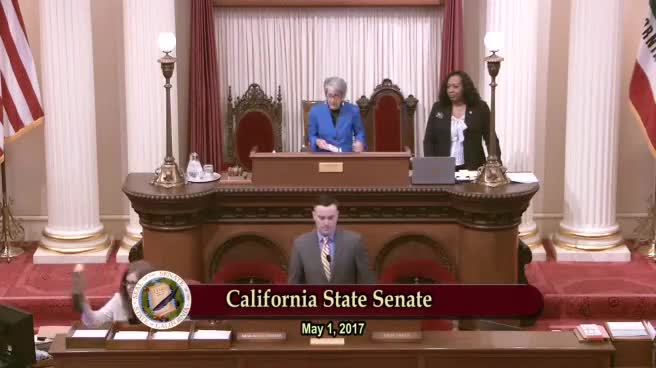
Bill Author



