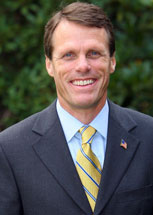
SB 283: Developmental services.
- Session Year: 2017-2018
- House: Senate
- Latest Version Date: 2017-04-06
Existing law, the Lanterman Developmental Disabilities Services Act, requires the State Department of Developmental Services to contract with regional centers to provide services and supports to individuals with developmental disabilities and their families, and requires regional centers to identify and pursue all possible sources of funding for consumers receiving those services. Existing law defines a developmental disability as a disability that originates before an individual attains 18 years of age, continues, or can be expected to continue, indefinitely, and constitutes a substantial disability for the individual.
This bill would modify that definition to make a person who suffers an acquired brain injury, including, but not limited to, a traumatic brain injury, after he or she attains 18 years of age, but before he or she attains 22 years of age, eligible for services and supports for persons with developmental disabilities if the person would be otherwise eligible for those services but for his or her age. mean a disability that originates before an individual attains 22 years of age, continues, or can be expected to continue, indefinitely, and constitutes a substantial disability for the individual.
Existing law, the Lanterman Developmental Disabilities Services Act, requires the State Department of Developmental Services to contract with regional centers to provide services and supports to individuals with developmental disabilities and their families, and requires regional centers to identify and pursue all possible sources of funding for consumers receiving those services. Existing law defines a developmental disability as a disability that originates before an individual attains 18 years of age, continues, or can be expected to continue, indefinitely, and constitutes a substantial disability for the individual.
This bill would modify that definition to make a person who suffers a traumatic brain injury an acquired brain injury, including, but not limited to, a traumatic brain injury, after he or she attains 18 years of age, but before he or she attains 22 years of age, eligible for services and supports for persons with developmental disabilities if the person would be otherwise eligible for those services but for his or her age.
Existing law, the Lanterman Developmental Disabilities Services Act, requires the State Department of Developmental Services to contract with regional centers to provide services and supports to individuals with developmental disabilities and their families, and requires regional centers to identify and pursue all possible sources of funding for consumers receiving those services. Existing law defines a developmental disability as a disability that originates before an individual attains 18 years of age, continues, or can be expected to continue, indefinitely, and constitutes a substantial disability for the individual.
This bill would modify that definition to make a person who suffers a traumatic brain injury after he or she attains 18 years of age, but before he or she attains 22 years of age, eligible for services and supports for persons with developmental disabilities if the person would be otherwise eligible for those services but for his or her age.
As used in this division:
(a)Developmental disability means a disability that originates before an individual attains 18 22 years of age; continues, or can be expected to continue, indefinitely; and constitutes a substantial disability for that individual. As defined by the Director of Developmental Services, in consultation with the Superintendent of Public Instruction, this term shall include intellectual disability, cerebral palsy, epilepsy, and autism. This term shall also include disabling conditions found to be closely related to intellectual disability or to require treatment similar to that required for individuals with an intellectual disability, but shall not include other handicapping conditions that are solely physical in nature.
(b)Services and supports for persons with developmental disabilities means specialized services and supports or special adaptations of generic services and supports directed toward the alleviation of a developmental disability or toward the social, personal, physical, or economic habilitation or rehabilitation of an individual with a developmental disability, or toward the achievement and maintenance of independent, productive, and normal lives. The determination of which services and supports are necessary for each consumer shall be made through the individual program plan process. The determination shall be made on the basis of the needs and preferences of the consumer or, when appropriate, the consumers family, and shall include consideration of a range of service options proposed by individual program plan participants, the effectiveness of each option in meeting the goals stated in the individual program plan, and the cost-effectiveness of each option. Services and supports listed in the individual program plan may include, but are not limited to, diagnosis, evaluation, treatment, personal care, day care, domiciliary care, special living arrangements, physical, occupational, and speech therapy, training, education, supported and sheltered employment, mental health services, recreation, counseling of the individual with a developmental disability and of his or her family, protective and other social and sociolegal services, information and referral services, follow-along services, adaptive equipment and supplies, advocacy assistance, including self-advocacy training, facilitation and peer advocates, assessment, assistance in locating a home, child care, behavior training and behavior modification programs, camping, community integration services, community support, daily living skills training, emergency and crisis intervention, facilitating circles of support, habilitation, homemaker services, infant stimulation programs, paid roommates, paid neighbors, respite, short-term out-of-home care, social skills training, specialized medical and dental care, telehealth services and supports, as defined in Section 2290.5 of the Business and Professions Code, supported living arrangements, technical and financial assistance, travel training, training for parents of children with developmental disabilities, training for parents with developmental disabilities, vouchers, and transportation services necessary to ensure delivery of services to persons with developmental disabilities. Nothing in this subdivision is intended to expand or authorize a new or different service or support for any consumer unless that service or support is contained in his or her individual program plan.
(c)Notwithstanding subdivisions (a) and (b), for any organization or agency receiving federal financial participation under the federal Developmental Disabilities Assistance and Bill of Rights Act of 2000, Chapter 144 (commencing with Section 15001) of Title 42 of the United States Code, as amended, developmental disability and services for persons with developmental disabilities mean the terms as defined in the federal act to the extent required by federal law.
(d)Consumer means a person who has a disability that meets the definition of developmental disability set forth in subdivision (a).
(e)Natural supports means personal associations and relationships typically developed in the community that enhance the quality and security of life for people, including, but not limited to, family relationships, friendships reflecting the diversity of the neighborhood and the community, associations with fellow students or employees in regular classrooms and workplaces, and associations developed through participation in clubs, organizations, and other civic activities.
(f)Circle of support means a committed group of community members, who may include family members, meeting regularly with an individual with developmental disabilities in order to share experiences, promote autonomy and community involvement, and assist the individual in establishing and maintaining natural supports. A circle of support generally includes a plurality of members who neither provide nor receive services or supports for persons with developmental disabilities and who do not receive payment for participation in the circle of support.
(g)Facilitation means the use of modified or adapted materials, special instructions, equipment, or personal assistance by an individual, such as assistance with communications, that will enable a consumer to understand and participate to the maximum extent possible in the decisions and choices that affect his or her life.
(h)Family support services means services and supports that are provided to a child with developmental disabilities or his or her family and that contribute to the ability of the family to reside together.
(i)Voucher means any authorized alternative form of service delivery in which the consumer or family member is provided with a payment, coupon, chit, or other form of authorization that enables the consumer or family member to choose his or her own service provider.
(j)Planning team means the individual with developmental disabilities, the parents or legally appointed guardian of a minor consumer or the legally appointed conservator of an adult consumer, the authorized representative, including those appointed pursuant to subdivision (d) of Section 4548 and subdivision (e) of Section 4705, one or more regional center representatives, including the designated regional center service coordinator pursuant to subdivision (b) of Section 4640.7, any individual, including a service provider, invited by the consumer, the parents or legally appointed guardian of a minor consumer or the legally appointed conservator of an adult consumer, or the authorized representative, including those appointed pursuant to subdivision (d) of Section 4548 and subdivision (e) of Section 4705, and including a minors, dependents, or wards court-appointed developmental services decisionmaker appointed pursuant to Section 319, 361, or 726.
(k)Stakeholder organizations means statewide organizations representing the interests of consumers, family members, service providers, and statewide advocacy organizations.
(l)(1)Substantial disability means the existence of significant functional limitations in three or more of the following areas of major life activity, as determined by a regional center, and as appropriate to the age of the person:
(A)Self-care.
(B)Receptive and expressive language.
(C)Learning.
(D)Mobility.
(E)Self-direction.
(F)Capacity for independent living.
(G)Economic self-sufficiency.
(2)A reassessment of substantial disability for purposes of continuing eligibility shall utilize the same criteria under which the individual was originally made eligible.
(m)Native language means the language normally used or the preferred language identified by the individual and, when appropriate, his or her parent, legal guardian or conservator, or authorized representative.
SECTION 1.Section 4512.5 is added to the Welfare and Institutions Code, to read:4512.5.Notwithstanding subdivision (a) of Section 4512, a person who suffers an acquired brain injury, including, but not limited to, a traumatic brain injury, after he or she attains 18 years of age, but before he or she attains 22 years of age, shall be eligible for services and supports for persons with developmental disabilities if the person would be otherwise eligible for those services but for his or her age.Notwithstanding subdivision (a) of Section 4512, a person who suffers a traumatic brain injury an acquired brain injury, including, but not limited to, a traumatic brain injury, after he or she attains 18 years of age, but before he or she attains 22 years of age, shall be eligible for services and supports for persons with developmental disabilities if the person would be otherwise eligible for those services but for his or her age.
Notwithstanding subdivision (a) of Section 4512, a person who suffers a traumatic brain injury after he or she attains 18 years of age, but before he or she attains 22 years of age, shall be eligible for services and supports for persons with developmental disabilities if the person would be otherwise eligible for those services but for his or her age.
|
Date
|
Status
|
|---|---|
| Feb 1, 2018 | Returned to Secretary of Senate pursuant to Joint Rule 56. |
| May 25, 2017 | May 25 hearing: Held in committee and under submission. |
| May 19, 2017 | Set for hearing May 25. |
| May 15, 2017 | May 15 hearing: Placed on APPR. suspense file. |
| May 4, 2017 | Set for hearing May 15. |
| May 3, 2017 | May 8 hearing postponed by committee. |
| May 2, 2017 | Set for hearing May 8. |
| May 1, 2017 | May 1 set for second hearing canceled at the request of author. |
| Apr 21, 2017 | Set for hearing May 1. |
| Apr 13, 2017 | April 17 set for first hearing canceled at the request of author. |
| Apr 6, 2017 | From committee with author's amendments. Read second time and amended. Re-referred to Com. on APPR. |
| Apr 5, 2017 | Set for hearing April 17. |
| Mar 28, 2017 | From committee: Do pass and re-refer to Com. on APPR. (Ayes 4. Noes 0.) (March 28). Re-referred to Com. on APPR. |
| Mar 13, 2017 | From committee with author's amendments. Read second time and amended. Re-referred to Com. on HUMAN S. |
| Mar 8, 2017 | Set for hearing March 28. |
| Feb 23, 2017 | Referred to Com. on HUMAN S. |
| Feb 10, 2017 | From printer. May be acted upon on or after March 12. |
| Feb 9, 2017 | Introduced. Read first time. To Com. on RLS. for assignment. To print. |
|
Date
|
Description
|
Location
|
Votes
|
|
|---|---|---|---|---|
| May 15, 2017 | Placed on suspense file | Senate Standing Committee on Appropriations |
Passed |
|
| Mar 28, 2017 | Do pass, but first be re-referred to the Committee on [Appropriations] | Senate Standing Committee on Human Services |
Passed |
This list shows positions taken on this bill by organizations on the date displayed, which is linked to the original source.
Positions by individuals are not included.
|
Organization
|
Position
|
Date
|
|---|---|---|
| Brain Injury Association of California | ** Support | Mar 28, 2017 |
| California Association For Health Services At Home | ** Support | Mar 28, 2017 |
| California Disability Services Association | ** Support | Mar 28, 2017 |
| Coldwater Clinical Associates | ** Support | Mar 28, 2017 |
| Dr. Jay N. Giedd, University of San Diego | ** Support | Mar 28, 2017 |
| Headway House, INC. | ** Support | Mar 28, 2017 |
| Hope Neurology and Multiple Sclerosis Center | ** Support | Mar 28, 2017 |
| Independent Living Center of Southern California | ** Support | Mar 28, 2017 |
| Pacific Region Spinal and Head Injury Care System | ** Support | Mar 28, 2017 |
| The Arc and United Cerebral Palsy California Collaboration | ** Support | Mar 28, 2017 |
| The State Council on Developmental Disabilities | ** Support | Mar 28, 2017 |
SENATE COMMITTEE ON
Senator Ricardo Lara, Chair
2017 - 2018 Regular Session
SB 283 (Wilk) - Developmental services
Version: | Policy Vote: |
Urgency: | Mandate: |
Hearing Date: | Consultant: |
This bill meets the criteria for referral to the Suspense File.
Bill Summary:
SB 283 would expand eligibility for entitlement services provided by regional centers to individuals who have a disability originating between 18 and 22 years of age.
Fiscal Impact:
- Likely ongoing costs in the low hundreds of millions per year to provide services to additional individuals (General Fund and federal funds). By extending eligibility for regional center services to individuals who have a disability originating between 18 and 22 years of age, the bill will increase the population that is eligible for those services. The exact fiscal impact of this change is difficult to predict, because the overall number of individuals who would newly qualify for regional center services is unknown. According to an analysis by the Department of Developmental services, the annual costs could be over $340 million per year. See staff comments.
- Unknown, but likely minor, reduction in services provided to individuals with traumatic brain injury by the Department of Rehabilitation (Traumatic Brain Injury Fund). The Department of Rehabilitation provides services to about 900 individuals per year with traumatic brain injury through seven traumatic brain injury centers (serving 20 counties). In addition, the Department provides vocational services to about 1,250 per individuals with traumatic brain injury. The total cost of those programs is about $2.4 million per year. By increasing eligibility for much more comprehensive services through the regional center system, the bill could reduce demand for those services.
Background:
The Department of Developmental Services is responsible for coordinating care and services for about 250,000 people with developmental disabilities. The vast majority of these people are served by 21 regional centers, which are non-profit entities that contract with the state. The regional centers, in turn, contract with a variety of vendors to provide direct services to the developmentally disabled. Services provided by regional centers are not direct health care services; rather, the regional centers provide services such as day programs, employment support, case management, and special living arrangements.
Under current law, eligibility for regional center services is limited to individuals whose disability originates before an individual turns 18 years of age. However, it is important to note that an individual’s condition does not have to be diagnosed before age 18 to quality. Eligibility for regional center services is retroactive, to the extent that the individual’s condition can be shown to have originated before age 18.
The Department of Rehabilitation manages the Traumatic Brain Injury Program, under which funding is provided to seven traumatic brain injury centers in the state. In 2015-16, these centers provide individualized services to about 900 individuals. The Department also provided vocational rehabilitation services to about 1,250 individuals. Finally, the Department provided information and referral services to about 6,500 individuals and 5,300 individuals attend vocational education events.
Proposed Law:
SB 283 would expand eligibility for entitlement services provided by regional centers to individuals who have a disability originating between 18 and 22 years of age.
Related Legislation:
SB 398 Monning (2017) would extend the sunset date on the Traumatic Brain Injury Program, overseen by the Department of Rehabilitation. That bill will be heard in this committee.
Staff Comments:
As noted above, the fiscal impact of this bill is difficult to determine, because there is uncertainty about the size of the population that would be made eligible for regional center services under the bill. Currently, most conditions that make an individual eligible for regional center services manifest long before age 18, such as mental retardation, cerebral palsy, autism, and similar conditions. It is not likely that the change in age-eligibility in this bill will substantially increase eligibility for individuals with those kinds of conditions.
However, the bill is likely to substantially increase eligibility for individuals with an acquired brain injury occurring between ages 18 and 21. Such acquired brain injuries could include traumatic brain injury (from an impact to the skull, such as during a fall or automobile accident) or brain injuries resulting from strokes, prolonged lack of oxygen (such as drowning), or other incidents. The number of individuals between 18 and 22 years of age who experience such brain injuries is unknown.
The cost estimates above developed by the Department of Developmental Services are based on an assumed increase in caseload of 5%, at current per capital costs. This is a reasonable estimate of the potential costs, given the uncertainty.
Alternatively, staff estimates potential annual costs could be about $300 million per year based solely on the projected serious traumatic brain injury rate in the population of 18 to 21 year olds. This estimate is based solely on the incidence of traumatic brain injuries in this age group that result in a visit to a hospital emergency department. On one hand, a significant number of those emergency department visits are not likely to result in brain injuries significant enough to result in a significant disability. On the other hand, this estimate does not include brain injuries resulting in other medical conditions, such as drowning or stroke.
-- END --
SENATE COMMITTEE ON APPROPRIATIONS
Senator Ricardo Lara, Chair
2017 - 2018 Regular Session
SB 283 (Wilk) - Developmental services
Version: April 6, 2017 | Policy Vote: HUMAN S. 4 - 0 |
Urgency: No | Mandate: No |
Hearing Date: May 1, 2017 | Consultant: Brendan McCarthy |
This bill meets the criteria for referral to the Suspense File.
Bill Summary:
SB 283 would expand eligibility for entitlement services provided by regional centers to individuals who have a disability originating between 18 and 22 years of age.
Fiscal Impact:
- Likely ongoing costs in the low hundreds of millions per year to provide services to additional individuals (General Fund and federal funds). By extending eligibility for regional center services to individuals who have a disability originating between 18 and 22 years of age, the bill will increase the population that is eligible for those services. The exact fiscal impact of this change is difficult to predict, because the overall number of individuals who would newly qualify for regional center services is unknown. According to an analysis by the Department of Developmental services, the annual costs could be over $340 million per year. See staff comments.
- Unknown potential reduction in services provided to individuals with traumatic brain injury by the Department of Rehabilitation (Traumatic Brain Injury Fund). The Department of Rehabilitation provides services to about 900 individuals per year with traumatic brain injury through seven traumatic brain injury centers (serving 20 counties). In addition, the Department provides vocational services to about 1,250 per individuals with traumatic brain injury. The total cost of those programs is about $2.4 million per year. By increasing eligibility for much more comprehensive services through the regional center system, the bill could reduce demand for those services.
Background:
The Department of Developmental Services is responsible for coordinating care and services for about 250,000 people with developmental disabilities. The vast majority of these people are served by 21 regional centers, which are non-profit entities that contract with the state. The regional centers, in turn, contract with a variety of vendors to provide direct services to the developmentally disabled. Services provided by regional centers are not direct health care services; rather, the regional centers provide services such as day programs, employment support, case management, and special living arrangements.
Under current law, eligibility for regional center services is limited to individuals whose disability originates before an individual turns 18 years of age. However, it is important to note that an individual’s condition does not have to be diagnosed before age 18 to quality. Eligibility for regional center services is retroactive, to the extent that the individual’s condition can be shown to have originated before age 18.
The Department of Rehabilitation manages the Traumatic Brain Injury Program, under which funding is provided to seven traumatic brain injury centers in the state. In 2015-16, these centers provide individualized services to about 900 individuals. The Department also provided vocational rehabilitation services to about 1,250 individuals. Finally, the Department provided information and referral services to about 6,500 individuals and 5,300 individuals attend vocational education events.
Proposed Law:
SB 283 would expand eligibility for entitlement services provided by regional centers to individuals who have a disability originating between 18 and 22 years of age.
Related Legislation:
SB 398 Monning (2017) would extend the sunset date on the Traumatic Brain Injury Program, overseen by the Department of Rehabilitation. That bill will be heard in this committee.
Staff Comments:
As noted above, the fiscal impact of this bill is difficult to determine, because there is uncertainty about the size of the population that would be made eligible for regional center services under the bill. Currently, most conditions that make an individual eligible for regional center services manifest long before age 18, such as mental retardation, cerebral palsy, autism, and similar conditions. It is not likely that the change in age-eligibility in this bill will substantially increase eligibility for individuals with those kinds of conditions.
However, the bill is likely to substantially increase eligibility for individuals with an acquired brain injury occurring between ages 18 and 21. Such acquired brain injuries could include traumatic brain injury (from an impact to the skull, such as during a fall or automobile accident) or brain injuries resulting from strokes, prolonged lack of oxygen (such as drowning), or other incidents. The number of individuals between 18 and 22 years of age who experience such brain injuries is unknown.
The cost estimates above developed by the Department of Developmental Services are based on an assumed increase in caseload of 5%, at current per capital costs. This is a reasonable estimate of the potential costs, given the uncertainty.
Alternatively, staff estimates potential annual costs could be about $300 million per year based solely on the projected serious traumatic brain injury rate in the population of 18 to 21 year olds. This estimate is based on the incidence of traumatic brain injuries in this age group that result in a visit to a hospital emergency department. On one hand, a significant number of those emergency department visits are not likely to result in brain injuries significant enough to result in a significant disability. On the other hand, this estimate does not include brain injuries resulting in other medical conditions, such as drowning or stroke.
-- END --
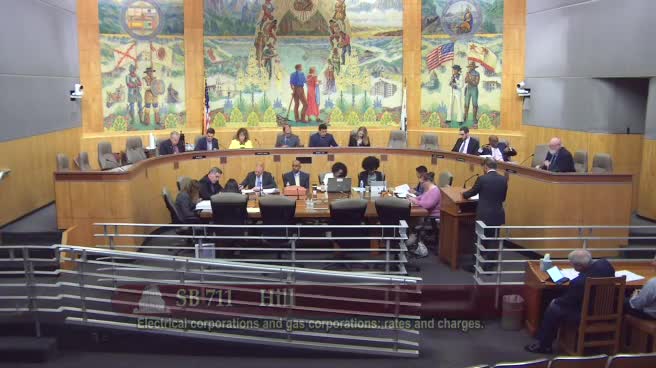
Discussed in Hearing
 48MIN
Senate Standing Committee on Appropriations
 6MIN
Senate Standing Committee on Appropriations
Bill Author