SB 395: Custodial interrogation: juveniles.
- Session Year: 2017-2018
- House: Senate
- Latest Version Date: 2017-10-11
Existing law authorizes a peace officer to take a minor into temporary custody when that officer has reasonable cause to believe that the minor has committed a crime or violated an order of the juvenile court. In these circumstances, existing law requires the peace officer to advise the minor that anything he or she says can be used against him or her, that he or she has the right to remain silent, that he or she has the right to have counsel present during any interrogation, and that he or she has the right to have counsel appointed if he or she is unable to afford counsel.
This bill would require that a youth 15 years of age or younger consult with legal counsel in person, by telephone, or by video conference prior to a custodial interrogation and before waiving any of the above-specified rights. The bill would prohibit a waiver of the consultation. The bill would require the court to consider the effect of the failure to comply with the above-specified requirement in adjudicating the admissibility of statements of a youth 15 years of age or younger made during or after a custodial interrogation. The bill would clarify that these provisions do not apply to the admissibility of statements of a youth 15 years of age or younger if certain criteria are met.
This bill would require the Governor, or his or designee, to convene a panel of at least 7 experts, as specified, no later than January 1, 2023. The bill would require the panel to review, and to examine the effects and outcomes related to, the implementation of the above-described requirements, as specified, and to provide, no later than April 1, 2024, certain information to the Legislature and the Governor.
This bill would repeal these requirements on January 1, 2025.
Existing law authorizes a peace officer to take a minor into temporary custody when that officer has reasonable cause to believe that the minor has committed a crime or violated an order of the juvenile court. In these circumstances, existing law requires the peace officer to advise the minor that anything he or she says can be used against him or her, that he or she has the right to remain silent, that he or she has a the right to have counsel present during any interrogation, and that he or she has a the right to have counsel appointed if he or she is unable to afford counsel.
This bill would require that a youth under 18 years of age 15 years of age or younger consult with legal counsel in person, by telephone, or by video conference prior to a custodial interrogation and before waiving any of the above-specified rights. The bill would provide that consultation with legal counsel cannot be waived. prohibit a waiver of the consultation. The bill would require the court to consider the effect of the failure to comply with the above-specified requirement in adjudicating the admissibility of statements of a youth under 18 years of age 15 years of age or younger made during or after a custodial interrogation. The bill also clarifies would clarify that these provisions do not apply to the admissibility of statements of a youth under 18 years of age 15 years of age or younger if certain criteria are met.
This bill would require the Governor, or his or designee, to convene a panel of at least 7 experts, as specified, no later than January 1, 2023. The bill would require the panel to review, and to examine the effects and outcomes related to, the implementation of the above-described requirements, as specified, and to provide, no later than April 1, 2024, certain information to the Legislature and the Governor.
This bill would repeal these requirements on January 1, 2025.
Existing law authorizes a peace officer to take a minor into temporary custody when that officer has reasonable cause to believe that the minor has committed a crime or violated an order of the juvenile court. In these circumstances, existing law requires the peace officer to advise the minor that anything he or she says can be used against him or her, that he or she has the right to remain silent, that he or she has a right to have counsel present during any interrogation, and that he or she has a right to have counsel appointed if he or she is unable to afford counsel.
This bill would require that a youth under 18 years of age consult with legal counsel in person, by telephone, or by video conference prior to a custodial interrogation and before waiving any of the above-specified rights. The bill would provide that consultation with legal counsel cannot be waived. The bill would require the court to consider the effect of the failure to comply with the above-specified requirement in adjudicating the admissibility of statements of a youth under 18 years of age made during or after a custodial interrogation. The bill also clarifies that these provisions do not apply to the admissibility of statements of a youth under 18 years of age if certain criteria are met.
The Legislature finds and declares all of the following:
(a)Developmental and neurological science concludes that the process of cognitive brain development continues into adulthood, and that the human brain undergoes dynamic changes throughout adolescence and well into young adulthood (see Richard J. Bonnie, et al., Reforming Juvenile Justice: A Developmental Approach, National Research Council (2013), page 96, and Chapter 4). As recognized by the United States Supreme Court, children generally are less mature and responsible than adults (J.D.B. v. North Carolina (2011) 131 S.Ct. 2394, 2397, quoting Eddings v. Oklahoma (1982) 455 U.S. 104, 115); they often lack the experience, perspective, and judgment to recognize and avoid choices that could be detrimental to them (J.D.B., 131 S.Ct. at 2397, quoting Bellotti v. Baird (1979) 443 U.S. 622, 635); they are more vulnerable or susceptible to... outside pressures than adults (J.D.B., 131 S.Ct. at 2397, quoting Roper v. Simmons (2005) 543 U.S. 551, 569); they have limited understandings of the criminal justice system and the roles of the institutional actors within it (Graham v. Florida (2010) 560 U.S. 48, 78); and children characteristically lack the capacity to exercise mature judgment and possess only an incomplete ability to understand the world around them (J.D.B., 131 S.Ct. at 2397).
(b)Custodial interrogation of an individual by the state requires that the individual be advised of his or her rights and make a knowing, intelligent, and voluntary waiver of those rights before the interrogation proceeds. People under 18 years of age have a lesser ability as compared to adults to comprehend the meaning of their rights and the consequences of waiver. Additionally, a large body of research has established that adolescent thinking tends to either ignore or discount future outcomes and implications, and disregard long-term consequences of important decisions (see, e.g., Steinberg et al., Age Differences in Future Orientation and Delay Discounting, Child Development, vol. 80 (2009), pp. 28-44; William Gardner and Janna Herman, Adolescents AIDS Risk Taking: A Rational Choice Perspective, in Adolescents in the AIDS Epidemic, ed. William Gardner et al. (San Francisco: Jossey Bass, 1990), pp. 17, 25-26; Marty Beyer, Recognizing the Child in the Delinquent, Kentucky Childrens Rights Journal, vol. 7 (Summer 1999), pp. 16-17; National Juvenile Justice Network, Using Adolescent Brain Research to Inform Policy: A Guide for Juvenile Justice Advocates, September 2012, pp. 1-2; Catherine C. Lewis, How Adolescents Approach Decisions: Changes over Grades Seven to Twelve and Policy Implications, Child Development, vol. 52 (1981), pp. 538, 541-42). Addressing the specific context of police interrogation, the United States Supreme Court observed that events that would leave a man cold and unimpressed can overawe and overwhelm a lad in his early teens (Haley v. Ohio (1948) 332 U.S. 596, 599 (plurality opinion)), and noted that no matter how sophisticated, a juvenile subject of police interrogation cannot be compared to an adult subject (J.D.B., 131 S.Ct. at 2403, quoting Gallegos v. Colorado (1962) 370 U.S. 49, 54). The law enforcement community now widely accepts what science and the courts have recognized: children and adolescents are much more vulnerable to psychologically coercive interrogations and in other dealings with the police than resilient adults experienced with the criminal justice system.
(c)For these reasons, in situations of custodial interrogation and prior to making a waiver of rights under Miranda v. Arizona (1966) 384 U.S. 436, youth under 18 years of age should consult with legal counsel to assist in their understanding of their rights and the consequences of waiving those rights.
SEC. 2.Section 625.6 is added to the Welfare and Institutions Code, to read:625.6.(a)Prior to a custodial interrogation, and before the waiver of any Miranda rights, a youth 15 years of age or younger shall consult with legal counsel in person, by telephone, or by video conference. The consultation may not be waived.
(b)The court shall, in adjudicating the admissibility of statements of a youth 15 years of age or younger made during or after a custodial interrogation, consider the effect of failure to comply with subdivision (a).
(c)This section does not apply to the admissibility of statements of a youth 15 years of age or younger if both of the following criteria are met:
(1)The officer who questioned the youth reasonably believed the information he or she sought was necessary to protect life or property from an imminent threat.
(2)The officers questions were limited to those questions that were reasonably necessary to obtain that information.
(d)This section does not require a probation officer to comply with subdivision (a) in the normal performance of his or her duties under Section 625, 627.5, or 628.
(e)(1)The Governor, or his or her designee, shall convene a panel of at least seven experts, including all of the following:
(A)A representative of the California Public Defenders Association.
(B)A representative of the California District Attorneys Association.
(C)A representative of a statewide association representing law enforcement.
(D)A representative of the judiciary.
(E)A member of the public possessing expertise and experience in any or all of the following:
(i)The juvenile delinquency or dependency systems.
(ii)Child development or special needs children.
(iii)The representation of children in juvenile court.
(F)A member of the public who, as a youth, was involved in the criminal justice system.
(G)A criminologist with experience in interpreting crime data.
(2)(A)The panel shall be convened no later than January 1, 2023, and shall review the implementation of this section and examine the effects and outcomes related to the implementation of this section, including, but not limited to, the appropriate age of youth to whom this section should apply.
(B)No later than April 1, 2024, the panel shall provide information to the Legislature and the Governor, including, but not limited to, relevant data on the effects and outcomes associated with the implementation of this section. A report submitted to the Legislature pursuant to this subparagraph shall be submitted in compliance with Section 9795 of the Government Code.
(3)Members of the panel shall serve without compensation, but may be reimbursed for actual and necessary expenses incurred in the performance of their duties on the panel.
(f)This section shall remain in effect only until January 1, 2025, and as of that date is repealed.
The Legislature finds and declares all of the following:
(a)Developmental and neurological science concludes that the process of cognitive brain development continues into adulthood, and that the human brain undergoes dynamic changes throughout adolescence and well into young adulthood. (See adulthood (see Richard J. Bonnie, et al., Reforming Juvenile Justice: A Developmental Approach, National Academies of Science (2012), Research Council (2013), page 96, and Chapter 4.) 4). As recognized by the United States Supreme Court, children and youth generally are less mature and responsible than adults, adults (J.D.B. v. North Carolina (2011) 131 S.Ct. 2394, 2397, quoting Eddings v. Oklahoma (1982) 455 U.S. 104, 115); they often lack the experience, perspective, and judgment to recognize and avoid choices that could be detrimental to them, them (J.D.B., 131 S.Ct. at 2397, quoting Bellotti v. Baird (1979) 443 U.S. 622, 635); they are more vulnerable or susceptible to... outside pressures than adults (J.D.B., 131 S.Ct. at 2397, quoting Roper v. Simmons (2005) 543 U.S. 551, 569); they have limited understandings of the criminal justice system and the roles of the institutional actors within it (Graham v. Florida (2010) 560 U.S. 48, 78); and children characteristically lack the capacity to exercise mature judgment and possess only an incomplete ability to understand the world around them (J.D.B., 131 S.Ct. at 2397).
(b)Custodial interrogation of an individual by the state requires that the individual be advised of his or her rights and make a knowing, intelligent, and voluntarily voluntary waiver of those rights before the interrogation proceeds. People under 18 years of age have a lesser ability as compared to adults to comprehend the meaning of their rights and the consequences of waiver. Additionally, a large body of research has established that adolescent thinking tends to either ignore or discount future outcomes and implications, and disregard long-term consequences of important decisions. (See, decisions (see, e.g., Steinberg et al., Age Differences in Future Orientation and Delay Discounting; Discounting, Child Development, vol. 80 (2009), pp. 28-44; William Gardner and Janna Herman, Adolescents Adolescents AIDS Risk Taking: A Rational Choice Perspective, in Adolescents in the AIDS Epidemic, ed. William Gardner et al. (San Francisco: Jossey Bass, 1990), pp. 17, 25-26; Marty Beyer, Recognizing the Child in the Delinquent, Kentucky Child Childrens Rights Journal, vol. 7 (Summer 1999), pp. 16-17; National Juvenile Justice Network, Using Adolescent Brain Research to Inform Policy: A Guide for Juvenile Justice Advocates, September 2012, pp. 1-2; Catherine C. Lewis, How Adolescents Approach Decisions: Changes over Grades Seven to Twelve and Policy Implications, Child Development, vol. 52 (1981), pp. 538, 541-42). Addressing the specific context of police interrogation, the United States Supreme Court observed that events that would leave a man cold and unimpressed can overawe and overwhelm a lad in his early teens (Haley v. Ohio, Ohio (1948) 332 U.S. 596 596, 599 (plurality opinion)), and noted that no matter how sophisticated, a juvenile subject of police interrogation cannot be compared to an adult subject (J.D.B., 131 S.Ct. at 2394, 2403, quoting Gallegos v. Colorado (1962) 370 U.S. 49, 54). The law enforcement community now widely accepts what science and the courts have recognized: Children children and adolescents are much more vulnerable to psychologically coercive interrogations and in other dealings with the police than resilient adults experienced with the criminal justice system.
(c)For these reasons, in situations of custodial interrogation and prior to making a waiver of rights under Miranda v. Arizona (1966) 384 U.S. 436, youth under 18 years of age should consult with legal counsel to assist in their understanding of their rights and the consequences of waiving those rights.
SEC. 2.Section 625.6 is added to the Welfare and Institutions Code, to read:625.6.(a)Prior to a custodial interrogation, and before the waiver of any Miranda rights, a youth under 18 years of age 15 years of age or younger shall consult with legal counsel in person, by telephone, or by video conference. The consultation may not be waived.
(b)The court shall, in adjudicating the admissibility of statements of a youth under 18 years of age 15 years of age or younger made during or after a custodial interrogation, consider the effect of failure to comply with subdivision (a).
(c)This section does not apply to the admissibility of statements of a youth under 18 years of age 15 years of age or younger if both of the following criteria are met:
(1)The officer who questioned the suspect youth reasonably believed the information he or she sought was necessary to protect life or property from a substantial an imminent threat.
(2)The officers questions were limited to those questions that were reasonably necessary to obtain this that information.
(d)This section does not require a probation officer to comply with subdivision (a) in the normal performance of his or her duties under Sections Section 625, 627.5, or 628.
(e)(1)The Governor, or his or her designee, shall convene a panel of at least seven experts, including all of the following:
(A)A representative of the California Public Defenders Association.
(B)A representative of the California District Attorneys Association.
(C)A representative of a statewide association representing law enforcement.
(D)A representative of the judiciary.
(E)A member of the public possessing expertise and experience in any or all of the following:
(i)The juvenile delinquency or dependency systems.
(ii)Child development or special needs children.
(iii)The representation of children in juvenile court.
(F)A member of the public who, as a youth, was involved in the criminal justice system.
(G)A criminologist with experience in interpreting crime data.
(2)(A)The panel shall be convened no later than January 1, 2023, and shall review the implementation of this section and examine the effects and outcomes related to the implementation of this section, including, but not limited to, the appropriate age of youth to whom this section should apply.
(B)No later than April 1, 2024, the panel shall provide information to the Legislature and the Governor, including, but not limited to, relevant data on the effects and outcomes associated with the implementation of this section. A report submitted to the Legislature pursuant to this subparagraph shall be submitted in compliance with Section 9795 of the Government Code.
(3)Members of the panel shall serve without compensation, but may be reimbursed for actual and necessary expenses incurred in the performance of their duties on the panel.
(f)This section shall remain in effect only until January 1, 2025, and as of that date is repealed.
The Legislature finds and declares all of the following:
(a)Developmental and neurological science concludes that the process of cognitive brain development continues into adulthood, and that the human brain undergoes dynamic changes throughout adolescence and well into young adulthood. (See Richard J. Bonnie, et al., Reforming Juvenile Justice: A Developmental Approach, National Academies of Science (2012), page 96, and Chapter 4.) As recognized by the United States Supreme Court, children and youth generally are less mature and responsible than adults, (J.D.B. v. North Carolina (2011) 131 S.Ct. 2394, 2397, quoting Eddings v. Oklahoma (1982) 455 U.S. 104, 115); they often lack the experience, perspective, and judgment to recognize and avoid choices that could be detrimental to them, (J.D.B., 131 S.Ct. at 2397, quoting Bellotti v. Baird (1979) 443 U.S. 622, 635); they are more vulnerable or susceptible to... outside pressures than adults (J.D.B., 131 S.Ct. at 2397, quoting Roper v. Simmons (2005) 543 U.S. 551, 569); they have limited understandings of the criminal justice system and the roles of the institutional actors within it (Graham v. Florida (2010) 560 U.S. 48, 78); and children characteristically lack the capacity to exercise mature judgment and possess only an incomplete ability to understand the world around them (J.D.B., 131 S.Ct. at 2397).
(b)Custodial interrogation of an individual by the state requires that the individual be advised of his or her rights and make a knowing, intelligent, and voluntarily waiver of those rights before the interrogation proceeds. People under 18 years of age have a lesser ability as compared to adults to comprehend the meaning of their rights and the consequences of waiver. Additionally, a large body of research has established that adolescent thinking tends to either ignore or discount future outcomes and implications, and disregard long-term consequences of important decisions. (See, e.g., Steinberg et al., Age Differences in Future Orientation and Delay Discounting; William Gardner and Janna Herman, Adolescents AIDS Risk Taking: A Rational Choice Perspective, in Adolescents in the AIDS Epidemic, ed. William Gardner et al. (San Francisco: Jossey Bass, 1990), pp. 17, 25-26; Marty Beyer, Recognizing the Child in the Delinquent, Kentucky Child Rights Journal, vol. 7 (Summer 1999), pp. 16-17; National Juvenile Justice Network, Using Adolescent Brain Research to Inform Policy: A Guide for Juvenile Justice Advocates, September 2012, pp. 1-2; Catherine C. Lewis, How Adolescents Approach Decisions: Changes over Grades Seven to Twelve and Policy Implications, Child Development, vol. 52 (1981), pp. 538, 541-42). Addressing the specific context of police interrogation, the United States Supreme Court observed that events that would leave a man cold and unimpressed can overawe and overwhelm a lad in his early teens (Haley v. Ohio, (1948) 332 U.S. 596 (plurality opinion)), and noted that no matter how sophisticated, a juvenile subject of police interrogation cannot be compared to an adult subject (J.D.B., 131 S.Ct. at 2394, quoting Gallegos v. Colorado (1962) 370 U.S. 49, 54). The law enforcement community now widely accepts what science and the courts have recognized: Children and adolescents are much more vulnerable to psychologically coercive interrogations and in other dealings with the police than resilient adults experienced with the criminal justice system.
(c)For these reasons, in situations of custodial interrogation and prior to making a waiver of rights under Miranda v. Arizona (1966) 384 U.S. 436, youth under 18 years of age should consult with legal counsel to assist in their understanding of their rights and the consequences of waiving those rights.
SEC. 2.Section 625.6 is added to the Welfare and Institutions Code, to read:625.6.(a)Prior to a custodial interrogation, and before the waiver of any Miranda rights, a youth under 18 years of age shall consult with legal counsel in person, by telephone, or by video conference. The consultation may not be waived.
(b)The court shall, in adjudicating the admissibility of statements of a youth under 18 years of age made during or after a custodial interrogation, consider the effect of failure to comply with subdivision (a).
(c)This section does not apply to the admissibility of statements of a youth under 18 years of age if both of the following criteria are met:
(1)The officer who questioned the suspect reasonably believed the information he or she sought was necessary to protect life or property from a substantial threat.
(2)The officers questions were limited to those questions that were reasonably necessary to obtain this information.
(d)This section does not require a probation officer to comply with subdivision (a) in the normal performance of his or her duties under Sections 625, 627.5, or 628.
|
Date
|
Status
|
|---|---|
| Oct 11, 2017 | Chaptered by Secretary of State. Chapter 681, Statutes of 2017. |
| Oct 11, 2017 | Approved by the Governor. |
| Sep 22, 2017 | Enrolled and presented to the Governor at 3 p.m. |
| Sep 15, 2017 | Assembly amendments concurred in. (Ayes 29. Noes 9.) Ordered to engrossing and enrolling. |
| Sep 15, 2017 | In Senate. Concurrence in Assembly amendments pending. |
| Sep 14, 2017 | Read third time. Passed. Ordered to the Senate. |
| Sep 7, 2017 | Read third time and amended. |
| Jun 28, 2017 | Read second time. Ordered to third reading. |
| Jun 27, 2017 | From committee: Do pass. (Ayes 4. Noes 2.) (June 27). |
| Jun 8, 2017 | Referred to Com. on PUB. S. |
| May 31, 2017 | In Assembly. Read first time. Held at Desk. |
| May 30, 2017 | Read third time. Passed. (Ayes 27. Noes 12. Page 1277.) Ordered to the Assembly. |
| May 26, 2017 | Read second time. Ordered to third reading. |
| May 25, 2017 | From committee: Do pass. (Ayes 5. Noes 2. Page 1184.) (May 25). |
| May 19, 2017 | Set for hearing May 25. |
| Apr 17, 2017 | April 17 hearing: Placed on APPR. suspense file. |
| Apr 5, 2017 | Set for hearing April 17. |
| Mar 29, 2017 | Re-referred to Com. on APPR. |
| Mar 27, 2017 | Re-referred to Com. on RLS. |
| Mar 23, 2017 | Read second time. Ordered to third reading. |
| Mar 22, 2017 | From committee: Do pass. (Ayes 5. Noes 2. Page 430.) (March 21). |
| Mar 3, 2017 | Set for hearing March 21. |
| Feb 23, 2017 | Referred to Com. on PUB. S. |
| Feb 16, 2017 | From printer. May be acted upon on or after March 18. |
| Feb 15, 2017 | Introduced. Read first time. To Com. on RLS. for assignment. To print. |
|
Date
|
Description
|
Location
|
Votes
|
|
|---|---|---|---|---|
| Sep 15, 2017 | Unfinished Business SB395 Lara et al. Concurrence | Senate Floor |
Passed |
|
| Sep 14, 2017 | SB 395 Lara Senate Third Reading By CHIU | Assembly Floor |
Passed |
|
| Jun 27, 2017 | Do pass. | Assembly Standing Committee on Public Safety |
Passed |
|
| May 30, 2017 | Senate 3rd Reading SB395 Lara et al. | Senate Floor |
Passed |
|
| May 25, 2017 | Do pass | Senate Standing Committee on Appropriations |
Passed |
|
| Apr 17, 2017 | Placed on suspense file | Senate Standing Committee on Appropriations |
Passed |
|
| Mar 21, 2017 | Do pass | Senate Standing Committee on Public Safety |
Passed |
This list shows positions taken on this bill by organizations on the date displayed, which is linked to the original source.
Positions by individuals are not included.
|
Organization
|
Position
|
Date
|
|---|---|---|
| Alliance for Boys and Men of Color | ** Support | Sep 15, 2017 |
| American Academy Of Pediatrics, California | ** Support | Jun 26, 2017 |
| American Civil Liberties Union | ** Support | Sep 15, 2017 |
| Anti-Recidivism Coalition | ** Support | Sep 15, 2017 |
| Asian Law Alliance | ** Support | Sep 15, 2017 |
| California Alliance for Youth and Community Justice | ** Support | Sep 15, 2017 |
| California Attorneys For Criminal Justice | ** Support | Sep 15, 2017 |
| California Catholic Conference | ** Support | Sep 15, 2017 |
| California Civil Liberties Advocacy | ** Support | Sep 15, 2017 |
| California District Attorneys Association | ** Against | Sep 15, 2017 |
| California Police Chiefs Association | ** Against | Sep 15, 2017 |
| California Public Defenders Association | ** Support | Sep 15, 2017 |
| California State PTA | ** Support | Jun 26, 2017 |
| California State Sheriffs' Association | ** Against | Sep 15, 2017 |
| Californians for Safety and Justice | ** Support | Jun 26, 2017 |
| Center on Juvenile and Criminal Justice | ** Support | Sep 15, 2017 |
| Chief Probation Officers Of California | ** Against | Jun 26, 2017 |
| Children'S Defense Fund | ** Support | Sep 15, 2017 |
| Children'S Law Center Of California | ** Support | Sep 15, 2017 |
| Coalition for Justice and Accountability | ** Support | Sep 15, 2017 |
| Community Development Technologies Center | ** Support | Sep 15, 2017 |
| Compton Unified School District | ** Support | Jun 26, 2017 |
| Courage Campaign | ** Support | Jun 26, 2017 |
| Ella Baker Center For Human Rights | ** Support | Sep 15, 2017 |
| Felony Murder Elimination Project | ** Support | Sep 15, 2017 |
| FosterEd, National Center for Youth Law | * Support | Jun 27, 2017 |
| Friends Committee On Legislation Of California | ** Support | Sep 15, 2017 |
| Healing Dialogue and Action | ** Support | Sep 15, 2017 |
| Homeboy Recycling | ** Support | Jun 26, 2017 |
| Human Rights Watch | ** Support | Sep 15, 2017 |
| John Burton Advocates for Youth | ** Support | Sep 15, 2017 |
| juvenile law center | ** Support | Jun 26, 2017 |
| League Of Women Voters Of California | ** Support | Jun 26, 2017 |
| Los Angeles County Board of Supervisors | ** Support | Sep 15, 2017 |
| National Association Of Social Workers, California Chapter | ** Support | Jun 26, 2017 |
| National Center for Youth Law | ** Support | Sep 15, 2017 |
| One private individual | ** Support | Jun 26, 2017 |
| Pacific Juvenile Defender Center | ** Support | Sep 15, 2017 |
| Prison Law Office | ** Support | Sep 15, 2017 |
| PURPOSE | ** Against | Mar 21, 2017 |
| Root & Rebound | ** Support | Sep 15, 2017 |
| San Diego County District Attorney | ** Against | Sep 15, 2017 |
| services, immigrant right and education network | ** Support | Jun 26, 2017 |
| Silicon Valley De-Bug | ** Support | Sep 15, 2017 |
| TGI Justice Project | ** Support | Sep 15, 2017 |
| Two individuals | ** Support | Sep 15, 2017 |
| USC Gould School of Law, Post-Conviction Justice Project | ** Support | Sep 15, 2017 |
| W. Haywood Burns Institute | ** Support | Sep 15, 2017 |
| Youth Justice Alliance Youth Justice Coalition | * Support | Jun 27, 2017 |
| Youth Justice Coalition | ** Support | Sep 15, 2017 |
Office of Senate Floor Analyses (916) 651-1520 Fax: (916) 327-4478 | SB |
UNFINISHED BUSINESS
Bill No: SB 395
:
SENATE PUBLIC SAFETY COMMITTEE: 5-2, 3/21/17
AYES: Skinner, Bradford, Jackson, Mitchell, Wiener
NOES: Anderson, Stone
SENATE APPROPRIATIONS COMMITTEE: 5-2, 5/25/17
AYES: Lara, Beall, Bradford, Hill, Wiener
NOES: Bates, Nielsen
SENATE FLOOR: 27-12, 5/30/17
AYES: Allen, Atkins, Beall, Bradford, Cannella, De León, Dodd, Galgiani, Hernandez, Hill, Hueso, Jackson, Lara, Leyva, McGuire, Mendoza, Mitchell, Monning, Newman, Pan, Portantino, Roth, Skinner, Stern, Wieckowski, Wiener, Wilk
NOES: Anderson, Bates, Berryhill, Fuller, Gaines, Glazer, Moorlach, Morrell, Nguyen, Nielsen, Stone, Vidak
NO VOTE RECORDED: Hertzberg
ASSEMBLY FLOOR: 46-28, 9/14/17 - See last page for vote
SOURCE: California Attorneys for Criminal Justice
Human Rights Watch
National Center for Youth Law
Silicon Valley De-Bug
Youth Justice Coalition
DIGEST:
This bill requires that a youth 15 years of age or younger consult with counsel prior to a custodial interrogation and before waiving any specified rights.
Assembly Amendments
lower the age for which a youth is required to consult with counsel prior to a custodial interrogation from under 18 years of age to 15 years of age or younger, require the Governor to convene an expert panel to review the effects and outcomes of the counsel consultation requirement, require that the expert panel report this data to the Legislature and the Governor, and add a sunset provision.
Existing law:
- Provides that a peace officer may, without a warrant, take into temporary custody a minor. (Welf. & Inst. Code, § 625.)
- Provides that in any case where a minor is taken into temporary custody on the ground that there is reasonable cause for believing that such minor will be adjudged a ward of the court or charged with a criminal action, or that he has violated an order of the juvenile court or escaped from any commitment ordered by the juvenile court, the officer is required to advise such minor that anything he says can be used against him and advise him of his constitutional rights, including his right to remain silent, his right to counsel present during any interrogation, and his right to have counsel appointed if he is unable to afford counsel. (Welf. & Inst. Code, § 625, subd. (c).)
- Provides that when a minor is taken into a place of confinement the minor shall be advised that he has the right to make at least two telephone calls, one completed to a parent or guardian, responsible adult or employer and one to an attorney. (Welf. & Inst. Code, § 627.)
This bill:
- Requires that prior to a custodial interrogation and before the waiver of any Miranda rights, a youth 15 years of age or younger consult with legal counsel in person, by telephone, or by video conference. The consultation may not be waived.
- Requires the court, in adjudicating the admissibility of statements of a youth 15 years of age or younger made during or after a custodial interrogation, to consider the effect of failure to comply with the consultation with legal counsel requirement.
- Specifies that the provisions of this bill do not apply to the admissibility of statements of a youth 15 years of age or younger if both of the following criteria are met:
- The officer who questioned the suspect reasonably believed the information he or she sought was necessary to protect life or property from an imminent threat; and,
- The officer’s questions were limited to those questions that were reasonably necessary to obtain that information.
- States that a probation officer is not required to comply with the legal consultation requirement when taking a minor into temporary custody, advising the minor of his or her constitutional rights, or investigating the circumstances for which the minor was taken into custody, as specified.
- Requires the Governor to convene a panel of at least seven experts, including all of the following:
- A representative of the California Public Defenders Association;
- A representative of the California District Attorneys Association;
- A representative of a statewide association representing law enforcement;
- A representative of the judiciary;
- A member of the public possessing expertise and experience in any or all of the following:
- The juvenile delinquency or dependency systems;
- Child development or special needs children; and,
- The representation of children in juvenile court.
- A member of the public who, as a youth, was involved in the criminal justice system; and,
- A criminologist with experience in interpreting crime data.
- States that the panel shall be convened no later than January 1, 2023, and shall review the implementation of the requirement that a youth 15 years of age or younger be allowed to consult with an attorney prior to a custodial interrogation, and examine the effects and outcomes of the above requirement, including, but not limited to the appropriate age at which youth should be allowed to consult with counsel.
- Requires, no later than April 1, 2024, the panel to provide information to the Legislature and the Governor, including, but not limited to, relevant data on the effects and outcomes associated with the requirement that youth 15 years of age or younger be allowed to consult with an attorney prior to a custodial interrogation.
- Provides that member of the panel shall serve without compensation, but may be reimbursed for actual and necessary expenses incurred in the performance of their duties on the panel.
- Provides that the above requirements shall remain in effect only until January 1, 2025, and as of that date is repealed.
- Makes a number of uncodified legislative declarations and findings regarding developmental and neurological sciences as it pertains to the interrogation of a minor.
Background
Miranda v. Arizona and Its Progeny. In Miranda v. Arizona (1966) 384 U.S. 436, 86 S.Ct. 1602, 16 L.Ed.2d 694, the Court (5-4) decided four cases (Miranda v. Arizona, Vignera v. New York, Westover v. United States, and California v. Stewart) and imposed new constitutional requirements for custodial police interrogation, beyond those laid down [previously]. The Court required that a person be informed of his or her right to remain silent and stated that the right can be waived it must be made voluntarily, knowingly and intelligently. If a person indicates that he or she wishes to speak to an attorney or states that he or she does not wish to be interrogated at any time in the process there can be no further questioning. “The mere fact that he may have answered some questions or volunteered some statements on his own does not deprive him of the right to refrain from answering any further inquiries until he has consulted with an attorney and thereafter consents to be questioned.” (86 S.Ct. 1612, 16 L.Ed.2d 706.) (5 Witkin Cal. Crim. Law Crim Trial § 107)
The U.S. Supreme Court has held that “two discrete inquiries are necessary” for determining whether a person was “in custody” for Miranda purposes. Thompson v. Keohane (1995) 516 U.S. 99, 112. First, a court must consider “the circumstances surrounding the interrogation,” and second, it must consider whether “a reasonable person [would] have felt he or she was not at liberty to terminate the interrogation and leave.” Ibid. In Rhode Island v. Innis (1980) 446 U.S. 291, 300-301, the Court held that for purposes of Miranda, “interrogation” refers not only to “express questioning,” but also to its “functional equivalent.” The Court explained that the “functional equivalent” of direct questioning includes “any words or actions on the part of the police (other than those normally attendant to arrest and custody) that the police should know are reasonably likely to elicit an incriminating response from the suspect.” Ibid.
Minors and Miranda. Currently in California, people under the age of 18 can waive their Miranda rights. The U.S. Supreme Court held in Fare v. Michael C. (1979) 442 U.S. 707, 725, that the “totality-of-the-circumstances approach is adequate to determine whether there has been a [Miranda] waiver even where interrogation of juveniles is involved.” The Court further stated that “the totality approach permits—indeed, it mandates—inquiry into all the circumstances surrounding the interrogation. This includes evaluation of the juvenile’s age, experience, education, background, and intelligence, and into whether he has the capacity to understand the warnings given him, the nature of his Fifth Amendment rights, and the consequences of waiving those rights.” Ibid. The significance of a juvenile’s age was reiterated in J.D.B. v. North Carolina (2011) 564 U.S. 261, 265, when the Court held “that a child’s age properly informs the Miranda analysis.”
American Academy of Child and Adolescent Psychiatry. In a Policy Statement dated March 7, 2013, the American Academy of Child and Adolescent Psychiatry expressed its beliefs that juveniles should have counsel present when interrogated by law enforcement:
Research has demonstrated that brain development continues throughout adolescence and into early adulthood. The frontal lobes, responsible for mature thought, reasoning and judgment, develop last. Adolescents use their brains in a fundamentally different manner than adults. They are more likely to act on impulse, without fully considering the consequences of their decisions or actions.
The Supreme Court has recognized these biological and developmental differences in their recent decisions on the juvenile death penalty, juvenile life without parole and the interrogations of juvenile suspects. In particular, the Supreme Court has recognized that there is a heightened risk that juvenile suspects will falsely confess when pressured by police during the interrogation process. Research also demonstrates that when in police custody, many juveniles do not fully understand or appreciate their rights, options or alternatives.
Accordingly, the American Academy of Child and Adolescent Psychiatry believes that juveniles should have an attorney present during questioning by police or other law enforcement agencies. While the Academy believes that juveniles should have a right to consult with parents prior to and during questioning, parental presence alone may not be sufficient to protect juvenile suspects. Moreover, many parents may not be competent to advise their children on whether to speak to the police and may also be persuaded that cooperation with the police will bring leniency. There are numerous cases of juveniles who have falsely confessed with their parents present during questioning…. [citations omitted](https://www.aacap.org/aacap/policy_statements/2013/Interviewing_and_Interrogating_Juvenile_Suspects.aspx)
FISCAL EFFECT: Appropriation: Fiscal Com.: Local:
California Attorneys for Criminal Justice (co-source)
Human Rights Watch (co-source)
National Center for Youth Law (co-source)
Silicon Valley De-Bug (co-source)
Youth Justice Coalition (co-source)
Alliance for Boys and Men of Color
American Civil Liberties Union
Anti-Recidivism Coalition
Asian Law Alliance
California Alliance for Youth and Community Justice
California Catholic Conference
California Civil Liberties Advocacy
California Public Defenders Association
Center on Juvenile and Criminal Justice
Children’s Defense Fund
Children’s Law Center of California
Coalition for Justice and Accountability
Community Development Technologies Center
Ella Baker Center for Human Rights
Felony Murder Elimination Project
Friends Committee on Legislation of California
Healing Dialogue and Action
John Burton Advocates for Youth
Los Angeles County Board of Supervisors
Pacific Juvenile Defender Center
Prison Law Office
Root & Rebound
TGI Justice Project
USC Gould School of Law, Post-Conviction Justice Project
W. Haywood Burns Institute
Two individuals
OPPOSITION: (Verified 9/14/17)
California District Attorneys Association
California Police Chiefs Association
California State Sheriffs’ Association
San Diego County District Attorney
ASSEMBLY FLOOR: 46-28, 9/14/17
AYES: Aguiar-Curry, Berman, Bloom, Bocanegra, Bonta, Burke, Caballero, Calderon, Chau, Chávez, Chiu, Chu, Cooley, Dababneh, Daly, Eggman, Friedman, Cristina Garcia, Eduardo Garcia, Gloria, Gonzalez Fletcher, Grayson, Holden, Irwin, Jones-Sawyer, Kalra, Levine, Limón, Low, McCarty, Medina, Mullin, Nazarian, Quirk, Reyes, Ridley-Thomas, Rodriguez, Rubio, Salas, Santiago, Mark Stone, Thurmond, Ting, Weber, Wood, Rendon
NOES: Acosta, Travis Allen, Arambula, Baker, Bigelow, Brough, Cervantes, Chen, Choi, Cunningham, Dahle, Flora, Fong, Frazier, Gallagher, Gray, Harper, Kiley, Lackey, Mathis, Mayes, Melendez, Obernolte, Patterson, Quirk-Silva, Steinorth, Voepel, Waldron
NO VOTE RECORDED: Cooper, Gipson, Maienschein, Muratsuchi, O'Donnell
9/15/17 9:20:37
**** END ****
SENATE THIRD READING
STR Bill Id:SB 395
Author:(Lara and Mitchell)
As Introduced Ver:September 7, 2017
Majority vote
SENATE VOTE: 27-12
Committee | Votes | Ayes | Noes |
Public Safety | 4-2 | Jones-Sawyer, Gonzalez Fletcher, Rubio, Santiago | Lackey, Flora |
SUMMARY: Requires that a youth 15 years of age or younger consult with counsel prior to a custodial interrogation and before waiving any specified rights. Specifically, this bill:
- Provides that prior to a custodial interrogation and before the waiver of any Miranda rights, a youth 15 years of age or younger shall consult with legal counsel in person, by telephone, or by video conference. The consultation may not be waived.
- States that the court shall, in adjudicating the admissibility of statements of a youth 15 years of age or younger made during or after a custodial interrogation, consider the effect of failure to comply with the consultation with legal counsel requirement.
- Specifies that the provisions of this bill do not apply to the admissibility of statements of a youth 15 years of age or younger if both of the following criteria are met:
- The officer who questioned the suspect reasonably believed the information he or she sought was necessary to protect life or property from an imminent threat; and,
- The officer's questions were limited to those questions that were reasonably necessary to obtain this information.
- States that a probation officer is not required to comply with the legal consultation requirement when taking a minor into temporary custody, advising the minor of his or her constitutional rights, or investigating the circumstances for which the minor was taken into custody, as specified.
- Makes a number of uncodified legislative declarations and findings regarding developmental and neurological sciences as it pertains to the interrogation of a minor.
- Requires the Governor to convene a panel of at least seven experts , including all of the following:
- A representative of the California Public Defenders Association;
- A representative of the California District Attorneys Association;
- A representative of a statewide association representing law enforcement;
- A representative of the judiciary;
- A member of the public possessing expertise and experience in any or all of the following:
- The juvenile delinquency or dependency systems;
- Child development or special needs children; and,
- The representation of children in juvenile court.
- A member of the public who, as a youth, was involved in the criminal justice system; and,
- A criminologist with experience in interpreting crime data.
- States that the panel shall be convened no later than January 1, 2023, and shall review the implementation of the requirement that a youth 15 years of age or younger be allowed to consult with an attorney prior to a custodial interrogation, and examine the effects and outcomes of the above requirement, including, but not limited to the appropriate age at which youth should be allowed to consult with counsel.
- Requires, no later than April 1, 2024, the panel shall provide information to the legislature and the Governor, including, but not limited to, relevant data on the effects and outcomes associated with the requirement that youth 15 years of age or younger be allowed to consult with an attorney prior to a custodial interrogation.
- Provides that member of the panel shall serve without compensation, but may be reimbursed for actual and necessary expenses incurred in the performance of their duties on the panel.
- Provides that the above requirements shall remain in effect only until January 1, 2025, and as of that date is repealed.
EXISTING LAW:
- Provides that a peace officer may, without a warrant, take into temporary custody a minor.
- Provides that in any case where a minor is taken into temporary custody on the ground that there is reasonable cause for believing that such minor will be adjudged a ward of the court or charged with a criminal action, or that he has violated an order of the juvenile court or escaped from any commitment ordered by the juvenile court, the officer shall advise such minor that anything he says can be used against him and shall advise him of his constitutional rights, including his right to remain silent, his right to counsel present during any interrogation, and his right to have counsel appointed if he is unable to afford counsel.
- Provides that when a minor is taken into a place of confinement the minor shall be advised that he has the right to make at least two telephone calls, one completed to a parent or guardian, or a responsible relative, or employer and one to an attorney.
FISCAL EFFECT: Unknown. This bill is keyed non-fiscal by the Legislative Counsel.
COMMENTS: According to the author, "Currently in California, children—no matter how young— can waive their Miranda rights. When law enforcement conducts a custodial interrogation, they are required to recite basic constitutional rights to the individual, known as Miranda rights, and secure a waiver of those rights before proceeding. The waiver must be voluntarily, knowingly, and intelligently made. Miranda waivers by juveniles present distinct issues. Recent advances in cognitive science research have shown that the capacity of youth to grasp legal rights is less than that of an adult.
"Although existing law assures counsel for youth accused of crimes, the law does not require law enforcement and the courts to recognize that youth are different from adults. It is critical to ensure a youth understands their rights before waiving them and courts should have clear criteria for evaluating the validity of waivers.
"Recently an appellate court held that a 10-year-old boy made a voluntary, knowing, and intelligent waiver of his Miranda rights. When the police asked if he understood the right to remain silent, he replied, 'Yes, that means that I have the right to stay calm.' The California Supreme Court declined to review the lower court's decision. Several justices disagreed, and in his dissenting statement Justice Liu suggested that the Legislature should address the issue, stating that California law on juvenile waivers is a half-century old and, 'predates by several decades the growing body of scientific research that the [U.S. Supreme Court] has repeatedly found relevant in assessing differences in mental capabilities between children and adults.'
"SB 395 will require youth under the age of 18 to consult with legal counsel before they waive their constitutional rights. The bill also provides guidance for courts in determining whether a youth's Miranda waiver was made in a voluntary, knowing, and intelligent manner as required under existing law."
Analysis Prepared by: Gregory Pagan / PUB. S. / (916) 319-3744 FN: 0001769
SENATE THIRD READING
STR Bill Id:SB 395
Author:(Lara and Mitchell)
As Introduced Ver:February 15, 2017
Majority vote
SENATE VOTE: 27-12
Committee | Votes | Ayes | Noes |
Public Safety | 4-2 | Jones-Sawyer, Gonzalez Fletcher, Rubio, Santiago | Lackey, Flora |
SUMMARY: Requires that a youth under the age of 18 consult with counsel prior to a custodial interrogation and before waiving any specified rights. Specifically, this bill:
- Provides that prior to a custodial interrogation and before the waiver of any Miranda rights, a youth under 18 years of age shall consult with legal counsel in person, by telephone, or by video conference. The consultation may not be waived.
- States that the court shall, in adjudicating the admissibility of statements of youth under 18 years of age made during or after a custodial interrogation, consider the effect of failure to comply with the consultation with legal counsel requirement.
- Specifies that the provisions of this bill do not apply to the admissibility of statements of a youth under 18 years of age if both of the following criteria are met:
- The officer who questioned the suspect reasonably believed the information he or she sought was necessary to protect life or property from a substantial threat; and
- The officer's questions were limited to those questions that were reasonably necessary to obtain this information.
- States that a probation officer is not required to comply with the legal consultation requirement when taking a minor into temporary custody, advising the minor of his or her constitutional rights, or investigating the circumstances for which the minor was taken into custody, as specified.
- Makes a number of uncodified legislative declarations and findings regarding developmental and neurological sciences as it pertains to the interrogation of a minor.
EXISTING LAW:
- Provides that a peace officer may, without a warrant, take into temporary custody a minor.
- Provides that in any case where a minor is taken into temporary custody on the ground that there is reasonable cause for believing that such minor will be adjudged a ward of the court or charged with a criminal action, or that he has violated an order of the juvenile court or escaped from any commitment ordered by the juvenile court, the officer shall advise such minor that anything he says can be used against him and shall advise him of his constitutional rights, including his right to remain silent, his right to counsel present during any interrogation, and his right to have counsel appointed if he is unable to afford counsel.
- Provides that when a minor is taken into a place of confinement the minor shall be advised that he has the right to make at least two telephone calls, one completed to a parent or guardian, or a responsible relative, or employer and one to an attorney.
FISCAL EFFECT: Unknown. This bill is keyed non-fiscal by the Legislative Counsel.
COMMENTS: According to the author, "Currently in California, children – no matter how young – can waive their Miranda rights. When law enforcement conducts a custodial interrogation, they are required to recite basic constitutional rights to the individual, known as Miranda rights, and secure a waiver of those rights before proceeding. The waiver must be voluntarily, knowingly, and intelligently made. Miranda waivers by juveniles present distinct issues. Recent advances in cognitive science research have shown that the capacity of youth to grasp legal rights is less than that of an adult.
"Although existing law assures counsel for youth accused of crimes, the law does not require law enforcement and the courts to recognize that youth are different from adults. It is critical to ensure a youth understands their rights before waiving them and courts should have clear criteria for evaluating the validity of waivers.
"Recently an appellate court held that a 10-year-old boy made a voluntary, knowing, and intelligent waiver of his Miranda rights. When the police asked if he understood the right to remain silent, he replied, 'Yes, that means that I have the right to stay calm.' The California Supreme Court declined to review the lower court's decision. Several justices disagreed, and in his dissenting statement Justice Liu suggested that the Legislature should address the issue, stating that California law on juvenile waivers is a half-century old and, 'predates by several decades the growing body of scientific research that the [U.S. Supreme Court] has repeatedly found relevant in assessing differences in mental capabilities between children and adults.'
"SB 395 will require youth under the age of 18 to consult with legal counsel before they waive their constitutional rights. The bill also provides guidance for courts in determining whether a youth's Miranda waiver was made in a voluntary, knowing, and intelligent manner as required under existing law.
Analysis Prepared by: Gregory Pagan / PUB. S. / (916) 319-3744 FN: 0001049
Date of Hearing: June 27, 2017
Chief Counsel: Gregory Pagan
ASSEMBLY COMMITTEE ON PUBLIC SAFETY
Reginald Byron Jones-Sawyer, Sr., Chair
SBPCA Bill Id:SB 395
Author:(Lara) – As Introduced Ver:February 15, 2017
SUMMARY: Requires that a youth under the age of 18 consult with counsel prior to a custodial interrogation and before waiving any specified rights. Specifically, this bill:
- Provides that prior to a custodial interrogation and before the waiver of any Miranda rights, a youth under 18 years of age shall consult with legal counsel in person, by telephone, or by video conference. The consultation may not be waived.
- States that the court shall, in adjudicating the admissibility of statements of youth under 18 years of age made during or after a custodial interrogation, consider the effect of failure to comply with the consultation with legal counsel requirement.
- Specifies that the provisions of this bill do not apply to the admissibility of statements of a youth under 18 years of age if both of the following criteria are met:
- The officer who questioned the suspect reasonably believed the information he or she sought was necessary to protect life or property from a substantial threat; and
- The officer’s questions were limited to those questions that were reasonably necessary to obtain this information.
- The officer who questioned the suspect reasonably believed the information he or she sought was necessary to protect life or property from a substantial threat; and
- States that a probation officer is not required to comply with the legal consultation requirement when taking a minor into temporary custody, advising the minor of his or her constitutional rights, or investigating the circumstances for which the minor was taken into custody, as specified.
- Makes a number of uncodified legislative declarations and findings regarding developmental and neurological sciences as it pertains to the interrogation of a minor.
EXISTING LAW:
- Provides that a peace officer may, without a warrant, take into temporary custody a minor. (Welf. & Inst. Code, § 625)
- Provides that in any case where a minor is taken into temporary custody on the ground that there is reasonable cause for believing that such minor will be adjudged a ward of the court or charged with a criminal action, or that he has violated an order of the juvenile court or escaped from any commitment ordered by the juvenile court, the officer shall advise such minor that anything he says can be used against him and shall advise him of his constitutional rights, including his right to remain silent, his right to counsel present during any interrogation, and his right to have counsel appointed if he is unable to afford counsel. (Welf. & Inst. Code, § 625, subd. (c).)
- Provides that when a minor is taken into a place of confinement the minor shall be advised that he has the right to make at least two telephone calls, one completed to a parent or guardian, or a responsible relative, or employer and one to an attorney. (Welf. & Inst. Code, § 627.)
FISCAL EFFECT: Unknown
COMMENTS:
- Author's Statement: "Currently in California, children—no matter how young— can waive their Miranda rights. When law enforcement conducts a custodial interrogation, they are required to recite basic constitutional rights to the individual, known as Miranda rights, and secure a waiver of those rights before proceeding. The waiver must be voluntarily, knowingly, and intelligently made. Miranda waivers by juveniles present distinct issues. Recent advances in cognitive science research have shown that the capacity of youth to grasp legal rights is less than that of an adult.
"Although existing law assures counsel for youth accused of crimes, the law does not require law enforcement and the courts to recognize that youth are different from adults. It is critical to ensure a youth understands their rights before waiving them and courts should have clear criteria for evaluating the validity of waivers.
"Recently an appellate court held that a 10-year-old boy made a voluntary, knowing, and intelligent waiver of his Miranda rights. When the police asked if he understood the right to remain silent, he replied, ‘Yes, that means that I have the right to stay calm.’ The California Supreme Court declined to review the lower court’s decision. Several justices disagreed, and in his dissenting statement Justice Liu suggested that the Legislature should address the issue, stating that California law on juvenile waivers is a half-century old and, ‘predates by several decades the growing body of scientific research that the [U.S. Supreme Court] has repeatedly found relevant in assessing differences in mental capabilities between children and adults.’
"SB 395 will require youth under the age of 18 to consult with legal counsel before they waive their constitutional rights. The bill also provides guidance for courts in determining whether a youth’s Miranda waiver was made in a voluntary, knowing, and intelligent manner as required under existing law.
- "Miranda Rights" Generally: In Miranda v. Arizona (1966) 384 U.S. 436, 86 S.Ct. 1602, 16 L.Ed.2d 694, the Court (5-4) decided four cases (Miranda v. Arizona, Vignera v. New York, Westover v. United States, and California v. Stewart) and imposed new constitutional requirements for custodial police interrogation, beyond those laid down [previously].
The Court's decision may be "briefly stated" as follows: "[T]he prosecution may not use statements, whether exculpatory or inculpatory, stemming from custodial interrogation of the defendant unless it demonstrates the use of procedural safeguards effective to secure the privilege against self-incrimination. By custodial interrogation, we mean questioning initiated by law enforcement officers after a person has been taken into custody or otherwise deprived of his freedom of action in any significant way. As for the procedural safeguards to be employed, unless other fully effective means are devised to inform accused persons of their right of silence and to assure a continuous opportunity to exercise it, the following measures are required. Prior to any questioning, the person must be warned that he has a right to remain silent, that any statement he does make may be used as evidence against him, and that he has a right to the presence of an attorney, either retained or appointed. The defendant may waive effectuation of these rights, provided the waiver is made voluntarily, knowingly and intelligently. If, however, he indicates in any manner and at any stage of the process that he wishes to consult with an attorney before speaking there can be no questioning. Likewise, if the individual is alone and indicates in any manner that he does not wish to be interrogated, the police may not question him. The mere fact that he may have answered some questions or volunteered some statements on his own does not deprive him of the right to refrain from answering any further inquiries until he has consulted with an attorney and thereafter consents to be questioned." (86 S.Ct. 1612, 16 L.Ed.2d 706.) (5 Witkin Cal. Crim. Law Crim Trial § 107)
- Miranda as Applied to Minors: Under this bill, a youth under 18 years of age would be required to consult with counsel prior to waiving his or her rights under Miranda. The right to counsel cannot be waived.
California’s law on youth waiver of rights has not appreciably changed in decades. “We have not,” notes California Supreme Court Justice Goodwin Liu, “extensively examined the issue of juvenile Miranda waivers since…almost a half-century ago.” In re Joseph H., (2015) Case Number S227929 Cal Supreme Court, petition for review denied. Dissenting statement of Justice Liu. As the proponents have pointed out there have been a number of appreciable discoveries in the area of juveniles and cognitive development. It is now widely accepted that cognitive scientific research has shown that the capacity of youth to grasp legal concepts is less than that of adults. Youth not only have reduced capacity as compared to adults in comprehending complex legal issues, they also frequently lack the ability to appreciate the consequences of their actions. In fact, recent research has shown that 35 percent of proven false confessions were obtained from suspects under the age of 18. Drizin & Leo, The Problem of False Confessions in the Post-DNA World, 82 N. C. L. Rev. 891, 906–907 (2004).
If the requirement that the minor consult with counsel before waiving his or her rights is not met the court shall weigh specified factors in determining whether it is admissible. If it is admitted then a jury instruction, as created by Judicial Council should be read that will advise that statements made in a custodial interrogation in violation of this bill should be viewed with caution. This bill further states that the fact that this requirement was not complied with should be admissible in arguments challenging any statements made by the minor.
- SB 1052 Governor's Veto Message: SB 1052 (Lara) was similar to this bill in that it addressed the custodial interrogation of juveniles. The Governor stated in his veto message, "This bill would require – in almost all cases – that a youth under 18 must consult an attorney before a custodial interrogation begins.
"This bill presents profoundly important questions involving the constitutional right not to incriminate oneself and the ability of the police to interrogate juveniles. Ever since 1966, the rule has been that interrogations of criminal suspects be preceded by the Miranda warning of the right to remain silent and the right to have an attorney.
"In more cases than not, both adult and juvenile suspects waive these rights and go on to answer an investigator’s questions. Courts uphold these ‘waivers’ of rights as long as the waiver is knowing and voluntary. It is rare for a court to invalidate such a waiver.
"Recent studies, however, argue that juveniles are more vulnerable than adults and easily succumb to police pressure to talk instead of remaining silent. Other studies show a much higher percentage of false confessions in the case of juveniles.
"On the other hand, in countless cases, police investigators solve very serious crimes through questioning and the resulting admissions or statements that follow.
"These competing realities raise difficult and troubling issues and that is why I have consulted widely to gain a better understanding of what is at stake. I have spoken to juvenile judges, police investigators, public defenders, prosecutors and the proponents of this bill. I have also read several research studies cited by the proponents and the most recent cases dealing with juvenile confessions.
"After carefully considering all the above, I am not prepared to put into law SB 1052’s categorical requirement that juveniles consult an attorney before waiving their Miranda rights. Frankly, we need a much fuller understanding of the ramifications of this measure.
"In the coming year, I will work with proponents, law enforcement and other interested parties to fashion reforms that protect public safety and constitutional rights. There is much to be done."
- Argument in Support: According to, Human Rights Watch, "According to Human Rights Watch, "Human Rights Watch is honored to sponsor Senate Bill (SB) 395. This bill recognizes both the vulnerability and potential of children and youth, and would create a process to protect their constitutional rights. If passed, a person under the age of 18 will consult with legal counsel before waiving constitutional rights.
"Human Rights Watch is a non-profit, independent organization that exposes human rights violations and challenges governments to protect the human rights of all persons, including children and prisoners. We investigate allegations of human rights violations in some 90 countries, interviewing victims and witnesses and gathering information from governmental and other sources.
"Under existing law, when a law enforcement officer conducts a custodial interrogation he or she is required to recite what is commonly called the Miranda rights, briefly describing several constitutional rights and asking whether the individual waives those rights. The waiver must be voluntarily, knowingly, and intelligently made.
"In California, any child under the age of 18 can relinquish his or her constitutional rights.[1] This would not change under SB 395; instead, by providing a youth with the opportunity for consultation with counsel, the state will ensure that young people understand their rights before waiving them. Senate Bill 395 additionally provides guidance grounded in law and science for courts to assess the validity of a waiver. These procedures will prevent Miranda 'warnings from becoming merely a ritualistic recitation wherein the effect of actual comprehension by the juvenile is ignored.'[2]
"California’s law on youth waiver of rights has not appreciably changed in decades. 'We have not,' notes California Supreme Court Justice Goodwin Liu, 'extensively examined the issue of juvenile Miranda waivers since…almost a half-century ago.'[3] As a result, California’s current law fails to reflect dramatic advances in knowledge about adolescent development and capacity. Cognitive scientific research has shown that the capacity of youth to grasp legal concepts is less than that of adults.
"Youth not only have reduced capacity as compared to adults in comprehending complex legal issues, they also frequently lack the ability to appreciate the consequences of their actions. In recent years, the state of California has enacted a number of laws providing safeguards for youth in the criminal justice system. These laws recognize widely-accepted developmental and neurological evidence about adolescents and young adults. Neuroscientific research finds that the process of cognitive brain development continues from childhood into early adulthood. The still-developing areas of the brain, particularly those that affect judgment and decision-making, are highly relevant to the ability to comprehend Miranda rights and the effect of giving up those rights.
"In the last 11 years, the US Supreme Court has recognized immaturity and age as factors in a series of cases determining the constitutionality of the death penalty, life without parole, sentencing practices, and Miranda custody analysis. The Supreme Court has noted that '[a] lack of maturity and an underdeveloped sense of responsibility are found in youth more often than in adults and are more understandable among the young. These qualities often result in impetuous and ill-considered actions and decisions.'[4]
"The American Academy of Child and Adolescent Psychiatry in its policy statement, Interviewing and Interrogating Juvenile Suspects, recommends that in every case juveniles should have an attorney present during questioning by police or other law enforcement agencies.[5] This is a more far-reaching and restrictive policy than the one proffered by SB 1052, but it reflects the expertise of psychiatrists who know well the needs of children and youth.
"Youth should be protected from the effects of their immaturity. In the situation of waiving rights, protection means simply ensuring they understand what they are doing. To argue this is not necessary would imply that youth should have lesser constitutional rights than adults, because a typical adult is capable of understanding their rights and the effect of waiving them.
"The vast majority of police interactions with youth do not require a waiver of Miranda warnings, and thus would not require SB 395 consultation. The bills requirement of a consultation prior to waiver of rights would only be triggered in situation where Miranda warnings are already mandated by existing law.
"This bill also ensures safeguards in two areas: First, it makes clear that it would not apply in exigent circumstances, where an officer believes that questioning a suspect is necessary to protect life or property. Second, it exempts probation officers from compliance in the normal performance of their duties
"A real concern is the possibility of false confession. The purpose of custodial interrogation is to compel a confession. The US Supreme Court has noted the inherently coercive nature of custodial interrogation, and that the pressure can be substantial, even for adults. “Indeed, the pressure of custodial interrogation is so immense that it ‘can induce a frighteningly high percentage of people to confess to crimes they never committed.’”[6] Estimates of false confessions as the leading cause wrongful convictions range from 14 to 25 percent, and a disproportionate number of false confession cases involve youth under age 18. Recent research has shown that 35 percent of proven false confessions were obtained from suspects under the age of 18.[7]
"We sometimes forget how long it has taken to establish the privilege against self-incrimination, the sources from which it came, and the fervor with which it was defended,' the Supreme Court stated in the seminal case of Miranda v. Arizona. 'Those who framed our Constitution and the Bill of Rights were ever aware of subtle encroachments on individual liberty. They knew that ‘illegitimate and unconstitutional practices get their first footing…by silent approaches and slight deviations from legal modes of procedure.’ '[8] What we know now is that youth need the protection of a process to ensure they understand their rights, and without that process, individual rights are diminished. Thank you for your support of the constitutional rights of children and youth."
- Argument in Opposition: According to the California District Attorneys Association, " "On behalf of the California District Attorneys Association (CDAA), I regret to inform you that we are opposed to your measure, SB 395. This bill would require that a juvenile consult with counsel prior to any custodial interrogation, and before waiving his or her rights under Miranda v. Arizona (1966) 384 U.S. 436.
"We believe that the procedure sought by this bill would frustrate criminal investigations and cast doubt upon voluntary confessions introduced at trial.
"As Section 1 of the bill notes, juveniles already receive a more generous interpretation of Miranda rights, in that the court must take the juvenile’s age, education, and immaturity into account when considering whether there has been a valid Miranda waiver. (Fare v. Michael C. (1979) 442 U.S. 707, 725). Further, while Section 1 selectively picks verbiage form a variety of Supreme Court decisions, it noticeably to include J.D.B. Court's recognition that " [t]his is not to say that a child's age will be determinative, or even a significant factor in every case," (J.D.B. v. North Carolina (2011), 564 U.S. 261, 277).
"Despite these additional protections, and the Court's recognition that age may not be a factor in every case, SB 395 would mandate a consultation between a juvenile and an attorney – a consultation that a juvenile is prohibited from waiving. Failure to follow this this procedure would jeopardize the admissibility of any statements made by the juvenile, regardless of whether any actual coercion took place.
"To illustrate one such problem with this approach, consider the following example. A juvenile is arrested, and properly advised of his Miranda rights. While in custody, and being transported to the police station, he makes statements incriminating himself, or perhaps even confesses to the crime for which he has been arrested. Upon reaching the police station, the juvenile consults with counsel, per the mandate in SB 395.
"According to the language of the bill, this would be a 'failure to comply' since the statement was made in a custodial setting prior to the juvenile consulting with counsel. There was no violation of the juvenile's Miranda rights, properly advised of them, and the court is already required to consider the additional factors pertaining to juveniles under Fare. The only 'right' that was arguably violated was this new statutory right under WIC 625.6 – and even then, the arresting officers attempted to comply at the first available opportunity.
"That, of course, is simply untrue. There was no violation of the juvenile’s Miranda rights, as he was properly advised of them, and the court is already required to consider the additional factors pertaining to juveniles under Fare. Unless every officer is going to have a defense attorney at his or her side when taking juveniles into custody, it’s unclear how this would work in practice.
There are many questions this bill raises about how the process would work in real time. How will an officer obtain an in-custody when the arrest or detention is made during the graveyard shift? Will the counties be required to bear the cost of an on-call deputy public defender to be available at any given time to appear in person, or be ready to take an immediate video conference or telephone call? Or will the statement have to wait until the day shift, when an officer unfamiliar with the investigation will have to take himself or herself away from their normal duties to study the facts of the case and must be ready to take a statement after the attorney conference.
"Given the additional protections in place to guard against unlawfully obtained juvenile confessions, we believe this bill creates an unworkable and costly process that would frustrate our criminal justice system.
"For these reasons, we must respectfully oppose SB 395."
- Prior Legislation: SB 1052 (Lara), of the 2015-2016 Legislative Session, was similar to this bill in that it would have required that a youth under the age of 18 consult with counsel prior to a custodial interrogation and before waiving any specified rights. SB 1052 was vetoed by the Governor.
REGISTERED SUPPORT / OPPOSITION:
Support
Human Rights Watch (Co- sponsor)
Silicon Valley De-Bug (Co-sponsor)
California Attorneys for Criminal Justice (Co-sponsor)
National Center for Youth Law (Co-sponsor)
Alliance for Boys and men of Color
American Academy of Pediatrics, California
American Civil Liberties Union of California
Anti-Recidivism Coalition
California Alliance for Youth and Community Justice
California Civil Liberties Advocacy
California Public Defenders Association
California State PTA
Californians for Safety and Justice
Catholic Conference of California
Center on Juvenile and Criminal Justice
Children's Defense Fund – California
Community Development Technologies Center
Compton Unified School District
Courage Campaign
Ella Baker Center for Human Rights
Felony Murder Elimination Project
Friends Committee on Legislation of California
Homeboy Recycling
Human Rights Watch
Juvenile Law Center
League of Women Voters of California
Los Angeles County Board of Supervisors
National Association of Social Workers, California Chapter
Pacific Juvenile Defender Center
Post-Conviction Justice Project of the USC Gould School of Law
Prison Law Office
Services, Immigrant Right and Education Network
W. Haywood Burns Institute
Youth Justice Coalition
One Private Individual
Opposition
California District Attorneys Association
California Police Chiefs Association
California State Sheriffs' Association
Chief Probation Officers of California
San Diego County District Attorney's Office
Analysis Prepared by: Gregory Pagan / PUB. S. / (916) 319-3744
People v. Lara (1967) 67 Cal.2d 365, 389 (Lara); In re Gault (1967) 387 U.S. 1, 55. ↑
Commonwealth v. A Juvenile, (Mass. 1983) 449 N.E.2d 654, 656. ↑
In re Joseph H., (2015) Case Number S227929 Cal Supreme Court, petition for review denied. Dissenting statement of Justice Liu. ↑
Roper v. Simmons, (2005) 543 U.S. 551; Graham v. Florida, (2010) 130 S. Ct. 2011; Miller v. Alabama, (2012) 567 U.S. ___; JDB v. North Carolina, (2011) 131 S. Ct. 2394. ↑
American Academy of Child and Adolescent Psychiatry, (March 7, 2013), Policy Statement: Interviewing and Interrogating Juvenile Suspects. ↑
Corley v. United States, 556 U. S. __ (2009) (slip op., at 16); see also Miranda v. Arizona, 384 U. S. 436, 455, n. 23. ↑
Drizin & Leo, The Problem of False Confessions in the Post-DNA World, 82 N. C. L. Rev. 891, 906–907 (2004). ↑
Miranda v. Arizona 384 U.S. 436, 459 (1966), citing Boyd v. United States, 116 U. S. 616, 635 (1886). ↑
Office of Senate Floor Analyses (916) 651-1520 Fax: (916) 327-4478 | SB |
THIRD READING
Bill No: SB 395
:
SENATE PUBLIC SAFETY COMMITTEE: 5-2, 3/21/17
AYES: Skinner, Bradford, Jackson, Mitchell, Wiener
NOES: Anderson, Stone
SENATE APPROPRIATIONS COMMITTEE: 5-2, 5/25/17
AYES: Lara, Beall, Bradford, Hill, Wiener
NOES: Bates, Nielsen
SOURCE: California Attorneys for Criminal Justice
Human Rights Watch
National Center for Youth Law
Silicon Valley De-Bug
Youth Justice Coalition
DIGEST:
This bill requires that a youth under the age of 18 consult with counsel prior to a custodial interrogation and before waiving any specified rights.
Existing law:
- Provides that a peace officer may, without a warrant, take into temporary custody a minor. (Welf. and Inst. Code § 625)
- Provides that in any case where a minor is taken into temporary custody on the ground that there is reasonable cause for believing that such minor will be adjudged a ward of the court or charged with a criminal action, or that he has violated an order of the juvenile court or escaped from any commitment ordered by the juvenile court, the officer is required to advise such minor that anything he says can be used against him and advise him of his constitutional rights, including his right to remain silent, his right to counsel present during any interrogation, and his right to have counsel appointed if he is unable to afford counsel. (Welf. and Inst. Code § 625 (c))
3) Provides that when a minor is taken into a place of confinement the minor shall be advised that he has the right to make at least two telephone calls, one completed to a parent or guardian, responsible adult or employer and one to an attorney. (Welf. and Inst. Code § 627)
This bill:
- Requires that prior to a custodial interrogation, and before the waiver of any Miranda rights, a youth under 18 years of age shall consult with counsel.
- Requires that the consultation with counsel cannot be waived.
- Provides that consultation with counsel may be in person, or by telephone or video conference.
- Requires that the court, in adjudicating the admissibility of statements of youth under 18 years of age made during or after a custodial interrogation, consider the effect of failure to comply with the consultation to counsel requirement.
- Does not apply to the admissibility of statements of a youth under 18 years of age if both of the following criteria are met:
- The officer who questioned the suspect reasonably believed the information he or she sought was necessary to protect life or property from a substantial threat.
- The officer’s questions were limited to those questions that were reasonably necessary to obtain this information.
- Does not require a probation officer to comply with the consultation with counsel requirement in the normal performance of his or her duties.
- Makes a number of uncodified legislative declarations and findings regarding developmental and neurological sciences as it pertains to the interrogation of a minor.
Comments
Miranda v. Arizona and Its Progeny
In Miranda v. Arizona (1966) 384 U.S. 436, 86 S.Ct. 1602, 16 L.Ed.2d 694, the Court (5-4) decided four cases (Miranda v. Arizona, Vignera v. New York, Westover v. United States, and California v. Stewart) and imposed new constitutional requirements for custodial police interrogation, beyond those laid down [previously]. The Court required that a person be informed of his or her right to remain silent and stated that the right can be waived it must be made voluntarily, knowingly and intelligently. If a person indicates that he or she wishes to speak to an attorney or states that he or she does not wish to be interrogated at any time in the process there can be no further questioning. “The mere fact that he may have answered some questions or volunteered some statements on his own does not deprive him of the right to refrain from answering any further inquiries until he has consulted with an attorney and thereafter consents to be questioned.” (86 S.Ct. 1612, 16 L.Ed.2d 706.) (5 Witkin Cal. Crim. Law Crim Trial § 107)
The U.S. Supreme Court has held that “two discrete inquiries are necessary” for determining whether a person was “in custody” for Miranda purposes. Thompson v. Keohane, (1995) 516 U.S. 99, 112. First, a court must consider “the circumstances surrounding the interrogation,” and second, it must consider whether “a reasonable person [would] have felt he or she was not at liberty to terminate the interrogation and leave.” Ibid. In Rhode Island v. Innis (1980) 446 U.S. 291, 300-301, the Court held that for purposes of Miranda, “interrogation” refers not only to “express questioning,” but also to its “functional equivalent.” The Court explained that the “functional equivalent” of direct questioning includes “any words or actions on the part of the police (other than those normally attendant to arrest and custody) that the police should know are reasonably likely to elicit an incriminating response from the suspect.” Ibid.
Minors and Miranda. Currently in California, people under the age of 18 can waive their Miranda rights. The U.S. Supreme Court held in Fare v. Michael C. (1979) 442 U.S. 707, 725, that the “totality-of-the-circumstances approach is adequate to determine whether there has been a [Miranda] waiver even where interrogation of juveniles is involved.” The Court further stated that “the totality approach permits—indeed, it mandates—inquiry into all the circumstances surrounding the interrogation. This includes evaluation of the juvenile’s age, experience, education, background, and intelligence, and into whether he has the capacity to understand the warnings given him, the nature of his Fifth Amendment rights, and the consequences of waiving those rights.” Ibid. The significance of a juvenile’s age was reiterated in J.D.B. v. North Carolina (2011) 564 U.S. 261, 265, when the Court held “that a child’s age properly informs the Miranda analysis.” This bill requires that a youth under 18 years of age consult with legal counsel prior to waiving his or her Miranda rights. The right to legal counsel cannot be waived by the minor.
American Academy of Child and Adolescent Psychiatry. In a Policy Statement dated March 7, 2013, the American Academy of Child and Adolescent Psychiatry expressed its beliefs that juveniles should have counsel present when interrogated by law enforcement:
Research has demonstrated that brain development continues throughout adolescence and into early adulthood. The frontal lobes, responsible for mature thought, reasoning and judgment, develop last. Adolescents use their brains in a fundamentally different manner than adults. They are more likely to act on impulse, without fully considering the consequences of their decisions or actions.
The Supreme Court has recognized these biological and developmental differences in their recent decisions on the juvenile death penalty, juvenile life without parole and the interrogations of juvenile suspects. In particular, the Supreme Court has recognized that there is a heightened risk that juvenile suspects will falsely confess when pressured by police during the interrogation process. Research also demonstrates that when in police custody, many juveniles do not fully understand or appreciate their rights, options or alternatives.
Accordingly, the American Academy of Child and Adolescent Psychiatry believes that juveniles should have an attorney present during questioning by police or other law enforcement agencies. While the Academy believes that juveniles should have a right to consult with parents prior to and during questioning, parental presence alone may not be sufficient to protect juvenile suspects. Moreover, many parents may not be competent to advise their children on whether to speak to the police and may also be persuaded that cooperation with the police will bring leniency. There are numerous cases of juveniles who have falsely confessed with their parents present during questioning…. [citations omitted](https://www.aacap.org/aacap/policy_statements/2013/Interviewing_and_Interrogating_Juvenile_Suspects.aspx)
Related/Prior Legislation
SB 1052 (Lara, 2016) would have required that a youth under the age of 18 consult with counsel prior to a custodial interrogation and before waiving any specified rights. SB 1052 was vetoed.
FISCAL EFFECT: Appropriation: Fiscal Com.: Local:
According to the Senate Appropriations Committee:
- Local government: Major non-reimbursable local costs, potentially in the millions of dollars (local funds) annually to provide legal counsel to minors prior to custodial interrogations, to the extent local agencies (482 cities and 58 counties) incur additional costs to provide counsel and/or incur operational delays. The Department of Justice indicates nearly 87,000 juvenile arrests reported in 2014 (the last year of available data). A portion of these costs could potentially be subject to Proposition 30 funding requirements (General Fund*).
- Division of Juvenile Justice: One-time costs in the $50,000 range to revise policies and regulations. Annual costs in the $50,000 range for staff training.
- Other state law enforcement: Minor costs to several state agencies with law enforcement responsibilities (other than the Department of Corrections and Rehabilitation), such as the California Highway Patrol**, Department of Justice, and Department of Fish and Wildlife, who may interact with juvenile offenders, to update their regulations and procedures.
* Proposition 30 exempts the state from mandate reimbursements for realigned responsibilities for “public safety services” including the provision of services for, and supervision of, juvenile offenders. Legislation enacted after September 30, 2012, however, that has an overall effect of increasing the costs already borne by a local agency for public safety services applies to local agencies only to the extent that the state provides annual funding for the cost increase. The provisions of Proposition 30 have not been interpreted through the formal court process to date; however, to the extent local agency costs to county probation and sheriff departments resulting from this measure are determined to be applicable under the provisions of Proposition 30, SB 395 could potentially result in additional costs to the state.
** Motor Vehicle Account
California Attorneys for Criminal Justice (co-source)
Human Rights Watch (co-source)
National Center for Youth Law (co-source)
Silicon Valley De-Bug (co-source)
Youth Justice Coalition (co-source)
Alliance for Boys and Men of Color
American Civil Liberties Union
Anti-Recidivism Coalition
Asian Law Alliance
California Alliance for Youth and Community Justice
California Catholic Conference
California Civil Liberties Advocacy
California Public Defenders Association
Center on Juvenile and Criminal Justice
Children’s Defense Fund
Children’s Law Center of California
Coalition for Justice and Accountability
Community Development Technologies Center
Ella Baker Center for Human Rights
Felony Murder Elimination Project
Friends Committee on Legislation of California
Healing Dialogue and Action
John Burton Advocates for Youth
Los Angeles County Board of Supervisors
Pacific Juvenile Defender Center
Prison Law Office
Root & Rebound
TGI Justice Project
USC Gould School of Law, Post-Conviction Justice Project
W. Haywood Burns Institute
Two individuals
OPPOSITION: (Verified 5/25/17)
California District Attorneys Association
California Police Chiefs Association
California State Sheriffs’ Association
San Diego County District Attorney
ARGUMENT IN SUPPORT: The National Center for Youth Law supports this bill stating:
Currently, youth in California can waive their Miranda rights on their own, as long as the waiver is made in a voluntary, knowing, and intelligent manner. Yet research demonstrates that young people often fail to comprehend the meaning of Miranda rights. Even more troubling is the fact that young people are unlikely to appreciate the consequences of giving up those rights. They are also more likely than adults to waive their rights and confess to crimes they did not commit.
Widely accepted research concludes that young people have less capacity to exercise mature judgment and are more likely than adults to disregard the long-term consequences of their behavior. Over the last 10 years, the United States and California Supreme Courts, recognizing that developmental abilities of youth are relevant to criminal culpability and the capacity to understand procedures of the criminal justice system, have enunciated a new jurisprudence grounded in this research. Moreover, courts have noted that young people are more vulnerable than adults to interrogation and have a limited understanding of the criminal justice system. These problems are amplified for youth who are very young, or who have developmental disabilities, cognitive delays or mental health challenges. A recent study of exonerations found that 42 percent of juveniles had falsely confessed as compared to just 13 percent of adults. The ramifications for both the individual and society of soliciting unreliable evidence and false confessions are far-reaching….
People who work closely with youth and help them navigate legal decision-making know that a young person can understand the literal meanings of Miranda rights, but fail to appreciate the implications of giving up those rights. Some youth are persuaded to give statements because they believe doing so will reduce the likelihood of “getting into trouble.” They are left feeling betrayed by interrogation tactics permitted and perhaps appropriate for adult suspects, but overwhelming for youth. These experiences can leave youth traumatized for years and harm trust in law enforcement and the justice system.
ARGUMENT IN OPPOSITION: According to the California State Sheriffs’ Association:
Our overarching concern with this bill is that it goes far beyond what existing case law requires as it relates to juveniles and their Miranda rights. For nearly 40 years, U.S. Supreme Court case law has held that “a court must take into account the special concerns that are present when a young person is involved, including a child or youth’s limited experience, education and immature judgment.” (Fare v. Michael C. (1979) 442 U.S. 707, 725)
SB 395 exceeds that standard, however, and requires minors to consult with counsel prior to a custodial interrogation and before waiving Miranda rights, and provides that this consultation cannot be waived. The bill raises questions including who will serve as this counsel, what entity will pay for it, and why it is being mandated even in cases before a person is arrested? Law enforcement may simply want to talk to a minor, and even if the parent or guardian is notified in advance, this discussion would have to wait until counsel could consult with the minor if there was a chance that the interaction would fall under the bill’s undefined umbrella of a custodial interrogation.
SB 395 will cast doubt on an otherwise truthful statement that is called into question simply because a minor had not consulted with counsel before choosing to waive Miranda rights.
5/27/17 17:21:30
**** END ****
SENATE COMMITTEE ON APPROPRIATIONS
Senator Ricardo Lara, Chair
2017 - 2018 Regular Session
SB 395 (Lara) - Custodial interrogation: juveniles
Version: February 15, 2017 | Policy Vote: PUB. S. 5 - 2 |
Urgency: No | Mandate: No |
Hearing Date: April 17, 2017 | Consultant: Shaun Naidu |
This bill meets the criteria for referral to the Suspense File.
Bill Summary:
SB 395 would require a youth under 18 years of age to consult with counsel prior to a custodial interrogation and before the waiver of any Miranda rights, as specified. This bill provides that the consultation may not be waived.
Fiscal Impact:
- Local government: Major non-reimbursable local costs, potentially in the millions of dollars (local funds) annually to provide legal counsel to minors prior to custodial interrogations, to the extent local agencies (482 cities and 58 counties) incur additional costs to provide counsel and/or incur operational delays. The Department of Justice indicates nearly 87,000 juvenile arrests reported in 2014 (the last year of available data). A portion of these costs could potentially be subject to Proposition 30 funding requirements (General Fund*).
- Division of Juvenile Justice: One-time costs in the $50,000 range to revise policies and regulations. Annual costs in the $50,000 range for staff training.
- Other state law enforcement: Minor costs to several state agencies with law enforcement responsibilities (other than CDCR), such as the California Highway Patrol**, Department of Justice, and Department of Fish and Wildlife, who may interact with juvenile offenders, to update their regulations and procedures.
*Proposition 30 exempts the state from mandate reimbursements for realigned responsibilities for “public safety services” including the provision of services for, and supervision of, juvenile offenders. Legislation enacted after September 30, 2012, however, that has an overall effect of increasing the costs already borne by a local agency for public safety services applies to local agencies only to the extent that the state provides annual funding for the cost increase. The provisions of Proposition 30 have not been interpreted through the formal court process to date; however, to the extent local agency costs to county probation and sheriff departments resulting from this measure are determined to be applicable under the provisions of Proposition 30, SB 395 could potentially result in additional costs to the state.
**Motor Vehicle Account
Background:
Existing law allows a peace officer to take a minor into temporary custody when that officer has reasonable cause to believe that the minor has committed a crime or violated an order of the juvenile court. Moreover, in any case where a minor is taken into temporary custody on the ground that there is reasonable cause for believing that such minor will be adjudged a ward of the court or charged with a criminal action, or that he has violated an order of the juvenile court or escaped from any commitment ordered by the juvenile court, the officer is required to advise the minor that anything he says can be used against him and is required to advise him of his constitutional rights, including his right to remain silent, his right to have counsel present during any interrogation, and his right to have counsel appointed if he is unable to afford counsel. Additionally, when a minor is taken into a place of confinement, the minor be advised that he has the right to make at least two telephone calls, one completed to a parent or guardian, responsible adult, or employer and one to an attorney.
In the case of In re Joseph H (2015) 200 Cal.Rptr.3d 1, Justice Goodwin Liu protested the Court’s vote against hearing a case in which a 10-year-old child was deemed capable of waiving his right to remain silent. His dissenting statement, in part, stated that the Legislature may wish to take up the issue of the proper application of Miranda to young children.
Proposed Law:
This bill would:
- Require that, prior to a custodial interrogation and before the waiver of any Miranda rights, a youth under 18 years of age consults with counsel.
- Provide that the consultation with counsel cannot be waived.
- Allow the consultation with counsel to be in person, or by telephone or video conference.
- Require that the court, in adjudicating the admissibility of statements of youth under 18 years of age made during or after a custodial interrogation, consider the effect of failure to comply with the consultation to counsel requirement.
- Provide that the consultation requirement does not apply to the admissibility of statements of a youth under 18 years of age if both of the following criteria are met:
- The officer who questioned the suspect reasonably believed the information he or she sought was necessary to protect life or property from a substantial threat.
- The officer’s questions were limited to those questions that were reasonably necessary to obtain this information.
- Provide that the consultation is not applicable to a probation officer when in the normal performance of specified duties.
Prior Legislation:
SB 1052 (Lara, 2016) was identical to this bill. It was vetoed by the Governor with the following message:
This bill presents profoundly important questions involving the constitutional right not to incriminate oneself and the ability of the police to interrogate juveniles. Ever since 1966, the rule has been that interrogations of criminal suspects be preceded by the Miranda warning of the right to remain silent and the right to have an attorney.
In more cases than not, both adult and juvenile suspects waive these rights and go on to answer an investigator’s questions. Courts uphold these “waivers” of rights as long as the waiver is knowing and voluntary. It is rare for a court to invalidate such a waiver.
Recent studies, however, argue that juveniles are more vulnerable than adults and easily succumb to police pressure to talk instead of remaining silent. Other studies show a much higher percentage of false confessions in the case of juveniles.
On the other hand, in countless cases, police investigators solve very serious crimes through questioning and the resulting admissions or statements that follow.
These competing realities raise difficult and troubling issues and that is why I have consulted widely to gain a better understanding of what is at stake. I have spoken to juvenile judges, police investigators, public defenders, prosecutors and the proponents of this bill. I have also read several research studies cited by the proponents and the most recent cases dealing with juvenile confessions.
After carefully considering all the above, I am not prepared to put into law SB 1052’s categorical requirement that juveniles consult an attorney before waiving their Miranda rights. Frankly, we need a much fuller understanding of the ramifications of this measure.
In the coming year, I will work with proponents, law enforcement and other interested parties to fashion reforms that protect public safety and constitutional rights. There is much to be done.
-- END --
Office of Senate Floor Analyses (916) 651-1520 Fax: (916) 327-4478 | SB |
THIRD READING
Bill No: SB 395
:
SENATE PUBLIC SAFETY COMMITTEE: 5-2, 3/21/17
AYES: Skinner, Bradford, Jackson, Mitchell, Wiener
NOES: Anderson, Stone
SOURCE: California Attorneys for Criminal Justice
Human Rights Watch
National Center for Youth Law
Silicon Valley De-Bug
Youth Justice Coalition
DIGEST: This bill requires that a youth under the age of 18 consult with counsel prior to a custodial interrogation and before waiving any specified rights.
Existing law:
- Provides that a peace officer may, without a warrant, take into temporary custody a minor. (Welf. and Inst. Code § 625)
- Provides that in any case where a minor is taken into temporary custody on the ground that there is reasonable cause for believing that such minor will be adjudged a ward of the court or charged with a criminal action, or that he has violated an order of the juvenile court or escaped from any commitment ordered by the juvenile court, the officer is required to advise such minor that anything he says can be used against him and advise him of his constitutional rights, including his right to remain silent, his right to counsel present during any interrogation, and his right to have counsel appointed if he is unable to afford counsel. (Welf. and Inst. Code § 625 (c))
- Provides that when a minor is taken into a place of confinement the minor shall be advised that he has the right to make at least two telephone calls, one completed to a parent or guardian, responsible adult or employer and one to an attorney. (Welf. and Inst. Code § 627)
This bill:
- Requires that prior to a custodial interrogation, and before the waiver of any Miranda rights, a youth under 18 years of age shall consult with counsel.
- Requires that the consultation with counsel cannot be waived.
- Provides that consultation with counsel may be in person, or by telephone or video conference.
- Requires that the court, in adjudicating the admissibility of statements of youth under 18 years of age made during or after a custodial interrogation, consider the effect of failure to comply with the consultation to counsel requirement.
- Does not apply to the admissibility of statements of a youth under 18 years of age if both of the following criteria are met:
- The officer who questioned the suspect reasonably believed the information he or she sought was necessary to protect life or property from a substantial threat.
- The officer’s questions were limited to those questions that were reasonably necessary to obtain this information.
- Does not require a probation officer to comply with the consultation with counsel requirement in the normal performance of his or her duties.
- Makes a number of uncodified legislative declarations and findings regarding developmental and neurological sciences as it pertains to the interrogation of a minor.
Comments
Miranda v. Arizona and Its Progeny
In Miranda v. Arizona (1966) 384 U.S. 436, 86 S.Ct. 1602, 16 L.Ed.2d 694, the Court (5-4) decided four cases (Miranda v. Arizona, Vignera v. New York, Westover v. United States, and California v. Stewart) and imposed new constitutional requirements for custodial police interrogation, beyond those laid down [previously]. The Court required that a person be informed of his or her right to remain silent and stated that the right can be waived it must be made voluntarily, knowingly and intelligently. If a person indicates that he or she wishes to speak to an attorney or states that he or she does not wish to be interrogated at any time in the process there can be no further questioning. “The mere fact that he may have answered some questions or volunteered some statements on his own does not deprive him of the right to refrain from answering any further inquiries until he has consulted with an attorney and thereafter consents to be questioned.” (86 S.Ct. 1612, 16 L.Ed.2d 706.) (5 Witkin Cal. Crim. Law Crim Trial § 107)
The U.S. Supreme Court has held that “two discrete inquiries are necessary” for determining whether a person was “in custody” for Miranda purposes. Thompson v. Keohane, (1995) 516 U.S. 99, 112. First, a court must consider “the circumstances surrounding the interrogation,” and second, it must consider whether “a reasonable person [would] have felt he or she was not at liberty to terminate the interrogation and leave.” Ibid. In Rhode Island v. Innis (1980) 446 U.S. 291, 300-301, the Court held that for purposes of Miranda, “interrogation” refers not only to “express questioning,” but also to its “functional equivalent.” The Court explained that the “functional equivalent” of direct questioning includes “any words or actions on the part of the police (other than those normally attendant to arrest and custody) that the police should know are reasonably likely to elicit an incriminating response from the suspect.” Ibid.
Minors and Miranda. Currently in California, people under the age of 18 can waive their Miranda rights. The U.S. Supreme Court held in Fare v. Michael C. (1979) 442 U.S. 707, 725, that the “totality-of-the-circumstances approach is adequate to determine whether there has been a [Miranda] waiver even where interrogation of juveniles is involved.” The Court further stated that “the totality approach permits—indeed, it mandates—inquiry into all the circumstances surrounding the interrogation. This includes evaluation of the juvenile’s age, experience, education, background, and intelligence, and into whether he has the capacity to understand the warnings given him, the nature of his Fifth Amendment rights, and the consequences of waiving those rights.” Ibid. The significance of a juvenile’s age was reiterated in J.D.B. v. North Carolina (2011) 564 U.S. 261, 265, when the Court held “that a child’s age properly informs the Miranda analysis.” Under this bill, a youth under 18 years of age would be required to consult with legal counsel prior to waiving his or her Miranda rights. The right to legal counsel cannot be waived by the minor.
American Academy of Child and Adolescent Psychiatry. In a Policy Statement dated March 7, 2013, the American Academy of Child and Adolescent Psychiatry expressed its beliefs that juveniles should have counsel present when interrogated by law enforcement:
Research has demonstrated that brain development continues throughout adolescence and into early adulthood. The frontal lobes, responsible for mature thought, reasoning and judgment, develop last. Adolescents use their brains in a fundamentally different manner than adults. They are more likely to act on impulse, without fully considering the consequences of their decisions or actions.
The Supreme Court has recognized these biological and developmental differences in their recent decisions on the juvenile death penalty, juvenile life without parole and the interrogations of juvenile suspects. In particular, the Supreme Court has recognized that there is a heightened risk that juvenile suspects will falsely confess when pressured by police during the interrogation process. Research also demonstrates that when in police custody, many juveniles do not fully understand or appreciate their rights, options or alternatives.
Accordingly, the American Academy of Child and Adolescent Psychiatry believes that juveniles should have an attorney present during questioning by police or other law enforcement agencies. While the Academy believes that juveniles should have a right to consult with parents prior to and during questioning, parental presence alone may not be sufficient to protect juvenile suspects. Moreover, many parents may not be competent to advise their children on whether to speak to the police and may also be persuaded that cooperation with the police will bring leniency. There are numerous cases of juveniles who have falsely confessed with their parents present during questioning…. [citations omitted](https://www.aacap.org/aacap/policy_ statements/2013/Interviewing_and_Interrogating_Juvenile_Suspects.aspx)
Related/Prior Legislation
SB 1052 (Lara, 2016) would have required that a youth under the age of 18 consult with counsel prior to a custodial interrogation and before waiving any specified rights. SB 1052 was vetoed.
FISCAL EFFECT: Appropriation: Fiscal Com.: Local:
California Attorneys for Criminal Justice (co-source)
Human Rights Watch (co-source)
National Center for Youth Law (co-source)
Silicon Valley De-Bug (co-source)
Youth Justice Coalition (co-source)
Alliance for Boys and Men of Color
American Civil Liberties Union
Anti-Recidivism Coalition
Asian Law Alliance
California Alliance for Youth and Community Justice
California Catholic Conference
California Civil Liberties Advocacy
California Public Defenders Association
Center on Juvenile and Criminal Justice
Children’s Defense Fund
Children’s Law Center of California
Coalition for Justice and Accountability
Community Development Technologies Center
Ella Baker Center for Human Rights
Felony Murder Elimination Project
Friends Committee on Legislation of California
Healing Dialogue and Action
John Burton Advocates for Youth
Los Angeles County Board of Supervisors
Pacific Juvenile Defender Center
Prison Law Office
Root & Rebound
TGI Justice Project
USC Gould School of Law, Post-Conviction Justice Project
W. Haywood Burns Institute
OPPOSITION: (Verified 3/23/17)
California District Attorneys Association
California Police Chiefs Association
California State Sheriffs’ Association
San Diego County District Attorney
ARGUMENTS IN SUPPORT: The National Center for Youth Law supports this bill stating:
Currently, youth in California can waive their Miranda rights on their own, as long as the waiver is made in a voluntary, knowing, and intelligent manner. Yet research demonstrates that young people often fail to comprehend the meaning of Miranda rights. Even more troubling is the fact that young people are unlikely to appreciate the consequences of giving up those rights. They are also more likely than adults to waive their rights and confess to crimes they did not commit.
Widely accepted research concludes that young people have less capacity to exercise mature judgment and are more likely than adults to disregard the long-term consequences of their behavior. Over the last 10 years, the United States and California Supreme Courts, recognizing that developmental abilities of youth are relevant to criminal culpability and the capacity to understand procedures of the criminal justice system, have enunciated a new jurisprudence grounded in this research. Moreover, courts have noted that young people are more vulnerable than adults to interrogation and have a limited understanding of the criminal justice system. These problems are amplified for youth who are very young, or who have developmental disabilities, cognitive delays or mental health challenges. A recent study of exonerations found that 42 percent of juveniles had falsely confessed as compared to just 13 percent of adults. The ramifications for both the individual and society of soliciting unreliable evidence and false confessions are far-reaching….
People who work closely with youth and help them navigate legal decision-making know that a young person can understand the literal meanings of Miranda rights, but fail to appreciate the implications of giving up those rights. Some youth are persuaded to give statements because they believe doing so will reduce the likelihood of “getting into trouble.” They are left feeling betrayed by interrogation tactics permitted and perhaps appropriate for adult suspects, but overwhelming for youth. These experiences can leave youth traumatized for years and harm trust in law enforcement and the justice system.
ARGUMENTS IN OPPOSITION: According to the California State Sheriffs’ Association:
Our overarching concern with this bill is that it goes far beyond what existing case law requires as it relates to juveniles and their Miranda rights. For nearly 40 years, U.S. Supreme Court case law has held that “a court must take into account the special concerns that are present when a young person is involved, including a child or youth’s limited experience, education and immature judgment.” (Fare v. Michael C. (1979) 442 U.S. 707, 725)
SB 395 exceeds that standard, however, and requires minors to consult with counsel prior to a custodial interrogation and before waiving Miranda rights, and provides that this consultation cannot be waived. The bill raises questions including who will serve as this counsel, what entity will pay for it, and why it is being mandated even in cases before a person is arrested? Law enforcement may simply want to talk to a minor, and even if the parent or guardian is notified in advance, this discussion would have to wait until counsel could consult with the minor if there was a chance that the interaction would fall under the bill’s undefined umbrella of a custodial interrogation.
SB 395 will cast doubt on an otherwise truthful statement that is called into question simply because a minor had not consulted with counsel before choosing to waive Miranda rights.
Prepared by: Stephanie Jordan / PUB. S. /
3/24/17 13:42:25
SENATE COMMITTEE ON PUBLIC SAFETY
Senator Nancy Skinner, Chair
2017 - 2018 Regular
Bill No: SB 395 Hearing Date: March 21, 2017
Author: | Lara | ||
Version: | February 15, 2017 | ||
Urgency: | No | Fiscal: | No |
Consultant: | SJ | ||
Subject: Custodial Interrogation: Juveniles
HISTORY
Source: California Attorneys for Criminal Justice
Human Rights Watch
National Center for Youth Law
Silicon Valley De-Bug
Youth Justice Coalition
Prior Legislation: SB 1052 (Lara) – 2015-2016, vetoed
Support: Alliance for Boys and Men of Color; Anti-Recidivism Coalition; Asian Law Alliance; California Alliance for Youth and Community Justice; California Catholic Conference; California Public Defenders Association; Center on Juvenile and Criminal Justice; Children’s Defense Fund; Children’s Law Center of California; Coalition for Justice and Accountability; Community Development Technologies Center; Felony Murder Elimination Project; Healing Dialogue and Action; John Burton Advocates for Youth; Pacific Juvenile Defender Center; Prison Law Office; Root & Rebound; TGI Justice Project; USC Post-Conviction Justice Project of the USC Gould School of Law; W. Haywood Burns Institute; several individuals
Opposition: California District Attorneys Association; California Police Chiefs Association; California State Sheriffs’ Association
PURPOSE
The purpose of this bill is to require that a youth under the age of 18 consult with counsel prior to a custodial interrogation and before waiving any specified rights.
Existing law provides that a peace officer may, without a warrant, take into temporary custody a minor. (Welfare and Institutions Code § 625)
Existing law provides that in any case where a minor is taken into temporary custody on the ground that there is reasonable cause for believing that such minor will be adjudged a ward of the court or charged with a criminal action, or that he has violated an order of the juvenile court or escaped from any commitment ordered by the juvenile court, the officer is required to advise such minor that anything he says can be used against him and advise him of his constitutional rights, including his right to remain silent, his right to counsel present during any interrogation, and his right to have counsel appointed if he is unable to afford counsel. (Welfare and Institutions Code § 625 (c))
Existing law provides that when a minor is taken into a place of confinement the minor shall be advised that he has the right to make at least two telephone calls, one completed to a parent or guardian, responsible adult or employer and one to an attorney. (Welfare and Institutions Code § 627)
This bill requires that prior to a custodial interrogation, and before the waiver of any Miranda rights, a youth under 18 years of age shall consult with counsel.
This bill requires that the consultation with counsel cannot be waived.
This bill provides that consultation with counsel may be in person, or by telephone or video conference.
This bill requires that the court, in adjudicating the admissibility of statements of youth under 18 years of age made during or after a custodial interrogation, consider the effect of failure to comply with the consultation to counsel requirement.
This bill does not apply to the admissibility of statements of a youth under 18 years of age if both of the following criteria are met:
- The officer who questioned the suspect reasonably believed the information he or she sought was necessary to protect life or property from a substantial threat.
- The officer’s questions were limited to those questions that were reasonably necessary to obtain this information.
This bill does not require a probation officer to comply with the consultation with counsel requirement in the normal performance of his or her duties.
This bill makes a number of uncodified legislative declarations and findings regarding developmental and neurological sciences as it pertains to the interrogation of a minor.
COMMENTS
1. Need for This Bill
According to the author:
Currently in California, children—no matter how young— can waive their Miranda rights. When law enforcement conducts a custodial interrogation, they are required to recite basic constitutional rights to the individual, known as Miranda rights, and secure a waiver of those rights before proceeding. The waiver must be voluntarily, knowingly, and intelligently made. Miranda waivers by juveniles present distinct issues. Recent advances in cognitive science research have shown that the capacity of youth to grasp legal rights is less than that of an adult.
Although existing law assures counsel for youth accused of crimes, the law does not require law enforcement and the courts to recognize that youth are different from adults. It is critical to ensure a youth understands their rights before waiving them and courts should have clear criteria for evaluating the validity of waivers.
Recently an appellate court held that a 10-year-old boy made a voluntary, knowing, and intelligent waiver of his Miranda rights. When the police asked if he understood the right to remain silent, he replied, “Yes, that means that I have the right to stay calm.” The California Supreme Court declined to review the lower court’s decision. Several justices disagreed, and in his dissenting statement Justice Liu suggested that the Legislature should address the issue, stating that California law on juvenile waivers is a half-century old and, “predates by several decades the growing body of scientific research that the [U.S. Supreme Court] has repeatedly found relevant in assessing differences in mental capabilities between children and adults.”
SB 395 will require youth under the age of 18 to consult with legal counsel before they waive their constitutional rights. The bill also provides guidance for courts in determining whether a youth’s Miranda waiver was made in a voluntary, knowing, and intelligent manner as required under existing law.
2. Miranda v. Arizona and Its Application to Minors
In Miranda v. Arizona (1966) 384 U.S. 436, 86 S.Ct. 1602, 16 L.Ed.2d 694, the Court (5-4) decided four cases (Miranda v. Arizona, Vignera v. New York, Westover v. United States, and California v. Stewart) and imposed new constitutional requirements for custodial police interrogation, beyond those laid down [previously].
***
The Court's decision may be "briefly stated" as follows: "[T]he prosecution may not use statements, whether exculpatory or inculpatory, stemming from custodial interrogation of the defendant unless it demonstrates the use of procedural safeguards effective to secure the privilege against self-incrimination. By custodial interrogation, we mean questioning initiated by law enforcement officers after a person has been taken into custody or otherwise deprived of his freedom of action in any significant way. As for the procedural safeguards to be employed, unless other fully effective means are devised to inform accused persons of their right of silence and to assure a continuous opportunity to exercise it, the following measures are required. Prior to any questioning, the person must be warned that he has a right to remain silent, that any statement he does make may be used as evidence against him, and that he has a right to the presence of an attorney, either retained or appointed. The defendant may waive effectuation of these rights, provided the waiver is made voluntarily, knowingly and intelligently. If, however, he indicates in any manner and at any stage of the process that he wishes to consult with an attorney before speaking there can be no questioning. Likewise, if the individual is alone and indicates in any manner that he does not wish to be interrogated, the police may not question him. The mere fact that he may have answered some questions or volunteered some statements on his own does not deprive him of the right to refrain from answering any further inquiries until he has consulted with an attorney and thereafter consents to be questioned." (86 S.Ct. 1612, 16 L.Ed.2d 706.) (5 Witkin Cal. Crim. Law Crim Trial § 107)
Under this bill, a youth under 18 years of age would be required to consult with counsel prior to waiving his or her rights under Miranda. The right to counsel cannot be waived.
If the requirement that the minor consult with counsel before waiving his or her rights is not met, the court must consider the effect of the failure to comply with the consultation of counsel requirement in determining the admissibility of the statements of the minor made during or after a custodial interrogation.
4. American Academy of Child and Adolescent Psychiatry
In a Policy Statement dated March 7, 2013 the American Academy of Child and Adolescent Psychiatry expressed its beliefs that juveniles should have counsel present when interrogated by law enforcement:
Research has demonstrated that brain development continues throughout adolescence and into early adulthood. The frontal lobes, responsible for mature thought, reasoning and judgment, develop last. Adolescents use their brains in a fundamentally different manner than adults. They are more likely to act on impulse, without fully considering the consequences of their decisions or actions.
The Supreme Court has recognized these biological and developmental differences in their recent decisions on the juvenile death penalty, juvenile life without parole and the interrogations of juvenile suspects. In particular, the Supreme Court has recognized that there is a heightened risk that juvenile suspects will falsely confess when pressured by police during the interrogation process. Research also demonstrates that when in police custody, many juveniles do not fully understand or appreciate their rights, options or alternatives.
Accordingly, the American Academy of Child and Adolescent Psychiatry believes that juveniles should have an attorney present during questioning by police or other law enforcement agencies. While the Academy believes that juveniles should have a right to consult with parents prior to and during questioning, parental presence alone may not be sufficient to protect juvenile suspects. Moreover, many parents may not be competent to advise their children on whether to speak to the police and may also be persuaded that cooperation with the police will bring leniency. There are numerous cases of juveniles who have falsely confessed with their parents present during questioning…. [citations omitted] (https://www.aacap.org/aacap/policy_statements/2013/Interviewing_and_Interrogating_Juvenile_Suspects.aspx)
5. SB 1052 Governor’s Veto Message
Last year the Legislature approved SB 1052 (Lara), which also addressed the custodial interrogation of juveniles. Governor Brown vetoed SB 1052 stating:
This bill would require – in almost all cases – that a youth under 18 must consult an attorney before a custodial interrogation begins.
This bill presents profoundly important questions involving the constitutional right not to incriminate oneself and the ability of the police to interrogate juveniles. Ever since 1966, the rule has been that interrogations of criminal suspects be preceded by the Miranda warning of the right to remain silent and the right to have an attorney.
In more cases than not, both adult and juvenile suspects waive these rights and go on to answer an investigator’s questions. Courts uphold these “waivers” of rights as long as the waiver is knowing and voluntary. It is rare for a court to invalidate such a waiver.
Recent studies, however, argue that juveniles are more vulnerable than adults and easily succumb to police pressure to talk instead of remaining silent. Other studies show a much higher percentage of false confessions in the case of juveniles.
On the other hand, in countless cases, police investigators solve very serious crimes through questioning and the resulting admissions or statements that follow.
These competing realities raise difficult and troubling issues and that is why I have consulted widely to gain a better understanding of what is at stake. I have spoken to juvenile judges, police investigators, public defenders, prosecutors and the proponents of this bill. I have also read several research studies cited by the proponents and the most recent cases dealing with juvenile confessions.
After carefully considering all the above, I am not prepared to put into law SB 1052’s categorical requirement that juveniles consult an attorney before waiving their Miranda rights. Frankly, we need a much fuller understanding of the ramifications of this measure.
In the coming year, I will work with proponents, law enforcement and other interested parties to fashion reforms that protect public safety and constitutional rights. There is much to be done.
6. Support
The National Center for Youth Law supports this bill stating:
Currently, youth in California can waive their Miranda rights on their own, as long as the waiver is made in a voluntary, knowing, and intelligent manner. Yet research demonstrates that young people often fail to comprehend the meaning of Miranda rights. Even more troubling is the fact that young people are unlikely to appreciate the consequences of giving up those rights. They are also more likely than adults to waive their rights and confess to crimes they did not commit.
Widely accepted research concludes that young people have less capacity to exercise mature judgment and are more likely than adults to disregard the long-term consequences of their behavior. Over the last 10 years, the United States and California Supreme Courts, recognizing that developmental abilities of youth are relevant to criminal culpability and the capacity to understand procedures of the criminal justice system, have enunciated a new jurisprudence grounded in this research. Moreover, courts have noted that young people are more vulnerable than adults to interrogation and have a limited understanding of the criminal justice system. These problems are amplified for youth who are very young, or who have developmental disabilities, cognitive delays or mental health challenges. A recent study of exonerations found that 42 percent of juveniles had falsely confessed as compared to just 13 percent of adults. The ramifications for both the individual and society of soliciting unreliable evidence and false confessions are far-reaching….
People who work closely with youth and help them navigate legal decision-making know that a young person can understand the literal meanings of Miranda rights, but fail to appreciate the implications of giving up those rights. Some youth are persuaded to give statements because they believe doing so will reduce the likelihood of “getting into trouble.” They are left feeling betrayed by interrogation tactics permitted and perhaps appropriate for adult suspects, but overwhelming for youth. These experiences can leave youth traumatized for years and harm trust in law enforcement and the justice system.
7. Opposition
According to the California State Sheriffs’ Association:
Our overarching concern with this bill is that it goes far beyond what existing case law requires as it relates to juveniles and their Miranda rights. For nearly 40 years, U.S. Supreme Court case law has held that “a court must take into account the special concerns that are present when a young person is involved, including a child or youth’s limited experience, education and immature judgment.” (Fare v. Michael C. (1979) 442 U.S. 707, 725)
SB 395 exceeds that standard, however, and requires minors to consult with counsel prior to a custodial interrogation and before waiving Miranda rights, and provides that this consultation cannot be waived. The bill raises questions including who will serve as this counsel, what entity will pay for it, and why is being mandated even in cases before a person is arrested? Law enforcement may simply want to talk to a minor, and even if the parent or guardian is notified in advance, this discussion would have to wait until counsel could consult with the minor if there was a chance that the interaction would fall under the bill’s undefined umbrella of a custodial interrogation.
SB 395 will cast doubt on an otherwise truthful statement that is called into question simply because a minor had not consulted with counsel before choosing to waive Miranda rights.
-- END –
Discussed in Hearing
 2MIN
Senate Floor
 50SEC
Assembly Floor
 14MIN
Assembly Standing Committee on Public Safety
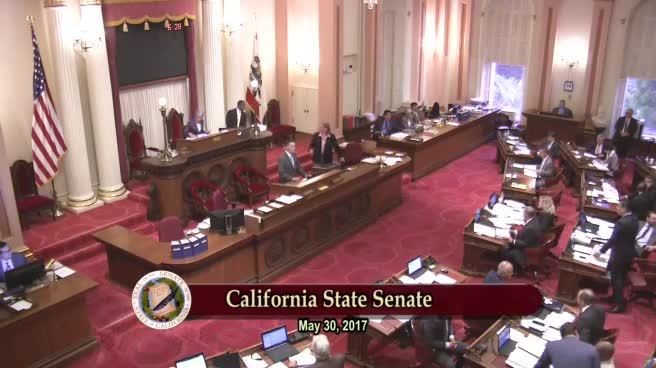 2MIN
Senate Floor
 48MIN
Senate Standing Committee on Appropriations
 46MIN
Senate Standing Committee on Appropriations
 36MIN
Senate Standing Committee on Public Safety


Bill Co-Author(s):
