SB 398: Acquired brain trauma.
- Session Year: 2017-2018
- House: Senate
- Latest Version Date: 2018-09-14
(1)Existing law requires the Department of Rehabilitation to administer a program of services for persons with acquired traumatic brain injury. Under that program, service providers develop and utilize an individual service plan to identify the needs of consumers and deliver, either directly or by arrangement, coordinated services designed to meet those needs. Existing law authorizes the department to make grants from the funds in the Traumatic Brain Injury Fund to service providers for the purpose of carrying out the program and requires the department to pursue all sources of federal financial participation. Existing law makes these provisions inoperative on July 1, 2019.
This bill would instead make that program operative until July 1, 2024. The bill would also make various changes to the program, including requiring the department to pursue all available sources of funding.
(2)Existing law provides for the Medi-Cal program, which is administered by the State Department of Health Care Services, pursuant to which medical benefits are provided to public assistance recipients and certain other low-income persons. The Medi-Cal program is partially governed and funded by federal Medicaid provisions.
Existing law requires the department, by March 1, 2011, to submit to the federal Centers for Medicare and Medicaid Services a home- and community-based services waiver application or an amendment of the state plan for home- and community-based services, to serve at least 100 adults with acquired traumatic brain injuries who otherwise would require care in a Medi-Cal funded nursing facility or an intermediate care facility for persons with developmental disabilities.
This bill would repeal that provision requiring the submission of a waiver application or an amendment of the state plan.
(1)Existing law requires the Department of Rehabilitation to administer a program of services for persons with acquired traumatic brain injury. Under that program, service providers develop and utilize an individual service plan to identify the needs of consumers and deliver, either directly or by arrangement, coordinated services designed to meet those needs. Existing law authorizes the department to make grants from the funds in the Traumatic Brain Injury Fund to service providers for the purpose of carrying out the program and requires the department to pursue all sources of federal financial participation. Existing law makes these provisions inoperative on July 1, 2019.
This bill would instead make that program operative indefinitely. until July 1, 2024. The bill would also make various changes to the program, including requiring the department to pursue all available sources of funding and by authorizing the department to require that service providers meet specified program and operational certification standards in order to receive ongoing funding.
(2)Existing law provides for the Medi-Cal program, which is administered by the State Department of Health Care Services, pursuant to which medical benefits are provided to public assistance recipients and certain other low-income persons. The Medi-Cal program is partially governed and funded by federal Medicaid provisions.
Existing law requires the department, by March 1, 2011, to submit to the federal Centers for Medicare and Medicaid Services a home- and community-based services waiver application or an amendment of the state plan for home- and community-based services, to serve at least 100 adults with acquired traumatic brain injuries who otherwise would require care in a Medi-Cal funded nursing facility or an intermediate care facility for persons with developmental disabilities.
This bill would repeal that provision requiring the submission of a waiver application or an amendment of the state plan.
(1)Existing law requires the Department of Rehabilitation to administer a program of services for persons with acquired traumatic brain injury. Under that program, service providers develop and utilize an individual service plan to identify the needs of consumers and deliver, either directly or by arrangement, coordinated services designed to meet those needs. Existing law authorizes the department to make grants from the funds in the Traumatic Brain Injury Fund to service providers for the purpose of carrying out the program and requires, except as specified, that those grants be subject to open competition every 3 years. Existing law also requires the department to pursue all sources of federal financial participation. Existing law makes these provisions inoperative on July 1, 2019.
This bill would instead make that program operative indefinitely. The bill would also make various changes to the program, including requiring the department to pursue all sources of funding and requiring grants to service providers to be ongoing as long as the service providers are compliant with any operational certification standards developed by the department. by authorizing the department to require that service providers meet specified program and operational certification standards in order to receive ongoing funding.
(2)Existing law provides for the Medi-Cal program, which is administered by the State Department of Health Care Services, pursuant to which medical benefits are provided to public assistance recipients and certain other low-income persons. The Medi-Cal program is partially governed and funded by federal Medicaid provisions.
Existing law requires the department, by March 1, 2011, to submit to the federal Centers for Medicare and Medicaid Services a home- and community-based services waiver application or an amendment of the state plan for home- and community-based services, to serve at least 100 adults with acquired traumatic brain injuries who otherwise would require care in a Medi-Cal funded nursing facility or an intermediate care facility for persons with developmental disabilities.
This bill would repeal that provision requiring the submission of a waiver application or an amendment of the state plan.
(1)Existing law requires the Department of Rehabilitation to administer a program of services for persons with acquired traumatic brain injury. Under that program, service providers develop and utilize an individual service plan to identify the needs of consumers and deliver, either directly or by arrangement, coordinated services designed to meet those needs. Existing law authorizes the department to make grants from the funds in the Traumatic Brain Injury Fund to service providers for the purpose of carrying out the program and requires, except as specified, that those grants be subject to open competition every 3 years. Existing law also requires the department to pursue all sources of federal financial participation. Existing law makes these provisions inoperative on July 1, 2019.
This bill would instead make that program operative indefinitely. The bill would also make various changes to the program, including requiring the department to pursue all sources of funding and requiring grants to service providers to be ongoing as long as the service providers are compliant with any operational certification standards developed by the department.
(2)Existing law provides for the Medi-Cal program, which is administered by the State Department of Health Care Services, pursuant to which medical benefits are provided to public assistance recipients and certain other low-income persons. The Medi-Cal program is partially governed and funded by federal Medicaid provisions.
Existing law requires the department, by March 1, 2011, to submit to the federal Centers for Medicare and Medicaid Services a home- and community-based services waiver application or an amendment of the state plan for home- and community-based services, to serve at least 100 adults with acquired traumatic brain injuries who otherwise would require care in a Medi-Cal funded nursing facility or an intermediate care facility for persons with developmental disabilities.
This bill would repeal that provision requiring the submission of a waiver application or an amendment of the state plan.
The Legislature finds and declares all of the following:
(a)There is a large population of persons who have suffered traumatic brain injuries resulting in significant functional impairment. The annual number of brain injuries is greater than the rates of breast cancer, heart attack, lung cancer, HIV and AIDS, spinal cord injuries, and multiple sclerosis combined.
(b)Roughly 28 percent of all brain injuries are due to a fall, and 20 percent are due to motor vehicle accidents. Those injuries attributable to motor vehicle accidents, however, account for the greatest number of hospitalizations.
(c)There is a lack of awareness of the problems associated with brain injury as a chronic health condition resulting in a significant absence of community reintegration services for persons with brain injuries, including, but not limited to, in-home and out-of-home services, respite care, placement programs, counseling, cognitive rehabilitation, transitional living, and vocational rehabilitation services.
(d)Although there are currently a number of different programs attempting to meet the needs of the persons with brain injuries in the field of community reintegration, there is no clearly defined ultimate responsibility vested in any single state agency. This section does not mandate services for persons with acquired traumatic brain injury through county and city programs.
(e)While formal standards of care exist for both medical and rehabilitative models within the system of brain injury care, the same cannot be said with regard to community reintegration services. Currently, there is no programmatic coordination among agencies to facilitate the provision of a continuing range of services appropriate for persons with traumatic brain injuries.
(f)There is a serious gap in postacute care services for the life of the brain injury survivor, resulting in incomplete recovery of functional potential.
(g)Due to the problems referred to in this section, the state is not adequately meeting the needs of persons with brain injuries by enabling them to return to work and to lead productive lives.
SEC. 2.Section 4354.5 of the Welfare and Institutions Code is amended to read:4354.5.The Legislature finds and declares all of the following:
(a)Traumatic brain injuries have a long-term impact on the survivors, their families, caregivers, and support systems.
(b)Long-term care consumers experience great differences in service levels, eligibility criteria, and service availability, resulting in inappropriate and expensive care that fails to be responsive to their needs.
(c)To the maximum extent feasible, the department shall pursue all available sources of funding.
(d)If new sources of funding are secured that will permit expanding the existing Traumatic Brain Injury Program, the department shall fund an array of appropriate services and assistance to adults 18 years of age and older with traumatic brain injuries in those areas of the state with the greatest need.
(e)Implementation of this chapter shall be consistent with the states public policy strategy to design a coordinated services delivery system pursuant to Article 4.05 (commencing with Section 14139.05) of Chapter 7 of Part 3 of Division 9.
SEC. 3.Section 4355 of the Welfare and Institutions Code is amended to read:4355.(a)On or before July 1, 2024, the department shall determine requirements related to service delivery, uniform data collection, and other aspects of program administration, in addition to those specified in Section 4357, that service providers participating in the traumatic brain injury program must meet. This may include, but is not limited to, requiring service providers to be approved as community reintegration programs eligible to serve consumers.
(b)On or before July 1, 2024, the department shall do all of the following:
(1)Determine the level of funding necessary to permit a service provider to meet all applicable requirements and adequately serve its designated service area.
(2)Determine the number of sites that can be supported with available funding.
(3)If funding is available, solicit applications from new organizations interested in and qualified to provide services pursuant to this chapter, and select those best qualified to do so, with priority given to applicants that have proven experience in providing effective community reintegration services to persons with acquired traumatic brain injuries, including, but not limited to, supported living services, caregiver support, and family and community education.
(c)The department shall meet periodically with traumatic brain injury service providers for discussion of topics, including, but not limited to, the development and implementation of performance standards and data collection processes, eligibility requirements, program administration, pursuit of funding, and refinement of the traumatic brain injury continuum of care.
SEC. 4.Section 4359 of the Welfare and Institutions Code is repealed.SEC. 5.Section 4359 is added to the Welfare and Institutions Code, to read:4359.This chapter shall become inoperative on July 1, 2024, and, as of January 1, 2025, is repealed.
SEC. 6.Section 14132.992 of the Welfare and Institutions Code is repealed.The Legislature finds and declares all of the following:
(a)There is a large population of persons who have suffered traumatic brain injuries resulting in significant functional impairment. The annual number of brain injuries is greater than the rates of breast cancer, heart attack, lung cancer, HIV and AIDS, spinal cord injuries, and multiple sclerosis combined.
(b)Roughly 28 percent of all brain injuries are due to a fall, and 20 percent are due to motor vehicle accidents. Those injuries attributable to motor vehicle accidents, however, account for the greatest number of hospitalizations.
(c)There is a lack of awareness of the problems associated with brain injury as a chronic health condition resulting in a significant absence of community reintegration services for persons with brain injuries, including, but not limited to, in-home and out-of-home services, respite care, placement programs, counseling, cognitive rehabilitation, transitional living, and vocational rehabilitation services.
(d)Although there are currently a number of different programs attempting to meet the needs of the persons with brain injuries in the field of community reintegration, there is no clearly defined ultimate responsibility vested in any single state agency. Nothing in this section shall be construed to This section does not mandate services for persons with acquired traumatic brain injury through county and city programs.
(e)While formal standards of care exist for both medical and rehabilitative models within the system of brain injury care, the same cannot be said with regard to community reintegration services. Currently, there is no programmatic coordination among agencies to facilitate the provision of a continuing range of services appropriate for persons with traumatic brain injuries.
(f)There is a serious gap in postacute care services for the life of the brain injury survivor, resulting in incomplete recovery of functional potential.
(g)Due to the problems referred to in this section, the state is not adequately meeting the needs of persons with brain injuries by enabling them to return to work and to lead productive lives.
SEC. 2.Section 4354.5 of the Welfare and Institutions Code is amended to read:4354.5.The Legislature finds and declares all of the following:
(a)Traumatic brain injuries have a long-term impact on the survivors, their families, caregivers, and support systems.
(b)Long-term care consumers experience great differences in service levels, eligibility criteria, and service availability, resulting in inappropriate and expensive care that fails to be responsive to their needs.
(c)To the maximum extent feasible, the department shall pursue all available sources of funding.
(d)If new sources of funding are secured that will permit expanding the existing Traumatic Brain Injury Program, the department shall fund an array of appropriate services and assistance to adults 18 years of age and older with traumatic brain injuries in those areas of the state with the greatest need.
(e)Implementation of this chapter shall be consistent with the states public policy strategy to design a coordinated services delivery system pursuant to Article 4.05 (commencing with Section 14139.05) of Chapter 7 of Part 3 of Division 9.
SEC. 3.Section 4355 of the Welfare and Institutions Code is amended to read:4355.(a)On or before January 1, 2020, July 1, 2024, the department shall determine requirements related to service delivery, uniform data collection, and other aspects of program administration, in addition to those specified in Section 4357, that service providers participating in the traumatic brain injury program must meet. This may include, but is not limited to, the following: requiring service providers to be approved as community reintegration programs eligible to serve consumers.
(1)The department may require that service providers be approved as community reintegration programs eligible to serve consumers.(2)The department may require that service providers meet program and operational certification standards developed by the department in order to receive ongoing funding.(b)On or before January 1, 2020, July 1, 2024, the department shall do all of the following:
(1)Determine the level of funding necessary to permit a service provider to meet all applicable requirements and adequately serve its designated service area.
(2)Determine the number of sites that can be supported with available funding.
(3)If funding is available, solicit applications from new organizations interested in and qualified to provide services pursuant to this chapter, and select those best qualified to do so, with priority given to applicants that have proven experience in providing effective community reintegration services to persons with acquired traumatic brain injuries, including, but not limited to, supported living services, caregiver support, and family and community education.
(c)The department shall meet periodically with traumatic brain injury service providers for discussion of topics, including, but not limited to, the development and implementation of performance standards and data collection processes, eligibility requirements, program administration, pursuit of funding, and refinement of the traumatic brain injury continuum of care.
SEC. 4.Section 4357 of the Welfare and Institutions Code is amended to read:4357.(a)Service providers shall identify the needs of consumers and deliver services designed to meet those needs.(b)Service providers shall match not less than 20 percent of the amount granted, with the exception of funds used for mentoring. The required match may be cash or in-kind contributions, or a combination of both, from the sites or any cooperating agency. In-kind contributions may include, but shall not be limited to, staff and volunteer services.(c)Service providers shall provide at least 51 percent of their services under the grant to individuals who are Medi-Cal eligible or who have no other identified third-party funding source.(d)(1)Service providers shall provide, directly or by arrangement, a coordinated service model to include all of the following:(A)Supported living services.(B)Community reintegration services.(C)Vocational supportive services.(D)Information, referral, and, as needed, assistance in identifying, accessing, utilizing, and coordinating all services needed by individuals with traumatic brain injury and their families.(E)Public and professional education designed to facilitate early identification of persons with brain injury, prompt referral of these persons to appropriate services, and improvement of the system of services available to them.(2)The model shall be designed and modified with advice from consumers and their families, and shall be accessible to the population in need, taking into account transportation, linguistic, and cultural factors.(e)Service providers shall develop and utilize an individual service plan which will allow consumers to move from intensive medical rehabilitation or highly structured living arrangements to increased levels of independence and employment. The goals and priorities of each consumer shall be an integral part of his or her service plan.(f)Service providers shall seek all third-party reimbursements for which consumers are eligible and shall utilize all services otherwise available to consumers at no cost, including vocational rehabilitation services provided by the department. However, grantees may utilize grant dollars for the purchase of nonreimbursed services or services otherwise unavailable to consumers.(g)Service providers shall endeavor to serve a population that is broadly representative with regard to race and ethnicity of the population with traumatic brain injury in their geographical service area, undertaking outreach activities as needed to achieve this goal.(h)Service providers shall maintain a broad network of relationships with local groups of brain injury survivors and families of survivors, as well as local providers of health, social, and vocational services to individuals with traumatic brain injury and their families. The sites shall work cooperatively with these groups and providers to improve and develop needed services and to promote a well-coordinated service system, taking a leadership role as necessary.(i)Service providers shall furnish uniform data to the department pursuant to subdivision (a) of Section 4355 as necessary to monitor and evaluate the program.SEC. 5.Section 4357.1 of the Welfare and Institutions Code is amended to read:4357.1.(a)The department may make grants from the funds in the Traumatic Brain Injury Fund, established in Section 4358, to service providers for the purpose of carrying out the programs detailed in this chapter.(b)Contracts or grants awarded pursuant to this chapter, including contracts required for administration or ancillary services in support of programs, shall be exempt from the requirements of the Public Contract Code and the State Administrative Manual, and from approval by the Department of General Services.(c)Grants awarded to service providers pursuant to this chapter shall be subject to open competition every three years, unless the department elects to extend one or more grants and delay competition for those grants by a maximum of two additional years.(d)If funding is available, new service providers shall be awarded grants as outlined in the departments strategic plan.SEC. 6.SEC. 4.Section 4359 of the Welfare and Institutions Code is repealed.SEC. 5.Section 4359 is added to the Welfare and Institutions Code, to read:4359.This chapter shall become inoperative on July 1, 2024, and, as of January 1, 2025, is repealed.
SEC. 7.SEC. 6.Section 14132.992 of the Welfare and Institutions Code is repealed.The Legislature finds and declares all of the following:
(a)There is a large population of persons who have suffered traumatic brain injuries resulting in significant functional impairment. The annual number of brain injuries is greater than the rates of breast cancer, heart attack, lung cancer, HIV and AIDS, spinal cord injuries, and multiple sclerosis combined.
(b)Roughly 28 percent of all brain injuries are due to a fall, and 20 percent are due to motor vehicle accidents. Those injuries attributable to motor vehicle accidents, however, account for the greatest number of hospitalizations.
(c)There is a lack of awareness of the problems associated with brain injury as a chronic health condition resulting in a significant absence of services for persons with brain injuries, including, but not limited to, in-home and out-of-home services, respite care, placement programs, counseling, cognitive rehabilitation, transitional living, and vocational rehabilitation services.
(d)Although there are currently a number of different programs attempting to meet the needs of the persons with brain injuries in the field of community reintegration, there is no clearly defined ultimate responsibility vested in any single state agency. Nothing in this section shall be construed to mandate services for persons with acquired traumatic brain injury through county and city programs.
(e)While formal standards of care exist for both medical and rehabilitative models within the system of brain injury care, the same cannot be said with regard to community reintegration services. Currently Currently, there is no programmatic coordination among agencies to facilitate the provision of a continuing range of services appropriate for persons with traumatic brain injuries.
(f)There is a serious gap in postacute care services for the life of the brain injury survivor, resulting in incomplete recovery of functional potential.
(g)Due to the problems referred to in this section, the state is not adequately meeting the needs of persons with brain injuries by enabling them to return to work and to lead productive lives.
SEC. 2.Section 4354.5 of the Welfare and Institutions Code is amended to read:4354.5.The Legislature finds and declares all of the following:
(a)Traumatic brain injuries have a long-term impact on the survivors, their families, caregivers, and support systems.
(b)Long-term care consumers experience great differences in service levels, eligibility criteria, and service availability, resulting in inappropriate and expensive care that fails to be responsive to their needs.
(c)To the maximum extent feasible, the department shall pursue all available sources of funding.
(d)If new sources of funding are secured that will permit expanding the existing Traumatic Brain Injury Program, the department shall fund an array of appropriate services and assistance to adults 18 years of age and older with traumatic brain injuries in those areas of the state with the greatest need.
(e)Implementation of this chapter shall be consistent with the states public policy strategy to design a coordinated services delivery system pursuant to Article 4.05 (commencing with Section 14139.05) of Chapter 7 of Part 3 of Division 9.
SEC. 3.Section 4355 of the Welfare and Institutions Code is amended to read:4355.(a)On or before January 1, 2020, the department shall determine requirements related to service delivery, uniform data collection, and other aspects of program administration, in addition to those specified in Section 4357, that service providers participating in the traumatic brain injury program must meet. This may include, but is not limited to, the following:
(1)The department may require that service providers be approved as community reintegration programs eligible to serve consumers.
(2)The department may require that service providers meet program and operational certification standards developed by the department in order to receive ongoing funding.
(b)On or before January 1, 2020, the department shall do all of the following:
(1)Determine the level of funding necessary to permit a service provider to meet all applicable requirements and adequately serve its designated service area.
(2)Determine the number of sites that can be supported with available funding.
(3)If funding is available, solicit applications from new organizations interested in and qualified to provide services pursuant to this chapter, and select those best qualified to do so, with priority given to applicants that have proven experience in providing effective community reintegration services to persons with acquired traumatic brain injuries, including, but not limited to, supported living services, caregiver support, and family and community education.
(c)The department shall meet periodically with traumatic brain injury service providers for discussion of topics, including, but not limited to, the development and implementation of performance standards and data collection processes, eligibility requirements, program administration, pursuit of funding, and refinement of the traumatic brain injury continuum of care.
SEC. 4.Section 4357 of the Welfare and Institutions Code is amended to read:4357.(a)Service providers shall identify the needs of consumers and deliver services designed to meet those needs.
(b)Service providers shall match not less than 20 percent of the amount granted, with the exception of funds used for mentoring. The required match may be cash or in-kind contributions, or a combination of both, from the sites or any cooperating agency. In-kind contributions may include, but shall not be limited to, staff and volunteer services.
(c)Service providers shall provide at least 51 percent of their services under the grant to individuals who are Medi-Cal eligible or who have no other identified third-party funding source.
(d)(1)Service providers shall provide, directly or by arrangement, a coordinated service model to include all of the following:
(A)Supported living services.
(B)Community reintegration services.
(C)Vocational supportive services.
(D)Information, referral, and, as needed, assistance in identifying, accessing, utilizing, and coordinating all services needed by individuals with traumatic brain injury and their families.
(E)Public and professional education designed to facilitate early identification of persons with brain injury, prompt referral of these persons to appropriate services, and improvement of the system of services available to them.
(2)The model shall be designed and modified with advice from consumers and their families, and shall be accessible to the population in need, taking into account transportation, linguistic, and cultural factors.
(e)Service providers shall develop and utilize an individual service plan which will allow consumers to move from intensive medical rehabilitation or highly structured living arrangements to increased levels of independence and employment. The goals and priorities of each consumer shall be an integral part of his or her service plan.
(f)Service providers shall seek all third-party reimbursements for which consumers are eligible and shall utilize all services otherwise available to consumers at no cost, including vocational rehabilitation services provided by the department. However, grantees may utilize grant dollars for the purchase of nonreimbursed services or services otherwise unavailable to consumers.
(g)Service providers shall endeavor to serve a population that is broadly representative with regard to race and ethnicity of the population with traumatic brain injury in their geographical service area, undertaking outreach activities as needed to achieve this goal.
(h)Service providers shall maintain a broad network of relationships with local groups of brain injury survivors and families of survivors, as well as local providers of health, social, and vocational services to individuals with traumatic brain injury and their families. The sites shall work cooperatively with these groups and providers to improve and develop needed services and to promote a well-coordinated service system, taking a leadership role as necessary.
(i)Service providers shall furnish uniform data to the department pursuant to subdivision (a) of Section 4355 as necessary to monitor and evaluate the program.
SEC. 5.Section 4357.1 of the Welfare and Institutions Code is amended to read:4357.1.(a)The department may make grants from the funds in the Traumatic Brain Injury Fund, established in Section 4358, to service providers for the purpose of carrying out the programs detailed in this chapter.
(b)Contracts or grants awarded pursuant to this chapter, including contracts required for administration or ancillary services in support of programs, shall be exempt from the requirements of the Public Contract Code and the State Administrative Manual, and from approval by the Department of General Services.
(c)Grants awarded to service providers pursuant to this chapter shall be ongoing as long as the service providers are compliant with any operational certification standards developed by the department pursuant to Section 4355. subject to open competition every three years, unless the department elects to extend one or more grants and delay competition for those grants by a maximum of two additional years.
(d)If funding is available, new service providers shall be awarded grants as outlined in the departments strategic plan.
SEC. 6.Section 4359 of the Welfare and Institutions Code is repealed.SEC. 7.Section 14132.992 of the Welfare and Institutions Code is repealed.The Legislature finds and declares all of the following:
(a)There is a large population of persons who have suffered traumatic head brain injuries resulting in significant functional impairment. The annual number of brain injuries is greater than the rates of breast cancer, heart attack, lung cancer, HIV and AIDS, spinal cord injuries, and multiple sclerosis combined.
(b)Approximately 80 percent of these injuries have occurred as a direct result of motor vehicle accidents.(b)Roughly 28 percent of all brain injuries are due to a fall, and 20 percent are due to motor vehicle accidents. Those injuries attributable to motor vehicle accidents, however, account for the greatest number of hospitalizations.
(c)There is a lack of awareness of the problems associated with head brain injury as a chronic health condition resulting in a significant lack absence of services for persons with head brain injuries, including, but not limited to, in-home and out-of-home services, respite care, placement programs, counseling, cognitive rehabilitation, transitional living, and vocational rehabilitation services.
(d)Although there are currently a number of different programs attempting to meet the needs of the persons with head injuries, brain injuries in the field of community reintegration, there is no clearly defined ultimate responsibility vested in any single state agency. Nothing in this section shall be construed to mandate services for persons with acquired traumatic brain injury through county and city programs.
(e)There While formal standards of care exist for both medical and rehabilitative models within the system of brain injury care, the same cannot be said with regard to community reintegration services. Currently there is no programmatic coordination among agencies to facilitate the provision of a continuing range of services appropriate for persons with traumatic head brain injuries.
(f)There is a serious gap in postacute care services for the life of the brain injury survivor, resulting in incomplete recovery of functional potential.
(g)Due to the problems referred to in this section, the state is not adequately meeting the needs of persons with head brain injuries enabling them to return to work and to lead productive lives.
SEC. 2.Section 4354.5 of the Welfare and Institutions Code is amended to read:4354.5.The Legislature finds and declares all of the following:
(a)Traumatic brain injuries have a long-term impact on the survivors, their families, caregivers, and support systems.
(b)Long-term care consumers experience great differences in service levels, eligibility criteria, and service availability, resulting in inappropriate and expensive care that fails to be responsive to their needs.
(c)To the maximum extent feasible, the department shall pursue all available sources of federal financial participation, including, but not limited to, the Medicaid home and community-based services waiver program (42 U.S.C. Sec. 1396n(c)) and Part J of Subchapter II of the Public Health Service Act (42 U.S.C. Sec. 280b et seq.). funding.
(d)If new sources of funding are secured which that will permit expanding the existing Traumatic Brain Injury Program, the department shall fund an array of appropriate services and assistance to adults 18 years of age and older with traumatic brain injuries in those areas of the state with the greatest need.
(e)Implementation of this chapter shall be consistent with the states public policy strategy to design a coordinated services delivery system pursuant to Article 4.05 (commencing with Section 14139.05) of Chapter 7 of Part 3 of Division 9.
SEC. 3.Section 4355 of the Welfare and Institutions Code is amended to read:4355.(a)On or before January 1, 2012, 2020, the department shall determine requirements related to service delivery, uniform data collection, and other aspects of program administration, in addition to those specified in Section 4357, that service providers participating in the traumatic brain injury program must meet. This may include, but is not limited to, the following:
(1)The department may require that service providers be approved as community rehabilitation reintegration programs eligible to serve consumers.
(2)Upon approval of the Medicaid waiver sought pursuant to Section 14132.992, the department may require that all service providers do both of the following:(A)Satisfy all applicable eligibility requirements for provision of services under the waiver.(B)Participate in the waiver and provide extended supported employment services, as defined in paragraph (2) of subdivision (d) of Section 4354.(2)The department may require that service providers meet program and operational certification standards developed by the department in order to receive ongoing funding.
(b)On or before January 1, 2013, 2020, the department shall do all of the following:
(1)Determine the level of funding necessary to permit a service provider to meet all applicable requirements and adequately serve its designated service area.
(2)Determine the number of sites that can be supported with available funding.
(3)Solicit If funding is available, solicit applications from new organizations interested in and qualified to provide services pursuant to this chapter, and select those best qualified to do so, with priority given to applicants that have proven experience in providing effective community reintegration services to persons with acquired traumatic brain injuries, including, but not limited to, supported living services, caregiver support, and family and community education.
(c)The department shall meet periodically with traumatic brain injury service providers for discussion of topics, including, but not limited to, the development and implementation of performance standards and data collection processes, eligibility requirements, program administration, pursuit of funding, implementation of the Medicaid waiver, if approved by the federal government, and refinement of the traumatic brain injury continuum of care.
SEC. 4.Section 4357 of the Welfare and Institutions Code is amended to read:4357.(a)Service providers shall identify the needs of consumers and deliver services designed to meet those needs.
(b)Service providers shall match not less than 20 percent of the amount granted, with the exception of funds used for mentoring. The required match may be cash or in-kind contributions, or a combination of both, from the sites or any cooperating agency. In-kind contributions may include, but shall not be limited to, staff and volunteer services.
(c)Service providers shall provide at least 51 percent of their services under the grant to individuals who are Medi-Cal eligible or who have no other identified third-party funding source.
(d)(1)Service providers shall provide, directly or by arrangement, a coordinated service model to include all of the following:
(A)Supported living services.
(B)Community reintegration services.
(C)Vocational supportive services.
(D)Information, referral, and, as needed, assistance in identifying, accessing, utilizing, and coordinating all services needed by individuals with traumatic brain injury and their families.
(E)Public and professional education designed to facilitate early identification of persons with brain injury, prompt referral of these persons to appropriate services, and improvement of the system of services available to them.
(2)The model shall be designed and modified with advice from consumers and their families, and shall be accessible to the population in need, taking into account transportation, linguistic, and cultural factors.
(e)Service providers shall develop and utilize an individual service plan which will allow consumers to move from intensive medical rehabilitation or highly structured living arrangements to increased levels of independence and employment. The goals and priorities of each consumer shall be an integral part of his or her service plan.
(f)Service providers shall seek all third-party reimbursements for which consumers are eligible and shall utilize all services otherwise available to consumers at no cost, including vocational rehabilitation services provided by the department. However, grantees may utilize grant dollars for the purchase of nonreimbursed services or services otherwise unavailable to consumers.
(g)Service providers shall endeavor to serve a population that is broadly representative with regard to race and ethnicity of the population with traumatic brain injury in their geographical service area, undertaking outreach activities as needed to achieve this goal.
(h)Service providers shall maintain a broad network of relationships with local groups of brain injury survivors and families of survivors, as well as local providers of health, social, and vocational services to individuals with traumatic brain injury and their families. The sites shall work cooperatively with these groups and providers to improve and develop needed services and to promote a well-coordinated service system, taking a leadership role as necessary.
(i)Service providers shall furnish uniform data to the department pursuant to subdivision (a) of Section 4355 as necessary to monitor and evaluate the program.
(j)Service providers wishing to continue to participate in the program after July 1, 2013, shall, by that date, be in compliance with additional eligibility requirements established by the department pursuant to Section 4355.SEC. 5.Section 4357.1 of the Welfare and Institutions Code is amended to read:4357.1.(a)The department may make grants from the funds in the Traumatic Brain Injury Fund, established in Section 4358, to service providers for the purpose of carrying out the programs detailed in this chapter.
(b)Contracts or grants awarded pursuant to this chapter, including contracts required for administration or ancillary services in support of programs, shall be exempt from the requirements of the Public Contract Code and the State Administrative Manual, and from approval by the Department of General Services.
(c)Grants awarded to service providers pursuant to this chapter shall be subject to open competition every three years, unless the department elects to extend one or more grants and delay competition for those grants by a maximum of two additional years. ongoing as long as the service providers are compliant with any operational certification standards developed by the department pursuant to Section 4355.
(d)If funding is available, new service providers shall be awarded grants as outlined in the departments strategic plan.
SEC. 6.Section 4359 of the Welfare and Institutions Code is repealed.4359.This chapter shall remain in effect until July 1, 2019, and as of that date is repealed, unless a later enacted statute enacted prior to July 1, 2019, extends or deletes that date.SEC. 7.Section 14132.992 of the Welfare and Institutions Code is repealed.14132.992.(a)(1)By March 15, 2011, the department shall submit to the federal Centers for Medicare and Medicaid Services a home- and community-based services waiver application pursuant to Section 1396n(c) of Title 42 of the United States Code, or an amendment of the state plan for home- and community-based services pursuant to Section 1396n(i) of Title 42 of the United States Code, to serve at least 100 adults with acquired traumatic brain injuries who otherwise would require care in a Medi-Cal funded nursing facility or an intermediate care facility for persons with developmental disabilities or, for the amendment of the state plan, who would meet the eligibility criteria in Section 1396n(i).(2)As authorized by Section 1396n(c)(3) and 1396n(i)(3) of Title 42 of the United States Code, the waiver or amendment of the state plan shall waive the statewide application of this section as well as comparability of services so that waiver services may be provided by one or more service providers designated to provide services to persons with acquired traumatic brain injury pursuant to Chapter 5 (commencing with Section 4353) of Part 3 of Division 4.(3)The waiver services to be provided to eligible Medi-Cal recipients shall include case management services, community reintegration and supported living services, vocational supportive services including prevocational services, neuropsychological assessments, and rehabilitative services provided by service providers currently serving persons with acquired traumatic brain injuries pursuant to Chapter 5 (commencing with Section 4353).(4)The waiver services to be provided shall include as a habilitation service pursuant to Section 1396n(c)(5) of Title 42 of the United States Code extended supported employment services to support and maintain an individual with an acquired traumatic brain injury in supported employment following that individuals transition from support provided as a vocational rehabilitation service, including job coaching, by the State Department of Rehabilitation pursuant to paragraphs (1) and (5) of subdivision (a) of Section 19150.(5)The waiver services to be provided shall include rehabilitative therapies, including, but not limited to, occupational therapy, physical therapy, speech therapy, and cognitive therapy, that are different in kind and scope from state plan services.(6)The waiver shall require an aggregate cost-effectiveness formula be used.(b)The development process of the home- and community-based services waiver application or state plan amendment shall include the solicitation of the opinions and help of the affected communities, including representatives of service providers currently serving persons with acquired traumatic brain injuries pursuant to Chapter 5 (commencing with Section 4353) of Part 3 of Division 4.(c)The waiver or state plan amendment shall be implemented only if the following conditions are met:(1)Federal financial participation is available for the services under the waiver or state plan amendment.(2)Cost neutrality is achieved in accordance with the terms and conditions of the waiver or state plan amendment and the requirements of the federal Centers for Medicare and Medicaid Services.(3)State funds are appropriated, otherwise made available, or both, for this waiver or state plan amendment, including funds for staff to develop, implement, administer, monitor, and oversee the waiver or state plan amendment.(d)It is the intent of the Legislature that the home- and community-based services waiver or state plan amendment augment funds available to meet the needs of persons with acquired traumatic brain injuries served by the participating service providers in accordance with Chapter 5 (commencing with Section 4353) of Part 3 of Division 4.|
Date
|
Status
|
|---|---|
| Sep 14, 2018 | Chaptered by Secretary of State. Chapter 402, Statutes of 2018. |
| Sep 14, 2018 | Approved by the Governor. |
| Aug 30, 2018 | Enrolled and presented to the Governor at 5 p.m. |
| Aug 24, 2018 | Assembly amendments concurred in. (Ayes 39. Noes 0.) Ordered to engrossing and enrolling. |
| Aug 23, 2018 | In Senate. Concurrence in Assembly amendments pending. |
| Aug 23, 2018 | Read third time. Passed. Ordered to the Senate. |
| Aug 20, 2018 | Read second time. Ordered to third reading. |
| Aug 16, 2018 | From committee: Do pass. (Ayes 17. Noes 0.) (August 16). |
| Jun 27, 2018 | June 27 set for first hearing. Placed on APPR. suspense file. |
| Jun 13, 2018 | From committee: Do pass and re-refer to Com. on APPR. (Ayes 7. Noes 0.) (June 12). Re-referred to Com. on APPR. |
| Mar 23, 2018 | From committee with author's amendments. Read second time and amended. Re-referred to Com. on HUM. S. |
| Jul 11, 2017 | July 11 set for first hearing canceled at the request of author. |
| Jun 21, 2017 | From committee: Do pass and re-refer to Com. on HUM. S. with recommendation: To consent calendar. (Ayes 15. Noes 0.) (June 20). Re-referred to Com. on HUM. S. |
| Jun 8, 2017 | Referred to Coms. on HEALTH and HUM. S. |
| May 31, 2017 | In Assembly. Read first time. Held at Desk. |
| May 30, 2017 | Read third time. Passed. (Ayes 40. Noes 0. Page 1270.) Ordered to the Assembly. |
| May 26, 2017 | Read second time. Ordered to third reading. |
| May 25, 2017 | From committee: Do pass. (Ayes 7. Noes 0. Page 1184.) (May 25). |
| May 19, 2017 | Set for hearing May 25. |
| May 1, 2017 | May 1 hearing: Placed on APPR. suspense file. |
| Apr 21, 2017 | Set for hearing May 1. |
| Apr 17, 2017 | Re-referred to Com. on APPR. |
| Apr 6, 2017 | Read second time and amended. Re-referred to Com. on HEALTH. |
| Apr 5, 2017 | From committee: Do pass as amended and re-refer to Com. on HEALTH. (Ayes 4. Noes 0. Page 625.) (April 4). |
| Mar 1, 2017 | Set for hearing April 4. |
| Feb 23, 2017 | Referred to Coms. on HUMAN S. and HEALTH. |
| Feb 16, 2017 | From printer. May be acted upon on or after March 18. |
| Feb 15, 2017 | Introduced. Read first time. To Com. on RLS. for assignment. To print. |
|
Date
|
Description
|
Location
|
Votes
|
|
|---|---|---|---|---|
| Aug 24, 2018 | Unfinished Business SB398 Monning Concurrence | Senate Floor |
Passed |
|
| Aug 23, 2018 | SB 398 Monning Senate Third Reading By THURMOND | Assembly Floor |
Passed |
|
| Aug 16, 2018 | Do pass. | Assembly Standing Committee on Appropriations |
Passed |
|
| Jun 12, 2018 | Do pass and be re-referred to the Committee on [Appropriations] | Assembly Standing Committee on Human Services |
Passed |
|
| Jun 20, 2017 | Do pass and be re-referred to the Committee on [Human Services] with recommendation: To Consent Calendar | Assembly Standing Committee on Health |
Passed |
|
| May 30, 2017 | Senate 3rd Reading SB398 Monning | Senate Floor |
Passed |
|
| May 25, 2017 | Do pass | Senate Standing Committee on Appropriations |
Passed |
|
| May 1, 2017 | Placed on suspense file | Senate Standing Committee on Appropriations |
Passed |
|
| Apr 4, 2017 | Do pass as amended, but first amend, and re-refer to the Committee on [Health] | Senate Standing Committee on Human Services |
Passed |
This list shows positions taken on this bill by organizations on the date displayed, which is linked to the original source.
Positions by individuals are not included.
|
Organization
|
Position
|
Date
|
|---|---|---|
| brain injury | ** Support | Jun 15, 2017 |
| Brain Injury Association of California | ** Support | Aug 23, 2018 |
| Bridges at Mercy Outpatient Rehab Center | * Support | Jun 12, 2018 |
| California Association of Traumatic Brain Injury | ** Support | Aug 23, 2018 |
| California Foundation For Independent Living Centers | ** Support | Aug 23, 2018 |
| Central Coast Center for Independent Living | ** Support | Aug 23, 2018 |
| Disability Rights California | ** Support | Aug 23, 2018 |
| FREED | ** Support | Jun 8, 2018 |
| FREED Center for Independent Living | ** Support | Aug 23, 2018 |
| Head Trauma Support Project of Sacramento | * Support | Jun 12, 2018 |
| Independent Living Center of Southern California | ** Support | Aug 23, 2018 |
| Jodi House | ** Support | Jun 8, 2018 |
| Jodi House Brain Injury Center | ** Support | Aug 23, 2018 |
| Mercy General Hospital's Home and Community reintegration program for traumatic brain injury | * Indeterminate | Jun 12, 2018 |
| mercy home and community reintegration program for traumatic | ** Support | Jun 15, 2017 |
| Rehab Without Walls | * Support | Jun 12, 2018 |
| Services For Brain Injury | ** Support | Jun 8, 2018 |
| Several individuals | ** Support | Jun 15, 2017 |
| St Joseph Hoag Health | ** Support | Aug 23, 2018 |
| St. Jude Brain Injury Network | ** Support | Aug 23, 2018 |
| The Arc of California Collaboration | * Support | Jun 12, 2018 |
| The Association of Regional Center Agencies | ** Support | Aug 23, 2018 |
| Two individuals | ** Support | Aug 23, 2018 |
Office of Senate Floor Analyses (916) 651-1520 Fax: (916) 327-4478 | SB |
UNFINISHED BUSINESS
Bill No: SB 398
:
SENATE HUMAN SERVICES COMMITTEE: 4-0, 4/4/17
AYES: Wiener, Glazer, Newman, Nguyen
NO VOTE RECORDED: Berryhill
SENATE APPROPRIATIONS COMMITTEE: 7-0, 5/25/17
AYES: Lara, Bates, Beall, Bradford, Hill, Nielsen, Wiener
SENATE FLOOR: 40-0, 5/30/17
AYES: Allen, Anderson, Atkins, Bates, Beall, Berryhill, Bradford, Cannella, De León, Dodd, Fuller, Gaines, Galgiani, Glazer, Hernandez, Hertzberg, Hill, Hueso, Jackson, Lara, Leyva, McGuire, Mendoza, Mitchell, Monning, Moorlach, Morrell, Newman, Nguyen, Nielsen, Pan, Portantino, Roth, Skinner, Stern, Stone, Vidak, Wieckowski, Wiener, Wilk
ASSEMBLY FLOOR: 79-0, 8/23/18 - See last page for vote
DIGEST:
This bill makes a number of changes related to the Traumatic Brain Injury (TBI) Program, including extending the sunset date from July 1, 2019, to July 1, 2024, requiring the Department of Rehabilitation (DOR) to seek all available sources of funding, and deleting the requirement that DOR submit a home- and community-based services waiver application to the federal Centers for Medicare and Medicaid Services.
Assembly Amendments add a sunset date of July 1, 2024, when this bill as introduced removed the sunset date. As well as add requirements that DOR must, if funding is available, solicit applications from new organizations interested in and qualified to provide services with priority given to those applicants with experience in providing effective community reintegration, as specified.
Existing law:
- Establishes DOR to operate comprehensive, coordinated, effective, efficient, and accountable programs of vocational rehabilitation and independent living for individuals with disabilities, consistent with their strengths, resources, priorities, concerns, abilities, and capabilities, so that these individuals may engage in gainful employment and live more independently. (WIC 19000, et seq.)
- Establishes the Traumatic Brain Injury Fund, funded by traffic penalties, to implement the TBI Program. (WIC 4358, WIC 4358.5)
- Makes a series of codified findings and declarations about the seriousness, prevalence and need for post-trauma coordinated services for individuals with TBI, as well as the long-term impact on survivors and their families. (WIC 4353)
- Makes a legislative declaration that to the maximum extent feasible, DOR shall pursue all available sources of federal financial participation, including, but not limited to, the Medicaid home and community-based services waiver program, as specified. (WIC 4354.5)
- Permits DOR, upon approval of the Medicaid waiver, to require that service providers satisfy all applicable eligibility requirements for provision of services under the waiver, participate in the waiver, and provide extended supported employment services, as specified. (WIC 4355)
- Establishes a requirement to determine requirements for service provision, and data collection by January 1 2012, and to determine the level of funding necessary to run a TBI site, and then to determine how many sites to fund by January 1, 2013. (WIC 4355)
- Requires service providers through the TBI Program to provide a coordinated service model that includes supported living services, community reintegration, vocational support, and information referral and assistance in identifying and coordinating all needed services for a person with TBI, and their family. Funds also must be used for public and professional education designed to facilitate early identification of people with TBI and referral to appropriate services. (WIC 4357 (d))
- Requires TBI service providers wishing to continue to participate in the program after July 1, 2013, to be in compliance with additional eligibility requirements established by DOR. (WIC 4357 (j))
- Requires that grants awarded to service providers are subject to open competition every three years, unless DOR elects to extend one or more grants and delay competition for those grants by a maximum of two additional years. (WIC 4357.1)
- Sunsets the statute enacting the TBI Program on July 1, 2019. (WIC 4359)
This bill:
- Updates current, and makes additional, legislative findings and declarations related to the annual rates of TBI relative to the rates of other diseases and injuries and lack of community reintegration services for individuals with brain injuries.
- Expands the sources from which DOR is required to seek funding for the TBI Program by deleting the requirement that DOR seek all available sources of federal financial participation, as specified, and instead requiring DOR to pursue all available sources of funding.
- Extends from January 1, 2012, to July 1, 2024, the date by which DOR must determine certain requirements to which service providers participating in the TBI Program must adhere, as specified.
- Deletes language authorizing DOR to require that service providers participating in the TBI Program be approved as community rehabilitation programs and meet certain conditions upon approval of the Medicaid waiver, and instead allows DOR to require service providers be approved as community reintegration programs eligible to serve consumers, as specified.
- Extends from January 1, 2013, to July 1, 2024, the date by which DOR must comply with certain requirements related to pursuing funding for the TBI Program, and specifies that DOR must, if funding is available, solicit applications from new organizations interested in and qualified to provide services with priority given to those applicants with experience in providing effective community reintegration, as specified.
- Deletes the implementation of the Medicaid waiver, as specified, from among the topics on which DOR is required to periodically meet and discuss with TBI service providers.
- Extends the sunset date for the TBI Program from July 1, 2019, to July 1, 2024, and deems the provisions of this bill repealed as of January 1, 2025.
- Deletes the requirement that DOR submit a home- and community-based services waiver application to the federal Centers for Medicare and Medicaid Services to serve individuals with acquired TBIs, and further deletes the specifications to which the waiver application must adhere, as specified.
- Makes technical changes.
Background
An acquired brain injury is one that occurs after birth which is not hereditary, congenital, degenerative or induced by birth trauma. Examples of acquired brain injury can be a stroke, prolonged lack of oxygen, infection such as encephalitis, or TB).
TBI. A TBI is defined by the US Centers for Disease Control and Prevention (CDC) as an injury to the head resulting from blunt or penetrating trauma or from acceleration-deceleration of force. A TBI can lead to altered level of consciousness, intracranial lesion, memory loss, skull fracture, or death. Explosive blasts can also cause TBI, particularly among military personnel. In 2010, CDC estimated there were 2.5 million emergency department visits, hospitalizations, and deaths in the United States from TBI. However, these numbers underestimate the occurrence of TBIs, as they do not include people who did not seek medical care, had outpatient office visits, or those who sought treatment at federal military facilities.
TBI can leave lasting impairment after the initial rehabilitation period is ended. According to CDC, this can include cognitive impairment, behavioral or emotional challenges, motor, and somatic symptoms. The symptoms may vary considerably from person to person, but may include depression and post-traumatic epilepsy. Other documented effects include difficulties with social interactions, organizational obstacles, health and safety concerns, and challenges with work attitude, skills, behavior, and performance.
The Brain Injury Association of America estimates more than 3.1 million children and adults nationally live with a lifelong disability as a result of TBI. There is a growing awareness of the consequence of brain injury related to sports concussions, and there are efforts at the federal level to track and study concussions in children and adults.
TBI centers. Through DOR, seven TBI centers coordinate local care for individuals with TBI. According to DOR, California’s seven TBI programs serve individuals who live in 20 of the state’s 58 counties. TBI center services include coordinated post-acute care, supported living, community reintegration, and job training, among others. Services unique to TBI centers focus on training and reintegration help for individuals who need to learn to navigate their worlds differently. Many of the existing services that could be useful have restrictions on age, housing type or capacity.
The DOR began administration of the California TBI Program in January 2010 with funding from the State Penalty Fund, however that fund has been dwindling over the past decade, and the state sought a budget augmentation in FY 2014-2015 and in the current year to cover the program costs. In FY 2015-2016, the seven TBI programs provided services to 918 individuals, and provided another 6,440 referrals or information. Another 1,300 individuals with TBI were served through DOR’s Vocational Rehabilitation Program, which focuses on preparing individuals with disabilities to re-enter the workforce. About six percent of the clients served were veterans.
TBI centers operate on a first-come, first-served basis and do not maintain waiting lists. Individuals who cannot be provided direct services may be referred to other community based programs for support. Anecdotally, the centers and DOR say that demand exceeds available programming.
Federal waiver application. AB 1410 (Feuer, Chapter 676, Statutes of 2007) required the Department of Health Care Services to submit a home- and community-based federal Medicaid waiver application or state plan amendment by March 15, 2009, to serve at least 100 adults with acquired TBIs.
An application for a waiver was researched, written and submitted for review, but found not to be a viable revenue source once it was determined that the administrative cost in establishing and maintaining the waiver outweighed the potential revenue, according to DOR. One concern was that many individuals in the TBI programs would not qualify for waiver services based on the level of institutional care requirements attached to the waiver, and other restrictions.
Other types of federal funding have been considered, but the grant applications were not awarded to California’s TBI programs, or the level and type of services needed did not align with traditional models of care and reimbursement. The DOR continues to look for long-term revenue streams.
Competitive grant cycle. The seven funded TBI centers must compete every three years with other applicants to receive state funding under the program. To qualify, each center must demonstrate that it will provide services in five core areas:
- Supported Living
- Community Reintegration
- Vocational Support
- Information and Referral
- Public and Professional Education
Funding for each site has historically been $150,000 annually, which has been allocated from criminal penalty funds. However, that fund has dwindled by more than $50 million since 2006 and can no longer fully support the TBI centers. In FY 2015-16 each of the seven sites received $120,000. This year, the state is proposing a general fund augmentation to restore each site to the full $150,000. Centers do additional fundraising to support programs beyond the state’s funding allocation.
In the last funding cycle, in 2015, four of the existing seven TBI providers were replaced by new providers. The four providers continue to operate TBI centers without state funding and guidelines, although at least one is accredited by the Commission on Accreditation of Rehabilitation Facilities. Each of the four that was replaced in 2015 previously had been receiving TBI grant funding since at least 2003, according to DOR.
FISCAL EFFECT: Appropriation: Fiscal Com.: Local:
According to the Assembly Appropriations Committee, this bill presents costs of around $1 million per year to DOR to continue administering the TBI Program beyond the current January 1, 2019, sunset until July 1, 2024 (TBI Fund; funded through transfer of revenues from the State Penalty Fund or General Fund revenues).
Brain Injury Association of California
California Association of Traumatic Brain Injury
California Foundation for independent Living Centers
Central Coast Center for Independent Living
Dignity Health, Mercy Home and Community Reintegration Program for -Traumatic Brain Injury
Disability Rights California
FREED Center for Independent Living
Independent Living Center of Southern California
Jodi House Brain Injury Center
Mercy Home and Community Reintegration Program for Traumatic Brain Injury
St Joseph Hoag Health
St. Jude Brain Injury Network
The Association of Regional Center Agencies
Two individuals
OPPOSITION: (Verified 8/23/18)
None received
ASSEMBLY FLOOR: 79-0, 8/23/18
AYES: Acosta, Aguiar-Curry, Arambula, Baker, Berman, Bigelow, Bloom, Bonta, Brough, Burke, Caballero, Calderon, Carrillo, Cervantes, Chau, Chávez, Chen, Chiu, Choi, Chu, Cooley, Cooper, Cunningham, Dahle, Daly, Eggman, Flora, Fong, Frazier, Friedman, Gabriel, Gallagher, Cristina Garcia, Eduardo Garcia, Gipson, Gloria, Gonzalez Fletcher, Gray, Grayson, Harper, Holden, Irwin, Jones-Sawyer, Kalra, Kamlager-Dove, Kiley, Lackey, Levine, Limón, Low, Maienschein, Mathis, Mayes, McCarty, Medina, Melendez, Mullin, Muratsuchi, Nazarian, Obernolte, O'Donnell, Patterson, Quirk, Quirk-Silva, Reyes, Rivas, Rodriguez, Rubio, Salas, Santiago, Steinorth, Mark Stone, Thurmond, Ting, Voepel, Waldron, Weber, Wood, Rendon
NO VOTE RECORDED: Travis Allen
8/23/18 16:37:03
**** END ****
SENATE THIRD READING
STR Bill Id:SB 398
Author:(Monning)
As Amended Ver:March 23, 2018
Majority vote
SENATE VOTE: 40-0
Committee | Votes | Ayes | Noes |
Health | 15-0 | Wood, Maienschein, Bonta, Burke, Gallagher, Limón, McCarty, Nazarian, Patterson, Quirk-Silva, Ridley-Thomas, Rodriguez, Santiago, Thurmond, Waldron | |
Human Services | 7-0 | Rubio, Choi, Arambula, Maienschein, Reyes, Mark Stone, Thurmond | |
Appropriations | 17-0 | Gonzalez Fletcher, Bigelow, Bloom, Bonta, Brough, Calderon, Carrillo, Chau, Eggman, Fong, Friedman, Gallagher, Eduardo Garcia, Nazarian, Obernolte, Quirk, Reyes |
|
SUMMARY: Extends until July 1, 2024 the sunset date on the state's traumatic brain injury (TBI) program, and makes specified programmatic changes. Specifically, this bill:
- Deletes a requirement to seek a Medi-Cal home and community based services waiver to help fund the TBI program.
- Deletes certain requirements that service providers must meet that relates to the waiver specified in 1) above, and instead requires service providers to be approved as community reintegration programs eligible to serve consumers.
- Extends various deadlines related for the TBI program until July 1, 2024.
- Clarifies that the Department of Rehabilitation (DOR) pursue all available funding. Requires DOR, if funding is available, to solicit applications from new organizations that are interested and qualified to provide services, and requires priority consideration be given to applicants with experience in providing effective community reintegration services to those with TBI, as specified.
- Specifies findings and declarations relating to TBI, and makes other clarifying and conforming changes.
FISCAL EFFECT: According to the Assembly Appropriations Committee, costs of around $1 million per year to DOR to continue administering the TBI program beyond the current January 1, 2019, sunset until July 1, 2024 (TBI Fund; funded through transfer of revenues from the State Penalty Fund or General Fund revenues).
COMMENTS: According to the author, the TBI program has served thousands of TBI survivors and assisted with their rehabilitation and independent living, and has been extremely effective with very limited resources. The author notes that there is a large population of TBI survivors in California with significant physical and mental impairments. A general lack of awareness of the problem associated with TBI as a chronic condition has resulted in a significant absence of services for TBI survivors, including in-home and out-of-home services, respite, placement programs, and others. The author believes that the state has been unable to adequately meet the needs of this growing population, hampering efforts of TBI survivors to successfully return to work and lead productive lives. Recognizing the limited state funding commitment to this program, this bill seeks to expand TBI services by removing barriers to additional funding.
A TBI is defined by the U.S. Centers for Disease Control and Prevention (CDC) as an injury to the head resulting from blunt or penetrating trauma or from acceleration-deceleration of force. A TBI can lead to altered level of consciousness, intracranial lesion, memory loss, skull fracture, or death. Explosive blasts can also cause TBI, particularly among military personnel. In 2010, CDC estimated there were 2.5 million emergency department visits, hospitalizations, and deaths in the United States from TBI. However, these numbers underestimate the occurrence of TBIs, as they do not include people who did not seek medical care, had outpatient office visits, or those who sought treatment at federal military facilities. TBI can leave lasting impairment after the initial rehabilitation period is ended. According to CDC, this can include cognitive impairment, behavioral or emotional challenges, motor, and somatic symptoms. The symptoms may vary considerably from person to person, but may include depression and post-traumatic epilepsy. Other documented effects include difficulties with social interactions, organizational obstacles, health and safety concerns, and challenges with work attitude, skills, behavior, and performance. The Brain Injury Association of America estimates more than 3.1 million children and adults nationally live with a lifelong disability as a result of TBI. There is a growing awareness of the consequence of brain injury related to sports concussions, and there are efforts at the federal level to track and study concussions in children and adults.
Through DOR, seven TBI centers coordinate local care for individuals with TBI. According to DOR, California's seven TBI programs serve individuals who live in 20 of the state's 58 counties. TBI center services include coordinated post-acute care, supported living, community reintegration, and job training, among others. Services unique to TBI centers focus on training and reintegration help for individuals who need to learn to navigate their worlds differently. Many of the existing services that could be useful have restrictions on age, housing type or capacity. DOR began administration of the California TBI program in January 2010 with funding from the State Penalty Fund. However, that fund has been dwindling over the past decade, and the state sought a budget augmentation in fiscal year (FY) 2014-15 and in the current year to cover the program costs. In FY 2015-16, the seven TBI programs provided services to 918 individuals, and provided another 6,440 with referrals or information. An additional 1,300 individuals with TBI were served through DOR's Vocational Rehabilitation program, which focuses on preparing individuals with disabilities to re-enter the workforce. About 6% of the clients served were veterans. TBI centers operate on a first-come, first-served basis and do not maintain waiting lists. Individuals who cannot be provided direct services may be referred to other community based programs for support. Anecdotally, the centers and DOR say that demand exceeds available programming.
Analysis Prepared by: Rosielyn Pulmano/ HEALTH / (916) 319-2097 FN: 0004187
Date of Hearing: June 27, 2018
ASSEMBLY COMMITTEE ON APPROPRIATIONS
Lorena Gonzalez Fletcher, Chair
SBPCA Bill Id:SB 398
Author:(Monning) – As Amended Ver:March 23, 2018
Policy Committee: | Health | Vote: | 15 - 0 |
Human Services | 7 - 0 |
Urgency: No State Mandated Local Program: No Reimbursable: No
SUMMARY:
This bill extends the sunset on the Traumatic Brain Injury (TBI) program to 2024, removes a requirement for the Department of Rehabilitation (DOR) to seek a home- and community-based services waiver related to TBI, and requires DOR to pursue all available sources of funding to the maximum extent feasible. (Current law requires pursuit of available federal funding.)
FISCAL EFFECT:
Costs of around $1 million per year to DOR to continue administering the TBI program beyond the current January 1, 2019, sunset until July 1, 2024 (TBI Fund; funded through transfer of revenues from the State Penalty Fund or GF revenues).
COMMENTS:
- Purpose. According to the author, the TBI program has served thousands of TBI survivors and assisted with their rehabilitation and independent living, and has been effective with limited resources. The author notes that there is a large population of TBI survivors in California with significant physical and mental impairments. This bill seeks to extend the program and encourage DOR to seek additional sources of funding.
- Background. A TBI is defined by the U.S. Centers for Disease Control and Prevention (CDC) as an injury to the head resulting from blunt or penetrating trauma or from acceleration-deceleration of force. A survivor of TBI may experience long-term cognitive impairment and behavioral, motor, and emotional challenges. People who have experienced TBI may have difficulties with social interactions and work.
DOR administers the TBI Program through contract with seven service providers throughout California who offer services and supports to persons with TBI and to people around them. Services include supported living, community reintegration, vocational supportive services, public awareness, family support, and referrals to other available services.
This bill deletes a requirement to submit a "home—and community-based services waiver" to serve Medi-Cal enrollees with TBI. Such a waiver would require federal approval and would offer services in a community setting to persons otherwise eligible for institutional placement—in a skilled nursing facility, for instance. According to DOR, an application for a waiver was researched, written, and submitted for review, but found not to be viable once it was determined that the administrative cost in establishing and maintaining the waiver outweighed the potential federal revenue.
- Funding for the TBI program. Until last year, the TBI program was allocated 0.66% of funds deposited in the State Penalty Fund (SPF) pursuant to a statutory formula. To address the continued decline of criminal fine and fee revenue deposited into the SPF, AB 103 (Committee on Budget), Chapter 17, Statutes of 2017, eliminated statutory formulas to distribute SPF revenues. Starting in the 2017-18 budget year, specific dollar amounts have been appropriated directly from the SPF to designated programs. Thus, funding for the TBI program is now discretionary. The governor's proposed 2018-19 budget allocates $800,000 in SPF revenue to continue the program.
Analysis Prepared by: Lisa Murawski / APPR. / (916) 319-2081
Date of Hearing: June 12, 2018
ASSEMBLY COMMITTEE ON HUMAN SERVICES
Blanca Rubio, Chair
SBPCA Bill Id:SB 398
Author:(Monning) – As Amended Ver:March 23, 2018
SENATE VOTE: 40-0
SUBJECT: Acquired brain trauma
SUMMARY: Makes a number of changes related to the Traumatic Brain Injury (TBI) Program, including extending the sunset date from July 1, 2019, to July 1, 2024, requiring the Department of Rehabilitation (DOR) to seek all available sources of funding, and deleting the requirement that DOR submit a home- and community-based services waiver application to the federal Centers for Medicare and Medicaid Services.
Specifically, this bill:
- Updates current, and makes additional, Legislative findings and declarations related to the annual rates of traumatic brain injury relative to the rates of other diseases and injuries and lack of community reintegration services for individuals with brain injuries.
- Expands the sources from which DOR is required to seek funding for the TBI Program by deleting the requirement that DOR seek all available sources of federal financial participation, as specified, and instead requiring DOR to pursue all available sources of funding.
- Extends from January 1, 2012, to July 1, 2024, the date by which DOR must determine certain requirements to which service providers participating in the TBI Program must adhere, as specified.
- Deletes language authorizing DOR to require that service providers participating in the TBI Program be approved as community rehabilitation programs and meet certain conditions upon approval of the Medicaid waiver, and instead allows DOR to require service providers be approved as community reintegration programs eligible to serve consumers, as specified.
- Extends from January 1, 2013, to July 1, 2024, the date by which DOR must comply with certain requirements related to pursuing funding for the TBI Program, and specifies that DOR must, if funding is available, solicit applications from new organizations interested in and qualified to provide services with priority given to those applicants with experience in providing effective community reintegration, as specified.
- Deletes the implementation of the Medicaid waiver, as specified, from among the topics on which DOR is required to periodically meet and discuss with TBI service providers.
- Extends the sunset date for the TBI Program from July 1, 2019, to July 1, 2024, and deems the provisions of this bill repealed as of January 1, 2025.
- Deletes the requirement that DOR submit a home- and community-based services waiver application to the federal Centers for Medicare and Medicaid Services to serve individuals with acquired traumatic brain injuries, and further deletes the specifications to which the waiver application must adhere, as specified.
- Makes technical changes.
EXISTING LAW:
- Establishes the TBI Program and requires DOR to determine requirements related to service delivery, uniform data collection, and other aspects of program administration that service providers participating in the TBI Program must meet, as specified, and further, requires service providers to identify the needs of consumers and deliver services designed to meet those needs. (WIC 4353 et seq.)
- Defines “traumatic brain injury” as an injury that is sustained after birth from an external force to the brain or any of its parts, resulting in cognitive, psychological, neurological, or anatomical changes in brain functions. (WIC 4354)
- Defines “community reintegration services” as a range of appropriate supervision, support, and training in the consumer’s place of residence, designed to maximize independence. (WIC 4354 (f))
- Requires DOR, to the extent feasible, to pursue all available sources of federal financial participation, including, but not limted to, the Medicaid home- and community-based serices waiver program, as specified. (WIC 4354.5, 42 U.S.C. § 1396n(c), 42 U.S.C. §280b et seq.)
- Establishes the Traumatic Brain Injury Fund, funded by traffic penalties, to implement the TBI program. (WIC 4358, WIC 4358.5)
- Sunsets the provisions of law related to the TBI Program as of July 1, 2019. (WIC 4359)
- Requires DOR to, no later than March 15, 2011, submit a home- and community-based services waiver to the federal Centers for Medicare and Medicaid Services to serve at least 100 adults with acquired traumatic brain injuries who would otherwise require care in a Medi-Cal funded nursing facility or an immediate care facility for persons with developmental disabilities, and enumerates the specifications to which the waiver application must adhere, as specified. (WIC 14132.992 et seq.)
FISCAL EFFECT: According to the Senate Appropriations Committee on April 6, 2017, this bill may result in ongoing costs to DOR between $1 million and $2 million annually to administer the TBI Program.
COMMENTS:
Department of Rehabilitation: DOR operates under the California Health and Human Services Agency and in accordance with the federal Rehabilitation Act of 1973, as amended by Title IV of the Workforce Innovation and Opportunity Act of 2014 and, as such, administers programs funded with federal and state matching dollars. DOR works to assist individuals with disabilities to live independently in the community, obtain employment, and have equality in the communities in which they reside.
Traumatic brain injury (TBI): TBI is a cognitive, psychological, neurological, or anatomical change in brain functions caused by a blow or jolt to the head, or a penetrating head injury. According to the Centers for Disease Control and Prevention, approximately 1.7 million Americans sustain a TBI each year, which results in 53,000 deaths, 235,000 hospitalizations, and 1.1 million emergency department visits; in California, the TBI incident rate is around 3%, or 1.3 million residents, according to the California Association of Traumatic Brain Injury. TBIs can be caused by falls, assaults, sports injuries, and gunshot wounds, among other causes. Depending on the location of the injury, an individual may experience difficulty with communication, memory, balance, movement, or an inability to control emotions or impulses, in addition to other changes in emotional and bodily functions.
TBI Program: DOR provides services to individuals with TBI through both vocational rehabilitation and independent living services. Currently, there are seven TBI Centers throughout California that provide these services to approximately 2,400 individuals. Funding for the TBI Program comes from the Traumatic Brain Injury Fund within the State Treasury, which receives revenue from the State Penalty Fund (which is a depository for fees collected for specified fines, penalties, and forfeitures). A percentage of revenues from the State Penalty Fund is deposited into the TBI fund and current law allows DOR, upon appropriation of the Legislature, to make grants from the collected moneys to operate the TBI Program. For Fiscal Year 2018-19, an augmentation of $800,000 to the TBI Fund from the State Penalty Fund was proposed in the Governor’s budget; according to DOR, this represents a reduction of $222,000 in the TBI Fund.
Competitive grant cycle: Current law subjects service providers to a competitive grant cycle every three years, unless DOR elects to extend those grants and delay competition for no more than two additional years. Grantees, when submitting their applications, must agree to provide service models that include: supported living services; community reintegration services; vocational supportive services; information, referral, and coordinating services for consumers and their families; and education to facilitate early identification of individuals with brain injuries and referral of those individuals to services.
During the competitive grant cycle, DOR awards seven grants, two of which are granted to providers in each of California’s three major regions (Northern, Central, and Southern), with the final, seventh grant being awarded to a high-scoring applicant from any of the three major regions. Currently, DOR administers grants to three service providers in Central California, and two providers each in both Northern and Southern California. The current grant term began on July 1, 2015, and is due to expire on June 30, 2018. However, the California Association of Traumatic Brain Injury indicates that current grants have been extended and that, while grant recipients in previous years have received $120,000 annually from DOR, grant recipients expect to receive $114,000 from DOR in Fiscal Year 2018-19.
Pursuant to current law, the TBI Program will sunset on July 1, 2019.
Need for this bill: According to the author, “The TBI Program has served thousands of TBI survivors and assisted with their rehabilitation and independent living, and has been extremely effective with very limited resources. [This bill] continues the program another five years to ensure continued coordinated services to California’s TBI population.”
PRIOR LEGISLATION:
AB 398 (Monning), Chapter 439, Statutes of 2009, transferred the administrative duties and oversight of the TBI Program from the Department of Mental Health (DMH) to DOR and extended the existing repeal date for the program from July 1, 2012, to July 1, 2019.
AB 1410 (Feuer), Chapter 676, Statutes of 2007, required the Department of Health Care Services to submit a home- and community-based federal Medicaid waiver application or state plan amendment by March 15, 2009, to serve at least 100 adults with acquired TBIs.
SB 2232 (Seymour), Chapter 1292, Statutes of 1988, established the three-year TBI Program within DMH and directs DMH to fund project sites that provide the array of services and assistance needed to meet the needs of individuals with TBI and their families.
SECOND COMMITTEE OF REFERENCE. This bill was previously heard in the Assembly Health Committee on June 20, 2017, and was approved on a 15-0 vote
REGISTERED SUPPORT / OPPOSITION:
Support
Arc and United Cerebral Palsy California Collaboration
California Association of Traumatic Brain Injury
Central Coast Center for Independent Living
Disability Rights California
FREED
Jodi House
Mercy Home and Community Reintegration Program for Traumatic Brain Injury
Services for Brain Injury
St. Jude Brain Injury Network
Opposition
None on file.
Analysis Prepared by: Kelsy Castillo / HUM. S. / (916) 319-2089
Date of Hearing: June 20, 2017
ASSEMBLY COMMITTEE ON HEALTH
Jim Wood, Chair
SBPCA Bill Id:SB 398
Author:(Monning) – As Amended Ver:April 6, 2017
SENATE VOTE: 40-0
SUBJECT: Acquired brain trauma.
SUMMARY: Removes the sunset date on the state’s traumatic brain injury (TBI) program, deletes reference to seeking a federal waiver and enables the Department of Rehabilitation (DOR) to require that service providers are compliant with any operational certification standards in order to receive ongoing funding. Specifically, this bill:
- Deletes a requirement to seek a Medi-Cal home and community based services waiver to help fund the TBI program.
- Extends various deadlines related for the TBI program until January 1, 2020.
- Permits DOR to require that service providers meet program and operational certification standards developed by DOR in order to receive ongoing funding.
- Extends the deadline for DOR to determine the level of funding necessary for a service provider to operate a TBI site, and to determine how many sites can be supported with existing funding, from January 1, 2013, to January 1, 2020.
- Requires DOR, if funding is available, to solicit applications from new organizations that are interested and qualified to provide services, and requires priority consideration be given to applicants with experience in providing effective community reintegration services to those with TBI, as specified.
- Deletes the July 1, 2019 sunset date on the TBI program.
EXISTING LAW:
- Establishes DOR to operate comprehensive, coordinated, effective, efficient, and accountable programs of vocational rehabilitation and independent living for individuals with disabilities, consistent with their strengths, resources, priorities, concerns, abilities, and capabilities, so that these individuals may engage in gainful employment and live more independently.
- Establishes the TBI Fund, funded by traffic penalties, to implement the TBI program.
- Makes a legislative declaration that to the maximum extent feasible, DOR must pursue all available sources of federal financial participation, including, but not limited to, the Medicaid home and community-based services waiver program, as specified.
- Permits DOR, upon approval of the Medicaid waiver, to require that service providers satisfy all applicable eligibility requirements for provision of services under the waiver, participate in the waiver, and provide extended supported employment services, as specified.
- Requires DOR to determine requirements for service provision, and data collection by January 1 2012. Requires DOR to determine the level of funding necessary to run a TBI site, and to determine how many sites to fund by January 1, 2013.
- Requires service providers through the TBI program to provide a coordinated service model, as specified.
- Requires TBI service providers wishing to continue to participate in the program after July 1, 2013, to be in compliance with additional eligibility requirements established by DOR.
- Permits DOR to make grants to service providers as specified.
- Sunsets the statute enacting the TBI program on July 1, 2019.
FISCAL EFFECT: According to the Senate Appropriations Committee, ongoing cost to DOR between $1 to $2 million annually to administer the TBI Program.
COMMENTS:
- PURPOSE OF THIS BILL. According to the author, the TBI program has served thousands of TBI survivors and assisted with their rehabilitation and independent living, and has been extremely effective with very limited resources. The author notes that there is a large population of TBI survivors in California with significant physical and mental impairments. A general lack of awareness of the problem associated with TBI as a chronic condition has resulted in a significant absence of services for TBI survivors, including in-home and out-of-home services, respite, placement programs, and others. The author believes that the state has been unable to adequately meet the needs of this growing population, hampering efforts of TBI survivors to successfully return to work and lead productive lives. Recognizing the limited state funding commitment to this program, this bill seeks to expand TBI services by removing barriers to additional funding.
- BACKGROIUND. A TBI is defined by the U.S. Centers for Disease Control and Prevention (CDC) as an injury to the head resulting from blunt or penetrating trauma or from acceleration-deceleration of force. A TBI can lead to altered level of consciousness, intracranial lesion, memory loss, skull fracture, or death. Explosive blasts can also cause TBI, particularly among military personnel. In 2010, CDC estimated there were 2.5 million emergency department visits, hospitalizations, and deaths in the United States from TBI. However, these numbers underestimate the occurrence of TBIs, as they do not include people who did not seek medical care, had outpatient office visits, or those who sought treatment at federal military facilities. TBI can leave lasting impairment after the initial rehabilitation period is ended. According to CDC, this can include cognitive impairment, behavioral or emotional challenges, motor, and somatic symptoms. The symptoms may vary considerably from person to person, but may include depression and post-traumatic epilepsy. Other documented effects include difficulties with social interactions, organizational obstacles, health and safety concerns, and challenges with work attitude, skills, behavior, and performance. The Brain Injury Association of America estimates more than 3.1 million children and adults nationally live with a lifelong disability as a result of TBI. There is a growing awareness of the consequence of brain injury related to sports concussions, and there are efforts at the federal level to track and study concussions in children and adults.
- TBI Centers. Through DOR, seven TBI centers coordinate local care for individuals with TBI. According to DOR, California’s seven TBI programs serve individuals who live in 20 of the state’s 58 counties. TBI center services include coordinated post-acute care, supported living, community reintegration, and job training, among others. Services unique to TBI centers focus on training and reintegration help for individuals who need to learn to navigate their worlds differently. Many of the existing services that could be useful have restrictions on age, housing type or capacity. DOR began administration of the California TBI program in January 2010 with funding from the State Penalty Fund. However, that fund has been dwindling over the past decade, and the state sought a budget augmentation in fiscal year (FY) 2014-15 and in the current year to cover the program costs. In FY 2015-16, the seven TBI programs provided services to 918 individuals, and provided another 6,440 with referrals or information. An additional 1,300 individuals with TBI were served through DOR’s Vocational Rehabilitation program, which focuses on preparing individuals with disabilities to re-enter the workforce. About 6% of the clients served were veterans. TBI centers operate on a first-come, first-served basis and do not maintain waiting lists. Individuals who cannot be provided direct services may be referred to other community based programs for support. Anecdotally, the centers and DOR say that demand exceeds available programming.
- Federal Waiver Application. AB 1410 (Feuer), Chapter 676, Statutes of 2007, requires the Department of Health Care Services to submit a home- and community-based federal Medicaid waiver application or state plan amendment by March 15, 2009, to serve at least 100 adults with acquired TBIs. An application for a waiver was researched, written, and submitted for review, but found not to be a viable revenue source once it was determined that the administrative cost in establishing and maintaining the waiver outweighed the potential revenue, according to DOR.
- Competitive Grant Cycle. Currently, the seven funded TBI centers must compete every three years with other applicants to receive state funding under the program. Funding for each site has historically been $150,000 annually, which has been allocated from criminal penalty funds. However, that fund has dwindled by more than $50 million since 2006 and can no longer fully support the TBI centers. In FY 2015-16 each of the seven sites received $120,000. This year, the state is proposing a general fund augmentation to restore each site to the full $150,000. Centers do additional fundraising to support programs beyond the state’s funding allocation.
- TBI Centers. Through DOR, seven TBI centers coordinate local care for individuals with TBI. According to DOR, California’s seven TBI programs serve individuals who live in 20 of the state’s 58 counties. TBI center services include coordinated post-acute care, supported living, community reintegration, and job training, among others. Services unique to TBI centers focus on training and reintegration help for individuals who need to learn to navigate their worlds differently. Many of the existing services that could be useful have restrictions on age, housing type or capacity. DOR began administration of the California TBI program in January 2010 with funding from the State Penalty Fund. However, that fund has been dwindling over the past decade, and the state sought a budget augmentation in fiscal year (FY) 2014-15 and in the current year to cover the program costs. In FY 2015-16, the seven TBI programs provided services to 918 individuals, and provided another 6,440 with referrals or information. An additional 1,300 individuals with TBI were served through DOR’s Vocational Rehabilitation program, which focuses on preparing individuals with disabilities to re-enter the workforce. About 6% of the clients served were veterans. TBI centers operate on a first-come, first-served basis and do not maintain waiting lists. Individuals who cannot be provided direct services may be referred to other community based programs for support. Anecdotally, the centers and DOR say that demand exceeds available programming.
- SUPPORT. Supporters argue that this bill will help sustain the TBI program, which has a vision for individuals with TBI to reach their full potential. Supporters report that TBI is more than twice as common as heart attacks, breast cancer, spinal cord injuries, AIDS, and multiple sclerosis combined and is especially significant for particular demographics, such as veterans. According to supporters, the CDC reported that TBI is responsible for approximately $76.5 billion in annual rehabilitative costs and loss of productivity.
- PREVIOUS LEGISLATION. AB 398 (Monning), Chapter 439, Statutes of 2009, moved the TBI program from the Department of Mental Health to DOR, established a special fund in the state Treasury, and removed the pilot project status of the TBI program.
- DOUBLE REFERRAL. This bill has been double-referred; upon passage of this Committee it will be referred to the Assembly Human Services Committee.
REGISTERED SUPPORT / OPPOSITION:
Support
California Association of Traumatic Brain Injury (sponsor)
Association of Regional Center Agencies
Brain Injury Association of California
California Foundation for Independent Living Centers
Central Coast Center for Independent Living
Disability Rights California
FREED
Independent Living Center of Southern California
Mercy Home and Community Reintegration Program for Traumatic
Brain Injury
St. Jude Brain Injury Network
Several Individuals
Opposition
None on file.
Analysis Prepared by: John Gilman / HEALTH / (916) 319-2097
Office of Senate Floor Analyses (916) 651-1520 Fax: (916) 327-4478 | SB |
THIRD READING
Bill No: SB 398
:
SENATE HUMAN SERVICES COMMITTEE: 4-0, 4/4/17
AYES: Wiener, Glazer, Newman, Nguyen
NO VOTE RECORDED: Berryhill
SENATE APPROPRIATIONS COMMITTEE: 7-0, 5/25/17
AYES: Lara, Bates, Beall, Bradford, Hill, Nielsen, Wiener
DIGEST:
This bill removes the sunset date on the state’s traumatic brain injury (TBI) program, deletes reference to seeking a federal waiver and enables the Department of Rehabilitaiton (DOR) to require that service providers are compliant with any operational certification standards in order to receive ongoing funding.
Existing law:
- Establishes DOR to operate comprehensive, coordinated, effective, efficient, and accountable programs of vocational rehabilitation and independent living for individuals with disabilities, consistent with their strengths, resources, priorities, concerns, abilities, and capabilities, so that these individuals may engage in gainful employment and live more independently. (WIC 19000, et seq.)
- Establishes the Traumatic Brain Injury Fund, funded by traffic penalties, to implement the TBI program. (WIC 4358, WIC 4358.5)
- Makes a series of codified findings and declarations about the seriousness, prevalence and need for post-trauma coordinated services for individuals with TBI, as well as the long-term impact on survivors and their families. (WIC 4353)
- Makes a legislative declaration that to the maximum extent feasible, DOR shall pursue all available sources of federal financial participation, including, but not limited to, the Medicaid home and community-based services waiver program, as specified. (WIC 4354.5)
- Permits DOR, upon approval of the Medicaid waiver, to require that service providers satisfy all applicable eligibility requirements for provision of services under the waiver, participate in the waiver, and provide extended supported employment services, as specified. (WIC 4355)
- Establishes a requirement to determine requirements for service provision, and data collection by January 1 2012, and to determine the level of funding necessary to run a TBI site, and then to determine how many sites to fund by January 1, 2013. (WIC 4355)
- Requires service providers through the TBI program to provide a coordinated service model that includes supported living services, community reintegration, vocational support, and information referral and assistance in identifying and coordinating all needed services for a person with TBI, and their family. Funds also must be used for public and professional education designed to facilitate early identification of people with TBI and referral to appropriate services. (WIC 4357 (d))
- Requires TBI service providers wishing to continue to participate in the program after July 1, 2013, to be in compliance with additional eligibility requirements established by DOR. (WIC 4357 (j))
- Requires that grants awarded to service providers are subject to open competition every three years, unless DOR elects to extend one or more grants and delay competition for those grants by a maximum of two additional years. (WIC 4357.1)
- Sunsets the statute enacting the TBI program on July 1, 2019. (WIC 4359)
This bill:
- Updates various data and statements in the existing legislative findings and declarations statement about the impact of TBI and the lack of resources to help people with TBI to reintegrate successfully into their communities.
- Deletes a requirement to seek and references to use a Medi-Cal home and community based services waiver to help fund the TBI program.
- Extends the deadline for DOR to determine requirements for TBI program providers from January 1, 2012, to January 1, 2020.
- Enables DOR to require that service providers meet program and operational certification standards developed by DOR in order to receive ongoing funding, but leaves that requirement permissive.
- Extends the deadline for DOR to determine the level of funding necessary for a service provider to operate a TBI site, and to determine how many sites can be supported with existing funding, from January 1, 2012, to January 1, 2020.
- Requires DOR, if funding is available, to solicit applications from new organizations that are interested and qualified to provide services, and requires priority consideration be given to applicants with experience in providing effective community reintegration services to those with TBI, as specified.
- Mandates that if funding is available, new service providers shall be awarded grants as outlined in DOR’s strategic plan.
- Deletes the July 1, 2019 sunset date on the TBI program.
Background
An acquired brain injury is one that occurs after birth which is not hereditary, congenital, degenerative or induced by birth trauma. Examples of acquired brain injury can be a stroke, prolonged lack of oxygen, infection such as encephalitis, or TB).
TBI. A TBI is defined by the US Centers for Disease Control and Prevention (CDC) as an injury to the head resulting from blunt or penetrating trauma or from acceleration-deceleration of force. A TBI can lead to altered level of consciousness, intracranial lesion, memory loss, skull fracture, or death. Explosive blasts can also cause TBI, particularly among military personnel. In 2010, CDC estimated there were 2.5 million emergency department visits, hospitalizations, and deaths in the United States from TBI. However, these numbers underestimate the occurrence of TBIs, as they do not include people who did not seek medical care, had outpatient office visits, or those who sought treatment at federal military facilities.
TBI can leave lasting impairment after the initial rehabilitation period is ended. According to CDC, this can include cognitive impairment, behavioral or emotional challenges, motor, and somatic symptoms. The symptoms may vary considerably from person to person, but may include depression and post-traumatic epilepsy. Other documented effects include difficulties with social interactions, organizational obstacles, health and safety concerns, and challenges with work attitude, skills, behavior, and performance.
The Brain Injury Association of America estimates more than 3.1 million children and adults nationally live with a lifelong disability as a result of TBI. There is a growing awareness of the consequence of brain injury related to sports concussions, and there are efforts at the federal level to track and study concussions in children and adults.
TBI centers. Through DOR, seven TBI centers coordinate local care for individuals with traumatic brain injury. According to DOR, California’s seven TBI programs serve individuals who live in 20 of the state’s 58 counties. TBI center services include coordinated post-acute care, supported living, community reintegration, and job training, among others. Services unique to TBI centers focus on training and reintegration help for individuals who need to learn to navigate their worlds differently. Many of the existing services that could be useful have restrictions on age, housing type or capacity.
The DOR began administration of the California TBI Program in January 2010 with funding from the State Penalty Fund, however that fund has been dwindling over the past decade, and the state sought a budget augmentation in FY 2014-2015 and in the current year to cover the program costs. In FY 2015-2016, the seven TBI programs provided services to 918 individuals, and provided another 6,440 referrals or information. Another 1,300 individuals with TBI were served through DOR’s Vocational Rehabilitation Program, which focuses on preparing individuals with disabilities to re-enter the workforce. About six percent of the clients served were veterans.
TBI centers operate on a first-come, first-served basis and do not maintain waiting lists. Individuals who cannot be provided direct services may be referred to other community based programs for support. Anecdotally, the centers and DOR say that demand exceeds available programming.
Federal waiver application. AB 1410 (Feuer, Chapter 676, Statutes of 2007) required the Department of Health Care Services to submit a home- and community-based federal Medicaid waiver application or state plan amendment by March 15, 2009, to serve at least 100 adults with acquired TBIs.
An application for a waiver was researched, written and submitted for review, but found not to be a viable revenue source once it was determined that the administrative cost in establishing and maintaining the waiver outweighed the potential revenue, according to DOR. One concern was that many individuals in the TBI programs would not qualify for waiver services based on the level of institutional care requirements attached to the waiver, and other restrictions.
Other types of federal funding have been considered, but the grant applications were not awarded to California’s TBI programs, or the level and type of services needed did not align with traditional models of care and reimbursement. The DOR continues to look for long-term revenue streams.
Competitive Grant Cycle. The seven funded TBI centers must compete every three years with other applicants to receive state funding under the program. To qualify, each center must demonstrate that it will provide services in five core areas:
- Supported Living
- Community Reintegration
- Vocational Support
- Information and Referral
- Public and Professional Education
Funding for each site has historically been $150,000 annually, which has been allocated from criminal penalty funds. However, that fund has dwindled by more than $50 million since 2006 and can no longer fully support the TBI centers. In FY 2015-16 each of the seven sites received $120,000. This year, the state is proposing a general fund augmentation to restore each site to the full $150,000. Centers do additional fundraising to support programs beyond the state’s funding allocation.
In the last funding cycle, in 2015, four of the existing seven TBI providers were replaced by new providers. The four providers continue to operate TBI centers without state funding and guidelines, although at least one is accredited by the Commission on Accreditation of Rehabilitation Facilities. Each of the four that was replaced in 2015 previously had been receiving TBI grant funding since at least 2003, according to DOR.
FISCAL EFFECT: Appropriation: Fiscal Com.: Local:
According to the Senate Appropriations Committee, ongoing cost to the DOR of between $1-2 million annually to administer the TBI program.
Brain Injury Association of California
California Association of Traumatic Brain Injury
California Foundation for independent Living Centers
Central Coast Center for Independent Living
Disability Rights California
FREED
Independent Living Center of Southern California
Mercy Home and Community Reintegration Program for Traumatic Brain Injury
St Joseph Hoag Health
St. Jude Brain Injury Network
The Association of Regional Center Agencies
Two individuals
OPPOSITION: (Verified 5/25/17)
None received
5/27/17 18:06:06
**** END ****
SENATE COMMITTEE ON
Senator Ricardo Lara, Chair
2017 - 2018 Regular Session
SB 398 (Monning) - Acquired brain trauma
Version: | Policy Vote: |
Urgency: | Mandate: |
Hearing Date: May 1, 2017 | Consultant: |
This bill meets the criteria for referral to the Suspense File.
Bill Summary:
SB 398 would remove the sunset date on the state’s Traumatic Brain Injury (TBI) program and delete a provision to seek a federal waiver.
Fiscal Impact:
- Ongoing cost to the Department of Rehabilitation (DOR) between $1-2 million annually to administer the TBI Program. (TBI Fund)
Background:
DOR administers and supports the TBI Program. In coordination with consumers and their families, seven service providers throughout California provide a coordinated post-acute care service model for persons with TBI, including supported living, community reintegration, and vocational supportive services. In FY 2015-16, the seven TBI sites provided services to 918 individuals.
AB 1410 (Feuer, Chapter 676, Statutes of 2007) required the Department of Health Care Services to submit a home- and community-based federal Medicaid waiver application or state plan amendment by March 15, 2009, to serve at least 100 adults with acquired TBI. According to DOR, a federal waiver was found to not be a viable source of revenue. Other sources of federal funding have been considered, but grant applications were not awarded to California’s TBI programs or the level and type of services needed did not align with traditional models of care and reimbursement.
Funding for each site has historically been $150,000 annually, which has been allocated from criminal penalty funds. However, that fund has dwindled by more than $50 million since 2006 and can no longer fully support the TBI centers. In FY 2015-16 each of the seven sites received $120,000.This year, the state is proposing a general fund augmentation to restore each site to the full $150,000. Centers do additional fundraising to support programs beyond the state’s funding allocation.
The TBI program is funded primarily through the TBI Fund. For fiscal year 2016-17, the total expenditures for the TBI Fund were $1.2 million. The TBI Fund receives a portion of specified fines and penalties from the State Penalty Fund to support an array of rehabilitation services for adults 18 years of age and older with an acquired traumatic brain injury. The State Penalty Fund has suffered reduced revenues over the last 10 years requiring broad changes to address this problem. The proposed 2017-18 Governor's Budget would transfer $800,000 from the State Penalty Fund to the TBI Fund on a one-time basis to continue support for the program.
Proposed Law:
This bill would:
- Update various Legislative findings and declarations concerning TBI and the lack of clearly defined state agency responsibility for community reintegration resources for people with TBI;
- Delete a requirement for DOR to pursue a Medi-Cal (California’s Medicaid program) home- and community-based services waiver to help fund the TBI program;
- Extend the deadline from January 1, 2012, to January 1, 2020, for DOR to determine requirements for TBI program providers including, but not limited to, requiring that service providers be approved as community reintegration programs and requiring that service providers meet program and operational certification standards developed by DOR in order to receive ongoing funding;
- Extend the deadline from January 1, 2013, to January 1, 2020, for DOR to determine the level of funding necessary for a service provider to operate a TBI site, determine how many sites can be supported with existing funding, solicit applications from new organizations interested in and qualified to provide services if funding is available, and meet periodically with traumatic brain injury service providers for discussion of topics, as specified;
- Mandate that if funding is available, new service providers shall be awarded grants as outlined in DOR’s strategic plan;
- Delete the July 1, 2019, sunset date on the TBI program.
Related Legislation:
AB 398 (Monning, Chapter 439, Statutes of 2009) moved the TBI program from the Department of Mental Health to DOR, established a special fund in the State Treasury, and removed the pilot project status of the TBI program.
AB 1410 (Feuer, Chapter 676, Statutes of 2007) required the Department of Health Care Services to submit a home- and community-based federal Medicaid waiver application by March 15, 2009, to serve at least 100 adults with acquired traumatic brain injuries.
-- END --
SENATE COMMITTEE ON HUMAN SERVICES
Senator Wiener, Chair
2017 - 2018 Regular
Bill No: SB 398
Author: | Monning | ||
Version: | February 15, 2017 | Hearing Date: | April 4, 2017 |
Urgency: | No | Fiscal: | Yes |
Consultant: | Mareva Brown | ||
Subject: Acquired brain trauma
SUMMARY
This bill removes the sunset date on the state’s Traumatic Brain Injury (TBI) program, deletes reference to seeking a federal waiver and replaces the current competitive grant process with a requirement that existing grants to service providers to be ongoing as long as the service providers are compliant with any operational certification standards developed by the Department of Rehabilitation (DOR).
ABSTRACT
Existing law:
- Establishes DOR to operate comprehensive, coordinated, effective, efficient, and accountable programs of vocational rehabilitation and independent living for individuals with disabilities, consistent with their strengths, resources, priorities, concerns, abilities, and capabilities, so that these individuals may engage in gainful employment and live more independently. (WIC 19000, et seq.)
- Establishes the Traumatic Brain Injury Fund, funded by traffic penalties, to implement the TBI program. (WIC 4358, WIC 4358.5)
- Makes a series of codified findings and declarations about the seriousness, prevalence and need for post-trauma coordinated services for individuals with TBI, as well as the long-term impact on survivors and their families. (WIC 4353)
- Makes a Legislative declaration that to the maximum extent feasible, DOR shall pursue all available sources of federal financial participation, including, but not limited to, the Medicaid home and community-based services waiver program, as specified. (WIC 4354.5)
- Permits DOR, upon approval of the Medicaid waiver, to require that service providers satisfy all applicable eligibility requirements for provision of services under the waiver, participate in the waiver, and provide extended supported employment services, as specified. (WIC 4355)
- Establishes a requirement to determine requirements for service provision, and data collection by January 1 2012, and to determine the level of funding necessary to run a TBI site, and then to determine how many sites to fund by January 1, 2013. (WIC 4355)
- Requires service providers through the TBI program to provide a coordinated service model that includes supported living services, community reintegration, vocational support, and information referral and assistance in identifying and coordinating all needed services for a person with TBI, and their family. Funds also must be used for public and professional education designed to facilitate early identification of people with TBI and referral to appropriate services. (WIC 4357 (d))
- Requires TBI service providers wishing to continue to participate in the program after July 1, 2013, to be in compliance with additional eligibility requirements established by DOR. (WIC 4357 (j))
- Requires that grants awarded to service providers are subject to open competition every three years, unless the department elects to extend one or more grants and delay competition for those grants by a maximum of two additional years. (WIC 4357.1)
- Sunsets the statute enacting the TBI program on July 1, 2019. (WIC 4359)
This bill:
- Updates various data and statements in the existing Legislative findings and declarations statement about the impact of TBI and the lack of resources to help people with TBI to reintegrate successfully into their communities.
- Deletes a requirement to seek and references to use a Medi-Cal home and community based services waiver to help fund the TBI program.
- Extends the deadline for DOR to determine requirements for TBI program providers from January 1, 2012 to January 1, 2020.
- Enables DOR to require that service providers meet program and operational certification standards developed by the department in order to receive ongoing funding, but leaves that requirement permissive.
- Extends the deadline for DOR to determine the level of funding necessary for a service provider to operate a TBI site, and to determine how many sites can be supported with existing funding, from January 1, 2012 to January 1, 2020.
- Requires DOR, if funding is available, to solicit applications from new organizations that are interested and qualified to provide services, and requires priority consideration be given to applicants with experience in providing effective community reintegration services to those with TBI, as specified.
- Deletes the requirement that DOR make grant awards to service providers under an open competition every three years, as specified, and replaces that requirement with the mandate that grants be ongoing as long as the service providers are compliant with any operational certification standards developed by the department, as defined.
- Mandates that if funding is available, new service providers shall be awarded grants as outlined in the department’s strategic plan.
- Deletes the July 1, 2019 sunset date on the TBI program.
FISCAL IMPACT
This bill has not been analyzed by a fiscal committee.
BACKGROUND AND DISCUSSION
Purpose of the bill:
According to the author, there is a large population of traumatic brain injury survivors in California who face every day with significant physical and mental impairments. A general lack of awareness of the problem associated with brain injury as a chronic condition has resulted in a significant absence of services for brain injury survivors, including in-home and out-of-home services, respite, placement programs, and others, the author states.
“The state has been unable to adequately meet the needs of this growing population, hampering efforts of brain injury survivors to successfully return to work and lead productive lives,” the author states.
Recognizing the limited state funding commitment to this program, this bill seeks to expand TBI services by removing barriers to additional funding. To this end, the bill removes the program’s 2019 sunset date, and deletes language requiring the state seek a federal Medicaid waiver, which was explored and found to be not feasible for this program. It additionally ends the three-year competitive grant cycle of funding for this program, ensuring that the seven centers that currently are funded by the state will continue to be funded as long as they are compliant with operational standards. The sponsor states this will eliminate time-consuming applications and permit more focus on serving those with TBI.
Background:
An acquired brain injury is one that occurs after birth which is not hereditary, congenital, degenerative or induced by birth trauma. Examples of acquired brain injury can be a stroke, prolonged lack of oxygen, infection such as encephalitis, or traumatic brain injury (TBI).
Traumatic Brain Injury (TBI)
A traumatic brain injury is defined by the US Centers for Disease Control and Prevention (CDC) as an injury to the head resulting from blunt or penetrating trauma or from acceleration-deceleration of force. A TBI can lead to altered level of consciousness, intracranial lesion, memory loss, skull fracture, or death. Explosive blasts can also cause TBI, particularly among military personnel. In 2010, CDC estimated there were 2.5 million emergency department visits, hospitalizations, and deaths in the United States from TBI. However, these numbers underestimate the occurrence of TBIs, as they do not include people who did not seek medical care, had outpatient office visits, or those who sought treatment at federal military facilities.[1]
TBI can leave lasting impairment after the initial rehabilitation period is ended. According to CDC, this can include cognitive impairment, behavioral or emotional challenges, motor, and somatic symptoms. The symptoms may vary considerably from person to person, but may include depression and post-traumatic epilepsy. Other documented effects include difficulties with social interactions, organizational obstacles, health and safety concerns, and challenges with work attitude, skills, behavior, and performance.
The Brain Injury Association of America estimates more than 3.1 million children and adults nationally live with a lifelong disability as a result of TBI. There is a growing awareness of the consequence of brain injury related to sports concussions, and there are efforts at the federal level to track and study concussions in children and adults.
Traumatic Brain Injury Centers
Through the Department of Rehabilitation (DOR), seven TBI centers coordinate local care for individuals with traumatic brain injury. According to DOR, California’s seven TBI programs serve individuals who live in 20 of the state’s 58 counties. TBI center services include coordinated post-acute care, supported living, community reintegration, and job training, among others. Services unique to TBI centers focus on training and reintegration help for individuals who need to learn to navigate their worlds differently. Many of the existing services that could be useful have restrictions on age, housing type or capacity.
The DOR began administration of the California TBI Program in January 2010 with funding from the State Penalty Fund, however that fund has been dwindling over the past decade, and the state sought a budget augmentation in FY 2014-2015 and in the current year to cover the program costs. In FY 2015-2016, the seven TBI programs provided services to 918 individuals, and provided another 6,440 referrals or information. Another 1,300 individuals with TBI were served through DOR’s Vocational Rehabilitation Program, which focuses on preparing individuals with disabilities to re-enter the workforce. About 6 percent of the clients served were veterans.
TBI centers operate on a first-come, first-served basis and do not maintain waiting lists. Individuals who cannot be provided direct services may be referred to other community based programs for support. Anecdotally, the centers and DOR say that demand exceeds available programming.
Federal Waiver Application
AB 1410 (Feuer, Chapter 676, Statutes of 2007) required the Department of Health Care Services to submit a home- and community-based federal Medicaid waiver application or state plan amendment by March 15, 2009, to serve at least 100 adults with acquired traumatic brain injuries.
An application for a waiver was researched, written and submitted for review, but found not to be a viable revenue source once it was determined that the administrative cost in establishing and maintaining the waiver outweighed the potential revenue, according to DOR. One concern was that many individuals in the TBI programs would not qualify for waiver services based on the level of institutional care requirements attached to the waiver, and other restrictions.[2]
Other types of federal funding have been considered, but the grant applications were not awarded to California’s TBI programs, or the level and type of services needed did not align with traditional models of care and reimbursement. The DOR continues to look for long-term revenue streams.
Competitive Grant Cycle
Currently, the seven funded TBI centers must compete every three years with other applicants to receive state funding under the program. To qualify, each center must demonstrate that it will provide services in five core areas:
- Supported Living
- Community Reintegration
- Vocational Support
- Information and Referral
- Public and Professional Education
Funding for each site has historically been $150,000 annually, which has been allocated from criminal penalty funds. However, that fund has dwindled by more than $50 million since 2006 and can no longer fully support the TBI centers. In FY 2015-16 each of the seven sites received $120,000. This year, the state is proposing a general fund augmentation to restore each site to the full $150,000. Centers do additional fundraising to support programs beyond the state’s funding allocation.
Related legislation:
SB 283 (Wilk, 2017) expands the age for a person to be eligible for services under the Department of Developmental Services (DDS) to include persons who have suffered an acquired brain injury, or TBI, between the ages of 18 and 22.
AB 2127 (Cooley, Chapter 165, Statutes of 2014) prohibits a high school athlete with a suspected concussion or head injury from returning to the athletic activity until the athlete is evaluated by a licensed health care provider, and the athlete receives written clearance from a licensed health care provider. If the athlete sustains a concussion, it requires the athlete to complete a graduated return-to-play protocol of no less than 7 days under a doctor’s supervision.
AB 398 (Monning, Chapter 439, Statutes of 2009) moved the TBI program from the Department of Mental Health into the DOR, established a special fund in the state Treasury and removed the pilot project status of the TBI program.
AB 1410 (Feuer, Chapter 676, Statutes of 2007) requires the Department of Health Care Services to submit a home- and community-based federal Medicaid waiver application by March 15, 2009, to serve at least 100 adults with acquired traumatic brain injuries.
COMMENTS
This bill is double-referred. It will be heard by the Senate Health Committee if it is passed by this committee.
In the last funding cycle, in 2015, four of the existing seven TBI providers were replaced by new providers. The four providers continue to operate TBI centers without state funding and guidelines, although at least one is accredited by the Commission on Accreditation of Rehabilitation Facilities. Each of the four that was replaced in 2015 previously had been receiving TBI grant funding since at least 2003, according to DOR. Removing the competitive process in this bill could prevent these four centers and other providers from receiving state TBI grants.
While DOR notes that changing the funding from a three-year competitive process to ongoing funding would reduce the amount of administrative staff time on the part of both the state and the TBI program grantees, it also notes that removing the competitive process eliminates the periodic mechanism for evaluation of the TBI program services and the opportunity for other service providers to compete for funds.
Staff recommends reinstating deleted language in this bill so that competitive funding is not eliminated, as follows:
4357.1.(c) Grants awarded to service providers pursuant to this chapter shall be subject to open competition every three years, unless the department elects to extend one or more grants and delay competition for those grants by a maximum of two additional years. ongoing as long as the service providers are compliant with any operational certification standards developed by the department pursuant to Section 4355.
POSITIONS
Support:
Brain Injury Association of California
California Association of Traumatic Brain Injury
California Foundation for independent Living Centers
Central Coast Center for Independent Living
FREED
Independent Living Center of Southern California
St Joseph Hoag Health
St. Jude Brain Injury Network
The Association of Regional Center Agencies
2 individuals
Oppose:
None.
-- END --
Centers for Disease Control and Prevention. (2015). Report to Congress on Traumatic Brain Injury in the United States: Epidemiology and Rehabilitation. National Center for Injury Prevention and Control; Division of Unintentional Injury Prevention. Atlanta, GA., pg 2 ↑
Department of Mental Health, “Advancing California’s Traumatic Brain Injury Service System: Next Steps,” May 2010. ↑
Discussed in Hearing
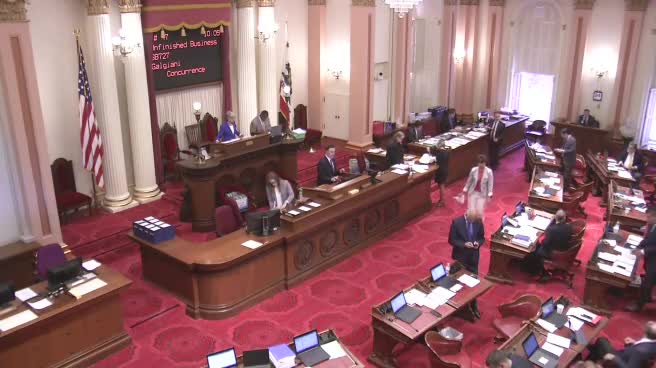 47SEC
Senate Floor
 2MIN
Assembly Floor
 1H
Assembly Standing Committee on Appropriations
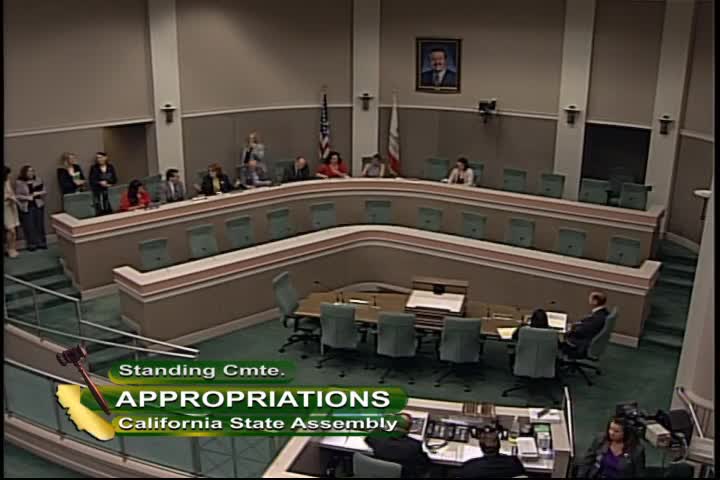 2MIN
Assembly Standing Committee on Appropriations
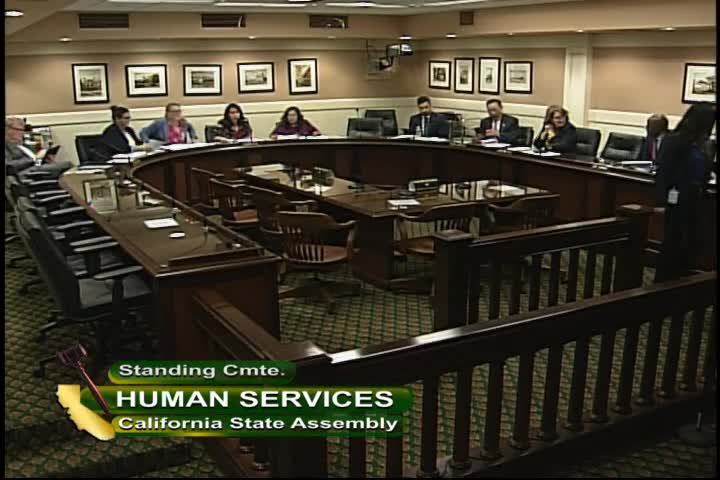 19MIN
Assembly Standing Committee on Human Services
 1MIN
Senate Floor
 48MIN
Senate Standing Committee on Appropriations
 2MIN
Senate Standing Committee on Appropriations
Bill Author

Bill Co-Author(s):