SB 439: Jurisdiction of the juvenile court.
- Session Year: 2017-2018
- House: Senate
- Latest Version Date: 2018-09-30
Existing law places a person who is under 18 years of age within the jurisdiction of the juvenile court for certain offenses, including, among others, the person habitually refuses to obey the reasonable and proper orders or directions of his or her parents or is habitually truant, as specified. Existing law also places a person who is under 18 years of age when he or she violates any law of this state or of the United States or specified ordinances of any city or county of this state to be within the jurisdiction of the juvenile court. Existing law authorizes a juvenile court to adjudge a person under these circumstances to be a ward of the court.
This bill would modify the ages that a person must be to fall within the jurisdiction of the juvenile court or adjudged a ward of the court under these circumstances to between 12 years of age and 17 years of age, inclusive, except that any minor who is under 12 years of age when he or she is alleged to have committed murder or rape, sodomy, oral copulation, or sexual penetration by force, violence, or threat of great bodily harm would still be within the jurisdiction of the juvenile court and may be adjudged a ward of the court. On and after January 1, 2020, the bill would, if a minor under 12 years of age comes to the attention of law enforcement because his or her behavior or actions are as described under existing law, require the county to release the minor to his or her parent, guardian, or caregiver, except as provided. On and after January 1, 2020, the bill would require counties to develop a process for determining the least restrictive responses that may be used instead of, or in addition to, the release of the minor to his or her parent, guardian, or caregiver. By imposing additional duties on counties, the bill would impose a state-mandated local program.
The California Constitution requires the state to reimburse local agencies and school districts for certain costs mandated by the state. Statutory provisions establish procedures for making that reimbursement.
This bill would provide that, if the Commission on State Mandates determines that the bill contains costs mandated by the state, reimbursement for those costs shall be made pursuant to the statutory provisions noted above.
Existing law places a person who is under 18 years of age within the jurisdiction of the juvenile court for certain offenses, including, among others, the person habitually refuses to obey the reasonable and proper orders or directions of his or her parents or is habitually truant, as specified. Existing law also places a person who is under 18 years of age when he or she violates any law of this state or of the United States or specified ordinances of any city or county of this state to be within the jurisdiction of the juvenile court. Existing law authorizes a juvenile court to adjudge a person under these circumstances to be a ward of the court.
This bill would modify the ages that a person must be to fall within the jurisdiction of the juvenile court or adjudged a ward of the court under these circumstances to between 12 years of age and 17 years of age, inclusive, except that any minor who is under 12 years of age when he or she is alleged to have committed murder or rape with rape, sodomy, oral copulation, or sexual penetration by force, violence, or threat of great bodily harm would still be within the jurisdiction of the juvenile court and may be adjudged a ward of the court. On and after January 1, 2020, the bill would, if a minor under 12 years of age comes to the attention of law enforcement because his or her behavior or actions are as described under existing law, require the county to release the minor to his or her parent, guardian, or caregiver, except as provided. On and after January 1, 2020, the bill would require counties to develop a process for determining the least restrictive responses that may be used instead of, or in addition to, the release of the minor to his or her parent, guardian, or caregiver. By imposing additional duties on counties, the bill would impose a state-mandated local program.
The California Constitution requires the state to reimburse local agencies and school districts for certain costs mandated by the state. Statutory provisions establish procedures for making that reimbursement.
This bill would provide that, if the Commission on State Mandates determines that the bill contains costs mandated by the state, reimbursement for those costs shall be made pursuant to the statutory provisions noted above.
Existing law places a person who is under 18 years of age within the jurisdiction of the juvenile court for certain offenses, including, among others, the person habitually refuses to obey the reasonable and proper orders or directions of his or her parents or is habitually truant, as specified. Existing law also places a person who is under 18 years of age when he or she violates any law of this state or of the United States or specified ordinances of any city or county of this state to be within the jurisdiction of the juvenile court. Existing law authorizes a juvenile court to adjudge a person under these circumstances to be a ward of the court.
This bill would modify the ages that a person must be to fall within the jurisdiction of the juvenile court or adjudged a ward of the court under these circumstances to be between 12 years of age and 17 years of age, inclusive. inclusive, except that any minor who is under 12 years of age when he or she is alleged to have committed murder or rape with force, violence, or threat of great bodily harm would still be within the jurisdiction of the juvenile court and may be adjudged a ward of the court. On and after January 1, 2020, the bill would, if a minor under 12 years of age comes to the attention of law enforcement because his or her behavior or actions are as described under existing law, require the county to release the minor to his or her parent, guardian, or caregiver, except as provided. On and after January 1, 2020, the bill would require counties to develop a process for determining the least restrictive responses that may be used instead of, or in addition to, the release of the minor to his or her parent, guardian, or caregiver. By imposing additional duties on counties, the bill would impose a state-mandated local program.
The California Constitution requires the state to reimburse local agencies and school districts for certain costs mandated by the state. Statutory provisions establish procedures for making that reimbursement.
This bill would provide that, if the Commission on State Mandates determines that the bill contains costs mandated by the state, reimbursement for those costs shall be made pursuant to the statutory provisions noted above.
Existing law places a person who is under 18 years of age within the jurisdiction of the juvenile court for certain offenses, including, among others, the person habitually refuses to obey the reasonable and proper orders or directions of his or her parents or is habitually truant, as specified. Existing law also places a person who is under 18 years of age when he or she violates any law of this state or of the United States or specified ordinances of any city or county of this state to be within the jurisdiction of the juvenile court. Existing law authorizes a juvenile court to adjudge a person under these circumstances to be a ward of the court.
This bill would modify the ages that a person must be to fall within the jurisdiction of the juvenile court or adjudged a ward of the court under these circumstances to be between 12 years of age and 18 17 years of age, inclusive.
Existing law places a person who is under 18 years of age within the jurisdiction of the juvenile court for certain offenses, including, among others, the person habitually refuses to obey the reasonable and proper orders or directions of his or her parents or is habitually truant, as specified. Existing law also places a person who is under 18 years of age when he or she violates any law of this state or of the United States or specified ordinances of any city or county of this state to be within the jurisdiction of the juvenile court. Existing law authorizes a juvenile court to adjudge a person under these circumstances to be a ward of the court.
This bill would modify the ages that a person must be to fall within the jurisdiction of the juvenile court or adjudged a ward of the court under these circumstances to be between 12 years of age and 18 years of age, inclusive.
(a)Any minor between 12 years of age and 17 years of age, inclusive, who persistently or habitually refuses to obey the reasonable and proper orders or directions of his or her parents, guardian, or custodian, or who is beyond the control of that person, or who is a minor between 12 years of age and 17 years of age, inclusive, when he or she violated any ordinance of any city or county of this state establishing a curfew based solely on age is within the jurisdiction of the juvenile court which may adjudge the minor to be a ward of the court.
(b)If a minor between 12 years of age and 17 years of age, inclusive, has four or more truancies within one school year as defined in Section 48260 of the Education Code or a school attendance review board or probation officer determines that the available public and private services are insufficient or inappropriate to correct the habitual truancy of the minor, or to correct the minors persistent or habitual refusal to obey the reasonable and proper orders or directions of school authorities, or if the minor fails to respond to directives of a school attendance review board or probation officer or to services provided, the minor is then within the jurisdiction of the juvenile court which may adjudge the minor to be a ward of the court. However, it is the intent of the Legislature that a minor who is described in this subdivision, adjudged a ward of the court pursuant solely to this subdivision, or found in contempt of court for failure to comply with a court order pursuant to this subdivision, shall not be held in a secure facility and shall not be removed from the custody of the parent or guardian except for the purposes of school attendance.
(c)To the extent practically feasible, a minor who is adjudged a ward of the court pursuant to this section shall not be permitted to come into or remain in contact with any minor ordered to participate in a truancy program, or the equivalent thereof, pursuant to Section 602.
(d)Any peace officer or school administrator may issue a notice to appear to a minor who is within the jurisdiction of the juvenile court pursuant to this section.
SEC. 2.Section 602 of the Welfare and Institutions Code is amended to read:602.(a)Except as provided in Section 707, any minor who is between 12 years of age and 17 years of age, inclusive, when he or she violates any law of this state or of the United States or any ordinance of any city or county of this state defining crime other than an ordinance establishing a curfew based solely on age, is within the jurisdiction of the juvenile court, which may adjudge the minor to be a ward of the court.
(b)Any minor who is under 12 years of age when he or she is alleged to have committed any of the following offenses is within the jurisdiction of the juvenile court, which may adjudge the minor to be a ward of the court:
(1)Murder.
(2)Rape by force, violence, duress, menace, or fear of immediate and unlawful bodily injury.
(3)Sodomy by force, violence, duress, menace, or fear of immediate and unlawful bodily injury.
(4)Oral copulation by force, violence, duress, menace, or fear of immediate and unlawful bodily injury.
(5)Sexual penetration by force, violence, duress, menace, or fear of immediate and unlawful bodily injury.
SEC. 3.Section 602.1 is added to the Welfare and Institutions Code, to read:602.1.(a)In order to ensure the safety and well-being of minors who are under 12 years of age and whose behavior would otherwise bring them within the jurisdiction of the juvenile court pursuant to Section 601 or 602, it is the intent of the Legislature that counties pursue appropriate measures to serve and protect a child only as needed, avoiding any intervention whenever possible, and using the least restrictive alternatives through available school-, health-, and community-based services. It is the intent of the Legislature that counties use existing funding for behavioral health, mental health, or other available existing funding sources to provide the alternative services required by this section.
(b)Except as provided in subdivision (b) of Section 602, when a minor under 12 years of age comes to the attention of law enforcement because his or her behavior or actions are as described in Section 601 or 602, the response of the county shall be to release the minor to his or her parent, guardian, or caregiver. Counties shall develop a process for determining the least restrictive responses that may be used instead of, or in addition to, the release of the minor to his or her parent, guardian, or caregiver.
(c)This section shall become operative on January 1, 2020.
SEC. 4.If the Commission on State Mandates determines that this act contains costs mandated by the state, reimbursement to local agencies and school districts for those costs shall be made pursuant to Part 7 (commencing with Section 17500) of Division 4 of Title 2 of the Government Code.
(a)Any minor between 12 years of age and 17 years of age, inclusive, who persistently or habitually refuses to obey the reasonable and proper orders or directions of his or her parents, guardian, or custodian, or who is beyond the control of that person, or who is a minor between 12 years of age and 17 years of age, inclusive, when he or she violated any ordinance of any city or county of this state establishing a curfew based solely on age is within the jurisdiction of the juvenile court which may adjudge the minor to be a ward of the court.
(b)If a minor between 12 years of age and 17 years of age, inclusive, has four or more truancies within one school year as defined in Section 48260 of the Education Code or a school attendance review board or probation officer determines that the available public and private services are insufficient or inappropriate to correct the habitual truancy of the minor, or to correct the minors persistent or habitual refusal to obey the reasonable and proper orders or directions of school authorities, or if the minor fails to respond to directives of a school attendance review board or probation officer or to services provided, the minor is then within the jurisdiction of the juvenile court which may adjudge the minor to be a ward of the court. However, it is the intent of the Legislature that a minor who is described in this subdivision, adjudged a ward of the court pursuant solely to this subdivision, or found in contempt of court for failure to comply with a court order pursuant to this subdivision, shall not be held in a secure facility and shall not be removed from the custody of the parent or guardian except for the purposes of school attendance.
(c)To the extent practically feasible, a minor who is adjudged a ward of the court pursuant to this section shall not be permitted to come into or remain in contact with any minor ordered to participate in a truancy program, or the equivalent thereof, pursuant to Section 602.
(d)Any peace officer or school administrator may issue a notice to appear to a minor who is within the jurisdiction of the juvenile court pursuant to this section.
SEC. 2.Section 602 of the Welfare and Institutions Code is amended to read:602.(a)Except as provided in Section 707, any minor who is between 12 years of age and 17 years of age, inclusive, when he or she violates any law of this state or of the United States or any ordinance of any city or county of this state defining crime other than an ordinance establishing a curfew based solely on age, is within the jurisdiction of the juvenile court, which may adjudge such the minor to be a ward of the court.
(b)Any minor who is under 12 years of age when he or she is alleged to have committed murder, as listed in paragraph (1), or rape with force, violence, or threat of great bodily harm, as listed in paragraph (4) of subdivision (b) of Section 707, is within the jurisdiction of the juvenile court, which may adjudge such minor to be a ward of the court. any of the following offenses is within the jurisdiction of the juvenile court, which may adjudge the minor to be a ward of the court:
(1)Murder.
(2)Rape by force, violence, duress, menace, or fear of immediate and unlawful bodily injury.
(3)Sodomy by force, violence, duress, menace, or fear of immediate and unlawful bodily injury.
(4)Oral copulation by force, violence, duress, menace, or fear of immediate and unlawful bodily injury.
(5)Sexual penetration by force, violence, duress, menace, or fear of immediate and unlawful bodily injury.
SEC. 3.Section 602.1 is added to the Welfare and Institutions Code, to read:602.1.(a)In order to ensure the safety and well-being of minors who are under 12 years of age and whose behavior would otherwise bring them within the jurisdiction of the juvenile court pursuant to Section 601 or 602, it is the intent of the Legislature that counties pursue appropriate measures to serve and protect a child only as needed, avoiding any intervention whenever possible, and using the least restrictive alternatives through available school-, health-, and community-based services. It is the intent of the Legislature that counties use existing funding for behavioral health, mental health, or other available existing funding sources to provide the alternative services required by this section.
(b)Except as provided in subdivision (b) of Section 602, when a minor under 12 years of age comes to the attention of law enforcement because his or her behavior or actions are as described in Section 601 or 602, the response of the county shall be to release the minor to his or her parent, guardian, or caregiver. Counties shall develop a process for determining the least restrictive responses that may be used instead of, or in addition to, the release of the minor to his or her parent, guardian, or caregiver.
(c)This section shall become operative on January 1, 2020.
SEC. 4.If the Commission on State Mandates determines that this act contains costs mandated by the state, reimbursement to local agencies and school districts for those costs shall be made pursuant to Part 7 (commencing with Section 17500) of Division 4 of Title 2 of the Government Code.
(a)Any minor between 12 years of age and 17 years of age, inclusive, who persistently or habitually refuses to obey the reasonable and proper orders or directions of his or her parents, guardian, or custodian, or who is beyond the control of that person, or who is a minor between 12 years of age and 17 years of age, inclusive, when he or she violated any ordinance of any city or county of this state establishing a curfew based solely on age is within the jurisdiction of the juvenile court which may adjudge the minor to be a ward of the court.
(b)If a minor between 12 years of age and 17 years of age, inclusive, has four or more truancies within one school year as defined in Section 48260 of the Education Code or a school attendance review board or probation officer determines that the available public and private services are insufficient or inappropriate to correct the habitual truancy of the minor, or to correct the minors persistent or habitual refusal to obey the reasonable and proper orders or directions of school authorities, or if the minor fails to respond to directives of a school attendance review board or probation officer or to services provided, the minor is then within the jurisdiction of the juvenile court which may adjudge the minor to be a ward of the court. However, it is the intent of the Legislature that a minor who is described in this subdivision, adjudged a ward of the court pursuant solely to this subdivision, or found in contempt of court for failure to comply with a court order pursuant to this subdivision, shall not be held in a secure facility and shall not be removed from the custody of the parent or guardian except for the purposes of school attendance.
(c)To the extent practically feasible, a minor who is adjudged a ward of the court pursuant to this section shall not be permitted to come into or remain in contact with any minor ordered to participate in a truancy program, or the equivalent thereof, pursuant to Section 602.
(d)Any peace officer or school administrator may issue a notice to appear to a minor who is within the jurisdiction of the juvenile court pursuant to this section.
SEC. 2.Section 602 of the Welfare and Institutions Code is amended to read:602.(a)Except as provided in Section 707, any minor who is between 12 years of age and 17 years of age, inclusive, when he or she violates any law of this state or of the United States or any ordinance of any city or county of this state defining crime other than an ordinance establishing a curfew based solely on age, is within the jurisdiction of the juvenile court, which may adjudge such minor to be a ward of the court.
(b)Any minor who is under 12 years of age when he or she is alleged to have committed murder, as listed in paragraph (1), or rape with force, violence, or threat of great bodily harm, as listed in paragraph (4) of subdivision (b) of Section 707, is within the jurisdiction of the juvenile court, which may adjudge such minor to be a ward of the court.
SEC. 3.Section 602.1 is added to the Welfare and Institutions Code, to read:602.1.(a)In order to ensure the safety and well-being of minors who are under 12 years of age and whose behavior would otherwise bring them within the jurisdiction of the juvenile court pursuant to Section 601 or 602, it is the intent of the Legislature that counties pursue appropriate measures to serve and protect a child only as needed, avoiding any intervention whenever possible, and using the least restrictive alternatives through available school-, health-, and community-based services.
(b)Except as provided in subdivision (b) of Section 602, when a minor under 12 years of age comes to the attention of law enforcement because his or her behavior or actions are as described in Section 601 or 602, the response of the county shall be to release the minor to his or her parent, guardian, or caregiver. Counties shall develop a process for determining the least restrictive responses that may be used instead of, or in addition to, the release of the minor to his or her parent, guardian, or caregiver.
(c)This section shall become operative on January 1, 2020.
SEC. 4.If the Commission on State Mandates determines that this act contains costs mandated by the state, reimbursement to local agencies and school districts for those costs shall be made pursuant to Part 7 (commencing with Section 17500) of Division 4 of Title 2 of the Government Code.
(a)Any minor between 12 years of age and 18 17 years of age, inclusive, who persistently or habitually refuses to obey the reasonable and proper orders or directions of his or her parents, guardian, or custodian, or who is beyond the control of that person, or who is a minor between 12 years of age and 18 17 years of age, inclusive, when he or she violated any ordinance of any city or county of this state establishing a curfew based solely on age is within the jurisdiction of the juvenile court which may adjudge the minor to be a ward of the court.
(b)If a minor between 12 years of age and 18 17 years of age, inclusive, has four or more truancies within one school year as defined in Section 48260 of the Education Code or a school attendance review board or probation officer determines that the available public and private services are insufficient or inappropriate to correct the habitual truancy of the minor, or to correct the minors persistent or habitual refusal to obey the reasonable and proper orders or directions of school authorities, or if the minor fails to respond to directives of a school attendance review board or probation officer or to services provided, the minor is then within the jurisdiction of the juvenile court which may adjudge the minor to be a ward of the court. However, it is the intent of the Legislature that a minor who is described in this subdivision, adjudged a ward of the court pursuant solely to this subdivision, or found in contempt of court for failure to comply with a court order pursuant to this subdivision, shall not be held in a secure facility and shall not be removed from the custody of the parent or guardian except for the purposes of school attendance.
(c)To the extent practically feasible, a minor who is adjudged a ward of the court pursuant to this section shall not be permitted to come into or remain in contact with any minor ordered to participate in a truancy program, or the equivalent thereof, pursuant to Section 602.
(d)Any peace officer or school administrator may issue a notice to appear to a minor who is within the jurisdiction of the juvenile court pursuant to this section.
SEC. 2.Section 602 of the Welfare and Institutions Code is amended to read:602.Except as provided in Section 707, any minor who is between 12 years of age and 18 17 years of age, inclusive, when he or she violates any law of this state or of the United States or any ordinance of any city or county of this state defining crime other than an ordinance establishing a curfew based solely on age, is within the jurisdiction of the juvenile court, which may adjudge such minor to be a ward of the court.
(a)Any person under minor between 12 years of age and 18 years of age age, inclusive, who persistently or habitually refuses to obey the reasonable and proper orders or directions of his or her parents, guardian, or custodian, or who is beyond the control of that person, or who is under the age of a minor between 12 years of age and 18 years of age, inclusive, when he or she violated any ordinance of any city or county of this state establishing a curfew based solely on age is within the jurisdiction of the juvenile court which may adjudge the minor to be a ward of the court.
(b)If a minor between 12 years of age and 18 years of age, inclusive, has four or more truancies within one school year as defined in Section 48260 of the Education Code or a school attendance review board or probation officer determines that the available public and private services are insufficient or inappropriate to correct the habitual truancy of the minor, or to correct the minors persistent or habitual refusal to obey the reasonable and proper orders or directions of school authorities, or if the minor fails to respond to directives of a school attendance review board or probation officer or to services provided, the minor is then within the jurisdiction of the juvenile court which may adjudge the minor to be a ward of the court. However, it is the intent of the Legislature that a minor who is described in this subdivision, adjudged a ward of the court pursuant solely to this subdivision, or found in contempt of court for failure to comply with a court order pursuant to this subdivision, shall not be held in a secure facility and shall not be removed from the custody of the parent or guardian except for the purposes of school attendance.
(c)To the extent practically feasible, a minor who is adjudged a ward of the court pursuant to this section shall not be permitted to come into or remain in contact with any minor ordered to participate in a truancy program, or the equivalent thereof, pursuant to Section 602.
(d)Any peace officer or school administrator may issue a notice to appear to a minor who is within the jurisdiction of the juvenile court pursuant to this section.
SEC. 2.Section 602 of the Welfare and Institutions Code is amended to read:602.Except as provided in Section 707, any person minor who is under between 12 years of age and 18 years of age age, inclusive, when he or she violates any law of this state or of the United States or any ordinance of any city or county of this state defining crime other than an ordinance establishing a curfew based solely on age, is within the jurisdiction of the juvenile court, which may adjudge such person minor to be a ward of the court.
|
Date
|
Status
|
|---|---|
| Sep 30, 2018 | Chaptered by Secretary of State. Chapter 1006, Statutes of 2018. |
| Sep 30, 2018 | Approved by the Governor. |
| Sep 11, 2018 | Enrolled and presented to the Governor at 4 p.m. |
| Aug 31, 2018 | Assembly amendments concurred in. (Ayes 24. Noes 14.) Ordered to engrossing and enrolling. |
| Aug 30, 2018 | In Senate. Concurrence in Assembly amendments pending. |
| Aug 30, 2018 | Read third time. Passed. Ordered to the Senate. |
| Aug 21, 2018 | Read second time. Ordered to third reading. |
| Aug 20, 2018 | Read second time and amended. Ordered to second reading. |
| Aug 16, 2018 | From committee: Do pass as amended. (Ayes 11. Noes 0.) (August 16). |
| Jun 27, 2018 | June 27 set for first hearing. Placed on APPR. suspense file. |
| Jun 12, 2018 | From committee: Do pass and re-refer to Com. on APPR. (Ayes 5. Noes 2.) (June 12). Re-referred to Com. on APPR. |
| Jun 6, 2018 | From committee with author's amendments. Read second time and amended. Re-referred to Com. on PUB. S. |
| Jun 27, 2017 | June 27 set for first hearing canceled at the request of author. |
| Jun 13, 2017 | June 13 hearing postponed by committee. |
| Jun 1, 2017 | Referred to Com. on PUB. S. |
| May 16, 2017 | In Assembly. Read first time. Held at Desk. |
| May 15, 2017 | Read third time. Passed. (Ayes 24. Noes 13. Page 1063.) Ordered to the Assembly. |
| Apr 25, 2017 | Read second time. Ordered to third reading. |
| Apr 24, 2017 | From committee: Be ordered to second reading pursuant to Senate Rule 28.8. |
| Apr 13, 2017 | Set for hearing April 24. |
| Apr 4, 2017 | From committee: Do pass and re-refer to Com. on APPR. (Ayes 5. Noes 1. Page 599.) (April 4). Re-referred to Com. on APPR. |
| Mar 28, 2017 | From committee with author's amendments. Read second time and amended. Re-referred to Com. on PUB. S. |
| Mar 9, 2017 | Set for hearing April 4. |
| Feb 23, 2017 | Referred to Com. on PUB. S. |
| Feb 16, 2017 | From printer. May be acted upon on or after March 18. |
| Feb 15, 2017 | Introduced. Read first time. To Com. on RLS. for assignment. To print. |
|
Date
|
Description
|
Location
|
Votes
|
|
|---|---|---|---|---|
| Aug 31, 2018 | Unfinished Business SB439 Mitchell et al. Concurrence | Senate Floor |
Passed |
|
| Aug 30, 2018 | SB 439 Mitchell Senate Third Reading By KAMLAGER-DOVE | Assembly Floor |
Passed |
|
| Aug 16, 2018 | Do pass as amended. | Assembly Standing Committee on Appropriations |
Passed |
|
| Jun 12, 2018 | Do pass and be re-referred to the Committee on [Appropriations] | Assembly Standing Committee on Public Safety |
Passed |
|
| May 15, 2017 | Senate 3rd Reading SB439 Mitchell et al. | Senate Floor |
Passed |
|
| Apr 4, 2017 | Do pass, but first be re-referred to the Committee on [Appropriations] | Senate Standing Committee on Public Safety |
Passed |
This list shows positions taken on this bill by organizations on the date displayed, which is linked to the original source.
Positions by individuals are not included.
|
Organization
|
Position
|
Date
|
|---|---|---|
| #cut50 | ** Support | Jun 11, 2018 |
| Alameda County Office Of Education | ** Support | Aug 30, 2018 |
| Alliance for Boys and Men of Color | ** Support | Aug 30, 2018 |
| American Academy Of Pediatrics, California | ** Support | Aug 30, 2018 |
| American Civil Liberties Union of California | ** Support | Aug 30, 2018 |
| Anti-Recidivism Coalition | ** Support | Aug 30, 2018 |
| Arts for Incarcerated Youth Network | ** Support | Jun 11, 2018 |
| Asian Americans Advancing Justice-California | ** Support | Aug 30, 2018 |
| ASPIRANET | ** Support | Aug 30, 2018 |
| Bend the Arc | ** Support | Jun 11, 2018 |
| Black Women Organized for Political Action | ** Support | Aug 30, 2018 |
| California Alliance for Youth and Community Justice | ** Support | Aug 30, 2018 |
| California Attorneys For Criminal Justice | ** Support | Aug 30, 2018 |
| California Catholic Conference | ** Support | Aug 30, 2018 |
| California Coalition for Women Prisoners | ** Support | Aug 30, 2018 |
| California District Attorneys Association | ** Against | Aug 30, 2018 |
| California NAACP | * Support | Jun 12, 2018 |
| California Police Chiefs Association | * Against | Jun 12, 2018 |
| California Public Defenders Association | ** Support | Aug 30, 2018 |
| California School-Based Health Alliance | ** Support | Aug 30, 2018 |
| California Youth Empowerment Network | ** Support | Aug 30, 2018 |
| Californians for Safety and Justice | * Support | Jun 12, 2018 |
| Center on Juvenile and Criminal Justice | ** Support | Aug 30, 2018 |
| Chief Probation Officers Of California | * Against | Jun 12, 2018 |
| Children'S Defense Fund | ** Support | Aug 30, 2018 |
| Common Sense Kids Action | * Support | Jun 12, 2018 |
| Communities United for Restorative Youth Justice | ** Support | Aug 30, 2018 |
| Compton Unified School District | ** Support | Jun 11, 2018 |
| contra costa county defender association courage campaign | ** Support | Jun 11, 2018 |
| Contra Costa County Defenders Association | ** Support | Aug 30, 2018 |
| Courage Campaign | ** Support | Aug 30, 2018 |
| Cuff 15 | * Support | Apr 4, 2017 |
| Drug Policy Alliance | ** Support | Jun 11, 2018 |
| Ella Baker Center For Human Rights | * Support | Jun 12, 2018 |
| Everychild Foundation | ** Support | Jun 11, 2018 |
| Fair Chance | ** Support | Aug 30, 2018 |
| Fair Chance Project | ** Support | Aug 30, 2018 |
| Fathers and Families of San Joaquin | ** Support | Jun 11, 2018 |
| Fathers and Families of San Joaquin and Stockton | * Support | Apr 4, 2017 |
| Felony Murder Elimination Project | ** Support | Aug 30, 2018 |
| Focus Forward | ** Support | Jun 11, 2018 |
| Friends Committee On Legislation Of California | ** Support | Aug 30, 2018 |
| Further The Work | ** Support | Jun 11, 2018 |
| Healing Dialogue and Action | ** Support | Jun 11, 2018 |
| Interfaith Communities United for Justice and Peace | ** Support | Aug 30, 2018 |
| League Of Women Voters Of California | ** Support | Jun 11, 2018 |
| Legal Services for Prisoners with Children | ** Support | Aug 30, 2018 |
| Los Angeles County District Attorney | * Against | Jun 12, 2018 |
| Motivating Individual Leadership for Public Advancement | ** Support | Aug 30, 2018 |
| National Association Of Social Workers, California Chapter | ** Support | Aug 30, 2018 |
| National Center for Lesbian Rights | ** Support | Jun 11, 2018 |
| National Center for Youth Law | * Support | Jun 12, 2018 |
| National Center On Youth Law | ** Support | Aug 30, 2018 |
| National Institute for Criminal Justice Reform | ** Support | Aug 30, 2018 |
| National Juvenile Justice Network | ** Support | Jun 11, 2018 |
| Pacific Juvenile Defender Center | ** Support | Aug 30, 2018 |
| Pillars of the Community | * Support | Jun 12, 2018 |
| Prison Law Office | ** Support | Aug 30, 2018 |
| Project Rebound | ** Support | Aug 30, 2018 |
| Public Counsel | ** Support | Aug 30, 2018 |
| PURPOSE | ** Against | Apr 3, 2017 |
| Reentry Solutions Group | ** Support | Aug 30, 2018 |
| Root & Rebound | ** Support | Aug 30, 2018 |
| Sacramento County District Attorney's Office | ** Against | Aug 30, 2018 |
| San Diego County District Attorney | ** Against | Jun 11, 2018 |
| San Francisco Public Defender | ** Support | Jun 11, 2018 |
| Several individuals | ** Support | Aug 30, 2018 |
| Silicon Valley De-Bug | ** Support | Jun 11, 2018 |
| society for adolescent health and medicine | ** Support | Jun 11, 2018 |
| the children's initiative | ** Support | Jun 11, 2018 |
| Tides Advocacy | * Support | Jun 12, 2018 |
| Urban Peace Institute | ** Support | Aug 30, 2018 |
| W. Haywood Burns Institute | ** Support | Aug 30, 2018 |
| West Haywood Burns Institute | * Support | Jun 12, 2018 |
| western center on law and poverty | ** Support | Jun 11, 2018 |
| Women's Foundation of California | ** Support | Aug 30, 2018 |
| Youth Justice Coalition | * Support | Jun 12, 2018 |
| Youth Law Center | ** Support | Aug 30, 2018 |
Office of Senate Floor Analyses (916) 651-1520 Fax: (916) 327-4478 | SB 439 |
UNFINISHED BUSINESS
Bill No: SB 439
Author: Mitchell (D) and Lara (D), et al.
Amended: 8/20/18
SENATE PUBLIC SAFETY COMMITTEE: 5-1, 4/4/17
AYES: Skinner, Bradford, Jackson, Mitchell, Wiener
NOES: Stone
NO VOTE RECORDED: Anderson
SENATE APPROPRIATIONS COMMITTEE: Senate Rule 28.8
SENATE FLOOR: 24-13, 5/15/17
AYES: Allen, Atkins, Beall, Bradford, De León, Dodd, Galgiani, Hernandez, Hertzberg, Hill, Hueso, Jackson, Lara, Leyva, McGuire, Mendoza, Mitchell, Monning, Pan, Portantino, Skinner, Stern, Wieckowski, Wiener
NOES: Anderson, Bates, Berryhill, Cannella, Fuller, Gaines, Glazer, Moorlach, Morrell, Nguyen, Nielsen, Stone, Wilk
NO VOTE RECORDED: Newman, Roth, Vidak
ASSEMBLY FLOOR: 43-32, 8/30/18 - See last page for vote
SUBJECT: Jurisdiction of the juvenile court
SOURCE: Center on Juvenile and Criminal Justice
Children’s Defense Fund
National Center on Youth Law
Youth Law Center
DIGEST: This bill establishes 12 years of age as the minimum age for which the juvenile court has jurisdiction and may adjudge a person a ward of the court.
Assembly Amendments provide that a minor under 12 who is alleged to have committed specified violent felonies, including murder and rape by force, is within the jurisdiction of the juvenile court, and require that on or after January 1, 2020, a minor under the age of 12 must be released to his or her parent, guardian, or caregiver if the minor comes to the attention of law enforcement because his or her conduct constitutes a crime or a status offense.
Existing law:
- Provides that the juvenile court has jurisdiction over any person under 18 years of age who persistently or habitually refuses to obey the reasonable and proper orders or directions of his or her parents, guardian, or custodian, or who is beyond the control of that person, or who is under the age of 18 years when he or she violated any ordinance of any city or county of this state establishing a curfew based solely on age. Existing law further provides that the juvenile court may adjudge the person a ward of the court. (Welf. and Inst. Code § 601(a).)
- Provides that the juvenile court has jurisdiction over a minor who has four or more truancies within one school year or one for whom a school attendance review board or probation officer has determined that the available services are insufficient or inappropriate to correct the habitual truancy of the minor. (Welf. and Inst. Code § 601(b).)
- Provides that the juvenile court has jurisdiction over any person who is under 18 years of age when he or she violates any law of California or of the United States, or any ordinance of any city or county of California other than an aged-based curfew, except as provided in Welfare and Institutions Code Section 707. Existing law authorizes a juvenile court to adjudge a person under these circumstances a ward of the court. (Welf. and Inst. Code § 602.)
This bill establishes 12 years of age as the minimum age for juvenile court jurisdiction.
Background
Capacity and Competency
Historically, children have not been considered to have the capacity to commit crimes. Criminal capacity describes the ability to understand right from wrong. Under Penal Code Section 26, “all persons are capable of committing crimes.” An exception exists for children under the age of 14 “in the absence of clear proof that at the time of committing the act charged against them, they knew its wrongfulness.” This rebuttable presumption shifts the burden to prosecutors to prove that a child had capacity. A Gladys R. hearing is held to determine whether a child has capacity. Testimony regarding the child’s capacity from those who know the child, including the child’s parents, is introduced during the hearing. If it cannot be proven that the child has capacity, the juvenile court’s jurisdiction over the child is terminated.
Competency describes the ability of a person to understand the charges and the proceedings, to consult meaningfully with counsel, and to assist in his or her defense. Under Welfare and Institutions Code Section 709, “a minor is incompetent to proceed if he or she lacks sufficient present ability to consult with counsel and assist in preparing his or her defense with a reasonable degree of rational understanding, or lacks a rational as well as factual understanding, of the nature of the charges or proceedings against him or her.” Section 709 further states that “[i]f the court finds substantial evidence raises a doubt as to the minor’s competency, the proceedings shall be suspended.” If the issue of incompetence is raised, the court will hold a competency hearing. An expert will be appointed to evaluate whether the minor suffers from mental disorder, developmental disability, developmental immaturity, or other condition, and whether the condition impairs the minor’s competency. Incompetence must be shown by a preponderance of the evidence.
California Department of Justice (DOJ) Data on Juveniles in the Justice System
The DOJ publishes an annual report on juvenile justice in the state, including the number of arrests, referrals to probation departments, petitions filed, and dispositions for juveniles tried in juvenile and adult courts. A juvenile may be arrest for violating a criminal statute or a committing a status offense. A status offense involves conduct that would not be a crime if committed by an adult. Examples of status offenses include running away, curfew violations, truancy, and incorrigibility. Law enforcement officers have three options upon arresting a juvenile: (1) refer to the probation department; (2) handle within the department where juveniles are counseled and released; or (3) turn over to another agency.
The DOJ’s 2015 report includes the following data:
- Out of 71,923 juvenile arrests, 984 arrests were of children under 12 years of age:
- Of those 984 arrests of children under 12,314 were for felonies, 579 were for misdemeanors, and 91 were for status offenses.
- Of those 984 arrests of children under 12,723 were referred to probation, 248 were counseled and released, and 13 were turned over to another agency.
- Out of 819 referral offenses, 263 were for felonies, 512 were for misdemeanors, and 44 were for status offenses.
- Out of 687 children under 12 subject to detention following a referral to probation, 40 were detained:
- Of those 40 children detained, 38 were held in a secure facility.
- Out of those 687 children under 12 subject to detention, 100 petitions were filed with the court, 476 cases were closed at intake, 28 juveniles were placed on informal probation, 77 cases were diverted, 2 cases were transferred, and 4 cases were handled in traffic court.
- Of the 100 petitions that were filed in cases of children under 12, 40 were dismissed, 1 was transferred, 22 were placed on informal probation, 7 were placed on non-ward probation, and 30 were placed on wardship probation.
- No children under 12 were referred to probation for homicide in 2015.
- The most common offense type for which children under 12 were referred was assault and battery.
(Juvenile Justice in California 2015, https://oag.ca.gov/sites/all/files/agweb/pdfs/ cjsc/publications/misc/jj15/jj15.pdf)
FISCAL EFFECT: Appropriation: No Fiscal Com.: Yes Local: Yes
According to the Assembly Appropriations Committee:
- Unknown, potentially significant reimbursable mandated local costs, likely in the hundreds of thousands to millions of dollars annually, for counties to develop and implement alternative interventions for children under age 12 who would otherwise come under the jurisdiction of a juvenile court.
- Unknown, potentially significant savings to county probation departments by reducing the number of juveniles under the supervision of probation departments.
- Potentially significant savings to juvenile courts by reducing the number of cases. For example, in 2016 roughly 800 children under age 12 were arrested for offenses that would not be heard by juvenile courts under the provisions of this bill.
Center on Juvenile and Criminal Justice (co-source)
Children’s Defense Fund (co-source)
National Center on Youth Law (co-source)
Youth Law Center (co-source)
Alameda County Office of Education
Alliance for Boys and Men of Color
American Academy of Pediatrics, California
American Civil Liberties Union of California
Anti-Recidivism Coalition
Asian Americans Advancing Justice-California
Aspiranet
Black Women Organized for Political Action
California Alliance for Youth and Community Justice
California Attorneys for Criminal Justice
California Catholic Conference
California Coalition for Women Prisoners
California Public Defenders Association
California School-Based Health Alliance
California Youth Empowerment Network
Communities United for Restorative Youth Justice
Contra Costa County Defenders Association
Courage Campaign
Fair Chance
Fair Chance Project
Felony Murder Elimination Project
Friends Committee on Legislation of California
Interfaith Communities United for Justice and Peace
Legal Services for Prisoners with Children
Motivating Individual Leadership for Public Advancement
National Association of Social Workers, California Chapter
National Institute for Criminal Justice Reform
Pacific Juvenile Defender Center
Prison Law Office
Project Rebound
Public Counsel
Reentry Solutions Group
Root & Rebound
Urban Peace Institute
W. Haywood Burns Institute
Women’s Foundation of California
Youth Law Center
Several individuals
OPPOSITION: (Verified 8/27/18)
California District Attorneys Association
Sacramento County District Attorney’s Office
ASSEMBLY FLOOR: 43-32, 8/30/18
AYES: Aguiar-Curry, Arambula, Berman, Bloom, Bonta, Burke, Calderon, Carrillo, Chávez, Chiu, Chu, Eggman, Friedman, Cristina Garcia, Eduardo Garcia, Gipson, Gloria, Gonzalez Fletcher, Grayson, Holden, Jones-Sawyer, Kalra, Kamlager-Dove, Levine, Limón, Low, McCarty, Medina, Mullin, Nazarian, Quirk, Quirk-Silva, Reyes, Rivas, Rodriguez, Rubio, Santiago, Mark Stone, Thurmond, Ting, Weber, Wood, Rendon
NOES: Acosta, Travis Allen, Baker, Bigelow, Brough, Caballero, Cervantes, Chen, Choi, Cooley, Cunningham, Dahle, Flora, Fong, Frazier, Gallagher, Gray, Harper, Irwin, Kiley, Lackey, Maienschein, Mathis, Mayes, Melendez, Obernolte, O'Donnell, Patterson, Salas, Steinorth, Voepel, Waldron
NO VOTE RECORDED: Chau, Cooper, Daly, Gabriel, Muratsuchi
Prepared by: Stephanie Jordan / PUB. S. /
8/30/18 20:45:48
**** END ****
SENATE THIRD READING
STR Bill Id:
Author:(Mitchell and Lara)
As Amended Ver:
Majority vote
SENATE VOTE: 24-13
Committee | Votes | Ayes | Noes |
Public Safety | 5-2 | Jones-Sawyer, Carrillo, McCarty, Quirk, Weber | Lackey, Kiley |
Appropriations | 11-0 | Gonzalez Fletcher, Bloom, Bonta, Carrillo, Chau, Eggman, Friedman, Eduardo Garcia, Nazarian, Quirk, Reyes |
|
SUMMARY: Prohibits the prosecution of children under the age of 12 years in the juvenile court, except when a minor is alleged to have committed murder or specified sex offenses. Specifically, this bill:
- Establishes 12 years of age as the minimum age for which the juvenile court has jurisdiction to adjudge a minor as a ward of the court for either a crime or a status offense, except as specified.
- Allows a child under the age of 12 to be brought under the jurisdiction of the juvenile court when it is alleged that the child has committed one of the following offenses:
- Murder;
- Rape by force, violence, menace, duress, or fear of immediate bodily injury;
- Sodomy by force, violence, menace, duress, or fear of immediate bodily injury;
- Oral copulation by force, violence, menace, duress, or fear of immediate bodily injury; or,
- Sexual penetration by force, violence, menace, duress, or fear of immediate bodily injury.
- States legislative intent that counties use the least restrictive means of intervention, and avoid intervention whenever possible, when a child under the age of 12 engages in conduct that would otherwise bring him or her under the jurisdiction of the juvenile court.
- States legislative intent that counties use existing funding for behavioral or mental health, or other existing funding sources to provide the alternative services required.
- Provides that, on and after January 1, 2020, when a minor under the age of 12 comes to the attention of law enforcement because his or her conduct constitutes a crime or a status offense, the minor must be released to his or her parent, guardian, or caregiver.
- Requires counties to develop a process for determining the least restrictive responses that may be used instead of, or in addition to, the release of the minor to his or her parent, guardian, or caregiver.
EXISTING LAW:
- Provides that any person who is under 18 years of age when he or she violates any law defining a crime is subject to the jurisdiction of the juvenile court and to adjudication as ward.
- Provides that any person who is under 18 years of age who habitually refuses to obey the orders of his or her parents, who violates age curfews, or who is a habitual truant, is subject to the jurisdiction of court as ward.
- Provides that children under the age of 14 are incapable of committing crimes unless there is clear proof that at the time of committing the act charged against them they knew its wrongfulness.
FISCAL EFFECT: According to the Assembly Appropriations Committee:
- Unknown, potentially significant reimbursable mandated local costs, likely in the hundreds of thousands of dollars annually, for counties to develop processes for determining the least restrictive responses.
- Unknown, potentially significant savings to county probation departments by reducing the number of juveniles under the supervision of probation departments.
- Potentially significant savings to juvenile courts by reducing the number of cases. For example, in 2016 roughly 800 children under age 12 were arrested for offenses that would not be heard by juvenile courts under the provisions of this bill.
COMMENTS: According to the author, ''This bill would protect young children from the negative impacts of formal justice system involvement, promote their rights, health, and well-being through alternative child-serving systems, and decrease the amount of resources wasted in the juvenile justice system.''
Please see the policy committee analysis for a full discussion of this bill.
Analysis Prepared by: Sandy Uribe / PUB. S. / (916) 319-3744 FN: 0004105
Date of Hearing: June 27, 2018
ASSEMBLY COMMITTEE ON APPROPRIATIONS
Lorena Gonzalez Fletcher, Chair
SBPCA Bill Id:SB 439
Author:(Mitchell) – As Amended Ver:June 6, 2018
Policy Committee: | Public Safety | Vote: | 5 - 2 |
Urgency: No State Mandated Local Program: Yes Reimbursable: Yes
SUMMARY:
This bill prohibits the prosecution of children under the age of 12 years in juvenile court, except when a minor is alleged to have committed murder or rape by force. In addition, this bill requires counties to develop a process for determining the least restrictive responses that may be used instead of, or in addition to, releasing minors under age 12 to their parent, guardian, or caregiver.
FISCAL EFFECT:
- Unknown, potentially significant reimbursable mandated local costs, likely in the hundreds of thousands to millions of dollars annually, for counties to develop and implement alternative interventions for children under age 12 who would otherwise come under the jurisdiction of a juvenile court.
- Unknown, potentially significant savings to county probation departments by reducing the number of juveniles under the supervision of probation departments.
- Potentially significant savings to juvenile courts by reducing the number of cases. For example, in 2016 roughly 800 children under age 12 were arrested for offenses that would not be heard by juvenile courts under the provisions of this bill.
COMMENTS:
- Background. Any person under the age of 18 who commits either a crime or a status offense falls within the jurisdiction of the juvenile delinquency court. There is no minimum age under which the juvenile court lacks jurisdiction.
- Purpose. It is recognized that the brain and moral development of adolescents is not as formed as that of an adult and the brain and moral development of pre-adolescents is likely even less developed. Based on this recognition, and on the assertion that involvement in the juvenile justice system can cause more harm than benefit to a minor, this bill generally limits juvenile court jurisdiction to children over the age of 12.
According to the author:
This bill would protect young children from the negative impacts of formal justice system involvement, promote their rights, health, and well-being through alternative child-serving systems, and decrease the amount of resources wasted in the juvenile justice system.
Analysis Prepared by: Jessica Peters / APPR. / (916) 319-2081
Date of Hearing: June 12, 2018
Counsel: Sandy Uribe
ASSEMBLY COMMITTEE ON PUBLIC SAFETY
Reginald Byron Jones-Sawyer, Sr., Chair
SBPCA Bill Id:SB 439
Author:(Mitchell) – As Amended Ver:June 6, 2018
SUMMARY: Prohibits the prosecution of children under the age of 12 years in the juvenile court, except when a minor is alleged to have committed murder or rape by force. Specifically, this bill:
- Establishes 12 years of age as the minimum age for which the juvenile court has jurisdiction to adjudge a minor as a ward of the court for either a crime or a status offense,[1] except as specified.
- Allows a child under the age of 12 to be brought under the jurisdiction of the juvenile court when it is alleged that the child has committed murder or rape by force, violence, or threat of great bodily harm.
- States legislative intent that counties use the least restrictive means of intervention, and avoid intervention whenever possible, when a child under the age of 12 engages in conduct that would otherwise bring him or her under the jurisdiction of the juvenile court.
- Provides that, on and after January 1, 2020, when a minor under the age of 12 comes to the attention of law enforcement because his or her conduct constitutes a crime or a status offense, the minor must be released to his or her parent, guardian, or caregiver.
- Requires counties to develop a process for determining the least restrictive responses that may be used instead of, or in addition to, the release of the minor to his or her parent, guardian, or caregiver.
EXISTING LAW:
- Provides that any person who is under 18 years of age when he or she violates any law defining a crime is subject to the jurisdiction of the juvenile court and to adjudication as ward. (Welf. & Inst. Code, § 602.)
- Provides that any person who is under 18 years of age who habitually refuses to obey the orders of his or her parents, who violates age curfews, or who is a habitual truant, is subject to the jurisdiction of court as ward. (Welf. & Inst. Code, § 601.)
- Provides that children under the age of 14 are incapable of committing crimes unless there is clear proof that at the time of committing the act charged against them they knew its wrongfulness. (Pen. Code, § 26.)
FISCAL EFFECT: Unknown.
COMMENTS:
- Author's Statement: According to the author, “This bill would protect young children from the negative impacts of formal justice system involvement, promote their rights, health, and well-being through alternative child-serving systems, and decrease the amount of resources wasted in the juvenile justice system.”
- Jurisdiction of the Juvenile Court: As a general rule any person under the age of 18 who commits either a crime or a status offense falls within the jurisdiction of the juvenile delinquency court.[2] (Welf. & Inst. Code, §§ 601 & 602.) This extends to any minor alleged to have committed a crime before his or her 18th birthday, regardless of age at the time of arrest or commencement of proceedings. (Welf. & Inst. Code, § 603.) There is no minimum age under which the juvenile court lacks jurisdiction.
The creation of the juvenile court, now over 100 years old, was rooted in the idea that adolescents, who are not fully developed or mature, are less culpable than adults. Accordingly, the focus of the juvenile court was supposed to be rehabilitation, not punishment. (See e.g. In re Gault (1967) 387 U.S. 1, 15-16.) However, “There is evidence … that there may be grounds for concern that the child [in juvenile court] receives the worst of both worlds: that he gets neither the protections accord to adults nor the solicitous care and regenerative treatment postulated for children.” (Id. at p. 18, fn. 23, citations omitted.) In fact, many would argue that, with the exception of the right to a jury trial, a delinquency proceeding is quasi-criminal and indistinguishable from an adult criminal proceeding.
The treatment of juveniles as equally culpable as adults clashes with emerging empirical evidence on the immaturity of adolescents with respect to both their ability to make informed and nuanced judgments about their behavior, as well as their moral development. Researchers in the science of human development generally agree that from a developmental standpoint an adolescent is not an adult. And some scholars argue that the unique nature of adolescent development affect considerations of both culpability and deterrence when measuring the value and suitability of imposing adult criminal sanctions on juveniles:
The culpability analysis of juvenile impulsiveness and risk-taking implicitly embraces the developmental notion that some forms of adolescent behavior are the result of a not yet fully formed ability to control impulses. In effect, young people do not have the same capacity for self-control as adults and this should be considered a mitigating factor when assessing culpability. Similarly, the proclivity of adolescents to take risks and act on a whim skews the traditional deterrence calculus for the adolescent actor. Adolescents are not likely to recognize all possible options and therefore, their preference prioritization may be completely tilted toward outcomes that they expect will provide immediate gratification but that do not actually maximize their utility.
(Jill M. Ward, Deterrence's Difficulty Magnified: The Importance of Adolescent Development in Assessing the Deterrence Value of Transferring Juveniles to Adult Court, (2003) 7 UC Davis Juv. L. & Pol'y 253, 267, fn. 6.)
United States Supreme Court jurisprudence has also recognized that children are different. For example, in Roper v. Simmons (2005) 543 U.S. 551, the Court discussed the differences between juvenile offenders and adults when it held that persons who were under the age of 18 at the time of the offense are ineligible for the death penalty. First the court noted that a lack of maturity and an underdeveloped sense of responsibility are found in youth more and more often result in impetuous and ill-considered actions and decisions. (Id. at p. 569.) A “second area of difference is that juveniles are more vulnerable or susceptible to negative influences and outside pressures, including peer pressure.” (Ibid.) And third, “the character of a juvenile is not as well formed as that of an adult. The personality traits of juveniles are more transitory, less fixed.” (Id. at p. 570.)
If it is recognized that the brain and moral development of adolescents is not as formed as that of an adult, then it stands to reason that the brain and moral development of pre-adolescents is even less so. Based on this rationale, and on the recognition that involvement the juvenile justice system can cause more harm than benefit to the minor, this bill generally limits juvenile court jurisdiction to children over the age of 12.
Yet, there are tensions in whether to address the conduct of young juvenile offenders engaged in the most serious, violent crimes (referred to as“707(b) offenses”)[3] through the juvenile justice system versus child protective services, or some other agency. Some would argue that the juvenile justice system provides a higher likelihood that the minor will receive services. There is also concern that without a court process that has the ability to impose sanctions, the minor will not rehabilitate.
In recognition of this tension, this bill would allow a child under the age of 12 who commits murder or rape by force, violence, or threat of great bodily injury to be subject to the jurisdiction of the juvenile court. However, there are other sex offenses which are arguably just as serious, such as forcible sodomy and forcible sexual penetration, which this bill does not take into account. As drafted, this bill sets up the inconsistent situation that if a boy under the age of 12 commits forcible intercourse against a little girl, he will be subject to the jurisdiction of the juvenile court; however, if that same boy forcibly sexually assaulted another little boy he would not be subject to juvenile court jurisdiction. This raises the question of disparate treatment.
- Capacity: While California currently does not have a law establishing a minimum age for juvenile court jurisdiction, current law does establish a presumption of a minimum age for the capacity to commit a crime.
A child under the age of 14 is not capable of committing a crime in the absence of clear proof that at the time of committing the alleged act, the child knew of its wrongfulness. (Pen. Code, § 26.) This presumption shifts the burden to the prosecutor to prove that a child has capacity.
When the issue of a child’s capacity to commit a crime arises, the juvenile court holds a Gladys R. hearing. (In re Gladys R. (1970) 1 Cal.3d 855.) The standard of proof is clear and convincing evidence, rather than proof beyond a reasonable doubt. (In re Manuel L. (1994) 7 Cal.4th 229, 234.)
In determining whether the child knew of the wrongfulness, the court must consider the child’s age, experience, and understanding. Additionally, the minor’s knowledge of the wrongfulness of the act may be inferred from the circumstances, such as the method of its commission or concealment of the act. (In re Marven C. (1995) 33 Cal.App.4th 482, 487; In re James B. (2003) 109 Cal.App.4th 826.) There are no statutory restrictions on presenting psychiatric testimony on the issue of showing whether the child knew of the act’s wrongfulness. (Pen. Code, § 21, subd. (b).) - Department of Justice Data on the Juvenile Justice System: The California Department of Justice (DOJ) publishes an annual report on juvenile justice in California. The report includes data on the number of arrests, referrals to probation, petitions filed, and disposition. (See https://openjustice.doj.ca.gov/resources/publications.)
The DOJ’s 2016 report includes the following data: In 2016, there were 804 arrests made of children who were under 12 years of age. (Id. at p. 56.) Of the minors under 12 who were arrested, 279 were arrested for felonies, 453 were arrested for misdemeanors, and 72 were arrested for status offenses. (Ibid.) The most common type of arrests for this population was assault and battery offenses. There were 95 arrests for violent felonies. (Id. at. p. 57.) The violent-felony arrests for children under 12 consisted of 3 arrests for rape, 23 for robbery, 69 for assault.[4] No children under 12 were arrested for homicide or for kidnapping in 2016. (p. 59.)
Of those 804 arrests for children under 12 years of age, 587 children were referred to the probation department, 205 were counseled and released, and 12 were turned over to another agency. (p. 64.) There were 652 children under 12 subject to detention in 2015. This resulted in 85 petitions filed. The rest of the cases were either closed at intake, handled via informal probation, diversion, transferred, or handled traffic court. (p. 72.) - Argument in Support: According to the National Center for Youth Law, a co-sponsor of this bill, “We support the establishment of a minimum age of juvenile delinquency jurisdiction for the following reasons:
“1. Formal justice processing is harmful to children’s health and development, exposing them unnecessarily to a system that they do not fully understand;
2. Early-age involvement in the justice system is increasingly rare and characterized by high rates of case dismissal, meaning that counties are spending wastefully on these cases;
3. Early-age court processing in California is beset with geographic, racial, and ethnic disparities;
4. There is increasing national and international support for minimum age laws;
5. Alternative services outside of the juvenile justice system- such as community-and-family-based health and mental health, education, and child welfare services- can better meet the needs of young children while maintaining public safety.”
- Argument in Opposition: According to the Chief Probation Officers of California (CPOC), “[T]his bill does not take into account the individualized circumstances or needs of a minor under 12 and what services, treatment, and setting might be most suitable for them in order to best serve their needs and balance the public safety.
“Due to the individualized nature of working with all youth, we are concerned that by having this apply universally to all youth under 12 years of age, including those who have committed serious or violent 707(b) offenses, the bill would limit the juvenile court’s ability to determine the most appropriate response and treatment for youth who are believed to have committed a 707(b) offense that also balances those needs with the public’s safety. We believe that for youth who are alleged to have committed a 707(b) offense, the delinquency court should have a mechanism to review the case to determine an appropriate response and how best to address the actions of the youth. Currently, there are very few youth under 12 in the delinquency system that fall under this category and a prohibition against delinquency courts and probation departments from serving these youth will likely be a disadvantage to the youth, their families, and possibly victims and our communities.” - Prior Legislation: SB 1322 (Mitchell), Chapter 654, Statutes of 2016, decriminalized prostitution for those under 18 years of age, but permitted a minor to be taken into temporary custody for that offense under limited circumstances.
REGISTERED SUPPORT / OPPOSITION:
Support
Anti-Recidivism Coalition (Co-Sponsor)
Children’s Defense Fund, California (Co-sponsor)
Center on Juvenile and Criminal Justice (Co-sponsor)
National Center for Youth Law (Co-sponsor)
W. Haywood Burns Institute (Co-Sponsor)
Youth Justice Coalition (Co-sponsor)
Alameda County Office of Education
Alliance FOR Boys and Men of Color
American Academy of Pediatrics, California
American Civil Liberties Union of California
Arts for Incarcerated Youth Network
Asian Americans Advancing Justice, California
Aspiranet
Bend the Arc
California Alliance for Youth and Community Justice
California Attorneys for Criminal Justice
California Catholic Conference, Inc.
California Public Defenders Association
California School-Based Health Alliance
Common Sense Kids Action
Communities United for Restorative Youth Justice
Compton Unified School District
Contra Costa County Defender Association
Courage Campaign
Drug Policy Alliance
Ella Baker Center for Human Rights
Everychild Foundation
Fair Chance Project
Fathers and Families of San Joaquin
Focus Forward
Friends Committee on Legislation of California
Further the Work
Healing Dialogue and Action
League of Women Voters of California
Legal Services for Prisoners with Children
Motivating Individual Leadership for Public Advancement
National Association of Social Workers, California Chapter
National Center for Lesbian Rights
National Institute for Criminal Justice Reform
National Juvenile Justice Network
Pacific Juvenile Defender Center
Prison Law Office
Public Counsel
Reentry Solutions Group
Root and Rebound
San Francisco Public Defender
Silicon Valley De-Bug
Society for Adolescent Health and Medicine
The Children’s Initiative
Urban Peace Institute
Western Center on Law and Poverty
Youth Law Center
#Cut50
60 private individuals
Opposition
California District Attorneys Association
California Police Chiefs Association
Chief Probation Officers of California
San Diego County District Attorney
Analysis Prepared by: Sandy Uribe / PUB. S. / (916) 319-3744
Status offenses involve conduct which would not be a crime if committed by an adult, such as curfew violations and truancy. ↑
The juvenile court also has jurisdiction over those minors who are abused, neglected, orphaned, abandoned or physically dangerous because of a mental disorder. (See Welf. & Inst. Code, §300.) That jurisdiction is not at issue here. ↑
Welfare and Institutions Code section 707, subdivision (b) lists 30 offenses including: murder, arson, robbery, sex offenses committed by force, violence or threat of bodily harm, carjacking, assault with a firearm or by means likely to produce great bodily injury, torture and mayhem. ↑
The DOJ data for 2016 also shows 15 arrests for lewd or lascivious acts and 4 for other sex crimes, but they are not counted in the violent felony arrests. (p. 59.) ↑
Date of Hearing: June 27, 2017
Counsel: Sandy Uribe
ASSEMBLY COMMITTEE ON PUBLIC SAFETY
Reginald Byron Jones-Sawyer, Sr., Chair
SBPCA Bill Id:SB 439
Author:(Mitchell) – As Amended Ver:March 28, 2017
SUMMARY: Prohibits the prosecution of children under the age of 12 years in the juvenile court. Specifically, this bill: Establishes 12 years of age as the minimum age for which the juvenile court has jurisdiction to adjudge a minor as a ward of the court for either a crime or a status offense.[1]
EXISTING LAW:
- Provides that any person who is under 18 years of age when he or she violates any law defining a crime is subject to the jurisdiction of the juvenile court and to adjudication as ward. (Welf. & Inst. Code, § 602.)
- Provides that any person who is under 18 years of age who habitually refuses to obey the orders of his or her parents, who violates age curfews, or who is a habitual truant, is subject to the jurisdiction of court as ward. (Welf. & Inst. Code, § 601.)
- Provides that children under the age of 14 are incapable of committing crimes unless there is clear proof that at the time of committing the act charged against them they knew its wrongfulness. (Pen. Code, § 26.)
FISCAL EFFECT: Unknown.
COMMENTS:
- Author's Statement: According to the author, “This bill would protect young children from the negative impacts of formal justice system involvement, promote their rights, health, and well-being through alternative child-serving systems, and decrease the amount of resources wasted in the juvenile justice system.”
- Jurisdiction of the Juvenile Court: As a general rule any person under the age of 18 who commits either a crime or a status offense falls within the jurisdiction of the juvenile delinquency court.[2] (Welf. & Inst. Code, §§ 601 & 602.) This extends to any minor alleged to have committed a crime before his or her 18th birthday, regardless of arrest at the time or arrest or commencement of proceedings. (Welf. & Inst. Code, § 603.) There is no minimum age under which the juvenile court lacks jurisdiction.
The creation of the juvenile court, now over 100 years old, was rooted in the idea that adolescents, who are not fully developed or mature, are less culpable than adults. Accordingly, the focus of the juvenile court was supposed to be rehabilitation, not punishment. (See e.g. In re Gault (1967) 387 U.S. 1, 15-16.) However, “There is evidence … that there may be grounds for concern that the child [in juvenile court] receives the worst of both worlds: that he gets neither the protections accord to adults nor the solicitous care and regenerative treatment postulated for children.” (Id. at p. 18, fn. 23, citations omitted.) In fact, many would argue that, with the exception of the right to a jury trial, a delinquency proceeding is quasi-criminal and indistinguishable from an adult criminal proceeding.
The treatment of juveniles as equally culpable as adults clashes with emerging empirical evidence on the immaturity of adolescents with respect to both their ability to make informed and nuanced judgments about their behavior, as well as their moral development. Researchers in the science of human development generally agree that from a developmental standpoint an adolescent is not an adult. And some scholars argue that the unique nature of adolescent development affect considerations of both culpability and deterrence when measuring the value and suitability of imposing adult criminal sanctions on juveniles:
The culpability analysis of juvenile impulsiveness and risk-taking implicitly embraces the developmental notion that some forms of adolescent behavior are the result of a not yet fully formed ability to control impulses. In effect, young people do not have the same capacity for self-control as adults and this should be considered a mitigating factor when assessing culpability. Similarly, the proclivity of adolescents to take risks and act on a whim skews the traditional deterrence calculus for the adolescent actor. Adolescents are not likely to recognize all possible options and therefore, their preference prioritization may be completely tilted toward outcomes that they expect will provide immediate gratification but that do not actually maximize their utility.
(Jill M. Ward, Deterrence's Difficulty Magnified: The Importance of Adolescent Development in Assessing the Deterrence Value of Transferring Juveniles to Adult Court, (2003) 7 UC Davis Juv. L. & Pol'y 253, 267, fn. 6.)
United States Supreme Court jurisprudence has also recognized that children are different. For example, in Roper v. Simmons (2005) 543 U.S. 551, the Court discussed the differences between juvenile offenders and adults when it held that persons who were under the age of 18 at the time of the offense are ineligible for the death penalty. First the court noted that a lack of maturity and an underdeveloped sense of responsibility are found in youth more and more often result in impetuous and ill-considered actions and decisions. (Id. at p. 569.) A “second area of difference is that juveniles are more vulnerable or susceptible to negative influences and outside pressures, including peer pressure.” (Ibid.) And third, “the character of a juvenile is not as well formed as that of an adult. The personality traits of juveniles are more transitory, less fixed.” (Id. at p. 570.)
If it is recognized that the brain and moral development of adolescents is not as formed as that of an adult, then it stands to reason that the brain and moral development of pre-adolescents is even less so. Based on this rationale, and on the recognition that involvement the juvenile justice system can cause more harm than benefit to the minor, this bill limits juvenile court jurisdiction to children over the age of 12.
And yet there are tensions in whether to address the conduct of young juvenile offenders engaged in the most serious, violent crimes (referred to as“707(b) offenses”)[3] through the juvenile justice system versus child protective services, or some other agency. Some would argue that the juvenile justice system provides a higher likelihood that the minor will receive services. There is also concern that without a court process that has the ability to impose sanctions, the minor will not rehabilitate.
- Capacity: While California currently does not have a law establishing a minimum age for juvenile court jurisdiction, current law does establish a presumption of a minimum age for the capacity to commit a crime.
A child under the age of 14 is not capable of committing a crime in the absence of clear proof that at the time of committing the alleged act, the child knew of its wrongfulness. (Pen. Code, § 26.) This presumption shifts the burden to the prosecutor to prove that a child has capacity.
When the issue of a child’s capacity to commit a crime arises, the juvenile court holds a Gladys R. hearing. (In re Gladys R. (1970) 1 Cal.3d 855.) The standard of proof is clear and convincing evidence, rather than proof beyond a reasonable doubt. (In re Manuel L. (1994) 7 Cal.4th 229, 234.)
In determining whether the child knew of the wrongfulness, the court must consider the child’s age, experience, and understanding. Additionally, the minor’s knowledge of the wrongfulness of the act may be inferred from the circumstances, such as the method of its commission or concealment of the act. (In re Marven C. (1995) 33 Cal.App.4th 482, 487; In re James B. (2003) 109 Cal.App.4th 826.) There are no statutory restrictions on presenting psychiatric testimony on the issue of showing whether the child knew of the act’s wrongfulness. (Pen. Code, § 21, subd. (b).) - Department of Justice Data on the Juvenile Justice System: The California Department of Justice (DOJ) publishes an annual report on juvenile justice in California. The report includes data on the number of arrests, referrals to probation, petitions filed, and disposition. (See https://oag.ca.gov/sites/all/files/agweb/pdfs/cjsc/publications/misc/jj15/jj15.pdf?.)
The DOJ’s 2015 report includes the following data: In 2015, there were 984 arrests made of children who were under 12 years of age. (Id. at p. 57.) Of the minors under 12 who were arrested, 314 were arrested for felonies, 579 were arrested for misdemeanors, and 91 were arrested for status offenses. (Ibid.) The most common type of arrests for this population were assault and battery offenses, followed by drug offenses. There were 89 arrests for violent felonies. (pp. 57, 59.) The violent felony arrests for children under 12 consisted of 1 arrest for rape, 13 for robbery, 70 for assault, and 5 for kidnapping.[4] No children under 12 were arrested for homicide in 2015. (p. 59.)
Of those 984 arrests for children under 12 years of age, 723 children were referred to the probation department, 248 were counseled and released, and 13 were turned over to another agency. (p. 64.) There were 687 children under 12 subject to detention in 2015. This resulted in 100 petitions filed. The rest of the cases were either closed at intake, handled via informal probation, diversion, transferred, or handled traffic court. (p. 72.) - Argument in Support: According to the National Center for Youth Law, a Co-sponsor of this bill, “We support the establishment of a minimum age of juvenile delinquency jurisdiction for the following reasons:
“1. Formal justice processing is harmful to children’s health and development, exposing them unnecessarily to a system that they do not fully understand;
2. Early-age involvement in the justice system is increasingly rare and characterized by high rates of case dismissal, meaning that counties are spending wastefully on these cases;
3. Early-age court processing in California is beset with geographic, racial, and ethnic disparities;
4. There is increasing national and international support for minimum age laws;
5. Alternative services outside of the juvenile justice system- such as community-and-family-based health and mental health, education, and child welfare services- can better meet the needs of young children while maintaining public safety.”
- Argument in Opposition: According to the Chief Probation Officers of California (CPOC), “[T]his bill does not take into account the individualized circumstances or needs of a minor under 12 and what services, treatment, and setting might be most suitable for them in order to best serve their needs and balance the public safety.
“Due to the individualized nature of working with all youth, we are concerned that by having this apply universally to all youth under 12 years of age, including those who have committed serious or violent 707(b) offenses, the bill would limit the juvenile court’s ability to determine the most appropriate response and treatment for youth who are believed to have committed a 707(b) offense that also balances those needs with the public’s safety. We believe that for youth who are alleged to have committed a 707(b) offense, the delinquency court should have a mechanism to review the case to determine an appropriate response and how best to address the actions of the youth. Currently, there are very few youth under 12 in the delinquency system that fall under this category and a prohibition against delinquency courts and probation departments from serving these youth will likely be a disadvantage to the youth, their families, and possibly victims and our communities.” - Prior Legislation: SB 1322 (Mitchell), Chapter 654, Statutes of 2016, decriminalized prostitution for those under 18 years of age, but permitted a minor to be taken into temporary custody for that offense under limited circumstances.
REGISTERED SUPPORT / OPPOSITION:
Support
Anti-Recidivism Coalition (Co-Sponsor)
Children’s Defense Fund, California (Co-sponsor)
Center on Juvenile and Criminal Justice (Co-sponsor)
National Center for Youth Law (Co-sponsor)
W. Haywood Burns Institute (Co-Sponsor)
Youth Justice Coalition (Co-sponsor)
Alameda County Office of Education
Alliance of Boys and Men of Color
American Academy of Pediatrics, California
American Civil Liberties Union of California
Arts for Incarcerated Youth Network
Asian Americans Advancing Justice, California
Aspiranet
Bend the Arc
California Alliance for Youth and Community Justice
California Attorneys for Criminal Justice
California Catholic Conference, Inc.
California Public Defenders Association
California School-Based Health Alliance
Common Sense Kids Action
Communities United for Restorative Youth Justice
Compton Unified School District
Contra Costa County Defender Association
Courage Campaign
Drug Policy Alliance
Ella Baker Center for Human Rights
Everychild Foundation
Fair Chance Project
Fathers and Families of San Joaquin
Friends Committee on Legislation of California
Further the Work
Healing Dialogue and Action
Legal Services for Prisoners with Children
Motivating Individual Leadership for Public Advancement
National Association of Social Workers, California Chapter
National Institute for Criminal Justice Reform
National Juvenile Justice Network
Pacific Juvenile Defender Center
Prison Law Office
Public Counsel
Reentry Solutions Group
Root and Rebound
Silicon Valley De-Bug
Society for Adolescent Health and Medicine
The Children’s Initiative
Urban Peace Institute
Western Center on Law and Poverty
Youth Law Center
#Cut50
Eight private individuals
Opposition
California District Attorneys Association
California Police Chiefs Association
Chief Probation Officers of California
Analysis Prepared by: Sandy Uribe / PUB. S. / (916) 319-3744
Status offenses involve conduct which would not be a crime if committed by an adult, such as curfew violations and truancy. ↑
The juvenile court also has jurisdiction over those minors who are abused, neglected, orphaned, abandoned or physically dangerous because of a mental disorder. (See Welf. & Inst. Code, §300.) That jurisdiction is not at issue here. ↑
Welfare and Institutions Code section 707, subdivision (b) lists 30 offenses including: murder, arson, robbery, sex offenses committed by force, violence or threat of bodily harm, carjacking, assault with a firearm or by means likely to produce great bodily injury, torture and mayhem. A judge has the authority to transfer certain minor charged with a 707(b) offense to adult court. (Welf. & Inst. Code, § 707, subd. (a).) Minors charged with 707(b) offenses are eligible for commitment to the committed to the Department of Corrections and Rehabilitation’s Division of Juvenile Facilities. (See Welf. & Inst. Code, § 733.) ↑
The DOJ data for 2015 also shows 16 arrests for lewd or lascivious acts and 5 for other sex crimes, but they are not counted in the violent felony arrests. (p. 59.) ↑
Office of Senate Floor Analyses (916) 651-1520 Fax: (916) 327-4478 | SB 439 |
THIRD READING
Bill No: SB 439
Author: Mitchell (D) and Lara (D)
Amended: 3/28/17
SENATE PUBLIC SAFETY COMMITTEE: 5-1, 4/4/17
AYES: Skinner, Bradford, Jackson, Mitchell, Wiener
NOES: Stone
NO VOTE RECORDED: Anderson
SENATE APPROPRIATIONS COMMITTEE: Senate Rule 28.8
SUBJECT: Jurisdiction of the juvenile court
DIGEST: This bill establishes 12 years of age as the minimum age for which the juvenile court has jurisdiction and may adjudge a person a ward of the court.
Existing law:
- Provides that the juvenile court has jurisdiction over any person under 18 years of age who persistently or habitually refuses to obey the reasonable and proper orders or directions of his or her parents, guardian, or custodian, or who is beyond the control of that person, or who is under the age of 18 years when he or she violated any ordinance of any city or county of this state establishing a curfew based solely on age. Existing law further provides that the juvenile court may adjudge the person a ward of the court. (Welf. and Inst. Code § 601(a).)
- Provides that the juvenile court has jurisdiction over a minor who has four or more truancies within one school year or one for whom a school attendance review board or probation officer has determined that the available services are insufficient or inappropriate to correct the habitual truancy of the minor. (Welf. and Inst. Code § 601(b).)
- Provides that the juvenile court has jurisdiction over any person who is under 18 years of age when he or she violates any law of California or of the United States, or any ordinance of any city or county of California other than an aged-based curfew, except as provided in Welfare and Institutions Code Section 707. Existing law authorizes a juvenile court to adjudge a person under these circumstances a ward of the court. (Welf. and Inst. Code § 602.)
This bill establishes 12 years of age as the minimum age for juvenile court jurisdiction.
Background
Capacity and Competency
Historically, children have not been considered to have the capacity to commit crimes. Criminal capacity describes the ability to understand right from wrong. Under Penal Code Section 26, “all persons are capable of committing crimes.” An exception exists for children under the age of 14 “in the absence of clear proof that at the time of committing the act charged against them, they knew its wrongfulness.” This rebuttable presumption shifts the burden to prosecutors to prove that a child had capacity. A Gladys R. hearing is held to determine whether a child has capacity. Testimony regarding the child’s capacity from those who know the child, including the child’s parents, is introduced during the hearing. If it cannot be proven that the child has capacity, the juvenile court’s jurisdiction over the child is terminated.
Competency describes the ability of a person to understand the charges and the proceedings, to consult meaningfully with counsel, and to assist in his or her defense. Under Welfare and Institutions Code Section 709, “a minor is incompetent to proceed if he or she lacks sufficient present ability to consult with counsel and assist in preparing his or her defense with a reasonable degree of rational understanding, or lacks a rational as well as factual understanding, of the nature of the charges or proceedings against him or her.” Section 709 further states that “[i]f the court finds substantial evidence raises a doubt as to the minor’s competency, the proceedings shall be suspended.” If the issue of incompetence is raised, the court will hold a competency hearing. An expert will be appointed to evaluate whether the minor suffers from mental disorder, developmental disability, developmental immaturity, or other condition, and whether the condition impairs the minor’s competency. Incompetence must be shown by a preponderance of the evidence.
California Department of Justice (DOJ) Data on Juveniles in the Justice System
The DOJ publishes an annual report on juvenile justice in the state, including the number of arrests, referrals to probation departments, petitions filed, and dispositions for juveniles tried in juvenile and adult courts. A juvenile may be arrest for violating a criminal statute or a committing a status offense. A status offense involves conduct that would not be a crime if committed by an adult. Examples of status offenses include running away, curfew violations, truancy, and incorrigibility. Law enforcement officers have three options upon arresting a juvenile: (1) refer to the probation department; (2) handle within the department where juveniles are counseled and released; or (3) turn over to another agency.
The DOJ’s 2015 report includes the following data:
- Out of 71,923 juvenile arrests, 984 arrests were of children under 12 years of age
- Of those 984 arrests of children under 12,314 were for felonies, 579 were for misdemeanors, and 91 were for status offenses
- Of those 984 arrests of children under 12, 723 were referred to probation, 248 were counseled and released, and 13 were turned over to another agency
- Out of 819 referral offenses, 263 were for felonies, 512 were for misdemeanors, and 44 were for status offenses
- Out of 687 children under 12 subject to detention following a referral to probation, 40 were detained
- Of those 40 children detained, 38 were held in a secure facility
- Out of those 687 children under 12 subject to detention, 100 petitions were filed with the court, 476 cases were closed at intake, 28 juveniles were placed on informal probation, 77 cases were diverted, 2 cases were transferred, and 4 cases were handled in traffic court
- Of the 100 petitions that were filed in cases of children under 12, 40 were dismissed, 1 was transferred, 22 were placed on informal probation, 7 were placed on non-ward probation, and 30 were placed on wardship probation
- No children under 12 were referred to probation for homicide in 2015
- The most common offense type for which children under 12 were referred was assault and battery
(Juvenile Justice in California 2015, https://oag.ca.gov/sites/all/files/agweb/pdfs/ cjsc/publications/misc/jj15/jj15.pdf)
FISCAL EFFECT: Appropriation: No Fiscal Com.: Yes Local: No
Alameda County Office of Education
Alliance for Boys and Men of Color
American Academy of Pediatrics, California
American Civil Liberties Union of California
Anti-Recidivism Coalition
Asian Americans Advancing Justice-California
Aspiranet
Black Women Organized for Political Action
California Alliance for Youth and Community Justice
California Attorneys for Criminal Justice
California Catholic Conference
California Coalition for Women Prisoners
California Public Defenders Association
California School-Based Health Alliance
California Youth Empowerment Network
Communities United for Restorative Youth Justice
Contra Costa County Defenders Association
Courage Campaign
Fair Chance
Fair Chance Project
Felony Murder Elimination Project
Friends Committee on Legislation of California
Interfaith Communities United for Justice and Peace
Legal Services for Prisoners with Children
Motivating Individual Leadership for Public Advancement
National Association of Social Workers, California Chapter
National Institute for Criminal Justice Reform
Pacific Juvenile Defender Center
Prison Law Office
Project Rebound
Public Counsel
Reentry Solutions Group
Root & Rebound
Urban Peace Institute
W. Haywood Burns Institute
Women’s Foundation of California
Youth Law Center
Several individuals
OPPOSITION: (Verified 4/25/17)
California District Attorneys Association
Sacramento County District Attorney’s Office
ARGUMENT IN SUPPORT: The Pacific Juvenile Defender Center supports this bill stating:
As lawyers representing young people in juvenile court proceedings, our members regularly encounter cases in which children who are still in elementary school are being thrust into the machinery of the court system. These children are almost exclusively poor youth of color, from families that struggle to provide for them, and neighborhoods that are deficient in the supports and services that could help to keep the child on track. Many have experienced serious trauma and disruption at home, and violence in the community. A significant number have been placed out of home because of abuse or neglect. Some have serious mental health disorders. Often they have fallen through the cracks at school in having undiagnosed learning disabilities, suffering from bullying, harassment or other negative peer pressures, or having problems at home that have gone undetected by the adults around them. It is fair to say that when young children present at the front door of juvenile justice, they are almost always the victim of multiple system failures.
Moreover, the behavior that brings these children to the attention of the system is often age-typical behavior that, were they from more affluent or well-connected families, would result in a parent conference with the school or police, informal sanctions, or diversion from the system altogether. In our view, developmentally appropriate, non-criminal responses should be afforded to all young children – not just the ones who can afford to pay for them.
The juvenile justice system has little to offer these young people. Despite the rehabilitative goals of the system, the reality is that much of what happens is punitive. Young children often wind up in juvenile halls – locked up with much older youth who may prey on them, and who are unlikely to model the kind of behavior we want them to emulate. Because their cases often raise issues of competence to stand trial, they are also likely to be detained for much longer than older youth as the competence proceedings play out. Once their cases reach the disposition phase, they may wind up being placed in group homes or secure facilities that extend their confinement even longer.
Even the children who are placed on probation for minor offenses suffer serious collateral consequences. The court process typically requires a series of court appearances, each of which results in youth missing school – depriving them of days of education they will never get back, and giving them a “delinquent” label. In addition, courts often impose multiple probation conditions that require substantial time, effort and resources to fulfill….These conditions would be overwhelming for a person of any age, but placing such conditions on young children simply sets them up for failure and further intrusion into the system. Further, going through the court process may have insidious collateral consequences years down the road, even though the person was very young – for example, when they want to pursue a particular profession, join the military or navigate the immigration system.
According to researchers, what young children need more than anything is to be placed in as “normal” a setting as possible – preferably with their own family – where they can have the support of caring adults, learn skills, develop interests, and engage with prosocial youth….Each of these goals is significantly more difficult to achieve in the juvenile justice system….
ARGUMENT IN OPPOSITION: According to the California District Attorneys Association:
Existing law, Penal Code section 26, already excludes from prosecution youths age 13 and under who genuinely lack the maturity, teaching, and understanding that would enable them to grasp that what they have done was wrong. Put another way, youths age 13 and under who can be proven to have known the wrongfulness of their acts can be prosecuted in juvenile court. SB 439 would effectively wipe out prosecution of juveniles age 11 and under, regardless of whether the People can prove that the youths knew of the wrongfulness of their acts.
Because PC 26 already protects youths who cannot be shown to know the wrongfulness of their acts, all SB 439 does is give a complete pass to youths 11 and under who did know that their actions were wrong.
Further, SB 439 outlines no alternative recourse that can be taken against youths under age 12 who commit truly heinous acts. On occasion, youths under the age of 12 commit truly serious offenses that need and deserve handling by the courts.
One particularly haunting example is the 1993 murder of two-year-old James Bulger by two ten-year-old boys near Liverpool, England. The two boys spotted the toddler at a shopping center, kidnapped him while his mother was distracted, took him on a short journey wherein they physically abused him, and finally fractured his skull and killed him. They left his body on railroad tracks, where it was severed by an oncoming train.
Under SB 439, crimes such as this could not be prosecuted at all in California.
Prepared by: Stephanie Jordan / PUB. S. /
4/26/17 14:33:49
**** END ****
SENATE COMMITTEE ON PUBLIC SAFETY
Senator Nancy Skinner, Chair
2017 - 2018 Regular
Bill No: SB 439 Hearing Date: April 4, 2017
Author: | Mitchell | ||
Version: | March 28, 2017 | ||
Urgency: | No | Fiscal: | Yes |
Consultant: | SJ | ||
Subject: Jurisdiction of the Juvenile Court
HISTORY
Source: Center on Juvenile and Criminal Justice
Children’s Defense Fund
National Center on Youth Law
Youth Justice Coalition
Prior Legislation: None
Support: Alameda County Office of Education; Alliance for Boys and Men of Color; American Academy of Pediatrics, California; American Civil Liberties Union of California; Anti-Recidivism Coalition; Asian Americans Advancing Justice- California; California Alliance for Youth and Community Justice; California Attorneys for Criminal Justice; California Catholic Conference; California Public Defenders Association; California School-Based Health Alliance; Contra Costa County Defenders Association; Courage Campaign; Fair Chance Project; Friends Committee on Legislation of California; Legal Services for Prisoners with Children; Motivating Individual Leadership for Public Advancement; National Association of Social Workers, California Chapter; National Institute for Criminal Justice Reform; Pacific Juvenile Defender Center; Prison Law Office; Public Counsel; Reentry Solutions Group; Root & Rebound; Urban Peace Institute; W. Haywood Burns Institute; Youth Law Center; 13 individuals
Opposition: California District Attorneys Association
PURPOSE
The purpose of this bill is to establish 12 years of age as the minimum age for which the juvenile court has jurisdiction and may adjudge a person a ward of the court.
Existing law provides that the juvenile court has jurisdiction over any person under 18 years of age who persistently or habitually refuses to obey the reasonable and proper orders or directions of his or her parents, guardian, or custodian, or who is beyond the control of that person, or who is under the age of 18 years when he or she violated any ordinance of any city or county of this state establishing a curfew based solely on age. Existing law further provides that the juvenile court may adjudge the person a ward of the court. (Welf. and Inst. Code § 601(a).)
Existing law provides that the juvenile court has jurisdiction over a minor who has four or more truancies within one school year or one for whom a school attendance review board or probation officer has determined that the available services are insufficient or inappropriate to correct the habitual truancy of the minor. (Welf. and Inst. § 601(b).)
Existing law provides that the juvenile court has jurisdiction over any person who is under 18 years of age when he or she violates any law of California or of the United States, or any ordinance of any city or county of California other than an aged-based curfew, except as provided in Welfare and Institutions Code Section 707. Existing law authorizes a juvenile court to adjudge a person under these circumstances a ward of the court. (Welf. and Inst. § 602.)
This bill establishes 12 years of age as the minimum age for juvenile court jurisdiction.
COMMENTS
1. Need for This Bill
California has no law specifying a minimum age for juvenile justice jurisdiction, meaning that young children of any age can be processed in the juvenile justice system provided that they meet the standards of capacity and competency under state law. Criminal capacity is most aptly defined as the mental ability that a person must possess to be held accountable for a crime or the ability to understand right from wrong. Outlined in California Penal Code 26, “all persons are capable of committing crimes except those belonging to the following classes: children under the age of 14, in the absence of clear proof that at the time of committing the act charged against them, they knew its wrongfulness.”
Based on this law, police are supposed to administer a “Gladys R.” questionnaire to all children under 14 who are apprehended for a crime; the purpose of this assessment is to determine if a child has capacity to understand the wrongfulness of the crime.
In the criminal context, competency is the ability to understand the charges and the proceedings, to consult meaningfully with counsel, and to assist in one’s own defense. California Welfare and Institutions Code Section 709 states that a child is incompetent to stand trial in juvenile court if, “[S]he/he lacks sufficient present ability to consult with counsel and assist in preparing his or her defense with a reasonable degree of rational understanding, or lacks a rational as well as factual understanding of the nature of the charges or proceedings against him or her.” Numerous amounts of studies have demonstrated that juveniles lack the neurodevelopmental framework to be fully competent and capable to stand trial. The United Nations Convention on the Rights of the Child recommends a minimum age of at least 12 years old. As of 2014, 18 states had established a minimum age threshold for juvenile delinquency jurisdiction: one state has set a minimum age of 6 years old, four states have set an age of 7, one state has set an age of 8, and twelve states have set an age of 10. In 2016, the Massachusetts Senate passed legislation to raise the minimum age of juvenile delinquency jurisdiction to age 11. Legislation has been introduced in Illinois to raise the minimum age of detention to age 13.
The best ways to address the needs of young children who exhibit delinquency must be carefully evaluated and reframed within a neurodevelopmental framework. Minimum age legislation that excludes children younger than 12 years of age from contact with the juvenile justice system and that provides a consistent protocol to establish capacity and competency is an important policy goal for the state of California.
Prop 57 (2016) changed some provisions of Welfare and Institutions Code §602 only to reflect the discretion restored to judges to decide whether a youth should be prosecuted as an adult in criminal court. This bill does not conflict with Proposition 57 due to the fact that Prop 57 did not change the minimum age or age categories of young people who could be tried as adults. In contrast, legislation to exclude from the jurisdiction of the juvenile court youth under a certain age is not related to anything contemplated by Prop 57.
Finally, Proposition 47 (2014) was approved by an overwhelming 60 percent of the voters. Prop 47 created the Safe Neighborhoods and Schools Fund (SNSF), to be spent on mental health and substance use services, truancy and dropout prevention, and victim services. The passage of Prop 47 reflects a broad consensus by the California electorate that we should limit the interactions between our youth and the criminal justice process; thereby attacking the school-to-prison pipeline and providing children and families the resources to thrive.
2. Background
a. Capacity and Competency
Historically, children have not been considered to have the capacity to commit crimes. Criminal capacity describes the ability to understand right from wrong. Under Penal Code section 26, “all persons are capable of committing crimes.” An exception exists for children under the age of 14 “in the absence of clear proof that at the time of committing the act charged against them, they knew its wrongfulness.” This rebuttable presumption shifts the burden to prosecutors to prove that a child had capacity. A Gladys R. hearing is held to determine whether a child has capacity. Testimony regarding the child’s capacity from those who know the child, including the child’s parents, is introduced during the hearing. If it cannot be proven that the child has capacity, the juvenile court’s jurisdiction over the child is terminated.
Competency describes the ability of a person to understand the charges and the proceedings, to consult meaningfully with counsel, and to assist in his or her defense. Under Welfare and Institutions Code section 709, “a minor is incompetent to proceed if he or she lacks sufficient present ability to consult with counsel and assist in preparing his or her defense with a reasonable degree of rational understanding, or lacks a rational as well as factual understanding, of the nature of the charges or proceedings against him or her.” Section 709 further states that “[i]f the court finds substantial evidence raises a doubt as to the minor’s competency, the proceedings shall be suspended.” If the issue of incompetence is raised, the court will hold a competency hearing. An expert will be appointed to evaluate whether the minor suffers from mental disorder, developmental disability, developmental immaturity, or other condition, and whether the condition impairs the minor’s competency. Incompetence must be shown by a preponderance of the evidence.
b. DOJ Data on Juveniles in the Justice System
The California Department of Justice (DOJ) publishes an annual report on juvenile justice in the state, including the number of arrests, referrals to probation departments, petitions filed, and dispositions for juveniles tried in juvenile and adult courts. A juvenile may be arrest for violating a criminal statute or a committing a status offense. A status offense involves conduct that would not be a crime if committed by an adult. Examples of status offenses include running away, curfew violations, truancy, and incorrigibility. Law enforcement officers have three options[1] upon arresting a juvenile: (1) Refer to the probation department; (2) Handle within the department where juveniles are counseled and released; or (3) Turn over to another agency.
The DOJ’s 2015 report includes the following data:
- Out of 71,923 juvenile arrests, 984 arrests were of children under 12 years of age[2]
- Out of 819 referral offenses[5], 263 were for felonies, 512 were for misdemeanors, and 44 were for status offenses[6]
- Out of 687 children under 12 subject to detention following a referral to probation, 40 were detained
- Of those 40 children detained, 38 were held in a secure facility
- Out of those 687 children under 12 subject to detention, 100 petitions were filed with the court, 476 cases were closed at intake, 28 juveniles were placed on informal probation, 77 cases were diverted, 2 cases were transferred, and 4 cases were handled in traffic court[7]
- Of the 100 petitions that were filed in cases of children under 12, 40 were dismissed, 1 was transferred, 22 were placed on informal probation, 7 were placed on non-ward probation, and 30 were placed on wardship probation[8]
- No children under 12 were referred to probation for homicide in 2015[9]
- The most common offense type for which children under 12 were referred was assault and battery[10]
3. Effects of Incarceration on Juveniles
A growing body of research suggests that incarceration has several negative consequences on juveniles. Many juvenile offenders have histories of family dysfunction and maltreatment, mental illness, and substance abuse as well as special education needs.[11] Some have noted that because incarceration removes a juvenile from the environment in which his or her offending behavior occurs and the factors that contribute to that behavior, incarceration limits the potential for the use of rehabilitative efforts that directly address those factors.[12] Others have observed that the nature of incarceration limits rehabilitation.[13] These researchers posit that incarceration environments are frequently characterized by victimization, social isolation, and unaddressed or exacerbated mental health, educational, and health needs which may limit rehabilitation and have negative effects that contribute to recidivism.[14] Additional research has documented the negative outcomes during adulthood of incarceration during adolescence.[15] Research has shown that community-based rehabilitative interventions that facilitate collaboration between juvenile justice, mental health, and other services are an effective alternative to incarceration.[16] Further, a 2011 report[17] on the nation’s juvenile correctional facilities concluded that “except in cases where juvenile offenders have committed serious crimes and pose a clear and present danger to society, removing troubled and delinquent young people from their homes and families is expensive and unnecessary—with results no better (and often far worse) on average than community-based supervision and treatment.”
4. What This Bill Will Do
This bill will prohibit the prosecution of children under the age of 12 years in the juvenile court.
5. Argument in Support
The Pacific Juvenile Defender Center supports this bill stating:
As lawyers representing young people in juvenile court proceedings, our members regularly encounter cases in which children who are still in elementary school are being thrust into the machinery of the court system. These children are almost exclusively poor youth of color, from families that struggle to provide for them, and neighborhoods that are deficient in the supports and services that could help to keep the child on track. Many have experienced serious trauma and disruption at home, and violence in the community. A significant number have been placed out of home because of abuse or neglect. Some have serious mental health disorders. Often they have fallen through the cracks at school in having undiagnosed learning disabilities, suffering from bullying, harassment or other negative peer pressures, or having problems at home that have gone undetected by the adults around them. It is fair to say that when young children present at the front door of juvenile justice, they are almost always the victim of multiple system failures.
Moreover, the behavior that brings these children to the attention of the system is often age-typical behavior that, were they from more affluent or well-connected families, would result in a parent conference with the school or police, informal sanctions, or diversion from the system altogether. In our view, developmentally appropriate, non-criminal responses should be afforded to all young children – not just the ones who can afford to pay for them.
The juvenile justice system has little to offer these young people. Despite the rehabilitative goals of the system, the reality is that much of what happens is punitive. Young children often wind up in juvenile halls – locked up with much older youth who may prey on them, and who are unlikely to model the kind of behavior we want them to emulate. Because their cases often raise issues of competence to stand trial, they are also likely to be detained for much longer than older youth as the competence proceedings play out. Once their cases reach the disposition phase, they may wind up being placed in group homes or secure facilities that extend their confinement even longer.
Even the children who are placed on probation for minor offenses suffer serious collateral consequences. The court process typically requires a series of court appearances, each of which results in youth missing school – depriving them of days of education they will never get back, and giving them a “delinquent” label. In addition, courts often impose multiple probation conditions that require substantial time, effort and resources to fulfill….These conditions would be overwhelming for a person of any age, but placing such conditions on young children simply sets them up for failure and further intrusion into the system. Further, going through the court process may have insidious collateral consequences years down the road, even though the person was very young – for example, when they want to pursue a particular profession, join the military or navigate the immigration system.
According to researchers, what young children need more than anything is to be placed in as “normal” a setting as possible – preferably with their own family – where they can have the support of caring adults, learn skills, develop interests, and engage with prosocial youth….Each of these goals is significantly more difficult to achieve in the juvenile justice system….
6. Argument in Opposition
According to the California District Attorneys Association:
Existing law, Penal Code section 26, already excludes from prosecution youths age 13 and under who genuinely lack the maturity, teaching, and understanding that would enable them to grasp that what they have done was wrong. Put another way, youths age 13 and under who can be proven to have known the wrongfulness of their acts can be prosecuted in juvenile court. SB 439 would effectively wipe out prosecution of juveniles age 11 and under, regardless of whether the People can prove that the youths knew of the wrongfulness of their acts.
Because PC 26 already protects youths who cannot be shown to know the wrongfulness of their acts, all SB 439 does is give a complete pass to youths 11 and under who did know that their actions were wrong.
Further, SB 439 outlines no alternative recourse that can be taken against youths under age 12 who commit truly heinous acts. On occasion, youths under the age of 12 commit truly serious offenses that need and deserve handling by the courts.
One particularly haunting example is the 1993 murder of two-year-old James Bulger by two ten-year-old boys near Liverpool, England. The two boys spotted the toddler at a shopping center, kidnapped him while his mother was distracted, took him on a short journey wherein they physically abused him, and finally fractured his skull and killed him. They left his body on railroad tracks, where it was severed by an oncoming train.
Under SB 439, crimes such as this could not be prosecuted at all in California.
-- END –
https://oag.ca.gov/sites/all/files/agweb/pdfs/cjsc/publications/misc/jj15/jj15.pdf? – p. 15 ↑
Id. at p. 70 ↑
Id. ↑
Id. ↑
As many as 5 offenses can be listed per referral leading the number of referral offenses to be greater than the number of referrals. ↑
https://oag.ca.gov/sites/all/files/agweb/pdfs/cjsc/publications/misc/jj15/jj15.pdf? – p. 80 ↑
Id. ↑
Id. at p. 95 ↑
Id. at p. 81 ↑
Id. at p. 83 ↑
Lambie & Randell, The Impact of Incarceration on Juvenile Offenders (2013) 33 Clinical Psych. Rev. 448, 450 [literature review of several published psychological studies]. ↑
Id. at p. 452. ↑
Ibid. ↑
Ibid. ↑
Id. at p. 455. ↑
Id. at pp. 455-456; Henggeler & Schoenwald, Evidence-Based Interventions for Juvenile Offenders and Juvenile Justice Policies That Support Them (2011) 25 Social Policy Report 1, pp. 5-7. ↑
Mendel, No Place for Kids: The Case for Reducing Juvenile Incarceration (2011) (http://www.aecf.org/m/resourcedoc/aecf-NoPlaceForKidsFullReport-2011.pdf) – p. 38 ↑
Discussed in Hearing
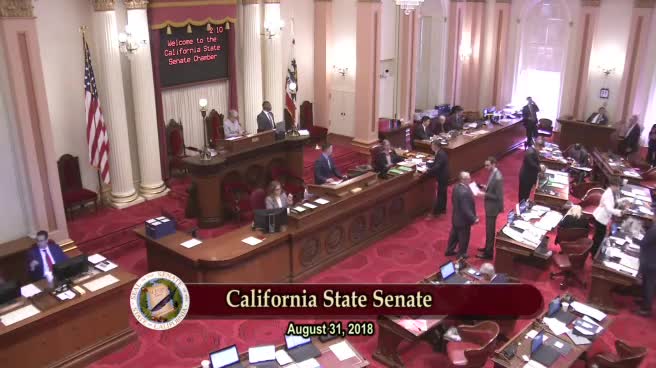 1MIN
Senate Floor
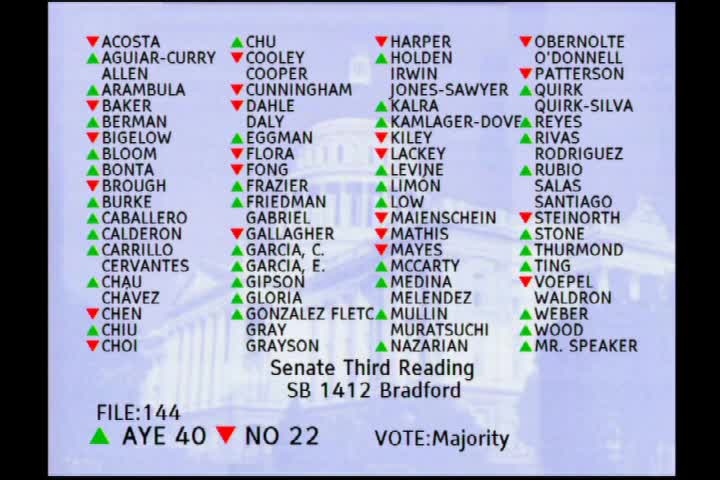 25MIN
Assembly Floor
 1H
Assembly Standing Committee on Appropriations
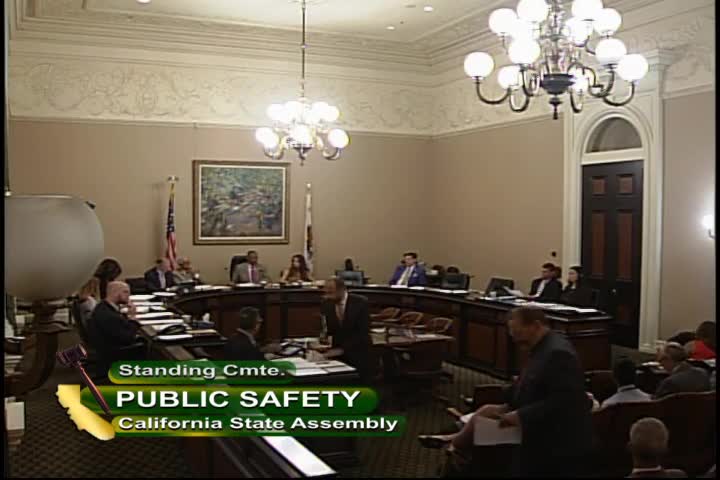 29MIN
Assembly Standing Committee on Public Safety
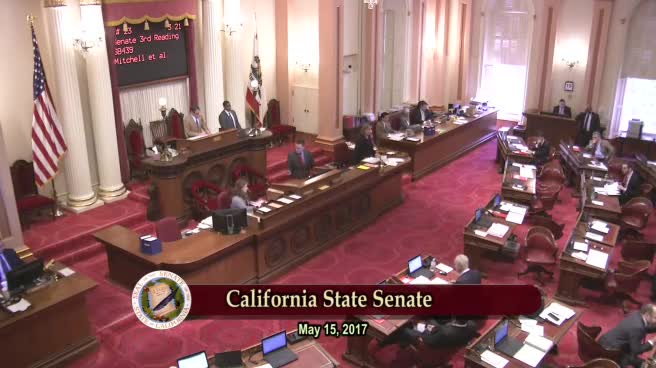 17MIN
Senate Floor
 35MIN
Senate Standing Committee on Public Safety


Bill Co-Author(s):