SB 463: State Capitol Park: California Lesbian, Gay, Bisexual, Transgender (LGBT) Civil Rights Monument.
- Session Year: 2017-2018
- House: Senate
- Latest Version Date: 2018-05-30
Existing law prescribes various duties for the Department of General Services in connection with the development and maintenance of the park around the State Capitol Building. Existing law also authorizes the construction of various memorial monuments in the Capitol Historic Region.
This bill would authorize the California Legislative LGBT Caucus Foundation, in consultation with the California Legislative LGBT Caucus and the department, to plan and undertake construction of a monument honoring Californias LGBT movements civil rights history within the State Capitol Park. The bill would require the California Legislative LGBT Caucus Foundation and the California Legislative LGBT Caucus, if they undertake responsibility to construct a monument pursuant to these provisions, to establish a schedule for the design, construction, and dedication of the monument. The bill would require the department to meet specified goals. The bill would also require the planning, construction, and maintenance of the monument to be funded exclusively through private donations.
Existing law requires the Superintendent of Public Instruction to review existing tests that assess the English language development of pupils whose primary language is a language other than English, and requires that the tests include, but not be limited to, an assessment of the achievement of these pupils in English reading, speaking, and written skills, in accordance with specified criteria. Existing law requires each school district that has one or more pupils who are English learners, and, to the extent required by federal law, a county office of education and a charter school, to assess the English language development of each of those pupils in order to determine their level of proficiency. Existing law requires the State Department of Education, with the approval of the State Board of Education, to establish procedures for conducting that assessment and for the reclassification of a pupil from English learner to English proficient. This bill would delete the provision requiring the department to establish procedures for the reclassification of a pupil from English learner to English proficient and would instead require, commencing with the 201819 school year, a local educational agency, as defined, that has one or more pupils who are English learners in any of grades 3 to 12, inclusive, and who do not have an individualized education program that specifies the pupil requires assistance due to language proficiency issues, to determine whether to reclassify such a pupil as English proficient according to specified factors. The bill would authorize, commencing with the 201819 school year, a local educational agency to determine whether to reclassify such a pupil in kindergarten, grade 1, or grade 2 according to similar specified factors. The bill would require, on or before January 1, 2019, the department, with the approval of the state board, to develop guidance for local educational agencies to implement those provisions. The bill would require, on or before September 1, 2018, the department, in consultation with the state board, to develop and submit recommendations to the Legislature regarding the appropriate reclassification criteria for English learners with individualized education programs that specify the pupil requires assistance due to language proficiency issues. The bill would require, on or before January 1, 2019, the state board, in consultation with the department, to determine minimum scores on specified assessments for reclassification of a pupil as English proficient, and would provide that an English learner is immediately eligible for reclassification if the pupil attains those minimum scores on the assessments, unless the local educational agency determines there is academic-related evidence the pupil will not be successful in a mainstream curriculum. The bill would require the department to develop a rubric to measure academic-related evidence. The bill would require a local educational agency that has a numerically significant pupil subgroup of English learners or that includes specific goals and actions for that pupil subgroup in its local control and accountability plan to complete specified actions for purposes of reclassifying pupils as English proficient. By imposing additional duties on local educational agencies, the bill would impose a state-mandated local program. The bill would also delete obsolete provisions relating to the reclassification of a pupil from English learner to English proficient.The California Constitution requires the state to reimburse local agencies and school districts for certain costs mandated by the state. Statutory provisions establish procedures for making that reimbursement.This bill would provide that, if the Commission on State Mandates determines that the bill contains costs mandated by the state, reimbursement for those costs shall be made pursuant to the statutory provisions noted above.Existing law requires the Superintendent of Public Instruction to review existing tests that assess the English language development of pupils whose primary language is a language other than English, and requires that the tests include, but not be limited to, an assessment of the achievement of these pupils in English reading, speaking, and written skills, in accordance with specified criteria. Existing law requires each school district that has one or more pupils who are English learners, and, to the extent required by federal law, a county office of education and a charter school, to assess the English language development of each of those pupils in order to determine their level of proficiency. Existing law requires the State Department of Education, with the approval of the State Board of Education, to establish procedures for conducting that assessment and for the reclassification of a pupil from English learner to English proficient.
This bill would delete the provision requiring the department to establish procedures for the reclassification of a pupil from English learner to English proficient and would instead require, commencing with the 201819 school year, a local educational agency, as defined, that has one or more pupils who are English learners in any of grades 3 to 12, inclusive, and who do not have an individualized education program or a pupil disability accommodation plan adopted pursuant to specified federal law, that specifies the pupil requires assistance due to language proficiency issues, to determine whether to reclassify such a pupil as English proficient according to specified factors. The bill would authorize, commencing with the 201819 school year, a local educational agency to determine whether to reclassify such a pupil in kindergarten, grade 1, or grade 2 according to similar specified factors. The bill would require, on or before March 1, 2018, January 1, 2019, the department, with the approval of the state board, to develop guidance for local educational agencies to implement those provisions. The bill would require, on or before September 1, 2018, the department, in consultation with the state board, to develop and submit recommendations to the Legislature regarding the appropriate reclassification criteria for English learner pupils learners with individualized education programs or pupil disability accommodation plans adopted pursuant to specified federal law. that specify the pupil requires assistance due to language proficiency issues. The bill would require, on or before July 1, 2018, January 1, 2019, the state board, in consultation with the department, to determine minimum scores on specified assessments for reclassification of a pupil as English proficient, and would provide that an English learner pupil is immediately eligible for reclassification if the pupil attains those minimum scores on the assessments, unless the local educational agency determines there is academic-related evidence the pupil will not be successful in a mainstream curriculum. The bill would require the department to develop a rubric to measure academic-related evidence. The bill would require a local educational agency that has a numerically significant pupil subgroup of English learners or that includes specific goals and actions for that pupil subgroup in its local control and accountability plan to complete specified actions for purposes of reclassifying pupils as English proficient. By imposing additional duties on local educational agencies, the bill would impose a state-mandated local program. The bill would also delete obsolete provisions relating to the reclassification of a pupil from English learner to English proficient.
The California Constitution requires the state to reimburse local agencies and school districts for certain costs mandated by the state. Statutory provisions establish procedures for making that reimbursement.
This bill would provide that, if the Commission on State Mandates determines that the bill contains costs mandated by the state, reimbursement for those costs shall be made pursuant to the statutory provisions noted above.
Existing law requires the Superintendent of Public Instruction to review existing tests that assess the English language development of pupils whose primary language is a language other than English, and requires that the tests include, but not be limited to, an assessment of the achievement of these pupils in English reading, speaking, and written skills, in accordance with specified criteria. Existing law requires each school district that has one or more pupils who are English learners, and, to the extent required by federal law, a county office of education and a charter school, to assess the English language development of each of those pupils in order to determine their level of proficiency. Existing law requires the State Department of Education, with the approval of the State Board of Education, to establish procedures for conducting that assessment and for the reclassification of a pupil from English learner to English proficient.
This bill would delete the provision requiring the department to establish procedures for the reclassification of a pupil from English learner to English proficient and would instead require require, commencing with the 201819 school year, a local educational agency, as defined, that has one or more pupils who are English learners in any of grades 3 to 12, inclusive, and who do not have an individualized education program or a pupil disability accommodation plan adopted pursuant to specified federal law, to determine whether to reclassify such a pupil as English proficient according to specified factors. The bill would authorize, commencing with the 201819 school year, a local educational agency to determine whether to reclassify such a pupil in kindergarten, grade 1, or grade 2 according to similar specified factors. The bill would require require, on or before March 1, 2018, the department, with the approval of the state board, to develop guidance for local educational agencies to implement that requirement. those provisions. The bill would require, on or before September 1, 2018, the department, in consultation with the state board, to develop and submit recommendations to the Legislature regarding the appropriate reclassification criteria for English learner pupils with individualized education programs or pupil disability accommodation plans adopted pursuant to specified federal law. The bill would require require, on or before July 1, 2018, the state board, in consultation with the department, to determine minimum scores on specified assessments for reclassification of a pupil as English proficient proficient, and would provide that an English learner pupil is immediately eligible for reclassification if the pupil attains those minimum scores on the assessments, unless the local educational agency determines there is academic-related evidence the pupil will not be successful in a mainstream curriculum. The bill would require a local educational agency that has a numerically significant pupil subgroup of English learners or that includes specific goals and actions for that pupil subgroup in its local control and accountability plan to complete specified actions for purposes of reclassifying pupils as English proficient. By imposing additional duties on local educational agencies, the bill would impose a state-mandated local program. The bill would also delete obsolete provisions relating to the reclassification of a pupil from English learner to English proficient.
The California Constitution requires the state to reimburse local agencies and school districts for certain costs mandated by the state. Statutory provisions establish procedures for making that reimbursement.
This bill would provide that, if the Commission on State Mandates determines that the bill contains costs mandated by the state, reimbursement for those costs shall be made pursuant to the statutory provisions noted above.
Existing law requires the Superintendent of Public Instruction to review existing tests that assess the English language development of pupils whose primary language is a language other than English, and requires that the tests include, but not be limited to, an assessment of the achievement of these pupils in English reading, speaking, and written skills, in accordance with specified criteria. Existing law requires each school district that has one or more pupils who are English learners, and, to the extent required by federal law, a county office of education and a charter school, to assess the English language development of each of those pupils in order to determine their level of proficiency. Existing law requires the State Department of Education, with the approval of the State Board of Education, to establish procedures for conducting that assessment and for the reclassification of a pupil from English learner to English proficient.
This bill would delete the provision requiring the department to establish procedures for the reclassification of a pupil from English learner to English proficient and would instead require a local educational agency, as defined, that has one or more pupils who are English learners to determine whether to reclassify a pupil as English proficient according to specified factors. The bill would require the department, with the approval of the state board, to develop guidance for local educational agencies to implement that requirement. The bill would require the state board, in consultation with the department, to determine minimum scores on specified assessments for reclassification of a pupil as English proficient and would provide that an English learner pupil is immediately eligible for reclassification if the pupil attains those minimum scores on the assessments, unless the local educational agency determines there is academic-related evidence the pupil will not be successful in a mainstream curriculum. The bill would require a local educational agency that has a numerically significant pupil subgroup of English learners or that includes specific goals and actions for that pupil subgroup in its local control and accountability plan to complete specified actions for purposes of reclassifying pupils as English proficient. By imposing additional duties on local educational agencies, the bill would impose a state-mandated local program. The bill would also delete obsolete provisions relating to the reclassification of a pupil from English learner to English proficient.
The California Constitution requires the state to reimburse local agencies and school districts for certain costs mandated by the state. Statutory provisions establish procedures for making that reimbursement.
This bill would provide that, if the Commission on State Mandates determines that the bill contains costs mandated by the state, reimbursement for those costs shall be made pursuant to the statutory provisions noted above.
The Legislature finds and declares all of the following:
(a)Openly lesbian, gay, bisexual and transgender (LGBT) leaders have made tremendous contributions to the State of California and to the nation as trailblazers in every field of endeavor, including, business, medicine, law, humanities, science, literature, politics, education, music, philanthropy, sports, arts, and culture, that enrich the lives of all Californians.
(b)The achievements of LGBT Californians stand in contrast to our states long history of discrimination and exclusion. Throughout the first half of the 20th century, California law led to the forcible sterilization of more people for perversion than any other state. Consensual adult same-sex activity was a crime until 1975, and gay civil rights leader Bayard Rustin was jailed in this state during the 1950s. The passage of Proposition 8 in 2008 barred LGBT couples from legal marriage.
(c)In spite of this history, Californians founded the first significant gay and lesbian civil rights organizations in the United States in the 1950s. LGBT Californians united across racial lines during the Civil Rights Movement to secure the rights of Californias increasingly diverse population. As immigration reshaped California in the 1960s, LGBT people linked arms with those fleeing oppression around the world, paving the way for the global fight against HIV and AIDS in the 1980s.
(d)LGBT Californians made history as candidates for public office, and Jose Julio Sarrias run for the San Francisco Board of Supervisors in 1961 paved the way for the election of Harvey Milk to the board in 1977 as the nations first openly gay man elected outright to office. The California Legislative LGBT Caucus is the nations largest and most diverse body of openly gay and lesbian legislators, and LGBT Californians have served as leaders in both the state Assembly and Senate.
(e)The California Legislature has long championed inclusion for LGBT people. In 1977 the Legislature introduced one of the nations first marriage equality laws, and became the first state legislature in America to approve marriage equality with the passage of AB 849, a year after San Francisco allowed the first same-sex marriages in California. Del Martin and Phyllis Lyon were the first couple to be married, nearly 50 years after they helped form the nations first lesbian rights organization. The Legislature has passed landmark civil rights laws that protect the rights of all students, employees, and families regardless of their sexual orientation, gender identity, or gender expression.
(f)The California State Capitol Park LGBT Civil Rights Memorial Monument will build on previous monuments in the State of California that commemorate those who have contributed to our states rich and vibrant history. This monument will be a constant reminder of the values of safety, happiness, and privacy enshrined in our Constitution that extend to all Californians.
SEC. 2.Section 14634 is added to the Government Code, to read:14634.(a)The California Legislative LGBT Caucus Foundation may, in consultation with the California Legislative LGBT Caucus and the department, plan a monument in the State Capitol Park honoring Californias lesbian, gay, bisexual, and transgender movements civil rights history.
(b)The department, in consultation with the California Legislative LGBT Caucus Foundation and the California Legislative LGBT Caucus, shall accomplish the following goals:
(1)Review the preliminary design plans to identify potential maintenance concerns.
(2)Ensure compliance with the Americans with Disabilities Act of 1990 (42 U.S.C. Sec. 12101 et. seq.) and address other safety concerns.
(3)Review and approve documents prepared pursuant to the California Environmental Quality Act (Division 13 (commencing with Section 21000) of the Public Resources Code) for work at the designated historic property.
(4)Review final construction documents to ensure that all requirements are met.
(5)Prepare the right-of-entry permit outlining and describing the following: (A) final areas of work, (B) final construction documents, (C) constructions plans, (D) contractor hired to perform the work, (E) insurance, (F) bonding, (G) provisions for damage to state property, and (H) inspection requirements.
(6)Prepare a maintenance agreement outlining the California Legislative LGBT Caucus Foundation and the California Legislative LGBT Caucus responsibility for the long-term maintenance of the monument due to aging, vandalism, or relocation.
(7)Inspect the construction performed by the contractor selected by the California Legislative LGBT Caucus Foundation and the California Legislative LGBT Caucus.
(c)If the California Legislative LGBT Caucus Foundation and the California Legislative LGBT Caucus undertake responsibility to construct a monument under this section, they shall, in consultation with the department, establish a schedule for the design, construction, and dedication of the monument, implement procedures to solicit designs for the monument, devise a selection process for the choice of the design, and establish a program for the dedication of the monument.
(d)The department and the California Legislative LGBT Caucus Foundation and the California Legislative LGBT Caucus shall approve the design and any other aspect of the monument.
(e)If the California Legislative LGBT Caucus Foundation and the California Legislative LGBT Caucus undertake responsibility to construct a monument under this section, they shall not begin construction of the monument until the Joint Committee on Rules has approved and adopted the plan for the monument, and only if the Joint Committee on Rules and the Department of Finance have determined that sufficient private funding is available to construct and maintain the monument.
(f)The planning, construction, and maintenance of the monument shall be funded exclusively through private donations to the California Legislative LGBT Caucus Foundation and the California Legislative LGBT Caucus.
(g)If the California Legislative LGBT Caucus Foundation and the California Legislative LGBT Caucus undertake responsibility to construct a monument under this section, they shall sign a maintenance agreement with the state to maintain the monument with private donations.
SECTION 1.Section 313 of the Education Code, as amended by Section 2 of Chapter 478 of the Statutes of 2013, is amended to read:313.(a)Each school district that has one or more pupils who are English learners, and, to the extent required by federal law, each county office of education and each charter school, shall assess the English language development of each pupil in order to determine the level of proficiency for purposes of this chapter.(b)The department, with the approval of the state board, shall establish procedures for conducting the assessment required pursuant to subdivision (a).(c)Commencing with the 200001 school year until subdivision (d) is implemented, the assessment shall be conducted upon initial enrollment, and annually, thereafter, during a period of time determined by the Superintendent and the state board. The annual assessments shall continue until the pupil is redesignated as English proficient. The assessment shall primarily utilize the English language development assessment identified or developed by the Superintendent pursuant to Chapter 7 (commencing with Section 60810) of Part 33 of Division 4 of Title 2.(d)(1)This subdivision shall not be implemented unless and until the department receives written documentation from the United States Department of Education that federal law permits the implementation of the changes set forth in this subdivision or until the 201314 school year, whichever occurs later.(2)The assessment shall be conducted annually during a period that commences on the day upon which 55 percent of the instructional year is completed through July 1 of that calendar year. Annual assessments shall continue until the pupil is redesignated as English proficient. The annual assessment shall primarily utilize the English language development assessment identified or developed by the Superintendent pursuant to Chapter 7 (commencing with Section 60810) of Part 33 of Division 4 of Title 2.(3)The assessment shall be conducted upon the initial enrollment of a pupil in order to provide information to be used to determine if the pupil is an English learner or is English proficient.(A)If the initial enrollment of a pupil occurs on a date outside of the testing period identified pursuant to paragraph (2), the prior years annual assessment for the grade in which the pupil is enrolling shall be used for this purpose.(B)If the initial enrollment of a pupil occurs on a date within the testing period identified pursuant to paragraph (2), the initial assessment of the pupil shall be conducted as part of the annual assessment conducted pursuant to paragraph (2).(4)Notwithstanding paragraph (2), a school district shall assess the English language development of a pupil pursuant to this section no more than one time per school year.(e)The assessments conducted pursuant to subdivision (d) shall be conducted in a manner consistent with federal statutes and regulations.(f)This section does not preclude a school district or county office of education from testing English learners more than once in a school year if the school district or county office of education chooses to do so.(g)This section shall remain in effect only until the Superintendent reports to the appropriate policy committees of the Legislature pursuant to paragraph (2) of subdivision (h) of Section 60810 as added by the chapter that added this subdivision during the 201314 Regular Session, and as of January 1 of the following year, this section is repealed.SEC. 2.Section 313 of the Education Code, as added by Section 3 of Chapter 478 of the Statutes of 2013, is amended to read:313.(a)Each school district that has one or more pupils who are English learners, and, to the extent required by federal law, each county office of education and each charter school, shall assess the English language development of each pupil in order to determine the level of proficiency for purposes of this chapter.(b)The department, with the approval of the state board, shall establish procedures for conducting the assessment required pursuant to subdivision (a).(c)Commencing with the 200001 school year until subdivision (d) is implemented, the assessment shall be conducted upon initial enrollment, and annually, thereafter, during a period of time determined by the Superintendent and the state board. The annual assessments shall continue until the pupil is redesignated as English proficient. The assessment shall primarily utilize the English language development assessment identified or developed by the Superintendent pursuant to Chapter 7 (commencing with Section 60810) of Part 33 of Division 4 of Title 2.(d)(1)This subdivision shall not be implemented unless and until the department receives written documentation from the United States Department of Education that federal law permits the implementation of the changes set forth in this subdivision or until the 201314 school year, whichever occurs later.(2)The summative assessment shall be conducted annually during a four-month period after January 1 determined by the Superintendent with the approval of the state board. Annual assessments shall continue until the pupil is redesignated as English proficient. The annual assessment shall primarily utilize the English language development assessment identified or developed by the Superintendent pursuant to Chapter 7 (commencing with Section 60810) of Part 33 of Division 4 of Title 2.(3)The assessment for initial identification shall be conducted upon the initial enrollment of a pupil in order to provide information to be used to determine if the pupil is an English learner or is English proficient.(A)If the initial enrollment of a pupil occurs on a date outside of the testing period identified pursuant to paragraph (2), the prior years annual assessment for the grade in which the pupil is enrolling shall be used for this purpose.(B)If the initial enrollment of a pupil occurs on a date within the testing period identified pursuant to paragraph (2), the initial assessment of the pupil shall be conducted as part of the annual assessment conducted pursuant to paragraph (2).(4)Notwithstanding paragraph (2), a school district shall assess the English language development of a pupil pursuant to this section no more than one time per school year for each assessment purpose pursuant to Chapter 7 (commencing with Section 60810) of Part 33 of Division 4 of Title 2.(e)The assessments conducted pursuant to subdivision (d) shall be conducted in a manner consistent with federal statutes and regulations.(f)This section does not preclude a school district or county office of education from testing English learners more than once in a school year if the school district or county office of education chooses to do so.(g)This section shall become operative when the Superintendent reports to the appropriate policy committees of the Legislature pursuant to paragraph (2) of subdivision (h) of Section 60810 as added by the chapter that added this subdivision during the 201314 Regular Session.SEC. 3.Section 313.5 of the Education Code is repealed.SEC. 4.Section 313.5 is added to the Education Code, to read:313.5.(a)(1)(A)Commencing with the 201819 school year, a local educational agency that has one or more pupils who are English learners in any of grades 3 to 12, inclusive, and who do not have an individualized education program that specifies the pupil requires assistance due to language proficiency issues shall determine whether to reclassify such a pupil as English proficient according to the following:(i)Assessment of language proficiency using the English language development assessment that is identified or developed pursuant to Section 60810.(ii)Teacher evaluation of the pupils English language mastery.(iii)The opinion of, and consultation with, parents and guardians.(iv)Comparison of the performance of the pupil in English language arts against an empirically established range of performance in basic skills based upon the performance of English proficient pupils of the same age, that demonstrates whether the pupil is sufficiently proficient in English to participate effectively in a curriculum designed for pupils of the same age whose native language is English.(B)A local educational agency shall use the results of the English language arts assessment established by Section 60640 for purposes of conducting a comparison of basic skills pursuant to clause (iv) of subparagraph (A).(2)Commencing with the 201819 school year, for an English learner in kindergarten, grade 1, or grade 2 who does not have an individualized education program that specifies the pupil requires assistance due to language proficiency issues, a local educational agency may determine whether to reclassify the pupil according to the following:(A)Assessment of language proficiency using the English language development assessment that is identified or developed pursuant to Section 60810.(B)Teacher evaluation of the pupils English language mastery.(C)The opinion of, and consultation with, parents and guardians.(D)Academic performance of the pupil in English language arts as measured by grades or locally developed assessments.(b)(1)On or before January 1, 2019, the department, with the approval of the state board, shall develop guidance for local educational agencies to implement subdivision (a). This guidance shall include, but is not limited to, factors that may be used to determine a pupils English language mastery for purposes of clause (ii) of subparagraph (A) of paragraph (1) of, and subparagraph (B) of paragraph (2) of, subdivision (a) and detailed information on the implementation of clause (iii) of subparagraph (A) of paragraph (1) of, and subparagraph (C) of paragraph (2) of, subdivision (a). The guidance may include the development of instructional tools to help local educational agencies be consistent in implementing reclassification criteria.(2)For purposes of developing guidance pursuant to paragraph (1), the department shall consult with parents of English learners, experts with demonstrated experience in developing and administering assessments for English learners, classroom or resource teachers, or both, bilingual education teachers, school and school district administrators with expertise in curriculum, instruction, assessment, and accountability, and researchers possessing expertise in the education of English learners.(c)On or before January 1, 2019, the state board, in consultation with the department, shall determine minimum scores for reclassification as English proficient on the English language proficiency assessment identified or established pursuant to Section 60810 and the English language arts assessment established by Section 60640. The state board shall consider the academic performance of non-English learners on the assessments in determining minimum scores.(d)(1)An English learner shall immediately be eligible for reclassification as a pupil that is English proficient if the pupil attains the minimum scores established by the state board pursuant to subdivision (c).(2)Notwithstanding paragraph (1), a local educational agency may determine an English learner is not eligible for reclassification if there is academic-related evidence the pupil will not be successful in a mainstream curriculum. The department shall develop a rubric to measure academic-related evidence.(e)(1)On or before September 1, 2018, the department, in consultation with the state board, shall develop and submit recommendations to the Legislature regarding the appropriate reclassification criteria for English learners with individualized education programs that specify a pupil requires assistance due to language proficiency issues. The recommendations shall address issues related to the following:(A)Proficiency in English.(B)Teacher evaluation of the pupils English language mastery.(C)The opinion of, and consultation with, parents and guardians.(D)Academic performance of the pupil in English language arts, including, at a minimum, how to use results of the English language arts assessment established by Section 60640.(2)For purposes of developing recommendations pursuant to paragraph (1), the department shall consult with experts in language processing, language development, English as a second language development, and special education.(3)(A)The requirement for submitting a report imposed under paragraph (1) is inoperative on September 1, 2022, pursuant to Section 10231.5 of the Government Code. (B)A report to be submitted pursuant to paragraph (1) shall be submitted in compliance with Section 9795 of the Government Code.(f)A local educational agency that has a numerically significant pupil subgroup, as defined in Section 52052, of English learners or that includes specific goals and actions for that pupil subgroup in meeting the state priorities described in paragraphs (2) and (4) of subdivision (d) of Sections 52060 and 52066 in its local control and accountability plan, as required pursuant to Sections 52060 and 52066, shall do all of the following for purposes of reclassifying pupils as English proficient:(1)(A)Identify a group of teachers and administrators with expertise in curriculum, instruction, assessment, and accountability of English learners who shall meet regularly to review the language proficiency and academic performance of English learners, as it relates to the English learner academic indicator adopted by the state board pursuant to subdivision (c), under their jurisdiction for the purposes of ensuring English learners are being reclassified.(B)A local educational agency with an average daily attendance of fewer than 1,000 pupils may form a partnership with another local educational agency to comply with subparagraph (A).(2)Develop a process and procedures to monitor the academic performance of pupils for a minimum of four years after their reclassification as English proficient.(3)Review current processes and procedures for the placement of English learners in a special education program. A local educational agency shall use the manual developed pursuant to Section 56305 in completing this review.(g)It is the intent of the Legislature that school district and schoolsite staff, including, but not limited to, classroom teachers and administrators, receive professional development on English learner reclassification criteria prior to implementation of subdivision (a).(h)For purposes of this section, local educational agency means a school district, county office of education, or charter school.SEC. 5.If the Commission on State Mandates determines that this act contains costs mandated by the state, reimbursement to local agencies and school districts for those costs shall be made pursuant to Part 7 (commencing with Section 17500) of Division 4 of Title 2 of the Government Code.(a)Each school district that has one or more pupils who are English learners, and, to the extent required by federal law, each county office of education and each charter school, shall assess the English language development of each pupil in order to determine the level of proficiency for purposes of this chapter.
(b)The department, with the approval of the state board, shall establish procedures for conducting the assessment required pursuant to subdivision (a).
(c)Commencing with the 200001 school year until subdivision (d) is implemented, the assessment shall be conducted upon initial enrollment, and annually, thereafter, during a period of time determined by the Superintendent and the state board. The annual assessments shall continue until the pupil is redesignated as English proficient. The assessment shall primarily utilize the English language development assessment identified or developed by the Superintendent pursuant to Chapter 7 (commencing with Section 60810) of Part 33 of Division 4 of Title 2.
(d)(1)This subdivision shall not be implemented unless and until the department receives written documentation from the United States Department of Education that federal law permits the implementation of the changes set forth in this subdivision or until the 201314 school year, whichever occurs later.
(2)The assessment shall be conducted annually during a period that commences on the day upon which 55 percent of the instructional year is completed through July 1 of that calendar year. Annual assessments shall continue until the pupil is redesignated as English proficient. The annual assessment shall primarily utilize the English language development assessment identified or developed by the Superintendent pursuant to Chapter 7 (commencing with Section 60810) of Part 33 of Division 4 of Title 2.
(3)The assessment shall be conducted upon the initial enrollment of a pupil in order to provide information to be used to determine if the pupil is an English learner or is English proficient.
(A)If the initial enrollment of a pupil occurs on a date outside of the testing period identified pursuant to paragraph (2), the prior years annual assessment for the grade in which the pupil is enrolling shall be used for this purpose.
(B)If the initial enrollment of a pupil occurs on a date within the testing period identified pursuant to paragraph (2), the initial assessment of the pupil shall be conducted as part of the annual assessment conducted pursuant to paragraph (2).
(4)Notwithstanding paragraph (2), a school district shall assess the English language development of a pupil pursuant to this section no more than one time per school year.
(e)The assessments conducted pursuant to subdivision (d) shall be conducted in a manner consistent with federal statutes and regulations.
(f)This section does not preclude a school district or county office of education from testing English learners more than once in a school year if the school district or county office of education chooses to do so.
(g)This section shall remain in effect only until the Superintendent reports to the appropriate policy committees of the Legislature pursuant to paragraph (2) of subdivision (h) of Section 60810 as added by the chapter that added this subdivision during the 201314 Regular Session, and as of January 1 of the following year, this section is repealed.
SEC. 2.Section 313 of the Education Code, as added by Section 3 of Chapter 478 of the Statutes of 2013, is amended to read:313.(a)Each school district that has one or more pupils who are English learners, and, to the extent required by federal law, each county office of education and each charter school, shall assess the English language development of each pupil in order to determine the level of proficiency for purposes of this chapter.
(b)The department, with the approval of the state board, shall establish procedures for conducting the assessment required pursuant to subdivision (a).
(c)Commencing with the 200001 school year until subdivision (d) is implemented, the assessment shall be conducted upon initial enrollment, and annually, thereafter, during a period of time determined by the Superintendent and the state board. The annual assessments shall continue until the pupil is redesignated as English proficient. The assessment shall primarily utilize the English language development assessment identified or developed by the Superintendent pursuant to Chapter 7 (commencing with Section 60810) of Part 33 of Division 4 of Title 2.
(d)(1)This subdivision shall not be implemented unless and until the department receives written documentation from the United States Department of Education that federal law permits the implementation of the changes set forth in this subdivision or until the 201314 school year, whichever occurs later.
(2)The summative assessment shall be conducted annually during a four-month period after January 1 determined by the Superintendent with the approval of the state board. Annual assessments shall continue until the pupil is redesignated as English proficient. The annual assessment shall primarily utilize the English language development assessment identified or developed by the Superintendent pursuant to Chapter 7 (commencing with Section 60810) of Part 33 of Division 4 of Title 2.
(3)The assessment for initial identification shall be conducted upon the initial enrollment of a pupil in order to provide information to be used to determine if the pupil is an English learner or is English proficient.
(A)If the initial enrollment of a pupil occurs on a date outside of the testing period identified pursuant to paragraph (2), the prior years annual assessment for the grade in which the pupil is enrolling shall be used for this purpose.
(B)If the initial enrollment of a pupil occurs on a date within the testing period identified pursuant to paragraph (2), the initial assessment of the pupil shall be conducted as part of the annual assessment conducted pursuant to paragraph (2).
(4)Notwithstanding paragraph (2), a school district shall assess the English language development of a pupil pursuant to this section no more than one time per school year for each assessment purpose pursuant to Chapter 7 (commencing with Section 60810) of Part 33 of Division 4 of Title 2.
(e)The assessments conducted pursuant to subdivision (d) shall be conducted in a manner consistent with federal statutes and regulations.
(f)This section does not preclude a school district or county office of education from testing English learners more than once in a school year if the school district or county office of education chooses to do so.
(g)This section shall become operative when the Superintendent reports to the appropriate policy committees of the Legislature pursuant to paragraph (2) of subdivision (h) of Section 60810 as added by the chapter that added this subdivision during the 201314 Regular Session.
SEC. 3.Section 313.5 of the Education Code is repealed.SEC. 4.Section 313.5 is added to the Education Code, to read:313.5.(a)(1)(A)Commencing with the 201819 school year, a local educational agency that has one or more pupils who are English learners in any of grades 3 to 12, inclusive, and who do not have an individualized education program or a plan adopted pursuant to Section 504 of the federal Rehabilitation Act of 1973 (29 U.S.C. Sec. 794(a)) that specifies the pupil requires assistance due to language proficiency issues shall determine whether to reclassify such a pupil as English proficient according to the following:
(i)Assessment of language proficiency using the English language development assessment that is identified or developed pursuant to Section 60810.
(ii)Teacher evaluation of the pupils English language arts curriculum mastery.
(iii)The opinion of, and consultation with, parents and guardians.
(iv)Comparison of the performance of the pupil in English language arts against an empirically established range of performance in basic skills based upon the performance of English proficient pupils of the same age, that demonstrates whether the pupil is sufficiently proficient in English to participate effectively in a curriculum designed for pupils of the same age whose native language is English.
(B)A local educational agency shall use the results of assessments the English language arts assessment established by Section 60640 for purposes of conducting a comparison of basic skills pursuant to clause (iv) of subparagraph (A).
(2)Commencing with the 201819 school year, for an English learner pupil in kindergarten, grade 1, or grade 2 who does not have an individualized education program or a plan adopted pursuant to Section 504 of the federal Rehabilitation Act of 1973 (29 U.S.C. Sec. 794(a)), that specifies the pupil requires assistance due to language proficiency issues, a local educational agency may determine whether to reclassify the pupil according to the following:
(A)Assessment of language proficiency using the English language development assessment that is identified or developed pursuant to Section 60810.
(B)Teacher evaluation of the pupils English language arts curriculum mastery.
(C)The opinion of, and consultation with, parents and guardians.
(D)Academic performance of the pupil in English language arts as measured by grades or locally developed assessments.
(b)(1)On or before March 1, 2018, January 1, 2019, the department, with the approval of the state board, shall develop guidance for local educational agencies to implement subdivision (a). This guidance shall include, but is not limited to, a definition of factors that may be used to determine a pupils curriculum mastery in English language arts mastery for purposes of clause (ii) of subparagraph (A) of paragraph (1) of, and subparagraph (B) of paragraph (2) of, subdivision (a) and detailed information on the implementation of clause (iii) of subparagraph (A) of paragraph (1) of, and subparagraph (C) of paragraph (2) of, subdivision (a). The guidance may include the development of instructional tools to help local educational agencies be consistent in implementing reclassification criteria.
(2)For purposes of developing guidance pursuant to paragraph (1), the department shall consult with parents of English learners, experts with demonstrated experience in developing and administering assessments for English learners, classroom or resource teachers, or both, bilingual education teachers, school and school district administrators with expertise in curriculum, instruction, assessment, and accountability, and researchers possessing expertise in the education of English learners.
(c)On or before July 1, 2018, January 1, 2019, the state board, in consultation with the department, shall determine minimum scores for reclassification as English proficient on the English language proficiency assessment identified or established pursuant to Section 60810 and assessments the English language arts assessment established by Section 60640. The state board shall consider the academic performance of non-English learners on the assessments in determining minimum scores.
(d)(1)An English learner pupil shall immediately be eligible for reclassification as a pupil that is English proficient if the pupil attains the minimum scores established by the state board pursuant to subdivision (c).
(2)Notwithstanding paragraph (1), a local educational agency may determine an English learner pupil is not eligible for reclassification if there is academic-related evidence the pupil will not be successful in a mainstream curriculum, as determined by the process established pursuant to paragraph (1) of subdivision (f). curriculum. The department shall develop a rubric to measure academic-related evidence.
(e)(1)On or before September 1, 2018, the department, in consultation with the state board, shall develop and submit recommendations to the Legislature regarding the appropriate reclassification criteria for English learner pupils learners with individualized education programs or plans adopted pursuant to Section 504 of the federal Rehabilitation Act of 1973 (29 U.S.C. Sec. 794(a)). that specify a pupil requires assistance due to language proficiency issues. The recommendations shall address issues related to the following:
(A)Proficiency in English.
(B)Teacher evaluation of the pupils English language arts curriculum mastery.
(C)The opinion of, and consultation with, parents and guardians.
(D)Academic performance of the pupil in English language arts, including, at a minimum, how to use results of the California Assessment of Student Performance and Progress. English language arts assessment established by Section 60640.
(2)For purposes of developing recommendations pursuant to paragraph (1), the department shall consult with experts in language processing, language development, English as a second language development, and special education.
(3)(A)The requirement for submitting a report imposed under paragraph (1) is inoperative on September 1, 2022, pursuant to Section 10231.5 of the Government Code.
(B)A report to be submitted pursuant to paragraph (1) shall be submitted in compliance with Section 9795 of the Government Code.
(f)A local educational agency that has a numerically significant pupil subgroup, as defined in Section 52052, of English learners or that includes specific goals and actions for that pupil subgroup in meeting the state priorities described in paragraphs (2) and (4) of subdivision (d) of Sections 52060 and 52066 in its local control and accountability plan, as required pursuant to Sections 52060 and 52066, shall do all of the following for purposes of reclassifying pupils as English proficient:
(1)(A)Identify a group of teachers and administrators with expertise in curriculum, instruction, assessment, and accountability of English learners who shall meet regularly to review the language proficiency and academic performance of English learners, as it relates to the English learner academic indicator adopted by the state board pursuant to subdivision (c), under their jurisdiction for the purposes of ensuring English learners are being reclassified.
(B)A local educational agency with an average daily attendance of fewer than 1,000 pupils may form a partnership with another local educational agency to comply with subparagraph (A).
(2)Develop a process and procedures to monitor the academic performance of pupils for a minimum of four years after their reclassification as English proficient.
(3)Review current processes and procedures for the placement of English learners in a special education program. A local educational agency shall use the manual developed pursuant to Section 56305 in completing this review.
(g)It is the intent of the Legislature that school district and schoolsite staff, including, but not limited to, classroom teachers and administrators, receive professional development on English learner reclassification criteria prior to implementation of subdivision (a).
(h)For purposes of this section, local educational agency means a school district, county office of education, or charter school.
SEC. 5.If the Commission on State Mandates determines that this act contains costs mandated by the state, reimbursement to local agencies and school districts for those costs shall be made pursuant to Part 7 (commencing with Section 17500) of Division 4 of Title 2 of the Government Code.
(a)Each school district that has one or more pupils who are English learners, and, to the extent required by federal law, each county office of education and each charter school, shall assess the English language development of each pupil in order to determine the level of proficiency for purposes of this chapter.
(b)The department, with the approval of the state board, shall establish procedures for conducting the assessment required pursuant to subdivision (a).
(c)Commencing with the 200001 school year until subdivision (d) is implemented, the assessment shall be conducted upon initial enrollment, and annually, thereafter, during a period of time determined by the Superintendent and the state board. The annual assessments shall continue until the pupil is redesignated as English proficient. The assessment shall primarily utilize the English language development test assessment identified or developed by the Superintendent pursuant to Chapter 7 (commencing with Section 60810) of Part 33 of Division 4 of Title 2.
(d)(1)This subdivision shall not be implemented unless and until the department receives written documentation from the United States Department of Education that federal law permits the implementation of the changes set forth in this subdivision or until the 201314 school year, whichever occurs later.
(2)The assessment shall be conducted annually during a period that commences on the day upon which 55 percent of the instructional year is completed through July 1 of that calendar year. Annual assessments shall continue until the pupil is redesignated as English proficient. The annual assessment shall primarily utilize the English language development test assessment identified or developed by the Superintendent pursuant to Chapter 7 (commencing with Section 60810) of Part 33 of Division 4 of Title 2.
(3)The assessment shall be conducted upon the initial enrollment of a pupil in order to provide information to be used to determine if the pupil is an English learner. learner or is English proficient.
(A)If the initial enrollment of a pupil occurs on a date outside of the testing period identified pursuant to paragraph (2), the prior years annual assessment for the grade in which the pupil is enrolling shall be used for this purpose.
(B)If the initial enrollment of a pupil occurs on a date within the testing period identified pursuant to paragraph (2), the initial assessment of the pupil shall be conducted as part of the annual assessment conducted pursuant to paragraph (2).
(4)Notwithstanding paragraph (2), a school district shall assess the English language development of a pupil pursuant to this section no more than one time per school year.
(e)The assessments conducted pursuant to subdivision (d) shall be conducted in a manner consistent with federal statutes and regulations.
(f)This section does not preclude a school district or county office of education from testing English learners more than once in a school year if the school district or county office of education chooses to do so.
(g)This section shall remain in effect only until the Superintendent reports to the appropriate policy committees of the Legislature pursuant to paragraph (2) of subdivision (h) of Section 60810 as added by the chapter that added this subdivision during the 201314 Regular Session, and as of January 1 of the following year, this section is repealed.
SEC. 2.Section 313 of the Education Code, as added by Section 3 of Chapter 478 of the Statutes of 2013, is amended to read:313.(a)Each school district that has one or more pupils who are English learners, and, to the extent required by federal law, each county office of education and each charter school, shall assess the English language development of each pupil in order to determine the level of proficiency for purposes of this chapter.
(b)The department, with the approval of the state board, shall establish procedures for conducting the assessment required pursuant to subdivision (a).
(c)Commencing with the 200001 school year until subdivision (d) is implemented, the assessment shall be conducted upon initial enrollment, and annually, thereafter, during a period of time determined by the Superintendent and the state board. The annual assessments shall continue until the pupil is redesignated as English proficient. The assessment shall primarily utilize the English language development test assessment identified or developed by the Superintendent pursuant to Chapter 7 (commencing with Section 60810) of Part 33 of Division 4 of Title 2.
(d)(1)This subdivision shall not be implemented unless and until the department receives written documentation from the United States Department of Education that federal law permits the implementation of the changes set forth in this subdivision or until the 201314 school year, whichever occurs later.
(2)The summative assessment shall be conducted annually during a four-month period after January 1 determined by the Superintendent with the approval of the state board. Annual assessments shall continue until the pupil is redesignated as English proficient. The annual assessment shall primarily utilize the English language development assessment identified or developed by the Superintendent pursuant to Chapter 7 (commencing with Section 60810) of Part 33 of Division 4 of Title 2.
(3)The assessment for initial identification shall be conducted upon the initial enrollment of a pupil in order to provide information to be used to determine if the pupil is an English learner. learner or is English proficient.
(A)If the initial enrollment of a pupil occurs on a date outside of the testing period identified pursuant to paragraph (2), the prior years annual assessment for the grade in which the pupil is enrolling shall be used for this purpose.
(B)If the initial enrollment of a pupil occurs on a date within the testing period identified pursuant to paragraph (2), the initial assessment of the pupil shall be conducted as part of the annual assessment conducted pursuant to paragraph (2).
(4)Notwithstanding paragraph (2), a school district shall assess the English language development of a pupil pursuant to this section no more than one time per school year for each assessment purpose pursuant to Chapter 7 (commencing with Section 60810) of Part 33 of Division 4 of Title 2.
(e)The assessments conducted pursuant to subdivision (d) shall be conducted in a manner consistent with federal statutes and regulations.
(f)This section does not preclude a school district or county office of education from testing English learners more than once in a school year if the school district or county office of education chooses to do so.
(g)This section shall become operative when the Superintendent reports to the appropriate policy committees of the Legislature pursuant to paragraph (2) of subdivision (h) of Section 60810 as added by the chapter that added this subdivision during the 201314 Regular Session.
SEC. 3.Section 313.5 of the Education Code is repealed.SEC. 4.Section 313.5 is added to the Education Code, to read:313.5.(a)(1)A (A)Commencing with the 201819 school year, a local educational agency that has one or more pupils who are English learners in any of grades 3 to 12, inclusive, and who do not have an individualized education program or a plan adopted pursuant to Section 504 of the federal Rehabilitation Act of 1973 (29 U.S.C. Sec. 794(a)) shall determine whether to reclassify such a pupil as English proficient according to the following:
(A)(i)Assessment of language proficiency using the English language development test or assessment that is identified or developed pursuant to Section 60810.
(B)(ii)Teacher evaluation of the pupils English language arts curriculum mastery.
(C)Parental(iii)The opinion of, and consultation. consultation with, parents and guardians.
(D)(iv)Comparison of the performance of the pupil in basic skills English language arts against an empirically established range of performance in basic skills based upon the performance of English proficient pupils of the same age, that demonstrates whether the pupil is sufficiently proficient in English to participate effectively in a curriculum designed for pupils of the same age whose native language is English.
(2)(B)A local educational agency shall, at a minimum, shall use the results of assessments established by Section 60640 for purposes of conducting a comparison of basic skills pursuant to clause (iv) of subparagraph (D) of paragraph (1). (A).
(2)Commencing with the 201819 school year, for an English learner pupil in kindergarten, grade 1, or grade 2 who does not have an individualized education program or a plan adopted pursuant to Section 504 of the federal Rehabilitation Act of 1973 (29 U.S.C. Sec. 794(a)), a local educational agency may determine whether to reclassify the pupil according to the following:
(A)Assessment of language proficiency using the English language development assessment that is identified or developed pursuant to Section 60810.
(B)Teacher evaluation of the pupils English language arts curriculum mastery.
(C)The opinion of, and consultation with, parents and guardians.
(D)Academic performance of the pupil in English language arts as measured by grades or locally developed assessments.
(b)(1)The On or before March 1, 2018, the department, with the approval of the state board, shall develop guidance for local educational agencies to implement subdivision (a). This guidance shall include, but is not be limited to, a definition of a pupils curriculum mastery in English language arts for purposes of subparagraph (B) of paragraph (1) of clause (ii) of subparagraph (A) of paragraph (1) of, and subparagraph (B) of paragraph (2) of, subdivision (a) and detailed information on the implementation of clause (iii) of subparagraph (A) of paragraph (1) of, and subparagraph (C) of paragraph (1) of (2) of, subdivision (a).
(2)For purposes of developing guidance pursuant to paragraph (1), the department shall consult with parents of English learners, experts with demonstrated experience in developing and administering assessments for English learners, classroom or resource teachers, or both, bilingual education teachers, school and school district administrators with expertise in curriculum, instruction, assessment, and accountability, and researchers possessing expertise in the education of English learners.
(c)The On or before July 1, 2018, the state board, in consultation with the department, shall determine minimum scores for reclassification as English proficient on the English language proficiency test or assessment identified or established pursuant to Section 60810 and assessments established by Section 60640.
(d)(1)An English learner pupil shall immediately be eligible for reclassification as a pupil that is English proficient if the pupil attains the minimum scores established by the state board pursuant to subdivision (c).
(2)Notwithstanding paragraph (1), a local educational agency may determine an English learner pupil is not eligible for reclassification if there is academic-related evidence the pupil will not be successful in a mainstream curriculum, as determined by the process established pursuant to paragraph (1) of subdivision (e). (f).
(e)(1)On or before September 1, 2018, the department, in consultation with the state board, shall develop and submit recommendations to the Legislature regarding the appropriate reclassification criteria for English learner pupils with individualized education programs or plans adopted pursuant to Section 504 of the federal Rehabilitation Act of 1973 (29 U.S.C. Sec. 794(a)). The recommendations shall address issues related to the following:
(A)Proficiency in English.
(B)Teacher evaluation of the pupils English language arts curriculum mastery.
(C)The opinion of, and consultation with, parents and guardians.
(D)Academic performance of the pupil in English language arts, including, at a minimum, how to use results of the California Assessment of Student Performance and Progress.
(2)For purposes of developing recommendations pursuant to paragraph (1), the department shall consult with experts in language processing, language development, English as a second language development, and special education.
(3)(A)The requirement for submitting a report imposed under paragraph (1) is inoperative on September 1, 2022, pursuant to Section 10231.5 of the Government Code.
(B)A report to be submitted pursuant to paragraph (1) shall be submitted in compliance with Section 9795 of the Government Code.
(e)(f)A local educational agency that has a numerically significant pupil subgroup, as defined in Section 52052, of English learners or that includes specific goals and actions for that pupil subgroup in meeting the state priorities described in paragraphs (2) and (4) of subdivision (d) of Sections 52060 and 52066 in its local control and accountability plan, as required pursuant to Sections 52060 and 52066, shall do all of the following for purposes of reclassifying pupils as English proficient:
(1)Establish (A)Identify a group of teachers and administrators with expertise in curriculum, instruction, assessment, and accountability of English learners who shall meet regularly to review the language proficiency and academic performance of English learners learners, as it relates to the English learner academic indicator adopted by the state board pursuant to subdivision (c), under their jurisdiction for the purposes of reclassification. ensuring English learners are being reclassified.
(B)A local educational agency with an average daily attendance of fewer than 1,000 pupils may form a partnership with another local educational agency to comply with subparagraph (A).
(2)Develop a process and procedures to monitor the academic performance of pupils for a minimum of four years after their reclassification as English proficient.
(3)Review current processes and procedures for the placement of English learners in a special education program. A local educational agency shall use the manual developed pursuant to Section 56305 in completing this review.
(g)It is the intent of the Legislature that school district and schoolsite staff, including, but not limited to, classroom teachers and administrators, receive professional development on English learner reclassification criteria prior to implementation of subdivision (a).
(f)(h)For purposes of the this section, local educational agency means a school district, county office of education, or charter school.
SEC. 5.If the Commission on State Mandates determines that this act contains costs mandated by the state, reimbursement to local agencies and school districts for those costs shall be made pursuant to Part 7 (commencing with Section 17500) of Division 4 of Title 2 of the Government Code.
(a)Each school district that has one or more pupils who are English learners, and, to the extent required by federal law, each county office of education and each charter school, shall assess the English language development of each pupil in order to determine the level of proficiency for purposes of this chapter.
(b)The department, with the approval of the state board, shall establish procedures for conducting the assessment required pursuant to subdivision (a) and for the reclassification of a pupil from English learner to English proficient. (a).
(c)Commencing with the 200001 school year until subdivision (d) is implemented, the assessment shall be conducted upon initial enrollment, and annually, thereafter, during a period of time determined by the Superintendent and the state board. The annual assessments shall continue until the pupil is redesignated as English proficient. The assessment shall primarily utilize the English language development test identified or developed by the Superintendent pursuant to Chapter 7 (commencing with Section 60810) of Part 33 of Division 4 of Title 2.
(d)(1)This subdivision shall not be implemented unless and until the department receives written documentation from the United States Department of Education that federal law permits the implementation of the changes set forth in this subdivision or until the 201314 school year, whichever occurs later.
(2)The assessment shall be conducted annually during a period that commences on the day upon which 55 percent of the instructional year is completed through July 1 of that calendar year. Annual assessments shall continue until the pupil is redesignated as English proficient. The annual assessment shall primarily utilize the English language development test identified or developed by the Superintendent pursuant to Chapter 7 (commencing with Section 60810) of Part 33 of Division 4 of Title 2.
(3)The assessment shall be conducted upon the initial enrollment of a pupil in order to provide information to be used to determine if the pupil is an English learner.
(A)If the initial enrollment of a pupil occurs on a date outside of the testing period identified pursuant to paragraph (2), the prior years annual assessment for the grade in which the pupil is enrolling shall be used for this purpose.
(B)If the initial enrollment of a pupil occurs on a date within the testing period identified pursuant to paragraph (2), the initial assessment of the pupil shall be conducted as part of the annual assessment conducted pursuant to paragraph (2).
(4)Notwithstanding paragraph (2), a school district shall assess the English language development of a pupil pursuant to this section no more than one time per school year.
(e)The assessments conducted pursuant to subdivision (d) shall be conducted in a manner consistent with federal statutes and regulations.
(f)The reclassification procedures developed by the department shall utilize multiple criteria in determining whether to reclassify a pupil as proficient in English, including, but not limited to, all of the following:(1)Assessment of language proficiency using an objective assessment instrument, including, but not limited to, the English language development test that is developed or acquired pursuant to Section 60810.(2)Teacher evaluation, including, but not limited to, a review of the pupils curriculum mastery.(3)Parental opinion and consultation.(4)Comparison of the performance of the pupil in basic skills against an empirically established range of performance in basic skills based upon the performance of English proficient pupils of the same age, that demonstrates whether the pupil is sufficiently proficient in English to participate effectively in a curriculum designed for pupils of the same age whose native language is English.(g)(f)This section does not preclude a school district or county office of education from testing English learners more than once in a school year if the school district or county office of education chooses to do so.
(h)(g)This section shall remain in effect only until the Superintendent reports to the appropriate policy committees of the Legislature pursuant to paragraph (2) of subdivision (h) of Section 60810 as added by the chapter that added this subdivision during the 201314 Regular Session, and as of January 1 of the following year, this section is repealed.
SEC. 2.Section 313 of the Education Code, as added by Section 3 of Chapter 478 of the Statutes of 2013, is amended to read:313.(a)Each school district that has one or more pupils who are English learners, and, to the extent required by federal law, each county office of education and each charter school, shall assess the English language development of each pupil in order to determine the level of proficiency for purposes of this chapter.
(b)The department, with the approval of the state board, shall establish procedures for conducting the assessment required pursuant to subdivision (a) and for the reclassification of a pupil from English learner to English proficient. (a).
(c)Commencing with the 200001 school year until subdivision (d) is implemented, the assessment shall be conducted upon initial enrollment, and annually, thereafter, during a period of time determined by the Superintendent and the state board. The annual assessments shall continue until the pupil is redesignated as English proficient. The assessment shall primarily utilize the English language development test identified or developed by the Superintendent pursuant to Chapter 7 (commencing with Section 60810) of Part 33 of Division 4 of Title 2.
(d)(1)This subdivision shall not be implemented unless and until the department receives written documentation from the United States Department of Education that federal law permits the implementation of the changes set forth in this subdivision or until the 201314 school year, whichever occurs later.
(2)The summative assessment shall be conducted annually during a four-month period after January 1 determined by the Superintendent with the approval of the state board. Annual assessments shall continue until the pupil is redesignated as English proficient. The annual assessment shall primarily utilize the English language development assessment identified or developed by the Superintendent pursuant to Chapter 7 (commencing with Section 60810) of Part 33 of Division 4 of Title 2.
(3)The assessment for initial identification shall be conducted upon the initial enrollment of a pupil in order to provide information to be used to determine if the pupil is an English learner.
(A)If the initial enrollment of a pupil occurs on a date outside of the testing period identified pursuant to paragraph (2), the prior years annual assessment for the grade in which the pupil is enrolling shall be used for this purpose.
(B)If the initial enrollment of a pupil occurs on a date within the testing period identified pursuant to paragraph (2), the initial assessment of the pupil shall be conducted as part of the annual assessment conducted pursuant to paragraph (2).
(4)Notwithstanding paragraph (2), a school district shall assess the English language development of a pupil pursuant to this section no more than one time per school year for each assessment purpose pursuant to Chapter 7 (commencing with Section 60810) of Part 33 of Division 4 of Title 2.
(e)The assessments conducted pursuant to subdivision (d) shall be conducted in a manner consistent with federal statutes and regulations.
(f)The reclassification procedures developed by the department shall utilize multiple criteria in determining whether to reclassify a pupil as proficient in English, including, but not limited to, all of the following:(1)Assessment of language proficiency using an objective assessment instrument, including, but not limited to, the English language development test that is developed or acquired pursuant to Section 60810.(2)Teacher evaluation, including, but not limited to, a review of the pupils curriculum mastery.(3)Parental opinion and consultation.(4)Comparison of the performance of the pupil in basic skills against an empirically established range of performance in basic skills based upon the performance of English proficient pupils of the same age, that demonstrates whether the pupil is sufficiently proficient in English to participate effectively in a curriculum designed for pupils of the same age whose native language is English.(g)(f)This section does not preclude a school district or county office of education from testing English learners more than once in a school year if the school district or county office of education chooses to do so.
(h)(g)This section shall become operative when the Superintendent reports to the appropriate policy committees of the Legislature pursuant to paragraph (2) of subdivision (h) of Section 60810 as added by the chapter that added this subdivision during the 201314 Regular Session.
SEC. 3.Section 313.5 of the Education Code is repealed.313.5.(a)By January 1, 2014, the department shall review and analyze the criteria, policies, and practices that a sampling of school districts that represent the geographic, socioeconomic, and demographic diversity of school districts in the state use to reclassify English learners, and recommend to the Legislature and state board any guideline, regulatory, or statutory changes that the department determines are necessary to identify when English learners are prepared for the successful transition to classrooms and curricula that require English proficiency.(b)For purposes of completing the review and analysis required pursuant to subdivision (a), the department shall consult with parents of English learners, experts with demonstrated experience in developing and administering assessments for English learners, classroom or resource teachers, or both, school district administrators with expertise in curriculum, instruction, assessment, and accountability, and researchers possessing expertise in the education of English learners.(c)The group of experts described in subdivision (b) shall develop a study design that may include a sampling methodology for purposes of selecting the school districts that will be part of the review and analysis to identify best practices pursuant to subdivision (a).(d)For purposes of completing the review and analysis required pursuant to subdivision (a), the department shall examine and report on the following:(1)The practices and standards used by a sampling of school districts that represent the geographic, socioeconomic, and demographic diversity of school districts in the state to meet the four reclassification criteria specified in subdivision (f) of Section 313.(2)The extent to which school districts are following the guidelines established by the state board.(3)The range of reclassification criteria developed by school districts.(e)As part of the examination required pursuant to subdivision (d), the department shall analyze the following:(1)English language proficiency and academic performance data.(2)The relationship of the reclassification criteria to reclassification rates.(3)The academic performance of pupils after reclassification as English proficient.(4)The relationship of the reclassification criteria to the academic performance of pupils after reclassification.(f)In its report, the department also shall identify any other pupil outcome measures that indicate an English learner is prepared to successfully transition to a classroom and curricula that require English proficiency.(g)By January 1, 2014, the department shall issue a report that includes the departments findings, research, analysis, recommendations, and best practices pursuant to subdivisions (a), (d), (e,) and (f).(h)By January 1, 2017, the department shall issue an updated report that reflects any changes in analysis and recommendations as a result of the adoption by the state board of the common core standards pursuant to Section 60605.8 and the English language development standards adopted pursuant to Section 60811.3.(i)This section shall be implemented only if state or federal funds are appropriated as necessary to fully fund this purpose or if private funds are made available as necessary to fully fund this purpose.SEC. 4.Section 313.5 is added to the Education Code, to read:313.5.(a)(1)A local educational agency that has one or more pupils who are English learners shall determine whether to reclassify a pupil as English proficient according to the following:
(A)Assessment of language proficiency using the English language development test or assessment that is identified or developed pursuant to Section 60810.
(B)Teacher evaluation of the pupils curriculum mastery.
(C)Parental opinion and consultation.
(D)Comparison of the performance of the pupil in basic skills against an empirically established range of performance in basic skills based upon the performance of English proficient pupils of the same age, that demonstrates whether the pupil is sufficiently proficient in English to participate effectively in a curriculum designed for pupils of the same age whose native language is English.
(2)A local educational agency shall, at a minimum, use the results of assessments established by Section 60640 for purposes of conducting a comparison of basic skills pursuant to subparagraph (D) of paragraph (1).
(b)(1)The department, with the approval of the state board, shall develop guidance for local educational agencies to implement subdivision (a). This guidance shall include, but is not be limited to, a definition of a pupils curriculum mastery for purposes of subparagraph (B) of paragraph (1) of subdivision (a) and detailed information on the implementation of subparagraph (C) of paragraph (1) of subdivision (a).
(2)For purposes of developing guidance pursuant to paragraph (1), the department shall consult with parents of English learners, experts with demonstrated experience in developing and administering assessments for English learners, classroom or resource teachers, or both, school district administrators with expertise in curriculum, instruction, assessment, and accountability, and researchers possessing expertise in the education of English learners.
(c)The state board, in consultation with the department, shall determine minimum scores for reclassification as English proficient on the English language proficiency test or assessment identified or established pursuant to Section 60810 and assessments established by Section 60640.
(d)(1)An English learner pupil shall immediately be eligible for reclassification as a pupil that is English proficient if the pupil attains the minimum scores established by the state board pursuant to subdivision (c).
(2)Notwithstanding paragraph (1), a local educational agency may determine an English learner pupil is not eligible for reclassification if there is academic-related evidence the pupil will not be successful in a mainstream curriculum, as determined by the process established pursuant to paragraph (1) of subdivision (e).
(e)A local educational agency that has a numerically significant pupil subgroup, as defined in Section 52052, of English learners or that includes specific goals and actions for that pupil subgroup in meeting the state priorities described in paragraphs (2) and (4) of subdivision (d) of Sections 52060 and 52066 in its local control and accountability plan, as required pursuant to Sections 52060 and 52066, shall do all of the following for purposes of reclassifying pupils as English proficient:
(1)Establish a group of teachers and administrators with expertise in curriculum, instruction, assessment, and accountability of English learners who meet regularly to review the proficiency and academic performance of English learners under their jurisdiction for the purposes of reclassification.
(2)Develop a process and procedures to monitor the academic performance of pupils for a minimum of four years after their reclassification as English proficient.
(3)Review current processes and procedures for the placement of English learners in a special education program. A local educational agency shall use the manual developed pursuant to Section 56305 in completing this review.
(f)For purposes of the this section, local educational agency means a school district, county office of education, or charter school.
SEC. 5.If the Commission on State Mandates determines that this act contains costs mandated by the state, reimbursement to local agencies and school districts for those costs shall be made pursuant to Part 7 (commencing with Section 17500) of Division 4 of Title 2 of the Government Code.
|
Date
|
Status
|
|---|---|
| Jun 4, 2018 | Re-referred to Com. on RLS. pursuant to Assembly Rule 96. |
| May 30, 2018 | From committee with author's amendments. Read second time and amended. Re-referred to Com. on ED. |
| Jul 12, 2017 | July 12 set for first hearing canceled at the request of author. |
| Jun 12, 2017 | Referred to Com. on ED. |
| Jun 1, 2017 | In Assembly. Read first time. Held at Desk. |
| May 31, 2017 | Read third time. Passed. (Ayes 40. Noes 0. Page 1326.) Ordered to the Assembly. |
| May 26, 2017 | Read second time and amended. Ordered to third reading. |
| May 25, 2017 | From committee: Do pass as amended. (Ayes 7. Noes 0. Page 1185.) (May 25). |
| May 19, 2017 | Set for hearing May 25. |
| Apr 24, 2017 | April 24 hearing: Placed on APPR. suspense file. |
| Apr 13, 2017 | Set for hearing April 24. |
| Apr 5, 2017 | From committee: Do pass and re-refer to Com. on APPR. (Ayes 7. Noes 0. Page 620.) (April 5). Re-referred to Com. on APPR. |
| Mar 27, 2017 | From committee with author's amendments. Read second time and amended. Re-referred to Com. on ED. |
| Mar 21, 2017 | Set for hearing April 5. |
| Mar 2, 2017 | Referred to Com. on ED. |
| Feb 17, 2017 | From printer. May be acted upon on or after March 19. |
| Feb 16, 2017 | Introduced. Read first time. To Com. on RLS. for assignment. To print. |
|
Date
|
Description
|
Location
|
Votes
|
|
|---|---|---|---|---|
| May 31, 2017 | Senate 3rd Reading SB463 Lara et al. | Senate Floor |
Passed |
|
| May 25, 2017 | Do pass as amended | Senate Standing Committee on Appropriations |
Passed |
|
| Apr 24, 2017 | Placed on suspense file | Senate Standing Committee on Appropriations |
Passed |
|
| Apr 5, 2017 | Do pass, but first be re-referred to the Committee on [Appropriations] | Senate Standing Committee on Education |
Passed |
This list shows positions taken on this bill by organizations on the date displayed, which is linked to the original source.
Positions by individuals are not included.
|
Organization
|
Position
|
Date
|
|---|---|---|
| Association Of California School Administrators | ** Support | May 27, 2017 |
| California Federation Of Teachers | ** Support | May 27, 2017 |
| Families in School | ** Support | May 27, 2017 |
| PolicyLink | * Support | Apr 5, 2017 |
| Restorative Schools Division Project | * Support | Apr 5, 2017 |
| Riverside County Superintendent of Schools | ** Support | May 27, 2017 |
| San Francisco Unified School District | ** Support | May 27, 2017 |
Office of Senate Floor Analyses (916) 651-1520 Fax: (916) 327-4478 | SB |
THIRD READING
Bill No: SB 463
:
SENATE EDUCATION COMMITTEE: 7-0, 4/5/17
AYES: Allen, Wilk, Galgiani, Leyva, Mendoza, Pan, Vidak
SENATE APPROPRIATIONS COMMITTEE: 7-0, 5/25/17
AYES: Lara, Bates, Beall, Bradford, Hill, Nielsen, Wiener
DIGEST:
This bill deletes the requirement for the California Department of Education (CDE) to establish procedures for the reclassification of a student from English learner to English proficient and would instead require a local educational agency to determine reclassification according to the specified criteria for purposes of establishing statewide standards for reclassifying English learners.
Existing law:
- Requires, pursuant to federal and State law, that each school district with English language learners annually assess these students' English language development until they are redesignated as English proficient. The assessment, the California English Language Development Test (CELDT), must be administered to all students whose primary language is not English within 30 calendar days after they are enrolled in a California public school for the first time, and annually thereafter during a period of time determined by the Superintendent of Public Instruction and the State Board of Education (SBE) until they are reclassified as fluent English proficient.
- Requires the CDE, with the approval of the SBE, to establish procedures for conducting the CELDT and for the reclassification of a pupil from English learner to English proficient. Existing law requires the reclassification procedures developed by the CDE to use multiple criteria, including, but not limited to, all of the following:
- An assessment of language proficiency.
- Teacher evaluation, including, but not limited to, a review of the pupil's curriculum mastery.
- Parental opinion and consultation.
- Comparison of the student’s performance in basic skills against an empirically established range of performance in basic skills based upon the performance of English proficient pupils of the same age that demonstrates whether the pupil is sufficiently proficient in English to participate effectively in a curriculum designed for pupils of the same age whose native language is English. (Education Code § 313)
- Requires, pursuant to SB 1108 (Padilla, Chapter 434, Statues of 2012), the CDE, if state federal or private funds are provided for this purpose, to review and analyze the criteria, policies and practices that school districts use to reclassify English learners and to recommend any policy changes necessary to identify when English learners are prepared for reclassification. The CDE was required to issue a report of its findings, research, analysis, recommendations, and best practices by January 1, 2014, and by January 1, 2017, to issue an updated report that reflects changes in the analysis and recommendations as the result of the adoption of the common core standards and in the adoption of a common core standards aligned English language development test. (Education Code § 313.5)
This bill deletes the requirement for the CDE to establish procedures for the reclassification of a student from English learner to English proficient and would instead require a local educational agency (LEA) to determine reclassification according to the specified criteria for purposes of establishing statewide standards for reclassifying English learners. Specifically, it:
- Requires, commencing with the 2018-2019 school year, a LEA that has one or more students who are English learners in grades 3 to 12, and who do not have an individualized education program (IEP), as specified, to determine whether to reclassify according to the following:
- Assessment of language proficiency using the English language development assessment that is identified or developed pursuant to existing law.
- Teacher evaluation of the student’s English language mastery.
- The opinion of and consultation with, parents and guardians.
- Comparison of the performance of the student in English language arts against an empirically established range of performance in basic skills based upon the performance of English proficient students of the same age using the results from the specified English Language Arts assessment.
- Authorizes, commencing with the 2018-2019 school year, a LEA to determine whether to reclassify an English learner in grades K to 2 who does not have an IEP as specified according to the following:
- Assessment of language proficiency using the English language development assessment that is identified or developed pursuant to existing law.
- Teacher evaluation of the students English language mastery.
- The opinion of, and consultation with, parents and guardians.
- Academic performance of the students in English language arts as measured by grades or locally developed assessments.
- Requires, on or before January 1, 2019, the CDE, with the approval of the SBE, to develop guidance related to the provisions of this bill that includes but not limited to:
- Factors that may be used to determine a student’s English language mastery.
- Detailed information on the implementation of parent consultation.
- Development of instructional tools to help LEA’s be consistent in implementing reclassification criteria.
- Provides that on or before September 1, 2018, the CDE, in consultation with SBE, to develop and submit recommendations to the Legislature regarding the appropriate reclassification criteria for English learner students with IEPs as specified.
- Requires, on or before January 1, 2019, the SBE in consultation with the CDE, to determine minimum scores on specified assessments for reclassification of a student as English proficient. In determining the minimum scores, the SBE is required to consider the academic performance of non-English learners on the assessments.
- Provides that an English learner is immediately eligible for reclassification if the student attains those minimum scores on the assessment, unless the LEA determines there is academic related evidence the student will not be successful in a mainstream curriculum. The CDE is required to develop a rubric to measure academic-related evidence.
- Requires a LEA that has a numerically significant student subgroup of English learners or that includes specific goals and actions of that student subgroup in its local control and accountability plan to complete specific actions for purposes of reclassifying students as English proficient to do all of the following:
- Identify a group of teachers and administrators with expertise relating English learners to meet regularly for purposes of ensuring English learners are being reclassified, as specified. A LEA with an average daily attendance of fewer than 1,000 students may form a partnership with another LEA’s.
- Develop a process and procedures to monitor the academic performance of students four years after their reclassification as English proficient.
- Review current process and procedures for the placement of English learners in a special education program, as specified.
- States the intent of the Legislature that school district and school site staff receive professional development on English learner reclassification criteria prior to implementation of the provisions of this bill.
- Deletes obsolete provisions relating to the reclassification of a student from English learner to English proficient.
- Makes other technical changes.
Comments
- Need for the bill. Criteria for the reclassification of a student from English learner to English proficient vary widely among school districts across the state. According to the author, disparate reclassification policies often create confusion and conflict between districts, teachers, and parents. When a student moves to a new school district, they may have been reclassified as English proficient in their prior school, but do not meet the standards in their new school. With the passage of Local Control Funding Formula, school districts are required to meet eight state priorities for all students, with particular emphasis on English learner and low-income students. The author asserts, that with greater priority and emphasis on English learner reclassification and achievement, the existing system does not allow for a comparison of district.
This bill seeks to establish statewide criteria for reclassifying English learners and ensure students are appropriately reclassified, receive adequate support and are prepared to participate in mainstream instructional programs.
- Recent related report. In January 2014, the Public Policy Institute of California issued a report, Reclassification of English Learners in California Schools, which provided a longitudinal analysis of the transition from English learner to Reclassified Fluent English Proficient (RFEP) in California school districts. According to the report:
- RFEP students not only outperform English learner students, but also often do as well as native English speakers when it comes to measures of academic outcomes, such as standardized tests and on-time grade progression.
- A survey of school districts indicates that more than 90 percent of responding districts report using more demanding reclassification criteria than are suggested by the SBE guidelines.
- Districts using more stringent reclassification criteria have lower reclassification rates. However, using stricter criteria is also associated with slightly better outcomes (in terms of ongoing language proficiency, for example) for RFEP students. Stricter criteria are also associated with a greater likelihood of on-time grade progress among students reclassified in the 8th grade.
- English learners and reclassification. According to the CDE, in the 2015-16 school year there were approximately 1.4 million English learners in California public schools, constituting 22.1 percent of the total enrollment. The statewide average rate of annual reclassification of English learners to English proficient is approximately 11 percent.
Although English learner data is collected for 60 language groups, 94 percent speak one of the top ten languages in the state, which include Spanish (84.24 percent), Vietnamese, Pilipino (Filipino or Tagalog), Cantonese, Mandarin, Arabic, Hmong, Korean, Punjabi, and Russian. Research shows that reclassification rates are lower among Spanish-speaking and low-income students. In 2004, the proportion of Spanish-speaking students reclassified by 4th grade in California was roughly two-thirds that of non-Spanish speaking English learners.
California does not have a uniform standard for reclassifying English learner pupils. Instead, the SBE has issued guidelines to school districts recommending the metrics/information a district uses when making this decision. No comprehensive information is available on what criteria are currently utilized by school districts, whether districts follow the guidelines issued by the SBE, or whether the reclassification criteria utilized have any relationship to the successful transition of English learners into classrooms and curricula that require English proficiency. It appears that districts use a variety of criteria for determining whether or not to reclassify a student.
- Assessment of English learners. The current statewide assessment, as required by federal and state laws, is the CELDT. The test is designed to measure listening, speaking, reading and writing proficiencies in English and results from the test are used to identify new students who are English learners, measure progress towards English proficiency on an annual basis, and help determine when a student is eligible for reclassification and can sufficiently participate in the mainstream classes.
In 2015, the state began the development of a new English Language Development Test, called the English Language Proficiency Assessment for California (ELPAC). The new ELPAC is aligned to the new English Language Development standards, includes two different tests; an initial screener and an annual summative assessment. Field testing of the ELPAC is scheduled to begin in March 2017, and results from the field testing will be used for the initial standards setting. The summative ELPAC will be given in the spring, allowing for more days of instruction, and possible reclassification before the start of the next school year as opposed to the CELDT which was given in the fall. The ELPAC is anticipated to be more rigorous than its predecessor. English learners are also subject to the same state assessments in academic content areas as other non-English learner students. English learners do have some access to supports, including translation of test instruction.
- Special education and English learners. According to the CDE, while 10 percent of California students qualify for special education services, 9.1 percent of English proficient students and 14.4 percent of English learners qualify for these services. This shows that English learners are identified for special education services at a higher rate than for non-English learners. Compared to other states, California has an above average percentage of English learners in special education and 35 percent of all English learners in special education in the country. The identification, assessment and instruction of English learners who may qualify for special education services is a complex process and inappropriate placements may cause a spike in rates. In recognition of those complexities, this bill requires the CDE to develop and submit recommendations to the Legislature regarding the appropriate reclassification criteria for English learner students with IEPs or student disability accommodation, in consultation experts in both language development and special education.
FISCAL EFFECT: Appropriation: Fiscal Com.: Local:
According to the Senate Appropriations Committee:
- State reimbursable mandated costs, likely in the low millions of dollars in Proposition 98 General Fund, for this bill’s new English learner reclassification activities, including the requirement for district representatives to meet regularly to review the language proficiency and academic performance of English learners.
- Unknown Proposition 98 General Fund cost pressure to provide school teachers and administrators with professional development on the new English learner reclassification criteria.
- $250,000 in one-time General Fund and $187,000 ongoing General Fund for the various activities affecting the CDE, including the development of guidance for LEAs regarding the new reclassification criteria and the development of recommendations for the Legislature.
- Potential Proposition 98 General Fund cost pressure for the state to provide additional supports and interventions for LEAs to ensure that English learners are being reclassified.
Association of California School Administrators
California Federation of Teachers
Families in School
Riverside County Superintendent of Schools
San Francisco Unified School District
OPPOSITION: (Verified 5/26/17)
None received
5/27/17 18:17:14
**** END ****
SENATE COMMITTEE ON
Senator Ricardo Lara, Chair
2017 - 2018 Regular Session
SB 463 (Lara) - English learners: reclassification
Version: | Policy Vote: |
Urgency: | Mandate: |
Hearing Date: | Consultant: |
*********** ANALYSIS ADDENDUM – SUSPENSE FILE ***********
The following information is revised to reflect amendments
adopted by the committee on May 25, 2017
Bill Summary:
This bill establishes new procedures for the reclassification of a student from English learner to English proficient whereby a local educational agency (LEA) would determine whether to reclassify an English learner according to specified criteria.
Fiscal Impact:
- State reimbursable mandated costs, likely in the low millions of dollars in Proposition 98 General Fund, for the bill’s new English learner reclassification activities, including the requirement for district representatives to meet regularly to review the language proficiency and academic performance of English learners.
- Unknown Proposition 98 General Fund cost pressure to provide school teachers and administrators with professional development on the new English learner reclassification criteria.
- $250,000 in one-time General Fund and $187,000 ongoing General Fund for the various activities affecting the California Department of Education (CDE), including the development of guidance for LEAs regarding the new reclassification criteria and the development of recommendations for the Legislature.
- Potential Proposition 98 General Fund cost pressure for the state to provide additional supports and interventions for LEAs to ensure that English learners are being reclassified.
Author Amendments:
Make clarifying changes, including a revision to the reference to English learners who do not have individualized education programs, and a correction to the reference for the new English language arts assessment. The amendments also specify that the guidance developed by the CDE for LEAs may include the development of instructional tools to ensure consistency.
-- END --
SENATE COMMITTEE ON APPROPRIATIONS
Senator Ricardo Lara, Chair
2017 - 2018 Regular Session
SB 463 (Lara) - English learners: reclassification
Version: March 27, 2017 | Policy Vote: ED. 7 - 0 |
Urgency: No | Mandate: Yes |
Hearing Date: April 24, 2017 | Consultant: Lenin Del Castillo |
This bill meets the criteria for referral to the Suspense File.
Bill Summary:
This bill establishes new procedures for the reclassification of a student from English learner to English proficient whereby a local educational agency (LEA) would determine whether to reclassify an English learner according to specified criteria.
Fiscal Impact:
- State reimbursable mandated costs, likely in the low millions in annual Proposition 98 General Fund, for the bill’s new English learner reclassification activities, including the requirement for district representatives to meet regularly to review the language proficiency and academic performance of English learners.
- Unknown Proposition 98 General Fund cost pressure to provide school teachers and administrators with professional development on the new English learner reclassification criteria.
- $250,000 one-time General Fund and $187,000 ongoing General Fund for the various activities affecting the California Department of Education (CDE), including the development of guidance for LEAs regarding the new reclassification criteria and the development of recommendations for the Legislature.
- Potential Proposition 98 General Fund cost pressure for the state to provide additional supports and interventions for LEAs to ensure that English learners are being reclassified.
Background:
Existing federal and State law require that each school district with English language learners annually assess these students' English language development until they are redesignated as English proficient. The assessment, the California English Language Development Test (CELDT), must be administered to all students whose primary language is not English within 30 calendar days after they are enrolled in a California public school for the first time, and annually thereafter during a period of time determined by the Superintendent of Public Instruction and the State Board of Education until they are reclassified as fluent English proficient.
Existing law requires the CDE, with the approval of the State Board of Education, to establish procedures for conducting the CELDT and for the reclassification of a pupil from English learner to English proficient. Current law requires the reclassification procedures developed by the CDE to use multiple criteria, including, but not limited to, an assessment of language proficiency, teacher evaluation, and parental opinion and consultation.
Proposed Law:
This bill deletes the requirement for CDE to establish procedures for the reclassification of a student from English learner to English proficient and would instead require an LEA to determine reclassification according to specified criteria for purposes of establishing statewide standards for reclassifying English learners. Specifically, commencing with the 2018-2019 school year, the bill requires an LEA that has one or more students who are English learners in grades 3 to 12, and who do not have an individualized education program (IEP) or a student disability accommodation plan, as specified, to determine whether to reclassify according to the following:
- Assessment of language proficiency using the English language development assessment that is identified or developed pursuant to existing law.
- Teacher evaluation of the student’s English language arts curriculum mastery.
- The opinion of and consultation with, parents and guardians.
- Comparison of the performance of the student in English language arts against an empirically established range of performance in basic skills based upon the performance of English proficient students of the same age using the results from English Language Arts California Assessment of Student Performance and Progress.
This bill also authorizes an LEA, commencing with the 2018-19 school year, to determine whether to reclassify an English learner in grades K to 2 who does not have an IEP or a student disability accommodation plan according to the following:
- Assessment of language proficiency using the English language development assessment that is identified or developed pursuant to existing law.
- Teacher evaluation of the students English language arts curriculum mastery.
- The opinion of, and consultation with, parents and guardians.
- Academic performance of the students in English language arts as measured by grades or locally developed assessments.
On or before March 1, 2018, the CDE, with approval of the State Board of Education (SBE), would be required to develop guidance for LEAs related to the implementation of this bill, as specified. The bill also requires CDE, on or before September 1, 2018, in consultation with SBE, to develop and submit recommendations to the Legislature regarding the appropriate reclassification criteria for English learner students with individualized education programs or student disability accommodation plans adopted pursuant to federal law, as specified. On or before July 1, 2018, the bill requires the SBE in consultation with the CDE, to determine minimum scores on specified assessments for reclassification of a student as English proficient.
The bill provides that an English learner is immediately eligible for reclassification if the student attains those minimum scores on the assessment, unless the LEA determines there is academic related evidence the student will not be successful in a mainstream curriculum.
The bill also requires an LEA that has a numerically significant student subgroup of English learners or that includes specific goals and actions of that student subgroup in its local control and accountability plan to complete specific actions for purposes of reclassifying students as English proficient to do all of the following:
- Identify a group of teachers and administrators with expertise relating English learners to meet regularly for purposes of ensuring English learners are being reclassified, as specified. A LEA with an average daily attendance of fewer than 1,000 students may form a partnership with another LEA’s.
- Develop a process and procedures to monitor the academic performance of students four years after their reclassification as English proficient.
- Review the current process and procedures for the placement of English learners in a special education program, as specified.
Finally, the bill states the intent of the Legislature that school district and school site staff receive professional development on English learner reclassification criteria prior to implementation of the provisions of this bill.
Related Legislation:
AB 785 (O’Donnell, Chapter 579, Statutes of 2016) requires, by July 1, 2018, the CDE to develop a manual for the purpose of providing guidance to local educational agencies on identifying, assessing, supporting and reclassifying English learners who may qualify for special education services and students with disabilities who may be classified as English learners.
SB 1108 (Padilla, Chapter 434, Statutes of 2012), required the CDE to review and analyze the criteria, policies and practices that school districts use to reclassify English learners and to recommend any policy changes necessary to identify when English learners are prepared for reclassification.
Staff Comments:
This bill would result in significant state reimbursable mandated costs for LEAs to reclassify students as English proficient. Reimbursable activities include the requirement for district representatives to meet regularly to review the language proficiency and academic performance of English learners for the purposes of ensuring they are being reclassified, the development of a process to monitor the academic performance of students that are reclassified, and the requirement for LEAs to review current processes and procedures for the placement of English learners in a special education program. Assuming the marginal increase of the equivalent of one quarter-time position at each of the state’s approximate 1,000 LEAs, this bill would result in reimbursable state mandated costs in the low millions in Proposition 98 General Fund. These costs could be higher if a school district requires additional staff to perform these activities. Further, to the extent that a district would need new database system/infrastructure development or modification, the costs could be even higher.
There would also be unknown one-time Proposition 98 cost pressure to train school district staff and provide professional development on the new English learner reclassification criteria. To the extent that school districts need additional resources for support and interventions aimed at ensuring that English learners are being reclassified, there would be additional ongoing Proposition 98 cost pressure that is unknown.
Further, this bill could lead to pressure for the state to develop additional standardized assessments for grade levels in which the Smarter Balances Assessment in English Language Arts is not administered (grades 1, 2, 9, 10 and 12). However, the author’s office has indicated that the bill is not intended to create any new standardized assessments, and will be amending the bill to address this issue.
Staff notes that under the Local Control Funding Formula (LCFF), school districts generate supplemental and concentration grant funds for serving unduplicated student populations, including English Learners. The LCFF is designed to provide LEAs with the majority of their resources in unrestricted funding to support the basic educational program for all students. Additional funding, based on the enrollment of unduplicated students, is provided for increasing or improving services to these high-need students. Specifically, supplemental grants provide an additional 20 percent in base grant funds for unduplicated students at the school level while concentration grants provide an additional 50 percent above base grant funding for unduplicated students that exceed 55 percent of total district enrollment. The portion of these funds along with federal Title III funds that are used for the activities required by this measure may be determined to be offsetting revenues under the state mandates process.
Additionally, under the federal Every Student Succeeds Act, there are specific requirements regarding the reclassification and monitoring of English learners. It is likely that many of the bill’s provisions overlap with these requirements. Further, the California School Dashboard as part of the state’s new integrated accountability and continuous improvement system includes English learner progress as a state indicator for the statewide priority regarding student achievement. Therefore, school districts already have clear incentive to perform reclassification activities and are likely to be utilizing existing resources for these purposes. As such, any new local cost imposed by the bill would need to be looked at marginally.
CDE indicates that this bill would result in a total of $437,000 in General Fund costs for the bill’s various activities. This estimate includes ongoing costs of $187,000 to develop guidance for LEAs regarding the new reclassification criteria, convening a group for purposes of developing the guidance, technical assistance and professional development, and to develop minimum assessment scores for reclassification. The estimate also includes $250,000 in one-time costs to contract for a research study to recommend minimum scores for reclassification and to develop and submit recommendations regarding the appropriate reclassification criteria for English learners with IEP’s or students with 504 plans.
-- END --
SENATE COMMITTEE ON EDUCATION
Senator Benjamin Allen, Chair
2017 - 2018 Regular
Bill No: Hearing Date: April 5, 2017
Author: | Lara | ||
Version: |
| ||
Urgency: | Fiscal: | ||
Consultant: | |||
Subject:
SUMMARY
This bill deletes the requirement for the California Department of Education (CDE) to establish procedures for the reclassification of a student from English learner to English proficient and would instead require a local educational agency to determine reclassification according to the specified criteria for purposes of establishing statewide standards for reclassifying English learners.
BACKGROUND
Existing federal and State law require that each school district with English language learners annually assess these students' English language development until they are redesignated as English proficient. The assessment, the California English Language Development Test (CELDT), must be administered to all students whose primary language is not English within 30 calendar days after they are enrolled in a California public school for the first time, and annually thereafter during a period of time determined by the Superintendent of Public Instruction and the State Board of Education (SBE) until they are reclassified as fluent English proficient.
Existing law requires the CDE, with the approval of the State Board of Education (SBE), to establish procedures for conducting the CELDT and for the reclassification of a pupil from English learner to English proficient. Current law requires the reclassification procedures developed by the CDE to use multiple criteria, including, but not limited to, all of the following:
- An assessment of language proficiency.
- Teacher evaluation, including, but not limited to, a review of the pupil's curriculum mastery.
- Parental opinion and consultation.
- Comparison of the student’s performance in basic skills against an empirically established range of performance in basic skills based upon the performance of English proficient pupils of the same age that demonstrates whether the pupil is sufficiently proficient in English to participate effectively in a curriculum designed for pupils of the same age whose native language is English.
(Education Code § 313)
Existing law, enacted by SB 1108 (Padilla, Chapter 434, Statues of 2012), requires the California Department of Education (CDE), if state federal or private funds are provided for this purpose, to review and analyze the criteria, policies and practices that school districts use to reclassify English learners and to recommend any policy changes necessary to identify when English learners are prepared for reclassification. The CDE was required to issue a report of its findings, research, analysis, recommendations, and best practices by January 1, 2014, and by January 1, 2017, to issue an updated report that reflects changes in the analysis and recommendations as the result of the adoption of the common core standards and in the adoption of a common core standards aligned English language development test. (Education Code § 313.5)
ANALYSIS
This bill deletes the requirement for the Department of Education (CDE) to establish procedures for the reclassification of a student from English learner to English proficient and would instead require a local educational agency (LEA) to determine reclassification according to the specified criteria for purposes of establishing statewide standards for reclassifying English learners. Specifically, it:
- Commencing with the 2018-2019 school year requires a LEA that has one or more students who are English learners in grades 3 to 12, and who do not have an individualized education program (IEP) or a student disability accommodation plan, as specified, to determine whether to reclassify according to the following:
- Assessment of language proficiency using the English language
development assessment that is identified or developed pursuant to existing law.
- Teacher evaluation of the student’s English language arts curriculum
mastery.
- The opinion of and consultation with, parents and guardians.
- Comparison of the performance of the student in English language arts
against an empirically established range of performance in basic skills based upon the performance of English proficient students of the same age using the results from English Language Arts California Assessment of Student Performance and Progress.
- Commencing with the 2018-2019 school year, authorizes a LEA to determine whether to reclassify an English learner in grades K to 2 who does not have an IEP or a student disability accommodation plan according to the following:
- Assessment of language proficiency using the English language
development assessment that is identified or developed pursuant to existing law.
- Teacher evaluation of the students English language arts curriculum
mastery.
- The opinion of, and consultation with, parents and guardians.
- Academic performance of the students in English language arts as
measured by grades or locally developed assessments.
- On or before March 1, 2018, requires the California Department of Education (CDE), with the approval of the state board of education (SBE), to develop guidance related to the provisions of this bill that includes but not limited to:
- A definition of a student’s “curriculum mastery” in English language arts.
- Detailed information on the implementation of parent consultation.
- On or before September 1, 2018, the CDE, in consultation with SBE, to develop and submit recommendations to the Legislature regarding the appropriate reclassification criteria for English learner students with individualized education programs or student disability accommodation plans adopted pursuant to federal law, as specified.
- On or before July 1, 2018 requires the SBE in consultation with the CDE, to determine minimum scores on specified assessments for reclassification of a student as English proficient.
- Provides that an English learner is immediately eligible for reclassification if the student attains those minimum scores on the assessment, unless the local education agency (LEA) determines there is academic related evidence the student will not be successful in a mainstream curriculum.
- Requires a LEA that has a numerically significant student subgroup of English learners or that includes specific goals and actions of that student subgroup in its local control and accountability plan to complete specific actions for purposes of reclassifying students as English proficient to do all of the following:
- Identify a group of teachers and administrators with expertise relating
English learners to meet regularly for purposes of ensuring English learners are being reclassified, as specified. A LEA with an average daily attendance of fewer than 1,000 students may form a partnership with another LEA’s.
- Develop a process and procedures to monitor the academic performance
of students four years after their reclassification as English proficient.
- Review current process and procedures for the placement of English
learners in a special education program, as specified.
- States the intent of the Legislature that school district and school site staff receive professional development on English learner reclassification criteria prior to implementation of the provisions of this bill.
- Deletes obsolete provisions relating to the reclassification of a student from English learner to English proficient.
- Makes other technical changes.
STAFF COMMENTS
- Need for the bill. Criteria for the reclassification of a student from English learner to English proficient vary widely among school districts across the state. According to the author, disparate reclassification policies often create confusion and conflict between districts, teachers, and parents. When a student moves to a new school district, they may have been reclassified as English proficient in their prior school, but do not meet the standards in their new school. With the passage of Local Control Funding Formula, school districts are required to meet eight state priorities for all students, with particular emphasis on English learner and low-income students. The author asserts, that with greater priority and emphasis on English learner reclassification and achievement, the existing system does not allow for a comparison of district.
This bill seeks to establish statewide criteria for reclassifying English learners and ensure students are appropriately reclassified, receive adequate support and are prepared to participate in mainstream instructional programs.
- Recent related report. In January 2014, the Public Policy Institute of California (PPIC) issued a report, Reclassification of English Learners in California Schools, which provided a longitudinal analysis of the transition from English learner to Reclassified Fluent English Proficient (RFEP) in California school districts. According to the report:
- Reclassified Fluent English Proficient (RFEP) students not only outperform English learner students, but also often do as well as native English speakers when it comes to measures of academic outcomes, such as standardized tests and on-time grade progression.
- A survey of school districts indicates that more than 90 percent of responding districts report using more demanding reclassification criteria than are suggested by the State Board of Education (SBE) guidelines.
- Districts using more stringent reclassification criteria have lower reclassification rates. However, using stricter criteria is also associated with slightly better outcomes (in terms of ongoing language proficiency, for example) for RFEP students. Stricter criteria are also associated with a greater likelihood of on-time grade progress among students reclassified in the 8th grade.
- English learners and reclassification. According to the California Department of Education (CDE), in the 2015-16 school year there were approximately 1.4 million English learners in California public schools, constituting 22.1 percent of the total enrollment. The statewide average rate of annual reclassification of English learners to English proficient is approximately 11 percent.
Although English learner data is collected for 60 language groups, 94 percent speak one of the top ten languages in the state, which include Spanish (84.24 percent), Vietnamese, Pilipino (Filipino or Tagalog), Cantonese, Mandarin, Arabic, Hmong, Korean, Punjabi, and Russian. Research shows that reclassification rates are lower among Spanish-speaking and low-income students. In 2004, the proportion of Spanish-speaking students reclassified by 4th grade in California was roughly two-thirds that of non-Spanish speaking English learners.
California does not have a uniform standard for reclassifying English learner pupils. Instead, the State Board of Education has issued guidelines to school districts recommending the metrics/information a district uses when making this decision. No comprehensive information is available on what criteria are currently utilized by school districts, whether districts follow the guidelines issued by the State Board, or whether the reclassification criteria utilized have any relationship to the successful transition of English learners into classrooms and curricula that require English proficiency. It appears that districts use a variety of criteria for determining whether or not to reclassify a student.
- Assessment of English learners. The current statewide assessment, as required by federal and state laws, is the California English Language Development Test (CELDT). The test is designed to measure listening, speaking, reading and writing proficiencies in English and results from the test are used to identify new students who are English learners, measure progress towards English proficiency on an annual basis, and help determine when a student is eligible for reclassification and can sufficiently participate in the mainstream classes.
In 2015, the state began the development of a new English Language Development Test, called the English Language Proficiency Assessment for California (ELPAC). The new ELPAC is aligned to the new English Language Development (ELD) standards, includes two different tests; an initial screener and an annual summative assessment. Field testing of the ELPAC is scheduled to begin in March 2017, and results from the field testing will be used for the initial standards setting. The summative ELPAC will be given in the spring, allowing for more days of instruction, and possible reclassification before the start of the next school year as opposed to the CELDT which was given in the fall. The ELPAC is anticipated to be more rigorous than its predecessor. English learners are also subject to the same state assessments in academic content areas as other non-English learner students. English learners do have some access to supports, including translation of test instruction.
- Special education and English learners. According to the California Department of Education (CDE), while 10 percent of California students qualify for special education services, 9.1 percent of English proficient students and 14.4 percent of English learners qualify for these services. This shows that English learners are identified for special education services at a higher rate than for non-English learners. Compared to other states, California has an above average percentage of English learners in special education and 35 percent of all English learners in special education in the country. The identification, assessment and instruction of English learners who may qualify for special education services is a complex process and inappropriate placements may cause a spike in rates. In recognition of those complexities, this bill requires the California Department of Education (CDE) to develop and submit recommendations to the Legislature regarding the appropriate reclassification criteria for English learner students with individualized education programs or student disability accommodation, in consultation experts in both language development and special education.
- Prior and related legislation.
AB 785 (O’Donnell, Chapter 579, Statutes of 2016) requires, by July 1, 2018, the California Department of Education to develop a manual for the purpose of providing guidance to local educational agencies on identifying, assessing, supporting and reclassifying English learners who may qualify for special education services and students with disabilities who may be classified as English learners.
SB 1108 ( Padilla, 2014) would have extended the deadline for the California Department of Education to issue the report on English learner reclassification established by SB 1108 (Padilla, Chapter 434, statutes of 2012) and also added “reclassified English learners” as a numerically significant pupil subgroup for the purposes of the Academic Performance Index. SB 1108 was held in Senate Appropriations.
SUPPORT
Association of California School Administrators
California Federation of Teachers (CFT)
Families in School
Riverside County Superintendent of Schools
San Francisco Unified School District (SFUSD)
OPPOSITION
None received.
-- END --
Discussed in Hearing
 1MIN
Senate Floor
 48MIN
Senate Standing Committee on Appropriations
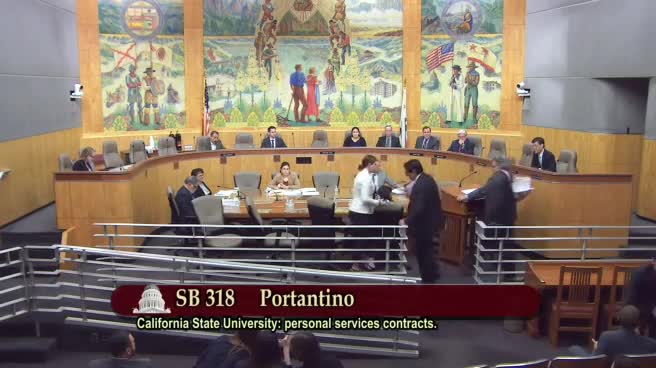 18MIN
Senate Standing Committee on Education
Bill Author







