SB 520: Electricity: intervenor funding.
- Session Year: 2017-2018
- House: Senate
- Latest Version Date: 2017-07-19
Under existing law, the Public Utilities Commission (PUC) has regulatory authority over public utilities. Existing law requires the PUC to award reasonable advocates fees, reasonable expert witness fees, and other reasonable costs of preparation for and participation in a hearing or proceeding of the PUC involving an electrical, gas, water, or telephone corporation to a customer who complies with specified procedures when the customers presentation makes a substantial contribution to the adoption, in whole or in part, of the PUCs order or decision and where participation or intervention without an award of fees or costs imposes a significant financial hardship.
This bill would establish a mechanism to provide compensation for reasonable advocates fees, reasonable expert witness fees, and other reasonable costs of participation in processes of the Independent System Operator (ISO), proceedings of the Federal Energy Regulatory Commission (FERC) that affect Californias environment and consumers, and certain proceedings at the State Energy Resources Conservation and Development Commission (Energy Commission). (ISO) related to proceedings concerning transmission planning, the transmission access charge, energy markets, and regionalization. The bill would require an organization intending to seek compensation to submit an annual notice of intent and eligibility to the Energy Commission PUC containing specified information. The Energy Commission PUC would be required to timely issue a finding as to whether the organization is an eligible group, as defined, that may file for compensation. The bill would authorize an eligible group, by March 31 of each year, to file for compensation from an electrical corporation that is a transmission-owning utility, as defined, for participation in eligible proceedings for the prior calendar year. The bill would require the Energy Commission, PUC, within 90 days after the filing of the request for compensation or within 60 days after the submission of additional supporting documentation, whichever occurs later, to determine whether the eligible group has productively participated in an eligible proceeding, and if so, to direct that the reasonable costs of participation, including advocates fees, expert witness fees, and associated costs, as respectively defined, be paid by the electrical corporation from moneys held in trust by the electrical corporation for that purpose. The bill would require that payment be denied to any eligible group that engages in vexatious behavior or attempts to unreasonably obstruct the orderly and timely fulfillment of the responsibilities of the ISO or FERC. ISO. The bill would require the Energy Commission to adopt guidelines commission to adopt rules governing the intervenor funding program at a publicly noticed meeting offering all interested parties an opportunity to comment. The bill would require the Energy Commission , in consultation with the PUC and PUC, in consultation with the ISO, to report to all relevant policy and fiscal committees of the Legislature by January 1, 2024, 3 years after the program is implemented with sufficient information for the Legislature to determine the effectiveness of the program in achieving greater access and transparency, increasing productive participation, and minimizing negative impacts on ratepayers and the environment. The PUCs authority to award intervenor compensation pursuant to the program would become inoperative 4 years after the program is implemented.
Under existing law, a violation of any order, decision, rule, direction, demand, or requirement of the PUC is a crime.
Because certain provisions of the bill would require an order or requirement to be imposed by the PUC upon an electrical corporation, and a violation of the order or requirement would be a crime, the bill would impose a state-mandated local program by creating a new crime.
The California Constitution requires the state to reimburse local agencies and school districts for certain costs mandated by the state. Statutory provisions establish procedures for making that reimbursement.
This bill would provide that no reimbursement is required by this act for a specified reason.
Under existing law, the Public Utilities Commission (PUC) has regulatory authority over public utilities. Existing law requires the PUC to award reasonable advocates fees, reasonable expert witness fees, and other reasonable costs of preparation for and participation in a hearing or proceeding of the PUC involving an electrical, gas, water, or telephone corporation to a customer who complies with specified procedures when the customers presentation makes a substantial contribution to the adoption, in whole or in part, of the PUCs order or decision and where participation or intervention without an award of fees or costs imposes a significant financial hardship.
This bill would establish a mechanism to provide compensation for reasonable advocates fees, reasonable expert witness fees, and other reasonable costs of participation in processes of the Independent System Operator (ISO), proceedings of the Federal Energy Regulatory Commission (FERC) that effect affect Californias environment and consumers, and certain proceedings at the State Energy Resources Conservation and Development Commission (Energy Commission). The bill would require an organization intending to seek compensation to submit an annual notice of intent and eligibility to the Energy Commission containing specified information. The Energy Commission would be required to timely issue a finding as to whether the organization is an eligible group, as defined, that may file for compensation. The bill would authorize an eligible group, by March 31 of each year, to file for compensation related to from an electrical corporation that is a transmission-owning utility, as defined, for participation in eligible proceedings for the prior calendar year. The bill would require the Energy Commission, within 90 days after the filing of the request for compensation or within 60 days after the submission of additional supporting documentation, whichever occurs later, to determine whether the eligible group has productively participated in an eligible proceeding, and if so, to direct that the reasonable costs of participation, including advocates fees, expert witness fees, and associated costs, as respectively defined, be paid by the ISO. electrical corporation from moneys held in trust by the electrical corporation for that purpose. The bill would require that payment be denied to any eligible group that engages in vexatious behavior or attempts to unreasonably obstruct the orderly and timely fulfillment of the responsibilities of the ISO or FERC. The bill would require the Energy Commission to adopt guidelines governing the intervenor funding program at a publicly noticed meeting offering all interested parties an opportunity to comment. The bill would require the Energy Commission , in consultation with the PUC and the ISO, to report to all relevant policy and fiscal committees of the Legislature by January 1, 2024, sufficient information for the Legislature to determine the effectiveness of the program in achieving greater access and transparency, increasing productive participation, and minimizing negative impacts on ratepayers and the environment.
Under existing law, a violation of any order, decision, rule, direction, demand, or requirement of the PUC is a crime.
Because certain provisions of the bill would require an order or requirement to be imposed by the PUC upon an electrical corporation, and a violation of the order or requirement would be a crime, the bill would impose a state-mandated local program by creating a new crime.
The California Constitution requires the state to reimburse local agencies and school districts for certain costs mandated by the state. Statutory provisions establish procedures for making that reimbursement.
This bill would provide that no reimbursement is required by this act for a specified reason.
This bill would require that any payment of compensation to an eligible group be made from the Intervenor Trust Fund, which would be established by the ISO upon receiving approval from the FERC. The bill would require the ISO to (1) annually consult with the Energy Commission to determine the expected amount of funding needed to support payments of compensation to eligible groups for productive participation in eligible proceedings, (2) collect sufficient moneys to support the intervenor funding program through a charge assessed on transmission-owning utilities calculated based on the utilitys proportionate share of total California load within the territory serviced by the electrical grid that is under the operational control of the ISO, and (3) deposit the funds collected into the Intervenor Trust Fund and to hold those funds in trust for the authorized purposes. If the collection of funds by the ISO is held invalid by order of any federal agency or court, the PUC, in consultation with the Energy Commission, would be required to annually determine the expected amount of funding needed to support payments of compensation to eligible groups for productive participation in eligible proceedings and to require each electrical corporation to identify and collect the anticipated intervenor funding program costs attributable to its share of California load within the territory serviced by the electrical grid that is under the operational control of the ISO. If the collection of funds by the ISO is held invalid by order of any federal agency or court, the Energy Commission would require each local publicly owned electric utility within the ISO to annually collect and remit anticipated intervenor funding program costs attributable to its proportionate share of California load within the territory serviced by the electrical grid that is under the operational control of the ISO. The bill would require that all moneys collected by the electrical corporations or local publicly owned utilities be held in a trust account by the utility, and be paid by the utility to eligible groups as directed by the Energy Commission. The bill would authorize the Energy Commission to include as a transmission-owning utility that is subject to the bills requirements an electrical corporation or local publicly owned electric utility that is in the process of turning over, or negotiating to turn over, operational control of its electrical transmission grid to the ISO, to the extent it serves customers within the state and, if the utility has not yet turned over operational control to the ISO, provides for separate administration of its proportionate share of intervenor compensation.Under existing law, the Public Utilities Commission (PUC) has regulatory authority over public utilities. Existing law requires the PUC to award reasonable advocates fees, reasonable expert witness fees, and other reasonable costs of preparation for and participation in a hearing or proceeding of the PUC involving an electrical, gas, water, or telephone corporation to a customer who complies with specified procedures when the customers presentation makes a substantial contribution to the adoption, in whole or in part, of the PUCs order or decision and where participation or intervention without an award of fees or costs imposes a significant financial hardship.
This bill would establish a mechanism to provide compensation for reasonable advocates fees, reasonable expert witness fees, and other reasonable costs of participation in processes of the Independent System Operator (ISO), proceedings of the Federal Energy Regulatory Commission (FERC) that effect Californias environment and consumers, and certain proceedings at the State Energy Resources Conservation and Development Commission (Energy Commission). The bill would require an organization intending to seek compensation to submit an annual notice of intent and eligibility to the Energy Commission containing specified information. The Energy Commission would be required to timely issue a finding as to whether the organization is an eligible group, as defined, that may file for compensation. The bill would authorize an eligible group, by March 31 of each year, to file for compensation related to participation in eligible proceedings for the prior calendar year. The bill would require the Energy Commission, within 90 days after the filing of the request for compensation or within 60 days after the submission of additional supporting documentation, whichever occurs later, to determine whether the eligible group has productively participated in an eligible proceeding, and if so, to direct that the reasonable costs of participation, including advocates fees, expert witness fees, and associated costs, as respectively defined, be paid by the ISO. The bill would require that payment be denied to any eligible group that engages in vexatious behavior or attempts to unreasonably obstruct the orderly and timely fulfillment of the responsibilities of the ISO or FERC. The bill would require the Energy Commission to adopt guidelines governing the intervenor funding program at a publicly noticed meeting offering all interested parties an opportunity to comment.
This bill would require that any payment of compensation to an eligible group be made from the Intervenor Trust Fund, which would be established by the ISO upon receiving approval from the FERC. The bill would require the ISO to (1) annually consult with the Energy Commission to determine the expected amount of funding needed to support payments of compensation to eligible groups for productive participation in eligible proceedings, (2) collect sufficient moneys to support the intervenor funding program through a charge assessed on transmission-owning utilities calculated based on the utilitys proportionate share of total California load within the territory serviced by the electrical grid that is under the operational control of the ISO, and (3) deposit the funds collected into the Intervenor Trust Fund and to hold those funds in trust for the authorized purposes. If the collection of funds by the ISO is held invalid by order of any federal agency or court, the PUC, in consultation with the Energy Commission, would be required to annually determine the expected amount of funding needed to support payments of compensation to eligible groups for productive participation in eligible proceedings and to require each electrical corporation to identify and collect the anticipated intervenor funding program costs attributable to its share of California load within the territory serviced by the electrical grid that is under the operational control of the ISO. If the collection of funds by the ISO is held invalid by order of any federal agency or court, the Energy Commission would require each local publicly owned electric utility within the ISO to annually collect and remit anticipated intervenor funding program costs attributable to its proportionate share of California load within the territory serviced by the electrical grid that is under the operational control of the ISO. The bill would require that all moneys collected by the electrical corporations or local publicly owned utilities be held in a trust account by the utility, and be paid by the utility to eligible groups as directed by the Energy Commission. The bill would authorize the Energy Commission to include as a transmission-owning utility that is subject to the bills requirements an electrical corporation or local publicly owned electric utility that is in the process of turning over, or negotiating to turn over, operational control of its electrical transmission grid to the ISO, to the extent it serves customers within the state and, if the utility has not yet turned over operational control to the ISO, provides for separate administration of its proportionate share of intervenor compensation.
The purpose of this part is to provide compensation for reasonable advocates fees, reasonable expert witness fees, and other reasonable costs of participation in processes of the Independent System Operator, proceedings of the Federal Energy Regulatory Commission that affect Californias environment and consumers, and certain proceedings at the Energy Commission. Operator related to proceedings concerning transmission planning, the transmission access charge, energy markets, and regionalization.
2601.In enacting this part, it is the intent of the Legislature that all of the following occur:
(a)The provisions of this part shall apply are limited in their application to processes or boards established by the Independent System Operator and proceedings at the Federal Energy Regulatory Commission, including judicial review of any decision of the Independent System Operator or Federal Energy Regulatory Commission affecting California ratepayers. relating to transmission planning, the transmission access charge, energy markets, and regionalization.
(b)The Energy Commission commission shall administer the provisions of this part in a manner that encourages the effective and efficient participation of ratepayer and environmental justice groups that have an interest in the regulation of regional energy markets, markets and concerns about the reasonableness of rates charged to California customers, and concerns about other functions performed by the Independent System Operator that have an impact on California ratepayer costs and align with Californias environmental goals. The Energy Commission should consult with the commission in developing any guidelines pursuant to this part. customers.
(c)Eligible groups shall be compensated for productive participation in eligible proceedings and processes as determined by the Energy Commission. commission.
(d)The process for finding eligibility for intervenor compensation shall be streamlined to the extent practicable.
(e)Compensation shall be paid to eligible groups in a timely manner. manner for participation in eligible proceedings for four years after implementation of the program by the commission.
2603.As used in this part, the following terms have the following meanings:
(a)Advocates fees means the value of work performed by employees and outside contractors of an eligible group based on the market rates paid to persons of comparable training and experience who offer similar services.
(b)Associated costs means reasonable out-of-pocket expenses directly incurred by an eligible group that are directly related to participation in an eligible proceeding, including travel and document production.
(c)Compensation means payment for reasonable advocates fees, reasonable expert witness fees, and other reasonable costs of preparation for and participation in an eligible proceeding, and includes the fees and costs of obtaining payment under this part.
(d)Eligible group means an independent nonprofit consumer, public health, social equity, or environmental organization a nonprofit organization that directly represents ratepayer interests or environmental justice communities that has a history of substantial contributions in commission proceedings and is authorized pursuant to its articles of incorporation or bylaws to represent the interests of residential or small commercial consumers ratepayers that are both located in California and served by a transmission-owning utility. For these purposes, a nonprofit organization means an organization described in Section 501(c)(3) of the Internal Revenue Code (26 U.S.C. Sec. 501 (c)(3)), that is exempt from taxation under Section 501(a) of that code (26 U.S.C. Sec. 501(a)).
(e)Eligible proceeding means all of the following: a proceeding of the Independent System Operator concerning transmission planning, the transmission access charge, energy markets, or regionalization.
(1)Formal and informal processes, committees, or boards established or relied upon by the Independent System Operator.(2)Any activity at the Federal Energy Regulatory Commission relating to policies, rules, tariffs, or practices affecting the Independent System Operator as to which substantive and constructive intervention by the intervening group is possible.(3)Any activity at the Federal Energy Regulatory Commission relating to any proposal that affects the rates charged by an electrical corporation to California customers as to which substantive and constructive intervention by the intervening group is possible.(4)Proceedings at the Energy Commission that relate to transmission planning issues, including the development of an integrated energy policy report pursuant to Section 25302 of the Public Resources Code.(5)Judicial review of any determination or tariff proposal made by the Independent System Operator or any decision by the Federal Energy Regulatory Commission affecting the Independent System Operator.(f)Expert witness fees means costs incurred by an eligible group for an expert witness based on the market rates paid to persons of comparable training and experience who offer similar services.
(g)Productive participation means participation in an eligible proceeding that, in the judgment of the Energy Commission, commission, is constructive and substantive and advances positions designed to benefit Californias electrical service customers and align with Californias environmental goals. An eligible group shall be found to have engaged in productive participation if it is the prevailing party in an action seeking judicial review of any decision by the Independent System Operator or the Federal Energy Regulatory Commission with respect to an eligible proceeding. The Energy Commission The commission shall adopt guidelines regarding the standards applicable to productive participation that recognize the informal nature of many eligible proceedings, the absence of final determinations, and the lack of any official record referencing contributions made by individual organizations.
(h)Program means the intervenor funding program adopted pursuant to this part.
(i)Significant financial hardship means either that the eligible group cannot afford, without undue hardship, to pay the costs of participation, including advocates fees, expert fees, and other reasonable costs of participation, or that, in the case of a group or organization, the economic interest of the individual members of the group or organization is small in comparison to the costs of participation.
(j)Small commercial customer ratepayer means any nonresidential customer ratepayer with a maximum peak demand of less than 50 kilowatts. The Energy Commission commission may establish regulations to modify or change rules modifying or changing the definition of small commercial customer, ratepayer, including use of criteria other than a peak demand threshold, if the Energy Commission commission determines that the modification or change will promote participation by organizations representing small businesses, without incorporating large commercial and industrial customers.
(k)(1)Transmission-owning utility means an electrical corporation that owns a portion of the electrical transmission grid that is under the operational control of the Independent System Operator that is used to supply customers residing in California with electric service.
(2)The Energy Commission commission may include as a transmission-owning utility an electrical corporation that is in the process of turning over, or negotiating to turn over, operational control of its electrical transmission grid to the Independent System Operator, to the extent it serves customers within the state.
2605.(a)An organization intending to seek payment pursuant to this part shall submit an annual notice of intent and eligibility to the Energy Commission. commission. The notice shall include all of the following:
(1)A statement of the nature of the organizations expertise and expected participation in eligible proceedings based on information available at the time of the filing.
(2)An itemized estimate of the compensation that the organization expects to request given the information known at the time of the filing.
(3)A showing that the organization is an eligible group and satisfies the eligibility requirements of this part.
(4)A showing that participation in the eligible proceedings would pose a significant financial hardship. Alternatively, a showing that participation in the eligible proceedings would pose a significant financial hardship shall be included in the request submitted pursuant to subdivisions (c) and (d).
(b)(1)The Energy Commission commission shall issue a timely finding establishing whether the organization is an eligible group that may file for compensation. A finding by the Energy Commission commission that the organization is an eligible group does not ensure compensation. If the Energy Commission commission does not issue a finding within 90 days after the submission of a notice of intent and eligibility, any organization previously found to be eligible by the Energy Commission commission shall be deemed eligible for the year for which the submitted annual notice applies.
(2)A failure by the organization to identify a specific issue in the notice of intent and eligibility or to accurately estimate potential compensation shall not preclude payment of reasonable compensation if productive participation in an eligible proceeding is subsequently demonstrated.
(c)Not later than March 31 of each year, an eligible group that has been found, pursuant to subdivision (b), to be eligible for compensation in the prior year may file for costs related to participation in eligible proceedings for the prior calendar year.
(d)A request for compensation shall, at a minimum, include a detailed description of services and expenditures and a description of the eligible groups productive participation in the eligible proceeding.
(e)The Energy Commission commission may audit the timesheets and records of costs of the eligible group to the extent necessary to verify the basis for the payment. The Energy Commission commission shall preserve the confidentiality of the eligible groups records in performing the audit.
(f)Within 90 days after the filing of a request for compensation pursuant to subdivision (c), or within 60 days after the submission of requested additional supporting documentation, whichever occurs later, the Energy Commission commission shall determine whether the eligible group has productively participated in an eligible proceeding. If the Energy Commission commission finds that the eligible group requesting compensation has engaged in productive participation, the Energy Commission commission shall direct that the reasonable costs of participation, including advocates fees, expert witness fees, and associated costs be paid from transmission-owning utility moneys held in trust pursuant to Section 2608.
(g)The computation of compensation pursuant to subdivision (f) shall be based upon the market rates paid to persons of comparable training and experience who offer similar services and reasonable market rates for any associated costs.
(h)The Energy Commission commission shall ensure that any compensation sought by an eligible group has not been obtained from another intervenor funding program within, or outside of, California.
(i)The Energy Commission commission shall deny payment to any eligible group that engages in vexatious behavior or attempts to unreasonably obstruct the orderly and timely fulfillment of the responsibilities of the Independent System Operator or the Federal Energy Regulatory Commission. No eligible group that is the prevailing party in an action seeking judicial review shall be denied compensation for work in obtaining that review pursuant to this subdivision. Operator.
(j)Payments made pursuant to this part, the amount of the payments, and the terms and conditions of the payments are public information.
2606.(a)The Energy Commission shall adopt guidelines The commission shall adopt rules governing the intervenor funding program authorized under this part at a publicly noticed meeting offering all interested parties an opportunity to comment. Substantive changes to the guidelines shall not be adopted without at least 10 days written notice to the public. The public notice of meetings required by this subdivision shall not be less than 30 days. Notwithstanding any other law, adoption of these guidelines is exempt from the requirements of Chapter 3.5 (commencing with Section 11340) of Part 1 of Division 3 of Title 2 of the Government Code, but the guidelines may be adopted as regulations pursuant to that chapter.(b)Payments made pursuant to this part are subject to appeal to the Energy Commission upon a showing that factors other than those adopted in the guidelines were applied to determine the payments. Any actions taken by an applicant to apply for, or become or remain eligible to receive, payments, including satisfying conditions specified by the Energy Commission, shall not constitute the rendering of goods, services, or a direct benefit to the Energy Commission.(c)Payments made pursuant to this part, the amount of the payments, and the terms and conditions of the payments are public information.2607.(a)The commission shall consult with the Energy Commission annually to determine the expected amount of funding needed to support payments of compensation to eligible groups for productive participation in eligible proceedings pursuant to this part. require each transmission-owning utility to identify a separate rate component, which shall be a nonbypassable element of its local distribution service and collected on the basis of usage, to collect the anticipated program costs attributable to its proportionate share of California load served by transmission-owning utilities.
(b)The commission shall require each transmission-owning utility to identify a separate rate component, which shall be a nonbypassable element of its local distribution service and collected on the basis of usage, to collect the anticipated program costs attributable to its proportionate share of California load served by transmission-owning utilities.(c)(b)For any electrical corporation that the Energy Commission commission designates to be a transmission-owning utility pursuant to paragraph (2) of subdivision (k) of Section 2603 that has not yet turned over operational control of its electrical transmission grid to the Independent System Operator, upon request by the Energy Commission, the commission shall direct the utility to collect and hold its proportionate share in trust, to be disbursed to an eligible group or eligible groups upon direction by the Energy Commission. commission.
2608.All moneys collected pursuant to this part shall be held in a trust account by the transmission-owning utility, and shall be paid by the utility to eligible groups as directed by the Energy Commission. commission.
2609.(a)On or before January 1, 2024, the Energy Commission, in consultation with the commission and Three years after implementation of the program, the commission, in consultation with the Independent System Operator, shall report the information required in subdivision (b) to all relevant policy and fiscal committees of the Legislature, or their successors, including the following:
(1)Senate Committee on Energy, Utilities and Communications.
(2)Senate Committee on Appropriations.
(3)Subcommittee Number 2 (Resources, Environmental Protection, Energy and Transportation) of the Senate Committee on Budget and Fiscal Review.
(4)Assembly Committee on Utilities and Energy.
(5)Assembly Committee on Appropriations.
(6)Subcommittee Number 3 (Resources and Transportation) of the Assembly Committee on Budget.
(b)The report shall include information necessary to aid the Legislature to determine the effectiveness of the program in achieving greater access and transparency, increasing productive participation, and minimizing negative impacts on ratepayers and the environment. At a minimum, the report shall include the following:
(1)The number of organizations that submitted an annual notice of intent and eligibility.
(2)For each organization to which intervenor compensation was awarded, the organizations name and location, a description of the organization, and the nature of participation by the organization.
(3)A list of proceedings for which intervenor compensation was provided.
(4)A list of activities for which intervenor compensation was provided.
(5)Any outcomes determined to be beneficial to ratepayers, energy transmission performance or rates, or the environment resulting from the program.
(6)Challenges to implementation of the program and, to the extent available, solutions to those challenges.
(7)Costs incurred by the Energy Commission to administer the program.
(8)To the extent they exist, recommendations regarding the future of the program, including whether it should be continued and any programmatic changes that require legislation to implement.
(c)The commission may aggregate some or all of the information required to be reported pursuant to subdivision (b) if it finds that the information will be sufficient for the Legislature to determine the effectiveness of the program in achieving greater access and transparency, increasing productive participation, and minimizing negative impacts on ratepayers and the environment.
(d)This section shall remain in effect only until January 1, 2025, and as of that date is repealed, unless a later enacted statute that is enacted before January 1, 2025, deletes or extends that date.2610.(a)The commissions authority to award intervenor compensation pursuant to this part shall become inoperative four years after the date the program is implemented by the commission, unless a later enacted statute that is enacted before that date extends the authority of the commission to award intervenor compensation pursuant to this part.
(b)Within 30 days of the adoption of final rules implementing the program, the commission shall notify the Secretary of State and the Legislative Counsel of the date the program was or will be implemented.
(c)The commission shall notify the Secretary of State and the Legislative Counsel when the commission files the report required pursuant to Section 2609.
SEC. 2.No reimbursement is required by this act pursuant to Section 6 of Article XIIIB of the California Constitution because the only costs that may be incurred by a local agency or school district will be incurred because this act creates a new crime or infraction, eliminates a crime or infraction, or changes the penalty for a crime or infraction, within the meaning of Section 17556 of the Government Code, or changes the definition of a crime within the meaning of Section 6 of Article XIIIB of the California Constitution.
The purpose of this part is to provide compensation for reasonable advocates fees, reasonable expert witness fees, and other reasonable costs of participation in processes of the Independent System Operator, proceedings of the Federal Energy Regulatory Commission that effect affect Californias environment and consumers, and certain proceedings at the Energy Commission.
2601.In enacting this part, it is the intent of the Legislature that all of the following occur:
(a)The provisions of this part shall apply to processes or boards established by the Independent System Operator and proceedings at the Federal Energy Regulatory Commission, including judicial review of any decision of the Independent System Operator or Federal Energy Regulatory Commission. Commission affecting California ratepayers.
(b)The Energy Commission shall administer the provisions of this part in a manner that encourages the effective and efficient participation of ratepayer and environmental groups that have an interest in the regulation of regional energy markets, concerns about reasonableness of rates charged to California customers, and concerns about other functions performed by the Independent System Operator that have an impact on ratepayer costs and the environment. California ratepayer costs and align with Californias environmental goals. The Energy Commission should consult with the commission in developing any guidelines pursuant to this part.
(c)Eligible groups shall be compensated for productive participation in eligible proceedings and processes as determined by the Energy Commission.
(d)The process for finding eligibility for intervenor compensation shall be streamlined to the extent practicable.
(e)Compensation shall be paid to eligible groups in a timely manner.
2603.As used in this part, the following terms have the following meanings:
(a)Advocates fees means the value of work performed by employees and outside contractors of an eligible group based on the market rates paid to persons of comparable training and experience who offer similar services.
(b)Associated costs means reasonable out-of-pocket expenses directly incurred by an eligible group that are directly related to participation in an eligible proceeding, including travel and document production.
(c)Compensation means payment for reasonable advocates fees, reasonable expert witness fees, and other reasonable costs of preparation for and participation in an eligible proceeding, and includes the fees and costs of obtaining payment under this part.
(d)Eligible group means an independent nonprofit consumer, public health, social equity, or environmental organization authorized pursuant to its articles of incorporation or bylaws to represent the interests of residential or small commercial consumers that are both located in California and served by a transmission-owning utility.
(e)Eligible proceeding means all of the following:
(1)Formal and informal processes, committees, or boards established or relied upon by the Independent System Operator.
(2)Any activity at the Federal Energy Regulatory Commission relating to policies, rules, tariffs, or practices affecting the Independent System Operator as to which substantive and constructive intervention by the intervening group is possible.
(3)Any activity at the Federal Energy Regulatory Commission relating to any proposal that affects the rates charged by an electrical corporation or local publicly owned electric utility to California customers as to which substantive and constructive intervention by the intervening group is possible.
(4)Proceedings at the Energy Commission that relate to transmission planning issues issues, including the development of an integrated energy policy report pursuant to Section 25302 of the Public Resources Code.
(5)Judicial review of any determination or tariff proposal made by the Independent System Operator or any decision by the Federal Energy Regulatory Commission affecting the Independent System Operator.
(f)Expert witness fees means costs incurred by an eligible group for an expert witness based on the market rates paid to persons of comparable training and experience who offer similar services.
(g)Productive participation means participation in an eligible proceeding that, in the judgment of the Energy Commission, is constructive and substantive and advances positions designed to benefit Californias customers or protect Californias environment. electrical service customers and align with Californias environmental goals. An eligible group shall be found to have engaged in productive participation if it is the prevailing party in an action seeking judicial review of any decision by the Independent System Operator or the Federal Energy Regulatory Commission with respect to an eligible proceeding. The Energy Commission shall adopt guidelines regarding the standards applicable to productive participation that recognize the informal nature of many eligible proceedings, the absence of final determinations, and the lack of any official record referencing contributions made by individual organizations.
(h)Program means the intervenor funding program adopted pursuant to this part.
(h)(i)Significant financial hardship means either that the eligible group cannot afford, without undue hardship, to pay the costs of effective participation, including advocates fees, expert fees, and other reasonable costs of participation, or that, in the case of a group or organization, the economic interest of the individual members of the group or organization is small in comparison to the costs of effective participation.
(i)(j)Small commercial customer means any nonresidential customer with a maximum peak demand of less than 50 kilowatts. The Energy Commission may establish regulations to modify or change the definition of small commercial customer, including use of criteria other than a peak demand threshold, if the Energy Commission determines that the modification or change will promote participation by organizations representing small businesses, without incorporating large commercial and industrial customers.
(j)(k)(1)Transmission-owning utility means an electrical corporation or local publicly owned electric utility that owns a portion of the electrical transmission grid that is under the operational control of the Independent System Operator that is used to supply customers residing in California with electric service.
(2)The Energy Commission may include as a transmission-owning utility an electrical corporation or local publicly owned electric utility that is in the process of turning over, or negotiating to turn over, operational control of its electrical transmission grid to the Independent System Operator, to the extent it serves customers within the state.
2605.(a)An organization intending to seek payment pursuant to this part shall submit an annual notice of intent and eligibility to the Energy Commission. The notice shall include all of the following:
(1)A statement of the nature of the organizations expertise and expected participation in eligible proceedings based on information available at the time of the filing.
(2)An itemized estimate of the compensation that the organization expects to request given the information known at the time of the filing.
(3)A showing that the organization is an eligible group and satisfies the eligibility requirements of this part.
(4)A showing that participation in the eligible proceedings would pose a significant financial hardship. Alternatively, a showing that participation in the eligible proceedings would pose a significant financial hardship shall be included in the request submitted pursuant to subdivisions (c) and (d).
(b)(1)The Energy Commission shall issue a timely finding establishing whether the organization is an eligible group that may file for compensation. A finding by the Energy Commission that the organization is an eligible group does not ensure compensation. If the Energy Commission does not issue a finding within 90 days after the submission of a notice of intent and eligibility, any organization previously found to be eligible by the Energy Commission shall be deemed eligible for the year for which the submitted annual notice applies.
(2)A failure by the customer organization to identify a specific issue in the notice of intent and eligibility or to accurately estimate potential compensation shall not preclude payment of reasonable compensation if a productive participation in an eligible proceeding is subsequently demonstrated.
(c)Not later than March 31 of each year, an eligible group that has been found, pursuant to subdivision (b), to be eligible for compensation in the prior year may file for costs related to participation in eligible proceedings for the prior calendar year.
(d)A request for compensation shall, at a minimum, include a detailed description of services and expenditures and a description of the eligible groups productive participation in the eligible proceeding.
(e)The Energy Commission may audit the timesheets and records of costs of the eligible group to the extent necessary to verify the basis for the payment. The Energy Commission shall preserve the confidentiality of the eligible groups records in performing the audit.
(f)Within 90 days after the filing of a request for compensation pursuant to subdivision (c), or within 60 days after the submission of requested additional supporting documentation, whichever occurs later, the Energy Commission shall determine whether the eligible group has productively participated in an eligible proceeding. If the Energy Commission finds that the eligible group requesting compensation has engaged in productive participation, the Energy Commission shall direct that the reasonable costs of participation, including advocates fees, expert witness fees, and associated costs be paid by the Independent System Operator from the Intervenor Trust Fund, or be paid directly by electrical corporations or local publicly owned electric utilities from moneys held in trust pursuant to subdivision (b) of Section 2607. from transmission-owning utility moneys held in trust pursuant to Section 2608.
(g)The computation of compensation pursuant to subdivision (f) shall be based upon the market rates paid to persons of comparable training and experience who offer similar services and reasonable market rates for any associated costs.
(h)The Energy Commission shall ensure that any compensation sought by an eligible group has not been obtained from another intervenor funding program within, or outside of, California.
(i)The Energy Commission shall deny payment to any eligible group that engages in vexatious behavior or attempts to unreasonably obstruct the orderly and timely fulfillment of the responsibilities of the Independent System Operator or the Federal Energy Regulatory Commission. No eligible group that is the prevailing party in an action seeking judicial review shall be denied compensation for work in obtaining that review pursuant to this subdivision.
(j)(1)Any authorized payments shall be made from rates collected by the Independent System Operator from each transmission-owning utilities in proportion to its respective California load that receives electricity transported over the electrical grid that is under the operational control of the Independent System Operator or moneys held in trust pursuant to subdivision (b) of Section 2607. Upon approval by the Federal Energy Regulatory Commission, the Independent System Operator shall establish an Intervenor Trust Fund and deposit any moneys collected from transmission-owning utilities into the fund. The Energy Commission shall notify the Independent System Operator of the amount of moneys that it forecasts will be necessary to be collected pursuant to this part. If there are insufficient balances in the Intervenor Trust Fund for payment of all claims, the Energy Commission shall add this obligation to the forecast of moneys needed for the following year, or other time period established by the Energy Commission in consultation with the Independent System Operator, and the Independent System Operator will make payment to the eligible group once there are sufficient balances available.(2)(A)For any electrical corporation that the Energy Commission designates to be a transmission-owning utility pursuant to paragraph (2) of subdivision (j) of Section 2603 that has not yet turned over operational control of its electrical transmission grid to the Independent System Operator, upon request by the Energy Commission, the commission shall direct the utility to collect and hold its proportionate share in trust, to be disbursed to an eligible group or eligible groups upon direction by the Energy Commission. An electrical corporation that the Energy Commission designates as a transmission-owning utility pursuant to paragraph (2) of subdivision (j) of Section 2603 may elect to pay its proportionate share to the Independent System Operator, with those moneys to be administered pursuant to paragraph (1).(B)For any local publicly owned electric utility that the Energy Commission designates to be a transmission-owning utility pursuant to paragraph (2) of subdivision (j) of Section 2603 that has not yet turned over operational control of its electrical transmission grid to the Independent System Operator, the Energy Commission shall direct the utility to collect and hold its proportionate share in trust, to be disbursed to an eligible group or eligible groups upon direction by the Energy Commission. A local publicly owned electric utility that the Energy Commission designates as a transmission-owning utility pursuant to paragraph (2) of subdivision (j) of Section 2603 may elect to pay its proportionate share to the Independent System Operator, with those moneys to be administered pursuant to paragraph (1).2606.(a)The Energy Commission shall adopt guidelines governing the intervenor funding program authorized under this part at a publicly noticed meeting offering all interested parties an opportunity to comment. Substantive changes to the guidelines shall not be adopted without at least 10 days written notice to the public. The public notice of meetings required by this subdivision shall not be less than 30 days. Notwithstanding any other law, adoption of these guidelines is exempt from the requirements of Chapter 3.5 (commencing with Section 11340) of Part 1 of Division 3 of Title 2 of the Government Code, but the guidelines may be adopted as regulations pursuant to that chapter.
(b)Payments made pursuant to this part are subject to appeal to the Energy Commission upon a showing that factors other than those adopted in the guidelines were applied to determine the payments. Any actions taken by an applicant to apply for, or become or remain eligible to receive, payments, including satisfying conditions specified by the Energy Commission, shall not constitute the rendering of goods, services, or a direct benefit to the Energy Commission.
(c)Payments made pursuant to this part, the amount of the payment, payments, and the terms and conditions of the payment payments are public information.
2607.(a)The Independent System Operator shall do all of the following:(1)Consult with the Energy Commission annually to determine the expected amount of funding needed to support payments of compensation to eligible groups for productive participation in eligible proceedings pursuant to this part.(2)Collect sufficient moneys to support the intervenor funding program authorized pursuant to this part through a charge assessed on transmission-owning utilities. The proportionate share allocated to each transmission-owning utility shall be calculated based on its share of total California load within the territory serviced by the electrical grid that is under the operational control of the Independent System Operator. The California load of an electrical corporation or local publicly owned electric utility designated by the Energy Commission to be a transmission-owning utility pursuant to paragraph (2) of subdivision (j) of Section 2603 shall be included in calculating each transmission-owning utilitys proportionate share, but moneys collected by a utility so designated that has not yet turned over operational control of its electrical transmission grid to the Independent System Operator shall not be paid to the Independent System Operator and shall instead be administered pursuant to paragraph (2) of subdivision (j) of Section 2605, unless the utility so designated elects to pay moneys collected to the Independent System Operator pursuant to paragraph (2) of subdivision (j) of Section 2605.(3)Deposit funds collected pursuant to this part into the Intervenor Trust Fund, hold those funds in trust for the purposes authorized in this part, and pay those funds to an eligible group upon direction by the Energy Commission.(4)The California load of an electrical corporation or local publicly owned electric utility designated by the Energy Commission to be a transmission-owning utility pursuant to paragraph (2) of subdivision (j) of Section 2603 shall be included in calculating each transmission-owning utilitys proportionate share, but moneys collected by a utility so designated that has not yet turned over operational control of its electrical transmission grid to the Independent System Operator, or elected to pay moneys collected to the Independent System Operator pursuant to paragraph (2) of subdivision (j) of Section 2605, shall be administered pursuant to paragraph (2) of subdivision (j) of Section 2605.(b)If the collection of funds by the Independent System Operator for the purposes described in this part is held invalid by order of any federal agency or court, the commission and Energy Commission shall do all of the following:(1)The commission shall consult with the Energy Commission annually to determine the expected amount of funding needed to support payments of compensation to eligible groups for productive participation in eligible proceedings pursuant to this part. The commission shall require each electrical corporation to identify a separate rate component, which shall be a nonbypassable element of local distribution service and collected on the basis of usage, to collect the anticipated intervenor funding program costs attributable to its share of California load within the territory serviced by the electrical grid that is under the operational control of the Independent System Operator.(2)The Energy Commission shall require each local publicly owned electric utility that is a transmission-owning utility to annually collect anticipated intervenor funding program costs attributable to its share of California load within the territory serviced by the electrical grid that is under the operational control of the Independent System Operator.(3)All moneys collected pursuant to this subdivision shall be held in a trust account by the electrical corporation or local publicly owned electric utility, and shall be paid by the utility to eligible groups as directed by the Energy Commission.2607.(a)The commission shall consult with the Energy Commission annually to determine the expected amount of funding needed to support payments of compensation to eligible groups for productive participation in eligible proceedings pursuant to this part.
(b)The commission shall require each transmission-owning utility to identify a separate rate component, which shall be a nonbypassable element of its local distribution service and collected on the basis of usage, to collect the anticipated program costs attributable to its proportionate share of California load served by transmission-owning utilities.
(c)For any electrical corporation that the Energy Commission designates to be a transmission-owning utility pursuant to paragraph (2) of subdivision (k) of Section 2603 that has not yet turned over operational control of its electrical transmission grid to the Independent System Operator, upon request by the Energy Commission, the commission shall direct the utility to collect and hold its proportionate share in trust, to be disbursed to an eligible group or eligible groups upon direction by the Energy Commission.
2608.All moneys collected pursuant to this part shall be held in a trust account by the transmission-owning utility, and shall be paid by the utility to eligible groups as directed by the Energy Commission.
2609.(a)On or before January 1, 2024, the Energy Commission, in consultation with the commission and the Independent System Operator, shall report the information required in subdivision (b) to all relevant policy and fiscal committees of the Legislature, or their successors, including the following:
(1)Senate Committee on Energy, Utilities and Communications.
(2)Senate Committee on Appropriations.
(3)Subcommittee Number 2 (Resources, Environmental Protection, Energy and Transportation) of the Senate Committee on Budget and Fiscal Review.
(4)Assembly Committee on Utilities and Energy.
(5)Assembly Committee on Appropriations.
(6)Subcommittee Number 3 (Resources and Transportation) of the Assembly Committee on Budget.
(b)The report shall include information necessary to aid the Legislature to determine the effectiveness of the program in achieving greater access and transparency, increasing productive participation, and minimizing negative impacts on ratepayers and the environment. At a minimum, the report shall include the following:
(1)The number of organizations that submitted an annual notice of intent and eligibility.
(2)For each organization to which intervenor compensation was awarded, the organizations name and location, a description of the organization, and the nature of participation by the organization.
(3)A list of proceedings for which intervenor compensation was provided.
(4)A list of activities for which intervenor compensation was provided.
(5)Any outcomes determined to be beneficial to ratepayers, energy transmission performance or rates, or the environment resulting from the program.
(6)Challenges to implementation of the program and, to the extent available, solutions to those challenges.
(7)Costs incurred by the Energy Commission to administer the program.
(8)To the extent they exist, recommendations regarding the future of the program, including whether it should be continued and any programmatic changes that require legislation to implement.
(c)The commission may aggregate some or all of the information required to be reported pursuant to subdivision (b) if it finds that the information will be sufficient for the Legislature to determine the effectiveness of the program in achieving greater access and transparency, increasing productive participation, and minimizing negative impacts on ratepayers and the environment.
(d)This section shall remain in effect only until January 1, 2025, and as of that date is repealed, unless a later enacted statute that is enacted before January 1, 2025, deletes or extends that date.
SEC. 2.No reimbursement is required by this act pursuant to Section 6 of Article XIIIB of the California Constitution because the only costs that may be incurred by a local agency or school district will be incurred because this act creates a new crime or infraction, eliminates a crime or infraction, or changes the penalty for a crime or infraction, within the meaning of Section 17556 of the Government Code, or changes the definition of a crime within the meaning of Section 6 of Article XIIIB of the California Constitution.
The purpose of this part is to provide compensation for reasonable advocates fees, reasonable expert witness fees, and other reasonable costs of participation in processes of the Independent System Operator, proceedings of the Federal Energy Regulatory Commission that effect Californias environment and consumers, and certain proceedings at the Energy Commission.
2601.In enacting this part, it is the intent of the Legislature that all of the following occur:
(a)The provisions of this part shall apply to processes or boards established by the Independent System Operator and proceedings at the Federal Energy Regulatory Commission, including judicial review of any decision of the Independent System Operator or Federal Energy Regulatory Commission.
(b)The Energy Commission shall administer the provisions of this part in a manner that encourages the effective and efficient participation of ratepayer and environmental groups that have an interest in the regulation of regional energy markets, concerns about reasonableness of rates charged to California customers, and concerns about other functions performed by the Independent System Operator that have an impact on ratepayer costs and the environment. The Energy Commission should consult with the commission in developing any guidelines pursuant to this part.
(c)Eligible groups shall be compensated for productive participation in eligible proceedings and processes as determined by the Energy Commission.
(d)The process for finding eligibility for intervenor compensation shall be streamlined to the extent practicable.
(e)Compensation shall be paid to eligible groups in a timely manner.
2603.As used in this part, the following terms have the following meanings:
(a)Advocates fees means the value of work performed by employees and outside contractors of an eligible group based on the market rates paid to persons of comparable training and experience who offer similar services.
(b)Associated costs means reasonable out-of-pocket expenses directly incurred by an eligible group that are directly related to participation in an eligible proceeding, including travel and document production.
(c)Compensation means payment for reasonable advocates fees, reasonable expert witness fees, and other reasonable costs of preparation for and participation in an eligible proceeding, and includes the fees and costs of obtaining payment under this part.
(d)Eligible group means an independent nonprofit consumer, public health, social equity, or environmental organization authorized pursuant to its articles of incorporation or bylaws to represent the interests of residential or small commercial consumers that are both located in California and served by a transmission-owning utility.
(e)Eligible proceeding means all of the following:
(1)Formal and informal processes, committees, or boards established or relied upon by the Independent System Operator.
(2)Any activity at the Federal Energy Regulatory Commission relating to policies, rules, tariffs, or practices affecting the Independent System Operator as to which substantive and constructive intervention by the intervening group is possible.
(3)Any activity at the Federal Energy Regulatory Commission relating to any proposal that affects the rates charged by an electrical corporation or local publicly owned electric utility to California customers as to which substantive and constructive intervention by the intervening group is possible.
(4)Proceedings at the Energy Commission that relate to transmission planning issues including the development of an integrated energy policy report pursuant to Section 25302 of the Public Resources Code.
(5)Judicial review of any determination or tariff proposal made by the Independent System Operator or any decision by the Federal Energy Regulatory Commission affecting the Independent System Operator.
(f)Expert witness fees means costs incurred by an eligible group for an expert witness based on the market rates paid to persons of comparable training and experience who offer similar services.
(g)Productive participation means participation in an eligible proceeding that, in the judgment of the Energy Commission, is constructive and substantive and advances positions designed to benefit Californias customers or protect Californias environment. An eligible group shall be found to have engaged in productive participation if it is the prevailing party in an action seeking judicial review of any decision by the Independent System Operator or the Federal Energy Regulatory Commission with respect to an eligible proceeding. The Energy Commission shall adopt guidelines regarding the standards applicable to productive participation that recognize the informal nature of many eligible proceedings, the absence of final determinations, and the lack of any official record referencing contributions made by individual organizations.
(h)Significant financial hardship means either that the eligible group cannot afford, without undue hardship, to pay the costs of effective participation, including advocates fees, expert fees, and other reasonable costs of participation, or that, in the case of a group or organization, the economic interest of the individual members of the group or organization is small in comparison to the costs of effective participation.
(i)Small commercial customer means any nonresidential customer with a maximum peak demand of less than 50 kilowatts. The Energy Commission may establish regulations to modify or change the definition of small commercial customer, including use of criteria other than a peak demand threshold, if the Energy Commission determines that the modification or change will promote participation by organizations representing small businesses, without incorporating large commercial and industrial customers.
(j)(1)Transmission-owning utility means an electrical corporation or local publicly owned electric utility that owns a portion of the electrical transmission grid that is under the operational control of the Independent System Operator that is used to supply customers residing in California with electric service.
(2)The Energy Commission may include as a transmission-owning utility an electrical corporation or local publicly owned electric utility that is in the process of turning over, or negotiating to turn over, operational control of its electrical transmission grid to the Independent System Operator, to the extent it serves customers within the state.
2605.(a)An organization intending to seek payment pursuant to this part shall submit an annual notice of intent and eligibility to the Energy Commission. The notice shall include all of the following:
(1)A statement of the nature of the organizations expected participation in eligible proceedings based on information available at the time of the filing.
(2)An itemized estimate of the compensation that the organization expects to request given the information known at the time of the filing.
(3)A showing that the organization is an eligible group and satisfies the eligibility requirements of this part.
(4)A showing that participation in the eligible proceedings would pose a significant financial hardship. Alternatively, a showing that participation in the eligible proceedings would pose a significant financial hardship shall be included in the request submitted pursuant to subdivisions (c) and (d).
(b)(1)The Energy Commission shall issue a timely finding establishing whether the organization is an eligible group that may file for compensation. A finding by the Energy Commission that the organization is an eligible group does not ensure compensation. If the Energy Commission does not issue a finding within 90 days after the submission of a notice of intent and eligibility, any organization previously found to be eligible by the Energy Commission shall be deemed eligible for the year for which the submitted annual notice applies.
(2)A failure by the customer to identify a specific issue in the notice of intent or to accurately estimate potential compensation shall not preclude payment of reasonable compensation if a productive participation in an eligible proceeding is subsequently demonstrated.
(c)Not later than March 31 of each year, an eligible group that has been found, pursuant to subdivision (b), to be eligible for compensation in the prior year may file for costs related to participation in eligible proceedings for the prior calendar year.
(d)A request for compensation shall, at a minimum, include a detailed description of services and expenditures and a description of the eligible groups productive participation in the eligible proceeding.
(e)The Energy Commission may audit the timesheets and records of costs of the eligible group to the extent necessary to verify the basis for the payment. The Energy Commission shall preserve the confidentiality of the eligible groups records in performing the audit.
(f)Within 90 days after the filing of a request for compensation pursuant to subdivision (c), or within 60 days after the submission of requested additional supporting documentation, whichever occurs later, the Energy Commission shall determine whether the eligible group has productively participated in an eligible proceeding. If the Energy Commission finds that the eligible group requesting compensation has engaged in productive participation, the Energy Commission shall direct that the reasonable costs of participation, including advocates fees, expert witness fees, and associated costs be paid by the Independent System Operator from the Intervenor Trust Fund, or be paid directly by electrical corporations or local publicly owned electric utilities from moneys held in trust pursuant to subdivision (b) of Section 2607.
(g)The computation of compensation pursuant to subdivision (f) shall be based upon the market rates paid to persons of comparable training and experience who offer similar services and reasonable market rates for any associated costs.
(h)The Energy Commission shall ensure that any compensation sought by an eligible group has not been obtained from another intervenor funding program within, or outside of, California.
(i)The Energy Commission shall deny payment to any eligible group that engages in vexatious behavior or attempts to unreasonably obstruct the orderly and timely fulfillment of the responsibilities of the Independent System Operator or the Federal Energy Regulatory Commission. No eligible group that is the prevailing party in an action seeking judicial review shall be denied compensation for work in obtaining that review pursuant to this subdivision.
(j)(1)Any authorized payments shall be made from rates collected by the Independent System Operator from each transmission-owning utilities in proportion to its respective California load that receives electricity transported over the electrical grid that is under the operational control of the Independent System Operator or moneys held in trust pursuant to subdivision (b) of Section 2607. Upon approval by the Federal Energy Regulatory Commission, the Independent System Operator shall establish an Intervenor Trust Fund and deposit any moneys collected from transmission-owning utilities into the fund. The Energy Commission shall notify the Independent System Operator of the amount of moneys that it forecasts will be necessary to be collected pursuant to this part. If there are insufficient balances in the Intervenor Trust Fund for payment of all claims, the Energy Commission shall add this obligation to the forecast of moneys needed for the following year, or other time period established by the Energy Commission in consultation with the Independent System Operator, and the Independent System Operator will make payment to the eligible group once there are sufficient balances available.
(2)(A)For any electrical corporation that the Energy Commission designates to be a transmission-owning utility pursuant to paragraph (2) of subdivision (j) of Section 2603 that has not yet turned over operational control of its electrical transmission grid to the Independent System Operator, upon request by the Energy Commission, the commission shall direct the utility to collect and hold its proportionate share in trust, to be disbursed to an eligible group or eligible groups upon direction by the Energy Commission. An electrical corporation that the Energy Commission designates as a transmission-owning utility pursuant to paragraph (2) of subdivision (j) of Section 2603 may elect to pay its proportionate share to the Independent System Operator, with those moneys to be administered pursuant to paragraph (1).
(B)For any local publicly owned electric utility that the Energy Commission designates to be a transmission-owning utility pursuant to paragraph (2) of subdivision (j) of Section 2603 that has not yet turned over operational control of its electrical transmission grid to the Independent System Operator, the Energy Commission shall direct the utility to collect and hold its proportionate share in trust, to be disbursed to an eligible group or eligible groups upon direction by the Energy Commission. A local publicly owned electric utility that the Energy Commission designates as a transmission-owning utility pursuant to paragraph (2) of subdivision (j) of Section 2603 may elect to pay its proportionate share to the Independent System Operator, with those moneys to be administered pursuant to paragraph (1).
2606.(a)The Energy Commission shall adopt guidelines governing the intervenor funding program authorized under this part at a publicly noticed meeting offering all interested parties an opportunity to comment. Substantive changes to the guidelines shall not be adopted without at least 10 days written notice to the public. The public notice of meetings required by this subdivision shall not be less than 30 days. Notwithstanding any other law, adoption of these guidelines is exempt from the requirements of Chapter 3.5 (commencing with Section 11340) of Part 1 of Division 3 of Title 2 of the Government Code, but the guidelines may be adopted as regulations pursuant to that chapter.
(b)Payments made pursuant to this part are subject to appeal to the Energy Commission upon a showing that factors other than those adopted in the guidelines were applied to determine the payments. Any actions taken by an applicant to apply for, or become or remain eligible to receive, payments, including satisfying conditions specified by the Energy Commission, shall not constitute the rendering of goods, services, or a direct benefit to the Energy Commission.
(c)Payments made pursuant to this part, the amount of the payment, and the terms and conditions of the payment are public information.
2607.(a)The Independent System Operator shall do all of the following:
(1)Consult with the Energy Commission annually to determine the expected amount of funding needed to support payments of compensation to eligible groups for productive participation in eligible proceedings pursuant to this part.
(2)Collect sufficient moneys to support the intervenor funding program authorized pursuant to this part through a charge assessed on transmission-owning utilities. The proportionate share allocated to each transmission-owning utility shall be calculated based on its share of total California load within the territory serviced by the electrical grid that is under the operational control of the Independent System Operator. The California load of an electrical corporation or local publicly owned electric utility designated by the Energy Commission to be a transmission-owning utility pursuant to paragraph (2) of subdivision (j) of Section 2603 shall be included in calculating each transmission-owning utilitys proportionate share, but moneys collected by a utility so designated that has not yet turned over operational control of its electrical transmission grid to the Independent System Operator shall not be paid to the Independent System Operator and shall instead be administered pursuant to paragraph (2) of subdivision (j) of Section 2605, unless the utility so designated elects to pay moneys collected to the Independent System Operator pursuant to paragraph (2) of subdivision (j) of Section 2605.
(3)Deposit funds collected pursuant to this part into the Intervenor Trust Fund, hold those funds in trust for the purposes authorized in this part, and pay those funds to an eligible group upon direction by the Energy Commission.
(4)The California load of an electrical corporation or local publicly owned electric utility designated by the Energy Commission to be a transmission-owning utility pursuant to paragraph (2) of subdivision (j) of Section 2603 shall be included in calculating each transmission-owning utilitys proportionate share, but moneys collected by a utility so designated that has not yet turned over operational control of its electrical transmission grid to the Independent System Operator, or elected to pay moneys collected to the Independent System Operator pursuant to paragraph (2) of subdivision (j) of Section 2605, shall be administered pursuant to paragraph (2) of subdivision (j) of Section 2605.
(b)If the collection of funds by the Independent System Operator for the purposes described in this part is held invalid by order of any federal agency or court, the commission and Energy Commission shall do all of the following:
(1)The commission shall consult with the Energy Commission annually to determine the expected amount of funding needed to support payments of compensation to eligible groups for productive participation in eligible proceedings pursuant to this part. The commission shall require each electrical corporation to identify a separate rate component, which shall be a nonbypassable element of local distribution service and collected on the basis of usage, to collect the anticipated intervenor funding program costs attributable to its share of California load within the territory serviced by the electrical grid that is under the operational control of the Independent System Operator.
(2)The Energy Commission shall require each local publicly owned electric utility that is a transmission-owning utility to annually collect anticipated intervenor funding program costs attributable to its share of California load within the territory serviced by the electrical grid that is under the operational control of the Independent System Operator.
(3)All moneys collected pursuant to this subdivision shall be held in a trust account by the electrical corporation or local publicly owned electric utility, and shall be paid by the utility to eligible groups as directed by the Energy Commission.
|
Date
|
Status
|
|---|---|
| Sep 1, 2017 | September 1 hearing: Held in committee and under submission. |
| Aug 23, 2017 | August 23 set for first hearing. Placed on suspense file. |
| Jul 19, 2017 | Read second time and amended. Re-referred to Com. on APPR. |
| Jul 18, 2017 | From committee: Do pass as amended and re-refer to Com. on APPR. (Ayes 10. Noes 5.) (July 12). |
| Jun 15, 2017 | Referred to Com. on U. & E. |
| Jun 1, 2017 | In Assembly. Read first time. Held at Desk. |
| Jun 1, 2017 | Read third time. Passed. (Ayes 23. Noes 12. Page 1382.) Ordered to the Assembly. |
| May 26, 2017 | From committee: Do pass as amended. (Ayes 5. Noes 2.) (May 25). |
| May 19, 2017 | Set for hearing May 25. |
| Apr 17, 2017 | April 17 hearing: Placed on APPR. suspense file. |
| Apr 6, 2017 | Set for hearing April 17. |
| Apr 5, 2017 | From committee: Do pass and re-refer to Com. on APPR. (Ayes 8. Noes 3. Page 621.) (April 4). Re-referred to Com. on APPR. |
| Mar 9, 2017 | Set for hearing April 4. |
| Mar 2, 2017 | Referred to Com. on E., U. & C. |
| Feb 17, 2017 | From printer. May be acted upon on or after March 19. |
| Feb 16, 2017 | Introduced. Read first time. To Com. on RLS. for assignment. To print. |
|
Date
|
Description
|
Location
|
Votes
|
|
|---|---|---|---|---|
| Jul 12, 2017 | Do pass as amended and be re-referred to the Committee on [Appropriations] | Assembly Standing Committee on Utilities and Energy |
Passed |
|
| Jun 1, 2017 | Senate 3rd Reading SB520 Mitchell | Senate Floor |
Passed |
|
| May 25, 2017 | Do pass as amended | Senate Standing Committee on Appropriations |
Passed |
|
| Apr 17, 2017 | Placed on suspense file | Senate Standing Committee on Appropriations |
Passed |
|
| Apr 4, 2017 | Do pass, but first be re-referred to the Committee on [Appropriations] | Senate Standing Committee on Energy, Utilities and Communications |
Passed |
This list shows positions taken on this bill by organizations on the date displayed, which is linked to the original source.
Positions by individuals are not included.
|
Organization
|
Position
|
Date
|
|---|---|---|
| Asian Pacific Environmental Network | ** Support | May 27, 2017 |
| BRIAN D MERCY, PLLC | * Against | Apr 4, 2017 |
| California Business Roundtable | ** Against | Jul 11, 2017 |
| California Chamber Of Commerce | ** Against | Jul 11, 2017 |
| California Environmental Justice Alliance | ** Support | May 27, 2017 |
| California Manufacturers And Technology Association | ** Against | Jul 11, 2017 |
| California Municipal Utilities Association | * Against | Apr 4, 2017 |
| Clean Coalition | ** Support | Jul 11, 2017 |
| Clean Power Campaign | * Support | Apr 4, 2017 |
| Communities for a Better Environment | ** Support | May 27, 2017 |
| Consumer Federation Of California | ** Support | Jul 11, 2017 |
| EASTCOAST POWER LLC | * Support | Apr 4, 2017 |
| Environmental Defense Fund | ** Support | Jul 11, 2017 |
| Independent Energy Producers Association | ** Against | Jul 11, 2017 |
| Northern California Power Agency | * Indeterminate | Apr 17, 2017 |
| Pacific Gas And Electric Company | ** Against | Jul 11, 2017 |
| Public Citizen, Inc. | ** Support | May 27, 2017 |
| San Diego Gas & Electric | ** Against | Jul 11, 2017 |
| Sierra Club California | * Support | Apr 4, 2017 |
| Southern California Edison | ** Against | Jul 11, 2017 |
| The Utility Reform Network | * Support | Jul 11, 2017 |
| U. & E. | ** Against | Jul 11, 2017 |
| Union Of Concerned Scientists | ** Support | May 27, 2017 |
| Vote Solar | ** Support | Jul 11, 2017 |
| western center on law and poverty | ** Support | Jul 11, 2017 |
Date of Hearing: August 23, 2017
ASSEMBLY COMMITTEE ON APPROPRIATIONS
Lorena Gonzalez Fletcher, Chair
SBPCA Bill Id:SB 520
Author:(Mitchell) – As Amended Ver:July 19, 2017
Policy Committee: | Utilities and Energy | Vote: | 10 - 5 |
|
| ||
|
|
Urgency: No State Mandated Local Program: Yes Reimbursable: No
SUMMARY:
This bill allows eligible groups to seek compensation for their participation in California Independent System Operator (CAISO) proceedings that concern transmission planning, the transmission access charge, energy markets, or regionalization. Specifically, this bill:
- Requires the California Public Utilities Commission (PUC) to adopt rules governing an intervenor funding program at a publicly noticed meeting offering all interested parties the opportunity to comment.
- Limits eligibility to a nonprofit group that directly represents ratepayer interests or environmental justice communities that have a history of substantial contributions in PUC proceedings as specified.
- Funds the program from charges on participating transmission owners the costs of which will be paid for by ratepayers in the form of nonbypassable elements of distribution rates.
- Requires PUC, in consultation CAISO to report to all relevant policy and fiscal committees of the Legislature three years after the program is implemented to aid the Legislature in determining the effectiveness of the program in achieving greater access and transparency, increasing productive participation, and minimizing negative impacts on ratepayers and the environment.
- Sunsets the intervenor program four years after it is implemented.
FISCAL EFFECT:
- Unknown costs, potentially in the millions of dollars (ratepayer funds) for compensation to intervenors.
- Increased annual PUC costs of approximately $1.3 million (Public Utilities Reimbursement Account) to create and implement the new program, including a formal Order Instituting Rulemaking (OIR) proceeding.
COMMENTS:
- Purpose. According to the author, “The ISO has taken on increased importance in recent years due to the evolution of wholesale electric markets and regional coordination. The decisions made by ISO have a significant impact on customer rates and can support, or undermine, California’s ability to achieve a range of clean energy goals. Without the involvement of public interest groups, participation will continue to be dominated by profit-maximizing corporate special interests seeking to further their own private agendas. ”
- Background. Participation in CAISO is open to the public yet there is may be an imbalance of represented interests. A recent participant list from one of the CAISO’s most significant planning processes (transmission needs) was provided to the Assembly Utilities and Energy Committee by the CAISO. It shows that utilities and other vested interests (including transmission owners, technology companies, owners of electric generation facilities, business customers, and trade associations of these groups) dominate the participation with few environmental and consumer advocate groups. The author opines that by funding an intervenor compensation program more environmental justice and consumer advocate nonprofits would be able to sustain meaningful participation in the CAISO stakeholder processes with the intended goal of achieving California’s environmental goals and advocating for fair rates of Californians.
Analysis Prepared by: Jennifer Galehouse / APPR. / (916) 319-2081
Date of Hearing: July 12, 2017
ASSEMBLY COMMITTEE ON UTILITIES AND ENERGY
Chris Holden, Chair
SBPCA Bill Id:SB 520
Author:(Mitchell) – As Amended Ver:May 26, 2017
SENATE VOTE: 23-12
SUBJECT: Electricity: intervenor funding
SUMMARY: Establishes a program to fund participation by specified nonprofit organizations that engage in productive participation in the proceedings of the Federal Energy Regulatory Commission (FERC), Independent System Operator (ISO), or California Energy Commission (CEC) or judicial review of FERC and ISO actions. Specifically this bill:
- Establishes a mechanism to provide compensation for reasonable fees for advocacy, expert witness fees, and costs of participation in the following proceedings:
- Formal and informal processes, committees or boards established or relied upon by the ISO;
- Any activity at FERC relating to actions that affect the ISO or any proposal that affects rates charged by electrical corporations to California consumers;
- Judicial review of any ISO determination or tariff proposal, or any FERC decision affecting the ISO; and
- Proceedings at the CEC that relate to transmission planning issues.
- Formal and informal processes, committees or boards established or relied upon by the ISO;
- Requires the CEC to develop guidelines, exempt from the Administrative Procedure Act, in consultation with the California Public Utilities Commission (CPUC), and administer the program in a manner that encourages ratepayer and environmental group participation in the regulation of regional energy markets, concerns about reasonableness of rates charged to California customers and other actions of the ISO.
- Limits eligibility to independent nonprofit consumer, public health, social equity, or environmental organizations that represent the interest of residential or small commercial consumers and that are located in California and served by a transmission-owning utility and for which participation in eligible proceedings would pose a significant financial hardship.
- Specifies certain program participation requirements, and parameters including applications for eligibility, eligible costs, rates for reimbursement and filing and notice deadlines. Maintains eligibility for groups that are prevailing parties in an action seeking judicial review.
- Funds the program from charges on participating transmission owners the costs of which will be paid for by ratepayers in the form of nonbypassable elements of distribution rates.
- Requires the CPUC to direct an electrical corporation which has not yet turned over operational control of its electrical transmission grid, to collect and hold its proportionate share of program costs in trust to be disbursed upon direction by the CEC.
- Requires the CEC, in consultation with the CPUC and ISO to report to all relevant policy and fiscal committees of the Legislature by January 1, 2024 to aid the Legislature in determining the effectiveness of the program in achieving greater access and transparency, increasing productive participation, and minimizing negative impacts on ratepayers and the environment.
EXISTING LAW:
- Establishes the ISO, comprised of five board members appointed by the Governor and subject to Senate confirmation, and requires it to manage the transmission grid and related energy markets and make the most efficient use of available energy resources including energy, capacity, ancillary services, and demand bid into markets administered by the ISO. (Public Utilities Code § 345.5)
- Establishes the CEC and assigns it many duties, among them to collect forecasts of future supplies and consumption of all forms of energy and of future energy or fuel production and transporting facilities to be constructed; independently analyze such forecasts in relation to statewide estimates of population, economic, and other growth factors and in terms of the availability of energy resources, costs to consumers, and other factors; and formally specify statewide and service area electrical energy demands to be utilized as a basis for planning the siting and design of electric power generating and related facilities. (Public Resources Code § 25216)
- Establishes within the CPUC an independent Office of Ratepayer Advocates to represent and advocate on behalf of the interests of public utility customers and subscribers within the jurisdiction of the CPUC. The goal of the office shall be to obtain the lowest possible rate for service consistent with reliable and safe service levels. For revenue allocation and rate design matters, the office shall primarily consider the interests of residential and small commercial customers. (Public Utilities Code § 309.5)
- Provides compensation for reasonable advocate's fees, reasonable expert witness fees, and other reasonable costs to public utility customers and representatives of customers for participation or intervention in formal proceedings of the commission involving electrical, gas, water, telegraph, and telephone public utilities. (Public Utilities Code § 1802)
- Authorizes intervenors involving electric, water, and telephone utilities to be compensated for making a substantial contribution to proceedings of the CPUC, as determined by the CPUC. (Public Utilities Code § 1801.3)
- Requires intervenor compensation to be awarded to eligible intervenors in a timely manner, within a reasonable period after the intervenor has made the substantial contribution to a proceeding that is the basis for the compensation award. (Public Utilities Code § 1801.3)
- Defines "compensation" to mean payments for all or part, as determined by the CPUC, of reasonable advocate's fees, reasonable expert witness fees, and other reasonable costs of preparation for and participation in a proceeding, and includes the fees and costs of obtaining an award, as specified, and of obtaining judicial review, if any. (Public Utilities Code § 1802)
- Defines "customer" to mean any of the following:
- A participant representing consumers, customers, or subscribers of any electrical, gas, telephone, telegraph, or water corporation that is subject to the jurisdiction of the CPUC;
- A representative who has been authorized by a customer; or
- A representative of a group or organization authorized pursuant to its articles of incorporation or bylaws to represent the interests of residential customers, or to represent small commercial customers who receive bundled electric service from an electrical corporation. (Public Utilities Code § 1802)
- A participant representing consumers, customers, or subscribers of any electrical, gas, telephone, telegraph, or water corporation that is subject to the jurisdiction of the CPUC;
FISCAL EFFECT: According to the Senate Committee on Appropriations:
- Approximately $2.5 million annually (Energy Resources Program Account or General Fund) to the CEC to develop and administer compensation programs.
- Unknown costs, likely in the millions of dollars (ratepayer funds), for compensation to intervenors.
- Unknown costs (General fund and various special funds) to the State as a ratepayer.
BACKGROUND:
CPUC Intervenor Compensation – The CPUC initiated its intervenor compensation program in 1981 and state law was enacted in 1984 to govern the program. The program is intended to ensure that intervenors – individuals and groups that represent the interests of utility ratepayers – have the financial resources to bring their concerns and interest to the CPUC at its proceedings. Intervenors advocate for a variety of ratepayers, including residential and small-business customers, minority groups, and the disabled. State law allows intervenors that participate in CPUC proceedings involving utilities, such as electric, gas, and water utilities, to request compensation for the costs associated with that participation. Public utilities pay these intervenor compensation awards from the amounts they collect from their ratepayers. These awards affect utility rates so that utilities can recoup any amounts they pay to intervenors.
Intervenor Eligibility – An intervenor planning to claim intervenor compensation must file a notice of intent to claim compensation that indicates the planned extent and estimated costs of the intervenor’s planned participation in a proceeding. Additionally, intervenors must show “significant financial hardship” to receive compensation, by submitting documents demonstrating that the intervenor could not afford to participate without undue hardship.
Costs – According to the CPUC’s “Intervener Compensation Database” in 2014 through 2016, the intervener program awarded a total of $8 million, $12 million and $10 million, respectively. It is unclear how the costs of the program proposed by this bill would compare with the cost of the CPUC’s existing program.[1]
Comparing current intervenor compensation at CPUC to this measure
Current intervenor compensation program through the CPUC | Proposed intervenor compensation program run by the CEC |
Intervenors seeking compensation are eligible to participate in CPUC proceedings | Intervenors seeking compensation are eligible to participate in:
|
Ensure that intervenors- individuals and groups that represent the interest of utility rate payers- have the financial resources to bring their concerns and interests to the commission at its proceedings | Ensure intervenors – independent nonprofit consumer, public health, social equity or environmental organizations – have the financial resources to bring their concerns and interests to the ISO, FERC & CEC and seek judicial review of agency actions. |
Advocate on behalf of a variety of ratepayers. | Advocate on behalf of ratepayers and California’s environmental goals |
Provide compensation to intervenors for reasonable advocate fees, reasonable expert witness fees and other reasonable costs of participation | Provide compensation for reasonable advocate’s fees, reasonable expert witness fees and other reasonable costs of participation |
To award compensation to eligible intervenors within a reasonable period after the intervenor has made a substantial contribution to a proceeding | To award compensation to eligible intervenors within a reasonable period after the intervenor has made a substantial contribution to a proceeding |
2013 State Auditor Review of Intervenor Compensation – In July 2013, the State Auditor reported on an audit it conducted of the intervenor compensation program at the CPUC. The report found that despite some administrative weaknesses, the CPUC had generally awarded compensation to intervenors in accordance with state law. The report identified the 10 largest intervenors from 2008 to 2012. During that time period, the CPUC awarded $25.5 million in intervenor compensation. The Utility Reform Network (TURN) accounted for approximately $12.7 million of the awards claimed, followed by the Utility Consumers Action Network with approximately $2.9 million, and Disability Rights Advocates with approximately $1.3 million.[2]
Office of Ratepayer Advocates (ORA) – Within the CPUC is an independent ORA which exists to represent and advocate on behalf of the interests of public utility customers and subscribers within the jurisdiction of the CPUC. This office is actively involved in advocating for California utility customer interests. ORA’s goal is to obtain the lowest possible rate for service consistent with reliable and safe service levels. For revenue allocation and rate design matters, the office primarily considers the interests of residential and small commercial customers. ORA has a staff of 147 consisting of engineers, economists, scientists, and auditors with expertise in regulatory issues related to the electricity, natural gas, water, and communications industries in California. ORA’s staff performs in-depth review and analyses of regulatory policy issues and utility proposals, for funding that totals in the tens of billions of dollars, in order to determine whether utility requests are in the interest of the ratepayers who fund utility activities through their utility bills. ORA also supports environmental policies that benefit customers and seeks to ensure that utility actions comport with CPUC rules and California environmental laws and policy goals. In 2015, ORA participated in 192 CPUC proceedings.
Transmission Access Charges (TAC) – A California consumer’s electric bill reflects a variety of separate charges associated with providing electric services which are “bundled” into a single amount. Part of this bill is used to pay for the transmission service. These charges are called the Transmission Access Charge (TAC) and ISO’s Grid Management Charge (GMC).
Most of California’s transmission facilities are owned by the three largest investor-owned public utilities: Pacific Gas and Electric (PG&E), Southern California Edison (SCE), and San Diego Gas and Electric (SDG&E). These transmission owners (TOs) are required to provide transmission service at just and reasonable rates. The rates cover the costs of providing transmission service as well as a return on the associated capital invested. The total cost of providing transmission service, including the return, is referred to as the utility’s retail transmission revenue requirement.
The collective revenue requirements for all of the utilities (which also include some local publicly owned utilities (POUs) and out-of-state electrical corporations) that participate in the ISO are the basis for the TAC which is charged to retail electric customers, or retail ratepayers. The GMC that is charged covers the ISO’s cost for operating and managing the transmission component of the electric grid.
Because transmission rates are subject to oversight by the FERC, the transmission revenue requirements of the various utilities and POUs that participate in the ISO are determined in FERC proceedings called transmission owner (TO) rate cases. In some instances, utilities will file updates to a previously settled rate case when raising rates on a small subset of transmission components. As part of its statutory mandate, the CPUC – and other government and non-government organizations – intervene in these rate cases.
CPUC FERC Participation – One aspect of CPUC's regulatory authority is to represent the interests of California's electric public utility consumers at the federal and regional level. The electric transmission system and California's wholesale markets are the two main features of federal and regional concern. The CPUC's efforts in transmission and wholesale market policies have served to advance California's electric system and market functions and promote California's environmental initiatives, while ensuring fair utility rates for California's electric public utility consumers. The CPUC has represented California’s interest in the submission of more than 100 documents to various state, regional and federal energy agencies including the FERC, the U.S. Department of Energy, the North American Electric Reliability Council, the ISO, and the CEC.[3]
What are other states doing? The only regional transmission organization (RTO) consumer oversight program that the committee is aware was recently approved by FERC in February 2016 in the PJM territory. FERC approved a funding mechanism for the Consumer Advocates of the PJM States, Inc. (CAPS). CAPS is a non-profit organization comprised of “state advocate offices designated by the laws of their respective jurisdictions to represent the interests of utility consumers within the service territories of PJM.” These entities are comparable to the Office of Ratepayer Advocate in California. On February 29, 2016, FERC approved the initial CAPS budget at $450,000, and there is a formal process for any annual increases. PJM will collect CAPS’ annual budget through a dedicated formula rate included as an amendment to the PJM Tariff. PJM states that it will separately state the CAPS charge on the customers’ bills, which will reflect the application of CAPS funding rate to every megawatt-hour of energy delivered to the load. [4]
COMMENTS:
- Author’s Statement. The California Consumer Participation Initiative (CalCPI) would enable the participation of non-profit consumer, environmental and public health organizations at the ISO and the FERC. The program would be administered by the CEC and available to California-based nonprofits that demonstrate financial hardship and represent the interests of residential or small business customers located within California.
Despite the importance of federal regulation to California’s environment and economy, there is no state program to encourage and support participation in key regional and federal electricity forums for the purpose of protecting consumer and environmental interests. The key forums are ISO and FERC. The ISO has taken on increased importance in recent years due to the evolution of wholesale electric markets and regional coordination. The decisions made by ISO have a significant impact on customer rates and can support, or undermine, California’s ability to achieve a range of clean energy goals. The FERC has extensive jurisdiction over wholesale electric market rules, utility transmission costs, and determining whether an array of state energy policies are preempted under federal law.
The amount of time and resources required to effectively participate at ISO and FERC prevents most consumer and environmental organizations from active engagement. The costs of participation can be significant due to the need to hire technical experts and attorneys to analyze complex matters of fact, law and policy. Absent a new source of funding to support this work, these nonprofit organizations will have limited ability to engage in these forums. Without the involvement of public interest groups, participation will continue to be dominated by profit-maximizing corporate special interests seeking to further their own private agendas.
- Increasing Transmission Access Charges. The decisions made by ISO and FERC have significant impacts on utility rates which are reflected in the TAC. According to the author, since 2010, transmission rates for PG&E have increased almost 150% and now comprise approximately 11% of average rates (up from 5.5.% in 2010). For SCE transmission rates have increased by 140% since 2010 and now comprise almost 9% of average rates (up from 4% in 2010). These rates are derived from transmission and market decisions made by the ISO and reflected in ISO tariffs approved by FERC, these decisions have major impacts on California ratepayers.
- POU Customer Exemption. Implementation of this bill would be funded strictly by the California IOU customers and exempts POU customers even if those customers are served by transmission lines and markets under the jurisdiction of the ISO creating a financial inequity between these customer groups.
- Open Stakeholder Process? Although the ISO is a non-profit entity under the federal agency jurisdiction, it does generally follow open meeting guidelines. Public participation in formal and informal activities is accessible. The ISO has an open process where stakeholders can participate in person, via phone, or provide written comments. The ISO’s website is easily navigated and provides detailed information on its processes. In addition, FERC has a well-established process for participation, and the CPUC represents the interests of California ratepayers at many FERC proceedings.
The open public process begs the question, why is this bill needed? In short, this is complicated stuff! The sponsor of this measure, TURN, argues that currently consumer and environmental groups are not able to have sustained participation in the ISO and FERC because they lack a dedicated funding source to pay for the technical expertise and resources needed to be involved in a meaningful way. This measure would provide a dedicated funding source which would allow these groups to have a sustained presence in ISO, FERC and CEC processes as these affect California ratepayers. - ISO Participants. Participation in ISO is open to the public as discussed above yet there is an imbalance of represented interests. A recent participant list from one of the ISO’s most significant planning processes (transmission needs) was provided to the Committee by the ISO. It shows that utilities and other vested interests (including transmission owners, technology companies, owners of electric generation facilities, business customers, and trade associations of these groups) dominate the participation with few environmental and consumer advocate groups. The author opines that by funding an intervenor compensation program more environmental and consumer advocate nonprofits would be able to sustain meaningful participation in the ISO stakeholder processes with the intended goal of achieving California’s environmental goals and advocating for fair rates of Californians.
- Too Much Too Soon? The author makes a meaningful case for balancing representation in the ISO proceedings to ensure that ratepayer interests are represented. However, the expanse of this new program is concerning. It includes a broad range of groups which would be authorized and funded to participate in ISO, CEC, and FERC proceedings. Litigation expenses, which would be in federal courts, would also be funded. Given the uncharted territory and effectiveness of the program and the unknown expense, the committee may wish to consider amendments which approach the new program more gradually. It is recommended that the program:
- Be limited to proceedings at the ISO concerning transmission planning, the transmission access charge, energy markets and regionalization;
- That the eligible groups be limited to those which directly represent ratepayer interests or environmental justice communities, and that these groups have a history of substantial contributions in CPUC proceedings;
- Additionally, since the CPUC has long history in its administration of an intervenor compensation program (which has been reviewed by the State Auditor), we recommend that the CPUC also administer the ISO program for the sake of efficiency and expediency of implementation; and
- That the program sunset on January 1, 2023.
REGISTERED SUPPORT / OPPOSITION:
Support
Clean Coalition
Consumer Federation of California
Environmental Defense Fund
The Utility Reform Network
Vote Solar
Western Center On Law And Poverty
Oppose
San Diego Gas & Electric
California Business Roundtable
California Chamber of Commerce
California Manufacturers and Technology Association
Independent Energy Producers Association
Pacific Gas And Electric Company
Southern California Edison
Analysis Prepared by: Elle Hoxworth / U. & E. /
Amounts shown are totals awarded to each intervenor in each corresponding year. All data is from the CPUC Intervenor Compensation Database. Current as of 2/24/2017; Drafted by GT2 ↑
California State Auditor. California Public Utilities Commission July 2013. https://www.bsa.ca.gov/pdfs/reports/2012-118.pdf ↑
http://www.cpuc.ca.gov/General.aspx?id=5229 ↑
Federal Energy Regulatory Commission, PJM Interconnection, L.L.C., Docket No. ER16-561-000, issued February 29, 2016. ↑
Office of Senate Floor Analyses (916) 651-1520 Fax: (916) 327-4478 | SB |
THIRD READING
Bill No: SB 520
Amended: 5/26/17
SENATE ENERGY, U. & C. COMMITTEE: 8-3, 4/4/17
AYES: Hueso, Bradford, Hertzberg, Hill, McGuire, Skinner, Stern, Wiener
NOES: Morrell, Cannella, Vidak
SENATE APPROPRIATIONS COMMITTEE: 5-2, 5/25/17
AYES: Lara, Beall, Bradford, Hill, Wiener
NOES: Bates, Nielsen
SOURCE: The Utility Reform Network
DIGEST:
This bill establishes a program of compensation for certain independent nonprofit organizations that engage in productive participation in proceedings of the Federal Energy Regulatory Commission (FERC) or of the California Independent System Operator (CAISO) or of the California Energy Commission (CEC) that relate to transmission planning.
Existing law:
- Establishes the CAISO, comprised of five board members appointed by the governor and subject to Senate confirmation, and requires it to manage the transmission grid and related energy markets and make the most efficient use of available energy resources including energy, capacity, ancillary services, and demand bid into markets administered by the CAISO. (Public Utilities Code §345.5)
- Establishes the CEC (Public Resources Code §25200) and assigns it many duties, among them to collect forecasts of future supplies and consumption of all forms of energy and of future energy or fuel production and transporting facilities to be constructed; independently analyze such forecasts in relation to statewide estimates of population, economic, and other growth factors and in terms of the availability of energy resources, costs to consumers, and other factors; and formally specify statewide and service area electrical energy demands to be utilized as a basis for planning the siting and design of electric power generating and related facilities. (Public Resources Code §25216)
- Authorizes the California Public Utilities Commission (CPUC) to regulate the rates and service of public utilities, including gas utilities. (Article 12 of the California Constitution, Public Utilities Code §§216(a), 221, 222, 227, and 228)
- Establishes a program to provide compensation for reasonable advocate’s fees, reasonable expert witness fees, and other reasonable costs to public utility customers of participation or intervention in any proceeding of the CPUC. (Public Resources Code §1801 et seq.)
This bill:
- Directs the CEC to adopt regulatory guidelines to govern a program to provide compensation to an eligible group that provides productive participation in a proceeding of CAISO and FERC that affect California’s environment and consumers, and transmission-related proceedings of the CEC.
- Defines groups eligible for compensation as an independent nonprofit consumer, public health, social equity, or environmental organization that represents the interests of residential or small commercial consumers.
- Requires the CPUC to direct each transmission-owning investor-owned electric utility (IOU) to identify a nonbypassable rate component to fund the IOU’s proportional share of the intervener compensation program, to be held in trust by the IOU and paid to an eligible group or groups, as directed by the CEC.
Background
Intervener Compensation Well-established at the CPUC. Since 1981, the CPUC has had a program for intervener compensation. The program was first instituted by the CPUC, then, in 1984, mandated in legislation. The program allows individuals and groups that represent residential or small commercial electric utility customers who would otherwise be financially unable to participate in CPUC proceedings. Funding for the program comes from the ratepayers of the utilities whose rates are regulated by the CPUC.
A recent State Auditor report of the intervener compensation program noted that ratepayers seem to be well-served by the program. [California State Auditor Report 2012-118] According to the auditor’s report:
Commission compensation decisions suggest that intervener participation in commission proceedings can substantially benefit ratepayers. For example, one compensation decision indicated that an intervener’s participation in a proceeding to set a utility’s rates benefited ratepayers by an estimated $354 million. The commission’s compensation decision indicated that the intervener raised more than 60 issues throughout the proceeding, and it awarded the intervener $784,000 for its work. In another case, the compensation decision stated that an intervener’s work on a different utility’s rate‑setting proceeding resulted in approximately $130 million in savings to ratepayers, and the commission awarded the intervener $586,000 in compensation. This intervener engaged with two consulting groups whose work resulted in expert findings that contributed to the recognized savings attributable to the intervener.
The sponsor of this bill, The Utility Reform Network (TURN), contends a somewhat similar compensation program is needed to allow groups that represent the interests of residential or small commercial consumers to participate in the proceedings of CAISO and, to the extent they effect California’s environment and consumers, FERC proceedings, as well as transmission-related proceedings of the CEC. The sponsor justifies its call for the program by noting (1) the decisions of these entities have a great effect on California consumers, economy and environment, and (2) that transmission costs, which CAISO, FERC and CEC each effect, have increased considerably. In addition, the sponsor notes the election of Donald Trump as President of the United States allows him to appoint a majority of FERC members in 2017. Because FERC decisions oftentimes trump state decisions, it is important that the viewpoints of California’s consumers and small businesses be represented in FERC proceedings.
Sounds like a good idea.
But What About Me? This bill limits compensation to “groups” that are independent nonprofit consumer, public health, social equity, or environmental organizations that represents the interests of residential or small commercial consumers. This differs from the CPUC’s intervener compensation program, which allows individuals and groups that productively contribute to a CPUC proceeding to receive compensation. The sponsor justifies this difference by noting that neither CAISO nor FERC sets retail rates or policies related to retail electric service; therefore, some of the rationales for individual customer involvement in the CPUC process are not at stake in the federal processes.
Costs. According to the CPUC’s Intervener Compensation Database, in each year 2014 through 2016, the intervener program awarded a total of $8 million, $12 million and $10 million, respectively. It is unclear how the costs of the program proposed by this bill compares with the cost of the CPUC’s existing program.
A coalition of business interests simply asserts it is inappropriate to use ratepayers to indirectly subsidize the activities of special interest organizations.
FISCAL EFFECT: Appropriation: Fiscal Com.: Local: Yes
According to the Senate Committee on Appropriations:
- Approximately $2.5 million annually (Energy Resources Program Account or General Fund) to the CEC to develop and administer compensation programs.
- Unknown costs, likely in the millions of dollars (ratepayer funds), for compensation to intervenors.
- Unknown costs (General fund and various special funds) to the State as a ratepayer.
The Utility Reform Network (source)
Asian Pacific Environmental Network
California Environmental Justice Alliance
Clean Coalition
Communities for a Better Environment
Consumer Federation of California
Environmental Defense Fund
Public Citizen, Inc.
Union of Concerned Scientists
Vote Solar
Western Center on Law and Poverty
OPPOSITION: (Verified 5/25/17)
California Business Roundtable
California Chamber of Commerce
California Manufacturers & Technology Association
Independent Energy Producers Association
Pacific Gas and Electric Company
ARGUMENTS IN SUPPORT: According to the author:
The amount of time and resources required to effectively participate at CAISO and FERC prevents most consumer and environmental organizations from active engagement. The costs of participation can be significant due to the need to hire technical experts and attorneys to analyze complex matters of fact, law and policy.
California needs to provide support to non-profit groups to participate actively at CAISO and FERC in order to fight against efforts to undermine clean energy policies and protect California consumers from escalating rates. Only by establishing a new support mechanism can these groups have sufficient resources to defend the public interest and fight to protect California’s leadership role.
ARGUMENTS IN OPPOSITION: Opponents object to using ratepayer monies to fund the activities of private interests.
5/27/17 15:46:46
**** END ****
SENATE COMMITTEE ON APPROPRIATIONS
Senator Ricardo Lara, Chair
2017 - 2018 Regular Session
SB 520 (Mitchell) - Electricity: intervenor funding
Version: February 16, 2017 | Policy Vote: E., U., & C. 8 - 3 |
Urgency: No | Mandate: No |
Hearing Date: May 25, 2017 | Consultant: Narisha Bonakdar |
*********** ANALYSIS ADDENDUM – SUSPENSE FILE ***********
The following information is revised to reflect amendments
adopted by the committee on May 25, 2017
Bill Summary:
SB 520 establishes, until January 1, 2025, a compensation program (intervenor compensation) for certain independent nonprofit organizations that engage in productive participation in Federal Energy Regulatory Commission (FERC), California Independent System Operator (CAISO), or California Energy Commission (CEC) transmission planning proceedings.
Fiscal Impact:
- Approximately $2.5 million annually (Energy Resources Program Account or General Fund) to the CEC to develop and administer compensation programs.
- Unknown costs, likely in the millions of dollars (ratepayer funds), for intervenor compensation reimbursements.
- Unknown costs (General fund and various special funds) to the State as a ratepayer.
Author Amendments:
Make technical changes to the bill.
Committee Amendments:
Requires the CEC to submit a report to the relevant committees in the Legislature by January 1, 2024, and sunsets the program on January 1, 2025.
-- END --
SENATE COMMITTEE ON APPROPRIATIONS
Senator Ricardo Lara, Chair
2017 - 2018 Regular Session
SB 520 (Mitchell) - Electricity: intervenor funding
Version: February 16, 2017 | Policy Vote: E., U., & C. 8 - 3 |
Urgency: No | Mandate: No |
Hearing Date: April 17, 2017 | Consultant: Narisha Bonakdar |
This bill meets the criteria for referral to the Suspense File.
Bill Summary:
SB 520 establishes a compensation program for certain independent nonprofit organizations that engage in productive participation in Federal Energy Regulatory Commission (FERC), California Independent System Operator (CAISO), or California Energy Commission (CEC) transmission planning proceedings.
Fiscal Impact:
- Approximately $2.5 million annually (Energy Resources Program Account or General Fund) to the CEC to develop and administer compensation programs.
- Unknown costs, likely in the millions of dollars (ratepayer funds), for compensation to intervenors.
- Unknown costs (General fund and various special funds) to the State as a ratepayer.
Background:
The State Energy Triad: The State has three primary energy policymaking and regulatory entities: the CAISO, the CEC, and the CPUC. All three are governed by a five-member body; each member represents a specific area of expertise and is appointed by the Governor and subject to Senate confirmation.
- The California Independent System Operator. The CAISO is a state-created non-profit charged with overseeing the operation of California's bulk electric power system, transmission lines, and electricity market generated and transmitted by its member utilities.
- The California Energy Commission. The CEC is California’s primary energy policy and planning agency. Among other things, the Commission is responsible for forecasting future energy needs used for planning the siting and design of electric power generating facilities, promoting energy efficiency through appliance and building standards, and supporting renewable energy technologies. The Commission is a division of the California Natural Resources Agency.
- The California Public Utilities Commission. The CPUC regulates privately owned electric and natural gas providers. Through general rate cases, it determines allowable rates of return for utilities. It also administers various energy efficiency programs, and creates policy through its proceeding process.
Intervener Compensation. The California Public Utilities Code allows qualified parties in proceedings before the Commission to request compensation for their participation (allowable fees and costs). The program is intended to ensure that individuals and groups that represent residential or small commercial electric utility customers are not precluded from participation due to lack of financial resources. Funding for the program comes from the ratepayers of the utilities whose rates are regulated by the CPUC.
Proceedings. One of many ways in which the CPUC is unique amongst State entities is its rulemaking process. Unlike other agencies that are subject to the Administrative Procedures Act, the CPUC’s proceeding process more akin to a judicial process, where a “party” to the proceeding is required to adhere to formal courtroom etiquette, is subject to rules related to ex parte communications, and must be available for cross-examination.
Proposed Law:
This bill:
- Directs the CEC to adopt regulatory guidelines to govern a program to provide compensation to an eligible group that provides productive participation in a proceeding of CAISO, of FERC that effect California’s environment and consumers, and transmission-related proceedings of the CEC.
- Defines groups eligible for compensation as an independent nonprofit consumer, public health, social equity, or environmental organization that represents the interests of residential or small commercial consumers.
- Directs CAISO to collect from transmission-owning utilities sufficiency monies to support the intervener program and provides a process, administered by CEC, for payment.
- Provides an alternative funding mechanism, should a federal agency or court determine direction to CAISO to collect funds from transit-owning utilities to be invalid, by which CPUC requires each investor-owned electric utility to identify a rate component, and by which the CEC requires each publicly owned electric utility to collect revenue, each to fund transmission-owning utilities proportional share of the intervener compensation program.
Staff Comments:
Implementation resources. The CEC estimates that this bill will cost approximately $150,000 for one staff person to establish program guidelines and regulations, and ongoing annual costs of approximately $2.55 million for 17 program staff to administer the compensation program, conduct oversight of compensation funds, manage litigation, and conduct administrative review of compensation claims.
Energy Resources Program Account. The bill does not specify a funding source for implementation activities. The ERPA, which funds most of the CEC’s activities, is in a structural deficit. The CEC has some discretion to raise the tax which funds the ERPA. However, increased revenue may not be sufficient to cover costs associated with this bill or future unfunded mandates. It should be noted that this is a General Fund-fungible account. As such, any uses of this fund constitute a General Fund cost pressure.
Compensation. According to the CPUC’s Intervener Compensation Database, in each year 2014 through 2016, the intervener program awarded a total of $8 million, $12 million and $10 million, respectively.
-- END --
SENATE COMMITTEE ON ENERGY, UTILITIES AND COMMUNICATIONS
Senator Ben Hueso, Chair
2017 - 2018 Regular
Bill No: Hearing Date: 4/4/2017
Author: | |||
Version: | As Introduced | ||
Urgency: | Fiscal: | ||
Consultant: | |||
SUBJECT:
DIGEST: This bill establishes a program of compensation for certain independent nonprofit organizations that engage in productive participation in proceedings of the Federal Energy Regulatory Commission (FERC) or of the California Independent System Operator (CAISO) or of the California Energy Commission (CEC) that relate to transmission planning.
ANALYSIS:
Existing law:
- Establishes the CAISO, comprised of five board members appointed by the governor and subject to Senate confirmation, and requires it to manage the transmission grid and related energy markets and make the most efficient use of available energy resources including energy, capacity, ancillary services, and demand bid into markets administered by the CAISO. (Public Utilities Code §345.5)
- Establishes the CEC (Public Resources Code §25200) and assigns it many duties, among them to collect forecasts of future supplies and consumption of all forms of energy and of future energy or fuel production and transporting facilities to be constructed; independently analyze such forecasts in relation to statewide estimates of population, economic, and other growth factors and in terms of the availability of energy resources, costs to consumers, and other factors; and formally specify statewide and service area electrical energy demands to be utilized as a basis for planning the siting and design of electric power generating and related facilities (Public Resources Code §25216).
- Authorizes the California Public Utilities Commission (CPUC) to regulate the rates and service of public utilities, including gas utilities. (Article 12 of the California Constitution, Public Utilities Code §§216(a), 221, 222, 227, and 228)
- Establishes a program to provide compensation for reasonable advocate’s fees, reasonable expert witness fees, and other reasonable costs to public utility customers of participation or intervention in any proceeding of the CPUC. (Public Resources Code §1801 et seq.)
This bill:
- Directs the CEC to adopt regulatory guidelines to govern a program to provide compensation to an eligible group that provides productive participation in a proceeding of CAISO, of FERC that effect California’s environment and consumers, and transmission-related proceedings of the CEC.
- Defines groups eligible for compensation as an independent nonprofit consumer, public health, social equity, or environmental organization that represents the interests of residential or small commercial consumers.
- Directs CAISO to collect from transmission-owning utilities sufficiency monies to support the intervener program and provides a process, administered by CEC, for payment.
- Provides an alternative funding mechanism, should a federal agency or court determine direction to CAISO to collect funds from transit-owning utilities to be invalid, by which CPUC requires each investor-owned electric utility to identify a rate component, and by which the CEC requires each publicly owned electric utility to collect revenue, each to fund transmission-owning utilities proportional share of the intervener compensation program.
Background
Intervener Compensation Well-established at the CPUC. Since 1981, the CPUC has had a program for intervener compensation. The program was first instituted by the CPUC, then, in 1984, mandated in legislation. The program allows individuals and groups that represent residential or small commercial electric utility customers who would otherwise be financially unable to participate in CPUC proceedings. Funding for the program comes from the ratepayers of the utilities whose rates are regulated by the CPUC.
A recent State Auditor report of the intervener compensation program noted that ratepayers seem to be well-served by the program.[1] According to the auditor’s report:
Commission compensation decisions suggest that intervener participation in commission proceedings can substantially benefit ratepayers. For example, one compensation decision indicated that an intervener’s participation in a proceeding to set a utility’s rates benefited ratepayers by an estimated $354 million. The commission’s compensation decision indicated that the intervener raised more than 60 issues throughout the proceeding, and it awarded the intervener $784,000 for its work. In another case, the compensation decision stated that an intervener’s work on a different utility’s rate‑setting proceeding resulted in approximately $130 million in savings to ratepayers, and the commission awarded the intervener $586,000 in compensation. This intervener engaged with two consulting groups whose work resulted in expert findings that contributed to the recognized savings attributable to the intervener.
The sponsor of this bill, The Utility Reform Network (TURN), contends a somewhat similar compensation program is needed to allow groups that represent the interests of residential or small commercial consumers to participate in the proceedings of CAISO and, to the extent they effect California’s environment and consumers, FERC proceedings, as well as transmission-related proceedings of the CEC. The sponsor justifies its call for the program by noting (1) the decisions of these entities have a great effect on California consumers, economy and environment, and (2) that transmission costs, which CAISO, FERC and CEC each effect, have increased considerably. In addition, the sponsor notes the election of Donald Trump as President of the United States allows him to appoint a majority of FERC members in 2017. Because FERC decisions oftentimes trump state decisions, it is important that the viewpoints of California’s consumers and small businesses be represented in FERC proceedings.
Sounds like a good idea.
But What About Me? This bill limits compensation to “groups” that are independent nonprofit consumer, public health, social equity, or environmental organizations that represents the interests of residential or small commercial consumers. This differs from the CPUC’s intervener compensation program, which allows individuals and groups that productively contribute to a CPUC proceeding to receive compensation.
The sponsor justifies this difference by noting that neither CAISO nor FERC sets retail rates or policies related to retail electric service; therefore, some of the rationales for individual customer involvement in the CPUC process are not at stake in the federal processes. This argument is not compelling. The author and committee may wish to amend the bill to allow individuals to receive compensation under the program, similar to what is allowed under the CPUC’s intervener compensation program.
Costs. According to the CPUC’s Intervener Compensation Database, in each year 2014 through 2016, the intervener program awarded a total of $8 million, $12 million and $10 million, respectively. This bill’s sponsor consistently receives more compensation from the program than any other individual participant. It is unclear how the costs of the program proposed by this bill would compare with the cost of the CPUC’s existing program.
Opponents to this bill object to the imposition of costs on ratepayers. The California Municipal Utilities Association (CMUA) accurately notes that its member organizations bear the cost if its participation in regulatory proceedings on behalf of their customers. CMUA objects to requiring these same customers to additionally fund participation by private entities, some of which have ample private funding, that purport to advocate on those customers’ behalf. The munis have a point. As local elected bodies, the munis themselves represent the interest of their customers in regulatory proceedings, and those customers pay the costs of the munis to do so. Therefore, the author and committee may wish to amend this bill to exempt municipal utilities from the requirements of this bill.
A coalition of business interests simply asserts it is inappropriate to use ratepayers to indirectly subsidize the activities of special interest organizations.
Prior/Related Legislation
None.
FISCAL EFFECT: Appropriation: Fiscal Com.: Local:
SUPPORT:
The Utility Reform Network (Source)
Asian Pacific Environmental Network
California Environmental Justice Alliance
Clean Coalition
Communities for a Better Environment
Environmental Defense Fund
Public Citizen, Inc.
Union of Concerned Scientists
Vote Solar
OPPOSITION:
California Municipal Utilities Association
ARGUMENTS IN SUPPORT: According to the author:
The amount of time and resources required to effectively participate at CAISO and FERC prevents most consumer and environmental organizations from active engagement. The costs of participation can be significant due to the need to hire technical experts and attorneys to analyze complex matters of fact, law and policy.
California needs to provide support to non-profit groups to participate actively at CAISO and FERC in order to fight against efforts to undermine clean energy policies and protect California consumers from escalating rates. Only by establishing a new support mechanism can these groups have sufficient resources to defend the public interest and fight to protect California’s leadership role.
ARGUMENTS IN OPPOSITION: Opponents object to using ratepayer monies to fund the activities of private interests.
-- END --
California State Auditor Report 2012-118. ↑
Discussed in Hearing
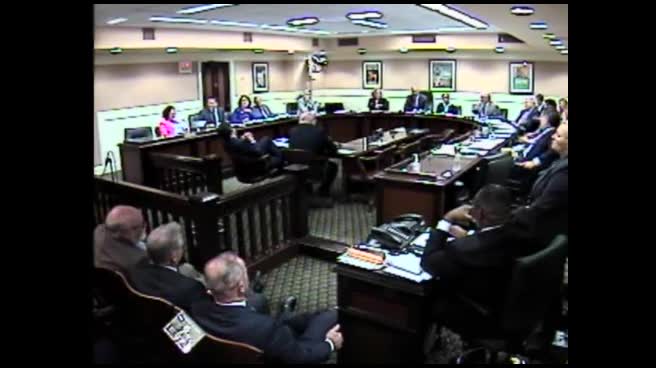 25MIN
Assembly Standing Committee on Utilities and Energy
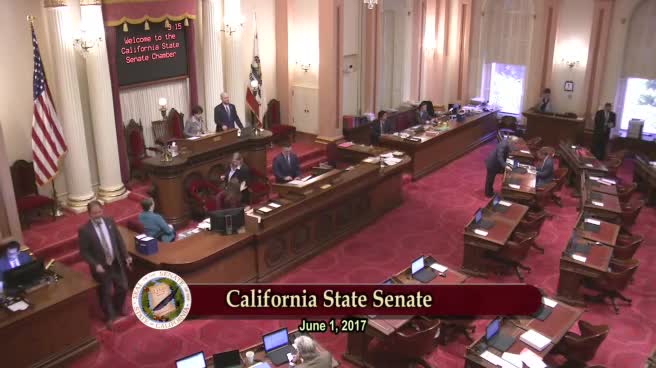 5MIN
Senate Floor
 48MIN
Senate Standing Committee on Appropriations
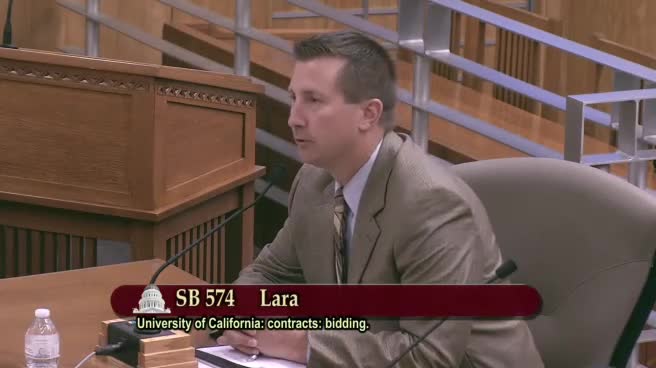 48SEC
Senate Standing Committee on Appropriations
 20MIN
Senate Standing Committee on Energy, Utilities and Communications
Bill Author

Bill Co-Author(s):