SB 906: Mental health services and substance use disorder treatment: peer support specialist certification.
- Session Year: 2017-2018
- House: Senate
- Latest Version Date: 2018-09-07
Existing law provides for the Medi-Cal program, which is administered by the State Department of Health Care Services and under which qualified low-income persons receive health care benefits. The Medi-Cal program is, in part, governed and funded by federal Medicaid program provisions. Existing law provides for a schedule of benefits under the Medi-Cal program and provides for various services, including various behavioral and mental health services.
Existing law, the Mental Health Services Act (MHSA), an initiative measure enacted by the voters as Proposition 63 at the November 2, 2004, statewide general election, establishes the continuously appropriated Mental Health Services Fund to fund various county mental health programs. The act also requires funds to be reserved for the costs for the State Department of Health Care Services, the California Mental Health Planning Council, the Office of Statewide Health Planning and Development (OSHPD), the Mental Health Services Oversight and Accountability Commission, the State Department of Public Health, and any other state agency to implement all duties pursuant to certain programs provided for by the act, subject to appropriation in the annual Budget Act. The act provides that it may be amended by the Legislature by a 2/3 vote of each house as long as the amendment is consistent with, and furthers the intent of, the act, and that the Legislature may also clarify procedures and terms of the act by majority vote.
This bill would require the State Department of Health Care Services to establish, no later than July 1, 2020, a peer support specialist certification to support the ongoing provision of services to individuals experiencing mental health care needs, substance use disorder needs, or both by certified peer support specialists. The certification components would include, among others, curriculum and core competencies, training and continuing education requirements, a code of ethics, and a process for the investigation of complaints and corrective action. The bill would require an applicant for the certification as a peer support specialist to meet specified requirements, including successful completion of the curriculum and training requirements.
This bill would require, among other things, the department to collaborate with OSHPD and interested stakeholders in implementing the certification. The bill would authorize the department to use funding provided through the MHSA to fund state administrative costs related to this article, subject to an express appropriation in the annual Budget Act, and to the extent authorized under the Mental Health Services Act. The bill would permit the department to claim federal financial participation under the Medicaid program, as specified.
This bill would authorize the department to establish a certification fee schedule and to require remittance of fees as contained in the schedule, for the purpose of supporting activities associated with the ongoing administration of the peer support specialist certification. The bill would declare the intent of the Legislature that the certification fees charged by the department reasonably reflect the expenditures directly applicable to the ongoing administration of the certification.
This bill would authorize the department to enter into exclusive or nonexclusive contracts on a bid or negotiated basis, as specified. This bill also would authorize the department to implement, interpret, or make specific its provisions by means of informational notices, plan letters, plan or provider bulletins, or similar instructions, without taking regulatory action, until regulations are adopted. The bill would require the department to adopt regulations by July 1, 2022, and, commencing July 1, 2019, would require the department to provide semiannual status reports to the Legislature until regulations have been adopted. The bill would provide that the departments implementation of the peer support specialist certification, with respect to Medi-Cal specialty mental health services and Drug Medi-Cal services, is contingent upon federal approval and federal matching funds.
This bill would declare that it clarifies terms and procedures under the Mental Health Services Act.
Existing law provides for the Medi-Cal program, which is administered by the State Department of Health Care Services and under which qualified low-income persons receive health care benefits. The Medi-Cal program is, in part, governed and funded by federal Medicaid program provisions. Existing law provides for a schedule of benefits under the Medi-Cal program and provides for various services, including various behavioral and mental health services.
Existing law, the Mental Health Services Act (MHSA), an initiative measure enacted by the voters as Proposition 63 at the November 2, 2004, statewide general election, establishes the continuously appropriated Mental Health Services Fund to fund various county mental health programs. The act also requires funds to be reserved for the costs for the State Department of Health Care Services, the California Mental Health Planning Council, the Office of Statewide Health Planning and Development (OSHPD), the Mental Health Services Oversight and Accountability Commission, the State Department of Public Health, and any other state agency to implement all duties pursuant to certain programs provided for by the act, subject to appropriation in the annual Budget Act. The act provides that it may be amended by the Legislature by a 2/3 vote of each house as long as the amendment is consistent with, and furthers the intent of, the act, and that the Legislature may also clarify procedures and terms of the act by majority vote.
This bill would require the State Department of Health Care Services to establish, no later than July 1, 2019, a statewide peer support specialist certification program, as a part of the states comprehensive mental health and substance use disorder delivery system and the Medi-Cal program. 2020, a peer support specialist certification to support the ongoing provision of services to individuals experiencing mental health care needs, substance use disorder needs, or both by certified peer support specialists. The certification programs components would include, among others, defining responsibilities and practice guidelines, determining curriculum and core competencies, specifying training and continuing education requirements, establishing a code of ethics, and determining a certification revocation process. a process for the investigation of complaints and corrective action. The bill would require an applicant for the certification as a peer support specialist to meet specified requirements, including successful completion of the curriculum and training requirements.
This bill would require require, among other things, the department to collaborate with OSHPD and interested stakeholders in developing the certification program, and would authorize the department to contract to obtain technical assistance pursuant to a specified joint state-county decisionmaking process. implementing the certification. The bill would authorize the department to use funding provided through the MHSA and designated funds administered by OSHPD to develop and administer the certification program, and would authorize the use of these MHSA funds to serve as the states share of funding to develop and administer the certification program for the purpose of claiming to fund state administrative costs related to this article, subject to an express appropriation in the annual Budget Act, and to the extent authorized under the Mental Health Services Act. The bill would permit the department to claim federal financial participation under the Medicaid program. program, as specified.
This bill would authorize the department to establish a certification fee schedule and to require remittance of fees as contained in the schedule, for the purpose of supporting the departments activities associated with the ongoing state administration of the certification program. The bill would require the department to utilize the other funding resources made available under the bill before determining the need for the certification fee schedule and requiring the remittance of fees. activities associated with the ongoing administration of the peer support specialist certification. The bill would declare the intent of the Legislature that the certification fees charged by the department be reasonable and reasonably reflect the expenditures directly applicable to the ongoing state administration of the certification program. certification.
This bill would require the department to amend the Medicaid state plan to include a certified peer support specialist as a provider type for purposes of the Medi-Cal program and to include peer support specialist services as a distinct service type for purposes of the Medi-Cal program. The bill would require Medi-Cal reimbursement for peer support specialist services to be implemented only if and to the extent that federal financial participation is available and the department obtains all necessary federal approvals. The bill would authorize the department to enter into exclusive or nonexclusive contracts on a bid or negotiated basis, as specified, on a statewide or more limited geographic basis. specified. This bill also would authorize the department to implement, interpret, or make specific its provisions by means of informational notices, plan letters, plan or provider bulletins, or similar instructions, without taking regulatory action, until regulations are adopted. The bill would require the department to adopt regulations by July 1, 2021, 2022, and, commencing July 1, 2019, would require the department to provide semiannual status reports to the Legislature until regulations have been adopted. The bill would provide that the departments implementation of the peer support specialist certification, with respect to Medi-Cal specialty mental health services and Drug Medi-Cal services, is contingent upon federal approval and federal matching funds.
This bill would declare that it clarifies terms and procedures under the Mental Health Services Act.
Existing law provides for the Medi-Cal program, which is administered by the State Department of Health Care Services and under which qualified low-income persons receive health care benefits. The Medi-Cal program is, in part, governed and funded by federal Medicaid Program program provisions. Existing law provides for a schedule of benefits under the Medi-Cal program and provides for various services, including various behavioral and mental health services.
Existing law, the Mental Health Services Act (MHSA), an initiative measure enacted by the voters as Proposition 63 at the November 2, 2004, statewide general election, establishes the continuously appropriated Mental Health Services Fund to fund various county mental health programs. The act also requires funds to be reserved for the costs for the State Department of Health Care Services, the California Mental Health Planning Council, the Office of Statewide Health Planning and Development (OSHPD), the Mental Health Services Oversight and Accountability Commission, the State Department of Public Health, and any other state agency to implement all duties pursuant to certain programs provided for by the act, subject to appropriation in the annual Budget Act. The act provides that it may be amended by the Legislature by a 2/3 vote of each house as long as the amendment is consistent with, and furthers the intent of, the act, and that the Legislature may also clarify procedures and terms of the act by majority vote.
This bill would require the State Department of Health Care Services to establish, no later than July 1, 2019, a statewide peer, parent, transition-age, and family peer support specialist certification program, as a part of the states comprehensive mental health and substance use disorder delivery system and the Medi-Cal program. The bill would include 4 certification categories: adult peer support specialists, transition-age youth peer support specialists, family peer support specialists, and parent peer support specialists. The certification programs components would include, among others, defining responsibilities and practice guidelines, determining curriculum and core competencies, specifying training and continuing education requirements, establishing a code of ethics, and determining a certification revocation process. The bill would require an applicant for the certification as a peer, parent, transition-age, or family peer support specialist to meet specified requirements, including successful completion of the curriculum and training requirements.
This bill would require the department to collaborate with OSHPD and interested stakeholders in developing the certification program, and would authorize the department to contract to obtain technical assistance pursuant to a specified joint state-county decisionmaking process. The bill would authorize the department to use funding provided through the MHSA and designated funds administered by OSHPD to develop and administer the certification program, and would authorize the use of these MHSA funds to serve as the states share of funding to develop and administer the certification program for the purpose of claiming federal financial participation under the Medicaid Program. program.
This bill would authorize the department to establish a certification fee schedule and to require remittance of fees as contained in the schedule, for the purpose of supporting the departments activities associated with the ongoing state administration of the certification program. The bill would require the department to utilize the other funding resources made available under the bill before determining the need for the certification fee schedule and requiring the remittance of fees. The bill would declare the intent of the Legislature that the certification fees charged by the department be reasonable and reflect the expenditures directly applicable to the ongoing state administration of the certification program.
This bill would require the department to amend the Medicaid state plan to include a certified peer, parent, transition-age, and family peer support specialist as a provider type for purposes of the Medi-Cal program and to include peer support specialist services as a distinct service type for purposes of the Medi-Cal program. The bill would require Medi-Cal reimbursement for peer support specialist services to be implemented only if and to the extent that federal financial participation is available and the department obtains all necessary federal approvals. The bill would authorize the department to enter into exclusive or nonexclusive contracts on a bid or negotiated basis, as specified, on a statewide or more limited geographic basis. This bill also would authorize the department to implement, interpret, or make specific its provisions by means of plan letters, plan or provider bulletins, or similar instructions, without taking regulatory action, until regulations are adopted. The bill would require the department to adopt regulations by July 1, 2021, and, commencing July 1, 2019, would require the department to provide semiannual status reports to the Legislature until regulations have been adopted.
This bill would declare that it clarifies terms and procedures under the Mental Health Services Act.
Existing law provides for the Medi-Cal program, which is administered by the State Department of Health Care Services and under which qualified low-income persons receive health care benefits. The Medi-Cal program is, in part, governed and funded by federal Medicaid Program provisions. Existing law provides for a schedule of benefits under the Medi-Cal program and provides for various services, including various behavioral and mental health services.
Existing law, the Mental Health Services Act (MHSA), an initiative measure enacted by the voters as Proposition 63 at the November 2, 2004, statewide general election, establishes the continuously appropriated Mental Health Services Fund to fund various county mental health programs. The act also requires funds to be reserved for the costs for the State Department of Health Care Services, the California Mental Health Planning Council, the Office of Statewide Health Planning and Development (OSHPD), the Mental Health Services Oversight and Accountability Commission, the State Department of Public Health, and any other state agency to implement all duties pursuant to certain programs provided for by the act, subject to appropriation in the annual Budget Act. The act provides that it may be amended by the Legislature by a 2/3 vote of each house as long as the amendment is consistent with, and furthers the intent of, the act, and that the Legislature may also clarify procedures and terms of the act by majority vote.
This bill would require the State Department of Health Care Services to establish, no later than July 1, 2019, a statewide peer, parent, transition-age, and family support specialist certification program, as a part of the states comprehensive mental health and substance use disorder delivery system and the Medi-Cal program. The bill would include 4 certification categories: adult peer support specialists, transition-age youth peer support specialists, family peer support specialists, and parent peer support specialists. The certification programs components would include, among others, defining responsibilities and practice guidelines, determining curriculum and core competencies, specifying training and continuing education requirements, establishing a code of ethics, and determining a certification revocation process. The bill would require an applicant for the certification as a peer, parent, transition-age, or family support specialist to meet specified requirements, including successful completion of the curriculum and training requirements.
This bill would require the department to collaborate with OSHPD and interested stakeholders in developing the certification program, and would authorize the department to contract to obtain technical assistance pursuant to a specified joint state-county decisionmaking process. The bill would authorize the department to use funding provided through the MHSA and designated funds administered by OSHPD to develop and administer the certification program, and would authorize the use of these MHSA funds to serve as the states share of funding to develop and administer the certification program for the purpose of claiming federal financial participation under the Medicaid Program.
This bill would authorize the department to establish a certification fee schedule and to require remittance of fees as contained in the schedule, for the purpose of supporting the departments activities associated with the ongoing state administration of the certification program. The bill would require the department to utilize the other funding resources made available under the bill before determining the need for the certification fee schedule and requiring the remittance of fees. The bill would declare the intent of the Legislature that the certification fees charged by the department be reasonable and reflect the expenditures directly applicable to the ongoing state administration of the certification program.
This bill would require the department to amend the Medicaid state plan to include a certified peer, parent, transition-age, and family support specialist as a provider type for purposes of the Medi-Cal program and to include peer support specialist services as a distinct service type for purposes of the Medi-Cal program. The bill would require Medi-Cal reimbursement for peer support specialist services to be implemented only if and to the extent that federal financial participation is available and the department obtains all necessary federal approvals. The bill would authorize the department to enter into exclusive or nonexclusive contracts on a bid or negotiated basis, as specified, on a statewide or more limited geographic basis. This bill also would authorize the department to implement, interpret, or make specific its provisions by means of plan letters, plan or provider bulletins, or similar instructions, without taking regulatory action, until regulations are adopted. The bill would require the department to adopt regulations by July 1, 2021, and, commencing July 1, 2019, would require the department to provide semiannual status reports to the Legislature until regulations have been adopted.
This bill would declare that it clarifies terms and procedures under the Mental Health Services Act.
Existing law provides for the Medi-Cal program, which is administered by the State Department of Health Care Services and under which qualified low-income persons receive health care benefits. The Medi-Cal program is, in part, governed and funded by federal Medicaid provisions. Existing law provides for a schedule of benefits under the Medi-Cal program and provides for various services, including various behavioral and mental health services.
Existing law, the Mental Health Services Act (MHSA), an initiative measure enacted by the voters as Proposition 63 at the November 2, 2004, statewide general election, establishes the continuously appropriated Mental Health Services Fund to fund various county mental health programs. The act also requires funds to be reserved for the costs for the State Department of Health Care Services, the California Mental Health Planning Council, the Office of Statewide Health Planning and Development (OSHPD), the Mental Health Services Oversight and Accountability Commission, the State Department of Public Health, and any other state agency to implement all duties pursuant to certain programs provided for by the act, subject to appropriation in the annual Budget Act. The act provides that it may be amended by the Legislature by a 2/3 vote of each house as long as the amendment is consistent with, and furthers the intent of, the act, and that the Legislature may also clarify procedures and terms of the act by majority vote.
This bill would require the State Department of Health Care Services to establish, no later than July 1, 2019, a statewide peer, parent, transition-age, and family support specialist certification program, as a part of the states comprehensive mental health and substance use disorder delivery system and the Medi-Cal program. The bill would include 4 certification categories: adult peer support specialists, transition-age youth peer support specialists, family peer support specialists, and parent peer support specialists. The certification programs components would include, among others, defining responsibilities and practice guidelines, determining curriculum and core competencies, specifying training and continuing education requirements, establishing a code of ethics, and determining a certification revocation process. The bill would require an applicant for the certification as a peer, parent, transition-age, or family support specialist to meet specified requirements, including successful completion of the curriculum and training requirements.
This bill would require the department to collaborate with OSHPD and interested stakeholders in developing the certification program, and would authorize the department to contract to obtain technical assistance pursuant to a specified joint state-county decisionmaking process. The bill would authorize the department to use funding provided through the MHSA and designated funds administered by OSHPD to develop and administer the certification program, and would authorize the use of these MHSA funds to serve as the states share of funding to develop and administer the certification program for the purpose of claiming federal financial participation under the Medicaid Program.
This bill would authorize the department to establish a certification fee schedule and to require remittance of fees as contained in the schedule, for the purpose of supporting the departments activities associated with the ongoing state administration of the certification program. The bill would require the department to utilize the other funding resources made available under the bill before determining the need for the certification fee schedule and requiring the remittance of fees. The bill would declare the intent of the Legislature that the certification fees charged by the department be reasonable and reflect the expenditures directly applicable to the ongoing state administration of the certification program.
This bill would require the department to amend the Medicaid state plan to include a certified peer, parent, transition-age, and family support specialist as a provider type for purposes of the Medi-Cal program and to include peer support specialist services as a distinct service type for purposes of the Medi-Cal program. The bill would require Medi-Cal reimbursement for peer support specialist services to be implemented only if and to the extent that federal financial participation is available and the department obtains all necessary federal approvals. The bill would authorize the department to enter into exclusive or nonexclusive contracts on a bid or negotiated basis, as specified, on a statewide or more limited geographic basis. This bill also would authorize the department to implement, interpret, or make specific its provisions by means of plan letters, plan or provider bulletins, or similar instructions, without taking regulatory action, until regulations are adopted. The bill would require the department to adopt regulations by July 1, 2021, and, commencing July 1, 2019, would require the department to provide semiannual status reports to the Legislature until regulations have been adopted.
This bill would declare that it clarifies terms and procedures under the Mental Health Services Act.
This article shall be known, and may be cited, as the Peer Support Specialist Certification Act of 2018.
14045.11.The Legislature finds and declares all of the following:
(a)With the enactment of the Mental Health Services Act in 2004, support to include peer providers identified as consumers, parents, and family members for the provision of services has been on the rise.
(b)There are over 6,000 peer providers in California who provide individualized support, coaching, facilitation, and education to clients with mental health care needs and substance use disorder, in a variety of settings, yet no statewide scope of practice, standardized curriculum, training standards, supervision standards, or certification protocol is available.
(c)The United States Department of Veterans Affairs and over 30 states utilize standardized curricula and certification protocols for peer support services.
(d)The federal Centers for Medicare and Medicaid Services (CMS) recognizes that the experiences of peer support specialists, as part of an evidence-based model of care, can be an important component in a states delivery of effective mental health and substance use disorder treatment. The CMS encourages states to offer comprehensive programs.
(e)A substantial number of research studies demonstrate that peer supports improve client functioning, increase client satisfaction, reduce family burden, alleviate depression and other symptoms, reduce hospitalizations and hospital days, increase client activation, and enhance client self-advocacy.
(f)Certification can encourage an increase in the number, diversity, and availability of peer support specialists.
14045.12.It is the intent of the Legislature that the Peer Support Specialist Certification Act of 2018, established under this article, achieve all of the following:
(a)Support the ongoing provision of services for beneficiaries experiencing mental health care needs, substance use disorder needs, or both by certified peer support specialists.
(b)Support coaching, linkage, and skill building of beneficiaries with mental health needs, substance use disorder needs, or both, and to families or significant support persons.
(c)Increase family support by building on the strengths of families and assisting them in achieving a better understanding of mental illness in order to help beneficiaries achieve desired outcomes.
(d)Provide part of a continuum of services, in conjunction with other community mental health services and other substance use disorder treatment.
(e)Collaborate with others providing care or support to the beneficiaries or families.
(f)Assist parents, families, and beneficiaries in developing coping mechanisms and problem-solving skills in order to help beneficiaries achieve desired outcomes.
(g)Promote skill building for beneficiaries in the areas of socialization, recovery, self-sufficiency, self-advocacy, development of natural supports, and maintenance of skills learned in other support services.
(h)Encourage employment under the peer support specialist certification to reflect the culture, ethnicity, sexual orientation, gender identity, mental health service experiences, and substance use disorder experiences of the people whom they serve.
14045.13.For purposes of this article, the following definitions shall apply:
(a)Certification means the activities of the certifying body related to the verification that an individual has met all requirements under this article and that the individual may provide mental health services and substance use disorder treatment pursuant to this article.
(b)Code of ethics means the standards to which a peer support specialist is required to adhere.
(c)Core competencies are the foundational and essential knowledge, skills, and abilities required for peer specialists.
(d)Cultural competence means a set of congruent behaviors, attitudes, and policies that come together in a system or agency that enables that system or agency to work effectively in cross-cultural situations. A culturally competent system of care acknowledges and incorporates, at all levels, the importance of language and culture, intersecting identities, assessment of cross-cultural relations, knowledge and acceptance of dynamics of cultural differences, expansion of cultural knowledge, and adaptation of services to meet culturally unique needs to provide services in a culturally competent manner.
(e)Department means the State Department of Health Care Services.
(f)Peer support specialist means a person who is 18 years of age or older and who is a person who has self-identified as having lived experience with the process of recovery from mental illness, substance use disorder, or both, either as a consumer of these services, or as the parent or family member of the consumer.
(g)Recovery means a process of change through which an individual improves his or her health and wellness, lives a self-directed life, and strives to reach his or her full potential. This process of change recognizes cultural diversity and inclusion, and honors the different routes to resilience and recovery based on the individual and his or her cultural community.
14045.14.No later than July 1, 2020, the department shall do all of the following:
(a)Establish a certifying body, through either contract or an interagency agreement, to perform certification of activities as described in this article.
(b)Define the range of responsibilities and practice guidelines for peer support specialists by utilizing best practice materials published by the federal Substance Abuse and Mental Health Services Administration, the federal Department of Veterans Affairs, and related notable experts in the field as a basis for development.
(c)Determine curriculum and core competencies required for certification of an individual as a peer support specialist, including curriculum that may be offered in the following areas of specialization: transition-age youth, veterans, gender identity, sexual orientation, and any other areas of specialization identified by the department. Core competencies-based curriculum shall include, at a minimum, training related to the following elements:
(1)The concepts of hope, recovery, and wellness.
(2)The role of advocacy.
(3)The role of consumers and family members.
(4)Psychiatric rehabilitation skills and service delivery, and addiction recovery principles, including defined practices.
(5)Cultural competence training.
(6)Trauma-informed care.
(7)Group facilitation skills.
(8)Self-awareness and self-care.
(9)Cooccurring disorders of mental health and substance use.
(10)Conflict resolution.
(11)Professional boundaries and ethics.
(12)Safety and crisis planning.
(13)Navigation of, and referral to, other services.
(14)Documentation skills and standards.
(15)Study and test-taking skills.
(16)Confidentiality.
(d)Specify training requirements, including core-competencies-based training and specialized training necessary to become certified under this article, allowing for multiple qualified training entities, and requiring training to include people with lived experience as consumers and family members.
(e)Establish a code of ethics.
(f)Determine continuing education requirements for biennial certification renewal.
(g)Determine the process for biennial certification renewal.
(h)Determine a process for investigation of complaints and corrective action, which may include suspension and revocation of certification.
(i)Determine a process for an individual employed as a peer support specialist on the date that this act becomes operative to obtain certification under this article.
14045.15.(a)An applicant for certification under this article shall meet all of the following requirements:
(1)Be at least 18 years of age.
(2)Possess a high school diploma or equivalent degree.
(3)Be self-identified as having experience with the process of recovery from mental illness or substance use disorder treatment either as a consumer of these services, or the parent or family member of the consumer.
(4)Be willing to share his or her experience.
(5)Demonstrate leadership and advocacy skills.
(6)Have a strong dedication to recovery.
(7)Agree, in writing, to adhere to a code of ethics.
(8)Successfully complete the curriculum and training requirements for a peer support specialist.
(9)Pass a certification examination approved by the department for a peer support specialist.
(b)To maintain certification under this article, a peer support specialist shall:
(1)Adhere to the code of ethics and biennially sign an affirmation.
(2)Complete any required continuing education, training, and recertification requirements.
14045.16.(a)This article shall not be construed to imply that a person who is certified pursuant to this article is qualified to, or to authorize that person to, diagnose an illness, prescribe medication, or provide clinical services.
(b)This article does not alter the scope of practice for any health care professional or authorize the delivery of health care services in a setting or manner that is not authorized under any provision of the Business and Professions Code or the Health and Safety Code.
14045.17.The department shall consult with the Office of Statewide Health Planning and Development, peer support and family organizations, mental health services and substance use disorder treatment providers and organizations, the County Behavioral Health Directors Association of California, and the California Behavioral Health Planning Council in implementing this article. This consultation shall initially include, at a minimum, quarterly stakeholder meetings. The department may additionally conduct technical workgroups upon the request of stakeholders.
14045.18.To facilitate early intervention for mental health services, community health workers may partner with peer support specialists to improve linkage to services for the beneficiary.
14045.19.It is not the intent of the Legislature in enacting this article to modify the Medicaid state plan in any manner that would otherwise change or nullify the requirements, billing, or reimbursement of the other qualified provider provider type, as currently authorized by the Medicaid state plan.14045.20.The department may utilize Mental Health Services Act moneys to fund state administrative costs related to developing and administering this article subject to an express appropriation in the annual Budget Act for these purposes, and to the extent authorized under the Mental Health Services Act. These funds shall be available for purposes of claiming federal financial participation under Title XIX of the federal Social Security Act (42 U.S.C. Sec. 1396) contingent upon federal approval.
14045.21.For Medi-Cal specialty mental health services and Drug Medi-Cal services, this article shall be implemented only to the extent that both of the following occur:
(a)The department obtains any federal approvals necessary to implement this section.
(b)The department obtains federal matching funds to the extent permitted by federal law.
14045.22.The department may establish a certification fee schedule and may require remittance as contained in the certification fee schedule for the purpose of supporting the activities associated with the ongoing administration of the Peer Support Specialist Certification Act of 2018. It is the intent of the Legislature that any certification fees charged by the department reasonably reflect the expenditures directly applicable to the ongoing administration of the peer, parent, transition-age, and family support specialists.
14045.23.For the purposes of implementing this article, the department may enter into exclusive or nonexclusive contracts on a bid or negotiated basis, including contracts for the purpose of obtaining subject matter expertise or other technical assistance.
14045.24.Notwithstanding Chapter 3.5 (commencing with Section 11340) of Part 1 of Division 3 of Title 2 of the Government Code, the department may implement, interpret, or make specific this article by means of informational notices, plan letters, plan or provider bulletins, or similar instructions, without taking regulatory action, until the time regulations are adopted. The department shall adopt regulations by July 1, 2022, in accordance with the requirements of Chapter 3.5 (commencing with Section 11340) of Part 1 of Division 3 of Title 2 of the Government Code. Commencing July 1, 2019, the department shall provide semiannual status reports to the Legislature, in compliance with Section 9795 of the Government Code, until regulations have been adopted.
SEC. 2.The Legislature finds and declares that this act clarifies procedures and terms of the Mental Health Services Act within the meaning of Section 18 of the Mental Health Services Act.
This article shall be known, and may be cited, as the Peer Support Specialist Certification Program Act of 2018.
14045.11.The Legislature finds and declares all of the following:
(a)With the enactment of the Mental Health Services Act in 2004, support to include peer providers identified as consumers, parents, and family members for the provision of services has been on the rise.
(b)There are over 6,000 peer providers in California who provide individualized support, coaching, facilitation, and education to clients with mental health care needs and substance use disorder, in a variety of settings, yet no statewide scope of practice, standardized curriculum, training standards, supervision standards, or certification protocol is available.
(c)The United States Department of Veterans Affairs and over 30 states utilize standardized curricula and certification protocols for peer support services.
(d)The federal Centers for Medicare and Medicaid Services (CMS) recognizes peer support services as an evidence-based model of care and notes it is an important component in a states delivery of effective mental health and substance use disorder treatment. The CMS encourages states to offer peer support services as a component of a comprehensive mental health and substance use disorder delivery system, and federal financial participation is available for this purpose.(d)The federal Centers for Medicare and Medicaid Services (CMS) recognizes that the experiences of peer support specialists, as part of an evidence-based model of care, can be an important component in a states delivery of effective mental health and substance use disorder treatment. The CMS encourages states to offer comprehensive programs.
(e)A substantial number of research studies demonstrate that peer supports improve client functioning, increase client satisfaction, reduce family burden, alleviate depression and other symptoms, reduce hospitalizations and hospital days, increase client activation, and enhance client self-advocacy.
(f)Certification at the state level can incentivize the public mental health system and the Medi-Cal program, including the Drug Medi-Cal program, to increase the number, diversity, and availability of peer providers and peer-driven services.(f)Certification can encourage an increase in the number, diversity, and availability of peer support specialists.
14045.12.It is the intent of the Legislature that the peer support specialist certification program, Peer Support Specialist Certification Act of 2018, established under this article, achieve all of the following:
(a)Establish the ongoing provision of peer support services for beneficiaries experiencing mental health care needs, substance use disorder needs, or both by certified peer support specialists.(a)Support the ongoing provision of services for beneficiaries experiencing mental health care needs, substance use disorder needs, or both by certified peer support specialists.
(b)Provide support, coaching, facilitation, and education to Support coaching, linkage, and skill building of beneficiaries with mental health needs, substance use disorder needs, or both, and to families or significant support persons.
(c)Provide increased family support, building on the strengths of families and helping them achieve desired outcomes.(c)Increase family support by building on the strengths of families and assisting them in achieving a better understanding of mental illness in order to help beneficiaries achieve desired outcomes.
(d)Provide a part of a wraparound part of a continuum of services, in conjunction with other community mental health services and other substance use disorder services. treatment.
(e)Collaborate with others providing care or support to the beneficiary or family. beneficiaries or families.
(f)Assist parents, when applicable, in developing coping mechanisms and problem-solving skills.(g)Provide an individualized focus on the beneficiary, the family, or both, as needed.(f)Assist parents, families, and beneficiaries in developing coping mechanisms and problem-solving skills in order to help beneficiaries achieve desired outcomes.
(g)Promote skill building for beneficiaries in the areas of socialization, recovery, self-sufficiency, self-advocacy, development of natural supports, and maintenance of skills learned in other support services.
(h)Encourage employment under the peer support specialist certification program to reflect the culture, ethnicity, sexual orientation, gender identity, mental health service experiences, and substance use disorder experiences of the people whom they serve.
(i)Promote socialization, recovery, self-sufficiency, self-advocacy, development of natural supports, and maintenance of skills learned in other support services.14045.13.For purposes of this article, the following definitions shall apply:
(a)Certification means, as it pertains to the peer support specialist certification program, all federal and state requirements have been satisfied, federal financial participation under Title XIX of the federal Social Security Act (42 U.S.C. Sec. 1396 et seq.) is available, and all necessary federal approvals have been obtained.(b)Certification examination means the competency testing requirements, as approved by the department, that a person is required to successfully complete as a condition of becoming certified under this article. Each training program approved by the department may develop a competency examination for peer support specialists. Each certification examination shall include core curriculum elements.(c)Certified means all federal and state requirements have been satisfied by a person who is seeking designation under this article, including completion of curriculum and training requirements, testing, and agreement to uphold and abide by the code of ethics.(d)Code of ethics means the professional standards each certified peer support specialist is required to agree to uphold and abide by. These professional standards shall include principles and expected behavior and conduct of the certificate holder in an agreed-upon statement that is required to be provided to the applicant and acknowledged by signing with his or her personal signature prior to being granted certification under this article.(e)Core competencies are the foundational and essential competencies required of peer support specialists who provide peer support services.(a)Certification means the activities of the certifying body related to the verification that an individual has met all requirements under this article and that the individual may provide mental health services and substance use disorder treatment pursuant to this article.
(b)Code of ethics means the standards to which a peer support specialist is required to adhere.
(c)Core competencies are the foundational and essential knowledge, skills, and abilities required for peer specialists.
(f)(d)Cultural competence means a set of congruent behaviors, attitudes, and policies that come together in a system or agency that enables that system or agency to work effectively in cross-cultural situations. A culturally competent system of care acknowledges and incorporates, at all levels, the importance of language and culture, intersecting identities, assessment of cross-cultural relations, knowledge and acceptance of dynamics of cultural differences, expansion of cultural knowledge, and adaptation of services to meet culturally unique needs to provide services in a culturally competent manner.
(g)(e)Department means the State Department of Health Care Services.
(h)(f)Peer support specialist means a person who is 18 years of age or older and who is any of the following: a person who has self-identified as having lived experience with the process of recovery from mental illness, substance use disorder, or both, either as a consumer of these services, or as the parent or family member of the consumer.
(1)A person who has self-identified as having lived experience of recovery from mental illness, substance use disorder, or both, and the skills learned in formal trainings to deliver peer support services in a behavioral setting to promote mind-body recovery and resiliency for adults or transition-age youth, including adolescents and young adults.(2)A person with lived experience as a self-identified family member of an individual experiencing mental illness, substance use disorder, or both, and the skills learned in formal trainings to assist and empower families of individuals experiencing mental illness, substance use disorder, or both.(3)A person who is parenting or has parented a child or individual experiencing mental illness, substance use disorder, or both, and who can articulate his or her understanding of his or her experience with another parent or caregiver. This person may be a birth parent, adoptive parent, or family member standing in for an absent parent.(i) Peer support specialist services means culturally competent services that promote engagement, socialization, recovery, self-sufficiency, self-advocacy, development of natural supports, identification of strengths, and maintenance of skills learned in other support services. Peer support specialist services shall include, but are not limited to, support, coaching, facilitation, or education to Medi-Cal beneficiaries that is individualized to the beneficiary and is conducted by a certified peer support specialist.(j)(g)Recovery means a process of change through which an individual improves his or her health and wellness, lives a self-directed life, and strives to reach his or her full potential. This process of change recognizes cultural diversity and inclusion, and honors the different routes to resilience and recovery based on the individual and his or her cultural community.
14045.14.No later than July 1, 2019, 2020, the department, as the sole state Medicaid agency, shall establish a peer support specialist certification program that, at a minimum, shall do all of the following: department shall do all of the following:
(a)Establish a certifying body, either within the department,through contract, or through an interagency agreement, to provide for the certification of peer support specialists through either contract or an interagency agreement, to perform certification of activities as described in this article.
(b)Provide for a statewide certification for peer support specialists, as contained in federal guidance issued by the federal Centers for Medicare and Medicaid Services, State Medicaid Director Letter (SMDL) #07-011.(c)(b)Define the range of responsibilities and practice guidelines for peer support specialists by utilizing best practice materials published by the federal Substance Abuse and Mental Health Services Administration, the federal Department of Veterans Affairs, and related notable experts in the field as a basis for development.
(d)Determine curriculum and core competencies, including curriculum that may be offered in the following areas of specialization: parent advocates, family members, transition-age youth, older adults, veterans, family support, forensics, whole health, juvenile justice, youth in foster care, sexual orientation, gender identity, homelessness, and any other areas of specialization identified by the department. Core competencies-based curriculum shall include, at a minimum, all of the following elements:(c)Determine curriculum and core competencies required for certification of an individual as a peer support specialist, including curriculum that may be offered in the following areas of specialization: transition-age youth, veterans, gender identity, sexual orientation, and any other areas of specialization identified by the department. Core competencies-based curriculum shall include, at a minimum, training related to the following elements:
(1)The concepts of hope, recovery, and wellness.
(2)The role of advocacy.
(3)The role of consumers and family members.
(4)Psychiatric rehabilitation skills and service delivery, and addiction recovery principles, including defined practices.
(5)Cultural competence training.
(6)Trauma-informed care.
(7)Group facilitation skills.
(8)Self-awareness and self-care.
(9)Cooccurring disorders of mental health and substance use.
(10)Conflict resolution.
(11)Professional boundaries and ethics.
(12)Safety and crisis planning.
(13)Navigation of, and referral to, other services.
(14)Documentation skills and standards.
(15)Study and test-taking skills.
(16)Confidentiality.
(e)(d)Specify training requirements, including core-competencies-based training and specialized training necessary to become certified under this article, allowing for multiple qualified training entities, and requiring training to include people with lived experience as consumers and family members.
(f)Specify required continuing education requirements for certification.(g)Determine clinical supervision requirements for personnel certified under this article, that shall require, at a minimum, personnel certified pursuant to this article to work under the direction of a mental health rehabilitation specialist, as defined in Section 782.35 of Title 9 of the California Code of Regulations, or substance use disorder professional. A licensed mental health professional, as defined in Section 782.26 of Title 9 of the California Code of Regulations, may also provide supervision.(h)(e)Establish a code of ethics.
(i)Determine the process for certification renewal.(j)Determine a process for revocation of certification.(k)Determine a process for allowing existing personnel employed in the peer support field to obtain certification under this article, at their option.(f)Determine continuing education requirements for biennial certification renewal.
(g)Determine the process for biennial certification renewal.
(h)Determine a process for investigation of complaints and corrective action, which may include suspension and revocation of certification.
(i)Determine a process for an individual employed as a peer support specialist on the date that this act becomes operative to obtain certification under this article.
14045.15.In order to be certified as a peer support specialist, a person shall, at a minimum, satisfy all of the following requirements:(a)Be at least 18 years of age.(b)Be any of the following:(1)A person who has or has had a primary diagnosis of mental illness, substance use disorder, or both, which is self-disclosed, and who has received or is receiving mental health services, substance use disorder services, or both.(2)A person self-identified as a family member, as described in subdivision (h) of Section 14045.13.(3)A person who is a parent, as described in subdivision (h) of Section 14045.13.(c)Be willing to share his or her experience.(d)Demonstrate leadership and advocacy skills.(e)Have a strong dedication to recovery.(f)Agree to uphold and abide by a code of ethics. A copy of the code of ethics shall be signed by the applicant.(g)Successfully complete the curriculum and training requirements for a peer support specialist.(h)Pass a certification examination approved by the department for a peer support specialist.(i)Successfully complete any required continuing education, training, and recertification requirements.14045.15.(a)An applicant for certification under this article shall meet all of the following requirements:
(1)Be at least 18 years of age.
(2)Possess a high school diploma or equivalent degree.
(3)Be self-identified as having experience with the process of recovery from mental illness or substance use disorder treatment either as a consumer of these services, or the parent or family member of the consumer.
(4)Be willing to share his or her experience.
(5)Demonstrate leadership and advocacy skills.
(6)Have a strong dedication to recovery.
(7)Agree, in writing, to adhere to a code of ethics.
(8)Successfully complete the curriculum and training requirements for a peer support specialist.
(9)Pass a certification examination approved by the department for a peer support specialist.
(b)To maintain certification under this article, a peer support specialist shall:
(1)Adhere to the code of ethics and biennially sign an affirmation.
(2)Complete any required continuing education, training, and recertification requirements.
14045.16.(a)This article shall not be construed to imply that a person who is certified pursuant to this article is qualified to, or to authorize that person to, diagnose an illness, prescribe medication, or provide clinical services.
(b)This article does not alter the scope of practice for any health care professional or authorize the delivery of health care services in a setting or manner that is not authorized under any provision of the Business and Professions Code or the Health and Safety Code.
14045.17.The department shall closely collaborate with the Office of Statewide Health Planning and Development (OSHPD) and its associated workforce collaborative, and regularly consult with interested stakeholders, including peer support and family organizations, mental health and substance use disorder services providers and organizations, the County Behavioral Health Directors Association of California, health plans participating in the Medi-Cal managed care program, the California Behavioral Health Planning Council, and other interested parties in developing, implementing, and administering the peer support specialist certification program established pursuant to this article. This consultation shall initially include, at a minimum, bimonthly stakeholder meetings, which may also include technical workgroup meetings. The department may seek private funds from a nonprofit organization or foundation for this purpose.14045.18.The department may contract to obtain technical assistance for the development of the peer support specialist certification program, as provided in Section 4061.14045.19.(a)The department shall amend its Medicaid state plan to do both of the following:(1)Include a peer support specialist certified pursuant to this article as a provider type for purposes of this chapter.(2)Include peer support specialist services as a distinct service type for purposes of this chapter, which may be provided to eligible Medi-Cal beneficiaries who are enrolled in either a Medi-Cal managed mental health care plan or a Medi-Cal managed care health plan.(b)The department may seek any federal waivers or other state plan amendments as necessary to implement the certification program provided for under this article.(c)Medi-Cal reimbursement for peer support specialist services shall be implemented only if and to the extent that federal financial participation under Title XIX of the federal Social Security Act (42 U.S.C. Sec. 1396 et seq.) is available and all necessary federal approvals have been obtained.14045.17.The department shall consult with the Office of Statewide Health Planning and Development, peer support and family organizations, mental health services and substance use disorder treatment providers and organizations, the County Behavioral Health Directors Association of California, and the California Behavioral Health Planning Council in implementing this article. This consultation shall initially include, at a minimum, quarterly stakeholder meetings. The department may additionally conduct technical workgroups upon the request of stakeholders.
14045.20.14045.18.To facilitate early intervention for mental health services, community health workers may partner with peer support specialists for engagement, outreach, and education. to improve linkage to services for the beneficiary.
14045.21.14045.19.It is not the intent of the Legislature in enacting this article to modify the Medicaid state plan in any manner that would otherwise change or nullify the requirements, billing, or reimbursement of the other qualified provider provider type, as currently authorized by the Medicaid state plan.14045.22.The department may utilize Mental Health Services Act funds under subdivision (d) of Section 5892 and any designated Workforce Education and Training Program resources, including funding, as administered by OSHPD pursuant to Section 5820, to develop and administer the peer support specialist certification program. Further, these Mental Health Service Act funds may then serve as the states share of funding to develop and administer the peer support specialist certification program and shall be available for purposes of claiming federal financial participation under Title XIX of the federal Social Security Act (42 U.S.C. Sec. 1396 et seq.) once all necessary federal approvals have been obtained.14045.23.The department may establish a certification fee schedule and may require remittance as contained in the certification fee schedule for the purpose of supporting the departments activities associated with the ongoing state administration of the peer support specialist certification program. The department shall utilize all funding resources as made available in Section 14045.22 first, prior to determining the need for the certification fee schedule and requiring the remittance of fees. It is the intent of the Legislature that any certification fees charged by the department be reasonable and reflect the expenditures directly applicable to the ongoing state administration of the peer support specialist certification program.14045.20.The department may utilize Mental Health Services Act monies to fund state administrative costs related to developing and administering this article subject to an express appropriation in the annual Budget Act for these purposes, and to the extent authorized under the Mental Health Services Act. These funds shall be available for purposes of claiming federal financial participation under Title XIX of the federal Social Security Act (42 U.S.C. Sec. 1396) contingent upon federal approval.
14045.21.For Medi-Cal specialty mental health services and Drug Medi-Cal services, this article shall be implemented only to the extent that both of the following occur:
(a)The department obtains any federal approvals necessary to implement this section.
(b)The department obtains federal matching funds to the extent permitted by federal law.
14045.22.The department may establish a certification fee schedule and may require remittance as contained in the certification fee schedule for the purpose of supporting the activities associated with the ongoing administration of the Peer Support Specialist Certification Act of 2018. It is the intent of the Legislature that any certification fees charged by the department reasonably reflect the expenditures directly applicable to the ongoing administration of the peer, parent, transition-age, and family support specialists.
14045.24.14045.23.For the purposes of implementing this article, the department may enter into exclusive or nonexclusive contracts on a bid or negotiated basis, including contracts for the purpose of obtaining subject matter expertise or other technical assistance. Contracts may be statewide or on a more limited geographic basis.
14045.25.14045.24.Notwithstanding Chapter 3.5 (commencing with Section 11340) of Part 1 of Division 3 of Title 2 of the Government Code, the department may implement, interpret, or make specific this article by means of informational notices, plan letters, plan or provider bulletins, or similar instructions, without taking regulatory action, until the time regulations are adopted. The department shall adopt regulations by July 1, 2021, 2022, in accordance with the requirements of Chapter 3.5 (commencing with Section 11340) of Part 1 of Division 3 of Title 2 of the Government Code. Commencing July 1, 2019, the department shall provide semiannual status reports to the Legislature, in compliance with Section 9795 of the Government Code, until regulations have been adopted.
SEC. 2.The Legislature finds and declares that this act clarifies procedures and terms of the Mental Health Services Act within the meaning of Section 18 of the Mental Health Services Act.
This article shall be known, and may be cited, as the Peer, Parent, Transition-Age, and Family Peer Support Specialist Certification Program Act of 2018.
14045.11.The Legislature finds and declares all of the following:
(a)With the enactment of the Mental Health Services Act in 2004, support to include peer providers identified as consumers, parents, and family members for the provision of services has been on the rise.
(b)There are over 6,000 peer providers in California who provide individualized support, coaching, facilitation, and education to clients with mental health care needs and substance use disorder, in a variety of settings, yet no statewide scope of practice, standardized curriculum, training standards, supervision standards, or certification protocol is available.
(c)The United States Department of Veterans Affairs and over 30 states utilize standardized curricula and certification protocols for peer support services.
(d)The federal Centers for Medicare and Medicaid Services (CMS) recognizes peer support services as an evidence-based model of care and notes it is an important component in a states delivery of effective mental health and substance use disorder treatment. The CMS encourages states to offer peer support services as a component of a comprehensive mental health and substance use disorder delivery system, and federal financial participation is available for this purpose.
(e)A substantial number of research studies demonstrate that peer supports improve client functioning, increase client satisfaction, reduce family burden, alleviate depression and other symptoms, reduce hospitalizations and hospital days, increase client activation, and enhance client self-advocacy.
(f)Certification at the state level can incentivize the public mental health system and the Medi-Cal program, including the Drug Medi-Cal program, to increase the number, diversity, and availability of peer providers and peer-driven services.
14045.12.It is the intent of the Legislature that the peer, parent, transition-age, and family peer support specialist certification program, established under this article, achieve all of the following:
(a)Establish the ongoing provision of peer support services for beneficiaries experiencing mental health care needs, substance use disorder needs, or both by certified peer support specialists.
(b)Provide support, coaching, facilitation, and education to beneficiaries with mental health needs, substance use disorder needs, or both, and to families or significant support persons.
(c)Provide increased family support, building on the strengths of families and helping them achieve desired outcomes.
(d)Provide a part of a wraparound continuum of services, in conjunction with other community mental health services and other substance use disorder services.
(e)Collaborate with others providing care or support to the beneficiary or family.
(f)Assist parents, when applicable, in developing coping mechanisms and problem-solving skills.
(g)Provide an individualized focus on the beneficiary, the family, or both, as needed.
(h)Encourage employment under the peer, parent, transition-age, and family peer support specialist certification program to reflect the culture, ethnicity, sexual orientation, gender identity, mental health service experiences, and substance use disorder experiences of the people whom they serve.
(i)Promote socialization, recovery, self-sufficiency, self-advocacy, development of natural supports, and maintenance of skills learned in other support services.
14045.13.For purposes of this article, the following definitions shall apply:
(a)Adult peer support specialist means a person who is 18 years of age or older and who has self-identified as having lived experience of recovery from mental illness, substance use disorder, or both, and the skills learned in formal trainings to deliver peer support services in a behavioral setting to promote mind-body recovery and resiliency for adults.(b)(a)Certification means, as it pertains to the peer, parent, transition-age, and family peer support specialist certification program, all federal and state requirements have been satisfied, federal financial participation under Title XIX of the federal Social Security Act (42 U.S.C. Sec. 1396 et seq.) is available, and all necessary federal approvals have been obtained.
(c)Certified means all federal and state requirements have been satisfied by an individual who is seeking designation under this article, including completion of curriculum and training requirements, testing, and agreement to uphold and abide by the code of ethics.(d)(b)Certification examination means the competency testing requirements, as approved by the department, an individual that a person is required to successfully complete as a condition of becoming certified under this article. Each training program approved by the department may develop a unique competency examination for each category of peer, parent, transition-age, and family support specialist listed in subdivision (b) of Section 14045.14. peer support specialists. Each certification examination shall include core curriculum elements.
(c)Certified means all federal and state requirements have been satisfied by a person who is seeking designation under this article, including completion of curriculum and training requirements, testing, and agreement to uphold and abide by the code of ethics.
(e)(d)Code of ethics means the professional standards each certified peer, parent, transition-age, and family support specialist listed in subdivision (b) of Section 14045.14 peer support specialist is required to agree to uphold and abide by. These professional standards shall include principles, principles and expected behavior and conduct of the certificate holder in an agreed-upon statement that is required to be provided to the applicant and acknowledged by signing with his or her personal signature prior to being granted certification under this article.
(f)(e)Core competencies are the foundational and essential competencies required by each category of peer, parent, transition-age, and family support specialists listed in subdivision (b) of Section 14045.14 of peer support specialists who provide peer support services.
(g)(f)Cultural competence means a set of congruent behaviors, attitudes, and policies that come together in a system or agency that enables that system or agency to work effectively in cross-cultural situations. A culturally competent system of care acknowledges and incorporates, at all levels, the importance of language and culture, intersecting identities, assessment of cross-cultural relations, knowledge and acceptance of dynamics of cultural differences, expansion of cultural knowledge, and adaptation of services to meet culturally unique needs to provide services in a culturally competent manner.
(h)(g)Department means the State Department of Health Care Services.
(i)Family peer support specialist means a person with lived experience as a self-identified family member of an individual experiencing mental illness, substance use disorder, or both, and the skills learned in formal trainings to assist and empower families of individuals experiencing mental illness, substance use disorder, or both. For the purposes of this subdivision, family member includes a sibling or kinship caregiver, and their partners.(j)Parent means a person who is parenting or has parented a child or individual experiencing mental illness, substance use disorder, or both, and who can articulate his or her understanding of his or her experience with another parent or caregiver. This person may be a birth parent, adoptive parent, or family member standing in for an absent parent.(k)Parent peer support specialist means a parent with formal training to assist and empower families parenting a child or individual experiencing mental illness, substance use disorder, or both.(h)Peer support specialist means a person who is 18 years of age or older and who is any of the following:
(1)A person who has self-identified as having lived experience of recovery from mental illness, substance use disorder, or both, and the skills learned in formal trainings to deliver peer support services in a behavioral setting to promote mind-body recovery and resiliency for adults or transition-age youth, including adolescents and young adults.
(2)A person with lived experience as a self-identified family member of an individual experiencing mental illness, substance use disorder, or both, and the skills learned in formal trainings to assist and empower families of individuals experiencing mental illness, substance use disorder, or both.
(3)A person who is parenting or has parented a child or individual experiencing mental illness, substance use disorder, or both, and who can articulate his or her understanding of his or her experience with another parent or caregiver. This person may be a birth parent, adoptive parent, or family member standing in for an absent parent.
(l)(i)Peer support specialist services means culturally competent services that promote engagement, socialization, recovery, self-sufficiency, self-advocacy, development of natural supports, identification of strengths, and maintenance of skills learned in other support services. Peer support specialist services shall include, but are not limited to, support, coaching, facilitation, or education to Medi-Cal beneficiaries that is individualized to the beneficiary and is conducted by a certified adult peer support specialist, a certified transition-age youth peer support specialist, a certified family peer support specialist, or a certified parent peer support specialist.
(m)(j)Recovery means a process of change through which an individual improves his or her health and wellness, lives a self-directed life, and strives to reach his or her full potential. This process of change recognizes cultural diversity and inclusion, and honors the different routes to resilience and recovery based on the individual and his or her cultural community.
(n)Transition-age youth peer support specialist means a person who is 18 years of age or older and who has self-identified as having lived experience of recovery from mental illness, substance use disorder, or both, and the skills learned in formal trainings to deliver peer support services in a behavioral setting to promote mind-body recovery and resiliency for transition-age youth, including adolescents and young adults.14045.14.No later than July 1, 2019, the department, as the sole state Medicaid agency, shall establish a peer, parent, transition-age, and family peer support specialist certification program that, at a minimum, shall do all of the following:
(a)Establish a certifying body, either within the department, through contract, or through an interagency agreement, to provide for the certification of peer, parent, transition-age, and family peer support specialists as described in this article.
(b)Provide for a statewide certification for each of the following categories of peer support specialists, as contained in federal guidance issued by the federal Centers for Medicare and Medicaid Services, State Medicaid Director Letter (SMDL) #07-011: #07-011.
(1)Adult peer support specialists, who may serve individuals across the lifespan.(2)Transition-age youth peer support specialists.(3)Family peer support specialists.(4)Parent peer support specialists.(c)Define the range of responsibilities and practice guidelines for the categories of peer support specialists listed in subdivision (b), peer support specialists by utilizing best practice materials published by the federal Substance Abuse and Mental Health Services Administration, the federal Department of Veterans Affairs, and related notable experts in the field as a basis for development.
(d)Determine curriculum and core competencies, including curriculum that may be offered in areas of specialization, such as the following areas of specialization: parent advocates, family members, transition-age youth, older adults, veterans, family support, forensics, whole health, juvenile justice, youth in foster care, sexual orientation, gender identity, homelessness, and any other areas of specialization identified by the department. Specialized curriculum shall be determined for each of the categories of peer, parent, transition-age, and family support specialists listed in subdivision (b). Core competencies-based curriculum shall include, at a minimum, all of the following elements:
(1)The concepts of hope, recovery, and wellness.
(2)The role of advocacy.
(3)The role of consumers and family members.
(4)Psychiatric rehabilitation skills and service delivery, and addiction recovery principles, including defined practices.
(5)Cultural competence training.
(6)Trauma-informed care.
(7)Group facilitation skills.
(8)Self-awareness and self-care.
(9)Cooccurring disorders of mental health and substance use.
(10)Conflict resolution.
(11)Professional boundaries and ethics.
(12)Safety and crisis planning.
(13)Navigation of, and referral to, other services.
(14)Documentation skills and standards.
(15)Study and test-taking skills.
(e)Specify training requirements, including core-competencies-based training and specialized training necessary to become certified under this article, allowing for multiple qualified training entities, and requiring training to include people with lived experience as consumers and family members.
(f)Specify required continuing education requirements for certification.
(g)Determine clinical supervision requirements for personnel certified under this article, that shall require, at a minimum, personnel certified pursuant to this article to work under the direction of a mental health rehabilitation specialist, as defined in Section 782.35 of Title 9 of the California Code of Regulations, or substance use disorder professional. A licensed mental health professional, as defined in Section 782.26 of Title 9 of the California Code of Regulations, may also provide supervision.
(h)Establish a code of ethics.
(i)Determine the process for certification renewal.
(j)Determine a process for revocation of certification.
(k)Determine a process for allowing existing personnel employed in the peer support field to obtain certification under this article, at their option.
14045.15.In order to be certified as an adult peer support specialist, an individual shall, at a minimum, satisfy all of the following requirements:(a)Be at least 18 years of age.(b)Have or have had a primary diagnosis of mental illness, substance use disorder, or both, which is self-disclosed.(c)Have received or is receiving mental health services, substance use disorder services, or both.(d)Be willing to share his or her experience of recovery.(e)Demonstrate leadership and advocacy skills.(f)Have a strong dedication to recovery.(g)Agree to uphold and abide by a code of ethics. A copy of the code of ethics shall be signed by the applicant.(h)Successful completion of the curriculum and training requirements for an adult peer support specialist.(i)Pass a certification examination approved by the department for an adult peer support specialist.(j)Successful completion of any required continuing education, training, and recertification requirements.14045.16.In order to be certified as a transition-age youth peer support specialist, an individual shall, at a minimum, satisfy all of the following requirements:(a)Be at least 18 years of age.(b)Have or have had a primary diagnosis of mental illness, substance use disorder, or both, which is self-disclosed.(c)Have received or is receiving mental health services, substance use disorder addiction services, or both.(d)Be willing to share his or her experience of recovery.(e)Demonstrate leadership and advocacy skills.(f)Have a strong dedication to recovery.(g)Agree to uphold and abide by a code of ethics. A copy of the code of ethics shall be signed by the applicant.(h)Successful completion of the curriculum and training requirements for a transition-age youth peer support specialist.(i)Pass a certification examination approved by the department for a transition-age youth peer support specialist.(j)Successful completion of any required continuing education, training, and recertification requirements.14045.17.In order to be certified as a family peer support specialist, an individual shall, at a minimum, satisfy all of the following requirements:(a)Be at least 18 years of age.(b)Be self-identified as a family member of an individual experiencing mental illness, substance use disorder, or both.(c)Be willing to share his or her experience.(d)Demonstrate leadership and advocacy skills.(e)Have a strong dedication to recovery.(f)Agree to uphold and abide by a code of ethics. A copy of the code of ethics shall be signed by the applicant.(g)Successful completion of the curriculum and training requirements for a family peer support specialist.(h)Pass a certification examination approved by the department for a family peer support specialist.(i)Successful completion of any required continuing education, training, and recertification requirements.14045.18.In order to be certified as a parent peer support specialist, an individual shall, at a minimum, satisfy all of the following requirements:(a)Be at least 18 years of age.(b)Be self-identified as a parent, as defined in Section 14045.13.(c)Be willing to share his or her experience.(d)Demonstrate leadership and advocacy skills.(e)Have a strong dedication to recovery.(f)Agree to uphold and abide by a code of ethics. A copy of the code of ethics shall be signed by the applicant.(g)Successful completion of the curriculum and training requirements for a parent peer support specialist.(h)Pass a certification examination approved by the department for a parent peer support specialist.(i)Successful completion of any required continuing education, training, and recertification requirements.14045.15.In order to be certified as a peer support specialist, a person shall, at a minimum, satisfy all of the following requirements:
(a)Be at least 18 years of age.
(b)Be any of the following:
(1)A person who has or has had a primary diagnosis of mental illness, substance use disorder, or both, which is self-disclosed, and who has received or is receiving mental health services, substance use disorder services, or both.
(2)A person self-identified as a family member, as described in subdivision (h) of Section 14045.13.
(3)A person who is a parent, as described in subdivision (h) of Section 14045.13.
(c)Be willing to share his or her experience.
(d)Demonstrate leadership and advocacy skills.
(e)Have a strong dedication to recovery.
(f)Agree to uphold and abide by a code of ethics. A copy of the code of ethics shall be signed by the applicant.
(g)Successfully complete the curriculum and training requirements for a peer support specialist.
(h)Pass a certification examination approved by the department for a peer support specialist.
(i)Successfully complete any required continuing education, training, and recertification requirements.
14045.19.14045.16.(a)This article shall not be construed to imply that an individual a person who is certified pursuant to this article is qualified to, or authorize that individual person to, diagnose an illness, prescribe medication, or provide clinical services.
(b)This article does not alter the scope of practice for any health care professional or authorize the delivery of health care services in a setting or manner that is not authorized under any provision of the Business and Professions Code or the Health and Safety Code.
14045.20.14045.17.The department shall closely collaborate with the Office of Statewide Health Planning and Development (OSHPD) and its associated workforce collaborative, and regularly consult with interested stakeholders, including peer support and family organizations, mental health and substance use disorder services providers and organizations, the County Behavioral Health Directors Association of California, health plans participating in the Medi-Cal managed care program, the California Behavioral Health Planning Council, and other interested parties in developing, implementing, and administering the peer, parent, transition-age, and family peer support specialist certification program established pursuant to this article. This consultation shall initially include, at a minimum, bimonthly stakeholder meetings, which may also include technical workgroup meetings. The department may seek private funds from a nonprofit organization or foundation for this purpose.
14045.21.14045.18.The department may contract to obtain technical assistance for the development of the peer, parent, transition-age, and family peer support specialist certification program, as provided in Section 4061.
14045.22.14045.19.(a)The department shall amend its Medicaid state plan to do both of the following:
(1)Include each category of peer, parent, transition-age, and family support specialist listed in subdivision (b) of Section 14045.14 a peer support specialist certified pursuant to this article as a provider type for purposes of this chapter.
(2)Include peer support specialist services as a distinct service type for purposes of this chapter, which may be provided to eligible Medi-Cal beneficiaries who are enrolled in either a Medi-Cal managed mental health care plan or a Medi-Cal managed care health plan.
(b)The department may seek any federal waivers or other state plan amendments as necessary to implement the certification program provided for under this article.
(c)Medi-Cal reimbursement for peer support specialist services shall be implemented only if and to the extent that federal financial participation under Title XIX of the federal Social Security Act (42 U.S.C. Sec. 1396 et seq.) is available and all necessary federal approvals have been obtained.
14045.23.14045.20.To facilitate early intervention for mental health services, community health workers may partner with peer, parent, transition-age, and family peer support specialists for engagement, outreach, and education.
14045.24.14045.21.It is not the intent of the Legislature in enacting this article to modify the Medicaid state plan in any manner that would otherwise change or nullify the requirements, billing, or reimbursement of the other qualified provider provider type, as currently authorized by the Medicaid state plan.
14045.25.14045.22.The department may utilize Mental Health Services Act funds under subdivision (d) of Section 5892 and any designated Workforce Education and Training Program resources, including funding, as administered by OSHPD pursuant to Section 5820, to develop and administer the peer, parent, transition-age, and family peer support specialist certification program. Further, these Mental Health Service Act funds may then serve as the states share of funding to develop and administer the peer, parent, transition-age, and family peer support specialist certification program and shall be available for purposes of claiming federal financial participation under Title XIX of the federal Social Security Act (42 U.S.C. Sec. 1396 et seq.) once all necessary federal approvals have been obtained.
14045.26.14045.23.The department may establish a certification fee schedule and may require remittance as contained in the certification fee schedule for the purpose of supporting the departments activities associated with the ongoing state administration of the peer, parent, transition-age, and family peer support specialist certification program. The department shall utilize all funding resources as made available in Section 14045.25 14045.22 first, prior to determining the need for the certification fee schedule and requiring the remittance of fees. It is the intent of the Legislature that any certification fees charged by the department be reasonable and reflect the expenditures directly applicable to the ongoing state administration of the peer, parent, transition-age, and family peer support specialist certification program.
14045.27.14045.24.For the purposes of implementing this article, the department may enter into exclusive or nonexclusive contracts on a bid or negotiated basis, including contracts for the purpose of obtaining subject matter expertise or other technical assistance. Contracts may be statewide or on a more limited geographic basis.
14045.28.14045.25.Notwithstanding Chapter 3.5 (commencing with Section 11340) of Part 1 of Division 3 of Title 2 of the Government Code, the department may implement, interpret, or make specific this article by means of plan letters, plan or provider bulletins, or similar instructions, without taking regulatory action, until the time regulations are adopted. The department shall adopt regulations by July 1, 2021, in accordance with the requirements of Chapter 3.5 (commencing with Section 11340) of Part 1 of Division 3 of Title 2 of the Government Code. Commencing July 1, 2019, the department shall provide semiannual status reports to the Legislature, in compliance with Section 9795 of the Government Code, until regulations have been adopted.
SEC. 2.The Legislature finds and declares that this act clarifies procedures and terms of the Mental Health Services Act within the meaning of Section 18 of the Mental Health Services Act.
This article shall be known, and may be cited, as the Peer, Parent, Transition-Age, and Family Support Specialist Certification Program Act of 2018.
14045.11.The Legislature finds and declares all of the following:
(a)With the enactment of the Mental Health Services Act in 2004, support to include peer providers identified as consumers, parents, and family members for the provision of services has been on the rise.
(b)There are over 6,000 peer providers in California who provide individualized support, coaching, facilitation, and education to clients with mental health care needs and substance use disorder, in a variety of settings, yet no statewide scope of practice, standardized curriculum, training standards, supervision standards, or certification protocol is available.
(c)The United States Department of Veterans Affairs and over 30 states utilize standardized curricula and certification protocols for peer support services.
(d)The federal Centers for Medicare and Medicaid Services (CMS) recognizes peer support services as an evidence-based model of care and notes it is an important component in a states delivery of effective mental health and substance use disorder treatment. The CMS encourages states to offer peer support services as a component of a comprehensive mental health and substance use disorder delivery system, and federal financial participation is available for this purpose.
(e)A substantial number of research studies demonstrate that peer supports improve client functioning, increase client satisfaction, reduce family burden, alleviate depression and other symptoms, reduce hospitalizations and hospital days, increase client activation, and enhance client self-advocacy.
(f)Certification at the state level can incentivize the public mental health system and the Medi-Cal program, including the Drug Medi-Cal program, to increase the number, diversity, and availability of peer providers and peer-driven services.
14045.12.It is the intent of the Legislature that the peer, parent, transition-age, and family support specialist certification program, established under this article, achieve all of the following:
(a)Establish the ongoing provision of peer support services for beneficiaries experiencing mental health care needs, substance use disorder needs, or both by certified peer support specialists.
(b)Provide support, coaching, facilitation, and education to beneficiaries with mental health needs, substance use disorder needs, or both, and to families or significant support persons.
(c)Provide increased family support, building on the strengths of families and helping them achieve desired outcomes.
(d)Provide a part of a wraparound continuum of services, in conjunction with other community mental health services and other substance use disorder services.
(e)Collaborate with others providing care or support to the beneficiary or family.
(f)Assist parents, when applicable, in developing coping mechanisms and problem-solving skills.
(g)Provide an individualized focus on the beneficiary, the family, or both, as needed.
(h)Encourage employment under the peer, parent, transition-age, and family support specialist certification program to reflect the culture, ethnicity, sexual orientation, gender identity, mental health service experiences, and substance use disorder experiences of the people whom they serve.
(i)Promote socialization, recovery, self-sufficiency, self-advocacy, development of natural supports, and maintenance of skills learned in other support services.
14045.13.For purposes of this article, the following definitions shall apply:
(a)Adult peer support specialist means a person who is 18 years of age or older and who has self-identified as having lived experience of recovery from mental illness, substance use disorder, or both, and the skills learned in formal trainings to deliver peer support services in a behavioral setting to promote mind-body recovery and resiliency for adults.
(b)Certification means, as it pertains to the peer, parent, transition-age, and family support specialist certification program, all federal and state requirements have been satisfied, federal financial participation under Title XIX of the federal Social Security Act (42 U.S.C. Sec. 1396 et seq.) is available, and all necessary federal approvals have been obtained.
(c)Certified means all federal and state requirements have been satisfied by an individual who is seeking designation under this article, including completion of curriculum and training requirements, testing, and agreement to uphold and abide by the code of ethics.
(d)Certification examination means the competency testing requirements, as approved by the department, an individual is required to successfully complete as a condition of becoming certified under this article. Each training program approved by the department may develop a unique competency examination for each category of peer, parent, transition-age, and family support specialist listed in subdivision (b) of Section 14045.14. Each certification examination shall include core curriculum elements.
(e)Code of ethics means the professional standards each certified peer, parent, transition-age, and family support specialist listed in subdivision (b) of Section 14045.14 is required to agree to uphold and abide by. These professional standards shall include principles, expected behavior and conduct of the certificate holder in an agreed-upon statement that is required to be provided to the applicant and acknowledged by signing with his or her personal signature prior to being granted certification under this article.
(f)Core competencies are the foundational and essential competencies required by each category of peer, parent, transition-age, and family support specialists listed in subdivision (b) of Section 14045.14 who provide peer support services.
(g)Cultural competence means a set of congruent behaviors, attitudes, and policies that come together in a system or agency that enables that system or agency to work effectively in cross-cultural situations. A culturally competent system of care acknowledges and incorporates, at all levels, the importance of language and culture, intersecting identities, assessment of cross-cultural relations, knowledge and acceptance of dynamics of cultural differences, expansion of cultural knowledge, and adaptation of services to meet culturally unique needs to provide services in a culturally competent manner.
(h)Department means the State Department of Health Care Services.
(i)Family peer support specialist means a person with lived experience as a self-identified family member of an individual experiencing mental illness, substance use disorder, or both, and the skills learned in formal trainings to assist and empower families of individuals experiencing mental illness, substance use disorder, or both. For the purposes of this subdivision, family member includes a sibling or kinship caregiver, and their partners.
(j)Parent means a person who is parenting or has parented a child or individual experiencing mental illness, substance use disorder, or both, and who can articulate his or her understanding of his or her experience with another parent or caregiver. This person may be a birth parent, adoptive parent, or family member standing in for an absent parent.
(k)Parent peer support specialist means a parent with formal training to assist and empower families parenting a child or individual experiencing mental illness, substance use disorder, or both.
(l)Peer support specialist services means culturally competent services that promote engagement, socialization, recovery, self-sufficiency, self-advocacy, development of natural supports, identification of strengths, and maintenance of skills learned in other support services. Peer support specialist services shall include, but are not limited to, support, coaching, facilitation, or education to Medi-Cal beneficiaries that is individualized to the beneficiary and is conducted by a certified adult peer support specialist, a certified transition-age youth peer support specialist, a certified family peer support specialist, or a certified parent peer support specialist.
(m)Recovery means a process of change through which an individual improves his or her health and wellness, lives a self-directed life, and strives to reach his or her full potential. This process of change recognizes cultural diversity and inclusion, and honors the different routes to resilience and recovery based on the individual and his or her cultural community.
(n)Transition-age youth peer support specialist means a person who is 18 years of age or older and who has self-identified as having lived experience of recovery from mental illness, substance use disorder, or both, and the skills learned in formal trainings to deliver peer support services in a behavioral setting to promote mind-body recovery and resiliency for transition-age youth, including adolescents and young adults.
14045.14.No later than July 1, 2019, the department, as the sole state Medicaid agency, shall establish a peer, parent, transition-age, and family support specialist certification program that, at a minimum, shall do all of the following:
(a)Establish a certifying body, either within the department, through contract, or through an interagency agreement, to provide for the certification of peer, parent, transition-age, and family support specialists as described in this article.
(b)Provide for a statewide certification for each of the following categories of peer support specialists, as contained in federal guidance issued by the Centers for Medicare and Medicaid Services, State Medicaid Director Letter (SMDL) #07-011:
(1)Adult peer support specialists, who may serve individuals across the lifespan.
(2)Transition-age youth peer support specialists.
(3)Family peer support specialists.
(4)Parent peer support specialists.
(c)Define the range of responsibilities and practice guidelines for the categories of peer support specialists listed in subdivision (b), by utilizing best practice materials published by the federal Substance Abuse and Mental Health Services Administration, the federal Department of Veterans Affairs, and related notable experts in the field as a basis for development.
(d)Determine curriculum and core competencies, including curriculum that may be offered in areas of specialization, such as older adults, veterans, family support, forensics, whole health, juvenile justice, youth in foster care, sexual orientation, gender identity, and any other areas of specialization identified by the department. Specialized curriculum shall be determined for each of the categories of peer, parent, transition-age, and family support specialists listed in subdivision (b). Core competencies-based curriculum shall include, at a minimum, all of the following elements:
(1)The concepts of hope, recovery, and wellness.
(2)The role of advocacy.
(3)The role of consumers and family members.
(4)Psychiatric rehabilitation skills and service delivery, and addiction recovery principles, including defined practices.
(5)Cultural competence training.
(6)Trauma-informed care.
(7)Group facilitation skills.
(8)Self-awareness and self-care.
(9)Cooccurring disorders of mental health and substance use.
(10)Conflict resolution.
(11)Professional boundaries and ethics.
(12)Safety and crisis planning.
(13)Navigation of, and referral to, other services.
(14)Documentation skills and standards.
(15)Study and test-taking skills.
(e)Specify training requirements, including core-competencies-based training and specialized training necessary to become certified under this article, allowing for multiple qualified training entities, and requiring training to include people with lived experience as consumers and family members.
(f)Specify required continuing education requirements for certification.
(g)Determine clinical supervision requirements for personnel certified under this article, that shall require, at a minimum, personnel certified pursuant to this article to work under the direction of a mental health rehabilitation specialist, as defined in Section 782.35 of Title 9 of the California Code of Regulations, or substance use disorder professional. A licensed mental health professional, as defined in Section 782.26 of Title 9 of the California Code of Regulations, may also provide supervision.
(h)Establish a code of ethics.
(i)Determine the process for certification renewal.
(j)Determine a process for revocation of certification.
(k)Determine a process for allowing existing personnel employed in the peer support field to obtain certification under this article, at their option.
14045.15.In order to be certified as an adult peer support specialist, an individual shall, at a minimum, satisfy all of the following requirements:
(a)Be at least 18 years of age.
(b)Have or have had a primary diagnosis of mental illness, substance use disorder, or both, which is self-disclosed.
(c)Have received or is receiving mental health services, substance use disorder services, or both.
(d)Be willing to share his or her experience of recovery.
(e)Demonstrate leadership and advocacy skills.
(f)Have a strong dedication to recovery.
(g)Agree to uphold and abide by a code of ethics. A copy of the code of ethics shall be signed by the applicant.
(h)Successful completion of the curriculum and training requirements for an adult peer support specialist.
(i)Pass a certification examination approved by the department for an adult peer support specialist.
(j)Successful completion of any required continuing education, training, and recertification requirements.
14045.16.In order to be certified as a transition-age youth peer support specialist, an individual shall, at a minimum, satisfy all of the following requirements:
(a)Be at least 18 years of age.
(b)Have or have had a primary diagnosis of mental illness, substance use disorder, or both, which is self-disclosed.
(c)Have received or is receiving mental health services, substance use disorder addiction services, or both.
(d)Be willing to share his or her experience of recovery.
(e)Demonstrate leadership and advocacy skills.
(f)Have a strong dedication to recovery.
(g)Agree to uphold and abide by a code of ethics. A copy of the code of ethics shall be signed by the applicant.
(h)Successful completion of the curriculum and training requirements for a transition-age youth peer support specialist.
(i)Pass a certification examination approved by the department for a transition-age youth peer support specialist.
(j)Successful completion of any required continuing education, training, and recertification requirements.
14045.17.In order to be certified as a family peer support specialist, an individual shall, at a minimum, satisfy all of the following requirements:
(a)Be at least 18 years of age.
(b)Be self-identified as a family member of an individual experiencing mental illness, substance use disorder, or both.
(c)Be willing to share his or her experience.
(d)Demonstrate leadership and advocacy skills.
(e)Have a strong dedication to recovery.
(f)Agree to uphold and abide by a code of ethics. A copy of the code of ethics shall be signed by the applicant.
(g)Successful completion of the curriculum and training requirements for a family peer support specialist.
(h)Pass a certification examination approved by the department for a family peer support specialist.
(i)Successful completion of any required continuing education, training, and recertification requirements.
14045.18.In order to be certified as a parent peer support specialist, an individual shall, at a minimum, satisfy all of the following requirements:
(a)Be at least 18 years of age.
(b)Be self-identified as a parent, as defined in Section 14045.13.
(c)Be willing to share his or her experience.
(d)Demonstrate leadership and advocacy skills.
(e)Have a strong dedication to recovery.
(f)Agree to uphold and abide by a code of ethics. A copy of the code of ethics shall be signed by the applicant.
(g)Successful completion of the curriculum and training requirements for a parent peer support specialist.
(h)Pass a certification examination approved by the department for a parent peer support specialist.
(i)Successful completion of any required continuing education, training, and recertification requirements.
14045.19.(a)This article shall not be construed to imply that an individual who is certified pursuant to this article is qualified to, or authorize that individual to, diagnose an illness, prescribe medication, or provide clinical services.
(b)This article does not alter the scope of practice for any health care professional or authorize the delivery of health care services in a setting or manner that is not authorized under any provision of the Business and Professions Code or the Health and Safety Code.
14045.20.The department shall closely collaborate with the Office of Statewide Health Planning and Development (OSHPD) and its associated workforce collaborative, and regularly consult with interested stakeholders, including peer support and family organizations, mental health and substance use disorder services providers and organizations, the County Behavioral Health Directors Association of California, health plans participating in the Medi-Cal managed care program, the California Behavioral Health Planning Council, and other interested parties in developing, implementing, and administering the peer, parent, transition-age, and family support specialist certification program established pursuant to this article. This consultation shall initially include, at a minimum, bimonthly stakeholder meetings, which may also include technical workgroup meetings. The department may seek private funds from a nonprofit organization or foundation for this purpose.
14045.21.The department may contract to obtain technical assistance for the development of the peer, parent, transition-age, and family support specialist certification program, as provided in Section 4061.
14045.22.(a)The department shall amend its Medicaid state plan to do both of the following:
(1)Include each category of peer, parent, transition-age, and family support specialist listed in subdivision (b) of Section 14045.14 certified pursuant to this article as a provider type for purposes of this chapter.
(2)Include peer support specialist services as a distinct service type for purposes of this chapter, which may be provided to eligible Medi-Cal beneficiaries who are enrolled in either a Medi-Cal managed mental health care plan or a Medi-Cal managed care health plan.
(b)The department may seek any federal waivers or other state plan amendments as necessary to implement the certification program provided for under this article.
(c)Medi-Cal reimbursement for peer support specialist services shall be implemented only if and to the extent that federal financial participation under Title XIX of the federal Social Security Act (42 U.S.C. Sec. 1396 et seq.) is available and all necessary federal approvals have been obtained.
14045.23.To facilitate early intervention for mental health services, community health workers may partner with peer, parent, transition-age, and family support specialists for engagement, outreach, and education.
14045.24.It is not the intent of the Legislature in enacting this article to modify the Medicaid state plan in any manner that would otherwise change or nullify the requirements, billing, or reimbursement of the other qualified provider provider type, as currently authorized by the Medicaid state plan.
14045.25.The department may utilize Mental Health Services Act funds under subdivision (d) of Section 5892 and any designated Workforce Education and Training Program resources, including funding, as administered by OSHPD pursuant to Section 5820, to develop and administer the peer, parent, transition-age, and family support specialist certification program. Further, these Mental Health Service Act funds may then serve as the states share of funding to develop and administer the peer, parent, transition-age, and family support specialist certification program and shall be available for purposes of claiming federal financial participation under Title XIX of the federal Social Security Act (42 U.S.C. Sec. 1396 et seq.) once all necessary federal approvals have been obtained.
14045.26.The department may establish a certification fee schedule and may require remittance as contained in the certification fee schedule for the purpose of supporting the departments activities associated with the ongoing state administration of the peer, parent, transition-age, and family support specialist certification program. The department shall utilize all funding resources as made available in Section 14045.25 first, prior to determining the need for the certification fee schedule and requiring the remittance of fees. It is the intent of the Legislature that any certification fees charged by the department be reasonable and reflect the expenditures directly applicable to the ongoing state administration of the peer, parent, transition-age, and family support specialist certification program.
14045.27.For the purposes of implementing this article, the department may enter into exclusive or nonexclusive contracts on a bid or negotiated basis, including contracts for the purpose of obtaining subject matter expertise or other technical assistance. Contracts may be statewide or on a more limited geographic basis.
14045.28.Notwithstanding Chapter 3.5 (commencing with Section 11340) of Part 1 of Division 3 of Title 2 of the Government Code, the department may implement, interpret, or make specific this article by means of plan letters, plan or provider bulletins, or similar instructions, without taking regulatory action, until the time regulations are adopted. The department shall adopt regulations by July 1, 2021, in accordance with the requirements of Chapter 3.5 (commencing with Section 11340) of Part 1 of Division 3 of Title 2 of the Government Code. Commencing July 1, 2019, the department shall provide semiannual status reports to the Legislature, in compliance with Section 9795 of the Government Code, until regulations have been adopted.
SEC. 2.The Legislature finds and declares that this act clarifies procedures and terms of the Mental Health Services Act within the meaning of Section 18 of the Mental Health Services Act.
This article shall be known, and may be cited, as the Peer, Parent, Transition-Age, and Family Support Specialist Certification Program Act of 2018.
14045.11.The Legislature finds and declares all of the following:
(a)With the enactment of the Mental Health Services Act in 2004, support to include peer providers identified as consumers, parents, and family members for the provision of services has been on the rise.
(b)There are over 6,000 peer providers in California who provide individualized support, coaching, facilitation, and education to clients with mental health care needs and substance use disorder, in a variety of settings, yet no statewide scope of practice, standardized curriculum, training standards, supervision standards, or certification protocol is available.
(c)The United States Department of Veterans Affairs and over 30 states utilize standardized curricula and certification protocols for peer support services.
(d)The federal Centers for Medicare and Medicaid Services (CMS) recognizes peer support services as an evidence-based model of care and notes it is an important component in a states delivery of effective mental health and substance use disorder treatment. The CMS encourages states to offer peer support services as a component of a comprehensive mental health and substance use disorder delivery system, and federal financial participation is available for this purpose.
(e)A substantial number of research studies demonstrate that peer supports improve client functioning, increase client satisfaction, reduce family burden, alleviate depression and other symptoms, reduce hospitalizations and hospital days, increase client activation, and enhance client self-advocacy.
(f)Certification at the state level can incentivize the public mental health system and the Medi-Cal program, including the Drug Medi-Cal program, to increase the number, diversity, and availability of peer providers and peer-driven services.
14045.12.It is the intent of the Legislature that the peer, parent, transition-age, and family support specialist certification program, established under this article, achieve all of the following:
(a)Establish the ongoing provision of peer support services for beneficiaries experiencing mental health care needs, substance use disorder needs, or both by certified peer support specialists.
(b)Provide support, coaching, facilitation, and education to beneficiaries with mental health needs, substance use disorder needs, or both, and to families or significant support persons.
(c)Provide increased family support, building on the strengths of families and helping them achieve desired outcomes.
(d)Provide a part of a wraparound continuum of services, in conjunction with other community mental health services and other substance use disorder services.
(e)Collaborate with others providing care or support to the beneficiary or family.
(f)Assist parents, when applicable, in developing coping mechanisms and problem-solving skills.
(g)Provide an individualized focus on the beneficiary, the family, or both, as needed.
(h)Encourage employment under the peer, parent, transition-age, and family support specialist certification program to reflect the culture, ethnicity, sexual orientation, gender identity, mental health service experiences, and substance use disorder experiences of the people whom they serve.
(i)Promote socialization, recovery, self-sufficiency, self-advocacy, development of natural supports, and maintenance of skills learned in other support services.
14045.13.For purposes of this article, the following definitions shall apply:
(a)Adult peer support specialist means a person who is 18 years of age or older and who has self-identified as having lived experience of recovery from mental illness, substance use disorder, or both, and the skills learned in formal trainings to deliver peer support services in a behavioral setting to promote mind-body recovery and resiliency for adults.
(b)Certification means, as it pertains to the peer, parent, transition-age, and family support specialist certification program, all federal and state requirements have been satisfied, federal financial participation under Title XIX of the federal Social Security Act (42 U.S.C. Sec. 1396 et seq.) is available, and all necessary federal approvals have been obtained.
(c)Certified means all federal and state requirements have been satisfied by an individual who is seeking designation under this article, including completion of curriculum and training requirements, testing, and agreement to uphold and abide by the code of ethics.
(d)Certification examination means the competency testing requirements, as approved by the department, an individual is required to successfully complete as a condition of becoming certified under this article. Each training program approved by the department may develop a unique competency examination for each category of peer, parent, transition-age, and family support specialist listed in subdivision (b) of Section 14045.14. Each certification examination shall include core curriculum elements.
(e)Code of ethics means the professional standards each certified peer, parent, transition-age, and family support specialist listed in subdivision (b) of Section 14045.14 is required to agree to uphold and abide by. These professional standards shall include principles, expected behavior and conduct of the certificate holder in an agreed-upon statement that is required to be provided to the applicant and acknowledged by signing with his or her personal signature prior to being granted certification under this article.
(f)Core competencies are the foundational and essential competencies required by each category of peer, parent, transition-age, and family support specialists listed in subdivision (b) of Section 14045.14 who provide peer support services.
(g)Cultural competence means a set of congruent behaviors, attitudes, and policies that come together in a system or agency that enables that system or agency to work effectively in cross-cultural situations. A culturally competent system of care acknowledges and incorporates, at all levels, the importance of language and culture, intersecting identities, assessment of cross-cultural relations, knowledge and acceptance of dynamics of cultural differences, expansion of cultural knowledge, and adaptation of services to meet culturally unique needs to provide services in a culturally competent manner.
(h)Department means the State Department of Health Care Services.
(i)Family peer support specialist means a person with lived experience as a self-identified family member of an individual experiencing mental illness, substance use disorder, or both, and the skills learned in formal trainings to assist and empower families of individuals experiencing mental illness, substance use disorder, or both. For the purposes of this subdivision, family member includes a sibling or kinship caregiver, and their partners.
(j)Parent means a person who is parenting or has parented a child or individual experiencing mental illness, substance use disorder, or both, and who can articulate his or her understanding of his or her experience with another parent or caregiver. This person may be a birth parent, adoptive parent, or family member standing in for an absent parent.
(k)Parent peer support specialist means a parent with formal training to assist and empower families parenting a child or individual experiencing mental illness, substance use disorder, or both.
(l)Peer support specialist services means culturally competent services that promote engagement, socialization, recovery, self-sufficiency, self-advocacy, development of natural supports, identification of strengths, and maintenance of skills learned in other support services. Peer support specialist services shall include, but are not limited to, support, coaching, facilitation, or education to Medi-Cal beneficiaries that is individualized to the beneficiary and is conducted by a certified adult peer support specialist, a certified transition-age youth peer support specialist, a certified family peer support specialist, or a certified parent peer support specialist.
(m)Recovery means a process of change through which an individual improves his or her health and wellness, lives a self-directed life, and strives to reach his or her full potential. This process of change recognizes cultural diversity and inclusion, and honors the different routes to resilience and recovery based on the individual and his or her cultural community.
(n)Transition-age youth peer support specialist means a person who is 18 years of age or older and who has self-identified as having lived experience of recovery from mental illness, substance use disorder, or both, and the skills learned in formal trainings to deliver peer support services in a behavioral setting to promote mind-body recovery and resiliency for transition-age youth, including adolescents and young adults.
14045.14.No later than July 1, 2019, the department, as the sole state Medicaid agency, shall establish a peer, parent, transition-age, and family support specialist certification program that, at a minimum, shall do all of the following:
(a)Establish a certifying body, either within the department, through contract, or through an interagency agreement, to provide for the certification of peer, parent, transition-age, and family support specialists as described in this article.
(b)Provide for a statewide certification for each of the following categories of peer support specialists, as contained in federal guidance issued by the Centers for Medicare and Medicaid Services, State Medicaid Director Letter (SMDL) #07-011:
(1)Adult peer support specialists, who may serve individuals across the lifespan.
(2)Transition-age youth peer support specialists.
(3)Family peer support specialists.
(4)Parent peer support specialists.
(c)Define the range of responsibilities and practice guidelines for the categories of peer support specialists listed in subdivision (b), by utilizing best practice materials published by the federal Substance Abuse and Mental Health Services Administration, the federal Department of Veterans Affairs, and related notable experts in the field as a basis for development.
(d)Determine curriculum and core competencies, including curriculum that may be offered in areas of specialization, such as older adults, veterans, family support, forensics, whole health, juvenile justice, youth in foster care, sexual orientation, gender identity, and any other areas of specialization identified by the department. Specialized curriculum shall be determined for each of the categories of peer, parent, transition-age, and family support specialists listed in subdivision (b). Core competencies-based curriculum shall include, at a minimum, all of the following elements:
(1)The concepts of hope, recovery, and wellness.
(2)The role of advocacy.
(3)The role of consumers and family members.
(4)Psychiatric rehabilitation skills and service delivery, and addiction recovery principles, including defined practices.
(5)Cultural competence training.
(6)Trauma-informed care.
(7)Group facilitation skills.
(8)Self-awareness and self-care.
(9)Cooccurring disorders of mental health and substance use.
(10)Conflict resolution.
(11)Professional boundaries and ethics.
(12)Safety and crisis planning.
(13)Navigation of, and referral to, other services.
(14)Documentation skills and standards.
(15)Study and test-taking skills.
(e)Specify training requirements, including core-competencies-based training and specialized training necessary to become certified under this article, allowing for multiple qualified training entities, and requiring training to include people with lived experience as consumers and family members.
(f)Specify required continuing education requirements for certification.
(g)Determine clinical supervision requirements for personnel certified under this article, that shall require, at a minimum, personnel certified pursuant to this article to work under the direction of a mental health rehabilitation specialist, as defined in Section 782.35 of Title 9 of the California Code of Regulations, or substance use disorder professional. A licensed mental health professional, as defined in Section 782.26 of Title 9 of the California Code of Regulations, may also provide supervision.
(h)Establish a code of ethics.
(i)Determine the process for certification renewal.
(j)Determine a process for revocation of certification.
(k)Determine a process for allowing existing personnel employed in the peer support field to obtain certification under this article, at their option.
14045.15.In order to be certified as an adult peer support specialist, an individual shall, at a minimum, satisfy all of the following requirements:
(a)Be at least 18 years of age.
(b)Have or have had a primary diagnosis of mental illness, substance use disorder, or both, which is self-disclosed.
(c)Have received or is receiving mental health services, substance use disorder services, or both.
(d)Be willing to share his or her experience of recovery.
(e)Demonstrate leadership and advocacy skills.
(f)Have a strong dedication to recovery.
(g)Agree to uphold and abide by a code of ethics. A copy of the code of ethics shall be signed by the applicant.
(h)Successful completion of the curriculum and training requirements for an adult peer support specialist.
(i)Pass a certification examination approved by the department for an adult peer support specialist.
(j)Successful completion of any required continuing education, training, and recertification requirements.
14045.16.In order to be certified as a transition-age youth peer support specialist, an individual shall, at a minimum, satisfy all of the following requirements:
(a)Be at least 18 years of age.
(b)Have or have had a primary diagnosis of mental illness, substance use disorder, or both, which is self-disclosed.
(c)Have received or is receiving mental health services, substance use disorder addiction services, or both.
(d)Be willing to share his or her experience of recovery.
(e)Demonstrate leadership and advocacy skills.
(f)Have a strong dedication to recovery.
(g)Agree to uphold and abide by a code of ethics. A copy of the code of ethics shall be signed by the applicant.
(h)Successful completion of the curriculum and training requirements for a transition-age youth peer support specialist.
(i)Pass a certification examination approved by the department for a transition-age youth peer support specialist.
(j)Successful completion of any required continuing education, training, and recertification requirements.
14045.17.In order to be certified as a family peer support specialist, an individual shall, at a minimum, satisfy all of the following requirements:
(a)Be at least 18 years of age.
(b)Be self-identified as a family member of an individual experiencing mental illness, substance use disorder, or both.
(c)Be willing to share his or her experience.
(d)Demonstrate leadership and advocacy skills.
(e)Have a strong dedication to recovery.
(f)Agree to uphold and abide by a code of ethics. A copy of the code of ethics shall be signed by the applicant.
(g)Successful completion of the curriculum and training requirements for a family peer support specialist.
(h)Pass a certification examination approved by the department for a family peer support specialist.
(i)Successful completion of any required continuing education, training, and recertification requirements.
14045.18.In order to be certified as a parent peer support specialist, an individual shall, at a minimum, satisfy all of the following requirements:
(a)Be at least 18 years of age.
(b)Be self-identified as a parent, as defined in Section 14045.13.
(c)Be willing to share his or her experience.
(d)Demonstrate leadership and advocacy skills.
(e)Have a strong dedication to recovery.
(f)Agree to uphold and abide by a code of ethics. A copy of the code of ethics shall be signed by the applicant.
(g)Successful completion of the curriculum and training requirements for a parent peer support specialist.
(h)Pass a certification examination approved by the department for a parent peer support specialist.
(i)Successful completion of any required continuing education, training, and recertification requirements.
14045.19.This article shall not be construed to imply that an individual who is certified pursuant to this article is qualified to, or authorize that individual to, diagnose an illness, prescribe medication, or provide clinical services.
14045.20.The department shall closely collaborate with the Office of Statewide Health Planning and Development (OSHPD) and its associated workforce collaborative, and regularly consult with interested stakeholders, including peer support and family organizations, mental health and substance use disorder services providers and organizations, the County Behavioral Health Directors Association of California, health plans participating in the Medi-Cal managed care program, the California Behavioral Health Planning Council, and other interested parties in developing, implementing, and administering the peer, parent, transition-age, and family support specialist certification program established pursuant to this article. This consultation shall initially include, at a minimum, bimonthly stakeholder meetings, which may also include technical workgroup meetings. The department may seek private funds from a nonprofit organization or foundation for this purpose.
14045.21.The department may contract to obtain technical assistance for the development of the peer, parent, transition-age, and family support specialist certification program, as provided in Section 4061.
14045.22.(a)The department shall amend its Medicaid state plan to do both of the following:
(1)Include each category of peer, parent, transition-age, and family support specialist listed in subdivision (b) of Section 14045.14 certified pursuant to this article as a provider type for purposes of this chapter.
(2)Include peer support specialist services as a distinct service type for purposes of this chapter, which may be provided to eligible Medi-Cal beneficiaries who are enrolled in either a Medi-Cal managed mental health care plan or a Medi-Cal managed care health plan.
(b)The department may seek any federal waivers or other state plan amendments as necessary to implement the certification program provided for under this article.
(c)Medi-Cal reimbursement for peer support specialist services shall be implemented only if and to the extent that federal financial participation under Title XIX of the federal Social Security Act (42 U.S.C. Sec. 1396 et seq.) is available and all necessary federal approvals have been obtained.
14045.23.To facilitate early intervention for mental health services, community health workers may partner with peer, parent, transition-age, and family support specialists for engagement, outreach, and education.
14045.24.It is not the intent of the Legislature in enacting this article to modify the Medicaid state plan in any manner that would otherwise change or nullify the requirements, billing, or reimbursement of the other qualified provider provider type, as currently authorized by the Medicaid state plan.
14045.25.The department may utilize Mental Health Services Act funds under subdivision (d) of Section 5892 and any designated Workforce Education and Training Program resources, including funding, as administered by OSHPD pursuant to Section 5820, to develop and administer the peer, parent, transition-age, and family support specialist certification program. Further, these Mental Health Service Act funds may then serve as the states share of funding to develop and administer the peer, parent, transition-age, and family support specialist certification program and shall be available for purposes of claiming federal financial participation under Title XIX of the federal Social Security Act (42 U.S.C. Sec. 1396 et seq.) once all necessary federal approvals have been obtained.
14045.26.The department may establish a certification fee schedule and may require remittance as contained in the certification fee schedule for the purpose of supporting the departments activities associated with the ongoing state administration of the peer, parent, transition-age, and family support specialist certification program. The department shall utilize all funding resources as made available in Section 14045.25 first, prior to determining the need for the certification fee schedule and requiring the remittance of fees. It is the intent of the Legislature that any certification fees charged by the department be reasonable and reflect the expenditures directly applicable to the ongoing state administration of the peer, parent, transition-age, and family support specialist certification program.
14045.27.For the purposes of implementing this article, the department may enter into exclusive or nonexclusive contracts on a bid or negotiated basis, including contracts for the purpose of obtaining subject matter expertise or other technical assistance. Contracts may be statewide or on a more limited geographic basis.
14045.28.Notwithstanding Chapter 3.5 (commencing with Section 11340) of Part 1 of Division 3 of Title 2 of the Government Code, the department may implement, interpret, or make specific this article by means of plan letters, plan or provider bulletins, or similar instructions, without taking regulatory action, until the time regulations are adopted. The department shall adopt regulations by July 1, 2021, in accordance with the requirements of Chapter 3.5 (commencing with Section 11340) of Part 1 of Division 3 of Title 2 of the Government Code. Commencing July 1, 2019, the department shall provide semiannual status reports to the Legislature, in compliance with Section 9795 of the Government Code, until regulations have been adopted.
SEC. 2.The Legislature finds and declares that this act clarifies procedures and terms of the Mental Health Services Act within the meaning of Section 18 of the Mental Health Services Act.
|
Date
|
Status
|
|---|---|
| Sep 29, 2018 | In Senate. Consideration of Governor's veto pending. |
| Sep 29, 2018 | Vetoed by the Governor. |
| Sep 12, 2018 | Enrolled and presented to the Governor at 5 p.m. |
| Aug 31, 2018 | Assembly amendments concurred in. (Ayes 38. Noes 0.) Ordered to engrossing and enrolling. |
| Aug 31, 2018 | Ordered to special consent calendar. |
| Aug 31, 2018 | In Senate. Concurrence in Assembly amendments pending. |
| Aug 31, 2018 | Read third time. Passed. Ordered to the Senate. |
| Aug 22, 2018 | Read second time. Ordered to third reading. |
| Aug 21, 2018 | Read second time and amended. Ordered to second reading. |
| Aug 20, 2018 | From committee: Do pass as amended. (Ayes 12. Noes 0.) (August 16). |
| Aug 8, 2018 | August 8 set for first hearing. Placed on suspense file. |
| Jun 20, 2018 | From committee: Do pass and re-refer to Com. on APPR. (Ayes 15. Noes 0.) (June 19). Re-referred to Com. on APPR. |
| Jun 7, 2018 | Referred to Com. on HEALTH. |
| May 31, 2018 | In Assembly. Read first time. Held at Desk. |
| May 30, 2018 | Read third time. Passed. (Ayes 35. Noes 0.) Ordered to the Assembly. |
| May 29, 2018 | Read second time. Ordered to third reading. |
| May 25, 2018 | From committee: Do pass as amended. (Ayes 7. Noes 0.) (May 25). |
| May 18, 2018 | Set for hearing May 25. |
| May 14, 2018 | May 14 hearing: Placed on APPR. suspense file. |
| May 4, 2018 | Set for hearing May 14. |
| Apr 19, 2018 | From committee with author's amendments. Read second time and amended. Re-referred to Com. on APPR. |
| Mar 14, 2018 | From committee: Do pass and re-refer to Com. on APPR. (Ayes 9. Noes 0.) (March 14). Re-referred to Com. on APPR. |
| Feb 28, 2018 | Set for hearing March 14. |
| Jan 24, 2018 | Referred to Com. on HEALTH. |
| Jan 18, 2018 | From printer. May be acted upon on or after February 17. |
| Jan 17, 2018 | Introduced. Read first time. To Com. on RLS. for assignment. To print. |
|
Date
|
Description
|
Location
|
Votes
|
|
|---|---|---|---|---|
| Aug 31, 2018 | SB 906 Beall Senate Third Reading By WALDRON | Assembly Floor |
Passed |
|
| Aug 31, 2018 | Unfinished Business SB906 Beall et al. Concurrence | Senate Floor |
Passed |
|
| Aug 16, 2018 | Do pass as amended. | Assembly Standing Committee on Appropriations |
Passed |
|
| Jun 19, 2018 | Do pass and be re-referred to the Committee on [Appropriations] | Assembly Standing Committee on Health |
Passed |
|
| May 30, 2018 | Senate 3rd Reading SB906 Beall et al. | Senate Floor |
Passed |
|
| May 25, 2018 | Do pass as amended | Senate Standing Committee on Appropriations |
Passed |
|
| May 14, 2018 | Placed on suspense file | Senate Standing Committee on Appropriations |
Passed |
|
| Mar 14, 2018 | Do pass, but first be re-referred to the Committee on [Appropriations] | Senate Standing Committee on Health |
Passed |
This list shows positions taken on this bill by organizations on the date displayed, which is linked to the original source.
Positions by individuals are not included.
|
Organization
|
Position
|
Date
|
|---|---|---|
| Alameda County Behavioral Health Care Services, | * Support | Jun 19, 2018 |
| Alameda County Behavioral Health Care Services, | * Support | Jun 19, 2018 |
| Alameda County Behavorial Health Care Services | * Support | Mar 14, 2018 |
| Alameda County Board of Supervisors | ** Support | Oct 9, 2018 |
| Alameda County Network of Mental Health Client | * Support | Mar 14, 2018 |
| Alameda County Network of Mental Health Client | * Support | Mar 14, 2018 |
| Alameda County Pool of Consumer Champions | * Support | Mar 14, 2018 |
| Alameda County Pool of Consumer Champions | * Support | Mar 14, 2018 |
| American Civil Liberties Union of California | ** Support | Oct 9, 2018 |
| American College of Emergency Physicians | * Support | Jun 19, 2018 |
| Association of California Healthcare Districts | ** Support | Oct 9, 2018 |
| Association Of California Healthcare Districts (Achd) | * Support | Mar 14, 2018 |
| Association Of Community Human Service Agencies | ** Support | Oct 9, 2018 |
| Aviva Family and Children's Services | ** Support | Oct 9, 2018 |
| Bay Area Community Services | ** Support | Oct 9, 2018 |
| Board of Supervisors of Los Angeles | * Support | Mar 14, 2018 |
| California Access Coalition | ** Support | Oct 9, 2018 |
| California Alliance Of Child And Family Services | ** Support | Oct 9, 2018 |
| California Association of Alcohol and Drug Program Executives | * Support | Jun 19, 2018 |
| California Association of Mental Health Care Organizations | * Support | Mar 14, 2018 |
| California Association of Mental Health Peer-Run Organizations | ** Support | Oct 9, 2018 |
| California Association Of Public Hospitals And Health Systems | ** Support | Oct 9, 2018 |
| California Association of Social Rehabilitation Agencies | ** Support | Oct 9, 2018 |
| California Behavioral Health and Planning Council | * Support | Mar 14, 2018 |
| California Behavioral Health Planning Council | ** Support | Oct 9, 2018 |
| California Chapter National Association of Social Workers | * Support | Jun 19, 2018 |
| California Coalition | * Support | Jun 19, 2018 |
| California Coalition for Mental Health | ** Support | Oct 9, 2018 |
| California Commission on Aging | ** Support | Oct 9, 2018 |
| California Council Of Community Behavioral Health Agencies | ** Support | Jun 19, 2018 |
| California Council of Mental Health Agencies | * Support | Mar 14, 2018 |
| California County Welfare Directors Association | * Support | Jun 19, 2018 |
| California Disability Community Action Network | ** Support | Oct 9, 2018 |
| California Hospital Association | ** Support | Oct 9, 2018 |
| California Psychological Association | * Support | Jun 19, 2018 |
| California State Association Of Counties | ** Support | Oct 9, 2018 |
| California Youth Empowerment Network | ** Support | Oct 9, 2018 |
| Children Now | ** Support | Oct 9, 2018 |
| Children's Defense Fund California | * Support | Jun 19, 2018 |
| City of Santa Monica | ** Support | Oct 9, 2018 |
| Community Against Sexual Harm | ** Support | Jun 15, 2018 |
| Consumer Affairs Liason | * Support | Jun 19, 2018 |
| Corporation For Supportive Housing | ** Support | Oct 9, 2018 |
| County Behavioral Health Directors Association | * Support | Jun 19, 2018 |
| County Behavioral Health Directors Association of California | ** Support | Oct 9, 2018 |
| Disability Rights California | ** Support | Oct 9, 2018 |
| Each Mind Matters | * Support | Jun 19, 2018 |
| Fresno County Behavioral Health Board | ** Support | Oct 9, 2018 |
| Health Access California | * Support | Mar 14, 2018 |
| Herself | * Support | Jun 19, 2018 |
| Humboldt County Board of Supervisors | ** Support | Oct 9, 2018 |
| Imperial County Mental Health Board | ** Support | Oct 9, 2018 |
| Interim, Inc | ** Support | Oct 9, 2018 |
| jed foundation | ** Support | Oct 9, 2018 |
| Juvenile Court Judges of California | ** Support | Oct 9, 2018 |
| Lassen County Board of Supervisors | ** Support | Oct 9, 2018 |
| Los Angeles County Board of Supervisors | ** Support | Oct 9, 2018 |
| Marin County Board of Supervisors | ** Support | Oct 9, 2018 |
| Massage Garage Pit Crew | ** Support | Oct 9, 2018 |
| Mental Health Advocacy Project | ** Support | Oct 9, 2018 |
| Mental Health America of California | ** Support | Oct 9, 2018 |
| Mental Health Board of Directors | * Support | Jun 19, 2018 |
| Mental Health Services Oversight and Accountability Commission | ** Support | Oct 9, 2018 |
| Nami California | ** Support | Oct 9, 2018 |
| Nami Solano | ** Support | Oct 9, 2018 |
| National Association of Social Workers | ** Support | Oct 9, 2018 |
| NorCal MHA | * Support | Mar 14, 2018 |
| Numerous individuals | ** Support | Oct 9, 2018 |
| POCC | * Support | Jun 19, 2018 |
| POCC | * Support | Jun 19, 2018 |
| POCC | * Support | Jun 19, 2018 |
| POCC | * Support | Jun 19, 2018 |
| Pool of Consumer Champions | ** Support | Oct 9, 2018 |
| Project Return Peer Support Network | ** Support | Oct 9, 2018 |
| Richmond Area Multi Services | * Support | Jun 19, 2018 |
| SCIU | * Support | Jun 19, 2018 |
| Selano County Behavioral Health | * Support | Mar 14, 2018 |
| Self-Help And Recovery Exchange | ** Support | Oct 9, 2018 |
| Several individuals | ** Support | Jun 15, 2018 |
| SHARE- Self Help and Recovery Exchange | * Support | Mar 14, 2018 |
| Solano County Behavioral Health | ** Support | Jun 15, 2018 |
| Solano County Wellness Recovery Unit | * Support | Jun 19, 2018 |
| Steinberg Institute | ** Support | Oct 9, 2018 |
| The Village Family Services | ** Support | Oct 9, 2018 |
| United Advocates for Children and Families | ** Support | Oct 9, 2018 |
| United Advocates For Children And Families Action Alliance | ** Support | Oct 9, 2018 |
| Ventura County Board of Supervisors | * Support | Jun 19, 2018 |
| Wellness Recovery Unit | * Support | Mar 14, 2018 |
| western center on law and poverty | ** Support | Oct 9, 2018 |
Office of Senate Floor Analyses (916) 651-1520 Fax: (916) 327-4478 | SB |
VETO
Bill No: SB 906
:
SENATE HEALTH COMMITTEE: 9-0, 3/14/18
AYES: Hernandez, Nguyen, Leyva, Mitchell, Monning, Newman, Nielsen, Pan, Roth
SENATE APPROPRIATIONS COMMITTEE: 7-0, 5/25/18
AYES: Lara, Bates, Beall, Bradford, Hill, Nielsen, Wiener
SENATE FLOOR: 38-0, 5/30/18
AYES: Allen, Anderson, Atkins, Bates, Beall, Berryhill, Bradford, Cannella, Dodd, Fuller, Gaines, Galgiani, Glazer, Hernandez, Hertzberg, Hill, Hueso, Jackson, Lara, Leyva, McGuire, Mitchell, Monning, Moorlach, Morrell, Newman, Nguyen, Nielsen, Pan, Portantino, Roth, Skinner, Stern, Stone, Vidak, Wieckowski, Wiener, Wilk
NO VOTE RECORDED: De León
SENATE FLOOR: 39-0, 8/31/18
AYES: Allen, Anderson, Atkins, Bates, Beall, Bradford, Cannella, Chang, De León, Delgado, Dodd, Fuller, Gaines, Galgiani, Glazer, Hernandez, Hertzberg, Hill, Hueso, Jackson, Lara, Leyva, McGuire, Mitchell, Monning, Moorlach, Morrell, Nguyen, Nielsen, Pan, Portantino, Roth, Skinner, Stern, Stone, Vidak, Wieckowski, Wiener, Wilk
NO VOTE RECORDED: Berryhill
ASSEMBLY FLOOR: 80-0, 8/31/18 - See last page for vote
DIGEST:
This bill requires the Department of Health Care Services (DHCS) to establish a program for certifying peer support specialists and to collaborate with interested stakeholders, as specified; permits DHCS to seek any federal waivers to implement the certification program; and permits DHCS to implement, interpret, and make specific the certification program through available means, as specified, until regulations are adopted.
Existing law:
- Establishes the Medi-Cal program, administered by DHCS, under which qualified low-income individuals receive health care services. [WIC §14001.1]
- Grants DHCS the sole authority in state government to determine the qualifications, including the appropriate skills, education, training, and experience of personnel working within substance use disorder (SUD) recovery and treatment programs licensed and/or certified by DHCS. [HSC§11833]
- Authorizes DHCS to require an individual providing counseling services in SUD programs licensed and/or certified by DHCS to be registered with or certified by a certifying organization (CO) approved by DHCS to register and certify counselors. [HSC §11833]
- Grants DHCS the authority to conduct periodic reviews of COs to determine compliance with all applicable laws and regulations and to take actions for non-compliance, including revocation of DHCS’s approval. [HSC §11833]
- Requires, through regulations, the certification of SUD counselors to be based on specific counseling competencies, training, and education, including understanding addiction and knowledge of treatment methods. [CCR, Title 9, Division 4, Chapter 8]
This bill:
- Requires DHCS, no later than July 1, 2020, to do all of the following:
- Establish a certifying body, through either contract or interagency agreement, to certify a peer support specialist (CPSS);
- Define the range of responsibilities and practice guidelines for a CPSS, as specified;
- Determines curriculum and core competencies required for certification, including areas of specialization such transition-age youth, veterans, gender identity, sexual orientation, and other areas of specialization determined by DHCS, as well as core competencies that include such things as trauma-informed care, co-occurring mental health and SUDs, navigation of, and referral to, other services, and confidentiality;
- Specify training requirements, allowing for multiple training entities and requiring training to include individuals with lived experience as consumers and family members;
- Establish a code of ethics;
- Determine continuing education requirements for, and a process for, biennial certification renewal;
- Determine a process for investigation of complaints and corrective action, which may include suspension and revocation of certification; and,
- Determine a process for individuals employed as a peer support specialist to obtain certification, as specified.
- Defines “peers support specialist” as a person who has self-identified as having lived experience with the process of recovery from mental illness, SUD, or both, either as a consumer of these services, or as the parent or family member of the consumer, and who meets specified criteria to apply to become a CPSS.
- Prohibits the certification program to be construed as permitting a CPSS to diagnose an illness, prescribe medication, or provide clinical services. Specifies that the provisions of this bill do not alter the scope of practice for any health care professional or authorize the delivery of health care services in a setting or manner that is not authorized, as specified.
- Requires DHCS to consult with the Office of Statewide Health Planning and Development (OSHPD), peer support and family organizations, mental health and SUD services providers and organizations, the County Behavioral Health Directors Association of California, and the California Behavioral Health Planning Council in implementing the CPSS certification. Permits DHCS to conduct technical workgroups upon the request of stakeholders.
- Specifies that it is not the intent of the Legislature to modify the Medicaid state plan in a manner that changes or nullifies existing state plan requirements, billing, or reimbursement of the “other qualified provider” provider type.
- Permits community health workers to partner with a CPSS to improve linkage to services for individuals.
- Permits DHCS to use Mental Health Services Act monies to fund state administrative costs related to developing and administering CPSS certification, subject to an express appropriation in the annual Budget Act, as specified.
- Permits DHCS to enter into exclusive or non-exclusive contracts on a bid or negotiated basis, including contracts to obtain subject matter expertise or other technical assistance.
- Permits DHCS to establish a certification fee schedule to support the activities associated with the ongoing state administration of CPSS certification. States the intent of the Legislature that any fees charged be reasonable and reflect the expenditures directly applicable to the ongoing state administration of certification.
- Requires DHCS, by July 1, 2022, to adopt regulations for CPSS certification. Permits DHCS to implement, interpret, or make specific the requirements of CPSS certification through informational notices, plan letters, plan or provider bulletins, or similar instructions until the time regulations are adopted.
- Requires this bill to be implemented pertaining to Medi-Cal specialty mental health services and Drug Medi-Cal services only to the extent DHCS obtains any federal approvals necessary and federal matching funds to the extent permitted by federal law.
Background
- CPSS. According to DHCS, a substantial number of studies demonstrate that the CPSS improves patient functioning, increases patient satisfaction, reduces family burden, alleviates depression and other symptoms, reduces hospitalizations and hospital days, increases patient activation, and enhances patient self-advocacy. CPSS are used in at least 36 states and throughout the Veterans Health Administration. CPSS participating in SUD treatment activities are currently a recognized Medicaid service provider in California for SUD services; however, these providers are often limited in the services they are able to provide in traditional health care settings. DHCS states that expanded use of CPSS in mental health and SUD as part of a care team can improve care coordination between behavioral health and physical health care needs of patients. DHCS included CPSS as a component to the most recent Section 1115 Waiver Renewal, known as Medi-Cal 2020. Counties are able to seek reimbursement for CPSS services under the “other qualified provider” provider type in the current Medicaid state plan.
[NOTE: For more background, see the Senate Floor Analysis dated August 31, 2018.]
Comments
Author’s statement. According to the author, California lags behind the nation in implementing a peer support specialist certification program. The U.S. Department of Veterans Affairs and approximately 40 states have a certification process in place for mental health peer support specialists. Thirteen states have a certification process for SUD peer recovery coaches. The federal Centers for Medicare and Medicaid Services (CMS) released guidance in 2007 and 2013 for establishing a certification program for peers to enable the use of federal Medicaid financial participation with a 50% match. Yet California has not acted. Research is clear that the use of a formal certification program to train peer supporters offers enormous benefits, including allowing providers to make use of the federal match, allowing for standardization of the peer support practice to ensure the highest quality care, and establishing core competencies that allow certified peers to transfer skills across county lines. Although DHCS anticipates there will be substantial growth in the demand for peer support specialists, there is no statewide scope of practice, training standards, supervision standards, or certification. SB 906 creates these standards and establishes a code of ethics and processes for revocation of certification.
FISCAL EFFECT: Appropriation: Fiscal Com.: Local:
According to the Assembly Appropriations Committee, assuming federal approval and availability of FFP:
- Minor and absorbable costs to OSHPD for their consultative role (Health Data and Planning Fund).
- Approximately $2 million in administrative staff costs for the first year of implementation, and $3.8 million ongoing for DHCS state staff costs for investigation, discipline, and contract oversight (Mental Health Services Act state administrative dollars, or another non-General Fund state fund/federal).
- Contract costs to DHCS for administration of the certification program of $3 million annually (fee revenue/federal).
- Potential increased federal Medi-Cal reimbursement, and possibly increased local funding, for peer support services (local/federal). Currently, some peer services are funded through existing Medi-Cal service classification such as targeted case management, but the explicit recognition would facilitate reimbursement. This is not likely to increase overall local cost pressure on counties for delivery of mental health and SUD services in Medi-Cal, but rather provide additional options for treating providers.
Steinberg Institute (source)
Alameda County Board of Supervisors
American Civil Liberties Union of California
Association of California Healthcare Districts
Association of Community Human Service Agencies
Aviva Family and Children’s Services
Bay Area Community Services
California Access Coalition
California Alliance of Child and Family Services
California Association of Local Behavioral Health Boards and Commissions
California Association of Mental Health Peer-Run Organizations
California Association of Public Hospitals and Health Systems
California Association of Social Rehabilitation Agencies
California Behavioral Health Planning Council
California Coalition for Mental Health
California Commission on Aging
California Disability Community Action Network
California Hospital Association
California State Association of Counties
California Youth Empowerment Network
Children Now
Corporation for Supportive Housing
County Behavioral Health Directors Association of California
City of Santa Monica
Disability Rights California
Fresno County Behavioral Health Board
Humboldt County Board of Supervisors
Imperial County Mental Health Board
Interim, Inc
Jed Foundation
Juvenile Court Judges of California
Lassen County Board of Supervisors
Los Angeles County Board of Supervisors
Marin County Board of Supervisors
Massage Garage Pit Crew
Mental Health Advocacy Project
Mental Health America of California
Mental Health Services Oversight and Accountability Commission
NAMI California
NAMI Solano
National Association of Social Workers
Pool of Consumer Champions
Project Return Peer Support Network
Self-Help and Recovery Exchange
The Village Family Services
United Advocates for Children and Families
United Advocates for Children and Families Action Alliance
Western Center on Law and Poverty
Numerous individuals
OPPOSITION: (Verified 10/1/18)
None received
ARGUMENTS IN SUPPORT: The Steinberg Institute and other supporters, largely mental health and youth advocates, argue that peer providers are those who use lived experience with mental health and SUD, as well as formal training, to provide measurable benefits to mental health and SUD clients, including reduced hospitalizations, improved functioning, alleviation of depression and other symptoms, and enhanced self-advocacy. Supporters also argue that a peer support program creates a career ladder so that consumers and family members working in mental health care have the opportunity to fully contribute, translating their experience into meaningful employment. Supporters further state that nearly 6,000 peer specialists in California are already used in many settings, such as community-based organizations, county clinics, schools, and primary care. However, there is currently no statewide standard of practice, consistent curriculum, training or supervision standards, or opportunity for portability across counties. Supporters argue that a certification program is crucial for obtaining FFP for the state and allows for peer services to become a sustainable piece of the state’s mental health care delivery system. The Association of California Healthcare Districts states that workforce development remains a priority for its members, and health care districts support innovative ways to increase the health care workforce in medically underserved communities and increase access to care, such as the use of peer support specialists.
GOVERNOR'S VETO MESSAGE:
I am returning Senate Bill 906 without my signature.
This bill requires the Department of Health Care Services to establish a certificate program for peer support specialists in Medi-Cal.
Currently, peer support specialists are used as providers in Medi-Cal without a state certificate. This bill imposes a costly new program which will permit some of these individuals to continue providing services but shut others out. I urge the stakeholders and the department to improve upon the existing framework while allowing all peer support specialists to continue to work.
ASSEMBLY FLOOR: 80-0, 8/31/18
AYES: Acosta, Aguiar-Curry, Travis Allen, Arambula, Baker, Berman, Bigelow, Bloom, Bonta, Brough, Burke, Caballero, Calderon, Carrillo, Cervantes, Chau, Chávez, Chen, Chiu, Choi, Chu, Cooley, Cooper, Cunningham, Dahle, Daly, Eggman, Flora, Fong, Frazier, Friedman, Gabriel, Gallagher, Cristina Garcia, Eduardo Garcia, Gipson, Gloria, Gonzalez Fletcher, Gray, Grayson, Harper, Holden, Irwin, Jones-Sawyer, Kalra, Kamlager-Dove, Kiley, Lackey, Levine, Limón, Low, Maienschein, Mathis, Mayes, McCarty, Medina, Melendez, Mullin, Muratsuchi, Nazarian, Obernolte, O'Donnell, Patterson, Quirk, Quirk-Silva, Reyes, Rivas, Rodriguez, Rubio, Salas, Santiago, Steinorth, Mark Stone, Thurmond, Ting, Voepel, Waldron, Weber, Wood, Rendon
10/9/18 10:57:28
Office of Senate Floor Analyses (916) 651-1520 Fax: (916) 327-4478 | SB |
UNFINISHED BUSINESS
Bill No: SB 906
:
SENATE HEALTH COMMITTEE: 9-0, 3/14/18
AYES: Hernandez, Nguyen, Leyva, Mitchell, Monning, Newman, Nielsen, Pan, Roth
SENATE APPROPRIATIONS COMMITTEE: 7-0, 5/25/18
AYES: Lara, Bates, Beall, Bradford, Hill, Nielsen, Wiener
SENATE FLOOR: 38-0, 5/30/18
AYES: Allen, Anderson, Atkins, Bates, Beall, Berryhill, Bradford, Cannella, Dodd, Fuller, Gaines, Galgiani, Glazer, Hernandez, Hertzberg, Hill, Hueso, Jackson, Lara, Leyva, McGuire, Mitchell, Monning, Moorlach, Morrell, Newman, Nguyen, Nielsen, Pan, Portantino, Roth, Skinner, Stern, Stone, Vidak, Wieckowski, Wiener, Wilk
NO VOTE RECORDED: De León
ASSEMBLY FLOOR: Not available
SUBJECT: Mental health services and substance use disorder treatment: peer support specialist certification
DIGEST:
This bill requires the Department of Health Care Services (DHCS) to establish a program for certifying peer support specialists and to collaborate with interested stakeholders, as specified; permits DHCS to seek any federal waivers to implement the certification program; and permits DHCS to implement, interpret, and make specific the certification program through available means, as specified, until regulations are adopted.
Assembly Amendments extend the date by which DHCS is required to establish a certifying body and promulgate regulations; permit DHCS to conduct technical workgroups to meet the requirements of certification; and make other clarifying changes.
Existing law:
- Establishes the Medi-Cal program, administered by DHCS, under which qualified low-income individuals receive health care services. [WIC §14001.1]
- Grants DHCS the sole authority in state government to determine the qualifications, including the appropriate skills, education, training, and experience of personnel working within substance use disorder (SUD) recovery and treatment programs licensed and/or certified by DHCS. [HSC§11833]
- Authorizes DHCS to require an individual providing counseling services in SUD programs licensed and/or certified by DHCS to be registered with or certified by a certifying organization (CO) approved by DHCS to register and certify counselors. [HSC §11833]
- Grants DHCS the authority to conduct periodic reviews of COs to determine compliance with all applicable laws and regulations and to take actions for non-compliance, including revocation of DHCS’s approval. [HSC §11833]
- Requires, through regulations, the certification of SUD counselors to be based on specific counseling competencies, training, and education, including understanding addiction and knowledge of treatment methods. [CCR, Title 9, Division 4, Chapter 8]
This bill:
- Requires DHCS, no later than July 1, 2020, to do all of the following:
- Establish a certifying body, through either contract or interagency agreement, to certify a peer support specialist (CPSS);
- Define the range of responsibilities and practice guidelines for a CPSS, as specified;
- Determines curriculum and core competencies required for certification, including areas of specialization such transition-age youth, veterans, gender identity, sexual orientation, and other areas of specialization determined by DHCS, as well as core competencies that include such things as trauma-informed care, co-occurring mental health and SUDs, navigation of, and referral to, other services, and confidentiality;
- Specify training requirements, allowing for multiple training entities and requiring training to include individuals with lived experience as consumers and family members;
- Establish a code of ethics;
- Determine continuing education requirements for, and a process for, biennial certification renewal;
- Determine a process for investigation of complaints and corrective action, which may include suspension and revocation of certification; and,
- Determine a process for individuals employed as a peer support specialist to obtain certification, as specified.
- Defines “peers support specialist” as a person who has self-identified as having lived experience with the process of recovery from mental illness, SUD, or both, either as a consumer of these services, or as the parent or family member of the consumer, and who meets specified criteria to apply to become a CPSS.
- Prohibits the certification program to be construed as permitting a CPSS to diagnose an illness, prescribe medication, or provide clinical services. Specifies that the provisions of this bill do not alter the scope of practice for any health care professional or authorize the delivery of health care services in a setting or manner that is not authorized, as specified.
- Requires DHCS to consult with the Office of Statewide Health Planning and Development (OSHPD), peer support and family organizations, mental health and SUD services providers and organizations, the County Behavioral Health Directors Association of California, and the California Behavioral Health Planning Council in implementing the CPSS certification. Permits DHCS to conduct technical workgroups upon the request of stakeholders.
- Specifies that it is not the intent of the Legislature to modify the Medicaid state plan in a manner that changes or nullifies existing state plan requirements, billing, or reimbursement of the “other qualified provider” provider type.
- Permits community health workers to partner with a CPSS to improve linkage to services for individuals.
- Permits DHCS to use Mental Health Services Act monies to fund state administrative costs related to developing and administering CPSS certification, subject to an express appropriation in the annual Budget Act, as specified.
- Permits DHCS to enter into exclusive or non-exclusive contracts on a bid or negotiated basis, including contracts to obtain subject matter expertise or other technical assistance.
- Permits DHCS to establish a certification fee schedule to support the activities associated with the ongoing state administration of CPSS certification. States the intent of the Legislature that any fees charged be reasonable and reflect the expenditures directly applicable to the ongoing state administration of certification.
- Requires DHCS, by July 1, 2022, to adopt regulations for CPSS certification. Permits DHCS to implement, interpret, or make specific the requirements of CPSS certification through informational notices, plan letters, plan or provider bulletins, or similar instructions until the time regulations are adopted.
- Requires this bill to be implemented pertaining to Medi-Cal specialty mental health services and Drug Medi-Cal services only to the extent DHCS obtains any federal approvals necessary and federal matching funds to the extent permitted by federal law.
Background
- CPSS. According to DHCS, a substantial number of studies demonstrate that the CPSS improves patient functioning, increases patient satisfaction, reduces family burden, alleviates depression and other symptoms, reduces hospitalizations and hospital days, increases patient activation, and enhances patient self-advocacy. CPSS are used in at least 36 states and throughout the Veterans Health Administration. CPSS participating in SUD treatment activities are currently a recognized Medicaid service provider in California for SUD services; however, these providers are often limited in the services they are able to provide in traditional health care settings. DHCS states that expanded use of CPSS in mental health and SUD as part of a care team can improve care coordination between behavioral health and physical health care needs of patients. DHCS included CPSS as a component to the most recent Section 1115 Waiver Renewal, known as Medi-Cal 2020. Counties are able to seek reimbursement for CPSS services under the “other qualified provider” provider type in the current Medicaid state plan.
- CPSS certification. CMS released guidance for establishing a CPSS certification program to enable federal financial participation (FFP) in an effort to more fully incorporate and expand the use of peers. CMS requires peer support providers to complete training and certification as defined by each state, and specified that services can be offered for mental illness and/or SUDs. Substantive work has been conducted in California by the Working Well Together Statewide Technical Assistance Center, a collaborative of peer and client-oriented organizations, which culminated in a final report of recommendations to proceed with peer certification. This effort identified key issues for laying the foundation of certification, including training recommendations and core components for a statewide certification program; establishing a standard of practice and core competencies; defining the level of care and services; integrating services across physical health, mental health, and SUD services; and allowing for portability from one county to another.
- DHCS certification duties. DHCS ensures that registered and certified SUD counselors provide quality treatment to clients by enforcing counselor certification regulations. DHCS approves COs that register and certify SUD counselors who provide counseling services in an SUD program licensed or certified by DHCS. There are approximately 28,000 SUD counselors, of which roughly half are certified and half are registered while working towards certification. DHCS's oversight authority of COs includes periodic reviews of the COs to monitor adherence to state requirements.
Comments
Author’s statement. According to the author, California lags behind the nation in implementing a peer support specialist certification program. The U.S. Department of Veterans Affairs and approximately 40 states have a certification process in place for mental health peer support specialists. Thirteen states have a certification process for SUD peer recovery coaches. The federal Centers for Medicare and Medicaid Services (CMS) released guidance in 2007 and 2013 for establishing a certification program for peers to enable the use of federal Medicaid financial participation with a 50% match. Yet California has not acted. Research is clear that the use of a formal certification program to train peer supporters offers enormous benefits, including allowing providers to make use of the federal match, allowing for standardization of the peer support practice to ensure the highest quality care, and establishing core competencies that allow certified peers to transfer skills across county lines. Although DHCS anticipates there will be substantial growth in the demand for peer support specialists, there is no statewide scope of practice, training standards, supervision standards, or certification. SB 906 creates these standards and establishes a code of ethics and processes for revocation of certification.
FISCAL EFFECT: Appropriation: Fiscal Com.: Local:
According to the Assembly Appropriations Committee, assuming federal approval and availability of FFP:
- Minor and absorbable costs to OSHPD for their consultative role (Health Data and Planning Fund).
- Approximately $2 million in administrative staff costs for the first year of implementation, and $3.8 million ongoing for DHCS state staff costs for investigation, discipline, and contract oversight (Mental Health Services Act state administrative dollars, or another non-General Fund state fund/federal).
- Contract costs to DHCS for administration of the certification program of $3 million annually (fee revenue/federal).
- Potential increased federal Medi-Cal reimbursement, and possibly increased local funding, for peer support services (local/federal). Currently, some peer services are funded through existing Medi-Cal service classification such as targeted case management, but the explicit recognition would facilitate reimbursement. This is not likely to increase overall local cost pressure on counties for delivery of mental health and SUD services in Medi-Cal, but rather provide additional options for treating providers.
Steinberg Institute (source)
Alameda County Board of Supervisors
American Civil Liberties Union of California
Association of California Healthcare Districts
Association of Community Human Service Agencies
Aviva Family and Children’s Services
Bay Area Community Services
California Access Coalition
California Alliance of Child and Family Services
California Association of Local Behavioral Health Boards and Commissions
California Association of Mental Health Peer-Run Organizations
California Association of Public Hospitals and Health Systems
California Association of Social Rehabilitation Agencies
California Behavioral Health Planning Council
California Coalition for Mental Health
California Commission on Aging
California Disability Community Action Network
California Hospital Association
California State Association of Counties
California Youth Empowerment Network
Children Now
Corporation for Supportive Housing
County Behavioral Health Directors Association of California
City of Santa Monica
Disability Rights California
Fresno County Behavioral Health Board
Humboldt County Board of Supervisors
Imperial County Mental Health Board
Jed Foundation
Juvenile Court Judges of California
Lassen County Board of Supervisors
Los Angeles County Board of Supervisors
Marin County Board of Supervisors
Massage Garage Pit Crew
Mental Health America of California
Mental Health Services Oversight and Accountability Commission
NAMI California
NAMI Solano
National Association of Social Workers
Pool of Consumer Champions
Project Return Peer Support Network
Self-Help and Recovery Exchange
The Village Family Services
United Advocates for Children and Families
United Advocates for Children and Families Action Alliance
Western Center on Law and Poverty
Numerous individuals
OPPOSITION: (Verified 8/31/18)
None received
ARGUMENTS IN SUPPORT: The Steinberg Institute and other supporters, largely mental health and youth advocates, argue that peer providers are those who use lived experience with mental health and SUD, as well as formal training, to provide measurable benefits to mental health and SUD clients, including reduced hospitalizations, improved functioning, alleviation of depression and other symptoms, and enhanced self-advocacy. Supporters also argue that a peer support program creates a career ladder so that consumers and family members working in mental health care have the opportunity to fully contribute, translating their experience into meaningful employment. Supporters further state that nearly 6,000 peer specialists in California are already used in many settings, such as community-based organizations, county clinics, schools, and primary care. However, there is currently no statewide standard of practice, consistent curriculum, training or supervision standards, or opportunity for portability across counties. Supporters argue that a certification program is crucial for obtaining FFP for the state and allows for peer services to become a sustainable piece of the state’s mental health care delivery system. The Association of California Healthcare Districts states that workforce development remains a priority for its members, and health care districts support innovative ways to increase the health care workforce in medically underserved communities and increase access to care, such as the use of peer support specialists.
8/31/18 14:38:46
**** END ****
SENATE THIRD READING
STR Bill Id:SB 906
Author:(Beall and Anderson)
As Amended Ver:August 21, 2018
Majority vote
SENATE VOTE: 38-0
Committee | Votes | Ayes | Noes |
Health | 15-0 | Wood, Mayes, Aguiar-Curry, Bigelow, Bonta, Burke, Carrillo, Flora, Limón, McCarty, Nazarian, Rodriguez, Santiago, Thurmond, Waldron | |
Appropriations | 12-0 | Gonzalez Fletcher, Bloom, Bonta, Calderon, Carrillo, Chau, Eggman, Friedman, Eduardo Garcia, Nazarian, Quirk, Reyes |
|
SUMMARY: Establishes the Peer Support Specialist Certification Act of 2018 which requires the Department of Health Care Services (DHCS) to establish, by July 1, 2020, a peer support specialist (PSS) certification program to support the ongoing provision of services to individuals experiencing mental health care needs, substance use disorder (SUD) needs, or both. Specifically, this bill:
- Requires DHCS, no later than July 1, 2020, to establish a PSS certification program that, at a minimum, does all of the following:
- Establish a certifying body, through either contract or an interagency agreement, to perform certification of a PSS;
- Define the range of responsibilities and practice guidelines for PSS by utilizing best practice materials published by the federal Substance Abuse and Mental Health Services Administration, the federal Department of Veterans Affairs (VA), and related notable experts in the field as a basis for development;
- Determine curriculum and core competencies required for certification of a PSS, including a curriculum that may be offered in the following areas of specialization: transition-age youth, veterans, gender identity, sexual orientation, and any other areas of specialization identified by the department. Requires core competencies-based curriculum to include, at a minimum, training related to the following elements:
- The concepts of hope, recovery, and wellness;
- The role of advocacy;
- The role of consumers and family members;
- Psychiatric rehabilitation skills and service delivery, and addiction recovery principles, including defined practices;
- Cultural competence training;
- Trauma-informed care;
- Group facilitation skills;
- Self-awareness and self-care;
- Co-occurring disorders of mental health and substance use;
- Conflict resolution;
- Professional boundaries and ethics;
- Safety and crisis planning;
- Navigation of, and referral to, other services;
- Documentation skills and standards;
- Study and test-taking skills; and,
- Confidentiality.
- Specify training requirements, including core-competencies-based training and specialized training necessary to become certified, allowing for multiple qualified training entities, and requiring training to include people with lived experience as consumers and family members;
- Establish a code of ethics;
- Determine continuing education requirements for biennial certification renewal;
- Determine the process for biennial certification renewal;
- Determine a process for investigation of complaints and corrective action, which may include suspension and revocation of certification;; and,
- Determine a process for an individual employed as a PSS to obtain certification.
- Requires an applicant for certification to meet all of the following requirements:
- Be at least 18 years of age;
- Possess a high school diploma or equivalent degree;
- Be self-identified as having experience with the process of recovery from mental illness or SUD treatment either as a consumer of these services, or the parent or family member of the consumer.
- Be willing to share their experiences;
- Demonstrate leadership and advocacy skills;
- Have a strong dedication to recovery;
- Agree, in writing, to adhere to a code of ethics;
- Successfully complete the curriculum and training requirements for a PSS;
- Pass a certification examination approved by DHCS for a PSS; and,
- Requires a PSS, to maintain certification, to do the following:
- Adhere to the code of ethics and biennially sign an affirmation; and,
- Complete any required continuing education, training, and recertification requirements.
- Prohibits construing this bill to imply that a person who is certified under this bill is qualified or authorized to diagnose an illness, prescribe medication, or provide clinical services.
- Provides that this bill does not alter the scope of practice for any health care professional or authorize the delivery of health care services in a setting or manner that is not authorized, as specified.
- Requires DHCS to consult with the Office of Statewide Health Planning and Development (OSHPD), peer support and family organizations, mental health services and SUD treatment providers and organizations, the County Behavioral Health Directors Association of California, and the California Behavioral Health Planning Council in implementing this bill. Requires the consultation to initially include at minimum quarterly stakeholder meetings. Allows DHCS to additionally conduct technical workgroups upon the request of stakeholders.
- Authorizes community health workers, to facilitate early intervention for mental health services, to partner with a PSS to improve linkage to services for the beneficiary.
- Provides that it is not the intent of the Legislature to modify the Medicaid state plain in any manner that would otherwise change or nullify the requirements, billing, or reimbursement of the "other qualified provider" provider type, as currently authorized by the Medicaid state plan.
- Authorizes DHCS to utilize Mental Health Services Act (MHSA) monies to fund state administrative cost related to developing and administering this bill subject to an express appropriation in the annual Budget Act. Requires these funds to be available for purposes of claiming federal financial participation contingent upon federal approval.
- States, for purposes of the Medi-Cal specialty mental health services and Drug Medi-Cal (DMC) services, this bill to be implemented only to the extent that both of the following occur:
- DHCS obtains any necessary federal approvals necessary for this bill; and,
- DHCS obtains federal matching funds.
- Authorizes DHCS to establish a certification fee schedule and to require remittance as contained in the certification fee schedule for administration of this bill. States the intent of the Legislature that any charged to reasonably reflect the expenditures directly applicable to the ongoing administration of the peer, parent, transition-age, and family support specialists.
- Allows DHCS to enter into exclusive or nonexclusive contracts on a bid or negotiated basis, including contracts to obtain subject matter expertise or other technical assistance.
- Authorizes DHCS to implement, interpret, or make specific this bill by means of informational notices, plan letters, plan or provider bulletins, or similar instructions, without taking regulatory action, until the time regulations are adopted. Requires DHCS to adopt regulations by July 1, 2022. Requires DHCS, commencing July 1, 2019, to provide semiannual status reports to the Legislature, as specified.
- Includes findings and declarations on the importance and need for PSS, and that certification can encourage an increase in the number, diversity and availability of PSS.
- Species the intent of the Legislature that the PSS certification established by this bill achieve specified goals, including: support for the ongoing provision of services for beneficiaries experiencing mental health care needs, substance use disorder needs, or both by certified PSS; assist parents, families, and beneficiaries in developing coping mechanisms and problem-solving skills in order to help beneficiaries achieve desired outcomes.
- Defines specified terms, including:
- Certification as the activities of the certifying body related to the verification that an individual has met all requirements under this bill and that the individual may provide mental health services and substance use disorder treatment;
- Core competencies as the foundational and essential knowledge, skills and abilities required of a PSS;
- Cultural competence as a set of congruent behaviors, attitudes, and policies that come together in a system or agency that enables that system or agency to work effectively in cross-cultural situations. A culturally competent system of care acknowledges and incorporates, at all levels, the importance of language and culture, intersecting identities, assessment of cross-cultural relations, knowledge and acceptance of dynamics of cultural differences, expansion of cultural knowledge, and adaptation of services to meet culturally unique needs to provide services in a culturally competent manner; and,
- Peer support specialist as a person who is 18 years of age or older and who is a person who has self-identified as having lived experience with the process of recovery from mental illness, SUD, or both, either as a consumer of these services, or as the parent or family member of the consumer.
FISCAL EFFECT: According to the Assembly Appropriations Committee, assuming federal approval and availability of federal financial participation (FFP):
- Minor and absorbable costs to OSHPD for their consultative role (Health Data and Planning Fund);
- Approximately $2 million in administrative staff costs for the first year of implementation, and $3.8 million ongoing for DHCS state staff costs for investigation, discipline, and contract oversight (MHSA state administrative dollars);
- Contract costs to DHCS for administration of the certification program of $3 million annually (fee revenue/federal); and,
- Potential increased federal Medi-Cal reimbursement, and possibly increased local funding, for peer support services (local/federal). Currently, some peer services are funded through existing Medi-Cal service classification such as targeted case management, but the explicit recognition would facilitate reimbursement. This is not likely to increase overall local cost pressure on counties for delivery of mental health and substance abuse services in Medi-Cal, but rather provide additional options for treating providers.
COMMENTS: According to the author, California lags behind the nation in implementing a PSS certification program. The author states that the VA and approximately 40 states have a certification process in place for mental health PSSs. Thirteen states have a certification process for SUD peer recovery coaches. The federal Centers for Medicare and Medicaid Services (CMS) released guidance in 2007 and 2013 for establishing a certification program for peers to enable the use of FFP with a 50% match. Yet California has not acted. Research is clear that the use of a formal certification program to train peer supporters offers enormous benefits, including allowing providers to make use of the federal match, allowing for standardization of the peer support practice to ensure the highest quality care, and establishing core competencies that allow certified peers to transfer skills across county lines. Although DHCS anticipates there will be substantial growth in the demand for PSSs, there is no statewide scope of practice, training standards, supervision standards, or certification. This bill creates these standards and establishes a code of ethics and processes for revocation of certification.
Background studies provided by the author state that peer support services improve patient functioning, increase patient satisfaction, reduce family burden, alleviate depression and other symptoms, reduce hospitalizations and hospital days, increase patient activation, and enhance patient self-advocacy. Peer support services are used in at least 36 states and throughout the Veterans Health Administration.
According to a March 2018 study by Healthforce Center at the University of California, San Francisco, entitled "California Peer Providers in Transitions of Care," peer providers are individuals with lived experience who are hired to provide direct support to persons in recovery from mental health and/or SUD. These workers are increasingly being used to support individuals transitioning out of inpatient mental health or SUD settings, or incarceration, and back in to their communities. This model of care extends and expands the traditional model of care with its emphasis on professionals providing diagnosis and treatment.
In 2007, CMS released guidance for establishing a PSS certification program to enable FFP in an effort to more fully incorporate and expand the use of peers. CMS points out that state have the option to offer peer support services as a component of a comprehensive mental health and substance use service delivery system. To be considered for reimbursement, CMS indicates that states must identify the Medicaid authority to be used for coverage and payment, describe the service, the provider of the service, and their qualifications in full detail.
Peer support providers should be self-identified consumers who are in recovery from mental illness and/or substance use disorders. Supervision and care coordination are core components of peer support services. Additionally, peer support providers must be sufficiently trained to deliver services.
The DMC Organized Delivery Systems (ODS) Waiver allows coverage of peer-to-peer substance abuse assistance services as a component of recovery services. SUD peer support services cannot be reimbursed for any other modality in the DMC-ODS. Under DMC, peer support services are an evidenced-based behavioral health model of care, which consists of qualified peer support staff who assist beneficiaries with their recovery from SUDs. Counties are responsible for the development of a SUD Peer Support Training and are to provide a county SUD designation for SUD peer support staff.
Analysis Prepared by: Rosielyn Pulmano / HEALTH / (916) 319-2097 FN: 0004259
Date of Hearing: August 8, 2018
ASSEMBLY COMMITTEE ON APPROPRIATIONS
Lorena Gonzalez Fletcher, Chair
SBPCA Bill Id:SB 906
Author:(Beall) – As Amended Ver:May 25, 2018
Policy Committee: | Health | Vote: | 15 - 0 |
Urgency: No State Mandated Local Program: No Reimbursable: No
SUMMARY:
This bill requires the Department of Health Care Services (DHCS) to establish a certification program for peer support specialists (PSS) for purposes of assisting clients with mental health and substance use disorders, and conditions implementation on federal approval and the availability of Medi-Cal federal financial participation (FFP) for Medi-Cal Specialty Mental Health Services provided by peer support specialists. Specifically, this bill:
- Requires DHCS, not later than July 1, 2019, to establish:
- A certifying body, either through contract or interagency agreement, to provide certification activities.
- Curriculum and core competencies; training and continuing education (CE) requirements; requirements for PSS trainers; a code of ethics; processes for complaint investigation and certification revocation and renewal, and for determining a process to allow existing personnel employed as a PSS to obtain certification at their option (which appears to be a requirement to "grandfather" in individuals already doing this work).
- Specifies requirements individuals must meet to obtain certification.
- Requires DHCS to consult with specified entities, including the Office of Statewide Health Planning and Development (OSHPD), in implementing the certification program.
- Contains the following funding provisions:
- Conditions authorization for implementation on the availability of non-GF dollars to fund the state share of costs.
- Allows DHCS to use Mental Health Services Act (MHSA) funds to develop and administer the certification program. Allows MHSA funds to serve as the state’s share of funding to develop and administer certification program, and specifies the funds shall be available for purposes of claiming FFP once federal approvals have been obtained.
- Finds and declares it clarifies procedures and terms of the MHSA (a voter-approved initiative that allocates funds for mental health services).
- Allows DHCS to establish a certification fee to support ongoing administration, which is intended to reasonably reflect direct administrative costs, and exempts the establishment or modification of fees from regulatory process.
- Allows the use of exclusive or nonexclusive contracts on a bid or negotiated basis, and exempts contracts from the Public Contract Code, the state administrative services manual, and the requirement for Department of General Services approval.
- Allows DHCS to issue guidance to implement this bill without issuing regulations, but requires regulations to be issued by January 1, 2022. Requires semiannual status reports to the Legislature until regulations are adopted.
FISCAL EFFECT:
- Assuming federal approval and availability of federal financial participation (FFP):
- Minor and absorbable costs to OSHPD for their consultative role (Health Data and Planning Fund).
- Approximately $2 million in administrative staff costs for the first year of implementation, and $3.8 million ongoing for DHCS state staff costs for investigation, discipline, and contract oversight (MHSA state administrative dollars, or another non-GF state fund/federal).
- Contract costs to DHCS for administration of the certification program of $3 million annually (fee revenue/federal).
- Potential increased federal Medi-Cal reimbursement, and possibly increased local funding, for peer support services (local/federal). Currently, some peer services are funded through existing Medi-Cal service classification such as targeted case management, but the explicit recognition would facilitate reimbursement. This is not likely to increase overall local cost pressure on counties for delivery of mental health and substance abuse services in Medi-Cal, but rather provide additional options for treating providers.
COMMENTS:
- Purpose. The purpose of this bill is to create a certification program for PFSS. The author notes a substantial body of research shows peer support services improve outcomes and quality of life for clients of the mental health and substance abuse (behavioral health) system and their families and save money by reducing acute incidents such as hospitalization. Stakeholders in the behavioral health community, based on years of discussion and research, have strongly recommended creating a state certification program in order to standardize training and core competencies, as well as to allow counties who deliver behavioral health services to leverage federal financial participation (FFP) in Medi-Cal.
- Peer specialists and certification. Peer support specialists are persons who used lived experience from mental illness or substance abuse, plus formal training, to deliver services in a behavioral health setting to promote recovery. The federal Substance Abuse and Mental Health Services Administration (SAMHSA) notes peer services are varied and can in include the following activity types: (a) peer mentoring or coaching, (b) recovery resource connecting, (c) facilitating and leading recovery groups, and (d) building community. A 2007 Center for Medicare and Medicaid Services (CMS) letter to state health officials clarifies states can seek federal approval to receive Medicaid (Medi-Cal in California) reimbursement for peer support services, but notes state-defined training and certification is required in order to receive reimbursement. County behavioral health directors note these services are often provided to Medi-Cal enrollees but, unlike other behavioral health services they provide, they are not eligible federal reimbursement because the state does not recognize peer support services as distinct services, nor does it certify PFSS providers. Behavioral health services for serious mental illnesses and addiction in Medi-Cal are delivered and paid for by counties pursuant to 2011 Realignment.
- Related State and Stakeholder Activities. Substantial work has been ongoing in the behavioral health community to formally recognize and promote PFSS as part of a continuum of care for behavioral health services, including the following:
- DHCS has included the PSS as a workforce expansion strategy in the recent Drug Medi-Cal Organized Delivery System waiver. Through this waiver, counties voluntarily provide a continuum of Medi-Cal substance use services, and the waiver allows coverage of peer-to-peer substance abuse assistance services as a component of recovery services.
- A report by the California Mental Health Planning Council notes California is lagging behind in implementing a peer support specialist certification program, and in the inclusion of these valuable services within Medi-Cal. The U.S. Department of Veterans Affairs and more than 40 states have established programs for certification of peers.
- The Working Well Together Statewide Technical Assistance Center, a collaborative of peer and client-oriented organizations, produced a final report including a recommendation to proceed with peer certification. This effort identified key issues for laying the foundation of certification in California, including training recommendations and core components for a statewide certification program.
- DHCS Existing Certification Programs. DHCS currently licenses or certifies drug and alcohol rehabilitation facilities, programs, and counselors. With respect to certified counselors, DHCS oversees counselors indirectly via oversight of designated certifying entities.
- Prior Legislation. SB 614 (Leno) of 2015 was similar to this bill. After passing this committee, it was amended to a different subject matter with a different author and signed.
Analysis Prepared by: Lisa Murawski / APPR. / (916) 319-2081
Date of Hearing: June 19, 2018
ASSEMBLY COMMITTEE ON HEALTH
Jim Wood, Chair
SBPCA Bill Id:SB 906
Author:(Beall and Anderson) – As Amended Ver:May 25, 2018
SENATE VOTE: 38-0
SUBJECT: Medi-Cal: mental health services: peer support specialist certification.
SUMMARY: Establishes the Peer Support Specialist Certification Program Act of 2018 which requires the Department of Health Care Services (DHCS) to establish, by July 1, 2019, a peer support specialist (PSS) certification program as part of the state’s comprehensive mental health and substance use disorder (SUD) delivery system under the Medi-Cal program. Specifically, this bill:
- Requires DHCS, no later than July 1, 2019, to establish a PSS certification program that, at a minimum, does all of the following:
- Establish a certifying body, either within DHCS, through contract, or through an interagency agreement, to provide for the certification of PSS;
- Provide for a statewide certification for PSS, pursuant to federal guidelines;
- Define the range of responsibilities and practice guidelines for PSS by utilizing best practice materials published by the federal Substance Abuse and Mental Health Services Administration, the federal Department of Veterans Affairs (VA), and related notable experts in the field as a basis for development;
- Determine curriculum and core competencies, including curriculum that may be offered in the following areas of specialization: parent advocates; family members; transition-age youth; older adults; veterans; family support; forensics; whole health; juvenile justice; youth in foster care; sexual orientation; gender identity; homelessness; and, any other areas of specialization identified by the department. Core competencies-based curriculum shall include, at a minimum, all of the following elements:
- The concepts of hope, recovery, and wellness.
- The role of advocacy;
- The role of consumers and family members;
- Psychiatric rehabilitation skills and service delivery, and addiction recovery principles, including defined practices;
- Cultural competence training;
- Trauma-informed care;
- Group facilitation skills;
- Self-awareness and self-care;
- Co-occurring disorders of mental health and substance use;
- Conflict resolution;
- Professional boundaries and ethics;
- Safety and crisis planning;
- Navigation of, and referral to, other services;
- Documentation skills and standards; and,
- Study and test-taking skills.
- Specify training requirements, including core-competencies-based training and specialized training necessary to become certified, allowing for multiple qualified training entities, and requiring training to include people with lived experience as consumers and family members;
- Specify required continuing education requirements for certification;
- Determine clinical supervision requirements for certified personnel, that requires, at a minimum, personnel certified under this bill to work under the direction of a mental health rehabilitation specialist, or SUD professional. Allows a licensed mental health professional, as defined to also provide supervision;
- Establish a code of ethics;
- Determine the process for certification renewal;
- Determine a process for revocation of certification; and,
- Determine a process for allowing existing personnel employed in the peer support field to obtain certification.
- Requires a person to become certified as a PSS, to at a minimum, satisfy all of the following requirements:
- Be at least 18 years of age;
- Be any of the following:
- A person who has or has had a primary diagnosis of mental illness, SUD, or both, which is self-disclosed, and who has received or is receiving mental health services, SUD services, or both;
- A person self-identified as a family member, as specified, or,
- A person who is a parent, as specified;
- Be willing to share their experiences;
- Demonstrate leadership and advocacy skills;
- Have a strong dedication to recovery;
- Agree to uphold and abide by a code of ethics to be signed by the applicant;
- Successfully complete the curriculum and training requirements;
- Pass a certification examination approved by DHCS; and,
- Successfully complete any required continuing education, training, and recertification requirements.
- Prohibits construing this bill to imply that a person who is certified under this bill is qualified or authorized to diagnose an illness, prescribe medication, or provide clinical services.
- Provides that this bill does not alter the scope of practice for any health care professional or authorize the delivery of health care services in a setting or manner that is not authorized, as specified.
- Requires DHCS to collaborate with the Office of Statewide Health Planning and Development (OSHPD) and its associated workforce collaborative, and regularly consult with interested stakeholders, including peer support and family organizations, mental health and SUD services providers and organizations, the County Behavioral Health Directors Association of California, health plans participating in the Medi-Cal managed care program, the California Behavioral Health Planning Council, and other interested parties in developing, implementing, and administering the PSS certification program including, at a minimum, bimonthly stakeholder meetings, which may also include technical workgroup meetings. Allows DHCS to seek private funds from a nonprofit organization or foundation for this purpose.
- Allows DHCS to enter into contract to obtain technical assistance for the development of the PSS certification program.
- Requires DHCS to amend the Medicaid state plan to do both of the following:
- Include a PSS certified under this bill as a provider type;
- Include PSS services as a distinct service type, which may be provided to eligible Medi-Cal beneficiaries who are enrolled in either a Medi-Cal managed mental health care plan or a Medi-Cal managed care health plan.
- Authorizes DHCS to seek any federal waivers or other state plan amendments necessary to implement this bill.
- Requires Medi-Cal reimbursement to be implemented only if and to the extent that federal financial participation (FFP) is available and all necessary federal approvals have been obtained.
- Allows community health workers, to facilitate early intervention for mental health services, to partner with peer support specialists for engagement, outreach, and education.
- Authorizes DHCS to utilize Mental Health Services Act (MHSA) funds and any designated Workforce Education and Training Program resources, including funding, as administered by OSHPD, as specified, to develop and administer the PSS certification program.
- Allows DHCS to establish a certification fee schedule and may require remittance as contained in the certification fee schedule for the purpose of supporting its activities associated with the ongoing state administration of the PSS certification program.
- Authorizes DHCS to enter into exclusive or nonexclusive contracts on a bid or negotiated basis, including contracts for the purpose of obtaining subject matter expertise or other technical assistance. Allows the contracts to be statewide or on a more limited geographic basis.
- Authorizes DHCS to implement, interpret, or make specific this bill by means of plan letters, plan or provider bulletins, or similar instructions, without taking regulatory action, until the time regulations are adopted. Requires DHCS to adopt regulations by July 1, 2021. Requires DHCS, commencing July 1, 2019, to provide semiannual status reports to the Legislature, as specified.
- Defines specified terms, including:
- Certification to mean all federal and state requirements have been satisfied, FFP is available and all necessary federal approvals have been obtained;
- Certification examination as the competency testing requirements, as approved by DHCS, that a person is required to successfully complete as a condition of becoming certified. States that each training program approved by the DHCS may develop a competency examination for peer support specialists. Requires each certification examination to include core curriculum elements;
- Code of ethics as the professional standards each certified PSS is required to agree to uphold and abide by. Requires the professional standards to include principles and expected behavior and conduct of the certificate holder in an agreed-upon statement that is required to be provided to the applicant and acknowledged by signing with their personal signature prior to being granted certification under this article;
- Core competencies as the foundational and essential competencies required of peer support specialists who provide peer support services;
- Cultural competence as a set of congruent behaviors, attitudes, and policies that come together in a system or agency that enables that system or agency to work effectively in cross-cultural situations. A culturally competent system of care acknowledges and incorporates, at all levels, the importance of language and culture, intersecting identities, assessment of cross-cultural relations, knowledge and acceptance of dynamics of cultural differences, expansion of cultural knowledge, and adaptation of services to meet culturally unique needs to provide services in a culturally competent manner;
- Peer support specialist as a person who is 18 years of age or older and who is any of the following:
- A person who has self-identified as having lived experience of recovery from mental illness, SUD, or both, and the skills learned in formal trainings to deliver peer support services in a behavioral setting to promote mind-body recovery and resiliency for adults or transition-age youth, including adolescents and young adults.
- A person with lived experience as a self-identified family member of an individual experiencing mental illness, SUD, or both, and the skills learned in formal trainings to assist and empower families of individuals experiencing mental illness, substance use disorder, or both; or,
- A person who is parenting or has parented a child or individual experiencing mental illness, SUD, or both, and who can articulate their understanding of their experience with another parent or caregiver. This person may be a birth parent, adoptive parent, or family member standing in for an absent parent.
- PSS services as culturally competent services that promote engagement, socialization, recovery, self-sufficiency, self-advocacy, development of natural supports, identification of strengths, and maintenance of skills learned in other support services. PSS services are to include, but are not be limited to, support, coaching, facilitation, or education to Medi-Cal beneficiaries that is individualized to the beneficiary and is conducted by a certified PSS.
- States the intent of the Legislature that the PSS certification program achieve all of the following:
- Establish the ongoing provision of peer support services for beneficiaries experiencing mental health care needs, SUD needs, or both by certified PSS;
- Provide support, coaching, facilitation, and education to beneficiaries with mental health needs, SUD needs, or both, and to families or significant support persons;
- Provide increased family support, building on the strengths of families and helping them achieve desired outcomes;
- Provide a part of a wraparound continuum of services, in conjunction with other community mental health services and other SUD services;
- Collaborate with others providing care or support to the beneficiary or family.
- Assist parents, when applicable, in developing coping mechanisms and problem-solving skills;
- Provide an individualized focus on the beneficiary, the family, or both, as needed;
- Encourage employment under the peer support specialist certification program to reflect the culture, ethnicity, sexual orientation, gender identity, mental health service experiences, and SUD experiences of the people whom they serve; and,
- Promote socialization, recovery, self-sufficiency, self-advocacy, development of natural supports, and maintenance of skills learned in other support services.
EXISTING LAW:
- Establishes the Medi-Cal program, administered by DHCS, under which qualified low-income individuals receive health care services.
- Grants DHCS the sole authority to determine the qualifications, including the appropriate skills, education, training, and experience of personnel working within SUD recovery and treatment programs licensed and/or certified by DHCS.
- Authorizes DHCS to require an individual providing counseling services in SUD programs licensed and/or certified by DHCS to be registered with or certified by a certifying organization (CO) approved by DHCS to register and certify counselors.
- Grants DHCS the authority to conduct periodic reviews of COs to determine compliance with all applicable laws and regulations and to take actions for non-compliance, including revocation of DHCS’s approval.
- Requires, through regulations, the certification of SUD counselors to be based on specific counseling competencies, training, and education, including understanding addiction, knowledge of treatment methods, and professional readiness.
- Establishes the MHSA, enacted by voters in 2004 as Proposition 63, to provide funds to counties to expand services, develop innovative programs, and integrated service plans for mentally ill children, adults, and seniors through a 1% income tax on personal income above $1 million.
FISCAL EFFECT: According to the Senate Appropriations Committee:
- One-time costs, likely in the hundreds of thousands per year for one to three years, to develop program standards and seek federal approvals by DHCS (MHSA funds, General Fund (GF), and federal funds).
- Unknown ongoing costs (that could range from minimal to hundreds of thousands to millions per year) to manage the certification of the program (MHSA funds, GF, federal funds, or special funds), depending on which entity will certify the PSS.
- Uncertain impact on county mental health plans that provide specialty mental health services in the Medi-Cal program (county funds and federal funds). Plans may see an overall increase service utilization, however, depending on the provider type, could reduce expenditures by providing certain services in a more cost-effective manner. DHCS is unable to determine any cost-avoidance.
- Uncertain impact on Medi-Cal managed care plans that provide mental health services to Medi-Cal beneficiaries when the mental illness is not severe (GF and federal funds).
Senate Appropriations Committee notes the author’s recent amendments may reduce costs as it reduces the number of peer support categories; however, it is anticipated DHCS would incur unknown implementation costs to develop program standards and to seek necessary federal approvals. The impact to county mental health plans and managed care plans remains unknown.
COMMENTS:
- PURPOSE OF THIS BILL. According to the author, California lags behind the nation in implementing a PSS certification program. The author states that the VA and approximately 40 states have a certification process in place for mental health PSSs. Thirteen states have a certification process for SUD peer recovery coaches. The federal Centers for Medicare and Medicaid Services (CMS) released guidance in 2007 and 2013 for establishing a certification program for peers to enable the use of FFP with a 50% match. Yet California has not acted. Research is clear that the use of a formal certification program to train peer supporters offers enormous benefits, including allowing providers to make use of the federal match, allowing for standardization of the peer support practice to ensure the highest quality care, and establishing core competencies that allow certified peers to transfer skills across county lines. Although DHCS anticipates there will be substantial growth in the demand for PSSs, there is no statewide scope of practice, training standards, supervision standards, or certification. This bill creates these standards and establishes a code of ethics and processes for revocation of certification.
- BACKGROUND.
- Peer support services. Background studies provided by the author state that peer support services improve patient functioning, increase patient satisfaction, reduce family burden, alleviate depression and other symptoms, reduce hospitalizations and hospital days, increase patient activation, and enhance patient self-advocacy. Peer support services are used in at least 36 states and throughout the Veterans Health Administration.
According to a March 2018 study by Healthforce Center at the University of California, San Francisco, entitled “California Peer Providers in Transitions of Care,” peer providers are individuals with lived experience who are hired to provide direct support to persons in recovery from mental health and/or SUD. These workers are increasingly being used to support individuals transitioning out of inpatient mental health or SUD settings, or incarceration, and back in to their communities. This model of care extends and expands the traditional model of care with its emphasis on professionals providing diagnosis and treatment.
As part of the study, site visits were conducted on eight provider organizations around the state that employed peer providers to assist individuals in transitions from psychiatric hospitalization and incarceration. At each site, interviews were conducted with program staff, including program directors, supervisors of peer providers, human resources representatives, and other staff involved with the programs. According to the study, peer providers were reported to be effective and valuable members of the team in assisting consumers with transition back into the community because they established a rapport with consumers based on their lived experience. They served as role models and spent time with consumers to link them with resources. Most peer providers felt that colleagues in their agency or department accepted them, but reported difficulties with stigma in collaborating agencies where their role was less clear and accepted. Training length and curriculum varied widely by site, from no pre-training required to extensive training and certification by recognized training providers.
The study further indicates that opinions about the potential utility of statewide training and certification varied. Many peer providers and supervisors felt it would provide legitimacy and visibility, while some peer providers were concerned that it could lead to professionalization that might jeopardize their ability to establish rapport with consumers. Reported challenges included difficulty with access to consumers pre-release. Problems with risk management at hospitals, and issues around background checks and prior criminal justice involvement for forensic programs, were common. The outcomes measured by each site varied depending upon reporting requirements by funders or the county organizations. A frequent measure and outcome was a reduced rate of recidivism in forensic programs and rate of re-hospitalization in hospital discharge programs
The study also points out that California is one of the few remaining states that does not have an official statewide training and certification system for peer providers. - CMS guidance on Peer Support Services. In 2007, CMS released guidance for establishing a PSS certification program to enable FFP in an effort to more fully incorporate and expand the use of peers. CMS points out that state have the option to offer peer support services as a component of a comprehensive mental health and substance use service delivery system. To be considered for reimbursement, CMS indicates that states must identify the Medicaid authority to be used for coverage and payment, describe the service, the provider of the service, and their qualifications in full detail.
Peer support providers should be self-identified consumers who are in recovery from mental illness and/or substance use disorders. Supervision and care coordination are core components of peer support services. Additionally, peer support providers must be sufficiently trained to deliver services. The following are the minimum requirements that CMS requires for supervision, care coordination and training when electing to provide peer support services:- Supervision. Supervision must be provided by a competent mental health professional. The amount, duration and scope of supervision will vary depending on State Practice Acts, the demonstrated competency and experience of the peer support provider, as well as the service mix, and may range from direct oversight to periodic care consultation;
- Care-Coordination. As with many Medicaid funded services, peer support services must be coordinated within the context of a comprehensive, individualized plan of care that includes specific individualized goals. States should use a person-centered planning process to help promote participant ownership of the plan of care. Such methods actively engage and empower the participant, and individuals selected by the participant, in leading and directing the design of the service plan and, thereby, ensure that the plan reflects the needs and preferences of the participant in achieving the specific, individualized goals that have measurable results and are specified in the service plan; and,
- Training and Credentialing. Peer support providers must complete training and certification as defined by the State. Training must provide peer support providers with a basic set of competencies necessary to perform the peer support function. The peer must demonstrate the ability to support the recovery of others from mental illness and/or substance use disorders. Similar to other provider types, ongoing continuing educational requirements for peer support providers must be in place.
- Peer Support Services in Drug Medi-Cal (DMC). The DMC Organized Delivery Systems (ODS) Waiver allows coverage of peer-to-peer substance abuse assistance services as a component of recovery services. SUD peer support services cannot be reimbursed for any other modality in the DMC-ODS. Under DMC, peer support services are an evidenced-based behavioral health model of care, which consists of qualified peer support staff who assist beneficiaries with their recovery from SUDs. Counties are responsible for the development of a SUD Peer Support Training and are to provide a county SUD designation for SUD peer support staff. The county’s training plan must describe the following:
- Client Plan Development, Documentation, Supervision, and Oversight. SUD peer support services must be provided within the context of a comprehensive, individualized client plan that includes specific goals. The amount, duration, and scope of the services must be specified in the client’s plan. This may include the plan for ongoing recovery and relapse prevention that was developed during discharge planning when treatment was completed. Counties should implement a person-centered treatment planning process to promote beneficiary participation in the development and implementation of the client plan. Peer support staff should actively engage and empower the beneficiary, and/or individuals selected by the beneficiary, in leading and directing the design of the client plan, ensuring that the plan reflects the needs and preferences of the beneficiary in achieving specific, individualized goals that have measurable results. Counties must describe the supervision provided to SUD peer support staff; and,
- Training and Designation. Counties must ensure that SUD peer support staff complete training and receive a county designation as specified in the DHCS-approved county SUD peer support training plan. The SUD peer support-training plan must outline a methodology, which assures that SUD peer support staff obtains a basic set of competencies necessary to perform and document the peer support function. The training plan must have a method to evaluate the peer’s ability to support the recovery of beneficiaries from SUDs.
- Client Plan Development, Documentation, Supervision, and Oversight. SUD peer support services must be provided within the context of a comprehensive, individualized client plan that includes specific goals. The amount, duration, and scope of the services must be specified in the client’s plan. This may include the plan for ongoing recovery and relapse prevention that was developed during discharge planning when treatment was completed. Counties should implement a person-centered treatment planning process to promote beneficiary participation in the development and implementation of the client plan. Peer support staff should actively engage and empower the beneficiary, and/or individuals selected by the beneficiary, in leading and directing the design of the client plan, ensuring that the plan reflects the needs and preferences of the beneficiary in achieving specific, individualized goals that have measurable results. Counties must describe the supervision provided to SUD peer support staff; and,
- Peer support services. Background studies provided by the author state that peer support services improve patient functioning, increase patient satisfaction, reduce family burden, alleviate depression and other symptoms, reduce hospitalizations and hospital days, increase patient activation, and enhance patient self-advocacy. Peer support services are used in at least 36 states and throughout the Veterans Health Administration.
- SUPPORT. Supporters such as Disability Rights California, the Association of California Healthcare Districts, the Los Angeles County Board of Supervisors, Western Center on Law and Poverty, and NAMI California all believe it is time for California to embrace peer support as an evidence-based model and put in place a certification program that will standardize best practices.
- RELATED LEGISLATION.
- AB 2804 (Waldron) specifies legislative intent to establish one-year and five-year plans aimed at expanding the SUD treatment workforce in California to aid in the treatment of alcohol and drug abuse. AB 2804 was held in the Assembly Appropriations Committee.
- AB 2214 (Rodriguez) establishes a voluntary certification process for recovery residences and would require specified entities or persons who direct individuals into substance use treatment, or a judge or parole board, to first refer a person to a residence listed as a certified recovery residence. AB 2214 was held in the Assembly Appropriations Committee.
- SB 1228 (Lara) requires DHCS to establish a program to approve organizations that certify facilities, residences, or dwellings that provide SUD continuum of care, as specified, and prohibits licensed or certified facilities from engaging in patient brokering, as defined. SB 1228 is pending in Assembly Health Committee.
- PREVIOUS LEGISLATION.
- SB 614 (Leno) of 2015 was identical to this bill. SB 614 was amended on August 18, 2016, on the Assembly Floor to contain a different subject matter.
- AB 2374 (Mansoor), Chapter 815, Statutes of 2014, requires DHCS to, among other things, conduct periodic reviews of COs and requires COs to contact other COs before registering or certifying a person as an SUD counselor to determine if the person’s registration or certification has ever been revoked.
- SB 570 (DeSaulnier) of 2014 would have established a licensing and certification system for alcohol and drug abuse counselors to be administered by DHCS. AB 570 was held in the Senate Appropriations Committee.
- AB 2007 (Williams) of 2012 would have established a licensing and certification system for SUD counselors to be administered by the Department of Public Health. AB 2007 was held in Assembly Health Committee.
- SB 1203 (DeSaulnier) of 2010 would have instituted a licensing and certification structure for AOD counselors by Department of Alcohol and Drug Programs. SB 1203 was held in the Assembly Rules Committee.
REGISTERED SUPPORT / OPPOSITION:
Support
Steinberg Institute (sponsor)
Alameda County Board of Supervisors
American Civil Liberties Union of California
Association of California Healthcare Districts
Association of Community Human Service Agencies
Aviva Family and Children’s Services
Bay Area Community Services
California Access Coalition
California Alliance of Child and Family Services
California Association of Local Behavioral Health Boards and Commissions
California Association of Mental Health Peer-Run Organizations
California Association of Public Hospitals and Health Systems
California Association of Social Rehabilitation Agencies
California Behavioral Health Planning Council
California Chapter of the American College of Emergency Physicians
California Coalition for Mental Health
California Commission on Aging
California Disability Community Action Network
California State Association of Counties
California Youth Empowerment Network
Children Now
City of Santa Monica
Community Against Sexual Harm
Corporation for Supportive Housing
County Behavioral Health Directors Association of California
Disability Rights California
Fresno County Behavioral Health Board
Humboldt County Board of Supervisors
Imperial County Mental Health Board
Jed Foundation
Juvenile Court Judges of California
Lassen County Board of Supervisors
Los Angeles County Board of Supervisors
Marin County Board of Supervisors
Mental Health America of California
Mental Health Services Oversight and Accountability Commission
NAMI California
National Association of Social Workers, California Chapter
Pool of Consumer Champions
Project Return Peer Support Network
Solano County Behavioral Health
The Village Family Services
United Advocates for Children and Families Action Alliance
Ventura County Board of Supervisors
Western Center on Law and Poverty
Several individuals
Opposition
None on file.
Analysis Prepared by: Rosielyn Pulmano / HEALTH / (916) 319-2097
Office of Senate Floor Analyses (916) 651-1520 Fax: (916) 327-4478 | SB |
THIRD READING
Bill No: SB 906
: 5/25/18
SENATE HEALTH COMMITTEE: 9-0, 3/14/18
AYES: Hernandez, Nguyen, Leyva, Mitchell, Monning, Newman, Nielsen, Pan, Roth
SENATE APPROPRIATIONS COMMITTEE: 7-0, 5/25/18
AYES: Lara, Bates, Beall, Bradford, Hill, Nielsen, Wiener
DIGEST:
This bill requires the Department of Health Care Services (DHCS) to establish a program for certifying peer support specialists and to collaborate with interested stakeholders, as specified; requires DHCS to amend its Medicaid state plan, as specified, and permits DHCS to seek any federal waivers or amendments to implement the certification program; and permits DHCS to implement, interpret, and make specific the certification program through available means, as specified, until regulations are adopted.
Existing law:
- Establishes the Medi-Cal program, administered by DHCS, under which qualified low-income individuals receive health care services. [WIC §14001.1]
- Grants DHCS the sole authority in state government to determine the qualifications, including the appropriate skills, education, training, and experience of personnel working within substance use disorder (SUD) recovery and treatment programs licensed and/or certified by DHCS. [HSC§11833]
- Authorizes DHCS to require an individual providing counseling services in SUD programs licensed and/or certified by DHCS to be registered with or certified by a certifying organization (CO) approved by DHCS to register and certify counselors. [HSC §11833]
- Grants DHCS the authority to conduct periodic reviews of COs to determine compliance with all applicable laws and regulations and to take actions for non-compliance, including revocation of DHCS’s approval. [HSC §11833]
- Requires, through regulations, the certification of SUD counselors to be based on specific counseling competencies, training, and education, including understanding addiction and knowledge of treatment methods. [CCR, Title 9, Division 4, Chapter 8]
This bill:
- Requires DHCS, no later than July 1, 2019, to establish a certified peer support specialist (CPSS) program that, at a minimum:
- Establishes a body to certify a CPSS;
- Provides for statewide certification of the following CPSS categories: adult peer support specialist, parent peer support specialist, transition-age youth peer support specialist, and family peer support specialist, as specified;
- Defines the range of responsibilities and practice guidelines for a CPSS, as specified;
- Determines curriculum and core competencies, including areas of specialization such as parent advocates, family members, transition-age youth, older adults, foster youth, veterans, sexual orientation, gender identity, homelessness, and family support, and core competencies that include trauma-informed care, co-occurring mental health and SUDs, and navigation of, and referral to, other services;
- Specifies training requirements, allowing for multiple training entities and requiring training to include individuals with lived experience as consumers and family members, as well as continuing education requirements for certification;
- Determines clinical supervision requirements for a CPSS, as specified;
- Establishes a code of ethics and processes for revocation of certification;
- Determines a process for certification renewal; and,
- Determines a process for allowing existing personnel employed in the peer support field to obtain certification at their option.
- Defines “peers support specialist services” as services that include, but are not limited to, support, coaching facilitation, or education to Medi-Cal beneficiaries that is individualized to the beneficiary and is conducted by a CPSS, as specified.
- Prohibits the certification program to be construed as permitting a CPSS to diagnose an illness, prescribe medication, or provide clinical services. Specifies that the provisions of this bill do not alter the scope of practice for any health care professional or authorize the delivery of health care services in a setting or manner that is not authorized, as specified.
- Requires DHCS to collaborate closely with the Office of Statewide Health Planning and Development (OSHPD) and its associated workforce collaborative, and regularly consult with interested stakeholders, including peer support and family organizations, mental health and SUD services providers and organizations, the County Behavioral Health Directors Association of California, health plans participating in the Medi-Cal managed care program, the California Behavioral Health Planning Council, and other interested parties in developing, implementing, and administering the CPSS certification program.
- Requires DHCS to amend its Medicaid state plan to include CPSS as a provider type and include CPSS services as a distinct service type. Specifies that it is not the intent of the Legislature to modify the Medicaid state plan in a manner that changes or nullifies existing state plan requirements, billing, or reimbursement of the “other qualified provider” provider type.
- Permits community health workers to partner with a CPSS for engagement, outreach, and education in order to facilitate early intervention for mental health services.
- Permits DHCS to use Mental Health Services Act and OSHPD Workforce Education and Training Program resources and funding to develop and administer the CPSS certification program.
- Permits DHCS to contract to obtain technical assistance for development of the CPSS certification program for the purposes of meeting the mission and goals of DHCS’s mental health and SUD services system.
- Permits DHCS to enter into exclusive or non-exclusive contracts on a bid or negotiated basis, including contracts to obtain subject matter expertise or other technical assistance. Allows contracts to be statewide or on a more limited geographic basis.
- Permits DHCS, after utilizing all specified funding resources, to establish a certification fee schedule to support the activities associated with the ongoing state administration of the CPSS certification program. States the intent of the Legislature that any fees charged be reasonable and reflect the expenditures directly applicable to the ongoing state administration of the certification program.
- Requires DHCS, by July 1, 2021, to adopt regulations for the CPSS certification program. Permits DHCS to implement, interpret, or make specific the requirements of the CPSS certification program through plan letters, plan or provider bulletins, or similar instructions until the time regulations are adopted.
- Requires the CPSS certification program and Medi-Cal reimbursement for CPSS services to be implemented only to the extent that federal financial participation (FFP) is available and all necessary federal approvals have been obtained.
Comments
- Author’s statement. According to the author, California lags behind the nation in implementing a peer support specialist certification program. The U.S. Department of Veterans Affairs and approximately 40 states have a certification process in place for mental health peer support specialists. Thirteen states have a certification process for SUD peer recovery coaches. The federal Centers for Medicare and Medicaid Services (CMS) released guidance in 2007 and 2013 for establishing a certification program for peers to enable the use of federal Medicaid financial participation with a 50% match. Yet California has not acted. Research is clear that the use of a formal certification program to train peer supporters offers enormous benefits, including allowing providers to make use of the federal match, allowing for standardization of the peer support practice to ensure the highest quality care, and establishing core competencies that allow certified peers to transfer skills across county lines. Although DHCS anticipates there will be substantial growth in the demand for peer support specialists, there is no statewide scope of practice, training standards, supervision standards, or certification. SB 906 creates these standards and establishes a code of ethics and processes for revocation of certification.
- CPSS. According to DHCS, a substantial number of studies demonstrate that the CPSS improves patient functioning, increases patient satisfaction, reduces family burden, alleviates depression and other symptoms, reduces hospitalizations and hospital days, increases patient activation, and enhances patient self-advocacy. CPSS are used in at least 36 states and throughout the Veterans Health Administration. CPSS participating in SUD treatment activities are currently a recognized Medicaid service provider in California for SUD services; however, these providers are often limited in the services they are able to provide in traditional health care settings. DHCS states that expanded use of CPSS in mental health and SUD as part of a care team can improve care coordination between behavioral health and physical health care needs of patients. DHCS included CPSS as a component to the most recent Section 1115 Waiver Renewal, known as Medi-Cal 2020. Counties are able to seek reimbursement for CPSS services under the “other qualified provider” provider type in the current Medicaid state plan.
- CPSS certification. CMS released guidance for establishing a CPSS certification program to enable FFP in an effort to more fully incorporate and expand the use of peers. CMS requires peer support providers to complete training and certification as defined by each state, and specified that services can be offered for mental illness and/or SUDs. Substantive work has been conducted in California by the Working Well Together Statewide Technical Assistance Center, a collaborative of peer and client-oriented organizations, which culminated in a final report of recommendations to proceed with peer certification. This effort identified key issues for laying the foundation of certification, including training recommendations and core components for a statewide certification program; establishing a standard of practice and core competencies; defining the level of care and services; integrating services across physical health, mental health, and SUD services; and allowing for portability from one county to another.
- DHCS certification duties. DHCS ensures that registered and certified SUD counselors provide quality treatment to clients by enforcing counselor certification regulations. DHCS approves COs that register and certify SUD counselors who provide counseling services in an SUD program licensed or certified by DHCS. There are approximately 28,000 SUD counselors, of which roughly half are certified and half are registered while working towards certification. DHCS's oversight authority of COs includes periodic reviews of the COs to monitor adherence to state requirements.
Related/Prior Legislation
SB 614 (Leno of 2015) was identical to this bill. SB 614 was amended on August 18, 2016, on the Assembly Floor to a new purpose.
AB 2374 (Mansoor, Chapter 815, Statutes of 2014) required DHCS to, among other things, conduct periodic reviews of COs and requires COs to contact other COs before registering or certifying a person as an SUD counselor to determine if the person’s registration or certification has ever been revoked.
FISCAL EFFECT: Appropriation: Fiscal Com.: Local:
According to the Senate Appropriations Committee:
- One-time costs, likely in the hundreds of thousands per year for one to three years, to develop program standards and seek federal approvals by DHCS (Mental Health Services Act funds, General Fund, and federal funds).
- Unknown ongoing costs (that could range from minimal to hundreds of thousands to millions per year) to manage the certification of the program (Mental Health Service Act funds, General Fund, federal funds, or special funds), depending on which entity will certify the Peer/Parent Family Support Specialist (PFSS).
- Uncertain impact on county mental health plans that provide specialty mental health services in the Medi-Cal program (county funds and federal funds). Plans may see an overall increase service utilization, however, depending on the provider type, could reduce expenditures by providing certain services in a more cost-effective manner. The department is unable to determine any cost-avoidance.
- Uncertain impact on Medi-Cal managed care plans that provide mental health services to Medi-Cal beneficiaries when the mental illness is not severe (General Fund and federal funds).
Staff notes the author’s recent amendments may reduce costs as it reduces the number of peer support categories; however, it is anticipated DHCS would incur unknown implementation costs to develop program standards and to seek necessary federal approvals. The impact to county mental health plans and managed care plans remains unknown.
Steinberg Institute (source)
Alameda County Board of Supervisors
American Civil Liberties Union of California
Association of California Healthcare Districts
Association of Community Human Service Agencies
Aviva Family and Children’s Services
Bay Area Community Services
California Access Coalition
California Alliance of Child and Family Services
California Association of Local Behavioral Health Boards and Commissions
California Association of Mental Health Peer-Run Organizations
California Association of Public Hospitals and Health Systems
California Association of Social Rehabilitation Agencies
California Behavioral Health Planning Council
California Coalition for Mental Health
California Commission on Aging
California Disability Community Action Network
California State Association of Counties
California Youth Empowerment Network
Corporation for Supportive Housing
County Behavioral Health Directors Association of California
City of Santa Monica
Disability Rights California
Fresno County Behavioral Health Board
Imperial County Mental Health Board
Jed Foundation
Lassen County Board of Supervisors
Los Angeles County Board of Supervisors
Marin County Board of Supervisors
Massage Garage Pit Crew
Mental Health America of California
Mental Health Services Oversight and Accountability Commission
NAMI California
National Association of Social Workers
Pool of Consumer Champions
Project Return Peer Support Network
Self-Help and Recovery Exchange
The Village Family Services
United Advocates for Children and Families
United Advocates for Children and Families Action Alliance
Western Center on Law and Poverty
Several individuals
OPPOSITION: (Verified 5/22/18)
None received
ARGUMENTS IN SUPPORT: The Steinberg Institute and other supporters, largely mental health and youth advocates, argue that peer providers are those who use lived experience with mental health and SUD, as well as formal training, to provide measurable benefits to mental health and SUD clients, including reduced hospitalizations, improved functioning, alleviation of depression and other symptoms, and enhanced self-advocacy. Supporters also argue that a peer support program creates a career ladder so that consumers and family members working in mental health care have the opportunity to fully contribute, translating their experience into meaningful employment. Supporters further state that nearly 6,000 peer specialists in California are already used in many settings, such as community-based organizations, county clinics, schools, and primary care. However, there is currently no statewide standard of practice, consistent curriculum, training or supervision standards, or opportunity for portability across counties. Supporters argue that a certification program is crucial for obtaining FFP for the state and allows for peer services to become a sustainable piece of the state’s mental health care delivery system. The Association of California Healthcare Districts states that workforce development remains a priority for its members, and health care districts support innovative ways to increase the health care workforce in medically underserved communities and increase access to care, such as the use of peer support specialists.
5/28/18 9:49:13
SENATE COMMITTEE ON
Senator Ricardo Lara, Chair
2017 - 2018 Regular Session
SB 906 (Beall) - Medi-Cal: mental health services: peer, parent, transition-age, and family support specialist certification
Version: | Policy Vote: |
Urgency: | Mandate: |
Hearing Date: | Consultant: |
Bill Summary:
The bill requires the Department of Health Care Services (DHCS) to establish a program for certifying peer, parent, transition-age youth, and family support specialists and to collaborate with interested stakeholders, as specified; requires DHCS to amend its Medicaid state plan, as specified, and permits DHCS to seek any federal waivers or amendments to implement the certification program; and permits DHCS to implement, interpret, and make specific the certification program through available means, as specified, until regulations are adopted.
*********** ANALYSIS ADDENDUM – SUSPENSE FILE ***********
The following information is revised to reflect amendments
adopted by the committee on May 25, 2018
Fiscal Impact:
The DHCS estimates the following fiscal costs:
- One-time costs, likely in the hundreds of thousands per year for one to three years, to develop program standards and seek federal approvals by the Department of Health Care Services (Mental Health Services Act funds, General Fund, and federal funds).
- Unknown ongoing costs (that could range from minimal to hundreds of thousands to millions per year) to manage the certification of the program (Mental Health Service Act funds, General Fund, federal funds, or special funds), depending on which entity will certify the Peer/Parent Family Support Specialist (PFSS).
- Uncertain impact on county mental health plans that provide specialty mental health services in the Medi-Cal program (county funds and federal funds). Plans may see an overall increase service utilization, however, depending on the provider type, could reduce expenditures by providing certain services in a more cost-effective manner. The department is unable to determine any cost-avoidance.
- Uncertain impact on Medi-Cal managed care plans that provide mental health services to Medi-Cal beneficiaries when the mental illness is not severe (General Fund and federal funds).
Staff notes the author’s amendments may reduce costs as it reduces the number of peer support categories, however, it is anticipated the department would incur unknown implementation costs to develop program standards and to seek necessary federal approvals. The impact to county mental health plans and managed care plans remains unknown.
Author Amendments:
The amendments consolidate four peer categories and their requirements (adult peer support specialists, transition-age youth peer support specialists, family peer support specialists, and parent peer support specialists) into one peer support specialist category, with conforming changes. Specifically, the amendments:
- Define “peer support specialist” as a person who is 18 years or older with qualifying lived experiences, as specified.
- Provide that curriculum and core competencies may be offered to include homelessness as an area of specialization.
- Provide criteria for a person to be certified as a peer support specialist.
-- END --
SENATE COMMITTEE ON
Senator Ricardo Lara, Chair
2017 - 2018 Regular Session
SB 906 (Beall) - Medi-Cal: mental health services: peer, parent, transition-age, and family support specialist certification
Version: April 19, 2018 | Policy Vote: HEALTH 9 - 0 |
Urgency: No | Mandate: No |
Hearing Date: May 14, 2018 | Consultant: Samantha Lui |
This bill meets the criteria for referral to the Suspense File.
Bill Summary:
The bill requires the Department of Health Care Services (DHCS) to establish a program for certifying peer, parent, transition-age youth, and family support specialists and to collaborate with interested stakeholders, as specified; requires DHCS to amend its Medicaid state plan, as specified, and permits DHCS to seek any federal waivers or amendments to implement the certification program; and permits DHCS to implement, interpret, and make specific the certification program through available means, as specified, until regulations are adopted.
Fiscal Impact:
The department estimates the following fiscal costs needed to implement the bill:
- One-time costs, likely in the hundreds of thousands per year for one to three years, to develop program standards and seek federal approvals by the Department of Health Care Services (Mental Health Services Act funds, General Fund, and federal funds).
- Unknown ongoing costs (that could range from minimal to hundreds of thousands to millions per year) to manage the certification of the program (Mental Health Service Act funds, General Fund, federal funds, or special funds), depending on which entity will certify the Peer/Parent Family Support Specialist (PFSS).
- Uncertain impact on county mental health plans that provide specialty mental health services in the Medi-Cal program (county funds and federal funds). Plans may see an overall increase service utilization, however, depending on the provider type, could reduce expenditures by providing certain services in a more cost-effective manner. The department is unable to determine any cost-avoidance.
- Uncertain impact on Medi-Cal managed care plans that provide mental health services to Medi-Cal beneficiaries when the mental illness is not severe (General Fund and federal funds).
For more detail, please see staff comments.
Background:
Under state and federal law, the Department of Health Care Services operates the Medi-Cal program, which provides health care coverage to low income individuals, families, and children. Medi-Cal provides coverage to childless adults and parents with household incomes up to 138 percent of the federal poverty level and to children with household incomes up to 266 percent of the federal poverty level. The federal government provides matching funds that vary from 50 percent to 90 percent of expenditures depending on the category of beneficiary.
Under current law, the provision of mental health services to Medi-Cal beneficiaries is divided between service delivery systems, based on the severity of the mental illness. Beneficiaries with mild mental illness are provided with mental health services by Medi-Cal managed care plans (the vast majority of Medi-Cal beneficiaries are enrolled in managed care plans). Beneficiaries with moderate to severe mental illness are provided mental health services by county mental health plans.
Federal law allows states to include peer and family support specialists to provide services in state Medicaid programs, provided that PFSS are certified in that state. In California, PFSS are an eligible service provider for substance use disorder services, but not for mental health services.
DHCS ensures that registered and certified substance use disorder (SUD) counselors provide quality treatment to clients by enforcing counselor certification regulations. DHCS approves certifying organizations (CO) that register and certify SUD counselors who provide counseling services in an SUD program licensed or certified by DHCS. There are approximately 28,000 SUD counselors, of which roughly half are certified and half are registered while working towards certification.
Related Legislation: SB 614 (Leno, 2015) was identical to this bill. SB 614 was amended on August 18, 2016, on the Assembly Floor to a new purpose.
AB 2374 (Mansoor, Chapter 815, Statutes of 2014) requires DHCS to, among other things, conduct periodic reviews of COs and requires COs to contact other COs before registering or certifying a person as an SUD counselor to determine if the person’s registration or certification has ever been revoked.
Proposed Law:
SB 906 would require the Department of Health Care Services to establish a program for certifying peer and family support specialists (PFSS) to provide services to Medi-Cal beneficiaries with mental health care needs.
Specific provisions of the bill would:
- Require the Department of Health Care Services to establish a peer and family support specialist program by July 1, 2016;
- Require the department to establish a certifying body, define the responsibilities and training requirements for PFSS, and establish other requirements on PFSS;
- Require the department to amend its State Medicaid Plan to include PFSS as a provider type and peer support specialist services as a service type;
- Authorize the use of Mental Health Services Act and Workforce Training and Education Program funds to implement the bill;
- Require the Department to adopt implementing regulations by July 1, 2018, but allow the Department to implement the bill without adopting regulations until the regulations are adopted.
Staff Comments:
Current federal law allows states to apply for “Section 1115 waivers” of requirements of the federal Social Security Act. This process allows states, on a case by case basis, to make changes to their Medicaid program with the approval of the federal Centers for Medicare and Medicaid Services. In general, for the federal government to approve a waiver, the state must demonstrate that will assist in promoting the objectives of Medicaid and that total federal costs will not exceed fee-for-service equivalent costs to the federal government over the period of the waiver, typically five years.
DHCS has been engaged in the process for developing a new Section 1115 waiver and has submitted a preliminary proposal to the federal government. Under that proposal, the state would be eligible for about $17 billion in additional federal funding to invest in innovative programs, such as more comprehensive care for the uninsured population, workforce development, and programs to transform health care delivery systems. In the state’s preliminary proposal to the federal government, the Department included peer support specialists as a target for additional workforce development funding. To the extent that the state’s initial proposal is ultimately adopted, there may be additional federal funding available to support the use of peer and family support specialist in the Medi-Cal program.
The 2018 Governor’s Budget includes total projected appropriations for the Mental Health Services Act Fund $116.0 million; however, the MHSA fund balance is projected to be $62.3 million. The department notes the following:
- The bill requires DHCS to establish a certifying body for PFSS, to define the responsibilities of PFSS, specify training requirements, set other standards, and adopt regulations. The bill also requires the Department to amend its State Plan for the Medi-Cal program to allow PFSS to provide services. Staff estimates that the Department will incur additional staff costs in the hundreds of thousands per year for one to three years.
- Uncertain ongoing costs to manage the program (Mental Health Service Act funds, General Fund, federal funds, or special funds). The bill requires the Department to establish a certifying body to provide for the certification of PFSS. However, the bill also requires the Department to provide for statewide certification of PFSS. If the Department is able to designate one or more third-party bodies to provide certification to PFSS, the annual cost to administer the certification program is likely to be minimal. However, if DHCS is unable to identify a third-party organization to certify PFSS, the bill appears to require the department to fulfill that role. The total cost to actually provide certification services is unknown, and will depend on the number of applicants. If DHCS fulfills that responsibility, the annual costs could be in the hundreds of thousands to millions per year (although application fee revenues may offset costs).
- Uncertain impact on county mental health plans that provide specialty mental health services in the Medi-Cal program (county funds and federal funds). Under current law, county mental health plans provide services for Medi-Cal beneficiaries with moderate to severe mental health issues. Creating a new provider type who can provide services to this population may increase overall service utilization, by addressing shortages of providers, which would increase costs. On the other hand, PFSS are likely to be a less costly provider type than other mental health providers in Medi-Cal and could potentially reduce expenditures by providing certain services in a more cost-effective manner. Also, to the extent that counties are already providing peer support services, they are currently unable to draw down federal funding for those costs. Under this bill, they would be able to do so. Finally, to the extent that PFSS are able to provide support and assistance to Medi-Cal beneficiaries with mental illness, it is also possible that the program may reduce the need for more expensive services such as inpatient hospitalizations. The extent to which such cost avoidance may occur is unknown.
- Medi-Cal managed care plans that provide mental health services to Medi-Cal beneficiaries when the mental illness is not severe (General Fund and federal funds). Under current law, Medi-Cal managed care plans provide coverage for mental health service needs of enrolled beneficiaries when the mental illness is not severe enough to warrant specialty mental health services. Creating a new provider type who can provide services to this population may increase overall service utilization, by addressing shortages of providers, which would increase costs. On the other hand, PFSS are likely to be a less costly provider type than other mental health providers in Medi-Cal and could potentially reduce expenditures by providing certain services in a more cost-effective manner. Finally, to the extent that PFSS are able to provide support and assistance to Medi-Cal beneficiaries with mental illness, it is also possible that the program may reduce the need for more expensive services such as inpatient hospitalizations. The extent to which such cost avoidance may occur is unknown.
-- END --
SENATE COMMITTEE ON HEALTH
Senator Ed Hernandez, O.D., Chair
BILL NO: SB 906
AUTHOR: | Beall | ||
VERSION: | January 17, 2018 | ||
HEARING DATE: | March 14, 2018 | ||
CONSULTANT: | Reyes Diaz | ||
SUBJECT: Medi-Cal: mental health services: peer, parent, transition-age, and family support specialist certification
SUMMARY:
Requires the Department of Health Care Services (DHCS) to establish a program for certifying peer, parent, transition-age youth, and family support specialists and to collaborate with interested stakeholders, as specified; requires DHCS to amend its Medicaid state plan, as specified, and permits DHCS to seek any federal waivers or amendments to implement the certification program; and permits DHCS to implement, interpret, and make specific the certification program through available means, as specified, until regulations are adopted.
Existing law:
- Establishes the Medi-Cal program, administered by DHCS, under which qualified low-income individuals receive health care services. [WIC §14001.1]
- Grants DHCS the sole authority in state government to determine the qualifications, including the appropriate skills, education, training, and experience of personnel working within substance use disorder (SUD) recovery and treatment programs licensed and/or certified by DHCS. [HSC§11833]
- Authorizes DHCS to require an individual providing counseling services in SUD programs licensed and/or certified by DHCS to be registered with or certified by a certifying organization (CO) approved by DHCS to register and certify counselors. [HSC §11833]
- Grants DHCS the authority to conduct periodic reviews of COs to determine compliance with all applicable laws and regulations and to take actions for non-compliance, including revocation of DHCS’s approval. [HSC §11833]
- Requires, through regulations, the certification of SUD counselors to be based on specific counseling competencies, training, and education, including understanding addiction and knowledge of treatment methods. [CCR, Title 9, Division 4, Chapter 8]
This bill:
- Requires DHCS, no later than July 1, 2019, to establish a certified peer, parent, transition-age youth, and family support specialist (or certified support specialist [CSS]) program that, at a minimum:
- Establishes a body to certify a CSS;
- Provides for statewide certification of the following CSS categories: adult peer support specialist, parent peer support specialist, transition-age youth peer support specialist, and family peer support specialist, as specified;
- Defines the range of responsibilities and practice guidelines for a CSS, as specified;
- Determines curriculum and core competencies, including areas of specialization for each CSS category, such as older adults, foster youth, veterans, sexual orientation, gender identity, and family support, and core competencies that include trauma-informed care, co-occurring mental health and SUDs, and navigation of, and referral to, other services;
- Specifies training requirements, allowing for multiple training entities and requiring training to include individuals with lived experience as consumers and family members, as well as continuing education requirements for certification;
- Determines clinical supervision requirements for a CSS, as specified;
- Establishes a code of ethics and processes for revocation of certification;
- Determines a process for certification renewal; and,
- Determines a process for allowing existing personnel employed in the peer support field to obtain certification at their option.
- Defines “peers support specialist services” as services that include, but are not limited to, support, coaching facilitation, or education to Medi-Cal beneficiaries that is individualized to the beneficiary and is conducted by a CSS, as specified.
- Prohibits the certification program to be construed as permitting a CSS to diagnose an illness, prescribe medication, or provide clinical services.
- Requires DHCS to collaborate closely with the Office of Statewide Health Planning and Development (OSHPD) and its associated workforce collaborative, and regularly consult with interested stakeholders, including peer support and family organizations, mental health and SUD services providers and organizations, the County Behavioral Health Directors Association of California, health plans participating in the Medi-Cal managed care program, the California Behavioral Health Planning Council, and other interested parties in developing, implementing, and administering the CSS certification program.
- Requires DHCS to amend its Medicaid state plan to include each CSS category as a provider type and include CSS services as a distinct service type. Specifies that it is not the intent of the Legislature to modify the Medicaid state plan in a manner that changes or nullifies existing state plan requirements, billing, or reimbursement of the “other qualified provider” provider type.
- Permits community health workers to partner with each CSS category for engagement, outreach, and education in order to facilitate early intervention for mental health services.
- Permits DHCS to use Mental Health Services Act and OSHPD Workforce Education and Training Program resources and funding to develop and administer the certification program.
- Permits DHCS to contract to obtain technical assistance for development of the CSS certification program for the purposes of meeting the mission and goals of DHCS’s mental health and SUD services system.
- Permits DHCS to enter into exclusive or non-exclusive contracts on a bid or negotiated basis, including contracts to obtain subject matter expertise or other technical assistance. Allows contracts to be statewide or on a more limited geographic basis.
- Permits DHCS, after utilizing all specified funding resources, to establish a certification fee schedule to support the activities associated with the ongoing state administration of the certification program. States the intent of the Legislature that any fees charged be reasonable and reflect the expenditures directly applicable to the ongoing state administration of the certification program.
- Requires DHCS, by July 1, 2021, to adopt regulations for the CSS certification program. Permits DHCS to implement, interpret, or make specific the requirements of the CSS certification program through plan letters, plan or provider bulletins, or similar instructions until the time regulations are adopted.
- Requires the CSS certification program and Medi-Cal reimbursement for CSS services to be implemented only to the extent that federal financial participation (FFP) is available and all necessary federal approvals have been obtained.
FISCAL EFFECT:
This bill has not been analyzed by a fiscal committee.
COMMENTS:
- Author’s statement. According to the author, California lags behind the nation in implementing a peer support specialist certification program. The U.S. Department of Veterans Affairs and approximately 40 states have a certification process in place for mental health peer support specialists. Thirteen states have a certification process for SUD peer recovery coaches. The federal Centers for Medicare and Medicaid Services (CMS) released guidance in 2007 and 2013 for establishing a certification program for peers to enable the use of federal Medicaid financial participation with a 50% match. Yet California has not acted. Research is clear that the use of a formal certification program to train peer supporters offers enormous benefits, including allowing providers to make use of the federal match, allowing for standardization of the peer support practice to ensure the highest quality care, and establishing core competencies that allow certified peers to transfer skills across county lines. Although DHCS anticipates there will be substantial growth in the demand for peer support specialists, there is no statewide scope of practice, training standards, supervision standards, or certification. SB 906 creates these standards and establishes a code of ethics and processes for revocation of certification.
- CSS. According to DHCS, a substantial number of studies demonstrate that the CSS improves patient functioning, increases patient satisfaction, reduces family burden, alleviates depression and other symptoms, reduces hospitalizations and hospital days, increases patient activation, and enhances patient self-advocacy. CSS are used in at least 36 states and throughout the Veterans Health Administration. CSS participating in SUD treatment activities are currently a recognized Medicaid service provider in California for SUD services; however, these providers are often limited in the services they are able to provide in traditional health care settings. DHCS states that expanded use of CSS in mental health and SUD as part of a care team can improve care coordination between behavioral health and physical health care needs of patients. DHCS included CSS as a component to the most recent Section 1115 Waiver Renewal, known as Medi-Cal 2020. Counties are able to seek reimbursement for CSS services under the “other qualified provider” provider type in the current Medicaid state plan.
- CSS certification. CMS released guidance for establishing a CSS certification program to enable FFP in an effort to more fully incorporate and expand the use of peers. CMS requires peer support providers to complete training and certification as defined by each state, and specified that services can be offered for mental illness and/or SUDs. Substantive work has been conducted in California by the Working Well Together Statewide Technical Assistance Center, a collaborative of peer and client-oriented organizations, which culminated in a final report of recommendations to proceed with peer certification. This effort identified key issues for laying the foundation of certification, including training recommendations and core components for a statewide certification program; establishing a standard of practice and core competencies; defining the level of care and services; integrating services across physical health, mental health, and SUD services; and allowing for portability from one county to another.
- DHCS certification duties. DHCS ensures that registered and certified SUD counselors provide quality treatment to clients by enforcing counselor certification regulations. DHCS approves COs that register and certify SUD counselors who provide counseling services in an SUD program licensed or certified by DHCS. There are approximately 28,000 SUD counselors, of which roughly half are certified and half are registered while working towards certification. DHCS's oversight authority of COs includes periodic reviews of the COs to monitor adherence to state requirements.
- Prior legislation. SB 614 (Leno of 2015) was identical to this bill. SB 614 was amended on August 18, 2016, on the Assembly Floor to a new purpose.
AB 2374 (Mansoor, Chapter 815, Statutes of 2014) requires DHCS to, among other things, conduct periodic reviews of COs and requires COs to contact other COs before registering or certifying a person as an SUD counselor to determine if the person’s registration or certification has ever been revoked.
- Support. The Steinberg Institute, sponsor of this bill, and other supporters, largely mental health and youth advocates, argue that peer providers are those who use lived experience with mental health and SUD experience, as well as formal training, to provide measurable benefits to mental health and SUD clients, including reduced hospitalizations, improved functioning, alleviation of depression and other symptoms, and enhanced self-advocacy. Supporters also argue that a peer support program creates a career ladder so that consumers and family members working in mental health care have the opportunity to fully contribute, translating their experience into meaningful employment. Supporters further state that nearly 6,000 peer specialists in California are already used in many settings, such as community-based organizations, county clinics, schools, and primary care. However, there is currently no statewide standard of practice, consistent curriculum, training or supervision standards, or opportunity for portability across counties. Supporters argue that a certification program is crucial for obtaining FFP for the state and allows for peer services to become a sustainable piece of the state’s mental health care delivery system. The Association of California Healthcare Districts states that workforce development remains a priority for its members, and health care districts support innovative ways to increase the health care workforce in medically underserved communities and increase access to care, such as the use of peer support specialists.
SUPPORT AND OPPOSITION:
Support: Steinberg Institute (sponsor)
American Civil Liberties Union of California
Association of California Healthcare Districts
Association of Community Human Service Agencies
Bay Area Community Services
California Alliance of Child and Family Services
California Association of Mental Health Peer-Run Organizations
California Behavioral Health Planning Council
California Disability Community Action Network
California State Association of Counties
California Youth Empowerment Network
County Behavioral Health Directors Association of California
Disability Rights California
Massage Garage Pit Crew
Mental Health America of California
Mental Health Services Oversight and Accountability Commission
Pool of Consumer Champions
Self-Help and Recovery Exchange
Steinberg Institute
The Village Family Services
United Advocates for Children and Families
United Advocates for Children and Families Action Alliance
Western Center on Law and Poverty
Several individuals
Oppose: None received
-- END --
Discussed in Hearing
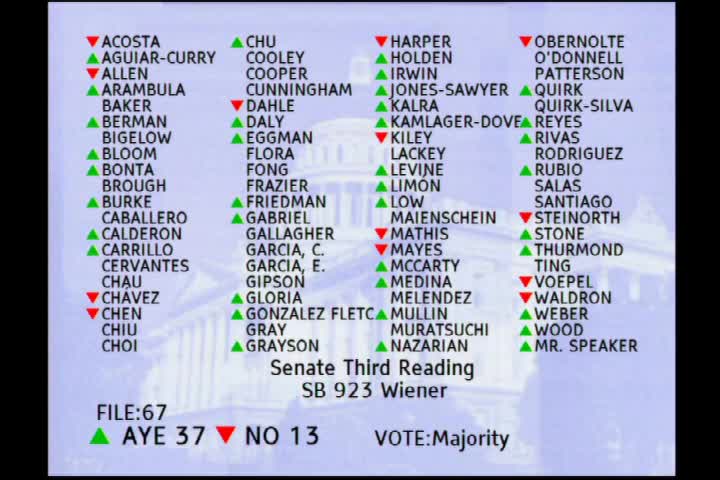 5MIN
Assembly Floor
 1H
Assembly Standing Committee on Appropriations
 10MIN
Assembly Standing Committee on Health
 1MIN
Senate Floor
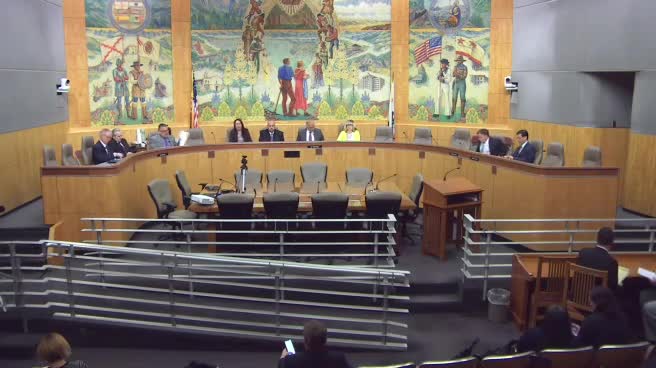 17MIN
Senate Standing Committee on Education
17MIN