AB 1064: Hate crimes.
- Session Year: 2023-2024
- House: Assembly
- Latest Version Date: 2023-03-23
Current Status:
Failed
(2024-02-01: From committee: Filed with the Chief Clerk pursuant to Joint Rule 56.)
Introduced
In Committee
First Chamber
In Committee
Second Chamber
Enacted
What does this bill do?
The bill changes the legal definition of a hate crime for people in criminal cases by saying a hate crime is a criminal act motivated in whole or in part by bias against a protected characteristic. It names protected traits such as disability, gender (including identity and expression), nationality, race, religion, and sexual orientation; says bias can include hatred, fear, desire for social dominance, or selectively targeting a victim; and requires the bias be a substantial cause even if other motives exist.
The summary is provided by generative AI which can make mistakes. For original language, please view the details in the table below.
Existing law defines hate crime as a criminal act committed, in whole or in part, because of actual or perceived characteristics of the victim, including, among other things, race, religion, disability, and sexual orientation.
This bill would, instead, define a hate crime as a criminal act that is motivated in whole or in part by a bias against one or more of the protected characteristics. The bill would define bias against and would specify that evidence of bias against a perceived characteristic of the victim motivation may include include, among other things, instances when the person has taken specified actions, including using a slur based on the actual or perceived characteristic of the victim, vandalizing property using words or symbols commonly associated with a hate group or that show bias motivation based on the actual or perceived characteristic of the victim, selectively targeting victims based on the actual or perceived characteristic of the victim, or posting on social media or other media blaming persons with the same actual or perceived characteristic as the victim for a societal problem. selectively targeted the victim based on the actual or perceived characteristic of the victim. By changing the definition of a crime, this bill would impose a state-mandated local program.
The California Constitution requires the state to reimburse local agencies and school districts for certain costs mandated by the state. Statutory provisions establish procedures for making that reimbursement.
This bill would provide that no reimbursement is required by this act for a specified reason.
Existing law defines hate crime as a criminal act committed, in whole or in part, because of actual or perceived characteristics of the victim, including, among other things, race, religion, disability, and sexual orientation.
This bill would, instead, define a hate crime as a criminal act that is motivated in whole or in part by a bias against one or more of the protected characteristics. The bill would define bias against and would specify that evidence of bias against a perceived characteristic of the victim may include instances when the person has taken specified actions, including using a slur based on the actual or perceived characteristic, characteristic of the victim, vandalizing property using words or symbols commonly associated with a hate group or that show bias motivation based on the actual or perceived characteristic, characteristic of the victim, selectively targeting victims based on the actual or perceived characteristic, characteristic of the victim, or posting on social media or other media blaming persons with the same actual or perceived characteristic as the victim for a societal problem. By changing the definition of a crime, this bill would impose a state-mandated local program.
The California Constitution requires the state to reimburse local agencies and school districts for certain costs mandated by the state. Statutory provisions establish procedures for making that reimbursement.
This bill would provide that no reimbursement is required by this act for a specified reason.
Existing law defines hate crime as a criminal act committed, in whole or in part, because of actual or perceived characteristics of the victim, including, among other things, race, religion, disability, and sexual orientation.
This bill would, instead, define a hate crime as a criminal act that is motivated in whole or in part by a bias against one or more of the protected characteristics. The bill would define bias against and would specify that evidence of bias against a perceived characteristic of the victim may include instances when the person has taken specified actions, including using a slur based on the actual or perceived characteristic, vandalizing property using words or symbols commonly associated with a hate group or that show bias motivation based on the actual or perceived characteristic, selectively targeting victims based on the actual or perceived characteristic, or posting on social media or other media blaming persons with the actual or perceived characteristic for a societal problem. By changing the definition of a crime, this bill would impose a state-mandated local program.
The California Constitution requires the state to reimburse local agencies and school districts for certain costs mandated by the state. Statutory provisions establish procedures for making that reimbursement.
This bill would provide that no reimbursement is required by this act for a specified reason.
For purposes of this title, and for purposes of all other state law unless an explicit provision of law or the context clearly requires a different meaning, the following shall apply:
(a)Hate crime means a criminal act that is motivated in whole or in part by a bias against one or more of the following actual or perceived characteristics of the victim:
(1)Disability.
(2)Gender.
(3)Nationality.
(4)Race or ethnicity.
(5)Religion.
(6)Sexual orientation.
(7)Association with a person or group with one or more of these actual or perceived characteristics.
(b)Hate crime includes, but is not limited to, a violation of Section 422.6.
SEC. 2.Section 422.56 of the Penal Code is amended to read:422.56.For purposes of this title, the following definitions shall apply:
(a)Association with a person or group with one or more of these actual or perceived characteristics includes advocacy for, identification with, or being on the premises owned or rented by, or adjacent to, any of the following: a community center, educational facility, family, individual, office, meeting hall, place of worship, private institution, public agency, library, or other entity, group, or person that has, or is identified with people who have, one or more of the characteristics listed in the definition of hate crime under paragraphs (1) to (6), inclusive, of subdivision (a) of Section 422.55.
(b)(1)A bias against means a negative attitude toward actual or perceived characteristics of the victim listed in the definition of hate crime in subdivision (a) of Section 422.55. Depending on the circumstances of each case, evidence of bias motivation may include, but is not limited to, hatred, animosity, resentment, revulsion, contempt, unreasonable fear, paranoia, callousness, thrill-seeking, desire for social dominance, desire for social bonding with those of ones own kind, or a perception of the vulnerability of the victim due to the victim being perceived as being weak, worthless, or fair game game, or the selective targeting of the victim because of an actual or perceived characteristic of the victim.
(2)Evidence of bias against an actual or perceived characteristic of the victim may be determined by the actions of the person who committed a crime that include, but are not limited to, instances in which the person:(A)Used a slur based on the actual or perceived characteristic of the victim.(B)Vandalized property using words or symbols commonly associated with a hate group or that show bias motivation based on the actual or perceived characteristic of the victim.(C)Selectively targeted victims based on their actual or perceived characteristic.(D)Posted on social media or other media blaming persons with the same actual or perceived characteristic as the victim for a societal problem, including, but not limited to, causing illness, crime, or economic harm.(c)Disability includes mental disability and physical disability, as defined in Section 12926 of the Government Code, regardless of whether those disabilities are temporary, permanent, congenital, or acquired by heredity, accident, injury, advanced age, or illness. This definition is declaratory of existing law.
(d)Gender means sex, and includes a persons gender identity and gender expression. Gender expression means a persons gender-related appearance and behavior regardless of whether it is stereotypically associated with the persons assigned sex at birth.
(e)In whole or in part by means that the bias motivation must be a cause in fact of the offense, whether or not other causes also exist. When multiple concurrent motives exist, the prohibited bias must be a substantial factor in bringing about the particular result. There is no requirement that the bias be a main factor, or that the crime would not have been committed but for the actual or perceived characteristic. This subdivision does not constitute a change in, but is declaratory of, existing law under In re M.S. (1995) 10 Cal.4th 698 and People v. Superior Court (Aishman) (1995) 10 Cal.4th 735.
(f)Nationality means country of origin, immigration status, including citizenship, and national origin. This definition is declaratory of existing law.
(g)Race or ethnicity includes ancestry, color, and ethnic background.
(h)Religion includes all aspects of religious belief, observance, and practice and includes agnosticism and atheism.
(i)Sexual orientation means heterosexuality, homosexuality, or bisexuality.
(j)Victim includes, but is not limited to, a community center, educational facility, entity, family, group, individual, office, meeting hall, person, place of worship, private institution, public agency, library, or other victim or intended victim of the offense.
SEC. 3.No reimbursement is required by this act pursuant to Section 6 of Article XIIIB of the California Constitution because the only costs that may be incurred by a local agency or school district will be incurred because this act creates a new crime or infraction, eliminates a crime or infraction, or changes the penalty for a crime or infraction, within the meaning of Section 17556 of the Government Code, or changes the definition of a crime within the meaning of Section 6 of Article XIIIB of the California Constitution.
REVISIONS: HeadingLine 2.For purposes of this title, and for purposes of all other state law unless an explicit provision of law or the context clearly requires a different meaning, the following shall apply:
(a)Hate crime means a criminal act that is motivated in whole or in part by a bias against one or more of the following actual or perceived characteristics of the victim:
(1)Disability.
(2)Gender.
(3)Nationality.
(4)Race or ethnicity.
(5)Religion.
(6)Sexual orientation.
(7)Association with a person or group with one or more of these actual or perceived characteristics.
(b)Hate crime includes, but is not limited to, a violation of Section 422.6.
(c)(1)A bias against means a preexisting negative attitude toward actual or perceived characteristics of a person. Depending on the circumstances of each case, bias motivation may include, but is not limited to, hatred, animosity, resentment, revulsion, contempt, unreasonable fear, paranoia, callousness, thrill-seeking, desire for social dominance, desire for social bonding with those of ones own kind, or a perception of the vulnerability of the victim due to the victim being perceived as being weak, worthless, or fair game because of a protected characteristic, including, but not limited to, the characteristics in subdivision (a).(2)Evidence of bias against a characteristic of a person may be determined by the actions of the person who committed a crime that include, but are not be limited to, instances in which the person:(A)Used a slur based on the actual or perceived characteristic.(B)Vandalized property using words or symbols commonly associated with a hate group or that show bias motivation based on the actual or perceived characteristic.(C)Selectively targeted victims based on the actual or perceived characteristic.(D)Posted on social media or other media blaming persons with an actual or perceived characteristic for a societal problem, including, but not limited to, causing illness, crime, or economic harm.SEC. 2.Section 422.56 of the Penal Code is amended to read:422.56.For purposes of this title, the following definitions shall apply:
(a)Association with a person or group with one or more of these actual or perceived characteristics includes advocacy for, identification with, or being on the premises owned or rented by, or adjacent to, any of the following: a community center, educational facility, family, individual, office, meeting hall, place of worship, private institution, public agency, library, or other entity, group, or person that has, or is identified with people who have, one or more of the characteristics listed in the definition of hate crime under paragraphs (1) to (6), inclusive, of subdivision (a) of Section 422.55.
(b)(1)A bias against means a negative attitude toward actual or perceived characteristics of the victim listed in the definition of hate crime in subdivision (a) of Section 422.55. Depending on the circumstances of each case, bias motivation may include, but is not limited to, hatred, animosity, resentment, revulsion, contempt, unreasonable fear, paranoia, callousness, thrill-seeking, desire for social dominance, desire for social bonding with those of ones own kind, or a perception of the vulnerability of the victim due to the victim being perceived as being weak, worthless, or fair game because of an actual or perceived characteristic of the victim.
(2)Evidence of bias against an actual or perceived characteristic of the victim may be determined by the actions of the person who committed a crime that include, but are not limited to, instances in which the person:
(A)Used a slur based on the actual or perceived characteristic of the victim.
(B)Vandalized property using words or symbols commonly associated with a hate group or that show bias motivation based on the actual or perceived characteristic of the victim.
(C)Selectively targeted victims based on their actual or perceived characteristic.
(D)Posted on social media or other media blaming persons with the same actual or perceived characteristic as the victim for a societal problem, including, but not limited to, causing illness, crime, or economic harm.
(b)(c)Disability includes mental disability and physical disability, as defined in Section 12926 of the Government Code, regardless of whether those disabilities are temporary, permanent, congenital, or acquired by heredity, accident, injury, advanced age, or illness. This definition is declaratory of existing law.
(c)(d)Gender means sex, and includes a persons gender identity and gender expression. Gender expression means a persons gender-related appearance and behavior regardless of whether it is stereotypically associated with the persons assigned sex at birth.
(d)(e)In whole or in part because of by means that the bias motivation must be a cause in fact of the offense, whether or not other causes also exist. When multiple concurrent motives exist, the prohibited bias must be a substantial factor in bringing about the particular result. There is no requirement that the bias be a main factor, or that the crime would not have been committed but for the actual or perceived characteristic. This subdivision does not constitute a change in, but is declaratory of, existing law under In re M.S. (1995) 10 Cal.4th 698 and People v. Superior Court (Aishman) (1995) 10 Cal.4th 735.
(e)(f)Nationality means country of origin, immigration status, including citizenship, and national origin. This definition is declaratory of existing law.
(f)(g)Race or ethnicity includes ancestry, color, and ethnic background.
(g)(h)Religion includes all aspects of religious belief, observance, and practice and includes agnosticism and atheism.
(h)(i)Sexual orientation means heterosexuality, homosexuality, or bisexuality.
(i)(j)Victim includes, but is not limited to, a community center, educational facility, entity, family, group, individual, office, meeting hall, person, place of worship, private institution, public agency, library, or other victim or intended victim of the offense.
SEC. 2.SEC. 3.No reimbursement is required by this act pursuant to Section 6 of Article XIIIB of the California Constitution because the only costs that may be incurred by a local agency or school district will be incurred because this act creates a new crime or infraction, eliminates a crime or infraction, or changes the penalty for a crime or infraction, within the meaning of Section 17556 of the Government Code, or changes the definition of a crime within the meaning of Section 6 of Article XIIIB of the California Constitution.
For purposes of this title, and for purposes of all other state law unless an explicit provision of law or the context clearly requires a different meaning, the following shall apply:
(a)Hate crime means a criminal act committed, in whole or in part, because of that is motivated in whole or in part by a bias against one or more of the following actual or perceived characteristics of the victim:
(1)Disability.
(2)Gender.
(3)Nationality.
(4)Race or ethnicity.
(5)Religion.
(6)Sexual orientation.
(7)Association with a person or group with one or more of these actual or perceived characteristics.
(b)Hate crime includes, but is not limited to, a violation of Section 422.6.
(c)(1)A bias against means a preexisting negative attitude toward actual or perceived characteristics of a person. Depending on the circumstances of each case, bias motivation may include, but is not limited to, hatred, animosity, resentment, revulsion, contempt, unreasonable fear, paranoia, callousness, thrill-seeking, desire for social dominance, desire for social bonding with those of ones own kind, or a perception of the vulnerability of the victim due to the victim being perceived as being weak, worthless, or fair game because of a protected characteristic, including, but not limited to, the characteristics in subdivision (a).
(2)Evidence of bias against a characteristic of a person may be determined by the actions of the person who committed a crime that include, but are not be limited to, instances in which the person:
(A)Used a slur based on the actual or perceived characteristic.
(B)Vandalized property using words or symbols commonly associated with a hate group or that show bias motivation based on the actual or perceived characteristic.
(C)Selectively targeted victims based on the actual or perceived characteristic.
(D)Posted on social media or other media blaming persons with an actual or perceived characteristic for a societal problem, including, but not limited to, causing illness, crime, or economic harm.
SEC. 2.No reimbursement is required by this act pursuant to Section 6 of Article XIIIB of the California Constitution because the only costs that may be incurred by a local agency or school district will be incurred because this act creates a new crime or infraction, eliminates a crime or infraction, or changes the penalty for a crime or infraction, within the meaning of Section 17556 of the Government Code, or changes the definition of a crime within the meaning of Section 6 of Article XIIIB of the California Constitution.
|
Date
|
Status
|
|---|---|
| Feb 1, 2024 | From committee: Filed with the Chief Clerk pursuant to Joint Rule 56. |
| Jan 31, 2024 | Died pursuant to Art. IV, Sec. 10(c) of the Constitution. |
| May 18, 2023 | Coauthors revised. |
| May 18, 2023 | In committee: Held under submission. |
| May 3, 2023 | In committee: Set, first hearing. Referred to APPR. suspense file. |
| Apr 26, 2023 | In committee: Hearing postponed by committee. |
| Mar 27, 2023 | Re-referred to Com. on APPR. |
| Mar 23, 2023 | Read second time and amended. |
| Mar 22, 2023 | From committee: Amend, and do pass as amended and re-refer to Com. on APPR. (Ayes 8. Noes 0.) (March 21). |
| Mar 15, 2023 | Re-referred to Com. on PUB. S. |
| Mar 14, 2023 | From committee chair, with author's amendments: Amend, and re-refer to Com. on PUB. S. Read second time and amended. |
| Feb 23, 2023 | Referred to Com. on PUB. S. |
| Feb 16, 2023 | From printer. May be heard in committee March 18. |
| Feb 15, 2023 | Read first time. To print. |
|
Date
|
Description
|
Location
|
Votes
|
|
|---|---|---|---|---|
| Mar 21, 2023 | Do pass as amended and be re-referred to the Committee on [Appropriations] | Assembly Standing Committee on Public Safety |
Passed |
This list shows positions taken on this bill by organizations on the date displayed, which is linked to the original source.
Positions by individuals are not included.
|
Organization
|
Position
|
Date
|
|---|---|---|
| AFSCME American Federation of State, County and Municipal Employees, AFL-CIO | * Support | Mar 21, 2023 |
| American Federation of State, County, and Municipal Employees | * Support | Mar 21, 2023 |
| Arc and United Cerebral Palsy California Collaboration | * Support | Mar 21, 2023 |
| Asian Law Alliance | ** Support | |
| California Alliance For Retired Americans | ** Support | |
| California Asian Pacific American Bar Association | * Support | Mar 21, 2023 |
| California Asian Pacific American Bar Association | * Support | Mar 21, 2023 |
| California Asian Pacific American Bar Association | ** Support | |
| California Church Impact | ** Support | |
| California Disability Rights | * Support | Mar 21, 2023 |
| California District Attorneys Association | * Support | Mar 21, 2023 |
| California LGBTQ Health and Human Services Network | ** Support | |
| California Public Defender Association | * Against | Mar 21, 2023 |
| California Public Defenders Association | * Against | Mar 21, 2023 |
| Central California LGBTQ Collaborative | * Support | Mar 21, 2023 |
| County Of Santa Clara | * Support | Mar 21, 2023 |
| Dear Community | ** Support | |
| Disability Rights California | * Support | Mar 21, 2023 |
| Equality California | ** Support | |
| Feminist Majority | ** Support | |
| Hindu American Foundation, INC. | ** Support | |
| Japanese American Citizens League - San Jose Chapter | ** Support | |
| Japanese American Citizens League, Northern California Western Nevada Pacific District Civil Rights Committee | ** Support | |
| Japanese American Citizens League, Northern California-w. Nevada-pacific District | ** Support | |
| PathPoint | ** Support | |
| Pioneer Congregational United Church of Christ, Sacramento | ** Support | |
| Ramos, Familia, y Central | * Support | Mar 21, 2023 |
| Sacramento LGBT Community Center | ** Support | |
| Santa Clara County District Attorney's Office | ** Support | |
| Stand With Asian Americans | ** Support | |
| Stand With Asians | ** Support | |
| Stone Advocacy | * Support | Mar 21, 2023 |
Date of Hearing: May 3, 2023
ASSEMBLY COMMITTEE ON APPROPRIATIONS
Chris Holden, Chair
ABPCA Bill Id:AB 1064
Author:(Low) – As Amended Ver:March 23, 2023
Policy Committee: | Public Safety | Vote: | 8 - 0 |
|
| ||
|
|
Urgency: No State Mandated Local Program: Yes Reimbursable: No
SUMMARY:
This bill changes the definition of “hate crime” and adds to the Penal Code a definition of “bias” for the purpose of establishing a hate crime.
Specifically, this bill:
- Redefines “hate crime” as a criminal act motivated in whole or in part by a bias against one or more actual or perceived characteristics of the victim.
- Defines “bias against” as a negative attitude toward specified actual or perceived characteristics of the victim.
- Provides that, depending on the circumstances of each case, evidence of bias motivation may include, but is not limited to, hatred, animosity, resentment, revulsion, contempt, unreasonable fear, paranoia, callousness, thrill-seeking, desire for social dominance, desire for social bonding with those of one’s “own kind,” or a perception of the vulnerability of the victim due to the victim being perceived as being weak, worthless, or fair game, or the selective targeting of victims because of an actual or perceived characteristic of the victim.
FISCAL EFFECT:
Incarceration costs of an unknown but significant amount (General Fund) to the California Department of Corrections and Rehabilitation (CDCR). Potential costs resulting from this bill are difficult to quantify because it is uncertain how the bill’s definition of bias will effect criminal charging, convictions, and sentencing, as discussed below. Data from the Department of Justice identified 44 crimes in 2021 that were reported as hate crimes but ultimately resulted in other, non-hate crime convictions. If this bill results in 20 additional defendants who each receive a two-year hate crime enhancement, the resulting incarceration costs to CDCR would be $4.24 million over two years. This projection is based on the Legislative Analyst’s Office’s estimate that the average annual incarceration cost for one person incarcerated in CDCR is $106,000.
COMMENTS:
- Author’s statement. According to the author:
Since the pandemic, we have seen a rise in attacks rooted in racism and xenophobia against the AAPI community in California and throughout the country. Members of my community are living in fear because they know a family member or a friend who has been bullied or attacked for being Asian. There is no excuse for hate. As Chair of the Asian Pacific Legislative Caucus, I am proud to author this bill to protect my community from these targeted hate crimes.
- Hate Crimes. According to data from the Department of Justice, the number of reported hate crimes in California has increased in recent years. Although hate crimes make up a relatively small percentage of overall crime, hate crimes severely impact the physical, mental, and emotional health of individual victims. Hate crimes can have long-lasting effects on the communities their perpetrators target.
Existing law defines a hate crime as a criminal act committed, in whole or in part, because of one or more actual or perceived characteristics of the victim. The statute lists disability, gender, nationality, race or ethnicity, religion, and sexual orientation as protected characteristics that can be the basis of a hate crime, along with association with a person or group that share one of these protected characteristics. (Penal Code section 422.55.) Existing law states that a crime is considered committed “because of” a protected characteristic if the bias motivation actually causes the crime, or was a substantial factor in the ultimate result if there were multiple motives for the crime. (Penal Code section 422.56, subdivision (d).)
This bill would redefine a hate crime to mean a criminal act that is motivated in whole or in part by a bias against a protected characteristic. The bill defines “bias against” as:
a negative attitude toward actual or perceived characteristics of the victim listed in the definition of “hate crime” ... Depending on the circumstances of each case, evidence of bias motivation may include, but is not limited to, hatred, animosity, resentment, revulsion, contempt, unreasonable fear, paranoia, callousness, thrill-seeking, desire for social dominance, desire for social bonding with those of one’s “own kind,” a perception of the vulnerability of the victim due to the victim being perceived as being weak, worthless, or fair game, or the selective targeting of the victim because of an actual or perceived characteristic of the victim.
The definition of “bias” in this bill is adapted from an existing statute that requires a law enforcement agency adopting or updating its hate crime policy to include a specific definition of “bias motivation.” (Penal Code section 422.87.) Supporters hope the bill will make it easier to convict a defendant of a hate crime because, unlike current law, this bill provides a specific definition of “bias” and examples of evidence of “bias motivation” that can be used to prove in court that a criminal act constitutes a hate crime.
- Hate Crime Sentencing. Hate crimes are generally subject to greater penalties and longer sentences than similar criminal acts that are not motivated by bias against a protected characteristic of the victim. For example, a hate crime allegation may convert a misdemeanor to a wobbler if the misdemeanor was motivated by bias. There are hate crime sentence enhancements that add two, three, or four years in prison to an underlying sentence. There are also special circumstances allegations that allow a prosecutor to seek a sentence of life without the possibility of parole or the death penalty for specified hate crimes.
There is some uncertainty about how the new definitions included in this bill would affect the charging decisions of prosecutors and the evidentiary findings of judges and juries regarding hate crimes. If this bill makes it easier for prosecutors to obtain hate crime convictions, the bill will contribute significantly to incarceration costs. As noted in the analysis of this bill by the Assembly Committee on Public Safety, there are some concerns that the bill’s definition of “bias” is overly broad and could result in hate crime convictions for offenses that were not, in fact, motivated by bias against a protected group. If the bill results in such convictions, the bill could contribute to incarceration costs at a higher rate.
- Support and Opposition. According to the California District Attorneys Association:
Under current law, it is not clear that the requisite showing of motivation can be established in the absence of the perpetrator using racial epithets, ethnic slurs, or other derogatory language even though there may be circumstantial evidence, such as the perpetrator exclusively and selectively committing crimes against a particular group. Your bill will help ensure that criminals who deliberately and exclusively target members of a particular class for victimization can’t avoid prosecution for engaging in crimes motivated by hostility and hatred of persons because of their race, ethnicity, nationality, gender, sexual orientation, disability, or religion.
According to the California Public Defenders Association:
AB 1064’s proposed amendments regarding “bias motivation” and “discriminatory selection” are most worrisome and could potentially increase prison sentences dramatically for opportunistic crimes which are transformed into hate crimes by virtue of the overbroad definitions. The definition of “bias motivation” is overbroad…
A few examples, illustrate the myriad problems with this overbroad definition of “bias motivation”. If the Crips, a primarily Black gang, attacked the Nortenos, a primarily Hispanic gang, using the definition of “bias motivation” as a “desire for social bonding with those of one’s ‘own kind’” it could be prosecuted as a hate crime. Similarly, under the definition of “the victim being perceived as weak, worthless, or fair game because of a protected characteristic, including, not limited to, disability or gender...,” almost any robbery or rape of most women could be charged as a hate crime. The definition of “thrill-seeking” could potentially be used to turn a “joy riding” into a misdemeanor hate crime…AB 1064, although well intended, would weaken the fight against bias and prejudice by potentially making every crime a hate crime.
Analysis Prepared by: Annika Carlson / APPR. / (916) 319-2081
Date of Hearing: March 21, 2023
Counsel: Liah Burnley
ASSEMBLY COMMITTEE ON
Reginald Byron Jones-Sawyer, Sr., Chair
ABPCA Bill Id:
Author:() – As Ver:
As Proposed to be Amended in Committee
SUMMARY:
Defines “bias” for the purposes of hate crimes, as specified. Specifically, this bill:
- Redefines “Hate crime” as a criminal act that is motivated in whole or in part by a bias against one or more actual or perceived characteristics of the victim.
- Defines “Bias against” as a negative attitude toward specified actual or perceived characteristics of the victim.
- Provides that, depending on the circumstances of each case, evidence of bias motivation may include, but is not limited to, hatred, animosity, resentment, revulsion, contempt, unreasonable fear, paranoia, callousness, thrill-seeking, desire for social dominance, desire for social bonding with those of one’s “own kind,” or a perception of the vulnerability of the victim due to the victim being perceived as being weak, worthless, or fair game, or the selective targeting of victims because of an actual or perceived characteristic of the victim.
EXISTING LAW:
- Defines “Hate crime” as a criminal act committed, in whole or in part, because of one or more of the following actual or perceived characteristics of the victim:
- Disability;
- Gender;
- Nationality;
- Race or ethnicity;
- Religion;
- Sexual orientation; and,
- Association with a person or group with one or more of these actual or perceived characteristics. (Pen. Code, § 422.55, subd. (a).)
- Disability;
- Defines “Association with a person or group with one or more of these actual or perceived characteristics” as advocacy for, identification with, or being on the premises owned or rented by, or adjacent to, any of the following: a community center, educational facility, family, individual, office, meeting hall, place of worship, private institution, public agency, library, or other entity, group, or person that has, or is identified with people who have, one or more of the characteristics listed in the definition of “hate crime.” (Pen. Code, § 422.56, subd. (a).)
- Defines “Disability” as mental disability and physical disability, as specified, regardless of whether those disabilities are temporary, permanent, congenital, or acquired by heredity, accident, injury, advanced age, or illness. (Pen. Code, § 422.56, subd. (b).)
- Defines “Gender” as sex, and includes a person’s gender identity and gender expression. “Gender expression” means a person’s gender-related appearance and behavior regardless of whether it is stereotypically associated with the person’s assigned sex at birth. (Pen. Code, § 422.56, subd. (c).)
- Specifies that “In whole or in part because of” means that the bias motivation must be a cause in fact of the offense, whether or not other causes also exist. When multiple concurrent motives exist, the bias must be a substantial factor in bringing about the particular result. There is no requirement that the bias be a main factor, or that the crime would not have been committed but for the actual or perceived characteristic. (Pen. Code, § 422.56, subd. (d).)
- Defines “Nationality” as country of origin, immigration status, including citizenship, and national origin. (Pen. Code, § 422.56, subd. (e).)
- Defines “Race or ethnicity” as ancestry, color, and ethnic background. (Pen. Code, § 422.56, subd. (f).)
- Defines “Religion” as all aspects of religious belief, observance, and practice and includes agnosticism and atheism. (Pen. Code, § 422.56, subd. (g).)
- Defines “Sexual orientation” as heterosexuality, homosexuality, or bisexuality. (Pen. Code, § 422.56, subd. (h).)
- Specifies that “Victim” includes, but is not limited to, a community center, educational facility, entity, family, group, individual, office, meeting hall, person, place of worship, private institution, public agency, library, or other victim or intended victim of the offense. (Pen. Code, § 422.56, subd. (i).)
- Requires all state and local agencies to use the above listed definitions, except as any other explicit provision of state or federal law may otherwise require. (Pen. Code, § 422.9.)
- Allows local law enforcement agencies to adopt a hate crimes policy, which must include the above listed definitions and other specified procedures. (Pen. Code, § 422.87, subd. (a).)
- Provides that, if a local law enforcement agency adopts a hate crimes polity, the policy must include, among other things, information regarding bias motivation. “Bias motivation”, for this purpose, is defined as “a preexisting negative attitude toward actual or perceived characteristics,” as specified, “depending on the circumstances of each case, bias motivation may include, but is not limited to, hatred, animosity, discriminatory selection of victims, resentment, revulsion, contempt, unreasonable fear, paranoia, callousness, thrill-seeking, desire for social dominance, desire for social bonding with those of one’s ‘own kind,’ or a perception of the vulnerability of the victim due to the victim being perceived as being weak, worthless, or fair game because of a protected characteristic, including, but not limited to, disability or gender.” (Pen. Code, § 422.87, subd. (a)(3)(B).)
- Specifies “hate crimes” include, but are not limited to violating or interfering with the exercise of civil rights, or knowingly defacing, destroying, or damaging property because of actual or perceived characteristics of the victim that fit the “hate crime definition.” (Pen. Code, §§ 422.55, subd. (b). & 422.6, subd. (a) & (b).)
- Provides that any person convicted for violating or interfering with the civil rights of another on the basis of actual or perceived characteristics of the victim that fit the hate crime definition shall be punished by imprisonment in a county jail not to exceed one year, or by a fine not to exceed $5000, or by both imprisonment and fine. The court shall also order community service, not to exceed 400 hours. (Pen. Code, §, 422.6, subd. (c).)
- Provides that any hate crime that is not made punishable by imprisonment in the state prison, shall be punishable by imprisonment in a county jail not to exceed one year, or by imprisonment in the county jail for 16 months, two, or three years , or by a fine not to exceed $10,000, or by both. (Pen. Code, § 422.7.)
- Provides that a person who commits a felony that is a hate crime or attempts to commit a felony that is a hate crime, shall receive an additional term of one, two, or three years in the state prison, at the court’s discretion, except as specified. (Pen. Code, § 422.75, subd. (a).)
- Provides that any person who commits a felony that is a hate crime, or attempts to commit a felony that is a hate crime, and who voluntarily acted in concert with another person, either personally or by aiding and abetting another person, shall receive an additional two, three, or four years in the state prison, at the court’s discretion, except as specified. (Pen. Code, § 422.75, subd. (b).)
- Provides that, for the purpose of imposing an additional term, it shall be a factor in aggravation that the defendant personally used a firearm in the commission of the offense. (Pen. Code, § 422.75, subd. (c).)
- Provides that a person who commits a felony hate crime or attempts to commit a felony hate crime, as specified, shall also receive an additional term of one year in the state prison for each prior felony conviction on charges brought and tried separately in which it was found by the trier of fact or admitted by the defendant that the crime was a hate crime. (Pen. Code, § 422.75, subd. (d).)
- States that the fact that a person committed a felony or attempted to commit a felony that is a hate crime shall be considered an aggravating circumstance, except as specified. (Pen. Code, § 422.76.)
FISCAL EFFECT:
Unknown
COMMENTS:
- Author's Statement: According to the author, “Since the pandemic, we have seen a rise in attacks rooted in racism and xenophobia against the AAPI community in California and throughout the country. Members of my community are living in fear because they know a family member or a friend who has been bullied or attacked for being Asian. There is no excuse for hate. As Chair of the Asian Pacific Legislative Caucus, I am proud to author this bill to protect my community from these targeted hate crimes.”
- Prevalence of Hate Crimes: Although hate crimes make a small percentage of total reported crimes, the number of reported hate crimes in California has increased. In 2020, the Department of Justice (DOJ) reported hate crime events increased 31.0% from 1,015 in 2019 to 1,330 in 2020. The report also found hate crime offenses increased 23.9%from 1,261 in 2019 to 1,563 in 2020. (DOJ, Hate Crime in California 2020 <https://data-openjustice.doj.ca.gov/sites/default/files/2021-06/Hate%20Crime%20In%20CA%202020.pdf> [as of March 10, 2023].) According to DOJ’s 2021 report on hate crimes, “hate crime events” reported to law enforcement “increased 32.6% from 1,330 in 2020 to 1,763 in 2021,” and “hate crime offense increased 42.1% from 1,563 in 2020 to 2,221 in 2021.” (DOJ, Hate Crime in California 2021 <https://oag.ca.gov/system/files/attachments/press-docs/Hate Crime In CA 2021 FINAL.pdf> [as of Mar. 10, 2023].) Specifically, the DOJ found that “[v]iolent [hate] crime offenses increased 47.4%from 1,088 in 2020 to 1,604 in 2021.” (Ibid.)
- Toll of Hate Crimes on Victims: Hate crimes severely impact victims. The emotional effect can be significant, with victims experiencing “more psychological distress than victims of other violent crimes.” (Id. at p. 11.) Experts have observed that “[e]xperiences of hate are associated with poor emotional well-being such as feelings of anger, shame, and fear. Moreover, victims tend to experience poor mental health, including depression, anxiety, posttraumatic stress, and suicidal behavior.” (Cramer et al., Hate-Motivated Behavior: Impacts, Risk Factors, and Interventions, Health Affairs (Nov. 9, 2020) <https://www.healthaffairs.org/do/10.1377/hpb20200929.601434/> [as of March 10, 2023].) The physical health of victims also suffers. The “impacts include poor overall physical health, physical injury, stress, and difficulty accessing medical care.” (Cramer et al., supra.)
Hate crimes also impact the victim’s community. According to the California State Auditor, “[T]hese crimes likely had a significant impact on the groups to which victims belonged… [by] communicat[ing] to members of the victims’ groups that they are unwelcome and unsafe in their communities.” (California State Auditor, supra, at p. 11; see e.g., Brown et al., How hate crime affects a whole community, BBC (Jan. 12, 2018) <https://www.bbc.com/news/uk-42622767> [last visited Mar. 10, 2023].) Indeed, “Entire communities can feel the impacts of victimization. Members of the targeted community may experience vicarious trauma symptoms resulting from witnessing others being victimized. In addition, a review of structural discrimination shows that for a targeted vulnerable group, long-standing, systemic inequalities can be seen in economic, housing, and educational disparities.” (Cramer et al., supra.) - Definition of “Bias Motivation” for Local Law Enforcement Hate Crime Policies: Penal Code section 422.87 allows all local law enforcement agencies to adopt hate crime policies. For any local law enforcement agency that chooses to adopt a hate crime policy, the policy must include specified information, including among other things, “information regarding bias motivation.” (Pen. Code, § 422.87, subd. (a).)
Penal Code section 422.87 defines “bias motivation” for the purposes of law enforcement hate crime policies. Specifically, Section 422.87 defines “bias motivation” as “a preexisting negative attitude toward actual or perceived characteristics,” as specified, “depending on the circumstances of each case, bias motivation may include, but is not limited to, hatred, animosity, discriminatory selection of victims, resentment, revulsion, contempt, unreasonable fear, paranoia, callousness, thrill-seeking, desire for social dominance, desire for social bonding with those of one’s “own kind,” or a perception of the vulnerability of the victim due to the victim being perceived as being weak, worthless, or fair game because of a protected characteristic, including, but not limited to, disability or gender.”
This bill would correspondingly define “bias motivation” for the purposes of prosecuting hate crimes as “a negative attitude toward actual or perceived characteristics of a person the victim,” as defined, and provides that evidence of bias motivation, can include, but is not limited to, depending on the circumstances of each case, “hatred, animosity, resentment, revulsion, contempt, unreasonable fear, paranoia, callousness, thrill-seeking, desire for social dominance, desire for social bonding with those of one’s “own kind,” or a perception of the vulnerability of the victim due to the victim being perceived as being weak, worthless, or fair game, or the selective targeting of victims because of an actual or perceived characteristic of the victim.”
- Need for this Bill: Penal Code Sections 422.55, 422.6, 422.7, and 422.75 make it a criminal offense for a person to commit a hate crime and impose enhanced penalties when a person commits an offense while motivated by a bias towards the victim.
To convict a defendant for a hate crime, prosecutors must prove that the defendant acted in whole or in part because of the actual or perceived characteristic of the victim. To prove this, the prosecutor must show both that, (1) the defendant was biased against the victim based on the victim’s actual or perceived characteristics; and (2) that the bias motivation caused the defendant to commit the alleged acts. The bias described here must have been a substantial motivating factor of the crime. (CALCRIM No. 1354 [for felonies]; CALCRIM No. 1355 [for misdemeanors].)
There is no definition of “bias motivation” in existing law, even though it is an element of the crime. - Policy Considerations: The definition of “bias motivation” in this bill is broad and could potentially transform crimes that are opportunistic into hate crimes with increased penalties. For example, “bias motivation,” as defined in bill includes “thrill-seeking” and the “the victim being perceived as weak” because of a protected characteristic. “Thrill-seeking” could potentially be used to turn “joy riding” into a misdemeanor hate crime. Similarly, a robbery could be transformed into a hate crime, if the offender targeted the victim because they perceived the victim as a weak target. Should “thrill seeking” be removed from the bill?
- Argument in Support: According to the American Federation of State, County, and Municipal Employees (AFSCME), AFL-CIO, “Since the start of the COVID-19 pandemic, AAPI community members continue to experience hate at alarming levels. Stop AAPI Hate reporting center has received 11,467 reported incidents of anti-Asian attacks and discrimination. Almost 48% of these incidents occurred here in California, and around 40% of the incidents took place in public spaces such as streets, sidewalks, roads, and parks. Also, the rise of LGBTQ+ targeted hate crimes are also on the rise. According to the FBI Hate Crime Statistics Report, 24% or almost 1 in 4 hate crimes reported in California between 2016 and 2021 are anti-LGBTQ+ motivated while anti-Black hate crimes in California are at 28% over the same period.
“While current law provides the appropriate guidelines when it comes to prosecution of those who clearly state their intent to target an individual of a protected class, the guidelines for defining what constitutes a bias against an individual protected class is not. AB 1064 would change the definition of a hate crime to a criminal act that is motivated in whole or in part by a ‘bias against’ one or more of these characteristics.
“AB 1064 clarifies bias motivation to address the purposeful targeting of victims due to bias motivations and makes the prosecution of hate crimes easier for law enforcement and brings justice for their victims.”
- Argument in Opposition: According to the California Public Defenders Association (CPDA), “Proposed Penal Code Section 422.56(b) would define ‘bias motivation’. This definition adds both ‘discriminatory selection’ which is separately defined and motivations which range from ‘hatred’ to ‘thrill-seeking’ to ‘desire for social bonding with those of one’s “own kind”’ to ‘the victim being perceived as weak, worthless, or fair game because of a protected characteristic, including, not limited to, disability or gender. […]
“A few examples, illustrate the myriad problems with this overbroad definition of ‘bias motivation’.
“If the Crips, a primarily Black gang, attacked the Nortenos, a primarily Hispanic gang, using the definition of ‘bias motivation’ as a ‘desire for social bonding with those of one’s “own kind”’ it could be prosecuted as a hate crime.
“Similarly, under the definition of ‘the victim being perceived as weak, worthless, or fair game because of a protected characteristic, including, not limited to, disability or gender...,’ almost any robbery or rape of most women could be charged as a hate crime. […]
“CPDA stands in solidarity with the protected groups. Many of us and our clients are members of those groups. AB 1064, although well intended, would weaken the fight against bias and prejudice by potentially making every crime a hate crime.”
- Related Legislation:
- AB 32 (Nguyen), would add felony hate crimes to the list of violent felonies. The hearing on AB 32 in this Committee was cancelled at the request of the author.
- AB 644 (Jones-Sawyer), would require public postsecondary educational institutions to, among other things, develop survey questions with student participation to determine student perspectives on campus climate related to hate crimes. AB 644 is currently pending in the Higher Education Committee.
- AB 449 (Ting), would require state and local law enforcement agencies to adopt a hate crime policy and to report to that policy to Department of Justice (DOJ), and require the Commission on Peace Officer Standards and Training (POST) to develop a model hate crimes policy framework for use by law enforcement agencies. AB 449 is pending in Assembly Appropriations Committee.
- SB 64 (Umberg), would authorize a search warrant to be issued on the grounds that the property or things to be seized consists of evidence that tends to show that certain misdemeanor hate crimes have occurred or are occurring. SB 64 is pending hearing in Senate Public Safety Committee.
- AB 32 (Nguyen), would add felony hate crimes to the list of violent felonies. The hearing on AB 32 in this Committee was cancelled at the request of the author.
- Prior Legislation:
- AB 1947 (Ting), of the 2021-2022 Legislative Session, would have required each local law enforcement agency to adopt a hate crimes policy and requires the POST to develop a model hate crimes policy. AB 1947 was held on the Senate inactive file.
- AB 485 (Nguyen), Chapter 852, Statutes of 2022, requires local law enforcement agencies to post information relative to hate crimes on their internet websites on a monthly basis.
- AB 2282 (Bauer-Kahan), Chapter 397, Statutes of 2022, expanded existing hate crimes offenses to include specified conduct on the premises of public properties and increase the associated fines imposed for committing such offenses.
- AB 300 (Chu), of the 2019-2020 Legislative Session, would have required a law enforcement agency to indicate in an incident report if the underlying incident is a “hate crime” or “hate incident.” AB 300 was held in Senate Appropriations Committee.
- AB 301 (Chu), of the 2019-2020 Legislative Session, would have required the DOJ to carry out various duties related to documenting and responding to hate crimes. AB 301 was held in Assembly Appropriations Committee.
REGISTERED SUPPORT / OPPOSITION:
Support
Afscme
Asian Law Alliance
California Alliance for Retired Americans
California Asian Pacific American Bar Association
California Church Impact
California District Attorneys Association
California Lgbtq Health and Human Services Network
Dear Community
Equality California
Feminist Majority
Hindu American Foundation, INC.
Japanese American Citizens League - San Jose Chapter
Japanese American Citizens League, Northern California Western Nevada Pacific District Civil Rights Committee
Japanese American Citizens League, Northern California-w. Nevada-pacific District
Pathpoint
Pioneer Congregational United Church of Christ, Sacramento
Sacramento Lgbt Community Center
Santa Clara County District Attorney's Office
Stand With Asian Americans
Stand With Asians
The Arc and United Cerebral Palsy California Collaboration
The Arc of Ventura County
Opposition
California Public Defenders Association (CPDA)
Analysis Prepared by:
Discussed in Hearing
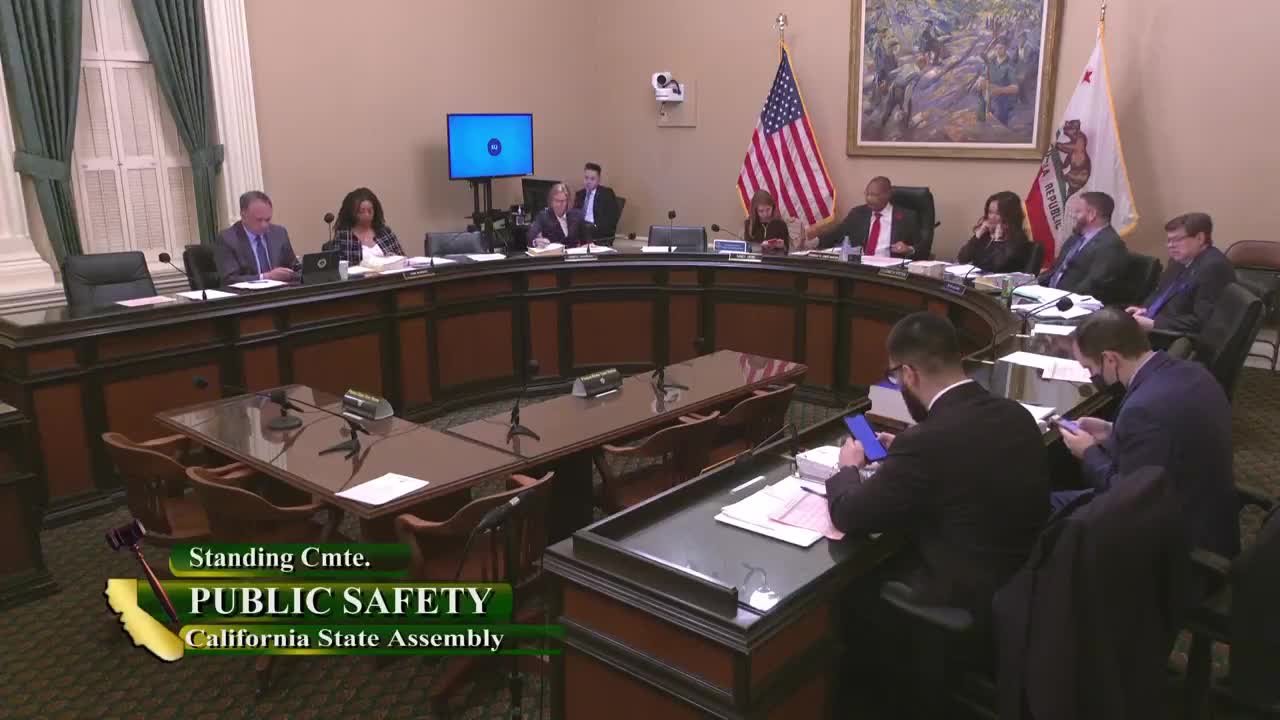 17MIN
Assembly Standing Committee on Public Safety
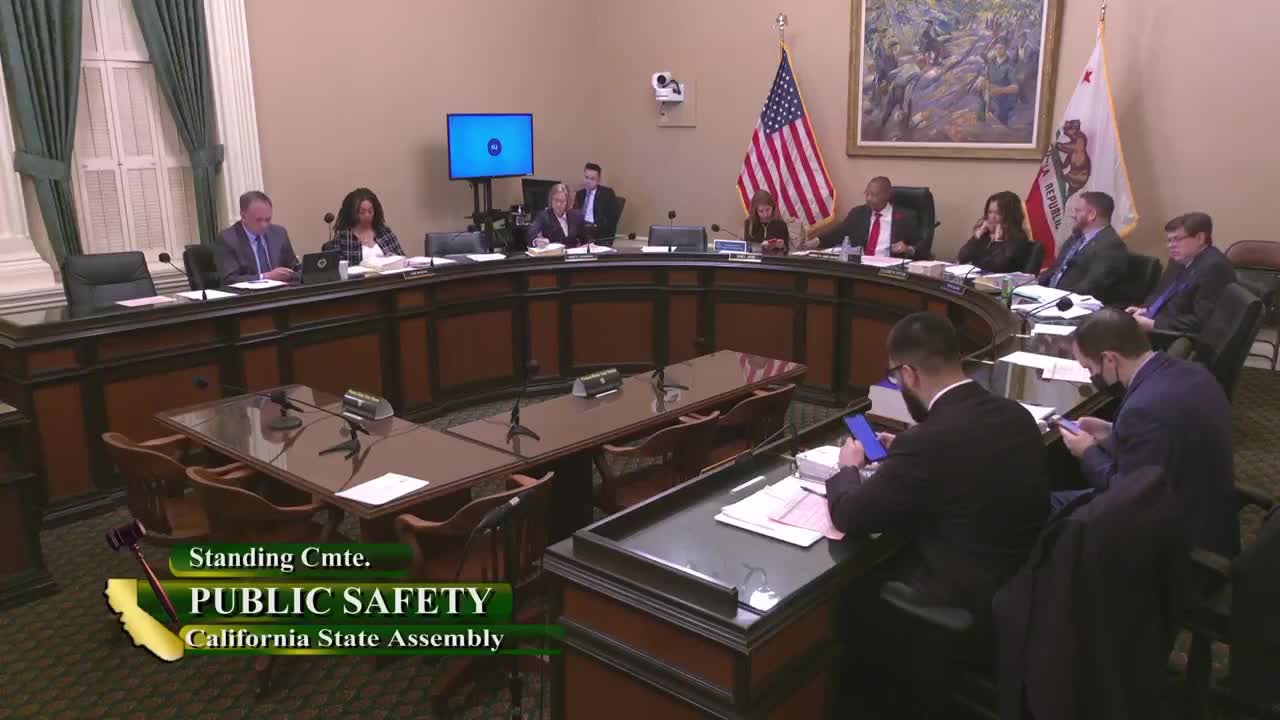 17MIN
Assembly Standing Committee on Public Safety
Bill Author


