AB 1090: County officers: sheriffs.
- Session Year: 2023-2024
- House: Assembly
- Latest Version Date: 2023-04-13
Current Status:
Failed
(2024-02-01: From committee: Filed with the Chief Clerk pursuant to Joint Rule 56.)
Introduced
In Committee
First Chamber
In Committee
Second Chamber
Enacted
Existing law requires the Legislature to provide for an elected county sheriff and provides for the duties of the sheriff. Existing law requires the board of supervisors to supervise all county officers, except as provided.
Existing law provides for the removal of public officers for willful or corrupt misconduct in office. Existing law provides that an accusation in writing against any officer of a district, county, or city for willful or corrupt misconduct in office may be presented by the grand jury of the county for, or in, which the officer accused is elected or appointed. Existing law requires that the court pronounce judgment that the officer be removed from office upon a conviction and at the time appointed by the court.
This bill would authorize the board of supervisors to remove a sheriff from office for cause, as defined, by a 4/5 vote, after the sheriff is served with a written statement of the alleged grounds for removal and the sheriff is provided a reasonable opportunity to be heard regarding an explanation or defense at a removal proceeding. The bill would authorize the board of supervisors to establish procedures for a removal proceeding. The bill would require that these provisions not be applied in a manner that interferes with the constitutional functions of a sheriff.
Existing law requires the Legislature to provide for an elected county sheriff and provides for the duties of the sheriff. Existing law requires the board of supervisors to supervise all county officers, except as provided.
Existing law provides for the removal of public officers for willful or corrupt misconduct in office. Existing law provides that an accusation in writing against any officer of a district, county, or city for willful or corrupt misconduct in office may be presented by the grand jury of the county for, or in, which the officer accused is elected or appointed. Existing law requires that the court pronounce judgment that the officer be removed from office upon a conviction and at the time appointed by the court.
This bill would authorize the board of supervisors to remove a sheriff from office for cause, by a 4/5 vote, after the sheriff is served with a written statement of the alleged grounds for removal and the sheriff is provided a reasonable opportunity to be heard regarding an explanation or defense at a removal proceeding. The bill would authorize the board of supervisors to establish procedures for a removal proceeding. The bill would require that these provisions not be applied in a manner that interferes with the constitutional functions of a sheriff.
Existing law places juvenile hall under the management and control of the county probation officer. Existing law authorizes the county probation officer to appoint the superintendent and other employees of the juvenile hall, as specified, and requires the probation officer to keep a classified list of the expenses for the operation of juvenile hall. This bill would authorize a board of supervisors of any county, by resolution, to appoint an executive officer to manage and control juvenile hall. The bill would also make conforming changes to make specific reference to this executive officer, and would make other technical, nonsubstantive changes.Existing law requires the Legislature to provide for an elected county sheriff and provides for the duties of the sheriff. Existing law requires the board of supervisors to supervise all county officers, except as provided.
Existing law provides for the removal of public officers for willful or corrupt misconduct in office. Existing law provides that an accusation in writing against any officer of a district, county, or city for willful or corrupt misconduct in office may be presented by the grand jury of the county for, or in, which the officer accused is elected or appointed. Existing law requires that the court pronounce judgment that the officer be removed from office upon a conviction and at the time appointed by the court.
This bill would authorize the board of supervisors to remove a sheriff from office for cause, by a 4/5 vote, after the sheriff is served with a written statement of the alleged grounds for removal and the sheriff is provided a reasonable opportunity to be heard regarding an explanation or defense at a removal proceeding. The bill would authorize the board of supervisors to establish procedures for a removal proceeding. The bill would require that these provisions not be applied in a manner that interferes with the constitutional functions of a sheriff.
Existing law places juvenile hall under the management and control of the county probation officer. Existing law authorizes the county probation officer to appoint the superintendent and other employees of the juvenile hall, as specified, and requires the probation officer to keep a classified list of the expenses for the operation of juvenile hall.
This bill would authorize a board of supervisors of any county, by resolution, to appoint an executive officer to manage and control juvenile hall. The bill would also make conforming changes to make specific reference to this executive officer, and would make other technical, nonsubstantive changes.
(a)For purposes of this section, for cause means all of the following:
(1)Violation of a law related to the performance of a sheriffs duties.
(2)Flagrant or repeated neglect of a sheriffs duties.
(3)Misappropriation of public funds or properties committed by a sheriff or their direct reports in the course and scope of their duties.
(4)Willful falsification of a relevant official statement or document committed by a sheriff in the course and scope of their duties.
(5)Obstruction of an investigation into the conduct of a sheriff or a sheriffs department by a governmental agency, office, or commission with jurisdiction to conduct an investigation.
(a)(b)The board of supervisors may remove a sheriff from office for cause, by a four-fifths vote, after both of the following have occurred:
(1)The sheriff is served with a written statement of the alleged grounds for removal.
(2)The sheriff is provided a reasonable opportunity to be heard regarding an explanation or defense at a removal proceeding.
(b)(c)The board of supervisors may establish procedures for a removal proceeding held pursuant to this section.
(c)(d)This section shall not be applied in a manner that interferes with the constitutional functions of a sheriff.
(a)The board of supervisors may remove a sheriff from office for cause, by a four-fifths vote, after both of the following have occurred:
(1)The sheriff is served with a written statement of the alleged grounds for removal.
(2)The sheriff is provided a reasonable opportunity to be heard regarding an explanation or defense at a removal proceeding.
(b)The board of supervisors may establish procedures for a removal proceeding held pursuant to this section.
(c)This section shall not be applied in a manner that interferes with the constitutional functions of a sheriff.
SEC. 2.Section 852 of the Welfare and Institutions Code is amended to read:852.The juvenile hall shall be under the management and control of the probation officer, unless the board of supervisors of any county, by resolution, appoints an executive officer to manage and control the juvenile hall.SEC. 3.Section 854 of the Welfare and Institutions Code is amended to read:854.The superintendent and other employees of the juvenile hall shall be appointed by the probation officer or executive officer, pursuant to a civil service or merit system, and may be removed, for cause, pursuant to such system.SEC. 4.Section 855 of the Welfare and Institutions Code is amended to read:855.The probation officer or executive officer shall keep a classified list of expenses for the operation of the juvenile hall and shall file a duplicate copy with the county board of supervisors.SEC. 5.Section 862 of the Welfare and Institutions Code is amended to read:862.In addition to those juveniles specified in Section 850, the probation officer or executive officer may receive and detain in the county juvenile hall any juvenile committed thereto by process or order issued under the authority of the United States until such juvenile is discharged according to law as if they had been committed under process issued under the authority of this state, provided, that, in the absence of a valid detention order issued by a federal court, such detention shall not exceed three judicial days. Juveniles detained pursuant to this section shall have all the rights, powers, privileges, and duties, and shall receive the same treatment, afforded juveniles detained pursuant to the laws of this state. The board of supervisors of a county may contract with the United States for reimbursement of the countys cost incurred in the support of such juvenile.SEC. 6.Section 870 of the Welfare and Institutions Code is amended to read:870.Two or more counties may, pursuant to Article 1 (commencing with Section 6500) of Chapter 5 of Division 7 of Title 1 of the Government Code, establish and operate a joint juvenile hall. A joint juvenile hall shall be under the management and control of the probation officers or executive officers of the participating counties, acting jointly, or of one of such probation officers or executive officers, as provided by the agreement among the counties, and shall be in the charge of a superintendent selected pursuant to a civil service or merit system. A joint juvenile hall shall be operated in the manner prescribed by this chapter for juvenile halls.A county participating in the maintenance of a joint juvenile hall pursuant to this section need not maintain a separate juvenile hall.SEC. 7.Section 871 of the Welfare and Institutions Code is amended to read:871.(a)Any person under the custody of a probation officer, executive officer, or any peace officer in a county juvenile hall, or committed to a county juvenile ranch, camp, forestry camp, or regional facility, who escapes or attempts to escape from the institution or facility in which they are confined, who escapes or attempts to escape while being conveyed to or from such an institution or facility, or who escapes or attempts to escape while outside or away from such an institution or facility while under the custody of a probation officer, executive officer, or any peace officer, is guilty of a misdemeanor, punishable by imprisonment in a county jail not exceeding one year.(b)Any person who commits any of the acts described in subdivision (a) by use of force or violence shall be punished by imprisonment in a county jail for not more than one year or by imprisonment in the state prison.(c)The willful failure of a person under the custody of a probation officer, executive officer, or any peace officer in a county juvenile hall, or committed to a county juvenile ranch, camp, or forestry camp, to return to the county juvenile hall, ranch, camp, or forestry camp at the prescribed time while outside or away from the county facility on furlough or temporary release constitutes an escape punishable as provided in subdivision (a). However, a willful failure to return at the prescribed time shall not be considered an escape if the failure to return was reasonable under the circumstances.(d)A minor who, while under the supervision of a probation officer or executive officer, removes their electronic monitor without authority and who, for more than 48 hours, violates the terms and conditions of their probation relating to the proper use of the electronic monitor shall be guilty of a misdemeanor. If an electronic monitor is damaged or discarded while in the possession of the minor, restitution for the cost of replacing the unit may be ordered as part of the punishment.(e)The liability established by this section shall be limited by the financial ability of the person or persons ordered to pay restitution under this section, who shall be entitled to an evaluation and determination of ability to pay under Section 903.45.(f)For purposes of this section, regional facility means any facility used by one or more public entities for the confinement of juveniles for more than 24 hours.(a)The board of supervisors may remove a sheriff from office for cause, by a four-fifths vote, after both of the following have occurred:
(1)The sheriff is served with a written statement of the alleged grounds for removal.
(2)The sheriff is provided a reasonable opportunity to be heard regarding an explanation or defense at a removal proceeding.
(b)The board of supervisors may establish procedures for a removal proceeding held pursuant to this section.
(c)This section shall not be applied in a manner that interferes with the constitutional functions of a sheriff.
SEC. 2.Section 852 of the Welfare and Institutions Code is amended to read:852.The juvenile hall shall be under the management and control of the probation officer. officer, unless the board of supervisors of any county, by resolution, appoints an executive officer to manage and control the juvenile hall.
SEC. 3.Section 854 of the Welfare and Institutions Code is amended to read:854.The superintendent and other employees of the juvenile hall shall be appointed by the probation officer, officer or executive officer, pursuant to a civil service or merit system, and may be removed, for cause, pursuant to such system.
SEC. 4.Section 855 of the Welfare and Institutions Code is amended to read:855.The probation officer or executive officer shall keep a classified list of expenses for the operation of the juvenile hall and shall file a duplicate copy with the county board of supervisors.
SEC. 5.Section 862 of the Welfare and Institutions Code is amended to read:862.In addition to those juveniles specified in Section 850, the probation officer or executive officer may receive and detain in the county juvenile hall any juvenile committed thereto by process or order issued under the authority of the United States until such juvenile is discharged according to law as if he they had been committed under process issued under the authority of this state, provided, that, in the absence of a valid detention order issued by a federal court, such detention shall not exceed three judicial days. Juveniles detained pursuant to this section shall have all the rights, powers, privileges, and duties, and shall receive the same treatment, afforded juveniles detained pursuant to the laws of this state. The board of supervisors of a county may contract with the United States for reimbursement of the countys cost incurred in the support of such juvenile.
SEC. 6.Section 870 of the Welfare and Institutions Code is amended to read:870.Two or more counties may, pursuant to Article 1 (commencing with Section 6500) of Chapter 5 of Division 7 of Title 1 of the Government Code, establish and operate a joint juvenile hall. A joint juvenile hall shall be under the management and control of the probation officers or executive officers of the participating counties, acting jointly, or of one of such probation officers, officers or executive officers, as provided by the agreement among the counties, and shall be in the charge of a superintendent selected pursuant to a civil service or merit system. A joint juvenile hall shall be operated in the manner prescribed by this chapter for juvenile halls.
A county participating in the maintenance of a joint juvenile hall pursuant to this section need not maintain a separate juvenile hall.
SEC. 7.Section 871 of the Welfare and Institutions Code is amended to read:871.(a)Any person under the custody of a probation officer officer, executive officer, or any peace officer in a county juvenile hall, or committed to a county juvenile ranch, camp, forestry camp, or regional facility, who escapes or attempts to escape from the institution or facility in which he or she is they are confined, who escapes or attempts to escape while being conveyed to or from such an institution or facility, or who escapes or attempts to escape while outside or away from such an institution or facility while under the custody of a probation officer officer, executive officer, or any peace officer, is guilty of a misdemeanor, punishable by imprisonment in a county jail not exceeding one year.
(b)Any person who commits any of the acts described in subdivision (a) by use of force or violence shall be punished by imprisonment in a county jail for not more than one year or by imprisonment in the state prison.
(c)The willful failure of a person under the custody of a probation officer officer, executive officer, or any peace officer in a county juvenile hall, or committed to a county juvenile ranch, camp, or forestry camp, to return to the county juvenile hall, ranch, camp, or forestry camp at the prescribed time while outside or away from the county facility on furlough or temporary release constitutes an escape punishable as provided in subdivision (a). However, a willful failure to return at the prescribed time shall not be considered an escape if the failure to return was reasonable under the circumstances.
(d)A minor who, while under the supervision of a probation officer, officer or executive officer, removes his or her their electronic monitor without authority and who, for more than 48 hours, violates the terms and conditions of his or her their probation relating to the proper use of the electronic monitor shall be guilty of a misdemeanor. If an electronic monitor is damaged or discarded while in the possession of the minor, restitution for the cost of replacing the unit may be ordered as part of the punishment.
(e)The liability established by this section shall be limited by the financial ability of the person or persons ordered to pay restitution under this section, who shall be entitled to an evaluation and determination of ability to pay under Section 903.45.
(f)For purposes of this section, regional facility means any facility used by one or more public entities for the confinement of juveniles for more than 24 hours.
|
Date
|
Status
|
|---|---|
| Feb 1, 2024 | From committee: Filed with the Chief Clerk pursuant to Joint Rule 56. |
| Jan 31, 2024 | Died pursuant to Art. IV, Sec. 10(c) of the Constitution. |
| Jan 9, 2024 | In committee: Set, second hearing. Hearing canceled at the request of author. |
| May 3, 2023 | In committee: Set, first hearing. Hearing canceled at the request of author. |
| Apr 17, 2023 | Re-referred to Com. on L. GOV. |
| Apr 13, 2023 | Read second time and amended. |
| Apr 12, 2023 | From committee: Amend, and do pass as amended and re-refer to Com. on L. GOV. (Ayes 6. Noes 2.) (April 11). |
| Apr 5, 2023 | Re-referred to Com. on PUB. S. |
| Apr 4, 2023 | From committee chair, with author's amendments: Amend, and re-refer to Com. on PUB. S. Read second time and amended. |
| Mar 16, 2023 | Referred to Coms. on PUB. S. and L. GOV. |
| Feb 16, 2023 | From printer. May be heard in committee March 18. |
| Feb 15, 2023 | Read first time. To print. |
|
Date
|
Description
|
Location
|
Votes
|
|
|---|---|---|---|---|
| Apr 11, 2023 | Do pass as amended and be re-referred to the Committee on [Local Government] | Assembly Standing Committee on Public Safety |
Passed |
This list shows positions taken on this bill by organizations on the date displayed, which is linked to the original source.
Positions by individuals are not included.
|
Organization
|
Position
|
Date
|
|---|---|---|
| Arcadia Police Officers' Association | ** Against | |
| Association For Los Angeles Deputy Sheriffs | ** Against | |
| Association Of Orange County Deputy Sheriffs | ** Against | |
| Black Lives Matter Los Angeles | ** Support | |
| Burbank Police Officers' Association | ** Against | |
| California Fraternal Order of Police | ** Against | |
| California Peace Officers Association | ** Against | |
| California Reserve Peace Officers Association | ** Against | |
| California State Sheriffs' Association | ** Against | |
| California Statewide Law Enforcement Association | ** Against | |
| CLAREMONT POLICE OFFICERS ASSOCIATION | ** Against | |
| Corona Police Officers Association | ** Against | |
| County of San Joaquin | ** Against | |
| Culver City Police Officers' Association | ** Against | |
| Deputy Sheriffs Association of Monterey County | ** Against | |
| Deputy Sheriffs Association Of San Diego County | ** Against | |
| Fullerton Police Officers' Association | ** Against | |
| Initiate Justice | ** Support | |
| Long Beach Police Officers Association | ** Against | |
| Murrieta Police Officers' Association | ** Against | |
| Natomas USD for Freedom | ** Against | |
| Newport Beach Police Association | ** Against | |
| Novato Police Officers Association | ** Against | |
| Oakland Privacy | ** Support | |
| Palos Verdes Police Officers Association | ** Against | |
| Peace Officers Research Association Of California | ** Against | |
| PLACER COUNTY DEPUTY SHERIFFS ASSOCIATION | ** Against | |
| Pomona Police Officers' Association | ** Against | |
| Protection of The Educational Rights of Kids | ** Against | |
| RIVERSIDE POLICE OFFICERS ASSOCIATION | ** Against | |
| Riverside Sheriff's Office | * Against | Apr 11, 2023 |
| Riverside Sheriffs' Association | ** Against | |
| Sacramento County Deputy Sheriffs' Association | ** Against | |
| Sacramento County Sheriff Jim Cooper | ** Against | |
| san bernardino county sheriff's employees' benefit association | ** Against | |
| Santa Ana Police Officers Association | ** Against | |
| Secure Justice | ** Support | |
| Sheriff Chad Bianco | * Against | Apr 11, 2023 |
| Stand Up Sacramento County | ** Against | |
| The Re-imagine Los Angeles County Coalition | ** Support | |
| Upland Police Officers Association | ** Against |
Date of Hearing: January 10, 2024
ASSEMBLY COMMITTEE ON LOCAL GOVERNMENT
Juan Carrillo, Chair
ABPCA Bill Id:AB 1090 (
Author:Jones-Sawyer) – As Amended Ver:April 13, 2023
SUBJECT: County officers: sheriffs
SUMMARY: Authorizes the board of supervisors of a county to remove a sheriff from office for cause. Specifically, this bill:
- Authorizes a board of supervisors to remove a sheriff from office for cause, by a four-fifths vote, after both of the following have occurred:
- The sheriff is served with a written statement of the alleged grounds for removal.
- The sheriff is provided a reasonable opportunity to be heard regarding an explanation or defense at a removal proceeding.
- The sheriff is served with a written statement of the alleged grounds for removal.
- Provides that “for cause” means all of the following:
- Violation of a law related to the performance of a sheriff’s duties.
- Flagrant or repeated neglect of a sheriff’s duties.
- Misappropriation of public funds or properties committed by a sheriff or their direct reports in the course and scope of their duties.
- Willful falsification of a relevant official statement or document committed by a sheriff in the course and scope of their duties.
- Obstruction of an investigation into the conduct of a sheriff or a sheriff’s department by a governmental agency, office, or commission with jurisdiction to conduct an investigation.
- Violation of a law related to the performance of a sheriff’s duties.
- Allows a board of supervisors to establish procedures for a removal proceeding held pursuant to the provisions of this bill.
- Provides that the provisions of this bill shall not be applied in a manner that interferes with the constitutional functions of a sheriff.
EXISTING LAW:
- Requires the Attorney General to have direct supervision over every district attorney and sheriff and over such other law enforcement officers as may be designated by law, in all matters pertaining to the duties of their respective offices, and may require any of said officers to make reports concerning the investigation, detection, prosecution, and punishment of crime in their respective jurisdictions as to the Attorney General may seem advisable. (Cal. Const., Art. V, § 13.)
- Requires the Legislature to provide for county powers, an elected county sheriff, an elected district attorney, an elected assessor, and an elected governing body in each county. (Cal. Const., Art. XI, § 1, subd. (b).)
- Allows, for its own government, a county or city to adopt a charter by majority vote of its electors voting on the question. The provisions of a charter are the law of the State and have the force and effect of legislative enactments. (Cal. Const., Art. XI, § 3, subd. (a).)
- Requires county charters to provide for an elected sheriff, an elected district attorney, an elected assessor, other officers, their election or appointment, compensation, terms and removal. (Cal. Const., Art. XI, § 4, subd. (c).)
- Requires county charters to provide for the powers and duties of governing bodies and all other county officers, and for consolidation and segregation of county officers, and for the manner of filling all vacancies occurring therein. (Cal. Const., Art. XI, § 4, subd. (e).)
- Requires the Legislature to provide for the recall of local officers, except for counties and cities whose charters provide for recall. (Cal. Const., art II, § 19.)
- States that the county officers to be elected by the people include the sheriff, among others. (Gov. Code, § 24009, subd. (a).)
- Requires each county to have a board of supervisors consisting of five members. (Gov. Code, § 25000.)
- Authorizes county boards of supervisors to do and perform all acts and things required by law to the full discharge of the duties of the legislative authority of the county government. (Gov. Code, § 25207.)
- Requires the board of supervisors to supervise the official conduct of all county officers, and officers of all districts and other subdivisions of the county, but that in doing so, the board of supervisors shall not obstruct the investigative function of the sheriff of the county nor shall it obstruct the investigative and prosecutorial function of the district attorney of a county. (Gov. Code, § 25303.)
- Provides that a sheriff is an officer of a county. (Gov. Code, § 24000.)
- Sets forth the duties of sheriffs. (Gov. Code, §§ 26600 et seq; Pen. Code, §§ 4000 et seq.)
- Provides that elected county officers shall hold their office until their successors are elected or appointed and qualified. (Gov. Code, § 24201.)
- Allows counties to create a sheriff oversight board, comprised of civilians to assist the board of supervisors with its duties that relate to the sheriff. (Gov. Code, § 25303.7.)
- Allows counties to establish an office of the inspector general, appointed by the boards of supervisors, to assist the board of supervisors with its duties that relate to the sheriff. (Gov. Code, § 25303.7.)
- Allows an accusation to be brought by a grand jury for the removal of any officer of a county, including a sheriff, for willful or corrupt misconduct in office. The trial shall be by a jury, and conducted in all respects in the same manner as the trial of an indictment. Upon a conviction the officer shall be defendant be removed from office. (Gov. Code, §§ 3060, et seq.)
FISCAL EFFECT: None
COMMENTS:
- Author’s Statement. According to the author, “No government official should have unchecked power. Regardless of the office or role, public officials take an oath to support and respect the rights of their constituents and represent the common good. But when a Sheriff abuses their power, our tools for meaningful accountability are tragically far and few. As such, AB 1090 ensures government accountability by authorizing a county board of supervisors to remove a sheriff from office for cause.”
- Background. There are two types of counties in California. There are “charter counties,” which have adopted a charter for the governance of their county pursuant to a procedure laid out in the California Constitution. On the other hand, there are “general law counties,” which have not adopted a charter and instead rely on the general law of the state for governance.
General law counties adhere to state law as to the number and duties of county elected officials. Charter counties have a limited degree of “home rule” authority that may provide for the election, compensation, terms, removal and salary of the governing board; for the election or appointment, compensation, terms and removal of all county officers (except the sheriff, district attorney, and assessor, who must be elected); for the powers and duties of all officers; and, for consolidation and segregation of county offices.
A county may adopt, amend or repeal a charter with majority voter approval. Once a charter has been properly enacted, the provisions of a charter are the law of the state and have the force and effect of legislative enactments. There are currently 14 charter counties in California: Alameda, Butte, El Dorado, Fresno, Los Angeles, Orange, Placer, Sacramento, San Bernardino, San Diego, San Francisco, San Mateo, Santa Clara, and Tehama. The other 44 counties are general law counties.
As noted above, general law counties possess only those powers expressly conferred upon them by the California Constitution and the Legislature. Therefore, they cannot create their own recall or removal procedures without statutory authorization. However, a charter county has the authority to adopt its own procedure to recall its sheriff. (Cal. Const., art. XI, § 4.)
- Related Local Measures. Relying on their powers as charter counties, Los Angeles and San Bernardino Counties adopted measures that authorized them to remove an elected sheriff for cause.
Los Angeles County - Measure A “Charter Amendment – Providing Authority to Remove an Elected Sheriff for Cause” amended the Los Angeles County Charter to authorize the Los Angeles County Board of Supervisors to remove the sheriff from office for cause, by a four-fifths vote.
San Bernardino County - Ordinance No. 3875 (2002) provided for the removal of county officers, including the sheriff. The ordinance provides, in part, that removal for cause may be accomplished by a four-fifths vote of the board: “Any County officer other than supervisor may be removed from office in the manner provided by law; also any such officer may be removed by a four-fifths vote of the Board of Supervisors, for cause, after first serving upon such officer a written statement of alleged grounds for such removal, and giving him a reasonable opportunity to be heard in the way of explanation or defense.” The ordinance also clarified that it could “not be applied to interfere with the independent and constitutionally and statutorily designated investigative and prosecutorial functions of the sheriff and the district attorney.”
In response to the San Bernardino County ordinance, the San Bernardino District Attorney sought an opinion from the California Attorney General, asking whether a county may “grant the board of supervisors the authority to remove for cause by a four-fifths vote the sheriff […] upon due notice and opportunity to be heard.” [84 Ops.Cal.Atty.Gen. 88 (2001)]. In response, the Attorney General found “that the removal of county officers is a subject that may be contained in a county charter” and “the Constitution has not expressly provided otherwise.”
The San Bernardino County Sheriff also filed a civil complaint, contending that the ordinance was unconstitutional. The California Court of Appeal rejected the Sheriff’s challenges and held that the ordinance is facially constitutional and valid. [Penrod v. County of San Bernardino (2005) 126 Cal.App.4th 185, 188.] The court determined that the ordinance is specifically authorized by the California Constitution, and is consistent with the Government Code.
- Other Options for Removing Sheriffs. There are a number of other avenues by which a sheriff may be removed from office:
- Grand Jury Accusation and Trial. An accusation against any officer of a district, county, or city, including a sheriff, for willful or corrupt misconduct in office, may be presented by the grand jury of the county for, or in, which the officer accused is elected or appointed. These grand jury accusations are usually initiated by the district attorney who is statutorily authorized to present evidence of crime or official misconduct to the grand jury. The district attorney will have had the offense investigated and will have marshalled the evidence relevant thereto prior to its presentation to the grand jury. The grand jury then evaluates the evidence in secret deliberations and decides by vote whether to issue an accusation. An accusation can be found only with the concurrence of 12 grand jurors (8 for 11 member grand juries and 14 for 23 member grand juries.)
- Quo Warranto Removal. Quo warranto (Latin for “by what authority”) is a legal action most typically brought to resolve disputes concerning the right to hold public office. (Code Civ. Proc., §§ 803 et seq.) In California, a Quo warranto proceeding may be brought by the Attorney General to determine whether holders of a public office are legally entitled to hold that office or exercise those powers. The court may not hear the action unless it is brought or authorized by the Attorney General. (Cooper v. Leslie Salt Co. (1969) 70 Cal.2d 627, 633.) Quo warranto tries title to public office, i.e. the right to hold public office; it may not be used to remove an incumbent for misconduct in office. (Wheeler v. Donnell (1896) 110 Cal. 655.)
- Vacancies for Reasons other than Misconduct. Death, resignation, mental or physical incapacity, relocating, and other such situations that may create vacancies in the office of an elected sheriff. Courts have ruled that vacancies for reasons other than removal may be filled without any sort of hearing or proceeding. (Klose v. Superior Court in & for San Mateo County (1950) 96 Cal.App.2d 913, 917; People ex rel. Tracy v. Brite (1880) 55 Cal. 79.)
- Recall by Voters. A county sheriff can be recalled by the voters under the terms set forth in the Elections Code. Article II, section 19 of the California Constitution requires the Legislature to “provide for recall of local officers.” Accordingly, the Legislature established a statutory recall procedure for recalling sheriffs and other general law county officers.
- Bill Summary. This bill provides the statutory authority for the board of supervisors of all counties (whether general law or charter) to remove a sheriff from office for cause, by a four-fifths vote. The sheriff must first be served with a written statement of the alleged grounds for removal, and be provided with a reasonable opportunity to be heard regarding an explanation or defense at a removal proceeding.
The bill defines “for cause” to mean all of the following:
- Violation of any law related to the performance of a sheriff’s duties.
- Flagrant or repeated neglect of a sheriff’s duties.
- Misappropriation of public funds or properties committed by a sheriff or their direct reports in the course and scope of their duties.
- Willful falsification of a relevant official statement or document committed by a sheriff in the course and scope of their duties.
- Obstruction of an investigation into the sheriff or a sheriff’s department, as specified.
The bill allows a board of supervisors to establish procedures for a removal proceeding held pursuant to the provisions of the bill, and specifies that the bill’s provisions shall not be applied in a manner that interferes with the constitutional functions of a sheriff.
This bill is sponsored by the author.
- Related Legislation. AB 797 (Weber), requires cities and counties to establish independent community-based commissions to investigate excessive force complaints against law enforcement officers. AB 797 is pending in the Public Safety Committee.
- Previous Legislation. AB 1185 (McCarty), Chapter 342, Statutes of 2020, authorized counties to establish sheriff oversight boards, either by action of the board of supervisors or through a vote of county residents; authorized a sheriff oversight board to issue a subpoena when deemed necessary to investigate a matter within the jurisdiction of the board; and, authorized a county to establish an office of the inspector general to assist the board with its supervisorial duties.
- Arguments in Support. The Re-imagine L.A. County Coalition writes, “Despite efforts by the Legislature, local leaders and voters themselves, the current system continues to allow abuse of power by county sheriffs without serious consequences. County sheriffs, unlike other law enforcement agencies, enjoy much discretion and do not normally report to a higher official. In theory, the voters that elect these officials serve as the main mechanism for accountability. However, in between elections, there is little besides the sheriff’s own integrity to provide necessary guardrails to keep the entire department on course. Under current law, voters must wait for a grand jury to convene or a recall election to be held.
“In November 2022, Los Angeles County voters, who have witnessed elected sheriffs ignore and break the law, approved Measure A, granting the County Board of Supervisors the authority to remove an elected Sheriff from office for cause, including violation of law related to a Sheriff’s duties, flagrant or repeated neglect of duties, misappropriation of funds, willful falsification of documents, or obstructing an investigation, by a fourth-fifths vote of the Board of Supervisors.
“AB 1090 authorizes all counties to remove their sheriff for cause by a fourth-fifths vote of the board of supervisors after a sheriff has been provided a written statement of grounds for removal and an opportunity to be heard. This bill authorizes the board to establish procedures for a removal proceeding.
“Re-Imagine L.A. County is a coalition of advocates, community organizations, and neighbors supporting Care First Community Investment, ( formerly known as Measure J) to reimagine what community care looks like when the county prioritizes the health, housing stability, and economic opportunity of marginalized communities. For decades, the Los Angeles County Sheriff’s Department (LASD) has been rife with corruption, abuse of power, and impunity. For example, when Sheriff Alex Villanueva took office in December 2018, many hoped he would work to repair the wreckage that his predecessors, including now-imprisoned former Sheriff Lee Baca, left behind. Instead, Sheriff Villanueva obstructed civilian oversight, and violated transparency laws, including defying lawful subpoenas and court orders.
“These issues go deeper than just one sheriff – it’s a deeply rooted problem, and it’s time for change. No matter who voters elect as sheriff, in any county, there needs to be a process to ensure that no sheriff is above the law.”
- Arguments in Opposition. The California State Sheriffs’ Association states, “Existing law permits voters to choose or vote out their sheriff via regular elections. In fact, legislation adopted last session moves future sheriff elections to presidential election years based on the assertions of proponents of that bill that doing so will increase voter engagement. Additionally, elected county officials, including the sheriff, can be removed from office by a voter recall, irrespective of the reason for the voters’ dissatisfaction. AB 1090 severely disenfranchises voters who have properly elected their sheriff by allowing the board of supervisors to subvert their will.
“In addition to the opportunities for oversight provided to voters in determining who will serve as sheriff, significant oversight of the sheriff’s office already exists. The state and federal Departments of Justice, the Board of State and Community Corrections, state and federal courts, county grand juries, district attorneys, and civilian review entities all exercise oversight authority related to the office of the sheriff. The need for this additional route to oust a dually elected public official is unclear.
“Though the bill has been amended to define what constitutes ‘cause’ as it relates to the basis for a board action to remove a sheriff, nearly every act contemplated by that definition would itself be a violation of existing criminal law. Further, the sheriff must only be served with a written statement of the alleged grounds for removal and provided a reasonable opportunity to be heard regarding an explanation or defense at a removal proceeding. There are no further requirements around the process whereby the elected sheriff can be removed as long as the bill is not applied in a manner that interferes with the constitutional functions of a sheriff, which a board of supervisors is already precluded from doing.
“AB 1090 will unnecessarily inject further political considerations into the work done by sheriffs and county supervisors. Sheriffs may alter how they undertake the obligations of their job out of fear that board members may decide they do not like the sheriff and board members would be pressured to exercise this authority every time a vocal group of constituents decides they are dissatisfied with the sheriff. Further lending to the concern about the political motivation for this bill is the fact that it only applies to the sheriff, but no other elected county officials. Should the sheriffs of contiguous counties be permitted to vote out a county supervisor if they determine there is cause?
“This bill is a massive change to county governance that ignores existing processes and oversight in favor of the perceived immediate gratification of one set of county elected officials being able to remove another county elected official. AB 1090 also likely raises a separation of powers question as the county’s legislative branch would hold this authority over the executive branch.”
- Double-Referral. This bill was double-referred to the Public Safety Committee, where it passed on a 6-2 vote on April 11, 2023.
REGISTERED SUPPORT / OPPOSITION:
Support
Black Lives Matter - Los Angeles
Initiate Justice
Oakland Privacy
Secure Justice
The Re-imagine Los Angeles County Coalition
Opposition
Arcadia Police Officers' Association
Association for Los Angeles Deputy Sheriffs
Association of Orange County Deputy Sheriffs
Burbank Police Officers' Association
California Fraternal Order of Police
California Peace Officers Association
California Reserve Peace Officers Association
California State Sheriffs' Association
California Statewide Law Enforcement Association
Claremont Police Officers Association
Corona Police Officers Association
County of San Joaquin
Culver City Police Officers' Association
Deputy Sheriffs' Association of Monterey County
Deputy Sheriffs Association of San Diego County
Fullerton Police Officers' Association
Long Beach Police Officers Association
Murrieta Police Officers' Association
Natomas USD for Freedom
Newport Beach Police Association
Novato Police Officers Association
Palos Verdes Police Officers Association
Peace Officers Research Association of California (PORAC)
Placer County Deputy Sheriffs' Association
Pomona Police Officers' Association
Protection of the Educational Rights for Kids
Riverside Police Officers Association
Riverside Sheriffs' Association
Sacramento County Deputy Sheriffs' Association
Sacramento County Sheriff Jim Cooper
San Bernardino County Sheriff's Employees' Benefit Association
Santa Ana Police Officers Association
Stand Up Sacramento County
Upland Police Officers Association
Analysis Prepared by: Angela Mapp / L. GOV. / (916) 319-3958
Date of Hearing: May 3, 2023
ASSEMBLY COMMITTEE ON LOCAL GOVERNMENT
Cecilia Aguiar-Curry, Chair
ABPCA Bill Id:AB 1090 (
Author:Jones-Sawyer) – As Amended Ver:April 13, 2023
SUBJECT: County officers: sheriffs.
SUMMARY: Authorizes the board of supervisors of a county to remove a sheriff from office for cause. Specifically, this bill:
- Authorizes a board of supervisors to remove a sheriff from office for cause, by a four-fifths vote, after both of the following have occurred:
- The sheriff is served with a written statement of the alleged grounds for removal.
- The sheriff is provided a reasonable opportunity to be heard regarding an explanation or defense at a removal proceeding.
- The sheriff is served with a written statement of the alleged grounds for removal.
- Provides that “for cause” means all of the following:
- Violation of a law related to the performance of a sheriff’s duties.
- Flagrant or repeated neglect of a sheriff’s duties.
- Misappropriation of public funds or properties committed by a sheriff or their direct reports in the course and scope of their duties.
- Willful falsification of a relevant official statement or document committed by a sheriff in the course and scope of their duties.
- Obstruction of an investigation into the conduct of a sheriff or a sheriff’s department by a governmental agency, office, or commission with jurisdiction to conduct an investigation.
- Violation of a law related to the performance of a sheriff’s duties.
- Allows a board of supervisors to establish procedures for a removal proceeding held pursuant to the provisions of this bill.
- Provides that the provisions of this bill shall not be applied in a manner that interferes with the constitutional functions of a sheriff.
EXISTING LAW:
- Requires the Attorney General to have direct supervision over every district attorney and sheriff and over such other law enforcement officers as may be designated by law, in all matters pertaining to the duties of their respective offices, and may require any of said officers to make reports concerning the investigation, detection, prosecution, and punishment of crime in their respective jurisdictions as to the Attorney General may seem advisable. (Cal. Const., Art. V, § 13.)
- Requires the Legislature to provide for county powers, an elected county sheriff, an elected district attorney, an elected assessor, and an elected governing body in each county. (Cal. Const., Art. XI, § 1, subd. (b).)
- Allows, for its own government, a county or city to adopt a charter by majority vote of its electors voting on the question. The provisions of a charter are the law of the State and have the force and effect of legislative enactments. (Cal. Const., Art. XI, § 3, subd. (a).)
- Requires county charters to provide for an elected sheriff, an elected district attorney, an elected assessor, other officers, their election or appointment, compensation, terms and removal. (Cal. Const., Art. XI, § 4, subd. (c).)
- Requires county charters to provide for the powers and duties of governing bodies and all other county officers, and for consolidation and segregation of county officers, and for the manner of filling all vacancies occurring therein. (Cal. Const., Art. XI, § 4, subd. (e).)
- Requires the Legislature to provide for the recall of local officers, except for counties and cities whose charters provide for recall. (Cal. Const., art II, § 19.)
- States that the county officers to be elected by the people include the sheriff, among others. (Gov. Code, § 24009, subd. (a).)
- Requires each county to have a board of supervisors consisting of five members. (Gov. Code, § 25000.)
- Authorizes county boards of supervisors to do and perform all acts and things required by law to the full discharge of the duties of the legislative authority of the county government. (Gov. Code, § 25207.)
- Requires the board of supervisors to supervise the official conduct of all county officers, and officers of all districts and other subdivisions of the county, but that in doing so, the board of supervisors shall not obstruct the investigative function of the sheriff of the county nor shall it obstruct the investigative and prosecutorial function of the district attorney of a county. (Gov. Code, § 25303.)
- Provides that a sheriff is an officer of a county. (Gov. Code, § 24000.)
- Sets forth the duties of sheriffs. (Gov. Code, §§ 26600 et seq; Pen. Code, §§ 4000 et seq.)
- Provides that elected county officers shall hold their office until their successors are elected or appointed and qualified. (Gov. Code, § 24201.)
- Allows counties to create a sheriff oversight board, comprised of civilians to assist the board of supervisors with its duties that relate to the sheriff. (Gov. Code, § 25303.7.)
- Allows counties to establish an office of the inspector general, appointed by the boards of supervisors, to assist the board of supervisors with its duties that relate to the sheriff. (Gov. Code, § 25303.7.)
- Allows an accusation to be brought by a grand jury for the removal of any officer of a county, including a sheriff, for willful or corrupt misconduct in office. The trial shall be by a jury, and conducted in all respects in the same manner as the trial of an indictment. Upon a conviction the officer shall be defendant be removed from office. (Gov. Code, §§ 3060, et seq.)
FISCAL EFFECT: None
COMMENTS:
- Author’s Statement. According to the author, “No government official should have unchecked power. Regardless of the office or role, public officials take an oath to support and respect the rights of their constituents and represent the common good. But when a Sheriff abuses their power, our tools for meaningful accountability are tragically far and few. As such, AB 1090 ensures government accountability by authorizing a county board of supervisors to remove a sheriff from office for cause.”
- Background. There are two types of counties in California. There are “charter counties,” which have adopted a charter for the governance of their county pursuant to a procedure laid out in the California Constitution. On the other hand, there are “general law counties,” which have not adopted a charter and instead rely on the general law of the state for governance.
General law counties adhere to state law as to the number and duties of county elected officials. Charter counties have a limited degree of “home rule” authority that may provide for the election, compensation, terms, removal and salary of the governing board; for the election or appointment, compensation, terms and removal of all county officers (except the sheriff, district attorney, and assessor, who must be elected); for the powers and duties of all officers; and, for consolidation and segregation of county offices.
A county may adopt, amend or repeal a charter with majority voter approval. Once a charter has been properly enacted, the provisions of a charter are the law of the state and have the force and effect of legislative enactments. There are currently 14 charter counties in California: Alameda, Butte, El Dorado, Fresno, Los Angeles, Orange, Placer, Sacramento, San Bernardino, San Diego, San Francisco, San Mateo, Santa Clara, and Tehama. The other 44 counties are general law counties.
As noted above, general law counties possess only those powers expressly conferred upon them by the California Constitution and the Legislature. Therefore, they cannot create their own recall or removal procedures without statutory authorization. However, a charter county has the authority to adopt its own procedure to recall its sheriff. (Cal. Const., art. XI, § 4.)
- Related Local Measures. Relying on their powers as charter counties, Los Angeles and San Bernardino Counties adopted measures that authorized them to remove an elected sheriff for cause.
Los Angeles County - Measure A “Charter Amendment – Providing Authority to Remove an Elected Sheriff for Cause” amended the Los Angeles County Charter to authorize the Los Angeles County Board of Supervisors to remove the sheriff from office for cause, by a four-fifths vote.
San Bernardino County - Ordinance No. 3875 (2002) provided for the removal of county officers, including the sheriff. The ordinance provides, in part, that removal for cause may be accomplished by a four-fifths vote of the board: “Any County officer other than supervisor may be removed from office in the manner provided by law; also any such officer may be removed by a four-fifths vote of the Board of Supervisors, for cause, after first serving upon such officer a written statement of alleged grounds for such removal, and giving him a reasonable opportunity to be heard in the way of explanation or defense.” The ordinance also clarified that it could “not be applied to interfere with the independent and constitutionally and statutorily designated investigative and prosecutorial functions of the sheriff and the district attorney.”
In response to the San Bernardino County ordinance, the San Bernardino District Attorney sought an opinion from the California Attorney General, asking whether a county may “grant the board of supervisors the authority to remove for cause by a four-fifths vote the sheriff […] upon due notice and opportunity to be heard.” [84 Ops.Cal.Atty.Gen. 88 (2001)]. In response, the Attorney General found “that the removal of county officers is a subject that may be contained in a county charter” and “the Constitution has not expressly provided otherwise.”
The San Bernardino County Sheriff also filed a civil complaint, contending that the ordinance was unconstitutional. The California Court of Appeal rejected the Sheriff’s challenges and held that the ordinance is facially constitutional and valid. [Penrod v. County of San Bernardino (2005) 126 Cal.App.4th 185, 188.] The court determined that the ordinance is specifically authorized by the California Constitution, and is consistent with the Government Code.
- Other Options for Removing Sheriffs. There are a number of other avenues by which a sheriff may be removed from office:
- Grand Jury Accusation and Trial. An accusation against any officer of a district, county, or city, including a sheriff, for willful or corrupt misconduct in office, may be presented by the grand jury of the county for, or in, which the officer accused is elected or appointed. These grand jury accusations are usually initiated by the district attorney who is statutorily authorized to present evidence of crime or official misconduct to the grand jury. The district attorney will have had the offense investigated and will have marshalled the evidence relevant thereto prior to its presentation to the grand jury. The grand jury then evaluates the evidence in secret deliberations and decides by vote whether to issue an accusation. An accusation can be found only with the concurrence of 12 grand jurors (8 for 11 member grand juries and 14 for 23 member grand juries.)
- Quo Warranto Removal. Quo warranto (Latin for “by what authority”) is a legal action most typically brought to resolve disputes concerning the right to hold public office. (Code Civ. Proc., §§ 803 et seq.) In California, a Quo warranto proceeding may be brought by the Attorney General to determine whether holders of a public office are legally entitled to hold that office or exercise those powers. The court may not hear the action unless it is brought or authorized by the Attorney General. (Cooper v. Leslie Salt Co. (1969) 70 Cal.2d 627, 633.) Quo warranto tries title to public office, i.e. the right to hold public office; it may not be used to remove an incumbent for misconduct in office. (Wheeler v. Donnell (1896) 110 Cal. 655.)
- Vacancies for Reasons other than Misconduct. Death, resignation, mental or physical incapacity, relocating, and other such situations that may create vacancies in the office of an elected sheriff. Courts have ruled that vacancies for reasons other than removal may be filled without any sort of hearing or proceeding. (Klose v. Superior Court in & for San Mateo County (1950) 96 Cal.App.2d 913, 917; People ex rel. Tracy v. Brite (1880) 55 Cal. 79.)
- Recall by Voters. A county sheriff can be recalled by the voters under the terms set forth in the Elections Code. Article II, section 19 of the California Constitution requires the Legislature to “provide for recall of local officers.” Accordingly, the Legislature established a statutory recall procedure for recalling sheriffs and other general law county officers.
- Bill Summary. This bill provides the statutory authority for the board of supervisors of all counties (whether general law or charter) to remove a sheriff from office for cause, by a four-fifths vote. The sheriff must first be served with a written statement of the alleged grounds for removal, and be provided with a reasonable opportunity to be heard regarding an explanation or defense at a removal proceeding.
The bill defines “for cause” to mean all of the following:
- Violation of any law related to the performance of a sheriff’s duties.
- Flagrant or repeated neglect of a sheriff’s duties.
- Misappropriation of public funds or properties committed by a sheriff or their direct reports in the course and scope of their duties.
- Willful falsification of a relevant official statement or document committed by a sheriff in the course and scope of their duties.
- Obstruction of an investigation into the sheriff or a sheriff’s department, as specified.
The bill allows a board of supervisors to establish procedures for a removal proceeding held pursuant to the provisions of the bill, and specifies that the bill’s provisions shall not be applied in a manner that interferes with the constitutional functions of a sheriff.
This bill is sponsored by the author.
- Related Legislation. AB 797 (Weber), requires cities and counties to establish independent community-based commissions to investigate complaints alleging physical injury resulting from conduct by law enforcement officers. AB 797 is pending in the Public Safety Committee.
- Previous Legislation. AB 1185 (McCarty), Chapter 342, Statutes of 2020, authorized counties to establish sheriff oversight boards, either by action of the board of supervisors or through a vote of county residents; authorized a sheriff oversight board to issue a subpoena when deemed necessary to investigate a matter within the jurisdiction of the board; and, authorized a county to establish an office of the inspector general to assist the board with its supervisorial duties.
- Arguments in Support. The Re-imagine L.A. County Coalition writes, “Despite efforts by the Legislature, local leaders and voters themselves, the current system continues to allow abuse of power by county sheriffs without serious consequences. County sheriffs, unlike other law enforcement agencies, enjoy much discretion and do not normally report to a higher official. In theory, the voters that elect these officials serve as the main mechanism for accountability. However, in between elections, there is little besides the sheriff’s own integrity to provide necessary guardrails to keep the entire department on course. Under current law, voters must wait for a grand jury to convene or a recall election to be held.
“In November 2022, Los Angeles County voters, who have witnessed elected sheriffs ignore and break the law, approved Measure A, granting the County Board of Supervisors the authority to remove an elected Sheriff from office for cause, including violation of law related to a Sheriff’s duties, flagrant or repeated neglect of duties, misappropriation of funds, willful falsification of documents, or obstructing an investigation, by a fourth-fifths vote of the Board of Supervisors.
“AB 1090 authorizes all counties to remove their sheriff for cause by a fourth-fifths vote of the board of supervisors after a sheriff has been provided a written statement of grounds for removal and an opportunity to be heard. This bill authorizes the board to establish procedures for a removal proceeding.
“Re-Imagine L.A. County is a coalition of advocates, community organizations, and neighbors supporting Care First Community Investment, ( formerly known as Measure J) to reimagine what community care looks like when the county prioritizes the health, housing stability, and economic opportunity of marginalized communities. For decades, the Los Angeles County Sheriff’s Department (LASD) has been rife with corruption, abuse of power, and impunity. For example, when Sheriff Alex Villanueva took office in December 2018, many hoped he would work to repair the wreckage that his predecessors, including now-imprisoned former Sheriff Lee Baca, left behind. Instead, Sheriff Villanueva obstructed civilian oversight, and violated transparency laws, including defying lawful subpoenas and court orders.
“These issues go deeper than just one sheriff – it’s a deeply rooted problem, and it’s time for change. No matter who voters elect as sheriff, in any county, there needs to be a process to ensure that no sheriff is above the law.”
- Arguments in Opposition. The California State Sheriffs’ Association states, “Existing law permits voters to choose or vote out their sheriff via regular elections. In fact, legislation adopted last session moves future sheriff elections to presidential election years based on the assertions of proponents of that bill that doing so will increase voter engagement. Additionally, elected county officials, including the sheriff, can be removed from office by a voter recall, irrespective of the reason for the voters’ dissatisfaction. AB 1090 severely disenfranchises voters who have properly elected their sheriff by allowing the board of supervisors to subvert their will.
“In addition to the opportunities for oversight provided to voters in determining who will serve as sheriff, significant oversight of the sheriff’s office already exists. The state and federal Departments of Justice, the Board of State and Community Corrections, state and federal courts, county grand juries, district attorneys, and civilian review entities all exercise oversight authority related to the office of the sheriff. The need for this additional route to oust a dually elected public official is unclear.
“Though the bill has been amended to define what constitutes ‘cause’ as it relates to the basis for a board action to remove a sheriff, nearly every act contemplated by that definition would itself be a violation of existing criminal law. Further, the sheriff must only be served with a written statement of the alleged grounds for removal and provided a reasonable opportunity to be heard regarding an explanation or defense at a removal proceeding. There are no further requirements around the process whereby the elected sheriff can be removed as long as the bill is not applied in a manner that interferes with the constitutional functions of a sheriff, which a board of supervisors is already precluded from doing.
“AB 1090 will unnecessarily inject further political considerations into the work done by sheriffs and county supervisors. Sheriffs may alter how they undertake the obligations of their job out of fear that board members may decide they do not like the sheriff and board members would be pressured to exercise this authority every time a vocal group of constituents decides they are dissatisfied with the sheriff. Further lending to the concern about the political motivation for this bill is the fact that it only applies to the sheriff, but no other elected county officials. Should the sheriffs of contiguous counties be permitted to vote out a county supervisor if they determine there is cause?
“This bill is a massive change to county governance that ignores existing processes and oversight in favor of the perceived immediate gratification of one set of county elected officials being able to remove another county elected official. AB 1090 also likely raises a separation of powers question as the county’s legislative branch would hold this authority over the executive branch.”
- Double-Referral. This bill was double-referred to the Public Safety Committee, where it passed on a 6-2 vote on April 11, 2023.
REGISTERED SUPPORT / OPPOSITION:
Support
Black Lives Matter - Los Angeles
Initiate Justice
Oakland Privacy
Secure Justice
The Re-imagine Los Angeles County Coalition
Opposition
Association for Los Angeles Deputy Sheriffs
Association of Orange County Deputy Sheriffs
California Fraternal Order of Police
California Peace Officers Association
California State Sheriffs’ Association
California Statewide Law Enforcement Association
County of San Joaquin
Deputy Sheriffs’ Association of Monterey County
Deputy Sheriffs Association of San Diego County (unless amended)
Long Beach Police Officers Association
Natomas USD for Freedom
Peace Officers Research Association of California
Placer County Deputy Sheriffs’ Association
Protection of the Educational Rights for Kids
Riverside Sheriffs’ Association
Sacramento County Deputy Sheriffs’ Association
San Bernardino County Sheriff’s Employees’ Benefit Association
Stand Up Sacramento County
Analysis Prepared by: Angela Mapp / L. GOV. / (916) 319-3958
Date of Hearing: April 11, 2023
Counsel: Liah Burnley
ASSEMBLY COMMITTEE ON
Reginald Byron Jones-Sawyer, Sr., Chair
ABPCA Bill Id:
Author:() – As Ver:
As Proposed to Be Amended In Committee
SUMMARY:
Authorizes the board of supervisors of a county to remove a sheriff from office for cause. Specifically, this bill:
- Provides that the board of supervisors may remove a sheriff from office for cause, by a four-fifths vote, after both of the following have occurred:
- The sheriff is served with a written statement of the alleged grounds for removal; and,
- The sheriff is provided a reasonable opportunity to be heard regarding an explanation or defense at a removal proceeding.
- The sheriff is served with a written statement of the alleged grounds for removal; and,
- Defines “cause” as:
- Violation of any law related to the performance of a sheriff’s duties;
- Flagrant or repeated neglect of a sheriff’s duties;
- Misappropriation of public funds or properties committed by a sheriff or their direct reports in the course and scope of their duties;
- Willful falsification of a relevant official statement or document committed by a sheriff in the course and scope of their duties; or,
- Obstruction of an investigation into the sheriff or a sheriff’s department.
- Violation of any law related to the performance of a sheriff’s duties;
- States that the board of supervisors may establish procedures for a removal proceeding held pursuant to these provisions.
- Provides that these provisions shall not be applied in a manner that interferes with the constitutional functions of a sheriff.
EXISTING LAW:
- Requires the Legislature to provide for county powers, elected sheriffs, district attorneys, assessors, and the governing bodies in each county. (Cal. Const., art. XI, § 1, subd. (b).)
- Provides that the Legislature may provide for the recall of local officers, including sheriffs. (Cal. Const., art II, § 19.)
- Requires charters of charter counties to provide for the appointment, compensation, terms and removal of elected sheriffs. (Cal. Const., art. IX, § 4.)
- Provides that a sheriff is an officer of a county. (Gov. Code, § 24000.)
- States that the county officers to be elected by the people include the sheriff, among others. (Gov. Code, § 24009, subd. (a).)
- Provides that elected county officers shall hold their office until their successors are elected or appointed and qualified. (Gov. Code, § 24201.)
- Sets forth the duties of sheriffs. (Gov. Code, §§ 26600 et seq; Pen. Code, §§ 4000 et seq.)
- Requires each county to have a board of supervisors consisting of five members. (Gov. Code, § 25000.)
- Requires each county board of supervisors to publish notices of proceedings to the public and requires that all meetings of a legislative body, including county board of supervisors, be open and public, pursuant to the Ralph M. Brown Act, as specified. (Gov. Code, §§ 25150, 25151, & 54950 et seq.)
- Authorizes county boards of supervisors to do and perform all acts and things required by law to the full discharge of the duties of the legislative authority of the county government. (Gov. Code, § 25207.)
- Provides that the board of supervisors shall supervise the official conduct of all county officers, particularly insofar as the functions and duties of such county officers relate to the assessing, collecting, safekeeping, management, or disbursement of public funds. It shall see that they faithfully perform their duties. (Gov. Code, § 25303.)
- States that the board of supervisors shall not obstruct the investigative function of the sheriff. (Gov. Code, § 25303.)
- Allows counties to create a sheriff oversight board, comprised of civilians to assist the board of supervisors with its duties that relate to the sheriff. (Gov. Code, § 25303.7.)
- Allows counties to establish an office of the inspector general, appointed by the boards of supervisors, to assist the board of supervisors with its duties that relate to the sheriff. (Gov. Code, § 25303.7.)
- Allows an accusation to be brought by a grand jury for the removal of any officer of a county, including a sheriff, for willful or corrupt misconduct in office. The trial shall be by a jury, and conducted in all respects in the same manner as the trial of an indictment. Upon a conviction the officer shall be defendant be removed from office. (Gov. Code, §§ 3060, et seq.)
FISCAL EFFECT:
Unknown
COMMENTS:
- Author's Statement: According to the author, “No government official should have unchecked power. Regardless of the office or role, public officials take an oath to support and respect the rights of their constituents and represent the common good. But when a Sheriff abuses their power, our tools for meaningful accountability are tragically far and few. As such, AB 1090 ensures government accountability by authorizing a county board of supervisors to remove a sheriff from office for cause.”
- Removal Must Be For Cause: This bill would provide that a board of supervisors may remove a sheriff from office for cause, by a four-fifths vote. Consequently, this bill would not allow a county board of supervisors to vote to remove a sheriff at their will, for any reason whatsoever.
This bill would define “for cause” as a violation of any law related to the performance of a sheriff’s duties, flagrant or repeated neglect of duties, misappropriation of public funds, willful falsification of a official statement or document, or, obstruction of a investigation into the conduct of a sheriff. This bill would further provide that authority to remove cannot be applied to interfere with the constitutionally designated function of a sheriff. Therefore, a sheriff could not be removed for performing law enforcement functions. In addition, Government Code section 25303 expressly bars the local governing body from obstructing the sheriff’s investigative functions.
- Due Process Afforded to Sheriffs: The due process right, established by the Fourteenth Amendment, guarantees that the government cannot take a person’s basic rights to “life, liberty, or property, without due process of law.” The right is designed to protect citizens from actions taken by state government, counties, towns, and cities. At a minimum, due process means that a citizen who will be affected by a government decision must be given advance notice and an opportunity to be heard. (Mullane v. Central Hanover Bank & Trust Co. (1950) 339 U.S. 306, 314.)
The provisions of this bill affords sheriff’s such procedures prior to their removal. Specifically, a sheriff cannot be removed unless (1) the removal is for cause only; (2) there is a supermajority (four-fifths) vote by the county board of supervisors to remove the sheriff; (3) the sheriff is served with a written statement of the alleged grounds for removal; (4) the sheriff is provided a reasonable opportunity to be heard and present an explanation or defense at a removal proceeding; and, (5) the county supervisors may establish additional procedures for a the removal proceedings. In addition, under existing law, the public must be given notice, all meetings and meetings of the board of supervisors must generally be held in public and pursuant to the Ralph M. Brown Act. (Gov. Code, §§ 25150, 25151, & 54950 et seq.)
Thus, it is likely that this bill comports with the requirements of due process in that sheriffs may only be removed from office after the board has provided reasonable notice, to both the officer and the general public, and only after the sheriff has had an opportunity to be heard. - Similar Local Measures: Relying on their powers as charter counties[1], Los Angeles and San Bernardino Counties have adopted local measures that would authorize them to remove an elected sheriff for cause. This bill would provide the statutory authority for all counties to remove their sheriff for cause. This bill would further set minimum guidelines across all county boards of supervisors for the sheriff’s removal.
- Los Angeles County - Measure A “Charter Amendment – Providing Authority to Remove an Elected Sheriff for Cause” (November 8, 2022): In the November 2022 Elections, Los Angeles County Measure A was on the ballot and was approved by 71.84% of the vote. (Los Angeles County Registrar-Recorder/County Clerk, LA County Election Results <https://results.lavote.gov/#year=2022&election=4300> [as of April 3, 2023].) Measure A amended the Los Angeles County Charter to authorize the Los Angeles County Board of Supervisors to remove the sheriff from office for cause, by a four-fifths vote. (Ibid.)
This bill is substantially similar to Measure A. - San Bernardino County - Ordinance No. 3875 (2002): In 2002, the San Bernardino County Board of Supervisors adopted Ordinance No. 3875, (involving the removal of county officers, including the sheriff. (San Bernardino County Code § 13.0404.) The ordinance provides, in part, that removal for cause may be accomplished by a four-fifths vote of the board: “Any County officer other than supervisor may be removed from office in the manner provided by law; also any such officer may be removed by a four-fifths vote of the Board of Supervisors, for cause, after first serving upon such officer a written statement of alleged grounds for such removal, and giving him a reasonable opportunity to be heard in the way of explanation or defense.” (Ibid.) The ordinance also clarified that it could “not be applied to interfere with the independent and constitutionally and statutorily designated investigative and prosecutorial functions of the sheriff and the district attorney.” (Ibid.)
- Los Angeles County - Measure A “Charter Amendment – Providing Authority to Remove an Elected Sheriff for Cause” (November 8, 2022): In the November 2022 Elections, Los Angeles County Measure A was on the ballot and was approved by 71.84% of the vote. (Los Angeles County Registrar-Recorder/County Clerk, LA County Election Results <https://results.lavote.gov/#year=2022&election=4300> [as of April 3, 2023].) Measure A amended the Los Angeles County Charter to authorize the Los Angeles County Board of Supervisors to remove the sheriff from office for cause, by a four-fifths vote. (Ibid.)
In response to the ordinance, the San Bernardino District Attorney sought an opinion from the California Attorney General, of whether a county may “grant the board of supervisors the authority to remove for cause by a four-fifths vote the sheriff […] upon due notice and opportunity to be heard.” (84 Ops.Cal.Atty.Gen. 88 (2001).) In response, the Attorney General found “that the removal of county officers is a subject that may be contained in a county charter” and “the Constitution has not expressly provided otherwise. (Ibid.)
The San Bernardino County Sheriff also filed a civil complaint, contending that the ordinance is unconstitutional. The California Court of Appeal rejected the Sheriff’s challenges and held that the ordinance is facially constitutional and valid. (Penrod v. County of San Bernardino (2005) 126 Cal.App.4th 185, 188.) The court determined that the ordinance is specifically authorized by the California Constitution, and is consistent with the Government Code. (Ibid.)
- Other Existing Options for Removing Sheriffs:
- Grand Jury Accusation and Trial: An accusation against any officer of a district, county, or city, including a sheriff, for willful or corrupt misconduct in office, may be presented by the grand jury of the county for, or in, which the officer accused is elected or appointed. (Gov. Code, §§ 3060 et seq.) These grand jury accusations are usually initiated by the district attorney who is statutorily authorized to present evidence of crime or official misconduct to the grand jury. The district attorney will have had the offense investigated and will have marshalled the evidence relevant thereto prior to its presentation to the grand jury. The grand jury then evaluates the evidence in secret deliberations and decides by vote whether to issue an accusation. An accusation can be found only with the concurrence of 12 grand jurors (8 for 11 member grand juries and 14 for 23 member grand juries.) (Ibid.)
- Quo Warranto Removal: Quo warranto (Latin for “by what authority”) is a legal action most typically brought to resolve disputes concerning the right to hold public office. (Code Civ. Proc., §§ 803 et seq.) In California, a Quo warranto proceeding may be brought by the Attorney General to determine whether holders of a public officer are legally entitled to hold that office or exercise those powers. The court may not hear the action unless it is brought or authorized by the Attorney General. (Cooper v. Leslie Salt Co. (1969) 70 Cal.2d 627, 633.) Quo warranto tries title to public office, i.e. the right to hold public office; it may not be used to remove an incumbent for misconduct in office. (Wheeler v. Donnell (1896) 110 Cal. 655.)
- Vacancies for Reasons other than Misconduct: Death, resignation, mental or physical incapacity, relocating, and other such situations that may create vacancies in the office of an elected sheriff law. Courts have ruled that vacancies for reasons other than removal may be filled without any sort of hearing or proceeding. (Klose v. Superior Court in & for San Mateo County (1950) 96 Cal.App.2d 913, 917; People ex rel. Tracy v. Brite (1880) 55 Cal. 79.)
- Recall by Voters: A county sheriff can be recalled by the voters under the terms set forth in the Election Code. Article II, section 19 of the California Constitution requires the Legislature to “provide for recall of local officers.”[2] Accordingly, the Legislature established a statutory recall procedure for recalling sheriffs and other general law county officers. (Elec. Code, § 11000, et seq.)
Nothing in this bill limits any of these existing options for the removal of a sheriff. However, this bill would extend to circumstances in which a board of supervisors may need to act expeditiously to remove a county sheriff, rather than wait for a grand jury to convene or a recall election to be held.
- Grand Jury Accusation and Trial: An accusation against any officer of a district, county, or city, including a sheriff, for willful or corrupt misconduct in office, may be presented by the grand jury of the county for, or in, which the officer accused is elected or appointed. (Gov. Code, §§ 3060 et seq.) These grand jury accusations are usually initiated by the district attorney who is statutorily authorized to present evidence of crime or official misconduct to the grand jury. The district attorney will have had the offense investigated and will have marshalled the evidence relevant thereto prior to its presentation to the grand jury. The grand jury then evaluates the evidence in secret deliberations and decides by vote whether to issue an accusation. An accusation can be found only with the concurrence of 12 grand jurors (8 for 11 member grand juries and 14 for 23 member grand juries.) (Ibid.)
- Argument in Support: According to Oakland Privacy, “In recent years, many county sheriffs have taken actions and run their departments in ways that have caused friction in the community and distress on elected county boards of supervisors. Prominent examples include Alameda County, where for a number of years the former Sheriff Gregory Ahern continued to voluntarily detain inmates on behalf of ICE despite Board of Supervisor resolutions and strong community sentiments to end the practice, and Los Angeles where former sheriff Alex Villanueva obstructed an investigation into an in-custody death and threatened criminal charges against a reporter, before walking that back. In addition, some sheriffs throughout the state declined to enforce public health mandates put into place by county health officers and supervisors.
“According to current law, the remedy for such situations is an electoral one, with voters having the power to administer a rebuke to a current sheriff by voting for another candidate for the position in the next election, which can be as long as four years into the future. In the cases cited above, voters did exactly that by replacing Sheriff Gregory Ahern with Sheriff Yesenia Sanchez and replacing Sheriff Alex Villanueva with Sheriff Robert Luna.
“However, such remedies are not always available to the voters, especially in the smaller counties of California. The majority of sheriff elections are uncontested, meaning there is only one candidate, and voters can only vote yes or abstain. California’s rural and small counties deserve an equal level of accountability to that of California’s larger counties, and it is far from guaranteed that in all cases, even large and urban counties will have a regular voter referendum on their sheriff. In Alameda County, prior to 2022, the then-incumbent sheriff Ahern faced no opposition for four consecutive election cycles, a period of sixteen years beginning in 2006.
“The current accountability measures in place, apart from elections, derive from the Board of Supervisor’s power of the purse in setting a sheriff’s department budget. This is not an insignificant source of leverage, but it risks distorting the budget process to address issues of policy and accountability that are not primarily financial in nature. We would argue that good governance dictates not shoving misconduct issues into the budgetary process.
“There is no doubt that is a sobering thing to allow one elected body to potentially remove an elected officer. Nonetheless, our State and Federal governments permit such through the process of impeachment - with a 2/3rds vote. AB 1090 is simply a recognition that an elected sheriff, unlike an elected body of more than one person, has no collegial process to address issues of misconduct that are addressed by a removal process on a board, council or commission, or by impeachment at the State and Federal levels, and that the electoral remedy is often not practicably available to the voters.
“In essence, AB 1090 asks what is misconduct by a sheriff, and if and when it occurs, where is the remedy that is available in a timely and consistent manner? Under current law, there really isn’t one. Here in Alameda County, the former sheriff’s declaration that policy mandates from the Board of Supervisors and overwhelming public sentiment would not impact the conduct of the sheriff’s office with regard to ICE became a long-term public wound. It did enormous damage to the faith of the county’s voters in the sheriff’s department and in the efficacy of the Board of Supervisors. After a decade of no available remedy, the damage had already been done and the new sheriff has a big job to restore trust and relationships.
“We would argue that the democratic process i.e. what the voters wanted, was delayed for an unforgivably long time due to the limitations of current law and held hostage to the “personal beliefs” of the former sheriff and the difficulty of finding candidates willing to run against a powerful incumbent.
“Unlike sheriffs, it is a rare occasion, although not unheard of, that a county supervisor position is elected in an uncontested election. The voter “check and balance” is more consistent and AB 1090 allows for a county board of supervisors to develop a due process procedure that can include additional steps to protect against an ideologically-based removal process. We encourage making that process as robust as possible, but given the limitations in current law, *a* process beyond waiting for the next election should be implemented.”
- Argument in Opposition: According to the California Statewide Law Enforcement Association (CSLEA), “Sheriffs, like county boards of supervisors are elected and held accountable by the voters.
“Shifting power and accountability from the voters to the Board risks injecting politics and petty disagreements into the removal of a Sheriff, overriding the will of the voters.
“By nullifying the will of the voters, the Board of Supervisors will become the judge, jury, and executioner for the Office of the Sheriff. We believe these decisions are best left to the voters.”
- Related Legislation: AB 797 (Weber), would require the governing body of each city and county to, by January 15, 2025, create an independent community-based commission on law enforcement officer practices.
- Prior Legislation: AB 1185 (McCarty), Chapter 342, Statutes of 2020, authorized counties to create a sheriff’s oversight board and an office of inspector general.
REGISTERED SUPPORT / OPPOSITION:
Support
Black Lives Matter – Los Angeles
Initiate Justice
Oakland Privacy
Secure Justice
Opposition
Association of Orange County Deputy Sheriffs
California Fraternal Order of Police
California State Sheriffs' Association
California Statewide Law Enforcement Association
Deputy Sheriffs Association of San Diego County
Long Beach Police Officers Association
Sacramento County Deputy Sheriffs' Association
San Bernardino County Sheriff's Employees' Benefit Association
Analysis Prepared by:
The Legislature provides for the recall of local officer in general law counties. (Cal. Const. art II, § 19.) The charter of charter counties provide for the “compensation, terms and removal” of the sheriff.” (Cal. Const., art. XI, § 4.) ↑
General law counties possess only those powers expressly conferred upon them by the California Constitution and the Legislature, and therefore they cannot create their own recall or removal procedures absent statutory authorization. (Younger v. Board of Supervisors (1979) 93 Cal.App.3d 864, 870.) A charter county, on the other hand, has authority to adopt its own procedure to recall its sheriff. (Cal. Const., art. XI, § 4.) When presented with a county charter contains no recall procedure, the California Supreme Court held that “in such a situation the recall proceedings must conform to the general law” as set forth in statute. (Muehleisen v. Forward (1935) 4 Cal.2d 17, 19.) ↑
Discussed in Hearing
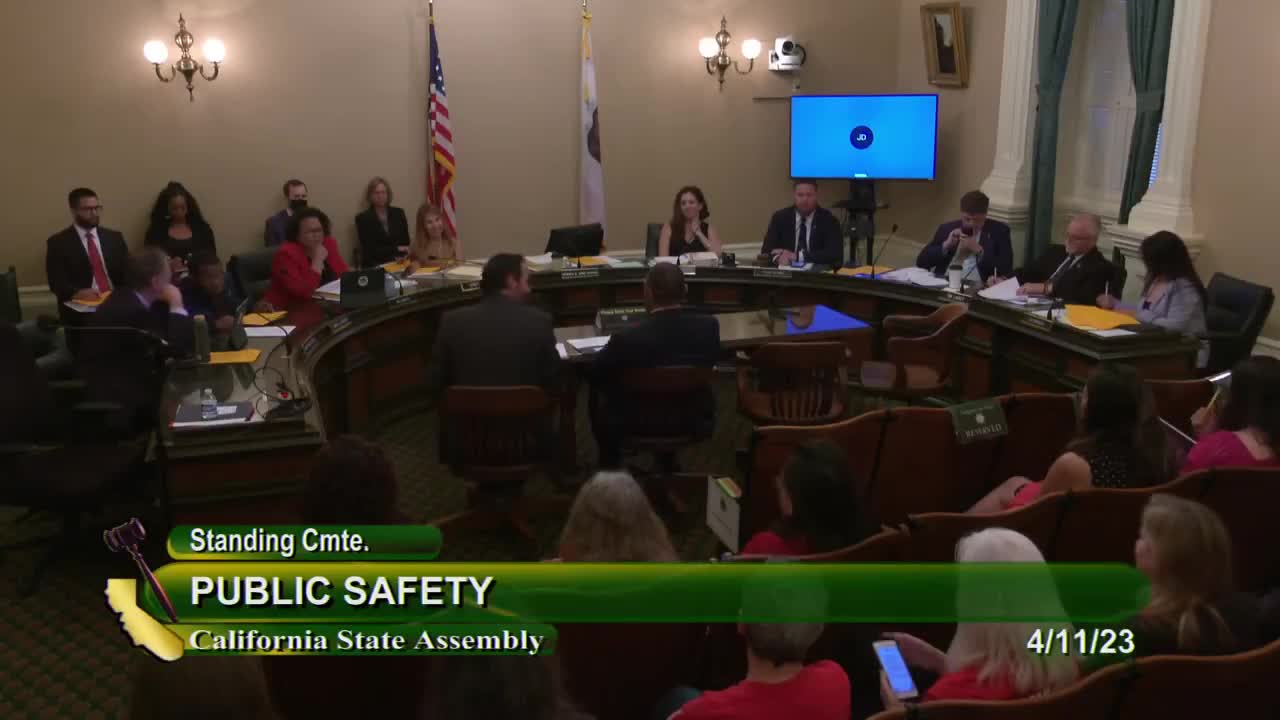 12MIN
Assembly Standing Committee on Public Safety
Bill Author

Bill Co-Author(s):