AB 1111: Cannabis: small producer event sales license.
- Session Year: 2023-2024
- House: Assembly
- Latest Version Date: 2024-08-31
Current Status:
Failed
(2024-09-29: Vetoed by Governor.)
Introduced
In Committee
First Chamber
In Committee
Second Chamber
Enacted
The Control, Regulate and Tax Adult Use of Marijuana Act (AUMA), an initiative measure approved as Proposition 64 at the November 8, 2016, statewide general election, authorizes a person who obtains a state license under AUMA to engage in commercial adult-use cannabis activity pursuant to that license and applicable local ordinances. The Medicinal and Adult-Use Cannabis Regulation and Safety Act (MAUCRSA), among other things, consolidates the licensure and regulation of commercial medicinal and adult-use cannabis activities and requires the Department of Cannabis Control to administer its provisions. Under MAUCRSA, the Department of Cannabis Control has sole authority to license and regulate commercial cannabis activity, which MAUCRSA defines to include, among other activities, the sale of cannabis and cannabis products.
MAUCRSA authorizes the issuance of a state temporary event license to a licensee authorizing onsite cannabis sales to, and consumption by, persons 21 years of age or older at certain venues expressly approved by a local jurisdiction, as specified. MAUCRSA requires a licensee who submits an application for a state temporary event license to provide to the department a list of all licensees that will be providing onsite sales of cannabis or cannabis products at the event.
This bill would require the department, no later than January 1, 2026, to issue small producer event sales licenses that authorize the licenseholder to sell cannabis or cannabis products, containing cannabis cultivated by that licensee, at state temporary events licensed under the act, and would require the department to charge each small producer event sales licensee a licensing fee, as specified. The bill would authorize a licensee who holds a valid annual state cultivation license and a valid license, permit, or other authorization for cannabis cultivation issued by a local jurisdiction, and who meets specified other requirements, to apply for a small producer event sales license. The bill would require a small producer event sales licensee to comply with all requirements imposed on licensees selling cannabis or cannabis products at a state temporary event, unless otherwise specified. The bill would prohibit the retail sales of cannabis and cannabis products made by a small producer event sales licensee at state temporary events from exceeding $175,000 in gross revenue per year, and would authorize the department, beginning July 1, 2027, to increase this cap by regulation after reevaluating the cap, as provided. The bill would provide that a cannabis event organizer licensee who submits an application for a state temporary event is required to provide to the department a list of all small producer event sales licensees providing onsite sales of cannabis or cannabis products at the event. The bill would authorize the department to take disciplinary action against a small producer event sales license, or any other licenses held by a small producer cannabis event sales licensee, for any violation of the requirements applicable to state temporary events. The bill would authorize a small producer event sales licensee, upon completion or cessation of the temporary event, to reconcile unsold inventory of cannabis or cannabis products and return it to a licensed distributor, as specified. The bill would require retail sales of cannabis or cannabis products by a small producer event sales licensee at a state temporary event to be subject to the cannabis excise tax, as specified.
AUMA authorizes the Legislature to amend its provisions with a 2/3 vote of both houses to further its purposes and intent.
This bill would state that the bill furthers the purposes and intent of AUMA.
The Control, Regulate and Tax Adult Use of Marijuana Act (AUMA), an initiative measure approved as Proposition 64 at the November 8, 2016, statewide general election, authorizes a person who obtains a state license under AUMA to engage in commercial adult-use cannabis activity pursuant to that license and applicable local ordinances. The Medicinal and Adult-Use Cannabis Regulation and Safety Act (MAUCRSA), among other things, consolidates the licensure and regulation of commercial medicinal and adult-use cannabis activities and requires the Department of Cannabis Control to administer its provisions. Under MAUCRSA, the Department of Cannabis Control has sole authority to license and regulate commercial cannabis activity, which MAUCRSA defines to include, among other activities, the sale of cannabis and cannabis products.
MAUCRSA authorizes the issuance of a state temporary event license to a licensee authorizing onsite cannabis sales to, and consumption by, persons 21 years of age or older at certain venues expressly approved by a local jurisdiction, as specified. MAUCRSA requires a licensee who submits an application for a state temporary event license to provide to the department a list of all licensees that will be providing onsite sales of cannabis or cannabis products at the event.
This bill would require the department department, no later than January 1, 2026, to issue small producer event sales licenses that authorize the licenseholder to sell cannabis or cannabis products, containing cannabis cultivated by that licensee, at state temporary events licensed under the act. act, and would require the department to charge each small producer event sales licensee a licensing fee, as specified. The bill would authorize a licensee who holds a valid annual state cultivation license and a valid license, permit, or other authorization for cannabis cultivation issued by a local jurisdiction, and who meets specified other requirements, to apply for a small producer event sales license. The bill would require a small producer event sales licensee to comply with all requirements imposed on licensees selling cannabis or cannabis products at a state temporary event, unless otherwise specified. The bill would specify that a small producer event sales license is valid for no more than 32 total days of sales at state temporary events per calendar year. prohibit the retail sales of cannabis and cannabis products made by a small producer event sales licensee at state temporary events from exceeding $175,000 in gross revenue per year, and would authorize the department, beginning July 1, 2027, to increase this cap by regulation after reevaluating the cap, as provided. The bill would provide that a cannabis event organizer licensee who submits an application for a state temporary event is required to provide to the department a list of all small producer event sales licensees providing onsite sales of cannabis or cannabis products at the event. The bill would authorize the department to take disciplinary action against a small producer event sales license, or any other licenses held by a small producer cannabis event sales licensee, for any violation of the requirements applicable to state temporary events. The bill would authorize a small producer event sales licensee, upon completion or cessation of the temporary event, to reconcile unsold inventory of cannabis or cannabis products and return it to a licensed distributor, as specified. The bill would require retail sales of cannabis or cannabis products by a small producer event sales licensee at a state temporary event to be subject to the cannabis excise tax, as specified.
AUMA authorizes the Legislature to amend its provisions with a 2/3 vote of both houses to further its purposes and intent.
This bill would state that the bill furthers the purposes and intent of AUMA.
The Control, Regulate and Tax Adult Use of Marijuana Act (AUMA), an initiative measure approved as Proposition 64 at the November 8, 2016, statewide general election, authorizes a person who obtains a state license under AUMA to engage in commercial adult-use cannabis activity pursuant to that license and applicable local ordinances. The Medicinal and Adult-Use Cannabis Regulation and Safety Act (MAUCRSA), among other things, consolidates the licensure and regulation of commercial medicinal and adult-use cannabis activities and requires the Department of Cannabis Control to administer its provisions. Under MAUCRSA, the Department of Cannabis Control has sole authority to license and regulate commercial cannabis activity, which MAUCRSA defines to include, among other activities, the sale of cannabis and cannabis products.
MAUCRSA authorizes the issuance of a state temporary event license to a licensee authorizing onsite cannabis sales to, and consumption by, persons 21 years of age or older at certain venues expressly approved by a local jurisdiction, as specified. MAUCRSA requires a licensee who submits an application for a state temporary event license to provide to the department a list of all licensees that will be providing onsite sales of cannabis or cannabis products at the event.
This bill would require the department to issue small producer event sales licenses that authorize the licenseholder to sell cannabis or cannabis products, containing cannabis cultivated by that licensee, at specified state temporary events licensed under the act. The bill would authorize a licensee who holds a valid state cultivation license and a valid license, permit, or other authorization for cannabis cultivation issued by a local jurisdiction, and who meets specified other requirements, to apply for a small producer event sales license. The bill would require a small producer event sales licensee to comply with all requirements imposed on licensees selling cannabis or cannabis products at a state temporary event, unless otherwise specified. The bill would specify that a small producer event sales license is valid for no more than 32 total days of sales at state temporary events per calendar year. The bill would provide that a cannabis event organizer licensee who submits an application for a state temporary event is required to provide to the department a list of all small producer event sales licensees providing onsite sales of cannabis or cannabis products at the event. The bill would authorize the department to take disciplinary action against a small producer event sales license, or any other licenses held by a small producer cannabis event sales licensee, for any violation of the requirements applicable to state temporary events.
AUMA authorizes the Legislature to amend its provisions with a 2/3 vote of both houses to further its purposes and intent.
This bill would state that the bill furthers the purposes and intent of AUMA.
The Control, Regulate and Tax Adult Use of Marijuana Act (AUMA), an initiative measure approved as Proposition 64 at the November 8, 2016, statewide general election, authorizes a person who obtains a state license under AUMA to engage in commercial adult-use cannabis activity pursuant to that license and applicable local ordinances. The Medicinal and Adult-Use Cannabis Regulation and Safety Act (MAUCRSA), among other things, consolidates the licensure and regulation of commercial medicinal and adult-use cannabis activities and requires the Department of Cannabis Control to administer its provisions. Under MAUCRSA, the Department of Cannabis Control has sole authority to license and regulate commercial cannabis activity, which MAUCRSA defines to include, among other activities, the sale of cannabis and cannabis products.
This bill would require the department to issue small producer event sales licenses that authorize the licenseholder to sell cannabis or cannabis products, containing cannabis cultivated by that licensee, at specified state temporary events licensed under the act. The bill would authorize a licensee who holds a valid state cultivation license and a valid license, permit, or other authorization for cannabis cultivation issued by a local jurisdiction, and who meets specified other requirements, to apply for a small producer event sales license. The bill would require a small producer event sales licensee to comply with all requirements imposed on licensees selling cannabis or cannabis products at a state temporary event, unless otherwise specified. The bill would specify that a small producer event sales license is valid for no more than 32 total days of sales at state temporary events per calendar year.
AUMA authorizes the Legislature to amend its provisions with a 2/3 vote of both houses to further its purposes and intent.
This bill would state that the bill furthers the purposes and intent of AUMA.
The Control, Regulate and Tax Adult Use of Marijuana Act (AUMA), an initiative measure approved as Proposition 64 at the November 8, 2016, statewide general election, authorizes a person who obtains a state license under AUMA to engage in commercial adult-use cannabis activity pursuant to that license and applicable local ordinances. The Medicinal and Adult-Use Cannabis Regulation and Safety Act (MAUCRSA), among other things, consolidates the licensure and regulation of commercial medicinal and adult-use cannabis activities and requires the Department of Cannabis Control to administer its provisions. Under MAUCRSA, the Department of Cannabis Control has sole authority to license and regulate commercial cannabis activity, which MAUCRSA defines to include, among other activities, the sale of cannabis and cannabis products.
This bill would require the department to issue small producer event sales licenses that authorize the licenseholder to sell cannabis or cannabis products, containing cannabis cultivated by that licensee, at specified state temporary events licensed under the act. The bill would authorize a licensee who holds a valid state cultivation license and a valid license, permit, or other authorization for cannabis cultivation issued by a local jurisdiction, and who meets specified other requirements, to apply for a small producer event sales license. The bill would require a small producer event sales licensee to comply with all requirements imposed on licensees selling cannabis or cannabis products at a state temporary event, unless otherwise specified. The bill would specify that a small producer event sales license is valid for no more than 32 total days of sales at temporary events per calendar year.
AUMA authorizes the Legislature to amend its provisions with a 2/3 vote of both houses to further its purposes and intent.
This bill would state that the bill furthers the purposes and intent of AUMA.
Existing law, the Control, Regulate and Tax Adult Use of Marijuana Act of 2016 (AUMA), an initiative measure approved as Proposition 64 at the November 8, 2016, statewide general election, prohibits the director of the Department of Cannabis Control (department) and any member of the Cannabis Control Appeals Panel from engaging in certain activities, including from receiving any commission or profit whatsoever, directly or indirectly, from any person applying for or receiving any license or permit, as described. Existing law, the Medicinal and Adult-Use Cannabis Regulation and Safety Act (MAUCRSA), among other things, consolidates the licensure and regulation of commercial medicinal and adult-use cannabis activities.This bill would also prohibit individuals appointed by the Governor to specified positions in the department from engaging in those activities.Existing law, the Control, Regulate and Tax Adult Use of Marijuana Act of 2016 (AUMA), an initiative measure approved as Proposition 64 at the November 8, 2016, statewide general election, prohibits the director of the Department of Cannabis Control (department) and any member of the Cannabis Control Appeals Panel from engaging in certain activities, including from receiving any commission or profit whatsoever, directly or indirectly, from any person applying for or receiving any license or permit, as described. Existing law, the Medicinal and Adult-Use Cannabis Regulation and Safety Act (MAUCRSA), among other things, consolidates the licensure and regulation of commercial medicinal and adult-use cannabis activities.
This bill would also prohibit individuals appointed by the Governor to specified positions in the department from engaging in those activities.
(a)(1)No later than January 1, 2026, the department shall issue a small producer event sales license authorizing retail sales at state temporary events licensed pursuant to subdivision (e) of Section 26200.
(2)The department shall charge each small producer event sales licensee a licensing fee pursuant to Section 26180.
(b)(1)A licensee who meets all of the following requirements may apply to the department for a small producer event sales license:
(A)The applicant holds a valid annual state cultivation license.
(B)The applicant holds a valid license, permit, or other authorization issued by a local jurisdiction that authorizes the licensee to engage in cannabis cultivation.
(C)The applicant is in compliance with all applicable labor peace agreement requirements pursuant to paragraph (5) of subdivision (a) of Section 26051.5.
(D)On and after January 1, 2025, and until January 1, 2027, inclusive, the applicant satisfies all of the following:
(i)The applicant cultivates no more than 10,000 square feet of cannabis, inclusive of all licensed premises.
(ii)The applicant cultivates no more than 5,000 square feet of cannabis under a mixed-light tier 1 cultivation license or licenses, inclusive of all licensed premises.
(iii)The applicant cultivates no more than 2,500 square feet of cannabis under a mixed-light tier 2 or indoor cultivation license or licenses, inclusive of all licensed premises.
(E)On and after January 1, 2027, the applicant satisfies all of the following:
(i)The applicant cultivates no more than one acre of cannabis, inclusive of all licensed premises.
(ii)The applicant cultivates no more than 22,000 square feet of cannabis under a mixed-light tier 1 cultivation license or licenses, inclusive of all licensed premises.
(iii)The applicant cultivates no more than 5,000 square feet of cannabis under a mixed-light tier 2 or indoor cultivation license or licenses, inclusive of all licensed premises.
(2)Notwithstanding the limitations in subparagraph (D) of paragraph (1), a licensee who holds a valid state cultivation license may apply to the department for a small producer event sales license before January 1, 2027, if that applicant satisfies both of the following:
(A)The applicant is a local equity applicant or licensee, as defined in Section 26240.
(B)The applicant meets the requirements for cultivation size under subparagraph (E) of paragraph (1).
(3)The department shall not require an applicant to resubmit information already provided by the applicant for their state cultivation license, and shall not require an applicant to submit to background checks or other inspections already performed for approval of their state cultivation license.
(4)The department shall establish a process to facilitate the submission of applications pursuant to this subdivision.
(c)Retail sales of cannabis and cannabis products made by a small producer event sales licensee at state temporary events shall not exceed one hundred seventy-five thousand dollars ($175,000) in gross revenue per year. Beginning July 1, 2027, the department may increase this cap by regulation after reevaluating the cap in response to inflation and market conditions.
(d)(1)All cannabis or cannabis products sold by a small producer event sales licensee at a licensed state temporary event shall only contain cannabis cultivated by that licensee.
(2)Cannabis and cannabis products intended to be sold pursuant to paragraph (1) shall be transported to the state temporary event venue by a distributor licensee in accordance with Section 26070.
(3)Except as otherwise provided in this section, a small producer event sales licensee shall comply with all requirements imposed on licensees selling cannabis or cannabis products at a state temporary event licensed pursuant to subdivision (e) of Section 26200.
(e)A cannabis event organizer licensee who submits an application for a state temporary event shall provide to the department a list of all small producer event sales licensees providing onsite sales of cannabis or cannabis products at the event pursuant to subparagraph (E) of paragraph (1) of subdivision (e) of Section 26200.
(f)The department may take disciplinary action against a small producer event sales license, or any other licenses held by a small producer cannabis event sales licensee, for any violation of the requirements applicable to state temporary events.
(g)Upon completion or cessation of the temporary event, a small producer event sales licensee may reconcile unsold inventory of cannabis or cannabis products and return it to a licensed distributor pursuant to the all of the following:
(1)Any unsold inventory of cannabis or cannabis products from the temporary event shall be noted in track and trace, as specified in Chapter 6.5 (commencing with Section 26067), before transport.
(2)Any unsold inventory of cannabis or cannabis products from the temporary event shall be in its original packaging in which it was placed pursuant to Chapter 12 (commencing with Section 26120).
(3)Cannabis or cannabis products returned pursuant to this section shall not be required to be retested before retail sale only if both of the following apply to the cannabis or cannabis product:
(A)It remains in its original packaging.
(B)The original certificate of analysis relating to the cannabis or cannabis product remains valid.
(h)Retail sales of cannabis or cannabis products by a small producer event sales licensee at a state temporary event shall be subject to the cannabis excise tax pursuant to Section 34011 of the Revenue and Taxation Code.
(i)This section does not limit the authority of local jurisdictions to regulate state temporary events pursuant to Section 26200, including the requirement for local jurisdiction authorization of state temporary events pursuant to subdivision (e) of Section 26200.
SEC. 2.The Legislature finds and declares that this act furthers the purposes and intent of the Control, Regulate and Tax Adult Use of Marijuana Act.
(a)The (1)No later than January 1, 2026, the department shall issue a small producer event sales license for use authorizing retail sales at state temporary events licensed pursuant to subdivision (e) of Section 26200.
(2)The department shall charge each small producer event sales licensee a licensing fee pursuant to Section 26180.
(b)(1)A licensee who meets all of the following requirements may apply to the department for a small producer event sales license:
(A)The applicant holds a valid annual state cultivation license.
(B)The applicant holds a valid license, permit, or other authorization issued by a local jurisdiction that authorizes the licensee to engage in cannabis cultivation.
(C)The applicant is in compliance with all applicable labor peace agreement requirements pursuant to paragraph (5) of subdivision (a) of Section 26051.5.
(D)On and after January 1, 2025, and until January 1, 2027, inclusive, the applicant satisfies all of the following:
(i)The applicant cultivates no more than 10,000 square feet of cannabis, inclusive of all licensed premises.
(ii)The applicant cultivates no more than 5,000 square feet of cannabis under a mixed-light tier 1 cultivation license or licenses, inclusive of all licensed premises.
(iii)The applicant cultivates no more than 2,500 square feet of cannabis under a mixed-light tier 2 or indoor cultivation license or licenses, inclusive of all licensed premises.
(C)The(E)On and after January 1, 2027, the applicant satisfies all of the following:
(i)The applicant cultivates no more than one acre of cannabis, inclusive of all licensed premises.
(ii)The applicant cultivates no more than 22,000 square feet of cannabis under a mixed-light tier 1 cultivation license or licenses, inclusive of all licensed premises.
(iii)The applicant cultivates no more than 5,000 square feet of cannabis under a mixed-light tier 2 or indoor cultivation license or licenses, inclusive of all licensed premises.
(2)Notwithstanding the limitations in subparagraph (C) (D) of paragraph (1), a licensee who holds a valid state cultivation license may apply to the department for a small producer event sales license if they are a local equity applicant or licensee, as defined in Section 26240. before January 1, 2027, if that applicant satisfies both of the following:
(A)The applicant is a local equity applicant or licensee, as defined in Section 26240.
(B)The applicant meets the requirements for cultivation size under subparagraph (E) of paragraph (1).
(3)The department shall not require an applicant to resubmit information already provided by the applicant for their state cultivation license, and shall not require an applicant to submit to background checks or other inspections already performed for approval of their state cultivation license.
(4)The department shall establish a process to facilitate the submission of applications pursuant to this subdivision.
(c)A small producer event sales license shall be valid for no more than 32 total days of sales at state temporary events per calendar year.(c)Retail sales of cannabis and cannabis products made by a small producer event sales licensee at state temporary events shall not exceed one hundred seventy-five thousand dollars ($175,000) in gross revenue per year. Beginning July 1, 2027, the department may increase this cap by regulation after reevaluating the cap in response to inflation and market conditions.
(d)(1)All cannabis or cannabis products sold by a small producer event sales licensee at a licensed state temporary event shall only contain cannabis cultivated by that licensee.
(2)Cannabis and cannabis products intended to be sold pursuant to paragraph (1) shall be transported to the state temporary event venue by a distributor licensee in accordance with Section 26070.
(3)Except as otherwise provided in this section, a small producer event sales licensee shall comply with all requirements imposed on licensees selling cannabis or cannabis products at a state temporary event licensed pursuant to subdivision (e) of Section 26200.
(e)A cannabis event organizer licensee who submits an application for a state temporary event shall provide to the department a list of all small producer event sales licensees providing onsite sales of cannabis or cannabis products at the event pursuant to subparagraph (E) of paragraph (1) of subdivision (e) of Section 26200.
(f)The department may take disciplinary action against a small producer event sales license, or any other licenses held by a small producer cannabis event sales licensee, for any violation of the requirements applicable to state temporary events.
(g)Upon completion or cessation of the temporary event, a small producer event sales licensee may reconcile unsold inventory of cannabis or cannabis products and return it to a licensed distributor pursuant to the all of the following:
(1)Any unsold inventory of cannabis or cannabis products from the temporary event shall be noted in track and trace, as specified in Chapter 6.5 (commencing with Section 26067), before transport.
(2)Any unsold inventory of cannabis or cannabis products from the temporary event shall be in its original packaging in which it was placed pursuant to Chapter 12 (commencing with Section 26120).
(3)Cannabis or cannabis products returned pursuant to this section shall not be required to be retested before retail sale only if both of the following apply to the cannabis or cannabis product:
(A)It remains in its original packaging.
(B)The original certificate of analysis relating to the cannabis or cannabis product remains valid.
(h)Retail sales of cannabis or cannabis products by a small producer event sales licensee at a state temporary event shall be subject to the cannabis excise tax pursuant to Section 34011 of the Revenue and Taxation Code.
(g)(i)This section does not limit the authority of local jurisdictions to regulate state temporary events pursuant to Section 26200, including the requirement for local jurisdiction authorization of state temporary events pursuant to subdivision (e) of Section 26200.
SEC. 2.The Legislature finds and declares that this act furthers the purposes and intent of the Control, Regulate and Tax Adult Use of Marijuana Act.
(a)The department shall issue a small producer event sales license for use at state temporary events licensed pursuant to subdivision (e) of Section 26200.
(b)(1)A licensee who meets all of the following requirements may apply to the department for a small producer event sales license:
(A)The applicant holds a valid state cultivation license.
(B)The applicant holds a valid license, permit, or other authorization issued by a local jurisdiction that authorizes the licensee to engage in cannabis cultivation.
(C)The applicant satisfies all of the following:
(i)The applicant cultivates no more than one acre of cannabis, inclusive of all licensed premises.
(ii)The applicant cultivates no more than 22,000 square feet of cannabis under a mixed-light tier 1 cultivation license or licenses, inclusive of all licensed premises.
(iii)The applicant cultivates no more than 5,000 square feet of cannabis under a mixed-light tier 2 or indoor cultivation license or licenses, inclusive of all licensed premises.
(2)Notwithstanding the limitations in subparagraph (C) of paragraph (1), a licensee who holds a valid state cultivation license may apply to the department for a small producer event sales license if they are a local equity applicant or licensee, as defined in Section 26240.
(3)The department shall not require an applicant to resubmit information already provided by the applicant for their state cultivation license, and shall not require an applicant to submit to background checks or other inspections already performed for approval of their state cultivation license.
(4)The department shall establish a process to facilitate the submission of applications pursuant to this subdivision.
(c)A small producer event sales license shall be valid for no more than 32 total days of sales at state temporary events per calendar year.
(d)(1)All cannabis or cannabis products sold by a small producer event sales licensee at a licensed state temporary event shall only contain cannabis cultivated by that licensee.
(2)Cannabis and cannabis products intended to be sold pursuant to paragraph (1) shall be transported to the state temporary event venue by a distributor licensee in accordance with Section 26070.
(3)Except as otherwise provided in this section, a small producer event sales licensee shall comply with all requirements imposed on licensees selling cannabis or cannabis products at a state temporary event licensed pursuant to subdivision (e) of Section 26200.
(e)A cannabis event organizer licensee who submits an application for a state temporary event shall provide to the department a list of all small producer event sales licensees providing onsite sales of cannabis or cannabis products at the event pursuant to subparagraph (E) of paragraph (1) of subdivision (e) of Section 26200.
(f)The department may take disciplinary action against a small producer event sales license, or any other licenses held by a small producer cannabis event sales licensee, for any violation of the requirements applicable to state temporary events.
(g)This section does not limit the requirement for local jurisdiction authorization of state temporary events pursuant to subdivision (e) of Section 26200.
SEC. 2.The Legislature finds and declares that this act furthers the purposes and intent of the Control, Regulate and Tax Adult Use of Marijuana Act.
(a)The department shall issue a small producer event sales license for use at state temporary events licensed pursuant to subdivision (e) of Section 26200.
(b)(1)A licensee who meets all of the following requirements may apply to the department for a small producer event sales license:
(A)The applicant holds a valid state cultivation license.
(B)The applicant holds a valid license, permit, or other authorization issued by a local jurisdiction that authorizes the licensee to engage in cannabis cultivation.
(C)The applicant satisfies all of the following:
(i)The applicant cultivates no more than one acre of cannabis under outdoor cultivation license(s), cannabis, inclusive of all licensed premises.
(ii)The applicant cultivates no more than 22,000 square feet of cannabis under a mixed-light tier 1 cultivation license(s), license or licenses, inclusive of all licensed premises.
(iii)The applicant cultivates no more than 5,000 square feet of cannabis under a mixed-light tier 2 and or indoor cultivation license(s), license or licenses, inclusive of all licensed premises.
(2)Notwithstanding the limitations in subparagraph (C) of paragraph (1), a licensee who holds a valid state cultivation license may apply to the department for a small producer event sales license if they are an a local equity applicant or licensee, as defined in Section 26249. 26240.
(3)The department shall not require an applicant to resubmit information already provided by the applicant for their state cultivation license, and shall not require an applicant to submit to background checks or other inspections already performed for approval of their state cultivation license.
(4)The department shall establish a process to facilitate the submission of applications pursuant to this subdivision.
(c)A small producer event sales license shall be valid for no more than 32 total days of sales at state temporary events per calendar year.
(d)(1)All cannabis or cannabis products sold by a small producer event sales licensee at a licensed state temporary event shall only contain cannabis cultivated by that licensee.
(2)Cannabis and cannabis products intended to be sold pursuant to paragraph (1) shall be transported to the cannabis state temporary event venue by a distributor licensee in accordance with Section 26070.
(3)Except as otherwise provided in this section, a small producer event sales licensee shall comply with all requirements imposed on licensees selling cannabis or cannabis products at a state temporary event licensed pursuant to subdivision (e) of Section 26200.
SEC. 2.The Legislature finds and declares that this act furthers the purposes and intent of the Control, Regulate and Tax Adult Use of Marijuana Act.
(a)The department shall issue a small producer event sales license for use at state temporary events licensed pursuant to subdivision (e) of Section 26200.
(b)(1)A licensee who meets all of the following requirements may apply to the department for a small producer event sales license:
(A)The applicant holds a valid state cultivation license.
(B)The applicant holds a valid license, permit, or other authorization issued by a local jurisdiction that authorizes the licensee to engage in cannabis cultivation.
(C)The applicant satisfies all of the following:
(i)The applicant cultivates no more than one acre of cannabis under outdoor cultivation license(s), inclusive of all licensed premises.
(ii)The applicant cultivates no more than 22,000 square feet of cannabis under mixed-light tier 1 cultivation license(s), inclusive of all licensed premises.
(iii)The applicant cultivates no more than 5,000 square feet of cannabis under mixed-light tier 2 and indoor cultivation license(s), inclusive of all licensed premises.
(2)Notwithstanding the limitations in subparagraph (C) of paragraph (1), a licensee who holds a valid state cultivation license may apply to the department for a small producer event sales license if they are an equity applicant or licensee, as defined in Section 26249.
(3)The department shall not require an applicant to resubmit information already provided by the applicant for their state cultivation license, and shall not require an applicant to submit to background checks or other inspections already performed for approval of their state cultivation license.
(4)The department shall establish a process to facilitate the submission of applications pursuant to this subdivision.
(c)A small producer event sales license shall be valid for no more than 32 total days of sales at temporary events per calendar year.
(d)(1)All cannabis or cannabis products sold by a small producer event sales licensee at a licensed event shall only contain cannabis cultivated by that licensee.
(2)Cannabis and cannabis products intended to be sold pursuant to paragraph (1) shall be transported to the cannabis event venue by a distributor licensee in accordance with Section 26070.
(3)Except as otherwise provided in this section, a small producer event sales licensee shall comply with all requirements imposed on licensees selling cannabis or cannabis products at a state temporary event licensed pursuant to subdivision (e) of Section 26200.
SEC. 2.The Legislature finds and declares that this act furthers the purposes and intent of the Control, Regulate and Tax Adult Use of Marijuana Act.
SECTION 1.Section 26011 of the Business and Professions Code is amended to read:26011.The director, an individual appointed by the Governor pursuant to paragraph (2) of subdivision (c) of Section 26010.5, and any member of the Cannabis Control Appeals Panel established under Section 26040 shall not do any of the following:(a)Receive any commission or profit whatsoever, directly or indirectly, from any person applying for or receiving any license or permit under this division.(b)Engage or have any interest in the sale or any insurance covering a licensees business or premises.(c)Engage or have any interest in the sale of equipment for use upon the premises of a licensee engaged in commercial cannabis activity.(d)Knowingly solicit any licensee for the purchase of tickets for benefits or contributions for benefits.(e)Knowingly request any licensee to donate or receive money, or any other thing of value, for the benefit of any person whatsoever.Neither the director nor The director, an individual appointed by the Governor pursuant to paragraph (2) of subdivision (c) of Section 26010.5, and any member of the Cannabis Control Appeals Panel established under Section 26040 shall not do any of the following:
(a)Receive any commission or profit whatsoever, directly or indirectly, from any person applying for or receiving any license or permit under this division.
(b)Engage or have any interest in the sale or any insurance covering a licensees business or premises.
(c)Engage or have any interest in the sale of equipment for use upon the premises of a licensee engaged in commercial cannabis activity.
(d)Knowingly solicit any licensee for the purchase of tickets for benefits or contributions for benefits.
(e)Knowingly request any licensee to donate or receive money, or any other thing of value, for the benefit of any person whatsoever.
|
Date
|
Status
|
|---|---|
| Sep 29, 2024 | Vetoed by Governor. |
| Sep 16, 2024 | Enrolled and presented to the Governor at 3:30 p.m. |
| Aug 28, 2024 | Senate amendments concurred in. To Engrossing and Enrolling. (Ayes 69. Noes 2.). |
| Aug 28, 2024 | In Assembly. Concurrence in Senate amendments pending. May be considered on or after August 30 pursuant to Assembly Rule 77. |
| Aug 28, 2024 | Assembly Rule 77 suspended. |
| Aug 27, 2024 | Read third time. Passed. Ordered to the Assembly. (Ayes 27. Noes 5.). |
| Aug 19, 2024 | Read second time. Ordered to third reading. |
| Aug 15, 2024 | Read second time and amended. Ordered returned to second reading. |
| Aug 15, 2024 | From committee: Amend, and do pass as amended. (Ayes 4. Noes 0.) (August 15). |
| Sep 1, 2023 | In committee: Held under submission. |
| Aug 14, 2023 | In committee: Referred to APPR suspense file. |
| Jun 26, 2023 | From committee: Do pass and re-refer to Com. on APPR. (Ayes 8. Noes 1.) (June 26). Re-referred to Com. on APPR. |
| Jun 7, 2023 | Referred to Com. on B., P. & E. D. |
| May 31, 2023 | In Senate. Read first time. To Com. on RLS. for assignment. |
| May 30, 2023 | Read third time. Passed. Ordered to the Senate. (Ayes 74. Noes 1. Page 1898.) |
| May 22, 2023 | Read third time and amended. Ordered to third reading. (Page 1684.) |
| May 18, 2023 | Read second time. Ordered to third reading. |
| May 18, 2023 | From committee: Do pass. (Ayes 15. Noes 0.) (May 18). |
| Apr 26, 2023 | In committee: Set, first hearing. Referred to APPR. suspense file. |
| Apr 17, 2023 | Re-referred to Com. on APPR. |
| Apr 12, 2023 | Read second time and amended. |
| Apr 11, 2023 | From committee: Amend, and do pass as amended and re-refer to Com. on APPR. (Ayes 16. Noes 0.) (April 11). |
| Mar 14, 2023 | Re-referred to Com. on B. & P. |
| Mar 13, 2023 | From committee chair, with author's amendments: Amend, and re-refer to Com. on B. & P. Read second time and amended. |
| Mar 2, 2023 | Referred to Com. on B. & P. |
| Feb 16, 2023 | From printer. May be heard in committee March 18. |
| Feb 15, 2023 | Read first time. To print. |
|
Date
|
Description
|
Location
|
Votes
|
|
|---|---|---|---|---|
| Aug 28, 2024 | AB 1111 Pellerin Concurrence in Senate Amendments | Assembly Floor |
Passed |
|
| Aug 27, 2024 | Assembly 3rd Reading AB1111 Pellerin et al. By Eggman | Senate Floor |
Passed |
|
| Aug 15, 2024 | Do pass as amended | Senate Standing Committee on Appropriations |
Passed |
|
| Aug 14, 2023 | Placed on suspense file | Senate Standing Committee on Appropriations |
Passed |
|
| Jun 26, 2023 | Do pass, but first be re-referred to the Committee on [Appropriations] | Senate Standing Committee on Business, Professions and Economic Development |
Passed |
|
| May 30, 2023 | AB 1111 Pellerin Assembly Third Reading | Assembly Floor |
Passed |
|
| May 18, 2023 | Do pass. | Assembly Standing Committee on Appropriations |
Passed |
|
| Apr 11, 2023 | Do pass as amended and be re-referred to the Committee on [Appropriations] | Assembly Standing Committee on Business and Professions |
Passed |
This list shows positions taken on this bill by organizations on the date displayed, which is linked to the original source.
Positions by individuals are not included.
|
Organization
|
Position
|
Date
|
|---|---|---|
| Angeles Emeralds | ** Against | |
| Armenian Labor Trade and Labor Association | * Against | Aug 14, 2023 |
| Armenian Trade and Labor Association | * Against | Jun 26, 2023 |
| Be the Influence | * Against | Jun 26, 2023 |
| Big Sur Farmers Association | ** Support | |
| California Cannabis Industry Association | ** Support | |
| California Minority Alliance | ** Against | |
| California NORML | ** Support | |
| California State Association Of Counties | ** Support | |
| California State Grange | ** Support | |
| Cannabis Equity Policy Council | ** Support | |
| Cannabis Equity Policy Council | * Support | Apr 11, 2023 |
| Cannabis Equity Policy Council | * Support | Jun 26, 2023 |
| CannaCraft | ** Support | |
| City of Corona | * Against | Jun 26, 2023 |
| Coachella valley cannabis alliance network | ** Against | |
| Cornerstone Wellness | * Against | Aug 14, 2023 |
| County of Humboldt | ** Support | |
| Covelo Cannabis Advocacy Group | ** Support | |
| Emerald Cup | ** Support | |
| Emerald Cup; the | ** Support | |
| First Day Foundation | * Against | Jun 26, 2023 |
| Global Cannabinoid Research Center | ** Support | |
| Good Farmers Great Neighbors | * Support | Jun 26, 2023 |
| Hermosa Coalition for Drug Free Kids | * Against | Aug 14, 2023 |
| Hessel Farmers Grange | ** Support | |
| Humboldt and Mendocino County Board of Supervisors | * Support | Jun 26, 2023 |
| Humboldt County Board of Supervisors | ** Support | |
| Humboldt County Growers Alliance | ** Support | |
| Kiva Confections | * Support | Jun 26, 2023 |
| LA Cannabis Company | * Against | Jun 26, 2023 |
| LA Cannabis Company | * Against | Aug 14, 2023 |
| LA Cannabis Company | * Against | Jun 26, 2023 |
| LA Cannabis Company | * Against | Jun 26, 2023 |
| LA Cannabis Company | * Against | Jun 26, 2023 |
| LA Cannabis Company | * Against | Jun 26, 2023 |
| LA Cannabis Company | * Against | Jun 26, 2023 |
| La Población con Percepción de Buena Salud | * Indeterminate | Jun 26, 2023 |
| Lake Elsinore, California | * Against | Jun 26, 2023 |
| Leafworks | ** Support | |
| Life Development Group | * Against | Jun 26, 2023 |
| Long Beach Collective Association | ** Against | |
| Long Beach Commercial Cannabis Council | ** Support | |
| Los Amigos de la Comunidad | * Against | Jun 26, 2023 |
| Marin Healthy Youth Partnerships | * Against | Jun 26, 2023 |
| Marin Residents for Public Health Cannabis Policies | * Against | Jun 26, 2023 |
| Medical Cannabis Resource Events | ** Support | |
| Mendocino Cannabis Alliance | ** Support | |
| Mendocino Producers Guild | ** Support | |
| Nabis | ** Support | |
| Nevada County Cannabis Alliance | ** Support | |
| Oaksterdam University | ** Support | |
| Origins Council | ** Support | |
| Public Health Institute | ** Against | |
| Resources Legacy Fund | ** Support | |
| Rural County Representatives of California | ** Support | |
| San Francisco Cannabis Retailers Alliance | ** Against | |
| San Jose Cannabis Equity Working Group | ** Support | |
| Silicon Valley Cannabis Alliance | ** Against | |
| Social Equity LA | ** Against | |
| Social Equity Owners & Workers Association | ** Against | |
| Social Equity Owners and Operators | * Against | Jun 26, 2023 |
| Sonoma County Cannabis Alliance | ** Support | |
| Stiiizy | ** Support | |
| Sweetleaf Health Equity | ** Support | |
| The Emerald Cup | ** Support | |
| The Parent Company | ** Support | |
| The Sweetleaf Collective | ** Support | |
| Trinity County Agricultural Alliance | ** Support | |
| Trinity County Agriculture Alliance | ** Support | |
| UFCW5 | * Against | Jun 26, 2023 |
| Uncle Louie's Farms | * Against | Jun 26, 2023 |
| United Cannabis Business Association | ** Against | |
| United Core Alliance | ** Support | |
| United Food And Commercial Workers (Ufcw) | * Against | Jun 26, 2023 |
| Veterans Cannabis Group | ** Support | |
| Weed for Warriors Project | ** Support |
GOVERNOR'S VETO
GV Bill Id:AB 1111
Author:(Pellerin)
As Enrolled Ver:August 31, 2024
2/3 vote
SUMMARY
Requires the Department of Cannabis Control (DCC), beginning January 1, 2026, to issue small producer event sales licenses authorizing retail sales at state temporary events.
Senate Amendments
Delay implementation to January 1, 2026.
Require the DCC to charge a licensing fee, as specified, for each small producer event sales license.
Require an applicant to have a valid annual state cultivation license and be in compliance with all applicable labor peace agreement requirements, as specified.
Prohibit an applicant, between January 1, 2025, and January 1, 2027, from cultivating more than 10,000 square feet of cannabis, inclusive of all licensed premises; 5,000 square feet of cannabis under a mixed-light tier 1 cultivation license or licenses, inclusive of all licensed premises; or 2,500 square feet of cannabis under a mixed-light tier 2 or indoor cultivation license or licenses, inclusive of all licensed premises.
Prohibit an applicant, on or after January 1, 2027, from cultivating more than one acre of cannabis, inclusive of all licensed premise; more than 22,000 square feet of cannabis under a mixed-light tier 1 cultivation license or licenses, inclusive of all licensed premises; or more than 5,000 square feet of cannabis under a mixed-light tier 2 or indoor cultivation license or licenses, inclusive of all licensed premises.
Authorize a licensee who holds a valid state cultivation license to apply for a small producer event sales license before January 1, 2027, if that applicant is a local equity applicant or licensee and meets the specified cultivation size limitations.
Delete the cap on the number of days that a small producer event sales license is valid and impose an annual gross revenue cap of $175,000. Authorize the DCC to increase the cap by regulation after reevaluating the cap in response to inflation and market conditions.
Authorize a small producer event sales licensee to reconcile unsold inventory of cannabis or cannabis products and return it to a licensed distributor, subject to specified conditions.
Specify that retail sales of cannabis or cannabis products by a small producer event sales licensee at a state temporary event shall be subject to the cannabis excise tax.
Clarify that nothing in the bill limits the authority of local jurisdictions to regulate state temporary events.
Governor's Veto Message
In his veto message, Governor Newsom writes:
I am returning Assembly Bill 1111 without my signature.
This bill would create a small producer event sales license, allowing cannabis producers to sell their products at state temporary events for up to 32 days per calendar year, with the requirement that all products sold must be cultivated by the licensee.
While I appreciate the author's intent to support small and equity cannabis cultivators, I am concerned that the bill's broad eligibility, which extends to the vast majority of licensed cultivators, would undermine the existing retail licensing framework and place significant strain on the Department of Cannabis Control's ability to regulate and enforce compliance.
I remain open to considering a more flexible and narrowly focused version of this bill next year that can better respond to market dynamics, without imposing a rigid monitoring and compliance framework. Such policies must be considered within the broader context of efforts that are necessary to address the fundamental issues straining the legal cannabis market, such as competition from unregulated sources and improving access to regulated products. It is essential that we prioritize solutions that strengthen, rather than further burden, the existing regulated market.
For these reasons, I cannot sign this bill.
COMMENTS
Department of Cannabis Control. Since July 1, 2021, the DCC has been the single entity responsible for administering and enforcing the majority of California's cannabis laws, collectively known as Medicinal and Adult Use Cannabis Regulation and Safety Act (MAUCRSA). The DCC is additionally responsible for licensing and regulating cannabis businesses, including the cultivation, manufacture, testing, transportation, labeling, and sale of cannabis and cannabis products in this state. DCC is authorized to issue state temporary event licenses where individuals 21 years of age or older may buy and consume cannabis.
State Temporary Events. Temporary events are analogous to trade fairs where cannabis businesses can showcase their products and services and consumers can buy and consume cannabis. Temporary events may be held over four consecutive days and are subject to the approval from the local jurisdiction in which the temporary event is proposed to be held. According to the DCC, 54% of cities and counties do not allow any type of cannabis business to operate within their jurisdictions.
Since its establishment in 2021, the DCC has issued 36 temporary event licenses—11 in 2021 and 25 in 2022. Over the last three years, the temporary events have been held in the cities of Adelanto, Oakland, Santa Rosa, San Francisco, Port Hueneme, and Turlock as well as Cathedral City. Temporary cannabis events have also been held in Stanislaus, Mendocino, Humboldt, and Riverside counties.
Retailers are the only licensees currently permitted to sell cannabis goods at temporary events and must follow specific rules related to the sale and consumption of cannabis on-site, including the display and packaging of cannabis goods, age restrictions on sales, daily sales limits, a prohibition on samples, and recording sales in the California Cannabis Track and Trace system. This bill would require the DCC to issue a small producer event sales license for use at state temporary events so that licensed small- and medium-size cultivators and equity applicants could sell their cannabis products directly to consumers. Importantly, small producer event sales licensees would be required to adhere to the same rules as retailers at temporary events and could be subject to disciplinary action by DCC for a violation.
DCC Regulations Pertaining to Cultivators Participating in State Temporary Events. In 2021, DCC compliance staff required licensed cultivators participating in the Emerald Cup (a licensed temporary event) to remove any cannabis products they had on display in their booths and were allowed only to display empty packaging. Partly in response to this incident, representatives of cannabis cultivation licensees sponsored AB 2691 (Wood) in 2022, which was substantially similar to this bill. In November 2022, the DCC finalized regulations that, as it relates to this bill, allow non-retail licensees (e.g., cultivators and manufacturers) to participate in temporary events and display cannabis or cannabis products, as specified.
Cannabis Cultivation and Required Licenses. A DCC-issued license is required to cultivate cannabis for commercial use. The type of cultivation license required depends on the size of the area where mature plants are grown and the type of lighting that is used. Outdoor licenses are required for cultivators who grow cannabis outdoors without artificial lighting on mature plants. Indoor licenses are required for cultivators who grow cannabis indoors in a permanent structure using at least 25 watts of artificial light per square foot. Mixed-light licenses are for cultivators who grow cannabis in a greenhouse, conservatory, hothouse, or other similar structure. Tier 1 mixed-light licenses are required when artificial lighting is used that produces up to six watts of artificial light per square foot, and Tier 2 mixed-light licenses are required when artificial lighting is used that produces six to 25 watts of artificial light per square foot. Cultivation license types are further distinguished by the physical size of the cultivation area (e.g., 1 acre or 22,000 square feet). This bill would limit eligibility for a small producer event sales license based on an applicant's cultivation capacity.
According to the Author
"California's small cannabis producers are world-renowned for their craft and quality, but lack access to scale-appropriate marketing activities that would be available if they were small producers of products like wine or coffee. As a result, communities of small producers across the state are struggling to compete against better-resourced competitors. Enabling small producers to sell their own products at licensed cannabis events would support the development of a craft cannabis market in California and facilitate sustainable economic development in cannabis producing regions."
Arguments in Support
The Origins Council, Humboldt County Growers Alliance, Big Sur Farmers Association, Nevada County Cannabis Alliance, Mendocino Cannabis Alliance, Trinity County Agriculture Alliance, Sonoma County Cannabis Alliance, Sweetleaf Health Equity, The Emerald Cup, Oaksterdam University, Hessel Farmers Grange, Medical Cannabis Resource, United Core Alliance, LeafWorks, Mendocino Producers Guild, San Jose Cannabis Equity Working Group, Covelo Cannabis Advocacy Group, Veterans Cannabis Group, Weed For Warriors, California State Grange, Long Beach Commercial Cannabis Council, Cannabis Equity Policy Council, Cannabis Travel Authority, and Cannacraft collectively write in support:
Under the legal commercial cannabis framework, craft legacy producers have largely lost access to these opportunities to connect directly with consumers. Vertical integration is financially out of reach for nearly all independent small urban and rural producers, and CEQA and local land use regulation significantly limits the opportunity to pursue sales directly from the farm.
As a result, legacy producers have been denied access to their well-established and loyal medical cannabis consumer base, as well as the burgeoning recreational consumer base. In turn, consumer and patient access to farm-fresh cannabis and small batch products at retail have substantially diminished since legalization. Analytic labs are now reporting a significant and ongoing decline in the genetic biodiversity within the regulated market. As an annual plant, the loss of California's extraordinary cannabis genetics currently underway will be largely permanent.
Independent small producers typically lack access to marketing resources, such as sales teams and advertising budgets, that are available to larger and better-capitalized businesses. As a result, these legacy producers remain under-utilized in contributing to the public and consumer education efforts necessary to support a thriving legalized industry.
AB-1111 would provide a pathway for small producers to re-establish these consumer relationships, and in turn would help build a niche market for craft cannabis produced by California's world-renowned cannabis producers. Establishing a market for craft cannabis will help educate the public at large and drive consumers to these products at licensed retail facilities, building the foundation for the long-term market differentiation of California cannabis.
Additionally, AB-1111 would enable rural areas to utilize producer event sales as one component of larger efforts to promote tourism and destination marketing. Providing a pathway for consumers to interact directly with producers, in the region of origin itself, would enable legacy cannabis producing regions to establish and build a regional reputation, similar to other California producing regions renowned for their craft products, such as the Napa Valley American Viticultural Area.
Arguments in Opposition
The United Cannabis Business Association, Coachella Valley Cannabis Alliance, California Minority Alliance, Long Beach Collective Association, Social Equity LA, Social Equity Operators and Workers Association, San Francisco Cannabis Retailers Alliance, Silicone Valley Cannabis Alliance, and Angeles Emeralds collectively write in opposition:
We regret to inform you that UCBA & our coalition of cannabis trade associations, representing the overwhelming majority of cannabis retailers, both equity and non-equity, as well as unionized retailers, formally oppose AB 1111. For the following reasons.
- AB 1111 lacks the guidance & tools for enforcement of cannabis laws on farmer's market sales
- The Enforcement Budget and oversight from the Department of Cannabis Control has been significantly lowered and the entire cannabis market has suffered because of it.
- AB 1111 pushes local retail business owners further to the back of the line while waiting to enter a legal market.
- AB1111 is estimated to bring negative economic benefit to cultivators (See chart p.3)
- The ability to sell products as a cultivator, at a special event already exists.
- AB 1111 undermines the existing supply chain by cutting out retailers.
- AB 1111 threatens Union Jobs
- AB 11111 does not expand legal market access
- Ab 1111 only dilutes the existing legal markets
FISCAL COMMENTS
According to the Senate Appropriations Committee, "Unknown significant ongoing costs, likely ranging into the high hundreds of thousands of dollars, for the Department of Cannabis Control (DCC) to create and implement the small producer temporary event license (Cannabis Control Fund). License fee revenue will offset DCC's administrative costs to some extent."
VOTES
ASM BUSINESS AND PROFESSIONS: 16-0-2
YES: Berman, Flora, Alanis, Alvarez, Bonta, Chen, Dixon, Grayson, Jackson, Lee, Lowenthal, McCarty, McKinnor, Stephanie Nguyen, Joe Patterson, Ting
ABS, ABST OR NV: Gipson, Irwin
ASM APPROPRIATIONS: 15-0-1
YES: Holden, Megan Dahle, Bryan, Calderon, Wendy Carrillo, Dixon, Mike Fong, Hart, Lowenthal, Mathis, Papan, Pellerin, Sanchez, Weber, Ortega
ABS, ABST OR NV: Robert Rivas
ASSEMBLY FLOOR: 74-1-5
YES: Addis, Aguiar-Curry, Alanis, Alvarez, Arambula, Bains, Bauer-Kahan, Bennett, Berman, Boerner, Bonta, Bryan, Calderon, Juan Carrillo, Wendy Carrillo, Cervantes, Chen, Connolly, Megan Dahle, Davies, Dixon, Flora, Mike Fong, Vince Fong, Friedman, Gabriel, Gallagher, Garcia, Gipson, Grayson, Haney, Hart, Holden, Hoover, Jackson, Jones-Sawyer, Kalra, Lackey, Lee, Low, Lowenthal, Maienschein, Mathis, McCarty, McKinnor, Stephanie Nguyen, Ortega, Pacheco, Papan, Jim Patterson, Joe Patterson, Pellerin, Petrie-Norris, Quirk-Silva, Reyes, Luz Rivas, Robert Rivas, Rodriguez, Blanca Rubio, Sanchez, Santiago, Soria, Ting, Valencia, Villapudua, Waldron, Wallis, Ward, Weber, Wicks, Wilson, Wood, Zbur, Rendon
NO: Muratsuchi
ABS, ABST OR NV: Essayli, Irwin, Ramos, Schiavo, Ta
SENATE FLOOR: 27-5-8
YES: Allen, Archuleta, Ashby, Atkins, Becker, Blakespear, Caballero, Cortese, Dahle, Dodd, Durazo, Eggman, Grove, Jones, Laird, Limón, McGuire, Menjivar, Min, Newman, Niello, Padilla, Roth, Skinner, Stern, Umberg, Wilk
NO: Alvarado-Gil, Hurtado, Nguyen, Wahab, Wiener
ABS, ABST OR NV: Bradford, Glazer, Gonzalez, Ochoa Bogh, Portantino, Rubio, Seyarto, Smallwood-Cuevas
ASSEMBLY FLOOR: 69-2-8
YES: Addis, Alanis, Alvarez, Arambula, Bains, Bauer-Kahan, Bennett, Berman, Boerner, Bonta, Bryan, Calderon, Juan Carrillo, Wendy Carrillo, Chen, Connolly, Megan Dahle, Davies, Dixon, Flora, Mike Fong, Friedman, Gallagher, Garcia, Gipson, Grayson, Haney, Hart, Holden, Hoover, Jackson, Jones-Sawyer, Kalra, Lackey, Lee, Low, Lowenthal, Maienschein, Mathis, McCarty, McKinnor, Stephanie Nguyen, Pacheco, Papan, Jim Patterson, Pellerin, Petrie-Norris, Quirk-Silva, Rendon, Reyes, Luz Rivas, Rodriguez, Blanca Rubio, Sanchez, Santiago, Schiavo, Soria, Ting, Valencia, Villapudua, Waldron, Wallis, Ward, Weber, Wicks, Wilson, Wood, Zbur, Robert Rivas
NO: Muratsuchi, Joe Patterson
ABS, ABST OR NV: Aguiar-Curry, Cervantes, Essayli, Gabriel, Irwin, Ortega, Ramos, Ta
UPDATED
VERSION: August 31, 2024
CONSULTANT: Kaitlin Curry / B. & P. / (916) 319-3301 FN: 0005149
CONCURRENCE IN SENATE AMENDMENTS
CSA1 Bill Id:AB 1111
Author:(Pellerin)
As Amended Ver:August 15, 2024
2/3 vote
SUMMARY
Requires the Department of Cannabis Control (DCC), beginning January 1, 2026, to issue small producer event sales licenses authorizing retail sales at state temporary events.
Senate Amendments
- Delay implementation to January 1, 2026.
- Require the DCC to charge a licensing fee, as specified, for each small producer event sales license.
- Require an applicant to have a valid annual state cultivation license and be in compliance with all applicable labor peace agreement requirements, as specified.
- Prohibit an applicant, between January 1, 2025, and January 1, 2027, from cultivating more than 10,000 square feet of cannabis, inclusive of all licensed premises; 5,000 square feet of cannabis under a mixed-light tier 1 cultivation license or licenses, inclusive of all licensed premises; or 2,500 square feet of cannabis under a mixed-light tier 2 or indoor cultivation license or licenses, inclusive of all licensed premises.
- Prohibit an applicant, on or after January 1, 2027, from cultivating more than one acre of cannabis, inclusive of all licensed premise; more than 22,000 square feet of cannabis under a mixed-light tier 1 cultivation license or licenses, inclusive of all licensed premises; or more than 5,000 square feet of cannabis under a mixed-light tier 2 or indoor cultivation license or licenses, inclusive of all licensed premises.
- Authorizes a licensee who holds a valid state cultivation license to apply for a small producer event sales license before January 1, 2027, if that applicant is a local equity applicant or licensee and meets the specified cultivation size limitations.
- Delete the cap on the number of days that a small producer event sales license is valid and impose an annual gross revenue cap of $175,000. Authorize the DCC to increase the cap by regulation after reevaluating the cap in response to inflation and market conditions.
- Authorize a small producer event sales licensee to reconcile unsold inventory of cannabis or cannabis products and return it to a licensed distributor, subject to specified conditions.
- Specify that retail sales of cannabis or cannabis products by a small producer event sales licensee at a state temporary event shall be subject to the cannabis excise tax.
- Clarify that nothing in the bill limits the authority of local jurisdictions to regulate state temporary events.
COMMENTS
Department of Cannabis Control. Since July 1, 2021, the DCC has been the single entity responsible for administering and enforcing the majority of California's cannabis laws, collectively known as Medicinal and Adult Use Cannabis Regulation and Safety Act (MAUCRSA). The DCC is additionally responsible for licensing and regulating cannabis businesses, including the cultivation, manufacture, testing, transportation, labeling, and sale of cannabis and cannabis products in this state. DCC is authorized to issue state temporary event licenses where individuals 21 years of age or older may buy and consume cannabis.
State Temporary Events. Temporary events are analogous to trade fairs where cannabis businesses can showcase their products and services and consumers can buy and consume cannabis. Temporary events may be held over four consecutive days and are subject to the approval from the local jurisdiction in which the temporary event is proposed to be held. According to the DCC, 54% of cities and counties do not allow any type of cannabis business to operate within their jurisdictions.
Since its establishment in 2021, the DCC has issued 36 temporary event licenses—11 in 2021 and 25 in 2022. Over the last three years, the temporary events have been held in the cities of Adelanto, Oakland, Santa Rosa, San Francisco, Port Hueneme, and Turlock as well as Cathedral City. Temporary cannabis events have also been held in Stanislaus, Mendocino, Humboldt, and Riverside counties.
Retailers are the only licensees currently permitted to sell cannabis goods at temporary events and must follow specific rules related to the sale and consumption of cannabis on-site, including the display and packaging of cannabis goods, age restrictions on sales, daily sales limits, a prohibition on samples, and recording sales in the California Cannabis Track and Trace system. This bill would require the DCC to issue a small producer event sales license for use at state temporary events so that licensed small- and medium-size cultivators and equity applicants could sell their cannabis products directly to consumers. Importantly, small producer event sales licensees would be required to adhere to the same rules as retailers at temporary events and could be subject to disciplinary action by DCC for a violation.
DCC Regulations Pertaining to Cultivators Participating in State Temporary Events. In 2021, DCC compliance staff required licensed cultivators participating in the Emerald Cup (a licensed temporary event) to remove any cannabis products they had on display in their booths and were allowed only to display empty packaging. Partly in response to this incident, representatives of cannabis cultivation licensees sponsored AB 2691 (Wood) in 2022, which was substantially similar to this bill. In November 2022, the DCC finalized regulations that, as it relates to this bill, allow non-retail licensees (e.g., cultivators and manufacturers) to participate in temporary events and display cannabis or cannabis products, as specified.
Cannabis Cultivation and Required Licenses. A DCC-issued license is required to cultivate cannabis for commercial use. The type of cultivation license required depends on the size of the area where mature plants are grown and the type of lighting that is used. Outdoor licenses are required for cultivators who grow cannabis outdoors without artificial lighting on mature plants. Indoor licenses are required for cultivators who grow cannabis indoors in a permanent structure using at least 25 watts of artificial light per square foot. Mixed-light licenses are for cultivators who grow cannabis in a greenhouse, conservatory, hothouse, or other similar structure. Tier 1 mixed-light licenses are required when artificial lighting is used that produces up to six watts of artificial light per square foot, and Tier 2 mixed-light licenses are required when artificial lighting is used that produces six to 25 watts of artificial light per square foot. Cultivation license types are further distinguished by the physical size of the cultivation area (e.g., 1 acre or 22,000 square feet). This bill would limit eligibility for a small producer event sales license based on an applicant's cultivation capacity.
According to the Author
"California's small cannabis producers are world-renowned for their craft and quality, but lack access to scale-appropriate marketing activities that would be available if they were small producers of products like wine or coffee. As a result, communities of small producers across the state are struggling to compete against better-resourced competitors. Enabling small producers to sell their own products at licensed cannabis events would support the development of a craft cannabis market in California and facilitate sustainable economic development in cannabis producing regions."
Arguments in Support
The Origins Council, Humboldt County Growers Alliance, Big Sur Farmers Association, Nevada County Cannabis Alliance, Mendocino Cannabis Alliance, Trinity County Agriculture Alliance, Sonoma County Cannabis Alliance, Sweetleaf Health Equity, The Emerald Cup, Oaksterdam University, Hessel Farmers Grange, Medical Cannabis Resource, United Core Alliance, LeafWorks, Mendocino Producers Guild, San Jose Cannabis Equity Working Group, Covelo Cannabis Advocacy Group, Veterans Cannabis Group, Weed For Warriors, California State Grange, Long Beach Commercial Cannabis Council, Cannabis Equity Policy Council, Cannabis Travel Authority, and Cannacraft collectively write in support:
Under the legal commercial cannabis framework, craft legacy producers have largely lost access to these opportunities to connect directly with consumers. Vertical integration is financially out of reach for nearly all independent small urban and rural producers, and CEQA and local land use regulation significantly limits the opportunity to pursue sales directly from the farm.
As a result, legacy producers have been denied access to their well-established and loyal medical cannabis consumer base, as well as the burgeoning recreational consumer base. In turn, consumer and patient access to farm-fresh cannabis and small batch products at retail have substantially diminished since legalization. Analytic labs are now reporting a significant and ongoing decline in the genetic biodiversity within the regulated market. As an annual plant, the loss of California's extraordinary cannabis genetics currently underway will be largely permanent.
Independent small producers typically lack access to marketing resources, such as sales teams and advertising budgets, that are available to larger and better-capitalized businesses. As a result, these legacy producers remain under-utilized in contributing to the public and consumer education efforts necessary to support a thriving legalized industry.
AB-1111 would provide a pathway for small producers to re-establish these consumer relationships, and in turn would help build a niche market for craft cannabis produced by California's world-renowned cannabis producers. Establishing a market for craft cannabis will help educate the public at large and drive consumers to these products at licensed retail facilities, building the foundation for the long-term market differentiation of California cannabis.
Additionally, AB-1111 would enable rural areas to utilize producer event sales as one component of larger efforts to promote tourism and destination marketing. Providing a pathway for consumers to interact directly with producers, in the region of origin itself, would enable legacy cannabis producing regions to establish and build a regional reputation, similar to other California producing regions renowned for their craft products, such as the Napa Valley American Viticultural Area.
Arguments in Opposition
The United Cannabis Business Association, Coachella Valley Cannabis Alliance, California Minority Alliance, Long Beach Collective Association, Social Equity LA, Social Equity Operators and Workers Association, San Francisco Cannabis Retailers Alliance, Silicone Valley Cannabis Alliance, and Angeles Emeralds collectively write in opposition:
We regret to inform you that UCBA & our coalition of cannabis trade associations, representing the overwhelming majority of cannabis retailers, both equity and non-equity, as well as unionized retailers, formally oppose AB 1111. For the following reasons.
- AB 1111 lacks the guidance & tools for enforcement of cannabis laws on farmer's market sales
- The Enforcement Budget and oversight from the Department of Cannabis Control has been significantly lowered and the entire cannabis market has suffered because of it.
- AB 1111 pushes local retail business owners further to the back of the line while waiting to enter a legal market.
- AB1111 is estimated to bring negative economic benefit to cultivators (See chart p.3)
- The ability to sell products as a cultivator, at a special event already exists.
- AB 1111 undermines the existing supply chain by cutting out retailers.
- AB 1111 threatens Union Jobs
- AB 11111 does not expand legal market access
- Ab 1111 only dilutes the existing legal markets
FISCAL COMMENTS
According to the Senate Appropriations Committee, "Unknown significant ongoing costs, likely ranging into the high hundreds of thousands of dollars, for the Department of Cannabis Control (DCC) to create and implement the small producer temporary event license (Cannabis Control Fund). License fee revenue will offset DCC's administrative costs to some extent."
VOTES:
ASM BUSINESS AND PROFESSIONS: 16-0-2
YES: Berman, Flora, Alanis, Alvarez, Bonta, Chen, Dixon, Grayson, Jackson, Lee, Lowenthal, McCarty, McKinnor, Stephanie Nguyen, Joe Patterson, Ting
ABS, ABST OR NV: Gipson, Irwin
ASM APPROPRIATIONS: 15-0-1
YES: Holden, Megan Dahle, Bryan, Calderon, Wendy Carrillo, Dixon, Mike Fong, Hart, Lowenthal, Mathis, Papan, Pellerin, Sanchez, Weber, Ortega
ABS, ABST OR NV: Robert Rivas
ASSEMBLY FLOOR: 74-1-5
YES: Addis, Aguiar-Curry, Alanis, Alvarez, Arambula, Bains, Bauer-Kahan, Bennett, Berman, Boerner, Bonta, Bryan, Calderon, Juan Carrillo, Wendy Carrillo, Cervantes, Chen, Connolly, Megan Dahle, Davies, Dixon, Flora, Mike Fong, Vince Fong, Friedman, Gabriel, Gallagher, Garcia, Gipson, Grayson, Haney, Hart, Holden, Hoover, Jackson, Jones-Sawyer, Kalra, Lackey, Lee, Low, Lowenthal, Maienschein, Mathis, McCarty, McKinnor, Stephanie Nguyen, Ortega, Pacheco, Papan, Jim Patterson, Joe Patterson, Pellerin, Petrie-Norris, Quirk-Silva, Reyes, Luz Rivas, Robert Rivas, Rodriguez, Blanca Rubio, Sanchez, Santiago, Soria, Ting, Valencia, Villapudua, Waldron, Wallis, Ward, Weber, Wicks, Wilson, Wood, Zbur, Rendon
NO: Muratsuchi
ABS, ABST OR NV: Essayli, Irwin, Ramos, Schiavo, Ta
SENATE FLOOR: 27-5-8
YES: Allen, Archuleta, Ashby, Atkins, Becker, Blakespear, Caballero, Cortese, Dahle, Dodd, Durazo, Eggman, Grove, Jones, Laird, Limón, McGuire, Menjivar, Min, Newman, Niello, Padilla, Roth, Skinner, Stern, Umberg, Wilk
NO: Alvarado-Gil, Hurtado, Nguyen, Wahab, Wiener
ABS, ABST OR NV: Bradford, Glazer, Gonzalez, Ochoa Bogh, Portantino, Rubio, Seyarto, Smallwood-Cuevas
UPDATED
VERSION: August 15, 2024
CONSULTANT: Kaitlin Curry / B. & P. / (916) 319-3301 FN: 0004821
SENATE RULES COMMITTEE Office of Senate Floor Analyses (916) 651-1520 Fax: (916) 327-4478 | AB 1111 |
THIRD READING
Bill No: AB 1111
Author: Pellerin (D), et al.
Amended: 8/15/24 in Senate
Vote: 27
SENATE BUS., PROF. & ECON. DEV. COMMITTEE: 8-1, 6/26/23
AYES: Roth, Archuleta, Dodd, Eggman, Niello, Smallwood-Cuevas, Wahab, Wilk
NOES: Nguyen
NO VOTE RECORDED: Alvarado-Gil, Ashby, Becker, Glazer
SENATE APPROPRIATIONS COMMITTEE: 4-0, 8/15/24
AYES: Caballero, Ashby, Becker, Wahab
NO VOTE RECORDED: Jones, Bradford, Seyarto
ASSEMBLY FLOOR: 74-1, 5/30/23 - See last page for vote
SUBJECT: Cannabis: small producer event sales license
SOURCE: Origins Council
DIGEST:
This bill requires the Department of Cannabis Control (DCC) no later than January 1, 2026, to create and issue a small producer event sales license, which authorizes retail sales of cannabis at licensed state temporary cannabis events, as specified.
ANALYSIS:
Existing law:
- Enacts the Medicinal and Adult-Use Cannabis Regulation and Safety Act (MAUCRSA) to provide for a comprehensive regulatory framework for the cultivation, distribution, transport, storage, manufacturing, processing, and sale of medicinal and adult-use cannabis. (Business and Professions Code (BPC) §§ 26000 et seq.)
- Establishes the Department of Cannabis Control (DCC) to regulate cannabis with the sole authority to create, issue, deny, renew, discipline, suspend, or revoke licenses for microbusinesses, transportation, storage unrelated to manufacturing activities, distribution, testing, and sale of cannabis and cannabis products within the state. Requires the DCC to administer the portions of MAUCRSA related to and associated with the cultivation of cannabis and with the manufacturing of cannabis products. Delegates to the DCC authority to create, issue, deny, and suspend or revoke cultivation or manufacturing licenses for violations of MAUCRSA. (BPC §§ 26010, 26012)
- States that nothing in MAUCRSA is to be interpreted to supersede or limit the authority of a local jurisdiction to adopt and enforce local ordinances to regulate licensed businesses, including, but not limited to, local zoning and land use requirements, business license requirements, and requirements related to reducing exposure to secondhand smoke, or to completely prohibit the establishment or operation of one or more types of businesses licensed under this division within the local jurisdiction. (BPC § 26200 (a)(1))
- States that a licensed temporary cannabis event license, authorizes a licensed cannabis event organizer to hold a temporary cannabis event where the onsite sale and consumption of cannabis goods is authorized at the location, and on the dates indicated on the license. (4, CCR § 15601)
- Requires that each sale at a temporary cannabis event be performed by a licensed retailer, a licensed non-storefront retailer, or a licensed microbusiness that is authorized to engage in retail sales. (4 CCR § 15602(c))
- Requires the cannabis goods sold onsite at a temporary cannabis event to be transported by a licensed distributor or a licensed microbusiness, and all shipments of cannabis goods and non-cannabis goods must be checked by the temporary cannabis event organizer to prevent prohibited items, such as tobacco, from entering the licensed premises. (4 CCR § 15602(g))
This bill:
- Requires the DCC, no later than January 1, 2026, to issue a small producer event sales license authorizing retail sales at state licensed temporary events, as specified, and charge a fee for each license.
- Authorizes a licensee who meets all of the following requirements to apply to the DCC for a small producer event sales license:
- The applicant holds a valid annual state cultivation license;
- The applicant holds a valid license, permit, or other authorization issued by a local jurisdiction that authorizes a licensee to engage in cannabis cultivation;
- The applicant is in compliance with all applicable labor peace agreement requirements;
- On and after January 1, 2025, and until January 1, 2027, the applicant satisfies all of the following:
- The applicant cultivates no more than 10,000 square feet of cannabis, inclusive of all licensed premises;
- The applicant cultivates no more than 5,000 square feet of cannabis under a mixed-light tier 1 cultivation license or licenses, inclusive of all licensed premises; or,
- The applicant cultivates no more than 2,500 square feet of cannabis under a mixed-light tier 2 or indoor cultivation license or licenses, inclusive of all licensed premises.
- The applicant cultivates no more than 10,000 square feet of cannabis, inclusive of all licensed premises;
- On and after January 1, 2027, the applicant satisfies all of the following:
- The applicant cultivates no more than one acre of cannabis, inclusive of all licensed premises;
- The applicant cultivates no more than 22,000 square feet of cannabis under a mixed-light tier 1 cultivation license or licenses, inclusive of all licensed premises; or,
- The applicant cultivates no more than 5,000 square feet of cannabis under a mixed-light tier 2 or indoor cultivation license or licenses, inclusive of all premises.
- The applicant cultivates no more than one acre of cannabis, inclusive of all licensed premises;
- Permits a licensee who holds a valid state cultivation license to apply for a small producer event sales license before January 1, 2027, if the applicant is a local equity applicant or licensee, and meets (e)(i)(ii)(iii) above, as specified.
- Specifies that an applicant for a small producer event license is not required to resubmit information already provided by the applicant for their state cultivation license and is not required to submit additional background checks or other inspections already performed for approval of their state cultivation license.
- Requires DCC to establish a process to facilitate the submission of applications.
- Prohibits retail sales of cannabis and cannabis products made by a small producer event sales licensee, at state temporary events, from exceeding $175,000 in gross revenue per year; and permits the DCC to increase the cap by regulation after July 1, 2027.
- Requires that all cannabis or cannabis products sold by a small producer event sales licensee at a licensed state temporary event contain cannabis only cultivated by that licensee.
- Requires cannabis or cannabis products intended to be sold at a licensed state temporary event by a small producer event sales licensee be transported by a distributor licensee, as specified.
- Requires a small producer event sales licensee to comply with all requirements imposed on licensees selling cannabis or cannabis products, as specified.
- Requires a cannabis event organizer licensee who submits an application for a state temporary event to provide the DCC with a list of all small producer event sales licensees providing onsite sales of cannabis or cannabis products.
- Authorizes DCC to take disciplinary action against a small producer event sales licensee, or any other licensee held by a small producer cannabis event sales licensee, for any violation of the requirements applicable to state temporary events.
- Authorizes a small producer event sales licensee, upon completion or cessation of the temporary event, to reconcile unsold inventory of cannabis or cannabis products and return it to a licensed distributor pursuant to specified requirements.
- Subjects retail sales of cannabis or cannabis products by a small producer event sales licensee at a state temporary event to the cannabis excise tax, as specified.
- States that the above provisions do not limit the authority of a local jurisdiction to regulate temporary events, as specified.
Background
Every corner of the cannabis market is required to be operated by a licensed individual who has met both local government approval and state approval. A separate license is required for cultivating cannabis, transporting cannabis, manufacturing, laboratory testing of cannabis products, retail sales, and holding a temporary event where cannabis is sold and displayed. Each license type is distinct and must be approved before any type of cannabis business or operation may commence.
There are currently 20 distinct license types, including 14 cultivation licenses. This bill proposes to create a new license type, applicable to limited classifications of cultivator licenses, “small producer event sales license”. This bill would allow cultivator licenses, who meet the designated size requirements, to apply for a new license, which will allow the licensee to sell cannabis or cannabis products directly to consumers at an authorized temporary event without a retailer license. Currently, cultivator license holders cannot sell directly to consumers unless they also hold a retailer or microbusiness license including at temporary events. This bill would allow designated cultivator licensees who also hold the additional small producer event sales license to sell cannabis at a state licensed temporary event. The license holder will only be permitted to sell the product resulting from their current cultivator license. Limiting the license types to which this bill is applicable aims to ensure that a truly small producer is eligible to obtain the small producer event sales license. This bill would limit the annual gross revenue of the small producer event sales licensee to only $175,000.
MAUCRSA created a temporary event license, which enabled a licensee to host an event at which cannabis could be sold and consumed onsite. Under current regulations, in order to host a cannabis event, an individual must have two licenses, a cannabis event organizer license—for the person hosting the event and a temporary cannabis event license—for the event itself. The licensed event organizer is responsible for applying for the temporary event license, maintaining the event space, hiring security, posting specified signage, and providing the DCC with a list of participants and a diagram illustrating the layout of the event and where participants will be set up. Licensed cannabis event organizers are responsible for applying for a temporary cannabis event license for each individual event. Only licensed retailers can sell cannabis goods during an event and must abide by the following:
- The sale and consumption of cannabis must be on-site;
- Use existing and DCC approved packaging;
- Sell and admit only persons over 21 years of age;
- Not provide any free samples;
- Record sales in the Track and Trace system;
- Allow only licensed distributors to transport cannabis goods to and from an event;
- Not allow cannabis consumption to be visible from any public place or nonage-restricted area; and
- Prohibit the sale or consumption of alcohol or tobacco on the premises.
As specified by regulations (4 CCR § 15602(c)) only licensed retailers or microbusinesses are permitted to sell cannabis at temporary events. Cultivators and manufacturers may only display product at an event, but are limited in amounts displayed and must have the product transported to the event by a licensed distributor; this bill does not change that requirement. This bill will require small producer event sales licensees to utilize a licensed distributor to transport product. In addition, this bill will require a small producer event sales licensee to comply with all requirements on the sale of cannabis or cannabis products at a temporary event; provide the DCC with disciplinary authority and fee authority to issue the license; and, establish a pathway for reconciling unsold product.
FISCAL EFFECT: Appropriation: No Fiscal Com.: Yes Local: No
According to the Senate Committee on Appropriations, “Unknown significant ongoing costs, likely ranging into the high hundreds of thousands of dollars, for the Department of Cannabis Control (DCC) to create and implement the small producer temporary event license (Cannabis Control Fund). License fee revenue will offset DCC’s administrative costs to some extent.”
SUPPORT: (Verified 8/19/24)
Origins Council (source)
Big Sur Farmers Association
California Cannabis Industry Association
California NORML
California State Association of Counties
California State Grange
Cannabis Equity Policy Council
Cannacraft
County of Humboldt
Covelo Cannabis Advocacy Group
Global Cannabinoid Research Center
Hessel Farmers Grange
Humboldt County Board of Supervisors
Humboldt County Growers Alliance
Leafworks
Long Beach Commercial Cannabis Council
Mendocino Cannabis Alliance
Mendocino Producers Guild
Nabis
Nevada County Cannabis Alliance
Oaksterdam University
Resources Legacy Fund
Rural County Representatives of California
San Jose Cannabis Equity Working Group
Sonoma County Cannabis Alliance
Stiiizy
The Emerald Cup
The Parent Company
The Sweetleaf Collective
Trinity County Agriculture Alliance
United Core Alliance
Veterans Cannabis Group
Weed for Warriors Project
OPPOSITION: (Verified 8/1924)
Angeles Emeralds
California Minority Alliance
Coachella Valley Cannabis Alliance Network
Long Beach Collective Association
Public Health Institute
San Francisco Cannabis Retailers Alliance
Silicon Valley Cannabis Alliance
Social Equity LA
Social Equity Owners & Workers Association
United Cannabis Business Association
ARGUMENTS IN SUPPORT: Supporters note generally that this bill will provide a pathway for small producers to have access to sell directly to consumers and increase opportunities for the legal cannabis marketplace.
ARGUMENTS IN OPPOSITION: Opponents note generally that this bill will widen a loophole that allows for diversion into the unregulated market.
The Public Health Institute notes concerns “that temporary events, unlike retail establishments, also typically occur in setting like fairs or markets where families and children are present, exposing children and youth to cannabis, even if age screening is required for the space of the event.”
ASSEMBLY FLOOR: 74-1, 5/30/23
AYES: Addis, Aguiar-Curry, Alanis, Alvarez, Arambula, Bains, Bauer-Kahan, Bennett, Berman, Boerner, Bonta, Bryan, Calderon, Juan Carrillo, Wendy Carrillo, Cervantes, Chen, Connolly, Megan Dahle, Davies, Dixon, Flora, Mike Fong, Vince Fong, Friedman, Gabriel, Gallagher, Garcia, Gipson, Grayson, Haney, Hart, Holden, Hoover, Jackson, Jones-Sawyer, Kalra, Lackey, Lee, Low, Lowenthal, Maienschein, Mathis, McCarty, McKinnor, Stephanie Nguyen, Ortega, Pacheco, Papan, Jim Patterson, Joe Patterson, Pellerin, Petrie-Norris, Quirk-Silva, Reyes, Luz Rivas, Robert Rivas, Rodriguez, Blanca Rubio, Sanchez, Santiago, Soria, Ting, Valencia, Villapudua, Waldron, Wallis, Ward, Weber, Wicks, Wilson, Wood, Zbur, Rendon
NOES: Muratsuchi
NO VOTE RECORDED: Essayli, Irwin, Ramos, Schiavo, Ta
Prepared by: Elissa Silva / B., P. & E.D. / 916-651-4104
8/19/24 17:34:13
**** END ****
SENATE COMMITTEE ON
Senator Anna Caballero, Chair
2023 - 2024 Regular Session
AB 1111 (Pellerin) - Cannabis: small producer event sales license
Version: | Policy Vote: |
Urgency: | Mandate: |
Hearing Date: | Consultant: |
Bill Summary:
AB 1111 creates a small producer event sales license for use at state temporary cannabis events, as specified.
*********** ANALYSIS ADDENDUM – SUSPENSE FILE ***********
The following information is revised to reflect amendments
adopted by the committee on August 15, 2024
Fiscal Impact:
Unknown significant ongoing costs, likely ranging into the high hundreds of thousands of dollars, for the Department of Cannabis Control (DCC) to create and implement the small producer temporary event license (Cannabis Control Fund). License fee revenue will offset DCC’s administrative costs to some extent.
Author Amendments:
- Delay implementation to January 1, 2026.
- Specify DCC shall charge a fee for the new license type.
- Revise small producer event sales license requirements by requiring an applicant to comply with all applicable labor peace agreements and establishing specified cultivation limits from January 1, 2025 through January 1, 2027.
- Strike 32-day limitation and instead prohibit the retail sales of cannabis and cannabis products made by a small producer event sales licensee at temporary events from exceeding $175,000 in gross revenue per year.
- Beginning July 1, 2027, authorize DCC to increase this cap by regulation.
- Provide a process for a small producer event sales licensee to reconcile unsold inventory and return it to a licensed distributor at the end of a temporary event.
- Subject retail sales of cannabis and cannabis products sold by a small producer event sales licensee at a state temporary event to the cannabis excise tax.
- Make other technical and conforming changes.
-- END --
SENATE COMMITTEE ON APPROPRIATIONS
Senator Anthony Portantino, Chair
2023 - 2024 Regular Session
AB 1111 (Pellerin) - Cannabis: small producer event sales license
Version: May 22, 2023 | Policy Vote: B., P. & E.D. 8 - 1 |
Urgency: No | Mandate: No |
Hearing Date: August 14, 2023 | Consultant: Janelle Miyashiro |
Bill Summary:
AB 1111 creates a small producer event sales license for use at state temporary cannabis events, as specified.
Fiscal Impact:
The Department of Cannabis Control (DCC) reports costs of approximately $1,468,786 in the first year and $767,876 ongoing to create and implement the small producer temporary event license (Cannabis Control Fund).
Background:
Currently, there are 20 distinct cannabis license types:
(1) Type 1—Cultivation; Specialty outdoor; Small.
(2) Type 1A—Cultivation; Specialty indoor; Small.
(3) Type 1B—Cultivation; Specialty mixed-light; Small.
(4) Type 1C—Cultivation; Specialty cottage; Small.
(5) Type 2—Cultivation; Outdoor; Small.
(6) Type 2A—Cultivation; Indoor; Small.
(7) Type 2B—Cultivation; Mixed-light; Small.
(8) Type 3—Cultivation; Outdoor; Medium.
(9) Type 3A—Cultivation; Indoor; Medium.
(10) Type 3B—Cultivation; Mixed-light; Medium.
(11) Type 4—Cultivation; Nursery.
(12) Type 5—Cultivation; Outdoor; Large.
(13) Type 5A—Cultivation; Indoor; Large.
(14) Type 5B—Cultivation; Mixed-light; Large.
(15) Type 6—Manufacturer 1.
(16) Type 7—Manufacturer 2.
(17) Type 8—Testing laboratory.
(18) Type 10—Retailer.
(19) Type 11—Distributor.
(20) Type 12—Microbusiness.
This bill proposes to create a new license type specifically for a designated cultivator license holder to be additionally licensed to sell cannabis or cannabis products directly to consumers at a temporary event without a retailer license under the newly established “small producer event sales license”. Currently, cultivator license holders are not authorized to sell directly to consumers unless they also hold a retailer or microbusiness license anywhere, including at temporary events.
The Medical and Adult-Use Cannabis Regulation and Safety Act (MAUCRSA), created a temporary event license, which enables a licensee to host an event at which cannabis could be sold and consumed onsite. Under current regulations, in order to host a cannabis event, an individual must have two licenses, a cannabis event organizer license (for the person hosting the event) and a temporary cannabis event license (for the event itself). The licensed event organizer is responsible for applying for the temporary event license, maintaining the event space, hiring security, posting specified signage, and providing the DCC with a list of participants and a diagram illustrating the layout of the event and where participants will be set up. Cannabis event organizers licensed by the DCC must be relicensed on an annual basis and are responsible for applying for a temporary cannabis event license for each individual event. Only licensed retailers can sell cannabis goods during an event and must abide specific regulations.
AB 2020 (Quirk, Chapter 749, Statutes of 2018) expanded the location where temporary events could take place to include any venue expressly approved by a local jurisdiction. Temporary cannabis events have been held in cities throughout California including, Riverside, Mendocino, San Francisco, Turlock, Santa Rosa, Adelanto to name a few. Between 2021 and 2022 there have been approximately 36 temporary cannabis events held across the state of California. Currently the DCC has issued 36 event organizer licenses. There would be over 1,000 licensees that would be eligible to obtain the new small producer event sales license under the qualifications proposed in this bill.
Proposed Law:
- Requires the DCC to issue a small producer event sales license for use at state temporary events, as specified.
- Authorizes a licensee meeting all of the following requirements to apply for a small producer event sales license:
- The applicant holds a valid state cultivation license.
- The applicant holds a valid license, permit, or other authorization issued by a local jurisdiction that authorizes the licensee to engage in cannabis cultivation.
- The applicant satisfies all of the following:
- The applicant cultivates no more than one acre of cannabis, inclusive of all licensed premises.
- The applicant cultivates no more than 22,000 square feet of cannabis under a mixed-light tier 1 cultivation license or licenses, inclusive of all licensed premises.
- The applicant cultivates no more than 5,000 square feet of cannabis under a mixed-light tier 2 or indoor cultivation license or licenses, inclusive of all licensed premises.
- Authorizes all local equity applicants or licensees who hold a valid state cultivation license to apply to DCC for a small producer event sales license.
- Prohibits the DCC from requiring an applicant to resubmit information already provided by the applicant for their state cultivation license, including background checks or other inspections already performed, for approval of their state cultivation license.
- Requires the DCC to establish a process to facilitate the submission of applications.
- Provides that a small producer event sales license be valid for no more than 32 total days of sales at state temporary events per calendar year.
- Requires cannabis or cannabis products sold by a small producer event sales licensee to contain only cannabis cultivated by that licensee.
- Requires cannabis and cannabis products intended to be sold at an event to be transported to the event venue by a distributor licensee.
- Requires a small producer event sales licensee to comply with all requirements imposed on licensees selling cannabis or cannabis products at a state temporary event.
- Requires a cannabis event organizer licensee who submits an application for a state temporary event to provide to the DCC a list of all small producer event sales licensees providing onsite sales of cannabis or cannabis products at the event.
- Authorizes DCC to take disciplinary action against a small producer event sales license, or any other licenses held by a small producer cannabis event sales licensee, for any violation of the requirements applicable to state temporary events.
- Specifies that local jurisdictions are still required to receive authorization of state temporary events.
Staff Comments:
By creating a new license type, DCC notes that it would need at least twelve months to reconfigure its IT licensing and track and trace systems. Given the large number of licensed cultivators that would be eligible to apply for this new license, DCC would need an additional 5 personnel years (PYs) (1-Special Investigator, 2-Environmental Scientists, and 2-Associate Governmental Program Analysts) to coordinate licensing processes and procedures and to enforce compliance with the bill’s provisions.
-- END --
SENATE COMMITTEE ON
BUSINESS, PROFESSIONS AND ECONOMIC DEVELOPMENT
Senator Richard Roth, Chair
2023 - 2024 Regular
Bill No: Hearing Date: June 26, 2023
Author: | |||
Version: | May 22, 2023 | ||
Urgency: | No | Fiscal: | Yes |
Consultant: | Elissa Silva | ||
Subject:
SUMMARY:
Creates a small producer event sales license for use at licensed temporary cannabis events, as specified.
Existing law:
- Enacts the Medicinal and Adult-Use Cannabis Regulation and Safety Act (MAUCRSA) to provide for a comprehensive regulatory framework for the cultivation, distribution, transport, storage, manufacturing, processing, and sale of medicinal and adult-use cannabis. (Business and Professions Code (BPC) §§ 26000 et seq.)
- Establishes the Department of Cannabis Control (DCC) to regulate cannabis with the sole authority to create, issue, deny, renew, discipline, suspend, or revoke licenses for microbusinesses, transportation, storage unrelated to manufacturing activities, distribution, testing, and sale of cannabis and cannabis products within the state. Requires the DCC to administer the portions of MAUCRSA related to and associated with the cultivation of cannabis and with the manufacturing of cannabis products. Delegates to the DCC authority to create, issue, deny, and suspend or revoke cultivation or manufacturing licenses for violations of MAUCRSA. (BPC §§ 26010, 26012)
- Provides for twenty total types of cannabis licenses including subtypes for cultivation, manufacturing, testing, retail, distribution, and microbusiness; requires each licensee except for testing laboratories to clearly designate whether their license is for adult-use or medicinal cannabis. (BPC § 26050)
- Establishes grounds for disciplinary action against cannabis licensees, including failures to comply with state licensing requirements as well as local laws and ordinances. (BPC § 26030)
- States that nothing in MAUCRSA is to be interpreted to supersede or limit the authority of a local jurisdiction to adopt and enforce local ordinances to regulate licensed businesses, including, but not limited to, local zoning and land use requirements, business license requirements, and requirements related to reducing exposure to secondhand smoke, or to completely prohibit the establishment or operation of one or more types of businesses licensed under this division within the local jurisdiction. (BPC § 26200 (a)(1))
- Does not prohibit the issuance of a state temporary event license to a licensee authorizing onsite cannabis sales to, and consumption by, persons 21 years of age or older at a county fair event, district agricultural association event, or at another venue expressly approved by a local jurisdiction for the purpose of holding temporary events of this nature, provided that the activities comply with all the following:
- The requirements for cannabis smoking, vaporizing, and ingesting or cannabis consumption on site;
- All participants who are engaged in the onsite retail sale of cannabis or cannabis products at the event are licensed to engage in that activity;
- The activities are otherwise consistent with regulations promulgated and adopted by the DCC governing state temporary event licenses, as specified;
- A state temporary event license is only issued in local jurisdictions that authorize such events; and,
- 60 days before the event, provide to the DCC a list of all licensees that will be providing onsite sales of cannabis or cannabis products at the event. If any changes occur in that list, the licensee shall provide the DCC with a final updated list to reflect those changes. A person shall not engage in the onsite retail sale of cannabis or cannabis products, or in any way participate in the event, who is not included in the list. (BPC § 26200(e)(1))
- Authorizes the DCC to require the event and all participants to cease operations without delay if in the opinion of the DCC or local law enforcement it is necessary to protect the immediate public health and safety of the people of the state; and, the DCC may also require the event organizer to immediately expel any participant selling cannabis or cannabis products without a license from the DCC, as specified. (BPC § 26200(e)(3))
- Authorizes the DCC to make and prescribe reasonable rules and regulations as may be necessary to implement, administer, and enforce its duties under MAUCRSA and the rules and regulations must be consistent with the purposes and intent of the MAUCRSA. (BPC § 26013(a))
- States that it being a matter of statewide concern, the DCC has the sole authority to create, issue, deny, renew, discipline, condition, suspend, or revoke licenses for commercial cannabis activity. (BPC § 26012(a))
Current Regulations
- Requires an applicant for a temporary cannabis event license to hold a cannabis event organizer license. (Title 4, California Code of Regulations (CCR § 15600(a))
- States that a licensed temporary cannabis event license authorizes a licensed cannabis event organizer to hold a temporary cannabis event where the onsite sale and consumption of cannabis goods is authorized at the location, and on the dates indicated on the license. (4, CCR § 15601)
- States that a temporary cannabis event license is only good for up to four consecutive days. (4 CCR § 15601(c))
- Specifies that a temporary cannabis event is only to be held at a county fair event, district agricultural association event, or another venue expressly approved by a local jurisdiction for holding a temporary cannabis event. (4 CCR § 15601(e))
- Requires that each sale at a temporary cannabis event is to be performed by a licensed retailer, a licensed non-storefront retailer, or a licensed microbusiness that is authorized to engage in retail sales. (4 CCR § 15602(c))
- Prohibits sales a temporary cannabis event via wagon, cart, or similar means. (4 CCR § 15602(c)(2))
- Requires the cannabis goods sold onsite at a temporary cannabis event to be transported by a licensed distributor or a licensed microbusiness, and all shipments of cannabis goods and non-cannabis goods must be checked by the temporary cannabis event organizer to prevent prohibited items, such as tobacco, from entering the licensed premises. (4 CCR § 15602(g))
- Authorizes licensees who are not retailers to participate in licensed temporary events and display cannabis or cannabis products in accordance with the following:
- Cannabis or cannabis products displayed do not exceed the following:
- 85.5 grams of non-concentrated cannabis;
- 24 grams of cannabis concentrate;
- 18 immature plants;
- 21 seeds
- 85.5 grams of non-concentrated cannabis;
- Cannabis or cannabis products are only provided to attendees of the event for inspection and education. (4 CCR § 15603.1(a))
This bill:
- Requires the DCC to issue a small producer event sales license for use at state temporary events, as specified.
- States that a licensee who meets all of the following requirements may apply to the DCC for a small producer event sales license:
- The applicant holds a valid cultivation license;
- The applicant holds a valid license, permit, or other authorization issued by a local jurisdiction that authorizes a licensee to engage in cannabis cultivation;
- The applicant satisfies all of the following:
- The applicant cultivates no more than one acre of cannabis inclusive of all licensed premises;
- The applicant cultivates no more than 22,000 square feet of cannabis under a mixed-light tier 1 cultivation license or licenses, inclusive of all licensed premises;
- The applicant cultivates no more than 5,000 square feet of cannabis under a mixed-light tier 2 or indoor cultivation license or licenses, inclusive of all licensed premises.
- The applicant cultivates no more than one acre of cannabis inclusive of all licensed premises;
- Permits a licensee who holds a valid state cultivation license to apply for a small producer event sales license if they are a local equity applicant or licensee, as specified.
- Specifies that an applicant for a small producer event license does is not required to resubmit application already provided by the applicant for their state cultivation license and is not required to submit additional background checks or other inspections already performed for approval of their state cultivation license.
- Requires the DCC to establish a process to facilitate the submission of small producer event sales license.
- Authorizes a small producer event sales license for no more than 32 total days of sales at state temporary events per calendar year.
- Requires that all cannabis or cannabis products sold by a small producer event sales licensee at a licensed state temporary event only contain cannabis cultivated by that licensee.
- Requires cannabis or cannabis products intended to be sold at a licensed state temporary event by a small producer event sales licensee to be transported to the state temporary event venue by a distributor licensee, as specified.
- Requires a small producer event sales licensee to comply with all requirements imposed on licensees selling cannabis or cannabis products at a state temporary event, unless otherwise exempt.
- Requires a cannabis event organizer licensee who submits an application for a state temporary event to provide the DCC with a list of all small producer event sales licensees providing onsite sales of cannabis or cannabis products.
- Authorizes the DCC to take disciplinary action against a small producer event sales licensee, or any other licensee held by a small producer cannabis event sales licensee for any violation of the requirements applicable to state temporary events.
FISCAL EFFECT:
According to the Assembly Appropriations Committee analysis, “DCC estimates one-time costs of $475,000 in the first year of implementation to re-configure the licensing system to accept and process a new license type and update the Track and Trace system. With each license of the new type valid for up to 32 days per year and given the large number of eligible licensees eligible to apply, DCC estimates one-time costs of $596,000 in the second year of implementation and $461,000 ongoing costs thereafter for three staff to process and review small producer event license applications and to enforce the regulatory compliance provisions of the bill.”
COMMENTS:
- Purpose. This bill is sponsored by the Origins Council. According to the author, “Current law limits temporary cannabis event sales to licensed cannabis retailers, and does not enable small cultivators to vend at these events unless they obtain a separate, full-time retail license. Practically, these existing licenses are not available to, or appropriate for, small cultivators due to high costs and land use restrictions. By enabling small and equity producers to obtain a license specifically for sales at temporary cannabis events, AB 1111 would create a scale-appropriate marketing opportunity for small and equity operators who lack access to vertical integration, marketing budgets, and sales teams.”
- Background.
Cannabis Regulatory Background. In 2015, Governor Brown signed three bills into law that created a comprehensive state licensing and regulatory framework governing the commercial cultivation, manufacture, retail sale, transport, distribution, delivery, and testing of medical cannabis in California. AB 243 (Wood, Chapter 688, Statutes of 2015), AB 266 (Bonta, Chapter 689, Statutes of 2015), and SB 643 (McGuire, Chapter 719, Statutes of 2015) collectively established the Medical Marijuana Regulation and Safety Act (later renamed to the Medical Cannabis Regulation and Safety Act (MCRSA)), to be administered by a number of state agencies: a Bureau of Cannabis Control within the Department of Consumer Affairs; the California Department of Public Health; and the California Department of Food and Agriculture (CDFA).
Shortly following the passage of MCRSA, in November 2016, California voters passed Proposition 64, the “Control, Regulate and Tax Adult Use of Marijuana Act” (Prop 64), which decriminalized and legalized adult-use cannabis. Less than a year later in June 2017, the California State Legislature passed a budget trailer bill, SB 94 (Committee on Budget and Fiscal Review, Chapter 27, Statutes of 2017), that integrated MCRSA with Prop 64 to create the Medical and Adult-Use Cannabis Regulation and Safety Act (MAUCRSA), the current regulatory structure for both medicinal and adult-use cannabis.
In 2021, DCC was formally established with both licensing, regulatory and enforcement authority. DCC was designed to centralize and align critical licensing, compliance and enforcement responsibilities to help build a sustainable and successful legal cannabis market by creating a single point of contact for cannabis applicants, licensees and local governments. Currently, the DCC is responsible for the oversight of the licensing and regulatory framework of cannabis regulation in California. Prop 64 created the framework for the regulation of non-medical cannabis and specified parameters for all aspects of cannabis in California including cultivation, selling, manufacturing, testing, and distributing. In addition, Prop 64 specified the dual role of local jurisdictional approval and state approval for licensing and regulation. Prop 64 contained environmental protections and mandated tax revenues be dedicated for multiple purposes including public health, enforcement, law enforcement and research, among others.
A major component of the cannabis regulatory structure is the licensing system, which ensures that licensed individuals operate all aspects of cannabis from cultivation to sale. The current licensing structure begins both at the local level and then progresses to the state level, essentially creating a dual licensing process. Forty-four percent of cities and counties allow at least one type of cannabis business, but each locality has a different set of rules and a different process cannabis business must undergo in order to comply with regulatory requirements. Local jurisdictional requirements for cannabis businesses include, but are not limited to, a physical location, labor peace agreement, financial interest information, and application fees.
Every corner of the cannabis market is required to operate under a licensed individual who has met both local government approval and state approval to operate. A separate license is required for every corner of the cannabis market, including growing cannabis, transporting cannabis, making cannabis products, testing cannabis products, selling cannabis, and holding a temporary event where cannabis is sold and displayed. Each license type is distinct and must be approved before operating any type of cannabis business or operation.
Licensing Classifications. Currently, as specified in the BPC, there are 20 distinct license types, which include the following:
(1) Type 1—Cultivation; Specialty outdoor; Small.
(2) Type 1A—Cultivation; Specialty indoor; Small.
(3) Type 1B—Cultivation; Specialty mixed-light; Small.
(4) Type 1C—Cultivation; Specialty cottage; Small.
(5) Type 2—Cultivation; Outdoor; Small.
(6) Type 2A—Cultivation; Indoor; Small.
(7) Type 2B—Cultivation; Mixed-light; Small.
(8) Type 3—Cultivation; Outdoor; Medium.
(9) Type 3A—Cultivation; Indoor; Medium.
(10) Type 3B—Cultivation; Mixed-light; Medium.
(11) Type 4—Cultivation; Nursery.
(12) Type 5—Cultivation; Outdoor; Large.
(13) Type 5A—Cultivation; Indoor; Large.
(14) Type 5B—Cultivation; Mixed-light; Large.
(15) Type 6—Manufacturer 1.
(16) Type 7—Manufacturer 2.
(17) Type 8—Testing laboratory.
(18) Type 10—Retailer.
(19) Type 11—Distributor.
(20) Type 12—Microbusiness.
This bill proposes to create a new license type specifically for a designated cultivator license holder to be additionally licensed to sell cannabis or cannabis products directly to consumers at a temporary event without a retailer license under the newly established “small producer event sales license”. Currently, cultivator license holders are not authorized to sell directly to consumers unless they also hold a retailer or microbusiness license anywhere, including at temporary events. In order to obtain the new license proposed by this bill, the applicant must hold a cultivation license, and cultivate no less than one acre of cannabis, or cultivates no more than 22,000 square feet under mixed-light tier 1 or no more than 5,000 square feet of cannabis under a mixed light tier 2 or indoor cultivation license. Mixed-light licenses are for cultivators who grow cannabis in a greenhouse, hoop-house, glasshouse, conservatory, hothouse, or other similar structure. This bill provides that if the cultivator is a local equity applicant the limitations on cultivation size do not apply. This bill would allow a cultivator with the additional small producer event sales license to sell cannabis at a state licensed temporary. The license holder would only be permitted to sell the product resulting from their current cultivator license.
MAUCRSA created a temporary event license, which enabled a licensee to host an event at which cannabis could be sold and consumed onsite. Under current regulations, in order to host a cannabis event, an individual must have two licenses, a cannabis event organizer license—for the person hosting the event and a temporary cannabis event license—for the event itself. The licensed event organizer is responsible for applying for the temporary event license, maintaining the event space, hiring security, posting specified signage, and providing the DCC with a list of participants and a diagram illustrating the layout of the event and where participants will be set up.
Cannabis event organizers licensed by the DCC must be relicensed on an annual basis and are responsible for applying for a temporary cannabis event license for each individual event. Only licensed retailers can sell cannabis goods during an event and must abide by the following:
- The sale and consumption of cannabis must be on-site;
- Use existing and DCC approved packaging;
- Sell and admit only persons over 21 years of age;
- Not provide any free samples;
- Record sales in the Track and Trace system;
- Allow only licensed distributors to transport cannabis goods to and from an event;
- Not allow cannabis consumption to be visible from any public place or nonage-restricted area; and
- Prohibit the sale or consumption of alcohol or tobacco on the premises.
As specified by regulations (4 CCR § 15602(c)) only licensed retailers or microbusinesses are permitted to sell cannabis at temporary events. However, licensed manufacturers and cultivators may not sell product in a temporary event if they cannot engage a retailer to supply their product. Cultivators and manufacturers may only display product at an event, but are limited in amounts displayed and must have product transported to the event by a licensed distributor; this bill does not change that requirement. Although not explicitly expressed in this bill, current cannabis regulations require Cannabis goods that will be offered for sale at a temporary event be transported from the licensed premises of the small producer event sales licensee.
This bill seeks to change current law and allow designated licensed cultivators that meet specific requirements to be eligible to sell their product at a temporary event, via a new license. This bill limits the days that a small producer event sales licensee may participate in events to 32 total days annually, because current regulations already prohibit a temporary event from lasting longer than 4 days, these new license holders would not be able to be at single temporary event longer than 4 days each time.
Cannabis Events. MAUCRSA allowed for the issuance of licenses for state temporary cannabis events at a fair grounds or district agricultural grounds. AB 2020 (Quirk, Chapter 749, Statutes of 2018) expanded the location where temporary events could take place to include any venue expressly approved by a local jurisdiction. Temporary cannabis events have been held in cities throughout California including, Riverside, Mendocino, San Francisco, Turlock, Santa Rosa, Adelanto to name a few. Between 2021 and 2022 there have been approximately 36 temporary cannabis events held across the state of California. Currently the DCC has issued 36 event organizer licenses. There would be over 1,000 licensees that would be eligible to obtain the new small producer event sales license under the qualifications proposed in this bill.
- Related Legislation. AB 2691 (Wood of 2022) Would have required the DCC to issue temporary cultivator event retail licenses to cannabis cultivators, as specified, for cannabis events operating in accordance with existing law. (Status: This bill died on the Assembly Floor)
AB 2844 (Kalra of 2022) would have authorized the DCC to issue a state caterer license that authorizes the licensee to serve cannabis at a private event approved by a local jurisdiction for the purpose of allowing event attendees to consume the cannabis. (Status: This bill died in Assembly Appropriations Committee).
AB 2210 (Quirk, Chapter 391, Statutes of 2022) would allow the DCC to issue a state temporary event license to a retail licensee authorizing onsite cannabis retail sales of cannabis or cannabis products, as specified, at an event held at a venue that is licensed by the Department of Alcoholic Beverage Control (ABC), if specified requirements are met.
AB 2020 (Quirk, Chapter 749, Statutes of 2018) authorized the Bureau of Cannabis Control to issue a temporary state license to provide on-site sales and consumption of cannabis at a temporary event located at a fairground, district agricultural association event, or at another venue expressly approved by a local jurisdiction.
AB 2641 (Wood of 2018) would have established, until January 1, 2024, a temporary cannabis retailer license for qualified cannabis manufacturers and cultivators to sell their own products at temporary cannabis events, as specified. (Status: This bill was held on the Senate Appropriations Committee Suspense File.)
- Arguments in Support. Supporters generally note, “AB-1111 would provide a pathway for small producers to re-establish these consumer relationships, and in turn would help build a niche market for craft cannabis produced by California’s world-renowned cannabis producers. Establishing a market for craft cannabis will help educate the public at large and drive consumers to these products at licensed retail facilities, building the foundation for the long-term market differentiation of California cannabis.
Additionally, AB 1111 would enable rural areas to utilize producer event sales as one component of larger efforts to promote tourism and destination marketing. Providing a pathway for consumers to interact directly with producers, in the region of origin itself, would enable legacy cannabis producing regions to establish and build a regional reputation, similar to other California producing regions renowned for their craft products, such as the Napa Valley American Viticultural Area.”
- Arguments in Opposition. Opponents note, “The economics of this bill were put forth showing losses in a business budget to become a part-time retailer. These losses show the attempt to sell for increased margins at special events is eroded away at the high cost of our industry’s compliance. Why would this bill change that? It won’t. What it does do, is widen a dangerous loophole that allows for diversion into the unregulated market. The increased opportunity for diversion has to be at the fore-front of our reasoning in order to stem the bleeding of products out of our legal, regulated industry.”
- Policy Issues for Consideration.
Another License? This bill would require a cultivator seeking to sell products at a temporary cannabis event to obtain a new license issued by the DCC. The individual applying for this small producer event sales license already holds a cultivation license issued by the DCC and has completed background checks, paid application fees, and met all other state and local licensure requirements. Is it necessary to create a brand new license type-or is there a more efficient way to permit this limited group of cultivator license holders to sell directly at temporary events? The author should continue to work with stakeholders and the DCC to determine if there is a more efficient way to permit this limited sale authority.
Current Regulations. Current regulations provide the detailed requirements for participation at temporary events including how product is to be transported to and from the event, the length of time at the event, the license types that are able to sell at the event, the timeframe for the events to occur, where the sales may take place, display requirements, etc. Should this bill go into effect, the regulations and statue maybe inconsistent, and regulations will need to be updated to ensure that this new license type complies with all of the requirements in regulations. The author should continue to work with stakeholders and the DCC to ensure compliance requirements are consistent among licensing groups.
Deviation from Current Standards. This bill is a deviation from current standards under MAUCRSA, which authorize only those licensed retailers or microbusinesses to sell cannabis or cannabis products at temporary events or anywhere in California where retails sales are permitted. This bill would provide a licensee without a specific retail license to sell cannabis or cannabis products, (although in a limited capacity).
SUPPORT AND OPPOSITION:
Support:
Origins Council (sponsor)
Big Sur Farmers Association
California Cannabis Industry Association
California Norml
California State Association of Counties
California State Grange
Cannabis Equity Policy Council
Cannacraft, INC.
County of Humboldt
Covelo Cannabis Advocacy Group
Emerald Cup
Global Cannabinoid Research Center
Hessel Farmers Grange
Humboldt County Growers Alliance
Leafworks
Long Beach Commercial Cannabis Council
Mendocino Cannabis Alliance
Mendocino Producers Guild
Nevada County Cannabis Alliance
Oaksterdam University
Rural County Representatives of California
San Jose Cannabis Equity Working Group
Sonoma County Cannabis Alliance
The Parent Company
The Sweetleaf Collective
Trinity County Agriculture Alliance
United Core Alliance
Veterans Cannabis Group
Weed for Warriors Project
Opposition:
Angeles Emeralds
California Minority Alliance
Coachella Valley Cannabis Alliance Network
Long Beach Collective Association
San Francisco Cannabis Retailers Alliance
Silicon Valley Cannabis Alliance
Social Equity LA
United Cannabis Business Association
-- END --
ASSEMBLY THIRD READING
ATR Bill Id:AB 1111
Author:(Pellerin)
As Amended Ver:May 22, 2023
2/3 vote
SUMMARY
Requires the Department of Cannabis Control (DCC) to issue a small producer event sales license, authorizing onsite cannabis sales at state temporary events, to a licensed cultivator who meets specified requirements.
Major Provisions
- Requires the DCC to issue a small producer event sales license for use at state temporary events.
- Specifies that a licensee who meets all of the following requirements may apply for a small producer event sales license:
- The applicant holds a valid state cultivation license.
- The applicant holds a valid license, permit, or other authorization issued by a local jurisdiction that authorizes the licensee to engage in cannabis cultivation.
- The applicant satisfies all of the following:
- The applicant cultivates no more than one acre of cannabis, inclusive of all licensed premises.
- The applicant cultivates no more than 22,000 square feet of cannabis under a mixed-light tier 1 cultivation license or licenses, inclusive of all licensed premises.
- The applicant cultivates no more than 5,000 square feet of cannabis under a mixed-light tier 2 or indoor cultivation license or licenses, inclusive of all licensed premises.
- Specifies that notwithstanding the cultivation limitations, a licensee who holds a valid state cultivation license may apply to the DCC for a small producer event sales license if they are a local equity applicant or licensee, as defined.
- Prohibits the DCC from requiring an applicant to resubmit information already provided by the applicant for their state cultivation license, and from requiring an applicant to submit to background checks or other inspections already performed for approval of their state cultivation license.
- Requires the DCC to establish a process to facilitate the submission of applications.
- Specifies that a small producer event sales license is valid for no more than 32 total days of sales at state temporary events per calendar year.
- Provides that all cannabis or cannabis products sold by a small producer event sales licensee at a licensed state temporary event shall only contain cannabis cultivated by that licensee.
- Requires cannabis and cannabis products intended to be sold to be transported to the state temporary event venue by a distributor licensee, as specified.
- Provides that, except as otherwise provided, a small producer event sales licensee must comply with all requirements imposed on licensees selling cannabis or cannabis products at a state temporary event license.
- Requires a cannabis event organizer licensee who submits an application for a state temporary event to provide to the Department of Cannabis Control (DCC) a list of all small producer event sales licensees providing onsite sales of cannabis or cannabis products at the event.
- Authorizes DCC to take disciplinary action against a small producer event sales license, or any other licenses held by a small producer cannabis event sales licensee, for any violation of the requirements applicable to state temporary events.
- Specifies that the bill does not limit the requirement for local jurisdiction authorization of state temporary events.
COMMENTS
Department of Cannabis Control. Since July 1, 2021, the DCC has been the single entity responsible for administering and enforcing the majority of California's cannabis laws, collectively known as Medicinal and Adult Use Cannabis Regulation and Safety Act (MAUCRSA). The DCC is additionally responsible for licensing and regulating cannabis businesses, including the cultivation, manufacture, testing, transportation, labeling, and sale of cannabis and cannabis products in this state. DCC is authorized to issue state temporary event licenses where individuals 21 years of age or older may buy and consume cannabis.
State Temporary Events. Temporary events are analogous to trade fairs where cannabis businesses can showcase their products and services and consumers can buy and consume cannabis. Temporary events may be held over four consecutive days and are subject to the approval from the local jurisdiction in which the temporary event is proposed to be held. At the time of this writing, 56% of cities and counties do not allow any type of cannabis businesses to operate within their jurisdictions.
Since its establishment in 2021, DCC has issued 36 temporary event licenses—11 in 2021 and 25 in 2022. Over the last three years, the temporary events have been held in the cities of Adelanto, Oakland, Santa Rosa, San Francisco, Port Hueneme, and Turlock as well as Cathedral City. Temporary cannabis events have also been held in Stanislaus, Mendocino, Humboldt, and Riverside counties.
Retailers are the only licensees currently permitted to sell cannabis goods at temporary events and must follow specific rules related to the sale and consumption of cannabis on-site, including the display and packaging of cannabis goods, age restrictions on sales, daily sales limits, a prohibition on samples, and recording sales in the California Cannabis Track and Trace system. This bill would require the DCC to issue a small producer event sales license, valid for up to 32 days per year, for use at state temporary events so that licensed small- and medium-size cultivators and equity applicants and licensees (subject to eligibility criteria set by local jurisdictions) could sell their cannabis products directly to consumers. Importantly, small producer event sales licensees would be required to adhere to the same rules as retailers at temporary events and could be subject to disciplinary action by DCC for a violation.
DCC Regulations Pertaining to Cultivators Participating in State Temporary Events. In 2021, DCC compliance staff required licensed cultivators participating in the Emerald Cup (a licensed temporary event) to remove any cannabis products they had on display in their booths and were allowed only to display empty packaging. Partly in response to this incident, representatives of cannabis cultivation licensees sponsored AB 2691 (Wood) in 2022, which was substantially similar to this bill. In November 2022, the DCC finalized regulations that, as it relates to this bill, allow non-retail licensees (e.g., cultivators and manufacturers) to participate in temporary events and display cannabis or cannabis products, as specified.
Cannabis Cultivation and Required Licenses. A DCC-issued license is required to cultivate cannabis for commercial use. The type of cultivation license required depends on the size of the area where mature plants are grown and the type of lighting that is used. Outdoor licenses are required for cultivators who grow cannabis outdoors without artificial lighting on mature plants. Indoor licenses are required for cultivators who grow cannabis indoors in a permanent structure using at least 25 watts of artificial light per square foot. Mixed-light licenses are for cultivators who grow cannabis in a greenhouse, conservatory, hothouse, or other similar structure. Tier 1 mixed-light licenses are required when artificial lighting is used that produces up to six watts of artificial light per square foot, and Tier 2 mixed-light licenses are required when artificial lighting is used that produces six to 25 watts of artificial light per square foot. Cultivation license types are further distinguished by the physical size of the cultivation area (e.g., 1 acre or 22,000 square feet). This bill would limit eligibility for a small producer event sales license based on applicants' cultivation capacity.
According to the Author
"California's small cannabis producers are world-renowned for their craft and quality, but lack access to scale-appropriate marketing activities that would be available if they were small producers of products like wine or coffee. As a result, communities of small producers across the state are struggling to compete against better-resourced competitors. Enabling small producers to sell their own products at licensed cannabis events would support the development of a craft cannabis market in California and facilitate sustainable economic development in cannabis producing regions."
Arguments in Support
A coalition of cannabis equity, research, and industry advocacy groups, including but not limited to, Cannabis Equity Policy Council, Global Cannabinoid Research Center, and Origins Council write in support, "Equitable access to marketing and educational opportunities are an essential lifeline for small producers and vital to consumer education efforts. [This bill] would provide significant new opportunities for craft operators, and serve as a powerful tool to preserve and enhance California's world-renowned reputation for craft cannabis production within emerging global consumer markets.
Arguments in Opposition
A coalition of organizations that represent social equity licensees, retailers, manufacturers, distributors, and cultivators, including the United Cannabis Business Association, Coachella Valley Cannabis Alliance, California Minority Alliance, Long Beach Collective Association, Social Equity Los Angeles, San Francisco Cannabis Retailers Alliance, Silicon Valley Cannabis Alliance, and Angeles Emeralds, who have taken an oppose unless amended position, write:
[AB 1111] allows 5,000 cultivators to obtain 32 days worth of temporary cultivator cannabis retail licenses or 160,000 days of temporary retailers entering the market each year. This dilution of retail licenses would especially undermine small family owned and social equity licensed cannabis retailers throughout California as they compete in already established retail markets with local retailers that invested years of time and for some of their life savings to obtain this locally approved activity. How do we monitor and enforce 160,000 new temporary licenses and at what cost can we afford to add this type of competition to existing retail markets? How can we mandate new support to one struggling section of the supply chain at the detriment of another? This bill has a narrow focus on undermining the existing license structure without any economic study on the overall benefit to the entire cannabis supply chain or the cannabis industry as a whole. There is a current and equal pathway for everyone to obtain a retail license, delivery license or a micro business license to allow for the activity this bill is attempting to grant so to have the Department of Cannabis Control issue temporary licenses at a high fiscal cost without the economic benefits is an experiment this struggling industry can't afford.
FISCAL COMMENTS
According to the Assembly Appropriations Committee, DCC estimates one-time costs of $475,000 in the first year of implementation to re-configure the licensing system to accept and process a new license type and update the Track and Trace system. With each license of the new type valid for up to 32 days per year and given the large number of eligible licensees eligible to apply, DCC estimates one-time costs of $596,000 in the second year of implementation and $461,000 ongoing costs thereafter for three staff to process and review small producer event license applications and to enforce the regulatory compliance provisions of the bill (Cannabis Control Fund).
VOTES
ASM BUSINESS AND PROFESSIONS: 16-0-2
YES: Berman, Flora, Alanis, Alvarez, Bonta, Chen, Dixon, Grayson, Jackson, Lee, Lowenthal, McCarty, McKinnor, Stephanie Nguyen, Joe Patterson, Ting
ABS, ABST OR NV: Gipson, Irwin
ASM APPROPRIATIONS: 15-0-1
YES: Holden, Megan Dahle, Bryan, Calderon, Wendy Carrillo, Dixon, Mike Fong, Hart, Lowenthal, Mathis, Papan, Pellerin, Sanchez, Weber, Ortega
ABS, ABST OR NV: Robert Rivas
UPDATED
VERSION: May 22, 2023
CONSULTANT: Kaitlin Curry / B. & P. / (916) 319-3301 FN: 0000894
ASSEMBLY THIRD READING
ATR Bill Id:AB 1111
Author:(Pellerin)
As Amended Ver:April 12, 2023
2/3 vote
SUMMARY
Requires the Department of Cannabis Control (DCC) to issue a small producer event sales license, authorizing onsite cannabis sales at state temporary events, to a licensed cultivator who meets specified requirements.
Major Provisions
- Requires the DCC to issue a small producer event sales license for use at state temporary events.
- Specifies that a licensee who meets all of the following requirements may apply for a small producer event sales license:
- The applicant holds a valid state cultivation license.
- The applicant holds a valid license, permit, or other authorization issued by a local jurisdiction that authorizes the licensee to engage in cannabis cultivation.
- The applicant satisfies all of the following:
- The applicant cultivates no more than one acre of cannabis, inclusive of all licensed premises.
- The applicant cultivates no more than 22,000 square feet of cannabis under a mixed-light tier 1 cultivation license or licenses, inclusive of all licensed premises.
- The applicant cultivates no more than 5,000 square feet of cannabis under a mixed-light tier 2 or indoor cultivation license or licenses, inclusive of all licensed premises.
- Specifies that notwithstanding the cultivation limitations, a licensee who holds a valid state cultivation license may apply to the DCC for a small producer event sales license if they are a local equity applicant or licensee, as defined.
- Prohibits the DCC from requiring an applicant to resubmit information already provided by the applicant for their state cultivation license, and from requiring an applicant to submit to background checks or other inspections already performed for approval of their state cultivation license.
- Requires the DCC to establish a process to facilitate the submission of applications.
- Specifies that a small producer event sales license is valid for no more than 32 total days of sales at state temporary events per calendar year.
- Provides that all cannabis or cannabis products sold by a small producer event sales licensee at a licensed state temporary event shall only contain cannabis cultivated by that licensee.
- Requires cannabis and cannabis products intended to be sold to be transported to the state temporary event venue by a distributor licensee, as specified.
- Provides that, except as otherwise provided, a small producer event sales licensee must comply with all requirements imposed on licensees selling cannabis or cannabis products at a state temporary event license.
COMMENTS
Department of Cannabis Control. Since July 1, 2021, the DCC has been the single entity responsible for administering and enforcing the majority of California’s cannabis laws, collectively known as MAUCRSA. The DCC is additionally responsible for licensing and regulating cannabis businesses, including the cultivation, manufacture, testing, transportation, labeling, and sale of cannabis and cannabis products in this state. DCC is authorized to issue state temporary event licenses where individuals 21 years of age or older may buy and consume cannabis.
State Temporary Events. Temporary events are analogous to trade fairs where cannabis businesses can showcase their products and services and consumers can buy and consume cannabis. Temporary events may be held over four consecutive days and are subject to the approval from the local jurisdiction in which the temporary event is proposed to be held. At the time of this writing, 56% of cities and counties do not allow any type of cannabis businesses to operate within their jurisdictions.
Since its establishment in 2021, DCC has issued 36 temporary event licenses—11 in 2021 and 25 in 2022. Over the last three years, the temporary events have been held in the cities of Adelanto, Oakland, Santa Rosa, San Francisco, Port Hueneme, and Turlock as well as Cathedral City. Temporary cannabis events have also been held in Stanislaus, Mendocino, Humboldt, and Riverside counties.
Retailers are the only licensees currently permitted to sell cannabis goods at temporary events and must follow specific rules related to the sale and consumption of cannabis on-site, including the display and packaging of cannabis goods, age restrictions on sales, daily sales limits, a prohibition on samples, and recording sales in the California Cannabis Track and Trace system. This bill would require the DCC to issue a small producer event sales license, valid for up to 32 days per year, for use at state temporary events so that licensed small- and medium-size cultivators and equity applicants and licensees (subject to eligibility criteria set by local jurisdictions) could sell their cannabis products directly to consumers. Importantly, small producer event sales licensees would be required to adhere to the same rules as retailers at temporary events.
DCC Regulations Pertaining to Cultivators Participating in State Temporary Events. In 2021, DCC compliance staff required licensed cultivators participating in the Emerald Cup (a licensed temporary event) to remove any cannabis products they had on display in their booths and were allowed only to display empty packaging. Partly in response to this incident, representatives of cannabis cultivation licensees sponsored AB 2691 (Wood) in 2022, which was substantially similar to this bill. In November 2022, the DCC finalized regulations that, as it relates to this bill, allow non-retail licensees (e.g., cultivators and manufacturers) to participate in temporary events and display cannabis or cannabis products, as specified.
Cannabis Cultivation and Required Licenses. A DCC-issued license is required to cultivate cannabis for commercial use. The type of cultivation license required depends on the size of the area where mature plants are grown and the type of lighting that is used. Outdoor licenses are required for cultivators who grow cannabis outdoors without artificial lighting on mature plants. Indoor licenses are required for cultivators who grow cannabis indoors in a permanent structure using at least 25 watts of artificial light per square foot. Mixed-light licenses are for cultivators who grow cannabis in a greenhouse, conservatory, hothouse, or other similar structure. Tier 1 mixed-light licenses are required when artificial lighting is used that produces up to six watts of artificial light per square foot, and Tier 2 mixed-light licenses are required when artificial lighting is used that produces six to 25 watts of artificial light per square foot. Cultivation license types are further distinguished by the physical size of the cultivation area (e.g., 1 acre or 22,000 square feet).
This bill would limit eligibility for a small producer event sales license based on applicants’ cultivation capacity.
According to the Author
"California’s small cannabis producers are world-renowned for their craft and quality, but lack access to scale-appropriate marketing activities that would be available if they were small producers of products like wine or coffee. As a result, communities of small producers across the state are struggling to compete against better-resourced competitors. Enabling small producers to sell their own products at licensed cannabis events would support the development of a craft cannabis market in California and facilitate sustainable economic development in cannabis producing regions."
Arguments in Support
A coalition of cannabis equity, research, and industry advocacy groups, including but not limited to, Cannabis Equity Policy Council, Global Cannabinoid Research Center, and Origins Council write in support, "Equitable access to marketing and educational opportunities are an essential lifeline for small producers and vital to consumer education efforts. [This bill] would provide significant new opportunities for craft operators, and serve as a powerful tool to preserve and enhance California’s world-renowned reputation for craft cannabis production within emerging global consumer markets."
Arguments in Opposition
A coalition of organizations that represent social equity licensees, retailers, manufacturers, distributors, and cultivators, including the United Cannabis Business Association, Coachella Valley Cannabis Alliance, California Minority Alliance, Long Beach Collective Association, Social Equity Los Angeles, San Francisco Cannabis Retailers Alliance, Silicon Valley Cannabis Alliance, and Angeles Emeralds, who have taken an oppose unless amended position, write:
[AB 1111] allows 5,000 cultivators to obtain 32 days worth of temporary cultivator cannabis retail licenses or 160,000 days of temporary retailers entering the market each year. This dilution of retail licenses would especially undermine small family owned and social equity licensed cannabis retailers throughout California as they compete in already established retail markets with local retailers that invested years of time and for some of their life savings to obtain this locally approved activity. How do we monitor and enforce 160,000 new temporary licenses and at what cost can we afford to add this type of competition to existing retail markets? How can we mandate new support to one struggling section of the supply chain at the detriment of another? This bill has a narrow focus on undermining the existing license structure without any economic study on the overall benefit to the entire cannabis supply chain or the cannabis industry as a whole. There is a current and equal pathway for everyone to obtain a retail license, delivery license or a micro business license to allow for the activity this bill is attempting to grant so to have the Department of Cannabis Control issue temporary licenses at a high fiscal cost without the economic benefits is an experiment this struggling industry can't afford.
FISCAL COMMENTS
According to the Assembly Appropriations Committee, DCC estimates one-time costs of $475,000 in the first year of implementation to re-configure the licensing system to accept and process a new license type and update the Track and Trace system. With each license of the new type valid for up to 32 days per year and given the large number of eligible licensees eligible to apply, DCC estimates one-time costs of $596,000 in the second year of implementation and $461,000 ongoing costs thereafter for three staff to process and review small producer event license applications and to enforce the regulatory compliance provisions of the bill (Cannabis Control Fund).
VOTES
ASM BUSINESS AND PROFESSIONS: 16-0-2
YES: Berman, Flora, Alanis, Alvarez, Bonta, Chen, Dixon, Grayson, Jackson, Lee, Lowenthal, McCarty, McKinnor, Stephanie Nguyen, Joe Patterson, Ting
ABS, ABST OR NV: Gipson, Irwin
ASM APPROPRIATIONS: 15-0-1
YES: Holden, Megan Dahle, Bryan, Calderon, Wendy Carrillo, Dixon, Mike Fong, Hart, Lowenthal, Mathis, Papan, Pellerin, Sanchez, Weber, Ortega
ABS, ABST OR NV: Robert Rivas
UPDATED
VERSION: April 12, 2023
CONSULTANT: Kaitlin Curry / B. & P. / (916) 319-3301 FN: 0000530
Date of Hearing: April 26, 2023
ASSEMBLY COMMITTEE ON APPROPRIATIONS
Chris Holden, Chair
ABPCA Bill Id:AB 1111
Author:(Pellerin) – As Amended Ver:April 12, 2023
Policy Committee: | Business and Professions | Vote: | 16 - 0 |
|
| ||
|
|
Urgency: No State Mandated Local Program: No Reimbursable: No
SUMMARY:
This bill requires the Department of Cannabis Control (DCC) to issue a small producer event sales license, authorizing onsite cannabis sales at “state temporary events,” to a licensed cultivator who meets specified requirements.
FISCAL EFFECT:
DCC estimates one-time costs of $475,000 in the first year of implementation to re-configure the licensing system to accept and process a new license type and update the Track and Trace system. With each license of the new type valid for up to 32 days per year and given the large number of eligible licensees eligible to apply, DCC estimates one-time costs of $596,000 in the second year of implementation and $461,000 ongoing costs thereafter for three staff to process and review small producer event license applications and to enforce the regulatory compliance provisions of the bill (Cannabis Control Fund).
COMMENTS:
- Purpose. This bill is sponsored by the Origins Council. According to the author,
California’s small cannabis producers are world-renowned for their craft and quality, but lack access to scale-appropriate marketing activities that would be available if they were small producers of products like wine or coffee. As a result, communities of small producers across the state are struggling to compete against better-resourced competitors. Enabling small producers to sell their own products at licensed cannabis events would support the development of a craft cannabis market in California and facilitate sustainable economic development in cannabis producing regions.
- State Temporary Events. State temporary events are analogous to trade fairs where cannabis businesses can showcase their products and services, and consumers can buy and consume cannabis. Temporary events may be held over four consecutive days and are subject to approval from the local jurisdiction in which the temporary event is proposed to be held. At the time of this writing, 56% of cities and counties do not allow any type of cannabis businesses to operate within their jurisdictions.
Since its establishment in 2021, DCC has issued 36 temporary event licenses -- 11 in 2021 and 25 in 2022. Over the last three years, the temporary events have been held in the cities of Adelanto, Oakland, Santa Rosa, San Francisco, Port Hueneme, Turlock, and Cathedral City. Temporary cannabis events have also been held in Stanislaus, Mendocino, Humboldt, and Riverside counties.
State temporary events are required to be organized by a licensed event organizer who is responsible for applying for the temporary event license, maintaining the event space, hiring security, posting specified signage, and providing the DCC with a list of participants and a diagram of the layout of the event and where participants will be set up. Retailers are the only licensees currently permitted to sell cannabis goods at temporary events and must follow specific rules related to the sale and consumption of cannabis on-site, including the display and packaging of cannabis goods, age restrictions on sales, daily sales limits, and recording sales in the Track and Trace system. Licensed distributors are required to transport cannabis goods to and from an event.
- Support. The Rural County Representatives of California and the California State Association of Counties state in support:
Cannabis farmers are prohibited from selling their products directly to consumers unless they also own and operate a full-fledged licensed retail facility. This disadvantages small cannabis farmers, who lack the resources to vertically integrate or support large advertising budgets or sales teams. The cost of maintaining high industry standards combined with challenging market conditions, and restricted access to customers, among other considerations, have created a crisis for small producers, particularly homestead farmers residing in rural California.
- Opposition. According to the Coachella Valley Cannabis Alliance, California Minority Alliance, Long Beach Collective Association, Social Equity Los Angeles, San Francisco Cannabis Retailers Alliance, Silicon Valley Cannabis Alliance, who oppose this bill unless amended:
This dilution of retail licenses would especially undermine small family owned and social equity licensed cannabis retailers throughout California as they compete in already established retail markets with local retailers that invested years of time and for some of their life savings to obtain this locally approved activity.
Analysis Prepared by: Allegra Kim / APPR. / (916) 319-2081
Date of Hearing: April 11, 2023
ASSEMBLY COMMITTEE ON BUSINESS AND PROFESSIONS
Marc Berman, Chair
ABPCA Bill Id:AB 1111
Author:(Pellerin) – As Amended Ver:March 13, 2023
SUBJECT: Cannabis: small producer event sales license.
SUMMARY: Requires the Department of Cannabis Control (DCC) to issue a small producer event sales license, authorizing onsite cannabis sales at state temporary events, to a licensed cultivator who meets specified requirements.
EXISTING LAW:
- Enacts the Medicinal and Adult-Use Cannabis Regulation and Safety Act (MAUCRSA) to provide a comprehensive regulatory framework for the cultivation, distribution, transport, storage, manufacturing, processing, and sale of medicinal and adult-use cannabis. (Business and Professions Code (BPC) §§ 26000-26325)
- Establishes the DCC within the Business, Consumer Services, and Housing Agency (previously established as the Bureau of Cannabis Control, the Bureau of Marijuana Control, the Bureau of Medical Cannabis Regulation, and the Bureau of Medical Marijuana Regulation), for purposes of administering and enforcing MAUCRSA. (BPC § 26010)
- Provides for twenty total types of cannabis licenses including subtypes for cultivation, manufacturing, testing, retail, distribution, and microbusiness; requires each licensee except for testing laboratories to clearly designate whether their license is for adult-use or medicinal cannabis. (BPC § 26050)
- Establishes grounds for disciplinary action against cannabis licensees, including failure to comply with state licensing requirements as well as local laws and ordinances. (BPC § 26030)
- Expresses that state cannabis laws shall not be interpreted to supersede or limit the authority of a local jurisdiction to adopt and enforce local ordinances to regulate cannabis businesses. (BPC § 26200(a))
- Authorizes the DCC to issue a state temporary event license to a licensee authorizing onsite cannabis sales to, and consumption by, persons 21 years of age or older at a county fair event, district agricultural association event, or at another venue expressly approved by a local jurisdiction for the purpose of holding temporary events of this nature, provided that the activities comply with the following:
- Access to the area where cannabis consumption is allowed is restricted to persons 21 years of age or older, cannabis consumption is not visible from any public place or nonage-restricted area, and the sale or consumption of alcohol or tobacco is not allowed on the premises.
- All participants who are engaged in the onsite retail sale of cannabis or cannabis products at the event are licensed to engage in that activity.
- The activities are otherwise consistent with regulations promulgated and adopted by the DCC governing state temporary event licenses.
- A state temporary event license shall only be issued in local jurisdictions that authorize such events.
- A licensee who submits an application for a state temporary event license shall, 60 days before the event, provide to the DCC a list of all licensees that will be providing onsite sales of cannabis or cannabis products at the event.
(BPC § 26200(e))
- Authorizes a local jurisdiction to allow for cannabis use on the premises of a cannabis retailer or microbusiness that does not sell or allow for the consumption of alcohol or tobacco on the premises, among other restrictions. (BPC § 26200(g))
- Specifies that the state cultivator license types to be issued by the DCC include all of the following:
- Type 1, or “specialty outdoor,” for outdoor cultivation using no artificial lighting of less than or equal to 5,000 square feet of total canopy size on one premises, or up to 50 mature plants on noncontiguous plots.
- Type 1A, or “specialty indoor,” for indoor cultivation using exclusively artificial lighting of between 501 and 5,000 square feet of total canopy size on one premises.
- Type 1B, or “specialty mixed-light,” for cultivation using a combination of natural and supplemental artificial lighting at a maximum threshold to be determined by the department of between 2,501 and 5,000 square feet of total canopy size on one premises.
- Type 1C, or “specialty cottage,” for cultivation using a combination of natural and supplemental artificial lighting at a maximum threshold to be determined by the department, of 2,500 square feet or less of total canopy size for mixed-light cultivation, 2,500 square feet or less of total canopy size for outdoor cultivation with the option to meet an alternative maximum threshold to be determined by the department of up to 25 mature plants for outdoor cultivation, or 500 square feet or less of total canopy size for indoor cultivation, on one premises.
- Type 2, or “small outdoor,” for outdoor cultivation using no artificial lighting between 5,001 and 10,000 square feet, inclusive, of total canopy size on one premises.
- Type 2A, or “small indoor,” for indoor cultivation using exclusively artificial lighting between 5,001 and 10,000 square feet, inclusive, of total canopy size on one premises.
- Type 2B, or “small mixed-light,” for cultivation using a combination of natural and supplemental artificial lighting at a maximum threshold to be determined by the department, between 5,001 and 10,000 square feet, inclusive, of total canopy size on one premises.
- Type 3, or “outdoor,” for outdoor cultivation using no artificial lighting from 10,001 square feet to one acre, inclusive, of total canopy size on one premises. The department shall limit the number of licenses allowed of this type.
- Type 3A, or “indoor,” for indoor cultivation using exclusively artificial lighting between 10,001 and 22,000 square feet, inclusive, of total canopy size on one premises. The DCC shall limit the number of licenses allowed of this type.
- Type 3B, or “mixed-light,” for cultivation using a combination of natural and supplemental artificial lighting at a maximum threshold to be determined by the DCC between 10,001 and 22,000 square feet, inclusive, of total canopy size on one premises. The DCC shall limit the number of licenses allowed of this type.
- Type 4, or “nursery,” for cultivation of cannabis solely as a nursery.
(BPC § 26061(a))
- Provides that, except as otherwise provided by law:
- Type 5, or “outdoor,” means for outdoor cultivation using no artificial lighting greater than one acre, inclusive, of total canopy size on one premises.
- Type 5A, or “indoor,” means for indoor cultivation using exclusively artificial lighting greater than 22,000 square feet, inclusive, of total canopy size on one premises.
- Type 5B, or “mixed-light,” means for cultivation using a combination of natural and supplemental artificial lighting at a maximum threshold to be determined by the DCC greater than 22,000 square feet, inclusive, of total canopy size on one premises.
(BPC § 26061(b)(1)-(3))
- Prohibits Type 5, Type 5A, and Type 5B cultivation licenses from being issued before January 1, 2023. (BPC § 26061(c))
THIS BILL:
- Requires the DCC to issue a small producer event sales license for use at state temporary events.
- Specifies that a licensee who meets all of the following requirements may apply for a small producer event sales license:
- The applicant holds a valid state cultivation license.
- The applicant holds a valid license, permit, or other authorization issued by a local jurisdiction that authorizes the licensee to engage in cannabis cultivation.
- The applicant satisfies all of the following:
- The applicant cultivates no more than one acre of cannabis under outdoor cultivation licenses, inclusive of all licensed premises.
- The applicant cultivates no more than 22,000 square feet of cannabis under mixed-light tier 1 cultivation licenses, inclusive of all licensed premises.
- The applicant cultivates no more than 5,000 square feet of cannabis under mixed-light tier 2 and indoor cultivation licenses, inclusive of all licensed premises.
- Specifies that notwithstanding the cultivation limitations, a licensee who holds a valid state cultivation license may apply to the DCC for a small producer event sales license if they are an equity applicant or licensee, as defined.
- Prohibits the DCC from requiring an applicant to resubmit information already provided by the applicant for their state cultivation license, and from requiring an applicant to submit to background checks or other inspections already performed for approval of their state cultivation license.
- Requires the DCC to establish a process to facilitate the submission of applications.
- Specifies that a small producer event sales license is valid for no more than 32 total days of sales at temporary events per calendar year.
- Provides that all cannabis or cannabis products sold by a small producer event sales licensee at a licensed event shall only contain cannabis cultivated by that licensee.
- Requires cannabis and cannabis products intended to be sold to be transported to the cannabis event venue by a distributor licensee, as specified.
- Provides that, except as otherwise provided, a small producer event sales licensee must comply with all requirements imposed on licensees selling cannabis or cannabis products at a state temporary event license.
- States that the Legislature finds and declares that this act furthers the purposes and intent of the Control, Regulate and Tax Adult Use of Marijuana Act.
FISCAL EFFECT: Unknown. This bill is keyed fiscal by Legislative Counsel.
COMMENTS:
Purpose. This bill is sponsored by the Origins Council. According to the author,
California’s small cannabis producers are world-renowned for their craft and quality, but lack access to scale-appropriate marketing activities that would be available if they were small producers of products like wine or coffee. As a result, communities of small producers across the state are struggling to compete against better-resourced competitors. Enabling small producers to sell their own products at licensed cannabis events would support the development of a craft cannabis market in California and facilitate sustainable economic development in cannabis producing regions.
Background.
Department of Cannabis Control. Since July 1, 2021, the DCC has been the single entity responsible for administering and enforcing the majority of California’s cannabis laws, collectively known as MAUCRSA. The DCC is additionally responsible for licensing and regulating cannabis businesses, including the cultivation, manufacture, testing, transportation, labeling, and sale of cannabis and cannabis products in this state.[1]
Although cannabis consumption is generally lawful for individuals 21 years of age or older, it is prohibited in a location where smoking tobacco is prohibited; within 1,000 feet of a school, daycare center, or youth center while children are present; or while driving, operating, or riding in a vehicle. Cannabis consumption is also prohibited in public places, although local jurisdictions may authorize cannabis consumption on the premises of a licensed retailer or microbusiness under certain conditions and the DCC is authorized to issue state temporary event licenses where individuals 21 years of age or older may buy and consume cannabis.[2]
State Temporary Events. Temporary events are analogous to trade fairs where cannabis businesses can showcase their products and services and consumers can buy and consume cannabis. Temporary events may be held over four consecutive days and are subject to the approval from the local jurisdiction in which the temporary event is proposed to be held. At the time of this writing, 56% of cities and counties do not allow any type of cannabis businesses to operate within their jurisdictions.[3]
Since the DCC’s establishment in 2021, it has issued 36 temporary event licenses, 11 in 2021 and 25 in 2022. Over the last three years, the temporary events have been held in the cities of Adelanto, Oakland, Santa Rosa, San Francisco, Port Hueneme, and Turlock as well as Cathedral City. Temporary cannabis events have also been held in Stanislaus, Mendocino, Humboldt, and Riverside counties.
Temporary events are required to be organized by a licensed event organizer who is responsible for applying for the temporary event license, maintaining the event space, hiring security, posting specified signage, and providing the DCC with a list of participants and a diagram illustrating the layout of the event and where participants will be set up.[4] Retailers are the only licensees currently permitted to sell cannabis goods at temporary events and must follow specific rules related to the sale and consumption of cannabis on-site, including the display and packaging of cannabis goods, age restrictions on sales, daily sales limits, a prohibition on samples, and recording sales in the Track and Trace system. Licensed distributors are required to transport cannabis goods to and from an event.[5]
This bill would require the DCC to issue a small producer event sales license, valid for up to 32 days per year, for use at state temporary events so that licensed small- and medium-size cultivators and equity applicants and licensees (subject to eligibility criteria set by local jurisdictions) could sell their cannabis products directly to consumers. Importantly, small producer event sales licensees would be required to adhere to the same rules as retailers at temporary events.
DCC Regulations Pertaining to Cultivators Participating in State Temporary Events. In 2021, DCC compliance staff required licensed cultivators participating in the Emerald Cup (a licensed temporary event) to remove any cannabis products they had on display in their booths and were allowed only to display empty packaging.[6] Partly in response to this incident, representatives of cannabis cultivation licensees sponsored AB 2691 (Wood) in 2022, which was substantially similar to this bill. In November 2022, the DCC finalized regulations that, as it relates to this bill, allow non-retail licensees (e.g., cultivators and manufacturers) to participate in temporary events and display cannabis or cannabis products, as specified.[7] Specifically, the regulations 1) limit the amount of cannabis or cannabis products that may be displayed by non-retail licensees, 2) specify that products displayed by non-retail licensees may be provided to attendees for inspection and educational purposes only, 3) authorize cannabis and cannabis products for display to be brought to the event by non-retail licensees or their employees, subject to specific possession limits, and 4) allow non-retail licensees to display packaging and promotional materials, and display and sell cannabis accessories and branded merchandise.[8]
Cannabis Cultivation and Required Licenses. Cannabis cultivators grow cannabis plants that are then harvested, sold as flower, and made into products.[9] The process is similar to other agribusiness in California and entails soil preparation, planting seed, irrigating and fertilizing plants, managing pests, trimming and harvesting plants, and drying and curing plants.[10]
A DCC-issued license is required to cultivate cannabis for commercial use.[11] The type of cultivation license required depends on the size of the area where mature plants are grown and the type of lighting that is used.[12] Outdoor licenses are required for cultivators who grow cannabis outdoors without artificial lighting on mature plants.[13] Indoor licenses are required for cultivators who grow cannabis indoors in a permanent structure using at least 25 watts of artificial light per square foot. Mixed-light licenses are for cultivators who grow cannabis in a greenhouse, conservatory, hothouse, or other similar structure.[14] Tier 1 mixed-light licenses are required when artificial lighting is used that produces up to six watts of artificial light per square foot, and Tier 2 mixed-light licenses are required when artificial lighting is used that produces six to 25 watts of artificial light per square foot.[15] Cultivation license types are further distinguished by the physical size of the cultivation area (e.g., 1 acre or 22,000 square feet).[16]
This bill would limit eligibility for a small producer event sales license based on applicants’ cultivation capacity.
Current Related Legislation.
AB 471 (Kalra) would authorize DCC to issue a state caterer license that authorizes the licensee to serve cannabis at a private event approved by a local jurisdiction for the purpose of allowing event attendees to consume the cannabis. Pending in the Assembly Governmental Organization Committee.
Prior Related Legislation.
AB 2844 (Kalra) of 2022 was substantially similar to AB 471 (Kalra) of 2023. Held in the Assembly Appropriations Committee.
AB 2691 (Wood) of 2022 was substantially similar to this bill. Died on the Assembly Inactive File.
AB 2210 (Quirk) Chapter 391, Statutes of 2022, prohibited DCC from denying an application for a state temporary event license solely on the basis that there is a license issued pursuant to the Alcoholic Beverage Control Act for the proposed premises of the event.
AB 2312 (Quirk) of 2020 was substantially similar to AB 2210 (Quirk) of 2022. Died pending a hearing in this committee.
AB 2020 (Quirk), Chapter 749, Statutes of 2018, authorized the Bureau of Cannabis Control to issue a temporary state license to provide on-site sales and consumption of cannabis at a temporary event located at a fairground, district agricultural association event, or at another venue expressly approved by a local jurisdiction.
AB 2641 (Wood) of 2018 would have established, until January 1, 2024, a temporary cannabis retailer license for qualified cannabis manufacturers and cultivators to sell their own products at temporary cannabis events, as specified. Held on the Senate Appropriations Committee Suspense File.
ARGUMENTS IN SUPPORT:
According to the Rural County Representatives of California and the California State Association of Counties:
Currently, cannabis farmers are prohibited from selling their products directly to consumers unless they also own and operate a full-fledged licensed retail facility. This disadvantages small cannabis farmers, who lack the resources to vertically integrate or support large advertising budgets or sales teams. The cost of maintaining high industry standards combined with challenging market conditions, and restricted access to customers, among other considerations, have created a crisis for small producers, particularly homestead farmers residing in rural California. Many are unable to recoup production costs, much less achieve profitability. In turn, an increasing number of these operators are exiting the regulated industry which could lead to significant expansion of the illicit market and dire economic impacts on local economies.
Existing law allows for the issuance of a temporary event license to authorize onsite cannabis sales to persons 21 and older, so long as that temporary event is an event that receives local approval. [This bill] expands market access through specialty event licenses, providing more opportunities for small commercially licensed cannabis businesses to better market their products. Providing a pathway for small operators to access legal markets.
ARGUMENTS IN OPPOSITION:
According to the Coachella Valley Cannabis Alliance, California Minority Alliance, Long Beach Collective Association, Social Equity Los Angeles, San Francisco Cannabis Retailers Alliance, Silicon Valley Cannabis Alliance, and Angeles Emeralds, who have taken an oppose unless amended position:
[AB 1111] allows 5,000 cultivators to obtain 32 days worth of temporary cultivator cannabis retail licenses or 160,000 days of temporary retailers entering the market each year. This dilution of retail licenses would especially undermine small family owned and social equity licensed cannabis retailers throughout California as they compete in already established retail markets with local retailers that invested years of time and for some of their life savings to obtain this locally approved activity. How do we monitor and enforce 160,000 new temporary licenses and at what cost can we afford to add this type of competition to existing retail markets? How can we mandate new support to one struggling section of the supply chain at the detriment of another? This bill has a narrow focus on undermining the existing license structure without any economic study on the overall benefit to the entire cannabis supply chain or the cannabis industry as a whole. There is a current and equal pathway for everyone to obtain a retail license, delivery license or a micro business license to allow for the activity this bill is attempting to grant so to have the Department of Cannabis Control issue temporary licenses at a high fiscal cost without the economic benefits is an experiment this struggling industry can't afford.
POLICY ISSUE(S) FOR CONSIDERATION:
Direct-to-consumer sale of cannabis. Under existing law, only a licensed retailer may sell cannabis or cannabis products directly to a consumer. Licensed cultivators and licensed manufacturers rely on licensed retailers to bring their products to market, selling their cannabis or cannabis products through storefront shops (dispensaries) or delivery. Licensed retailers face a myriad of restrictions and requirements pertaining to hours of operation, customer age verification, security, and types of cannabis products that they can sell. This bill would require the DCC to issue a small producer event sales license to eligible cultivators allowing direct-to-consumer cannabis sales by those licensees at temporary events. The author may wish to consider whether this bill would promote unfair competition between retailers and cultivators by allowing cultivators to sell cannabis goods directly to consumers at temporary cannabis events.
Cultivation limits. This bill would limit the amount of cannabis that a cultivator may grow in order to be eligible for a small producer event sales license. The bill specifically provides that a licensed cultivator must not cultivate more than one acre of cannabis under outdoor cultivation license(s), more than 22,000 square feet of cannabis under mixed-light tier 1 cultivation license(s), nor more than 5,000 square feet of cannabis under mixed-light tier 2 and indoor cultivation license(s), inclusive of all licensed premises. However, as currently written, the bill would allow a licensed cultivator to do all three at once: cultivate up to 1 acre of cannabis under outdoor cultivation license(s), 22,000 square feet of cannabis under mixed-light tier 1 cultivation license(s), and 5,000 square feet of cannabis under mixed-light tier 2 and outdoor licenses. The author may wish to clarify that a small producer event sales licensee could not cultivate more than one acre of cannabis, inclusive of all license types as the author and sponsors have said this bill is intended to support small cultivators.
Number of temporary cultivator event retail licenses. Pursuant to this bill, a small producer event sales licensee would be authorized to sell cannabis and cannabis products directly to consumers at state temporary events for a total of 32 days per calendar year. Each state temporary event may be up to four days in length. Small producer event sales licensees would have the discretion to sell cannabis and cannabis products for consecutive days at a fewer number of state temporary events or sell cannabis and cannabis products for fewer days at each state temporary event and sell cannabis or cannabis products at more state temporary events. To prevent unfair competition between small-scale licensed cultivators and licensed retailers the author may wish to consider reducing the number of days for which a small producer event sales license would be valid each year.
IMPLEMENTATION ISSUES:
DCC Tracking. This bill would require the DCC to track the number of days each small producer event sales licensee sells cannabis or cannabis products directly to consumers at temporary events. The author may wish to consider the feasibility of such a requirement for DCC.
Bill language. As currently drafted, this bill uses inconsistent terminology when referencing state temporary events.
AMENDMENTS:
- To ensure that eligible cultivators cannot cultivate more than one acre of cannabis, inclusive of all outdoor, indoor, and mixed-light licenses, amend the bill as follows:
On page 3 of the bill, after line 9:
(i) The applicant cultivates no more than one acre of cannabis under outdoor cultivation license(s), inclusive of all licensed premises.
- For clarity, amend the bill as follows:
On page 3 of the bill, after line 29:
(c) A small producer event sales license shall be valid for no more than 32 total days of sales at state temporary events per calendar year.
(d) (1) All cannabis or cannabis products sold by a small producer event sales licensee at a licensed state temporary event shall only contain cannabis cultivated by that licensee.
(2) Cannabis and cannabis products intended to be sold pursuant to paragraph (1) shall be transported to the state temporary cannabis event venue by a distributor licensee in accordance with Section 26070.
- At the author’s request, amend BPC § 26050.6(b)(2) as follows to account for local jurisdictions’ discretion in setting eligibility criteria for equity status.
On page 3 of the bill, after line 17:
(2) Notwithstanding the limitations in subparagraph (C) of paragraph (1), a licensee who holds a valid state cultivation license may apply to the department for a small producer event sales license if they are an a local equity applicant or licensee, as defined in Section 26249 26240.
REGISTERED SUPPORT:
Origins Council (Sponsor)
Big Sur Farmers Association
California Cannabis Industry Association
California Norml (UNREG)
California State Association of Counties
California State Grange
Cannabis Equity Policy Council
Cannacraft, INC.
County of Humboldt
County of Mendocino
Covelo Cannabis Advocacy Group
Emerald Cup; the
Global Cannabinoid Research Center
Hessel Farmers Grange
Humboldt County Growers Alliance
Leafworks
Long Beach Commercial Cannabis Council
Medical Cannabis Resource Events
Mendocino Cannabis Alliance
Mendocino Producers Guild
Nevada County Cannabis Alliance
Oaksterdam University
Rural County Representatives of California
San Jose Cannabis Equity Working Group
Sonoma County Cannabis Alliance
Sweetleaf Health Equity
The Parent Company
Trinity County Agricultural Alliance
United Core Alliance
Veterans Cannabis Group
Weed for Warriors Project
REGISTERED OPPOSITION:
Angeles Emeralds (unless amended)
California Minory Alliance (unless amended)
Coachella Valley Cannabis Alliance Network (unless amended)
Long Beach Collective Association (unless amended)
San Francisco Cannabis Retailers Alliance (unless amended)
Silicon Valley Cannabis Alliance (unless amended)
Social Equity Los Angeles (unless amended)
United Cannabis Business Association (unless amended)
Analysis Prepared by: Kaitlin Curry / B. & P. / (916) 319-3301
Department of Cannabis Control. (n.d.). About the Department of Cannabis Control. Department of Cannabis Control. Retrieved April 6, 2023, from https://cannabis.ca.gov/about-us/about-dcc/ ↑
Ibid. ↑
Department of Cannabis Control. (n.d.). Where cannabis businesses are allowed. Department of Cannabis Control. Retrieved April 6, 2023, from https://cannabis.ca.gov/cannabis-laws/where-cannabis-businesses-are-allowed/ ↑
Department of Cannabis Control. (n.d.). Events. Department of Cannabis Control. Retrieved April 6, 2023, from https://cannabis.ca.gov/licensees/events/ ↑
Ibid. ↑
KMUD News. (2022, April). State Agency cracks down on small cannabis farmers at Emerald Cup. SoundCloud. Retrieved April 6, 2023, from https://soundcloud.com/kmudnews/state-agency-cracks-down-on-small-cannabis-farmers-at-emerald-cup ↑
Department of Cannabis Control. (2022, November 10). California’s cannabis department adopts comprehensive regulatory changes. Department of Cannabis Control. Retrieved April 6, 2023, from https://cannabis.ca.gov/2022/11/californias-cannabis-department-adopts-comprehensive-regulatory-changes/ ↑
Ibid. ↑
Department of Cannabis Control. (n.d.). Cultivation. Department of Cannabis Control. Retrieved April 6, 2023, from https://cannabis.ca.gov/licensees/cultivation/ ↑
Ibid. ↑
Ibid. ↑
Ibid. ↑
Ibid. ↑
Ibid. ↑
Ibid. ↑
Ibid. ↑
Discussed in Hearing
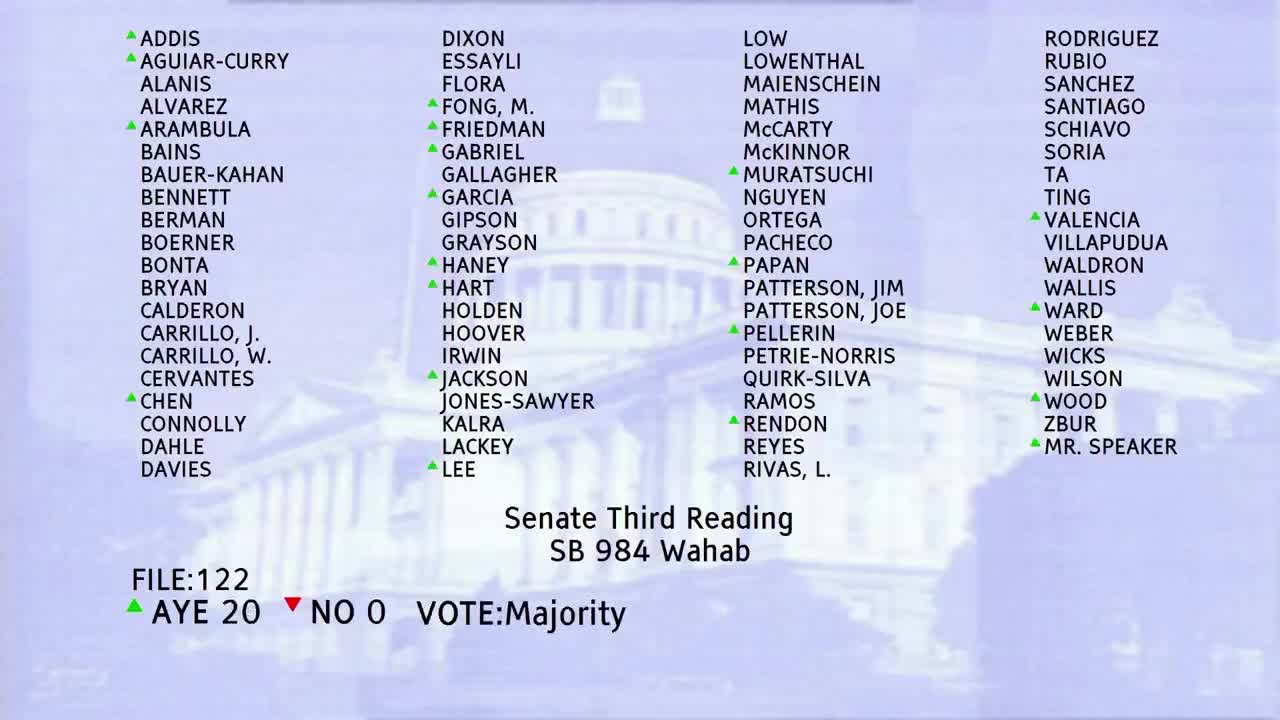 1MIN
Assembly Floor
 3MIN
Senate Floor
 7MIN
Senate Standing Committee on Appropriations
 36MIN
Senate Standing Committee on Business, Professions and Economic Development
 1MIN
Assembly Floor
 51SEC
Assembly Floor
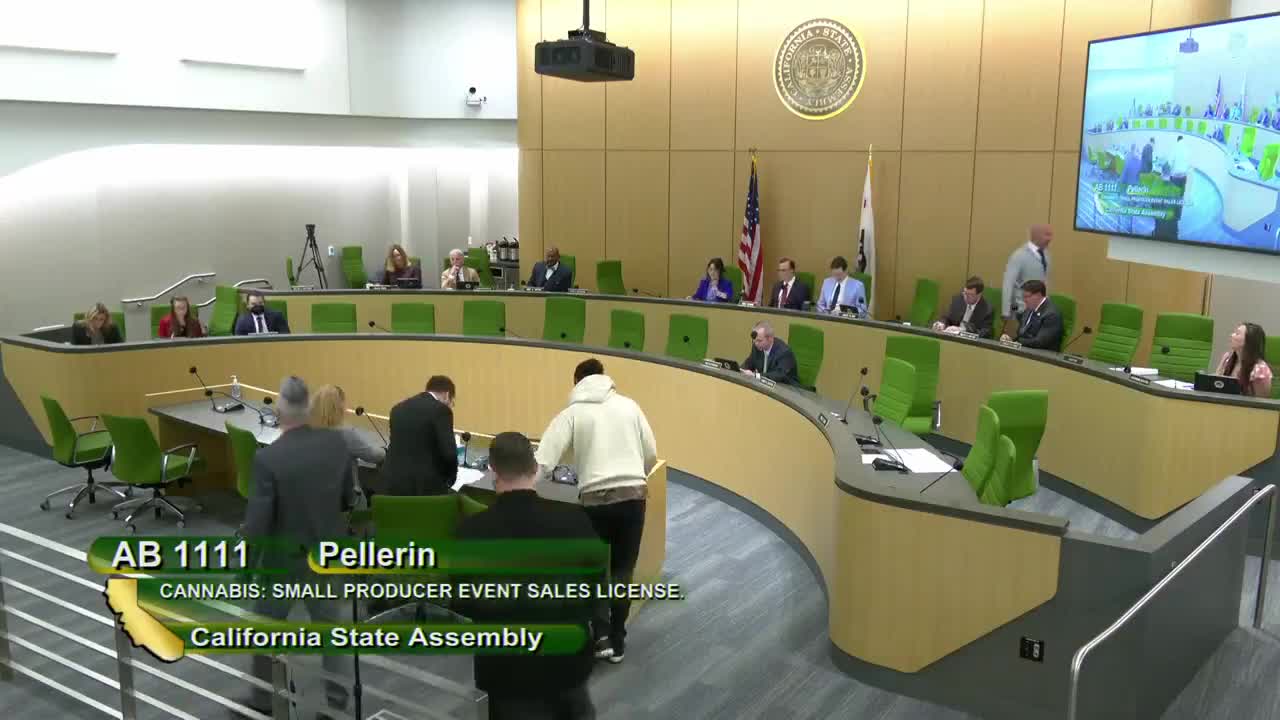 25MIN
Assembly Standing Committee on Business and Professions
Bill Author



