AB 1139: Recognition of tribal court money judgments: tribal sales taxes.
- Session Year: 2023-2024
- House: Assembly
- Latest Version Date: 2023-09-01
Current Status:
Passed
(2023-09-01: Chaptered by Secretary of State - Chapter 138, Statutes of 2023.)
Introduced
In Committee
First Chamber
In Committee
Second Chamber
Enacted
What does this bill do?
This bill lets California superior courts recognize and enter tribal court money judgments (orders to pay money) for certain tribal taxes and related interest or penalties. It therefore applies to tax judgments from federally recognized Indian tribes described in California regulations and affects those tribes, people or businesses owing those taxes, and state courts that would enforce them.
The summary is provided by generative AI which can make mistakes. For original language, please view the details in the table below.
Existing federal law recognizes the sovereignty of federally recognized Indian tribes and provides for financial, developmental, and operational support of tribal justice systems. Existing law, the Tribal Court Civil Money Judgment Act, governs the procedure by which the superior courts of the state recognize and enter tribal court money judgments of any federally recognized Indian tribe. The act does not apply to tribal court money judgments for taxes, fines, or other penalties.
This bill would provide that the Tribal Court Civil Money Judgment Act applies to tribal court money judgments for tribal taxes, as specified, and related interest or penalties.
Existing federal law recognizes the sovereignty of federally recognized Indian tribes and provides for financial, developmental, and operational support of tribal justice systems. Existing law, the Tribal Court Civil Money Judgment Act, governs the procedure by which the superior courts of the state recognize and enter tribal court money judgments of any federally recognized Indian tribe. The act does not apply to tribal court money judgments for taxes, fines, or other penalties.
This bill would provide that the Tribal Court Civil Money Judgment Act applies to tribal court money judgments for tribal sales taxes, as specified, and related interest or penalties.
(a)This chapter governs the procedures by which the superior courts of the State of California recognize and enter tribal court money judgments of any federally recognized Indian tribe. Determinations regarding recognition and entry of a tribal court money judgment pursuant to state law shall have no effect upon the independent authority of that judgment. To the extent not inconsistent with this chapter, the Code of Civil Procedure shall apply.
(b)This chapter does not apply to any of the following tribal court money judgments:
(1)For taxes, fines, or other penalties, except for tribal taxes as described in clause 3 of subparagraph (B) of paragraph (3) of subdivision (d) of Section 1616 of Article 10 of Chapter 4 of Division 2 of Title 18 of the California Code of Regulations, and related interest or penalties.
(2)For which federal law requires that states grant full faith and credit recognition, including child support orders under the Full Faith and Credit for Child Support Orders Act (28 U.S.C. Sec. 1738B), except for the purposes of recognizing a tribal court order establishing the right of a child or other dependent of a participant in a retirement plan or other plan of deferred compensation to an assignment of all or a portion of the benefits payable.
(3)For which state law provides for recognition, including child support orders recognized under the Uniform Child Custody Jurisdiction and Enforcement Act (Part 3 (commencing with Section 3400) of Division 8 of the Family Code), other forms of family support orders under the Uniform Interstate Family Support Act (Part 6 (commencing with Section 5700.101) of Division 9 of the Family Code), except for the purposes of recognizing a tribal court order establishing the right of a spouse, former spouse, child, or other dependent of a participant in a retirement plan or other plan of deferred compensation to an assignment of all or a portion of the benefits payable.
(4)For decedents estates, guardianships, conservatorships, internal affairs of trusts, powers of attorney, or other tribal court money judgments that arise in proceedings that are or would be governed by the Probate Code.
(c)Nothing in this chapter shall be deemed or construed to expand or limit the jurisdiction of either the state or any Indian tribe.
(a)This chapter governs the procedures by which the superior courts of the State of California recognize and enter tribal court money judgments of any federally recognized Indian tribe. Determinations regarding recognition and entry of a tribal court money judgment pursuant to state law shall have no effect upon the independent authority of that judgment. To the extent not inconsistent with this chapter, the Code of Civil Procedure shall apply.
(b)This chapter does not apply to any of the following tribal court money judgments:
(1)For taxes, fines, or other penalties. penalties, except for tribal taxes as described in clause 3 of subparagraph (B) of paragraph (3) of subdivision (d) of Section 1616 of Article 10 of Chapter 4 of Division 2 of Title 18 of the California Code of Regulations, and related interest or penalties.
(2)For which federal law requires that states grant full faith and credit recognition, including child support orders under the Full Faith and Credit for Child Support Orders Act (28 U.S.C. Sec. 1738B), except for the purposes of recognizing a tribal court order establishing the right of a child or other dependent of a participant in a retirement plan or other plan of deferred compensation to an assignment of all or a portion of the benefits payable.
(3)For which state law provides for recognition, including child support orders recognized under the Uniform Child Custody Jurisdiction and Enforcement Act (Part 3 (commencing with Section 3400) of Division 8 of the Family Code), other forms of family support orders under the Uniform Interstate Family Support Act (Part 6 (commencing with Section 5700.101) of Division 9 of the Family Code), except for the purposes of recognizing a tribal court order establishing the right of a spouse, former spouse, child, or other dependent of a participant in a retirement plan or other plan of deferred compensation to an assignment of all or a portion of the benefits payable.
(4)For decedents estates, guardianships, conservatorships, internal affairs of trusts, powers of attorney, or other tribal court money judgments that arise in proceedings that are or would be governed by the Probate Code.
(c)Notwithstanding paragraph (1) of subdivision (b), this chapter applies to tribal court money judgments for tribal taxes, as described in clause 3 of subparagraph (B) of paragraph (3) of subdivision (d) of Section 1616 of Title 18 of the California Code of Regulations, and related interest or penalties.(d)
(c)Nothing in this chapter shall be deemed or construed to expand or limit the jurisdiction of either the state or any Indian tribe.
(a)This chapter governs the procedures by which the superior courts of the State of California recognize and enter tribal court money judgments of any federally recognized Indian tribe. Determinations regarding recognition and entry of a tribal court money judgment pursuant to state law shall have no effect upon the independent authority of that judgment. To the extent not inconsistent with this chapter, the Code of Civil Procedure shall apply.
(b)This chapter does not apply to any of the following tribal court money judgments:
(1)For taxes, fines, or other penalties.
(2)For which federal law requires that states grant full faith and credit recognition, including child support orders under the Full Faith and Credit for Child Support Orders Act (28 U.S.C. Sec. 1738B), except for the purposes of recognizing a tribal court order establishing the right of a child or other dependent of a participant in a retirement plan or other plan of deferred compensation to an assignment of all or a portion of the benefits payable.
(3)For which state law provides for recognition, including child support orders recognized under the Uniform Child Custody Jurisdiction and Enforcement Act (Part 3 (commencing with Section 3400) of Division 8 of the Family Code), other forms of family support orders under the Uniform Interstate Family Support Act (Part 6 (commencing with Section 5700.101) of Division 9 of the Family Code), except for the purposes of recognizing a tribal court order establishing the right of a spouse, former spouse, child, or other dependent of a participant in a retirement plan or other plan of deferred compensation to an assignment of all or a portion of the benefits payable.
(4)For decedents estates, guardianships, conservatorships, internal affairs of trusts, powers of attorney, or other tribal court money judgments that arise in proceedings that are or would be governed by the Probate Code.
(c)Notwithstanding paragraph (1) of subdivision (b), this chapter applies to tribal court money judgments for tribal sales taxes, as described in clause 3 of subparagraph (A) (B) of paragraph (3) of subdivision (d) of Section 1616 of Title 18 of the California Code of Regulations, and related interest or penalties.
(d)Nothing in this chapter shall be deemed or construed to expand or limit the jurisdiction of either the state or any Indian tribe.
(a)This chapter governs the procedures by which the superior courts of the State of California recognize and enter tribal court money judgments of any federally recognized Indian tribe. Determinations regarding recognition and entry of a tribal court money judgment pursuant to state law shall have no effect upon the independent authority of that judgment. To the extent not inconsistent with this chapter, the Code of Civil Procedure shall apply.
(b)This chapter does not apply to any of the following tribal court money judgments:
(1)For taxes, fines, or other penalties.
(2)For which federal law requires that states grant full faith and credit recognition, including child support orders under the Full Faith and Credit for Child Support Orders Act (28 U.S.C. Sec. 1738B), except for the purposes of recognizing a tribal court order establishing the right of a child or other dependent of a participant in a retirement plan or other plan of deferred compensation to an assignment of all or a portion of the benefits payable.
(3)For which state law provides for recognition, including child support orders recognized under the Uniform Child Custody Jurisdiction and Enforcement Act (Part 3 (commencing with Section 3400) of Division 8 of the Family Code), other forms of family support orders under the Uniform Interstate Family Support Act (Part 6 (commencing with Section 5700.101) of Division 9 of the Family Code), except for the purposes of recognizing a tribal court order establishing the right of a spouse, former spouse, child, or other dependent of a participant in a retirement plan or other plan of deferred compensation to an assignment of all or a portion of the benefits payable.
(4)For decedents estates, guardianships, conservatorships, internal affairs of trusts, powers of attorney, or other tribal court money judgments that arise in proceedings that are or would be governed by the Probate Code.
(c)Notwithstanding paragraph (1) of subdivision (b), this chapter applies to tribal court money judgments for tribal sales taxes, as described in clause 3 of subparagraph (A) of paragraph (3) of subdivision (d) of Section 1616 of Title 18 of the California Code of Regulations, and related interest or penalties.
(c)(d)Nothing in this chapter shall be deemed or construed to expand or limit the jurisdiction of either the state or any Indian tribe.
|
Date
|
Status
|
|---|---|
| Sep 1, 2023 | Chaptered by Secretary of State - Chapter 138, Statutes of 2023. |
| Sep 1, 2023 | Approved by the Governor. |
| Aug 29, 2023 | Enrolled and presented to the Governor at 11:30 a.m. |
| Aug 17, 2023 | Senate amendments concurred in. To Engrossing and Enrolling. (Ayes 76. Noes 0. Page 2734.). |
| Jun 29, 2023 | In Assembly. Concurrence in Senate amendments pending. May be considered on or after July 1 pursuant to Assembly Rule 77. |
| Jun 29, 2023 | Read third time. Passed. Ordered to the Assembly. (Ayes 39. Noes 0. Page 1825.). |
| Jun 22, 2023 | Read second time. Ordered to Consent Calendar. |
| Jun 21, 2023 | From committee: Do pass. To Consent Calendar. (Ayes 11. Noes 0.) (June 20). |
| Jun 7, 2023 | From committee chair, with author's amendments: Amend, and re-refer to committee. Read second time, amended, and re-referred to Com. on JUD. |
| May 17, 2023 | Referred to Com. on JUD. |
| May 9, 2023 | In Senate. Read first time. To Com. on RLS. for assignment. |
| May 8, 2023 | Read third time. Passed. Ordered to the Senate. (Ayes 71. Noes 0. Page 1492.) |
| May 3, 2023 | Read second time. Ordered to Consent Calendar. |
| May 2, 2023 | From committee: Do pass. To Consent Calendar. (Ayes 11. Noes 0.) (May 2). |
| Apr 17, 2023 | Re-referred to Com. on JUD. |
| Apr 12, 2023 | From committee chair, with author's amendments: Amend, and re-refer to Com. on JUD. Read second time and amended. |
| Mar 30, 2023 | Referred to Com. on JUD. |
| Feb 16, 2023 | From printer. May be heard in committee March 18. |
| Feb 15, 2023 | Read first time. To print. |
|
Date
|
Description
|
Location
|
Votes
|
|
|---|---|---|---|---|
| Aug 17, 2023 | AB 1139 Garcia Concurrence in Senate Amendments | Assembly Floor |
Passed |
|
| Jun 29, 2023 | Consent Calendar AB1139 Garcia et al. | Senate Floor |
Passed |
|
| Jun 20, 2023 | Do pass and be ordered to the Consent Calendar | Senate Standing Committee on Judiciary |
Passed |
|
| May 8, 2023 | AB 1139 Garcia Consent Calendar Second Day Regular Session | Assembly Floor |
Passed |
|
| May 2, 2023 | Do pass. To Consent Calendar. | Assembly Standing Committee on Judiciary |
Passed |
This list shows positions taken on this bill by organizations on the date displayed, which is linked to the original source.
Positions by individuals are not included.
|
Organization
|
Position
|
Date
|
|---|---|---|
| Agua Caliente Band Of Cahuilla Indians | ** Support | |
| Morongo Band Of Mission Indians | ** Support | |
| Pechanga Band of Indians | ** Support | |
| San Manuel Band Of Mission Indians | ** Support | |
| Tribal Alliance of Sovereign Indian Nations | ** Support |
CONCURRENCE IN SENATE AMENDMENTS
CSA1 Bill Id:AB 1139
Author:(Garcia)
As Amended Ver:June 7, 2023
Majority vote
SUMMARY
Requires the superior courts of California to recognize and enter tribal court money judgments for tribal use and sales taxes on meals, food, and beverages sold for consumption on Indian land, and related interest or penalties.
Senate Amendments
Make a technical change that moves the key provision to a more logical location in this bill.
COMMENTS
This bill corrects the inconsistency between recently adopted state regulations (18 C.C.R Section 1616, hereinafter referred to as Regulation 1616, that imposes tribal tax, in lieu of state tax, on food and beverage sold for consumption on Indian land, and the California Code of Civil Procedure, which excludes any tribal court tax judgments from enforcement in state court. The bill simply permits tribes to enforce money judgments for collection of taxes permitted under California law.
Enforcement of tribal judgments in state court. The United States (U.S.) Constitution requires that each state give full, faith and credit to the public acts, records and judicial proceedings of every other state and territory. Thus, a judgment in one state can be fully enforced in any other state. Tribal judgments are generally treated like judgments from other countries and are governed by comity: "No law has any effect, of its own force, beyond the limits of the sovereignty from which its authority is derived. The extent to which the law of one nation, as put in force within its territory, whether by executive order, by legislative act, or by judicial decree, shall be allowed to operate within the dominion of another nation, depends upon what our greatest jurists have been content to call 'the comity of nations.'" (Hilton v. Guyot (1895) 159 U.S. 113, 163.) Comity is "neither a matter of absolute obligation, on the one hand, nor of mere courtesy and good will, on the other." (Id. at pp. 163-64.)
In 2014, the Legislature established the Tribal Court Civil Money Judgment Act (TCCMJA) to govern the process of enforcing tribal court money judgments in California state courts. (SB 406 (Evans), Chapter 243, Statutes of 2014.) The TCCMJA is largely based on the California Uniform Foreign-Country Money Judgments Recognition Act, which itself is based on the Uniform Foreign-Country Money Judgments Recognition Act. (Uniform Foreign-Country Money Judgments Recognition Act, Section 3, 13 U.L.A. 7 (2005)(Revised Uniform Act).) The TCCMJA, UFCMJRA, and Revised Uniform Act all exclude enforcement of judgments for taxes, fines, and penalties.
The exclusion of taxes, fines, and penalties from the Revised Uniform Act derives from at least two longstanding general principles. U.S. courts do not enforce foreign revenue laws (Moore v. Mitchell, 30 F.2d 600, 604 (2d Cir. 1929), aff'd, 281 U.S. 18 (1930); Her Majesty Queen in Right of Province of British Columbia v. Gilbertson, 597 F.2d 1161, 1164–1165 (9th Cir. 1979)), and U.S. courts do not enforce foreign penal laws. (The Antelope, 23 U.S. 66, 120–121 (1825); see also James-Dickinson Farm Mortgage Co. v. Harry, 273 U.S. 119, 125 (1927); see also de Fontbrune v. Wofsy, 838 F.3d 992, 1000 (9th Cir. 2016), as amended on other grounds on denial of reh'g and reh'g en banc, (Nov. 14, 2016).)
These decisions are rooted in the recognition that each country is considered a sovereign entity, with its own legal system, tax laws, and regulations. The exclusion of the enforcement of foreign country taxes, fines, and penalties from enforcement in state court is intended to respect the sovereignty of other nations, prevent conflicts of law, and uphold principles of due process and fairness in tax enforcement.
California and tribes have made notable progress in collaboration in tax administration. Although tribes in California enjoy many of the attributes of a foreign sovereign, they have important differences. Tribes are located with the boundaries of a state and a state is authorized to coordinate with tribes on several issues—including taxation. States and tribes can negotiate a framework for how to address state and tribal taxation on and off a reservation through enacting laws and/or entering into agreements. Indeed, there have been ongoing efforts to improve tax administration on tribal land in California. California has enacted legislation to clarify the application of sales and use tax to transactions occurring on tribal land. The additional adoption of Regulation 1616 was an important part of the process. Regulation 1616, which became effective on May 26, 2021, clarifies that federal law preempts the imposition of state sales and use taxes on specified sales and purchases of meals, food, and beverages for consumption on an Indian reservation. In other words, Regulation 1616 enables Indian tribes, in lieu of the state, to tax food and beverage transaction that take place in Indian country.
This bill is narrowly tailored to provide an enforcement mechanism of Regulation 1616. The State's enactment of Regulation 1616 is a product of its cooperation with tribal governments on a narrow taxation issue – the enforcement of tribal sales and use tax on meals, food, and beverages sold for consumption on Indian land. This bill simply ensures that tribes can enforce tribal judgments for taxes collected pursuant to Regulation 1616 by requiring state courts to recognize any such judgments. This narrow exception to the general exclusion of tax judgments from state court recognition is well-justified. First, as discussed above, unlike with foreign countries, California can – and has – negotiated with tribes a framework for how to addresses taxation issues through enacting laws and/or entering into agreements. California does not have the same authority to coordinate with foreign countries or enter international treaties since this power is reserved to the federal government through Article II, Section 2 of the United States Constitution. Thus, since the State of California is authorized to coordinate with tribes on tribal-state taxation laws of mutual concern—like it did with Regulation 1616—it makes complete sense for California courts to enforce both tribal and California laws to carry out the State's intent on tribal-state taxation issues.
Second, the current exclusion directly undermines Regulation 1616, which was passed specifically to allow tribes to collect sales and use tax for food and beverage sales for consumption on tribal land. Without this bill, the prohibition on enforcing tax-related judgments would render Regulation 1616 entirely toothless; a tribe could impose sales and use taxes on food and beverages sold on tribal land in lieu of state taxes, but then could not enforce a judgment for unpaid taxes in state court. Unless the TCCMJA is amended to allow enforcement of the tribal court judgment, a retailer could avoid payment of any sales or use tax because it would know that the judgment would not be enforced against them. This is not the intent, undermines current state regulations, and is contrary to good tax policy. In this narrow situation, it makes sense for California courts to enforce a tribe's revenue laws as they relate to sales/use taxes. This results in increased tax compliance and promotes collaborative government-to-government relations.
According to the Author
This bill takes an important step toward establishing collaborative government-to-government relations between the State of California and the State's Tribes. AB 1139 would allow California state courts to recognize tribal court tax judgments promoting comity between state courts and tribal courts and advancing collaborative government-to-government relations.
Arguments in Support
This bill's sponsor, the Agua Caliente Band of Cahuilla Indians, explain the importance of the measure:
In recent years, California has made notable progress in tribal tax administration. In 2021, after years of hearings and deliberation, the state enacted Regulation 1616, which enables Indian tribes, in lieu of the state, to tax food and beverage transactions that take place in Indian country. While narrowly tailored, this significant action acknowledged that tribes, like state and local governments, rely on taxes to fund major services such as reservation infrastructure and public safety, which benefit all reservation residents and visitors, tribal members, and non-members alike. The enactment of Regulation 1616 also benefits nearby non-Indian communities by keeping tax revenue local.
Unfortunately, despite having the express right to collect the lawful sales and use tax under California law, tribes have no mechanism to enforce this right in California's judicial system, as the current statutory law has not been updated to reflect the enactment of Regulation 1616. Without updating the law, a non-compliant retailer would likely be able to violate Regulation 1616 and avoid the payment of any sales or use tax—harming both state and tribal government, and the communities that they serve.
The Augustine Band of Cahuilla Indians also support this measure:
AB 1139 would close the loophole and make non-compliant retailers accountable. AB 1139 also promotes collaborative government to government relations on the issue of taxation, which is an issue of mutual concern to both the state of California and California tribes.
Arguments in Opposition
No opposition on file.
FISCAL COMMENTS
None
VOTES:
ASM JUDICIARY: 11-0-0
YES: Maienschein, Essayli, Connolly, Dixon, Haney, Kalra, Pacheco, Papan, Reyes, Robert Rivas, Sanchez
ASSEMBLY FLOOR: 71-0-9
YES: Addis, Aguiar-Curry, Alanis, Alvarez, Bains, Bauer-Kahan, Bennett, Berman, Boerner, Bonta, Bryan, Calderon, Wendy Carrillo, Chen, Connolly, Megan Dahle, Davies, Dixon, Essayli, Flora, Mike Fong, Vince Fong, Friedman, Gabriel, Gallagher, Garcia, Gipson, Grayson, Haney, Holden, Hoover, Jackson, Jones-Sawyer, Kalra, Lackey, Low, Lowenthal, Maienschein, Mathis, McKinnor, Muratsuchi, Stephanie Nguyen, Pacheco, Papan, Jim Patterson, Joe Patterson, Pellerin, Petrie-Norris, Quirk-Silva, Ramos, Reyes, Luz Rivas, Robert Rivas, Rodriguez, Blanca Rubio, Sanchez, Santiago, Schiavo, Soria, Ta, Ting, Valencia, Villapudua, Waldron, Wallis, Weber, Wicks, Wilson, Wood, Zbur, Rendon
ABS, ABST OR NV: Arambula, Juan Carrillo, Cervantes, Hart, Irwin, Lee, McCarty, Ortega, Ward
SENATE FLOOR: 39-0-1
YES: Allen, Archuleta, Ashby, Atkins, Becker, Blakespear, Bradford, Caballero, Cortese, Dahle, Dodd, Durazo, Eggman, Glazer, Gonzalez, Grove, Hurtado, Jones, Laird, Limón, McGuire, Menjivar, Min, Newman, Nguyen, Niello, Ochoa Bogh, Padilla, Portantino, Roth, Rubio, Seyarto, Skinner, Smallwood-Cuevas, Stern, Umberg, Wahab, Wiener, Wilk
ABS, ABST OR NV: Alvarado-Gil
UPDATED
VERSION: June 7, 2023
CONSULTANT: Shiran Zohar / JUD. / (916) 319-2334 FN: 0001159
SENATE RULES COMMITTEE Office of Senate Floor Analyses (916) 651-1520 Fax: (916) 327-4478 | AB 1139 |
CONSENT
Bill No: AB 1139
Author: Garcia (D), et al.
Amended: 6/7/23 in Senate
Vote: 21
SENATE JUDICIARY COMMITTEE: 11-0, 6/20/23
AYES: Umberg, Wilk, Allen, Ashby, Caballero, Durazo, Laird, Min, Niello, Stern, Wiener
ASSEMBLY FLOOR: 71-0, 5/8/23 (Consent) - See last page for vote
SUBJECT: Recognition of tribal court money judgments: tribal sales taxes
SOURCE: Agua Caliente Band of Cahuilla Indians
DIGEST:
This bill applies the Tribal Court Civil Money Judgment to specified judgments relating to tribal taxes, and related interest and penalties.
ANALYSIS:
Existing law:
- Establishes the Tribal Court Civil Money Judgment Act. (Code Civ. Proc. § 1730 et seq.)
- Provides that the Act governs the procedures by which the superior courts of California recognize and enter tribal court money judgments of any federally recognized Indian tribe. Determinations regarding recognition and entry of a tribal court money judgment pursuant to state law shall have no effect upon the independent authority of that judgment. To the extent not otherwise inconsistent with the Act, the Code of Civil Procedure applies. (Code Civ. Proc. § 1731(a).)
- Provides that the Act does not apply to specified tribal court money judgments, including judgments for which federal law requires that states grant full faith and credit recognition and judgments for taxes, fines, or other penalties. (Code Civ. Proc. § 1731(b).)
This bill applies the Act to tribal court money judgments for tribal taxes, as described in 18 C.C.R. § 1616(d)(3)(B)(3), and related interest or penalties.
Background
In 2014, the Judicial Council sponsored SB 406 (Evans, Ch. 243, Stats. 2014), which led to the enactment of the Tribal Court Civil Money Judgment Act (Act). The Act prescribes procedures for applying for recognition and entry of a judgement based on a tribal court money judgement, objecting to such a judgement, and guiding courts in determining whether to refuse to enter the judgment or grant a stay of enforcement.
California regulations provide for the imposition of certain sales taxes by recognized tribes within California. However, the Act specifies that it does not apply to money judgments for taxes, fines, or penalties.
In order to allow tribal court judgments for the failure to pay lawfully imposed taxes to be enforced in this state, the bill extends application of the Act to specified judgments relating to tribal taxes, and related interest and penalties.
This bill is sponsored by the Agua Caliente Band of Cahuilla Indians. It is supported by various tribes, including the Pechanga Band of Indians and the Tribal Alliance of Sovereign Indian Nations. There is no known opposition.
Comments
Native American tribes are “nations that exercise inherent sovereign authority over their members and territories.” (Cal. Jur. 3d. Indians § 2.) For a tribal court to hear a case, it must have both subject matter jurisdiction (the power to hear the specific kind of claim that is brought to that court), and personal jurisdiction (the requirement that a defendant have certain minimum contacts with the forum in which the court sits) over the defendant.
At times, just as a party may seek to enforce another state’s judgment against a resident of California by bringing their judgment to a California court, a party who has obtained a tribal court judgment may turn to California courts to seek recognition and enforcement of the party’s tribal court judgment against a California resident. In contrast to the full faith and credit that is constitutionally required to be given to the judgments rendered by sister states’ courts, under existing law, California state courts generally recognize tribal court judgments under the principles of comity, as they do the judgments of foreign country tribunals.
Comity, as described by the Ninth Circuit in Wilson v. Marchington (9th Cir. 1997) 127 F.3d 805, 809-810, “‘is neither a matter of absolute obligation, on the one hand, nor of mere courtesy and good will, upon the other.’” The court reasoned:
As a general policy, comity should be withheld only when its acceptance would be contrary or prejudicial to the interest of the nation called upon to give it effect.” At its core, comity involves a balancing of interests. “It is the recognition which one nation allows within its territory to the legislative, executive, or judicial acts of another nation, having due regard both to international duty and convenience, and to the rights of its own citizens, or of other persons who are under the protection of its laws.” Although the status of Indian tribes as “dependent domestic nations” presents some unique circumstances, comity still affords the best general analytical framework for recognizing tribal judgments.
The court made clear that “[c]omity does not require that a tribe utilize judicial procedures identical to those used in the United States Courts.”
Claims to recognize money judgments of foreign country tribunals, including of tribal courts, were traditionally governed by the Uniform Foreign Country Money Judgment Act (California’s Uniform Act), Code of Civil Procedure Section 1713 et seq. That process, however, was considered costly and time-consuming. In 2012, the Judicial Council, upon recommendation of several of its committees, including the California Tribal Court/State Court Forum and the Civil and Small Claims Advisory Committee, adopted a proposal that would provide “a discrete procedure for recognizing and enforcing tribal court civil judgments, providing for swifter recognition of such judgments while continuing to apply the principles of comity appropriate to judgments of sovereign tribes.”[1]
Based on that proposal, Senator Evans, then the Chair of this Committee, authored a bill, SB 406 (Evans, Chapter 243, Statutes of 2014), sponsored by Judicial Council and Blue Lake Rancheria, that established a new legal framework known as the Tribal Court Civil Money Judgment Act. The Act provides the rules and procedures for seeking recognition of a tribal court money judgment in California state courts. The Act does a number of things, including the following: (1) provides timelines for both submitting an application for recognition and timely objecting to recognition; (2) provides rules for proper venue; (3) specifies notice requirements; (4) lists the requisite contents of an application and supporting documentation; (5) mandates grounds for declining recognition and provides discretionary grounds for declining recognition; and (6) specifies grounds for staying enforcement of a judgment.
In response to due process concerns, SB 406 required the California Law Revision Commission (CLRC) to conduct a study of the due process requirements in both the Act and California’s Uniform Act. CLRC released that report entitled Recognition of Tribal and Foreign Court Money Judgments. AB 905 (Maienschein, Chapter 168, Statutes of 2017) implemented some of the recommendations found in that report, amending both the Act and California’s Uniform Act. It also made changes to how certain discretionary grounds for nonrecognition of judgments are treated.
Just last session, AB 627 (Waldron, Chapter 58, Statutes of 2021) further expanded the Act and established procedures for California courts to recognize tribal court family law orders involving the division of retirement and other deferred compensation benefits.
Extending the Act to cover money judgments for taxes
The Act explicitly identifies certain tribal court money judgments to which it does not apply. This includes taxes, fines, and other penalties. This exclusion of taxes, fines, and penalties derives from longstanding case law espousing that federal courts do not enforce foreign penal or revenue laws; Judge Learned Hand states the general principle:
Generally it is, of course, true that a liability arising under the law of a foreign state will be recognized by the courts of another, and it is not here relevant whether foreign liability is enforced, or another, precisely similar, raised by the law of the forum. A recognized exception is in the case of criminal and penal liabilities. . . .
While the origin of the exception in the case of penal [liabilities] does not appear in the books, a sound basis for it exists, in my judgment, which includes liabilities for taxes as well. Even in the case of ordinary municipal liabilities, a court will not recognize those arising in a foreign state, if they run counter to the "settled public policy" of its own. Thus a scrutiny of the liability is necessarily always in reserve, and the possibility that it will be found not to accord with the policy of the domestic state. This is not a troublesome or delicate inquiry when the question arises between private persons, but it takes on quite another face when it concerns the relations between the foreign state and its own citizens or even those who may be temporarily within its borders. To pass upon the provisions for the public order of another state is, or at any rate should be, beyond the powers of a court; it involves the relations between the states themselves, with which courts are incompetent to deal, and which are [entrusted] to other authorities. It may commit the domestic state to a position which would seriously embarrass its neighbor. Revenue laws fall within the same reasoning; they affect a state in matters as vital to its existence as its criminal laws. No court ought to undertake an inquiry which it cannot prosecute without determining whether those laws are consonant with its own notions of what is proper.[2]
However, the relationship between California and California’s tribes has been a collaborative one in this area. As indicated, they are authorized to negotiate a legal framework for handling money judgments, including those for taxes. In fact, one example is the adoption of Regulation 1616. Recent amendments to it clarify the proper imposition of state sales and use taxes on specified sales and purchases of meals, food, and beverages for consumption on Indian reservations. Regulation 1616 enables Indian tribes to tax such transactions in specified circumstances. However, simply the ability to impose such taxes does not produce the intended benefits. This bill amends the Act to specify that it applies to tribal court money judgments for specified tribal taxes, as described in Regulation 1616, and related interest or penalties.
According to the author:
This bill takes an important step toward establishing collaborative government-to-government relations between the State of California and Indigenous Tribes. Like state and local governments, a notable portion of tribal services, such as reservation infrastructure and public safety, are provided for the benefit of all reservation residents and visitors, tribal members, and non-members alike. AB 1139 would allow California state courts to recognize tribal court tax judgments promoting comity between state courts and tribal courts and advancing collaborative government-to-government relations.
FISCAL EFFECT: Appropriation: No Fiscal Com.: No Local: No
SUPPORT: (Verified 6/23/23)
Agua Caliente Band of Cahuilla Indians (source)
Augustine Band of Cahuilla Indians
Morongo Band of Mission Indians
Pechanga Band of Indians
San Manuel Band of Mission Indians
Tribal Alliance of Sovereign Indian Nations
OPPOSITION: (Verified 6/23/23)
None received
ARGUMENTS IN SUPPORT: The Agua Caliente Band of Cahuilla Indians, the sponsor of the bill:
In recent years, California has made notable progress in tribal tax administration. In 2021, after years of hearings and deliberation, the state enacted Regulation 1616, which enables Indian tribes, in lieu of the state, to tax food and beverage transactions that take place in Indian country.
While narrowly tailored, this significant action acknowledged that tribes, like state and local governments, rely on taxes to fund major services such as reservation infrastructure and public safety, which benefit all reservation residents and visitors, tribal members, and non-members alike. The enactment of Regulation 1616 also benefits nearby non-Indian communities by keeping tax revenue local.
Unfortunately, despite having the express right to collect the lawful sales and use tax under California law, tribes have no mechanism to enforce this right in California’s judicial system, as the current statutory law has not been update to reflect the enactment of Regulation 1616. Without updating the law, a non-compliant retailer would likely be able to violate Regulation 1616 and avoid the payments of any sales or use tax – harming both state and tribal government, and the communities that they serve.
ASSEMBLY FLOOR: 71-0, 5/8/23
AYES: Addis, Aguiar-Curry, Alanis, Alvarez, Bains, Bauer-Kahan, Bennett, Berman, Boerner, Bonta, Bryan, Calderon, Wendy Carrillo, Chen, Connolly, Megan Dahle, Davies, Dixon, Essayli, Flora, Mike Fong, Vince Fong, Friedman, Gabriel, Gallagher, Garcia, Gipson, Grayson, Haney, Holden, Hoover, Jackson, Jones-Sawyer, Kalra, Lackey, Low, Lowenthal, Maienschein, Mathis, McKinnor, Muratsuchi, Stephanie Nguyen, Pacheco, Papan, Jim Patterson, Joe Patterson, Pellerin, Petrie-Norris, Quirk-Silva, Ramos, Reyes, Luz Rivas, Robert Rivas, Rodriguez, Blanca Rubio, Sanchez, Santiago, Schiavo, Soria, Ta, Ting, Valencia, Villapudua, Waldron, Wallis, Weber, Wicks, Wilson, Wood, Zbur, Rendon
NO VOTE RECORDED: Arambula, Juan Carrillo, Cervantes, Hart, Irwin, Lee, McCarty, Ortega, Ward
Prepared by: Christian Kurpiewski / JUD. / (916) 651-4113
6/23/23 12:29:10
**** END ****
Report to the Judicial Council: Judicial Council-sponsored Legislation: Tribal Court Civil Judgment Act (October 26, 2012) https://www.courts.ca.gov/documents/jc-20121214-itemG.pdf. Available as of June 7, 2023. ↑
Moore v. Mitchell (2d Cir. 1929) 30 F.2d 600, 604 (concurrence opinion; internal citations omitted), aff’d, 281 U.S. 18 (1930); see also Her Majesty Queen in Right of Province of British Columbia v. Gilbertson (9th Cir. 1979) 597 F.2d 1161, 1164–1165. ↑
Senator Thomas Umberg, Chair
2023-2024 Regular Session
Bill No: AB 1139 (Author:Garcia)
Version: June 7, 2023
Hearing Date: June 20, 2023
Fiscal: No
Urgency: No
Consultant: CK
SUBJECT
Recognition of tribal court money judgments: tribal sales taxes
DIGEST
This bill applies the Tribal Court Civil Money Judgment to specified judgments relating to tribal taxes, and related interest and penalties.
EXECUTIVE SUMMARY
In 2014, the Judicial Council sponsored SB 406 (Evans, Ch. 243, Stats. 2014), which led to the enactment of the Tribal Court Civil Money Judgment Act (Act). The Act prescribes procedures for applying for recognition and entry of a judgement based on a tribal court money judgement, objecting to such a judgement, and guiding courts in determining whether to refuse to enter the judgment or grant a stay of enforcement.
California regulations provide for the imposition of certain sales taxes by recognized tribes within California. However, the Act specifies that it does not apply to money judgments for taxes, fines, or penalties.
In order to allow tribal court judgments for the failure to pay lawfully imposed taxes to be enforced in this state, the bill extends application of the Act to specified judgments relating to tribal taxes, and related interest and penalties.
This bill is sponsored by the Agua Caliente Band of Cahuilla Indians. It is supported by various tribes, including the Pechanga Band of Indians and the Tribal Alliance of Sovereign Indian Nations. There is no known opposition.
PROPOSED CHANGES TO THE LAW
Existing law:
- Establishes the Tribal Court Civil Money Judgment Act. (Code Civ. Proc. § 1730 et seq.)
- Provides that the Act governs the procedures by which the superior courts of California recognize and enter tribal court money judgments of any federally recognized Indian tribe. Determinations regarding recognition and entry of a tribal court money judgment pursuant to state law shall have no effect upon the independent authority of that judgment. To the extent not otherwise inconsistent with the Act, the Code of Civil Procedure applies. (Code Civ. Proc. § 1731(a).)
- Provides that the Act does not apply to specified tribal court money judgments, including judgments for which federal law requires that states grant full faith and credit recognition and judgments for taxes, fines, or other penalties. (Code Civ. Proc. § 1731(b).)
This bill applies the Act to tribal court money judgments for tribal taxes, as described in 18 C.C.R. § 1616(d)(3)(B)(3), and related interest or penalties.
COMMENTS
- State recognition of tribal court orders
Native American tribes are “nations that exercise inherent sovereign authority over their members and territories.” (Cal. Jur. 3d. Indians § 2.) For a tribal court to hear a case, it must have both subject matter jurisdiction (the power to hear the specific kind of claim that is brought to that court), and personal jurisdiction (the requirement that a defendant have certain minimum contacts with the forum in which the court sits) over the defendant.
At times, just as a party may seek to enforce another state’s judgment against a resident of California by bringing their judgment to a California court, a party who has obtained a tribal court judgment may turn to California courts to seek recognition and enforcement of the party’s tribal court judgment against a California resident. In contrast to the full faith and credit that is constitutionally required to be given to the judgments rendered by sister states’ courts, under existing law, California state courts generally recognize tribal court judgments under the principles of comity, as they do the judgments of foreign country tribunals.
Comity, as described by the Ninth Circuit in Wilson v. Marchington (9th Cir. 1997) 127 F.3d 805, 809-810, “‘is neither a matter of absolute obligation, on the one hand, nor of mere courtesy and good will, upon the other.’” The court reasoned:
As a general policy, comity should be withheld only when its acceptance would be contrary or prejudicial to the interest of the nation called upon to give it effect.” At its core, comity involves a balancing of interests. “It is the recognition which one nation allows within its territory to the legislative, executive, or judicial acts of another nation, having due regard both to international duty and convenience, and to the rights of its own citizens, or of other persons who are under the protection of its laws.” Although the status of Indian tribes as “dependent domestic nations” presents some unique circumstances, comity still affords the best general analytical framework for recognizing tribal judgments.
The court made clear that “[c]omity does not require that a tribe utilize judicial procedures identical to those used in the United States Courts.”
Claims to recognize money judgments of foreign country tribunals, including of tribal courts, were traditionally governed by the Uniform Foreign Country Money Judgment Act (California’s Uniform Act), Code of Civil Procedure Section 1713 et seq. That process, however, was considered costly and time-consuming. In 2012, the Judicial Council, upon recommendation of several of its committees, including the California Tribal Court/State Court Forum and the Civil and Small Claims Advisory Committee, adopted a proposal that would provide “a discrete procedure for recognizing and enforcing tribal court civil judgments, providing for swifter recognition of such judgments while continuing to apply the principles of comity appropriate to judgments of sovereign tribes.”[1]
Based on that proposal, Senator Evans, then the Chair of this Committee, authored a bill, SB 406 (Evans, Ch. 243, Stats. 2014), sponsored by Judicial Council and Blue Lake Rancheria, that established a new legal framework known as the Tribal Court Civil Money Judgment Act. The Act provides the rules and procedures for seeking recognition of a tribal court money judgment in California state courts. The Act does a number of things, including the following: (1) provides timelines for both submitting an application for recognition and timely objecting to recognition; (2) provides rules for proper venue; (3) specifies notice requirements; (4) lists the requisite contents of an application and supporting documentation; (5) mandates grounds for declining recognition and provides discretionary grounds for declining recognition; and (6) specifies grounds for staying enforcement of a judgment.
In response to due process concerns, SB 406 required the California Law Revision Commission (CLRC) to conduct a study of the due process requirements in both the Act and California’s Uniform Act. CLRC released that report entitled Recognition of Tribal and Foreign Court Money Judgments. AB 905 (Maienschein, Ch. 168, Stats. 2017) implemented some of the recommendations found in that report, amending both the Act and California’s Uniform Act. It also made changes to how certain discretionary grounds for nonrecognition of judgments are treated.
Just last session, AB 627 (Waldron, Ch. 58, Stats. 2021) further expanded the Act and established procedures for California courts to recognize tribal court family law orders involving the division of retirement and other deferred compensation benefits.
- Extending the Act to cover money judgments for taxes
The Act explicitly identifies certain tribal court money judgments to which it does not apply. This includes taxes, fines, and other penalties. This exclusion of taxes, fines, and penalties derives from longstanding case law espousing that federal courts do not enforce foreign penal or revenue laws; Judge Learned Hand states the general principle:
Generally it is, of course, true that a liability arising under the law of a foreign state will be recognized by the courts of another, and it is not here relevant whether foreign liability is enforced, or another, precisely similar, raised by the law of the forum. A recognized exception is in the case of criminal and penal liabilities. . . .
While the origin of the exception in the case of penal [liabilities] does not appear in the books, a sound basis for it exists, in my judgment, which includes liabilities for taxes as well. Even in the case of ordinary municipal liabilities, a court will not recognize those arising in a foreign state, if they run counter to the "settled public policy" of its own. Thus a scrutiny of the liability is necessarily always in reserve, and the possibility that it will be found not to accord with the policy of the domestic state. This is not a troublesome or delicate inquiry when the question arises between private persons, but it takes on quite another face when it concerns the relations between the foreign state and its own citizens or even those who may be temporarily within its borders. To pass upon the provisions for the public order of another state is, or at any rate should be, beyond the powers of a court; it involves the relations between the states themselves, with which courts are incompetent to deal, and which are [entrusted] to other authorities. It may commit the domestic state to a position which would seriously embarrass its neighbor. Revenue laws fall within the same reasoning; they affect a state in matters as vital to its existence as its criminal laws. No court ought to undertake an inquiry which it cannot prosecute without determining whether those laws are consonant with its own notions of what is proper.[2]
However, the relationship between California and California’s tribes has been a collaborative one in this area. As indicated, they are authorized to negotiate a legal framework for handling money judgments, including those for taxes. In fact, one example is the adoption of Regulation 1616. Recent amendments to it clarify the proper imposition of state sales and use taxes on specified sales and purchases of meals, food, and beverages for consumption on Indian reservations. Regulation 1616 enables Indian tribes to tax such transactions in specified circumstances. However, simply the ability to impose such taxes does not produce the intended benefits. As stated by the Agua Caliente Band of Cahuilla Indians, the sponsor of the bill:
In recent years, California has made notable progress in tribal tax administration. In 2021, after years of hearings and deliberation, the state enacted Regulation 1616, which enables Indian tribes, in lieu of the state, to tax food and beverage transactions that take place in Indian country.
While narrowly tailored, this significant action acknowledged that tribes, like state and local governments, rely on taxes to fund major services such as reservation infrastructure and public safety, which benefit all reservation residents and visitors, tribal members, and non-members alike. The enactment of Regulation 1616 also benefits nearby non-Indian communities by keeping tax revenue local.
Unfortunately, despite having the express right to collect the lawful sales and use tax under California law, tribes have no mechanism to enforce this right in California’s judicial system, as the current statutory law has not been update to reflect the enactment of Regulation 1616. Without updating the law, a non-compliant retailer would likely be able to violate Regulation 1616 and avoid the payments of any sales or use tax – harming both state and tribal government, and the communities that they serve.
This bill amends the Act to specify that it applies to tribal court money judgments for specified tribal taxes, as described in Regulation 1616, and related interest or penalties.
According to the author:
This bill takes an important step toward establishing collaborative government-to-government relations between the State of California and Indigenous Tribes. Like state and local governments, a notable portion of tribal services, such as reservation infrastructure and public safety, are provided for the benefit of all reservation residents and visitors, tribal members, and non-members alike. AB 1139 would allow California state courts to recognize tribal court tax judgments promoting comity between state courts and tribal courts and advancing collaborative government-to-government relations.
Writing in support, the Tribal Alliance of Sovereign Indian Nations states:
The bill respects tribal sovereignty and protects reservation economies by addressing and closing a loophole in the Tribal Court Civil Money Judgment Act. AB 1139 would remove a large roadblock to economic self-reliance for California’s tribes, while protecting the integrity of the state and tribal tax system.
In recent years, California has made notable progress in tribal tax administration. In 2021, the state enacted regulations that enable Indian tribes, in lieu of the state, to tax food and beverage transactions that take place in Indian country. This significant action acknowledged that tribal governments, like state and local governments, rely on taxes to fund major services such as reservation infrastructure and public safety, which benefit all reservation residents and visitors, tribal members, and non-members alike.
Unfortunately, despite having the express right to collect the lawful sales and use tax under California law, tribes have no mechanism to enforce this right in California’s judicial system. AB 1139 would close this loophole by amending the Tribal Court Civil Money Judgment Act to expressly allow state courts to recognize tribal court money judgements.
SUPPORT
Agua Caliente Band of Cahuilla Indians (sponsor)
Pechanga Band of Indians
San Manuel Band of Mission Indians
Tribal Alliance of Sovereign Indian Nations
OPPOSITION
None known
RELATED LEGISLATION
Pending Legislation: AB 81 (Ramos, 2023) adds to the state’s findings and declarations related to child custody proceedings pursuant to the Indian Child Welfare Act by stating that, the State of California is committed to protecting essential tribal relations by recognizing a tribe’s right to protect the health, safety, and welfare of its citizens. It also declares that provisions of the Family Code, Probate Code, and the Welfare and Institutions Code that apply to proceedings involving an Indian child, as defined, are to be collectively known as the California Indian Child Welfare Act. AB 81 is pending referral in the Senate.
Prior Legislation:
AB 627 (Waldron, Ch. 58, Stats. 2023) See Comment 1.
AB 905 (Maienschein, Ch. 168, Stats. 2017) See Comment 1.
SB 406 (Evans, Ch. 243, Stats. 2014) See Executive Summary & Comment 1.
PRIOR VOTES:
Assembly Floor (Ayes 71, Noes 0)
Assembly Judiciary Committee (Ayes 11, Noes 0)
**************
Report to the Judicial Council: Judicial Council-sponsored Legislation: Tribal Court Civil Judgment Act (October 26, 2012) https://www.courts.ca.gov/documents/jc-20121214-itemG.pdf. Available as of June 7, 2023. ↑
Moore v. Mitchell (2d Cir. 1929) 30 F.2d 600, 604 (concurrence opinion; internal citations omitted), aff’d, 281 U.S. 18 (1930); see also Her Majesty Queen in Right of Province of British Columbia v. Gilbertson (9th Cir. 1979) 597 F.2d 1161, 1164–1165. ↑
Date of Hearing: May 2, 2023
ASSEMBLY COMMITTEE ON JUDICIARY
Brian Maienschein, Chair
ABPCA Bill Id:AB 1139
Author:(Garcia) – As Amended Ver:April 12, 2023
PROPOSED CONSENT
SUBJECT: Recognition of tribal court money judgments: tribal sales taxes
KEY ISSUE: should california superior courts be required to recognize and enter tribal court money judgments for unpaid use and sales taxes owed on meals, food, and beverages sold for consumption on Indian land?
SYNOPSIS
In 2014, the Legislature established the Tribal Court Civil Money Judgment Act (TCCMJA) to govern the process of enforcing tribal court money judgments in California state courts. Judgments for taxes, fines, or other penalties are excluded from the TCCMJA, meaning that state courts do not have to enforce tax-related tribal money judgments. This exclusion is intended to respect the sovereignty of other nations, prevent conflicts of law, and uphold principles of due process and fairness in tax enforcement. Although tribes in California enjoy many attributes of a foreign sovereign, they also have important differences. Tribes are located with the boundaries of a state; and the state is authorized to coordinate with tribes on several issues—including taxation— a power not given to the state and other sovereigns. States and tribes can thus negotiate a framework for how to address state and tribal taxation on and off a reservation through enacting laws and/or entering into agreements. Indeed, there have been ongoing efforts to improve tax administration on tribal land in California, including with the recent passage of Regulation 1616, which enables Indian tribes, in lieu of the state, to tax food and beverage transactions that take place on tribal land.
This bill simply ensures that tribes can enforce tribal judgments for taxes collected pursuant to Regulation 1616 by requiring state courts to recognize any such judgments. Without this bill, the prohibition on enforcing tax-related judgments would render Regulation 1616 entirely toothless: a tribe could impose sales and use taxes on food and beverages sold on tribal land in lieu of state taxes, but then could not enforce a judgment for unpaid taxes in state court. Unless the TCCMJA is amended to allow enforcement of the tribal court judgment, a retailer could avoid payment of any sales or use tax because it would know that the judgment would not be enforced against them. This is not the intent, undermines current state regulations, and is contrary to good tax policy. This bill is sponsored by the Agua Caliente Band of Cahuilla Indians, and is supported by the Morongo Band of Mission Indians, and the Augustine Band of Cahuilla Indians. There is no known opposition.
SUMMARY: Requires the superior courts of California to recognize and enter tribal court money judgments for tribal use and sales taxes on meals, food, and beverages sold for consumption on Indian land, and related interest or penalties.
EXISTING LAW:
- Requires, under federal law, that each state give full, faith and credit to the public acts, records and judicial proceedings of every other state. (U.S. Constitution, Art. IV, Section 1; 28 U.S.C. Section 1738.)
- Provides that, under federal law, as a general rule, the recognition of a tribal court order within U.S. federal courts is governed by the principles of comity. Provides that federal courts must neither recognize nor enforce tribal judgments if: (1) the tribal court did not have both personal and subject matter jurisdiction; or (2) the defendant was not afforded due process of the law. Provides that a federal court may, in its discretion, decline to recognize and enforce a tribal judgment on specified grounds. (Wilson v. Marchington (9th Cir. 1997) 127 F.3d 805.)
- Governs, through the California Uniform Foreign-Country Money Judgments Recognition Act (UFCMJRA), the enforcement of judgments of foreign countries within California courts. (Code of Civil Procedure Section 1713 et seq. Unless stated otherwise, all further statutory references are to that code.)
- Defines “foreign countries” as including a federally recognized Indian tribe, pueblo, band, or Alaska native village. (Section 1714.)
- Excludes a judgment for taxes; a fine or other penalty; or a family law judgment from the UFCMJRA. (Section 1713 et seq.)
- Governs, through the Tribal Court Civil Money Judgment Act (TCCMJA), the recognition and enforcement of money judgments, as defined, of federally recognized Indian tribes in California state courts. Specifies that to the extent not inconsistent with the TCCMJA, the Code of Civil Procedure applies. (Section 1730 et seq.)
- Excludes a judgment for taxes, fines, or other penalty from the TCCMJA. (Id.)
- Clarifies that federal law preempts the imposition of state sales and use taxes on specified sales and purchases of meals, food, and beverages for consumption on an Indian reservation. (18 C.C.R Section 1616.)
FISCAL EFFECT: As currently in print this bill is keyed non-fiscal.
COMMENTS: This bill corrects the inconsistency between recently adopted state regulations (18 C.C.R Section 1616, hereinafter referred to as Regulation 1616) that imposes tribal tax, in lieu of state tax, on food and beverage sold for consumption on Indian land, and the California Code of Civil Procedure, which excludes any tribal court tax judgments from enforcement in state court. The bill simply permits tribes to enforce money judgments for collection of taxes permitted under California law. In support of this bill, the author writes:
This bill takes an important step toward establishing collaborative government-to-government relations between the State of California and the State’s Tribes. AB 1139 would allow California state courts to recognize tribal court tax judgments promoting comity between state courts and tribal courts and advancing collaborative government-to-government relations.
Enforcement of tribal judgments in state court. The U.S. Constitution requires that each state give full, faith and credit to the public acts, records and judicial proceedings of every other state and territory. Thus, a judgment in one state can be fully enforced in any other state. Tribal judgments are generally treated like judgments from other countries and are governed by comity: “No law has any effect, of its own force, beyond the limits of the sovereignty from which its authority is derived. The extent to which the law of one nation, as put in force within its territory, whether by executive order, by legislative act, or by judicial decree, shall be allowed to operate within the dominion of another nation, depends upon what our greatest jurists have been content to call ‘the comity of nations.’” (Hilton v. Guyot (1895) 159 U.S. 113, 163.) Comity is “neither a matter of absolute obligation, on the one hand, nor of mere courtesy and good will, on the other.” (Id. at pp. 163-64.)
In 2014, the Legislature established the Tribal Court Civil Money Judgment Act (TCCMJA) to govern the process of enforcing tribal court money judgments in California state courts. (SB 406 (Evans), Chap. 243, Stats. 2014.) The TCCMJA is largely based on the California Uniform Foreign-Country Money Judgments Recognition Act, which itself is based on the Uniform Foreign-Country Money Judgments Recognition Act. (Uniform Foreign-Country Money Judgments Recognition Act, Section 3, 13 U.L.A. 7 (2005)(Revised Uniform Act).) The TCCMJA, UFCMJRA, and Revised Uniform Act all exclude enforcement of judgments for taxes, fines, and penalties.
The exclusion of taxes, fines, and penalties from the Revised Uniform Act derives from at least two longstanding general principles. U.S. courts do not enforce foreign revenue laws (Moore v. Mitchell, 30 F.2d 600, 604 (2d Cir. 1929), aff’d, 281 U.S. 18 (1930); Her Majesty Queen in Right of Province of British Columbia v. Gilbertson, 597 F.2d 1161, 1164–1165 (9th Cir. 1979)), and U.S. courts do not enforce foreign penal laws. (The Antelope, 23 U.S. 66, 120–121 (1825); see also James-Dickinson Farm Mortgage Co. v. Harry, 273 U.S. 119, 125 (1927); see also de Fontbrune v. Wofsy, 838 F.3d 992, 1000 (9th Cir. 2016), as amended on other grounds on denial of reh’g and reh’g en banc, (Nov. 14, 2016).)
These decisions are rooted in the recognition that each country is considered a sovereign entity, with its own legal system, tax laws, and regulations. The exclusion of the enforcement of foreign country taxes, fines, and penalties from enforcement in state court is intended to respect the sovereignty of other nations, prevent conflicts of law, and uphold principles of due process and fairness in tax enforcement.
California and tribes have made notable progress in collaboration in tax administration. Although tribes in California enjoy many of the attributes of a foreign sovereign, they have important differences. Tribes are located with the boundaries of a state and a state is authorized to coordinate with tribes on several issues—including taxation. States and tribes can negotiate a framework for how to address state and tribal taxation on and off a reservation through enacting laws and/or entering into agreements. Indeed, there have been ongoing efforts to improve tax administration on tribal land in California. California has enacted legislation to clarify the application of sales and use tax to transactions occurring on tribal land. The additional adoption of Regulation 1616 was an important part of the process. Regulation 1616, which became effective on May 26, 2021, clarifies that federal law preempts the imposition of state sales and use taxes on specified sales and purchases of meals, food, and beverages for consumption on an Indian reservation. In other words, Regulation 1616 enables Indian tribes, in lieu of the state, to tax food and beverage transaction that take place in Indian country.
This bill is narrowly tailored to provide an enforcement mechanism of Regulation 1616. The State’s enactment of Regulation 1616 is a product of its cooperation with tribal governments on a narrow taxation issue—the enforcement of tribal sales and use tax on meals, food, and beverages sold for consumption on Indian land. This bill simply ensures that tribes can enforce tribal judgments for taxes collected pursuant to Regulation 1616 by requiring state courts to recognize any such judgments. This narrow exception to the general exclusion of tax judgments from state court recognition is well-justified. First, as discussed above, unlike with foreign countries, California can—and has—negotiated with tribes a framework for how to addresses taxation issues through enacting laws and/or entering into agreements. California does not have the same authority to coordinate with foreign countries or enter international treaties since this power is reserved to the federal government through Article II, Section 2 of the United States Constitution. Thus, since the State of California is authorized to coordinate with tribes on tribal-state taxation laws of mutual concern—like it did with Regulation 1616—it makes complete sense for California courts to enforce both tribal and California laws to carry out the State’s intent on tribal-state taxation issues.
Second, the current exclusion directly undermines Regulation 1616, which was passed specifically to allow tribes to collect sales and use tax for food and beverage sales for consumption on tribal land. Without this bill, the prohibition on enforcing tax-related judgments would render Regulation 1616 entirely toothless; a tribe could impose sales and use taxes on food and beverages sold on tribal land in lieu of state taxes, but then could not enforce a judgment for unpaid taxes in state court. Unless the TCCMJA is amended to allow enforcement of the tribal court judgment, a retailer could avoid payment of any sales or use tax because it would know that the judgment would not be enforced against them. This is not the intent, undermines current state regulations, and is contrary to good tax policy. In this narrow situation, it makes sense for California courts to enforce a tribe’s revenue laws as they relate to sales/use taxes. This results in increased tax compliance and promotes collaborative government-to-government relations.
ARGUMENTS IN SUPPORT: The bill’s sponsor, the Agua Caliente Band of Cahuilla Indians, explain the importance of the measure:
In recent years, California has made notable progress in tribal tax administration. In 2021, after years of hearings and deliberation, the state enacted Regulation 1616, which enables Indian tribes, in lieu of the state, to tax food and beverage transactions that take place in Indian country. While narrowly tailored, this significant action acknowledged that tribes, like state and local governments, rely on taxes to fund major services such as reservation infrastructure and public safety, which benefit all reservation residents and visitors, tribal members, and non-members alike. The enactment of Regulation 1616 also benefits nearby non-Indian communities by keeping tax revenue local.
Unfortunately, despite having the express right to collect the lawful sales and use tax under California law, tribes have no mechanism to enforce this right in California’s judicial system, as the current statutory law has not been updated to reflect the enactment of Regulation 1616. Without updating the law, a non-compliant retailer would likely be able to violate Regulation 1616 and avoid the payment of any sales or use tax—harming both state and tribal government, and the communities that they serve.
The Augustine Band of Cahuilla Indians also support this measure:
AB 1139 would close the loophole and make non-compliant retailers accountable. AB 1139 also promotes collaborative government to government relations on the issue of taxation, which is an issue of mutual concern to both the state of California and California tribes.
REGISTERED SUPPORT / OPPOSITION:
Support
Agua Caliente Band of Cahuilla Indians (sponsor)
Augustine Band of Cahuilla Indians
Morongo Band of Mission Indians
Opposition
None on file
Analysis Prepared by: Shiran Zohar / JUD. / (916) 319-2334
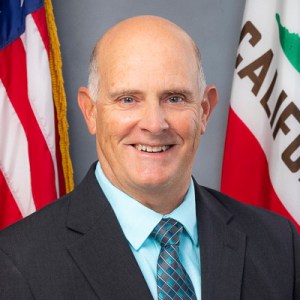
Bill Author