AB 1239: Workers’ compensation: disability payments.
- Session Year: 2023-2024
- House: Assembly
- Latest Version Date: 2024-09-28
Current Status:
Passed
(2024-09-28: Chaptered by Secretary of State - Chapter 806, Statutes of 2024.)
Introduced
In Committee
First Chamber
In Committee
Second Chamber
Enacted
Existing law establishes a workers compensation system, administered by the Administrative Director of the Division of Workers Compensation, to compensate an employee for injuries sustained in the course of the employees employment. Existing law governs temporary and permanent disability indemnity payments. Existing law, until January 1, 2025, allows an employer to commence a program under which disability indemnity payments are deposited in a prepaid card account for employees.
This bill would extend the authorization to deposit indemnity payments in a prepaid card account until January 1, 2027.
Existing law establishes the Medi-Cal program, which is administered by the State Department of Health Care Services and under which qualified low-income individuals receive health care services. The Medi-Cal program is, in part, governed and funded by federal Medicaid program provisions. Under existing law, the Medi-Cal program, pursuant to a federal waiver, administers the Family Planning, Access, Care, and Treatment (Family PACT) Program to provide comprehensive clinical family planning services to any person who has a family income at or below 200% of the federal poverty level and who is eligible to receive those services pursuant to the waiver.Existing law requires the suspension of Medi-Cal benefits for an individual who is an inmate of a public institution, effective the date they become an inmate, and generally requires the suspension to end on the date they are no longer an inmate, as specified. Under existing law, subject to implementation of the California Advancing and Innovating Medi-Cal (CalAIM) initiative, and no sooner than January 1, 2023, a qualifying inmate of a public institution is eligible to receive targeted Medi-Cal services for 90 days, or as otherwise approved in the CalAIM Terms and Conditions, before they are released from a public institution, if otherwise eligible for the services.Existing law requires the board of supervisors in each county, in consultation with the county sheriff, to designate an entity or entities to assist county jail inmates with submitting an application for a health insurance affordability program, as defined, consistent with federal requirements. Existing law sets forth the procedures for designating a specified county official or a community-based organization to perform those functions. This bill would require the State Department of Health Care Services, no later than September 1, 2025, to issue a list of Family PACT Program providers and clinics to an entity designated by the Department of Corrections and Rehabilitation for voluntary partnership with the department to assist a prison inmate with continuing and receiving specified health care services upon their release. The bill would impose a similar requirement on the State Department of Health Care Services for purposes of a list of Family PACT Program providers and clinics to assist county jail inmates, with the list being issued to an entity designated by county jails. Under the bill, any assistance provided to inmates would be provided only to the extent that the inmate elects to apply for the program and receive assistance, as specified.Existing law establishes the Medi-Cal program, which is administered by the State Department of Health Care Services and under which qualified low-income individuals receive health care services. The Medi-Cal program is, in part, governed and funded by federal Medicaid program provisions. Under existing law, the Medi-Cal program, pursuant to a federal waiver, administers the Family Planning, Access, Care, and Treatment (Family PACT) Program to provide comprehensive clinical family planning services to any person who has a family income at or below 200% of the federal poverty level and who is eligible to receive those services pursuant to the waiver.
Existing law requires the suspension of Medi-Cal benefits for an individual who is an inmate of a public institution, effective the date they become an inmate, and generally requires the suspension to end on the date they are no longer an inmate, as specified. Under existing law, subject to implementation of the California Advancing and Innovating Medi-Cal (CalAIM) initiative, and no sooner than January 1, 2023, a qualifying inmate of a public institution is eligible to receive targeted Medi-Cal services for 90 days, or as otherwise approved in the CalAIM Terms and Conditions, before they are released from a public institution, if otherwise eligible for the services.
Existing law requires the board of supervisors in each county, in consultation with the county sheriff, to designate an entity or entities to assist county jail inmates with submitting an application for a health insurance affordability program, as defined, consistent with federal requirements. Existing law sets forth the procedures for designating a specified county official or a community-based organization to perform those functions.
This bill would require the State Department of Health Care Services, no later than September 1, 2025, to issue a list of Family PACT Program providers and clinics to an entity designated by the Department of Corrections and Rehabilitation for voluntary partnership with the department to assist a prison inmate with continuing and receiving specified health care services upon their release. The bill would impose a similar requirement on the State Department of Health Care Services for purposes of a list of Family PACT Program providers and clinics to assist county jail inmates, with the list being issued to an entity designated by county jails. Under the bill, any assistance provided to inmates would be provided only to the extent that the inmate elects to apply for the program and receive assistance, as specified.
Existing law establishes the Medi-Cal program, which is administered by the State Department of Health Care Services and under which qualified low-income individuals receive health care services. The Medi-Cal program is, in part, governed and funded by federal Medicaid program provisions. Under existing law, the Medi-Cal program, pursuant to a federal waiver, administers the Family Planning, Access, Care, and Treatment (Family PACT) Program to provide comprehensive clinical family planning services to any person who has a family income at or below 200% of the federal poverty level and who is eligible to receive those services pursuant to the waiver.
Existing law requires the suspension of Medi-Cal benefits for an individual who is an inmate of a public institution, effective the date they become an inmate, and generally requires the suspension to end on the date they are no longer an inmate, as specified. Under existing law, subject to implementation of the California Advancing and Innovating Medi-Cal (CalAIM) initiative, and no sooner than January 1, 2023, a qualifying inmate of a public institution is eligible to receive targeted Medi-Cal services for 90 days, or as otherwise approved in the CalAIM Terms and Conditions, before they are released from a public institution, if otherwise eligible for the services.
Existing law requires the board of supervisors in each county, in consultation with the county sheriff, to designate an entity or entities to assist county jail inmates with submitting an application for a health insurance affordability program, as defined, consistent with federal requirements. Existing law sets forth the procedures for designating a specified county official or a community-based organization to perform those functions.
This bill would require the State Department of Health Care Services, no later than September 1, 2025, to issue a list of Family PACT Program providers and clinics to an entity designated by the Department of Corrections and Rehabilitation for voluntary partnership with the department to assist a prison inmate with continuing and receiving specified health care services upon their release. The bill would impose a similar requirement on the State Department of Health Care Services for purposes of a list of Family PACT Program providers and clinics to assist county jail inmates, with the list being issued to an entity designated by county jails. Under the bill, any assistance provided to inmates would be provided only to the extent that the inmate elects to apply for the program and receive assistance, as specified.
Existing law establishes the Commission on Teacher Credentialing and requires the commission, among other duties, to establish standards for the issuance and renewal of credentials, certificates, and permits. Existing law establishes the periods for which a credential is valid.This bill would make nonsubstantive changes to the latter provision.Existing law establishes the Commission on Teacher Credentialing and requires the commission, among other duties, to establish standards for the issuance and renewal of credentials, certificates, and permits. Existing law establishes the periods for which a credential is valid.
This bill would make nonsubstantive changes to the latter provision.
(a)(1)A disability indemnity payment shall not be made by any written instrument unless it is immediately negotiable and payable in cash, on demand, without discount, at some established place of business in the state.
(2)This section does not prohibit an employer from depositing the disability indemnity payment in an account in any bank, savings and loan association, or credit union of the employees choice in this state, provided the employee has voluntarily authorized the deposit, nor does it prohibit an employer from electronically depositing the disability indemnity payment in an account in any bank, savings and loan association, or credit union, that the employee has previously authorized to receive electronic deposits of payroll, unless the employee has requested, in writing, that disability indemnity benefits not be electronically deposited in the account.
(3)(A)An employer may commence a program under which disability indemnity payments are deposited in a prepaid card account for the employee. The employee shall provide written consent to the employer to use a prepaid card account for the employees disability payments. The prepaid card account shall meet the applicable requirements of Section 1339.1 of the Unemployment Insurance Code. For purposes of this section, the terms prepaid card and prepaid card account have the same meanings as defined in Section 1339.1 of the Unemployment Insurance Code. For purposes of this section, a prepaid card shall also meet all of the following requirements:
(i)Allow the employee to withdraw the entire balance on the card in one transaction without incurring fees.
(ii)Allow the employee reasonable access to in-network automatic teller machines (ATMs).
(iii)Allow the employee to make point-of-sale purchases without incurring fees from the financial institution.
(iv)Prohibit a link to any form of credit, including a loan against future payments or a cash advance on future payments.
(B)The fees associated with the use of the prepaid card shall be disclosed to the employee in writing. The only permissible fees associated with the use of a prepaid card are those for a replacement card provided through expedited delivery, out-of-network ATM fees on the third and subsequent withdrawal per deposit, and fees associated with foreign transactions.
(C)If an employee has consented to use the prepaid card payment system under this section, either the employer or the employee may opt to change the method of payment to another method consistent with this section by providing 30 days written notice to the other party.
(D)On or before December 1, 2022, the Commission on Health and Safety and Workers Compensation shall issue a report to the Legislature on payments made to prepaid card accounts. Employers shall provide all necessary aggregated data on their prepaid account programs to the commission upon request. The report shall include, but is not limited to, the following:
(i)The number of employees who elected to receive their disability indemnity payments in a prepaid card account.
(ii)The cash value of the disability benefits sent to prepaid card accounts.
(iii)The number of employees who opted to change the method of payment from a prepaid card account to either a written instrument or electronic deposit.
(E)The report issued pursuant to subparagraph (D) shall comply with Section 9795 of the Government Code.
(b)It is not a violation of this section if either of the following delays occurs in connection with a transaction authorized pursuant to this section, and the delay is caused solely by the application of state or federal banking laws or regulations:
(1)A delay in the negotiation of a written instrument, including a delay in the deposit or electronic deposit of a check to a prepaid card account.
(2)A delay in the deposit of a disability indemnity payment to a prepaid card account.
(c)This section shall remain in effect only until January 1, 2027, and as of that date is repealed.
SEC. 2.Section 4651 of the Labor Code, as amended by Section 2 of Chapter 63 of the Statutes of 2023, is amended to read:4651.(a)A disability indemnity payment shall not be made by any written instrument unless it is immediately negotiable and payable in cash, on demand, without discount, at some established place of business in the state.
(b)This section does not prohibit an employer from depositing the disability indemnity payment in an account in any bank, savings and loan association, or credit union of the employees choice in this state, provided the employee has voluntarily authorized the deposit, nor does it prohibit an employer from electronically depositing the disability indemnity payment in an account in any bank, savings and loan association, or credit union that the employee has previously authorized to receive electronic deposits of payroll, unless the employee has requested, in writing, that disability indemnity benefits not be electronically deposited in the account.
(c)It is not a violation of this section if a delay in the negotiation of a written instrument is caused solely by the application of state or federal banking laws or regulations.
(d)This section shall become operative on January 1, 2027.
(a)(1)A disability indemnity payment shall not be made by any written instrument unless it is immediately negotiable and payable in cash, on demand, without discount, at some established place of business in the state.
(2)This section does not prohibit an employer from depositing the disability indemnity payment in an account in any bank, savings and loan association, or credit union of the employees choice in this state, provided the employee has voluntarily authorized the deposit, nor does it prohibit an employer from electronically depositing the disability indemnity payment in an account in any bank, savings and loan association, or credit union, that the employee has previously authorized to receive electronic deposits of payroll, unless the employee has requested, in writing, that disability indemnity benefits not be electronically deposited in the account.
(3)(A)An employer may commence a program under which disability indemnity payments are deposited in a prepaid card account for the employee. The employee shall provide written consent to the employer to use a prepaid card account for the employees disability payments. The prepaid card account shall meet the applicable requirements of Section 1339.1 of the Unemployment Insurance Code. For purposes of this section, the terms prepaid card and prepaid card account have the same meanings as defined in Section 1339.1 of the Unemployment Insurance Code. For purposes of this section, a prepaid card shall also meet all of the following requirements:
(i)Allow the employee to withdraw the entire balance on the card in one transaction without incurring fees.
(ii)Allow the employee reasonable access to in-network automatic teller machines (ATMs).
(iii)Allow the employee to make point-of-sale purchases without incurring fees from the financial institution.
(iv)Prohibit a link to any form of credit, including a loan against future payments or a cash advance on future payments.
(B)The fees associated with the use of the prepaid card shall be disclosed to the employee in writing. The only permissible fees associated with the use of a prepaid card are those for a replacement card provided through expedited delivery, out-of-network ATM fees on the third and subsequent withdrawal per deposit, and fees associated with foreign transactions.
(C)If an employee has consented to use the prepaid card payment system under this section, either the employer or the employee may opt to change the method of payment to another method consistent with this section by providing 30 days written notice to the other party.
(D)On or before December 1, 2022, the Commission on Health and Safety and Workers Compensation shall issue a report to the Legislature on payments made to prepaid card accounts. Employers shall provide all necessary aggregated data on their prepaid account programs to the commission upon request. The report shall include, but is not limited to, the following:
(i)The number of employees who elected to receive their disability indemnity payments in a prepaid card account.
(ii)The cash value of the disability benefits sent to prepaid card accounts.
(iii)The number of employees who opted to change the method of payment from a prepaid card account to either a written instrument or electronic deposit.
(E)The report issued pursuant to subparagraph (D) shall comply with Section 9795 of the Government Code.
(b)It is not a violation of this section if either of the following delays occurs in connection with a transaction authorized pursuant to this section, and the delay is caused solely by the application of state or federal banking laws or regulations:
(1)A delay in the negotiation of a written instrument, including a delay in the deposit or electronic deposit of a check to a prepaid card account.
(2)A delay in the deposit of a disability indemnity payment to a prepaid card account.
(c)This section shall remain in effect only until January 1, 2025, 2027, and as of that date is repealed.
SEC. 2.Section 4651 of the Labor Code, as amended by Section 2 of Chapter 63 of the Statutes of 2023, is amended to read:4651.(a)A disability indemnity payment shall not be made by any written instrument unless it is immediately negotiable and payable in cash, on demand, without discount, at some established place of business in the state.
(b)This section does not prohibit an employer from depositing the disability indemnity payment in an account in any bank, savings and loan association, or credit union of the employees choice in this state, provided the employee has voluntarily authorized the deposit, nor does it prohibit an employer from electronically depositing the disability indemnity payment in an account in any bank, savings and loan association, or credit union that the employee has previously authorized to receive electronic deposits of payroll, unless the employee has requested, in writing, that disability indemnity benefits not be electronically deposited in the account.
(c)It is not a violation of this section if a delay in the negotiation of a written instrument is caused solely by the application of state or federal banking laws or regulations.
(d)This section shall become operative on January 1, 2025. 2027.
SECTION 1.Section 2068 is added to the Penal Code, to read:2068.(a)No later than September 1, 2025, the State Department of Health Care Services shall issue a list of Family Planning, Access, Care, and Treatment (Family PACT) Program providers and clinics to an entity designated by the Department of Corrections and Rehabilitation for voluntary partnership with the Department of Corrections and Rehabilitation to assist a prison inmate with continuing their prescribed contraception methods, as stated in Section 3409, and receiving services, including sexually transmitted infection and cervical cancer screenings, upon their release.(b)Any assistance provided to a prison inmate pursuant to subdivision (a) shall be provided only to the extent that the inmate elects to receive information on Family PACT Program providers and clinics from the designated entity. SEC. 2.Section 4011.11 of the Penal Code is amended to read:4011.11.(a)(1)Through December 31, 2022, the board of supervisors in each county, in consultation with the county sheriff, may designate an entity or entities to assist county jail inmates with submitting an application for a health insurance affordability program consistent with federal requirements.(2)The board of supervisors shall not designate the county sheriff as an entity to assist with submitting an application for a health insurance affordability program for county jail inmates unless the county sheriff agrees to perform this function.(3)If the board of supervisors designates a community-based organization as an entity to assist with submitting an application for a health insurance affordability program for county jail inmates, the designation shall be subject to approval by the jail administrator or their designee.(b)(1)The jail administrator, or their designee, may coordinate with an entity designated pursuant to subdivision (a), through December 31, 2022.(2)Commencing January 1, 2023, the jail administrator, or their designee, shall coordinate with an entity designated pursuant to subdivision (h), as applicable.(c)Consistent with federal law, a county jail inmate who is currently enrolled in the Medi-Cal program shall remain eligible for, and shall not be terminated from, the program due to their incarceration unless required by federal law, they become otherwise ineligible, or the inmates suspension of benefits has ended pursuant to Section 14011.10 of the Welfare and Institutions Code.(d)Notwithstanding any other state law, and only to the extent federal law allows and federal financial participation is available, an entity designated pursuant to subdivision (a) or (h) is authorized to act on behalf of a county jail inmate for the purpose of applying for, or determinations of, Medi-Cal eligibility for acute inpatient hospital services authorized by Section 14053.7 of the Welfare and Institutions Code. An entity designated pursuant to subdivision (a) or (h) shall not determine Medi-Cal eligibility or redetermine Medi-Cal eligibility, unless the entity is the county human services agency.(e)The fact that an applicant is an inmate shall not, in and of itself, preclude a county human services agency from processing an application for the Medi-Cal program submitted to it by, or on behalf of, that inmate.(f)For purposes of this section, health insurance affordability program means a program that is one of the following:(1)The states Medi-Cal program under Title XIX of the federal Social Security Act.(2)The states childrens health insurance program (CHIP) under Title XXI of the federal Social Security Act.(3)A program that makes coverage in a qualified health plan through the California Health Benefit Exchange established pursuant to Section 100500 of the Government Code with advance payment of the premium tax credit established under Section 36B of the Internal Revenue Code available to qualified individuals.(4)A program that makes available coverage in a qualified health plan through the California Health Benefit Exchange established pursuant to Section 100500 of the Government Code with cost-sharing reductions established under Section 1402 of the federal Patient Protection and Affordable Care Act (Public Law 111-148) and any subsequent amendments to that act.(g)Notwithstanding Chapter 3.5 (commencing with Section 11340) of Part 1 of Division 3 of Title 2 of the Government Code, the State Department of Health Care Services may implement this section, in whole or in part, by means of all-county letters or similar instructions, without taking any further regulatory action.(h)(1)Notwithstanding any other law, commencing January 1, 2023, the board of supervisors in each county, in consultation with the county sheriff, shall designate an entity or entities to assist county jail inmates with submitting an application for, or otherwise assisting their enrollment in, a health insurance affordability program consistent with federal requirements. The board of supervisors in each county, in consultation with the chief probation officer, shall designate an entity or entities to assist juvenile inmates in county juvenile facilities with submitting an application for, or otherwise assisting with an application for enrollment in, a health insurance affordability program consistent with federal requirements.(2)The board of supervisors shall not designate the county sheriff as an entity to assist with submitting an application for a health insurance affordability program for county jail inmates unless the county sheriff agrees to perform this function, and shall not designate the chief probation officer as an entity to assist with submitting an application for a health insurance affordability program for juvenile inmates unless the chief probation officer agrees to perform this function.(3)If the board of supervisors designates a community-based organization as an entity to assist with submitting an application for a health insurance affordability program for county jail inmates, the designation for county jail inmates shall be subject to approval by the jail administrator or their designee, and the designation for juvenile inmates shall be subject to approval by the chief probation officer or their designee.(4)(A)The department shall develop the data elements required to implement this section, in consultation with interested stakeholders that include representatives of counties, county sheriffs, county probation agencies, and whole person care pilot lead entities with experience working with incarcerated individuals.(B)Notwithstanding any other law, the department, counties, county sheriffs, and county probation agencies shall share the information and data necessary to facilitate the enrollment of inmates in health insurance affordability programs on or before their date of release and to appropriately suspend and unsuspend Medi-Cal coverage for beneficiaries.(5)(A)No sooner than January 1, 2023, the State Department of Health Care Services, in consultation with counties, county sheriffs, probation departments, Medi-Cal managed care plans, and Medi-Cal behavioral health delivery systems, shall develop and implement a mandatory process by which county jails and county juvenile facilities coordinate with Medi-Cal managed care plans and Medi-Cal behavioral health delivery systems to facilitate continued behavioral health treatment in the community for county jail inmates and juvenile inmates that were receiving behavioral health services before their release.(B)Notwithstanding any other law, including, but not limited to, Sections 11812 and 11845.5 of the Health and Safety Code and Section 5328 of the Welfare and Institutions Code, the sharing of health information, records, and other data with and among counties, Medi-Cal managed care plans, Medi-Cal behavioral health delivery systems, and other authorized providers or plan entities shall be permitted to the extent necessary to implement this paragraph. The department shall issue guidance identifying permissible data-sharing arrangements.(C)For purposes of this paragraph, the following definitions shall apply:(i)Medi-Cal behavioral health delivery system has the same meaning as set forth in subdivision (i) of Section 14184.101 of the Welfare and Institutions Code.(ii)Medi-Cal managed care plan has the same meaning as set forth in subdivision (j) of Section 14184.101 of the Welfare and Institutions Code.(i)(1)No later than September 1, 2025, the State Department of Health Care Services shall issue a list of Family Planning, Access, Care, and Treatment (Family PACT) Program providers and clinics to an entity designated by county jails for voluntary partnership with county jails to assist a county jail inmate with continuing their prescribed contraception methods, as stated in Section 3409, and receiving services, including sexually transmitted infection and cervical cancer screenings, upon their release.(2)Any assistance provided to a county jail inmate pursuant to paragraph (1) shall be provided only to the extent that the county jail inmate elects to receive information on Family PACT Program providers and clinics from the designated entity.(3)For purposes of this subdivision, Family PACT Program has the same meaning as set forth in subdivision (aa) of Section 14132 of the Welfare and Institutions Code.(a)No later than September 1, 2025, the State Department of Health Care Services shall issue a list of Family Planning, Access, Care, and Treatment (Family PACT) Program providers and clinics to an entity designated by the Department of Corrections and Rehabilitation for voluntary partnership with the Department of Corrections and Rehabilitation to assist a prison inmate with continuing their prescribed contraception methods, as stated in Section 3409, and receiving services, including sexually transmitted infection and cervical cancer screenings, upon their release.
(b)Any assistance provided to a prison inmate pursuant to subdivision (a) shall be provided only to the extent that the inmate elects to receive information on Family PACT Program providers and clinics from the designated entity.
SEC. 2.Section 4011.11 of the Penal Code is amended to read:4011.11.(a)(1)Through December 31, 2022, the board of supervisors in each county, in consultation with the county sheriff, may designate an entity or entities to assist county jail inmates with submitting an application for a health insurance affordability program consistent with federal requirements.
(2)The board of supervisors shall not designate the county sheriff as an entity to assist with submitting an application for a health insurance affordability program for county jail inmates unless the county sheriff agrees to perform this function.
(3)If the board of supervisors designates a community-based organization as an entity to assist with submitting an application for a health insurance affordability program for county jail inmates, the designation shall be subject to approval by the jail administrator or their designee.
(b)(1)The jail administrator, or their designee, may coordinate with an entity designated pursuant to subdivision (a), through December 31, 2022.
(2)Commencing January 1, 2023, the jail administrator, or their designee, shall coordinate with an entity designated pursuant to subdivision (h), as applicable.
(c)Consistent with federal law, a county jail inmate who is currently enrolled in the Medi-Cal program shall remain eligible for, and shall not be terminated from, the program due to their incarceration unless required by federal law, they become otherwise ineligible, or the inmates suspension of benefits has ended pursuant to Section 14011.10 of the Welfare and Institutions Code.
(d)Notwithstanding any other state law, and only to the extent federal law allows and federal financial participation is available, an entity designated pursuant to subdivision (a) or (h) is authorized to act on behalf of a county jail inmate for the purpose of applying for, or determinations of, Medi-Cal eligibility for acute inpatient hospital services authorized by Section 14053.7 of the Welfare and Institutions Code. An entity designated pursuant to subdivision (a) or (h) shall not determine Medi-Cal eligibility or redetermine Medi-Cal eligibility, unless the entity is the county human services agency.
(e)The fact that an applicant is an inmate shall not, in and of itself, preclude a county human services agency from processing an application for the Medi-Cal program submitted to it by, or on behalf of, that inmate.
(f)For purposes of this section, health insurance affordability program means a program that is one of the following:
(1)The states Medi-Cal program under Title XIX of the federal Social Security Act.
(2)The states childrens health insurance program (CHIP) under Title XXI of the federal Social Security Act.
(3)A program that makes coverage in a qualified health plan through the California Health Benefit Exchange established pursuant to Section 100500 of the Government Code with advance payment of the premium tax credit established under Section 36B of the Internal Revenue Code available to qualified individuals.
(4)A program that makes available coverage in a qualified health plan through the California Health Benefit Exchange established pursuant to Section 100500 of the Government Code with cost-sharing reductions established under Section 1402 of the federal Patient Protection and Affordable Care Act (Public Law 111-148) and any subsequent amendments to that act.
(g)Notwithstanding Chapter 3.5 (commencing with Section 11340) of Part 1 of Division 3 of Title 2 of the Government Code, the State Department of Health Care Services may implement this section, in whole or in part, by means of all-county letters or similar instructions, without taking any further regulatory action.
(h)(1)Notwithstanding any other law, commencing January 1, 2023, the board of supervisors in each county, in consultation with the county sheriff, shall designate an entity or entities to assist county jail inmates with submitting an application for, or otherwise assisting their enrollment in, a health insurance affordability program consistent with federal requirements. The board of supervisors in each county, in consultation with the chief probation officer, shall designate an entity or entities to assist juvenile inmates in county juvenile facilities with submitting an application for, or otherwise assisting with an application for enrollment in, a health insurance affordability program consistent with federal requirements.
(2)The board of supervisors shall not designate the county sheriff as an entity to assist with submitting an application for a health insurance affordability program for county jail inmates unless the county sheriff agrees to perform this function, and shall not designate the chief probation officer as an entity to assist with submitting an application for a health insurance affordability program for juvenile inmates unless the chief probation officer agrees to perform this function.
(3)If the board of supervisors designates a community-based organization as an entity to assist with submitting an application for a health insurance affordability program for county jail inmates, the designation for county jail inmates shall be subject to approval by the jail administrator or their designee, and the designation for juvenile inmates shall be subject to approval by the chief probation officer or their designee.
(4)(A)The department shall develop the data elements required to implement this section, in consultation with interested stakeholders that include representatives of counties, county sheriffs, county probation agencies, and whole person care pilot lead entities with experience working with incarcerated individuals.
(B)Notwithstanding any other law, the department, counties, county sheriffs, and county probation agencies shall share the information and data necessary to facilitate the enrollment of inmates in health insurance affordability programs on or before their date of release and to appropriately suspend and unsuspend Medi-Cal coverage for beneficiaries.
(5)(A)No sooner than January 1, 2023, the State Department of Health Care Services, in consultation with counties, county sheriffs, probation departments, Medi-Cal managed care plans, and Medi-Cal behavioral health delivery systems, shall develop and implement a mandatory process by which county jails and county juvenile facilities coordinate with Medi-Cal managed care plans and Medi-Cal behavioral health delivery systems to facilitate continued behavioral health treatment in the community for county jail inmates and juvenile inmates that were receiving behavioral health services before their release.
(B)Notwithstanding any other law, including, but not limited to, Sections 11812 and 11845.5 of the Health and Safety Code and Section 5328 of the Welfare and Institutions Code, the sharing of health information, records, and other data with and among counties, Medi-Cal managed care plans, Medi-Cal behavioral health delivery systems, and other authorized providers or plan entities shall be permitted to the extent necessary to implement this paragraph. The department shall issue guidance identifying permissible data-sharing arrangements.
(C)For purposes of this paragraph, the following definitions shall apply:
(i)Medi-Cal behavioral health delivery system has the same meaning as set forth in subdivision (i) of Section 14184.101 of the Welfare and Institutions Code.
(ii)Medi-Cal managed care plan has the same meaning as set forth in subdivision (j) of Section 14184.101 of the Welfare and Institutions Code.
(i)(1)No later than September 1, 2025, the State Department of Health Care Services shall issue a list of Family Planning, Access, Care, and Treatment (Family PACT) Program providers and clinics to an entity designated by county jails for voluntary partnership with county jails to assist a county jail inmate with continuing their prescribed contraception methods, as stated in Section 3409, and receiving services, including sexually transmitted infection and cervical cancer screenings, upon their release.
(2)Any assistance provided to a county jail inmate pursuant to paragraph (1) shall be provided only to the extent that the county jail inmate elects to receive information on Family PACT Program providers and clinics from the designated entity.
(3)For purposes of this subdivision, Family PACT Program has the same meaning as set forth in subdivision (aa) of Section 14132 of the Welfare and Institutions Code.
(a)No later than September 1, 2025, the State Department of Health Care Services shall issue a list of Family Planning, Access, Care, and Treatment (Family PACT) Program providers and clinics to an entity designated by the Department of Corrections and Rehabilitation for voluntary partnership with the Department of Corrections and Rehabilitation to assist a prison inmate with continuing their prescribed contraception methods, as stated in Section 3409, and receiving services, including sexually transmitted infection and cervical cancer screenings, upon their release.
(b)Any assistance provided to a prison inmate pursuant to subdivision (a) shall be provided only to the extent that the inmate elects to receive information on Family PACT Program providers and clinics from the designated entity.
SEC. 2.Section 4011.11 of the Penal Code is amended to read:4011.11.(a)(1)Through December 31, 2022, the board of supervisors in each county, in consultation with the county sheriff, may designate an entity or entities to assist county jail inmates with submitting an application for a health insurance affordability program consistent with federal requirements.
(2)The board of supervisors shall not designate the county sheriff as an entity to assist with submitting an application for a health insurance affordability program for county jail inmates unless the county sheriff agrees to perform this function.
(3)If the board of supervisors designates a community-based organization as an entity to assist with submitting an application for a health insurance affordability program for county jail inmates, the designation shall be subject to approval by the jail administrator or their designee.
(b)(1)The jail administrator, or their designee, may coordinate with an entity designated pursuant to subdivision (a), through December 31, 2022.
(2)Commencing January 1, 2023, the jail administrator, or their designee, shall coordinate with an entity designated pursuant to subdivision (h), as applicable.
(c)Consistent with federal law, a county jail inmate who is currently enrolled in the Medi-Cal program shall remain eligible for, and shall not be terminated from, the program due to their incarceration unless required by federal law, they become otherwise ineligible, or the inmates suspension of benefits has ended pursuant to Section 14011.10 of the Welfare and Institutions Code.
(d)Notwithstanding any other state law, and only to the extent federal law allows and federal financial participation is available, an entity designated pursuant to subdivision (a) or (h) is authorized to act on behalf of a county jail inmate for the purpose of applying for, or determinations of, Medi-Cal eligibility for acute inpatient hospital services authorized by Section 14053.7 of the Welfare and Institutions Code. An entity designated pursuant to subdivision (a) or (h) shall not determine Medi-Cal eligibility or redetermine Medi-Cal eligibility, unless the entity is the county human services agency.
(e)The fact that an applicant is an inmate shall not, in and of itself, preclude a county human services agency from processing an application for the Medi-Cal program submitted to it by, or on behalf of, that inmate.
(f)For purposes of this section, health insurance affordability program means a program that is one of the following:
(1)The states Medi-Cal program under Title XIX of the federal Social Security Act.
(2)The states childrens health insurance program (CHIP) under Title XXI of the federal Social Security Act.
(3)A program that makes coverage in a qualified health plan through the California Health Benefit Exchange established pursuant to Section 100500 of the Government Code with advance payment of the premium tax credit established under Section 36B of the Internal Revenue Code available to qualified individuals.
(4)A program that makes available coverage in a qualified health plan through the California Health Benefit Exchange established pursuant to Section 100500 of the Government Code with cost-sharing reductions established under Section 1402 of the federal Patient Protection and Affordable Care Act (Public Law 111-148) and any subsequent amendments to that act.
(g)Notwithstanding Chapter 3.5 (commencing with Section 11340) of Part 1 of Division 3 of Title 2 of the Government Code, the State Department of Health Care Services may implement this section, in whole or in part, by means of all-county letters or similar instructions, without taking any further regulatory action.
(h)(1)Notwithstanding any other law, commencing January 1, 2023, the board of supervisors in each county, in consultation with the county sheriff, shall designate an entity or entities to assist county jail inmates with submitting an application for, or otherwise assisting their enrollment in, a health insurance affordability program consistent with federal requirements. The board of supervisors in each county, in consultation with the chief probation officer, shall designate an entity or entities to assist juvenile inmates in county juvenile facilities with submitting an application for, or otherwise assisting with an application for enrollment in, a health insurance affordability program consistent with federal requirements.
(2)The board of supervisors shall not designate the county sheriff as an entity to assist with submitting an application for a health insurance affordability program for county jail inmates unless the county sheriff agrees to perform this function, and shall not designate the chief probation officer as an entity to assist with submitting an application for a health insurance affordability program for juvenile inmates unless the chief probation officer agrees to perform this function.
(3)If the board of supervisors designates a community-based organization as an entity to assist with submitting an application for a health insurance affordability program for county jail inmates, the designation for county jail inmates shall be subject to approval by the jail administrator or their designee, and the designation for juvenile inmates shall be subject to approval by the chief probation officer or their designee.
(4)(A)The department shall develop the data elements required to implement this section, in consultation with interested stakeholders that include representatives of counties, county sheriffs, county probation agencies, and whole person care pilot lead entities with experience working with incarcerated individuals.
(B)Notwithstanding any other law, the department, counties, county sheriffs, and county probation agencies shall share the information and data necessary to facilitate the enrollment of inmates in health insurance affordability programs on or before their date of release and to appropriately suspend and unsuspend Medi-Cal coverage for beneficiaries.
(5)(A)No sooner than January 1, 2023, the State Department of Health Care Services, in consultation with counties, county sheriffs, probation departments, Medi-Cal managed care plans, and Medi-Cal behavioral health delivery systems, shall develop and implement a mandatory process by which county jails and county juvenile facilities coordinate with Medi-Cal managed care plans and Medi-Cal behavioral health delivery systems to facilitate continued behavioral health treatment in the community for county jail inmates and juvenile inmates that were receiving behavioral health services before their release.
(B)Notwithstanding any other law, including, but not limited to, Sections 11812 and 11845.5 of the Health and Safety Code and Section 5328 of the Welfare and Institutions Code, the sharing of health information, records, and other data with and among counties, Medi-Cal managed care plans, Medi-Cal behavioral health delivery systems, and other authorized providers or plan entities shall be permitted to the extent necessary to implement this paragraph. The department shall issue guidance identifying permissible data-sharing arrangements.
(C)For purposes of this paragraph, the following definitions shall apply:
(i)Medi-Cal behavioral health delivery system has the same meaning as set forth in subdivision (i) of Section 14184.101 of the Welfare and Institutions Code.
(ii)Medi-Cal managed care plan has the same meaning as set forth in subdivision (j) of Section 14184.101 of the Welfare and Institutions Code.
(i)(1)No later than September 1, 2025, the State Department of Health Care Services shall issue a list of Family Planning, Access, Care, and Treatment (Family PACT) Program providers and clinics to an entity designated by county jails for voluntary partnership with county jails to assist a county jail inmate with continuing their prescribed contraception methods, as stated in Section 3409, and receiving services, including sexually transmitted infection and cervical cancer screenings, upon their release.
(2)Any assistance provided to a county jail inmate pursuant to paragraph (1) shall be provided only to the extent that the county jail inmate elects to receive information on Family PACT Program providers and clinics from the designated entity.
(3)For purposes of this subdivision, Family PACT Program has the same meaning as set forth in subdivision (aa) of Section 14132 of the Welfare and Institutions Code.
SECTION 1.Section 44251 of the Education Code is amended to read:44251.(a)The period for which a credential issued before September 1, 1985, as authorized under Section 44250, is valid shall be as follows:(1)For an internship credential: two years.(2)For a preliminary credential, pending completion of the clear credential program: five years.(3)For a life credential: the life of the holder.(b)The period for which a credential issued on or after September 1, 1985, as authorized under Section 44250, is valid shall be as follows:(1)For an internship credential: two years.(2)For a preliminary credential, pending completion of a beginning teacher induction program approved by the commission or the clear credential program: five years.(3)For a clear teaching or services credential: the life of the holder, if the holder submits an application and fee for renewal every five years and meets all professional fitness requirements under Sections 44339, 44340, and 44341.(a)The period for which a credential, as authorized under Section 44250 issued prior to September 1, 1985, is valid credential issued before September 1, 1985, as authorized under Section 44250, is valid shall be as follows:
(1)For an internship credential: two years.
(2)For a preliminary credential, pending completion of the clear credential program: five years.
(3)For a life credential: the life of the holder.
(b)The period for which a credential issued on or after September 1, 1985, as authorized under Section 44250 44250, is valid, valid shall be as follows:
(1)For an internship credential: two years.
(2)For a preliminary credential, pending completion of a beginning teacher induction program approved by the commission or the clear credential program: five years.
(3)For a clear teaching or services credential: the life of the holder, if the holder submits an application and fee for renewal every five years and meets all professional fitness requirements under Sections 44339, 44340, and 44341.
(4)For a clear services credential: the life of the holder, if the holder submits an application and fee for renewal every five years and meets all professional fitness requirements under Sections 44339, 44340, and 44341.|
Date
|
Status
|
|---|---|
| Sep 28, 2024 | Chaptered by Secretary of State - Chapter 806, Statutes of 2024. |
| Sep 28, 2024 | Approved by the Governor. |
| Sep 11, 2024 | Enrolled and presented to the Governor at 4 p.m. |
| Aug 30, 2024 | Senate amendments concurred in. To Engrossing and Enrolling. (Ayes 76. Noes 0.). |
| Aug 30, 2024 | From committee: That the Senate amendments be concurred in. (Ayes 14. Noes 0.) (August 30). |
| Aug 29, 2024 | Joint Rule 62(a) suspended. |
| Aug 15, 2024 | Re-referred to Com. on INS. pursuant to Assembly Rule 77.2. |
| Aug 12, 2024 | In Assembly. Concurrence in Senate amendments pending. May be considered on or after August 14 pursuant to Assembly Rule 77. |
| Aug 12, 2024 | Read third time. Passed. Ordered to the Assembly. (Ayes 38. Noes 0. Page 5042.). |
| Aug 6, 2024 | Read second time. Ordered to Consent Calendar. |
| Aug 5, 2024 | From committee: Be ordered to second reading file pursuant to Senate Rule 28.8 and ordered to Consent Calendar. |
| Jun 26, 2024 | From committee: Do pass and re-refer to Com. on APPR with recommendation: To Consent Calendar. (Ayes 5. Noes 0.) (June 26). Re-referred to Com. on APPR. |
| Jun 13, 2024 | Re-referred to Com. on RLS pursuant to Senate Rule 29.10(c). |
| Jun 13, 2024 | Re-referred to Com. on L., P.E. & R. |
| Jun 11, 2024 | Read second time. Ordered to third reading. |
| Jun 10, 2024 | Read third time and amended. Ordered to second reading. |
| Jun 10, 2024 | Ordered to third reading. |
| Jun 10, 2024 | Action rescinded whereby the bill was read third time, passed, and to Assembly. |
| Sep 14, 2023 | In Senate. Held at Desk. |
| Sep 14, 2023 | Ordered to the Senate. |
| Sep 14, 2023 | Withdrawn from Engrossing and Enrolling. |
| Sep 11, 2023 | In Assembly. Ordered to Engrossing and Enrolling. |
| Sep 11, 2023 | Read third time. Passed. Ordered to the Assembly. (Ayes 39. Noes 0. Page 2556.). |
| Aug 17, 2023 | Ordered to third reading. |
| Aug 17, 2023 | From Consent Calendar. |
| Aug 15, 2023 | Read second time. Ordered to Consent Calendar. |
| Aug 14, 2023 | From committee: Be ordered to second reading file pursuant to Senate Rule 28.8 and ordered to Consent Calendar. |
| Jul 12, 2023 | From committee: Do pass and re-refer to Com. on APPR with recommendation: To Consent Calendar. (Ayes 4. Noes 0.) (July 11). Re-referred to Com. on APPR. |
| Jun 29, 2023 | From committee: Do pass and re-refer to Com. on PUB S. with recommendation: To Consent Calendar. (Ayes 11. Noes 0.) (June 28). Re-referred to Com. on PUB S. |
| Jun 7, 2023 | Referred to Coms. on HEALTH and PUB S. |
| May 26, 2023 | In Senate. Read first time. To Com. on RLS. for assignment. |
| May 25, 2023 | Read third time. Passed. Ordered to the Senate. (Ayes 76. Noes 0. Page 1812.) |
| May 18, 2023 | Read second time. Ordered to Consent Calendar. |
| May 17, 2023 | From committee: Do pass. To Consent Calendar. (Ayes 15. Noes 0.) (May 17). |
| May 3, 2023 | In committee: Hearing postponed by committee. |
| Apr 19, 2023 | From committee: Do pass and re-refer to Com. on APPR. with recommendation: To Consent Calendar. (Ayes 15. Noes 0.) (April 18). Re-referred to Com. on APPR. |
| Mar 27, 2023 | Re-referred to Com. on HEALTH. |
| Mar 23, 2023 | Referred to Com. on HEALTH. |
| Mar 23, 2023 | From committee chair, with author's amendments: Amend, and re-refer to Com. on HEALTH. Read second time and amended. |
| Feb 17, 2023 | From printer. May be heard in committee March 19. |
| Feb 16, 2023 | Read first time. To print. |
|
Date
|
Description
|
Location
|
Votes
|
|
|---|---|---|---|---|
| Aug 30, 2024 | AB 1239 Calderon Concurrence in Senate Amendments | Assembly Floor |
Passed |
|
| Aug 30, 2024 | With recommendation: That Senate amendments be concurred in. | Assembly Standing Committee on Insurance |
Passed |
|
| Aug 12, 2024 | Consent Calendar 2nd AB1239 Calderon | Senate Floor |
Passed |
|
| Jun 26, 2024 | Do pass, but first be re-referred to the Committee on [Appropriations] with the recommendation: To Consent Calendar | Senate Standing Committee on Labor, Public Employment and Retirement |
Passed |
|
| Sep 11, 2023 | Assembly 3rd Reading AB1239 Calderon By Menjivar | Senate Floor |
Passed |
|
| Jul 11, 2023 | Do pass, but first be re-referred to the Committee on [Appropriations] with the recommendation: To Consent Calendar | Senate Standing Committee on Public Safety |
Passed |
|
| Jun 28, 2023 | Do pass, but first be re-referred to the Committee on [Public Safety] with the recommendation: To Consent Calendar | Senate Standing Committee on Health |
Passed |
|
| May 25, 2023 | AB 1239 Calderon Consent Calendar Second Day Regular Session | Assembly Floor |
Passed |
|
| May 17, 2023 | Do pass. To Consent Calendar. | Assembly Standing Committee on Appropriations |
Passed |
|
| Apr 18, 2023 | Do pass and be re-referred to the Committee on [Appropriations] with recommendation: To Consent Calendar | Assembly Standing Committee on Health |
Passed |
This list shows positions taken on this bill by organizations on the date displayed, which is linked to the original source.
Positions by individuals are not included.
|
Organization
|
Position
|
Date
|
|---|---|---|
| American College Of Obstetricians And Gynecologists District Ix | ** Support | |
| American Property Casualty Insurance Association | ** Support | |
| California Association Of Joint Powers Authorities | ** Support | |
| California Coalition On Workers Compensation | ** Support | |
| California Public Defenders Association | ** Support | |
| Essential Access Health | ** Support |
Date of Hearing: August 30, 2024
ASSEMBLY COMMITTEE ON INSURANCE
Lisa Calderon, Chair
ABPCA Bill Id:AB 1239 (
Author:Calderon) – As Amended Ver:June 10, 2024
SUBJECT: Workers’ compensation: disability payments
SUMMARY: Extends the sunset, from January 1, 2025 to January 1, 2027, for an existing pilot program that allows employers to transmit disability indemnity benefits (workers’ compensation) by a prepaid card, rather than a paper check.
EXISTING LAW:
- Establishes a workers’ compensation system that provides benefits to an employee who suffers from an injury or illness that arises out of and in the course of employment, irrespective of fault. This system requires all employers to secure payment of benefits by either securing the consent of the Department of Industrial Relations to self-insure or by securing insurance against liability from an insurance company authorized by the state.
- Requires that, if an injury causes temporary disability, the first payment of temporary disability indemnity must be made not later than 14 days after knowledge of the injury and disability. Each additional payment of temporary disability indemnity benefits must be made as due every two weeks on the day designated with the first payment. (Labor Code Section (LAB) 4650(b)(1))
- Defines “prepaid card” or “prepaid card account” as a card, code, or other means to allow a recipient access to funds, which is usable at multiple, unaffiliated merchants for goods or services, or usable at automated teller machines (ATMs). (Unemployment Insurance (UI) Code Section 1339.1)
- Permits employers to begin a program where disability indemnity benefits may be deposited on a prepaid card account, as defined under existing UI Code, if the injured worker has provided written consent to receive their benefits on a prepaid card. (LAB 4651(a)(3)(A))
- Requires that a prepaid card account must meet the following requirements: (LAB 4651)
- Allow the employee to withdraw the entire balance on the card in one transaction without incurring fees.
- Allow the employee reasonable access to in-network ATMs.
- Allow the employee to make point-of-sale purchases without incurring fees from the financial institution.
- Prohibit a link to any form of credit, including a loan against future payments or a cash advance on future payments.
- Prohibits any prepaid card account fees being charged to an injured worker, except for an expedited replacement prepaid card, out-of-network ATM fees on the third and subsequent withdrawal per deposit, and fees associated with foreign transactions. (LAB 4651(a)(3)(B))
- Permits either the employer or the injured worker to opt to change the method of payment to another method consistent with this section by providing 30 days’ written notice to the other party. (LAB 4651(a)(3)(C))
- Sunsets the prepaid card account program described above on January 1, 2025. (LAB 4651(c))
- Requires the Commission on Health and Safety and Workers Compensation (CHSWC), on or before December 1, 2022, to issue a report to the Legislature on payments made to prepaid card accounts. (LAB 4651(a)(3)(D))
FISCAL EFFECT: Unknown.
COMMENTS:
- Purpose. According to the author:
The prepaid debit card program is needed, because transmitting indemnity benefits to injured workers by either a paper check or direct deposit both pose unique challenges for households where no one in the household has a bank account. For unbanked workers, direct deposit would generally not be available. Without a relationship with financial institutions, cashing a check without significant fees would also prove challenging. Providing payments to unbanked workers by prepaid debit cards alleviates these challenges.
The pilot program is set to expire on January 1, 2025, but a report on the program that was expected to be issued on December 1, 2022 is still in process. As such, without a proper review of the program, the current end date will result in an interruption of the program. This program is totally elective – workers can still opt to receive payment by paper check or direct deposit. But providing the option of a prepaid debit card is particularly helpful for unbanked workers that do not have access to a checking account.
- Disability Indemnity Benefits and Access to Banking in California. Transmitting indemnity benefits to injured workers by either a paper check or direct deposit both pose unique challenges for households where no one in the household has a bank account. For unbanked workers, direct deposit would generally not be available. Without a relationship with a financial institution cashing a check without significant fees would also prove challenging.
According to the 2021 Federal Deposit Insurance Corporation (FDIC) National Survey of Unbanked and Underbanked Households, 5% of all California households are unbanked.[1] However, according to the same survey, the rate of unbanked disabled households in California is 19.1% and an additional 13.9% of households are underbanked.
The FDIC survey shows that for African American households in California, the unbanked rate is 6.4% and the underbanked rate is 24.5%. For Latino households in California, the unbanked rate is 7.6% and the underbanked rate is 22.6%. This suggests that for households with injured workers, particularly injured workers of color, the unbanked and underbanked rate may be higher than average.
The pilot program created in 2018, discussed in more detail below, aimed to address these issues. This pilot is modeled off of the existing UI prepaid benefit card program, where unemployed workers receive their UI benefits on a prepaid card. That program, in turn, was modeled on an existing electronic benefit transfer (EBT) program for individuals to receive CalFresh, CalWORKs, and other food and cash aid benefits.
- Pilot Program and CHSWC Report. Senate Bill 880 (Pan, Chapter 730, Statutes of 2018), modeled after the Employment Development Department's program that utilizes prepaid cards to issue unemployment insurance and disability insurance payments, authorized employers to conduct a pilot program (until January 1, 2023) to transmit workers' compensation disability indemnity benefits via prepaid cards, rather than a paper check or electronic deposit.
SB 880 also required CHSWC to compile a report to the Legislature by December 1, 2022 noting the following information:
- Number of employees who elected to receive their benefits via prepaid card;
- Cash value of benefits sent via prepaid card, and;
- Number of employees who opted to change their method of payment from prepaid card to either a written instrument or electronic deposit.
The January 1, 2023 sunset date on these provisions has since been extended twice.
The CHSWC report required by SB 880 has not yet been submitted to the Legislature. According to the author, "CHSWC is still working on the report but hasn't yet received sufficient data. This bill's sponsor is working with CHSWC to try and get additional data provided."
- Prior Legislation.
AB 489 (Calderon), Chapter 63, Statutes of 2023, extended the sunset date on an existing pilot program that allows employers to transmit disability indemnity benefits (workers’ compensation) by a prepaid card, rather than a paper check from January 1, 2024 to January 1, 2025.
AB 2148 (Calderon), Chapter 120, Statutes of 2022, extended the sunset date on an existing pilot program that allows employers to transmit disability indemnity benefits (workers’ compensation) by a prepaid card, rather than a paper check from January 1, 2023 to January 1, 2024.
SB 880 (Pan), Chapter 730, Statutes of 2018, created the pilot program to allow employers to transmit disability indemnity benefits (workers’ compensation) by a prepaid card, rather than a paper check.
REGISTERED SUPPORT / OPPOSITION:
Support
American Property Casualty Insurance Association
California Association of Joint Powers Authorities (CAJPA)
California Coalition on Workers Compensation
Opposition
None on file
Analysis Prepared by: Claire Wendt / INS. / (916) 319-2086
2021 FDIC National Survey of Unbanked and Underbanked Households. Retrieved March 6, 2023, from https://www.fdic.gov/analysis/household-survey/
CONCURRENCE IN SENATE AMENDMENTS
CSA2 Bill Id:AB 1239
Author:(Calderon)
As Amended Ver:June 10, 2024
Majority vote
SUMMARY
Original Committee of Reference: Assembly Health
Extends from January 1, 2025 to January 1, 2027 an existing program related to workers' compensation disability indemnity payments.
Senate Amendments
Current Committee Recommendation: Concur
- Delete the Assembly version of this bill.
- Extends by two years, to January 1, 2027, the authorization for employers to deposit workers' compensation disability indemnity payments in a prepaid card account rather than provide payment by a paper check or electronic deposit.
- Provides that an employee must provide written consent to receive workers' compensation disability indemnity payments by prepaid card.
COMMENTS
Transmitting indemnity benefits to injured workers by either a paper check or direct deposit both pose unique challenges for households where no one in the household has a bank account. For unbanked workers, direct deposit would generally not be available. Without a relationship with a financial institutions cashing a check without significant fees would also prove challenging.
According to the 2021 Federal Deposit Insurance Corporation (FDIC) National Survey of Unbanked and Underbanked Households, 5% of all California households are unbanked. However, according to the same survey, the rate of unbanked disabled households in California is 19.1% and an additional 13.9% of households are underbanked.
The FDIC survey shows that for African American households in California, the unbanked rate is 6.4% and the underbanked rate is 24.5%. For Latino households in California, the unbanked rate is 7.6% and the underbanked rate is 22.6%. This suggests that for households with injured workers, particularly injured workers of color, the unbanked and underbanked rate may be higher than average.
A pilot program created in 2018 aimed to address these issues. Senate Bill 880 (Pan, Chapter 730, Statutes of 2018), modelled after the Employment Development Department's program that utilizes prepaid cards to issue unemployment insurance and disability insurance payments, authorized employers to conduct a pilot program (until January 1, 2023) to transmit workers' compensation disability indemnity benefits via prepaid cards, rather than a paper check or electronic deposit.
SB 880 also required the Commission on Health and Safety and Workers Compensation (CHSWC) to compile a report to Legislature by December 1, 2022 noting the following information:
- Number of employees who elected to receive their benefits via prepaid card;
- Cash value of benefits sent via prepaid card, and;
- Number of employees who opted to change their method of payment from prepaid card to either a written instrument or electronic deposit.
The January 1, 2023 sunset date on these provisions has since been extended twice:
- AB 2148 (Calderon, Chapter 120, Statutes of 2022) extended it to January 1, 2024; &
- AB 489 (Calderon, Chapter 63, Statutes of 2023) extended it to January 1, 2025.
The CHSWC report required by SB 880 has not yet been submitted to the Legislature. According to the author, "CHSWC is still working on the report but hasn't yet received sufficient data. This bill's sponsor is working with CHSWC to try and get additional data provided."
According to the Author
The prepaid debit card program is needed, because transmitting indemnity benefits to injured workers by either a paper check or direct deposit both pose unique challenges for households where no one in the household has a bank account. For unbanked workers, direct deposit would generally not be available. Without a relationship with financial institutions, cashing a check without significant fees would also prove challenging. Providing payments to unbanked workers by prepaid debit cards alleviates these challenges.
The pilot program is set to expire on January 1, 2025, but a report on the program that was expected to be issued on December 1, 2022 is still in process. As such, without a proper review of the program, the current end date will result in an interruption of the program. This program is totally elective – workers can still opt to receive payment by paper check or direct deposit. But providing the option of a prepaid debit card is particularly helpful for unbanked workers that do not have access to a checking account.
Arguments in Support
The American Property Casualty Insurance Association, the California Association of Joint Powers Authorities, and the California Coalition on Workers Compensation write in support, noting: "For unbanked workers, direct deposit would generally not be available. Without a relationship with a financial institution, cashing a check without significant fees would also prove challenging. The bill was designed to assist these households by starting the process of regularizing the use of prepaid card accounts for temporary disability payment, similar to one of the authorized methods for delivering unemployment insurance benefits."
Arguments in Opposition
None on file
FISCAL COMMENTS
According to the Senate Appropriations Committee, pursuant to Senate Rule 28.8, negligible state costs.
VOTES
ASM HEALTH: 15-0-0
YES: Wood, Waldron, Aguiar-Curry, Arambula, Boerner Horvath, Wendy Carrillo, Flora, Vince Fong, Maienschein, McCarty, Joe Patterson, Rodriguez, Santiago, Villapudua, Weber
ASM APPROPRIATIONS: 15-0-1
YES: Holden, Megan Dahle, Bryan, Calderon, Wendy Carrillo, Dixon, Mike Fong, Hart, Lowenthal, Mathis, Papan, Pellerin, Robert Rivas, Sanchez, Ortega
ABS, ABST OR NV: Weber
ASSEMBLY FLOOR: 76-0-4
YES: Addis, Alanis, Alvarez, Arambula, Bains, Bauer-Kahan, Bennett, Berman, Boerner, Bonta, Bryan, Calderon, Juan Carrillo, Wendy Carrillo, Cervantes, Chen, Connolly, Megan Dahle, Davies, Dixon, Essayli, Flora, Mike Fong, Vince Fong, Friedman, Gabriel, Gallagher, Garcia, Gipson, Grayson, Haney, Hart, Holden, Hoover, Irwin, Jackson, Jones-Sawyer, Lackey, Lee, Low, Lowenthal, Maienschein, McCarty, McKinnor, Muratsuchi, Stephanie Nguyen, Ortega, Pacheco, Jim Patterson, Joe Patterson, Pellerin, Petrie-Norris, Quirk-Silva, Ramos, Reyes, Luz Rivas, Robert Rivas, Rodriguez, Blanca Rubio, Sanchez, Santiago, Schiavo, Soria, Ta, Ting, Valencia, Villapudua, Waldron, Wallis, Ward, Weber, Wicks, Wilson, Wood, Zbur, Rendon
ABS, ABST OR NV: Aguiar-Curry, Kalra, Mathis, Papan
SENATE FLOOR: 38-0-2
YES: Alvarado-Gil, Archuleta, Ashby, Atkins, Becker, Blakespear, Bradford, Caballero, Cortese, Dahle, Dodd, Durazo, Eggman, Glazer, Gonzalez, Grove, Hurtado, Jones, Laird, Limón, McGuire, Menjivar, Min, Newman, Nguyen, Niello, Ochoa Bogh, Padilla, Portantino, Roth, Rubio, Seyarto, Skinner, Smallwood-Cuevas, Stern, Wahab, Wiener, Wilk
ABS, ABST OR NV: Allen, Umberg
SENATE FLOOR: 39-0-1
YES: Allen, Alvarado-Gil, Archuleta, Ashby, Atkins, Becker, Blakespear, Bradford, Cortese, Dahle, Dodd, Durazo, Eggman, Glazer, Gonzalez, Grove, Hurtado, Jones, Laird, Limón, McGuire, Menjivar, Min, Newman, Nguyen, Niello, Ochoa Bogh, Padilla, Portantino, Roth, Rubio, Seyarto, Skinner, Smallwood-Cuevas, Stern, Umberg, Wahab, Wiener, Wilk
ABS, ABST OR NV: Caballero
UPDATED
VERSION: June 10, 2024
CONSULTANT: Claire Wendt / INS. / (916) 319-2086 FN: 0005038
CONCURRENCE IN SENATE AMENDMENTS
CSA1 Bill Id:AB 1239
Author:(Calderon)
As Amended Ver:June 10, 2024
Majority vote
SUMMARY
Extends from January 1, 2025 to January 1, 2027 an existing program related to workers' compensation disability indemnity payments.
Senate Amendments
Delete the Assembly version of this bill and instead:
- Extends by two years, to January 1, 2027, the authorization for employers to deposit workers' compensation disability indemnity payments in a prepaid card account rather than provide payment by a paper check or electronic deposit.
- Provides that an employee must provide written consent to receive workers' compensation disability indemnity payments by prepaid card.
COMMENTS
Transmitting indemnity benefits to injured workers by either a paper check or direct deposit both pose unique challenges for households where no one in the household has a bank account. For unbanked workers, direct deposit would generally not be available. Without a relationship with a financial institutions cashing a check without significant fees would also prove challenging.
According to the 2021 Federal Deposit Insurance Corporation (FDIC) National Survey of Unbanked and Underbanked Households, 5% of all California households are unbanked. However, according to the same survey, the rate of unbanked disabled households in California is 19.1% and an additional 13.9% of households are underbanked.
The FDIC survey shows that for African American households in California, the unbanked rate is 6.4% and the underbanked rate is 24.5%. For Latino households in California, the unbanked rate is 7.6% and the underbanked rate is 22.6%. This suggests that for households with injured workers, particularly injured workers of color, the unbanked and underbanked rate may be higher than average.
A pilot program created in 2018 aimed to address these issues. Senate Bill 880 (Pan, Chapter 730, Statutes of 2018), modelled after the Employment Development Department's program that utilizes prepaid cards to issue unemployment insurance and disability insurance payments, authorized employers to conduct a pilot program (until January 1, 2023) to transmit workers' compensation disability indemnity benefits via prepaid cards, rather than a paper check or electronic deposit.
SB 880 also required the Commission on Health and Safety and Workers Compensation (CHSWC) to compile a report to Legislature by December 1, 2022 noting the following information:
- Number of employees who elected to receive their benefits via prepaid card;
- Cash value of benefits sent via prepaid card, and;
- Number of employees who opted to change their method of payment from prepaid card to either a written instrument or electronic deposit.
The January 1, 2023 sunset date on these provisions has since been extended twice:
- AB 2148 (Calderon, Chapter 120, Statutes of 2022) extended it to January 1, 2024; &
- AB 489 (Calderon, Chapter 63, Statutes of 2023) extended it to January 1, 2025.
The CHSWC report required by SB 880 has not yet been submitted to the Legislature. According to the author, "CHSWC is still working on the report but hasn't yet received sufficient data. This bill's sponsor is working with CHSWC to try and get additional data provided."
According to the Author
The prepaid debit card program is needed, because transmitting indemnity benefits to injured workers by either a paper check or direct deposit both pose unique challenges for households where no one in the household has a bank account. For unbanked workers, direct deposit would generally not be available. Without a relationship with financial institutions, cashing a check without significant fees would also prove challenging. Providing payments to unbanked workers by prepaid debit cards alleviates these challenges.
The pilot program is set to expire on January 1, 2025, but a report on the program that was expected to be issued on December 1, 2022 is still in process. As such, without a proper review of the program, the current end date will result in an interruption of the program. This program is totally elective – workers can still opt to receive payment by paper check or direct deposit. But providing the option of a prepaid debit card is particularly helpful for unbanked workers that do not have access to a checking account.
Arguments in Support
The American Property Casualty Insurance Association, the California Association of Joint Powers Authorities, and the California Coalition on Workers Compensation write in support, noting: "For unbanked workers, direct deposit would generally not be available. Without a relationship with a financial institution, cashing a check without significant fees would also prove challenging. The bill was designed to assist these households by starting the process of regularizing the use of prepaid card accounts for temporary disability payment, similar to one of the authorized methods for delivering unemployment insurance benefits."
Arguments in Opposition
None on file.
FISCAL COMMENTS
According to the Senate Appropriations Committee, pursuant to Senate Rule 28.8, negligible state costs.
VOTES:
ASM HEALTH: 15-0-0
YES: Wood, Waldron, Aguiar-Curry, Arambula, Boerner Horvath, Wendy Carrillo, Flora, Vince Fong, Maienschein, McCarty, Joe Patterson, Rodriguez, Santiago, Villapudua, Weber
ASM APPROPRIATIONS: 15-0-1
YES: Holden, Megan Dahle, Bryan, Calderon, Wendy Carrillo, Dixon, Mike Fong, Hart, Lowenthal, Mathis, Papan, Pellerin, Robert Rivas, Sanchez, Ortega
ABS, ABST OR NV: Weber
ASSEMBLY FLOOR: 76-0-4
YES: Addis, Alanis, Alvarez, Arambula, Bains, Bauer-Kahan, Bennett, Berman, Boerner, Bonta, Bryan, Calderon, Juan Carrillo, Wendy Carrillo, Cervantes, Chen, Connolly, Megan Dahle, Davies, Dixon, Essayli, Flora, Mike Fong, Vince Fong, Friedman, Gabriel, Gallagher, Garcia, Gipson, Grayson, Haney, Hart, Holden, Hoover, Irwin, Jackson, Jones‑Sawyer, Lackey, Lee, Low, Lowenthal, Maienschein, McCarty, McKinnor, Muratsuchi, Stephanie Nguyen, Ortega, Pacheco, Jim Patterson, Joe Patterson, Pellerin, Petrie-Norris, Quirk‑Silva, Ramos, Reyes, Luz Rivas, Robert Rivas, Rodriguez, Blanca Rubio, Sanchez, Santiago, Schiavo, Soria, Ta, Ting, Valencia, Villapudua, Waldron, Wallis, Ward, Weber, Wicks, Wilson, Wood, Zbur, Rendon
ABS, ABST OR NV: Aguiar-Curry, Kalra, Mathis, Papan
SENATE FLOOR: 38-0-2
YES: Alvarado-Gil, Archuleta, Ashby, Atkins, Becker, Blakespear, Bradford, Caballero, Cortese, Dahle, Dodd, Durazo, Eggman, Glazer, Gonzalez, Grove, Hurtado, Jones, Laird, Limón, McGuire, Menjivar, Min, Newman, Nguyen, Niello, Ochoa Bogh, Padilla, Portantino, Roth, Rubio, Seyarto, Skinner, Smallwood-Cuevas, Stern, Wahab, Wiener, Wilk
ABS, ABST OR NV: Allen, Umberg
SENATE FLOOR: 39-0-1
YES: Allen, Alvarado-Gil, Archuleta, Ashby, Atkins, Becker, Blakespear, Bradford, Cortese, Dahle, Dodd, Durazo, Eggman, Glazer, Gonzalez, Grove, Hurtado, Jones, Laird, Limón, McGuire, Menjivar, Min, Newman, Nguyen, Niello, Ochoa Bogh, Padilla, Portantino, Roth, Rubio, Seyarto, Skinner, Smallwood-Cuevas, Stern, Umberg, Wahab, Wiener, Wilk
ABS, ABST OR NV: Caballero
UPDATED
VERSION: June 10, 2024
CONSULTANT: Claire Wendt / INS. / (916) 319-2086 FN: 0003848
SENATE RULES COMMITTEE Office of Senate Floor Analyses (916) 651-1520 Fax: (916) 327-4478 | AB 1239 |
CONSENT
Bill No: AB 1239
Author: Calderon (D)
Amended: 6/10/24 in Senate
Vote: 21
PRIOR VOTES NOT RELEVANT
SENATE LABOR, PUB. EMP. & RET. COMMITTEE: 5-0, 6/26/24 (Pursuant to Senate Rule 29.10)
AYES: Smallwood-Cuevas, Wilk, Cortese, Durazo, Laird
SENATE APPROPRIATIONS COMMITTEE: Senate Rule 28.8
SUBJECT: Workers’ compensation: disability payments
SOURCE: Author
DIGEST:
This bill extends by two years, from January 1, 2025 to January 1, 2027, the authorization for employers to deposit workers’ compensation disability indemnity payments, with employee written consent, in a prepaid card account rather than a paper check or electronic deposit.
ANALYSIS:
Existing law:
- Establishes a workers’ compensation system that provides benefits to an employee who suffers from an injury or illness that arises out of, and in the course of, employment, irrespective of fault. This system requires all employers to secure payment of benefits by either securing the consent of the Department of Industrial Relations (DIR) to self-insure or by securing insurance against liability from an insurance company duly authorized by the state. (California Constitution Article XIV §4, Labor Code §3200-6002)
- Requires that, if an injury causes temporary disability, the first payment of temporary disability indemnity must be made no later than 14 days after knowledge of the injury and disability. Each additional payment of temporary disability indemnity benefits must be made as due every two weeks on the day designated with the first payment. (Labor Code §4650)
- Requires the payment of disability indemnity benefits by a written instrument but authorizes an employer to electronically deposit payments in an account in any bank, savings and loan association, or credit union of the employee’s choice, provided the employee has voluntarily authorized the deposit, as specified. (Labor Code §4650)
- Authorizes employers, until January 1, 2025, to begin a program where disability indemnity benefits may be deposited on a prepaid card account, with written consent from the injured worker to receive benefits this way, and provided the program meets all of the following:
- Allows the employee to withdraw the entire balance on the card in one transaction without incurring fees.
- Allows the employee reasonable access to in-network ATMs.
- Allows the employee to make point-of-sale purchases without incurring fees from the financial institution.
- Prohibits a link to any form of credit, including a loan against future payments or a cash advance on future payments. (Labor Code §4651)
- Requires the fees associated with the use of the prepaid card to be disclosed to the employee in writing and provides that the only permissible fees are those for a replacement card provided through expedited delivery, out-of-network ATM fees, and foreign transaction fees. (Labor Code §4651)
- Authorizes the employee or employer to opt to change the method of payment by providing 30 days’ written notice to the other party. (Labor Code §4651)
- Requires the Commission on Health and Safety and Workers Compensation (CHSWC), on or before December 1, 2022, to issue a report to the Legislature on payments made to prepaid card accounts and requires employers to provide all necessary aggregated data on their prepaid account programs to CSHWC, upon request, for purposes of this report. (Labor Code §4651)
This bill extends by two years, from January 1, 2025 to January 1, 2027, the authorization for employers to deposit disability indemnity payments in a prepaid card account, rather than a paper check or electronic deposit.
Background
Unbanked and Underbanked Individuals. Unbanked individuals do not have a checking or savings account with a Federal Deposit Insurance Corporation (FDIC) insured financial institution. Underbanked means the household had an account with an FDIC insured financial institution, but regularly used alternative financial services. According to the 2021 FDIC National Survey of Unbanked and Underbanked Households, 5 percent of all California households are unbanked.[1] Additionally, the FDIC survey found that unbanked rates varied considerably across the U.S. population with unbanked rates being higher among lower-income households, less-educated households, Black households, Hispanic households, working-age households with a disability, and single-mother households.[2]
Additionally, differences in unbanked rates between Black and White households and between Hispanic and White households in 2021 were present at every income level. For example, among households with income between $30,000 and $50,000, 8.0 percent of Black households and 8.4 percent of Hispanic households were unbanked, compared with 1.7 percent of White households.[3]
Pilot Program for the Issuance of Disability Indemnity Payments Using Prepaid Cards. Workers’ compensation benefits provide employees with the medical treatment needed to recover from work related injury or illnesses, partially replace the wages lost while they recover, and help them return to work. The Division of Workers' Compensation (DWC) monitors the administration of workers' compensation claims, and provides administrative and judicial services to assist in resolving disputes that arise in connection with claims for workers' compensation benefits.
The Commission on Health and Safety and Workers’ Compensation (CHSWC) is a joint labor-management body created by the workers' compensation reform legislation of 1993. CHSWC is charged with examining the health and safety and workers' compensation systems in California and recommending administrative or legislative modifications to improve their operation. The Commission was established to conduct a continuing examination of the workers' compensation system and of the state's activities to prevent industrial injuries and occupational illnesses and to examine those programs in other states.
SB 880 (Pan, Chapter 730, Statutes of 2018) authorized employers to conduct a pilot program (until January 1, 2023) to transmit workers’ compensation disability indemnity benefits via prepaid cards, rather than a paper check or electronic deposit. SB 880 also required CHSWC to compile a report to Legislature by December 1, 2022 noting the following information:
- Number of employees who elected to receive their benefits via prepaid card;
- Cash value of benefits sent via prepaid card; and,
- Number of employees who opted to change their method of payment from prepaid card to either a written instrument or electronic deposit.
The January 1, 2023 sunset date on these provisions has since been extended twice:
- AB 2148 (Calderon, Chapter 120, Statutes of 2022) extended it to January 1, 2024; and
- AB 489 (Calderon, Chapter 63, Statutes of 2023) extended it to January 1, 2025.
The CHSWC report required by SB 880 has not yet been submitted to the Legislature. According to the author, “CHSWC is still working on the report but hasn’t yet received sufficient data. This bill’s sponsor is working with CHSWC to try and get additional data provided.”
Need for this bill? According to the author: “The prepaid debit card program is needed, because transmitting indemnity benefits to injured workers by either a paper check or direct deposit both pose unique challenges for households where no one in the household has a bank account. For unbanked workers, direct deposit would generally not be available. Without a relationship with financial institutions, cashing a check without significant fees would also prove challenging. Providing payments to unbanked workers by prepaid debit cards alleviates these challenges.
The pilot program is set to expire on January 1, 2025, but a report on the program that was expected to be issued on December 1, 2022 is still in process. As such, without a proper review of the program, the current end date will result in an interruption of the program. This program is totally elective – workers can still opt to receive payment by paper check or direct deposit. But providing the option of a prepaid debit card is particularly helpful for unbanked workers that do not have access to a checking account.”
Related/Prior Legislation
AB 489 (Calderon, Chapter 63, Statutes of 2023) extended the sunset date for the pilot program that allows employers to transmit workers’ compensation disability indemnity benefits by a prepaid card from January 1, 2024 to January 1, 2025.
AB 2148 (Calderon, Chapter 120, Statutes of 2022) extended the sunset date for the pilot program from January 1, 2023, to January 1, 2024.
SB 880 (Pan, Chapter 730, Statutes of 2018) created the original pilot program authorizing the use of prepaid cards for indemnity payments with a sunset date of January 1, 2023.
FISCAL EFFECT: Appropriation: No Fiscal Com.: Yes Local: No
SUPPORT: (Verified 8/5/24)
American Property Casualty Insurance Association
California Association of Joint Powers Authorities
California Coalition on Workers Compensation
OPPOSITION: (Verified 8/5/24)
None received
ARGUMENTS IN SUPPORT: According to the proponents of this bill:
“SB 880 [the 2018 bill that authorized the use of prepaid card accounts for disability indemnity payments]… addressed a challenge for many injured workers because temporary disability could only be transmitted to injured workers by either a paper check or direct deposit, which presented unique challenges for ‘unbanked’ households -- households where no one in the household has a bank account. For unbanked workers, direct deposit would generally not be available. Without a relationship with a financial institution, cashing a check without significant fees would also prove challenging. The bill was designed to assist these households by starting the process of regularizing the use of prepaid card accounts for temporary disability payment, similar to one of the authorized methods for delivering
unemployment insurance benefits. AB 1239 simply seeks to extend the sunset on this authorization until January 1, 2027.”
Prepared by: Alma Perez-Schwab / L., P.E. & R. / (916) 651-1556
8/6/24 16:10:36
**** END ****
SENATE COMMITTEE ON LABOR, PUBLIC EMPLOYMENT AND RETIREMENT
Senator Lola Smallwood-Cuevas, Chair
2023 - 2024 Regular
Bill No: AB 1239 Hearing Date: June 26, 2024
Author: | Calderon | ||
Version: | June 10, 2024 | ||
Urgency: | No | Fiscal: | Yes |
Consultant: | Alma Perez-Schwab | ||
SUBJECT: Workers’ compensation: disability payments
KEY ISSUE
This bill extends by two years, from January 1, 2025 to January 1, 2027, the authorization for employers to deposit workers’ compensation disability indemnity payments, with employee written consent, in a prepaid card account rather than a paper check or electronic deposit.
ANALYSIS
Existing law:
- Establishes a workers’ compensation system that provides benefits to an employee who suffers from an injury or illness that arises out of, and in the course of, employment, irrespective of fault. This system requires all employers to secure payment of benefits by either securing the consent of the Department of Industrial Relations (DIR) to self-insure or by securing insurance against liability from an insurance company duly authorized by the state. (California Constitution Article XIV §4, Labor Code §3200-6002)
- Requires that, if an injury causes temporary disability, the first payment of temporary disability indemnity must be made no later than 14 days after knowledge of the injury and disability. Each additional payment of temporary disability indemnity benefits must be made as due every two weeks on the day designated with the first payment. (Labor Code §4650)
- Requires the payment of disability indemnity benefits by a written instrument but authorizes an employer to electronically deposit payments in an account in any bank, savings and loan association, or credit union of the employee’s choice, provided the employee has voluntarily authorized the deposit, as specified. (Labor Code §4650)
- Authorizes employers, until January 1, 2025, to begin a program where disability indemnity benefits may be deposited on a prepaid card account, with written consent from the injured worker to receive benefits this way, and provided the program meets all of the following:
- Allows the employee to withdraw the entire balance on the card in one transaction without incurring fees.
- Allows the employee reasonable access to in-network ATMs.
- Allows the employee to make point-of-sale purchases without incurring fees from the financial institution.
- Prohibits a link to any form of credit, including a loan against future payments or a cash advance on future payments. (Labor Code §4651)
- Requires the fees associated with the use of the prepaid card to be disclosed to the employee in writing and provides that the only permissible fees are those for a replacement card provided through expedited delivery, out-of-network ATM fees, and foreign transaction fees. (Labor Code §4651)
- Authorizes the employee or employer to opt to change the method of payment by providing 30 days’ written notice to the other party. (Labor Code §4651)
- Requires the Commission on Health and Safety and Workers Compensation (CHSWC), on or before December 1, 2022, to issue a report to the Legislature on payments made to prepaid card accounts and requires employers to provide all necessary aggregated data on their prepaid account programs to CSHWC, upon request, for purposes of this report. (Labor Code §4651)
This bill:
- Extends by two years, from January 1, 2025 to January 1, 2027, the authorization for employers to deposit disability indemnity payments in a prepaid card account, rather than a paper check or electronic deposit.
COMMENTS
1. Background: Unbanked and Underbanked Individuals
Unbanked individuals do not have a checking or savings account with a Federal Deposit Insurance Corporation (FDIC) insured financial institution. Underbanked means the household had an account with an FDIC insured financial institution, but regularly used alternative financial services. According to the 2021 FDIC National Survey of Unbanked and Underbanked Households, 5 percent of all California households are unbanked.[1] Additionally, the FDIC survey found that unbanked rates varied considerably across the U.S. population with unbanked rates being higher among lower-income households, less-educated households, Black households, Hispanic households, working-age households with a disability, and single-mother households.[2]
Additionally, differences in unbanked rates between Black and White households and between Hispanic and White households in 2021 were present at every income level. For example, among households with income between $30,000 and $50,000, 8.0 percent of Black households and 8.4 percent of Hispanic households were unbanked, compared with 1.7 percent of White households.[3]
2. Pilot Program for the Issuance of Disability Indemnity Payments Using Prepaid Cards:
Workers’ compensation benefits provide employees with the medical treatment needed to recover from work related injury or illnesses, partially replace the wages lost while they recover, and help them return to work. The Division of Workers' Compensation (DWC) monitors the administration of workers' compensation claims, and provides administrative and judicial services to assist in resolving disputes that arise in connection with claims for workers' compensation benefits.
The Commission on Health and Safety and Workers’ Compensation (CHSWC) is a joint labor-management body created by the workers' compensation reform legislation of 1993. CHSWC is charged with examining the health and safety and workers' compensation systems in California and recommending administrative or legislative modifications to improve their operation. The Commission was established to conduct a continuing examination of the workers' compensation system and of the state's activities to prevent industrial injuries and occupational illnesses and to examine those programs in other states.
Senate Bill 880 (Pan, Chapter 730, Statutes of 2018), modelled after the Employment Development Department’s program that utilizes prepaid cards to issue unemployment insurance and disability insurance payments, authorized employers to conduct a pilot program (until January 1, 2023) to transmit workers’ compensation disability indemnity benefits via prepaid cards, rather than a paper check or electronic deposit. SB 880 also required the Commission on Health and Safety and Workers Compensation to compile a report to Legislature by December 1, 2022 noting the following information:
- Number of employees who elected to receive their benefits via prepaid card;
- Cash value of benefits sent via prepaid card, and;
- Number of employees who opted to change their method of payment from prepaid card to either a written instrument or electronic deposit.
The January 1, 2023 sunset date on these provisions has since been extended twice:
- AB 2148 (Calderon, Chapter 120, Statutes of 2022) extended it to January 1, 2024; &
- AB 489 (Calderon, Chapter 63, Statutes of 2023) extended it to January 1, 2025.
The CHSWC report required by SB 880 has not yet been submitted to the Legislature. According to the author, “CHSWC is still working on the report but hasn’t yet received sufficient data. This bill’s sponsor is working with CHSWC to try and get additional data provided.”
3. Need for this bill?
According to the author:
“The prepaid debit card program is needed, because transmitting indemnity benefits to injured workers by either a paper check or direct deposit both pose unique challenges for households where no one in the household has a bank account. For unbanked workers, direct deposit would generally not be available. Without a relationship with financial institutions, cashing a check without significant fees would also prove challenging. Providing payments to unbanked workers by prepaid debit cards alleviates these challenges.
The pilot program is set to expire on January 1, 2025, but a report on the program that was expected to be issued on December 1, 2022 is still in process. As such, without a proper review of the program, the current end date will result in an interruption of the program. This program is totally elective – workers can still opt to receive payment by paper check or direct deposit. But providing the option of a prepaid debit card is particularly helpful for unbanked workers that do not have access to a checking account.”
4. Proponent Arguments:
According to the proponents of the measure, the American Property Casualty Insurance Association, the California Association of Joint Powers Authorities, and the California Coalition on Workers Compensation:
“SB 880 [the 2018 bill that authorized the use of prepaid card accounts for disability indemnity payments]… addressed a challenge for many injured workers because temporary disability could only be transmitted to injured workers by either a paper check or direct deposit, which presented unique challenges for ‘unbanked’ households -- households where no one in the household has a bank account. For unbanked workers, direct deposit would generally not be available. Without a relationship with a financial institution, cashing a check without significant fees would also prove challenging. The bill was designed to assist these households by starting the process of regularizing the use of prepaid card accounts for temporary disability payment, similar to one of the authorized methods for delivering unemployment insurance benefits. AB 1239 simply seeks to extend the sunset on this authorization until January 1, 2027.”
5. Opponent Arguments:
None received.
6. Prior Legislation:
AB 489 (Calderon, Chapter 63, Statutes of 2023) extended the sunset date for the pilot program that allows employers to transmit workers’ compensation disability indemnity benefits by a prepaid card from January 1, 2024 to January 1, 2025.
AB 2148 (Calderon, Chapter 120, Statutes of 2022) extended the sunset date for the pilot program from January 1, 2023, to January 1, 2024.
SB 880 (Pan, Chapter 730, Statutes of 2018) created original pilot program authorizing the use of prepaid cards for indemnity payments with a sunset date of January 1, 2023.
SUPPORT
American Property Casualty Insurance Association
California Association of Joint Powers Authorities (CAJPA)
California Coalition on Workers Compensation
OPPOSITION
None received.
-- END --
SENATE RULES COMMITTEE Office of Senate Floor Analyses (916) 651-1520 Fax: (916) 327-4478 | AB 1239 |
THIRD READING
Bill No: AB 1239
Author: Calderon (D)
Amended: 3/23/23 in Assembly
Vote: 21
SENATE HEALTH COMMITTEE: 11-0, 6/28/23
AYES: Eggman, Nguyen, Glazer, Gonzalez, Hurtado, Limón, Menjivar, Roth, Rubio, Wahab, Wiener
NO VOTE RECORDED: Grove
SENATE PUBLIC SAFETY COMMITTEE: 4-0, 7/11/23
AYES: Bradford, Ochoa Bogh, Skinner, Wiener
NO VOTE RECORDED: Wahab
SENATE APPROPRIATIONS COMMITTEE: Senate Rule 28.8
ASSEMBLY FLOOR: 76-0, 5/25/23 (Consent) - See last page for vote
SUBJECT: Incarcerated persons: Family Planning, Access, Care, and Treatment Program
SOURCE: Author
DIGEST:
This bill requires the Department of Health Care Services (DHCS) to issue a list of Family Planning, Access, Care and Treatment Program (Family PACT) providers and clinics to entities designated by the Department of Corrections and Rehabilitation (CDCR) and county jails for voluntary partnership to assist inmates receiving services upon their release.
ANALYSIS: Existing law establishes DHCS to administer the Family PACT program, which provides comprehensive clinical family planning services to low income persons. [WIC §14132, et seq.]
This bill:
- Requires DHCS, no later than September 1, 2025, to issue a list of Family PACT providers and clinics to an entity designated by CDCR and county jails for voluntary partnership to assist inmates with continuing their prescribed contraception methods and receiving services, including sexually transmitted infection (STI) and cervical cancer screenings, upon their release.
- Requires assistance provided to an inmate to be provided only to the extent that the inmate elects to receive information on Family PACT providers and clinics from the designated entity.
Background
According to DHCS, the Office of Family Planning (OFP) is charged “to make available to citizens of the State who are of childbearing age comprehensive medical knowledge, assistance, and services relating to the planning of families.” The purpose of family planning is to provide women and men a means by which they decide for themselves the number, timing, and spacing of their children. Family PACT, administered by OFP, has been operating since 1997 to provide family planning and reproductive health services at no cost to California’s low-income (under 200% federal poverty level) residents of reproductive age. Family PACT offers comprehensive family planning services, including contraception, pregnancy testing, and sterilization, as well as STI testing and limited cancer screening services.
Comments
- Author’s statement. According to the author, Family PACT is a Medi-Cal expansion program that provides low-income individuals with essential family planning services. These services include contraceptives, cervical cancer screenings, and treatments for urinary tract infections. Incarcerated individuals can already receive contraceptive counseling and family planning services at least 60 days prior to their release. While state prisons and county jails currently provide technical assistance for Medi-Cal and share information on family planning services upon release, incarcerated individuals rarely know where to seek such services. To ensure these individuals continue their prescribed contraception method and receive other services, this bill requires incarcerated individuals, who elect to receive assistance, to be provided with a list of Family PACT providers and clinics.
- CalAIM Justice-Involved Initiative. According to a DHCS fact sheet, the California Justice-Involved initiative ensures continuity of coverage through Medi-Cal pre-release enrollment and provides key services to support a successful re-entry. Under the initiative, county jails, county youth correctional facilities, and state prisons will ensure all eligible individuals are enrolled in Medi-Cal prior to release, and, additionally:
- Provide targeted Medi-Cal health care services to youth and eligible adults in the 90 days prior to release to prepare them to return to the community and reduce gaps in care. Eligible adults include those who have a mental health diagnosis or suspected diagnosis, a substance use disorder or suspected diagnosis, a chronic clinical condition, a traumatic brain injury, intellectual or development disability, or are pregnant or postpartum. All incarcerated youth in a youth correctional facility are eligible with no clinical criteria required;
- Provide “warm handoffs” to health care providers to ensure that individuals who require behavioral and other health care services, medications, and other medical supplies (e.g., a wheelchair) have what they need upon re-entry;
- Work with community-based care managers to offer intensive, community-based care coordination for individuals at re-entry, including through Enhanced Care Management; and,
- Work with community-based care managers to make Community Supports (e.g., housing supports or food supports) available upon re-entry if offered by their managed care plan.
FISCAL EFFECT: Appropriation: No Fiscal Com.: Yes Local: No
SUPPORT: (Verified 8/14/23)
American College of Obstetricians and Gynecologists District IX
California Public Defenders Association
Essential Access Health
OPPOSITION: (Verified 8/14/23)
None received
ARGUMENTS IN SUPPORT: Essential Access Health (EAH) writes that at the beginning of 2023, DHCS launched an ambitious initiative to expand Medicaid services for justice-involved individuals. Under the new initiative, state prisons, county jails, and youth correctional facilities will help eligible people who are transitioning out of incarceration to enroll into Medi-Cal to ensure a smooth reentry process and maintain access to health care services. While Medi-Cal covers all sexual and reproductive health services, some justice-involved people who are eligible for Medi-Cal will decline Medi-Cal enrollment for personal reasons and may still need family planning and related care. Additionally, people emerging out of the incarceration system who are not eligible for Medi-Cal might also need to access reproductive health care once they re-enter into society and should be informed of existing state programs that cover these services for free. EAH states that this bill aims to build on DHCS’ initiative, as people in need of these services can enroll into the program at any of the 2,000+ Family PACT health care provider sites located across California.
ASSEMBLY FLOOR: 76-0, 5/25/23
AYES: Addis, Alanis, Alvarez, Arambula, Bains, Bauer-Kahan, Bennett, Berman, Boerner, Bonta, Bryan, Calderon, Juan Carrillo, Wendy Carrillo, Cervantes, Chen, Connolly, Megan Dahle, Davies, Dixon, Essayli, Flora, Mike Fong, Vince Fong, Friedman, Gabriel, Gallagher, Garcia, Gipson, Grayson, Haney, Hart, Holden, Hoover, Irwin, Jackson, Jones-Sawyer, Lackey, Lee, Low, Lowenthal, Maienschein, McCarty, McKinnor, Muratsuchi, Stephanie Nguyen, Ortega, Pacheco, Jim Patterson, Joe Patterson, Pellerin, Petrie-Norris, Quirk-Silva, Ramos, Reyes, Luz Rivas, Robert Rivas, Rodriguez, Blanca Rubio, Sanchez, Santiago, Schiavo, Soria, Ta, Ting, Valencia, Villapudua, Waldron, Wallis, Ward, Weber, Wicks, Wilson, Wood, Zbur, Rendon
NO VOTE RECORDED: Aguiar-Curry, Kalra, Mathis, Papan
Prepared by: Melanie Moreno / HEALTH / (916) 651-4111
8/17/23 12:28:36
**** END ****
SENATE COMMITTEE ON PUBLIC SAFETY
Senator Aisha Wahab, Chair
2023 - 2024 Regular
Bill No: AB 1239 Hearing Date: July 11, 2023
Author: | Calderon | ||
Version: | March 23, 2023 | ||
Urgency: | No | Fiscal: | Yes |
Consultant: | SJ | ||
Subject: Incarcerated persons: Family Planning, Access, Care, and Treatment Program
HISTORY
Source: Author
Prior Legislation: AB 732 (Bonta), Ch. 321, Stats. 2020
AB 720 (Skinner), Ch. 626, Stats. 2013
Support: American College of Obstetricians and Gynecologists District IX
Opposition: None known
Assembly Floor Vote: 76 - 0
PURPOSE
The purpose of this bill is to require the Department of Health Care Services (DHCS) to issue a list of Family Planning, Access, Care, and Treatment Program (Family PACT) providers and clinics to entities designated by the California Department of Corrections and Rehabilitation (CDCR) and county jails for voluntary partnership to assist incarcerated individuals receiving services upon their release.
Existing law establishes DHCS to administer the Family PACT program which provides comprehensive clinical family planning services to low income persons. (Welf. & Inst. Code, § 14132, subd. (aa).)
Existing law defines “comprehensive clinical family planning services” to mean the process of establishing objectives for the number and spacing of children, and selecting the means by which those objectives may be achieved. Includes a broad range of acceptable and effective methods and services to limit or enhance fertility, including contraceptive methods, federal Food and Drug Administration (FDA)-approved contraceptive drugs, devices, and supplies, natural family planning, abstinence methods, and basic, limited fertility management. Specifies that comprehensive clinical family planning services include, but are not limited to, preconception counseling, maternal and fetal health counseling, general reproductive health care, including diagnosis and treatment of infections and conditions, including cancer, that threaten reproductive capability, medical family planning treatment and procedures, including supplies and follow-up, and informational, counseling, and educational services. (Welf. & Inst. Code, § 14132, subd. (aa)(8).)
Existing law requires that any person incarcerated in state prison who is capable of becoming pregnant have access to and be allowed to obtain, upon request, contraceptive counseling and their choice of birth control methods unless medically contraindicated. (Pen. Code, § 3049, subd. (a).)
Existing law requires all birth control methods and emergency contraception approved by the FDA to be made available to incarcerated persons who are capable of becoming pregnant, with the exception of sterilizing procedures that are prohibited by law. Requires the California Correctional Health Care Services establish a formulary that consists of all FDA-approved birth control methods. Provides that if a birth control method has more than one FDA-approved therapeutic equivalent, only one version of that method must be required to be made available, unless another version is specifically indicated by a prescribing provider and approved by the chief medical physician at the facility. Requires access to nonprescription birth control methods without the requirement to see a licensed health care provider. (Pen. Code, § 3049, subd. (b).)
Existing law requires any contraceptive service that requires a prescription, or any contraceptive counseling, provided to incarcerated persons who are capable of becoming pregnant, to be furnished by a licensed health care provider who has been provided with training in reproductive health care, including contraceptive care and counseling, and shall be nondirective, unbiased, and noncoercive. (Pen. Code, § 3049, subd. (c).)
Existing law requires any incarcerated person who is capable of becoming pregnant to be furnished by the facility with information and education regarding the availability of family planning services and their right to receive nondirective, unbiased, and noncoercive contraceptive counseling and services. (Pen. Code, § 3049, subd. (d).)
Existing law requires contraceptive counseling and family planning services to be offered and made available to all incarcerated persons who are capable of becoming pregnant at least 60 days, but not longer than 180 days, prior to a scheduled release date. (Pen. Code, § 3049, subd. (e).)
Existing law authorizes the board of supervisors in each county, through December 31, 2022, to designate an entity or entities in consultation with the county sheriff, to assist county jail inmates with submitting an application for a health insurance affordability program consistent with federal requirements. (Pen. Code, § 4011.11, subd. (a)(1).)
Existing law prohibits the board of supervisors from designating the county sheriff as an entity to assist with submitting an application for a health insurance affordability program for county jail inmates unless the county sheriff agrees to perform this function. (Pen. Code, § 4011.11, subd. (a)(2).)
Existing law provides that if the board of supervisors designates a community-based organization as an entity to assist with submitting an application for a health insurance affordability program for county jail inmates, the designation must be subject to approval by the jail administrator or their designee. (Pen. Code, § 4011.11, subd. (a)(3).)
Existing law requires, commencing January 1, 2023, the board of supervisors in each county, in consultation with the county sheriff, to designate an entity or entities to assist county jail inmates with submitting an application for, or otherwise assisting their enrollment in, a health insurance affordability program consistent with federal requirements. Requires the board of supervisors in each county, in consultation with the chief probation officer, to designate an entity or entities to assist juvenile inmates in county juvenile facilities with submitting an application for, or otherwise assisting with an application for enrollment in, a health insurance affordability program consistent with federal requirements. (Pen. Code, § 4011.11, subd. (h)(1).)
Existing law prohibits the board of supervisors from designating the county sheriff as an entity to assist with submitting an application for a health insurance affordability program for county jail inmates unless the county sheriff agrees to perform this function, and prohibits the board from designating the chief probation officer as an entity to assist with submitting an application for a health insurance affordability program for juvenile inmates unless the chief probation officer agrees to perform this function. (Pen. Code, § 4011.11, subd. (h)(2).)
Existing law requires, if the board of supervisors designates a community-based organization as an entity to assist with submitting an application for a health insurance affordability program for county jail inmates, the designation for county jail inmates to be subject to approval by the jail administrator or their designee, and the designation for juvenile inmates to be subject to approval by the chief probation officer or their designee. (Pen. Code, § 4011.11, subd. (h)(3).)
Existing law requires, consistent with federal law, a county jail inmate who is currently enrolled in the Medi-Cal program to remain eligible for, and prohibits the person from being terminated from, the program due to their incarceration unless required by federal law, they become otherwise ineligible, or the inmate’s suspension of benefits has ended, as specified. (Pen. Code, § 4011.11, subd. (c).)
Existing law provides, only to the extent federal law allows and federal financial participation is available, a designated entity is authorized to act on behalf of a county jail inmate for the purpose of applying for, or determinations of, Medi-Cal eligibility for acute inpatient hospital services. Prohibits a designated entity from determining Medi-Cal eligibility or redetermining Medi-Cal eligibility, unless the entity is the county human services agency. (Pen. Code, § 4011.11, subd. (d).)
Existing law provides that the fact that an applicant is an inmate shall not, in and of itself, preclude a county human services agency from processing an application for the Medi-Cal program submitted to it by, or on behalf of, that inmate. (Pen. Code, § 4011.11, subd. (e).)
Existing law requires DHCS to develop the data elements required to implement this section, in consultation with interested stakeholders that include representatives of counties, county sheriffs, county probation agencies, and whole person care pilot lead entities with experience working with incarcerated individuals. (Pen. Code, § 4011.11, subd. (h)(4)(A).)
Existing law requires DHCS, counties, county sheriffs, and county probation agencies to share the information and data necessary to facilitate the enrollment of inmates in health insurance affordability programs on or before their date of release and to appropriately suspend and unsuspend Medi-Cal coverage for beneficiaries. (Pen. Code, § 4011.11, subd. (h)(4)(B).)
Existing law requires, no sooner than January 1, 2023, the DHCS, in consultation with counties, county sheriffs, probation departments, Medi-Cal managed care plans, and Medi-Cal behavioral health delivery systems, to develop and implement a mandatory process by which county jails and county juvenile facilities coordinate with Medi-Cal managed care plans and Medi-Cal behavioral health delivery systems to facilitate continued behavioral health treatment in the community for county jail inmates and juvenile inmates that were receiving behavioral health services before their release. (Pen. Code, § 4011.11, subd. (h)(5)(B).)
This bill requires DHCS, no later than September 1, 2025, to issue a list of Family PACT providers and clinics to an entity designated by CDCR and county jails for voluntary partnership to assist incarcerated individuals with continuing their prescribed contraception methods and receiving services, including sexually transmitted infection (STI) and cervical cancer screenings, upon their release.
This bill requires assistance provided to an incarcerated individuals to be provided only to the extent that the person elects to receive information on Family PACT providers and clinics from the designated entity.
COMMENTS
- Need For This Bill
According to the author:
The Family Planning, Access, Care, and Treatment (FPACT) program is a Medi-Cal expansion program that provides low-income individuals with essential family planning services. These services include contraceptives, cervical cancer screenings, and treatments for urinary tract infections. Incarcerated individuals can already receive contraceptive counseling and family planning services at least 60 days prior to their release. While state prisons and county jails currently provide technical assistance for Medi-Cal and share information on family planning services upon release, incarcerated individuals rarely know where to seek such services. To ensure these individuals continue their prescribed contraception method and receive other services, Assembly Bill 1239 requires incarcerated individuals, who elect to receive assistance, to be provided with a list of FPACT providers and clinics.
- Family PACT Program
The Family PACT Program is administered by the Office of Family Planning within DHCS and provides family planning and reproductive health services at no cost to California’s low-income residents of reproductive age. The program offers comprehensive family planning services, including contraception, pregnancy testing, and sterilization, as well as sexually transmitted infection testing and limited cancer screening services.
Medical providers who are eligible to enroll in the Family PACT Program include solo providers, group providers, or primary care clinics that currently have a National Provider Identifier (NPI), are enrolled and in good standing with Medi-Cal, and have the family planning skills, competency, and knowledge to provide comprehensive family planning and reproductive health services as well as provide the full range of services covered in the program.
- California Advancing and Innovating Medicine (CalAIM) Justice-Involved Initiative
When a person is released from prison or jail, they need housing, access to health care, and employment, among other things. Many individuals being released from prison often have serious or chronic health conditions, and in the first two weeks following release are twelve times more likely to die due to health issues or from an increased risk of a fatal overdose. (Nisi Wilder and J. Duncan Moore, Jr., Getting Out of Prison is ‘Terrifying’ (Feb. 13, 2023) available at <https://www.chcf.org/blog/getting-out-of-prison-terrifying/>.) In recent years, there have been various efforts to improve continuity of health care for those re-entering society following incarceration.
Earlier this year, California became the first state in the nation approved to offer a targeted set of Medicaid services to youth and eligible adults in state prisons, county jails, and youth correctional facilities for up to 90 days prior to release. By establishing pre-release Medi-Cal enrollment strategies to ensure individuals have continuity of coverage upon their release and access to key services, the state hopes to improve health outcomes in this population and facilitate a successful return to their communities.
According to DHCS, the California Justice-Involved initiative has several key components. Under the initiative, county jails, county youth correctional facilities, and state prisons:
- Ensure all eligible individuals are enrolled in Medi-Cal prior to release;
- Provide targeted Medi-Cal health care services to youth and eligible adults in the 90 days prior to release to prepare them to return to the community and reduce gaps in care. Eligible adults include those who have a mental health diagnosis or suspected diagnosis, a substance use disorder or suspected diagnosis, a chronic clinical condition, a traumatic brain injury, intellectual or development disability, or are pregnant or postpartum. All incarcerated youth in a youth correctional facility are eligible with no clinical criteria required;
- Provide “warm handoffs” to health care providers to ensure that individuals who require behavioral and other health care services, medications, and other medical supplies (e.g., a wheelchair) have what they need upon re-entry;
- Work with community-based care managers to offer intensive, community-based care coordination for individuals at re-entry, including through Enhanced Care Management; and,
- Work with community-based care managers to make Community Supports (e.g., housing supports or food supports) available upon re-entry if offered by their managed care plan.
(DHCS, California Advancing and Innovating Medicine Justice-Involved Initiative Fact Sheet, p. 2 available at <https://www.dhcs.ca.gov/CalAIM/Documents/CalAIM-JI-a11y.pdf>.)
- Effect of This Bill
Current law requires each county board of supervisors, in consultation with the county sheriff, to designate an entity or entities to assist county jail inmates with submitting an application for or assisting enrollment in a health insurance affordability program. (Pen. Code, § 4011.11, subd. (h)(1).) A county board of supervisors may only designate the county sheriff as that entity unless the county sheriff agrees to do so. (Pen. Code, § 4011.11, subd. (h)(2).) If a community-based organization is designated as that entity for county jail inmates, its designation as such must be approved by the jail administrator or their designee. (Pen. Code, § 4011.11, subd. (h)(3).)
This bill requires DHCS, no later than September 1, 2025, to issue a list of Family PACT providers and clinics to an entity designated by CDCR and county jails for voluntary partnership to assist incarcerated individuals with continuing their prescribed contraception methods and receiving services, including sexually transmitted infection and cervical cancer screenings, upon their release. This bill specifies that assistance provided to an incarcerated individual only has to be provided if the person elects to receive information on Family PACT providers and clinics from the designated entity.
-- END --
SENATE COMMITTEE ON HEALTH
Senator Dr. Susan Talamantes Eggman, Chair
BILL NO: AB 1239
AUTHOR: | Calderon | ||
VERSION: | March 23, 2023 | ||
HEARING DATE: | June 28, 2023 | ||
CONSULTANT: | Melanie Moreno | ||
SUBJECT: Incarcerated persons: Family Planning, Access, Care, and Treatment Program
SUMMARY:
Requires the Department of Health Care Services to issue a list of Family Planning, Access, Care and Treatment Program (Family PACT) providers and clinics to entities designated by the Department of Corrections and Rehabilitation and county jails for voluntary partnership to assist inmates receiving services upon their release.
Existing law: Establishes the Department of Health Care Services (DHCS) to administer the Family PACT program, which provides comprehensive clinical family planning services to low income persons. [WIC §14132, et seq.]
This bill:
- Requires DHCS, no later than September 1, 2025, to issue a list of Family PACT providers and clinics to an entity designated by the Department of Corrections and Rehabilitation (CDCR) and county jails for voluntary partnership to assist inmates with continuing their prescribed contraception methods and receiving services, including sexually transmitted infection (STI) and cervical cancer screenings, upon their release.
- Requires assistance provided to an inmate to be provided only to the extent that the inmate elects to receive information on Family PACT providers and clinics from the designated entity.
FISCAL EFFECT:
According to the Assembly Appropriations Committee, costs of an unknown amount, but likely less than $150,000 one-time, to DHCS and CDCR to provide information to partner facilities (General Fund).
PRIOR VOTES:
Assembly Floor: | 76 - 0 |
Assembly Appropriations Committee: | 15 - 0 |
Assembly Health Committee: | 15 - 0 |
COMMENTS:
- Author’s statement. According to the author, Family PACT is a Medi-Cal expansion program that provides low-income individuals with essential family planning services. These services include contraceptives, cervical cancer screenings, and treatments for urinary tract infections. Incarcerated individuals can already receive contraceptive counseling and family planning services at least 60 days prior to their release. While state prisons and county jails currently provide technical assistance for Medi-Cal and share information on family planning services upon release, incarcerated individuals rarely know where to seek such services. To ensure these individuals continue their prescribed contraception method and receive other services, this bill requires incarcerated individuals, who elect to receive assistance, to be provided with a list of Family PACT providers and clinics.
- Background. The Centers for Disease Control and Prevention (CDC) estimates that one in five people in the U.S. have an STI. In 2018, nearly 68 million STI infections were reported nationwide, and rates of syphilis, chlamydia, or gonorrhea are up 40% since 2013. According to CDPH, based on 2020 CDC data, California had the highest number of reported chlamydia, gonorrhea, and adult syphilis cases, as well as the second most congenital syphilis cases of all states. STIs are often asymptomatic (especially in women) and are therefore often undiagnosed and unreported. Untreated STIs can have severe health consequences, including chronic pelvic pain, infertility, miscarriage or newborn death, and increased risk of HIV infection, genital and oral cancers, neurological and rheumatological effects. The CDC estimates that untreated STIs cause at least 24,000 women in the U.S. each year to become infertile. Untreated syphilis can also lead to negative maternal child health outcomes, including infant deaths. The CDC estimates that of pregnant women who acquire syphilis up to four years before delivery, 80% will transmit the infection to the fetus, and 40% may result in stillbirth or death.
- Inequities persist. The STI crisis affects communities across the state, but California youth, people of color, and gay, bisexual, and transgender people are disproportionately impacted. Statewide data indicate over half of all STIs in the state are experienced among California youth ages 15 to 24 years old. African Americans are 500% more likely to contract gonorrhea and chlamydia than their white counterparts. CDC studies suggest a range of factors may contribute to rising STD rates, including inequitable access to health care and culturally competent medical services, race, poverty, stigma, discrimination, and drug use.
- Costs of STIs. The CDC estimates that STI infections acquired in 2018 totaled nearly $16 billion in direct lifetime medical costs nationwide. Chlamydia, gonorrhea, and syphilis accounted for more than $1 billion of the total cost. Sexually acquired HIV and HPV were the costliest due to lifetime treatment for HIV at $13.7 billion and treatment for HPV-related cancers at $755 million. Approximately $1 billion is spent annually in California on health costs associated with STIs.
- CalAIM Justice-Involved Initiative. According to a DHCS fact sheet, the California Justice-Involved initiative ensures continuity of coverage through Medi-Cal pre-release enrollment and provides key services to support a successful re-entry. Under the initiative, county jails, county youth correctional facilities, and state prisons will ensure all eligible individuals are enrolled in Medi-Cal prior to release, and:
- Provide targeted Medi-Cal health care services to youth and eligible adults in the 90 days prior to release to prepare them to return to the community and reduce gaps in care. Eligible adults include those who have a mental health diagnosis or suspected diagnosis, a substance use disorder or suspected diagnosis, a chronic clinical condition, a traumatic brain injury, intellectual or development disability, or are pregnant or postpartum. All incarcerated youth in a youth correctional facility are eligible with no clinical criteria required;
- Provide “warm handoffs” to health care providers to ensure that individuals who require behavioral and other health care services, medications, and other medical supplies (e.g., a wheelchair) have what they need upon re-entry;
- Work with community-based care managers to offer intensive, community-based care coordination for individuals at re-entry, including through Enhanced Care Management; and,
- Work with community-based care managers to make Community Supports (e.g., housing supports or food supports) available upon re-entry if offered by their managed care plan.
- Double referral. This bill has been double referred. Should it pass out of this committee, it will be referred to the Senate Committee on Public Safety.
- Related legislation. SB 541 (Menjivar) requires Family PACT to provide coverage for immunization against human papilloma virus (HPV) to persons between 12 and 18 years of age or younger. SB 541 is pending in the Assembly Education Committee.
AB 659 (Aguiar-Curry) requires Family PACT, health plans, and insurers to provide coverage for the HPV vaccine; states that it is the public policy of the state that pupils are expected to be fully immunized against HPV before admission or advancement to the 8th grade at any private or public elementary or secondary school, and requires schools to notify parents of this policy; requires the California State University, the University of California, and the California Community Colleges to require the first-time enrollees who are 26 years of age or younger to provide proof of full immunization against HPV prior to enrollment. AB 659 is set to be heard in this committee on June 28, 2023.
- Previous legislation. AB 2516 (Aguiar-Curry of 2022) would have required Family PACT, health plans, and insurers to provide coverage for the HPV vaccine for persons ages nine to 18. AB 2516 was vetoed by the Governor, who stated, in part:
For this age group, the HPV vaccine is available through Medi-Cal and the [Vaccines for Children] VFC programs. As a result, AB 2516’s proposal to provide the HPV vaccine in the Family PACT program to individuals who are already covered through the VFC program would result in millions of dollars in General Fund expenditures not included in the Budget Act of 2022 and would not be available for federal reimbursement…The 2022 Budget Act includes $8 million ($4.6 million General Fund) to add the HPV vaccine under the FamilyPACT program for individuals ages 19 through 45. While I support the author’s efforts to address STI prevention, proposals with an ongoing fiscal impact should be considered through the annual budget process.
SB 855 (Pan of 2020) would have permitted Family PACT to offer covered benefits to income-eligible patients, even if contraception is not discussed during the patient encounter, among other provisions. SB 855 was not heard in the Senate Business, Professions, and Economic Development Committee.
AB 732 (Bonta, Chapter 321, Statutes of 2020) requires, among other things, specified medical treatments and services for pregnant incarcerated women in county jail and state prisons related to reproductive health and hygiene products.
SB 720 (Skinner, Chapter 646, Statutes of 2013) requires county boards of supervisors to designate an entity to assist certain jail inmates to apply for a health insurance affordability program; prohibits county jail inmates who are currently enrolled in the Medi-Cal from being terminated from the program due to their detention, unless required by federal law or they become otherwise ineligible; and, deletes the age restriction relating to Medi-Cal benefits provided to inmates of the public institution.
- Support. Essential Access Health (EAH) writes that at the beginning of 2023, DHCS launched an ambitious initiative to expand Medicaid services for justice-involved individuals. Under the new initiative, state prisons, county jails, and youth correctional facilities will help eligible people who are transitioning out of incarceration to enroll into Medi-Cal to ensure a smooth reentry process and maintain access to health care services. While Medi-Cal covers all sexual and reproductive health services, some justice-involved people who are eligible for Medi-Cal will decline Medi-Cal enrollment for personal reasons and may still need family planning and related care. Additionally, people emerging out of the incarceration system who are not eligible for Medi-Cal might also need to access reproductive health care once they re-enter into society and should be informed of existing state programs that cover these services for free. EAH states that this bill aims to build on DHCS’ initiative, as people in need of these services can enroll into the program at any of the 2,000+ Family PACT health care provider sites located across California.
SUPPORT AND OPPOSITION:
Support: American College of Obstetricians and Gynecologists District IX
Essential Access Health
Oppose: None received.
-- END --
Date of Hearing: May 17, 2023
ASSEMBLY COMMITTEE ON APPROPRIATIONS
Chris Holden, Chair
ABPCA Bill Id:AB 1239
Author:(Calderon) – As Amended Ver:March 23, 2023
Policy Committee: | Health | Vote: | 15 - 0 |
|
| ||
|
|
Urgency: No State Mandated Local Program: No Reimbursable: No
SUMMARY:
This bill requires the Department of Health Care Services (DHCS) to issue a list of Family Planning, Access, Care, and Treatment (Family PACT) Program providers and clinics to entities designated by the California Department of Corrections and Rehabilitation (CDCR) and county jails for voluntary partnership to assist a prison inmate with continuing reproductive health services, upon their release.
FISCAL EFFECT:
Costs of an unknown amount, but likely less than $150,000 one-time, to DHCS and CDCR to provide information to partner facilities (General Fund).
COMMENTS:
- Purpose. According to the author:
Family PACT is a Medi-Cal expansion program that provides low-income individuals with essential family planning services. These services include contraceptives, cervical cancer screenings, and treatments for urinary tract infections. Incarcerated individuals can already receive contraceptive counseling and family planning services at least 60 days prior to their release. While state prisons and county jails currently provide technical assistance for Medi-Cal and share information on family planning services upon release, incarcerated individuals rarely know where to seek such services. To ensure these individuals continue their prescribed contraception method and receive other services, Assembly Bill 1239 requires incarcerated individuals, who elect to receive assistance, to be provided with a list of FPACT providers and clinics.
- Background. According to DHCS, more than one million adults and youth enter or are released from California prisons and jails annually, and at least 80% of these justice-involved individuals are eligible for Medi-Cal. Formerly incarcerated individuals are more likely to experience poor health outcomes and face disproportionately high rates of physical and behavioral health diagnoses. They are also at higher risk for injury and death as a result of violence, overdose, and suicide compared to people who have never been incarcerated.
In recent years, the state has taken action to help individuals exiting incarceration maintain or gain Medi-Cal eligibility and access health care. For instance, changes have been made to “suspend” Medi-Cal eligibility while an individual is in jail or prison, and easily “turn on” when they enter the community so they can access health care services upon release.
Existing law requires the prisons and jails to offer and make available to any incarcerated person who is capable of becoming pregnant, contraceptive counseling and family planning services, at least 60 days, but not longer than 180 days, prior to their release date. However, the author notes, there are no requirements for correctional settings to connect individuals exiting incarceration with family planning services in the community upon release.
Analysis Prepared by: Allegra Kim / APPR. / (916) 319-2081
Date of Hearing: April 18, 2023
ASSEMBLY COMMITTEE ON HEALTH
Jim Wood, Chair
ABPCA Bill Id:AB 1239
Author:(Calderon) – As Amended Ver:March 23, 2023
SUBJECT: Incarcerated persons: Family Planning, Access, Care, and Treatment Program.
SUMMARY: Requires, no later than September 1, 2025, the Department of Health Care Services (DHCS) to issue a list of Family Planning, Access, Care, and Treatment (Family PACT) Program providers and clinics to entities designated by the California Department of Corrections and Rehabilitation (CDCR) and county jails for voluntary partnership to assist a prison inmate with continuing reproductive health services, upon their release.
EXISTING LAW:
- Establishes the California Advancing and Innovating Medi-Cal (CalAIM) Act, and requires the implementation of CalAIM to support the following goals:
- Identify and manage the risk and needs of Medi-Cal beneficiaries through whole-person-care approaches and addressing social determinants of health;
- Transition and transform the Medi-Cal program to a more consistent and seamless system by reducing complexity and increasing flexibility; and,
- Improve quality outcomes, reduce health disparities, and drive delivery system transformation and innovation through value-based initiatives, modernization of systems, and payment reform. [Welfare and Institutions Code (WIC) § 14184.100]
- Establishes a CalAIM term of January 1, 2022, to December 31, 2026, inclusive, and any extensions. [WIC § 14184.101]
- Requires DHCS to seek federal approval for specific CalAIM components, including those related to pre-release services for justice-involved individuals. [WIC § 14184.102]
- Establishes the CalAIM Justice-Involved Initiative, which makes a qualifying inmate of a public institution eligible to receive targeted Medi-Cal services for 90 days, prior to the date they are released from a correctional facility, and requires an independent, third-party evaluation of the hypotheses and outcomes associated with providing targeted Medi-Cal services. [WIC § 14184.102]
- Establishes the Family PACT program, administered by DHCS, which provides comprehensive clinical family planning services, including family planning, contraceptive drugs and devices, health education and counseling, treatment of specified conditions, and other family-planning related services, to qualified individuals with incomes below 200% of the federal poverty level (FPL). [WIC § 14132 (aa)]
- Requires contraceptive counseling and family planning services to be offered and made available to all incarcerated persons in state prisons who are capable of becoming pregnant at least 60 days, but not longer than 180 days, prior to a scheduled release date. [Penal Code (PEN) § 3409]
- Requires, commencing January 1, 2023, the board of supervisors in each county, in consultation with the county sheriff, to designate an entity or entities to assist county jail inmates with submitting an application for, or otherwise assisting their enrollment in, a health insurance affordability program consistent with federal requirements. [PEN § 4011.11]
FISCAL EFFECT: Unknown. This bill has not yet been analyzed by a fiscal committee.
COMMENTS:
- PURPOSE OF THIS BILL. According to the author, Family PACT provides low-income individuals with essential family planning services. Incarcerated individuals can already receive contraceptive counseling and family planning services at least 60 days prior to their release. According to the author, while state prisons and county jails currently provide technical assistance for Medi-Cal, incarcerated individuals rarely know where to seek contraceptive services. To ensure these individuals continue their prescribed contraception method and receive other services, this bill requires incarcerated individuals who elect to receive assistance to be provided with a list of Family PACT providers and clinics
- BACKGROUND.
- Linking the Criminal Justice and Health Care Systems. According to DHCS, more than one million adults and youth enter or are released from California prisons and jails annually, and at least 80% of these justice-involved individuals are eligible for Medi-Cal. Formerly incarcerated individuals are more likely to experience poor health outcomes and face disproportionately higher rates of physical and behavioral health diagnoses. They are also at higher risk for injury and death as a result of violence, overdose, and suicide compared to people who have never been incarcerated.
In recent years, the state has taken action to improve the ability of individuals exiting incarceration to maintain or gain Medi-Cal eligibility and access health care. For instance, changes have been made to “suspend” Medi-Cal eligibility while an individual is in jail or prison, and easily “turn on” when they enter the community so they can access health care services upon release.
Current law also requires contraceptive counseling and family planning services to be offered and made available to all incarcerated persons in state prisons who are capable of becoming pregnant at least 60 days, but not longer than 180 days, prior to their release date. However, there are no particular requirements for correctional settings to connect individuals exiting incarceration with family planning services in the community upon release.
- CalAIM Justice-Involved Initiative. As part of CalAIM, a multifaced, five-year Medi-Cal transformation initiative, DHCS is implementing the Justice-Involved Initiative to offer a set of 90-day pre-release services to individuals exiting incarceration, as well as focused coordination to link individuals to sources of care in their community upon release. By providing pre-release and reentry services to individuals existing incarceration, DHCS aims to improve health outcomes and reduce health disparities. DHCS has been working closely with its implementation partners, including CDCR, county jails and probation, county behavioral health and social services, Medi-Cal managed care plans, and community-based providers. DHCS expects pre-release services to go-live no sooner than April 2024. Correctional facilities will have the flexibility to determine their launch dates within a 24-month timeframe and will be subject to a DHCS readiness review process before they can launch. The Justice-Involved Initiative component of CalAIM was federally approved on January 26, 2023.
According to the author, while Medi-Cal covers all sexual and reproductive health services, some justice-involved people who are eligible for Medi-Cal will decline Medi-Cal enrollment and may still need family planning and related care. Additionally, people exiting incarceration who are not eligible for Medi-Cal might also need to access reproductive health care once they re-enter into society and should be informed of existing state programs that cover these services for free. This bill will establish a requirement to also inform individuals leaving jails correctional facilities about the availability of family planning services at Family PACT clinics.
- SUPPORT. Essential Access Health (EAH) writes in support that this bill build on DHCS’ justice initiative by requiring facilities to also provide people emerging out of the system with information about Family PACT. Family PACT provides free family planning and related care to uninsured Californians who are of reproductive age and earn income below 200% FPL. People in need of these services will be informed can enroll into the program at any of the 2,000 plus Family PACT health care provider sites. EAH states this will improve timely and equitable access to sexual and reproductive health care services.
- PREVIOUS LEGISLATION.
- AB 133 (Committee on Budget), Chapter 143, Statutes of 2021, establishes statutory authority for various aspects of the CalAIM initiative.
- SB 184 (Committee on Budget and Fiscal Review), Chapter 147, Statutes of 2022, makes technical changes to various CalAIM provisions, including the CalAIM Justice-Involved Initiative.
REGISTERED SUPPORT / OPPOSITION:
Support
Essential Access Health
Opposition
None on file.
Analysis Prepared by: Lisa Murawski / HEALTH / (916) 319-2097
Discussed in Hearing
View Older Hearings
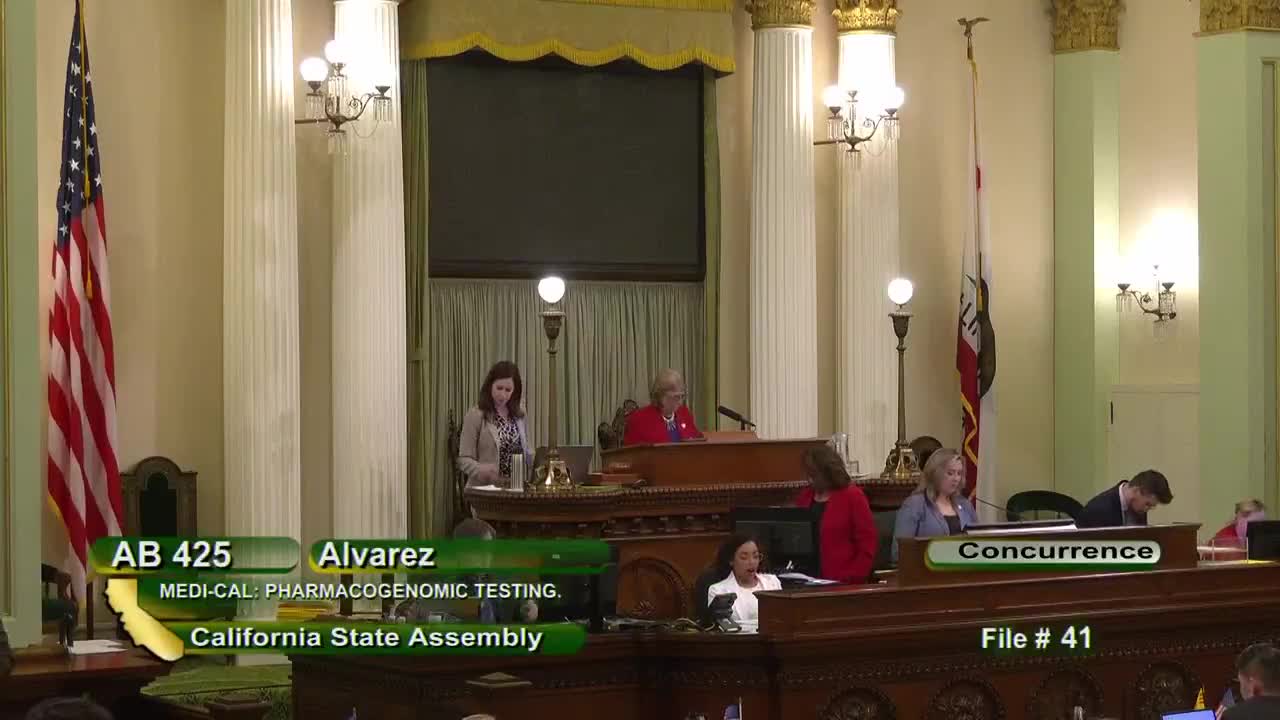
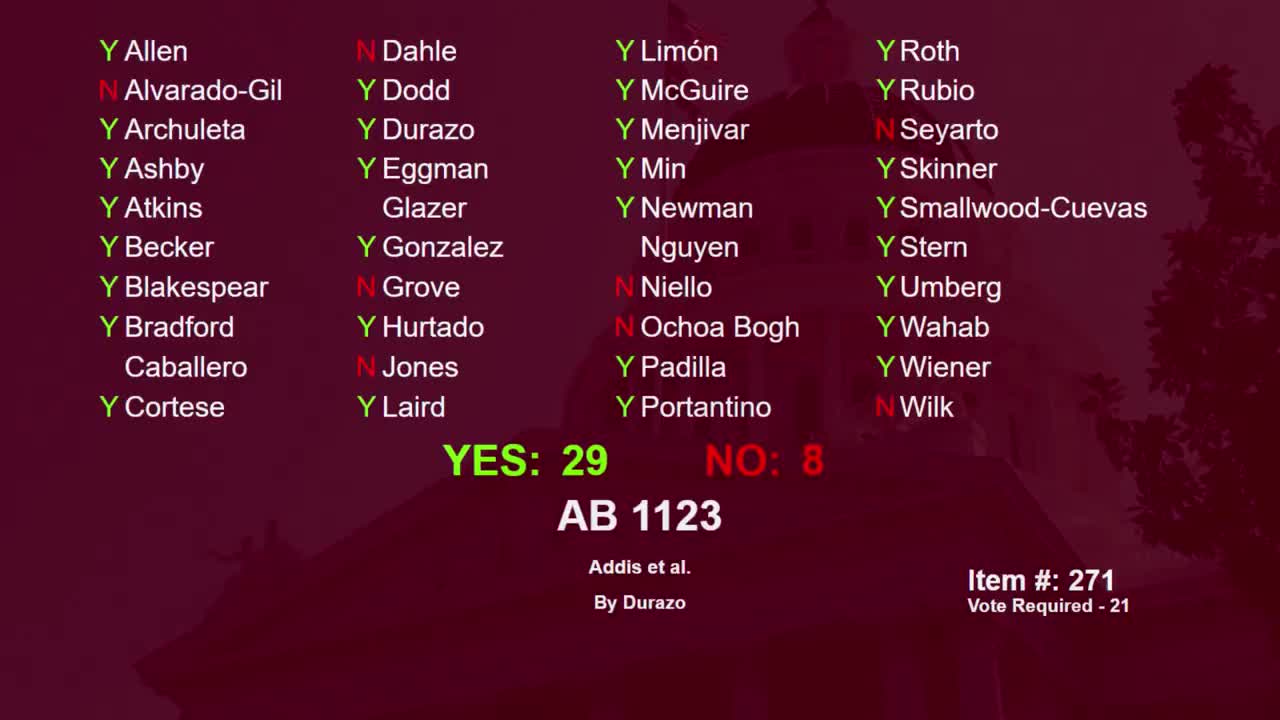
Bill Author

Bill Co-Author(s):