AB 1309: Long-term health care facilities: admission contracts.
- Session Year: 2023-2024
- House: Assembly
- Latest Version Date: 2023-10-13
Current Status:
Passed
(2023-10-13: Chaptered by Secretary of State - Chapter 835, Statutes of 2023.)
Introduced
In Committee
First Chamber
In Committee
Second Chamber
Enacted
Existing law provides for the licensing and regulation of health facilities, including, but not limited to, long-term health care facilities, as defined, by the State Department of Health Care Services. A violation of the provisions relating to these facilities is a crime. Existing law requires a contract for admission to a long-term care facility to state that a resident shall not be involuntarily transferred within, or discharged from, a long-term health care facility unless the resident is given reasonable notice in writing, and transfer or discharge planning, as specified. Existing law requires the notice to state the reason for the transfer or discharge. Existing law requires the facility to immediately notify the State Long-Term Care Ombudsman if the discharge is involuntary.
When a resident is notified in writing of a facility-initiated transfer or discharge from a long-term health care facility, existing law requires that the local long-term care ombudsman be sent a copy of the notice.
This bill would require the facility to provide, within 48 hours of the written notice of a facility-initiated transfer or discharge, a copy of the residents discharge needs and discharge plan. The bill would require the facility to provide a copy of the residents discharge summary prior to the proposed transfer or discharge date. The bill would require the facility to provide these documents at no cost to the resident. If the resident requests a transfer or discharge appeal hearing, the bill would require both the resident and the facility to provide all documents and records to be used by the party at the hearing, as specified. Because a violation of these requirements by a long-term health care facility would be a crime, the bill would impose a state-mandated local program.
The California Constitution requires the state to reimburse local agencies and school districts for certain costs mandated by the state. Statutory provisions establish procedures for making that reimbursement.
This bill would provide that no reimbursement is required by this act for a specified reason.
Existing law provides for the licensing and regulation of health facilities, including, but not limited to, long-term health care facilities, as defined, by the State Department of Health Care Services. A violation of the provisions relating to these facilities is a crime. Existing law requires a contract for admission to a long-term care facility to state that a resident shall not be involuntarily transferred within, or discharged from, a long-term health care facility unless the resident is given reasonable notice in writing, and transfer or discharge planning, as specified. Existing law requires the notice to state the reason for the transfer or discharge. Existing law requires the facility to immediately notify the State Long-Term Care Ombudsman if the discharge is involuntary.
When a resident is notified in writing of a facility-initiated transfer or discharge from a long-term health care facility, existing law requires that the local long-term care ombudsman be sent a copy of the notice.
This bill would require the written notice to additionally be provided to the residents representative, if applicable. TheThis bill would require the facility to provide, within 48 hours of the written notice above, of a facility-initiated transfer or discharge, a copy of the residents discharge needs and discharge plan. The bill would require the facility to provide a copy of the residents discharge summary prior to the proposed transfer or discharge date. The bill would require the facility to provide these documents at no cost to the resident. If the resident requests a transfer or discharge appeal hearing, the bill would require both the resident and the facility to provide all documents and records to be used by the party at the hearing, as specified. Because a violation of these requirements by a long-term health care facility would be a crime, the bill would impose a state-mandated local program.
The California Constitution requires the state to reimburse local agencies and school districts for certain costs mandated by the state. Statutory provisions establish procedures for making that reimbursement.
This bill would provide that no reimbursement is required by this act for a specified reason.
Existing law provides for the licensing and regulation of health facilities, including, but not limited to, long-term health care facilities, as defined, by the State Department of Health Care Services. A violation of the provisions relating to these facilities is a crime. Existing law requires a contract for admission to a long-term care facility to state that a resident shall not be involuntarily transferred within, or discharged from, a long-term health care facility unless the resident is given reasonable notice in writing, and transfer or discharge planning, as specified. Existing law requires the notice to state the reason for the transfer or discharge.
This bill would require the notice to the resident to include specific facts to permit determination of the date, place, witnesses, and circumstances concerning the reason for the transfer or discharge. written notice to additionally be provided to the residents representative, if applicable. The bill would require the facility to provide, within 48 hours of the written notice above, a copy of the residents discharge needs and discharge plan. The bill would require the facility to provide a copy of the residents discharge summary prior to the proposed transfer or discharge date. The bill would require the facility to provide these documents at no cost to the resident. If the resident requests a transfer or discharge appeal hearing, the bill would require both the resident and the facility to provide all documents and records to be used by the party at the hearing, as specified. Because a violation of these requirements by a long-term health care facility would be a crime, the bill would impose a state-mandated local program.
The California Constitution requires the state to reimburse local agencies and school districts for certain costs mandated by the state. Statutory provisions establish procedures for making that reimbursement.
This bill would provide that no reimbursement is required by this act for a specified reason.
Existing law provides for the licensing and regulation of health facilities, including, but not limited to, long-term health care facilities, as defined, by the State Department of Health Care Services. A violation of the provisions relating to these facilities is a crime. Existing law requires a contract for admission to a long-term care facility to state that a resident shall not be involuntarily transferred within, or discharged from, a long-term health care facility unless the resident is given reasonable notice in writing, and transfer or discharge planning, as specified. Existing law requires the notice to state the reason for the transfer or discharge.
This bill would require the notice to the resident to include specific facts to permit determination of the date, place, witnesses, and circumstances concerning the reason for the transfer or discharge. Because a violation of these requirements by a long-term health care facility would be a crime, the bill would impose a state-mandated local program.
The California Constitution requires the state to reimburse local agencies and school districts for certain costs mandated by the state. Statutory provisions establish procedures for making that reimbursement.
This bill would provide that no reimbursement is required by this act for a specified reason.
(a)Except as provided in subdivision (b), if a resident is notified in writing of a facility-initiated transfer or discharge from a long-term health care facility, the facility shall also send a copy of the notice to the local long-term care ombudsman at the same time notice is provided to the resident or the residents representative.
(b)If a resident is subject to a facility-initiated transfer to a general acute care hospital on an emergency basis, the facility shall provide a copy of the notice to the ombudsman as soon as practicable.
(c)The copy of the notice shall be sent by fax machine or email, as may be directed by the local long-term care ombudsman, unless the facility does not have fax or email capability, in which case the copy of the notice shall be sent by first-class mail, postage prepaid. A facilitys failure to timely send a copy of the notice shall constitute a class B violation, as defined in subdivision (e) of Section 1424.
(d)For the purposes of this section, a facility-initiated transfer or discharge is a transfer or discharge that is initiated by the facility and not by the resident, whether or not the resident agrees to the facilitys decision.
(e)Within 48 hours of giving the written notice of a facility-initiated transfer or discharge, the facility shall provide to the resident and, if applicable, the residents representative a copy of both of the following:
(1)The evaluation of the residents discharge needs and discharge plan as required by federal law and regulations or the most current discharge care plan.
(2)In the case of the transfer or discharge being necessary for the residents welfare because the residents needs cannot be met in the facility, all of the following information if the following information is not included in the most current discharge care plan:
(A)A written description of the specific residents needs that cannot be met.
(B)Facility attempts to meet the residents needs.
(C)The services available at the receiving facility that meet the residents needs.
(f)Prior to the proposed transfer or discharge date, the facility shall provide to the resident and, if applicable, the residents representative a copy of the residents discharge summary.
(g)Any documents provided to the resident and, if applicable, the residents representative pursuant to this section shall be at no cost to the resident and, if applicable, the residents representative.
(h)The documents described in subdivisions (e) and (f) do not have to be provided to the resident and, if applicable, the residents representative if the resident or the residents representative request that the documents not be provided or if no discharge is proposed.
(i)If a transfer or discharge appeal hearing is requested by the resident or, if applicable, the residents representative, the facility shall provide to the resident or the residents representative the opportunity to examine, at a reasonable time before the date of the hearing, absent exigent circumstances, and during the hearing, all documents and records to be used by the facility at the hearing. The resident or, if applicable, the residents representative shall provide to the facility the opportunity to examine, at a reasonable time before the date of the hearing, absent exigent circumstances, and during the hearing, all documents and records to be used by the resident or, if applicable, the residents representative at the hearing.
(j)The provisions of this section are intended to be consistent with federal law and regulations.
SEC. 2.Section 1599.78 of the Health and Safety Code is amended to read:1599.78.(a)A contract of admission shall state that except in an emergency, a resident may not be involuntarily transferred or discharged from a long-term health care facility unless the resident and, if applicable, the residents representative, is given reasonable notice in writing and transfer or discharge planning as required by law. The written notice shall state the reason for the transfer or discharge.
(b)The facility shall promptly notify the Office of the State Long-Term Care Ombudsman in every case of involuntary discharge as specified in Section 1439.7.
(c)The provisions of this section are intended to be consistent with federal law and regulations.
SEC. 3.No reimbursement is required by this act pursuant to Section 6 of Article XIIIB of the California Constitution because the only costs that may be incurred by a local agency or school district will be incurred because this act creates a new crime or infraction, eliminates a crime or infraction, or changes the penalty for a crime or infraction, within the meaning of Section 17556 of the Government Code, or changes the definition of a crime within the meaning of Section 6 of Article XIIIB of the California Constitution.
(a)Except as provided in subdivision (b), if a resident is notified in writing of a facility-initiated transfer or discharge from a long-term health care facility, the facility shall also send a copy of the notice to the local long-term care ombudsman at the same time notice is provided to the resident or the residents representative.
(b)If a resident is subject to a facility-initiated transfer to a general acute care hospital on an emergency basis, the facility shall provide a copy of the notice to the ombudsman as soon as practicable.
(c)The copy of the notice shall be sent by fax machine or email, as may be directed by the local long-term care ombudsman, unless the facility does not have fax or email capability, in which case the copy of the notice shall be sent by first-class mail, postage prepaid. A facilitys failure to timely send a copy of the notice shall constitute a class B violation, as defined in subdivision (e) of Section 1424.
(d)For the purposes of this section, a facility-initiated transfer or discharge is a transfer or discharge that is initiated by the facility and not by the resident, whether or not the resident agrees to the facilitys decision.
(e)Within 48 hours of giving the written notice of a facility-initiated transfer or discharge, the facility shall provide to the resident and, if applicable, the residents representative a copy of both of the following:
(1)The evaluation of the residents discharge needs and discharge plan as required by federal law and regulations or the most current discharge care plan.
(2)In the case of the transfer or discharge being necessary for the residents welfare because the residents needs cannot be met in the facility, all of the following information if the following information is not included in the most current discharge care plan:
(A)A written description of the specific residents needs that cannot be met.
(B)Facility attempts to meet the residents needs.
(C)The services available at the receiving facility that meet the residents needs.
(f)Prior to the proposed transfer or discharge date, the facility shall provide to the resident and, if applicable, the residents representative a copy of the residents discharge summary.
(g)Any documents provided to the resident and, if applicable, the residents representative pursuant to this section shall be at no cost to the resident and, if applicable, the residents representative.
(h)The documents described in subdivisions (e) and (f) do not have to be provided to the resident and, if applicable, the residents representative if the resident or the residents representative request that the documents not be provided or if no discharge is proposed.
(i)If a transfer or discharge appeal hearing is requested by the resident or, if applicable, the residents representative, the facility shall provide to the resident or the residents representative the opportunity to examine, at a reasonable time before the date of the hearing, absent exigent circumstances, and during the hearing, all documents and records to be used by the facility at the hearing. The resident or, if applicable, the residents representative shall provide to the facility the opportunity to examine, at a reasonable time before the date of the hearing, absent exigent circumstances, and during the hearing, all documents and records to be used by the resident or, if applicable, the residents representative at the hearing.
(j)The provisions of this section are intended to be consistent with federal law and regulations.
SECTION 1.SEC. 2.Section 1599.78 of the Health and Safety Code is amended to read:1599.78.(a)A contract of admission shall state that except in an emergency, a resident may not be involuntarily transferred or discharged from a long-term health care facility unless the resident and, if applicable, the residents representative, is given reasonable notice in writing and transfer or discharge planning as required by law. The written notice shall state the reason for the transfer or discharge.
(b)Within 48 hours of giving the written notice required in subdivision (a), the facility shall provide the resident and, if applicable, the residents representative, a copy of all of the following:(1)The evaluation of the residents discharge needs and discharge plan as required by federal law and regulations or the most current discharge care plan.(2)In the case of the transfer or discharge being necessary for the residents welfare because the residents needs cannot be met in the facility, all of the following information if the following information is not included in the most current discharge care plan:(A)A written description of the specific residents needs that cannot be met.(B)Facility attempts to meet the residents needs.(C)The services available at the receiving facility that meet the residents needs.(c)Prior to the proposed transfer or discharge date, the facility shall provide the resident and, if applicable, the residents representative a copy of the residents discharge summary.(d)Any documents provided to the resident and, if applicable, the residents representative pursuant to this section shall be at no cost to the resident and, if applicable, the residents representative.(e)The documents described in subdivisions (b) and (c) do not have to be provided to the resident and, if applicable, the residents representative if the resident or the residents representative request that they not be provided or if no discharge is proposed.(f)If a transfer or discharge appeal hearing is requested by the resident or, if applicable, the residents representative, the facility shall provide the resident or the residents representative the opportunity to examine, at a reasonable time before the date of the hearing, absent exigent circumstances, and during the hearing, all documents and records to be used by the facility at the hearing. The resident or, if applicable, the residents representative shall provide the facility the opportunity to examine, at a reasonable time before the date of the hearing, absent exigent circumstances, and during the hearing, all documents and records to be used by the resident or, if applicable, the residents representative at the hearing.(g)(b)The facility shall promptly notify the Office of the State Long-Term Care Ombudsman in every case of involuntary discharge as specified in Section 1439.7.
(h)(c)The provisions of this section are intended to be consistent with federal law and regulations.
SEC. 2.SEC. 3.No reimbursement is required by this act pursuant to Section 6 of Article XIIIB of the California Constitution because the only costs that may be incurred by a local agency or school district will be incurred because this act creates a new crime or infraction, eliminates a crime or infraction, or changes the penalty for a crime or infraction, within the meaning of Section 17556 of the Government Code, or changes the definition of a crime within the meaning of Section 6 of Article XIIIB of the California Constitution.
(a)A contract of admission shall state that except in an emergency, a resident may not be involuntarily transferred within, or discharged from, or discharged from a long-term health care facility unless the resident and, if applicable, the residents representative, is given reasonable notice in writing and transfer or discharge planning as required by law. The written notice shall state the reason for the transfer or discharge, including specific facts to permit determination of the date, place, witnesses, and circumstances concerning the reason for the transfer or discharge. The
(b)Within 48 hours of giving the written notice required in subdivision (a), the facility shall provide the resident and, if applicable, the residents representative, a copy of all of the following:
(1)The evaluation of the residents discharge needs and discharge plan as required by federal law and regulations or the most current discharge care plan.
(2)In the case of the transfer or discharge being necessary for the residents welfare because the residents needs cannot be met in the facility, all of the following information if the following information is not included in the most current discharge care plan:
(A)A written description of the specific residents needs that cannot be met.
(B)Facility attempts to meet the residents needs.
(C)The services available at the receiving facility that meet the residents needs.
(c)Prior to the proposed transfer or discharge date, the facility shall provide the resident and, if applicable, the residents representative a copy of the residents discharge summary.
(d)Any documents provided to the resident and, if applicable, the residents representative pursuant to this section shall be at no cost to the resident and, if applicable, the residents representative.
(e)The documents described in subdivisions (b) and (c) do not have to be provided to the resident and, if applicable, the residents representative if the resident or the residents representative request that they not be provided or if no discharge is proposed.
(f)If a transfer or discharge appeal hearing is requested by the resident or, if applicable, the residents representative, the facility shall provide the resident or the residents representative the opportunity to examine, at a reasonable time before the date of the hearing, absent exigent circumstances, and during the hearing, all documents and records to be used by the facility at the hearing. The resident or, if applicable, the residents representative shall provide the facility the opportunity to examine, at a reasonable time before the date of the hearing, absent exigent circumstances, and during the hearing, all documents and records to be used by the resident or, if applicable, the residents representative at the hearing.
(g)The facility shall immediately promptly notify the Office of the State Long-Term Care Ombudsman in every case of involuntary discharge as specified in Section 1439.7.
(h)The provisions of this section are intended to be consistent with federal law and regulations.
SEC. 2.No reimbursement is required by this act pursuant to Section 6 of Article XIIIB of the California Constitution because the only costs that may be incurred by a local agency or school district will be incurred because this act creates a new crime or infraction, eliminates a crime or infraction, or changes the penalty for a crime or infraction, within the meaning of Section 17556 of the Government Code, or changes the definition of a crime within the meaning of Section 6 of Article XIIIB of the California Constitution.
All contracts A contract of admission shall state that except in an emergency, no a resident may not be involuntarily transferred within or discharged from within, or discharged from, a long-term health care facility unless he or she the resident is given reasonable notice in writing and transfer or discharge planning as required by law. The written notice shall state the reason for the transfer or discharge. discharge, including specific facts to permit determination of the date, place, witnesses, and circumstances concerning the reason for the transfer or discharge. The facility shall immediately notify the Office of the State Long-Term Care Ombudsman in every case of involuntary discharge as specified in Section 1439.7.
SEC. 2.No reimbursement is required by this act pursuant to Section 6 of Article XIIIB of the California Constitution because the only costs that may be incurred by a local agency or school district will be incurred because this act creates a new crime or infraction, eliminates a crime or infraction, or changes the penalty for a crime or infraction, within the meaning of Section 17556 of the Government Code, or changes the definition of a crime within the meaning of Section 6 of Article XIIIB of the California Constitution.
|
Date
|
Status
|
|---|---|
| Oct 13, 2023 | Chaptered by Secretary of State - Chapter 835, Statutes of 2023. |
| Oct 13, 2023 | Approved by the Governor. |
| Sep 14, 2023 | Enrolled and presented to the Governor at 4:30 p.m. |
| Sep 7, 2023 | Senate amendments concurred in. To Engrossing and Enrolling. (Ayes 79. Noes 0. Page 3030.). |
| Sep 5, 2023 | In Assembly. Concurrence in Senate amendments pending. May be considered on or after September 7 pursuant to Assembly Rule 77. |
| Sep 5, 2023 | Read third time. Passed. Ordered to the Assembly. (Ayes 39. Noes 0. Page 2363.). |
| Aug 29, 2023 | Read second time. Ordered to third reading. |
| Aug 28, 2023 | Read third time and amended. Ordered to second reading. |
| Jul 13, 2023 | Ordered to third reading. |
| Jul 13, 2023 | From Consent Calendar. |
| Jul 11, 2023 | Read second time. Ordered to Consent Calendar. |
| Jul 10, 2023 | From committee: Be ordered to second reading file pursuant to Senate Rule 28.8 and ordered to Consent Calendar. |
| Jun 22, 2023 | From committee: Do pass and re-refer to Com. on APPR with recommendation: To Consent Calendar. (Ayes 12. Noes 0.) (June 21). Re-referred to Com. on APPR. |
| Jun 7, 2023 | Referred to Com. on HEALTH. |
| May 26, 2023 | In Senate. Read first time. To Com. on RLS. for assignment. |
| May 25, 2023 | Read third time. Passed. Ordered to the Senate. (Ayes 76. Noes 0. Page 1812.) |
| May 18, 2023 | Read second time. Ordered to Consent Calendar. |
| May 17, 2023 | From committee: Do pass. To Consent Calendar. (Ayes 15. Noes 0.) (May 17). |
| May 1, 2023 | Re-referred to Com. on APPR. |
| Apr 27, 2023 | Read second time and amended. |
| Apr 26, 2023 | From committee: Amend, and do pass as amended and re-refer to Com. on APPR. (Ayes 7. Noes 0.) (April 25). |
| Mar 2, 2023 | Referred to Com. on AGING & L.T.C. |
| Feb 17, 2023 | From printer. May be heard in committee March 19. |
| Feb 16, 2023 | Read first time. To print. |
|
Date
|
Description
|
Location
|
Votes
|
|
|---|---|---|---|---|
| Sep 7, 2023 | AB 1309 Reyes Concurrence in Senate Amendments | Assembly Floor |
Passed |
|
| Sep 5, 2023 | Assembly 3rd Reading AB1309 Reyes et al. By Durazo | Senate Floor |
Passed |
|
| Jun 21, 2023 | Do pass, but first be re-referred to the Committee on [Appropriations] with the recommendation: To Consent Calendar | Senate Standing Committee on Health |
Passed |
|
| May 25, 2023 | AB 1309 Reyes Consent Calendar Second Day Regular Session | Assembly Floor |
Passed |
|
| May 17, 2023 | Do pass. To Consent Calendar. | Assembly Standing Committee on Appropriations |
Passed |
|
| Apr 25, 2023 | Do pass as amended and be re-referred to the Committee on [Appropriations] | Assembly Standing Committee on Aging and Long-Term Care |
Passed |
This list shows positions taken on this bill by organizations on the date displayed, which is linked to the original source.
Positions by individuals are not included.
|
Organization
|
Position
|
Date
|
|---|---|---|
| American Association of Retired Persons | ** Support | |
| California Advocates for Nursing Home Reform | ** Support | |
| California Commission on Aging | ** Support | |
| California Continuing Care Residents Association | ** Support | |
| California Geriatric Circle | ** Support | |
| California Long-Term Care Ombudsman Association | ** Support | |
| California Office Of The State Long-Term Care Ombudsman | ** Support | |
| California Retired Teachers Association | ** Support | |
| Choice in Aging | ** Support | |
| Consumer Attorneys Of California | ** Support | |
| Disability Rights California | ** Support | |
| Gray Panthers of San Francisco | ** Support | |
| Justice in Aging | ** Support | |
| Senior Advocacy Series | ** Support | |
| Senior Advocacy Services | ** Support | |
| The Geriatric Circle | ** Support |
CONCURRENCE IN SENATE AMENDMENTS
CSA1 Bill Id:AB 1309
Author:(Reyes)
As Amended Ver:August 28, 2023
Majority vote
SUMMARY
This bill requires nursing homes, within 48 hours of giving a required written notice of an involuntary transfer or discharge, to provide the resident with a copy of certain discharge related documents, including a description of specific needs that cannot be met and the facility's attempts to meet those needs when the basis of the transfer or discharge is because the resident's needs cannot be met in the facility.
Senate Amendments
Recent amendments are clarifying in nature moving the provisions of this bill to a different section of law that already contains related requirements about discharge notifications in order to consolidate discharge notification requirements in one section of law.
COMMENTS
Current federal regulations require nursing homes to create the documentation that this bill is mandating be provided. Under federal requirements, a facility is required to have a discharge summary, and requires the summary to include a recapitulation of the resident's stay that includes diagnoses and course of treatment, a final summary of the resident's status, reconciliation of all pre-discharge medications with post-discharge medications, and a post-discharge plan of care that is developed with the resident or resident's representative that is required to indicate where the individual will reside and what arrangements have been made for the resident's care. Additionally, federal regulations requires, when a facility transfers or discharges a resident under any of the allowed circumstances (42 Code of Federal Regulations Section 483.15(c)), that the facility document in the resident's medical record the basis for the transfer, and in the case of not being able to meet a need, what that specific need is and the facility's attempts to meet the need and the service available at the receiving facility that will meet the need.
However, while facilities are required to include the reason for the transfer or discharge as part of the required notice of transfer or discharge, it doesn't explicitly require that the specific need that the facility claims it is unable to provide be part of the notice provided to residents, nor what steps were taken to attempt to meet the resident's needs, despite this information being required to be documented in the medical record. According to the author and sponsor, the goal of this bill is to provide resident's and their representatives with a level of detail that the facility is already required to produce, in order for the resident to have all the information necessary in the event they wish to appeal an inappropriate transfer or discharge.
According to the Author
"AB 1309 requires that notices to nursing home residents regarding reasons for their transfer or discharge include additional details, and specific facts to permit determination of the date, place, witnesses, and circumstances concerning the reason for their transfer or discharge. One of the most common complaints received by California's Long-Term Care Ombudsman programs is related to evictions. Due to the vulnerability of our nursing home residents, it is completely unacceptable for them to not know why they are being turned away from care, because this leaves them and their loved ones unable to fight for their ability to stay. This bill is intended to discourage facilities from pursuing unwarranted evictions, prompt residents to appeal their evictions, and enhance the quality of resident appeals."
Arguments in Support
The California Advocates for Nursing Home Reform (CANHR), the sponsor of AB 1309 writes, "Nursing homes provide vital housing and care to about 450,000 residents each year, many of whom are medically fragile and disabled. There are only about 100,000 nursing home beds in California, which means there are roughly 350,000 evictions annually. Because of the extensive and complex care needs of nursing home residents, moving them out requires careful advance planning and coordination to ensure they end up in a place that is safe, appropriate, and stable. Bad evictions are those that are not careful or coordinated or end with the resident in an unsafe, inappropriate, or unstable place. These evictions sometimes mean residents with significant care needs are dumped into motels, homeless shelters, or the streets."
Arguments in Opposition
None on file.
FISCAL COMMENTS
The California Department of Public Health (CDPH) anticipates minor and absorbable costs.
VOTES:
ASM AGING AND LONG-TERM CARE: 7-0-1
YES: Bains, Ta, Alvarez, Haney, Stephanie Nguyen, Reyes, Blanca Rubio
ABS, ABST OR NV: Joe Patterson
ASM APPROPRIATIONS: 15-0-1
YES: Holden, Megan Dahle, Bryan, Calderon, Wendy Carrillo, Dixon, Mike Fong, Hart, Lowenthal, Mathis, Papan, Pellerin, Robert Rivas, Sanchez, Ortega
ABS, ABST OR NV: Weber
ASSEMBLY FLOOR: 76-0-4
YES: Addis, Alanis, Alvarez, Arambula, Bains, Bauer-Kahan, Bennett, Berman, Boerner, Bonta, Bryan, Calderon, Juan Carrillo, Wendy Carrillo, Cervantes, Chen, Connolly, Megan Dahle, Davies, Dixon, Essayli, Flora, Mike Fong, Vince Fong, Friedman, Gabriel, Gallagher, Garcia, Gipson, Grayson, Haney, Hart, Holden, Hoover, Irwin, Jackson, Jones‑Sawyer, Lackey, Lee, Low, Lowenthal, Maienschein, McCarty, McKinnor, Muratsuchi, Stephanie Nguyen, Ortega, Pacheco, Jim Patterson, Joe Patterson, Pellerin, Petrie-Norris, Quirk‑Silva, Ramos, Reyes, Luz Rivas, Robert Rivas, Rodriguez, Blanca Rubio, Sanchez, Santiago, Schiavo, Soria, Ta, Ting, Valencia, Villapudua, Waldron, Wallis, Ward, Weber, Wicks, Wilson, Wood, Zbur, Rendon
ABS, ABST OR NV: Aguiar-Curry, Kalra, Mathis, Papan
UPDATED
VERSION: August 28, 2023
CONSULTANT: Elizabeth Fuller / AGING & L.T.C. / (916) 319-3990 FN: 0001759
SENATE RULES COMMITTEE Office of Senate Floor Analyses (916) 651-1520 Fax: (916) 327-4478 | AB 1309 |
CONSENT
Bill No: AB 1309
Author: Reyes (D), et al.
Amended: 8/28/23 in Senate
Vote: 21
SENATE HEALTH COMMITTEE: 12-0, 6/21/23
AYES: Eggman, Nguyen, Glazer, Gonzalez, Grove, Hurtado, Limón, Menjivar, Roth, Rubio, Wahab, Wiener
SENATE APPROPRIATIONS COMMITTEE: Senate Rule 28.8
ASSEMBLY FLOOR: 76-0, 5/25/23 (Consent) - See last page for vote
SUBJECT: Long-term health care facilities: admission contracts
SOURCE: California Advocates for Nursing Home Reform
DIGEST:
This bill requires nursing homes, within 48 hours of giving a required written notice of an involuntary transfer or discharge, to provide the resident with a copy of certain discharge related documents, including a description of specific needs that cannot be met and the facility’s attempts to meet those needs when the basis of the transfer or discharge is because the resident’s needs cannot be met in the facility.
Senate Floor Amendments of 8/28/23 move the provisions of this bill to a different section of law that already contains related requirements about discharge notifications in order to consolidate discharge notification requirements in one section of law.
ANALYSIS:
Existing law:
- Licenses and regulates health care facilities by the California Department of Public Health (CDPH), including long-term health care (LTC) facilities, which are defined, in part, as skilled nursing facilities (SNFs), intermediate care facilities (ICFs), and congregate living health facilities. [HSC §1250 et seq., §1418]
- Requires all contracts of admission to LTC facilities to state that, except in an emergency, a resident cannot be involuntarily transferred within, or discharged from, the facility unless the resident is given reasonable notice in writing and transfer or discharge planning as required. Requires the written notice to state the reason for the transfer or discharge, and requires the facility to immediately notify the Office of the State Long-Term Care Ombudsman (LTC Ombudsman) in every case of involuntary discharge, as specified. [HSC §1599.78]
- Requires an LTC facility, if a resident is notified in writing of a facility-initiated transfer or discharge, to also send a copy of the notice to the local LTC Ombudsman at the same time the notice is provided to the resident. Requires the facility, if the resident is subject to a facility-initiated transfer to a general acute care hospital on an emergency basis, to provide a copy of the notice to the LTC Ombudsman as soon as practicable. Requires the copy of the notice to be sent by fax machine or email, as directed by the local LTC Ombudsman, unless the facility does not have fax or email capability, in which case the copy of the notice is required to be sent by mail. [HSC §1439.6]
- Prohibits an LTC facility that participates as a provider under the Medi-Cal program from seeking to evict out of the facility, or transfer within the facility, any resident as a result of the resident changing his or her manner of purchasing the services from private payment or Medicare to Medi-Cal, except that a facility is permitted to transfer a resident from a private room to a semiprivate room. [WIC §14124.7]
- Prohibits LTC facilities that participate in the Medicaid or Medicare program from transferring or discharging a resident from the facility unless under one of the following conditions:
- The transfer or discharge is necessary for the resident’s welfare and the resident’s needs cannot be met in the facility;
- The transfer or discharge is appropriate because the resident’s health has improved sufficiently so the resident no longer needs the services provided by the facility;
- The safety of individuals in the facility is endangered due to the clinical or behavioral status of the resident;
- The health of individuals in the facility would otherwise be endangered;
- The resident has failed, after reasonable and appropriate notice, to pay for (or have paid under Medicare or Medicaid) a stay at the facility. Specifies that for a resident who becomes eligible for Medicaid after admission to a facility, the facility may charge a resident only allowable charges under Medicaid; or,
- The facility ceases to operate. [42 CFR §483.15(c)]
- Prohibits an LTC facility from transferring or discharging a resident while an appeal is pending, as specified, unless the failure to discharge or transfer would endanger the health or safety of the resident or other individuals in the facility. Requires the facility to document the danger that failure to transfer or discharge would pose. [42 CFR §483.15(c)]
This bill:
- Requires an LTC facility, within 48 hours of giving a required written notice of an involuntary transfer or discharge, to provide the resident, and if applicable, the resident’s representative, a copy of all of the following:
- The evaluation of the resident’s discharge needs and discharge plan as required by federal law or the most current discharge plan; and,
- In the case of the transfer or discharge being necessary for the resident’s welfare because the resident’s needs cannot be met in the facility, all of the following information (if not included in the most current discharge plan):
- A written description of the specific resident’s needs that cannot be met;
- Facility attempts to meet the resident’s needs; and,
- The services available at the receiving facility that meet the resident’s needs.
- Requires an LTC facility, prior to the proposed transfer or discharge date, to provide the resident and, if applicable, the resident’s representative a copy of the resident’s discharge summary.
- Requires any documents provided to the resident and the resident’s representative to be at no cost to the resident or resident’s representative.
- Permits the documents 1) and 2) above to not be provided if the resident or representative requests that they not be provided or if no discharge is proposed.
- Requires the LTC facility, if a transfer or discharge appeal hearing is requested by the resident or resident’s representative, to provide the resident or representative the opportunity to examine, at a reasonable time before the date of the hearing, absent exigent circumstances, and during the hearing, all documents and records to be used by the facility at the hearing. Requires a resident or resident’s representative to provide the facility the same opportunity to examine all documents and records to be used by the resident at the hearing.
- Specifies that the provisions of this bill are intended to be consistent with federal law and regulations.
Background
Federal requirements already require nursing homes to create the documentation that this bill is requiring to be provided. Under federal requirements, a facility is required to have a discharge summary, and requires the summary to include a recapitulation of the resident’s stay that includes diagnoses and course of treatment, a final summary of the resident’s status, reconciliation of all pre-discharge medications with post-discharge medications, and a post-discharge plan of care that is developed with the resident or resident’s representative that is required to indicate where the individual will reside and what arrangements have been made for the resident’s care. Additionally, federal regulations requires, when a facility transfers or discharges a resident under any of the allowed circumstances (as detailed in Existing law 5) above), that the facility document in the resident’s medical record the basis for the transfer, and in the case of not being able to meet a need, what that specific need is and the facility’s attempts to meet the need and the service available at the receiving facility that will meet the need.
However, while facilities are required to include the reason for the transfer or discharge as part of the required notice of transfer or discharge, it doesn’t explicitly require that the specific need that the facility claims it is unable to provide be part of the notice provided to residents, nor what steps were taken to attempt to meet the resident’s needs, despite this information being required to be documented in the medical record. According to the author and sponsor, the goal of this bill is to provide resident’s and their representatives with a level of detail that the facility is already required to produce, in order for the resident to have all the information necessary in the event they wish to appeal an inappropriate transfer or discharge.
Comments
Author’s statement. According to the author, this bill requires that nursing home residents are provided with additional documentation on the basis of their transfer or discharge. One of the most common complaints received by California’s LTC Ombudsman programs is related to evictions. Due to the vulnerability of our nursing home residents, it is completely unacceptable for them to not know why they are being turned away from care, because this leaves them and their loved ones unable to fight for their ability to stay. This bill discourages facilities from pursuing unwarranted evictions, prompt residents to appeal their evictions, and enhances the quality of resident appeals.
FISCAL EFFECT: Appropriation: No Fiscal Com.: Yes Local: Yes
SUPPORT: (Verified 8/28/23)
California Advocates for Nursing Home Reform (source)
American Association of Retired Persons
California Commission on Aging
California Continuing Care Residents Association
California Geriatric Circle
California Long-Term Care Ombudsman Association
California Office of the State Long-Term Care Ombudsman
California Retired Teachers Association
Choice in Aging
Consumer Attorneys of California
Disability Rights California
Gray Panthers of San Francisco
Justice in Aging
Senior Advocacy Series
Two individuals
OPPOSITION: (Verified 8/28/23)
None received
ARGUMENTS IN SUPPORT: California Advocates for Nursing Home Reform (CANHR) argues that because of the extensive and complex needs of nursing home residents, moving them out requires careful advance planning and coordination to ensure that they end up in a place that is safe, appropriate, and stable. Bad evictions are those that are not careful or coordinated or end with the resident in an unsafe, inappropriate, or unstable place. CANHR states that bad evictions are one of the most common complaints made about nursing homes, and cites data from the National Ombudsman Reporting system showing 2,100 complaints per year in California related to nursing home evictions. According to CANHR, almost every nursing home resident is admitted after a hospital stay, and typically has about 10 to 20 days of rehabilitative services covered by Medicare, which pays a generous rate compared to other payment sources. If a person needs to stay in a nursing home for care after their Medicare coverage ends, they have to switch to a less lucrative payment source, such as Medi-Cal, which creates enormous incentives for facilities to evict residents who have exhausted Medicare coverage and replace them with new residents with fresh Medicare coverage. Because Medicare coverage terminations are usually swift with little notice, the facility tries to evict residents within that time, which is why residents are often sent home with inadequate care in place or to motels or homeless shelters. CANHR states that the only statutory and regulatory protection that empowers residents to stop unsafe evictions is the requirement that they be given written notice of the “reason for the move” and information about their right to appeal. However, a significant problem with the eviction notification laws is that they leave uncertainty about the level of detail required when explaining the facility’s justification for evicting the resident. CANHR states that nearly every eviction notice given to residents lists the six reasons for evicting residents allowed under federal law, with one or more reasons checked. The notice should include details to support the cited reason, but unfortunately, these details are not expressly delineated in the law and regulations. This bill clarifies that nursing homes must share with residents the basis for evictions, and include that same level of detail that is already required for residential care facilities for the elderly. Requiring this additional information will enable residents to better defend against inappropriate and unsafe evictions on appeal.
ASSEMBLY FLOOR: 76-0, 5/25/23
AYES: Addis, Alanis, Alvarez, Arambula, Bains, Bauer-Kahan, Bennett, Berman, Boerner, Bonta, Bryan, Calderon, Juan Carrillo, Wendy Carrillo, Cervantes, Chen, Connolly, Megan Dahle, Davies, Dixon, Essayli, Flora, Mike Fong, Vince Fong, Friedman, Gabriel, Gallagher, Garcia, Gipson, Grayson, Haney, Hart, Holden, Hoover, Irwin, Jackson, Jones-Sawyer, Lackey, Lee, Low, Lowenthal, Maienschein, McCarty, McKinnor, Muratsuchi, Stephanie Nguyen, Ortega, Pacheco, Jim Patterson, Joe Patterson, Pellerin, Petrie-Norris, Quirk-Silva, Ramos, Reyes, Luz Rivas, Robert Rivas, Rodriguez, Blanca Rubio, Sanchez, Santiago, Schiavo, Soria, Ta, Ting, Valencia, Villapudua, Waldron, Wallis, Ward, Weber, Wicks, Wilson, Wood, Zbur, Rendon
NO VOTE RECORDED: Aguiar-Curry, Kalra, Mathis, Papan
Prepared by: Vincent D. Marchand / HEALTH / (916) 651-4111
8/31/23 10:47:01
**** END ****
SENATE RULES COMMITTEE Office of Senate Floor Analyses (916) 651-1520 Fax: (916) 327-4478 | AB 1309 |
THIRD READING
Bill No: AB 1309
Author: Reyes (D)
Amended: 4/27/23 in Assembly
Vote: 21
SENATE HEALTH COMMITTEE: 12-0, 6/21/23
AYES: Eggman, Nguyen, Glazer, Gonzalez, Grove, Hurtado, Limón, Menjivar, Roth, Rubio, Wahab, Wiener
SENATE APPROPRIATIONS COMMITTEE: Senate Rule 28.8
ASSEMBLY FLOOR: 76-0, 5/25/23 (Consent) - See last page for vote
SUBJECT: Long-term health care facilities: admission contracts
SOURCE: California Advocates for Nursing Home Reform
DIGEST:
This bill requires nursing homes, within 48 hours of giving a required written notice of an involuntary transfer or discharge, to provide the resident with a copy of certain discharge related documents, including a description of specific needs that cannot be met and the facility’s attempts to meet those needs when the basis of the transfer or discharge is because the resident’s needs cannot be met in the facility.
ANALYSIS:
Existing law:
- Licenses and regulates health care facilities by the California Department of Public Health (CDPH), including long-term health care (LTC) facilities, which are defined, in part, as skilled nursing facilities (SNFs), intermediate care facilities (ICFs), and congregate living health facilities. [HSC §1250 et seq., §1418]
- Requires all contracts of admission to LTC facilities to state that, except in an emergency, a resident cannot be involuntarily transferred within, or discharged from, the facility unless the resident is given reasonable notice in writing and transfer or discharge planning as required. Requires the written notice to state the reason for the transfer or discharge, and requires the facility to immediately notify the Office of the State Long-Term Care Ombudsman (LTC Ombudsman) in every case of involuntary discharge, as specified. [HSC §1599.78]
- Requires an LTC facility, if a resident is notified in writing of a facility-initiated transfer or discharge, to also send a copy of the notice to the local LTC Ombudsman at the same time the notice is provided to the resident. Requires the facility, if the resident is subject to a facility-initiated transfer to a general acute care hospital on an emergency basis, to provide a copy of the notice to the LTC Ombudsman as soon as practicable. Requires the copy of the notice to be sent by fax machine or email, as directed by the local LTC Ombudsman, unless the facility does not have fax or email capability, in which case the copy of the notice is required to be sent by mail. [HSC §1439.6]
- Prohibits an LTC facility that participates as a provider under the Medi-Cal program from seeking to evict out of the facility, or transfer within the facility, any resident as a result of the resident changing his or her manner of purchasing the services from private payment or Medicare to Medi-Cal, except that a facility is permitted to transfer a resident from a private room to a semiprivate room. [WIC §14124.7]
- Prohibits LTC facilities that participate in the Medicaid or Medicare program from transferring or discharging a resident from the facility unless under one of the following conditions:
- The transfer or discharge is necessary for the resident’s welfare and the resident’s needs cannot be met in the facility;
- The transfer or discharge is appropriate because the resident’s health has improved sufficiently so the resident no longer needs the services provided by the facility;
- The safety of individuals in the facility is endangered due to the clinical or behavioral status of the resident;
- The health of individuals in the facility would otherwise be endangered;
- The resident has failed, after reasonable and appropriate notice, to pay for (or have paid under Medicare or Medicaid) a stay at the facility. Specifies that for a resident who becomes eligible for Medicaid after admission to a facility, the facility may charge a resident only allowable charges under Medicaid; or,
- The facility ceases to operate. [42 CFR §483.15(c)]
- Prohibits an LTC facility from transferring or discharging a resident while an appeal is pending, as specified, unless the failure to discharge or transfer would endanger the health or safety of the resident or other individuals in the facility. Requires the facility to document the danger that failure to transfer or discharge would pose. [42 CFR §483.15(c)]
This bill:
- Requires an LTC facility, within 48 hours of giving a required written notice of an involuntary transfer or discharge, to provide the resident, and if applicable, the resident’s representative, a copy of all of the following:
- The evaluation of the resident’s discharge needs and discharge plan as required by federal law or the most current discharge plan; and,
- In the case of the transfer or discharge being necessary for the resident’s welfare because the resident’s needs cannot be met in the facility, all of the following information (if not included in the most current discharge plan):
- A written description of the specific resident’s needs that cannot be met;
- Facility attempts to meet the resident’s needs; and,
- The services available at the receiving facility that meet the resident’s needs.
- Requires an LTC facility, prior to the proposed transfer or discharge date, to provide the resident and, if applicable, the resident’s representative a copy of the resident’s discharge summary.
- Requires any documents provided to the resident and the resident’s representative to be at no cost to the resident or resident’s representative.
- Permits the documents 1) and 2) above to not be provided if the resident or representative requests that they not be provided or if no discharge is proposed.
- Requires the LTC facility, if a transfer or discharge appeal hearing is requested by the resident or resident’s representative, to provide the resident or representative the opportunity to examine, at a reasonable time before the date of the hearing, absent exigent circumstances, and during the hearing, all documents and records to be used by the facility at the hearing. Requires a resident or resident’s representative to provide the facility the same opportunity to examine all documents and records to be used by the resident at the hearing.
- Specifies that the provisions of this bill are intended to be consistent with federal law and regulations.
Background
Federal requirements already require nursing homes to create the documentation that this bill is requiring to be provided. Under federal requirements, a facility is required to have a discharge summary, and requires the summary to include a recapitulation of the resident’s stay that includes diagnoses and course of treatment, a final summary of the resident’s status, reconciliation of all pre-discharge medications with post-discharge medications, and a post-discharge plan of care that is developed with the resident or resident’s representative that is required to indicate where the individual will reside and what arrangements have been made for the resident’s care. Additionally, federal regulations requires, when a facility transfers or discharges a resident under any of the allowed circumstances (as detailed in Existing law 5) above), that the facility document in the resident’s medical record the basis for the transfer, and in the case of not being able to meet a need, what that specific need is and the facility’s attempts to meet the need and the service available at the receiving facility that will meet the need.
However, while facilities are required to include the reason for the transfer or discharge as part of the required notice of transfer or discharge, it doesn’t explicitly require that the specific need that the facility claims it is unable to provide be part of the notice provided to residents, nor what steps were taken to attempt to meet the resident’s needs, despite this information being required to be documented in the medical record. According to the author and sponsor, the goal of this bill is to provide resident’s and their representatives with a level of detail that the facility is already required to produce, in order for the resident to have all the information necessary in the event they wish to appeal an inappropriate transfer or discharge.
Comments
Author’s statement. According to the author, this bill requires that nursing home residents are provided with additional documentation on the basis of their transfer or discharge. One of the most common complaints received by California’s LTC Ombudsman programs is related to evictions. Due to the vulnerability of our nursing home residents, it is completely unacceptable for them to not know why they are being turned away from care, because this leaves them and their loved ones unable to fight for their ability to stay. This bill discourages facilities from pursuing unwarranted evictions, prompt residents to appeal their evictions, and enhances the quality of resident appeals.
FISCAL EFFECT: Appropriation: No Fiscal Com.: Yes Local: Yes
SUPPORT: (Verified 7/10/23)
California Advocates for Nursing Home Reform (source)
American Association of Retired Persons
California Commission on Aging
California Continuing Care Residents Association
California Geriatric Circle
California Long-Term Care Ombudsman Association
California Office of the State Long-Term Care Ombudsman
California Retired Teachers Association
Choice in Aging
Consumer Attorneys of California
Disability Rights California
Gray Panthers of San Francisco
Justice in Aging
Senior Advocacy Series
Two individuals
OPPOSITION: (Verified 7/10/23)
None received
ARGUMENTS IN SUPPORT: California Advocates for Nursing Home Reform (CANHR) argues that because of the extensive and complex needs of nursing home residents, moving them out requires careful advance planning and coordination to ensure that they end up in a place that is safe, appropriate, and stable. Bad evictions are those that are not careful or coordinated or end with the resident in an unsafe, inappropriate, or unstable place. CANHR states that bad evictions are one of the most common complaints made about nursing homes, and cites data from the National Ombudsman Reporting system showing 2,100 complaints per year in California related to nursing home evictions. According to CANHR, almost every nursing home resident is admitted after a hospital stay, and typically has about 10 to 20 days of rehabilitative services covered by Medicare, which pays a generous rate compared to other payment sources. If a person needs to stay in a nursing home for care after their Medicare coverage ends, they have to switch to a less lucrative payment source, such as Medi-Cal, which creates enormous incentives for facilities to evict residents who have exhausted Medicare coverage and replace them with new residents with fresh Medicare coverage. Because Medicare coverage terminations are usually swift with little notice, the facility tries to evict residents within that time, which is why residents are often sent home with inadequate care in place or to motels or homeless shelters. CANHR states that the only statutory and regulatory protection that empowers residents to stop unsafe evictions is the requirement that they be given written notice of the “reason for the move” and information about their right to appeal. However, a significant problem with the eviction notification laws is that they leave uncertainty about the level of detail required when explaining the facility’s justification for evicting the resident. CANHR states that nearly every eviction notice given to residents lists the six reasons for evicting residents allowed under federal law, with one or more reasons checked. The notice should include details to support the cited reason, but unfortunately, these details are not expressly delineated in the law and regulations. This bill clarifies that nursing homes must share with residents the basis for evictions, and include that same level of detail that is already required for residential care facilities for the elderly. Requiring this additional information will enable residents to better defend against inappropriate and unsafe evictions on appeal.
ASSEMBLY FLOOR: 76-0, 5/25/23
AYES: Addis, Alanis, Alvarez, Arambula, Bains, Bauer-Kahan, Bennett, Berman, Boerner, Bonta, Bryan, Calderon, Juan Carrillo, Wendy Carrillo, Cervantes, Chen, Connolly, Megan Dahle, Davies, Dixon, Essayli, Flora, Mike Fong, Vince Fong, Friedman, Gabriel, Gallagher, Garcia, Gipson, Grayson, Haney, Hart, Holden, Hoover, Irwin, Jackson, Jones-Sawyer, Lackey, Lee, Low, Lowenthal, Maienschein, McCarty, McKinnor, Muratsuchi, Stephanie Nguyen, Ortega, Pacheco, Jim Patterson, Joe Patterson, Pellerin, Petrie-Norris, Quirk-Silva, Ramos, Reyes, Luz Rivas, Robert Rivas, Rodriguez, Blanca Rubio, Sanchez, Santiago, Schiavo, Soria, Ta, Ting, Valencia, Villapudua, Waldron, Wallis, Ward, Weber, Wicks, Wilson, Wood, Zbur, Rendon
NO VOTE RECORDED: Aguiar-Curry, Kalra, Mathis, Papan
Prepared by: Vincent D. Marchand / HEALTH / (916) 651-4111
7/13/23 12:00:03
**** END ****
SENATE COMMITTEE ON HEALTH
Senator Dr. Susan Talamantes Eggman, Chair
BILL NO: AB 1309
AUTHOR: | Reyes | ||
VERSION: | April 27, 2023 | ||
HEARING DATE: | June 21, 2023 | ||
CONSULTANT: | Vincent D. Marchand | ||
SUBJECT: Long-term health care facilities: admission contracts
SUMMARY:
Requires nursing homes, within 48 hours of giving a required written notice of an involuntary transfer or discharge, to provide the resident with a copy of certain discharge related documents, including a description of specific needs that cannot be met and the facility’s attempts to meet those needs when the basis of the transfer or discharge is because the resident’s needs cannot be met in the facility.
Existing state law:
- Licenses and regulates health care facilities by the California Department of Public Health (CDPH), including long-term health care (LTC) facilities, which are defined, in part, as skilled nursing facilities (SNFs), intermediate care facilities (ICFs), and congregate living health facilities. [HSC §1250 et seq., §1418]
- Requires all contracts of admission to LTC facilities to state that except in an emergency, a resident cannot be involuntarily transferred within, or discharged from, the facility unless the resident is given reasonable notice in writing and transfer or discharge planning as required. Requires the written notice to state the reason for the transfer or discharge, and requires the facility to immediately notify the Office of the State Long-Term Care Ombudsman (LTC Ombudsman) in every case of involuntary discharge, as specified. [HSC §1599.78]
- Requires an LTC facility, if a resident is notified in writing of a facility-initiated transfer or discharge, to also send a copy of the notice to the local LTC ombudsman at the same time the notice is provided to the resident. Requires the facility, if the resident is subject to a facility-initiated transfer to a general acute care hospital on an emergency basis, to provide a copy of the notice to the LTC ombudsman as soon as practicable. Requires the copy of the notice to be sent by fax machine or email, as directed by the local LTC ombudsman, unless the facility does not have fax or email capability, in which case the copy of the notice is required to be sent by mail. [HSC §1439.6]
- Prohibits an LTC facility that participates as a provider under the Medi-Cal program from seeking to evict out of the facility, or transfer within the facility, any resident as a result of the resident changing his or her manner of purchasing the services from private payment or Medicare to Medi-Cal, except that a facility is permitted to transfer a resident from a private room to a semiprivate room. [WIC §14124.7]
Existing federal law:
- Prohibits LTC facilities that participate in the Medicaid or Medicare program from transferring or discharging a resident from the facility unless under one of the following conditions:
- The transfer or discharge is necessary for the resident’s welfare and the resident’s needs cannot be met in the facility;
- The transfer or discharge is appropriate because the resident’s health has improved sufficiently so the resident no longer needs the services provided by the facility;
- The safety of individuals in the facility is endangered due to the clinical or behavioral status of the resident;
- The health of individuals in the facility would otherwise be endangered;
- The resident has failed, after reasonable and appropriate notice, to pay for (or have paid under Medicare or Medicaid) a stay at the facility. Specifies that for a resident who becomes eligible for Medicaid after admission to a facility, the facility may charge a resident only allowable charges under Medicaid; or,
- The facility ceases to operate. [42 CFR §483.15(c)]
- Prohibits an LTC facility from transferring or discharging a resident while an appeal is pending, as specified, unless the failure to discharge or transfer would endanger the health or safety of the resident or other individuals in the facility. Requires the facility to document the danger that failure to transfer or discharge would pose. [42 CFR §483.15(c)]
This bill:
- Requires an LTC facility, within 48 hours of giving a required written notice of an involuntary transfer or discharge, to provide the resident, and if applicable, the resident’s representative, a copy of all of the following:
- The evaluation of the resident’s discharge needs and discharge plan as required by federal law or the most current discharge plan; and,
- In the case of the transfer or discharge being necessary for the resident’s welfare because the resident’s needs cannot be met in the facility, all of the following information (if not included in the most current discharge plan): a written description of the specific resident’s needs that cannot be met; facility attempts to meet the resident’s needs; and, the services available at the receiving facility that meet the resident’s needs.
- Requires an LTC facility, prior to the proposed transfer or discharge date, to provide the resident and, if applicable the resident’s representative, a copy of the resident’s discharge summary.
- Requires any documents provided to the resident and the resident’s representative to be at no cost to the resident or resident’s representative.
- Permits the documents 1) and 2) above to not be provided if the resident or representative requests that they not be provided or if no discharge is proposed.
- Requires the LTC facility, if a transfer or discharge appeal hearing is requested by the resident or resident’s representative, to provide the resident or representative the opportunity to examine, at a reasonable time before the date of the hearing, absent exigent circumstances, and during the hearing, all documents and records to be used by the facility at the hearing. Requires a resident or resident’s representative to provide the facility the same opportunity to examine all documents and records to be used by the resident at the hearing.
- Specifies that the provisions of this bill are intended to be consistent with federal law and regulations.
FISCAL EFFECT:
According to the Assembly Appropriations Committee, CDPH anticipates minor and absorbable costs.
PRIOR VOTES:
Assembly Floor: | 76 - 0 |
Assembly Appropriations Committee: | 15 - 0 |
Assembly Aging and Long Term Care Committee: | 7 - 0 |
COMMENTS:
- Author’s statement. According to the author, this bill requires that nursing home residents are provided with additional documentation on the basis of their transfer or discharge. One of the most common complaints received by California’s LTC Ombudsman programs is related to evictions. Due to the vulnerability of our nursing home residents, it is completely unacceptable for them to not know why they are being turned away from care, because this leaves them and their loved ones unable to fight for their ability to stay. This bill is intended to discourage facilities from pursuing unwarranted evictions, prompt residents to appeal their evictions, and enhance the quality of resident appeals.
- Background. Federal requirements already require nursing homes to create the documentation that this bill is requiring to be provided. Under federal requirements, a facility is required to have a discharge summary, and requires the summary to include a recapitulation of the resident’s stay that includes diagnoses and course of treatment, a final summary of the resident’s status, reconciliation of all pre-discharge medications with post-discharge medications, and a post-discharge plan of care that is developed with the resident or resident’s representative that is required to indicate where the individual will reside and what arrangements have been made for the resident’s care. Additionally, federal regulations require, when a facility transfers or discharges a resident under any of the allowed circumstances (as detailed in existing federal law 1) above), that the facility document in the resident’s medical record the basis for the transfer, and in the case of not being able to meet a need, what that specific need is and the facility’s attempts to meet the need and the service available at the receiving facility that will meet the need.
However, while facilities are required to include the reason for the transfer or discharge as part of the required notice of transfer or discharge, it doesn’t explicitly require that the specific need that the facility claims it is unable to provide be part of the notice provided to residents, nor what steps were taken to attempt to meet the resident’s needs, despite this information being required to be documented in the medical record. According to the author and sponsor, the goal of this bill is to provide resident’s and their representatives with a level of detail that the facility is already required to produce, in order for the resident to have all the information necessary in the event they wish to appeal an inappropriate transfer or discharge. - Related legislation. AB 979 (Alvarez) recasts and strengthens provisions of law governing the rights and operations of family councils at SNFs and ICFs, as well as those governing family councils at residential care facilities for the elderly (RCFEs), by, among other provisions, conforming the two sets of laws so they are more closely aligned with each other and with federal law, permitting family councils to be allowed to meet virtually or at an offsite location, and requiring written responses to requests or concerns raised by the family councils to have detailed rationales for any action or inaction taken in response to those requests or concerns. AB 979 is set for hearing on June 21, 2023 in this Committee.
- Prior legislation. AB 895 (Holden, Chapter 577, Statutes of 2022) requires SNFs and RCFEs to provide a written notice to a prospective resident, or their representative, that includes the contact information for the local LTC ombudsman, and links to specified websites governing licensing and quality of care.
AB 940 (Weber, Chapter 274, Statues of 2017) requires a LTC facility to notify the local LTC ombudsman when a resident is notified in writing of a facility-initiated transfer or discharge from the facility. - Support. This bill is sponsored by California Advocates for Nursing Home Reform (CANHR), which states that because of the extensive and complex needs of nursing home residents, moving them out requires careful advance planning and coordination to ensure that they end up in a place that is safe, appropriate, and stable. Bad evictions are those that are not careful or coordinated or end with the resident in an unsafe, inappropriate, or unstable place. CANHR states that bad evictions are one of the most common complaints made about nursing homes, and cites data from the National Ombudsman Reporting system showing 2,100 complaints per year in California related to nursing home evictions. According to CANHR, almost every nursing home resident is admitted after a hospital stay, and typically has about ten to twenty days of rehabilitative services covered by Medicare, which pays a generous rate compared to other payment sources. If a person needs to stay in a nursing home for care after their Medicare coverage ends, they have to switch to a less lucrative payment source, such as Medi-Cal, which creates enormous incentives for facilities to evict residents who have exhausted Medicare coverage and replace them with new residents with fresh Medicare coverage. Because Medicare coverage terminations are usually swift with little notice, the facility tries to evict residents within that time, which is why residents are often sent home with inadequate care in place or to motels or homeless shelters. CANHR states that the only statutory and regulatory protection that empowers residents to stop unsafe evictions is the requirement that they be given written notice of the “reason for the move” and information about their right to appeal. However, a significant problem with the eviction notification laws is they leave uncertainty about the level of detail required when explaining the facility’s justification for evicting the resident. CANHR states that nearly every eviction notice given to residents lists the six reasons for evicting residents allowed under federal law, with one or more reasons checked. The notice should include details to support the cited reason, but unfortunately, these details are not expressly delineated in the law and regulations. This bill clarifies that nursing homes must share with residents the basis for evictions, and include that same level of detail that is already required for residential care facilities for the elderly. Requiring this additional information will enable residents to better defend against inappropriate and unsafe evictions on appeal.
- Suggested technical amendment. The provisions of this bill are being added to a part of the law governing admission contracts for LTC facilities. However, a different section of law (see 3) in existing law above) already requires, when residents are notified in writing of a facility-initiated discharge or transfer, to provide notification to the local LTC ombudsman. The author may wish to consider whether the provisions of this bill, expanding on the notification of involuntary discharges and transfers, would be more appropriately placed in this section of law.
SUPPORT AND OPPOSITION:
Support: California Advocates for Nursing Home Reform (sponsor)
American Association of Retired Persons (AARP)
California Commission on Aging (CCoA)
California Long-Term Care Ombudsman Association (CLTCOA)
California Office of the State Long-Term Care Ombudsman
California Retired Teachers Association (CalRTA)
Choice in Aging
Consumer Attorneys of California
Disability Rights California (DRC)
Gray Panthers of San Francisco
Justice in Aging
Two individuals
Oppose: None received.
-- END --
Date of Hearing: May 17, 2023
ASSEMBLY COMMITTEE ON APPROPRIATIONS
Chris Holden, Chair
ABPCA Bill Id:AB 1309
Author:(Reyes) – As Amended Ver:April 27, 2023
Policy Committee: | Aging and Long Term Care | Vote: | 7 - 0 |
|
| ||
|
|
Urgency: No State Mandated Local Program: Yes Reimbursable: No
SUMMARY:
This bill adds a resident’s representative to those who must be notified in writing prior to a resident’s involuntary transfer or discharge from a long-term health care facility and requires the facility to provide specified documents and information to the resident and the resident’s representative within 48 hours of giving the written notice.
Specifically, this bill:
- Requires a contract of admission to a long-term health care facility to also state, with exception of an emergency, a resident may not be involuntarily transferred within or discharged from a long-term health care facility unless the resident’s representative, if applicable, is given reasonable notice in writing and is given transfer or discharge planning.
- Requires, within 48 hours of giving written notice, the facility to provide the resident and the resident’s representative certain documents and information, including:
- The evaluation of the resident’s discharge needs and discharge plan as required by federal law and regulations or the most current discharge care plan.
- In the case of the transfer or discharge being necessary for the resident’s welfare because the resident’s needs cannot be met in the facility, all of the following information if the information is not included in the most current discharge care plan:
- A written description of the specific resident’s needs that cannot be met.
- Facility attempts to meet the resident’s needs.
- The services available at the receiving facility that meet the resident’s needs.
- Requires the facility, prior to the proposed transfer or discharge date, to provide the resident and the resident’s representative a copy of the resident’s discharge summary.
- Requires any documents provided to the resident or the resident’s representative pursuant to these provisions to be at no cost to the resident or the resident’s representative.
- Clarifies the documents described in subdivisions 2) and 3) are not required to be provided if the resident or the resident’s representative request they not be provided or if no discharge is proposed.
- If a transfer or discharge appeal hearing is requested by the resident or the resident’s representative, requires the facility to provide the resident or the resident’s representative the opportunity to examine all documents and records to be used by the facility at the hearing. Further requires the resident or the resident’s representative to provide the facility the opportunity to examine all documents and records to be used by the resident or the resident’s representative at the hearing, as specified.
- Requires the facility to promptly (rather than immediately) notify the Office of the State Long-Term Care Ombudsman (LTCO) in every case of involuntary discharge.
- Specifies the above provisions are intended to be consistent with federal law and regulations.
FISCAL EFFECT:
The California Department of Public Health (CDPH) anticipates minor and absorbable costs.
COMMENTS:
- Purpose. According to the author:
One of the most common complaints received by California’s Long-Term Care Ombudsman programs is related to evictions. Due to the vulnerability of our nursing home residents, it is completely unacceptable for them to not know why they are being turned away from care, because this leaves them and their loved ones unable to fight for their ability to stay. This bill is intended to discourage facilities from pursuing unwarranted evictions, prompt residents to appeal their evictions, and enhance the quality of resident appeals.
- Background. Existing law defines a “long-term health care facility” to mean a skilled nursing facility (SNF) or intermediate care facility (ICF), including an ICF for individuals with developmental disabilities, among other facilities. SNFs are health facilities that provide skilled nursing care and supportive care to patients whose primary need is for skilled nursing care on an extended basis. ICFs are health facilities that provide inpatient care to ambulatory or nonambulatory patients who have recurring needs for skilled nursing supervision and need supportive care, but who do not require availability of continuous skilled nursing care. As health care facilities, SNFs and ICFs are licensed and overseen by CDPH. ICFs for individuals with intellectual disabilities (ICF/IID) are also health facilities licensed by CDPH to provide 24-hour residential habilitative or nursing services. ICF/IIDs are approved by the Department of Developmental Services prior to CDPH licensure.
Existing laws and regulations allow the transfer or discharge of a resident from a long-term health care facility only if (a) the transfer or discharge is necessary for the resident's welfare and the resident's needs cannot be met in the facility; (b) the resident's health has improved sufficiently so the resident no longer needs the services of the facility; (c) the safety of individuals in the facility is endangered due to the clinical or behavioral status of the resident; (d) the health of individuals in the facility would otherwise be endangered; (e) the resident has failed, after reasonable and appropriate notice, to pay for, or to have paid under Medicare or Medicaid, a stay at the facility; or (f) the facility ceases to operate.
Federal law currently requires nursing homes to document the reason and basis for resident evictions in great detail, but is not explicitly required to share that documentation with the resident. This bill requires documentation to be given to the resident and the resident’s representative consistent with federal law.
In January of 2021, the Governor released his Master Plan for Aging (MPA). The MPA prioritizes the health and well-being of older Californians and the need for policies that promote healthy aging. This bill aligns with the goals of the MPA.
Analysis Prepared by: Jennifer Swenson / APPR. / (916) 319-2081
Date of Hearing: April 25, 2023
ASSEMBLY COMMITTEE ON AGING AND LONG-TERM CARE
Jasmeet Bains, Chair
ABPCA Bill Id:AB 1309 (
Author:Reyes) – As Introduced Ver:February 16, 2023
SUBJECT: Long-term health care facilities: admission contracts.
SUMMARY: Requires reasonable notice in writing and transfer and discharge planning for residents in a long –term health facility. Specifically, this bill:
- Requires a contract of admission to state that with exception of an emergency, a resident may not be involuntarily transferred within or discharged from, a long-term health facility, unless the resident is given reasonable notice in writing and transfer or discharge planning.
- Mandates written notice to state the reason for transfer or discharge, including specific facts to determine the reason for the transfer or discharge.
- Notifies the Office of the State Long-Term Care Ombudsman (LTCO) in every case of involuntary discharge.
EXISTING LAW:
- Establishes the California Department of Public Health (DPH), which, among other functions, licenses and regulates skilled nursing facilities (SNF) and Intermediate Care Facilities (ICF). Defines SNFs as health facilities that provide skilled nursing care and supportive care to patients whose primary need is for availability of skilled nursing care on an extended basis, and ICFs as health facilities that provide inpatient care to ambulatory or non-ambulatory patients who have recurring need for skilled nursing supervision and need supportive care, but who do not require the availability of continuous skilled nursing care. (HSC §1250 (c) and (d))
- Establishes a civil penalty structure for long-term care (LTC) facilities, including SNFs and ICFs, categorized into “AA,” “A,” and “B” violations:
- “A” violations are those which DPH determines the violation presents either imminent danger of death or serious harm, or a substantial probability that death or serious harm to residents would result;
- “AA” violations (the most severe) are those that meet the criteria for a class “A” violation that DPH determines was a substantial factor (as defined) in the death of a resident of an LTC facility; and.
- “B” violations are those that DPH determines have a direct or immediate relationship to the health, safety, or security of LTC facility residents. (HSC §1424])
- Establishes, within the Older Americans Act (OAA), the Office of the LTCO Program and requires states to establish and operate a LTCO for the purpose of identifying, investigating, and resolving complaints that may adversely affect the health, safety, welfare, or rights of residents of long-term care facilities. (42 USC § 3058(g))
- Establishes the Office of the State LTCO under the California Department of Aging (CDA), for the purpose of protecting and advocating for the rights and health and safety of long-term care facility residents, and in providing leadership, direction, and support to local LTCO programs. (WIC § 9700 et seq.)
- Defines “long-term health care facility” to mean a skilled nursing facility (SNF); intermediate care facility (ICF), including an ICF for individuals with developmental disabilities, as specified, a congregate living health facility; a nursing facility, and a pediatric day health and respite care facility. Specifies that a “long-term health care facility” does not include a general acute care hospital or acute psychiatric hospital, as specified. (HSC § 1418)
- Defines “long-term care facility,” for purposes of establishing the role of the State LTCO, to mean a nursing facility or SNF, including distinct parts of facilities that are required to comply with licensure requirements for SNFs, or a residential care facility for the elderly (RCFE.) (WIC § 9701).
- Develops person-centered baseline care plans; comprehensive care plans and discharge plans. (42 CFR § 483.21 et seq.)
- Mandates in residential care for the elderly (RCFEs), eviction notices must include “specific facts to permit determination of the date, place, witnesses, and circumstances concerning” the reason for discharge. (HSC § 1569.683(a)
FISCAL EFFECT: This bill has not yet been analyzed by a fiscal committee.
COMMENTS:
Author’s Statement: “AB 1309 requires that notices to nursing home residents regarding reasons for their transfer or discharge include additional details, and specific facts to permit determination of the date, place, witnesses, and circumstances concerning the reason for their transfer or discharge. One of the most common complaints received by California’s Long-Term Care Ombudsman programs is related to evictions. Due to the vulnerability of our nursing home residents, it is completely unacceptable for them to not know why they are being turned away from care, because this leaves them and their loved ones unable to fight for their ability to stay. This bill is intended to discourage facilities from pursuing unwarranted evictions, prompt residents to appeal their evictions, and enhance the quality of resident appeals.”
BACKGROUND
California’s aging population is growing faster than any other age group. By 2030, over 25 percent of the population in California will be 60 and older.[1] The population in the state is becoming more racially and ethnically diverse, and yet the COVID-19 pandemic impacted Californians disparately.
Skilled Nursing Facilities: SNFs are health facilities that provide skilled nursing care and supportive care to patients whose primary need is for skilled nursing care on an extended basis. ICFs are health facilities that provide inpatient care to ambulatory or nonambulatory patients who have recurring needs for skilled nursing supervision and need supportive care, but who do not require availability of continuous skilled nursing care. As health care facilities, SNFs and ICFs are licensed and overseen by CDPH. ICFs for Individuals with Intellectual Disabilities (ICF/IID) are also health facilities licensed by CDPH to provide 24-hour residential habilitative or nursing services. ICF/IIDs are approved by the Department of Developmental Services (DDS) prior to CDPH licensure. SNFs and ICFs are under the purview of the Assembly Committee on Health.
Office of the State Long-Term Care Ombudsman (LTCO): Under the federal OAA, each state is required to operate an Office of the State LTCO, which is charged with identifying, investigating, and resolving complaints that are made by, or on behalf of, residents of long-term care facilities. In California, the Office of the LTCO is housed under CDA. The State LTCO and their local representatives assist residents in long-term care facilities with issues related to day-to-day care, health, safety, and personal preferences, including investigating abuse and violations of residents’ rights or dignity, and other issues regarding quality of care.
The LTCO has oversight responsibility for 35 local Ombudsman programs throughout California. Approximately 216 paid staff and 717 certified volunteers advocate on behalf of residents of LTC facilities. These facilities include 1230 skilled nursing and intermediate care facilities, and 7307 RCFEs, with a combined count of 308,011 LTC beds.[2]
The third ranking complaint relating to resident’s rights taken by the LTCO relates to transfers discharges, and evictions, with the following number of complaints per year: 2,365 (FY 2017-18), 2,094 (FY 2018-19 and 2,077 (FY 2019-20).[3]
Master Plan for Aging: In January of 2021, the Governor released his Master Plan for Aging (MPA). The MPA prioritizes the health and well-being of older Californians and the need for policies that promote healthy aging. The MPA serves as a blueprint for state government, local government, the private sector, and philanthropy to prepare the state for the coming demographic changes and continue California’s leadership in aging, disability, and equity.
After work began on the MPA, the COVID-19 pandemic reached California. The virus disproportionately harmed older and other at-risk adults, and it strained aging and disability services that were perpetually underfunded. Worldwide, older adults have experienced unprecedented death rates. California’s diverse population saw disproportionate numbers, particularly among Latino, Black and Asian Pacific Islander communities and those living in nursing homes. The pandemic intensified social isolation.
The work plan laid out in the MPA two years after its release continues to highlight the urgent needs facing California’s older adults, people with disabilities, their families, advocates and the workforce supporting these populations.
The MPA outlines five bold goals, 23 strategies and currently seeks to advance 95 initiatives to build a California for All Ages by 2030. It also includes a Data Dashboard on Aging to measure progress. AB 1309 can be linked to all of the goals:
- Goal One: Housing for All Ages and Stages
- Goal Two: Health Reimagined
- Goal Three: Inclusion and Equity, Not Isolation
- Goal Four: Caregiving That Works
- Goal Five: Affording Aging
Current realities of SNF transfers or discharges:
According to the California Association of Health Facilities, the following are the only allowable reasons for discharge:
- The transfer or discharge is necessary for the resident's welfare and the resident's needs cannot be met in the facility;
- The transfer or discharge is appropriate because the resident's health has improved sufficiently so the resident no longer needs the services provided by the facility;
- The safety of individuals in the facility is endangered due to the clinical or behavioral status of the resident;
- The health of individuals in the facility would otherwise be endangered;
- The resident has failed, after reasonable and appropriate notice, to pay for (or to have paid under Medicare or Medicaid) a stay at the facility. Non-payment applies if the resident does not submit the necessary paperwork for third party payment or after the third party, including Medicare or Medicaid, denies the claim and the resident refuses to pay for his or her stay. For a resident who becomes eligible for Medicaid after admission to a facility, the facility may charge a resident only allowable charges under Medicaid; or,
- The facility ceases to operate.
There is no standard form, but they are all required to have the same information as required by Center for Medicare and Medicaid Services (CMS)
Federal law currently requires nursing homes to document the reason and basis for resident evictions in great detail, but is not explicitly required to share that documentation with the resident.
In Residential Care Facilities for the Elderly (RCFEs), eviction notices must include “specific facts to permit determination of the date, place, witnesses, and circumstances concerning” the reason for discharge. There is currently no parity for residents in SNFs
Committee amendments: Lengthy discussions between committee staff, the sponsor, California Advocates for Nursing Home Reform (CAHNR), CAHF and the author’s staff have resulted in the following amendments (proposed language is underlined). These amendments reflect the most recent mediations to come to a reasonable solution for some of the state’s most vulnerable residents. Amends are as follows:
SECTION 1. Section 1599.78 of the Health and Safety Code is amended to read:
(a) A contract of admission shall state that except in an emergency, a resident may not be involuntarily transferred within or discharged from, a long-term health care facility unless the resident and, if applicable, the resident’s representative, is given reasonable notice in writing and transfer or discharge planning as required by law. The written notice shall state the reason for the transfer or discharge. discharge, including specific facts to permit determination of the date, place, witnesses, and circumstances concerning the reason for the transfer or discharge.
(b) Within 48 hours of giving the written notice required in subsection (a), the facility shall provide the resident and, if applicable, the resident’s representative, a copy of the following:
(i) the evaluation of the resident’s discharge needs and discharge plan as required by federal law and regulations or the most current discharge care plan; and
(ii) in the case of the transfer or discharge being necessary for the resident’s welfare and the resident’s needs cannot be met in the facility, a written description of the specific resident need(s) that cannot be met, facility attempts to meet the resident needs, and the service available at the receiving facility to meet the need(s) as required by federal law and regulations if this information is not included in the most current discharge care plan.
(iii) The documents and information do not have to be provided to the resident and, if applicable, the resident’s representative if the resident and resident representative request they not be provided or if no discharge is proposed.
(c) Prior to the proposed transfer or discharge date, the facility shall provide the resident and, if applicable, the resident’s representative, a copy of the resident’s discharge summary required by federal law and regulations. The documents and information do not have to be provided to the resident and, if applicable, the resident’s representative if the resident and resident representative request they not be provided or if no discharge is proposed.
(d) Any documents provided to the resident and, if applicable, the resident’s representative, pursuant to this section shall be at no cost to the resident and, if applicable, the resident’s representative.
(e) If a transfer or discharge appeal hearing is requested by the resident or, if applicable, the resident’s representative, the facility shall provide the resident or the residents’ representative the opportunity to examine at a reasonable time before the date of the hearing, absent exigent circumstances, and during the hearing all documents and records to be used by the facility at the hearing as required by federal law and regulations. The resident or, if applicable, the resident’s representative, shall provide the facility the opportunity to examine at a reasonable time before the date of the hearing, absent exigent circumstances, and during the hearing all documents and records to be used by the resident or, if applicable, the resident’s representative at the hearing.
(f) The facility shall immediately promptly notify the Office of the State Long-Term Care Ombudsman in every case of involuntary discharge as specified in Section 1439.7.
Argument in Support: The California Advocates for Nursing Home Reform (CANHR), the sponsor of AB 1309 writes, “Nursing homes provide vital housing and care to about 450,000 residents each year, many of whom are medically fragile and disabled. There are only about 100,000 nursing home beds in California, which means there are roughly 350,000 evictions annually. Because of the extensive and complex care needs of nursing home residents, moving them out requires careful advance planning and coordination to ensure they end up in a place that is safe, appropriate, and stable. Bad evictions are those that are not careful or coordinated or end with the resident in an unsafe, inappropriate, or unstable place. These evictions sometimes mean residents with significant care needs are dumped into motels, homeless shelters, or the streets.”
The Office of the State Long Term Care Ombudsman Program also writes in support “In 2022, the Long-Term Care Ombudsman program received more than 2,000 complaints related to resident discharges or evictions. A significant proportion of these complaints were determined to be associated with inadequate or poorly substantiated eviction notices presented to nursing home residents. AB 1309 would require nursing homes to provide the same level of detail to justify a resident eviction that is required of RCFEs, allowing residents to better defend against inappropriate and unsafe evictions.”
Arguments in Opposition: None.
REGISTERED SUPPORT / OPPOSITION:
Support
California Advocates for Nursing Home Reform (sponsor)
AARP
California Commission on Aging
California Long-term Care Ombudsman Association
California Office of The State Long-term Care Ombudsman
California Retired Teachers Association
Choice in Aging
Consumer Attorneys of California
Disability Rights California
Gray Panthers of San Francisco
Justice in Aging
Senior Advocacy Services
The Geriatric Circle
Several individual letters
Opposition
None on file.
Analysis Prepared by: Elizabeth Fuller / AGING & L.T.C. / (916) 319-3990
Discussed in Hearing
View Older Hearings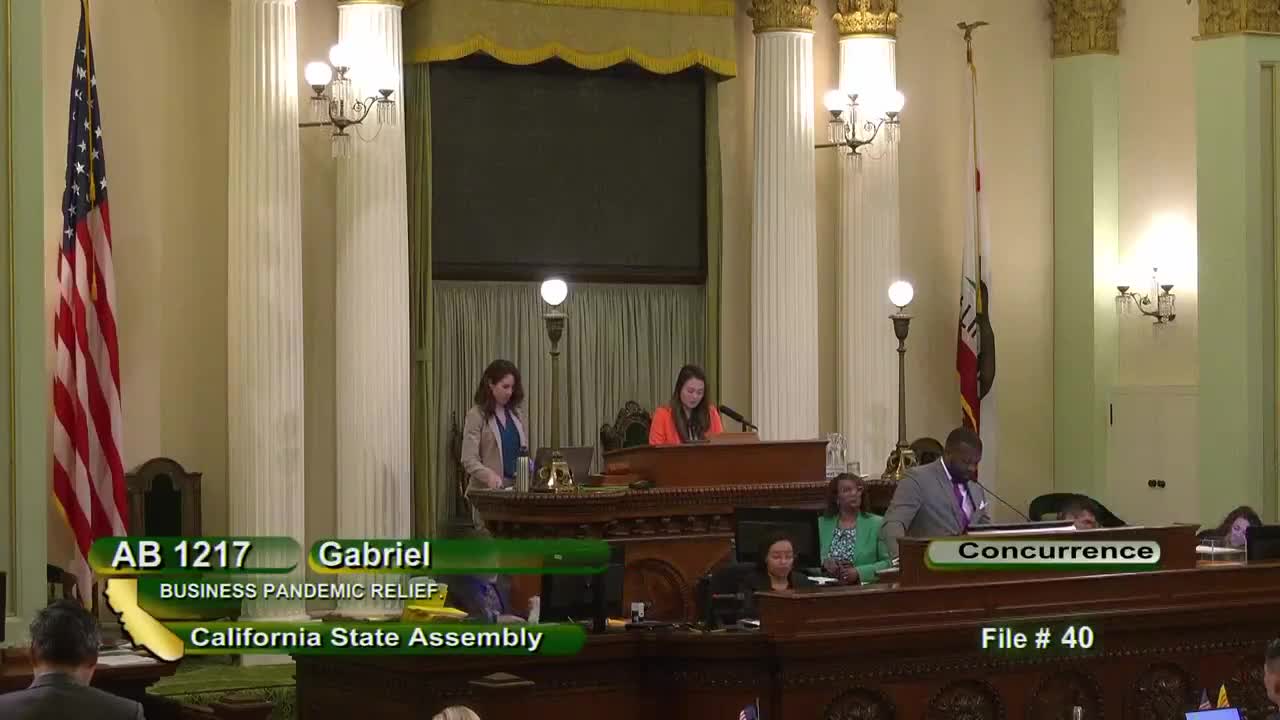
Bill Author