AB 1345: Residential Exclusive Listing Agreements Act.
- Session Year: 2023-2024
- House: Assembly
- Latest Version Date: 2023-10-08
Current Status:
Passed
(2023-10-08: Chaptered by Secretary of State - Chapter 577, Statutes of 2023.)
Introduced
In Committee
First Chamber
In Committee
Second Chamber
Enacted
Existing law imposes limitations on various contracts, including by prohibiting a contract or proposed contract for the provision of a consumer service by a licensee regulated by a licensing board from including a provision limiting the consumers ability to file a complaint with that board or to participate in the boards investigation into the licensee.
Existing law, the Consumers Legal Remedies Act, makes unlawful specified unfair methods of competition and unfair or deceptive acts or practices undertaken by any person in a transaction intended to result or that results in the sale or lease of goods or services to any consumer, including the passing off of goods or services as those of another. The act authorizes any consumer who suffers any damage as a result of the use or employment by any person of a method, act, or practice declared as unlawful under the act to bring an action against that person to recover or obtain certain remedies.
Existing law, the Real Estate Law, provides for the licensure and regulation of real estate brokers and salespersons by the Real Estate Commissioner, the chief officer of the Department of Real Estate within the Business, Consumer Services, and Housing Agency. A willful violation of this law and other related real estate provisions is a crime.
This bill would enact the Residential Exclusive Listing Agreements Act. The bill would make it unlawful for an exclusive listing agreement, as defined, regarding single-family residential property, as defined, to last longer than 24 months from the date the agreement was made. The bill would also make it unlawful for a renewal of an exclusive listing agreement, as described, to last longer than 12 months from the date the renewal was made. The bill would make it unlawful to present for recording or filing, or otherwise attempt to record or file, with a county recorder an exclusive listing agreement of any duration or any memoranda or notice of the agreement. The bill would prohibit an exclusive listing agreement from renewing automatically and would require a renewal of an exclusive listing agreement to be in writing and be dated and signed by all parties to the agreement. The bill would make it unlawful to enforce or attempt to enforce an exclusive listing agreement that is made, or that is presented for recording or filing with a county recorder, in violation of these provisions.
This bill would provide that an exclusive listing agreement that is made, or that is presented for recording or filing with a county recorder, in violation of the above-described provisions is void and unenforceable. The bill would provide that a violation of the above-described provisions constitutes a violation under the Consumers Legal Remedies Act, as described. The bill would authorize a homeowner who entered into any such agreement to retain any consideration received. The bill would provide that a violation of these provisions by a licensed person, as described, is also a violation of the persons licensing law. Because a violation of the bills provisions by certain licensees may be punished as a crime under their respective licensing laws, the bill would impose a state-mandated local program.
Existing law requires the county recorder to accept, upon payment of proper fees and taxes, for recordation certain instruments, papers, notices, or other documents. Existing law provides that a recorder is liable to an aggrieved party for the amount of damages if the recorder, among other things, neglects or refuses to record the instrument, paper, or notice within a reasonable time after receiving it, unless the document is unrecordable. Under existing law, a person who receives a form from the recorder determining the document is unrecordable is guilty of a misdemeanor if the person attempts to subsequently record the unrecordable document without an order from the court requiring recordation of the document.
This bill would make it unlawful to present for recording or filing, or otherwise attempt to record or file, with a county recorder an exclusive listing agreement of any duration or any memoranda or notice of such an agreement. The bill would state that a violation of this prohibition constitutes a violation of the above-described provisions. By expanding the scope of a crime and imposing limitations on the county recorder, the bill would impose a state-mandated local program. The bill would also provide that a violation of these provisions by a licensed person, as described, is also a violation of the persons licensing law.
Because a violation of the bills provisions by certain licensees may be punished as a crime under their respective licensing laws, the bill would impose a state-mandated local program.
The California Constitution requires the state to reimburse local agencies and school districts for certain costs mandated by the state. Statutory provisions establish procedures for making that reimbursement.
This bill would provide that with regard to certain mandates no reimbursement is required by this act for a specified reason.
With regard to any other mandates, this bill would provide that, if the Commission on State Mandates determines that the bill contains costs so mandated by the state, reimbursement for those costs shall be made pursuant to the statutory provisions noted above.
Existing law imposes limitations on various contracts, including by prohibiting a contract or proposed contract for the provision of a consumer service by a licensee regulated by a licensing board from including a provision limiting the consumers ability to file a complaint with that board or to participate in the boards investigation into the licensee.
Existing law, the Consumers Legal Remedies Act, makes unlawful specified unfair methods of competition and unfair or deceptive acts or practices undertaken by any person in a transaction intended to result or that results in the sale or lease of goods or services to any consumer, including the passing off of goods or services as those of another. The act authorizes any consumer who suffers any damage as a result of the use or employment by any person of a method, act, or practice declared as unlawful under the act to bring an action against that person to recover or obtain certain remedies.
Existing law, the Real Estate Law, provides for the licensure and regulation of real estate brokers and salespersons by the Real Estate Commissioner, the chief officer of the Department of Real Estate within the Business, Consumer Services, and Housing Agency. A willful violation of this law and other related real estate provisions is a crime.
This bill would enact the Residential Exclusive Listing Agreements Act. The act bill would make it unlawful for an exclusive listing agreement, as defined, or a renewal of an exclusive listing agreement, regarding single-family residential property, as defined, to last longer than 12 24 months from the date the agreement or renewal was made. The act bill would also make it unlawful for a renewal of an exclusive listing agreement to last longer than 12 months from the date the renewal was made. The bill would make it unlawful to present for recording or filing, or otherwise attempt to record or file, with a county recorder an exclusive listing agreement of any duration or any memoranda or notice of the agreement. The act bill would prohibit an exclusive listing agreement from renewing automatically and would require a renewal of an exclusive listing agreement to be in writing and be dated and signed by all parties to the agreement. The act bill would make it unlawful to enforce, enforce or attempt to enforce, enforce an exclusive listing agreement that is made made, or that is presented for recording or filing with a county recorder recorder, in violation of these provisions.
This act bill would provide that an exclusive listing agreement that is made made, or that is presented for recording or filing with a recorder recorder, in violation of the above-described provisions is void and unenforceable and provides unenforceable. The bill would provide that a violation of the above-described provisions constitutes a violation under the Consumers Legal Remedies Act, as described. The act bill would authorize a homeowner who entered into any such agreement to retain any consideration received. The bill would provide that a violation of these provisions by a licensed person, as described, is also a violation of the persons licensing law. Because a violation of the bills provisions by certain licensees may be punished as a crime under their respective licensing laws, the bill would impose a state-mandated local program.
Existing law requires the county recorder to accept, upon payment of proper fees and taxes, for recordation certain instruments, papers, notices, or other documents. Existing law provides that a recorder is liable to an aggrieved party for the amount of damages if the recorder, among other things, neglects or refuses to record the instrument, paper, or notice within a reasonable time after receiving it, unless the document is unrecordable. Under existing law, a person who receives a form from the recorder determining the document is unrecordable is guilty of a misdemeanor if the person attempts to subsequently record the unrecordable document without an order from the court requiring recordation of the document.
This act bill would make it unlawful to present for recording or filing, or otherwise attempt to record or file, with a county recorder an exclusive listing agreement of any duration or any memoranda or notice of such an agreement. The act bill would state that a violation of this prohibition constitutes a violation of the above-described provisions. By expanding the scope of a crime and imposing limitations on the county recorder, the bill would impose a state-mandated local program. The bill would also provide that a violation of these provisions by a licensed person, as described, is also a violation of the persons licensing law.
Because a violation of the bills provisions by certain licensees may be punished as a crime under their respective licensing laws, the bill would impose a state-mandated local program.
The California Constitution requires the state to reimburse local agencies and school districts for certain costs mandated by the state. Statutory provisions establish procedures for making that reimbursement.
This bill would provide that with regard to certain mandates no reimbursement is required by this act for a specified reason.
With regard to any other mandates, this bill would provide that, if the Commission on State Mandates determines that the bill contains costs so mandated by the state, reimbursement for those costs shall be made pursuant to the statutory provisions noted above.
Existing law imposes limitations on various contracts, including by prohibiting a contract or proposed contract for the provision of a consumer service by a licensee regulated by a licensing board from including a provision limiting the consumers ability to file a complaint with that board or to participate in the boards investigation into the licensee.
Existing law, the Consumers Legal Remedies Act, makes unlawful specified unfair methods of competition and unfair or deceptive acts or practices undertaken by any person in a transaction intended to result or that results in the sale or lease of goods or services to any consumer, including the passing off of goods or services as those of another. The act authorizes any consumer who suffers any damage as a result of the use or employment by any person of a method, act, or practice declared as unlawful under the act to bring an action against that person to recover or obtain certain remedies.
This bill would enact the Residential Exclusive Listing Agreements Act. The act would make it unlawful for an exclusive listing agreement, as defined, or a renewal of an exclusive listing agreement, to last longer than 12 months from the date the agreement or renewal was made. The act would make it unlawful to present for recording or filing, or otherwise attempt to record or file, with a county recorder an exclusive listing agreement of any duration or any memoranda or notice of the agreement. The act would prohibit an exclusive listing agreement from renewing automatically and would require a renewal of an exclusive listing agreement to be in writing and be dated and signed by all parties to the agreement. The act would make it unlawful to enforce, or attempt to enforce, an exclusive listing agreement that is made or that is presented for recording or filing with a county recorder in violation of these provisions.
This act would provide that an exclusive listing agreement that is made or that is presented for recording or filing with a recorder in violation of the above-described provisions is void and unenforceable and provides that a violation of the above-described provisions constitutes a violation under the Consumers Legal Remedies Act, as described. The act would authorize a homeowner who entered into any such agreement to retain any consideration received.
Existing law requires the county recorder to accept, upon payment of proper fees and taxes, for recordation certain instruments, papers, notices, or other documents. Existing law provides that a recorder is liable to an aggrieved party for the amount of damages if the recorder, among other things, neglects or refuses to record the instrument, paper, or notice within a reasonable time after receiving it, unless the document is unrecordable. Under existing law, a person who receives a form from the recorder determining the document is unrecordable is guilty of a misdemeanor if the person attempts to subsequently record the unrecordable document without an order from the court requiring recordation of the document.
This act would make it unlawful to present for recording or filing, or otherwise attempt to record or file, with a county recorder an exclusive listing agreement of any duration or any memoranda or notice of such an agreement. The act would state that a violation of this prohibition constitutes a violation of the above-described provisions. By expanding the scope of a crime and imposing limitations on the county recorder, the bill would impose a state-mandated local program.
The California Constitution requires the state to reimburse local agencies and school districts for certain costs mandated by the state. Statutory provisions establish procedures for making that reimbursement.
This bill would provide that with regard to certain mandates no reimbursement is required by this act for a specified reason.
With regard to any other mandates, this bill would provide that, if the Commission on State Mandates determines that the bill contains costs so mandated by the state, reimbursement for those costs shall be made pursuant to the statutory provisions noted above.
Existing law imposes limitations on various contracts, including by prohibiting a contract or proposed contract for the provision of a consumer service by a licensee regulated by a licensing board from including a provision limiting the consumers ability to file a complaint with that board or to participate in the boards investigation into the licensee.
Existing law, the Consumers Legal Remedies Act, makes unlawful specified unfair methods of competition and unfair or deceptive acts or practices undertaken by any person in a transaction intended to result or that results in the sale or lease of goods or services to any consumer, including the passing off of goods or services as those of another. The act authorizes any consumer who suffers any damage as a result of the use or employment by any person of a method, act, or practice declared as unlawful under the act to bring an action against that person to recover or obtain certain remedies.
This bill would enact the Residential Exclusive Listing Agreements Act. The act would make it unlawful for an exclusive listing agreement, as defined, to last longer than 12 months from the date the agreement was made and would make it unlawful to enforce, or to attempt to enforce, such an agreement. The act would make an exclusive listing agreement unrecordable and made. The act would make it unlawful to present for recordation, recording or filing, or otherwise attempt to record, record or file, with a county recorder an exclusive listing agreement of any duration or any memoranda or notice of the agreement. The act would make it unlawful to enforce, or attempt to enforce, an exclusive listing agreement that is made or that is presented for recording or filing with a county recorder in violation of these provisions.
This act would provide that a contract or an exclusive listing agreement that is made or recorded that is presented for recording or filing with a recorder in violation of the above-described provisions is void and unenforceable and provides that the making, recording, or enforcing of a contract or agreement in a violation of the above-described provisions constitutes a violation under the Consumers Legal Remedies Act, as described. The act would authorize a homeowner who entered into any such contract or agreement to retain any consideration received.
Existing law requires the county recorder to accept, upon payment of proper fees and taxes, for recordation certain instruments, papers, notices, or other documents. Existing law provides that a recorder is liable to an aggrieved party for the amount of damages if the recorder, among other things, neglects or refuses to record the instrument, paper, or notice within a reasonable time after receiving it, unless the document is unrecordable. Under existing law, a person who receives a form from the recorder determining the document is unrecordable is guilty of a misdemeanor if the person attempts to subsequently record the unrecordable document without an order from the court requiring recordation of the document.
This act would make exclusive listing agreements, or any memoranda or notice of the agreement, unrecordable. it unlawful to present for recording or filing, or otherwise attempt to record or file, with a county recorder an exclusive listing agreement of any duration or any memoranda or notice of such an agreement. The act would state that a violation of this prohibition constitutes a violation of the above-described provisions. By expanding the scope of a crime and imposing limitations on the county recorder, the bill would impose a state-mandated local program.
The California Constitution requires the state to reimburse local agencies and school districts for certain costs mandated by the state. Statutory provisions establish procedures for making that reimbursement.
This bill would provide that with regard to certain mandates no reimbursement is required by this act for a specified reason.
With regard to any other mandates, this bill would provide that, if the Commission on State Mandates determines that the bill contains costs so mandated by the state, reimbursement for those costs shall be made pursuant to the statutory provisions noted above.
Existing law imposes limitations on various contracts, including by prohibiting a contract or proposed contract for the provision of a consumer service by a licensee regulated by a licensing board from including a provision limiting the consumers ability to file a complaint with that board or to participate in the boards investigation into the licensee.
Existing law, the Consumers Legal Remedies Act, makes unlawful specified unfair methods of competition and unfair or deceptive acts or practices undertaken by any person in a transaction intended to result or that results in the sale or lease of goods or services to any consumer, including the passing off of goods or services as those of another. The act authorizes any consumer who suffers any damage as a result of the use or employment by any person of a method, act, or practice declared as unlawful under the act to bring an action against that person to recover or obtain certain remedies.
This bill would enact the Residential Exclusive Listing Agreements Act. The act would make it unlawful for an exclusive listing agreement, as defined, to last longer than 12 months from the date the agreement was made and would make it unlawful to enforce, or to attempt to enforce, such an agreement. The act would make an exclusive listing agreement unrecordable and would make it unlawful to present for recordation, or otherwise attempt to record, an exclusive listing agreement or any memoranda or notice of the agreement.
This act would provide that a contract or agreement made or recorded in violation of the above-described provisions is void and unenforceable and provides that the making, recording, or enforcing of a contract or agreement in violation of the above-described provisions constitutes a violation under the Consumers Legal Remedies Act, as described. The act would authorize a homeowner who entered into any such contract or agreement to retain any consideration received.
Existing law requires the county recorder to accept, upon payment of proper fees and taxes, for recordation certain instruments, papers, notices, or other documents. Existing law provides that a recorder is liable to an aggrieved party for the amount of damages if the recorder, among other things, neglects or refuses to record the instrument, paper, or notice within a reasonable time after receiving it, unless the document is unrecordable. Under existing law, a person who receives a form from the recorder determining the document is unrecordable is guilty of a misdemeanor if the person attempts to subsequently record the unrecordable document without an order from the court requiring recordation of the document.
This act would make exclusive listing agreements, or any memoranda or notice of the agreement, unrecordable. By expanding the scope of a crime and imposing limitations on the county recorder, the bill would impose a state-mandated local program.
The California Constitution requires the state to reimburse local agencies and school districts for certain costs mandated by the state. Statutory provisions establish procedures for making that reimbursement.
This bill would provide that with regard to certain mandates no reimbursement is required by this act for a specified reason.
With regard to any other mandates, this bill would provide that, if the Commission on State Mandates determines that the bill contains costs so mandated by the state, reimbursement for those costs shall be made pursuant to the statutory provisions noted above.
This act shall be known, and may be cited, as the Residential Exclusive Listing Agreements Act.
SEC. 2.Section 1670.12 is added to the Civil Code, immediately following Section 1670.11, to read:1670.12.(a)For purposes of this section, the following definitions apply:
(1)Exclusive listing agreement means any contract or agreement providing an exclusive right to list or sell residential real property, including:
(A)An exclusive agreement as described in Section 10018.15 or 10018.16 of the Business and Professions Code.
(B)A contract or agreement to enter into any such agreement or arrangement.
(2)Single-family residential property means one of the following:
(A)Real property improved with one to four dwelling units.
(B)A unit in a residential stock cooperative, condominium, or planned unit development.
(C)A mobilehome or manufactured home when offered for sale or sold through a real estate licensee pursuant to Section 10131.6 of the Business and Professions Code.
(D)A qualified ownership interest in real property subject to an agreement providing the owner the right to occupy one to four dwelling units on that property.
(b)(1)It is unlawful for an exclusive listing agreement regarding single-family residential property to last longer than 24 months from the date the agreement was made. This paragraph shall not apply to exclusive listing agreements entered into between a real estate broker and a corporation, limited liability company, or partnership.
(2)No exclusive listing agreement shall renew automatically, and any renewal of an exclusive listing agreement shall be in writing and be dated and signed by all parties to the agreement. It is unlawful for a renewal of an exclusive listing agreement subject to paragraph (1) to last longer than 12 months from the date the renewal was made.
(c)It is unlawful to present for recording or filing, or otherwise attempt to record or file, with a county recorder an exclusive listing agreement of any duration or any memoranda or notice of such an agreement.
(d)It is unlawful to enforce or attempt to enforce an exclusive listing agreement that is made, or that is presented for recording or filing with a county recorder, in violation of this section.
(e)(1)An exclusive listing agreement that is made, or that is presented for recording or filing with a county recorder, in violation of this section is void and unenforceable. A homeowner who entered into any such agreement may retain any consideration received thereunder.
(2)A violation of this section constitutes a violation under Section 1770.
(3)Any person licensed pursuant to Division 4 (commencing with Section 10000) of the Business and Professions Code who violates any provision of this section shall be deemed to have violated that persons licensing law.
SEC. 3.Section 27280.6 is added to the Government Code, to read:27280.6.(a)It is unlawful to present for recording or filing, or otherwise attempt to record or file, with a county recorder an exclusive listing agreement of any duration or any memoranda or notice of such agreement. A violation of this subdivision shall also constitute a violation of Section 1670.12 of the Civil Code.
(b)For purposes of this section, exclusive listing agreement means any contract or agreement providing an exclusive right to list or sell residential real property, including:
(1)An exclusive agreement as described in Section 10018.15 or 10018.16 of the Business and Professions Code.
(2)A contract or agreement to enter into any such agreement or arrangement.
(c)Any person licensed pursuant to Division 4 (commencing with Section 10000) of the Business and Professions Code who violates any provision of this section shall be deemed to have violated that persons licensing law.
SEC. 4.No reimbursement is required by this act pursuant to Section 6 of Article XIIIB of the California Constitution for certain costs that may be incurred by a local agency or school district because, in that regard, this act creates a new crime or infraction, eliminates a crime or infraction, or changes the penalty for a crime or infraction, within the meaning of Section 17556 of the Government Code, or changes the definition of a crime within the meaning of Section 6 of Article XIIIB of the California Constitution.
However, if the Commission on State Mandates determines that this act contains other costs mandated by the state, reimbursement to local agencies and school districts for those costs shall be made pursuant to Part 7 (commencing with Section 17500) of Division 4 of Title 2 of the Government Code.
This act shall be known, and may be cited, as the Residential Exclusive Listing Agreements Act.
SEC. 2.The Legislature finds and declares both of the following:(a)Long-term exclusive listing agreements and the recording of exclusive listing agreements unfairly encumber residential homeowners title, reduce their home equity, and have an anticompetitive effect on the sale of residential real estate.(b)To prevent these harms, it is the intent of the Legislature to do both of the following: (1)Prohibit exclusive listing agreements for the sale of residential real estate, including agreements to enter into any such agreement or arrangement, lasting longer than 12 months. (2)Prohibit the presentation for recording of exclusive listing agreements of any duration for the sale of residential real estate, including agreements to enter into any such agreement or arrangement.SEC. 3.SEC. 2.Section 1670.12 is added to the Civil Code, immediately following Section 1670.11, to read:1670.12.(a)For purposes of this section, exclusive the following definitions apply:
(1)Exclusive listing agreement means a any contract or agreement providing an exclusive right to list or sell residential real estate, including a property, including:
(A)An exclusive agreement as described in Section 10018.15 or 10018.16 of the Business and Professions Code.
(B)A contract or agreement to enter into any such agreement or arrangement.
(2)Single-family residential property means one of the following:
(A)Real property improved with one to four dwelling units.
(B)A unit in a residential stock cooperative, condominium, or planned unit development.
(C)A mobilehome or manufactured home when offered for sale or sold through a real estate licensee pursuant to Section 10131.6 of the Business and Professions Code.
(D)A qualified ownership interest in real property subject to an agreement providing the owner the right to occupy one to four dwelling units on that property.
(b)(1)It is unlawful for an exclusive listing agreement, or a renewal of an exclusive listing agreement, agreement regarding single-family residential property to last longer than 12 24 months from the date the agreement or renewal was made. This paragraph shall not apply to exclusive listing agreements entered into between a real estate broker and a corporation, limited liability company, or partnership.
(2)An No exclusive listing agreement shall not renew automatically, and a any renewal of an exclusive listing agreement shall be in writing and be dated and signed by all parties to the agreement. It is unlawful for a renewal of an exclusive listing agreement subject to paragraph (1) to last longer than 12 months from the date the renewal was made.
(c)It is unlawful to present for recording or filing, or otherwise attempt to record or file, with a county recorder an exclusive listing agreement of any duration or any memoranda or notice of such an agreement.
(d)It is unlawful to enforce, enforce or attempt to enforce, enforce an exclusive listing agreement that is made made, or that is presented for recording or filing with a county recorder recorder, in violation of this section.
(e)(1)An exclusive listing agreement that is made made, or that is presented for recording or filing with a county recorder recorder, in violation of this section is void and unenforceable. A homeowner who entered into any such agreement may retain any consideration received thereunder.
(2)A violation of this section constitutes a violation under Section 1770.
(3)Any person licensed pursuant to Division 4 (commencing with Section 10000) of the Business and Professions Code who violates any provision of this section shall be deemed to have violated that persons licensing law.
SEC. 4.SEC. 3.Section 27280.6 is added to the Government Code, to read:27280.6.(a)It is unlawful to present for recording or filing, or otherwise attempt to record or file, with a county recorder an exclusive listing agreement of any duration or any memoranda or notice of such agreement. A violation of this subdivision shall also constitute a violation of Section 1670.12 of the Civil Code.
(b)For purposes of this section, exclusive listing agreement means a any contract or agreement providing an exclusive right to list or sell residential real estate, including a property, including:
(1)An exclusive agreement as described in Section 10018.15 or 10018.16 of the Business and Professions Code.
(2)A contract or agreement to enter into any such agreement or arrangement.
(c)Any person licensed pursuant to Division 4 (commencing with Section 10000) of the Business and Professions Code who violates any provision of this section shall be deemed to have violated that persons licensing law.
SEC. 5.SEC. 4.No reimbursement is required by this act pursuant to Section 6 of Article XIIIB of the California Constitution for certain costs that may be incurred by a local agency or school district because, in that regard, this act creates a new crime or infraction, eliminates a crime or infraction, or changes the penalty for a crime or infraction, within the meaning of Section 17556 of the Government Code, or changes the definition of a crime within the meaning of Section 6 of Article XIIIB of the California Constitution.
However, if the Commission on State Mandates determines that this act contains other costs mandated by the state, reimbursement to local agencies and school districts for those costs shall be made pursuant to Part 7 (commencing with Section 17500) of Division 4 of Title 2 of the Government Code.
This act shall be known, and may be cited, as the Residential Exclusive Listing Agreements Act.
SEC. 2.The Legislature finds and declares both of the following:
(a)Long-term exclusive listing agreements and the recording of exclusive listing agreements unfairly encumber residential homeowners title, reduce their home equity, and have an anticompetitive effect on the sale of residential real estate.
(b)To prevent these harms, it is the intent of the Legislature to do both of the following:
(1)Prohibit exclusive listing agreements for the sale of residential real estate, including agreements to enter into any such agreement or arrangement, lasting longer than 12 months.
(2)Prohibit the presentation for recording of exclusive listing agreements of any duration for the sale of residential real estate, including agreements to enter into any such agreement or arrangement.
SEC. 3.Section 1670.12 is added to the Civil Code, immediately following Section 1670.11, to read:1670.12.(a)For purposes of this section, exclusive listing agreement means a contract or agreement providing an exclusive right to list or sell residential real estate, including a contract or agreement to enter into any such agreement or arrangement.
(b)(1)It is unlawful for an exclusive listing agreement agreement, or a renewal of an exclusive listing agreement, to last longer than 12 months from the date the agreement or renewal was made.
(2)An exclusive listing agreement shall not renew automatically, and a renewal of an exclusive listing agreement shall be in writing and be dated and signed by all parties to the agreement.
(c)It is unlawful to present for recording or filing, or otherwise attempt to record or file, with a county recorder an exclusive listing agreement of any duration or any memoranda or notice of such an agreement.
(d)It is unlawful to enforce, or attempt to enforce, an exclusive listing agreement that is made or that is presented for recording or filing with a county recorder in violation of this section.
(e)(1)An exclusive listing agreement that is made or that is presented for recording or filing with a county recorder in violation of this section is void and unenforceable. A homeowner who entered into any such agreement may retain any consideration received thereunder.
(2)A violation of this section constitutes a violation under Section 1770.
SEC. 4.Section 27280.6 is added to the Government Code, to read:27280.6.(a)It is unlawful to present for recording or filing, or otherwise attempt to record or file, with a county recorder an exclusive listing agreement of any duration or any memoranda or notice of such agreement. A violation of this subdivision shall also constitute a violation of Section 1670.12 of the Civil Code.
(b)For purposes of this section, exclusive listing agreement means a contract or agreement providing an exclusive right to list or sell residential real estate, including a contract or agreement to enter into any such agreement or arrangement.
SEC. 5.No reimbursement is required by this act pursuant to Section 6 of Article XIIIB of the California Constitution for certain costs that may be incurred by a local agency or school district because, in that regard, this act creates a new crime or infraction, eliminates a crime or infraction, or changes the penalty for a crime or infraction, within the meaning of Section 17556 of the Government Code, or changes the definition of a crime within the meaning of Section 6 of Article XIIIB of the California Constitution.
However, if the Commission on State Mandates determines that this act contains other costs mandated by the state, reimbursement to local agencies and school districts for those costs shall be made pursuant to Part 7 (commencing with Section 17500) of Division 4 of Title 2 of the Government Code.
This act shall be known, and may be cited, as the Residential Exclusive Listing Agreements Act.
SEC. 2.The Legislature finds and declares both of the following:
(a)Long-term exclusive listing agreements and the recording of exclusive listing agreements unfairly encumber residential homeowners title, reduce their home equity, and have an anticompetitive effect on the sale of residential real estate.
(b)To prevent these harms, it is the intent of the Legislature to prohibit do both of the following:
(1)Prohibit exclusive listing agreements for the sale of residential real estate, including agreements to enter into any such agreement or arrangement, lasting longer than 12 months, and prohibit months.
(2)Prohibit the presentation for recording of exclusive listing agreements of any duration for the sale of residential real estate, including agreements to enter into any such agreement or arrangement.
SEC. 3.Section 1670.12 is added to the Civil Code, immediately following Section 1670.11, to read:1670.12.(a)For purposes of this section, exclusive listing agreement means a contract or agreement providing an exclusive right to list or sell residential real estate, including a contract or agreement to enter into any such agreement or arrangement.
(b)It is unlawful for an exclusive listing agreement to last longer than 12 months from the date the agreement was made.
(c)Exclusive listing agreements shall be unrecordable. It is unlawful to present for recordation, recording or filing, or otherwise attempt to record, record or file, with a county recorder an exclusive listing agreement of any duration or any memoranda or notice of such an agreement.
(d)It is unlawful to enforce, or attempt to enforce, an exclusive listing agreement that violates is made or that is presented for recording or filing with a county recorder in violation of this section.
(e)(1)A contract or An exclusive listing agreement that is made or recorded that is presented for recording or filing with a county recorder in violation of this section is void and unenforceable. A homeowner who entered into any such contract or agreement may retain any consideration received thereunder.
(2)The making, recording, or enforcing of a contract or agreement in A violation of this section constitutes a violation under Section 1770.
SEC. 4.Section 27280.6 is added to the Government Code, to read:27280.6.(a)An exclusive listing agreement, or any memoranda or notice of such an agreement, shall be unrecordable.27280.6.(a)It is unlawful to present for recording or filing, or otherwise attempt to record or file, with a county recorder an exclusive listing agreement of any duration or any memoranda or notice of such agreement. A violation of this subdivision shall also constitute a violation of Section 1670.12 of the Civil Code.
(b)For purposes of this section, exclusive listing agreement means a contract or agreement providing an exclusive right to list or sell residential real estate, including a contract or agreement to enter into any such agreement or arrangement.
SEC. 5.No reimbursement is required by this act pursuant to Section 6 of Article XIIIB of the California Constitution for certain costs that may be incurred by a local agency or school district because, in that regard, this act creates a new crime or infraction, eliminates a crime or infraction, or changes the penalty for a crime or infraction, within the meaning of Section 17556 of the Government Code, or changes the definition of a crime within the meaning of Section 6 of Article XIIIB of the California Constitution.
However, if the Commission on State Mandates determines that this act contains other costs mandated by the state, reimbursement to local agencies and school districts for those costs shall be made pursuant to Part 7 (commencing with Section 17500) of Division 4 of Title 2 of the Government Code.
This act shall be known, and may be cited, as the Residential Exclusive Listing Agreements Act.
SEC. 2.The Legislature finds and declares both of the following:
(a)Long-term exclusive listing agreements and the recording of exclusive listing agreements unfairly encumber residential homeowners title, reduce their home equity, and have an anticompetitive effect on the sale of residential real estate.
(b)To prevent these harms, it is the intent of the Legislature to prohibit exclusive listing agreements for the sale of residential real estate, including agreements to enter into any such agreement or arrangement, lasting longer than 12 months, and prohibit the recording of exclusive listing agreements for the sale of residential real estate, including agreements to enter into any such agreement or arrangement.
SEC. 3.Section 1670.12 is added to the Civil Code, immediately following Section 1670.11, to read:1670.12.(a)For purposes of this section, exclusive listing agreement means a contract or agreement providing an exclusive right to list or sell residential real estate, including a contract or agreement to enter into any such agreement or arrangement.
(b)It is unlawful for an exclusive listing agreement to last longer than 12 months from the date the agreement was made.
(c)Exclusive listing agreements shall be unrecordable. It is unlawful to present for recordation, or otherwise attempt to record, an exclusive listing agreement or any memoranda or notice of such an agreement.
(d)It is unlawful to enforce, or attempt to enforce, an exclusive listing agreement that violates this section.
(e)(1)A contract or agreement made or recorded in violation of this section is void and unenforceable. A homeowner who entered into any such contract or agreement may retain any consideration received thereunder.
(2)The making, recording, or enforcing of a contract or agreement in violation of this section constitutes a violation under Section 1770.
SEC. 4.Section 27280.6 is added to the Government Code, to read:27280.6.(a)An exclusive listing agreement, or any memoranda or notice of such an agreement, shall be unrecordable.
(b)For purposes of this section, exclusive listing agreement means a contract or agreement providing an exclusive right to list or sell residential real estate, including a contract or agreement to enter into any such agreement or arrangement.
SEC. 5.No reimbursement is required by this act pursuant to Section 6 of Article XIIIB of the California Constitution for certain costs that may be incurred by a local agency or school district because, in that regard, this act creates a new crime or infraction, eliminates a crime or infraction, or changes the penalty for a crime or infraction, within the meaning of Section 17556 of the Government Code, or changes the definition of a crime within the meaning of Section 6 of Article XIIIB of the California Constitution.
However, if the Commission on State Mandates determines that this act contains other costs mandated by the state, reimbursement to local agencies and school districts for those costs shall be made pursuant to Part 7 (commencing with Section 17500) of Division 4 of Title 2 of the Government Code.
|
Date
|
Status
|
|---|---|
| Oct 8, 2023 | Chaptered by Secretary of State - Chapter 577, Statutes of 2023. |
| Oct 8, 2023 | Approved by the Governor. |
| Sep 19, 2023 | Enrolled and presented to the Governor at 4 p.m. |
| Sep 12, 2023 | Senate amendments concurred in. To Engrossing and Enrolling. (Ayes 72. Noes 0. Page 3268.). |
| Sep 12, 2023 | Assembly Rule 77 suspended. (Page 3228.) |
| Sep 11, 2023 | In Assembly. Concurrence in Senate amendments pending. May be considered on or after September 13 pursuant to Assembly Rule 77. |
| Sep 11, 2023 | Read third time. Passed. Ordered to the Assembly. (Ayes 30. Noes 6. Page 2560.). |
| Sep 5, 2023 | Read second time. Ordered to third reading. |
| Sep 1, 2023 | Read second time and amended. Ordered returned to second reading. |
| Sep 1, 2023 | From committee: Amend, and do pass as amended. (Ayes 5. Noes 2.) (September 1). |
| Aug 14, 2023 | In committee: Referred to APPR suspense file. |
| Jun 29, 2023 | Read second time and amended. Re-referred to Com. on APPR. |
| Jun 28, 2023 | From committee: Amend, and do pass as amended and re-refer to Com. on APPR. (Ayes 9. Noes 0.) (June 27). |
| May 31, 2023 | Referred to Com. on JUD. |
| May 18, 2023 | In Senate. Read first time. To Com. on RLS. for assignment. |
| May 18, 2023 | Read third time. Passed. Ordered to the Senate. (Ayes 64. Noes 1. Page 1591.) |
| May 11, 2023 | Read second time. Ordered to third reading. |
| May 10, 2023 | From committee: Do pass. (Ayes 13. Noes 0.) (May 10). |
| May 3, 2023 | In committee: Hearing postponed by committee. |
| Apr 18, 2023 | From committee: Do pass and re-refer to Com. on APPR. (Ayes 10. Noes 0.) (April 18). Re-referred to Com. on APPR. |
| Apr 17, 2023 | Re-referred to Com. on JUD. |
| Apr 12, 2023 | From committee chair, with author's amendments: Amend, and re-refer to Com. on JUD. Read second time and amended. |
| Mar 2, 2023 | Referred to Com. on JUD. |
| Feb 17, 2023 | From printer. May be heard in committee March 19. |
| Feb 16, 2023 | Read first time. To print. |
|
Date
|
Description
|
Location
|
Votes
|
|
|---|---|---|---|---|
| Sep 12, 2023 | AB 1345 Hart Concurrence in Senate Amendments | Assembly Floor |
Passed |
|
| Sep 11, 2023 | Assembly 3rd Reading AB1345 Hart et al. By Rubio | Senate Floor |
Passed |
|
| Sep 1, 2023 | Do pass as amended | Senate Standing Committee on Appropriations |
Passed |
|
| Aug 14, 2023 | Placed on suspense file | Senate Standing Committee on Appropriations |
Passed |
|
| Jun 27, 2023 | Do pass as amended, but first amend, and re-refer to the Committee on [Appropriations] | Senate Standing Committee on Judiciary |
Passed |
|
| May 18, 2023 | AB 1345 Hart Assembly Third Reading | Assembly Floor |
Passed |
|
| May 10, 2023 | Do pass. | Assembly Standing Committee on Appropriations |
Passed |
|
| Apr 18, 2023 | Do pass and be re-referred to the Committee on [Appropriations] | Assembly Standing Committee on Judiciary |
Passed |
This list shows positions taken on this bill by organizations on the date displayed, which is linked to the original source.
Positions by individuals are not included.
|
Organization
|
Position
|
Date
|
|---|---|---|
| AARP | ** Support | |
| Attorney General Rob Bonta | ** Support | |
| California Advisors, LLC | * Support | Apr 18, 2023 |
| California Association Of Realtors | * Against Unless Amend | Jun 27, 2023 |
| California Department of Justice | ** Support | |
| California Land Title Association | ** Support | |
| California Mortgage Bankers Association | ** Support | |
| Consumers Attorneys | * Support | Jun 27, 2023 |
| County of Solano | ** Support | |
| Escrow Institute Of California | * For If Amend | Apr 18, 2023 |
| Future Listing Purchasers Association | ** Against | |
| Future Listing Purchases Association | * Against | Jun 27, 2023 |
| National Housing Law | ** Support | |
| Solano County | * Support | Apr 18, 2023 |
| Zillow | * Support | Apr 18, 2023 |
CONCURRENCE IN SENATE AMENDMENTS
CSA1 Bill Id:AB 1345
Author:(Hart and Wilson)
As Amended Ver:September 1, 2023
Majority vote
SUMMARY
Prohibits the predatory practice of entering into exclusive residential listing agreements lasting more than 24 months or renewing an exclusive listing agreement to last longer than 12 months.
Major Provisions
- Defines "exclusive listing agreement" as any contract or agreement providing an exclusive right to list or sell residential property, including a contract or agreement to enter into any such agreement or arrangement or an exclusive agreement as described in Section 10018.15 or 10018.16 of the Business and Professions Code.
- Defines "single-family residential property" as one of the following:
- Real property improved with one to four dwelling units.
- A unit in a residential stock cooperative, condominium, or planned unit development.
- A mobilehome or manufactured home when offered for sale or sold through a real estate licensee pursuant to Business and Professions Code Section 10131.6.
- A qualified ownership interest in real property subject to an agreement providing the owner the right to occupy one to four dwelling units on that property.
- Prohibits exclusive listing agreements regarding single-family residential property lasting longer than 24 months from the date the agreement was made.
- Prohibits renewal of exclusive listing agreements regarding single-family residential property lasting longer than 12 months from the date the renewal was made.
- Prohibits the presentation for recording or filing of exclusive listing agreements of any duration for the sale of residential real estate, including agreements to enter into any such agreement or arrangement.
- Prohibits any attempt to record or file an exclusive listing agreements of any duration for the sale of residential real estate, including agreements to enter into any such agreement or arrangement.
- Prohibits enforcement, or attempts to enforce, an exclusive listing agreement that is made or that is presented for recording or filing with a county recorder in violation of this section.
- Declares that an exclusive listing agreement that is made or that is presented for recording or filing with a county recorder in violation of this section is void and unenforceable.
- Establishes that a homeowner who entered into any exclusive listing agreement in violation of this section is entitled to retain any consideration provided to them.
- Establishes that a violation of this section constitutes a deceptive practice under the Consumers Legal Remedies Act.
- Establishes that any person licensed as a real estate professional pursuant to the Business and Professions Code, who violates any provision of this section is deemed to have violated that person's licensing law.
Senate Amendments
Clarify that any person licensed as a real estate professional pursuant to the Business and Professions Code, who violates any provision of this section is deemed to have violated that person's licensing law. Clarify that entering into an exclusive listing agreement lasting longer than 24 months or is renewed for more than 12 months is prohibited and add relevant definitions.
COMMENTS
This bill seeks to address recent reports that some real estate brokerage firms are misleading families into entering long-term exclusive listing agreements, which exploit and deprive them of profits that they would otherwise earn from selling their homes. The COVID-19 pandemic caused financial hardships for millions of American families, particularly low and middle-income households. The dire circumstances families encountered created an opportunity for companies to take advantage of struggling homeowners. Companies offer consumers as little as $300 in exchange for entering into a 40-year exclusive listing agreement on the consumer's home. Consumers are told that there is no obligation to return the cash, and they owe nothing in return, unless and until they sell their home. What these realty companies do not fully disclose to consumers is that during the course of the 40-year term, if the home is sold for any reason – not just the consumer listing the property, but also if the home is foreclosed upon, or if the owner passes away– and the realty company is not used, then the homeowner, or their heirs, will be obligated to pay a percentage of the value of the home as a penalty. This bill curtails this deceptive, unfair, and unconscionable business practice by prohibiting: 1) exclusive listing agreements lasting over 24 months; 2) renewing an exclusive listing agreement for longer than 12 months from the date the renewal was made; and 3) recording or filing an exclusive listing agreement of any duration. It also deems any licensed real estate professional who violates these prohibitions as having violated that person's licensing laws.
According to the Author
Homeowners looking to sell their homes can sometimes be presented with exclusive right to list agreements. The agreements are between the real estate agent and the homeowner to provide the agent or broker the exclusive right to market and sell the home. These agreements typically last 30 to 90 days but can reach up to a year— after which, a homeowner has the right to search for other agents. Recently, a predatory practice of offering homeowners cash up front to enter into 40-year exclusive right to list agreements has stirred federal and state regulatory agencies to investigate and file lawsuits. Unsuspecting and cash strapped homeowners—predominantly seniors, those with limited cognitive capacity, those who speak English as a second language— are the victims of aggressive and abusive telemarketing tactics. They are offered a check that could be from $300 to $5,000 in exchange for entering into a 40-year exclusive listing agreement. Homeowners are told that there wouldn't be any requirements on their end to sell the home but are not made aware of the other contractual obligations. The penalty to cancel the contract or use a different real estate agency is a certain percentage of the value of the home. A lien is also placed on the home, which is a clause homeowners might not be fully aware of until they try to close a sale on their home.
MV Realty, which has practices in 33 states including California, is the main culprit in these predatory practices and has been the subject of lawsuits and investigations in Georgia, Florida, Massachusetts, North Carolina, Maryland, as well as the focus of Federal lawmakers' call for the Federal Trade Commission and Consumer Financial Protection Bureau's investigation. California law does not regulate right to list agreements, as the standard practice for real estate agents are typically limited to less than a year, do not carry penalties, and do not place liens on the property.
Arguments in Support
The California Attorney General's Office, a sponsor of the bill, urges support for the bill:
AB 1345 takes two simple but important steps to prevent realty companies from exploiting exclusive listing agreements. First, it would prohibit exclusive listing agreements for the sale of residential real estate, including agreements to enter future agreements, from lasting longer than 12 months from the date the parties enter into an agreement. Second, it would unambiguously prohibit the recording of exclusive listing agreements for residential real estate. Agreements violating these provisions would be void, and the homeowner could retain any consideration received thereunder.
AB 1345 is needed to combat the practice before it gets a stronger foothold in California and becomes harder to mitigate in future years. It will also level the playing field so that the vast majority of real estate agents who are not currently exploiting exclusive listing agreements in this manner are able to continue to compete for business.
The Solano County Board of Supervisors, another co-sponsor, identifies the rise of this nefarious practice in California:
Recently, the Solano County Recorder's office has been presented with several documents for recording by a realty group named MV Realty, based in Del Ray Beach, Florida, that have executed what are being called "Homeowner Benefit Agreements." These irrevocable agreements are problematic and have two provisions: The homeowner has been provided hundreds up to a few thousand dollars in exchange for agreeing that if they choose to sell their home in the next twelve months, the homeowner is obligated to utilize this one realty group to sell their home; and that for the next forty years, if the home is sold or transferred, no matter which realty group ultimately sells the home, MV Realty will receive 3-6% of the proceeds of the sale based on the fair market value of the home. Moreover, MV Realty at one point on their website had noted that their year-end goal for 2022 was to have 100,000 HBAs signed across the nation. Their practices are nationwide.
Solano County has subsequently learned that these recordings have been made in at least 17 California Counties as well. These HBA's have caused significant problems for homeowners and as such three United States Senators have requested that federal agencies also investigate MV's practices. Additionally, the Florida, Massachusetts and Pennsylvania Attorneys General have initiated a lawsuit against MV Realty regarding their Homeowner Benefit Agreements. Legislation like AB 1345 is needed because these agreements should not be recorded by a county recorder because they do not meet the statutory requirements as they do not affect the title or possession of the property. There are also concerns that the nature of these agreements is potentially abusive. This is especially the case when the consumers targeted are elderly or otherwise financially compromised homeowners that may not fully comprehend the implications to which they are agreeing.
Arguments in Opposition
None on file.
FISCAL COMMENTS
According to the Senate Appropriations Committee:
- The Department of Real Estate reports costs of $215,000 in 2024-25, $205,000 in fiscal year 2025-26, and $135,000 annually thereafter for additional staffing necessary to implement AB 1345 (Real Estate Fund).
- Unknown court workload cost pressures to adjudicate additional claims under the CLRA (Trial Court Trust Fund, General Fund).
VOTES:
ASM JUDICIARY: 10-0-1
YES: Maienschein, Essayli, Connolly, Dixon, Haney, Kalra, Pacheco, Papan, Reyes, Robert Rivas
ABS, ABST OR NV: Sanchez
ASM APPROPRIATIONS: 13-0-3
YES: Holden, Bryan, Calderon, Wendy Carrillo, Dixon, Mike Fong, Addis, Lowenthal, Papan, Pellerin, Robert Rivas, Weber, Wilson
ABS, ABST OR NV: Megan Dahle, Mathis, Sanchez
ASSEMBLY FLOOR: 64-1-15
YES: Addis, Aguiar-Curry, Alanis, Alvarez, Arambula, Bauer-Kahan, Bennett, Berman, Boerner, Bonta, Bryan, Calderon, Juan Carrillo, Wendy Carrillo, Chen, Connolly, Dixon, Essayli, Mike Fong, Gabriel, Gallagher, Garcia, Gipson, Grayson, Haney, Hart, Holden, Hoover, Irwin, Jackson, Jones-Sawyer, Kalra, Lee, Low, Lowenthal, Maienschein, McCarty, Muratsuchi, Stephanie Nguyen, Ortega, Pacheco, Papan, Pellerin, Petrie-Norris, Quirk-Silva, Ramos, Reyes, Luz Rivas, Robert Rivas, Rodriguez, Blanca Rubio, Santiago, Schiavo, Soria, Ting, Valencia, Villapudua, Wallis, Ward, Weber, Wicks, Wood, Zbur, Rendon
NO: Davies
ABS, ABST OR NV: Bains, Cervantes, Megan Dahle, Flora, Vince Fong, Friedman, Lackey, Mathis, McKinnor, Jim Patterson, Joe Patterson, Sanchez, Ta, Waldron, Wilson
SENATE FLOOR: 30-6-4
YES: Allen, Archuleta, Ashby, Atkins, Becker, Blakespear, Bradford, Cortese, Dodd, Durazo, Eggman, Glazer, Gonzalez, Hurtado, Laird, Limón, McGuire, Menjivar, Min, Newman, Padilla, Portantino, Roth, Rubio, Skinner, Smallwood-Cuevas, Stern, Umberg, Wahab, Wiener
NO: Dahle, Grove, Jones, Ochoa Bogh, Seyarto, Wilk
ABS, ABST OR NV: Alvarado-Gil, Caballero, Nguyen, Niello
UPDATED
VERSION: September 1, 2023
CONSULTANT: Shiran Zohar / JUD. / (916) 319-2334 FN: 0001822
SENATE RULES COMMITTEE Office of Senate Floor Analyses (916) 651-1520 Fax: (916) 327-4478 | AB 1345 |
THIRD READING
Bill No: AB 1345
Author: Hart (D) and Wilson (D), et al.
Amended: 9/1/23 in Senate
Vote: 21
SENATE JUDICIARY COMMITTEE: 9-0, 6/27/23
AYES: Umberg, Allen, Ashby, Caballero, Durazo, Laird, Min, Stern, Wiener
NO VOTE RECORDED: Wilk, Niello
SENATE APPROPRIATIONS COMMITTEE: 5-2, 9/1/23
AYES: Portantino, Ashby, Bradford, Wahab, Wiener
NOES: Jones, Seyarto
ASSEMBLY FLOOR: 64-1, 5/18/23 - See last page for vote
SUBJECT: Residential Exclusive Listing Agreements Act
SOURCE: Attorney General Rob Bonta
DIGEST:
This bill makes it unlawful: (1) for an exclusive listing agreement regarding a single-family residential property to last longer than 24 months from the date the agreement was made, and (2) to present for recording or filing, or otherwise attempt to record or file, with a county recorder an exclusive listing agreement of any duration or any memoranda or notice of such an agreement. This bill provides that an exclusive listing agreement in violation of these provisions is void and unenforceable, and a homeowner who entered into any such agreement may retain any consideration received thereunder. This bill makes a violation of these provisions a violation of the Consumer Legal Remedies Act (CLRA).
ANALYSIS:
Existing law:
- Defines “listing agreement” as a contract between an owner of real property and an agent, by which the agent has been authorized to sell the real property or to find or obtain a buyer. (Civ. Code § 2079.13(e).)
- Prohibits a real estate licensee from entering into an exclusive listing agreement for an indefinite time period. (Bus. & Prof. Code § 10176(f).)
- Requires a county recorder to, upon payment of proper fees and taxes, accept for recordation any instrument, paper, or notice that is authorized or required by statute, or court order to be recorded, or authorized or required to be recorded by a local ordinance that relates to the recordation of any instrument, paper, or notice that relates to real property, if the instrument, paper, or notice contains sufficient information to be indexed as provided by statute, meets recording requirements of state statutes and local ordinances, and is photographically reproducible. (Gov. Code § 27201(a)(1)(A).)
- Prohibits a county recorder from refusing to record any instrument, paper, or notice that is authorized or required by statute, court order, or local ordinance that relates to the recordation of any instrument, paper, or notice that relates to real property to be recorded on the basis of its lack of legal sufficiency. (Ibid.)
- Establishes the types of unfair methods of competition and unfair or deceptive act or practices undertaken by a person in a transaction intended to result or that results in the sale or lease of goods or services to any consumer. (Civ. Code § 1770.)
- Provides that any consumer who suffers any damage as a result of the use or employment by any person of a method, act, or practice declared to be unlawful by Section 1770 of the Civil Code may bring an action against that person to recover or obtain any of the following:
- Actual damages, but in no case shall the total award of damages in a class action be less than one thousand dollars ($1,000);
- An order enjoining the methods, acts, or practices;
- Restitution of property;
- Punitive damages;
- Court costs and attorney’s fees to a prevailing plaintiff. However, reasonable attorney’s fees may be awarded to a prevailing defendant upon a finding by the court that the plaintiff’s prosecution of the action was not in good faith; and
- Any other relief that the court deems proper. (Civ. Code § 1780(a), (e).)
- Limits the amount of interest that can be charged on a borrower for any loan or forbearance of any money, goods, or things in action if the money, goods, or things in action are for use primarily for personal, family, or household purposes, at a rate not exceeding 10 percent per annum, as provided. (Cal. Const. § 1, art. XV.)
- Excludes any loan or forbearance made or arranged by any person licensed as a real estate broker by the State of California, and secured, directly or collaterally, in whole or in part by liens on real property from the interest in the state Constitution. (Civ. Code § 1916.1.)
This bill:
- Defines “exclusive listing agreement” as any contract or agreement providing an exclusive right to list or sell residential property.
- Makes it unlawful for an exclusive listing agreement regarding single-family residential property to last longer than 24 months from the date the agreement was made. This prohibition does not apply to exclusive listing agreements entered into between a real estate broker and a corporation, limited liability company, or partnership.
- Prohibits an exclusive listing agreement to renew automatically, and makes it unlawful for the renewal of an exclusive listing agreement subject to 2) above to last longer than 12 months from the date the renewal was made.
- Makes it unlawful to present for recording or filing, or otherwise attempt to record or file, with a county recorder an exclusive listing agreement of any duration or any memoranda or notice of such an agreement.
- Provides that an exclusive listing agreement that is made or presented for recording or filing with a county recorder in violation of these provisions is void and unenforceable. A homeowner who entered into any such agreement may retain any consideration received thereunder.
- Provides that a violation of this bill constitutes a violation under Section 1770 of the Civil Code, the Consumer Legal Remedies Act.
- Provides that any person licensed under the Real Estate Law who violates these provisions is deemed to have violated that person’s licensing law.
Comments
This bill is in response to a predatory practice that has become recently prevalent where homeowners are offered a cash payment in exchange for entering into 40-year exclusive listing agreement.[1] The amount offered can range from $300 to $5,000. Homeowners are told that there are no requirements to sell the home, but are not made aware of the other contractual obligations. These include a penalty to cancel the contract or use a different real estate agency calculated as a certain percentage of the value of the home. Additionally, these agreements are being recorded essentially acting as a lien on the home. This can cause issues if the homeowner attempts to refinance or takeout a loan on the home. The lien placed on the property also binds the home even after the homeowner’s death, leaving their loved ones subject to the contract and potential penalties.
This scheme has been used across the country. The Attorneys General of Florida, Massachusetts, and Pennsylvania have initiated actions against real estate brokerage firm MV Realty for the above described practices accusing them of “scamming” residents into pledging their homes in exchange for small cash payments. Recently, the Federal Communications Commission issued a public notice against MV Realty and PhoneBurner Inc. for “substantial amounts of apparently unlawful telephone solicitation calls”.[2] The Solano County Board of Supervisors, a supporter of this bill, reports to the Committee that the Solano County Recorder’s office has been presented with documents for recording these exclusive listing agreements from MV Realty and that they have subsequently learned of this happening in at least 17 California counties.
This bill seeks to curtail this business practice in order to protect California homeowners by prohibiting an exclusive listing agreement regarding single-family residential property from lasting longer than 24 months from the date the agreement was made. Additionally, this bill makes it unlawful to present for recording or filing, or otherwise attempt to record or file, an exclusive listing agreement of any duration with a county recorder, and provides that any such agreement that is made or presented for recording or filing in violation of these provisions is void and unenforceable. Any homeowner who entered into any of these unlawful agreements can keep any consideration they received for entering into them. This bill provides that any person licensed under the Real Estate Law who violates these provisions is deemed to have violated that person’s licensing provisions, and would therefore be subject to discipline by their licensing entity.
This bill also makes a violation of its provisions a violation under the CLRA.
The CLRA was enacted “to protect the statute’s beneficiaries from deceptive and unfair business practices,” and to provide aggrieved consumers with “strong remedial provisions for violations of the statute.” (Am. Online, Inc. v. Superior Court (2001) 90 Cal.App.4th 1, 11.) Generally speaking, the CLRA is intended “to protect consumers against unfair and deceptive business practices and to provide efficient and economical procedures to secure such protection.” (Civ. Code Sec. 1760.) Among other things, it prohibits merchants from “representing that a transaction confers or involves rights, remedies, or obligations which it does not have or involve, or which are prohibited by law,” or representing that goods “are of a particular standard, quality, or grade” when they are of another. (Civ. Code Sec. 1770.) Consumers who are harmed by unlawful practices specified in the Act have a right of action under the CLRA to recover damages and other remedies, including actual damages; an order to enjoin the unlawful act; restitution; punitive damages; or any other relief that the court deems proper. (Civ. Code Sec. 1780.) Additionally, the statute authorizes courts to award attorney’s fees to prevailing plaintiffs and contains mechanisms for securing remedies on a class wide basis. (Civ. Code Secs. 1780, 1781.) Additionally, consumers who are over the age of 65 or disabled persons are eligible to additionally seek and be awarded, in addition to the above remedies, up to $5,000 where the trier of fact finds certain circumstances are met. (Civ. Code § 1780(b)(1).)
FISCAL EFFECT: Appropriation: No Fiscal Com.: Yes Local: Yes
According to the Senate Appropriations Committee:
- The Department of Real Estate reports costs of $215,000 in 2024-25, $205,000 in fiscal year 2025-26, and $135,000 annually thereafter for additional staffing necessary to implement AB 1345 (Real Estate Fund).
- Unknown court workload cost pressures to adjudicate additional claims under the CLRA (Trial Court Trust Fund, General Fund).
SUPPORT: (Verified 9/1/23)
Attorney General Rob Bonta (source)
AARP
California Land Title Association
California Mortgage Bankers Association
County of Solano
National Housing Law
OPPOSITION: (Verified 9/1/23)
Future Listing Purchasers Association
ARGUMENTS IN SUPPORT: The author writes:
At a time when Californians are struggling to make ends meet, predatory practices targeting our most vulnerable communities need urgent action. AB 1345 allows California to prevent more homeowners from entering into these agreements that put their home equity at risk. To deter these predatory and coercive practices, AB 1345 will make it unlawful to have an exclusive listing agreement last longer than 12 months and make it unlawful to record exclusive listing agreements with county recorder offices.
Attorney General Rob Bonta writes:
California law permits realty companies and residential homeowners to enter into exclusive listing agreements, whereby the real estate agent has the exclusive right to sell the homeowner’s property for a set time. Exclusive listing agreements can be beneficial, since they ensure that both parties are committed to working together to sell the owner’s home for the duration of the agreement. […]
Unfortunately, some realty companies are now using exclusive listing agreements in an anticompetitive manner that is harming consumers and other realty companies, and this trend is increasing. The realty companies engaged in these activities typically target vulnerable homeowners, including those who are elderly and low-income, offering to pay cash upfront for the right to sell the home if the homeowner decides to sell in the future. […]
What the homeowner often does not realize, however, is that the agreement lasts for several decades and will be recorded as a lien against the home, so that it also binds the owner’s successors if the owner dies. Because of this lien, homeowners may be unable to refinance or obtain other essential home loans, which can lead to devastating consequences. Should a homeowner wish to cancel the contract or breach the contract, they must often pay many thousands of dollars.
This scheme not only harms homeowners but also the majority of real estate agents, who are not employing these questionable practices. Once a homeowner is locked into a multi-year exclusive listing agreement, other real estate agents are unable to compete for their business. The owner is then stuck with a realty company who may not be working diligently in their best interest, and other real estate agents, prevented from obtaining certain sales through traditional means, may be incentivized to adopt similar, anti-competitive practices to obtain customers.
ARGUMENTS IN OPPOSITION: The Future Listing Purchasers Association writes in opposition stating:
The bill purports to be consumer protection legislation, however, the practical effect is to eliminate consumer options by picking winners and losers among current business models. As written AB 1345 would eliminate the option of a homeowner to receive an upfront cash payment for the right to list their house for sale by a licensed California realtor. […]
If enacted, AB 1345 would deprive California homeowners of a valuable option to be compensated today for the right to list their home with a California-licensed realtor at a future date and at a listing price of their choosing. Currently, traditional realtors acquire this right to list a home for free, without compensating the homeowner. In contrast, FLPA members offer compensation to homeowners for this right. […]
FLPA shares the goal of enacting legislation to protect homeowners who enter into future listing agreements. We support the implementation of licensure, registration, and bonding requirements for companies offering this option to homeowners. Additionally, we advocate for clear and easily understandable contracts written in the language of the party entering into the agreement. The front page of the contract should prominently display bold and boxed transparent obligations, along with specific prohibited practices, to ensure consumers' robust protection. The objective of this legislation should not be to eliminate the valuable option that homeowners currently have to be compensated for the future listing of their home by a licensed realtor. Instead, California law should permit this option in a regulated manner that safeguards consumers' interests.
ASSEMBLY FLOOR: 64-1, 5/18/23
AYES: Addis, Aguiar-Curry, Alanis, Alvarez, Arambula, Bauer-Kahan, Bennett, Berman, Boerner, Bonta, Bryan, Calderon, Juan Carrillo, Wendy Carrillo, Chen, Connolly, Dixon, Essayli, Mike Fong, Gabriel, Gallagher, Garcia, Gipson, Grayson, Haney, Hart, Holden, Hoover, Irwin, Jackson, Jones-Sawyer, Kalra, Lee, Low, Lowenthal, Maienschein, McCarty, Muratsuchi, Stephanie Nguyen, Ortega, Pacheco, Papan, Pellerin, Petrie-Norris, Quirk-Silva, Ramos, Reyes, Luz Rivas, Robert Rivas, Rodriguez, Blanca Rubio, Santiago, Schiavo, Soria, Ting, Valencia, Villapudua, Wallis, Ward, Weber, Wicks, Wood, Zbur, Rendon
NOES: Davies
NO VOTE RECORDED: Bains, Cervantes, Megan Dahle, Flora, Vince Fong, Friedman, Lackey, Mathis, McKinnor, Jim Patterson, Joe Patterson, Sanchez, Ta, Waldron, Wilson
Prepared by: Amanda Mattson / JUD. / (916) 651-4113
9/4/23 9:28:15
**** END ****
Rebecca Liebson, Florida company pays quick cash to list your home. The catch? A 40-year contract, Tampa Bay Times (Sept. 6, 2022), available at https://www.tampabay.com/news/real-estate/2022/09/06/florida-company-pays-quick-cash-to-list-your-home-the-catch-a-40-year-contract/; I-Team: Rutland Couple Locked Into 40-Year Agreement with Realtor After Signing ‘Homeowner Benefit Agreement, CBS News Boston (Mar. 4, 2022), available at https://www.cbsnews.com/boston/news/iteam-real-estate-homeowner-benefit-agreement-rutland/. ↑
Public Notice DA 23-65, Fed. Communications Comm. (Jan. 24, 2023), available athttps://docs.fcc.gov/public/attachments/DA-23-65A1.pdf. ↑
SENATE COMMITTEE ON
Senator Anthony Portantino, Chair
2023 - 2024 Regular Session
AB 1345 (Hart) - Residential Exclusive Listing Agreements Act
Version: | Policy Vote: |
Urgency: | Mandate: |
Hearing Date: | Consultant: |
Bill Summary:
AB 1345 would make it unlawful for an exclusive listing agreement for a residential property to last longer than 12 months, make it unlawful to try to record or enforce any such exclusive listing agreement, and it would provide that an exclusive listing agreement in violation of these provisions is void and unenforceable.
*********** ANALYSIS ADDENDUM – SUSPENSE FILE ***********
The following information is revised to reflect amendments
adopted by the committee on September 1, 2023
Fiscal Impact:
- The Department of Real Estate (DRE) reports costs of $215,000 in 2024-25, $205,000 in fiscal year 2025-26, and $135,000 annually thereafter for additional staffing necessary to implement AB 1345 (Real Estate Fund).
- Unknown court workload cost pressures to adjudicate additional claims under the Consumer Legal Remedies Act (CLRA) (Trial Court Trust Fund, General Fund).
Author Amendments:
- Define “exclusive listing agreement,” for purposes of the bill.
- Define “single-family residential property” for purposes of the bill.
- Allow an exclusive listing agreement for a single-family residential property to last up to 24 months.
- Prohibit a renewal of an exclusive listing agreement from lasting longer than 12 months from the date the renewal was made.
- Provide that a violation of these provisions by a licensed person, as specified, is also a violation of that person’s licensing law.
-- END --
SENATE COMMITTEE ON APPROPRIATIONS
Senator Anthony Portantino, Chair
2023 - 2024 Regular Session
AB 1345 (Hart) - Residential Exclusive Listing Agreements Act
Version: June 29, 2023 | Policy Vote: JUD. 9 - 0 |
Urgency: No | Mandate: Yes |
Hearing Date: August 14, 2023 | Consultant: Matthew Fleming |
Bill Summary:
AB 1345 would make it unlawful for an exclusive listing agreement for a residential property to last longer than 12 months, make it unlawful to try to record or enforce any such exclusive listing agreement, and it would provide that an exclusive listing agreement in violation of these provisions is void and unenforceable.
Fiscal Impact:
- The Department of Real Estate (DRE) reports costs of $215,000 in 2024-25, $205,000 in fiscal year 2025-26, and $135,000 annually thereafter for additional staffing necessary to implement AB 1345 (Real Estate Fund).*
- Unknown court workload cost pressures to adjudicate additional claims under the Consumer Legal Remedies Act (CLRA) (Trial Court Trust Fund, General Fund).
Background:
An exclusive listing is a type of real estate listing agreement in which a property seller appoints and specifically authorizes one real estate broker to act as the seller’s sole agent. According to the author, this bill is in response to a predatory practice that has become recently prevalent where homeowners are offered a cash payment in exchange for entering into 40-year exclusive listing agreement. The amount offered can range from $300 to $5,000. Homeowners are told that there are no requirements to sell the home, but are not made aware of the other contractual obligations. These include a penalty to cancel the contract or use a different real estate agency calculated as a certain percentage of the value of the home. Additionally, these agreements are being recorded essentially acting as a lien on the home. This can cause issues if the homeowner attempts to refinance or takeout a loan on the home. The lien placed on the property also binds the home even after the homeowner’s death, leaving their loved ones subject to the contract and potential penalties.
Proposed Law:
- Defines “exclusive listing agreement” as an exclusive right to list or sell residential real estate, including a contract or agreement to enter into any such agreement or arrangement.
- Makes it unlawful for an exclusive listing agreement, or a renewal of an exclusive listing agreement to last longer than 12 months from the date the agreement or renewal was made.
- Makes it unlawful to present for recording or filing, or otherwise attempt to record or file, with a county recorder an exclusive listing agreement of any duration or any memoranda or notice of such an agreement.
- Prohibits an exclusive listing agreement from renewing automatically and would require a renewal of an exclusive listing agreement to be in writing and be dated and signed by all parties to the agreement.
- Provides that an exclusive listing agreement that is made or presented for recording or filing with a county recorder in violation of these provisions is void and unenforceable.
- Specifies that a homeowner who entered into an agreement that violates these provisions may retain any consideration received thereunder.
- Provides that a violation of these provisions constitutes a violation of the CRLA, as specified.
Related Legislation:
AB 1242 (Wilson, 2023) would prohibit a real estate broker from entering into a contract that grants an agent the exclusive right to list or sell in excess of one year. AB 1242 was never heard in the Assembly Judiciary Committee.
Staff Comments:
- DRE Costs: The DRE reports that in order to implement AB 1345 it would need to update the Real Estate Law book, conduct licensee and consumer education campaigns, conduct webinars and implement social media strategies, draft a Real Estate Bulletin and industry advisory, update the Department’s website, conduct staff training for potential enforcement and audit actions, update employee staff manuals, investigate new complaints, and review and analyze Consumer Recovery Account applications from impacted homeowners.
In order to accomplish these duties, the DRE would require 0.5 Associate Governmental Program Analyst (limited term), 0.5 PY Special Investigator (permanent), and 0.25 PY Attorney III (permanent).
DRE Estate is a special fund entity, meaning it derives its funding from fees charged to licensees. Generally speaking, licensee fees can only be adjusted by legislation. Increases in operating costs resulting from the implementation of new legislative mandates may place pressure on existing fee structures that may necessitate legislation in the future to increase license fees.
- Court Workload: AB 1345 would be enforceable through a private cause of action brought under the CRLA. It is unknown how many additional actions would be brought as a result of the implementation of this bill. However, it generally costs about $8,000 to operate a courtroom for one eight-hour day. Although courts are not funded on the basis of workload, increased pressure on the trial courts and staff may create a need for increased funding for courts from the General Fund (GF) to perform existing duties. Numerous trial court operations are funded through the imposition and collection of criminal fines and fees. However, the Legislature has reduced and eliminated criminal fines and fees over the past decade. As a result, the 2023-24 budget includes an ongoing annual allocation of $105.1 million backfill from the General Fund in order to address declining revenue to the Trial Court Trust Fund.
-- END --
Senator Thomas Umberg, Chair
2023-2024 Regular Session
Bill No: AB 1345 (Author:Hart)
Version: April 12, 2023
Hearing Date: June 27, 2023
Fiscal: Yes
Urgency: No
Consultant: AM
SUBJECT
Contracts: Residential Exclusive Listing Agreements Act: prohibition
DIGEST
This bill makes it unlawful: (1) for a residential exclusive listing agreement to last longer than 12 months from the date the agreement was made, and (2) to present for recording or filing, or otherwise attempt to record or file, with a county recorder an exclusive listing agreement of any duration or any memoranda or notice of such an agreement. The bill provides that an exclusive listing agreement in violation of these provisions is void and unenforceable, and a homeowner who entered into any such agreement may retain any consideration received thereunder. The bill makes a violation of these provisions a violation of the Consumer Legal Remedies Act (CLRA).
EXECUTIVE SUMMARY
This bill is in response to a recent predatory practice targeting vulnerable homeowners with offers of upfront cash payments, generally a few hundred dollars, in exchange for entering into 40-year exclusive listing agreement with a real estate company. These agreements have steep penalties for cancellation, often a percentage of the home value. These real estate companies have also begun recording these agreements, essentially creating a lien on the properties, which can cause issues for the homeowner if they attempt to refinance or take a loan out on the home and clouds title to the property. In order to protect California homeowners, this bill (1) makes it unlawful for a residential exclusive listing agreement to last longer than 12 months from the date the agreement was made; (2) makes it unlawful to present for recording or filing, or otherwise attempt to record or file, with a county recorder an exclusive listing agreement of any duration; and (3) makes any exclusive listing agreement that is in violation of these provisions void and unenforceable.
The bill is sponsored by the Attorney General Rob Bonta and supported by the California Land Title Association, the California Mortgage Bankers Association, and the County of Solano. The bill is opposed by the California Association of Realtors and the Future Listing Purchasers Association.
PROPOSED CHANGES TO THE LAW
Existing law:
- Defines “listing agreement” as a contract between an owner of real property and an agent, by which the agent has been authorized to sell the real property or to find or obtain a buyer. (Civ. Code § 2079.13(e).)
- Prohibits a real estate licensee from entering into an exclusive listing agreement for an indefinite time period. (Bus. & Prof. Code § 10176(f).)
- Requires a county recorder to, upon payment of proper fees and taxes, accept for recordation any instrument, paper, or notice that is authorized or required by statute, or court order to be recorded, or authorized or required to be recorded by a local ordinance that relates to the recordation of any instrument, paper, or notice that relates to real property, if the instrument, paper, or notice contains sufficient information to be indexed as provided by statute, meets recording requirements of state statutes and local ordinances, and is photographically reproducible. (Gov. Code § 27201(a)(1)(A).)
- Prohibits a county recorder from refusing to record any instrument, paper, or notice that is authorized or required by statute, court order, or local ordinance that relates to the recordation of any instrument, paper, or notice that relates to real property to be recorded on the basis of its lack of legal sufficiency. (Ibid.)
- Establishes the types of unfair methods of competition and unfair or deceptive act or practices undertaken by a person in a transaction intended to result or that results in the sale or lease of goods or services to any consumer. (Civ. Code § 1770.)
- Provides that any consumer who suffers any damage as a result of the use or employment by any person of a method, act, or practice declared to be unlawful by Section 1770 of the Civil Code may bring an action against that person to recover or obtain any of the following:
- actual damages, but in no case shall the total award of damages in a class action be less than one thousand dollars ($1,000);
- an order enjoining the methods, acts, or practices;
- restitution of property;
- punitive damages;
- court costs and attorney’s fees to a prevailing plaintiff. However, reasonable attorney’s fees may be awarded to a prevailing defendant upon a finding by the court that the plaintiff’s prosecution of the action was not in good faith; and
- any other relief that the court deems proper. (Civ. Code § 1780(a), (e).)
- Limits the amount of interest that can be charged on a borrower for any loan or forbearance of any money, goods, or things in action if the money, goods, or things in action are for use primarily for personal, family, or household purposes, at a rate not exceeding 10 percent per annum, as provided. (Cal. Const. § 1, art. XV.)
- Excludes any loan or forbearance made or arranged by any person licensed as a real estate broker by the State of California, and secured, directly or collaterally, in whole or in part by liens on real property from the interest in the state Constitution. (Civ. Code § 1916.1.)
This bill:
- Defines “exclusive listing agreement” as an exclusive right to list or sell residential real estate, including a contract or agreement to enter into any such agreement or arrangement.
- Makes it unlawful for an exclusive listing agreement to last longer than 12 months from the date the agreement was made.
- Makes it unlawful to present for recording or filing, or otherwise attempt to record or file, with a county recorder an exclusive listing agreement of any duration or any memoranda or notice of such an agreement.
- Provides that an exclusive listing agreement that is made or presented for recording or filing with a county recorder in violation of these provisions is void and unenforceable. A homeowner who entered into any such agreement may retain any consideration received thereunder.
- A violation of this section constitutes a violation under Section 1770 of the Civil Code, the Consumer Legal Remedies Act.
COMMENTS
- Stated need for the bill
The author writes:
At a time when Californians are struggling to make ends meet, predatory practices targeting our most vulnerable communities need urgent action. AB 1345 allows California to prevent more homeowners from entering into these agreements that put their home equity at risk. To deter these predatory and coercive practices, AB 1345 will make it unlawful to have an exclusive listing agreement last longer than 12 months and make it unlawful to record exclusive listing agreements with county recorder offices.
Attorney General Rob Bonta, sponsor of the bill, writes:
California law permits realty companies and residential homeowners to enter into exclusive listing agreements, whereby the real estate agent has the exclusive right to sell the homeowner’s property for a set time. Exclusive listing agreements can be beneficial, since they ensure that both parties are committed to working together to sell the owner’s home for the duration of the agreement. […]
Unfortunately, some realty companies are now using exclusive listing agreements in an anticompetitive manner that is harming consumers and other realty companies, and this trend is increasing. The realty companies engaged in these activities typically target vulnerable homeowners, including those who are elderly and low-income, offering to pay cash upfront for the right to sell the home if the homeowner decides to sell in the future. […]
What the homeowner often does not realize, however, is that the agreement lasts for several decades and will be recorded as a lien against the home, so that it also binds the owner’s successors if the owner dies. Because of this lien, homeowners may be unable to refinance or obtain other essential home loans, which can lead to devastating consequences. Should a homeowner wish to cancel the contract or breach the contract, they must often pay many thousands of dollars.
This scheme not only harms homeowners but also the majority of real estate agents, who are not employing these questionable practices. Once a homeowner is locked into a multi-year exclusive listing agreement, other real estate agents are unable to compete for their business. The owner is then stuck with a realty company who may not be working diligently in their best interest, and other real estate agents, prevented from obtaining certain sales through traditional means, may be incentivized to adopt similar, anti-competitive practices to obtain customers.
- This bill attempts to address predatory practices targeting homeowners
The author states that this bill is in response to a predatory practice that has become recently prevalent where homeowners are offered a cash payment in exchange for entering into 40-year exclusive listing agreement.[1] The amount offered can range from $300 to $5,000. Homeowners are told that there are no requirements to sell the home, but are not made aware of the other contractual obligations. These include a penalty to cancel the contract or use a different real estate agency calculated as a certain percentage of the value of the home. Additionally, these agreements are being recorded essentially acting as a lien on the home. This can cause issues if the homeowner attempts to refinance or takeout a loan on the home. The lien placed on the property also binds the home even after the homeowner’s death, leaving their loved ones subject to the contract and potential penalties.
This scheme has been used across the country. The Attorneys General of Florida, Massachusetts, and Pennsylvania have initiated actions against real estate brokerage firm MV Realty for the above described practices accusing them of “scamming” residents into pledging their homes in exchange for small cash payments. Recently, the Federal Communications Commission issued a public notice against MV Realty and PhoneBurner Inc. for “substantial amounts of apparently unlawful telephone solicitation calls”.[2] The Solano County Board of Supervisors, a supporter of this bill, reports to the Committee that the Solano County Recorder’s office has been presented with documents for recording these exclusive listing agreements from MV Realty and that they have subsequently learned of this happening in at least 17 California counties.
This bill seeks to curtail this business practice in order to protect California homeowners by prohibiting an exclusive listing agreement from lasting longer than 12 months from the date the agreement was made. Additionally, the bill makes it unlawful to present for recording or filing, or otherwise attempt to record or file, an exclusive listing agreement of any duration with a county recorder, and provides that any such agreement that is made or presented for recording or filing in violation of these provisions is void and unenforceable. Any homeowner who entered into any of these unlawful agreements can keep any consideration they received for entering into them. The bill also makes a violation of its provisions a violation under the CLRA.
The CLRA was enacted “to protect the statute’s beneficiaries from deceptive and unfair business practices,” and to provide aggrieved consumers with “strong remedial provisions for violations of the statute.” (Am. Online, Inc. v. Superior Court (2001) 90 Cal.App.4th 1, 11.) Generally speaking, the CLRA is intended “to protect consumers against unfair and deceptive business practices and to provide efficient and economical procedures to secure such protection.” (Civ. Code Sec. 1760.) Among other things, it prohibits merchants from “representing that a transaction confers or involves rights, remedies, or obligations which it does not have or involve, or which are prohibited by law,” or representing that goods “are of a particular standard, quality, or grade” when they are of another. (Civ. Code Sec. 1770.) Consumers who are harmed by unlawful practices specified in the Act have a right of action under the CLRA to recover damages and other remedies, including actual damages; an order to enjoin the unlawful act; restitution; punitive damages; or any other relief that the court deems proper. (Civ. Code Sec. 1780.) Additionally, the statute authorizes courts to award attorney’s fees to prevailing plaintiffs and contains mechanisms for securing remedies on a class wide basis. (Civ. Code Secs. 1780, 1781.) Additionally, consumers who are over the age of 65 or disabled persons are eligible to additionally seek and be awarded, in addition to the above remedies, up to $5,000 where the trier of fact finds certain circumstances are met. (Civ. Code § 1780(b)(1).)
- Proposed amendments
In order to clarify that an exclusive listing agreement can be renewed at the end of the initial 12 month period, the author has offered the following amendments.
Amendment 1
On page 3, in line 25, after “(b)” insert:
(1)
Amendment 2
On page 3, in line 25, strike out “agreement” and insert:
Agreement, or renewal of an exclusive listing agreement,
Amendment 3
On page 3, in line 26, after “agreement” insert:
or renewal
Amendment 4
On page 3, below line 26, insert:
(2) An exclusive listing agreement shall not renew automatically, and a renewal of an exclusive listing agreement shall be in writing and be dated and signed by all parties to the agreement.
- Opposition concerns
The Future Listing Purchasers Association (FLPA), which represents businesses that provide upfront cash payments to consumers for entering into a long-term exclusive listing agreement, write in opposition. They have several concerns with the bill because it would prohibit them from continuing their current business model in this state. Their main argument is that the “objective of this legislation should not be to eliminate the valuable option that homeowners currently have to be compensated for the future listing of their home by a licensed realtor. Instead, California law should permit this option in a regulated manner that safeguards consumers' interests.” They argue that this bill would deprive “California homeowners of a valuable option to be compensated today for the right to list their home with a California-licensed realtor at a future date and at a listing price of their choosing. Currently, traditional realtors acquire this right to list a home for free, without compensating the homeowner. In contrast, FLPA members offer compensation to homeowners for this right.” Further, they note that they share “the goal of enacting legislation to protect homeowners who enter into future listing agreements” and that they would support legislation that included licensure, registration, and bonding requirements for these types of businesses. Additionally, they would support requirements for “clear and easily understandable contracts written in the language of the party entering into the agreement” and that the “front page of the contract should prominently display bold and boxed transparent obligations, along with specific prohibited practices, to ensure consumers' robust protection.” The FLPA states they approached the author’s office with the above amendments, but that the author declined to accept them.
The California Association of Realtors (CAR) are opposed to the bill unless is amended to increase the cap on the duration of exclusive listing agreements to three years. They also want the bill’s provisions limited to persons whose homes are their principal residence. CAR has indicated that they are having productive conversations with the author and stakeholders and are hopeful they can find a path forward.
- Statements in support
The California Land Title Association and California Mortgage Bankers Association write in support stating:
AB 1345 is vital to stopping an anti-consumer practice that has recently emerged within California, in which certain real estate brokers seek to pay homeowners a nominal up-front fee – usually several hundred dollars – in exchange for the homeowner being obligated to use the broker’s services in the future.
The terms set forth in these agreements are harsh and inure greatly to the benefit of the broker, with the obligations often lasting for as long as 40 years, and even attempting to bind successor owners by purporting to create an interest in the real property. Further compounding the predatory nature of these agreements, the penalties for violating their terms are excessive – often several percent of a home’s sale price, which could easily be in the thousands, or even tens of thousands, of dollars.[…]
In addition, the act of recording these agreements in property records, as the entities that seek to engage homeowners in these agreements often attempt to do, can create a long-term barrier to the sale or refinancing of real estate or hamper estate administration.
- Statements in opposition
The California Association of Realtors writes in opposition stating:
Every property is unique and the different circumstances that occur when a property is listed for sale necessitates different listing term lengths. In a hot market, it is likely the length of a listing agreement will be short. In a cooler market, it will likely be longer as a property may take longer to sell and the seller and listing agent may want to include time to do additional repairs or improvements to make the parcel more attractive, if necessary.[…]
While we originally favored an approach like most states that have addressed this problem by limiting only agreements to list, we are agreeing to a cap on the duration of exclusive listing agreements, but are proposing a three-year cap, not one. Additionally, our proposed amendments seek to ensure that the limits placed on the terms of exclusive listing agreements are targeted to protect the victims of these types of schemes, which have been persons and families whose homes are their principal residence. Investors, not surprisingly, have not been the target of these schemes and do not need these additional protections and there are many circumstances where these parties would need greater flexibility in listing agreements and other terms.
We are pleased to report that while we have yet to reach agreement, we are having productive conversations with Assembly Member Hart and stakeholders and are hopeful there is a path forward on this important measure.
SUPPORT
Attorney General Rob Bonta (sponsor)
California Land Title Association
California Mortgage Bankers Association
County of Solano
OPPOSITION
California Association of Realtors
Future Listing Purchasers Association
RELATED LEGISLATION
Pending Legislation: AB 1242 (Wilson, 2023) prohibits a real estate broker from entering into a contract that grants an agent the exclusive right to list or sell in excess of one year. AB 1242 was never set for a hearing in the Assembly Judiciary Committee.
Prior Legislation: None known.
PRIOR VOTES
Assembly Floor (Ayes 64, Noes 1)
Assembly Appropriations Committee (Ayes 13, Noes 0)
Assembly Judiciary Committee (Ayes 10, Noes 0)
**************
Rebecca Liebson, Florida company pays quick cash to list your home. The catch? A 40-year contract, Tampa Bay Times (Sept. 6, 2022), available at https://www.tampabay.com/news/real-estate/2022/09/06/florida-company-pays-quick-cash-to-list-your-home-the-catch-a-40-year-contract/; I-Team: Rutland Couple Locked Into 40-Year Agreement with Realtor After Signing ‘Homeowner Benefit Agreement, CBS News Boston (Mar. 4, 2022), available at https://www.cbsnews.com/boston/news/iteam-real-estate-homeowner-benefit-agreement-rutland/. ↑
Public Notice DA 23-65, Fed. Communications Comm. (Jan. 24, 2023), available athttps://docs.fcc.gov/public/attachments/DA-23-65A1.pdf. ↑
ASSEMBLY THIRD READING
ATR Bill Id:AB 1345
Author:(Hart and Wilson)
As Amended Ver:April 12, 2023
Majority vote
SUMMARY
Prohibits the predatory practice of entering into exclusive residential listing agreements lasting more than 12 months.
Major Provisions
- Declares that long-term exclusive listing agreements and the recording of exclusive listing agreements unfairly encumber residential homeowners' title, reduce their home equity, and have an anticompetitive effect on the sale of residential real estate.
- Defines "exclusive listing agreement" as a contract or agreement providing an exclusive right to list or sell residential real estate, including a contract or agreement to enter into any such agreement or arrangement.
- Prohibits exclusive listing agreements for the sale of residential real estate, including agreements to enter into any such agreement or arrangement, lasting longer than 12 months.
- Prohibits the presentation for recording or filing of exclusive listing agreements of any duration for the sale of residential real estate, including agreements to enter into any such agreement or arrangement.
- Prohibits any attempt to record or file an exclusive listing agreements of any duration for the sale of residential real estate, including agreements to enter into any such agreement or arrangement.
- Prohibits enforcement, or attempts to enforce, an exclusive listing agreement that is made or that is presented for recording or filing with a county recorder in violation of this section.
- Declares that an exclusive listing agreement that is made or that is presented for recording or filing with a county recorder in violation of this section is void and unenforceable.
- Establishes that a homeowner who entered into any exclusive listing agreement in violation of this section is entitled to retain any consideration provided to them.
- Establishes that a violation of this section constitutes a deceptive practice under the Consumers Legal Remedies Act.
COMMENTS
This bill seeks to address recent reports that some real estate brokerage firms are misleading families into entering long-term exclusive listing agreements, which exploit and deprive them of profits that they would otherwise earn from selling their homes. The COVID-19 pandemic caused financial hardships for millions of American families, particularly low and middle-income households. The dire circumstances families encountered created an opportunity for companies to take advantage of struggling homeowners. Companies offer consumers as little as $300 in exchange for entering into a 40-year exclusive listing agreement on the consumer's home. Consumers are told that there is no obligation to return the cash, and they owe nothing in return, unless and until they sell their home. What these realty companies do not fully disclose to consumers is that during the course of the 40-year term, if the home is sold for any reason – not just the consumer listing the property, but also if the home is foreclosed upon, or if the owner passes away– and the realty company is not used, then the homeowner, or their heirs, will be obligated to pay a percentage of the value of the home as a penalty. This bill curtails this deceptive, unfair, and unconscionable business practice by prohibiting: 1) exclusive listing agreements lasting over 12 months; and 2) recording or filing an exclusive listing agreement of any duration.
According to the Author
Homeowners looking to sell their homes can sometimes be presented with exclusive right to list agreements. The agreements are between the real estate agent and the homeowner to provide the agent or broker the exclusive right to market and sell the home. These agreements typically last 30 to 90 days but can reach up to a year— after which, a homeowner has the right to search for other agents. Recently, a predatory practice of offering homeowners cash up front to enter into 40-year exclusive right to list agreements has stirred federal and state regulatory agencies to investigate and file lawsuits. Unsuspecting and cash strapped homeowners—predominantly seniors, those with limited cognitive capacity, those who speak English as a second language— are the victims of aggressive and abusive telemarketing tactics. They are offered a check that could be from $300 to $5,000 in exchange for entering into a 40-year exclusive listing agreement. Homeowners are told that there wouldn't be any requirements on their end to sell the home but are not made aware of the other contractual obligations. The penalty to cancel the contract or use a different real estate agency is a certain percentage of the value of the home. A lien is also placed on the home, which is a clause homeowners might not be fully aware of until they try to close a sale on their home.
MV Realty, which has practices in 33 states including California, is the main culprit in these predatory practices and has been the subject of lawsuits and investigations in Georgia, Florida, Massachusetts, North Carolina, Maryland, as well as the focus of Federal lawmakers' call for the Federal Trade Commission and Consumer Financial Protection Bureau's investigation. California law does not regulate right to list agreements, as the standard practice for real estate agents are typically limited to less than a year, do not carry penalties, and do not place liens on the property.
Arguments in Support
The California Attorney General's Office, a sponsor of the bill, urges support for the bill:
AB 1345 takes two simple but important steps to prevent realty companies from exploiting exclusive listing agreements. First, it would prohibit exclusive listing agreements for the sale of residential real estate, including agreements to enter future agreements, from lasting longer than 12 months from the date the parties enter into an agreement. Second, it would unambiguously prohibit the recording of exclusive listing agreements for residential real estate. Agreements violating these provisions would be void, and the homeowner could retain any consideration received thereunder.
AB 1345 is needed to combat the practice before it gets a stronger foothold in California and becomes harder to mitigate in future years. It will also level the playing field so that the vast majority of real estate agents who are not currently exploiting exclusive listing agreements in this manner are able to continue to compete for business.
The Solano County Board of Supervisors, another co-sponsor, identifies the rise of this nefarious practice in California:
Recently, the Solano County Recorder's office has been presented with several documents for recording by a realty group named MV Realty, based in Del Ray Beach, Florida, that have executed what are being called "Homeowner Benefit Agreements." These irrevocable agreements are problematic and have two provisions: The homeowner has been provided hundreds up to a few thousand dollars in exchange for agreeing that if they choose to sell their home in the next twelve months, the homeowner is obligated to utilize this one realty group to sell their home; and that for the next forty years, if the home is sold or transferred, no matter which realty group ultimately sells the home, MV Realty will receive 3-6% of the proceeds of the sale based on the fair market value of the home. Moreover, MV Realty at one point on their website had noted that their year-end goal for 2022 was to have 100,000 HBAs signed across the nation. Their practices are nationwide.
Solano County has subsequently learned that these recordings have been made in at least 17 California Counties as well. These HBA's have caused significant problems for homeowners and as such three United States Senators have requested that federal agencies also investigate MV's practices. Additionally, the Florida, Massachusetts and Pennsylvania Attorneys General have initiated a lawsuit against MV Realty regarding their Homeowner Benefit Agreements. Legislation like AB 1345 is needed because these agreements should not be recorded by a county recorder because they do not meet the statutory requirements as they do not affect the title or possession of the property. There are also concerns that the nature of these agreements is potentially abusive. This is especially the case when the consumers targeted are elderly or otherwise financially compromised homeowners that may not fully comprehend the implications to which they are agreeing.
Arguments in Opposition
The California Association of Realtors supports the premise of the bill, but maintains some concerns with the restriction on exclusive listing agreements lasting 12 months or more. They oppose the bill unless amended:
C.A.R. does not condone this practice of exploiting down on their luck homeowners or the use of unfair or deceptive business practices. We consider this practice essentially a theft of hard-earned equity and are determined to do our part to ensure homeowners are not taken advantage of. However, as introduced, AB 1345 is overly broad and unfairly impacts the legitimate business of our REALTOR® members.
AB 1345 has two main provisions; 1) it limits any exclusive listing agreements (or agreements to enter into a future listing agreement) to no more than 12 months; and 2) it prohibits the recording of such agreements. While we agree that the prohibition on recording listing agreements, for which there is no good reason to record them, is an appropriate extension of the law, we take umbrage at the blanket prohibition on any exclusive listing agreement lasting longer than 12 months.
Current listing agreement law allows a home seller and a real estate licensee to negotiate together what they believe will be the most appropriate length for the listing agreement. Every property is unique and different circumstances involved in a transaction may necessitate different term lengths. When a property owner dies, often heirs will retain a real estate licensee to list the property for sale and as part of that process assist the heirs with retaining cleaners and contractors to improve the property, which in many cases might be outdated if the prior owner had lived there for a long time. This helps the heirs get the best price for the heirs. Depending on the condition of the property that can take a long time, especially in recent times with both material and labor shortages. An extremely high-end or rare property has a limited number of potential buyers and thus, a longer agreement may make sense. Alternatively, another reason term lengths longer than one year may make sense are circumstances where a licensee is working directly with a builder/property owner to build and list a home and that licensee is holding the listing agreement during the time of construction. Yet another reason may be that the Realtor ® and the home seller wish to market the property during a period when it is being renovated. In any case, while we concur that a 40-year agreement (especially with the "Homeowner Benefit Agreement" terms) likely has no place in the real estate industry, there are circumstances that require flexibility and we strongly oppose the attempt to arbitrarily limit our members legitimate rights to contract, especially when there is no evidence or allegation of any wrongdoing associated with the traditional listing agreement.
FISCAL COMMENTS
According to the Assembly Appropriations analysis, potential cost pressures (Trial Court Trust Fund, General Fund) of an unknown amount to the courts. This bill creates a private right of action under the Consumer Legal Remedies Act (CLRA). Additional workload to the courts will depend on how many lawsuits are filed to enforce a violation of this bill's prohibition on lengthy exclusive listing agreements. Although courts are not funded on the basis of workload, increased pressure on the Trial Court Trust Fund may create a need for increased funding for courts from the General Fund.
VOTES
ASM JUDICIARY: 10-0-1
YES: Maienschein, Essayli, Connolly, Dixon, Haney, Kalra, Pacheco, Papan, Reyes, Robert Rivas
ABS, ABST OR NV: Sanchez
ASM APPROPRIATIONS: 13-0-3
YES: Holden, Bryan, Calderon, Wendy Carrillo, Dixon, Mike Fong, Addis, Lowenthal, Papan, Pellerin, Robert Rivas, Weber, Wilson
ABS, ABST OR NV: Megan Dahle, Mathis, Sanchez
UPDATED
VERSION: April 12, 2023
CONSULTANT: Shiran Zohar / JUD. / (916) 319-2334 FN: 0000342
Date of Hearing: May 10, 2023
ASSEMBLY COMMITTEE ON APPROPRIATIONS
Chris Holden, Chair
ABPCA Bill Id:AB 1345
Author:(Hart) – As Amended Ver:April 12, 2023
Policy Committee: | Judiciary | Vote: | 10 - 0 |
|
| ||
|
|
Urgency: No State Mandated Local Program: Yes Reimbursable: No
SUMMARY:
This bill would make it unlawful for an exclusive listing agreement for a residential property to last longer than 12 months from the date the agreement was made, and would make it unlawful to try to record or enforce any such exclusive listing agreement.
FISCAL EFFECT:
Potential cost pressures (Trial Court Trust Fund, General Fund) of an unknown amount to the courts. This bill creates a private right of action under the Consumer Legal Remedies Act (CLRA). Additional workload to the courts will depend on how many lawsuits are filed to enforce a violation of this bill’s prohibition on lengthy exclusive listing agreements. Although courts are not funded on the basis of workload, increased pressure on the Trial Court Trust Fund may create a need for increased funding for courts from the General Fund.
COMMENTS:
- Author’s Statement. According to the author:
Homeowners looking to sell their homes can sometimes be presented with exclusive right to list agreements. The agreements are between the real estate agent and the homeowner to provide the agent or broker the exclusive right to market and sell the home. These agreements typically last 30 to 90 days but can reach up to a year— after which, a homeowner has the right to search for other agents. Recently, a predatory practice of offering homeowners cash up front to enter into 40-year exclusive right to list agreements has stirred federal and state regulatory agencies to investigate and file lawsuits. Unsuspecting and cash strapped homeowners—predominantly seniors, those with limited cognitive capacity, those who speak English as a second language— are the victims of aggressive and abusive telemarketing tactics. They are offered a check that could be from $300 to $5,000 in exchange for entering into a 40-year exclusive listing agreement. Homeowners are told that there wouldn’t be any requirements on their end to sell the home but are not made aware of the other contractual obligations. The penalty to cancel the contract or use a different real estate agency is a certain percentage of the value of the home. A lien is also placed on the home, which is a clause homeowners might not be fully aware of until they try to close a sale on their home…California law does not regulate right to list agreements, as the standard practice for real estate agents are typically limited to less than a year, do not carry penalties, and do not place liens on the property.
- Background. California law allows a real estate company and a residential homeowner to enter into an exclusive listing agreement that gives the company the exclusive right to sell the homeowner’s property during a set period of time. These agreements are generally shorter than a year. Current law prohibits indefinite exclusive listing agreements. If a real estate agent from the company has not sold the property by the time the agreement expires, the homeowner can choose to work with another real estate company to sell the property.
However, in recent years, predatory companies have begun offering homeowners long-term exclusive listing agreements that last up to 40 years. These companies often provide the homeowners with an upfront cash payment to entice them to enter an agreement, but the agreement itself contains terms that are extremely unfair to the homeowner. For example, if the home is sold by another company during the agreement period for any reason – like if the homeowner dies or the home is foreclosed upon – the homeowner or their heirs must pay the company a percentage of the value of the home as a penalty.
This bill prohibits an exclusive listing agreement that lasts longer than 12 months after the agreement was made, and it prohibits anyone from attempting to record or enforce an exclusive listing agreement longer than 12 months. These provisions create a breach of contract defense in the event that someone tries to enforce an invalid listing agreement against a homeowner and provide clarification to county recorders that such agreements are impermissible. Additionally, the bill allows a private individual to file a lawsuit under the CLRA against someone who attempts to record or enforce an unlawful exclusive listing agreement. The CLRA allows recovery of actual damages, injunctive relief, restitution of property, and punitive damages. (Civil Code section 1780.)
Analysis Prepared by: Annika Carlson / APPR. / (916) 319-2081
Date of Hearing: April 18, 2023
ASSEMBLY COMMITTEE ON JUDICIARY
Brian Maienschein, Chair
ABPCA BillAB 1345
Author:(Hart) – As Amended Ver:April 12, 2023
SUBJECT: Contracts: Residential Exclusive Listing Agreements Act: prohibition
KEY ISSUE: SHOULD THE PREDATORY PRACTICE OF entering into and recording long-term EXCLUSIVE LISTING AGREEMENTS BE PROHIBITED?
SYNOPSIS
This bill seeks to address recent reports that some real estate brokerage firms are misleading families into entering long-term exclusive listing agreements, which exploit and deprive them of profits that they would otherwise earn from selling their homes. The COVID-19 pandemic caused financial hardships for millions of American families, particularly low and middle-income households. The dire circumstances families encountered created an opportunity for companies to take advantage of struggling homeowners. Companies offer consumers as little as $300 in exchange for entering into a 40-year exclusive listing agreement on the consumer’s home. Consumers are told that there is no obligation to return the cash, and they owe nothing in return, unless and until they sell their home. What these realty companies do not fully disclose to consumers is that during the course of the 40-year term, if the home is sold for any reason – not just the consumer listing the property, but also if the home is foreclosed upon, or if the owner passes away– and the realty company is not used, then the homeowner, or their heirs, will be obligated to pay a percentage of the value of the home as a penalty.
This bill will curtail this deceptive, unfair, and unconscionable business practice by prohibiting: 1) exclusive listing agreements lasting over 12 months; and 2) recording or filing an exclusive listing agreement of any duration. The California Department of Justice and the Solano County Board of Supervisors support this bill. The bill’s author and the Department of Justice have been working with the California Association of Realtors, who opposes this bill unless amended, to arrive at language that would prohibit this predatory practice without impeding the ability of real estate licensees to enter into legitimate longer term listing agreements. As noted in the Realtors’ letter, they and the author have been having productive conversations and look forward to continuing those conversations and finding a path forward on this important measure.
SUMMARY: Prohibits the predatory practice of entering into exclusive residential listing agreements lasting more than 12 months. Specifically, this bill:
- Declares that long-term exclusive listing agreements and the recording of exclusive listing agreements unfairly encumber residential homeowners’ title, reduce their home equity, and have an anticompetitive effect on the sale of residential real estate.
- Defines “exclusive listing agreement” as a contract or agreement providing an exclusive right to list or sell residential real estate, including a contract or agreement to enter into any such agreement or arrangement.
- Prohibits exclusive listing agreements for the sale of residential real estate, including agreements to enter into any such agreement or arrangement, lasting longer than 12 months.
- Prohibits the presentation for recording or filing of exclusive listing agreements of any duration for the sale of residential real estate, including agreements to enter into any such agreement or arrangement.
- Prohibits any attempt to record or file an exclusive listing agreements of any duration for the sale of residential real estate, including agreements to enter into any such agreement or arrangement.
- Prohibits enforcement, or attempts to enforce, an exclusive listing agreement that is made or that is presented for recording or filing with a county recorder in violation of this section.
- Declares that an exclusive listing agreement that is made or that is presented for recording or filing with a county recorder in violation of this section is void and unenforceable.
- Establishes that a homeowner who entered into any exclusive listing agreement in violation of this section is entitled to retain any consideration provided to them.
- Establishes that a violation of this section constitutes a deceptive practice under the Consumers Legal Remedies Act.
EXISTING LAW:
- Defines “listing agreement” as a contract between an owner of real property and an agent, by which the agent has been authorized to sell the real property or to find or obtain a buyer. (Civil Code Section 2079.13 (f).)
- Requires a county recorder to, upon payment of proper fees and taxes, accept for recordation any instrument, paper, or notice that is authorized or required by statute, or court order to be recorded, or authorized or required to be recorded by a local ordinance that relates to the recordation of any instrument, paper, or notice that relates to real property, if the instrument, paper, or notice contains sufficient information to be indexed as provided by statute, meets recording requirements of state statutes and local ordinances, and is photographically reproducible. (Government Code Section 27201 (a)(1)(A).)
- Prohibits a county recorder from refusing to record any instrument, paper, or notice that is authorized or required by statute, court order, or local ordinance that relates to the recordation of any instrument, paper, or notice that relates to real property to be recorded on the basis of its lack of legal sufficiency. (Ibid.)
- Prohibits a real estate licensee from entering into an exclusive listing agreement for an indefinite time period. (Business and Professions Code Section 10176 (f).)
- Establishes the types of unfair methods of competition and unfair or deceptive act or practices undertaken by a person in a transaction intended to result or that results in the sale or lease of goods or services to any consumer. (Civil Code Section 1770.)
- Limits the amount of interest that can be charged on a borrower for any loan or forbearance of any money, goods, or things in action. (California Constitution Section 1 of Article XV.)
- Excludes any loan or forbearance made or arranged by any person licensed as a real estate broker by the State of California, and secured, directly or collaterally, in whole or in part by liens on real property from the restriction imposed by 6). (Civil Code Section 1916.1.)
FISCAL EFFECT: As currently in print this bill is keyed fiscal.
COMMENTS: This bill seeks to address recent reports that some real estate brokerage firms are misleading families into entering long-term exclusive listing agreements, which exploit them and deprive them of profits that they would otherwise earn from selling their homes. The COVID-19 pandemic caused financial hardships for millions of American families, particularly low and middle-income households. The dire circumstances families encounter has created an opportunity for companies to take advantage of struggling homeowners. According to the author:
Homeowners looking to sell their homes can sometimes be presented with exclusive right to list agreements. The agreements are between the real estate agent and the homeowner to provide the agent or broker the exclusive right to market and sell the home. These agreements typically last 30 to 90 days but can reach up to a year— after which, a homeowner has the right to search for other agents. Recently, a predatory practice of offering homeowners cash up front to enter into 40-year exclusive right to list agreements has stirred federal and state regulatory agencies to investigate and file lawsuits. Unsuspecting and cash strapped homeowners—predominantly seniors, those with limited cognitive capacity, those who speak English as a second language— are the victims of aggressive and abusive telemarketing tactics. They are offered a check that could be from $300 to $5,000 in exchange for entering into a 40-year exclusive listing agreement. Homeowners are told that there wouldn’t be any requirements on their end to sell the home but are not made aware of the other contractual obligations. The penalty to cancel the contract or use a different real estate agency is a certain percentage of the value of the home. A lien is also placed on the home, which is a clause homeowners might not be fully aware of until they try to close a sale on their home.
MV Realty, which has practices in 33 states including California, is the main culprit in these predatory practices and has been the subject of lawsuits and investigations in Georgia, Florida, Massachusetts, North Carolina, Maryland, as well as the focus of Federal lawmakers’ call for the Federal Trade Commission and Consumer Financial Protection Bureau’s investigation. California law does not regulate right to list agreements, as the standard practice for real estate agents are typically limited to less than a year, do not carry penalties, and do not place liens on the property.
The exclusive listing agreement scheme that preys on cash-strapped homeowners is the impetus for this bill. There is a growing trend within the real estate industry of marketing exclusive 40-year listing agreements as a “loan alternative.” (Real estate firm lures in homeowners with quick cash. But some say there’s a ‘predatory’ 40-year catch, Sophie Kasakove, The Baltimore Banner, October 19, 2022, available at https://www.thebaltimorebanner.com/community/housing/real-estatecompany-locks-maryland-homeowners-into-40-year-agreements-that-could-cost-them-thousands-of-dollars-G7F32GWEP5FKDAHV23YDYJT5YM/.) Companies offer consumers as little as $300 in exchange for entering into a 40-year exclusive listing agreement on the consumer’s home. (I-Team: Real estate racket? Company offers homeowners quick cash in exchange for 40-year lien, WHIOTV7, available at https://www.whio.com/news/local/i-team-free-money-your-signature-monday-5pm-news-center-7/W4E4D3XDRZA2VJ76OGJTT4J7DI/.) Consumers are told that there is no obligation to return the cash, and they owe nothing in return unless and until they sell their home. What these realty companies do not fully disclose to consumers is that during the course of the 40-year term, if the home is sold for any reason – not just the consumer listing the property, but also if the home is foreclosed upon, or if the owner passes away– and the realty company is not used, then the homeowner, or their heirs, will be obligated to pay a percentage of the value of the home as a penalty. (Florida company pays quick cash to list your home. The catch? A 40-year contract, Tampa Bay Times, available at https://www.tampabay.com/news/real-estate/2022/09/06/florida-company-pays-quick-cash-to-list-your-home-the-catch-a-40-year-contract/.) Further, many consumers report that these bad-actor realty companies do not disclose that these agreements are filed in the public record associated with the property. (I-Team: Rutland Couple Locked Into 40-Year Agreement with Realtor After Signing ‘Homeowner Benefit Agreement,’ CBS News Boston, available at https://www.cbsnews.com/boston/news/iteam-real-estate-homeowner-benefit-agreement-rutland/.) Lenders in turn often consider the agreements to be a lien on the consumer’s home and thereby a disqualification when the consumer attempts to refinance their home or otherwise access their home equity through a line of credit or a reverse mortgage.
This unscrupulous practice has taken place around the country, with lawsuits filed by the Attorneys General of Florida, Massachusetts, and Pennsylvania, who accuse real estate brokerage firm MV Realty of “scamming” residents into mortgaging their homes in exchange for small cash payments. The Solano County Board of Supervisors, a supporter of this bill, has noted that this practice is now moving to the West Coast, identifying recordings of these long-term exclusive listing agreements in at least 17 California counties.
Existing law falls short of properly addressing this problem. California law permits real estate companies and residential homeowners to enter into exclusive listing agreements, whereby a real estate agent has the exclusive right to sell the homeowner’s property for a set time. Exclusive listing agreements can be beneficial, since they ensure that both parties are committed to working together to sell the owner’s home for the duration of the agreement. The typical exclusive listing agreement lasts three to twelve months and is not recorded. It concludes at the end of the term of the agreement, or upon sale of the property. Unfortunately, some bad actors have taken advantage of this typical setup and the absence of specific rules governing the contours of such agreements. Existing law falls short in several keys ways:
First, existing law prohibits indefinite exclusive listing agreements, but does not establish any other limitation, resulting in predatory companies offering decades-long exclusive listing agreements, as discussed above, to the detriment of homeowners.
Second, there is ambiguity under existing law whether exclusive listing agreements are recordable. Recording documents gives constructive notice of transactions relating to real estate and are authorized by law. Recorded documents are preserved and archived for reproduction for property searches. Some realty companies have started to record documents related to these exclusive listing agreements with the county recorder as a lien against the owner’s home, hindering the owner’s ability to refinance or take other actions regarding their homes. While many recorders have recorded these liens, others have not.
Third, although existing law limits the interest rates that can be charged on a loan, there is an exception to loans arranged by a licensed California real estate broker. These long-term exclusive listing agreements, arranged by licensed real estate brokers and secured against property, are thus able to evade California’s restrictions on high-interest loans. These nefarious real estate companies argue that their exclusive listing agreements are contracts whereby they pay homeowners upfront and will act as their real estate brokerage should they decide to sell. It is actually a financial instrument designed to virtually guarantee them a tenfold return on their advance—and secured by a mortgage. Indeed, recent lawsuits from attorneys general in other states have pointed out that these long-term exclusivity agreements are marketed through keyword-based interest advertising to consumers seeking, among other searches, small loans, pay day loans, and equity loans.
This bill would prohibit the practice of entering into and recording long-term exclusive listing agreements. This bill curtails this deceptive, unfair, and unconscionable business practice by prohibiting: 1) exclusive listing agreements lasting over 12 months, and 2) recording or filing an exclusive listing agreement of any duration. The author of the bill attempted to arrive at well-defined limitations to exclusive listing agreements, in order to eliminate any ambiguity between lawful and unlawful exclusive listing agreements. Recognizing that there is a legitimate role that exclusive listing agreements play in real estate transactions, this measure does not prohibit their use altogether, but constrains them to a period of 12 months or less, which accounts for the timelines used in the vast majority of cases. The second major provision of the bill prohibits presenting any exclusive listing agreement—regardless of duration—for recording or filing. By placing the prohibition on the party attempting to present the agreement, this bill properly places liability on the party attempting to record the agreement. By crafting the language this way, there is no risk of liability for a recorder who is merely doing their job when presented with a document for filing or recording. Rather, the obligation and the consequences will be on the person attempting to record an outlawed agreement. If a person attempts to record an exclusive listing agreement, they will be in violation of this section and the Consumer Legal Remedies Act, the homeowner will be entitled to keep any consideration they received, and the contract will be declared void and unenforceable.
Concerns raised by the California Association of Realtors. The California Association of Realtors has raised concerns that this 12-month cut off might be insufficient for some otherwise legitimate agreements, and the author’s office has been working to address those concerns with alternate language. The author may wish to consider extending the cut-off to a slightly longer period of time, such as two-years, with an option for a written renewal. The author may also wish to consider prohibiting anyone from paying or offering to pay cash, compensation, or other financial consideration to a homeowner in exchange for the right to be granted or to enter into an exclusive listing agreement lasting more than one year. The parties are working in good faith on potential language consistent with these recommendations, and the Committee supports these conversations and will monitor the stakeholder process in the event this bill advances out the Committee.
ARGUMENTS IN SUPPORT: The California Attorney General’s Office, a sponsor of the bill, urges support for the bill:
AB 1345 takes two simple but important steps to prevent realty companies from exploiting exclusive listing agreements. First, it would prohibit exclusive listing agreements for the sale of residential real estate, including agreements to enter future agreements, from lasting longer than 12 months from the date the parties enter into an agreement. Second, it would unambiguously prohibit the recording of exclusive listing agreements for residential real estate. Agreements violating these provisions would be void, and the homeowner could retain any consideration received thereunder.
AB 1345 is needed to combat the practice before it gets a stronger foothold in California and becomes harder to mitigate in future years. It will also level the playing field so that the vast majority of real estate agents who are not currently exploiting exclusive listing agreements in this manner are able to continue to compete for business.
The Solano County Board of Supervisors, another co-sponsor, identifies the rise of this nefarious practice in California:
Recently, the Solano County Recorder’s office has been presented with several documents for recording by a realty group named MV Realty, based in Del Ray Beach, Florida, that have executed what are being called “Homeowner Benefit Agreements.” These irrevocable agreements are problematic and have two provisions: The homeowner has been provided hundreds up to a few thousand dollars in exchange for agreeing that if they choose to sell their home in the next twelve months, the homeowner is obligated to utilize this one realty group to sell their home; and that for the next forty years, if the home is sold or transferred, no matter which realty group ultimately sells the home, MV Realty will receive 3-6% of the proceeds of the sale based on the fair market value of the home. Moreover, MV Realty at one point on their website had noted that their year-end goal for 2022 was to have 100,000 HBAs signed across the nation. Their practices are nationwide.
Solano County has subsequently learned that these recordings have been made in at least 17 California Counties as well. These HBA’s have caused significant problems for homeowners and as such three United States Senators have requested that federal agencies also investigate MV’s practices. Additionally, the Florida, Massachusetts and Pennsylvania Attorneys General have initiated a lawsuit against MV Realty regarding their Homeowner Benefit Agreements. Legislation like AB 1345 is needed because these agreements should not be recorded by a county recorder because they do not meet the statutory requirements as they do not affect the title or possession of the property. There are also concerns that the nature of these agreements is potentially abusive. This is especially the case when the consumers targeted are elderly or otherwise financially compromised homeowners that may not fully comprehend the implications to which they are agreeing.
ARGUMENTS IN OPPOSITION UNLESS AMENDED: The California Association of Realtors supports the premise of the bill, but maintains some concerns with the restriction on exclusive listing agreements lasting 12 months or more. They write:
C.A.R. does not condone this practice of exploiting down on their luck homeowners or the use of unfair or deceptive business practices. We consider this practice essentially a theft of hard-earned equity and are determined to do our part to ensure homeowners are not taken advantage of. However, as introduced, AB 1345 is overly broad and unfairly impacts the legitimate business of our REALTOR® members.
AB 1345 has two main provisions; 1) it limits any exclusive listing agreements (or agreements to enter into a future listing agreement) to no more than 12 months; and 2) it prohibits the recording of such agreements. While we agree that the prohibition on recording listing agreements, for which there is no good reason to record them, is an appropriate extension of the law, we take umbrage at the blanket prohibition on any exclusive listing agreement lasting longer than 12 months.
Current listing agreement law allows a home seller and a real estate licensee to negotiate together what they believe will be the most appropriate length for the listing agreement. Every property is unique and different circumstances involved in a transaction may necessitate different term lengths. When a property owner dies, often heirs will retain a real estate licensee to list the property for sale and as part of that process assist the heirs with retaining cleaners and contractors to improve the property, which in many cases might be outdated if the prior owner had lived there for a long time. This helps the heirs get the best price for the heirs. Depending on the condition of the property that can take a long time, especially in recent times with both material and labor shortages. An extremely high-end or rare property has a limited number of potential buyers and thus, a longer agreement may make sense. Alternatively, another reason term lengths longer than one year may make sense are circumstances where a licensee is working directly with a builder/property owner to build and list a home and that licensee is holding the listing agreement during the time of construction. Yet another reason may be that the Realtor ® and the home seller wish to market the property during a period when it is being renovated. In any case, while we concur that a 40-year agreement (especially with the “Homeowner Benefit Agreement” terms) likely has no place in the real estate industry, there are circumstances that require flexibility and we strongly oppose the attempt to arbitrarily limit our members legitimate rights to contract, especially when there is no evidence or allegation of any wrongdoing associated with the traditional listing agreement.
REGISTERED SUPPORT / OPPOSITION:
Support
California Department of Justice
Solano County Board of Supervisors
Opposition Unless Amended
California Association of Realtors
Analysis Prepared by: Shiran Zohar / JUD. / (916) 319-2334
Discussed in Hearing
 48SEC
Assembly Floor
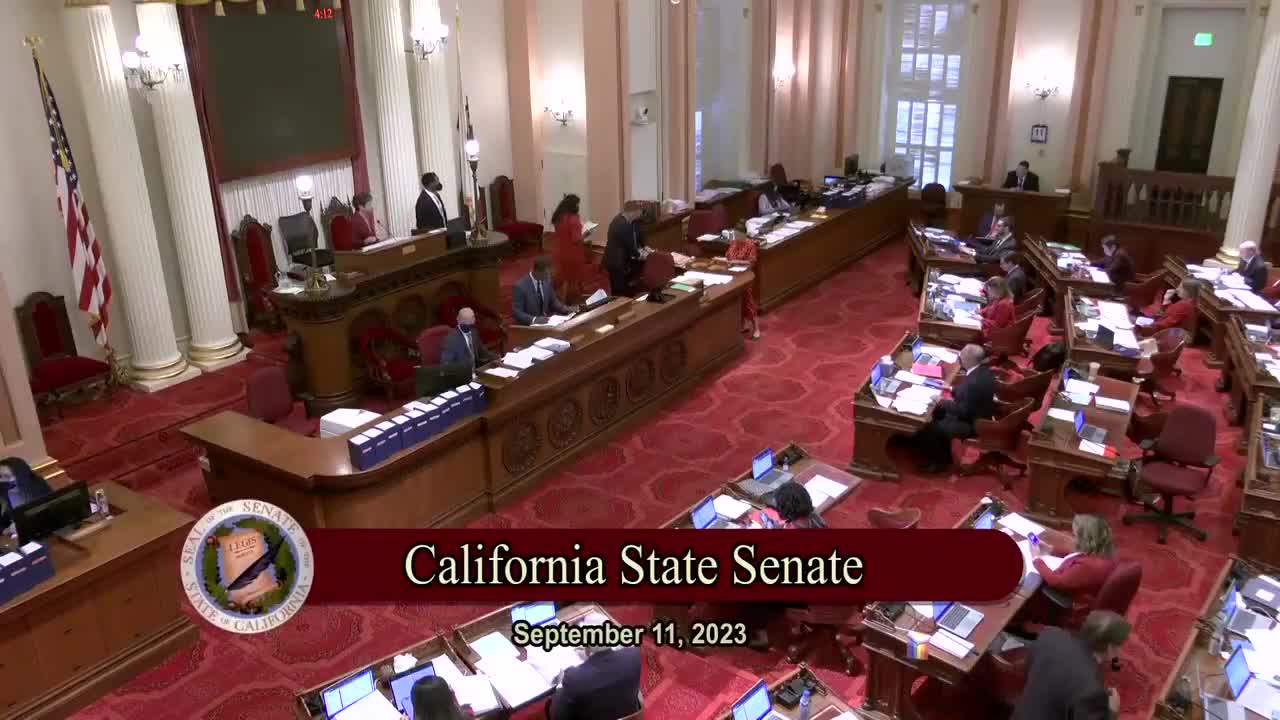 3MIN
Senate Floor
 47SEC
Senate Standing Committee on Appropriations
 10MIN
Senate Standing Committee on Judiciary
 1MIN
Assembly Floor
 2MIN
Assembly Standing Committee on Appropriations
 9MIN
Assembly Standing Committee on Judiciary


Bill Co-Author(s):
