AB 1348: State government: Controller: claims audits.
- Session Year: 2023-2024
- House: Assembly
- Latest Version Date: 2023-05-18
Current Status:
Failed
(2023-09-01: In committee: Held under submission.)
Introduced
In Committee
First Chamber
In Committee
Second Chamber
Enacted
Existing law, the Government Claims Act, generally requires the presentation of all claims for money or damages against local public entities and the state. Existing law provides for the presentation of a claim for which appropriations have been made, or for which state funds are available, under that act to the Controller, in the form and manner prescribed by the general rules and regulations adopted by the Department of General Services. Existing law, with specified exceptions, prohibits the Controller from drawing a warrant for any claim until it has been audited in conformity with law and the general rules and regulations adopted by the Department of General Services governing the presentation and audit of claims.
This bill would require authorize the Controller to conduct, unless prohibited by the provisions of a state ballot proposition passed by the electorate, financial and compliance audits as the Controllers office deems as necessary for purposes of ensuring that any expenditures, regardless of the source or fund from which the warrants for claims are drawn, are expended in a manner consistent with the law and the voters intent. The bill would also require authorize the Controller to conduct any audits necessary to carry out their constitutional and statutory duties and responsibilities under the law. The bill would, among other things, authorize the Controller to recover their costs in conducting these and the above-described audits from amounts appropriated for purposes of carrying out these audits, except as described. The bill would require require, if an audit is conducted as specified, the Controller to provide a report with specified information from these audits to the Legislature by June 30 of each year following the completion of the audit and would require the Controller to allow all auditees in the report a reasonable period of time to review and comment on the section of the report relating to the auditee, as described. The bill would make related legislative findings and declarations.
Existing law, the Government Claims Act, generally requires the presentation of all claims for money or damages against local public entities and the state. Existing law provides for the presentation of a claim for which appropriations have been made, or for which state funds are available, under that act to the Controller, in the form and manner prescribed by the general rules and regulations adopted by the Department of General Services. Existing law, with specified exceptions, prohibits the Controller from drawing a warrant for any claim until it has been audited in conformity with law and the general rules and regulations adopted by the Department of General Services governing the presentation and audit of claims.
This bill would require the Controller to conduct, unless prohibited by the provisions of a state ballot proposition passed by the electorate, financial and compliance audits as the Controllers office deems as necessary for purposes of ensuring that any expenditures, regardless of the source or fund from which the warrants for claims are drawn, are expended in a manner consistent with the law and the voters intent. The bill would also require the Controller to conduct any audits necessary to carry out their constitutional and statutory duties and responsibilities under the law. The bill would, among other things, authorize the Controller to recover their costs in conducting these and the above-described audits from amounts appropriated for purposes of carrying out these audits, except as described. The bill would require the Controller to provide a report with specified information from these audits to the Legislature by June 30 of each year and would require the Controller to allow all auditees in the report a reasonable period of time to review and comment on the section of the report relating to the auditee, as described. The bill would make related legislative findings and declarations.
Existing law, the California Public Records Act, requires state agencies and local agencies to make public records available for inspection, subject to specified criteria, and with specified exceptions. Existing law, the Ralph M. Brown Act, requires the meetings of the legislative body of a local agency to be conducted openly and publicly, with specified exceptions. Existing law makes agendas of public meetings and other writings distributed to the members of the governing board disclosable public records, with certain exceptions.This bill would make nonsubstantive changes to the public record provisions governing the writings related to agendas of public meetings.Existing law, the California Public Records Act, requires state agencies and local agencies to make public records available for inspection, subject to specified criteria, and with specified exceptions. Existing law, the Ralph M. Brown Act, requires the meetings of the legislative body of a local agency to be conducted openly and publicly, with specified exceptions. Existing law makes agendas of public meetings and other writings distributed to the members of the governing board disclosable public records, with certain exceptions.
This bill would make nonsubstantive changes to the public record provisions governing the writings related to agendas of public meetings.
The Legislature finds and declares the following:
(a)It is the intent of the Legislature to promote accountability and transparency over funds approved by voters through ballot propositions by establishing a program requiring financial and compliance audits of money required to be appropriated or spent pursuant to the terms of the proposition.
(b)It is the intent of the Legislature that, unless otherwise stated in the initiative, the Controller shall have the primary responsibility for implementing and overseeing the program.
(c)It is the intent of the Legislature that all expenditures of taxpayer dollars that are approved by voters through ballot propositions, regardless of the specific fund, be reviewed and audited on a regular basis as part of the program for purposes of ensuring that the expenditures are made in a manner consistent with voter intent.
SEC. 2.Section 925.6 of the Government Code is amended to read:925.6.(a)(1)Except as otherwise provided in subdivisions (b) and (e), the Controller shall not draw their warrant for any claim until the Controller has audited that claim in conformity with law and the general rules and regulations adopted by the department, governing the presentation and audit of claims. If the Controller is directed by law to draw their warrant for any purpose, the direction is subject to this section.
(2)(A)Unless prohibited by the provisions of a state ballot proposition passed by the electorate, the Controller shall may also conduct financial and compliance audits as the Controllers office deems as necessary for purposes of ensuring that any expenditures, regardless of the source or fund from which the warrants for claims are drawn, are expended in a manner consistent with the law and the voters intent.
(B)The Controller shall may also conduct any audits necessary to carry out their constitutional and statutory duties and responsibilities under the law.
(C)Unless prohibited by the provisions of a state ballot proposition passed by the electorate, the Controller shall recover their costs in conduct audits pursuant to this section from amounts appropriated for purposes of carrying out these audits.(D)(C)This section shall not be construed to authorize any entity or individual, including, but not limited to, any state or local agency, subcontractor, or subrecipient of a claim, to constrain, in any manner, the Controller from carrying out any audits.
(E)The
(D)If the Controller conducts an audit pursuant to subparagraph (A) or (B), the Controller shall provide a report to the Legislature, in compliance with Section 9795, by June 30 of each year following the completion of the audit as follows:
(i)The report shall contain information regarding programs that are not in compliance with any state ballot proposition passed by the electorate and any applicable regulations.
(ii)The report shall categorize audit exception by types and shall identify the reasons for the exceptions.
(iii)The report shall include the Controllers recommendations to the Legislature as to what action should be taken, based on the content of the report.
(F)(E)Before issuing the report required in subparagraph (E), (D), the Controller shall allow all auditees in the report a reasonable period of time to review and comment on the section of the report relating to the auditee.
(b)Notwithstanding subdivision (a), the Assembly Committee on Rules, the Senate Committee on Rules, and the Joint Rules Committee, in cooperation with the Controller, shall adopt rules and regulations to govern the presentation of claims of the committees to the Controller. The Controller, in cooperation with the committees, shall adopt rules and regulations governing the audit and recordkeeping of claims of the committees. All rules and regulations shall be adopted by January 31, 1990, shall be published in the Assembly and Senate Journals, and shall be made available to the public.
(c)Rules and regulations adopted pursuant to subdivision (b) shall not be subject to the review by or approval of the Office of Administrative Law.
(d)Records of claims kept by the Controller pursuant to subdivision (b) shall be open to public inspection as permitted by the California Public Records Act (Division 10 (commencing with Section 7920.000) of Title 1).
(e)(1)Notwithstanding subdivision (a), the Controller shall draw their warrant for any claim submitted by the Department of Housing and Community Development to advance the payment of funds to a vendor selected pursuant to Section 50897.3 of the Health and Safety Code, based on approved applicants associated with Chapter 17 (commencing with Section 50897) of Part 2 of Division 31 of the Health and Safety Code. Funds made available for advance payment pursuant to this subdivision shall not exceed 25 percent of the original amount allocated for the program described in Chapter 17 (commencing with Section 50897) of Part 2 of Division 31 of the Health and Safety Code at any given time.
(2)The vendor described in paragraph (1) shall be the fiscal agent on behalf of the Department of Housing and Community Development and shall be responsible for maintaining all records of claims for audit purposes.
(3)Unless otherwise expressly provided, this subdivision shall remain operative so long as funds are made available pursuant to Chapter 17 (commencing with Section 50897) of Part 2 of Division 31 of the Health and Safety Code or as otherwise provided under federal law.
The Legislature finds and declares the following:
(a)It is the intent of the Legislature to promote accountability and transparency over funds approved by voters through ballot propositions by establishing a program requiring financial and compliance audits of money required to be appropriated or spent pursuant to the terms of the proposition.
(b)It is the intent of the Legislature that, unless otherwise stated in the initiative, the Controller shall have the primary responsibility for implementing and overseeing the program.
(c)It is the intent of the Legislature that all expenditures of taxpayer dollars that are approved by voters through ballot propositions, regardless of the specific fund, be reviewed and audited on a regular basis as part of the program for purposes of ensuring that the expenditures are made in a manner consistent with voter intent.
SEC. 2.Section 925.6 of the Government Code is amended to read:925.6.(a)(1)Except as otherwise provided in subdivisions (b) and (e), the Controller shall not draw their warrant for any claim until the Controller has audited that claim in conformity with law and the general rules and regulations adopted by the department, governing the presentation and audit of claims. If the Controller is directed by law to draw their warrant for any purpose, the direction is subject to this section.
(2)(A)Unless prohibited by the provisions of a state ballot proposition passed by the electorate, the Controller shall also conduct financial and compliance audits as the Controllers office deems as necessary for purposes of ensuring that any expenditures, regardless of the source or fund from which the warrants for claims are drawn, are expended in a manner consistent with the law and the voters intent.
(B)The Controller shall also conduct any audits necessary to carry out their constitutional and statutory duties and responsibilities under the law.
(C)Unless prohibited by the provisions of a state ballot proposition passed by the electorate, the Controller shall recover their costs in conduct audits pursuant to this section from amounts appropriated for purposes of carrying out these audits.
(D)This section shall not be construed to authorize any entity or individual, including, but not limited to, any state or local agency, subcontractor, or subrecipient of a claim, to constrain, in any manner, the Controller from carrying out any audits.
(E)The Controller shall provide a report to the Legislature, in compliance with Section 9795, by June 30 of each year as follows:
(i)The report shall contain information regarding programs that are not in compliance with any state ballot proposition passed by the electorate and any applicable regulations.
(ii)The report shall categorize audit exception by types and shall identify the reasons for the exceptions.
(iii)The report shall include the Controllers recommendations to the Legislature as to what action should be taken, based on the content of the report.
(F)Before issuing the report required in subparagraph (E), the Controller shall allow all auditees in the report a reasonable period of time to review and comment on the section of the report relating to the auditee.
(b)Notwithstanding subdivision (a), the Assembly Committee on Rules, the Senate Committee on Rules, and the Joint Rules Committee, in cooperation with the Controller, shall adopt rules and regulations to govern the presentation of claims of the committees to the Controller. The Controller, in cooperation with the committees, shall adopt rules and regulations governing the audit and recordkeeping of claims of the committees. All rules and regulations shall be adopted by January 31, 1990, shall be published in the Assembly and Senate Journals, and shall be made available to the public.
(c)Rules and regulations adopted pursuant to subdivision (b) shall not be subject to the review by or approval of the Office of Administrative Law.
(d)Records of claims kept by the Controller pursuant to subdivision (b) shall be open to public inspection as permitted by the California Public Records Act (Division 10 (commencing with Section 7920.000) of Title 1).
(e)(1)Notwithstanding subdivision (a), the Controller shall draw their warrant for any claim submitted by the Department of Housing and Community Development to advance the payment of funds to a vendor selected pursuant to Section 50897.3 of the Health and Safety Code, based on approved applicants associated with Chapter 17 (commencing with Section 50897) of Part 2 of Division 31 of the Health and Safety Code. Funds made available for advance payment pursuant to this subdivision shall not exceed 25 percent of the original amount allocated for the program described in Chapter 17 (commencing with Section 50897) of Part 2 of Division 31 of the Health and Safety Code at any given time.
(2)The vendor described in paragraph (1) shall be the fiscal agent on behalf of the Department of Housing and Community Development and shall be responsible for maintaining all records of claims for audit purposes.
(3)Unless otherwise expressly provided, this subdivision shall remain operative so long as funds are made available pursuant to Chapter 17 (commencing with Section 50897) of Part 2 of Division 31 of the Health and Safety Code or as otherwise provided under federal law.
SECTION 1.Section 54957.5 of the Government Code is amended to read:54957.5.(a)Agendas of public meetings are disclosable public records under the California Public Records Act (Division 10 (commencing with Section 7920.000) of Title 1), and shall be made available upon request without delay and in compliance with Section 54954.2 or Section 54956, as applicable. However, this section shall not apply to a writing, or portion thereof, that is exempt from public disclosure.(b)(1)If a writing is a public record related to an agenda item for an open session of a regular meeting of the legislative body of a local agency and is distributed to all, or a majority of all, of the members of a legislative body of a local agency by a person in connection with a matter subject to discussion or consideration at an open meeting of the body less than 72 hours before that meeting, the writing shall be made available for public inspection pursuant to paragraph (2) at the time the writing is distributed to all, or a majority of all, of the members of the body.(2)(A)Except as provided in subparagraph (B), a local agency shall comply with both of the following requirements:(i)A local agency shall make a writing described in paragraph (1) available for public inspection at a public office or location that the agency shall designate for this purpose.(ii)A local agency shall list the address of the office or location designated pursuant to clause (i) on the agendas for all meetings of the legislative body of that agency.(B)A local agency shall not be required to comply with the requirements of subparagraph (A) if all of the following requirements are met:(i)An initial staff report or similar document containing an executive summary and the staff recommendation, if any, relating to that agenda item is made available for public inspection at the office or location designated pursuant to clause (i) of subparagraph (A) at least 72 hours before the meeting.(ii)The local agency immediately posts a writing described in paragraph (1) on the local agencys internet website in a position and manner that makes it clear that the writing relates to an agenda item for an upcoming meeting.(iii)The local agency lists the web address of the local agencys internet website on the agendas for all meetings of the legislative body of that agency.(iv)(I)Subject to subclause (II), the local agency makes physical copies available for public inspection, beginning the next regular business hours for the local agency, at the office or location designated pursuant to clause (i) of subparagraph (A).(II)This clause is satisfied only if the next regular business hours of the local agency commence at least 24 hours before that meeting.(c)Writings that are public records described in subdivision (b) and distributed during a public meeting shall be made available for public inspection at the meeting if prepared by the local agency or a member of its legislative body, or after the meeting if prepared by some other person. These writings shall be made available in appropriate alternative formats upon request by a person with a disability, as required by Section 202 of the Americans with Disabilities Act of 1990 (42 U.S.C. Sec. 12132), and the federal rules and regulations adopted in implementation thereof.(d)This chapter shall not be construed to prevent the legislative body of a local agency from charging a fee or deposit for a copy of a public record pursuant to Section 7922.530, except that a surcharge shall not be imposed on persons with disabilities in violation of Section 202 of the Americans with Disabilities Act of 1990 (42 U.S.C. Sec. 12132), and the federal rules and regulations adopted in implementation thereof.(e)This section shall not be construed to limit or delay the publics right to inspect or obtain a copy of any record required to be disclosed under the requirements of the California Public Records Act (Division 10 (commencing with Section 7920.000) of Title 1), including, but not limited to, the ability of the public to inspect public records pursuant to Section 7922.525 and obtain copies of public records pursuant to either subdivision (b) of Section 7922.530 or Section 7922.535. This chapter shall not be construed to require a legislative body of a local agency to place any paid advertisement or any other paid notice in any publication.(a)Agendas of public meetings are disclosable public records under the California Public Records Act (Division 10 (commencing with Section 7920.000) of Title 1), and shall be made available upon request without delay and in compliance with Section 54954.2 or Section 54956, as applicable. However, this section shall not apply to a writing, or portion thereof, that is exempt from public disclosure.
(b)(1)If a writing is a public record related to an agenda item for an open session of a regular meeting of the legislative body of a local agency and is distributed to all, or a majority of all, of the members of a legislative body of a local agency by a person in connection with a matter subject to discussion or consideration at an open meeting of the body less than 72 hours before that meeting, the writing shall be made available for public inspection pursuant to paragraph (2) at the time the writing is distributed to all, or a majority of all, of the members of the body.
(2)(A)Except as provided in subparagraph (B), a local agency shall comply with both of the following requirements:
(i)A local agency shall make any a writing described in paragraph (1) available for public inspection at a public office or location that the agency shall designate for this purpose.
(ii)A local agency shall list the address of the office or location designated pursuant to clause (i) on the agendas for all meetings of the legislative body of that agency.
(B)A local agency shall not be required to comply with the requirements of subparagraph (A) if all of the following requirements are met:
(i)An initial staff report or similar document containing an executive summary and the staff recommendation, if any, relating to that agenda item is made available for public inspection at the office or location designated pursuant to clause (i) of subparagraph (A) at least 72 hours before the meeting.
(ii)The local agency immediately posts any a writing described in paragraph (1) on the local agencys internet website in a position and manner that makes it clear that the writing relates to an agenda item for an upcoming meeting.
(iii)The local agency lists the web address of the local agencys internet website on the agendas for all meetings of the legislative body of that agency.
(iv)(I)Subject to subclause (II), the local agency makes physical copies available for public inspection, beginning the next regular business hours for the local agency, at the office or location designated pursuant to clause (i) of subparagraph (A).
(II)This clause is satisfied only if the next regular business hours of the local agency commence at least 24 hours before that meeting.
(c)Writings that are public records described in subdivision (b) and distributed during a public meeting shall be made available for public inspection at the meeting if prepared by the local agency or a member of its legislative body, or after the meeting if prepared by some other person. These writings shall be made available in appropriate alternative formats upon request by a person with a disability, as required by Section 202 of the Americans with Disabilities Act of 1990 (42 U.S.C. Sec. 12132), and the federal rules and regulations adopted in implementation thereof.
(d)This chapter shall not be construed to prevent the legislative body of a local agency from charging a fee or deposit for a copy of a public record pursuant to Section 7922.530, except that a surcharge shall not be imposed on persons with disabilities in violation of Section 202 of the Americans with Disabilities Act of 1990 (42 U.S.C. Sec. 12132), and the federal rules and regulations adopted in implementation thereof.
(e)This section shall not be construed to limit or delay the publics right to inspect or obtain a copy of any record required to be disclosed under the requirements of the California Public Records Act (Division 10 (commencing with Section 7920.000) of Title 1), including, but not limited to, the ability of the public to inspect public records pursuant to Section 7922.525 and obtain copies of public records pursuant to either subdivision (b) of Section 7922.530 or Section 7922.535. This chapter shall not be construed to require a legislative body of a local agency to place any paid advertisement or any other paid notice in any publication.
|
Date
|
Status
|
|---|---|
| Sep 1, 2023 | In committee: Held under submission. |
| Aug 21, 2023 | In committee: Referred to APPR suspense file. |
| Jul 11, 2023 | From committee: Do pass and re-refer to Com. on APPR with recommendation: To Consent Calendar. (Ayes 14. Noes 0.) (July 11). Re-referred to Com. on APPR. |
| Jun 14, 2023 | Referred to Com. on G.O. |
| Jun 1, 2023 | In Senate. Read first time. To Com. on RLS. for assignment. |
| May 31, 2023 | Read third time. Passed. Ordered to the Senate. (Ayes 80. Noes 0. Page 2011.) |
| May 22, 2023 | Read second time. Ordered to third reading. |
| May 18, 2023 | From committee: Amend, and do pass as amended. (Ayes 15. Noes 0.) (May 18). |
| May 18, 2023 | Read second time and amended. Ordered returned to second reading. |
| May 10, 2023 | In committee: Set, first hearing. Referred to APPR. suspense file. |
| May 3, 2023 | In committee: Hearing postponed by committee. |
| Apr 19, 2023 | From committee: Do pass and re-refer to Com. on APPR. with recommendation: To Consent Calendar. (Ayes 6. Noes 0.) (April 19). Re-referred to Com. on APPR. |
| Mar 21, 2023 | Re-referred to Com. on A. & A.R. |
| Mar 20, 2023 | From committee chair, with author's amendments: Amend, and re-refer to Com. on A. & A.R. Read second time and amended. |
| Mar 16, 2023 | Referred to Com. on A. & A.R. |
| Feb 17, 2023 | From printer. May be heard in committee March 19. |
| Feb 16, 2023 | Read first time. To print. |
|
Date
|
Description
|
Location
|
Votes
|
|
|---|---|---|---|---|
| Aug 21, 2023 | Placed on suspense file | Senate Standing Committee on Appropriations |
Passed |
|
| Jul 11, 2023 | Do pass, but first be re-referred to the Committee on [Appropriations] with the recommendation: To Consent Calendar | Senate Standing Committee on Governmental Organization |
Passed |
|
| May 31, 2023 | AB 1348 Grayson Assembly Third Reading | Assembly Floor |
Passed |
|
| May 18, 2023 | Do pass as amended. | Assembly Standing Committee on Appropriations |
Passed |
|
| Apr 19, 2023 | Do pass and be re-referred to the Committee on [Appropriations] with recommendation: To Consent Calendar | Assembly Standing Committee on Accountability and Administrative Review |
Passed |
This list shows positions taken on this bill by organizations on the date displayed, which is linked to the original source.
Positions by individuals are not included.
|
Organization
|
Position
|
Date
|
|---|---|---|
| California State Controller Malia Cohen | ** Support |
SENATE COMMITTEE ON APPROPRIATIONS
Senator Anthony Portantino, Chair
2023 - 2024 Regular Session
AB 1348 (Grayson) - State government: Controller: claims audits
Version: May 18, 2023 | Policy Vote: G.O. 14 - 0 |
Urgency: No | Mandate: No |
Hearing Date: August 21, 2023 | Consultant: Janelle Miyashiro |
Bill Summary:
AB 1348 authorizes the State Controller (Controller) to conduct financial and compliance audits of state ballot propositions passed by the electorate, as well as any audits necessary to carry out the Controller’s constitutional and statutory duties.
Fiscal Impact:
Unknown, potentially significant fiscal impact to the State Controller’s Office to perform an unknown number of financial and compliance audits of state ballot propositions and any other audits the Controller deems necessary to carry out their constitutional and statutory duties.
Background:
The State Controller is a statewide elected constitutional officer who serves as the chief fiscal officer of the state. The Controller is responsible for accountability and disbursement of the state’s financial resources. Major functions of the Controller include administering unclaimed property, audits, financial reports, disbursements, and personal services. With respect to audits, the Controller reviews all funds disbursed by the state and all claims presented for payment.
The audit team also independently reviews government agencies and programs that spend state funds, as well as the allocation and apportionment of local property taxes. Existing law establishes a separate State Auditor independent of the executive branch and legislative control, with statutory authority granting full access to all records, accounts, correspondence, property, and other files of any publicly created entity, including state agencies, cities, counties, school district, and special districts.
Proposed Law:
- Authorizes the Controller to conduct financial and compliance audits as deemed necessary to ensure that any expenditures, regardless of the source or fund from which the warrants for claims are drawn, are expended in a manner consistent with the law and the voters’ intent.
- Authorizes the Controller to conduct any audits necessary to carry out their constitutional and statutory duties and responsibilities under law.
- Requires the Controller to report to the Legislature on any audits conducted per the above by June 30th following completion of an audit as follows:
- The report shall contain information regarding programs that are not in compliance with any state ballot proposition passed by the electorate and any applicable regulations.
- The report shall categorize audit exception by types and shall identify the reasons for the exceptions.
- The report shall include the Controller’s recommendations to the Legislature as to what action should be taken, based on the content of the report.
- States legislative intent to promote accountability and transparency over funds approved by voters through ballot propositions by establishing a program requiring financial and compliance audits of money required to be appropriated or spent pursuant to the terms of the proposition. Further states legislative intent that the Controller have the primary responsibility for implementing and overseeing the program.
Staff Comments:
To the extent there’s a significant number of audits conducted by the Controller as a result of this bill, there will be costs and workload associated with these activities. It is unknown to what extent this workload is absorbable within the Controller’s existing resources. Actual workload impacts to the Controller will depend on, among other things, the number and frequency of audits the Controller elects to carry out to meet their constitutional and statutory duties and responsibilities.
-- END --
SENATE COMMITTEE ON GOVERNMENTAL ORGANIZATION
Senator Bill Dodd
Chair
2023 - 2024 Regular
Bill No: 1348 Hearing Date: 7/11/2023
Author: | |||
Version: | 5/18/2023 Amended | ||
Urgency: | No | Fiscal: | Yes |
Consultant: | Felipe Lopez | ||
SUBJECT: State government: Controller: claims audits
DIGEST: This bill authorizes the State Controller (Controller) to conduct financial and compliance audits of state ballot propositions passed by the electorate, as well as any audits necessary to carry out the Controller’s constitutional and statutory duties.
ANALYSIS:
Existing law:
- Establishes the Controller as an elected position and provides that the Controller is responsible for overseeing the state’s financial management and ensuring the proper disbursement of funds. The Controller serves as the chief fiscal officer of California, monitoring the state’s accounting systems, maintaining financial records, and conducting audits.
- Generally requires, under the Government Claims Act (Act), the presentation of all claims for money or damages against local public entities and the state.
- Provides for the presentation of a claim for which appropriations have been made, or for which state funds are available, under the Act to the Controller, in the form and manner prescribed by the general rules and regulations adopted by the Department of General Services (DGS).
- Prohibits, with specified exceptions, the Controller from drawing a warrant for any claim until it has been audited in conformity with law and the general rules and regulations adopted by DGS governing the presentation and audit of claims.
This bill:
- Authorizes the Controller, unless prohibited by the provisions of a state ballot proposition passed by the electorate, to conduct financial and compliance audits as the Controller’s office deems as necessary for purposes of ensuring that any expenditures are expended in a manner consistent with the law and the voters’ intent.
- Authorizes the Controller to conduct any audits necessary to carry out their constitutional and statutory duties and responsibilities under the law.
- Specifies that nothing in this bill shall be construed to authorize any entity or individual, including, but not limited to, any state or local agency, subcontractor, or sub-recipient of a claim, to constrain, in any manner, the Controller from carrying out any audits.
- Requires the Controller, if it conducts an audit pursuant to the provisions of this bill, to provide a report to the Legislature by June 30 following the completion of the audit as follows:
- The report shall contain information regarding programs that are not in compliance with any state ballot proposition passed by the electorate and any applicable regulations.
- The report shall categorize audit exception by types and shall identify the reasons for the exceptions.
- The report shall include the Controller’s recommendation to the Legislature as to what action should be taken, based on the content of the report.
- Requires the Controller, before issuing the report, to allow auditees in the report a reasonable period of time to review and comment on the section of the report relating to the auditee.
- Makes various legislative findings.
Background
Author Statement. According to the author’s office, “under the State Constitution, the Controller is charged with the audit of every claim for payment of state and federal funds prior to the expenditure of funds. While there are certain ballot initiatives that authorize the Controller’s audit, many initiatives are passed by voters that do not provide for spending oversight. As a result, billions of dollars are spent with no specific accountability mechanism identified. To address these gaps in financial oversight, AB 1348 will establish audit authority for the Controller over voter approved initiatives, unless otherwise specified in the initiative."
Role of the Controller. The State Controller is a statewide elected constitutional officer who serves as the chief fiscal officer of the state. The Controller is responsible for accountability and disbursement of the state’s financial resources. Major functions of the Controller include administering unclaimed property, audits, financial reports, disbursements, and personal services. With respect to audits, the Controller reviews all funds disbursed by the state and all claims presented for payment.
The audit team also independently reviews government agencies and programs that spend state funds, as well as the allocation and apportionment of local property taxes. Existing law establishes a separate State Auditor independent of the executive branch and legislative control, with statutory authority granting full access to all records, accounts, correspondence, property, and other files of any publicly created entity, including state agencies, cities, counties, school district, and special districts.
This bill authorizes the Controller, unless prohibited by the provisions of a state ballot proposition passed by the electorate, to conduct financial and compliance audits as the Controller’s office deems as necessary for purposes of ensuring that any expenditures are expended in a manner consistent with the law and the voters’ intent. According to the Controller’s Office, while the constitutional and statutory authority of the Controller’s office to audit General Fund monies is clear, there is no explicit authority granted in relation to money form a special fund or bond issuance.
Prior/Related Legislation
AB 804 (Cristina Garcia, Chapter 317, Statutes of 2017) allows the Controller to audit any local agency for purposes of determining whether the agency’s internal controls are adequate to detect and prevent financial errors and fraud.
AB 2676 (Rendon, 2014) would have expanded the Controller's authority to address local government financial or administrative issues through audits and investigations. (Held in the Assembly Appropriations Committee Suspense File)
AB 941 (Rendon, 2013) would have expanded the Controller's authority to address local government financial or administrative issues through audits and investigations. (Held in the Assembly Appropriations Committee Suspense File)
AB 1248 (Cooley, Chapter 190, Statutes of 2013) required the Controller to develop internal control guidelines to prevent and detect financial errors and fraud and to post the guidelines on the Controller's website.
AB 1345 (Lara, Chapter 231, Statutes of 2012) expanded the Controller's oversight over local government auditing practices.
SB 186 (Kehoe, 2012) would have expanded, until January 1, 2017, the Controller’s authority to perform audits or investigations of counties, cities, special districts and joint powers authorities if the Controller has reason to believe that a local government is violating specified financial requirements. (Held in Assembly Appropriations Committee Suspense File)
AB 187 (Lara, Chapter 451, Statutes of 2011) authorized the State Auditor to establish a high-risk local government agency audit program to identify, audit, and issue reports on any local government agency or any publicly-created entity that the State Auditor identifies as being at high-risk for the potential of waste, fraud, abuse, or mismanagement or that has major challenges associated with its economy, efficiency, or effectiveness.
AB 162 (Smyth, 2011) would have required an audit of a local agency that revealed possible deficiencies in internal control, fraud, illegal acts, violations of provisions of contracts or grant agreements or other abuses to be sent separately to the Controller immediately after the audit was concluded. (Held in the Assembly Local Government Committee)
AB 253 (Smyth, 2011) would have established the Committee on City Accounting Procedures (Committee), specified the membership of the Committee, and required the Controller, in consultation with the Committee, to prescribe uniform accounting and reporting procedures for cities. (Held in the Senate Governance and Finance Committee)
SB 449 (Pavley, 2011) would have authorized the Controller to review the finances of cities, counties, special districts, and redevelopment agencies, and allowed the Controller to convene a local agency financial review committee to provide assistance to local agencies that seek help in averting or managing a financial problem. (Held in the Assembly Local Government Committee)
FISCAL EFFECT: Appropriation: Fiscal Com.: Local:
SUPPORT:
None received
OPPOSITION:
None received
ASSEMBLY THIRD READING
ATR Bill Id:AB 1348
Author:(Grayson)
As Amended Ver:May 18, 2023
Majority vote
SUMMARY
This bill authorizes the State Controller (SCO) to conduct financial and compliance audits of state ballot propositions passed by the electorate, as well as any audits necessary to carry out the SCO's constitutional and statutory duties.
Major Provisions
- Authorizes, unless prohibited by the provisions of the state ballot proposition, the SCO to audit, as the SCO deems necessary, the implementation of enacted propositions to ensure expenditures, regardless of the source or fund, are expended in a manner consistent with the law and voters' intent.
- Authorizes the SCO to conduct any audits necessary to carry out the SCO's constitutional and statutory duties.
- Provides that an entity or individual, including a state or local agency, is not authorized to constrain the SCO from carrying out any audits.
- Requires, by June 30 following the completion of an audit, the SCO to provide a report to the Legislature with audit findings. The SCO must allow all auditees a reasonable period of time to review and comment on the section of the report related to the auditee.
COMMENTS
The State Controller is a statewide elected constitutional officer who serves as the chief fiscal officer of the state, responsible for accountability and disbursement of the state's financial resources. Major functions of the SCO include administering unclaimed property, audits, financial reports, disbursements, and personnel services. With respect to audits, the SCO reviews all funds disbursed by the state and all claims presented for payment. The audit team also independently reviews government agencies and programs that spend state funds, as well as the allocation and apportionment of local property taxes.
Existing law also establishes a separate State Auditor independent of the executive branch and legislative control, with statutory authority granting full access to all records, accounts, correspondence, property, and other files of any publicly created entity, including state agencies, cities, counties, school districts, and special districts.
This bill authorizes the SCO to audit enacted state ballot propositions to ensure the expenditure of funds is consistent with the electorate's intent, as well as any audits necessary to carry out the SCO's constitutional and statutory duties. According to the SCO, while the constitutional and statutory authority of the SCO to audit General Fund monies is clear, there is no explicit authority granted in relation to money from a special fund or bond issuance. Thus, the SCO is currently authorized to audit a special fund or bond issuance only if specific authority is granted in the enacting measure. The SCO does not intend this bill to apply to special fund or bond issuance monies established because of legislation, rather, the SCO intends this bill to apply to such monies resulting from a ballot measure only.
According to the Author
"Under the State Constitution, the Controller is charged with the audit of every claim for payment of state and federal funds prior to the expenditure of funds. While there are certain ballot initiatives that authorize a Controller's audit, many initiatives are passed by voters that do not provide for spending oversight. As a result, billions of dollars are spent with no specific accountability mechanism identified."
According to the author, this bill is sponsored by State Controller Malia Cohen.
Arguments in Support
According to the Author, while initiatives are regularly prescriptive in areas detailing how and when funds should be spent, it is often silent when comes to how financial oversight of the programs will be carried out. As a result, billions of dollars are spent with no specific accountability mechanism identified.
AB 1348 will provide the SCO with financial oversight and audit authority over voter approved initiatives where money comes from a special fund or bond issuance. Additionally, the bill requires the SCO to report to the Legislature audit findings or recommendations.
Arguments in Opposition
None on file.
FISCAL COMMENTS
According to the Assembly Appropriations Committee:
- Costs of an unknown, but likely significant amount, in excess of $150,000, to the SCO to perform an unquantifiable number of audits. While the universe of already-enacted ballot measures is known, it is impossible to predict the number and complexity of ballot measures enacted in the future that may be subject to audit.
- Costs of an unknown amount, for the above-described reasons, to state agencies subject to audit to provide a response in the SCO's report to the Legislature.
VOTES
ASM ACCOUNTABILITY AND ADMINISTRATIVE REVIEW: 6-0-1
YES: Petrie-Norris, Dixon, Davies, Stephanie Nguyen, Rodriguez, Wilson
ABS, ABST OR NV: Bains
ASM APPROPRIATIONS: 15-0-1
YES: Holden, Megan Dahle, Bryan, Calderon, Wendy Carrillo, Dixon, Mike Fong, Hart, Lowenthal, Mathis, Papan, Pellerin, Sanchez, Weber, Ortega
ABS, ABST OR NV: Robert Rivas
UPDATED
VERSION: May 18, 2023
CONSULTANT: Bernie Orozco / A. & A.R. / (916) 319-3600 FN: 0000899
Date of Hearing: May 10, 2023
ASSEMBLY COMMITTEE ON APPROPRIATIONS
Chris Holden, Chair
ABPCA Bill Id:AB 1348
Author:(Grayson) – As Amended Ver:March 20, 2023
Policy Committee: | Accountability and Administrative Review | Vote: | 6 - 0 |
|
| ||
|
|
Urgency: No State Mandated Local Program: No Reimbursable: No
SUMMARY:
This bill requires the State Controller (SCO) to conduct financial and compliance audits of state ballot propositions passed by the electorate, as well as any audits necessary to carry out the SCO’s constitutional and statutory duties.
Specifically, this bill:
- Requires, unless prohibited by the provisions of the state ballot proposition, the SCO to audit, as the SCO deems necessary, the implementation of enacted propositions to ensure expenditures, regardless of the source or fund, are expended in a manner consistent with the law and voters’ intent.
- Requires the SCO to conduct any audits necessary to carry out the SCO’s constitutional and statutory duties.
- Requires, unless prohibited by the provisions of the state ballot proposition, the SCO to recover the costs of conducting the above-described audits from the amounts appropriated for purposes of carrying out the audits.
- Provides that an entity or individual, including a state or local agency, is not authorized to constrain the SCO from carrying out any audits.
- Requires, by June 30 of each year, the SCO to provide a report to the Legislature with audit findings. The SCO must allow all auditees a reasonable period of time to review and comment on the section of the report related to the auditee.
FISCAL EFFECT:
- Costs of an unknown, but likely significant amount, in excess of $150,000, to the SCO to perform an unquantifiable number of requisite audits, as this bill does not specify the breadth or frequency of audits the SCO must undertake. While the universe of already-enacted ballot measures is known, it is impossible to predict the number and complexity of ballot measures enacted in the future that may be subject to audit. Additionally, while the bill specifies the SCO must recover the costs of conducting audits from the amounts appropriated for purposes of carrying out the audits, it is unpredictable whether future ballot measures will specifically appropriate such funds.
- Costs of an unknown amount, for the above-described reasons, to state agencies subject to audit to provide a response in the SCO’s annual report to the Legislature.
COMMENTS:
- Purpose. According to the author:
Under the State Constitution, the Controller is charged with the audit of every claim for payment of state and federal funds prior to the expenditure of funds. While there are certain ballot initiatives that authorize a Controller’s audit, many initiatives are passed by voters that do not provide for spending oversight. As a result, billions of dollars are spent with no specific accountability mechanism identified.
According to the author, this bill is sponsored by State Controller Malia Cohen.
- Role of the SCO. The State Controller is a statewide elected constitutional officer who serves as the chief fiscal officer of the state, responsible for accountability and disbursement of the state’s financial resources. Major functions of the SCO include administering unclaimed property, audits, financial reports, disbursements, and personnel services. With respect to audits, the SCO reviews all funds disbursed by the state and all claims presented for payment. The audit team also independently reviews government agencies and programs that spend state funds, as well as the allocation and apportionment of local property taxes. Existing law also establishes a separate State Auditor independent of the executive branch and legislative control, with statutory authority granting full access to all records, accounts, correspondence, property, and other files of any publicly created entity, including state agencies, cities, counties, school districts, and special districts.
This bill requires the SCO to audit enacted state ballot propositions to ensure the expenditure of funds is consistent with the electorate’s intent, as well as any audits necessary to carry out the SCO’s constitutional and statutory duties. According to the SCO, while the constitutional and statutory authority of the SCO to audit General Fund monies is clear, there is no explicit authority granted in relation to money from a special fund or bond issuance. Thus, the SCO is currently authorized to audit a special fund or bond issuance only if specific authority is granted in the enacting measure. The SCO does not intend this bill to apply to special fund or bond issuance monies established because of legislation, rather, the SCO intends this bill to apply to such monies resulting from a ballot measure only.
Analysis Prepared by: Irene Ho / APPR. / (916) 319-2081
Date of Hearing: April 19, 2023
ASSEMBLY COMMITTEE ON ACCOUNTABILITY AND ADMINISTRATIVE REVIEW
Cottie Petrie-Norris, Chair
ABPCA Bill Id:AB 1348 (
Author:Grayson) – As Amended Ver:March 20, 2023
SUBJECT: State government: Controller: claims audits
SUMMARY: Would provide the State Controller’s Office (SCO) with financial oversight and audit authority over voter approved initiatives where money comes from a special fund or bond issuance. The bill would also require the SCO to annually report to the Legislature on initiative program audit findings and recommendations. Specifically, this bill:
- Unless prohibited by the provisions of a state ballot proposition, would require the SCO to conduct financial and compliance audits to ensure that all expenditures are consistent with the provisions of a state ballot proposition passed by the electorate and the intent of the voters.
- Would authorize the SCO to also conduct any audits necessary to carry out its constitutional and statutory duties and responsibilities under the law
- Unless prohibited by the provisions of a state ballot proposition, would authorize the SCO to recover its costs in conduct audits.
- Could not be construed to authorize any entity or individual, including but not limited to, any state or local agency, subcontractor, or subrecipient of a claim, to constrain, in any manner, the SCO from carrying out any audit.
- Would require the SCO to report to the Legislature by June 30 of each year as follows:
The report shall contain information regarding programs that are not in compliance with any state ballot proposition passed by the electorate and any applicable regulations.
The report shall categorize audit exception by types and shall identify the reasons for the exceptions.
The report shall include the SCO’s recommendations to the Legislature as to what action should be taken, based on the content of the report. - Would require the SCO to allow auditees in the report a reasonable period of time to review and comment on the audit findings and recommendations relating to the auditee before the annual report is provided to the Legislature.
EXISTING LAW:
The SCO shall superintend the fiscal concerns of the state. The Controller shall audit all claims against the state, and may audit the disbursement of any state money, for correctness, legality, and for sufficient provisions of law for payment. (Government Code Section 12410)
The SCO shall keep and state all accounts in which the State is interested and keep a separate account under the head of each specific appropriation, showing at all times the undisbursed balance of the appropriation. (Government Code Section 12412)
The SCO shall account for expenditures as scheduled in the Budget Act. (Government Code Section 12412.1(a))
FISCAL EFFECT: Unknown, this bill has not been analyzed by a fiscal committee.
COMMENTS:
California’s ballot initiative process provides citizens a way to propose laws and constitutional amendments without the support or guidance from the Governor or the Legislature. While some initiatives include specific statutory authority for the SCO to provide for spending oversight, not all initiatives do. This bill would grant the SCO with the necessary authority to address this lack of fiscal oversight.
Author’s Statement:
“Under the State Constitution, the Controller is charged with the audit of every claim for payment of state and federal funds prior to the expenditure of funds. While there are certain ballot initiatives that authorize a Controller’s audit, many initiatives are passed by voters that do not provide for spending oversight. As a result, billions of dollars are spent with no specific accountability mechanism identified.
To address these gaps in financial oversight, AB 1348 will establish audit authority for the Controller over voter approved initiatives, unless otherwise specified in the initiative. In doing so, AB 1348 will safeguard all expenditures of taxpayer dollars that are approved by voters through ballot initiative, regardless of the specific fund, requiring them to be reviewed and audited on a regular basis. This will ensure expenditures are made in a manner consistent with voter intent and will provide adequate financial oversight and accountability.”
REGISTERED SUPPORT / OPPOSITION:
Support
California State Controller Malia Cohen (Sponsor)
Opposition
None on file.
Analysis Prepared by: Bernie Orozco / A. & A.R. / (916) 319-3600
Discussed in Hearing
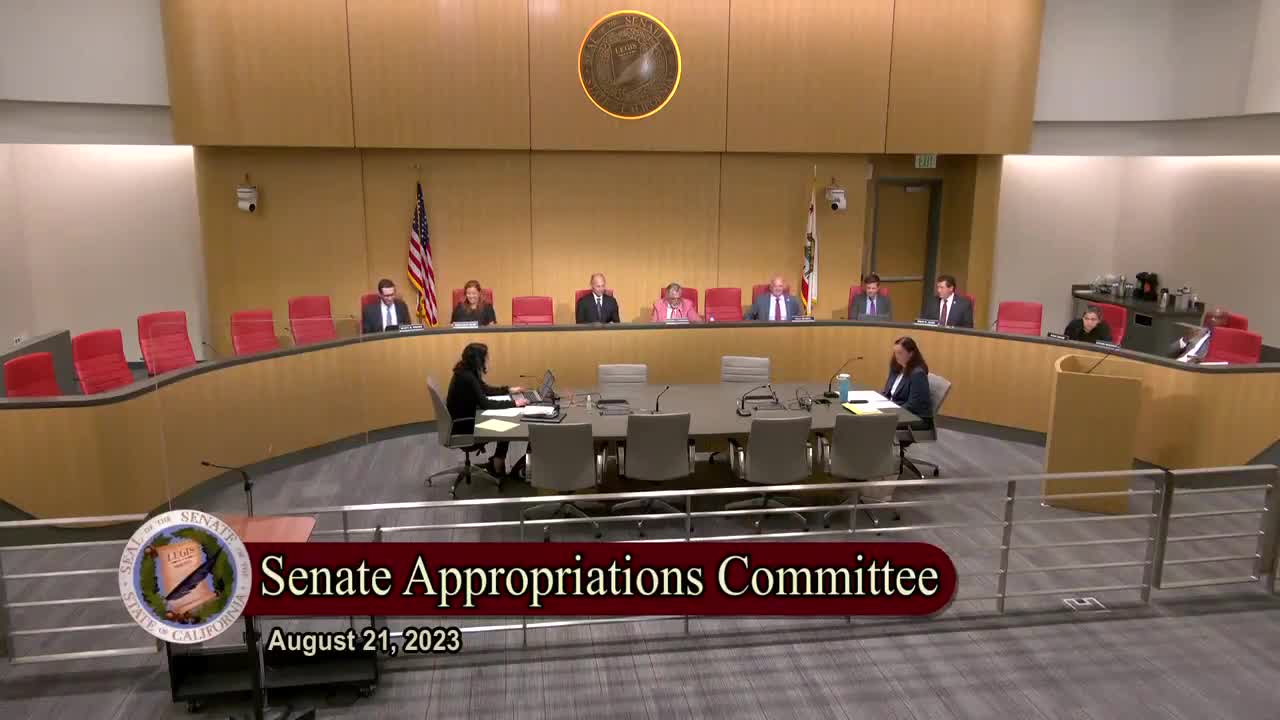 1MIN
Senate Standing Committee on Appropriations
Bill Author

Bill Co-Author(s):