AB 1437: Medi-Cal: serious mental illness.
- Session Year: 2023-2024
- House: Assembly
- Latest Version Date: 2023-09-14
Current Status:
Failed
(2024-01-25: Consideration of Governor's veto stricken from file.)
Introduced
In Committee
First Chamber
In Committee
Second Chamber
Enacted
Existing law establishes the Medi-Cal program, which is administered by the State Department of Health Care Services and under which qualified low-income individuals receive health care services. The Medi-Cal program is, in part, governed and funded by federal Medicaid program provisions.
Existing law sets forth a schedule of benefits under the Medi-Cal program, including specialty and nonspecialty mental health services through different delivery systems, in certain cases subject to utilization controls, such as prior authorization. Under existing law, prior authorization is approval of a specified service in advance of the rendering of that service based upon a determination of medical necessity. Existing law sets forth various provisions relating to processing, or appealing the decision of, treatment authorization requests, and provisions relating to certain services requiring or not requiring a treatment authorization request.
After a determination of cost benefit, existing law requires the Director of Health Care Services to modify or eliminate the requirement of prior authorization as a control for treatment, supplies, or equipment that costs less than $100, except for prescribed drugs, as specified.
Under this bill, a prescription refill for a drug for serious mental illness would automatically be approved for a period of 365 days after the initial prescription is dispensed.
The bill would condition the above-described provisions on the prescription being for a person 18 years of age or over, and on the person not being within the transition jurisdiction of the juvenile court, as specified.
Existing law establishes the Medi-Cal program, which is administered by the State Department of Health Care Services and under which qualified low-income individuals receive health care services. The Medi-Cal program is, in part, governed and funded by federal Medicaid program provisions.
Existing law sets forth a schedule of benefits under the Medi-Cal program, including specialty and nonspecialty mental health services through different delivery systems, in certain cases subject to utilization controls, such as prior authorization. Under existing law, prior authorization is approval of a specified service in advance of the rendering of that service based upon a determination of medical necessity. Existing law sets forth various provisions relating to processing, or appealing the decision of, treatment authorization requests, and provisions relating to certain services requiring or not requiring a treatment authorization request.
After a determination of cost benefit, existing law requires the Director of Health Care Services to modify or eliminate the requirement of prior authorization as a control for treatment, supplies, or equipment that costs less than $100, except for prescribed drugs, as specified.
Under this bill, a treatment authorization request would not be required for the provision of a prescription drug prescribed to prevent, assess, or treat a serious mental illness, as defined. Under the bill, a prescription refill for a drug for serious mental illness would automatically be approved if the department verifies a record of a paid claim that documents a diagnosis of a serious mental illness within 365 days before the date of that prescription. for a period of 365 days after the initial prescription is dispensed.
The bill would condition the above-described provisions on the prescription being for a person 18 years of age or over, and on the person not being within the transition jurisdiction of the juvenile court, as specified.
Existing law establishes the Medi-Cal program, which is administered by the State Department of Health Care Services and under which qualified low-income individuals receive health care services. The Medi-Cal program is, in part, governed and funded by federal Medicaid program provisions.
Existing law sets forth a schedule of benefits under the Medi-Cal program, including specialty and nonspecialty mental health services through different delivery systems, in certain cases subject to utilization controls, such as prior authorization. Under existing law, prior authorization is approval of a specified service in advance of the rendering of that service based upon a determination of medical necessity. Existing law sets forth various provisions relating to processing, or appealing the decision of, treatment authorization requests, and provisions relating to certain services requiring or not requiring a treatment authorization request.
After a determination of cost benefit, existing law requires the Director of Health Care Services to modify or eliminate the requirement of prior authorization as a control for treatment, supplies, or equipment that costs less than $100, except for prescribed drugs, as specified.
Under this bill, a treatment authorization request would not be required for the provision of a prescription drug prescribed to prevent, assess, or treat a serious mental illness, as defined. Under the bill, a prescription for a drug for serious mental illness would automatically be approved if the department verifies a record of a paid claim that documents a diagnosis of a serious mental illness within 365 days before the date of that prescription.
The bill would condition the above-described provisions on the prescription being for a person 18 years of age or over, and on the person not being within the transition jurisdiction of the juvenile court, as specified.
(a)Notwithstanding any other law, subject to subdivision (b), a prescription refill for a drug for serious mental illness shall automatically be approved for a period of 365 days after the initial prescription is dispensed.
(b)Subdivision (a) applies only if both of the following conditions are met:
(1)The prescription is for a person 18 years of age or over.
(2)The person is not within the transition jurisdiction of the juvenile court, as described in Section 450.
(c)(1)For purposes of this section, serious mental illness means a mental disorder that is identified in the most recent edition of the Diagnostic and Statistical Manual of Mental Disorders and that is severe in degree and persistent in duration, presents a major risk to the persons health and well-being, causes behavioral functioning that interferes substantially with the primary activities of daily living, and results in an inability to maintain stable adjustment and independent functioning without treatment, support, and rehabilitation for a long or indefinite period of time.
(2)Serious mental illness may include, but is not limited to, schizophrenia, post-traumatic stress disorder, bipolar disorder, other major affective disorders, or other severely disabling mental disorders pursuant to paragraph (1).
(a)Notwithstanding any other law, subject to subdivision (c), (b), a prescription refill for a drug for serious mental illness shall automatically be approved if the department verifies a record of a paid claim that documents a diagnosis of a serious mental illness within 365 days before the date of that prescription. for a period of 365 days after the initial prescription is dispensed.
(c)Subdivisions (a) and (b) shall apply
(b)Subdivision (a) applies only if both of the following conditions are met:
(1)The prescription is for a person 18 years of age or over.
(2)The person is not within the transition jurisdiction of the juvenile court, as described in Section 450.
(d)(c)(1)For purposes of this section, serious mental illness means a mental disorder that is identified in the most recent edition of the Diagnostic and Statistical Manual of Mental Disorders and that is severe in degree and persistent in duration, presents a major risk to the persons health and well-being, causes behavioral functioning that interferes substantially with the primary activities of daily living, and results in an inability to maintain stable adjustment and independent functioning without treatment, support, and rehabilitation for a long or indefinite period of time.
(2)Serious mental illness may include, but is not limited to, schizophrenia, post-traumatic stress disorder, bipolar disorder, other major affective disorders, or other severely disabling mental disorders pursuant to paragraph (1).
(a)Notwithstanding any other law, subject to subdivision (c), a treatment authorization request shall not be required for the provision of a prescription drug prescribed to prevent, assess, or treat a serious mental illness.
(b)Notwithstanding any other law, subject to subdivision (c), a prescription for a drug for serious mental illness shall automatically be approved if the department verifies a record of a paid claim that documents a diagnosis of a serious mental illness within 365 days before the date of that prescription.
(c)Subdivisions (a) and (b) shall apply only if both of the following conditions are met:
(1)The prescription is for a person 18 years of age or over.
(2)The person is not within the transition jurisdiction of the juvenile court, as described in Section 450.
(d)(1)For purposes of this section, serious mental illness means a mental disorder that is identified in the most recent edition of the Diagnostic and Statistical Manual of Mental Disorders and that is severe in degree and persistent in duration, presents a major risk to the persons health and well-being, causes behavioral functioning that interferes substantially with the primary activities of daily living, and results in an inability to maintain stable adjustment and independent functioning without treatment, support, and rehabilitation for a long or indefinite period of time.
(2)Serious mental illness may include, but is not limited to, schizophrenia, post-traumatic stress disorder, bipolar disorder, other major affective disorders, or other severely disabling mental disorders pursuant to paragraph (1).
|
Date
|
Status
|
|---|---|
| Jan 25, 2024 | Consideration of Governor's veto stricken from file. |
| Jan 3, 2024 | Consideration of Governor's veto pending. |
| Oct 8, 2023 | Vetoed by Governor. |
| Sep 20, 2023 | Enrolled and presented to the Governor at 4 p.m. |
| Sep 12, 2023 | In Assembly. Ordered to Engrossing and Enrolling. |
| Sep 12, 2023 | Read third time. Passed. Ordered to the Assembly. (Ayes 39. Noes 0. Page 2689.). |
| Sep 8, 2023 | Ordered to special consent calendar. |
| Sep 5, 2023 | Read second time. Ordered to third reading. |
| Sep 1, 2023 | From committee: Do pass. (Ayes 7. Noes 0.) (September 1). |
| Jul 3, 2023 | In committee: Referred to APPR suspense file. |
| Jun 22, 2023 | From committee: Do pass and re-refer to Com. on APPR with recommendation: To Consent Calendar. (Ayes 12. Noes 0.) (June 21). Re-referred to Com. on APPR. |
| Jun 7, 2023 | Referred to Com. on HEALTH. |
| May 26, 2023 | In Senate. Read first time. To Com. on RLS. for assignment. |
| May 25, 2023 | Read third time. Passed. Ordered to the Senate. (Ayes 75. Noes 0. Page 1779.) |
| May 18, 2023 | Read second time. Ordered to third reading. |
| May 18, 2023 | From committee: Do pass. (Ayes 15. Noes 0.) (May 18). |
| May 3, 2023 | In committee: Set, first hearing. Referred to APPR. suspense file. |
| Apr 26, 2023 | In committee: Hearing postponed by committee. |
| Apr 17, 2023 | Re-referred to Com. on APPR. |
| Apr 13, 2023 | Read second time and amended. |
| Apr 12, 2023 | From committee: Amend, and do pass as amended and re-refer to Com. on APPR. (Ayes 15. Noes 0.) (April 11). |
| Mar 9, 2023 | Referred to Com. on HEALTH. |
| Feb 18, 2023 | From printer. May be heard in committee March 20. |
| Feb 17, 2023 | Read first time. To print. |
|
Date
|
Description
|
Location
|
Votes
|
|
|---|---|---|---|---|
| Sep 12, 2023 | Special Consent AB1437 Irwin et al. By Eggman | Senate Floor |
Passed |
|
| Sep 1, 2023 | Do pass | Senate Standing Committee on Appropriations |
Passed |
|
| Jul 3, 2023 | Placed on suspense file | Senate Standing Committee on Appropriations |
Passed |
|
| Jun 21, 2023 | Do pass, but first be re-referred to the Committee on [Appropriations] with the recommendation: To Consent Calendar | Senate Standing Committee on Health |
Passed |
|
| May 25, 2023 | AB 1437 Irwin Assembly Third Reading | Assembly Floor |
Passed |
|
| May 18, 2023 | Do pass. | Assembly Standing Committee on Appropriations |
Passed |
|
| Apr 11, 2023 | Do pass as amended and be re-referred to the Committee on [Appropriations] | Assembly Standing Committee on Health |
Passed |
This list shows positions taken on this bill by organizations on the date displayed, which is linked to the original source.
Positions by individuals are not included.
|
Organization
|
Position
|
Date
|
|---|---|---|
| Alliance for Patient Access | ** Support | |
| Cal Voices | ** Support | |
| California Access Coalition | ** Support | |
| California Acupuncture Traditional Medical Assocation | * Support | Apr 11, 2023 |
| California Association of Local Behavioral Health Boards and Commissions | ** Support | |
| California Chronic Care Coalition | ** Support | |
| California Coalition for Mental Health | ** Support | |
| California Consortium of Addiction Programs and Professionals | ** Support | |
| California Council of Community Behavioral Health | ** Support | |
| California Life Sciences | ** Support | |
| California Medical Association | * Support | Apr 11, 2023 |
| California Professional Firefighters | ** Support | |
| California State Association of Psychiatrists | ** Support | |
| Carrie's Touch Inc. | * For If Amend | Apr 11, 2023 |
| Connection Coalition | ** Support | |
| Dbsa California | ** Support | |
| Depression and Bipolar Support Alliance California. | ** Support | |
| Mental Health America of California | ** Support | |
| National Association Of Social Workers, California Chapter | ** Support | |
| PathPoint | ** Support | |
| Psychiatric Physicians Alliance of California | ** Support | |
| Schizophrenia & Psychosis Action Alliance | ** Support | |
| Steinberg Institute | ** Support | |
| The Kennedy Forum | ** Support |
GOVERNOR'S VETO
GV Bill Id:AB 1437
Author:(Irwin and Quirk-Silva)
As Enrolled Ver:September 14, 2023
2/3 vote
SUMMARY
Requires the Department of Health Care Services (DHCS) to automatically approve a prescription refill for a Medi-Cal covered drug prescribed for serious mental illness (SMI), for a period of 365 days after the initial prescription is dispensed.
Governor’s Veto Message
This bill would require the Medi-Cal program to automatically approve any prescription refill for serious mental illness (SMI) for a period of 365 days after the initial prescription is dispensed for a beneficiary 18 years or older.
I appreciate the author's intent to increase Medi-Cal beneficiaries' access and adherence to SMI drugs. However, this approach does not address the underlying obstacles with medication adherence and would remove clinical safeguards. Currently most medications used for an SMI are covered without prior authorization, and if prior authorization is needed, DHCS provides a response within 24 hours and allows emergency coverage of a drug up to 14 days. In instances where prior authorization is required, it is in place for patient safety. Maintaining utilization control is important to contain health care costs, protect patients, and ensure medically necessary care.
COMMENTS
- Medi-Cal Prescription Drug Coverage. Outpatient prescription drug coverage is an optional benefit under federal law that all state Medicaid programs provide. Effective January 1, 2022, Medi-Cal provides outpatient prescription drug coverage through a statewide system called Medi-Cal Rx, via contract with a fiscal intermediary, Magellan Medicaid Administration, Inc. Even though the majority of individuals enrolled in Medi-Cal receive health care services through a managed care plan, the statewide Medi-Cal Rx system pays directly for all prescription drugs dispensed by a pharmacy and billed on a pharmacy claim.
Medi-Cal Rx maintains a single, statewide, approved Medi-Cal Contract Drug List (CDL) that standardizes the Medi-Cal pharmacy benefit. The CDL is DHCS' preferred set of covered drugs and generally includes drugs for which there is a current state supplemental drug rebate agreement in place. Most drugs on the CDL do not have a prior authorization (PA) requirement. Alternatively, if a drug is not listed on the Medi-Cal CDL, it generally requires an approved PA for coverage.
- PA. PA is commonly used by health care payers, including in public programs and commercial health plans. PA requirements are used to help control costs and ensure payment accuracy by verifying that an item or service is medically necessary, meets coverage criteria, and is consistent with standards of care before the item or service is provided. PA generally involves submission of administrative and clinical information by the treating physician. According to the Kaiser Family Foundation (KFF), in a 2021 American Medical Association Survey, most physicians (88%) characterized administrative burdens from this process as high or extremely high. Doctors also indicated that PA often delays care patients receive and results in negative clinical outcomes. KFF indicates PA is an increasingly scrutinized practice, and debate over further standards to limit the use or regulate PA may involve tradeoffs between claims spending versus access to care for patients and administrative burden for providers.
In Medi-Cal, certain pharmacy drug and medical supplies dispensed by a pharmacy are subject to PA by Medi-Cal Rx before reimbursement can be approved. A prescriber's office or pharmacy can submit an electronic PA request through a portal, other electronic means, or fax. Per state law, Medi-Cal Rx responds to PA requests within 24 hours (or the next business day if request is received after-hours). The Medi-Cal provider will receive a confirmation and/or notice of approval, deferral, modification, and/or denial, from DHCS.
DHCS indicates both initial and reauthorization PA requests are adjudicated based on documentation of medical necessity for the use of the specific medication requested. DHCS indicates documentation of medical necessity can be supported by including lab values, results of testing, treatment plan and treatment outcomes.
- Medi-Cal Rx Reevaluation of PA. DHCS is currently implementing and evaluating changes to reduce the need for manual review and reduce administrative work associated with PA. As part of Medi-Cal Rx, DHCS states it is considering expanding auto-adjudication functionalities (i.e., automated claim approval and payment) to reduce the number of drugs with PA requirements that require manual review. DHCS lists potential categories of drugs for which it is considering expanding auto-adjudication. The list includes selective serotonin reuptake inhibitors used to treat depression, but does not include antipsychotics commonly used to treat other SMIs.
On March 23, 2023, DHCS released a policy bulletin entitled, "Extended Duration Prior Authorizations for Maintenance Medications." DHCS indicates to reduce administrative burden while ensuring continued medication safety for beneficiaries, the department has enabled extended duration/multi-year PAs for up to five years for certain maintenance medications used for chronic conditions. This extended duration PA is provided for certain maintenance medications with a PA requirement. Additional restrictions such as quantity limits, age limits, diagnosis restrictions, and other clinical edits may apply. DHCS indicates for a maintenance medication with an approved PA or paid claims history within the 15-month lookback period, if a drug is eligible for extended duration PA, the prescription will be automatically extended. Antidepressants and antipsychotics are cited as examples of drug classes of maintenance drugs DHCS will evaluate for extended duration PA, but DHCS has not yet made available the "Medi-Cal Rx Extended Duration Prior Authorization List" that will list specific eligible drugs.
- Evidence of the Effects of Formulary Restrictions. Studies have examined the effectiveness and unintended consequences of PA and other restrictions for drugs generally, as well as drugs prescribed to treat SMI.
A June 2009 study in the journal Psychiatric Services entitled "Medicaid Prescription Drug Policies and Medication Access and Continuity: Findings From Ten States" compared medication access problems among psychiatric patients in 10 state Medicaid programs, assessed adverse events associated with medication access problems, and determined whether prescription drug utilization management is associated with access problems and adverse events. Over 4,800 psychiatrists from the American Medical Association's Masterfile were randomly selected, 62% responded and 32% treated Medicaid patients and were randomly assigned a start day and time to report on two Medicaid patients. The results of the study found that a medication access problem in the past year was reported for a mean of 48.3% of the patients, with a 37.6% absolute difference between states with the lowest and highest rates. The most common access problems were not being able to access clinically indicated medication refills or new prescriptions because Medicaid would not cover or approve them (34%), prescribing a medication not clinically preferred because clinically indicated or preferred medications were not covered or approved (29.4%), and discontinuing medications as a result of prescription drug coverage or management issues (25.8%).
Medication access problems varied by state. The states with the lowest rates of reported medication access problems were New York (27.1%), Texas (31.0%), and California (32.4%), while Tennessee (63.3%), Georgia (64.2%), and Michigan (64.7%) had the highest rates. Patient access to new medications and medication refills also varied by state. Patients in New York, Texas, and California had the lowest rates of problems accessing clinically indicated medication refills or new prescriptions because they were not covered or approved (19.0%–22.4%), while patients in Tennessee, Georgia, and Michigan had the highest rates of problems (49.3%–55%).
Another study found formulary restrictions for drugs prescribed for SMI were not associated with statistically significantly lower pharmacy expenditures for either group and that patients with schizophrenia subject to formulary restrictions had worse adherence.
- Proposed Federal Rule. In December 2022, the Centers for Medicare and Medicaid Services published a proposed rule designed to reduce the administrative burden of PA by requiring certain payers to implement an automated process, meet shorter time frames for decision making, and improve transparency. The rule would apply to Medicaid programs and other public health insurance programs. Among other things, the rule would require payers to publicly report specific PA metrics annually. Impacted payers would be required to disclose annually on their website a list of all services requiring prior authorization and specific aggregated metrics. Metrics would include, among other items, the percentage of prior authorizations that were approved and denied, the percentage of prior authorization requests approved after appeal, and the average time for a prior authorization determination
According to the Author
This bill will improve access to crucial medications for Medi-Cal patients with SMI by removing unnecessary barriers.
Arguments in Support
This bill is sponsored by the California Access Coalition and Psychiatric Physicians Alliance of California and supported by providers, drug manufacturers and mental health advocacy groups. Sponsors argue that this bill will improve access to critical medications for Medi-Cal patients with SMI by removing unnecessary barriers. Sponsors state that studies of state Medicaid programs found psychiatric patients' lack of access to these medications contributes to a higher rate of negative outcomes for this population including increased emergency room visits, hospitalizations, homelessness, or incarceration.
Arguments in Opposition
There is no known opposition.
FISCAL COMMENTS
According to the Assembly Appropriations Committee:
- Potentially significant costs of an unknown amount in the Medi-Cal program for prescription drugs, to the extent automatic approval of prescription refills results in beneficiaries receiving more drugs than they would if they needed to seek re-approvals to obtain medication for SMI (General Fund (GF) and federal funds (FF)). To the extent this bill helps Medi-Cal enrollees adhere to their prescription drug regimens, and reduces the need for costlier care, some cost savings could also result.
- Minor one-time administrative costs to update provider manuals and notify providers about changes required by the bill, as well as minor ongoing administrative workload reduction for fewer prescription drug reviews (GF, FF)
VOTES
ASM HEALTH: 15-0-0
YES: Wood, Waldron, Aguiar-Curry, Arambula, Boerner Horvath, Wendy Carrillo, Flora, Vince Fong, Maienschein, McCarty, Joe Patterson, Rodriguez, Santiago, Villapudua, Weber
ASM APPROPRIATIONS: 15-0-1
YES: Holden, Megan Dahle, Bryan, Calderon, Wendy Carrillo, Dixon, Mike Fong, Hart, Lowenthal, Mathis, Papan, Pellerin, Sanchez, Weber, Ortega
ABS, ABST OR NV: Robert Rivas
ASSEMBLY FLOOR: 75-0-5
YES: Addis, Alanis, Alvarez, Arambula, Bains, Bauer-Kahan, Bennett, Berman, Boerner, Bonta, Bryan, Calderon, Juan Carrillo, Wendy Carrillo, Cervantes, Chen, Connolly, Megan Dahle, Davies, Dixon, Essayli, Flora, Mike Fong, Vince Fong, Friedman, Gabriel, Gallagher, Garcia, Gipson, Grayson, Haney, Hart, Holden, Hoover, Irwin, Jackson, Kalra, Lackey, Lee, Low, Lowenthal, Maienschein, McCarty, McKinnor, Muratsuchi, Stephanie Nguyen, Ortega, Pacheco, Jim Patterson, Joe Patterson, Pellerin, Petrie-Norris, Quirk‑Silva, Ramos, Reyes, Luz Rivas, Robert Rivas, Rodriguez, Blanca Rubio, Sanchez, Santiago, Schiavo, Soria, Ta, Ting, Valencia, Villapudua, Waldron, Wallis, Ward, Weber, Wicks, Wilson, Zbur, Rendon
ABS, ABST OR NV: Aguiar-Curry, Jones-Sawyer, Mathis, Papan, Wood
SENATE FLOOR: 39-0-1
YES: Allen, Alvarado-Gil, Archuleta, Ashby, Atkins, Becker, Blakespear, Bradford, Cortese, Dahle, Dodd, Durazo, Eggman, Glazer, Gonzalez, Grove, Hurtado, Jones, Laird, Limón, McGuire, Menjivar, Min, Newman, Nguyen, Niello, Ochoa Bogh, Padilla, Portantino, Roth, Rubio, Seyarto, Skinner, Smallwood-Cuevas, Stern, Umberg, Wahab, Wiener, Wilk
ABS, ABST OR NV: Caballero
UPDATED
VERSION: September 14, 2023
CONSULTANT: Lisa Murawski / HEALTH / (916) 319-2097 FN: 0002544
SENATE RULES COMMITTEE Office of Senate Floor Analyses (916) 651-1520 Fax: (916) 327-4478 | AB 1437 |
THIRD READING
Bill No: AB 1437
Author: Irwin (D) and Quirk-Silva (D)
Amended: 4/13/23 in Assembly
Vote: 21
SENATE HEALTH COMMITTEE: 12-0, 6/21/23
AYES: Eggman, Nguyen, Glazer, Gonzalez, Grove, Hurtado, Limón, Menjivar, Roth, Rubio, Wahab, Wiener
SENATE APPROPRIATIONS COMMITTEE: 7-0, 9/1/23
AYES: Portantino, Jones, Ashby, Bradford, Seyarto, Wahab, Wiener
ASSEMBLY FLOOR: 75-0, 5/25/23 - See last page for vote
SUBJECT: Medi-Cal: serious mental illness
SOURCE: Alliance for Patient Access
California Access Coalition
Psychiatric Physicians Alliance of California
DIGEST:
This bill requires the Department of Health Care Services to automatically approve a Medi-Cal prescription refill for a drug for serious mental illness for 365 days after the initial prescription is dispensed.
ANALYSIS:
Existing law:
- Establishes the Medi-Cal Program, administered by the Department of Health Care Services (DHCS), under which qualified low-income individuals receive health care services. [WIC §14000 et seq.]
- Establishes a schedule of benefits under the Medi-Cal program, including prescription drugs, subject to the Medi-Cal contract drug list and utilization controls. [WIC §14132]
- Authorizes prior authorization as one of the utilization controls that may be applied to Medi-Cal services. Defines “prior authorization” as approval by a DHCS consultant, of a specified service in advance of the rendering of that service based upon a determination of medical necessity; and, includes authorization for multiple services which are requested and granted on the basis of an extended treatment plan where there is a need for continuity in the treatment of a chronic or extended condition. [WIC §14133]
- Requires DHCS to ensure the timely and efficient processing of authorization requests by providing a response by telephone or other means of telecommunication within 24 hours of the receipt of an authorization request; and, to the extent permitted by federal law, providing for the dispensing of at least a 72-hour supply of a covered drug in an emergency situation, as defined by federal regulation. [WIC §14133.37]
This bill:
- Requires a Medi-Cal prescription refill for a drug for serious mental illness to be automatically approved for a period of 365 days after the initial prescription is dispensed if the following conditions are met:
- The prescription is for a person 18 years of age or over; and,
- The person is not within the transition jurisdiction of the juvenile court.
- Defines “serious mental illness” as a mental disorder that is identified in the most recent edition of the Diagnostic and Statistical Manual of Mental Disorders and that is severe in degree and persistent in duration, presents a major risk to the person’s health and well-being, causes behavioral functioning that interferes substantially with the primary activities of daily living, and results in an inability to maintain stable adjustment and independent functioning without treatment, support, and rehabilitation for a long or indefinite period of time. Includes, but is not limited to, schizophrenia, post-traumatic stress disorder, bipolar disorder, other major affective disorders, or other severely disabling mental disorders.
Comments
- Author’s statement. According to the author, Californians who are covered by Medi-Cal and need access to anti-psychotic medications should not have to face obstacles when trying to adhere to their prescribed drug regimens. Unfortunately, studies have shown that nearly half of Medi-Cal patients with a serious mental illness diagnosis are experiencing a medication access problem leading to a negative outcome, such as loss of employment or homelessness. This bill will make essential changes to the process of refilling anti-psychotic medications for Medi-Cal patients, thus improving medication access for California’s most vulnerable populations.
- Serious mental illness among low-income adults in California. According to a July 2022 report by the California Health Care Foundation, in 2019, while 3.9% of adults in California experienced a serious mental illness, those with low incomes are disproportionately affected. For those below 100% of the federal poverty level (FPL), 8.5% experienced a serious mental illness; for those with incomes between 100% and 199% of FPL, 6% experienced a serious mental illness. The impact is also disproportionately born by Black and American Indian/Alaskan Natives with incident rates at 5.3% and 6.8% respectively. Despite these numbers, less than 4% of adults received any specialty mental health services in 2019 from Medi-Cal. Specialty mental health services are services provided by the county to Medi-Cal recipients with moderate to severe mental illness. The report also indicated that medication adherence for persons with serious mental illness on Medi-Cal is an issue: 57% of adults enrolled in Medi-Cal who were prescribed antipsychotic medications for schizophrenia remained on them for at least 80% of their treatment period, though this is just slightly lower than the 60% national average.
- Impact of prior authorization on medication adherence. Several studies have evaluated the impact of prior authorization on Medicaid beneficiaries with severe mental illness. For example, a 2015 issue brief from USC Schaeffer Center for Health Policy & Economics summarizing three peer reviewed studies on Medicaid formulary restrictions, including prior authorization, found that such formulary restrictions increased overall Medicaid spending for people with serious mental illness, as well as increased the likelihood that the individuals would be hospitalized, incarcerated, or homeless. A June 2009 study in the journal Psychiatric Services compared medication access problems among psychiatric patients in ten state Medicaid programs. The most common access problems were not being able to access clinically indicated medication refills or new prescriptions because they were not covered or approved, prescribing a medication not clinically preferred because clinically indicated or preferred medications were not covered or approved, and discontinuing medications as a result of prescription drug coverage or administrative or management issues. California was among the states with the lowest rates of reported medication access problems, though 32.4% of the recipients reported at least one access problem.
- Medi-Cal Rx. On January 7, 2019, Governor Newsom issued EO N-01-19, which directed the state to take action to reduce the cost of prescription drugs and required DHCS to transition outpatient Medi-Cal prescription drug services to the fee-for-service delivery system under a single statewide system, known as Medi-Cal Rx. The Medi-Cal Rx system began operating in January of 2022. Under Medi-Cal Rx, the state’s contracted vendor, Magellan Medicaid Administration, Inc., is responsible for providing claims administration, providing utilization management, administering drug rebate services at DHCS’s direction, providing drug utilization review, and operating a call center for providers and beneficiaries. DHCS remains responsible for developing the Medi-Cal pharmacy policy, including the contract drug list and prior authorization, negotiating supplemental drug rebates, developing reimbursement methodologies, overseeing a drug utilization review process, and maintaining the pharmacy network. The contract drug list is DHCS's preferred set of covered drugs and includes drugs for which there is a current state supplemental drug rebate agreement in place. Most drugs on the list do not have a prior authorization requirement.
- Current Medi-Cal procedures for prior authorization of drugs. Medi-Cal providers have five ways to submit prior authorization requests, one of three different online portals, fax, or mail. The contract with Magellan requires prior authorization determinations to be completed within 24 hours. According to recent data provided by DHCS, Magellan is currently in complete compliance with this requirement. The determination is based on the provider’s documentation of medical necessity and a prior authorization determination is complete once the provider is notified whether the prior authorization is approved, deferred, modified, or denied by DHCS. The online portals permits providers to add additional information as needed.
During the early implementation of Medi-Cal Rx, many prior authorization requirements were waived, particularly for drugs which enrollees were already using that did not previously require a prior authorization (but did once Medi-Cal Rx was implemented). Prior authorization requirements were also waived, for a limited period of time, for drugs for which an enrollee had approved via prior authorization, before the transition to Medi-Cal Rx. This limited time period varied – in many cases prior authorizations were waived for a 180 day transition period, and in other cases, DHCS allowed for an extensions of existing prior authorizations for three months to one year. More recently, DHCS provided a list of drugs eligible for an extended prior authorization period of up to five years for certain maintenance medications for chronic conditions. DHCS has also indicated that some drugs may be excluded from prior authorization requirements entirely at some time in the future. These policies are all subject to change at any time by DHCS. This bill provides a floor for drugs used to treat adults with serious mental illness that would preclude another required prior authorization for 365 days after the initial prescription is dispensed.
FISCAL EFFECT: Appropriation: No Fiscal Com.: Yes Local: No
According to the Senate Appropriations Committee, this bill has unknown, potentially significant costs to the Medi-Cal program to the extent the provisions of this bill would result in higher utilization of prescription drug benefits.
SUPPORT: (Verified 8/22/23)
Alliance for Patient Access (co-source)
California Access Coalition (co-source)
Psychiatric Physicians Alliance of California (co-source)
Cal Voices
California Chronic Care Coalition
California Coalition for Mental Health
California Consortium of Addiction Programs and Professionals
California Council of Community Behavioral Health
California Life Sciences
California Professional Firefighters
California State Association of Psychiatrists
Connection Coalition
Depression and Bipolar Support Alliance California
Mental Health America of California
National Association of Social Workers, California Chapter
PathPoint
Schizophrenia & Psychosis Action Alliance
Steinberg Institute
The California Association of Local Behavioral Health Boards and Commissions
The Kennedy Forum
OPPOSITION: (Verified 8/22/23)
None received
ARGUMENTS IN SUPPORT: Co-sponsors Alliance for Patient Access, California Access Coalition, and Psychiatric Physicians Alliance of California write that ensuring adults in Medi-Cal with serious mental illness have access to their prescribed medications is an essential element in avoiding negative health outcomes. Studies of state Medicaid programs found psychiatric patients’ lack of access to these medications contributes to a higher rate of negative outcomes for this population including increased emergency room visits, hospitalizations, homelessness or incarceration. In addition, these negative outcomes are further exacerbated across racial and ethnic demographics. They also point out the impact this bill would have on individuals experiencing homelessness or at risk of homelessness stating that medication adherence is instrumental in stabilizing patients with serious mental illness, which in some cases, can prevent homelessness and in others, can assist patients in transitioning into housing. They state that provisions of this bill will make it easier for individuals experiencing homelessness to receive medication refills if their medications are lost or stolen, which is a persistent issue in this community.
Supporters, Cal Voices point out that individuals with serious mental illness who are also living in poverty face additional barriers to medication adherence such as limited access to transportation, internet or cell phone services, in addition to a mental health workforce shortage that can make it difficult to get an appointment with a provider. All of these factors can make it more difficult to refill a prescription when prior authorization is needed.
ASSEMBLY FLOOR: 75-0, 5/25/23
AYES: Addis, Alanis, Alvarez, Arambula, Bains, Bauer-Kahan, Bennett, Berman, Boerner, Bonta, Bryan, Calderon, Juan Carrillo, Wendy Carrillo, Cervantes, Chen, Connolly, Megan Dahle, Davies, Dixon, Essayli, Flora, Mike Fong, Vince Fong, Friedman, Gabriel, Gallagher, Garcia, Gipson, Grayson, Haney, Hart, Holden, Hoover, Irwin, Jackson, Kalra, Lackey, Lee, Low, Lowenthal, Maienschein, McCarty, McKinnor, Muratsuchi, Stephanie Nguyen, Ortega, Pacheco, Jim Patterson, Joe Patterson, Pellerin, Petrie-Norris, Quirk-Silva, Ramos, Reyes, Luz Rivas, Robert Rivas, Rodriguez, Blanca Rubio, Sanchez, Santiago, Schiavo, Soria, Ta, Ting, Valencia, Villapudua, Waldron, Wallis, Ward, Weber, Wicks, Wilson, Zbur, Rendon
NO VOTE RECORDED: Aguiar-Curry, Jones-Sawyer, Mathis, Papan, Wood
Prepared by: Jen Flory / HEALTH / (916) 651-4111
9/5/23 9:42:37
**** END ****
SENATE COMMITTEE ON APPROPRIATIONS
Senator Anthony Portantino, Chair
2023 - 2024 Regular Session
AB 1437 (Irwin) - Medi-Cal: serious mental illness
Version: April 13, 2023 | Policy Vote: HEALTH 12 - 0 |
Urgency: No | Mandate: No |
Hearing Date: July 3, 2023 | Consultant: Agnes Lee |
Bill Summary:
AB 1437 would require the Department of Health Care Services (DHCS) to automatically approve a Medi-Cal prescription refill for a drug for serious mental illness for 365 days after the initial prescription is dispensed, as specified.
Fiscal Impact:
Unknown, potentially significant costs to the Medi-Cal program to the extent the provisions of the bill would result in higher utilization of prescription drug benefits.
Background:
The Medi-Cal program, administered by DHCS, provides medical coverage for eligible low-income individuals. Current law establishes a schedule of benefits under the Medi-Cal program, including prescription drugs, subject to the Medi-Cal contract drug list and utilization controls. Prior authorization is one of the utilization controls that may be applied to Medi-Cal services. “Prior authorization” requires approval by a DHCS consultant, of a specified service in advance of the rendering of that service based upon a determination of medical necessity; and, includes authorization for multiple services which are requested and granted on the basis of an extended treatment plan where there is a need for continuity in the treatment of a chronic or extended condition.
Proposed Law:
AB 1437 would require a Medi-Cal prescription refill for a drug for serious mental illness to be automatically approved for a period of 365 days after the initial prescription is dispensed if both the following conditions are met:
- The prescription is for a person 18 years of age or over; and,
- The person is not within the transition jurisdiction of the juvenile court.
-- END --
SENATE COMMITTEE ON HEALTH
Senator Dr. Susan Talamantes Eggman, Chair
BILL NO: AB 1437
AUTHOR: | Irwin, Quirk-Silva | ||
VERSION: | April 13, 2023 | ||
HEARING DATE: | June 21, 2023 | ||
CONSULTANT: | Jen Flory | ||
SUBJECT: Medi-Cal: serious mental illness
SUMMARY:
Requires the Department of Health Care Services to automatically approve a Medi-Cal prescription refill for a drug for serious mental illness for 365 days after the initial prescription is dispensed.
Existing law:
- Establishes the Medi-Cal Program, administered by the Department of Health Care Services (DHCS), under which qualified low-income individuals receive health care services. [WIC §14000 et seq.]
- Establishes a schedule of benefits under the Medi-Cal program, including prescription drugs, subject to the Medi-Cal contract drug list and utilization controls. [WIC §14132]
- Authorizes prior authorization as one of the utilization controls that may be applied to Medi-Cal services. Defines “prior authorization” as approval by a DHCS consultant, of a specified service in advance of the rendering of that service based upon a determination of medical necessity; and, includes authorization for multiple services which are requested and granted on the basis of an extended treatment plan where there is a need for continuity in the treatment of a chronic or extended condition. [WIC §14133]
- Requires DHCS to ensure the timely and efficient processing of authorization requests by providing a response by telephone or other means of telecommunication within 24 hours of the receipt of an authorization request; and, to the extent permitted by federal law, providing for the dispensing of at least a 72-hour supply of a covered drug in an emergency situation, as defined by federal regulation. [WIC §14133.37]
This bill:
- Requires a Medi-Cal prescription refill for a drug for serious mental illness to be automatically approved for a period of 365 days after the initial prescription is dispensed if the following conditions are met:
- The prescription is for a person 18 years of age or over; and,
- The person is not within the transition jurisdiction of the juvenile court.
- Defines “serious mental illness” as a mental disorder that is identified in the most recent edition of the Diagnostic and Statistical Manual of Mental Disorders and that is severe in degree and persistent in duration, presents a major risk to the person’s health and well-being, causes behavioral functioning that interferes substantially with the primary activities of daily living, and results in an inability to maintain stable adjustment and independent functioning without treatment, support, and rehabilitation for a long or indefinite period of time. Includes, but is not limited to, schizophrenia, post-traumatic stress disorder, bipolar disorder, other major affective disorders, or other severely disabling mental disorders.
FISCAL EFFECT:
According to the Assembly Appropriations Committee:
Potentially significant costs of an unknown amount in the Medi-Cal program for prescription drugs, to the extent automatic approval of prescription refills results in beneficiaries receiving more drugs than they would if they needed to seek re-approvals to obtain medication for serious mental illness (General Fund (GF) and federal funds (FF)). To the extent this bill helps Medi-Cal enrollees adhere to their prescription drug regimens, and reduces the need for costlier care, some cost savings could also result.
Minor one-time administrative costs to update provider manuals and notify providers about changes required by the bill, as well as minor ongoing administrative workload reduction for fewer prescription drug reviews (GF, FF).
PRIOR VOTES:
Assembly Floor: | 75 - 0 |
Assembly Appropriations Committee: | 15 - 0 |
Assembly Health Committee: | 15 - 0 |
COMMENTS:
- Author’s statement. According to the author, Californians who are covered by Medi-Cal and need access to anti-psychotic medications should not have to face obstacles when trying to adhere to their prescribed drug regimens. Unfortunately, studies have shown that nearly half of Medi-Cal patients with a serious mental illness diagnosis are experiencing a medication access problem leading to a negative outcome, such as loss of employment or homelessness. This bill will make essential changes to the process of refilling anti-psychotic medications for Medi-Cal patients, thus improving medication access for California’s most vulnerable populations.
- Serious mental illness among low-income adults in California. According to a July 2022 report by the California Health Care Foundation, in 2019, while 3.9% of adults in California experienced a serious mental illness, those with low incomes are disproportionately affected. For those below 100% of the federal poverty level (FPL), 8.5% experienced a serious mental illness; for those with incomes between 100% and 199% of FPL, 6% experienced a serious mental illness. The impact is also disproportionately born by Black and American Indian/Alaskan Natives with incident rates at 5.3% and 6.8% respectively. Despite these numbers, less than 4% of adults received any specialty mental health services in 2019 from Medi-Cal. Specialty mental health services are services provided by the county to Medi-Cal recipients with moderate to severe mental illness. The report also indicated that medication adherence for persons with serious mental illness on Medi-Cal is an issue: 57% of adults enrolled in Medi-Cal who were prescribed antipsychotic medications for schizophrenia remained on them for at least 80% of their treatment period, though this is just slightly lower than the 60% national average.
- Impact of prior authorization on medication adherence. Several studies have evaluated the impact of prior authorization on Medicaid beneficiaries with severe mental illness. For example, a 2015 issue brief from USC Schaeffer Center for Health Policy & Economics summarizing three peer reviewed studies on Medicaid formulary restrictions, including prior authorization, found that such formulary restrictions increased overall Medicaid spending for people with serious mental illness, as well as increased the likelihood that the individuals would be hospitalized, incarcerated, or homeless. A June 2009 study in the journal Psychiatric Services compared medication access problems among psychiatric patients in ten state Medicaid programs. The most common access problems were not being able to access clinically indicated medication refills or new prescriptions because they were not covered or approved, prescribing a medication not clinically preferred because clinically indicated or preferred medications were not covered or approved, and discontinuing medications as a result of prescription drug coverage or administrative or management issues. California was among the states with the lowest rates of reported medication access problems, though 32.4% of the recipients reported at least one access problem.
- Medi-Cal Rx. On January 7, 2019, Governor Newsom issued EO N-01-19, which directed the state to take action to reduce the cost of prescription drugs and required DHCS to transition outpatient Medi-Cal prescription drug services to the fee-for-service delivery system under a single statewide system, known as Medi-Cal Rx. The Medi-Cal Rx system began operating in January of 2022. Under Medi-Cal Rx, the state’s contracted vendor, Magellan Medicaid Administration, Inc., is responsible for providing claims administration, providing utilization management, administering drug rebate services at DHCS’s direction, providing drug utilization review, and operating a call center for providers and beneficiaries. DHCS remains responsible for developing the Medi-Cal pharmacy policy, including the contract drug list and prior authorization, negotiating supplemental drug rebates, developing reimbursement methodologies, overseeing a drug utilization review process, and maintaining the pharmacy network. The contract drug list is DHCS's preferred set of covered drugs and includes drugs for which there is a current state supplemental drug rebate agreement in place. Most drugs on the list do not have a prior authorization requirement.
- Current Medi-Cal procedures for prior authorization of drugs. Medi-Cal providers have five ways to submit prior authorization requests, one of three different online portals, fax, or mail. The contract with Magellan requires prior authorization determinations to be completed within 24 hours. According to recent data provided by DHCS, Magellan is currently in complete compliance with this requirement. The determination is based on the provider’s documentation of medical necessity and a prior authorization determination is complete once the provider is notified whether the prior authorization is approved, deferred, modified, or denied by DHCS. The online portals permits providers to add additional information as needed.
During the early implementation of Medi-Cal Rx, many prior authorization requirements were waived, particularly for drugs which enrollees were already using that did not previously require a prior authorization (but did once Medi-Cal Rx was implemented). Prior authorization requirements were also waived, for a limited period of time, for drugs for which an enrollee had approved via prior authorization, before the transition to Medi-Cal Rx. This limited time period varied – in many cases prior authorizations were waived for a 180 day transition period, and in other cases, DHCS allowed for an extensions of existing prior authorizations for three months to one year. More recently, DHCS provided a list of drugs eligible for an extended prior authorization period of up to five years for certain maintenance medications for chronic conditions. DHCS has also indicated that some drugs may be excluded from prior authorization requirements entirely at some time in the future. These policies are all subject to change at any time by DHCS. This bill would provide a floor for drugs used to treat adults with serious mental illness that would preclude another required prior authorization for 365 days after the initial prescription is dispensed.
- Related legislation. A number of bills this year limit prior authorization by commercial health plans or insurers:
SB 324 (Limón) prohibits a health plan contract or health insurance policy from requiring prior authorization or other utilization review for any clinically indicated treatment for endometriosis, as determined by the treating physician and consistent with nationally recognized evidence-based clinical guidelines. SB 324 is pending in the Assembly Health Committee.
SB 427 (Portantino) prohibits a nongrandfathered health plan contract or health insurance policy from imposing any cost-sharing or utilization review requirements for antiretroviral drugs, devices, or products that are either approved by the federal Food and Drug Administration or recommended by the federal Centers for Disease Control and Prevention for the prevention of AIDS/HIV, including preexposure prophylaxis or postexposure prophylaxis. SB 427 is pending in the Assembly Health Committee.
SB 598 (Skinner) prohibits a health plan or health insurer from requiring a contracted health professional with a total contracting history of at least 36 months, to complete or obtain a prior authorization for any covered health care services if, in the most recent one-year contracted period, the health plan approved or would have approved not less than 90% of the prior authorization requests submitted by the health professional for the class of health care services or treatments subject to prior authorization. SB 598 is pending in the Assembly Health Committee.
AB 931 (Irwin) prohibits a health plan contract or disability insurance policy that provides coverage for physical therapy from requiring prior authorization for the initial 12 treatment visits for physical therapy. AB 931 passed the Senate Health Committee by a vote 10-0 on June 14, 2023.
- Prior legislation. AB 1178 (Irwin of 2021) would have prohibited prior authorization from being required by the DHCS for a drug prescribed for the treatment of serious mental illness for a period of 180 days after the initial prescription has been dispensed, required DHCS to automatically approve a prescription for a drug for the treatment of a serious mental illness if the patient was previously dispensed that drug before they enrolled in the Medi-Cal program and during the previous 365 days of the date of the new prescription before the date of that prescription, and addressed early refills and 90-day supplies of drugs. AB 1178 was held in the Assembly Appropriations Committee.
AB 3285 (Irwin of 2020) was substantially similar to AB 1178. Due to the shortened Legislative calendar brought on by the COVID-19 pandemic, AB 3285 was not set for a hearing.
- Support. Co-sponsors Alliance for Patient Access, California Access Coalition, and Psychiatric Physicians Alliance of California write that ensuring adults in Medi-Cal with serious mental illness have access to their prescribed medications is an essential element in avoiding negative health outcomes. Studies of state Medicaid programs found psychiatric patients’ lack of access to these medications contributes to a higher rate of negative outcomes for this population including increased emergency room visits, hospitalizations, homelessness or incarceration. In addition, these negative outcomes are further exacerbated across racial and ethnic demographics. They also point out the impact this bill would have on individuals experiencing homelessness or at risk of homelessness stating that medication adherence is instrumental in stabilizing patients with serious mental illness, which in some cases, can prevent homelessness and in others, can assist patients in transitioning into housing. They state that provisions of this bill will make it easier for individuals experiencing homelessness to receive medication refills if their medications are lost or stolen, which is a persistent issue in this community.
Supporters, Cal Voices point out that individuals with serious mental illness who are also living in poverty face additional barriers to medication adherence such as limited access to transportation, internet or cell phone services, in addition to a mental health workforce shortage that can make it difficult to get an appointment with a provider. All of these factors can make it more difficult to refill a prescription when prior authorization is needed.
SUPPORT AND OPPOSITION:
Support: Alliance for Patient Access (co-sponsor)
California Access Coalition (co-sponsor)
Psychiatric Physicians Alliance of California (co-sponsor)
California Chronic Care Coalition
California Coalition for Mental Health (CCMH)
California Life Sciences
California Professional Firefighters (CPF)
California State Association of Psychiatrists (CSAP)
Cal Voices
Connection Coalition
Depression and Bipolar Support Alliance (DBSA) California
Mental Health America of California (MHA)
National Association of Social Workers (NASW), California Chapter
PathPoint
Schizophrenia & Psychosis Action Alliance
Steinberg Institute
The California Association of Local Behavioral Health Boards and Commissions
The Kennedy Forum
Oppose: None received.
-- END --
ASSEMBLY THIRD READING
ATR Bill Id:AB 1437
Author:(Irwin and Quirk-Silva)
As Amended Ver:April 13, 2023
Majority vote
SUMMARY
Requires the Department of Health Care Services (DHCS) to automatically approve a prescription refill for a Medi-Cal covered drug prescribed for serious mental illness (SMI), for a period of 365 days after the initial prescription is dispensed.
Major Provisions
COMMENTS
- Medi-Cal Prescription Drug Coverage. Outpatient prescription drug coverage is an optional benefit under federal law that all state Medicaid programs provide. Effective January 1, 2022, Medi-Cal provides outpatient prescription drug coverage through a statewide system called Medi-Cal Rx, via contract with a fiscal intermediary, Magellan Medicaid Administration, Inc. Even though the majority of individuals enrolled in Medi-Cal receive health care services through a managed care plan, the statewide Medi-Cal Rx system pays directly for all prescription drugs dispensed by a pharmacy and billed on a pharmacy claim.
Medi-Cal Rx maintains a single, statewide, approved Medi-Cal Contract Drug List (CDL) that standardizes the Medi-Cal pharmacy benefit. The CDL is DHCS' preferred set of covered drugs and generally includes drugs for which there is a current state supplemental drug rebate agreement in place. Most drugs on the CDL do not have a prior authorization (PA) requirement. Alternatively, if a drug is not listed on the Medi-Cal CDL, it generally requires an approved PA for coverage.
- PA. PA is commonly used by health care payers, including in public programs and commercial health plans. PA requirements are used to help control costs and ensure payment accuracy by verifying that an item or service is medically necessary, meets coverage criteria, and is consistent with standards of care before the item or service is provided. PA generally involves submission of administrative and clinical information by the treating physician. According to the Kaiser Family Foundation (KFF), in a 2021 American Medical Association Survey, most physicians (88%) characterized administrative burdens from this process as high or extremely high. Doctors also indicated that PA often delays care patients receive and results in negative clinical outcomes. KFF indicates PA is an increasingly scrutinized practice, and debate over further standards to limit the use or regulate PA may involve tradeoffs between claims spending versus access to care for patients and administrative burden for providers.
In Medi-Cal, certain pharmacy drug and medical supplies dispensed by a pharmacy are subject to PA by Medi-Cal Rx before reimbursement can be approved. A prescriber's office or pharmacy can submit an electronic PA request through a portal, other electronic means, or fax. Per state law, Medi-Cal Rx responds to PA requests within 24 hours (or the next business day if request is received after-hours). The Medi-Cal provider will receive a confirmation and/or notice of approval, deferral, modification, and/or denial, from DHCS.
DHCS indicates both initial and reauthorization PA requests are adjudicated based on documentation of medical necessity for the use of the specific medication requested. DHCS indicates documentation of medical necessity can be supported by including lab values, results of testing, treatment plan and treatment outcomes.
- Medi-Cal Rx Reevaluation of PA. DHCS is currently implementing and evaluating changes to reduce the need for manual review and reduce administrative work associated with PA. As part of Medi-Cal Rx, DHCS states it is considering expanding auto-adjudication functionalities (i.e., automated claim approval and payment) to reduce the number of drugs with PA requirements that require manual review. DHCS lists potential categories of drugs for which it is considering expanding auto-adjudication. The list includes selective serotonin reuptake inhibitors used to treat depression, but does not include antipsychotics commonly used to treat other SMIs.
On March 23, 2023, DHCS released a policy bulletin entitled, "Extended Duration Prior Authorizations for Maintenance Medications." DHCS indicates to reduce administrative burden while ensuring continued medication safety for beneficiaries, the department has enabled extended duration/multi-year PAs for up to five years for certain maintenance medications used for chronic conditions. This extended duration PA is provided for certain maintenance medications with a PA requirement. Additional restrictions such as quantity limits, age limits, diagnosis restrictions, and other clinical edits may apply. DHCS indicates for a maintenance medication with an approved PA or paid claims history within the 15-month lookback period, if a drug is eligible for extended duration PA, the prescription will be automatically extended. Antidepressants and antipsychotics are cited as examples of drug classes of maintenance drugs DHCS will evaluate for extended duration PA, but DHCS has not yet made available the "Medi-Cal Rx Extended Duration Prior Authorization List" that will list specific eligible drugs.
- Evidence of the Effects of Formulary Restrictions. Studies have examined the effectiveness and unintended consequences of PA and other restrictions for drugs generally, as well as drugs prescribed to treat SMI.
A June 2009 study in the journal Psychiatric Services entitled "Medicaid Prescription Drug Policies and Medication Access and Continuity: Findings From Ten States" compared medication access problems among psychiatric patients in 10 state Medicaid programs, assessed adverse events associated with medication access problems, and determined whether prescription drug utilization management is associated with access problems and adverse events. Over 4,800 psychiatrists from the American Medical Association's Masterfile were randomly selected, 62% responded and 32% treated Medicaid patients and were randomly assigned a start day and time to report on two Medicaid patients. The results of the study found that a medication access problem in the past year was reported for a mean of 48.3% of the patients, with a 37.6% absolute difference between states with the lowest and highest rates. The most common access problems were not being able to access clinically indicated medication refills or new prescriptions because Medicaid would not cover or approve them (34%), prescribing a medication not clinically preferred because clinically indicated or preferred medications were not covered or approved (29.4%), and discontinuing medications as a result of prescription drug coverage or management issues (25.8%).
Medication access problems varied by state. The states with the lowest rates of reported medication access problems were New York (27.1%), Texas (31.0%), and California (32.4%), while Tennessee (63.3%), Georgia (64.2%), and Michigan (64.7%) had the highest rates. Patient access to new medications and medication refills also varied by state. Patients in New York, Texas, and California had the lowest rates of problems accessing clinically indicated medication refills or new prescriptions because they were not covered or approved (19.0%–22.4%), while patients in Tennessee, Georgia, and Michigan had the highest rates of problems (49.3%–55%).
Another study found formulary restrictions for drugs prescribed for SMI were not associated with statistically significantly lower pharmacy expenditures for either group and that patients with schizophrenia subject to formulary restrictions had worse adherence.
- Proposed Federal Rule. In December 2022, the Centers for Medicare and Medicaid Services published a proposed rule designed to reduce the administrative burden of PA by requiring certain payers to implement an automated process, meet shorter time frames for decision making, and improve transparency. The rule would apply to Medicaid programs and other public health insurance programs. Among other things, the rule would require payers to publicly report specific PA metrics annually. Impacted payers would be required to disclose annually on their website a list of all services requiring prior authorization and specific aggregated metrics. Metrics would include, among other items, the percentage of prior authorizations that were approved and denied, the percentage of prior authorization requests approved after appeal, and the average time for a prior authorization determination.
According to the Author
This bill will improve access to crucial medications for Medi-Cal patients with SMI by removing unnecessary barriers.
Arguments in Support
This bill is sponsored by the California Access Coalition and Psychiatric Physicians Alliance of California and supported by providers, drug manufacturers and mental health advocacy groups. Sponsors argue that this bill will improve access to critical medications for Medi-Cal patients with SMI by removing unnecessary barriers. Sponsors state that studies of state Medicaid programs found psychiatric patients' lack of access to these medications contributes to a higher rate of negative outcomes for this population including increased emergency room visits, hospitalizations, homelessness, or incarceration.
Arguments in Opposition
There is no known opposition.
FISCAL COMMENTS
According to the Assembly Committee on Appropriations:
- Potentially significant costs of an unknown amount in the Medi-Cal program for prescription drugs, to the extent automatic approval of prescription refills results in beneficiaries receiving more drugs than they would if they needed to seek re-approvals to obtain medication for SMI (General Fund (GF) and federal funds (FF)). To the extent this bill helps Medi-Cal enrollees adhere to their prescription drug regimens, and reduces the need for costlier care, some cost savings could also result.
- Minor one-time administrative costs to update provider manuals and notify providers about changes required by the bill, as well as minor ongoing administrative workload reduction for fewer prescription drug reviews (GF, FF).
VOTES
ASM HEALTH: 15-0-0
YES: Wood, Waldron, Aguiar-Curry, Arambula, Boerner Horvath, Wendy Carrillo, Flora, Vince Fong, Maienschein, McCarty, Joe Patterson, Rodriguez, Santiago, Villapudua, Weber
ASM APPROPRIATIONS: 15-0-1
YES: Holden, Megan Dahle, Bryan, Calderon, Wendy Carrillo, Dixon, Mike Fong, Hart, Lowenthal, Mathis, Papan, Pellerin, Sanchez, Weber, Ortega
ABS, ABST OR NV: Robert Rivas
UPDATED
VERSION: April 13, 2023
CONSULTANT: Lisa Murawski / HEALTH / (916) 319-2097 FN: 0000892
Date of Hearing: May 3, 2023
ASSEMBLY COMMITTEE ON APPROPRIATIONS
Chris Holden, Chair
ABPCA Bill Id:AB 1437
Author:(Irwin) – As Amended Ver:April 13, 2023
Policy Committee: | Health | Vote: | 15 - 0 |
|
| ||
|
|
Urgency: No State Mandated Local Program: No Reimbursable: No
SUMMARY:
This bill requires the Medi-Cal program to automatically approve a prescription refill for a drug for serious mental illness (SMI) for 365 days after the initial prescription is dispensed.
The automatic approval is conditioned on the prescription being for a person who is at least 18 years old and not within the transition jurisdiction of the juvenile court.
FISCAL EFFECT:
Potentially significant costs of an unknown amount in the Medi-Cal program for prescription drugs, to the extent automatic approval of prescription refills results in beneficiaries receiving more drugs than they would if they needed to seek re-approvals to obtain medication for SMI (General Fund (GF) and federal funds (FF)). To the extent this bill helps Medi-Cal enrollees adhere to their prescription drug regimens, and reduces the need for costlier care, some cost savings could also result.
Minor one-time administrative costs to update provider manuals and notify providers about changes required by the bill, as well as minor ongoing administrative workload reduction for fewer prescription drug reviews (GF, FF).
COMMENTS:
- Purpose. This bill is sponsored by the California Access Coalition, Alliance for Patient Access, and Psychiatric Physicians Alliance of California. According to the author:
Californians who are covered by Medi-Cal and need access to anti-psychotic medications should not have to face obstacles when trying to adhere to their prescribed drug regimens. Unfortunately, studies have shown that nearly half of Medi-Cal patients with a serious mental illness diagnosis are experiencing a medication access problem leading to a negative outcome, such as loss of employment or homelessness. AB 1437 will make essential changes to the process of obtaining and refilling anti-psychotic medications for Medi-Cal patients, thus improving medication access for California’s most vulnerable populations.
- Background.
Medi-Cal Prescription Drug Coverage. Effective January 1, 2022, Medi-Cal provides outpatient prescription drug coverage through a statewide system called Medi-Cal Rx, via contract with a fiscal intermediary, Magellan Medicaid Administration, Inc. Even though the majority of individuals enrolled in Medi-Cal receive health care services through a managed care plan, the statewide Medi-Cal Rx system pays directly for all prescription drugs dispensed by a pharmacy and billed on a pharmacy claim.
Medi-Cal Rx maintains a single, statewide, approved Medi-Cal contract drug list (CDL) that standardizes the Medi-Cal pharmacy benefit. Most drugs on the CDL do not have a prior authorization (PA) requirement. If a drug is not listed on the Medi-Cal CDL, it generally requires an approved PA for coverage. A prescriber’s office or pharmacy can submit an electronic PA request through a portal, other electronic means, or fax. State law requires Medi-Cal Rx to respond to PA requests within 24 hours or the next business day. The Medi-Cal provider will receive a confirmation or notice of approval, deferral, modification, ior denial, from DHCS.
According to DHCS, initial and reauthorization prescription PA requests are adjudicated based on documentation of medical necessity for the use of the specific medication requested. A prescriber may document medical necessity by including lab values, results of testing, treatment plan and treatment outcomes.
Extended Duration PAs for Maintenance Medications. On March 23, 2023, DHCS released a policy bulletin indicating that, to reduce administrative burden while ensuring continued medication safety, it has enabled extended duration/multi-year PAs for up to five years for certain maintenance medications used for chronic conditions. This extended duration PA is provided for certain maintenance medications with a PA requirement. DHCS indicates for a maintenance medication with an approved PA or paid claims history within 15 months, it will automatically extend the prescription if a drug is eligible for extended duration PA. Antidepressants and antipsychotics are examples of classes of maintenance drugs DHCS will evaluate for extended duration PA, but the list of eligible drugs is not yet available. - Prior Legislation.
- AB 1178 (Irwin) of 2021 would have prohibited PA from being required by DHCS for a drug prescribed for the treatment of SMI for 180 days after the initial prescription was dispensed, required DHCS to automatically approve a prescription for a drug for the treatment of a SMI if the patient was previously dispensed that drug before they enrolled in the Medi-Cal program, and addressed early refills and 90-day supplies of drugs. AB 1178 was held on the suspense file of this committee.
- AB 3285 (Irwin) of 2020 was substantially similar to AB 1178. Due to the shortened Legislative calendar brought on by the COVID-19 pandemic, AB 3285 was not set for a hearing.
Analysis Prepared by: Allegra Kim / APPR. / (916) 319-2081
Date of Hearing: April 11, 2023
ASSEMBLY COMMITTEE ON HEALTH
Jim Wood, Chair
ABPCA Bill Id:AB 1437
Author:((Irwin) – As Introduced Ver:February 17, 2023
SUBJECT: Medi-Cal: serious mental illness.
SUMMARY: Prohibits treatment authorization requests (also known as prior authorization, or PA) for drugs prescribed for serious mental illness (SMI). Specifically, this bill:
- Prohibits a treatment authorization request from being required for the provision of a prescription drug prescribed to prevent, assess, or treat an SMI.
- Requires a prescription for a drug for SMI to automatically be approved if Department of Health Care Services (DHCS) verifies a record of a paid claim that documents a diagnosis of an SMI within 365 days before the date of that prescription.
- Applies 1) and 2), above, only if both of the following conditions are met:
- The prescription is for a person 18 years of age or over; and,
- The person is not within the transition jurisdiction of the juvenile court, as specified.
- Defines SMI as a mental disorder that is identified in the most recent edition of the Diagnostic and Statistical Manual of Mental Disorders and that is severe in degree and persistent in duration, presents a major risk to the person’s health and well-being, causes behavioral functioning that interferes substantially with the primary activities of daily living, and results in an inability to maintain stable adjustment and independent functioning without treatment, support, and rehabilitation for a long or indefinite period of time. States SMI may include, but is not limited to, schizophrenia, post-traumatic stress disorder, bipolar disorder, other major affective disorders, or other severely disabling mental disorders.
EXISTING LAW:
- Establishes the Medi-Cal Program, administered by DHCS, to provide comprehensive health benefits to low-income individuals who meet specified eligibility criteria. [Welfare and Institutions Code (WIC) § 14000 et seq.]
- Establishes a schedule of benefits under the Medi-Cal program, including prescription drugs, subject to the Medi-Cal contract drug list (CDL) and utilization controls. [WIC §14132]
- Requires DHCS, when evaluating a decision to execute a contract with a drug manufacturer, and when evaluating drugs for retention on, addition to, or deletion from the CDL to use all of the following criteria:
- The safety of the drug;
- The effectiveness of the drug;
- The essential need for the drug;
- The potential for misuse of the drug; and,
- The cost of the drug. [WIC §14105.39]
- Limits the utilization controls that may be applied to the Medi-Cal services set forth in existing law, but authorizes prior authorization as one of the authorized utilization controls. [WIC §14133]
- Defines prior authorization:
- As approval by a DHCS consultant, of a specified service in advance of the rendering of that service based upon a determination of medical necessity; and,
- To include authorization for multiple services which are requested and granted on the basis of an extended treatment plan where there is a need for continuity in the treatment of a chronic or extended condition. [WIC §14133]
- Requires DHCS to determine which of the utilization controls are to be applied to a specific service or group of services that are subject to utilization controls, and requires each utilization control to be reasonably related to the purpose for which it is imposed. [WIC §14133]
- Requires DHCS, for drugs covered under Medi-Cal requiring prior authorization, to ensure the timely and efficient processing of authorization requests by doing all of the following:
- Providing a response by telephone or other means of telecommunication within 24 hours of the receipt of an authorization request; and,
- To the extent permitted by federal law, providing for the dispensing of at least a 72-hour supply of a covered drug in an emergency situation, as defined by federal regulation. [WIC §14133.37]
- Requires, pursuant to Medi-Cal regulation, a treatment authorization request received by DHCS from a fee-for-service (FFS) Medi-Cal provider to be reviewed for medical necessity only. [California Code of Regulations, Title 22, §51003]
FISCAL EFFECT: Unknown. This bill has not yet been analyzed by a fiscal committee.
COMMENTS:
- PURPOSE OF THIS BILL. According to the author, this bill will improve access to crucial medications for Medi-Cal patients with SMI by removing unnecessary barriers.
- BACKGROUND.
- Medi-Cal Prescription Drug Coverage. Outpatient prescription drug coverage is an optional benefit under federal law that all state Medicaid programs provide. Effective January 1, 2022, Medi-Cal provides outpatient prescription drug coverage through a statewide system called Medi-Cal Rx, via contract with a fiscal intermediary, Magellan Medicaid Administration, Inc. Even though the majority of individuals enrolled in Medi-Cal receive health care services through a managed care plan, the statewide Medi-Cal Rx system pays directly for all prescription drugs dispensed by a pharmacy and billed on a pharmacy claim.
Medi-Cal Rx maintains a single, statewide, approved Medi-Cal CDL that standardizes the Medi-Cal pharmacy benefit. The CDL is DHCS' preferred set of covered drugs and generally includes drugs for which there is a current state supplemental drug rebate agreement in place. Most drugs on the CDL do not have a PA requirement. Alternatively, if a drug is not listed on the Medi-Cal CDL, it generally requires an approved PA for coverage. - PA. PA is commonly used by health care payers, including in public programs and commercial health plans. PA requirements are used to help control costs and ensure payment accuracy by verifying that an item or service is medically necessary, meets coverage criteria, and is consistent with standards of care before the item or service is provided. PA generally involves submission of administrative and clinical information by the treating physician. According to the Kaiser Family Foundation (KFF), in a 2021 American Medical Association Survey, most physicians (88%) characterized administrative burdens from this process as high or extremely high. Doctors also indicated that PA often delays care patients receive and results in negative clinical outcomes. KFF indicates PA is an increasingly scrutinized practice, and debate over further standards to limit the use or regulate PA may involve tradeoffs between claims spending versus access to care for patients and administrative burden for providers.
In Medi-Cal, certain pharmacy drug and medical supplies dispensed by a pharmacy are subject to PA by Medi-Cal Rx before reimbursement can be approved. A prescriber’s office or pharmacy can submit an electronic PA request through a portal, other electronic means, or fax. Per state law, Medi-Cal Rx responds to PA requests within 24 hours (or the next business day if request is received after-hours). The Medi-Cal provider will receive a confirmation and/or notice of approval, deferral, modification, and/or denial, from DHCS.
DHCS indicates both initial and reauthorization PA requests are adjudicated based on documentation of medical necessity for the use of the specific medication requested. DHCS indicates documentation of medical necessity can be supported by including lab values, results of testing, treatment plan and treatment outcomes. - Medi-Cal Rx Reevaluation of PA. DHCS is currently implementing and evaluating changes to reduce the need for manual review and reduce administrative work associated with PA. As part of Medi-Cal Rx, DHCS states it is considering expanding auto-adjudication functionalities (i.e., automated claim approval and payment) to reduce the number of drugs with PA requirements that require manual review. DHCS lists potential categories of drugs for which it is considering expanding auto-adjudication. The list includes selective serotonin reuptake inhibitors (SSRIs) used to treat depression, but does not include antipsychotics commonly used to treat other SMIs.
- Medi-Cal Prescription Drug Coverage. Outpatient prescription drug coverage is an optional benefit under federal law that all state Medicaid programs provide. Effective January 1, 2022, Medi-Cal provides outpatient prescription drug coverage through a statewide system called Medi-Cal Rx, via contract with a fiscal intermediary, Magellan Medicaid Administration, Inc. Even though the majority of individuals enrolled in Medi-Cal receive health care services through a managed care plan, the statewide Medi-Cal Rx system pays directly for all prescription drugs dispensed by a pharmacy and billed on a pharmacy claim.
On March 23, 2023, DHCS released a policy bulletin entitled, “Extended Duration Prior Authorizations for Maintenance Medications.” DHCS indicates to reduce administrative burden while ensuring continued medication safety for beneficiaries, the department has enabled extended duration/multi-year PAs for up to five years for certain maintenance medications used for chronic conditions. This extended duration PA is provided for certain maintenance medications with a PA requirement. Additional restrictions such as quantity limits, age limits, diagnosis restrictions, and other clinical edits may apply. DHCS indicates for a maintenance medication with an approved PA or paid claims history within the 15-month lookback period, if a drug is eligible for extended duration PA, the prescription will be automatically extended. Antidepressants and antipsychotics are cited as examples of drug classes of maintenance drugs DHCS will evaluate for extended duration PA, but DHCS has not yet made available the “Medi-Cal Rx Extended Duration Prior Authorization List” that will list specific eligible drugs.
- Evidence of the Effects of Formulary Restrictions. Studies have examined the effectiveness and unintended consequences of PA and other restrictions for drugs generally, as well as drugs prescribed to treat SMI.
A June 2009 study in the journal Psychiatric Services entitled “Medicaid Prescription Drug Policies and Medication Access and Continuity: Findings From Ten States” compared medication access problems among psychiatric patients in 10 state Medicaid programs, assessed adverse events associated with medication access problems, and determined whether prescription drug utilization management is associated with access problems and adverse events. Over 4,800 psychiatrists from the American Medical Association’s Masterfile were randomly selected, 62% responded and 32% treated Medicaid patients and were randomly assigned a start day and time to report on two Medicaid patients. The results of the study found that a medication access problem in the past year was reported for a mean of 48.3% of the patients, with a 37.6% absolute difference between states with the lowest and highest rates. The most common access problems were not being able to access clinically indicated medication refills or new prescriptions because Medicaid would not cover or approve them (34%), prescribing a medication not clinically preferred because clinically indicated or preferred medications were not covered or approved (29.4%), and discontinuing medications as a result of prescription drug coverage or management issues (25.8%).
Medication access problems varied by state. The states with the lowest rates of reported medication access problems were New York (27.1%), Texas (31.0%), and California (32.4%), while Tennessee (63.3%), Georgia (64.2%), and Michigan (64.7%) had the highest rates. Patient access to new medications and medication refills also varied by state. Patients in New York, Texas, and California had the lowest rates of problems accessing clinically indicated medication refills or new prescriptions because they were not covered or approved (19.0%–22.4%), while patients in Tennessee, Georgia, and Michigan had the highest rates of problems (49.3%–55%). - Evidence of the Effects of Formulary Restrictions on Drugs Prescribed to Treat SMI. An issue brief by the University of Southern California Leonard D. Schaeffer Center for Health Policy & Economics in 2015 summarized findings from three studies published in peer-reviewed journals that reviewed pharmacy claims for people with schizophrenia and bipolar disorder across 24 state Medicaid programs. The studies estimated the impact of formulary restrictions on health care spending and medication adherence. The studies included 117, 908 patients with schizophrenia and 170,596 people with bipolar disorder who were newly prescribed one of five atypical antipsychotics—olanzapine, risperidone, quetiapine, aripiprazole or ziprasidone. They examined formulary restrictions, defined as prior authorization and step therapy. According to the issue brief, patients with schizophrenia subject to formulary restrictions were more likely to experience a hospitalization, had 23% higher inpatient costs and had 16% higher total medical costs. Similar results were found for patients with bipolar disorder. Formulary restrictions were not associated with statistically significantly lower pharmacy expenditures for either group. Additionally, patients with schizophrenia subject to formulary restrictions had worse adherence.
A 2012 report from the U.S. Department of Health and Human Services, Office of the Assistant Secretary for Planning and Evaluation, examined state Medicaid program polices for PA and copayments for drugs to treat schizophrenia and bipolar disorder. It found copayments and PA requirements for certain types of prescription drugs were associated with worse medication continuity even after accounting for several other Medicaid program and beneficiary characteristics. The report recommended that states should carefully consider the impact PA requirements and copayment amounts have on the ability of certain populations to receive continuous medications that help beneficiaries maintain their stability and avoid hospitalization. It also noted prior studies have found that PA policies may prevent Medicaid beneficiaries with bipolar disorder from filling prescriptions for antipsychotics and anticonvulsants, and that poor medication continuity is associated with relapses and costly hospitalizations among individuals with SMI. It suggests states may consider exempting these beneficiaries or certain medications from PA and copayment requirements. - Proposed Federal Rule. In December 2022, the Centers for Medicare and Medicaid Services published a proposed rule designed to reduce the administrative burden of PA by requiring certain payers to implement an automated process, meet shorter time frames for decision making, and improve transparency. The rule would apply to Medicaid programs and other public health insurance programs. Among other things, the rule would require payers to publicly report specific PA metrics annually. Impacted payers would be required to disclose annually on their website a list of all services requiring prior authorization and specific aggregated metrics. Metrics would include, among other items, the percentage of prior authorizations that were approved and denied, the percentage of prior authorization requests approved after appeal, and the average time for a prior authorization determination.
- Evidence of the Effects of Formulary Restrictions. Studies have examined the effectiveness and unintended consequences of PA and other restrictions for drugs generally, as well as drugs prescribed to treat SMI.
- SUPPORT. This bill is sponsored by the California Access Coalition (CAC) and Psychiatric Physicians Alliance of California (PPAC) which argue that this bill will improve access to critical medications for Medi-Cal patients with SMI by removing unnecessary barriers. CAC and PPAC argue ensuring this population has uninterrupted access to prescribed medication to stabilize their mental health condition is more crucial than ever as the state attempts to address homelessness amid the COVID-19 pandemic. The sponsors state that studies of state Medicaid programs found psychiatric patients’ lack of access to these medications contributes to a higher rate of negative outcomes for this population including increased emergency room visits, hospitalizations, homelessness, or incarceration. In addition, these negative outcomes are further exacerbated across racial and ethnic demographics. Sponsors note in California, 32.4% of psychiatric patients reported at least one medication access problem and 57.9% experienced an access problem that led to a negative outcome.
- RELATED LEGISLATION.
- AB 931 (Irwin) prohibits a health care service plan contract or health insurance policy issued, amended, or renewed on or after January 1, 2025, that provides coverage for physical therapy, from imposing PA for the initial 12 treatment visits for a new episode of care for physical therapy. AB 931 is pending in the Assembly Health Committee.
- AB 1288 (Reyes) prohibits health plans and insurers from subjecting a buprenorphine product, methadone, or long-acting injectable naltrexone for detoxification or maintenance treatment of a substance use disorder that is prescribed according to generally accepted national professional guidelines for the treatment of a substance use disorder to PA. AB 1288 is pending in the Assembly Health Committee.
- SB 324 (Limón) prohibits a health care service plan contract or health insurance policy issued, amended, delivered, or renewed on or after January 1, 2024, from requiring PA or other utilization review for any clinically indicated treatment for endometriosis, as determined by the treating physician and consistent with nationally recognized evidence-based clinical guidelines. SB 324 is pending in the Senate Health Committee.
- SB 427 (Portantino) limits a health plan or insurer’s ability to impose PA and other utilization review requirements for antiretroviral drugs, devices, or products that are either approved by the U.S. Food and Drug Administration or recommended by the federal Centers for Disease Control and Prevention for the prevention of AIDS/HIV. SB 427 is pending in the Senate Health Committee.
- SB 598 (Skinner) prohibits, on or after January 1, 2025, a health plan or insurer from requiring a contracted health professional to complete or obtain a PA for any covered health care services if the plan or insurer approved or would have approved not less than 90% of the prior authorization requests they submitted in the most recent one-year contracted period, as specified. SB 598 is pending in the Senate Health Committee.
- PREVIOUS LEGISLATION.
- AB 1178 (Irwin) of 2021 would have prohibited PA from being required by the DHCS for a drug prescribed for the treatment of SMI for a period of 180 days after the initial prescription has been dispensed, required DHCS to automatically approve a prescription for a drug for the treatment of a SMI if the patient was previously dispensed that drug before they enrolled in the Medi-Cal program and during the previous 365 days of the date of the new prescription before the date of that prescription, and addressed early refills and 90-day supplies of drugs. AB 1178, similar to this bill, only applied for a person over 18 years of age and who is not under the transition jurisdiction of the juvenile court. AB 1178 was held on the Suspense File of the Assembly Appropriations Committee.
- AB 3285 (Irwin) of 2020 was substantially similar to AB 1178. Due to the shortened Legislative calendar brought on by the COVID-19 pandemic, AB 3285 was not set for a hearing.
- AMENDMENTS. Although evidence suggests states should carefully consider the effects of PA for drugs to treat SMI, a blanket prohibition on PA would limit the state’s authority to examine clinical appropriateness of drugs to treat SMI, with unknown future consequences. To address policy concerns with a blanket prohibition, following discussions between committee staff, the author’s office, and proponents, the author has agreed to delete the blanket prohibition on PA and narrow this bill to focus on prohibiting PA refills on a drug for SMI, in order to ensure continuity of drug access for individuals stabilized on a particular drug, as follows, and make conforming technical changes:
14133.19. (a) Notwithstanding any other law, subject to subdivision (c), a treatment authorization request shall not be required for the provision of a prescription drug prescribed to prevent, assess, or treat a serious mental illness.
Notwithstanding any other law, subject to subdivision (cb), a prescription refill for a drug for serious mental illness shall automatically be approved if the department verifies a record of a paid claim that documents a diagnosis of a serious mental illness within 365 days before the date of that prescription for a period of 365 days after the initial prescription has been dispensed.
REGISTERED SUPPORT / OPPOSITION:
Support
California Access Coalition (cosponsor)
Psychiatric Physicians Alliance of California (cosponsor)
Alliance for Patient Access
California Chronic Care Coalition
California Coalition for Mental Health
California Life Sciences
California State Association of Psychiatrists
Connection Coalition
DBSA California
Mental Health America of California
National Association of Social Workers, California Chapter
Pathpoint
Schizophrenia & Psychosis Action Alliance
Steinberg Institute
The California Association of Local Behavioral Health Boards and Commissions
The Kennedy Forum
Opposition
None on file.
Analysis Prepared by: Lisa Murawski / HEALTH / (916) 319-2097
Discussed in Hearing
View Older Hearings
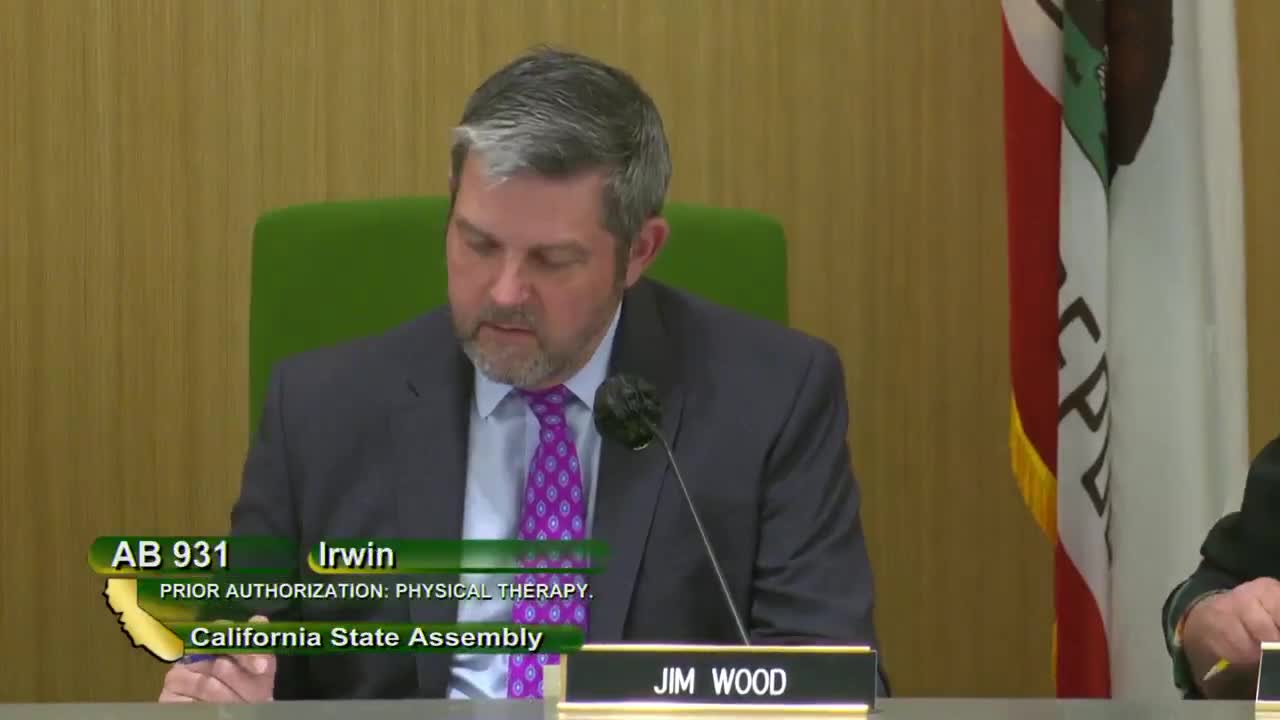

Bill Co-Author(s):