AB 1554: California Environmental Quality Act: exemption: wildfire fuels reduction projects.
- Session Year: 2023-2024
- House: Assembly
- Latest Version Date: 2023-02-17
Current Status:
Failed
(2024-02-01: From committee: Filed with the Chief Clerk pursuant to Joint Rule 56.)
Introduced
In Committee
First Chamber
In Committee
Second Chamber
Enacted
The California Environmental Quality Act (CEQA) requires a lead agency, as defined, to prepare, or cause to be prepared, and certify the completion of an environmental impact report on a project that it proposes to carry out or approve that may have a significant effect on the environment or to adopt a negative declaration if it finds that the project will not have that effect. CEQA also requires a lead agency to prepare a mitigated negative declaration for a project that may have a significant effect on the environment if revisions in the project would avoid or mitigate that effect and there is no substantial evidence that the project, as revised, would have a significant effect on the environment.
This bill would expressly exempt from CEQA a project reduction of fuels in areas within moderate, high, and very high fire hazard severity zones, as provided. Because a lead agency would be required to determine whether a project qualifies for this exemption, the bill would impose a state-mandated local program.
The California Constitution requires the state to reimburse local agencies and school districts for certain costs mandated by the state. Statutory provisions establish procedures for making that reimbursement.
This bill would provide that no reimbursement is required by this act for a specified reason.
(a)Except as otherwise provided in this division, this division shall apply to discretionary projects proposed to be carried out or approved by public agencies, including, but not limited to, the enactment and amendment of zoning ordinances, the issuance of zoning variances, the issuance of conditional use permits, and the approval of tentative subdivision maps unless the project is exempt from this division.
(b)This division does not apply to any of the following activities:
(1)Ministerial projects proposed to be carried out or approved by public agencies.
(2)Emergency repairs to public service facilities necessary to maintain service.
(3)Projects undertaken, carried out, or approved by a public agency to maintain, repair, restore, demolish, or replace property or facilities damaged or destroyed as a result of a disaster in a disaster-stricken area in which a state of emergency has been proclaimed by the Governor pursuant to Chapter 7 (commencing with Section 8550) of Division 1 of Title 2 of the Government Code.
(4)Specific actions necessary to prevent or mitigate an emergency.
(5)Projects which that a public agency rejects or disapproves.
(6)Actions undertaken by a public agency relating to any thermal powerplant site or facility, including the expenditure, obligation, or encumbrance of funds by a public agency for planning, engineering, or design purposes, or for the conditional sale or purchase of equipment, fuel, water (except groundwater), steam, or power for a thermal powerplant, if the powerplant site and related facility will be the subject of an environmental impact report, negative declaration, or other document, prepared pursuant to a regulatory program certified pursuant to Section 21080.5, which will be prepared by the State Energy Resources Conservation and Development Commission, by the Public Utilities Commission, or by the city or county in which the powerplant and related facility would be located if the environmental impact report, negative declaration, or document includes the environmental impact, if any, of the action described in this paragraph.
(7)Activities or approvals necessary to the bidding for, hosting or staging of, and funding or carrying out of, an Olympic games under the authority of the International Olympic Committee, except for the construction of facilities necessary for the Olympic games.
(8)The establishment, modification, structuring, restructuring, or approval of rates, tolls, fares, or other charges by public agencies which that the public agency finds are for the purpose of (A) meeting operating expenses, including employee wage rates and fringe benefits, (B) purchasing or leasing supplies, equipment, or materials, (C) meeting financial reserve needs and requirements, (D) obtaining funds for capital projects necessary to maintain service within existing service areas, or (E) obtaining funds necessary to maintain those intracity transfers as are authorized by city charter. The public agency shall incorporate written findings in the record of any proceeding in which an exemption under this paragraph is claimed setting forth with specificity the basis for the claim of exemption.
(9)All classes of projects designated pursuant to Section 21084.
(10)A project for the institution or increase of passenger or commuter services on rail or highway rights-of-way already in use, including modernization of existing stations and parking facilities. For purposes of this paragraph, highway shall have the same meaning as defined in Section 360 of the Vehicle Code.
(11)A project for the institution or increase of passenger or commuter service on high-occupancy vehicle lanes already in use, including the modernization of existing stations and parking facilities.
(12)Facility extensions not to exceed four miles in length which that are required for the transfer of passengers from or to exclusive public mass transit guideway or busway public transit services.
(13)A project for the development of a regional transportation improvement program, the state transportation improvement program, or a congestion management program prepared pursuant to Section 65089 of the Government Code.
(14)Any A project or portion thereof of a project located in another state which that will be subject to environmental impact review pursuant to the National Environmental Policy Act of 1969 (42 U.S.C. Sec. 4321 et seq.) or similar state laws of that state. Any emissions or discharges that would have a significant effect on the environment in this state are subject to this division.
(15)Projects undertaken by a local agency to implement a rule or regulation imposed by a state agency, board, or commission under a certified regulatory program pursuant to Section 21080.5. Any site-specific effect of the project which was not analyzed as a significant effect on the environment in the plan or other written documentation required by Section 21080.5 is subject to this division.
(16)A project for the reduction of fuels in areas within moderate, high, and very high fire hazard severity zones identified pursuant to Section 51178 of the Government Code, including, but not limited to, for the removal or reduction of overgrown vegetation through the use of prescribed fire, tree thinning, pruning, chipping, or roadway clearance.
(c)If a lead agency determines that a proposed project, not otherwise exempt from this division, would not have a significant effect on the environment, the lead agency shall adopt a negative declaration to that effect. The negative declaration shall be prepared for the proposed project in either of the following circumstances:
(1)There is no substantial evidence, in light of the whole record before the lead agency, that the project may have a significant effect on the environment.
(2)An initial study identifies potentially significant effects on the environment, but (A) revisions in the project plans or proposals made by, or agreed to by, the applicant before the proposed negative declaration and initial study are released for public review would avoid the effects or mitigate the effects to a point where clearly no significant effect on the environment would occur, and (B) there is no substantial evidence, in light of the whole record before the lead agency, that the project, as revised, may have a significant effect on the environment.
(d)If there is substantial evidence, in light of the whole record before the lead agency, that the project may have a significant effect on the environment, an environmental impact report shall be prepared.
(e)(1)For the purposes of this section and this division, substantial evidence includes fact, a reasonable assumption predicated upon fact, or expert opinion supported by fact.
(2)Substantial evidence is not argument, speculation, unsubstantiated opinion or narrative, evidence that is clearly inaccurate or erroneous, or evidence of social or economic impacts that do not contribute to, or are not caused by, physical impacts on the environment.
(f)As a result of the public review process for a mitigated negative declaration, including administrative decisions and public hearings, the lead agency may conclude that certain mitigation measures identified pursuant to paragraph (2) of subdivision (c) are infeasible or otherwise undesirable. In those circumstances, the lead agency, prior to approving the project, may delete those mitigation measures and substitute for them other mitigation measures that the lead agency finds, after holding a public hearing on the matter, are equivalent or more effective in mitigating significant effects on the environment to a less than significant level and that do not cause any potentially significant effect on the environment. If those new mitigation measures are made conditions of project approval or are otherwise made part of the project approval, the deletion of the former measures and the substitution of the new mitigation measures shall not constitute an action or circumstance requiring recirculation of the mitigated negative declaration.
(g)Nothing in this section shall preclude a project applicant or any other person from challenging, in an administrative or judicial proceeding, the legality of a condition of project approval imposed by the lead agency. If, however, any condition of project approval set aside by either an administrative body or court was necessary to avoid or lessen the likelihood of the occurrence of a significant effect on the environment, the lead agencys approval of the negative declaration and project shall be invalid and a new environmental review process shall be conducted before the project can be reapproved, unless the lead agency substitutes a new condition that the lead agency finds, after holding a public hearing on the matter, is equivalent to, or more effective in, lessening or avoiding significant effects on the environment and that does not cause any potentially significant effect on the environment.
SEC. 2.No reimbursement is required by this act pursuant to Section 6 of Article XIIIB of the California Constitution because a local agency or school district has the authority to levy service charges, fees, or assessments sufficient to pay for the program or level of service mandated by this act, within the meaning of Section 17556 of the Government Code.
|
Date
|
Status
|
|---|---|
| Feb 1, 2024 | From committee: Filed with the Chief Clerk pursuant to Joint Rule 56. |
| Jan 31, 2024 | Died pursuant to Art. IV, Sec. 10(c) of the Constitution. |
| Jan 8, 2024 | In committee: Set, first hearing. Testimony taken. |
| Apr 24, 2023 | In committee: Hearing postponed by committee. |
| Mar 9, 2023 | Referred to Com. on NAT. RES. |
| Feb 18, 2023 | From printer. May be heard in committee March 20. |
| Feb 17, 2023 | Read first time. To print. |
This list shows positions taken on this bill by organizations on the date displayed, which is linked to the original source.
Positions by individuals are not included.
|
Organization
|
Position
|
Date
|
|---|---|---|
| California Builders Alliance | ** Support | |
| California Farm Bureau | * Support | Jan 8, 2024 |
| Center for Biological Diversity | * Against | Jan 8, 2024 |
| El Dorado County Water Agency | ** Support | |
| El Dorado Irrigation District | * Support | Jan 8, 2024 |
| Humboldt Redwood Company | * Support | Jan 8, 2024 |
| Mendocino Redwood Company | * Support | Jan 8, 2024 |
| Mountain Counties Water Resources Association | ** Support | |
| Placer County Water Agency | * Support | Jan 8, 2024 |
| Sacramento Regional Builders Exchange | ** Support |
Date of Hearing: January 8, 2024
ASSEMBLY COMMITTEE ON NATURAL RESOURCES
Isaac G. Bryan, Chair
ABPCA Bill Id:AB 1554 (
Author:Joe Patterson) – As Introduced Ver:February 17, 2023
SUBJECT: California Environmental Quality Act: exemption: wildfire fuels reduction projects
SUMMARY: Expressly exempts from the California Environmental Quality Act (CEQA) a project for the reduction of fuels in areas within moderate, high, and very high fire hazard severity zones, as provided.
EXISTING LAW:
Pursuant to CEQA (Public Resources Code (PRC) 21000-21189.70.10):
- Requires a lead agency, as defined, to prepare, or cause to be prepared, and certify the completion of an environmental impact report (EIR) on a project that it proposes to carry out or approve that may have a significant effect on the environment or to adopt a negative declaration if it finds that the project will not have that effect.
- Requires a lead agency to prepare a mitigated negative declaration for a project that may have a significant effect on the environment if revisions in the project would avoid or mitigate that effect and there is no substantial evidence that the project, as revised, would have a significant effect on the environment.
- Defines “project” as an activity that may cause either a direct physical change in the environment, or a reasonably foreseeable indirect physical change in the environment, and that is any of the following:
- An activity directly undertaken by any public agency;
- An activity undertaken by a person that is supported, in whole or in part, through contracts, grants, subsidies, loans, or other forms of assistance from one or more public agencies; and,
- An activity that involves the issuance to a person of a lease, permit, license, certificate, or other entitlement for use by one or more public agencies.
Pursuant to the Z'berg-Nejedly Forest Practices Act (PRC 4511-4630):
- Prohibits a person from conducting timber operations unless a timber harvesting plan (THP) prepared by a registered professional forester has been submitted to the Department of Forestry and Fire Protection (CAL FIRE).
- Authorizes a THP prepared by a registered professional forester to rely upon a Program Timberland Environmental Impact Report (PTEIR) for CEQA compliance. Requires the THP to be within the scope of the PTEIR, the rules of the Board of Forestry (Board), and other applicable state laws.
THIS BILL:
- Exempts from CEQA a project for the reduction of fuels in areas within moderate, high, and very high fire hazard severity zones, including, but not limited to, for the removal or reduction of overgrown vegetation through the use of prescribed fire, tree thinning, pruning, chipping, or roadway clearance.
- Provides that no reimbursement is required by this act pursuant to Section 6 of Article XIII B of the California Constitution.
FISCAL EFFECT: Unknown
COMMENTS:
- Author’s statement:
AB 1554 is a measure that strengthens the health of California’s forests. By creating an exemption for projects that propose to reduce fuel load to bypass CEQA requirements, this bill will ultimately expedite this process in high risk areas and make California’s forests more resilient.
- CEQA. CEQA generally requires state and local government agencies to inform decision makers and the public about the potential environmental impacts of proposed projects, and to reduce those environmental impacts to the extent feasible.
The process is intended to: (1) inform government decision-makers and the public about the potential environmental effects of proposed activities; (2) identify the ways that environmental damage can be avoided or significantly reduced; (3) prevent significant, avoidable environmental damage by requiring changes in projects, either by the adoption of alternatives or imposition of mitigation measures; and, (4) disclose to the public why a project was approved if that project has significant environmental impacts that cannot be mitigated to a less than significant level.
If an agency determines that a proposed activity is a project under CEQA, it will usually take the following three steps: (1) determine whether the project falls under a statutory or categorical exemption from CEQA; (2) if the project is not exempt, prepare an initial study to determine whether the project might result in significant environmental effects; and, (3) prepare a negative declaration, mitigated negative declaration, or EIR, depending on the initial study.
There are two types of CEQA exemptions: (1) statutory exemptions and (2) categorical exemptions. There are 15 statutory exemptions to CEQA in PRC 21080 (among other stand-alone statutory exemptions). This bill is proposing to create a 16th statutory exemption for fuel load reduction projects in moderate, high, and very high fire hazard severity zones.
The CEQA statutes require the Office of Planning and Research (OPC) to develop CEQA guidelines for implementation by public agencies, which include criteria for public agencies to follow in determining whether or not a proposed project may have a “significant effect on the environment.” Under the current guidelines (Title 14, Division 6, Chapter 3 of the California Code of Regulations (CCR)), there is a categorical exemption for defensible space, which falls under “minor alterations to land.” It reads:
Fuel management activities within 30 feet of structures to reduce the volume of flammable vegetation, provided that the activities will not result in the taking of endangered, rare, or threatened plant or animal species or significant erosion and sedimentation of surface waters. This exemption shall apply to fuel management activities within 100 feet of a structure if the public agency having fire protection responsibility for the area has determined that 100 feet of fuel clearance is required due to extra hazardous fire conditions.
This exemption does not extend to the fuel load reduction activities described by this bill in high fire severity zones.
- Wildfire prevention. Wildfires have been growing in size, duration, and destructivity over the past 20 years. Growing wildfire risk is due to accumulating fuels, a warming climate, and expanding development in the wildland-urban interface.
California is responsible for fire and resource protection on nearly 13.3 million acres of private and state-owned forested lands. The state owns about 1.1 million acres of these lands, and 12.2 million acres of lands are under private ownership. In the past several years, forest management has significantly expanded on these lands. CAL FIRE has increased its forest thinning and prescribed fire activities from about 30,000 acres in 2016 to more than 50,000 acres in 2020. Partners receiving state-funded grants treated more than 30,000 acres in 2020. Private landowners currently actively manage 250,000-300,000 acres through fuels reduction, mechanical thinning, and timber harvest projects.
- High fire zones. The State Fire Marshal classifies lands within state responsibility areas into fire hazard severity zones (PRC 51178). Each zone is based on fuel loading, slope, fire weather, and other relevant factors present, including areas where winds have been identified by CAL FIRE as a major cause of wildfire spread. Fire Hazard Severity Zones fall into the following classifications: Moderate, High, and Very High based on consistent statewide criteria and based on the severity of fire hazard that is expected to prevail in those areas.
- California Vegetation Treatment Program (CalVTP). CalVTP was developed and approved by the Board on December 30, 2019, and includes the use of prescribed burning, mechanical treatments, manual treatments, herbicides, and prescribed herbivory as tools to reduce hazardous vegetation around communities in the wildland-urban interface, to construct fuel breaks, and to restore healthy ecological fire regimes.
The Board certified a VTP-related Final Program Environmental Impact Report (FPEIR) prepared pursuant to CEQA. The FPEIR can be used by a long list of specified public agencies. There are more than 200 agencies with land ownership or land management responsibilities in the treatable landscape. The FPEIR provides a helpful tool to expedite the implementation of vegetation treatments. The FPEIR is intended to provide broad CEQA coverage for individual projects consistent with the analysis and mitigation strategies set forth in the document.
Private landowners conducting vegetation management activities are only subject to CEQA (and therefore required to complete and EIR) if they have received public funding for the activity (i.e., a grant for forestry management).
- Forest management. More broadly, the state’s Forest Practice Act requires preparation of a THP for any timber subject to commercial harvesting in the state, regeneration of forest resources, old growth timber protection, fire control protocols, logging stipulations, and more. THPs are CEQA functional equivalent environmental documents and operational plans that detail how timber operations (e.g., felling and harvest of trees, related road construction and maintenance, and preparing ground for planting of seedlings) are to occur. Under those forest practice rules, a modified THP specifically for fuel load reduction may be submitted for a project area that meets specified conditions, including acreage limits, maintenance of at least 40% of the existing overstory tree canopy, no listed species will be directly or indirectly adversely impacted by the fuel load reduction, among more prescriptive conditions.
The forest practice regulations are both rich in detail and nuance, and long-standing requirements for forest management.
- This bill. AB 1554 would exempt from CEQA fuel load reduction projects in areas within moderate, high, and very high fire hazard severity zones including, but not limited to, for the removal or reduction of overgrown vegetation through the use of prescribed fire, tree thinning, pruning, chipping, or roadway clearance.
The scope of the exemption is both broad in terms of the activities covered and geographic territory in which it would be applied, and is in conflict with the state’s extensive Forest Practice Rules and THP plans.
The proposed exemption in this bill would create legal confusion over compliance with the current requirements as it could be perceived to override the Forest Practices Act and THP requirements for those who are required to comply with them.
- Committee amendments. To tighten up the exemption, the Committee may wish to consider amending the bill to tailor it for defensible space requirements being met in the Fire Hazard Severity Zones, and include a December 31, 2030, sunset to allow the Legislature the opportunity to assess the value of the exemption.
REGISTERED SUPPORT / OPPOSITION:
Support
California Builders Alliance
El Dorado County Water Agency
Humboldt Redwood Company LLC
Mountain Counties Water Resources Association
Sacramento Regional Builders Exchange
Opposition
None on file
Analysis Prepared by: Paige Brokaw / NAT. RES. /
Date of Hearing: April 24, 2023
ASSEMBLY COMMITTEE ON NATURAL RESOURCES
Luz Rivas, Chair
ABPCA Bill Id:AB 1554 (
Author:Joe Patterson) – As Introduced Ver:February 17, 2023
SUBJECT: California Environmental Quality Act: exemption: wildfire fuels reduction projects
SUMMARY: Expressly exempts from the California Environmental Quality Act (CEQA) a project for the reduction of fuels in areas within moderate, high, and very high fire hazard severity zones, as provided.
EXISTING LAW, pursuant to CEQA (Public Resources Code (PRC) 21000-21189.70.10):
- Requires a lead agency, as defined, to prepare, or cause to be prepared, and certify the completion of an environmental impact report (EIR) on a project that it proposes to carry out or approve that may have a significant effect on the environment or to adopt a negative declaration if it finds that the project will not have that effect.
- Requires a lead agency to prepare a mitigated negative declaration for a project that may have a significant effect on the environment if revisions in the project would avoid or mitigate that effect and there is no substantial evidence that the project, as revised, would have a significant effect on the environment.
- Defines “project” as an activity which may cause either a direct physical change in the environment, or a reasonably foreseeable indirect physical change in the environment, and which is any of the following:
- An activity directly undertaken by any public agency;
- An activity undertaken by a person which is supported, in whole or in part, through contracts, grants, subsidies, loans, or other forms of assistance from one or more public agencies; and,
- An activity that involves the issuance to a person of a lease, permit, license, certificate, or other entitlement for use by one or more public agencies.
THIS BILL:
- Exempts from CEQA a project for the reduction of fuels in areas within moderate, high, and very high fire hazard severity zones, including, but not limited to, for the removal or reduction of overgrown vegetation through the use of prescribed fire, tree thinning, pruning, chipping, or roadway clearance.
- Provides that no reimbursement is required by this act pursuant to Section 6 of Article XIII B of the California Constitution.
FISCAL EFFECT: Unknown
COMMENTS:
- Author’s statement:
AB 1554 is a measure that strengthens the health of California’s forests. By creating an exemption for projects that propose to reduce fuel load to bypass CEQA requirements, this bill will ultimately expedite this process in high risk areas and make California’s forests more resilient.
- CEQA. CEQA generally requires state and local government agencies to inform decision makers and the public about the potential environmental impacts of proposed projects, and to reduce those environmental impacts to the extent feasible.
The process is intended to: (1) inform government decision-makers and the public about the potential environmental effects of proposed activities; (2) identify the ways that environmental damage can be avoided or significantly reduced; (3) prevent significant, avoidable environmental damage by requiring changes in projects, either by the adoption of alternatives or imposition of mitigation measures; and (4) disclose to the public why a project was approved if that project has significant environmental impacts that cannot be mitigated to a less than significant level.
If an agency determines that a proposed activity is a project under CEQA, it will usually take the following three steps: (1) determine whether the project falls under a statutory or categorical exemption from CEQA; (2) if the project is not exempt, prepare an initial study to determine whether the project might result in significant environmental effects; and (3) prepare a negative declaration, mitigated negative declaration, or EIR, depending on the initial study.
There are two types of CEQA exemptions: (1) statutory exemptions and (2) categorical exemptions. There are 15 statutory exemptions to CEQA in PRC 21080 (among other stand-alone statutory exemptions). This bill is proposing to create a 16th statutory exemption for fuel load reduction projects in moderate, high, and very high fire hazard severity zones.
- Wildfire prevention. Wildfires have been growing in size, duration, and destructivity over the past 20 years. Growing wildfire risk is due to accumulating fuels, a warming climate, and expanding development in the wildland-urban interface. Since 2005, wildfires have destroyed more than 97,000 structures, requiring mass evacuations, and exacerbating the state’s already-pressing need for more housing. In addition, wildfire smoke is unhealthy to breathe and is a public health concern. Further, wildfire losses are not experienced equally. Lower-income households are more likely to lose all of their assets and less likely to have adequate insurance to cover their losses
To prevent the risk of wildfire, in August 2020, California and the U.S. Forest Service agreed to scale up vegetation treatment and maintenance to one million acres of federal, state, and private forest and wildlands annually by 2025.
California is responsible for fire and resource protection on nearly 13.3 million acres of private and state-owned forested lands. The state owns about 1.1 million acres of these lands, and 12.2 million acres of lands are under private ownership. In the past several years, forest management has significantly expanded on these lands. CAL FIRE has increased its forest thinning and prescribed fire activities from about 30,000 acres in 2016 to more than 50,000 acres in 2020. Partners receiving state-funded grants treated more than 30,000 acres in 2020. Private landowners currently actively manage 250,000-300,000 acres through fuels reduction, mechanical thinning, and timber harvest projects. Fuel load reduction is vital to restricting fire spread and wildfire prevention.
- California Vegetation Treatment Program (CalVTP). CalVTP was developed and approved by the Board of Forestry and Fire Protection (Board) on December 30, 2019, and includes the use of prescribed burning, mechanical treatments, manual treatments, herbicides, and prescribed herbivory as tools to reduce hazardous vegetation around communities in the Wildland-Urban Interface (WUI), to construct fuel breaks, and to restore healthy ecological fire regimes.
CalVTP is a statewide program by which public agencies, through a series of individual projects, will undertake to perform vegetation treatment activities for the purposes of wildfire prevention. These individual projects will occur throughout those portions of the State Responsibility Area that make up the “treatable landscape.”
On the same date on which the Board approved the CalVTP, it also certified a related Final Program Environmental Impact Report (FPEIR) prepared pursuant to CEQA. The FPEIR can be used by public agencies and includes a long list of such agencies, which include, but are not limited to, state agencies such as the CAL FIRE, California Department of Fish and Wildlife and the California Department of Parks and Recreation, cities, counties, water and irrigation districts, conservation districts, park and open space districts, conservation agencies, community service districts, utility districts, flood control districts, water agencies, transportation authorities, cemetery districts, and airport districts. There are more than 200 agencies with land ownership or land management responsibilities in the treatable landscape.
The Programmatic EIR provides a helpful tool to expedite the implementation of vegetation treatments. The FPEIR is intended to provide broad CEQA coverage for individual projects consistent with the analysis and mitigation strategies set forth in the document.
Private landowners conducting vegetation management activities are only covered under CEQA if they have received public funding for the activity (i.e., a grant for forestry management).
- High fire zones. The State Fire Marshal classifies lands within state responsibility areas into fire hazard severity zones (PRC 51178). Each zone is based on fuel loading, slope, fire weather, and other relevant factors present, including areas where winds have been identified by CAL FIRE as a major cause of wildfire spread. Fire Hazard Severity Zones fall into the following classifications: Moderate, High, and Very High based on consistent statewide criteria and based on the severity of fire hazard that is expected to prevail in those areas.
As of 2010, about one-third of California’s housing units were located within WUI. Residential developments in the WUI and other wildfire prone areas can significantly increase the risks of wildfires and the risk to public safety for several reasons. First, introducing more people—via additional development—into a flammable landscape increases the likelihood of: (1) a wildfire igniting due to the increased presence of people; and (2) the ignition becoming a wildfire because of the placement of homes amongst the flammable vegetation. Second, building housing units in the WUI puts more people in harm’s way. The WUI and the Fire Hazard Severity Zones have a lot of overlap; the WUI is a strong consideration for designation of a Fire Hazard Severity Zone.
- This bill. AB 1554 would exempt from CEQA fuel load reduction projects in areas within moderate, high, and very high fire hazard severity zones including, but not limited to, for the removal or reduction of overgrown vegetation through the use of prescribed fire, tree thinning, pruning, chipping, or roadway clearance.
- Committee amendments. To tighten up the exemption, the Committee may wish to consider amending the bill to tailor it for defensible space requirements being met in the Fire Hazard Severity Zones, and include a December 31, 2029, sunset to allow the Legislature the opportunity to assess the value of the exemption.
REGISTERED SUPPORT / OPPOSITION:
Support
Humboldt Redwood Company LLC
Opposition
None on file
Analysis Prepared by: Paige Brokaw / NAT. RES. /
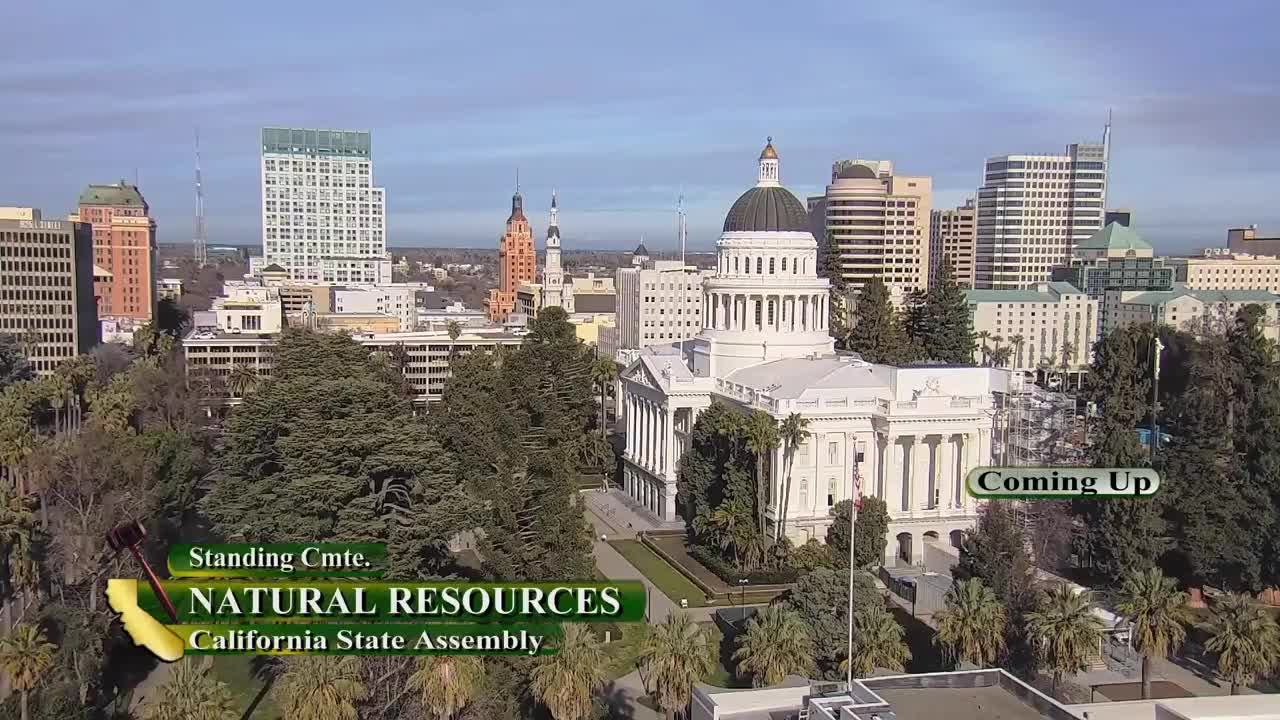
Discussed in Hearing
 26MIN
Assembly Standing Committee on Natural Resources
Bill Author
Bill Co-Author(s):
