AB 1755: Civil actions: restitution for or replacement of a new motor vehicle.
- Session Year: 2023-2024
- House: Assembly
- Latest Version Date: 2024-09-29
Current Status:
Passed
(2024-09-29: Chaptered by Secretary of State - Chapter 938, Statutes of 2024.)
Introduced
In Committee
First Chamber
In Committee
Second Chamber
Enacted
Existing law, the Song-Beverly Consumer Warranty Act, provides that if a manufacturer of a new motor vehicle, as defined, or the manufacturers in-state representative, is unable to service or repair the vehicle to conform to the applicable express warranties after a reasonable number of attempts, the manufacturer must either repurchase or replace the vehicle, as specified. Existing law, the Tanner Consumer Protection Act, creates the presumption that a reasonable number of attempts have been made to conform a new motor vehicle to the applicable express warranties if specified conditions are met. Under existing law, the buyer of a new motor vehicle may not assert this presumption until after the buyer has initially resorted to a qualified third-party dispute resolution process, if that process exists and certain additional conditions are met. Existing law provides that if, among other things, a qualified third-party dispute resolution process does not exist, the buyer of a new motor vehicle may assert the above presumption in an action to enforce the buyers rights under the Song-Beverly Consumer Warranty Act. Existing law provides that the buyer of a new motor vehicle who is damaged by a manufacturers failure to comply with specified requirements of the Song-Beverly Consumer Warranty Act or the Tanner Consumer Protection Act may bring an action for the recovery of damages and other equitable and legal relief. Existing law provides that if the buyer establishes that the manufacturers failure to comply was willful, the judgment may also include a civil penalty which shall not exceed 2 times the amount of actual damages.
This bill would provide that an action seeking the restitution for or replacement of a new motor vehicle, or for civil penalties, pursuant to the provisions of the Song-Beverly Consumer Warranty Act or Tanner Consumer Protection Act described above must be commenced within one year after the expiration of the applicable express warranty, and in no event may be brought later than 6 years after the date of original delivery of the vehicle, subject to specified tolling provisions. Beginning April 1, 2025, the bill would require the consumer to, prior to seeking civil penalties, provide a written notice to the manufacturer that, among other things, demands the manufacturers restitution for or replacement of the consumers vehicle. The bill would require mediation in an action seeking the restitution for or replacement of a new motor vehicle, or for civil penalties, and would stay all discovery, except a limited set of disclosures and depositions, in such actions until mediation is concluded. The bill would, for such actions filed on or after January 1, 2025, authorize the court to impose specified sanctions on represented parties who fail to comply with its provisions. The bill would provide that the duties and obligations it imposes are cumulative with, and do not limit or expand, duties and obligations imposed under any other law.
(1)Existing law requires a court to make an expedited support order if specified information is filed, including the minimum amount the obligated parent or parents are required to pay pursuant to the statewide uniform guideline for support or specified minimum basic standards for adequate care.This bill would repeal those provisions as of January 1, 2024.(2)Existing law sets a statewide uniform guideline for determining child support and requires the Judicial Council to periodically review that guideline to recommend appropriate revisions, including economic data on the cost of raising children and an analysis of guidelines and studies from other states. Existing law further requires a court to order, as additional child support, payment of reasonable uninsured health care costs for the child and payment of childcare costs, and may order costs related to the educational or other special needs of the child, and travel expenses for visitation. Existing law requires the court, in making an order pursuant to the uninsured health care costs, to follow specified protocols. This bill, commencing September 1, 2024, would, among other things, revise the statewide uniform guideline for determining child support, including the amount that establishes a rebuttable presumption that the obligor is entitled to a low-income adjustment. This bill would expand the above-referenced protocols with regard to issuing an order to pay uninsured health care costs to also include orders to pay for specified childcare costs, if those expenses are actually incurred.(3)Existing law requires counties to maintain a local child support agency to promptly and effectively establish, modify, and enforce child support obligations, to enforce spousal support obligations, and to determine paternity of a child born out of wedlock. Existing law requires that the local child support agency provide notice of the amount of child support that is sought pursuant to the statewide uniform guidelines based upon the income or income history of the support obligor and that a proposed judgment be provided. Existing law requires the Judicial Council, in consultation with specified others, to develop a simplified summons, complaint, and answer forms for any action brought pursuant to those provisions. Existing law requires the simplified complaint form to be based upon the income or income history of the support obligor.This bill, commencing January 1, 2026, would, among other things, instead require that complaint form to require the local child support agency to use specified methods to calculate income, including using earning capacity if the local child support agency has sufficient evidence to establish earning capacity. The bill would also authorize the department to implement those provisions by a child support services letter or similar instruction until permanent regulations are adopted. The bill would require the department to adopt regulations to implement those provisions by January 1, 2027. By imposing new duties on a local child support agency, the bill would impose a state-mandated local program. Existing law requires a judgment to be entered without hearing and without other specified requirements in an action filed by the local child support agency involving the simplified procedures described above. This bill, commencing January 1, 2026, would among other things, expand that requirement to actions based on earning capacity, as specified. The bill would require a local child support agency to conduct a review of the case to determine if there is sufficient additional evidence available to establish actual income of the defendant, as specified. By imposing new duties on a local child support agency, the bill would impose a state-mandated local program. The bill would also require the Judicial Council, no later than September 1, 2024, to adopt and approve any forms necessary to implement those provisions. The bill would make those forms effective January 1, 2026.(4)The California Constitution requires the state to reimburse local agencies and school districts for certain costs mandated by the state. Statutory provisions establish procedures for making that reimbursement.This bill would provide that, if the Commission on State Mandates determines that the bill contains costs mandated by the state, reimbursement for those costs shall be made pursuant to the statutory provisions noted above.(1)Existing law requires a court to make an expedited support order if specified information is filed, including the minimum amount the obligated parent or parents are required to pay pursuant to the statewide uniform guideline for support or specified minimum basic standards for adequate care.
This bill would repeal those provisions as of January 1, 2024.
(2)Existing law sets a statewide uniform guideline for determining child support and requires the Judicial Council to periodically review that guideline to recommend appropriate revisions, including economic data on the cost of raising children and an analysis of guidelines and studies from other states. Existing law further requires a court to order, as additional child support, payment of reasonable uninsured health care costs for the child and payment of childcare costs, and may order costs related to the educational or other special needs of the child, and travel expenses for visitation. Existing law requires the court, in making an order pursuant to the uninsured health care costs, to follow specified protocols.
This bill, commencing September 1, 2024, would, among other things, revise the statewide uniform guideline for determining child support, including the amount that establishes a rebuttable presumption that the obligor is entitled to a low-income adjustment. This bill would expand the above-referenced protocols with regard to issuing an order to pay uninsured health care costs to also include orders to pay for specified childcare costs, if those expenses are actually incurred.
(3)Existing law requires counties to maintain a local child support agency to promptly and effectively establish, modify, and enforce child support obligations, to enforce spousal support obligations, and to determine paternity of a child born out of wedlock. Existing law requires that the local child support agency provide notice of the amount of child support that is sought pursuant to the statewide uniform guidelines based upon the income or income history of the support obligor and that a proposed judgment be provided. Existing law requires the Judicial Council, in consultation with specified others, to develop a simplified summons, complaint, and answer forms for any action brought pursuant to those provisions. Existing law requires the simplified complaint form to be based upon the income or income history of the support obligor.
This bill, commencing September 1, 2024, January 1, 2026, would, among other things, instead require that complaint form to require the local child support agency to use specified methods to calculate income, including using earning capacity if the local child support agency has sufficient evidence to establish earning capacity. The bill would also authorize the department to implement those provisions by a child support services letter or similar instruction until permanent regulations are adopted. The bill would require the department to adopt regulations to implement those provisions by January 1, 2027. By imposing new duties on a local child support agency, the bill would impose a state-mandated local program.
Existing law requires a judgment to be entered without hearing and without other specified requirements in an action filed by the local child support agency involving the simplified procedures described above.
This bill, commencing September 1, 2024, January 1, 2026, would among other things, expand that requirement to actions based on earning capacity, as specified. The bill would require a local child support agency to conduct a review of the case to determine if there is sufficient additional evidence available to establish actual income of the defendant, as specified. By imposing new duties on a local child support agency, the bill would impose a state-mandated local program.
The bill would also require the Judicial Council, no later than September 1, 2024, to adopt and approve any forms necessary to implement those provisions. The bill would make those forms effective January 1, 2026.
(4)The California Constitution requires the state to reimburse local agencies and school districts for certain costs mandated by the state. Statutory provisions establish procedures for making that reimbursement.
This bill would provide that, if the Commission on State Mandates determines that the bill contains costs mandated by the state, reimbursement for those costs shall be made pursuant to the statutory provisions noted above.
(1)Existing law requires a court to make an expedited support order if specified information is filed, including the minimum amount the obligated parent or parents are required to pay pursuant to the statewide uniform guideline for support or specified minimum basic standards for adequate care.
This bill would repeal those provisions as of January 1, 2024.
(2)Existing law sets a statewide uniform guideline for determining child support and requires the Judicial Council to periodically review that guideline to recommend appropriate revisions, including economic data on the cost of raising children and an analysis of guidelines and studies from other states. Existing law further requires a court to order, as additional child support, payment of reasonable uninsured health care costs for the child and payment of childcare costs, and may order costs related to the educational or other special needs of the child, and travel expenses for visitation. Existing law requires the court, in making an order pursuant to the uninsured health care costs, to follow specified protocols.
This bill, commencing September 1, 2024, would, among other things, revise the statewide uniform guideline for determining child support, including the amount that establishes a rebuttable presumption that the obligor is entitled to a low-income adjustment. This bill would expand the above-referenced protocols with regard to issuing an order to pay uninsured health care costs to also include orders to pay for specified childcare costs, if those expenses are actually incurred.
(3)Existing law requires counties to maintain a local child support agency to promptly and effectively establish, modify, and enforce child support obligations, to enforce spousal support obligations, and to determine paternity of a child born out of wedlock. Existing law requires that the local child support agency provide notice of the amount of child support that is sought pursuant to the statewide uniform guidelines based upon the income or income history of the support obligor and that a proposed judgment be provided. Existing law requires the Judicial Council, in consultation with specified others, to develop a simplified summons, complaint, and answer forms for any action brought pursuant to those provisions. Existing law requires the simplified complaint form to be based upon the income or income history of the support obligor.
This bill, commencing September 1, 2024, would, among other things, instead require that complaint form to require the local child support agency to use specified methods to calculate income, including using earning capacity if the local child support agency has sufficient evidence to establish earning capacity. The bill would also authorize the department to implement those provisions by a child support services letter or similar instruction until permanent regulations are adopted. The bill would require the department to adopt regulations to implement those provisions by January 1, 2027. By imposing new duties on a local child support agency, the bill would impose a state-mandated local program.
Existing law requires a judgment to be entered without hearing and without other specified requirements in an action filed by the local child support agency involving the simplified procedures described above.
This bill, commencing September 1, 2024, would among other things, expand that requirement to actions based on earning capacity, as specified. The bill would require a local child support agency to conduct a review of the case to determine if there is sufficient additional evidence available to establish actual income of the defendant, as specified. By imposing new duties on a local child support agency, the bill would impose a state-mandated local program.
(4)The California Constitution requires the state to reimburse local agencies and school districts for certain costs mandated by the state. Statutory provisions establish procedures for making that reimbursement.
This bill would provide that, if the Commission on State Mandates determines that the bill contains costs mandated by the state, reimbursement for those costs shall be made pursuant to the statutory provisions noted above.
(1)Existing law requires a court to make an expedited support order if specified information is filed, including the minimum amount the obligated parent or parents are required to pay pursuant to the statewide uniform guideline for support or specified minimum basic standards for adequate care.
This bill would repeal those provisions as of January 1, 2024.
(2)Existing law sets a statewide uniform guideline for determining child support and requires the Judicial Council to periodically review that guideline to recommend appropriate revisions, including economic data on the cost of raising children and an analysis of guidelines and studies from other states. Existing law further requires a court to order, as additional child support, payment of reasonable uninsured health care costs for the child and payment of childcare costs, and may order costs related to the educational or other special needs of the child, and travel expenses for visitation. Existing law requires the court, in making an order pursuant to the uninsured health care costs, to follow specified protocols.
This bill, commencing September 1, 2024, would, among other things, revise the statewide uniform guideline for determining child support, including the amount that establishes a rebuttable presumption that the obligor is entitled to a low-income adjustment. This bill would expand the above-referenced protocols with regard to issuing an order to pay uninsured health care costs to also include orders to pay for specified childcare costs, if those expenses are actually incurred.
(3)Existing law requires counties to maintain a local child support agency to promptly and effectively establish, modify, and enforce child support obligations, to enforce spousal support obligations, and to determine paternity of a child born out of wedlock. Existing law requires that the local child support agency provide notice of the amount of child support that is sought pursuant to the statewide uniform guidelines based upon the income or income history of the support obligor and that a proposed judgment be provided. Existing law requires the Judicial Council, in consultation with specified others, to develop a simplified summons, complaint, and answer forms for any action brought pursuant to those provisions. Existing law requires the simplified complaint form to be based upon the income or income history of the support obligor.
This bill, commencing September 1, 2024, would, among other things, instead require that complaint form to require the local child support agency to use specified methods to calculate income, including using earning capacity if the local child support agency has sufficient evidence establish earning capacity. The bill would also authorize the department to implement those provisions by a child support services letter or similar instruction until permanent regulations are adopted. The bill would require the department to adopt regulations to implement those provisions by January 1, 2027. By imposing new duties on a local child support agency, the bill would impose a state-mandated local program.
Existing law requires a judgment to be entered without hearing and without other specified requirements in an action filed by the local child support agency involving the simplified procedures described above.
This bill, commencing September 1, 2024, would among other things, expand that requirement to actions based on earning capacity, as specified. The bill would require a local child support agency to conduct a review of the case to determine if there is sufficient additional evidence available to establish actual income of the defendant, as specified. By imposing new duties on a local child support agency, the bill would impose a state-mandated local program.
(4)The California Constitution requires the state to reimburse local agencies and school districts for certain costs mandated by the state. Statutory provisions establish procedures for making that reimbursement.
This bill would provide that, if the Commission on State Mandates determines that the bill contains costs mandated by the state, reimbursement for those costs shall be made pursuant to the statutory provisions noted above.
(a)Notwithstanding any other law, this chapter applies to an action seeking restitution or replacement of a motor vehicle pursuant to subdivision (b) or (d) of Section 1793.2, Section 1793.22, or Section 1794 of the Civil Code, or for civil penalties pursuant to subdivision (c) of Section 1794 of the Civil Code, where the request for restitution or replacement is based on noncompliance with the applicable express warranty.
(b)This chapter does not apply to service contract claims under Section 1794 of the Civil Code or any action seeking remedies that are not restitution or replacement of a motor vehicle.
871.21.(a)An action covered by Section 871.20 shall be commenced within one year after the expiration of the applicable express warranty.
(b)Notwithstanding subdivision (a), an action covered by Section 871.20 shall not be brought later than six years after the date of original delivery of the motor vehicle.
(c)The time periods prescribed in subdivisions (a) and (b) shall be tolled as follows:
(1)As provided by tolling requirements prescribed in subdivision (c) of Section 1793.22 of the Civil Code, as applicable.
(2)For the time the motor vehicle is out of service by reason of repair for any nonconformity.
(3)For the time period after a pre-suit notice is provided to the manufacturer in accordance with Section 871.24, which time period shall not exceed 60 days.
871.22.For purposes of this chapter, the following definitions apply:
(a)Applicable express warranty means the written warranty provided by the manufacturer at the time of delivery of the subject motor vehicle, which provides coverage for the specific nonconformity at issue in the action, subject to the terms and exclusions of that warranty.
(b)Distributor means any individual, partnership, corporation, association, or other legal relationship that stands between the manufacturer and the retail seller in purchases, consignments, or contracts for sale of consumer goods or motor vehicles.
(c)Manufacturer means any individual, partnership, corporation, association, or other legal relationship that manufactures, assembles, or produces consumer goods or motor vehicles.
(d)Motor vehicle includes any of the following:
(1)A motor home, as defined in paragraph (3) of subdivision (e) of Section 1793.22 of the Civil Code.
(2)A new motor vehicle, as defined in paragraph (2) of subdivision (e) of Section 1793.22 of the Civil Code.
(3)A travel trailer.
(e)Travel trailer means a vehicular unit without motive power that is designed to be towed or carried by a motor vehicle. Travel trailer does not include a mobilehome.
(f)Warrantor means any entity or person who gives or offers to give a written warranty or who is or may be obligated under an implied warranty.
871.23.For purposes of this chapter, any reference to a manufacturer also applies to a distributor or warrantor.
871.24.(a)At least 30 days prior to the commencement of an action seeking civil penalties under subdivision (c) of Section 1794 of the Civil Code, the consumer shall do all of the following:
(1)Notify the manufacturer of the consumers name, the accurate Vehicle Identification Number (VIN) of the motor vehicle, and a brief summary of the repair history and problems with the motor vehicle.
(2)Demand that the manufacturer repurchase or replace the motor vehicle.
(b)Minor deviations in the notice submitted pursuant to subdivision (a) shall not disqualify consumers from seeking civil penalties.
(c)At the time that notice submitted pursuant to subdivision (a) is sent, the consumer shall have possession of the motor vehicle.
(d)The notice required by subdivision (a) shall be in writing and shall be sent either by email to the email address prominently displayed on the manufacturers website for this purpose or by certified or registered mail, return receipt requested, to the address provided by the manufacturer in the owners manual or warranty booklet. The notice information on the manufacturers website, owners manual, and warranty booklet shall be provided in both English and Spanish.
(e)(1)A request for or action seeking civil penalties under subdivision (c) of Section 1794 of the Civil Code shall not be allowed or maintained if both of the following conditions are present:
(A)Within 30 days after receipt of the notice, the manufacturer makes an offer of restitution or replacement of the motor vehicle for the amount provided by subdivision (d) of Section 1793.2 of the Civil Code and Section 871.27, plus reasonable attorneys fees and costs, if the consumer is represented by an attorney.
(B)The motor vehicle replacement or restitution is completed within 60 days from the date of receipt of the original notice.
(2)The consumer shall comply in good faith with reasonable requests from the manufacturer for documentation required to complete the requested restitution or replacement of the motor vehicle.
(f)A prelitigation dispute as to attorneys fees and costs shall be resolved by neutral, binding arbitration. A dispute as to the amount of attorneys fees and costs shall not, by itself, be a sufficient basis to show that the manufacturers offer is out of compliance with this section.
(g)The consumer shall maintain possession of the motor vehicle for at least 30 days after the manufacturers receipt of written notice seeking restitution or replacement.
(1)If the manufacturer does not offer restitution or replacement of the motor vehicle within 30 days of receiving the consumers notice, the consumer shall be permitted to sell their motor vehicle and seek remedies, including, but not limited to, civil penalties under subdivision (c) of Section 1794 of the Civil Code.
(2)If the manufacturer offers restitution or replacement of the motor vehicle, the consumer shall maintain possession of the motor vehicle for the full 60 days after the manufacturers receipt of the consumers notice.
(h)An action seeking restitution or replacement under Section 871.20 may be commenced without compliance with subdivision (a). In that event, the consumer shall have possession of the motor vehicle at the time of the filing of the complaint, and shall not seek civil penalties, whether by amendment of the complaint or otherwise. If, however, notice is provided pursuant to subdivision (a) and the manufacturer fails to comply with their obligations under subdivision (e), the consumer may commence an action for restitution or replacement, including, but not limited to, civil penalties under subdivision (c) of Section 1794 of the Civil Code.
(i)A consumer shall act in good faith in order to comply with this section.
(j)This section shall become operative on April 1, 2025.
871.25.A remedy in compliance with this chapter shall not be contingent on the execution of any release other than the following Standardized SBA Release:
Standardized SBA Release | |
Release as it relates to settlements: | |
The parties have previously agreed to settle the case as follows and hereby memorialize all terms of their settlement as follows: | |
1. Within 60 days from the date of receipt of the notice requesting restitution or replacement of the Subject Vehicle [Vehicle Year/Make/Model and VIN] (hereinafter Subject Vehicle), [Manufacturer] (hereinafter Defendant) will make the following payments: | |
a. Defendant shall pay the remaining loan balance or lease balance and residual value on the Subject Vehicle directly to the lienholder [Lender Name] in the amount necessary to relieve Plaintiff of all obligations related to Plaintiffs purchase or lease of the Subject Vehicle, excluding any late fees or penalties in the amount of [Loan Payoff Amount]. Said payment shall include interest through the date of payoff. This payment shall be expedited to the lienholder following completion of the return of the Subject Vehicle to the manufacturer or its agents. | |
b. Defendant shall pay to [Plaintiffs Full Name] (hereinafter Plaintiff) a total amount of [Restitution Amount] in a check payable to Plaintiff. This payment shall be provided to Plaintiff at the time of the return of the Subject Vehicle to the manufacturer or its agents. In the event Plaintiff makes an additional payment that is not included in the above amount, Defendant shall reimburse Plaintiff for any payments made according to proof, with the exception of any late fees, within 30 days from the date proof of payment is provided to Defendant. | |
c. [If applicable] Defendant shall pay civil penalties in the amount of [Civil Penalties Amount] in a check payable to [Plaintiff, if not represented by counsel, or Name of Law Firm/Attorney, if Plaintiff is represented by counsel]. This payment shall be expedited following completion of the return of the Subject Vehicle to the manufacturer or its agents. | |
d. Defendant shall pay to Plaintiffs counsel, if Plaintiff was represented by counsel (select one option below): | |
(i) In the event there is an agreement as to attorneys fees and costs, a check in the amount of [Attorneys Fees and Costs] payable to [Name of Law Firm/Attorney] shall be provided to Plaintiffs counsel. This agreed upon payment shall be expedited to the attorney following completion of the return of the Subject Vehicle to the manufacturer or its agents. | |
(ii) In the event the matter is resolved before the filing of a lawsuit and the parties cannot agree as to the amount of attorneys fees, costs, and expenses, then reasonable attorneys fees, costs, and expenses shall be determined by neutral, binding arbitration. | |
(iii) In the event the matter is resolved after the filing of a lawsuit and the parties cannot agree as to the amount of attorneys fees, costs, and expenses, then reasonable attorneys fees, costs, and expenses pursuant to subdivision (d) of Section 1794 of the Civil Code shall be determined by the court by way of a noticed motion. Defendant agrees Plaintiff is the prevailing party for purposes of said fee motion. | |
2. Before transfer of the settlement funds set forth in Paragraph 1 above, Plaintiff shall execute all documents necessary for the transfer of ownership of the Subject Vehicle to Defendant or its designee. | |
3. The payments described above are intended as a compromise resolution of [Plaintiffs Full Name] and [Defendant] with respect to all claims relating to the purchase, lease, condition, use, or repair of the Subject Vehicle during Plaintiffs purchase or possession of the Subject Vehicle. In signing this agreement, Plaintiff hereby releases [Defendant] from all claims relating to the purchase, lease, condition, use, or repair of the Subject Vehicle that arose during Plaintiffs purchase or possession of the Subject Vehicle, including, but not limited to, all claims under Sections 1793.2, 1793.22, and 1794 of the Civil Code. All releases are to take effect once Plaintiff returns the Subject Vehicle to Defendant. | |
4. [If the case has gone to litigation insert this Paragraph 4] The Parties to this release agree that the court shall retain jurisdiction pursuant to Section 664.6 of the Code of Civil Procedure to enforce its terms. In the event of a breach of this agreement, the prevailing party shall be entitled to recover reasonable attorneys fees and costs incurred in the enforcement of this agreement. Within five business days of all of the above payments clearing, Plaintiff will file a Request for Dismissal with prejudice of [Plaintiff(s) v Defendant(s); Case Number/County] with the court. | |
(signature of Plaintiff)(date) | |
(signature of Defendant)(date) | |
(a)This section only applies to a civil action seeking restitution or replacement of a motor vehicle pursuant to Section 871.20.
(b)Within 60 days after the filing of the answer or other responsive pleading, all parties shall, without awaiting a discovery request, provide to all other parties an initial disclosure and documents pursuant to subdivisions (f), (g), and (h).
(c)Within 120 days after the filing of the answer or other responsive pleading, all parties have the right to conduct initial depositions, each not to exceed two hours, of the following deponents:
(1)The plaintiff.
(2)The defendant, and if the defendant is not a natural person, the person who is most qualified to testify on the defendants behalf. This deposition shall be limited to the topics listed in subdivision (i).
(d)Within 90 days after filing of the answer or other responsive pleading, all parties shall schedule a mediation to occur within 150 days after filing of the answer or other responsive pleading with a court-appointed or private mediator.
(1)Costs shall be distributed equally, but costs may be recoverable by the plaintiff as part of a settlement or judgment.
(2)The plaintiff and a person with settlement authority for the manufacturer shall attend the mediation in person or by remote means.
(e)Except as provided in subdivisions (b) and (c), all other discovery shall be stayed until mediation is concluded. If the case is not resolved at the conclusion of mediation, standard discovery procedures prescribed in Title 4 (commencing with Section 2016.010) of Part 4 of the Code of Civil Procedures shall apply, including an additional deposition of the plaintiff and the defendant and, if the defendant is not a natural person, the person who is most qualified to testify on the defendants behalf.
(f)The plaintiff shall provide the following documents to all other parties pursuant to the timeline set forth in subdivision (b):
(1)Sales or lease agreement.
(2)Copy of current registration.
(3)Any finance information, account information, including payment history and estimated payoff amount, and any loan modification agreements.
(4)Any repair orders, including to third-party repair facilities or the location of where information relating to repair orders may be found.
(5)Documents detailing all underlying claimed incidental damages.
(6)Information pertaining to the market value of the motor vehicle that is currently in the consumers possession.
(7)Any written, pre-suit communications with the manufacturer, including, but not limited to, any restitution or replacement request.
(g)The plaintiff shall provide the following information to all other parties pursuant to the timelines set forth in subdivision (b):
(1)Mileage of the motor vehicle as of the date of the disclosure described in subdivision (b).
(2)Primary driver or drivers of the motor vehicle.
(3)If the motor vehicle is primarily used for a business purpose, whether more than five vehicles are registered to the business.
(4)Whether the plaintiff is still in possession of the motor vehicle.
(5)Address where the motor vehicle is located.
(6)Whether the plaintiff is an active or prior member of the Armed Forces.
(7)Whether the motor vehicle has been involved in a collision or accidents reported to insurance prior to the nonconformity, and if so, the approximate date of the collision, the name of the insurance company, and any applicable claim number.
(8)Whether the motor vehicle has any aftermarket modifications done after purchase of the motor vehicle, and if so, a list of each modification.
(9)Dates and mileages for presentations that are not included in the provided repair orders or the location of where the information may be found.
(10)Whether the plaintiff has had any pre-suit communications with the manufacturer, including, but not limited to, any restitution or replacement request.
(11)Any need for an interpreter for purposes of a deposition.
(h)The defendant or manufacturer shall provide the following documents to all other parties pursuant to the timelines prescribed in subdivision (b):
(1)Copy of or access to a version of the owners manual for a motor vehicle of the same make, model, and year.
(2)Any warranties issued in conjunction with the sale of the motor vehicle.
(3)Sample brochures published for the motor vehicle.
(4)The motor vehicles original invoice, if any, to the selling dealer.
(5)Sales or lease agreement, if the manufacturer is in possession.
(6)Motor vehicle information reports, including build documentation, component information, and delivery details.
(7)Entire warranty transaction history for the motor vehicle.
(8)Listing of required field actions applicable to the motor vehicle.
(9)Published technical service bulletins (TSBs) for the same make, model, and year reasonably related to the nonconformities pertaining to the motor vehicle.
(10)Published information service bulletins (ISBs) for the same make, model, and year reasonably related to the nonconformities pertaining to the motor vehicle.
(11)Records relating to communications between the manufacturer or dealership and the owner or lessee of the motor vehicle, including those related to repair orders or claims involving the motor vehicle.
(12)Warranty policies and procedure manuals.
(13)Service manuals reasonably related to the nonconformities pertaining to the motor vehicle.
(14)If a pre-suit restitution or replacement request is made, all call recordings of pre-suit communications with the consumer available at the time of service of the complaint.
(15)If a pre-suit restitution or replacement request is made, the manufacturers written statement of policies and procedures used to evaluate customer requests for restitution or replacement pursuant to Lemon Law claims.
(16)If a pre-suit restitution or replacement request is made, any nonprivileged, prelitigation evaluation.
(17)Any warranty extensions or modifications issued by the manufacturer on the motor vehicle.
(i)If the defendant is not a natural person, the initial deposition of the person who is most qualified to testify on the defendants behalf shall be limited to the following topics:
(1)All warranties that accompanied the plaintiffs motor vehicle at the time of purchase or lease.
(2)Questions relating to the nature and extent of the entire service history, warranty history, and repairs relating to the motor vehicle.
(3)Questions relating to recalls applicable to the motor vehicle.
(4)Questions relating to a reasonable number of Technical Service Bulletins or Information Service Bulletins reasonably related to the nonconformities pertaining to the motor vehicle.
(5)Questions relating to relevant diagnostic procedures consulted and followed while diagnosing the plaintiffs concerns for the motor vehicle.
(6)Questions relating to relevant repair procedures consulted and followed during the repairs for the motor vehicle.
(7)Questions relating to relevant communications between the plaintiff and defendant regarding the motor vehicle.
(8)Questions relating to relevant communications between the defendant and any dealership or other third parties regarding the motor vehicle.
(9)If a pre-suit restitution or replacement request was made, questions relating to why the defendant did not replace the motor vehicle or provide restitution.
(10)If a pre-suit restitution or replacement request was made, any nonprivileged evaluation prepared by the manufacturer.
(11)If a pre-suit restitution or replacement request was made, the manufacturers policies and procedures regarding the restitution or replacement of vehicles in response to a consumers request for restitution or replacement under the Song-Beverly Consumer Warranty Act, in effect from the date of the notice of the consumers request for restitution or replacement of the vehicle to the present, and any changes thereto.
(j)Unless the party failing to comply with this section shows good cause, notwithstanding any other law and in addition to any other sanctions imposed pursuant to this chapter, a court shall impose sanctions as follows:
(1)A one-thousand-five-hundred-dollar ($1,500) sanction against the plaintiffs attorney or two-thousand-five-hundred-dollar ($2,500) sanction against the defense attorney respectively, paid within 15 business days for failure to comply with the document production requirements as prescribed in subdivision (b).
(2)A one-thousand-five-hundred-dollar ($1,500) sanction against the plaintiffs attorney or two-thousand-five-hundred-dollar ($2,500) sanction against the defense attorney respectively, paid within 15 business days for failure to comply with the provisions relating to depositions as prescribed in subdivision (c).
(3)For a plaintiffs repeated noncompliance with subdivision (b), (c), or (d), a court shall order the case dismissed without prejudice and the plaintiffs attorney to be responsible for costs awarded to the manufacturer.
(4)For a manufacturers or defendants repeated noncompliance with subdivision (b), (c), or (d), a court shall order that evidentiary sanctions attach precluding the manufacturer or defendant from introducing evidence at trial regarding whether the motor vehicle had a nonconformity that substantially impaired the use, value, or safety of the motor vehicle, or whether the motor vehicle was repaired to match the written warranty after a reasonable number of opportunities to do so.
(5)Notwithstanding paragraph (3) of subdivision (o) of Section 6068 of the Business and Professions Code, the court may, in its discretion, require an attorney who is sanctioned pursuant to this subdivision to report the sanction, in writing, to the State Bar of California within 30 days of the imposition of the sanction.
(k)This section does not apply to a party who is not represented by counsel.
(l)In addition to the requirements prescribed by subdivision (a), this section only applies to a civil action filed on or after January 1, 2025.
871.27.(a)This section only applies to a civil action seeking restitution or replacement of a motor vehicle pursuant to Section 871.20.
(b)The defendant is entitled to an offset in the calculation of the actual price paid or payable for optional equipment, service contracts, or GAP financing purchased by the plaintiff during the motor vehicle purchase or lease transaction from third parties, except for optional purchases for dealer-supplied equipment or services.
(1)Optional equipment and accessories, theft-deterrent devices, surface-protection products, service contracts, extended warranties, debt-cancellation agreements, and guaranteed asset protection (GAP) financing supplied by a third party that is not the selling or leasing dealership or an authorized retail facility for the original equipment manufacturer are not recoverable as damages pursuant to this section.
(2)Optional equipment and accessories, theft-deterrent devices, surface-protection products, service contracts, extended warranties, debt-cancellation agreements, and GAP financing, if any of the foregoing constitute dealer additions supplied by the selling or leasing dealership or an authorized retail facility for the manufacturer, are recoverable as damages and do not qualify for the offset prescribed by this section.
(c)The defendant is entitled to an offset for negative equity incorporated in the transaction from prior vehicles.
(d)Noncash credits provided by the manufacturer as a form of down-payment assistance, typically referred to as a manufacturers rebate, shall not be included in the calculation of the actual price paid or payable and shall not be used to reduce the amount of any negative equity offset.
(e)For leases, damages and civil penalties shall be calculated as follows:
(1)Amounts paid or payable by the consumer under an existing agreement to extend a lease term shall be allowable as damages.
(2)Amounts paid by the consumer for the residual value shall be allowable as damages. If the consumer has obtained financing to pay the residual value, the defendant shall pay the remaining residual value on the motor vehicle directly to the lienholder in the amount necessary to obtain title.
(3)Amounts paid or payable by the consumer to extend a lease term shall be included in civil penalty calculations if paid for or the lease extension is activated by the consumer no later than 30 days after delivering pre-suit notice or filing a lawsuit, whichever is earlier.
(4)Amounts paid by the consumer for the residual value shall only be included in civil penalty calculations if paid for or financed by the consumer no later than 30 days after delivering pre-suit notice or filing a lawsuit, whichever is earlier.
(5)The residual value shall not be included in civil penalty calculations if not paid or financed by the consumer.
(f)The defendant shall not be responsible for payment of unpaid interest or unpaid financing costs associated with the retail installment sales contract that will not be owed or paid by the consumer when the lien is paid off.
(g)The restitution payment and vehicle return procedures shall comply with all of the following conditions:
(1)A remedy in compliance with this section shall not be contingent on the execution of any release other than the Standardized SBA Release provided in Section 871.25.
(2)The defendant shall promptly process any agreed-upon motor vehicle restitution or replacement pursuant to this section and complete the restitution or replacement within 30 days from the date of receipt of a signed release from the buyer or lessees counsel. The defendants failure to do so shall result in a mandatory penalty of fifty dollars ($50) per day until the settlement is completed, unless the parties stipulate otherwise. The consumer shall comply in good faith with requests from the manufacturer for reasonable documentation required to complete the requested restitution or replacement of the motor vehicle. In the event the consumer fails to comply in good faith and delays the restitution or replacement, the manufacturer shall not be subject to the daily fifty-dollar ($50) penalty.
(3)The defendant shall provide the consumer with the funds containing their restitution proceeds at the time of the vehicle return. The defendant shall also expedite the funds for the payoff of the vehicle within one business day of the vehicle return. The defendant shall expedite the funds for attorneys fees, and if applicable, civil penalties to counsel for the consumer within one business day of the vehicle return.
871.28.The duties and obligations imposed by this chapter are cumulative with duties or obligations imposed under any other law and shall not be construed to relieve any party from any duties or obligations imposed under any other law.
(a)Notwithstanding any other law, this chapter applies to an action seeking restitution or replacement of a motor vehicle pursuant to subdivision (b) or (d) of Section 1793.2, Section 1793.22, or Section 1794 of the Civil Code, or for civil penalties pursuant to subdivision (c) of Section 1794 of the Civil Code, where the request for restitution or replacement is based on noncompliance with the applicable express warranty.
(b)This chapter does not apply to service contract claims under Section 1794 of the Civil Code or any action seeking remedies that are not restitution or replacement of a motor vehicle.
871.21.(a)An action covered by Section 871.20 shall be commenced within one year after the expiration of the applicable express warranty.
(b)Notwithstanding subdivision (a), an action covered by Section 871.20 shall not be brought later than six years after the date of original delivery of the motor vehicle.
(c)The time periods prescribed in subdivisions (a) and (b) shall be tolled as follows:
(1)As provided by tolling requirements prescribed in subdivision (c) of Section 1793.22 of the Civil Code, as applicable.
(2)For the time the motor vehicle is out of service by reason of repair for any nonconformity.
(3)For the time period after a pre-suit notice is provided to the manufacturer in accordance with Section 871.24, which time period shall not exceed 60 days.
871.22.For purposes of this chapter, the following definitions apply:
(a)Applicable express warranty means the written warranty provided by the manufacturer at the time of delivery of the subject motor vehicle, which provides coverage for the specific nonconformity at issue in the action, subject to the terms and exclusions of that warranty.
(b)Distributor means any individual, partnership, corporation, association, or other legal relationship that stands between the manufacturer and the retail seller in purchases, consignments, or contracts for sale of consumer goods or motor vehicles.
(c)Manufacturer means any individual, partnership, corporation, association, or other legal relationship that manufactures, assembles, or produces consumer goods or motor vehicles.
(d)Motor vehicle includes any of the following:
(1)A motor home, as defined in paragraph (3) of subdivision (e) of Section 1793.22 of the Civil Code.
(2)A new motor vehicle, as defined in paragraph (2) of subdivision (e) of Section 1793.22 of the Civil Code.
(3)A travel trailer.
(e)Travel trailer means a vehicular unit without motive power that is designed to be towed or carried by a motor vehicle. Travel trailer does not include a mobilehome.
(f)Warrantor means any entity or person who gives or offers to give a written warranty or who is or may be obligated under an implied warranty.
871.23.For purposes of this chapter, any reference to a manufacturer also applies to a distributor or warrantor.
871.24.(a)At least 30 days prior to the commencement of an action seeking civil penalties under subdivision (c) of Section 1794 of the Civil Code, the consumer shall do all of the following:
(1)Notify the manufacturer of the consumers name, the accurate Vehicle Identification Number (VIN) of the motor vehicle, and a brief summary of the repair history and problems with the motor vehicle.
(2)Demand that the manufacturer repurchase or replace the motor vehicle.
(b)Minor deviations in the notice submitted pursuant to subdivision (a) shall not disqualify consumers from seeking civil penalties.
(c)At the time that notice submitted pursuant to subdivision (a) is sent, the consumer shall have possession of the motor vehicle.
(d)The notice required by subdivision (a) shall be in writing and shall be sent either by email to the email address prominently displayed on the manufacturers website for this purpose or by certified or registered mail, return receipt requested, to the address provided by the manufacturer in the owners manual or warranty booklet. The notice information on the manufacturers website, owners manual, and warranty booklet shall be provided in both English and Spanish.
(e)(1)A request for or action seeking civil penalties under subdivision (c) of Section 1794 of the Civil Code shall not be allowed or maintained if both of the following conditions are present:
(A)Within 30 days after receipt of the notice, the manufacturer makes an offer of restitution or replacement of the motor vehicle for the amount provided by subdivision (d) of Section 1793.2 of the Civil Code and Section 871.27, plus reasonable attorneys fees and costs, if the consumer is represented by an attorney.
(B)The motor vehicle replacement or restitution is completed within 60 days from the date of receipt of the original notice.
(2)The consumer shall comply in good faith with reasonable requests from the manufacturer for documentation required to complete the requested restitution or replacement of the motor vehicle.
(f)A pre-litigation prelitigation dispute as to attorneys fees and costs shall be resolved by neutral, binding arbitration. A dispute as to the amount of attorneys fees and costs shall not, by itself, be a sufficient basis to show that the manufacturers offer is out of compliance with this section.
(g)The consumer shall maintain possession of the motor vehicle for at least 30 days after the manufacturers receipt of written notice seeking restitution or replacement.
(1)If the manufacturer does not offer restitution or replacement of the motor vehicle within 30 days of receiving the consumers notice, the consumer shall be permitted to sell their motor vehicle and seek remedies, including, but not limited to, civil penalties under subdivision (c) of Section 1794 of the Civil Code.
(2)If the manufacturer offers restitution or replacement of the motor vehicle, the consumer shall maintain possession of the motor vehicle for the full 60 days after the manufacturers receipt of the consumers notice.
(h)An action seeking restitution or replacement under Section 871.20 may be commenced without compliance with subdivision (a). In that event, the consumer shall have possession of the motor vehicle at the time of the filing of the complaint, and shall not seek civil penalties, whether by amendment of the complaint or otherwise. If If, however, notice is provided pursuant to subdivision (a) and the manufacturer fails to comply with their obligations under subdivision (e), the consumer may commence an action for restitution or replacement, including, but not limited to, civil penalties under subdivision (c) of Section 1794 of the Civil Code.
(i)A consumer shall act in good faith in order to comply with this section.
(j)This section shall become operative on April 1, 2025.
871.25.A remedy in compliance with this chapter shall not be contingent on the execution of any release other than the following Standardized SBA Release:
Standardized SBA Release | |
Release as it relates to settlements: | |
The parties have previously agreed to settle the case as follows and hereby memorialize all terms of their settlement as follows: | |
1. Within 60 days from the date of receipt of the notice requesting restitution or replacement of the Subject Vehicle [Vehicle Year/Make/Model and VIN] (hereinafter Subject Vehicle), [Manufacturer] (hereinafter Defendant) will make the following payments: | |
a. Defendant shall pay the remaining loan balance or lease balance and residual value on the Subject Vehicle directly to the lienholder [Lender Name] in the amount necessary to relieve Plaintiff of all obligations related to Plaintiffs purchase or lease of the Subject Vehicle, excluding any late fees or penalties in the amount of [Loan Payoff Amount]. Said payment shall include interest through the date of payoff. This payment shall be expedited to the lienholder following completion of the return of the Subject Vehicle to the manufacturer or its agents. | |
b. Defendant shall pay to [Plaintiffs Full Name] (hereinafter Plaintiff) a total amount of [Restitution Amount] in a check payable to Plaintiff. This payment shall be provided to Plaintiff at the time of the return of the Subject Vehicle to the manufacturer or its agents. In the event Plaintiff makes an additional payment that is not included in the above amount, Defendant shall reimburse Plaintiff for any payments made according to proof, with the exception of any late fees, within 30 days from the date proof of payment is provided to Defendant. | |
c. [If applicable] Defendant shall pay civil penalties in the amount of [Civil Penalties Amount] in a check payable to [Plaintiff, if not represented by counsel, or Name of Law Firm/Attorney, if Plaintiff is represented by counsel]. This payment shall be expedited following completion of the return of the Subject Vehicle to the manufacturer or its agents. | |
d. Defendant shall pay to Plaintiffs counsel, if Plaintiff was represented by counsel (select one option below): | |
(i) In the event there is an agreement as to attorneys fees and costs, a check in the amount of [Attorneys Fees and Costs] payable to [Name of Law Firm/Attorney] shall be provided to Plaintiffs counsel. This agreed upon payment shall be expedited to the attorney following completion of the return of the Subject Vehicle to the manufacturer or its agents. | |
(ii) In the event the matter is resolved before the filing of a lawsuit and the parties cannot agree as to the amount of attorneys fees, costs, and expenses, then reasonable attorneys fees, costs, and expenses shall be determined by neutral, binding arbitration. | |
(iii) In the event the matter is resolved after the filing of a lawsuit and the parties cannot agree as to the amount of attorneys fees, costs, and expenses, then reasonable attorneys fees, costs, and expenses pursuant to subdivision (d) of Section 1794 of the Civil Code shall be determined by the court by way of a noticed motion. Defendant agrees Plaintiff is the prevailing party for purposes of said fee motion. | |
2. Before transfer of the settlement funds set forth in Paragraph 1 above, Plaintiff shall execute all documents necessary for the transfer of ownership of the Subject Vehicle to Defendant or its designee. | |
3. The payments described above are intended as a compromise resolution of [Plaintiffs Full Name] and [Defendant] with respect to all claims relating to the purchase, lease, condition, use, or repair of the Subject Vehicle during Plaintiffs purchase or possession of the Subject Vehicle. In signing this agreement, Plaintiff hereby releases [Defendant] from all claims relating to the purchase, lease, condition, use, or repair of the Subject Vehicle that arose during Plaintiffs purchase or possession of the Subject Vehicle, including, but not limited to, all claims under Sections 1793.2, 1793.22, and 1794 of the Civil Code. All releases are to take effect once Plaintiff returns the Subject Vehicle to Defendant. | |
4. [If the case has gone to litigation insert this Paragraph 4] The Parties to this release agree that the court shall retain jurisdiction pursuant to Section 664.6 of the Code of Civil Procedure to enforce its terms. In the event of a breach of this agreement, the prevailing party shall be entitled to recover reasonable attorneys fees and costs incurred in the enforcement of this agreement. Within five business days of all of the above payments clearing, Plaintiff will file a Request for Dismissal with prejudice of [Plaintiff(s) v Defendant(s); Case Number/County] with the court. | |
(signature of Plaintiff)(date) | |
(signature of Defendant)(date) | |
(a)This section only applies to a civil action seeking restitution or replacement of a motor vehicle pursuant to Section 871.20.
(b)Within 60 days after the filing of the answer, answer or other responsive pleading, all parties shall, without awaiting a discovery request, provide to all other parties an initial disclosure and documents pursuant to subdivisions (f), (g), and (h).
(c)Within 120 days after the filing of the answer, answer or other responsive pleading, all parties have the right to conduct initial depositions, each not to exceed two hours, of the following deponents:
(1)The plaintiff.
(2)The defendant, and if the defendant is not a natural person, the person who is most qualified to testify on the defendants behalf. This deposition shall be limited to the topics listed in subdivision (i).
(d)Within 90 days after filing of the answer, answer or other responsive pleading, all parties shall schedule a mediation to occur within 150 days after filing of the answer or other responsive pleading with a court-appointed or private mediator.
(1)Costs shall be distributed equally, but costs may be recoverable by the plaintiff as part of a settlement or judgment.
(2)The plaintiff and a person with settlement authority for the manufacturer shall attend the mediation in person or by remote means.
(e)Except as provided in subdivisions (b) and (c), all other discovery shall be stayed until mediation is concluded. If the case is not resolved at the conclusion of mediation, standard discovery procedures prescribed in Title 4 (commencing with Section 2016.010) of Part 4 of the Code of Civil Procedures shall apply, including an additional deposition of the plaintiff and the defendant and, if the defendant is not a natural person, the person who is most qualified to testify on the defendants behalf.
(f)The plaintiff shall provide the following documents to all other parties pursuant to the timeline set forth in subdivision (b):
(1)Sales or lease agreement.
(2)Copy of current registration.
(3)Any finance information, account information, including payment history and estimated payoff amount amount, and any loan modification agreements.
(4)Any repair orders, including to third-party repair facilities or the location of where information relating to repair orders may be found.
(5)Documents detailing all underlying claimed incidental damages.
(6)Information pertaining to the market value of the motor vehicle that is currently in the consumers possession.
(7)Any written, pre-suit communications with the manufacturer, including, but not limited to, any restitution or replacement request.
(g)The plaintiff shall provide the following information to all other parties pursuant to the timelines set forth in subdivision (b):
(1)Mileage of the motor vehicle as of the date of the disclosure described in subdivision (b).
(2)Primary driver or drivers of the motor vehicle.
(3)If the motor vehicle is primarily used for a business purpose, whether more than five vehicles are registered to the business.
(4)Whether the plaintiff is still in possession of the motor vehicle.
(5)Address where the motor vehicle is located.
(6)Whether the plaintiff is an active or prior member of the armed forces. Armed Forces.
(7)Whether the motor vehicle has been involved in a collision or accidents reported to insurance prior to the nonconformity, and if so, the approximate date of the collision, the name of the insurance company, and any applicable claim number.
(8)Whether the motor vehicle has any aftermarket modifications done after purchase of the motor vehicle, and if so, a list of each modification.
(9)Dates and mileages for presentations that are not included in the provided repair orders or the location of where the information may be found.
(10)Whether the plaintiff has had any pre-suit communications with the manufacturer, including, but not limited to, any restitution or replacement request.
(11)Any need for an interpreter for purposes of a deposition.
(h)The defendant or manufacturer shall provide the following documents to all other parties pursuant to the timelines prescribed in subdivision (b):
(1)Copy of or access to a version of the owners manual for a motor vehicle of the same make, model model, and year.
(2)Any warranties issued in conjunction with the sale of the motor vehicle.
(3)Sample brochures published for the motor vehicle.
(4)Motor The motor vehicles original invoice, if any, to the selling dealer.
(5)Sales or lease agreement, if the manufacturer is in possession.
(6)Motor vehicle information reports, including build documentation, component information, and delivery details.
(7)Entire warranty transaction history for the motor vehicle.
(8)Listing of required field actions applicable to the motor vehicle.
(9)Published technical service bulletins (TSBs) for the same make, model model, and year reasonably related to the nonconformities pertaining to the motor vehicle.
(10)Published information service bulletins (ISBs) for the same make, model model, and year reasonably related to the nonconformities pertaining to the motor vehicle.
(11)Records relating to communications between the manufacturer or dealership and the owner or lessee of the motor vehicle, including those related to repair orders or claims involving the motor vehicle.
(12)Warranty policies and procedure manuals.
(13)Service manuals reasonably related to the nonconformities pertaining to the motor vehicle.
(14)If a pre-suit restitution or replacement request is made, all call recordings of pre-suit communications with the consumer available at the time of service of the complaint.
(15)If a pre-suit restitution or replacement request is made, the manufacturers written statement of policies and procedures used to evaluate customer requests for restitution or replacement pursuant to Lemon Law claims.
(16)If a pre-suit restitution or replacement request is made, any non-privileged, pre-litigation nonprivileged, prelitigation evaluation.
(17)Any warranty extensions or modifications issued by the manufacturer on the motor vehicle.
(i)If the defendant is not a natural person, the initial deposition of the person who is most qualified to testify on the defendants behalf shall be limited to the following topics:
(1)All warranties that accompanied the plaintiffs motor vehicle at the time of purchase or lease.
(2)Questions relating to the nature and extent of the entire service history, warranty history, and repairs relating to the motor vehicle.
(3)Questions relating to recalls applicable to the motor vehicle.
(4)Questions relating to a reasonable number of Technical Service Bulletins or Information Service Bulletins reasonably related to the nonconformities pertaining to the motor vehicle.
(5)Questions relating to relevant diagnostic procedures consulted and followed while diagnosing the plaintiffs concerns for the motor vehicle.
(6)Questions relating to relevant repair procedures consulted and followed during the repairs for the motor vehicle.
(7)Questions relating to relevant communications between the plaintiff and defendant regarding the motor vehicle.
(8)Questions relating to relevant communications between the defendant and any dealership or other third parties regarding the motor vehicle.
(9)If a pre-suit restitution or replacement request was made, questions relating to why the defendant did not replace the motor vehicle or provide restitution.
(10)If a pre-suit restitution or replacement request was made, any non-privileged nonprivileged evaluation prepared by the manufacturer.
(11)If a pre-suit restitution or replacement request was made, the manufacturers policies and procedures regarding the restitution or replacement of vehicles in response to a consumers request for restitution or replacement under the Song-Beverly Consumer Warranty Act, in effect from the date of the notice of the consumers request for restitution or replacement of the vehicle to the present, and any changes thereto.
(j)Unless the party failing to comply with this section shows good cause, notwithstanding any other law and in addition to any other sanctions imposed pursuant to this chapter, a court shall impose sanctions as follows:
(1)A one-thousand-five-hundred-dollar ($1,500) sanction against the plaintiffs attorney or two-thousand-five-hundred-dollar ($2,500) sanction against the defense attorney respectively, paid within 15 business days for failure to comply with the document production requirements as prescribed in subdivision (b).
(2)A one-thousand-five-hundred-dollar ($1,500) sanction against the plaintiffs attorney or two-thousand-five-hundred-dollar ($2,500) sanction against the defense attorney respectively, paid within 15 business days for failure to comply with the provisions relating to depositions as prescribed in subdivision (c).
(3)For a plaintiffs repeated noncompliance with subdivisions subdivision (b), (c), or (d), a court shall order the case dismissed without prejudice and the plaintiffs attorney to be responsible for costs awarded to the manufacturer.
(4)For a manufacturers or defendants repeated noncompliance with subdivisions subdivision (b), (c), or (d), a court shall order that evidentiary sanctions attach precluding the manufacturer or defendant from introducing evidence at trial regarding whether the motor vehicle had a nonconformity that substantially impaired the use, value value, or safety of the motor vehicle, or whether the motor vehicle was repaired to match the written warranty after a reasonable number of opportunities to do so.
(5)Notwithstanding paragraph (3) of subdivision (o) of Section 6068 of the Business and Professions Code, the court may, in its discretion, require an attorney who is sanctioned pursuant to this subdivision to report the sanction, in writing, to the State Bar of California within 30 days of the imposition of the sanction.
(k)This section does not apply to a party who is not represented by counsel.
(l)In addition to the requirements prescribed by subdivision (a), this section only applies to a civil action filed on or after January 1, 2025.
871.27.(a)This section only applies to a civil action seeking restitution or replacement of a motor vehicle pursuant to Section 871.20.
(b)The defendant is entitled to an offset in the calculation of the actual price paid or payable for optional equipment, service contracts, or GAP financing purchased by the plaintiff during the motor vehicle purchase or lease transaction from third parties, except for optional purchases for dealer-supplied equipment or services.
(1)Optional equipment and accessories, theft-deterrent devices, surface-protection products, service contracts, extended warranties, debt-cancellation agreements, and guaranteed asset protection (GAP) financing supplied by a third party that is not the selling or leasing dealership or an authorized retail facility for the original equipment manufacturer are not recoverable as damages pursuant to this section.
(2)Optional equipment and accessories, theft-deterrent devices, surface-protection products, service contracts, extended warranties, debt-cancellation agreements, and GAP financing, if any of the foregoing constitute dealer additions supplied by the selling or leasing dealership or an authorized retail facility for the manufacturer, are recoverable as damages and do not qualify for the offset prescribed by this section.
(c)The defendant is entitled to an offset for negative equity incorporated in the transaction from prior vehicles.
(d)Non-cash Noncash credits provided by the manufacturer as a form of down-payment assistance, typically referred to as a manufacturers rebate, shall not be included in the calculation of the actual price paid or payable and shall not be used to reduce the amount of any negative equity offset.
(e)For leases, damages and civil penalties shall be calculated as follows:
(1)Amounts paid or payable by the consumer under an existing agreement to extend a lease term shall be allowable as damages.
(2)Amounts paid by the consumer for the residual value shall be allowable as damages. If the consumer has obtained financing to pay the residual value, the defendant shall pay the remaining residual value on the motor vehicle directly to the lienholder in the amount necessary to obtain title.
(3)Amounts paid or payable by the consumer to extend a lease term shall be included in civil penalty calculations if paid for or the lease extension is activated by the consumer no later than 30 days after delivering pre-suit notice or filing a lawsuit, whichever is earlier.
(4)Amounts paid by the consumer for the residual value shall only be included in civil penalty calculations if paid for or financed by the consumer no later than 30 days after delivering pre-suit notice or filing a lawsuit, whichever is earlier.
(5)The residual value shall not be included in civil penalty calculations if not paid or financed by the consumer.
(f)The defendant shall not be responsible for payment of unpaid interest or unpaid financing costs associated with the retail installment sales contract that will not be owed or paid by the consumer when the lien is paid off.
(g)The restitution payment and vehicle return procedures shall comply with all of the following conditions:
(1)A remedy in compliance with this section shall not be contingent on the execution of any release other than the Standardized SBA Release provided in Section 871.25.
(2)The defendant shall promptly process any agreed-upon motor vehicle restitution or replacement pursuant to this section and complete the restitution or replacement within 30 days from the date of receipt of a signed release from the buyer or lessees counsel. The defendants failure to do so shall result in a mandatory penalty of fifty dollars ($50) per day until the settlement is completed, unless the parties stipulate otherwise. The consumer shall comply in good faith with requests from the manufacturer for reasonable documentation required to complete the requested restitution or replacement of the motor vehicle. In the event the consumer fails to comply in good faith and delays the restitution or replacement, the manufacturer shall not be subject to the daily fifty-dollar ($50) penalty.
(3)The defendant shall provide the consumer with the funds containing their restitution proceeds at the time of the vehicle return. The defendant shall also expedite the funds for the payoff of the vehicle within one business day of the vehicle return. The defendant shall expedite the funds for attorneys fees, and if applicable, civil penalties to counsel for the consumer within one business day of the vehicle return.
871.28.The duties and obligations imposed by this chapter are cumulative with duties or obligations imposed under any other law and shall not be construed to relieve any party from any duties or obligations imposed under any other law.
(a)Notwithstanding any other law, this chapter applies to an action seeking restitution or replacement of a motor vehicle pursuant to subdivision (b) or (d) of Section 1793.2, Section 1793.22, or Section 1794 of the Civil Code, or for civil penalties pursuant to subdivision (c) of Section 1794 of the Civil Code, where the request for restitution or replacement is based on noncompliance with the applicable express warranty.
(b)This chapter does not apply to service contract claims under Section 1794 of the Civil Code or any action seeking remedies that are not restitution or replacement of a motor vehicle.
871.21.(a)An action covered by Section 871.20 shall be commenced within one year after the expiration of the applicable express warranty.
(b)Notwithstanding subdivision (a), an action covered by Section 871.20 shall not be brought later than six years after the date of original delivery of the motor vehicle.
(c)The time periods prescribed in subdivisions (a) and (b) shall be tolled as follows:
(1)As provided by tolling requirements prescribed in subdivision (c) of Section 1793.22 of the Civil Code, as applicable.
(2)For the time the motor vehicle is out of service by reason of repair for any nonconformity.
(3)For the time period after a pre-suit notice is provided to the manufacturer in accordance with Section 871.24, which time period shall not exceed 60 days.
871.22.For purposes of this chapter, the following definitions apply:
(a)Applicable express warranty means the written warranty provided by the manufacturer at the time of delivery of the subject motor vehicle, which provides coverage for the specific nonconformity at issue in the action, subject to the terms and exclusions of that warranty.
(b)Distributor means any individual, partnership, corporation, association, or other legal relationship that stands between the manufacturer and the retail seller in purchases, consignments, or contracts for sale of consumer goods or motor vehicles.
(c)Manufacturer means any individual, partnership, corporation, association, or other legal relationship that manufactures, assembles, or produces consumer goods or motor vehicles.
(d)Motor vehicle includes any of the following:
(1)A motor home, as defined in paragraph (3) of subdivision (e) of Section 1793.22 of the Civil Code.
(2)A new motor vehicle, as defined in paragraph (2) of subdivision (e) of Section 1793.22 of the Civil Code.
(3)A travel trailer.
(e)Travel trailer means a vehicular unit without motive power that is designed to be towed or carried by a motor vehicle. Travel trailer does not include a mobilehome.
(f)Warrantor means any entity or person who gives or offers to give a written warranty or who is or may be obligated under an implied warranty.
871.23.For purposes of this chapter, any reference to a manufacturer also applies to a distributor or warrantor.
871.24.(a)At least 30 days prior to the commencement of an action seeking civil penalties under subdivision (c) of Section 1794 of the Civil Code, the consumer shall do all of the following:
(1)Notify the manufacturer of the consumers name, the accurate Vehicle Identification Number (VIN) of the motor vehicle, and a brief summary of the repair history and problems with the motor vehicle.
(2)Demand that the manufacturer repurchase or replace the motor vehicle.
(b)Minor deviations in the notice submitted pursuant to subdivision (a) shall not disqualify consumers from seeking civil penalties.
(c)At the time that notice submitted pursuant to subdivision (a) is sent, the consumer shall have possession of the motor vehicle.
(d)The notice required by subdivision (a) shall be in writing and shall be sent either by email to the email address prominently displayed on the manufacturers website for this purpose or by certified or registered mail, return receipt requested, to the address provided by the manufacturer in the owners manual or warranty booklet. The notice information on the manufacturers website, owners manual, and warranty booklet shall be provided in both English and Spanish.
(e)(1)A request for or action seeking civil penalties under subdivision (c) of Section 1794 of the Civil Code shall not be allowed or maintained if both of the following conditions are present:
(A)Within 30 days after receipt of the notice, the manufacturer makes an offer of restitution or replacement of the motor vehicle for the amount provided by subdivision (d) of Section 1793.2 of the Civil Code and Section 871.27, plus reasonable attorneys fees and costs, if the consumer is represented by an attorney.
(B)The motor vehicle replacement or restitution is completed within 60 days from the date of receipt of the original notice.
(2)The consumer shall comply in good faith with reasonable requests from the manufacturer for documentation required to complete the requested restitution or replacement of the motor vehicle.
(f)A pre-litigation dispute as to attorneys fees and costs shall be resolved by neutral, binding arbitration. A dispute as to the amount of attorneys fees and costs shall not, by itself, be a sufficient basis to show that the manufacturers offer is out of compliance with this section.
(g)The consumer shall maintain possession of the motor vehicle for at least 30 days after the manufacturers receipt of written notice seeking restitution or replacement.
(1)If the manufacturer does not offer restitution or replacement of the motor vehicle within 30 days of receiving the consumers notice, the consumer shall be permitted to sell their motor vehicle and seek remedies, including, but not limited to, civil penalties under subdivision (c) of Section 1794 of the Civil Code.
(2)If the manufacturer offers restitution or replacement of the motor vehicle, the consumer shall maintain possession of the motor vehicle for the full 60 days after manufacturers receipt of the consumers notice.
(h)An action seeking restitution or replacement under Section 871.20 may be commenced without compliance with subdivision (a). In that event, the consumer shall have possession of the motor vehicle at the time of the filing of the complaint, and shall not seek civil penalties, whether by amendment of the complaint or otherwise. If however, notice is provided pursuant to subdivision (a) and the manufacturer fails to comply with their obligations under subdivision (e), the consumer may commence an action for restitution or replacement, including, but not limited to, civil penalties under subdivision (c) of Section 1794 of the Civil Code.
(i)A consumer shall act in good faith in order to comply with this section.
(j)This section shall become operative on April 1, 2025.
871.25.A remedy in compliance with this chapter shall not be contingent on the execution of any release other than the following Standardized SBA Release:
Standardized SBA Release | |
Release as it relates to settlements: | |
The parties have previously agreed to settle the case as follows and hereby memorialize all terms of their settlement as follows: | |
1. Within 60 days from the date of receipt of the notice requesting restitution or replacement of the Subject Vehicle [Vehicle Year/Make/Model and VIN] (hereinafter Subject Vehicle), [Manufacturer] (hereinafter Defendant) will make the following payments: | |
a. Defendant shall pay the remaining loan balance or lease balance and residual value on the Subject Vehicle directly to the lienholder [Lender Name] in the amount necessary to relieve Plaintiff of all obligations related to Plaintiffs purchase or lease of the Subject Vehicle, excluding any late fees or penalties in the amount of [Loan Payoff Amount]. Said payment shall include interest through the date of payoff. This payment shall be expedited to the lienholder following completion of the return of the Subject Vehicle to the manufacturer or its agents. | |
b. Defendant shall pay to [Plaintiffs Full Name] (hereinafter Plaintiff) a total amount of [Restitution Amount] in a check payable to Plaintiff. This payment shall be provided to Plaintiff at the time of the return of the Subject Vehicle to the manufacturer or its agents. In the event Plaintiff makes an additional payment that is not included in the above amount, Defendant shall reimburse Plaintiff for any payments made according to proof, with the exception of any late fees, within 30 days from the date proof of payment is provided to Defendant. | |
c. [If applicable] Defendant shall pay civil penalties in the amount of [Civil Penalties Amount] in a check payable to [Plaintiff, if not represented by counsel, or Name of Law Firm/Attorney, if Plaintiff is represented by counsel]. This payment shall be expedited following completion of the return of the Subject Vehicle to the manufacturer or its agents. | |
d. Defendant shall pay to Plaintiffs counsel, if Plaintiff was represented by counsel (select one option below): | |
(i) In the event there is an agreement as to attorneys fees and costs, a check in the amount of [Attorneys Fees and Costs] payable to [Name of Law Firm/Attorney] shall be provided to Plaintiffs counsel. This agreed upon payment shall be expedited to the attorney following completion of the return of the Subject Vehicle to the manufacturer or its agents. | |
(ii) In the event the matter is resolved before the filing of a lawsuit and the parties cannot agree as to the amount of attorneys fees, costs, and expenses, then reasonable attorneys fees, costs, and expenses shall be determined by neutral, binding arbitration. | |
(iii) In the event the matter is resolved after the filing of a lawsuit and the parties cannot agree as to the amount of attorneys fees, costs, and expenses, then reasonable attorneys fees, costs, and expenses pursuant to subdivision (d) of Section 1794 of the Civil Code shall be determined by the court by way of a noticed motion. Defendant agrees Plaintiff is the prevailing party for purposes of said fee motion. | |
2. Before transfer of the settlement funds set forth in Paragraph 1 above, Plaintiff shall execute all documents necessary for the transfer of ownership of the Subject Vehicle to Defendant or its designee. | |
3. The payments described above are intended as a compromise resolution of [Plaintiffs Full Name] and [Defendant] with respect to all claims relating to the purchase, lease, condition, use, or repair of the Subject Vehicle during Plaintiffs purchase or possession of the Subject Vehicle. In signing this agreement, Plaintiff hereby releases [Defendant] from all claims relating to the purchase, lease, condition, use, or repair of the Subject Vehicle that arose during Plaintiffs purchase or possession of the Subject Vehicle, including, but not limited to, all claims under Sections 1793.2, 1793.22, and 1794 of the Civil Code. All releases are to take effect once Plaintiff returns the Subject Vehicle to Defendant. | |
4. [If the case has gone to litigation insert this Paragraph 4] The Parties to this release agree that the court shall retain jurisdiction pursuant to Section 664.6 of the Code of Civil Procedure to enforce its terms. In the event of a breach of this agreement, the prevailing party shall be entitled to recover reasonable attorneys fees and costs incurred in the enforcement of this agreement. Within five business days of all of the above payments clearing, Plaintiff will file a Request for Dismissal with prejudice of [Plaintiff(s) v Defendant(s); Case Number/County] with the court. | |
(signature of Plaintiff)(date) | |
(signature of Defendant)(date) | |
(a)This section only applies to a civil action seeking restitution or replacement of a motor vehicle pursuant to Section 871.20.
(b)Within 60 days after the filing of the answer, all parties shall, without awaiting a discovery request, provide to all other parties an initial disclosure and documents pursuant to subdivisions (f), (g), and (h).
(c)Within 120 days after the filing of the answer, all parties have the right to conduct initial depositions, each not to exceed two hours, of the following deponents:
(1)The plaintiff.
(2)The defendant, and if the defendant is not a natural person, the person who is most qualified to testify on the defendants behalf. This deposition shall be limited to the topics listed in subdivision (i).
(d)Within 90 days after filing of the answer, all parties shall schedule a mediation to occur within 150 days after filing of the answer with a court-appointed or private mediator.
(1)Costs shall be distributed equally, but costs may be recoverable by the plaintiff as part of a settlement or judgment.
(2)The plaintiff and a person with settlement authority for the manufacturer shall attend the mediation in person or by remote means.
(e)Except as provided in subdivisions (b) and (c), all other discovery shall be stayed until mediation is concluded. If the case is not resolved at the conclusion of mediation, standard discovery procedures prescribed in Title 4 (commencing with Section 2016.010) of Part 4 of the Code of Civil Procedures shall apply, including an additional deposition of the plaintiff and the defendant and, if the defendant is not a natural person, the person who is most qualified to testify on the defendants behalf.
(f)The plaintiff shall provide the following documents to all other parties pursuant to the timeline set forth in subdivision (b):
(1)Sales or lease agreement.
(2)Copy of current registration.
(3)Any finance information, account information, including payment history and estimated payoff amount and any loan modification agreements.
(4)Any repair orders, including to third-party repair facilities or the location of where information relating to repair orders may be found.
(5)Documents detailing all underlying claimed incidental damages.
(6)Information pertaining to the market value of the motor vehicle that is currently in the consumers possession.
(7)Any written, pre-suit communications with the manufacturer, including, but not limited to, any restitution or replacement request.
(g)The plaintiff shall provide the following information to all other parties pursuant to the timelines set forth in subdivision (b):
(1)Mileage of the motor vehicle as of the date of the disclosure described in subdivision (b).
(2)Primary driver or drivers of the motor vehicle.
(3)If the motor vehicle is primarily used for a business purpose, whether more than five vehicles are registered to the business.
(4)Whether the plaintiff is still in possession of the motor vehicle.
(5)Address where the motor vehicle is located.
(6)Whether the plaintiff is an active or prior member of the armed forces.
(7)Whether the motor vehicle has been involved in a collision or accidents reported to insurance prior to the nonconformity, and if so, the approximate date of the collision, the name of the insurance company, and any applicable claim number.
(8)Whether the motor vehicle has any aftermarket modifications done after purchase of the motor vehicle, and if so, a list of each modification.
(9)Dates and mileages for presentations that are not included in the provided repair orders or the location of where the information may be found.
(10)Whether the plaintiff has had any pre-suit communications with the manufacturer, including, but not limited to, any restitution or replacement request.
(11)Any need for an interpreter for purposes of a deposition.
(h)The defendant or manufacturer shall provide the following documents to all other parties pursuant to the timelines prescribed in subdivision (b):
(1)Copy of or access to a version of the owners manual for a motor vehicle of the same make, model and year.
(2)Any warranties issued in conjunction with the sale of the motor vehicle.
(3)Sample brochures published for the motor vehicle.
(4)Motor vehicles original invoice, if any, to the selling dealer.
(5)Sales or lease agreement, if the manufacturer is in possession.
(6)Motor vehicle information reports, including build documentation, component information, and delivery details.
(7)Entire warranty transaction history for the motor vehicle.
(8)Listing of required field actions applicable to the motor vehicle.
(9)Published technical service bulletins (TSBs) for the same make, model and year reasonably related to the nonconformities pertaining to the motor vehicle.
(10)Published information service bulletins (ISBs) for the same make, model and year reasonably related to the nonconformities pertaining to the motor vehicle.
(11)Records relating to communications between the manufacturer or dealership and the owner or lessee of the motor vehicle, including those related to repair orders or claims involving the motor vehicle.
(12)Warranty policies and procedure manuals.
(13)Service manuals reasonably related to the nonconformities pertaining to the motor vehicle.
(14)If a pre-suit restitution or replacement request is made, all call recordings of pre-suit communications with the consumer available at the time of service of the complaint.
(15)If a pre-suit restitution or replacement request is made, the manufacturers written statement of policies and procedures used to evaluate customer requests for restitution or replacement pursuant to Lemon Law claims.
(16)If a pre-suit restitution or replacement request is made, any non-privileged, pre-litigation evaluation.
(17)Any warranty extensions or modifications issued by the manufacturer on the motor vehicle.
(i)If the defendant is not a natural person, the initial deposition of the person who is most qualified to testify on the defendants behalf shall be limited to the following topics:
(1)All warranties that accompanied the plaintiffs motor vehicle at the time of purchase or lease.
(2)Questions relating to the nature and extent of the entire service history, warranty history, and repairs relating to the motor vehicle.
(3)Questions relating to recalls applicable to the motor vehicle.
(4)Questions relating to a reasonable number of Technical Service Bulletins or Information Service Bulletins reasonably related to the nonconformities pertaining to the motor vehicle.
(5)Questions relating to relevant diagnostic procedures consulted and followed while diagnosing the plaintiffs concerns for the motor vehicle.
(6)Questions relating to relevant repair procedures consulted and followed during the repairs for the motor vehicle.
(7)Questions relating to relevant communications between the plaintiff and defendant regarding the motor vehicle.
(8)Questions relating to relevant communications between the defendant and any dealership or other third parties regarding the motor vehicle.
(9)If a pre-suit restitution or replacement request was made, questions relating to why the defendant did not replace the motor vehicle or provide restitution.
(10)If a pre-suit restitution or replacement request was made, any non-privileged evaluation prepared by manufacturer.
(11)If a pre-suit restitution or replacement request was made, the manufacturers policies and procedures regarding the restitution or replacement of vehicles in response to a consumers request for restitution or replacement under the Song-Beverly Consumer Warranty Act, in effect from date of the notice of the consumers request for restitution or replacement of the vehicle to the present, and any changes thereto.
(j)Unless the party failing to comply with this section shows good cause, notwithstanding any other law and in addition to any other sanctions imposed pursuant to this chapter, a court shall impose sanctions as follows:
(1)A one-thousand-five-hundred-dollar ($1,500) sanction against the plaintiffs attorney or two-thousand-five-hundred-dollar ($2,500) sanction against the defense attorney respectively, paid within 15 business days for failure to comply with the document production requirements as prescribed in subdivision (b).
(2)A one-thousand-five-hundred-dollar ($1,500) sanction against the plaintiffs attorney or two-thousand-five-hundred-dollar ($2,500) sanction against the defense attorney respectively, paid within 15 business days for failure to comply with the provisions relating to depositions as prescribed in subdivision (c).
(3)For a plaintiffs repeated noncompliance with subdivisions (b), (c), or (d), a court shall order the case dismissed without prejudice and the plaintiffs attorney to be responsible for costs awarded to manufacturer.
(4)For a manufacturers or defendants repeated noncompliance with subdivisions (b), (c), or (d), a court shall order that evidentiary sanctions attach precluding the manufacturer or defendant from introducing evidence at trial regarding whether the motor vehicle had a nonconformity that substantially impaired the use, value or safety of the motor vehicle, or whether the motor vehicle was repaired to match the written warranty after a reasonable number of opportunities to do so.
(5)Notwithstanding paragraph (3) of subdivision (o) of Section 6068 of the Business and Professions Code, the court may, in its discretion, require an attorney who is sanctioned pursuant to this subdivision to report the sanction, in writing, to the State Bar of California within 30 days of the imposition of the sanction.
(k)This section does not apply to a party who is not represented by counsel.
(l)In addition to the requirements prescribed by subdivision (a), this section only applies to a civil action filed on or after January 1, 2025.
871.27.(a)This section only applies to a civil action seeking restitution or replacement of a motor vehicle pursuant to Section 871.20.
(b)The defendant is entitled to an offset in the calculation of the actual price paid or payable for optional equipment, service contracts, or GAP financing purchased by the plaintiff during the motor vehicle purchase or lease transaction from third parties, except for optional purchases for dealer-supplied equipment or services.
(1)Optional equipment and accessories, theft-deterrent devices, surface-protection products, service contracts, extended warranties, debt-cancellation agreements, and guaranteed asset protection (GAP) financing supplied by a third party that is not the selling or leasing dealership or an authorized retail facility for the original equipment manufacturer are not recoverable as damages pursuant to this section.
(2)Optional equipment and accessories, theft-deterrent devices, surface-protection products, service contracts, extended warranties, debt-cancellation agreements, and GAP financing, if any of the foregoing constitute dealer additions supplied by the selling or leasing dealership or an authorized retail facility for the manufacturer, are recoverable as damages and do not qualify for the offset prescribed by this section.
(c)The defendant is entitled to an offset for negative equity incorporated in the transaction from prior vehicles.
(d)Non-cash credits provided by the manufacturer as a form of down-payment assistance, typically referred to as a manufacturers rebate, shall not be included in the calculation of the actual price paid or payable and shall not be used to reduce the amount of any negative equity offset.
(e)For leases, damages and civil penalties shall be calculated as follows:
(1)Amounts paid or payable by the consumer under an existing agreement to extend a lease term shall be allowable as damages.
(2)Amounts paid by the consumer for the residual value shall be allowable as damages. If the consumer has obtained financing to pay the residual value, the defendant shall pay the remaining residual value on the motor vehicle directly to the lienholder in the amount necessary to obtain title.
(3)Amounts paid or payable by the consumer to extend a lease term shall be included in civil penalty calculations if paid for or the lease extension is activated by the consumer no later than 30 days after delivering pre-suit notice or filing a lawsuit, whichever is earlier.
(4)Amounts paid by the consumer for the residual value shall only be included in civil penalty calculations if paid for or financed by the consumer no later than 30 days after delivering pre-suit notice or filing a lawsuit, whichever is earlier.
(5)The residual value shall not be included in civil penalty calculations if not paid or financed by the consumer.
(f)The defendant shall not be responsible for payment of unpaid interest or unpaid financing costs associated with the retail installment sales contract that will not be owed or paid by the consumer when the lien is paid off.
(g)The restitution payment and vehicle return procedures shall comply with all of the following conditions:
(1)A remedy in compliance with this section shall not be contingent on the execution of any release other than the Standardized SBA Release provided in Section 871.25.
(2)The defendant shall promptly process any agreed-upon motor vehicle restitution or replacement pursuant to this section and complete the restitution or replacement within 30 days from the date of receipt of a signed release from the buyer or lessees counsel. The defendants failure to do so shall result in a mandatory penalty of fifty dollars ($50) per day until the settlement is completed, unless the parties stipulate otherwise. The consumer shall comply in good faith with requests from the manufacturer for reasonable documentation required to complete the requested restitution or replacement of the motor vehicle. In the event the consumer fails to comply in good faith and delays the restitution or replacement, the manufacturer shall not be subject to the daily fifty-dollar ($50) penalty.
(3)The defendant shall provide the consumer with the funds containing their restitution proceeds at the time of the vehicle return. The defendant shall also expedite the funds for the payoff of the vehicle within one business day of the vehicle return. The defendant shall expedite the funds for attorneys fees, and if applicable, civil penalties to counsel for the consumer within one business day of the vehicle return.
871.28.The duties and obligations imposed by this chapter are cumulative with duties or obligations imposed under any other law and shall not be construed to relieve any party from any duties or obligations imposed under any other law.
All matter omitted in this version of the bill appears in the bill as amended in the Senate, June 20, 2023. (JR11)This chapter shall remain in effect only until January 1, 2024, and as of that date is repealed.
SEC. 2.Section 4055 of the Family Code is amended to read:4055.(a)The statewide uniform guideline for determining child support orders is as follows: CS = K[HN - (H%)(TN)].
(b)(1)The components of the formula are as follows:
(A)CS = child support amount.
(B)K = amount of both parents income to be allocated for child support as set forth in paragraph (3).
(C)HN = high earners net monthly disposable income.
(D)H% = approximate percentage of time that the high earner has or will have primary physical responsibility for the children compared to the other parent. In cases in which parents have different time-sharing arrangements for different children, H% equals the average of the approximate percentages of time the high earner parent spends with each child.
(E)TN = total net monthly disposable income of both parties.
(2)To compute net disposable income, see Section 4059.
(3)K (amount of both parents income allocated for child support) equals one plus H% (if H% is less than or equal to 50 percent) or two minus H% (if H% is greater than 50 percent) times the following fraction:
Total Net Disposable | K |
$0800 | 0.20 + TN/16,000 |
$8016,666 | 0.25 |
$6,66710,000 | 0.10 + 1,000/TN |
Over $10,000 | 0.12 + 800/TN |
For example, if H% equals 20 percent and the total monthly net disposable income of the parents is $1,000, K = (1 + 0.20) 0.25, or 0.30. If H% equals 80 percent and the total monthly net disposable income of the parents is $1,000, K = (2 - 0.80) 0.25, or 0.30.
(4)For more than one child, multiply CS by:
2 children | 1.6 |
3 children | 2 |
4 children | 2.3 |
5 children | 2.5 |
6 children | 2.625 |
7 children | 2.75 |
8 children | 2.813 |
9 children | 2.844 |
10 children | 2.86 |
(5)If the amount calculated under the formula results in a positive number, the higher earner shall pay that amount to the lower earner. If the amount calculated under the formula results in a negative number, the lower earner shall pay the absolute value of that amount to the higher earner.
(6)In any default proceeding where proof is by affidavit pursuant to Section 2336, or in any proceeding for child support in which a party fails to appear after being duly noticed, H% shall be set at zero in the formula if the noncustodial parent is the higher earner or at 100 if the custodial parent is the higher earner, where there is no evidence presented demonstrating the percentage of time that the noncustodial parent has primary physical responsibility for the children. H% shall not be set as described in paragraph (3) if the moving party in a default proceeding is the noncustodial parent or if the party who fails to appear after being duly noticed is the custodial parent. A statement by the party who is not in default as to the percentage of time that the noncustodial parent has primary physical responsibility for the children shall be deemed sufficient evidence.
(7)In all cases in which the net disposable income per month of the obligor is less than one thousand five hundred dollars ($1,500), adjusted annually for cost-of-living increases, there is a rebuttable presumption that the obligor is entitled to a low-income adjustment. The Judicial Council shall annually determine the amount of the net disposable income adjustment based on the change in the annual California Consumer Price Index for All Urban Consumers, published by the California Department of Industrial Relations, Division of Labor Statistics and Research. The presumption may be rebutted by evidence showing that the application of the low-income adjustment would be unjust and inappropriate in the particular case. In determining whether the presumption is rebutted, the court shall consider the principles provided in Section 4053, and the impact of the contemplated adjustment on the respective net incomes of the obligor and the obligee. The low-income adjustment shall reduce the child support amount otherwise determined under this section by an amount that is no greater than the amount calculated by multiplying the child support amount otherwise determined under this section by a fraction, the numerator of which is 1,500, adjusted annually for cost-of-living increases, minus the obligors net disposable income per month, and the denominator of which is 1,500, adjusted annually for cost-of-living increases.
(8)Unless the court orders otherwise, the order for child support shall allocate the support amount so that the amount of support for the youngest child is the amount of support for one child, and the amount for the next youngest child is the difference between that amount and the amount for two children, with similar allocations for additional children. However, this paragraph does not apply to cases in which there are different time-sharing arrangements for different children or where the court determines that the allocation would be inappropriate in the particular case.
(c)If a court uses a computer to calculate the child support order, the computer program shall not automatically default affirmatively or negatively on whether a low-income adjustment is to be applied. If the low-income adjustment is applied, the computer program shall not provide the amount of the low-income adjustment. Instead, the computer program shall ask the user whether or not to apply the low-income adjustment, and if answered affirmatively, the computer program shall provide the range of the adjustment permitted by paragraph (7) of subdivision (b).
(d)This section shall become inoperative on September 1, 2024, and, as of January 1, 2025, is repealed.
SEC. 3.Section 4055 is added to the Family Code, to read:4055.(a)The statewide uniform guideline for determining child support orders is as follows: CS = K[HN - (H%)(TN)].
(b)(1)The components of the formula are as follows:
(A)CS = child support amount.
(B)K = amount of both parents income to be allocated for child support as set forth in paragraph (3).
(C)HN = high earners net monthly disposable income.
(D)H% = approximate percentage of time that the high earner has or will have primary physical responsibility for the children compared to the other parent. In cases in which parents have different time-sharing arrangements for different children, H% equals the average of the approximate percentages of time the high earner parent spends with each child.
(E)TN = total net monthly disposable income of both parties.
(2)To compute net disposable income, see Section 4059.
(3)K (amount of both parents income allocated for child support) equals one plus H% (if H% is less than or equal to 50 percent) or two minus H% (if H% is greater than 50 percent) times the following fraction:
Total Net Disposable | K |
$02,900 | 0.165 + TN/82,857 |
$2,9015,000 | 0.131 + TN/42,149 |
$5,00110,000 | 0.250 |
$10,00115,000 | 0.10 + 1,499/TN |
Over $15,000 | 0.12 + 1,200/TN |
For example, if H% equals 20 percent and the total monthly net disposable income of the parents is $1,000, K = (1 + 0.20) (0.165 + 1,000/82,857), or 0.21. If H% equals 80 percent and the total monthly net disposable income of the parents is $1,000, K = (2 - 0.80) (0.165 + 1,000/82,857), or 0.21.
(4)For more than one child, multiply CS by:
2 children | 1.6 |
3 children | 2 |
4 children | 2.3 |
5 children | 2.5 |
6 children | 2.625 |
7 children | 2.75 |
8 children | 2.813 |
9 children | 2.844 |
10 children | 2.86 |
(5)If the amount calculated under the formula results in a positive number, the higher earner shall pay that amount to the lower earner. If the amount calculated under the formula results in a negative number, the lower earner shall pay the absolute value of that amount to the higher earner.
(6)In any default proceeding where proof is by affidavit pursuant to Section 2336, or in any proceeding for child support in which a party fails to appear after being duly noticed, H% shall be set at zero in the formula if the noncustodial parent is the higher earner or at 100 if the custodial parent is the higher earner, where there is no evidence presented demonstrating the percentage of time that the noncustodial parent has primary physical responsibility for the children. H% shall not be set as described in paragraph (3) if the moving party in a default proceeding is the noncustodial parent or if the party who fails to appear after being duly noticed is the custodial parent. A statement by the party who is not in default as to the percentage of time that the noncustodial parent has primary physical responsibility for the children shall be deemed sufficient evidence.
(7)In all cases in which the net disposable income per month of the obligor is less than the amount of monthly gross income earned from full-time minimum wage, established by Section 1182.12 of the Labor Code, at 40 hours per week, 52 weeks per year, there is a rebuttable presumption that the obligor is entitled to a low-income adjustment. The presumption may be rebutted by evidence showing that the application of the lowest amount of child support permitted pursuant to this paragraph would be unjust and inappropriate in the particular case. In determining whether the presumption is rebutted, the court shall consider the principles provided in Section 4053, and the impact of the contemplated adjustment on the respective net incomes of the obligor and the obligee. The low-income adjustment shall reduce the child support amount otherwise determined under this section by an amount that is no greater than the amount calculated by multiplying the child support amount otherwise determined under this section by a fraction, the numerator of which is the amount of monthly gross income earned from full-time minimum wage, established by Section 1182.12 of the Labor Code, at 40 hours per week, 52 weeks per year, minus the obligors net disposable income per month, and the denominator of which is the amount of monthly gross income earned from full-time minimum wage, established by Section 1182.12 of the Labor Code, at 40 hours per week, 52 weeks per year.
(8)Unless the court orders otherwise, the order for child support shall allocate the support amount so that the amount of support for the youngest child is the amount of support for one child, and the amount for the next youngest child is the difference between that amount and the amount for two children, with similar allocations for additional children. However, this paragraph does not apply to cases in which there are different time-sharing arrangements for different children or where the court determines that the allocation would be inappropriate in the particular case.
(c)If a court uses a computer to calculate the child support order and the obligors income qualifies for a low-income adjustment, the computer program shall provide the range of the adjustment permitted by paragraph (7) of subdivision (b).
(d)This section shall be operative September 1, 2024.
SEC. 4.Section 4057 of the Family Code is amended to read:4057.(a)The amount of child support established by the formula provided in subdivision (a) of Section 4055 is presumed to be the correct amount of child support to be ordered.
(b)The presumption of subdivision (a) is a rebuttable presumption affecting the burden of proof and may be rebutted by admissible evidence showing that application of the formula would be unjust or inappropriate in the particular case, consistent with the principles set forth in Section 4053, because one or more of the following factors is found to be applicable by a preponderance of the evidence, and the court states in writing or on the record the information required in subdivision (a) of Section 4056:
(1)The parties have stipulated to a different amount of child support under subdivision (a) of Section 4065.
(2)The sale of the family residence is deferred pursuant to Chapter 8 (commencing with Section 3800) of Part 1 and the rental value of the family residence where the children reside exceeds the mortgage payments, homeowners insurance, and property taxes. The amount of any adjustment pursuant to this paragraph shall not be greater than the excess amount.
(3)The parent being ordered to pay child support has an extraordinarily high income and the amount determined under the formula would exceed the needs of the children.
(4)A party is not contributing to the needs of the children at a level commensurate with that partys custodial time.
(5)Application of the formula would be unjust or inappropriate due to special circumstances in the particular case. These special circumstances include, but are not limited to, the following:
(A)Cases in which the parents have different time-sharing arrangements for different children.
(B)Cases in which both parents have substantially equal time-sharing of the children and one parent has a much lower or higher percentage of income used for housing than the other parent.
(C)Cases in which the children have special medical or other needs that could require child support that would be greater than the formula amount.
(D)Cases in which a child is found to have more than two parents.
(c)This section shall become inoperative on September 1, 2024, and, as of January 1, 2025, is repealed.
SEC. 5.Section 4057 is added to the Family Code, to read:4057.(a)The amount of child support established by the formula provided in subdivision (a) of Section 4055 is presumed to be the correct amount of child support to be ordered.
(b)The presumption of subdivision (a) is a rebuttable presumption affecting the burden of proof and may be rebutted by admissible evidence showing that application of the formula would be unjust or inappropriate in the particular case, consistent with the principles set forth in Section 4053, because one or more of the following factors is found to be applicable by a preponderance of the evidence, and the court states in writing or on the record the information required in subdivision (a) of Section 4056:
(1)The parties have stipulated to a different amount of child support under subdivision (a) of Section 4065.
(2)The sale of the family residence is deferred pursuant to Chapter 8 (commencing with Section 3800) of Part 1 and the rental value of the family residence where the children reside exceeds the mortgage payments, homeowners insurance, and property taxes. The amount of any adjustment pursuant to this paragraph shall not be greater than the excess amount.
(3)The parent being ordered to pay child support has an extraordinarily high income and the amount determined under the formula would exceed the needs of the children.
(4)A party is not contributing to the needs of the children at a level commensurate with that partys custodial time.
(5)A support obligor qualifies for the low-income adjustment pursuant to paragraph (7) of subdivision (b) of Section 4055 and the amount of child support established by the formula exceeds 50 percent of the support obligors net disposable income as defined in Section 4059 after application of the low-income adjustment. The amount of any adjustment pursuant to this paragraph shall not be greater than the amount exceeding 50 percent of the support obligors net disposable income.
(6)Application of the formula would be unjust or inappropriate due to special circumstances in the particular case. These special circumstances include, but are not limited to, the following:
(A)Cases in which the parents have different time-sharing arrangements for different children.
(B)Cases in which both parents have substantially equal time-sharing of the children and one parent has a much lower or higher percentage of income used for housing than the other parent.
(C)Cases in which the children have special medical or other needs that could require child support that would be greater than the formula amount.
(D)Cases in which a child is found to have more than two parents.
(c)If the court is made aware that a parent is subject to one or more court orders in the same county multiple court orders to pay child support arising from a different case or cases, the court may take steps to determine how to allocate the parents income and support obligation appropriately across the cases. A court that continues a hearing based on a partys representation that it will file an appropriate request to modify support in a related case may issue a temporary support order.
(d)This section shall be operative September 1, 2024.
SEC. 6.Section 4058 of the Family Code is amended to read:4058.(a)The annual gross income of each parent means income from whatever source derived, except as specified in subdivision (c) and includes, but is not limited to, the following:
(1)Income such as commissions, salaries, royalties, wages, bonuses, rents, dividends, pensions, interest, trust income, annuities, workers compensation benefits, unemployment insurance benefits, disability insurance benefits, social security benefits, and spousal support actually received from a person not a party to the proceeding to establish a child support order under this article.
(2)Income from the proprietorship of a business, such as gross receipts from the business reduced by expenditures required for the operation of the business.
(3)In the discretion of the court, employee benefits or self-employment benefits, taking into consideration the benefit to the employee, any corresponding reduction in living expenses, and other relevant facts.
(b)(1)The court may, in its discretion, consider the earning capacity of a parent in lieu of the parents income, consistent with the best interests of the children, taking into consideration the overall welfare and developmental needs of the children, and the time that parent spends with the children.
(2)When determining the earning capacity of the parent pursuant to this subdivision, the court shall consider the specific circumstances of the parent, to the extent known. Those circumstances include, but are not limited to, the parents assets, residence, employment and earnings history, job skills, educational attainment, literacy, age, health, criminal record and other employment barriers, and record of seeking work, as well as the local job market, the availability of employers willing to hire the parent, prevailing earnings levels in the local community, and other relevant background factors affecting the parents ability to earn.
(3)Notwithstanding any other law, the incarceration or involuntary institutionalization of a parent shall not be treated as voluntary unemployment in establishing or modifying support orders regardless of the nature of the offense. Incarcerated or involuntarily institutionalized has the same meaning as subdivision (e) of Section 4007.5.
(c)Annual gross income does not include any income derived from child support payments actually received, and income derived from any public assistance program, eligibility for which is based on a determination of need. Child support received by a party for children from another relationship shall not be included as part of that partys gross or net income.
(d)This section shall become inoperative on September 1, 2024, and, as of January 1, 2025, is repealed.
SEC. 7.Section 4058 is added to the Family Code, to read:4058.(a)The annual gross income of each parent means income from whatever source derived, except as specified in subdivision (c) and includes, but is not limited to, the following:
(1)Income such as commissions, salaries, royalties, wages, bonuses, rents, dividends, pensions, interest, trust income, annuities, workers compensation benefits, unemployment insurance benefits, disability insurance benefits, social security benefits, severance pay, veterans benefits that are not based on need, military allowances for housing and food, and spousal support actually received from a person not a party to the proceeding to establish a child support order pursuant to this article.
(2)Income from the proprietorship of a business, such as gross receipts from the business reduced by expenditures required for the operation of the business.
(3)In the discretion of the court, employee benefits or self-employment benefits, taking into consideration the benefit to the employee, any corresponding reduction in living expenses, and other relevant facts.
(b)(1)(A)In a case when a parents annual gross income is unknown, the court shall consider the earning capacity of the parent.
(B)In a case when a parents annual gross income is known, the court may, in its discretion, consider the earning capacity of a parent in lieu of the parents income, consistent with the best interests of the children, taking into consideration the overall welfare and developmental needs of the children, and the time that parent spends with the children.
(2)When determining the earning capacity of the parent pursuant to this subdivision, the court shall consider the specific circumstances of the parent, to the extent known. Those circumstances include, but are not limited to, evidence of the parents assets, residence, employment and earnings history, job skills, educational attainment, literacy, age, health, criminal record and other employment barriers, and record of seeking work, as well as the local job market, the availability of employers willing to hire the parent, prevailing earnings levels in the local community, and other relevant background factors affecting the parents ability to earn.
(3)Notwithstanding any other law, the incarceration or involuntary institutionalization of a parent shall not be treated as voluntary unemployment in establishing or modifying support orders regardless of the nature of the offense. Incarcerated or involuntarily institutionalized has the same meaning as subdivision (e) of Section 4007.5.
(c)Annual gross income does not include any income derived from child support payments actually received, and income derived from any public assistance program, eligibility for which is based on a determination of need. Child support received by a party for children from another relationship shall not be included as part of that partys gross or net income.
(d)This section shall be operative September 1, 2024.
SEC. 8.Section 4061 of the Family Code is amended to read:4061.The amounts in Section 4062 shall be considered additional support for the children and shall be computed in accordance with the following:
(a)If there needs to be an apportionment of expenses pursuant to Section 4062, the expenses shall be divided one-half to each parent, unless either parent requests a different apportionment pursuant to subdivision (b) and presents documentation which demonstrates that a different apportionment would be more appropriate.
(b)If requested by either parent, and the court determines it is appropriate to apportion expenses under Section 4062 other than one-half to each parent, the apportionment shall be as follows:
(1)The basic child support obligation shall first be computed using the formula set forth in subdivision (a) of Section 4055, as adjusted for any appropriate rebuttal factors in subdivision (b) of Section 4057.
(2)Any additional child support required for expenses pursuant to Section 4062 shall thereafter be ordered to be paid by the parents in proportion to their net disposable incomes as adjusted pursuant to subdivisions (c) and (d).
(c)In cases where spousal support is or has been ordered to be paid by one parent to the other, for purposes of allocating additional expenses pursuant to Section 4062, the gross income of the parent paying spousal support shall be decreased by the amount of the spousal support paid and the gross income of the parent receiving the spousal support shall be increased by the amount of the spousal support received for as long as the spousal support order is in effect and is paid.
(d)For purposes of computing the adjusted net disposable income of the parent paying child support for allocating any additional expenses pursuant to Section 4062, the net disposable income of the parent paying child support shall be reduced by the amount of any basic child support ordered to be paid under subdivision (a) of Section 4055. However, the net disposable income of the parent receiving child support shall not be increased by any amount of child support received.
(e)This section shall become inoperative on September 1, 2024, and, as of January 1, 2025, is repealed.
SEC. 9.Section 4061 is added to the Family Code, to read:4061.The amounts in Section 4062 shall be considered additional support for the children and shall be computed in accordance with the following:
(a)If there needs to be an apportionment of expenses pursuant to Section 4062, the expenses shall be divided in proportion to the parents net incomes as adjusted pursuant to subdivisions (c) and (d), unless a party requests or the court finds on its own motion that expenses should be divided in a different manner.
(b)(1)The basic child support obligation shall first be computed using the formula set forth in subdivision (a) of Section 4055, as adjusted for any appropriate rebuttal factors in subdivision (b) of Section 4057.
(2)Any additional child support required for expenses pursuant to Section 4062 shall thereafter be ordered to be paid by the parents in proportion to their net disposable incomes as adjusted pursuant to subdivisions (c) and (d).
(c)In cases when spousal support is or has been ordered to be paid by one parent to the other, for purposes of allocating additional expenses pursuant to Section 4062, the gross income of the parent paying spousal support shall be decreased by the amount of the spousal support paid and the gross income of the parent receiving the spousal support shall be increased by the amount of the spousal support received for as long as the spousal support order is in effect and is paid.
(d)For purposes of computing the adjusted net disposable income of the parent paying child support for allocating any additional expenses pursuant to Section 4062, the net disposable income of the parent paying child support shall be reduced by the amount of any basic child support ordered to be paid under subdivision (a) of Section 4055. However, the net disposable income of the parent receiving child support shall not be increased by any amount of child support received.
(e)This section shall be operative September 1, 2024.
SEC. 10.Section 4062 of the Family Code is amended to read:4062.(a)The court shall order the following as additional child support:
(1)Childcare costs related to employment or to reasonably necessary education or training for employment skills.
(2)The reasonable uninsured health care costs for the children as provided in Section 4063.
(b)The court may order the following as additional child support:
(1)Costs related to the educational or other special needs of the children.
(2)Travel expenses for visitation.
(c)This section shall become inoperative on September 1, 2024, and, as of January 1, 2025, is repealed.
SEC. 11.Section 4062 is added to the Family Code, to read:4062.(a)The court shall order the following as additional child support:
(1)Childcare costs, if those expenses are actually incurred, related to employment or to reasonably necessary education or training for employment skills, as described in Section 4063, unless those costs are specifically included in the guideline calculation itself.
(2)The reasonable uninsured health care costs for the children as provided in Section 4063.
(b)The court may order the following as additional child support:
(1)Costs related to the educational or other special needs of the children.
(2)Travel expenses for visitation.
(c)This section shall be operative September 1, 2024.
SEC. 12.Section 4063 of the Family Code is amended to read:4063.(a)When making an order pursuant to paragraph (2) of subdivision (a) of Section 4062, the court shall:
(1)Advise each parent, in writing or on the record, of the parents rights and liabilities, including financial responsibilities.
(2)Include in its order the time period for a parent to reimburse the other parent for the reimbursing parents share of the reasonable additional child support costs subject to the requirements of this section.
(b)Unless there has been an assignment of rights pursuant to Section 11477 of the Welfare and Institutions Code, when either parent accrues or pays costs pursuant to an order under this section, that parent shall provide the other parent with an itemized statement of the costs within a reasonable time, but not more than 30 days after accruing the costs. These costs shall then be paid as follows:
(1)If a parent has already paid all of these costs, that parent shall provide proof of payment and a request for reimbursement of that parents court-ordered share to the other parent.
(2)If a parent has paid the parents court-ordered share of the costs only, that parent shall provide proof of payment to the other parent, request the other parent to pay the remainder of the costs directly to the provider, and provide the reimbursing parent with any necessary information about how to make the payment to the provider.
(3)The other parent shall make the reimbursement or pay the remaining costs within the time period specified by the court, or, if no period is specified, within a reasonable time not to exceed 30 days from notification of the amount due, or according to any payment schedule set by the health care provider for either parent unless the parties agree in writing to another payment schedule or the court finds good cause for setting another payment schedule.
(4)If the reimbursing parent disputes a request for payment, that parent shall pay the requested amount and thereafter may seek judicial relief under this section and Section 290. If the reimbursing parent fails to pay the other parent as required by this subdivision, the other parent may seek judicial relief under this section and Section 290.
(c)Either parent may file a noticed motion to enforce an order issued pursuant to this section. In addition to the courts powers under Section 290, the court may award filing costs and reasonable attorneys fees if it finds that either party acted without reasonable cause regarding the partys obligations pursuant to this section.
(d)There is a rebuttable presumption that the costs actually paid for the uninsured health care needs of the children are reasonable, except as provided in subdivision (e).
(e)Except as provided in subdivision (g):
(1)The health care insurance coverage, including, but not limited to, coverage for emergency treatment, provided by a parent pursuant to a court order, shall be the coverage to be utilized at all times, consistent with the requirements of that coverage, unless the other parent can show that the health care insurance coverage is inadequate to meet the childs needs.
(2)If either parent obtains health care insurance coverage in addition to that provided pursuant to the court order, that parent shall bear sole financial responsibility for the costs of that additional coverage and the costs of any care or treatment obtained pursuant thereto in excess of the costs that would have been incurred under the health care insurance coverage provided for in the court order.
(f)Except as provided in subdivision (g):
(1)If the health care insurance coverage provided by a parent pursuant to a court order designates a preferred health care provider, that preferred provider shall be used at all times, consistent with the terms and requirements of that coverage.
(2)If either parent uses a health care provider other than the preferred provider inconsistent with the terms and requirements of the court-ordered health care insurance coverage, the parent obtaining that care shall bear the sole responsibility for any nonreimbursable health care costs in excess of the costs that would have been incurred under the court-ordered health care insurance coverage had the preferred provider been used.
(g)When ruling on a motion made pursuant to this section, in order to ensure that the health care needs of the child under this section are met, the court shall consider all relevant facts, including, but not limited to, the following:
(1)The geographic access and reasonable availability of necessary health care for the child that complies with the terms of the health care insurance coverage paid for by either parent pursuant to a court order. Health insurance shall be rebuttably presumed to be accessible if services to be provided are within 50 miles of the residence of the child subject to the support order. If the court determines that health insurance is not accessible, the court shall state the reason on the record.
(2)The necessity of emergency medical treatment that may have precluded the use of the health care insurance, or the preferred health care provider required under the insurance, provided by either parent pursuant to a court order.
(3)The special medical needs of the child.
(4)The reasonable inability of a parent to pay the full amount of reimbursement within a 30-day period and the resulting necessity for a court-ordered payment schedule.
(h)This section shall become inoperative on September 1, 2024, and, as of January 1, 2025, is repealed.
SEC. 13.Section 4063 is added to the Family Code, to read:4063.(a)When making an order pursuant to subdivision (a) of Section 4062, the court shall:
(1)Advise each parent, in writing or on the record, of the parents rights and liabilities, including financial responsibilities.
(2)Include in its order the time period for a parent to reimburse the other parent for the reimbursing parents share of the reasonable additional child support costs subject to the requirements of this section.
(b)Unless there has been an assignment of rights pursuant to Section 11477 of the Welfare and Institutions Code, when either parent accrues or pays costs pursuant to an order under this section, that parent shall provide the other parent with an itemized statement of the costs within a reasonable time, but not more than 90 days after accruing the costs. These costs shall then be paid as follows:
(1)If a parent has already paid all of these costs, that parent shall provide proof of payment and a request for reimbursement of that parents court-ordered share to the other parent.
(2)If a parent has paid the parents court-ordered share of the costs only, that parent shall provide proof of payment to the other parent, request the other parent to pay the remainder of the costs directly to the provider, and provide the reimbursing parent with any necessary information about how to make the payment to the provider.
(3)The other parent shall make the reimbursement or pay the remaining costs within the time period specified by the court, or, if no period is specified, within a reasonable time not to exceed 30 days from notification of the amount due, or according to any payment schedule set by the health care provider for either parent unless the parties agree in writing to another payment schedule or the court finds good cause for setting another payment schedule.
(4)If the reimbursing parent disputes a request for payment, that parent shall pay the requested amount and thereafter may seek judicial relief under this section and Section 290. If the reimbursing parent fails to pay the other parent as required by this subdivision, the other parent may seek judicial relief under this section and Section 290.
(c)Either parent may file a noticed motion to enforce an order issued pursuant to this section. In addition to the courts powers under Section 290, the court may award filing costs and reasonable attorneys fees if it finds that either party acted without reasonable cause regarding the partys obligations pursuant to this section.
(d)There is a rebuttable presumption that the costs actually paid for the uninsured health care needs of the children and for childcare that is for employment or reasonably necessary for education or training for employment skills are reasonable, except as provided in subdivision (e).
(e)Except as provided in subdivision (g):
(1)The health care insurance coverage, including, but not limited to, coverage for emergency treatment, provided by a parent pursuant to a court order, shall be the coverage to be utilized at all times, consistent with the requirements of that coverage, unless the other parent can show that the health care insurance coverage is inadequate to meet the childs needs.
(2)If either parent obtains health care insurance coverage in addition to that provided pursuant to the court order, that parent shall bear sole financial responsibility for the costs of that additional coverage and the costs of any care or treatment obtained pursuant thereto in excess of the costs that would have been incurred under the health care insurance coverage provided for in the court order.
(f)Except as provided in subdivision (g):
(1)If the health care insurance coverage provided by a parent pursuant to a court order designates a preferred health care provider, that preferred provider shall be used at all times, consistent with the terms and requirements of that coverage.
(2)If either parent uses a health care provider other than the preferred provider inconsistent with the terms and requirements of the court-ordered health care insurance coverage, the parent obtaining that care shall bear the sole responsibility for any nonreimbursable health care costs in excess of the costs that would have been incurred under the court-ordered health care insurance coverage had the preferred provider been used.
(g)When ruling on a motion made pursuant to this section, in order to ensure that the health care needs of the child and the need for childcare for employment or reasonably necessary for education or training for employment skills pursuant to this section are met, the court shall consider all relevant facts, on both of the following categories:
(1)With regard to health care, the court shall consider all relevant facts, including, but not limited to, the following:
(A)The geographic access and reasonable availability of necessary health care for the child that complies with the terms of the health care insurance coverage paid for by either parent pursuant to a court order. Health insurance shall be rebuttably presumed to be accessible if services to be provided are within 50 miles of the residence of the child subject to the support order. If the court determines that health insurance is not accessible, the court shall state the reason on the record.
(B)The necessity of emergency medical treatment that may have precluded the use of the health care insurance, or the preferred health care provider required under the insurance, provided by either parent pursuant to a court order.
(C)The special medical needs of the child.
(D)The reasonable inability of a parent to pay the full amount of reimbursement within a 30-day period and the resulting necessity for a court-ordered payment schedule.
(2)With regard to childcare costs for employment or that are reasonably necessary for education or training for employment skills, the court shall consider all relevant facts, including, but not limited to, the following:
(A)The nature and extent of job-related childcare needs, including, but not limited to, work schedule needs and the duration of education or training for employment skills.
(B)The necessity and reasonableness of the cost under the circumstances of the case.
(C)The special needs of the child.
(D)The reasonable inability of a parent to pay the full amount of reimbursement within a 30-day period and the resulting necessity for a court-ordered payment schedule.
(h)This section shall become operative September 1, 2024.
SEC. 14.Section 17400 of the Family Code is amended to read:17400.(a)(1)Each county shall maintain a local child support agency, as specified in Section 17304, that shall have the responsibility for promptly and effectively establishing, modifying, and enforcing child support obligations, including medical support, enforcing spousal support orders established by a court of competent jurisdiction, and determining paternity in the case of a child born out of wedlock. The local child support agency shall take appropriate action, including criminal action in cooperation with the district attorneys, to establish, modify, and enforce child support and, if appropriate, enforce spousal support orders if the child is receiving public assistance, including Medi-Cal, and, if requested, shall take the same actions on behalf of a child who is not receiving public assistance, including Medi-Cal.
(2)(A)Provided that no reduction in aid or payment to a custodial parent would result, the local child support agency shall cease enforcement of child support arrearages assigned to the state and other fees and costs owed to the state that the department or the local child support agency has determined to be uncollectible. If enforcement is ceased pursuant to this paragraph, cases shall be closed to the maximum extent permitted under Section 303.11 of Title 45 of the Code of Federal Regulations, as adopted under Section 118203 of Title 22 of the California Code of Regulations.
(B)In determining the meaning of uncollectible for purposes of arrearages assigned to the state and other fees and costs owed to the state, the department and the local child support agency shall consider, but not be limited to, the following factors:
(i)Income and assets available to pay the arrearage or other fees and costs.
(ii)Source of income.
(iii)Age of the arrearage or other fees and costs.
(iv)The number of support orders.
(v)Employment history.
(vi)Payment history.
(vii)Incarceration history.
(viii)Whether the order was based on imputed income.
(ix)Other readily ascertainable debts.
(C)Notwithstanding subparagraph (B), the department and a local child support agency shall deem an arrearage assigned to the state or fees and costs owed to the state as uncollectible if the noncustodial parents sole income is from any of the following:
(i)Supplemental Security Income/State Supplementary Program for the Aged, Blind, and Disabled (SSI/SSP) benefits.
(ii)A combination of SSI/SSP benefits and Social Security Disability Insurance (SSDI) benefits.
(iii)Cash Assistance Program for Aged, Blind, and Disabled Legal Immigrants (CAPI) benefits.
(iv)Veterans Administration Disability Compensation Benefits in an amount equal to or less than the amount the noncustodial parent would receive in SSI/SSP benefits.
(D)Notwithstanding the Administrative Procedure Act (Chapter 3.5 (commencing with Section 11340) of Part 1 of Division 3 of Title 2 of the Government Code), the department may implement and administer this subdivision through a child support services letter or similar instruction until regulations are adopted. Thereafter, the department shall adopt regulations to implement this subdivision by July 1, 2024.
(b)(1)Notwithstanding Sections 25203 and 26529 of the Government Code, attorneys employed within the local child support agency may direct, control, and prosecute civil actions and proceedings in the name of the county in support of child support activities of the Department of Child Support Services and the local child support agency.
(2)Notwithstanding any other law, and except for pleadings or documents required to be signed under penalty of perjury, a local child support agency may substitute original signatures of the agent of the local child support agency with any form of electronic signatures, including, but not limited to, typed, digital, or facsimile images of signatures, digital signatures, or other computer-generated signatures, on pleadings filed for the purpose of establishing, modifying, or enforcing paternity, child support, or medical support. A substituted signature used by a local child support agency shall have the same effect as an original signature, including, but not limited to, the requirements of Section 128.7 of the Code of Civil Procedure.
(3)Notwithstanding any other law, effective July 1, 2016, a local child support agency may electronically file pleadings signed by an agent of the local child support agency under penalty of perjury. An original signed pleading shall be executed prior to, or on the same day as, the day of electronic filing. Original signed pleadings shall be maintained by the local child support agency for the period of time prescribed by subdivision (a) of Section 68152 of the Government Code. A local child support agency may maintain the original signed pleading by way of an electronic copy in the Statewide Automated Child Support System. The Judicial Council, by July 1, 2016, shall develop rules to implement this subdivision.
(4)(A)Notwithstanding any other law, a local child support agency may substitute any original signatures, including, but not limited to, signatures of agents of the local child support agencies, support obligors, support obligees, other parents, witnesses, and the attorneys for the parties to the action, with a printed copy or electronic image of an electronic signature obtained in compliance with the rules of court adopted pursuant to paragraph (2) of subdivision (e) of Section 1010.6 of the Code of Civil Procedure, on pleadings or documents filed for the purpose of establishing, modifying, or enforcing paternity, child support, or medical support. If the pleading or document is signed under the penalty of perjury or the signature does not belong to an agent of the local child support agency, the local child support agency represents, by the act of filing, that the declarant electronically signed the pleading or document before, or on the same day as, the date of filing.
(B)The local child support agency shall maintain the electronic form of the pleading or document bearing the original electronic signature for the period of time prescribed by subdivision (a) of Section 68152 of the Government Code, and shall make it available for review upon the request of the court or any party to the action or proceeding in which it is filed. Printed copies or electronic images of electronic signatures used by a local child support agency in this manner shall have the same effect as an original signature, including, but not limited to, the requirements of Section 128.7 of the Code of Civil Procedure.
(c)Actions brought by the local child support agency to establish paternity or child support or to enforce child support obligations shall be completed within the time limits set forth by federal law. The local child support agencys responsibility applies to spousal support only if the spousal support obligation has been reduced to an order of a court of competent jurisdiction. In any action brought for modification or revocation of an order that is being enforced under Title IV-D of the Social Security Act (42 U.S.C. Sec. 651 et seq.), the effective date of the modification or revocation shall be as prescribed by federal law (42 U.S.C. Sec. 666(a)(9)), or any subsequent date.
(d)(1)The Judicial Council, in consultation with the department, the Senate Committee on Judiciary, the Assembly Committee on Judiciary, and a legal services organization providing representation on child support matters, shall develop simplified summons, complaint, and answer forms for any action for support brought pursuant to this section or Section 17404. The Judicial Council may combine the summons and complaint in a single form.
(2)The simplified complaint form shall provide notice of the amount of child support that is sought pursuant to the guidelines set forth in Article 2 (commencing with Section 4050) of Chapter 2 of Part 2 of Division 9 based upon the income or income history of the support obligor as known to the local child support agency. If the support obligors income or income history is unknown to the local child support agency, the complaint shall inform the support obligor that income shall be presumed to be the amount of the minimum wage, at 40 hours per week, established by the Industrial Welfare Commission pursuant to Section 1182.11 of the Labor Code unless information concerning the support obligors income is provided to the court. The complaint form shall be accompanied by a proposed judgment. The complaint form shall include a notice to the support obligor that the proposed judgment will become effective if the obligor fails to file an answer with the court within 30 days of service. Except as provided in paragraph (2) of subdivision (a) of Section 17402, if the proposed judgment is entered by the court, the support order in the proposed judgment shall be effective as of the first day of the month following the filing of the complaint.
(3)(A)The simplified answer form shall be written in simple English and shall permit a defendant to answer and raise defenses by checking applicable boxes. The answer form shall include instructions for completion of the form and instructions for proper filing of the answer.
(B)The answer form shall be accompanied by a blank income and expense declaration or simplified financial statement and instructions on how to complete the financial forms. The answer form shall direct the defendant to file the completed income and expense declaration or simplified financial statement with the answer, but shall state that the answer will be accepted by a court without the income and expense declaration or simplified financial statement.
(C)The clerk of the court shall accept and file answers, income and expense declarations, and simplified financial statements that are completed by hand provided they are legible.
(4)(A)The simplified complaint form prepared pursuant to this subdivision shall be used by the local child support agency or the Attorney General in all cases brought under this section or Section 17404.
(B)The simplified answer form prepared pursuant to this subdivision shall be served on all defendants with the simplified complaint. Failure to serve the simplified answer form on all defendants shall not invalidate any judgment obtained. However, failure to serve the answer form may be used as evidence in any proceeding under Section 17432 of this code or Section 473 of the Code of Civil Procedure.
(C)The Judicial Council shall add language to the governmental summons, for use by the local child support agency with the governmental complaint to establish parental relationship and child support, informing defendants that a blank answer form should have been received with the summons and additional copies may be obtained from either the local child support agency or the superior court clerk.
(e)In any action brought or enforcement proceedings instituted by the local child support agency pursuant to this section for payment of child or spousal support, an action to recover an arrearage in support payments may be maintained by the local child support agency at any time within the period otherwise specified for the enforcement of a support judgment, notwithstanding the fact that the child has attained the age of majority.
(f)The county shall undertake an outreach program to inform the public that the services described in subdivisions (a) to (c), inclusive, are available to persons not receiving public assistance. There shall be prominently displayed in every public area of every office of the agencies established by this section a notice, in clear and simple language prescribed by the Director of Child Support Services, that the services provided in subdivisions (a) to (c), inclusive, are provided to all individuals, whether or not they are recipients of public assistance.
(g)(1)In any action to establish a child support order brought by the local child support agency in the performance of duties under this section, the local child support agency may make a motion for an order effective during the pendency of that action, for the support, maintenance, and education of the child or children that are the subject of the action. This order shall be referred to as an order for temporary support. This order has the same force and effect as a like or similar order under this code.
(2)The local child support agency shall file a motion for an order for temporary support within the following time limits:
(A)If the defendant is the mother, a presumed father under Section 7611, or any father if the child is at least six months old when the defendant files the answer, the time limit is 90 days after the defendant files an answer.
(B)In any other case in which the defendant has filed an answer prior to the birth of the child or not more than six months after the birth of the child, then the time limit is nine months after the birth of the child.
(3)If more than one child is the subject of the action, the limitation on reimbursement shall apply only as to those children whose parental relationship and age would bar recovery were a separate action brought for support of that child or those children.
(4)If the local child support agency fails to file a motion for an order for temporary support within the time limits specified in this section, the local child support agency shall be barred from obtaining a judgment of reimbursement for any support provided for that child during the period between the date the time limit expired and the date the motion was filed, or, if no motion is filed, when a final judgment is entered.
(5)Except as provided in Section 17304, this section does not prohibit the local child support agency from entering into cooperative arrangements with other county departments as necessary to carry out the responsibilities imposed by this section pursuant to plans of cooperation with the departments approved by the Department of Child Support Services.
(6)This section does not otherwise limit the ability of the local child support agency from securing and enforcing orders for support of a spouse or former spouse as authorized under any other law.
(h)As used in this article, enforcing obligations includes, but is not limited to, all of the following:
(1)The use of all interception and notification systems operated by the department for the purpose of aiding in the enforcement of support obligations.
(2)The obtaining by the local child support agency of an initial order for child support that may include medical support or that is for medical support only, by civil or criminal process.
(3)The initiation of a motion or order to show cause to increase an existing child support order, and the response to a motion or order to show cause brought by an obligor parent to decrease an existing child support order, or the initiation of a motion or order to show cause to obtain an order for medical support, and the response to a motion or order to show cause brought by an obligor parent to decrease or terminate an existing medical support order, without regard to whether the child is receiving public assistance.
(4)The response to a notice of motion or order to show cause brought by an obligor parent to decrease an existing spousal support order if the child or children are residing with the obligee parent and the local child support agency is also enforcing a related child support obligation owed to the obligee parent by the same obligor.
(5)The referral of child support delinquencies to the department under subdivision (c) of Section 17500 in support of the local child support agency.
(i)As used in this section, out of wedlock means that the biological parents of the child were not married to each other at the time of the childs conception.
(j)(1)The local child support agency is the public agency responsible for administering wage withholding for current support for the purposes of Title IV-D of the Social Security Act (42 U.S.C. Sec. 651 et seq.).
(2)This section does not limit the authority of the local child support agency granted by other sections of this code or otherwise granted by law.
(k)In the exercise of the authority granted under this article, the local child support agency may intervene, pursuant to subdivision (b) of Section 387 of the Code of Civil Procedure, by ex parte application, in any action under this code, or other proceeding in which child support is an issue or a reduction in spousal support is sought. By notice of motion, order to show cause, or responsive pleading served upon all parties to the action, the local child support agency may request any relief that is appropriate that the local child support agency is authorized to seek.
(l)The local child support agency shall comply with all regulations and directives established by the department that set time standards for responding to requests for assistance in locating noncustodial parents, establishing paternity, establishing child support awards, and collecting child support payments.
(m)As used in this article, medical support activities that the local child support agency is authorized to perform are limited to the following:
(1)The obtaining and enforcing of court orders for health insurance coverage.
(2)Any other medical support activity mandated by federal law or regulation.
(n)(1)Notwithstanding any other law, venue for an action or proceeding under this division shall be determined as follows:
(A)Venue shall be in the superior court in the county that is currently expending public assistance.
(B)If public assistance is not currently being expended, venue shall be in the superior court in the county where the child who is entitled to current support resides or is domiciled.
(C)If current support is no longer payable through, or enforceable by, the local child support agency, venue shall be in the superior court in the county that last provided public assistance for actions to enforce arrearages assigned pursuant to Section 11477 of the Welfare and Institutions Code.
(D)If subparagraphs (A), (B), and (C) do not apply, venue shall be in the superior court in the county of residence of the support obligee.
(E)If the support obligee does not reside in California, and subparagraphs (A), (B), (C), and (D) do not apply, venue shall be in the superior court of the county of residence of the obligor.
(2)Notwithstanding paragraph (1), if the child becomes a resident of another county after an action under this part has been filed, venue may remain in the county where the action was filed until the action is completed.
(o)The local child support agency of one county may appear on behalf of the local child support agency of any other county in an action or proceeding under this part.
(p)This section shall become inoperative on September 1, 2024, January 1, 2026, and, as of January 1, 2025, 2027, is repealed.
SEC. 15.Section 17400 is added to the Family Code, to read:17400.(a)(1)Each county shall maintain a local child support agency, as specified in Section 17304, that shall have the responsibility for promptly and effectively establishing, modifying, and enforcing child support obligations, including medical support, enforcing spousal support orders established by a court of competent jurisdiction, and determining paternity in the case of a child born out of wedlock. The local child support agency shall take appropriate action, including criminal action in cooperation with the district attorneys, to establish, modify, and enforce child support and, if appropriate, enforce spousal support orders if the child is receiving public assistance, including Medi-Cal, and, if requested, shall take the same actions on behalf of a child who is not receiving public assistance, including Medi-Cal.
(2)(A)Provided that no reduction in aid or payment to a custodial parent would result, the local child support agency shall cease enforcement of child support arrearages assigned to the state and other fees and costs owed to the state that the department or the local child support agency has determined to be uncollectible. If enforcement is ceased pursuant to this paragraph, cases shall be closed to the maximum extent permitted under Section 303.11 of Title 45 of the Code of Federal Regulations, as adopted under Section 118203 of Title 22 of the California Code of Regulations.
(B)In determining the meaning of uncollectible for purposes of arrearages assigned to the state and other fees and costs owed to the state, the department and the local child support agency shall consider, but not be limited to, the following factors:
(i)Income and assets available to pay the arrearage or other fees and costs.
(ii)Source of income.
(iii)Age of the arrearage or other fees and costs.
(iv)The number of support orders.
(v)Employment history.
(vi)Payment history.
(vii)Incarceration history.
(viii)Whether the order was based on imputed income.
(ix)Other readily ascertainable debts.
(C)Notwithstanding subparagraph (B), the department and a local child support agency shall deem an arrearage assigned to the state or fees and costs owed to the state as uncollectible if the noncustodial parents sole income is from any of the following:
(i)Supplemental Security Income/State Supplementary Program for the Aged, Blind, and Disabled (SSI/SSP) benefits.
(ii)A combination of SSI/SSP benefits and Social Security Disability Insurance (SSDI) benefits.
(iii)Cash Assistance Program for Aged, Blind, and Disabled Legal Immigrants (CAPI) benefits.
(iv)Veterans Administration Disability Compensation Benefits in an amount equal to or less than the amount the noncustodial parent would receive in SSI/SSP benefits.
(D)Notwithstanding the Administrative Procedure Act (Chapter 3.5 (commencing with Section 11340) of Part 1 of Division 3 of Title 2 of the Government Code), the department may implement and administer this subdivision through a child support services letter or similar instruction until regulations are adopted. Thereafter, the department shall adopt regulations to implement this subdivision by July 1, 2024.
(b)(1)Notwithstanding Sections 25203 and 26529 of the Government Code, attorneys employed within the local child support agency may direct, control, and prosecute civil actions and proceedings in the name of the county in support of child support activities of the Department of Child Support Services and the local child support agency.
(2)Notwithstanding any other law, and except for pleadings or documents required to be signed under penalty of perjury, a local child support agency may substitute original signatures of the agent of the local child support agency with any form of electronic signatures, including, but not limited to, typed, digital, or facsimile images of signatures, digital signatures, or other computer-generated signatures, on pleadings filed for the purpose of establishing, modifying, or enforcing paternity, child support, or medical support. A substituted signature used by a local child support agency shall have the same effect as an original signature, including, but not limited to, the requirements of Section 128.7 of the Code of Civil Procedure.
(3)Notwithstanding any other law, a local child support agency may electronically file pleadings signed by an agent of the local child support agency under penalty of perjury. An original signed pleading shall be executed prior to, or on the same day as, the day of electronic filing. Original signed pleadings shall be maintained by the local child support agency for the period of time prescribed by subdivision (a) of Section 68152 of the Government Code. A local child support agency may maintain the original signed pleading by way of an electronic copy in the Statewide Automated Child Support System. The Judicial Council shall develop rules to implement this subdivision.
(4)(A)Notwithstanding any other law, a local child support agency may substitute any original signatures, including, but not limited to, signatures of agents of the local child support agencies, support obligors, support obligees, other parents, witnesses, and the attorneys for the parties to the action, with a printed copy or electronic image of an electronic signature obtained in compliance with the rules of court adopted pursuant to paragraph (2) of subdivision (e) of Section 1010.6 of the Code of Civil Procedure, on pleadings or documents filed for the purpose of establishing, modifying, or enforcing paternity, child support, or medical support. If the pleading or document is signed under the penalty of perjury or the signature does not belong to an agent of the local child support agency, the local child support agency represents, by the act of filing, that the declarant electronically signed the pleading or document before, or on the same day as, the date of filing.
(B)The local child support agency shall maintain the electronic form of the pleading or document bearing the original electronic signature for the period of time prescribed by subdivision (a) of Section 68152 of the Government Code, and shall make it available for review upon the request of the court or any party to the action or proceeding in which it is filed. Printed copies or electronic images of electronic signatures used by a local child support agency in this manner shall have the same effect as an original signature, including, but not limited to, the requirements of Section 128.7 of the Code of Civil Procedure.
(c)Actions brought by the local child support agency to establish paternity or child support or to enforce child support obligations shall be completed within the time limits set forth by federal law. The local child support agencys responsibility applies to spousal support only if the spousal support obligation has been reduced to an order of a court of competent jurisdiction. In any action brought for modification or revocation of an order that is being enforced under Title IV-D of the Social Security Act (42 U.S.C. Sec. 651 et seq.), the effective date of the modification or revocation shall be as prescribed by federal law (42 U.S.C. Sec. 666(a)(9)), or any subsequent date.
(d)(1)The Judicial Council, in consultation with the department, the Senate Committee on Judiciary, the Assembly Committee on Judiciary, and a legal services organization providing representation on child support matters, shall develop simplified summons, complaint, and answer forms for any action for support brought pursuant to this section or Section 17404. The Judicial Council may combine the summons and complaint in a single form.
(2)(A)The simplified complaint form shall provide notice of the amount of child support that is sought pursuant to the guidelines set forth in Article 2 (commencing with Section 4050) of Chapter 2 of Part 2 of Division 9 based upon one of the following methods used to determine income:
(i)If sufficient information is available to determine actual income, pursuant to subdivision (a) of Section 4058 and Section 4060, the local child support agency shall use actual income as the basis of the proposed support obligation, unless the local child support agency has sufficient information to proceed under clause (ii).
(ii)If the local child support agency has sufficient information that the earning capacity is greater than the actual income, and sufficient evidence is available to establish earning capacity pursuant to subdivision (b) of Section 4058, the local child support agency may use earning capacity as the basis of the proposed support obligation.
(iii)If the actual income of the support obligor is unknown to the local child support agency, and sufficient evidence is available to establish earning capacity pursuant to subdivision (b) of Section 4058, the local child support agency shall use earning capacity as the basis of the proposed support obligation. A complaint seeking child support under this clause shall set forth the steps first taken by the local child support agency to establish the support obligors actual income prior to considering earning capacity, which must include, but are not limited to:
(I)Attempting to contact the support obligor through telephonic, electronic, and postal means, to the extent contact information is known or can be discovered through reasonably available means. At least three attempts to contact the support obligor shall be made.
(II)Seeking information about the support obligors expenses and work history from the party seeking support and from relevant others when appropriate. support.
(III)Searching in available databases for information relating to the support obligors employment, income, or both.
(B)The complaint shall inform the support obligor of the basis for the proposed support amount. If the basis of the proposed support amount is the support obligors earning capacity rather than actual income, the complaint shall inform the obligor of the factors considered by the local child support agency and used to determine the obligors earning capacity.
(C)The complaint form shall be accompanied by a proposed judgment. The complaint form shall include a notice to the support obligor that the proposed judgment may become effective if the obligor fails to file an answer with the court within 30 days of the service. If the proposed judgment is entered by the court, the support order in the proposed judgment shall be effective as of the first day of the month following the filing of the complaint.
(D)If the proposed judgment is based on the support obligors earning capacity pursuant to clause (ii) or (iii) of subparagraph (A), the local child support agency shall file a motion for judgment, as provided in subdivision (b) of Section 17404. The motion for judgment filed pursuant to this subparagraph shall be served on the defendant in compliance with Section 1013 of the Code of Civil Procedure or otherwise as provided by law. If the hearing on the motion for judgment under this subdivision is continued, the court may make a temporary order as authorized by Section 17404.
(E)Notwithstanding the Administrative Procedure Act (Chapter 3.5 (commencing with Section 11340) of Part 1 of Division 3 of Title 2 of the Government Code), the department may implement and administer this paragraph subdivision through a child support services letter or similar instruction until permanent regulations are adopted. The department shall adopt regulations to implement this subdivision by January 1, 2027. 2028.
(3)(A)The simplified answer form shall be written in simple English and shall permit a defendant to answer and raise defenses by checking applicable boxes. The answer form shall include instructions for completion of the form and instructions for proper filing of the answer.
(B)The answer form shall be accompanied by a blank income and expense declaration or simplified financial statement and instructions on how to complete the financial forms. The answer form shall direct the defendant to file the completed income and expense declaration or simplified financial statement with the answer, but shall state that the answer will be accepted by a court without the income and expense declaration or simplified financial statement.
(C)The clerk of the court shall accept and file answers, income and expense declarations, and simplified financial statements that are completed by hand provided they are legible.
(4)(A)The simplified complaint form prepared pursuant to this subdivision shall be used by the local child support agency or the Attorney General in all cases brought under this section or Section 17404.
(B)The simplified answer form prepared pursuant to this subdivision shall be served on all defendants with the simplified complaint. Failure to serve the simplified answer form on all defendants shall not invalidate any judgment obtained. However, failure to serve the answer form may be used as evidence in any proceeding under Section 17432 of this code or Section 473 of the Code of Civil Procedure.
(C)The Judicial Council shall add language to the governmental summons, for use by the local child support agency with the governmental complaint to establish parental relationship and child support, informing defendants that a blank answer form should have been received with the summons and additional copies may be obtained from either the local child support agency or the superior court clerk.
(e)In any action brought or enforcement proceedings instituted by the local child support agency pursuant to this section for payment of child or spousal support, an action to recover an arrearage in support payments may be maintained by the local child support agency at any time within the period otherwise specified for the enforcement of a support judgment, notwithstanding the fact that the child has attained the age of majority.
(f)The county shall undertake an outreach program to inform the public that the services described in subdivisions (a) to (c), inclusive, are available to persons not receiving public assistance. There shall be prominently displayed in every public area of every office of the agencies established by this section a notice, in clear and simple language prescribed by the Director of Child Support Services, that the services provided in subdivisions (a) to (c), inclusive, are provided to all individuals, whether or not they are recipients of public assistance.
(g)(1)In any action to establish a child support order brought by the local child support agency in the performance of duties under this section, the local child support agency may make a motion for an order effective during the pendency of that action, for the support, maintenance, and education of the child or children that are the subject of the action. This order shall be referred to as an order for temporary support. This order has the same force and effect as a like or similar order under this code.
(2)The local child support agency shall file a motion for an order for temporary support within the following time limits:
(A)If the defendant is the mother, a presumed father under Section 7611, or any father if the child is at least six months old when the defendant files the answer, the time limit is 90 days after the defendant files an answer.
(B)In any other case in which the defendant has filed an answer prior to the birth of the child or not more than six months after the birth of the child, then the time limit is nine months after the birth of the child.
(3)If more than one child is the subject of the action, the limitation on reimbursement shall apply only as to those children whose parental relationship and age would bar recovery were a separate action brought for support of that child or those children.
(4)If the local child support agency fails to file a motion for an order for temporary support within the time limits specified in this section, the local child support agency shall be barred from obtaining a judgment of reimbursement for any support provided for that child during the period between the date the time limit expired and the date the motion was filed, or, if no motion is filed, when a final judgment is entered.
(5)Except as provided in Section 17304, this section does not prohibit the local child support agency from entering into cooperative arrangements with other county departments as necessary to carry out the responsibilities imposed by this section pursuant to plans of cooperation with the departments approved by the Department of Child Support Services.
(6)This section does not otherwise limit the ability of the local child support agency from securing and enforcing orders for support of a spouse or former spouse as authorized under any other law.
(h)As used in this article, enforcing obligations includes, but is not limited to, all of the following:
(1)The use of all interception and notification systems operated by the department for the purpose of aiding in the enforcement of support obligations.
(2)The obtaining by the local child support agency of an initial order for child support that may include medical support or that is for medical support only, by civil or criminal process.
(3)The initiation of a motion or order to show cause to increase an existing child support order, and the response to a motion or order to show cause brought by an obligor parent to decrease an existing child support order, or the initiation of a motion or order to show cause to obtain an order for medical support, and the response to a motion or order to show cause brought by an obligor parent to decrease or terminate an existing medical support order, without regard to whether the child is receiving public assistance.
(4)The response to a notice of motion or order to show cause brought by an obligor parent to decrease an existing spousal support order if the child or children are residing with the obligee parent and the local child support agency is also enforcing a related child support obligation owed to the obligee parent by the same obligor.
(5)The referral of child support delinquencies to the department under subdivision (c) of Section 17500 in support of the local child support agency.
(i)As used in this section, out of wedlock means that the biological parents of the child were not married to each other at the time of the childs conception.
(j)(1)The local child support agency is the public agency responsible for administering wage withholding for current support for the purposes of Title IV-D of the Social Security Act (42 U.S.C. Sec. 651 et seq.).
(2)This section does not limit the authority of the local child support agency granted by other sections of this code or otherwise granted by law.
(k)In the exercise of the authority granted under this article, the local child support agency may intervene, pursuant to subdivision (b) of Section 387 of the Code of Civil Procedure, by ex parte application, in any action under this code, or other proceeding in which child support is an issue or a reduction in spousal support is sought. By notice of motion, order to show cause, or responsive pleading served upon all parties to the action, the local child support agency may request any relief that is appropriate that the local child support agency is authorized to seek.
(l)The local child support agency shall comply with all regulations and directives established by the department that set time standards for responding to requests for assistance in locating noncustodial parents, establishing paternity, establishing child support awards, and collecting child support payments.
(m)As used in this article, medical support activities that the local child support agency is authorized to perform are limited to the following:
(1)The obtaining and enforcing of court orders for health insurance coverage.
(2)Any other medical support activity mandated by federal law or regulation.
(n)(1)Notwithstanding any other law, venue for an action or proceeding under this division shall be determined as follows:
(A)Venue shall be in the superior court in the county that is currently expending public assistance.
(B)If public assistance is not currently being expended, venue shall be in the superior court in the county where the child who is entitled to current support resides or is domiciled.
(C)If current support is no longer payable through, or enforceable by, the local child support agency, venue shall be in the superior court in the county that last provided public assistance for actions to enforce arrearages assigned pursuant to Section 11477 of the Welfare and Institutions Code.
(D)If subparagraphs (A), (B), and (C) do not apply, venue shall be in the superior court in the county of residence of the support obligee.
(E)If the support obligee does not reside in California, and subparagraphs (A), (B), (C), and (D) do not apply, venue shall be in the superior court of the county of residence of the obligor.
(2)Notwithstanding paragraph (1), if the child becomes a resident of another county after an action under this part has been filed, venue may remain in the county where the action was filed until the action is completed.
(o)The local child support agency of one county may appear on behalf of the local child support agency of any other county in an action or proceeding under this part.
(p)This section shall become operative September 1, 2024. January 1, 2026.
SEC. 16.Section 17404.1 of the Family Code is amended to read:17404.1.(a)Upon receipt of a petition or comparable pleading pursuant to Part 6 (commencing with Section 5700.101) of Division 9, the local child support agency or petitioner may either (1) request the issuance of a summons or (2) request the court to issue an order requiring the respondent to appear personally at a specified time and place to show cause why an order should not be issued as prayed in the petition or comparable pleading on file.
(b)The respondent may also be served with a proposed judgment consistent with the relief sought in the petition or other comparable pleading. If the respondents income or income history is unknown to the local child support agency, the local child support agency may serve a form of proposed judgment with the petition and other documents on the respondent that shall inform the respondent that income shall be presumed to be the amount of the state minimum wage, at 40 hours per week, unless information concerning the respondents income is provided to the court. The respondent shall also receive notice that the proposed judgment will become effective if the respondent fails to file a response with the court within 30 days after service.
(c)If a summons is issued for a petition or comparable pleading pursuant to Part 6 (commencing with Section 5700.101) of Division 9, the local child support agency or petitioner shall cause a copy of the summons, petition, and other documents to be served upon the respondent according to law.
(d)If an order to show cause is issued on a petition or comparable pleading pursuant to Part 6 (commencing with Section 5700.101) of Division 9 requiring the respondent to appear at a specified time and place to respond to the petition, a copy of the order to show cause, the petition, and other documents shall be served upon the respondent at least 15 days prior to the hearing.
(e)A petition or comparable pleading served upon a respondent in accordance with this section shall be accompanied by a blank responsive form that shall permit the respondent to answer the petition and raise any defenses by checking applicable boxes and by a blank income and expense declaration or simplified financial statement together with instructions for completion of the forms.
(f)In any action pursuant to Part 6 (commencing with Section 5700.101) of Division 9 in which the judgment was obtained pursuant to presumed income, as set forth in this section, the court may set aside that part of the judgment or order concerning the amount of child support to be paid on the grounds specified and in the manner set forth in Section 17432.
(g)This section shall become inoperative on September 1, 2024, January 1, 2026, and, as of January 1, 2025, 2027, is repealed.
SEC. 17.Section 17404.1 is added to the Family Code, to read:17404.1.(a)Upon receipt of a petition or comparable pleading pursuant to Part 6 (commencing with Section 5700.101) of Division 9, the local child support agency or petitioner may either (1) request the issuance of a summons or (2) request the court to issue an order requiring the respondent to appear personally at a specified time and place to show cause why an order should not be issued as prayed in the petition or comparable pleading on file.
(b)The respondent may also be served with a proposed judgment consistent with the relief sought in the petition or other comparable pleading. The petition or other comparable pleading shall provide notice to the obligor of the amount of child support that is being sought pursuant to the guidelines set forth in Article 2 (commencing with Section 4050) of Chapter 2 of Part 2 of Division 9 based upon the methodology for determining the obligors income for purposes of a simplified complaint as required by subparagraph (A) of paragraph (2) of subdivision (d) of Section 17400.
(c)If the proposed judgment is based on the support obligors earning capacity pursuant to clause (ii) or (iii) of subparagraph (A) of paragraph (2) of subdivision (d) of Section 17400, the local child support agency shall file a motion for judgment, as provided in subdivision (b) of Section 17404.
(d)If a summons is issued for a petition or comparable pleading pursuant to Part 6 (commencing with Section 5700.101) of Division 9, the local child support agency or petitioner shall cause a copy of the summons, petition, and other documents to be served upon the respondent according to law.
(e)If an order to show cause is issued on a petition or comparable pleading pursuant to Part 6 (commencing with Section 5700.101) of Division 9 requiring the respondent to appear at a specified time and place to respond to the petition, a copy of the order to show cause, the petition, and other documents shall be served upon the respondent at least 15 days prior to the hearing.
(f)A petition or comparable pleading served upon a respondent in accordance with this section shall be accompanied by a blank responsive form that shall permit the respondent to answer the petition and raise any defenses by checking applicable boxes and by a blank income and expense declaration or simplified financial statement together with instructions for completion of the forms.
(g)This section shall become operative September 1, 2024. January 1, 2026.
SEC. 18.Section 17430 of the Family Code is amended to read:17430.(a)Notwithstanding any other law, in an action filed by the local child support agency pursuant to Section 17400, 17402, or 17404, a judgment shall be entered without hearing, without the presentation of any other evidence or further notice to the defendant, upon the filing of proof of service by the local child support agency evidencing that more than 30 days have passed since the simplified summons and complaint, proposed judgment, blank answer, blank income and expense declaration, and all notices required by this division were served on the defendant.
(b)If the defendant fails to file an answer with the court within 30 days of having been served as specified in subdivision (d) of Section 17400, or at any time before the default judgment is entered, the proposed judgment filed with the original summons and complaint shall be conformed by the court as the final judgment and a copy provided to the local child support agency, unless the local child support agency has filed a declaration and amended proposed judgment pursuant to subdivision (c).
(c)If the local child support agency receives additional financial information within 30 days of service of the complaint and proposed judgment on the defendant and the additional information would result in a support order that is different from the amount in the proposed judgment, the local child support agency shall file a declaration setting forth the additional information and an amended proposed judgment. The declaration and amended proposed judgment shall be served on the defendant in compliance with Section 1013 of the Code of Civil Procedure or otherwise as provided by law. The defendants time to answer or otherwise appear shall be extended to 30 days from the date of service of the declaration and amended proposed judgment.
(d)Upon entry of the judgment, the clerk of the court shall provide a conformed copy of the judgment to the local child support agency. The local child support agency shall mail by first-class mail, postage prepaid, a notice of entry of judgment by default and a copy of the judgment to the defendant to the address where the summons and complaint were served and last known address if different from that address.
(e)This section shall become inoperative on September 1, 2024, January 1, 2026, and, as of January 1, 2025, 2027, is repealed.
SEC. 19.Section 17430 is added to the Family Code, to read:17430.(a)(1)Notwithstanding any other law, in an action filed by the local child support agency pursuant to Section 17400, 17402, 17404, or 17404.1, in which the proposed child support amount is based on actual income, a judgment shall be entered without hearing, without the presentation of any other evidence or further notice to the defendant, upon the filing of proof of service by the local child support agency evidencing that more than 30 days have passed since the simplified summons and complaint, proposed judgment, blank answer, blank income and expense declaration, and all notices required by this division were served on the defendant.
(2)If the defendant fails to file an answer with the court within 30 days of having been served as specified in subdivision (d) of Section 17400 in an action in which the proposed child support amount is based on actual income, or at any time before the default judgment is entered, the proposed judgment filed with the original summons and complaint shall be conformed by the court as the final judgment and a copy provided to the local child support agency, unless the local child support agency has filed a declaration and amended proposed judgment pursuant to subdivision (c).
(b)(1)If the proposed judgment is based on the support obligors earning capacity pursuant to clause (ii) or (iii) of subparagraph (A) of paragraph (2) of subdivision (d) of Section 17400, the local child support agency shall file a motion for judgment, as provided in subdivision (b) of Section 17404. The motion for judgment filed pursuant to this paragraph shall be served on the defendant in compliance with Section 1013 of the Code of Civil Procedure or otherwise as provided by law.
(2)At the motion for judgment hearing, the court shall permit the appearance and participation of the defendant and the other parent in the hearing, including, but not limited to, sworn testimony and the introduction of evidence, regardless of whether the defendant has filed an answer to the complaint.
(3)If the defendant fails to file an answer with the court and does not appear at the motion for judgment hearing, the judgment shall be entered by way of default after the court considers the factors set forth in subdivision (b) of Section 4058 and states its findings on the record. When considering those factors or any other relevant matter, the court may inquire of the local child support agency regarding the factors set forth in subdivision (b) of Section 4058 or any other relevant matter. If after consideration of the factors set forth in subdivision (b) of Section 4058 and the evidence presented by the local child support agency or the other parent the court determines that child support pursuant to the guidelines set forth in Article 2 (commencing with Section 4050) of Chapter 2 of Part 2 of Division 9 would be lower than the proposed support obligation listed in the proposed judgment, the court shall enter an order for guideline child support. This paragraph does not limit the courts discretion to order an amount higher than, lower than, or equal to the proposed support obligation listed in the proposed judgment based on the evidence presented if the defendant files an answer or appears at the motion for judgment hearing.
(c)If the local child support agency receives additional information before the answer is filed and the additional information would result in a support order that is different from the amount in the proposed judgment, the local child support agency shall file a declaration setting forth the additional information and an amended proposed judgment. The local child support agency shall be permitted to file the amended proposed judgment at any time after the filing of the initial summons and complaint and before the answer is filed. The declaration and amended proposed judgment shall be served on the defendant in compliance with Section 1013 of the Code of Civil Procedure or otherwise as provided by law. The defendants time to answer or otherwise appear shall be extended to 30 days from the date of service of the declaration and amended proposed judgment.
(d)Upon entry of the judgment, the clerk of the court shall provide a conformed copy of the judgment to the local child support agency. The local child support agency shall mail by first-class mail, postage prepaid, a notice of entry of judgment by default and a copy of the judgment to the defendant to the address where the summons and complaint were served and last known address if different from that address.
(e)(1)(A)Notwithstanding any other law, if the judgment is entered by way of default from a proposed support order that is based on earning capacity pursuant to clause (iii) of subparagraph (A) of paragraph (2) of subdivision (d) of Section 17400, within one year after entry of judgment and then annually thereafter, until a modified order is entered, the local child support agency shall conduct a review of the case to determine if there is sufficient additional evidence of income or earning capacity as described by Section 4058 available to establish actual income of the defendant or a different earning capacity, as described by subdivision (b) of Section 4058, from that which was the basis of the initial support order.
(B)If after any review pursuant to subparagraph (A), the local child support agency determines sufficient additional evidence exists, the local child support agency shall file a motion to modify the support order prospectively with the court within 60 days of its determination, and additional evidence shall constitute a change in circumstances to obtain a modification of the support order. This subdivision does not prohibit the local child support agency from filing the motion to modify pursuant to this subdivision prior to the expiration of any annual review period if additional evidence is discovered sooner.
(2)(A)Notwithstanding any other law, if the judgment is entered by way of default from a proposed support order that is based on earning capacity pursuant to clause (iii) of subparagraph (A) of paragraph (2) of subdivision (d) of Section 17400 and the defendant failed to appear at the hearing on the local child support agencys motion pursuant to subdivision (a), 17400, the defendant or the other parent may file a motion to modify the initial support order prospectively if sufficient additional evidence becomes available to establish actual income of the defendant or a different earning capacity.
(B)Additional evidence available pursuant to subparagraph (A) shall constitute a change in circumstances to obtain a modification of the initial support order.
(f)This section shall become operative September 1, 2024. January 1, 2026.
SEC. 20.Section 17432 of the Family Code is amended to read:17432.(a)In any action filed by the local child support agency pursuant to Section 17400, 17402, or 17404, the court may, on any terms that may be just, set aside that part of the judgment or order concerning the amount of child support to be paid. This relief may be granted after the six-month time limit of Section 473 of the Code of Civil Procedure has elapsed, based on the grounds, and within the time limits, specified in this section.
(b)This section shall apply only to judgments or orders for support that were based upon presumed income as specified in subdivision (d) of Section 17400 and that were entered after the entry of the default of the defendant under Section 17430. This section shall apply only to the amount of support ordered and not that portion of the judgment or order concerning the determination of parentage.
(c)The court may set aside the child support order contained in a judgment described in subdivision (b) if the defendants income was substantially different for the period of time during which judgment was effective compared with the income the defendant was presumed to have. A substantial difference means that amount of income that would result in an order for support that deviates from the order entered by default by 10 percent or more.
(d)Application for relief under this section shall be filed together with an income and expense declaration or simplified financial statement or other information concerning income for any relevant years. The Judicial Council may combine the application for relief under this section and the proposed answer into a single form.
(e)The burden of proving that the actual income of the defendant deviated substantially from the presumed income shall be on the party seeking to set aside the order.
(f)A motion for relief under this section shall be filed within one year of the first collection of money by the local child support agency or the obligee. The one-year time period shall run from the date that the local child support agency receives the first collection.
(g)Within three months from the date the local child support agency receives the first collection for any order established using presumed income, the local child support agency shall check all appropriate sources for income information, and if income information exists, the local child support agency shall make a determination whether the order qualifies for set aside under this section. If the order qualifies for set aside, the local child support agency shall bring a motion for relief under this section.
(h)In all proceedings under this section, before granting relief, the court shall consider the amount of time that has passed since the entry of the order, the circumstances surrounding the defendants default, the relative hardship on the child or children to whom the duty of support is owed, the caretaker parent, and the defendant, and other equitable factors that the court deems appropriate.
(i)If the court grants the relief requested, the court shall issue a new child support order using the appropriate child support guidelines currently in effect. The new order shall have the same commencement date as the order set aside.
(j)The Judicial Council shall review and modify any relevant forms for purposes of this section. Any modifications to the forms shall be effective July 1, 2005. Prior to the implementation of any modified Judicial Council forms, the local child support agency or custodial parent may file any request to set aside a default judgment under this section using Judicial Council Form FL-680 entitled Notice of Motion (Governmental) and Form FL-684 entitled Request for Order and Supporting Declaration (Governmental).
(k)This section shall become inoperative on September 1, 2024, January 1, 2026, and, as of January 1, 2025, 2027, is repealed.
SEC. 21.Section 17432 is added to the Family Code, to read:17432.(a)In any action filed by the local child support agency pursuant to Section 17400, 17402, 17404, or 17404.1, the court may, on any terms that may be just, set aside that part of the judgment or order concerning the amount of child support to be paid. This relief may be granted after the six-month time limit of Section 473 of the Code of Civil Procedure has elapsed, based on the grounds, and within the time limits, specified in this section.
(b)This section shall apply only to judgments or orders for support that were based upon presumed income or earning capacity and that were entered after the entry of the default of the support obligor as specified in Section 17400, Section 17404.1, and Section 17430 or any predecessor of that section Sections 17400, 17404.1, and 17430 or any predecessors of those sections in the Family Code or the Welfare and Institutions Code. This section shall apply only to the amount of support ordered and not that portion of the judgment or order concerning the determination of parentage or the obligation of medical support or health insurance.
(c)(1)The court may set aside the child support order contained in a judgment described in subdivision (b) if the support obligors income or earning capacity was substantially different for the period of time during which judgment was effective compared with the income or earning capacity the support obligor was presumed to have.
(2)For purposes of this section, substantially different means that amount of income that would result in an order for support that deviates from the order entered by default by 10 percent or more.
(d)The court, in its discretion, may set aside and reinstate child support for all or partial relevant periods of time depending on the income or earning capacity information available at the time the motion is filed. Relief setting aside the child support order for less than the full period of time that the judgment was effective shall not preclude a subsequent review within the timeframe provided pursuant to subdivision (g).
(e)Application for relief under this section shall be filed together with an income and expense declaration or simplified financial statement or other information concerning income or earning capacity for any relevant years. The Judicial Council may combine the application for relief under this section and the proposed answer into a single form.
(f)The party seeking to set aside the order has the burden of proving that the actual income or earning capacity of the support obligor was substantially different from the presumed income or earning capacity.
(g)(1)A party to the action described in subdivision (a), including the local child support agency, may file a motion for relief pursuant to this section within two years of the local child support agencys first collection of money through an earnings assignment order or an order or notice to withhold income for child support. The two-year time period shall run from the date that the local child support agency receives the first collection of money from one of the sources listed in this subdivision. Immediately upon receipt of the first collection of money from an earnings assignment order or order or notice to withhold income for child support, the local child support agency shall notify the support obligor and the support obligee in writing of the first collection, including the source of the collection, and the commencement of the two-year time period to file a motion for relief under this section.
(2)This subdivision does not prohibit any party to the action, including the local child support agency, from filing a motion for relief under this section prior to the commencement of the two-year time period.
(h)Within three months from the date the local child support agency receives the first collection for an order established using presumed income or earning capacity when the order was entered by default, the local child support agency shall check all appropriate sources for income information, and, if income information exists, the local child support agency shall determine whether the order qualifies for set aside under this section. If the order qualifies for set aside, the local child support agency shall bring a motion for relief under this section. When a party to the action, including the local child support agency, has taken subsequent legal action to modify the support prospectively, but did not address a possible set aside under this section, the subsequent modification shall not preclude the filing of a potential set aside at a later date.
(i)In all proceedings under this section, before granting relief, the court shall consider the amount of time that has passed since the entry of the order, the circumstances surrounding the support obligors default, the relative hardship on the child or children to whom the duty of support is owed, the caretaker parent, and the support obligor, and other equitable factors that the court deems appropriate.
(j)If the court grants the relief requested, the court shall issue a new child support order using the appropriate child support guidelines currently in effect. The new order shall have the same commencement date as the order set aside.
(k)This section shall become operative on September 1, 2024. January 1, 2026.
SEC. 22.Section 17432.5 is added to the Family Code, to read:17432.5.No later than September 1, 2024, the Judicial Council shall adopt and approve any forms necessary to implement Sections 17400, 17404.1, 17430, and 17432 as added by the act that added this section. Forms adopted pursuant to this section shall have an effective date of January 1, 2026.
SEC. 22.SEC. 23.If the Commission on State Mandates determines that this act contains costs mandated by the state, reimbursement to local agencies and school districts for those costs shall be made pursuant to Part 7 (commencing with Section 17500) of Division 4 of Title 2 of the Government Code.
This chapter shall remain in effect only until January 1, 2024, and as of that date is repealed.
SEC. 2.Section 4055 of the Family Code is amended to read:4055.(a)The statewide uniform guideline for determining child support orders is as follows: CS = K[HN - (H%)(TN)].
(b)(1)The components of the formula are as follows:
(A)CS = child support amount.
(B)K = amount of both parents income to be allocated for child support as set forth in paragraph (3).
(C)HN = high earners net monthly disposable income.
(D)H% = approximate percentage of time that the high earner has or will have primary physical responsibility for the children compared to the other parent. In cases in which parents have different time-sharing arrangements for different children, H% equals the average of the approximate percentages of time the high earner parent spends with each child.
(E)TN = total net monthly disposable income of both parties.
(2)To compute net disposable income, see Section 4059.
(3)K (amount of both parents income allocated for child support) equals one plus H% (if H% is less than or equal to 50 percent) or two minus H% (if H% is greater than 50 percent) times the following fraction:
Total Net Disposable | K |
$0800 | 0.20 + TN/16,000 |
$8016,666 | 0.25 |
$6,66710,000 | 0.10 + 1,000/TN |
Over $10,000 | 0.12 + 800/TN |
For example, if H% equals 20 percent and the total monthly net disposable income of the parents is $1,000, K = (1 + 0.20) 0.25, or 0.30. If H% equals 80 percent and the total monthly net disposable income of the parents is $1,000, K = (2 - 0.80) 0.25, or 0.30.
(4)For more than one child, multiply CS by:
2 children | 1.6 |
3 children | 2 |
4 children | 2.3 |
5 children | 2.5 |
6 children | 2.625 |
7 children | 2.75 |
8 children | 2.813 |
9 children | 2.844 |
10 children | 2.86 |
(5)If the amount calculated under the formula results in a positive number, the higher earner shall pay that amount to the lower earner. If the amount calculated under the formula results in a negative number, the lower earner shall pay the absolute value of that amount to the higher earner.
(6)In any default proceeding where proof is by affidavit pursuant to Section 2336, or in any proceeding for child support in which a party fails to appear after being duly noticed, H% shall be set at zero in the formula if the noncustodial parent is the higher earner or at 100 if the custodial parent is the higher earner, where there is no evidence presented demonstrating the percentage of time that the noncustodial parent has primary physical responsibility for the children. H% shall not be set as described in paragraph (3) if the moving party in a default proceeding is the noncustodial parent or if the party who fails to appear after being duly noticed is the custodial parent. A statement by the party who is not in default as to the percentage of time that the noncustodial parent has primary physical responsibility for the children shall be deemed sufficient evidence.
(7)In all cases in which the net disposable income per month of the obligor is less than one thousand five hundred dollars ($1,500), adjusted annually for cost-of-living increases, there is a rebuttable presumption that the obligor is entitled to a low-income adjustment. The Judicial Council shall annually determine the amount of the net disposable income adjustment based on the change in the annual California Consumer Price Index for All Urban Consumers, published by the California Department of Industrial Relations, Division of Labor Statistics and Research. The presumption may be rebutted by evidence showing that the application of the low-income adjustment would be unjust and inappropriate in the particular case. In determining whether the presumption is rebutted, the court shall consider the principles provided in Section 4053, and the impact of the contemplated adjustment on the respective net incomes of the obligor and the obligee. The low-income adjustment shall reduce the child support amount otherwise determined under this section by an amount that is no greater than the amount calculated by multiplying the child support amount otherwise determined under this section by a fraction, the numerator of which is 1,500, adjusted annually for cost-of-living increases, minus the obligors net disposable income per month, and the denominator of which is 1,500, adjusted annually for cost-of-living increases.
(8)Unless the court orders otherwise, the order for child support shall allocate the support amount so that the amount of support for the youngest child is the amount of support for one child, and the amount for the next youngest child is the difference between that amount and the amount for two children, with similar allocations for additional children. However, this paragraph does not apply to cases in which there are different time-sharing arrangements for different children or where the court determines that the allocation would be inappropriate in the particular case.
(c)If a court uses a computer to calculate the child support order, the computer program shall not automatically default affirmatively or negatively on whether a low-income adjustment is to be applied. If the low-income adjustment is applied, the computer program shall not provide the amount of the low-income adjustment. Instead, the computer program shall ask the user whether or not to apply the low-income adjustment, and if answered affirmatively, the computer program shall provide the range of the adjustment permitted by paragraph (7) of subdivision (b).
(d)This section shall become inoperative on September 1, 2024, and, as of January 1, 2025, is repealed.
SEC. 3.Section 4055 is added to the Family Code, to read:4055.(a)The statewide uniform guideline for determining child support orders is as follows: CS = K[HN - (H%)(TN)].
(b)(1) The components of the formula are as follows:
(A)CS = child support amount.
(B)K = amount of both parents income to be allocated for child support as set forth in paragraph (3).
(C)HN = high earners net monthly disposable income.
(D)H% = approximate percentage of time that the high earner has or will have primary physical responsibility for the children compared to the other parent. In cases in which parents have different time-sharing arrangements for different children, H% equals the average of the approximate percentages of time the high earner parent spends with each child.
(E)TN = total net monthly disposable income of both parties.
(2)To compute net disposable income, see Section 4059.
(3)K (amount of both parents income allocated for child support) equals one plus H% (if H% is less than or equal to 50 percent) or two minus H% (if H% is greater than 50 percent) times the following fraction:
Total Net Disposable | K |
$02,900 | 0.165 + TN/82,857 |
$2,9015,000 | 0.131 + TN/42,149 |
$5,00110,000 | 0.250 |
$10,00115,000 | 0.10 + 1,499/TN |
Over $15,000 | 0.12 + 1,200/TN |
For example, if H% equals 20 percent and the total monthly net disposable income of the parents is $1,000, K = (1 + 0.20) (0.165 + 1,000/82,857), or 0.21. If H% equals 80 percent and the total monthly net disposable income of the parents is $1,000, K = (2 - 0.80) (0.165 + 1,000/82,857), or 0.21.
(4)For more than one child, multiply CS by:
2 children | 1.6 |
3 children | 2 |
4 children | 2.3 |
5 children | 2.5 |
6 children | 2.625 |
7 children | 2.75 |
8 children | 2.813 |
9 children | 2.844 |
10 children | 2.86 |
(5)If the amount calculated under the formula results in a positive number, the higher earner shall pay that amount to the lower earner. If the amount calculated under the formula results in a negative number, the lower earner shall pay the absolute value of that amount to the higher earner.
(6)In any default proceeding where proof is by affidavit pursuant to Section 2336, or in any proceeding for child support in which a party fails to appear after being duly noticed, H% shall be set at zero in the formula if the noncustodial parent is the higher earner or at 100 if the custodial parent is the higher earner, where there is no evidence presented demonstrating the percentage of time that the noncustodial parent has primary physical responsibility for the children. H% shall not be set as described in paragraph (3) if the moving party in a default proceeding is the noncustodial parent or if the party who fails to appear after being duly noticed is the custodial parent. A statement by the party who is not in default as to the percentage of time that the noncustodial parent has primary physical responsibility for the children shall be deemed sufficient evidence.
(7)In all cases in which the net disposable income per month of the obligor is less than the amount of monthly gross income earned from full-time minimum wage, established by Section 1182.12 of the Labor Code, at 40 hours per week, 52 weeks per year, there is a rebuttable presumption that the obligor is entitled to a low-income adjustment. The presumption may be rebutted by evidence showing that the application of the low-income adjustment lowest amount of child support permitted pursuant to this paragraph would be unjust and inappropriate in the particular case. In determining whether the presumption is rebutted, the court shall consider the principles provided in Section 4053, and the impact of the contemplated adjustment on the respective net incomes of the obligor and the obligee. The low-income adjustment shall reduce the child support amount otherwise determined under this section by an amount that is no greater than the amount calculated by multiplying the child support amount otherwise determined under this section by a fraction, the numerator of which is the amount of monthly gross income earned from full-time minimum wage, established by Section 1182.12 of the Labor Code, at 40 hours per week, 52 weeks per year, minus the obligors net disposable income per month, and the denominator of which is the amount of monthly gross income earned from full-time minimum wage, established by Section 1182.12 of the Labor Code, at 40 hours per week, 52 weeks per year.
(8)Unless the court orders otherwise, the order for child support shall allocate the support amount so that the amount of support for the youngest child is the amount of support for one child, and the amount for the next youngest child is the difference between that amount and the amount for two children, with similar allocations for additional children. However, this paragraph does not apply to cases in which there are different time-sharing arrangements for different children or where the court determines that the allocation would be inappropriate in the particular case.
(c)If a court uses a computer to calculate the child support order and the obligors income qualifies for a low-income adjustment, the computer program shall provide the range of the adjustment permitted by paragraph (7) of subdivision (b).
(d)This section shall be operative September 1, 2024.
SEC. 4.Section 4057 of the Family Code is amended to read:4057.(a)The amount of child support established by the formula provided in subdivision (a) of Section 4055 is presumed to be the correct amount of child support to be ordered.
(b)The presumption of subdivision (a) is a rebuttable presumption affecting the burden of proof and may be rebutted by admissible evidence showing that application of the formula would be unjust or inappropriate in the particular case, consistent with the principles set forth in Section 4053, because one or more of the following factors is found to be applicable by a preponderance of the evidence, and the court states in writing or on the record the information required in subdivision (a) of Section 4056:
(1)The parties have stipulated to a different amount of child support under subdivision (a) of Section 4065.
(2)The sale of the family residence is deferred pursuant to Chapter 8 (commencing with Section 3800) of Part 1 and the rental value of the family residence where the children reside exceeds the mortgage payments, homeowners insurance, and property taxes. The amount of any adjustment pursuant to this paragraph shall not be greater than the excess amount.
(3)The parent being ordered to pay child support has an extraordinarily high income and the amount determined under the formula would exceed the needs of the children.
(4)A party is not contributing to the needs of the children at a level commensurate with that partys custodial time.
(5)Application of the formula would be unjust or inappropriate due to special circumstances in the particular case. These special circumstances include, but are not limited to, the following:
(A)Cases in which the parents have different time-sharing arrangements for different children.
(B)Cases in which both parents have substantially equal time-sharing of the children and one parent has a much lower or higher percentage of income used for housing than the other parent.
(C)Cases in which the children have special medical or other needs that could require child support that would be greater than the formula amount.
(D)Cases in which a child is found to have more than two parents.
(c)This section shall become inoperative on September 1, 2024, and, as of January 1, 2025, is repealed.
SEC. 5.Section 4057 is added to the Family Code, to read:4057.(a)The amount of child support established by the formula provided in subdivision (a) of Section 4055 is presumed to be the correct amount of child support to be ordered.
(b)The presumption of subdivision (a) is a rebuttable presumption affecting the burden of proof and may be rebutted by admissible evidence showing that application of the formula would be unjust or inappropriate in the particular case, consistent with the principles set forth in Section 4053, because one or more of the following factors is found to be applicable by a preponderance of the evidence, and the court states in writing or on the record the information required in subdivision (a) of Section 4056:
(1)The parties have stipulated to a different amount of child support under subdivision (a) of Section 4065.
(2)The sale of the family residence is deferred pursuant to Chapter 8 (commencing with Section 3800) of Part 1 and the rental value of the family residence where the children reside exceeds the mortgage payments, homeowners insurance, and property taxes. The amount of any adjustment pursuant to this paragraph shall not be greater than the excess amount.
(3)The parent being ordered to pay child support has an extraordinarily high income and the amount determined under the formula would exceed the needs of the children.
(4)A party is not contributing to the needs of the children at a level commensurate with that partys custodial time.
(5)A support obligor qualifies for the low-income adjustment pursuant to paragraph (7) of subdivision (b) of Section 4055 and the amount of child support established by the formula exceeds 50 percent of the support obligors net disposable income as defined in Section 4059 after application of the low-income adjustment. The amount of any adjustment pursuant to this paragraph shall not be greater than the amount exceeding 50 percent of the support obligors net disposable income.
(6)Application of the formula would be unjust or inappropriate due to special circumstances in the particular case. These special circumstances include, but are not limited to, the following:
(A)Cases in which the parents have different time-sharing arrangements for different children.
(B)Cases in which both parents have substantially equal time-sharing of the children and one parent has a much lower or higher percentage of income used for housing than the other parent.
(C)Cases in which the children have special medical or other needs that could require child support that would be greater than the formula amount.
(D)Cases in which a child is found to have more than two parents.
(c)If the court is made aware that a parent is subject to one or more court orders in the same county to pay child support arising from a different case or cases, the court may take steps to determine how to allocate the parents income and support obligation appropriately across the cases. A court that continues a hearing based on a partys representation that it will file an appropriate request to modify support in a related case may issue a temporary support order.
(d)This section shall be operative September 1, 2024.
SEC. 6.Section 4058 of the Family Code is amended to read:4058.(a)The annual gross income of each parent means income from whatever source derived, except as specified in subdivision (c) and includes, but is not limited to, the following:
(1)Income such as commissions, salaries, royalties, wages, bonuses, rents, dividends, pensions, interest, trust income, annuities, workers compensation benefits, unemployment insurance benefits, disability insurance benefits, social security benefits, and spousal support actually received from a person not a party to the proceeding to establish a child support order under this article.
(2)Income from the proprietorship of a business, such as gross receipts from the business reduced by expenditures required for the operation of the business.
(3)In the discretion of the court, employee benefits or self-employment benefits, taking into consideration the benefit to the employee, any corresponding reduction in living expenses, and other relevant facts.
(b)(1)The court may, in its discretion, consider the earning capacity of a parent in lieu of the parents income, consistent with the best interests of the children, taking into consideration the overall welfare and developmental needs of the children, and the time that parent spends with the children.
(2)When determining the earning capacity of the parent pursuant to this subdivision, the court shall consider the specific circumstances of the parent, to the extent known. Those circumstances include, but are not limited to, the parents assets, residence, employment and earnings history, job skills, educational attainment, literacy, age, health, criminal record and other employment barriers, and record of seeking work, as well as the local job market, the availability of employers willing to hire the parent, prevailing earnings levels in the local community, and other relevant background factors affecting the parents ability to earn.
(3)Notwithstanding any other law, the incarceration or involuntary institutionalization of a parent shall not be treated as voluntary unemployment in establishing or modifying support orders regardless of the nature of the offense. Incarcerated or involuntarily institutionalized has the same meaning as subdivision (e) of Section 4007.5.
(c)Annual gross income does not include any income derived from child support payments actually received, and income derived from any public assistance program, eligibility for which is based on a determination of need. Child support received by a party for children from another relationship shall not be included as part of that partys gross or net income.
(d)This section shall become inoperative on September 1, 2024, and, as of January 1, 2025, is repealed.
SEC. 7.Section 4058 is added to the Family Code, to read:4058.(a)The annual gross income of each parent means income from whatever source derived, except as specified in subdivision (c) and includes, but is not limited to, the following:
(1)Income such as commissions, salaries, royalties, wages, bonuses, rents, dividends, pensions, interest, trust income, annuities, workers compensation benefits, unemployment insurance benefits, disability insurance benefits, social security benefits, capital gains, severance pay, veterans benefits that are not based on need, military allowances for housing and food, and spousal support actually received from a person not a party to the proceeding to establish a child support order pursuant to this article.
(2)Income from the proprietorship of a business, such as gross receipts from the business reduced by expenditures required for the operation of the business.
(3)In the discretion of the court, employee benefits or self-employment benefits, taking into consideration the benefit to the employee, any corresponding reduction in living expenses, and other relevant facts.
(b)(1)(A)In a case when a parents annual gross income is unknown, the court shall consider the earning capacity of the parent.
(B)In a case when a parents annual gross income is known, the court may, in its discretion, consider the earning capacity of a parent in lieu of the parents income, consistent with the best interests of the children, taking into consideration the overall welfare and developmental needs of the children, and the time that parent spends with the children.
(2)When determining the earning capacity of the parent pursuant to this subdivision, the court shall consider the specific circumstances of the parent, to the extent known. Those circumstances include, but are not limited to, evidence of the parents assets, residence, employment and earnings history, job skills, educational attainment, literacy, age, health, criminal record and other employment barriers, and record of seeking work, as well as the local job market, the availability of employers willing to hire the parent, prevailing earnings levels in the local community, and other relevant background factors affecting the parents ability to earn.
(3)Notwithstanding any other law, the incarceration or involuntary institutionalization of a parent shall not be treated as voluntary unemployment in establishing or modifying support orders regardless of the nature of the offense. Incarcerated or involuntarily institutionalized has the same meaning as subdivision (e) of Section 4007.5.
(c)Annual gross income does not include any income derived from child support payments actually received, and income derived from any public assistance program, eligibility for which is based on a determination of need. Child support received by a party for children from another relationship shall not be included as part of that partys gross or net income.
(d)This section shall be operative September 1, 2024.
SEC. 8.Section 4061 of the Family Code is amended to read:4061.The amounts in Section 4062 shall be considered additional support for the children and shall be computed in accordance with the following:
(a)If there needs to be an apportionment of expenses pursuant to Section 4062, the expenses shall be divided one-half to each parent, unless either parent requests a different apportionment pursuant to subdivision (b) and presents documentation which demonstrates that a different apportionment would be more appropriate.
(b)If requested by either parent, and the court determines it is appropriate to apportion expenses under Section 4062 other than one-half to each parent, the apportionment shall be as follows:
(1)The basic child support obligation shall first be computed using the formula set forth in subdivision (a) of Section 4055, as adjusted for any appropriate rebuttal factors in subdivision (b) of Section 4057.
(2)Any additional child support required for expenses pursuant to Section 4062 shall thereafter be ordered to be paid by the parents in proportion to their net disposable incomes as adjusted pursuant to subdivisions (c) and (d).
(c)In cases where spousal support is or has been ordered to be paid by one parent to the other, for purposes of allocating additional expenses pursuant to Section 4062, the gross income of the parent paying spousal support shall be decreased by the amount of the spousal support paid and the gross income of the parent receiving the spousal support shall be increased by the amount of the spousal support received for as long as the spousal support order is in effect and is paid.
(d)For purposes of computing the adjusted net disposable income of the parent paying child support for allocating any additional expenses pursuant to Section 4062, the net disposable income of the parent paying child support shall be reduced by the amount of any basic child support ordered to be paid under subdivision (a) of Section 4055. However, the net disposable income of the parent receiving child support shall not be increased by any amount of child support received.
(e)This section shall become inoperative on September 1, 2024, and, as of January 1, 2025, is repealed.
SEC. 9.Section 4061 is added to the Family Code, to read:4061.The amounts in Section 4062 shall be considered additional support for the children and shall be computed in accordance with the following:
(a)If there needs to be an apportionment of expenses pursuant to Section 4062, the expenses shall be divided in proportion to the parents net incomes as adjusted pursuant to subdivisions (c) and (d), unless a party requests or the court finds on its own motion that expenses should be divided in a different manner.
(b)(1)The basic child support obligation shall first be computed using the formula set forth in subdivision (a) of Section 4055, as adjusted for any appropriate rebuttal factors in subdivision (b) of Section 4057.
(2)Any additional child support required for expenses pursuant to Section 4062 shall thereafter be ordered to be paid by the parents in proportion to their net disposable incomes as adjusted pursuant to subdivisions (c) and (d).
(c)In cases when spousal support is or has been ordered to be paid by one parent to the other, for purposes of allocating additional expenses pursuant to Section 4062, the gross income of the parent paying spousal support shall be decreased by the amount of the spousal support paid and the gross income of the parent receiving the spousal support shall be increased by the amount of the spousal support received for as long as the spousal support order is in effect and is paid.
(d)For purposes of computing the adjusted net disposable income of the parent paying child support for allocating any additional expenses pursuant to Section 4062, the net disposable income of the parent paying child support shall be reduced by the amount of any basic child support ordered to be paid under subdivision (a) of Section 4055. However, the net disposable income of the parent receiving child support shall not be increased by any amount of child support received.
(e)This section shall be operative September 1, 2024.
SEC. 10.Section 4062 of the Family Code is amended to read:4062.(a)The court shall order the following as additional child support:
(1)Childcare costs related to employment or to reasonably necessary education or training for employment skills.
(2)The reasonable uninsured health care costs for the children as provided in Section 4063.
(b)The court may order the following as additional child support:
(1)Costs related to the educational or other special needs of the children.
(2)Travel expenses for visitation.
(c)This section shall become inoperative on September 1, 2024, and, as of January 1, 2025, is repealed.
SEC. 11.Section 4062 is added to the Family Code, to read:4062.(a)The court shall order the following as additional child support:
(1)Childcare costs, if those expenses are actually incurred, related to employment or to reasonably necessary education or training for employment skills, as described in Section 4063, unless those costs are specifically included in the guideline calculation itself.
(2)The reasonable uninsured health care costs for the children as provided in Section 4063.
(b)The court may order the following as additional child support:
(1)Costs related to the educational or other special needs of the children.
(2)Travel expenses for visitation.
(c)This section shall be operative September 1, 2024.
SEC. 12.Section 4063 of the Family Code is amended to read:4063.(a)When making an order pursuant to paragraph (2) of subdivision (a) of Section 4062, the court shall:
(1)Advise each parent, in writing or on the record, of the parents rights and liabilities, including financial responsibilities.
(2)Include in its order the time period for a parent to reimburse the other parent for the reimbursing parents share of the reasonable additional child support costs subject to the requirements of this section.
(b)Unless there has been an assignment of rights pursuant to Section 11477 of the Welfare and Institutions Code, when either parent accrues or pays costs pursuant to an order under this section, that parent shall provide the other parent with an itemized statement of the costs within a reasonable time, but not more than 30 days after accruing the costs. These costs shall then be paid as follows:
(1)If a parent has already paid all of these costs, that parent shall provide proof of payment and a request for reimbursement of that parents court-ordered share to the other parent.
(2)If a parent has paid the parents court-ordered share of the costs only, that parent shall provide proof of payment to the other parent, request the other parent to pay the remainder of the costs directly to the provider, and provide the reimbursing parent with any necessary information about how to make the payment to the provider.
(3)The other parent shall make the reimbursement or pay the remaining costs within the time period specified by the court, or, if no period is specified, within a reasonable time not to exceed 30 days from notification of the amount due, or according to any payment schedule set by the health care provider for either parent unless the parties agree in writing to another payment schedule or the court finds good cause for setting another payment schedule.
(4)If the reimbursing parent disputes a request for payment, that parent shall pay the requested amount and thereafter may seek judicial relief under this section and Section 290. If the reimbursing parent fails to pay the other parent as required by this subdivision, the other parent may seek judicial relief under this section and Section 290.
(c)Either parent may file a noticed motion to enforce an order issued pursuant to this section. In addition to the courts powers under Section 290, the court may award filing costs and reasonable attorneys fees if it finds that either party acted without reasonable cause regarding the partys obligations pursuant to this section.
(d)There is a rebuttable presumption that the costs actually paid for the uninsured health care needs of the children are reasonable, except as provided in subdivision (e).
(e)Except as provided in subdivision (g):
(1)The health care insurance coverage, including, but not limited to, coverage for emergency treatment, provided by a parent pursuant to a court order, shall be the coverage to be utilized at all times, consistent with the requirements of that coverage, unless the other parent can show that the health care insurance coverage is inadequate to meet the childs needs.
(2)If either parent obtains health care insurance coverage in addition to that provided pursuant to the court order, that parent shall bear sole financial responsibility for the costs of that additional coverage and the costs of any care or treatment obtained pursuant thereto in excess of the costs that would have been incurred under the health care insurance coverage provided for in the court order.
(f)Except as provided in subdivision (g):
(1)If the health care insurance coverage provided by a parent pursuant to a court order designates a preferred health care provider, that preferred provider shall be used at all times, consistent with the terms and requirements of that coverage.
(2)If either parent uses a health care provider other than the preferred provider inconsistent with the terms and requirements of the court-ordered health care insurance coverage, the parent obtaining that care shall bear the sole responsibility for any nonreimbursable health care costs in excess of the costs that would have been incurred under the court-ordered health care insurance coverage had the preferred provider been used.
(g)When ruling on a motion made pursuant to this section, in order to ensure that the health care needs of the child under this section are met, the court shall consider all relevant facts, including, but not limited to, the following:
(1)The geographic access and reasonable availability of necessary health care for the child that complies with the terms of the health care insurance coverage paid for by either parent pursuant to a court order. Health insurance shall be rebuttably presumed to be accessible if services to be provided are within 50 miles of the residence of the child subject to the support order. If the court determines that health insurance is not accessible, the court shall state the reason on the record.
(2)The necessity of emergency medical treatment that may have precluded the use of the health care insurance, or the preferred health care provider required under the insurance, provided by either parent pursuant to a court order.
(3)The special medical needs of the child.
(4)The reasonable inability of a parent to pay the full amount of reimbursement within a 30-day period and the resulting necessity for a court-ordered payment schedule.
(h)This section shall become inoperative on September 1, 2024, and, as of January 1, 2025, is repealed.
SEC. 13.Section 4063 is added to the Family Code, to read:4063.(a)When making an order pursuant to subdivision (a) of Section 4062, the court shall:
(1)Advise each parent, in writing or on the record, of the parents rights and liabilities, including financial responsibilities.
(2)Include in its order the time period for a parent to reimburse the other parent for the reimbursing parents share of the reasonable additional child support costs subject to the requirements of this section.
(b)Unless there has been an assignment of rights pursuant to Section 11477 of the Welfare and Institutions Code, when either parent accrues or pays costs pursuant to an order under this section, that parent shall provide the other parent with an itemized statement of the costs within a reasonable time, but not more than 90 days after accruing the costs. These costs shall then be paid as follows:
(1)If a parent has already paid all of these costs, that parent shall provide proof of payment and a request for reimbursement of that parents court-ordered share to the other parent.
(2)If a parent has paid the parents court-ordered share of the costs only, that parent shall provide proof of payment to the other parent, request the other parent to pay the remainder of the costs directly to the provider, and provide the reimbursing parent with any necessary information about how to make the payment to the provider.
(3)The other parent shall make the reimbursement or pay the remaining costs within the time period specified by the court, or, if no period is specified, within a reasonable time not to exceed 30 days from notification of the amount due, or according to any payment schedule set by the health care provider for either parent unless the parties agree in writing to another payment schedule or the court finds good cause for setting another payment schedule.
(4)If the reimbursing parent disputes a request for payment, that parent shall pay the requested amount and thereafter may seek judicial relief under this section and Section 290. If the reimbursing parent fails to pay the other parent as required by this subdivision, the other parent may seek judicial relief under this section and Section 290.
(c)Either parent may file a noticed motion to enforce an order issued pursuant to this section. In addition to the courts powers under Section 290, the court may award filing costs and reasonable attorneys fees if it finds that either party acted without reasonable cause regarding the partys obligations pursuant to this section.
(d)There is a rebuttable presumption that the costs actually paid for the uninsured health care needs of the children and for childcare that is for employment or reasonably necessary for education or training for employment skills are reasonable, except as provided in subdivision (e).
(e)Except as provided in subdivision (g):
(1)The health care insurance coverage, including, but not limited to, coverage for emergency treatment, provided by a parent pursuant to a court order, shall be the coverage to be utilized at all times, consistent with the requirements of that coverage, unless the other parent can show that the health care insurance coverage is inadequate to meet the childs needs.
(2)If either parent obtains health care insurance coverage in addition to that provided pursuant to the court order, that parent shall bear sole financial responsibility for the costs of that additional coverage and the costs of any care or treatment obtained pursuant thereto in excess of the costs that would have been incurred under the health care insurance coverage provided for in the court order.
(f)Except as provided in subdivision (g):
(1)If the health care insurance coverage provided by a parent pursuant to a court order designates a preferred health care provider, that preferred provider shall be used at all times, consistent with the terms and requirements of that coverage.
(2)If either parent uses a health care provider other than the preferred provider inconsistent with the terms and requirements of the court-ordered health care insurance coverage, the parent obtaining that care shall bear the sole responsibility for any nonreimbursable health care costs in excess of the costs that would have been incurred under the court-ordered health care insurance coverage had the preferred provider been used.
(g)When ruling on a motion made pursuant to this section, in order to ensure that the health care needs of the child and the need for childcare for employment or reasonably necessary for education or training for employment skills pursuant to this section are met, the court shall consider all relevant facts, on both of the following categories:
(1)With regard to health care, the court shall consider all relevant facts, including, but not limited to, the following:
(A)The geographic access and reasonable availability of necessary health care for the child that complies with the terms of the health care insurance coverage paid for by either parent pursuant to a court order. Health insurance shall be rebuttably presumed to be accessible if services to be provided are within 50 miles of the residence of the child subject to the support order. If the court determines that health insurance is not accessible, the court shall state the reason on the record.
(B)The necessity of emergency medical treatment that may have precluded the use of the health care insurance, or the preferred health care provider required under the insurance, provided by either parent pursuant to a court order.
(C)The special medical needs of the child.
(D)The reasonable inability of a parent to pay the full amount of reimbursement within a 30-day period and the resulting necessity for a court-ordered payment schedule.
(2)With regard to childcare costs for employment or that are reasonably necessary for education or training for employment skills, the court shall consider all relevant facts, including, but not limited to, the following:
(A)The nature and extent of job-related childcare needs, including, but not limited to, work schedule needs and the duration of education or training for employment skills.
(B)The necessity and reasonableness of the cost under the circumstances of the case.
(C)The special needs of the child.
(D)The reasonable inability of a parent to pay the full amount of reimbursement within a 30-day period and the resulting necessity for a court-ordered payment schedule.
(i)(h)This section shall become operative September 1, 2024.
SEC. 14.Section 17400 of the Family Code is amended to read:17400.(a)(1)Each county shall maintain a local child support agency, as specified in Section 17304, that shall have the responsibility for promptly and effectively establishing, modifying, and enforcing child support obligations, including medical support, enforcing spousal support orders established by a court of competent jurisdiction, and determining paternity in the case of a child born out of wedlock. The local child support agency shall take appropriate action, including criminal action in cooperation with the district attorneys, to establish, modify, and enforce child support and, if appropriate, enforce spousal support orders if the child is receiving public assistance, including Medi-Cal, and, if requested, shall take the same actions on behalf of a child who is not receiving public assistance, including Medi-Cal.
(2)(A)Provided that no reduction in aid or payment to a custodial parent would result, the local child support agency shall cease enforcement of child support arrearages assigned to the state and other fees and costs owed to the state that the department or the local child support agency has determined to be uncollectible. If enforcement is ceased pursuant to this paragraph, cases shall be closed to the maximum extent permitted under Section 303.11 of Title 45 of the Code of Federal Regulations, as adopted under Section 118203 of Title 22 of the California Code of Regulations.
(B)In determining the meaning of uncollectible for purposes of arrearages assigned to the state and other fees and costs owed to the state, the department and the local child support agency shall consider, but not be limited to, the following factors:
(i)Income and assets available to pay the arrearage or other fees and costs.
(ii)Source of income.
(iii)Age of the arrearage or other fees and costs.
(iv)The number of support orders.
(v)Employment history.
(vi)Payment history.
(vii)Incarceration history.
(viii)Whether the order was based on imputed income.
(ix)Other readily ascertainable debts.
(C)Notwithstanding subparagraph (B), the department and a local child support agency shall deem an arrearage assigned to the state or fees and costs owed to the state as uncollectible if the noncustodial parents sole income is from any of the following:
(i)Supplemental Security Income/State Supplementary Program for the Aged, Blind, and Disabled (SSI/SSP) benefits.
(ii)A combination of SSI/SSP benefits and Social Security Disability Insurance (SSDI) benefits.
(iii)Cash Assistance Program for Aged, Blind, and Disabled Legal Immigrants (CAPI) benefits.
(iv)Veterans Administration Disability Compensation Benefits in an amount equal to or less than the amount the noncustodial parent would receive in SSI/SSP benefits.
(D)Notwithstanding the Administrative Procedure Act (Chapter 3.5 (commencing with Section 11340) of Part 1 of Division 3 of Title 2 of the Government Code), the department may implement and administer this subdivision through a child support services letter or similar instruction until regulations are adopted. Thereafter, the department shall adopt regulations to implement this subdivision by July 1, 2024.
(b)(1)Notwithstanding Sections 25203 and 26529 of the Government Code, attorneys employed within the local child support agency may direct, control, and prosecute civil actions and proceedings in the name of the county in support of child support activities of the Department of Child Support Services and the local child support agency.
(2)Notwithstanding any other law, and except for pleadings or documents required to be signed under penalty of perjury, a local child support agency may substitute original signatures of the agent of the local child support agency with any form of electronic signatures, including, but not limited to, typed, digital, or facsimile images of signatures, digital signatures, or other computer-generated signatures, on pleadings filed for the purpose of establishing, modifying, or enforcing paternity, child support, or medical support. A substituted signature used by a local child support agency shall have the same effect as an original signature, including, but not limited to, the requirements of Section 128.7 of the Code of Civil Procedure.
(3)Notwithstanding any other law, effective July 1, 2016, a local child support agency may electronically file pleadings signed by an agent of the local child support agency under penalty of perjury. An original signed pleading shall be executed prior to, or on the same day as, the day of electronic filing. Original signed pleadings shall be maintained by the local child support agency for the period of time prescribed by subdivision (a) of Section 68152 of the Government Code. A local child support agency may maintain the original signed pleading by way of an electronic copy in the Statewide Automated Child Support System. The Judicial Council, by July 1, 2016, shall develop rules to implement this subdivision.
(4)(A)Notwithstanding any other law, a local child support agency may substitute any original signatures, including, but not limited to, signatures of agents of the local child support agencies, support obligors, support obligees, other parents, witnesses, and the attorneys for the parties to the action, with a printed copy or electronic image of an electronic signature obtained in compliance with the rules of court adopted pursuant to paragraph (2) of subdivision (e) of Section 1010.6 of the Code of Civil Procedure, on pleadings or documents filed for the purpose of establishing, modifying, or enforcing paternity, child support, or medical support. If the pleading or document is signed under the penalty of perjury or the signature does not belong to an agent of the local child support agency, the local child support agency represents, by the act of filing, that the declarant electronically signed the pleading or document before, or on the same day as, the date of filing.
(B)The local child support agency shall maintain the electronic form of the pleading or document bearing the original electronic signature for the period of time prescribed by subdivision (a) of Section 68152 of the Government Code, and shall make it available for review upon the request of the court or any party to the action or proceeding in which it is filed. Printed copies or electronic images of electronic signatures used by a local child support agency in this manner shall have the same effect as an original signature, including, but not limited to, the requirements of Section 128.7 of the Code of Civil Procedure.
(c)Actions brought by the local child support agency to establish paternity or child support or to enforce child support obligations shall be completed within the time limits set forth by federal law. The local child support agencys responsibility applies to spousal support only if the spousal support obligation has been reduced to an order of a court of competent jurisdiction. In any action brought for modification or revocation of an order that is being enforced under Title IV-D of the Social Security Act (42 U.S.C. Sec. 651 et seq.), the effective date of the modification or revocation shall be as prescribed by federal law (42 U.S.C. Sec. 666(a)(9)), or any subsequent date.
(d)(1)The Judicial Council, in consultation with the department, the Senate Committee on Judiciary, the Assembly Committee on Judiciary, and a legal services organization providing representation on child support matters, shall develop simplified summons, complaint, and answer forms for any action for support brought pursuant to this section or Section 17404. The Judicial Council may combine the summons and complaint in a single form.
(2)The simplified complaint form shall provide notice of the amount of child support that is sought pursuant to the guidelines set forth in Article 2 (commencing with Section 4050) of Chapter 2 of Part 2 of Division 9 based upon the income or income history of the support obligor as known to the local child support agency. If the support obligors income or income history is unknown to the local child support agency, the complaint shall inform the support obligor that income shall be presumed to be the amount of the minimum wage, at 40 hours per week, established by the Industrial Welfare Commission pursuant to Section 1182.11 of the Labor Code unless information concerning the support obligors income is provided to the court. The complaint form shall be accompanied by a proposed judgment. The complaint form shall include a notice to the support obligor that the proposed judgment will become effective if the obligor fails to file an answer with the court within 30 days of service. Except as provided in paragraph (2) of subdivision (a) of Section 17402, if the proposed judgment is entered by the court, the support order in the proposed judgment shall be effective as of the first day of the month following the filing of the complaint.
(3)(A)The simplified answer form shall be written in simple English and shall permit a defendant to answer and raise defenses by checking applicable boxes. The answer form shall include instructions for completion of the form and instructions for proper filing of the answer.
(B)The answer form shall be accompanied by a blank income and expense declaration or simplified financial statement and instructions on how to complete the financial forms. The answer form shall direct the defendant to file the completed income and expense declaration or simplified financial statement with the answer, but shall state that the answer will be accepted by a court without the income and expense declaration or simplified financial statement.
(C)The clerk of the court shall accept and file answers, income and expense declarations, and simplified financial statements that are completed by hand provided they are legible.
(4)(A)The simplified complaint form prepared pursuant to this subdivision shall be used by the local child support agency or the Attorney General in all cases brought under this section or Section 17404.
(B)The simplified answer form prepared pursuant to this subdivision shall be served on all defendants with the simplified complaint. Failure to serve the simplified answer form on all defendants shall not invalidate any judgment obtained. However, failure to serve the answer form may be used as evidence in any proceeding under Section 17432 of this code or Section 473 of the Code of Civil Procedure.
(C)The Judicial Council shall add language to the governmental summons, for use by the local child support agency with the governmental complaint to establish parental relationship and child support, informing defendants that a blank answer form should have been received with the summons and additional copies may be obtained from either the local child support agency or the superior court clerk.
(e)In any action brought or enforcement proceedings instituted by the local child support agency pursuant to this section for payment of child or spousal support, an action to recover an arrearage in support payments may be maintained by the local child support agency at any time within the period otherwise specified for the enforcement of a support judgment, notwithstanding the fact that the child has attained the age of majority.
(f)The county shall undertake an outreach program to inform the public that the services described in subdivisions (a) to (c), inclusive, are available to persons not receiving public assistance. There shall be prominently displayed in every public area of every office of the agencies established by this section a notice, in clear and simple language prescribed by the Director of Child Support Services, that the services provided in subdivisions (a) to (c), inclusive, are provided to all individuals, whether or not they are recipients of public assistance.
(g)(1)In any action to establish a child support order brought by the local child support agency in the performance of duties under this section, the local child support agency may make a motion for an order effective during the pendency of that action, for the support, maintenance, and education of the child or children that are the subject of the action. This order shall be referred to as an order for temporary support. This order has the same force and effect as a like or similar order under this code.
(2)The local child support agency shall file a motion for an order for temporary support within the following time limits:
(A)If the defendant is the mother, a presumed father under Section 7611, or any father if the child is at least six months old when the defendant files the answer, the time limit is 90 days after the defendant files an answer.
(B)In any other case in which the defendant has filed an answer prior to the birth of the child or not more than six months after the birth of the child, then the time limit is nine months after the birth of the child.
(3)If more than one child is the subject of the action, the limitation on reimbursement shall apply only as to those children whose parental relationship and age would bar recovery were a separate action brought for support of that child or those children.
(4)If the local child support agency fails to file a motion for an order for temporary support within the time limits specified in this section, the local child support agency shall be barred from obtaining a judgment of reimbursement for any support provided for that child during the period between the date the time limit expired and the date the motion was filed, or, if no motion is filed, when a final judgment is entered.
(5)Except as provided in Section 17304, this section does not prohibit the local child support agency from entering into cooperative arrangements with other county departments as necessary to carry out the responsibilities imposed by this section pursuant to plans of cooperation with the departments approved by the Department of Child Support Services.
(6)This section does not otherwise limit the ability of the local child support agency from securing and enforcing orders for support of a spouse or former spouse as authorized under any other law.
(h)As used in this article, enforcing obligations includes, but is not limited to, all of the following:
(1)The use of all interception and notification systems operated by the department for the purpose of aiding in the enforcement of support obligations.
(2)The obtaining by the local child support agency of an initial order for child support that may include medical support or that is for medical support only, by civil or criminal process.
(3)The initiation of a motion or order to show cause to increase an existing child support order, and the response to a motion or order to show cause brought by an obligor parent to decrease an existing child support order, or the initiation of a motion or order to show cause to obtain an order for medical support, and the response to a motion or order to show cause brought by an obligor parent to decrease or terminate an existing medical support order, without regard to whether the child is receiving public assistance.
(4)The response to a notice of motion or order to show cause brought by an obligor parent to decrease an existing spousal support order if the child or children are residing with the obligee parent and the local child support agency is also enforcing a related child support obligation owed to the obligee parent by the same obligor.
(5)The referral of child support delinquencies to the department under subdivision (c) of Section 17500 in support of the local child support agency.
(i)As used in this section, out of wedlock means that the biological parents of the child were not married to each other at the time of the childs conception.
(j)(1)The local child support agency is the public agency responsible for administering wage withholding for current support for the purposes of Title IV-D of the Social Security Act (42 U.S.C. Sec. 651 et seq.).
(2)This section does not limit the authority of the local child support agency granted by other sections of this code or otherwise granted by law.
(k)In the exercise of the authority granted under this article, the local child support agency may intervene, pursuant to subdivision (b) of Section 387 of the Code of Civil Procedure, by ex parte application, in any action under this code, or other proceeding in which child support is an issue or a reduction in spousal support is sought. By notice of motion, order to show cause, or responsive pleading served upon all parties to the action, the local child support agency may request any relief that is appropriate that the local child support agency is authorized to seek.
(l)The local child support agency shall comply with all regulations and directives established by the department that set time standards for responding to requests for assistance in locating noncustodial parents, establishing paternity, establishing child support awards, and collecting child support payments.
(m)As used in this article, medical support activities that the local child support agency is authorized to perform are limited to the following:
(1)The obtaining and enforcing of court orders for health insurance coverage.
(2)Any other medical support activity mandated by federal law or regulation.
(n)(1)Notwithstanding any other law, venue for an action or proceeding under this division shall be determined as follows:
(A)Venue shall be in the superior court in the county that is currently expending public assistance.
(B)If public assistance is not currently being expended, venue shall be in the superior court in the county where the child who is entitled to current support resides or is domiciled.
(C)If current support is no longer payable through, or enforceable by, the local child support agency, venue shall be in the superior court in the county that last provided public assistance for actions to enforce arrearages assigned pursuant to Section 11477 of the Welfare and Institutions Code.
(D)If subparagraphs (A), (B), and (C) do not apply, venue shall be in the superior court in the county of residence of the support obligee.
(E)If the support obligee does not reside in California, and subparagraphs (A), (B), (C), and (D) do not apply, venue shall be in the superior court of the county of residence of the obligor.
(2)Notwithstanding paragraph (1), if the child becomes a resident of another county after an action under this part has been filed, venue may remain in the county where the action was filed until the action is completed.
(o)The local child support agency of one county may appear on behalf of the local child support agency of any other county in an action or proceeding under this part.
(p)This section shall become inoperative on September 1, 2024, and, as of January 1, 2025, is repealed.
SEC. 15.Section 17400 is added to the Family Code, to read:17400.(a)(1)Each county shall maintain a local child support agency, as specified in Section 17304, that shall have the responsibility for promptly and effectively establishing, modifying, and enforcing child support obligations, including medical support, enforcing spousal support orders established by a court of competent jurisdiction, and determining paternity in the case of a child born out of wedlock. The local child support agency shall take appropriate action, including criminal action in cooperation with the district attorneys, to establish, modify, and enforce child support and, if appropriate, enforce spousal support orders if the child is receiving public assistance, including Medi-Cal, and, if requested, shall take the same actions on behalf of a child who is not receiving public assistance, including Medi-Cal.
(2)(A)Provided that no reduction in aid or payment to a custodial parent would result, the local child support agency shall cease enforcement of child support arrearages assigned to the state and other fees and costs owed to the state that the department or the local child support agency has determined to be uncollectible. If enforcement is ceased pursuant to this paragraph, cases shall be closed to the maximum extent permitted under Section 303.11 of Title 45 of the Code of Federal Regulations, as adopted under Section 118203 of Title 22 of the California Code of Regulations.
(B)In determining the meaning of uncollectible for purposes of arrearages assigned to the state and other fees and costs owed to the state, the department and the local child support agency shall consider, but not be limited to, the following factors:
(i)Income and assets available to pay the arrearage or other fees and costs.
(ii)Source of income.
(iii)Age of the arrearage or other fees and costs.
(iv)The number of support orders.
(v)Employment history.
(vi)Payment history.
(vii)Incarceration history.
(viii)Whether the order was based on imputed income.
(ix)Other readily ascertainable debts.
(C)Notwithstanding subparagraph (B), the department and a local child support agency shall deem an arrearage assigned to the state or fees and costs owed to the state as uncollectible if the noncustodial parents sole income is from any of the following:
(i)Supplemental Security Income/State Supplementary Program for the Aged, Blind, and Disabled (SSI/SSP) benefits.
(ii)A combination of SSI/SSP benefits and Social Security Disability Insurance (SSDI) benefits.
(iii)Cash Assistance Program for Aged, Blind, and Disabled Legal Immigrants (CAPI) benefits.
(iv)Veterans Administration Disability Compensation Benefits in an amount equal to or less than the amount the noncustodial parent would receive in SSI/SSP benefits.
(D)Notwithstanding the Administrative Procedure Act (Chapter 3.5 (commencing with Section 11340) of Part 1 of Division 3 of Title 2 of the Government Code), the department may implement and administer this subdivision through a child support services letter or similar instruction until regulations are adopted. Thereafter, the department shall adopt regulations to implement this subdivision by July 1, 2024.
(b)(1)Notwithstanding Sections 25203 and 26529 of the Government Code, attorneys employed within the local child support agency may direct, control, and prosecute civil actions and proceedings in the name of the county in support of child support activities of the Department of Child Support Services and the local child support agency.
(2)Notwithstanding any other law, and except for pleadings or documents required to be signed under penalty of perjury, a local child support agency may substitute original signatures of the agent of the local child support agency with any form of electronic signatures, including, but not limited to, typed, digital, or facsimile images of signatures, digital signatures, or other computer-generated signatures, on pleadings filed for the purpose of establishing, modifying, or enforcing paternity, child support, or medical support. A substituted signature used by a local child support agency shall have the same effect as an original signature, including, but not limited to, the requirements of Section 128.7 of the Code of Civil Procedure.
(3)Notwithstanding any other law, a local child support agency may electronically file pleadings signed by an agent of the local child support agency under penalty of perjury. An original signed pleading shall be executed prior to, or on the same day as, the day of electronic filing. Original signed pleadings shall be maintained by the local child support agency for the period of time prescribed by subdivision (a) of Section 68152 of the Government Code. A local child support agency may maintain the original signed pleading by way of an electronic copy in the Statewide Automated Child Support System. The Judicial Council shall develop rules to implement this subdivision.
(4)(A)Notwithstanding any other law, a local child support agency may substitute any original signatures, including, but not limited to, signatures of agents of the local child support agencies, support obligors, support obligees, other parents, witnesses, and the attorneys for the parties to the action, with a printed copy or electronic image of an electronic signature obtained in compliance with the rules of court adopted pursuant to paragraph (2) of subdivision (e) of Section 1010.6 of the Code of Civil Procedure, on pleadings or documents filed for the purpose of establishing, modifying, or enforcing paternity, child support, or medical support. If the pleading or document is signed under the penalty of perjury or the signature does not belong to an agent of the local child support agency, the local child support agency represents, by the act of filing, that the declarant electronically signed the pleading or document before, or on the same day as, the date of filing.
(B)The local child support agency shall maintain the electronic form of the pleading or document bearing the original electronic signature for the period of time prescribed by subdivision (a) of Section 68152 of the Government Code, and shall make it available for review upon the request of the court or any party to the action or proceeding in which it is filed. Printed copies or electronic images of electronic signatures used by a local child support agency in this manner shall have the same effect as an original signature, including, but not limited to, the requirements of Section 128.7 of the Code of Civil Procedure.
(c)Actions brought by the local child support agency to establish paternity or child support or to enforce child support obligations shall be completed within the time limits set forth by federal law. The local child support agencys responsibility applies to spousal support only if the spousal support obligation has been reduced to an order of a court of competent jurisdiction. In any action brought for modification or revocation of an order that is being enforced under Title IV-D of the Social Security Act (42 U.S.C. Sec. 651 et seq.), the effective date of the modification or revocation shall be as prescribed by federal law (42 U.S.C. Sec. 666(a)(9)), or any subsequent date.
(d)(1)The Judicial Council, in consultation with the department, the Senate Committee on Judiciary, the Assembly Committee on Judiciary, and a legal services organization providing representation on child support matters, shall develop simplified summons, complaint, and answer forms for any action for support brought pursuant to this section or Section 17404. The Judicial Council may combine the summons and complaint in a single form.
(2)(A)The simplified complaint form shall provide notice of the amount of child support that is sought pursuant to the guidelines set forth in Article 2 (commencing with Section 4050) of Chapter 2 of Part 2 of Division 9 based upon one of the following methods used to determine income:
(i)If sufficient information is available to determine actual income, pursuant to subdivision (a) of Section 4058 and Section 4060, the local child support agency shall use actual income as the basis of the proposed support obligation, unless the local child support agency has sufficient information to proceed under clause (ii).
(ii)If the local child support agency has sufficient information that the earning capacity is greater than the actual income, and sufficient evidence is available to establish earning capacity pursuant to subdivision (b) of Section 4058, the local child support agency may use earning capacity as the basis of the proposed support obligation.
(iii)If the actual income of the support obligor is unknown to the local child support agency, and sufficient evidence is available to establish earning capacity pursuant to subdivision (b) of Section 4058, the local child support agency shall use earning capacity as the basis of the proposed support obligation. A complaint seeking child support under this clause shall set forth the steps first taken by the local child support agency to establish the support obligors actual income prior to considering earning capacity, which must include, but are not limited to:
(I)Attempting to contact the support obligor through telephonic, electronic, and postal means, to the extent contact information is known or can be discovered through reasonably available means. At least three attempts to contact the support obligor shall be made.
(II)Seeking information about the support obligors expenses and work history from the party seeking support and from relevant others when appropriate.
(III)Searching in available databases for information relating to the support obligors employment, income, or both.
(B)The complaint shall inform the support obligor of the basis for the proposed support amount. If the basis of the proposed support amount is the support obligors earning capacity rather than actual income, the complaint shall inform the obligor of the factors considered by the local child support agency and used to determine the obligors earning capacity.
(C)The complaint form shall be accompanied by a proposed judgment. The complaint form shall include a notice to the support obligor that the proposed judgment may become effective if the obligor fails to file an answer with the court within 30 days of the service. If the proposed judgment is entered by the court, the support order in the proposed judgment shall be effective as of the first day of the month following the filing of the complaint.
(D)If the proposed judgment is based on the support obligors earning capacity pursuant to clause (ii) or (iii) of subparagraph (A), the local child support agency shall file a motion for judgment, as provided in subdivision (b) of Section 17404. If the hearing on the motion for judgment under this subdivision is continued, the court may make a temporary order as authorized by Section 17404.
(E)Notwithstanding the Administrative Procedure Act (Chapter 3.5 (commencing with Section 11340) of Part 1 of Division 3 of Title 2 of the Government Code), the department may implement and administer this paragraph through a child support services letter or similar instruction until permanent regulations are adopted. The department shall adopt regulations to implement this subdivision by January 1, 2027.
(3)(A)The simplified answer form shall be written in simple English and shall permit a defendant to answer and raise defenses by checking applicable boxes. The answer form shall include instructions for completion of the form and instructions for proper filing of the answer.
(B)The answer form shall be accompanied by a blank income and expense declaration or simplified financial statement and instructions on how to complete the financial forms. The answer form shall direct the defendant to file the completed income and expense declaration or simplified financial statement with the answer, but shall state that the answer will be accepted by a court without the income and expense declaration or simplified financial statement.
(C)The clerk of the court shall accept and file answers, income and expense declarations, and simplified financial statements that are completed by hand provided they are legible.
(4)(A)The simplified complaint form prepared pursuant to this subdivision shall be used by the local child support agency or the Attorney General in all cases brought under this section or Section 17404.
(B)The simplified answer form prepared pursuant to this subdivision shall be served on all defendants with the simplified complaint. Failure to serve the simplified answer form on all defendants shall not invalidate any judgment obtained. However, failure to serve the answer form may be used as evidence in any proceeding under Section 17432 of this code or Section 473 of the Code of Civil Procedure.
(C)The Judicial Council shall add language to the governmental summons, for use by the local child support agency with the governmental complaint to establish parental relationship and child support, informing defendants that a blank answer form should have been received with the summons and additional copies may be obtained from either the local child support agency or the superior court clerk.
(e)In any action brought or enforcement proceedings instituted by the local child support agency pursuant to this section for payment of child or spousal support, an action to recover an arrearage in support payments may be maintained by the local child support agency at any time within the period otherwise specified for the enforcement of a support judgment, notwithstanding the fact that the child has attained the age of majority.
(f)The county shall undertake an outreach program to inform the public that the services described in subdivisions (a) to (c), inclusive, are available to persons not receiving public assistance. There shall be prominently displayed in every public area of every office of the agencies established by this section a notice, in clear and simple language prescribed by the Director of Child Support Services, that the services provided in subdivisions (a) to (c), inclusive, are provided to all individuals, whether or not they are recipients of public assistance.
(g)(1)In any action to establish a child support order brought by the local child support agency in the performance of duties under this section, the local child support agency may make a motion for an order effective during the pendency of that action, for the support, maintenance, and education of the child or children that are the subject of the action. This order shall be referred to as an order for temporary support. This order has the same force and effect as a like or similar order under this code.
(2)The local child support agency shall file a motion for an order for temporary support within the following time limits:
(A)If the defendant is the mother, a presumed father under Section 7611, or any father if the child is at least six months old when the defendant files the answer, the time limit is 90 days after the defendant files an answer.
(B)In any other case in which the defendant has filed an answer prior to the birth of the child or not more than six months after the birth of the child, then the time limit is nine months after the birth of the child.
(3)If more than one child is the subject of the action, the limitation on reimbursement shall apply only as to those children whose parental relationship and age would bar recovery were a separate action brought for support of that child or those children.
(4)If the local child support agency fails to file a motion for an order for temporary support within the time limits specified in this section, the local child support agency shall be barred from obtaining a judgment of reimbursement for any support provided for that child during the period between the date the time limit expired and the date the motion was filed, or, if no motion is filed, when a final judgment is entered.
(5)Except as provided in Section 17304, this section does not prohibit the local child support agency from entering into cooperative arrangements with other county departments as necessary to carry out the responsibilities imposed by this section pursuant to plans of cooperation with the departments approved by the Department of Child Support Services.
(6)This section does not otherwise limit the ability of the local child support agency from securing and enforcing orders for support of a spouse or former spouse as authorized under any other law.
(h)As used in this article, enforcing obligations includes, but is not limited to, all of the following:
(1)The use of all interception and notification systems operated by the department for the purpose of aiding in the enforcement of support obligations.
(2)The obtaining by the local child support agency of an initial order for child support that may include medical support or that is for medical support only, by civil or criminal process.
(3)The initiation of a motion or order to show cause to increase an existing child support order, and the response to a motion or order to show cause brought by an obligor parent to decrease an existing child support order, or the initiation of a motion or order to show cause to obtain an order for medical support, and the response to a motion or order to show cause brought by an obligor parent to decrease or terminate an existing medical support order, without regard to whether the child is receiving public assistance.
(4)The response to a notice of motion or order to show cause brought by an obligor parent to decrease an existing spousal support order if the child or children are residing with the obligee parent and the local child support agency is also enforcing a related child support obligation owed to the obligee parent by the same obligor.
(5)The referral of child support delinquencies to the department under subdivision (c) of Section 17500 in support of the local child support agency.
(i)As used in this section, out of wedlock means that the biological parents of the child were not married to each other at the time of the childs conception.
(j)(1)The local child support agency is the public agency responsible for administering wage withholding for current support for the purposes of Title IV-D of the Social Security Act (42 U.S.C. Sec. 651 et seq.).
(2)This section does not limit the authority of the local child support agency granted by other sections of this code or otherwise granted by law.
(k)In the exercise of the authority granted under this article, the local child support agency may intervene, pursuant to subdivision (b) of Section 387 of the Code of Civil Procedure, by ex parte application, in any action under this code, or other proceeding in which child support is an issue or a reduction in spousal support is sought. By notice of motion, order to show cause, or responsive pleading served upon all parties to the action, the local child support agency may request any relief that is appropriate that the local child support agency is authorized to seek.
(l)The local child support agency shall comply with all regulations and directives established by the department that set time standards for responding to requests for assistance in locating noncustodial parents, establishing paternity, establishing child support awards, and collecting child support payments.
(m)As used in this article, medical support activities that the local child support agency is authorized to perform are limited to the following:
(1)The obtaining and enforcing of court orders for health insurance coverage.
(2)Any other medical support activity mandated by federal law or regulation.
(n)(1)Notwithstanding any other law, venue for an action or proceeding under this division shall be determined as follows:
(A)Venue shall be in the superior court in the county that is currently expending public assistance.
(B)If public assistance is not currently being expended, venue shall be in the superior court in the county where the child who is entitled to current support resides or is domiciled.
(C)If current support is no longer payable through, or enforceable by, the local child support agency, venue shall be in the superior court in the county that last provided public assistance for actions to enforce arrearages assigned pursuant to Section 11477 of the Welfare and Institutions Code.
(D)If subparagraphs (A), (B), and (C) do not apply, venue shall be in the superior court in the county of residence of the support obligee.
(E)If the support obligee does not reside in California, and subparagraphs (A), (B), (C), and (D) do not apply, venue shall be in the superior court of the county of residence of the obligor.
(2)Notwithstanding paragraph (1), if the child becomes a resident of another county after an action under this part has been filed, venue may remain in the county where the action was filed until the action is completed.
(o)The local child support agency of one county may appear on behalf of the local child support agency of any other county in an action or proceeding under this part.
(p)This section shall become operative September 1, 2024.
SEC. 16.Section 17404.1 of the Family Code is amended to read:17404.1.(a)Upon receipt of a petition or comparable pleading pursuant to Part 6 (commencing with Section 5700.101) of Division 9, the local child support agency or petitioner may either (1) request the issuance of a summons or (2) request the court to issue an order requiring the respondent to appear personally at a specified time and place to show cause why an order should not be issued as prayed in the petition or comparable pleading on file.
(b)The respondent may also be served with a proposed judgment consistent with the relief sought in the petition or other comparable pleading. If the respondents income or income history is unknown to the local child support agency, the local child support agency may serve a form of proposed judgment with the petition and other documents on the respondent that shall inform the respondent that income shall be presumed to be the amount of the state minimum wage, at 40 hours per week, unless information concerning the respondents income is provided to the court. The respondent shall also receive notice that the proposed judgment will become effective if the respondent fails to file a response with the court within 30 days after service.
(c)If a summons is issued for a petition or comparable pleading pursuant to Part 6 (commencing with Section 5700.101) of Division 9, the local child support agency or petitioner shall cause a copy of the summons, petition, and other documents to be served upon the respondent according to law.
(d)If an order to show cause is issued on a petition or comparable pleading pursuant to Part 6 (commencing with Section 5700.101) of Division 9 requiring the respondent to appear at a specified time and place to respond to the petition, a copy of the order to show cause, the petition, and other documents shall be served upon the respondent at least 15 days prior to the hearing.
(e)A petition or comparable pleading served upon a respondent in accordance with this section shall be accompanied by a blank responsive form that shall permit the respondent to answer the petition and raise any defenses by checking applicable boxes and by a blank income and expense declaration or simplified financial statement together with instructions for completion of the forms.
(f)In any action pursuant to Part 6 (commencing with Section 5700.101) of Division 9 in which the judgment was obtained pursuant to presumed income, as set forth in this section, the court may set aside that part of the judgment or order concerning the amount of child support to be paid on the grounds specified and in the manner set forth in Section 17432.
(g)This section shall become inoperative on September 1, 2024, and, as of January 1, 2025, is repealed.
SEC. 17.Section 17404.1 is added to the Family Code, to read:17404.1.(a)Upon receipt of a petition or comparable pleading pursuant to Part 6 (commencing with Section 5700.101) of Division 9, the local child support agency or petitioner may either (1) request the issuance of a summons or (2) request the court to issue an order requiring the respondent to appear personally at a specified time and place to show cause why an order should not be issued as prayed in the petition or comparable pleading on file.
(b)The respondent may also be served with a proposed judgment consistent with the relief sought in the petition or other comparable pleading. The petition or other comparable pleading shall provide notice to the obligor of the amount of child support that is being sought pursuant to the guidelines set forth in Article 2 (commencing with Section 4050) of Chapter 2 of Part 2 of Division 9 based upon the methodology for determining the obligors income for purposes of a simplified complaint as required by subparagraph (A) of paragraph (2) of subdivision (d) of Section 17400.
(c)If the proposed judgment is based on the support obligors earning capacity pursuant to clause (ii) or (iii) of subparagraph (A) of paragraph (2) of subdivision (d) of Section 17400, the local child support agency shall file a motion for judgment, as provided in subdivision (b) of Section 17404.
(d)If a summons is issued for a petition or comparable pleading pursuant to Part 6 (commencing with Section 5700.101) of Division 9, the local child support agency or petitioner shall cause a copy of the summons, petition, and other documents to be served upon the respondent according to law.
(e)If an order to show cause is issued on a petition or comparable pleading pursuant to Part 6 (commencing with Section 5700.101) of Division 9 requiring the respondent to appear at a specified time and place to respond to the petition, a copy of the order to show cause, the petition, and other documents shall be served upon the respondent at least 15 days prior to the hearing.
(f)A petition or comparable pleading served upon a respondent in accordance with this section shall be accompanied by a blank responsive form that shall permit the respondent to answer the petition and raise any defenses by checking applicable boxes and by a blank income and expense declaration or simplified financial statement together with instructions for completion of the forms.
(g)This section shall become operative September 1, 2024.
SEC. 18.Section 17430 of the Family Code is amended to read:17430.(a)Notwithstanding any other law, in an action filed by the local child support agency pursuant to Section 17400, 17402, or 17404, a judgment shall be entered without hearing, without the presentation of any other evidence or further notice to the defendant, upon the filing of proof of service by the local child support agency evidencing that more than 30 days have passed since the simplified summons and complaint, proposed judgment, blank answer, blank income and expense declaration, and all notices required by this division were served on the defendant.
(b)If the defendant fails to file an answer with the court within 30 days of having been served as specified in subdivision (d) of Section 17400, or at any time before the default judgment is entered, the proposed judgment filed with the original summons and complaint shall be conformed by the court as the final judgment and a copy provided to the local child support agency, unless the local child support agency has filed a declaration and amended proposed judgment pursuant to subdivision (c).
(c)If the local child support agency receives additional financial information within 30 days of service of the complaint and proposed judgment on the defendant and the additional information would result in a support order that is different from the amount in the proposed judgment, the local child support agency shall file a declaration setting forth the additional information and an amended proposed judgment. The declaration and amended proposed judgment shall be served on the defendant in compliance with Section 1013 of the Code of Civil Procedure or otherwise as provided by law. The defendants time to answer or otherwise appear shall be extended to 30 days from the date of service of the declaration and amended proposed judgment.
(d)Upon entry of the judgment, the clerk of the court shall provide a conformed copy of the judgment to the local child support agency. The local child support agency shall mail by first-class mail, postage prepaid, a notice of entry of judgment by default and a copy of the judgment to the defendant to the address where the summons and complaint were served and last known address if different from that address.
(e)This section shall become inoperative on September 1, 2024, and, as of January 1, 2025, is repealed.
SEC. 19.Section 17430 is added to the Family Code, to read:17430.(a)(1)Notwithstanding any other law, in an action filed by the local child support agency pursuant to Section 17400, 17402, 17404, or 17404.1, in which the proposed child support amount is based on actual income, a judgment shall be entered without hearing, without the presentation of any other evidence or further notice to the defendant, upon the filing of proof of service by the local child support agency evidencing that more than 30 days have passed since the simplified summons and complaint, proposed judgment, blank answer, blank income and expense declaration, and all notices required by this division were served on the defendant.
(2)If the defendant fails to file an answer with the court within 30 days of having been served as specified in subdivision (d) of Section 17400 in an action in which the proposed child support amount is based on actual income, or at any time before the default judgment is entered, the proposed judgment filed with the original summons and complaint shall be conformed by the court as the final judgment and a copy provided to the local child support agency, unless the local child support agency has filed a declaration and amended proposed judgment pursuant to subdivision (c).
(b)(1)If the proposed judgment is based on the support obligors earning capacity pursuant to clause (ii) or (iii) of subparagraph (A) of paragraph (2) of subdivision (d) of Section 17400, the local child support agency shall file a motion for judgment, as provided in subdivision (b) of Section 17404.
(2)At the motion for judgment hearing, the court shall permit the appearance and participation of the defendant and the other parent in the hearing, including, but not limited to, sworn testimony and the introduction of evidence, regardless of whether the defendant has filed an answer to the complaint.
(3)If the defendant does not appear at the motion for judgment hearing, the judgment shall be entered by way of default after the court considers the factors set forth in subdivision (b) of Section 4058 and states its findings on the record. When considering those factors or any other relevant matter, the court may inquire of the local child support agency regarding the factors set forth in subdivision (b) of Section 4058 or any other relevant matter. If after consideration of the factors set forth in subdivision (b) of Section 4058 and the evidence presented by the local child support agency or the other parent the court determines that child support pursuant to the guidelines set forth in Article 2 (commencing with Section 4050) of Chapter 2 of Part 2 of Division 9 would be lower than the proposed support obligation listed in the proposed judgment, the court shall enter an order for guideline child support. This paragraph does not limit the courts discretion to order an amount higher than, lower than, or equal to the proposed support obligation listed in the proposed judgment based on the evidence presented if the defendant files an answer or appears at the motion for judgment hearing.
(c)If the local child support agency receives additional information before the answer is filed and the additional information would result in a support order that is different from the amount in the proposed judgment, the local child support agency shall file a declaration setting forth the additional information and an amended proposed judgment. The local child support agency shall be permitted to file the amended proposed judgment at any time after the filing of the initial summons and complaint and before the answer is filed. The declaration and amended proposed judgment shall be served on the defendant in compliance with Section 1013 of the Code of Civil Procedure or otherwise as provided by law. The defendants time to answer or otherwise appear shall be extended to 30 days from the date of service of the declaration and amended proposed judgment.
(d)Upon entry of the judgment, the clerk of the court shall provide a conformed copy of the judgment to the local child support agency. The local child support agency shall mail by first-class mail, postage prepaid, a notice of entry of judgment by default and a copy of the judgment to the defendant to the address where the summons and complaint were served and last known address if different from that address.
(e)(1)(A)Notwithstanding any other law, if the judgment is entered from a proposed support order that is based on earning capacity pursuant to clause (iii) of subparagraph (A) of paragraph (2) of subdivision (d) of Section 17400, within one year after entry of judgment and then annually thereafter, until a modified order is entered, the local child support agency shall conduct a review of the case to determine if there is sufficient additional evidence of income or earning capacity as described by Section 4058 available to establish actual income of the defendant or a different earning capacity, as described by subdivision (b) of Section 4058, from that which was the basis of the initial support order.
(B)If after any review pursuant to subparagraph (A), the local child support agency determines sufficient additional evidence exists, the local child support agency shall file a motion to modify the support order prospectively with the court within 60 days of its determination, and additional evidence shall constitute a change in circumstances to obtain a modification of the support order. This subdivision does not prohibit the local child support agency from filing the motion to modify pursuant to this subdivision prior to the expiration of any annual review period if additional evidence is discovered sooner.
(2)(A)Notwithstanding any other law, if the judgment is entered from a proposed support order that is based on earning capacity pursuant to clause (iii) of subparagraph (A) of paragraph (2) of subdivision (d) of Section 17400 and the defendant failed to appear at the hearing on the local child support agencys motion pursuant to subdivision (a), the defendant or the other parent may file a motion to modify the initial support prospectively if sufficient additional evidence becomes available to establish actual income of the defendant or a different earning capacity.
(B)Additional evidence available pursuant to subparagraph (A) shall constitute a change in circumstances to obtain a modification of the initial support order.
(f)This section shall become operative September 1, 2024.
SEC. 20.Section 17432 of the Family Code is amended to read:17432.(a)In any action filed by the local child support agency pursuant to Section 17400, 17402, or 17404, the court may, on any terms that may be just, set aside that part of the judgment or order concerning the amount of child support to be paid. This relief may be granted after the six-month time limit of Section 473 of the Code of Civil Procedure has elapsed, based on the grounds, and within the time limits, specified in this section.
(b)This section shall apply only to judgments or orders for support that were based upon presumed income as specified in subdivision (d) of Section 17400 and that were entered after the entry of the default of the defendant under Section 17430. This section shall apply only to the amount of support ordered and not that portion of the judgment or order concerning the determination of parentage.
(c)The court may set aside the child support order contained in a judgment described in subdivision (b) if the defendants income was substantially different for the period of time during which judgment was effective compared with the income the defendant was presumed to have. A substantial difference means that amount of income that would result in an order for support that deviates from the order entered by default by 10 percent or more.
(d)Application for relief under this section shall be filed together with an income and expense declaration or simplified financial statement or other information concerning income for any relevant years. The Judicial Council may combine the application for relief under this section and the proposed answer into a single form.
(e)The burden of proving that the actual income of the defendant deviated substantially from the presumed income shall be on the party seeking to set aside the order.
(f)A motion for relief under this section shall be filed within one year of the first collection of money by the local child support agency or the obligee. The one-year time period shall run from the date that the local child support agency receives the first collection.
(g)Within three months from the date the local child support agency receives the first collection for any order established using presumed income, the local child support agency shall check all appropriate sources for income information, and if income information exists, the local child support agency shall make a determination whether the order qualifies for set aside under this section. If the order qualifies for set aside, the local child support agency shall bring a motion for relief under this section.
(h)In all proceedings under this section, before granting relief, the court shall consider the amount of time that has passed since the entry of the order, the circumstances surrounding the defendants default, the relative hardship on the child or children to whom the duty of support is owed, the caretaker parent, and the defendant, and other equitable factors that the court deems appropriate.
(i)If the court grants the relief requested, the court shall issue a new child support order using the appropriate child support guidelines currently in effect. The new order shall have the same commencement date as the order set aside.
(j)The Judicial Council shall review and modify any relevant forms for purposes of this section. Any modifications to the forms shall be effective July 1, 2005. Prior to the implementation of any modified Judicial Council forms, the local child support agency or custodial parent may file any request to set aside a default judgment under this section using Judicial Council Form FL-680 entitled Notice of Motion (Governmental) and form Form FL-684 entitled Request for Order and Supporting Declaration (Governmental).
(k)This section shall become inoperative on September 1, 2024, and, as of January 1, 2025, is repealed.
SEC. 21.Section 17432 is added to the Family Code, to read:17432.(a)In any action filed by the local child support agency pursuant to Section 17400, Section 17402, 17404, or 17404.1, the court may, on any terms that may be just, set aside that part of the judgment or order concerning the amount of child support to be paid. This relief may be granted after the six-month time limit of Section 473 of the Code of Civil Procedure has elapsed, based on the grounds, and within the time limits, specified in this section.
(b)This section shall apply only to judgments or orders for support that were based upon presumed income or earning capacity and that were entered after the entry of the default of the support obligor as specified in subdivision (d) of Section 17400, Section 17400, Section 17404.1, and Section 17430 or any predecessor of that section in the Family Code or the Welfare and Institutions Code. This section shall apply only to the amount of support ordered and not that portion of the judgment or order concerning the determination of parentage or the obligation of medical support or health insurance.
(c)(1)The court may set aside the child support order contained in a judgment described in subdivision (b) if the support obligors income or earning capacity was substantially different for the period of time during which judgment was effective compared with the income or earning capacity the support obligor was presumed to have.
(2)For purposes of this section, substantially different means that amount of income that would result in an order for support that deviates from the order entered by default by 10 percent or more.
(d)The court, in its discretion, may set aside and reinstate child support for all or partial relevant periods of time depending on the income information available at the time the motion is filed. Relief setting aside the child support order for less than the full period of time that the judgment was effective shall not preclude a subsequent review within the timeframe provided pursuant to subdivision (g).
(e)Application for relief under this section shall be filed together with an income and expense declaration or simplified financial statement or other information concerning income for any relevant years. The Judicial Council may combine the application for relief under this section and the proposed answer into a single form.
(f)The party seeking to set aside the order has the burden of proving that the actual income or earning capacity of the support obligor was substantially different from the presumed income or earning capacity.
(g)(1)A party to the action described in subdivision (a), including the local child support agency, may file a motion for relief pursuant to this section within two years of the local child support agencys first collection of money through an earnings assignment order or an order or notice to withhold income for child support. The two-year time period shall run from the date that the local child support agency receives the first collection of money from one of the sources listed in this subdivision. Immediately upon receipt of the first collection of money from an earnings assignment order or order or notice to withhold income for child support, the local child support agency shall notify the support obligor and the support obligee in writing of the first collection, including the source of the collection, and the commencement of the two-year time period to file a motion for relief under this section.
(2)This subdivision does not prohibit any party to the action, including the local child support agency, from filing a motion for relief under this section prior to the commencement of the two-year time period.
(h)Within three months from the date the local child support agency receives the first collection for an order established using presumed income or earning capacity when the order was entered by default, the local child support agency shall check all appropriate sources for income information, and, if income information exists, the local child support agency shall determine whether the order qualifies for set aside under this section. If the order qualifies for set aside, the local child support agency shall bring a motion for relief under this section. When a party to the action, including the local child support agency, has taken subsequent legal action to modify the support prospectively, but did not address a possible set aside under this section, the subsequent modification shall not preclude the filing of a potential set aside at a later date.
(i)In all proceedings under this section, before granting relief, the court shall consider the amount of time that has passed since the entry of the order, the circumstances surrounding the support obligors default, the relative hardship on the child or children to whom the duty of support is owed, the caretaker parent, and the support obligor, and other equitable factors that the court deems appropriate.
(j)If the court grants the relief requested, the court shall issue a new child support order using the appropriate child support guidelines currently in effect. The new order shall have the same commencement date as the order set aside.
(k)This section shall become operative on September 1, 2024.
SEC. 22.If the Commission on State Mandates determines that this act contains costs mandated by the state, reimbursement to local agencies and school districts for those costs shall be made pursuant to Part 7 (commencing with Section 17500) of Division 4 of Title 2 of the Government Code.
This chapter shall remain in effect only until January 1, 2024, and as of that date is repealed.
SEC. 2.Section 4055 of the Family Code is amended to read:4055.(a)The statewide uniform guideline for determining child support orders is as follows: CS = K[HN - (H%)(TN)].
(b)(1)The components of the formula are as follows:
(A)CS = child support amount.
(B)K = amount of both parents income to be allocated for child support as set forth in paragraph (3).
(C)HN = high earners net monthly disposable income.
(D)H% = approximate percentage of time that the high earner has or will have primary physical responsibility for the children compared to the other parent. In cases in which parents have different time-sharing arrangements for different children, H% equals the average of the approximate percentages of time the high earner parent spends with each child.
(E)TN = total net monthly disposable income of both parties.
(2)To compute net disposable income, see Section 4059.
(3)K (amount of both parents income allocated for child support) equals one plus H% (if H% is less than or equal to 50 percent) or two minus H% (if H% is greater than 50 percent) times the following fraction:
Total Net Disposable | K |
$0800 | 0.20 + TN/16,000 |
$8016,666 | 0.25 |
$6,66710,000 | 0.10 + 1,000/TN |
Over $10,000 | 0.12 + 800/TN |
For example, if H% equals 20 percent and the total monthly net disposable income of the parents is $1,000, K = (1 + 0.20) 0.25, or 0.30. If H% equals 80 percent and the total monthly net disposable income of the parents is $1,000, K = (2 - 0.80) 0.25, or 0.30.
(4)For more than one child, multiply CS by:
2 children | 1.6 |
3 children | 2 |
4 children | 2.3 |
5 children | 2.5 |
6 children | 2.625 |
7 children | 2.75 |
8 children | 2.813 |
9 children | 2.844 |
10 children | 2.86 |
(5)If the amount calculated under the formula results in a positive number, the higher earner shall pay that amount to the lower earner. If the amount calculated under the formula results in a negative number, the lower earner shall pay the absolute value of that amount to the higher earner.
(6)In any default proceeding where proof is by affidavit pursuant to Section 2336, or in any proceeding for child support in which a party fails to appear after being duly noticed, H% shall be set at zero in the formula if the noncustodial parent is the higher earner or at 100 if the custodial parent is the higher earner, where there is no evidence presented demonstrating the percentage of time that the noncustodial parent has primary physical responsibility for the children. H% shall not be set as described in paragraph (3) if the moving party in a default proceeding is the noncustodial parent or if the party who fails to appear after being duly noticed is the custodial parent. A statement by the party who is not in default as to the percentage of time that the noncustodial parent has primary physical responsibility for the children shall be deemed sufficient evidence.
(7)In all cases in which the net disposable income per month of the obligor is less than one thousand five hundred dollars ($1,500), adjusted annually for cost-of-living increases, there is a rebuttable presumption that the obligor is entitled to a low-income adjustment. The Judicial Council shall annually determine the amount of the net disposable income adjustment based on the change in the annual California Consumer Price Index for All Urban Consumers, published by the California Department of Industrial Relations, Division of Labor Statistics and Research. The presumption may be rebutted by evidence showing that the application of the low-income adjustment would be unjust and inappropriate in the particular case. In determining whether the presumption is rebutted, the court shall consider the principles provided in Section 4053, and the impact of the contemplated adjustment on the respective net incomes of the obligor and the obligee. The low-income adjustment shall reduce the child support amount otherwise determined under this section by an amount that is no greater than the amount calculated by multiplying the child support amount otherwise determined under this section by a fraction, the numerator of which is 1,500, adjusted annually for cost-of-living increases, minus the obligors net disposable income per month, and the denominator of which is 1,500, adjusted annually for cost-of-living increases.
(8)Unless the court orders otherwise, the order for child support shall allocate the support amount so that the amount of support for the youngest child is the amount of support for one child, and the amount for the next youngest child is the difference between that amount and the amount for two children, with similar allocations for additional children. However, this paragraph does not apply to cases in which there are different time-sharing arrangements for different children or where the court determines that the allocation would be inappropriate in the particular case.
(c)If a court uses a computer to calculate the child support order, the computer program shall not automatically default affirmatively or negatively on whether a low-income adjustment is to be applied. If the low-income adjustment is applied, the computer program shall not provide the amount of the low-income adjustment. Instead, the computer program shall ask the user whether or not to apply the low-income adjustment, and if answered affirmatively, the computer program shall provide the range of the adjustment permitted by paragraph (7) of subdivision (b).
(d)This section shall become inoperative on September 1, 2024, and, as of January 1, 2025, is repealed.
SEC. 3.Section 4055 is added to the Family Code, to read:4055.(a)The statewide uniform guideline for determining child support orders is as follows: CS = K[HN - (H%)(TN)].
(b)(1) The components of the formula are as follows:
(A)CS = child support amount.
(B)K = amount of both parents income to be allocated for child support as set forth in paragraph (3).
(C)HN = high earners net monthly disposable income.
(D)H% = approximate percentage of time that the high earner has or will have primary physical responsibility for the children compared to the other parent. In cases in which parents have different time-sharing arrangements for different children, H% equals the average of the approximate percentages of time the high earner parent spends with each child.
(E)TN = total net monthly disposable income of both parties.
(2)To compute net disposable income, see Section 4059.
(3)K (amount of both parents income allocated for child support) equals one plus H% (if H% is less than or equal to 50 percent) or two minus H% (if H% is greater than 50 percent) times the following fraction:
Total Net Disposable | K |
$02,900 | 0.165 + TN/82,857 |
$2,9015,000 | 131 + TN/42,149 0.131 + TN/42,149 |
$5,00110,000 | 0.250 |
$10,00115,000 | 0.10 + 1,499/TN |
Over $15,000 | 0.12 + 1,200/TN |
For example, if H% equals 20 percent and the total monthly net disposable income of the parents is $1,000, K = (1 + 0.20) (0.165 + 1,000/82,857), or 0.21. If H% equals 80 percent and the total monthly net disposable income of the parents is $1,000, K = (2 - 0.80) (0.165 + 1,000/82,857), or 0.21.
(4)For more than one child, multiply CS by:
2 children | 1.6 |
3 children | 2 |
4 children | 2.3 |
5 children | 2.5 |
6 children | 2.625 |
7 children | 2.75 |
8 children | 2.813 |
9 children | 2.844 |
10 children | 2.86 |
(5)If the amount calculated under the formula results in a positive number, the higher earner shall pay that amount to the lower earner. If the amount calculated under the formula results in a negative number, the lower earner shall pay the absolute value of that amount to the higher earner.
(6)In any default proceeding where proof is by affidavit pursuant to Section 2336, or in any proceeding for child support in which a party fails to appear after being duly noticed, H% shall be set at zero in the formula if the noncustodial parent is the higher earner or at 100 if the custodial parent is the higher earner, where there is no evidence presented demonstrating the percentage of time that the noncustodial parent has primary physical responsibility for the children. H% shall not be set as described in paragraph (3) if the moving party in a default proceeding is the noncustodial parent or if the party who fails to appear after being duly noticed is the custodial parent. A statement by the party who is not in default as to the percentage of time that the noncustodial parent has primary physical responsibility for the children shall be deemed sufficient evidence.
(7)In all cases in which the net disposable income per month of the obligor is less than the amount of monthly gross income earned from full-time minimum wage, established by Section 1182.12 of the Labor Code, at 40 hours per week, 52 weeks per year, there is a rebuttable presumption that the obligor is entitled to a low-income adjustment. The presumption may be rebutted by evidence showing that the application of the low-income adjustment would be unjust and inappropriate in the particular case. In determining whether the presumption is rebutted, the court shall consider the principles provided in Section 4053, and the impact of the contemplated adjustment on the respective net incomes of the obligor and the obligee. The low-income adjustment shall reduce the child support amount otherwise determined under this section by an amount that is no greater than the amount calculated by multiplying the child support amount otherwise determined under this section by a fraction, the numerator of which is the amount of monthly gross income earned from full-time minimum wage, established by Section 1182.12 of the Labor Code, at 40 hours per week, 52 weeks per year, minus the obligors net disposable income per month, and the denominator of which is the amount of monthly gross income earned from full-time minimum wage, established by Section 1182.12 of the Labor Code, at 40 hours per week, 52 weeks per year.
(8)Unless the court orders otherwise, the order for child support shall allocate the support amount so that the amount of support for the youngest child is the amount of support for one child, and the amount for the next youngest child is the difference between that amount and the amount for two children, with similar allocations for additional children. However, this paragraph does not apply to cases in which there are different time-sharing arrangements for different children or where the court determines that the allocation would be inappropriate in the particular case.
(c)If a court uses a computer to calculate the child support order and the obligors income qualifies for a low-income adjustment, the computer program shall provide the range of the adjustment permitted by paragraph (7) of subdivision (b).
(d)This section shall be operative September 1, 2024.
SEC. 4.Section 4057 of the Family Code is amended to read:4057.(a)The amount of child support established by the formula provided in subdivision (a) of Section 4055 is presumed to be the correct amount of child support to be ordered.
(b)The presumption of subdivision (a) is a rebuttable presumption affecting the burden of proof and may be rebutted by admissible evidence showing that application of the formula would be unjust or inappropriate in the particular case, consistent with the principles set forth in Section 4053, because one or more of the following factors is found to be applicable by a preponderance of the evidence, and the court states in writing or on the record the information required in subdivision (a) of Section 4056:
(1)The parties have stipulated to a different amount of child support under subdivision (a) of Section 4065.
(2)The sale of the family residence is deferred pursuant to Chapter 8 (commencing with Section 3800) of Part 1 and the rental value of the family residence where the children reside exceeds the mortgage payments, homeowners insurance, and property taxes. The amount of any adjustment pursuant to this paragraph shall not be greater than the excess amount.
(3)The parent being ordered to pay child support has an extraordinarily high income and the amount determined under the formula would exceed the needs of the children.
(4)A party is not contributing to the needs of the children at a level commensurate with that partys custodial time.
(5)Application of the formula would be unjust or inappropriate due to special circumstances in the particular case. These special circumstances include, but are not limited to, the following:
(A)Cases in which the parents have different time-sharing arrangements for different children.
(B)Cases in which both parents have substantially equal time-sharing of the children and one parent has a much lower or higher percentage of income used for housing than the other parent.
(C)Cases in which the children have special medical or other needs that could require child support that would be greater than the formula amount.
(D)Cases in which a child is found to have more than two parents.
(c)This section shall become inoperative on September 1, 2024, and, as of January 1, 2025, is repealed.
SEC. 5.Section 4057 is added to the Family Code, to read:4057.(a)The amount of child support established by the formula provided in subdivision (a) of Section 4055 is presumed to be the correct amount of child support to be ordered.
(b)The presumption of subdivision (a) is a rebuttable presumption affecting the burden of proof and may be rebutted by admissible evidence showing that application of the formula would be unjust or inappropriate in the particular case, consistent with the principles set forth in Section 4053, because one or more of the following factors is found to be applicable by a preponderance of the evidence, and the court states in writing or on the record the information required in subdivision (a) of Section 4056:
(1)The parties have stipulated to a different amount of child support under subdivision (a) of Section 4065.
(2)The sale of the family residence is deferred pursuant to Chapter 8 (commencing with Section 3800) of Part 1 and the rental value of the family residence where the children reside exceeds the mortgage payments, homeowners insurance, and property taxes. The amount of any adjustment pursuant to this paragraph shall not be greater than the excess amount.
(3)The parent being ordered to pay child support has an extraordinarily high income and the amount determined under the formula would exceed the needs of the children.
(4)A party is not contributing to the needs of the children at a level commensurate with that partys custodial time.
(5)A support obligor qualifies for the low-income adjustment pursuant to paragraph (7) of subdivision (b) of Section 4055 and the amount of child support established by the formula exceeds 50 percent of the support obligors net disposable income as defined in Section 4059 after application of the low-income adjustment. The amount of any adjustment pursuant to this paragraph shall not be greater than the amount exceeding 50 percent of the support obligors net disposable income.
(6)Application of the formula would be unjust or inappropriate due to special circumstances in the particular case. These special circumstances include, but are not limited to, the following:
(A)Cases in which the parents have different time-sharing arrangements for different children.
(B)Cases in which both parents have substantially equal time-sharing of the children and one parent has a much lower or higher percentage of income used for housing than the other parent.
(C)Cases in which the children have special medical or other needs that could require child support that would be greater than the formula amount.
(D)Cases in which a child is found to have more than two parents.
(c)If the court is made aware that a parent is subject to one or more court orders in the same county to pay child support arising from a different case or cases, the court may take steps to determine how to allocate the parents income and support obligation appropriately across the cases, including, but not limited to, coordinating the hearings in the cases when possible, reserving jurisdiction, and continuing the hearing on the motion if a party indicates that it will file an appropriate request to modify support in a related case, or considering deviating from support to the extent necessary pursuant to paragraph (6) of subdivision (b) of Section 4057 to address an inequitable allocation issue. cases. A court that continues a hearing based on a partys representation that it will fine file an appropriate request to modify support in a related case may issue a temporary support order.
(d)This section shall be operative September 1, 2024.
SEC. 6.Section 4058 of the Family Code is amended to read:4058.(a)The annual gross income of each parent means income from whatever source derived, except as specified in subdivision (c) and includes, but is not limited to, the following:
(1)Income such as commissions, salaries, royalties, wages, bonuses, rents, dividends, pensions, interest, trust income, annuities, workers compensation benefits, unemployment insurance benefits, disability insurance benefits, social security benefits, and spousal support actually received from a person not a party to the proceeding to establish a child support order under this article.
(2)Income from the proprietorship of a business, such as gross receipts from the business reduced by expenditures required for the operation of the business.
(3)In the discretion of the court, employee benefits or self-employment benefits, taking into consideration the benefit to the employee, any corresponding reduction in living expenses, and other relevant facts.
(b)(1)The court may, in its discretion, consider the earning capacity of a parent in lieu of the parents income, consistent with the best interests of the children, taking into consideration the overall welfare and developmental needs of the children, and the time that parent spends with the children.
(2)When determining the earning capacity of the parent pursuant to this subdivision, the court shall consider the specific circumstances of the parent, to the extent known. Those circumstances include, but are not limited to, the parents assets, residence, employment and earnings history, job skills, educational attainment, literacy, age, health, criminal record and other employment barriers, and record of seeking work, as well as the local job market, the availability of employers willing to hire the parent, prevailing earnings levels in the local community, and other relevant background factors affecting the parents ability to earn.
(3)Notwithstanding any other law, the incarceration or involuntary institutionalization of a parent shall not be treated as voluntary unemployment in establishing or modifying support orders regardless of the nature of the offense. Incarcerated or involuntarily institutionalized has the same meaning as subdivision (e) of Section 4007.5.
(c)Annual gross income does not include any income derived from child support payments actually received, and income derived from any public assistance program, eligibility for which is based on a determination of need. Child support received by a party for children from another relationship shall not be included as part of that partys gross or net income.
(d)This section shall become inoperative on September 1, 2024, and, as of January 1, 2025, is repealed.
SEC. 7.Section 4058 is added to the Family Code, to read:4058.(a)The annual gross income of each parent means income from whatever source derived, except as specified in subdivision (c) and includes, but is not limited to, the following:
(1)Income such as commissions, salaries, royalties, wages, bonuses, rents, dividends, pensions, interest, trust income, annuities, workers compensation benefits, unemployment insurance benefits, disability insurance benefits, social security benefits, capital gains, severance pay, veterans benefits that are not based on need, military allowances for housing and food, and spousal support actually received from a person not a party to the proceeding to establish a child support order pursuant to this article.
(2)Income from the proprietorship of a business, such as gross receipts from the business reduced by expenditures required for the operation of the business.
(3)In the discretion of the court, employee benefits or self-employment benefits, taking into consideration the benefit to the employee, any corresponding reduction in living expenses, and other relevant facts.
(b)(1)(A)In a case when a parents annual gross income is unknown, the court shall consider the earning capacity of the parent.
(B)In a case when a parents annual gross income is known, the court may, in its discretion, consider the earning capacity of a parent in lieu of the parents income, consistent with the best interests of the children, taking into consideration the overall welfare and developmental needs of the children, and the time that parent spends with the children.
(2)When determining the earning capacity of the parent pursuant to this subdivision, the court shall consider the specific circumstances of the parent, to the extent known. Those circumstances include, but are not limited to, evidence of the parents assets, residence, employment and earnings history, job skills, educational attainment, literacy, age, health, criminal record and other employment barriers, and record of seeking work, as well as the local job market, the availability of employers willing to hire the parent, prevailing earnings levels in the local community, and other relevant background factors affecting the parents ability to earn.
(3)Notwithstanding any other law, the incarceration or involuntary institutionalization of a parent shall not be treated as voluntary unemployment in establishing or modifying support orders regardless of the nature of the offense. Incarcerated or involuntarily institutionalized has the same meaning as subdivision (e) of Section 4007.5.
(c)Annual gross income does not include any income derived from child support payments actually received, and income derived from any public assistance program, eligibility for which is based on a determination of need. Child support received by a party for children from another relationship shall not be included as part of that partys gross or net income.
(d)This section shall be operative September 1, 2024.
SEC. 8.Section 4061 of the Family Code is amended to read:4061.The amounts in Section 4062 shall be considered additional support for the children and shall be computed in accordance with the following:
(a)If there needs to be an apportionment of expenses pursuant to Section 4062, the expenses shall be divided one-half to each parent, unless either parent requests a different apportionment pursuant to subdivision (b) and presents documentation which demonstrates that a different apportionment would be more appropriate.
(b)If requested by either parent, and the court determines it is appropriate to apportion expenses under Section 4062 other than one-half to each parent, the apportionment shall be as follows:
(1)The basic child support obligation shall first be computed using the formula set forth in subdivision (a) of Section 4055, as adjusted for any appropriate rebuttal factors in subdivision (b) of Section 4057.
(2)Any additional child support required for expenses pursuant to Section 4062 shall thereafter be ordered to be paid by the parents in proportion to their net disposable incomes as adjusted pursuant to subdivisions (c) and (d).
(c)In cases where spousal support is or has been ordered to be paid by one parent to the other, for purposes of allocating additional expenses pursuant to Section 4062, the gross income of the parent paying spousal support shall be decreased by the amount of the spousal support paid and the gross income of the parent receiving the spousal support shall be increased by the amount of the spousal support received for as long as the spousal support order is in effect and is paid.
(d)For purposes of computing the adjusted net disposable income of the parent paying child support for allocating any additional expenses pursuant to Section 4062, the net disposable income of the parent paying child support shall be reduced by the amount of any basic child support ordered to be paid under subdivision (a) of Section 4055. However, the net disposable income of the parent receiving child support shall not be increased by any amount of child support received.
(e)This section shall become inoperative on September 1, 2024, and, as of January 1, 2025, is repealed.
SEC. 9.Section 4061 is added to the Family Code, to read:4061.The amounts in Section 4062 shall be considered additional support for the children and shall be computed in accordance with the following:
(a)If there needs to be an apportionment of expenses pursuant to Section 4062, the expenses shall be divided in proportion to the parents net incomes as adjusted pursuant to subdivisions (c) and (d), unless a party requests or the court finds on its own motion that expenses should be divided in a different manner.
(b)(1)The basic child support obligation shall first be computed using the formula set forth in subdivision (a) of Section 4055, as adjusted for any appropriate rebuttal factors in subdivision (b) of Section 4057.
(2)Any additional child support required for expenses pursuant to Section 4062 shall thereafter be ordered to be paid by the parents in proportion to their net disposable incomes as adjusted pursuant to subdivisions (c) and (d).
(c)In cases when spousal support is or has been ordered to be paid by one parent to the other, for purposes of allocating additional expenses pursuant to Section 4062, the gross income of the parent paying spousal support shall be decreased by the amount of the spousal support paid and the gross income of the parent receiving the spousal support shall be increased by the amount of the spousal support received for as long as the spousal support order is in effect and is paid.
(d)For purposes of computing the adjusted net disposable income of the parent paying child support for allocating any additional expenses pursuant to Section 4062, the net disposable income of the parent paying child support shall be reduced by the amount of any basic child support ordered to be paid under subdivision (a) of Section 4055. However, the net disposable income of the parent receiving child support shall not be increased by any amount of child support received.
(e)This section shall be operative September 1, 2024.
SEC. 10.Section 4062 of the Family Code is amended to read:4062.(a)The court shall order the following as additional child support:
(1)Childcare costs related to employment or to reasonably necessary education or training for employment skills.
(2)The reasonable uninsured health care costs for the children as provided in Section 4063.
(b)The court may order the following as additional child support:
(1)Costs related to the educational or other special needs of the children.
(2)Travel expenses for visitation.
(c)This section shall become inoperative on September 1, 2024, and, as of January 1, 2025, is repealed.
SEC. 11.Section 4062 is added to the Family Code, to read:4062.(a)The court shall order the following as additional child support:
(1)Childcare costs, if those expenses are actually incurred, related to employment or to reasonably necessary education or training for employment skills, as described in Section 4063, unless those costs are specifically included in the guideline calculation itself.
(2)The reasonable uninsured health care costs for the children as provided in Section 4063.
(b)The court may order the following as additional child support:
(1)Costs related to the educational or other special needs of the children.
(2)Travel expenses for visitation.
(c)This section shall be operative September 1, 2024.
SEC. 12.Section 4063 of the Family Code is amended to read:4063.(a)When making an order pursuant to paragraph (2) of subdivision (a) of Section 4062, the court shall:
(1)Advise each parent, in writing or on the record, of the parents rights and liabilities, including financial responsibilities.
(2)Include in its order the time period for a parent to reimburse the other parent for the reimbursing parents share of the reasonable additional child support costs subject to the requirements of this section.
(b)Unless there has been an assignment of rights pursuant to Section 11477 of the Welfare and Institutions Code, when either parent accrues or pays costs pursuant to an order under this section, that parent shall provide the other parent with an itemized statement of the costs within a reasonable time, but not more than 30 days after accruing the costs. These costs shall then be paid as follows:
(1)If a parent has already paid all of these costs, that parent shall provide proof of payment and a request for reimbursement of that parents court-ordered share to the other parent.
(2)If a parent has paid the parents court-ordered share of the costs only, that parent shall provide proof of payment to the other parent, request the other parent to pay the remainder of the costs directly to the provider, and provide the reimbursing parent with any necessary information about how to make the payment to the provider.
(3)The other parent shall make the reimbursement or pay the remaining costs within the time period specified by the court, or, if no period is specified, within a reasonable time not to exceed 30 days from notification of the amount due, or according to any payment schedule set by the health care provider for either parent unless the parties agree in writing to another payment schedule or the court finds good cause for setting another payment schedule.
(4)If the reimbursing parent disputes a request for payment, that parent shall pay the requested amount and thereafter may seek judicial relief under this section and Section 290. If the reimbursing parent fails to pay the other parent as required by this subdivision, the other parent may seek judicial relief under this section and Section 290.
(c)Either parent may file a noticed motion to enforce an order issued pursuant to this section. In addition to the courts powers under Section 290, the court may award filing costs and reasonable attorneys fees if it finds that either party acted without reasonable cause regarding the partys obligations pursuant to this section.
(d)There is a rebuttable presumption that the costs actually paid for the uninsured health care needs of the children are reasonable, except as provided in subdivision (e).
(e)Except as provided in subdivision (g):
(1)The health care insurance coverage, including, but not limited to, coverage for emergency treatment, provided by a parent pursuant to a court order, shall be the coverage to be utilized at all times, consistent with the requirements of that coverage, unless the other parent can show that the health care insurance coverage is inadequate to meet the childs needs.
(2)If either parent obtains health care insurance coverage in addition to that provided pursuant to the court order, that parent shall bear sole financial responsibility for the costs of that additional coverage and the costs of any care or treatment obtained pursuant thereto in excess of the costs that would have been incurred under the health care insurance coverage provided for in the court order.
(f)Except as provided in subdivision (g):
(1)If the health care insurance coverage provided by a parent pursuant to a court order designates a preferred health care provider, that preferred provider shall be used at all times, consistent with the terms and requirements of that coverage.
(2)If either parent uses a health care provider other than the preferred provider inconsistent with the terms and requirements of the court-ordered health care insurance coverage, the parent obtaining that care shall bear the sole responsibility for any nonreimbursable health care costs in excess of the costs that would have been incurred under the court-ordered health care insurance coverage had the preferred provider been used.
(g)When ruling on a motion made pursuant to this section, in order to ensure that the health care needs of the child under this section are met, the court shall consider all relevant facts, including, but not limited to, the following:
(1)The geographic access and reasonable availability of necessary health care for the child that complies with the terms of the health care insurance coverage paid for by either parent pursuant to a court order. Health insurance shall be rebuttably presumed to be accessible if services to be provided are within 50 miles of the residence of the child subject to the support order. If the court determines that health insurance is not accessible, the court shall state the reason on the record.
(2)The necessity of emergency medical treatment that may have precluded the use of the health care insurance, or the preferred health care provider required under the insurance, provided by either parent pursuant to a court order.
(3)The special medical needs of the child.
(4)The reasonable inability of a parent to pay the full amount of reimbursement within a 30-day period and the resulting necessity for a court-ordered payment schedule.
(h)This section shall become inoperative on September 1, 2024, and, as of January 1, 2025, is repealed.
SEC. 13.Section 4063 is added to the Family Code, to read:4063.(a)When making an order pursuant to subdivision (a) of Section 4062, the court shall:
(1)Advise each parent, in writing or on the record, of the parents rights and liabilities, including financial responsibilities.
(2)Include in its order the time period for a parent to reimburse the other parent for the reimbursing parents share of the reasonable additional child support costs subject to the requirements of this section.
(b)Unless there has been an assignment of rights pursuant to Section 11477 of the Welfare and Institutions Code, when either parent accrues or pays costs pursuant to an order under this section, that parent shall provide the other parent with an itemized statement of the costs within a reasonable time, but not more than 90 days after accruing the costs. These costs shall then be paid as follows:
(1)If a parent has already paid all of these costs, that parent shall provide proof of payment and a request for reimbursement of that parents court-ordered share to the other parent.
(2)If a parent has paid the parents court-ordered share of the costs only, that parent shall provide proof of payment to the other parent, request the other parent to pay the remainder of the costs directly to the provider, and provide the reimbursing parent with any necessary information about how to make the payment to the provider.
(3)The other parent shall make the reimbursement or pay the remaining costs within the time period specified by the court, or, if no period is specified, within a reasonable time not to exceed 30 days from notification of the amount due, or according to any payment schedule set by the health care provider for either parent unless the parties agree in writing to another payment schedule or the court finds good cause for setting another payment schedule.
(4)If the reimbursing parent disputes a request for payment, that parent shall pay the requested amount and thereafter may seek judicial relief under this section and Section 290. If the reimbursing parent fails to pay the other parent as required by this subdivision, the other parent may seek judicial relief under this section and Section 290.
(c)Either parent may file a noticed motion to enforce an order issued pursuant to this section. In addition to the courts powers under Section 290, the court may award filing costs and reasonable attorneys fees if it finds that either party acted without reasonable cause regarding the partys obligations pursuant to this section.
(d)There is a rebuttable presumption that the costs actually paid for the uninsured health care needs of the children and for childcare that is for employment or reasonably necessary for education or training for employment skills are reasonable, except as provided in subdivision (e).
(e)Except as provided in subdivision (g):
(1)The health care insurance coverage, including, but not limited to, coverage for emergency treatment, provided by a parent pursuant to a court order, shall be the coverage to be utilized at all times, consistent with the requirements of that coverage, unless the other parent can show that the health care insurance coverage is inadequate to meet the childs needs.
(2)If either parent obtains health care insurance coverage in addition to that provided pursuant to the court order, that parent shall bear sole financial responsibility for the costs of that additional coverage and the costs of any care or treatment obtained pursuant thereto in excess of the costs that would have been incurred under the health care insurance coverage provided for in the court order.
(3)Notwithstanding any other law, costs for childcare for employment or reasonably necessary for education or training for employment skills are enforceable or reimburseable only if they are actually incurred. Either parent who has childcare costs for employment or that are reasonably necessary for education or training for employment skills shall notify the other parent, and the local child support agency if involved, of any substantial change in childcare costs, within 30 days of that change.(f)Except as provided in subdivision (g):
(1)If the health care insurance coverage provided by a parent pursuant to a court order designates a preferred health care provider, that preferred provider shall be used at all times, consistent with the terms and requirements of that coverage.
(2)If either parent uses a health care provider other than the preferred provider inconsistent with the terms and requirements of the court-ordered health care insurance coverage, the parent obtaining that care shall bear the sole responsibility for any nonreimbursable health care costs in excess of the costs that would have been incurred under the court-ordered health care insurance coverage had the preferred provider been used.
(g)When ruling on a motion made pursuant to this section, in order to ensure that the health care needs of the child and the need for childcare for employment or reasonably necessary for education or training for employment skills pursuant to this section are met, the court shall consider all relevant facts, on both of the following categories:
(1)With regard to health care, the court shall consider all relevant facts, including, but not limited to, the following:
(A)The geographic access and reasonable availability of necessary health care for the child that complies with the terms of the health care insurance coverage paid for by either parent pursuant to a court order. Health insurance shall be rebuttably presumed to be accessible if services to be provided are within 50 miles of the residence of the child subject to the support order. If the court determines that health insurance is not accessible, the court shall state the reason on the record.
(B)The necessity of emergency medical treatment that may have precluded the use of the health care insurance, or the preferred health care provider required under the insurance, provided by either parent pursuant to a court order.
(C)The special medical needs of the child.
(D)The reasonable inability of a parent to pay the full amount of reimbursement within a 30-day period and the resulting necessity for a court-ordered payment schedule.
(2)With regard to childcare costs for employment or that are reasonably necessary for education or training for employment skills, the court shall consider all relevant facts, including, but not limited to, the following:
(A)The nature and extent of job-related childcare needs, including, but not limited to, work schedule needs and the duration of education or training for employment skills.
(B)The necessity and reasonableness of the cost under the circumstances of the case.
(C)The special needs of the child.
(D)The reasonable inability of a parent to pay the full amount of reimbursement within a 30-day period and the resulting necessity for a court-ordered payment schedule.
(i)This section shall become operative September 1, 2024.
SEC. 14.Section 17400 of the Family Code is amended to read:17400.(a)(1)Each county shall maintain a local child support agency, as specified in Section 17304, that shall have the responsibility for promptly and effectively establishing, modifying, and enforcing child support obligations, including medical support, enforcing spousal support orders established by a court of competent jurisdiction, and determining paternity in the case of a child born out of wedlock. The local child support agency shall take appropriate action, including criminal action in cooperation with the district attorneys, to establish, modify, and enforce child support and, if appropriate, enforce spousal support orders if the child is receiving public assistance, including Medi-Cal, and, if requested, shall take the same actions on behalf of a child who is not receiving public assistance, including Medi-Cal.
(2)(A)Provided that no reduction in aid or payment to a custodial parent would result, the local child support agency shall cease enforcement of child support arrearages assigned to the state and other fees and costs owed to the state that the department or the local child support agency has determined to be uncollectible. If enforcement is ceased pursuant to this paragraph, cases shall be closed to the maximum extent permitted under Section 303.11 of Title 45 of the Code of Federal Regulations, as adopted under Section 118203 of Title 22 of the California Code of Regulations.
(B)In determining the meaning of uncollectible for purposes of arrearages assigned to the state and other fees and costs owed to the state, the department and the local child support agency shall consider, but not be limited to, the following factors:
(i)Income and assets available to pay the arrearage or other fees and costs.
(ii)Source of income.
(iii)Age of the arrearage or other fees and costs.
(iv)The number of support orders.
(v)Employment history.
(vi)Payment history.
(vii)Incarceration history.
(viii)Whether the order was based on imputed income.
(ix)Other readily ascertainable debts.
(C)Notwithstanding subparagraph (B), the department and a local child support agency shall deem an arrearage assigned to the state or fees and costs owed to the state as uncollectible if the noncustodial parents sole income is from any of the following:
(i)Supplemental Security Income/State Supplementary Program for the Aged, Blind, and Disabled (SSI/SSP) benefits.
(ii)A combination of SSI/SSP benefits and Social Security Disability Insurance (SSDI) benefits.
(iii)Cash Assistance Program for Aged, Blind, and Disabled Legal Immigrants (CAPI) benefits.
(iv)Veterans Administration Disability Compensation Benefits in an amount equal to or less than the amount the noncustodial parent would receive in SSI/SSP benefits.
(D)Notwithstanding the Administrative Procedure Act (Chapter 3.5 (commencing with Section 11340) of Part 1 of Division 3 of Title 2 of the Government Code), the department may implement and administer this subdivision through a child support services letter or similar instruction until regulations are adopted. Thereafter, the department shall adopt regulations to implement this subdivision by July 1, 2024.
(b)(1)Notwithstanding Sections 25203 and 26529 of the Government Code, attorneys employed within the local child support agency may direct, control, and prosecute civil actions and proceedings in the name of the county in support of child support activities of the Department of Child Support Services and the local child support agency.
(2)Notwithstanding any other law, and except for pleadings or documents required to be signed under penalty of perjury, a local child support agency may substitute original signatures of the agent of the local child support agency with any form of electronic signatures, including, but not limited to, typed, digital, or facsimile images of signatures, digital signatures, or other computer-generated signatures, on pleadings filed for the purpose of establishing, modifying, or enforcing paternity, child support, or medical support. A substituted signature used by a local child support agency shall have the same effect as an original signature, including, but not limited to, the requirements of Section 128.7 of the Code of Civil Procedure.
(3)Notwithstanding any other law, effective July 1, 2016, a local child support agency may electronically file pleadings signed by an agent of the local child support agency under penalty of perjury. An original signed pleading shall be executed prior to, or on the same day as, the day of electronic filing. Original signed pleadings shall be maintained by the local child support agency for the period of time prescribed by subdivision (a) of Section 68152 of the Government Code. A local child support agency may maintain the original signed pleading by way of an electronic copy in the Statewide Automated Child Support System. The Judicial Council, by July 1, 2016, shall develop rules to implement this subdivision.
(4)(A)Notwithstanding any other law, a local child support agency may substitute any original signatures, including, but not limited to, signatures of agents of the local child support agencies, support obligors, support obligees, other parents, witnesses, and the attorneys for the parties to the action, with a printed copy or electronic image of an electronic signature obtained in compliance with the rules of court adopted pursuant to paragraph (2) of subdivision (e) of Section 1010.6 of the Code of Civil Procedure, on pleadings or documents filed for the purpose of establishing, modifying, or enforcing paternity, child support, or medical support. If the pleading or document is signed under the penalty of perjury or the signature does not belong to an agent of the local child support agency, the local child support agency represents, by the act of filing, that the declarant electronically signed the pleading or document before, or on the same day as, the date of filing.
(B)The local child support agency shall maintain the electronic form of the pleading or document bearing the original electronic signature for the period of time prescribed by subdivision (a) of Section 68152 of the Government Code, and shall make it available for review upon the request of the court or any party to the action or proceeding in which it is filed. Printed copies or electronic images of electronic signatures used by a local child support agency in this manner shall have the same effect as an original signature, including, but not limited to, the requirements of Section 128.7 of the Code of Civil Procedure.
(c)Actions brought by the local child support agency to establish paternity or child support or to enforce child support obligations shall be completed within the time limits set forth by federal law. The local child support agencys responsibility applies to spousal support only if the spousal support obligation has been reduced to an order of a court of competent jurisdiction. In any action brought for modification or revocation of an order that is being enforced under Title IV-D of the Social Security Act (42 U.S.C. Sec. 651 et seq.), the effective date of the modification or revocation shall be as prescribed by federal law (42 U.S.C. Sec. 666(a)(9)), or any subsequent date.
(d)(1)The Judicial Council, in consultation with the department, the Senate Committee on Judiciary, the Assembly Committee on Judiciary, and a legal services organization providing representation on child support matters, shall develop simplified summons, complaint, and answer forms for any action for support brought pursuant to this section or Section 17404. The Judicial Council may combine the summons and complaint in a single form.
(2)The simplified complaint form shall provide notice of the amount of child support that is sought pursuant to the guidelines set forth in Article 2 (commencing with Section 4050) of Chapter 2 of Part 2 of Division 9 based upon the income or income history of the support obligor as known to the local child support agency. If the support obligors income or income history is unknown to the local child support agency, the complaint shall inform the support obligor that income shall be presumed to be the amount of the minimum wage, at 40 hours per week, established by the Industrial Welfare Commission pursuant to Section 1182.11 of the Labor Code unless information concerning the support obligors income is provided to the court. The complaint form shall be accompanied by a proposed judgment. The complaint form shall include a notice to the support obligor that the proposed judgment will become effective if the obligor fails to file an answer with the court within 30 days of service. Except as provided in paragraph (2) of subdivision (a) of Section 17402, if the proposed judgment is entered by the court, the support order in the proposed judgment shall be effective as of the first day of the month following the filing of the complaint.
(3)(A)The simplified answer form shall be written in simple English and shall permit a defendant to answer and raise defenses by checking applicable boxes. The answer form shall include instructions for completion of the form and instructions for proper filing of the answer.
(B)The answer form shall be accompanied by a blank income and expense declaration or simplified financial statement and instructions on how to complete the financial forms. The answer form shall direct the defendant to file the completed income and expense declaration or simplified financial statement with the answer, but shall state that the answer will be accepted by a court without the income and expense declaration or simplified financial statement.
(C)The clerk of the court shall accept and file answers, income and expense declarations, and simplified financial statements that are completed by hand provided they are legible.
(4)(A)The simplified complaint form prepared pursuant to this subdivision shall be used by the local child support agency or the Attorney General in all cases brought under this section or Section 17404.
(B)The simplified answer form prepared pursuant to this subdivision shall be served on all defendants with the simplified complaint. Failure to serve the simplified answer form on all defendants shall not invalidate any judgment obtained. However, failure to serve the answer form may be used as evidence in any proceeding under Section 17432 of this code or Section 473 of the Code of Civil Procedure.
(C)The Judicial Council shall add language to the governmental summons, for use by the local child support agency with the governmental complaint to establish parental relationship and child support, informing defendants that a blank answer form should have been received with the summons and additional copies may be obtained from either the local child support agency or the superior court clerk.
(e)In any action brought or enforcement proceedings instituted by the local child support agency pursuant to this section for payment of child or spousal support, an action to recover an arrearage in support payments may be maintained by the local child support agency at any time within the period otherwise specified for the enforcement of a support judgment, notwithstanding the fact that the child has attained the age of majority.
(f)The county shall undertake an outreach program to inform the public that the services described in subdivisions (a) to (c), inclusive, are available to persons not receiving public assistance. There shall be prominently displayed in every public area of every office of the agencies established by this section a notice, in clear and simple language prescribed by the Director of Child Support Services, that the services provided in subdivisions (a) to (c), inclusive, are provided to all individuals, whether or not they are recipients of public assistance.
(g)(1)In any action to establish a child support order brought by the local child support agency in the performance of duties under this section, the local child support agency may make a motion for an order effective during the pendency of that action, for the support, maintenance, and education of the child or children that are the subject of the action. This order shall be referred to as an order for temporary support. This order has the same force and effect as a like or similar order under this code.
(2)The local child support agency shall file a motion for an order for temporary support within the following time limits:
(A)If the defendant is the mother, a presumed father under Section 7611, or any father if the child is at least six months old when the defendant files the answer, the time limit is 90 days after the defendant files an answer.
(B)In any other case in which the defendant has filed an answer prior to the birth of the child or not more than six months after the birth of the child, then the time limit is nine months after the birth of the child.
(3)If more than one child is the subject of the action, the limitation on reimbursement shall apply only as to those children whose parental relationship and age would bar recovery were a separate action brought for support of that child or those children.
(4)If the local child support agency fails to file a motion for an order for temporary support within the time limits specified in this section, the local child support agency shall be barred from obtaining a judgment of reimbursement for any support provided for that child during the period between the date the time limit expired and the date the motion was filed, or, if no motion is filed, when a final judgment is entered.
(5)Except as provided in Section 17304, this section does not prohibit the local child support agency from entering into cooperative arrangements with other county departments as necessary to carry out the responsibilities imposed by this section pursuant to plans of cooperation with the departments approved by the Department of Child Support Services.
(6)This section does not otherwise limit the ability of the local child support agency from securing and enforcing orders for support of a spouse or former spouse as authorized under any other law.
(h)As used in this article, enforcing obligations includes, but is not limited to, all of the following:
(1)The use of all interception and notification systems operated by the department for the purpose of aiding in the enforcement of support obligations.
(2)The obtaining by the local child support agency of an initial order for child support that may include medical support or that is for medical support only, by civil or criminal process.
(3)The initiation of a motion or order to show cause to increase an existing child support order, and the response to a motion or order to show cause brought by an obligor parent to decrease an existing child support order, or the initiation of a motion or order to show cause to obtain an order for medical support, and the response to a motion or order to show cause brought by an obligor parent to decrease or terminate an existing medical support order, without regard to whether the child is receiving public assistance.
(4)The response to a notice of motion or order to show cause brought by an obligor parent to decrease an existing spousal support order if the child or children are residing with the obligee parent and the local child support agency is also enforcing a related child support obligation owed to the obligee parent by the same obligor.
(5)The referral of child support delinquencies to the department under subdivision (c) of Section 17500 in support of the local child support agency.
(i)As used in this section, out of wedlock means that the biological parents of the child were not married to each other at the time of the childs conception.
(j)(1)The local child support agency is the public agency responsible for administering wage withholding for current support for the purposes of Title IV-D of the Social Security Act (42 U.S.C. Sec. 651 et seq.).
(2)This section does not limit the authority of the local child support agency granted by other sections of this code or otherwise granted by law.
(k)In the exercise of the authority granted under this article, the local child support agency may intervene, pursuant to subdivision (b) of Section 387 of the Code of Civil Procedure, by ex parte application, in any action under this code, or other proceeding in which child support is an issue or a reduction in spousal support is sought. By notice of motion, order to show cause, or responsive pleading served upon all parties to the action, the local child support agency may request any relief that is appropriate that the local child support agency is authorized to seek.
(l)The local child support agency shall comply with all regulations and directives established by the department that set time standards for responding to requests for assistance in locating noncustodial parents, establishing paternity, establishing child support awards, and collecting child support payments.
(m)As used in this article, medical support activities that the local child support agency is authorized to perform are limited to the following:
(1)The obtaining and enforcing of court orders for health insurance coverage.
(2)Any other medical support activity mandated by federal law or regulation.
(n)(1)Notwithstanding any other law, venue for an action or proceeding under this division shall be determined as follows:
(A)Venue shall be in the superior court in the county that is currently expending public assistance.
(B)If public assistance is not currently being expended, venue shall be in the superior court in the county where the child who is entitled to current support resides or is domiciled.
(C)If current support is no longer payable through, or enforceable by, the local child support agency, venue shall be in the superior court in the county that last provided public assistance for actions to enforce arrearages assigned pursuant to Section 11477 of the Welfare and Institutions Code.
(D)If subparagraphs (A), (B), and (C) do not apply, venue shall be in the superior court in the county of residence of the support obligee.
(E)If the support obligee does not reside in California, and subparagraphs (A), (B), (C), and (D) do not apply, venue shall be in the superior court of the county of residence of the obligor.
(2)Notwithstanding paragraph (1), if the child becomes a resident of another county after an action under this part has been filed, venue may remain in the county where the action was filed until the action is completed.
(o)The local child support agency of one county may appear on behalf of the local child support agency of any other county in an action or proceeding under this part.
(p)This section shall become inoperative on September 1, 2024, and, as of January 1, 2025, is repealed.
SEC. 15.Section 17400 is added to the Family Code, to read:17400.(a)(1)Each county shall maintain a local child support agency, as specified in Section 17304, that shall have the responsibility for promptly and effectively establishing, modifying, and enforcing child support obligations, including medical support, enforcing spousal support orders established by a court of competent jurisdiction, and determining paternity in the case of a child born out of wedlock. The local child support agency shall take appropriate action, including criminal action in cooperation with the district attorneys, to establish, modify, and enforce child support and, if appropriate, enforce spousal support orders if the child is receiving public assistance, including Medi-Cal, and, if requested, shall take the same actions on behalf of a child who is not receiving public assistance, including Medi-Cal.
(2)(A)Provided that no reduction in aid or payment to a custodial parent would result, the local child support agency shall cease enforcement of child support arrearages assigned to the state and other fees and costs owed to the state that the department or the local child support agency has determined to be uncollectible. If enforcement is ceased pursuant to this paragraph, cases shall be closed to the maximum extent permitted under Section 303.11 of Title 45 of the Code of Federal Regulations, as adopted under Section 118203 of Title 22 of the California Code of Regulations.
(B)In determining the meaning of uncollectible for purposes of arrearages assigned to the state and other fees and costs owed to the state, the department and the local child support agency shall consider, but not be limited to, the following factors:
(i)Income and assets available to pay the arrearage or other fees and costs.
(ii)Source of income.
(iii)Age of the arrearage or other fees and costs.
(iv)The number of support orders.
(v)Employment history.
(vi)Payment history.
(vii)Incarceration history.
(viii)Whether the order was based on imputed income.
(ix)Other readily ascertainable debts.
(C)Notwithstanding subparagraph (B), the department and a local child support agency shall deem an arrearage assigned to the state or fees and costs owed to the state as uncollectible if the noncustodial parents sole income is from any of the following:
(i)Supplemental Security Income/State Supplementary Program for the Aged, Blind, and Disabled (SSI/SSP) benefits.
(ii)A combination of SSI/SSP benefits and Social Security Disability Insurance (SSDI) benefits.
(iii)Cash Assistance Program for Aged, Blind, and Disabled Legal Immigrants (CAPI) benefits.
(iv)Veterans Administration Disability Compensation Benefits in an amount equal to or less than the amount the noncustodial parent would receive in SSI/SSP benefits.
(D)Notwithstanding the Administrative Procedure Act (Chapter 3.5 (commencing with Section 11340) of Part 1 of Division 3 of Title 2 of the Government Code), the department may implement and administer this subdivision through a child support services letter or similar instruction until regulations are adopted. Thereafter, the department shall adopt regulations to implement this subdivision by July 1, 2024.
(b)(1)Notwithstanding Sections 25203 and 26529 of the Government Code, attorneys employed within the local child support agency may direct, control, and prosecute civil actions and proceedings in the name of the county in support of child support activities of the Department of Child Support Services and the local child support agency.
(2)Notwithstanding any other law, and except for pleadings or documents required to be signed under penalty of perjury, a local child support agency may substitute original signatures of the agent of the local child support agency with any form of electronic signatures, including, but not limited to, typed, digital, or facsimile images of signatures, digital signatures, or other computer-generated signatures, on pleadings filed for the purpose of establishing, modifying, or enforcing paternity, child support, or medical support. A substituted signature used by a local child support agency shall have the same effect as an original signature, including, but not limited to, the requirements of Section 128.7 of the Code of Civil Procedure.
(3)Notwithstanding any other law, a local child support agency may electronically file pleadings signed by an agent of the local child support agency under penalty of perjury. An original signed pleading shall be executed prior to, or on the same day as, the day of electronic filing. Original signed pleadings shall be maintained by the local child support agency for the period of time prescribed by subdivision (a) of Section 68152 of the Government Code. A local child support agency may maintain the original signed pleading by way of an electronic copy in the Statewide Automated Child Support System. The Judicial Council shall develop rules to implement this subdivision.
(4)(A)Notwithstanding any other law, a local child support agency may substitute any original signatures, including, but not limited to, signatures of agents of the local child support agencies, support obligors, support obligees, other parents, witnesses, and the attorneys for the parties to the action, with a printed copy or electronic image of an electronic signature obtained in compliance with the rules of court adopted pursuant to paragraph (2) of subdivision (e) of Section 1010.6 of the Code of Civil Procedure, on pleadings or documents filed for the purpose of establishing, modifying, or enforcing paternity, child support, or medical support. If the pleading or document is signed under the penalty of perjury or the signature does not belong to an agent of the local child support agency, the local child support agency represents, by the act of filing, that the declarant electronically signed the pleading or document before, or on the same day as, the date of filing.
(B)The local child support agency shall maintain the electronic form of the pleading or document bearing the original electronic signature for the period of time prescribed by subdivision (a) of Section 68152 of the Government Code, and shall make it available for review upon the request of the court or any party to the action or proceeding in which it is filed. Printed copies or electronic images of electronic signatures used by a local child support agency in this manner shall have the same effect as an original signature, including, but not limited to, the requirements of Section 128.7 of the Code of Civil Procedure.
(c)Actions brought by the local child support agency to establish paternity or child support or to enforce child support obligations shall be completed within the time limits set forth by federal law. The local child support agencys responsibility applies to spousal support only if the spousal support obligation has been reduced to an order of a court of competent jurisdiction. In any action brought for modification or revocation of an order that is being enforced under Title IV-D of the Social Security Act (42 U.S.C. Sec. 651 et seq.), the effective date of the modification or revocation shall be as prescribed by federal law (42 U.S.C. Sec. 666(a)(9)), or any subsequent date.
(d)(1)The Judicial Council, in consultation with the department, the Senate Committee on Judiciary, the Assembly Committee on Judiciary, and a legal services organization providing representation on child support matters, shall develop simplified summons, complaint, and answer forms for any action for support brought pursuant to this section or Section 17404. The Judicial Council may combine the summons and complaint in a single form.
(2)(A)The simplified complaint form shall provide notice of the amount of child support that is sought pursuant to the guidelines set forth in Article 2 (commencing with Section 4050) of Chapter 2 of Part 2 of Division 9 based upon one of the following methods used to determine income:
(i)If sufficient information is available to determine actual income, pursuant to subdivision (a) of Section 4058 and Section 4060, the local child support agency shall use actual income as the basis of the proposed support obligation, unless the local child support agency has sufficient information to proceed under clause (ii).
(ii)If the local child support agency has sufficient information that the earning capacity is greater than the actual income, and sufficient evidence is available to establish earning capacity pursuant to subdivision (b) of Section 4058, the local child support agency may use earning capacity as the basis of the proposed support obligation.
(iii)If the actual income of the support obligor is unknown to the local child support agency, and sufficient evidence is available to establish earning capacity pursuant to subdivision (b) of Section 4058, the local child support agency shall use earning capacity as the basis of the proposed support obligation. A complaint seeking child support under this clause shall set forth the steps first taken by the local child support agency to establish the support obligors actual income prior to considering earning capacity, which must include, but are not limited to:
(I)Attempting to contact the support obligor through telephonic, electronic, and postal means, to the extent contact information is known or can be discovered through reasonably available means. At least three attempts to contact the support obligor shall be made.
(II)Seeking information about the support obligors expenses and work history from the party seeking support and from relevant others when appropriate.
(III)Searching in available databases for information relating to the support obligors employment, income, or both.
(B)The complaint shall inform the support obligor of the basis for the proposed support amount. If the basis of the proposed support amount is the support obligors earning capacity rather than actual income, the complaint shall inform the obligor of the factors considered by the local child support agency and used to determine the obligors earning capacity.
(C)The complaint form shall be accompanied by a proposed judgment. The complaint form shall include a notice to the support obligor that the proposed judgment may become effective if the obligor fails to file an answer with the court within 30 days of the service. If the proposed judgment is entered by the court, the support order in the proposed judgment shall be effective as of the first day of the month following the filing of the complaint.
(D)If the proposed judgment is based on the support obligors earning capacity pursuant to clause (ii) or (iii) of subparagraph (A), the local child support agency shall file a motion for judgment, as provided in subdivision (b) of Section 17404. If the hearing on the motion for judgment under this subdivision is continued, the court may make a temporary order as authorized by Section 17404.
(E)Notwithstanding the Administrative Procedure Act (Chapter 3.5 (commencing with Section 11340) of Part 1 of Division 3 of Title 2 of the Government Code), the department may implement and administer this paragraph through a child support services letter or similar instruction until permanent regulations are adopted. The department shall adopt regulations to implement this subdivision by January 1, 2027.
(3)(A)The simplified answer form shall be written in simple English and shall permit a defendant to answer and raise defenses by checking applicable boxes. The answer form shall include instructions for completion of the form and instructions for proper filing of the answer.
(B)The answer form shall be accompanied by a blank income and expense declaration or simplified financial statement and instructions on how to complete the financial forms. The answer form shall direct the defendant to file the completed income and expense declaration or simplified financial statement with the answer, but shall state that the answer will be accepted by a court without the income and expense declaration or simplified financial statement.
(C)The clerk of the court shall accept and file answers, income and expense declarations, and simplified financial statements that are completed by hand provided they are legible.
(4)(A)The simplified complaint form prepared pursuant to this subdivision shall be used by the local child support agency or the Attorney General in all cases brought under this section or Section 17404.
(B)The simplified answer form prepared pursuant to this subdivision shall be served on all defendants with the simplified complaint. Failure to serve the simplified answer form on all defendants shall not invalidate any judgment obtained. However, failure to serve the answer form may be used as evidence in any proceeding under Section 17432 of this code or Section 473 of the Code of Civil Procedure.
(C)The Judicial Council shall add language to the governmental summons, for use by the local child support agency with the governmental complaint to establish parental relationship and child support, informing defendants that a blank answer form should have been received with the summons and additional copies may be obtained from either the local child support agency or the superior court clerk.
(e)In any action brought or enforcement proceedings instituted by the local child support agency pursuant to this section for payment of child or spousal support, an action to recover an arrearage in support payments may be maintained by the local child support agency at any time within the period otherwise specified for the enforcement of a support judgment, notwithstanding the fact that the child has attained the age of majority.
(f)The county shall undertake an outreach program to inform the public that the services described in subdivisions (a) to (c), inclusive, are available to persons not receiving public assistance. There shall be prominently displayed in every public area of every office of the agencies established by this section a notice, in clear and simple language prescribed by the Director of Child Support Services, that the services provided in subdivisions (a) to (c), inclusive, are provided to all individuals, whether or not they are recipients of public assistance.
(g)(1)In any action to establish a child support order brought by the local child support agency in the performance of duties under this section, the local child support agency may make a motion for an order effective during the pendency of that action, for the support, maintenance, and education of the child or children that are the subject of the action. This order shall be referred to as an order for temporary support. This order has the same force and effect as a like or similar order under this code.
(2)The local child support agency shall file a motion for an order for temporary support within the following time limits:
(A)If the defendant is the mother, a presumed father under Section 7611, or any father if the child is at least six months old when the defendant files the answer, the time limit is 90 days after the defendant files an answer.
(B)In any other case in which the defendant has filed an answer prior to the birth of the child or not more than six months after the birth of the child, then the time limit is nine months after the birth of the child.
(3)If more than one child is the subject of the action, the limitation on reimbursement shall apply only as to those children whose parental relationship and age would bar recovery were a separate action brought for support of that child or those children.
(4)If the local child support agency fails to file a motion for an order for temporary support within the time limits specified in this section, the local child support agency shall be barred from obtaining a judgment of reimbursement for any support provided for that child during the period between the date the time limit expired and the date the motion was filed, or, if no motion is filed, when a final judgment is entered.
(5)Except as provided in Section 17304, this section does not prohibit the local child support agency from entering into cooperative arrangements with other county departments as necessary to carry out the responsibilities imposed by this section pursuant to plans of cooperation with the departments approved by the Department of Child Support Services.
(6)This section does not otherwise limit the ability of the local child support agency from securing and enforcing orders for support of a spouse or former spouse as authorized under any other law.
(h)As used in this article, enforcing obligations includes, but is not limited to, all of the following:
(1)The use of all interception and notification systems operated by the department for the purpose of aiding in the enforcement of support obligations.
(2)The obtaining by the local child support agency of an initial order for child support that may include medical support or that is for medical support only, by civil or criminal process.
(3)The initiation of a motion or order to show cause to increase an existing child support order, and the response to a motion or order to show cause brought by an obligor parent to decrease an existing child support order, or the initiation of a motion or order to show cause to obtain an order for medical support, and the response to a motion or order to show cause brought by an obligor parent to decrease or terminate an existing medical support order, without regard to whether the child is receiving public assistance.
(4)The response to a notice of motion or order to show cause brought by an obligor parent to decrease an existing spousal support order if the child or children are residing with the obligee parent and the local child support agency is also enforcing a related child support obligation owed to the obligee parent by the same obligor.
(5)The referral of child support delinquencies to the department under subdivision (c) of Section 17500 in support of the local child support agency.
(i)As used in this section, out of wedlock means that the biological parents of the child were not married to each other at the time of the childs conception.
(j)(1)The local child support agency is the public agency responsible for administering wage withholding for current support for the purposes of Title IV-D of the Social Security Act (42 U.S.C. Sec. 651 et seq.).
(2)This section does not limit the authority of the local child support agency granted by other sections of this code or otherwise granted by law.
(k)In the exercise of the authority granted under this article, the local child support agency may intervene, pursuant to subdivision (b) of Section 387 of the Code of Civil Procedure, by ex parte application, in any action under this code, or other proceeding in which child support is an issue or a reduction in spousal support is sought. By notice of motion, order to show cause, or responsive pleading served upon all parties to the action, the local child support agency may request any relief that is appropriate that the local child support agency is authorized to seek.
(l)The local child support agency shall comply with all regulations and directives established by the department that set time standards for responding to requests for assistance in locating noncustodial parents, establishing paternity, establishing child support awards, and collecting child support payments.
(m)As used in this article, medical support activities that the local child support agency is authorized to perform are limited to the following:
(1)The obtaining and enforcing of court orders for health insurance coverage.
(2)Any other medical support activity mandated by federal law or regulation.
(n)(1)Notwithstanding any other law, venue for an action or proceeding under this division shall be determined as follows:
(A)Venue shall be in the superior court in the county that is currently expending public assistance.
(B)If public assistance is not currently being expended, venue shall be in the superior court in the county where the child who is entitled to current support resides or is domiciled.
(C)If current support is no longer payable through, or enforceable by, the local child support agency, venue shall be in the superior court in the county that last provided public assistance for actions to enforce arrearages assigned pursuant to Section 11477 of the Welfare and Institutions Code.
(D)If subparagraphs (A), (B), and (C) do not apply, venue shall be in the superior court in the county of residence of the support obligee.
(E)If the support obligee does not reside in California, and subparagraphs (A), (B), (C), and (D) do not apply, venue shall be in the superior court of the county of residence of the obligor.
(2)Notwithstanding paragraph (1), if the child becomes a resident of another county after an action under this part has been filed, venue may remain in the county where the action was filed until the action is completed.
(o)The local child support agency of one county may appear on behalf of the local child support agency of any other county in an action or proceeding under this part.
(p)This section shall become operative September 1, 2024.
SEC. 16.Section 17404.1 of the Family Code is amended to read:17404.1.(a)Upon receipt of a petition or comparable pleading pursuant to Part 6 (commencing with Section 5700.101) of Division 9, the local child support agency or petitioner may either (1) request the issuance of a summons or (2) request the court to issue an order requiring the respondent to appear personally at a specified time and place to show cause why an order should not be issued as prayed in the petition or comparable pleading on file.
(b)The respondent may also be served with a proposed judgment consistent with the relief sought in the petition or other comparable pleading. If the respondents income or income history is unknown to the local child support agency, the local child support agency may serve a form of proposed judgment with the petition and other documents on the respondent that shall inform the respondent that income shall be presumed to be the amount of the state minimum wage, at 40 hours per week, unless information concerning the respondents income is provided to the court. The respondent shall also receive notice that the proposed judgment will become effective if the respondent fails to file a response with the court within 30 days after service.
(c)If a summons is issued for a petition or comparable pleading pursuant to Part 6 (commencing with Section 5700.101) of Division 9, the local child support agency or petitioner shall cause a copy of the summons, petition, and other documents to be served upon the respondent according to law.
(d)If an order to show cause is issued on a petition or comparable pleading pursuant to Part 6 (commencing with Section 5700.101) of Division 9 requiring the respondent to appear at a specified time and place to respond to the petition, a copy of the order to show cause, the petition, and other documents shall be served upon the respondent at least 15 days prior to the hearing.
(e)A petition or comparable pleading served upon a respondent in accordance with this section shall be accompanied by a blank responsive form that shall permit the respondent to answer the petition and raise any defenses by checking applicable boxes and by a blank income and expense declaration or simplified financial statement together with instructions for completion of the forms.
(f)In any action pursuant to Part 6 (commencing with Section 5700.101) of Division 9 in which the judgment was obtained pursuant to presumed income, as set forth in this section, the court may set aside that part of the judgment or order concerning the amount of child support to be paid on the grounds specified and in the manner set forth in Section 17432.
(g)This section shall become inoperative on September 1, 2024, and, as of January 1, 2025, is repealed.
SEC. 17.Section 17404.1 is added to the Family Code, to read:17404.1.(a)Upon receipt of a petition or comparable pleading pursuant to Part 6 (commencing with Section 5700.101) of Division 9, the local child support agency or petitioner may either (1) request the issuance of a summons or (2) request the court to issue an order requiring the respondent to appear personally at a specified time and place to show cause why an order should not be issued as prayed in the petition or comparable pleading on file.
(b)The respondent may also be served with a proposed judgment consistent with the relief sought in the petition or other comparable pleading. The petition or other comparable pleading shall provide notice to the obligor of the amount of child support that is being sought pursuant to the guidelines set forth in Article 2 (commencing with Section 4050) of Chapter 2 of Part 2 of Division 9 based upon the methodology for determining the obligors income for purposes of a simplified complaint as required by subparagraph (A) of paragraph (2) of subdivision (d) of Section 17400.
(c)If the proposed judgment is based on the support obligors earning capacity pursuant to clause (ii) or (iii) of subparagraph (A) of paragraph (2) of subdivision (d) of Section 17400, the local child support agency shall file a motion for judgment, as provided in subdivision (b) of Section 17404.
(d)If a summons is issued for a petition or comparable pleading pursuant to Part 6 (commencing with Section 5700.101) of Division 9, the local child support agency or petitioner shall cause a copy of the summons, petition, and other documents to be served upon the respondent according to law.
(e)If an order to show cause is issued on a petition or comparable pleading pursuant to Part 6 (commencing with Section 5700.101) of Division 9 requiring the respondent to appear at a specified time and place to respond to the petition, a copy of the order to show cause, the petition, and other documents shall be served upon the respondent at least 15 days prior to the hearing.
(f)A petition or comparable pleading served upon a respondent in accordance with this section shall be accompanied by a blank responsive form that shall permit the respondent to answer the petition and raise any defenses by checking applicable boxes and by a blank income and expense declaration or simplified financial statement together with instructions for completion of the forms.
(g)This section shall become operative September 1, 2024.
SEC. 18.Section 17430 of the Family Code is amended to read:17430.(a)Notwithstanding any other law, in an action filed by the local child support agency pursuant to Section 17400, 17402, or 17404, a judgment shall be entered without hearing, without the presentation of any other evidence or further notice to the defendant, upon the filing of proof of service by the local child support agency evidencing that more than 30 days have passed since the simplified summons and complaint, proposed judgment, blank answer, blank income and expense declaration, and all notices required by this division were served on the defendant.
(b)If the defendant fails to file an answer with the court within 30 days of having been served as specified in subdivision (d) of Section 17400, or at any time before the default judgment is entered, the proposed judgment filed with the original summons and complaint shall be conformed by the court as the final judgment and a copy provided to the local child support agency, unless the local child support agency has filed a declaration and amended proposed judgment pursuant to subdivision (c).
(c)If the local child support agency receives additional financial information within 30 days of service of the complaint and proposed judgment on the defendant and the additional information would result in a support order that is different from the amount in the proposed judgment, the local child support agency shall file a declaration setting forth the additional information and an amended proposed judgment. The declaration and amended proposed judgment shall be served on the defendant in compliance with Section 1013 of the Code of Civil Procedure or otherwise as provided by law. The defendants time to answer or otherwise appear shall be extended to 30 days from the date of service of the declaration and amended proposed judgment.
(d)Upon entry of the judgment, the clerk of the court shall provide a conformed copy of the judgment to the local child support agency. The local child support agency shall mail by first-class mail, postage prepaid, a notice of entry of judgment by default and a copy of the judgment to the defendant to the address where the summons and complaint were served and last known address if different from that address.
(e)This section shall become inoperative on September 1, 2024, and, as of January 1, 2025, is repealed.
SEC. 19.Section 17430 is added to the Family Code, to read:17430.(a)(1)Notwithstanding any other law, in an action filed by the local child support agency pursuant to Section 17400, 17402, 17404, or 17404.1, in which the proposed child support amount is based on actual income, a judgment shall be entered without hearing, without the presentation of any other evidence or further notice to the defendant, upon the filing of proof of service by the local child support agency evidencing that more than 30 days have passed since the simplified summons and complaint, proposed judgment, blank answer, blank income and expense declaration, and all notices required by this division were served on the defendant.
(2)If the defendant fails to file an answer with the court within 30 days of having been served as specified in subdivision (d) of Section 17400 in an action in which the proposed child support amount is based on actual income, or at any time before the default judgment is entered, the proposed judgment filed with the original summons and complaint shall be conformed by the court as the final judgment and a copy provided to the local child support agency, unless the local child support agency has filed a declaration and amended proposed judgment pursuant to subdivision (c).
(b)(1)If the proposed judgment is based on the support obligors earning capacity pursuant to clause (ii) or (iii) of subparagraph (A) of paragraph (2) of subdivision (d) of Section 17400, the local child support agency shall file a motion for judgment, as provided in subdivision (b) of Section 17404.
(2)At the motion for judgment hearing, the court shall permit the appearance and participation of the defendant and the other parent in the hearing, including, but not limited to, sworn testimony and the introduction of evidence, regardless of whether the defendant has filed an answer to the complaint.
(3)If the defendant does not appear at the motion for judgment hearing, the judgment shall be entered by way of default after the court considers the factors set forth in subdivision (b) of Section 4058 and states its findings on the record. When considering those factors or any other relevant matter, the court may inquire of the local child support agency regarding the factors set forth in subdivision (b) of Section 4058 or any other relevant matter. If after consideration of the factors set forth in subdivision (b) of Section 4058 and the evidence presented by the local child support agency or the other parent the court determines that child support pursuant to the guidelines set forth in Article 2 (commencing with Section 4050) of Chapter 2 of Part 2 of Division 9 would be lower than the proposed support obligation listed in the proposed judgment, the court shall enter an order for guideline child support. This paragraph does not limit the courts discretion to order an amount higher than, lower than, or equal to the proposed support obligation listed in the proposed judgment based on the evidence presented if the defendant files an answer or appears at the motion for judgment hearing.
(c)If the local child support agency receives additional information before the answer is filed and the additional information would result in a support order that is different from the amount in the proposed judgment, the local child support agency shall file a declaration setting forth the additional information and an amended proposed judgment. The local child support agency shall be permitted to file the amended proposed judgment at any time after the filing of the initial summons and complaint and before the answer is filed. The declaration and amended proposed judgment shall be served on the defendant in compliance with Section 1013 of the Code of Civil Procedure or otherwise as provided by law. The defendants time to answer or otherwise appear shall be extended to 30 days from the date of service of the declaration and amended proposed judgment.
(d)Upon entry of the judgment, the clerk of the court shall provide a conformed copy of the judgment to the local child support agency. The local child support agency shall mail by first-class mail, postage prepaid, a notice of entry of judgment by default and a copy of the judgment to the defendant to the address where the summons and complaint were served and last known address if different from that address.
(e)(1)(A)Notwithstanding any other law, if the judgment is entered from a proposed support order that is based on earning capacity pursuant to clause (iii) of subparagraph (A) of paragraph (2) of subdivision (d) of Section 17400, within one year after entry of judgment and then annually thereafter, until a modified order is entered, the local child support agency shall conduct a review of the case to determine if there is sufficient additional evidence of income or earning capacity as described by Section 4058 available to establish actual income of the defendant or a different earning capacity, as described by subdivision (b) of Section 4058, from that which was the basis of the initial support order.
(B)If after any review pursuant to subparagraph (A), the local child support agency determines sufficient additional evidence exists, the local child support agency shall file a motion to modify the support order prospectively with the court within 60 days of its determination, and additional evidence shall constitute a change in circumstances to obtain a modification of the support order. This subdivision does not prohibit the local child support agency from filing the motion to modify pursuant to this subdivision prior to the expiration of any annual review period additional evidence is discovered sooner.
(2)(A)Notwithstanding any other law, if the judgment is entered from a proposed support order that is based on earning capacity pursuant to clause (iii) of subparagraph (A) of paragraph (2) of subdivision (d) of Section 17400 and the defendant failed to appear at the hearing on the local child support agencys motion pursuant to subdivision (a), the defendant or the other parent may file a motion to modify the initial support prospectively if sufficient additional evidence becomes available to establish actual income of the defendant or a different earning capacity.
(B)Additional evidence available pursuant to subparagraph (A) shall constitute a change in circumstances to obtain a modification of the initial support order.
(f)This section shall become operative September 1, 2024.
SEC. 20.Section 17432 of the Family Code is amended to read:17432.(a)In any action filed by the local child support agency pursuant to Section 17400, 17402, or 17404, the court may, on any terms that may be just, set aside that part of the judgment or order concerning the amount of child support to be paid. This relief may be granted after the six-month time limit of Section 473 of the Code of Civil Procedure has elapsed, based on the grounds, and within the time limits, specified in this section.
(b)This section shall apply only to judgments or orders for support that were based upon presumed income as specified in subdivision (d) of Section 17400 and that were entered after the entry of the default of the defendant under Section 17430. This section shall apply only to the amount of support ordered and not that portion of the judgment or order concerning the determination of parentage.
(c)The court may set aside the child support order contained in a judgment described in subdivision (b) if the defendants income was substantially different for the period of time during which judgment was effective compared with the income the defendant was presumed to have. A substantial difference means that amount of income that would result in an order for support that deviates from the order entered by default by 10 percent or more.
(d)Application for relief under this section shall be filed together with an income and expense declaration or simplified financial statement or other information concerning income for any relevant years. The Judicial Council may combine the application for relief under this section and the proposed answer into a single form.
(e)The burden of proving that the actual income of the defendant deviated substantially from the presumed income shall be on the party seeking to set aside the order.
(f)A motion for relief under this section shall be filed within one year of the first collection of money by the local child support agency or the obligee. The one-year time period shall run from the date that the local child support agency receives the first collection.
(g)Within three months from the date the local child support agency receives the first collection for any order established using presumed income, the local child support agency shall check all appropriate sources for income information, and if income information exists, the local child support agency shall make a determination whether the order qualifies for set aside under this section. If the order qualifies for set aside, the local child support agency shall bring a motion for relief under this section.
(h)In all proceedings under this section, before granting relief, the court shall consider the amount of time that has passed since the entry of the order, the circumstances surrounding the defendants default, the relative hardship on the child or children to whom the duty of support is owed, the caretaker parent, and the defendant, and other equitable factors that the court deems appropriate.
(i)If the court grants the relief requested, the court shall issue a new child support order using the appropriate child support guidelines currently in effect. The new order shall have the same commencement date as the order set aside.
(j)The Judicial Council shall review and modify any relevant forms for purposes of this section. Any modifications to the forms shall be effective July 1, 2005. Prior to the implementation of any modified Judicial Council forms, the local child support agency or custodial parent may file any request to set aside a default judgment under this section using Judicial Council Form FL-680 entitled Notice of Motion (Governmental) and form FL-684 entitled Request for Order and Supporting Declaration (Governmental).
(k)This section shall become inoperative on September 1, 2024, and, as of January 1, 2025, is repealed.
SEC. 21.Section 17432 is added to the Family Code, to read:17432.(a)In any action filed by the local child support agency pursuant to Section 17400, Section 17402, 17404, or 17404.1, the court may, on any terms that may be just, set aside that part of the judgment or order concerning the amount of child support to be paid. This relief may be granted after the six-month time limit of Section 473 of the Code of Civil Procedure has elapsed, based on the grounds, and within the time limits, specified in this section.
(b)This section shall apply only to judgments or orders for support that were based upon presumed income or earning capacity and that were entered after the entry of the default of the support obligor as specified in subdivision (d) of Section 17400, Section 17400, Section 17404.1, and Section 17430 or any predecessor of that section in the Family Code or the Welfare and Institutions Code. This section shall apply only to the amount of support ordered and not that portion of the judgment or order concerning the determination of parentage or the obligation of medical support or health insurance.
(c)(1)The court may set aside the child support order contained in a judgment described in subdivision (b) if the support obligors income or earning capacity was substantially different for the period of time during which judgment was effective compared with the income or earning capacity the support obligor was presumed to have.
(2)For purposes of this section, substantially different means that amount of income that would result in an order for support that deviates from the order entered by default by 10 percent or more.
(d)The court, in its discretion, may set aside and reinstate child support for all or partial relevant periods of time depending on the income information available at the time the motion is filed. Relief setting aside the child support order for less than the full period of time that the judgment was effective shall not preclude a subsequent review within the timeframe provided pursuant to subdivision (g).
(e)Application for relief under this section shall be filed together with an income and expense declaration or simplified financial statement or other information concerning income for any relevant years. The Judicial Council may combine the application for relief under this section and the proposed answer into a single form.
(f)The party seeking to set aside the order has the burden of proving that the actual income or earning capacity of the support obligor was substantially different from the presumed income or earning capacity.
(g)(1)A party to the action described in subdivision (a), including the local child support agency, may file a motion for relief pursuant to this section within two years of the local child support agencys first collection of money through an earnings assignment order or an order or notice to withhold income for child support. The two-year time period shall run from the date that the local child support agency receives the first collection of money from one of the sources listed in this subdivision. Immediately upon receipt of the first collection of money from an earnings assignment order or order or notice to withhold income for child support, the local child support agency shall notify the support obligor and the support obligee in writing of the first collection, including the source of the collection, and the commencement of the two-year time period to file a motion for relief under this section.
(2)This subdivision does not prohibit any party to the action, including the local child support agency, from filing a motion for relief under this section prior to the commencement of the two-year time period.
(h)Within three months from the date the local child support agency receives the first collection for an order established using presumed income or earning capacity when the order was entered by default, the local child support agency shall check all appropriate sources for income information, and, if income information exists, the local child support agency shall determine whether the order qualifies for set aside under this section. If the order qualifies for set aside, the local child support agency shall bring a motion for relief under this section. When a party to the action, including the local child support agency, has taken subsequent legal action to modify the support prospectively, but did not address a possible set aside under this section, the subsequent modification shall not preclude the filing of a potential set aside at a later date.
(i)In all proceedings under this section, before granting relief, the court shall consider the amount of time that has passed since the entry of the order, the circumstances surrounding the support obligors default, the relative hardship on the child or children to whom the duty of support is owed, the caretaker parent, and the support obligor, and other equitable factors that the court deems appropriate.
(j)If the court grants the relief requested, the court shall issue a new child support order using the appropriate child support guidelines currently in effect. The new order shall have the same commencement date as the order set aside.
(k)This section shall become operative on September 1, 2024.
SEC. 22.If the Commission on State Mandates determines that this act contains costs mandated by the state, reimbursement to local agencies and school districts for those costs shall be made pursuant to Part 7 (commencing with Section 17500) of Division 4 of Title 2 of the Government Code.
This chapter shall remain in effect only until January 1, 2024, and as of that date is repealed.
SEC. 2.Section 4055 of the Family Code is amended to read:4055.(a)The statewide uniform guideline for determining child support orders is as follows: CS = K[HN - (H%)(TN)].
(b)(1)The components of the formula are as follows:
(A)CS = child support amount.
(B)K = amount of both parents income to be allocated for child support as set forth in paragraph (3).
(C)HN = high earners net monthly disposable income.
(D)H% = approximate percentage of time that the high earner has or will have primary physical responsibility for the children compared to the other parent. In cases in which parents have different time-sharing arrangements for different children, H% equals the average of the approximate percentages of time the high earner parent spends with each child.
(E)TN = total net monthly disposable income of both parties.
(2)To compute net disposable income, see Section 4059.
(3)K (amount of both parents income allocated for child support) equals one plus H% (if H% is less than or equal to 50 percent) or two minus H% (if H% is greater than 50 percent) times the following fraction:
Total Net Disposable | K |
$0800 | 0.20 + TN/16,000 |
$8016,666 | 0.25 |
$6,66710,000 | 0.10 + 1,000/TN |
Over $10,000 | 0.12 + 800/TN |
For example, if H% equals 20 percent and the total monthly net disposable income of the parents is $1,000, K = (1 + 0.20) 0.25, or 0.30. If H% equals 80 percent and the total monthly net disposable income of the parents is $1,000, K = (2 - 0.80) 0.25, or 0.30.
(4)For more than one child, multiply CS by:
2 children | 1.6 |
3 children | 2 |
4 children | 2.3 |
5 children | 2.5 |
6 children | 2.625 |
7 children | 2.75 |
8 children | 2.813 |
9 children | 2.844 |
10 children | 2.86 |
(5)If the amount calculated under the formula results in a positive number, the higher earner shall pay that amount to the lower earner. If the amount calculated under the formula results in a negative number, the lower earner shall pay the absolute value of that amount to the higher earner.
(6)In any default proceeding where proof is by affidavit pursuant to Section 2336, or in any proceeding for child support in which a party fails to appear after being duly noticed, H% shall be set at zero in the formula if the noncustodial parent is the higher earner or at 100 if the custodial parent is the higher earner, where there is no evidence presented demonstrating the percentage of time that the noncustodial parent has primary physical responsibility for the children. H% shall not be set as described in paragraph (3) if the moving party in a default proceeding is the noncustodial parent or if the party who fails to appear after being duly noticed is the custodial parent. A statement by the party who is not in default as to the percentage of time that the noncustodial parent has primary physical responsibility for the children shall be deemed sufficient evidence.
(7)In all cases in which the net disposable income per month of the obligor is less than one thousand five hundred dollars ($1,500), adjusted annually for cost-of-living increases, there is a rebuttable presumption that the obligor is entitled to a low-income adjustment. The Judicial Council shall annually determine the amount of the net disposable income adjustment based on the change in the annual California Consumer Price Index for All Urban Consumers, published by the California Department of Industrial Relations, Division of Labor Statistics and Research. The presumption may be rebutted by evidence showing that the application of the low-income adjustment would be unjust and inappropriate in the particular case. In determining whether the presumption is rebutted, the court shall consider the principles provided in Section 4053, and the impact of the contemplated adjustment on the respective net incomes of the obligor and the obligee. The low-income adjustment shall reduce the child support amount otherwise determined under this section by an amount that is no greater than the amount calculated by multiplying the child support amount otherwise determined under this section by a fraction, the numerator of which is 1,500, adjusted annually for cost-of-living increases, minus the obligors net disposable income per month, and the denominator of which is 1,500, adjusted annually for cost-of-living increases.
(8)Unless the court orders otherwise, the order for child support shall allocate the support amount so that the amount of support for the youngest child is the amount of support for one child, and the amount for the next youngest child is the difference between that amount and the amount for two children, with similar allocations for additional children. However, this paragraph does not apply to cases in which there are different time-sharing arrangements for different children or where the court determines that the allocation would be inappropriate in the particular case.
(c)If a court uses a computer to calculate the child support order, the computer program shall not automatically default affirmatively or negatively on whether a low-income adjustment is to be applied. If the low-income adjustment is applied, the computer program shall not provide the amount of the low-income adjustment. Instead, the computer program shall ask the user whether or not to apply the low-income adjustment, and if answered affirmatively, the computer program shall provide the range of the adjustment permitted by paragraph (7) of subdivision (b).
(d)This section shall become inoperative on September 1, 2024, and, as of January 1, 2025, is repealed.
SEC. 3.Section 4055 is added to the Family Code, to read:4055.(a)The statewide uniform guideline for determining child support orders is as follows: CS = K[HN - (H%)(TN)].
(b)(1) The components of the formula are as follows:
(A)CS = child support amount.
(B)K = amount of both parents income to be allocated for child support as set forth in paragraph (3).
(C)HN = high earners net monthly disposable income.
(D)H% = approximate percentage of time that the high earner has or will have primary physical responsibility for the children compared to the other parent. In cases in which parents have different time-sharing arrangements for different children, H% equals the average of the approximate percentages of time the high earner parent spends with each child.
(E)TN = total net monthly disposable income of both parties.
(2)To compute net disposable income, see Section 4059.
(3)K (amount of both parents income allocated for child support) equals one plus H% (if H% is less than or equal to 50 percent) or two minus H% (if H% is greater than 50 percent) times the following fraction:
Total Net Disposable | K |
$02,900 | 0.165 + TN/82,857 |
$2,9015,000 | 131 + TN/42,149 |
$5,00110,000 | 0.250 |
$10,00115,000 | 0.10 + 1,499/TN |
Over $15,000 | 0.12 + 1,200/TN |
For example, if H% equals 20 percent and the total monthly net disposable income of the parents is $1,000, K = (1 + 0.20) (0.165 + 1,000/82,857), or 0.21. If H% equals 80 percent and the total monthly net disposable income of the parents is $1,000, K = (2 - 0.80) (0.165 + 1,000/82,857), or 0.21.
(4)For more than one child, multiply CS by:
2 children | 1.6 |
3 children | 2 |
4 children | 2.3 |
5 children | 2.5 |
6 children | 2.625 |
7 children | 2.75 |
8 children | 2.813 |
9 children | 2.844 |
10 children | 2.86 |
(5)If the amount calculated under the formula results in a positive number, the higher earner shall pay that amount to the lower earner. If the amount calculated under the formula results in a negative number, the lower earner shall pay the absolute value of that amount to the higher earner.
(6)In any default proceeding where proof is by affidavit pursuant to Section 2336, or in any proceeding for child support in which a party fails to appear after being duly noticed, H% shall be set at zero in the formula if the noncustodial parent is the higher earner or at 100 if the custodial parent is the higher earner, where there is no evidence presented demonstrating the percentage of time that the noncustodial parent has primary physical responsibility for the children. H% shall not be set as described in paragraph (3) if the moving party in a default proceeding is the noncustodial parent or if the party who fails to appear after being duly noticed is the custodial parent. A statement by the party who is not in default as to the percentage of time that the noncustodial parent has primary physical responsibility for the children shall be deemed sufficient evidence.
(7)In all cases in which the net disposable income per month of the obligor is less than the amount of monthly gross income earned from full-time minimum wage, established by Section 1182.12 of the Labor Code, at 40 hours per week, 52 weeks per year, there is a rebuttable presumption that the obligor is entitled to a low-income adjustment. The presumption may be rebutted by evidence showing that the application of the low-income adjustment would be unjust and inappropriate in the particular case. In determining whether the presumption is rebutted, the court shall consider the principles provided in Section 4053, and the impact of the contemplated adjustment on the respective net incomes of the obligor and the obligee. The low-income adjustment shall reduce the child support amount otherwise determined under this section by an amount that is no greater than the amount calculated by multiplying the child support amount otherwise determined under this section by a fraction, the numerator of which is the amount of monthly gross income earned from full-time minimum wage, established by Section 1182.12 of the Labor Code, at 40 hours per week, 52 weeks per year, minus the obligors net disposable income per month, and the denominator of which is the amount of monthly gross income earned from full-time minimum wage, established by Section 1182.12 of the Labor Code, at 40 hours per week, 52 weeks per year.
(8)Unless the court orders otherwise, the order for child support shall allocate the support amount so that the amount of support for the youngest child is the amount of support for one child, and the amount for the next youngest child is the difference between that amount and the amount for two children, with similar allocations for additional children. However, this paragraph does not apply to cases in which there are different time-sharing arrangements for different children or where the court determines that the allocation would be inappropriate in the particular case.
(c)If a court uses a computer to calculate the child support order and the obligors income qualifies for a low-income adjustment, the computer program shall provide the range of the adjustment permitted by paragraph (7) of subdivision (b).
(d)This section shall be operative September 1, 2024.
SEC. 4.Section 4057 of the Family Code is amended to read:4057.(a)The amount of child support established by the formula provided in subdivision (a) of Section 4055 is presumed to be the correct amount of child support to be ordered.
(b)The presumption of subdivision (a) is a rebuttable presumption affecting the burden of proof and may be rebutted by admissible evidence showing that application of the formula would be unjust or inappropriate in the particular case, consistent with the principles set forth in Section 4053, because one or more of the following factors is found to be applicable by a preponderance of the evidence, and the court states in writing or on the record the information required in subdivision (a) of Section 4056:
(1)The parties have stipulated to a different amount of child support under subdivision (a) of Section 4065.
(2)The sale of the family residence is deferred pursuant to Chapter 8 (commencing with Section 3800) of Part 1 and the rental value of the family residence where the children reside exceeds the mortgage payments, homeowners insurance, and property taxes. The amount of any adjustment pursuant to this paragraph shall not be greater than the excess amount.
(3)The parent being ordered to pay child support has an extraordinarily high income and the amount determined under the formula would exceed the needs of the children.
(4)A party is not contributing to the needs of the children at a level commensurate with that partys custodial time.
(5)Application of the formula would be unjust or inappropriate due to special circumstances in the particular case. These special circumstances include, but are not limited to, the following:
(A)Cases in which the parents have different time-sharing arrangements for different children.
(B)Cases in which both parents have substantially equal time-sharing of the children and one parent has a much lower or higher percentage of income used for housing than the other parent.
(C)Cases in which the children have special medical or other needs that could require child support that would be greater than the formula amount.
(D)Cases in which a child is found to have more than two parents.
(c)This section shall become inoperative on September 1, 2024, and, as of January 1, 2025, is repealed.
SEC. 5.Section 4057 is added to the Family Code, to read:4057.(a)The amount of child support established by the formula provided in subdivision (a) of Section 4055 is presumed to be the correct amount of child support to be ordered.
(b)The presumption of subdivision (a) is a rebuttable presumption affecting the burden of proof and may be rebutted by admissible evidence showing that application of the formula would be unjust or inappropriate in the particular case, consistent with the principles set forth in Section 4053, because one or more of the following factors is found to be applicable by a preponderance of the evidence, and the court states in writing or on the record the information required in subdivision (a) of Section 4056:
(1)The parties have stipulated to a different amount of child support under subdivision (a) of Section 4065.
(2)The sale of the family residence is deferred pursuant to Chapter 8 (commencing with Section 3800) of Part 1 and the rental value of the family residence where the children reside exceeds the mortgage payments, homeowners insurance, and property taxes. The amount of any adjustment pursuant to this paragraph shall not be greater than the excess amount.
(3)The parent being ordered to pay child support has an extraordinarily high income and the amount determined under the formula would exceed the needs of the children.
(4)A party is not contributing to the needs of the children at a level commensurate with that partys custodial time.
(5)A support obligor qualifies for the low-income adjustment pursuant to paragraph (7) of subdivision (b) of Section 4055 and the amount of child support established by the formula exceeds 50 percent of the support obligors net disposable income as defined in Section 4059 after application of the low-income adjustment. The amount of any adjustment pursuant to this paragraph shall not be greater than the amount exceeding 50 percent of the support obligors net disposable income.
(6)Application of the formula would be unjust or inappropriate due to special circumstances in the particular case. These special circumstances include, but are not limited to, the following:
(A)Cases in which the parents have different time-sharing arrangements for different children.
(B)Cases in which both parents have substantially equal time-sharing of the children and one parent has a much lower or higher percentage of income used for housing than the other parent.
(C)Cases in which the children have special medical or other needs that could require child support that would be greater than the formula amount.
(D)Cases in which a child is found to have more than two parents.
(c)If the court is made aware that a parent is subject to one or more court orders in the same county to pay child support arising from a different case or cases, the court may take steps to determine how to allocate the parents income and support obligation appropriately across the cases, including, but not limited to, coordinating the hearings in the cases when possible, reserving jurisdiction, and continuing the hearing on the motion if a party indicates that it will file an appropriate request to modify support in a related case, or considering deviating from support to the extent necessary pursuant to paragraph (6) of subdivision (b) of Section 4057 to address an inequitable allocation issue. A court that continues a hearing based on a partys representation that it will fine an appropriate request to modify support in a related case may issue a temporary support order.
(d)This section shall be operative September 1, 2024.
SEC. 6.Section 4058 of the Family Code is amended to read:4058.(a)The annual gross income of each parent means income from whatever source derived, except as specified in subdivision (c) and includes, but is not limited to, the following:
(1)Income such as commissions, salaries, royalties, wages, bonuses, rents, dividends, pensions, interest, trust income, annuities, workers compensation benefits, unemployment insurance benefits, disability insurance benefits, social security benefits, and spousal support actually received from a person not a party to the proceeding to establish a child support order under this article.
(2)Income from the proprietorship of a business, such as gross receipts from the business reduced by expenditures required for the operation of the business.
(3)In the discretion of the court, employee benefits or self-employment benefits, taking into consideration the benefit to the employee, any corresponding reduction in living expenses, and other relevant facts.
(b)(1)The court may, in its discretion, consider the earning capacity of a parent in lieu of the parents income, consistent with the best interests of the children, taking into consideration the overall welfare and developmental needs of the children, and the time that parent spends with the children.
(2)When determining the earning capacity of the parent pursuant to this subdivision, the court shall consider the specific circumstances of the parent, to the extent known. Those circumstances include, but are not limited to, the parents assets, residence, employment and earnings history, job skills, educational attainment, literacy, age, health, criminal record and other employment barriers, and record of seeking work, as well as the local job market, the availability of employers willing to hire the parent, prevailing earnings levels in the local community, and other relevant background factors affecting the parents ability to earn.
(3)Notwithstanding any other law, the incarceration or involuntary institutionalization of a parent shall not be treated as voluntary unemployment in establishing or modifying support orders regardless of the nature of the offense. Incarcerated or involuntarily institutionalized has the same meaning as subdivision (e) of Section 4007.5.
(c)Annual gross income does not include any income derived from child support payments actually received, and income derived from any public assistance program, eligibility for which is based on a determination of need. Child support received by a party for children from another relationship shall not be included as part of that partys gross or net income.
(d)This section shall become inoperative on September 1, 2024, and, as of January 1, 2025, is repealed.
SEC. 7.Section 4058 is added to the Family Code, to read:4058.(a)The annual gross income of each parent means income from whatever source derived, except as specified in subdivision (c) and includes, but is not limited to, the following:
(1)Income such as commissions, salaries, royalties, wages, bonuses, rents, dividends, pensions, interest, trust income, annuities, workers compensation benefits, unemployment insurance benefits, disability insurance benefits, social security benefits, capital gains, severance pay, veterans benefits that are not based on need, military allowances for housing and food, and spousal support actually received from a person not a party to the proceeding to establish a child support order pursuant to this article.
(2)Income from the proprietorship of a business, such as gross receipts from the business reduced by expenditures required for the operation of the business.
(3)In the discretion of the court, employee benefits or self-employment benefits, taking into consideration the benefit to the employee, any corresponding reduction in living expenses, and other relevant facts.
(b)(1)(A)In a case when a parents annual gross income is unknown, the court shall consider the earning capacity of the parent.
(B)In a case when a parents annual gross income is known, the court may, in its discretion, consider the earning capacity of a parent in lieu of the parents income, consistent with the best interests of the children, taking into consideration the overall welfare and developmental needs of the children, and the time that parent spends with the children.
(2)When determining the earning capacity of the parent pursuant to this subdivision, the court shall consider the specific circumstances of the parent, to the extent known. Those circumstances include, but are not limited to, evidence of the parents assets, residence, employment and earnings history, job skills, educational attainment, literacy, age, health, criminal record and other employment barriers, and record of seeking work, as well as the local job market, the availability of employers willing to hire the parent, prevailing earnings levels in the local community, and other relevant background factors affecting the parents ability to earn.
(3)Notwithstanding any other law, the incarceration or involuntary institutionalization of a parent shall not be treated as voluntary unemployment in establishing or modifying support orders regardless of the nature of the offense. Incarcerated or involuntarily institutionalized has the same meaning as subdivision (e) of Section 4007.5.
(c)Annual gross income does not include any income derived from child support payments actually received, and income derived from any public assistance program, eligibility for which is based on a determination of need. Child support received by a party for children from another relationship shall not be included as part of that partys gross or net income.
(d)This section shall be operative September 1, 2024.
SEC. 8.Section 4061 of the Family Code is amended to read:4061.The amounts in Section 4062 shall be considered additional support for the children and shall be computed in accordance with the following:
(a)If there needs to be an apportionment of expenses pursuant to Section 4062, the expenses shall be divided one-half to each parent, unless either parent requests a different apportionment pursuant to subdivision (b) and presents documentation which demonstrates that a different apportionment would be more appropriate.
(b)If requested by either parent, and the court determines it is appropriate to apportion expenses under Section 4062 other than one-half to each parent, the apportionment shall be as follows:
(1)The basic child support obligation shall first be computed using the formula set forth in subdivision (a) of Section 4055, as adjusted for any appropriate rebuttal factors in subdivision (b) of Section 4057.
(2)Any additional child support required for expenses pursuant to Section 4062 shall thereafter be ordered to be paid by the parents in proportion to their net disposable incomes as adjusted pursuant to subdivisions (c) and (d).
(c)In cases where spousal support is or has been ordered to be paid by one parent to the other, for purposes of allocating additional expenses pursuant to Section 4062, the gross income of the parent paying spousal support shall be decreased by the amount of the spousal support paid and the gross income of the parent receiving the spousal support shall be increased by the amount of the spousal support received for as long as the spousal support order is in effect and is paid.
(d)For purposes of computing the adjusted net disposable income of the parent paying child support for allocating any additional expenses pursuant to Section 4062, the net disposable income of the parent paying child support shall be reduced by the amount of any basic child support ordered to be paid under subdivision (a) of Section 4055. However, the net disposable income of the parent receiving child support shall not be increased by any amount of child support received.
(e)This section shall become inoperative on September 1, 2024, and, as of January 1, 2025, is repealed.
SEC. 9.Section 4061 is added to the Family Code, to read:4061.The amounts in Section 4062 shall be considered additional support for the children and shall be computed in accordance with the following:
(a)If there needs to be an apportionment of expenses pursuant to Section 4062, the expenses shall be divided in proportion to the parents net incomes as adjusted pursuant to subdivisions (c) and (d), unless a party requests or the court finds on its own motion that expenses should be divided in a different manner.
(b)(1)The basic child support obligation shall first be computed using the formula set forth in subdivision (a) of Section 4055, as adjusted for any appropriate rebuttal factors in subdivision (b) of Section 4057.
(2)Any additional child support required for expenses pursuant to Section 4062 shall thereafter be ordered to be paid by the parents in proportion to their net disposable incomes as adjusted pursuant to subdivisions (c) and (d).
(c)In cases when spousal support is or has been ordered to be paid by one parent to the other, for purposes of allocating additional expenses pursuant to Section 4062, the gross income of the parent paying spousal support shall be decreased by the amount of the spousal support paid and the gross income of the parent receiving the spousal support shall be increased by the amount of the spousal support received for as long as the spousal support order is in effect and is paid.
(d)For purposes of computing the adjusted net disposable income of the parent paying child support for allocating any additional expenses pursuant to Section 4062, the net disposable income of the parent paying child support shall be reduced by the amount of any basic child support ordered to be paid under subdivision (a) of Section 4055. However, the net disposable income of the parent receiving child support shall not be increased by any amount of child support received.
(e)This section shall be operative September 1, 2024.
SEC. 10.Section 4062 of the Family Code is amended to read:4062.(a)The court shall order the following as additional child support:
(1)Child care Childcare costs related to employment or to reasonably necessary education or training for employment skills.
(2)The reasonable uninsured health care costs for the children as provided in Section 4063.
(b)The court may order the following as additional child support:
(1)Costs related to the educational or other special needs of the children.
(2)Travel expenses for visitation.
(c)This section shall become inoperative on September 1, 2024, and, as of January 1, 2025, is repealed.
SEC. 11.Section 4062 is added to the Family Code, to read:4062.(a)The court shall order the following as additional child support:
(1)Childcare costs, if those expenses are actually incurred, related to employment or to reasonably necessary education or training for employment skills, as described in Section 4063, unless those costs are specifically included in the guideline calculation itself.
(2)The reasonable uninsured health care costs for the children as provided in Section 4063.
(b)The court may order the following as additional child support:
(1)Costs related to the educational or other special needs of the children.
(2)Travel expenses for visitation.
(c)This section shall be operative September 1, 2024.
SEC. 12.Section 4063 of the Family Code is amended to read:4063.(a)When making an order pursuant to paragraph (2) of subdivision (a) of Section 4062, the court shall:
(1)Advise each parent, in writing or on the record, of the parents rights and liabilities, including financial responsibilities.
(2)Include in its order the time period for a parent to reimburse the other parent for the reimbursing parents share of the reasonable additional child support costs subject to the requirements of this section.
(b)Unless there has been an assignment of rights pursuant to Section 11477 of the Welfare and Institutions Code, when either parent accrues or pays costs pursuant to an order under this section, that parent shall provide the other parent with an itemized statement of the costs within a reasonable time, but not more than 30 days after accruing the costs. These costs shall then be paid as follows:
(1)If a parent has already paid all of these costs, that parent shall provide proof of payment and a request for reimbursement of that parents court-ordered share to the other parent.
(2)If a parent has paid the parents court-ordered share of the costs only, that parent shall provide proof of payment to the other parent, request the other parent to pay the remainder of the costs directly to the provider, and provide the reimbursing parent with any necessary information about how to make the payment to the provider.
(3)The other parent shall make the reimbursement or pay the remaining costs within the time period specified by the court, or, if no period is specified, within a reasonable time not to exceed 30 days from notification of the amount due, or according to any payment schedule set by the health care provider for either parent unless the parties agree in writing to another payment schedule or the court finds good cause for setting another payment schedule.
(4)If the reimbursing parent disputes a request for payment, that parent shall pay the requested amount and thereafter may seek judicial relief under this section and Section 290. If the reimbursing parent fails to pay the other parent as required by this subdivision, the other parent may seek judicial relief under this section and Section 290.
(c)Either parent may file a noticed motion to enforce an order issued pursuant to this section. In addition to the courts powers under Section 290, the court may award filing costs and reasonable attorneys fees if it finds that either party acted without reasonable cause regarding the partys obligations pursuant to this section.
(d)There is a rebuttable presumption that the costs actually paid for the uninsured health care needs of the children are reasonable, except as provided in subdivision (e).
(e)Except as provided in subdivision (g):
(1)The health care insurance coverage, including, but not limited to, coverage for emergency treatment, provided by a parent pursuant to a court order, shall be the coverage to be utilized at all times, consistent with the requirements of that coverage, unless the other parent can show that the health care insurance coverage is inadequate to meet the childs needs.
(2)If either parent obtains health care insurance coverage in addition to that provided pursuant to the court order, that parent shall bear sole financial responsibility for the costs of that additional coverage and the costs of any care or treatment obtained pursuant thereto in excess of the costs that would have been incurred under the health care insurance coverage provided for in the court order.
(f)Except as provided in subdivision (g):
(1)If the health care insurance coverage provided by a parent pursuant to a court order designates a preferred health care provider, that preferred provider shall be used at all times, consistent with the terms and requirements of that coverage.
(2)If either parent uses a health care provider other than the preferred provider inconsistent with the terms and requirements of the court-ordered health care insurance coverage, the parent obtaining that care shall bear the sole responsibility for any nonreimbursable health care costs in excess of the costs that would have been incurred under the court-ordered health care insurance coverage had the preferred provider been used.
(g)When ruling on a motion made pursuant to this section, in order to ensure that the health care needs of the child under this section are met, the court shall consider all relevant facts, including, but not limited to, the following:
(1)The geographic access and reasonable availability of necessary health care for the child that complies with the terms of the health care insurance coverage paid for by either parent pursuant to a court order. Health insurance shall be rebuttably presumed to be accessible if services to be provided are within 50 miles of the residence of the child subject to the support order. If the court determines that health insurance is not accessible, the court shall state the reason on the record.
(2)The necessity of emergency medical treatment that may have precluded the use of the health care insurance, or the preferred health care provider required under the insurance, provided by either parent pursuant to a court order.
(3)The special medical needs of the child.
(4)The reasonable inability of a parent to pay the full amount of reimbursement within a 30-day period and the resulting necessity for a court-ordered payment schedule.
(h)This section shall become inoperative on September 1, 2024, and, as of January 1, 2025, is repealed.
SEC. 13.Section 4063 is added to the Family Code, to read:4063.(a)When making an order pursuant to subdivision (a) of Section 4062, the court shall:
(1)Advise each parent, in writing or on the record, of the parents rights and liabilities, including financial responsibilities.
(2)Include in its order the time period for a parent to reimburse the other parent for the reimbursing parents share of the reasonable additional child support costs subject to the requirements of this section.
(b)Unless there has been an assignment of rights pursuant to Section 11477 of the Welfare and Institutions Code, when either parent accrues or pays costs pursuant to an order under this section, that parent shall provide the other parent with an itemized statement of the costs within a reasonable time, but not more than 90 days after accruing the costs. These costs shall then be paid as follows:
(1)If a parent has already paid all of these costs, that parent shall provide proof of payment and a request for reimbursement of that parents court-ordered share to the other parent.
(2)If a parent has paid the parents court-ordered share of the costs only, that parent shall provide proof of payment to the other parent, request the other parent to pay the remainder of the costs directly to the provider, and provide the reimbursing parent with any necessary information about how to make the payment to the provider.
(3)The other parent shall make the reimbursement or pay the remaining costs within the time period specified by the court, or, if no period is specified, within a reasonable time not to exceed 30 days from notification of the amount due, or according to any payment schedule set by the health care provider for either parent unless the parties agree in writing to another payment schedule or the court finds good cause for setting another payment schedule.
(4)If the reimbursing parent disputes a request for payment, that parent shall pay the requested amount and thereafter may seek judicial relief under this section and Section 290. If the reimbursing parent fails to pay the other parent as required by this subdivision, the other parent may seek judicial relief under this section and Section 290.
(c)Either parent may file a noticed motion to enforce an order issued pursuant to this section. In addition to the courts powers under Section 290, the court may award filing costs and reasonable attorneys fees if it finds that either party acted without reasonable cause regarding the partys obligations pursuant to this section.
(d)There is a rebuttable presumption that the costs actually paid for the uninsured health care needs of the children and for childcare that is for employment or reasonably necessary for education or training for employment skills are reasonable, except as provided in subdivision (e).
(e)Except as provided in subdivision (g):
(1)The health care insurance coverage, including, but not limited to, coverage for emergency treatment, provided by a parent pursuant to a court order, shall be the coverage to be utilized at all times, consistent with the requirements of that coverage, unless the other parent can show that the health care insurance coverage is inadequate to meet the childs needs.
(2)If either parent obtains health care insurance coverage in addition to that provided pursuant to the court order, that parent shall bear sole financial responsibility for the costs of that additional coverage and the costs of any care or treatment obtained pursuant thereto in excess of the costs that would have been incurred under the health care insurance coverage provided for in the court order.
(3)Notwithstanding any other law, costs for childcare for employment or reasonably necessary for education or training for employment skills are enforceable or reimburseable only if they are actually incurred. Either parent who has childcare costs for employment or that are reasonably necessary for education or training for employment skills shall notify the other parent, and the local child support agency if involved, of any substantial change in childcare costs, within 30 days of that change.
(f)Except as provided in subdivision (g):
(1)If the health care insurance coverage provided by a parent pursuant to a court order designates a preferred health care provider, that preferred provider shall be used at all times, consistent with the terms and requirements of that coverage.
(2)If either parent uses a health care provider other than the preferred provider inconsistent with the terms and requirements of the court-ordered health care insurance coverage, the parent obtaining that care shall bear the sole responsibility for any nonreimbursable health care costs in excess of the costs that would have been incurred under the court-ordered health care insurance coverage had the preferred provider been used.
(g)When ruling on a motion made pursuant to this section, in order to ensure that the health care needs of the child and the need for childcare for employment or reasonably necessary for education or training for employment skills pursuant to this section are met, the court shall consider all relevant facts, on both of the following categories:
(1)With regard to health care, the court shall consider all relevant facts, including, but not limited to, the following:
(A)The geographic access and reasonable availability of necessary health care for the child that complies with the terms of the health care insurance coverage paid for by either parent pursuant to a court order. Health insurance shall be rebuttably presumed to be accessible if services to be provided are within 50 miles of the residence of the child subject to the support order. If the court determines that health insurance is not accessible, the court shall state the reason on the record.
(B)The necessity of emergency medical treatment that may have precluded the use of the health care insurance, or the preferred health care provider required under the insurance, provided by either parent pursuant to a court order.
(C)The special medical needs of the child.
(D)The reasonable inability of a parent to pay the full amount of reimbursement within a 30-day period and the resulting necessity for a court-ordered payment schedule.
(2)With regard to childcare costs for employment or that are reasonably necessary for education or training for employment skills, the court shall consider all relevant facts, including, but not limited to, the following:
(A)The nature and extent of job-related childcare needs, including, but not limited to, work schedule needs and the duration of education or training for employment skills.
(B)The necessity and reasonableness of the cost under the circumstances of the case.
(C)The special needs of the child.
(D)The reasonable inability of a parent to pay the full amount of reimbursement within a 30-day period and the resulting necessity for a court-ordered payment schedule.
(i)This section shall become operative September 1, 2024.
SEC. 14.Section 17400 of the Family Code is amended to read:17400.(a)(1)Each county shall maintain a local child support agency, as specified in Section 17304, that shall have the responsibility for promptly and effectively establishing, modifying, and enforcing child support obligations, including medical support, enforcing spousal support orders established by a court of competent jurisdiction, and determining paternity in the case of a child born out of wedlock. The local child support agency shall take appropriate action, including criminal action in cooperation with the district attorneys, to establish, modify, and enforce child support and, if appropriate, enforce spousal support orders if the child is receiving public assistance, including Medi-Cal, and, if requested, shall take the same actions on behalf of a child who is not receiving public assistance, including Medi-Cal.
(2)(A)Provided that no reduction in aid or payment to a custodial parent would result, the local child support agency shall cease enforcement of child support arrearages assigned to the state and other fees and costs owed to the state that the department or the local child support agency has determined to be uncollectible. If enforcement is ceased pursuant to this paragraph, cases shall be closed to the maximum extent permitted under Section 303.11 of Title 45 of the Code of Federal Regulations, as adopted under Section 118203 of Title 22 of the California Code of Regulations.
(B)In determining the meaning of uncollectible for purposes of arrearages assigned to the state and other fees and costs owed to the state, the department and the local child support agency shall consider, but not be limited to, the following factors:
(i)Income and assets available to pay the arrearage or other fees and costs.
(ii)Source of income.
(iii)Age of the arrearage or other fees and costs.
(iv)The number of support orders.
(v)Employment history.
(vi)Payment history.
(vii)Incarceration history.
(viii)Whether the order was based on imputed income.
(ix)Other readily ascertainable debts.
(C)Notwithstanding subparagraph (B), the department and a local child support agency shall deem an arrearage assigned to the state or fees and costs owed to the state as uncollectible if the noncustodial parents sole income is from any of the following:
(i)Supplemental Security Income/State Supplementary Program for the Aged, Blind, and Disabled (SSI/SSP) benefits.
(ii)A combination of SSI/SSP benefits and Social Security Disability Insurance (SSDI) benefits.
(iii)Cash Assistance Program for Aged, Blind, and Disabled Legal Immigrants (CAPI) benefits.
(iv)Veterans Administration Disability Compensation Benefits in an amount equal to or less than the amount the noncustodial parent would receive in SSI/SSP benefits.
(D)Notwithstanding the Administrative Procedure Act (Chapter 3.5 (commencing with Section 11340) of Part 1 of Division 3 of Title 2 of the Government Code), the department may implement and administer this subdivision through a child support services letter or similar instruction until regulations are adopted. Thereafter, the department shall adopt regulations to implement this subdivision by July 1, 2024.
(b)(1)Notwithstanding Sections 25203 and 26529 of the Government Code, attorneys employed within the local child support agency may direct, control, and prosecute civil actions and proceedings in the name of the county in support of child support activities of the Department of Child Support Services and the local child support agency.
(2)Notwithstanding any other law, and except for pleadings or documents required to be signed under penalty of perjury, a local child support agency may substitute original signatures of the agent of the local child support agency with any form of electronic signatures, including, but not limited to, typed, digital, or facsimile images of signatures, digital signatures, or other computer-generated signatures, on pleadings filed for the purpose of establishing, modifying, or enforcing paternity, child support, or medical support. A substituted signature used by a local child support agency shall have the same effect as an original signature, including, but not limited to, the requirements of Section 128.7 of the Code of Civil Procedure.
(3)Notwithstanding any other law, effective July 1, 2016, a local child support agency may electronically file pleadings signed by an agent of the local child support agency under penalty of perjury. An original signed pleading shall be executed prior to, or on the same day as, the day of electronic filing. Original signed pleadings shall be maintained by the local child support agency for the period of time prescribed by subdivision (a) of Section 68152 of the Government Code. A local child support agency may maintain the original signed pleading by way of an electronic copy in the Statewide Automated Child Support System. The Judicial Council, by July 1, 2016, shall develop rules to implement this subdivision.
(4)(A)Notwithstanding any other law, a local child support agency may substitute any original signatures, including, but not limited to, signatures of agents of the local child support agencies, support obligors, support obligees, other parents, witnesses, and the attorneys for the parties to the action, with a printed copy or electronic image of an electronic signature obtained in compliance with the rules of court adopted pursuant to paragraph (2) of subdivision (e) of Section 1010.6 of the Code of Civil Procedure, on pleadings or documents filed for the purpose of establishing, modifying, or enforcing paternity, child support, or medical support. If the pleading or document is signed under the penalty of perjury or the signature does not belong to an agent of the local child support agency, the local child support agency represents, by the act of filing, that the declarant electronically signed the pleading or document before, or on the same day as, the date of filing.
(B)The local child support agency shall maintain the electronic form of the pleading or document bearing the original electronic signature for the period of time prescribed by subdivision (a) of Section 68152 of the Government Code, and shall make it available for review upon the request of the court or any party to the action or proceeding in which it is filed. Printed copies or electronic images of electronic signatures used by a local child support agency in this manner shall have the same effect as an original signature, including, but not limited to, the requirements of Section 128.7 of the Code of Civil Procedure.
(c)Actions brought by the local child support agency to establish paternity or child support or to enforce child support obligations shall be completed within the time limits set forth by federal law. The local child support agencys responsibility applies to spousal support only if the spousal support obligation has been reduced to an order of a court of competent jurisdiction. In any action brought for modification or revocation of an order that is being enforced under Title IV-D of the Social Security Act (42 U.S.C. Sec. 651 et seq.), the effective date of the modification or revocation shall be as prescribed by federal law (42 U.S.C. Sec. 666(a)(9)), or any subsequent date.
(d)(1)The Judicial Council, in consultation with the department, the Senate Committee on Judiciary, the Assembly Committee on Judiciary, and a legal services organization providing representation on child support matters, shall develop simplified summons, complaint, and answer forms for any action for support brought pursuant to this section or Section 17404. The Judicial Council may combine the summons and complaint in a single form.
(2)The simplified complaint form shall provide notice of the amount of child support that is sought pursuant to the guidelines set forth in Article 2 (commencing with Section 4050) of Chapter 2 of Part 2 of Division 9 based upon the income or income history of the support obligor as known to the local child support agency. If the support obligors income or income history is unknown to the local child support agency, the complaint shall inform the support obligor that income shall be presumed to be the amount of the minimum wage, at 40 hours per week, established by the Industrial Welfare Commission pursuant to Section 1182.11 of the Labor Code unless information concerning the support obligors income is provided to the court. The complaint form shall be accompanied by a proposed judgment. The complaint form shall include a notice to the support obligor that the proposed judgment will become effective if the obligor fails to file an answer with the court within 30 days of service. Except as provided in paragraph (2) of subdivision (a) of Section 17402, if the proposed judgment is entered by the court, the support order in the proposed judgment shall be effective as of the first day of the month following the filing of the complaint.
(3)(A)The simplified answer form shall be written in simple English and shall permit a defendant to answer and raise defenses by checking applicable boxes. The answer form shall include instructions for completion of the form and instructions for proper filing of the answer.
(B)The answer form shall be accompanied by a blank income and expense declaration or simplified financial statement and instructions on how to complete the financial forms. The answer form shall direct the defendant to file the completed income and expense declaration or simplified financial statement with the answer, but shall state that the answer will be accepted by a court without the income and expense declaration or simplified financial statement.
(C)The clerk of the court shall accept and file answers, income and expense declarations, and simplified financial statements that are completed by hand provided they are legible.
(4)(A)The simplified complaint form prepared pursuant to this subdivision shall be used by the local child support agency or the Attorney General in all cases brought under this section or Section 17404.
(B)The simplified answer form prepared pursuant to this subdivision shall be served on all defendants with the simplified complaint. Failure to serve the simplified answer form on all defendants shall not invalidate any judgment obtained. However, failure to serve the answer form may be used as evidence in any proceeding under Section 17432 of this code or Section 473 of the Code of Civil Procedure.
(C)The Judicial Council shall add language to the governmental summons, for use by the local child support agency with the governmental complaint to establish parental relationship and child support, informing defendants that a blank answer form should have been received with the summons and additional copies may be obtained from either the local child support agency or the superior court clerk.
(e)In any action brought or enforcement proceedings instituted by the local child support agency pursuant to this section for payment of child or spousal support, an action to recover an arrearage in support payments may be maintained by the local child support agency at any time within the period otherwise specified for the enforcement of a support judgment, notwithstanding the fact that the child has attained the age of majority.
(f)The county shall undertake an outreach program to inform the public that the services described in subdivisions (a) to (c), inclusive, are available to persons not receiving public assistance. There shall be prominently displayed in every public area of every office of the agencies established by this section a notice, in clear and simple language prescribed by the Director of Child Support Services, that the services provided in subdivisions (a) to (c), inclusive, are provided to all individuals, whether or not they are recipients of public assistance.
(g)(1)In any action to establish a child support order brought by the local child support agency in the performance of duties under this section, the local child support agency may make a motion for an order effective during the pendency of that action, for the support, maintenance, and education of the child or children that are the subject of the action. This order shall be referred to as an order for temporary support. This order has the same force and effect as a like or similar order under this code.
(2)The local child support agency shall file a motion for an order for temporary support within the following time limits:
(A)If the defendant is the mother, a presumed father under Section 7611, or any father if the child is at least six months old when the defendant files the answer, the time limit is 90 days after the defendant files an answer.
(B)In any other case in which the defendant has filed an answer prior to the birth of the child or not more than six months after the birth of the child, then the time limit is nine months after the birth of the child.
(3)If more than one child is the subject of the action, the limitation on reimbursement shall apply only as to those children whose parental relationship and age would bar recovery were a separate action brought for support of that child or those children.
(4)If the local child support agency fails to file a motion for an order for temporary support within the time limits specified in this section, the local child support agency shall be barred from obtaining a judgment of reimbursement for any support provided for that child during the period between the date the time limit expired and the date the motion was filed, or, if no motion is filed, when a final judgment is entered.
(5)Except as provided in Section 17304, this section does not prohibit the local child support agency from entering into cooperative arrangements with other county departments as necessary to carry out the responsibilities imposed by this section pursuant to plans of cooperation with the departments approved by the Department of Child Support Services.
(6)This section does not otherwise limit the ability of the local child support agency from securing and enforcing orders for support of a spouse or former spouse as authorized under any other law.
(h)As used in this article, enforcing obligations includes, but is not limited to, all of the following:
(1)The use of all interception and notification systems operated by the department for the purpose of aiding in the enforcement of support obligations.
(2)The obtaining by the local child support agency of an initial order for child support that may include medical support or that is for medical support only, by civil or criminal process.
(3)The initiation of a motion or order to show cause to increase an existing child support order, and the response to a motion or order to show cause brought by an obligor parent to decrease an existing child support order, or the initiation of a motion or order to show cause to obtain an order for medical support, and the response to a motion or order to show cause brought by an obligor parent to decrease or terminate an existing medical support order, without regard to whether the child is receiving public assistance.
(4)The response to a notice of motion or order to show cause brought by an obligor parent to decrease an existing spousal support order if the child or children are residing with the obligee parent and the local child support agency is also enforcing a related child support obligation owed to the obligee parent by the same obligor.
(5)The referral of child support delinquencies to the department under subdivision (c) of Section 17500 in support of the local child support agency.
(i)As used in this section, out of wedlock means that the biological parents of the child were not married to each other at the time of the childs conception.
(j)(1)The local child support agency is the public agency responsible for administering wage withholding for current support for the purposes of Title IV-D of the Social Security Act (42 U.S.C. Sec. 651 et seq.).
(2)This section does not limit the authority of the local child support agency granted by other sections of this code or otherwise granted by law.
(k)In the exercise of the authority granted under this article, the local child support agency may intervene, pursuant to subdivision (b) of Section 387 of the Code of Civil Procedure, by ex parte application, in any action under this code, or other proceeding in which child support is an issue or a reduction in spousal support is sought. By notice of motion, order to show cause, or responsive pleading served upon all parties to the action, the local child support agency may request any relief that is appropriate that the local child support agency is authorized to seek.
(l)The local child support agency shall comply with all regulations and directives established by the department that set time standards for responding to requests for assistance in locating noncustodial parents, establishing paternity, establishing child support awards, and collecting child support payments.
(m)As used in this article, medical support activities that the local child support agency is authorized to perform are limited to the following:
(1)The obtaining and enforcing of court orders for health insurance coverage.
(2)Any other medical support activity mandated by federal law or regulation.
(n)(1)Notwithstanding any other law, venue for an action or proceeding under this division shall be determined as follows:
(A)Venue shall be in the superior court in the county that is currently expending public assistance.
(B)If public assistance is not currently being expended, venue shall be in the superior court in the county where the child who is entitled to current support resides or is domiciled.
(C)If current support is no longer payable through, or enforceable by, the local child support agency, venue shall be in the superior court in the county that last provided public assistance for actions to enforce arrearages assigned pursuant to Section 11477 of the Welfare and Institutions Code.
(D)If subparagraphs (A), (B), and (C) do not apply, venue shall be in the superior court in the county of residence of the support obligee.
(E)If the support obligee does not reside in California, and subparagraphs (A), (B), (C), and (D) do not apply, venue shall be in the superior court of the county of residence of the obligor.
(2)Notwithstanding paragraph (1), if the child becomes a resident of another county after an action under this part has been filed, venue may remain in the county where the action was filed until the action is completed.
(o)The local child support agency of one county may appear on behalf of the local child support agency of any other county in an action or proceeding under this part.
(p)This section shall become operative January 1, 2023.(p)This section shall become inoperative on September 1, 2024, and, as of January 1, 2025, is repealed.
SEC. 15.Section 17400 is added to the Family Code, to read:17400.(a)(1)Each county shall maintain a local child support agency, as specified in Section 17304, that shall have the responsibility for promptly and effectively establishing, modifying, and enforcing child support obligations, including medical support, enforcing spousal support orders established by a court of competent jurisdiction, and determining paternity in the case of a child born out of wedlock. The local child support agency shall take appropriate action, including criminal action in cooperation with the district attorneys, to establish, modify, and enforce child support and, if appropriate, enforce spousal support orders if the child is receiving public assistance, including Medi-Cal, and, if requested, shall take the same actions on behalf of a child who is not receiving public assistance, including Medi-Cal.
(2)(A)Provided that no reduction in aid or payment to a custodial parent would result, the local child support agency shall cease enforcement of child support arrearages assigned to the state and other fees and costs owed to the state that the department or the local child support agency has determined to be uncollectible. If enforcement is ceased pursuant to this paragraph, cases shall be closed to the maximum extent permitted under Section 303.11 of Title 45 of the Code of Federal Regulations, as adopted under Section 118203 of Title 22 of the California Code of Regulations.
(B)In determining the meaning of uncollectible for purposes of arrearages assigned to the state and other fees and costs owed to the state, the department and the local child support agency shall consider, but not be limited to, the following factors:
(i)Income and assets available to pay the arrearage or other fees and costs.
(ii)Source of income.
(iii)Age of the arrearage or other fees and costs.
(iv)The number of support orders.
(v)Employment history.
(vi)Payment history.
(vii)Incarceration history.
(viii)Whether the order was based on imputed income.
(ix)Other readily ascertainable debts.
(C)Notwithstanding subparagraph (B), the department and a local child support agency shall deem an arrearage assigned to the state or fees and costs owed to the state as uncollectible if the noncustodial parents sole income is from any of the following:
(i)Supplemental Security Income/State Supplementary Program for the Aged, Blind, and Disabled (SSI/SSP) benefits.
(ii)A combination of SSI/SSP benefits and Social Security Disability Insurance (SSDI) benefits.
(iii)Cash Assistance Program for Aged, Blind, and Disabled Legal Immigrants (CAPI) benefits.
(iv)Veterans Administration Disability Compensation Benefits in an amount equal to or less than the amount the noncustodial parent would receive in SSI/SSP benefits.
(D)Notwithstanding the Administrative Procedure Act (Chapter 3.5 (commencing with Section 11340) of Part 1 of Division 3 of Title 2 of the Government Code), the department may implement and administer this subdivision through a child support services letter or similar instruction until regulations are adopted. Thereafter, the department shall adopt regulations to implement this subdivision by July 1, 2024.
(b)(1)Notwithstanding Sections 25203 and 26529 of the Government Code, attorneys employed within the local child support agency may direct, control, and prosecute civil actions and proceedings in the name of the county in support of child support activities of the Department of Child Support Services and the local child support agency.
(2)Notwithstanding any other law, and except for pleadings or documents required to be signed under penalty of perjury, a local child support agency may substitute original signatures of the agent of the local child support agency with any form of electronic signatures, including, but not limited to, typed, digital, or facsimile images of signatures, digital signatures, or other computer-generated signatures, on pleadings filed for the purpose of establishing, modifying, or enforcing paternity, child support, or medical support. A substituted signature used by a local child support agency shall have the same effect as an original signature, including, but not limited to, the requirements of Section 128.7 of the Code of Civil Procedure.
(3)Notwithstanding any other law, a local child support agency may electronically file pleadings signed by an agent of the local child support agency under penalty of perjury. An original signed pleading shall be executed prior to, or on the same day as, the day of electronic filing. Original signed pleadings shall be maintained by the local child support agency for the period of time prescribed by subdivision (a) of Section 68152 of the Government Code. A local child support agency may maintain the original signed pleading by way of an electronic copy in the Statewide Automated Child Support System. The Judicial Council shall develop rules to implement this subdivision.
(4)(A)Notwithstanding any other law, a local child support agency may substitute any original signatures, including, but not limited to, signatures of agents of the local child support agencies, support obligors, support obligees, other parents, witnesses, and the attorneys for the parties to the action, with a printed copy or electronic image of an electronic signature obtained in compliance with the rules of court adopted pursuant to paragraph (2) of subdivision (e) of Section 1010.6 of the Code of Civil Procedure, on pleadings or documents filed for the purpose of establishing, modifying, or enforcing paternity, child support, or medical support. If the pleading or document is signed under the penalty of perjury or the signature does not belong to an agent of the local child support agency, the local child support agency represents, by the act of filing, that the declarant electronically signed the pleading or document before, or on the same day as, the date of filing.
(B)The local child support agency shall maintain the electronic form of the pleading or document bearing the original electronic signature for the period of time prescribed by subdivision (a) of Section 68152 of the Government Code, and shall make it available for review upon the request of the court or any party to the action or proceeding in which it is filed. Printed copies or electronic images of electronic signatures used by a local child support agency in this manner shall have the same effect as an original signature, including, but not limited to, the requirements of Section 128.7 of the Code of Civil Procedure.
(c)Actions brought by the local child support agency to establish paternity or child support or to enforce child support obligations shall be completed within the time limits set forth by federal law. The local child support agencys responsibility applies to spousal support only if the spousal support obligation has been reduced to an order of a court of competent jurisdiction. In any action brought for modification or revocation of an order that is being enforced under Title IV-D of the Social Security Act (42 U.S.C. Sec. 651 et seq.), the effective date of the modification or revocation shall be as prescribed by federal law (42 U.S.C. Sec. 666(a)(9)), or any subsequent date.
(d)(1)The Judicial Council, in consultation with the department, the Senate Committee on Judiciary, the Assembly Committee on Judiciary, and a legal services organization providing representation on child support matters, shall develop simplified summons, complaint, and answer forms for any action for support brought pursuant to this section or Section 17404. The Judicial Council may combine the summons and complaint in a single form.
(2)(A)The simplified complaint form shall provide notice of the amount of child support that is sought pursuant to the guidelines set forth in Article 2 (commencing with Section 4050) of Chapter 2 of Part 2 of Division 9 based upon one of the following methods used to determine income:
(i)If sufficient information is available to determine actual income, pursuant to subdivision (a) of Section 4058 and Section 4060, the local child support agency shall use actual income as the basis of the proposed support obligation, unless the local child support agency has sufficient information to proceed under clause (ii).
(ii)If the local child support agency has sufficient information that the earning capacity is greater than the actual income, and sufficient evidence is available to establish earning capacity pursuant to subdivision (b) of Section 4058, the local child support agency may use earning capacity as the basis of the proposed support obligation.
(iii)If the actual income of the support obligor is unknown to the local child support agency, and sufficient evidence is available to establish earning capacity pursuant to subdivision (b) of Section 4058, the local child support agency shall use earning capacity as the basis of the proposed support obligation. A complaint seeking child support under this clause shall set forth the steps first taken by the local child support agency to establish the support obligors actual income prior to considering earning capacity, which must include, but are not limited to:
(I)Attempting to contact the support obligor through telephonic, electronic, and postal means, to the extent contact information is known or can be discovered through reasonably available means. At least three attempts to contact the support obligor shall be made.
(II)Seeking information about the support obligors expenses and work history from the party seeking support and from relevant others when appropriate.
(III)Searching in available databases for information relating to the support obligors employment, income, or both.
(B)The complaint shall inform the support obligor of the basis for the proposed support amount. If the basis of the proposed support amount is the support obligors earning capacity rather than actual income, the complaint shall inform the obligor of the factors considered by the local child support agency and used to determine the obligors earning capacity.
(C)The complaint form shall be accompanied by a proposed judgment. The complaint form shall include a notice to the support obligor that the proposed judgment may become effective if the obligor fails to file an answer with the court within 30 days of the service. If the proposed judgment is entered by the court, the support order in the proposed judgment shall be effective as of the first day of the month following the filing of the complaint.
(D)If the proposed judgment is based on the support obligors earning capacity pursuant to clause (ii) or (iii) of subparagraph (A), the local child support agency shall file a motion for judgment, as provided in subdivision (b) of Section 17404. If the hearing on the motion for judgment under this subdivision is continued, the court may make a temporary order as authorized by Section 17404.
(E)Notwithstanding the Administrative Procedure Act (Chapter 3.5 (commencing with Section 11340) of Part 1 of Division 3 of Title 2 of the Government Code), the department may implement and administer this paragraph through a child support services letter or similar instruction until permanent regulations are adopted. The department shall adopt regulations to implement this subdivision by January 1, 2027.
(3)(A)The simplified answer form shall be written in simple English and shall permit a defendant to answer and raise defenses by checking applicable boxes. The answer form shall include instructions for completion of the form and instructions for proper filing of the answer.
(B)The answer form shall be accompanied by a blank income and expense declaration or simplified financial statement and instructions on how to complete the financial forms. The answer form shall direct the defendant to file the completed income and expense declaration or simplified financial statement with the answer, but shall state that the answer will be accepted by a court without the income and expense declaration or simplified financial statement.
(C)The clerk of the court shall accept and file answers, income and expense declarations, and simplified financial statements that are completed by hand provided they are legible.
(4)(A)The simplified complaint form prepared pursuant to this subdivision shall be used by the local child support agency or the Attorney General in all cases brought under this section or Section 17404.
(B)The simplified answer form prepared pursuant to this subdivision shall be served on all defendants with the simplified complaint. Failure to serve the simplified answer form on all defendants shall not invalidate any judgment obtained. However, failure to serve the answer form may be used as evidence in any proceeding under Section 17432 of this code or Section 473 of the Code of Civil Procedure.
(C)The Judicial Council shall add language to the governmental summons, for use by the local child support agency with the governmental complaint to establish parental relationship and child support, informing defendants that a blank answer form should have been received with the summons and additional copies may be obtained from either the local child support agency or the superior court clerk.
(e)In any action brought or enforcement proceedings instituted by the local child support agency pursuant to this section for payment of child or spousal support, an action to recover an arrearage in support payments may be maintained by the local child support agency at any time within the period otherwise specified for the enforcement of a support judgment, notwithstanding the fact that the child has attained the age of majority.
(f)The county shall undertake an outreach program to inform the public that the services described in subdivisions (a) to (c), inclusive, are available to persons not receiving public assistance. There shall be prominently displayed in every public area of every office of the agencies established by this section a notice, in clear and simple language prescribed by the Director of Child Support Services, that the services provided in subdivisions (a) to (c), inclusive, are provided to all individuals, whether or not they are recipients of public assistance.
(g)(1)In any action to establish a child support order brought by the local child support agency in the performance of duties under this section, the local child support agency may make a motion for an order effective during the pendency of that action, for the support, maintenance, and education of the child or children that are the subject of the action. This order shall be referred to as an order for temporary support. This order has the same force and effect as a like or similar order under this code.
(2)The local child support agency shall file a motion for an order for temporary support within the following time limits:
(A)If the defendant is the mother, a presumed father under Section 7611, or any father if the child is at least six months old when the defendant files the answer, the time limit is 90 days after the defendant files an answer.
(B)In any other case in which the defendant has filed an answer prior to the birth of the child or not more than six months after the birth of the child, then the time limit is nine months after the birth of the child.
(3)If more than one child is the subject of the action, the limitation on reimbursement shall apply only as to those children whose parental relationship and age would bar recovery were a separate action brought for support of that child or those children.
(4)If the local child support agency fails to file a motion for an order for temporary support within the time limits specified in this section, the local child support agency shall be barred from obtaining a judgment of reimbursement for any support provided for that child during the period between the date the time limit expired and the date the motion was filed, or, if no motion is filed, when a final judgment is entered.
(5)Except as provided in Section 17304, this section does not prohibit the local child support agency from entering into cooperative arrangements with other county departments as necessary to carry out the responsibilities imposed by this section pursuant to plans of cooperation with the departments approved by the Department of Child Support Services.
(6)This section does not otherwise limit the ability of the local child support agency from securing and enforcing orders for support of a spouse or former spouse as authorized under any other law.
(h)As used in this article, enforcing obligations includes, but is not limited to, all of the following:
(1)The use of all interception and notification systems operated by the department for the purpose of aiding in the enforcement of support obligations.
(2)The obtaining by the local child support agency of an initial order for child support that may include medical support or that is for medical support only, by civil or criminal process.
(3)The initiation of a motion or order to show cause to increase an existing child support order, and the response to a motion or order to show cause brought by an obligor parent to decrease an existing child support order, or the initiation of a motion or order to show cause to obtain an order for medical support, and the response to a motion or order to show cause brought by an obligor parent to decrease or terminate an existing medical support order, without regard to whether the child is receiving public assistance.
(4)The response to a notice of motion or order to show cause brought by an obligor parent to decrease an existing spousal support order if the child or children are residing with the obligee parent and the local child support agency is also enforcing a related child support obligation owed to the obligee parent by the same obligor.
(5)The referral of child support delinquencies to the department under subdivision (c) of Section 17500 in support of the local child support agency.
(i)As used in this section, out of wedlock means that the biological parents of the child were not married to each other at the time of the childs conception.
(j)(1)The local child support agency is the public agency responsible for administering wage withholding for current support for the purposes of Title IV-D of the Social Security Act (42 U.S.C. Sec. 651 et seq.).
(2)This section does not limit the authority of the local child support agency granted by other sections of this code or otherwise granted by law.
(k)In the exercise of the authority granted under this article, the local child support agency may intervene, pursuant to subdivision (b) of Section 387 of the Code of Civil Procedure, by ex parte application, in any action under this code, or other proceeding in which child support is an issue or a reduction in spousal support is sought. By notice of motion, order to show cause, or responsive pleading served upon all parties to the action, the local child support agency may request any relief that is appropriate that the local child support agency is authorized to seek.
(l)The local child support agency shall comply with all regulations and directives established by the department that set time standards for responding to requests for assistance in locating noncustodial parents, establishing paternity, establishing child support awards, and collecting child support payments.
(m)As used in this article, medical support activities that the local child support agency is authorized to perform are limited to the following:
(1)The obtaining and enforcing of court orders for health insurance coverage.
(2)Any other medical support activity mandated by federal law or regulation.
(n)(1)Notwithstanding any other law, venue for an action or proceeding under this division shall be determined as follows:
(A)Venue shall be in the superior court in the county that is currently expending public assistance.
(B)If public assistance is not currently being expended, venue shall be in the superior court in the county where the child who is entitled to current support resides or is domiciled.
(C)If current support is no longer payable through, or enforceable by, the local child support agency, venue shall be in the superior court in the county that last provided public assistance for actions to enforce arrearages assigned pursuant to Section 11477 of the Welfare and Institutions Code.
(D)If subparagraphs (A), (B), and (C) do not apply, venue shall be in the superior court in the county of residence of the support obligee.
(E)If the support obligee does not reside in California, and subparagraphs (A), (B), (C), and (D) do not apply, venue shall be in the superior court of the county of residence of the obligor.
(2)Notwithstanding paragraph (1), if the child becomes a resident of another county after an action under this part has been filed, venue may remain in the county where the action was filed until the action is completed.
(o)The local child support agency of one county may appear on behalf of the local child support agency of any other county in an action or proceeding under this part.
(p)This section shall become operative September 1, 2024.
SEC. 16.Section 17404.1 of the Family Code is amended to read:17404.1.(a)Upon receipt of a petition or comparable pleading pursuant to Part 6 (commencing with Section 5700.101) of Division 9, the local child support agency or petitioner may either (1) request the issuance of a summons or (2) request the court to issue an order requiring the respondent to appear personally at a specified time and place to show cause why an order should not be issued as prayed in the petition or comparable pleading on file.
(b)The respondent may also be served with a proposed judgment consistent with the relief sought in the petition or other comparable pleading. If the respondents income or income history is unknown to the local child support agency, the local child support agency may serve a form of proposed judgment with the petition and other documents on the respondent that shall inform the respondent that income shall be presumed to be the amount of the state minimum wage, at 40 hours per week, unless information concerning the respondents income is provided to the court. The respondent shall also receive notice that the proposed judgment will become effective if the respondent fails to file a response with the court within 30 days after service.
(c)If a summons is issued for a petition or comparable pleading pursuant to Part 6 (commencing with Section 5700.101) of Division 9, the local child support agency or petitioner shall cause a copy of the summons, petition, and other documents to be served upon the respondent according to law.
(d)If an order to show cause is issued on a petition or comparable pleading pursuant to Part 6 (commencing with Section 5700.101) of Division 9 requiring the respondent to appear at a specified time and place to respond to the petition, a copy of the order to show cause, the petition, and other documents shall be served upon the respondent at least 15 days prior to the hearing.
(e)A petition or comparable pleading served upon a respondent in accordance with this section shall be accompanied by a blank responsive form that shall permit the respondent to answer the petition and raise any defenses by checking applicable boxes and by a blank income and expense declaration or simplified financial statement together with instructions for completion of the forms.
(f)In any action pursuant to Part 6 (commencing with Section 5700.101) of Division 9 in which the judgment was obtained pursuant to presumed income, as set forth in this section, the court may set aside that part of the judgment or order concerning the amount of child support to be paid on the grounds specified and in the manner set forth in Section 17432.
(g)This section shall become inoperative on September 1, 2024, and, as of January 1, 2025, is repealed.
SEC. 17.Section 17404.1 is added to the Family Code, to read:17404.1.(a)Upon receipt of a petition or comparable pleading pursuant to Part 6 (commencing with Section 5700.101) of Division 9, the local child support agency or petitioner may either (1) request the issuance of a summons or (2) request the court to issue an order requiring the respondent to appear personally at a specified time and place to show cause why an order should not be issued as prayed in the petition or comparable pleading on file.
(b)The respondent may also be served with a proposed judgment consistent with the relief sought in the petition or other comparable pleading. The petition or other comparable pleading shall provide notice to the obligor of the amount of child support that is being sought pursuant to the guidelines set forth in Article 2 (commencing with Section 4050) of Chapter 2 of Part 2 of Division 9 based upon the methodology for determining the obligors income for purposes of a simplified complaint as required by subparagraph (A) of paragraph (2) of subdivision (d) of Section 17400.
(c)If the proposed judgment is based on the support obligors earning capacity pursuant to clause (ii) or (iii) of subparagraph (A) of paragraph (2) of subdivision (d) of Section 17400, the local child support agency shall file a motion for judgment, as provided in subdivision (b) of Section 17404.
(d)If a summons is issued for a petition or comparable pleading pursuant to Part 6 (commencing with Section 5700.101) of Division 9, the local child support agency or petitioner shall cause a copy of the summons, petition, and other documents to be served upon the respondent according to law.
(e)If an order to show cause is issued on a petition or comparable pleading pursuant to Part 6 (commencing with Section 5700.101) of Division 9 requiring the respondent to appear at a specified time and place to respond to the petition, a copy of the order to show cause, the petition, and other documents shall be served upon the respondent at least 15 days prior to the hearing.
(f)A petition or comparable pleading served upon a respondent in accordance with this section shall be accompanied by a blank responsive form that shall permit the respondent to answer the petition and raise any defenses by checking applicable boxes and by a blank income and expense declaration or simplified financial statement together with instructions for completion of the forms.
(g)This section shall become operative September 1, 2024.
SEC. 18.Section 17430 of the Family Code is amended to read:17430.(a)Notwithstanding any other law, in an action filed by the local child support agency pursuant to Section 17400, 17402, or 17404, a judgment shall be entered without hearing, without the presentation of any other evidence or further notice to the defendant, upon the filing of proof of service by the local child support agency evidencing that more than 30 days have passed since the simplified summons and complaint, proposed judgment, blank answer, blank income and expense declaration, and all notices required by this division were served on the defendant.
(b)If the defendant fails to file an answer with the court within 30 days of having been served as specified in subdivision (d) of Section 17400, or at any time before the default judgment is entered, the proposed judgment filed with the original summons and complaint shall be conformed by the court as the final judgment and a copy provided to the local child support agency, unless the local child support agency has filed a declaration and amended proposed judgment pursuant to subdivision (c).
(c)If the local child support agency receives additional financial information within 30 days of service of the complaint and proposed judgment on the defendant and the additional information would result in a support order that is different from the amount in the proposed judgment, the local child support agency shall file a declaration setting forth the additional information and an amended proposed judgment. The declaration and amended proposed judgment shall be served on the defendant in compliance with Section 1013 of the Code of Civil Procedure or otherwise as provided by law. The defendants time to answer or otherwise appear shall be extended to 30 days from the date of service of the declaration and amended proposed judgment.
(d)Upon entry of the judgment, the clerk of the court shall provide a conformed copy of the judgment to the local child support agency. The local child support agency shall mail by first-class mail, postage prepaid, a notice of entry of judgment by default and a copy of the judgment to the defendant to the address where the summons and complaint were served and last known address if different from that address.
(e)This section shall become inoperative on September 1, 2024, and, as of January 1, 2025, is repealed.
SEC. 19.Section 17430 is added to the Family Code, to read:17430.(a)(1)Notwithstanding any other law, in an action filed by the local child support agency pursuant to Section 17400, 17402, 17404, or 17404.1, in which the proposed child support amount is based on actual income, a judgment shall be entered without hearing, without the presentation of any other evidence or further notice to the defendant, upon the filing of proof of service by the local child support agency evidencing that more than 30 days have passed since the simplified summons and complaint, proposed judgment, blank answer, blank income and expense declaration, and all notices required by this division were served on the defendant.
(2)If the defendant fails to file an answer with the court within 30 days of having been served as specified in subdivision (d) of Section 17400 in an action in which the proposed child support amount is based on actual income, or at any time before the default judgment is entered, the proposed judgment filed with the original summons and complaint shall be conformed by the court as the final judgment and a copy provided to the local child support agency, unless the local child support agency has filed a declaration and amended proposed judgment pursuant to subdivision (c).
(b)(1)If the proposed judgment is based on the support obligors earning capacity pursuant to clause (ii) or (iii) of subparagraph (A) of paragraph (2) of subdivision (d) of Section 17400, the local child support agency shall file a motion for judgment, as provided in subdivision (b) of Section 17404.
(2)At the motion for judgment hearing, the court shall permit the appearance and participation of the defendant and the other parent in the hearing, including, but not limited to, sworn testimony and the introduction of evidence, regardless of whether the defendant has filed an answer to the complaint.
(3)If the defendant does not appear at the motion for judgment hearing, the judgment shall be entered by way of default after the court considers the factors set forth in subdivision (b) of Section 4058 and states its findings on the record. When considering those factors or any other relevant matter, the court may inquire of the local child support agency regarding the factors set forth in subdivision (b) of Section 4058 or any other relevant matter. If after consideration of the factors set forth in subdivision (b) of Section 4058 and the evidence presented by the local child support agency or the other parent the court determines that child support pursuant to the guidelines set forth in Article 2 (commencing with Section 4050) of Chapter 2 of Part 2 of Division 9 would be lower than the proposed support obligation listed in the proposed judgment, the court shall enter an order for guideline child support. This paragraph does not limit the courts discretion to order an amount higher than, lower than, or equal to the proposed support obligation listed in the proposed judgment based on the evidence presented if the defendant files an answer or appears at the motion for judgment hearing.
(c)If the local child support agency receives additional information before the answer is filed and the additional information would result in a support order that is different from the amount in the proposed judgment, the local child support agency shall file a declaration setting forth the additional information and an amended proposed judgment. The local child support agency shall be permitted to file the amended proposed judgment at any time after the filing of the initial summons and complaint and before the answer is filed. The declaration and amended proposed judgment shall be served on the defendant in compliance with Section 1013 of the Code of Civil Procedure or otherwise as provided by law. The defendants time to answer or otherwise appear shall be extended to 30 days from the date of service of the declaration and amended proposed judgment.
(d)Upon entry of the judgment, the clerk of the court shall provide a conformed copy of the judgment to the local child support agency. The local child support agency shall mail by first-class mail, postage prepaid, a notice of entry of judgment by default and a copy of the judgment to the defendant to the address where the summons and complaint were served and last known address if different from that address.
(e)(1)(A)Notwithstanding any other law, if the judgment is entered from a proposed support order that is based on earning capacity pursuant to clause (iii) of subparagraph (A) of paragraph (2) of subdivision (d) of Section 17400, within one year after entry of judgment and then annually thereafter, until a modified order is entered, the local child support agency shall conduct a review of the case to determine if there is sufficient additional evidence of income or earning capacity as described by Section 4058 available to establish actual income of the defendant or a different earning capacity, as described by subdivision (b) of Section 4058, from that which was the basis of the initial support order.
(B)If after any review pursuant to subparagraph (A), the local child support agency determines sufficient additional evidence exists, the local child support agency shall file a motion to modify the support order prospectively with the court within 60 days of its determination, and additional evidence shall constitute a change in circumstances to obtain a modification of the support order. This subdivision does not prohibit the local child support agency from filing the motion to modify pursuant to this subdivision prior to the expiration of any annual review period additional evidence is discovered sooner.
(2)(A)Notwithstanding any other law, if the judgment is entered from a proposed support order that is based on earning capacity pursuant to clause (iii) of subparagraph (A) of paragraph (2) of subdivision (d) of Section 17400 and the defendant failed to appear at the hearing on the local child support agencys motion pursuant to subdivision (a), the defendant or the other parent may file a motion to modify the initial support prospectively if sufficient additional evidence becomes available to establish actual income of the defendant or a different earning capacity.
(B)Additional evidence available pursuant to subparagraph (A) shall constitute a change in circumstances to obtain a modification of the initial support order.
(f)This section shall become operative September 1, 2024.
SEC. 20.Section 17432 of the Family Code is amended to read:17432.(a)In any action filed by the local child support agency pursuant to Section 17400, 17402, or 17404, the court may, on any terms that may be just, set aside that part of the judgment or order concerning the amount of child support to be paid. This relief may be granted after the six-month time limit of Section 473 of the Code of Civil Procedure has elapsed, based on the grounds, and within the time limits, specified in this section.
(b)This section shall apply only to judgments or orders for support that were based upon presumed income as specified in subdivision (d) of Section 17400 and that were entered after the entry of the default of the defendant under Section 17430. This section shall apply only to the amount of support ordered and not that portion of the judgment or order concerning the determination of parentage.
(c)The court may set aside the child support order contained in a judgment described in subdivision (b) if the defendants income was substantially different for the period of time during which judgment was effective compared with the income the defendant was presumed to have. A substantial difference means that amount of income that would result in an order for support that deviates from the order entered by default by 10 percent or more.
(d)Application for relief under this section shall be filed together with an income and expense declaration or simplified financial statement or other information concerning income for any relevant years. The Judicial Council may combine the application for relief under this section and the proposed answer into a single form.
(e)The burden of proving that the actual income of the defendant deviated substantially from the presumed income shall be on the party seeking to set aside the order.
(f)A motion for relief under this section shall be filed within one year of the first collection of money by the local child support agency or the obligee. The one-year time period shall run from the date that the local child support agency receives the first collection.
(g)Within three months from the date the local child support agency receives the first collection for any order established using presumed income, the local child support agency shall check all appropriate sources for income information, and if income information exists, the local child support agency shall make a determination whether the order qualifies for set aside under this section. If the order qualifies for set aside, the local child support agency shall bring a motion for relief under this section.
(h)In all proceedings under this section, before granting relief, the court shall consider the amount of time that has passed since the entry of the order, the circumstances surrounding the defendants default, the relative hardship on the child or children to whom the duty of support is owed, the caretaker parent, and the defendant, and other equitable factors that the court deems appropriate.
(i)If the court grants the relief requested, the court shall issue a new child support order using the appropriate child support guidelines currently in effect. The new order shall have the same commencement date as the order set aside.
(j)The Judicial Council shall review and modify any relevant forms for purposes of this section. Any modifications to the forms shall be effective July 1, 2005. Prior to the implementation of any modified Judicial Council forms, the local child support agency or custodial parent may file any request to set aside a default judgment under this section using Judicial Council Form FL-680 entitled Notice of Motion (Governmental) and form FL-684 entitled Request for Order and Supporting Declaration (Governmental).
(k)This section shall become inoperative on September 1, 2024, and, as of January 1, 2025, is repealed.
SEC. 21.Section 17432 is added to the Family Code, to read:17432.(a)In any action filed by the local child support agency pursuant to Section 17400, Section 17402, 17404, or 17404.1, the court may, on any terms that may be just, set aside that part of the judgment or order concerning the amount of child support to be paid. This relief may be granted after the six-month time limit of Section 473 of the Code of Civil Procedure has elapsed, based on the grounds, and within the time limits, specified in this section.
(b)This section shall apply only to judgments or orders for support that were based upon presumed income or earning capacity and that were entered after the entry of the default of the support obligor as specified in subdivision (d) of Section 17400, Section 17400, Section 17404.1, and Section 17430 or any predecessor of that section in the Family Code or the Welfare and Institutions Code. This section shall apply only to the amount of support ordered and not that portion of the judgment or order concerning the determination of parentage or the obligation of medical support or health insurance.
(c)(1)The court may set aside the child support order contained in a judgment described in subdivision (b) if the support obligors income or earning capacity was substantially different for the period of time during which judgment was effective compared with the income or earning capacity the support obligor was presumed to have.
(2)For purposes of this section, substantially different means that amount of income that would result in an order for support that deviates from the order entered by default by 10 percent or more.
(d)The court, in its discretion, may set aside and reinstate child support for all or partial relevant periods of time depending on the income information available at the time the motion is filed. Relief setting aside the child support order for less than the full period of time that the judgment was effective shall not preclude a subsequent review within the timeframe provided pursuant to subdivision (g).
(e)Application for relief under this section shall be filed together with an income and expense declaration or simplified financial statement or other information concerning income for any relevant years. The Judicial Council may combine the application for relief under this section and the proposed answer into a single form.
(f)The party seeking to set aside the order has the burden of proving that the actual income or earning capacity of the support obligor was substantially different from the presumed income or earning capacity.
(g)(1)A party to the action described in subdivision (a), including the local child support agency, may file a motion for relief pursuant to this section within two years of the local child support agencys first collection of money through an earnings assignment order or withhold income for child support. The two-year time period shall run from the date that the local child support agency receives the first collection of money from one of the sources listed in this subdivision. Immediately upon receipt of the first collection of money from an earnings assignment order or order or notice to withhold income for child support, the local child support agency shall notify the support obligor and the support obligee in writing of the first collection, including the source of the collection, and the commencement of the two-year time period to file a motion for relief under this section.
(2)This subdivision does not prohibit any party to the action, including the local child support agency, from filing a motion for relief under this section prior to the commencement of the two-year time period.
(h)Within three months from the date the local child support agency receives the first collection for an order established using presumed income or earning capacity when the order was entered by default, the local child support agency shall check all appropriate sources for income information, and, if income information exists, the local child support agency shall determine whether the order qualifies for set aside under this section. If the order qualifies for set aside, the local child support agency shall bring a motion for relief under this section. When a party to the action, including the local child support agency, has taken subsequent legal action to modify the support prospectively, but did not address a possible set aside under this section, the subsequent modification shall not preclude the filing of a potential set aside at a later date.
(i)In all proceedings under this section, before granting relief, the court shall consider the amount of time that has passed since the entry of the order, the circumstances surrounding the support obligors default, the relative hardship on the child or children to whom the duty of support is owed, the caretaker parent, and the support obligor, and other equitable factors that the court deems appropriate.
(j)If the court grants the relief requested, the court shall issue a new child support order using the appropriate child support guidelines currently in effect. The new order shall have the same commencement date as the order set aside.
(k)This section shall become operative on September 1, 2024.
SEC. 22.If the Commission on State Mandates determines that this act contains costs mandated by the state, reimbursement to local agencies and school districts for those costs shall be made pursuant to Part 7 (commencing with Section 17500) of Division 4 of Title 2 of the Government Code.
CORRECTIONS: TextPages 10, 16, 19, 20, 21, 34, 40, 43, and 45.|
Date
|
Status
|
|---|---|
| Sep 29, 2024 | Chaptered by Secretary of State - Chapter 938, Statutes of 2024. |
| Sep 29, 2024 | Approved by the Governor. |
| Sep 12, 2024 | Enrolled and presented to the Governor at 4 p.m. |
| Aug 31, 2024 | Senate amendments concurred in. To Engrossing and Enrolling. (Ayes 55. Noes 4.). |
| Aug 30, 2024 | Re-referred to Com. on JUD. pursuant to Assembly Rule 77.2. |
| Aug 30, 2024 | Joint Rule 62(a) suspended. |
| Aug 30, 2024 | In Assembly. Concurrence in Senate amendments pending. |
| Aug 30, 2024 | From committee: That the Senate amendments be concurred in. (Ayes 9. Noes 1.) (August 30). |
| Aug 29, 2024 | Read third time. Passed. Ordered to the Assembly. (Ayes 30. Noes 4.). |
| Aug 27, 2024 | Read second time. Ordered to third reading. |
| Aug 26, 2024 | From committee: Do pass. (Ayes 9. Noes 1.) (August 26). |
| Aug 26, 2024 | From committee chair, with author's amendments: Amend, and re-refer to committee. Read second time, amended, and re-referred to Com. on JUD. |
| Aug 21, 2024 | Read second time. Ordered to third reading. |
| Aug 21, 2024 | Re-referred to Com. on RLS pursuant to Senate Rule 29.10(c). |
| Aug 21, 2024 | Re-referred to Com. on JUD. |
| Aug 21, 2024 | Joint Rule 61 suspended. (Page 5261.) |
| Aug 20, 2024 | Read second time and amended. Ordered returned to second reading. |
| Aug 20, 2024 | Ordered to second reading. |
| Aug 20, 2024 | From inactive file. |
| Sep 13, 2023 | Ordered to inactive file at the request of Senator Skinner. |
| Sep 11, 2023 | Ordered to third reading. |
| Sep 11, 2023 | From special consent calendar |
| Sep 8, 2023 | Ordered to special consent calendar. |
| Sep 5, 2023 | Read second time. Ordered to third reading. |
| Sep 1, 2023 | From committee: Do pass. (Ayes 7. Noes 0.) (September 1). |
| Aug 21, 2023 | In committee: Referred to APPR suspense file. |
| Aug 2, 2023 | In committee: Hearing postponed by committee. |
| Jul 5, 2023 | From committee: Do pass and re-refer to Com. on APPR. (Ayes 5. Noes 0.) (July 3). Re-referred to Com. on APPR. |
| Jun 28, 2023 | From committee: Do pass and re-refer to Com. on HUMAN S. (Ayes 11. Noes 0.) (June 27). Re-referred to Com. on HUMAN S. |
| Jun 20, 2023 | From committee chair, with author's amendments: Amend, and re-refer to committee. Read second time, amended, and re-referred to Com. on JUD. |
| Jun 14, 2023 | Referred to Coms. on JUD. and HUMAN S. |
| Jun 1, 2023 | In Senate. Read first time. To Com. on RLS. for assignment. |
| May 31, 2023 | Read third time. Passed. Ordered to the Senate. (Ayes 79. Noes 0. Page 2022.) |
| May 22, 2023 | Read second time. Ordered to third reading. |
| May 18, 2023 | Read second time and amended. Ordered returned to second reading. |
| May 18, 2023 | Joint Rule 62(a), file notice suspended. (Page 1580.) |
| May 18, 2023 | From committee: Amend, and do pass as amended. (Ayes 15. Noes 0.) (May 18). |
| May 17, 2023 | In committee: Set, first hearing. Referred to APPR. suspense file. |
| May 3, 2023 | In committee: Hearing postponed by committee. |
| Apr 18, 2023 | From committee: Do pass and re-refer to Com. on APPR. with recommendation: To Consent Calendar. (Ayes 11. Noes 0.) (April 18). Re-referred to Com. on APPR. |
| Mar 28, 2023 | Re-referred to Com. on JUD. |
| Mar 27, 2023 | From committee chair, with author's amendments: Amend, and re-refer to Com. on JUD. Read second time and amended. |
| Mar 16, 2023 | Referred to Com. on JUD. |
| Mar 8, 2023 | Introduced measure version corrected. |
| Mar 3, 2023 | From printer. May be heard in committee April 2. |
| Mar 2, 2023 | Read first time. To print. |
|
Date
|
Description
|
Location
|
Votes
|
|
|---|---|---|---|---|
| Aug 31, 2024 | AB 1755 Kalra Concurrence in Senate Amendments | Assembly Floor |
Passed |
|
| Aug 30, 2024 | With recommendation: That Senate amendments be concurred in. | Assembly Standing Committee on Judiciary |
Passed |
|
| Aug 29, 2024 | Assembly 3rd Reading AB1755 Kalra et al. By Umberg | Senate Floor |
Passed |
|
| Aug 26, 2024 | Do pass | Senate Standing Committee on Judiciary |
Passed |
|
| Sep 1, 2023 | Do pass | Senate Standing Committee on Appropriations |
Passed |
|
| Aug 21, 2023 | Placed on suspense file | Senate Standing Committee on Appropriations |
Passed |
|
| Jul 3, 2023 | Do pass, but first be re-referred to the Committee on [Appropriations] | Senate Standing Committee on Human Services |
Passed |
|
| Jun 27, 2023 | Do pass, but first be re-referred to the Committee on [Human Services] | Senate Standing Committee on Judiciary |
Passed |
|
| May 31, 2023 | AB 1755 JUD. Assembly Third Reading By MAIENSCHEIN | Assembly Floor |
Passed |
|
| May 18, 2023 | Do pass as amended. | Assembly Standing Committee on Appropriations |
Passed |
|
| Apr 18, 2023 | Do pass and be re-referred to the Committee on [Appropriations] with recommendation: To Consent Calendar | Assembly Standing Committee on Judiciary |
Passed |
This list shows positions taken on this bill by organizations on the date displayed, which is linked to the original source.
Positions by individuals are not included.
|
Organization
|
Position
|
Date
|
|---|---|---|
| American Honda Motor Company | ** Against | |
| Aston Martin | ** Against | |
| Autos Drive America | ** Against | |
| Bmw Of North America LLC | ** Against | |
| California Defense Counsel | ** Support | |
| California Hispanic Chamber Of Commerce | ** Against | |
| California Judges Association | ** Support | |
| CALPIRG | ** Against | |
| Center for Auto Safety | ** Against | |
| Consumer Attorneys Of California | ** Support | |
| Consumer Federation of America | ** Against | |
| Consumer Protection Policy Center, University of San Diego | ** Against | |
| Consumers For Auto Reliability & Safety | ** Against | |
| daimler trucks north america | ** Against | |
| Ford Motor Company | ** Support | |
| General Motors LLC | ** Support | |
| Housing and Economic Rights Advocates | ** Against | |
| Hyundai Motor America | ** Against | |
| Kia America, INC. | ** Against | |
| Kia Motors Corporation | ** Against | |
| Kids and Car Safety | ** Against | |
| Los Angeles Latino Chamber of Commerce | ** Against | |
| Lucid | ** Against | |
| Mazda | ** Against | |
| Mazda North America Operations | ** Against | |
| Mercedes-Benz | ** Against | |
| National Association of Consumer Advocates | ** Against | |
| National Consumer Law Center, INC. | ** Against | |
| National Consumers League | ** Against | |
| North American Subaru, INC. | ** Against | |
| Porsche Cars North America | ** Against | |
| Porsche Cars North America, Inc. | ** Against | |
| Public Counsel | ** Against | |
| Rise Economy | ** Against | |
| Rivian Automotive, INC. | ** Against | |
| Rv Industry Association | ** Support | |
| Safety Research and Strategies | ** Against | |
| San Francisco Financial Justice Project | ** Support | |
| Scout Motors Inc | ** Against | |
| Stellantis | ** Support | |
| STRATEGIC LEGAL PRACTICES | ** Against | |
| TELACU | ** Against | |
| Tesla | ** Against | |
| Toyota Motor North America, Inc. | ** Against | |
| Trauma Foundation | ** Against | |
| Volkswagen Group Of America, Inc. | ** Against | |
| Volvo Car USA | ** Against |
Date of Hearing: August 30, 2024
ASSEMBLY COMMITTEE ON JUDICIARY
Ash Kalra, Chair
ABPCA Bill Id:AB 1755
Author:Kalra – As Amended Ver:August 26, 2024
FOR CONCURRENCE
SUBJECT: Civil actions: restitution for or replacement of a new motor vehicle
KEY ISSUE: should new civil procedures for lemon law cases filed pursuant to the song-beverly consumer warranty act be adopted in order to promote early dispute resolution, clarify discovery rules, and ensure timely adherence to settlement agreements?
SYNOPSIS
Since the 1970s, the Song-Beverly Consumer Warranty Act has protected California consumers from defective products. In conjunction with the lesser-known Tanner Consumer Protection Act, these two statutory schemes comprise California’s “lemon laws,” a set of legal protections for car buyers in the event that a new motor vehicle proves to be defective. Pursuant to California’s lemon laws, a vehicle manufacturer has a legal obligation to repurchase or replace a vehicle with a defect that cannot be remedied after a reasonable number of repair attempts. In the event an auto manufacturer does not comply with the obligation a consumer can take the company to court and seek a variety of legal remedies including civil penalties.
Since the lifting of the COVID-19 related emergency procedures governing California’s civil litigation system the number of annual lemon law filings in California courts has nearly doubled. In fact, in 2023, nearly ten percent of all civil filings in the Los Angeles County Superior Court were lemon law-related cases. The influx of lemon law litigation, and the accompanying increases in discovery disputes, dispositive motions, and protracted settlement negotiations, is resulting in growing case backlogs across the entire civil justice system. The backlogs are now delaying justice for millions of Californians.
Seeking to lessen the impact that lemon law litigation is having on California’s civil justice system, this bill adopts three critical procedural reforms to the handling of lemon law disputes in California. First, this measure adopts prelitigation notice and procedural requirements for consumers who wish to seek civil penalties in an eventual legal dispute. The prelitigation procedures help ensure that manufacturers are aware of a consumer’s desire to have a defective vehicle repurchased or replaced; it also imposes a set timeline on manufacturers to follow through on their obligations to repurchase or replace the vehicle. These procedures are designed to prevent many lemon law disputes from ever having to go to court. Secondly, for cases that do reach the civil justice system, this bill adopts a set of streamlined discovery processes to ensure that the information most relevant to a lemon law case is disclosed early in the litigation process and without the need to argue costly discovery disputes before the court. Seeking to ensure that attorneys faithfully adhere to these new discovery rules, the bill proposes sanctions on attorneys who violate the provisions of this bill. Finally, the bill seeks to expedite lemon law settlements by adopting a uniform legal release of lemon law claims, clarifying the calculations for vehicle restitution payments, and imposing timelines on manufacturers to carry out their obligations under a settlement agreement.
This measure reflects a compromise between some attorneys representing consumers with lemon vehicles and some auto manufacturers, most notably the Consumer Attorneys of California and General Motors. The bill is also supported by California judges, representatives of the defense bar, and the other members of America’s “Big Three” auto manufacturers. The proponents of this measure note that this bill strikes a balance between helping consumers remedy their lemon law disputes in a timely manner, providing legal certainty for auto manufacturers, and relieving burdens on California courts. The bill is opposed by some consumer advocates who contend that the bill weakens the existing lemon law statutes and harms consumers. The measure is also opposed by some auto manufacturers, including Toyota and Volkswagen, who contend that the bill is too friendly to trial attorneys and will not remedy all of the deficiencies in the lemon law as it exists today. It should be noted that in conversations with the Committee, the auto manufacturers who opposed this measure did not have tangible alternative suggestions for remedying the impact of lemon law litigation on the courts.
SUMMARY: Provides clear procedures for addressing disputes between consumers and automobile manufacturers related to California’s lemon law statutes. Specifically, this bill:
- Provides that cases seeking to adjudicate a dispute for restitution or replacement pursuant to the Song-Beverly Consumer Warranty Act and the Tanner Consumer Protection Act must be filed within one year of the expiration of an applicable express warranty and in all cases must be filed within six years of the date of original delivery of the motor vehicle.
- Tolls the statute of limitations for filing a lemon law case for the pendency of the following:
- When an auto manufacturer and consumer are seeking resolution through a qualified third-party dispute resolution process as provided in the Tanner Consumer Protection Act;
- For the time the motor vehicle is out of service by reason of repair for any nonconformity; and
- For the time period after a pre-suit notice is provided to the manufacturer in accordance with 4), which is not to exceed 60 days.
- Requires a consumer, at least 30 days prior to the commencement of a civil action seeking civil penalties pursuant to the Song-Beverly Consumer Warranty Act, to do the following:
- Notify the manufacturer of the consumer’s name, the accurate Vehicle Identification Number (VIN) of the motor vehicle, and a brief summary of the repair history and problems with the motor vehicle; and
- Demand that the manufacturer repurchase or replace the motor vehicle.
- Requires the notice specified in 3) to be in writing and be sent either by email to the email address prominently displayed on the manufacturer’s website for this purpose or by certified or registered mail, return receipt requested, to the address provided by the manufacturer in the owner’s manual or warranty booklet. Requires the notice information on the manufacturer’s website, owner’s manual, and warranty booklet, and that the information be provided in both English and Spanish.
- Requires a consumer to have possession of the vehicle at the time the consumer transmits the notice required by 3).
- Provides that minor deviations in the notice submitted pursuant to 3) does not disqualify a consumer from seeking civil penalties.
- Prohibits an action seeking civil penalties pursuant to the Song-Beverly Consumer Warranty Act if both of the following conditions are present:
- Within 30 days after receipt of the notice specified in 3), the manufacturer makes an offer of restitution or replacement of the motor vehicle for the amounts specified in 22) through 27), plus reasonable attorneys’ fees and costs, if the consumer is represented by an attorney; and
- The motor vehicle replacement or restitution is completed within 60 days from the date of receipt of the original notice.
- Requires a consumer to comply in good faith with reasonable requests from the manufacturer for documentation required to complete the requested restitution or replacement of the motor vehicle.
- Requires pre-litigation disputes related to attorney’s fees and costs to be resolved by neutral, binding arbitration, and provides that such a dispute is not, by itself, sufficient basis to show that the manufacturer’s offer is out of compliance with the provisions of 3) through 7).
- Requires a consumer to maintain possession of the motor vehicle for at least 30 days after the manufacturer’s receipt of written notice seeking restitution or replacement, and for at least 60 days after manufacturer’s receipt of the consumer’s notice if the manufacturer offers restitution or replacement of the motor vehicle.
- Provides that, notwithstanding 10), if the manufacturer does not offer restitution or replacement of the motor vehicle within 30 days of receiving the consumer’s notice, the consumer is permitted to sell their motor vehicle and seek remedies, including, but not limited to, civil penalties authorized by the Song-Beverly Consumer Warranty Act.
- Provides that, notwithstanding 3), a consumer may file an action seeking restitution or replacement of a motor vehicle so long as the consumer has possession of the motor vehicle at the time of the filing of the complaint and civil penalties are not sought.
- Prohibits any remedy provided by the bill from being contingent on the execution of any release other than the statutorily prescribed “Standardized SBA Release,” as specified.
- Provides the following discovery procedures for civil actions commenced seeking restitution or replacement of a motor vehicle pursuant to 1):
- Within 60 days after the filing of the answer or other responsive pleading, all parties must, without awaiting a discovery request, provide to all other parties an initial disclosure and the documents specified in 15) and 16);
- Within 120 days after the filing of the answer or other responsive pleading, all parties have the right to conduct initial depositions, each not to exceed two hours, of the plaintiff and the defendant, as specified;
- Within 90 days after filing of the answer or other responsive pleading, all parties must schedule a mediation to occur within 150 days after filing of the answer or other responsive pleading with a court-appointed or private mediator, as specified; and
- All other discovery except those described in a) and b) are to be stayed until the conclusion of the mediation provided in c).
- Requires, in accordance with the discovery procedure specified in 14), the plaintiff to disclose the following:
- The sales or lease agreement;
- A copy of the current vehicle registration;
- Any finance information, account information, including payment history and estimated payoff amount and any loan modification agreements;
- Any repair orders, including to third-party repair facilities or the location of where information relating to repair orders may be found;
- All documents detailing all underlying claimed incidental damages;
- Any information pertaining to the market value of the motor vehicle that is currently in the consumer’s possession;
- Any written, pre-suit communications with the manufacturer, including, but not limited to, any restitution or replacement request;
- The mileage of the motor vehicle as of the date of the disclosure described in a) of 14);
- The primary driver or drivers of the motor vehicle;
- If the motor vehicle is primarily used for a business purpose, whether more than five vehicles are registered to the business;
- Whether the plaintiff is still in possession of the motor vehicle;
- The address where the motor vehicle is located;
- Whether the plaintiff is an active or prior member of the armed forces;
- Whether the motor vehicle has been involved in a collision or accident reported to insurance prior to the nonconformity, and if so, the approximate date of the collision, the name of the insurance company, and any applicable claim number;
- Whether the motor vehicle has any aftermarket modifications done after purchase of the motor vehicle, and if so, a list of each modification;
- The dates and mileages for presentations that are not included in the provided repair orders or the location of where the information may be found; and
- Any need for an interpreter for purposes of a deposition.
- Requires, in accordance with the discovery procedure specified in 14), the defendant or manufacturer to disclose the following:
- A copy of or access to a version of the owner’s manual for a motor vehicle of the same make, model and year;
- Any warranties issued in conjunction with the sale of the motor vehicle;
- Sample brochures published for the motor vehicle;
- The motor vehicle’s original invoice, if any, to the selling dealer;
- The sales or lease agreement, if the manufacturer is in possession;
- Any motor vehicle information reports, including build documentation, component information, and delivery details;
- The entire warranty transaction history for the motor vehicle;
- A listing of required field actions applicable to the motor vehicle;
- Any published technical service bulletins (TSBs) for the same make, model and year reasonably related to the nonconformities pertaining to the motor vehicle;
- Any published information service bulletins (ISBs) for the same make, model and year reasonably related to the nonconformities pertaining to the motor vehicle;
- All records relating to communications between the manufacturer or dealership and the owner or lessee of the motor vehicle, including those related to repair orders or claims involving the motor vehicle;
- The manufacturer’s warranty policies and procedure manuals;
- All service manuals reasonably related to the nonconformities pertaining to the motor vehicle;
- If a pre-suit restitution or replacement request is made, all call recordings of pre-suit communications with the consumer available at the time of service of the complaint;
- If a pre-suit restitution or replacement request is made, the manufacturer’s written statement of policies and procedures used to evaluate customer requests for restitution or replacement pursuant to “Lemon Law” claims;
- If a pre-suit restitution or replacement request is made, any non-privileged, pre-litigation evaluation; and
- Any warranty extensions or modifications issued by the manufacturer on the motor vehicle.
- Provides that for the purposes of the depositions authorized pursuant to b) of 14), if the defendant is not a natural person, the initial deposition of the person who is most qualified to testify on the defendant’s behalf is to be limited to the following topics:
- All warranties that accompanied the plaintiff’s motor vehicle at the time of purchase or lease;
- Questions relating to the nature and extent of the entire service history, warranty history, and repairs relating to the motor vehicle;
- Questions relating to recalls applicable to the motor vehicle;
- Questions relating to a reasonable number of Technical Service Bulletins or Information Service Bulletins reasonably related to the nonconformities pertaining to the motor vehicle;
- Questions relating to relevant diagnostic procedures consulted and followed while diagnosing the plaintiff’s concerns for the motor vehicle;
- Questions relating to relevant repair procedures consulted and followed during the repairs for the motor vehicle;
- Questions relating to relevant communications between the plaintiff and defendant regarding the motor vehicle;
- Questions relating to relevant communications between the defendant and any dealership or other third parties regarding the motor vehicle;
- If a pre-suit restitution or replacement request was made, questions relating to why the defendant did not replace the motor vehicle or provide restitution;
- If a pre-suit restitution or replacement request was made, any non-privileged evaluation prepared by manufacturer; and
- If a pre-suit restitution or replacement request was made, the manufacturer’s policies and procedures regarding the restitution or replacement of vehicles in response to a consumer’s request for restitution or replacement under the Song-Beverly Consumer Warranty Act, in effect from date of the notice of the consumer’s request for restitution or replacement of the vehicle to the present, and any changes thereto.
- Requires, absent a showing of good cause, the court to impose sanctions on a party failing to comply with the provisions of 14) through 17) as follows:
- A one-thousand-five-hundred-dollar ($1,500) sanction against the plaintiff’s attorney or two-thousand-five-hundred-dollar ($2,500) sanction against the defense attorney respectively, paid within 15 business days for failure to comply with the document production requirements;
- A one-thousand-five-hundred-dollar ($1,500) sanction against the plaintiff’s attorney or two-thousand-five-hundred-dollar ($2,500) sanction against the defense attorney respectively, paid within 15 business days for failure to comply with the provisions relating to depositions;
- For a plaintiff’s repeated noncompliance with 14) order the case dismissed without prejudice and the plaintiff’s attorney to be responsible for costs awarded to manufacturer; and
- For a manufacturer’s or defendant’s repeated noncompliance with 14) order that evidentiary sanctions attach precluding the manufacturer or defendant from introducing evidence at trial regarding whether the motor vehicle had a nonconformity that substantially impaired the use, value or safety of the motor vehicle, or whether the motor vehicle was repaired to match the written warranty after a reasonable number of opportunities to do so.
- Authorizes a court to require an attorney sanctioned pursuant to 18) to notify the State Bar of California of the sanctions within 30 days.
- Provides that the provisions of 14) through 19) do not apply to any party that is not represented by legal counsel.
- Provides that the provisions of 14) through 19) only applies to actions filed after January 1, 2025.
- Provides that for the purpose of calculating the value of restitution related to a motor vehicle the defendant is entitled to an offset in the calculation of the actual price paid or payable for optional equipment, service contracts, or guaranteed asset protection (GAP) financing purchased by the plaintiff during the motor vehicle purchase or lease transaction from third parties, except for optional purchases for dealer-supplied equipment or services.
- Provides that optional equipment and accessories, theft-deterrent devices, surface-protection products, service contracts, extended warranties, debt-cancellation agreements, and GAP financing supplied by a third party that is not the selling or leasing dealership or an authorized retail facility for the original equipment manufacturer are not recoverable as damages unless the foregoing constitute dealer additions supplied by the selling or leasing dealership or an authorized retail facility for the manufacturer.
- Provides that for the purpose of calculating the value of restitution related to a motor vehicle a defendant is entitled to an offset for negative equity incorporated in the transaction from prior vehicles.
- Provides that for the purpose of calculating the value of restitution related to a motor vehicle non-cash credits provided by the manufacturer as a form of down-payment assistance, typically referred to as a manufacturer’s rebate, are not be included in the calculation of the actual price paid or payable and are not be used to reduce the amount of any negative equity offset.
- Provides that for leases, damages and civil penalties are to be calculated as follows:
- Amounts paid or payable by the consumer under an existing agreement to extend a lease term are to be allowable as damages;
- Amounts paid by the consumer for the residual value shall be allowable as damages, as specified;
- Amounts paid or payable by the consumer to extend a lease term are to be included in civil penalty calculations if paid for or the lease extension is activated by the consumer no later than 30 days after delivering pre-suit notice or filing a lawsuit, whichever is earlier;
- Amounts paid by the consumer for the residual value are only to be included in civil penalty calculations if paid for or financed by the consumer no later than 30 days after delivering pre-suit notice or filing a lawsuit, whichever is earlier; and
- The residual value is not be included in civil penalty calculations if not paid or financed by the consumer.
- Provides that, in calculating the value of restitution related to a motor vehicle, the defendant is not responsible for payment of unpaid interest or unpaid financing costs associated with the retail installment sales contract that will not be owed or paid by the consumer when the lien is paid off.
- Requires restitution payment and vehicle return procedures to comply with the following:
- A remedy cannot be contingent on the execution of any release other than the “Standardized SBA Release”;
- The defendant must promptly process any agreed-upon motor vehicle restitution or replacement pursuant to this section and complete the restitution or replacement within 30 days from the date of receipt of a signed release from the buyer or lessee’s counsel, as specified; and
- The defendant must provide the consumer with the funds containing their restitution proceeds at the time of the vehicle return, as specified.
- Defines the following terms:
- “Applicable express warranty” means the written warranty provided by the manufacturer at the time of delivery of the subject motor vehicle, which provides coverage for the specific nonconformity at issue in the action, subject to the terms and exclusions of that warranty;
- “Distributor” means any individual, partnership, corporation, association, or other legal relationship that stands between the manufacturer and the retail seller in purchases, consignments, or contracts for sale of consumer goods or motor vehicles;
- “Manufacturer” means any individual, partnership, corporation, association, or other legal relationship that manufactures, assembles, or produces consumer goods or motor vehicles.
- “Motor vehicle” means a motor home, new motor vehicle, or travel trailer, as specified.
- “Warrantor” means any entity or person who gives or offers to give a written warranty or who is or may be obligated under an implied warranty.
- Provides that the duties and obligations imposed by this bill are cumulative with duties or obligations imposed under any other law and are not be construed to relieve any party from any duties or obligations imposed under any other law.
EXISTING LAW:
- Establishes the Song-Beverly Consumer Warranty Act, and provides that any waiver of the provisions of the Act is to be deemed contrary to public policy and be unenforceable and void, unless otherwise specified. (Civil Code Section 1790 et seq.)
- Provides that, except as specified, every sale of consumer goods that are available for purchase by the public in this state are to be accompanied by the manufacturer’s and the retail seller’s implied warranty that the goods are suitable for sale. (Civil Code Section 1792.)
- Defines, for the purpose of the Song-Beverly Consumer Warranty Act, “express warranty” to mean either of the following:
- A written statement arising out of a sale to the consumer of a consumer good that the manufacturer, distributor, or retailer undertakes to preserve or maintain the utility or performance of the consumer good or provide compensation if there is a failure in utility or performance; or
- In the event of any sample or model, that the whole of the goods conforms to the sample or model. (Civil Code Section 1791.2 (a).)
- Requires that, if the manufacturer or its representative in this state does not service or repair the goods to conform to the applicable express warranties after a reasonable number of attempts, the manufacturer must either replace the goods or reimburse the buyer in an amount equal to the purchase price paid by the buyer, less that amount directly attributable to use by the buyer prior to the discovery of the nonconformity. (Civil Code Section 1792 (d).)
- Provides that, except as specified, existing state laws do not affect the right of a manufacturer, distributor, or retailer to make express warranties with respect to consumer goods, provided that the express warranties do not limit, modify, or disclaim the implied warranties. (Civil Code Section 1793.)
- Establishes the Tanner Consumer Protection Act to govern warranties for new motor vehicles. (Civil Code Section 1793.22(a).)
- Presumes, for the purpose of the Tanner Consumer Protection Act, that a reasonable number of attempts have been made to conform a new motor vehicle to the applicable express warranties if, within 18 months from delivery to the buyer or 18,000 miles on the odometer of the vehicle, whichever occurs first, one or more of the following occurs:
- The same nonconformity results in a condition that is likely to cause death or serious bodily injury if the vehicle is driven and the nonconformity has been subject to repair two or more times by the manufacturer or its agents, and the buyer or lessee has at least once directly notified the manufacturer of the need for the repair of the nonconformity;
- The same nonconformity has been subject to repair four or more times by the manufacturer or its agents and the buyer has at least once directly notified the manufacturer of the need for the repair of the nonconformity; or
- The vehicle is out of service by reason of repair of nonconformities by the manufacturer or its agents for a cumulative total of more than 30 calendar days since delivery of the vehicle to the buyer, as specified. (Ibid.)
- Defines, for the purpose of 7), “nonconformity” to mean a nonconformity which substantially impairs the use, value, or safety of the new motor vehicle to the buyer or lessee. (Civil Code Section 1793.22 (e)(1).)
- Defines a “new motor vehicle” to mean any of the following:
- A new motor vehicle that is bought or used primarily for personal, family, or household purposes;
- A new motor vehicle with a gross vehicle weight under 10,000 pounds that is bought or used primarily for business purposes by a person, including a partnership, limited liability company, corporation, association, or any other legal entity, to which not more than five motor are registered in this state; and
- New motor vehicle includes the chassis, chassis cab, and that portion of a motor home devoted to its propulsion, but does not include any portion designed, used, or maintained primarily for human habitation, a dealer-owned vehicle and a “demonstrator” or other motor vehicle sold with a manufacturer’s new car warranty but does not include a motorcycle or a motor vehicle which is not registered under the Vehicle Code because it is to be operated or used exclusively off the highways, as specified. (Civil Code Section 1793.22 (e)(2).)
- Prohibits any automobile manufacturer, importer, distributor, dealer, or lienholder who reacquires, or who assists in reacquiring, a motor vehicle, whether by judgment, decree, arbitration award, settlement agreement, or voluntary agreement, from doing either of the following:
- Requiring, as a condition of the reacquisition of the motor vehicle, that a buyer or lessee who is a resident of this state agree not to disclose the problems with the vehicle experienced by the buyer or lessee or the nonfinancial terms of the reacquisition; or
- Including, in any release or other agreement, whether prepared by the manufacturer, importer, distributor, dealer, or lienholder, for signature by the buyer or lessee, a confidentiality clause, gag clause, or similar clause prohibiting the buyer or lessee from disclosing information to anyone about the problems with the vehicle, or the nonfinancial terms of the reacquisition of the vehicle by the manufacturer, importer, distributor, dealer, or lienholder. (Civil Code Section 1793.26 (a).)
- Provides that any confidentiality clause, gag clause, or similar clause in such a release or other agreement related to the reacquisition of a motor vehicle is deemed to be null and void as against the public policy of this state. (Civil Code Section 1793.26 (b).)
- Provides that any buyer of consumer goods who is damaged by a manufacturer’s failure to comply with any obligation under the Song-Beverly Consumer Warranty Act, the Tanner Consumer Protection Act, or under an implied or express warranty or service contract may bring an action for the recovery of damages and other legal and equitable relief. (Civil Code Section 1794 (a).)
- Authorizes, if the buyer establishes that the failure to comply the Song-Beverly Consumer Warranty Act, the Tanner Consumer Protection Act, or under an implied or express warranty or service contract was willful, the judgment specified in 12) may include, in addition to the amounts recovered, a civil penalty not exceed two times the amount of actual damages. (Civil Code Section 1794 (b).)
- Provides that if a buyer prevails in an action brought pursuant to 12) and 13), the buyer may recover, as part of the judgment, a sum equal to the aggregate amount of costs and expenses, including attorney’s fees based on actual time expended, determined by the court to have been reasonably incurred by the buyer in connection with the commencement and prosecution of such action. (Civil Code Section 1794 (c).)
FISCAL EFFECT: As currently in print this bill is keyed non-fiscal.
COMMENTS: In the years since the court’s COVID-19 emergency procedures were lifted, California has seen a dramatic increase in the number filings litigating California’s lemon law statutes in its courts. Between 2022 and 2023, the number of lemon law case filings in California courts nearly doubled from 14,892 filings in 2022 to 22,655 filings in 2023. Indeed, according to the California Judges Association, nearly ten percent of all civil filings in Los Angeles County are now related to lemon law disputes. As a result of the massive increase in lemon law cases, Californians seeking to adjudicate their claims related to defective motor vehicles (and other civil disputes) are now waiting years to get their day in court. Furthermore, auto manufacturers are now facing an unprecedented level of legal uncertainty. Seeking to ensure that lemon law disputes can be resolved in a timely manner, this measure makes modest procedural changes to the laws governing lemon law disputes. This bill seeks to promote early out-of-court resolution of lemon law claims, reduce discovery clashes and promote mediation for disputes that do make it to court, and ensure that settlement agreements between consumers and auto manufacturers are effectuated in a timely manner. In support of this important measure to preserve the fundamentals of California’s lemon law statute, the author states:
Given California’s prevalent car culture, the state’s lemon law statutes are a foundational consumer protection for millions of Californians. Unfortunately, in recent years a flurry of civil actions have been filed under the lemon law statutes and now discovery disputes and protracted settlement processes are serving to delay the court’s processing of these cases. As a result California consumers are being denied justice and automobile manufacturers are facing significant legal uncertainty.
AB 1755 is a compromise measure between consumer advocates and automobile manufacturers that seeks to break the civil litigation logjam currently plaguing lemon law disputes. First, this measure provides for clear prelitigation procedures that seeks to protect consumers, provide clarity for automakers, and resolve disputes without ever requiring litigation. Secondly, this measure adopts a streamlined discovery processes for cases that do get filed and encourages the use of mediation to resolve cases in a timely manner. Finally, the bill adopts consumer protections to ensure timely compliance with lemon law settlements.
AB 1755 strengthens the consumer protections of the lemon law statutes, provides equity and fairness for all parties to a lemon law dispute, and ensures timely access to justice for California consumers.
California’s lemon law statutes provide critical consumer protections. The Song-Beverly Act sets forth standards for warranties that govern consumer goods and outlines remedies available to purchasers. Under the Song-Beverly Act, every manufacturer of consumer goods sold in this state for which the manufacturer has made an express warranty is required to, among other things, replace the warrantied goods or reimburse the buyer if the manufacturer does not service or repair the goods to conform to the express warranties after a reasonable number of attempts.
The Tanner Act, found within the Song-Beverly Act, applies specifically to new motor vehicles and provides consumers with an additional protection by allowing them to choose whether they want restitution or replacement of a new vehicle if the manufacturer does not service or repair the goods to conform to their express warranties after a reasonable number of attempts, typically two to four. Applicable case law clarifies the manufacturer’s duty under the Tanner Act by holding that, “the Act creates an affirmative duty on the manufacturer or its representative to provide restitution or replacement when a covered defect … is not repaired.” (Krotin v. Porsche Car North America, Inc. (1995) 38 Cal. App. 4th 294, 302.) This duty attaches upon the failure of the last reasonable repair attempt, whether or not the consumer has requested replacement or restitution.
Although the manufacturer has an affirmative obligation to remedy a lemon, generally the consumer contacts the manufacturer prior to ligation and requests a buy back or replacement. Upon receiving a notice or other communication from a customer in which a replacement or buy back is requested, a manufacturer is obligated to repurchase any vehicle that is truly a lemon. Seeking to expedite this process, the existing law provides that a manufacturer’s willful failure to repurchase a vehicle that is a lemon exposes a manufacturer to civil penalties in addition to the cost of the vehicle itself, costs associated with the inoperable vehicle, and reasonable attorney’s fees. However, the significant quantity of litigation surrounding lemon laws in California highlights the fact that the current statutory framework is insufficient to compel auto manufacturers to make right by consumers with defective automobiles on their own volition.
Recent increases in lemon law litigation are overwhelming California’s courts. In 2015, court records indicate that there were 4,500 lemon law related cases filed across California. In 2023 that number grew to nearly 23,000 filings. Each additional lemon law filing represents new motion hearings, status conferences, and other actions by the court that necessitate time on a judge’s calendars. As a result of the increase in filings, lemon law cases are being severely delayed, thus limiting Californian’s ability to seek redress for defective cars. Furthermore, the spillover impact from the increased lemon law filings is now causing the general backlog for civil cases to grow once more even after the successful deployment of technology during the pandemic to reduce civil case backlogs. Given that California’s courts are projecting that upward of 30,000 lemon law cases are likely to be filed by the end of 2024, if action is not taken to streamline the adjudication of these disputes, lemon law filings are poised to cripple the entirety of California’s civil justice system.
This bill seeks to make three primary improvements to the lemon law dispute resolution process. As noted above, this bill seeks to expedite the resolution of lemon law cases and prevent many disputes from ever needing to go to court. This measure seeks to accomplish these goals in three primary ways: (1) improving prelitigation notices and procedures; (2) promoting early mediation and streamlined discovery should a suit be filed; and (3) adopting consumer protections to incentivize expeditious compliance with any settlement agreement.
Seeking to prevent lemon law disputes from ever making it to court, this bill enhances prelitigation notices and procedures. First, the bill requires a consumer to notify a manufacturer of their request to seek a buy-back in writing if the consumer wishes to seek civil penalties for a refusal to comply with the existing law’s buy-back provisions. Additionally, the bill requires a manufacturer to communicate their intentions to a consumer within 30 days of receiving the written notice and complete the transaction within 60 days. In order to ensure that lemons are removed from California’s roads, the bill requires a consumer to maintain possession of the vehicle during this 60-day period. The bill also clarifies that lemon law civil actions must be filed within one year of the expiration of an applicable warranty and no later than six years from the date of the vehicle’s delivery.
In the event that a lemon law case is filed in court, this measure also seeks to expedite its resolution. The bill adopts new discovery timelines, ensures early depositions, and mandates that consumers are fully aware of the status of their case. The bill also outlines clear formulas for calculating restitution payments to consumers, including how to offset special financing offers and calculate the value of negative equity associated with carrying over a loan balance from a prior vehicle purchase. Finally, this bill adopts consumer-friendly expedited settlement procedures to ensure that once a consumer and manufacturer reach an agreement related to a defective vehicle, the consumer is made whole in a timely manner. For the first time in the history of California’s lemon law, this bill imposes financial penalties upon manufacturers who fail to follow-up on their promise buy-back or replace a lemon in a timely manner.
The prelitigation procedures proposed by this bill do not alter California’s fundamental consumer rights. The first reform to the existing lemon law process is the adoption of prelitigation procedures for customers who may eventually seek civil penalties in court. Under existing law, the manufacturer’s affirmative duty to provide restitution or replacement of a vehicle attaches as soon as the last reasonable opportunity to repair the vehicle has failed. (Krotin v. Porsche Car North America, Inc., supra.) Although the statute is silent, case law implies that manufacturers should proactively reach out to consumers with lemons. However, as the Krotin court noted there is a, “disparity between the law as written and the reality as it appears in the service department of a dealership.” (Id., at p. 303.) Accordingly, reality shows that most consumers are presently requesting restitution or replacement before a manufacturer begins to contemplate replacing or buying back a lemon.
Recognizing this reality, if a consumer wishes to seek civil penalties, this bill would now require a customer to request to restitution or replacement in writing. The transmission of the writing, which by the terms of the bill can be as simple as an e-mail, triggers a 30-day clock for the manufacturer to agree to the restitution or replacement of the vehicle or contest the vehicle’s status as a lemon. If a manufacturer contests the vehicle’s status or simply does not respond, a consumer may proceed to court. If the manufacturer agrees to restitution or replacement, the manufacturer then has 60 days from the date of the request to replace or refund the vehicle. Although the bill now requires a consumer to maintain possession of the vehicle during this timeline, this provisions actually ensures that unsafe or unreliable vehicles can be removed from the road and are not sold to a used car dealership and eventually returned to California’s roadways.
Although the written notice requirement is new and only applies in limited cases, the requirement is generally in keeping with existing customs. Furthermore, as noted, nothing in the prelitigation procedures impacts the underlying consumer rights guaranteed in the Song-Beverly Act. These procedures do not alter reasonable repair requirements, they do not alleviate a manufacturer of its duty to conform vehicles to their warranty, and do not alter the mandate that defective vehicles must be replaced or refunded. Indeed, in accordance with existing case law, collateral charges and incidental fees begin to accrue for recovery immediately after the last failed repair. (Kirzhner v. Mercedes-Benz USA, LLC (2020) 9 Cal. 5th 966.) Nothing in this bill impacts the accrual of these damages. Furthermore, it should be noted that should a consumer only seek restitution or replacement of their vehicle, and not civil penalties, no notice is necessary and they may proceed directly to court. The prelitigation procedures proposed in this bill simply exist to offer consumers and manufacturers a path to resolve their lemon law related dispute out of court.
The expedited discovery provisions of this measure will reduce protracted discovery disputes. Discovery disputes, most notably arguments over what must be turned over to opposing parties in litigation, is one of the largest drivers in delays in almost every type of civil litigation. Lemon law litigation is no different. Presently, parties squabble over what maintenance records are to be disclosed, what warranty documents must be disclosed, and how depositions can be conducted. Every time one of these disputes arises, the court is forced to calendar a motion hearing and delay a potential trial. Given that lemon law cases are typically very document-heavy matters and involve a limited universe of documents, many of these discovery disputes represent little more than unnecessary litigation tactics that only serve to delay justice.
Recognizing that litigating futile discovery motions can significantly prolong relatively simple lemon law cases, this bill seeks to streamline discovery in lemon law actions. The bill mandates that specified documents--those most associated with lemon law claims including maintenance records and warranties--be disclosed to the opposing party within 60 days of a defendant answering or otherwise responding to a complaint. Additionally, a scope-limited deposition must be taken of the plaintiff and representative of the defendant within 120 days of the defendant’s response to the complaint. Finally, seeking early out-of-court resolution, the bill mandates mediation take place within the first 150 days of the action.
As noted, the bill specifies a range of lemon law related documents that must be disclosed. While some opponents contend that this bill forces parties to take on an unnecessary burden of producing documents quickly, in reality, the bill calls for the timely disclosure of documents all parties should readily have in their possession and would certainly have to disclose after a protracted discovery dispute. Accordingly, this bill is focused on expediting discovery, reducing needless discovery disputes, and promoting mediation to resolve claims in a timely manner without overburdening either party to the case.
This bill ensures that consumers can be made whole in a timely manner. The third reform proposed by this measure seeks to expedite settlements once an agreement regarding an automobile’s lemon status has been reached. The first important aspect of this measure is the statutorily provided calculation for determining a vehicle’s restitution value. Seeking to eliminate some of the disagreements that delay case disposition, this bill seeks to clarify which “add-ons” are part of the vehicle price and which are not. Under the bill, the restitution formula states that optional features that “constitute dealer additions” are to be included in the price while all other optional additions are not. For example, if a dealership installs a roof-mounted storage rack on an SUV and builds the cost of the storage rack into the price of the car, that would be considered a “dealer addition” as the dealer installed the feature and essentially let the consumer take it or not purchase the vehicle. Conversely, if a dealership offers to add window tinting or rustproofing to be added after the vehicle is purchased, this would not be counted in the restitution price as the consumer could opt to deny the addition and still purchase the vehicle. Thus, the bill seeks to count as part of the vehicle’s price those additions a consumer essentially has no choice but to purchase and discounts truly voluntary additions. The bill seeks to make analogous calculations for leased vehicles.
Similarly, the bill seeks to statutorily prescribe how to calculate dealer incentives and other financial incentives. One area in which the parties sponsoring this measure reached compromise is the bill’s requirement that negative equity is not incorporated into the sales price. Negative equity is essentially money added to one automobile loan to pay off another. The proponents note that making a manufacturer compensate a consumer for negative equity would essentially force one manufacturer to pay for a loan taken out to buy an automobile from another manufacturer. Recognizing that adding negative equity to an auto loan is essentially a financial decision made by a consumer who wants a new vehicle, it seems reasonable to not force a manufacturer to compensate a consumer for these costs.
Finally, seeking to ensure that consumers are made whole as quickly as possible, this bill requires that a consumer be provided with a replacement vehicle or a check at the time they remit their lemon to the manufacturer. The bill imposes $50 per day penalties on auto manufacturers who delay in compensating a consumer. Some opponents, including the Consumers for Auto Reliability and Safety, contend the new penalty level is insufficient to ensure compliance. However, it should be noted that existing law provides no penalties when a manufacturer delays in compensating a consumer who returns a lemon. Accordingly, while the penalty amount may need to be adjusted, should $50 provide insufficient, the bill provides far greater incentives for compliance than existing law does.
Despite opposition claims, this bill does not invalidate automobile warranties. As noted, this bill enacts a statute of limitations on lemon law claims of one year after the expiration of applicable express warranties, or six years from the date of delivery of the vehicle. Several stakeholders have expressed concerns about how these provisions would impact long-term warranties, especially those for electric vehicle batteries. Indeed, Strategic Legal Practices, APC, a plaintiff-side lemon law firm, is concerned that, “AB 1755 effectively nullifies 10-year emission warranties and 8 to 10-year electric vehicle battery warranties after just 6 years, because claims would not be able to be brought more than 6 years after delivery of the vehicle.”
While this statement is true as to utilizing the lemon law statutes to seek redress for extended warranties, the statement ignores the fact that the bill does nothing to impact the underlying warranty contract. To distinguish this point, it should be noted that while this bill does limit restitution or replacement as a remedy to six years after a vehicle is delivered to a consumer, nothing in the bill prevents a consumer from bring a lawsuit rooted in contract law to seek performance of the warranty agreement itself. For example, should an electric vehicle subject to a ten-year battery warrant experience a battery failure seven years after a purchase, pursuant to both existing law and this bill the manufacturer is obligated to repair or replace the battery so that the vehicle conforms to the warranty. If the warranty contemplates the replacement of the entire electric vehicle, nothing in this measure would alleviate that burden on the manufacturer. If for any reason a manufacturer refuses or otherwise fails to adhere to the terms of the warranty agreement, they can be sued for breach of contract and a plaintiff would be entitled to economic damages, fees and costs, and all other remedies offered by contract law. Thus, statements indicating that the bill “nullifies” warranties appears to be an overstatement.
Similarly, the bill does not explicitly limit lemon law cases to the statute of limitations of the first warranty. As the opposition correctly states, warranty periods can vary and lemon law cases can be made by merging defects across various warranties. Should a specific issue arise with one component of a vehicle, it’s clear which warranty would apply. However, if a vehicle has multiple issues across different parts or systems covered by various warranties, the bill does not preclude the timeline of the last applicable warranty from applying. Accordingly, given that most automobile warranties range between 36 and 60 months, this bill’s six-year overall statute of limitations should cover most warranties. Only truly extended warranties would be implicated by scenarios such as the electric vehicle battery scenario described above, which as noted maintain all existing remedies under contract law.
Finally, by its own terms, this measure only applies to a “warranty provided by the manufacturer at the time of delivery of the subject motor vehicle.” The bill does not apply to any subsequent maintenance certificate or other warranty provided after the sale and delivery of a vehicle. Thus, warranties that may be given to extend prior warranties are outside the scope of the statute of limitations contemplated by this measure.
Some stakeholders worry that this bill will negatively impact the courts and exacerbate discovery disputes; however, California’s judicial officers believe the bill will benefit the courts and reduce civil litigation backlogs. As discussed above, a critical component of this measure is the adoption of streamlined discovery rules governing lemon law cases in the first 150 days after the defendant files an answer or other responsive pleading. Interestingly, some of the plaintiff’s attorneys who oppose this measure and the handful of auto manufacturers opposing this measure both oppose these provisions, but contend they will have diametrically opposing impacts. For example, the plaintiff’s firm, Strategic Legal Practices, APC, wrote to this Committee contending that the new streamlined discovery rules will likely be disputed and are, “ripe for exploitation by manufacturers, who will be filing demurrers, motions to strike, etc., simply for the purpose of delay.” Ironically, the coalition of primarily foreign auto manufacturers opposing this measure contend the very same discovery provisions will, “create more opportunities for plaintiffs to generate fees by filing a slew of motions for even the most minor or unintentional compliance errors.”
In light of the diverging views of the opposition coalition, it is difficult to reconcile how each side can believe the same statutory language is so skewed in favor of their opponents in such different ways to merit opposing this measure. When examining the text of the bill itself, the legislation simply provides timelines and guidelines regarding what information must be disclosed and when. The proponents of this measure note this list of documents is designed to lessen fights in discovery. Seeking to better discern the veracity of the opposition’s claims, given that these stakeholders are all parties to lemon law litigation, one may turn to opinion of the neutral judges who adjudicate these matters to determine the merits of the new discovery procedures. Despite the opposition’s stated concern about this bill’s impact to the judicial branch, the California Judges Association supports this measure and writes:
AB 1755 seeks to streamline civil procedure associated with lemon law cases which will have a positive impact on court congestion…In particular, the early exchange of discovery documents is an important component as courts are seeing massive numbers of motions to compel discovery documents in lemon law filings. AB 1755 provides a statutory list of documents each party must provide within the case’s first few months, thus eliminating the need for parties to file motions or for the court to conduct hearings on those motions.
In addition to the fact that representatives of the judicial branch are either supportive of, or neutral on this measure, it should also be noted that many of the provisions in the discovery rules adopted by this bill mirror broader discovery changes adopted by last year’s SB 235 (Umberg) Chap. 284, Stats. 2023, which incorporated some of Rule 26 of the Federal Rules of Civil Procedure into California law. Much like this measure, SB 235 was designed to reduce superfluous discovery disputes by providing clear rules and enhanced sanctions. Although that measure has only been in effect for one year, the litigation doomsday that the opposition to that bill predicted when it was pending in the Legislature has not manifested to date. Accordingly, it appears reasonable to surmise that this bill will follow the precedent of SB 235 and not have the negative impact that the opposition fears.
Despite stakeholder concerns, the vehicle retention provisions of this measure appear to strike a reasonable balance. As a part of the prelitigation provisions of this bill, the bill requires a consumer to keep possession of a vehicle for at least 30 days after they send notice seeking restitution or replacement. If the manufacturer does not respond or rejects the request within that time period, the consumer can sell the vehicle and proceed to court. If the parties agree to restitution or replacement, the consumer must maintain possession of the automobile until it is replaced or returned to the manufacturer, which must occur within 60 days. Yet again, some members of the plaintiff’s bar and consumer advocates as well as some auto manufacturers oppose these provisions for diametrically opposite reasons.
Those representing consumers contend that it is an unfair and onerous burden for the consumer to have to possess the automobile for up to 60 days after making a request for restitution or replacement. This group of opposition presents doomsday scenarios of automobiles being totaled or burned in fires as a rationale as to why this burden is too onerous. While it is true that existing law does not require consumers to possess their vehicles to file a lemon law claim, one goal of this bill is to actually get these unsafe vehicles off the road. In the absence of the possession requirement, the car could be sold while a consumer seeks restitution and an unsuspecting third party may end up with a lemon and no resource for adjudicating the issue. Furthermore, the bill does not specify the meaning of “possession” and thus the strict interpretation of the opposition that the vehicle remain in a consumer’s driveway is overstated. For example, should a consumer maintain registration with the Department of Motor Vehicles but hold the car in a repair shop or insurance company lot, this would almost certainly be deemed “possession” under the bill. Accordingly, facing the need to actually get these vehicles off the road, the 30 to 60-day possession requirement does not appear terribly onerous to the consumer.
On the other end of the spectrum, several of the auto manufactures who oppose this measure contend the possession requirement does not go far enough. A coalition of manufacturers write, “The bill codifies a plaintiff’s right to dispose of the most critical piece of evidence in a lemon law case, the vehicle. This prevents an automaker from preparing a legal defense.” Furthermore, the auto manufacturers want a guaranteed right to inspect the suspect vehicle. Given that existing law contains no vehicle retention or inspection requirement, it does not seem reasonable to say that this bill is undermining manufacturer’s ability to defend themselves. Similar to the discussion of the adequacy of the $50 per day penalty for failing to adhere to a settlement in a timely manner, these provisions are new requirements that add clarity in the law. As the bill is implemented, it is possible that these timelines may need to be adjusted. However, it should be noted that this bill provides manufacturers with a guarantee that a consumer seeking redress for a lemon vehicle must retain that vehicle for 30 to 60 days longer than they are required to do under existing law. Given that this relatively minor burden on consumers helps remove problem vehicles from the roads and gives manufacturers new opportunities to reassume possession of these vehicles this compromise timeline appears reasonable.
Although somewhat unique in statute, the prelitigation fee provided under the bill mirrors existing civil litigation practice. The auto manufacturers who oppose this measure contend the bill’s provisions awarding attorney’s fees for prelitigation costs are unfair. A coalition letter opposing the measure states, “This legislation mandates that plaintiffs’ attorneys receive fees even when a manufacturer fully complies with the Song Beverly Act by offering a timely pre-lawsuit repurchase.” While true, this statement generally reflects existing practice. In fact, just because an attorney is not forced to file suit does not mean they did not do billable work for a client. Indeed, existing Code of Civil Procedure Section 1021, which outlines what constitutes allowable attorney “costs” in civil litigation, defers to the provisions of the contract between an attorney and client, unless otherwise specified by statute. Because those contracts frequently permit an attorney to bill for time spent preparing to file litigation, in practice, prelitigation costs generally are recoverable.
While settlements outside of litigation frequently require negotiation over prelitigation fees, the fees remain recoverable. This measure simply acknowledges this reality and provides for a statutorily-mandated arbitration procedure should prelitigation costs and fees be disputed in order to reduce the amount of time the parties are debating over fee disputes.
Some automobile manufacturers believe the sanctions in this measure are too one-sided; however, plaintiff’s attorneys face significant penalties for unscrupulous behavior. In order to ensure that parties comply with the discovery provisions of this bill, the measure adopts a relatively strict set of sanctions for non-compliance. The coalition of auto manufacturers opposing this measure contend that:
While AB 1755 imposes a penalty for repeated non-compliance for plaintiffs, it is merely that the case gets dismissed without prejudice. Plaintiff’s might owe some court costs but could then simply refile. Plaintiffs could bypass the notice requirement, file suit, go through the motions for the initial discovery and mediation, and if they refuse to settle, would continue as now to litigate to increase fees. By contrast, the manufacturer faces severe evidentiary sanctions that would effectively prevent them from defending themselves in court.
It is true that the manufacturers face strict evidentiary sanctions for discovery violations. However, the above statement appears to understate the penalties imposed on plaintiff’s counsel for violations of the discovery rules. The sanctions against plaintiff’s counsel include forcing the attorney to bear all litigation costs and fees incurred by the manufacturer in litigating the dispute. Depending on when violations occur, these costs may include the cost of mediation, in addition to hundreds of hours of attorney’s fees for the manufacturer’s corporate counsel. While it is true that the individual consumer may not face significant recourse for discovery violations, their counsel potentially faces tens of thousands of dollars in sanctions for violating this measure. Additionally, violations of this bill’s discovery may lead to reporting to and sanctions from the State Bar of California. Accordingly, while it is understandable that some manufacturers may not like the strict sanction regime imposed by this bill, the sanctions can be significant to both sides of the dispute. Given that the goal of this measure is to reduce litigation tactics that produce unnecessary delays, the strict sanctions for all parties (particularly the legal counsel) appear to be a reasonable means of furthering the goals of this measure.
Despite the contention of the opposition, the notice and mediation provisions of this measure should not disproportionately impact non-English speaking Californians. The Los Angeles Latino Chamber of Commerce, writing in opposition to the bill, claims that the bill would disproportionately impact non-English speaking consumers. They write, “Legal documents and notices are often written in complex legal language that is difficult for anyone to understand, let alone those who are not fluent in English. The bill does not ensure that these documents or the mediation process will be available in languages other than English.” To a large degree, this is an accurate statement. However, it overlooks the fact that the bill expressly requires information regarding a person’s warranty rights and contact information for seeking redress for a lemon to be provided in Spanish, as well as English. The Song-Beverly Act provides no such requirements; a manufacturer has no obligation to provide any documents in any non-English language. The existing law does not require call centers, or customer service representatives, to provide translation services; nor does it require that legal documents in lemon law cases are translated. In fact, by directing consumers to document their correspondence with manufacturers in writing, the bill should assist non-English speakers to resolve their lemon law disputes in a timely manner. For example, if a non-English speaking consumer were to call a manufacturer’s service center today, there would be no guarantee that the manufacturer would have a translator available to speak with the consumer in their own language. Absent a translator, the consumer would have virtually no recourse to address their lemon law claim (and no way to document their attempt to do so). However, pursuant to the provisions of this bill, a consumer could send an e-mail or letter to the manufacturer in their native language and the manufacturer would be obligated to respond to that correspondence within 30 days, or the consumer would have the right to go to court. Facing the threat of a lawsuit, this requirement should motivate the manufacturer to obtain the translation services needed to respond to the consumer, something the manufacturer is not required or incentivized to do under existing law.
Finally, as it relates to translation services in California’s court system, this Committee has long noted that the Judicial Council could and should do more to make the courts more accessible to non-English speakers, including by providing translation services in the courts. While the opposition to this bill is correct in observing that non-English speakers face difficulties navigating the judicial system, this is a problem of the status quo that has nothing to do with this bill or whether it fails or passes. To the extent that this bill helps resolves cases outside of court, it should assist non-English speakers by enabling them to avoid the court system in the first place.
ARGUMENTS IN SUPPORT: This measure is co-sponsored by the Consumer Attorneys of California and General Motors, and is supported by the remaining members of America’s “Big Three” automakers as well as the California Judges Association, defense attorneys, and Recreational Vehicle Manufacturers. In support of the bill, the Consumer Attorneys of California and General Motors jointly write:
California’s “lemon law,” found in the Song-Beverly Consumer Warranty Act, provides strong remedies for consumers who purchased vehicles that are unable to be repaired. In recent years, the number of lemon law complaints filed in California’s courts has increased exponentially – there were 14,892 filings in 2022, and just one year later, there were 22,655 filings, and this year filings could hit 30,000.
Altogether, court cases have increased in only nine years from 4,300 to 30,000. This sharp increase has created significant delay in the judicial system and has drastically slowed down attempts to provide relief to consumers that need it the most. This negatively impacts many parties, including consumers, the courts, and vehicle manufacturers. Although our lemon law is designed to protect vehicle purchasers and is a crucial consumer protection law, legislation is urgently needed to ensure the lemon law can operate as it should. This compromise legislation would provide many needed reforms by expediting and clarifying both pre-litigation and post-litigation procedures, with the practical effect of getting consumers faster relief.
AB 1755 provides options for consumers by allowing them to either: (1) file their suit, without any prelitigation notice, if they are simply seeking to be made whole by asking for replacement or repurchase of their vehicle and attorney’s fees; or (2) provide notice to the vehicle manufacturer by email or certified mail if the consumer is seeking penalties for a manufacturer’s alleged willful failure to repurchase or replace a defective vehicle. With option 2, the manufacturer would have 30 days to respond to that notice, and if a vehicle repurchase or replacement is offered, then a total of 60 days is given in which to complete the process and provide the customer the relief they are requesting. If no valid offer is made within 30 days of notice or no remedy is completed within the allotted 60 days, the consumer can file suit in court.
This new time period would provide far faster relief for affected consumers than the current practice, which has no specific deadlines outlined in statute.
In addition, to ensure that affected vehicles are removed from our state’s roads and properly branded as lemons, AB 1755 would require that consumers must have possession of their vehicle either when they give notice, or when they file suit. Consumers will have one year after the expiration of the applicable warranty to bring their suit, and up to six years to do so after the date of original delivery of the vehicle.
AB 1755 will also apply streamlined litigation procedures specifically to lemon law cases to set up a statutory structure aimed at securing early case resolution and clear sanctions for attorneys on either side who do not comply.
Additionally, the California Judges Association writes:
California’s Song-Beverly Consumer Warranty Act, commonly referred to as the “lemon law”, is a strong consumer protection statute addressing defective vehicles. Enforcement of consumer rights and a case’s ability to be heard in a timely manner is critical for all court users. Over the past decade, a sudden and steady rise in lemon law filings is now dominating civil court dockets, particularly in Southern California. In a short period of time, lemon law filings increased from 4,300 in in 2015 to 24,000 in 2023 and if filings continue at their current pace will exceed 30,000 in 2024. This increase in filings represents tens of thousands of additional motion hearings, status conferences, and other actions by the court causing significant delays in the judicial system. These delays can negative impact the public’s access to justice.
AB 1755 strikes the right balance between setting up a streamlined procedure to address lemon law cases while providing judicial discretion and ability to penalize attorneys on either side for not complying.
ARGUMENTS IN OPPOSITION: This measure is opposed by a coalition of auto manufacturers, as well as some consumer groups. A coalition of auto manufacturers, including Toyota and Honda, write:
While we all agree that reform is needed due to the meteoric surge in cases, AB 1755 exacerbates the current difficulties faced by consumers, courts, and several manufacturers under the Song Beverly Act rather than solving them. Furthermore, the last-minute introduction of this language during the remaining two weeks of this Legislative Session prevents all stakeholders from achieving a consensus around a fair, comprehensive solution that prioritizes consumers and eases the burden on overtaxed courts.
Ultimately, this measure would burden the judiciary, consumers, and manufacturers, all while further enriching plaintiffs’ attorneys. AB 1755 is not a reform measure. It does not streamline case management, it does not promote the fair and timely resolution of our consumers’ claims, and it only further complicates litigation.
Finally, a coalition of consumer organizations including the Consumers for Auto Reliability and Safety write:
A few auto manufacturers produce millions of seriously defective, often unsafe, vehicles each year. For example, according to Automotive News, last year Ford paid $1.9 billion in warranty costs and led the entire auto industry in numbers of recalled vehicles, issuing 56 recalls involving 5.7 million vehicles.
Currently, there are over 5 million vehicles on the roads in California with hazardous unrepaired safety recall defects such as brake failure, loss of steering, catching on fire, and exploding Takata airbags that cause blindness or bleeding to death
Auto manufacturers seek to divert investment dollars from honoring their warranties on vehicles they already sold, into developing new models – particularly autonomous vehicles, which threaten to cost millions of jobs
REGISTERED SUPPORT / OPPOSITION:
Support
Consumer Attorneys of California (co-sponsor)
General Motors LLC (co-sponsor)
California Defense Counsel
California Judges Association
Ford Motor Company
RV Industry Association
Stellantis (formerly Chrysler)
Opposition
American Honda Motor Company
Aston Martin
Autos Drive America
BMW of North America, LLC
California Hispanic Chamber of Commerce
CALPIRG
Center for Auto Safety
Consumer Federation of America
Consumer Protection Policy Center, University of San Diego
Consumers for Auto Reliability & Safety
Daimler Truck North America
Housing and Economic Rights Advocates
Hyundai Motor America
Kia America, INC.
Kids and Car Safety
Los Angeles Latino Chamber of Commerce
Lucid
Mazda North American Operations
Mercedes-Benz
National Association of Consumer Advocates
National Consumer Law Center, INC.
National Consumers League
North American Subaru, Inc.
Porsche Cars North America, INC.
Public Counsel
Rise Economy
Rivian Automotive, INC.
Safety Research and Strategies
Scout Motors INC.
Strategic Legal Practices
TELACU
Tesla
Toyota Motor North America, Inc.
Trauma Foundation
Volkswagen Group of America, INC.
Volvo Car USA
Analysis Prepared by: Nicholas Liedtke / JUD. / (916) 319-2334
CONCURRENCE IN SENATE AMENDMENTS
CSA1 Bill Id:AB 1755
Author:(Kalra and Umberg)
As Amended Ver:August 26, 2024
Majority vote
SUMMARY
Adopts procedural reforms to modernize and streamline the court processes for adjudicating lemon law disputes.
Senate Amendments
Delete the Assembly version of this bill, and instead:
- Provide that cases seeking to adjudicate a dispute pursuant to the Song-Beverly Consumer Warranty Act and the Tanner Consumer Protection Act must be filed within one year of the expiration of an applicable express warranty and in all cases must be filed within six years of the date of original delivery of the motor vehicle, subject to specified tolling timelines.
- Require a consumer, at least 30 days prior to the commencement of a civil action seeking civil penalties pursuant to the Song-Beverly Consumer Warranty Act, to do the following:
- Notify the manufacturer of the consumer's name, the accurate Vehicle Identification Number (VIN) of the motor vehicle, and a brief summary of the repair history and problems with the motor vehicle; and
- Demand that the manufacturer repurchase or replace the motor vehicle.
- Require the notice specified in 2) to be in writing and be sent either by email to the email address prominently displayed on the manufacturer's website for this purpose or by certified or registered mail, return receipt requested, to the address provided by the manufacturer in the owner's manual or warranty booklet. Requires that the notice information on the manufacturer's website, owner's manual, and warranty booklet be provided in both English and Spanish.
- Require a consumer to have possession of the vehicle at the time the consumer transmits the notice required by 2).
- Prohibit a request for or an action seeking civil penalties pursuant to the Song-Beverly Consumer Warranty Act if both of the following conditions are present:
- Within 30 days after receipt of the notice specified in 2), the manufacturer makes an offer of restitution or replacement of the motor vehicle for the amount specified in 15) through 18), plus reasonable attorneys' fees and costs, if the consumer is represented by an attorney; and
- The motor vehicle replacement or restitution is completed within 60 days from the date of receipt of the original notice.
- Require pre-litigation disputes related to attorney's fees and costs to be resolved by neutral, binding arbitration, and provides that such a dispute is not, by itself, sufficient basis to show that the manufacturer's offer is out of compliance with the provisions of 3) through 6).
- Require a consumer to maintain possession of the motor vehicle for at least 30 days after the manufacturer's receipt of written notice seeking restitution or replacement, and for at least 60 days after manufacturer's receipt of the consumer's notice if the manufacturer offers restitution or replacement of the motor vehicle.
- Provide that, notwithstanding 7), if the manufacturer does not offer restitution or replacement of the motor vehicle within 30 days of receiving the consumer's notice, the consumer is permitted to sell their motor vehicle and seek remedies, including, but not limited to, civil penalties authorized by the Song-Beverly Consumer Warranty Act.
- Provide that, notwithstanding 2), a consumer may file an action seeking restitution or replacement of a motor vehicle so long as the consumer has possession of the motor vehicle at the time of the filing of the complaint and civil penalties are not sought.
- Prohibit any remedy provided by the bill from being contingent on the execution of any release other than the statutorily prescribed Standardized SBA Release, as specified.
- Provide expedited discovery procedures for civil actions commenced seeking restitution or replacement of a motor vehicle pursuant to 1) to commence upon the receipt of the defendant's answer or other responsive pleading.
- Outline the disclosures the plaintiff and defendant must make in the early stages of lemon law litigation.
- Require, absent a showing of good cause, the court to impose sanctions on a party failing to comply with the discovery rules of 11) and 12).
- Provide that the provisions of 11) through 13) do not apply to any party that is not represented by legal counsel.
- Provide specific formulas for the purpose of calculating the value of restitution related to a motor vehicle.
- Provide a specific formula for restitution and penalties for leased vehicles.
- Provide that, in calculating the value of restitution related to a motor vehicle, the defendant is not responsible for payment of unpaid interest or unpaid financing costs associated with the retail installment sales contract that will not be owed or paid by the consumer when the lien is paid off.
- Require restitution payment and vehicle return procedures to comply with the following:
- A remedy cannot be contingent on the execution of any release other than the Standardized SBA Release;
- The defendant must promptly process any agreed-upon motor vehicle restitution or replacement pursuant to this section and complete the restitution or replacement within 30 days from the date of receipt of a signed release from the buyer or lessee's counsel, as specified; and
- The defendant must provide the consumer with the funds containing their restitution proceeds at the time of the vehicle return, as specified.
COMMENTS
This bill seeks to expedite the resolution of lemon law cases and prevent many disputes from ever needing to go to court. The measure seeks to accomplish these goals in three primary ways: improving prelitigation notices and procedures; promoting early mediation and streamlined discovery should a suit be filed; and adopting consumer protections to incentivize expeditious compliance with any settlement agreement.
Seeking to prevent lemon law disputes from ever making it to court, this bill enhances prelitigation notices and procedures. First, the bill requires a consumer to notify a manufacturer of their request to seek a buy-back in writing if the consumer wishes to eventually seek civil penalties for a refusal to comply with the existing law's buy-back provisions. Additionally, the bill requires a manufacturer to communicate their intentions to a consumer within 30 days of receiving the written notice and complete the transaction within 60 days. The bill also clarifies that lemon law civil actions must be filed within one year of the expiration of an applicable warranty and no later than six years from the date of the vehicle's delivery.
In the event a lemon law case is filed in court, this measure also seeks to expedite its resolution. The bill adopts new discovery timelines, ensures early depositions, and mandates that consumers are fully aware of the status of the case. The bill also outlines clear formulas for calculating restitution payments to consumers, including how to offset special financing offers and calculate the value of negative equity associated with carrying over a loan balance from a prior vehicle purchase. Finally, this bill adopts consumer-friendly expedited settlement procedures to ensure that once a consumer and manufacturer reach an agreement related to a defective vehicle, the consumer is made whole in a timely manner. For the first time in the history of California's lemon law, this bill imposes financial penalties upon manufacturers who fail to follow-up on their promise buy-back or replace a lemon.
According to the Author
In support of the bill the author states:
Given California's prevalent car culture, the state's lemon law statutes are a foundational consumer protection for millions of Californians. Unfortunately, in recent years a flurry of civil actions have been filed under the lemon law statutes and now discovery disputes and protracted settlement processes are serving to delay the court's processing of these cases. As a result California consumers are being denied justice and automobile manufacturers are facing significant legal uncertainty.
AB 1755 is a compromise measure between consumer advocates and automobile manufacturers that seeks to break the civil litigation log jam currently plaguing lemon law disputes. First, this measure provides for clear prelitigation procedures that seeks to protect consumers, provide clarity for automakers, and resolve disputes without ever requiring litigation. Secondly, this measure adopts a streamlined discovery processes for cases that do get filed and encourages the use of mediation to resolve cases in a timely manner. Finally, the bill adopts consumer protections to ensure timely compliance with lemon law settlements. AB 1755 strengthens the consumer protections of the lemon law statutes, provides equity and fairness for all parties to a lemon law dispute, and ensures timely access to justice for California consumers.
Arguments in Support
This measure is jointly sponsored by General Motors and the Consumer Attorneys of California. Together they write:
AB 1755 provides options for consumers by allowing them to either: (1) file their suit, without any prelitigation notice, if they are simply seeking to be made whole by asking for replacement or repurchase of their vehicle and attorney's fees; or (2) provide notice to the vehicle manufacturer by email or certified mail if the consumer is seeking penalties for a manufacturer's alleged willful failure to repurchase or replace a defective vehicle. With option 2, the manufacturer would have 30 days to respond to that notice, and if a vehicle repurchase or replacement is offered, then a total of 60 days is given in which to complete the process and provide the customer the relief they are requesting. If no valid offer is made within 30 days of notice or no remedy is completed within the allotted 60 days, the consumer can file suit in court.
This new time period would provide far faster relief for affected consumers than the current practice, which has no specific deadlines outlined in statute. In addition, to ensure that affected vehicles are removed from our state's roads and properly branded as lemons, AB 1755 would require that consumers must have possession of their vehicle either when they give notice, or when they file suit. Consumers will have one year after the expiration of the applicable warranty to bring their suit, and up to six years to do so after the date of original delivery of the vehicle.
AB 1755 will also apply streamlined litigation procedures specifically to lemon law cases to set up a statutory structure aimed at securing early case resolution and clear sanctions for attorneys on either side who do not comply.
Arguments in Opposition
A coalition of foreign automaker, including Toyota and Honda, oppose this measure. The coalition writes:
While we all agree that reform is needed due to the meteoric surge in cases, AB 1755 exacerbates the current difficulties faced by consumers, courts, and several manufacturers under the Song Beverly Act rather than solving them. Furthermore, the last-minute introduction of this language during the remaining two weeks of this Legislative Session prevents all stakeholders from achieving a consensus around a fair, comprehensive solution that prioritizes consumers and eases the burden on overtaxed courts.
As written, AB 1755 incentivizes plaintiff's counsel to file and prolong lemon law cases so as to receive additional fees, delaying resolutions for affected customers while further straining the judiciary. The bill also unreasonably imposes greater sanctions on manufacturers while restricting their ability to remedy issues, making it significantly worse for both consumers and manufacturers than current law. More specifically, the bill:
FISCAL COMMENTS
None.
VOTES:
ASM JUDICIARY: 11-0-0
YES: Maienschein, Essayli, Connolly, Dixon, Haney, Kalra, Pacheco, Papan, Reyes, Robert Rivas, Sanchez
ASM APPROPRIATIONS: 15-0-1
YES: Holden, Megan Dahle, Bryan, Calderon, Wendy Carrillo, Dixon, Mike Fong, Hart, Lowenthal, Mathis, Papan, Pellerin, Sanchez, Weber, Ortega
ABS, ABST OR NV: Robert Rivas
ASSEMBLY FLOOR: 79-0-1
YES: Addis, Aguiar-Curry, Alanis, Alvarez, Arambula, Bains, Bauer-Kahan, Bennett, Berman, Boerner, Bonta, Bryan, Calderon, Juan Carrillo, Wendy Carrillo, Cervantes, Chen, Connolly, Megan Dahle, Davies, Dixon, Essayli, Flora, Mike Fong, Vince Fong, Friedman, Gabriel, Gallagher, Garcia, Gipson, Grayson, Haney, Hart, Holden, Hoover, Irwin, Jackson, Jones-Sawyer, Kalra, Lackey, Lee, Low, Lowenthal, Maienschein, Mathis, McCarty, McKinnor, Muratsuchi, Stephanie Nguyen, Ortega, Pacheco, Papan, Jim Patterson, Joe Patterson, Pellerin, Petrie-Norris, Ramos, Reyes, Luz Rivas, Robert Rivas, Rodriguez, Blanca Rubio, Sanchez, Santiago, Schiavo, Soria, Ta, Ting, Valencia, Villapudua, Waldron, Wallis, Ward, Weber, Wicks, Wilson, Wood, Zbur, Rendon
ABS, ABST OR NV: Quirk-Silva
SENATE FLOOR: 31-4-5
YES: Allen, Atkins, Becker, Blakespear, Bradford, Caballero, Cortese, Dahle, Dodd, Durazo, Glazer, Gonzalez, Grove, Jones, Laird, Limón, McGuire, Menjivar, Min, Padilla, Portantino, Roth, Rubio, Seyarto, Skinner, Smallwood-Cuevas, Stern, Umberg, Wahab, Wiener, Wilk
NO: Alvarado-Gil, Ashby, Eggman, Niello
ABS, ABST OR NV: Archuleta, Hurtado, Newman, Nguyen, Ochoa Bogh
UPDATED
VERSION: August 26, 2024
CONSULTANT: Nicholas Liedtke / JUD. / (916) 319-2334 FN: 0004850
CONCURRENCE IN SENATE AMENDMENTS
CSA2 Bill Id:AB 1755
Author:(Kalra and Umberg)
As Amended Ver:August 26, 2024
Majority vote
SUMMARY
Original Committee of Reference: JUD
Adopts procedural reforms to modernize and streamline the court processes for adjudicating lemon law disputes.
Senate Amendments
Current Committee Recommendation: concur
Delete the Assembly version of this bill, and instead:
- Provide that cases seeking to adjudicate a dispute pursuant to the Song-Beverly Consumer Warranty Act and the Tanner Consumer Protection Act must be filed within one year of the expiration of an applicable express warranty and in all cases must be filed within six years of the date of original delivery of the motor vehicle, subject to specified tolling timelines.
- Require a consumer, at least 30 days prior to the commencement of a civil action seeking civil penalties pursuant to the Song-Beverly Consumer Warranty Act, to do the following:
- Notify the manufacturer of the consumer's name, the accurate Vehicle Identification Number (VIN) of the motor vehicle, and a brief summary of the repair history and problems with the motor vehicle; and
- Demand that the manufacturer repurchase or replace the motor vehicle.
- Require the notice specified in 2) to be in writing and be sent either by email to the email address prominently displayed on the manufacturer's website for this purpose or by certified or registered mail, return receipt requested, to the address provided by the manufacturer in the owner's manual or warranty booklet. Requires that the notice information on the manufacturer's website, owner's manual, and warranty booklet be provided in both English and Spanish.
- Require a consumer to have possession of the vehicle at the time the consumer transmits the notice required by 2).
- Prohibit a request for or an action seeking civil penalties pursuant to the Song-Beverly Consumer Warranty Act if both of the following conditions are present:
- Within 30 days after receipt of the notice specified in 2), the manufacturer makes an offer of restitution or replacement of the motor vehicle for the amount specified in 15) through 18), plus reasonable attorneys' fees and costs, if the consumer is represented by an attorney; and
- The motor vehicle replacement or restitution is completed within 60 days from the date of receipt of the original notice.
- Require pre-litigation disputes related to attorney's fees and costs to be resolved by neutral, binding arbitration, and provides that such a dispute is not, by itself, sufficient basis to show that the manufacturer's offer is out of compliance with the provisions of 3) through 6).
- Require a consumer to maintain possession of the motor vehicle for at least 30 days after the manufacturer's receipt of written notice seeking restitution or replacement, and for at least 60 days after manufacturer's receipt of the consumer's notice if the manufacturer offers restitution or replacement of the motor vehicle.
- Provide that, notwithstanding 7), if the manufacturer does not offer restitution or replacement of the motor vehicle within 30 days of receiving the consumer's notice, the consumer is permitted to sell their motor vehicle and seek remedies, including, but not limited to, civil penalties authorized by the Song-Beverly Consumer Warranty Act.
- Provide that, notwithstanding 2), a consumer may file an action seeking restitution or replacement of a motor vehicle so long as the consumer has possession of the motor vehicle at the time of the filing of the complaint and civil penalties are not sought.
- Prohibit any remedy provided by the bill from being contingent on the execution of any release other than the statutorily prescribed Standardized SBA Release, as specified.
- Provide expedited discovery procedures for civil actions commenced seeking restitution or replacement of a motor vehicle pursuant to 1) to commence upon the receipt of the defendant's answer or other responsive pleading.
- Outline the disclosures the plaintiff and defendant must make in the early stages of lemon law litigation.
- Require, absent a showing of good cause, the court to impose sanctions on a party failing to comply with the discovery rules of 11) and 12).
- Provide that the provisions of 11) through 13) do not apply to any party that is not represented by legal counsel.
- Provide specific formulas for the purpose of calculating the value of restitution related to a motor vehicle.
- Provide a specific formula for restitution and penalties for leased vehicles.
- Provide that, in calculating the value of restitution related to a motor vehicle, the defendant is not responsible for payment of unpaid interest or unpaid financing costs associated with the retail installment sales contract that will not be owed or paid by the consumer when the lien is paid off.
- Require restitution payment and vehicle return procedures to comply with the following:
- A remedy cannot be contingent on the execution of any release other than the Standardized SBA Release;
- The defendant must promptly process any agreed-upon motor vehicle restitution or replacement pursuant to this section and complete the restitution or replacement within 30 days from the date of receipt of a signed release from the buyer or lessee's counsel, as specified; and
- The defendant must provide the consumer with the funds containing their restitution proceeds at the time of the vehicle return, as specified.
COMMENTS
This bill seeks to expedite the resolution of lemon law cases and prevent many disputes from ever needing to go to court. The measure seeks to accomplish these goals in three primary ways: improving prelitigation notices and procedures; promoting early mediation and streamlined discovery should a suit be filed; and adopting consumer protections to incentivize expeditious compliance with any settlement agreement.
Seeking to prevent lemon law disputes from ever making it to court, this bill enhances prelitigation notices and procedures. First, the bill requires a consumer to notify a manufacturer of their request to seek a buy-back in writing if the consumer wishes to eventually seek civil penalties for a refusal to comply with the existing law's buy-back provisions. Additionally, the bill requires a manufacturer to communicate their intentions to a consumer within 30 days of receiving the written notice and complete the transaction within 60 days. The bill also clarifies that lemon law civil actions must be filed within one year of the expiration of an applicable warranty and no later than six years from the date of the vehicle's delivery.
In the event a lemon law case is filed in court, this measure also seeks to expedite its resolution. The bill adopts new discovery timelines, ensures early depositions, and mandates that consumers are fully aware of the status of the case. The bill also outlines clear formulas for calculating restitution payments to consumers, including how to offset special financing offers and calculate the value of negative equity associated with carrying over a loan balance from a prior vehicle purchase. Finally, this bill adopts consumer-friendly expedited settlement procedures to ensure that once a consumer and manufacturer reach an agreement related to a defective vehicle, the consumer is made whole in a timely manner. For the first time in the history of California's lemon law, this bill imposes financial penalties upon manufacturers who fail to follow-up on their promise buy-back or replace a lemon.
According to the Author
Given California's prevalent car culture, the state's lemon law statutes are a foundational consumer protection for millions of Californians. Unfortunately, in recent years a flurry of civil actions have been filed under the lemon law statutes and now discovery disputes and protracted settlement processes are serving to delay the court's processing of these cases. As a result California consumers are being denied justice and automobile manufacturers are facing significant legal uncertainty.
AB 1755 is a compromise measure between consumer advocates and automobile manufacturers that seeks to break the civil litigation log jam currently plaguing lemon law disputes. First, this measure provides for clear prelitigation procedures that seeks to protect consumers, provide clarity for automakers, and resolve disputes without ever requiring litigation. Secondly, this measure adopts a streamlined discovery processes for cases that do get filed and encourages the use of mediation to resolve cases in a timely manner. Finally, the bill adopts consumer protections to ensure timely compliance with lemon law settlements. AB 1755 strengthens the consumer protections of the lemon law statutes, provides equity and fairness for all parties to a lemon law dispute, and ensures timely access to justice for California consumers.
Arguments in Support
This measure is jointly sponsored by General Motors and the Consumer Attorneys of California. Together they write:
AB 1755 provides options for consumers by allowing them to either: (1) file their suit, without any prelitigation notice, if they are simply seeking to be made whole by asking for replacement or repurchase of their vehicle and attorney's fees; or (2) provide notice to the vehicle manufacturer by email or certified mail if the consumer is seeking penalties for a manufacturer's alleged willful failure to repurchase or replace a defective vehicle. With option 2, the manufacturer would have 30 days to respond to that notice, and if a vehicle repurchase or replacement is offered, then a total of 60 days is given in which to complete the process and provide the customer the relief they are requesting. If no valid offer is made within 30 days of notice or no remedy is completed within the allotted 60 days, the consumer can file suit in court.
This new time period would provide far faster relief for affected consumers than the current practice, which has no specific deadlines outlined in statute. In addition, to ensure that affected vehicles are removed from our state's roads and properly branded as lemons, AB 1755 would require that consumers must have possession of their vehicle either when they give notice, or when they file suit. Consumers will have one year after the expiration of the applicable warranty to bring their suit, and up to six years to do so after the date of original delivery of the vehicle.
AB 1755 will also apply streamlined litigation procedures specifically to lemon law cases to set up a statutory structure aimed at securing early case resolution and clear sanctions for attorneys on either side who do not comply.
Arguments in Opposition
A coalition of foreign automaker, including Toyota and Honda, oppose this measure. The coalition writes:
While we all agree that reform is needed due to the meteoric surge in cases, AB 1755 exacerbates the current difficulties faced by consumers, courts, and several manufacturers under the Song Beverly Act rather than solving them. Furthermore, the last-minute introduction of this language during the remaining two weeks of this Legislative Session prevents all stakeholders from achieving a consensus around a fair, comprehensive solution that prioritizes consumers and eases the burden on overtaxed courts.
As written, AB 1755 incentivizes plaintiff's counsel to file and prolong lemon law cases so as to receive additional fees, delaying resolutions for affected customers while further straining the judiciary. The bill also unreasonably imposes greater sanctions on manufacturers while restricting their ability to remedy issues, making it significantly worse for both consumers and manufacturers than current law.
FISCAL COMMENTS
None.
VOTES
ASM JUDICIARY: 11-0-0
YES: Maienschein, Essayli, Connolly, Dixon, Haney, Kalra, Pacheco, Papan, Reyes, Robert Rivas, Sanchez
ASM APPROPRIATIONS: 15-0-1
YES: Holden, Megan Dahle, Bryan, Calderon, Wendy Carrillo, Dixon, Mike Fong, Hart, Lowenthal, Mathis, Papan, Pellerin, Sanchez, Weber, Ortega
ABS, ABST OR NV: Robert Rivas
ASSEMBLY FLOOR: 79-0-1
YES: Addis, Aguiar-Curry, Alanis, Alvarez, Arambula, Bains, Bauer-Kahan, Bennett, Berman, Boerner, Bonta, Bryan, Calderon, Juan Carrillo, Wendy Carrillo, Cervantes, Chen, Connolly, Megan Dahle, Davies, Dixon, Essayli, Flora, Mike Fong, Vince Fong, Friedman, Gabriel, Gallagher, Garcia, Gipson, Grayson, Haney, Hart, Holden, Hoover, Irwin, Jackson, Jones-Sawyer, Kalra, Lackey, Lee, Low, Lowenthal, Maienschein, Mathis, McCarty, McKinnor, Muratsuchi, Stephanie Nguyen, Ortega, Pacheco, Papan, Jim Patterson, Joe Patterson, Pellerin, Petrie-Norris, Ramos, Reyes, Luz Rivas, Robert Rivas, Rodriguez, Blanca Rubio, Sanchez, Santiago, Schiavo, Soria, Ta, Ting, Valencia, Villapudua, Waldron, Wallis, Ward, Weber, Wicks, Wilson, Wood, Zbur, Rendon
ABS, ABST OR NV: Quirk-Silva
SENATE FLOOR: 31-4-5
YES: Allen, Atkins, Becker, Blakespear, Bradford, Caballero, Cortese, Dahle, Dodd, Durazo, Glazer, Gonzalez, Grove, Jones, Laird, Limón, McGuire, Menjivar, Min, Padilla, Portantino, Roth, Rubio, Seyarto, Skinner, Smallwood-Cuevas, Stern, Umberg, Wahab, Wiener, Wilk
NO: Alvarado-Gil, Ashby, Eggman, Niello
ABS, ABST OR NV: Archuleta, Hurtado, Newman, Nguyen, Ochoa Bogh
UPDATED
VERSION: August 26, 2024
CONSULTANT: Nicholas Liedtke / JUD. / (916) 319-2334 FN: 0005020
Senator Thomas Umberg, Chair
2023-2024 Regular Session
Bill No: AB 1755 (Author:Kalra)
Version: August 26, 2024
Hearing Date: August 26, 2024
Fiscal: No
Urgency: No
Consultant: CK
SUBJECT
Civil actions: restitution for or replacement of a new motor vehicle
DIGEST
This bill amends the procedure for seeking specified remedies pursuant to the Song-Beverly Consumer Warranty Act (the Song-Beverly Act) in connection with nonconforming motor vehicles.
EXECUTIVE SUMMARY
The Song-Beverly Act provides consumer warranty protection to buyers of consumer goods, including motor vehicles. The act requires certain implied warranties to accompany the retail sale of consumer goods, including implied warranties of merchantability, as specified. Express warranties are written statements arising out of a sale to the consumer of a consumer good pursuant to which the manufacturer, distributor, or retailer undertakes to preserve or maintain the utility or performance of the consumer good or provide compensation if there is a failure in utility or performance.
Relevant here, portions of the Act, referred to as California’s Lemon Law, protect consumers from defective vehicles that are under warranty, when they meet certain other criteria. However, concerns have arisen that the law is being misused, with supporters pointing to an uptick in cases filed. This bill seeks to make changes to the underlying processes for such lemon law claims, when seeking restitution or replacement of a vehicle, as specified. However, opposition argues that the issue is unsafe cars and the answer is not “weakening the lemon law.” They point to the fact that cases are not across the board, but that, for instance, owners of General Motors vehicles are 26 times more likely to file a lawsuit than those who bought a Toyota.
This bill is sponsored by General Motors and the Consumer Attorneys of California. It is supported by the California Judges Association. It is opposed by a coalition of consumer groups, including the Consumer Federation of American and Public Counsel; a coalition of vehicle manufacturers, including Toyota; and various attorneys specializing in such litigation.
PROPOSED CHANGES TO THE LAW
Existing law:
- Establishes the Song-Beverly Consumer Warranty Act (Song-Beverly Act), which sets forth standards for warranties that govern consumer goods and outlines remedies available to purchasers. (Civ. Code § 1790 et seq.)
- Requires every sale of consumer goods that are sold at retail in this state to be accompanied by the manufacturer’s and the retail seller’s implied warranty that the goods are merchantable. (Civ. Code § 1792.)
- Provides that, except as specified, nothing in the Act affects the right of the manufacturer, distributor, or retailer to make express warranties with respect to consumer goods. However, a manufacturer, distributor, or retailer, in transacting a sale in which express warranties are given, may not limit, modify, or disclaim the implied warranties guaranteed by this chapter to the sale of consumer goods. (Civ. Code § 1793.)
- Requires every manufacturer, distributor, or retailer making express warranties with respect to consumer goods to fully set forth those warranties in simple and readily understood language, which shall clearly identify the party making the express warranties, and which shall conform to applicable federal standards. (Civ. Code § 1793.1.)
- Defines “express warranty” to mean a written statement arising out of a sale to the consumer of a consumer good pursuant to which the manufacturer, distributor, or retailer undertakes to preserve or maintain the utility or performance of the consumer good or provide compensation if there is a failure in utility or performance. In the event of any sample or model, an express warranty is that the whole of the goods conforms to such sample or model. (Civ. Code § 1791.2.)
- Provides that, except as specified, it does not affect the right of a manufacturer, distributor, or retailer to make express warranties with respect to consumer goods, provided that the express warranties do not limit, modify, or disclaim the implied warranties. (Civ. Code § 1793.)
- Requires that, if the manufacturer or its representative in this state is unable to service or repair a new motor vehicle to conform to the applicable express warranties after a reasonable number of attempts, the manufacturer shall either promptly replace the new motor vehicle or promptly make restitution to the buyer, as provided. However, the buyer shall be free to elect restitution in lieu of replacement, and in no event shall the buyer be required by the manufacturer to accept a replacement vehicle. (Civ. Code § 1793.2(d).)
- Provides that a buyer of a new motor vehicle shall also include a lessee of a new motor vehicle. (Civ. Code § 1793.2(d)(2)(D).)
- Establishes the Tanner Consumer Protection Act (Tanner Act) to govern warranties for new motor vehicles. (Civ. Code § 1793.22.) Presumes, for the purpose of the Tanner Act, that a reasonable number of attempts have been made to conform a new motor vehicle to the applicable express warranties if, within 18 months from delivery to the buyer or 18,000 miles on the odometer of the vehicle, whichever occurs first, one or more of the following occurs:
- The same nonconformity results in a condition that is likely to cause death or serious bodily injury if the vehicle is driven and the nonconformity has been subject to repair two or more times by the manufacturer or its agents, and the buyer or lessee has at least once directly notified the manufacturer of the need for the repair of the nonconformity.
- The same nonconformity has been subject to repair four or more times by the manufacturer or its agents and the buyer has at least once directly notified the manufacturer of the need for the repair of the nonconformity.
- The vehicle is out of service by reason of repair of nonconformities by the manufacturer or its agents for a cumulative total of more than 30 calendar days since delivery of the vehicle to the buyer, as specified. (Civ. Code § 1793.22(b).)
- Defines “nonconformity” to mean a nonconformity which substantially impairs the use, value, or safety of the new motor vehicle to the buyer or lessee. (Civ. Code § 1793.22(e)(1).)
- Prohibits any automobile manufacturer, importer, distributor, dealer, or lienholder who reacquires, or who assists in reacquiring, a motor vehicle, whether by judgment, decree, arbitration award, settlement agreement, or voluntary agreement, from doing either of the following:
- Requiring, as a condition of the reacquisition, that a buyer or lessee agree not to disclose the problems with the vehicle experienced by the buyer or lessee or the nonfinancial terms of the reacquisition.
- Including, in any release or other agreement, for signature by the buyer or lessee, a confidentiality clause, gag clause, or similar clause prohibiting the buyer or lessee from disclosing information to anyone about the problems with the vehicle, or the nonfinancial terms of the reacquisition of the vehicle by the manufacturer, importer, distributor, dealer, or lienholder. (Civ. Code § 1793.26 (a).)
- Provides that any such clause described above in such a release or other agreement related to the reacquisition of a motor vehicle is deemed to be null and void as against the public policy of this state. (Civ. Code § 1793.26(b).)
- Provides that any buyer of consumer goods who is damaged by a manufacturer’s failure to comply with any obligation under the Song-Beverly Consumer Warranty Act, the Tanner Act, or under an implied or express warranty or service contract may bring an action for the recovery of damages and other legal and equitable relief. The measure of the buyer’s damages in an action under this section shall include the rights of replacement or reimbursement, as provided. (Civ. Code § 1794.)
- Provides that where the buyer establishes that the failure to comply was willful, the judgment may include, in addition to the above, a civil penalty of up to two times the amount of actual damages. (Civ. Code § 1794(c).)
- Provides that if a buyer prevails in such an action the buyer may recover, as part of the judgment, a sum equal to the aggregate amount of costs and expenses, including attorney’s fees based on actual time expended, determined by the court to have been reasonably incurred by the buyer in connection with the commencement and prosecution of such action. (Civ. Code § 1794(d).)
- Provides that if a buyer establishes a violation of paragraph (7) above, the buyer shall recover damages and reasonable attorney’s fees and costs, and may recover a civil penalty of up to two times the amount of damages, as provided. (Civ. Code § 1794(e).)
This bill:
- Applies to an action seeking restitution or replacement of a motor vehicle pursuant to subdivision (b) or (d) of Section 1793.2, Section 1793.22, or Section 1794 of the Civil Code, or for civil penalties pursuant to subdivision (c) of Section 1794 of the Civil Code, where the request for restitution or replacement is based on noncompliance with the applicable express warranty.
- Requires such actions to be commenced within one year after the expiration of the applicable express warranty but no later than six years after the date of original delivery of the motor vehicle, subject to specified tolling.
- Requires a consumer, at least 30 days prior to the commencement of an action seeking civil penalties under subdivision (c) of Section 1794 of the Civil Code (Section 1794(c)), to provide a specified notice to the manufacturer and demand repurchase or replacement. Minor deviations in the notice does not disqualify consumers from seeking civil penalties.
- Provides that the notice must be in writing and sent either by email to the email address prominently displayed on the manufacturer’s website for this purpose or by certified or registered mail, return receipt requested, to the address provided by the manufacturer in the owner’s manual or warranty booklet. The notice information on the manufacturer’s website, owner’s manual, and warranty booklet shall be provided in both English and Spanish.
- Requires the consumer to have possession of the vehicle at the time that notice is sent and to maintain possession of the motor vehicle for at least 30 days after the manufacturer’s receipt of written notice seeking restitution or replacement.
- Prohibits a request for or action seeking civil penalties under Section 1794(c) of the Civil Code from being allowed or maintained if both of the following conditions are present:
- Within 30 days after receipt of the notice, the manufacturer makes an offer of restitution or replacement of the motor vehicle for the specified amount, plus reasonable attorneys’ fees and costs, if the consumer is represented by an attorney.
- The motor vehicle replacement or restitution is completed within 60 days from the date of receipt of the original notice.
- Requires the consumer to comply in good faith with reasonable requests from the manufacturer for documentation required to complete the requested restitution or replacement of the motor vehicle.
- Requires any pre-litigation dispute as to attorney’s fees and costs to be resolved by neutral, binding arbitration.
- Provides that if the manufacturer does not offer restitution or replacement of the motor vehicle within 30 days of receiving the consumer’s notice, the consumer shall be permitted to sell their motor vehicle and seek remedies, including civil penalties under Section 1794(c). If the manufacturer offers restitution or replacement of the motor vehicle, the consumer shall maintain possession of the motor vehicle for the full 60 days after manufacturer’s receipt of the consumer’s notice.
- Authorizes an action seeking restitution or replacement to be commenced without compliance with the above where the consumer shall have possession of the motor vehicle at the time of the filing of the complaint, and shall not seek civil penalties, whether by amendment of the complaint or otherwise. If notice is thereafter provided and the manufacturer fails to timely comply with their obligations, the consumer may commence an action for restitution or replacement.
- Requires a consumer to act in good faith in order to comply with the above. These provisions become operative on April 1, 2025.
- Provides that a remedy in compliance herewith shall not be contingent on the execution of any release other than a “Standardized SBA Release” laid out in the bill.
- Requires, in an action seeking restitution or replacement, that all parties, within 60 days after the filing of the answer or other responsive pleading,[1] and without awaiting a discovery request, provide to all other parties initial disclosures and documents, as specified. Within 120 days after the filing of the answer or responsive pleading, all parties have the right to conduct initial depositions, each not to exceed two hours, of the plaintiff and defendant, as provided. Within 90 days, all parties are required to schedule a mediation to occur within 150 days after filing of the responsive pleading with a court-appointed or private mediator, as provided. All other discovery is stayed pending the mediation. These provisions apply to civil actions filed on or after January 1, 2025.
- Requires the court to impose specified sanctions, including monetary and evidentiary sanctions, against a party failing to comply without good cause with the above.
- Provides manufacturers specified offsets in the calculation of the actual price paid or payable for specified goods or services and for negative equity in the transaction from prior vehicles. It provides specific calculations for determining damages and civil penalties with respect to leased vehicles.
- Defines the relevant terms, including:
- “Applicable express warranty” means the written warranty provided by the manufacturer at the time of delivery of the subject motor vehicle, which provides coverage for the specific nonconformity at issue in the action, subject to the terms and exclusions of that warranty.
- “Manufacturer” means any individual, partnership, corporation, association, or other legal relationship that manufactures, assembles, or produces consumer goods or motor vehicles.
- States that the duties and obligations imposed hereby are cumulative with duties or obligations imposed under any other law and shall not be construed to relieve any party from any duties or obligations imposed under any other law.
COMMENTS
- Vehicle warranties
The Song-Beverly Act sets forth standards for warranties that govern vehicles and other consumer goods and outlines remedies available to buyers. Retail sales of consumer goods are accompanied by the manufacturer’s and the retail seller’s implied warranty that the goods are merchantable. Such implied warranties can generally not be waived or otherwise modified except in limited, specified circumstances.
Express warranties are additional warranties that can be expressed by a manufacturer, distributor, or retailer in connection with the sale of consumer goods. They commit the entity to preserving or maintaining the utility or performance of the relevant good, or compensation if such warranty fails. Unlike implied warranties, they must be written statements as to their scope and application, pursuant to the Act.
At the federal level, the Magnuson-Moss Warranty Act requires entities providing express warranties to fully and conspicuously disclose in simple and readily understood language the terms and conditions of such a warranty. (15 U.S.C. § 2301 et seq.)
With respect to vehicles, if the manufacturer is unable to service or repair a new motor vehicle to conform to the applicable express warranties after a reasonable number of attempts, the manufacturer shall either promptly replace the new motor vehicle or promptly make restitution to the buyer. However, the buyer shall be free to elect restitution in lieu of replacement, and in no event shall the buyer be required by the manufacturer to accept a replacement vehicle.
In the case of replacement, the manufacturer shall replace the buyer’s vehicle with a new motor vehicle substantially identical to the vehicle replaced. The replacement vehicle shall be accompanied by all express and implied warranties that normally accompany new motor vehicles of that specific kind. In the case of restitution, the manufacturer shall make restitution in an amount equal to the actual price paid or payable by the buyer, including any charges for transportation and manufacturer-installed options, but excluding nonmanufacturer items installed by a dealer or the buyer, and including any collateral charges.
The Tanner Act establishes a presumption that a reasonable number of attempts have been made to conform a new motor vehicle to the applicable express warranties if, within 18 months from delivery to the buyer or 18,000 miles on the odometer of the vehicle, whichever occurs first, one or more of the following occurs:
- The same nonconformity results in a condition that is likely to cause death or serious bodily injury if the vehicle is driven and the nonconformity has been subject to repair two or more times by the manufacturer or its agents, and the buyer or lessee has at least once directly notified the manufacturer of the need for the repair of the nonconformity.
- The same nonconformity has been subject to repair four or more times by the manufacturer or its agents and the buyer has at least once directly notified the manufacturer of the need for the repair of the nonconformity.
- The vehicle is out of service by reason of repair of nonconformities by the manufacturer or its agents for a cumulative total of more than 30 calendar days since delivery of the vehicle to the buyer. The 30-day limit shall be extended only if repairs cannot be performed due to conditions beyond the control of the manufacturer or its agents.
This presumption shall be a rebuttable presumption affecting the burden of proof, and it may be asserted by the buyer in any civil action, including an action in small claims court, or other formal or informal proceeding.
The law provides a series of remedies for buyers as a result of any violations thereof. Any buyer who is damaged by a failure to comply with any relevant obligation or under an implied or express warranty or service contract may bring an action for the recovery of damages and other legal and equitable relief. A prevailing buyer shall be allowed by the court to recover as part of the judgment a sum equal to the aggregate amount of costs and expenses, including attorney’s fees based on actual time expended, determined by the court to have been reasonably incurred by the buyer in connection with the commencement and prosecution of such action.
Subdivision (c) of Section 1794 of the Civil Code (Section 1794(c)) provides that if the buyer establishes that the failure to comply was willful, the judgment may include, in addition to the above amounts, a civil penalty which shall not exceed two times the amount of actual damages.
If the buyer establishes a violation of the section requiring a manufacturer to replace or provide restitution after a reasonable number of attempts to service or repair the vehicle, the buyer shall recover damages and reasonable attorney’s fees and costs, and may recover a civil penalty of up to two times the amount of damages.
- Stated intent of the bill
According to the author:
Given California’s prevalent car culture, the state’s lemon law statutes are a foundational consumer protection for millions of Californians. Unfortunately, in recent years a flurry of civil actions have been filed under the lemon law statutes and now discovery disputes and protracted settlement processes are serving to delay the court’s processing of these cases. As a result California consumers are being denied justice and automobile manufacturers are facing significant legal uncertainty.
AB 1755 is a compromise measure between consumer advocates and automobile manufacturers that seeks to break the civil litigation log jam currently plaguing lemon law disputes. First, this measure provides for clear prelitigation procedures that seeks to protect consumers, provide clarity for automakers, and resolve disputes without ever requiring litigation. Secondly, this measure adopts a streamlined discovery process for cases that do get filed and encourages the use of mediation to resolve cases in a timely manner. Finally, the bill adopts consumer protections to ensure timely compliance with lemon law settlements.
AB 1755 strengthens the consumer protections of the lemon law statutes, provides equity and fairness for all parties to a lemon law dispute, and ensures timely access to justice for California consumers.
- Revamping the process for seeking specified remedies via litigation
This bill reforms the process in any ligation seeking restitution or replacement of a motor vehicle pursuant to the above provisions, as specified, where the request is based on noncompliance with the applicable express warranty.
First, the bill constricts the timeline for bringing such actions. It requires such actions to be commenced within one year after the expiration of the applicable express warranty, but in no case to be brought more than six years after the date of original delivery, subject to specified tolling. Concerns have been raised from consumer groups who highlight that this is a drastic change that undermines warranties, such as those for EV batteries, that typically extend longer than 6 years.
The bill also imposes specified notice requirements on consumers. In an action for penalties pursuant to Section 1794(c), the consumer must provide written notice, as specified, to the manufacturer at least 30 days prior to the action, laying out basic information including a summary of the problems and repair history of the vehicle and demanding the manufacturer repurchase or replace the motor vehicle. The bill explicitly provides some flexibility to consumers for complying therewith. However, consumer advocacy groups continue to express strong concerns with this notice requirement. Consumers for Auto Reliability and Safety argue:
When defects arise, most consumers take their car back to the dealership and complain to the dealer. Typically, the public does not distinguish between the dealer and the manufacturers. So they tend to assume that if they complain to the dealership, that is the same as complaining to the manufacturer. If they don't get anywhere at the dealership, some may call the manufacturer's toll free phone number and talk to a customer service representative. But under the bill, that's no longer enough.
The onus would be on the consumer to find out they now have a new duty to also notify the manufacturer in writing and to provide specific information, including the VIN and a summary about the problems and a demand for a refund or replacement. If they don't do all of that, the manufacturer will know it can ignore unhappy consumers' complaints and thereby cut their warranty costs significantly by limiting compliance to the relatively small universe of lemon owners that give them a specific written notice.
This would unfairly discriminate against people who are less sophisticated, more trusting, more economically vulnerable, lack legal counsel, are not proficient in written English, and lack access to the internet, but have seriously defective vehicles.
In order to avail themselves of these revamped procedures, manufacturers need to prominently display the appropriate email and mailing address for the above notices on their website and provide this notice information on their website, owner’s manual, and warranty booklet in both English and Spanish.
The bill provides that no action can be maintained if the manufacturer makes an offer of restitution or replacement within 30 days of the notice, plus reasonable attorneys’ fees and costs, as provided, and such replacement or restitution is completed within 60 days.
The bill imposes a requirement that the consumer have possession of the vehicle at the time of the notice and maintain it for at least 30 days thereafter. If replacement or restitution is offered in a timely manner, the consumer must maintain possession the additional 30 days. Concerns have been raised about situations where a consumer may try to get rid of their defective vehicle beforehand in order to move on, which would jeopardize their ability to seek the specific remedies of Section 1794(c).
Notwithstanding the above, a consumer can bring an action against a manufacturer without first providing the above notice, but must have possession and cannot seek civil penalties, unless and until the appropriate notice is provided and the manufacturer fails to properly provide timely restitution or replacement.
The sponsors of the bill, General Motors and the Consumer Attorneys of California, explain:
AB 1755 provides options for consumers by allowing them to either: (1) immediately file their suit, without any pre-litigation notice, if they are simply seeking to be made whole by asking for replacement or repurchase of their vehicle and attorney’s fees; or (2) provide notice to the vehicle manufacturer by email or certified mail if the consumer is seeking penalties for a manufacturer’s willful failure to repurchase or replace a defective vehicle. With option 2, the manufacturer would have 30 days to respond to that notice, and if a vehicle repurchase or replacement is offered, then a total of 60 days is given in which to complete the process and provide the customer the relief they are requesting. If no valid offer is made within 30 days of notice or no remedy is completed within the allotted 60 days, the consumer can file suit in court. This new time period would provide far faster relief for affected consumers than the current practice, which has no specific deadlines outlined in statute.
In addition, to ensure that affected vehicles are removed from our state’s roads and properly branded as lemons, AB 1755 would require that consumers must have possession of their vehicle either when they give notice, or when they file suit. Consumers will have one year after the expiration of the applicable warranty to bring their suit, and up to six years to do so after the date of delivery of the vehicle.
To avoid issues with regard to pre-litigation fees, any related prelitigation fee dispute is required to be resolved by binding arbitration, as provided.
The bill also specifies a standardized release for Song-Beverly Act claims that can be used by parties, with respect to the specific remedies identified in the bill. This will arguably avoid costly litigation time while the parties negotiate the terms of such a release. It should be noted that the release does provide for the release of the defendant from all claims relating the purchase, lease, condition, use, or repair of the vehicle, including but not limited to, the claims outlined in the bill.
The bill requires that consumers both comply in good faith with reasonable requests for documentation and to otherwise act in good faith in order to comply.
To further expedite Song-Beverly claims, the bill provides for streamlined discovery procedures where the plaintiff seeks restitution or replacement of their vehicle, as specified. First, parties are required to provide initial disclosures within 60 days after the filing of the answer or other responsive pleading, without awaiting a request, that include specified documents and information. This reflects amendments that have been agreed to and will be in print prior to the hearing, clarifying that the timeline is triggered by the filing of any responsive pleading, not simply an answer.
In addition, the parties are granted the right within 120 days of the responsive filing, to conduct truncated initial depositions, not to exceed two hours, of the plaintiff and defendant, or if not a natural person, the person most qualified to testify on the defendant’s behalf, but in this latter case, the deposition shall be limited to specified topics.
Finally, the bill mandates that mediation between the plaintiff and a person with the authority to settle on behalf of the manufacturer be scheduled within 90 days of the responsive pleading and be held within 150 days with a court-appointed or private mediator, as provided. All further discovery is stayed until after such mediation is concluded.
To enforce such early litigation procedures, the court is required to issue sanctions, including monetary and evidentiary sanctions, against a party that fails to comply without good cause, as provided. Unrepresented litigants are exempted. These procedures apply to actions filed on or after January 1, 2025.
The bill also details specified offsets for the amounts owed by manufacturers and outlines the calculation and provision of attendant remedies.
The sponsors again explain:
AB 1755 will apply streamlined litigation procedures specifically to lemon law cases to set up a statutory structure aimed at securing fast case resolution and penalizing attorneys on either side who do not comply. These streamlined litigation procedures include the following:
- 60 days after a manufacturer files an answer to a complaint, a specific list of initial documents must be exchanged between the consumer and manufacturer.
- 120 days after filing the answer, the plaintiff and the manufacturer have the right to an early deposition of the plaintiff and the manufacturer’s “person most knowledgeable.”
- 90 days after filing the answer, early neutral mediation must be scheduled within the next 60 days.
In the event a case does not resolve using the procedures outlined above, it can continue with full, existing discovery and litigation procedures. If the parties do not comply with these procedures in good faith, mandatory sanctions would be issued against the attorneys and could be reportable to the State Bar. For repeated violations, additional significant sanctions are provided for as recourse.
Lastly, AB 1755 provides further improvements to existing lemon law by including a statutory settlement release, applicable offsets, and a detailed process for surrendering defective vehicles – all of which will further expedite the case resolution, resulting in a faster solution for consumers that is less disruptive to daily life, allowing them to be back on the road more quickly.
It should be noted that the bill defines “applicable express warranty” as the written warranty provided by the manufacturer at the time of delivery of the subject motor vehicle, which provides coverage for the specific nonconformity at issue in the action, subject to the terms and exclusions of that warranty. Concerns have been raised about how this might affect the determination of what constitutes a “lemon” pursuant to the law where a number of vehicle issues manifest. However, the bill does not change existing law regarding repair attempts to a qualifying vehicle under more than one warranty. A consumer can still bring a single express warranty violation claim with repairs under more than one express warranty.
- Opposition concerns
Writing in opposition, Consumers for Auto Reliability and Safety (CARS) argues the bill undermines the longstanding protections of the Song-Beverly Act by absolving manufacturers of their affirmative obligations and placing the burden on consumers, who may not be sophisticated enough to be apprised of these revamped procedures:
Instead of improving protections for California car buyers, AB 1755 would drastically weaken them. For the first time in the 54 years since the Song-Beverly Consumer Warranty Act was signed into law by then-Governor Ronald Reagan in 1970, instead of expanding and improving protections for California’s vehicle owners, AB 1755 would take them away.
The worst impacts would be felt by the vast majority of auto lemon owners who lack legal representation. Currently, most auto manufacturers make warranty repairs expeditiously without the consumer needing to send the manufacturer a formal written demand or having to file a lemon law suit.
This is because those manufacturers prioritize having satisfied customers and also because under existing law, auto manufacturers have an affirmative duty to pro-actively monitor warranty repairs and promptly provide a refund or replacement vehicle without the consumer’s having the burden of formally notifying the manufacturer. If they willfully fail to fulfill that duty, they are subject to a potential civil penalty of up to double the consumer’s damages – including the price of the lemon car.
This means that for owners of vehicles produced by auto manufacturers who choose to comply with the law, problems tend to get resolved very quickly, before they even talk to an attorney.
This obligation for manufacturers to comply with their warranties without the consumer having to take any steps other than to present the vehicle to a franchised car dealer for repairs is settled case law dating back decades. See: Krotin v. Porsche Cars N. Am., Inc., 38 Cal. App. 4th 294, 303 (1995), as modified on denial of reh'g (Sept. 14, 1995):
“An automobile manufacturer need not read minds to determine which vehicles are defective; …. As indicated by the facts in the present case … a district service manager from Porsche ultimately obtained copies of service records from various dealerships to prepare, as she termed it, ‘a lemon law summary analysis’; a manufacturer is capable of becoming aware of every failed repair attempt. Computerized recordkeeping at dealership service departments could easily facilitate this task, even without any direct contact from the consumer to the manufacturer or any request for replacement or reimbursement to the dealership. It is thus apparent that a manufacturer need not be ‘clairvoyant’; it need only demonstrate more initiative in honoring warranties.”
Notably, Krotin was issued almost 30 years ago. It is obviously even easier now for auto manufacturers to comply, given advancements in electronic communications. See also: Luthaker v. General Motors.
However, under AB 1755, the tables are turned on consumers, who would have a new, unprecedented burden to notify the manufacturer directly in writing and provide a list of specific information before they would have the leverage of the potential double civil penalty for willful violations of the manufacturer's warranty.
A coalition of over a dozen vehicle manufacturers, including Honda, Kia, and Volvo, writes in opposition to the bill, agreeing that reform to the lemon law is needed but asserting that the bill does not present the right approach:
AB 1755 incentivizes plaintiff’s counsel to file and prolong lemon law cases so as to receive additional fees, delaying resolutions for affected customers while further straining the judiciary. The bill also unreasonably imposes greater sanctions on manufacturers while restricting their ability to remedy issues, making it significantly worse for both consumers and manufacturers than current law.
The manufacturer coalition asserts the following:
- Further overburdens the courts by “frontloading” discovery, including disproportionate sanctions against manufacturers for failure to comply and by incentivizing motions.
- Creates an uneven playing field by allowing plaintiffs to sell their vehicle within 30 days of filing a lawsuit.
- Allows plaintiffs’ counsel to recover fees even if a lawsuit is never filed and the manufacturer is in full compliance with the law.
- Mandates binding arbitration when an agreement on those fees cannot be reached.
Countering these concerns about the burden on courts, the California Judges Association writes in support:
AB 1755 seeks to streamline civil procedure associated with lemon law cases which will have a positive impact on court congestion. Specifically, this bill proposes an accelerated litigation procedures with early exchange of discovery documents, early depositions, and neutral mediation all within the case’s first six months. In particular, the early exchange of discovery documents is an important component as courts are seeing massive numbers of motions to compel discovery documents in lemon law filings. AB 1755 provides a statutory list of documents each party must provide within the case’s first few months, thus eliminating the need for parties to file motions or for the court to conduct hearings on those motions. Additionally, the bill provides for mandatory mediation with a neutral mediator for the parties to sit down and seek resolution of the case. These two procedural steps will help address an untold number of court hearings and filings while preserving a plaintiff’s ability to have their case go to trial.
AB 1755 strikes the right balance between setting up a streamlined procedure to address lemon law cases while providing judicial discretion and ability to penalize attorneys on either side for not complying.
SUPPORT
Consumer Attorneys of California (sponsor)
General Motors (sponsor)
California Judges Association
RV Industry Association
OPPOSITION
American Honda Motor Company
Autos Drive America
BMW of North America, LLC
CALPIRG
Center for Auto Safety
Consumer Federation of America
Consumer Protection Policy Center/USD School of Law
Consumers for Auto Reliability and Safety
Housing and Economic Rights Advocates
Hyundai Motor Company
Kia Motors Corporation
Kids and Car Safety
Lucid
Mazda
Mercedes-Benz
National Association of Consumer Advocates
National Consumer Law Center
National Consumers League
North American Subaru, INC.
Porsche Cars North America
Public Counsel
Rise Economy
Safety Research and Strategies
Strategic Legal Practices
Toyota Motor North America, INC.
Trauma Foundation
Tesla
Volkswagen of America
Volvo Group North America
RELATED LEGISLATION
Pending Legislation: None known.
Prior Legislation: None known.
PRIOR VOTES:
[As this bill was gut and amended on August 20, 2024, the prior votes are not relevant.]
**************
Amendments have been agreed to by the author and will be in print by hearing time that amend the bill to trigger the relevant timelines by the filing of not only an answer, but any other responsive pleading. ↑
SENATE RULES COMMITTEE Office of Senate Floor Analyses (916) 651-1520 Fax: (916) 327-4478 | AB 1755 |
THIRD READING
Bill No: AB 1755
Author: Kalra (D) and Umberg (D)
Amended: 8/26/24 in Senate
Vote: 21
PRIOR VOTES NOT RELEVANT
SENATE JUDICIARY COMMITTEE: 9-1, 8/26/24 (Pursuant to Senate Rule 29.10)
AYES: Umberg, Wilk, Allen, Caballero, Durazo, Laird, Roth, Stern, Wahab
NOES: Ashby
NO VOTE RECORDED: Niello
SUBJECT: Civil actions: restitution for or replacement of a new motor vehicle
SOURCE: Consumer Attorneys of California
General Motors
DIGEST:
This bill amends the procedure for seeking specified remedies pursuant to the Song-Beverly Consumer Warranty Act (the Song-Beverly Act) in connection with nonconforming motor vehicles.
ANALYSIS:
Existing law:
- Establishes the Song-Beverly Consumer Warranty Act (Song-Beverly Act), which sets forth standards for warranties that govern consumer goods and outlines remedies available to purchasers. (Civ. Code § 1790 et seq.)
- Requires every manufacturer, distributor, or retailer making express warranties with respect to consumer goods to fully set forth those warranties in simple and readily understood language, which shall clearly identify the party making the express warranties, and which shall conform to applicable federal standards. (Civ. Code § 1793.1.)
- Requires that, if the manufacturer or its representative in this state is unable to service or repair a new motor vehicle to conform to the applicable express warranties after a reasonable number of attempts, the manufacturer shall either promptly replace the new motor vehicle or promptly make restitution to the buyer, as provided. (Civ. Code § 1793.2(d).)
- Provides that a buyer of a new motor vehicle shall also include a lessee of a new motor vehicle. (Civ. Code § 1793.2(d)(2)(D).)
- Establishes the Tanner Consumer Protection Act (Tanner Act) to govern warranties for new motor vehicles. (Civ. Code § 1793.22.) Presumes, for the purpose of the Tanner Act, that a reasonable number of attempts have been made to conform a new motor vehicle to the applicable express warranties if, within 18 months from delivery to the buyer or 18,000 miles on the odometer of the vehicle, whichever occurs first, one or more of specified conditions are met. (Civ. Code § 1793.22(b).)
- Authorizes a buyer injured by a violation to bring an action for the recovery of damages and other legal and equitable relief. The measure of the buyer’s damages in an action under this section shall include the rights of replacement or reimbursement, as provided. (Civ. Code § 1794.)
- Provides that where the buyer establishes that the failure to comply was willful, the judgment may include, in addition to the above, a civil penalty of up to two times the amount of actual damages. (Civ. Code § 1794(c).)
This bill:
- Applies to an action seeking restitution or replacement of a motor vehicle pursuant to subdivision (b) or (d) of Section 1793.2, Section 1793.22, or Section 1794 of the Civil Code, or for civil penalties pursuant to subdivision (c) of Section 1794 of the Civil Code, where the request for restitution or replacement is based on noncompliance with the applicable express warranty.
- Requires such actions to be commenced within one year after the expiration of the applicable express warranty but no later than six years after the date of original delivery of the motor vehicle, subject to specified tolling.
- Requires a consumer, at least 30 days prior to the commencement of an action seeking civil penalties under subdivision (c) of Section 1794 of the Civil Code (Section 1794(c)), to provide a specified notice to the manufacturer and demand repurchase or replacement. Minor deviations in the notice does not disqualify consumers from seeking civil penalties.
- Provides that the notice must be in writing and sent either by email to the email address prominently displayed on the manufacturer’s website for this purpose or by certified or registered mail, return receipt requested, to the address provided by the manufacturer in the owner’s manual or warranty booklet. The notice information on the manufacturer’s website, owner’s manual, and warranty booklet shall be provided in both English and Spanish.
- Requires the consumer to have possession of the vehicle at the time that notice is sent and to maintain possession of the motor vehicle for at least 30 days after the manufacturer’s receipt of written notice seeking restitution or replacement.
- Prohibits a request for or action seeking civil penalties under Section 1794(c) of the Civil Code from being allowed or maintained if both of the following conditions are present:
- Within 30 days after receipt of the notice, the manufacturer makes an offer of restitution or replacement of the motor vehicle for the specified amount, plus reasonable attorneys’ fees and costs, if the consumer is represented by an attorney.
- The motor vehicle replacement or restitution is completed within 60 days from the date of receipt of the original notice.
- Requires the consumer to comply in good faith with reasonable requests from the manufacturer for documentation required to complete the requested restitution or replacement of the motor vehicle.
- Requires any pre-litigation dispute as to attorney’s fees and costs to be resolved by neutral, binding arbitration.
- Provides that if the manufacturer does not offer restitution or replacement of the motor vehicle within 30 days of receiving the consumer’s notice, the consumer shall be permitted to sell their motor vehicle and seek remedies, including civil penalties under Section 1794(c). If the manufacturer offers restitution or replacement of the motor vehicle, the consumer shall maintain possession of the motor vehicle for the full 60 days after manufacturer’s receipt of the consumer’s notice.
- Authorizes an action seeking restitution or replacement to be commenced without compliance with the above where the consumer shall have possession of the motor vehicle at the time of the filing of the complaint, and shall not seek civil penalties, whether by amendment of the complaint or otherwise. If notice is thereafter provided and the manufacturer fails to timely comply with their obligations, the consumer may commence an action for restitution or replacement.
- Requires a consumer to act in good faith in order to comply with the above. These provisions become operative on April 1, 2025.
- Provides that a remedy in compliance herewith shall not be contingent on the execution of any release other than a “Standardized SBA Release” laid out in the bill.
- Requires, in an action seeking restitution or replacement, that all parties, provide initial disclosures and documents, affords them the right to conduct initial depositions, and requires them to conduct mediation. All other discovery is stayed pending the mediation. These provisions apply to civil actions filed on or after January 1, 2025.
- Requires the court to impose specified sanctions, including monetary and evidentiary sanctions, against a party failing to comply without good cause with the above.
- Provides manufacturers specified offsets in the calculation of the actual price paid or payable for specified goods or services and for negative equity in the transaction from prior vehicles. It provides specific calculations for determining damages and civil penalties with respect to leased vehicles.
Background
The Song-Beverly Act provides consumer warranty protection to buyers of consumer goods, including motor vehicles. The act requires certain implied warranties to accompany the retail sale of consumer goods, including implied warranties of merchantability, as specified. Express warranties are written statements arising out of a sale to the consumer of a consumer good pursuant to which the manufacturer, distributor, or retailer undertakes to preserve or maintain the utility or performance of the consumer good or provide compensation if there is a failure in utility or performance.
Relevant here, portions of the Act, referred to as California’s Lemon Law, protect consumers from defective vehicles that are under warranty, when they meet certain other criteria. However, concerns have arisen that the law is being misused, with supporters pointing to an uptick in cases filed. This bill seeks to make changes to the underlying processes for such lemon law claims, when seeking restitution or replacement of a vehicle, as specified. However, opposition argues that the issue is unsafe cars and the answer is not “weakening the lemon law.” They point to the fact that cases are not across the board, but that, for instance, owners of General Motors vehicles are 26 times more likely to file a lawsuit than those who bought a Toyota.
This bill is sponsored by General Motors and the Consumer Attorneys of California. It is supported by the California Judges Association. It is opposed by a coalition of consumer groups, including the Consumer Federation of American and Public Counsel; a coalition of vehicle manufacturers, including Toyota; and various attorneys specializing in such litigation.
Comments
According to the author:
Given California’s prevalent car culture, the state’s lemon law statutes are a foundational consumer protection for millions of Californians. Unfortunately, in recent years a flurry of civil actions have been filed under the lemon law statutes and now discovery disputes and protracted settlement processes are serving to delay the court’s processing of these cases. As a result California consumers are being denied justice and automobile manufacturers are facing significant legal uncertainty.
AB 1755 is a compromise measure between consumer advocates and automobile manufacturers that seeks to break the civil litigation log jam currently plaguing lemon law disputes. First, this measure provides for clear prelitigation procedures that seeks to protect consumers, provide clarity for automakers, and resolve disputes without ever requiring litigation. Secondly, this measure adopts a streamlined discovery process for cases that do get filed and encourages the use of mediation to resolve cases in a timely manner. Finally, the bill adopts consumer protections to ensure timely compliance with lemon law settlements.
AB 1755 strengthens the consumer protections of the lemon law statutes, provides equity and fairness for all parties to a lemon law dispute, and ensures timely access to justice for California consumers.
FISCAL EFFECT: Appropriation: No Fiscal Com.: No Local: No
SUPPORT: (Verified 8/26/24)
Consumer Attorneys of California (source)
General Motors (source)
California Judges Association
RV Industry Association
OPPOSITION: (Verified 8/26/24)
American Honda Motor Company
Autos Drive America
BMW of North America, LLC
CALPIRG
Center for Auto Safety
Consumer Federation of America
Consumer Protection Policy Center/USD School of Law
Consumers for Auto Reliability and Safety
Housing and Economic Rights Advocates
Hyundai Motor Company
Kia Motors Corporation
Kids and Car Safety
Lucid
Mazda
Mercedes-Benz
National Association of Consumer Advocates
National Consumer Law Center
National Consumers League
North American Subaru, INC.
Porsche Cars North America
Public Counsel
Rise Economy
Safety Research and Strategies
Strategic Legal Practices
Toyota Motor North America, INC.
Trauma Foundation
Tesla
Volkswagen of America
Volvo Group North America
ARGUMENTS IN SUPPORT: The sponsors of the bill, General Motors and the Consumer Attorneys of California, explain:
AB 1755 provides options for consumers by allowing them to either: (1) immediately file their suit, without any pre-litigation notice, if they are simply seeking to be made whole by asking for replacement or repurchase of their vehicle and attorney’s fees; or (2) provide notice to the vehicle manufacturer by email or certified mail if the consumer is seeking penalties for a manufacturer’s willful failure to repurchase or replace a defective vehicle. With option 2, the manufacturer would have 30 days to respond to that notice, and if a vehicle repurchase or replacement is offered, then a total of 60 days is given in which to complete the process and provide the customer the relief they are requesting. If no valid offer is made within 30 days of notice or no remedy is completed within the allotted 60 days, the consumer can file suit in court. This new time period would provide far faster relief for affected consumers than the current practice, which has no specific deadlines outlined in statute.
ARGUMENTS IN OPPOSITION: Consumers for Auto Reliability and Safety (CARS) write:
Instead of improving protections for California car buyers, AB 1755 would drastically weaken them. For the first time in the 54 years since the Song-Beverly Consumer Warranty Act was signed into law by then-Governor Ronald Reagan in 1970, instead of expanding and improving protections for California’s vehicle owners, AB 1755 would take them away.
The worst impacts would be felt by the vast majority of auto lemon owners who lack legal representation. Currently, most auto manufacturers make warranty repairs expeditiously without the consumer needing to send the manufacturer a formal written demand or having to file a lemon law suit.
This is because those manufacturers prioritize having satisfied customers and also because under existing law, auto manufacturers have an affirmative duty to pro-actively monitor warranty repairs and promptly provide a refund or replacement vehicle without the consumer’s having the burden of formally notifying the manufacturer. If they willfully fail to fulfill that duty, they are subject to a potential civil penalty of up to double the consumer’s damages – including the price of the lemon car.
However, under AB 1755, the tables are turned on consumers, who would have a new, unprecedented burden to notify the manufacturer directly in writing and provide a list of specific information before they would have the leverage of the potential double civil penalty for willful violations of the manufacturer's warranty.
Prepared by: Christian Kurpiewski / JUD. / (916) 651-4113
8/26/24 17:00:50
**** END ****
Senator Thomas Umberg, Chair
2023-2024 Regular Session
Bill No: AB 1755 (Author:Kalra)
Version: August 20, 2024
Hearing Date: August 26, 2024
Fiscal: No
Urgency: No
Consultant: CK
SUBJECT
Civil actions: restitution for or replacement of a new motor vehicle
DIGEST
This bill amends the procedure for seeking specified remedies pursuant to the Song-Beverly Consumer Warranty Act (the Song-Beverly Act) in connection with nonconforming motor vehicles.
EXECUTIVE SUMMARY
The Song-Beverly Act provides consumer warranty protection to buyers of consumer goods, including motor vehicles. The act requires certain implied warranties to accompany the retail sale of consumer goods, including implied warranties of merchantability, as specified. Express warranties are written statements arising out of a sale to the consumer of a consumer good pursuant to which the manufacturer, distributor, or retailer undertakes to preserve or maintain the utility or performance of the consumer good or provide compensation if there is a failure in utility or performance.
Relevant here, portions of the Act, referred to as California’s Lemon Law, protect consumers from defective vehicles that are under warranty, when they meet certain other criteria. However, concerns have arisen that the law is being misused, with supporters pointing to an uptick in cases filed. This bill seeks to make changes to the underlying processes for such lemon law claims, when seeking restitution or replacement of a vehicle, as specified. However, opposition argues that the issue is unsafe cars and the answer is not “weakening the lemon law.” They point to the fact that cases are not across the board, but that, for instance, owners of General Motors vehicles are 26 times more likely to file a lawsuit than those who bought a Toyota.
This bill is sponsored by General Motors and the Consumer Attorneys of California. It is supported by the California Judges Association. It is opposed by a coalition of consumer groups, including the Consumer Federation of American and Public Counsel; a coalition of vehicle manufacturers, including Toyota; and various attorneys specializing in such litigation.
PROPOSED CHANGES TO THE LAW
Existing law:
- Establishes the Song-Beverly Consumer Warranty Act (Song-Beverly Act), which sets forth standards for warranties that govern consumer goods and outlines remedies available to purchasers. (Civ. Code § 1790 et seq.)
- Requires every sale of consumer goods that are sold at retail in this state to be accompanied by the manufacturer’s and the retail seller’s implied warranty that the goods are merchantable. (Civ. Code § 1792.)
- Provides that, except as specified, nothing in the Act affects the right of the manufacturer, distributor, or retailer to make express warranties with respect to consumer goods. However, a manufacturer, distributor, or retailer, in transacting a sale in which express warranties are given, may not limit, modify, or disclaim the implied warranties guaranteed by this chapter to the sale of consumer goods. (Civ. Code § 1793.)
- Requires every manufacturer, distributor, or retailer making express warranties with respect to consumer goods to fully set forth those warranties in simple and readily understood language, which shall clearly identify the party making the express warranties, and which shall conform to applicable federal standards. (Civ. Code § 1793.1.)
- Defines “express warranty” to mean a written statement arising out of a sale to the consumer of a consumer good pursuant to which the manufacturer, distributor, or retailer undertakes to preserve or maintain the utility or performance of the consumer good or provide compensation if there is a failure in utility or performance. In the event of any sample or model, an express warranty is that the whole of the goods conforms to such sample or model. (Civ. Code § 1791.2.)
- Provides that, except as specified, it does not affect the right of a manufacturer, distributor, or retailer to make express warranties with respect to consumer goods, provided that the express warranties do not limit, modify, or disclaim the implied warranties. (Civ. Code § 1793.)
- Requires that, if the manufacturer or its representative in this state is unable to service or repair a new motor vehicle to conform to the applicable express warranties after a reasonable number of attempts, the manufacturer shall either promptly replace the new motor vehicle or promptly make restitution to the buyer, as provided. However, the buyer shall be free to elect restitution in lieu of replacement, and in no event shall the buyer be required by the manufacturer to accept a replacement vehicle. (Civ. Code § 1793.2(d).)
- Provides that a buyer of a new motor vehicle shall also include a lessee of a new motor vehicle. (Civ. Code § 1793.2(d)(2)(D).)
- Establishes the Tanner Consumer Protection Act (Tanner Act) to govern warranties for new motor vehicles. (Civ. Code § 1793.22.) Presumes, for the purpose of the Tanner Act, that a reasonable number of attempts have been made to conform a new motor vehicle to the applicable express warranties if, within 18 months from delivery to the buyer or 18,000 miles on the odometer of the vehicle, whichever occurs first, one or more of the following occurs:
- The same nonconformity results in a condition that is likely to cause death or serious bodily injury if the vehicle is driven and the nonconformity has been subject to repair two or more times by the manufacturer or its agents, and the buyer or lessee has at least once directly notified the manufacturer of the need for the repair of the nonconformity.
- The same nonconformity has been subject to repair four or more times by the manufacturer or its agents and the buyer has at least once directly notified the manufacturer of the need for the repair of the nonconformity.
- The vehicle is out of service by reason of repair of nonconformities by the manufacturer or its agents for a cumulative total of more than 30 calendar days since delivery of the vehicle to the buyer, as specified. (Civ. Code § 1793.22(b).)
- Defines “nonconformity” to mean a nonconformity which substantially impairs the use, value, or safety of the new motor vehicle to the buyer or lessee. (Civ. Code § 1793.22(e)(1).)
- Prohibits any automobile manufacturer, importer, distributor, dealer, or lienholder who reacquires, or who assists in reacquiring, a motor vehicle, whether by judgment, decree, arbitration award, settlement agreement, or voluntary agreement, from doing either of the following:
- Requiring, as a condition of the reacquisition, that a buyer or lessee agree not to disclose the problems with the vehicle experienced by the buyer or lessee or the nonfinancial terms of the reacquisition.
- Including, in any release or other agreement, for signature by the buyer or lessee, a confidentiality clause, gag clause, or similar clause prohibiting the buyer or lessee from disclosing information to anyone about the problems with the vehicle, or the nonfinancial terms of the reacquisition of the vehicle by the manufacturer, importer, distributor, dealer, or lienholder. (Civ. Code § 1793.26 (a).)
- Provides that any such clause described above in such a release or other agreement related to the reacquisition of a motor vehicle is deemed to be null and void as against the public policy of this state. (Civ. Code § 1793.26(b).)
- Provides that any buyer of consumer goods who is damaged by a manufacturer’s failure to comply with any obligation under the Song-Beverly Consumer Warranty Act, the Tanner Act, or under an implied or express warranty or service contract may bring an action for the recovery of damages and other legal and equitable relief. The measure of the buyer’s damages in an action under this section shall include the rights of replacement or reimbursement, as provided. (Civ. Code § 1794.)
- Provides that where the buyer establishes that the failure to comply was willful, the judgment may include, in addition to the above, a civil penalty of up to two times the amount of actual damages. (Civ. Code § 1794(c).)
- Provides that if a buyer prevails in such an action the buyer may recover, as part of the judgment, a sum equal to the aggregate amount of costs and expenses, including attorney’s fees based on actual time expended, determined by the court to have been reasonably incurred by the buyer in connection with the commencement and prosecution of such action. (Civ. Code § 1794(d).)
- Provides that if a buyer establishes a violation of paragraph (7) above, the buyer shall recover damages and reasonable attorney’s fees and costs, and may recover a civil penalty of up to two times the amount of damages, as provided. (Civ. Code § 1794(e).)
This bill:
- Applies to an action seeking restitution or replacement of a motor vehicle pursuant to subdivision (b) or (d) of Section 1793.2, Section 1793.22, or Section 1794 of the Civil Code, or for civil penalties pursuant to subdivision (c) of Section 1794 of the Civil Code, where the request for restitution or replacement is based on noncompliance with the applicable express warranty.
- Requires such actions to be commenced within one year after the expiration of the applicable express warranty but no later than six years after the date of original delivery of the motor vehicle, subject to specified tolling.
- Requires a consumer, at least 30 days prior to the commencement of an action seeking civil penalties under subdivision (c) of Section 1794 of the Civil Code (Section 1794(c)), to provide a specified notice to the manufacturer and demand repurchase or replacement. Minor deviations in the notice does not disqualify consumers from seeking civil penalties.
- Provides that the notice must be in writing and sent either by email to the email address prominently displayed on the manufacturer’s website for this purpose or by certified or registered mail, return receipt requested, to the address provided by the manufacturer in the owner’s manual or warranty booklet. The notice information on the manufacturer’s website, owner’s manual, and warranty booklet shall be provided in both English and Spanish.
- Requires the consumer to have possession of the vehicle at the time that notice is sent and to maintain possession of the motor vehicle for at least 30 days after the manufacturer’s receipt of written notice seeking restitution or replacement.
- Prohibits a request for or action seeking civil penalties under Section 1794(c) of the Civil Code from being allowed or maintained if both of the following conditions are present:
- Within 30 days after receipt of the notice, the manufacturer makes an offer of restitution or replacement of the motor vehicle for the specified amount, plus reasonable attorneys’ fees and costs, if the consumer is represented by an attorney.
- The motor vehicle replacement or restitution is completed within 60 days from the date of receipt of the original notice.
- Requires the consumer to comply in good faith with reasonable requests from the manufacturer for documentation required to complete the requested restitution or replacement of the motor vehicle.
- Requires any pre-litigation dispute as to attorney’s fees and costs to be resolved by neutral, binding arbitration.
- Provides that if the manufacturer does not offer restitution or replacement of the motor vehicle within 30 days of receiving the consumer’s notice, the consumer shall be permitted to sell their motor vehicle and seek remedies, including civil penalties under Section 1794(c). If the manufacturer offers restitution or replacement of the motor vehicle, the consumer shall maintain possession of the motor vehicle for the full 60 days after manufacturer’s receipt of the consumer’s notice.
- Authorizes an action seeking restitution or replacement to be commenced without compliance with the above where the consumer shall have possession of the motor vehicle at the time of the filing of the complaint, and shall not seek civil penalties, whether by amendment of the complaint or otherwise. If notice is thereafter provided and the manufacturer fails to timely comply with their obligations, the consumer may commence an action for restitution or replacement.
- Requires a consumer to act in good faith in order to comply with the above. These provisions become operative on April 1, 2025.
- Provides that a remedy in compliance herewith shall not be contingent on the execution of any release other than a “Standardized SBA Release” laid out in the bill.
- Requires, in an action seeking restitution or replacement, that all parties, within 60 days after the filing of the answer or other responsive pleading,[1] and without awaiting a discovery request, provide to all other parties initial disclosures and documents, as specified. Within 120 days after the filing of the answer or responsive pleading, all parties have the right to conduct initial depositions, each not to exceed two hours, of the plaintiff and defendant, as provided. Within 90 days, all parties are required to schedule a mediation to occur within 150 days after filing of the responsive pleading with a court-appointed or private mediator, as provided. All other discovery is stayed pending the mediation. These provisions apply to civil actions filed on or after January 1, 2025.
- Requires the court to impose specified sanctions, including monetary and evidentiary sanctions, against a party failing to comply without good cause with the above.
- Provides manufacturers specified offsets in the calculation of the actual price paid or payable for specified goods or services and for negative equity in the transaction from prior vehicles. It provides specific calculations for determining damages and civil penalties with respect to leased vehicles.
- Defines the relevant terms, including:
- “Applicable express warranty” means the written warranty provided by the manufacturer at the time of delivery of the subject motor vehicle, which provides coverage for the specific nonconformity at issue in the action, subject to the terms and exclusions of that warranty.
- “Manufacturer” means any individual, partnership, corporation, association, or other legal relationship that manufactures, assembles, or produces consumer goods or motor vehicles.
- States that the duties and obligations imposed hereby are cumulative with duties or obligations imposed under any other law and shall not be construed to relieve any party from any duties or obligations imposed under any other law.
COMMENTS
- Vehicle warranties
The Song-Beverly Act sets forth standards for warranties that govern vehicles and other consumer goods and outlines remedies available to buyers. Retail sales of consumer goods are accompanied by the manufacturer’s and the retail seller’s implied warranty that the goods are merchantable. Such implied warranties can generally not be waived or otherwise modified except in limited, specified circumstances.
Express warranties are additional warranties that can be expressed by a manufacturer, distributor, or retailer in connection with the sale of consumer goods. They commit the entity to preserving or maintaining the utility or performance of the relevant good, or compensation if such warranty fails. Unlike implied warranties, they must be written statements as to their scope and application, pursuant to the Act.
At the federal level, the Magnuson-Moss Warranty Act requires entities providing express warranties to fully and conspicuously disclose in simple and readily understood language the terms and conditions of such a warranty. (15 U.S.C. § 2301 et seq.)
With respect to vehicles, if the manufacturer is unable to service or repair a new motor vehicle to conform to the applicable express warranties after a reasonable number of attempts, the manufacturer shall either promptly replace the new motor vehicle or promptly make restitution to the buyer. However, the buyer shall be free to elect restitution in lieu of replacement, and in no event shall the buyer be required by the manufacturer to accept a replacement vehicle.
In the case of replacement, the manufacturer shall replace the buyer’s vehicle with a new motor vehicle substantially identical to the vehicle replaced. The replacement vehicle shall be accompanied by all express and implied warranties that normally accompany new motor vehicles of that specific kind. In the case of restitution, the manufacturer shall make restitution in an amount equal to the actual price paid or payable by the buyer, including any charges for transportation and manufacturer-installed options, but excluding nonmanufacturer items installed by a dealer or the buyer, and including any collateral charges.
The Tanner Act establishes a presumption that a reasonable number of attempts have been made to conform a new motor vehicle to the applicable express warranties if, within 18 months from delivery to the buyer or 18,000 miles on the odometer of the vehicle, whichever occurs first, one or more of the following occurs:
- The same nonconformity results in a condition that is likely to cause death or serious bodily injury if the vehicle is driven and the nonconformity has been subject to repair two or more times by the manufacturer or its agents, and the buyer or lessee has at least once directly notified the manufacturer of the need for the repair of the nonconformity.
- The same nonconformity has been subject to repair four or more times by the manufacturer or its agents and the buyer has at least once directly notified the manufacturer of the need for the repair of the nonconformity.
- The vehicle is out of service by reason of repair of nonconformities by the manufacturer or its agents for a cumulative total of more than 30 calendar days since delivery of the vehicle to the buyer. The 30-day limit shall be extended only if repairs cannot be performed due to conditions beyond the control of the manufacturer or its agents.
This presumption shall be a rebuttable presumption affecting the burden of proof, and it may be asserted by the buyer in any civil action, including an action in small claims court, or other formal or informal proceeding.
The law provides a series of remedies for buyers as a result of any violations thereof. Any buyer who is damaged by a failure to comply with any relevant obligation or under an implied or express warranty or service contract may bring an action for the recovery of damages and other legal and equitable relief. A prevailing buyer shall be allowed by the court to recover as part of the judgment a sum equal to the aggregate amount of costs and expenses, including attorney’s fees based on actual time expended, determined by the court to have been reasonably incurred by the buyer in connection with the commencement and prosecution of such action.
Subdivision (c) of Section 1794 of the Civil Code (Section 1794(c)) provides that if the buyer establishes that the failure to comply was willful, the judgment may include, in addition to the above amounts, a civil penalty which shall not exceed two times the amount of actual damages.
If the buyer establishes a violation of the section requiring a manufacturer to replace or provide restitution after a reasonable number of attempts to service or repair the vehicle, the buyer shall recover damages and reasonable attorney’s fees and costs, and may recover a civil penalty of up to two times the amount of damages.
- Stated intent of the bill
According to the author:
Given California’s prevalent car culture, the state’s lemon law statutes are a foundational consumer protection for millions of Californians. Unfortunately, in recent years a flurry of civil actions have been filed under the lemon law statutes and now discovery disputes and protracted settlement processes are serving to delay the court’s processing of these cases. As a result California consumers are being denied justice and automobile manufacturers are facing significant legal uncertainty.
AB 1755 is a compromise measure between consumer advocates and automobile manufacturers that seeks to break the civil litigation log jam currently plaguing lemon law disputes. First, this measure provides for clear prelitigation procedures that seeks to protect consumers, provide clarity for automakers, and resolve disputes without ever requiring litigation. Secondly, this measure adopts a streamlined discovery process for cases that do get filed and encourages the use of mediation to resolve cases in a timely manner. Finally, the bill adopts consumer protections to ensure timely compliance with lemon law settlements.
AB 1755 strengthens the consumer protections of the lemon law statutes, provides equity and fairness for all parties to a lemon law dispute, and ensures timely access to justice for California consumers.
- Revamping the process for seeking specified remedies via litigation
This bill reforms the process in any ligation seeking restitution or replacement of a motor vehicle pursuant to the above provisions, as specified, where the request is based on noncompliance with the applicable express warranty.
First, the bill constricts the timeline for bringing such actions. It requires such actions to be commenced within one year after the expiration of the applicable express warranty, but in no case to be brought more than six years after the date of original delivery, subject to specified tolling. Concerns have been raised from consumer groups who highlight that this is a drastic change that undermines warranties, such as those for EV batteries, that typically extend longer than 6 years.
The bill also imposes specified notice requirements on consumers. In an action for penalties pursuant to Section 1794(c), the consumer must provide written notice, as specified, to the manufacturer at least 30 days prior to the action, laying out basic information including a summary of the problems and repair history of the vehicle and demanding the manufacturer repurchase or replace the motor vehicle. The bill explicitly provides some flexibility to consumers for complying therewith. However, consumer advocacy groups continue to express strong concerns with this notice requirement. Consumers for Auto Reliability and Safety argue:
When defects arise, most consumers take their car back to the dealership and complain to the dealer. Typically, the public does not distinguish between the dealer and the manufacturers. So they tend to assume that if they complain to the dealership, that is the same as complaining to the manufacturer. If they don't get anywhere at the dealership, some may call the manufacturer's toll free phone number and talk to a customer service representative. But under the bill, that's no longer enough.
The onus would be on the consumer to find out they now have a new duty to also notify the manufacturer in writing and to provide specific information, including the VIN and a summary about the problems and a demand for a refund or replacement. If they don't do all of that, the manufacturer will know it can ignore unhappy consumers' complaints and thereby cut their warranty costs significantly by limiting compliance to the relatively small universe of lemon owners that give them a specific written notice.
This would unfairly discriminate against people who are less sophisticated, more trusting, more economically vulnerable, lack legal counsel, are not proficient in written English, and lack access to the internet, but have seriously defective vehicles.
In order to avail themselves of these revamped procedures, manufacturers need to prominently display the appropriate email and mailing address for the above notices on their website and provide this notice information on their website, owner’s manual, and warranty booklet in both English and Spanish.
The bill provides that no action can be maintained if the manufacturer makes an offer of restitution or replacement within 30 days of the notice, plus reasonable attorneys’ fees and costs, as provided, and such replacement or restitution is completed within 60 days.
The bill imposes a requirement that the consumer have possession of the vehicle at the time of the notice and maintain it for at least 30 days thereafter. If replacement or restitution is offered in a timely manner, the consumer must maintain possession the additional 30 days. Concerns have been raised about situations where a consumer may try to get rid of their defective vehicle beforehand in order to move on, which would jeopardize their ability to seek the specific remedies of Section 1794(c).
Notwithstanding the above, a consumer can bring an action against a manufacturer without first providing the above notice, but must have possession and cannot seek civil penalties, unless and until the appropriate notice is provided and the manufacturer fails to properly provide timely restitution or replacement.
The sponsors of the bill, General Motors and the Consumer Attorneys of California, explain:
AB 1755 provides options for consumers by allowing them to either: (1) immediately file their suit, without any pre-litigation notice, if they are simply seeking to be made whole by asking for replacement or repurchase of their vehicle and attorney’s fees; or (2) provide notice to the vehicle manufacturer by email or certified mail if the consumer is seeking penalties for a manufacturer’s willful failure to repurchase or replace a defective vehicle. With option 2, the manufacturer would have 30 days to respond to that notice, and if a vehicle repurchase or replacement is offered, then a total of 60 days is given in which to complete the process and provide the customer the relief they are requesting. If no valid offer is made within 30 days of notice or no remedy is completed within the allotted 60 days, the consumer can file suit in court. This new time period would provide far faster relief for affected consumers than the current practice, which has no specific deadlines outlined in statute.
In addition, to ensure that affected vehicles are removed from our state’s roads and properly branded as lemons, AB 1755 would require that consumers must have possession of their vehicle either when they give notice, or when they file suit. Consumers will have one year after the expiration of the applicable warranty to bring their suit, and up to six years to do so after the date of delivery of the vehicle.
To avoid issues with regard to pre-litigation fees, any related prelitigation fee dispute is required to be resolved by binding arbitration, as provided.
The bill also specifies a standardized release for Song-Beverly Act claims that can be used by parties, with respect to the specific remedies identified in the bill. This will arguably avoid costly litigation time while the parties negotiate the terms of such a release. It should be noted that the release does provide for the release of the defendant from all claims relating the purchase, lease, condition, use, or repair of the vehicle, including but not limited to, the claims outlined in the bill.
The bill requires that consumers both comply in good faith with reasonable requests for documentation and to otherwise act in good faith in order to comply.
To further expedite Song-Beverly claims, the bill provides for streamlined discovery procedures where the plaintiff seeks restitution or replacement of their vehicle, as specified. First, parties are required to provide initial disclosures within 60 days after the filing of the answer or other responsive pleading, without awaiting a request, that include specified documents and information. This reflects amendments that have been agreed to and will be in print prior to the hearing, clarifying that the timeline is triggered by the filing of any responsive pleading, not simply an answer.
In addition, the parties are granted the right within 120 days of the responsive filing, to conduct truncated initial depositions, not to exceed two hours, of the plaintiff and defendant, or if not a natural person, the person most qualified to testify on the defendant’s behalf, but in this latter case, the deposition shall be limited to specified topics.
Finally, the bill mandates that mediation between the plaintiff and a person with the authority to settle on behalf of the manufacturer be scheduled within 90 days of the responsive pleading and be held within 150 days with a court-appointed or private mediator, as provided. All further discovery is stayed until after such mediation is concluded.
To enforce such early litigation procedures, the court is required to issue sanctions, including monetary and evidentiary sanctions, against a party that fails to comply without good cause, as provided. Unrepresented litigants are exempted. These procedures apply to actions filed on or after January 1, 2025.
The bill also details specified offsets for the amounts owed by manufacturers and outlines the calculation and provision of attendant remedies.
The sponsors again explain:
AB 1755 will apply streamlined litigation procedures specifically to lemon law cases to set up a statutory structure aimed at securing fast case resolution and penalizing attorneys on either side who do not comply. These streamlined litigation procedures include the following:
- 60 days after a manufacturer files an answer to a complaint, a specific list of initial documents must be exchanged between the consumer and manufacturer.
- 120 days after filing the answer, the plaintiff and the manufacturer have the right to an early deposition of the plaintiff and the manufacturer’s “person most knowledgeable.”
- 90 days after filing the answer, early neutral mediation must be scheduled within the next 60 days.
In the event a case does not resolve using the procedures outlined above, it can continue with full, existing discovery and litigation procedures. If the parties do not comply with these procedures in good faith, mandatory sanctions would be issued against the attorneys and could be reportable to the State Bar. For repeated violations, additional significant sanctions are provided for as recourse.
Lastly, AB 1755 provides further improvements to existing lemon law by including a statutory settlement release, applicable offsets, and a detailed process for surrendering defective vehicles – all of which will further expedite the case resolution, resulting in a faster solution for consumers that is less disruptive to daily life, allowing them to be back on the road more quickly.
It should be noted that the bill defines “applicable express warranty” as the written warranty provided by the manufacturer at the time of delivery of the subject motor vehicle, which provides coverage for the specific nonconformity at issue in the action, subject to the terms and exclusions of that warranty. Concerns have been raised about how this might affect the determination of what constitutes a “lemon” pursuant to the law where a number of vehicle issues manifest. However, the bill does not change existing law regarding repair attempts to a qualifying vehicle under more than one warranty. A consumer can still bring a single express warranty violation claim with repairs under more than one express warranty.
- Opposition concerns
Writing in opposition, Consumers for Auto Reliability and Safety (CARS) argues the bill undermines the longstanding protections of the Song-Beverly Act by absolving manufacturers of their affirmative obligations and placing the burden on consumers, who may not be sophisticated enough to be apprised of these revamped procedures:
Instead of improving protections for California car buyers, AB 1755 would drastically weaken them. For the first time in the 54 years since the Song-Beverly Consumer Warranty Act was signed into law by then-Governor Ronald Reagan in 1970, instead of expanding and improving protections for California’s vehicle owners, AB 1755 would take them away.
The worst impacts would be felt by the vast majority of auto lemon owners who lack legal representation. Currently, most auto manufacturers make warranty repairs expeditiously without the consumer needing to send the manufacturer a formal written demand or having to file a lemon law suit.
This is because those manufacturers prioritize having satisfied customers and also because under existing law, auto manufacturers have an affirmative duty to pro-actively monitor warranty repairs and promptly provide a refund or replacement vehicle without the consumer’s having the burden of formally notifying the manufacturer. If they willfully fail to fulfill that duty, they are subject to a potential civil penalty of up to double the consumer’s damages – including the price of the lemon car.
This means that for owners of vehicles produced by auto manufacturers who choose to comply with the law, problems tend to get resolved very quickly, before they even talk to an attorney.
This obligation for manufacturers to comply with their warranties without the consumer having to take any steps other than to present the vehicle to a franchised car dealer for repairs is settled case law dating back decades. See: Krotin v. Porsche Cars N. Am., Inc., 38 Cal. App. 4th 294, 303 (1995), as modified on denial of reh'g (Sept. 14, 1995):
“An automobile manufacturer need not read minds to determine which vehicles are defective; …. As indicated by the facts in the present case … a district service manager from Porsche ultimately obtained copies of service records from various dealerships to prepare, as she termed it, ‘a lemon law summary analysis’; a manufacturer is capable of becoming aware of every failed repair attempt. Computerized recordkeeping at dealership service departments could easily facilitate this task, even without any direct contact from the consumer to the manufacturer or any request for replacement or reimbursement to the dealership. It is thus apparent that a manufacturer need not be ‘clairvoyant’; it need only demonstrate more initiative in honoring warranties.”
Notably, Krotin was issued almost 30 years ago. It is obviously even easier now for auto manufacturers to comply, given advancements in electronic communications. See also: Luthaker v. General Motors.
However, under AB 1755, the tables are turned on consumers, who would have a new, unprecedented burden to notify the manufacturer directly in writing and provide a list of specific information before they would have the leverage of the potential double civil penalty for willful violations of the manufacturer's warranty.
A coalition of over a dozen vehicle manufacturers, including Honda, Kia, and Volvo, writes in opposition to the bill, agreeing that reform to the lemon law is needed but asserting that the bill does not present the right approach:
AB 1755 incentivizes plaintiff’s counsel to file and prolong lemon law cases so as to receive additional fees, delaying resolutions for affected customers while further straining the judiciary. The bill also unreasonably imposes greater sanctions on manufacturers while restricting their ability to remedy issues, making it significantly worse for both consumers and manufacturers than current law.
The manufacturer coalition asserts the following:
- Further overburdens the courts by “frontloading” discovery, including disproportionate sanctions against manufacturers for failure to comply and by incentivizing motions.
- Creates an uneven playing field by allowing plaintiffs to sell their vehicle within 30 days of filing a lawsuit.
- Allows plaintiffs’ counsel to recover fees even if a lawsuit is never filed and the manufacturer is in full compliance with the law.
- Mandates binding arbitration when an agreement on those fees cannot be reached.
Countering these concerns about the burden on courts, the California Judges Association writes in support:
AB 1755 seeks to streamline civil procedure associated with lemon law cases which will have a positive impact on court congestion. Specifically, this bill proposes an accelerated litigation procedures with early exchange of discovery documents, early depositions, and neutral mediation all within the case’s first six months. In particular, the early exchange of discovery documents is an important component as courts are seeing massive numbers of motions to compel discovery documents in lemon law filings. AB 1755 provides a statutory list of documents each party must provide within the case’s first few months, thus eliminating the need for parties to file motions or for the court to conduct hearings on those motions. Additionally, the bill provides for mandatory mediation with a neutral mediator for the parties to sit down and seek resolution of the case. These two procedural steps will help address an untold number of court hearings and filings while preserving a plaintiff’s ability to have their case go to trial.
AB 1755 strikes the right balance between setting up a streamlined procedure to address lemon law cases while providing judicial discretion and ability to penalize attorneys on either side for not complying.
SUPPORT
Consumer Attorneys of California (sponsor)
General Motors (sponsor)
California Judges Association
RV Industry Association
OPPOSITION
American Honda Motor Company
Autos Drive America
BMW of North America, LLC
CALPIRG
Center for Auto Safety
Consumer Federation of America
Consumer Protection Policy Center/USD School of Law
Consumers for Auto Reliability and Safety
Housing and Economic Rights Advocates
Hyundai Motor Company
Kia Motors Corporation
Kids and Car Safety
Lucid
Mazda
Mercedes-Benz
National Association of Consumer Advocates
National Consumer Law Center
National Consumers League
North American Subaru, INC.
Porsche Cars North America
Public Counsel
Rise Economy
Safety Research and Strategies
Strategic Legal Practices
Toyota Motor North America, INC.
Trauma Foundation
Tesla
Volkswagen of America
Volvo Group North America
RELATED LEGISLATION
Pending Legislation: None known.
Prior Legislation: None known.
PRIOR VOTES:
[As this bill was gut and amended on August 20, 2024, the prior votes are not relevant.]
**************
Amendments have been agreed to by the author and will be in print by hearing time that amend the bill to trigger the relevant timelines by the filing of not only an answer, but any other responsive pleading. ↑
SENATE RULES COMMITTEE Office of Senate Floor Analyses (916) 651-1520 Fax: (916) 327-4478 | AB 1755 |
THIRD READING
Bill No: AB 1755
Author: Committee on Judiciary
Amended: 6/20/23 in Senate
Vote: 21
SENATE JUDICIARY COMMITTEE: 11-0, 6/27/23
AYES: Umberg, Wilk, Allen, Ashby, Caballero, Durazo, Laird, Min, Niello, Stern, Wiener
SENATE HUMAN SERVICES COMMITTEE: 5-0, 7/3/23
AYES: Alvarado-Gil, Ochoa Bogh, Hurtado, Menjivar, Wahab
SENATE APPROPRIATIONS COMMITTEE: 7-0, 9/1/23
AYES: Portantino, Jones, Ashby, Bradford, Seyarto, Wahab, Wiener
ASSEMBLY FLOOR: 79-0, 5/31/23 - See last page for vote
SUBJECT: Child support
SOURCE: Author
DIGEST:
This bill modifies the statewide uniform child support guideline and low-income adjustment, modifies certain related provisions relating to childcare costs and other aspects of calculating support, and makes changes to the procedures for court-ordered child support to bring California’s laws into conformity with federal requirements.
ANALYSIS:
Existing state law:
- Provides that each parent of a child has an equal responsibility to support their child in the manner suitable to the child’s circumstances, and that if a parent willfully fails to so provide that support, the other parent may bring an action to enforce the duty to provide support. (Fam. Code, §§ 3900, 4000.)
- Establishes a uniform statewide guideline for calculating child support, which is based on the income of both parents and the time each parent spends with the child. (Fam. Code, § 4055.)
- Establishes, for a parent whose net disposable monthly income is less than $1,500, a rebuttable presumption that the parent is entitled to a low-income adjustment, which is determined annually by the Judicial Council based on the change in the annual California Consumer Price Index for All Urban Consumers.
- The presumptive application of the low-income adjustment may be rebutted by evidence showing that the application of the low-income adjustment would be unjust or inappropriate in the particular case.
- If the court determines that the low-income adjustment should apply, the parent’s support obligation will be reduced accordingly. (Fam. Code, § 4055(b)(7).)
- Establishes a rebuttable presumption that the amount of support calculated using the statewide guideline in 2) is the correct amount of support, and that the presumption may be rebutted based on the court’s finding that at least one of specified conditions exist, including where the parties have stipulated to a different amount of support or where the parent being ordered to pay child support has an extraordinarily high income and the amount determined under the guideline would exceed the needs of the children. (Fam. Code, § 4057.)
- Defines a parent’s gross income for purposes of calculating child support as income from whatever source derived, excluding income derived from child support payments and from any public assistance program for which eligibility is determined based on need. (Fam. Code, § 4058(a), (c).)
- Provides that a court may, in its discretion, consider the earning capacity of a parent in lieu of the parent’s income under 5), consistent with the best interests of the children, taking into consideration the overall welfare and developmental needs of the children, and the time that parent spends with the children.
- If the court elects to consider the parent’s earning capacity, the court shall consider the parent’s specific circumstances to the extent known, including, but not limited to, the parent’s assets, residence, employment and earnings history, job skills, educational attainment, literacy, age, health, criminal record and other employment barriers, and record of seeking work, as well as the local job market, the availability of employers willing to hire the parent, prevailing earnings levels in the local community, and other relevant background factors affecting the parent’s ability to earn.
- A parent’s incarceration or involuntary institutionalization shall not be treated as voluntary unemployment for the purpose of establishing or modifying a support order. (Fam. Code, § 4058(b).)
- Provides that additional child support may be ordered for childcare costs, health care needs, and other specific needs of the child. (Fam. Code, § 4062.)
- Provides that any additional support ordered under 7) shall be divided one-half to each parent unless either parent requests a different apportionment and presents documentation demonstrating that the different apportionment would be more appropriate; if the court determines that a different apportionment is appropriate, the court shall compute the basic child support obligation using the formula set forth in 2), apply the low-income adjustment in 3) if necessary, and order expenses under 7) to be paid in proportion to the parents’ net disposable income. (Fam. Code, § 4061.)
- Provides procedures for the issuance of an order that includes additional support for uninsured health costs. (Fam. Code, § 4063.)
- Provides that a support order may be modified or terminated at any time as the court determines to be necessary, pursuant to the filing of a motion or an order to show cause. (Fam. Code, § 3651.)
- Provides procedures for obtaining a support order on an expedited basis. (Fam. Code, div. 9, pt. 1, ch. 5, §§ 3620 et seq.)
- Establishes the Department of Child Support Services (DCSS) as the single statewide agency responsible for the administration and management of California’s child support enforcement program and administers the state plan for securing child support and determining paternity. (Fam. Code, § 17202.)
- Requires, at the local level, the child support enforcement program to be run by local child support agencies (LCSA), which shall have the responsibility for promptly and effectively establishing, modifying, and enforcing child support obligations. (Fam. Code, § 17400(a).)
- Establishes the procedures by which an LCSA may bring an action for child support in the name of the county on behalf of the child, children, or parent of the child or children. (Fam. Code, § 17404.)
- Requires the Judicial Council, in consultation with the relevant Legislative Committees and stakeholders, to develop simplified summons, complaint, and answer forms for actions brought under 14). (Fam. Code, § 17400(d).)
- Provides that the same procedures for a suit set forth in 14)-15) shall be used upon the receipt of a petition or comparable pleading for child support under the Uniform Interstate Family Support Act, including authorizing the LCSA, where the respondent’s income or income history is unknown to the LCSA, to calculate the obligor’s presumed income as the amount of the state minimum wage at 40 hours per week. (Fam. Code, § 17404.1)
- Provides, in an action filed by the LCSA under 14), that a judgment may be entered without a hearing if the defendant fails to file an answer with the court within 30 days of service or any time before the default judgment is entered. (Fam. Code, § 17430.)
- Permits a court, on any terms that may be just, to set aside the portion of an order issued pursuant to 17) concerning the amount of child support to be paid, for support that was based on presumed income and entered after the entry of default, as specified.
This bill:
- Removes the chapter of the Family Code authorizing and setting forth procedures for an expedited child support order.
- Revises the statewide uniform child support guideline, including modifying the formula and raising the income bands upward.
- Increases the ceiling for the low-income adjustment to a net disposable income that is less than the amount earned from full-time statewide minimum wage at 40 hours per week, 52 weeks per year, and the formula for determining the low-income adjustment to reflect the same net disposable income.
- Provides that there is a rebuttable presumption that an obligor is entitled to the low-income adjustment when their income falls below the ceiling in 3), which may be rebutted by evidence showing that the application of the lowest amount of child support permitted with the low-income adjustment would be unjust in the particular case.
- Clarifies that, in the course of a proceeding for support, if the court learns that a parent is subject to one or more orders for support involving children with parents who are not parties to the action, the court may, in its discretion, take steps to avoid an inequitable distribution of support between children.
- Expands the listed sources of income that should be counted as a parent’s annual gross income, to include severance pay, veterans benefits that are not based on need, and military allowances for housing and food.
- Requires the court, in cases where the parent’s annual gross income is unknown, to consider the earning capacity of the parent; and authorizes the court, where the parent’s annual gross income is known, to rely on earning capacity in lieu of actual income if doing so is consistent with the best interests of the children.
- Provides that an order of support for childcare and/or health care costs shall be apportioned in proportion to the parents’ income, as specified, unless the court determines that those costs should be divided in a different manner.
- Modifies the provisions for the inclusion of childcare costs related to employment or reasonably necessary education or training for employment skills actually incurred, to clarify that those costs should not be included if already specifically included in the guideline.
- Extends the window in which a parent who accrues health care costs pursuant to a support order must provide the other parent with an itemized statement of costs, from 30 to 90 days.
- Adds a rebuttable presumption that the amounts actually paid for childcare for employment or reasonably necessary for education or training for employment skills are reasonable.
- Provides that a court, when ruling on a motion for costs for childcare for employment or reasonably necessary for education or training for employment skills, should consider all relevant facts, including the nature and extent of job-related childcare needs, the necessity and reasonableness of the cost under the circumstances of the case, the special needs of the child, and the reasonable inability of a parent to pay the full amount of reimbursement within a 30-day period and the resulting necessity for a court-ordered payment schedule.
- Eliminates, for suits for child support brought by an LCSA, the ability to seek an order on the basis of “presumed income” calculated at 40 hours a week at the prevailing minimum wage, and replaces it with the requirement that the LCSA seek support on the basis of the parent’s actual income or earning capacity, as determined based on the specific circumstances of the parent.
- Requires an LCSA that seeks an order of support on the basis of income capacity to set forth in its complaint all the steps taken to determine the support obligor’s actual income, which must include, but are not limited to:
- Attempting to contact the support obligor through telephonic, electronic, and postal means, to the extent such contact information is known or can be discovered through reasonable means. The LCSA must make at least three contact attempts.
- Seeking information about the support obligor’s expenses and work history from the party seeking support and relevant others where appropriate.
- Searching available databases for information relating to the support obligor’s employment, income, or both.
- Requires a complaint filed by the LCSA to inform the support obligor of the basis for the proposed support order and, if the LCSA is seeking support based on earning capacity rather than actual income, to inform the support obligor of the factors considered by the LCSA and used to determine earning capacity.
- Modifies the procedure for entry of default in a proceeding in which the LCSA seeks child support on the basis of earning capacity to permit the court to consider the evidence presented by the LCSA and, if the court determines that the guideline amount is lower than the amount set forth in the LCSA’s complaint, enter the guideline amount.
- Requires an LCSA, where a judgment is entered by default and is based on the LCSA’s determination of earning capacity, to conduct an annual review of the case to determine if there is sufficient evidence of actual income or earning capacity to establish a modified order, as specified.
- Expands the set-aside procedure for the support portion of orders entered by default to be available for judgments entered under the Interstate Family Support Act and for judgments that established support on the basis of earning capacity, where the actual income or earning capacity is substantially different than the amount set forth in the judgment, as defined.
- Permits the court, at its discretion in a proceeding under 18), to set aside and reinstate child support for all or partial periods of time based on information available when the set-aside motion is filed; relief setting aside some of the order does not modify the ability to seek a subsequent modification under 20).
- Extends the time frame in which a set-aside may be sought to two years from the date of the LCSA’s first collection of money through an earnings assignment or withholding of income, and requires the LCSA to notify the parents in writing of the first collection and the two-year period in which a set-aside may be sought.
- Clarifies that, when a party or the LCSA has taken steps to modify a support order prospectively, it does not affect the LCSA’s obligation to check all appropriate sources of income for purposes of determining whether a set-aside is appropriate.
- Provides that 13)-21) will take effect January 1, 2026, and Judicial Council shall adopt and approve the forms necessary for these new provisions by September 1, 2024.
Comments
Every parent has an obligation to support their child. Separated parents may stipulate to different support amounts, but in the absence of such an agreement, a court will award child support calculated pursuant to the state’s uniform child support guideline and related provisions. The state’s child support guideline was put in place in 1992 and has not been significantly updated since that time.
At the end of 2016, the federal Department of Health and Human Services (DHHS) promulgated new regulations setting forth requirements for state child support laws; states are required to comply with these regulations as a condition of receiving certain amounts of federal funding. The current deadline for California to bring its laws into compliance with the new federal regulations is September 1, 2024, but the Department of Child Care Support (DCSS) has received confirmation from DHHS that the State may take additional time to implement the changes (e.g., through the creation of forms and rules of court) if the changes are adopted in statute before the deadline.
Some of the federally required changes were implemented through the budget process last year. This bill, drafted with input from stakeholders over an extended collaborative process, makes the remaining necessary changes to the state’s child support laws. Among other things, the bill updates the child support guideline and low-income adjustment to reflect the current cost of living; modifies certain related provisions relating to a support award, such as what constitutes income and how childcare costs may be apportioned; and prevents a local child support agency from seeking support on the basis of an obligor’s presumed income, requiring instead that the support amount be based on the specific circumstances of the obligor. This bill is the Assembly’s counterpart to SB 343 (Skinner, 2023), which is pending before the Assembly Appropriations Committee.
FISCAL EFFECT: Appropriation: No Fiscal Com.: Yes Local: Yes
According to the Senate Appropriations Committee, the bill presents the following fiscal impact:
- Unknown, significant costs to the Department of Child Support Services (DCSS) for IT solutions and changes to the Child Support Enforcement System (CSE) to allow for e-filing of specified forms in the 31 counties that currently use the CSE and to implement AB 1755 by a child support services letter or similar instruction until permanent regulations are adopted (General Fund). Unknown impacts to child support collections, although the DCSS reports that this bill would increase the payments to families while helping to avoid accumulation of arrears (Child Support Collections Recovery Fund). Absorbable, one-time costs to the DCSS to implement support guideline changes and modify existing forms.
- Unknown, ongoing, potentially reimbursable, costs to Local Child Support Agencies (LCSA) (local funds, General Fund, federal funds) due to increased workload. This bill would require LCSAs to use specified methods to calculate income, including using earning capacity if the local child support agency has sufficient evidence to do so. General Fund costs will depend on whether the duties imposed by this bill constitute a reimbursable state mandate, as determined by the Commission on State Mandates.
- Likely minor and absorbable cost to the Judicial Council (JCC) to create new forms that comply with Federal regulations by September 2024 (General Fund).
SUPPORT: (Verified 8/31/23)
San Francisco Financial Justice Project
OPPOSITION: (Verified 8/31/23)
One individual
ARGUMENTS IN SUPPORT: According to the San Francisco Financial Justice Project:
Research finds that setting child support orders based on the noncustodial parent’s ability to pay improves compliance with orders, increases child support payments, and improves relationships among families. In San Francisco, we partnered with our Department of Child Support Services to conduct a pilot program that supported non-custodial parents with child support debt, we saw improvements in relationships with children and co-parents, as well as improvements in financial, housing, and employment opportunities.
The federally required changes to will improve the state’s ability to serve children while preventing harm to parents. It is time that California complies with the Final Rule.
ASSEMBLY FLOOR: 79-0, 5/31/23
AYES: Addis, Aguiar-Curry, Alanis, Alvarez, Arambula, Bains, Bauer-Kahan, Bennett, Berman, Boerner, Bonta, Bryan, Calderon, Juan Carrillo, Wendy Carrillo, Cervantes, Chen, Connolly, Megan Dahle, Davies, Dixon, Essayli, Flora, Mike Fong, Vince Fong, Friedman, Gabriel, Gallagher, Garcia, Gipson, Grayson, Haney, Hart, Holden, Hoover, Irwin, Jackson, Jones-Sawyer, Kalra, Lackey, Lee, Low, Lowenthal, Maienschein, Mathis, McCarty, McKinnor, Muratsuchi, Stephanie Nguyen, Ortega, Pacheco, Papan, Jim Patterson, Joe Patterson, Pellerin, Petrie-Norris, Ramos, Reyes, Luz Rivas, Robert Rivas, Rodriguez, Blanca Rubio, Sanchez, Santiago, Schiavo, Soria, Ta, Ting, Valencia, Villapudua, Waldron, Wallis, Ward, Weber, Wicks, Wilson, Wood, Zbur, Rendon
NO VOTE RECORDED: Quirk-Silva
Prepared by: Allison Whitt Meredith / JUD. / (916) 651-4113
9/2/23 9:51:57
SENATE COMMITTEE ON APPROPRIATIONS
Senator Anthony Portantino, Chair
2023 - 2024 Regular Session
AB 1755 (Committee on Judiciary) - Child support
Version: June 20, 2023 | Policy Vote: JUD. 11 - 0, HUMAN S. 5 - 0 |
Urgency: No | Mandate: Yes |
Hearing Date: August 21, 2023 | Consultant: Matthew Fleming |
Bill Summary:
AB 1755 would modify the statewide uniform child support guideline and low-income adjustment, modifies certain related provisions relating to childcare costs and other aspects of calculating support, and makes changes to the procedures for court-ordered child support to bring California’s laws into conformity with federal requirements.
Fiscal Impact:
- Unknown, significant costs to the Department of Child Support Services (DCSS) for IT solutions and changes to the Child Support Enforcement System (CSE) to allow for e-filing of specified forms in the 31 counties that currently use the CSE and to implement AB 1755 by a child support services letter or similar instruction until permanent regulations are adopted (General Fund). Unknown impacts to child support collections, although the DCSS reports that this bill would increase the payments to families while helping to avoid accumulation of arrears (Child Support Collections Recovery Fund). Absorbable, one-time costs to the DCSS to implement support guideline changes and modify existing forms.
- Unknown, ongoing, potentially reimbursable, costs to Local Child Support Agencies (LCSA) (local funds, General Fund, federal funds) due to increased workload. This bill would require LCSAs to use specified methods to calculate income, including using earning capacity if the local child support agency has sufficient evidence to do so. General Fund costs will depend on whether the duties imposed by this bill constitute a reimbursable state mandate, as determined by the Commission on State Mandates.
- Likely minor and absorbable cost to the Judicial Council (JCC) to create new forms that comply with Federal regulations by September 2024 (General Fund).
Background:
Every parent has an obligation to support their child. Separated parents may stipulate to different support amounts, but in the absence of such an agreement, a court will award child support calculated pursuant to the state’s uniform child support guideline and related provisions. The state’s child support guideline was put in place in 1992 and has not been significantly updated since that time.
At the end of 2016, the federal Department of Health and Human Services (HHS) promulgated new regulations setting forth requirements for state child support laws; states are required to comply with these regulations as a condition of receiving certain amounts of federal funding. The current deadline for California to bring its laws into compliance with the new federal regulations is September 1, 2024, but the Department of Child Care Support (DCSS) has received confirmation from DHHS that the State may take additional time to implement the changes (e.g., through the creation of forms and rules of court) if the changes are adopted in statute before the deadline. Some of the federally required changes were implemented through the budget process last year.
Proposed Law:
- Revises the statewide uniform child support guideline, including modifying the formula and raising the income bands upward.
- Increases the ceiling for the low-income adjustment to a net disposable income that is less than the amount earned from full-time statewide minimum wage at 40 hours per week, 52 weeks per year, and the formula for determining the low-income adjustment to reflect the same net disposable income.
- Provides that there is a rebuttable presumption that an obligor is entitled to the low-income adjustment when their income falls below the low-income adjustment ceiling, which may be rebutted by evidence showing that the application of the lowest amount of child support permitted with the low-income adjustment would be unjust in the particular case.
- Clarifies that, in the course of a proceeding for support, if the court learns that a parent is subject to one or more orders for support involving children with parents who are not parties to the action, the court may, in its discretion, take steps to avoid an inequitable distribution of support between children.
- Expands the listed sources of income that should be counted as a parent’s annual gross income, to include severance pay, veterans benefits that are not based on need, and military allowances for housing and food.
- Requires the court, in cases where the parent’s annual gross income is unknown, to consider the earning capacity of the parent; and authorizes the court, where the parent’s annual gross income is known, to rely on earning capacity in lieu of actual income if doing so is consistent with the best interests of the children.
- Provides that an order of support for childcare and/or health care costs shall be apportioned in proportion to the parents’ income, as specified, unless the court determines that those costs should be divided in a different manner.
- Modifies the provisions for the inclusion of childcare costs related to employment or reasonably necessary education or training for employment skills actually incurred, to clarify that those costs should not be included if already specifically included in the guideline.
- Extends the window in which a parent who accrues health care costs pursuant to a support order must provide the other parent with an itemized statement of costs, from 30 to 90 days.
- Adds a rebuttable presumption that the amounts actually paid for childcare for employment or reasonably necessary for education or training for employment skills are reasonable.
- Provides that a court, when ruling on a motion for costs for childcare for employment or reasonably necessary for education or training for employment skills, should consider all relevant facts, including the nature and extent of job-related childcare needs, the necessity and reasonableness of the cost under the circumstances of the case, the special needs of the child, and the reasonable inability of a parent to pay the full amount of reimbursement within a 30-day period and the resulting necessity for a court-ordered payment schedule.
- Eliminates, for suits for child support brought by an LCSA, the ability to seek an order on the basis of “presumed income” calculated at 40 hours a week at the prevailing minimum wage, and replaces it with the requirement that the LCSA seek support on the basis of the parent’s actual income or earning capacity, as determined based on the specific circumstances of the parent.
- Requires an LCSA that seeks an order of support on the basis of income capacity to set forth in its complaint all the steps taken to determine the support obligor’s actual income, which must include, but are not limited to:
- Attempting to contact the support obligor through telephonic, electronic, and postal means, to the extent such contact information is known or can be discovered through reasonable means. The LCSA must make at least three contact attempts.
- Seeking information about the support obligor’s expenses and work history from the party seeking support and relevant others where appropriate.
- Searching available databases for information relating to the support obligor’s employment, income, or both.
- Requires a complaint filed by the LCSA to inform the support obligor of the basis for the proposed support order and, if the LCSA is seeking support based on earning capacity rather than actual income, to inform the support obligor of the factors considered by the LCSA and used to determine earning capacity.
- Modifies the procedure for entry of default in a proceeding in which the LCSA seeks child support on the basis of earning capacity to permit the court to consider the evidence presented by the LCSA and, if the court determines that the guideline amount is lower than the amount set forth in the LCSA’s complaint, enter the guideline amount.
- Requires an LCSA, where a judgment is entered by default and is based on the LCSA’s determination of earning capacity, to conduct an annual review of the case to determine if there is sufficient evidence of actual income or earning capacity to establish a modified order.
- This obligation terminates when a modified order is entered.
- The LCSA must file a motion pursuant to this obligation within 60 days of determining that sufficient additional evidence exists to modify the support order.
- The LCSA’s obligation does not affect the ability of the defendant or other parent to file a motion for a modification if sufficient additional evidence becomes available.
- Expands the set-aside procedure for the support portion of orders entered by default to be available for judgments entered under the Interstate Family Support Act and for judgments that established support on the basis of earning capacity, where the actual income or earning capacity is substantially different than the amount set forth in the judgment, as defined.
- Permits the court, at its discretion in a proceeding under 18), to set aside and reinstate child support for all or partial periods of time based on information available when the set-aside motion is filed; relief setting aside some of the order does not modify the ability to seek a subsequent modification under 20).
- Extends the time frame in which a set-aside may be sought to two years from the date of the LCSA’s first collection of money through an earnings assignment or withholding of income, and requires the LCSA to notify the parents in writing of the first collection and the two-year period in which a set-aside may be sought.
- Clarifies that, when a party or the LCSA has taken steps to modify a support order prospectively, it does not affect the LCSA’s obligation to check all appropriate sources of income for purposes of determining whether a set-aside is appropriate.
- Delays implementation of specified provisions until January 1, 2026.
- Requires Judicial Council to adopt and approve the forms necessary for these new provisions by September 1, 2024.
Related Legislation:
SB 343 (Skinner) is substantially similar to this bill. SB 343 is pending in the Assembly Appropriations Committee.
-- END --
SENATE COMMITTEE ON HUMAN SERVICES
Senator Alvarado-Gil, Chair
2023 - 2024 Regular
Bill No: | AB 1755 | ||
Author: | Committee on Judiciary | ||
Version: | June 20, 2023 | Hearing Date: | July 3, 2023 |
Urgency: | No | Fiscal: | Yes |
Consultant: | Heather Hopkins | ||
Subject: Child support
SUMMARY
This bill modifies provisions regarding court-ordered child support, including the formula to calculate support amounts, to conform with recent changes in federal guidelines.
ABSTRACT
Existing Law:
- Provides that each parent of a child has an equal responsibility to support their child in the manner suitable to the child’s circumstances, and that if a parent willfully fails to so provide that support, the other parent may bring an action to enforce the duty to provide support. (FAM 3900, 4000)
- Establishes a uniform statewide guideline for calculating child support, which is based on the income of both parents and the time each parent spends with the child. (FAM 4055)
- Establishes, for a parent whose net disposable monthly income is less than $1,500, a rebuttable presumption that the parent is entitled to a low-income adjustment (FAM
4055(b)(7)) - Defines a parent’s gross income for purposes of calculating child support as income from whatever source derived, excluding income derived from child support payments and from any public assistance program for which eligibility is determined based on need. (FAM 4058(a), (c))
- Provides that a support order may be modified or terminated at any time as the court determines to be necessary. (FAM 3651)
- Establishes the Department of Child Support Services (DCSS) as the single statewide agency responsible for the administration and management of California’s child support enforcement program and administers the state plan for securing child support and determining paternity. (FAM 17202)
- Requires, at the local level, the child support enforcement program to be run by local child support agencies (LCSA), which shall have the responsibility for promptly and effectively establishing, modifying, and enforcing child support obligations. (FAM 17400(a))
- Sets forth, for a state with a governmental child support program through Title IV-D of the Social Security Act, minimum requirements for the state’s child support guideline. Requires a state to review its child support guideline every four years and, following completion of this quadrennial review, to modify its child support guideline as necessary to bring it in conformity with federal requirements. (45 Code of Federal Regulations 302.56)
This Bill:
- Removes the chapter of the Family Code authorizing and setting forth procedures for an expedited child support order.
- Revises the statewide uniform child support guideline, including modifying the formula and raising the income bands upward.
- Increases the ceiling for the low-income adjustment to a net disposable income that is less than the amount earned from full-time statewide minimum wage at 40 hours per week, 52 weeks per year, and the formula for determining the low-income adjustment to reflect the same net disposable income.
- Provides that there is a rebuttable presumption that an obligor is entitled to the low-income adjustment when their income falls below the ceiling in 3), which may be rebutted by evidence showing that the application of the lowest amount of child support permitted with the low-income adjustment would be unjust in the particular case.
- Clarifies that, in the course of a proceeding for support, if the court learns that a parent is subject to one or more orders for support involving children with parents who are not parties to the action, the court may, in its discretion, take steps to avoid an inequitable distribution of support between children.
- Expands the listed sources of income that should be counted as a parent’s annual gross income, to include severance pay, veteran’s benefits that are not based on need, and military allowances for housing and food.
- Requires the court, in cases where the parent’s annual gross income is unknown, to consider the earning capacity of the parent; and authorizes the court, where the parent’s annual gross income is known, to rely on earning capacity in lieu of actual income if doing so is consistent with the best interests of the children.
- Provides that an order of support for childcare and/or health care costs shall be apportioned in proportion to the parents’ income, as specified, unless the court determines that those costs should be divided in a different manner.
- Modifies the provisions for the inclusion of childcare costs related to employment or reasonably necessary education or training for employment skills actually incurred, to clarify that those costs should not be included if already specifically included in the guideline.
- Extends the window in which a parent who accrues health care costs pursuant to a support order must provide the other parent with an itemized statement of costs, from 30 to 90 days.
- Adds a rebuttable presumption that the amounts actually paid for childcare for employment or reasonably necessary for education or training for employment skills are reasonable.
- Provides that a court, when ruling on a motion for costs for childcare for employment or reasonably necessary for education or training for employment skills, should consider all relevant facts, including the nature and extent of job-related childcare needs, the necessity and reasonableness of the cost under the circumstances of the case, the special needs of the child, and the reasonable inability of a parent to pay the full amount of reimbursement within a 30-day period and the resulting necessity for a court-ordered payment schedule.
- Eliminates, for suits for child support brought by an LCSA, the ability to seek an order on the basis of “presumed income” calculated at 40 hours a week at the prevailing minimum wage, and replaces it with the requirement that the LCSA seek support on the basis of the parent’s actual income or earning capacity, as determined based on the specific circumstances of the parent.
- Requires an LCSA that seeks an order of support on the basis of income capacity to set forth in its complaint all the steps taken to determine the support obligor’s actual income, which must include, but are not limited to:
- Attempting to contact the support obligor through telephonic, electronic, and postal means, to the extent such contact information is known or can be discovered through reasonable means. The LCSA must make at least three contact attempts.
- Seeking information about the support obligor’s expenses and work history from the party seeking support and relevant others where appropriate.
- Searching available databases for information relating to the support obligor’s employment, income, or both.
- Attempting to contact the support obligor through telephonic, electronic, and postal means, to the extent such contact information is known or can be discovered through reasonable means. The LCSA must make at least three contact attempts.
- Requires a complaint filed by the LCSA to inform the support obligor of the basis for the proposed support order and, if the LCSA is seeking support based on earning capacity rather than actual income, to inform the support obligor of the factors considered by the LCSA and used to determine earning capacity.
- Modifies the procedure for entry of default in a proceeding in which the LCSA seeks child support on the basis of earning capacity to permit the court to consider the evidence presented by the LCSA and, if the court determines that the guideline amount is lower than the amount set forth in the LCSA’s complaint, enter the guideline amount.
- Requires an LCSA, where a judgment is entered by default and is based on the LCSA’s determination of earning capacity, to conduct an annual review of the case to determine if there is sufficient evidence of actual income or earning capacity to establish a modified order.
- This obligation terminates when a modified order is entered.
- The LCSA must file a motion pursuant to this obligation within 60 days of determining that sufficient additional evidence exists to modify the support order.
- The LCSA’s obligation does not affect the ability of the defendant or other parent to file a motion for a modification if sufficient additional evidence becomes available.
- This obligation terminates when a modified order is entered.
- Expands the set-aside procedure for the support portion of orders entered by default to be available for judgments entered under the Interstate Family Support Act and for judgments that established support on the basis of earning capacity, where the actual income or earning capacity is substantially different than the amount set forth in the judgment, as defined.
- Permits the court, at its discretion in a proceeding under 18), to set aside and reinstate child support for all or partial periods of time based on information available when the set-aside motion is filed; relief setting aside some of the order does not modify the ability to seek a subsequent modification under 20).
- Extends the time frame in which a set-aside may be sought to two years from the date of the LCSA’s first collection of money through an earnings assignment or withholding of income, and requires the LCSA to notify the parents in writing of the first collection and the two-year period in which a set-aside may be sought.
- Clarifies that, when a party or the LCSA has taken steps to modify a support order prospectively, it does not affect the LCSA’s obligation to check all appropriate sources of income for purposes of determining whether a set-aside is appropriate.
- Provides that 13)-21) will take effect January 1, 2026, and Judicial Council shall adopt and approve the forms necessary for these new provisions by September 1, 2024.
FISCAL IMPACT
According to the Assembly Appropriations Committee:
- One-time General Fund (GF) costs to the Department of Child Support Services (DCSS) of an unknown but potentially significant amount. This bill changes initial pleading practices by LCSAs and increases case review requirements. DCSS anticipates these aspects of the bill can be accomplished with training for LCSAs. DCSS will also need to modify forms and its Child Support Enforcement (CSE) system.
- Potentially reimbursable, ongoing costs to LCSAs (GF, local funds, federal funds) in increased workload. This bill requires LCSAs to perform extensive outreach when determining a parent’s income capacity. GF costs for reimbursing LCSA expenses paid by local funds will depend on whether the duties imposed by this bill constitute a reimbursable state mandate, as determined by the Commission on State Mandates.
- Costs (Trial Court Trust Fund) to Judicial Council of an unknown but potentially significant amount. This bill requires Judicial Council to develop simplified summons, complaint, and answer forms for child support actions, and may result in additional hearings to modify orders based on earning capacity or to set aside orders. Although courts are not funded on the basis of workload, increased pressure on the Trial Court Trust Fund may create a need for increased funding for courts from the GF.
Because this bill changes the way child support obligations are calculated, it will likely impact the total amount of child support collected in the state (GF). DCSS reports it cannot quantify how the changes in this bill will affect the net amount of child support collected, but notes the bill may increase payment amounts to families while reducing arrears and uncollectable debt.
BACKGROUND AND DISCUSSION
Purpose of the Bill:
According to the author, “At the end of 2016, the federal Department of Health and Human Services promulgated new regulations setting forth requirements for state child support laws; states are required to comply with these regulations as a condition of receiving certain amounts of federal funding. The current deadline for California to bring its laws into compliance with the new federal regulations is September 1, 2024. Some of the federally required changes were implemented through the budget process last year. This bill, drafted with input from stakeholders over an extended collaborative process, makes the remaining necessary changes to the state’s child support laws. Among other things, the bill updates the child support guideline and low-income adjustment to reflect the current cost of living; modifies certain related provisions relating to a support award, such as what constitutes income and how childcare costs may be apportioned; and prevents a local child support agency from seeking support on the basis of an obligor’s presumed income, requiring instead that the support amount be based on the specific circumstances of the obligor.”
The author goes on to state, “AB 1755 will require the Department of Child Support Services and the Judicial Council to conform to federal rule changes, resulting in the increased ability of non-custodial parents to pay their child support orders, thus increasing assistance to custodial parents and their children. In addition to the policy benefits, by insuring compliance with federal guidance AB 1755 will secure federal funding to the state.”
Child Support
Child support is generally associated with divorce, or other instances in which the parents of a child do not share finances. In these instances, the noncustodial parent is often responsible for paying child support payments to the custodial parent in order to financially support their child. In California, such child support arrangements may be established privately, through the use of an attorney, during divorce proceedings, or through the state child support system, which is administered by DCSS and run locally through 49 LCSAs. The state child support program establishes child support orders and collects payments from noncustodial parents to distribute to custodial parents and their children. These state child support program support obligations, as highlighted through recent DCSS data, fall disproportionately on low-income families.
Department of Health and Human Services 2016 Final Rule
On December 20, 2016, the Department of Health and Human Services issued 42 Code of Federal Regulations Part 443 “Flexibility, Efficiency, and Modernization in Child Support Enforcement Programs.”(Final Rule). This Final Rule was enacted to strengthen and update the child support program by amending existing rules in order to do all of the following:
- set accurate child support obligations based on the noncustodial parents’ ability to pay;
- increase consistent, on-time payments to families;
- move nonpaying cases to paying status;
- increase the number of noncustodial parents supporting their children;
- improve child support collection rates;
- reduce the accumulation of unpaid and uncollectible child support arrearages; and
- incorporate technological advances and evidence-based standards that support good customer service and cost-effective management practices.
Regarding this Final Rule, the Office of Child Support Enforcement, Division of Policy and Training writes, “This final rule draws on research and successful state practices to recognize and incorporate standards designed to improve the effectiveness and efficiency of the child support program. The final rule will make child support program operations and enforcement procedures more effective for families and more flexible and efficient for states and employers. The rule also recognizes advancements in technology that can enable improved collection rates and the move toward electronic communication and document management. This final rule will improve and simplify program operations and remove outmoded limitations to program innovations to serve families better. The rule makes significant changes to the regulations on case closure, child support guidelines, civil contempt, and medical support enforcement. The rule is intended to increase child support collection rates.”[1]
States are required to comply with these regulations as a condition of receiving certain amounts of federal funding. The current deadline for California to bring its laws into compliance with the new federal regulations is September 1, 2024.
The Final Rule and Federal Law Conformity
This bill will bring California into compliance with the Final Rule by addressing the shortcomings identified in the Judicial Council review. Although the bill makes many changes, most of these modifications are fairly non-controversial changes intended to update the child support formula to better reflect a noncustodial parent’s ability to meet their obligations. The several changes can be categorized in four general areas.
First, as required by federal law, the bill deletes an existing law provision authorizing child support orders on expedited grounds.
Second, the bill updates California’s current child support formula – which was first developed in 1992 – to better reflect current economic realities. For example, the bill updates income bands in order to reflect the inflationary changes since the formula was developed in 1992.
Third, the bill makes changes as to what qualifies as a source of parental income and how support may be calculated when a parent’s actual income is unknown. This includes modifying current procedures by which a local child support agency (LCSA) will calculate a support level when the suit for child support is filed by an LCSA.
Fourth, the bill modifies the procedures for so-called “set aside” provisions when an order is entered by default. In general, the changes require the LCSA and the courts to conduct a more thorough investigation into the obligor’s actual economic situation for the purpose of setting more realistic and workable orders.
Related/Prior Legislation:
SB 343 (Skinner, 2023) this bill modifies the statewide uniform child support guideline and low-income adjustment, modifies certain related provisions relating to childcare costs and other aspects of calculating support, and makes changes to the procedures for court-ordered child support to bring California’s laws into conformity with federal requirements. This bill is currently set to be heard before the Assembly Human Services Committee.
COMMENTS
This bill makes the changes necessary to be in compliance with the Federal Rule.
PRIOR VOTES
Senate Judiciary Committee: | 11 - 0 |
Assembly Floor: | 79 - 0 |
Assembly Appropriations Committee: | 15 - 0 |
Assembly Judiciary Committee: | 11 - 0 |
POSITIONS
Support:
None received
Oppose:
None received
-- END --
acf.hhs.gov/sites/default/files/documents/ocse/fem_final_rule_summary.pdf ↑
Senator Thomas Umberg, Chair
2023-2024 Regular Session
Bill No: AB 1755 (Author:Committee on Judiciary)
Version: June 20, 2023
Hearing Date: June 27, 2023
Fiscal: Yes
Urgency: No
Consultant: AWM
SUBJECT
Child support
DIGEST
This bill modifies the statewide uniform child support guideline and low-income adjustment, modifies certain related provisions relating to childcare costs and other aspects of calculating support, and makes changes to the procedures for court-ordered child support to bring California’s laws into conformity with federal requirements.
EXECUTIVE SUMMARY
Every parent has an obligation to support their child. Separated parents may stipulate to different support amounts, but in the absence of such an agreement, a court will award child support calculated pursuant to the state’s uniform child support guideline and related provisions. The state’s child support guideline was put in place in 1992 and has not been significantly updated since that time.
At the end of 2016, the federal Department of Health and Human Services (DHHS) promulgated new regulations setting forth requirements for state child support laws; states are required to comply with these regulations as a condition of receiving certain amounts of federal funding. The current deadline for California to bring its laws into compliance with the new federal regulations is September 1, 2024, but the Department of Child Care Support (DCSS) has received confirmation from DHHS that the State may take additional time to implement the changes (e.g., through the creation of forms and rules of court) if the changes are adopted in statute before the deadline.
Some of the federally required changes were implemented through the budget process last year. This bill, drafted with input from stakeholders over an extended collaborative process, makes the remaining necessary changes to the state’s child support laws. Among other things, the bill updates the child support guideline and low-income adjustment to reflect the current cost of living; modifies certain related provisions relating to a support award, such as what constitutes income and how childcare costs may be apportioned; and prevents a local child support agency from seeking support on the basis of an obligor’s presumed income, requiring instead that the support amount be based on the specific circumstances of the obligor. This bill is the Assembly’s counterpart to SB 343 (Skinner, 2023), which this Committee passed with a vote of 10-0; both bills have since been amended to make minor changes to the bill, which are discussed below in Part 4 of this analysis.
This bill is authored by the Assembly Judiciary Committee and is supported by the San Francisco Financial Justice Project. The bill is opposed by one individual. If this Committee passes this bill, it will be heard by the Senate Human Services Committee.
PROPOSED CHANGES TO THE LAW
Existing state law:
- Provides that each parent of a child has an equal responsibility to support their child in the manner suitable to the child’s circumstances, and that if a parent willfully fails to so provide that support, the other parent may bring an action to enforce the duty to provide support. (Fam. Code, §§ 3900, 4000.)
- Establishes a uniform statewide guideline for calculating child support, which is based on the income of both parents and the time each parent spends with the child. (Fam. Code, § 4055.)
- Establishes, for a parent whose net disposable monthly income is less than $1,500, a rebuttable presumption that the parent is entitled to a low-income adjustment, which is determined annually by the Judicial Council based on the change in the annual California Consumer Price Index for All Urban Consumers.
- The presumptive application of the low-income adjustment may be rebutted by evidence showing that the application of the low-income adjustment would be unjust or inappropriate in the particular case.
- If the court determines that the low-income adjustment should apply, the parent’s support obligation will be reduced accordingly. (Fam. Code, § 4055(b)(7).)
- Establishes a rebuttable presumption that the amount of support calculated using the statewide guideline in 2) is the correct amount of support, and that the presumption may be rebutted based on the court’s finding that at least one of specified conditions exist, including the following:
- The parties have stipulated to a different amount of support.
- The parent being ordered to pay child support has an extraordinarily high income and the amount determined under the guideline would exceed the needs of the children.
- A party is not contributing to the needs of the child at a level commensurate with the party’s custodial time.
- Application of the formula would be unjust based on the specific needs of the case, such as in cases where the parents have different time-sharing arrangements for different children or where a child has special medical or other needs that require support in excess of the guideline amount. (Fam. Code, § 4057.)
- Defines a parent’s gross income for purposes of calculating child support as income from whatever source derived, excluding income derived from child support payments and from any public assistance program for which eligibility is determined based on need. (Fam. Code, § 4058(a), (c).)
- Provides that a court may, in its discretion, consider the earning capacity of a parent in lieu of the parent’s income under 5), consistent with the best interests of the children, taking into consideration the overall welfare and developmental needs of the children, and the time that parent spends with the children.
- If the court elects to consider the parent’s earning capacity, the court shall consider the parent’s specific circumstances to the extent known, including, but not limited to, the parent’s assets, residence, employment and earnings history, job skills, educational attainment, literacy, age, health, criminal record and other employment barriers, and record of seeking work, as well as the local job market, the availability of employers willing to hire the parent, prevailing earnings levels in the local community, and other relevant background factors affecting the parent’s ability to earn.
- A parent’s incarceration or involuntary institutionalization shall not be treated as voluntary unemployment for the purpose of establishing or modifying a support order. (Fam. Code, § 4058(b).)
- Provides that additional child support may be ordered as follows:
- The court shall order as additional child support (1) childcare costs related to employment or to reasonably necessary education or training for employment skills and (2) the reasonable uninsured health care costs for children, as specified. (Fam. Code, § 4062(a).)
- The court may order as additional child support (1) costs related to the educational or other special needs of the children and (2) travel expenses for visitation. (Fam. Code, § 4062(b).)
- Provides that any additional support ordered under 7) shall be computed as follows:
- Expenses shall be divided one-half to each parent unless either parent requests a different apportionment and presents documentation demonstrating that the different apportionment would be more appropriate.
- If the court determines that a different apportionment is appropriate, the court shall compute the basic child support obligation using the formula set forth in 2), apply the low-income adjustment in 3) if necessary, and order expenses under 7) to be paid in proportion to the parents’ net disposable income.
- Net disposable income for purposes of 8)(b) shall account for any spousal support paid or received, as specified, and for the basic child support ordered. (Fam. Code, § 4061.)
- Provides procedures for the issuance of an order that includes additional support for uninsured health costs, including:
- Except where the support has been assigned to the county as a condition of receiving certain benefits, a parent who accrues or pays uninsured health costs must provide the other parent with an itemized statement of the costs no more than 30 days after accrual.
- A rebuttable presumption that the costs actually paid for uninsured health care needs of the children are reasonable, except as provided.
- When ruling on a motion to include health care, the court must consider all relevant facts relating to the health care needs of the child, as specified. (Fam. Code, § 4063.)
- Provides that a support order may be modified or terminated at any time as the court determines to be necessary, pursuant to the filing of a motion or an order to show cause. (Fam. Code, § 3651.)
- An order modifying a support order can be retroactive only to the date of the filing of the notice of the motion seeking the modification, even if the original order was inequitable when made. (Fam. Code, § 3653(a); see also 42 U.S.C. § 666(a)(9)(C).)
- Provides procedures for obtaining a support order on an expedited basis. (Fam. Code, div. 9, pt. 1, ch. 5, §§ 3620 et seq.)
- Establishes the Department of Child Support Services (DCSS) as the single statewide agency responsible for the administration and management of California’s child support enforcement program and administers the state plan for securing child support and determining paternity. (Fam. Code, § 17202.)
- Requires, at the local level, the child support enforcement program to be run by local child support agencies (LCSA), which shall have the responsibility for promptly and effectively establishing, modifying, and enforcing child support obligations. (Fam. Code, § 17400(a).)
- Establishes the procedures by which an LCSA may bring an action for child support in the name of the county on behalf of the child, children, or parent of the child or children, including:
- The parent who has requested or is receiving support enforcement services is not a necessary party to the action but may be subpoenaed as a witness.
- Judgment may be rendered by noticed motion; if the defendant appears at the hearing on the motion, the court shall inquire as to whether the defendant wishes to present evidence and continue the hearing for up to 90 days as appropriate.
- The court shall order all payments of support to be made to the LCSA unless the support enforcement services have been terminated prior to the order. (Fam. Code, § 17404.)
- Requires the Judicial Council, in consultation with the relevant Legislative Committees and stakeholders, to develop simplified summons, complaint, and answer forms for actions brought under 14), including:
- A complaint form that provides specified information, including the amount of child support sought pursuant to the guidelines; if the support obligor’s income is unknown to the LCSA, the complaint shall inform the support obligor that the income shall be presumed to be the amount of the prevailing minimum wage at 40 hours per week. The complaint form must also include a notice that the proposed judgment will be effective if the obligor fails to file an answer with the court within 30 days of service.
- A simplified answer form written in simple English and that permits a defendant to answer and raise defenses by checking boxes, along with a blank income and expense declaration or simplified financial statement. (Fam. Code, § 17400(d).)
- Provides that the same procedures for a suit set forth in 14)-15) shall be used upon the receipt of a petition or comparable pleading for child support under the Uniform Interstate Family Support Act, including authorizing the LCSA, where the respondent’s income or income history is unknown to the LCSA, to calculate the obligor’s presumed income as the amount of the state minimum wage at 40 hours per week. (Fam. Code, § 17404.1)
- Provides, in an action filed by the LCSA under 14), that a judgment may be entered without a hearing if the defendant fails to file an answer with the court within 30 days of service or any time before the default judgment is entered.
- The amount set forth in the complaint shall be the amount of support ordered unless the LCSA filed a declaration and amended proposed judgment.
- An LCSA is required to file a declaration and amended proposed judgment if, within 30 days of service of the complaint, it receives additional information that would result in a support order different than the amount set forth in the proposed judgment. The defendant’s 30-day window in which to file an answer is extended to 30 days from the service of the declaration and proposed judgment.
- Upon entry of the judgment, the clerk of the court must provide a conformed copy of the judgment to the LCSA, and the LCSA must serve the judgment and a notice of entry of judgment on the defendant, as specified. (Fam. Code, § 17430.)
- Permits a court, on any terms that may be just, to set aside the portion of an order issued pursuant to 17) concerning the amount of child support to be paid, as follows:
- The set-aside may be ordered only for support that was based on presumed income and entered after the entry of default.
- The court may set aside the child support order only if the defendant’s income was substantially different for the period of time during which the judgement was effective as compared to the income the defendant was presumed to have. A “substantial difference” is income that would result in an order of support that varies from the amount entered by 10 percent or more.
- The application for the set-aside must be filed with an income and expense declaration, simplified financial statement, or other information concerning income.
- The party seeking the set-aside has the burden of proof showing that the defendant’s actual income deviated substantially from the presumed income set forth in the judgment.
- A motion to set aside the support portion of a judgment must be filed within one year of the first collection of money by the LCSA or support obligee.
- Within three months of the LCSA’s first collection of any order established using presumed income, the LCSA shall check all appropriate sources for the obligor’s income information and determine whether the order qualifies for a set-aside; if the order does qualify, the LCSA must bring a motion for a set-aside.
- In deciding whether to grant a motion for a set-aside, the court shall consider the amount of time that has passed since the entry of the order; the circumstances surrounding the defendant’s default; the relative hardship on the child or children to whom the duty of support is owed, the caretaker parent, and the defendant; and any other equitable factors that the court deems appropriate.
- If the court grants the motion for the set-aside, the court shall issue a new support order using the appropriate guidelines. The new order shall have the same commencement date as the order set aside. (Fam. Code, § 17432.)
Existing federal regulations:
- Set forth, for a state with a governmental child support program through Title IV-D of the Social Security Act, minimum requirements for the state’s child support guideline, including:
- That the child support order is based on the noncustodial parent’s earnings, income, and other evidence of ability to pay that:
- Takes into consideration all earnings and income of the noncustodial parent and, at the state’s discretion, the custodial parent;
- Takes into consideration the basic subsistence needs of the noncustodial parent (and, at the state’s discretion, the custodial parent) by incorporating a low-income adjustment; and
- If imputation of income is permitted, takes into consideration the noncustodial parent’s specific circumstances, to the extent known, including factors such as the noncustodial parent’s assets, residence, employment, educational attainment, and other factors. The state may, at its discretion, take into consideration the custodial parent’s specific circumstances. (45 C.F.R. § 302.56(c)(1).)
- Address how the parents will provide for the child’s health care needs. (45 C.F.R. § 302.56(c)(2).)
- Provide that incarceration may not be treated as voluntary unemployment in establishing or modifying support orders. (45 C.F.R. § 302.56(c)(3).)
- Be based on specific descriptive and numeric criteria and result in a computation of the child support obligation. (45 C.F.R. § 302.56(c)(4).)
- That the child support order is based on the noncustodial parent’s earnings, income, and other evidence of ability to pay that:
- Require a state to review its child support guideline every four years. (45 C.F.R. § 302.56(e).)
- Require a state, following the completion of the quadrennial review set forth in 2), to modify its child support guideline as necessary to bring it in conformity with federal requirements. (45 C.F.R. § 302.56(a).)[1]
This bill:
- Removes the chapter of the Family Code authorizing and setting forth procedures for an expedited child support order.
- Revises the statewide uniform child support guideline, including modifying the formula and raising the income bands upward.
- Increases the ceiling for the low-income adjustment to a net disposable income that is less than the amount earned from full-time statewide minimum wage at 40 hours per week, 52 weeks per year, and the formula for determining the low-income adjustment to reflect the same net disposable income.
- Provides that there is a rebuttable presumption that an obligor is entitled to the low-income adjustment when their income falls below the ceiling in 3), which may be rebutted by evidence showing that the application of the lowest amount of child support permitted with the low-income adjustment would be unjust in the particular case.
- Clarifies that, in the course of a proceeding for support, if the court learns that a parent is subject to one or more orders for support involving children with parents who are not parties to the action, the court may, in its discretion, take steps to avoid an inequitable distribution of support between children.
- Expands the listed sources of income that should be counted as a parent’s annual gross income, to include severance pay, veterans benefits that are not based on need, and military allowances for housing and food.
- Requires the court, in cases where the parent’s annual gross income is unknown, to consider the earning capacity of the parent; and authorizes the court, where the parent’s annual gross income is known, to rely on earning capacity in lieu of actual income if doing so is consistent with the best interests of the children.
- Provides that an order of support for childcare and/or health care costs shall be apportioned in proportion to the parents’ income, as specified, unless the court determines that those costs should be divided in a different manner.
- Modifies the provisions for the inclusion of childcare costs related to employment or reasonably necessary education or training for employment skills actually incurred, to clarify that those costs should not be included if already specifically included in the guideline.
- Extends the window in which a parent who accrues health care costs pursuant to a support order must provide the other parent with an itemized statement of costs, from 30 to 90 days.
- Adds a rebuttable presumption that the amounts actually paid for childcare for employment or reasonably necessary for education or training for employment skills are reasonable.
- Provides that a court, when ruling on a motion for costs for childcare for employment or reasonably necessary for education or training for employment skills, should consider all relevant facts, including the nature and extent of job-related childcare needs, the necessity and reasonableness of the cost under the circumstances of the case, the special needs of the child, and the reasonable inability of a parent to pay the full amount of reimbursement within a 30-day period and the resulting necessity for a court-ordered payment schedule.
- Eliminates, for suits for child support brought by an LCSA, the ability to seek an order on the basis of “presumed income” calculated at 40 hours a week at the prevailing minimum wage, and replaces it with the requirement that the LCSA seek support on the basis of the parent’s actual income or earning capacity, as determined based on the specific circumstances of the parent.
- Requires an LCSA that seeks an order of support on the basis of income capacity to set forth in its complaint all the steps taken to determine the support obligor’s actual income, which must include, but are not limited to:
- Attempting to contact the support obligor through telephonic, electronic, and postal means, to the extent such contact information is known or can be discovered through reasonable means. The LCSA must make at least three contact attempts.
- Seeking information about the support obligor’s expenses and work history from the party seeking support and relevant others where appropriate.
- Searching available databases for information relating to the support obligor’s employment, income, or both.
- Requires a complaint filed by the LCSA to inform the support obligor of the basis for the proposed support order and, if the LCSA is seeking support based on earning capacity rather than actual income, to inform the support obligor of the factors considered by the LCSA and used to determine earning capacity.
- Modifies the procedure for entry of default in a proceeding in which the LCSA seeks child support on the basis of earning capacity to permit the court to consider the evidence presented by the LCSA and, if the court determines that the guideline amount is lower than the amount set forth in the LCSA’s complaint, enter the guideline amount.
- Requires an LCSA, where a judgment is entered by default and is based on the LCSA’s determination of earning capacity, to conduct an annual review of the case to determine if there is sufficient evidence of actual income or earning capacity to establish a modified order.
- This obligation terminates when a modified order is entered.
- The LCSA must file a motion pursuant to this obligation within 60 days of determining that sufficient additional evidence exists to modify the support order.
- The LCSA’s obligation does not affect the ability of the defendant or other parent to file a motion for a modification if sufficient additional evidence becomes available.
- Expands the set-aside procedure for the support portion of orders entered by default to be available for judgments entered under the Interstate Family Support Act and for judgments that established support on the basis of earning capacity, where the actual income or earning capacity is substantially different than the amount set forth in the judgment, as defined.
- Permits the court, at its discretion in a proceeding under 18), to set aside and reinstate child support for all or partial periods of time based on information available when the set-aside motion is filed; relief setting aside some of the order does not modify the ability to seek a subsequent modification under 20).
- Extends the time frame in which a set-aside may be sought to two years from the date of the LCSA’s first collection of money through an earnings assignment or withholding of income, and requires the LCSA to notify the parents in writing of the first collection and the two-year period in which a set-aside may be sought.
- Clarifies that, when a party or the LCSA has taken steps to modify a support order prospectively, it does not affect the LCSA’s obligation to check all appropriate sources of income for purposes of determining whether a set-aside is appropriate.
- Provides that 13)-21) will take effect January 1, 2026, and Judicial Council shall adopt and approve the forms necessary for these new provisions by September 1, 2024.
COMMENTS
- Author’s comment
According to the authoring Committee:
At the end of 2016, the federal Department of Health and Human Services promulgated new regulations setting forth requirements for state child support laws; states are required to comply with these regulations as a condition of receiving certain amounts of federal funding. The current deadline for California to bring its laws into compliance with the new federal regulations is September 1, 2024.
Some of the federally required changes were implemented through the budget process last year. This bill, drafted with input from stakeholders over an extended collaborative process, makes the remaining necessary changes to the state’s child support laws. Among other things, the bill updates the child support guideline and low-income adjustment to reflect the current cost of living; modifies certain related provisions relating to a support award, such as what constitutes income and how childcare costs may be apportioned; and prevents a local child support agency from seeking support on the basis of an obligor’s presumed income, requiring instead that the support amount be based on the specific circumstances of the obligor.
AB 1755 will require the Department of Child Support Services and the Judicial Council to conform to federal rule changes, resulting in the increased ability of non-custodial parents to pay their child support orders, thus increasing assistance to custodial parents and their children. In addition to the policy benefits, by insuring compliance with federal guidance AB 1755 will secure federal funding to the state.
2. A brief overview of child support in California[2]
California’s statutory child support guideline is comprised of a default mathematical formula based on the number of children, the amount of time each parent spends with the child, and each parent’s income, with various provisions for modifying the resulting support amount based on a range of circumstances.[3] For example, if a parent being ordered to pay support had a monthly net disposable income of less than $1,837, the parent might have been entitled to a low-income adjustment (LIA) to ensure the parent is not obligated to pay more than they can reasonably afford.[4] In applying the guideline and possible variations from it, courts should adhere to the principles that “[a] parent’s first and principle obligation is to support the parent’s minor children according to [their] circumstances and station in life” and “[b]oth parents are mutually responsible for the support of their children.”[5]
The core formula of the guideline was adopted in 1992.”[6] Since then, the Legislature has modified the parameters of the LIA[7] and implemented pilot programs to automatically suspend a parent’s child support obligations while they are incarcerated or involuntarily institutionalized.[8] On the whole, however, there have been no significant changes to the child support guideline since its inception.
Court-ordered child support can be sought two ways. A parent (or the child through a guardian ad litem) can seek an order of support from the child’s other parent(s).[9] And in cases where the child is receiving public assistance, including Medi-Cal, a local child support agency (LCSA) can seek a support order through a streamlined court process (known as IV-D orders).[10] While support orders in cases brought by a parent must reflect the other parent’s actual income or “earning capacity,” an LCSA may seek and be granted an order based on the parent’s “presumed income,” which is set at the amount of the minimum wage at 40 hours per week.[11] Orders set based on the parent’s presumed income have significantly worse payment patterns than orders based on evidence.[12]
A parent may seek a modification of a child support order after it is entered; however, state law and federal regulations prohibit a child support order from being modified retroactively past the date the parent sought the modification.[13] An LCSA may also seek a modification of an order if it learns that the order does not reflect the obligor-parent’s circumstances, and must do so if the LCSA learns that the obligor-parent is disabled and receiving SSI/SSP payments; again, these modifications are generally effective only back to the date that the petition to modify was filed.[14] And where a IV-D order was entered by default and was calculated based on presumed income, the parent may, within one year of the first collection of money by the LCSA, seek to have the order set aside if the parent’s income was “substantially different” than the income assumed during the period in which the order was in place.[15] This gives a parent whose order was entered by default a limited window in which to seek a more accurate order and avoid back-due support and interest on an order that did not reflect their circumstances.
3. The 2016 changes to the federal child support regulations and California’s 2021 quadrennial review
The current federal regime of imposing minimum standards for state child support guidelines, for states that have a government child support program through Title IV-D of the Social Security Act, was put in place in the late 1980s.[16] Similar to California, the federal requirements were largely unchanged through the 1990s and 2000s.[17] In December 2016, however, in response to a 2013 executive order, the federal Department of Health and Human Services published the Flexibility, Efficiency, and Modernization in Child Support Enforcement Programs regulations (the 2016 rule changes).[18]
The 2016 rule changes were intended to “update current practices to increase regular, on-time payments to all families, increase the number of noncustodial parents working and supporting their children, and reduce the accumulation of unpaid child support arrears.”[19] Substantively, the 2016 rule changes imposed four significant new requirements for states, as follows:
- The guideline must consider, in addition to a parent’s earnings and income, other evidence of the parent’s ability to pay.
- The guideline must consider the basic subsistence needs of a noncustodial parent who has a limited ability to pay.
- If the guideline allows for imputation of income, the guideline must also consider, to the extent known, the specific circumstances of the obligor, including the obligor’s assets, earnings history, educational attainment, age, health, and other personal factors that could bear on an obligor’s earning capacity.
- The guideline may not treat incarceration as voluntary unemployment in establishing or modifying support orders.[20]
The 2016 rule changes recognize that parents’ “[c]ompliance with support orders is strongly linked to actual income and ability to pay,” and that when parents fail to meet their support obligations, it is because “they do not earn enough to pay what is ordered.”[21] Unrealistic support orders hurt parents and children: setting orders “beyond a noncustodial parent’s ability to pay can result in a number of deleterious effects, including unmanageable debt, reduced low-wage employment, increased underground activities, crime, incarceration, recidivism, and reduced contact with their children.”[22] In other words, “families do not benefit from orders that noncustodial parents cannot comply with because of their limited income.”[23] The 2016 rule changes are intended to reset states’ child support guidelines to produce realistic child support orders that are more likely to result in timely payments and the maintenance of the parent-child relationship.
The Judicial Council’s quadrennial review discussing the 2016 rule changes was released in 2022. The quadrennial review concluded that California’s existing statutes already fulfilled some of the requirements from the 2016 rule changes—such as providing an LIA—but that California would need to make additional modifications to bring the state into compliance with federal requirements and to reflect best practices as developed by other states.[24] The recommended changes include:
- Modifying the parameters of the LIA and income bands of the guideline to ensure that low-income parents’ subsistence needs are properly accounted for in support orders.[25]
- Requiring a noncustodial parent’s income to be calculated based on the parent’s specific earning capacity in IV-D cases, rather than using a generalized “presumed income” formula, and expanding the sources of funds that should be classified as a parent’s “income.”[26]
- Amending existing law to ensure that a parent’s incarceration cannot be treated as voluntary unemployment.[27]
During the 2022 legislative session, stakeholders—including the Judicial Council and the Department of Child Support Services (DCSS)—had numerous discussions over whether the recommended changes should be included in the budget, given the pending September 2024 compliance deadline. Ultimately, certain minor changes—such as adding the additional sources of income that may be considered and providing that incarceration does not constitute voluntary employment—were made through the budget, along with a requirement that the Judicial Council issue a supplemental report to address the remaining changes necessary to bring California into compliance with the 2016 rule changes.[28] Major issues, however, were put off to this year in order to allow the Legislature to engage with stakeholders and members of the public on this issue of significant public concern.
4. This bill implements changes to California’s child support laws to bring them into conformity with federal requirements and increase the likelihood of accurate, payable child support orders
This bill implements the remaining changes necessary to bring California’s child support guideline and court-ordered child support procedures into compliance with federal law. The language was negotiated with numerous stakeholders, including DCSS and the Judicial Council of California, over the interim. These changes will modernize California’s approach to child support to better ensure the best outcomes for parents and children.
First, the bill deletes the chapter authorizing child support orders on an expedited basis, as required by federal regulations.
The bill then updates California’s statewide child support guideline to reflect economic realities. The lowest income band is increased from $0-800 to $0-2,900, and the subsequent bands are increased accordingly; the top band now begins at incomes over $15,000 instead of incomes over $10,000. The monetary formula for calculating support has also been modified to maintain the existing bell-curve support structure. Finally, the LIA has also been adjusted from a ceiling of $1,500 net disposable monthly income to the amount of gross monthly income earned at 40 hours a week at the state minimum wage.
Next, the bill makes changes regarding what may qualify as a source of parental income and how a parent’s income may be calculated when actual income is unknown, as required by federal regulations. The bill also makes changes to how childcare costs may be awarded, including adding a presumption that childcare costs should be divided proportionately based on the parents’ income and a rebuttable presumption that childcare costs that are reasonably necessary for employment, education, or job-related training are reasonable if incurred.
Additionally, the bill modifies the current procedure by which an LCSA can calculate a parent’s income in a suit for child support filed by the LCSA. Currently, when the obligor’s income is known, the LCSA can seek support based on “presumed income,” which is the monthly amount earned at 40 hours per week at the state minimum wage. Federal law, however, now requires any estimated income to be based on the specific circumstances of the obligor—including the obligor’s educational background, work history, physical limitations, and other factors—making the “presumed income” approach overly generalized. Accordingly, the bill requires the LCSA to determine, and seek support calculated using, the obligor’s earning capacity, based on the information the LCSA obtains about the obligor through its investigation, as specified. The bill also requires the LCSA to annually check relevant sources to determine if additional evidence about the obligor’s income can be obtained; if such evidence shows that the order should be modified, the LCSA must bring a motion for such a modification.
Finally, the bill modifies the procedures and availability of the set-aside provision for child support orders sought by an LCSA and entered by default. The bill expands the set-aside procedure to be available in any such case where the support order was based on the obligor’s earning capacity, and allows a motion for a set-aside to be brought within two years of the first collection of support. The bill also requires the LCSA to send a notice to both parents at the start of the two-year period to inform them that the time in which a set-aside may be sought has started to run.
As noted in the Executive Summary, this bill and SB 343 (Skinner, 2023) are running concurrently through the Legislative process with the goal of both bills remaining identical. Since this Committee heard SB 343, both bills have been amended to reflect additional stakeholder input and an update from the federal DHHS regarding the timeline for compliance.[29] These amendments did the following:
- Clarified that the rebuttable presumption regarding the application of the low-income adjustment can be rebutted by evidence that the application of the lowest amount permitted pursuant to the adjustment would be unjust under the facts of the particular case.
- Removed the reference to capital gains in the list of specifically enumerated income types that must be counted towards a parent’s income, to make it clear that courts can continue their current practice of treating different kinds of capital gains (e.g., realized vs. unrealized) differently based on the circumstances.
- Pushed back the date of compliance for the new procedures involving default orders and set-aside proceedings, to January 1, 2026; required Judicial Council to develop forms by September 1, 2024, for use in those proceedings; and required DCSS to administer the new statutes through letters or similar instructions until permanent regulations are entered by January 1, 2028. These changes were made in response to a request by DCSS after receiving confirmation that DHHS will not take action against the State for noncompliance while the State is actively working to implement compliant statutes.
- Clarified how an LCSA is required to serve a potential support obligor with a motion for judgment in a support proceeding in which the potential support obligor has not appeared.
SUPPORT
San Francisco Financial Justice Project
OPPOSITION
One individual
RELATED LEGISLATION
Pending Legislation:
SB 343 (Skinner, 2023) is substantially similar to this bill and serves as the Senate counterpart. SB 343 is pending before the Assembly Human Services Committee.
AB 1148 (Bonta, 2023) suspends, for 10 months after a parent is released from incarceration or involuntary institutionalization, the parent’s obligation to pay child support unless they have the means to pay, requires DCSS to notify certain parties of the support obligor’s release, and implements a procedure for the person to whom support is owed to seek an earlier reinstatement if the support obligor obtains employment. AB 1148 is pending before this Committee and is set to be heard on the same date as this bill.
Prior Legislation:
AB 207 (Assembly Committee on Budget, Ch. 573, Stats. 2022) among other things, this bill implemented certain measures recommended by the Judicial Council to bring the state into conformity with the federal 2016 rule changes and required Judicial Council to provide the Legislature with a report on the remaining necessary changes.
AB 3365 (Assembly Judiciary Committee, 2020) would have, among other things, removed the sunset on the 2013 increase to the low-income adjustment to the child support guideline. AB 3365 was held in the Senate Judiciary Committee COVID-19-related bill restrictions.
AB 3314 (Weber, 2020) would have required that a court’s determination of a parent’s “earning capacity” must take into account the parent’s specific circumstances, as specified, and required an LCSA to make an individualized determination of a parent’s actual income earning capacity rather than relying on presumed income beginning January 1, 2022. AB 3314 bill was held in the Assembly Judiciary Committee due to COVID-19-related bill restrictions.
AB 2325 (Carrillo, Ch. 217, Stats. 2020) reestablished, until January 1, 2023, a program to suspend a parent’s obligation to pay child support if the parent is incarcerated or involuntarily institutionalized, unless they have the means to pay or are incarcerated for domestic violence.
PRIOR VOTES:
Assembly Floor (Ayes 79, Noes 0)
Assembly Appropriations Committee (Ayes 15, Noes 0)
Assembly Judiciary Committee (Ayes 11, Noes 0)
**************
Federal regulations generally require the guidelines to be modified within one year of completion of the quadrennial review; however, California received an extension of the deadline until September 2024 due to delays associated with the COVID-19 pandemic. (Judicial Council of California, Review of the Statewide Uniform Child Support Guideline 2021 (May 16, 2021), p. 4, available at https://www.courts.ca.gov/documents/lr-2022-review-uniform-child-support-guideline-2021-fc-4054.pdf (hereafter 2021 Quadrennial Review).) All links in this analysis are current as of June 23, 2023. ↑
Parts 2 and 3 of this analysis are identical to Parts 2 and 3 in this Committee’s analysis for SB 343 (Skinner, 2023). ↑
Fam. Code, §§ 4050-4076. ↑
Id., § 4055(b)(7). The LIA was set at $1,500 in 2013 and is increased annually by Judicial Council to reflect the change in the annual California Consumer Price Index for All Urban Consumers, published by the California Department of Industrial Relations, Division of Labor Statistics and Research. (Ibid.) ↑
Id., § 4053. ↑
2021 Quadrennial Review, supra, at p. 15. ↑
Ibid. ↑
See AB 2325 (Carrillo, Ch. 217, Stats. 2020); AB 610 (Jones-Sawyer, Ch. 629, Stats. 2015); SB 1355 (Wright, Ch. 495, Stats. 2010). ↑
Fam. Code, § 4000. ↑
Id., §§ 17400, 17404, 17404.1, 17430, 17432. ↑
Compare id., § 4085 with id., § 17400(d). ↑
2021 Quadrennial, Review, at pp. 197-198. ↑
Fam. Code, §§ 3651, 3653; 42 U.S.C. § 666(a)(9)(C). ↑
Id., §§ 17400, 17400.5. ↑
Id., § 17432. A “substantial difference” in income is a deviation of 10 percent or more from the parent’s actual income. (Id., § 17432(c).) ↑
2021 Quadrennial Review, supra, at p. 16. ↑
Ibid. ↑
See Flexibility, Efficiency, and Modernization in Child Support Enforcement Programs, 81 Fed. Reg. 93492-93569 (Dec. 20, 2016). ↑
Id. at p. 93493. ↑
2021 Quadrennial Review, supra, at pp. 16-17. ↑
Flexibility, Efficiency, and Modernization in Child Support Enforcement Programs, supra, 81 Fed. Reg. at p. 93516. ↑
Ibid. (emphasis added). ↑
Id. at p. 93517. ↑
2021 Quadrennial Review, supra, at p. 17. ↑
Id. at pp. 101-108, 126. ↑
Id. at pp. 142-143, 167-168. ↑
Id. at pp. 168-169. ↑
See AB 207 (Assembly Committee on Budget, Ch. 573, Stats. 2022); see Judicial Council of California, Additional Legislative Changes Required to Bring California into Compliance with Federal Final Rule (Oct. 4, 2022), available at https://www.courts.ca.gov/documents/lr-2022-additional-legislative-changes-in-compliance-with-federal-rule-fam-4077.pdf. ↑
SB 343 is in the process of being amended, so at the time this analysis is released, the current version might not identically match the version of AB 1755 analyzed here. ↑
ASSEMBLY THIRD READING
ATR Bill Id:AB 1755
Author:(Committee on Judiciary)
As Amended Ver:May 18, 2023
Majority vote
SUMMARY
Modifies the statewide uniform child support guideline and low-income adjustment; modifies certain provisions relating to childcare costs and other aspects of calculating support; and makes procedural changes that will bring California's laws into conformity with federal requirements.
Major Provisions
- Removes the chapter of the Family Code authorizing and setting forth procedures for an expedited child support order.
- Revises the statewide uniform child support guideline, including modifying the formula to raise income bands upward and increasing the ceiling for the low-income adjustment.
- Provides that the rebuttable presumption that the guideline support amount is the correct amount of support may be rebutted by a preponderance of the evidence establishing that a support obligor qualifies for the low-income adjustment and the support established by the guideline formula exceeds 50% of the obligor's net disposable income after the application of the low-income adjustment; any adjustment made pursuant to this provision shall not be greater than the amount exceeding 50% of the support obligor's net disposable income.
- Clarifies that if the court, during a support proceeding, learns that a parent is subject to one or more orders for support involving children with parents who are not parties to the action, the court may, in its discretion, take steps to avoid an inequitable distribution of support between children.
- Expands the listed sources of income that should be counted as a parent's annual gross income, to include severance pay, veterans' benefits not based on need, and military allowances for housing and food.
- Requires the court, in cases where the parent's annual gross income is unknown, to consider the earning capacity of the parent. Authorizes the court, where the parent's annual gross income is known, to rely on earning capacity in lieu of actual income if doing so is consistent with the best interests of the children.
- Provides that an order of support for childcare or health care costs shall be apportioned in proportion to the parents' income, as specified, unless the court determines that those costs should be divided in a different manner.
- Modifies the provisions for the inclusion of childcare costs related to employment or reasonably necessary education or training to clarify that those costs should not be included if already specifically included in the guideline.
- Extends the window in which a parent who accrues health care costs pursuant to a support order must provide the other parent with an itemized statement of costs, from 30 to 90 days.
- Provides that a court, when ruling on a motion for costs for childcare for employment or reasonably necessary for education or training for employment skills, should consider all relevant facts, including the nature and extent of job-related childcare needs, the necessity and reasonableness of the cost under the circumstances of the case, the special needs of the child, and the reasonable inability of a parent to pay the full amount of reimbursement within a 30-day period and the resulting necessity for a court-ordered payment schedule.
- Eliminates, for suits for child support brought by a local child support agencies (LCSA), the ability to seek an order on the basis of "presumed income," as specified, and replaces it with the requirement that the LCSA seek support on the basis of the parent's actual income or earning capacity, as determined based on the specific circumstances of the parent.
- Requires an LCSA that seeks an order of support on the basis of income capacity to set forth in its complaint all the steps taken to determine the support obligor's actual income, as specified. Specifies that the complaint must inform the obligor of the basis for the proposed support order.
- Permits the court, at its discretion, to set aside and reinstate child support for all or partial periods of time based on information available when the set-aside motion is filed; relief setting aside some of the order does not modify the ability to seek a subsequent modification, as specified.
- Modifies the procedure for entry of default in a proceeding in which the LCSA seeks child support on the basis of earning capacity to permit the court to consider the evidence presented by the LCSA and, if the court determines that the guideline amount is lower than the amount set forth in the LCSA's complaint, enter the guideline amount.
- Extends the time frame in which a set-aside may be sought to two years from the date of the LCSA's first collection of money through an earnings assignment or withholding of income, and requires the LCSA to notify the parents in writing of the first collection and the two-year period in which a set-aside may be sought.
- Clarifies that, when a party or the LCSA has taken steps to modify a support order prospectively, it does not affect the LCSA's obligation to check all appropriate sources of income for purposes of determining whether a set-aside is appropriate.
COMMENTS
Federal requirements and state law. California's Department of Child Support Services (DCSS) is the statewide agency responsible for the administration, management, and enforcement of child support orders. The California Family Code sets forth procedures for the issuance and enforcement of child support orders, and establishes a formula for calculating the amount of child support that the noncustodial parent (the "obligor") must pay. As a condition of receiving federal funds, however, state child support guidelines must comply with Title IV-D of the federal Social Security Act. Indeed, federal regulations require the states to review their guidelines every four years; in California, this task falls to the Judicial Council of California. For the most part, neither the state nor the federal requirements have changed significantly since 1992, when California adopted its existing core formula. However, in December 2016, the federal Department of Health and Human Services published the Flexibility, Efficiency, and Modernization in Child Support Enforcement Programs regulations, leading the Office of Child Support Enforcement (OCSE) to issue its "Final Rule" in January of 2017. In its most recent quadrennial review, Judicial Council concluded that, while California law already conformed with some of the requirements in the Final Rule, other provisions in state law needed to change in order to align with federal policy goals of setting more realistic orders and thereby increasing the ability of non-custodial parents to pay their child support.
This bill will bring California into compliance with the Final Rule by addressing the shortcomings identified in the Judicial Council review. It should be noted that the Judicial Council review process included several meetings between the Judicial Council, the Department of Social Services, several stakeholders, and consultation with family law experts. Moreover, the recommendations that grew out of these meetings were subject to opportunity for public comment. The changes recommended by the Judicial Council review and included in this bill will not only increase the ability of non-custodial parents to pay their child support orders, but they will also meet federal requirements and secure continued federal funding to the state.
Summary of specific changes. As detailed in the bill summary, above, this bill makes several changes to existing law. However, most of these modifications are fairly non-controversial changes intended to update the child support formula to better reflect a noncustodial parent's ability to meet their obligations.
The several changes can be categorized in four general areas. First, as required by federal law, the bill deletes an existing law provision authorizing child support orders on expedited grounds.
Second, the bill updates California's current child support formula – which was first developed in 1992 – to better reflect current economic realities. For example, the income bands used in the child support formula have been increased in the lowest band from $0-$800 to $0-$2,900, and subsequent bands have been increased accordingly. The Low-Income Adjustment (LIA) has been readjusted from a ceiling of $1,500 disposable monthly income to the amount of gross monthly income earned at 40 hours per week at the states minimum wage (which, at $15/hour would increase the ceiling from $1,500 to $2,400).
Third, the bill makes changes as to what would qualify as the source of parental income and how support may be calculated when a parent's actual income is unknown. This includes modifying current procedures by which a LCSA will calculate a support level when the suit for child support is filed by an LCSA.
Fourth, the bill modifies the procedures for so-called "set aside" provisions when an order is entered by default. In sum, the changes require the LCSA and the courts to conduct a more thorough investigation into the obligor's actual economic situation for the purpose of setting more realistic and workable orders.
According to the Author
AB 1755 will require the Department of Child Support Services and the Judicial Council to conform to federal rule changes, resulting in the increased ability of non-custodial parents to pay their child support orders, thus increasing assistance to custodial parents and their children. In addition to the policy benefits, by insuring compliance with federal guidance AB 1755 will secure federal funding to the state.
Arguments in Support
The San Francisco Financial Justice Project (SFFJP) supports AB 1755 because, following federal guidelines, will allow "the child support system to work better for low-income families by requiring states and courts to set more realistic orders based on evidence of each person's financial circumstances, screen for ability to pay, and reduce the accumulation of unpaid and uncollectible child support arrearages." SFFJP references research showing "that setting child support orders based on the noncustodial parent's ability to pay improves compliance with orders, increases child support payments, and improves relationships among families." In San Francisco, SFFJP partnered with DCSS to conduct a pilot program implementing similar changes to help non-custodial parents with significant debt. As a result, they "saw improvements in relationships with children and co-parents, as well as improvements in financial, housing, and employment opportunities."
Arguments in Opposition
No opposition on file.
FISCAL COMMENTS
According to the Assembly Appropriations Committee:
- One-time costs (General Fund (GF)) to the Department of Child Support Services (DCSS) of an unknown but potentially significant amount. This bill changes initial pleading practices by LCSAs and increases case review requirements. DCSS anticipates these aspects of the bill can be accomplished with training for LCSAs. DCSS will also need to modify forms and its Child Support Enforcement (CSE) system.
- Potentially reimbursable, ongoing costs to LCSAs (GF, local funds, federal funds) in increased workload. This bill requires LCSAs to perform extensive outreach when determining a parent's income capacity. GF costs for reimbursing LCSA expenses paid by local funds will depend on whether the duties imposed by this bill constitute a reimbursable state mandate, as determined by the Commission on State Mandates.
- Costs (Trial Court Trust Fund) to Judicial Council of an unknown but potentially significant amount. This bill requires Judicial Council to develop simplified summons, complaint, and answer forms for child support actions, and may result in additional hearings to modify orders based on earning capacity or to set aside orders. Although courts are not funded on the basis of workload, increased pressure on the Trial Court Trust Fund may create a need for increased funding for courts from the GF.
Because this bill changes the way child support obligations are calculated, it will likely impact the total amount of child support collected in the state (GF). DCSS reports it cannot quantify how the changes in this bill will affect the net amount of child support collected, but notes the bill may increase payment amounts to families while reducing arrears and uncollectable debt.
VOTES
ASM JUDICIARY: 11-0-0
YES: Maienschein, Essayli, Connolly, Dixon, Haney, Kalra, Pacheco, Papan, Reyes, Robert Rivas, Sanchez
ASM APPROPRIATIONS: 15-0-1
YES: Holden, Megan Dahle, Bryan, Calderon, Wendy Carrillo, Dixon, Mike Fong, Hart, Lowenthal, Mathis, Papan, Pellerin, Sanchez, Weber, Ortega
ABS, ABST OR NV: Robert Rivas
UPDATED
VERSION: May 18, 2023
CONSULTANT: Tom Clark / JUD. / (916) 319-2334 FN: 0000513
Date of Hearing: May 17, 2023
ASSEMBLY COMMITTEE ON APPROPRIATIONS
Chris Holden, Chair
ABPCA Bill Id:AB 1755
Author:(Committee on Judiciary) – As Amended Ver:March 27, 2023
Policy Committee: | Judiciary | Vote: | 11 - 0 |
|
| ||
|
|
Urgency: No State Mandated Local Program: Yes Reimbursable: Yes
SUMMARY:
This bill changes the way child support payments are calculated and makes procedural changes to conform California’s child support laws to federal requirements.
Among other provisions, this bill:
- Removes the chapter of the Family Code authorizing and setting forth procedures for an expedited child support order, as required by federal law.
- Updates the formula used to calculate child support by raising income bands upward and increasing the ceiling for the low-income adjustment.
- Adds additional sources of income that should be counted as a parent’s gross annual income, including capital gains, severance pay, veterans’ benefits not based on need, and military allowances for housing and food.
- Changes how child support may be calculated when a parent’s actual income is unknown, including modifications for how a local child support agency (LCSA) calculates support when filing a lawsuit for child support.
- Requires a court and LCSA to conduct a more thorough investigation into a paying parent’s actual economic situation for the purpose of setting a child support order.
FISCAL EFFECT:
- One-time costs (General Fund (GF)) to the Department of Child Support Services (DCSS) of an unknown but potentially significant amount. This bill changes initial pleading practices by LCSAs and increases case review requirements. DCSS anticipates these aspects of the bill can be accomplished with training for LCSAs. DCSS will also need to modify forms and its Child Support Enforcement (CSE) system.
- Potentially reimbursable, ongoing costs to LCSAs (GF, local funds, federal funds) in increased workload. This bill requires LCSAs to perform extensive outreach when determining a parent’s income capacity. GF costs for reimbursing LCSA expenses paid by local funds will depend on whether the duties imposed by this bill constitute a reimbursable state mandate, as determined by the Commission on State Mandates.
- Costs (Trial Court Trust Fund) to Judicial Council of an unknown but potentially significant amount. This bill requires Judicial Council to develop simplified summons, complaint, and answer forms for child support actions, and may result in additional hearings to modify orders based on earning capacity or to set aside orders. Although courts are not funded on the basis of workload, increased pressure on the Trial Court Trust Fund may create a need for increased funding for courts from the GF.
Because this bill changes the way child support obligations are calculated, it will likely impact the total amount of child support collected in the state (GF). DCSS reports it cannot quantify how the changes in this bill will affect the net amount of child support collected, but notes the bill may increase payment amounts to families while reducing arrears and uncollectable debt.
COMMENTS:
Background. Every four years, the Judicial Council must review California’s child support guidelines to ensure they are in compliance with federal law so California can receive certain federal funds. This bill makes changes to California’s child support guidelines that were identified during the Judicial Council’s most recent review. According to the Assembly Committee on Judiciary:
This bill will bring California into compliance with the [federal] Final Rule and its underlying policy goal of creating more realistic orders and thus making it more likely that parents will meet their child support obligations. The Judicial Council’s review process included meetings with numerous stakeholders and opportunity for public comment. The bill is supported by the San Francisco Financial Justice Project. One individual opposes the bill, unless it is amended. There is no organizational opposition to this measure.
Analysis Prepared by: Annika Carlson / APPR. / (916) 319-2081
Date of Hearing: April 18, 2023
ASSEMBLY COMMITTEE ON JUDICIARY
Brian Maienschein, Chair
ABPCA Bill Id:AB 1755
Author:(Committee on Judiciary) – As Amended Ver:March 27, 2023
proposed consent
SUBJECT: Child support
KEY ISSUE: should state law provisions governing court-ordered child support, including the formula for calculating support amounts, be modified to conform to recent changes in federal guidelines?
SYNOPSIS
The California Family Code sets forth procedures for the issuance and enforcement of child support orders, and establishes a formula for calculating the amount of child support that the noncustodial parent (the “obligor”) must pay. As a condition of receiving federal funds, however, state child support guidelines must comply with Title IV-D of the federal Social Security Act. Indeed, federal regulations require the states to review their guidelines every four years; in California, this task falls to the California Judicial Council. For the most part, neither the California nor the federal requirements have changed significantly since 1992, when California adopted its existing core formula. However, in December 2016, the federal Department of Health and Human Services published the Flexibility, Efficiency, and Modernization in Child Support Enforcement Programs regulations, leading the Office of Child Support Enforcement (OCSE) to issue its “Final Rule” in January of 2017. In its most recent quadrennial review, the Judicial Council identified a number of changes that must be made if California law is to comply with the new federal regulations.
This bill will bring California into compliance with the Final Rule and its underlying policy goal of creating more realistic orders and thus making it more likely that parents will meet their child support obligations. The Judicial Council’s review process included meetings with numerous stakeholders and opportunity for public comment. The bill is supported by the San Francisco Financial Justice Project. One individual opposes the bill, unless it is amended. There is no organizational opposition to this measure.
SUMMARY: Modifies the statewide uniform child support guideline and low-income adjustment; modifies certain provisions relating to childcare costs and other aspects of calculating support; and makes procedural changes that will bring California’s laws into conformity with federal requirements. Specifically, this bill:
- Removes the chapter of the Family Code authorizing and setting forth procedures for an expedited child support order.
- Revises the statewide uniform child support guideline, including modifying the formula to raise income bands upward and increasing the ceiling for the low-income adjustment.
- Provides that the rebuttable presumption that the guideline support amount is the correct amount of support may be rebutted by a preponderance of the evidence establishing that a support obligor qualifies for the low-income adjustment and the support established by the guideline formula exceeds 50 percent of the obligor’s net disposable income after the application of the low-income adjustment; any adjustment made pursuant to this provision shall not be greater than the amount exceeding 50 percent of the support obligor’s net disposable income.
- Clarifies that if the court, during a support proceeding, learns that a parent is subject to one or more orders for support involving children with parents who are not parties to the action, the court may, in its discretion, take steps to avoid an inequitable distribution of support between children.
- Expands the listed sources of income that should be counted as a parent’s annual gross income, to include capital gains, severance pay, veterans’ benefits not based on need, and military allowances for housing and food.
- Requires the court, in cases where the parent’s annual gross income is unknown, to consider the earning capacity of the parent. Authorizes the court, where the parent’s annual gross income is known, to rely on earning capacity in lieu of actual income if doing so is consistent with the best interests of the children.
- Provides that an order of support for childcare or health care costs shall be apportioned in proportion to the parents’ income, as specified, unless the court determines that those costs should be divided in a different manner.
- Modifies the provisions for the inclusion of childcare costs related to employment or reasonably necessary education or training to clarify that those costs should not be included if already specifically included in the guideline.
- Extends the window in which a parent who accrues health care costs pursuant to a support order must provide the other parent with an itemized statement of costs, from 30 to 90 days.
- Provides that a court, when ruling on a motion for costs for childcare for employment or reasonably necessary for education or training for employment skills, should consider all relevant facts, including the nature and extent of job-related childcare needs, the necessity and reasonableness of the cost under the circumstances of the case, the special needs of the child, and the reasonable inability of a parent to pay the full amount of reimbursement within a 30-day period and the resulting necessity for a court-ordered payment schedule.
- Eliminates, for suits for child support brought by an local child support agencies (LCSA), the ability to seek an order on the basis of “presumed income,” as specified, and replaces it with the requirement that the LCSA seek support on the basis of the parent’s actual income or earning capacity, as determined based on the specific circumstances of the parent.
- Requires an LCSA that seeks an order of support on the basis of income capacity to set forth in its complaint all the steps taken to determine the support obligor’s actual income, as specified. Specifies that the complaint must inform the obligor of the basis for the proposed support order.
- Permits the court, at its discretion, to set aside and reinstate child support for all or partial periods of time based on information available when the set-aside motion is filed; relief setting aside some of the order does not modify the ability to seek a subsequent modification, as specified.
- Modifies the procedure for entry of default in a proceeding in which the LCSA seeks child support on the basis of earning capacity to permit the court to consider the evidence presented by the LCSA and, if the court determines that the guideline amount is lower than the amount set forth in the LCSA’s complaint, enter the guideline amount.
- Extends the time frame in which a set-aside may be sought to two years from the date of the LCSA’s first collection of money through an earnings assignment or withholding of income, and requires the LCSA to notify the parents in writing of the first collection and the two-year period in which a set-aside may be sought.
- Clarifies that, when a party or the LCSA has taken steps to modify a support order prospectively, it does not affect the LCSA’s obligation to check all appropriate sources of income for purposes of determining whether a set-aside is appropriate.
EXISTING LAW:
- Provides that each parent of a child has an equal responsibility to support their child in the manner suitable to the child’s circumstances, and that if a parent willfully fails to so provide that support, the other parent may bring an action to enforce the duty to provide support. (Family Code Sections 3900, 4000. All subsequent section numbers refer to the Family Code unless otherwise indicated.)
- Establishes a uniform statewide guideline for calculating child support, which is based on the income of both parents and the time each parent spends with the child. (Section 4055.)
- Establishes, for a parent whose net disposable monthly income is less than $1,500, a rebuttable presumption that the parent is entitled to a low-income adjustment, which is determined annually by the Judicial Council based on the change in the annual California Consumer Price Index for All Urban Consumers. (Section 4055 (b)(7).)
- Establishes a rebuttable presumption that the amount of support calculated using the statewide guideline is the correct amount of support, and that the presumption may be rebutted based on the court’s finding that at least one of specified conditions exist. (Section 4057.)
- Defines a parent’s gross income for purposes of calculating child support as income from whatever source derived, excluding income derived from child support payments and from any public assistance program for which eligibility is determined based on need. Provides that a court may, in its discretion, consider the earning capacity of a parent in lieu of the parent’s income consistent with the best interests of the children, taking into consideration the overall welfare and developmental needs of the children, and the time that parent spends with the children. (Section 4058 (a)-(c).)
- Provides that additional child support may be ordered if certain conditions are met. (Sections 4061 to 4063.)
- Provides that a support order may be modified or terminated at any time as the court determines to be necessary, pursuant to the filing of a motion or an order to show cause. Specifies that an order modifying a support order can be retroactive only to the date of the filing of the notice of the motion seeking the modification, even if the original order was inequitable when made. (Sections 3651, 3653 (a).)
- Provides procedures for obtaining a support order on an expedited basis. (Section 3620 et seq.)
- Establishes the Department of Child Support Services (DCSS) as the single statewide agency responsible for the administration and management of California’s child support enforcement program and administers the state plan for securing child support and determining paternity. (Section 17202.)
- Requires, at the local level, the child support enforcement program to be run by local child support agencies (LCSA), which shall have the responsibility for promptly and effectively establishing, modifying, and enforcing child support obligations. (Section 17400 (a).)
- Establishes the procedures by which an LCSA may bring an action for child support in the name of the county on behalf of the child, children, or parent of the child or children, including when the parent who has requested or is receiving support enforcement services is not necessary to the action. (Section 17404.)
- Requires the Judicial Council, in consultation with the relevant Legislative Committees and stakeholders, to develop simplified summons, complaint, and answer forms for actions, as specified. (Section 17400 (d).)
- Provides that the same procedures for a suit set forth in 14)-15) shall be used upon the receipt of a petition or comparable pleading for child support under the Uniform Interstate Family Support Act, including authorizing the LCSA, where the respondent’s income or income history is unknown to the LCSA, to calculate the obligor’s presumed income as the amount of the state minimum wage at 40 hours per week. (Section 17404.1.)
- Provides, for purposes of the above, that in an action filed by the LCSA a judgment may be entered without a hearing if the defendant fails to file an answer with the court within 30 days of service or any time before the default judgment is entered. Specifies that the amount set forth in the complaint shall be the amount of support ordered unless the LCSA has filed a declaration and amended proposed judgment. Upon entry of the judgment, the clerk of the court must provide a copy to the LCSA, and the LCSA must serve the judgment and notice upon the defendant, as specified. Permits a court to set aside the order for enumerated reasons. (Sections 17430 and 17432.)
- Sets forth, for a state with a governmental child support program through Title IV-D of the Social Security Act, minimum requirements for the state’s child support guideline. Requires a state to review its child support guideline every four years and, following completion of this quadrennial review, to modify its child support guideline as necessary to bring it in conformity with federal requirements. (45 Code of Federal Regulations 302.56 (a).)
FISCAL EFFECT: As currently in print this bill is keyed fiscal.
COMMENTS: This bill requires the Department of Child Support Services and the Judicial Council to conform to federal rule changes, resulting in the increased ability of non-custodial parents to pay their child support orders, thus increasing assistance to custodial parents and their children. In addition to the policy benefits, by insuring compliance with recent federal rule changes, AB 1755 will secure federal funding to the state.
Federal requirements and state law. California’s Department of Child Support Services (DCSS) is the statewide agency responsible for the administration, management, and enforcement of child support orders. The California Family Code sets forth procedures for the issuance and enforcement of child support orders, and establishes a formula for calculating the amount of child support that the noncustodial parent (the “obligor”) must pay. As a condition of receiving federal funds, however, state child support guidelines must comply with Title IV-D of the federal Social Security Act. Indeed, federal regulations require the states to review their guidelines every four years; in California, this task falls to the Judicial Council of California. For the most part, neither the state nor the federal requirements have changed significantly since 1992, when California adopted its existing core formula. However, in December 2016, the federal Department of Health and Human Services published the Flexibility, Efficiency, and Modernization in Child Support Enforcement Programs regulations, leading the Office of Child Support Enforcement (OCSE) to issue its “Final Rule” in January of 2017. In its most recent quadrennial review, Judicial Council concluded that, while California law already conformed with some of the requirements in the Final Rule, other provisions in state law needed to change in order to align with federal policy goals of setting more realistic orders and thereby increasing the ability of non-custodial parents to pay their child support.
This bill will bring California into compliance with the Final Rule by addressing the shortcomings identified in the Judicial Council review. It should be noted that the Judicial Council review process included several meetings between the Judicial Council, the Department of Social Services, several stakeholders, and consultation with family law experts. Moreover, the recommendations that grew out of these meetings were subject to opportunity for public comment. The changes recommended by the Judicial Council review and included in this bill will not only increase the ability of non-custodial parents to pay their child support orders, but they will also meet federal requirements and secure continued federal funding to the state.
Summary of specific changes. As detailed in bill summary, above, this bill makes several changes to existing law. However, most of these modifications are fairly non-controversial changes intended to update the child support formula to better reflect a noncustodial parent’s ability to meet their obligations.
The several changes can be categorized in four general areas. First, as required by federal law, the bill deletes an existing law provision authorizing child support orders on expedited grounds.
Second, the bill updates California’s current child support formula – which was first developed in 1992 – to better reflect current economic realities. For example, the income bands used in the child support formula have been increased in the lowest band from $0-$800 to $0-$2,900, and subsequent bands have been increased accordingly. The Low-Income Adjustment (ILA) has been readjusted from a ceiling of $1,500 disposable monthly income to the amount of gross monthly income earned at 40 hours per week at the states minimum wage (which, at $15/hour would increase the ceiling from $1,500 to $2,400.)
Third, the bill makes changes as to what would qualify as the source of parental income and how support may be calculated when a parent’s actual income is unknown. This includes modifying current procedures by which a local child support agency (LCSA) will calculate a support level when the suit for child support is filed by an LCSA.
Fourth, the bill modifies the procedures for so-called “set aside” provisions when an order is entered by default. In sum, the changes require the LCSA and the courts to conduct a more thorough investigation into the obligor’s actual economic situation for the purpose of setting more realistic and workable orders.
Potential future amendment. The Committee has been contacted by at least one stakeholder who suggests that sources of income in the formula should not include “capital gains,” as a court may construe that term to include any increase in the value of an asset, such as increased equity in a home. The joint authors of this bill may wish to consider this question; however, it should be noted that capital gains are not customarily defined as a mere increase in the value of an asset; rather, capital gains typically refer to the profit that is realized upon the sale of an asset – that is, the difference between the price paid for the asset and the price for which it is sold. Capital gains are deemed income under the federal tax code, and it is not clear why they should not be so deemed for purposes of calculating child support. The Committee will continue to monitor this concern and, if necessary, make appropriate clarifying changes.
ARGUMENTS IN SUPPORT: The San Francisco Financial Justice Project (SFFJP) supports AB 1755 because, following federal guidelines, will allow “the child support system to work better for low-income families by requiring states and courts to set more realistic orders based on evidence of each person’s financial circumstances, screen for ability to pay, and reduce the accumulation of unpaid and uncollectible child support arrearages.” SFFJP references research showing “that setting child support orders based on the noncustodial parent’s ability to pay improves compliance with orders, increases child support payments, and improves relationships among families.” In San Francisco, SFFJP partnered with the Department of Child Support Services to conduct a pilot program implementing similar changes to help non-custodial parents with significant debt. As a result, they “saw improvements in relationships with children and co-parents, as well as improvements in financial, housing, and employment opportunities.”
REGISTERED SUPPORT / OPPOSITION:
Support
San Francisco Financial Justice Project
Opposition Unless Amended
One individual
Opposition
None on file
Analysis Prepared by: Tom Clark / JUD. / (916) 319-2334
Discussed in Hearing
 9MIN
Assembly Floor
 54MIN
Assembly Standing Committee on Judiciary
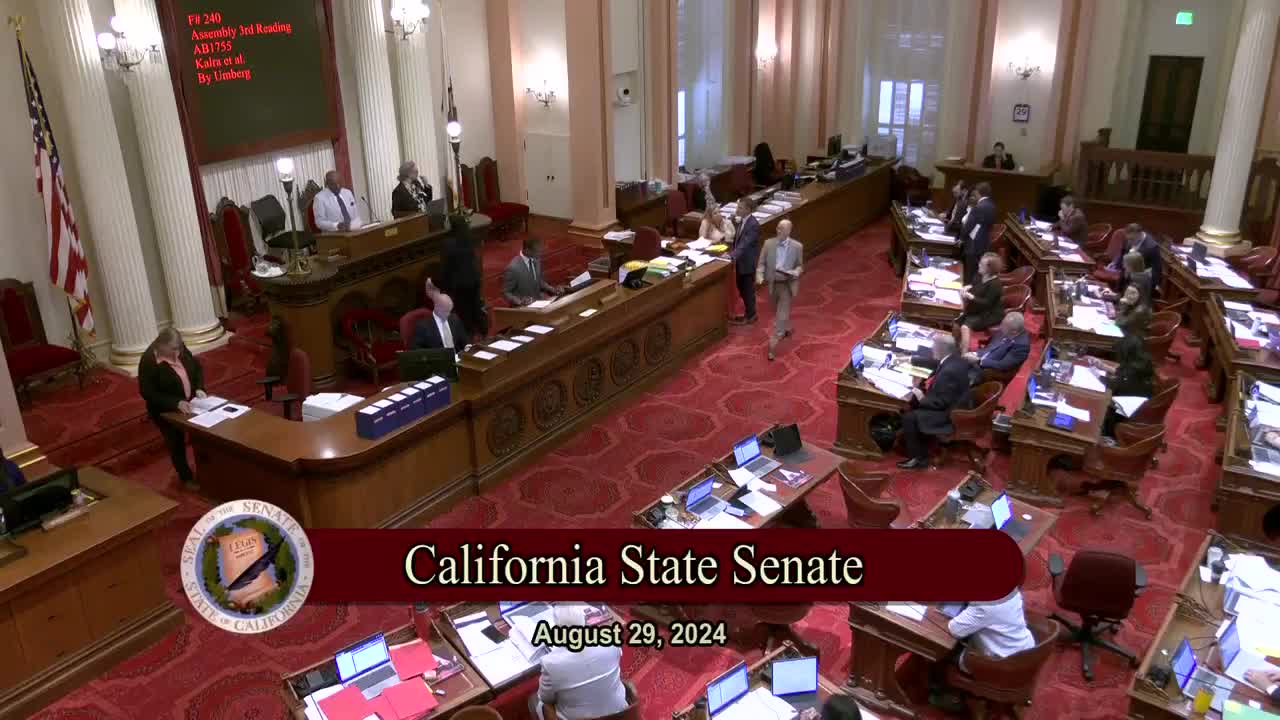 17MIN
Senate Floor
 1H
Senate Standing Committee on Judiciary
 45SEC
Senate Standing Committee on Appropriations
 5MIN
Senate Standing Committee on Human Services
 2MIN
Senate Standing Committee on Judiciary


Bill Co-Author(s):