AB 1837: San Francisco Bay area: public transit: Regional Network Management Council.
- Session Year: 2023-2024
- House: Assembly
- Latest Version Date: 2024-03-21
Current Status:
Failed
(2024-05-29: Referred to Com. on TRANS.)
Introduced
In Committee
First Chamber
In Committee
Second Chamber
Enacted
Existing law creates the Metropolitan Transportation Commission as a local area planning agency for the 9-county San Francisco Bay area with comprehensive regional transportation planning and other related responsibilities. Existing law creates various transit districts located in the San Francisco Bay area, with specified powers and duties relating to providing public transit services. Existing law requires the commission to adopt rules and regulations to promote the coordination of fares and schedules for all public transit systems within its jurisdiction, as specified.
This bill would state the intent of the Legislature to enact subsequent legislation to encourage coordination and collaboration among transit agencies in the San Francisco Bay area.This bill would create the Regional Network Management Council as an 11-member council to represent the interests of its stakeholders, to provide leadership and critical input on regional transit policies, and to provide executive guidance on regional transit policies and actionable implementation plans in pursuit of transformative improvements in the customer experience San Francisco Bay area transit. The bill would require the commission to facilitate the creation of the council. By requiring the commission to facilitate the creation of the council, and requiring certain employees of specified local agencies to serve on the council, the bill would impose a state-mandated local program.
The California Constitution requires the state to reimburse local agencies and school districts for certain costs mandated by the state. Statutory provisions establish procedures for making that reimbursement.
This bill would provide that, if the Commission on State Mandates determines that the bill contains costs mandated by the state, reimbursement for those costs shall be made pursuant to the statutory provisions noted above.
Existing law creates the Metropolitan Transportation Commission as a local area planning agency for the 9-county San Francisco Bay area with comprehensive regional transportation planning and other related responsibilities. Existing law creates various transit districts located in the San Francisco Bay area, with specified powers and duties relating to providing public transit services. Existing law requires the commission to adopt rules and regulations to promote the coordination of fares and schedules for all public transit systems within its jurisdiction, as specified.
This bill would state the intent of the Legislature to enact subsequent legislation to encourage coordination and collaboration among transit agencies in the San Francisco Bay area.
(a)There is hereby created the Regional Network Management Council.
(b)The commission shall facilitate the creation of the council.
(c)The council shall consist of 11 members as follows:
(1)The executive director of the commission.
(2)The general manager of the San Francisco Bay Area Rapid Transit District.
(3)The general manager of the Alameda-Contra Costa Transit District.
(4)The manager of the Santa Clara Valley Transportation Authority.
(5)The executive director of the Peninsula Rail Transit District.
(6)The general manager of the Golden Gate Bridge, Highway and Transportation District.
(7)The general manager of the San Mateo County Transit District.
(8)The general managers from three other transit providers serving the San Francisco Bay area, selected at the sole discretion of those transit providers.
(d)The council shall do all the following:
(1)Represent the interests of its stakeholders.
(2)Provide leadership and critical input on regional transit policies.
(3)Provide executive guidance on regional transit policies and actionable implementation plans in pursuit of transformative improvements in the customer experience for San Francisco Bay area transit.
SEC. 2.If the Commission on State Mandates determines that this act contains costs mandated by the state, reimbursement to local agencies and school districts for those costs shall be made pursuant to Part 7 (commencing with Section 17500) of Division 4 of Title 2 of the Government Code.
SECTION 1.It is the intent of the Legislature to enact subsequent legislation to encourage coordination and collaboration among transit agencies in the San Francisco Bay area.It is the intent of the Legislature to enact subsequent legislation to encourage coordination and collaboration among transit agencies in the San Francisco Bay area.
|
Date
|
Status
|
|---|---|
| May 29, 2024 | Referred to Com. on TRANS. |
| May 22, 2024 | In Senate. Read first time. To Com. on RLS. for assignment. |
| May 21, 2024 | Read third time. Passed. Ordered to the Senate. (Ayes 71. Noes 0. Page 5444.) |
| May 16, 2024 | Read second time. Ordered to Consent Calendar. |
| May 15, 2024 | From committee: Do pass. To Consent Calendar. (Ayes 15. Noes 0.) (May 15). |
| Apr 23, 2024 | From committee: Do pass and re-refer to Com. on APPR. (Ayes 15. Noes 0.) (April 22). Re-referred to Com. on APPR. |
| Apr 1, 2024 | In committee: Hearing postponed by committee. |
| Apr 1, 2024 | Re-referred to Com. on TRANS. |
| Mar 21, 2024 | From committee chair, with author's amendments: Amend, and re-refer to Com. on TRANS. Read second time and amended. |
| Mar 21, 2024 | Referred to Com. on TRANS. |
| Jan 17, 2024 | From printer. May be heard in committee February 16. |
| Jan 16, 2024 | Read first time. To print. |
|
Date
|
Description
|
Location
|
Votes
|
|
|---|---|---|---|---|
| May 21, 2024 | AB 1837 Papan Consent Calendar Second Day | Assembly Floor |
Passed |
|
| May 15, 2024 | Do pass. To Consent Calendar. | Assembly Standing Committee on Appropriations |
Passed |
|
| Apr 22, 2024 | Do pass and be re-referred to the Committee on [Appropriations] | Assembly Standing Committee on Transportation |
Passed |
This list shows positions taken on this bill by organizations on the date displayed, which is linked to the original source.
Positions by individuals are not included.
|
Organization
|
Position
|
Date
|
|---|---|---|
| Analysis Prepar3ed by: David Sforza / TRANS. / 319-2093 | ** Against | |
| Seamless Bay Area | ** Support |
Date of Hearing: May 15, 2024
ASSEMBLY COMMITTEE ON APPROPRIATIONS
Buffy Wicks, Chair
ABPCA Bill Id:AB 1837
Author:(Papan) – As Amended Ver:March 21, 2024
Policy Committee: | Transportation | Vote: | 15 - 0 |
|
| ||
|
|
Urgency: No State Mandated Local Program: Yes Reimbursable: Yes
SUMMARY:
This bill establishes in state law the Regional Network Management Council (RNM Council) and directs the Metropolitan Transportation Commission (MTC) to facilitate the creation of the council.
Specifically, this bill specifies membership of the RNM Council—11 members representing various transit and transportation agencies in the Bay Area—and charges it with (1) representing the interests of its stakeholders, (2) providing leadership and critical input on regional transit policies and (3) providing executive guidance on regional transit policies and actionable implementation plans in pursuit of transformative improvements in the customer experience for San Francisco Bay Area transit.
FISCAL EFFECT:
This bill imposes a duty on a local agency. The state would need to reimburse any resulting local cost, should the local agency file a claim with the Commission on State Mandates and the commission determines the costs to require reimbursement. However, MTC created the RNM Council in 2023. Presumably, therefore, MTC will require little or no new resources to implement this bill.
COMMENTS:
Since 1996, statute has designated MTC as the transportation planning, coordinating and financing agency for the nine-county San Francisco Bay Area. In May of 2020, MTC created the Blue Ribbon Transit Recovery Task Force to “guide the future of the Bay Area’s public transportation network as the region adjusts to the new conditions created by the COVID-19 pandemic.” Task force membership includes local elected officials; advocates for people with disabilities; representatives of the state Senate and state Assembly, including the author of this bill; the California State Transportation Agency; transit operators; business and labor groups and transit and social justice advocates, and is chaired by MTC.
The author intends this bill to lead to greater collaboration among transit authorities in the Bay Area. According to the author:
It has been clear for many years that a collaborative approach is urgently required to increase transit ridership in the Bay Area. This is not a new issue, even prior to the COVID-19 pandemic, transit operators were struggling with a loss of ridership. As the Legislature contemplates a funding mechanism for transit, it is imperative that the right structure and oversight is in place to ensure that any new revenues are used in the most efficient and effective ways possible. Following a legislative effort in 2020, the Metropolitan Transportation Commission (MTC) created a coordinating council to establish a plan for improving transit. However, because the council’s tasks entail competing interests of many transit operators, it is crucial that the State has oversight over this council. AB 1837 is a step towards ensuring the MTC’s coordinating council’s goals are accomplished in a fair and comprehensive manner.
Analysis Prepared by: Jay Dickenson / APPR. / (916) 319-2081
Date of Hearing: April 22, 2024
ASSEMBLY COMMITTEE ON TRANSPORTATION
Lori D. Wilson, Chair
ABPCA Bill Id:AB 1837 (
Author:Papan) – As Amended Ver:March 21, 2024
SUBJECT: San Francisco Bay area: public transit: Regional Network Management Council
SUMMARY: Codifies the existing Regional Network Management Council (RNMC). Specifically, this bill:
- Requires the Metropolitan Transit Commission (MTC) to facilitate the creation of the RNMC consisting of 11 members, including the executive director of (MTC), and the general managers and executive directors of San Francisco Bay Area Rapid Transit (BART), Alameda-Contra Costa Transit District (AC Transit), Santa Clara Valley Transportation Authority (VTA) Peninsula Rail Transit District (Caltrain), Golden Gate Bridge, Highway and Transportation District (Golden Gate Transit), San Mateo County Transit District (SMCTD) and the general managers from three other transit providers serving the San Francisco Bay Area, chosen at the sole discretion of those transit providers.
- Requires RNMC to represent the interests of its stakeholders, provide leadership and critical input on regional transit policies, and provide executive guidance on regional transit policies and actionable implementation plans in pursuit of transformative improvements to the customer experience for San Francisco Bay Area transit
EXISTING LAW:
- Establishes MTC as the transportation planning, coordinating, and financing agency for the nine-county San Francisco Bay Area. (Public Utilities Code (PUC) 131001).
- Establishes the regional transit coordinating council (RTCC) within MTC, to better coordinate routes, schedules, fares, and transfers among the San Francisco Bay area transit operators and to explore potential advantages of joint ventures in areas such as marketing, maintenance, and purchasing. (PUC 66516)
- Authorizes MTC, in coordination with RTCC, to adopt rules and regulations to promote the coordination of fares and schedules for all public transit systems within its jurisdiction. (PUC 66516)
- Requires every transit system to enter into a joint fare revenue sharing agreement with connecting systems consistent with MTC’s rules and regulations. (PUC 66516)
- Authorizes MTC, in coordination with RTCC, to identify the functions performed by individual transit systems that could be consolidated to improve the efficiency of regional transit service, and recommend that those functions be consolidated and performed through inter-operator agreements or as services contracted to a single entity. (PUC 66516.5)
- Authorizes MTC, in coordination with RTCC, to improve service coordination and effectiveness in those transit corridors identified as transit corridors of regional significance by recommending improvements in those corridors, including, but not limited to, reduction of duplicative service and institution of coordinated service across public transit system boundaries. (PUC 66516.5)
FISCAL EFFECT: Unknown
COMMENTS: With the onset of the COVID-19 pandemic, during the first half of 2020, transit ridership plunged from 50% to as much as 94%. In efforts to stave off financial losses from declining transit ridership the federal government provided relief for transit operators across the country. In March of 2020, Congress passed and the President signed the Coronavirus Aid, Relief and Economic Security (CARES) Act, which provided $25 billion in relief to transit agencies. The Coronavirus Response and Relief Supplemental Appropriations Act of 2021 added an additional $14 billion in transit relief. The American Rescue Plan in March of 2021 provided an additional $30.5 billion.
According to the author, “It has been clear for many years that a collaborative approach is urgently required to increase transit ridership in the Bay Area. This is not a new issue, even prior to the COVID-19 pandemic, transit operators were struggling with a loss of ridership. As the Legislature contemplates a funding mechanism for transit, it is imperative that the right structure and oversight is in place to ensure that any new revenues are used in the most efficient and effective ways possible. Following a legislative effort in 2020, the Metropolitan Transportation Commission (MTC) created a coordinating council to establish a plan for improving transit. However, because the council’s tasks entail competing interests of many transit operators, it is crucial that the State has oversight over this council. AB 1837 is a step towards ensuring the MTC’s coordinating council’s goals are accomplished in a fair and comprehensive manner.”
Transit ridership has improved since 2020, but is still far below January 2020 levels. As of April of 2024, transit ridership nationally is at 73% of what it was prior to the pandemic. However, transit ridership in the Bay Area has remained low. BART’s weekly ridership is still at 41% of previous levels, Caltrain is 32% of previous levels, and San Francisco Muni is at 72% of their previous levels. AC Transit and VTA have seen a larger return of their customers, with ridership at 87% and 82% respectively.
In May of 2020, MTC created the Blue Ribbon Transit Recovery Task Force (Blue Ribbon Task Force) to “guide the future of the Bay Area’s public transportation network as the region adjusts to the new conditions created by the COVID-19 pandemic.” The Blue Ribbon Task Force was chaired by MTC Commissioner and Solano County Supervisor Jim Sperling, and includes other local elected officials, advocates for people with disabilities, representatives from the state Senate and Assembly, the California State Transportation Agency; transit operators; business and labor groups; and transit and social justice advocates.
The Blue Ribbon Task Force is the latest attempt to address a concern that has been raised for decades: how do you better coordinate the 27 different transit agencies in the Bay Area? SB 1474 (Kopp) Chapter 256, Statutes of 1996 authorized MTC, through RTCC, to identify functions performed by individual public transit systems that could be consolidated to improve the efficiency of regional transit service and authorized MTC to withhold the full allocation of its transit dollars until the operators have been found to have made a reasonable effort to implement productivity improvements.
In February of 2023, MTC established the RNMC to implement the regional network management framework based on recommendations from the Blue Ribbon Recovery Task Force. The action plan for the regional management network framework includes the creation of equitable fare and payment systems, integrated mapping, signage and real-time schedule information, improving the speed and reliability of Bay Area buses and light rail trains, and improving accessibility for older adults and persons with disabilities.
Committee comments: SB 1031 (Weiner) of 2024 would authorize MTC to propose a ballot measure in the Bay Area to both improve public transit and help provide additional funding to Bay Area Transit agencies that are facing budget shortfalls. Pre-COVID, Caltrain, BART and other systems were able to successfully rely on fares for the vast majority of their budgets. However the massive decline in ridership, likely due to a change in work patterns, has resulted in a significant loss in revenue for these agencies. As of April 13th, that bill requires MTC to be responsible for implementing a “seamless transit rider experience across the region.” The bill requires MTC to develop many of the goals currently outlined for the existing RNMC. The bill also states that it is the intent of the Legislature to enact legislation to strengthen regional network management within the region, including the possibility of establishing a body within the commission to guide regional network management efforts.
When, or if SB 1031 is amended, it is possible the regional network management envisioned in that bill is different from the one MTC has currently established and is codified in this bill. Even if it ultimately does not, this bill, if signed into law, would prevent MTC from potentially establishing a different framework for regional coordination in the future by imposing a state mandate on them.
Related Legislation: SB 1031 (Weiner) authorizes MTC to propose a ballot measure in the Bay Area to fund transportation needs. That bill is pending before Senate Transportation Committee.
SB 917 (Becker) would have required MTC to adopt a Connected Network Plan; adopt an integrated transit fare structure; develop a standardized regional transit mapping and wayfinding system; and establish open data standards, as specified, for the 27 transit agencies of the Bay Area region. Requires the region’s transit agencies to comply or come into compliance with the established programs; or be ineligible to receive a portion of state transit funding in an amount determined by MTC. That bill was held on suspense in Assembly Transportation Committee.
SB 1474 (Kopp) Chapter 256, Statutes of 1996 authorized MTC, through RTCC, to identify functions performed by individual public transit systems that could be consolidated to improve the efficiency of regional transit service and authorized MTC to withhold the full allocation of its transit dollars until the operators has been found to have made a reasonable effort to implement productivity improvements.
REGISTERED SUPPORT / OPPOSITION:
Support
None on file
Oppose
None on file
Analysis Prepar3ed by: David Sforza / TRANS. / (916) 319-2093
Date of Hearing: April 22, 2024
ASSEMBLY COMMITTEE ON TRANSPORTATION
Lori D. Wilson, Chair
ABPCA Bill Id:AB 1837 (
Author:Papan) – As Amended Ver:March 21, 2024
SUBJECT: San Francisco Bay area: public transit: Regional Network Management Council
SUMMARY: Codifies the existing Regional Network Management Council (RNMC). Specifically, this bill:
- Requires the Metropolitan Transit Commission (MTC) to facilitate the creation of the RNMC consisting of 11 members, including the executive director of (MTC), and the general managers and executive directors of San Francisco Bay Area Rapid Transit (BART), Alameda-Contra Costa Transit District (AC Transit), Santa Clara Valley Transportation Authority (VTA) Peninsula Rail Transit District (Caltrain), Golden Gate Bridge, Highway and Transportation District (Golden Gate Transit), San Mateo County Transit District (SMCTD) and the general managers from three other transit providers serving the San Francisco Bay Area, chosen at the sole discretion of those transit providers.
- Requires RNMC to represent the interests of its stakeholders, provide leadership and critical input on regional transit policies, and provide executive guidance on regional transit policies and actionable implementation plans in pursuit of transformative improvements to the customer experience for San Francisco Bay Area transit
EXISTING LAW:
- Establishes MTC as the transportation planning, coordinating, and financing agency for the nine-county San Francisco Bay Area. (Public Utilities Code (PUC) 131001).
- Establishes the regional transit coordinating council (RTCC) within MTC, to better coordinate routes, schedules, fares, and transfers among the San Francisco Bay area transit operators and to explore potential advantages of joint ventures in areas such as marketing, maintenance, and purchasing. (PUC 66516)
- Authorizes MTC, in coordination with RTCC, to adopt rules and regulations to promote the coordination of fares and schedules for all public transit systems within its jurisdiction. (PUC 66516)
- Requires every transit system to enter into a joint fare revenue sharing agreement with connecting systems consistent with MTC’s rules and regulations. (PUC 66516)
- Authorizes MTC, in coordination with RTCC, to identify the functions performed by individual transit systems that could be consolidated to improve the efficiency of regional transit service, and recommend that those functions be consolidated and performed through inter-operator agreements or as services contracted to a single entity. (PUC 66516.5)
- Authorizes MTC, in coordination with RTCC, to improve service coordination and effectiveness in those transit corridors identified as transit corridors of regional significance by recommending improvements in those corridors, including, but not limited to, reduction of duplicative service and institution of coordinated service across public transit system boundaries. (PUC 66516.5)
FISCAL EFFECT: Unknown
COMMENTS: With the onset of the COVID-19 pandemic, during the first half of 2020, transit ridership plunged from 50% to as much as 94%. In efforts to stave off financial losses from declining transit ridership the federal government provided relief for transit operators across the country. In March of 2020, Congress passed and the President signed the Coronavirus Aid, Relief and Economic Security (CARES) Act, which provided $25 billion in relief to transit agencies. The Coronavirus Response and Relief Supplemental Appropriations Act of 2021 added an additional $14 billion in transit relief. The American Rescue Plan in March of 2021 provided an additional $30.5 billion.
According to the author, “It has been clear for many years that a collaborative approach is urgently required to increase transit ridership in the Bay Area. This is not a new issue, even prior to the COVID-19 pandemic, transit operators were struggling with a loss of ridership. As the Legislature contemplates a funding mechanism for transit, it is imperative that the right structure and oversight is in place to ensure that any new revenues are used in the most efficient and effective ways possible. Following a legislative effort in 2020, the Metropolitan Transportation Commission (MTC) created a coordinating council to establish a plan for improving transit. However, because the council’s tasks entail competing interests of many transit operators, it is crucial that the State has oversight over this council. AB 1837 is a step towards ensuring the MTC’s coordinating council’s goals are accomplished in a fair and comprehensive manner.”
Transit ridership has improved since 2020, but is still far below January 2020 levels. As of April of 2024, transit ridership nationally is at 73% of what it was prior to the pandemic. However, transit ridership in the Bay Area has remained low. BART’s weekly ridership is still at 41% of previous levels, Caltrain is 32% of previous levels, and San Francisco Muni is at 72% of their previous levels. AC Transit and VTA have seen a larger return of their customers, with ridership at 87% and 82% respectively.
In May of 2020, MTC created the Blue Ribbon Transit Recovery Task Force (Blue Ribbon Task Force) to “guide the future of the Bay Area’s public transportation network as the region adjusts to the new conditions created by the COVID-19 pandemic.” The Blue Ribbon Task Force was chaired by MTC Commissioner and Solano County Supervisor Jim Sperling, and includes other local elected officials, advocates for people with disabilities, representatives from the state Senate and Assembly, the California State Transportation Agency; transit operators; business and labor groups; and transit and social justice advocates.
The Blue Ribbon Task Force is the latest attempt to address a concern that has been raised for decades: how do you better coordinate the 27 different transit agencies in the Bay Area? SB 1474 (Kopp) Chapter 256, Statutes of 1996 authorized MTC, through RTCC, to identify functions performed by individual public transit systems that could be consolidated to improve the efficiency of regional transit service and authorized MTC to withhold the full allocation of its transit dollars until the operators have been found to have made a reasonable effort to implement productivity improvements.
In February of 2023, MTC established the RNMC to implement the regional network management framework based on recommendations from the Blue Ribbon Recovery Task Force. The action plan for the regional management network framework includes the creation of equitable fare and payment systems, integrated mapping, signage and real-time schedule information, improving the speed and reliability of Bay Area buses and light rail trains, and improving accessibility for older adults and persons with disabilities.
Committee comments: SB 1031 (Weiner) of 2024 would authorize MTC to propose a ballot measure in the Bay Area to both improve public transit and help provide additional funding to Bay Area Transit agencies that are facing budget shortfalls. Pre-COVID, Caltrain, BART and other systems were able to successfully rely on fares for the vast majority of their budgets. However the massive decline in ridership, likely due to a change in work patterns, has resulted in a significant loss in revenue for these agencies. As of April 13th, that bill requires MTC to be responsible for implementing a “seamless transit rider experience across the region.” The bill requires MTC to develop many of the goals currently outlined for the existing RNMC. The bill also states that it is the intent of the Legislature to enact legislation to strengthen regional network management within the region, including the possibility of establishing a body within the commission to guide regional network management efforts.
When, or if SB 1031 is amended, it is possible the regional network management envisioned in that bill is different from the one MTC has currently established and is codified in this bill. Even if it ultimately does not, this bill, if signed into law, would prevent MTC from potentially establishing a different framework for regional coordination in the future by imposing a state mandate on them.
Related Legislation: SB 1031 (Weiner) authorizes MTC to propose a ballot measure in the Bay Area to fund transportation needs. That bill is pending before Senate Transportation Committee.
SB 917 (Becker) would have required MTC to adopt a Connected Network Plan; adopt an integrated transit fare structure; develop a standardized regional transit mapping and wayfinding system; and establish open data standards, as specified, for the 27 transit agencies of the Bay Area region. Requires the region’s transit agencies to comply or come into compliance with the established programs; or be ineligible to receive a portion of state transit funding in an amount determined by MTC. That bill was held on suspense in Assembly Transportation Committee.
SB 1474 (Kopp) Chapter 256, Statutes of 1996 authorized MTC, through RTCC, to identify functions performed by individual public transit systems that could be consolidated to improve the efficiency of regional transit service and authorized MTC to withhold the full allocation of its transit dollars until the operators has been found to have made a reasonable effort to implement productivity improvements.
REGISTERED SUPPORT / OPPOSITION:
Support
Seamless Bay Area
Oppose
None on file
Analysis Prepar3ed by: David Sforza / TRANS. / (916) 319-2093
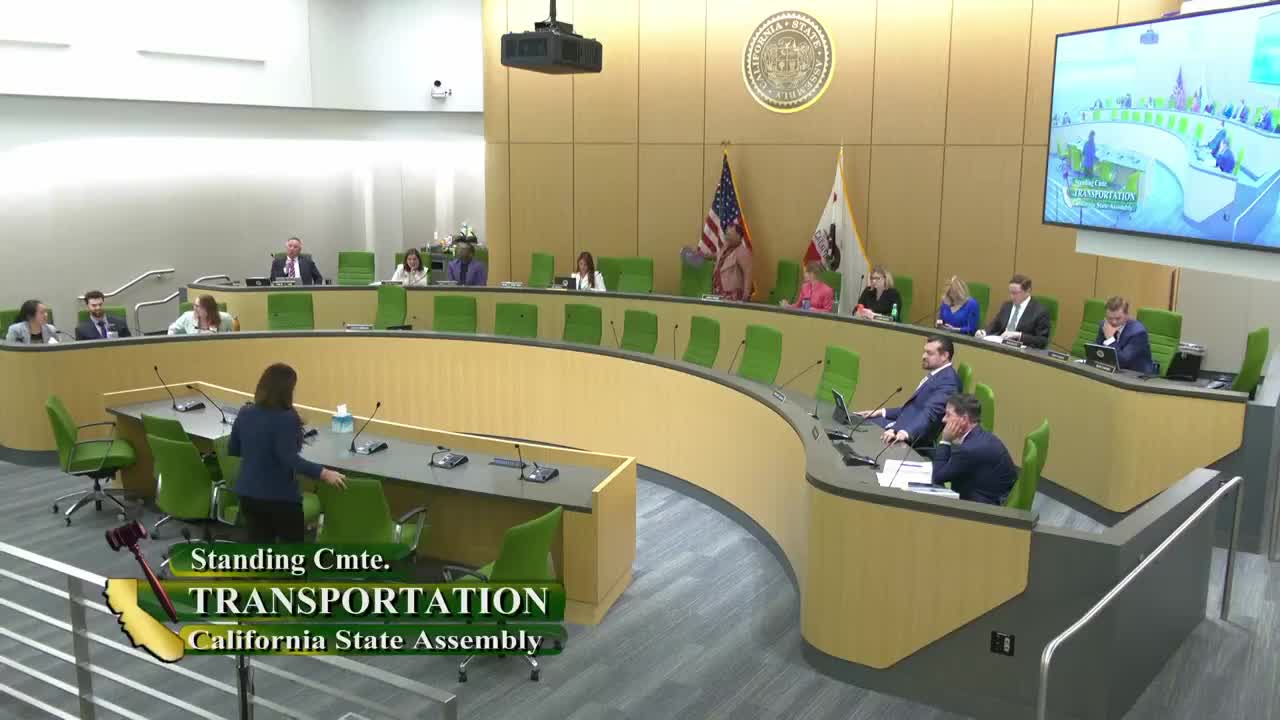
Discussed in Hearing
 14SEC
Assembly Standing Committee on Transportation
Bill Author

Bill Co-Author(s):