AB 1880: Minors: artistic employment.
- Session Year: 2023-2024
- House: Assembly
- Latest Version Date: 2024-09-26
Current Status:
Passed
(2024-09-26: Chaptered by Secretary of State - Chapter 610, Statutes of 2024.)
Introduced
In Committee
First Chamber
In Committee
Second Chamber
Enacted
Existing law regulates certain contracts for artistic employment between an unemancipated minor and third parties, including employment as an actor, dancer, musician, comedian, singer, stuntperson, voice-over artist, or other performer or entertainer, or sports participant. Existing law provides for the establishment of a Coogan Trust Account, as specified, for the purpose of preserving for the benefit of the minor 15% of the minors gross earnings or a greater percentage, if requested by the minors parent or guardian.
This bill would specifically include a content creator in these provisions and would define content creator as an individual who creates, posts, shares, or otherwise interacts with digital content on an online platform and engages in a direct contractual relationship with third parties, as specified.
Existing law regulates certain contracts for artistic employment between an unemancipated minor and third parties, including employment as an actor, dancer, musician, comedian, singer, stuntperson, voice-over artist, or other performer or entertainer, or sports participant. Existing law provides for the establishment of a Coogan Trust Account, as specified, for the purpose of preserving for the benefit of the minor 15% of the minors gross earnings or a greater percentage, if requested by the minors parent or guardian.
This bill would specifically include a child influencer in paid online content on internet websites, social networks, and social media applications in these provisions. content creator in these provisions and would define content creator as an individual who creates, posts, shares, or otherwise interacts with digital content on an online platform and engages in a direct contractual relationship with third parties, as specified.
Existing law regulates certain contracts for artistic employment between an unemancipated minor and third parties, including employment as an actor, dancer, musician, comedian, singer, stuntperson, voice-over artist, or other performer or entertainer, or sports participant. Existing law provides for the establishment of a Coogan Trust Account, as specified, for the purpose of preserving for the benefit of the minor 15% of the minors gross earnings or a greater percentage, if requested by the minors parent or guardian.
This bill would specifically include a child influencer in paid online content on internet websites, social networks, and social media applications in these provisions.
(a)This chapter applies to the following types of contracts entered into between an unemancipated minor and a third party on or after January 1, 2000:
(1)A contract pursuant to which a minor is employed or agrees to render artistic or creative services, either directly or through a third party, including, but not limited to, a personal services corporation (loan-out company), or through a casting agency. Artistic or creative services includes, but is not limited to, services as an actor, actress, dancer, musician, comedian, singer, stuntperson, voice-over artist, content creator, or other performer or entertainer, or as a songwriter, musical producer or arranger, writer, director, producer, production executive, choreographer, composer, conductor, or designer.
(2)A contract pursuant to which a minor agrees to purchase, or otherwise secure, sell, lease, license, or otherwise dispose of literary, musical, or dramatic properties, or use of a persons likeness, voice recording, performance, or story of or incidents in the persons life, either tangible or intangible, or any rights therein for use in motion pictures, television, the production of sound recordings in any format now known or hereafter devised, the legitimate or living stage, or otherwise in the entertainment field.
(3)A contract pursuant to which a minor is employed or agrees to render services as a participant or player in a sport.
(b)(1)If a minor is employed or agrees to render services directly for a person or entity, that person or entity shall be considered the minors employer for purposes of this chapter.
(2)If a minors services are being rendered through a third-party individual or personal services corporation (loan-out company), the person to whom or entity to which that third party is providing the minors services shall be considered the minors employer for purposes of this chapter.
(3)If a minor renders services as an extra, background performer, or in a similar capacity through an agency or service that provides one or more of those performers for a fee (casting agency), the agency or service shall be considered the minors employer for the purposes of this chapter.
(c)For purposes of this chapter, the following definitions apply:
(1)Content creator means an individual who creates, posts, shares, or otherwise interacts with digital content on an online platform and engages in a direct contractual relationship with third parties. Content creators include, but are not limited to, vloggers, podcasters, social media influencers, and streamers.
(2)Online platform means any public-facing internet website, web application, or digital application, including, but not limited to, social media platforms as defined in Section 22675 of the Business and Professions Code, advertising networks, mobile applications, mobile operating systems, search engines, email services, and internet access services.
(d)(1)For purposes of this chapter, the minors gross earnings means the total compensation payable to the minor under the contract or, if the minors services are being rendered through a third-party individual or personal services corporation (loan-out company), the total compensation payable to that third party for the services of the minor.
(2)Notwithstanding paragraph (1), with respect to contracts pursuant to which a minor is employed or agrees to render services as a musician, singer, songwriter, musical producer, or arranger only, for purposes of this chapter, the minors gross earnings means the total amount paid to the minor pursuant to the contract, including the payment of any advances to the minor pursuant to the contract, but excluding deductions to offset those advances or other expenses incurred by the employer pursuant to the contract, or, if the minors services are being rendered through a third-party individual or personal services corporation (loan-out company), the total amount payable to that third party for the services of the minor.
(a)This chapter applies to the following contracts entered into between an unemancipated minor and a third party on or after January 1, 2000:
(1)A contract pursuant to which a minor is employed or agrees to render artistic or creative services, either directly or through a third party, including, but not limited to, a personal services corporation (loan-out company), or through a casting agency. Artistic or creative services includes, but is not limited to, services as an actor, actress, dancer, musician, comedian, singer, stuntperson, voice-over artist, child influencer in paid online content on internet websites, social networks, and social media applications, content creator, or other performer or entertainer, or as a songwriter, musical producer or arranger, writer, director, producer, production executive, choreographer, composer, conductor, or designer.
(2)A contract pursuant to which a minor agrees to purchase, or otherwise secure, sell, lease, license, or otherwise dispose of literary, musical, or dramatic properties, or use of a persons likeness, voice recording, performance, or story of or incidents in the persons life, either tangible or intangible, or any rights therein for use in motion pictures, television, the production of sound recordings in any format now known or hereafter devised, the legitimate or living stage, or otherwise in the entertainment field.
(3)A contract pursuant to which a minor is employed or agrees to render services as a participant or player in a sport.
(b)(1)If a minor is employed or agrees to render services directly for a person or entity, that person or entity shall be considered the minors employer for purposes of this chapter.
(2)If a minors services are being rendered through a third-party individual or personal services corporation (loan-out company), the person to whom or entity to which that third party is providing the minors services shall be considered the minors employer for purposes of this chapter.
(3)If a minor renders services as an extra, background performer, or in a similar capacity through an agency or service that provides one or more of those performers for a fee (casting agency), the agency or service shall be considered the minors employer for the purposes of this chapter.
(c)For purposes of this chapter, the following definitions apply:
(1)Content creator means an individual who creates, posts, shares, or otherwise interacts with digital content on an online platform and engages in a direct contractual relationship with third parties. Content creators include, but are not limited to, vloggers, podcasters, social media influencers, and streamers.
(2)Online platform means any public-facing internet website, web application, or digital application, including, but not limited to, social media platforms as defined in Section 22675 of the Business and Professions Code, advertising networks, mobile applications, mobile operating systems, search engines, email services, and internet access services.
(c)(d)(1)For purposes of this chapter, the minors gross earnings means the total compensation payable to the minor under the contract or, if the minors services are being rendered through a third-party individual or personal services corporation (loan-out company), the total compensation payable to that third party for the services of the minor.
(2)Notwithstanding paragraph (1), with respect to contracts pursuant to which a minor is employed or agrees to render services as a musician, singer, songwriter, musical producer, or arranger only, for purposes of this chapter, the minors gross earnings means the total amount paid to the minor pursuant to the contract, including the payment of any advances to the minor pursuant to the contract, but excluding deductions to offset those advances or other expenses incurred by the employer pursuant to the contract, or, if the minors services are being rendered through a third-party individual or personal services corporation (loan-out company), the total amount payable to that third party for the services of the minor.
(a)This chapter applies to the following contracts entered into between an unemancipated minor and a third party on or after January 1, 2000:
(1)A contract pursuant to which a minor is employed or agrees to render artistic or creative services, either directly or through a third party, including, but not limited to, a personal services corporation (loan-out company), or through a casting agency. Artistic or creative services includes, but is not limited to, services as an actor, actress, dancer, musician, comedian, singer, stuntperson, voice-over artist, child influencer in paid online content on internet websites, social networks, and social media applications, or other performer or entertainer, or as a songwriter, musical producer or arranger, writer, director, producer, production executive, choreographer, composer, conductor, or designer.
(2)A contract pursuant to which a minor agrees to purchase, or otherwise secure, sell, lease, license, or otherwise dispose of literary, musical, or dramatic properties, or use of a persons likeness, voice recording, performance, or story of or incidents in the persons life, either tangible or intangible, or any rights therein for use in motion pictures, television, the production of sound recordings in any format now known or hereafter devised, the legitimate or living stage, or otherwise in the entertainment field.
(3)A contract pursuant to which a minor is employed or agrees to render services as a participant or player in a sport.
(b)(1)If a minor is employed or agrees to render services directly for a person or entity, that person or entity shall be considered the minors employer for purposes of this chapter.
(2)If a minors services are being rendered through a third-party individual or personal services corporation (loan-out company), the person to whom or entity to which that third party is providing the minors services shall be considered the minors employer for purposes of this chapter.
(3)If a minor renders services as an extra, background performer, or in a similar capacity through an agency or service that provides one or more of those performers for a fee (casting agency), the agency or service shall be considered the minors employer for the purposes of this chapter.
(c)(1)For purposes of this chapter, the minors gross earnings means the total compensation payable to the minor under the contract or, if the minors services are being rendered through a third-party individual or personal services corporation (loan-out company), the total compensation payable to that third party for the services of the minor.
(2)Notwithstanding paragraph (1), with respect to contracts pursuant to which a minor is employed or agrees to render services as a musician, singer, songwriter, musical producer, or arranger only, for purposes of this chapter, the minors gross earnings means the total amount paid to the minor pursuant to the contract, including the payment of any advances to the minor pursuant to the contract, but excluding deductions to offset those advances or other expenses incurred by the employer pursuant to the contract, or, if the minors services are being rendered through a third-party individual or personal services corporation (loan-out company), the total amount payable to that third party for the services of the minor.
|
Date
|
Status
|
|---|---|
| Sep 26, 2024 | Chaptered by Secretary of State - Chapter 610, Statutes of 2024. |
| Sep 26, 2024 | Approved by the Governor. |
| Aug 28, 2024 | Enrolled and presented to the Governor at 4 p.m. |
| Aug 22, 2024 | Senate amendments concurred in. To Engrossing and Enrolling. (Ayes 62. Noes 0. Page 6422.). |
| Aug 20, 2024 | In Assembly. Concurrence in Senate amendments pending. May be considered on or after August 22 pursuant to Assembly Rule 77. |
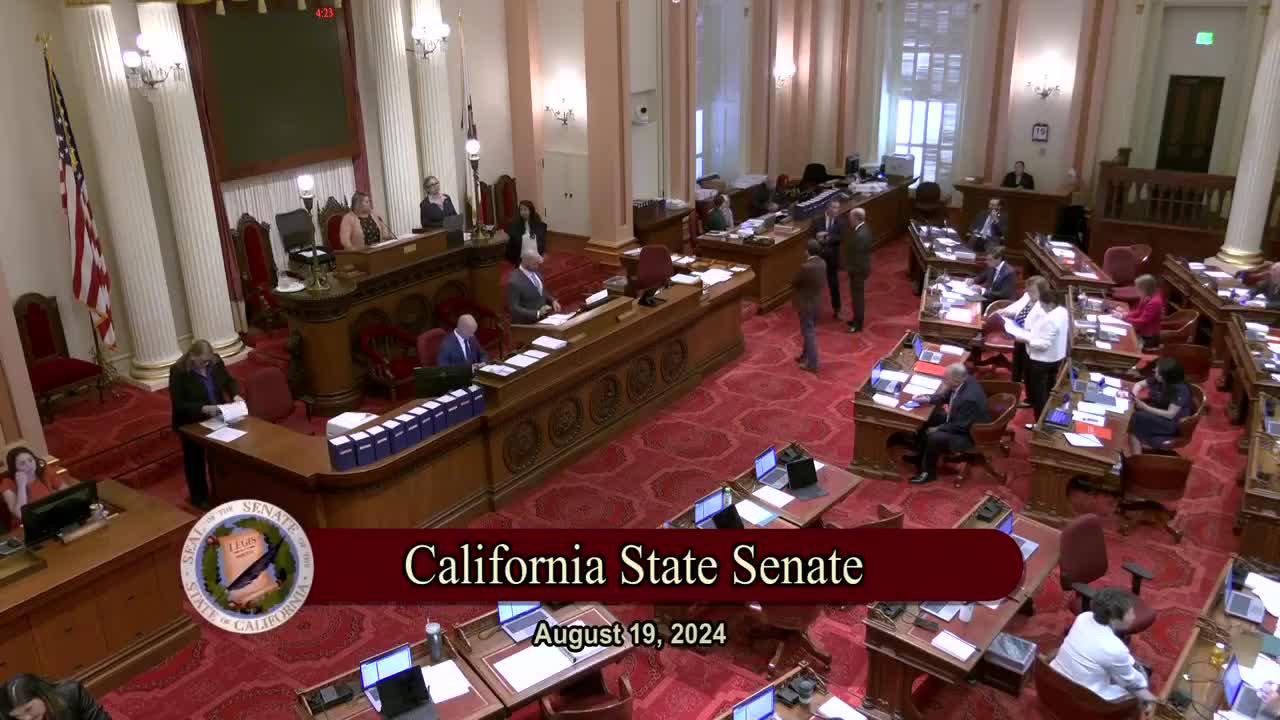
| Aug 19, 2024 | Read third time. Passed. Ordered to the Assembly. (Ayes 40. Noes 0. Page 5201.). |
| Jun 12, 2024 | Read second time. Ordered to third reading. |
| Jun 11, 2024 | Read third time and amended. Ordered to second reading. |
| Jun 10, 2024 | Ordered to third reading. |
| Jun 10, 2024 | From Consent Calendar. |
| Jun 5, 2024 | Read second time. Ordered to Consent Calendar. |
| Jun 4, 2024 | From committee: Do pass. To Consent Calendar. (Ayes 11. Noes 0.) (June 4). |
| May 23, 2024 | From committee chair, with author's amendments: Amend, and re-refer to committee. Read second time, amended, and re-referred to Com. on JUD. |
| May 1, 2024 | Referred to Com. on JUD. |
| Mar 18, 2024 | In Senate. Read first time. To Com. on RLS. for assignment. |
| Mar 18, 2024 | Read third time. Passed. Ordered to the Senate. (Ayes 74. Noes 0. Page 4399.) |
| Mar 13, 2024 | Read second time. Ordered to Consent Calendar. |
| Mar 12, 2024 | From committee: Do pass. To Consent Calendar. (Ayes 10. Noes 0.) (March 12). |
| Feb 5, 2024 | Referred to Com. on JUD. |
| Jan 23, 2024 | From printer. May be heard in committee February 22. |
| Jan 22, 2024 | Read first time. To print. |
|
Date
|
Description
|
Location
|
Votes
|
|
|---|---|---|---|---|
| Aug 22, 2024 | AB 1880 Alanis Concurrence in Senate Amendments | Assembly Floor |
Passed |
|
| Aug 19, 2024 | Assembly 3rd Reading AB1880 Alanis et al. By Rubio | Senate Floor |
Passed |
|
| Jun 4, 2024 | Do pass and be ordered to the Consent Calendar | Senate Standing Committee on Judiciary |
Passed |
|
| Mar 18, 2024 | AB 1880 Alanis Consent Calendar Second Day | Assembly Floor |
Passed |
|
| Mar 12, 2024 | Do pass. To Consent Calendar. | Assembly Standing Committee on Judiciary |
Passed |
This list shows positions taken on this bill by organizations on the date displayed, which is linked to the original source.
Positions by individuals are not included.
CONCURRENCE IN SENATE AMENDMENTS
CSA1 Bill Id:AB 1880
Author:(Alanis)
As Amended Ver:June 11, 2024
Majority vote
SUMMARY
Modifies the definition of the types of contracts pursuant to which minors may be employed or agree to render artistic or creative services that trigger a requirement to establish a Coogan trust account to include content creators in paid online content or internet websites, social networks, and social media applications.
Senate Amendments
- Define "content creator" as an individual who creates, posts, shares, or otherwise interacts with digital content on an online platform and engages in a direct contractual relationship with third parties, including, but are not to, vloggers, podcasters, social media influencers, and streamers.
- Define "online platform" as any public-facing internet website, web application, or digital application, including, but not limited to, social media platforms as defined in the Business and Professions Code.
- Add a co-author.
COMMENTS
The financial exploitation of children engaged in artistic ventures is by no means a new story. Hollywood, for example, is home to an industry notorious for its exploitation of minors and infamous parents who spend their child’s income. Accounts such as those of Jeanette McCurdy, star of Nickelodeon's iCarly and recently published author, Judy Garland, the golden-era Hollywood star of the Wizard of Oz, and McCauley Culkin, star of the Home Alone franchise, are just some of the examples of financial exploitation by parents and guardians of Hollywood’s youngest.
One of the industry's earliest examples, that of Jackie Coogan who starred alongside Charlie Chaplin, inspired the passage of the Coogan Act. Following its initial enactment in 1938, the modern Coogan Act was passed in 1999 to require that 15% of all gross earnings of an unemancipated minor under a contract for artistic or create services be set aside in trust established by the parent or guardian for the minor's benefit. The Act also implements safeguards regarding how the minor's income may be invested. Since 1999 various measures have expanded and specified different types of employment of minors that mandate the establishment of a Coogan trust account.
With the rise of social media has come the growth of a new, often very lucrative, career of social media influencing. Influencers permeate social media, impacting consumer spending habits in countless industries ranging from athletic gear, cosmetics, books and literature, and parenting. How much income an influencer can expect to pull in depends on a number of factors, including how large their following is and how many views or clicks a single piece of content generates – the higher the clicks, the easier it is to attract lucrative brand deals.
Despite federal law and platform-specific policies that prevent minors under the age of 13 from having their own accounts, "kidfluencers" have flourished on social media. These accounts, theoretically run and managed by the parents or guardians of the children, create content that is targeted to other children, despite many platforms’ restrictions on minor-age users. As with adult influencers, this content can often be incredibly lucrative. One pair of now five-year old kidfluencers, Taytum and Oakley Fisher, were paid between $25,000 and $50,000 for promotional content, sometimes consisting of a single post on their YouTube channel in 2019. (Sapna Maheshwari, Online and Earnings Thousands, at Age 4: Meet the Kidfluencers, The New York Times (March 1, 2019) available at https://www.nytimes.com/2019/03/01/business/media/social-media-influencers-kids.html.) Twelve-year-old Ryan Kaji’s platform grew from a YouTube channel to having a line of toys on shelves at Target and Walmart. Nine-year old Nastya was rated the sixth highest paid YouTube star as of 2022, an achievement built on videos showing her 113 million subscribers footage of her decorating Halloween cupcakes, having sleepovers with friends, and playing with toys. According to the New York Times, "a user with a smaller following, referred to as a nano-influencer, can still pull in about $600 per post, while large accounts can earn $10,000 or $20,000." (Valeriya Safronova, Child Influencers Make Big Money. Who Gets It? The New York Times (October 10, 2023) available at: https://www.nytimes.com/2023/10/10/style/children-influencers-money.html.) As the industry has grown, advocates have raised concerns about the potential for abuse and exploitation of the minors who generate content throughout social media.
This bill amends existing law to include "child influencers in paid online content or internet websites, social networks, and social media" within the category of minors subject to contracts for artistic or creative services on whose behalf a parent or guardian is required to establish a Coogan trust account. This modification would result in a new obligation for the parents or guardians of "kidfluencers" to set up a trust account and deposit 15% of income from their online presence into that account. By expanding existing law to include "kidfluencers", this bill arguably takes an important step in protecting the financial wellbeing of online child influencers.
According to the Author
As the social media industry grows, it is essential to protect minors from exploitation. This is why I am proud to introduce AB 1880 which would provide crucial legal protections for child influencers, acknowledging the evolving landscape of entertainment and the unique challenges they face in the digital realm. This amendment ensures that child influencers are afforded the same financial safeguards as their counterparts in more traditional forms of artistic employment. By recognizing the rights of child influencers and establishing clear guidelines for their financial well-being, the state promotes a safer and more equitable environment for young individuals participating in online content creation.
Arguments in Support
In support, SAG-AFTRA writes:
With the rise in new mediums for artistic performances, such as social media and paid online content, it is critical that we update the law to extend protections against exploitation. There are unfortunately way too many stories throughout the history of the entertainment industry of children being financially exploited and abused, kids who literally made millions and were left penniless as adults. It is our hope that this bill prevents this from happening in new mediums of entertainment.
Arguments in Opposition
No opposition on file.
FISCAL COMMENTS
None.
VOTES:
ASM JUDICIARY: 10-0-2
YES: Kalra, Dixon, Bauer-Kahan, Bryan, Connolly, Maienschein, McKinnor, Pacheco, Reyes, Sanchez
ABS, ABST OR NV: Haney, Waldron
ASSEMBLY FLOOR: 74-0-6
YES: Addis, Aguiar-Curry, Alanis, Alvarez, Arambula, Bains, Bauer-Kahan, Bennett, Berman, Boerner, Bonta, Bryan, Juan Carrillo, Wendy Carrillo, Cervantes, Chen, Connolly, Davies, Dixon, Essayli, Flora, Mike Fong, Vince Fong, Friedman, Gabriel, Gallagher, Garcia, Gipson, Grayson, Haney, Holden, Hoover, Irwin, Jackson, Jones-Sawyer, Kalra, Lackey, Low, Lowenthal, Maienschein, Mathis, McCarty, McKinnor, Muratsuchi, Stephanie Nguyen, Ortega, Pacheco, Papan, Jim Patterson, Joe Patterson, Pellerin, Petrie-Norris, Quirk-Silva, Rendon, Reyes, Luz Rivas, Rodriguez, Blanca Rubio, Sanchez, Santiago, Schiavo, Ta, Ting, Valencia, Villapudua, Waldron, Wallis, Ward, Weber, Wicks, Wilson, Wood, Zbur, Robert Rivas
ABS, ABST OR NV: Calderon, Megan Dahle, Hart, Lee, Ramos, Soria
SENATE FLOOR: 40-0-0
YES: Allen, Alvarado-Gil, Archuleta, Ashby, Atkins, Becker, Blakespear, Bradford, Caballero, Cortese, Dahle, Dodd, Durazo, Eggman, Glazer, Gonzalez, Grove, Hurtado, Jones, Laird, Limón, McGuire, Menjivar, Min, Newman, Nguyen, Niello, Ochoa Bogh, Padilla, Portantino, Roth, Rubio, Seyarto, Skinner, Smallwood-Cuevas, Stern, Umberg, Wahab, Wiener, Wilk
UPDATED
VERSION: May 23, 2024
CONSULTANT: Manuela Boucher / JUD. / (916) 319-2334 FN: 0004201
SENATE RULES COMMITTEE Office of Senate Floor Analyses (916) 651-1520 Fax: (916) 327-4478 | AB 1880 |
THIRD READING
Bill No: AB 1880
Author: Alanis (R)
Amended: 5/23/24 in Senate
Vote: 21
SENATE JUDICIARY COMMITTEE: 11-0, 6/4/24
AYES: Umberg, Wilk, Ashby, Caballero, Durazo, Laird, Niello, Roth, Stern, Wahab, Wiener
ASSEMBLY FLOOR: 74-0, 3/18/24 (Consent) - See last page for vote
SUBJECT: Minors: artistic employment
SOURCE: Author
DIGEST:
This bill extends California’s “Coogan law,” which provides protections to minors providing artistic or creative services, to cover contracts for services as “content creators.”
ANALYSIS:
Existing law:
- Regulates the following contracts entered into between an unemancipated minor and a third party:
- A contract pursuant to which a minor is employed or agrees to render artistic or creative services, either directly or through a third party. “Artistic or creative services” includes services as an actor, actress, dancer, musician, comedian, singer, stuntperson, voice-over artist, or other performer or entertainer, or as a songwriter, musical producer or arranger, writer, director, producer, production executive, choreographer, composer, conductor, or designer.
- A contract pursuant to which a minor agrees to purchase, or otherwise secure, sell, lease, license, or otherwise dispose of literary, musical, or dramatic properties, or use of a person’s likeness, voice recording, performance, or story of or incidents in the person’s life, either tangible or intangible, or any rights therein for use in motion pictures, television, the production of sound recordings in any format now known or hereafter devised, the legitimate or living stage, or otherwise in the entertainment field.
- A contract pursuant to which a minor is employed or agrees to render services as a participant or player in a sport. (Family Code (Fam. Code) § 6750)
- Requires the court, in an order approving the above contracts, to require that 15 percent of the minor’s gross earnings pursuant to the contract be set aside by the minor’s employer, except as provided. These amounts shall be held in trust, in an account or other savings plan, and preserved for the benefit of the minor. The minor’s employer shall deposit or disburse the 15 percent of the minor’s gross earnings within 15 business days of receipt of specified documentation. However, pending receipt of these documents, the minor’s employer shall hold, for the benefit of the minor, the 15 percent of the minor’s gross earnings pursuant to the contract. (Fam. Code § 6752)
- Details the trustee’s responsibilities with regard to the above Coogan trust accounts, and requires that a trust account be established in designated California financial institutions. (Fam. Code § 6753)
This bill:
- Includes within the Coogan law contracts pursuant to which a minor is to provide services as a content creator.
- Defines “content creator” as an individual who creates, posts, shares, or otherwise interacts with digital content on an online platform and engages in a direct contractual relationship with third parties.
- Defines “online platform” as any public-facing website, web application, or digital application, including social media platforms, as defined, advertising networks, mobile applications and operating systems, search engines, email services, and internet access services.
Background
California was a pioneer in enacting laws protecting child actors over 80 years ago. California’s “Coogan law” requires funds to be set aside in specified trusts for the benefit of minor actors. Similar protections have been created in other states. However, these protections do not extend to minors appearing in content posted on online platforms.
The dramatic rise of content created and monetized by social media influencers, and specifically content heavily featuring minors, has drawn attention to a gap in these laws. A series of infamous examples of family members exploiting minors appearing in their content has raised calls for legislation to protect the interests of these children.
This bill amends California’s Coogan Law to include child “content creators” performing contractual work on an online platform involving digital content. This includes creating, posting, sharing, or otherwise interacting with digital content on websites, applications, and social media platforms.
Comments
- California’s Coogan Law was passed in 1938 in response to Jackie Coogan’s plight:
The Coogan Law is named for famous child actor Jackie Coogan. Coogan was discovered in 1919 by Charlie Chaplin and soon after cast in the comedian’s famous film, The Kid. Jackie-mania was in full force during the 1920s, spawning a wave of merchandise dedicated to his image. It wasn’t until his 21st birthday after the death of his father and the dwindling of his film career that Jackie realized he was left with none of the earnings he had [worked] so hard for as a child. Under California law at the time, the earnings of the minor belonged solely to the parent.[1]
The Coogan law was enacted to preserve a portion of a minor’s earnings under an employment contract for creative or artistic services, for the minor’s use when the minor reaches the age of majority.
Despite its ambitious reach, the original law was riddled with loopholes. SB 1162 (Burton, Chapter 940, Statutes of 1999) overhauled the Coogan Law. Applicable to both court-approved and non court-approved minors’ contracts for creative or artistic employment, the bill required 15 percent of a minor’s earnings to be set aside and deposited into a “Coogan trust” account, invested in low-risk financial vehicles, and blocked from use until the minor is emancipated or reaches age 18. To enforce the set-aside, the bill imposed a duty on the employer to make the deposit directly into the minor’s Coogan trust account, which a parent or guardian is required to open at an insured financial institution and to invest in a manner consistent with that of a trustee. Annual accounting is required, and court supervision of trust accounts for minors with court-approved contracts continues until the minor turns 18. SB 210 (Burton, Chapter 667, Statutes of 2003) further bolstered the Coogan Law by, among other things, requiring the establishment of a default trust account into which employers can deposit the minors’ set-aside earnings, if there is no Coogan trust established for the minor, and by tying approval of minor’s work permits to the establishment of a trust account.
- The rise of children social media influencers. Eerily similar to the plight of Jackie Coogan and other child actors, a number of examples of child performers being exploited have arisen, this time involving performances on online platforms.
The rapid rise of social media influencers has brought in a number of legal issues. Relevant here is the involvement of child influencers, often referred to as “kidfluencers.” A Harris Poll found that influencing has become an aspirational path for many children, revealing that children ages eight to 12 are three times as interested in being a “YouTuber” as they are in being an astronaut.[2]
Massive success has been found by a handful of kidfluencers with some, like Anastasia Radzinskaya, the nine-year-old star of the YouTube channel Like Nastya, making millions of dollars.[3] In videos shared with 108 million subscribers, Anastasia spends time with her parents and friends, and demonstrates the risks of overeating sugar as well as the benefits of washing hands. Ryan Kaji is a 13-year-old that earns millions of dollars playing with toys, conducting science experiments, and making crafts on his YouTube channel, Ryan’s World. He has a line of toys sold at Target and Walmart. Many more children earn hefty profits on social media sites, such as Instagram, where “nano-influencers” with smaller followings still pull in about $600 per post, while large accounts can earn $10,000 or $20,000. However, many other children are featured in content created by their parents or other family members.
The relevant concern here is how these children are being protected from exploitation when the money being earned is in the hands of their family members:
A few other states have their own versions of California’s [Coogan] law, but barring one exception, these laws do not extend to children who are making their names on Instagram, TikTok, YouTube or any of the other major social media platforms.
“They’re working,” Karen North, a professor of digital social media at the University of Southern California Annenberg School for Communication and Journalism, said of child influencers. “They’re being told how to act and told what to say and do for their parents’ pay and profit, but there are no restrictions the way there would be for a movie or a TV show.”
Even if child influencers produce their own content and are not managed by their parents, they are at risk of being exploited by adults in their lives. On popular social media websites, children under 13 cannot run their own accounts; parents have to open and manage them. And in most states children cannot open a bank account independently until they are 17.
Now, politicians are starting to catch up, motivated in part by civic-minded teenagers who have watched as popular family vloggers like Machelle Hobson and Ruby Franke have been exposed for abusing and exploiting their children, mostly behind the scenes, but sometimes on camera.[4]
- Extending Coogan law to child influencers. According to the author:
As the social media industry grows, it is essential to protect minors from exploitation. This is why I am proud to introduce AB 1880 which would provide crucial legal protections for child influencers, acknowledging the evolving landscape of entertainment and the unique challenges they face in the digital realm. This amendment ensures that child influencers are afforded the same financial safeguards as their counterparts in more traditional forms of artistic employment. By recognizing the rights of child influencers and establishing clear guidelines for their financial well-being, the state promotes a safer and more equitable environment for young individuals participating in online content creation.
As discussed, the Coogan law applies to minors’ contracts for creative or artistic services. This bill includes within the definition of “artistic or creative services” services performed as a “content creator.” A content creator is an individual who creates, posts, shares, or otherwise interacts with digital content on an online platform and engages in a direct contractual relationship with third parties. This includes work done on websites, applications, and social media platforms. The goal is to extend the same financial protections that are afforded child actors to kidfluencers.
It should also be noted that the structure of the Coogan law may leave some loopholes in protections for some kidfluencers. Many of the children being featured in social media content are not working pursuant to any contracts and are featured by their parents within their parents’ social media accounts and content. Therefore, it may be difficult to cover all of these situations under the existing framework of California’s Coogan law.
Another model being used to cover kidfluencers in these situations was passed in August 2023 in Illinois. SB 1782 (2023 Ill. Laws 556) responded to the above concerns. The law applies to “vlogs,” content shared on an online platform in exchange for compensation, and “vloggers,” individuals or families that create video content, performed in Illinois, in exchange for compensation. It requires adults who use “the likeness, name or photograph” of a minor in paid online content to set aside a portion of the earnings in a trust. How much parents should set aside is based on how much the child appears in the content. Child influencers have the right to pursue legal action under the law. Another bill being considered by the Legislature, SB 764 (Padilla, 2024), is modeled after that law.
This bill is author-sponsored and is supported by SAG-AFTRA. No timely opposition was received.
FISCAL EFFECT: Appropriation: No Fiscal Com.: No Local: No
SUPPORT: (Verified 6/11/24)
SAG-AFTRA
OPPOSITION: (Verified 6/11/24)
None received
ARGUMENTS IN SUPPORT: SAG-AFTRA writes in support:
With the rise in new mediums for artistic performances, such as social media and paid online content, it is critical that we update the law to extend protections against exploitation. There are unfortunately way too many stories throughout the history of the entertainment industry of children being financially exploited and abused, kids who literally made millions and were left penniless as adults.
ASSEMBLY FLOOR: 74-0, 3/18/24
AYES: Addis, Aguiar-Curry, Alanis, Alvarez, Arambula, Bains, Bauer-Kahan, Bennett, Berman, Boerner, Bonta, Bryan, Juan Carrillo, Wendy Carrillo, Cervantes, Chen, Connolly, Davies, Dixon, Essayli, Flora, Mike Fong, Vince Fong, Friedman, Gabriel, Gallagher, Garcia, Gipson, Grayson, Haney, Holden, Hoover, Irwin, Jackson, Jones-Sawyer, Kalra, Lackey, Low, Lowenthal, Maienschein, Mathis, McCarty, McKinnor, Muratsuchi, Stephanie Nguyen, Ortega, Pacheco, Papan, Jim Patterson, Joe Patterson, Pellerin, Petrie-Norris, Quirk-Silva, Rendon, Reyes, Luz Rivas, Rodriguez, Blanca Rubio, Sanchez, Santiago, Schiavo, Ta, Ting, Valencia, Villapudua, Waldron, Wallis, Ward, Weber, Wicks, Wilson, Wood, Zbur, Robert Rivas
NO VOTE RECORDED: Calderon, Megan Dahle, Hart, Lee, Ramos, Soria
Prepared by: Christian Kurpiewski / JUD. / (916) 651-4113
6/11/24 16:37:05
**** END ****
Coogan Law, SAG-AFTRA, https://www.sagaftra.org/membership-benefits/young-performers/coogan-law. All internet citations are current as of June 4, 2024. ↑
LEGO Group Kicks Off Global Program To Inspire The Next Generation Of Space Explorers As NASA Celebrates 50 Years Of Moon Landing (July 16, 2019) The Harris Poll, https://theharrispoll.com/briefs/lego-group-kicks-off-global-program-to-inspire-the-next-generation-of-space-explorers-as-nasa-celebrates-50-years-of-moon-landing/. ↑
Valeriya Safronova, Child Influencers Make Big Money. Who Gets It? (October 10, 2023) The New York Times, https://www.nytimes.com/2023/10/10/style/children-influencers-money.html#:~:text=How%20much%20parents%20should%20set,earnings%20must%20be%20set%20aside. ↑
Ibid. ↑
SENATE RULES COMMITTEE Office of Senate Floor Analyses (916) 651-1520 Fax: (916) 327-4478 | AB 1880 |
THIRD READING
Bill No: AB 1880
Author: Alanis (R)
Amended: 5/23/24 in Senate
Vote: 21
SENATE JUDICIARY COMMITTEE: 11-0, 6/4/24
AYES: Umberg, Wilk, Ashby, Caballero, Durazo, Laird, Niello, Roth, Stern, Wahab, Wiener
ASSEMBLY FLOOR: 74-0, 3/18/24 (Consent) - See last page for vote
SUBJECT: Minors: artistic employment
SOURCE: Author
DIGEST:
This bill extends California’s “Coogan law,” which provides protections to minors providing artistic or creative services, to cover contracts for services as “content creators.”
ANALYSIS:
Existing law:
- Regulates the following contracts entered into between an unemancipated minor and a third party:
- A contract pursuant to which a minor is employed or agrees to render artistic or creative services, either directly or through a third party. “Artistic or creative services” includes services as an actor, actress, dancer, musician, comedian, singer, stuntperson, voice-over artist, or other performer or entertainer, or as a songwriter, musical producer or arranger, writer, director, producer, production executive, choreographer, composer, conductor, or designer.
- A contract pursuant to which a minor agrees to purchase, or otherwise secure, sell, lease, license, or otherwise dispose of literary, musical, or dramatic properties, or use of a person’s likeness, voice recording, performance, or story of or incidents in the person’s life, either tangible or intangible, or any rights therein for use in motion pictures, television, the production of sound recordings in any format now known or hereafter devised, the legitimate or living stage, or otherwise in the entertainment field.
- A contract pursuant to which a minor is employed or agrees to render services as a participant or player in a sport. (Fam. Code § 6750.)
- Requires the court, in an order approving the above contracts, to require that 15 percent of the minor’s gross earnings pursuant to the contract be set aside by the minor’s employer, except as provided. These amounts shall be held in trust, in an account or other savings plan, and preserved for the benefit of the minor. The minor’s employer shall deposit or disburse the 15 percent of the minor’s gross earnings within 15 business days of receipt of specified documentation. However, pending receipt of these documents, the minor’s employer shall hold, for the benefit of the minor, the 15 percent of the minor’s gross earnings pursuant to the contract. (Fam. Code § 6752.)
- Details the trustee’s responsibilities with regard to the above Coogan trust accounts, and requires that a trust account be established in designated California financial institutions. (Fam. Code § 6753.)
This bill:
- Includes within the Coogan law contracts pursuant to which a minor is to provide services as a content creator.
- Defines “content creator” as an individual who creates, posts, shares, or otherwise interacts with digital content on an online platform and engages in a direct contractual relationship with third parties.
- Defines “online platform” as any public-facing website, web application, or digital application, including social media platforms, as defined, advertising networks, mobile applications and operating systems, search engines, email services, and internet access services.
Background
California was a pioneer in enacting laws protecting child actors over 80 years ago. California’s “Coogan law” requires funds to be set aside in specified trusts for the benefit of minor actors. Similar protections have been created in other states. However, these protections do not extend to minors appearing in content posted on online platforms.
The dramatic rise of content created and monetized by social media influencers, and specifically content heavily featuring minors, has drawn attention to a gap in these laws. A series of infamous examples of family members exploiting minors appearing in their content has raised calls for legislation to protect the interests of these children.
This bill amends California’s Coogan Law to include child “content creators” performing contractual work on an online platform involving digital content. This includes creating, posting, sharing, or otherwise interacting with digital content on websites, applications, and social media platforms.
Comments
California’s Coogan Law was passed in 1938 in response to Jackie Coogan’s plight:
The Coogan Law is named for famous child actor Jackie Coogan. Coogan was discovered in 1919 by Charlie Chaplin and soon after cast in the comedian’s famous film, The Kid. Jackie-mania was in full force during the 1920s, spawning a wave of merchandise dedicated to his image. It wasn’t until his 21st birthday after the death of his father and the dwindling of his film career that Jackie realized he was left with none of the earnings he had [worked] so hard for as a child. Under California law at the time, the earnings of the minor belonged solely to the parent.[1]
The Coogan law was enacted to preserve a portion of a minor’s earnings under an employment contract for creative or artistic services, for the minor’s use when the minor reaches the age of majority.
Despite its ambitious reach, the original law was riddled with loopholes. SB 1162 (Burton, Chapter 940, Statutes of 1999) overhauled the Coogan Law. Applicable to both court-approved and non court-approved minors’ contracts for creative or artistic employment, SB 1162 required 15 percent of a minor’s earnings to be set aside and deposited into a “Coogan trust” account, invested in low-risk financial vehicles, and blocked from use until the minor is emancipated or reaches age 18. To enforce the set-aside, SB 1162 imposed a duty on the employer to make the deposit directly into the minor’s Coogan trust account, which a parent or guardian is required to open at an insured financial institution and to invest in a manner consistent with that of a trustee. Annual accounting is required, and court supervision of trust accounts for minors with court-approved contracts continues until the minor turns 18. SB 210 (Burton, Chapter 667, Statutes of 2003) further bolstered the Coogan Law by, among other things, requiring the establishment of a default trust account into which employers can deposit the minors’ set-aside earnings, if there is no Coogan trust established for the minor, and by tying approval of minor’s work permits to the establishment of a trust account.
The rise of children social media influencers. Eerily similar to the plight of Jackie Coogan and other child actors, a number of examples of child performers being exploited have arisen, this time involving performances on online platforms.
The rapid rise of social media influencers has brought in a number of legal issues. Relevant here is the involvement of child influencers, often referred to as “kidfluencers.” A Harris Poll found that influencing has become an aspirational path for many children, revealing that children ages 8 to 12 are three times as interested in being a “YouTuber” as they are in being an astronaut.[2]
Massive success has been found by a handful of kidfluencers with some, like Anastasia Radzinskaya, the 9-year-old star of the YouTube channel Like Nastya, making millions of dollars.[3] In videos shared with 108 million subscribers, Anastasia spends time with her parents and friends, and demonstrates the risks of overeating sugar as well as the benefits of washing hands. Ryan Kaji is a 13-year-old that earns millions of dollars playing with toys, conducting science experiments, and making crafts on his YouTube channel, Ryan’s World. He has a line of toys sold at Target and Walmart. Many more children earn hefty profits on social media sites, such as Instagram, where “nano-influencers” with smaller followings still pull in about $600 per post, while large accounts can earn $10,000 or $20,000. However, many other children are featured in content created by their parents or other family members.
The relevant concern here is how are these children protected from exploitation when the money being earned is in the hands of their family members:
A few other states have their own versions of California’s [Coogan] law, but barring one exception, these laws do not extend to children who are making their names on Instagram, TikTok, YouTube or any of the other major social media platforms.
“They’re working,” Karen North, a professor of digital social media at the University of Southern California Annenberg School for Communication and Journalism, said of child influencers. “They’re being told how to act and told what to say and do for their parents’ pay and profit, but there are no restrictions the way there would be for a movie or a TV show.”
Even if child influencers produce their own content and are not managed by their parents, they are at risk of being exploited by adults in their lives. On popular social media websites, children under 13 cannot run their own accounts; parents have to open and manage them. And in most states children cannot open a bank account independently until they are 17.
Now, politicians are starting to catch up, motivated in part by civic-minded teenagers who have watched as popular family vloggers like Machelle Hobson and Ruby Franke have been exposed for abusing and exploiting their children, mostly behind the scenes, but sometimes on camera.[4]
Extending Coogan law to child influencers. According to the author:
As the social media industry grows, it is essential to protect minors from exploitation. This is why I am proud to introduce AB 1880 which would provide crucial legal protections for child influencers, acknowledging the evolving landscape of entertainment and the unique challenges they face in the digital realm. This amendment ensures that child influencers are afforded the same financial safeguards as their counterparts in more traditional forms of artistic employment. By recognizing the rights of child influencers and establishing clear guidelines for their financial well-being, the state promotes a safer and more equitable environment for young individuals participating in online content creation.
As discussed, the Coogan law applies to minors’ contracts for creative or artistic services. This bill includes within the definition of “artistic or creative services” services performed as a “content creator.” A content creator is an individual who creates, posts, shares, or otherwise interacts with digital content on an online platform and engages in a direct contractual relationship with third parties. This includes work done on websites, applications, and social media platforms. The goal is to extend the same financial protections that are afforded child actors to kidfluencers.
It should also be noted that the structure of the Coogan law may leave some loopholes in protections for some kidfluencers. Many of the children being featured in social media content are not working pursuant to any contracts and are featured by their parents within their parents’ social media accounts and content. Therefore, it may be difficult to cover all of these situations under the existing framework of California’s Coogan law.
Another model being used to cover kidfluencers in these situations was passed in August 2023 in Illinois. SB 1782 (2023 Ill. Laws 556) responded to the above concerns. The law applies to “vlogs,” content shared on an online platform in exchange for compensation, and “vloggers,” individuals or families that create video content, performed in Illinois, in exchange for compensation. It requires adults who use “the likeness, name or photograph” of a minor in paid online content to set aside a portion of the earnings in a trust. How much parents should set aside is based on how much the child appears in the content. Child influencers have the right to pursue legal action under the law. Another bill being considered by the Legislature, SB 764 (Padilla, 2024), is modeled after that law.
This bill is author-sponsored. The bill is supported by SAG-AFTRA. No timely opposition was received.
FISCAL EFFECT: Appropriation: No Fiscal Com.: No Local: No
SUPPORT: (Verified 6/4/24)
SAG-AFTRA
OPPOSITION: (Verified 6/4/24)
None received
ARGUMENTS IN SUPPORT: SAG-AFTRA writes in support:
With the rise in new mediums for artistic performances, such as social media and paid online content, it is critical that we update the law to extend protections against exploitation. There are unfortunately way too many stories throughout the history of the entertainment industry of children being financially exploited and abused, kids who literally made millions and were left penniless as adults.
ASSEMBLY FLOOR: 74-0, 3/18/24
AYES: Addis, Aguiar-Curry, Alanis, Alvarez, Arambula, Bains, Bauer-Kahan, Bennett, Berman, Boerner, Bonta, Bryan, Juan Carrillo, Wendy Carrillo, Cervantes, Chen, Connolly, Davies, Dixon, Essayli, Flora, Mike Fong, Vince Fong, Friedman, Gabriel, Gallagher, Garcia, Gipson, Grayson, Haney, Holden, Hoover, Irwin, Jackson, Jones-Sawyer, Kalra, Lackey, Low, Lowenthal, Maienschein, Mathis, McCarty, McKinnor, Muratsuchi, Stephanie Nguyen, Ortega, Pacheco, Papan, Jim Patterson, Joe Patterson, Pellerin, Petrie-Norris, Quirk-Silva, Rendon, Reyes, Luz Rivas, Rodriguez, Blanca Rubio, Sanchez, Santiago, Schiavo, Ta, Ting, Valencia, Villapudua, Waldron, Wallis, Ward, Weber, Wicks, Wilson, Wood, Zbur, Robert Rivas
NO VOTE RECORDED: Calderon, Megan Dahle, Hart, Lee, Ramos, Soria
Prepared by: Christian Kurpiewski / JUD. / (916) 651-4113
6/10/24 15:01:53
**** END ****
Coogan Law, SAG-AFTRA, https://www.sagaftra.org/membership-benefits/young-performers/coogan-law. All internet citations are current as of June 4, 2024. ↑
LEGO Group Kicks Off Global Program To Inspire The Next Generation Of Space Explorers As NASA Celebrates 50 Years Of Moon Landing (July 16, 2019) The Harris Poll, https://theharrispoll.com/briefs/lego-group-kicks-off-global-program-to-inspire-the-next-generation-of-space-explorers-as-nasa-celebrates-50-years-of-moon-landing/. ↑
Valeriya Safronova, Child Influencers Make Big Money. Who Gets It? (October 10, 2023) The New York Times, https://www.nytimes.com/2023/10/10/style/children-influencers-money.html#:~:text=How%20much%20parents%20should%20set,earnings%20must%20be%20set%20aside. ↑
Ibid. ↑
Senator Thomas Umberg, Chair
2023-2024 Regular Session
Bill No: AB 1880 (Author:Alanis)
Version: May 23, 2024
Hearing Date: June 4, 2024
Fiscal: No
Urgency: No
Consultant: CK
SUBJECT
Minors: artistic employment
DIGEST
This bill extends California’s “Coogan law,” which provides protections to minors providing artistic or creative services, to cover contracts for services as “content creators.”
EXECUTIVE SUMMARY
California was a pioneer in enacting laws protecting child actors over 80 years ago. California’s “Coogan law” requires funds to be set aside in specified trusts for the benefit of minor actors. Similar protections have been created in other states. However, these protections do not extend to minors appearing in content posted on online platforms.
The dramatic rise of content created and monetized by social media influencers, and specifically content heavily featuring minors, has drawn attention to a gap in these laws. A series of infamous examples of family members exploiting minors appearing in their content has raised calls for legislation to protect the interests of these children.
This bill amends California’s Coogan Law to include child “content creators” performing contractual work on an online platform involving digital content. This includes creating, posting, sharing, or otherwise interacting with digital content on websites, applications, and social media platforms.
This bill is author-sponsored. The bill is supported by SAG-AFTRA. The Committee has not received any timely opposition.
PROPOSED CHANGES TO THE LAW
Existing law:
- Regulates the following contracts entered into between an unemancipated minor and a third party:
- A contract pursuant to which a minor is employed or agrees to render artistic or creative services, either directly or through a third party. “Artistic or creative services” includes services as an actor, actress, dancer, musician, comedian, singer, stuntperson, voice-over artist, or other performer or entertainer, or as a songwriter, musical producer or arranger, writer, director, producer, production executive, choreographer, composer, conductor, or designer.
- A contract pursuant to which a minor agrees to purchase, or otherwise secure, sell, lease, license, or otherwise dispose of literary, musical, or dramatic properties, or use of a person’s likeness, voice recording, performance, or story of or incidents in the person’s life, either tangible or intangible, or any rights therein for use in motion pictures, television, the production of sound recordings in any format now known or hereafter devised, the legitimate or living stage, or otherwise in the entertainment field.
- A contract pursuant to which a minor is employed or agrees to render services as a participant or player in a sport. (Fam. Code § 6750.)
- Requires the court, in an order approving the above contracts, to require that 15 percent of the minor’s gross earnings pursuant to the contract be set aside by the minor’s employer, except as provided. These amounts shall be held in trust, in an account or other savings plan, and preserved for the benefit of the minor. The minor’s employer shall deposit or disburse the 15 percent of the minor’s gross earnings within 15 business days of receipt of specified documentation. However, pending receipt of these documents, the minor’s employer shall hold, for the benefit of the minor, the 15 percent of the minor’s gross earnings pursuant to the contract. (Fam. Code § 6752.)
- Details the trustee’s responsibilities with regard to the above Coogan trust accounts, and requires that a trust account be established in designated
California financial institutions. (Fam. Code § 6753.)
This bill:
- Includes within the Coogan law contracts pursuant to which a minor is to provide services as a content creator.
- Defines “content creator” as an individual who creates, posts, shares, or otherwise interacts with digital content on an online platform and engages in a direct contractual relationship with third parties.
- Defines “online platform” as any public-facing website, web application, or digital application, including social media platforms, as defined, advertising networks, mobile applications and operating systems, search engines, email services, and internet access services.
COMMENTS
- Coogan Law
California’s Coogan Law was passed in 1938 in response to Jackie Coogan’s plight:
The Coogan Law is named for famous child actor Jackie Coogan. Coogan was discovered in 1919 by Charlie Chaplin and soon after cast in the comedian’s famous film, The Kid. Jackie-mania was in full force during the 1920s, spawning a wave of merchandise dedicated to his image. It wasn’t until his 21st birthday after the death of his father and the dwindling of his film career that Jackie realized he was left with none of the earnings he had [worked] so hard for as a child. Under California law at the time, the earnings of the minor belonged solely to the parent.[1]
The Coogan law was enacted to preserve a portion of a minor’s earnings under an employment contract for creative or artistic services, for the minor’s use when the minor reaches the age of majority.
Despite its ambitious reach, the original law was riddled with loopholes. SB 1162 (Burton, Ch. 940, Stats. 1999) overhauled the Coogan Law. Applicable to both court-approved and non court-approved minors’ contracts for creative or artistic employment, SB 1162 required 15 percent of a minor’s earnings to be set aside and deposited into a “Coogan trust” account, invested in low-risk financial vehicles, and blocked from use until the minor is emancipated or reaches age 18. To enforce the set-aside, SB 1162 imposed a duty on the employer to make the deposit directly into the minor’s Coogan trust account, which a parent or guardian is required to open at an insured financial institution and to invest in a manner consistent with that of a trustee. Annual accounting is required, and court supervision of trust accounts for minors with court-approved contracts continues until the minor turns 18. SB 210 (Burton, Ch. 667, Stats. 2003) further bolstered the Coogan Law by, among other things, requiring the establishment of a default trust account into which employers can deposit the minors’ set-aside earnings, if there is no Coogan trust established for the minor, and by tying approval of minor’s work permits to the establishment of a trust account.
- The rise of children social media influencers
Eerily similar to the plight of Jackie Coogan and other child actors, a number of examples of child performers being exploited have arisen, this time involving performances on online platforms.
The rapid rise of social media influencers has brought in a number of legal issues. Relevant here is the involvement of child influencers, often referred to as “kidfluencers.” A Harris Poll found that influencing has become an aspirational path for many children, revealing that children ages 8 to 12 are three times as interested in being a “YouTuber” as they are in being an astronaut.[2]
Massive success has been found by a handful of kidfluencers with some, like Anastasia Radzinskaya, the 9-year-old star of the YouTube channel Like Nastya, making millions of dollars.[3] In videos shared with 108 million subscribers, Anastasia spends time with her parents and friends, and demonstrates the risks of overeating sugar as well as the benefits of washing hands. Ryan Kaji is a 13-year-old that earns millions of dollars playing with toys, conducting science experiments, and making crafts on his YouTube channel, Ryan’s World. He has a line of toys sold at Target and Walmart. Many more children earn hefty profits on social media sites, such as Instagram, where “nano-influencers” with smaller followings still pull in about $600 per post, while large accounts can earn $10,000 or $20,000. However, many other children are featured in content created by their parents or other family members.
The relevant concern here is how are these children protected from exploitation when the money being earned is in the hands of their family members:
A few other states have their own versions of California’s [Coogan] law, but barring one exception, these laws do not extend to children who are making their names on Instagram, TikTok, YouTube or any of the other major social media platforms.
“They’re working,” Karen North, a professor of digital social media at the University of Southern California Annenberg School for Communication and Journalism, said of child influencers. “They’re being told how to act and told what to say and do for their parents’ pay and profit, but there are no restrictions the way there would be for a movie or a TV show.”
Even if child influencers produce their own content and are not managed by their parents, they are at risk of being exploited by adults in their lives. On popular social media websites, children under 13 cannot run their own accounts; parents have to open and manage them. And in most states children cannot open a bank account independently until they are 17.
Now, politicians are starting to catch up, motivated in part by civic-minded teenagers who have watched as popular family vloggers like Machelle Hobson and Ruby Franke have been exposed for abusing and exploiting their children, mostly behind the scenes, but sometimes on camera.[4]
- Extending Coogan law to child influencers
According to the author:
As the social media industry grows, it is essential to protect minors from exploitation. This is why I am proud to introduce AB 1880 which would provide crucial legal protections for child influencers, acknowledging the evolving landscape of entertainment and the unique challenges they face in the digital realm. This amendment ensures that child influencers are afforded the same financial safeguards as their counterparts in more traditional forms of artistic employment. By recognizing the rights of child influencers and establishing clear guidelines for their financial well-being, the state promotes a safer and more equitable environment for young individuals participating in online content creation.
As discussed, the Coogan law applies to minors’ contracts for creative or artistic services. This bill includes within the definition of “artistic or creative services” services performed as a “content creator.” A content creator is an individual who creates, posts, shares, or otherwise interacts with digital content on an online platform and engages in a direct contractual relationship with third parties. This includes work done on websites, applications, and social media platforms. The goal is to extend the same financial protections that are afforded child actors to kidfluencers.
It should also be noted that the structure of the Coogan law may leave some loopholes in protections for some kidfluencers. Many of the children being featured in social media content are not working pursuant to any contracts and are featured by their parents within their parents’ social media accounts and content. Therefore, it may be difficult to cover all of these situations under the existing framework of California’s Coogan law.
SAG-AFTRA writes in support:
With the rise in new mediums for artistic performances, such as social media and paid online content, it is critical that we update the law to extend protections against exploitation. There are unfortunately way too many stories throughout the history of the entertainment industry of children being financially exploited and abused, kids who literally made millions and were left penniless as adults.
Another model being used to cover kidfluencers in these situations was passed in August 2023 in Illinois. SB 1782 (2023 Ill. Laws 556) responded to the above concerns. The law applies to “vlogs,” content shared on an online platform in exchange for compensation, and “vloggers,” individuals or families that create video content, performed in Illinois, in exchange for compensation. It requires adults who use “the likeness, name or photograph” of a minor in paid online content to set aside a portion of the earnings in a trust. How much parents should set aside is based on how much the child appears in the content. Child influencers have the right to pursue legal action under the law. Another bill being considered by the Legislature, SB 764 (Padilla, 2024), is modeled after that law.
SUPPORT
SAG-AFTRA
OPPOSITION
None received
RELATED LEGISLATION
Pending Legislation: SB 764 (Padilla, 2024) provides protections to children performing in “vlogs,” monetized content appearing on online platforms, as specified. This includes the establishment of trust accounts for the benefit of those minors and specified accounting practices. SB 764 is currently in the Assembly Privacy and Consumer Protection Committee.
Prior Legislation:
SB 210 (Burton, Ch. 667, Stats. 2003) See Comment 1.
SB 1162 (Burton, Ch. 940, Stats. 1999) See Comment 1.
PRIOR VOTES:
Assembly Floor (Ayes 74, Noes 0)
Assembly Judiciary Committee (Ayes 10, Noes 0)
**************
Coogan Law, SAG-AFTRA, https://www.sagaftra.org/membership-benefits/young-performers/coogan-law. All internet citations are current as of May 23, 2024. ↑
LEGO Group Kicks Off Global Program To Inspire The Next Generation Of Space Explorers As NASA Celebrates 50 Years Of Moon Landing (July 16, 2019) The Harris Poll, https://theharrispoll.com/briefs/lego-group-kicks-off-global-program-to-inspire-the-next-generation-of-space-explorers-as-nasa-celebrates-50-years-of-moon-landing/. ↑
Valeriya Safronova, Child Influencers Make Big Money. Who Gets It? (October 10, 2023) The New York Times, https://www.nytimes.com/2023/10/10/style/children-influencers-money.html#:~:text=How%20much%20parents%20should%20set,earnings%20must%20be%20set%20aside. ↑
Ibid. ↑
Date of Hearing: March 12, 2024
ASSEMBLY COMMITTEE ON JUDICIARY
Ash Kalra, Chair
ABPCA Bill Id:AB 1880
Author:(Alanis) – As Introduced Ver:January 22, 2024
PROPOSED CONSENT
SUBJECT: Minors: artistic employment
KEY ISSUE: SHOULD THE PARENTS OR GUARDIANS OF A MINOR WHO is A CHILD INFLUENCER, who is paid based upon the ONLINE CONTENT the child creates, BE OBLIGATED TO ESTABLISH A COOGAN TRUST ACCOUNT?
SYNOPSIS
The financial exploitation of children engaged in artistic ventures is by no means a new story. With the rise of social media has come the growth of a new, often very lucrative, career of social media influencing. Despite federal law and platform-specific policies that prevent minors under the age of 13 from having their own accounts, “kidfluencers” have flourished on social media. These accounts, theoretically run and managed by a child’s parents or guardians, create content targeted to other children despite many platforms’ restrictions on minor-age users. As with adult influencers, this content can often be incredibly lucrative. As the industry has grown, advocates have raised concerns about the potential for abuse and exploitation of the minors who generate content throughout social media.
This bill would amend existing law to include child influencers in paid online content or internet websites, social networks, and social media within the category of minors who are subject to contracts for artistic or creative services that trigger a requirement to establish a Coogan Trust Account.
SUMMARY: Modifies the definition of the types of contracts pursuant to which minors may be employed or agree to render artistic or creative services that trigger a requirement to establish a Coogan trust account to include child influencers in paid online content or internet websites, social networks, and social media applications.
EXISTING LAW:
- Regulates the following contracts entered into between an unemancipated minor and a third party:
- A contract pursuant to which a minor is employed or agrees to render artistic or creative services, either directly or through a third party. “Artistic or creative services” includes services as an actor, actress, dancer, musician, comedian, singer, stuntperson, voice-over artist, or other performer or entertainer, or as a songwriter, musical producer or arranger, writer, director, producer, production executive, choreographer, composer, conductor, or designer.
- A contract pursuant to which a minor agrees to purchase, or otherwise secure, sell, lease, license, or otherwise dispose of literary, musical, or dramatic properties, or use of a person’s likeness, voice recording, performance, or story of or incidents in the person’s life, either tangible or intangible, or any rights therein for use in motion pictures, television, the production of sound recordings in any format now known or hereafter devised, the legitimate or living stage, or otherwise in the entertainment field.
- A contract pursuant to which a minor is employed or agrees to render services as a participant or player in a sport. (Family Code Section 6750.)
- Requires the court, in an order approving the above contracts, to require that 15 percent of the minor’s gross earnings pursuant to the contract be set aside by the minor’s employer, except as provided. These amounts shall be held in trust, in an account or other savings plan, and preserved for the benefit of the minor. The minor’s employer shall deposit or disburse the 15 percent of the minor’s gross earnings within 15 business days of receipt of specified documentation. However, pending receipt of these documents, the minor’s employer shall hold, for the benefit of the minor, the 15 percent of the minor’s gross earnings pursuant to the contract. (Family Code Section 6752.)
- Details the trustee’s responsibilities with regard to the above Coogan trust accounts, and requires that a trust account be established in designated California financial institutions. (Family Code Section 6753.)
FISCAL EFFECT: As currently in print this bill is keyed non-fiscal.
COMMENTS: The financial exploitation of children engaged in artistic ventures is by no means a new story. Hollywood, for example, is home to an industry notorious for its exploitation of minors and infamous parents who spend their child’s income. Accounts such as those of Jeanette McCurdy, star of Nickelodeon’s iCarly and recently published author, Judy Garland, the golden-era Hollywood star of the Wizard of Oz, and McCauley Culkin, star of the Home Alone franchise, are just some of the examples of financial exploitation by parents and guardians of Hollywood’s youngest.
One of the industry’s earliest examples, that of Jackie Coogan who starred alongside Charlie Chaplin, inspired the passage of the Coogan Act. Following its initial enactment in 1938, the modern Coogan Act was passed in 1999 to require that 15% of all gross earnings of an unemancipated minor under a contract for artistic or create services be set aside in trust established by the parent or guardian for the minor’s benefit. The Act also implements safeguards regarding how the minor’s income may be invested. Since 1999 various measures have expanded and specified different types of employment of minors that mandate the establishment of a Coogan trust account.
With the rise of social media has come the growth of a new, often very lucrative, career of social media influencing. Influencers permeate social media, impacting consumer spending habits in countless industries ranging from athletic gear, cosmetics, books and literature, and parenting. How much income an influencer can expect to pull in depends on a number of factors, including how large their following is and how many views or clicks a single piece of content generates – the higher the clicks, the easier it is to attract lucrative brand deals.
Despite federal law and platform-specific policies that prevent minors under the age of 13 from having their own accounts, “kidfluencers” have flourished on social media. These accounts, theoretically run and managed by the parents or guardians of the children, create content that is targeted to other children, despite many platforms’ restrictions on minor-age users. As with adult influencers, this content can often be incredibly lucrative. One pair of now five-year old kidfluencers, Taytum and Oakley Fisher, were paid between $25,000 and $50,000 for promotional content, sometimes consisting of a single post on their YouTube channel in 2019. (Sapna Maheshwari, Online and Earnings Thousands, at Age 4: Meet the Kidfluencers, The New York Times (March 1, 2019) available at https://www.nytimes.com/2019/03/01/business/media/social-media-influencers-kids.html.) Twelve-year-old Ryan Kaji’s platform grew from a YouTube channel to having a line of toys on shelves at Target and Walmart. Nine-year old Nastya was rated the sixth highest paid YouTube star as of 2022, an achievement built on videos showing her 113 million subscribers footage of her decorating Halloween cupcakes, having sleepovers with friends, and playing with toys. According to the New York Times, “a user with a smaller following, referred to as a nano-influencer, can still pull in about $600 per post, while large accounts can earn $10,000 or $20,000.” (Valeriya Safronova, Child Influencers Make Big Money. Who Gets It? The New York Times (October 10, 2023) available at: https://www.nytimes.com/2023/10/10/style/children-influencers-money.html.) As the industry has grown, advocates have raised concerns about the potential for abuse and exploitation of the minors who generate content throughout social media. According to the author:
As the social media industry grows, it is essential to protect minors from exploitation. This is why I am proud to introduce AB 1880 which would provide crucial legal protections for child influencers, acknowledging the evolving landscape of entertainment and the unique challenges they face in the digital realm. This amendment ensures that child influencers are afforded the same financial safeguards as their counterparts in more traditional forms of artistic employment. By recognizing the rights of child influencers and establishing clear guidelines for their financial well-being, the state promotes a safer and more equitable environment for young individuals participating in online content creation.
This bill amends existing law to include “child influencers in paid online content or internet websites, social networks, and social media” within the category of minors subject to contracts for artistic or creative services on whose behalf a parent or guardian is required to establish a Coogan trust account. This modification would result in a new obligation for the parents or guardians of “kidfluencers” to set up a trust account and deposit 15% of income from their online presence into that account. By expanding existing law to include “kidfluencers”, this bill arguably takes an important step in protecting the financial wellbeing of online child influencers.
Pending related legislation. SB 764 (Padilla, 2023) would provide protections to children performing in “vlogs,” monetized content appearing on online platforms, as specified, and includes the establishment of trust accounts for the benefit of those minors and specified accounting practices.
REGISTERED SUPPORT / OPPOSITION:
Support
None on file
Opposition
None on file
Analysis Prepared by: Manuela Boucher-de la Cadena / JUD. / (916) 319-2334
Discussed in Hearing
View Older Hearings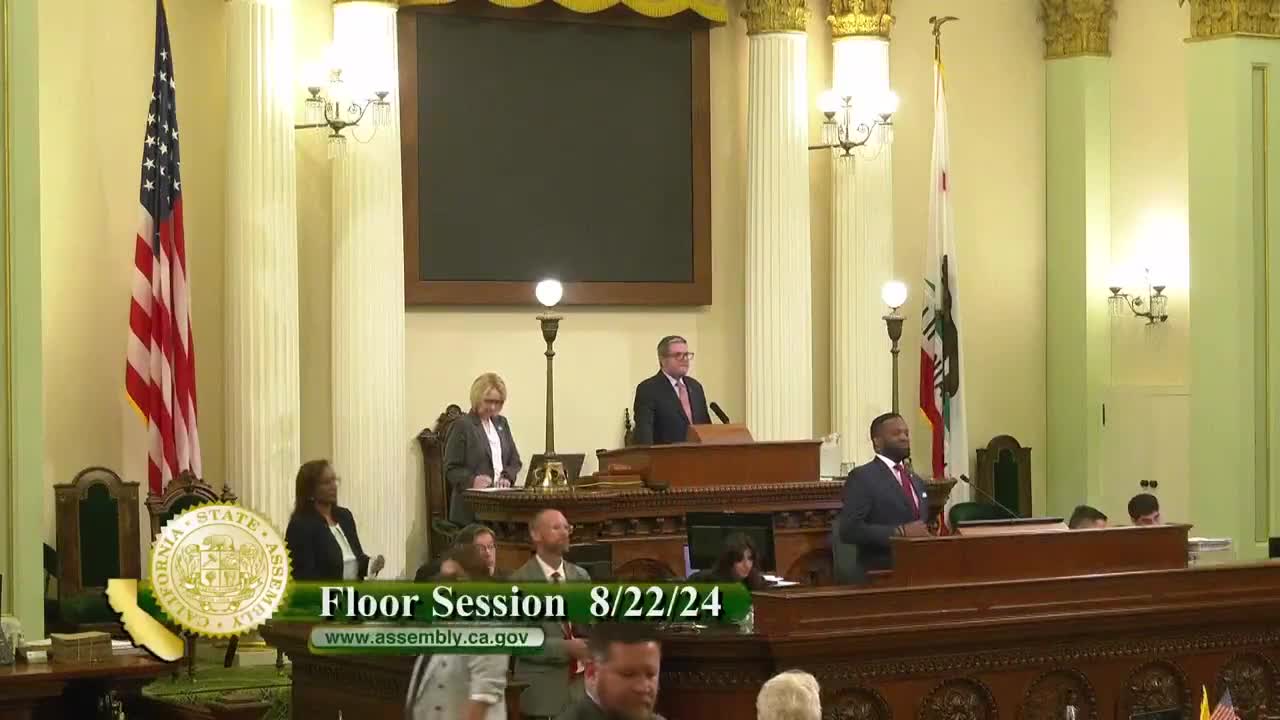
Bill Author

Bill Co-Author(s):
