AB 1881: California Coastal Commission: scientific panel expertise: coastal erosion.
- Session Year: 2023-2024
- House: Assembly
- Latest Version Date: 2024-07-15
Current Status:
Passed
(2024-07-15: Chaptered by Secretary of State - Chapter 88, Statutes of 2024.)
Introduced
In Committee
First Chamber
In Committee
Second Chamber
Enacted
The California Coastal Act of 1976 establishes in the Natural Resources Agency the California Coastal Commission and provides for the planning and regulation of development in the coastal zone, as defined. The act requires the commission, if it determines that it has sufficient resources, to establish one or more scientific panels to review technical documents and reports, among other things. The act authorizes the panel or panels to be composed of, but not limited to, persons with expertise and training in specified topics, including coastal geomorphology.
This bill would include persons with expertise and training in the topic of coastal erosion as part of the composition of the panel described above.
The California Coastal Act of 1976 establishes in the Natural Resources Agency the California Coastal Commission and provides for the planning and regulation of development in the coastal zone, as defined. The act requires the commission, if it determines that it has sufficient resources, to establish one or more scientific panels to review technical documents and reports, among other things. The act requires the panel or panels to be composed of, but not limited to, persons with expertise and training in specified topics, including coastal geomorphology.
This bill would include persons with expertise and training in the topic of coastal erosion as part of the composition of the panel described above.
The California Coastal Act of 1976 establishes the California Coastal Commission and prescribes the membership, functions, and duties of the commission with regard to the administration and implementation of the act. The act requires the Governor to appoint specified members of the public to the commission. The act requires one of the representatives appointed by the Governor to reside in, and work directly with, communities in the state that are disproportionately burdened by, and vulnerable to, high levels of pollution and issues of environmental justice, including, but not limited to, communities with diverse racial and ethnic populations and communities with low-income populations.This bill would instead require that representative appointed by the Governor to either have the qualification described above or have a professional background in geology, environmental engineering, or carpentry or building and construction trades.The California Coastal Act of 1976 establishes the California Coastal Commission and prescribes the membership, functions, and duties of the commission with regard to the administration and implementation of the act. The act requires the Governor to appoint specified members of the public to the commission. The act requires one of the representatives appointed by the Governor to reside in, and work directly with, communities in the state that are disproportionately burdened by, and vulnerable to, high levels of pollution and issues of environmental justice, including, but not limited to, communities with diverse racial and ethnic populations and communities with low-income populations.
This bill would instead require that representative appointed by the Governor to either have the qualification described above or have a professional background in geology, environmental engineering, or carpentry or building and construction trades.
(a)The commission shall, if it determines that it has sufficient resources, establish one or more scientific panels to review technical documents and reports and to give advice and make recommendations to the commission before making decisions requiring scientific expertise and analysis not available to the commission through its staff resources. It is the intent of the Legislature that the commission base any such technical decisions on scientific expertise and advice. The panel or panels may be composed of, but not limited to, persons with expertise and training in marine biology, fisheries, geology, coastal geomorphology, coastal erosion, geographic information systems, water quality, hydrology, ocean and coastal engineering, economics, and social sciences.
(b)Members of a scientific panel, while performing duties required by this division or by the commission, shall be entitled to the same rights and immunities granted public employees by Article 3 (commencing with Section 820) of Chapter 1 of Part 2 of Division 3.6 of Title 1 of the Government Code. Those rights and immunities shall attach to the member as of the date of appointment of the person to the panel.
(c)The commission is encouraged to seek funding from any appropriate public or private source, and may apply for and expend any grant or endowment funds, for the purposes of this section. Any funding made available to the commission for these purposes shall be reported to the fiscal committee of each house of the Legislature at the time the commissions budget is being formally reviewed.
(d)The commission is encouraged to use innovative techniques to increase effective communication between the commission and the scientific community, including the use of existing grant programs and volunteers, in order to improve and strengthen the technical basis of its planning and regulatory decisions.
(a)The commission shall, if it determines that it has sufficient resources, establish one or more scientific panels to review technical documents and reports and to give advice and make recommendations to the commission prior to before making decisions requiring scientific expertise and analysis not available to the commission through its staff resources. It is the intent of the Legislature that the commission base any such technical decisions on scientific expertise and advice. The panel or panels may be composed of, but not limited to, persons with expertise and training in marine biology, fisheries, geology, coastal geomorphology, coastal erosion, geographic information systems, water quality, hydrology, ocean and coastal engineering, economics, and social sciences.
(b)Members of a scientific panel, while performing duties required by this division or by the commission, shall be entitled to the same rights and immunities granted public employees by Article 3 (commencing with Section 820) of Chapter 1 of Part 2 of Division 3.6 of Title 1 of the Government Code. Those rights and immunities shall attach to the member as of the date of appointment of the person to the panel.
(c)The commission is encouraged to seek funding from any appropriate public or private source, and may apply for and expend any grant or endowment funds, for the purposes of this section. Any funding made available to the commission for these purposes shall be reported to the fiscal committee of each house of the Legislature at the time the commissions budget is being formally reviewed.
(d)The commission is encouraged to utilize use innovative techniques to increase effective communication between the commission and the scientific community, including the use of existing grant programs and volunteers, in order to improve and strengthen the technical basis of its planning and regulatory decisions.
SECTION 1.Section 30301 of the Public Resources Code is amended to read:30301.The commission shall consist of the following 15 members:(a)The Secretary of the Natural Resources Agency.(b)The Secretary of Transportation.(c)The Chairperson of the State Lands Commission.(d)Six representatives of the public from the state at large. The Governor, the Senate Committee on Rules, and the Speaker of the Assembly shall each appoint two of these members.(e)Six representatives selected from six coastal regions. The Governor shall select one member from the north coast region and one member from the south central coast region. The Speaker of the Assembly shall select one member from the central coast region and one member from the San Diego coast region. The Senate Committee on Rules shall select one member from the north central coast region and one member from the south coast region. For purposes of this division, these regions are defined as follows:(1)The north coast region consists of the Counties of Del Norte, Humboldt, and Mendocino.(2)The north central coast region consists of the Counties of Sonoma and Marin and the City and County of San Francisco.(3)The central coast region consists of the Counties of San Mateo, Santa Cruz, and Monterey.(4)The south central coast region consists of the Counties of San Luis Obispo, Santa Barbara, and Ventura.(5)The south coast region consists of the Counties of Los Angeles and Orange.(6)The San Diego coast region consists of the County of San Diego.(f)(1)Of the representatives appointed by the Governor pursuant to subdivision (d) or (e), one of the representatives shall have either of the following qualifications:(A)Reside in, and work directly with, communities in the state that are disproportionately burdened by, and vulnerable to, high levels of pollution and issues of environmental justice, including, but not limited to, communities with diverse racial and ethnic populations and communities with low-income populations.(B)Have a professional background in geology, environmental engineering, or carpentry or building and construction trades.(2)The Governor shall appoint a representative qualified pursuant to this subdivision to a vacant position from the appointments available pursuant to either subdivision (d) or (e) no later than the fourth appointment available after January 1, 2017.The commission shall consist of the following 15 members:
(a)The Secretary of the Natural Resources Agency.
(b)The Secretary of Transportation.
(c)The Chairperson of the State Lands Commission.
(d)Six representatives of the public from the state at large. The Governor, the Senate Committee on Rules, and the Speaker of the Assembly shall each appoint two of these members.
(e)Six representatives selected from six coastal regions. The Governor shall select one member from the north coast region and one member from the south central coast region. The Speaker of the Assembly shall select one member from the central coast region and one member from the San Diego coast region. The Senate Committee on Rules shall select one member from the north central coast region and one member from the south coast region. For purposes of this division, these regions are defined as follows:
(1)The north coast region consists of the Counties of Del Norte, Humboldt, and Mendocino.
(2)The north central coast region consists of the Counties of Sonoma and Marin and the City and County of San Francisco.
(3)The central coast region consists of the Counties of San Mateo, Santa Cruz, and Monterey.
(4)The south central coast region consists of the Counties of San Luis Obispo, Santa Barbara, and Ventura.
(5)The south coast region consists of the Counties of Los Angeles and Orange.
(6)The San Diego coast region consists of the County of San Diego.
(f)(1)Of the representatives appointed by the Governor pursuant to subdivision (d) or (e), one of the representatives shall reside have either of the following qualifications:
(A)Reside in, and work directly with, communities in the state that are disproportionately burdened by, and vulnerable to, high levels of pollution and issues of environmental justice, including, but not limited to, communities with diverse racial and ethnic populations and communities with low-income populations. The
(B)Have a professional background in geology, environmental engineering, or carpentry or building and construction trades.
(2)The Governor shall appoint a representative qualified pursuant to this subdivision to a vacant position from the appointments available pursuant to either subdivision (d) or (e) no later than the fourth appointment available after January 1, 2017.
|
Date
|
Status
|
|---|---|
| Jul 15, 2024 | Chaptered by Secretary of State - Chapter 88, Statutes of 2024. |
| Jul 15, 2024 | Approved by the Governor. |
| Jul 1, 2024 | Enrolled and presented to the Governor at 4 p.m. |
| Jun 17, 2024 | In Assembly. Ordered to Engrossing and Enrolling. |
| Jun 17, 2024 | Read third time. Passed. Ordered to the Assembly. (Ayes 39. Noes 0. Page 4530.). |
| Jun 12, 2024 | Read second time. Ordered to Consent Calendar. |
| Jun 11, 2024 | From committee: Do pass. To Consent Calendar. (Ayes 11. Noes 0.) (June 11). |
| May 1, 2024 | Referred to Com. on N.R. & W. |
| Apr 4, 2024 | In Senate. Read first time. To Com. on RLS. for assignment. |
| Apr 4, 2024 | Read third time. Passed. Ordered to the Senate. (Ayes 70. Noes 0. Page 4630.) |
| Apr 1, 2024 | Read second time. Ordered to Consent Calendar. |
| Mar 21, 2024 | Withdrawn from committee. |
| Mar 21, 2024 | Ordered to Second Reading and Consent Calendar. |
| Mar 20, 2024 | From committee: Do pass and re-refer to Com. on APPR. with recommendation: To Consent Calendar. (Ayes 11. Noes 0.) (March 19). Re-referred to Com. on APPR. |
| Mar 12, 2024 | Re-referred to Com. on NAT. RES. |
| Mar 11, 2024 | From committee chair, with author's amendments: Amend, and re-refer to Com. on NAT. RES. Read second time and amended. |
| Feb 5, 2024 | Referred to Com. on NAT. RES. |
| Jan 23, 2024 | From printer. May be heard in committee February 22. |
| Jan 22, 2024 | Read first time. To print. |
|
Date
|
Description
|
Location
|
Votes
|
|
|---|---|---|---|---|
| Jun 17, 2024 | Consent Calendar 2nd AB1881 Davies | Senate Floor |
Passed |
|
| Jun 11, 2024 | Do pass and be ordered to the Consent Calendar | Senate Standing Committee on Natural Resources and Water |
Passed |
|
| Apr 4, 2024 | AB 1881 Davies Consent Calendar Second Day Regular Session | Assembly Floor |
Passed |
|
| Mar 19, 2024 | Do pass and be re-referred to the Committee on [Appropriations] with recommendation: To Consent Calendar | Assembly Standing Committee on Natural Resources |
Passed |
This list shows positions taken on this bill by organizations on the date displayed, which is linked to the original source.
Positions by individuals are not included.
SENATE RULES COMMITTEE Office of Senate Floor Analyses (916) 651-1520 Fax: (916) 327-4478 | AB 1881 |
CONSENT
Bill No: AB 1881
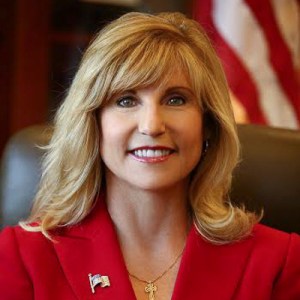
Author: Davies (R)
Amended: 3/11/24 in Assembly
Vote: 21
SENATE NATURAL RES. & WATER COMMITTEE: 11-0, 6/11/24
AYES: Min, Seyarto, Allen, Dahle, Eggman, Grove, Hurtado, Laird, Limón, Padilla, Stern
ASSEMBLY FLOOR: 70-0, 4/4/24 (Consent) - See last page for vote
SUBJECT: California Coastal Commission: scientific panel expertise: coastal erosion
SOURCE: Author
DIGEST:
This bill authorizes the California Coastal Commission to include a person with expertise and training in coastal erosion on a scientific panel convened by the Commission to provide it with advice, as provided.
ANALYSIS:
Existing law:
- Establishes the California Coastal Commission (Coastal Commission) in the California Natural Resources Agency.
- Includes legislative findings and declarations that:
- The coastal zone is a distinct and valuable natural resource of vital and enduring interest to all the people, the permanent protection of the state’s natural and scenic resources is a paramount concern to present and future residents, and existing uses and future developments are carefully planned and developed consistent with the Coastal Act are essential to the economic and social well-being of the people of the state (Public Resources Code (PRC) §30001).
- The basic goals of the state for the coastal zone include to:
- Protect, maintain, and, where feasible, enhance and restore the overall quality of the coastal zone environment and its natural and artificial resources,
- Ensure orderly, balanced utilization and conservation of coastal zone resources taking into account the social and economic needs of the people of the state, and
- Maximize public access to and along the coast and maximize public recreational opportunities in the coastal zone consistent with sound resources conservation principles and constitutionally protected rights of private property owners, among other things (PRC §30001.5).
- Provides for the planning and regulation of development within the coastal zone, as defined.
- Requires the Coastal Commission, if it determines that it has sufficient resources, to establish one or more scientific panels to review technical documents and reports, and to provide advice and make recommendations to the Coastal Commission before it makes decisions requiring scientific expertise not otherwise available to it, as specified (PRC §30335.5).
- Authorizes the scientific panel or panels to be composed of, but not limited to, persons with expertise and training in marine biology, fisheries, geology, coastal geomorphology, geographic information systems, water quality, hydrology, ocean and coastal engineering, economics, and social sciences (PRC §30335.5).
This bill authorizes the Coastal Commission to include a person with expertise and training in coastal erosion on a scientific panel, as provided, and makes additional minor technical changes.
Background
The Coastal Commission was established by voter initiative in 1972. The Legislature later made the Coastal Commission permanent through the adoption of the California Coastal Act of 1976 (Coastal Act) (PRC §§30000 et seq.). The Coastal Commission plans for and regulates the use of land and water in the coastal zone (which excludes the San Francisco Bay).
The Coastal Commission is an independent, quasi-judicial state agency, and its mission statement states that it “is committed to protecting and enhancing California’s coast and ocean for present and future generations.” The commission does so “through careful planning and regulation of environmentally sustainable development, rigorous use of science, strong public participation, education, and effective intergovernmental coordination.”
The Coastal Commission is required, if it has the resources, to establish scientific panels to review reports, provide advice, and make recommendations where scientific expertise is needed to inform the Coastal Commission’s decisions. According to the Assembly Natural Resources Committee, the Coastal Commission has convened scientific panels to advise on the technical feasibility of industrial water desalination, the San Onofre Nuclear Power Generation Station, and the US Navy’s Surface Warfare Engineering Facility at Port Hueneme, among others. The Coastal Commission has not convened a scientific panel with a coastal erosion expert.
Most Californians live near the coast, and the coast represents about 80% of the state’s gross domestic product (GDP). There is high population density near the coast, and billions of dollars of residential development and critical infrastructure are also located there. Coastal erosion puts this at risk. Coastal erosion – already a concern in many coastal areas of the state – is expected to increase as the impacts of climate change, such as sea level rise, higher storm surges, and higher frequency of damaging storms become more severe. Coastal cliffs may crumble at more than twice their historical rates by 2100. Where present, coastal beaches are the first line of defense to protect the coastline, and recent projections suggest that between 24 – 75% of the state’s beaches could be completely eroded by 2100 without intervention. However, that intervention - a 2024 study from the University of Southern California shows – may well cause coastal living costs to increase by a factor of five by 2050.
Coastal development and planning for coastal development should continue to incorporate the best available scientific information in order to provide for adaptation and resilience to climate change.
Comments
Identify for emphasis. Existing law provides that the Coastal Commission may include experts from any technical discipline on a scientific panel it convenes. Geology is already an identified area of expertise which arguably includes coastal erosion among many other specialties. Coastal geomorphology is also identified on the list. Coastal geomorphology “encompasses the study of the landforms of the earth and the processes that form them, especially those that lead to the erosion, transport and deposition of sediments. The focus of coastal geomorphology is therefore on the morphology of the coastal zone and on processes such as waves, tides and currents that act to shape features as disparate as high rock cliffs, low coral atolls, and sandy beach and dune systems.[1]” Coastal erosion is a specialized area within the discipline of coastal geomorphology. There may be merit in specifically identifying coastal erosion to emphasize the importance of the Coastal Commission receiving the best scientific advice on this issue area.
Related/Prior Legislation
AB 966 (Davies, 2023) would have directed the Division of Boating and Waterways, in cooperation with the State Coastal Conservancy, to prepare and submit a joint report to the Legislature no later than January 1, 2025, on shoreline erosion control and public beach restoration programs. (Vetoed by Governor Newsom.)
AB 72 (Boerner, Chapter 80, Statutes of 2023) required the Scripps Institution of Oceanography at the University of California, San Diego, to provide a report on the outlook for an early warning system for coastal erosion, as specified.
AB 66 (Boerner, Chapter 456, Statutes of 2021) required the Scripps Institution of Oceanography at the University of California, San Diego, to conduct research on coastal cliff landslides and erosion in the County of San Diego, as provided.
FISCAL EFFECT: Appropriation: No Fiscal Com.: No Local: No
SUPPORT: (Verified 6/11/24)
California Council for Environmental and Economic Balance
Junior Philanthropists Foundation
Livable California
Mission Street Neighbors
OPPOSITION: (Verified 6/11/24)
None received
ARGUMENTS IN SUPPORT: According to the author, “Coastal erosion is an issue that plagues California’s beautiful beaches and natural resources. Many people choose to build homes right on top of these wonders or near them. Unfortunately, this issue means in the years to come many of these homes will be destroyed or deemed unfit for living due to the danger of eroding bluffs and shorelines. AB 1881 is a simple measure to ensure that the California Coastal Commission includes someone with a background in coastal erosion mitigation efforts on future scientific panels on issues related to this problem or other environmental challenges.”
ASSEMBLY FLOOR: 70-0, 4/4/24
AYES: Addis, Aguiar-Curry, Alanis, Alvarez, Arambula, Bains, Bauer-Kahan, Bennett, Berman, Boerner, Bonta, Bryan, Calderon, Juan Carrillo, Wendy Carrillo, Connolly, Davies, Essayli, Flora, Mike Fong, Friedman, Gabriel, Gallagher, Garcia, Gipson, Grayson, Haney, Hart, Holden, Irwin, Jackson, Jones-Sawyer, Kalra, Lackey, Low, Lowenthal, Maienschein, McKinnor, Muratsuchi, Ortega, Pacheco, Papan, Jim Patterson, Joe Patterson, Pellerin, Petrie-Norris, Quirk-Silva, Ramos, Rendon, Reyes, Luz Rivas, Rodriguez, Blanca Rubio, Sanchez, Santiago, Schiavo, Soria, Ta, Ting, Valencia, Villapudua, Waldron, Wallis, Ward, Weber, Wicks, Wilson, Wood, Zbur, Robert Rivas
NO VOTE RECORDED: Cervantes, Chen, Megan Dahle, Dixon, Vince Fong, Hoover, Lee, Mathis, McCarty, Stephanie Nguyen
Prepared by: Katharine Moore / N.R. & W. / (916) 651-4116
6/11/24 16:37:05
**** END ****
Excerpt from An Introduction to Coastal Processes and Geomorphology by Robin Davidson-Arnott, Cambridge University Press, © 2010, p. 5. ↑
SENATE COMMITTEE ON NATURAL RESOURCES AND WATER
Senator Dave Min, Chair
2023 - 2024 Regular
Bill No: AB Hearing Date: June 11, 2024
Author: | Davies | ||
Version: | March 11, 2024 Amended | ||
Urgency: | No | Fiscal: | No |
Consultant: | Katharine Moore | ||
Subject: California Coastal Commission: scientific panel expertise: coastal erosion
SUMMARY
This bill would authorize the California Coastal Commission to include a person with expertise and training in coastal erosion on a scientific panel convened by the Commission to provide it with advice, as provided.
BACKGROUND AND EXISTING LAW
- The California Coastal Commission (Coastal Commission) was established by voter initiative in 1972. The Legislature later made the Coastal Commission permanent through the adoption of the California Coastal Act of 1976 (Coastal Act) (Public Resources Code (PRC) §§30000 et seq.). The Coastal Commission plans for and regulates the use of land and water in the coastal zone (which excludes the San Francisco Bay).
- The Coastal Commission is an independent, quasi-judicial state agency, and its mission statement states that it “is committed to protecting and enhancing California’s coast and ocean for present and future generations.” The commission does so “through careful planning and regulation of environmentally sustainable development, rigorous use of science, strong public participation, education, and effective intergovernmental coordination.”
- The Coastal Commission is required, if it has the resources, to establish scientific panels to review reports, provide advice, and make recommendations where scientific expertise is needed to inform the Coastal Commission’s decisions. According to the Assembly Natural Resources Committee, the Coastal Commission has convened scientific panels to advise on the technical feasibility of industrial water desalination, the San Onofre Nuclear Power Generation Station, and the US Navy’s Surface Warfare Engineering Facility at Port Hueneme, among others. The Coastal Commission has not convened a scientific panel with a coastal erosion expert.
- Most Californians live near the coast, and the coast represents about 80% of the state’s GDP. There is high population density near the coast, and billions of dollars of residential development and critical infrastructure are also located there. Coastal erosion puts this at risk. Coastal erosion – already a concern in many coastal areas of the state – is expected to increase as the impacts of climate change, such as sea level rise, higher storm surges, and higher frequency of damaging storms become more severe. Coastal cliffs may crumble at more than twice their historical rates by 2100. Where present, coastal beaches are the first line of defense to protect the coastline, and recent projections suggest that between 24 – 75% of the state’s beaches could be completely eroded by 2100 without intervention. However, that intervention - a 2024 study from the University of Southern California shows – may well cause coastal living costs to increase by a factor of five by 2050.
- Coastal development and planning for coastal development should continue to incorporate the best available scientific information in order to provide for adaptation and resilience to climate change.
Existing law, pursuant to the Coastal Act:
- Establishes the Coastal Commission in the California Natural Resources Agency.
- Includes legislative findings and declarations that:
- The coastal zone is a distinct and valuable natural resource of vital and enduring interest to all the people, the permanent protection of the state’s natural and scenic resources is a paramount concern to present and future residents, and existing uses and future developments are carefully planned and developed consistent with the Coastal Act are essential to the economic and social well-being of the people of the state (PRC §30001).
- The basic goals of the state for the coastal zone include to:
- Protect, maintain, and, where feasible, enhance and restore the overall quality of the coastal zone environment and its natural and artificial resources,
- Ensure orderly, balanced utilization and conservation of coastal zone resources taking into account the social and economic needs of the people of the state, and
- Maximize public access to and along the coast and maximize public recreational opportunities in the coastal zone consistent with sound resources conservation principles and constitutionally protected rights of private property owners, among other things (PRC §30001.5).
- Provides for the planning and regulation of development within the coastal zone, as defined.
- Requires the Coastal Commission, if it determines that it has sufficient resources, to establish one or more scientific panels to review technical documents and reports, and to provide advice and make recommendations to the Coastal Commission before it makes decisions requiring scientific expertise not otherwise available to it, as specified (PRC §30335.5).
- Authorizes the scientific panel or panels to be composed of, but not limited to, persons with expertise and training in marine biology, fisheries, geology, coastal geomorphology, geographic information systems, water quality, hydrology, ocean and coastal engineering, economics, and social sciences (PRC §30335.5).
PROPOSED LAW
This bill would authorize the Coastal Commission to include a person with expertise and training in coastal erosion on a scientific panel, as provided, and make additional minor technical changes.
ARGUMENTS IN SUPPORT
According to the author, “Coastal erosion is an issue that plagues California’s beautiful beaches and natural resources. Many people choose to build homes right on top of these wonders or near them. Unfortunately, this issue means in the years to come many of these homes will be destroyed or deemed unfit for living due to the danger of eroding bluffs and shorelines. AB 1881 is a simple measure to ensure that the California Coastal Commission includes someone with a background in coastal erosion mitigation efforts on future scientific panels on issues related to this problem or other environmental challenges.”
ARGUMENTS IN OPPOSITION
None received
COMMENTS
Identify for emphasis. Existing law provides that the Coastal Commission may include experts from any technical discipline on a scientific panel it convenes. Geology is already an identified area of expertise which arguably includes coastal erosion among many other specialties. Coastal geomorphology is also identified on the list. Coastal geomorphology “encompasses the study of the landforms of the earth and the processes that form them, especially those that lead to the erosion, transport and deposition of sediments. The focus of coastal geomorphology is therefore on the morphology of the coastal zone and on processes such as waves, tides and currents that act to shape features as disparate as high rock cliffs, low coral atolls, and sandy beach and dune systems.[1]” Coastal erosion is a specialized area within the discipline of coastal geomorphology. There may be merit in specifically identifying coastal erosion to emphasize the importance of the Coastal Commission receiving the best scientific advice on this issue area.
Recent related legislation
AB 966 (Davies, 2023) would have directed the Division of Boating and Waterways, in cooperation with the State Coastal Conservancy, to prepare and submit a joint report to the Legislature no later than January 1, 2025, on shoreline erosion control and public beach restoration programs. (Vetoed by Governor Newsom.)
AB 72 (Boerner, Chapter 80, Statutes of 2023) requires the Scripps Institution of Oceanography at the University of California, San Diego, to provide a report on the outlook for an early warning system for coastal erosion, as specified.
AB 66 (Boerner, Chapter 456, Statutes of 2021) requires the Scripps Institution of Oceanography at the University of California, San Diego, to conduct research on coastal cliff landslides and erosion in the County of San Diego, as provided.
SUGGESTED AMENDMENTS: none
SUPPORT
California Council for Environmental and Economic Balance
Junior Philanthropists Foundation
Livable California
Mission Street Neighbors
OPPOSITION
None received
-- END --
Excerpt from An Introduction to Coastal Processes and Geomorphology by Robin Davidson-Arnott, Cambridge University Press, © 2010, p. 5. ↑
Date of Hearing: March 19, 2024
ASSEMBLY COMMITTEE ON NATURAL RESOURCES
Isaac G. Bryan, Chair
ABPCA Bill Id:AB 1881 (
Author:Davies) – As Amended Ver:March 11, 2024
SUBJECT: California Coastal Commission: scientific panel expertise: coastal erosion.
SUMMARY: Authorizes a person with expertise and training in coastal erosion to participate on a scientific panel that advises the California Coastal Commission (Commission).
EXISTING LAW:
Pursuant to the California Coastal Act (Public Resources Code 30000, et seq.):
- Establishes the Commission to protect regional, state, and national interests in assuring the maintenance of the long-term productivity and economic vitality of coastal resources necessary for the well-being of the people of the state, avoid long-term costs to the public and a diminished quality of life resulting from the misuse of coastal resources, and coordinate and integrate the activities of the many agencies whose activities impact the coastal zone.
- Requires the Commission to establish one or more scientific panels to review technical documents and reports and to give advice and make recommendations to the Commission prior to making decisions requiring scientific expertise and analysis not available to the Commission through its staff resources.
- Establishes the intent of the Legislature that the Commission base any such technical decisions on scientific expertise and advice.
- Authorizes the scientific panel(s) to be composed of, but not limited to, persons with expertise and training in marine biology, fisheries, geology, coastal geomorphology, geographic information systems, water quality, hydrology, ocean and coastal engineering, economics, and social sciences.
FISCAL EFFECT: Unknown
COMMENTS:
- Need for the bill. According to the author:
Coastal erosion is an issue that plagues California’s beautiful beaches and natural resources. Many people choose to build homes right on top of these wonders or near them. Unfortunately, this issue means in the years to come many of these homes will be destroyed or deemed unfit for living due to the danger of eroding bluffs and coastal erosion. AB 1881 is a simple measure to ensure that the California Coastal Commission include professionals with experience dealing with this issue whenever they convene expert panels. As we look towards the future of environmental mitigation efforts, having people with experience combatting this issue on panels will give the Commission and the public a chance to hear how we can save our irreplaceable coastline.
- California Coastal Commission. The Commission is an independent, quasi-judicial state agency that oversees implementation of the Coastal Act, which governs the coastal zone.
The coastal zone, which was specifically mapped by the Legislature, covers an area larger than the State of Rhode Island. On land the coastal zone varies in width from several hundred feet in highly urbanized areas up to five miles in certain rural areas, and offshore the coastal zone includes a three-mile-wide band of ocean.
California's coastal management program is carried out through a partnership between state and local governments. Implementation of Coastal Act policies is accomplished primarily through the preparation of Local Coastal Programs (LCPs) that are required to be completed by each of the 15 counties and 61 cities located in whole or in part in the coastal zone. Completed LCPs must be submitted to the Commission for review and approval. Development within the coastal zone may not occur until a coastal development permit has been issued by either the Commission or a local government that has a Commission-certified LCP.
- Scientific panels. The Commission has convened scientific panels to advise on technical feasibility of industrial water desalination in Huntington Beach, San Onofre Nuclear Power Generation Station, the U.S. NAVY, Surface Warfare Engineering Facility at Port Hueneme, and more. Further, the Beach Erosion Authority for Clean Oceans and Nourishment (BEACON) is a California Joint Powers Agency that addresses coastal erosion, beach nourishment, and clean oceans within the Central California Coast from Point Conception to Point Mugu and often intersects/works with the Commission.
To-date, the Commission has not had an internal science panel with a specific individual with coastal erosion expertise.
- Coastal erosion. In January 2002, the Department of Boating and Waterways submitted the California Beach Restoration Study to the Legislature, which acknowledged that the great majority of the coast of California consists of actively eroding sea cliffs. Results from this study showed that the great majority -- 72% -- of the coast of California consists of actively eroding sea cliffs. Earlier studies (US Army Corps of Engineers, 1971) indicated that about 950 miles, or 86%, of California’s coast are eroding based on a large-scale regional analysis, which goes to show how long there has been concern around coastal erosion.
More recent science has included the impacts of climate change, and we know sea level rise, higher storm surges, and other impacts of climate change are exacerbating coastal erosion. A 2017 study from the US Geological Survey published in the Journal of Geophysical Research–Earth Surface predicts that with limited human intervention, 31% to 67% of Southern California erosion caused by sea-level rise will shrink nearly all the beaches, which are a crucial feature of the economy and the first line of defense against coastal-storm impacts for coastal residents and businesses. Further projections suggest that up to two-thirds of Southern California beaches may become completely eroded by 2100.
Eroding cliffs threaten extensive cliff top development throughout the state, including homes, businesses, highways, railways, wastewater, oil, natural gas, and nuclear facilities, universities, several critical military bases, and numerous state beaches and parks.
A 2018 report by the Scripps Institution of Oceanography identified locations in California at highest risk of cliff failure by 2050. The highest risk sites were spread across the state, but included several California locations: San Onofre State Beach, Daly City, Point Reyes National Seashore, and Palos Verdes. In these areas, ocean waves, rainstorms and other factors eroded coastal bluffs by up to 12 feet per year during the study period.
While research suggests that coastal erosion rates will increase as the sea level rises, variation in cliff geology, beach protection, exposure to weather, and other factors complicate the prediction of future erosion rates. The 2018 Scripps Institute study also determined that historical cliff erosion rates do not always provide a good prediction of future rates, and cliffs with high erosion rates in recent times were often preceded by time periods with very little erosion. These are key findings because models predicting future cliff retreat are often based on projecting the historical rates. Existing cliff erosion studies are often small scale, use a variety of techniques, and often rely on lower quality data sources, providing a patchwork across the state. According to Scripps Institute researcher Dr. Adam Young, understanding the processes that drive cliff failures, triggering mechanisms, magnitude of erosion, and timing of collapse is essential for coastal management and building resilient and safe communities.
- This bill. In recognition of the variability of coastal erosion across the coastline and the need for current scientific understanding to inform decision-makers, AB 1881 would authorize the Commission to include a person with expertise and training in coastal erosion to participate on a scientific panel that advises the Commission.
REGISTERED SUPPORT / OPPOSITION:
Support
Livable California
Opposition
None on file
Analysis Prepared by: Paige Brokaw / NAT. RES. /
Bill Author
Bill Co-Author(s):