AB 1925: Childcare and development programs: eligibility.
- Session Year: 2023-2024
- House: Assembly
- Latest Version Date: 2024-01-25
Current Status:
Failed
(2024-05-16: Joint Rule 62(a), file notice suspended. (Page 5215.))
Introduced
In Committee
First Chamber
In Committee
Second Chamber
Enacted
What does this bill do?
The bill adds families with a child eligible for the federal Individuals with Disabilities Education Act (IDEA), the federal special education law, to the categories eligible for state and federally subsidized child care and development services. It also makes being identified as eligible for IDEA a qualifying reason for needing those child care services.
The summary is provided by generative AI which can make mistakes. For original language, please view the details in the table below.
Existing law, the Child Care and Development Services Act, administered by the State Department of Social Services, requires the department to administer childcare and development programs that offer a full range of services to eligible children from infancy to 13 years of age, inclusive. The act requires that families meet specified requirements to be eligible for federal and state subsidized childcare and development services, including that a family is a current aid recipient or is income eligible, among other eligible statuses, and the family needs childcare services because, among other reasons, the family is homeless.
This bill would extend eligibility for childcare and development programs to families whose child is eligible for services under the federal Individuals with Disabilities Education Act and a family who needs the childcare services because the child is identified as eligible for services under the federal Individuals with Disabilities Education Act.
(a)(1)The department shall adopt rules and regulations on eligibility, enrollment, and priority of services needed to implement this chapter. In order to be eligible for federal and state subsidized child development services, families shall meet at least one requirement in each of the following areas:
(A)A family is (i) a current aid recipient, (ii) income eligible, (iii) homeless, (iv) one whose children are recipients of protective services, or whose children have been identified as being abused, neglected, or exploited, or at risk of being abused, neglected, or exploited, or (v) one who has a member of its household who is certified to receive benefits from Medi-Cal, CalFresh, the California Food Assistance Program, the California Special Supplemental Nutrition Program for Women, Infants, and Children, the federal Food Distribution Program on Indian Reservations, Head Start, Early Head Start, or any other designated means-tested government program, as determined by the department. department, or (vi) one whose child is eligible for services under the federal Individuals with Disabilities Education Act (20 U.S.C. Sec. 1400 et seq.). If a family is deemed eligible pursuant to clause (v), the family shall be prioritized by the income declared on the application for the means-tested government program.
(B)A family needs the childcare services (i) because the child is identified by a legal, medical, or social services agency, a local educational agency liaison for homeless children and youths designated pursuant to Section 11432(g)(1)(J)(ii) of Title 42 of the United States Code, a Head Start program, or an emergency or transitional shelter as (I) a recipient of protective services, (II) being neglected, abused, or exploited, or at risk of neglect, abuse, or exploitation, or (III) being homeless homeless, or (IV) eligible for services under the federal Individuals with Disabilities Education Act (20 U.S.C. Sec. 1400 et seq.) or (ii) because the parents are (I) engaged in vocational training leading directly to a recognized trade, paraprofession, or profession, (II) engaged in an educational program for English language learners or to attain a high school diploma or general educational development certificate, (III) employed or seeking employment, (IV) seeking permanent housing for family stability, or (V) incapacitated.
(2)If only one parent has signed an application for enrollment in childcare services, as required by this chapter or regulations adopted to implement this chapter, and the information provided on the application indicates that there is a second parent who has not signed the application, the parent who has signed the application shall self-certify the presence or absence of the second parent under penalty of perjury. The parent who has signed the application shall not be required to submit additional information documenting the presence or absence of the second parent.
(b)Except as provided in Chapter 21 (commencing with Section 10370), priority for federal and state subsidized child development services is as follows:
(1)First priority shall be given to neglected or abused children who are recipients of child protective services, or children who are at risk of being neglected or abused, upon written referral from a legal, medical, or social services agency. If an agency is unable to enroll a child in the first priority category, the agency shall refer the family to local resource and referral services to locate services for the child.
(2)Second priority shall be given equally to eligible families, regardless of the number of parents in the home, who are income eligible. Within this priority, families with the lowest gross monthly income in relation to family size, as determined by a schedule adopted by the department, shall be admitted first. If two or more families are in the same priority in relation to income, the family that has a child with exceptional needs shall be admitted first. If there is no family of the same priority with a child with exceptional needs, the family of the same priority in which the primary home language is a language other than English shall be admitted first. If there is no family of the same priority in which the primary home language is a language other than English, the family of the same priority that has been on the waiting list for the longest time shall be admitted first. For purposes of determining order of admission, grants of public assistance recipients shall be counted as income.
(3)The department shall set criteria for, and may grant specific waivers of, the priorities established in this subdivision for agencies that wish to serve specific populations, including children with exceptional needs or children of prisoners. These new waivers shall not include proposals to avoid appropriate fee schedules or admit ineligible families, but may include proposals to accept members of special populations in other than strict income order, as long as appropriate fees are paid.
(c)Notwithstanding any other law, in order to promote continuity of services, a family enrolled in a state or federally funded childcare and development program whose services would otherwise be terminated because the family no longer meets the program income, eligibility, or need criteria may continue to receive child development services in another state or federally funded childcare and development program if the contractor is able to transfer the familys enrollment to another program for which the family is eligible before the date of termination of services or to exchange the familys existing enrollment with the enrollment of a family in another program, provided that both families satisfy the eligibility requirements for the program in which they are being enrolled. The transfer of enrollment may be to another program within the same administrative agency or to another agency that administers state or federally funded childcare and development programs.
(d)A physical examination and evaluation, including age-appropriate immunization, shall be required before, or within six weeks of, enrollment. A standard, rule, or regulation shall not require medical examination or immunization for admission to a childcare and development program of a child whose parent or guardian files a letter with the governing board of the childcare and development program stating that the medical examination or immunization is contrary to the parents or guardians religious beliefs, or provide for the exclusion of a child from the program because of a parent or guardian having filed the letter. However, if there is good cause to believe that a child is suffering from a recognized contagious or infectious disease, the child shall be temporarily excluded from the program until the governing board of the childcare and development program is satisfied that the child is not suffering from that contagious or infectious disease.
(e)Regulations formulated and promulgated pursuant to this section shall include the recommendations of the State Department of Health Care Services relative to health care screening and the provision of health care services. The department shall seek the advice and assistance of these health authorities in situations where service under this chapter includes or requires care of children who are ill or children with exceptional needs.
(f)The department shall establish guidelines for the collection of employer-sponsored childcare benefit payments from a parent whose child receives subsidized childcare and development services. These guidelines shall provide for the collection of the full amount of the benefit payment, but not to exceed the actual cost of childcare and development services provided, notwithstanding the applicable fee based on the fee schedule.
(g)The department shall establish guidelines according to which the director or a duly authorized representative of the childcare and development program will certify children as eligible for state reimbursement pursuant to this section.
(h)(1)Except as provided in paragraphs (3), (4), and (5), upon establishing initial eligibility or ongoing eligibility for services under this chapter, a family shall be considered to meet all eligibility and need requirements for those services for not less than 24 months, shall receive those services for not less than 24 months before having their eligibility or need recertified, and shall not be required to report changes to income or other changes for at least 24 months.
(2)In the event that the eligibility period as described in paragraph (1) ends before the end of a program year, eligibility shall be extended until the end of the program year, as long as applicable age-eligibility requirements are met, as specified in Section 10213.5.
(3)A family that establishes initial eligibility or ongoing eligibility on the basis of income shall report increases in income that exceed the threshold for ongoing income eligibility as described in subdivision (b) of Section 10271.5, and the familys ongoing eligibility for services shall at that time be recertified.
(4)A family may at any time voluntarily report income or other changes. This information shall be used, as applicable, to reduce the familys fees, increase the familys services, or extend the period of the familys eligibility before recertification.
(5)Notwithstanding paragraph (1), upon establishing initial eligibility or ongoing eligibility for services under this chapter, a family receiving services under a CalWORKs Stage 1, Stage 2, or Stage 3 program shall be considered to meet all eligibility and need requirements for those services for not less than 12 months, shall receive those services for not less than 12 months before having their eligibility or need recertified, and shall not be required to report changes to income or other changes for at least 12 months.
(i)(1)Because a family that meets eligibility requirements at its most recent eligibility certification or recertification is considered eligible until the next recertification, as provided in subdivision (h), a payment made by a child development program for a child during this period shall not be considered an error or an improper payment due to a change in the familys circumstances during that same period.
(2)Notwithstanding paragraph (1), the department may seek to recover payments that are the result of fraud.
(j)(1)Notwithstanding the rulemaking provisions of the Administrative Procedure Act (Chapter 3.5 (commencing with Section 11340) of Part 1 of Division 3 of Title 2 of the Government Code) and Section 33308.5 of the Education Code, until regulations are filed with the Secretary of State to implement subdivision (h), the department shall implement subdivision (h) through management bulletins or similar letters of instruction on or before October 1, 2017.
(2)The department shall initiate a rulemaking action to implement subdivision (h) on or before December 31, 2018. The department shall convene a workgroup of parents, advocates, department staff, child development program representatives, and other stakeholders to develop recommendations regarding implementing subdivision (h).
(k)(1)Notwithstanding the rulemaking provisions of the Administrative Procedure Act (Chapter 3.5 (commencing with Section 11340) of Part 1 of Division 3 of Title 2 of the Government Code) and Section 33308.5 of the Education Code, until regulations are filed with the Secretary of State, the department shall implement the changes made to subdivision (h) by the act that added this subdivision through management bulletins or similar letters of instruction on or before December 1, 2023.
(2)The department shall initiate a rulemaking action to implement the changes made to subdivision (h) by the act that added this subdivision on or before December 31, 2024.
(l)Public funds shall not be paid directly or indirectly to an agency that does not pay at least the minimum wage to each of its employees.
REVISIONS: HeadingLine 2.|
Date
|
Status
|
|---|---|
| May 16, 2024 | In committee: Held under submission. |
| May 16, 2024 | Joint Rule 62(a), file notice suspended. (Page 5215.) |
| May 15, 2024 | In committee: Set, first hearing. Referred to APPR. suspense file. |
| Apr 3, 2024 | Coauthors revised. |
| Apr 3, 2024 | From committee: Do pass and re-refer to Com. on APPR. (Ayes 5. Noes 0.) (April 2). Re-referred to Com. on APPR. |
| Feb 5, 2024 | Referred to Com. on HUM. S. |
| Jan 26, 2024 | From printer. May be heard in committee February 25. |
| Jan 25, 2024 | Read first time. To print. |
|
Date
|
Description
|
Location
|
Votes
|
|
|---|---|---|---|---|
| Apr 2, 2024 | Do pass and be re-referred to the Committee on [Appropriations] | Assembly Standing Committee on Human Services |
Passed |
This list shows positions taken on this bill by organizations on the date displayed, which is linked to the original source.
Positions by individuals are not included.
|
Organization
|
Position
|
Date
|
|---|---|---|
| Association Of Regional Center Agencies | ** Support | |
| Blind Children's Center | * Support | Apr 2, 2024 |
| California County Superintendents | ** Support | |
| Disability Rights California | ** Support | |
| Los Angeles County Office Of Education | * Support | Apr 2, 2024 |
| Los Angeles Dependency Lawyers, Inc. | ** Support | |
| National Association of Pediatric Nurse Practitioners | ** Support |
Date of Hearing: May 15, 2024
ASSEMBLY COMMITTEE ON APPROPRIATIONS
Buffy Wicks, Chair
ABPCA Bill Id:AB 1925
Author:(Rendon) – As Introduced Ver:January 25, 2024
Policy Committee: | Human Services | Vote: | 5 - 0 |
|
| ||
|
|
Urgency: No State Mandated Local Program: No Reimbursable: No
SUMMARY:
This bill extends eligibility for subsidized childcare and development programs to a family whose child is eligible for services under the federal Individuals with Disabilities Education Act (IDEA), and to a the family who needs the childcare services because the child is identified as eligible for services under IDEA.
FISCAL EFFECT:
Ongoing costs of an unknown amount, potentially in the millions of dollars or more annually (General Fund, federal funds), to the Department of Social Services (CDSS) due to the categorical expansion of subsidized childcare.
According to the Legislative Analyst’s Office, the General Fund faces a structural deficit in the tens of billions of dollars over the next several fiscal years.
COMMENTS:
- Purpose. According to the author:
Families who have children with disabilities face serious challenges in meeting the requirements to use California’s childcare and development programs. We should be making it easier, not harder, for these families to get the services they need. By aligning California’s eligibility requirements with those at the federal level, families across the state who are in need of support will now have access to these underutilized and life-changing programs.
- Background. California’s subsidized childcare is a complex system of programs serving children from birth through 13 years of age, funded through a mix of federal and state dollars, and administered through a mix of local educational agencies, community-based providers, and family childcare providers. Most children enrolled in subsidized childcare programs receive care through licensed family childcare homes, centers, and license-exempt settings.
Certain eligibility and prioritization rules, based primarily on income and need, apply to subsidized childcare in California. State law and regulations specify the detailed and extensive methods for the verification of these requirements by relevant agencies before confirming a family’s eligibility for services.
In 1975, the federal government enacted IDEA to ensure infants and toddlers with developmental delays receive early intervention services and to require schools to provide special education services to school-aged children with disabilities to meet their unique educational needs. IDEA also guarantees the right to fully take part in school life, including after-school activities.
California has a shortage of available childcare slots generally, but families of children with disabilities face even greater difficulties finding specialized childcare facilities equipped to manage the diverse needs of children with disabilities. The Americans with Disabilities Act stipulates childcare programs cannot exclude children with disabilities unless including them would require a “fundamental alteration of the program” and programs must make “reasonable modifications” to integrate disabled individuals.
This bill extends eligibility for subsidized childcare and development services to families with a child with disabilities up to age 21. Specifically, it includes families with children who are eligible for childcare services under the federal IDEA as a way to increase access to subsidized childcare.
- Arguments in Support. According to the Los Angeles County Office of Education, sponsors of the bill:
Children with disabilities should be made categorically eligible for the General Child Care and Development (CCTR), as AB 210 did California State Preschool Program (CSPP) in 2022. Often, one parent of a child with a moderate to severe disability must quit their job to support the child full-time, which would exclude them from CCTR based on the need criteria, but such parents also need training and resources to support their child. Programs that partner CCTR with Early Head Start are especially well equipped to serve such families, as they are mandated to serve at least 10 percent of children with disabilities and to provide comprehensive services to the family.
By including children with disabilities in the eligibility criteria, the bill ensures that families facing unique challenges have access to essential child development services. Additionally, simplifying the need requirements acknowledges the economic disparities within the region and ensures that families struggling with employment or housing issues can still access much-needed care for their children. This approach addresses the existing gaps in eligibility criteria and fosters greater equity in access to early learning programs for families.
Analysis Prepared by: Jennifer Swenson / APPR. / (916) 319-2081
Date of Hearing: April 2, 2024
ASSEMBLY COMMITTEE ON HUMAN SERVICES
Alex Lee, Chair
ABPCA Bill Id:AB 1925 (
Author:Rendon) – As Introduced Ver:January 25, 2024
SUBJECT: Childcare and development programs: eligibility
SUMMARY: Extends eligibility for subsidized childcare and development programs to families whose child is eligible for, and whose child is identified as needing, childcare services under the federal Individuals with Disabilities Education Act (IDEA).
EXISTING LAW:
State law:
- Establishes the “Child Care and Development Services Act” to provide childcare and development services as part of a coordinated, comprehensive, and cost-effective system serving children from birth to 13 years of age and their parents including a full range of supervision, health, and support services through full- and part-time program, regardless of ethnic status, cultural background, or special needs. (Welfare and Institution Code [WIC] § 10207 et seq.)
- States the legislative intent that all families have access to childcare and development services, through resource and referral where appropriate, regardless of demographic background or special needs, and that families are provided the opportunity to attain financial stability through employment while maximizing growth and development of their children and enhancing their parenting skills through participation in childcare and development programs. (WIC § 10207.5)
- Defines “childcare and development programs” to mean those programs that offer a full range of services for children from infancy to 13 years of age, for any part of a day, by a public or private agency, in centers and family childcare homes, which includes, but are not limited to, general childcare and development (CCTR), migrant childcare and development, childcare and development services for children with exceptional needs, family childcare home education network, and alternative payment. (WIC § 10213.5(i))
- Defines “childcare and development services” to mean services designed to meet a wide variety of children’s and families’ needs while parents and guardians are working, in training, seeking employment, incapacitated, or in need of respite. These services may include direct care and supervision, instructional activities, resource and referral programs, and alternative payment arrangements. (WIC § 10213.5(j))
- Establishes eligibility criteria for state-subsidized child development services based on family and child circumstance, including, but not limited to, being a current aid recipient, income, homelessness, if a child is or has been abused, neglected or exploited, or having a household member who is certified to receive benefits from designated means-tested government programs, as specified. (WIC § 10271(a)(1)(A))
- Establishes need criteria for state-subsidized child development services, including having a child identified as a recipient of protective services, at-risk or being abused, neglected, abused, or exploited, or homeless, or because the parents are engaged in vocational training, in an educational program for English language learners or to attain a high school diploma, seeking employment or employed, seeking permanent housing for family stability, or incapacitated, as specified. (WIC § 10271(a)(1)(B))
- Requires a family to provide documentation of current enrollment in a program when establishing eligibility pursuant to 6) above and requires families qualifying under eligibility through this means to submit a self-certification of income for the purposes of prioritizing enrollment and calculating family fees. (WIC §§ 10271(h)(3&4); 10271.7(a)(1))
- Requires that a family establishing initial or ongoing eligibility for subsidized childcare be considered eligible for 24 months, without requiring the family to have their eligibility or need recertified and without having to report changes to income or other changes for at least 24 months, as specified. (WIC § 10271(h)(1))
- Provides the purposes of the “California Child Day Care Facilities Act”, which include streamlining the administration of childcare licensing thereby increasing the efficiency and effectiveness of this system; and, encouraging the development of licensing staff with knowledge and understanding of children and childcare needs. (Health and Safety Code [HSC] § 1596.73)
- Requires any person or entity operating, as specified, a child daycare facility in California to have a current valid license from the California Department of Social Services (CDSS). (22 California Code of Regulations [CCR] § 101156(a))
- Requires state-licensed facilities, including childcare centers, to obtain a fire clearance before admitting a nonambulatory person. (22 CCR § 80020(b)(2))
- Defines “nonambulatory persons” to mean persons unable to leave a building unassisted under emergency conditions, and includes any person who is unable, or likely to be unable, to physically and mentally respond to a sensory signal approved by the State Fire Marshal, or an oral instruction relating to fire danger, and persons who depend upon mechanical aids such as crutches, walkers, and wheelchairs. (HSC § 13131)
- Establishes the “Lanterman Developmental Disabilities Act”, entitling individuals with developmental disabilities the right to services and supports that enable them to live a more independent and normal life. (WIC § 4500 et seq.)
- Establishes the “California Early Intervention Services Act”, commonly known as the Early Start program, providing various early intervention services for infants and toddlers who have disabilities to enhance their development and to minimize the potential for developmental delays. (Government Code § 95000 et seq.)
- Defines “children with exceptional needs” to mean children under three years of age who have been determined to be eligible for early intervention services, as specified; or, children three to 21 years of age, inclusive, who have been determined to be eligible for special education and related services by an individualized education program team; and, children who have active Individualized Family Service Plans (IFSP) and is actively receiving early intervention services or special education, also known as Individualized Education Plans (IEP). (Education Code § 8205)
Federal law:
- Establishes the “Americans with Disabilities Act (ADA) of 1990”, instituting comprehensive national standards to eliminate discrimination against individuals with disabilities in various areas of public life, including when admitting a child with disabilities into a daycare program. (42 United States Code [U.S.C.] §§ 12101 et seq.; 12181 et seq.)
- Establishes the “Individuals with Disabilities Education Act” (IDEA), ensuring that all children with disabilities have available to them early intervention services through an IFSP and a free appropriate public education that emphasizes special education and related services through an IEP up to age 21 designed to meet their unique needs and prepare them for further education, employment, and independent living. (20 U.S.C. §§ 1400 et seq.; 1431)
- Outlines and defines 13 different disability categories under which those aged three to 21 may be eligible for services under IDEA, including autism; deaf-blindness; deafness; emotional disturbance; hearing impairment; intellectual disability; multiple disabilities; orthopedic impairment; other health impairment; specific learning disability; speech or language impairment; traumatic brain injury; or, visual impairment (including blindness). (20 U.S.C. § 300.8)
- Requires states to develop strategies for increasing the supply and quality of childcare services for children with disabilities through the Child Care and Development Block Grant (CCDBG). (42 U.S.C. § 9858(c)(2)(M)(iii))
FISCAL EFFECT: Unknown, this bill has not been analyzed by a fiscal committee.
COMMENTS:
Background: Subsidized Childcare. California’s subsidized childcare is made up of a complex system of programs serving children from birth through 13 years, funded through a mix of federal and state dollars, and administered through a mixed delivery system by local educational agencies, community-based providers, and family childcare providers. Specifically, subsidized childcare is available through numerous voucher-based programs, including but not limited to:
- California Alternative Payment Program helps enroll eligible families for subsidized childcare in licensed centers, family childcare homes, or license-exempt settings and pays for those services directly to the childcare provider selected by the family.
- Migrant Alternative Payment Program issues vouchers to eligible migrant families that can be used to purchase childcare and development services throughout California’s Central Valley for children from birth through 12 years of age and for older children with exceptional needs. Funding for services follows families as they move from place to place for agricultural work.
Subsidized childcare is also available through several direct service programs, including, but not limited to:
- CCTR Programs, which provide developmentally, culturally, and linguistically appropriate curriculum to children from birth through 12 years of age and older children with exceptional needs in centers and family childcare home education networks (CFCC).
- CFCC, which provides childcare and development services in family childcare home settings for children from birth through 12 years of age and older children with exceptional needs. CFCC also provides an educational component that is developmentally, culturally, and linguistically appropriate for the children served.
- Childcare and Development Services for Children with Severe Disabilities Program, which is located in the San Francisco Bay Area, provides care and supervision, age and developmentally appropriate activities, therapy, youth guidance, and parental counseling to eligible children and young adults from birth to 21 years of age. Recipients of these services must have an IEP or an IFSP issued through special education programs.
Most children enrolled in subsidized childcare and development programming receive care through licensed family childcare homes (158,959), centers (124,708), and license-exempt settings (82,704). CDSS’ Child Care Transition Quarterly Report published in January 2024 found that in fiscal year 2022-23, approximately 250,000 children were served in a subsidized childcare program. With the exception of children served through CalWORKs Stage One and the Emergency Bridge Program for Foster Children, the demographic breakdown of families receiving subsidized childcare is as follows: 55.5% Hispanic, 20% White, 18.7% Black, and 3.8% Asian. Among the children served, 15.5% are Dual Language Learners, with 74% speaking Spanish, 5.1% speaking Armenian, 4.4% speaking Cantonese, and 9.3% speaking another language.
Certain eligibility and prioritization rules apply to subsidized childcare in California. Families qualify for non-CalWORKs subsidized childcare if they satisfy at least one requirement in each of two areas: eligibility and need. First, they must meet one of the eligibility criteria, which includes currently receiving assistance, meeting income eligibility, experiencing homelessness, having children receiving protective services or identified as being at risk of abuse, neglect, or exploitation, or having a household member certified to receive benefits from specified means-tested government programs. Additionally, families eligible for subsidized care must demonstrate an income below 85% of the state median income. As of July 1, 2023, that amount is $6,931 per month for a family of three. Next, the family must meet one of the prerequisites for need. This could involve the child being identified by a legal, medical, or social services agency, or residing in an emergency shelter. Alternatively, the parents must either be employed or actively seeking employment, participating in vocational training or educational programs tailored for English language learners or aimed at achieving a high school diploma or general educational development certificate. They may also be in pursuit of permanent housing for family stability, or incapacitated.
Individuals with Disabilities Education Act. Early childhood is a period of rapid development across physical, cognitive, social, and behavioral domains. Sometimes, however, this development may deviate from the typical trajectory, resulting in a diagnosis of disability or delay for some children. These children represent an estimated 15% of the United States’ (U.S.) childhood population. As a way to protect this group, the federal government passed IDEA in 1975, which ensures that infants and toddlers with developmental delays receive early intervention services and requires schools to provide special education services to school-aged children with disabilities to meet their unique educational needs. IDEA also guarantees the right to fully take part in school life, including after-school activities.
To assess whether an infant or toddler aged zero to three qualifies for early intervention services, a parent or caregiver may ask their healthcare provider for an evaluation, or the healthcare provider may suggest it to the family. The healthcare provider then refers the family to the state’s early intervention center or the family refers themselves and a service coordinator works with the family to evaluate with a team of experts in the family’s home. Once a child is found eligible for early intervention services, an IFSP is finalized with the goal of supporting infants and toddlers with developmental delays. In California, early intervention services are delivered by regional centers through the Early Start program, and may conduct their own assessment to determine eligibility for regional center services.
Similar to the IFSP process for infants and toddlers, to determine if a school-aged child qualifies for special education services, school officials conduct an educational evaluation with a team of psychologists and educators who administer tests, review records, and observe the child in class. If the child falls under one of the 13 disability categories outlined in existing law and the evaluation confirms that the child may be eligible for special education, the school determines if the child needs special education services to make progress. Once a child qualifies for special education, the school schedules an IEP meeting with the child’s parents or guardians, teachers, special education personnel, and relevant professionals to address the child’s needs, goals, and necessary services and accommodations. After the tailored IEP is finalized, the school begins implementing services, which may include speech therapy; counseling; adjustments to the learning environment such as extended time for tests; tools or devices to enhance learning; or changes to the grading criteria.
The California Department of Education (CDE) reports providing special education services to 813,528 individuals, ranging from newborns to 22 years of age during the 2022-23 academic year. The number of students receiving IDEA services has been gradually increasing. From the school year 2009-10 through 2020-21, the number of students ages three to 21 who received special education services increased from 6.5 million to 7.2 million. Research shows that children with disabilities often benefit from early intervention programs and specialized services, including enhanced cognitive, social, emotional, and communication development.
Disparities in Access to Childcare Services for Children with Disabilities. While finding childcare presents challenges for all families, those with children with disabilities face particularly daunting obstacles, despite being granted protections and resources through IDEA. The American Progress analyzed data from the 2016 Early Childhood Program Participation Survey and found that parents of disabled children disproportionately experience at least some difficulty finding childcare (34%) compared with parents of nondisabled children (25%). One reason is that early intervention services exclude childcare options. Parents also report a lack of available slots. A 2024 report titled “California’s Child Care System Serves Only a Fraction of Eligible Children” by the California Budget and Policy Center noted that only one in nine of California’s children eligible for childcare actually received services in 2022. While the number of new subsidized childcare spaces has increased – 146,000 new spaces were added since 2021-22 – the number of new slots has not kept pace with the growing demand. In other words, of the 2,161,000 children eligible for subsidized care, only 231,400 were enrolled. The 2024-25 Budget aims to increase the number of funded slots to 200,000 by 2026-27; however, there is no clear plan to fund the remaining 54,000.
Another significant barrier to accessing childcare is the scarcity of specialized childcare facilities equipped to cater to the diverse needs of children with disabilities. The ADA prohibits discrimination against individuals with disabilities, including disabled children in need of childcare. Specifically, the ADA stipulates that childcare programs cannot exclude children with disabilities unless including them would require a “fundamental alteration of the program” and that programs must make “reasonable modifications” to integrate disabled individuals. While many childcare facilities may accommodate some level of diversity, childcare programs often operate with tight budgets that make financing accommodations difficult. For parents who have children with physical disabilities, parents or guardians must eliminate any programs that make climbing steps difficult or that do not have a ramp for wheelchairs. Even when childcare facilities attempt to enroll children with physical disabilities, the childcare facility must obtain an approved fire clearance first from a fire marshal. Existing law states that a final fire clearance inspection for a child daycare facility must be completed within 30 days of receipt of the request for the final inspection. However, advocates say it takes longer. During this time, a childcare provider cannot legally or safely provide care to these children, even though it is an illegal form of discrimination under the ADA. Parents or guardians either have to outright eliminate these programs from the start or wait to be denied by a childcare provider – either through a fire clearance denial or simply because a childcare provider does not want to go through the trouble of tackling administrative or modification hoops.
In addition to physical barriers, some childcare facilities also lack the training and expertise to adequately support children with disabilities. Interview data from parents across the U.S. in 2019 corroborate these findings, revealing that parents were concerned about childcare providers’ experience or knowledge of serving children with disabilities. For example, parents of Deaf children who were interviewed noted an absence of providers in their communities who were fluent in American Sign Language. Due to the limited availability and accessibility of childcare services for children with disabilities, they are more likely than their nondisabled counterparts to receive care from multiple sources, often relying on extended family or chosen family for childcare. Some parents report even having to take on the full responsibility of childcare due to their children’s more medically complex needs and concerns about their children’s health or safety in group settings. Many of these parents report leaving their jobs, not taking a job, or making significant changes to their jobs due to problems with childcare. The Center for American Progress reports that one in five parents of children with disabilities make at least one of these career sacrifices each year nationwide.
This bill extends eligibility for subsidized childcare and development services to families with a child with disabilities up to age 21. Specifically, it seeks to include families with children who are eligible for and identified as needing childcare services under the federal IDEA as a way to increase access to subsidized childcare. This access is crucial not only for the child’s development but also for supporting parents’ ability to participate in the workforce or educational activities. While this approach aims to increase the number of children with disabilities in subsidized childcare, it may simultaneously lead to an even more increased demand for limited slots. Additionally, not all childcare facilities are equipped to take in special education children. As such, there are no provisions in the bill that require additional training for childcare providers to effectively support children with diverse needs. Even if training were provided, physical barriers may exist for children who use a walker, crutches, or a wheelchair.
While this bill expands childcare access to children with disabilities, this may not necessarily translate to an increased enrollment of these children. As previously detailed, current law requires childcare centers and family daycare homes to obtain additional licensing requirements such as fire clearance before admitting children who are physically unable to leave a building unassisted under emergencies. This includes children who may not respond appropriately to sensory signals or oral instructions regarding fire danger, as well as individuals reliant on mobility devices such as crutches, walkers, and wheelchairs. While the additional requirements can be burdensome, they are designed to protect children with disabilities. Based on the 13 categories of disabilities, as defined by existing federal law, this means that those with particular disabilities may not be admitted at higher rates than children with other disabilities, reinforcing illegal discrimination under the ADA. However, considering the demand for essential childcare services, especially among children with disabilities, any increased access to subsidized childcare seems likely to be beneficial. The Los Angeles County Office of Education proposed to facilitate Early Head Start and CCTR collaboration since Early Head Start programs are required to use at least 10% of their slots to serve children with disabilities. This type of collaboration supports quality improvement efforts and efforts to expand access to high-quality childcare options for children with disabilities.
Child Care Development Fund (CCDF). On March 1, 2024, the U.S. Department of Health and Human Services (HHS) published a final rule to make regulatory changes to the CCDF, effective April 30, 2024. The CCDF is a federal and state partnership program that provides over $5 billion in federal funding authorized under the CCDBG to states, territories, and tribes. CCDF must be used to provide financial assistance to low-income families for childcare. The final rule amends the CCDF regulations to 1) lower families’ costs for childcare to increase access to childcare and improve family well-being; 2) strengthen CCDF payment practices to childcare providers to expand parents’ childcare options and better support childcare operations; and, 3) reduce program bureaucracy for families to make it easier for families to enroll in CCDF. There are key provisions throughout the final rule related to families of children with disabilities, which include:
- Lowering over 100,000 Families’ Costs for Childcare. Waive co-payments for families living at or below 150% of the federal poverty level, families with children in foster or kinship care, families with children with disabilities, homeless families, and children enrolled in Head Start or Early Head Start to increase program participation and alleviate childcare costs for these vulnerable populations; and,
- Strengthen CCDF Payment Practices to Childcare Providers and Increasing Families’ Options. Lead agencies must allocate some grants and contracts for direct services, particularly targeting underserved geographic areas, infants, toddlers, and children with disabilities to ensure more equitable access to childcare services and increase the supply and quality of childcare options. In California, CDE has been designated as the lead agency. The final rule reiterates that these populations pose unique challenges in accessing childcare due to higher operational costs, specialized training requirements, and limited physical space. The final rule further requires lead agencies to detail how they will utilize grants or contracts for these purposes and does not necessitate the use of grants or contracts for nontraditional hour care.
In November 2023, the Biden administration also released a joint U.S. Department of Education and HHS revised Policy Statement on Inclusion of Children with Disabilities in Early Childhood Programs (Statement). This Statement offers guidance and recommendations to states and local agencies enhancing learning opportunities for children with disabilities. These recommendations encompass various strategies, including, but not limited to:
- Expand the availability of high-quality inclusive childcare settings by using CCDF to fund contracted slots for children with disabilities, which is demarcated in the final rule. This indicates that childcare and development programs in California are better enabled to use existing funding allocations to expand the pool of children eligible by blending and braiding state and federal funds to serve families of children with disabilities;
- Include activities within the state’s strategic plan to build high-quality inclusive early learning models, including providing childcare subsidy payment differentials per child with a disability included in general early childhood programs, among other things;
- Encourages early intervention and early childhood special education providers to have access to training, professional development, and system supports so they can examine how their attitudes and beliefs impact their practice decisions and placement recommendations;
- Increase the diversity of the workforce to reflect the communities served and provide professional development on culturally and linguistically responsive practices, such as including dual language modes like spoken and signed languages;
- Given that the decisions of IFSP and IEP teams determine if services and supports will be provided in inclusive early childhood settings, IFSP teams can develop a process to discuss the provision of early intervention services in childcare settings as a community-based natural environment, in order to support families in accessing and keeping childcare and to childcare providers in meeting the individualized needs of children in their care; and,
- Encourage IFSP and IEP teams to include early childhood educators and providers, including childcare providers, child development specialists, and related services providers.
This bill aligns childcare eligibility requirements with CCDF recommendations and should enable childcare contractors to better use existing funding allocations by facilitating the blending and braiding of state and federal funds to serve children and families. Challenges previously highlighted regarding extending eligibility to children with disabilities in childcare and development programs could potentially be mitigated if California decides to proceed with the guidance outlined in the Statement above.
Author’s Statement: According to the Author, “Families who have children with disabilities face serious challenges in meeting the requirements to use California’s childcare and development programs. We should be making it easier, not harder, for these families to get the services they need. By aligning California’s eligibility requirements with those at the federal level, families across the state who are in need of support will now have access to these underutilized and life-changing programs.”
Equity Implications: Most parents in California depend on childcare, and those who often rely on subsidized childcare are low-income families and families of color. Children of color are particularly more likely to be identified with a disability, yet face greater difficulty in accessing and receiving inclusive early intervention services. Children with disabilities are also more likely to enter childcare at a later age, to attend for fewer hours, and to have less access to childcare programs than children without disabilities. Considering the disproportionately high rates of poverty among people with disabilities, this bill addresses equity by ensuring that children with disabilities have equal access to subsidized childcare services.
Additionally, women are often the primary caregivers in their families. Thus, mothers often sacrifice their careers completely in order to care for their children with disabilities. Conversely, fathers also sacrifice their careers by scaling back their hours. By enabling parents of children with disabilities to access subsidized childcare, this bill can promote economic empowerment and alleviate financial burdens associated with childcare costs.
This bill will improve accessibility across subsidized childcare and development programs for families of children who have disabilities by aligning California's eligibility requirements with those of the federal government. Doing so will remove unnecessary barriers to these needed services for families of children with disabilities, allowing both the children and their families to take advantage of the benefits childcare and development programs offer.
RELATED AND PRIOR LEGISLATION:
SB 1307 (Becker) of the current legislative session, extends eligibility for subsidized childcare and development services to families with a family member who has verified employment of at least 20 hours or more per week at a childcare center or family childcare home, regardless of household income. Would give third priority, to the extent funds are available in the next state plan, to families that are eligible due to a family member’s employment at a childcare center or family childcare home. SB 1307 is pending before the Senate Human Services Committee.
AB 1808 (Nguyen) of the current legislative session, expands the period of a family’s eligibility after establishing initial or ongoing eligibility for the California Work Opportunity and Responsibility to Kids (CalWORKs) childcare program from 12 months to 24 months. AB 1808 is pending before this committee and is set for a hearing on April 2, 2024.
AB 2206 (Addis) of the current legislative session, requires CDSS to revise its fire safety clearance approval regulations to allow children with exceptional needs to be accepted and attend a childcare program before the program has obtained a revised fire safety clearance approval to obtain childcare licensure. AB 2206 is pending before this committee and is set for a hearing on April 9, 2024.
AB 2317 (Nguyen) of the current legislative session, requires CDSS in consultation with CDE, to establish an anaphylactic policy that sets forth guidelines and procedures recommended for child daycare personnel to prevent a child from suffering from anaphylaxis and to be used during a medical emergency resulting from anaphylaxis. AB 2317 is pending before this committee and is set for a hearing on April 2, 2024.
AB 321 (Valladares), Chapter 903, Statutes of 2022, added prioritization for children who come from a family in which the primary home language is a language other than English into specified federal and state subsidized child development services programs.
SB 50 (Limón) of 2021, would have extended eligibility for childcare and development programs and the preschool program to families in which a member of the family has been certified as eligible to receive benefits from certain means-tested government programs, including Medi-Cal and CalFresh, as specified, and would require those families to submit a self-certification of income for the purposes of prioritizing enrollment and calculating family fees. SB 50 was vetoed by Governor Newsom.
AB 194 (Reyes) of 2019, would have required, upon appropriation, $1 billion to be invested in improving eligible children’s and families’ access to subsidized childcare services. AB 194 was held on the Assembly Appropriations Committee suspense file.
REGISTERED SUPPORT / OPPOSITION:
Support
Los Angeles County Office of Education (Sponsor)
Association of Regional Center Agencies
California County Superintendents
Disability Rights California
Los Angeles Dependency Lawyers, INC.
National Association of Pediatric Nurse Practitioners (NAPNAP)
Opposition
None on file.
Analysis Prepared by: Bri-Ann Hernández / HUM. S. / (916) 319-2089
Discussed in Hearing
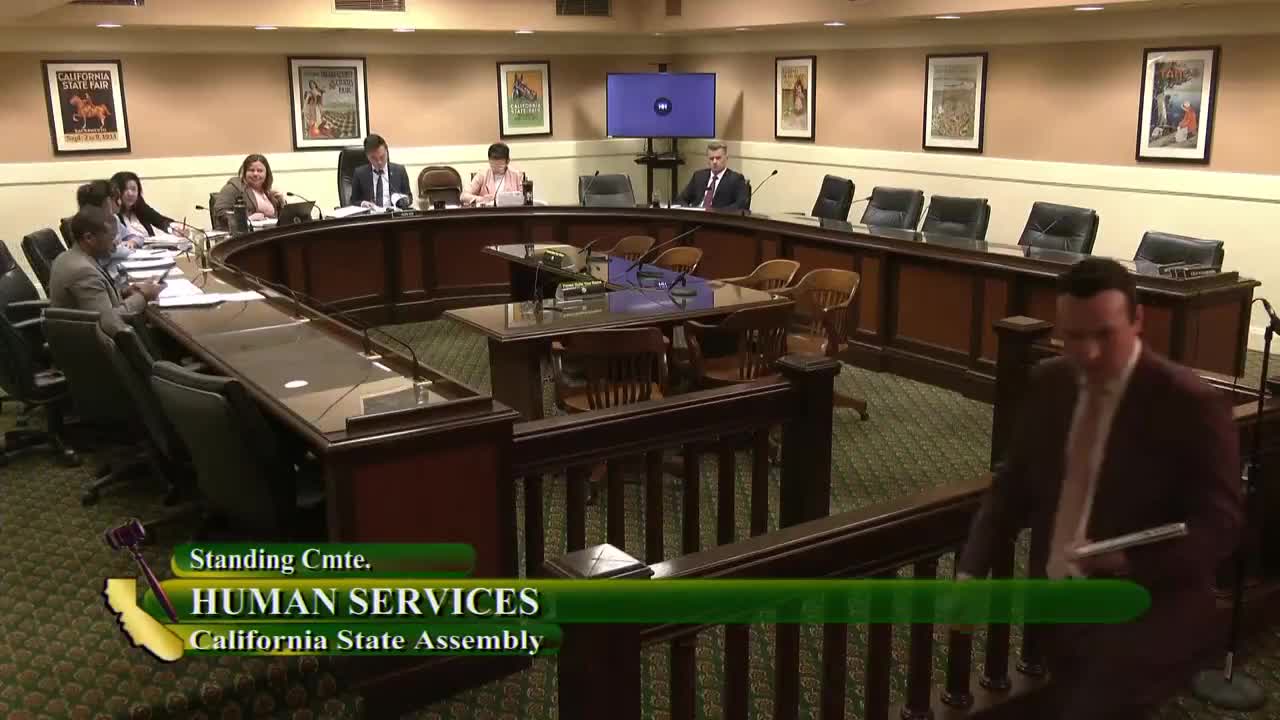 8MIN
Assembly Standing Committee on Human Services
Bill Author

Bill Co-Author(s):
