AB 1984: Pupil discipline: transfer reporting.
- Session Year: 2023-2024
- House: Assembly
- Latest Version Date: 2024-09-22
Current Status:
Passed
(2024-09-22: Chaptered by Secretary of State - Chapter 368, Statutes of 2024.)
Introduced
In Committee
First Chamber
In Committee
Second Chamber
Enacted
What does this bill do?
The bill requires the State Department of Education to collect and publish data on student transfers made for disciplinary reasons, and it requires school districts, county offices of education, and charter schools to provide that information. It also directs the department to advise local agencies not to use transfers as a way to avoid reporting suspensions and expulsions.
The summary is provided by generative AI which can make mistakes. For original language, please view the details in the table below.
Existing law authorizes a county board of education to establish and maintain one or more county community schools, and authorizes the governing board of a school district to establish one or more community day schools, to enroll specified categories of pupils, including expelled pupils, among others, as specified. Existing law authorizes the governing board of any school district to maintain one or more alternative schools, as defined, and requires the governing board of each high school district and each unified school district to establish and maintain within its boundaries special continuation education classes.
Existing law requires enrollment in an alternative school to be voluntary, and authorizes both the voluntary and involuntary transfers of pupils to county community schools and to continuation schools, as specified. Existing law requires the governing board of a school district that establishes a community day school to adopt policies that provide procedures for the involuntary transfer of pupils to a community day school.
This bill would require, commencing with the 202627 school year, the State Department of Education to collect and publish on its internet website, and school districts, county offices of education, and charter schools to provide to the department, data on pupil transfers due to disciplinary reasons, including whether the pupil transferred to an alternative school based on a referral by the school. The bill would require the department, when providing guidance on its internet website about reducing disproportionate discipline of pupil subgroups in schools, to advise local educational agencies against the use of transfers to avoid reporting suspensions and expulsions. To the extent this bill would impose additional duties on local educational agencies, the bill would impose a state-mandated local program.
The California Constitution requires the state to reimburse local agencies and school districts for certain costs mandated by the state. Statutory provisions establish procedures for making that reimbursement.
This bill would provide that, if the Commission on State Mandates determines that the bill contains costs mandated by the state, reimbursement for those costs shall be made pursuant to the statutory provisions noted above.
Existing law authorizes a county board of education to establish and maintain one or more county community schools, and authorizes the governing board of a school district to establish one or more community day schools, to enroll specified categories of pupils, including expelled pupils, among others, as specified. Existing law authorizes the governing board of any school district to maintain one or more alternative schools, as defined, and requires the governing board of each high school district and each unified school district to establish and maintain within its boundaries special continuation education classes.
Existing law requires enrollment in an alternative school to be voluntary, and authorizes both the voluntary and involuntary transfers of pupils to county community schools and to continuation schools, as specified. Existing law requires the governing board of a school district that establishes a community day school to adopt policies that provide procedures for the involuntary transfer of pupils to a community day school.
This bill would require, commencing with the 202627 school year, the State Department of Education to collect and publish on the California School Dashboard, its internet website, and school districts, county offices of education, and charter schools to provide to the department, data on pupil transfers, transfers due to disciplinary reasons, including the reason for the transfer, whether the pupil transferred due to disciplinary reasons and was referred by a judge, and whether the pupil transferred to an alternative school based on a referral by the school. The bill would require the department to systematically review that transfer data, and include reducing the use of those transfers in any guidance to local educational agencies relating to ending the disproportionate transfer of pupil subgroups. department, when providing guidance on its internet website about reducing disproportionate discipline of pupil subgroups in schools, to advise local educational agencies against the use of transfers to avoid reporting suspensions and expulsions. To the extent this bill would impose additional duties on local educational agencies, the bill would impose a state-mandated local program.
The California Constitution requires the state to reimburse local agencies and school districts for certain costs mandated by the state. Statutory provisions establish procedures for making that reimbursement.
This bill would provide that, if the Commission on State Mandates determines that the bill contains costs mandated by the state, reimbursement for those costs shall be made pursuant to the statutory provisions noted above.
Existing law requires the State Department of Education, in collaboration with, and subject to the approval of, the executive director of the State Board of Education, to develop and maintain the California School Dashboard, a web-based system for publicly reporting performance data on the state and local indicators included in the evaluation rubrics.
Existing law authorizes a county board of education to establish and maintain one or more county community schools, and authorizes the governing board of a school district to establish one or more community day schools, to enroll specified categories of pupils, including expelled pupils, among others, as specified. Existing law authorizes the governing board of any school district to maintain one or more alternative schools, as defined, and requires the governing board of each high school district and each unified school district to establish and maintain within its boundaries special continuation education classes.
Existing law requires enrollment in an alternative school to be voluntary, and authorizes both the voluntary and involuntary transfers of pupils to county community schools and to continuation schools, as specified. Existing law requires the governing board of a school district that establishes a community day school to adopt policies that provide procedures for the involuntary transfer of pupils to a community day school.
This bill would require, commencing with the 202526 202627 school year, the State Department of Education to collect and publish on its DataQuest internet website, the California School Dashboard, and school districts, county offices of education, and charter schools to provide to the department, data on pupil transfers, disaggregated by those initiated by the pupil or their parent or guardian and those initiated by the local educational agency, including involuntary transfers, to alternative schools, continuation schools or classes, community day schools, or county community schools. including the reason for the transfer, whether the pupil transferred due to disciplinary reasons and was referred by a judge, and whether the pupil transferred to an alternative school based on a referral by the school. The bill would require the department to systematically review suspension and expulsion data and that transfer data, and include reducing the use of those transfers in any guidance to local educational agencies relating to ending the disproportionate discipline transfer of pupil subgroups, including the subgroups with the highest rate of suspensions or expulsions, as defined. subgroups. To the extent this bill would impose additional duties on local educational agencies, the bill would impose a state-mandated local program.
The California Constitution requires the state to reimburse local agencies and school districts for certain costs mandated by the state. Statutory provisions establish procedures for making that reimbursement.
This bill would provide that, if the Commission on State Mandates determines that the bill contains costs mandated by the state, reimbursement for those costs shall be made pursuant to the statutory provisions noted above.
Existing law authorizes a county board of education to establish and maintain one or more county community schools and schools, and authorizes the governing board of a school district to establish one or more community day schools, to enroll specified categories of pupils, including pupils expelled from a school district, among others. expelled pupils, among others, as specified. Existing law authorizes the governing board of any school district to maintain one or more alternative schools, as defined, and requires the governing board of each high school district and each unified school district to establish and maintain within its boundaries special continuation education classes.
Existing law requires enrollment in an alternative school to be voluntary, and authorizes both the voluntary and involuntary transfers of pupils to county community schools and to continuation schools, as specified. Existing law requires the governing board of a school district that establishes a community day school to adopt policies that provide procedures for the involuntary transfer of pupils to a community day school.
This bill would require, commencing with the 202526 school year, the State Department of Education to collect and publish on its DataQuest internet website, and school districts, county offices of education, and charter schools to provide to the department, data on pupil transfers, disaggregated by those initiated by the pupil or their parent or guardian and those initiated by the local educational agency, including involuntary transfers, to alternative schools, continuation schools or classes, community day schools, or county community schools. The bill would require the department to systematically review suspension and expulsion data and that transfer data, and include reducing the use of those transfers in any guidance to local educational agencies relating to ending the disproportionate discipline of pupil subgroups, including the subgroups with the highest rate of suspensions or expulsions, as defined. To the extent this bill would impose additional duties on local educational agencies, the bill would impose a state-mandated local program.
The California Constitution requires the state to reimburse local agencies and school districts for certain costs mandated by the state. Statutory provisions establish procedures for making that reimbursement.
This bill would provide that, if the Commission on State Mandates determines that the bill contains costs mandated by the state, reimbursement for those costs shall be made pursuant to the statutory provisions noted above.
Existing law authorizes a county board of education to establish and maintain one or more community schools and to enroll specified categories of pupils, including pupils expelled from a school district, among others. Existing law authorizes the governing board of any school district to maintain one or more alternative schools, as defined, and requires the governing board of each high school district and each unified school district to establish and maintain within its boundaries special continuation education classes.
Existing law requires enrollment in an alternative school to be voluntary, and authorizes both the voluntary and involuntary transfers of pupils to county community schools and to continuation schools, as specified.
This bill would require require, commencing with the 202526 school year, the State Department of Education to collect and publish on its DataQuest internet website, and school districts, county offices of education, and charter schools to provide to the department, data on pupil transfers, disaggregated by those initiated by the pupil or their parent or guardian and those initiated by the local educational agency, including involuntary transfers, to alternative schools, continuation schools or classes, or county community schools. The bill would require the department to systematically review suspension and expulsion data and that transfer data, and include reducing the use of those transfers in any guidance to local educational agencies relating to ending the disproportionate discipline of pupil subgroups, including African American pupils. the subgroups with the highest rate of suspensions or expulsions, as defined. To the extent this bill would impose additional duties on local educational agencies, the bill would impose a state-mandated local program.
The California Constitution requires the state to reimburse local agencies and school districts for certain costs mandated by the state. Statutory provisions establish procedures for making that reimbursement.
This bill would provide that, if the Commission on State Mandates determines that the bill contains costs mandated by the state, reimbursement for those costs shall be made pursuant to the statutory provisions noted above.
Existing law authorizes a county board of education to establish and maintain one or more community schools and to enroll specified categories of pupils, including pupils expelled from a school district, among others. Existing law authorizes the governing board of any school district to maintain one or more alternative schools, as defined, and requires the governing board of each high school district and each unified school district to establish and maintain within its boundaries special continuation education classes.
Existing law requires enrollment in an alternative school to be voluntary, and authorizes both the voluntary and involuntary transfers of pupils to county community schools and to continuation schools, as specified.
This bill would require the State Department of Education to collect and publish on its DataQuest internet website, and school districts, county offices of education, and charter schools to provide to the department, data on pupil transfers, disaggregated by those initiated by the pupil or their parent or guardian and those initiated by the local educational agency, to alternative schools, continuation schools or classes, or county community schools. The bill would require the department to systematically review suspension and expulsion data and that transfer data, and include reducing the use of those transfers in any guidance to local educational agencies relating to ending the disproportionate discipline of pupil subgroups, including African American pupils. To the extent this bill would impose additional duties on local educational agencies, the bill would impose a state-mandated local program.
(2)Existing law prohibits a pupil from being suspended from school or recommended for expulsion, unless the superintendent of the school district or the principal of the school in which the pupil is enrolled determines that the pupil has committed an act from a list of specified acts.Existing law requires school districts, county offices of education, and charter schools to adopt local control and accountability plans using a state template adopted by the State Board of Education. Existing law requires the local control and accountability plan to include, among other things, a description of annual goals for all pupils and specified subgroups of pupils to be achieved for each state priority, as specified, including, among other state priorities, school climate, as measured by, among other things, suspension and expulsion rates.This bill would require a school operated by a school district or county office of education, or a charter school, to be considered persistently exclusionary if in each of 3 prior consecutive fiscal years the schools unduplicated suspension rate, as reported by the department, is 20% or higher, or is 25% or higher for any of specified pupil subgroups.(3)TheThe California Constitution requires the state to reimburse local agencies and school districts for certain costs mandated by the state. Statutory provisions establish procedures for making that reimbursement.
This bill would provide that, if the Commission on State Mandates determines that the bill contains costs mandated by the state, reimbursement for those costs shall be made pursuant to the statutory provisions noted above.
(1)Existing law authorizes a county board of education to establish and maintain one or more community schools and to enroll specified categories of pupils, including pupils expelled from a school district, among others. Existing law authorizes the governing board of any school district to maintain one or more alternative schools, as defined, and requires the governing board of each high school district and each unified school district to establish and maintain within its boundaries special continuation education classes.
Existing law requires enrollment in an alternative school to be voluntary, and authorizes both the voluntary and involuntary transfers of pupils to county community schools and to continuation schools, as specified.
This bill would require the State Department of Education to collect and publish on its DataQuest internet website, and school districts, county offices of education, and charter schools to provide to the department, data on pupil transfers, disaggregated by those initiated by the pupil or their parent or guardian and those initiated by the local educational agency, to alternative schools, continuation schools or classes, or county community schools. The bill would require the department to systematically review suspension and expulsion data and that transfer data, and include reducing the use of those transfers in any guidance to local educational agencies relating to ending the disproportionate discipline of pupil subgroups, including African American pupils. To the extent this bill would impose additional duties on local educational agencies, the bill would impose a state-mandated local program.
(2)Existing law prohibits a pupil from being suspended from school or recommended for expulsion, unless the superintendent of the school district or the principal of the school in which the pupil is enrolled determines that the pupil has committed an act from a list of specified acts.
Existing law requires school districts, county offices of education, and charter schools to adopt local control and accountability plans using a state template adopted by the State Board of Education. Existing law requires the local control and accountability plan to include, among other things, a description of annual goals for all pupils and specified subgroups of pupils to be achieved for each state priority, as specified, including, among other state priorities, school climate, as measured by, among other things, suspension and expulsion rates.
This bill would require a school operated by a school district or county office of education, or a charter school, to be considered persistently exclusionary if in each of 3 prior consecutive fiscal years the schools unduplicated suspension rate, as reported by the department, is 20% or higher, or is 25% or higher for any of specified pupil subgroups.
(3)The California Constitution requires the state to reimburse local agencies and school districts for certain costs mandated by the state. Statutory provisions establish procedures for making that reimbursement.
This bill would provide that, if the Commission on State Mandates determines that the bill contains costs mandated by the state, reimbursement for those costs shall be made pursuant to the statutory provisions noted above.
Existing law requires the governing board of any school district to give diligent care to the health and physical development of pupils.This bill would state the intent of the Legislature to enact future legislation that would require school districts, county offices of education, and charter schools to develop and adopt guidelines to be followed during extreme heat to prevent heat-related illnesses.Existing law requires the governing board of any school district to give diligent care to the health and physical development of pupils.
This bill would state the intent of the Legislature to enact future legislation that would require school districts, county offices of education, and charter schools to develop and adopt guidelines to be followed during extreme heat to prevent heat-related illnesses.
(a)Commencing with the 202627 school year, the department shall collect and publish on its internet website, and local educational agencies shall provide to the department, data on pupil transfers due to disciplinary reasons, including whether the pupil transferred to an alternative school based on a referral by the school.
(b)The department, when providing guidance on its internet website about reducing disproportionate discipline of pupil subgroups in schools, shall advise local educational agencies against the use of transfers to avoid reporting suspensions and expulsions.
(c)For purposes of this section, local educational agency means a school district, county office of education, or charter school.
SEC. 2.If the Commission on State Mandates determines that this act contains costs mandated by the state, reimbursement to local agencies and school districts for those costs shall be made pursuant to Part 7 (commencing with Section 17500) of Division 4 of Title 2 of the Government Code.
(a)Commencing with the 202627 school year, the department shall collect and publish on the California School Dashboard, and local educational agencies shall provide to the department, data on pupil transfers, including all of the following:
(1)The reason for the transfer.
(2)Whether the pupil transferred due to disciplinary reasons and was referred by a judge.
(3)Whether the pupil transferred to an alternative school based on a referral by the school.
(b)The department shall systematically review the transfer data collected pursuant to subdivision (a), and shall include reducing the use of the transfers identified in subdivision (a) in any guidance to local educational agencies relating to ending the disproportionate transfer of pupil subgroups.
(c)For purposes of this section, local educational agency means a school district, county office of education, or charter school.
SEC. 2.If the Commission on State Mandates determines that this act contains costs mandated by the state, reimbursement to local agencies and school districts for those costs shall be made pursuant to Part 7 (commencing with Section 17500) of Division 4 of Title 2 of the Government Code.
(a)Commencing with the 202526 school year, the department shall collect and publish on its DataQuest internet website, and local educational agencies shall provide to the department, data on pupil transfers, disaggregated by those initiated by the pupil or their parent or guardian and those initiated by the local educational agency, including involuntary transfers pursuant to Sections 47605, 47605.6, and 48432.5, to alternative schools established pursuant to Chapter 3 (commencing with Section 58500) of Part 31, to continuation schools or classes established pursuant to this article, to community day schools established pursuant to Chapter 4 (commencing with Section 48660), or to county community schools established pursuant to Chapter 6.5 (commencing with Section 1980) of Part 2 of Division 1 of Title 1.
(b)The department shall systematically review suspension and expulsion data and the data collected pursuant to subdivision (a), and shall include reducing the use of the transfers identified in subdivision (a) in any guidance to local educational agencies relating to ending the disproportionate discipline of pupil subgroups, including the subgroups with the highest rate of suspensions or expulsions.
(c)For purposes of this section, the following definitions apply:
(1)Local educational agency means a school district, county office of education, or charter school.
(2)Subgroups with the highest rate of suspensions or expulsions means the three numerically significant pupil subgroups, as described in Section 52052, with the highest rates of suspensions or expulsions statewide based on the latest statewide DataQuest report for annual K12 public school suspension rate and expulsion rate published by the department.
SEC. 2.If the Commission on State Mandates determines that this act contains costs mandated by the state, reimbursement to local agencies and school districts for those costs shall be made pursuant to Part 7 (commencing with Section 17500) of Division 4 of Title 2 of the Government Code.
(a)The Commencing with the 202526 school year, the department shall collect and publish on its DataQuest internet website, and local educational agencies shall provide to the department, data on pupil transfers, disaggregated by those initiated by the pupil or their parent or guardian and those initiated by the local education educational agency, including involuntary transfers pursuant to Sections 47605, 47605.6, and 48432.5, to alternative schools established pursuant to Chapter 3 (commencing with Section 58500) of Part 31, to continuation schools or classes established pursuant to this article, or to county community schools established pursuant to Chapter 6.5 (commencing with Section 1980) of Part 2 of Division 1 of Title 1.
(b)The department shall systematically review suspension and expulsion data and the data collected pursuant to subdivision (a), and shall include reducing the use of the transfers identified in subdivision (a) in any guidance to local educational agencies relating to ending the disproportionate discipline of pupil subgroups, including African American pupils. the subgroups with the highest rate of suspensions or expulsions.
(c)For purposes of this section, local the following definitions apply:
(1)Local educational agency means a school district, county office of education, or charter school.
(2)Subgroups with the highest rate of suspensions or expulsions means the three numerically significant pupil subgroups, as described in Section 52052, with the highest rates of suspensions or expulsions statewide based on the latest statewide DataQuest report for annual K12 public school suspension rate and expulsion rate published by the department.
SEC. 2.If the Commission on State Mandates determines that this act contains costs mandated by the state, reimbursement to local agencies and school districts for those costs shall be made pursuant to Part 7 (commencing with Section 17500) of Division 4 of Title 2 of the Government Code.
(a)The department shall collect and publish on its DataQuest internet website, and local educational agencies shall provide to the department, data on pupil transfers, disaggregated by those initiated by the pupil or their parent or guardian and those initiated by the local education agency, to alternative schools established pursuant to Chapter 3 (commencing with Section 58500) of Part 31, to continuation schools or classes established pursuant to this article, or to county community schools established pursuant to Chapter 6.5 (commencing with Section 1980) of Part 2 of Division 1 of Title 1.
(b)The department shall systematically review suspension and expulsion data and the data collected pursuant to subdivision (a), and shall include reducing the use of the transfers identified in subdivision (a) in any guidance to local educational agencies relating to ending the disproportionate discipline of pupil subgroups, including African American pupils.
(c)For purposes of this section, local educational agency means a school district, county office of education, or charter school.
SEC. 2.Section 52064.8 is added to the Education Code, to read:52064.8.(a)A school operated by a school district or county office of education, or a charter school, shall be considered persistently exclusionary if in each of the three prior consecutive fiscal years either of the following applies:(1)The schools unduplicated suspension rate, as reported by the department, is 20 percent or higher.(2)The schools unduplicated suspension rate, as reported by the department, for any pupil subgroup is 25 percent or higher.(b)For purposes of this section, the applicable pupil subgroups shall be:(1)African American.(2)Native American.(3)Hispanic or Latino.(4)Pacific Islander.(5)Filipino.(6)Foster youth.(7)English learner.(8)Pupils with disabilities.(9)Homeless youth.(10)Migrant.(11)Socioeconomically disadvantaged.SEC. 3.SEC. 2.If the Commission on State Mandates determines that this act contains costs mandated by the state, reimbursement to local agencies and school districts for those costs shall be made pursuant to Part 7 (commencing with Section 17500) of Division 4 of Title 2 of the Government Code.
(a)The department shall collect and publish on its DataQuest internet website, and local educational agencies shall provide to the department, data on pupil transfers, disaggregated by those initiated by the pupil or their parent or guardian and those initiated by the local education agency, to alternative schools established pursuant to Chapter 3 (commencing with Section 58500) of Part 31, to continuation schools or classes established pursuant to this article, or to county community schools established pursuant to Chapter 6.5 (commencing with Section 1980) of Part 2 of Division 1 of Title 1.
(b)The department shall systematically review suspension and expulsion data and the data collected pursuant to subdivision (a), and shall include reducing the use of the transfers identified in subdivision (a) in any guidance to local educational agencies relating to ending the disproportionate discipline of pupil subgroups, including African American pupils.
(c)For purposes of this section, local educational agency means a school district, county office of education, or charter school.
SEC. 2.Section 52064.8 is added to the Education Code, to read:52064.8.(a)A school operated by a school district or county office of education, or a charter school, shall be considered persistently exclusionary if in each of the three prior consecutive fiscal years either of the following applies:
(1)The schools unduplicated suspension rate, as reported by the department, is 20 percent or higher.
(2)The schools unduplicated suspension rate, as reported by the department, for any pupil subgroup is 25 percent or higher.
(b)For purposes of this section, the applicable pupil subgroups shall be:
(1)African American.
(2)Native American.
(3)Hispanic or Latino.
(4)Pacific Islander.
(5)Filipino.
(6)Foster youth.
(7)English learner.
(8)Pupils with disabilities.
(9)Homeless youth.
(10)Migrant.
(11)Socioeconomically disadvantaged.
SEC. 3.If the Commission on State Mandates determines that this act contains costs mandated by the state, reimbursement to local agencies and school districts for those costs shall be made pursuant to Part 7 (commencing with Section 17500) of Division 4 of Title 2 of the Government Code.
SECTION 1.It is the intent of the Legislature to enact future legislation that would require school districts, county offices of education, and charter schools to develop and adopt guidelines to be followed during extreme heat to prevent heat-related illnesses.It is the intent of the Legislature to enact future legislation that would require school districts, county offices of education, and charter schools to develop and adopt guidelines to be followed during extreme heat to prevent heat-related illnesses.
|
Date
|
Status
|
|---|---|
| Sep 22, 2024 | Chaptered by Secretary of State - Chapter 368, Statutes of 2024. |
| Sep 22, 2024 | Approved by the Governor. |
| Sep 11, 2024 | Enrolled and presented to the Governor at 4 p.m. |
| Aug 29, 2024 | Senate amendments concurred in. To Engrossing and Enrolling. (Ayes 76. Noes 0.). |
| Aug 29, 2024 | Assembly Rule 77 suspended. |
| Aug 28, 2024 | In Assembly. Concurrence in Senate amendments pending. May be considered on or after August 30 pursuant to Assembly Rule 77. |
| Aug 28, 2024 | Read third time. Passed. Ordered to the Assembly. (Ayes 39. Noes 0.). |
| Aug 26, 2024 | Read second time. Ordered to third reading. |
| Aug 23, 2024 | Read third time and amended. Ordered to second reading. |
| Aug 19, 2024 | Read second time. Ordered to third reading. |
| Aug 15, 2024 | Read second time and amended. Ordered returned to second reading. |
| Aug 15, 2024 | From committee: Amend, and do pass as amended. (Ayes 6. Noes 0.) (August 15). |
| Aug 5, 2024 | In committee: Referred to APPR suspense file. |
| Jun 24, 2024 | Read second time and amended. Re-referred to Com. on APPR. |
| Jun 20, 2024 | From committee: Amend, and do pass as amended and re-refer to Com. on APPR with recommendation: To Consent Calendar. (Ayes 7. Noes 0.) (June 19). |
| May 29, 2024 | Referred to Com. on ED. |
| May 22, 2024 | In Senate. Read first time. To Com. on RLS. for assignment. |
| May 21, 2024 | Read third time. Passed. Ordered to the Senate. (Ayes 72. Noes 0. Page 5409.) |
| May 20, 2024 | Read second time. Ordered to third reading. |
| May 16, 2024 | From committee: Do pass. (Ayes 15. Noes 0.) (May 16). |
| May 1, 2024 | In committee: Set, first hearing. Referred to APPR. suspense file. |
| Apr 16, 2024 | Re-referred to Com. on APPR. |
| Apr 15, 2024 | Read second time and amended. |
| Apr 11, 2024 | From committee: Amend, and do pass as amended and re-refer to Com. on APPR. (Ayes 7. Noes 0.) (April 10). |
| Apr 2, 2024 | Re-referred to Com. on ED. |
| Apr 1, 2024 | Re-referred to Com. on ED. |
| Apr 1, 2024 | From committee chair, with author's amendments: Amend, and re-refer to Com. on ED. Read second time and amended. |
| Mar 22, 2024 | In committee: Set, first hearing. Hearing canceled at the request of author. |
| Mar 21, 2024 | Referred to Com. on ED. |
| Mar 21, 2024 | From committee chair, with author's amendments: Amend, and re-refer to Com. on ED. Read second time and amended. |
| Jan 31, 2024 | From printer. May be heard in committee March 1. |
| Jan 30, 2024 | Read first time. To print. |
|
Date
|
Description
|
Location
|
Votes
|
|
|---|---|---|---|---|
| Aug 29, 2024 | AB 1984 Weber Concurrence in Senate Amendments | Assembly Floor |
Passed |
|
| Aug 28, 2024 | Assembly 3rd Reading AB1984 Weber By Newman | Senate Floor |
Passed |
|
| Aug 15, 2024 | Do pass as amended | Senate Standing Committee on Appropriations |
Passed |
|
| Aug 5, 2024 | Placed on suspense file | Senate Standing Committee on Appropriations |
Passed |
|
| Jun 19, 2024 | Do pass as amended, but first amend, and re-refer to the Committee on [Appropriations] with the recommendation: To Consent Calendar | Senate Standing Committee on Education |
Passed |
|
| May 21, 2024 | AB 1984 Weber Assembly Third Reading | Assembly Floor |
Passed |
|
| May 16, 2024 | Do pass. | Assembly Standing Committee on Appropriations |
Passed |
|
| Apr 10, 2024 | Do pass as amended and be re-referred to the Committee on [Appropriations] | Assembly Standing Committee on Education |
Passed |
This list shows positions taken on this bill by organizations on the date displayed, which is linked to the original source.
Positions by individuals are not included.
|
Organization
|
Position
|
Date
|
|---|---|---|
| California Alliance Of Child And Family Services | ** Support | |
| California State PTA | ** Support | |
| California Teachers Association | ** Support | |
| Equal Justice Society | * Support | Apr 10, 2024 |
| Sacramento State University | * Support | Apr 10, 2024 |
| The Children's Partnership | ** Support |
CONCURRENCE IN SENATE AMENDMENTS
CSA1 Bill Id:AB 1984
Author:(Weber)
As Amended Ver:August 23, 2024
Majority vote
SUMMARY
Requires, commencing with the 2026-27 school year, local educational agencies (LEAs) to provide to the California Department of Education (CDE) data on student transfers due to disciplinary reasons, and the CDE to publish the information on the CDE’s website. Requires the CDE, when providing guidance on its website about reducing disproportionate discipline of pupil subgroups in schools, to advise LEAs against the use of transfers to avoid reporting suspensions and expulsions.
Senate Amendments
- Require, commencing with the 2026-27 school year, local educational agencies (LEAs) to provide to the California Department of Education (CDE) data on student transfers due to disciplinary reasons, and the CDE to the information on the CDE’s website.
- Require the CDE, when providing guidance on its website about reducing disproportionate discipline of pupil subgroups in schools, to advise LEAs against the use of transfers to avoid reporting suspensions and expulsions.
- Remove a requirement for the CDE to collect and publish on the California School Dashboard (Dashboard), and LEAs to provide to the CDE, specified data on pupil transfers, commencing with the 2026-27 school year.
- Remove a requirement for the CDE to collect and publish on its DataQuest internet website, and LEAs to provide to the CDE data on pupil transfers, disaggregated by those initiated by the pupil or their parent or guardian and those initiated by the LEA, including involuntary transfers to alternative schools, to continuation schools or classes, to community day schools, or to county community schools, commencing with the 2025–26 school year.
- Remove a requirement for the CDE to systematically review the transfer data and include reducing the use of transfer in any guidance to LEAs relating to ending the disproportionate transfer of student subgroups.
- Remove a requirement for the CDE to systematically review suspension and expulsion data and the data collected, and to include reducing the use of the transfers in any guidance to LEAs relating to ending the disproportionate discipline of pupil subgroups, including the subgroups with the highest rate of suspensions or expulsions.
COMMENTS
Task Force to Study and Develop Reparation Proposals for African Americans. AB 3121 (Weber), Chapter 319, Statutes of 2020, establishes the Task Force to Study and Develop Reparation Proposals for African Americans (Task Force or Reparations Task Force). AB 3121 charges the California Department of Justice (DOJ) with providing administrative, technical, and legal assistance to the Task Force.
According to the DOJ, the institution of slavery is inextricably woven into the establishment, history, and prosperity of the United States. Constitutionally and statutorily sanctioned from 1619 to 1865, slavery deprived more than four million Africans and their descendants of life, liberty, citizenship, cultural heritage, and economic opportunity. Following the abolition of slavery, government entities at the federal, state, and local levels continued to perpetuate, condone, and often profit from practices that brutalized African Americans and excluded them from meaningful participation in society. This legacy of slavery and racial discrimination has resulted in debilitating economic, educational, and health hardships that are uniquely experienced by African Americans.
AB 3121 charges the Reparations Task Force with studying the institution of slavery and its lingering negative effects on living African Americans, including descendants of persons enslaved in the United States and in society. The Task Force published a report and recommendations in 2023. Related to Chapter 23 of the report, Policies Addressing Separate and Unequal Education, "the Task Force recommends the CDE collect and publish additional data on students who are transferred to alternative schools, both voluntarily and involuntarily. African American students are overrepresented in alternative schools, which provide a substandard education. Attending an alternative school is associated with negative outcomes; students who attend alternative schools are less likely to graduate and less likely to attend college. Because transfers to alternative schools are often used as an alternative to discipline in order to avoid the original school having a record of said discipline, but have the same effect as pushing out African American students through suspension and/or expulsion, transfer data should also be systematically reviewed by the CDE. The CDE shall include reducing the use of alternative school transfers in any goals related to ending the disproportionate discipline of African American students." This bill proposes to establish this Task Force recommendation into state law.
California suspension and expulsion rates. Although the total number of suspensions and expulsions is declining statewide, gaps between racial/ethnic groups and other student subgroups persist. In the 2022-23, African American students had the highest rates of suspension among all racial/ethnic groups (8.9%), and foster youth had the highest rate of suspension overall (13.9%), with a statewide average of 3.6%.
Holding schools accountable for suspension and expulsion rates. The Local Control Funding Formula (LCFF) was established in the 2013-14 fiscal year to address the achievement gap by providing more equitable funding among LEAs, that is, to provide a higher level of funding to LEAs that enroll larger numbers of English learners, foster youth, and students eligible for free or reduced-price meals (unduplicated pupils) so they could provide those students with additional services and support. The reforms to the funding system were accompanied by changes to the state accountability system, including Local Control and Accountability Plans (LCAPs). The LCAP is a three-year plan that describes the goals, actions, services, and expenditures to support positive student outcomes that address state and local priorities. The LCAP provides an opportunity for school districts, COEs, and charter schools to share their stories of how, what, and why programs and services are selected to meet their local needs.
The LCFF and LCAP requirements include school climate as one of the eight state priorities. All California school districts, COEs, and charter schools are required to report and examine student suspension and expulsion rates on their LCAP and annual updates. It has been suggested that this requirement to clearly report disciplinary actions, in the aggregate as well as by subgroup, increases the pressure on schools to employ alternatives to suspension and expulsion.
Current law requires, beginning with LCAPs for the 2024–25 school year, school districts, COEs, and charter schools to include specific actions in the LCAP to address all instances where a school or pupil group within a school district, COE, and charter school, or a pupil group within a school, receives the lowest performance level on one or more state indicators on the California School Dashboard (Dashboard), which includes the Suspension Rate statewide indicator.
Is the data required by this bill already collected? DataQuest is the CDE's web-based data reporting system for publicly reporting information about California students, teachers, and schools. DataQuest provides access to a wide variety of reports, including school performance, test results, student enrollment, English learner, graduation and dropout, school staffing, course enrollment, and student misconduct data. This bill requires the CDE to collect and publish on the DataQuest website, and LEAs provide to the CDE, data on pupil transfers, disaggregated by those initiated by the pupil or their parent or guardian and those initiated by the LEA, to alternative schools, to continuation schools or classes, or to county community schools. The CDE does not currently collect pupil transfer information in this way. The Committee may wish to consider that it may be challenging to decipher which pupil transfers are initiated by the pupil or parent, or by the LEA.
Disparities in the rate of school suspensions. The disproportionate incidence of suspensions and expulsions among certain populations of students, including African American students, has gained nationwide attention in recent years. A 2018 report by the U.S. Government Accountability Office (GAO), K-12 Education: Discipline Disparities for Black Students, Boys, and Students with Disabilities, found that black students, boys, and students with disabilities were disproportionately disciplined in K-12 schools, based upon an analysis of Civil Rights Data Collection (CRDC) data. The further suggests that "implicit bias on the part of teachers and staff may cause them to judge students' behaviors differently based on the students' race and sex. Teachers and staff sometimes have discretion to make case-by-case decisions about whether to discipline, and the form of discipline to impose in response to student behaviors, such as disobedience, defiance, and classroom disruption." Research on student behavior, race, and discipline has found no evidence that African American over-representation in-school suspension is due to higher rates of misbehavior. African American students were referred more often for behaviors that seem to require more subjective judgment on the part of the person making the referral (e.g., disrespect, excessive noise, threatening behavior, and loitering). (Losen, 2011)
According to the Author
"AB 1984 will expand transparency of all transfers to alternative schools. Parents and student advocates are sharing that these types of transfers represent a large hidden share of California exclusionary discipline – disproportionally impacting Black, Brown, and differently-abled students. A recent public records request finding, for example, in one school district that Black students represented 14% of enrollment but an astonishing 45% of transfers to alternative schools. And attending an alternative school is associated with negative outcomes, making students less likely to graduate and attend college – requiring transparency and accountability all the more critical."
Arguments in Support
Neighborhood Legal Services of Los Angeles County writes, "AB 1984 would not only allow public access to needed information but allow more granular review of school transfers. At present, transfer data collected does not distinguish between transfers initiated by the student's parent and those initiated by the school. In practice, this allows school districts to compound disciplinary transfers with parent-requested school transfers. AB 1984 would force districts to disaggregate transfer data and report whether the student or parent is initiating the transfer or whether it is school initiated. Additionally, AB 1984 would allow advocates to monitor transfers to continuation schools and county community schools by specifically requiring districts to report transfers to alternative schools. Collection and release of this information allows for meaningful oversight needed to redress harmful discipline practices."
Arguments in Opposition
None on file
FISCAL COMMENTS
According to the Senate Appropriations Committee:
- The CDE estimates ongoing General Fund costs of $512,000 to support 4.0 positions to comply with the bill’s requirements.
- This bill could result in additional, unknown Proposition 98 General Fund costs, potentially in the tens of thousands of dollars to low hundreds of thousands of dollars each year, for LEAs to collect and report the new data elements to CDE. These activities could be deemed to be a reimbursable mandate by the Commission on State Mandates.
VOTES:
ASM EDUCATION: 7-0-0
YES: Muratsuchi, Addis, Alvarez, Bonta, Flora, Hoover, McCarty
ASM APPROPRIATIONS: 15-0-0
YES: Wicks, Sanchez, Arambula, Bryan, Calderon, Wendy Carrillo, Dixon, Mike Fong, Grayson, Haney, Hart, Jim Patterson, Pellerin, Ta, Villapudua
ASSEMBLY FLOOR: 72-0-8
YES: Addis, Aguiar-Curry, Alanis, Alvarez, Arambula, Bains, Bauer-Kahan, Bennett, Berman, Boerner, Bonta, Bryan, Calderon, Juan Carrillo, Wendy Carrillo, Chen, Connolly, Davies, Dixon, Essayli, Flora, Mike Fong, Vince Fong, Gallagher, Garcia, Gipson, Grayson, Haney, Hart, Hoover, Irwin, Jackson, Jones-Sawyer, Kalra, Lackey, Lee, Low, Lowenthal, Maienschein, McCarty, McKinnor, Muratsuchi, Stephanie Nguyen, Ortega, Pacheco, Papan, Jim Patterson, Joe Patterson, Pellerin, Petrie-Norris, Quirk-Silva, Ramos, Rendon, Reyes, Rodriguez, Blanca Rubio, Sanchez, Santiago, Schiavo, Soria, Ting, Valencia, Villapudua, Waldron, Wallis, Ward, Weber, Wicks, Wilson, Wood, Zbur, Robert Rivas
ABS, ABST OR NV: Cervantes, Megan Dahle, Friedman, Gabriel, Holden, Mathis, Luz Rivas, Ta
SENATE FLOOR: 39-0-1
YES: Allen, Archuleta, Ashby, Atkins, Becker, Blakespear, Bradford, Caballero, Cortese, Dahle, Dodd, Durazo, Eggman, Glazer, Gonzalez, Grove, Hurtado, Jones, Laird, Limón, McGuire, Menjivar, Min, Newman, Nguyen, Niello, Ochoa Bogh, Padilla, Portantino, Roth, Rubio, Seyarto, Skinner, Smallwood-Cuevas, Stern, Umberg, Wahab, Wiener, Wilk
ABS, ABST OR NV: Alvarado-Gil
UPDATED
VERSION: August 23, 2024
CONSULTANT: Marguerite Ries / ED. / (916) 319-2087 FN: 0004990
CONCURRENCE IN SENATE AMENDMENTS
CSA1 Bill Id:AB 1984
Author:(Weber)
As Amended Ver:August 23, 2024
Majority vote
SUMMARY
Requires, commencing with the 2026-27 school year, local educational agencies (LEAs) to provide to the California Department of Education (CDE) data on student transfers, and the CDE to collect and publish on the California School Dashboard (Dashboard). Requires the CDE to systematically review the transfer data and include reducing the use of transfer in any guidance to LEAs relating to ending the disproportionate transfer of student subgroups.
Senate Amendments
- Require, commencing with the 2026-7 school year, the CDE to collect and publish on the Dashboard, and LEAs to provide to the CDE data on pupil transfers, including all of the following: the reason for the transfer, whether the pupil transferred due to disciplinary reasons and was referred by a judge, and whether the pupil transferred to an alternative school based on a referral by the school.
- Remove a requirement for the CDE to collect and publish on its DataQuest internet website, and LEAs to provide to the CDE data on pupil transfers, disaggregated by those initiated by the pupil or their parent or guardian and those initiated by the LEA, including involuntary transfers to alternative schools, to continuation schools or classes, to community day schools, or to county community schools, commencing with the 2025–26 school year.
- Require the CDE to systematically review the transfer data and include reducing the use of transfer in any guidance to LEAs relating to ending the disproportionate transfer of student subgroups.
- Remove a requirement for the CDE to systematically review suspension and expulsion data and the data collected, and to include reducing the use of the transfers in any guidance to LEAs relating to ending the disproportionate discipline of pupil subgroups, including the subgroups with the highest rate of suspensions or expulsions.
COMMENTS
Task Force to Study and Develop Reparation Proposals for African Americans. AB 3121 (Weber), Chapter 319, Statutes of 2020, establishes the Task Force to Study and Develop Reparation Proposals for African Americans (Task Force or Reparations Task Force). AB 3121 charges the California Department of Justice (DOJ) with providing administrative, technical, and legal assistance to the Task Force.
According to the DOJ, the institution of slavery is inextricably woven into the establishment, history, and prosperity of the United States. Constitutionally and statutorily sanctioned from 1619 to 1865, slavery deprived more than four million Africans and their descendants of life, liberty, citizenship, cultural heritage, and economic opportunity. Following the abolition of slavery, government entities at the federal, state, and local levels continued to perpetuate, condone, and often profit from practices that brutalized African Americans and excluded them from meaningful participation in society. This legacy of slavery and racial discrimination has resulted in debilitating economic, educational, and health hardships that are uniquely experienced by African Americans.
AB 3121 charges the Reparations Task Force with studying the institution of slavery and its lingering negative effects on living African Americans, including descendants of persons enslaved in the United States and in society. The Task Force published a report and recommendations in 2023. Related to Chapter 23 of the report, Policies Addressing Separate and Unequal Education, "the Task Force recommends the CDE collect and publish additional data on students who are transferred to alternative schools, both voluntarily and involuntarily. African American students are overrepresented in alternative schools, which provide a substandard education. Attending an alternative school is associated with negative outcomes; students who attend alternative schools are less likely to graduate and less likely to attend college. Because transfers to alternative schools are often used as an alternative to discipline in order to avoid the original school having a record of said discipline, but have the same effect as pushing out African American students through suspension and/or expulsion, transfer data should also be systematically reviewed by the CDE. The CDE shall include reducing the use of alternative school transfers in any goals related to ending the disproportionate discipline of African American students." This bill proposes to establish this Task Force recommendation into state law.
California suspension and expulsion rates. Although the total number of suspensions and expulsions is declining statewide, gaps between racial/ethnic groups and other student subgroups persist. In the 2022-23, African American students had the highest rates of suspension among all racial/ethnic groups (8.9%), and foster youth had the highest rate of suspension overall (13.9%), with a statewide average of 3.6%.
Holding schools accountable for suspension and expulsion rates. The Local Control Funding Formula (LCFF) was established in the 2013-14 fiscal year to address the achievement gap by providing more equitable funding among LEAs, that is, to provide a higher level of funding to LEAs that enroll larger numbers of English learners, foster youth, and students eligible for free or reduced-price meals (unduplicated pupils) so they could provide those students with additional services and support. The reforms to the funding system were accompanied by changes to the state accountability system, including Local Control and Accountability Plans (LCAPs). The LCAP is a three-year plan that describes the goals, actions, services, and expenditures to support positive student outcomes that address state and local priorities. The LCAP provides an opportunity for school districts, COEs, and charter schools to share their stories of how, what, and why programs and services are selected to meet their local needs.
The LCFF and LCAP requirements include school climate as one of the eight state priorities. All California school districts, COEs, and charter schools are required to report and examine student suspension and expulsion rates on their LCAP and annual updates. It has been suggested that this requirement to clearly report disciplinary actions, in the aggregate as well as by subgroup, increases the pressure on schools to employ alternatives to suspension and expulsion.
Current law requires, beginning with LCAPs for the 2024–25 school year, school districts, COEs, and charter schools to include specific actions in the LCAP to address all instances where a school or pupil group within a school district, COE, and charter school, or a pupil group within a school, receives the lowest performance level on one or more state indicators on the California School Dashboard (Dashboard), which includes the Suspension Rate statewide indicator.
Is the data required by this bill already collected? DataQuest is the CDE's web-based data reporting system for publicly reporting information about California students, teachers, and schools. DataQuest provides access to a wide variety of reports, including school performance, test results, student enrollment, English learner, graduation and dropout, school staffing, course enrollment, and student misconduct data. This bill requires the CDE to collect and publish on the DataQuest website, and LEAs provide to the CDE, data on pupil transfers, disaggregated by those initiated by the pupil or their parent or guardian and those initiated by the LEA, to alternative schools, to continuation schools or classes, or to county community schools. The CDE does not currently collect pupil transfer information in this way. The Committee may wish to consider that it may be challenging to decipher which pupil transfers are initiated by the pupil or parent, or by the LEA.
Disparities in the rate of school suspensions. The disproportionate incidence of suspensions and expulsions among certain populations of students, including African American students, has gained nationwide attention in recent years. A 2018 report by the U.S. Government Accountability Office (GAO), K-12 Education: Discipline Disparities for Black Students, Boys, and Students with Disabilities, found that black students, boys, and students with disabilities were disproportionately disciplined in K-12 schools, based upon an analysis of Civil Rights Data Collection (CRDC) data. The further suggests that "implicit bias on the part of teachers and staff may cause them to judge students' behaviors differently based on the students' race and sex. Teachers and staff sometimes have discretion to make case-by-case decisions about whether to discipline, and the form of discipline to impose in response to student behaviors, such as disobedience, defiance, and classroom disruption." Research on student behavior, race, and discipline has found no evidence that African American over-representation in-school suspension is due to higher rates of misbehavior. African American students were referred more often for behaviors that seem to require more subjective judgment on the part of the person making the referral (e.g., disrespect, excessive noise, threatening behavior, and loitering). (Losen, 2011)
According to the Author
"AB 1984 will expand transparency of all transfers to alternative schools. Parents and student advocates are sharing that these types of transfers represent a large hidden share of California exclusionary discipline – disproportionally impacting Black, Brown, and differently-abled students. A recent public records request finding, for example, in one school district that Black students represented 14% of enrollment but an astonishing 45% of transfers to alternative schools. And attending an alternative school is associated with negative outcomes, making students less likely to graduate and attend college – requiring transparency and accountability all the more critical."
Arguments in Support
Neighborhood Legal Services of Los Angeles County writes, "AB 1984 would not only allow public access to needed information but allow more granular review of school transfers. At present, transfer data collected does not distinguish between transfers initiated by the student's parent and those initiated by the school. In practice, this allows school districts to compound disciplinary transfers with parent-requested school transfers. AB 1984 would force districts to disaggregate transfer data and report whether the student or parent is initiating the transfer or whether it is school initiated. Additionally, AB 1984 would allow advocates to monitor transfers to continuation schools and county community schools by specifically requiring districts to report transfers to alternative schools. Collection and release of this information allows for meaningful oversight needed to redress harmful discipline practices."
Arguments in Opposition
None on file.
FISCAL COMMENTS
According to the Senate Appropriations Committee:
- The CDE estimates ongoing General Fund costs of $512,000 to support 4.0 positions to comply with the bill's requirements.
- This bill could result in additional, unknown Proposition 98 General Fund costs, potentially in the tens of thousands of dollars to low hundreds of thousands of dollars each year, for LEAs to collect and report the new data elements to CDE. These activities could be deemed to be a reimbursable mandate by the Commission on State Mandates.
VOTES:
ASM EDUCATION: 7-0-0
YES: Muratsuchi, Addis, Alvarez, Bonta, Flora, Hoover, McCarty
ASM APPROPRIATIONS: 15-0-0
YES: Wicks, Sanchez, Arambula, Bryan, Calderon, Wendy Carrillo, Dixon, Mike Fong, Grayson, Haney, Hart, Jim Patterson, Pellerin, Ta, Villapudua
ASSEMBLY FLOOR: 72-0-8
YES: Addis, Aguiar-Curry, Alanis, Alvarez, Arambula, Bains, Bauer-Kahan, Bennett, Berman, Boerner, Bonta, Bryan, Calderon, Juan Carrillo, Wendy Carrillo, Chen, Connolly, Davies, Dixon, Essayli, Flora, Mike Fong, Vince Fong, Gallagher, Garcia, Gipson, Grayson, Haney, Hart, Hoover, Irwin, Jackson, Jones-Sawyer, Kalra, Lackey, Lee, Low, Lowenthal, Maienschein, McCarty, McKinnor, Muratsuchi, Stephanie Nguyen, Ortega, Pacheco, Papan, Jim Patterson, Joe Patterson, Pellerin, Petrie-Norris, Quirk-Silva, Ramos, Rendon, Reyes, Rodriguez, Blanca Rubio, Sanchez, Santiago, Schiavo, Soria, Ting, Valencia, Villapudua, Waldron, Wallis, Ward, Weber, Wicks, Wilson, Wood, Zbur, Robert Rivas
ABS, ABST OR NV: Cervantes, Megan Dahle, Friedman, Gabriel, Holden, Mathis, Luz Rivas, Ta
SENATE FLOOR: 39-0-1
YES: Allen, Archuleta, Ashby, Atkins, Becker, Blakespear, Bradford, Caballero, Cortese, Dahle, Dodd, Durazo, Eggman, Glazer, Gonzalez, Grove, Hurtado, Jones, Laird, Limón, McGuire, Menjivar, Min, Newman, Nguyen, Niello, Ochoa Bogh, Padilla, Portantino, Roth, Rubio, Seyarto, Skinner, Smallwood-Cuevas, Stern, Umberg, Wahab, Wiener, Wilk
ABS, ABST OR NV: Alvarado-Gil
UPDATED
VERSION: August 23, 2024
CONSULTANT: Marguerite Ries / ED. / (916) 319-2087 FN: 0004910
SENATE RULES COMMITTEE Office of Senate Floor Analyses (916) 651-1520 Fax: (916) 327-4478 | AB 1984 |
THIRD READING
Bill No: AB 1984
Author: Weber (D)
Amended: 8/23/24 in Senate
Vote: 21
SENATE EDUCATION COMMITTEE: 7-0, 6/19/24
AYES: Newman, Ochoa Bogh, Cortese, Glazer, Gonzalez, Smallwood-Cuevas, Wilk
SENATE APPROPRIATIONS COMMITTEE: 6-0, 8/15/24
AYES: Caballero, Jones, Ashby, Becker, Seyarto, Wahab
NO VOTE RECORDED: Bradford
ASSEMBLY FLOOR: 72-0, 5/21/24 - See last page for vote
SUBJECT: Pupil discipline: transfer reporting
SOURCE: Author
DIGEST:
This bill requires (1) local educational agencies (LEAs) to provide to the California Department of Education (CDE), beginning with the 2026–27 school year, data on student transfers due to disciplinary reasons, and requires CDE to collect and publish this data on its website; and, (2) CDE, when providing guidance on its website about reducing disproportionate discipline of student subgroups in schools, to advise LEAs against the use of transfers to avoid reporting suspensions and expulsions.
Senate Floor Amendments of 8/23/24 (1) delete the requirement that CDE publish student transfer data on the California School Dashboard, and instead require CDE to include in guidance that LEAs should not use transfers to avoid reporting suspensions and expulsions; and, (2) reduce the scope of the student transfer data only to transfers due to disciplinary reasons, including whether the student transferred to an alternative school based on a referral by the school.
ANALYSIS:
Existing law:
- Requires the principal or the superintendent of schools to recommend the expulsion of a student for any of the following acts committed at school or at a school activity off school grounds, unless the principal or superintendent determines that expulsion should not be recommended under the circumstances or that an alternative means of correction would address the conduct:
- Causing serious physical injury to another person, except in self-defense.
- Possession of any knife or other dangerous object of no reasonable use to the student.
- Unlawful possession of any controlled substance, with exception.
- Robbery or extortion.
- Assault or battery upon any school employee. (Education Code (EC) § 48915)
- Causing serious physical injury to another person, except in self-defense.
- Requires the principal or superintendent of schools to immediately suspend and recommend expulsion of a student that he or she determines has committed any of the following acts at school or at a school activity off school grounds:
- Possessing, selling, or otherwise furnishing a firearm.
- Brandishing a knife at another person.
- Unlawfully selling a controlled substance.
- Committing or attempting to commit a sexual assault, or committing a sexual battery.
- Possession of an explosive. (EC § 48915)
- Authorizes LEAs to suspend a student for a number of acts. (EC § 48900 et seq)
- Requires the governing board of a school district to refer a student who has been expelled pursuant to # 2) to a program of study that meets all of the following conditions:
- Is appropriately prepared to accommodate students who exhibit discipline problems.
- Is not provided at a comprehensive middle, junior, or senior high school, or at any elementary school.
- Is not housed at the schoolsite attended by the student. (EC § 48915)
- Is appropriately prepared to accommodate students who exhibit discipline problems.
- Prohibits a student who has been expelled pursuant to # 1) or # 2) from being permitted to enroll in any other school or school district during the period of expulsion unless it is a county community school, or a juvenile court school, or a community day school. (EC § 48915.2)
- Requires each school district to maintain the following data:
- The number of students recommended for expulsion.
- The grounds for each recommended expulsion.
- Whether the student was subsequently expelled.
- Whether the expulsion order was suspended.
- The type of referral made after the expulsion.
- The disposition of the student after the end of the period of expulsion. (EC § 48916.1)
- The number of students recommended for expulsion.
- Authorizes a county board of education to enroll students in a county community school who are any of the following:
- Expelled from a school district.
- Referred to a county community school by a school district as a result of the recommendation by a school attendance review board.
- On probation, with or without the supervision of a probation officer and consistent with an order of a juvenile court, who are considered to be wards of the court.
- On probation or parole and not in attendance at any school, where enrollment is with the consent of the parent, guardian, or responsible adult, or the student, if he or she is 18 years of age or older. (EC § 1981)
- Expelled from a school district.
- States legislative intent that continuation education schools and classes be established and maintained to provide all of the following:
- An opportunity for students to complete the required academic courses of instruction to graduate from high school.
- A program of instruction which emphasizes occupational orientation or a work-study schedule and offers intensive guidance services to meet the special needs of students.
- A program designed to meet the educational needs of each student, including, but not limited to, independent study, regional occupation programs, work study, career counseling, and job placement services, as a supplement to classroom instruction. (EC § 48430)
- An opportunity for students to complete the required academic courses of instruction to graduate from high school.
- Requires the governing board of each high school or unified school district that assigns students to continuation schools to adopt rules and regulations governing procedures for the involuntary transfer of students to continuation schools. (EC § 48432.5)
- Requires decision to transfer the student involuntarily to be based on a finding that the student committed a suspendable act, or has been habitually truant or irregular in attendance from instruction upon which the student is lawfully required to attend. (EC § 48432.5)
- Authorizes the governing board of a school district to establish one or more community day schools for students who meet one or more of the conditions described in subdivision (b) of Section 48662. (EC § 48660)
- Requires the governing board of a school district that establishes a community day school to adopt policies that provide procedures for the involuntary transfer of students to a community day school.
- Authorizes a student to be assigned to a community day school only if he or she meets one or more of the following conditions:
- The student is expelled for any reason.
- The student is probation referred.
- The student is referred to a community day school by a school attendance review board or other district level referral process. (EC § 48662)
- The student is expelled for any reason.
This bill:
- Requires LEAs to provide to CDE, beginning with the 2026-27 school year, data on student transfers due to disciplinary reasons, including whether the student transferred to an alternative school based on a referral by the school.
- Requires CDE to collect and publish on its website the data on student transfers described in 1) above.
- Requires CDE, when providing guidance on its website about reducing disproportionate discipline of student subgroups in schools, to advise LEAs against the use of transfers to avoid reporting suspensions and expulsions.
Comments
- Need for the bill. According to the author, “AB 1984 will expand transparency of all transfers to alternative schools. Parents and student advocates are sharing that these types of transfers represent a large hidden share of California exclusionary discipline – disproportionally impacting Black, Brown, and differently-abled students. A recent public records request finding, for example, in one school district that Black students represented 14% of enrollment but an astonishing 45% of transfers to alternative schools. And attending an alternative school is associated with negative outcomes, making students less likely to graduate and attend college – requiring transparency and accountability all the more critical.”
- Task Force to Study and Develop Reparation Proposals for African Americans. AB 3121 (Weber, Chapter 319, Statutes of 2020) established the Task Force to Study and Develop Reparation Proposals for African Americans (Task Force or Reparations Task Force).
AB 3121 charges the Reparations Task Force with studying the institution of slavery and its lingering negative effects on living African Americans, including descendants of persons enslaved in the United States and in society. The Task Force published a report and recommendations in 2023. Related to Chapter 23 of the report, Policies Addressing Separate and Unequal Education, “the Task Force recommends the CDE collect and publish additional data on students who are transferred to alternative schools, both voluntarily and involuntarily.” This bill proposes to establish this Task Force recommendation into state law. - How are students transferred involuntarily and where are they sent? Students may be involuntarily transferred to an “alternative school,” such as a county community school, community day school, or continuation school, as a result of expulsion, or referral by probation or a school attendance review board. Students may voluntarily transfer to these schools when the parent and school agree that the alternative setting would best serve the student. Committee staff notes that students are sometimes “counseled out” of school, and may initiate the transfer themselves while it is actually the school that pushed them out.
Students who have been suspended or expelled may transfer to a traditional school in the same or different school district, depending on the act for which the suspension or expulsion was imposed. Other school districts may deny the enrollment of a student who has been suspended or expelled from another school district.
FISCAL EFFECT: Appropriation: No Fiscal Com.: Yes Local: Yes
According to the Senate Appropriations Committee, this bill would impose the following costs:
- There could be additional one-time General Fund costs, likely to be minor, for CDE to provide the guidance on student transfers, as specified.
- This bill could result in additional, unknown Proposition 98 General Fund costs, potentially in the tens of thousands of dollars to low hundreds of thousands of dollars each year, for LEAs to collect and report the new data elements to CDE. This estimate could be lower to the extent that LEAs already collect this data. These activities could be deemed to be a reimbursable mandate by the Commission on State Mandates.
SUPPORT: (Verified 8/26/24)
California Alliance of Child and Family Services
California State PTA
California Teachers Association
The Children's Partnership
OPPOSITION: (Verified 8/26/24)
None received
ASSEMBLY FLOOR: 72-0, 5/21/24
AYES: Addis, Aguiar-Curry, Alanis, Alvarez, Arambula, Bains, Bauer-Kahan, Bennett, Berman, Boerner, Bonta, Bryan, Calderon, Juan Carrillo, Wendy Carrillo, Chen, Connolly, Davies, Dixon, Essayli, Flora, Mike Fong, Vince Fong, Gallagher, Garcia, Gipson, Grayson, Haney, Hart, Hoover, Irwin, Jackson, Jones-Sawyer, Kalra, Lackey, Lee, Low, Lowenthal, Maienschein, McCarty, McKinnor, Muratsuchi, Stephanie Nguyen, Ortega, Pacheco, Papan, Jim Patterson, Joe Patterson, Pellerin, Petrie-Norris, Quirk-Silva, Ramos, Rendon, Reyes, Rodriguez, Blanca Rubio, Sanchez, Santiago, Schiavo, Soria, Ting, Valencia, Villapudua, Waldron, Wallis, Ward, Weber, Wicks, Wilson, Wood, Zbur, Robert Rivas
NO VOTE RECORDED: Cervantes, Megan Dahle, Friedman, Gabriel, Holden, Mathis, Luz Rivas, Ta
Prepared by: Lynn Lorber / ED. / (916) 651-4105
8/26/24 17:00:55
**** END ****
SENATE RULES COMMITTEE Office of Senate Floor Analyses (916) 651-1520 Fax: (916) 327-4478 | AB 1984 |
THIRD READING
Bill No: AB 1984
Author: Weber (D)
Amended: 8/15/24 in Senate
Vote: 21
SENATE EDUCATION COMMITTEE: 7-0, 6/19/24
AYES: Newman, Ochoa Bogh, Cortese, Glazer, Gonzalez, Smallwood-Cuevas, Wilk
SENATE APPROPRIATIONS COMMITTEE: 6-0, 8/15/24
AYES: Caballero, Jones, Ashby, Becker, Seyarto, Wahab
NO VOTE RECORDED: Bradford
ASSEMBLY FLOOR: 72-0, 5/21/24 - See last page for vote
SUBJECT: California School Dashboard: transfer reporting
SOURCE: Author
DIGEST:
This bill, beginning with the 2026-27 school year, (1) requires local educational agencies (LEAs) to provide to the California Department of Education (CDE) data on student transfers; and, (2) requires CDE to collect and publish on the California School Dashboard, and requires CDE to systematically review the transfer data and include reducing the use of transfer in any guidance to LEAs relating to ending the disproportionate transfer of student subgroups.
ANALYSIS:
Existing law:
- Requires the principal or the superintendent of schools to recommend the expulsion of a student for any of the following acts committed at school or at a school activity off school grounds, unless the principal or superintendent determines that expulsion should not be recommended under the circumstances or that an alternative means of correction would address the conduct:
- Causing serious physical injury to another person, except in self-defense.
- Possession of any knife or other dangerous object of no reasonable use to the student.
- Unlawful possession of any controlled substance, with exception.
- Robbery or extortion.
- Assault or battery upon any school employee. (Education Code (EC) § 48915)
- Causing serious physical injury to another person, except in self-defense.
- Requires the principal or superintendent of schools to immediately suspend and recommend expulsion of a student that he or she determines has committed any of the following acts at school or at a school activity off school grounds:
- Possessing, selling, or otherwise furnishing a firearm.
- Brandishing a knife at another person.
- Unlawfully selling a controlled substance.
- Committing or attempting to commit a sexual assault, or committing a sexual battery.
- Possession of an explosive. (EC § 48915)
- Authorizes LEAs to suspend a student for a number of acts. (EC § 48900 et seq)
- Requires the governing board of a school district to refer a student who has been expelled pursuant to # 2) to a program of study that meets all of the following conditions:
- Is appropriately prepared to accommodate students who exhibit discipline problems.
- Is not provided at a comprehensive middle, junior, or senior high school, or at any elementary school.
- Is not housed at the schoolsite attended by the student. (EC § 48915)
- Is appropriately prepared to accommodate students who exhibit discipline problems.
- Prohibits a student who has been expelled pursuant to # 1) or # 2) from being permitted to enroll in any other school or school district during the period of expulsion unless it is a county community school, or a juvenile court school, or a community day school. (EC § 48915.2)
- Requires each school district to maintain the following data:
- The number of students recommended for expulsion.
- The grounds for each recommended expulsion.
- Whether the student was subsequently expelled.
- Whether the expulsion order was suspended.
- The type of referral made after the expulsion.
- The disposition of the student after the end of the period of expulsion. (EC § 48916.1)
- The number of students recommended for expulsion.
- Authorizes a county board of education to enroll students in a county community school who are any of the following:
- Expelled from a school district.
- Referred to a county community school by a school district as a result of the recommendation by a school attendance review board.
- On probation, with or without the supervision of a probation officer and consistent with an order of a juvenile court, who are considered to be wards of the court.
- On probation or parole and not in attendance at any school, where enrollment is with the consent of the parent, guardian, or responsible adult, or the student, if he or she is 18 years of age or older. (EC § 1981)
- Expelled from a school district.
- States legislative intent that continuation education schools and classes be established and maintained to provide all of the following:
- An opportunity for students to complete the required academic courses of instruction to graduate from high school.
- A program of instruction which emphasizes occupational orientation or a work-study schedule and offers intensive guidance services to meet the special needs of students.
- A program designed to meet the educational needs of each student, including, but not limited to, independent study, regional occupation programs, work study, career counseling, and job placement services, as a supplement to classroom instruction. (EC § 48430)
- An opportunity for students to complete the required academic courses of instruction to graduate from high school.
- Requires the governing board of each high school or unified school district that assigns students to continuation schools to adopt rules and regulations governing procedures for the involuntary transfer of students to continuation schools. (EC § 48432.5)
- Requires decision to transfer the student involuntarily to be based on a finding that the student committed a suspendable act, or has been habitually truant or irregular in attendance from instruction upon which the student is lawfully required to attend. (EC § 48432.5)
- Authorizes the governing board of a school district to establish one or more community day schools for students who meet one or more of the conditions described in subdivision (b) of Section 48662. (EC § 48660)
- Requires the governing board of a school district that establishes a community day school to adopt policies that provide procedures for the involuntary transfer of students to a community day school.
- Authorizes a student to be assigned to a community day school only if he or she meets one or more of the following conditions:
- The student is expelled for any reason.
- The student is probation referred.
- The student is referred to a community day school by a school attendance review board or other district level referral process. (EC § 48662)
- The student is expelled for any reason.
This bill:
Submission and posting of data on transfers
- Requires LEAs to provide to CDE, beginning with the 2026-27 school year, data on student transfers, including all of the following:
- The reason for the transfer.
- Whether the student transferred due to disciplinary reasons and was referred by a judge.
- Whether the student transferred to an alternative school based on a referral by the school.
- The reason for the transfer.
- Requires CDE to collect and publish on the California School Dashboard the data on student transfers described in 1) above.
Review of data
- Requires CDE to systematically review the transfer data and include reducing the use of the transfers in any guidance to LEAs relating to ending the disproportionate transfer of student subgroups.
Comments
- Need for the bill. According to the author, “AB 1984 will expand transparency of all transfers to alternative schools. Parents and student advocates are sharing that these types of transfers represent a large hidden share of California exclusionary discipline – disproportionally impacting Black, Brown, and differently-abled students. A recent public records request finding, for example, in one school district that Black students represented 14% of enrollment but an astonishing 45% of transfers to alternative schools. And attending an alternative school is associated with negative outcomes, making students less likely to graduate and attend college – requiring transparency and accountability all the more critical.”
- Task Force to Study and Develop Reparation Proposals for African Americans. AB 3121 (Weber, Chapter 319, Statutes of 2020) established the Task Force to Study and Develop Reparation Proposals for African Americans (Task Force or Reparations Task Force).
AB 3121 charges the Reparations Task Force with studying the institution of slavery and its lingering negative effects on living African Americans, including descendants of persons enslaved in the United States and in society. The Task Force published a report and recommendations in 2023. Related to Chapter 23 of the report, Policies Addressing Separate and Unequal Education, “the Task Force recommends the CDE collect and publish additional data on students who are transferred to alternative schools, both voluntarily and involuntarily.” This bill proposes to establish this Task Force recommendation into state law. - How are students transferred involuntarily and where are they sent? Students may be involuntarily transferred to an “alternative school,” such as a county community school, community day school, or continuation school, as a result of expulsion, or referral by probation or a school attendance review board. Students may voluntarily transfer to these schools when the parent and school agree that the alternative setting would best serve the student. Committee staff notes that students are sometimes “counseled out” of school, and may initiate the transfer themselves while it is actually the school that pushed them out.
Students who have been suspended or expelled may transfer to a traditional school in the same or different school district, depending on the act for which the suspension or expulsion was imposed. Other school districts may deny the enrollment of a student who has been suspended or expelled from another school district.
FISCAL EFFECT: Appropriation: No Fiscal Com.: Yes Local: Yes
According to the Senate Appropriations Committee, this bill would impose the following costs:
- The CDE estimates ongoing General Fund costs of $512,000 to support 4.0 positions to comply with the bill’s requirements.
- This bill could result in additional, unknown Proposition 98 General Fund costs, potentially in the tens of thousands of dollars to low hundreds of thousands of dollars each year, for LEAs to collect and report the new data elements to CDE. These activities could be deemed to be a reimbursable mandate by the Commission on State Mandates.
SUPPORT: (Verified 8/19/24)
California Alliance of Child and Family Services
California State PTA
California Teachers Association
The Children's Partnership
OPPOSITION: (Verified 8/19/24)
None received
ASSEMBLY FLOOR: 72-0, 5/21/24
AYES: Addis, Aguiar-Curry, Alanis, Alvarez, Arambula, Bains, Bauer-Kahan, Bennett, Berman, Boerner, Bonta, Bryan, Calderon, Juan Carrillo, Wendy Carrillo, Chen, Connolly, Davies, Dixon, Essayli, Flora, Mike Fong, Vince Fong, Gallagher, Garcia, Gipson, Grayson, Haney, Hart, Hoover, Irwin, Jackson, Jones-Sawyer, Kalra, Lackey, Lee, Low, Lowenthal, Maienschein, McCarty, McKinnor, Muratsuchi, Stephanie Nguyen, Ortega, Pacheco, Papan, Jim Patterson, Joe Patterson, Pellerin, Petrie-Norris, Quirk-Silva, Ramos, Rendon, Reyes, Rodriguez, Blanca Rubio, Sanchez, Santiago, Schiavo, Soria, Ting, Valencia, Villapudua, Waldron, Wallis, Ward, Weber, Wicks, Wilson, Wood, Zbur, Robert Rivas
NO VOTE RECORDED: Cervantes, Megan Dahle, Friedman, Gabriel, Holden, Mathis, Luz Rivas, Ta
Prepared by: Lynn Lorber / ED. / (916) 651-4105
8/19/24 12:35:48
**** END ****
SENATE COMMITTEE ON APPROPRIATIONS
Senator Anna Caballero, Chair
2023 - 2024 Regular Session
AB 1984 (Weber) - Transfer reporting for alternative schools, county community schools, community day schools, and continuation schools
Version: June 24, 2024 | Policy Vote: ED. 7 - 0 |
Urgency: No | Mandate: Yes |
Hearing Date: August 15, 2024 | Consultant: Lenin Del Castillo |
Bill Summary:
This bill requires local educational agencies (LEAs) to provide the California Department of Education (CDE) with data on student transfers to alternative schools, continuation schools, community day schools, or to county community schools, disaggregated by those initiated by the student or parent, and those initiated by the LEA. This bill also requires CDE to review suspension and expulsion data and data on transfers, and include reducing the use of these transfers in any guidance to LEAs related to ending the disproportionate discipline of student subgroups.
*********** ANALYSIS ADDENDUM – SUSPENSE FILE ***********
The following information is revised to reflect amendments
adopted by the committee on August 15, 2024
Fiscal Impact:
- The CDE estimates ongoing General Fund costs of $512,000 to support 4.0 positions to comply with the bill’s requirements.
- This bill could result in additional, unknown Proposition 98 General Fund costs, potentially in the tens of thousands of dollars to low hundreds of thousands of dollars each year, for LEAs to collect and report the new data elements to CDE. These activities could be deemed to be a reimbursable mandate by the Commission on State Mandates.
Author Amendments: Narrow scope of the data that would be reported and require the CDE to utilize the California School Dashboard, as specified.
-- END --
SENATE COMMITTEE ON APPROPRIATIONS
Senator Anna Caballero, Chair
2023 - 2024 Regular Session
AB 1984 (Weber) - Transfer reporting for alternative schools, county community schools, community day schools, and continuation schools
Version: June 24, 2024 | Policy Vote: ED. 7 - 0 |
Urgency: No | Mandate: Yes |
Hearing Date: August 5, 2024 | Consultant: Lenin Del Castillo |
Bill Summary:
This bill requires local educational agencies (LEAs) to provide the California Department of Education (CDE) with data on student transfers to alternative schools, continuation schools, community day schools, or to county community schools, disaggregated by those initiated by the student or parent, and those initiated by the LEA. This bill also requires CDE to review suspension and expulsion data and data on transfers, and include reducing the use of these transfers in any guidance to LEAs related to ending the disproportionate discipline of student subgroups.
Fiscal Impact:
- The CDE estimates ongoing General Fund costs of $512,000 to support 4.0 positions to comply with the bill’s requirements.
- This bill could result in additional Proposition 98 General Fund costs, potentially in the tens of thousands of dollars to low hundreds of thousands of dollars each year, for LEAs to collect and report the new data elements to CDE. These activities could be deemed to be a reimbursable mandate by the Commission on State Mandates.
Background:
Existing law authorizes a county board of education to enroll students in a county community school who are any of the following:
- Expelled from a school district.
- Referred to a county community school by a school district as a result of the recommendation by a school attendance review board.
- On probation, with or without the supervision of a probation officer and consistent with an order of a juvenile court, who are considered to be wards of the court.
- On probation or parole and not in attendance at any school, where enrollment is with the consent of the parent, guardian, or responsible adult, or the student, if he or she is 18 years of age or older.
Existing law states legislative intent that continuation education schools and classes be established and maintained to provide all of the following:
- An opportunity for students to complete the required academic courses of instruction to graduate from high school.
- A program of instruction which emphasizes occupational orientation or a work-study schedule and offers intensive guidance services to meet the special needs of students.
- A program designed to meet the educational needs of each student, including, but not limited to, independent study, regional occupation programs, work study, career counseling, and job placement services, as a supplement to classroom instruction.
Existing law requires the governing board of each high school or unified school district that assigns students to continuation schools to adopt rules and regulations governing procedures for the involuntary transfer of students to continuation schools. It also requires a decision to transfer the student involuntarily to be based on a finding that the student committed a suspendable act, or has been habitually truant or irregular in attendance from instruction upon which the student is lawfully required to attend.
Existing law authorizes the governing board of a school district to establish one or more community day schools for students who meet one or more of the conditions described in subdivision (b) of Section 48662. The governing board of a school district that establishes a community day school shall adopt policies that provide procedures for the involuntary transfer of students to a community day school.
Existing law authorizes a student to be assigned to a community day school only if he or she meets one or more of the following conditions:
- The student is expelled for any reason.
- The student is probation referred.
- The student is referred to a community day school by a school attendance review board or other district level referral process.
Proposed Law:
This bill requires LEAs to provide to CDE, beginning with the 2025-26 school year, data on student transfers to alternative schools, continuation schools, community day schools, or to county community schools, disaggregated by those initiated by the student or parent, and those initiated by the LEA. The bill specifies that this data is to include involuntary transfers, and requires CDE to collect and publish this data on its DataQuest website.
This bill requires CDE to systematically review suspension and expulsion data and the data collected, and include reducing the use of these transfers in any guidance to LEAs relating to ending the disproportionate discipline of student subgroups, including the subgroups with the highest rate of suspensions or expulsions.
This bill defines “subgroups with the highest rate of suspensions or expulsions” as the three numerically significant student subgroups with the highest rates of suspensions or expulsions statewide based on the latest statewide DataQuest report for annual K–12 public school suspension rate and expulsion rate published by CDE.
Related Legislation:
AB 3121 (Weber, Chapter 319, Statutes of 2020) establishes the Task Force Study and Develop Reparation Proposals for African Americans.
Staff Comments:
AB 3121 (Weber, Chapter 319, Statutes of 2020), which established the Reparations Task Force, requires it to study the institution of slavery and its lingering negative effects on living African Americans, including descendants of persons enslaved in the United States and in society. The Task Force published a report and recommendations in 2023. As part of the report in Chapter 23, Policies Addressing Separate and Unequal Education, “the Task Force recommends the CDE collect and publish additional data on students who are transferred to alternative schools, both voluntarily and involuntarily.” This bill proposes to implement that recommendation.
-- END --
SENATE COMMITTEE ON EDUCATION
Senator Josh Newman, Chair
2023 - 2024 Regular
Bill No: Hearing Date: June 19, 2024
Author: | Weber | ||
Version: |
| ||
Urgency: | Fiscal: | ||
Consultant: | |||
Subject: .
SUMMARY
This bill (1) requires local educational agencies (LEAs) to provide to the California Department of Education (CDE) data on student transfers to alternative schools, continuation schools, or to county community schools, disaggregated by those initiated by the student or parent, and those initiated by the LEA; (2) requires CDE to review suspension and expulsion data and data on transfers, and include reducing the use of these transfers in any guidance to LEAs related to ending the disproportionate discipline of student subgroups.
BACKGROUND
Existing law:
Expulsion
- Requires the principal or the superintendent of schools to recommend the expulsion of a student for any of the following acts committed at school or at a school activity off school grounds, unless the principal or superintendent determines that expulsion should not be recommended under the circumstances or that an alternative means of correction would address the conduct:
- Causing serious physical injury to another person, except in self-defense.
- Possession of any knife or other dangerous object of no reasonable use to the student.
- Unlawful possession of any controlled substance, with exception.
- Robbery or extortion.
- Assault or battery upon any school employee. (Education Code (EC) § 48915)
- Causing serious physical injury to another person, except in self-defense.
- Requires the principal or superintendent of schools to immediately suspend and recommend expulsion of a student that he or she determines has committed any of the following acts at school or at a school activity off school grounds:
- Possessing, selling, or otherwise furnishing a firearm.
- Brandishing a knife at another person.
- Unlawfully selling a controlled substance.
- Committing or attempting to commit a sexual assault, or committing a sexual battery.
- Possession of an explosive. (EC § 48915)
Suspension
- Authorizes LEAs to suspend a student for a number of acts. (EC § 48900 et seq)
Referral to program of study
- Requires the governing board of a school district to refer a student who has been expelled pursuant to # 2 to a program of study that meets all of the following conditions:
- Is appropriately prepared to accommodate students who exhibit discipline problems.
- Is not provided at a comprehensive middle, junior, or senior high school, or at any elementary school.
- Is not housed at the schoolsite attended by the student. (EC § 48915)
- Is appropriately prepared to accommodate students who exhibit discipline problems.
- Prohibits a student who has been expelled pursuant to # 1 or # 2 from being permitted to enroll in any other school or school district during the period of expulsion unless it is a county community school, or a juvenile court school, or a community day school. (EC § 48915.2)
- Requires each school district to maintain the following data:
- The number of students recommended for expulsion.
- The grounds for each recommended expulsion.
- Whether the student was subsequently expelled.
- Whether the expulsion order was suspended.
- The type of referral made after the expulsion.
- The disposition of the student after the end of the period of expulsion. (EC § 48916.1)
- The number of students recommended for expulsion.
County community schools
- Authorizes a county board of education to enroll students in a county community school who are any of the following:
- Expelled from a school district.
- Referred to a county community school by a school district as a result of the recommendation by a school attendance review board.
- On probation, with or without the supervision of a probation officer and consistent with an order of a juvenile court, who are considered to be wards of the court.
- On probation or parole and not in attendance at any school, where enrollment is with the consent of the parent, guardian, or responsible adult, or the student, if he or she is 18 years of age or older. (EC § 1981)
- Expelled from a school district.
Continuation schools or classes
- States legislative intent that continuation education schools and classes be established and maintained to provide all of the following:
- An opportunity for students to complete the required academic courses of instruction to graduate from high school.
- A program of instruction which emphasizes occupational orientation or a work-study schedule and offers intensive guidance services to meet the special needs of students.
- A program designed to meet the educational needs of each student, including, but not limited to, independent study, regional occupation programs, work study, career counseling, and job placement services, as a supplement to classroom instruction. (EC § 48430)
- An opportunity for students to complete the required academic courses of instruction to graduate from high school.
- Requires the governing board of each high school or unified school district that assigns students to continuation schools to adopt rules and regulations governing procedures for the involuntary transfer of students to continuation schools. (EC § 48432.5)
- Requires decision to transfer the student involuntarily to be based on a finding that the student committed a suspendable act, or has been habitually truant or irregular in attendance from instruction upon which the student is lawfully required to attend. (EC § 48432.5)
Community day schools
- Authorizes the governing board of a school district to establish one or more community day schools for students who meet one or more of the conditions described in subdivision (b) of Section 48662. (EC § 48660)
- Requires the governing board of a school district that establishes a community day school to adopt policies that provide procedures for the involuntary transfer of students to a community day school.
- Authorizes a student to be assigned to a community day school only if he or she meets one or more of the following conditions:
- The student is expelled for any reason.
- The student is probation referred.
- The student is referred to a community day school by a school attendance review board or other district level referral process. (EC § 48662)
- The student is expelled for any reason.
ANALYSIS
This bill:
Submission of data on transfers to certain types of schools
- Requires LEAs to provide to CDE, beginning with the 2025-26 school year, data on student transfers to alternative schools, continuation schools, or to county community schools, disaggregated by those initiated by the student or parent, and those initiated by the LEA.
- Specifies that this data is to include involuntary transfers.
- Requires CDE to collect and publish this data on its DataQuest website.
Review of data
- Requires CDE to systematically review suspension and expulsion data and the data collected pursuant # 1, and include reducing the use of these transfers in any guidance to LEAs relating to ending the disproportionate discipline of student subgroups, including the subgroups with the highest rate of suspensions or expulsions.
Definition
- Defines “subgroups with the highest rate of suspensions or expulsions” as the three numerically significant student subgroups with the highest rates of suspensions or expulsions statewide based on the latest statewide DataQuest report for annual K–12 public school suspension rate and expulsion rate published by CDE.
STAFF COMMENTS
- Need for the bill. According to the author, “AB 1984 will expand transparency of all transfers to alternative schools. Parents and student advocates are sharing that these types of transfers represent a large hidden share of California exclusionary discipline – disproportionally impacting Black, Brown, and differently-abled students. A recent public records request finding, for example, in one school district that Black students represented 14% of enrollment but an astonishing 45% of transfers to alternative schools. And attending an alternative school is associated with negative outcomes, making students less likely to graduate and attend college – requiring transparency and accountability all the more critical.”
- Task Force to Study and Develop Reparation Proposals for African Americans. AB 3121 (Weber, Chapter 319, Statutes of 2020) establishes the Task Force to Study and Develop Reparation Proposals for African Americans (Task Force or Reparations Task Force).
AB 3121 charges the Reparations Task Force with studying the institution of slavery and its lingering negative effects on living African Americans, including descendants of persons enslaved in the United States and in society. The Task Force published a report and recommendations in 2023. Related to Chapter 23 of the report, Policies Addressing Separate and Unequal Education, “the Task Force recommends the CDE collect and publish additional data on students who are transferred to alternative schools, both voluntarily and involuntarily.” This bill proposes to establish this Task Force recommendation into state law. - How are students transferred involuntarily and where are they sent? Students may be involuntarily transferred to an “alternative school,” such as a county community school, community day school, or continuation school, as a result of expulsion, or referral by probation or a school attendance review board. Students may voluntarily transfer to these schools when the parent and school agree that the alternative setting would best serve the student. Committee staff notes that students are sometimes “counseled out” of school, and may initiate the transfer themselves while it is actually the school that pushed them out.
Students who have been suspended or expelled may transfer to a traditional school in the same or different school district, depending on the act for which the suspension or expulsion was imposed. Other school districts may deny the enrollment of a student who has been suspended or expelled from another school district.
This bill calls for the collection and reporting of data related to the transfer of students to alternative schools, continuation schools or classes, and county community schools. However, this bill does not include data related to transfers to community day schools. As such, staff recommends an amendment to include data on transfers to community day schools. - Suspension and expulsion data. This bill requires CDE to systematically review suspension and expulsion data and the transfer data collected pursuant this bill, and include reducing the use of these transfers in any guidance to LEAs relating to ending the disproportionate discipline of student subgroups, including the subgroups with the highest rate of suspensions or expulsions. This bill defines “subgroups with the highest rate of suspensions or expulsions” as the three numerically significant student subgroups with the highest rates of suspensions or expulsions statewide based on the latest statewide DataQuest report for annual K–12 public school suspension rate and expulsion rate published by CDE.
According to the most recent DataQuest information, which is from the 2022-23 school year, the three student subgroups with the highest rates of suspensions or expulsions statewide are:
- Suspension rates: African American, American Indian or Alaska Native, and Pacific Islander.
- Expulsion rates: African American, American Indian or Alaska Native, and then a tie between Hispanic or Latino, Pacific Islander, two or more races, and “not reported.”
As shifts in which student subgroups have the highest rates of suspensions or expulsion, CDE’s guidance would need to be updated to apply to whichever the three subgroups are at that time. Presumably, CDE would review suspension and expulsion data and transfer data on an annual basis.
While this bill proposes to use suspension and expulsion data to inform guidance issued by CDE, staff notes that LEAs will be required to include specific actions beginning with their 2024-25 Local Control and Accountability Plans to address all instances where a school or student group receives the lowest performance level on one or more state indicators (state priority 6 is “school climate,” which includes suspension and expulsion rates).
- Fiscal impact. According to the Assembly Appropriations Committee, this bill would impose the following costs:
- One-time General Fund costs, likely in the hundreds of thousands of dollars, to CDE to (i) include certain information in guidance to LEAs and (ii) update its data systems to collect the information required to produce the report mandated by this bill. Specifically, CDE indicates LEAs report student data to CDE using a data system that does not currently have the data elements necessary to capture the information required by this bill. Once data systems are updated, costs to produce the report would be minor and absorbable.
- One-time and ongoing Proposition 98 General Fund costs to LEAs, potentially in the tens of thousands of dollars to hundreds of thousands of dollars, to begin collecting and reporting new data elements. Costs to LEAs to report data would be much lower once the new data elements are added to CDE's data system.
- One-time General Fund costs, likely in the hundreds of thousands of dollars, to CDE to (i) include certain information in guidance to LEAs and (ii) update its data systems to collect the information required to produce the report mandated by this bill. Specifically, CDE indicates LEAs report student data to CDE using a data system that does not currently have the data elements necessary to capture the information required by this bill. Once data systems are updated, costs to produce the report would be minor and absorbable.
SUPPORT
California State PTA
California Teachers Association
OPPOSITION
None received
-- END --
ASSEMBLY THIRD READING
ATR Bill Id:AB 1984
Author:(Weber)
As Amended Ver:April 15, 2024
Majority vote
SUMMARY
Requires, commencing with the 2025-26 school year, the California Department of Education (CDE) to collect and publish on its DataQuest website, and local educational agencies (LEAs), including voluntary transfers, as specified, to provide to the CDE, data on pupil transfers to alternative schools, continuation schools or classes, or county community schools, as specified.
Major Provisions
- Requires the CDE to collect and publish on its DataQuest website, and LEAs to provide to the CDE, data on pupil transfers, disaggregated by those initiated by the pupil or their parent or guardian and those initiated by the LEA, to alternative schools, to continuation schools or classes, or to county community schools, as specified.
- Requires the CDE to systematically review suspension and expulsion data and the data collected pursuant 1), above, and to include reducing the use of the transfers identified in any guidance to LEAs relating to ending the disproportionate discipline of pupil subgroups, including the pupil subgroups with the highest rate of suspensions or expulsions.
- Defines "LEA" to mean a school district, county office of education (COE), or charter school.
- Defines "subgroups with the highest rate of suspensions or expulsions" to mean the three numerically significant pupil subgroups, as specified, with the highest rates of suspensions or expulsions statewide based on the latest statewide DataQuest report for annual K–12 public school suspension rate and expulsion rate published by the CDE.
COMMENTS
Task Force to Study and Develop Reparation Proposals for African Americans. AB 3121 (Weber), Chapter 319, Statutes of 2020, establishes the Task Force to Study and Develop Reparation Proposals for African Americans (Task Force or Reparations Task Force). AB 3121 charges the California Department of Justice (DOJ) with providing administrative, technical, and legal assistance to the Task Force.
According to the DOJ, the institution of slavery is inextricably woven into the establishment, history, and prosperity of the United States. Constitutionally and statutorily sanctioned from 1619 to 1865, slavery deprived more than four million Africans and their descendants of life, liberty, citizenship, cultural heritage, and economic opportunity. Following the abolition of slavery, government entities at the federal, state, and local levels continued to perpetuate, condone, and often profit from practices that brutalized African Americans and excluded them from meaningful participation in society. This legacy of slavery and racial discrimination has resulted in debilitating economic, educational, and health hardships that are uniquely experienced by African Americans.
AB 3121 charges the Reparations Task Force with studying the institution of slavery and its lingering negative effects on living African Americans, including descendants of persons enslaved in the United States and in society. The Task Force published a report and recommendations in 2023. Related to Chapter 23 of the report, Policies Addressing Separate and Unequal Education, "the Task Force recommends the CDE collect and publish additional data on students who are transferred to alternative schools, both voluntarily and involuntarily. African American students are overrepresented in alternative schools, which provide a substandard education. Attending an alternative school is associated with negative outcomes; students who attend alternative schools are less likely to graduate and less likely to attend college. Because transfers to alternative schools are often used as an alternative to discipline in order to avoid the original school having a record of said discipline, but have the same effect as pushing out African American students through suspension and/or expulsion, transfer data should also be systematically reviewed by the CDE. The CDE shall include reducing the use of alternative school transfers in any goals related to ending the disproportionate discipline of African American students." This bill proposes to establish this Task Force recommendation into state law.
California suspension and expulsion rates. Although the total number of suspensions and expulsions is declining statewide, gaps between racial/ethnic groups and other student subgroups persist. In the 2022-23, African American students had the highest rates of suspension among all racial/ethnic groups (8.9%), and foster youth had the highest rate of suspension overall (13.9%), with a statewide average of 3.6%.
Holding schools accountable for suspension and expulsion rates. The Local Control Funding Formula (LCFF) was established in the 2013-14 fiscal year to address the achievement gap by providing more equitable funding among LEAs, that is, to provide a higher level of funding to LEAs that enroll larger numbers of English learners, foster youth, and students eligible for free or reduced-price meals (unduplicated pupils) so they could provide those students with additional services and support. The reforms to the funding system were accompanied by changes to the state accountability system, including Local Control and Accountability Plans (LCAPs). The LCAP is a three-year plan that describes the goals, actions, services, and expenditures to support positive student outcomes that address state and local priorities. The LCAP provides an opportunity for school districts, COEs, and charter schools to share their stories of how, what, and why programs and services are selected to meet their local needs.
The LCFF and LCAP requirements include school climate as one of the eight state priorities. All California school districts, COEs, and charter schools are required to report and examine student suspension and expulsion rates on their LCAP and annual updates. It has been suggested that this requirement to clearly report disciplinary actions, in the aggregate as well as by subgroup, increases the pressure on schools to employ alternatives to suspension and expulsion.
Current law requires, beginning with LCAPs for the 2024–25 school year, school districts, COEs, and charter schools to include specific actions in the LCAP to address all instances where a school or pupil group within a school district, COE, and charter school, or a pupil group within a school, receives the lowest performance level on one or more state indicators on the California School Dashboard (Dashboard), which includes the Suspension Rate statewide indicator.
Is the data required by this bill already collected? DataQuest is the CDE's web-based data reporting system for publicly reporting information about California students, teachers, and schools. DataQuest provides access to a wide variety of reports, including school performance, test results, student enrollment, English learner, graduation and dropout, school staffing, course enrollment, and student misconduct data. This bill requires the CDE to collect and publish on the DataQuest website, and LEAs provide to the CDE, data on pupil transfers, disaggregated by those initiated by the pupil or their parent or guardian and those initiated by the LEA, to alternative schools, to continuation schools or classes, or to county community schools. The CDE does not currently collect pupil transfer information in this way. The Committee may wish to consider that it may be challenging to decipher which pupil transfers are initiated by the pupil or parent, or by the LEA.
Disparities in the rate of school suspensions. The disproportionate incidence of suspensions and expulsions among certain populations of students, including African American students, has gained nationwide attention in recent years. A 2018 report by the U.S. Government Accountability Office (GAO), K-12 Education: Discipline Disparities for Black Students, Boys, and Students with Disabilities, found that black students, boys, and students with disabilities were disproportionately disciplined in K-12 schools, based upon an analysis of Civil Rights Data Collection (CRDC) data. The further suggests that "implicit bias on the part of teachers and staff may cause them to judge students' behaviors differently based on the students' race and sex. Teachers and staff sometimes have discretion to make case-by-case decisions about whether to discipline, and the form of discipline to impose in response to student behaviors, such as disobedience, defiance, and classroom disruption."
Research on student behavior, race, and discipline has found no evidence that African American over-representation in-school suspension is due to higher rates of misbehavior. African American students were referred more often for behaviors that seem to require more subjective judgment on the part of the person making the referral (e.g. disrespect, excessive noise, threatening behavior, and loitering). (Losen, 2011)
According to the Author
"AB 1984 will expand transparency of all transfers to alternative schools. Parents and student advocates are sharing that these types of transfers represent a large hidden share of California exclusionary discipline – disproportionally impacting Black, Brown, and differently-abled students. A recent public records request finding, for example, in one school district that Black students represented 14% of enrollment but an astonishing 45% of transfers to alternative schools. And attending an alternative school is associated with negative outcomes, making students less likely to graduate and attend college – requiring transparency and accountability all the more critical."
Arguments in Support
Neighborhood Legal Services of Los Angeles County writes, "AB 1984 would not only allow public access to needed information but allow more granular review of school transfers. At present, transfer data collected does not distinguish between transfers initiated by the student's parent and those initiated by the school. In practice, this allows school districts to compound disciplinary transfers with parent-requested school transfers. AB 1984 would force districts to disaggregate transfer data and report whether the student or parent is initiating the transfer or whether it is school initiated. Additionally, AB 1984 would allow advocates to monitor transfers to continuation schools and county community schools by specifically requiring districts to report transfers to alternative schools. Collection and release of this information allows for meaningful oversight needed to redress harmful discipline practices."
Arguments in Opposition
None on file.
FISCAL COMMENTS
According to the Assembly Appropriations Committee:
- One-time General Fund costs, likely in the hundreds of thousands of dollars, to CDE to (a) include certain information in guidance to LEAs and (b) update its data systems to collect the information required to produce the report mandated by this bill. Specifically, CDE indicates LEAs report student data to CDE using a data system that does not currently have the data elements necessary to capture the information required by this bill. Once data systems are updated, costs to produce the report would be minor and absorbable.
- One-time and ongoing Proposition 98 General Fund costs to LEAs, potentially in the tens of thousands of dollars to hundreds of thousands of dollars, to begin collecting and reporting new data elements. Costs to LEAs to report data would be much lower once the new data elements are added to CDE's data system.
VOTES
ASM EDUCATION: 7-0-0
YES: Muratsuchi, Addis, Alvarez, Bonta, Flora, Hoover, McCarty
ASM APPROPRIATIONS: 15-0-0
YES: Wicks, Sanchez, Arambula, Bryan, Calderon, Wendy Carrillo, Dixon, Mike Fong, Grayson, Haney, Hart, Jim Patterson, Pellerin, Ta, Villapudua
UPDATED
VERSION: April 15, 2024
CONSULTANT: Marguerite Ries / ED. / (916) 319-2087 FN: 0003158
Date of Hearing: May 1, 2024
ASSEMBLY COMMITTEE ON APPROPRIATIONS
Buffy Wicks, Chair
ABPCA Bill Id:AB 1984
Author:(Weber) – As Amended Ver:April 15, 2024
Policy Committee: | Education | Vote: | 7 - 0 |
|
| ||
|
|
Urgency: No State Mandated Local Program: Yes Reimbursable: Yes
SUMMARY:
This bill requires the California Department of Education (CDE), beginning in the 2025-26 school year, to collect from local education agencies (LEAs) and publish on CDE’s website data on student transfers to certain alternative education settings.
Specifically, this bill requires CDE to collect, and LEAs to provide, data on student transfers to continuation schools or classes or to county community schools. LEAs are to disaggregate the data by those transfers initiated by the student or their parent or guardian and those initiated by the LEA, including whether the transfer was voluntary. The bill further requires CDE to include reducing the use of transfers to continuation schools or classes or to county community schools in any guidance to LEAs relating to ending the disproportionate discipline of student subgroups.
FISCAL EFFECT:
- One-time General Fund costs, likely in the hundreds of thousands of dollars, to CDE to (a) include certain information in guidance to LEAs and (b) update its data systems to collect the information required to produce the report mandated by this bill. Specifically, CDE indicates LEAs report student data to CDE using a data system that does not currently have the data elements necessary to capture the information required by this bill. Once data systems are updated, costs to produce the report would be minor and absorbable.
- One-time and ongoing Proposition 98 General Fund costs to LEAs, potentially in the tens of thousands of dollars to hundreds of thousands of dollars, to begin collecting and reporting new data elements. Costs to LEAs to report data would be much lower once the new data elements are added to CDE’s data system.
If the Commission on State Mandates determines the bill’s requirements to be a reimbursable state mandate, the state would need to reimburse these costs to LEAs or provide funding through the K-12 Mandate Block Grant.
According to the Legislative Analyst’s Office, the General Fund faces a structural deficit in the tens of billions of dollars over the next several fiscal years.
COMMENTS:
Background. School districts operate continuation high schools and courses. Continuation high schools and courses are usually smaller schools separate from traditional high schools. Students may voluntarily enroll in continuation high schools or may be transferred there by their traditional high schools, typically for behavioral issues. County community schools are operated by county offices of education and are usually smaller and separate from a traditional high school. Students may voluntarily enroll in county community schools or be transferred by a school district. Students on probation are also typically served at county community schools. A student attending a continuation high school or community day school is only required to attend for part of the school day. As compared to traditional schools, the majority of students enrolled in continuation high schools and community day schools are more likely to be low-income students and English learner students.
AB 3121 (Weber), Chapter 319, Statutes of 2020, establishes the Task Force to Study and Develop Reparation Proposals for African Americans. The Task Force published a report and recommendations in 2023. Chapter 23 of the report makes recommendations related to “Policies Addressing Separate and Unequal Education.” Specifically, the report states:
The Task Force recommends the CDE collect and publish additional data on students who are transferred to alternative schools, both voluntarily and involuntarily. African American students are overrepresented in alternative schools, which provide a substandard education. Attending an alternative school is associated with negative outcomes; students who attend alternative schools are less likely to graduate and less likely to attend college. Because transfers to alternative schools are often used as an alternative to discipline in order to avoid the original school having a record of said discipline, but have the same effect as pushing out African American students through suspension and/or expulsion, transfer data should also be systematically reviewed by the CDE. The CDE shall include reducing the use of alternative school transfers in any goals related to ending the disproportionate discipline of African American students.
This bill implements this task force recommendation.
Analysis Prepared by: Natasha Collins / APPR. / (916) 319-2081
Date of Hearing: April 10, 2024
ASSEMBLY COMMITTEE ON EDUCATION
Al Muratsuchi, Chair
ABPCA Bill Id:AB 1984 (
Author:Weber) – As Amended Ver:April 1, 2024
SUBJECT: Transfer reporting for alternative schools, county community schools, and continuation schools: suspension rates: persistently exclusionary.
SUMMARY: Requires the California Department of Education (CDE) to collect and publish on its DataQuest website, and local educational agencies (LEAs) to provide to the CDE, data on pupil transfers to alternative schools, continuation schools or classes, or county community schools, as specified. Specifically, this bill:
- Requires the CDE to collect and publish on its DataQuest website, and LEAs to provide to the CDE, data on pupil transfers, disaggregated by those initiated by the pupil or their parent or guardian and those initiated by the LEA, to alternative schools, to continuation schools or classes, or to county community schools, as specified.
- Requires the CDE to systematically review suspension and expulsion data and the data collected pursuant (1), above, and to include reducing the use of the transfers identified in any guidance to LEAs relating to ending the disproportionate discipline of pupil subgroups, including African American pupils.
- Defines “LEA” to mean a school district, county office of education (COE), or charter school.
EXISTING LAW:
- Prohibits a student from being suspended from school or recommended for expulsion, unless the superintendent of the school district, or the principal of the school, determines that the student has committed any of the following offenses:
- Causing, attempting to cause, or threatening to cause physical injury to another person, or willfully using force or violence upon another person, except in self-defense;
- Possessing, selling, or otherwise furnishing a firearm, knife, explosive, or other dangerous object, unless the student had obtained prior written permission to possess the item;
- Unlawfully possessing, using, selling, or otherwise furnishing a controlled substance;
- Unlawfully offering, arranging, or negotiating to sell a controlled substance, alcoholic beverage, or an intoxicant of any kind;
- Committing or attempting to commit robbery or extortion;
- Causing or attempting to cause damage to school property or private property;
- Stealing or attempting to steal school property or private property;
- Possessing or using tobacco, or products containing tobacco or nicotine products;
- Committing an obscene act or engaging in habitual profanity or vulgarity;
- Unlawfully possessing or unlawfully offering, arranging, or negotiating to sell drug paraphernalia;
- Disrupting school activities or otherwise willfully defying the authority of supervisors, teachers, administrators, school officials, or other school personnel engaged in the performance of their duties; (Grades 4-12 only)
- Knowingly receiving stolen school property or private property;
- Possessing an imitation firearm;
- Committing or attempting to commit a sexual assault or sexual battery;
- Harassing, threatening, or intimidating a student who is a complaining witness or a witness in a school disciplinary proceeding in order to prevent the student from being a witness or retaliating against that student for being a witness, or both;
- Unlawfully offering, arranging to sell, or negotiating to sell the prescription drug Soma;
- Engaging in or attempting to engage in hazing;
- Engaging in the act of bullying, including bullying committed by means of an electronic act;
- Committing sexual harassment (grades 4 through 12 only);
- Causing or attempting to cause, threatening to cause, or participating in an act of hate violence (grades 4 through 12 only);
- Engaging in harassment, threats, or intimidation against school district personnel or students that have the effect of disrupting classwork, creating substantial disorder, and invading the rights of either school personnel or students by creating an intimidating or hostile educational environment (grades 4 through 12 only); and,
- Making a terroristic threat against school officials, school property, or both. (Education Code (EC) 48900, 48900.2, 48900.3, 48900.4, 48900.7)
- Requires the principal or superintendent of schools to recommend the expulsion of a student for any of the following acts committed at school or at a school activity off school grounds, unless it is determined that the expulsion should not be recommended under the circumstances or that an alternative means of correction would address the conduct:
- Causing serious physical injury to another person, except in self-defense;
- Possession of any knife or other dangerous object of no reasonable use to the student;
- Unlawful possession of any controlled substance, as specified;
- Robbery or extortion; and
- Assault or battery, as defined, upon any school employee. (EC 48915)
- Prohibits a student in kindergarten through 5th grade from being suspended for disrupting school activities or otherwise willfully defying the valid authority of school personnel and prohibits these acts from being grounds for any student from kindergarten through 12th grade to be recommended for expulsion. (EC 48900)
- Prohibits a student in 6th through 8th grade from being suspended for disrupting school activities or otherwise willfully defying the valid authority of school personnel until July 1, 2025. (EC 48900)
- Requires that a suspension only be imposed when other means of correction fail to bring about proper conduct. Specifies that other means of correction may include, but are not limited to, the following:
- A conference between school personnel, the student's parent or guardian, and the student;
- Referrals to the school counselor, psychologist, social worker, child welfare attendance personnel, or other school support personnel for case management and counseling;
- Study teams, guidance teams, resource panel teams, or other intervention-related teams that assess the behavior, and develop and implement individualized plans to address the behavior in partnership with the student and his or her parents;
- Referral for a comprehensive psychosocial or psychoeducational assessment;
- Enrollment in a program for teaching prosocial behavior or anger management;
- Participation in a restorative justice program;
- A positive behavior support approach with tiered interventions that occur during the schoolday on campus; and
- After school programs that address specific behavioral issues or expose students to positive activities and behaviors. (EC 48900.5)
FISCAL EFFECT: Unknown
COMMENTS:
Need for the bill. According to the author, “AB 1984 will expand transparency of all transfers to alternative schools. Parents and student advocates are sharing that these types of transfers represent a large hidden share of California exclusionary discipline – disproportionally impacting Black, Brown, and differently-abled students. A recent public records request finding, for example, in one school district that Black students represented 14% of enrollment but an astonishing 45% of transfers to alternative schools. And attending an alternative school is associated with negative outcomes, making students less likely to graduate and attend college – requiring transparency and accountability all the more critical.”
Task Force to Study and Develop Reparation Proposals for African Americans. AB 3121 (Weber), Chapter 319, Statutes of 2020, establishes the Task Force to Study and Develop Reparation Proposals for African Americans (Task Force or Reparations Task Force). AB 3121 charges the California Department of Justice (DOJ) with providing administrative, technical, and legal assistance to the Task Force.
According to the DOJ, the institution of slavery is inextricably woven into the establishment, history, and prosperity of the United States. Constitutionally and statutorily sanctioned from 1619 to 1865, slavery deprived more than four million Africans and their descendants of life, liberty, citizenship, cultural heritage, and economic opportunity. Following the abolition of slavery, government entities at the federal, state, and local levels continued to perpetuate, condone, and often profit from practices that brutalized African Americans and excluded them from meaningful participation in society. This legacy of slavery and racial discrimination has resulted in debilitating economic, educational, and health hardships that are uniquely experienced by African Americans.
AB 3121 charges the Reparations Task Force with studying the institution of slavery and its lingering negative effects on living African Americans, including descendants of persons enslaved in the United States and in society. The Task Force published a report and recommendations in 2023. Related to Chapter 23 of the report, Policies Addressing Separate and Unequal Education, “the Task Force recommends the CDE collect and publish additional data on students who are transferred to alternative schools, both voluntarily and involuntarily. African American students are overrepresented in alternative schools, which provide a substandard education. Attending an alternative school is associated with negative outcomes; students who attend alternative schools are less likely to graduate and less likely to attend college. Because transfers to alternative schools are often used as an alternative to discipline in order to avoid the original school having a record of said discipline, but have the same effect as pushing out African American students through suspension and/or expulsion, transfer data should also be systematically reviewed by the CDE. The CDE shall include reducing the use of alternative school transfers in any goals related to ending the disproportionate discipline of African American students.”
This bill proposes to establish this Task Force recommendation into state law.
California suspension and expulsion rates. Although the total number of suspensions and expulsions is declining statewide, gaps between racial/ethnic groups and other student subgroups persist. In the 2022-23, African American students had the highest rates of suspension among all racial/ethnic groups (8.9%), and foster youth had the highest rate of suspension overall (13.9%), with a statewide average of 3.6%.
Figure 1: 2022-23 Suspension Rate
Student Subgroup | Cumulative | Total | Unduplicated | Suspension | Percent of Students Suspended with One Suspension | Percent of Students Suspended with Multiple Suspensions |
African American | 308,444 | 49,260 | 27,462 | 8.9% | 61.7% | 38.3% |
American Indian or Alaska Native | 26,981 | 3,490 | 2,034 | 7.5% | 64.5% | 35.5% |
Asian | 582,803 | 8,440 | 6,280 | 1.1% | 79.3% | 20.7% |
Filipino | 134,975 | 2,367 | 1,798 | 1.3% | 80.3% | 19.7% |
Hispanic or Latino | 3,375,994 | 197,579 | 130,561 | 3.9% | 71.7% | 28.3% |
Pacific Islander | 25,509 | 1,927 | 1,279 | 5.0% | 71.9% | 28.1% |
White | 1,235,042 | 56,600 | 36,362 | 2.9% | 70.9% | 29.1% |
Two or More Races | 266,125 | 14,732 | 9,107 | 3.4% | 68.8% | 31.2% |
Not Reported | 63,678 | 3,112 | 1,960 | 3.1% | 70.1% | 29.9% |
English Learners | 1,210,441 | 69,320 | 45,697 | 3.8% | 71.5% | 28.5% |
Foster Youth | 41,901 | 12,164 | 5,816 | 13.9% | 53.0% | 47.0% |
Homeless Youth | 246,480 | 27,567 | 16,128 | 6.5% | 64.9% | 35.1% |
Migrant Education | 50,036 | 3,248 | 2,160 | 4.3% | 72.5% | 27.5% |
Socioeconomically Disadvantaged | 3,792,922 | 278,514 | 174,883 | 4.6% | 68.9% | 31.1% |
Students with Disabilities | 874,818 | 97,346 | 52,707 | 6.0% | 61.0% | 39.0% |
Statewide | 6,019,551 | 337,507 | 216,843 | 3.6% | 70.4% | 29.6% |
Source: CDE DataQuest
Holding schools accountable for suspension and expulsion rates. The Local Control Funding Formula (LCFF) was established in the 2013-14 fiscal year to address the achievement gap by providing more equitable funding among LEAs, that is, to provide a higher level of funding to LEAs that enroll larger numbers of English learners, foster youth, and students eligible for free or reduced-price meals (unduplicated pupils) so they could provide those students with additional services and support. The reforms to the funding system were accompanied by changes to the state accountability system, including Local Control and Accountability Plans (LCAPs). The LCAP is a three-year plan that describes the goals, actions, services, and expenditures to support positive student outcomes that address state and local priorities. The LCAP provides an opportunity for school districts, COEs, and charter schools to share their stories of how, what, and why programs and services are selected to meet their local needs.
The LCFF and LCAP requirements include school climate as one of the eight state priorities. All California school districts, COEs, and charter schools are required to report and examine student suspension and expulsion rates on their LCAP and annual updates. It has been suggested that this requirement to clearly report disciplinary actions, in the aggregate as well as by subgroup, increases the pressure on schools to employ alternatives to suspension and expulsion.
Current law requires, beginning with LCAPs for the 2024–25 school year, school districts, COEs, and charter schools to include specific actions in the LCAP to address all instances where a school or pupil group within a school district, COE, and charter school, or a pupil group within a school, receives the lowest performance level on one or more state indicators on the California School Dashboard (Dashboard), which includes the Suspension Rate statewide indicator.
Is the data required by this bill already collected? DataQuest is the CDE’s web-based data reporting system for publicly reporting information about California students, teachers, and schools. DataQuest provides access to a wide variety of reports, including school performance, test results, student enrollment, English learner, graduation and dropout, school staffing, course enrollment, and student misconduct data. This bill requires the CDE to collect and publish on the DataQuest website, and LEAs provide to the CDE, data on pupil transfers, disaggregated by those initiated by the pupil or their parent or guardian and those initiated by the LEA, to alternative schools, to continuation schools or classes, or to county community schools. The CDE does not currently collect pupil transfer information in this way. The Committee may wish to consider that it may be challenging to decipher which pupil transfers are initiated by the pupil or parent, or by the LEA.
Disparities in the rate of school suspensions. The disproportionate incidence of suspensions and expulsions among certain populations of students, including African American students, has gained nationwide attention in recent years. A 2018 report by the U.S. Government Accountability Office (GAO), K-12 Education: Discipline Disparities for Black Students, Boys, and Students with Disabilities, found that black students, boys, and students with disabilities were disproportionately disciplined in K-12 schools, based upon an analysis of Civil Rights Data Collection (CRDC) data. The further suggests that “implicit bias on the part of teachers and staff may cause them to judge students’ behaviors differently based on the students’ race and sex. Teachers and staff sometimes have discretion to make case-by-case decisions about whether to discipline, and the form of discipline to impose in response to student behaviors, such as disobedience, defiance, and classroom disruption.”
Research on student behavior, race, and discipline has found no evidence that African American over-representation in-school suspension is due to higher rates of misbehavior. African American students were referred more often for behaviors that seem to require more subjective judgment on the part of the person making the referral (e.g. disrespect, excessive noise, threatening behavior, and loitering). (Losen, 2011)
Recommended Committee Amendments. Staff recommend that the bill be amended as follows:
- Require involuntary transfers, pursuant to current law, to be included in the dataset collected and reported on DataQuest of student transfer to alternative schools, to continuation schools or classes, or to county community schools.
- Require the CDE to systematically review suspension and expulsion data and data regarding specified student transfers, and to include reducing the use of the transfers identified in any guidance to LEAs relating to ending the disproportionate discipline of student subgroups, including the top 3 subgroup or subgroups with the highest rates of suspensions or expulsions statewide, based on the latest statewide DataQuest report published by the CDE, in lieu of naming a specific student subgroup.
Related legislation. AB 2711 (Ramos) of the 2023-24 Session would remove the possession of tobacco products and controlled substances on school grounds or at a school activity as bases for suspension from school or recommendations for expulsion, as of July 1, 2026. This bill would require schools to develop plans for students who possess or use tobacco, a controlled substance, or alcohol on school property, to implement specified supports or interventions for at least four to six weeks, and to take further action if necessary. This bill would also require annual reporting to the CDE of such incidents and actions taken, including specified information relating to the students involved.
SB 274 (Skinner), of the 2023-24 Session would remove disrupting school activities or otherwise willfully defying the valid authority of supervisors, teachers, administrators, school officials, or other school personnel engaged in the performance of their duties from the list of acts for which a student, regardless of their grade of enrollment, may be suspended or recommended for expulsion. The bill would also extend the prohibition against the suspension of charter school students for those acts to all grades, indefinitely.
AB 740 (McCarty), Chapter 400, Statutes of 2022, extends the parental notification requirements currently in place for a student's involuntary transfer to a continuation school, suspension, or expulsion, in the case of a foster child, to the foster child's attorney and social worker, and, in the case of an Indian child, the child's tribal social worker and county social worker. This bill also provides a foster child's and Indian child's attorney and social worker with the same rights as parents during the involuntary transfer, suspension, or expulsion process, such as requests for meetings and the ability to inspect all documents.
AB 2598 (Akilah Weber), Chapter 914, Statutes of 2022, requires the CDE to develop and post on its website by June 1, 2024, evidence-based best practices for restorative justice practices for LEAs to implement to improve campus culture and climate.
AB 3121 (Weber), Chapter 319, Statutes of 2020, establishes the Reparations Task Force and charges the DOJ with providing administrative, technical, and legal assistance to the Task Force.
SB 419 (Skinner), Chapter 279, Statutes of 2019, commencing July 1, 2020, permanently extends the prohibition against suspending a student enrolled in kindergarten through grade 3 for disrupting school activities or otherwise willfully defying the valid authority of school staff to include grades 4 and 5 permanently; and to include grades 6 to 8, until July 1, 2025; and applies these prohibitions to charter schools.
AB 2698 (Weber), of the 2015-16 Session would have established the School Climate and Student Achievement Act, and required low-achieving schools, to begin an assessment of school climate on or before September 1, 2017, and complete this assessment by July 1, 2018; and would have required the CDE to convene an advisory committee comprised of stakeholders and professionals who have participated in the development and expansion of alternative discipline programs, such as restorative justice and positive behavioral interventions and supports. This bill was held in the Assembly Appropriations Committee.
AB 2489 (McCarty), of the 2015-16 Session would have required the CDE to develop a standard model to implement restorative justice practices on a school campus and make the standard model available for use by any school district that chose to implement restorative justice practices as part of its campus culture. This bill was held in the Assembly Appropriations Committee.
AB 1455 (Campos), Chapter 229, Statutes of 2014, authorizes school officials to refer a victim of, witness to, or other student affected by an act of bullying, committed on or after January 1, 2015, to the school counselor, school psychologist, social worker, child welfare attendance personnel, school nurse, or other school support service personnel for case management, counseling, and participation in a restorative justice program.
AB 420 (Dickinson), Chapter 660, Statutes of 2014, eliminated the authority to suspend a student enrolled in kindergarten through 3rd grade, and the authority to recommend for expulsion a student enrolled in grades kindergarten through 12th grade, for disrupting school activities or otherwise willfully defying the valid authority of school personnel engaged in the performance of their duties. The bill sunset on July 1, 2018.
AB 1729 (Ammiano), Chapter 425, Statutes of 2012, reaffirms that superintendents and school principals have the discretion to implement alternatives to suspension and expulsion and expands the list of other means of correction that must be implemented prior to suspension or expulsion to address most student misbehavior.
REGISTERED SUPPORT / OPPOSITION:
Support
None on file
Opposition
None on file
Analysis Prepared by: Marguerite Ries / ED. / (916) 319-2087
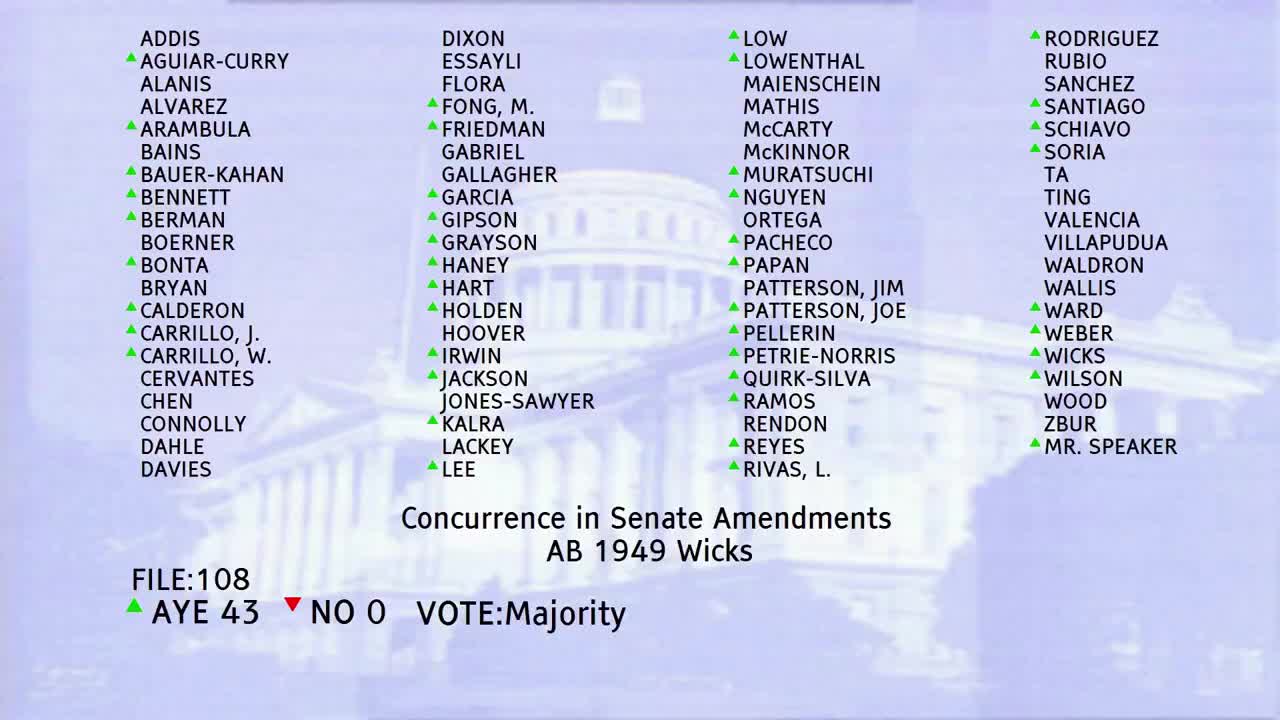
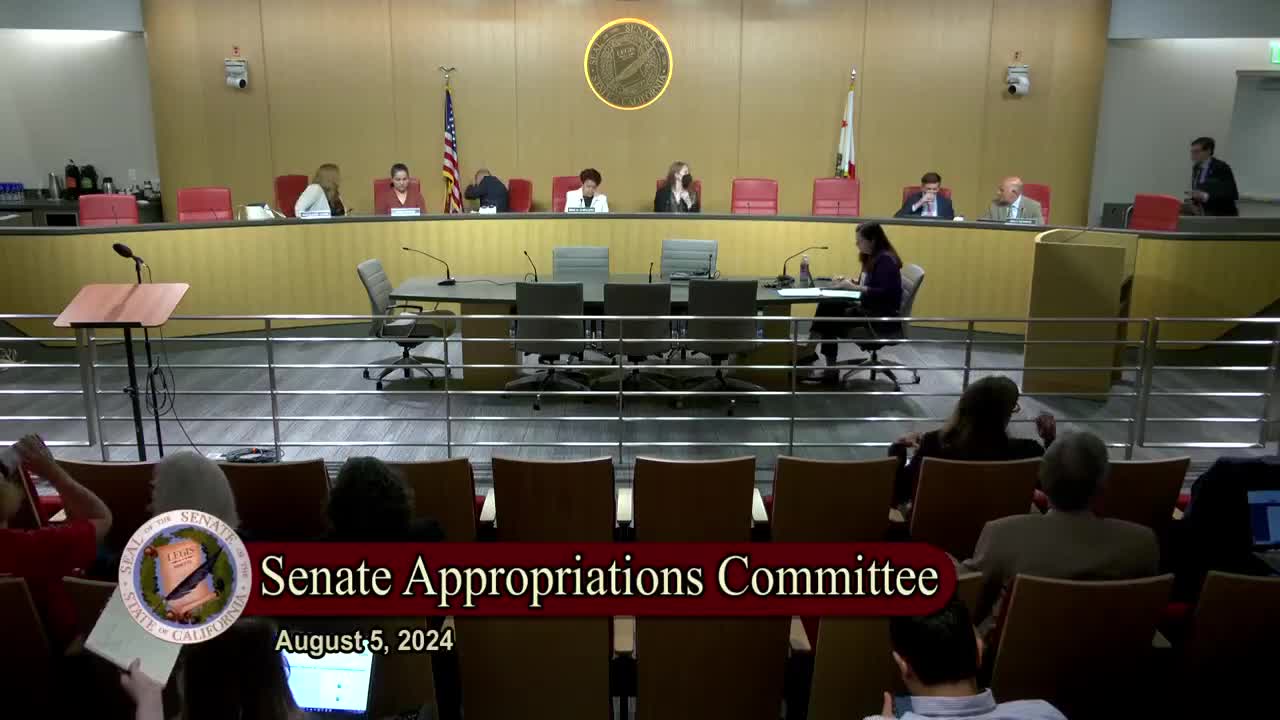


Bill Author

Bill Co-Author(s):