AB 2022: Mobilehome parks: emergency preparedness.
- Session Year: 2023-2024
- House: Assembly
- Latest Version Date: 2024-09-03
Current Status:
Failed
(2024-09-22: Vetoed by Governor.)
Introduced
In Committee
First Chamber
In Committee
Second Chamber
Enacted
What does this bill do?
The bill requires mobilehome park owners and managers to adopt updated emergency preparedness plans and makes compliance a condition for obtaining or renewing a park's operating permit. Plans must include a compliance statement, a map of accessible entrances and exits, a designated on‑site person to keep entries unlocked and assist evacuations, private fire‑hydrant certification, and a gas‑system inspection; parks must post the plan and provide annual notice and how to request it online. Enforcement agencies will check plans when reviewing permits and may refuse or withhold permits or impose penalties for uncorrected violations.
The summary is provided by generative AI which can make mistakes. For original language, please view the details in the table below.
(1)Existing law, the Mobilehome Parks Act, generally regulates various classifications of mobilehome and related vehicle parks, and imposes enforcement duties on the Department of Housing and Community Development (department) and local enforcement agencies. Existing law requires every park with 50 or more units to have a person who is responsible for, and will respond in a timely manner to, emergencies concerning the operation and maintenance of the park that resides in the park and has knowledge of emergency procedures relative to utility systems and common facilities under the ownership and control of the owner of the park, and familiarity with the emergency preparedness plans for the park.
This bill would, starting January 1, 2027, require that person who is responsible for emergencies concerning the operation and maintenance of the park to have knowledge of emergency procedures relative to access to park entrances and exits.
(2)Existing law requires an owner or operator of an existing mobilehome park to adopt an emergency preparedness plan on or before September 1, 2010. For parks constructed after September 1, 2010, existing law requires an owner or operator of a park to adopt that plan before the issuance of the permit to operate. Existing law requires an owner or operator to post notice of the plan and provide information to residents relating to accessing the plan and individual emergency preparedness information, as specified. Existing law requires an enforcement agency to determine park compliance with these provisions if certain conditions have been met. Existing law deems a violation of these provisions to constitute an unreasonable risk to life, health, or safety and requires correction by park management within 60 days of notice of the violation. Under existing law, a willful violation of the act is a misdemeanor, as specified.
This bill would, instead, require, beginning January 1, 2027, an owner or operator of a mobilehome park to adopt an emergency preparedness plan, which includes prescribed elements, before renewal of a permit to operate for an existing park, and before the issuance and renewal of a permit to operate for a park constructed after January 1, 2027. The bill would require the emergency plan to include, among other things, a written statement by a park owner or manager of compliance with the emergency preparedness plan requirements. The bill would additionally require an owner or operator of a park to include in the above-described annual notice information on how to request a written copy of the plan via the internet. The bill would require an enforcement agency to ascertain compliance with those provisions through specified methods, and to refuse to issue or renew a permit to operate if a violation is not corrected within 60 days of notice of the violation and would authorize the enforcement agency to impose formal penalties. The bill would require park management to make a subsequent written statement under penalty of perjury before the issuance and renewal of the parks permit to operate, if management does not correct the violation within 60 days of notice and formal penalties are issued by the enforcement agency.
The bill would also require the department to publicly post the above-described provisions on its internet website on or before June 30, 2026.
Because this bill would expand the crime of perjury and the scope of existing crimes under the Mobilehome Parks Act, the bill would impose a state-mandated local program.
(3)The California Constitution requires the state to reimburse local agencies and school districts for certain costs mandated by the state. Statutory provisions establish procedures for making that reimbursement.
This bill would provide that no reimbursement is required by this act for a specified reason.
(1)Existing law, the Mobilehome Parks Act, generally regulates various classifications of mobilehome and related vehicle parks, and imposes enforcement duties on the Department of Housing and Community Development (department) and local enforcement agencies. Existing law requires every park with 50 or more units to have a person who is responsible for, and will respond in a timely manner to, emergencies concerning the operation and maintenance of the park that resides in the park and has knowledge of emergency procedures relative to utility systems and common facilities under the ownership and control of the owner of the park, and familiarity with the emergency preparedness plans for the park.
This bill would, starting June 1, 2025, January 1, 2027, require that person who is responsible for emergencies concerning the operation and maintenance of the park to have knowledge of emergency procedures relative to access to park entrances and exits.
(2)Existing law requires an owner or operator of an existing mobilehome park to adopt an emergency preparedness plan on or before September 1, 2010. For parks constructed after September 1, 2010, existing law requires an owner or operator of a park to adopt that plan before the issuance of the permit to operate. Existing law requires an owner or operator to post notice of the plan and provide information to residents relating to accessing the plan and individual emergency preparedness information, as specified. Existing law requires an enforcement agency to determine park compliance with these provisions if certain conditions have been met. Existing law deems a violation of these provisions to constitute an unreasonable risk to life, health, or safety and requires correction by park management within 60 days of notice of the violation. Under existing law, a willful violation of the act is a misdemeanor, as specified.
This bill would, instead, require, beginning June 1, 2025, January 1, 2027, an owner or operator of a mobilehome park to adopt an emergency preparedness plan, which includes prescribed elements, before renewal of a permit to operate for an existing park, and before the issuance and renewal of a permit to operate for a park constructed after June 1, 2025. January 1, 2027. The bill would require the emergency plan to include, among other things, a written statement by a park owner or manager of compliance with the emergency preparedness plan requirements. The bill would additionally require an owner or operator of a park to include in the above-described annual notice information on how to request a written copy of the plan via the internet. The bill would require an enforcement agency to ascertain compliance with those provisions through specified methods, and to refuse to issue or renew a permit to operate if a violation is not corrected within 60 days of notice of the violation and would authorize the enforcement agency to impose formal penalties. The bill would require park management to make a subsequent written statement under penalty of perjury before the issuance and renewal of the parks permit to operate, if management does not correct the violation within 60 days of notice and formal penalties are issued by the enforcement agency.
The bill would also require the department to publicly post the above-described provisions on its internet website on or before January 31, 2025. June 30, 2026.
Because this bill would expand the crime of perjury and the scope of existing crimes under the Mobilehome Parks Act, the bill would impose a state-mandated local program.
(3)The California Constitution requires the state to reimburse local agencies and school districts for certain costs mandated by the state. Statutory provisions establish procedures for making that reimbursement.
This bill would provide that no reimbursement is required by this act for a specified reason.
(1)Existing law, the Mobilehome Parks Act, generally regulates various classifications of mobilehome and related vehicle parks, and imposes enforcement duties on the Department of Housing and Community Development (department) and local enforcement agencies. Existing law requires every park with 50 or more units to have a person who is responsible for, and will respond in a timely manner to, emergencies concerning the operation and maintenance of the park that resides in the park and has knowledge of emergency procedures relative to utility systems and common facilities under the ownership and control of the owner of the park, and familiarity with the emergency preparedness plans for the park.
This bill would, starting June 1, 2025, require that person who is responsible for emergencies concerning the operation and maintenance of the park to have knowledge of emergency procedures relative to access to park entrances and exits.
(2)Existing law requires an owner or operator of an existing mobilehome park to adopt an emergency preparedness plan on or before September 1, 2010. For parks constructed after September 1, 2010, existing law requires an owner or operator of a mobilehome park to adopt that plan before the issuance of the permit to operate. Existing law requires an owner or operator, for an existing park, and for parks constructed after September 1, 2010, operator to post notice of the plan in the park clubhouse and another conspicuous area, as specified, to annually plan and provide information to residents relating to accessing the plan and individual emergency preparedness information. information, as specified. Existing law requires an enforcement agency to determine park compliance with these provisions if certain conditions have been met. Existing law deems a violation of these provisions to constitute an unreasonable risk to life, health, or safety and requires correction by park management within 60 days of notice of the violation. Under existing law, a willful violation of the act is a misdemeanor, as specified.
This bill would, instead, require, beginning June 1, 2025, an owner or operator of a mobilehome park to adopt an emergency preparedness plan, which includes prescribed elements, before renewal of a permit to operate for an existing park, and before the issuance and renewal of a permit to operate for a park constructed after June 1, 2025. The bill would require the emergency plan to include, among other things, a written statement by a park owner or manager of compliance with the emergency preparedness plan requirements. The bill would additionally require an owner or operator of a mobilehome park to include in the above-described annual notice information on how to request a written copy of the plan via the internet. The bill would require an enforcement agency to ascertain compliance with those provisions through specified methods, and to refuse to issue or renew a permit to operate if a violation is not corrected within 60 days of notice of the violation and would authorize the enforcement agency to impose formal penalties. The bill would require park management to make a subsequent written statement under penalty of perjury before the issuance and renewal of the parks permit to operate, if management does not correct the violation within 60 days of notice and formal penalties are issued by the enforcement agency.
The bill would also require the department to publicly post the above-described provisions on its internet website on or before January 31, 2025.
Because this bill would expand the crime of perjury and the scope of existing crimes under the Mobilehome Parks Act, the bill would impose a state-mandated local program.
(3)The California Constitution requires the state to reimburse local agencies and school districts for certain costs mandated by the state. Statutory provisions establish procedures for making that reimbursement.
This bill would provide that no reimbursement is required by this act for a specified reason.
(1)Existing law, the Mobilehome Parks Act, generally regulates various classifications of mobilehome and related vehicle parks, and imposes enforcement duties on the Department of Housing and Community Development (department) and local enforcement agencies. Existing law requires every park with 50 or more units to have a person who is responsible for, and will respond in a timely manner to, emergencies concerning the operation and maintenance of the park that resides in the park and has knowledge of emergency procedures relative to utility systems and common facilities under the ownership and control of the owner of the park, and familiarity with the emergency preparedness plans for the park.
This bill would, starting June 1, 2025, require that person who is responsible for emergencies concerning the operation and maintenance of the park to have knowledge of emergency procedures relative to access to park entrances and exits.
(2)Existing law requires an owner or operator of an existing mobilehome park to adopt an emergency preparedness plan on or before September 1, 2010. For parks constructed after September 1, 2010, existing law requires an owner or operator of a mobilehome park to adopt that plan before the issuance of the permit to operate. Existing law requires an owner or operator, for an existing park, and for parks constructed after September 1, 2010, to post notice of the plan in the park clubhouse and another conspicuous area, as specified, to annually provide information to residents relating to accessing the plan and individual emergency preparedness information. Existing law requires an enforcement agency to determine park compliance with these provisions if certain conditions have been met. Existing law deems a violation of these provisions to constitute an unreasonable risk to life, health, or safety and requires correction by park management within 60 days of notice of the violation. Under existing law, a willful violation of the act is a misdemeanor, as specified.
This bill would, instead, require, beginning June 1, 2025, an owner or operator of a mobilehome park to adopt an emergency preparedness plan, which includes prescribed elements, before renewal of a permit to operate for an existing park, and before the issuance and renewal of a permit to operate for a park constructed after June 1, 2025. The bill would require the emergency plan to include, among other things, a written statement by a park owner or manager of compliance with the emergency preparedness plan requirements. The bill would additionally require an owner or operator of a mobilehome park to include in the above-described annual notice information on how to request a written copy of the plan via the internet. The bill would require an enforcement agency to ascertain compliance with those provisions through specified methods, and to refuse to issue or renew a permit to operate if a violation is not corrected within 60 days of notice of the violation and would authorize the enforcement agency to impose formal penalties. The bill would require park management to make a subsequent written statement under penalty of perjury before the issuance and renewal of the parks permit to operate, if management does not correct the violation within 60 days of notice and formal penalties are issued by the enforcement agency.
The bill would also require the department to publicly post the above-described provisions on its internet website on or before January 31, 2025.
Because this bill would expand the crime of perjury and the scope of existing crimes under the Mobilehome Parks Act, the bill would impose a state-mandated local program.
(3)The California Constitution requires the state to reimburse local agencies and school districts for certain costs mandated by the state. Statutory provisions establish procedures for making that reimbursement.
This bill would provide that no reimbursement is required by this act for a specified reason.
(1)Existing law, the Mobilehome Parks Act, generally regulates various classifications of mobilehome and related vehicle parks, and imposes enforcement duties on the Department of Housing and Community Development and local enforcement agencies. Existing law requires every park with 50 or more units to have a person who is responsible for, and will respond in a timely manner to, emergencies concerning the operation and maintenance of the park that resides in the park and has knowledge of emergency procedures relative to utility systems and common facilities under the ownership and control of the owner of the park, and familiarity with the emergency preparedness plans for the park.
This bill would would, starting June 1, 2025, require that person who is responsible for emergencies concerning the operation and maintenance of the park to have knowledge of emergency procedures relative to access to park entrances and exits.
(2)Existing law requires an owner or operator of an existing mobilehome park to adopt an emergency preparedness plan on or before September 1, 2010. For parks constructed after September 1, 2010, existing law requires an owner or operator of a mobilehome park to adopt that plan before the issuance of the permit to operate. Existing law requires an owner or operator, for an existing park, and for parks constructed after September 1, 2010, to post notice of the plan in the park clubhouse and another conspicuous area, as specified, to annually provide information to residents relating to accessing the plan and individual emergency preparedness information. Existing law requires an enforcement agency to determine park compliance with these provisions if certain conditions have been met. Existing law deems a violation of these provisions to constitute an unreasonable risk to life, health, or safety and requires correction by park management within 60 days of notice of the violation. Under existing law, a willful violation of the act is a misdemeanor, as specified.
This bill would, instead, require, on or before July beginning June 1, 2025, an owner or operator of a mobilehome park to adopt an emergency preparedness plan, which includes prescribed elements, before renewal of a permit to operate for an existing park, and before the issuance and renewal of a permit to operate for a park constructed after July June 1, 2025. The bill would require the emergency plan to include, among other things, an attestation a written statement by a park owner or manager, under penalty of perjury, manager of compliance with the emergency preparedness plan requirements. The bill would additionally require an owner or operator of a mobilehome park to include in the above-described annual notice information on how to request a written copy of the plan via the internet. The bill would require an enforcement agency to ascertain compliance with those provisions through specified methods, and to refuse to issue or renew a permit to operate if a violation is not corrected within 60 days of notice of the violation and would authorize the enforcement agency to impose formal penalties. The bill would require park management to make a subsequent written statement under penalty of perjury before the issuance and renewal of the parks permit to operate, if management does not correct the violation within 60 days of notice and formal penalties are issued by the enforcement agency.
Because this bill would expand the crime of perjury and the scope of existing crimes under the Mobilehome Parks Act, the bill would impose a state-mandated local program.
(3)The California Constitution requires the state to reimburse local agencies and school districts for certain costs mandated by the state. Statutory provisions establish procedures for making that reimbursement.
This bill would provide that no reimbursement is required by this act for a specified reason.
(1)Existing law, the Mobilehome Parks Act, generally regulates various classifications of mobilehome and related vehicle parks, and imposes enforcement duties on the Department of Housing and Community Development and local enforcement agencies. Existing law requires every park with 50 or more units to have a person who is responsible for, and will respond in a timely manner to, emergencies concerning the operation and maintenance of the park that resides in the park and has knowledge of emergency procedures relative to utility systems and common facilities under the ownership and control of the owner of the park, and familiarity with the emergency preparedness plans for the park.
This bill would require that person who is responsible for emergencies concerning the operation and maintenance of the park to have knowledge of emergency procedures relative to access to park entrances and exits.
(2)Existing law requires an owner or operator of an existing mobilehome park to adopt an emergency preparedness plan on or before September 1, 2010. For parks constructed after September 1, 2010, existing law requires an owner or operator of a mobilehome park to adopt that plan before the issuance of the permit to operate. Existing law requires an owner or operator, for an existing park, and for parks constructed after September 1, 2010, to post notice of the plan in the park clubhouse and another conspicuous area, as specified, to annually provide information to residents relating to accessing the plan and individual emergency preparedness information. Existing law requires an enforcement agency to determine park compliance with these provisions if certain conditions have been met. Existing law deems a violation of these provisions to constitute an unreasonable risk to life, health, or safety and requires correction by park management within 60 days of notice of the violation. Under existing law, a willful violation of the act is a misdemeanor, as specified.
This bill would, instead, require, on or before July 1, 2025, an owner or operator of a mobilehome park to adopt an emergency preparedness plan, which includes prescribed elements, before renewal of a permit to operate for an existing park, and before the issuance and renewal of a permit to operate for a park constructed after July 1, 2025. The bill would require the emergency plan to include, among other things, an attestation by a park owner or manager, under penalty of perjury, of compliance with the emergency preparedness plan requirements. The bill would additionally require an owner or operator of a mobilehome park to include in the above-described annual notice information on how to request a written copy of the plan via the internet. The bill would require an enforcement agency to ascertain compliance with those provisions through specified methods, and to refuse to issue or renew a permit to operate if a violation is not corrected within 60 days of notice of the violation and impose formal penalties.
Because this bill would expand the crime of perjury and the scope of existing crimes under the Mobilehome Parks Act, the bill would impose a state-mandated local program.
(3)The California Constitution requires the state to reimburse local agencies and school districts for certain costs mandated by the state. Statutory provisions establish procedures for making that reimbursement.
This bill would provide that no reimbursement is required by this act for a specified reason.
(a)In every park there shall be a person available by telephonic or like means, including telephones, cellular phones, telephone answering machines, answering services or pagers, or in person who shall be responsible for, and who shall reasonably respond in a timely manner to emergencies concerning, the operation and maintenance of the park. In every park with 50 or more units, that person or their designee shall reside in the park, have knowledge of emergency procedures relative to utility systems and common facilities under the ownership and control of the owner of the park, and shall be familiar with the emergency preparedness plans for the park.
(b)(1)On or before September 1, 2010, an owner or operator of an existing park shall adopt an emergency preparedness plan.
(2)For a park constructed after September 1, 2010, an owner or operator of a park shall adopt a plan in accordance with this section prior to the issuance of the permit to operate.
(3)An owner or operator may comply with paragraph (1) by either of the following methods:
(A)Adopting the emergency procedures and plans approved by the Standardized Emergency Management System Advisory Board on November 21, 1997, entitled Emergency Plans for Mobilehome Parks, and compiled by the Office of Emergency Services in compliance with the Governors Executive Order W-156-97, or any subsequent version.
(B)Adopting a plan that is developed by the park management and is comparable to the procedures and plans specified in subparagraph (A).
(c)In every park, an owner or operator of a park shall do both of the following:
(1)Post notice of the emergency preparedness plan in the park clubhouse or in another publicly accessible area within the mobilehome park.
(2)Provide notice annually to all existing residents of how to access the plan and information on individual emergency preparedness contained therein and how to obtain the plan in a language other than English. This notice shall also be provided, upon approval of tenancy, to all new residents. This may be accomplished in a manner that includes, but is not limited to, distribution of materials and posting notice of the plan or information on how to access the plan via the internet.
(d)On or before June 30, 2026, the department shall publicly post on its internet website the requirements of this section that are to become operative on January 1, 2027, pursuant to Assembly Bill 2022 of the 202324 Regular Session.
(e)An enforcement agency shall determine whether park management is in compliance with this section. The agency may ascertain compliance by receipt of a copy of the plan during site inspections conducted in response to complaints of alleged violations, or for any other reason.
(f)Notwithstanding any other provision of this part, a violation of this section shall constitute an unreasonable risk to life, health, or safety and shall be corrected by park management within 60 days of notice of the violation.
(g)This section shall remain in effect only until January 1, 2027, and as of that date is repealed.
SEC. 2.Section 18603 is added to the Health and Safety Code, to read:18603.(a)In every park there shall be a person available by telephonic or like means, including telephones, cellular phones, telephone answering machines, answering services or pagers, or in person who shall be responsible for, and who shall reasonably respond in a timely manner to emergencies concerning, the operation and maintenance of the park. In every park with 50 or more units, that person or their designee shall reside in the park, have knowledge of emergency procedures relative to accessibility for utility systems, including, but not limited to, gas lines, hydrants, water systems, and electrical components, common facilities under the ownership and control of the owner of the park, and access to park entrances and exits, and shall be familiar with the emergency preparedness plans for the park.
(b)(1)Beginning January 1, 2027, an owner or operator of an existing park shall adopt an emergency preparedness plan in accordance with the requirements of this section prior to or at the time of submission of the renewal of its permit to operate.
(2)For a park constructed after January 1, 2027, an owner or operator of a park shall adopt a plan in accordance with this section prior to the issuance and renewal of its permit to operate.
(3)An owner or operator shall comply with paragraph (1) or (2), as applicable, by adopting both of the following:
(A)The emergency procedures and plans approved by the Standardized Emergency Management System Advisory Board on November 21, 1997, entitled Emergency Plans for Mobilehome Parks, and compiled by the Office of Emergency Services in compliance with the Governors Executive Order W-156-97, or any subsequent version.
(B)An emergency preparedness plan that includes all of the following:
(i)A written statement by a park owner or manager of compliance with this section, a copy of which shall be attached to its request to obtain or renew a permit to operate.
(ii)Identification of all accessible points of park entry or exit.
(iii)Identification of an agent of park management, a park manager, or volunteer designee resident who will be available to residents by the means described in subdivision (a) and who shall reasonably respond in a timely manner to ensure points of entry and exit are not locked or otherwise obstructed in the event of an emergency.
(iv)A copy of the Private Fire Hydrant Test and Certification Report and a written statement that all hydrants are operable and accessible to emergency personnel in the event of an emergency.
(v)A written statement that a person with professional knowledge or expertise has inspected the gas system within the park and that such system is in working order and accessible to emergency personnel and park management or a volunteer designee resident at all times in the event gas shut off is necessary.
(vi)Identification of an agent of park management, a park manager, or volunteer designee resident who will be available by the means described in subdivision (a) and who shall reasonably respond in a timely manner to assist in an evacuation ordered by emergency personnel according to the standards set forth within the park emergency plan. The agent, manager, or volunteer shall not be responsible for physically evacuating residents from their homes during an emergency.
(c)In every park, an owner or operator of a park shall do both of the following:
(1)Post notice of the emergency preparedness plan in the park clubhouse or in another publicly accessible area within the mobilehome park.
(2)Provide notice annually to all existing residents of how to access the plan and information on individual emergency preparedness contained therein and how to obtain the plan in a language other than English. This notice shall also be provided, upon approval of tenancy, to all new residents. This shall be accomplished in a manner that includes, but is not limited to, distribution of materials to each household on an annual basis, posting notice of the plan in the most accessible common area in the park that is open and available to all residents, and providing information on how to access the plan and request a written copy via the internet.
(d)The department shall publicly post on its internet website the requirements of this section that become operative on January 1, 2027.
(e)An enforcement agency shall determine whether park management is in compliance with this section. The agency shall ascertain compliance by receipt of a copy of the plan during its review of the application for or renewal of a parks permit to operate, site inspections conducted in response to complaints of alleged violations, or other reasons deemed appropriate by the agency to implement this section of law.
(f)Notwithstanding any other provision of this part, a violation of this section shall constitute an unreasonable risk to life, health, or safety and shall be corrected by park management within 60 days of notice of the violation. If the violation is not corrected within 60 days of notice of the violation, the enforcement agency shall refuse to issue or renew a permit to operate and may impose formal penalties.
(g)If park management does not correct a violation pursuant to subdivision (f) within 60 days of notice of the violation and formal penalties are issued by the enforcement agency, a subsequent written statement, as described in clause (i) of subparagraph (B) of paragraph (3) of subdivision (b), shall be made under penalty of perjury before the issuance and renewal of the parks permit to operate.
(h)This section shall become operative on January 1, 2027.
SEC. 3.No reimbursement is required by this act pursuant to Section 6 of Article XIIIB of the California Constitution because the only costs that may be incurred by a local agency or school district will be incurred because this act creates a new crime or infraction, eliminates a crime or infraction, or changes the penalty for a crime or infraction, within the meaning of Section 17556 of the Government Code, or changes the definition of a crime within the meaning of Section 6 of Article XIIIB of the California Constitution.
(a)In every park there shall be a person available by telephonic or like means, including telephones, cellular phones, telephone answering machines, answering services or pagers, or in person who shall be responsible for, and who shall reasonably respond in a timely manner to emergencies concerning, the operation and maintenance of the park. In every park with 50 or more units, that person or their designee shall reside in the park, have knowledge of emergency procedures relative to utility systems and common facilities under the ownership and control of the owner of the park, and shall be familiar with the emergency preparedness plans for the park.
(b)(1)On or before September 1, 2010, an owner or operator of an existing park shall adopt an emergency preparedness plan.
(2)For a park constructed after September 1, 2010, an owner or operator of a park shall adopt a plan in accordance with this section prior to the issuance of the permit to operate.
(3)An owner or operator may comply with paragraph (1) by either of the following methods:
(A)Adopting the emergency procedures and plans approved by the Standardized Emergency Management System Advisory Board on November 21, 1997, entitled Emergency Plans for Mobilehome Parks, and compiled by the Office of Emergency Services in compliance with the Governors Executive Order W-156-97, or any subsequent version.
(B)Adopting a plan that is developed by the park management and is comparable to the procedures and plans specified in subparagraph (A).
(c)In every park, an owner or operator of a park shall do both of the following:
(1)Post notice of the emergency preparedness plan in the park clubhouse or in another publicly accessible area within the mobilehome park.
(2)Provide notice annually to all existing residents of how to access the plan and information on individual emergency preparedness contained therein and how to obtain the plan in a language other than English. This notice shall also be provided, upon approval of tenancy, to all new residents. This may be accomplished in a manner that includes, but is not limited to, distribution of materials and posting notice of the plan or information on how to access the plan via the internet.
(d)On or before January 31, 2025, June 30, 2026, the department shall publicly post on its internet website the requirements of this section that are to become operative on June 1, 2025, January 1, 2027, pursuant to Assembly Bill 2022 of the 202324 Regular Session.
(e)An enforcement agency shall determine whether park management is in compliance with this section. The agency may ascertain compliance by receipt of a copy of the plan during site inspections conducted in response to complaints of alleged violations, or for any other reason.
(f)Notwithstanding any other provision of this part, a violation of this section shall constitute an unreasonable risk to life, health, or safety and shall be corrected by park management within 60 days of notice of the violation.
(g)This section shall remain in effect only until June 1, 2025, January 1, 2027, and as of that date is repealed.
SEC. 2.Section 18603 is added to the Health and Safety Code, to read:18603.(a)In every park there shall be a person available by telephonic or like means, including telephones, cellular phones, telephone answering machines, answering services or pagers, or in person who shall be responsible for, and who shall reasonably respond in a timely manner to emergencies concerning, the operation and maintenance of the park. In every park with 50 or more units, that person or their designee shall reside in the park, have knowledge of emergency procedures relative to accessibility for utility systems, including, but not limited to, gas lines, hydrants, water systems, and electrical components, common facilities under the ownership and control of the owner of the park, and access to park entrances and exits, and shall be familiar with the emergency preparedness plans for the park.
(b)(1)Beginning June 1, 2025, January 1, 2027, an owner or operator of an existing park shall adopt an emergency preparedness plan in accordance with the requirements of this section prior to or at the time of submission of the renewal of its permit to operate.
(2)For a park constructed after June 1, 2025, January 1, 2027, an owner or operator of a park shall adopt a plan in accordance with this section prior to the issuance and renewal of its permit to operate.
(3)An owner or operator shall comply with paragraph (1) or (2), as applicable, by adopting both of the following:
(A)The emergency procedures and plans approved by the Standardized Emergency Management System Advisory Board on November 21, 1997, entitled Emergency Plans for Mobilehome Parks, and compiled by the Office of Emergency Services in compliance with the Governors Executive Order W-156-97, or any subsequent version.
(B)An emergency preparedness plan that includes all of the following:
(i)A written statement by a park owner or manager of compliance with this section, a copy of which shall be attached to its request to obtain or renew a permit to operate.
(ii)Identification of all accessible points of park entry or exit.
(iii)Identification of an agent of park management, a park manager, or volunteer designee resident who will be available to residents by the means described in subdivision (a) and who shall reasonably respond in a timely manner to ensure points of entry and exit are not locked or otherwise obstructed in the event of an emergency.
(iv)A copy of the Private Fire Hydrant Test and Certification Report and a written statement that all hydrants are operable and accessible to emergency personnel in the event of an emergency.
(v)A written statement that a person with professional knowledge or expertise has inspected the gas system within the park and that such system is in working order and accessible to emergency personnel and park management or a volunteer designee resident at all times in the event gas shut off is necessary.
(vi)Identification of an agent of park management, a park manager, or volunteer designee resident who will be available by the means described in subdivision (a) and who shall reasonably respond in a timely manner to assist in an evacuation ordered by emergency personnel according to the standards set forth within the park emergency plan. The agent, manager, or volunteer shall not be responsible for physically evacuating residents from their homes during an emergency.
(c)In every park, an owner or operator of a park shall do both of the following:
(1)Post notice of the emergency preparedness plan in the park clubhouse or in another publicly accessible area within the mobilehome park.
(2)Provide notice annually to all existing residents of how to access the plan and information on individual emergency preparedness contained therein and how to obtain the plan in a language other than English. This notice shall also be provided, upon approval of tenancy, to all new residents. This shall be accomplished in a manner that includes, but is not limited to, distribution of materials to each household on an annual basis, posting notice of the plan in the most accessible common area in the park that is open and available to all residents, and providing information on how to access the plan and request a written copy via the internet.
(d)The department shall publicly post on its internet website the requirements of this section that become operative on June 1, 2025. January 1, 2027.
(e)An enforcement agency shall determine whether park management is in compliance with this section. The agency shall ascertain compliance by receipt of a copy of the plan during its review of the application for or renewal of a parks permit to operate, site inspections conducted in response to complaints of alleged violations, or other reasons deemed appropriate by the agency to implement this section of law.
(f)Notwithstanding any other provision of this part, a violation of this section shall constitute an unreasonable risk to life, health, or safety and shall be corrected by park management within 60 days of notice of the violation. If the violation is not corrected within 60 days of notice of the violation, the enforcement agency shall refuse to issue or renew a permit to operate and may impose formal penalties.
(g)If park management does not correct a violation pursuant to subdivision (f) within 60 days of notice of the violation and formal penalties are issued by the enforcement agency, a subsequent written statement, as described in clause (i) of subparagraph (B) of paragraph (3) of subdivision (b), shall be made under penalty of perjury before the issuance and renewal of the parks permit to operate.
(h)This section shall become operative on June 1, 2025. January 1, 2027.
SEC. 3.No reimbursement is required by this act pursuant to Section 6 of Article XIIIB of the California Constitution because the only costs that may be incurred by a local agency or school district will be incurred because this act creates a new crime or infraction, eliminates a crime or infraction, or changes the penalty for a crime or infraction, within the meaning of Section 17556 of the Government Code, or changes the definition of a crime within the meaning of Section 6 of Article XIIIB of the California Constitution.
(a)In every park there shall be a person available by telephonic or like means, including telephones, cellular phones, telephone answering machines, answering services or pagers, or in person who shall be responsible for, and who shall reasonably respond in a timely manner to emergencies concerning, the operation and maintenance of the park. In every park with 50 or more units, that person or their designee shall reside in the park, have knowledge of emergency procedures relative to utility systems and common facilities under the ownership and control of the owner of the park, and shall be familiar with the emergency preparedness plans for the park.
(b)(1)On or before September 1, 2010, an owner or operator of an existing park shall adopt an emergency preparedness plan.
(2)For a park constructed after September 1, 2010, an owner or operator of a park shall adopt a plan in accordance with this section prior to the issuance of the permit to operate.
(3)An owner or operator may comply with paragraph (1) by either of the following methods:
(A)Adopting the emergency procedures and plans approved by the Standardized Emergency Management System Advisory Board on November 21, 1997, entitled Emergency Plans for Mobilehome Parks, and compiled by the Office of Emergency Services in compliance with the Governors Executive Order W-156-97, or any subsequent version.
(B)Adopting a plan that is developed by the park management and is comparable to the procedures and plans specified in subparagraph (A).
(c)In every park, an owner or operator of a park shall do both of the following:
(1)Post notice of the emergency preparedness plan in the park clubhouse or in another publicly accessible area within the mobilehome park.
(2)Provide notice annually to all existing residents of how to access the plan and information on individual emergency preparedness contained therein and how to obtain the plan in a language other than English. This notice shall also be provided, upon approval of tenancy, to all new residents. This may be accomplished in a manner that includes, but is not limited to, distribution of materials and posting notice of the plan or information on how to access the plan via the internet.
(d)On or before January 31, 2025, the department shall publicly post on its internet website the requirements of this section that are to become operative on June 1, 2025, pursuant to Assembly Bill 2022 of the 202324 Regular Session.
(e)An enforcement agency shall determine whether park management is in compliance with this section. The agency may ascertain compliance by receipt of a copy of the plan during site inspections conducted in response to complaints of alleged violations, or for any other reason.
(f)Notwithstanding any other provision of this part, a violation of this section shall constitute an unreasonable risk to life, health, or safety and shall be corrected by park management within 60 days of notice of the violation.
(g)This section shall remain in effect only until June 1, 2025, and as of that date is repealed.
SEC. 2.Section 18603 is added to the Health and Safety Code, to read:18603.(a)In every park there shall be a person available by telephonic or like means, including telephones, cellular phones, telephone answering machines, answering services or pagers, or in person who shall be responsible for, and who shall reasonably respond in a timely manner to emergencies concerning, the operation and maintenance of the park. In every park with 50 or more units, that person or their designee shall reside in the park, have knowledge of emergency procedures relative to accessibility for utility systems, including, but not limited to, gas lines, hydrant accessibility, hydrants, water systems, and electrical components, common facilities under the ownership and control of the owner of the park, and access to park entrances and exits, and shall be familiar with the emergency preparedness plans for the park.
(b)(1)Beginning June 1, 2025, an owner or operator of an existing park shall adopt an emergency preparedness plan in accordance with the requirements of this section prior to or at the time of submission of the renewal of its permit to operate.
(2)For a park constructed after June 1, 2025, an owner or operator of a park shall adopt a plan in accordance with this section prior to the issuance and renewal of its permit to operate.
(3)An owner or operator shall comply with paragraph (1) or (2), as applicable, by adopting both of the following:
(A)The emergency procedures and plans approved by the Standardized Emergency Management System Advisory Board on November 21, 1997, entitled Emergency Plans for Mobilehome Parks, and compiled by the Office of Emergency Services in compliance with the Governors Executive Order W-156-97, or any subsequent version.
(B)An emergency preparedness plan that includes all of the following:
(i)A written statement by a park owner or manager of compliance with this section, a copy of which shall be attached to its request to obtain or renew a permit to operate.
(ii)Identification of all accessible points of park entry or exit.
(iii)Identification of an agent of park management, a park manager, or volunteer designee resident who will be available to residents by the means described in subdivision (a) and who shall reasonably respond in a timely manner to ensure points of entry and exit are not locked or otherwise obstructed in the event of an emergency.
(iv)A copy of the Private Fire Hydrant Test and Certification Report and a written statement that all hydrants are operable and accessible to emergency personnel in the event of an emergency.
(v)A written statement that a person with professional knowledge or expertise has inspected the gas system within the park and that such system is in working order and accessible to emergency personnel and park management or a volunteer designee resident at all times in the event gas shut off is necessary.
(vi)Identification of an agent of park management, a park manager, or volunteer designee resident who will be available by the means described in subdivision (a) and who shall reasonably respond in a timely manner to assist in an evacuation ordered by emergency personnel according to the standards set forth within the park emergency plan. The agent, manager, or volunteer shall not be responsible for physically evacuating residents from their homes during an emergency.
(c)In every park, an owner or operator of a park shall do both of the following:
(1)Post notice of the emergency preparedness plan in the park clubhouse or in another publicly accessible area within the mobilehome park.
(2)Provide notice annually to all existing residents of how to access the plan and information on individual emergency preparedness contained therein and how to obtain the plan in a language other than English. This notice shall also be provided, upon approval of tenancy, to all new residents. This shall be accomplished in a manner that includes, but is not limited to, distribution of materials to each household on an annual basis, posting notice of the plan in the most accessible common area in the park that is open and available to all residents, and providing information on how to access the plan and request a written copy via the internet.
(d)The department shall publicly post on its internet website the requirements of this section that become operative on June 1, 2025.
(e)An enforcement agency shall determine whether park management is in compliance with this section. The agency shall ascertain compliance by receipt of a copy of the plan during its review of the application for or renewal of a parks permit to operate, site inspections conducted in response to complaints of alleged violations, or for any other reason. other reasons deemed appropriate by the agency to implement this section of law.
(f)Notwithstanding any other provision of this part, a violation of this section shall constitute an unreasonable risk to life, health, or safety and shall be corrected by park management within 60 days of notice of the violation. If the violation is not corrected within 60 days of notice of the violation, the enforcement agency shall refuse to issue or renew a permit to operate and may impose formal penalties.
(g)If park management does not correct a violation pursuant to subdivision (f) within 60 days of notice of the violation and formal penalties are issued by the enforcement agency, a subsequent written statement, as described in clause (i) of subparagraph (B) of paragraph (3) of subdivision (b), shall be made under penalty of perjury before the issuance and renewal of the parks permit to operate.
(h)This section shall become operative on June 1, 2025.
SEC. 3.No reimbursement is required by this act pursuant to Section 6 of Article XIIIB of the California Constitution because the only costs that may be incurred by a local agency or school district will be incurred because this act creates a new crime or infraction, eliminates a crime or infraction, or changes the penalty for a crime or infraction, within the meaning of Section 17556 of the Government Code, or changes the definition of a crime within the meaning of Section 6 of Article XIIIB of the California Constitution.
(a)In every park there shall be a person available by telephonic or like means, including telephones, cellular phones, telephone answering machines, answering services or pagers, or in person who shall be responsible for, and who shall reasonably respond in a timely manner to emergencies concerning, the operation and maintenance of the park. In every park with 50 or more units, that person or their designee shall reside in the park, have knowledge of emergency procedures relative to utility systems and common facilities under the ownership and control of the owner of the park, and shall be familiar with the emergency preparedness plans for the park.
(b)(1)On or before September 1, 2010, an owner or operator of an existing park shall adopt an emergency preparedness plan.
(2)For a park constructed after September 1, 2010, an owner or operator of a park shall adopt a plan in accordance with this section prior to the issuance of the permit to operate.
(3)An owner or operator may comply with paragraph (1) by either of the following methods:
(A)Adopting the emergency procedures and plans approved by the Standardized Emergency Management System Advisory Board on November 21, 1997, entitled Emergency Plans for Mobilehome Parks, and compiled by the Office of Emergency Services in compliance with the Governors Executive Order W-156-97, or any subsequent version.
(B)Adopting a plan that is developed by the park management and is comparable to the procedures and plans specified in subparagraph (A).
(c)In every park, an owner or operator of a park shall do both of the following:
(1)Post notice of the emergency preparedness plan in the park clubhouse or in another publicly accessible area within the mobilehome park.
(2)Provide notice annually to all existing residents of how to access the plan and information on individual emergency preparedness contained therein and how to obtain the plan in a language other than English. This notice shall also be provided, upon approval of tenancy, to all new residents. This may be accomplished in a manner that includes, but is not limited to, distribution of materials and posting notice of the plan or information on how to access the plan via the internet.
(d)On or before January 31, 2025, the department shall publicly post on its internet website the requirements of this section that are to become operative on June 1, 2025, pursuant to Assembly Bill 2022 of the 202324 Regular Session.
(d)(e)An enforcement agency shall determine whether park management is in compliance with this section. The agency may ascertain compliance by receipt of a copy of the plan during site inspections conducted in response to complaints of alleged violations, or for any other reason.
(e)(f)Notwithstanding any other provision of this part, a violation of this section shall constitute an unreasonable risk to life, health, or safety and shall be corrected by park management within 60 days of notice of the violation.
(f)(g)This section shall remain in effect only until June 1, 2025, and as of that date is repealed.
SEC. 2.Section 18603 is added to the Health and Safety Code, to read:18603.(a)In every park there shall be a person available by telephonic or like means, including telephones, cellular phones, telephone answering machines, answering services or pagers, or in person who shall be responsible for, and who shall reasonably respond in a timely manner to emergencies concerning, the operation and maintenance of the park. In every park with 50 or more units, that person or their designee shall reside in the park, have knowledge of emergency procedures relative to utility systems, including, but not limited to, gas lines, hydrant accessibility, water systems, and electrical components, common facilities under the ownership and control of the owner of the park, and access to park entrances and exits, and shall be familiar with the emergency preparedness plans for the park.
(b)(1)Beginning June 1, 2025, an owner or operator of an existing park shall adopt an emergency preparedness plan in accordance with the requirements of this section prior to or at the time of submission of the renewal of its permit to operate.
(2)For a park constructed after June 1, 2025, an owner or operator of a park shall adopt a plan in accordance with this section prior to the issuance and renewal of its permit to operate.
(3)An owner or operator shall comply with paragraph (1) or (2), as applicable, by adopting both of the following:
(A)The emergency procedures and plans approved by the Standardized Emergency Management System Advisory Board on November 21, 1997, entitled Emergency Plans for Mobilehome Parks, and compiled by the Office of Emergency Services in compliance with the Governors Executive Order W-156-97, or any subsequent version.
(B)An emergency preparedness plan that includes all of the following:
(i)A written statement by a park owner or manager of compliance with this section, a copy of which shall be attached to its request to obtain or renew a permit to operate.
(ii)Identification of all accessible points of park entry or exit.
(iii)Identification of an agent of park management, a park manager, or volunteer designee resident who will be available to residents by the means described in subdivision (a) and who shall reasonably respond in a timely manner to ensure points of entry and exit are not locked or otherwise obstructed in the event of an emergency.
(iv)A copy of the Private Fire Hydrant Test and Certification Report and a written statement that all hydrants are operable and accessible to emergency personnel in the event of an emergency.
(v)A written statement that a person with professional knowledge or expertise has inspected the gas system within the park and that such system is in working order and accessible to emergency personnel and park management or a volunteer designee resident at all times in the event gas shut off is necessary.
(vi)Identification of an agent of park management, a park manager, or volunteer designee resident who will be available by the means described in subdivision (a) and who shall reasonably respond in a timely manner to assist in an evacuation ordered by emergency personnel according to the standards set forth within the park emergency plan. The agent, manager, or volunteer shall not be responsible for physically evacuating residents from their homes during an emergency.
(c)In every park, an owner or operator of a park shall do both of the following:
(1)Post notice of the emergency preparedness plan in the park clubhouse or in another publicly accessible area within the mobilehome park.
(2)Provide notice annually to all existing residents of how to access the plan and information on individual emergency preparedness contained therein and how to obtain the plan in a language other than English. This notice shall also be provided, upon approval of tenancy, to all new residents. This shall be accomplished in a manner that includes, but is not limited to, distribution of materials to each household on an annual basis, posting notice of the plan in the most accessible common area in the park that is open and available to all residents, and providing information on how to access the plan and request a written copy via the internet.
(d)The department shall publicly post on its internet website the requirements of this section that become operative on June 1, 2025.
(d)(e)An enforcement agency shall determine whether park management is in compliance with this section. The agency shall ascertain compliance by receipt of a copy of the plan during its review of the application for or renewal of a parks permit to operate, site inspections conducted in response to complaints of alleged violations, or for any other reason.
(e)(f)Notwithstanding any other provision of this part, a violation of this section shall constitute an unreasonable risk to life, health, or safety and shall be corrected by park management within 60 days of notice of the violation. If the violation is not corrected within 60 days of notice of the violation, the enforcement agency shall refuse to issue or renew a permit to operate and may impose formal penalties.
(f)(g)If park management does not correct a violation pursuant to subdivision (e) (f) within 60 days of notice of the violation and formal penalties are issued by the enforcement agency, a subsequent written statement, as described in clause (i) of subparagraph (B) of paragraph (3) of subdivision (b), shall be made under penalty of perjury before the issuance and renewal of the parks permit to operate.
(g)(h)This section shall become operative on June 1, 2025.
SEC. 3.No reimbursement is required by this act pursuant to Section 6 of Article XIIIB of the California Constitution because the only costs that may be incurred by a local agency or school district will be incurred because this act creates a new crime or infraction, eliminates a crime or infraction, or changes the penalty for a crime or infraction, within the meaning of Section 17556 of the Government Code, or changes the definition of a crime within the meaning of Section 6 of Article XIIIB of the California Constitution.
(a)In every park there shall be a person available by telephonic or like means, including telephones, cellular phones, telephone answering machines, answering services or pagers, or in person who shall be responsible for, and who shall reasonably respond in a timely manner to emergencies concerning, the operation and maintenance of the park. In every park with 50 or more units, that person or their designee shall reside in the park, have knowledge of emergency procedures relative to utility systems and common facilities under the ownership and control of the owner of the park, and shall be familiar with the emergency preparedness plans for the park.
(b)(1)On or before September 1, 2010, an owner or operator of an existing park shall adopt an emergency preparedness plan.
(2)For a park constructed after September 1, 2010, an owner or operator of a park shall adopt a plan in accordance with this section prior to the issuance of the permit to operate.
(3)An owner or operator may comply with paragraph (1) by either of the following methods:
(A)Adopting the emergency procedures and plans approved by the Standardized Emergency Management System Advisory Board on November 21, 1997, entitled Emergency Plans for Mobilehome Parks, and compiled by the Office of Emergency Services in compliance with the Governors Executive Order W-156-97, or any subsequent version.
(B)Adopting a plan that is developed by the park management and is comparable to the procedures and plans specified in subparagraph (A).
(c)In every park, an owner or operator of a park shall do both of the following:
(1)Post notice of the emergency preparedness plan in the park clubhouse or in another publicly accessible area within the mobilehome park.
(2)Provide notice annually to all existing residents of how to access the plan and information on individual emergency preparedness contained therein and how to obtain the plan in a language other than English. This notice shall also be provided, upon approval of tenancy, to all new residents. This may be accomplished in a manner that includes, but is not limited to, distribution of materials and posting notice of the plan or information on how to access the plan via the internet.
(d)An enforcement agency shall determine whether park management is in compliance with this section. The agency may ascertain compliance by receipt of a copy of the plan during site inspections conducted in response to complaints of alleged violations, or for any other reason.
(e)Notwithstanding any other provision of this part, a violation of this section shall constitute an unreasonable risk to life, health, or safety and shall be corrected by park management within 60 days of notice of the violation.
(f)This section shall remain in effect only until July June 1, 2025, and as of that date is repealed.
SEC. 2.Section 18603 is added to the Health and Safety Code, to read:18603.(a)In every park there shall be a person available by telephonic or like means, including telephones, cellular phones, telephone answering machines, answering services or pagers, or in person who shall be responsible for, and who shall reasonably respond in a timely manner to emergencies concerning, the operation and maintenance of the park. In every park with 50 or more units, that person or their designee shall reside in the park, have knowledge of emergency procedures relative to utility systems, including, but not limited to, gas lines, hydrant accessibility, water systems, and electrical components, common facilities under the ownership and control of the owner of the park, and access to park entrances and exits, and shall be familiar with the emergency preparedness plans for the park.
(b)(1)On or before July Beginning June 1, 2025, an owner or operator of an existing park shall adopt an emergency preparedness plan in accordance with the requirements of this section prior to or at the time of submission of the renewal of its permit to operate.
(2)For a park constructed after July June 1, 2025, an owner or operator of a park shall adopt a plan in accordance with this section prior to the issuance and renewal of its permit to operate.
(3)An owner or operator shall comply with paragraph (1) or (2), as applicable, by adopting both of the following:
(A)The emergency procedures and plans approved by the Standardized Emergency Management System Advisory Board on November 21, 1997, entitled Emergency Plans for Mobilehome Parks, and compiled by the Office of Emergency Services in compliance with the Governors Executive Order W-156-97, or any subsequent version.
(B)An emergency preparedness plan that includes all of the following:
(i)An attestation A written statement by a park owner or manager, under penalty of perjury, manager of compliance with this section, a copy of which shall be attached to its request to obtain or renew a permit to operate.
(ii)Identification of all accessible points of park entry or exit.
(iii)Identification of an agent of park management, a park manager, or volunteer designee resident who will be available to residents by the means described in subdivision (a) and who shall reasonably respond in a timely manner to ensure points of entry and exit are not locked or otherwise obstructed in the event of an emergency.
(iv)A copy of the Private Fire Hydrant Test and Certification Report and an attestation a written statement that all hydrants are operable and accessible to emergency personnel in the event of an emergency.
(v)An attestation A written statement that a viable agency or individual person with professional knowledge or expertise has inspected the gas system within the park and that such system is in working order and accessible to emergency personnel and park management or a volunteer designee resident at all times in the event gas shut off is necessary.
(vi)Identification of an agent of park management, a park manager, or volunteer designee resident who will be available by the means described in subdivision (a) and who shall reasonably respond in a timely manner to help facilitate assist in an evacuation ordered by emergency personnel according to the standards set forth within the park emergency plan. The agent, manager, or volunteer shall not be responsible for physically evacuating residents from their homes during an emergency.
(c)In every park, an owner or operator of a park shall do both of the following:
(1)Post notice of the emergency preparedness plan in the park clubhouse or in another publicly accessible area within the mobilehome park.
(2)Provide notice annually to all existing residents of how to access the plan and information on individual emergency preparedness contained therein and how to obtain the plan in a language other than English. This notice shall also be provided, upon approval of tenancy, to all new residents. This shall be accomplished in a manner that includes, but is not limited to, distribution of materials to each household on an annual basis, posting notice of the plan in the most accessible common area in the park that is open and available to all residents, and providing information on how to access the plan and request a written copy via the internet.
(d)An enforcement agency shall determine whether park management is in compliance with this section. The agency shall ascertain compliance by receipt of a copy of the plan during its review of the application for or renewal of a parks permit to operate, site inspections conducted in response to complaints of alleged violations, or for any other reason.
(e)Notwithstanding any other provision of this part, a violation of this section shall constitute an unreasonable risk to life, health, or safety and shall be corrected by park management within 60 days of notice of the violation. If the violation is not corrected within 60 days of notice of the violation, the enforcement agency shall refuse to issue or renew a permit to operate and may impose formal penalties.
(f)If park management does not correct a violation pursuant to subdivision (e) within 60 days of notice of the violation and formal penalties are issued by the enforcement agency, a subsequent written statement, as described in clause (i) of subparagraph (B) of paragraph (3) of subdivision (b), shall be made under penalty of perjury before the issuance and renewal of the parks permit to operate.
(f)(g)This section shall become operative on July June 1, 2025.
SEC. 3.No reimbursement is required by this act pursuant to Section 6 of Article XIIIB of the California Constitution because the only costs that may be incurred by a local agency or school district will be incurred because this act creates a new crime or infraction, eliminates a crime or infraction, or changes the penalty for a crime or infraction, within the meaning of Section 17556 of the Government Code, or changes the definition of a crime within the meaning of Section 6 of Article XIIIB of the California Constitution.
(a)In every park there shall be a person available by telephonic or like means, including telephones, cellular phones, telephone answering machines, answering services or pagers, or in person who shall be responsible for, and who shall reasonably respond in a timely manner to emergencies concerning, the operation and maintenance of the park. In every park with 50 or more units, that person or their designee shall reside in the park, have knowledge of emergency procedures relative to utility systems and common facilities under the ownership and control of the owner of the park, and shall be familiar with the emergency preparedness plans for the park.
(b)(1)On or before September 1, 2010, an owner or operator of an existing park shall adopt an emergency preparedness plan.
(2)For a park constructed after September 1, 2010, an owner or operator of a park shall adopt a plan in accordance with this section prior to the issuance of the permit to operate.
(3)An owner or operator may comply with paragraph (1) by either of the following methods:
(A)Adopting the emergency procedures and plans approved by the Standardized Emergency Management System Advisory Board on November 21, 1997, entitled Emergency Plans for Mobilehome Parks, and compiled by the Office of Emergency Services in compliance with the Governors Executive Order W-156-97, or any subsequent version.
(B)Adopting a plan that is developed by the park management and is comparable to the procedures and plans specified in subparagraph (A).
(c)In every park, an owner or operator of a park shall do both of the following:
(1)Post notice of the emergency preparedness plan in the park clubhouse or in another publicly accessible area within the mobilehome park.
(2)Provide notice annually to all existing residents of how to access the plan and information on individual emergency preparedness contained therein and how to obtain the plan in a language other than English. This notice shall also be provided, upon approval of tenancy, to all new residents. This may be accomplished in a manner that includes, but is not limited to, distribution of materials and posting notice of the plan or information on how to access the plan via the internet.
(d)An enforcement agency shall determine whether park management is in compliance with this section. The agency may ascertain compliance by receipt of a copy of the plan during site inspections conducted in response to complaints of alleged violations, or for any other reason.
(e)Notwithstanding any other provision of this part, a violation of this section shall constitute an unreasonable risk to life, health, or safety and shall be corrected by park management within 60 days of notice of the violation.
(f)This section shall remain in effect only until July 1, 2025, and as of that date is repealed.
SEC. 2.Section 18603 is added to the Health and Safety Code, to read:18603.(a)In every park there shall be a person available by telephonic or like means, including telephones, cellular phones, telephone answering machines, answering services or pagers, or in person who shall be responsible for, and who shall reasonably respond in a timely manner to emergencies concerning, the operation and maintenance of the park. In every park with 50 or more units, that person or their designee shall reside in the park, have knowledge of emergency procedures relative to utility systems, including, but not limited to, gas lines, hydrant accessibility, water systems, and electrical components, common facilities under the ownership and control of the owner of the park, and access to park entrances and exits, and shall be familiar with the emergency preparedness plans for the park.
(b)(1)On or before July 1, 2025, an owner or operator of an existing park shall adopt an emergency preparedness plan in accordance with the requirements of this section prior to or at the time of submission of the renewal of its permit to operate.
(2)For a park constructed after July 1, 2025, an owner or operator of a park shall adopt a plan in accordance with this section prior to the issuance and renewal of its permit to operate.
(3)An owner or operator shall comply with paragraph (1) or (2), as applicable, by adopting both of the following:
(A)The emergency procedures and plans approved by the Standardized Emergency Management System Advisory Board on November 21, 1997, entitled Emergency Plans for Mobilehome Parks, and compiled by the Office of Emergency Services in compliance with the Governors Executive Order W-156-97, or any subsequent version.
(B)An emergency preparedness plan that includes all of the following:
(i)An attestation by a park owner or manager, under penalty of perjury, of compliance with this section, a copy of which shall be attached to its request to obtain or renew a permit to operate.
(ii)Identification of all accessible points of park entry or exit.
(iii)Identification of an agent of park management, a park manager, or volunteer designee resident who will be available to residents to ensure points of entry and exit are not locked or otherwise obstructed in the event of an emergency.
(iv)A copy of the Private Fire Hydrant Test and Certification Report and an attestation that all hydrants are operable and accessible to emergency personnel in the event of an emergency.
(v)An attestation that a viable agency or individual has inspected the gas system within the park and that such system is in working order and accessible to emergency personnel and park management or a volunteer designee resident at all times in the event gas shut off is necessary.
(vi)Identification of an agent of park management, a park manager, or volunteer designee resident who will be available to help facilitate evacuation according to the standards set forth within the park emergency plan.
(c)In every park, an owner or operator of a park shall do both of the following:
(1)Post notice of the emergency preparedness plan in the park clubhouse or in another publicly accessible area within the mobilehome park.
(2)Provide notice annually to all existing residents of how to access the plan and information on individual emergency preparedness contained therein and how to obtain the plan in a language other than English. This notice shall also be provided, upon approval of tenancy, to all new residents. This shall be accomplished in a manner that includes, but is not limited to, distribution of materials to each household on an annual basis, posting notice of the plan in the most accessible common area in the park that is open and available to all residents, and providing information on how to access the plan and request a written copy via the internet.
(d)An enforcement agency shall determine whether park management is in compliance with this section. The agency shall ascertain compliance by receipt of a copy of the plan during its review of the application for or renewal of a parks permit to operate, site inspections conducted in response to complaints of alleged violations, or for any other reason.
(e)Notwithstanding any other provision of this part, a violation of this section shall constitute an unreasonable risk to life, health, or safety and shall be corrected by park management within 60 days of notice of the violation. If the violation is not corrected within 60 days of notice of the violation, the enforcement agency shall refuse to issue or renew a permit to operate and impose formal penalties.
(f)This section shall become operative on July 1, 2025.
SEC. 3.No reimbursement is required by this act pursuant to Section 6 of Article XIIIB of the California Constitution because the only costs that may be incurred by a local agency or school district will be incurred because this act creates a new crime or infraction, eliminates a crime or infraction, or changes the penalty for a crime or infraction, within the meaning of Section 17556 of the Government Code, or changes the definition of a crime within the meaning of Section 6 of Article XIIIB of the California Constitution.
|
Date
|
Status
|
|---|---|
| Sep 22, 2024 | Vetoed by Governor. |
| Sep 11, 2024 | Enrolled and presented to the Governor at 4 p.m. |
| Aug 29, 2024 | Senate amendments concurred in. To Engrossing and Enrolling. (Ayes 54. Noes 13.). |
| Aug 29, 2024 | Assembly Rule 77 suspended. |
| Aug 28, 2024 | In Assembly. Concurrence in Senate amendments pending. May be considered on or after August 30 pursuant to Assembly Rule 77. |
| Aug 28, 2024 | Read third time. Passed. Ordered to the Assembly. (Ayes 30. Noes 6.). |
| Aug 26, 2024 | Read second time. Ordered to third reading. |
| Aug 23, 2024 | Read third time and amended. Ordered to second reading. |
| Aug 19, 2024 | Read second time. Ordered to third reading. |
| Aug 15, 2024 | From committee: Do pass. (Ayes 5. Noes 2.) (August 15). |
| Aug 5, 2024 | In committee: Referred to APPR suspense file. |
| Jul 3, 2024 | From committee: Do pass and re-refer to Com. on APPR. (Ayes 7. Noes 1.) (July 2). Re-referred to Com. on APPR. |
| Jun 25, 2024 | From committee chair, with author's amendments: Amend, and re-refer to committee. Read second time, amended, and re-referred to Com. on HOUSING. |
| Jun 17, 2024 | In committee: Hearing postponed by committee. |
| Jun 5, 2024 | Referred to Com. on HOUSING. |
| May 23, 2024 | In Senate. Read first time. To Com. on RLS. for assignment. |
| May 22, 2024 | Read third time. Passed. Ordered to the Senate. (Ayes 56. Noes 4. Page 5562.) |
| May 20, 2024 | Read second time. Ordered to third reading. |
| May 16, 2024 | Read second time and amended. Ordered returned to second reading. |
| May 16, 2024 | Joint Rule 62(a), file notice suspended. (Page 5215.) |
| May 16, 2024 | From committee: Amend, and do pass as amended. (Ayes 11. Noes 3.) (May 16). |
| May 16, 2024 | Assembly Rule 63 suspended. |
| May 15, 2024 | In committee: Set, first hearing. Referred to APPR. suspense file. |
| Apr 29, 2024 | Re-referred to Com. on APPR. |
| Apr 25, 2024 | Read second time and amended. |
| Apr 24, 2024 | From committee: Amend, and do pass as amended and re-refer to Com. on APPR. (Ayes 7. Noes 1.) (April 24). |
| Feb 12, 2024 | Referred to Com. on H. & C.D. |
| Feb 1, 2024 | From printer. May be heard in committee March 2. |
| Jan 31, 2024 | Read first time. To print. |
|
Date
|
Description
|
Location
|
Votes
|
|
|---|---|---|---|---|
| Aug 29, 2024 | AB 2022 Addis Concurrence in Senate Amendments | Assembly Floor |
Passed |
|
| Aug 28, 2024 | Assembly 3rd Reading AB2022 Addis et al. By Skinner | Senate Floor |
Passed |
|
| Aug 15, 2024 | Do pass | Senate Standing Committee on Appropriations |
Passed |
|
| Aug 5, 2024 | Placed on suspense file | Senate Standing Committee on Appropriations |
Passed |
|
| Jul 2, 2024 | Do pass, but first be re-referred to the Committee on [Appropriations] | Senate Standing Committee on Housing |
Passed |
|
| May 22, 2024 | AB 2022 Addis Assembly Third Reading | Assembly Floor |
Passed |
|
| May 16, 2024 | Do pass as amended. | Assembly Standing Committee on Appropriations |
Passed |
|
| Apr 24, 2024 | Do pass as amended and be re-referred to the Committee on [Appropriations] | Assembly Standing Committee on Housing and Community Development |
Passed |
This list shows positions taken on this bill by organizations on the date displayed, which is linked to the original source.
Positions by individuals are not included.
|
Organization
|
Position
|
Date
|
|---|---|---|
| California Mobilehome Parkowners Alliance | ** Against | |
| County of Monterey | ** Support | |
| Golden State Manufactured-Home Owners League | ** Support | |
| James Gore, Supervisor, 4th District Sonoma County | ** Support | |
| Justice in Aging | ** Support | |
| Legal Aid of Sonoma County | * Support | Apr 24, 2024 |
| Petaluma Estates Homeowners Association | ** Support | |
| western center on law and poverty | ** Support | |
| Western Manufactured Housing Communities Association | ** Against |
GOVERNOR'S VETO
GV Bill Id:AB 2022
Author:(Addis)
As Enrolled Ver:September 3, 2024
2/3 vote
SUMMARY
Adds new requirements to the emergency preparedness plan and emergency procedures that mobilehome park owners or operators must adopt and comply with, to take effect January 1, 2027.
Senate Amendments
- Delay implementation to January 1, 2027.
- Clarify that in every park with 50 or more units, the person or designee who is responsible for emergencies concerning the operation and maintenance of the park must have knowledge of emergency procedures relative to accessibility for utility systems, as specified.
- Make technical changes.
Governor's Veto Message
This bill would impose new requirements on the Emergency Preparedness Plans (EPP) that mobilehome park owners must implement starting January 1, 2027. The bill would also update requirements for park owners to notify residents of the EPP, require enforcement agencies to ensure compliance and impose penalties, and require the Department of Housing and Community Development (HCD) to post these changes by June 30, 2026.
While the goal of improving emergency communication between park owners and residents is commendable, the bill raises several concerns. By applying the proposed requirements only to Mobilehome Parks (MHPs) and excluding Special Occupancy Parks (SOPs), the bill would disrupt the historically consistent regulations for both park types, complicating enforcement and creating uneven safety standards. Additionally, the bill contains several ambiguities around park owners' responsibilities, particularly concerning their knowledge and handling of critical infrastructure during an emergency.
The bill would also result in a significant increase in workload for HCD to process, implement, and monitor these new requirements. The expansion of staff and resources to meet these ongoing obligations must be evaluated within the broader context of the state budget, ensuring that long-term workload demands align with available resources.
COMMENTS
Background: More than 1 million people live in California's approximately 4,500 mobilehome parks. Mobilehomes are not truly mobile, in that it is often cost prohibitive to relocate them. The cost to move a mobilehome ranges from $2,000 to upwards of $20,000 depending on the size of the home and the distance traveled. A mobilehome owner whose home is located in a mobilehome park does not own the land the unit sits on, and must pay rent and fees for the land and any community spaces to their parkowner, unless the park is collectively owned by the residents, in which case the resident organization operates like a homeowners association.
The Mobilehome Residency Law (MRL) extensively regulates the relationship between landlords and homeowners who occupy a mobilehome park. A limited number of provisions also apply to residents who rent, as opposed to own, their mobilehome. The MRL has two parts: Articles 1 through 8 apply to most mobilehome parks and Article 9 applies to resident-owned parks or parks which are established as a subdivision, cooperative or condominium. The provisions cover many issues, including, but not limited to: 1) the rental and lease contract terms and specific conditions of receipt and delivery of written leases, park rules and regulations, and other mandatory notices; 2) mandatory notice and amendment procedures for mobilehome park rules and regulations; 3) mandatory notice of fees and charges, and increases or changes in them; and 4) specified conditions governing mobilehome park evictions. A dispute that arises regarding the MRL generally must be resolved in a civil court of competent jurisdiction.
HCD oversees several areas of mobilehome law, including health and safety standards, registration and titling of mobilehomes and parks, and, through the Mobilehome Ombudsman, assists the public with questions or problems associated with various aspects of mobilehome law. The Mobilehome Ombudsman provides assistance by taking complaints and helping to resolve and coordinate the resolution of those complaints. However, the Ombudsman does not have enforcement authority for the MRL, and cannot arbitrate, mediate, negotiate, or provide legal advice on mobilehome park rent disputes, lease or rental agreements, but may provide general information on these issues. The Mobilehome Residency Law Protection Program at HCD also intakes resident complaints regarding alleged violations of the MRL and refers complaints to legal service providers.
Mobilehome Parks Act (MPA): The MPA requires HCD to regulate mobilehome parks to assure protection of the health, safety, and general welfare of all mobilehome park residents. Local agencies have the option of assuming enforcement authority of the MPA within their jurisdiction through agreement with HCD. Among these enforcement duties is performing health and safety inspections of parks.
The MPA also requires each mobilehome park to pay an annual fee and obtain a permit to operate from either HCD or the local enforcement agency. Operating permits last for a year and the enforcement agency has the ability to suspend an operating permit in the event of substandard conditions at the park or other violations of the MPA. If a mobilehome park or an individual park resident is found to be in violation of the MPA, the law requires the enforcement agency to promptly issue a notice to correct the violation or violations identified in the agency's inspection to the park owner or operator, or to the registered owner of the mobilehome.
If the park owner or operator does not correct the violations or otherwise violates the terms of their operating permit, the enforcement agency must notify the permit holder of the specific terms or provisions they are violating, and provide a 30-day window for the permittee to come into compliance. If the 30 days elapses with no compliance, the enforcement agency can suspend the permit to operate. Current law declares it unlawful for any person to operate a park or collect rents without a valid permit.
Emergency Planning in Mobilehome Parks: Since a series of dangerous fires in 2008, and the subsequent adoption of SB 23 (Padilla), Chapter 551, Statutes of 2009, mobilehome park owners have been required to adopt emergency preparedness plans. The plan can either mimic an existing emergency plan compiled by OES, or can be a separate plan that is developed by park management but is comparable to the OES plan. The plan must be posted in the park clubhouse or in a public area in the park, and park management must provide the plan to all new residents and provide notice each year to existing residents of how to access the plan, including in a language other than English. Existing law deems a violation of these provisions an unreasonable risk to life, health, or safety and requires violations to be corrected by park management within 60 days of the notice of violation. The law also requires there to be a person in every park available by phone or in person who must reasonably respond in a timely manner to emergency concerning the operation and maintenance of the park. In parks with 50 or more units, the person must reside in the park and have knowledge of emergency procedures relative to the park's utility systems and common facilities, and they must be familiar with the emergency preparedness plan.
This bill would expand these requirements in multiple ways, including:
- Requiring the reasonably available person in parks with 50 or more units to also have knowledge of emergency procedures relative to accessibility for utility systems, including gas lines, hydrants, water systems, and electrical components, and access to park entrances and exits beginning January 1, 2027.
- Requiring the adoption of both the OES plan and a new, expanded emergency preparedness plan on a rolling basis starting January 1, 2027 prior to or at the time of submission of the issuance or renewal of the park's permit to operate.
- Requiring the new, expanded emergency preparedness plan to include all of the following:
- A written statement by a park owner or manager of compliance with the bill, a copy of which must be attached to its request to obtain or renew a permit to operate;
- Identification of all accessible points of park entry or exit;
- Identification of an agent of park management, a park manager, or volunteer designee resident who will be available to residents by telephonic or like means and who will reasonably respond in a timely manner to ensure points of entry and exit are not locked or otherwise obstructed in the event of an emergency;
- A copy of the Private Fire Hydrant Test and Certification Report and an attestation that all hydrants are operable and accessible to emergency personnel in the event of an emergency;
- An written statement that a persona with professional knowledge or expertise has inspected the gas system within the park and that such system is in working order and accessible to emergency personnel and park management or a volunteer designee resident at all times in the event gas shut off is necessary; and
- Identification of an agent of park management, a park manager, or volunteer designee resident who will be available by telephonic or like means and who will reasonably respond in a timely manner to assist in an evacuation ordered by emergency personnel according to the standards set forth within the park emergency plan. However, this person shall not be responsible for physically evacuating residents from their homes.
- Increases penalties for noncompliance with this bill by requiring an enforcement agency to refuse to issue or renew a permit to operate and authorizing them to impose formal penalties on park management if they have not corrected a violation within 60 days of notice of the violation. If formal penalties are imposed, a subsequent written declaration of compliance with the bill must be made under penalty of perjury.
HCD must post the new emergency preparedness requirements on its website by June 30, 2026 to provide sufficient lead time for park owners to begin preparing for compliance with the law's provisions that take effect January 1, 2027 on a rolling basis.
According to the Author
"In recent years, our communities have faced unprecedented storms and wildfires that have caused devastating damage and loss of life. This was especially the case for residents in mobilehome parks and those living in high risk flood zones. AB 2022 is an essential, preventative measure to ensure that our communities and neighbors can react, respond, and find safety during emergencies. Requiring these emergency preparedness plans to take the specific needs of mobilehome park residents into account will help save the lives of some of our most vulnerable citizens."
Arguments in Support
According to the Golden State Manufactured-home Owners League (GSMOL), "The disaster landscape in California has dramatically changed. And like many Californians, mobilehome residents have suffered through numerous fires, floods, storm events, and earthquakes. Since the Sonoma Complex Fires in 2017, mobilehome residents have continued to witness loss of life and property within their mobilehome parks. Despite these life-threatening emergencies, mobilehome residents continue to live in parks without access to locked points of entry or exit to the park, without working fire hydrants, without access to gas shut off valves when management is off site, and without meaningful evacuation plans. AB 2022 would improve safety in times of emergency by improving evacuation planning requirements and ensuring residents annually receive a copy of the evacuation plan."
Arguments in Opposition
According to the Western Manufactured Housing Communities Association (WMA), "WMA is concerned about many provisions, including a provision in a new section of code…that would require a responsible party have 'knowledge of emergency procedures relative to utility systems, including but not limited to, gas lines, hydrant accessibility, water systems, and electrical components.' This new section seems to require a mobilehome park's responsible party or on-site manager to be skilled and qualified to evaluate the functionality of all these systems that are often better understood by local utility companies and local first responders working on behalf of fire departments and other emergency services."
FISCAL COMMENTS
According the Senate Appropriations Committee:
- The Department of Housing and Community Development (HCD) estimates ongoing costs of approximately $2.3 million annually for 13 PY of staff to process initial and updated EPPs, establish and issue notices of violation, amend regulations, conduct investigations, process complaints, conduct outreach, and provide technical assistance to park owners/operators and local enforcement agencies. (General Fund)
- HCD further estimates one-time automation costs of approximately $350,000 to make necessary changes to the Codes and Standards Automated Systems (CASAS) regarding online services enhancements. (General Fund)
- Staff estimates costs for the Office of Emergency Services to update their EPP template would be minor. (General Fund)
VOTES
ASM HOUSING AND COMMUNITY DEVELOPMENT: 7-1-1
YES: Ward, Grayson, Kalra, Lee, Quirk-Silva, Reyes, Wilson
NO: Sanchez
ABS, ABST OR NV: Joe Patterson
ASM APPROPRIATIONS: 11-3-1
YES: Wicks, Arambula, Bryan, Calderon, Wendy Carrillo, Mike Fong, Grayson, Haney, Hart, Pellerin, Villapudua
NO: Sanchez, Dixon, Jim Patterson
ABS, ABST OR NV: Ta
ASSEMBLY FLOOR: 56-4-20
YES: Addis, Aguiar-Curry, Alvarez, Arambula, Bains, Bauer-Kahan, Bennett, Berman, Boerner, Bonta, Bryan, Juan Carrillo, Wendy Carrillo, Connolly, Mike Fong, Gabriel, Garcia, Gipson, Grayson, Haney, Hart, Irwin, Jackson, Jones-Sawyer, Kalra, Lackey, Lee, Low, Lowenthal, Maienschein, McCarty, McKinnor, Muratsuchi, Stephanie Nguyen, Ortega, Pacheco, Papan, Pellerin, Petrie-Norris, Quirk-Silva, Rendon, Reyes, Rodriguez, Blanca Rubio, Santiago, Schiavo, Soria, Ting, Villapudua, Ward, Weber, Wicks, Wilson, Wood, Zbur, Robert Rivas
NO: Davies, Dixon, Hoover, Sanchez
ABS, ABST OR NV: Alanis, Calderon, Cervantes, Chen, Megan Dahle, Essayli, Flora, Vince Fong, Friedman, Gallagher, Holden, Mathis, Jim Patterson, Joe Patterson, Ramos, Luz Rivas, Ta, Valencia, Waldron, Wallis
SENATE FLOOR: 31-6-3
YES: Allen, Archuleta, Ashby, Atkins, Becker, Blakespear, Bradford, Caballero, Cortese, Dodd, Durazo, Eggman, Glazer, Gonzalez, Hurtado, Laird, Limón, McGuire, Menjivar, Min, Newman, Padilla, Portantino, Roth, Rubio, Skinner, Smallwood-Cuevas, Stern, Umberg, Wahab, Wiener
NO: Dahle, Grove, Jones, Niello, Seyarto, Wilk
ABS, ABST OR NV: Alvarado-Gil, Nguyen, Ochoa Bogh
ASSEMBLY FLOOR: 54-13-12
YES: Addis, Aguiar-Curry, Alvarez, Arambula, Bains, Bauer-Kahan, Bennett, Berman, Boerner, Bonta, Bryan, Juan Carrillo, Wendy Carrillo, Connolly, Mike Fong, Friedman, Gabriel, Garcia, Gipson, Grayson, Haney, Hart, Holden, Irwin, Jackson, Jones-Sawyer, Kalra, Lee, Low, Lowenthal, Maienschein, McCarty, McKinnor, Muratsuchi, Stephanie Nguyen, Papan, Pellerin, Petrie-Norris, Rendon, Reyes, Luz Rivas, Rodriguez, Santiago, Schiavo, Soria, Ting, Valencia, Villapudua, Ward, Weber, Wicks, Wilson, Wood, Robert Rivas
NO: Alanis, Chen, Megan Dahle, Davies, Dixon, Essayli, Flora, Hoover, Mathis, Jim Patterson, Joe Patterson, Sanchez, Waldron
ABS, ABST OR NV: Calderon, Cervantes, Gallagher, Lackey, Ortega, Pacheco, Quirk-Silva, Ramos, Blanca Rubio, Ta, Wallis, Zbur
UPDATED
VERSION: September 3, 2024
CONSULTANT: Nicole Restmeyer / H. & C.D. / (916) 319-2085 FN: 0005160
CONCURRENCE IN SENATE AMENDMENTS
CSA1 Bill Id:AB 2022
Author:(Addis)
As Amended Ver:August 23, 2024
Majority vote
SUMMARY
Adds new requirements to the emergency preparedness plan and emergency procedures that mobilehome park owners or operators must adopt and comply with, to take effect January 1, 2027.
Senate Amendments
- Delay implementation to January 1, 2027.
- Clarify that in every park with 50 or more units, the person or designee who is responsible for emergencies concerning the operation and maintenance of the park must have knowledge of emergency procedures relative to accessibility for utility systems, as specified.
- Make technical changes.
COMMENTS
Background: More than 1 million people live in California's approximately 4,500 mobilehome parks. Mobilehomes are not truly mobile, in that it is often cost prohibitive to relocate them. The cost to move a mobilehome ranges from $2,000 to upwards of $20,000 depending on the size of the home and the distance traveled. A mobilehome owner whose home is located in a mobilehome park does not own the land the unit sits on, and must pay rent and fees for the land and any community spaces to their parkowner, unless the park is collectively owned by the residents, in which case the resident organization operates like a homeowners association.
The Mobilehome Residency Law (MRL) extensively regulates the relationship between landlords and homeowners who occupy a mobilehome park. A limited number of provisions also apply to residents who rent, as opposed to own, their mobilehome. The MRL has two parts: Articles 1 through 8 apply to most mobilehome parks and Article 9 applies to resident-owned parks or parks which are established as a subdivision, cooperative or condominium. The provisions cover many issues, including, but not limited to: 1) the rental and lease contract terms and specific conditions of receipt and delivery of written leases, park rules and regulations, and other mandatory notices; 2) mandatory notice and amendment procedures for mobilehome park rules and regulations; 3) mandatory notice of fees and charges, and increases or changes in them; and 4) specified conditions governing mobilehome park evictions. A dispute that arises regarding the MRL generally must be resolved in a civil court of competent jurisdiction.
HCD oversees several areas of mobilehome law, including health and safety standards, registration and titling of mobilehomes and parks, and, through the Mobilehome Ombudsman, assists the public with questions or problems associated with various aspects of mobilehome law. The Mobilehome Ombudsman provides assistance by taking complaints and helping to resolve and coordinate the resolution of those complaints. However, the Ombudsman does not have enforcement authority for the MRL, and cannot arbitrate, mediate, negotiate, or provide legal advice on mobilehome park rent disputes, lease or rental agreements, but may provide general information on these issues. The Mobilehome Residency Law Protection Program at HCD also intakes resident complaints regarding alleged violations of the MRL and refers complaints to legal service providers.
Mobilehome Parks Act: The MPA requires HCD to regulate mobilehome parks to assure protection of the health, safety, and general welfare of all mobilehome park residents. Local agencies have the option of assuming enforcement authority of the MPA within their jurisdiction through agreement with HCD. Among these enforcement duties is performing health and safety inspections of parks.
The MPA also requires each mobilehome park to pay an annual fee and obtain a permit to operate from either HCD or the local enforcement agency. Operating permits last for a year and the enforcement agency has the ability to suspend an operating permit in the event of substandard conditions at the park or other violations of the MPA. If a mobilehome park or an individual park resident is found to be in violation of the MPA, the law requires the enforcement agency to promptly issue a notice to correct the violation or violations identified in the agency's inspection to the park owner or operator, or to the registered owner of the mobilehome.
If the park owner or operator does not correct the violations or otherwise violates the terms of their operating permit, the enforcement agency must notify the permit holder of the specific terms or provisions they are violating, and provide a 30-day window for the permittee to come into compliance. If the 30 days elapses with no compliance, the enforcement agency can suspend the permit to operate. Current law declares it unlawful for any person to operate a park or collect rents without a valid permit.
Emergency Planning in Mobilehome Parks: Since a series of dangerous fires in 2008, and the subsequent adoption of SB 23 (Padilla), Chapter 551, Statutes of 2009, mobilehome park owners have been required to adopt emergency preparedness plans. The plan can either mimic an existing emergency plan compiled by OES, or can be a separate plan that is developed by park management but is comparable to the OES plan. The plan must be posted in the park clubhouse or in a public area in the park, and park management must provide the plan to all new residents and provide notice each year to existing residents of how to access the plan, including in a language other than English. Existing law deems a violation of these provisions an unreasonable risk to life, health, or safety and requires violations to be corrected by park management within 60 days of the notice of violation. The law also requires there to be a person in every park available by phone or in person who must reasonably respond in a timely manner to emergency concerning the operation and maintenance of the park. In parks with 50 or more units, the person must reside in the park and have knowledge of emergency procedures relative to the park's utility systems and common facilities, and they must be familiar with the emergency preparedness plan.
This bill would expand these requirements in multiple ways, including:
- Requiring the reasonably available person in parks with 50 or more units to also have knowledge of emergency procedures relative to accessibility for utility systems, including gas lines, hydrants, water systems, and electrical components, and access to park entrances and exits beginning January 1, 2027.
- Requiring the adoption of both the OES plan and a new, expanded emergency preparedness plan on a rolling basis starting January 1, 2027 prior to or at the time of submission of the issuance or renewal of the park's permit to operate.
- Requiring the new, expanded emergency preparedness plan to include all of the following:
- A written statement by a park owner or manager of compliance with the bill, a copy of which must be attached to its request to obtain or renew a permit to operate;
- Identification of all accessible points of park entry or exit;
- Identification of an agent of park management, a park manager, or volunteer designee resident who will be available to residents by telephonic or like means and who will reasonably respond in a timely manner to ensure points of entry and exit are not locked or otherwise obstructed in the event of an emergency;
- A copy of the Private Fire Hydrant Test and Certification Report and an attestation that all hydrants are operable and accessible to emergency personnel in the event of an emergency;
- An written statement that a persona with professional knowledge or expertise has inspected the gas system within the park and that such system is in working order and accessible to emergency personnel and park management or a volunteer designee resident at all times in the event gas shut off is necessary; and
- Identification of an agent of park management, a park manager, or volunteer designee resident who will be available by telephonic or like means and who will reasonably respond in a timely manner to assist in an evacuation ordered by emergency personnel according to the standards set forth within the park emergency plan. However, this person shall not be responsible for physically evacuating residents from their homes.
- Increases penalties for noncompliance with this bill by requiring an enforcement agency to refuse to issue or renew a permit to operate and authorizing them to impose formal penalties on park management if they have not corrected a violation within 60 days of notice of the violation. If formal penalties are imposed, a subsequent written declaration of compliance with the bill must be made under penalty of perjury.
HCD must post the new emergency preparedness requirements on its website by June 30, 2026 to provide sufficient lead time for park owners to begin preparing for compliance with the law's provisions that take effect January 1, 2027 on a rolling basis.
According to the Author
"In recent years, our communities have faced unprecedented storms and wildfires that have caused devastating damage and loss of life. This was especially the case for residents in mobilehome parks and those living in high risk flood zones. AB 2022 is an essential, preventative measure to ensure that our communities and neighbors can react, respond, and find safety during emergencies. Requiring these emergency preparedness plans to take the specific needs of mobilehome park residents into account will help save the lives of some of our most vulnerable citizens."
Arguments in Support
According to the Golden State Manufactured-home Owners League (GSMOL), "The disaster landscape in California has dramatically changed. And like many Californians, mobilehome residents have suffered through numerous fires, floods, storm events, and earthquakes. Since the Sonoma Complex Fires in 2017, mobilehome residents have continued to witness loss of life and property within their mobilehome parks. Despite these life-threatening emergencies, mobilehome residents continue to live in parks without access to locked points of entry or exit to the park, without working fire hydrants, without access to gas shut off valves when management is off site, and without meaningful evacuation plans. AB 2022 would improve safety in times of emergency by improving evacuation planning requirements and ensuring residents annually receive a copy of the evacuation plan."
Arguments in Opposition
According to the Western Manufactured Housing Communities Association (WMA), "WMA is concerned about many provisions, including a provision in a new section of code…that would require a responsible party have 'knowledge of emergency procedures relative to utility systems, including but not limited to, gas lines, hydrant accessibility, water systems, and electrical components.' This new section seems to require a mobilehome park's responsible party or on-site manager to be skilled and qualified to evaluate the functionality of all these systems that are often better understood by local utility companies and local first responders working on behalf of fire departments and other emergency services."
FISCAL COMMENTS
According the Senate Appropriations Committee:
- The Department of Housing and Community Development (HCD) estimates ongoing costs of approximately $2.3 million annually for 13 PY of staff to process initial and updated EPPs, establish and issue notices of violation, amend regulations, conduct investigations, process complaints, conduct outreach, and provide technical assistance to park owners/operators and local enforcement agencies. (General Fund)
- HCD further estimates one-time automation costs of approximately $350,000 to make necessary changes to the Codes and Standards Automated Systems (CASAS) regarding online services enhancements. (General Fund)
- Staff estimates costs for the Office of Emergency Services to update their EPP template would be minor. (General Fund)
VOTES:
ASM HOUSING AND COMMUNITY DEVELOPMENT: 7-1-1
YES: Ward, Grayson, Kalra, Lee, Quirk-Silva, Reyes, Wilson
NO: Sanchez
ABS, ABST OR NV: Joe Patterson
ASM APPROPRIATIONS: 11-3-1
YES: Wicks, Arambula, Bryan, Calderon, Wendy Carrillo, Mike Fong, Grayson, Haney, Hart, Pellerin, Villapudua
NO: Sanchez, Dixon, Jim Patterson
ABS, ABST OR NV: Ta
ASSEMBLY FLOOR: 56-4-20
YES: Addis, Aguiar-Curry, Alvarez, Arambula, Bains, Bauer-Kahan, Bennett, Berman, Boerner, Bonta, Bryan, Juan Carrillo, Wendy Carrillo, Connolly, Mike Fong, Gabriel, Garcia, Gipson, Grayson, Haney, Hart, Irwin, Jackson, Jones-Sawyer, Kalra, Lackey, Lee, Low, Lowenthal, Maienschein, McCarty, McKinnor, Muratsuchi, Stephanie Nguyen, Ortega, Pacheco, Papan, Pellerin, Petrie-Norris, Quirk-Silva, Rendon, Reyes, Rodriguez, Blanca Rubio, Santiago, Schiavo, Soria, Ting, Villapudua, Ward, Weber, Wicks, Wilson, Wood, Zbur, Robert Rivas
NO: Davies, Dixon, Hoover, Sanchez
ABS, ABST OR NV: Alanis, Calderon, Cervantes, Chen, Megan Dahle, Essayli, Flora, Vince Fong, Friedman, Gallagher, Holden, Mathis, Jim Patterson, Joe Patterson, Ramos, Luz Rivas, Ta, Valencia, Waldron, Wallis
SENATE FLOOR: 31-6-3
YES: Allen, Archuleta, Ashby, Atkins, Becker, Blakespear, Bradford, Caballero, Cortese, Dodd, Durazo, Eggman, Glazer, Gonzalez, Hurtado, Laird, Limón, McGuire, Menjivar, Min, Newman, Padilla, Portantino, Roth, Rubio, Skinner, Smallwood-Cuevas, Stern, Umberg, Wahab, Wiener
NO: Dahle, Grove, Jones, Niello, Seyarto, Wilk
ABS, ABST OR NV: Alvarado-Gil, Nguyen, Ochoa Bogh
UPDATED
VERSION: August 23, 2024
CONSULTANT: Nicole Restmeyer / H. & C.D. / (916) 319-2085 FN: 0004831
SENATE RULES COMMITTEE Office of Senate Floor Analyses (916) 651-1520 Fax: (916) 327-4478 | AB 2022 |
THIRD READING
Bill No: AB 2022
Author: Addis (D), et al.
Amended: 8/23/24 in Senate
Vote: 21
SENATE HOUSING COMMITTEE: 7-1, 7/2/24
AYES: Skinner, Blakespear, Caballero, Cortese, Padilla, Umberg, Wahab
NOES: Seyarto
NO VOTE RECORDED: Ochoa Bogh, Menjivar
SENATE APPROPRIATIONS COMMITTEE: 5-2, 8/15/24
AYES: Caballero, Ashby, Becker, Bradford, Wahab
NOES: Jones, Seyarto
ASSEMBLY FLOOR: 56-4, 5/22/24 - See last page for vote
SUBJECT: Mobilehome parks: emergency preparedness
SOURCE: Golden State Manufactured-Home Owners League
DIGEST:
This bill adds new requirements to the emergency preparedness plan and emergency procedures that mobilehome park owners or operators must adopt and comply with, to take effect January 1, 2027.
Senate Floor Amendments of 8/23/24 push back the effect date to January 1, 2027, from June 1, 2025, and align other dates with that updated timeline to allow for the Department of Housing and Community Development (HCD) to have necessary time to implement enforcement.
ANALYSIS:
Existing law:
- Establishes the Mobilehome Parks Act (MPA) which requires the HCD, or a city, county, or city and county that assumes responsibility for the enforcement of the MPA, to enter and inspect mobilehome, with a goal of inspecting at least five percent of the parks per year, to ensure enforcement of the MPA and subsequent regulations.
- Requires every mobilehome park to have a person available by telephonic or like means, who shall reasonably respond in a timely manner to emergencies concerning, the operation and maintenance of the park.
- Requires every mobilehome park with 50 or more units to have the person described in 2) or their designee reside in the park, and requires them to have knowledge of emergency procedures relative to utility systems and common facilities under the ownership and control of the owner of the park, and to be familiar with the emergency preparedness plans for the park.
- Requires an owner or operator of an existing park to adopt an emergency preparedness plan by September 1, 2010, and for a park constructed after September 1, 2010, requires a park owner or operator to adopt a plan prior to issuance of the permit to operate.
- Allows a park owner or operator to comply with 4) by either of the following methods:
- Adopting the emergency procedures and plans approved by the Standardized Emergency Management System Advisory Board on November 21, 1997, entitled “Emergency Plans for Mobilehome Parks,” and compiled by the Office of Emergency Services (OES) in compliance with the Governor’s Executive Order W-156-97, or any subsequent version; or
- Adopting a plan that is developed by the park management and that is comparable to the procedures and plans specified in a).
- Requires a park owner or operator to do both of the following in every park:
- Post notice of the emergency preparedness plan in the park clubhouse or in another publicly accessible area within the mobilehome park; and
- Provide notice annually to all existing residents of how to access the plan and information on individual emergency preparedness contained therein and how to obtain the plan in a language other than English. Requires this notice to also be provided to all new residents upon approval of tenancy. Allows the provision of notice to be accomplished in a manner that includes, but is not limited to, distribution of materials and posting notice of the plan or information on how to access the plan via the internet.
- Requires an enforcement agency to determine whether park management is in compliance with 2) – 6) and allows the agency to ascertain compliance by receipt of a copy of the emergency preparedness plan during site inspections conducted in response to complaints of alleged violations, or for any other reason.
- Provides that, notwithstanding any other provision of the MPA, a violation of 2) – 6) shall constitute an unreasonable risk to life, health, or safety and must be corrected by park management within 60 days of notice of the violation.
- Allows an enforcement agency to suspend a permit if any person who holds a permit to operate violates the permit or the MPA. The agency must notify the permittee that unless these violations have been corrected within 30 days after the date of notice, the permit shall be subject to suspension. The agency must reinstate the permit or issue a new permit to operate upon compliance by the permittee with the provisions of the MPA and of the notice.
This bill:
- Requires there to be a person or designee in every park with 50 or more units who resides in the park and has knowledge of emergency procedures relative to accessibility for utility systems, including, but not limited to, gas lines, hydrants, water systems, and electrical components, and access to park entrances and exits, in addition to existing law requirements related to the person being familiar with common facilities and the emergency preparedness plans for the park.
- Requires, on or before January 1, 2027, an owner or operator of an existing park to adopt an emergency preparedness plan in accordance with the requirements of this bill prior to or at the time of submission of the renewal of its permit to operate.
- Requires, for a park constructed after January 1, 2027, a park owner or operator adopt a plan in accordance with this bill prior to the issuance and renewal of its permit to operate.
- Requires a park owner or operator to comply with 2) or 3), as applicable, by adopting an emergency preparedness plan that includes all of the following:
- An attestation by a park owner or manager of compliance with this bill, a copy of which must be attached to its request to obtain or renew a permit to operate;
- Identification of all accessible points of park entry or exit;
- Identification of an agent of park management, a park manager, or a volunteer designee resident who will be available to residents to ensure points of entry and exit are not locked or otherwise obstructed in the event of an emergency;
- A copy of the Private Fire Hydrant Test and Certification Report and an attestation that all hydrants are operable and accessible to emergency personnel in the event of an emergency;
- A written statement that a person with professional knowledge or expertise has inspected the gas system within the park and that such system is in working order and accessible to emergency personnel and park management or a volunteer designee resident at all times in the event gas shut off is necessary; and
- Identification of an agent of park management, a park manager, or volunteer designee resident who will be available to help facilitate evacuation according to the standards set forth in the emergency plan.
- Requires a park owner or operator to provide notice annually to all existing residents of how to access the emergency preparedness plan and information on individual emergency preparedness contained therein and how to obtain the plan in a language other than English.
- Requires the notice in 5) to be provided to all new residents upon approval of tenancy.
- Requires the notice in 5) to be accomplished in a manner that includes, but is not limited to, distribution of materials to each household on an annual basis, posting notice of the plan in the most accessible common area in the park that is open and available to all residents, and providing information on how to access the plan and request a written copy via the internet.
- Requires an enforcement agency to determine whether park management is in compliance with this bill, and requires them to ascertain compliance with this bill by receipt of a copy of the plan during its review of the application for or renewal of a park’s permit to operate, site inspections conducted in response to complaints of alleged violations, or other reasons deemed appropriate by the agency.
- Provides, notwithstanding any other provisions of the MPA, that a violation of this bill shall constitute an unreasonable risk to life, health, or safety and must be corrected by park management within 60 days of the notice of violation.
- Provides that if the violation under 9) is not corrected within 60 days of notice of the violation, the enforcement agency shall refuse to issue or renew a permit to operate and impose formal penalties.
- Requires park management to submit a written statement of compliance with the emergency preparedness plan under penalty of perjury if management does not correct a violation with 60 days of notice and formal penalties are issued by the enforcement agency before the issuance and renewal of the park’s permit to operate.
- Provides that this bill will take effect January 1, 2027.
Background
Mobilehome housing in California. More than 1 million people live in California's approximately 4,500 mobilehome parks. Mobilehomes are not truly mobile, in that it is often cost prohibitive to relocate them. The cost to move a mobilehome ranges from $2,000 to upwards of $20,000 depending on the size of the home and the distance traveled. A mobilehome owner whose home is located in a mobilehome park does not own the land the unit sits on, and must pay rent and fees for the land and any community spaces to their parkowner, unless the park is collectively owned by the residents, in which case the Resident Ownership (RO) operates like a homeowners association. According to the Mobilehome Park Homeowners Alliance, California currently has 183 resident-owned parks, with an estimated 33,564 mobilehome spaces and another 1,300 recreational vehicle spaces.
The Mobilehome Residency Law (MRL) extensively regulates the relationship between landlords and homeowners who occupy a mobilehome park. HCD oversees several areas of mobilehome law, including health and safety standards, registration and titling of mobilehomes and parks, and, through the Mobilehome Ombudsman, assists the public with questions or problems associated with various aspects of mobilehome law.
Mobilehome Parks Act. The MPA requires HCD to regulate mobilehome parks to assure protection of the health, safety, and general welfare of all mobilehome park residents. Local agencies have the option of assuming enforcement authority of the MPA within their jurisdiction through agreement with HCD. Among these enforcement duties is performing health and safety inspections of parks.
The MPA also requires each mobilehome park to pay an annual fee and obtain a permit to operate from either HCD or the local enforcement agency. If a mobilehome park or an individual park resident is found to be in violation of the MPA, the law requires the enforcement agency to promptly issue a notice to correct the violation or violations identified in the agency’s inspection to the park owner or operator, or to the registered owner of the mobilehome.
If the park owner or operator does not correct the violations or otherwise violates the terms of their operating permit, the enforcement agency must notify the permit holder of the specific terms or provisions they are violating, and provide a 30-day window for the permittee to come into compliance. If the 30 days elapses with no compliance, the enforcement agency can suspend the permit to operate. Current law declares it unlawful for any person to operate a park or collect rents without a valid permit.
Emergency Planning in Mobilehome Parks. Since a series of dangerous fires in 2008, and the subsequent adoption of SB 23 (Padilla, Chapter 551, Statutes of 2009), mobilehome park owners have been required to adopt emergency preparedness plans. The plan can either mimic an existing emergency plan compiled by OES, or can be a separate plan that is developed by park management but is comparable to the OES plan. The plan must be posted in the park clubhouse or in a public area in the park, and park management must provide the plan to all new residents and provide notice each year to existing residents of how to access the plan, including in a language other than English.
Comments
- Author’s Statement. “In recent years, our communities have faced unprecedented storms and wildfires that have caused devastating damage and loss of life. This was especially the case for residents in mobilehome parks and those living in high-risk flood zones. Unfortunately, these types of disasters are becoming a seasonal and reoccurring issue that affects our constituents across the state. AB 2022 is an essential, preventative measure to ensure that our communities and neighbors can react, respond, and find safety during emergencies. Requiring these emergency preparedness plans to include more necessary information for evacuating residents will help save the lives of some of our most vulnerable citizens. We need to be pragmatic and take the right steps to protect all of our neighbors, regardless of the type of housing they live in. AB 2022 does just that.”
- New emergency planning requirements. This bill expands existing emergency planning requirements in multiple ways, including the adoption of both the OES plan and a new, expanded plan by January 1, 2027. This expanded requires identification of accessible points of park entry and exit, identification of an agent or designee resident who can ensure these points of entry and exit, water, and gas systems are accessible in an emergency, a copy of the Private Fire Hydrant Test and Certification Report, and statement of completed inspection of the gas system. If a park is found to be noncompliant with these new provisions they may have to add a statement signed under penalty of perjury before renewal of a permit to operate if formal penalties are issued by the enforcement agency. The additions in this new plan will further focus and clarify emergency preparedness requirements for mobilehome parks, particularly relating to accessibility around entries, exits, and utilities.
FISCAL EFFECT: Appropriation: No Fiscal Com.: Yes Local: Yes
According the Senate Appropriations Committee:
- The Department of Housing and Community Development (HCD) estimates ongoing costs of approximately $2.3 million annually for 13 PY of staff to process initial and updated EPPs, establish and issue notices of violation, amend regulations, conduct investigations, process complaints, conduct outreach, and provide technical assistance to park owners/operators and local enforcement agencies. (General Fund)
- HCD further estimates one-time automation costs of approximately $350,000 to make necessary changes to the Codes and Standards Automated Systems (CASAS) regarding online services enhancements. (General Fund)
- Staff estimates costs for the Office of Emergency Services to update their EPP template would be minor. (General Fund)
SUPPORT: (Verified 8/23/24)
Golden State Manufactured-Home Owners League (source)
County of Monterey
Justice in Aging
Western Center on Law and Poverty
59 Individuals
OPPOSITION: (Verified 8/23/24)
California Mobilehome Parkowners Alliance
Western Manufactured Housing Communities Association
ARGUMENTS IN SUPPORT: Golden State Manufactured-Home Owners League, the bill’s sponsor, states this bill would improve safety in times of emergency by improving evacuating planning requirements by ensuring access to entrance and exit points, gas valve shut offs and working fire hydrants.
ARGUMENTS IN OPPOSITION: Opposition from park owners to this bill question the bill’s necessity as existing law already covers certain emergency preparedness requirements, particularly for an available designated person in the park. For example, they point to the training for such a designated person required by SB 869 (Levya, Chapter 662, 2022). They also suggest this bill is likely to lead to additional litigation against parkowners.
ASSEMBLY FLOOR: 56-4, 5/22/24
AYES: Addis, Aguiar-Curry, Alvarez, Arambula, Bains, Bauer-Kahan, Bennett, Berman, Boerner, Bonta, Bryan, Juan Carrillo, Wendy Carrillo, Connolly, Mike Fong, Gabriel, Garcia, Gipson, Grayson, Haney, Hart, Irwin, Jackson, Jones-Sawyer, Kalra, Lackey, Lee, Low, Lowenthal, Maienschein, McCarty, McKinnor, Muratsuchi, Stephanie Nguyen, Ortega, Pacheco, Papan, Pellerin, Petrie-Norris, Quirk-Silva, Rendon, Reyes, Rodriguez, Blanca Rubio, Santiago, Schiavo, Soria, Ting, Villapudua, Ward, Weber, Wicks, Wilson, Wood, Zbur, Robert Rivas
NOES: Davies, Dixon, Hoover, Sanchez
NO VOTE RECORDED: Alanis, Calderon, Cervantes, Chen, Megan Dahle, Essayli, Flora, Vince Fong, Friedman, Gallagher, Holden, Mathis, Jim Patterson, Joe Patterson, Ramos, Luz Rivas, Ta, Valencia, Waldron, Wallis
Prepared by: Max Ladow / HOUSING / (916) 651-4124
8/25/24 12:49:32
**** END ****
SENATE RULES COMMITTEE Office of Senate Floor Analyses (916) 651-1520 Fax: (916) 327-4478 | AB 2022 |
THIRD READING
Bill No: AB 2022
Author: Addis (D), et al.
Amended: 6/25/24 in Senate
Vote: 21
SENATE HOUSING COMMITTEE: 7-1, 7/2/24
AYES: Skinner, Blakespear, Caballero, Cortese, Padilla, Umberg, Wahab
NOES: Seyarto
NO VOTE RECORDED: Ochoa Bogh, Menjivar
SENATE APPROPRIATIONS COMMITTEE: 5-2, 8/15/24
AYES: Caballero, Ashby, Becker, Bradford, Wahab
NOES: Jones, Seyarto
ASSEMBLY FLOOR: 56-4, 5/22/24 - See last page for vote
SUBJECT: Mobilehome parks: emergency preparedness
SOURCE: Golden State Manufactured-Home Owners League
DIGEST:
This bill adds new requirements to the emergency preparedness plan and emergency procedures that mobilehome park owners or operators must adopt and comply with, to take effect June 1, 2025.
ANALYSIS:
Existing law:
- Establishes the Mobilehome Parks Act (MPA) which requires the Department of Housing and Community Development (HCD), or a city, county, or city and county that assumes responsibility for the enforcement of the MPA, to enter and inspect mobilehome, with a goal of inspecting at least five percent of the parks per year, to ensure enforcement of the MPA and subsequent regulations.
- Requires every mobilehome park to have a person available by telephonic or like means, who shall reasonably respond in a timely manner to emergencies concerning, the operation and maintenance of the park.
- Requires every mobilehome park with 50 or more units to have the person described in 2) or their designee reside in the park, and requires them to have knowledge of emergency procedures relative to utility systems and common facilities under the ownership and control of the owner of the park, and to be familiar with the emergency preparedness plans for the park.
- Requires an owner or operator of an existing park to adopt an emergency preparedness plan by September 1, 2010, and for a park constructed after September 1, 2010, requires a park owner or operator to adopt a plan prior to issuance of the permit to operate.
- Allows a park owner or operator to comply with 4) by either of the following methods:
- Adopting the emergency procedures and plans approved by the Standardized Emergency Management System Advisory Board on November 21, 1997, entitled “Emergency Plans for Mobilehome Parks,” and compiled by the Office of Emergency Services (OES) in compliance with the Governor’s Executive Order W-156-97, or any subsequent version; or
- Adopting a plan that is developed by the park management and that is comparable to the procedures and plans specified in a).
- Requires a park owner or operator to do both of the following in every park:
- Post notice of the emergency preparedness plan in the park clubhouse or in another publicly accessible area within the mobilehome park; and
- Provide notice annually to all existing residents of how to access the plan and information on individual emergency preparedness contained therein and how to obtain the plan in a language other than English. Requires this notice to also be provided to all new residents upon approval of tenancy. Allows the provision of notice to be accomplished in a manner that includes, but is not limited to, distribution of materials and posting notice of the plan or information on how to access the plan via the internet.
- Requires an enforcement agency to determine whether park management is in compliance with 2) – 6) and allows the agency to ascertain compliance by receipt of a copy of the emergency preparedness plan during site inspections conducted in response to complaints of alleged violations, or for any other reason.
- Provides that, notwithstanding any other provision of the MPA, a violation of 2) – 6) shall constitute an unreasonable risk to life, health, or safety and must be corrected by park management within 60 days of notice of the violation.
- Allows an enforcement agency to suspend a permit if any person who holds a permit to operate violates the permit or the MPA. The agency must notify the permittee that unless these violations have been corrected within 30 days after the date of notice, the permit shall be subject to suspension. The agency must reinstate the permit or issue a new permit to operate upon compliance by the permittee with the provisions of the MPA and of the notice.
This bill:
- Requires there to be a person or designee in every park with 50 or more units who resides in the park and has knowledge of emergency procedures relative to accessibility for utility systems, including, but not limited to, gas lines, hydrants, water systems, and electrical components, and access to park entrances and exits, in addition to existing law requirements related to the person being familiar with common facilities and the emergency preparedness plans for the park.
- Requires, on or before June 1, 2025, an owner or operator of an existing park to adopt an emergency preparedness plan in accordance with the requirements of this bill prior to or at the time of submission of the renewal of its permit to operate.
- Requires, for a park constructed after June 1, 2025, a park owner or operator adopt a plan in accordance with this bill prior to the issuance and renewal of its permit to operate.
- Requires a park owner or operator to comply with 2) or 3), as applicable, by adopting an emergency preparedness plan that includes all of the following:
- An attestation by a park owner or manager of compliance with this bill, a copy of which must be attached to its request to obtain or renew a permit to operate;
- Identification of all accessible points of park entry or exit;
- Identification of an agent of park management, a park manager, or a volunteer designee resident who will be available to residents to ensure points of entry and exit are not locked or otherwise obstructed in the event of an emergency;
- A copy of the Private Fire Hydrant Test and Certification Report and an attestation that all hydrants are operable and accessible to emergency personnel in the event of an emergency;
- A written statement that a person with professional knowledge or expertise has inspected the gas system within the park and that such system is in working order and accessible to emergency personnel and park management or a volunteer designee resident at all times in the event gas shut off is necessary; and
- Identification of an agent of park management, a park manager, or volunteer designee resident who will be available to help facilitate evacuation according to the standards set forth in the emergency plan.
- Requires a park owner or operator to provide notice annually to all existing residents of how to access the emergency preparedness plan and information on individual emergency preparedness contained therein and how to obtain the plan in a language other than English.
- Requires the notice in 5) to be provided to all new residents upon approval of tenancy.
- Requires the notice in 5) to be accomplished in a manner that includes, but is not limited to, distribution of materials to each household on an annual basis, posting notice of the plan in the most accessible common area in the park that is open and available to all residents, and providing information on how to access the plan and request a written copy via the internet.
- Requires an enforcement agency to determine whether park management is in compliance with this bill, and requires them to ascertain compliance with this bill by receipt of a copy of the plan during its review of the application for or renewal of a park’s permit to operate, site inspections conducted in response to complaints of alleged violations, or other reasons deemed appropriate by the agency.
- Provides, notwithstanding any other provisions of the MPA, that a violation of this bill shall constitute an unreasonable risk to life, health, or safety and must be corrected by park management within 60 days of the notice of violation.
- Provides that if the violation under 9) is not corrected within 60 days of notice of the violation, the enforcement agency shall refuse to issue or renew a permit to operate and impose formal penalties.
- Requires park management to submit a written statement of compliance with the emergency preparedness plan under penalty of perjury if management does not correct a violation with 60 days of notice and formal penalties are issued by the enforcement agency before the issuance and renewal of the park’s permit to operate.
- Provides that the bill will take effect July 1, 2025.
Background
- Mobilehome housing in California. More than 1 million people live in California's approximately 4,500 mobilehome parks. Mobilehomes are not truly mobile, in that it is often cost prohibitive to relocate them. The cost to move a mobilehome ranges from $2,000 to upwards of $20,000 depending on the size of the home and the distance traveled. A mobilehome owner whose home is located in a mobilehome park does not own the land the unit sits on, and must pay rent and fees for the land and any community spaces to their parkowner, unless the park is collectively owned by the residents, in which case the Resident Ownership (RO) operates like a homeowners association. According to the Mobilehome Park Homeowners Alliance, California currently has 183 resident-owned parks, with an estimated 33,564 mobilehome spaces and another 1,300 recreational vehicle spaces.
The Mobilehome Residency Law (MRL) extensively regulates the relationship between landlords and homeowners who occupy a mobilehome park. HCD oversees several areas of mobilehome law, including health and safety standards, registration and titling of mobilehomes and parks, and, through the Mobilehome Ombudsman, assists the public with questions or problems associated with various aspects of mobilehome law.
- Mobilehome Parks Act. The MPA requires HCD to regulate mobilehome parks to assure protection of the health, safety, and general welfare of all mobilehome park residents. Local agencies have the option of assuming enforcement authority of the MPA within their jurisdiction through agreement with HCD. Among these enforcement duties is performing health and safety inspections of parks.
The MPA also requires each mobilehome park to pay an annual fee and obtain a permit to operate from either HCD or the local enforcement agency. Operating permits last for a year and the enforcement agency has the ability to suspend an operating permit in the event of substandard conditions at the park or other violations of the MPA. If a mobilehome park or an individual park resident is found to be in violation of the MPA, the law requires the enforcement agency to promptly issue a notice to correct the violation or violations identified in the agency’s inspection to the park owner or operator, or to the registered owner of the mobilehome. If the park owner or operator does not correct the violations or otherwise violates the terms of their operating permit, the enforcement agency must notify the permit holder of the specific terms or provisions they are violating, and provide a 30-day window for the permittee to come into compliance. If the 30 days elapses with no compliance, the enforcement agency can suspend the permit to operate. Current law declares it unlawful for any person to operate a park or collect rents without a valid permit.
- Emergency Planning in Mobilehome Parks. Since a series of dangerous fires in 2008, and the subsequent adoption of SB 23 (Padilla, Chapter 551, Statutes of 2009), mobilehome park owners have been required to adopt emergency preparedness plans. The plan can either mimic an existing emergency plan compiled by OES, or can be a separate plan that is developed by park management but is comparable to the OES plan. The plan must be posted in the park clubhouse or in a public area in the park, and park management must provide the plan to all new residents and provide notice each year to existing residents of how to access the plan, including in a language other than English. Existing law deems a violation of these provisions an unreasonable risk to life, health, or safety and requires violations to be corrected by park management within 60 days of the notice of violation. The law also requires there to be a person in every park available by phone or in person who must reasonably respond in a timely manner to emergency concerning the operation and maintenance of the park. In parks with 50 or more units, the person must reside in the park and have knowledge of emergency procedures relative to the park’s utility systems and common facilities, and they must be familiar with the emergency preparedness plan.
Comments
- Author’s Statement. “In recent years, our communities have faced unprecedented storms and wildfires that have caused devastating damage and loss of life. This was especially the case for residents in mobilehome parks and those living in high-risk flood zones. Unfortunately, these types of disasters are becoming a seasonal and reoccurring issue that affects our constituents across the state. AB 2022 is an essential, preventative measure to ensure that our communities and neighbors can react, respond, and find safety during emergencies. Requiring these emergency preparedness plans to include more necessary information for evacuating residents will help save the lives of some of our most vulnerable citizens. We need to be pragmatic and take the right steps to protect all of our neighbors, regardless of the type of housing they live in. AB 2022 does just that.”
- New emergency planning requirements. This bill would expand existing emergency planning requirements in multiple ways, including the adoption of both the OES plan and a new, expanded plan by July 1st, 2025. This expanded requires identification of accessible points of park entry and exit, identification of an agent or designee resident who can ensure these points of entry and exit, water, and gas systems are accessible in an emergency, a copy of the Private Fire Hydrant Test and Certification Report, and statement of completed inspection of the gas system. If a park is found to be noncompliant with these new provisions they may have to add a statement signed under penalty of perjury before renewal of a permit to operate if formal penalties are issued by the enforcement agency. The additions in this new plan will further focus and clarify emergency preparedness requirements for mobilehome parks, particularly relating to accessibility around entries, exits, and utilities.
FISCAL EFFECT: Appropriation: No Fiscal Com.: Yes Local: Yes
According the Senate Appropriations Committee:
- The Department of Housing and Community Development (HCD) estimates ongoing costs of approximately $2.3 million annually for 13 PY of staff to process initial and updated EPPs, establish and issue notices of violation, amend regulations, conduct investigations, process complaints, conduct outreach, and provide technical assistance to park owners/operators and local enforcement agencies. (General Fund)
- HCD further estimates one-time automation costs of approximately $350,000 to make necessary changes to the Codes and Standards Automated Systems (CASAS) regarding online services enhancements. (General Fund)
- Staff estimates costs for the Office of Emergency Services to update their EPP template would be minor. (General Fund)
SUPPORT: (Verified 8/15/24)
Golden State Manufactured-Home Owners League (source)
County of Monterey
Justice in Aging
59 Individuals
OPPOSITION: (Verified 8/15/24)
California Mobilehome Parkowners Alliance
Western Manufactured Housing Communities Association
ARGUMENTS IN SUPPORT: Golden State Manufactured-Home Owners League, the bill’s sponsor, states this bill would improve safety in times of emergency by improving evacuating planning requirements by ensuring access to entrance and exit points, gas valve shut offs and working fire hydrants.
ARGUMENTS IN OPPOSITION: Opposition from park owners to AB 2022 question the bill’s necessity as existing law already covers certain emergency preparedness requirements, particularly for an available designated person in the park. For example, they point to the training for such a designated person required by SB 869 (Levya, Chapter 662, 2022). They also suggest the bill is likely to lead to additional litigation against parkowners.
ASSEMBLY FLOOR: 56-4, 5/22/24
AYES: Addis, Aguiar-Curry, Alvarez, Arambula, Bains, Bauer-Kahan, Bennett, Berman, Boerner, Bonta, Bryan, Juan Carrillo, Wendy Carrillo, Connolly, Mike Fong, Gabriel, Garcia, Gipson, Grayson, Haney, Hart, Irwin, Jackson, Jones-Sawyer, Kalra, Lackey, Lee, Low, Lowenthal, Maienschein, McCarty, McKinnor, Muratsuchi, Stephanie Nguyen, Ortega, Pacheco, Papan, Pellerin, Petrie-Norris, Quirk-Silva, Rendon, Reyes, Rodriguez, Blanca Rubio, Santiago, Schiavo, Soria, Ting, Villapudua, Ward, Weber, Wicks, Wilson, Wood, Zbur, Robert Rivas
NOES: Davies, Dixon, Hoover, Sanchez
NO VOTE RECORDED: Alanis, Calderon, Cervantes, Chen, Megan Dahle, Essayli, Flora, Vince Fong, Friedman, Gallagher, Holden, Mathis, Jim Patterson, Joe Patterson, Ramos, Luz Rivas, Ta, Valencia, Waldron, Wallis
Prepared by: Max Ladow / HOUSING / (916) 651-4124 8/18/24 8:51:16
8/18/24 8:51:16**** END ****
SENATE COMMITTEE ON
Senator Anna Caballero, Chair
2023 - 2024 Regular Session
AB 2022 (Addis) - Mobilehome parks: emergency preparedness
Version: | Policy Vote: |
Urgency: | Mandate: |
Hearing Date: | Consultant: |
Bill Summary:
AB 2022 would impose new requirements on the owners and operators of mobilehome parks regarding the adoption and administration of emergency preparedness plans (EPPs), and revise the required contents of those plans, as specified.
Fiscal Impact:
- The Department of Housing and Community Development (HCD) estimates ongoing costs of approximately $2.3 million annually for 13 PY of staff to process initial and updated EPPs, establish and issue notices of violation, amend regulations, conduct investigations, process complaints, conduct outreach, and provide technical assistance to park owners/operators and local enforcement agencies. (General Fund)
- HCD further estimates one-time automation costs of approximately $350,000 to make necessary changes to the Codes and Standards Automated Systems (CASAS) regarding online services enhancements. (General Fund)
- Staff estimates costs for the Office of Emergency Services to update their EPP template would be minor. (General Fund)
Background:
Under existing law, the Mobilehome Parks Act (MPA), requires HCD or a local agency that has assumed enforcement responsibility to inspect mobilehome parks that have had a history of the most serious health and safety code violations, or complaints regarding these violations, with a goal of inspecting five percent of all parks each year. Existing law requires HCD and local enforcement authorities to issue notices of violation to park owners/operators and mobilehome owners when it discovers violations of the MPA.
Existing law requires the owner or operator of a mobilehome park to adopt an EPP before the issuance or renewal of a permit to operate, post the plan in a clubhouse or other public area in the park, and annually provide residents with instructions on how to access the plan. The EPP must include emergency procedures and plans approved and compiled by OES for mobilehome parks, or comparable procedures and plans, as specified. HCD or local agencies that have elected to enforce the inspection duties for mobilehome and RV parks are required to determine compliance with these requirements. Compliance may be determined by receiving a copy of the plan, during regular inspections, or other means.
Existing law requires that in every mobilehome park and RV park a person be available in person or by telephonic means to respond in a timely manner to emergencies concerning the operation and maintenance of the park. In parks of 50 or more units, this person or his or her designee must reside in the park and have knowledge of the emergency procedures of the park's utility systems and common facilities, and be familiar with the park’s EPP.
A violation of these requirements constitutes an unreasonable risk to life, health, or safety that must be corrected within 60 days of receiving a notice of violation.
Proposed Law:
AB 2022 would make the following changes to requirements regarding mobilehome park EPPS, beginning on June 1, 2025:
- Require the person responsible for responding to emergencies in parks of 50 or more units to have knowledge of emergency procedures relative to accessibility for utility systems, including gas lines, hydrants, water systems, and electrical components, and access to park entrances and exits, in addition to existing requirements, as specified.
- Require the owner or operator of a new or existing park to adopt an EPP in accordance with the bill’s requirements prior to the issuance or renewal of a permit to operate.
- Require a park owner or operator to adopt both emergency procedures and plans approved and compiled by OES, as specified, and an EPP that includes all of the following:
- An attestation by a park owner or manager of compliance with EPP requirements, a copy of which must be attached to its request to obtain or renew a permit to operate;
- Identification of all accessible points of park entry or exit;
- Identification of an agent of park management, a park manager, or a volunteer designee resident who will be available to residents to ensure points of entry and exit are not locked or otherwise obstructed in the event of an emergency;
- A copy of the Private Fire Hydrant Test and Certification Report and an attestation that all hydrants are operable and accessible to emergency personnel in the event of an emergency;
- A written statement that a person with professional knowledge or expertise has inspected the gas system within the park and that such system is in working order and accessible to emergency personnel and park management or a volunteer designee resident at all times in the event gas shut off is necessary; and
- Identification of an agent of park management, a park manager, or volunteer designee resident who will be available to help facilitate evacuation according to the standards set forth in the emergency plan.
- Require the notice provided annually to park residents regarding the EPP to be distributed to each household on an annual basis and posted in the most accessible common area in the park that is open and available to all residents, and to provide information on how to request a written copy of the plan via the internet.
- Require HCD to publicly post on its website by January 31, 2025 the requirements of this bill that are operative as of June 1, 2025.
- Clarify the requirements for an enforcement agency to ascertain compliance with EPP requirements by receiving a copy of the plan during its review of the application for or renewal of a park’s permit to operate, site inspections, or other reasons deemed appropriate by the agency to implement these provisions.
- Require an enforcement agency to refuse to issue or renew a permit to operate and authorize the agency to impose formal penalties if a violation of EPP requirements is not corrected within 60 days of a notice of violation.
- Require, if a violation is not corrected within 60 days, a park owner or operator to attest in writing, under penalty of perjury, of compliance with EPP requirements prior to issuance and renewal of a park’s permit to operate.
Related Legislation:
AB 2247 (Wallis), which is currently pending in this Committee, would extend the sunset date for the Mobilehome Park Maintenance inspection program and the $4 per space annual fee that supports the program, from January 1, 2025 to January 1, 2030.
SB 869 (Levya), Chap. 662/2022, required HCD to adopt regulations to require training, as specified, for a person in a mobilehome or recreation park designated to address emergency preparedness procedures.
SB 23 (Padilla), Chap. 551/2009, required an owner or operator of a mobilehome park or a recreational vehicle park to adopt and post notice of an EPP, as specified.
-- END --
SENATE COMMITTEE ON HOUSING
Senator Nancy Skinner, Chair
2023 - 2024 Regular
Bill No: AB 2022 Hearing Date: 7/2/2024
Author: | Addis | ||
Version: | 5/16/2024 | ||
Urgency: | No | Fiscal: | Yes |
Consultant: | Max Ladow | ||
SUBJECT: Mobilehome parks: emergency preparedness
DIGEST: This bill adds new requirements to the emergency preparedness plan and emergency procedures that mobilehome park owners or operators must adopt and comply with, to take effect June 1, 2025.
ANALYSIS:
Existing law:
- Establishes the Mobilehome Parks Act (MPA) which requires the Department of Housing and Community Development (HCD), or a city, county, or city and county that assumes responsibility for the enforcement of the MPA, to enter and inspect mobilehome, with a goal of inspecting at least five percent of the parks per year, to ensure enforcement of the MPA and subsequent regulations.
- Requires every mobilehome park to have a person available by telephonic or like means, who shall reasonably respond in a timely manner to emergencies concerning, the operation and maintenance of the park.
- Requires every mobilehome park with 50 or more units to have the person described in 2) or their designee reside in the park, and requires them to have knowledge of emergency procedures relative to utility systems and common facilities under the ownership and control of the owner of the park, and to be familiar with the emergency preparedness plans for the park.
- Requires an owner or operator of an existing park to adopt an emergency preparedness plan by September 1, 2010, and for a park constructed after September 1, 2010, requires a park owner or operator to adopt a plan prior to issuance of the permit to operate.
- Allows a park owner or operator to comply with 4) by either of the following methods:
- Adopting the emergency procedures and plans approved by the Standardized Emergency Management System Advisory Board on November 21, 1997, entitled “Emergency Plans for Mobilehome Parks,” and compiled by the Office of Emergency Services (OES) in compliance with the Governor’s Executive Order W-156-97, or any subsequent version; or
- Adopting a plan that is developed by the park management and that is comparable to the procedures and plans specified in a).
- Requires a park owner or operator to do both of the following in every park:
- Post notice of the emergency preparedness plan in the park clubhouse or in another publicly accessible area within the mobilehome park; and
- Provide notice annually to all existing residents of how to access the plan and information on individual emergency preparedness contained therein and how to obtain the plan in a language other than English. Requires this notice to also be provided to all new residents upon approval of tenancy. Allows the provision of notice to be accomplished in a manner that includes, but is not limited to, distribution of materials and posting notice of the plan or information on how to access the plan via the internet.
- Requires an enforcement agency to determine whether park management is in compliance with 2) – 6) and allows the agency to ascertain compliance by receipt of a copy of the emergency preparedness plan during site inspections conducted in response to complaints of alleged violations, or for any other reason.
- Provides that, notwithstanding any other provision of the MPA, a violation of 2) – 6) shall constitute an unreasonable risk to life, health, or safety and must be corrected by park management within 60 days of notice of the violation.
- Requires an enforcement agency, if it determines upon inspection that a mobilehome park is in violation of any provision of the MPA or any rule or regulation adopted under the MPA, to promptly issue a notice to correct the violation to the park owner or operator and to the responsible person, as defined.
- Allows an enforcement agency to suspend a permit if any person who holds a permit to operate violates the permit or the MPA. The agency must notify the permittee that unless these violations have been corrected within 30 days after the date of notice, the permit shall be subject to suspension. The agency must reinstate the permit or issue a new permit to operate upon compliance by the permittee with the provisions of the MPA and of the notice.
This bill:
- Requires there to be a person or designee in every park with 50 or more units who resides in the park and has knowledge of emergency procedures relative to accessibility for utility systems, including, but not limited to, gas lines, hydrants, water systems, and electrical components, and access to park entrances and exits, in addition to existing law requirements related to the person being familiar with common facilities and the emergency preparedness plans for the park.
- Requires, on or before June 1, 2025, an owner or operator of an existing park to adopt an emergency preparedness plan in accordance with the requirements of this bill prior to or at the time of submission of the renewal of its permit to operate.
- Requires, for a park constructed after June 1, 2025, a park owner or operator adopt a plan in accordance with this bill prior to the issuance and renewal of its permit to operate.
- Requires a park owner or operator to comply with 2) or 3), as applicable, by adopting an emergency preparedness plan that includes all of the following:
- An attestation by a park owner or manager of compliance with this bill, a copy of which must be attached to its request to obtain or renew a permit to operate;
- Identification of all accessible points of park entry or exit;
- Identification of an agent of park management, a park manager, or a volunteer designee resident who will be available to residents to ensure points of entry and exit are not locked or otherwise obstructed in the event of an emergency;
- A copy of the Private Fire Hydrant Test and Certification Report and an attestation that all hydrants are operable and accessible to emergency personnel in the event of an emergency;
- A written statement that a person with professional knowledge or expertise has inspected the gas system within the park and that such system is in working order and accessible to emergency personnel and park management or a volunteer designee resident at all times in the event gas shut off is necessary; and
- Identification of an agent of park management, a park manager, or volunteer designee resident who will be available to help facilitate evacuation according to the standards set forth in the emergency plan.
- Requires a park owner or operator to provide notice annually to all existing residents of how to access the emergency preparedness plan and information on individual emergency preparedness contained therein and how to obtain the plan in a language other than English.
- Requires the notice in 5) to be provided to all new residents upon approval of tenancy.
- Requires the notice in 5) to be accomplished in a manner that includes, but is not limited to, distribution of materials to each household on an annual basis, posting notice of the plan in the most accessible common area in the park that is open and available to all residents, and providing information on how to access the plan and request a written copy via the internet.
- Requires an enforcement agency to determine whether park management is in compliance with this bill, and requires them to ascertain compliance with this bill by receipt of a copy of the plan during its review of the application for or renewal of a park’s permit to operate, site inspections conducted in response to complaints of alleged violations, or other reasons deemed appropriate by the agency.
- Provides, notwithstanding any other provisions of the MPA, that a violation of this bill shall constitute an unreasonable risk to life, health, or safety and must be corrected by park management within 60 days of the notice of violation.
- Provides that if the violation under 9) is not corrected within 60 days of notice of the violation, the enforcement agency shall refuse to issue or renew a permit to operate and impose formal penalties.
- Requires park management to submit a written statement of compliance with the emergency preparedness plan under penalty of perjury if management does not correct a violation with 60 days of notice and formal penalties are issued by the enforcement agency before the issuance and renewal of the park’s permit to operate.
- Provides that the bill will take effect July 1, 2025.
COMMENTS:
- Author’s Statement. “In recent years, our communities have faced unprecedented storms and wildfires that have caused devastating damage and loss of life. This was especially the case for residents in mobilehome parks and those living in high-risk flood zones. Unfortunately, these types of disasters are becoming a seasonal and reoccurring issue that affects our constituents across the state. AB 2022 is an essential, preventative measure to ensure that our communities and neighbors can react, respond, and find safety during emergencies. Requiring these emergency preparedness plans to include more necessary information for evacuating residents will help save the lives of some of our most vulnerable citizens. We need to be pragmatic and take the right steps to protect all of our neighbors, regardless of the type of housing they live in. AB 2022 does just that.”
- Background. More than 1 million people live in California's approximately 4,500 mobilehome parks. Mobilehomes are not truly mobile, in that it is often cost prohibitive to relocate them. The cost to move a mobilehome ranges from $2,000 to upwards of $20,000 depending on the size of the home and the distance traveled. A mobilehome owner whose home is located in a mobilehome park does not own the land the unit sits on, and must pay rent and fees for the land and any community spaces to their parkowner, unless the park is collectively owned by the residents, in which case the Resident Ownership (RO) operates like a homeowners association. According to the Mobilehome Park Homeowners Alliance, California currently has 183 resident-owned parks, with an estimated 33,564 mobilehome spaces and another 1,300 recreational vehicle spaces.[1]
The Mobilehome Residency Law (MRL) extensively regulates the relationship between landlords and homeowners who occupy a mobilehome park. HCD oversees several areas of mobilehome law, including health and safety standards, registration and titling of mobilehomes and parks, and, through the Mobilehome Ombudsman, assists the public with questions or problems associated with various aspects of mobilehome law.
- Mobilehome Parks Act. The MPA requires HCD to regulate mobilehome parks to assure protection of the health, safety, and general welfare of all mobilehome park residents. Local agencies have the option of assuming enforcement authority of the MPA within their jurisdiction through agreement with HCD. Among these enforcement duties is performing health and safety inspections of parks.
The MPA also requires each mobilehome park to pay an annual fee and obtain a permit to operate from either HCD or the local enforcement agency. Operating permits last for a year and the enforcement agency has the ability to suspend an operating permit in the event of substandard conditions at the park or other violations of the MPA. If a mobilehome park or an individual park resident is found to be in violation of the MPA, the law requires the enforcement agency to promptly issue a notice to correct the violation or violations identified in the agency’s inspection to the park owner or operator, or to the registered owner of the mobilehome.
If the park owner or operator does not correct the violations or otherwise violates the terms of their operating permit, the enforcement agency must notify the permit holder of the specific terms or provisions they are violating, and provide a 30-day window for the permittee to come into compliance. If the 30 days elapses with no compliance, the enforcement agency can suspend the permit to operate. Current law declares it unlawful for any person to operate a park or collect rents without a valid permit.
- Emergency Planning in Mobilehome Parks. Since a series of dangerous fires in 2008, and the subsequent adoption of SB 23 (Padilla, Chapter 551, Statutes of 2009), mobilehome park owners have been required to adopt emergency preparedness plans. The plan can either mimic an existing emergency plan compiled by OES, or can be a separate plan that is developed by park management but is comparable to the OES plan.[2] The plan must be posted in the park clubhouse or in a public area in the park, and park management must provide the plan to all new residents and provide notice each year to existing residents of how to access the plan, including in a language other than English. Existing law deems a violation of these provisions an unreasonable risk to life, health, or safety and requires violations to be corrected by park management within 60 days of the notice of violation. The law also requires there to be a person in every park available by phone or in person who must reasonably respond in a timely manner to emergency concerning the operation and maintenance of the park. In parks with 50 or more units, the person must reside in the park and have knowledge of emergency procedures relative to the park’s utility systems and common facilities, and they must be familiar with the emergency preparedness plan.
- New emergency planning requirements. This bill would expand existing emergency planning requirements in multiple ways, including the adoption of both the OES plan and a new, expanded plan by July 1st, 2025. This expanded requires identification of accessible points of park entry and exit, identification of an agent or designee resident who can ensure these points of entry and exit, water, and gas systems are accessible in an emergency, a copy of the Private Fire Hydrant Test and Certification Report, and statement of completed inspection of the gas system. If a park is found to be noncompliant with these new provisions they may have to add a statement signed under penalty of perjury before renewal of a permit to operate if formal penalties are issued by the enforcement agency. The additions in this new plan will further focus and clarify emergency preparedness requirements for mobilehome parks, particularly relating to accessibility around entries, exits, and utilities. The author may wish to consider extending these emergency preparedness updates to special occupancy parks, so that both mobilehome and special occupancy parks share the same emergency preparedness requirements.
- Opposition. Opposition from park owners to AB 2022 question the bill’s necessity as existing law already covers certain emergency preparedness requirements, particularly for an available designated person in the park. For example, they point to the training for such a designated person required by SB 869 (Levya, Chapter 662, 2022). They also suggest the bill is likely to lead to additional litigation against parkowners.
Related Legislation:
AB 2247 (Wallis, 2024) — would extend the sunset date on the MPA from January 1, 2025 to January 1, 2030, and require a notice of violation to include information about the Manufactured Housing Opportunity and Revitalization (MORE) Program. This bill is currently pending in the Senate Appropriations Committee.
SB 869 (Levya, Chapter 662, 2022) — required HCD to adopt regulations to require training, as specified, for a person in a mobilehome or recreation park designated to address emergency preparedness procedures.
SB 23 (Padilla, Chapter 551, Statutes of 2009) — required an owner or operator of a mobilehome park or a recreational vehicle park to adopt and post notice of an emergency preparedness plan.
FISCAL EFFECT: Appropriation: No Fiscal Com.: Yes Local: Yes
POSITIONS: (Communicated to the committee before noon on Wednesday,
June 26, 2024.)
SUPPORT:
Golden State Manufactured-Home Owners League (GSMOL) (Sponsor)
County of Monterey
Justice in Aging
59 Individuals
OPPOSITION:
California Mobilehome Parkowners Alliance
Western Manufactured Housing Communities Association
-- END --
ASSEMBLY THIRD READING
ATR Bill Id:AB 2022
Author:(Addis)
As Amended Ver:May 16, 2024
Majority vote
SUMMARY
Adds new requirements to the emergency preparedness plan and emergency procedures that mobilehome park owners or operators must adopt and comply with, to take effect June 1, 2025.
Major Provisions
- Requires there to be a person or designee in every park with 50 or more units who resides in the park and has knowledge of emergency procedures relative to utility systems, including, but not limited to, gas lines, hydrant accessibility, water systems, and electrical components, and access to park entrances and exits, in addition to existing law requirements related to the person being familiar with common facilities and the emergency preparedness plans for the park.
- Requires, beginning June 1, 2025, an owner or operator of an existing park adopt an emergency preparedness plan in accordance with the requirements of this bill prior to or at the time of submission of the renewal of its permit to operate.
- Requires, for a park constructed after June 1, 2025, a park owner or operator adopt a plan in accordance with this bill prior to the issuance and renewal of its permit to operate.
- Requires a park owner or operator to comply with 2) or 3), as applicable, by adopting an emergency preparedness plan that includes all of the following:
- A written statement by a park owner or manager of compliance with this bill, a copy of which must be attached to its request to obtain or renew a permit to operate;
- Identification of all accessible points of park entry or exit;
- Identification of an agent of park management, a park manager, or a volunteer designee resident who will be available to residents by telephonic or like means and who shall reasonably respond in a timely manner to ensure points of entry and exit are not locked or otherwise obstructed in the event of an emergency;
- A copy of the Private Fire Hydrant Test and Certification Report and an attestation that all hydrants are operable and accessible to emergency personnel in the event of an emergency;
- A written statement that a person with professional knowledge or expertise has inspected the gas system within the park and that such system is in working order and accessible to emergency personnel and park management or a volunteer designee resident at all times in the event gas shut off is necessary; and
- Identification of an agent of park management, a park manager, or volunteer designee resident who will be available by telephonic or like means, and who shall reasonably respond in a timely manner to assist in an evacuation ordered by emergency personnel according to the standards set forth in the emergency plan. The agent, manager, or volunteer shall not be responsible for physically evacuating residents from their homes during an emergency.
- Requires a park owner or operator to provide notice annually to all existing residents of how to access the emergency preparedness plan and information on individual emergency preparedness contained therein and how to obtain the plan in a language other than English.
- Requires the notice in 5) to be provided to all new residents upon approval of tenancy.
- Requires the notice in 5) to be accomplished in a manner that includes, but is not limited to, distribution of materials to each household on an annual basis, posting notice of the plan in the most accessible common area in the park that is open and available to all residents, and providing information on how to access the plan and request a written copy via the internet.
- Requires an enforcement agency to determine whether park management is in compliance with this bill, and requires them to ascertain compliance with this bill by receipt of a copy of the plan during its review of the application for or renewal of a park’s permit to operate, site inspections conducted in response to complaints of alleged violations, or for any other reason.
- Provides, notwithstanding any other provisions of the Mobilehome Parks Act (MPA), that a violation of this bill shall constitute an unreasonable risk to life, health, or safety and must be corrected by park management within 60 days of the notice of violation.
- Provides that if the violation under 9) is not corrected within 60 days of notice of the violation, the enforcement agency shall refuse to issue or renew a permit to operate and may impose formal penalties.
- Provides that if the enforcement agency issues formal penalties to park management under 9) and 10), a subsequent written statement of compliance with this bill must be made under penalty of perjury before the issuance and renewal of the park’s permit to operate.
- Provides that the bill will take effect June 1, 2025.
- Requires the Department of Housing and Community Development (HCD), by January 31, 2025, to publicly post on its website the requirements of the bill that are to become operative on June 1, 2025.
COMMENTS
Background: More than 1 million people live in California's approximately 4,500 mobilehome parks. Mobilehomes are not truly mobile, in that it is often cost prohibitive to relocate them. The cost to move a mobilehome ranges from $2,000 to upwards of $20,000 depending on the size of the home and the distance traveled. A mobilehome owner whose home is located in a mobilehome park does not own the land the unit sits on, and must pay rent and fees for the land and any community spaces to their parkowner, unless the park is collectively owned by the residents, in which case the resident organization operates like a homeowners association.
The Mobilehome Residency Law (MRL) extensively regulates the relationship between landlords and homeowners who occupy a mobilehome park. A limited number of provisions also apply to residents who rent, as opposed to own, their mobilehome. The MRL has two parts: Articles 1 through 8 apply to most mobilehome parks and Article 9 applies to resident-owned parks or parks which are established as a subdivision, cooperative or condominium. The provisions cover many issues, including, but not limited to: 1) the rental and lease contract terms and specific conditions of receipt and delivery of written leases, park rules and regulations, and other mandatory notices; 2) mandatory notice and amendment procedures for mobilehome park rules and regulations; 3) mandatory notice of fees and charges, and increases or changes in them; and 4) specified conditions governing mobilehome park evictions. A dispute that arises regarding the MRL generally must be resolved in a civil court of competent jurisdiction.
HCD oversees several areas of mobilehome law, including health and safety standards, registration and titling of mobilehomes and parks, and, through the Mobilehome Ombudsman, assists the public with questions or problems associated with various aspects of mobilehome law. The Mobilehome Ombudsman provides assistance by taking complaints and helping to resolve and coordinate the resolution of those complaints. However, the Ombudsman does not have enforcement authority for the MRL, and cannot arbitrate, mediate, negotiate, or provide legal advice on mobilehome park rent disputes, lease or rental agreements, but may provide general information on these issues. The Mobilehome Residency Law Protection Program at HCD also intakes resident complaints regarding alleged violations of the MRL and refers complaints to legal service providers.
Mobilehome Parks Act: The MPA requires HCD to regulate mobilehome parks to assure protection of the health, safety, and general welfare of all mobilehome park residents. Local agencies have the option of assuming enforcement authority of the MPA within their jurisdiction through agreement with HCD. Among these enforcement duties is performing health and safety inspections of parks.
The MPA also requires each mobilehome park to pay an annual fee and obtain a permit to operate from either HCD or the local enforcement agency. Operating permits last for a year and the enforcement agency has the ability to suspend an operating permit in the event of substandard conditions at the park or other violations of the MPA. If a mobilehome park or an individual park resident is found to be in violation of the MPA, the law requires the enforcement agency to promptly issue a notice to correct the violation or violations identified in the agency’s inspection to the park owner or operator, or to the registered owner of the mobilehome.
If the park owner or operator does not correct the violations or otherwise violates the terms of their operating permit, the enforcement agency must notify the permit holder of the specific terms or provisions they are violating, and provide a 30-day window for the permittee to come into compliance. If the 30 days elapses with no compliance, the enforcement agency can suspend the permit to operate. Current law declares it unlawful for any person to operate a park or collect rents without a valid permit.
Emergency Planning in Mobilehome Parks: Since a series of dangerous fires in 2008, and the subsequent adoption of SB 23 (Padilla), Chapter 551, Statutes of 2009, mobilehome park owners have been required to adopt emergency preparedness plans. The plan can either mimic an existing emergency plan compiled by OES,[1] or can be a separate plan that is developed by park management but is comparable to the OES plan. The plan must be posted in the park clubhouse or in a public area in the park, and park management must provide the plan to all new residents and provide notice each year to existing residents of how to access the plan, including in a language other than English. Existing law deems a violation of these provisions an unreasonable risk to life, health, or safety and requires violations to be corrected by park management within 60 days of the notice of violation. The law also requires there to be a person in every park available by phone or in person who must reasonably respond in a timely manner to emergency concerning the operation and maintenance of the park. In parks with 50 or more units, the person must reside in the park and have knowledge of emergency procedures relative to the park’s utility systems and common facilities, and they must be familiar with the emergency preparedness plan.
This bill would expand these requirements in multiple ways, including:
- Requiring the reasonably available person in parks with 50 or more units to also have knowledge of emergency procedures relative to gas lines, hydrant accessibility, water systems, and electrical components, and access to park entrances and exits.
- Requiring the adoption of both the OES plan and a new, expanded emergency preparedness plan on a rolling basis starting June 1, 2025 prior to or at the time of submission of the issuance or renewal of the park’s permit to operate.
- Requiring the new, expanded emergency preparedness plan to include all of the following:
- A written statement by a park owner or manager of compliance with the bill, a copy of which must be attached to its request to obtain or renew a permit to operate;
- Identification of all accessible points of park entry or exit;
- Identification of an agent of park management, a park manager, or volunteer designee resident who will be available to residents by telephonic or like means and who will reasonably respond in a timely manner to ensure points of entry and exit are not locked or otherwise obstructed in the event of an emergency;
- A copy of the Private Fire Hydrant Test and Certification Report and an attestation that all hydrants are operable and accessible to emergency personnel in the event of an emergency;
- An written statement that a persona with professional knowledge or expertise has inspected the gas system within the park and that such system is in working order and accessible to emergency personnel and park management or a volunteer designee resident at all times in the event gas shut off is necessary; and
- Identification of an agent of park management, a park manager, or volunteer designee resident who will be available by telephonic or like means and who will reasonably respond in a timely manner to assist in an evacuation ordered by emergency personnel according to the standards set forth within the park emergency plan. However, this person shall not be responsible for physically evacuating residents from their homes.
- Increases penalties for noncompliance with this bill by requiring an enforcement agency to refuse to issue or renew a permit to operate and authorizing them to impose formal penalties on park management if they have not corrected a violation within 60 days of notice of the violation. If formal penalties are imposed, a subsequent written declaration of compliance with the bill must be made under penalty of perjury.
According to the Author
"In recent years, our communities have faced unprecedented storms and wildfires that have caused devastating damage and loss of life. This was especially the case for residents in mobilehome parks and those living in high risk flood zones. AB 2022 is an essential, preventative measure to ensure that our communities and neighbors can react, respond, and find safety during emergencies. Requiring these emergency preparedness plans to take the specific needs of mobilehome park residents into account will help save the lives of some of our most vulnerable citizens."
Arguments in Support
According to the Golden State Manufactured-home Owners League (GSMOL), "The disaster landscape in California has dramatically changed. And like many Californians, mobilehome residents have suffered through numerous fires, floods, storm events, and earthquakes. Since the Sonoma Complex Fires in 2017, mobilehome residents have continued to witness loss of life and property within their mobilehome parks. Despite these life-threatening emergencies, mobilehome residents continue to live in parks without access to locked points of entry or exit to the park, without working fire hydrants, without access to gas shut off valves when management is off site, and without meaningful evacuation plans. AB 2022 would improve safety in times of emergency by improving evacuation planning requirements and ensuring residents annually receive a copy of the evacuation plan."
Arguments in Opposition
According to the Western Manufactured Housing Communities Association (WMA), "WMA is concerned about many provisions, including a provision in a new section of code…that would require a responsible party have 'knowledge of emergency procedures relative to utility systems, including but not limited to, gas lines, hydrant accessibility, water systems, and electrical components.' This new section seems to require a mobilehome park's responsible party or on-site manager to be skilled and qualified to evaluate the functionality of all these systems that are often better understood by local utility companies and local first responders working on behalf of fire departments and other emergency services."
FISCAL COMMENTS
According to the Assembly Committee on Appropriations:
- The Department of Housing and Community Development (HCD) estimates ongoing General Fund (GF) costs of $2.6 million in the first year and $2.2 million annually thereafter for 13 additional staff positions to process initial and updated emergency preparedness plans (EPPs), establish and issue notices of violation, amend regulations, conduct investigations, process complaints, and provide technical support to parks and 66 local enforcement agencies regarding the new EPP requirements.
- HCD additionally estimates a one-time GF cost of $350,000 for Codes and Standards Automated System (CSAS) and online services enhancements.
According to the Legislative Analyst’s Office, the General Fund faces a structural deficit in the tens of billions of dollars over the next several fiscal years.
VOTES
ASM HOUSING AND COMMUNITY DEVELOPMENT: 7-1-1
YES: Ward, Grayson, Kalra, Lee, Quirk-Silva, Reyes, Wilson
NO: Sanchez
ABS, ABST OR NV: Joe Patterson
ASM APPROPRIATIONS: 11-3-1
YES: Wicks, Arambula, Bryan, Calderon, Wendy Carrillo, Mike Fong, Grayson, Haney, Hart, Pellerin, Villapudua
NO: Sanchez, Dixon, Jim Patterson
ABS, ABST OR NV: Ta
UPDATED
VERSION: May 16, 2024
CONSULTANT: Nicole Restmeyer / H. & C.D. / (916) 319-2085 FN: 0003371
https://www.caloes.ca.gov/wp-content/uploads/Preparedness/Documents/05-FEAT-EmergencyPlansforMobile-Home-ParksFEAT-doc.pdf ↑
Date of Hearing: May 15, 2024
ASSEMBLY COMMITTEE ON APPROPRIATIONS
Buffy Wicks, Chair
ABPCA Bill Id:AB 2022
Author:(Addis) – As Amended Ver:April 25, 2024
Policy Committee: | Housing and Community Development | Vote: | 7 - 1 |
|
| ||
|
|
Urgency: No State Mandated Local Program: Yes Reimbursable: No
SUMMARY:
This bill modifies the requirements for emergency preparedness plans (EPPs) for mobilehome parks.
Specifically, this bill, beginning June 1, 2025:
- Requires in every park with 50 or more units, there be a person or their designee who resides in the park who, in addition to existing law requirements related to the person being familiar with common facilities and the emergency preparedness plans for the park, has knowledge of emergency procedures relative to utility systems, including, but not limited to, gas lines, hydrant accessibility, water systems, and electrical components, and access to park entrances and exits.
- Requires an owner or operator of an existing park to adopt an EPP with prescribed elements prior to renewal of their permit to operate.
- Requires, for a park constructed after June 1, 2025, a park owner or operator to adopt an EPP with prescribed elements prior to the issuance and renewal of a permit to operate.
- Requires the EPP to include specified elements, including, among other things, a written statement by a park owner or manager of compliance with the EPP requirements.
- Requires an enforcement agency to determine whether park management is in compliance with its EPP, as specified, and requires the enforcement agency to refuse to issue or renew a permit to operate if a violation is not corrected within 60 days of the notice of the violation, and authorizes the enforcement agency to impose formal penalties.
- Requires park management, if park management did not correct the violation in 5, above, within 60 days of the notice of the violation, and the enforcement agency imposed formal penalties, to submit a subsequent written statement under penalty of perjury prior to the issuance and renewal of the park’s permit to operate.
FISCAL EFFECT:
- The Department of Housing and Community Development (HCD) estimates ongoing General Fund (GF) costs of $2.6 million in the first year and $2.2 million annually thereafter for 13 additional staff positions to process initial and updated EPPs, establish and issue notices of violation, amend regulations, conduct investigations, process complaints, and provide technical support to parks and 66 local enforcement agencies regarding the new EPP requirements.
- HCD additionally estimates a one-time GF cost of $350,000 for Codes and Standards Automated System (CSAS) and online services enhancements.
According to the Legislative Analyst’s Office, the General Fund faces a structural deficit in the tens of billions of dollars over the next several fiscal years.
COMMENTS:
- Purpose. According to the author:
In recent years, our communities have faced unprecedented storms and wildfires that have caused devastating damage and loss of life. This was especially the case for residents in mobilehome parks and those living in high risk flood zones. [This bill] is an essential, preventative measure to ensure that our communities and neighbors can react, respond, and find safety during emergencies. Requiring these emergency preparedness plans to take the specific needs of mobilehome park residents into account will help save the lives of some of our most vulnerable citizens.
- Background. More than one million people live in California's approximately 4,500 mobilehome parks. The Mobilehome Parks Act (MPA) requires HCD to regulate mobilehome parks for the protection and general welfare of all mobilehome park residents. Local agencies may assume enforcement authority of the MPA within their jurisdiction through agreement with HCD. Among these enforcement duties is performing health and safety inspections of parks.
The MPA also requires each mobilehome park to pay an annual fee and obtain a permit to operate from either HCD or the local enforcement agency. Operating permits must be renewed each year and the enforcement agency may suspend an operating permit in the event of substandard conditions at the park or other violations of the MPA. If a violation is found, the enforcement agency must promptly issue a notice to correct the violation to the park owner or operator, or to the registered owner of the mobilehome.
If the park owner or operator does not correct the violation or otherwise violates the terms of their operating permit, the enforcement agency must notify the permit holder and provide a 30-day window for the permittee to come into compliance. If the 30 days elapses with no compliance, the enforcement agency can suspend the permit to operate. Current law declares it unlawful for any person to operate a park or collect rents without a valid permit.
Existing law requires a mobilehome park owner to adopt an EPP. The EPP must be posted in the park clubhouse or in a public area in the park. Park management must also provide the EPP to all new residents and provide notice each year to existing residents of how to access the plan, including in a language other than English. Violations of an EPP must be corrected by park management within 60 days of the notice of violation.
Existing law also requires a designated person in every park to be available by phone or in person to reasonably respond in a timely manner to an emergency concerning the operation and maintenance of the park. In parks with 50 or more units, the person must reside in the park and have knowledge of emergency procedures relative to the park’s utility systems and common facilities, and must be familiar with the EPP. This bill modifies and updates EPP requirements, beginning June 1, 2025.
- Related Legislation. AB 2247 (Wallis), of this legislative session, extends the sunset date on the MPA from January 1, 2025 to January 1, 2030, and requires a notice of violation to include information about the Manufactured Housing Opportunity and Revitalization Program. AB 2247 is pending in this committee.
Analysis Prepared by: Jennifer Swenson / APPR. / (916) 319-2081
Date of Hearing: April 24, 2024
ASSEMBLY COMMITTEE ON HOUSING AND COMMUNITY DEVELOPMENT
Christopher M. Ward, Chair
ABPCA Bill Id:AB 2022 (
Author:Addis) – As Introduced Ver:January 31, 2024
SUBJECT: Mobilehome parks: emergency preparedness
SUMMARY: Adds new requirements to the emergency preparedness plan and emergency procedures that mobilehome park owners or operators must adopt and comply with, to take effect July 1, 2025. Specifically, this bill:
- Requires there to be a person or designee in every park with 50 or more units who resides in the park and has knowledge of emergency procedures relative to utility systems, including, but not limited to, gas lines, hydrant accessibility, water systems, and electrical components, and access to park entrances and exits, in addition to existing law requirements related to the person being familiar with common facilities and the emergency preparedness plans for the park.
- Requires, on or before July 1, 2025, an owner or operator of an existing park adopt an emergency preparedness plan in accordance with the requirements of this bill prior to or at the time of submission of the renewal of its permit to operate.
- Requires, for a park constructed after July 1, 2025, a park owner or operator adopt a plan in accordance with this bill prior to the issuance and renewal of its permit to operate.
- Requires a park owner or operator to comply with 2) or 3), as applicable, by adopting an emergency preparedness plan that includes all of the following:
- An attestation by a park owner or manager, under penalty of perjury, of compliance with this bill, a copy of which must be attached to its request to obtain or renew a permit to operate;
- Identification of all accessible points of park entry or exit;
- Identification of an agent of park management, a park manager, or a volunteer designee resident who will be available to residents to ensure points of entry and exit are not locked or otherwise obstructed in the event of an emergency;
- A copy of the Private Fire Hydrant Test and Certification Report and an attestation that all hydrants are operable and accessible to emergency personnel in the event of an emergency;
- An attestation that a viable agency or individual has inspected the gas system within the park and that such system is in working order and accessible to emergency personnel and park management or a volunteer designee resident at all times in the event gas shut off is necessary; and
- Identification of an agent of park management, a park manager, or volunteer designee resident who will be available to help facilitate evacuation according to the standards set forth in the emergency plan.
- Requires a park owner or operator to provide notice annually to all existing residents of how to access the emergency preparedness plan and information on individual emergency preparedness contained therein and how to obtain the plan in a language other than English.
- Requires the notice in 5) to be provided to all new residents upon approval of tenancy.
- Requires the notice in 5) to be accomplished in a manner that includes, but is not limited to, distribution of materials to each household on an annual basis, posting notice of the plan in the most accessible common area in the park that is open and available to all residents, and providing information on how to access the plan and request a written copy via the internet.
- Requires an enforcement agency to determine whether park management is in compliance with this bill, and requires them to ascertain compliance with this bill by receipt of a copy of the plan during its review of the application for or renewal of a park’s permit to operate, site inspections conducted in response to complaints of alleged violations, or for any other reason.
- Provides, notwithstanding any other provisions of the Mobilehome Parks Act (MPA), that a violation of this bill shall constitute an unreasonable risk to life, health, or safety and must be corrected by park management within 60 days of the notice of violation.
- Provides that if the violation under 9) is not corrected within 60 days of notice of the violation, the enforcement agency shall refuse to issue or renew a permit to operate and impose formal penalties.
- Provides that the bill will take effect July 1, 2025.
EXISTING LAW:
- Establishes the MPA, which requires the Department of Housing and Community Development (HCD), or a city, county, or city and county that assumes responsibility for the enforcement of the MPA, to enter and inspect mobilehome parks, with a goal of inspecting at least 5% of the parks per year, to ensure enforcement of the MPA and subsequent regulations. (Health and Safety Code (HSC) Section 18400.1)
- Requires every mobilehome park to have a person available by telephonic or like means, including telephones, cellular phones, telephone answering machines, answering services or pagers, or in person who is responsible for, and who shall reasonably respond in a timely manner to emergencies concerning, the operation and maintenance of the park. (HSC 18603(a))
- Requires every mobilehome park with 50 or more units to have the person described in 2) or their designee reside in the park, and requires them to have knowledge of emergency procedures relative to utility systems and common facilities under the ownership and control of the owner of the park, and to be familiar with the emergency preparedness plans for the park. (HSC 18603(a))
- Requires an owner or operator of an existing park to adopt an emergency preparedness plan by September 1, 2010, and for a park constructed after September 1, 2010, requires a park owner or operator to adopt a plan prior to issuance of the permit to operate. (HSC 18603(b))
- Allows a park owner or operator to comply with 4) by either of the following methods:
- Adopting the emergency procedures and plans approved by the Standardized Emergency Management System Advisory Board on November 21, 1997, entitled “Emergency Plans for Mobilehome Parks,” and compiled by the Office of Emergency Services (OES) in compliance with the Governor’s Executive Order W-156-97, or any subsequent version; or
- Adopting a plan that is developed by the park management and that is comparable to the procedures and plans specified in a). (HSC 18603(b)(3))
- Requires a park owner or operator to do both of the following in every park:
- Post notice of the emergency preparedness plan in the park clubhouse or in another publicly accessible area within the mobilehome park; and
- Provide notice annually to all existing residents of how to access the plan and information on individual emergency preparedness contained therein and how to obtain the plan in a language other than English. Requires this notice to also be provided to all new residents upon approval of tenancy. Allows the provision of notice to be accomplished in a manner that includes, but is not limited to, distribution of materials and posting notice of the plan or information on how to access the plan via the internet (HSC 18603(c))
- Requires an enforcement agency to determine whether park management is in compliance with 2)-6) and allows the agency to ascertain compliance by receipt of a copy of the emergency preparedness plan during site inspections conducted in response to complaints of alleged violations, or for any other reason. (HSC 18603(d))
- Provides that, notwithstanding any other provision of the MPA, a violation of 2)-6) shall constitute an unreasonable risk to life, health, or safety and must be corrected by park management within 60 days of notice of the violation. (HSC 18603(e))
- Authorizes the officers or agents of an enforcement agency to enter and inspect all parks, wherever situated, and inspect all accommodations, equipment, or paraphernalia used in connection with the park, including the right to examine any registers of occupants to secure the enforcement of the MPA. (HSC 18400)
- Requires an enforcement agency, if it determines upon inspection that a mobilehome park is in violation of any provision of the MPA or any rule or regulation adopted under the MPA, to promptly issue a notice to correct the violation to the park owner or operator and to the responsible person, as defined. (HSC 18420(a)(1))
- Requires service of the notice of violation to be effected either personally or by first-class mail. Requires each notice of violation to be in writing and to describe with particularity the nature of the violation in as clear language as the technicality of the violation will allow the average layperson to understand what is being cited, including a reference to the statutory provisions or regulation alleged to have been violated, as well as any penalty provided by law for failure to make timely correction. (HSC 18420(c)(1))
- Declares it unlawful for any person to do any of the following unless they have a valid permit issued by an enforcement agency:
- Construct a mobilehome park;
- Construct additional buildings or lots, or alter buildings, lots, or other installations in an existing park;
- Operate, occupy, rent, lease, sublease, let out, or hire out for occupancy any lot in a park that has been constructed, reconstructed, or altered without having obtained a permit as required by the MPA; or
- Operate a park or any portion thereof. (HSC 18500)
- Allows an enforcement agency to suspend a permit if any person who holds a permit to operate violates the permit or the MPA. Requires the enforcement agency to issue and serve upon the permittee a notice setting forth in what respect the provisions of the permit or the MPA have been violated, and must notify them that unless these provisions have been complied with within 30 days after the date of notice, the permit shall be subject to suspension. (HSC 18510 and 18511)
- Requires the enforcement agency to reinstate the permit or issue a new permit to operate upon compliance by the permittee with the provisions of the MPA and of the notice. (HSC 18518)
FISCAL EFFECT: Unknown.
COMMENTS:
Author’s Statement: According to the author, “In recent years, our communities have faced unprecedented storms and wildfires that have caused devastating damage and loss of life. This was especially the case for residents in mobilehome parks and those living in high risk flood zones. AB 2022 is an essential, preventative measure to ensure that our communities and neighbors can react, respond, and find safety during emergencies. Requiring these emergency preparedness plans to take the specific needs of mobilehome park residents into account will help save the lives of some of our most vulnerable citizens.”
Background: More than 1 million people live in California's approximately 4,500 mobilehome parks. Mobilehomes are not truly mobile, in that it is often cost prohibitive to relocate them. The cost to move a mobilehome ranges from $2,000 to upwards of $20,000 depending on the size of the home and the distance traveled. A mobilehome owner whose home is located in a mobilehome park does not own the land the unit sits on, and must pay rent and fees for the land and any community spaces to their parkowner, unless the park is collectively owned by the residents, in which case the resident organization operates like a homeowners association.
The Mobilehome Residency Law (MRL) extensively regulates the relationship between landlords and homeowners who occupy a mobilehome park. A limited number of provisions also apply to residents who rent, as opposed to own, their mobilehome. The MRL has two parts: Articles 1 through 8 apply to most mobilehome parks and Article 9 applies to resident-owned parks or parks which are established as a subdivision, cooperative or condominium. The provisions cover many issues, including, but not limited to: 1) the rental and lease contract terms and specific conditions of receipt and delivery of written leases, park rules and regulations, and other mandatory notices; 2) mandatory notice and amendment procedures for mobilehome park rules and regulations; 3) mandatory notice of fees and charges, and increases or changes in them; and 4) specified conditions governing mobilehome park evictions. A dispute that arises regarding the MRL generally must be resolved in a civil court of competent jurisdiction.
HCD oversees several areas of mobilehome law, including health and safety standards, registration and titling of mobilehomes and parks, and, through the Mobilehome Ombudsman, assists the public with questions or problems associated with various aspects of mobilehome law. The Mobilehome Ombudsman provides assistance by taking complaints and helping to resolve and coordinate the resolution of those complaints. However, the Ombudsman does not have enforcement authority for the MRL, and cannot arbitrate, mediate, negotiate, or provide legal advice on mobilehome park rent disputes, lease or rental agreements, but may provide general information on these issues. The Mobilehome Residency Law Protection Program at HCD also intakes resident complaints regarding alleged violations of the MRL and refers complaints to legal service providers.
Mobilehome Parks Act: The MPA requires HCD to regulate mobilehome parks to assure protection of the health, safety, and general welfare of all mobilehome park residents. Local agencies have the option of assuming enforcement authority of the MPA within their jurisdiction through agreement with HCD. Among these enforcement duties is performing health and safety inspections of parks.
The MPA also requires each mobilehome park to pay an annual fee and obtain a permit to operate from either HCD or the local enforcement agency. Operating permits last for a year and the enforcement agency has the ability to suspend an operating permit in the event of substandard conditions at the park or other violations of the MPA. If a mobilehome park or an individual park resident is found to be in violation of the MPA, the law requires the enforcement agency to promptly issue a notice to correct the violation or violations identified in the agency’s inspection to the park owner or operator, or to the registered owner of the mobilehome.
If the park owner or operator does not correct the violations or otherwise violates the terms of their operating permit, the enforcement agency must notify the permit holder of the specific terms or provisions they are violating, and provide a 30-day window for the permittee to come into compliance. If the 30 days elapses with no compliance, the enforcement agency can suspend the permit to operate. Current law declares it unlawful for any person to operate a park or collect rents without a valid permit.
Emergency Planning in Mobilehome Parks: Since a series of dangerous fires in 2008, and the subsequent adoption of SB 23 (Padilla), Chapter 551, Statutes of 2009, mobilehome park owners have been required to adopt emergency preparedness plans. The plan can either mimic an existing emergency plan compiled by OES,[1] or can be a separate plan that is developed by park management but is comparable to the OES plan. The plan must be posted in the park clubhouse or in a public area in the park, and park management must provide the plan to all new residents and provide notice each year to existing residents of how to access the plan, including in a language other than English. Existing law deems a violation of these provisions an unreasonable risk to life, health, or safety and requires violations to be corrected by park management within 60 days of the notice of violation. The law also requires there to be a person in every park available by phone or in person who must reasonably respond in a timely manner to emergency concerning the operation and maintenance of the park. In parks with 50 or more units, the person must reside in the park and have knowledge of emergency procedures relative to the park’s utility systems and common facilities, and they must be familiar with the emergency preparedness plan.
This bill would expand these requirements in multiple ways, including:
- Requiring the reasonably available person in parks with 50 or more units to also have knowledge of emergency procedures relative to gas lines, hydrant accessibility, water systems, and electrical components, and access to park entrances and exits.
- Requiring the adoption of both the OES plan and a new, expanded emergency preparedness plan by July 1, 2025 and prior to or at the time of submission of the issuance or renewal of the park’s permit to operate.
- Requiring the new, expanded emergency preparedness plan to include all of the following:
- An attestation by a park owner or manager, under penalty of perjury, of compliance with the bill, a copy of which must be attached to its request to obtain or renew a permit to operate;
- Identification of all accessible points of park entry or exit;
- Identification of an agent of park management, a park manager, or volunteer designee resident who will be available to residents to ensure points of entry and exit are not locked or otherwise obstructed in the event of an emergency;
- A copy of the Private Fire Hydrant Test and Certification Report and an attestation that all hydrants are operable and accessible to emergency personnel in the event of an emergency;
- An attestation that a viable agency or individual has inspected the gas system within the park and that such system is in working order and accessible to emergency personnel and park management or a volunteer designee resident at all times in the event gas shut off is necessary; and
- Identification of an agent of park management, a park manager, or volunteer designee resident who will be available to help facilitate evacuation according to the standards set forth within the park emergency plan.
- Increases penalties for noncompliance with this bill by requiring an enforcement agency to refuse to issue or renew a permit to operate and to impose formal penalties on park management if they have not corrected a violation within 60 days of notice of the violation.
Arguments in Support: According to the Golden State Manufactured-home Owners League (GSMOL), “The disaster landscape in California has dramatically changed. And like many Californians, mobilehome residents have suffered through numerous fires, floods, storm events, and earthquakes. Since the Sonoma Complex Fires in 2017, mobilehome residents have continued to witness loss of life and property within their mobilehome parks. Despite these life-threatening emergencies, mobilehome residents continue to live in parks without access to locked points of entry or exit to the park, without working fire hydrants, without access to gas shut off valves when management is off site, and without meaningful evacuation plans. AB 2022 would improve safety in times of emergency by improving evacuation planning requirements and ensuring residents annually receive a copy of the evacuation plan.”
Arguments in Opposition: According to the Western Manufactured Housing Communities Association (WMA), “WMA is concerned about many provisions, including a provision in a new section of code…that would require a responsible party have ‘knowledge of emergency procedures relative to utility systems, including but not limited to, gas lines, hydrant accessibility, water systems, and electrical components.’ This new section seems to require a mobilehome park’s responsible party or on-site manager to be skilled and qualified to evaluate the functionality of all these systems that are often better understood by local utility companies and local first responders working on behalf of fire departments and other emergency services.”
Committee Amendments: Staff recommends the bill be amended as follows:
- Change the operative date of the bill to January 1, 2025, and require adoption of the new emergency plan on a rolling basis beginning June 1, 2025, to provide sufficient lead time for parks to understand the changes in the law and be ready to adopt the new plans when their permit renewal is due;
- Strike the requirement that an attestation of compliance with the bill be made under penalty of perjury, and instead authorize the enforcement agency to require violators of the bill to adopt future plans under penalty of perjury when formal penalties are issued;
- Specify that the agent, park manager, or volunteer designee resident who must be identified in the emergency plan must be available to residents by the means described in existing law (i.e. via telephone or in person) and must reasonably respond in a timely manner, to allow for a reasonable standard of response given there might be instances where the person is legitimately away from the park or otherwise inaccessible due to phone or travel outages and in those instances it would not be feasible to expect them to be able to meet these obligations (or fair to expose them to liability risk);
- Specify that a person with professional knowledge or expertise, rather than a viable agency or individual, must have inspected the gas system within the park;
- Clarify that the agent, park manager, or volunteer designee resident will help assist in an evacuation that has been ordered by emergency personnel, rather than facilitate or otherwise be responsible for managing or anticipating how and when to call an evacuation. Only emergency personnel should be responsible for directing or ordering evacuations. In addition, specify that the agent, manager, or volunteer shall not be held responsible for physically evacuating residents from their homes during an emergency.
- Authorize, rather than require, an enforcement agency to impose formal penalties in cases of violations that are not corrected within 60 days. If penalties are imposed, then a subsequent attestation of compliance with the bill’s provisions must be made under penalty of perjury in the revised emergency plan before the enforcement agency can issue or renew the park’s permit to operate.
Related Legislation:
AB 2247 (Wallis) of the current legislative session would extend the sunset date on the MPA from January 1, 2025 to January 1, 2030, and require a notice of violation to include information about the Manufactured Housing Opportunity and Revitalization (MORE) Program. This bill is currently pending before this committee.
SB 23 (Padilla), Chapter 551, Statutes of 2009: Required an owner or operator of a mobilehome park or a recreational vehicle park to adopt and post notice of an emergency preparedness plan.
REGISTERED SUPPORT / OPPOSITION:
Support
Golden State Manufactured-home Owners League (Sponsor)
James Gore, Supervisor, 4th District Sonoma County
Justice in Aging
Petaluma Estates Homeowners Association
Western Center on Law & Poverty
Individuals - 94
Opposition
California Mobilehome Parkowners Alliance
Western Manufactured Housing Communities Association
Analysis Prepared by: Nicole Restmeyer / H. & C.D. / (916) 319-2085
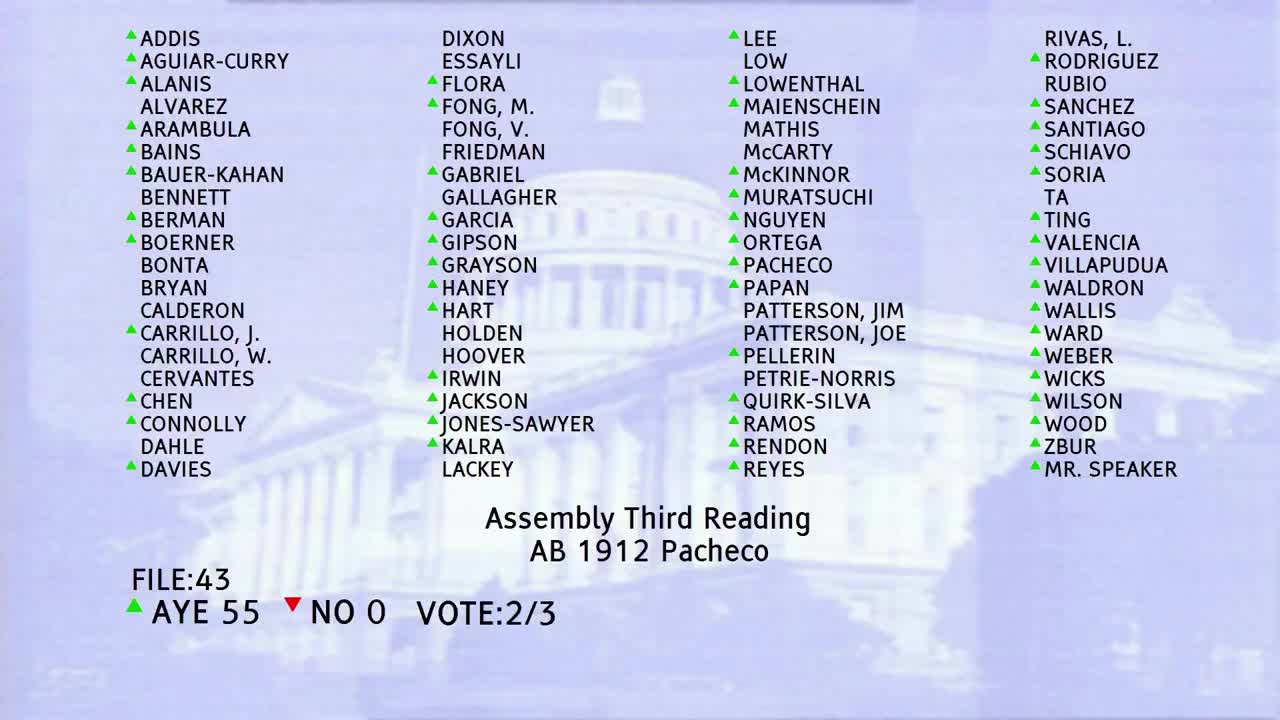
Bill Author

Bill Co-Author(s):
