AB 2147: Clean Transportation Program: hydrogen-fueling stations: report: job creation and workforce development.
- Session Year: 2023-2024
- House: Assembly
- Latest Version Date: 2024-04-01
Current Status:
Failed
(2024-05-16: In committee: Held under submission.)
Introduced
In Committee
First Chamber
In Committee
Second Chamber
Enacted
Existing law requires the State Energy Resources Conservation and Development Commission to allocate, until July 1, 2030, no less than 15% annually of the moneys appropriated by the Legislature from the Alternative and Renewable Fuel and Vehicle Technology Fund, under the Clean Transportation Program to fund hydrogen-fueling stations to support hydrogen vehicles until there is a sufficient network of hydrogen-fueling stations, as specified. Existing law requires the commission and the State Air Resources Board to annually jointly review and report on progress toward establishing a hydrogen-fueling network that provides the coverage and capacity to fuel vehicles requiring hydrogen fuel that are being placed into operation in the state. Existing law requires the commission and the state board to consider several things, including, but not limited to, the available plans of automobile manufacturers to deploy hydrogen-fueled vehicles in California and their progress toward achieving those plans in their report.
This bill would require the commission and state boards joint review and report to also include progress made on job creation and workforce development in support of hydrogen fueling. information on the progress made on job creation and workforce development in support of hydrogen fueling, limited to the construction, operation, and maintenance of hydrogen-fueling stations that are funded by active commission agreements. The bill would require the report to include the number of related workforce training programs in the state, the number of participants in those workforce training programs, the number of graduates of those workforce training programs, and the number of related jobs in the state that are created annually.
Existing law requires the State Energy Resources Conservation and Development Commission to allocate, until July 1, 2030, no less than 15% annually of the moneys appropriated by the Legislature from the Alternative and Renewable Fuel and Vehicle Technology Fund, under the Clean Transportation Program to fund hydrogen-fueling stations to support hydrogen vehicles until there is a sufficient network of hydrogen-fueling stations, as specified. Existing law requires the commission and the State Air Resources Board to annually jointly review and report on progress toward establishing a hydrogen-fueling network that provides the coverage and capacity to fuel vehicles requiring hydrogen fuel that are being placed into operation in the state. Existing law requires the commission and the state board to consider several things, including, but not limited to, the available plans of automobile manufacturers to deploy hydrogen-fueled vehicles in California and their progress toward achieving those plans in their report.
This bill would require the commission and state boards joint review and report to also include progress made on job creation and workforce development in support of hydrogen fueling.
(a)For purposes of this section, the following terms have the following meanings:
(1)Commission means the State Energy Resources Conservation and Development Commission.
(2)Publicly available hydrogen-fueling station means the equipment used to store and dispense hydrogen fuel to vehicles according to industry codes and standards that is open to the public.
(b)Notwithstanding any other law, the state board shall have no authority to enforce any element of its existing clean fuels outlet regulation or of any other regulation that requires or has the effect of requiring that any supplier, as defined in Section 7338 of the Revenue and Taxation Code as in effect on May 22, 2013, construct, operate, or provide funding for the construction or operation of any publicly available hydrogen-fueling station.
(c)On or before June 30, 2014, and every year thereafter, the state board shall aggregate and make available all of the following:
(1)The number of hydrogen-fueled vehicles that motor vehicle manufacturers project to be sold or leased over the next three years as reported to the state board pursuant to the Low Emission Vehicle regulations, as currently established in Sections 1961 to 1961.2, inclusive, of Title 13 of the California Code of Regulations.
(2)The total number of hydrogen-fueled vehicles registered with the Department of Motor Vehicles through April 30.
(d)On or before June 30, 2014, and every year thereafter, the state board, based on the information made available pursuant to subdivision (c), shall do both of the following:
(1)Evaluate the need for additional hydrogen-fueling stations for the subsequent three years in terms of quantity of fuel needed for the actual and projected number of hydrogen-fueled vehicles, geographic areas where fuel will be needed, and station coverage.
(2)Report findings to the commission on the need for additional hydrogen-fueling stations in terms of number of stations, geographic areas where additional stations will be needed, and minimum operating standards, such as number of dispensers, filling protocols, and pressures.
(e)(1)The commission shall allocate no less than 15 percent annually of the moneys appropriated by the Legislature from the Alternative and Renewable Fuel and Vehicle Technology Fund, established pursuant to Section 44273, attributable to the fees deposited into the fund pursuant to Section 44060.5 of this code and Sections 9250.1 and 9261.1 of the Vehicle Code until July 1, 2030, under the Clean Transportation Program to fund hydrogen-fueling stations to support hydrogen-fueled vehicles until there is a sufficient network of hydrogen-fueling stations, which includes all types available, in operation in California to support existing and expected hydrogen-fueled vehicles, that aligns with the state greenhouse gas reduction goals and plan pursuant to Sections 38561, 38562.2, and 38566, as determined by the commission, in consultation with the state board.
(2)Fifty percent of the allocated funds related to paragraph (1) shall be used to fund hydrogen-fueling stations that directly benefit or serve residents of low-income communities and disadvantaged communities as defined by CalEnviroScreen.
(3)If the commission, in consultation with the state board, determines that the full amount identified in paragraph (1) is not needed to fund the number of stations identified by the state board pursuant to subdivision (d), the commission may allocate any remaining moneys to other projects, subject to the requirements of the Clean Transportation Program pursuant to Article 2 (commencing with Section 44272) of Chapter 8.9.
(4)Allocations by the commission pursuant to this subdivision shall be subject to all of the requirements applicable to allocations from the Clean Transportation Program pursuant to Article 2 (commencing with Section 44272) of Chapter 8.9.
(5)(A)If the allocated annual funding identified in paragraph (1) is undersubscribed after a competitive grant funding opportunity has made the funding available, the commission may allocate any remaining moneys to other projects, subject to the requirements of the Clean Transportation Program pursuant to Article 2 (commencing with Section 44272) of Chapter 8.9.
(B)The commission shall release a competitive grant funding opportunity for annual funding identified in paragraph (1) at least annually and 90 days after the start of the fiscal year, unless the commissions executive director or the lead commissioner for transportation concludes based on substantial evidence in the record, including from party filings, that an alternative schedule for the release of a competitive grant funding opportunity is warranted. The commission shall endeavor to issue a notice of proposed awards to responsive applicants within six months of issuing a competitive grant funding opportunity, consistent with this section.
(6)The commission, in consultation with the state board, shall award moneys allocated in paragraph (1) based on best available data, including information made available pursuant to subdivision (d), and input from relevant stakeholders, including motor vehicle manufacturers that have planned deployments of hydrogen-fueled vehicles, according to a strategy that supports the deployment of an effective and efficient network of hydrogen-fueling station network stations in a way that maximizes benefits to the public while minimizing costs to the state.
(7)Notwithstanding paragraph (1), once the commission determines, in consultation with the state board, that the private sector is establishing hydrogen-fueling stations without the need for government support, the commission may cease providing funding for those stations.
(8)On or before December 31, 2015, and annually thereafter, 31 annually, the commission and the state board shall jointly review and report on progress toward establishing a network of hydrogen-fueling network stations that provides the coverage and capacity to fuel the hydrogen-fueled vehicles requiring hydrogen fuel that are being placed into operation in the state. The state, as follows:
(A)The commission and the state board shall consider all of the following, including, but not limited to, the available plans of automobile manufacturers to deploy hydrogen-fueled vehicles in California and their progress toward achieving those plans, the rate of deployment of hydrogen-fueled vehicles, the length of time required to permit and construct hydrogen-fueling stations, the coverage, capacity, and public accessibility of the existing network of hydrogen-fueling station network, the progress made on job creation and workforce development in support of hydrogen fueling, stations, and the amount and timing of growth in the fueling network to ensure fuel is available to these vehicles. The review shall also determine the remaining cost and timing to establish a sufficient network of hydrogen-fueling stations and whether funding from the Clean Transportation Program remains necessary to achieve this goal.
(B)The report shall include information on the progress made on job creation and workforce development in support of hydrogen fueling, limited to the construction, operation, and maintenance of hydrogen-fueling stations that are funded by active commission agreements. The report shall include, but is not limited to, the number of related workforce training programs in the state, the number of participants in those workforce training programs, the number of graduates of those workforce training programs, and the number of related jobs in the state that are created annually.
(f)To assist in the implementation of this section and maximize the ability to deploy fueling infrastructure as rapidly as possible with the assistance of private capital, the commission may design grants, loan incentive programs, revolving loan programs, and other forms of financial assistance. The commission also may enter into an agreement with the Treasurer to provide financial assistance to further the purposes of this section.
(g)Funds appropriated to the commission for the purposes of this section shall be available for encumbrance by the commission for up to four years from the date of the appropriation and for liquidation up to four years after expiration of the deadline to encumber.
(h)Notwithstanding any other law, the state board, in consultation with districts, no later than July 1, 2014, shall convene working groups to evaluate the policies and goals contained within the Carl Moyer Memorial Air Quality Standards Attainment Program, pursuant to Section 44280, and Assembly Bill 923 (Chapter 707 of the Statutes of 2004).
(i)This section shall become inoperative on July 1, 2035, and, as of January 1, 2036, is repealed.
(a)For purposes of this section, the following terms have the following meanings:
(1)Commission means the State Energy Resources Conservation and Development Commission.
(2)Publicly available hydrogen-fueling station means the equipment used to store and dispense hydrogen fuel to vehicles according to industry codes and standards that is open to the public.
(b)Notwithstanding any other law, the state board shall have no authority to enforce any element of its existing clean fuels outlet regulation or of any other regulation that requires or has the effect of requiring that any supplier, as defined in Section 7338 of the Revenue and Taxation Code as in effect on May 22, 2013, construct, operate, or provide funding for the construction or operation of any publicly available hydrogen-fueling station.
(c)On or before June 30, 2014, and every year thereafter, the state board shall aggregate and make available all of the following:
(1)The number of hydrogen-fueled vehicles that motor vehicle manufacturers project to be sold or leased over the next three years as reported to the state board pursuant to the Low Emission Vehicle regulations, as currently established in Sections 1961 to 1961.2, inclusive, of Title 13 of the California Code of Regulations.
(2)The total number of hydrogen-fueled vehicles registered with the Department of Motor Vehicles through April 30.
(d)On or before June 30, 2014, and every year thereafter, the state board, based on the information made available pursuant to subdivision (c), shall do both of the following:
(1)Evaluate the need for additional hydrogen-fueling stations for the subsequent three years in terms of quantity of fuel needed for the actual and projected number of hydrogen-fueled vehicles, geographic areas where fuel will be needed, and station coverage.
(2)Report findings to the commission on the need for additional hydrogen-fueling stations in terms of number of stations, geographic areas where additional stations will be needed, and minimum operating standards, such as number of dispensers, filling protocols, and pressures.
(e)(1)The commission shall allocate no less than 15 percent annually of the moneys appropriated by the Legislature from the Alternative and Renewable Fuel and Vehicle Technology Fund, established pursuant to Section 44273, attributable to the fees deposited in into the fund pursuant to Section 44060.5 of this code and Sections 9250.1 and 9261.1 of the Vehicle Code until July 1, 2030, under the Clean Transportation Program to fund hydrogen-fueling stations to support hydrogen hydrogen-fueled vehicles until there is a sufficient network of hydrogen-fueling stations, which includes all types available, in operation in California to support existing and expected hydrogen hydrogen-fueled vehicles, that aligns with the state greenhouse gas reduction goals and plan pursuant to Sections 38561, 38562.2, and 38566, as determined by the commission, in consultation with the state board.
(2)Fifty percent of the allocated funds related to paragraph (1) shall be used to fund hydrogen-fueling stations that directly benefit or serve residents of low-income communities and disadvantaged communities as defined by CalEnviroScreen.
(3)If the commission, in consultation with the state board, determines that the full amount identified in paragraph (1) is not needed to fund the number of stations identified by the state board pursuant to subdivision (d), the commission may allocate any remaining moneys to other projects, subject to the requirements of the Clean Transportation Program pursuant to Article 2 (commencing with Section 44272) of Chapter 8.9.
(4)Allocations by the commission pursuant to this subdivision shall be subject to all of the requirements applicable to allocations from the Clean Transportation Program pursuant to Article 2 (commencing with Section 44272) of Chapter 8.9.
(5)(A)If the allocated annual funding identified in paragraph (1) is undersubscribed after a competitive grant funding opportunity has made the funding available, the commission may allocate any remaining moneys to other projects, subject to the requirements of the Clean Transportation Program pursuant to Article 2 (commencing with Section 44272) of Chapter 8.9.
(B)The commission shall release a competitive grant funding opportunity for annual funding identified in paragraph (1) at least annually and 90 days after the start of the fiscal year, unless the commissions executive director or the lead commissioner for transportation concludes based on substantial evidence in the record, including from party filings, that an alternative schedule for the release of a competitive grant funding opportunity is warranted. The commission shall endeavor to issue a notice of proposed awards to responsive applicants within six months of issuing a competitive grant funding opportunity, consistent with this section.
(6)The commission, in consultation with the state board, shall award moneys allocated in paragraph (1) based on best available data, including information made available pursuant to subdivision (d), and input from relevant stakeholders, including motor vehicle manufacturers that have planned deployments of hydrogen-fueled vehicles, according to a strategy that supports the deployment of an effective and efficient hydrogen-fueling station network in a way that maximizes benefits to the public while minimizing costs to the state.
(7)Notwithstanding paragraph (1), once the commission determines, in consultation with the state board, that the private sector is establishing hydrogen-fueling stations without the need for government support, the commission may cease providing funding for those stations.
(8)On or before December 31, 2015, and annually thereafter, the commission and the state board shall jointly review and report on progress toward establishing a hydrogen-fueling network that provides the coverage and capacity to fuel vehicles requiring hydrogen fuel that are being placed into operation in the state. The commission and the state board shall consider all of the following, including, but not limited to, the available plans of automobile manufacturers to deploy hydrogen-fueled vehicles in California and their progress toward achieving those plans, the rate of deployment of hydrogen-fueled vehicles, the length of time required to permit and construct hydrogen-fueling stations, the coverage, capacity, and public accessibility of the existing hydrogen-fueling station network, the progress made on job creation and workforce development in support of hydrogen fueling, and the amount and timing of growth in the fueling network to ensure fuel is available to these vehicles. The review shall also determine the remaining cost and timing to establish a sufficient network of hydrogen-fueling stations and whether funding from the Clean Transportation Program remains necessary to achieve this goal.
(f)To assist in the implementation of this section and maximize the ability to deploy fueling infrastructure as rapidly as possible with the assistance of private capital, the commission may design grants, loan incentive programs, revolving loan programs, and other forms of financial assistance. The commission also may enter into an agreement with the Treasurer to provide financial assistance to further the purposes of this section.
(g)Funds appropriated to the commission for the purposes of this section shall be available for encumbrance by the commission for up to four years from the date of the appropriation and for liquidation up to four years after expiration of the deadline to encumber.
(h)Notwithstanding any other law, the state board, in consultation with districts, no later than July 1, 2014, shall convene working groups to evaluate the policies and goals contained within the Carl Moyer Memorial Air Quality Standards Attainment Program, pursuant to Section 44280, and Assembly Bill 923 (Chapter 707 of the Statutes of 2004).
(i)This section shall become inoperative on July 1, 2035, and, as of January 1, 2036, is repealed.
|
Date
|
Status
|
|---|---|
| May 16, 2024 | In committee: Held under submission. |
| Apr 24, 2024 | In committee: Set, first hearing. Referred to APPR. suspense file. |
| Apr 9, 2024 | From committee: Do pass and re-refer to Com. on APPR. with recommendation: To Consent Calendar. (Ayes 15. Noes 0.) (April 8). Re-referred to Com. on APPR. |
| Apr 2, 2024 | Re-referred to Com. on TRANS. |
| Apr 1, 2024 | From committee chair, with author's amendments: Amend, and re-refer to Com. on TRANS. Read second time and amended. |
| Mar 26, 2024 | In committee: Hearing postponed by committee. |
| Feb 26, 2024 | Referred to Com. on TRANS. |
| Feb 7, 2024 | From printer. May be heard in committee March 8. |
| Feb 6, 2024 | Read first time. To print. |
|
Date
|
Description
|
Location
|
Votes
|
|
|---|---|---|---|---|
| Apr 8, 2024 | Do pass and be re-referred to the Committee on [Appropriations] with recommendation: To Consent Calendar | Assembly Standing Committee on Transportation |
Passed |
This list shows positions taken on this bill by organizations on the date displayed, which is linked to the original source.
Positions by individuals are not included.
Date of Hearing: April 24, 2024
ASSEMBLY COMMITTEE ON APPROPRIATIONS
Buffy Wicks, Chair
ABPCA Bill Id:AB 2147
Author:(Mathis) – As Amended Ver:April 1, 2024
Policy Committee: | Transportation | Vote: | 15 - 0 |
|
| ||
|
|
Urgency: No State Mandated Local Program: No Reimbursable: No
SUMMARY:
This bill requires information on job creation and workforce be included in the annual report on progress toward establishing a network of hydrogen-fueling stations that provides the coverage and capacity to fuel hydrogen-fueled vehicles being placed into operation in the state.
Specifically, this bill requires the report include information on the progress made on job creation and workforce development in support of hydrogen fueling, limited to the construction, operation and maintenance of hydrogen-fueling stations that are funded by active commission agreements. The bill states the report is to include the number of related workforce training programs in the state, the number of participants in those workforce training programs, the number of graduates of those workforce training programs and the number of related jobs in the state that are created annually.
FISCAL EFFECT:
Both the Energy Commission and the Air Resources Board (ARB) will incur costs to implement this bill. While existing statute already requires the agencies to jointly produce an annual report on progress toward establishing a network of hydrogen-fueling stations, this bill requires the report include additional information and, therefore, creates costs for each agency.
According to the ARB, it does not have capacity to perform additional workload with existing resources. The ARB identifies it will need one air pollution specialist at an annual cost of $220,000 (Alternative and Renewable Fuel and Vehicle Technology Fund (ARFVT Fund)). However, it seems unlikely that the reporting requirements added by this bill require the full-time attention of an ARB staff member for an entire year. Presumably, the Energy Commission will experience costs comparable to ARB’s costs.
In any case, because this bill has the primary purpose of creating a reporting requirement, it is a candidate for the committee’s suspense file, consistent with the committee’s rules and practice.
COMMENTS:
Hydrogen fuel-cell vehicles (HFCVs) are zero-emission vehicles that use a fuel cell stack to convert hydrogen gas into electricity, which powers the vehicle. State law encourages adoption of HFCVs. For example, existing law directs the Energy Commission to annually allocate, until July 1, 2030, at least 15% of the moneys appropriated by the Legislature from the ARFVT Fund to fund hydrogen-fueling stations to support hydrogen vehicles until there is a sufficient network of hydrogen-fueling stations to support existing and expected hydrogen vehicles.
Statute requires the Energy Commission and the ARB to jointly review and report on progress toward establishing a hydrogen-fueling network that provides the coverage and capacity to fuel vehicles requiring hydrogen fuel that are being placed into operation in the state. According to the most recent report:
[The Energy Commission’s] Clean Transportation Program has allocated nearly $257 million in public hydrogen infrastructure primarily for light-duty vehicles. California is expected to have 130 hydrogen refueling stations by 2027 with at least 7 stations capable of fueling medium- or heavy-duty vehicles. Last year’s report expected 175 stations, but a grant recipient cancelled a 2021 grant agreement to develop 50 new stations. As of November 6, 2023, 66 stations achieved open retail status, with 4 stations opening since the last report.
The 66 open retail stations can serve nearly 58,000 fuel cell electric vehicles (FCEVs) when operating at capacity, more than the fueling needs of 14,809 light-duty FCEVs estimated to be on the road as of September 30, 2023.
This bill requires the hydrogen fueling network report to also include information on the progress made on job creation and workforce development in support of hydrogen fueling. According to the author, this bill “provides the necessary data and information to monitor current employment rates within the industry, and allows for more efficient future policy to be developed.”
Analysis Prepared by: Jay Dickenson / APPR. / (916) 319-2081
Date of Hearing: April 8, 2024
ASSEMBLY COMMITTEE ON TRANSPORTATION
Lori D. Wilson, Chair
ABPCA Bill Id:AB 2147 (
Author:Mathis) – As Amended Ver:April 1, 2024
SUBJECT: Clean Transportation Program: hydrogen-fueling stations: report: job creation and workforce development
SUMMARY: Requires an existing annual report on hydrogen-fueling infrastructure, that the California Energy Commission (CEC) and the California Air Resources Board (CARB) prepare jointly, to include information on progress made on job creation and workforce development in support of a hydrogen-fueling.
Specifically, this bill:
- Requires CEC and CARB to report on progress made on job creation and workforce development in support of a hydrogen-fueling that is limited to the construction, operation, and maintenance of hydrogen refueling stations that are funded by active commission agreements.
- Requires the report to include number of related workforce training programs in the state, the number of participants in said workforce training programs, the number of graduates of said workforce training programs, and the number of related jobs in the state that are created annually.
EXISTING LAW:
- Establishes the Clean Transportation Program (CTP) to be administered by the CEC in order to develop and deploy zero-emission technology and fuels in the marketplace where feasible and near-zero-emission technology and fuels elsewhere through competitive grants, revolving loans, loan guarantees, loans, or other appropriate funding measures. (Health and Safety Code (HSC) 44271 and 44272)
- Requires the CEC to allocate at least 15% of annual CTP funds appropriated by Legislature to co-fund the development of hydrogen-refueling stations. (HSC 44271 and 43018.9(e)(1))
- Requires the CEC and CARB, on or before December 31, 2015 and annually thereafter, to jointly review and report on progress toward establishing a sufficient hydrogen-fueling network that provides the coverage and capacity to fuel vehicles requiring hydrogen fuel that are being placed into operation in the state, including, but not limited to, the available plans of automobile manufacturers to deploy hydrogen-fueled vehicles in California and their progress toward achieving those plans, the rate of deployment of hydrogen-fueled vehicles, the length of time required to permit and construct hydrogen-fueling stations, the coverage, capacity, and public accessibility of the existing hydrogen-fueling station network, and the amount and timing of growth in the fueling network to ensure fuel is available to these vehicles. (HSC 43018.9(e)(8))
- Requires CEC to collaborate with entities that have expertise in workforce development to implement the workforce development components of CTP, including, but not limited to, the California Workforce Development Board, the Employment Training Panel, the Employment Development Department, and the Division of Apprenticeship Standards. (HSC 44272(o))
- Requires CEC to create and consult with an advisory body to develop an investment plan of priorities for fund allocations and technologies, and requires the advisory body to include representatives from, among others, labor organizations, environmental organizations, community-based justice and public health organizations, workforce training groups, private industry, the Resources Agency, the Transportation Agency, the Labor and Workforce Development Agency, and the California Environmental Protection Agency. (HSC 44272.5)
FISCAL EFFECT: Unknown
COMMENTS: The Legislature enacted AB 118 (Núñez), Chapter 750, Statutes of 2007 to establish CTP to accelerate deployment of infrastructure for zero-emission vehicles, and to bolster manufacturing and workforce training to meet the state’s needs in growing a clean transportation and fuels market.
Battery electric vehicles (BEVs, but more commonly and simply known as “EVs”) and hydrogen-powered fuel cell electric vehicles (FCEVs) are the two principal zero-emission vehicle technologies that CTP funds have advanced. Among zero-emission (e.g., BEV and FCEV) and near-zero-emission (e.g., plug-in hybrids, or PHEVs) vehicles, BEV adoption has far outpaced FCEV adoption across light-, medium-and heavy-duty sales. According to CARB and DMV, over 750,000 BEVs and over 300,000 PHEVs are registered in California, compared to only approximately 12,000 FCEVs.
Since its inception, CTP has provided state funding for the capital expenses of designing, permitting, constructing, and commissioning hydrogen-fueling stations in support of FCEV adoption. The program has been re-authorized twice—first by AB 8 (Perea), Chapter 401, Statutes of 2013 through July 1, 2024, and, more recently, by AB 126 (Reyes), Chapter 319, Statutes of 2023 through July 1, 2035.
The CTP is funded by surcharges collected on vehicle and vessel registration, vehicle identification plates, and smog abatement fees. Under AB 126, the CEC is required to allocate at least 15% annually (or approximately $15 million) of CTP moneys for the development of hydrogen-fueling stations in the state. These earmarked funds are disbursed in service of reaching two milestones set by AB 8 and by Executive Order (EO) B-48-18 of former Gov. Jerry Brown. AB 8 set a target for the CEC to award funding for at least 100 publicly available hydrogen-fueling stations by January 1, 2024, whereas EO-B-48-18 set an elevated objective of building 200 total hydrogen-fueling stations by 2025. The majority of hydrogen-fueling stations to date have been built for light-duty FCEVs, though the proposed milestones do not specify or emphasize any particular vehicle size class.
AB 8 requires the CEC and CARB to provide a joint report each December with an update on the hydrogen-fueling network and FCEV sales, as well as on the cost, timing, and other operational aspects of building and operating hydrogen-fueling stations in California. AB 126 largely maintains these reporting requirements and additionally requires the evaluation of the cost and time to achieve a “sufficient network” of hydrogen-fueling stations, rather than the 100-station metric outlined in AB 8, and to reevaluate whether further CTP funding is needed in support of establishing a hydrogen-fueling network.
The construction of hydrogen-fueling stations has been slower than anticipated. At the end of 2023, there were 68 active hydrogen-fueling stations statewide. In the latest 2023 Annual Hydrogen Evaluation Report, previous projections that 100 stations would be fully operational by the end of 2023 have now been pushed back to 2025, based on input from station developers. Several planned fueling stations have been canceled by station developers, and there have been closures of some existing stations for light-duty passenger vehicles by station operators.
Station developers cite many factors for the reduced roll-out and closures of hydrogen-fueling stations, including political and economic uncertainty as well as practical challenges with construction, operation, and hydrogen fuel sourcing. On the construction side, the 2023 Report notes that “securing site access, permitting timelines, utility connection timelines, and other site-specific issues appear to remain barriers to rapidly deploying hydrogen-fueling stations.” There also appear to be hiring difficulties related to the tight labor market, e.g., the limited availability of skilled contractors with specialized experience in hydrogen permitting and construction as well as personnel trained to work with high-pressure hydrogen. Station equipment reliability also remains a challenge. Across operational fueling stations, consumers frequently experience long wait times and occasional equipment failures. Station owners are evaluating strategies ranging from equipment improvements to changes in operational strategies and even workforce development to improve consumer experiences with hydrogen-fueling.
Looking ahead, California’s efforts to deploy hydrogen-fueling infrastructure will be further bolstered by federal funds. In October 2023, the U.S. Department of Energy awarded $1.2 billion to California’s Alliance for Renewable Clean Hydrogen Energy Systems (ARCHES) through the Regional Clean Hydrogen Hub Program created under the Bipartisan Infrastructure Law. ARCHES is a statewide public-private partnership led by the Governor’s Office of Business and Economic Development (GO-Biz), the University of California, the California State Building Trades Council and the Renewables 100 Policy Institute Energy to produce and create a market for renewable hydrogen. The program is expected to focus on hydrogen infrastructure projects in support of three hard-to-decarbonize sectors: heavy-duty vehicles, power plants, and ports.
According to the author: “Existing law requires that the State Energy Resources Conservation and Development Commission to annually review and report on the progress made towards establishing a hydrogen-fueling network. AB 2147 expands the contents of the annual review and report to now include information on the progress made on job creation and workforce development in support of hydrogen-fueling. In doing so, this measure provides the necessary data and information to monitor current employment rates within the industry, and allows for more efficient future policy to be developed.”
Committee Comments: This bill requires progress on job creation and workforce development in service of construction, operation and maintenance of hydrogen-fueling infrastructure to be included in the CEC and CARB’s annual report and restricts these reporting requirements to projects being actively funded through CTP.
The low adoption of light duty passenger FCEVs and slow deployment of hydrogen fueling stations currently present a chicken-and-egg problem for California’s hydrogen-fueling station network. Consumers are reluctant to commit to FCEVs in view of limited hydrogen-fueling infrastructure, and station developers hesitant to build out capacity based on BEV dominance. However, demand for hydrogen is expected to increase as medium- and heavy-duty fleets transition to zero-emission technology and with the anticipated influx of federal dollars to support the growth of a renewable hydrogen market in California.
The recent re-authorization of CTP and the award of federal funds to ARCHES signal renewed state and federal commitment to establishing hydrogen fuel technologies in California. As CTP funds continue to drive the development of hydrogen-fueling infrastructure and federal funds are deployed in parallel, it makes sense to assess job creation and workforce development. The proposed reporting requirements serve not only as a quantifiable metric to gauge how effectively CTP funds are being used but also as means to diagnose deficiencies in labor supply and use that information to preempt labor mismatches going forward in both CTP- and ARCHES-funded projects.
Related Legislation: AB 118 (Nuñez), Chapter 705, Statutes of 2007 establishes the Alternative and Renewable Fuels and Vehicle Technology Program (ARFVTP), now known as the Clean Transportation Program (CTP), and the Alternative and Renewable Fuels and Vehicle Technology Fund (ARFVTF) to develop and deploy technology and alternative and renewable fuels in the marketplace, without adopting any one preferred fuel or technology.
AB 8 (Perea), Chapter 401, Statutes of 2013 extends the program through January 1, 2024, and required annual allocation of $20 million, but not to exceed 20% of total moneys appropriated by the Legislature from the ARFVTF, to fund deployment of hydrogen-fueling stations. AB 8 creates a requirement for two annual reports—one by CARB and the other jointly by CARB and the CEC—to evaluate the status of FCEV adoption and hydrogen-fueling station deployment. AB 8 also established a target for the CEC to award co-funding for at least 100 stations by 2023.
AB 126 (Reyes), Chapter 319, Statutes of 2023 formally establishes CTP, extends the program until July 1, 2035, and adjusts the minimum annual allocation required to go towards hydrogen-fueling infrastructure to be at least 15% of CTP funds.
REGISTERED SUPPORT / OPPOSITION:
Support
None on file
Opposition
None on file
Analysis Prepared by: Stephanie Choing / TRANS. / (916) 319-2093
Discussed in Hearing
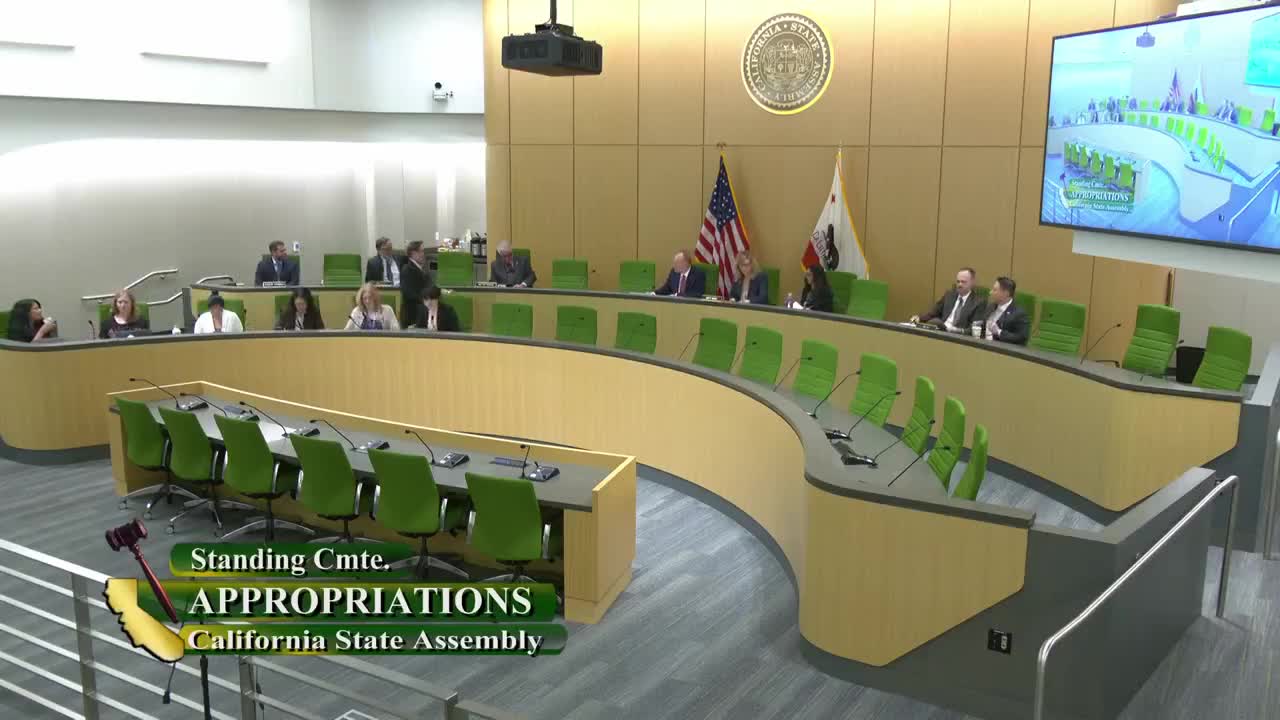 1MIN
Assembly Standing Committee on Appropriations
Bill Author

Bill Co-Author(s):