AB 2156: Vital records: diacritical marks.
- Session Year: 2023-2024
- House: Assembly
- Latest Version Date: 2024-04-04
Current Status:
Failed
(2024-05-16: In committee: Held under submission.)
Introduced
In Committee
First Chamber
In Committee
Second Chamber
Enacted
Existing law prescribes the duties of the State Registrar of Vital Statistics (State Registrar) and local registrars of births and deaths with respect to the registration of certificates of live birth, fetal death, or death, and marriage licenses. Existing law requires the State Registrar to prescribe and furnish all record forms for use in carrying out the provisions governing vital records and prohibits the use of any record form or format other than those prescribed by the State Registrar. Existing law requires every live birth, fetal death, death, and marriage that occurs in the state to be registered with the local registrar. Existing law requires certificates of live birth, fetal death, or death, and a marriage license to include specified information, such as the full name of the child on a certificate of live birth and the full names of the parties to be married on a marriage license. Existing law also requires the county clerk to issue a confidential marriage license, as specified, on a form prescribed by the State Registrar.
ThisCommencing January 1, 2027, this bill would require the State Registrar to require the use of a diacritical mark on an English letter within a name to be properly recorded, when applicable, on a certificate of live birth, fetal death, death, marriage license and certificate, or confidential marriage license and certificate, and would require the use of a diacritical mark to be deemed an acceptable entry by the State Registrar. The bill would provide that the absence of a diacritical mark on a certificate of live birth, fetal death, or death, or a marriage license does not render the document invalid nor affect any constructive notice imparted by proper recordation of the document. The bill would authorize, if a name is not accurately recorded because of the absence of a diacritical mark on an English letter in any certificate of live birth, fetal death, death, or marriage already registered, the person asserting the omission, or the persons conservator, or if a minor, the persons parent or guardian, to submit a written request to the State Registrar for the issuance of a new corrected certificate of birth, fetal death, death, or marriage stating the changes necessary to make the name correct. The bill would require the State Registrar to review the request and, if the request is accompanied with the payment of a specified fee, to issue a new corrected certificate of live birth, fetal death, death, or marriage with the accurate name identified in the request. The bill would also authorize, if a name is not accurately recorded because of the absence of a diacritical mark on an English letter on any confidential license and certificate of marriage already registered, the party asserting the omission to make an affidavit, under oath, stating the changes necessary to make the record correct and file it with the county clerk. The bill would require the county clerk to review the amendment for acceptance for filing, and if accepted, file the amendment and note the fact of the amendment, with its date, on the otherwise unaltered original confidential license and certificate of marriage. replace the original confidential marriage certificate with records that do not indicate that they were amended. By requiring the affidavit to be under oath, the bill would expand the crime of perjury, thereby imposing a state-mandated local program. By increasing duties on county clerks, the bill would impose a state-mandated local program.
The California Constitution requires the state to reimburse local agencies and school districts for certain costs mandated by the state. Statutory provisions establish procedures for making that reimbursement.
This bill would provide that with regard to certain mandates no reimbursement is required by this act for a specified reason.
With regard to any other mandates, this bill would provide that, if the Commission on State Mandates determines that the bill contains costs so mandated by the state, reimbursement for those costs shall be made pursuant to the statutory provisions noted above.
Existing law prescribes the duties of the State Registrar of Vital Statistics (State Registrar) and local registrars of births and deaths with respect to the registration of certificates of live birth, fetal death, or death, and marriage licenses. Existing law requires the State Registrar to prescribe and furnish all record forms for use in carrying out the provisions governing vital records and prohibits the use of any record form or format other than those prescribed by the State Registrar. Existing law requires every live birth, fetal death, death, and marriage that occurs in the state to be registered with the local registrar. Existing law requires certificates of live birth, fetal death, or death, and a marriage license to include specified information, such as the full name of the child on a certificate of live birth and the full names of the parties to be married on a marriage license. Existing law also requires the county clerk to issue a confidential marriage license, as specified, on a form prescribed by the State Registrar.
This bill would require the State Registrar to require the use of a diacritical mark on an English letter to be properly recorded, when applicable, on a certificate of live birth, fetal death, death, marriage license and certificate, or confidential marriage license and certificate, and would require the use of a diacritical mark to be deemed an acceptable entry by the State Registrar. The bill would provide that the absence of a diacritical mark on a certificate of live birth, fetal death, or death, or a marriage license does not render the document invalid nor affect any constructive notice imparted by proper recordation of the document. The bill would authorize, if a name is not accurately recorded because of the absence of a diacritical mark on an English letter in any certificate of live birth, fetal death, death, or marriage already registered, the person asserting the omission, or the persons conservator, or if a minor, the persons parent or guardian, to submit a written request to the State Registrar for the issuance of a new certificate of birth, fetal death, death, or marriage stating the changes necessary to make the name correct. The bill would require the State Registrar to review the request and, if the request is accompanied with the payment of a specified fee, to issue a new certificate of live birth, fetal death, death, or marriage with the accurate name identified in the request. The bill would also authorize, if a name is not accurately recorded because of the absence of a diacritical mark on an English letter on any confidential license and certificate of marriage already registered, the party asserting the omission to make an affidavit, under oath, stating the changes necessary to make the record correct and file it with the county clerk. The bill would require the county clerk to review the amendment for acceptance for filing, and if accepted, file the amendment and note the fact of the amendment, with its date, on the otherwise unaltered original confidential license and certificate of marriage. By requiring the affidavit to be under oath, the bill would expand the crime of perjury, thereby imposing a state-mandated local program. By increasing duties on county clerks, the bill would impose a state-mandated local program.
The California Constitution requires the state to reimburse local agencies and school districts for certain costs mandated by the state. Statutory provisions establish procedures for making that reimbursement.
This bill would provide that with regard to certain mandates no reimbursement is required by this act for a specified reason.
With regard to any other mandates, this bill would provide that, if the Commission on State Mandates determines that the bill contains costs so mandated by the state, reimbursement for those costs shall be made pursuant to the statutory provisions noted above.
(a)The Commencing January 1, 2027, the State Registrar shall require the use of a diacritical mark on an English letter to be properly recorded, when applicable, within the name of a parent or registrant on a certificate of live birth, or fetal death, or within a name on a death, marriage license and certificate, or confidential marriage license and certificate. The use of a diacritical mark on an English letter within a name shall be deemed an acceptable entry on a certificate of live birth, fetal death, or death, and a marriage license by the State Registrar.
(b)The absence of a diacritical mark on a document listed in subdivision (a) shall not render the document invalid nor affect any constructive notice imparted by proper recordation of the document.
(c)For purposes of this part, a diacritical mark includes, but is not limited to, accents, tildes, graves, umlauts, and cedillas.
SEC. 2.Section 103227 is added to the Health and Safety Code, to read:103227.(a)(1)If Commencing January 1, 2027, if a name is not accurately recorded because of the absence of a diacritical mark on an English letter in any certificate of live birth, fetal death, death, or marriage already registered, the person asserting the omission, or the persons conservator, or if a minor, the persons parent or guardian, may submit a written request to the State Registrar for the issuance of a new corrected certificate of birth, fetal death, death, or marriage stating the changes necessary to make the name correct.
(2)The State Registrar shall review the request and, if the request is accompanied with the payment of the fee required by Section 103700, shall issue a new corrected certificate of live birth, fetal death, death, or marriage with the accurate name identified in the request.
(3)Amendments to add diacritical marks to death or fetal death certificates will be filed with and become part of the record.
(4)Original birth and marriage certificates will be replaced with records that do not indicate that they were amended.
(b)(1)If a name is not accurately recorded because of the absence of a diacritical mark on an English letter on any confidential license and certificate of marriage already registered, the party to the confidential marriage asserting the omission may make an affidavit under oath in accordance with Section 103225 stating the changes necessary to make the record correct. That affidavit shall be supported by the affidavit of one other person having knowledge of the facts and shall be filed with the county clerk.
(2)The county clerk shall review the amendment for acceptance for filing, and if accepted, shall file the amendment and shall note the fact of the amendment, with its date, on the otherwise unaltered original confidential license and certificate of marriage. replace the original confidential marriage certificate with records that do not indicate that they were amended.
SEC. 3.No reimbursement is required by this act pursuant to Section 6 of Article XIIIB of the California Constitution for certain costs that may be incurred by a local agency or school district because, in that regard, this act creates a new crime or infraction, eliminates a crime or infraction, or changes the penalty for a crime or infraction, within the meaning of Section 17556 of the Government Code, or changes the definition of a crime within the meaning of Section 6 of Article XIIIB of the California Constitution.
However, if the Commission on State Mandates determines that this act contains other costs mandated by the state, reimbursement to local agencies and school districts for those costs shall be made pursuant to Part 7 (commencing with Section 17500) of Division 4 of Title 2 of the Government Code.
(a)The State Registrar shall require the use of a diacritical mark on an English letter to be properly recorded, when applicable, on a certificate of live birth, fetal death, death, marriage license and certificate, or confidential marriage license and certificate. The use of a diacritical mark on an English letter shall be deemed an acceptable entry on a certificate of live birth, fetal death, or death, and a marriage license by the State Registrar.
(b)The absence of a diacritical mark on a document listed in subdivision (a) shall not render the document invalid nor affect any constructive notice imparted by proper recordation of the document.
(c)For purposes of this part, a diacritical mark includes, but is not limited to, accents, tildes, graves, umlauts, and cedillas.
SEC. 2.Section 103227 is added to the Health and Safety Code, to read:103227.(a)(1)If a name is not accurately recorded because of the absence of a diacritical mark on an English letter in any certificate of live birth, fetal death, death, or marriage already registered, the person asserting the omission, or the persons conservator, or if a minor, the persons parent or guardian, may submit a written request to the State Registrar for the issuance of a new certificate of birth, fetal death, death, or marriage stating the changes necessary to make the name correct.
(2)The State Registrar shall review the request and, if the request is accompanied with the payment of the fee required by Section 103700, shall issue a new certificate of live birth, fetal death, death, or marriage with the accurate name identified in the request.
(b)(1)If a name is not accurately recorded because of the absence of a diacritical mark on an English letter on any confidential license and certificate of marriage already registered, the party to the confidential marriage asserting the omission may make an affidavit under oath in accordance with Section 103225 stating the changes necessary to make the record correct. That affidavit shall be supported by the affidavit of one other person having knowledge of the facts and shall be filed with the county clerk.
(2)The county clerk shall review the amendment for acceptance for filing, and if accepted, shall file the amendment and shall note the fact of the amendment, with its date, on the otherwise unaltered original confidential license and certificate of marriage.
SEC. 3.No reimbursement is required by this act pursuant to Section 6 of Article XIIIB of the California Constitution for certain costs that may be incurred by a local agency or school district because, in that regard, this act creates a new crime or infraction, eliminates a crime or infraction, or changes the penalty for a crime or infraction, within the meaning of Section 17556 of the Government Code, or changes the definition of a crime within the meaning of Section 6 of Article XIIIB of the California Constitution.
However, if the Commission on State Mandates determines that this act contains other costs mandated by the state, reimbursement to local agencies and school districts for those costs shall be made pursuant to Part 7 (commencing with Section 17500) of Division 4 of Title 2 of the Government Code.
|
Date
|
Status
|
|---|---|
| May 16, 2024 | In committee: Held under submission. |
| May 1, 2024 | In committee: Set, first hearing. Referred to APPR. suspense file. |
| Apr 8, 2024 | Re-referred to Com. on APPR. |
| Apr 4, 2024 | Read second time and amended. |
| Apr 3, 2024 | From committee: Amend, and do pass as amended and re-refer to Com. on APPR. (Ayes 15. Noes 0.) (April 2). |
| Feb 20, 2024 | Referred to Com. on HEALTH. |
| Feb 7, 2024 | From printer. May be heard in committee March 8. |
| Feb 6, 2024 | Read first time. To print. |
|
Date
|
Description
|
Location
|
Votes
|
|
|---|---|---|---|---|
| Apr 2, 2024 | Do pass as amended and be re-referred to the Committee on [Appropriations] | Assembly Standing Committee on Health |
Passed |
This list shows positions taken on this bill by organizations on the date displayed, which is linked to the original source.
Positions by individuals are not included.
Date of Hearing: May 1, 2024
ASSEMBLY COMMITTEE ON APPROPRIATIONS
Buffy Wicks, Chair
ABPCA Bill Id:AB 2156
Author:(Pacheco) – As Amended Ver:April 4, 2024
Policy Committee: | Health | Vote: | 15 - 0 |
|
| ||
|
|
Urgency: No State Mandated Local Program: Yes Reimbursable: Yes
SUMMARY:
This bill requires the State Registrar of Vital Statistics (State Registrar) to require a diacritical mark on an English letter within the name of a parent or registrant to be properly recorded on a certificate of live birth, fetal death, or death, or a marriage license.
FISCAL EFFECT:
- The California Department of Public Health (CDPH) estimates costs in the low millions in fiscal year (FY) 2025-26, FY 2026-27, and FY 2027-28 (General Fund). The estimate includes staffing costs, partially offset by revenue collected from amendment fees, and costs associated with system reprogramming and information technology (IT) oversight.
- For a similar bill, the Secretary of State estimated a one-time cost of $56,000 for VoteCal system testing to ensure the VoteCal voter database can accommodate diacritical marks (General Fund). The VoteCal voter database receives death file data transfers from CDPH. System testing costs might be mitigated or eliminated if CDPH is able to deliver data exports without diacritical marks. The Secretary of State also notes potential costs for any technology project that may be needed to ensure that VoteCal can accurately reflect diacritical marks on voter registration records.
- Additional one-time costs, potentially in the millions of dollars, for the state to reimburse county clerks and recorders for information technology updates to allow diacritical marks to be used on marriage certificates. If the Commission on State Mandates determines this bill imposes a state mandate, the state would be required to reimburse local agencies for the costs of implementing this bill (General Fund).
COMMENTS:
- Purpose. According to the author:
California once allowed diacritical marks such as accent marks and umlauts, tildes and cedillas…to be used on vital records [until] the passage of Proposition 63 [of 1986], which declared English the official language of California and eliminated the use of diacritical marks on vital records. Government control should not preclude California residents from keeping their cultural identity via their names when…no legitimate reason exists for such a limitation.
- Diacritical marks. Diacritical marks include, but are not limited to: grave or acute accents (è or á) and tildes (ñ or ã), commonly used in Spanish, umlauts (ö or ü), used in German and other languages, and cedillas (ç or ş), found in French, Turkish, and other languages. Federal law requires all federal databases to follow standards determined by the National Institute of Standards and Technology and to use the 26 letters of the alphabet without diacritical marks.
- Related Legislation. AB 77 (Pacheco), of the current legislative session, is similar to this bill. AB 77 was held on this committee’s suspense file.
- Prior Legislation. AB 82 (Medina), of the 2017-18 Legislative Session, was similar to this bill and was vetoed by Governor Edmund G. Brown, Jr., who stated, in part:
Mandating the use of diacritical marks on certain state and local vital records without a corresponding requirement for all state and federal government records is a difficult and expensive proposition. This bill would create inconsistencies in vital records and require significant state funds to replace or modify existing registration systems.
Analysis Prepared by: Allegra Kim / APPR. / (916) 319-2081
Date of Hearing: April 2, 2024
ASSEMBLY COMMITTEE ON HEALTH
Mia Bonta, Chair
ABPCA Bill Id:AB 2156
Author:((Pacheco) – As Introduced Ver:February 6, 2024
SUBJECT: Vital records: diacritical marks.
SUMMARY: Requires the State Registrar of Vital Statistics (State Registrar) to require a diacritical mark on an English letter to be properly recorded on a certificate of live birth, fetal death, or death, and a marriage license. Specifically, this bill:
- Requires the State Registrar to require the use of a diacritical mark on an English letter to be properly recorded, when applicable, on a certificate of live birth, fetal death, or death, and a marriage license.
- Requires the use of a diacritical mark on an English letter to be deemed an acceptable entry on a certificate of live birth, fetal death, or death, and a marriage license by the State Registrar.
- Prohibits the absence of a diacritical mark on a document listed in 2) above from rendering the document invalid, or affecting any constructive notice imparted by proper recordation of the document.
- Defines, for purposes of this bill, a diacritical mark to include, but not be limited to, accents, tildes, graves, umlauts, and cedillas.
- Authorizes a person, person’s conservator, parent, or guardian to submit a written request to the State Registrar for a new document if a name is not accurately recorded because of the absence of a diacritical mark.
- Requires the State registrar to review a request pursuant to 5) above, and if the request is accompanied with the payment of the fee described in 5) in existing law below, to issue a new document with the accurate name identified in the request.
EXISTING LAW:
- Establishes the California Department of Public Health (DPH) and sets forth its powers and duties, including, but not limited to, the duties as State Registrar relating to vital records and health statistics. [Health and Safety Code (HSC) §102100, et seq.]
- Requires the State Registrar to prescribe and furnish all record forms for use in carrying out the provisions governing vital records and prohibits the use of any record form or format other than those prescribed by the State Registrar. [HSC §102200]
- Requires every live birth, fetal death, death, and marriage that occurs in the state to be registered with the local registrar. Requires certificates of live birth, fetal death, or death, and marriage licenses to include specified information, such as the full name of the child on a birth certificate and the full names of the parties to be married on a marriage license. [HSC § 102230]
- Requires the State Registrar, local registrar, or county recorder to, upon request and payment of the required fee, supply an applicant with a certified copy of the record of a birth, fetal death, death, marriage, or marriage dissolution registered with the official. Prohibits, when the original forms of certificates of live birth furnished by the State Registrar contain a printed section at the bottom containing medical and social data or labeled “Confidential Information for Public Health Use Only,” that section from being reproduced in a certified copy of the record except as specifically authorized. [HSC §103525]
- Sets the base fee for a certified birth, death, or fetal death record at $12, and allows jurisdictions to create local vital and health statistics trust funds to be collected by the applicable jurisdiction to defray administrative costs, modernization of vital records operations, and improved data collection and analysis. [HSC §103625 et seq.]
- Provides that English is the common language of the people of the United States and the State of California, and that English is the official language of the State of California. [Article III, Section 6, California Constitution].
- Requires the Legislature to enforce the provisions of 6) above by appropriate legislation, to take all steps necessary to insure that the role of English as the common language of the state is preserved and enhanced, and to make no law which diminishes or ignores the role of English as the states common language. [Ibid.]
FISCAL EFFECT: Unknown. This bill has not been analyzed by a fiscal committee.
COMMENTS:
- PURPOSE OF THIS BILL. The author states that as the most populous and diverse state in the nation, California should allow parents the freedom to name their children as they see fit, without limitations, including the use of diacritical marks such as accents, umlauts, tildes and cedillas. California permitted the use of diacritical marks on all vital records, such as birth certificates, death certificates, and marriage licenses, until this inclusive practice was halted in 1986 following the passage of Prop 63, which declared English the official language of California. The author concludes that government should record the actual names of California residents, reflecting parental and individual rights, preserving cultural and artistic identity as expressed in names and restoring the historic guarantee of free speech that was eliminated in 1986 without any legitimate reason for its discontinuation.
- BACKGROUND.
- Vital Records. The Office of Vital Records within DPH is charged with maintaining a uniform system for registration and a permanent central registry with a comprehensive and continuous index for all birth, death, fetal death, marriage, and dissolution certificates registered for vital events which occur in California, which are over one million events each year. Certified copies of vital records are available from DPH, 58 county recorders, and 61 local health jurisdictions. DPH maintains, and can provide, birth and death records from 1905 to the present. For marriage records, DPH maintains and can provide those from 1946 to the present, with some years excluded. At the local level, birth and death records for current-year events and one year prior are available from the county health department; records for all years are maintained by the county recorder. Public marriage records may be obtained from the county recorder; confidential marriage records are available only through the county clerk of the county where the license was issued.
- Diacritical marks. Diacritical marks include, but are not limited to: grave or acute accents (è or á) and tildes (ñ or ã), commonly found in Spanish language names or umlauts (ö or ü) used in German and cedillas (ç or ş) found in French, Turkish, and other languages. Federal law requires all federal databases to follow standards determined by the National Institute of Standards and Technology and to use the 26 letters of the alphabet without diacritical marks (Public Law 100-235). California law is silent on diacritical marks, however HSC Section 102200 states that the State Registrar “…shall prescribe and furnish all record forms for use in carrying out the purposes of this part, or shall prescribe the format, quality, and content of forms electronically produced in each county, and no record forms or formats other than those prescribed shall be used.”
- California, the Constitution, and Changing demographics. The California Constitution was drafted in both English and Spanish by American pioneers, European settlers, and Californios (Hispanics of California), and adopted at the 1849 Constitutional Convention of Monterey, following the American Conquest of California and the Mexican-American War, and in advance of California's Admission to the Union in 1850.
In 1986 California voters approved Proposition 63 which declared that English is the official language of the State of California. Proposition 63 directed the Legislature to enact legislation to "preserve the role of English as the state's common language," and prohibited it from "passing laws which diminish or ignore the role of English as the state's common language." The proposition also stated that its intent was to “preserve, protect and strengthen the English language, and not to supersede any of the rights guaranteed to the people by this Constitution.” According to DPH, prior to 1986, registration of vital records was a manual paper process. Birth clerks at the hospitals completed the registration forms and it was their choice whether to include diacritical marks or not.
Currently no race or ethnic group constitutes a majority of California’s population: 39% of Californians are Latino, 35% are white, 15% are Asian American or Pacific Islander, 5% are Black, 4% are multiracial, and fewer than 1% are Native American or Alaska Natives, according to the 2020 Census. Only five other states (Hawaii, New Mexico, Texas, Nevada, and Maryland) have similarly diverse populations. However, more than half of young Californians (ages 24 and under) are Latino. Conversely, more than half of those 65 and older are white.
- The California Electronic Birth Registration System (EBRS). In 2015, the California State Registrar, convened a workgroup to review the contents of California’s Birth, Death, and Fetal Death certificates and considered proposed changes to data elements collected on those certificates. The implementation of EBRS in 2018 did not accommodate the use of diacritical marks during the registration process.
The Office of Vital Records: Birth and Death Registration Handbook, referencing the provisions of Proposition 63, states that forms are “to be completed using the 26 alphabetical characters of the English language.” The 2023 handbook also explicitly states (on pages five and six) that unacceptable marks include “diacritical marks—any of various marks added to a letter to indicate its pronunciation or to distinguish it in some way, e.g., è, ñ, ç.” Appropriate punctuation is a standardized mark or sign used in sentences or phrases. Acceptable punctuation includes hyphen (-), period (.), comma (,), or apostrophe (‘). Examples of appropriate punctuation for vital records: Hyphen such as “Smith-Jones,” apostrophe as in “O’Hare,” period as used with “Jr.,” or a comma such as “Smith, Jr.” Therefore, the name O’Brian can be spelled correctly on a vital record, but Hernandéz cannot.
According to DPH, when a vital record is amended the amendment becomes part of the original record, making it a multi-page document. However, since birth and marriage certificates establish a person’s identity, there are specific circumstances in existing law where DPH is authorized to instead replace the original birth or marriage certificate with a corrected record that does not indicate it was amended (e.g., after a gender change). Giving DPH authority to seal and replace the original birth or marriage certificate will not significantly increase implementation costs. However, since death and fetal death certificates are not identity documents, there is currently no statutory authority in the registration system to seal and replace death or fetal death certificates. Further, names that are not the registrant or the registrant’s parent(s) names are retrieved from external sources (such as the Medical Board for the physician’s name), which DPH has no authority to update to include diacritical marks. - Other States. Although most other states prohibit diacritical marks and other symbols on birth certificates, at least seven states allow diacritical marks: Alaska, Hawaii, Illinois, Kansas, North Carolina, Oregon, and Texas. Oregon’s vital records system limits them to a specific set of diacritical marks. Their system simply requires the ALT key to be held down and a 4-digit code to be entered. Oregon also uses a program that removes the diacritical marks prior to sending to the Social Security Administration (SSA). Texas passed House Bill 1823 in 2017, which allows for properly recorded diacritical marks in vital statistics records, driver’s licenses, commercial driver’s license, and personal identification certificates. According to staff at the Texas Public Health Committee, they began using diacritical marks on vital records in 2019 when they implemented their electronic vital records management system. The vendor that Texas uses allowed for keyboard shortcuts for four diacritical marks: accents, graves, umlautes, and tildes. Texas prints birth certificates with diacritical marks, and then strips the marks from the data that is sent to SSA.
- Federal requirements. All U.S. Passports lettering is in block capitals and does not include diacritical marks. Names on Social Security cards may include only letters, spaces, hyphens, or apostrophes.
- The California Electronic Birth Registration System (EBRS). In 2015, the California State Registrar, convened a workgroup to review the contents of California’s Birth, Death, and Fetal Death certificates and considered proposed changes to data elements collected on those certificates. The implementation of EBRS in 2018 did not accommodate the use of diacritical marks during the registration process.
- RELATED LEGISLATION. AB 77 (Pacheco) of 2023 was identical to this bill. AB 77 was held on the Assembly Appropriations suspense file.
- PREVIOUS LEGISLATION.
- AB 82 (Medina) of 2017 would have required the State Registrar to require the use of a diacritical mark on an English letter to be properly recorded, when applicable, on a certificate of live birth, fetal death, or death, and a marriage license, and deemed the use of diacritical marks as an acceptable entry on these certificates and licenses. AB 82 was vetoed by Governor Edmund G. Brown, Jr., who stated in part: “Mandating the use of diacritical marks on certain state and local vital records without a corresponding requirement for all state and federal government records is a difficult and expensive proposition. This bill would create inconsistencies in vital records and require significant state funds to replace or modify existing registration systems.”
- AB 2528 (Skinner) of 2014 would have required the State Registrar to ensure that diacritical marks on English letters were properly recorded on birth certificates, including, but not limited to, accents, tildes, graves, umlauts, and cedillas. AB 2528 also would have required the State Registrar to develop procedures to include other reasonable requests relating to names on birth certificates and created substantially similar requirements for the Secretary of State relating to certificates of registered domestic partnerships, and the Department of Motor Vehicles relating to identification cards. AB 2528 was held in the Assembly Appropriations Committee.
- SUGGESTED AMENDMENTS: Based on technical assistance from DPH, the author may wish to amend this bill to do the following:
- To allow sufficient time for State and County system updates, delay implementation to January 1, 2027.
- To save costs associated with implementation, given that DPH currently lacks statutory authority to replace non-identity documents (such as death and fetal death documents), limit the seal and replace process to birth and marriage certificates.
- Clarify that amendments to add diacritical marks to death and fetal death certificates will be filed with and become part of the record.
- To mirror the process proposed for the State Registrar, provide county clerks the authority to replace original confidential marriage certificates with ones that do not indicate they were amended.
REGISTERED SUPPORT / OPPOSITION:
Support
None on file.
Opposition
None on file.
Analysis Prepared by: Eliza Brooks / HEALTH / (916) 319-2097
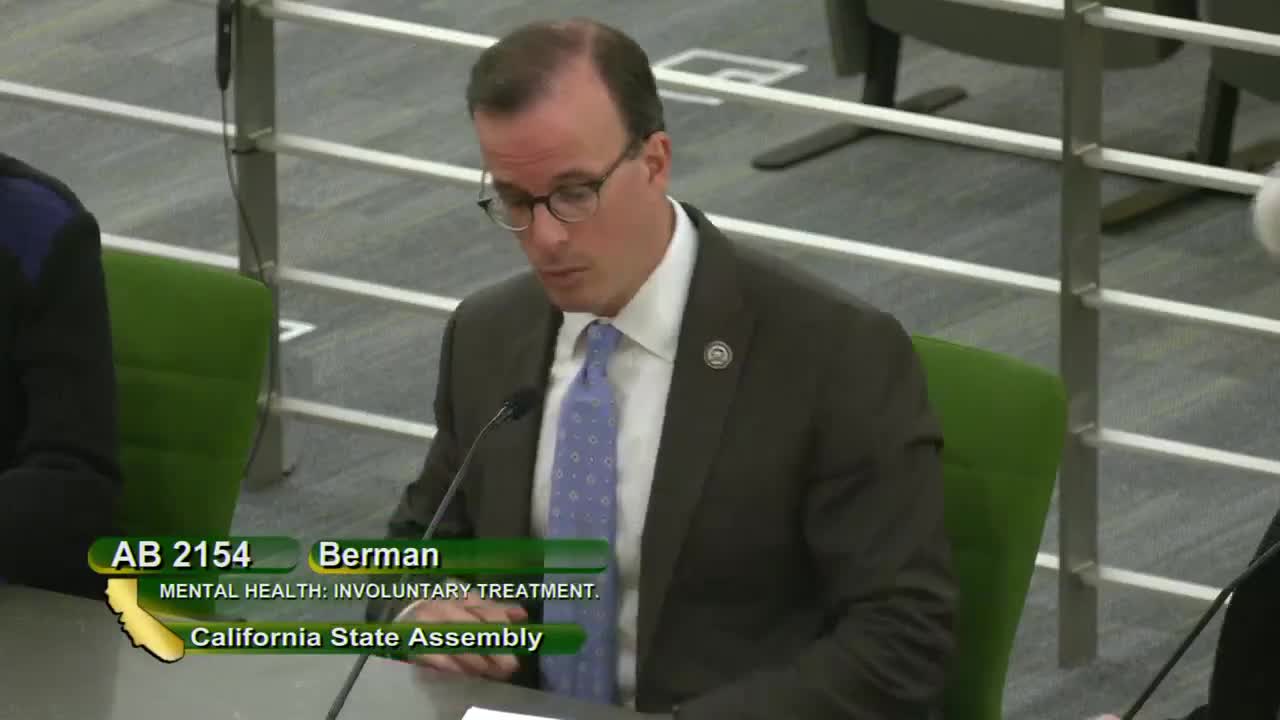
Bill Author

Bill Co-Author(s):