AB 2178: Prisons: bed thresholds.
- Session Year: 2023-2024
- House: Assembly
- Latest Version Date: 2024-08-29
Current Status:
Failed
(2024-09-29: Vetoed by Governor.)
Introduced
In Committee
First Chamber
In Committee
Second Chamber
Enacted
Existing law requires the Department of Corrections and Rehabilitation to reduce the population of private in-state male contract correctional facilities. Existing law requires the department, to the extent that the adult offender population continues to decline, to reduce the capacity of state-owned and state-operated prisons or in-state leased or contract correctional facilities. In reducing prison capacity, existing law requires the department to take into consideration, among other things, the cost to operate at the facility, the impact on its workforce, and public safety and rehabilitation.
This bill would require the Secretary of the Department of Corrections and Rehabilitation to ensure that state prisons maintain average daily empty bed thresholds, as specified. The bill would require the secretary, no later than April 1 of every year, to report to the Joint Legislative Budget Committee specified information, including, among other things, whether the department exceeded the specified thresholds for the current fiscal year.
The bill would make related findings and declarations.
Existing law requires the Department of Corrections and Rehabilitation to reduce the population of private in-state male contract correctional facilities. Existing law requires the department, to the extent that the adult offender population continues to decline, to reduce the capacity of state-owned and state-operated prisons or in-state leased or contract correctional facilities. In reducing prison capacity, existing law requires the department to take into consideration, among other things, the cost to operate at the facility, the impact on its workforce, and public safety and rehabilitation.
This bill would require the Secretary of the Department of Corrections and Rehabilitation to ensure that state prisons maintain average daily empty bed thresholds, as specified. The bill would require the secretary, no later than 30 days after determining it is necessary to exceed the specified thresholds, to report to the Joint Legislative Budget Committee the reasons for maintaining empty beds above the threshold. no later than April 1 of every year, to report to the Joint Legislative Budget Committee specified information, including, among other things, whether the department exceeded the specified thresholds for the current fiscal year.
The bill would make related findings and declarations.
Existing law requires the Department of Corrections and Rehabilitation to reduce the population of private in-state male contract correctional facilities. Existing law requires the department, to the extent that the adult offender population continues to decline, to reduce the capacity of state-owned and state-operated prisons or in-state leased or contract correctional facilities. In reducing prison capacity, existing law requires the department to take into consideration, among other things, the cost to operate at the facility, the impact on its workforce, and public safety and rehabilitation.
This bill would make a technical, nonsubstantive change to these provisions.This bill would require the Secretary of the Department of Corrections and Rehabilitation to ensure that state prisons maintain average daily empty bed thresholds, as specified. The bill would require the secretary, no later than 30 days after determining it is necessary to exceed the specified thresholds, to report to the Joint Legislative Budget Committee the reasons for maintaining empty beds above the threshold.
The bill would make related findings and declarations.
Existing law requires the Department of Corrections and Rehabilitation to reduce the population of private in-state male contract correctional facilities. Existing law requires the department, to the extent that the adult offender population continues to decline, to reduce the capacity of state-owned and state-operated prisons or in-state leased or contract correctional facilities.
This bill would make a technical, nonsubstantive change to these provisions.
(a)The Legislature finds and declares all of the following:
(1)On February 10, 2014, a federal three-judge court ordered the Department of Corrections and Rehabilitation to reduce the population of state prisons to 137.5 percent of their design capacity by February 28, 2016. The department met this requirement and has since remained in compliance. To maintain compliance, the department typically maintained about 2,500 empty beds, meaning it managed the population so that it housed about 2,500 people, on an average daily population basis, less than the court-ordered limit.
(2)Because prison capacity reductions have not kept pace with the ongoing decline in the prison population, the number of empty beds has grown significantly in recent years. As of January 31, 2024, state prisons have 13,211 empty beds. This number is projected to grow to about 19,000 empty beds, or nearly one-fifth of the statewide prison capacity, by June 30, 2028, after accounting for the planned closure of Chuckawalla Valley State Prison in 2025.
(3)Maintaining more than 2,500 empty prison beds is not a cost-effective use of taxpayer money.
(b)The secretary shall ensure that state prisons do not maintain more empty beds in operation, on an average daily population basis, than is specified in subdivision (c). Notwithstanding this requirement, the secretary may allow the number of empty beds to exceed the benchmarks specified in subdivision (c) if necessary to address exigent circumstances. No later than April 1 of every year, the secretary shall report to the Joint Legislative Budget Committee all of the following information:
(1)Whether the department exceeded the benchmarks specified in subdivision (c) for the current fiscal year.
(2)Whether or not the secretary estimates the department will exceed the benchmarks specified in subdivision (c) for the upcoming fiscal year.
(3)If the department exceeds the benchmarks specified in subdivision (c) for the current fiscal year, a written explanation of the circumstances for exceeding the benchmarks specified in subdivision (c) and the reasons for maintaining additional empty beds.
(c)For the purposes of this section, the average daily empty bed thresholds are as follows for each fiscal year:
(1)11,300 for 202526.
(2)9,900 for 202627.
(3)8,400 for 202728.
(4)5,900 for 202829.
(5)2,500 for 202930 and thereafter.
(a)The Legislature finds and declares all of the following:
(1)On February 10, 2014, a federal three-judge court ordered the Department of Corrections and Rehabilitation to reduce the population of state prisons to 137.5 percent of their design capacity by February 28, 2016. The department met this requirement and has since remained in compliance. To maintain compliance, the department typically maintained about 2,500 empty beds, meaning it managed the population so that it housed about 2,500 people, on an average daily population basis, less than the court-ordered limit.
(2)Because prison capacity reductions have not kept pace with the ongoing decline in the prison population, the number of empty beds has grown significantly in recent years. As of January 31, 2024, state prisons have 13,211 empty beds. This number is projected to grow to about 19,000 empty beds, or nearly one-fifth of the statewide prison capacity, by June 30, 2028, after accounting for the planned closure of Chuckawalla Valley State Prison in 2025.
(3)Maintaining more than 2,500 empty prison beds is not a cost-effective use of taxpayer money.
(b)The secretary shall ensure that state prisons do not maintain more empty beds in operation, on an average daily population basis, than is specified in subdivision (c). Notwithstanding this requirement, the secretary may allow the number of empty beds to exceed the benchmarks specified in subdivision (c) if necessary to address exigent circumstances. No later than 30 days after the secretary determines it will be necessary to exceed the benchmarks specified in subdivision (c), the secretary shall provide written explanation of the circumstances and resulting need to maintain additional empty beds to the Joint Legislative Budget Committee. No later than April 1 of every year, the secretary shall report to the Joint Legislative Budget Committee all of the following information:
(1)Whether the department exceeded the benchmarks specified in subdivision (c) for the current fiscal year.
(2)Whether or not the secretary estimates the department will exceed the benchmarks specified in subdivision (c) for the upcoming fiscal year.
(3)If the department exceeds the benchmarks specified in subdivision (c) for the current fiscal year, a written explanation of the circumstances for exceeding the benchmarks specified in subdivision (c) and the reasons for maintaining additional empty beds.
(c)For the purposes of this section, the average daily empty bed thresholds are as follows for each fiscal year:
(1)11,300 for 202526.
(2)9,900 for 202627.
(3)8,400 for 202728.
(4)5,900 for 202829.
(5)2,500 for 202930 and thereafter.
(a)The Legislature finds and declares all of the following:
(1)On February 10, 2014, a federal three-judge court ordered the Department of Corrections and Rehabilitation to reduce the population of state prisons to 137.5 percent of their design capacity by February 28, 2016. The department met this requirement and has since remained in compliance. To maintain compliance, the department typically maintained about 2,500 empty beds, meaning it managed the population so that it housed about 2,500 people, on an average daily population basis, less than the court-ordered limit.
(2)Because prison capacity reductions have not kept pace with the ongoing decline in the prison population, the number of empty beds has grown significantly in recent years. As of January 31, 2024, state prisons have 13,211 empty beds. This number is projected to grow to about 19,000 empty beds, or nearly one-fifth of the statewide prison capacity, by June 30, 2028, after accounting for the planned closure of Chuckawalla Valley State Prison in 2025.
(3)Maintaining more than 2,500 empty prison beds is not a cost-effective use of taxpayer money.
(b)The secretary shall ensure that state prisons do not maintain more empty beds in operation, on an average daily population basis, than is specified in subdivision (c). Notwithstanding this requirement, the secretary may allow the number of empty beds to exceed the benchmarks specified in subdivision (c) if necessary to address exigent circumstances. No later than 30 days after the secretary determines it will be necessary to exceed the benchmarks specified in subdivision (c), the secretary shall provide written explanation of the circumstances and resulting need to maintain additional empty beds to the Joint Legislative Budget Committee.
(c)For the purposes of this section, the average daily empty bed thresholds are as follows for each fiscal year:
(1)11,300 for 2025-26.
(2)9,900 for 2026-27.
(3)8,400 for 2027-28.
(4)5,900 for 2028-29.
(5)2,500 for 2029-30 and thereafter.
SECTION 1.Section 2067 of the Penal Code is amended to read:2067.(a)As outlined in the Budget Act of 2018, it is anticipated that all California inmates will be returned from out-of-state contract correctional facilities by February 2019. To the extent that the adult offender population continues to decline, the Department of Corrections and Rehabilitation shall begin reducing private in-state male contract correctional facilities in a manner that maintains sufficient flexibility to comply with the federal court order to maintain the prison population at or below 137.5 percent of design capacity. The private in-state male contract correctional facilities that are primarily staffed by non-Department of Corrections and Rehabilitation personnel shall be prioritized for reduction over other in-state contract correctional facilities.(b)As the population of offenders in private in-state male contract correctional facilities identified in subdivision (a) is reduced, and to the extent that the adult offender population continues to decline, the Department of Corrections and Rehabilitation shall accommodate the projected population decline by reducing the capacity of state-owned and operated prisons or in-state leased or contract correctional facilities, in a manner that maximizes long-term state facility savings, leverages long-term investments, and maintains sufficient flexibility to comply with the federal court order to maintain the prison population at or below 137.5 percent of design capacity. In reducing this additional capacity, the department shall take into consideration the following factors, including, but not limited to:(1)The cost to operate at the capacity.(2)Workforce impacts.(3)Subpopulation and gender-specific housing needs.(4)Long-term investment in state-owned and operated correctional facilities, including previous investments.(5)Public safety and rehabilitation.(6)The durability of the states solution to prison overcrowding.(c)The following shall apply:(1)Subdivision (b) is not enforceable by a private right of action.(2)Subdivision (b) does not create an act or duty enforceable under Sections 1060 or 1085 of the Code of Civil Procedure.(3)A city, county, city and county, local district, or special district shall not maintain an action or proceeding against the State of California pursuant to subdivision (b).(d)An action initiated regarding this section shall be brought in the superior court of the County of Sacramento.(a)As outlined in the Budget Act of 2018, it is anticipated that all California inmates will be returned from out-of-state contract correctional facilities by February 2019. To the extent that the adult offender population continues to decline, the Department of Corrections and Rehabilitation shall begin reducing private in-state male contract correctional facilities in a manner that maintains sufficient flexibility to comply with the federal court order to maintain the prison population at or below 137.5 percent of design capacity. The private in-state male contract correctional facilities that are primarily staffed by non-Department of Corrections and Rehabilitation personnel shall be prioritized for reduction over other in-state contract correctional facilities.
(b)As the population of offenders in private in-state male contract correctional facilities identified in subdivision (a) is reduced, and to the extent that the adult offender population continues to decline, the Department of Corrections and Rehabilitation shall accommodate the projected population decline by reducing the capacity of state-owned and operated prisons or in-state leased or contract correctional facilities, in a manner that maximizes long-term state facility savings, leverages long-term investments, and maintains sufficient flexibility to comply with the federal court order to maintain the prison population at or below 137.5 percent of design capacity. In reducing this additional capacity, the department shall take into consideration the following factors, including, but not limited to:
(1)The cost to operate at the capacity.
(2)Workforce impacts.
(3)Subpopulation and gender-specific housing needs.
(4)Long-term investment in state-owned and operated correctional facilities, including previous investments.
(5)Public safety and rehabilitation.
(6)The durability of the states solution to prison overcrowding.
(c)The following shall apply:
(1)Subdivision (b) shall not be is not enforceable by a private right of action.
(2)Subdivision (b) does not create an act or duty enforceable under Sections 1060 or 1085 of the Code of Civil Procedure.
(3)A city, county, city and county, local district, or special district shall not maintain an action or proceeding against the State of California pursuant to subdivision (b).
(d)An action initiated regarding this section shall be brought in the superior court of the County of Sacramento.
|
Date
|
Status
|
|---|---|
| Sep 29, 2024 | Vetoed by Governor. |
| Sep 5, 2024 | Enrolled and presented to the Governor at 4 p.m. |
| Aug 27, 2024 | Senate amendments concurred in. To Engrossing and Enrolling. (Ayes 47. Noes 17.). |
| Aug 27, 2024 | Assembly Rule 77 suspended. |
| Aug 26, 2024 | In Assembly. Concurrence in Senate amendments pending. May be considered on or after August 28 pursuant to Assembly Rule 77. |
| Aug 26, 2024 | Read third time. Passed. Ordered to the Assembly. (Ayes 22. Noes 14.). |
| Aug 19, 2024 | Read second time. Ordered to third reading. |
| Aug 15, 2024 | Read second time and amended. Ordered returned to second reading. |
| Aug 15, 2024 | From committee: Amend, and do pass as amended. (Ayes 5. Noes 2.) (August 15). |
| Jul 1, 2024 | In committee: Referred to suspense file. |
| Jun 18, 2024 | From committee: Do pass and re-refer to Com. on APPR. (Ayes 4. Noes 1.) (June 18). Re-referred to Com. on APPR. |
| May 29, 2024 | Referred to Com. on PUB S. |
| May 22, 2024 | In Senate. Read first time. To Com. on RLS. for assignment. |
| May 21, 2024 | Read third time. Passed. Ordered to the Senate. (Ayes 46. Noes 17. Page 5427.) |
| May 20, 2024 | Read second time. Ordered to third reading. |
| May 16, 2024 | From committee: Do pass. (Ayes 11. Noes 4.) (May 16). |
| May 8, 2024 | In committee: Set, first hearing. Referred to APPR. suspense file. |
| Apr 24, 2024 | From committee: Do pass and re-refer to Com. on APPR. (Ayes 6. Noes 1.) (April 24). Re-referred to Com. on APPR. |
| Apr 16, 2024 | In committee: Set, first hearing. Hearing canceled at the request of author. |
| Apr 1, 2024 | Re-referred to Com. on PUB. S. |
| Mar 21, 2024 | Referred to Com. on PUB. S. |
| Mar 21, 2024 | From committee chair, with author's amendments: Amend, and re-refer to Com. on PUB. S. Read second time and amended. |
| Feb 8, 2024 | From printer. May be heard in committee March 9. |
| Feb 7, 2024 | Read first time. To print. |
|
Date
|
Description
|
Location
|
Votes
|
|
|---|---|---|---|---|
| Aug 27, 2024 | AB 2178 Ting Concurrence in Senate Amendments | Assembly Floor |
Passed |
|
| Aug 26, 2024 | Assembly 3rd Reading AB2178 Ting By Skinner | Senate Floor |
Passed |
|
| Aug 15, 2024 | Do pass as amended | Senate Standing Committee on Appropriations |
Passed |
|
| Jul 1, 2024 | Placed on suspense file | Senate Standing Committee on Appropriations |
Passed |
|
| Jun 18, 2024 | Do pass, but first be re-referred to the Committee on [Appropriations] | Senate Standing Committee on Public Safety |
Passed |
|
| May 21, 2024 | AB 2178 Ting Assembly Third Reading | Assembly Floor |
Passed |
|
| May 16, 2024 | Do pass. | Assembly Standing Committee on Appropriations |
Passed |
|
| Apr 24, 2024 | Do pass and be re-referred to the Committee on [Appropriations] | Assembly Standing Committee on Public Safety |
Passed |
This list shows positions taken on this bill by organizations on the date displayed, which is linked to the original source.
Positions by individuals are not included.
|
Organization
|
Position
|
Date
|
|---|---|---|
| A - Check Global | ** Support | |
| A New PATH | ** Support | |
| Aclu California Action | ** Support | |
| Alianza | ** Support | |
| Bend the Arc: Jewish Action California | ** Support | |
| Buen Vecino | ** Support | |
| California Association Of Psychiatric Technicians | ** Against | |
| California Coalition for Women Prisoners | ** Support | |
| California Correctional Peace Officers Association | ** Against | |
| California Immigrant Policy Center | ** Support | |
| California Nurses Association | ** Support | |
| California Public Defenders Association | ** Support | |
| Californians for Safety and Justice | * Support | Jun 18, 2024 |
| Californians United for a Responsible Budget | ** Support | |
| Caravan 4 Justice | ** Support | |
| Communities United for Restorative Youth Justice | ** Support | |
| Community Health Project LA | ** Support | |
| Correctional Association of New York | ** Support | |
| Courage California | ** Support | |
| Critical Resistance Los Angeles | ** Support | |
| Critical Resistance Oakland | ** Support | |
| Cure California | ** Support | |
| Decarcerate Sacramento | ** Support | |
| Dignity and Power Now | ** Support | |
| Dignity Not detention Coalition | ** Support | |
| Drop Lwop Coalition | ** Support | |
| Ella Baker Center For Human Rights | ** Support | |
| Empowering Women Impacted by Incarceration | ** Support | |
| Essie Justice Group | ** Support | |
| Fair Chance Project | ** Support | |
| Felony Murder Elimination Project | ** Support | |
| Flying Over Walls | ** Support | |
| Friends Committee On Legislation Of California | ** Support | |
| Ground Game LA | ** Support | |
| Human Impact Partners | ** Support | |
| Immigrant Legal Resource Center | ** Support | |
| Indivisible Ca Statestrong | ** Support | |
| Initiate Justice | ** Support | |
| Initiate Justice Action | ** Support | |
| Interfaith Movement for Human Integrity | ** Support | |
| Just Advocate, INC. | ** Support | |
| LA Defensa | ** Support | |
| Lavender Phoenix | ** Support | |
| Milpa Collective | ** Support | |
| National Nurses United | ** Support | |
| PODER | ** Support | |
| Riverside All of Us or None | ** Support | |
| Root & Rebound | ** Support | |
| Sacramento Homeless Union | ** Support | |
| San Francisco Public Defender | ** Support | |
| Showing Up For Racial Justice - Bay Area | ** Support | |
| Sister Warriors Freedom Coalition | ** Support | |
| Smart Justice California | ** Support | |
| south bay people power | ** Support | |
| Southern California Library | ** Support | |
| The Place4grace | ** Support | |
| The Sentencing Project | ** Support | |
| The Translatin@ Coalition | ** Support | |
| Uncommon Law | * Support | Jun 18, 2024 |
| Universidad Popular | ** Support | |
| Vera Institute Of Justice | * Support | Apr 24, 2024 |
| White People 4 Black Lives | ** Support | |
| Young Women's Freedom Center | ** Support |
GOVERNOR'S VETO
GV Bill Id:AB 2178
Author:(Ting)
As Enrolled Ver:August 29, 2024
2/3 vote
SUMMARY
Requires the Secretary of the Department of Corrections and Rehabilitation (CDCR) to ensure that state prisons maintain average daily empty bed thresholds, as specified.
Senate Amendments
- Modify the Secretary's reporting obligations pertaining to average daily empty bed thresholds to require the Secretary, no later than April 1 every year, to report to the Joint Legislative Budget Committee all of the following information:
- Whether CDCR exceeded the specified average daily empty bed benchmarks for the current fiscal year.
- Whether or not the Secretary estimates CDCR will exceed the specified average daily empty bed benchmarks for the upcoming fiscal year.
- If CDCR exceeds the specified average daily empty bed benchmarks for the current fiscal year, a written explanation of the circumstances for exceeding the specified benchmarks and the reasons for maintaining additional empty beds.
Governor's Veto Message
This bill would define the number of "empty beds" at institutions operated by the California Department of Corrections and Rehabilitation based on the population cap imposed by a federal court in 2014 to remedy constitutional violations it identified from prison overcrowding, and would require CDCR, by 2029-30, to maintain no more than 2,500 "empty beds" under the court-imposed capacity limit.
I support efforts to find efficiencies in prison operations. In 2006, California's incarcerated population peaked at 173,479, and exceeded the design capacity of its institutions by more than 200%. Incarcerated people were housed in triple bunk beds in gymnasiums converted to dormitories. This resulted in a federal court finding that the overcrowding violated the Eighth Amendment rights of the incarcerated population. The court prohibited CDCR's prison population exceeding 137.5% of design capacity.
Since that court order, California has reduced its prison population to roughly 92,200. We have closed 2 prisons, eliminating 15,000 beds from design capacity and 2,400 from the closed contracted prison. This year, my Administration announced the accelerated closure of a third prison, as well as the deactivation of over 40 housing units, resulting in a reduction of more than 5,000 additional prison beds. Today, CDCR's population continues to exceed design capacity, remaining at just over 115% systemwide, with some institutions considerably higher, above 160% design capacity.
This bill assumes that CDCR should operate its prisons with a population just shy of the number identified by a federal court as violating the Eighth Amendment rights of the incarcerated population. This effectively prohibits CDCR from moving more of the incarcerated population to single cells.
I fundamentally disagree that the population cap set by the federal court to avoid constitutional violations is the appropriate yardstick by which CDCR should determine the appropriate, as opposed to the maximum, capacity of its correctional institutions. To the contrary, CDCR should evaluate, at an institution level, the appropriate capacity of each institution based on the population it can support with medical and mental health care, as well as programming, educational and vocational opportunities to help our incarcerated population return safely and successfully to their families and communities when they complete their sentences.
In 2011-12, with a population of more than 135,000, CDCR offered fewer than 41,000 rehabilitative programming slots in its prisons. As of June 2023, the department offers more than 116,000 assignments to its population of under 100,000 individuals. Even with a significantly decreased population, the demand for programming space has dramatically increased. Therefore, in assessing the operational capacity needed, we must have the flexibility to place significant emphasis on programming space.
My Administration is working to implement the California Model - a transformational change to the state prison system to improve public safety by prioritizing rehabilitation, access to health care, and normalizing living conditions for incarcerated people. A transformed system should include eliminating the practice of having two adults share 66 square feet of living space.
As we continue to transition to the California Model, and invest even more in rehabilitation through educational and vocational opportunities, maximal flexibility for the use of existing space in facilities is critical. We must leave the practice of warehousing incarcerated people in the past and instead focus on a future that provides humane and dignified housing that facilitates rehabilitation. Codifying this prescriptive approach to "empty beds" will undermine this effort.
COMMENTS
According to the Author
"Thousands of prison beds aren't in use right now. Beds are empty because the State's prison population has steadily declined over the years. According to CDCR, the number of people incarcerated in 2019 was nearly 130,000. Today, the population sits at roughly 93,000. In February, the LAO released a report estimating we could save roughly $1 billion annually if California closes five prisons. If we don't close the facilities, per the LAO report roughly one fifth of the prison capacity will go unused. Further, by closing prisons, the State could save up to roughly $2 billion over the next ten years on capital outlay projects. AB 2178 is a structured approach to addressing the state's empty prison bed issue, allowing for the State to use saved dollars for other critical needs such as education, housing, and other integral services, as opposed to sustaining empty beds."
Arguments in Support
According to Californians for Safety and Justice, "According to the Legislative Analyst's Office's (LAO) February report on the California Department of Corrections and Rehabilitation (CDCR), in 2019, the number of individuals incarcerated was nearly 130,000. As of January 2024, the total number of people incarcerated is roughly 93,000 people. The prison population has steadily declined and is expected to remain on a steady decline through June 2028. Per the LAO, by 2028, the State could have nearly 19,000 empty prison beds, equal to about one-fifth of the state's total prison capacity. The report additionally notes that if we close five prisons, we could save roughly $1 billion annually.
"Investment should be focused on reallocation of dollars to communities to build a shared safety infrastructure, to support survivors of crime, and to make second chances real. […]
"AB 2178 helps save State dollars that are currently being used to sustain empty prison beds for opportunities to redirect spending to other critical needs such as education, housing, and other social services."
Arguments in Opposition
According to California Correctional Peace Officers Association (CCPOA), "Instituting a bed vacancy cap across California's state prison system would further perpetuate several existing problems within our prisons. Even with the reported vacancies, the state's inmate population is still far beyond the current available design capacity of the system. Despite significant population reductions over the past decade, our current inmate population is at 116.3% of its design capacity. We have 93,116 inmates being housed in a prison system designed for only 78,994 inmates.
Mandating the shuttering of even more capacity with AB 2178 continues to force the remaining inmates into tighter quarters. Reducing the available design capacity to comply with this bill will only succeed in halting any progress made with the warehousing of inmates. Higher densities of inmates pose substantial risks to CCPOA's membership, as well other staff and inmates. The denser the population, the greater the risk of assaults and other acts of violence.
There are also constant battles of interests competing for space within prison walls. With no additional prison or facility closures, there is insufficient space for all the inmate programming. Even if fully funded, recreational, educational, and career technical programs are regularly sacrificed, primarily due to lack of available space. More closures will only worsen this issue and reduced programming opportunities also leads to an increased risk of violence for our members, staff, and inmates.
Additionally, the shift in the state's incarceration policies toward the "California Model" will continue to require additional space to accommodate the enhanced programming and environmental changes to daily life within prison. These conflicting efforts pose problems and likely limit the effectiveness of each other."
FISCAL COMMENTS
According to the Senate Appropriations Committee, "Potentially significant increased state costs (General Fund) related to ongoing class action litigation and, potentially, longer terms of incarceration due to reduced access to rehabilitative programing, visitation, and credit earning in state prisons. However, these savings may be offset by potential future cost savings to CDCR, of an unknown amount, to the extent additional prison facilities are closed as a result of fewer empty beds being maintained."
VOTES
ASM PUBLIC SAFETY: 6-1-1
YES: McCarty, Stephanie Nguyen, Reyes, Ting, Wilson, Zbur
NO: Alanis
ABS, ABST OR NV: Lackey
ASM APPROPRIATIONS: 11-4-0
YES: Wicks, Arambula, Bryan, Calderon, Wendy Carrillo, Mike Fong, Grayson, Haney, Hart, Pellerin, Villapudua
NO: Sanchez, Dixon, Jim Patterson, Ta
ASSEMBLY FLOOR: 46-17-17
YES: Addis, Aguiar-Curry, Alvarez, Arambula, Bauer-Kahan, Bennett, Berman, Boerner, Bonta, Bryan, Calderon, Juan Carrillo, Wendy Carrillo, Connolly, Mike Fong, Garcia, Gipson, Haney, Hart, Irwin, Jackson, Jones-Sawyer, Kalra, Lee, Low, Lowenthal, McCarty, McKinnor, Muratsuchi, Ortega, Papan, Pellerin, Petrie-Norris, Quirk-Silva, Rendon, Reyes, Santiago, Schiavo, Ting, Ward, Weber, Wicks, Wilson, Wood, Zbur, Robert Rivas
NO: Alanis, Bains, Chen, Davies, Dixon, Essayli, Flora, Vince Fong, Gallagher, Hoover, Lackey, Pacheco, Jim Patterson, Joe Patterson, Sanchez, Ta, Wallis
ABS, ABST OR NV: Cervantes, Megan Dahle, Friedman, Gabriel, Grayson, Holden, Maienschein, Mathis, Stephanie Nguyen, Ramos, Luz Rivas, Rodriguez, Blanca Rubio, Soria, Valencia, Villapudua, Waldron
SENATE FLOOR: 22-14-4
YES: Allen, Atkins, Becker, Blakespear, Bradford, Caballero, Cortese, Durazo, Eggman, Glazer, Gonzalez, Laird, Limón, McGuire, Menjivar, Padilla, Portantino, Skinner, Smallwood-Cuevas, Stern, Wahab, Wiener
NO: Alvarado-Gil, Archuleta, Ashby, Dahle, Dodd, Grove, Hurtado, Jones, Nguyen, Niello, Ochoa Bogh, Roth, Seyarto, Wilk
ABS, ABST OR NV: Min, Newman, Rubio, Umberg
ASSEMBLY FLOOR: 47-17-15
YES: Addis, Aguiar-Curry, Arambula, Bennett, Berman, Boerner, Bonta, Bryan, Calderon, Juan Carrillo, Wendy Carrillo, Connolly, Mike Fong, Friedman, Gabriel, Garcia, Gipson, Haney, Hart, Holden, Jackson, Jones-Sawyer, Kalra, Lee, Low, Lowenthal, McCarty, McKinnor, Papan, Pellerin, Petrie-Norris, Quirk-Silva, Rendon, Reyes, Luz Rivas, Blanca Rubio, Santiago, Schiavo, Ting, Villapudua, Ward, Weber, Wicks, Wilson, Wood, Zbur, Robert Rivas
NO: Alanis, Bains, Chen, Megan Dahle, Davies, Dixon, Essayli, Flora, Gallagher, Hoover, Lackey, Mathis, Jim Patterson, Joe Patterson, Sanchez, Ta, Wallis
ABS, ABST OR NV: Alvarez, Bauer-Kahan, Cervantes, Grayson, Irwin, Maienschein, Muratsuchi, Stephanie Nguyen, Ortega, Pacheco, Ramos, Rodriguez, Soria, Valencia, Waldron
UPDATED
VERSION: August 29, 2024
CONSULTANT: Ilan Zur / PUB. S. / (916) 319-3744 FN: 0005182
CONCURRENCE IN SENATE AMENDMENTS
CSA1 Bill Id:AB 2178
Author:(Ting)
As Amended Ver:August 15, 2024
Majority vote
SUMMARY
Requires the Secretary of the Department of Corrections and Rehabilitation (CDCR) to ensure that state prisons maintain average daily empty bed thresholds, as specified.
Senate Amendments
- Modify the Secretary's reporting obligations pertaining to average daily empty bed thresholds to require the Secretary, no later than April 1 every year, to report to the Joint Legislative Budget Committee all of the following information:
- Whether CDCR exceeded the specified average daily empty bed benchmarks for the current fiscal year.
- Whether or not the Secretary estimates CDCR will exceed the specified average daily empty bed benchmarks for the upcoming fiscal year.
- If CDCR exceeds the specified average daily empty bed benchmarks for the current fiscal year, a written explanation of the circumstances for exceeding the specified benchmarks and the reasons for maintaining additional empty beds.
COMMENTS
As passed by the Assembly, this bill:
- Required CDCR to ensure that state prisons do not maintain more empty beds in operation, on an average daily population basis, pursuant to specified thresholds.
- Allowed the number of empty beds to exceed the specified thresholds if necessary to address exigent circumstances.
- Required, no later than 30 days after the Secretary determines it will be necessary to exceed the specified thresholds, the Secretary to provide a written explanation of the circumstances and resulting need to maintain additional empty beds to the Joint Legislative Budget Committee.
- Specified the average daily empty bed thresholds for each fiscal year (FY)as follows:
- 11,300 for FY 2025-26;
- 9,900 for FY 2026-27;
- 8,400 for FY 2027-28;
- 5,900 for FY 2028-29; and,
- 2,500 for FY 2029-30 and thereafter.
- Made legislative findings and declarations.
According to the Author
"Thousands of prison beds aren't in use right now. Beds are empty because the State's prison population has steadily declined over the years. According to CDCR, the number of people incarcerated in 2019 was nearly 130,000. Today, the population sits at roughly 93,000. In February, the LAO released a report estimating we could save roughly $1 billion annually if California closes five prisons. If we don't close the facilities, per the LAO report roughly one fifth of the prison capacity will go unused. Further, by closing prisons, the State could save up to roughly $2 billion over the next ten years on capital outlay projects. AB 2178 is a structured approach to addressing the state's empty prison bed issue, allowing for the State to use saved dollars for other critical needs such as education, housing, and other integral services, as opposed to sustaining empty beds."
Arguments in Support
According to Californians for Safety and Justice, "According to the Legislative Analyst's Office's (LAO) February report on the California Department of Corrections and Rehabilitation (CDCR), in 2019, the number of individuals incarcerated was nearly 130,000. As of January 2024, the total number of people incarcerated is roughly 93,000 people. The prison population has steadily declined and is expected to remain on a steady decline through June 2028. Per the LAO, by 2028, the State could have nearly 19,000 empty prison beds, equal to about one-fifth of the state's total prison capacity. The report additionally notes that if we close five prisons, we could save roughly $1 billion annually.
"Investment should be focused on reallocation of dollars to communities to build a shared safety infrastructure, to support survivors of crime, and to make second chances real. […]
"AB 2178 helps save State dollars that are currently being used to sustain empty prison beds for opportunities to redirect spending to other critical needs such as education, housing, and other social services."
Arguments in Opposition
According to California Correctional Peace Officers Association (CCPOA), "Instituting a bed vacancy cap across California's state prison system would further perpetuate several existing problems within our prisons. Even with the reported vacancies, the state's inmate population is still far beyond the current available design capacity of the system. Despite significant population reductions over the past decade, our current inmate population is at 116.3% of its design capacity. We have 93,116 inmates being housed in a prison system designed for only 78,994 inmates.
Mandating the shuttering of even more capacity with AB 2178 continues to force the remaining inmates into tighter quarters. Reducing the available design capacity to comply with this bill will only succeed in halting any progress made with the warehousing of inmates. Higher densities of inmates pose substantial risks to CCPOA's membership, as well other staff and inmates. The denser the population, the greater the risk of assaults and other acts of violence.
There are also constant battles of interests competing for space within prison walls. With no additional prison or facility closures, there is insufficient space for all the inmate programming. Even if fully funded, recreational, educational, and career technical programs are regularly sacrificed, primarily due to lack of available space. More closures will only worsen this issue and reduced programming opportunities also leads to an increased risk of violence for our members, staff, and inmates.
Additionally, the shift in the state's incarceration policies toward the "California Model" will continue to require additional space to accommodate the enhanced programming and environmental changes to daily life within prison. These conflicting efforts pose problems and likely limit the effectiveness of each other."
FISCAL COMMENTS
According to the Senate Appropriations Committee, "Potentially significant increased state costs (General Fund) related to ongoing class action litigation and, potentially, longer terms of incarceration due to reduced access to rehabilitative programing, visitation, and credit earning in state prisons. However, these savings may be offset by potential future cost savings to CDCR, of an unknown amount, to the extent additional prison facilities are closed as a result of fewer empty beds being maintained."
VOTES:
ASM PUBLIC SAFETY: 6-1-1
YES: McCarty, Stephanie Nguyen, Reyes, Ting, Wilson, Zbur
NO: Alanis
ABS, ABST OR NV: Lackey
ASM APPROPRIATIONS: 11-4-0
YES: Wicks, Arambula, Bryan, Calderon, Wendy Carrillo, Mike Fong, Grayson, Haney, Hart, Pellerin, Villapudua
NO: Sanchez, Dixon, Jim Patterson, Ta
ASSEMBLY FLOOR: 46-17-17
YES: Addis, Aguiar-Curry, Alvarez, Arambula, Bauer-Kahan, Bennett, Berman, Boerner, Bonta, Bryan, Calderon, Juan Carrillo, Wendy Carrillo, Connolly, Mike Fong, Garcia, Gipson, Haney, Hart, Irwin, Jackson, Jones-Sawyer, Kalra, Lee, Low, Lowenthal, McCarty, McKinnor, Muratsuchi, Ortega, Papan, Pellerin, Petrie-Norris, Quirk-Silva, Rendon, Reyes, Santiago, Schiavo, Ting, Ward, Weber, Wicks, Wilson, Wood, Zbur, Robert Rivas
NO: Alanis, Bains, Chen, Davies, Dixon, Essayli, Flora, Vince Fong, Gallagher, Hoover, Lackey, Pacheco, Jim Patterson, Joe Patterson, Sanchez, Ta, Wallis
ABS, ABST OR NV: Cervantes, Megan Dahle, Friedman, Gabriel, Grayson, Holden, Maienschein, Mathis, Stephanie Nguyen, Ramos, Luz Rivas, Rodriguez, Blanca Rubio, Soria, Valencia, Villapudua, Waldron
SENATE FLOOR: 22-14-4
YES: Allen, Atkins, Becker, Blakespear, Bradford, Caballero, Cortese, Durazo, Eggman, Glazer, Gonzalez, Laird, Limón, McGuire, Menjivar, Padilla, Portantino, Skinner, Smallwood-Cuevas, Stern, Wahab, Wiener
NO: Alvarado-Gil, Archuleta, Ashby, Dahle, Dodd, Grove, Hurtado, Jones, Nguyen, Niello, Ochoa Bogh, Roth, Seyarto, Wilk
ABS, ABST OR NV: Min, Newman, Rubio, Umberg
UPDATED
VERSION: August 15, 2024
CONSULTANT: Ilan Zur / PUB. S. / (916) 319-3744 FN: 0004712
CONCURRENCE IN SENATE AMENDMENTS
CSA1 Bill Id:AB 2178
Author:(Ting)
As Amended Ver:August 15, 2024
Majority vote
SUMMARY
Requires the Secretary of the Department of Corrections and Rehabilitation (CDCR) to ensure that state prisons maintain average daily empty bed thresholds, as specified.
Senate Amendments
- Modify the Secretary's reporting obligations pertaining to average daily empty bed thresholds to require the Secretary, no later than April 1 every year, to report to the Joint Legislative Budget Committee all of the following information:
- Whether CDCR exceeded the specified average daily empty bed benchmarks for the current fiscal year.
- Whether or not the Secretary estimates CDCR will exceed the specified average daily empty bed benchmarks for the upcoming fiscal year.
- If CDCR exceeds the specified average daily empty bed benchmarks for the current fiscal year, a written explanation of the circumstances for exceeding the specified benchmarks and the reasons for maintaining additional empty beds.
COMMENTS
As passed by the Assembly, this bill:
- Required CDCR to ensure that state prisons do not maintain more empty beds in operation, on an average daily population basis, pursuant to specified thresholds.
- Allowed the number of empty beds to exceed the specified thresholds if necessary to address exigent circumstances.
- Required, no later than 30 days after the Secretary determines it will be necessary to exceed the specified thresholds, the Secretary to provide a written explanation of the circumstances and resulting need to maintain additional empty beds to the Joint Legislative Budget Committee.
- Specified the average daily empty bed thresholds for each fiscal year (FY)as follows:
- 11,300 for FY 2025-26;
- 9,900 for FY 2026-27;
- 8,400 for FY 2027-28;
- 5,900 for FY 2028-29; and,
- 2,500 for FY 2029-30 and thereafter.
- Made legislative findings and declarations.
According to the Author
"Thousands of prison beds aren't in use right now. Beds are empty because the State's prison population has steadily declined over the years. According to CDCR, the number of people incarcerated in 2019 was nearly 130,000. Today, the population sits at roughly 93,000. In February, the LAO released a report estimating we could save roughly $1 billion annually if California closes five prisons. If we don't close the facilities, per the LAO report roughly one fifth of the prison capacity will go unused. Further, by closing prisons, the State could save up to roughly $2 billion over the next ten years on capital outlay projects. AB 2178 is a structured approach to addressing the state's empty prison bed issue, allowing for the State to use saved dollars for other critical needs such as education, housing, and other integral services, as opposed to sustaining empty beds."
Arguments in Support
According to Californians for Safety and Justice, "According to the Legislative Analyst's Office's (LAO) February report on the California Department of Corrections and Rehabilitation (CDCR), in 2019, the number of individuals incarcerated was nearly 130,000. As of January 2024, the total number of people incarcerated is roughly 93,000 people. The prison population has steadily declined and is expected to remain on a steady decline through June 2028. Per the LAO, by 2028, the State could have nearly 19,000 empty prison beds, equal to about one-fifth of the state's total prison capacity. The report additionally notes that if we close five prisons, we could save roughly $1 billion annually.
"Investment should be focused on reallocation of dollars to communities to build a shared safety infrastructure, to support survivors of crime, and to make second chances real. […]
"AB 2178 helps save State dollars that are currently being used to sustain empty prison beds for opportunities to redirect spending to other critical needs such as education, housing, and other social services."
Arguments in Opposition
According to California Correctional Peace Officers Association (CCPOA), "Instituting a bed vacancy cap across California's state prison system would further perpetuate several existing problems within our prisons. Even with the reported vacancies, the state's inmate population is still far beyond the current available design capacity of the system. Despite significant population reductions over the past decade, our current inmate population is at 116.3% of its design capacity. We have 93,116 inmates being housed in a prison system designed for only 78,994 inmates.
Mandating the shuttering of even more capacity with AB 2178 continues to force the remaining inmates into tighter quarters. Reducing the available design capacity to comply with this bill will only succeed in halting any progress made with the warehousing of inmates. Higher densities of inmates pose substantial risks to CCPOA's membership, as well other staff and inmates. The denser the population, the greater the risk of assaults and other acts of violence.
There are also constant battles of interests competing for space within prison walls. With no additional prison or facility closures, there is insufficient space for all the inmate programming. Even if fully funded, recreational, educational, and career technical programs are regularly sacrificed, primarily due to lack of available space. More closures will only worsen this issue and reduced programming opportunities also leads to an increased risk of violence for our members, staff, and inmates.
Additionally, the shift in the state's incarceration policies toward the "California Model" will continue to require additional space to accommodate the enhanced programming and environmental changes to daily life within prison. These conflicting efforts pose problems and likely limit the effectiveness of each other."
FISCAL COMMENTS
According to the Senate Appropriations Committee, "Potentially significant increased state costs (General Fund) related to ongoing class action litigation and, potentially, longer terms of incarceration due to reduced access to rehabilitative programing, visitation, and credit earning in state prisons. However, these savings may be offset by potential future cost savings to CDCR, of an unknown amount, to the extent additional prison facilities are closed as a result of fewer empty beds being maintained."
VOTES:
ASM PUBLIC SAFETY: 6-1-1
YES: McCarty, Stephanie Nguyen, Reyes, Ting, Wilson, Zbur
NO: Alanis
ABS, ABST OR NV: Lackey
ASM APPROPRIATIONS: 11-4-0
YES: Wicks, Arambula, Bryan, Calderon, Wendy Carrillo, Mike Fong, Grayson, Haney, Hart, Pellerin, Villapudua
NO: Sanchez, Dixon, Jim Patterson, Ta
ASSEMBLY FLOOR: 46-17-17
YES: Addis, Aguiar-Curry, Alvarez, Arambula, Bauer-Kahan, Bennett, Berman, Boerner, Bonta, Bryan, Calderon, Juan Carrillo, Wendy Carrillo, Connolly, Mike Fong, Garcia, Gipson, Haney, Hart, Irwin, Jackson, Jones-Sawyer, Kalra, Lee, Low, Lowenthal, McCarty, McKinnor, Muratsuchi, Ortega, Papan, Pellerin, Petrie-Norris, Quirk-Silva, Rendon, Reyes, Santiago, Schiavo, Ting, Ward, Weber, Wicks, Wilson, Wood, Zbur, Robert Rivas
NO: Alanis, Bains, Chen, Davies, Dixon, Essayli, Flora, Vince Fong, Gallagher, Hoover, Lackey, Pacheco, Jim Patterson, Joe Patterson, Sanchez, Ta, Wallis
ABS, ABST OR NV: Cervantes, Megan Dahle, Friedman, Gabriel, Grayson, Holden, Maienschein, Mathis, Stephanie Nguyen, Ramos, Luz Rivas, Rodriguez, Blanca Rubio, Soria, Valencia, Villapudua, Waldron
UPDATED
VERSION: August 15, 2024
CONSULTANT: Ilan Zur / PUB. S. / (916) 319-3744 FN: 0004712
SENATE RULES COMMITTEE Office of Senate Floor Analyses (916) 651-1520 Fax: (916) 327-4478 | AB 2178 |
THIRD READING
Bill No: AB 2178
Author: Ting (D)
Amended: 8/15/24 in Senate
Vote: 21
SENATE PUBLIC SAFETY COMMITTEE: 4-1, 6/18/24
AYES: Wahab, Bradford, Skinner, Wiener
NOES: Seyarto
SENATE APPROPRIATIONS COMMITTEE: 5-2, 8/15/24
AYES: Caballero, Ashby, Becker, Bradford, Wahab
NOES: Jones, Seyarto
ASSEMBLY FLOOR: 46-17, 5/21/24 - See last page for vote
SUBJECT: Prisons: bed thresholds
SOURCE: Author
DIGEST:
This bill requires the Secretary of the California Department of Corrections and Rehabilitation (CDCR) to ensure that state prisons maintain average daily empty bed thresholds, as specified.
ANALYSIS:
Existing law:
- Establishes CDCR which is headed by a Secretary. (Gov. Code, §12838, subd. (a).)
- Requires the Secretary of CDCR to assure compliance with the terms of any state plan, memorandums of understanding, administrative order, interagency agreements, assurances, single state agency obligations, federal statute and regulations, and any other form of agreement or obligation that vital government activities rely upon. (Gov. Code, § 12838.7, subd. (b).)
- Vests the authority to supervise, manage, and control state prisons, and the responsibility for the care, custody, treatment, training, discipline and employment of persons confined in state prisons, in the Secretary. (Pen. Code, § 5054.)
- Authorizes the Secretary to prescribe and amend rules and regulations for the administration of the prisons. (Pen. Code, § 5058.)
- Requires CDCR to remove all incarcerated persons from, cease operations of, and close, the California Correctional Center located in the Town of Susanville, California, no later than June 30, 2023. (Pen. Code, § 5003.7.)
- States the intent of the Legislature to close additional prisons in the state prison system. Provides that maintaining prison capacity beyond what is necessary for safety, operational flexibility, and to support rehabilitation is not cost effective and reducing excess capacity of the prison system would create savings that may be used for rehabilitative and other purposes. (Pen. Code, § 5033, subd. (a).)
- Requires the Secretary to provide written notification to any county impacted by the opening, closing, or changing of location of any reception center that accepts prisoners from county facilities, or by the opening, closing, or changing of the location of a parole office, as specified. (Pen. Code, § 5003.2, subd. (a).)
- Requires CDCR, to the extent that the adult offender population continues to decline, to accommodate the projected population decline by reducing the capacity of state-owned and operated prisons or in-state leased or contract correctional facilities, in a manner that maximizes long-term state facility savings, leverages long-term investments, and maintains sufficient flexibility to comply with the federal court order to maintain the prison population at or below 137.5 percent of design capacity. Requires the department to take into consideration the following factors, including, but not limited to: the cost to operate at the capacity; workforce impacts; subpopulation and gender-specific housing needs; long-term investment in state-owned and operated correctional facilities, including previous investments; public safety and rehabilitation, and the durability of the state’s solution to prison overcrowding. (Pen. Code, § 2067, subd. (b).)
- States that criminal justice policies that rely on building and operating more prisons to address community safety concerns are not sustainable, and will not result in improved public safety. (Pen. Code, § 17.5, subd. (a)(3).)
- Provides that, in order to avoid the release of prisoners by federal court order, CDCR shall have the authority to award credits for good behavior and approved rehabilitative or educational achievement. (Cal. Const., art. I, § 32.)
This bill:
- Requires the Secretary to ensure that state prisons do not maintain more empty beds in operation, on an average daily population basis, than specified.
- Provides that the Secretary may allow the number of empty beds to exceed the benchmarks specified if necessary to address exigent circumstances.
- Requires the Secretary to report the following to the Joint Legislative Budget Committee all of the following no later than April 1 of every year:
- Whether the department exceeded the benchmarks specified for the current fiscal year.
- Whether or not the Secretary estimates the department will exceed the benchmarks for the upcoming fiscal year.
- A written explanation of the circumstances for exceeding the benchmarks if the department exceeds the benchmarks for the current fiscal year and the reasons for maintaining additional empty beds.
- Provides that the average daily empty bed thresholds are as follows for each fiscal year:
- 11,300 for 2025-26.
- 9,900 for 2026-27.
- 8,400 for 2027-28.
- 5,900 for 2028-29.
- 2,500 for 2029-30 and thereafter.
- Includes codified legislative findings and declarations.
Background
California prisons are subject to a federal court order related to prison overcrowding that limits the total number of people that can be housed to 137.5 percent of their collective design capacity. (Coleman/Plata vs. Schwarzenegger (2010) No. Civ S-90-0520 LKK JFM P/NO. C01-1351 THE.) The U.S. Supreme Court upheld the decision, declaring that “without a reduction in overcrowding, there will be no efficacious remedy for the unconstitutional care of the sick and mentally ill” inmates in California’s prisons. (Brown v. Plata (2011) 131 S.Ct. 1910, 1939; 179 L.Ed.2d 969, 999.)
On February 10, 2014, the federal court ordered California to reduce its in-state adult institution population to 137.5% of design capacity by February 28, 2016, as follows: 143% of design bed capacity by June 30, 2014; 141.5% of design bed capacity by February 28, 2015; and, 137.5% of design bed capacity by February 28, 2016. Design capacity generally refers to the number of beds CDCR would operate if it housed only one person per cell and did not use bunk beds in dormitories. (Legislative Analyst’s Office (LAO), The 2024-25 Budget: California Department of Corrections and Rehabilitation (Feb. 2024), pp. 5-6 available at <https://lao.ca.gov/Publications/Report/4852#Prison_Capacity_Reduction [hereinafter LAO Report].)
The court-ordered cap on the prison population means that the state is prohibited from housing more than a total of 103,853 people in state‑owned prisons. (Id. at p. 6.) It also means that when prisons or yards are activated or deactivated, this population limit is increased or decreased by 137.5 percent of the design capacity of the affected prison or yard. (Ibid.)
Prison Closures. CDCR’s prison population has declined by more than 78,000 since 2010 due to legislation, voter initiatives, federal court orders, and administrative actions by CDCR. (CDCR, Three-Judge Quarterly Update, available at <https://www.cdcr.ca.gov/3-judge-court-update/ .) As a result, two prisons have closed since 2021, Deuel Vocational Institution and California Correctional Center. In December 2022, CDCR announced the planned closure of Chuckawalla Valley State Prison (CVSP) by March 2025. (CDCR, Reduction/Closure Information, available at <https://www.cdcr.ca.gov/prison-closures/ .) In addition to the closure of CVSP, facilities within other state prisons will be deactivated, including Folsom Women’s Facility (deactivated January 2023), West Facility in California Men’s Colony, Facility C in Pelican Bay State Prison, Facility A in California Rehabilitation Center, Facility D in California Institution for Men, and Facility D in California Correctional Institution. (CDCR, Prison Closures—Frequently Asked Questions, available at <https://www.cdcr.ca.gov/prison-closures/prison-closure-frequently-asked-questions/ .)
In reviewing the Governor’s proposed 2024-2025 budget, the LAO reported that the prison population had declined significantly in recent years and is expected to remain low through June 2028. (LAO Report, supra, at p. 6.) The LAO noted that the Governor’s proposal would leave approximately 15,000 empty beds in the near term, and nearly 19,000 empty prison beds by 2028—comprising about one-fifth of the state’s total prison capacity. (Id. at p. 8.)
In response to suggestions to further reduce capacity, the Administration raised concerns regarding an increased risk in violating the court-ordered population limit, the increased complexity in housing placement, and a reduction in the number of assignments for the incarcerated population. (Id. at pp. 6-7.) The LAO indicated that these concerns could be mitigated by maintaining a 2,500 person “buffer” below the court-ordered population limit, changing housing placement policies to create more flexibility, and using the assignment structure more effectively. (Id. at p. 10.)
The LAO concluded that “the state could be in a position to deactivate around five additional prisons by 2028 while still remaining roughly 2,500 people below the court-ordered population limit.” (Id. at p. 8) In light of this, the LAO made the following recommendations to the Legislature:
We recommend that the Legislature direct CDCR to begin planning to reduce capacity by the end of 2028. Deactivating whole prisons would create greater savings than deactivating yards at various prisons. …
We recommend that the Legislature direct CDCR to report by January 10, 2025 on (1) which specific prisons it plans to deactivate, (2) any specific concerns it identifies with these deactivations, as well as (3) strategies for and estimated costs of mitigating those concerns.
Deactivation of multiple prisons by 2028 would likely reduce CDCR’s need for new correctional officers over the period when the prisons are being deactivated. To ensure savings associated with this reduced need are captured, we recommend that the Legislature direct CDCR to report by January 10, 2025 on (1) the projected impact of deactivations on its need for new correctional officers and (2) plans to scale back academy operations accordingly.
We recommend the Legislature approve the proposed adjustments related to the previously approved deactivations, including the savings related to centralized services and the planned deactivation of CVSP by March 2025. This will help address the state’s budget problem in the budget and future years.
The enacted 2024-2025 Budget did not provide for the closure of any additional prisons. In discussing prison capacity, the Budget states:
The factors affecting the appropriate operating capacity have changed over time and are no longer as simple as calculating the number of available beds. As the state has made improvements in health care services, the provision of rehabilitative programs, and the successful reentry of incarcerated individuals, the operational capacity must be viewed through a new lens, consistent with the California Model, focusing on the space needed to provide rehabilitative services to support the incarcerated population.
(Governor Newsom, California State Budget 2024-2025, p. 67 available at <https://ebudget.ca.gov/2024-25/pdf/Enacted/BudgetSummary/FullBudgetSummary.pdf .)
FISCAL EFFECT: Appropriation: No Fiscal Com.: Yes Local: No
According to the Senate Appropriations Committee, Potentially significant increased state costs (General Fund) related to ongoing class action litigation and, potentially, longer terms of incarceration due to reduced access to rehabilitative programing, visitation, and credit earning in state prisons. However, these savings may be offset by potential future cost savings to CDCR, of an unknown amount, to the extent additional prison facilities are closed as a result of fewer empty beds being maintained.
SUPPORT: (Verified 8/15/24)
ACLU California Action
Buen Vecino
California Immigrant Policy Center
California Nurses Association
California Public Defenders Association
Californians United for A Responsible Budget
Communities United for Restorative Youth Justice
Critical Resistance
Dignity and Power Now
Ella Baker Center for Human Rights
Essie Justice Group
Felony Murder Elimination Project
Friends Committee on Legislation of California
Ground Game LA
Human Impact Partners
Immigrant Legal Resource Center
Indivisible CA StateStrong
Initiate Justice
Initiate Justice Action
Just Advocate, Inc.
La Defensa
Lavender Phoenix
National Nurses United
PODER
Riverside All of Us or None
Root & Rebound
San Francisco Public Defender
Smart Justice California
South Bay People Power
The Translatin@ Coalition
Universidad Popular
OPPOSITION: (Verified 8/15/24)
California Association of Psychiatric Technicians
California Correctional Peace Officers Association
ASSEMBLY FLOOR: 46-17, 5/21/24
AYES: Addis, Aguiar-Curry, Alvarez, Arambula, Bauer-Kahan, Bennett, Berman, Boerner, Bonta, Bryan, Calderon, Juan Carrillo, Wendy Carrillo, Connolly, Mike Fong, Garcia, Gipson, Haney, Hart, Irwin, Jackson, Jones-Sawyer, Kalra, Lee, Low, Lowenthal, McCarty, McKinnor, Muratsuchi, Ortega, Papan, Pellerin, Petrie-Norris, Quirk-Silva, Rendon, Reyes, Santiago, Schiavo, Ting, Ward, Weber, Wicks, Wilson, Wood, Zbur, Robert Rivas
NOES: Alanis, Bains, Chen, Davies, Dixon, Essayli, Flora, Vince Fong, Gallagher, Hoover, Lackey, Pacheco, Jim Patterson, Joe Patterson, Sanchez, Ta, Wallis
NO VOTE RECORDED: Cervantes, Megan Dahle, Friedman, Gabriel, Grayson, Holden, Maienschein, Mathis, Stephanie Nguyen, Ramos, Luz Rivas, Rodriguez, Blanca Rubio, Soria, Valencia, Villapudua, Waldron
Prepared by: Stephanie Jordan / PUB. S. /
8/18/24 18:22:23
**** END ****
SENATE COMMITTEE ON
Senator Anna Caballero, Chair
2023 - 2024 Regular Session
AB 2178 (Ting) - Prisons: bed thresholds
Version: | Policy Vote: |
Urgency: | Mandate: |
Hearing Date: | Consultant: |
Bill Summary:
AB 2178 sets daily empty bed thresholds at the Department of Corrections and Rehabilitation (CDCR) for each fiscal year, as specified.
*********** ANALYSIS ADDENDUM – SUSPENSE FILE ***********
The following information is revised to reflect amendments
adopted by the committee on August 15, 2024
Fiscal Impact:
Potentially significant increased state costs (General Fund) related to ongoing class action litigation and, potentially, longer terms of incarceration due to reduced access to rehabilitative programing, visitation, and credit earning in state prisons. However, these savings may be offset by potential future cost savings to CDCR, of an unknown amount, to the extent additional prison facilities are closed as a result of fewer empty beds being maintained.
Committee Amendments:
The amendments revise provisions requiring the Secretary to report to the Joint Legislative Budget Committee no later than 30 days after determining it is necessary to maintain empty beds above the threshold. The amendments specify that the Secretary shall report to the Joint Legislative Budget Committee no later than April 1 of every year specified information, including whether the department exceeded the specified thresholds.
-- END --
SENATE COMMITTEE ON APPROPRIATIONS
Senator Anna Caballero, Chair
2023 - 2024 Regular Session
AB 2178 (Ting) - Prisons: bed thresholds
Version: March 21, 2024 | Policy Vote: PUB. S. 4 - 1 |
Urgency: No | Mandate: No |
Hearing Date: July 1, 2024 | Consultant: Liah Burnley |
Bill Summary:
AB 2178 sets daily empty bed thresholds at the Department of Corrections and Rehabilitation (CDCR) for each fiscal year, as specified.
Fiscal Impact:
Potentially significant increased state costs (General Fund) related to ongoing class action litigation and, potentially, longer terms of incarceration due to reduced access to rehabilitative programing, visitation, and credit earning in sate prisons. However, these savings may be offset by potential future cost savings to CDCR, of an unknown amount, to the extent additional prison facilities are closed as a result of fewer empty beds being maintained. (See staff comments)
Background:
CDCR is subject to a federal court order related to prison overcrowding that limits the total number of people they can house in state prisons to 137.5% of their collective design capacity. (Coleman/Plata vs. Schwarzenegger (2010) No. Civ S-90-0520 LKK JFM P/NO. C01-1351 THE.) The United State Supreme Court upheld the decision, declaring that “without a reduction in overcrowding, there will be no efficacious remedy for the unconstitutional care of the sick and mentally ill” inmates in California’s prisons. (Brown v. Plata (2011) 131 S.Ct. 1910, 1939.) After continued litigation, on February 10, 2014, the federal court ordered California to reduce its in-state adult institution population to 137.5% of design capacity by February 28, 2016, as follows: 143% of design bed capacity by June 30, 2014; 141.5% of design bed capacity by February 28, 2015; and, 137.5% of design bed capacity by February 28, 2016. If the prison population exceeds the population cap at any point in time, a court‑appointed officer is authorized to order the release of the number of inmates required to meet the cap.
Design capacity generally refers to the number of beds CDCR would operate if it housed only one person per cell and did not use bunk beds in dormitories. CDCR’s institutional design capacity is 75,526. Currently, this means that the state is prohibited from housing more than a total of 103,853 people in state‑owned prisons. It also means that when prisons or yards are activated or deactivated, this population limit is increased or decreased to maintain 137.5% of the design capacity.
CDCR’s most recent monthly report on the prison population notes that the state prison population is at 91,589. Accordingly, incarcerated persons currently occupy 119.6% the design capacity of state prisons. CDCR has complied with the population cap for nine years as the prison population has declined by more than 78,000 since 2010 due to a range of measures, including state legislation, voter initiatives, federal court orders, and administrative actions by CDCR.
Proposed Law:
AB 2178 requires CDCR to ensure that state prisons do not maintain more empty beds in operation, on an average daily population basis, pursuant to specified thresholds. This bill sets the average daily empty bed thresholds for each fiscal year as follows:
- 11,300 for 2025-26;
- 9,900 for 2026-27;
- 8,400 for 2027-28;
- 5,900 for 2028-29; and,
- 2,500 for 2029-30 and thereafter.
This bill, further provides that, notwithstanding this requirement, CDCR may allow the number of empty beds to exceed these thresholds if necessary to address exigent circumstances, provided that, the secretary of CDCR provides prior written explanation of the circumstances and resulting need to maintain additional empty beds to the Joint Legislative Budget Committee, as specified.
Related Legislation:
- SB 418 (Padilla), of the 2023-2024 Legislative Session, would have established the California Prison Redevelopment Commission to prepare a report with findings and recommendations that deliver a set of clear and credible recommendations for creative uses of closed prison facilities that will turn those sites into community assets. SB 418 was held under submission in Assembly Appropriations Committee.
- AB 134, (Committee on Budget), Chapter 47, Statutes of 2023, stated the intent of the Legislature to close additional prisons in the state prison system.
- SB 118 (Committee on Budget), Chapter 859, Statutes of 2020, required the identification of a state owned and operated prison for closure by January 10, 2021 and second state owned and operated prison for closure by January 10, 2022 and required the consideration of factors, including costs associated with operations and capital outlay needs, and operational flexibility.
- Proposition 57 of 2016, allowed parole consideration for nonviolent felons and authorized rehabilitation credits in order to provide fairer sentencing and reduce state prison populations.
- Proposition 47 of 2014, reclassified specified felony offenses in order to reduce prison overcrowding for nonviolent theft and drug offenses.
- Proposition 36 of 2012, allowed resentencing of certain offenses in order to reduce prison sentences served under the three strikes law.
- AB 109 (Committee on Budget), Chapter 15, Statutes of 2011, the Public Safety Realignment Act, requires defendants convicted of specified felonies to serve their sentence in a local county jail rather than in state prison in order to reduce prison populations.
Staff Comments:
Mandating the shuttering of prison bed capacity, without a guaranteed commensurate and consistent decline in the daily prison population, could force incarcerated persons into tighter quarters. Reducing the available design capacity to comply with this bill will could have the unintended consequence of halting progress made with the warehousing of incarcerated population, and could throw CDCR out of compliance with the court order.
CDCR expects significant challenges in maintaining compliance with court orders for its long-term, ongoing class action lawsuits if prison bed capacity is reduced too much. Reducing physical space may have significant ramifications for members of the Armstrong class (pertaining to treatment of incarcerated people with disabilities) and Coleman class (pertaining to mental health treatment for incarcerated people), who often have housing restrictions that CDCR must comply with. As CDCR’s population becomes increasingly geriatric in the coming years, these challenges will likely get harder, particularly if, due to closure of facilities, CDCR has less flexibility in its physical space.
There is also a need for space within prison walls for all programming, recreational, educational, and career technical programs, which could be reduced due to lack of available space. Although the prison population has steadily declined in recent years, the proposed 2024-2025 Budget indicated that there would not be further capacity reductions. The 2023 Budget codified the Legislature’s intent to close additional prisons in the state prison system and explicitly noted that “[m]aintaining prison capacity beyond what is necessary for safety, operational flexibility, and to support rehabilitation is not cost effective and reducing excess capacity of the prison system would create savings that may be used for rehabilitative and other purposes.” (Pen. Code, § 5033, subd. (a).) It also required CDCR to prepare and submit a preliminary assessment, including the department’s overall housing needs, to help inform decisions relating to prison closures by August 15, 2023. As part of the assessment, CDCR was required to include an assessment of available space for educational and rehabilitative programming, health care services, specialized bed needs, flexible bed needs, including those needed for quarantines or natural disasters, and space needed to comply with class action litigation requirements. In discussing the assessment required in Penal Code section 5033, the Governor’s 2024-2025 Budget Summary noted:
The factors affecting the appropriate operating capacity have changed over time and are no longer as simple as calculating the number of available beds. As the state has made improvements in health care services, the provision of rehabilitative programs, and the successful reentry of incarcerated individuals, the operational capacity must be viewed through a new lens, focusing on the space needed to provide services to support the incarcerated population.
CDCR reports concerns that the empty bed thresholds included in this bill may have unintended negative consequences for the department’s rehabilitative and program operations and the incarcerated population. For example, CDCR noted that consolidating beds in the way anticipated by this bill may eliminate access to space for incarcerated people to participate in rehabilitative programming or visitation. Without access to programming, incarcerated people may be eligible for fewer sentencing credits and ultimately remain in prison for longer periods of time. In response to suggestions to further reduce capacity, the CDCR raised concerns regarding an increased risk in violating the court-ordered population limit, the increased complexity in housing placement, and a reduction in the number of assignments for the incarcerated population.
The LAO indicated that these concerns could be mitigated by maintaining a 2,500 person “buffer” below the court-ordered population limit, changing housing placement policies to create more flexibility, and using the assignment structure more effectively. The Governor’s proposed 2024-2025 budget includes $9.6 million General Fund savings in 2024-25, increasing to $11.1 million ongoing, to reflect a reduction in administrative workload and positions associated with supporting the four prison closures. The LAO noted that the Governor’s proposed 2024-2025 budget would leave approximately 15,000 empty beds in the near term, and the projected long‑term decline in the prison population suggests that, after the proposed deactivations are completed, the state could have nearly 19,000 empty prison beds—comprising about one‑fifth of the state’s total prison capacity. According to the LAO, this means that the state could be in a position to deactivate around five additional prisons by 2028 while still remaining roughly 2,500 people below the court‑ordered population limit. As such, the LAO recommends that the Legislature direct CDCR to begin planning to reduce capacity by the end of 2028 and estimates that deactivating five prisons, for example, could allow the state to save nearly $1 billion in ongoing General Fund costs.
-- END --
SENATE COMMITTEE ON PUBLIC SAFETY
Senator Aisha Wahab, Chair
2023 - 2024 Regular
Bill No: AB 2178 Hearing Date: June 18, 2024
Author: | Ting | ||
Version: | March 21, 2024 | ||
Urgency: | No | Fiscal: | Yes |
Consultant: | SJ | ||
Subject: Prisons: bed thresholds
HISTORY
Source: Author
Prior Legislation: AB 134 (Comm. on Budget), Ch. 47, Stats. 2023
SB 118 (Comm. on Budget & Fiscal Rev.), Ch. 859, Stats. 2020
Proposition 57, as approved by the voters on November 8, 2016
Proposition 47, as approved by the voters on November 4, 2014
Proposition 36, as approved by the voters on November 6, 2012
AB 109 (Comm. on Budget), Ch. 15, Stats. 2011
Support: ACLU California Action; Buen Vecino; California Immigrant Policy Center; California Nurses Association; California Public Defenders Association; Californians United for A Responsible Budget; Communities United for Restorative Youth Justice; Critical Resistance; Dignity and Power Now; Ella Baker Center for Human Rights; Essie Justice Group; Felony Murder Elimination Project; Friends Committee on Legislation of California; Human Impact Partners; Immigrant Legal Resource Center; Indivisible CA StateStrong; Initiate Justice; Initiate Justice Action; Just Advocate, Inc.; La Defensa; Lavender Phoenix; National Nurses United; Riverside All of Us or None; Root & Rebound; San Francisco Public Defender; Smart Justice California; South Bay People Power; The Translatin@ Coalition; Universidad Popular
Opposition: California Association of Psychiatric Technicians
Assembly Floor Vote: 46 - 17
PURPOSE
The purpose of this bill is to require the Secretary of the California Department of Corrections and Rehabilitation (CDCR) to ensure that state prisons maintain average daily empty bed thresholds, as specified.
Existing law establishes CDCR which is headed by a Secretary. (Gov. Code, §12838, subd. (a).)
Existing law requires the Secretary of CDCR to assure compliance with the terms of any state plan, memorandums of understanding, administrative order, interagency agreements, assurances, single state agency obligations, federal statute and regulations, and any other form of agreement or obligation that vital government activities rely upon. (Gov. Code, § 12838.7, subd. (b).)
Existing law vests the authority to supervise, manage, and control state prisons, and the responsibility for the care, custody, treatment, training, discipline and employment of persons confined in state prisons, in the Secretary. (Pen. Code, § 5054.)
Existing law authorizes the Secretary to prescribe and amend rules and regulations for the administration of the prisons. (Pen. Code, § 5058.)
Existing law requires CDCR to remove all incarcerated persons from, cease operations of, and close, the California Correctional Center located in the Town of Susanville, California, no later than June 30, 2023. (Pen. Code, § 5003.7.)
Existing law states the intent of the Legislature to close additional prisons in the state prison system. Provides that maintaining prison capacity beyond what is necessary for safety, operational flexibility, and to support rehabilitation is not cost effective and reducing excess capacity of the prison system would create savings that may be used for rehabilitative and other purposes. (Pen. Code, § 5033, subd. (a).)
Existing law requires the Secretary to provide written notification to any county impacted by the opening, closing, or changing of location of any reception center that accepts prisoners from county facilities, or by the opening, closing, or changing of the location of a parole office, as specified. (Pen. Code, § 5003.2, subd. (a).)
Existing law requires CDCR, to the extent that the adult offender population continues to decline, to accommodate the projected population decline by reducing the capacity of state-owned and operated prisons or in-state leased or contract correctional facilities, in a manner that maximizes long-term state facility savings, leverages long-term investments, and maintains sufficient flexibility to comply with the federal court order to maintain the prison population at or below 137.5 percent of design capacity. Requires the department to take into consideration the following factors, including, but not limited to: the cost to operate at the capacity; workforce impacts; subpopulation and gender-specific housing needs; long-term investment in state-owned and operated correctional facilities, including previous investments; public safety and rehabilitation, and the durability of the state’s solution to prison overcrowding. (Pen. Code, § 2067, subd. (b).)
Existing law states that criminal justice policies that rely on building and operating more prisons to address community safety concerns are not sustainable, and will not result in improved public safety. (Pen. Code, § 17.5, subd. (a)(3).)
Existing law provides that, in order to avoid the release of prisoners by federal court order, CDCR shall have the authority to award credits for good behavior and approved rehabilitative or educational achievement. (Cal. Const., art. I, § 32.)
This bill requires the secretary to ensure that state prisons do not maintain more empty beds in operation, on an average daily population basis, than specified.
This bill provides that the secretary may allow the number of empty beds to exceed the benchmarks specified if necessary to address exigent circumstances. Requires the secretary to provide written explanation of the circumstances and resulting need to maintain additional empty beds to the Joint Legislative Budget Committee no later than 30 days after determining it will be necessary to exceed the specified benchmarks.
This bill provides that the average daily empty bed thresholds are as follows for each fiscal year:
- 11,300 for 2025-26.
- 9,900 for 2026-27.
- 8,400 for 2027-28.
- 5,900 for 2028-29.
- 2,500 for 2029-30 and thereafter.
This bill includes codified legislative findings and declarations.
COMMENTS
- Need for This Bill
According to the author:
Thousands of prison beds aren’t in use right now. Beds are empty because the State’s prison population has steadily declined over the years. According to CDCR, the number of people incarcerated in 2019 was nearly 130,000. Today, the population sits at roughly 93,000. In February, the LAO released a report estimating we could save roughly $1 billion annually if California closes five prisons. If we don’t close the facilities, per the LAO report roughly one fifth of the prison capacity will go unused. Further, by closing prisons, the State could save up to roughly $2 billion over the next ten years on capital outlay projects. AB 2178 is a structured approach to addressing the state’s empty prison bed issue, allowing for the State to use saved dollars for other critical needs such as foster care, education, housing, and other integral services, as opposed to sustaining empty beds.
- Court‑Ordered Population Limit
California prisons are subject to a federal court order related to prison overcrowding that limits the total number of people that can be housed to 137.5 percent of their collective design capacity. (Coleman/Plata vs. Schwarzenegger (2010) No. Civ S-90-0520 LKK JFM P/NO. C01-1351 THE.) The U.S. Supreme Court upheld the decision, declaring that “without a reduction in overcrowding, there will be no efficacious remedy for the unconstitutional care of the sick and mentally ill” inmates in California’s prisons. (Brown v. Plata (2011) 131 S.Ct. 1910, 1939; 179 L.Ed.2d 969, 999.)
On February 10, 2014, the federal court ordered California to reduce its in-state adult institution population to 137.5% of design capacity by February 28, 2016, as follows: 143% of design bed capacity by June 30, 2014; 141.5% of design bed capacity by February 28, 2015; and, 137.5% of design bed capacity by February 28, 2016. Design capacity generally refers to the number of beds CDCR would operate if it housed only one person per cell and did not use bunk beds in dormitories. (Legislative Analyst’s Office (LAO), The 2024-25 Budget: California Department of Corrections and Rehabilitation (Feb. 2024), pp. 5-6 available at <https://lao.ca.gov/Publications/Report/4852#Prison_Capacity_Reduction> [hereinafter LAO Report].)
As of June 5, 2024, 91,589 individuals were housed in the state’s prisons. (CDCR, Division of Correctional Policy Research and Internal Oversight, Weekly Report of Population, p. 1 available at <https://www.cdcr.ca.gov/research/wp-content/uploads/sites/174/2024/06/Tpop1d240605.pdf>.) CDCR’s current institutional design capacity is 75,526. (Ibid.) Accordingly, CDCR is currently occupying 119 percent of design capacity. (Ibid.)
The court-ordered cap on the prison population means that the state is prohibited from housing more than a total of 103,853 people in state‑owned prisons. (LAO Report, supra, at p. 6.) It also means that when prisons or yards are activated or deactivated, this population limit is increased or decreased by 137.5 percent of the design capacity of the affected prison or yard. (Ibid.)
- Prison Closures
CDCR’s prison population has declined by more than 78,000 since 2010 as a result of state legislation, voter initiatives, federal court orders, and administrative actions by CDCR. (CDCR, Three-Judge Quarterly Update, available at <https://www.cdcr.ca.gov/3-judge-court-update/>.) As a result, two prisons have closed since 2021, Deuel Vocational Institution and California Correctional Center. In December 2022, CDCR announced the planned closure of Chuckawalla Valley State Prison (CVSP) by March 2025. (CDCR, Reduction/Closure Information, available at <https://www.cdcr.ca.gov/prison-closures/>.) In addition to the closure of CVSP, facilities within other state prisons will be deactivated, including Folsom Women’s Facility (deactivated January 2023), West Facility in California Men’s Colony, Facility C in Pelican Bay State Prison, Facility A in California Rehabilitation Center, Facility D in California Institution for Men, and Facility D in California Correctional Institution. (CDCR, Prison Closures—Frequently Asked Questions, available at <https://www.cdcr.ca.gov/prison-closures/prison-closure-frequently-asked-questions/>.)
After a prison closes, it enters a “warm shutdown” phase, meaning minimal staff will remain on-site to maintain basic facility operations so they do not deteriorate while the building is unused, such as electrical systems, heating/ventilation equipment, and the exterior grounds. (Ibid.) Generally a warm shutdown lasts for a couple of years, at which time the property is transferred to the Department of General Services as surplus property and evaluated for other potential state uses. (Ibid.)
- Governor’s Budget
Although the prison population has steadily declined in recent years, the proposed 2024-2025 Budget indicated that there would not be further capacity reductions. (Governor Newsom, Governor’s Budget Summary 2024-2025, p. 70 available at <https://ebudget.ca.gov/2024-25/pdf/BudgetSummary/FullBudgetSummary.pdf> [hereinafter Budget Summary].) The 2023 Budget codified the Legislature’s intent to close additional prisons in the state prison system and explicitly noted that “[m]aintaining prison capacity beyond what is necessary for safety, operational flexibility, and to support rehabilitation is not cost effective and reducing excess capacity of the prison system would create savings that may be used for rehabilitative and other purposes.” (Pen. Code, § 5033, subd. (a).) It also required CDCR to prepare and submit a preliminary assessment, including the department’s overall housing needs, to help inform decisions relating to prison closures by August 15, 2023. (Pen. Code, § 5033, subd. (b).) As part of the assessment, CDCR was required to include an assessment of available space for educational and rehabilitative programming, health care services, specialized bed needs, flexible bed needs, including those needed for quarantines or natural disasters, and space needed to comply with class action litigation requirements. (Ibid.)
In discussing the assessment required in Penal Code section 5033, the Governor’s 2024-2025 Budget Summary noted:
The factors affecting the appropriate operating capacity have changed over time and are no longer as simple as calculating the number of available beds. As the state has made improvements in health care services, the provision of rehabilitative programs, and the successful reentry of incarcerated individuals, the operational capacity must be viewed through a new lens, focusing on the space needed to provide services to support the incarcerated population. (Budget Summary, supra, at pp. 71-72.)
- LAO Recommendations
In reviewing the Governor’s proposed 2024-2025 budget, the LAO reported that the prison population had declined significantly in recent years and is expected to remain low through June 2028. (LAO Report, supra, at p. 6.) The LAO noted that the Governor’s proposal would leave approximately 15,000 empty beds in the near term, and nearly 19,000 empty prison beds by 2028—comprising about one-fifth of the state’s total prison capacity. (Id. at p. 8.)
In response to suggestions to further reduce capacity, the Administration raised concerns regarding an increased risk in violating the court-ordered population limit, the increased complexity in housing placement, and a reduction in the number of assignments for the incarcerated population. (Id. at pp. 6-7.) The LAO indicated that these concerns could be mitigated by maintaining a 2,500 person “buffer” below the court-ordered population limit, changing housing placement policies to create more flexibility, and using the assignment structure more effectively. (Id. at p. 10.)
The LAO concluded that “the state could be in a position to deactivate around five additional prisons by 2028 while still remaining roughly 2,500 people below the court-ordered population limit.” (Id. at p. 8) In light of this, the LAO made the following recommendations to the Legislature:
We recommend that the Legislature direct CDCR to begin planning to reduce capacity by the end of 2028. Deactivating whole prisons would create greater savings than deactivating yards at various prisons. We estimate that deactivating five prisons, for example, could allow the state to save nearly $1 billion in ongoing General Fund costs. This would not only help reduce the state’s structural budget shortfall in the years to come but would bring CDCR into compliance with PC 2067.
We recommend that the Legislature direct CDCR to report by January 10, 2025 on (1) which specific prisons it plans to deactivate, (2) any specific concerns it identifies with these deactivations, as well as (3) strategies for and estimated costs of mitigating those concerns.
Deactivation of multiple prisons by 2028 would likely reduce CDCR’s need for new correctional officers over the period when the prisons are being deactivated. To ensure savings associated with this reduced need are captured, we recommend that the Legislature direct CDCR to report by January 10, 2025 on (1) the projected impact of deactivations on its need for new correctional officers and (2) plans to scale back academy operations accordingly.
We recommend the Legislature approve the proposed adjustments related to the previously approved deactivations, including the savings related to centralized services and the planned deactivation of CVSP by March 2025. This will help address the state’s budget problem in the budget and future years.
(Id. at p. 11)
- Effect of This Bill
This bill establishes the average daily empty bed thresholds as follows for each fiscal year beginning in 2025-2026:
- 11,300 for 2025-26.
- 9,900 for 2026-27.
- 8,400 for 2027-28.
- 5,900 for 2028-29.
- 2,500 for 2029-30 and thereafter.
This bill provides that the Secretary may allow the number of empty beds to exceed the specified benchmarks if necessary to address exigent circumstances, but requires the Secretary to provide a written explanation of the exigent circumstances and resulting need to maintain additional empty beds to the Joint Legislative Budget Committee no later than 30 days after determining it will be necessary to exceed the specified benchmarks.
- Argument in Support
The California Public Defenders Association writes:
… AB 2178 helps save State dollars that are currently being used to sustain empty prison beds so that other critical needs can be met.
According to the Legislative Analyst’s Office’s (LAO) February report on the California Department of Corrections and Rehabilitation (CDCR), in 2019, the number of individuals incarcerated was nearly 130,000. As of January 2024, the total number of people incarcerated is roughly 93,000 people. The prison population has steadily declined and is expected to remain on a steady decline through June 2028. Per the LAO, by 2028, the State could have nearly 19,000 empty prison beds, equal to about one-fifth of the state’s total prison capacity. The report additionally notes that if we close five prisons, we could save roughly $1 billion annually.
… The funding currently being wasted on empty prison beds could be spent on rehabilitative programs and resources that support a productive and successful reintegration into society. AB 2178 provides a structured approach to addressing the state’s empty prison bed issue by requiring the CDCR Secretary to ensure the state prisons maintain a daily bed threshold for each fiscal year.
- Argument in Opposition
According to the California Association of Psychiatric Technicians:
The California Department of Corrections and Rehabilitation (CDCR) has a designed inmate capacity of 79,000, yet the current population is 94,000. Despite a steady decline in the prison population over recent years, CDCR remains significantly above its designed safety capacity. In the 1990s, an incarceration rate that outpaced the designed capacity led to double-bunking inmates. This resulted in more violent institutions, reduced rehabilitation programming, and diminished medical and mental health treatment, ultimately placing the department in receivership.
AB 2178 would require the department to reduce its vacant bed threshold progressively, as follows: 11,300 for 2025-26, 9,900 for 2026-27, 8,400 for 2027-28, 5,900 for 2028-29, 2,500 for 2029-30, and to maintain these levels thereafter. Achieving these reductions would necessitate a return to double bunking as the primary method of housing inmates sufficiently.
From a mental health treatment standpoint, reducing the number of vacant beds forces the department to continue the long-standing and problematic practice of warehousing inmates. This practice contributed to CDCR’s receivership status. Mentally ill inmates require adequate space to feel safe from being targeted or preyed upon by higher-functioning inmates. Furthermore, staff working with the mentally ill population face increased risks of violent episodes, attacks, or assaults under overcrowded conditions.
Additionally, this bill effectively mandates the deactivation of prisons. While the bill does not explicitly state this, closing three or more prisons is the only feasible way to achieve the proposed bed space reductions. Current legislative policies and a pending ballot initiative may increase the need for prison beds. Once a prison has been deactivated, it would take several years to bring it back online, complicating future needs.
In conclusion, instituting a bed vacancy cap as proposed in AB 2178 will intensify overcrowding, increase risks of violence, and diminish essential programming and treatment opportunities. We urge you to reconsider this bill and explore alternative solutions that address the root causes of these issues without compromising the safety and rehabilitation efforts within our prison system.
-- END --
ASSEMBLY THIRD READING
ATR Bill Id:AB 2178
Author:(Ting)
As Amended Ver:March 21, 2024
Majority vote
SUMMARY
Requires the Secretary of the Department of Corrections and Rehabilitation (CDCR) to ensure that state prisons maintain average daily empty bed thresholds, as specified.
Major Provisions
- Requires CDCR to ensure that state prisons do not maintain more empty beds in operation, on an average daily population basis, pursuant to specified thresholds.
- Allows the number of empty beds to exceed the specified thresholds if necessary to address exigent circumstances.
- Requires, no later than 30 days after the Secretary determines it will be necessary to exceed the specified thresholds, the Secretary to provide a written explanation of the circumstances and resulting need to maintain additional empty beds to the Joint Legislative Budget Committee.
- Specifies the average daily empty bed thresholds for each fiscal year (FY)as follows:
- 11,300 for FY 2025-26;
- 9,900 for FY 2026-27;
- 8,400 for FY 2027-28;
- 5,900 for FY 2028-29; and,
- 2,500 for FY 2029-30 and thereafter.
- Makes legislative findings and declarations.
COMMENTS
According to the Author
"Thousands of prison beds aren't in use right now. Beds are empty because the State's prison population has steadily declined over the years. According to CDCR, the number of people incarcerated in 2019 was nearly 130,000. Today, the population sits at roughly 93,000. In February, the LAO released a report estimating we could save roughly $1 billion annually if California closes five prisons. If we don't close the facilities, per the LAO report roughly one fifth of the prison capacity will go unused. Further, by closing prisons, the State could save up to roughly $2 billion over the next ten years on capital outlay projects. AB 2178 is a structured approach to addressing the state's empty prison bed issue, allowing for the State to use saved dollars for other critical needs such as education, housing, and other integral services, as opposed to sustaining empty beds."
Arguments in Support
According to Californians for Safety and Justice, "According to the Legislative Analyst's Office's (LAO) February report on the California Department of Corrections and Rehabilitation (CDCR), in 2019, the number of individuals incarcerated was nearly 130,000. As of January 2024, the total number of people incarcerated is roughly 93,000 people. The prison population has steadily declined and is expected to remain on a steady decline through June 2028. Per the LAO, by 2028, the State could have nearly 19,000 empty prison beds, equal to about one-fifth of the state's total prison capacity. The report additionally notes that if we close five prisons, we could save roughly $1 billion annually.
"Investment should be focused on reallocation of dollars to communities to build a shared safety infrastructure, to support survivors of crime, and to make second chances real. […]
"AB 2178 helps save State dollars that are currently being used to sustain empty prison beds for opportunities to redirect spending to other critical needs such as education, housing, and other social services."
Arguments in Opposition
According to California Correctional Peace Officers Association (CCPOA), "Instituting a bed vacancy cap across California's state prison system would further perpetuate several existing problems within our prisons. Even with the reported vacancies, the state's inmate population is still far beyond the current available design capacity of the system. Despite significant population reductions over the past decade, our current inmate population is at 116.3% of its design capacity. We have 93,116 inmates being housed in a prison system designed for only 78,994 inmates.
Mandating the shuttering of even more capacity with AB 2178 continues to force the remaining inmates into tighter quarters. Reducing the available design capacity to comply with this bill will only succeed in halting any progress made with the warehousing of inmates. Higher densities of inmates pose substantial risks to CCPOA's membership, as well other staff and inmates. The denser the population, the greater the risk of assaults and other acts of violence.
There are also constant battles of interests competing for space within prison walls. With no additional prison or facility closures, there is insufficient space for all the inmate programming. Even if fully funded, recreational, educational, and career technical programs are regularly sacrificed, primarily due to lack of available space. More closures will only worsen this issue and reduced programming opportunities also leads to an increased risk of violence for our members, staff, and inmates.
Additionally, the shift in the state's incarceration policies toward the "California Model" will continue to require additional space to accommodate the enhanced programming and environmental changes to daily life within prison. These conflicting efforts pose problems and likely limit the effectiveness of each other."
FISCAL COMMENTS
According to the Assembly Appropriations Committee, "Future cost savings (General Fund) to CDCR, of an unknown but significant amount, to the extent additional prison facilities are closed as a result of fewer empty beds being maintained. However, as discussed in more detail below, these savings may be offset to some extent by increased costs related to ongoing class action litigation and, potentially, longer terms of incarceration due to reduced credit earning."
VOTES
ASM PUBLIC SAFETY: 6-1-1
YES: McCarty, Stephanie Nguyen, Reyes, Ting, Wilson, Zbur
NO: Alanis
ABS, ABST OR NV: Lackey
ASM APPROPRIATIONS: 11-4-0
YES: Wicks, Arambula, Bryan, Calderon, Wendy Carrillo, Mike Fong, Grayson, Haney, Hart, Pellerin, Villapudua
NO: Sanchez, Dixon, Jim Patterson, Ta
UPDATED
VERSION: March 21, 2024
CONSULTANT: Liah Burnley / PUB. S. / (916) 319-3744 FN: 0003069
Date of Hearing: May 8, 2024
ASSEMBLY COMMITTEE ON APPROPRIATIONS
Buffy Wicks, Chair
ABPCA Bill Id:AB 2178
Author:(Ting) – As Amended Ver:March 21, 2024
Policy Committee: | Public Safety | Vote: | 6 - 1 |
|
| ||
|
|
Urgency: No State Mandated Local Program: No Reimbursable: No
SUMMARY:
This bill requires the California Department of Corrections and Rehabilitation (CDCR) to ensure state prisons maintain specified average daily empty bed thresholds.
Specifically, this bill:
- Requires CDCR to ensure state prisons do not maintain more empty beds in operation, on an average daily population basis, pursuant to specified thresholds for each fiscal year from 2025-26 to 2029-30 and thereafter.
- Allows the number of empty beds to exceed the specified thresholds if necessary to address exigent circumstances.
- Requires, no later than 30 days after the Secretary determines it will be necessary to exceed the specified thresholds, the Secretary to provide a written explanation of the circumstances and resulting need to maintain additional empty beds to the Joint Legislative Budget Committee.
FISCAL EFFECT:
Future cost savings (General Fund) to CDCR, of an unknown but significant amount, to the extent additional prison facilities are closed as a result of fewer empty beds being maintained. However, as discussed in more detail below, these savings may be offset to some extent by increased costs related to ongoing class action litigation and, potentially, longer terms of incarceration due to reduced credit earning.
COMMENTS:
- Purpose. According to the author:
Thousands of prison beds aren’t in use right now. Beds are empty because the State’s prison population has steadily declined over the years. According to CDCR, the number of people incarcerated in 2019 was nearly 130,000. Today, the population sits at roughly 93,000…AB 2178 is a structured approach to addressing the state’s empty prison bed issue, allowing for the State to use saved dollars for other critical needs such as education, housing, and other integral services, as opposed to sustaining empty beds.
- Background. This bill implements a recommendation made by the LAO in February 2024. In its report, the LAO summarized:
The Governor proposes reductions to CDCR’s funding to account for previous capacity reductions and for the planned deactivation of a prison in March 2025. In addition, the budget reflects operation of nearly 15,000 empty beds in 2024-25, which is projected to grow to about 19,000 by 2028. This means the state could deactivate around five additional prisons. However, the administration indicates that doing so could create challenges, such as reducing the availability of treatment and reentry programs. We find that, while mitigating such challenges could create some new costs, these would be far less than the nearly $1 billion needed to continue operating five prisons. Accordingly, we recommend that the Legislature direct CDCR to begin planning to reduce capacity by deactivating prisons and report on how to mitigate any resulting challenges.
The LAO concluded that the state would incur significant cost savings by reducing the number of empty beds in operation by deactivating additional prisons or yards. To that end, although the administration appears reluctant to plan for additional prison closures, the LAO recommends the Legislature direct CDCR to begin planning to reduce capacity so it can close additional facilities. This bill begins to implement this recommendation by requiring CDCR to reduce the number of empty bed it maintains, including specified empty bed caps CDCR must follow in the next several fiscal years. The bill permits CDCR to exceed the specified empty bed caps if exigent circumstances arise, but requires CDCR to report to the Legislature if it does so.
For its part, CDCR reports concerns that the empty bed thresholds included in this bill may have unintended negative consequences for the department’s operations and the incarcerated population. For example, CDCR noted that consolidating beds in the way anticipated by this bill may eliminate access to space for incarcerated people to participate in rehabilitative programming or visitation. Without access to programming, incarcerated people may be eligible for fewer sentencing credits and ultimately remain in prison for longer periods of time. In addition, CDCR expects significant challenges in maintaining compliance with court orders for its long-term, ongoing class action lawsuits if prison bed capacity is reduced too much. Reducing physical space may have significant ramifications for members of the Armstrong class (pertaining to treatment of incarcerated people with disabilities) and Coleman class (pertaining to mental health treatment for incarcerated people), who often have housing restrictions that CDCR must comply with. As CDCR’s population becomes increasingly geriatric in the coming years, these challenges will likely get harder, particularly if, due to closure of facilities, CDCR has less flexibility in its physical space.
Analysis Prepared by: Annika Carlson / APPR. / (916) 319-2081
Date of Hearing: April 23, 2024
Counsel: Liah Burnley
ASSEMBLY COMMITTEE ON
Kevin McCarty, Chair
ABPCA Bill Id:
Author:() – As Ver:
SUMMARY:
- Requires the Secretary of the Department of Corrections and Rehabilitation (CDCR) to ensure that state prisons maintain average daily empty bed thresholds, as specified. Specifically, this bill:
- Requires CDCR to ensure that state prisons do not maintain more empty beds in operation, on an average daily population basis, pursuant to specified thresholds.
- Allows the number of empty beds to exceed the specified thresholds if necessary to address exigent circumstances.
- Requires, no later than 30 days after the Secretary determines it will be necessary to exceed the specified thresholds, the Secretary to provide a written explanation of the circumstances and resulting need to maintain additional empty beds to the Joint Legislative Budget Committee.
- Specifies the average daily empty bed thresholds for each fiscal year as follows:
- 11,300 for FY 2025-26;
- 9,900 for FY 2026-27;
- 8,400 for FY 2027-28;
- 5,900 for FY 2028-29; and,
- 2,500 for FY 2029-30 and thereafter.
- 11,300 for FY 2025-26;
- Makes legislative findings and declarations.
EXISTING LAW:
- Establishes CDCR and provides that CDCR is to be headed by a secretary. (Gov. Code, §12838.)
- Vests the authority to supervise, manage and control state prisons, and the responsibility for the care, custody, treatment, training, discipline and employment of persons confined therein, in the Secretary of CDCR. (Pen. Code, § 5054.)
- Provides that the Secretary of CDCR shall serve as the Chief Executive Officer of CDCR and shall assure compliance with the terms of any state plan, memorandums of understanding, administrative order, interagency agreements, assurances, single state agency obligations, federal statute and regulations, and any other form of agreement or obligation that vital government activities rely upon. (Gov. Code, § 12838.7.)
- Vests the authority to prescribe and amend rules and regulations for the administration of the prisons to the Secretary of CDCR. (Pen. Code, § 5058.)
- Requires CDCR, pursuant to a federal court order, to reduce the population of state prisons to 137.5 percent of their design capacity by February 28, 2016. (Coleman/Plata vs. Schwarzenegger (2010) No. Civ S-90-0520 LKK JFM P/NO. C01-1351 THE; Brown v. Plata (2011) 131 S.Ct. 1910, 1939.)
- Provides that, in order to avoid the release of prisoners by federal court order, CDCR shall have the authority to award credits for good behavior and approved rehabilitative or educational achievement. (Cal. Const. art. I § 32.)
- Requires CDCR to begin reducing private in-state male contract correctional facilities in a manner that maintains sufficient flexibility to comply with the federal court order to maintain the prison population at or below 137.5 percent of design capacity. (Pen. Code, § 2067.)
- Prohibits CDCR from entering into a contract with a private, for-profit prison facility located in or outside of the state to provide housing for state prison inmates. (Pen. Code, § 5003.1.)
- Requires CDCR to remove all incarcerated persons from, cease operations of, and close, the California Correctional Center located in the Town of Susanville, California, no later than June 30, 2023. (Pen. Code, § 5003.7.)
- States the intent of the Legislature to close additional prisons in the state prison system. (Pen. Code, § 5033.)
- States that criminal justice policies that rely on building and operating more prisons to address community safety concerns are not sustainable, and will not result in improved public safety. (Pen. Code, § 17.5)
- Provides that maintaining prison capacity beyond what is necessary for safety, operational flexibility, and to support rehabilitation is not cost effective and reducing excess capacity of the prison system would create savings that may be used for rehabilitative and other purposes. (Pen. Code, § 5033.)
- Requires the Secretary of CDCR to provide written notification to any county impacted by the opening, closing, or changing of location of any reception center that accepts prisoners from county facilities, or by the opening, closing, or changing of the location of a parole office, as specified. (Pen. Code, § 5003.2.)
- Provides that, to help inform decisions relating to prison closures, CDCR shall prepare and submit to the budget committees of both houses of the Legislature, a preliminary assessment on or before August 15, 2023, and a completed assessment on or before November 15, 2023, of systemwide capacity, including an estimate of CDCR’s overall housing needs based on its population projections. (Pen. Code, § 5033.)
- Provides that specified provisions of the Public Resources Code do not apply to the closure of a prison or juvenile facility operated or leased by CDCR, or to any activity or approval necessary for, or incidental to, the closure of a prison or juvenile facility operated or leased CDCR. (Pen. Code, § 5032.)
- States that CDCR has jurisdiction over all of the following prisons and institutions:
- The San Quentin Rehabilitation Center;
- The California State Prison at Folsom;
- The California Institution for Men;
- The California Institution for Women;
- The Deuel Vocational Institution;
- The California Medical Facility;
- The Correctional Training Facility;
- The California Men’s Colony;
- The California Correctional Institution at Tehachapi;
- The California Rehabilitation Center;
- The California Correctional Center at Susanville;
- The Sierra Correctional Center;
- The Richard J. Donovan Correctional Facility at Rock Mountain;
- Mule Creek State Prison;
- Northern California Women’s Facility;
- Pelican Bay State Prison;
- Avenal State Prison;
- California State Prison—King’s County at Corcoran;
- Chuckawalla Valley State Prison; and,
- Other institutions and prison facilities that the Secretary of the CDCR is authorized by law to establish, including, but not limited to, prisons in the Counties of Imperial Kern, Los Angeles, and Madera. (Pen. Code, § 5003.)
- The San Quentin Rehabilitation Center;
FISCAL EFFECT:
Unknown
COMMENTS:
- Author’s Statement: According to the author, “Thousands of prison beds aren’t in use right now. Beds are empty because the State’s prison population has steadily declined over the years. According to CDCR, the number of people incarcerated in 2019 was nearly 130,000. Today, the population sits at roughly 93,000. In February, the LAO released a report estimating we could save roughly $1 billion annually if California closes five prisons. If we don’t close the facilities, per the LAO report roughly one fifth of the prison capacity will go unused. Further, by closing prisons, the State could save up to roughly $2 billion over the next ten years on capital outlay projects. AB 2178 is a structured approach to addressing the state’s empty prison bed issue, allowing for the State to use saved dollars for other critical needs such as education, housing, and other integral services, as opposed to sustaining empty beds.”
- Court‑Ordered Population Limit: Prisons are subject to a federal court order related to prison overcrowding that limits the total number of people they can house to 137.5 percent of their collective design capacity. (Coleman/Plata vs. Schwarzenegger (2010) No. Civ S-90-0520 LKK JFM P/NO. C01-1351 THE.) The United State Supreme Court upheld the decision, declaring that “without a reduction in overcrowding, there will be no efficacious remedy for the unconstitutional care of the sick and mentally ill” inmates in California’s prisons. (Brown v. Plata (2011) 131 S.Ct. 1910, 1939; 179 L.Ed.2d 969, 999.)
After continued litigation, on February 10, 2014, the federal court ordered California to reduce its in-state adult institution population to 137.5% of design capacity by February 28, 2016, as follows: 143% of design bed capacity by June 30, 2014; 141.5% of design bed capacity by February 28, 2015; and, 137.5% of design bed capacity by February 28, 2016.
CDCR’s most recent monthly report on the prison population notes that the state prison population is at 90,331. CDCR’s institutional design capacity is 75,530 as of March 13, 2024. Accordingly, CDCR is currently occupying 119.6 percent of design capacity.[1]
Design capacity generally refers to the number of beds CDCR would operate if it housed only one person per cell and did not use bunk beds in dormitories. Currently, this means that the state is prohibited from housing more than a total of 103,853 people in state‑owned prisons. It also means that when prisons or yards are activated or deactivated, this population limit is increased or decreased by 137.5 percent of the design capacity of the affected prison or yard.[2]
As opponents of this bill point out, “Mandating the shuttering of even more capacity with AB 2178 continues to force the remaining inmates into tighter quarters. Reducing the available design capacity to comply with this bill will only succeed in halting any progress made with
the warehousing of inmates.” There is also a need for space within prison walls for all programming, recreational, educational, and career technical programs, which could be reduced due to lack of available space.
- Prison Closures: CDCR’s prison population has declined by more than 78,000 since 2010 due to a range of measures, including state legislation, voter initiatives, federal court orders, and administrative actions by CDCR.[3] As outlined in the 2020-21 California Budget, CDCR and California Correctional Health Care Services (CCHCS) have closed two state prisons. The first prison, Deuel Vocational Institution (DVI), closed on September 30, 2021. The second, California Correctional Center (CCC), closed in 2023. In December 2022, CDCR announced the planned closure of Chuckawalla Valley State Prison (CVSP) by March 2025.[4] . In addition to the closure of CVSP additional facilities within other state prisons will be deactivated, including Folsom Women’s Facility (deactivated January 2023), West Facility in California Men’s Colony, Facility C in Pelican Bay State Prison, Facility A in California Rehabilitation Center, Facility D in California Institution for Men, and Facility D in California Correctional Institution.[5]
After prisons close they enter a “warm shutdown” phase, meaning minimal staff will remain on-site to maintain basic facility operations so they do not deteriorate while the building is unused, such as electrical systems, heating/ventilation equipment, and the exterior grounds. Generally a warm shutdown lasts for a couple of years, at which time the property is transferred to the Department of General Services as surplus property and evaluated for other potential state uses.[6] - LAO Recommendations: The prison population has declined significantly in recent years and is expected to remain low through June 2028.[7] Given this decline, the Legislative Analyst’s Office (LAO) recommended the legislature direct CDCR to deactivate prisons:
- We recommend that the Legislature direct CDCR to begin planning to reduce capacity by the end of 2028. Deactivating whole prisons would create greater savings than deactivating yards at various prisons. We estimate that deactivating five prisons, for example, could allow the state to save nearly $1 billion in ongoing General Fund costs. This would not only help reduce the state’s structural budget shortfall in the years to come but would bring CDCR into compliance with PC 2067.
We recommend that the Legislature direct CDCR to report by January 10, 2025 on (1) which specific prisons it plans to deactivate, (2) any specific concerns it identifies with these deactivations, as well as (3) strategies for and estimated costs of mitigating those concerns.
Deactivation of multiple prisons by 2028 would likely reduce CDCR’s need for new correctional officers over the period when the prisons are being deactivated. To ensure savings associated with this reduced need are captured, we recommend that the Legislature direct CDCR to report by January 10, 2025 on (1) the projected impact of deactivations on its need for new correctional officers and (2) plans to scale back academy operations accordingly.
We recommend the Legislature approve the proposed adjustments related to the previously approved deactivations, including the savings related to centralized services and the planned deactivation of CVSP by March 2025. This will help address the state’s budget problem in the budget and future years. [8]
- Argument in Support: According to Californians for Safety and Justice, “According to the Legislative Analyst’s Office’s (LAO) February report on the California Department of Corrections and Rehabilitation (CDCR), in 2019, the number of individuals incarcerated was nearly 130,000. As of January 2024, the total number of people incarcerated is roughly 93,000 people. The prison population has steadily declined and is expected to remain on a steady decline through June 2028. Per the LAO, by 2028, the State could have nearly 19,000 empty prison beds, equal to about one-fifth of the state’s total prison capacity. The report additionally notes that if we close five prisons, we could save roughly $1 billion annually.
“Investment should be focused on reallocation of dollars to communities to build a shared safety infrastructure, to support survivors of crime, and to make second chances real. […]
“AB 2178 helps save State dollars that are currently being used to sustain empty prison beds for opportunities to redirect spending to other critical needs such as education, housing, and other social services.” - Argument in Opposition: According to California Correctional Peace Officers Association (CCPOA), “Instituting a bed vacancy cap across California’s state prison system would further perpetuate several existing problems within our prisons. Even with the reported vacancies, the state’s inmate population is still far beyond the current available design capacity of the system. Despite significant population reductions over the past decade, our current inmate population is at 116.3% of its design capacity. We have 93,116 inmates being housed in a prison system designed for only 78,994 inmates.
Mandating the shuttering of even more capacity with AB 2178 continues to force the remaining inmates into tighter quarters. Reducing the available design capacity to comply with this bill will only succeed in halting any progress made with the warehousing of inmates. Higher densities of inmates pose substantial risks to CCPOA’s membership, as well other staff and inmates. The denser the population, the greater the risk of assaults and other acts of violence.
There are also constant battles of interests competing for space within prison walls. With no additional prison or facility closures, there is insufficient space for all the inmate programming. Even if fully funded, recreational, educational, and career technical programs are regularly sacrificed, primarily due to lack of available space. More closures will only worsen this issue and reduced programming opportunities also leads to an increased risk of violence for our members, staff, and inmates.
Additionally, the shift in the state’s incarceration policies toward the “California Model” will continue to require additional space to accommodate the enhanced programming and environmental changes to daily life within prison. These conflicting efforts pose problems and likely limit the effectiveness of each other.”
- Prior Legislation:
- SB 418 (Padilla), of the 2023-2024 Legislative Session, would have established the California Prison Redevelopment Commission to prepare a report with the commission’s findings and recommendations that deliver a set of clear and credible recommendations for creative uses of closed prison facilities that will turn those sites into community assets. SB 418 was held under submission in Assembly Appropriations Committee.
- AB 134, (Committee on Budget), Chapter 47, Statutes of 2023, stated the intent of the Legislature to close additional prisons in the state prison system.
- SB 118 (Committee on Budget), Chapter 859, Statutes of 2020, requires the identification of a state owned and operated prison for closure by January 10, 2021 and second state owned and operated prison for closure by January 10, 2022 and requires the consideration of factors, including costs associated with operations and capital outlay needs, and operational flexibility.
- Proposition 57 of 2016, allowed parole consideration for nonviolent felons and authorized rehabilitation credits in order to provide fairer sentencing and reduce state prison populations.
- Proposition 47 of 2014, reclassified specified felony offenses in order to reduce prison overcrowding for nonviolent theft and drug offenses.
- Proposition 36 of 2012, allowed resentencing of certain offenses in order to reduce prison sentences served under the three strikes law.
- AB 109 (Committee on Budget), Chapter15, Statutes of 2011, the Public Safety Realignment Act, requires defendants convicted of specified felonies to serve their sentence in a local county jail rather than in state prison in order to reduce prison populations.
- SB 418 (Padilla), of the 2023-2024 Legislative Session, would have established the California Prison Redevelopment Commission to prepare a report with the commission’s findings and recommendations that deliver a set of clear and credible recommendations for creative uses of closed prison facilities that will turn those sites into community assets. SB 418 was held under submission in Assembly Appropriations Committee.
REGISTERED SUPPORT / OPPOSITION:
Support
A - Check Global
A New Path
ACLU California Action
Alianza
Bend the Arc: Jewish Action, California
California Coalition for Women Prisoners
California for Safety and Justice
California Immigrant Policy Center
California Public Defenders Association
Californians United for A Responsible Budget
Caravan 4 Justice
Communities United for Restorative Youth Justice (CURYJ)
Community Health Project LA
Correctional Association of New York
Courage California
Critical Resistance, Los Angeles
Critical Resistance, Oakland
Cure California
Decarcerate Sacramento
Dignity and Power Now
Dignity Not Detention Coalition
Drop Lwop Coalition
Ella Baker Center for Human Rights
Empowering Women Impacted by Incarceration
Essie Justice Group
Fair Chance Project
Flying Over Walls
Friends Committee on Legislation of California
Human Impact Partners
Immigrant Legal Resource Center
Indivisible CA Statestrong
Initiate Justice
Initiate Justice Action
Interfaith Movement for Human Integrity
Just Advocate, INC.
LA Defensa
Legal Services for Prisoners With Children
Milpa Collective
Riverside All of Us or None
Root & Rebound
Sacramento Homeless Union
San Francisco Public Defender
Showing Up for Racial Justice (SURJ) Bay Area
Sister Warriors Freedom Coalition
Smart Justice California, a Project of Tides Advocacy
South Bay People Power
Southern California Library
The Place4grace
The Sentencing Project
Uncommon Law
White People 4 Black Lives
Young Women's Freedom Center
Oppose
California Correctional Peace Officers Association (CCPOA)
Analysis Prepared by:
CDCR, Three Judge Court Update. Available at: <https://www.cdcr.ca.gov/3-judge-court-update>. ↑
LAO, The 2024-25 Budget, California Department of Corrections and Rehabilitation. Available at: <https://lao.ca.gov/Publications/Report/4852#Prison_Capacity_Reduction>. ↑
Ibid. ↑
CDCR, Reduction/Closure Information. Available at: <https://www.cdcr.ca.gov/prison-closures/>. ↑
Ibid. ↑
Ibid. ↑
LAO, The 2024-25 Budget, California Department of Corrections and Rehabilitation. Available at: <https://lao.ca.gov/Publications/Report/4852#Prison_Capacity_Reduction>. ↑
Ibid. ↑
Discussed in Hearing
 42SEC
Assembly Floor
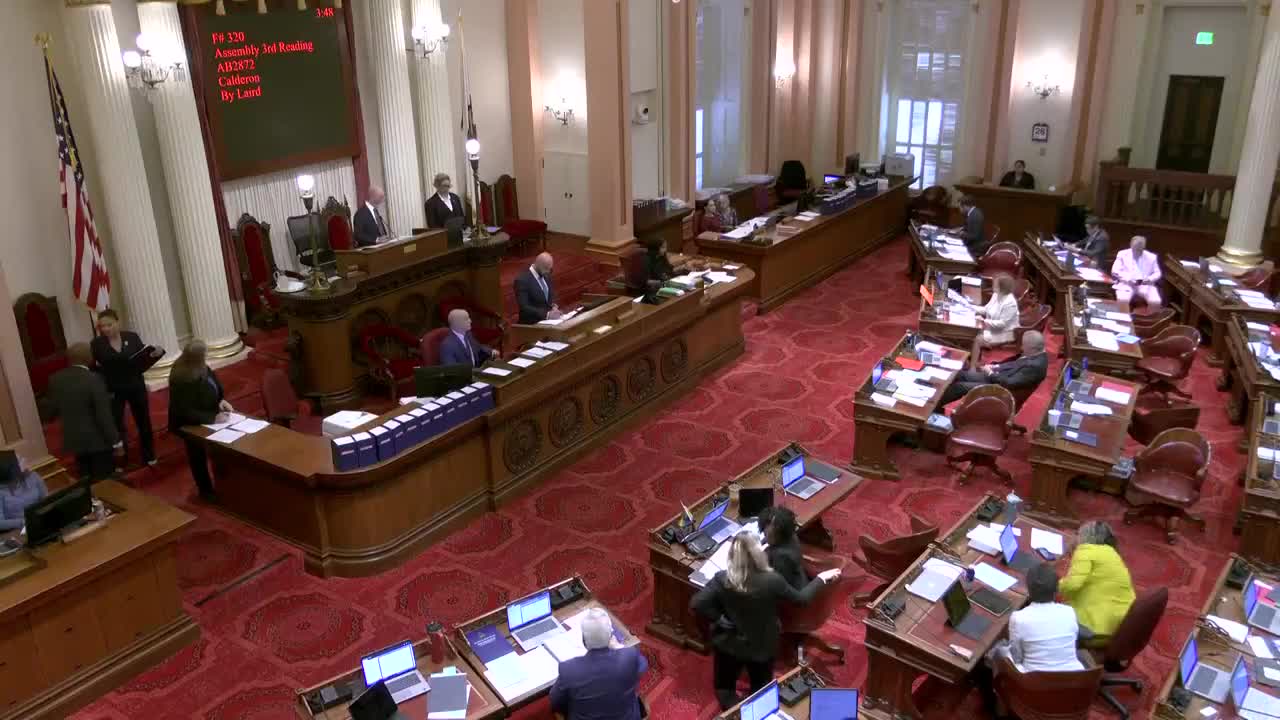 2MIN
Senate Floor
 16MIN
Senate Standing Committee on Public Safety
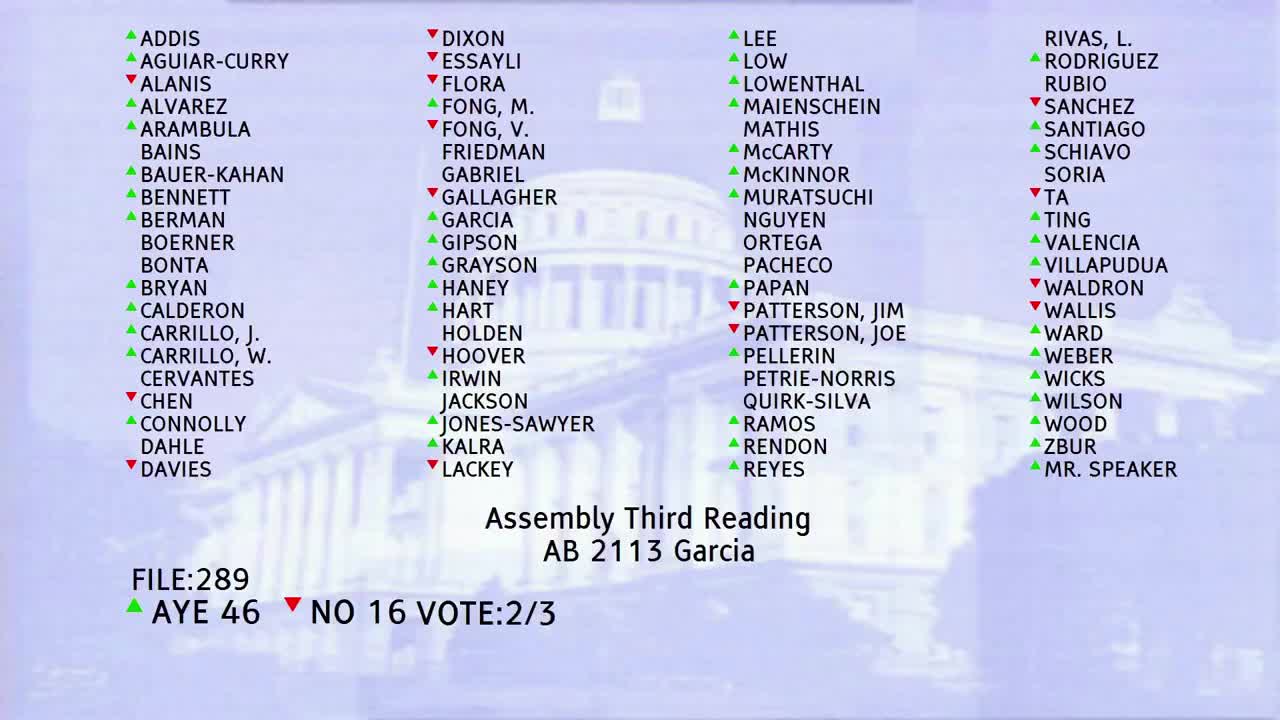 8MIN
Assembly Floor
 10MIN
Assembly Standing Committee on Public Safety
 1MIN
Assembly Standing Committee on Public Safety
Bill Author

Bill Co-Author(s):