AB 2302: Open meetings: local agencies: teleconferences.
- Session Year: 2023-2024
- House: Assembly
- Latest Version Date: 2024-09-22
Current Status:
Passed
(2024-09-22: Chaptered by Secretary of State - Chapter 389, Statutes of 2024.)
Introduced
In Committee
First Chamber
In Committee
Second Chamber
Enacted
Existing law, the Ralph M. Brown Act, requires, with specified exceptions, that all meetings of a legislative body, as defined, of a local agency be open and public and that all persons be permitted to attend and participate. The act generally requires for teleconferencing that the legislative body of a local agency that elects to use teleconferencing post agendas at all teleconference locations, identify each teleconference location in the notice and agenda of the meeting or proceeding, and have each teleconference location be accessible to the public. Existing law also requires that, during the teleconference, at least a quorum of the members of the legislative body participate from locations within the boundaries of the territory over which the local agency exercises jurisdiction. The act provides an exemption to the jurisdictional requirement for health authorities, as defined.
Existing law, until January 1, 2026, authorizes the legislative body of a local agency to use alternative teleconferencing in specified circumstances if, during the teleconference meeting, at least a quorum of the members of the legislative body participates in person from a singular physical location clearly identified on the agenda that is open to the public and situated within the boundaries of the territory over which the local agency exercises jurisdiction, and the legislative body complies with prescribed requirements. Existing law imposes prescribed restrictions on remote participation by a member under these alternative teleconferencing provisions, including establishing limits on the number of meetings a member may participate in solely by teleconference from a remote location, prohibiting such participation for a period of more than 3 consecutive months or 20% of the regular meetings for the local agency within a calendar year, or more than 2 meetings if the legislative body regularly meets fewer than 10 times per calendar year.
This bill would revise those limits, instead prohibiting such participation for more than a specified number of meetings per year, based on how frequently the legislative body regularly meets. The bill, for the purpose of counting meetings attended by teleconference, would define a meeting as any number of meetings of the legislative body of a local agency that begin on the same calendar day.
The California Constitution requires local agencies, for the purpose of ensuring public access to the meetings of public bodies and the writings of public officials and agencies, to comply with a statutory enactment that amends or enacts laws relating to public records or open meetings and contains findings demonstrating that the enactment furthers the constitutional requirements relating to this purpose.
This bill would make legislative findings to that effect.
(a)All meetings of the legislative body of a local agency shall be open and public, and all persons shall be permitted to attend any meeting of the legislative body of a local agency, except as otherwise provided in this chapter.
(b)(1)Notwithstanding any other provision of law, the legislative body of a local agency may use teleconferencing for the benefit of the public and the legislative body of a local agency in connection with any meeting or proceeding authorized by law. The teleconferenced meeting or proceeding shall comply with all otherwise applicable requirements of this chapter and all otherwise applicable provisions of law relating to a specific type of meeting or proceeding.
(2)Teleconferencing, as authorized by this section, may be used for all purposes in connection with any meeting within the subject matter jurisdiction of the legislative body. If the legislative body of a local agency elects to use teleconferencing, the legislative body of a local agency shall comply with all of the following:
(A)All votes taken during a teleconferenced meeting shall be by rollcall.
(B)The teleconferenced meetings shall be conducted in a manner that protects the statutory and constitutional rights of the parties or the public appearing before the legislative body of a local agency.
(C)The legislative body shall give notice of the meeting and post agendas as otherwise required by this chapter.
(D)The legislative body shall allow members of the public to access the meeting and the agenda shall provide an opportunity for members of the public to address the legislative body directly pursuant to Section 54954.3.
(3)If the legislative body of a local agency elects to use teleconferencing, it shall post agendas at all teleconference locations. Each teleconference location shall be identified in the notice and agenda of the meeting or proceeding, and each teleconference location shall be accessible to the public. During the teleconference, at least a quorum of the members of the legislative body shall participate from locations within the boundaries of the territory over which the local agency exercises jurisdiction, except as provided in subdivisions (d) and (e).
(c)(1)No legislative body shall take action by secret ballot, whether preliminary or final.
(2)The legislative body of a local agency shall publicly report any action taken and the vote or abstention on that action of each member present for the action.
(3)Prior to taking final action, the legislative body shall orally report a summary of a recommendation for a final action on the salaries, salary schedules, or compensation paid in the form of fringe benefits of a local agency executive, as defined in subdivision (d) of Section 3511.1, during the open meeting in which the final action is to be taken. This paragraph shall not affect the publics right under the California Public Records Act (Division 10 (commencing with Section 7920.000) of Title 1) to inspect or copy records created or received in the process of developing the recommendation.
(d)(1)Notwithstanding the provisions relating to a quorum in paragraph (3) of subdivision (b), if a health authority conducts a teleconference meeting, members who are outside the jurisdiction of the authority may be counted toward the establishment of a quorum when participating in the teleconference if at least 50 percent of the number of members that would establish a quorum are present within the boundaries of the territory over which the authority exercises jurisdiction, and the health authority provides a teleconference number, and associated access codes, if any, that allows any person to call in to participate in the meeting and the number and access codes are identified in the notice and agenda of the meeting.
(2)Nothing in this subdivision shall be construed as discouraging health authority members from regularly meeting at a common physical site within the jurisdiction of the authority or from using teleconference locations within or near the jurisdiction of the authority. A teleconference meeting for which a quorum is established pursuant to this subdivision shall be subject to all other requirements of this section.
(3)For purposes of this subdivision, a health authority means any entity created pursuant to Sections 14018.7, 14087.31, 14087.35, 14087.36, 14087.38, and 14087.9605 of the Welfare and Institutions Code, any joint powers authority created pursuant to Article 1 (commencing with Section 6500) of Chapter 5 of Division 7 for the purpose of contracting pursuant to Section 14087.3 of the Welfare and Institutions Code, and any advisory committee to a county-sponsored health plan licensed pursuant to Chapter 2.2 (commencing with Section 1340) of Division 2 of the Health and Safety Code if the advisory committee has 12 or more members.
(e)(1)The legislative body of a local agency may use teleconferencing without complying with the requirements of paragraph (3) of subdivision (b) if the legislative body complies with the requirements of paragraph (2) of this subdivision in either of the following circumstances:
(A)The legislative body holds a meeting during a proclaimed state of emergency for the purpose of determining, by majority vote, whether as a result of the emergency, meeting in person would present imminent risks to the health or safety of attendees.
(B)The legislative body holds a meeting during a proclaimed state of emergency and has determined, by majority vote, pursuant to subparagraph (A), that, as a result of the emergency, meeting in person would present imminent risks to the health or safety of attendees.
(2)A legislative body that holds a meeting pursuant to this subdivision shall do all of the following:
(A)In each instance in which notice of the time of the teleconferenced meeting is otherwise given or the agenda for the meeting is otherwise posted, the legislative body shall also give notice of the means by which members of the public may access the meeting and offer public comment. The agenda shall identify and include an opportunity for all persons to attend via a call-in option or an internet-based service option.
(B)In the event of a disruption that prevents the legislative body from broadcasting the meeting to members of the public using the call-in option or internet-based service option, or in the event of a disruption within the local agencys control that prevents members of the public from offering public comments using the call-in option or internet-based service option, the legislative body shall take no further action on items appearing on the meeting agenda until public access to the meeting via the call-in option or internet-based service option is restored. Actions taken on agenda items during a disruption that prevents the legislative body from broadcasting the meeting may be challenged pursuant to Section 54960.1.
(C)The legislative body shall not require public comments to be submitted in advance of the meeting and must provide an opportunity for the public to address the legislative body and offer comment in real time.
(D)Notwithstanding Section 54953.3, an individual desiring to provide public comment through the use of an internet website, or other online platform, not under the control of the local legislative body, that requires registration to log in to a teleconference may be required to register as required by the third-party internet website or online platform to participate.
(E)(i)A legislative body that provides a timed public comment period for each agenda item shall not close the public comment period for the agenda item, or the opportunity to register, pursuant to subparagraph (D), to provide public comment until that timed public comment period has elapsed.
(ii)A legislative body that does not provide a timed public comment period, but takes public comment separately on each agenda item, shall allow a reasonable amount of time per agenda item to allow public members the opportunity to provide public comment, including time for members of the public to register pursuant to subparagraph (D), or otherwise be recognized for the purpose of providing public comment.
(iii)A legislative body that provides a timed general public comment period that does not correspond to a specific agenda item shall not close the public comment period or the opportunity to register, pursuant to subparagraph (D), until the timed general public comment period has elapsed.
(3)If a state of emergency remains active, in order to continue to teleconference without compliance with paragraph (3) of subdivision (b), the legislative body shall, not later than 45 days after teleconferencing for the first time pursuant to subparagraph (A) or (B) of paragraph (1), and every 45 days thereafter, make the following findings by majority vote:
(A)The legislative body has reconsidered the circumstances of the state of emergency.
(B)The state of emergency continues to directly impact the ability of the members to meet safely in person.
(4)This subdivision shall not be construed to require the legislative body to provide a physical location from which the public may attend or comment.
(f)(1)The legislative body of a local agency may use teleconferencing without complying with paragraph (3) of subdivision (b) if, during the teleconference meeting, at least a quorum of the members of the legislative body participates in person from a singular physical location clearly identified on the agenda, which location shall be open to the public and situated within the boundaries of the territory over which the local agency exercises jurisdiction and the legislative body complies with all of the following:
(A)The legislative body shall provide at least one of the following as a means by which the public may remotely hear and visually observe the meeting, and remotely address the legislative body:
(i)A two-way audiovisual platform.
(ii)A two-way telephonic service and a live webcasting of the meeting.
(B)In each instance in which notice of the time of the teleconferenced meeting is otherwise given or the agenda for the meeting is otherwise posted, the legislative body shall also give notice of the means by which members of the public may access the meeting and offer public comment.
(C)The agenda shall identify and include an opportunity for all persons to attend and address the legislative body directly pursuant to Section 54954.3 via a call-in option, via an internet-based service option, and at the in-person location of the meeting.
(D)In the event of a disruption that prevents the legislative body from broadcasting the meeting to members of the public using the call-in option or internet-based service option, or in the event of a disruption within the local agencys control that prevents members of the public from offering public comments using the call-in option or internet-based service option, the legislative body shall take no further action on items appearing on the meeting agenda until public access to the meeting via the call-in option or internet-based service option is restored. Actions taken on agenda items during a disruption that prevents the legislative body from broadcasting the meeting may be challenged pursuant to Section 54960.1.
(E)The legislative body shall not require public comments to be submitted in advance of the meeting and must provide an opportunity for the public to address the legislative body and offer comment in real time.
(F)Notwithstanding Section 54953.3, an individual desiring to provide public comment through the use of an internet website, or other online platform, not under the control of the local legislative body, that requires registration to log in to a teleconference may be required to register as required by the third-party internet website or online platform to participate.
(2)A member of the legislative body shall only participate in the meeting remotely pursuant to this subdivision, if all of the following requirements are met:
(A)One of the following circumstances applies:
(i)The member notifies the legislative body at the earliest opportunity possible, including at the start of a regular meeting, of their need to participate remotely for just cause, including a general description of the circumstances relating to their need to appear remotely at the given meeting. The provisions of this clause shall not be used by any member of the legislative body for more than two meetings per calendar year.
(ii)The member requests the legislative body to allow them to participate in the meeting remotely due to emergency circumstances and the legislative body takes action to approve the request. The legislative body shall request a general description of the circumstances relating to their need to appear remotely at the given meeting. A general description of an item generally need not exceed 20 words and shall not require the member to disclose any medical diagnosis or disability, or any personal medical information that is already exempt under existing law, such as the Confidentiality of Medical Information Act (Chapter 1 (commencing with Section 56) of Part 2.6 of Division 1 of the Civil Code). For the purposes of this clause, the following requirements apply:
(I)A member shall make a request to participate remotely at a meeting pursuant to this clause as soon as possible. The member shall make a separate request for each meeting in which they seek to participate remotely.
(II)The legislative body may take action on a request to participate remotely at the earliest opportunity. If the request does not allow sufficient time to place proposed action on such a request on the posted agenda for the meeting for which the request is made, the legislative body may take action at the beginning of the meeting in accordance with paragraph (4) of subdivision (b) of Section 54954.2.
(B)The member shall publicly disclose at the meeting before any action is taken, whether any other individuals 18 years of age or older are present in the room at the remote location with the member, and the general nature of the members relationship with any such individuals.
(C)The member shall participate through both audio and visual technology.
(3)(A)The provisions of this subdivision shall not serve as a means for any member of a legislative body to participate in meetings of the legislative body solely by teleconference from a remote location for more than the following number of meetings, as applicable:
(i)Two meetings per year, if the legislative body regularly meets once per month or less.
(ii)Five meetings per year, if the legislative body regularly meets twice per month.
(iii)Seven meetings per year, if the legislative body regularly meets three or more times per month.
(B)For the purpose of counting meetings attended by teleconference under this paragraph, a meeting shall be defined as any number of meetings of the legislative body of a local agency that begin on the same calendar day.
(g)The legislative body shall have and implement a procedure for receiving and swiftly resolving requests for reasonable accommodation for individuals with disabilities, consistent with the federal Americans with Disabilities Act of 1990 (42 U.S.C. Sec. 12132), and resolving any doubt in favor of accessibility. In each instance in which notice of the time of the meeting is otherwise given or the agenda for the meeting is otherwise posted, the legislative body shall also give notice of the procedure for receiving and resolving requests for accommodation.
(h)The legislative body shall conduct meetings subject to this chapter consistent with applicable civil rights and nondiscrimination laws.
(i)(1)Nothing in this section shall prohibit a legislative body from providing the public with additional teleconference locations.
(2)Nothing in this section shall prohibit a legislative body from providing the public with additional physical locations in which the public may observe and address the legislative body by electronic means.
(j)For the purposes of this section, the following definitions shall apply:
(1)Emergency circumstances means a physical or family medical emergency that prevents a member from attending in person.
(2)Just cause means any of the following:
(A)A childcare or caregiving need of a child, parent, grandparent, grandchild, sibling, spouse, or domestic partner that requires them to participate remotely. Child, parent, grandparent, grandchild, and sibling have the same meaning as those terms do in Section 12945.2.
(B)A contagious illness that prevents a member from attending in person.
(C)A need related to a physical or mental disability as defined in Sections 12926 and 12926.1 not otherwise accommodated by subdivision (g).
(D)Travel while on official business of the legislative body or another state or local agency.
(3)Remote location means a location from which a member of a legislative body participates in a meeting pursuant to subdivision (f), other than any physical meeting location designated in the notice of the meeting. Remote locations need not be accessible to the public.
(4)Remote participation means participation in a meeting by teleconference at a location other than any physical meeting location designated in the notice of the meeting. Watching or listening to a meeting via webcasting or another similar electronic medium that does not permit members to interactively hear, discuss, or deliberate on matters, does not constitute remote participation.
(5)State of emergency means a state of emergency proclaimed pursuant to Section 8625 of the California Emergency Services Act (Article 1 (commencing with Section 8550) of Chapter 7 of Division 1 of Title 2).
(6)Teleconference means a meeting of a legislative body, the members of which are in different locations, connected by electronic means, through either audio or video, or both.
(7)Two-way audiovisual platform means an online platform that provides participants with the ability to participate in a meeting via both an interactive video conference and a two-way telephonic function.
(8)Two-way telephonic service means a telephone service that does not require internet access, is not provided as part of a two-way audiovisual platform, and allows participants to dial a telephone number to listen and verbally participate.
(9)Webcasting means a streaming video broadcast online or on television, using streaming media technology to distribute a single content source to many simultaneous listeners and viewers.
(k)This section shall remain in effect only until January 1, 2026, and as of that date is repealed.
SEC. 2.The Legislature finds and declares that Section 1 of this act, which amends Section 54953 of the Government Code, furthers, within the meaning of paragraph (7) of subdivision (b) of Section 3 of Article I of the California Constitution, the purposes of that constitutional section as it relates to the right of public access to the meetings of local public bodies or the writings of local public officials and local agencies. Pursuant to paragraph (7) of subdivision (b) of Section 3 of Article I of the California Constitution, the Legislature makes the following findings:
This act is necessary to ensure minimum standards for remote participation by a member of a legislative body in teleconference meetings.
(a)All meetings of the legislative body of a local agency shall be open and public, and all persons shall be permitted to attend any meeting of the legislative body of a local agency, except as otherwise provided in this chapter.
(b)(1)Notwithstanding any other provision of law, the legislative body of a local agency may use teleconferencing for the benefit of the public and the legislative body of a local agency in connection with any meeting or proceeding authorized by law. The teleconferenced meeting or proceeding shall comply with all otherwise applicable requirements of this chapter and all otherwise applicable provisions of law relating to a specific type of meeting or proceeding.
(2)Teleconferencing, as authorized by this section, may be used for all purposes in connection with any meeting within the subject matter jurisdiction of the legislative body. If the legislative body of a local agency elects to use teleconferencing, the legislative body of a local agency shall comply with all of the following:
(A)All votes taken during a teleconferenced meeting shall be by rollcall.
(B)The teleconferenced meetings shall be conducted in a manner that protects the statutory and constitutional rights of the parties or the public appearing before the legislative body of a local agency.
(C)The legislative body shall give notice of the meeting and post agendas as otherwise required by this chapter.
(D)The legislative body shall allow members of the public to access the meeting and the agenda shall provide an opportunity for members of the public to address the legislative body directly pursuant to Section 54954.3.
(3)If the legislative body of a local agency elects to use teleconferencing, it shall post agendas at all teleconference locations. Each teleconference location shall be identified in the notice and agenda of the meeting or proceeding, and each teleconference location shall be accessible to the public. During the teleconference, at least a quorum of the members of the legislative body shall participate from locations within the boundaries of the territory over which the local agency exercises jurisdiction, except as provided in subdivisions (d) and (e).
(c)(1)No legislative body shall take action by secret ballot, whether preliminary or final.
(2)The legislative body of a local agency shall publicly report any action taken and the vote or abstention on that action of each member present for the action.
(3)Prior to taking final action, the legislative body shall orally report a summary of a recommendation for a final action on the salaries, salary schedules, or compensation paid in the form of fringe benefits of a local agency executive, as defined in subdivision (d) of Section 3511.1, during the open meeting in which the final action is to be taken. This paragraph shall not affect the publics right under the California Public Records Act (Division 10 (commencing with Section 7920.000) of Title 1) to inspect or copy records created or received in the process of developing the recommendation.
(d)(1)Notwithstanding the provisions relating to a quorum in paragraph (3) of subdivision (b), if a health authority conducts a teleconference meeting, members who are outside the jurisdiction of the authority may be counted toward the establishment of a quorum when participating in the teleconference if at least 50 percent of the number of members that would establish a quorum are present within the boundaries of the territory over which the authority exercises jurisdiction, and the health authority provides a teleconference number, and associated access codes, if any, that allows any person to call in to participate in the meeting and the number and access codes are identified in the notice and agenda of the meeting.
(2)Nothing in this subdivision shall be construed as discouraging health authority members from regularly meeting at a common physical site within the jurisdiction of the authority or from using teleconference locations within or near the jurisdiction of the authority. A teleconference meeting for which a quorum is established pursuant to this subdivision shall be subject to all other requirements of this section.
(3)For purposes of this subdivision, a health authority means any entity created pursuant to Sections 14018.7, 14087.31, 14087.35, 14087.36, 14087.38, and 14087.9605 of the Welfare and Institutions Code, any joint powers authority created pursuant to Article 1 (commencing with Section 6500) of Chapter 5 of Division 7 for the purpose of contracting pursuant to Section 14087.3 of the Welfare and Institutions Code, and any advisory committee to a county-sponsored health plan licensed pursuant to Chapter 2.2 (commencing with Section 1340) of Division 2 of the Health and Safety Code if the advisory committee has 12 or more members.
(e)(1)The legislative body of a local agency may use teleconferencing without complying with the requirements of paragraph (3) of subdivision (b) if the legislative body complies with the requirements of paragraph (2) of this subdivision in either of the following circumstances:
(A)The legislative body holds a meeting during a proclaimed state of emergency for the purpose of determining, by majority vote, whether as a result of the emergency, meeting in person would present imminent risks to the health or safety of attendees.
(B)The legislative body holds a meeting during a proclaimed state of emergency and has determined, by majority vote, pursuant to subparagraph (A), that, as a result of the emergency, meeting in person would present imminent risks to the health or safety of attendees.
(2)A legislative body that holds a meeting pursuant to this subdivision shall do all of the following:
(A)In each instance in which notice of the time of the teleconferenced meeting is otherwise given or the agenda for the meeting is otherwise posted, the legislative body shall also give notice of the means by which members of the public may access the meeting and offer public comment. The agenda shall identify and include an opportunity for all persons to attend via a call-in option or an internet-based service option.
(B)In the event of a disruption that prevents the legislative body from broadcasting the meeting to members of the public using the call-in option or internet-based service option, or in the event of a disruption within the local agencys control that prevents members of the public from offering public comments using the call-in option or internet-based service option, the legislative body shall take no further action on items appearing on the meeting agenda until public access to the meeting via the call-in option or internet-based service option is restored. Actions taken on agenda items during a disruption that prevents the legislative body from broadcasting the meeting may be challenged pursuant to Section 54960.1.
(C)The legislative body shall not require public comments to be submitted in advance of the meeting and must provide an opportunity for the public to address the legislative body and offer comment in real time.
(D)Notwithstanding Section 54953.3, an individual desiring to provide public comment through the use of an internet website, or other online platform, not under the control of the local legislative body, that requires registration to log in to a teleconference may be required to register as required by the third-party internet website or online platform to participate.
(E)(i)A legislative body that provides a timed public comment period for each agenda item shall not close the public comment period for the agenda item, or the opportunity to register, pursuant to subparagraph (D), to provide public comment until that timed public comment period has elapsed.
(ii)A legislative body that does not provide a timed public comment period, but takes public comment separately on each agenda item, shall allow a reasonable amount of time per agenda item to allow public members the opportunity to provide public comment, including time for members of the public to register pursuant to subparagraph (D), or otherwise be recognized for the purpose of providing public comment.
(iii)A legislative body that provides a timed general public comment period that does not correspond to a specific agenda item shall not close the public comment period or the opportunity to register, pursuant to subparagraph (D), until the timed general public comment period has elapsed.
(3)If a state of emergency remains active, in order to continue to teleconference without compliance with paragraph (3) of subdivision (b), the legislative body shall, not later than 45 days after teleconferencing for the first time pursuant to subparagraph (A) or (B) of paragraph (1), and every 45 days thereafter, make the following findings by majority vote:
(A)The legislative body has reconsidered the circumstances of the state of emergency.
(B)The state of emergency continues to directly impact the ability of the members to meet safely in person.
(4)This subdivision shall not be construed to require the legislative body to provide a physical location from which the public may attend or comment.
(f)(1)The legislative body of a local agency may use teleconferencing without complying with paragraph (3) of subdivision (b) if, during the teleconference meeting, at least a quorum of the members of the legislative body participates in person from a singular physical location clearly identified on the agenda, which location shall be open to the public and situated within the boundaries of the territory over which the local agency exercises jurisdiction and the legislative body complies with all of the following:
(A)The legislative body shall provide at least one of the following as a means by which the public may remotely hear and visually observe the meeting, and remotely address the legislative body:
(i)A two-way audiovisual platform.
(ii)A two-way telephonic service and a live webcasting of the meeting.
(B)In each instance in which notice of the time of the teleconferenced meeting is otherwise given or the agenda for the meeting is otherwise posted, the legislative body shall also give notice of the means by which members of the public may access the meeting and offer public comment.
(C)The agenda shall identify and include an opportunity for all persons to attend and address the legislative body directly pursuant to Section 54954.3 via a call-in option, via an internet-based service option, and at the in-person location of the meeting.
(D)In the event of a disruption that prevents the legislative body from broadcasting the meeting to members of the public using the call-in option or internet-based service option, or in the event of a disruption within the local agencys control that prevents members of the public from offering public comments using the call-in option or internet-based service option, the legislative body shall take no further action on items appearing on the meeting agenda until public access to the meeting via the call-in option or internet-based service option is restored. Actions taken on agenda items during a disruption that prevents the legislative body from broadcasting the meeting may be challenged pursuant to Section 54960.1.
(E)The legislative body shall not require public comments to be submitted in advance of the meeting and must provide an opportunity for the public to address the legislative body and offer comment in real time.
(F)Notwithstanding Section 54953.3, an individual desiring to provide public comment through the use of an internet website, or other online platform, not under the control of the local legislative body, that requires registration to log in to a teleconference may be required to register as required by the third-party internet website or online platform to participate.
(2)A member of the legislative body shall only participate in the meeting remotely pursuant to this subdivision, if all of the following requirements are met:
(A)One of the following circumstances applies:
(i)The member notifies the legislative body at the earliest opportunity possible, including at the start of a regular meeting, of their need to participate remotely for just cause, including a general description of the circumstances relating to their need to appear remotely at the given meeting. The provisions of this clause shall not be used by any member of the legislative body for more than two meetings per calendar year.
(ii)The member requests the legislative body to allow them to participate in the meeting remotely due to emergency circumstances and the legislative body takes action to approve the request. The legislative body shall request a general description of the circumstances relating to their need to appear remotely at the given meeting. A general description of an item generally need not exceed 20 words and shall not require the member to disclose any medical diagnosis or disability, or any personal medical information that is already exempt under existing law, such as the Confidentiality of Medical Information Act (Chapter 1 (commencing with Section 56) of Part 2.6 of Division 1 of the Civil Code). For the purposes of this clause, the following requirements apply:
(I)A member shall make a request to participate remotely at a meeting pursuant to this clause as soon as possible. The member shall make a separate request for each meeting in which they seek to participate remotely.
(II)The legislative body may take action on a request to participate remotely at the earliest opportunity. If the request does not allow sufficient time to place proposed action on such a request on the posted agenda for the meeting for which the request is made, the legislative body may take action at the beginning of the meeting in accordance with paragraph (4) of subdivision (b) of Section 54954.2.
(B)The member shall publicly disclose at the meeting before any action is taken, whether any other individuals 18 years of age or older are present in the room at the remote location with the member, and the general nature of the members relationship with any such individuals.
(C)The member shall participate through both audio and visual technology.
(3)(A)The provisions of this subdivision shall not serve as a means for any member of a legislative body to participate in meetings of the legislative body solely by teleconference from a remote location for a period of more than three consecutive months or 20 percent of the regular meetings for the local agency within a calendar year, or more than two meetings if the legislative body regularly meets fewer than 10 times per calendar year. more than the following number of meetings, as applicable:
(i)Two meetings per year, if the legislative body regularly meets once per month or less.
(ii)Five meetings per year, if the legislative body regularly meets twice per month.
(iii)Seven meetings per year, if the legislative body regularly meets three or more times per month.
(B)For the purpose of counting meetings attended by teleconference under this paragraph, a meeting shall be defined as any number of meetings of the legislative body of a local agency that begin on the same calendar day.
(g)The legislative body shall have and implement a procedure for receiving and swiftly resolving requests for reasonable accommodation for individuals with disabilities, consistent with the federal Americans with Disabilities Act of 1990 (42 U.S.C. Sec. 12132), and resolving any doubt in favor of accessibility. In each instance in which notice of the time of the meeting is otherwise given or the agenda for the meeting is otherwise posted, the legislative body shall also give notice of the procedure for receiving and resolving requests for accommodation.
(h)The legislative body shall conduct meetings subject to this chapter consistent with applicable civil rights and nondiscrimination laws.
(i)(1)Nothing in this section shall prohibit a legislative body from providing the public with additional teleconference locations.
(2)Nothing in this section shall prohibit a legislative body from providing the public with additional physical locations in which the public may observe and address the legislative body by electronic means.
(j)For the purposes of this section, the following definitions shall apply:
(1)Emergency circumstances means a physical or family medical emergency that prevents a member from attending in person.
(2)Just cause means any of the following:
(A)A childcare or caregiving need of a child, parent, grandparent, grandchild, sibling, spouse, or domestic partner that requires them to participate remotely. Child, parent, grandparent, grandchild, and sibling have the same meaning as those terms do in Section 12945.2.
(B)A contagious illness that prevents a member from attending in person.
(C)A need related to a physical or mental disability as defined in Sections 12926 and 12926.1 not otherwise accommodated by subdivision (g).
(D)Travel while on official business of the legislative body or another state or local agency.
(3)Remote location means a location from which a member of a legislative body participates in a meeting pursuant to subdivision (f), other than any physical meeting location designated in the notice of the meeting. Remote locations need not be accessible to the public.
(4)Remote participation means participation in a meeting by teleconference at a location other than any physical meeting location designated in the notice of the meeting. Watching or listening to a meeting via webcasting or another similar electronic medium that does not permit members to interactively hear, discuss, or deliberate on matters, does not constitute remote participation.
(5)State of emergency means a state of emergency proclaimed pursuant to Section 8625 of the California Emergency Services Act (Article 1 (commencing with Section 8550) of Chapter 7 of Division 1 of Title 2).
(6)Teleconference means a meeting of a legislative body, the members of which are in different locations, connected by electronic means, through either audio or video, or both.
(7)Two-way audiovisual platform means an online platform that provides participants with the ability to participate in a meeting via both an interactive video conference and a two-way telephonic function.
(8)Two-way telephonic service means a telephone service that does not require internet access, is not provided as part of a two-way audiovisual platform, and allows participants to dial a telephone number to listen and verbally participate.
(9)Webcasting means a streaming video broadcast online or on television, using streaming media technology to distribute a single content source to many simultaneous listeners and viewers.
(k)This section shall remain in effect only until January 1, 2026, and as of that date is repealed.
SEC. 2.The Legislature finds and declares that Section 1 of this act, which amends Section 54953 of the Government Code, furthers, within the meaning of paragraph (7) of subdivision (b) of Section 3 of Article I of the California Constitution, the purposes of that constitutional section as it relates to the right of public access to the meetings of local public bodies or the writings of local public officials and local agencies. Pursuant to paragraph (7) of subdivision (b) of Section 3 of Article I of the California Constitution, the Legislature makes the following findings:
This act is necessary to ensure minimum standards for remote participation by a member of a legislative body in teleconference meetings.
|
Date
|
Status
|
|---|---|
| Sep 22, 2024 | Chaptered by Secretary of State - Chapter 389, Statutes of 2024. |
| Sep 22, 2024 | Approved by the Governor. |
| Aug 27, 2024 | Enrolled and presented to the Governor at 12 p.m. |
| Aug 20, 2024 | In Assembly. Ordered to Engrossing and Enrolling. |
| Aug 19, 2024 | Read third time. Passed. Ordered to the Assembly. (Ayes 40. Noes 0. Page 5200.). |
| Jun 6, 2024 | Read second time. Ordered to third reading. |
| Jun 5, 2024 | From committee: Do pass. (Ayes 7. Noes 0.) (June 5). |
| May 22, 2024 | Referred to Com. on L. GOV. |
| May 9, 2024 | In Senate. Read first time. To Com. on RLS. for assignment. |
| May 9, 2024 | Read third time. Passed. Ordered to the Senate. (Ayes 63. Noes 0. Page 5151.) |
| Apr 15, 2024 | Read second time. Ordered to third reading. |
| Apr 11, 2024 | From committee: Do pass. (Ayes 9. Noes 0.) (April 10). |
| Feb 26, 2024 | Referred to Com. on L. GOV. |
| Feb 13, 2024 | From printer. May be heard in committee March 14. |
| Feb 12, 2024 | Read first time. To print. |
|
Date
|
Description
|
Location
|
Votes
|
|
|---|---|---|---|---|
| Aug 19, 2024 | Assembly 3rd Reading AB2302 Addis et al. By Laird | Senate Floor |
Passed |
|
| Jun 5, 2024 | Do pass | Senate Standing Committee on Local Government |
Passed |
|
| May 9, 2024 | AB 2302 Addis Assembly Third Reading | Assembly Floor |
Passed |
|
| Apr 10, 2024 | Do pass. | Assembly Standing Committee on Local Government |
Passed |
This list shows positions taken on this bill by organizations on the date displayed, which is linked to the original source.
Positions by individuals are not included.
|
Organization
|
Position
|
Date
|
|---|---|---|
| Association Of California Water Agencies | ** Support | |
| California Municipal Utilities Association | * Support | Jun 5, 2024 |
| California Special Districts Association | * Support | Apr 10, 2024 |
| City Of Goleta | * Support | Jun 5, 2024 |
| City of Pismo Beach | * Support | Jun 5, 2024 |
| League of Califonia Cities | * Support | Jun 5, 2024 |
| San Francisco Bay Area Rapid Transit District | ** Support | |
| Santa Clara Valley Water District | * Support | Jun 6, 2024 |
SENATE RULES COMMITTEE Office of Senate Floor Analyses (916) 651-1520 Fax: (916) 327-4478 | AB 2302 |
THIRD READING
Bill No: AB 2302
Author: Addis (D), et al.
Introduced: 2/12/24
Vote: 21
SENATE LOCAL GOVERNMENT COMMITTEE: 7-0, 6/5/24
AYES: Durazo, Seyarto, Dahle, Glazer, Skinner, Wahab, Wiener
ASSEMBLY FLOOR: 63-0, 5/9/24 - See last page for vote
SUBJECT: Open meetings: local agencies: teleconferences
SOURCE: City of Pismo Beach
DIGEST:
This bill recasts existing limits on the number of times members of a legislative body can participate remotely in meetings for just cause or emergency circumstances.
ANALYSIS:
Existing law:
- Guarantees, pursuant to Article I, Section 3 of the California Constitution, that “the people have the right to instruct their representatives, petition government for redress of grievances, and assemble freely to consult for the common good.” This includes a right to access information concerning the meetings and writings of public officials.
- Requires, pursuant to the Constitution, local agencies to comply with certain state laws that outline the basic requirements for public access to meetings and public records. If a subsequent bill modifies these laws, it must include findings demonstrating how it furthers the public’s access to local agencies and their officials.
- Provides, under the Ralph M. Brown Act, guidelines for how local agencies must hold public meetings:
- Defines a “meeting” as “any congregation of a majority of the members of a legislative body at the same time and location, including teleconference locations, to hear, discuss, deliberate, or take action on any item that is within the subject matter jurisdiction of the legislative body.”
- Requires local agencies to notice meetings in advance, including the posting of an agenda, and requires these meetings to be open and accessible to the public.
- Requires members of the public to have an opportunity to comment on agenda items, and generally prohibits deliberation or action on items not listed on the agenda.
- If a member of the public, including the respective district attorney, believes a local agency violated the Brown Act, it must first send an order to the local agency to correct the violation. If the local agency disagrees with the complaint and does not correct it, the submitter can pursue the complaint through the courts. If the court agrees with the complaint, outcomes range from invalidating certain actions of the local agency to a misdemeanor.
- Authorizes the legislative body of a local agency to use teleconferencing for the benefit of the public and the legislative body of a local agency in connection with any meeting or proceeding authorized by law, provided that the teleconferenced meeting complies with all of the following conditions:
- Teleconferencing, as authorized, may be used for all purposes in connection with any meeting within the subject matter jurisdiction of the legislative body. All votes taken during a teleconferenced meeting must be by rollcall.
- If the legislative body elects to use teleconferencing, it must post agendas at all teleconference locations and conduct teleconference meetings in a manner that protects the statutory and constitutional rights of the parties or in the public appearing before the legislative body of the local agency.
- Each teleconferencing location must be identified in the notice and agenda of the meeting or proceeding, and each teleconference location must be accessible to the public.
- During the teleconference, at least a quorum of the members of the legislative body shall participate from locations within the boundaries of the territory over which the local agency exercised jurisdiction, except as otherwise specified.
- The agenda must provide an opportunity for members of the public to address the legislative body directly, as the Brown Act requires for in-person meetings, at each teleconference location.
- For purposes of these requirements, “teleconference” means a meeting of a legislative body, the members of which are in different locations, connected by electronic means, through either audio or video, or both.
- Authorizes a local agency to use teleconferencing for a public meeting without complying with the Brown Act’s teleconferencing quorum, meeting notice, and agenda requirements, in any of the following circumstances:
- The legislative body holds a meeting during a proclaimed state of emergency, and state or local officials have imposed or recommended measures to promote social distancing;
- The legislative body holds a meeting during a proclaimed state of emergency for purposes of determining, by majority vote, whether as a result of the emergency, meeting in person would present imminent risks to the health and safety of attendees; and
- The legislative body holds a meeting during a proclaimed state of emergency and has determined by majority vote that, as a result of the emergency, meeting in person would present imminent risks to the health or safety of attendees.
- Provides that a legislative body holding a teleconferenced meeting pursuant to the Brown Act exception provided in 5) is subject to the following requirements:
- The legislative body must give notice of the meeting and post agendas as otherwise required by the Brown Act.
- The legislative body must allow members of the public to access the meeting, and the agenda must provide an opportunity for members of the public to address the legislative body directly pursuant to Brown Act requirements as specified. The agenda must identify and include an opportunity for all persons to attend via call-in option or an internet-based service option. The legislative body need not provide a physical location from which the public may attend or comment.
- The legislative body must conduct teleconference meetings in a manner that protects the statutory and constitutional rights of the parties and the public appearing before the legislative body.
- In the event of a disruption that prevents the public agency from broadcasting the meeting to members of the public using the call-in or internet-based service options, or in the event of a disruption within the local agency’s control that prevents members of the public from offering public comments using the call-in or internet-based service options, the legislative body must take no further action on items appearing on the meeting agenda until public access to the meeting is restored. Actions taken on agenda items during a disruption preventing the broadcast of the meeting may be challenged as provided in the Brown Act.
- The legislative body may not require public comments to be submitted in advance of the meeting, and it must provide an opportunity for the public to address the legislative body and offer comment in real time.
- The legislative body may use an online third-party system for individuals to provide public comment that requires an individual to register with the system prior to providing comment.
- If a legislative body provides a timed public comment period, it may not close the comment period or the time to register to provide comment until the timed period has elapsed. If the legislative body does not provide a time-limited comment period, it must allow a reasonable time for the public to comment on each agenda item and to register as necessary.
- Provides that if the state of emergency remains active, or state or local officials have imposed measures to promote social distancing, the legislative body must, in order to continue meeting subject to this exemption to the Brown Act, no later than 30 days after it commences using the exemption, and every 30 days thereafter, make specified findings by majority vote.
- Provides that the provisions relating to the Brown Act in 5) through 7) above will remain in effect only until January 1, 2024.
- Allows members of legislative bodies to participate remotely for “just cause” and “emergency circumstances” without noticing their teleconference location or making that location public, provided the local agency meets the requirements described in 6), as well as the following:
- One of the following circumstances applies:
- The member notifies the legislative body at the earliest opportunity possible, including at the start of a regular meeting, of their need to participate remotely for just cause, including a general description of the circumstances relating to their need to appear remotely at the given meeting. These provisions cannot be used by any member of the legislative body for more than two meetings per calendar year.
- The member requests the legislative body to allow them to participate in the meeting remotely due to emergency circumstances and the legislative body takes action to approve the request.
- When a member uses this flexibility, they must participate through both audio and visual technology, and publicly disclose whether any other individuals 18 years of age or older are present at the teleconference location and the member’s relationship with any such individuals.
- Additionally, a member of a legislative body cannot participate in meetings of the legislative body solely by teleconference from a remote location for a period of more than three consecutive months or 20 percent of the regular meetings for the local agency within a calendar year, or more than two meetings if the legislative body regularly meets fewer than 10 times per calendar year.
- One of the following circumstances applies:
- Provides that “just cause” includes childcare or caregiving needs, contagious illnesses, need related to physical or mental disabilities not otherwise accommodated, and travel while on official business of a public body. “Emergency circumstances” are a physical or family medical emergency.
- Provides that the provisions relating to the Brown Act in 9) through 10) above will remain in effect only until January 1, 2026.
This bill:
- Revises and recasts the number of meetings that a member of a legislative body may attend remotely participate remotely for “just cause” and “emergency circumstances” without noticing their teleconference location or making that location public as described above. Rather than specifying 20 percent of meetings per year, this bill limits the number of meetings as follows:
- Two meetings per year, if the legislative body regularly meets once per month or less;
- Five meetings per year, if the legislative body regularly meets twice per month; or
- Seven meetings per year, if the legislative body regularly meets three or more times per month.
- Changes the definition of a “meeting” for purposes of counting how many times a member uses their teleconference flexibility to include any number of meetings of a legislative body that begin on the same calendar day.
Background
To control the spread of COVID-19, California, and other states, issued mandatory “stay-at-home” orders. Public agencies also had to adjust to new ways of conducting business because of the public safety risk associated with meeting in person. In March 2020, the Governor issued Executive Order N-29-20, which provided local agencies with more flexibility to use teleconferencing without making those teleconference locations accessible to the public. On June 11, the Governor issued Executive Order N-08-21 notifying local agencies and the public that previous executive orders concerning the conduct of public meetings would apply through September 30, 2021. Despite the executive order, both local and state governing bodies remained concerned about their ongoing ability to teleconference without having to disclose the location of teleconferencing members or make that location accessible to the public.
The Legislature later enacted AB 361 (Robert Rivas, Chapter 165, Statutes of 2021) which allowed, until January 1, 2024, local agencies to use teleconferencing without complying with specified Brown Act restrictions in certain state-declared emergencies. The following year, the Legislature enacted AB 2449 (Blanca Rubio Chapter 285, Statutes of 2022), which allowed members of a legislative body to use alternative teleconferencing rules in two distinct situations: for "just cause" and for emergency circumstances.
Comments
- Purpose of the bill. According to the author, “Even after the COVID-19 emergency proclamation ended, local bodies found that allowing members to attend meetings remotely is helpful when members are unable to attend in person. In 2022, AB 2449 (Rubio) allowed members of local legislative bodies to participate in meetings remotely, under certain circumstances, for a maximum of 20% of regular meetings a year. Current law does not specify whether multiple sessions of a legislative body that happen on the same day should be treated as one meeting or two separate meetings. Some local agencies consider open and closed sessions on the same day to be two separate meetings, while others treat them as one meeting, unintentionally creating a system where some local bodies are treated differently under the law. AB 2302 will clarify that multiple sessions on the same day are considered to be one meeting. It will also state the maximum number of remote meetings allowed per year as a number rather than a percentage. Together, these changes will bring clarity to the law and ensure that all local bodies are treated equally.”
- You do the math. Supporters of this bill argue that AB 2449’s existing limit on teleconferencing use in just cause and emergency circumstances is unclear for two reasons. First, since the existing limit is calculated using a percentage, it forces local agencies to break out their calculators. If a body meets once a month, twenty percent of meetings is 2.4 meetings a year. If a body meets twice a month, twenty percent of meetings is 4.8 meetings a year. If a body meets three times a month, twenty percent of meetings is 7.2 meetings a year. Members are left to wonder whether they should round up or down to the nearest whole number. Second, if a legislative body holds more than one meeting in a day, members are left to wonder whether that counts as one or more meetings. For example, the City of Pismo Beach holds two meetings each time the city council meets, one for open session and one for closed session. According to the City, this helps it plan the business it must cover that day, and allows it to begin the open session at a specific time so the public is aware of when the council will bring up discussion items. However, that would appear to count as two separate teleconferenced meetings under AB 2449 instead of one. This bill solves this math problem by providing a specific number of meetings members of legislative bodies can use AB 2449 teleconferencing flexibility roughly equivalent to AB 2449’s current limit of 20 percent of a legislative body’s meetings per year, but without allowing anyone to teleconference for more than three consecutive months. Subcommittees of a legislative body or other agencies that a member sits on might hold meetings that same day, but the Brown Act considers generally considers those to be separate legislative bodies subject to their own AB 2449 teleconferencing limits.
FISCAL EFFECT: Appropriation: No Fiscal Com.: No Local: No
SUPPORT: (Verified 6/6/24)
City of Pismo Beach (source)
Association of California Water Agencies (ACWA)
California Municipal Utilities Association
California Special Districts Association
City of Thousand Oaks
League of California Cities
San Francisco Bay Area Rapid Transit District (BART)
Water Replenishment District of Southern California
OPPOSITION: (Verified 6/6/24)
None received
ASSEMBLY FLOOR: 63-0, 5/9/24
AYES: Addis, Aguiar-Curry, Alanis, Alvarez, Arambula, Bauer-Kahan, Bennett, Berman, Boerner, Bonta, Bryan, Calderon, Juan Carrillo, Wendy Carrillo, Chen, Connolly, Davies, Dixon, Essayli, Mike Fong, Vince Fong, Friedman, Gallagher, Garcia, Gipson, Hart, Holden, Hoover, Irwin, Jackson, Jones-Sawyer, Kalra, Lackey, Lowenthal, Maienschein, McCarty, McKinnor, Ortega, Pacheco, Papan, Jim Patterson, Joe Patterson, Pellerin, Quirk-Silva, Ramos, Rendon, Reyes, Rodriguez, Sanchez, Santiago, Schiavo, Soria, Ta, Valencia, Villapudua, Waldron, Ward, Weber, Wicks, Wilson, Wood, Zbur, Robert Rivas
NO VOTE RECORDED: Bains, Cervantes, Megan Dahle, Flora, Gabriel, Grayson, Haney, Lee, Low, Mathis, Muratsuchi, Stephanie Nguyen, Petrie-Norris, Luz Rivas, Blanca Rubio, Ting, Wallis
Prepared by: Jonathan Peterson / L. GOV. / (916) 651-4119
6/6/24 10:46:01
**** END ****
SENATE COMMITTEE ON LOCAL GOVERNMENT
Senator María Elena Durazo, Chair
2023 - 2024 Regular
Bill No: | AB 2302 | Hearing Date: | 6/5/24 |
Author: | Addis | Fiscal: | No |
Version: | 2/12/24 | Consultant: | Peterson |
Open meetings: local agencies: teleconferences
Recasts existing limits on the number of times members of a legislative body can participate remotely in meetings for just cause or emergency circumstances.
Background
Public access. Article I, Section Three of the California Constitution guarantees “the people have the right to instruct their representatives, petition government for redress of grievances, and assemble freely to consult for the common good.” This includes a right to access information concerning the meetings and writings of public officials. To ensure the right to openly scrutinize public agencies is maintained, the Constitution requires local agencies to comply with certain state laws that outline the basic requirements for public access to meetings and public records. If a subsequent bill modifies these laws, it must include findings demonstrating how it furthers the public’s access to local agencies and their officials.
Brown Act. The Ralph M. Brown Act provides guidelines for how local agencies must hold public meetings. Among other provisions, the Act requires meetings of the legislative body of a local agency be open and public. The Legislature originally enacted the Brown Act in 1953 and has since amended it numerous times. The Legislature expressly declared the intent of the Brown Act in its original statute, which remains unchanged today:
The Legislature finds and declares that the public commissions, boards and councils and other public agencies in this State exist to aid in the conduct of the people’s business. It is the intent of the law that their actions be taken openly and that their deliberations be conducted openly. The people of this State do not yield their sovereignty to the agencies which serve them. The people, in delegating authority, do not give their public servants the right to decide what is good for the people to know and what is not good for them to know. The people insist on remaining informed so that they may retain control over the instruments they have created.
The Brown Act generally requires local agencies to notice meetings in advance, including the posting of an agenda, and requires these meetings to be open and accessible to the public. The Brown Act defines a “meeting” as “any congregation of a majority of the member of a legislative body at the same time and location, including teleconference locations, to hear, discuss, deliberate, or take action on any item that is within the subject matter jurisdiction of the legislative body.” The Brown Act only allows local agencies to take actions, meaning a majority vote of the legislative body unless otherwise specified, on items that appear on the posted agenda.
The Brown Act lays out certain requirements for public participation. The local agency cannot require members of the public to register or provide information as a condition of participation. The Brown Act also generally requires every agenda for meetings to provide an opportunity for the public to directly address the legislative body on any item of public interest, before or during its consideration of the item, within its jurisdiction. While the Brown Act requires local agencies to provide opportunities for public comment, it also allows local agencies to adopt reasonable regulations to carry out public participation requirements, such as limiting the amount of time for public testimony on each item and for each speaker. These restrictions must be content-neutral; for example, the local agency cannot restrict public criticism of its actions.
If a member of the public, including the respective district attorney, believes a local agency violated the Brown Act, it must first send an order to the local agency to correct the violation. If the local agency disagrees with the complaint and does not correct it, the submitter can pursue the complaint through the courts. If the court agrees with the complaint, outcomes range from invalidating certain actions of the local agency to a misdemeanor criminal conviction.
Legislative bodies subject to the Brown Act. The Brown Act applies not just to governing bodies of local agency like a city council or county board of supervisors. It also applies to these other legislative bodies of a local agency:
- Bodies of a local agency, whether permanent or temporary, decisionmaking or advisory, created by charter, ordinance, resolution, or formal action of a legislative body;
- Standing committees of a legislative body, regardless of their composition, that have a continuing subject matter jurisdiction, or a meeting schedule fixed by charter, ordinance, resolution, or formal action of a legislative body; and
- Boards, commissions, committees, or other multimember bodies that govern a private corporation, limited liability company, or other entity that either is created by an elected legislative body to exercise authority delegated to it, or receives funds from a local agency and the membership includes a full voting member from that legislative body.
Advisory committees composed of less than a quorum of the legislative body are not subject to the Brown Act unless they meet one of the above categories.
Teleconferencing and the Brown Act. The Brown Act first allowed teleconference meetings in 1988. At the time, San Diego County was considering the use of video teleconferencing for meetings and hearings of the board of supervisors due to concerns about the long distances some of their constituents travelled to participate, and were concerned these distances prohibited some people from attending at all. AB 3191 (Frazee, 1988) responded to these concerns by authorizing the legislative body of a local agency to use teleconferencing. Since that time, a number of bills have made modifications to this original authorization.
The Brown Act allows the legislative body of a local agency to use teleconferencing for the benefit of the public and the legislative body in connection with any meeting or proceeding authorized by law. The teleconferenced meeting or proceeding must comply with all requirements of the Brown Act and all otherwise applicable provisions of law relating to a specific type of meeting or proceeding. Teleconferencing may be used for all purposes in connection with any meeting within the subject matter jurisdiction of the legislative body. All votes taken during a teleconferenced meeting must be taken by roll call. The agenda must provide an opportunity for members of the public at each teleconference location to address the legislative body directly pursuant to the Brown Act’s provisions governing public comment.
In addition to the above, if a legislative body of a local agency elects to use teleconferencing, it must follow four requirements:
- The legislative body must post agendas at all teleconference locations;
- Each teleconference location must be identified in the notice and agenda of the meeting or proceeding;
- Each teleconference location must be accessible to the public; and
- During the teleconference, at least a quorum of the members of the legislative body must participate from locations within the boundaries of the territory over which the local agency exercises jurisdiction, with specified exceptions.
Public meetings during the COVID-19 pandemic. In response to the impacts of the COVID-19 pandemic, including mandatory “stay-at-home” orders, public agencies had to find new ways of conducting business because of the public safety risk associated with meeting in person. In March 2020, the Governor issued Executive Order N-29-20, which provided local agencies with more flexibility to use teleconferencing without making those teleconference locations accessible to the public. In June 2020, the Governor issued Executive Order N-08-21 notifying local agencies and the public that previous executive orders concerning the conduct of public meetings would apply through September 30, 2021.
Despite the executive order, both local and state governing bodies wanted to ensure they would have the ongoing ability to teleconference without having to disclose the location of teleconferencing members or make that location accessible to the public. The Legislature enacted AB 361 (Robert Rivas, 2021) which allowed, until January 1, 2024, local agencies to use teleconferencing without complying with specified Brown Act restrictions in certain state-declared emergencies.
A local agency availing itself of the provisions of AB 361 is subject to various requirements, including:
- In each instance where notice of the time of the teleconferenced meeting is otherwise given or the agenda for the meeting is otherwise posted, the legislative body must also give notice of the means by which members of the public may access the meeting and offer public comment;
- The agenda must identify and include an opportunity for all persons to attend via a call-in option or an internet-based service option. The legislative body need not provide a physical location from which the public may attend or comment;
- In the event of a disruption that prevents the public agency from publicly broadcasting the meeting using the call-in or internet-based service options, or in the event of a disruption within the local agency’s control that prevents members of the public from offering public comments using the call-in or internet-based service options, the legislative body must take no further action on items appearing on the meeting agenda until public access to the meeting is restored. Actions taken on agenda items during a disruption preventing the broadcast of the meeting may be challenged as provided in the Brown Act;
- The legislative body may not require public comments to be submitted in advance of the meeting, and it must provide an opportunity for the public to address the legislative body and offer comment in real time; and
- The legislative body may use an online third-party system for individuals to provide public comment that requires an individual to register with the system prior to providing comment.
If a state of emergency remains active, or state or local officials have imposed measures to promote social distancing, the legislative body must make findings to continue using the exemptions AB 361 provides every 30 days.
AB 2449 (Blanca Rubio, 2022). AB 2449 gave members of legislative bodies more teleconferencing flexibility in non-emergency circumstances. It allowed members of legislative bodies to participate remotely for “just cause” and “emergency circumstances” without noticing their teleconference location or making that location public. Under the measure, just cause includes:
- Childcare or caregiving need that requires a member to participate remotely;
- A contagious illness that prevents a member from attending in person;
- A need related to a physical or mental disability not otherwise accommodated; and
- Travel while on official business of the legislative body or another state or local agency.
Emergency circumstances are a physical or family medical emergency that prevents a member from attending in person.
To use this flexibility, at least a quorum of the legislative body must participate in person at one physical location, which must be identified on the agenda, open to the public, and within the boundaries of the local agency’s jurisdiction. The bill also placed additional requirements on local agencies using its provisions modeled after the provisions included in AB 361.
A member of a legislative body can participate in a meeting remotely using these provisions only if one of the following circumstances apply:
- The member notifies the legislative body at the earliest opportunity possible, including at the start of a regular meeting, of their need to participate remotely for just cause, including a general description of the circumstances relating to their need to appear remotely at the given meeting. These provisions cannot be used by any member of the legislative body for more than two meetings per calendar year; or
- The member requests the legislative body to allow them to participate in the meeting remotely due to emergency circumstances and the legislative body approves the request.
When a member uses this flexibility, they must participate through both audio and visual technology, and publicly disclose whether any other individuals 18 years of age or older are present in the same room at the teleconference location and the member’s relationship with any such individuals. Additionally, a member of a legislative body cannot participate in meetings of the legislative body solely by teleconference from a remote location for more than three consecutive months or 20 percent of the regular meetings for the local agency within a calendar year, or more than two meetings if the legislative body regularly meets fewer than 10 times per calendar year.
AB 2449 sunsets on January 1, 2026.
The City of Pismo Beach wants to clarify the number of times a member of a legislative body can use AB 2449’s teleconferencing flexibility.
Proposed Law
Assembly Bill 2302 recasts AB 2449’s limit on the number of times a member can use the teleconferencing flexibility that measure provided. AB 2449 prohibited members of a legislative body from using its provisions for a period of more than three consecutive months or 20 percent of the regular meetings for the local agency within a calendar year, or twice if the legislative body regularly meets less than 10 times per year. Instead, AB 2302 allows members to use AB 2449 teleconferencing flexibility as follows:
- Two meetings per year, if the legislative body regularly meets once per month or less;
- Five meetings per year, if the legislative body regularly meets twice per month; or
- Seven meetings per year, if the legislative body regularly meets three or more times per month.
The measure also changes the definition of a “meeting” for purposes of counting how many times a member uses their teleconference flexibility to include any number of meetings of a legislative body that begin on the same calendar day.
Comments
1. Purpose of the bill. According to the author, “Even after the COVID-19 emergency proclamation ended, local bodies found that allowing members to attend meetings remotely is helpful when members are unable to attend in person. In 2022, AB 2449 (Rubio) allowed members of local legislative bodies to participate in meetings remotely, under certain circumstances, for a maximum of 20% of regular meetings a year.
“Current law does not specify whether multiple sessions of a legislative body that happen on the same day should be treated as one meeting or two separate meetings. Some local agencies consider open and closed sessions on the same day to be two separate meetings, while others treat them as one meeting, unintentionally creating a system where some local bodies are treated differently under the law.
“AB 2302 will clarify that multiple sessions on the same day are considered to be one meeting. It will also state the maximum number of remote meetings allowed per year as a number rather than a percentage. Together, these changes will bring clarity to the law and ensure that all local bodies are treated equally.”
2. You do the math. Supporters of AB 2302 argue that AB 2449’s existing limit on teleconferencing use in just cause and emergency circumstances is unclear for two reasons. First, since the existing limit is calculated using a percentage, it forces local agencies to break out their calculators. If a body meets once a month, twenty percent of meetings is 2.4 meetings a year. If a body meets twice a month, twenty percent of meetings is 4.8 meetings a year. If a body meets three times a month, twenty percent of meetings is 7.2 meetings a year. Members are left to wonder whether they should round up or down to the nearest whole number. Second, if a legislative body holds more than one meeting in a day, members are left to wonder whether that counts as one or more meetings. For example, the City of Pismo Beach holds two meetings each time the city council meets, one for open session and one for closed session. According to the City, this helps it plan the business it must cover that day, and allows it to begin the open session at a specific time so the public is aware of when the council will bring up discussion items. However, that would appear to count as two separate teleconferenced meetings under AB 2449 instead of one. AB 2302 solves this math problem by providing a specific number of meetings members of legislative bodies can use AB 2449 teleconferencing flexibility roughly equivalent to AB 2449’s current limit of 20 percent of a legislative body’s meetings per year, but without allowing anyone to teleconference for more than three consecutive months. Subcommittees of a legislative body or other agencies that a member sits on might hold meetings that same day, but the Brown Act considers generally considers those to be separate legislative bodies subject to their own AB 2449 teleconferencing limits.
3. Parade isn’t over. The Legislature is considering numerous proposals to amend the Brown Act:
- AB 817 (Pacheco) allows subsidiary bodies of a local agency to teleconference meetings without having to notice and make publicly accessible each teleconference location, or have at least a quorum participate from locations within the boundaries of the agency. The measure is also scheduled for the Committee’s June 5th meeting.
- AB 1852 (Pacheco), which the Committee approved on a 7-0 vote at its May 29th meeting, extends until January 1, 2030, the existing sunset date on provisions of law authorizing the Clean Power Alliance of Southern California to allow specified alternate members of its legislative body to attend closed sessions of the agency.
- AB 1855 (Arambula), which the Committee approved on a 5-2 vote at its May 29th meeting, allows community college student body associations to teleconference meetings without having to notice and make publicly accessible each teleconference location.
- AB 2350 (Hoover) allows notifications for emergency meetings required by the Brown Act to be sent via email, instead of given by telephone, for an emergency meeting held by a school board. The measure is also scheduled for the Committee’s June 5th meeting.
- AB 2715 (Boerner) allows the legislative body of a local agency to hold closed sessions pursuant to the Brown Act on matters pertaining to a threat to cybersecurity. The measure is also scheduled for the Committee’s June 5th meeting.
- AB 2748 (Flora) , which the Committee approved on a 7-0 vote at its May 29th meeting, allows the Board of Directors of the Tri-Dam Project to hold no more than four regular meetings annually at a Tri-Dam Project office that is located in Sonora, California, or Strawberry, California, or within 30 miles of either city.
Assembly Actions
Assembly Local Government Committee: 9-0
Assembly Floor: 63-0
Support and Opposition
(5/31/24)
Support: City of Pismo Beach (Sponsor)
Association of California Water Agencies (ACWA)
California Municipal Utilities Association
California Special Districts Association
League of California Cities
San Francisco Bay Area Rapid Transit District (BART)
Water Replenishment District of Southern California
Opposition: None submitted.
-- END --
ASSEMBLY THIRD READING
ATR Bill Id:AB 2302
Author:(Addis)
As Introduced Ver:February 12, 2024
Majority vote
SUMMARY
Clarifies the number of meetings that a member of a legislative body may attend remotely pursuant to the Ralph M. Brown Act's teleconferencing requirements, as modified by AB 2449 (Blanca Rubio), Chapter 285, Statutes of 2022.
Major Provisions
This bill revises and recasts the number of meetings that a member of a legislative body may attend remotely under the provisions of AB 2449. Rather than specifying a percentage of meetings per year, this bill limits the number of meetings as follows:
- Two meetings per year, if the legislative body regularly meets once per month or less.
- Five meetings per year, if the legislative body regularly meets twice per month.
- Seven meetings per year, if the legislative body regularly meets three or more times per month.
This bill also defines a "meeting" under the provisions of AB 2449 as any number of meetings that begin on the same calendar day.
COMMENTS
Responding to calls from local governments to provide increased flexibility to use teleconferencing, AB 2449 (Blanca Rubio), Chapter 285, Statutes of 2022, relieved a legislative body of a local agency from some of the teleconferencing requirements of the Brown Act, provided that a quorum of the legislative body participate in person from a singular physical location clearly identified on the agenda, open to the public, and situated within the boundaries of the local agency's jurisdiction.
Among other parameters, AB 2449 allowed members of a legislative body to use alternative teleconferencing rules in two distinct situations: for "just cause" and for emergency circumstances.
AB 2449 also specified that its provisions shall not serve as a means for any member of a legislative body to participate in meetings of the legislative body solely by teleconference from a remote location for a period of more than three consecutive months or 20% of the regular meetings for the local agency within a calendar year, or more than two meetings if the legislative body regularly meets fewer than 10 times per calendar year.
According to the Author
Remote participation in local meetings has successfully increased access to local legislative bodies for members and the public. In light of this success, in 2022, AB 2449 (Rubio) expanded access to remote participation while simultaneously instituting guardrails that prevent members of these bodies from participating in meetings by teleconference from a remote location for more than 20% of the regular meetings within a calendar year.
Unfortunately, current law is unclear about whether members of legislative bodies that treat multiple sessions on the same day as two separate meetings should count these sessions as one meeting or two meetings for the purposes of this law. [This bill] will clarify that multiple sessions on the same day are considered one meeting, ensuring that all local agencies are treated equally under the law.
Arguments in Support
The City of Pismo Beach, sponsor of this measure, writes "Current law establishes limits on the number of meetings a member may participate in solely by teleconference from a remote location, prohibiting such participation for a period of more than 3 consecutive months or 20% of the regular meetings for the local agency within a calendar year, or more than 2 meetings if the legislative body regularly meets fewer than 10 times per calendar year. [This bill] defines a "meeting" as any number of meetings of the legislative body of a local agency that begin on the same calendar day, so that cities and members of the legislative body are not unfairly penalized for choosing to participate remotely. Currently, in some cities, closed session and open session City Council meetings count as two meetings. [This bill] clarifies that participating remotely in these consecutive meetings counts as "one" meeting toward their allocation for the year, consistent with the provisions in current law and the intent of AB 2449 (Rubio, 2022).
"By embracing remote meeting technologies under the Ralph M. Brown Act, California local agencies can enhance public engagement, streamline processes, and adapt to evolving circumstances while fulfilling their obligations under the Brown Act. By clarifying current remote meeting limits for local agency members, [This bill] allows for flexibility with remote meeting limits that was given in AB 2449 (Rubio, 2022)."
Arguments in Opposition
None on file.
FISCAL COMMENTS
None.
VOTES
ASM LOCAL GOVERNMENT: 9-0-0
YES: Juan Carrillo, Waldron, Essayli, Haney, Kalra, Pacheco, Ramos, Ward, Wilson
UPDATED
VERSION: February 12, 2024
CONSULTANT: Angela Mapp / L. GOV. / (916) 319-3958 FN: 0002736
Date of Hearing: April 10, 2024
ASSEMBLY COMMITTEE ON LOCAL GOVERNMENT
Juan Carrillo, Chair
ABPCA Bill Id:AB 2302 (
Author:Addis) – As Introduced Ver:February 12, 2024
SUBJECT: Open meetings: local agencies: teleconferences.
SUMMARY: Clarifies the number of meetings that a member of a legislative body may attend remotely pursuant to the Ralph M. Brown Act’s teleconferencing requirements, as modified by AB 2449 (Blanca Rubio), Chapter 285, Statutes of 2022. Specifically, this bill:
- Changes provisions of law enacted by AB 2449 as follows:
- Removes language specifying that the modified teleconferencing requirements authorized by AB 2449 shall not serve as a means for any member of a legislative body to participate in meetings of the legislative body solely by teleconference from a remote location for a period of:
- More than three consecutive months or 20% of the regular meetings for the local agency within a calendar year; or,
- More than two meetings if the legislative body regularly meets fewer than 10 times per calendar year.
- Requires, instead, that the modified teleconferencing requirements authorized by AB 2449 shall not serve as a means for any member of a legislative body to participate in meetings of the legislative body solely by teleconference from a remote location for more than the following number of meetings, as applicable:
- Two meetings per year, if the legislative body regularly meets once per month or less.
- Five meetings per year, if the legislative body regularly meets twice per month.
- Seven meetings per year, if the legislative body regularly meets three or more times per month.
- Requires, for the purpose of counting meetings attended by teleconference pursuant to the provisions of AB 2449, a “meeting” to be defined as any number of meetings of the legislative body of a local agency that begin on the same calendar day.
- Removes language specifying that the modified teleconferencing requirements authorized by AB 2449 shall not serve as a means for any member of a legislative body to participate in meetings of the legislative body solely by teleconference from a remote location for a period of:
- Finds and declares that Section 1 of this bill furthers, within the meaning of paragraph (7) of subdivision (b) of Section 3 of Article I of the California Constitution, the purposes of that constitutional section as it relates to the right of public access to the meetings of local public bodies or the writings of local public officials and local agencies. Pursuant to the aforementioned provisions of the California Constitution, the Legislature makes the following findings:
This bill is necessary to ensure minimum standards for remote participation by a member of a legislative body in teleconference meetings.
EXISTING LAW:
- Provides, pursuant to Article I, Section 3 of the California Constitution, the following:
- The people have the right to instruct their representatives, petition government for redress of grievances, and assemble freely to consult for the common good.
- The people have the right of access to information concerning the conduct of the people’s business, and, therefore, the meetings of public bodies and the writings of public officials and agencies shall be open to public scrutiny.
- In order to ensure public access to the meetings of public bodies and the writings of public officials and agencies, as specified in b), above, each local agency is required to comply with the California Public Records Act, the Brown Act, and with any subsequent statutory enactment amending either act, enacting a successor act, or amending any successor act that contains findings demonstrating that the statutory enactment furthers the purposes of these constitutional provisions.
- Provides, pursuant to the Brown Act, requirements for local agency meetings. (GOV §§ 54950 – 54963)
- Authorizes the legislative body of a local agency to use teleconferencing, subject to a number of requirements that include posting agendas at all teleconference locations, identifying each teleconference location in the notice and agenda for the meeting or proceeding, making each teleconference location accessible to the public, and requiring at least a quorum of the members of the legislative body to participate from locations within the boundaries of the territory over which the local agency exercises jurisdiction, as specified. [GOV § 54953(b)(3)]
- Defines “teleconference” to mean a meeting of a legislative body, the members of which are in different locations, connected by electronic means, through either audio or video, or both. [GOV § 54953(j)(6)]
- Authorizes, until January 1, 2026, pursuant to provisions of law enacted via AB 2449 (Blanca Rubio), Chapter 285, Statutes of 2022, a legislative body of a local agency to use teleconferencing without complying with the requirements of 3), above, subject to multiple conditions and requirements and limited to “just cause” or for emergency circumstances, as specified. [GOV § 54953(f)]
FISCAL EFFECT: None
COMMENTS:
- Author’s Statement. According to the author, “Remote participation in local meetings has successfully increased access to local legislative bodies for members and the public. In light of this success, in 2022, AB 2449 (Rubio) expanded access to remote participation while simultaneously instituting guardrails that prevent members of these bodies from participating in meetings by teleconference from a remote location for more than 20 percent of the regular meetings within a calendar year.
“Unfortunately, current law is unclear about whether members of legislative bodies that treat multiple sessions on the same day as two separate meetings should count these sessions as one meeting or two meetings for the purposes of this law. AB 2302 will clarify that multiple sessions on the same day are considered one meeting, ensuring that all local agencies are treated equally under the law.”
- Brown Act. The Brown Act was enacted in 1953 and has been amended numerous times since then. The legislative intent of the Brown Act was expressly declared in its original statute, which remains unchanged:
“The Legislature finds and declares that the public commissions, boards and councils and other public agencies in this State exist to aid in the conduct of the people’s business. It is the intent of the law that their actions be taken openly and that their deliberations be conducted openly. The people of this State do not yield their sovereignty to the agencies which serve them. The people, in delegating authority, do not give their public servants the right to decide what is good for the people to know and what is not good for them to know. The people insist on remaining informed so that they may retain control over the instruments they have created.”
The Brown Act generally requires meetings to be noticed in advance, including the posting of an agenda, and generally requires meetings to be open and accessible to the public. The Brown Act also generally requires members of the public to have an opportunity to comment on agenda items, and generally prohibits deliberation or action on items not listed on the agenda.
The Brown Act defines a “meeting” as “any congregation of a majority of the member of a legislative body at the same time and location, including teleconference locations, to hear, discuss, deliberate, or take action on any item that is within the subject matter jurisdiction of the legislative body.”
- Teleconferencing and the Brown Act. The Brown Act first allowed meetings to be conducted via video teleconference in 1988. At the time, San Diego County was considering the use of video teleconferencing for meetings and hearings of the board of supervisors due to concerns about the long distances that some of their constituents were having to travel to participate in board meetings. They were especially concerned that these distances were so great that they prohibited some people from attending meetings at all. AB 3191 (Frazee), Chapter 399, Statutes of 1988, responded to these concerns by authorizing the legislative body of a local agency to use video teleconferencing. Since that time, a number of bills have made modifications to this original authorization.
The Brown Act generally allows the legislative body of a local agency to use teleconferencing for the benefit of the public and the legislative body in connection with any meeting or proceeding authorized by law. The teleconferenced meeting or proceeding must comply with all requirements of the Brown Act and all otherwise applicable provisions of law relating to a specific type of meeting or proceeding. Teleconferencing may be used for all purposes in connection with any meeting within the subject matter jurisdiction of the legislative body.
If the legislative body of a local agency elects to use teleconferencing, the legislative body must comply with a number of requirements. It must conduct teleconference meetings in a manner that protects the statutory and constitutional rights of the parties or the public appearing before the legislative body of a local agency. The legislative body must give notice of the meeting and post agendas as otherwise required by the Brown Act, and must allow members of the public to access the meeting. The agenda for the meeting must provide an opportunity for members of the public to address the legislative body directly pursuant to the Brown Act’s provisions governing public comment. All votes taken during a teleconferenced meeting must be taken by roll call.
“Teleconference” is defined as a meeting of a legislative body, the members of which are in different locations, connected by electronic means, through either audio or video, or both. Teleconferencing has never been required. It has always been permissive.
- The Four Teleconferencing Rules of GOV § 54953(b)(3). The Brown Act contains four additional specific requirements for teleconferenced meetings in GOV § 54953(b)(3). Specifically, this paragraph requires all of the following:
- The legislative body shall post agendas at all teleconference locations.
- Each teleconference location shall be identified in the notice and agenda of the meeting or proceeding.
- Each teleconference location shall be accessible to the public.
- During the teleconference, at least a quorum of the members of the legislative body shall participate from locations within the boundaries of the territory over which the local agency exercises jurisdiction, with specified exceptions.
- Executive Order N-29-20. In March of 2020, the Governor issued Executive Order N-29-20, which stated that, “Notwithstanding any other provision of state or local law (including, but not limited to, the Bagley-Keene Act or the Brown Act), and subject to the notice and accessibility requirements set forth below, a local legislative body or state body is authorized to hold public meetings via teleconferencing and to make public meetings accessible telephonically or otherwise electronically to all members of the public seeking to observe and to address the local legislative body or state body. All requirements in both the Bagley-Keene Act and the Brown Act expressly or impliedly requiring the physical presence of members, the clerk or other personnel of the body, or of the public as a condition of participation in or quorum for a public meeting are hereby waived.”
“All of the foregoing provisions concerning the conduct of public meetings shall apply only during the period in which state or local public health officials have imposed or recommended social distancing measures.”
- AB 361 of 2021. Despite the Governor’s executive order, both local and state governing bodies were concerned about their ongoing ability to teleconference without having to disclose the locations of teleconferencing members or make those locations accessible to the public. In response, the Legislature passed and the Governor signed AB 361 (Robert Rivas) Chapter 165, Statutes of 2021. In addition to provisions affecting state governing bodies, AB 361 allowed exemptions to the Brown Act’s teleconferencing requirements during a proclaimed state of emergency.
Specifically, AB 361 authorized a local agency’s legislative body to use teleconferencing for a public meeting without having to post agendas at each teleconference location, identify each teleconference location in the notice and agenda, make each teleconference location accessible to the public, and require at least a quorum of the legislative body to participate from within the local agency’s jurisdiction [the requirements of GOV § 54953(b)(3)]. This flexibility was limited to the following circumstances:
- A legislative body holds a meeting during a proclaimed state of emergency, and state or local officials have imposed or recommended measures to promote social distancing.
- A legislative body holds a meeting during a proclaimed state of emergency for purposes of determining, by majority vote, whether as a result of the emergency, meeting in person would present imminent risks to the health and safety of attendees.
- A legislative body holds a meeting during a proclaimed state of emergency and has determined by majority vote pursuant to b), above, that, as a result of the emergency, meeting in person would present imminent risks to the health or safety of attendees.
AB 361 required a legislative body that chooses to use its provisions to meet the following requirements:
- Notice and Agenda. A legislative body must give notice of the meeting and post agendas as otherwise required by the Brown Act.
- Public Access. A legislative body must allow members of the public to access the meeting, and the agenda must provide an opportunity for members of the public to address the legislative body directly. The legislative body must give notice of the means by which members of the public may access the meeting and offer public comment. The agenda must identify and include an opportunity for all persons to attend via call-in option or an internet-based service option. The legislative body need not provide a physical location from which the public may attend or comment.
- Meeting Disruptions. In the event of a disruption that prevents the agency from broadcasting the meeting to the public using the call-in or internet-based service options, or in the event of a disruption within the local agency’s control that prevents the public from offering public comments using the call-in or internet-based service options, the legislative body must take no further action until public access is restored. Actions taken on agenda items during a disruption may be challenged as provided in the Brown Act.
- Public Comment. The legislative body may not require public comments to be submitted in advance, and it must provide an opportunity for the public to address the legislative body and offer comment in real time. The legislative body may use an online third-party system for individuals to provide public comment that requires registration with the system before providing comment. If a legislative body provides a timed public comment period, it may not close the comment period or the time to register until the timed period has elapsed. If the legislative body does not provide a time-limited comment period, it must allow a reasonable time for the public to comment on each agenda item and to register as necessary.
If a state of emergency remains active, or state or local officials have imposed measures to promote social distancing, the legislative body must make specified findings every 30 days in order to continue using the exemptions provided by AB 361. As an urgency measure, AB 361 went into effect on September 16, 2021. It remains in effect until January 1, 2024.
- AB 2449 of 2022. Responding to calls from local governments to provide even further flexibility to use teleconferencing, AB 2449 (Blanca Rubio), Chapter 285, Statutes of 2022, again relieved a legislative body of a local agency from the requirements of GOV § 54953(b)(3) while teleconferencing, but this time outside of a declared state of emergency. However, in order to enjoy this flexibility, AB 2449 requires at least a quorum of the legislative body to participate in person from a singular physical location. This location must be:
- Clearly identified on the agenda.
- Open to the public.
- Situated within the boundaries of the local agency’s jurisdiction.
The legislative body must provide one of the following so that the public can hear and visually observe the meeting, and remotely address the legislative body:
- A two-way audiovisual platform.
- A two-way telephonic service and a live webcasting of the meeting.
The legislative body must give notice of the means by which members of the public may access the meeting and offer public comment, and the agenda must allow all persons to attend and address the legislative body directly via a call-in option, an internet-based service option, and at the in-person location of the meeting. AB 2449 contained identical provisions as AB 361 concerning meeting disruptions and public comment.
AB 2449 allows members of a legislative body to use these alternative teleconferencing rules in two distinct situations: for “just cause” and for emergency circumstances.
- Just Cause. Under the “just cause” circumstance, a member must notify the legislative body as early as possible of their need to participate remotely for just cause. A just cause circumstance cannot be used by any member of the legislative body for more than two meetings per calendar year. “Just cause” means any of the following:
- Childcare or a caregiving need that requires them to participate remotely.
- A contagious illness that prevents a member from attending in person.
- A need related to a physical or mental disability not otherwise accommodated.
- Travel while on official business of the legislative body or another state or local agency.
- Emergency Circumstances. Under emergency circumstances, a member requests the legislative body to allow them to participate in the meeting remotely due to emergency circumstances and the legislative body takes action to approve the request. “Emergency circumstances” means a physical or family medical emergency that prevents a member from attending in person. The legislative body must request a general description of the emergency circumstances, which shall not require the member to disclose any medical diagnosis or disability or any personal medical information. For the purposes of emergency circumstances, the following requirements apply:
- A member shall make a request to participate remotely as soon as possible, and shall make a separate request for each meeting in which they seek to participate remotely.
- The legislative body may take action on a request to participate remotely at the earliest opportunity. If the request does not allow sufficient time to place proposed action on such a request on the agenda for the meeting for which the request is made, the legislative body may take action at the beginning of the meeting, in accordance with specified provisions of the Brown Act.
- The member who is participating remotely must publicly disclose at the meeting before any action is taken whether any other individuals 18 years of age or older are present in the room at the remote location with the member, and the general nature of the member’s relationship with any such individuals.
- The member must participate through both audio and visual technology.
- Just Cause. Under the “just cause” circumstance, a member must notify the legislative body as early as possible of their need to participate remotely for just cause. A just cause circumstance cannot be used by any member of the legislative body for more than two meetings per calendar year. “Just cause” means any of the following:
- Limits on AB 2449. AB 2449 specified that its provisions shall not serve as a means for any member of a legislative body to participate in meetings of the legislative body solely by teleconference from a remote location for a period of more than three consecutive months or 20% of the regular meetings for the local agency within a calendar year, or more than two meetings if the legislative body regularly meets fewer than 10 times per calendar year.
According to the author’s office, the current language in AB 2449 does not specify whether multiple sessions of a local legislative body conducted on the same day should be classified as one meeting or two separate meetings. Legislative bodies of some local agencies, like the Pismo Beach City Council, consider open and closed sessions on the same day to be two separate meetings with two separate agendas. Other local agencies consider open and closed sessions on the same day as one meeting with one agenda.
The author also argues that the language in AB 2449 also fails to clearly state how many meetings members may attend via teleconference each calendar year. When members calculate how many meetings they may attend remotely, they are faced with confusing numbers. For instance, if a body meets once a month, twenty percent of meetings is 2.4 meetings a year. If a body meets twice a month, twenty percent of meetings is 4.8 meetings a year. If a body meets three times a month, twenty percent of meetings is 7.2 meetings a year. Members are left to wonder whether they should round down to the lower whole number or round to the closest whole number.
- Bill Summary. This bill revises and recasts the number of meetings that a member of a legislative body may attend remotely under the provisions of AB 2449. Rather than specifying a percentage of meetings per year, this bill limits the number of meetings as follows:
- Two meetings per year, if the legislative body regularly meets once per month or less.
- Five meetings per year, if the legislative body regularly meets twice per month.
- Seven meetings per year, if the legislative body regularly meets three or more times per month.
This bill also defines a “meeting” under the provisions of AB 2449 as any number of meetings that begin on the same calendar day.
This bill is sponsored by the City of Pismo Beach.
- Related Legislation. AB 817 (Pacheco) allows, until January 1, 2026, a subsidiary body of a local agency to use teleconferencing for its meetings without posting agendas at each teleconference location, identifying each teleconference location in the notice and agenda, making each teleconference location accessible to the public, and requiring at least a quorum of the subsidiary body to participate from within the local agency’s jurisdiction, subject to certain conditions. AB 817 is pending in the Senate.
AB 1855 (Arambula) allows, until January 1, 2026, a community college student body association to teleconference without meeting all of the teleconferencing requirements of the Brown Act. AB 1855 is pending in the Higher Education Committee.
AB 2350 (Hoover) authorizes a school board holding an emergency meeting to fulfill the pre-meeting notification requirement by email instead of by telephone. AB 2350 is pending in this committee.
AB 2715 (Boerner) authorizes a closed session to consider or evaluate matters related to cybersecurity, including vulnerabilities of, or potential ongoing threats to, an agency’s cybersecurity provided that any action taken on those matters is done in open session. AB 2715 is pending in this committee.
- Previous Legislation. AB 557 (Hart), Chapter 534, Statutes 2023, eliminates the January 1, 2024, sunset date on AB 361 and changes the requirement for a legislative body, in order to continue using the bill’s teleconferencing provisions, to make specified findings every 30 days to every 45 days.
AB 1275 (Arambula) of 2023 would have expanded Brown Act teleconferencing flexibility for community college student organizations. AB 1275 was amended into a different subject matter.
AB 1379 (Papan) of 2023 would have eliminated the Brown Act’s teleconferencing requirements to post agendas at all teleconferencing locations, identify each teleconference location in the notice and agenda, make each teleconference location accessible to the public, and require a quorum of the legislative body to participate from locations within the local agency’s jurisdiction, allows legislative bodies to participate remotely from any location for all but two meetings per year, and makes several changes to the provisions of AB 2449. AB 1379 was held in this Committee.
SB 411 (Portantino), Chapter 605, Statutes 2023, allows appointed bodies of a local agency to teleconference meetings without having to notice and make publicly accessible each teleconference location, or have at least a quorum participate from locations within the boundaries of the agency.
SB 537 (Becker) of 2023 would have allowed appointed bodies of a multijurisdictional local agency to teleconference meetings without having to notice and make publicly accessible each teleconference location, or have at least a quorum participate from locations within the boundaries of the agency. SB 537 is currently on the Assembly inactive file.
AB 1944 (Lee) of 2022 would have allowed, until January 1, 2030, members of a legislative body of a local agency to use teleconferencing without identifying each teleconference location in the notice and agenda of the meeting, and without making each teleconference location accessible to the public, under specified conditions. AB 1944 was held in the Senate Governance and Finance Committee.
AB 2449 (Blanca Rubio), Chapter 285, Statutes of 2022, allows, until January 1, 2026, members of a legislative body of a local agency to use teleconferencing without identifying each teleconference location in the notice and agenda of the meeting, and without making each teleconference location accessible to the public, under specified conditions.
SB 1100 (Cortese), Chapter 171, Statutes of 2022, allows the presiding member of a local legislative body to remove an individual for disrupting a local agency’s meeting, defines “disrupting” for this purpose, and outlines the procedure that must be followed before an individual may be removed.
AB 339 (Lee) of 2021 would have required, until December 31, 2023, city councils and boards of supervisors in jurisdictions over 250,000 residents provide both in-person and teleconference options for the public to attend their meetings. This bill was vetoed with the following message:
“While I appreciate the author's intent to increase transparency and public participation in certain local government meetings, this bill would set a precedent of tying public access requirements to the population of jurisdictions. This patchwork approach may lead to public confusion. Further, AB 339 limits flexibility and increases costs for the affected local jurisdictions trying to manage their meetings.
“Additionally, this bill requires in-person participation during a declared state of emergency unless there is a law prohibiting in-person meetings in those situations. This could put the health and safety of the public and employees at risk depending on the nature of the declared emergency.
“I recently signed urgency legislation that provides the authority and procedures for local entities to meet remotely during a declared state of emergency. I remain open to revisions to the Brown Act to modernize and increase public access, while protecting public health and safety. Unfortunately, the approach in this bill may have unintended consequences.”
AB 361 (Robert Rivas) Chapter 165, Statutes of 2021, allows, until January 1, 2024, local agencies to use teleconferencing without complying with specified Ralph. M Brown Act restrictions in certain state emergencies, and provides similar authorizations, until January 31, 2022, for state agencies subject to the Bagley-Keene Open Meetings Act and legislative bodies subject to the Gloria Romero Open Meetings Act of 2000.
AB 703 (Rubio) of 2021 would have allowed teleconferencing with only a quorum of the members of a local legislative body participating from a singular location that is clearly identified on an agenda, open to the public, and situated within the boundaries of the local agency. AB 703 was held in this Committee.
- Arguments in Support. The City of Pismo Beach, sponsor of this measure, writes “Current law establishes limits on the number of meetings a member may participate in solely by teleconference from a remote location, prohibiting such participation for a period of more than 3 consecutive months or 20% of the regular meetings for the local agency within a calendar year, or more than 2 meetings if the legislative body regularly meets fewer than 10 times per calendar year. AB 2302 defines a “meeting” as any number of meetings of the legislative body of a local agency that begin on the same calendar day, so that cities and members of the legislative body are not unfairly penalized for choosing to participate remotely. Currently, in some cities, closed session and open session City Council meetings count as two meetings. AB 2302 clarifies that participating remotely in these consecutive meetings counts as “one” meeting toward their allocation for the year, consistent with the provisions in current law and the intent of AB 2449 (Rubio, 2022).
“By embracing remote meeting technologies under the Ralph M. Brown Act, California local agencies can enhance public engagement, streamline processes, and adapt to evolving circumstances while fulfilling their obligations under the Brown Act. By clarifying current remote meeting limits for local agency members, AB 2302 allows for flexibility with remote meeting limits that was given in AB 2449 (Rubio, 2022).”
- Arguments in Opposition. None on file.
REGISTERED SUPPORT / OPPOSITION:
Support
City of Pismo Beach [SPONSOR]
Association of California Water Agencies (ACWA)
California Municipal Utilities Association
California Special Districts Association
San Francisco Bay Area Rapid Transit District (BART)
Opposition
None on file
Analysis Prepared by: Angela Mapp / L. GOV. / (916) 319-3958
Discussed in Hearing
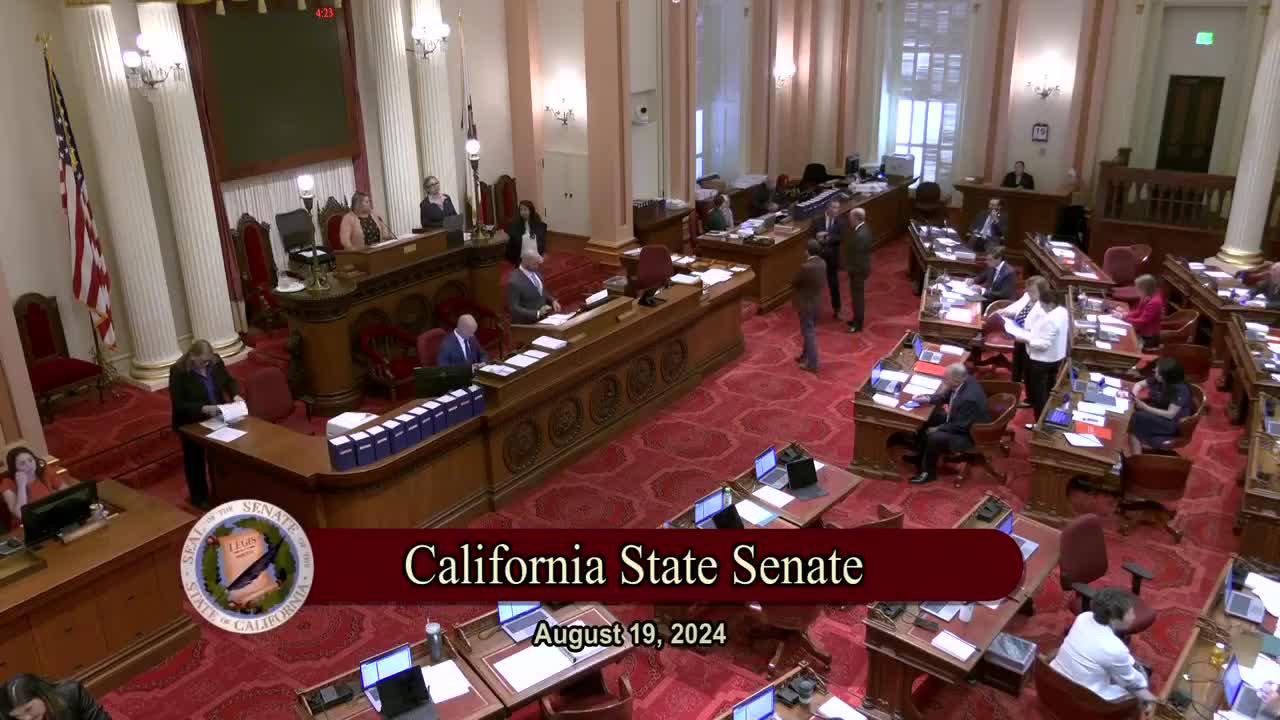 57SEC
Senate Floor
 6MIN
Senate Standing Committee on Local Government
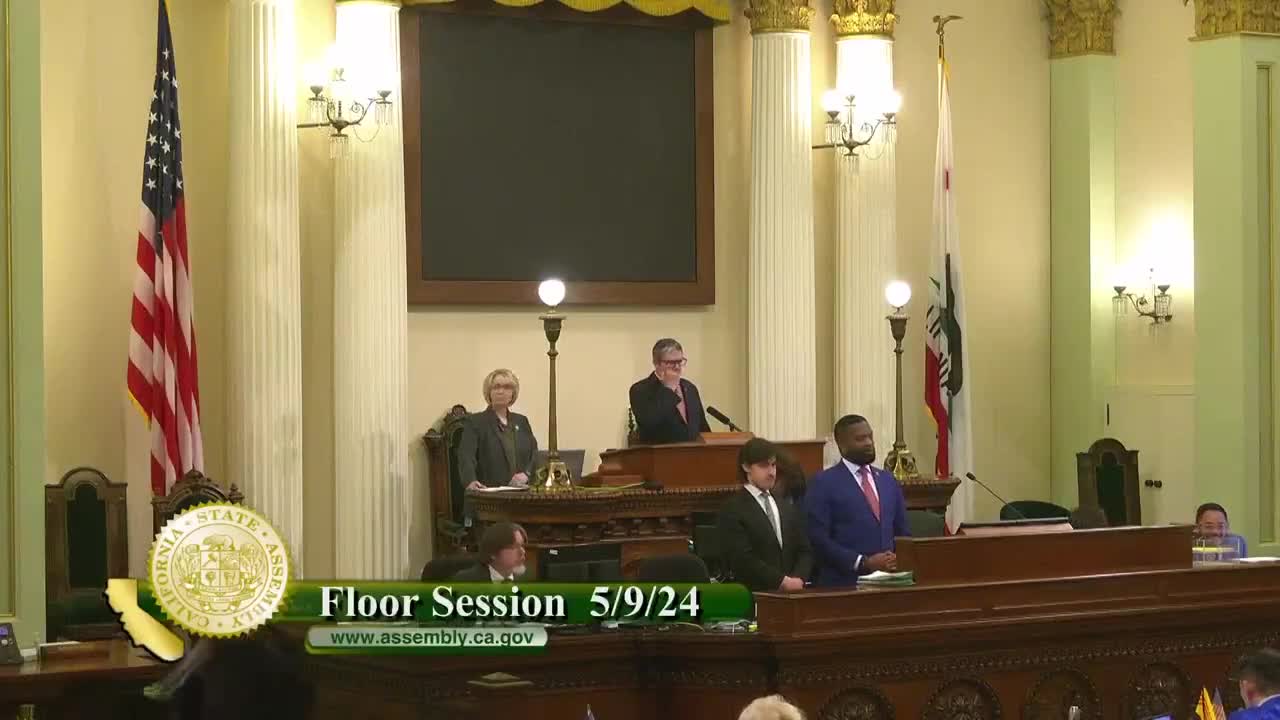 1MIN
Assembly Floor
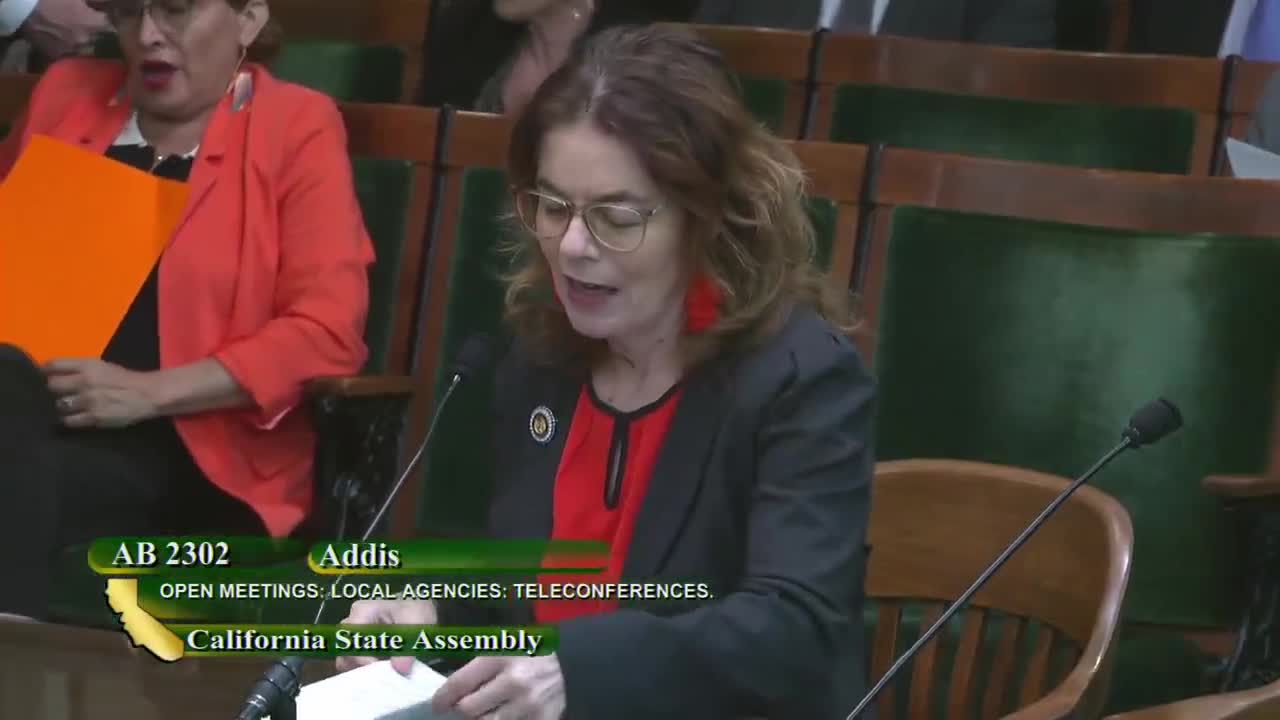 7MIN
Assembly Standing Committee on Local Government
Bill Author

Bill Co-Author(s):