AB 2344: Fire prevention: grant programs: reporting.
- Session Year: 2023-2024
- House: Assembly
- Latest Version Date: 2024-02-12
Current Status:
Failed
(2024-05-16: In committee: Held under submission.)
Introduced
In Committee
First Chamber
In Committee
Second Chamber
Enacted
Existing law requires the Wildfire and Forest Resilience Task Force to develop a comprehensive implementation strategy to track and ensure the achievement of the goals and key actions identified in the states Wildfire and Forest Resilience Action Plan issued by the task force in January 2021. Existing law requires the task force to submit, as part of the implementation strategy, a report to the appropriate policy and budget committees of the Legislature on progress made in achieving the goals and key actions identified in the states action plan, on state expenditures made to implement these key actions, and on additional resources and policy changes needed to achieve these goals and key actions, as provided.
This bill would require the task force, on or before July 1, 2025, and annually thereafter, to compile and post on its internet website specified information regarding identified state and federal grant programs relating to fire prevention and resilience, as provided.
The Legislature finds and declares all of the following:
(a)Wildfires have been increasing in frequency and severity in California, resulting in loss of life and damage to public health, property, infrastructure, and ecosystems.
(b)More than 2,000,000 California households, approximately one in four residential structures in California, are located within or in wildfire movement proximity of high or very high fire hazard severity zones identified on maps drawn by the Department of Forestry and Fire Protection.
(c)In response to longer and more intense wildfire seasons, the State of California has developed a comprehensive approach to wildfire-related disaster preparedness, mitigation, and resilience. The California Wildfire and Forest Resilience Action Plan lays out a detailed framework and associated implementation strategy and expenditure plan for establishing healthy and resilient forests and communities that can withstand and adapt to wildfire, drought, and climate change.
(d)The state has invested nearly $3,000,000,000 since the 2019 Budget Act into programs and projects to improve forest health and resilience, create fuel breaks, harden homes and communities, and build resilient lifeline infrastructure to withstand wildfire disasters when they do occur.
(e)The State of California administers multiple state and federal wildfire and forest resilience grant programs with the goal of preventing catastrophic wildfire.
(f)Reducing the risk of catastrophic wildfire requires immense coordination between all levels of government, communities, and stakeholders as well as information and data sharing to maximize and leverage the whole of the multipronged wildfire and forest resilience response.
SEC. 2.Section 4772 is added to the Public Resources Code, immediately following Section 4771, to read:4772.(a)For purposes of this section, program means any of the following programs:
(1)The forestry assistance program established pursuant to Section 4792.
(2)The comprehensive wildfire mitigation program established pursuant to Section 8654.4 of the Government Code.
(3)The local assistance grant program for fire prevention and home hardening education activities established pursuant to Section 4124.5.
(4)The departments grant programs not otherwise identified in paragraphs (1) to (3), inclusive, including, but not limited to, those grant programs related to wildfire prevention, forest health, forest legacy, urban and community forestry, forest health research, forest improvement, wildfire resilience, workforce and business development, and volunteer fire capacity.
(5)The federal Building Resilient Infrastructure and Communities program.
(6)The federal Hazard Mitigation Grant Program.
(7)The federal Fire Management Assistance Grant Program.
(8)The federal Community Wildfire Defense Grant program.
(9)Any other relevant publicly funded grant program administered in California to benefit forest health and resilience, harden homes and communities, or prevent and mitigate wildfires, if information on the program is readily available.
(b)On or before July 1, 2025, and every July 1 thereafter, the task force shall compile and post on its internet website all of the following information for each program, for each fiscal year in which the Legislature appropriated program funding or program projects occurred in the state, as applicable:
(1)The amount of funding allocated from the program.
(2)The list of recipients and subrecipients that received an allocation from the program, including the location of the project.
(3)The amount of funding that has been encumbered by each recipient.
(4)A brief description of the project, including the location, current status, and the proposed schedule for the projects completion.
(5)A brief description of the anticipated benefits of the project, which may include benefits for fire prevention and mitigation, habitat, forest resiliency, climate resiliency, public safety, or protection of important natural resources, including water quality and water supply.
|
Date
|
Status
|
|---|---|
| May 16, 2024 | In committee: Held under submission. |
| Apr 10, 2024 | In committee: Set, first hearing. Referred to APPR. suspense file. |
| Mar 20, 2024 | From committee: Do pass and re-refer to Com. on APPR. with recommendation: To Consent Calendar. (Ayes 11. Noes 0.) (March 19). Re-referred to Com. on APPR. |
| Feb 26, 2024 | Referred to Com. on NAT. RES. |
| Feb 13, 2024 | From printer. May be heard in committee March 14. |
| Feb 12, 2024 | Read first time. To print. |
|
Date
|
Description
|
Location
|
Votes
|
|
|---|---|---|---|---|
| Mar 19, 2024 | Do pass and be re-referred to the Committee on [Appropriations] with recommendation: To Consent Calendar | Assembly Standing Committee on Natural Resources |
Passed |
This list shows positions taken on this bill by organizations on the date displayed, which is linked to the original source.
Positions by individuals are not included.
Date of Hearing: April 10, 2024
ASSEMBLY COMMITTEE ON APPROPRIATIONS
Buffy Wicks, Chair
ABPCA Bill Id:AB 2344
Author:(Petrie-Norris) – As Introduced Ver:February 12, 2024
Policy Committee: | Natural Resources | Vote: | 11 - 0 |
|
| ||
|
|
Urgency: No State Mandated Local Program: No Reimbursable: No
SUMMARY:
This bill requires, on or before July 1, 2025, and every July 1 thereafter, the Wildfire and Forest Resilience Task Force (Task Force), to post on its website information about specified state, federal, and other publicly funded fire prevention grant programs, for each fiscal year in which the Legislature appropriated program funding or program projects occurred in the state.
Specifically, the bill requires the Task Force to post the following information for each program:
- The amount of funding allocated from the program and encumbered by each recipient.
- The list of recipients and subrecipients that received an allocation from the program, including the location of the project.
- A brief description of the project, including the location, current status, and the proposed schedule for the project’s completion.
- A brief description of the anticipated benefits of the project.
FISCAL EFFECT:
Ongoing annual costs of an unknown amount, potentially in the hundreds of thousands to low millions of dollars, for the California Department of Forestry and Fire Protection (CAL FIRE) to implement this bill on behalf of the Task Force. CAL FIRE estimates ongoing annual costs of approximately $2.1 million (General Fund and Greenhouse Gas Reduction Fund (GGRF)) for nine new positions, operating expenses, the compilation of detailed project information, correspondence with grant recipients to obtain regular status updates on projects, and the creation and maintenance of a new centralized reporting platform.
According to the Legislative Analyst’s Office, the General Fund faces a structural deficit in the tens of billions of dollars over the next several fiscal years.
COMMENTS:
1) Purpose. According to the author:
While wildfire and forest resilience projects have been and continue to be awarded to communities throughout the state, the data is reported piecemeal across various state agencies, departments, boards, and offices. Further, the reporting is not adequate to understand the status of projects and programs and how the investments are making a collective difference in communities. Understanding the status of current programs is vital information in order to target and maximize additional investments in fire-prone areas.
2) Background.
Wildlife Resilience Funding. According to the Legislative Analyst’s Office, recent budget packages included $2.8 billion over a four‑year period – fiscal year (FY) 2020‑21 through FY 2023‑24 – to support wildfire and forest resilience. Of this $2.8 billion, $2 billion is from the General Fund and $755 million is from GGRF. The Governor’s FY 2024‑25 budget proposes some General Fund reductions to this funding. Cumulatively, the reductions would lower General Fund spending by $101 million across seven programs, while retaining a total of $2.7 billion (95% of the original funding provided). In addition to the reductions, the budget shifts $163 million across four programs from the General Fund to GGRF.
In addition, the programs listed in this bill that are overseen by the Governor’s Office of Emergency Services (Cal OES) are federally funded and have received significant funding over the last several years. For example, in 2022, Cal OES secured $180 through the federal Building Resilient Infrastructure and Communities Program to support local communities most at risk for hazards, such as flood, earthquake, wildfire, drought, and sea level rise.
The Task Force’s website as well as other reporting platforms maintained by CAL FIRE and the California Natural Resources Agency – such as CalMAPPER and the Task Force’s “Treatment Dashboard” – already provide some information about wildfire and forest resilience investments, projects, and funding. However, the author and sponsor of this bill (BuildStrong California) contend that while reporting is currently required for many of the grant programs covered in this bill, the information is siloed by program and agency, and there is not a centralized location where all spending on publicly funded wildfire prevention activities can be tracked at a more granular level by project type, geographic location, and amount allocated and encumbered in each fiscal year.
SB 1 Project Reporting. SB 1 (Beall), Chapter 5, Statutes of 2017, invests $54 billion over a decade to fix roads, freeways, and bridges across the state and to increase support for transit, active transportation, intercity rail, and safety. The state’s “Rebuilding California” website includes an interactive map and a frequently updated project list with detailed information about planned, in-progress, and completed projects, including the implementing agency, project description, cost, fiscal year, project status, state legislative and congressional districts, counties and cities, Caltrans districts, and the date the project information was last updated. According to the supporters of this bill, this platform might serve as a model for tracking and reporting on the state’s wildfire resilience investments.
3) Related Legislation. AB 788 (Petrie-Norris) of this legislative session was substantially similar to this bill. AB 788 was held on the Senate Appropriations Committee’s suspense file.
Analysis Prepared by: Nikita Koraddi / APPR. / (916) 319-2081
Date of Hearing: March 19, 2024
ASSEMBLY COMMITTEE ON NATURAL RESOURCES
Isaac G. Bryan, Chair
ABPCA Bill Id:AB 2344 (
Author:Petrie-Norris) – As Introduced Ver:February 12, 2024
SUBJECT: Fire prevention: grant programs: reporting.
SUMMARY: Requires the Wildfire and Forest Resilience Task Force (Task Force), on or before July 1, 2025, and annually thereafter, to compile and post on its internet website specified information regarding identified state and federal grant programs relating to fire prevention and resilience, as provided.
EXISTING LAW:
- Requires the Task Force to develop a comprehensive implementation strategy to track and ensure the achievement of the goals and key actions identified in the state’s “Wildfire and Forest Resilience Action Plan” issued by the Task Force in January 2021. (Public Resources Code (PRC) 4771)
- Requires the Task Force to submit, as part of the implementation strategy, a report to the appropriate policy and budget committees of the Legislature on progress made in achieving the goals and key actions identified in the state’s action plan, on state expenditures made to implement these key actions, and on additional resources and policy changes needed to achieve these goals and key action. (PRC 4771 (e)(1))
- Authorizes the Department of Forestry and Fire Protection (CAL FIRE) to administer the forestry assistance program to provide loans to encourage forest resource improvements and otherwise facilitate good forest land management through a program of financial, technical, and educational assistance, as well as through applied research. (PRC 4792)
- Requires the Governor’s Office of Emergency Services (CalOES) to enter into a joint powers agreement with CAL FIRE to develop and administer a comprehensive wildfire mitigation program to encourage cost-effective structure hardening and retrofitting that creates fire-resistant homes, businesses, and public buildings, and facilitate vegetation management, the creation and maintenance of defensible space, and other fuel modification activities that provide neighborhood or communitywide benefits against wildfire. (Government Code 8654.4)
- Requires CAL FIRE to establish a local assistance grant program for fire prevention and home hardening education activities in California. (PRC 4124.5)
- Establishes the Federal Emergency Management Agency (FEMA) pursuant to President Carter’s Executive Order 12127, effective April 1, 1979, to provide clear direction for emergency management and disaster response and recovery.
- Establishes the federal Building Resilient Infrastructure and Communities program to support states, local communities, tribes and territories as they undertake hazard mitigation projects, reducing the risks they face from disasters and natural hazards. (42 United States Code (U.S.C.) 203)
- Establishes the federal Hazard Mitigation Grant Program to provide grants to communities during federal disasters. (42 U.S.C. 5133)
- Establishes the federal Fire Management Assistance Grant Program to provide grant assistance to assist in reimbursement for equipment, supplies, and personnel to any state, tribal, or local government for the mitigation, management, and control of any declared fire on public or private forest land or grassland that threatens such destruction as would constitute a major disaster. (42 U.S.C. 5187)
THIS BILL:
- Defines “Program” as any of the following programs:
- The Forestry Assistance Program;
- The Comprehensive Wildfire Mitigation Program;
- The local assistance grant program for fire prevention and home hardening education activities;
- CAL FIRE’s grant programs related to wildfire prevention, forest health, forest legacy, urban and community forestry, forest health research, forest improvement, wildfire resilience, workforce and business development, and volunteer fire capacity;
- The federal Building Resilient Infrastructure and Communities program;
- The federal Hazard Mitigation Grant Program;
- The federal Fire Management Assistance Grant Program;
- The federal Community Wildfire Defense Grant program; and,
- Any other relevant publicly funded grant program administered in California to benefit forest health and resilience, harden homes and communities, or prevent and mitigate wildfires, if information on the program is readily available.
- Requires, on or before July 1, 2025, and every July 1 thereafter, the Task Force to compile and post on its internet website all of the following information for each program, for each fiscal year in which the Legislature appropriated program funding or program projects occurred in the state, as applicable:
- The amount of funding allocated from the program;
- The list of recipients and subrecipients that received an allocation from the program, including the location of the project;
- The amount of funding that has been encumbered by each recipient;
- A brief description of the project, including the location, current status, and the proposed schedule for the project’s completion; and,
- A brief description of the anticipated benefits of the project, which may include benefits for fire prevention and mitigation, habitat, forest resiliency, climate resiliency, public safety, or protection of important natural resources, including water quality and water supply.
FISCAL EFFECT: Unknown
COMMENTS:
- Author’s statement:
Implementation of California’s Wildfire and Forest Resilience Action Plan requires significant fiscal resources to undertake projects to improve forest health and resilience, create fuel breaks, harden homes and communities, and build resilient lifeline infrastructure to withstand wildfire disasters when they occur. Since FY 2020-21, the State has appropriated approximately $2.8 billion for programs to support the State’s wildfire and forest resilience goals and objectives. While wildfire and forest resilience projects have been and continue to be awarded to communities throughout the state, the data is reported piecemeal across various state agencies, departments, boards, and offices. Further, the reporting is not adequate to understand the status of projects and programs and how the investments are making a collective difference in communities. Understanding the status of current programs is vital information in order to target and maximize additional investments in fire-prone areas.
- Wildfire prevention. Wildfires have been growing in size, duration, and destructivity over the past 20 years. Growing wildfire risk is due to accumulating fuels, a warming climate, and expanding development in the wildland-urban interface. The 2020 fire season broke numerous records. Five of California’s six largest fires in modern history burned at the same time, destroying thousands of buildings, forcing hundreds of thousands of people to flee their homes, and exposing millions of residents to dangerously unhealthy air. Managing forest health and efforts to restrict fire spread is vital to wildfire prevention.
The 2021 and 2022 Budget Acts committed $2.8 billion over four years to continue strengthening forest and wildfire resilience statewide. The Governor’s proposed 2024/2025 budget maintains $2.7 billion of these investments over five years. This bill finds and declares that the state has invested nearly $3 billion since the 2019 Budget Act into programs and projects to improve forest health and resilience, create fuel breaks, harden homes and communities, and build resilient lifeline infrastructure to withstand wildfire disasters when they do occur.
- California Wildfire and Forest Resilience Task Force. The Task Force is a collaborative effort to align federal, state, local, public and private, and tribal entities together to support projects tailored for regional fire prevention needs.
The Task Force’s January 2021 California Wildfire and Forest Resilience Action Plan (Action Plan) is the initial five-year plan for implementing the Agreement for Shared Stewardship of California’s Forest and Rangelands (Shared Stewardship Agreement) with the United States Forest Service (USFS), coordinating the state’s forestry efforts with other federal, local, tribal, regional, and private organizations. The Action Plan details goals to treat 500,000 acres annually by 2025 through the Shared Stewardship Agreement; to underscore building resilience in threatened communities through adaptive strategies, such as hardening homes, buildings, and infrastructure, and increasing defensible space and fuel breaks; forest thinning and prescribed fire; and, move innovation in monitoring and research.
The Action Plan aligns with the investments in the state budget to combat wildfire risk and improve the health of forested landscapes. In 2021, the state dramatically scaled wildfire resilience investments from $200 million to $1.5 billion, forcing greater efficiency in putting resources into projects. That funding launched more than 552 wildfire resilience projects in less than a year. By speeding up and increasing the scale of wildfire resilience activities from home-hardening to fuel breaks to reforestation, these investments are giving California a fighting chance to match the scale and frequency of the wildfire crisis. Information on the funding by project is detailed on the Natural Resources Agency’s Wildfire Resilience Program webpage. Further, the Task Force’s expenditure plan[1] identifies the breakdown of the funding across the various wildfire prevention programs, including those included in this bill.
- Fire prevention financing programs. This bill requires the Task Force to compile and post information on legislative appropriations for the following programs. It is important to note that these programs are not an exhaustive list of programs appropriating taxpayer dollars for forest health and wildfire prevention in California.
- Forestry assistance program. Under this program, CAL FIRE works with private landowners, particularly smaller nonindustrial landowners, to upgrade the management of their lands, and improve both the productivity of the land and the degree of protection and enhancement of the forest resource system as a whole.
- Comprehensive wildfire mitigation program. Enacted pursuant to AB 38 (Wood), Chapter 391, Statutes of 2019, this program requires the Natural Resources Agency, in consultation with the Office of the State Fire Marshal and the Task Force, to review the regional capacity of each county that contains a very high fire hazard severity zone to improve forest health, fire resilience, and safety. Cal OES can enter into a joint powers agreement with CAL FIRE to administer a comprehensive wildfire mitigation and assistance program to encourage cost-effective structure hardening and facilitate vegetation management.
- Wildfire Prevention Grants. CAL FIRE provides grants for local projects in and near fire threatened communities that focus on increasing the protection of people, structures, and communities. Qualified activities include hazardous fuels reduction, wildfire prevention planning and wildfire prevention education with an emphasis on improving public health and safety while reducing greenhouse gas emissions. CAL FIRE considers the wildfire hazards and risk of an area, the geographic balance of projects, and whether the project is complementary to other wildfire prevention or forest health activities when awarding grants.
- Local assistance grant program. This program is fire prevention and home hardening education activities. Groups eligible for grants include local agencies, resource conservation districts, fire safe councils, the California Conservation Corps, certified community conservation corps, University of California Cooperative Extension, CaliforniaVolunteers, Native American tribes, and qualified nonprofit organizations.
- Federal Building Resilient Infrastructure and Communities (BRIC). This grant program provides funds annually for hazard mitigation planning and projects to reduce risk of damage before a disaster. Funding is available in federal funding for eligible FEMA BRIC projects and project scoping activities.
- Federal Hazard Mitigation Grant Program (HGMP). FEMA provides hazard mitigation funding assistance for eligible mitigation measures that reduce disaster losses. "Hazard mitigation" is any sustainable action that reduces or eliminates long-term risk to people and property from future disasters. The funds are administered by Cal OES.
- Federal Fire Management Assistance Grant Program (FMAG). Administered by FEMA, grants are available to states, local, and tribal governments, for the mitigation, management, and control of fires on publicly or privately owned forests or grasslands, which threaten such destruction as would constitute a major disaster.
- Keeping tabs on how the money is spent. The Pew Charitable Trusts November 2022 report, Wildfires: Burning Through State Budgets, made the following recommendations for policymakers who are tasked with managing the growing risks and spending associated with wildfire:
- States should evaluate and strengthen current budgeting practices to account for growing risk. By comparing actual spending versus expected spending, assessing the threat of future fires, and implementing other tools, states can more accurately understand how much to budget for wildfire management, including mitigation.
- States should explore opportunities to better track and share data on wildfire spending. Wildfire spending data should be made more accessible, transparent, and comprehensive across all levels of government, which could improve intergovernmental coordination and provide policymakers with evidence to more strategically allocate resources.
The author argues that understanding the status of current programs is vital information to target existing and future investments. Data is also needed to understand the impacts previous investments achieved and to make program modifications in improved outcomes, to the extent possible.
Grant reporting is currently required for all of the aforementioned grant programs, but that information is siloed by program and by agency, and there is not a place where all spending on wildfire prevention activities can be tracked by project type or geographic implementation.
- Tracking state funding. With a $38 billion (and growing) budget shortfall, and multi-billion dollar deficits in the foreseeable future, tracking taxpayer dollars to ensure they are spent as efficiently and effectively as possible is both pragmatic and responsible. In addition, with the impacts of climate change exacerbating drought and increasing unpredictability in weather patterns, tracking the efficacy of investments in forest health and fire risk prevention will be an ongoing priority.
In 2017, the Legislature approved SB 1 (Beall), Chapter 5, Statutes of 2017, also known as the Road Repair and Accountability Act of 2017, which provided funding for local jurisdictions to fix and maintain roads and bridges through transportation related taxes and fees. SB 1 requires the California Transportation Commission (CTC) to track the performance of all SB 1 funded programs under its purview and report to the public how well recipients of SB 1 funds are delivering on promises made to the taxpayers. As a result, CTC has tracked $17.36 billion in gas tax expenditures across more than 9,000 transportation projects. CTC’s website tracking the expenditures includes details on the project name, implementing agency, project description, cost, fund type, project status, federal and state districts, geography, and date when the project info was updated.
The CTC’s ability to detail information for more than $17 billion provides a model for the Task Force to map the state’s $2.7+ billion investments in wildfire prevention.
- This bill. AB 2344 requires the Task Force to create and maintain a comprehensive data portal, including a searchable data base of projects by city, county, and legislative district, on wildfire and forest resilience programs, projects, and expenditures.
The author’s intent is to help the state fully understand how California’s investments are influencing the state’s overall wildfire risk, where resources have been directed, what the outcomes have been, and where resources need to be directed in future budgets and programs. The sheer magnitude of investments needed to increase the pace and scale of wildfire and forest resilience activities requires an accurate understanding of where investments have been made and where needs remain.
In May 2022, the Task Force announced the Forest & Wildland Stewardship Interagency Tracking System on its website to report on the status of wildfire and forest resilience projects. The goal is to provide transparency and accountability for state and federal land management efforts toward the acreage targets stated in the Agreement for Shared Stewardship and other documents, including strategy documents created by the Task Force. Data will be collected on the project, the treatment, and the activity. The expected product is a spatial database that can provide both summary information on statewide activity and geographic information system (GIS) maps capable of showing local implementation, for use by policymakers, land managers, scientists, and the public.
That effort would grease the skids to implement this bill, should it be enacted, and build a system for tracking wildfire prevention investments much like the one for SB 1 funds.
- Related legislation. AB 788 (Petrie-Norris, 2023) would have required the Task Force to make available on its existing internet website basic data and information already collected by state agencies to the public on wildfire and forest resilience programs, projects, and expenditures. This bill was held in the Senate Appropriations Committee.
REGISTERED SUPPORT / OPPOSITION:
Support
None on file
Opposition
None on file
Analysis Prepared by: Paige Brokaw / NAT. RES. /
Bill Author
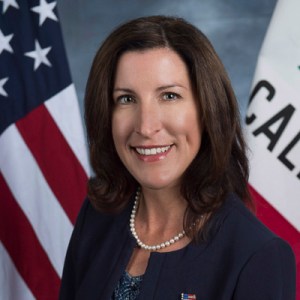
Bill Co-Author(s):