AB 2654: Political Reform Act of 1974: nondisclosure agreements.
- Session Year: 2023-2024
- House: Assembly
- Latest Version Date: 2024-04-18
Current Status:
Failed
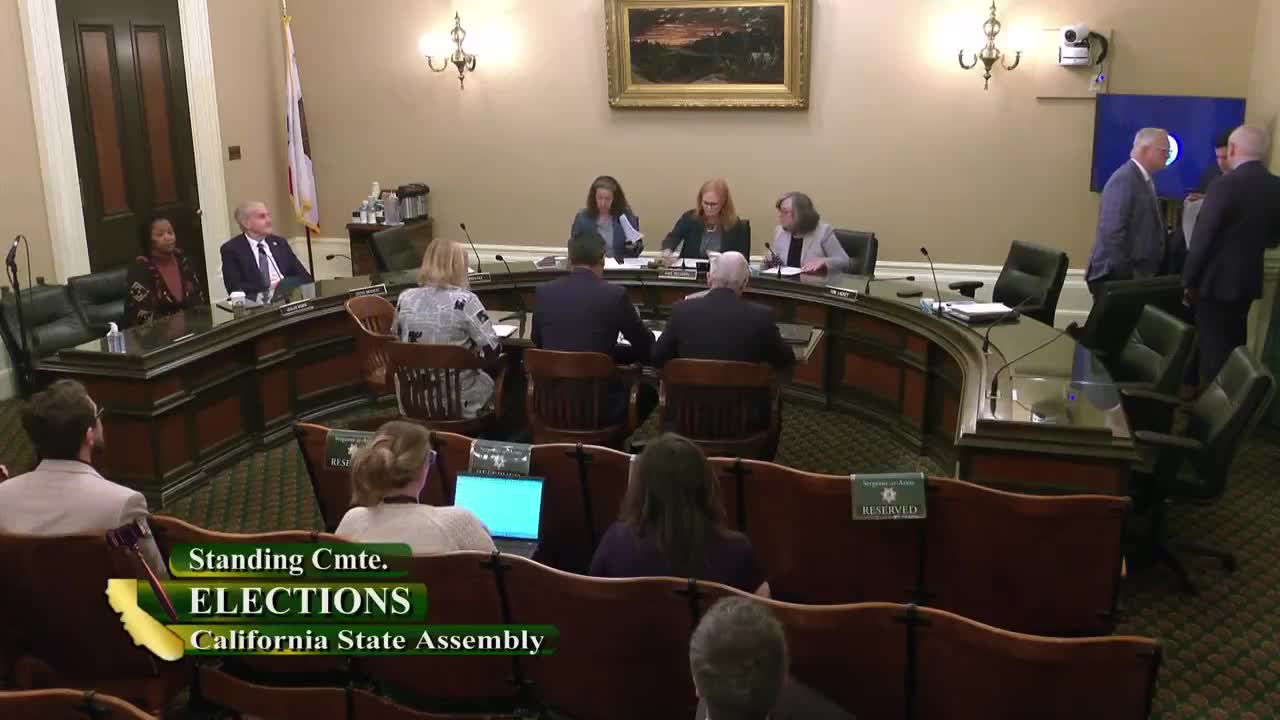
(2024-04-25: In committee: Set, first hearing. Failed passage. Reconsideration granted.)
Introduced
In Committee
First Chamber
In Committee
Second Chamber
Enacted
Existing law prohibits lobbyists from engaging in various activities, as specified.
This bill would prohibit lobbyists and certain public officials and employees, as specified, from entering into, or requesting that another party enter into, a nondisclosure agreement relating to the drafting, negotiation, discussion, or creation of legislation. The bill would also make any nondisclosure agreement relating to the drafting, negotiation, discussion, or creation of legislation entered into after the effective date of this bill void and unenforceable. A violation of the Political Reform Act of 1974 is punishable as a misdemeanor. By creating a new crime under the act, this bill would impose a state-mandated local program.
The California Constitution requires the state to reimburse local agencies and school districts for certain costs mandated by the state. Statutory provisions establish procedures for making that reimbursement.
This bill would provide that no reimbursement is required by this act for a specified reason.
The Political Reform Act of 1974, an initiative measure, provides that the Legislature may amend the act to further the acts purposes upon a 2/3 vote of each house of the Legislature and compliance with specified procedural requirements.
This bill would declare that it furthers the purposes of the act.
Existing law establishes various programs and benefits through which state agencies disburse moneys to entities that are not state agencies, including the unemployment compensation system, the CalFresh program, and the CalWORKs program.This bill would require a state agency that disburses money to an entity or an individual that is not a state agency to use best efforts and practices to reduce disbursements based on fraudulent applications, as specified. The bill would require the state agency to annually submit a report to the Legislature that includes the amount of money that was disbursed based on fraudulent applications and the state agencys efforts to reduce disbursements based on fraudulent applications.Existing law establishes various programs and benefits through which state agencies disburse moneys to entities that are not state agencies, including the unemployment compensation system, the CalFresh program, and the CalWORKs program.
This bill would require a state agency that disburses money to an entity or an individual that is not a state agency to use best efforts and practices to reduce disbursements based on fraudulent applications, as specified. The bill would require the state agency to annually submit a report to the Legislature that includes the amount of money that was disbursed based on fraudulent applications and the state agencys efforts to reduce disbursements based on fraudulent applications.
Existing law, the State Contract Act, requires the Department of General Services, before entering into any contract for a project, to prepare full, complete, and accurate plans and specifications and estimates of costs, giving such directions as will enable any competent mechanic or other builder to carry them out.This bill would make a nonsubstantive change to these provisions.Existing law, the State Contract Act, requires the Department of General Services, before entering into any contract for a project, to prepare full, complete, and accurate plans and specifications and estimates of costs, giving such directions as will enable any competent mechanic or other builder to carry them out.
This bill would make a nonsubstantive change to these provisions.
(a)The following individuals shall not enter into, or request that another party enter into, a nondisclosure agreement relating to the drafting, negotiation, discussion, or creation of legislation.
(1)A lobbyist.
(2)The following individuals when acting in their official capacity:
(A)A public official.
(B)A Member or employee of the Legislature.
(C)An employee of the office of the Governor.
(b)Any nondisclosure agreement relating to the drafting, negotiation, discussion, or creation of legislation entered into after the effective date of this section shall be void and unenforceable.
SEC. 2.No reimbursement is required by this act pursuant to Section 6 of Article XIIIB of the California Constitution because the only costs that may be incurred by a local agency or school district will be incurred because this act creates a new crime or infraction, eliminates a crime or infraction, or changes the penalty for a crime or infraction, within the meaning of Section 17556 of the Government Code, or changes the definition of a crime within the meaning of Section 6 of Article XIIIB of the California Constitution.
SEC. 3.The Legislature finds and declares that this bill furthers the purposes of the Political Reform Act of 1974 within the meaning of subdivision (a) of Section 81012 of the Government Code.
SECTION 1.Chapter 12 (commencing with Section 11900) is added to Part 1 of Division 3 of Title 2 of the Government Code, to read:12.Fraudulent Application Disbursements11900.(a)For purposes of this chapter, state agency has the same meaning as defined in Section 11000.(b)A state agency that disburses money to an entity or an individual that is not a state agency shall use best efforts and practices to reduce disbursements based on fraudulent applications, which may include, but are not limited to, verification of identity, employment, or eligibility prior to a disbursement being made.(c)(1)A state agency shall annually submit a report to the Legislature that includes both of the following:(A)The amount of money that was disbursed based on fraudulent applications the prior calendar year.(B)The state agencys efforts to reduce disbursements based on fraudulent applications.(2)A state agency may submit the report required by this subdivision as part of any other annual report the state agency is required to submit to the Legislature.(3)A state agency shall submit the report required by this subdivision in compliance with Section 9795.(a)For purposes of this chapter, state agency has the same meaning as defined in Section 11000.
(b)A state agency that disburses money to an entity or an individual that is not a state agency shall use best efforts and practices to reduce disbursements based on fraudulent applications, which may include, but are not limited to, verification of identity, employment, or eligibility prior to a disbursement being made.
(c)(1)A state agency shall annually submit a report to the Legislature that includes both of the following:
(A)The amount of money that was disbursed based on fraudulent applications the prior calendar year.
(B)The state agencys efforts to reduce disbursements based on fraudulent applications.
(2)A state agency may submit the report required by this subdivision as part of any other annual report the state agency is required to submit to the Legislature.
(3)A state agency shall submit the report required by this subdivision in compliance with Section 9795.
SECTION 1.Section 10120 of the Public Contract Code is amended to read:10120.Before entering into any contract for a project, the department shall prepare full, complete, and accurate plans and specifications and estimates of cost, giving directions as will enable any competent mechanic or other builder to carry them out.Before entering into any contract for a project, the department shall prepare full, complete, and accurate plans and specifications and estimates of cost, giving such directions as will enable any competent mechanic or other builder to carry them out.
|
Date
|
Status
|
|---|---|
| Apr 25, 2024 | In committee: Set, first hearing. Failed passage. Reconsideration granted. |
| Apr 22, 2024 | Re-referred to Com. on ELECTIONS. pursuant to Assembly Rule 96. |
| Apr 22, 2024 | Re-referred to Com. on G.O. |
| Apr 18, 2024 | From committee chair, with author's amendments: Amend, and re-refer to Com. on G.O. Read second time and amended. |
| Apr 1, 2024 | Re-referred to Com. on G.O. |
| Mar 21, 2024 | From committee chair, with author's amendments: Amend, and re-refer to Com. on G.O. Read second time and amended. |
| Mar 21, 2024 | Referred to Com. on G.O. |
| Feb 15, 2024 | From printer. May be heard in committee March 16. |
| Feb 14, 2024 | Read first time. To print. |
|
Date
|
Description
|
Location
|
Votes
|
|
|---|---|---|---|---|
| Apr 25, 2024 | Reconsideration. | Assembly Standing Committee on Elections |
Passed |
|
| Apr 25, 2024 | Do pass and be re-referred to the Committee on [Appropriations] | Assembly Standing Committee on Elections |
Failed |
This list shows positions taken on this bill by organizations on the date displayed, which is linked to the original source.
Positions by individuals are not included.
|
Organization
|
Position
|
Date
|
|---|---|---|
| Cal Chamber | * Against | Apr 25, 2024 |
| California Business Properties Association | * Support | Apr 25, 2024 |
| California Business Roundtable | * Support | Apr 25, 2024 |
| California News Publishers Association | * Support | Apr 25, 2024 |
| California Restaurant Association | * Against | Apr 25, 2024 |
| Howard Jarvis Taxpayers Association | * Support | Apr 25, 2024 |
| NFIB Small Business | * Support | Apr 25, 2024 |
Date of Hearing: April 25, 2024
ASSEMBLY COMMITTEE ON ELECTIONS
Gail Pellerin, Chair
ABPCA Bill Id:AB 2654 (
Author:Vince Fong) – As Amended Ver:April 18, 2024
SUBJECT: Political Reform Act of 1974: nondisclosure agreements.
SUMMARY: Prohibits lobbyists and specified public officials and employees from entering into a nondisclosure agreement (NDA) related to negotiations about legislation. Specifically, this bill:
- Prohibits the following individuals from entering into, or requesting that another party enter into, an NDA relating to the drafting, negotiation, discussion, or creation of legislation:
- A lobbyist.
- Any of the following individuals when acting in their official capacity:
- A public official.
- A Member or employee of the Legislature.
- An employee of the office of the Governor.
- A public official.
- A lobbyist.
- Provides that an NDA relating to the drafting, negotiation, discussion, or creation of legislation entered into after the effective date of this bill is void and unenforceable.
EXISTING LAW:
- Provides that every person in California may freely speak, write, and publish their sentiments on all subjects, being responsible for the abuse of this right. (California Constitution, Article I, §2.)
- Provides that the people have the right of access to information concerning the conduct of the people’s business, and, therefore, the meetings of public bodies and the writings of public officials and agencies shall be open to public scrutiny. Provides that this provision does not repeal, nullify, supersede, or modify protections for the confidentiality of proceedings and records of the Legislature, the Members of the Legislature, and its employees, committees, and caucuses, as provided by a specified provision of the California Constitution, state law, or legislative rules adopted in furtherance of those provisions. (California Constitution, Article I, §3(b))
- Provides, pursuant to the California Public Records Act (CPRA), that all public agency records are open to public inspection upon request, unless the records are otherwise exempt from public disclosure. (Government Code §7920.000 et seq.)
- Creates the Fair Political Practices Commission (FPPC), and makes it responsible for the impartial, effective administration and implementation of the Political Reform Act (PRA). (Government Code §§83100, 83111)
- Defines the term “lobbyist,” for the purposes of the PRA, to mean either of the following:
- Any individual who receives $2,000 or more in economic consideration in a calendar month, other than reimbursement for reasonable travel expenses, or whose principal duties as an employee are, to communicate directly or through that individual’s agents with any elective state official, agency official, or legislative official for the purpose of influencing legislative or administrative action.
- A placement agent, as specified. (Government Code §82039)
- Defines “public official,” for the purposes of the PRA, to mean every member, officer, employee, or consultant of a state or local government agency, except as specified. (Government Code §82048)
- Defines “state agency,” for the purposes of the PRA, to mean every state office, department, division, bureau, board and commission, and the Legislature. (Government Code §82049)
- Requires lobbying firms and lobbyist employers, as specified, to disclose specified information on lobbying registration documents, including information about their lobbying interests and the lobbying interests of their clients, as specified, and about the state agencies whose legislative or administrative actions the firms and employers will attempt to influence. (Government Code §§86104, 86105)
- Prohibits lobbyists from engaging in certain practices, including all of the following:
- Making gifts to specified officials aggregating more than $10 in a calendar month, or acting as an agent or intermediary in the making of any gift, or arranging for the making of any gift by any other person, as specified. (Government Code §§86201, 86203)
- Doing anything with the purpose of placing any elected state officer, legislative official, agency official, or state candidate under personal obligation to the lobbyist or the lobbyist’s employer. (Government Code §86205(a))
- Deceiving or attempting to deceive any elected state officer, legislative official, agency official, or state candidate with regard to any material fact pertinent to any pending or proposed legislative or administrative action. (Government Code §86205(b))
- Causing or influencing the introduction of any bill or amendment thereto for the purpose of thereafter being employed to secure its passage or defeat. (Government Code §86205(c))
- Attempting to create a fictitious appearance of public favor or disfavor of any proposed legislative or administrative action or to cause any communication to be sent to any elected state officer, legislative official, agency official, or state candidate in the name of any fictitious person or in the name of any real person, except with the consent of such real person. (Government Code §86205(d))
- Representing falsely, either directly or indirectly, that the lobbyist can control the official action of any elected state officer, legislative official, or agency official. (Government Code §86205(e))
- Accepting or agreeing to accept any payment in any way contingent upon the defeat, enactment, or outcome of any proposed legislative or administrative action. (Government Code §86205(f))
- Makes violations of the PRA subject to administrative, civil, and criminal penalties. (Government Code §§83116, 91000-91005.5)
FISCAL EFFECT: Unknown. State-mandated local program; contains a crimes and infractions disclaimer.
COMMENTS:
- Purpose of the Bill: According to the author, “Transparency in government is the foundation of our democracy. It builds trust and confidence in elected and government officials. The crafting of public policy should be done with full transparency, and on behalf of the public, not shielded by nondisclosure agreements.”
- Overview of Nondisclosure Agreements: An NDA is a provision in a contract that binds the parties to secrecy regarding information specified in the contract. NDAs generally prohibit parties from disclosing the specified information to people who are not parties to the NDA, and often provide for the damages that will be imposed if a party shares information in violation of the NDA. NDAs commonly are used to protect sensitive and confidential information, including trade secrets and business negotiations.
- Background on Nondisclosure Agreements in Legislative Negotiations: Two years ago, the Legislature approved and Governor Newsom signed AB 257 (Holden), Chapter 246, Statutes of 2022, which proposed to establish a Fast Food Council within the Department of Industrial Relations for the purpose of establishing sector-wide minimum standards on wages, working hours, and other working conditions related to the health, safety, and welfare of, and supplying the necessary cost of proper living to, fast food restaurant workers, among other provisions. After passage of AB 257, opponents of the law launched a referendum against the bill, and subsequently gathered a sufficient number of valid signatures of California voters to qualify that referendum for the ballot. The qualification of the referendum had the effect of suspending the operation of AB 257 until California voters could vote on whether to affirm or reject AB 257. At the time the AB 257 referendum qualified for the ballot, it was expected that the referendum would appear on the ballot for voters’ consideration at the November 5, 2024 statewide general election.
Last year, certain proponents and opponents of AB 257 entered into negotiations over potential changes to AB 257. Those negotiations led to an agreement under which changes would be made to AB 257 that were contingent upon the withdrawal of the AB 257 referendum by its proponents by January 1, 2024. The negotiated changes to AB 257 were codified in AB 1228 (Holden), Chapter 262, Statutes of 2023, and the Secretary of State announced on December 29, 2023 that the proponents had withdrawn the AB 257 referendum.
Last month, Sacramento-area television station KCRA, citing sources close to these negotiations, reported that private parties involved in the AB 1228 negotiations were asked to sign an NDA to protect the confidentiality of the negotiations. KCRA indicated in its report that it had not seen a copy of the NDA, and that the terms of the NDA were not disclosed. KCRA additionally quoted the Governor’s office as saying that the Governor did not sign an NDA in connection with the negotiations, and did not direct anyone to sign an NDA.[1]
Other media sources subsequently have corroborated the report from KCRA, including the Associated Press (AP), which reported that the NDA “covered some of the private parties involved, including labor unions representing restaurant workers and the industry group for restaurants.” The AP also reported that the NDA did not include the Governor or any other public officials.[2] Committee staff is not aware of any reporting—and the author has not provided any examples of such reporting—that suggests that any public officials, including Legislators, legislative staff, the Governor, or staff to the Governor, signed an NDA in connection with negotiations over AB 1228, or otherwise were bound by an NDA when involved in legislative negotiations. - Lobbying Regulation: The PRA requires individuals, businesses, and other organizations that make or receive payments to influence state governmental decisions—such as advocating for or against legislative bills and state agency regulations—to register as lobbyists and submit periodic reports of their lobbying activity. Among other information, state law generally requires lobbyists, lobbying firms, and lobbyist employers to publicly disclose the governmental actions on which they are lobbying, including bill numbers where relevant, and the agency or agencies that they seek to influence through their lobbying activities. The PRA does not, however, generally require lobbyists, lobbying firms, or lobbyist employers to publicly report individual lobbying contacts, including an identification of the specific individuals that they sought to influence, or to publicly disclose details about negotiations that they engage in over legislative and administrative actions.
- Transparency in Legislative Negotiations: The author of this bill indicates that his intent in authoring the bill is to provide for greater transparency in the crafting of public policy. It is unclear, however, whether this bill is likely to accomplish that goal.
As detailed above, while existing law generally requires lobbyists, lobbying firms, and lobbyist employers to publicly disclose the specific legislation on which they lobby and agencies that they lobby, the law does not otherwise generally require those entities to publicly disclose more information about their lobbying efforts, including the specific individuals lobbied or the specific issues discussed in legislative negotiations. While this bill would prohibit legally-enforced secrecy through the use of NDAs in negotiations involving lobbyists and public officials, it would not otherwise compel any person or entity to disclose more information about the nature and subject of legislative negotiations.
Furthermore, because this bill applies only to lobbyists and public officials, it would not necessarily prevent organizations that frequently are active in legislative issues from engaging in negotiations with other parties that are subject to an NDA. The term “lobbyist,” as used in the PRA, applies only to those individuals who receive $2,000 or more in a month, or whose principal duties as an employee are, to communicate directly with specified public officials for the purpose of influencing legislative or administrative action. Organizations active in California’s legislative process often employ professionals who are involved in the organizations’ efforts to influence public policy, but who do not spend significant periods of time engaged in direct communications with public officials. Under this bill, those individuals would be free to enter into NDAs governing legislative negotiations with individuals from other organizations. - Transparency Laws and Public Officials: In addition to prohibiting lobbyists from entering into NDAs related to legislative negotiations, this bill also would restrict public officials from entering in to such NDAs. As noted above, committee staff is unaware of any reports that public officials entered into an NDA in connection with legislative negotiations over AB 1228 or any other bill.
Various public transparency laws that apply to public officials and public agencies may limit the ability of public officials to enter into enforceable NDAs related to legislative negotiations. For example, one provision of the CPRA (Government Code §7921.005) prohibits a public agency from allowing another party to control the disclosure of information that is otherwise subject to disclosure under the CPRA. Given the absence of an express prohibition on pubic officials’ ability to enter into an NDA in connection with legislative negotiations, however, it is unclear whether a court would find such an NDA to be enforceable. - Technical Issues and Suggested Amendments: As currently in print, this bill prohibits a public official, a Member or employee of the Legislature, or an employee of the office of the Governor, from entering into an NDA related to legislative negotiations. As used in the PRA, however, the term “public official” is defined to mean every member, officer, employee, or consultant of a state or local government agency, except as specified, and the term “state agency” covers both the Legislature and the Governor’s office. In light of this fact, it appears that applying the provisions of this bill to every “public official,” as defined, would include Members and employees of the Legislature, and employees of the Governor’s office. Identifying those employees and officials separately in the bill, then, appears to be duplicative and unnecessary.
To avoid any potential confusion that may result from this duplicative language, committee staff recommends that this bill be amended to delete references to Members and employees of the Legislature and employees of the office of the Governor. This amendment should not have any substantive effect on the officials who are covered by this bill. - Arguments in Support: In a joint letter of support, the Howard Jarvis Taxpayers Association and California News Publishers Association write:
Without transparency, trust in government erodes, especially if statutes that apply statewide were crafted under legally binding confidentiality. Nondisclosure agreements certainly have their place to protect propriety and financial information, but they should not be used to hide how public policy is made. This bill will not prohibit private parties from protecting their own sensitive or competitive information.
As has come to light in recent months, nondisclosure agreements have been used when drafting legislation, and were even required before negotiating details of bill language. This is a troubling trend that cannot continue. The crafting of public policy should be done with full transparency and on behalf of the public, not shielded by nondisclosure agreements.
- Arguments in Opposition: In opposition to this bill, the California Chamber of Commerce writes:
[Confidentiality clauses and agreements] protect sensitive, proprietary information and encourage candid discussions amongst parties on controversial issues…We agree that elected officials and their staff should not utilize confidentiality clauses and/or non-disclosure agreements to conduct the work of the public. But private parties do not represent the public and their proprietary information is not and should not automatically be subject to public disclosure…
AB 2654 fails to define what constitutes a “nondisclosure agreement,” [and] it is unclear how this proposed code section would interact with [] existing privileges … [G]iven the significance of statutory drafting and its legal implications, attorneys are often involved in drafting and negotiating legislation – either directly or indirectly…If an attorney is requested to engage at the request of a lobbyist in any capacity during the legislative process, does AB 2654 interfere with that privilege? If the attorney provides a written analysis of legislation or proposed language to include in legislation, is that work-product subject to disclosure pursuant to AB 2654?...
Similarly, if a contract between two parties includes a confidentiality provision to preclude either party from disclosing confidential information exchanged during their business relationship, is that considered a nondisclosure agreement? For example, if a lobbyist retains a public affairs firm to provide support on legislation and the contract between the lobbyist and public affairs firm includes a confidentiality clause, is that contract now prohibited because it “relates” to legislation?... Given that AB 2654 fails to provide a clear definition of what is a nondisclosure agreement and what “relates to” actually means, we have significant concerns about the scope and application of this proposal.
- Political Reform Act of 1974: California voters passed an initiative, Proposition 9, in 1974 that created the FPPC and codified significant restrictions and prohibitions on candidates, officeholders, and lobbyists. That initiative is commonly known as the PRA. Amendments to the PRA that are not submitted to the voters, such as those contained in this bill, must further the purposes of the initiative and require a two-thirds vote of both houses of the Legislature.
- Recent Amendments: The April 18, 2024, amendments deleted the prior version of this bill and added the current contents. The previous contents of this bill were not in the jurisdiction of this policy committee. Because this bill is keyed as a fiscal bill by the Legislative Counsel, the deadline for this committee to hear this bill pursuant to Joint Rule 61(b)(5) is tomorrow (April 26, 2024).
Because the current contents of this bill first went into print one week before this committee’s hearing, committee staff’s ability to fully analyze the implications of the policy proposed by this bill has been limited. Furthermore, the recent amendments to this bill may have limited the degree to which members of the public and other interested parties have been able to provide feedback to the committee on the contents of this bill.
REGISTERED SUPPORT / OPPOSITION:
Support
California News Publishers Association
Howard Jarvis Taxpayers Association
Opposition
California Chamber of Commerce
Analysis Prepared by: Ethan Jones / ELECTIONS / (916) 319-2094
https://www.kcra.com/article/california-fast-food-law-panera-newsom-nda/60117858, last visited April 22, 2024. ↑
https://www.local10.com/news/national/2024/03/11/confidentiality-pact-deepens-mystery-of-how-bakery-clause-got-into-california-minimum-wage-law/; last visited April 22, 2024. ↑
Discussed in Hearing
 45MIN
Assembly Standing Committee on Elections
Bill Author

Bill Co-Author(s):