AB 268: Board of State and Community Corrections.
- Session Year: 2023-2024
- House: Assembly
- Latest Version Date: 2023-10-04
Current Status:
Passed
(2023-10-04: Chaptered by Secretary of State - Chapter 298, Statutes of 2023.)
Introduced
In Committee
First Chamber
In Committee
Second Chamber
Enacted
What does this bill do?
The bill adds two health professionals to the state Board of State and Community Corrections and directs the board to set minimum mental-health care rules for local jails and county correctional facilities. The rules must require clear safety checks to spot people in distress, certify officers in CPR, require supervisors to audit safety checks, and provide at least four hours of annual mental-health training for officers. The rules also require mental-health screening or timely review by a qualified mental-health professional at booking and a check of medical and mental-health records; “qualified” includes doctors, nurses, psychologists, social workers, and licensed therapists.
The summary is provided by generative AI which can make mistakes. For original language, please view the details in the table below.
Existing law establishes and regulates the state prison for the confinement of persons convicted of certain felony offenses. Existing law also regulates county jails used for the confinement of persons awaiting trial and persons convicted of misdemeanors and certain felony offenses.
Existing law establishes the Board of State and Community Corrections to provide statewide leadership, coordination, and technical assistance to promote effective state and local efforts and partnerships in Californias adult and juvenile criminal justice system. The duties of the board, among others, include establishing standards for local correctional facilities and correctional officers.
Under existing law, the board is composed of 13 members, as specified.
This bill would, commencing July 1, 2024, add 2 additional members to the board, a licensed health care provider and a licensed mental or behavioral health care provider, appointed by the Governor and subject to confirmation by the Senate.
The bill would also, commencing July 1, 2024, require the board to develop and adopt regulations pertaining to standards of care for incarcerated persons with mental health issues by local correctional facilities, including requirements for training of correctional staff, requirements for mental health screening, and requirements for safety checks of incarcerated persons.
Existing law establishes and regulates the state prison for the confinement of persons convicted of certain felony offenses. Existing law also regulates county jails used for the confinement of persons awaiting trial and persons convicted of misdemeanors and certain felony offenses.
Existing law establishes the Board of State and Community Corrections to provide statewide leadership, coordination, and technical assistance to promote effective state and local efforts and partnerships in Californias adult and juvenile criminal justice system. The duties of the board, among others, include establishing standards for local correctional facilities and correctional officers.
Under existing law, the board is composed of 13 members, as specified.
This bill would, commencing July 1, 2024, add 2 additional members to the board, the Secretary of California Health and Human Services, or their designee that has a medical degree, a licensed health care provider and a licensed mental or behavioral health care specialist, provider, appointed by the Governor and subject to confirmation by the Senate.
The bill would also, commencing July 1, 2024, require the board to develop and adopt regulations pertaining to standards of care for incarcerated persons with mental health issues by local correctional facilities, including requirements for training of correctional staff, requirements for mental health screening, and requirements for safety checks of incarcerated persons.
Existing law establishes and regulates the state prison for the confinement of persons convicted of certain felony offenses. Existing law also regulates county jails used for the confinement of persons awaiting trial and persons convicted of misdemeanors and certain felony offenses.
Existing law establishes the Board of State and Community Corrections to provide statewide leadership, coordination, and technical assistance to promote effective state and local efforts and partnerships in Californias adult and juvenile criminal justice system. The duties of the board, among others, include establishing standards for local correctional facilities and correctional officers.
Under existing law, the board is composed of 13 members, as specified.
This bill would, commencing July 1, 2024, add 2 additional members to the board, a licensed health care provider the Secretary of California Health and Human Services, or their designee that has a medical degree, and a licensed mental or behavioral health care provider, each appointed by the Governor, specialist, appointed by the Governor and subject to confirmation by the Senate.
The bill would also, commencing July 1, 2024, require the board to develop and adopt regulations pertaining to standards of care for incarcerated persons with mental health issues by local correctional facilities, including requirements for training of correctional staff, requirements for mental health screening, and requirements for safety checks of incarcerated persons.
Existing law establishes and regulates the state prison for the confinement of persons convicted of certain felony offenses. Existing law also regulates county jails used for the confinement of persons awaiting trial and persons convicted of misdemeanors and certain felony offenses.
Existing law establishes the Board of State and Community Corrections to provide statewide leadership, coordination, and technical assistance to promote effective state and local efforts and partnerships in Californias adult and juvenile criminal justice system. The duties of the board, among others, include establishing standards for local correctional facilities and correctional officers.
Under existing law, the board is composed of 13 members, as specified.
This bill would, commencing July 1, 2024, add 2 additional members to the board, a licensed health care provider and a licensed mental health care provider, each appointed by the Governor, subject to confirmation by the Senate.
The bill would also, commencing July 1, 2024, require the board to develop and adopt regulations pertaining to standards of care for incarcerated persons with mental health issues by local correctional facilities, including requirements for training of correctional staff, requirements for mental health screening, and requirements for safety checks of incarcerated persons.
The Legislature finds and declares all of the following:
(a)Standards of care for incarcerated persons should be adequate and consistent across the state.
(b)Clinical decisions and actions regarding medical and mental health care provided to incarcerated persons to meet their serious medical and mental health needs should solely be the responsibility of qualified medical and mental health professionals without interference from other personnel, unless there is an immediate risk to life or security.
(c)The delivery of medical and mental health care should be a collaborative effort between medical and mental health, correctional, and administrative staffs, and is best achieved through cooperation among each of these entities.
(d)Correctional officers should have adequate training to recognize when it is necessary to refer an incarcerated person to a medical or mental health care professional.
(e)Correctional officers assigned to special mental health housing areas and those performing screening, medication administration, or health care liaison functions need preservice training and routine refresher training in the recognition and management of inmates with significant mental illness.
SEC. 2.Section 6025 of the Penal Code is amended to read:6025.(a)Commencing July 1, 2012, the Board of State and Community Corrections shall be composed of 12 members, as follows:
(1)The Chair of the Board of State and Community Corrections, who shall be the Secretary of the Department of Corrections and Rehabilitation.
(2)The Director of the Division of Adult Parole Operations for the Department of Corrections and Rehabilitation.
(3)A county sheriff in charge of a local detention facility which has a Corrections Standards Authority rated capacity of 200 or fewer inmates, appointed by the Governor, subject to Senate confirmation.
(4)A county sheriff in charge of a local detention facility which has a Corrections Standards Authority rated capacity of over 200 inmates, appointed by the Governor, subject to Senate confirmation.
(5)A county supervisor or county administrative officer. This member shall be appointed by the Governor, subject to Senate confirmation.
(6)A chief probation officer from a county with a population over 200,000, appointed by the Governor, subject to Senate confirmation.
(7)A chief probation officer from a county with a population under 200,000, appointed by the Governor, subject to Senate confirmation.
(8)A judge appointed by the Judicial Council of California.
(9)A chief of police, appointed by the Governor, subject to Senate confirmation.
(10)A community provider of rehabilitative treatment or services for adult offenders, appointed by the Speaker of the Assembly.
(11)A community provider or advocate with expertise in effective programs, policies, and treatment of at-promise youth and juvenile offenders, appointed by the Senate Committee on Rules.
(12)A public member, appointed by the Governor, subject to Senate confirmation.
(b)Commencing July 1, 2013, the Board of State and Community Corrections shall be composed of 13 members, as follows:
(1)The Chair of the Board of State and Community Corrections, who shall be appointed by the Governor, subject to Senate confirmation.
(2)The Secretary of the Department of Corrections and Rehabilitation.
(3)The Director of the Division of Adult Parole Operations for the Department of Corrections and Rehabilitation.
(4)The individuals listed in paragraphs (3) to (12), inclusive, of subdivision (a), who shall serve or continue to serve terms as provided in subdivision (e).
(c)Commencing July 1, 2024, the Board of State and Community Corrections shall be composed of 15 members, as follows:
(1)The individuals described in subdivision (b), who shall serve or continue to serve terms as provided in subdivision (e).
(2)A licensed health care provider, appointed by the Governor, subject to Senate confirmation.
(3)A licensed mental or behavioral health care provider, appointed by the Governor, subject to Senate confirmation.
(d)The Chair of the Board of State and Community Corrections shall serve full time.
(e)Members shall hold office for terms of three years, each term to commence on the expiration date of the predecessor. Any appointment to a vacancy that occurs for any reason other than expiration of the term shall be for the remainder of the unexpired term. Members are eligible for reappointment.
(f)The board shall select a vice chairperson from among its members, who shall be either a chief probation officer or a sheriff. Seven members of the board shall constitute a quorum.
(g)When the board is hearing charges against any member, the individual concerned shall not sit as a member of the board for the period of hearing of charges and the determination of recommendations to the Governor.
(h)If any appointed member is not in attendance for three meetings in any calendar year, the board shall inform the appointing authority, which may remove that member and make a new appointment, as provided in this section, for the remainder of the term.
SEC. 3.Article 7 (commencing with Section 6048) is added to Chapter 5 of Title 7 of Part 3 of the Penal Code, to read:7.Standards for Mental Health Care in Local Correctional Facilities6048.Commencing July 1, 2024, the board shall develop and adopt regulations setting minimum standards for mental health care at local correctional facilities that meet or exceed the standards for health services in jails established by the National Commission on Correctional Health Care, as follows:
(a)Safety checks of incarcerated persons shall be sufficiently detailed to determine the safety and well-being of the incarcerated person, and that they are not in distress. This determination shall not require facility staff to disturb or wake incarcerated persons during sleeping hours.
(b)Correctional officers shall be certified in cardiopulmonary resuscitation (CPR) and shall be required, when safe and appropriate to do so, to begin CPR on a nonresponsive person without obtaining approval from supervisors or medical staff.
(c)Jail supervisors shall be required to conduct random audits of safety checks which shall include a review of logs and video footage, if available, to ensure that safety checks are properly performed.
(d)In-service training of correctional officers shall include no fewer than four hours of training on mental and behavioral health annually. Training requirements prescribed in this subdivision shall be developed by Board of State and Community Corrections standards of training for corrections.
(e)Mental health screening or evaluation conducted at booking or intake shall be conducted by a qualified mental health care professional, if available. Mental health screening or evaluation that is conducted by anybody other than a qualified mental health care professional shall be reviewed by a qualified mental health care professional as soon as reasonably practicable.
(f)Jail staff shall review the medical and mental health history and the county electronic health record, if available, of any person booked or transferred into the jail to determine any history of mental health issues.
6048.5.As used in this article, qualified mental health care professional means a physician, physician assistant, nurse, nurse practitioner, psychologist licensed by the Board of Psychology, registered psychologist, postdoctoral psychological assistant, postdoctoral psychology trainee employed in an exempt setting pursuant to Section 2910 of the Business and Professions Code or employed pursuant to a State Department of Health Care Services waiver pursuant to Section 5751.2 of the Welfare and Institutions Code, marriage and family therapist, associate marriage and family therapist, licensed clinical social worker, associate clinical social worker, licensed professional clinical counselor, associate professional clinical counselor, or other person who, by virtue of their credentials, is permitted by law to evaluate and care for patients, and who, by virtue of their credentialing, or in addition to their credentialing, has received instruction, training, or expertise in identifying and interacting with persons in need of mental health services.
The Legislature finds and declares all of the following:
(a)Standards of care for incarcerated persons should be adequate and consistent across the state.
(b)Clinical decisions and actions regarding medical and mental health care provided to incarcerated persons to meet their serious medical and mental health needs should solely be the responsibility of qualified medical and mental health professionals without interference from other personnel, unless there is an immediate risk to life or security.
(c)The delivery of medical and mental health care should be a collaborative effort between medical and mental health, correctional, and administrative staffs, and is best achieved through cooperation among each of these entities.
(d)Correctional officers should have adequate training to recognize when it is necessary to refer an incarcerated person to a medical or mental health care professional.
(e)Correctional officers assigned to special mental health housing areas and those performing screening, medication administration, or health care liaison functions need preservice training and routine refresher training in the recognition and management of inmates with significant mental illness.
SEC. 2.Section 6025 of the Penal Code is amended to read:6025.(a)Commencing July 1, 2012, the Board of State and Community Corrections shall be composed of 12 members, as follows:
(1)The Chair of the Board of State and Community Corrections, who shall be the Secretary of the Department of Corrections and Rehabilitation.
(2)The Director of the Division of Adult Parole Operations for the Department of Corrections and Rehabilitation.
(3)A county sheriff in charge of a local detention facility which has a Corrections Standards Authority rated capacity of 200 or fewer inmates, appointed by the Governor, subject to Senate confirmation.
(4)A county sheriff in charge of a local detention facility which has a Corrections Standards Authority rated capacity of over 200 inmates, appointed by the Governor, subject to Senate confirmation.
(5)A county supervisor or county administrative officer. This member shall be appointed by the Governor, subject to Senate confirmation.
(6)A chief probation officer from a county with a population over 200,000, appointed by the Governor, subject to Senate confirmation.
(7)A chief probation officer from a county with a population under 200,000, appointed by the Governor, subject to Senate confirmation.
(8)A judge appointed by the Judicial Council of California.
(9)A chief of police, appointed by the Governor, subject to Senate confirmation.
(10)A community provider of rehabilitative treatment or services for adult offenders, appointed by the Speaker of the Assembly.
(11)A community provider or advocate with expertise in effective programs, policies, and treatment of at-promise youth and juvenile offenders, appointed by the Senate Committee on Rules.
(12)A public member, appointed by the Governor, subject to Senate confirmation.
(b)Commencing July 1, 2013, the Board of State and Community Corrections shall be composed of 13 members, as follows:
(1)The Chair of the Board of State and Community Corrections, who shall be appointed by the Governor, subject to Senate confirmation.
(2)The Secretary of the Department of Corrections and Rehabilitation.
(3)The Director of the Division of Adult Parole Operations for the Department of Corrections and Rehabilitation.
(4)The individuals listed in paragraphs (3) to (12), inclusive, of subdivision (a), who shall serve or continue to serve terms as provided in subdivision (e).
(c)Commencing July 1, 2024, the Board of State and Community Corrections shall be composed of 15 members, as follows:
(1)The individuals described in subdivision (b), who shall serve or continue to serve terms as provided in subdivision (e).
(2)The Secretary of California Health and Human Services, or their designee who has a medical degree.(2)A licensed health care provider, appointed by the Governor, subject to Senate confirmation.
(3)A licensed mental or behavioral health care specialist, provider, appointed by the Governor, subject to Senate confirmation.
(d)The Chair of the Board of State and Community Corrections shall serve full time.
(e)Members shall hold office for terms of three years, each term to commence on the expiration date of the predecessor. Any appointment to a vacancy that occurs for any reason other than expiration of the term shall be for the remainder of the unexpired term. Members are eligible for reappointment.
(f)The board shall select a vice chairperson from among its members, who shall be either a chief probation officer or a sheriff. Seven members of the board shall constitute a quorum.
(g)When the board is hearing charges against any member, the individual concerned shall not sit as a member of the board for the period of hearing of charges and the determination of recommendations to the Governor.
(h)If any appointed member is not in attendance for three meetings in any calendar year, the board shall inform the appointing authority, which may remove that member and make a new appointment, as provided in this section, for the remainder of the term.
SEC. 3.Article 7 (commencing with Section 6048) is added to Chapter 5 of Title 7 of Part 3 of the Penal Code, to read:7.Standards for Mental Health Care in Local Correctional Facilities6048.Commencing July 1, 2024, the board shall develop and adopt regulations setting minimum standards for mental health care at local correctional facilities that meet or exceed the standards for health services in jails established by the National Commission on Correctional Health Care, as follows:
(a)Safety checks of incarcerated persons shall be sufficiently detailed to determine the safety and well-being of the incarcerated person, and that they are not in distress. This determination shall not require facility staff to disturb or wake incarcerated persons during sleeping hours.
(b)Correctional officers shall be certified in cardiopulmonary resuscitation (CPR) and shall be required, when safe and appropriate to do so, to begin CPR on a nonresponsive person without obtaining approval from supervisors or medical staff.
(c)Jail supervisors shall be required to conduct random audits of safety checks which shall include a review of logs and video footage, if available, to ensure that safety checks are properly performed.
(d)In-service training of correctional officers shall include no fewer than four hours of training on mental and behavioral health annually. Training requirements prescribed in this subdivision shall be developed by Board of State and Community Corrections standards of training for corrections.
(e)Mental health screening or evaluation conducted at booking or intake shall be conducted by a qualified mental health care professional, if available. Mental health screening or evaluation that is conducted by anybody other than a qualified mental health care professional shall be reviewed by a qualified mental health care professional as soon as reasonably practicable.
(f)Jail staff shall review the medical and mental health history and the county electronic health record, if available, of any person booked or transferred into the jail to determine any history of mental health issues.
6048.5.As used in this article, qualified mental health care professional means a physician, physician assistant, nurse, nurse practitioner, psychologist licensed by the Board of Psychology, registered psychologist, postdoctoral psychological assistant, postdoctoral psychology trainee employed in an exempt setting pursuant to Section 2910 of the Business and Professions Code or employed pursuant to a State Department of Health Care Services waiver pursuant to Section 5751.2 of the Welfare and Institutions Code, marriage and family therapist, associate marriage and family therapist, licensed clinical social worker, associate clinical social worker, licensed professional clinical counselor, associate professional clinical counselor, or other person who, by virtue of their credentials, is permitted by law to evaluate and care for patients, and who, by virtue of their credentialing, or in addition to their credentialing, has received instruction, training, or expertise in identifying and interacting with persons in need of mental health services.
The Legislature finds and declares all of the following:
(a)Standards of care for incarcerated persons should be adequate and consistent across the state.
(b)Clinical decisions and actions regarding medical and mental health care provided to incarcerated persons to meet their serious medical and mental health needs should solely be the responsibility of qualified medical and mental health professionals without interference from other personnel, unless there is an immediate risk to life or security.
(c)The delivery of medical and mental health care should be a collaborative effort between medical and mental health, correctional, and administrative staffs, and is best achieved through cooperation among each of these entities.
(d)Correctional officers should have adequate training to recognize when it is necessary to refer an incarcerated person to a medical or mental health care professional.
(e)Correctional officers assigned to special mental health housing areas and those performing screening, medication administration, or health care liaison functions need preservice training and routine refresher training in the recognition and management of inmates with significant mental illness.
SEC. 2.Section 6025 of the Penal Code is amended to read:6025.(a)Commencing July 1, 2012, the Board of State and Community Corrections shall be composed of 12 members, as follows:
(1)The Chair of the Board of State and Community Corrections, who shall be the Secretary of the Department of Corrections and Rehabilitation.
(2)The Director of the Division of Adult Parole Operations for the Department of Corrections and Rehabilitation.
(3)A county sheriff in charge of a local detention facility which has a Corrections Standards Authority rated capacity of 200 or fewer inmates, appointed by the Governor, subject to Senate confirmation.
(4)A county sheriff in charge of a local detention facility which has a Corrections Standards Authority rated capacity of over 200 inmates, appointed by the Governor, subject to Senate confirmation.
(5)A county supervisor or county administrative officer. This member shall be appointed by the Governor, subject to Senate confirmation.
(6)A chief probation officer from a county with a population over 200,000, appointed by the Governor, subject to Senate confirmation.
(7)A chief probation officer from a county with a population under 200,000, appointed by the Governor, subject to Senate confirmation.
(8)A judge appointed by the Judicial Council of California.
(9)A chief of police, appointed by the Governor, subject to Senate confirmation.
(10)A community provider of rehabilitative treatment or services for adult offenders, appointed by the Speaker of the Assembly.
(11)A community provider or advocate with expertise in effective programs, policies, and treatment of at-promise youth and juvenile offenders, appointed by the Senate Committee on Rules.
(12)A public member, appointed by the Governor, subject to Senate confirmation.
(b)Commencing July 1, 2013, the Board of State and Community Corrections shall be composed of 13 members, as follows:
(1)The Chair of the Board of State and Community Corrections, who shall be appointed by the Governor, subject to Senate confirmation.
(2)The Secretary of the Department of Corrections and Rehabilitation.
(3)The Director of the Division of Adult Parole Operations for the Department of Corrections and Rehabilitation.
(4)The individuals listed in paragraphs (3) to (12), inclusive, of subdivision (a), who shall serve or continue to serve terms as provided in subdivision (e).
(c)Commencing July 1, 2024, the Board of State and Community Corrections shall be composed of 15 members, as follows:
(1)The individuals described in subdivision (b), who shall serve or continue to serve terms as provided in subdivision (e).
(2)A licensed health care provider, appointed by the Governor, subject to Senate confirmation.(2)The Secretary of California Health and Human Services, or their designee who has a medical degree.
(3)A licensed mental or behavioral health care provider, specialist, appointed by the Governor, subject to Senate confirmation.
(d)The Chair of the Board of State and Community Corrections shall serve full time.
(e)Members shall hold office for terms of three years, each term to commence on the expiration date of the predecessor. Any appointment to a vacancy that occurs for any reason other than expiration of the term shall be for the remainder of the unexpired term. Members are eligible for reappointment.
(f)The board shall select a vice chairperson from among its members, who shall be either a chief probation officer or a sheriff. Seven members of the board shall constitute a quorum.
(g)When the board is hearing charges against any member, the individual concerned shall not sit as a member of the board for the period of hearing of charges and the determination of recommendations to the Governor.
(h)If any appointed member is not in attendance for three meetings in any calendar year, the board shall inform the appointing authority, which may remove that member and make a new appointment, as provided in this section, for the remainder of the term.
SEC. 3.Article 7 (commencing with Section 6048) is added to Chapter 5 of Title 7 of Part 3 of the Penal Code, to read:7.Standards for Mental Health Care in Local Correctional Facilities6048.Commencing July 1, 2024, the board shall develop and adopt regulations setting minimum standards for mental health care at local correctional facilities that meet or exceed the standards for health services in jails established by the National Commission on Correctional Health Care, as follows:
(a)Safety checks of incarcerated persons shall be sufficiently detailed to determine the safety and well-being of the incarcerated person, and that they are not in distress. This determination shall not require facility staff to disturb or wake incarcerated persons during sleeping hours.
(b)Correctional officers shall be certified in cardiopulmonary resuscitation (CPR) and shall be required, when safe and appropriate to do so, to begin CPR on a nonresponsive person without obtaining approval from supervisors or medical staff.
(c)Jail supervisors shall be required to conduct random audits of safety checks which shall include a review of logs and video footage, if available, to ensure that safety checks are properly performed.
(d)In-service training of correctional officers shall include no fewer than four hours of training on mental and behavioral health annually. Training requirements prescribed in this subdivision shall be developed by Board of State and Community Corrections standards of training for corrections.
(e)Mental health screening or evaluation conducted at booking or intake shall be conducted by a qualified mental health care professional, if available. Mental health screening or evaluation that is conducted by anybody other than a qualified mental health care professional shall be reviewed by a qualified mental health care professional as soon as reasonably practicable.
(f)Jail staff shall review the medical and mental health history and the county electronic health record, if available, of any person booked or transferred into the jail to determine any history of mental health issues.
6048.5.As used in this article, qualified mental health care professional means a physician, physician assistant, nurse, nurse practitioner, psychologist licensed by the Board of Psychology, registered psychologist, postdoctoral psychological assistant, postdoctoral psychology trainee employed in an exempt setting pursuant to Section 2910 of the Business and Professions Code or employed pursuant to a State Department of Health Care Services waiver pursuant to Section 5751.2 of the Welfare and Institutions Code, marriage and family therapist, associate marriage and family therapist, licensed clinical social worker, associate clinical social worker, licensed professional clinical counselor, associate professional clinical counselor, or other person who, by virtue of their credentials, is permitted by law to evaluate and care for patients, and who, by virtue of their credentialing, or in addition to their credentialing, has received instruction, training, or expertise in identifying and interacting with persons in need of mental health services.
The Legislature finds and declares all of the following:
(a)Standards of care for incarcerated persons should be adequate and consistent across the state.
(b)Clinical decisions and actions regarding medical and mental health care provided to incarcerated persons to meet their serious medical and mental health needs should solely be the responsibility of qualified medical and mental health professionals without interference from other personnel, unless there is an immediate risk to life or security.
(c)The delivery of medical and mental health care should be a collaborative effort between medical and mental health, correctional, and administrative staffs, and is best achieved through cooperation among each of these entities.
(d)Correctional officers should have adequate training to recognize when it is necessary to refer an incarcerated person to a medical or mental health care professional.
(e)Correctional officers assigned to special mental health housing areas and those performing screening, medication administration, or health care liaison functions need preservice training and routine refresher training in the recognition and management of inmates with significant mental illness.
SEC. 2.Section 6025 of the Penal Code is amended to read:6025.(a)Commencing July 1, 2012, the Board of State and Community Corrections shall be composed of 12 members, as follows:
(1)The Chair of the Board of State and Community Corrections, who shall be the Secretary of the Department of Corrections and Rehabilitation.
(2)The Director of the Division of Adult Parole Operations for the Department of Corrections and Rehabilitation.
(3)A county sheriff in charge of a local detention facility which has a Corrections Standards Authority rated capacity of 200 or less fewer inmates, appointed by the Governor, subject to Senate confirmation.
(4)A county sheriff in charge of a local detention facility which has a Corrections Standards Authority rated capacity of over 200 inmates, appointed by the Governor, subject to Senate confirmation.
(5)A county supervisor or county administrative officer. This member shall be appointed by the Governor, subject to Senate confirmation.
(6)A chief probation officer from a county with a population over 200,000, appointed by the Governor, subject to Senate confirmation.
(7)A chief probation officer from a county with a population under 200,000, appointed by the Governor, subject to Senate confirmation.
(8)A judge appointed by the Judicial Council of California.
(9)A chief of police, appointed by the Governor, subject to Senate confirmation.
(10)A community provider of rehabilitative treatment or services for adult offenders, appointed by the Speaker of the Assembly.
(11)A community provider or advocate with expertise in effective programs, policies, and treatment of at-promise youth and juvenile offenders, appointed by the Senate Committee on Rules.
(12)A public member, appointed by the Governor, subject to Senate confirmation.
(b)Commencing July 1, 2013, the Board of State and Community Corrections shall be composed of 13 members, as follows:
(1)The Chair of the Board of State and Community Corrections, who shall be appointed by the Governor, subject to Senate confirmation.
(2)The Secretary of the Department of Corrections and Rehabilitation.
(3)The Director of the Division of Adult Parole Operations for the Department of Corrections and Rehabilitation.
(4)The individuals listed in paragraphs (3) to (12), inclusive, of subdivision (a), who shall serve or continue to serve terms as provided in subdivision (d). (e).
(c)Commencing July 1, 2024, the Board of State and Community Corrections shall be composed of 15 members, as follows:
(1)The individuals described in subdivision (b), who shall serve or continue to serve terms as provided in subdivision (e).
(2)A licensed health care provider, appointed by the Governor, subject to Senate confirmation.
(3)A licensed mental health care provider, appointed by the Governor, subject to Senate confirmation.
(c)(d)The Chair of the Board of State and Community Corrections shall serve full time.
(d)The terms of the members appointed by the Governor shall expire as follows: three on July 1, 2014, and four on July 1, 2015, as specified by the Governor. The term of the member appointed by the Senate Committee on Rules shall expire on July 1, 2014. The term of the member appointed by the Speaker of the Assembly shall expire on July 1, 2015. The term of the member appointed by the Judicial Council shall expire on July 1, 2015. Successor members(e)Members shall hold office for terms of three years, each term to commence on the expiration date of the predecessor. Any appointment to a vacancy that occurs for any reason other than expiration of the term shall be for the remainder of the unexpired term. Members are eligible for reappointment.
(e)(f)The board shall select a vice chairperson from among its members, who shall be either a chief probation officer or a sheriff. Seven members of the board shall constitute a quorum.
(f)(g)When the board is hearing charges against any member, the individual concerned shall not sit as a member of the board for the period of hearing of charges and the determination of recommendations to the Governor.
(g)(h)If any appointed member is not in attendance for three meetings in any calendar year, the board shall inform the appointing authority, which may remove that member and make a new appointment, as provided in this section, for the remainder of the term.
SEC. 3.Article 7 (commencing with Section 6048) is added to Chapter 5 of Title 7 of Part 3 of the Penal Code, to read:7.Standards for Mental Health Care in Local Correctional Facilities6048.Commencing July 1, 2024, the board shall develop and adopt regulations setting minimum standards for mental health care at local correctional facilities that meet or exceed the standards for health services in jails established by the National Commission on Correctional Health Care, as follows:
(a)Safety checks of incarcerated persons shall be sufficiently detailed to determine the safety and well-being of the incarcerated person, and that they are not in distress. This determination shall not require facility staff to disturb or wake incarcerated persons during sleeping hours.
(b)Correctional officers shall be certified in cardiopulmonary resuscitation (CPR) and shall be required, when safe and appropriate to do so, to begin CPR on a nonresponsive person without obtaining approval from supervisors or medical staff.
(c)Jail supervisors shall be required to conduct random audits of safety checks which shall include a review of logs and video footage, if available, to ensure that safety checks are properly performed.
(d)In-service training of correctional officers shall include no fewer than four hours of training on mental and behavioral health annually. Training requirements prescribed in this subdivision shall be developed by Board of State and Community Corrections standards of training for corrections.
(e)Mental health screening or evaluation conducted at booking or intake shall be conducted by a qualified mental health care professional, if available. Mental health screening or evaluation that is conducted by anybody other than a qualified mental health care professional shall be reviewed by a qualified mental health care professional as soon as reasonably practicable.
(f)Jail staff shall review the medical and mental health history and the county electronic health record, if available, of any person booked or transferred into the jail to determine any history of mental health issues.
6048.5.As used in this article, qualified mental health care professional means a physician, physician assistant, nurse, nurse practitioner, psychologist licensed by the Board of Psychology, registered psychologist, postdoctoral psychological assistant, postdoctoral psychology trainee employed in an exempt setting pursuant to Section 2910 of the Business and Professions Code or employed pursuant to a State Department of Health Care Services waiver pursuant to Section 5751.2 of the Welfare and Institutions Code, marriage and family therapist, associate marriage and family therapist, licensed clinical social worker, associate clinical social worker, licensed professional clinical counselor, associate professional clinical counselor, or other person who, by virtue of their credentials, is permitted by law to evaluate and care for patients, and who, by virtue of their credentialing, or in addition to their credentialing, has received instruction, training, or expertise in identifying and interacting with persons in need of mental health services.
|
Date
|
Status
|
|---|---|
| Oct 4, 2023 | Chaptered by Secretary of State - Chapter 298, Statutes of 2023. |
| Oct 4, 2023 | Approved by the Governor. |
| Sep 20, 2023 | Enrolled and presented to the Governor at 4 p.m. |
| Sep 13, 2023 | Senate amendments concurred in. To Engrossing and Enrolling. (Ayes 58. Noes 18. Page 3469.). |
| Sep 13, 2023 | In Assembly. Concurrence in Senate amendments pending. |
| Sep 13, 2023 | Read third time. Passed. Ordered to the Assembly. (Ayes 29. Noes 3. Page 2703.). |
| Sep 11, 2023 | Read second time. Ordered to third reading. |
| Sep 8, 2023 | Read third time and amended. Ordered to second reading. |
| Sep 5, 2023 | Read second time. Ordered to third reading. |
| Sep 1, 2023 | From committee: Do pass. (Ayes 5. Noes 2.) (September 1). |
| Aug 14, 2023 | In committee: Referred to APPR suspense file. |
| Jul 12, 2023 | From committee: Do pass and re-refer to Com. on APPR. (Ayes 4. Noes 0.) (July 11). Re-referred to Com. on APPR. |
| Jun 28, 2023 | From committee chair, with author's amendments: Amend, and re-refer to committee. Read second time, amended, and re-referred to Com. on PUB S. |
| Jun 14, 2023 | Referred to Com. on PUB S. |
| Jun 1, 2023 | In Senate. Read first time. To Com. on RLS. for assignment. |
| May 31, 2023 | Read third time. Passed. Ordered to the Senate. (Ayes 62. Noes 16. Page 1984.) |
| May 18, 2023 | Read second time. Ordered to third reading. |
| May 18, 2023 | From committee: Do pass. (Ayes 11. Noes 4.) (May 18). |
| Mar 22, 2023 | In committee: Set, first hearing. Referred to APPR. suspense file. |
| Feb 28, 2023 | From committee: Do pass and re-refer to Com. on APPR. (Ayes 6. Noes 2.) (February 28). Re-referred to Com. on APPR. |
| Feb 2, 2023 | Referred to Com. on PUB. S. |
| Jan 24, 2023 | From printer. May be heard in committee February 23. |
| Jan 23, 2023 | Read first time. To print. |
|
Date
|
Description
|
Location
|
Votes
|
|
|---|---|---|---|---|
| Sep 13, 2023 | AB 268 Weber Concurrence in Senate Amendments | Assembly Floor |
Passed |
|
| Sep 13, 2023 | Assembly 3rd Reading AB268 Weber et al. By Atkins | Senate Floor |
Passed |
|
| Sep 1, 2023 | Do pass | Senate Standing Committee on Appropriations |
Passed |
|
| Aug 14, 2023 | Placed on suspense file | Senate Standing Committee on Appropriations |
Passed |
|
| Jul 11, 2023 | Do pass, but first be re-referred to the Committee on [Appropriations] | Senate Standing Committee on Public Safety |
Passed |
|
| May 31, 2023 | AB 268 Weber Assembly Third Reading | Assembly Floor |
Passed |
|
| May 18, 2023 | Do pass. | Assembly Standing Committee on Appropriations |
Passed |
|
| Feb 28, 2023 | Do pass and be re-referred to the Committee on [Appropriations] | Assembly Standing Committee on Public Safety |
Passed |
This list shows positions taken on this bill by organizations on the date displayed, which is linked to the original source.
Positions by individuals are not included.
|
Organization
|
Position
|
Date
|
|---|---|---|
| Aclu California Action | ** Support | |
| American Federation of State, County and Municipal Employees AFL-CIO California | ** Support | |
| California Council Of Community Behavioral Health Agencies | ** Support | |
| California Public Defenders Association | ** Support | |
| California State Association of Psychiatrists | ** Support | |
| California State Sheriffs Association | ** Against | |
| Depression and Bipolar Support California | ** Support | |
| Initiate Justice | * Support | Jul 11, 2023 |
| Los Angeles County District AttorneyS Office | ** Support | |
| San Diego County Board of Supervisors | ** Support | |
| SEIU California | ** Support | |
| St. Mary's College | * Support | Feb 28, 2023 |
CONCURRENCE IN SENATE AMENDMENTS
CSA1 Bill Id:AB 268
Author:(Weber)
As Amended Ver:September 8, 2023
Majority vote
SUMMARY
Requires the Board of State and Community Corrections (BSCC) to develop standards for mental health care in local correctional facilities, commencing on July 1, 2024.
Senate Amendments
Restore the language of this bill to the version passed out of the Assembly.
COMMENTS
As Passed by the Assembly: This bill required the Board of State and Community Corrections (BSCC) to develop standards for mental health care in local correctional facilities, commencing on July 1, 2024.
Major Provisions
- Increased the membership on the BSCC to add a licensed health care provider and a licensed mental health care provider, both to be appointed by the Governor, and subject to confirmation by the Senate Rules Committee. Increased membership shall begin July 1, 2024.
- Required the BSCC, commencing on July 1, 2024, to develop and adopt regulations setting minimum standards for mental health care at local correctional facilities that either meet or exceed the standards for health care services in jails established by the National Commission on Correctional Health Care.
- Provided that these standards include:
- Requiring sufficiently detailed safety checks of at-risk incarcerated persons to determine that the person is still alive;
- Requiring that correctional officers be certified in cardiopulmonary resuscitation (CPR), and requiring that they begin CPR on a non-responsive person without obtaining approval from a supervisor or medical staff, when safe and appropriate to do so;
- Requiring jail supervisors to conduct random audits in a defined housing unit of no fewer than two safety checks from each prior shift, as specified;
- Requiring no fewer than four hours of mental and behavioral health training annually for correctional officers, with the training to be developed in conjunction with the BSCC;
- Requiring health care and mental health care providers who are employed by, or regularly work within, a jail to receive no fewer than 12 hours of continuing education annually relevant to correctional health care and mental health care. This training to be developed in conjunction with the applicable licensing authorities for health care and mental health care providers;
- Requiring that a qualified mental health care professional conduct a mental health screening of a person at intake or booking, if available; and,
- Requiring jail staff to review the medical and mental health records and the county electronic health record of a person booked or transferred to county jail, if they are available.
- Defined a "qualified mental health care professional" as including a physician, physician's assistant, nurse, nurse practitioner, psychologist, therapist, and clinical social worker, among others.
Current Mental Health Standards for Jails: Title 15, section 1209 requires a county jail facility administrator to establish policies and procedures for mental health services including: (a) identification and referral of inmates with mental health needs; (b) mental health treatment programs provided by qualified staff, including the use of telehealth; (c) crisis intervention services; (d) basic mental health services provided to inmates as clinically indicated; (e) medication support services; and (f) the provision of health services provided by the county jail facility are sufficiently coordinated so that care is appropriately integrated, medical and mental health needs are met and the impact of any of these conditions on each other is adequately addressed. (https://www.bscc.ca.gov/wp-content/uploads/Attachment-C-Title-15.pdf, at p. 59.)
Prior Legislation: AB 2343 (Weber) of the 2021-2022 Legislative Session, was almost identical to this bill. AB 2343 was vetoed.
According to the Author
"There's a crisis of incarcerated people dying behind bars. The California State Auditors report revealed disturbing facts regarding the inadequate statewide standards within county jails. Between 2006-2020 there were 185 in-custody deaths for San Diego County, 421 death in Los Angeles, 104 deaths in Riverside County, 124 deaths in San Bernardino. Many of these deaths were preventable. The California Board of State and Community Corrections is tasked with establishing the minimum standards for jail systems to follow, and it is time to update those practices to ensure we are preventing the loss of life due to inadequate policies and care for individuals in custody.
"AB 2343 outlines and task the Board of State and Community Corrections to revise their policies to align with best practices related to performing intake health evaluations, training, conducting safety checks, and addressing the other deficiencies to reduce suicide risk and related health needs."
Arguments in Support
According to the San Diego County Board of Supervisors, the sponsor of this bill, "At the direction of the California State Joint Legislative Audit Committee, the Auditor of the State of California ("State Auditor") conducted an audit of the San Diego County Sheriff's Department ("Sheriff's Department") to determine the reasons for the high number of in-custody deaths. The State Auditor issued a report in February 2022 that raised concerns about systemic issues with the Sheriff's Department's policies and practices related to its provision of medical and mental health care and its performance of visual checks to ensure the safety and health of individuals in its custody.
"To address the State Auditor's report, the San Diego County Board of Supervisors unanimously approved recommendations to sponsor state legislative action to ensure that the Sheriff's Department implements changes in accordance with the State Auditor's recommendations."
Arguments in Opposition
According to the California State Sheriffs' Association, "Historically, we have had concerns with growing the size of the BSCC. We feel this board has an appropriate current composition and worry that adding to it, notwithstanding the importance of the delivery of medical and mental health care services to incarcerated persons, will dilute the operational efficacy of the body. Governor Newsom noted this concern in his veto of a substantially similar bill you authored last year when he wrote: 'BSCC has had a thirteen-member board since 2013. I am concerned that adding two members unnecessarily grows the board and could impede its ability to timely carry out its mission.'
"Further, while the BSCC is the appropriate venue for setting minimum standards for detention facilities, AB 268 goes too far by installing specific standards and requirements in statute. BSCC board members, practitioners, and other stakeholders participate in a near-constant revision of Title 15 standards for both adult and juvenile incarcerated populations. This process generally results in well-negotiated and achievable standards that are subject to the scrutiny and review of experts and those who will be asked to implement and abide by them. Statutorily setting these standards interferes in this process and will preclude the BSCC and those it oversees from being nimble when changes are necessary."
FISCAL COMMENTS
According to the Senate Appropriations Committee:
- Unknown, potentially reimbursable costs, possibly in the millions of dollars to counties in order provide mental health services that meet or exceed the standards established by the National Commission on Correctional Health Care (NCCHC) in local correctional facilities (local funds, General Fund, Proposition 30).*
- Unknown costs, likely in the hundreds of thousands, to the California Department of Health and Human Services (HHS), to participate on the BSCC and to develop and adopt regulations setting minimum standards for mental health care at local correctional facilities that meet or exceed the standards for health services in jails established by the NCCHC (General Fund)
- The BSCC reports minor and absorbable costs (General Fund).
VOTES:
ASM PUBLIC SAFETY: 6-2-0
YES: Jones-Sawyer, Bonta, Bryan, Ortega, Santiago, Zbur
NO: Alanis, Lackey
ASM APPROPRIATIONS: 11-4-1
YES: Holden, Bryan, Calderon, Wendy Carrillo, Mike Fong, Hart, Lowenthal, Papan, Pellerin, Weber, Ortega
NO: Megan Dahle, Dixon, Mathis, Sanchez
ABS, ABST OR NV: Robert Rivas
ASSEMBLY FLOOR: 62-16-2
YES: Addis, Aguiar-Curry, Alvarez, Arambula, Bains, Bauer-Kahan, Bennett, Berman, Boerner, Bonta, Bryan, Calderon, Juan Carrillo, Wendy Carrillo, Cervantes, Connolly, Mike Fong, Friedman, Gabriel, Garcia, Gipson, Grayson, Haney, Hart, Holden, Irwin, Jackson, Jones-Sawyer, Kalra, Lee, Low, Lowenthal, Maienschein, McCarty, McKinnor, Muratsuchi, Stephanie Nguyen, Ortega, Pacheco, Papan, Pellerin, Petrie-Norris, Quirk-Silva, Reyes, Luz Rivas, Robert Rivas, Rodriguez, Blanca Rubio, Santiago, Schiavo, Soria, Ting, Valencia, Villapudua, Waldron, Ward, Weber, Wicks, Wilson, Wood, Zbur, Rendon
NO: Alanis, Chen, Megan Dahle, Davies, Dixon, Flora, Vince Fong, Gallagher, Hoover, Lackey, Mathis, Jim Patterson, Joe Patterson, Sanchez, Ta, Wallis
ABS, ABST OR NV: Essayli, Ramos
UPDATED
VERSION: September 8, 2023
CONSULTANT: Sandy Uribe / PUB. S. / (916) 319-3744 FN: 0002322
SENATE RULES COMMITTEE Office of Senate Floor Analyses (916) 651-1520 Fax: (916) 327-4478 | AB 268 |
THIRD READING
Bill No: AB 268
Author: Weber (D), et al.
Amended: 9/8/23 in Senate
Vote: 21
SENATE PUBLIC SAFETY COMMITTEE: 4-0, 7/11/23
AYES: Bradford, Ochoa Bogh, Skinner, Wiener
NO VOTE RECORDED: Wahab
SENATE APPROPRIATIONS COMMITTEE: 5-2, 9/1/23
AYES: Portantino, Ashby, Bradford, Wahab, Wiener
NOES: Jones, Seyarto
ASSEMBLY FLOOR: 62-16, 5/31/23 - See last page for vote
SUBJECT: Board of State and Community Corrections
SOURCE: San Diego County Board of Supervisors
DIGEST:
This bill requires the Board of State and Community Corrections (BSCC) to develop standards for mental health care in local correctional facilities, beginning on July 1, 2024.
Senate Floor Amendments of 9/8/23 replace the Secretary of Health and Human Services with a licensed health care provider appointed by the Governor on the BSCC.
ANALYSIS:
Existing law:
- Establishes the BSCC. (Pen. Code, § 6024, subds. (a).)
- Provides that the mission of the BSCC is to provide statewide leadership, coordination, and technical assistance to promote effective state and local efforts and partnerships in California’s adult and juvenile criminal justice system, including addressing gang problems. Provides that this mission reflect the principle of aligning fiscal policy and correctional practices, including, but not limited to prevention, intervention, suppression, supervision, and incapacitation, to promote a justice investment strategy that fits each county and is consistent with the integrated statewide goal of improved public safety through cost-effective, promising, and evidence-based strategies for managing criminal justice populations. (Pen. Code, § 6024, subd. (b).)
- Provides that as of July 1, 2013, the BSCC consists of 13 members, as specified. (Pen. Code, § 6025, subd. (b).)
- Provides that it is the duty of the BSCC to collect and maintain available information and data about state and community corrections policies, practices, capacities, and needs. (Pen. Code, § 6027, subd. (a).)
- Requires the BSCC to establish minimum standards for local correctional facilities. Requires the BSCC to review those standards biennially and make any appropriate revisions. (Pen. Code, § 6030, subd. (a).)
- Requires that the minimum standards include, but not be limited to, health and sanitary conditions, fire and life safety, security, rehabilitation programs, recreation, treatment of persons confined in local correctional facilities, and personnel training. (Pen. Code, § 6030, subd. (b).)
- Requires the BSCC to seek the advice of the State Department of Public Health, physicians, psychiatrists, local public health officials, and other interested person in establishing minimum standards related to health and sanitary conditions. (Pen. Code, § 6030, subd. (g)(1).)
- Requires the BSCC to adopt minimum standards for the operation and maintenance of juvenile halls for the confinement of minors. (Welf. & Inst. Code, § 210.)
- Requires the BSCC to inspect each local detention facility in the state biennially, at a minimum. (Pen. Code, § 6031, subd. (a).)
This bill:
- Increases the number of members on the BSCC to 15 beginning on July 1, 2024. Adds the Secretary of Health and Human Services, or their designee who has a medical degree, and a licensed mental or behavioral health care provider, both to be appointed by the Governor, and subject to confirmation by the Senate Rules Committee.
- Requires the board to develop and adopt regulations setting minimum standards for mental health care at local correctional facilities that meet or exceed the standards for health services in jails established by the National Commission on Correctional Health Care commencing July 1, 2024. Requires the minimum standards to include the following:
- Requires safety checks of incarcerated persons to be sufficiently detailed to determine the safety and well-being of the incarcerated person, and that they are not in distress. Does not require facility staff to disturb or wake incarcerated persons during sleeping hours.
- Requires correctional officers to be certified in cardiopulmonary resuscitation (CPR) and to be required, when safe and appropriate to do so, to begin CPR on a nonresponsive person without obtaining approval from supervisors or medical staff.
- Requires jail supervisors to conduct random audits of safety checks which include a review of logs and video footage, if available, to ensure that safety checks are properly performed.
- Requires in-service training of correctional officers to include no fewer than four hours of training on mental and behavioral health annually. Requires the training requirements prescribed to be developed by BSCC standards of training for corrections.
- Requires mental health screening or evaluation conducted at booking or intake to be conducted by a qualified mental health care professional, if available. Requires mental health screening or evaluation that is conducted by anybody other than a qualified mental health care professional to be reviewed by a qualified mental health care professional as soon as reasonably practicable.
- Requires jail staff to review the medical and mental health history and the county electronic health record, if available, of any person booked or transferred into the jail to determine any history of mental health issues.
- Provides defines “qualified mental health care professional” as a physician, physician assistant, nurse, nurse practitioner, psychologist licensed by the Board of Psychology, registered psychologist, postdoctoral psychological assistant, postdoctoral psychology trainee, as specified, marriage and family therapist, associate marriage and family therapist, licensed clinical social worker, associate clinical social worker, licensed professional clinical counselor, associate professional clinical counselor, or other person who, by virtue of their credentials, is permitted by law to evaluate and care for patients, and who, by virtue of their credentialing, or in addition to their credentialing, has received instruction, training, or expertise in identifying and interacting with persons in need of mental health services.
- Includes uncodified legislative findings and declarations.
Background
The BSCC was established in 2012 and is responsible for providing statewide leadership, coordination, and technical assistance to promote effective state and local efforts and partnerships in California’s adult and juvenile justice systems. The BSCC has four primary responsibilities: setting standards for and inspecting local detention facilities; setting standards for the selection and training of local correctional staff; administering various grant programs related to recidivism and reduction strategies; and administering the state’s construction financing program for local detention facilities. The 2022-2023 budget provides the BSCC with $936 million to carry out those responsibilities. (<https://www.ebudget.ca.gov/2022-23/pdf/Enacted/GovernorsBudget/5210/5227.pdf )
Current law requires the BSCC to maintain minimum standards for the construction and operation of local detention facilities inspect each local detention facility biennially to assess compliance with BSCC standards, and prepare, distribute, and publish inspection reports. Notably, although the BSCC is required to inspect local detention facilities to determine compliance with the standards and to report noncompliance, the BSCC is not authorized under state law to enforce the standards (e.g., by fining a local detention facility).
The BSCC’s standards and inspection program is one of the primary ways that the state exercises oversight of local detention facilities. Growing concerns over conditions inside of the state’s local detention facilities, including isolation of mentally ill inmates, violence, suicide, use of force, and lack of transparency have led to the introduction of a number of bills in recent years aimed at increasing transparency and accountability as they relate to county jails. In early 2020, Governor Newsom directed the BSCC to strengthen the state’s oversight of county jails, and the BSCC has since developed an enhanced jail inspection process, which began in 2021. (<https://www.bscc.ca.gov/wp-content/uploads/Info-Item-6-Targeted-Inspections-FINAL.pdf )
State Auditor’s Report
This bill was introduced in response to a State Auditor report published last year on in‑custody deaths of incarcerated individuals under the care and custody of the San Diego County Sheriff’s Department. (State Auditor, San Diego County Sheriff’s Department It Has Failed to Adequately Prevent and Respond to the Deaths of Individuals in Its Custody (February 3, 2022), Report 2021-109 <http://auditor.ca.gov/pdfs/reports/2021-109.pdf [as of Jun. 23, 2023].) Between 2006 and 2020, 185 people died in San Diego County’s jails—one of the highest totals among counties in the state. Due to the high number of in-custody deaths, the Joint Legislative Audit Committee requested an audit of the San Diego County Sheriff’s Department. The report noted:
Significant deficiencies in the Sheriff’s Department’s provision of care to incarcerated individuals likely contributed to the deaths in its jails. For example, studies on health care at correctional facilities have demonstrated that identifying individuals’ medical and mental health needs at intake—the initial screening process—is critical to ensuring their safety in custody. Nonetheless, our review of 30 individuals’ deaths from 2006 through 2020 found that some of these individuals had serious medical or mental health needs that the Sheriff’s Department’s health staff did not identify during the intake process.
(Id. at p. 1.)
The audit additionally revealed several instances of individuals who requested or required medical and mental health care and did not receive it at all or in a timely manner. (Id. at p. 2.) For example, one individual requested mental health services shortly after entering the jail. However, the intake nurse did not identify any significant mental health issues and determined that the individual did not qualify for an immediate appointment. The individual committed suicide two days later.
The audit also found that deputies performed inadequate safety checks to ensure the well‑being of incarcerated persons. (Ibid.) State law requires hourly checks through direct visual observation, which is the department’s most consistent means of monitoring for medical distress and criminal activity. The audit further found that some of deficiencies of the Sheriff’s Department are the result of statewide corrections standards that are insufficient for maintaining the safety of incarcerated individuals. (Id. at pp. 2-3.) For example, regulations established by the BSCC do not explicitly require that mental health professionals perform the mental health screenings during the intake process and do not describe the actions that constitute an adequate safety check.
The Auditor’s report concluded with several key recommendations, including that the BSCC should require mental health evaluations to be performed by mental health professionals at intake, and that it should clarify and improve procedures for safety checks. (Id. at p. 56.) This bill requires the BSCC to develop and adopt regulations setting minimum standards for mental health care at local correctional facilities, including mental health screenings by a qualified mental health professional at intake and sufficiently detailed regulations on safety checks.
AB 2343 (Weber), of the 2021-2022 Legislative Session, was substantially similar to this bill and was vetoed.
FISCAL EFFECT: Appropriation: No Fiscal Com.: Yes Local: No
According to the Senate Appropriations Committee:
- Unknown, potentially reimbursable costs, possibly in the millions of dollars to counties in order provide mental health services that meet or exceed the standards established by the National Commission on Correctional Health Care (NCCHC) in local correctional facilities (local funds, General Fund, Proposition 30).
- Unknown costs, likely in the hundreds of thousands, to the California Department of Health and Human Services (HHS), to participate on the BSCC and to develop and adopt regulations setting minimum standards for mental health care at local correctional facilities that meet or exceed the standards for health services in jails established by the NCCHC (General Fund)
- The BSCC reports minor and absorbable costs (General Fund).
SUPPORT: (Verified 9/8/23)
San Diego County Board of Supervisors (source)
ACLU California Action
American Federation of State, County and Municipal Employees, AFL-CIO California
California Council of Community Behavioral Health Agencies
California Public Defenders Association
California State Association of Psychiatrists
Depression and Bipolar Support California
Los Angeles County District Attorney’s Office
SEIU California
OPPOSITION: (Verified 9/8/23)
California State Sheriffs’ Association
ARGUMENTS IN SUPPORT: The San Diego County Board of Supervisors, the bill’s sponsor, writes:
The BSCC provides statewide leadership, coordination, and technical assistance to county jails and establishes standards for county jails and correctional officers. AB 268 would require the BSCC to develop and adopt standards of care for incarcerated persons with mental health issues in county jails, including requirements for training of correctional staff, requirements for mental health screening, and requirements for safety checks of at-risk incarcerated persons.
At the direction of the California State Joint Legislative Audit Committee, the Auditor of the State of California (‘State Auditor) conducted an audit of the San Diego County Sheriff’s Department (‘Sheriff’s Department’) to determine the reasons for the high number of in-custody deaths. The State Auditor issued a report in February 2022 that raised concerns about systemic issues with the Sheriff’s Department’s policies and practices related to its provision of medical and mental health care and its performance of visual checks to ensure the safety and health of individuals in its custody.
To address the State Auditor’s report, the San Diego County Board of Supervisors unanimously approved recommendations to sponsor state legislative action to ensure that the Sheriff’s Department implements changes in accordance with the State Auditor’s recommendations.
ARGUMENTS IN OPPOSITION: According to the California State Sheriffs’ Association:
Historically, we have had concerns with growing the size of the BSCC. We feel this board has an appropriate current composition and worry that adding to it, notwithstanding the importance of the delivery of medical and mental health care services to incarcerated persons, will dilute the operational efficacy of the body. Governor Newsom noted this concern in his veto of a similar bill you authored last year when he wrote: “BSCC has had thirteen-member board since 2013. I am concerned that adding two members unnecessarily grows the board and could impede its ability to timely carry out its mission.”
Further, while the BSCC is the appropriate venue for setting minimum standards for detention facilities, AB 268 goes too far by installing specific standards and requirements in statute. BSCC board members, practitioners, and other stakeholders participate in a near-constant revision of Title 15 standards for both adult and juvenile incarcerated populations. This process generally results in well-negotiated and achievable standards that are subject to the scrutiny and review of experts and those who will be asked to implement and abide by them. Statutorily setting these standards interferes in this process and will preclude the BSCC and those it oversees from being nimble when changes are necessary.
ASSEMBLY FLOOR: 62-16, 5/31/23
AYES: Addis, Aguiar-Curry, Alvarez, Arambula, Bains, Bauer-Kahan, Bennett, Berman, Boerner, Bonta, Bryan, Calderon, Juan Carrillo, Wendy Carrillo, Cervantes, Connolly, Mike Fong, Friedman, Gabriel, Garcia, Gipson, Grayson, Haney, Hart, Holden, Irwin, Jackson, Jones-Sawyer, Kalra, Lee, Low, Lowenthal, Maienschein, McCarty, McKinnor, Muratsuchi, Stephanie Nguyen, Ortega, Pacheco, Papan, Pellerin, Petrie-Norris, Quirk-Silva, Reyes, Luz Rivas, Robert Rivas, Rodriguez, Blanca Rubio, Santiago, Schiavo, Soria, Ting, Valencia, Villapudua, Waldron, Ward, Weber, Wicks, Wilson, Wood, Zbur, Rendon
NOES: Alanis, Chen, Megan Dahle, Davies, Dixon, Flora, Vince Fong, Gallagher, Hoover, Lackey, Mathis, Jim Patterson, Joe Patterson, Sanchez, Ta, Wallis
NO VOTE RECORDED: Essayli, Ramos
Prepared by: Stephanie Jordan / PUB. S. /
9/11/23 12:24:38
**** END ****
SENATE COMMITTEE ON APPROPRIATIONS
Senator Anthony Portantino, Chair
2023 - 2024 Regular Session
AB 268 (Weber) - Board of State and Community Corrections
Version: June 28, 2023 | Policy Vote: PUB. S. 4 - 0 |
Urgency: No | Mandate: No |
Hearing Date: August 14, 2023 | Consultant: Matthew Fleming |
Bill Summary:
AB 268 would increase the membership of the Board of State and Community Corrections (BSCC), add the Secretary of Health and Human Services, or their designee who has a medical degree, to the BSCC, and require the BSCC to develop standards for mental health care in local correctional facilities, beginning on July 1, 2024.
Fiscal Impact:
- Unknown, potentially reimbursable costs, possibly in the millions of dollars to counties in order provide mental health services that meet or exceed the standards established by the National Commission on Correctional Health Care (NCCHC) in local correctional facilities (local funds, General Fund, Proposition 30).*
- Unknown costs, likely in the hundreds of thousands, to the California Department of Health and Human Services (HHS), to participate on the BSCC and to develop and adopt regulations setting minimum standards for mental health care at local correctional facilities that meet or exceed the standards for health services in jails established by the NCCHC (General Fund)
- The BSCC reports minor and absorbable costs (General Fund).
*See Staff Comments for additional detail.
Background:
The BSCC was established in 2012 and is responsible for providing statewide leadership, coordination, and technical assistance to promote effective state and local efforts and partnerships in California’s adult and juvenile justice systems. The BSCC has four primary responsibilities: setting standards for and inspecting local detention facilities; setting standards for the selection and training of local correctional staff; administering various grant programs related to recidivism and reduction strategies; and administering the state’s construction financing program for local detention facilities. The 2022-2023 budget provides the BSCC with $936 million to carry out those responsibilities.
Current law requires the BSCC to maintain minimum standards for the construction and operation of local detention facilities inspect each local detention facility biennially to assess compliance with BSCC standards, and prepare, distribute, and publish inspection reports. Notably, although the BSCC is required to inspect local detention facilities to determine compliance with the standards and to report noncompliance, the BSCC is not authorized under state law to enforce the standards (e.g., by fining a local detention facility).
The BSCC’s standards and inspection program is one of the primary ways that the state exercises oversight of local detention facilities. Growing concerns over conditions inside of the state’s local detention facilities, including isolation of mentally ill inmates, violence, suicide, use of force, and lack of transparency have led to the introduction of a number of bills in recent years aimed at increasing transparency and accountability as they relate to county jails. In early 2020, Governor Newsom directed the BSCC to strengthen the state’s oversight of county jails, and the BSCC has since developed an enhanced jail inspection process, which began in 2021.
This bill was introduced in response to a State Auditor report published this year on in custody deaths of incarcerated individuals under the care and custody of the San Diego County Sheriff’s Department. (State Auditor, San Diego County Sheriff’s Department It Has Failed to Adequately Prevent and Respond to the Deaths of Individuals in Its Custody (February 3, 2022). Between 2006 and 2020, 185 people died in San Diego County’s jails—one of the highest totals among counties in the state. Due to the high number of in-custody deaths, the Joint Legislative Audit Committee requested an audit of the San Diego County Sheriff’s Department. Among other findings, the audit revealed that some of those individuals had serious medical or mental health needs that the Sheriff’s Department’s health staff did not identify during the intake process. There were also several instances of individuals who requested or required medical and mental health care and did not receive it at all or in a timely manner. The Auditor’s report concluded with several key recommendations, including that the BSCC should require mental health evaluations to be performed by mental health professionals at intake, and that it should clarify and improve procedures for safety checks.
Proposed Law:
- Increases the number of members on the BSCC to 15 beginning on July 1, 2024.
- Adds a the Secretary of Health and Human Services, or their designee who has a medical degree, and a licensed mental or behavioral health care provider, both to be appointed by the Governor, and subject to confirmation by the Senate Rules Committee.
- Requires the board to develop and adopt regulations setting minimum standards for mental health care at local correctional facilities that meet or exceed the standards for health services in jails established by the National Commission on Correctional Health Care commencing July 1, 2024.
- Requires the minimum standards to include the following:
- Safety checks of incarcerated persons that are sufficiently detailed to determine the safety and well-being of the incarcerated person, and that they are not in distress. Does not require facility staff to disturb or wake incarcerated persons during sleeping hours.
- Correctional officers must be certified in cardiopulmonary resuscitation (CPR) and must, when safe and appropriate to do so, begin CPR on a nonresponsive person without obtaining approval from supervisors or medical staff.
- Jail supervisors must conduct random audits of safety checks which include a review of logs and video footage, if available, to ensure that safety checks are properly performed.
- In-service training of correctional officers that include no fewer than four hours of training on mental and behavioral health annually. Requires the training requirements prescribed to be developed by BSCC standards of training for corrections.
- Mental health screening or evaluation conducted at booking or intake to be conducted by a qualified mental health care professional, if available. Requires mental health screening or evaluation that is conducted by anybody other than a qualified mental health care professional to be reviewed by a qualified mental health care professional as soon as reasonably practicable.
- Requires jail staff to review the medical and mental health history and the county electronic health record, if available, of any person booked or transferred into the jail to determine any history of mental health issues.
Related Legislation:
AB 2343 (Weber), of the 2021-2022 Legislative Session, was nearly identical to this bill. AB 2343 was vetoed.
Staff Comments:
Current regulations do not provide the level of care required by the NCCHC. Counties will likely be required to hire more mental health treatment providers, provide better training for mental health treatment providers and cover overtime costs for correctional officers and sheriff deputies to attend additional training on mental health care. GF costs will depend on whether the Commission on State Mandates considers the duties imposed by this bill to be a state-reimbursable mandate.
Pursuant to Proposition 30 (2012), any legislation enacted after September 30, 2012, that has an overall effect of increasing cost already borne by a local agency for programs or levels of service mandated by realignment (including management of local jails, child welfare services, juvenile facilities and foster care) applies to local agencies only to the extent that the state provides annual funding for the cost increase. This bill may have significant costs to counties and, as a result, may require the state to reimburse counties for additional services to inmates. Proposition 30 has never been litigated and it is unclear what constitutes a reimbursable state-mandated local program pursuant to Proposition 30.
-- END --
SENATE COMMITTEE ON PUBLIC SAFETY
Senator Aisha Wahab, Chair
2023 - 2024 Regular
Bill No: AB 268 Hearing Date: July 11, 2023
Author: | Weber | ||
Version: | June 28, 2023 | ||
Urgency: | No | Fiscal: | Yes |
Consultant: | SJ | ||
Subject: Board of State and Community Corrections
HISTORY
Source: San Diego County Board of Supervisors
Prior Legislation: AB 2343 (Weber), vetoed in 2022
SB 74 (Comm. on Budget & Fiscal Review), Ch. 30, Stats. 2013
SB 92 (Comm. on Budget & Fiscal Review), Ch. 36, Stats. 2011
Support: ACLU California Action; American Federation of State, County and Municipal Employees, AFL-CIO California; California Public Defenders Association; Depression and Bipolar Support California; Los Angeles County District Attorney’s Office
Opposition: California State Sheriffs’ Association
Assembly Floor Vote: 62 - 16
PURPOSE
The purpose of this bill is to require the Board of State and Community Corrections (BSCC) to develop standards for mental health care in local correctional facilities, beginning on July 1, 2024.
Existing law establishes the BSCC. (Pen. Code, § 6024, subds. (a).)
Existing law provides that the mission of the BSCC is to provide statewide leadership, coordination, and technical assistance to promote effective state and local efforts and partnerships in California’s adult and juvenile criminal justice system, including addressing gang problems. Provides that this mission reflect the principle of aligning fiscal policy and correctional practices, including, but not limited to prevention, intervention, suppression, supervision, and incapacitation, to promote a justice investment strategy that fits each county and is consistent with the integrated statewide goal of improved public safety through cost-effective, promising, and evidence-based strategies for managing criminal justice populations. (Pen. Code, § 6024, subd. (b).)
Existing law provides that as of July 1, 2013, the BSCC consists of 13 members, as specified. (Pen. Code, § 6025, subd. (b).)
Existing law provides that it is the duty of the BSCC to collect and maintain available information and data about state and community corrections policies, practices, capacities, and needs. (Pen. Code, § 6027, subd. (a).)
Existing law requires the BSCC to establish minimum standards for local correctional facilities. Requires the BSCC to review those standards biennially and make any appropriate revisions. (Pen. Code, § 6030, subd. (a).)
Existing law requires that the minimum standards include, but not be limited to, health and sanitary conditions, fire and life safety, security, rehabilitation programs, recreation, treatment of persons confined in local correctional facilities, and personnel training. (Pen. Code, § 6030, subd. (b).)
Existing law requires the BSCC to seek the advice of the State Department of Public Health, physicians, psychiatrists, local public health officials, and other interested person in establishing minimum standards related to health and sanitary conditions. (Pen. Code, § 6030, subd. (g)(1).)
Existing law requires the BSCC to adopt minimum standards for the operation and maintenance of juvenile halls for the confinement of minors. (Welf. & Inst. Code, § 210.)
Existing law requires the BSCC to inspect each local detention facility in the state biennially, at a minimum. (Pen. Code, § 6031, subd. (a).)
This bill increases the number of members on the BSCC to 15 beginning on July 1, 2024. Adds a the Secretary of Health and Human Services, or their designee who has a medical degree, and a licensed mental or behavioral health care provider, both to be appointed by the Governor, and subject to confirmation by the Senate Rules Committee.
This bill requires the board to develop and adopt regulations setting minimum standards for mental health care at local correctional facilities that meet or exceed the standards for health services in jails established by the National Commission on Correctional Health Care commencing July 1, 2024. Requires the minimum standards to include the following:
- Requires safety checks of incarcerated persons to be sufficiently detailed to determine the safety and well-being of the incarcerated person, and that they are not in distress. Does not require facility staff to disturb or wake incarcerated persons during sleeping hours.
- Requires correctional officers to be certified in cardiopulmonary resuscitation (CPR) and to be required, when safe and appropriate to do so, to begin CPR on a nonresponsive person without obtaining approval from supervisors or medical staff.
- Requires jail supervisors to conduct random audits of safety checks which include a review of logs and video footage, if available, to ensure that safety checks are properly performed.
- Requires in-service training of correctional officers to include no fewer than four hours of training on mental and behavioral health annually. Requires the training requirements prescribed to be developed by BSCC standards of training for corrections.
- Requires mental health screening or evaluation conducted at booking or intake to be conducted by a qualified mental health care professional, if available. Requires mental health screening or evaluation that is conducted by anybody other than a qualified mental health care professional to be reviewed by a qualified mental health care professional as soon as reasonably practicable.
- Requires jail staff to review the medical and mental health history and the county electronic health record, if available, of any person booked or transferred into the jail to determine any history of mental health issues.
This bill provides defines “qualified mental health care professional” as a physician, physician assistant, nurse, nurse practitioner, psychologist licensed by the Board of Psychology, registered psychologist, postdoctoral psychological assistant, postdoctoral psychology trainee, as specified, marriage and family therapist, associate marriage and family therapist, licensed clinical social worker, associate clinical social worker, licensed professional clinical counselor, associate professional clinical counselor, or other person who, by virtue of their credentials, is permitted by law to evaluate and care for patients, and who, by virtue of their credentialing, or in addition to their credentialing, has received instruction, training, or expertise in identifying and interacting with persons in need of mental health services.
This bill includes uncodified legislative findings and declarations.
COMMENTS
- Need For This Bill
According to the author:
There’s a crisis of incarcerated people dying behind bars. The California State Auditors report revealed disturbing facts regarding the inadequate statewide standards within county jails. Between 2006-2020 there were 185 in-custody deaths for San Diego County, 421 death in Los Angeles, 104 deaths in Riverside County, 124 deaths in San Bernardino. Many of these deaths were preventable. The California Board of State and Community Corrections is tasked with establishing the minimum standards for jail systems to follow, and it is time to update those practices to ensure we are preventing the loss of life due to inadequate policies and care for individuals in custody.
AB 268 outlines and task the Board of State and Community Corrections to revise their policies to align with best practices related to performing intake health evaluations, training, conducting safety checks, and addressing the other deficiencies to reduce suicide risk and related health needs.
- BSCC
The BSCC was established in 2012 and is responsible for providing statewide leadership, coordination, and technical assistance to promote effective state and local efforts and partnerships in California’s adult and juvenile justice systems. The BSCC has four primary responsibilities: setting standards for and inspecting local detention facilities; setting standards for the selection and training of local correctional staff; administering various grant programs related to recidivism and reduction strategies; and administering the state’s construction financing program for local detention facilities. The 2022-2023 budget provides the BSCC with $936 million to carry out those responsibilities. (<https://www.ebudget.ca.gov/2022-23/pdf/Enacted/GovernorsBudget/5210/5227.pdf>)
Current law requires the BSCC to maintain minimum standards for the construction and operation of local detention facilities inspect each local detention facility biennially to assess compliance with BSCC standards, and prepare, distribute, and publish inspection reports. Notably, although the BSCC is required to inspect local detention facilities to determine compliance with the standards and to report noncompliance, the BSCC is not authorized under state law to enforce the standards (e.g., by fining a local detention facility).
The BSCC’s standards and inspection program is one of the primary ways that the state exercises oversight of local detention facilities. Growing concerns over conditions inside of the state’s local detention facilities, including isolation of mentally ill inmates, violence, suicide, use of force, and lack of transparency have led to the introduction of a number of bills in recent years aimed at increasing transparency and accountability as they relate to county jails. In early 2020, Governor Newsom directed the BSCC to strengthen the state’s oversight of county jails, and the BSCC has since developed an enhanced jail inspection process, which began in 2021. (<https://www.bscc.ca.gov/wp-content/uploads/Info-Item-6-Targeted-Inspections-FINAL.pdf>)
- State Auditor’s Report
This bill was introduced in response to a State Auditor report published last year on in‑custody deaths of incarcerated individuals under the care and custody of the San Diego County Sheriff’s Department. (State Auditor, San Diego County Sheriff’s Department It Has Failed to Adequately Prevent and Respond to the Deaths of Individuals in Its Custody (February 3, 2022), Report 2021-109 <http://auditor.ca.gov/pdfs/reports/2021-109.pdf> [as of Jun. 23, 2023].) Between 2006 and 2020, 185 people died in San Diego County’s jails—one of the highest totals among counties in the state. Due to the high number of in-custody deaths, the Joint Legislative Audit Committee requested an audit of the San Diego County Sheriff’s Department. The report noted:
Significant deficiencies in the Sheriff’s Department’s provision of care to incarcerated individuals likely contributed to the deaths in its jails. For example, studies on health care at correctional facilities have demonstrated that identifying individuals’ medical and mental health needs at intake—the initial screening process—is critical to ensuring their safety in custody. Nonetheless, our review of 30 individuals’ deaths from 2006 through 2020 found that some of these individuals had serious medical or mental health needs that the Sheriff’s Department’s health staff did not identify during the intake process.
(Id. at p. 1.)
The audit additionally revealed several instances of individuals who requested or required medical and mental health care and did not receive it at all or in a timely manner. (Id. at p. 2.) For example, one individual requested mental health services shortly after entering the jail. However, the intake nurse did not identify any significant mental health issues and determined that the individual did not qualify for an immediate appointment. The individual committed suicide two days later.
The audit also found that deputies performed inadequate safety checks to ensure the well‑being of incarcerated persons. (Ibid.) State law requires hourly checks through direct visual observation, which is the department’s most consistent means of monitoring for medical distress and criminal activity. The audit further found that some of deficiencies of the Sheriff’s Department are the result of statewide corrections standards that are insufficient for maintaining the safety of incarcerated individuals. (Id. at pp. 2-3.) For example, regulations established by the BSCC do not explicitly require that mental health professionals perform the mental health screenings during the intake process and do not describe the actions that constitute an adequate safety check.
The Auditor’s report concluded with several key recommendations, including that the BSCC should require mental health evaluations to be performed by mental health professionals at intake, and that it should clarify and improve procedures for safety checks. (Id. at p. 56.) This bill requires the BSCC to develop and adopt regulations setting minimum standards for mental health care at local correctional facilities, including mental health screenings by a qualified mental health professional at intake and sufficiently detailed regulations on safety checks.
- AB 2343 Veto
AB 2343 (Weber), of the 2021-2022 Legislative Session, was substantially similar to this bill. In vetoing AB 2343, the Governor stated:
This bill would, commencing July 1, 2023, require the Board of State and Community Corrections (BSCC) to develop and adopt minimum mental health care standards for local correctional facilities and would add both a licensed healthcare provider and a licensed mental health provider to the Board.
BSCC has had a thirteen-member board since 2013. I am concerned that adding two members unnecessarily grows the board and could impede its ability to timely carry out its mission.
- Argument in Support
The San Diego County Board of Supervisors, the bill’s sponsor, writes:
The BSCC provides statewide leadership, coordination, and technical assistance to county jails and establishes standards for county jails and correctional officers. AB 268 would require the BSCC to develop and adopt standards of care for incarcerated persons with mental health issues in county jails, including requirements for training of correctional staff, requirements for mental health screening, and requirements for safety checks of at-risk incarcerated persons.
At the direction of the California State Joint Legislative Audit Committee, the Auditor of the State of California (‘State Auditor) conducted an audit of the San Diego County Sheriff’s Department (‘Sheriff’s Department’) to determine the reasons for the high number of in-custody deaths. The State Auditor issued a report in February 2022 that raised concerns about systemic issues with the Sheriff’s Department’s policies and practices related to its provision of medical and mental health care and its performance of visual checks to ensure the safety and health of individuals in its custody.
To address the State Auditor’s report, the San Diego County Board of Supervisors unanimously approved recommendations to sponsor state legislative action to ensure that the Sheriff’s Department implements changes in accordance with the State Auditor’s recommendations.
- Argument in Opposition
According to the California State Sheriffs’ Association:
Historically, we have had concerns with growing the size of the BSCC. We feel this board has an appropriate current composition and worry that adding to it, notwithstanding the importance of the delivery of medical and mental health care services to incarcerated persons, will dilute the operational efficacy of the body. Governor Newsom noted this concern in his veto of a similar bill you authored last year when he wrote: “BSCC has had thirteen-member board since 2013. I am concerned that adding two members unnecessarily grows the board and could impede its ability to timely carry out its mission.”
Further, while the BSCC is the appropriate venue for setting minimum standards for detention facilities, AB 268 goes too far by installing specific standards and requirements in statute. BSCC board members, practitioners, and other stakeholders participate in a near-constant revision of Title 15 standards for both adult and juvenile incarcerated populations. This process generally results in well-negotiated and achievable standards that are subject to the scrutiny and review of experts and those who will be asked to implement and abide by them. Statutorily setting these standards interferes in this process and will preclude the BSCC and those it oversees from being nimble when changes are necessary.
-- END --
ASSEMBLY THIRD READING
ATR Bill Id:AB 268
Author:(Weber)
As Introduced Ver:January 23, 2023
Majority vote
SUMMARY
Requires the Board of State and Community Corrections (BSCC) to develop standards for mental health care in local correctional facilities, commencing on July 1, 2024.
Major Provisions
- Increases the membership on the BSCC to add a licensed health care provider and a licensed mental health care provider, both to be appointed by the Governor, and subject to confirmation by the Senate Rules Committee. Increased membership shall begin July 1, 2024.
- Requires the BSCC, commencing on July 1, 2024, to develop and adopt regulations setting minimum standards for mental health care at local correctional facilities that either meet or exceed the standards for health care services in jails established by the National Commission on Correctional Health Care.
- Provides that these standards include:
- Requiring sufficiently detailed safety checks of at-risk incarcerated persons to determine that the person is still alive;
- Requiring that correctional officers be certified in cardiopulmonary resuscitation (CPR), and requiring that they begin CPR on a non-responsive person without obtaining approval from a supervisor or medical staff, when safe and appropriate to do so;
- Requiring jail supervisors to conduct random audits in a defined housing unit of no fewer than two safety checks from each prior shift, as specified;
- Requiring no fewer than four hours of mental and behavioral health training annually for correctional officers, with the training to be developed in conjunction with the BSCC;
- Requiring health care and mental health care providers who are employed by, or regularly work within, a jail to receive no fewer than 12 hours of continuing education annually relevant to correctional health care and mental health care. This training to be developed in conjunction with the applicable licensing authorities for health care and mental health care providers;
- Requiring that a qualified mental health care professional conduct a mental health screening of a person at intake or booking, if available; and,
- Requiring jail staff to review the medical and mental health records and the county electronic health record of a person booked or transferred to county jail, if they are available.
- Defines a "qualified mental health care professional" as including a physician, physician's assistant, nurse, nurse practitioner, psychologist, therapist, and clinical social worker, among others.
COMMENTS
Current Mental Health Standards for Jails: Title 15, section 1209 requires a county jail facility administrator to establish policies and procedures for mental health services including: (a) identification and referral of inmates with mental health needs; (b) mental health treatment programs provided by qualified staff, including the use of telehealth; (c) crisis intervention services; (d) basic mental health services provided to inmates as clinically indicated; (e) medication support services; and (f) the provision of health services provided by the county jail facility are sufficiently coordinated so that care is appropriately integrated, medical and mental health needs are met and the impact of any of these conditions on each other is adequately addressed. (https://www.bscc.ca.gov/wp-content/uploads/Attachment-C-Title-15.pdf, at p. 59.)
Prior Legislation: AB 2343 (Weber), of the 2021-2022 Legislative Session, was almost identical to this bill. AB 2343 was vetoed.
According to the Author
"There's a crisis of incarcerated people dying behind bars. The California State Auditors report revealed disturbing facts regarding the inadequate statewide standards within county jails. Between 2006-2020 there were 185 in-custody deaths for San Diego County, 421 death in Los Angeles, 104 deaths in Riverside County, 124 deaths in San Bernardino. Many of these deaths were preventable. The California Board of State and Community Corrections is tasked with establishing the minimum standards for jail systems to follow, and it is time to update those practices to ensure we are preventing the loss of life due to inadequate policies and care for individuals in custody.
"AB 2343 outlines and task the Board of State and Community Corrections to revise their policies to align with best practices related to performing intake health evaluations, training, conducting safety checks, and addressing the other deficiencies to reduce suicide risk and related health needs."
Arguments in Support
According to the San Diego County Board of Supervisors, the sponsor of this bill, "At the direction of the California State Joint Legislative Audit Committee, the Auditor of the State of California ("State Auditor") conducted an audit of the San Diego County Sheriff's Department ("Sheriff's Department") to determine the reasons for the high number of in-custody deaths. The State Auditor issued a report in February 2022 that raised concerns about systemic issues with the Sheriff's Department's policies and practices related to its provision of medical and mental health care and its performance of visual checks to ensure the safety and health of individuals in its custody.
"To address the State Auditor's report, the San Diego County Board of Supervisors unanimously approved recommendations to sponsor state legislative action to ensure that the Sheriff's Department implements changes in accordance with the State Auditor’s recommendations."
Arguments in Opposition
According to the California State Sheriffs' Association, "Historically, we have had concerns with growing the size of the BSCC. We feel this board has an appropriate current composition and worry that adding to it, notwithstanding the importance of the delivery of medical and mental health care services to incarcerated persons, will dilute the operational efficacy of the body. Governor Newsom noted this concern in his veto of a substantially similar bill you authored last year when he wrote: 'BSCC has had a thirteen-member board since 2013. I am concerned that adding two members unnecessarily grows the board and could impede its ability to timely carry out its mission.'
"Further, while the BSCC is the appropriate venue for setting minimum standards for detention facilities, AB 268 goes too far by installing specific standards and requirements in statute. BSCC board members, practitioners, and other stakeholders participate in a near-constant revision of Title 15 standards for both adult and juvenile incarcerated populations. This process generally results in well-negotiated and achievable standards that are subject to the scrutiny and review of experts and those who will be asked to implement and abide by them. Statutorily setting these standards interferes in this process and will preclude the BSCC and those it oversees from being nimble when changes are necessary."
FISCAL COMMENTS
According to the Assembly Appropriations Committee:
- Reimbursable costs (Local Funds and General Fund (GF) – Proposition 30) possibly in the millions of dollars annually to counties to provide a higher level of mental health care to inmates in county jail. California Code of Regulations, title 15, lists the minimum standards for health care in local correctional facilities and does not provide the level of care required by the NCCHC. Counties will likely be required to hire more mental health treatment providers, provide better training for mental health treatment providers and cover overtime costs for correctional officers and sheriff deputies to attend additional training on mental health care. GF costs will depend on whether the Commission on State Mandates considers the duties imposed by this bill to be a state-reimbursable mandate.
Pursuant to Proposition 30 (2012), any legislation enacted after September 30, 2012, that has an overall effect of increasing cost already borne by a local agency for programs or levels of service mandated by realignment (including management of local jails, child welfare services, juvenile facilities and foster care) applies to local agencies only to the extent that the state provides annual funding for the cost increase. This bill may have significant costs to counties and, as a result, may require the state to reimburse counties for additional services to inmates. Proposition 30 has never been litigated and it is unclear what constitutes a reimbursable state-mandated local program pursuant to Proposition 30.
- Minor and absorbable costs to the BSCC to expand its board to include a licensed health care provider and a licensed mental health care provider.
VOTES
ASM PUBLIC SAFETY: 6-2-0
YES: Jones-Sawyer, Bonta, Bryan, Ortega, Santiago, Zbur
NO: Alanis, Lackey
ASM APPROPRIATIONS: 11-4-1
YES: Holden, Bryan, Calderon, Wendy Carrillo, Mike Fong, Hart, Lowenthal, Papan, Pellerin, Weber, Ortega
NO: Megan Dahle, Dixon, Mathis, Sanchez
ABS, ABST OR NV: Robert Rivas
UPDATED
VERSION: January 23, 2023
CONSULTANT: Sandy Uribe / PUB. S. / (916) 319-3744 FN: 0000687
Date of Hearing: March 22, 2023
ASSEMBLY COMMITTEE ON APPROPRIATIONS
Chris Holden, Chair
ABPCA Bill Id:AB 268
Author:(Weber) – As Introduced Ver:January 23, 2023
Policy Committee: | Public Safety | Vote: | 6 - 2 |
|
| ||
|
|
Urgency: No State Mandated Local Program: No Reimbursable: Yes
SUMMARY:
This bill requires, beginning July 1, 2024, the Board of State and Community Corrections (BSCC) to develop and adopt regulations setting minimum standards for mental health care at local correctional facilities that meet or exceed the standards for health services in jails established by the National Commission on Correctional Health Care (NCCHC).
Specifically, this bill:
- Requires that health care standards include:
- Sufficiently detailed safety checks of at-risk incarcerated persons to determine that such a person is still alive.
- Each correctional officer be certified in cardiopulmonary resuscitation (CPR) and they begin CPR on a non-responsive person without obtaining approval from a supervisor or medical staff, when safe and appropriate to do so.
- Jail supervisors to conduct random audits in a defined housing unit of no fewer than two safety checks from each prior shift.
- No fewer than four hours of mental and behavioral health training annually for each correctional officer, with the training to be developed in conjunction with the BSCC.
- Each health care and mental health care provider who is employed by, or regularly work within, a jail to receive no fewer than 12 hours of continuing education annually relevant to correctional health care and mental health care, with the training to be developed in conjunction with the applicable licensing authorities for health care and mental health care providers.
- A qualified mental health care professional conduct a mental health screening of a person at intake or booking, if available.
- Jail staff review the medical and mental health records of a person booked or transferred to county jail, if they are available.
- Sufficiently detailed safety checks of at-risk incarcerated persons to determine that such a person is still alive.
- Increases the membership, beginning July 1, 2024, of the BSCC from 13 members to 15 members in order to add a licensed health care provider and a licensed mental health care provider, both to be appointed by the Governor, and subject to confirmation by the Senate Rules Committee.
FISCAL EFFECT:
- Reimbursable costs (Local Funds and General Fund (GF) – Proposition 30) possibly in the millions of dollars annually to counties to provide a higher level of mental health care to inmates in county jail. California Code of Regulations, title 15, lists the minimum standards for health care in local correctional facilities and does not provide the level of care required by the NCCHC. Counties will likely be required to hire more mental health treatment providers, provide better training for mental health treatment providers and cover overtime costs for correctional officers and sheriff deputies to attend additional training on mental health care. GF costs will depend on whether the Commission on State Mandates considers the duties imposed by this bill to be a state-reimbursable mandate.
Pursuant to Proposition 30 (2012), any legislation enacted after September 30, 2012, that has an overall effect of increasing cost already borne by a local agency for programs or levels of service mandated by realignment (including management of local jails, child welfare services, juvenile facilities and foster care) applies to local agencies only to the extent that the state provides annual funding for the cost increase. This bill may have significant costs to counties and, as a result, may require the state to reimburse counties for additional services to inmates. Proposition 30 has never been litigated and it is unclear what constitutes a reimbursable state-mandated local program pursuant to Proposition 30. - Minor and absorbable costs to the BSCC to expand its board to include a licensed health care provider and a licensed mental health care provider.
COMMENTS:
- Purpose. According to the author:
AB 2343 outlines and task the Board of State and Community Corrections to revise their policies to align with best practices related to performing intake health evaluations, training, conducting safety checks, and addressing the other deficiencies to reduce suicide risk and related health needs.
- Minimum Standards for County Jails. Title 15, section 1209, requires a county jail facility administrator to establish policies and procedures for mental health services including: (a) identification and referral of inmates with mental health needs; (b) mental health treatment programs provided by qualified staff, including the use of teleheath; (c) crisis intervention services; (d) basic mental health services provided to inmates as clinically indicated; (e) medication support services; and (f) the provision of health services sufficiently coordinated such that care is appropriately integrated, medical and mental health needs are met, and the impact of any of these conditions on each other is adequately addressed. Mental health providers must provide an individual treatment plan and arrange for special accommodations, if needed. The minimum standards provided by the BCSS are usually general and allow for a degree of local flexibility.
- State Auditor Report. A 2022 State Auditor report on in‑custody deaths of incarcerated people in the San Diego County jail detailed a lack of medical or mental health assistance in the jail. The audit report found that, from 2006 through 2020, 185 people died in San Diego County jails, one of the highest totals among counties in the state. The audit revealed multiple instances of individuals who requested or required medical or mental health care and did not receive it at all or in a timely manner and that deputies performed inadequate safety checks to ensure the well‑being of incarcerated persons. State law requires hourly checks through direct visual observation. This is the most consistent means of monitoring for medical distress and criminal activity. In a review of 30 in‑custody deaths, the Auditor found instances in which deputies performed these checks inadequately. Finally, the audit report concluded that the BSCC should require mental health evaluations be performed by mental health professionals at intake, and that it should clarify and improve procedures for safety checks.
- Veto Message. AB 2343 (Weber), of the 2021-22 Legislative Session, was identical to this bill and was vetoed by the Governor, who wrote:
BSCC has had a thirteen-member board since 2013. I am concerned that adding two members unnecessarily grows the board and could impede its ability to timely carry out its mission.
This bills includes language identical to that of AB 2343; it is unclear whether the Governor will object. However, the author suggests further amendments may be necessary to address the Governor’s concerns.
- Argument in Support. According to the San Diego County Board of Supervisors:
At the direction of the California State Joint Legislative Audit Committee, the Auditor of the State of California conducted an audit of the San Diego County Sheriff’s Department to determine the reasons for the high number of in-custody deaths. The State Auditor issued a report in February 2022 that raised concerns about systemic issues with the Sheriff’s Department’s policies and practices related to its provision of medical and mental health care and its performance of visual checks to ensure the safety and health of individuals in its custody. To address the State Auditor’s report, the San Diego County Board of Supervisors unanimously approved recommendations to sponsor state legislative action to ensure that the Sheriff’s Department implements changes in accordance with the State Auditor’s recommendations.
- Argument in Opposition. According to the California State Sheriffs Association:
Historically, we have had concerns with growing the size of the BSCC. We feel this board has an appropriate current composition and worry that adding to it, notwithstanding the importance of the delivery of medical and mental health care services to incarcerated persons, will dilute the operational efficacy of the body. Governor Newsom noted this concern in his veto of a substantially similar bill you authored last year when he wrote: “BSCC has had a thirteen-member board since 2013. I am concerned that adding two members unnecessarily grows the board and could impede its ability to timely carry out its mission.
Analysis Prepared by: Kimberly Horiuchi / APPR. / (916) 319-2081
Date of Hearing:
Chief Counsel: Sandy Uribe
ASSEMBLY COMMITTEE ON PUBLIC SAFETY
Reginald Byron Jones-Sawyer, Sr., Chair
ABPCA Bill Id:AB 268
Author:(Weber) – As Introduced Ver:January 23, 2023
SUMMARY:
Requires the Board of State and Community Corrections (BSCC) to develop standards for mental health care in local correctional facilities, commencing on July 1, 2024. Specifically, this bill:
- Increases the membership on the BSCC to add a licensed health care provider and a licensed mental health care provider, both to be appointed by the Governor, and subject to confirmation by the Senate Rules Committee. Increased membership shall begin July 1, 2024.
- Requires the BSCC, commencing on July 1, 2024, to develop and adopt regulations setting minimum standards for mental health care at local correctional facilities that either meet or exceed the standards for health care services in jails established by the National Commission on Correctional Health Care.
- Provides that these standards include:
- Requiring sufficiently detailed safety checks of at-risk incarcerated persons to determine that the person is still alive;
- Requiring that correctional officers be certified in cardiopulmonary resuscitation (CPR), and requiring that they begin CPR on a non-responsive person without obtaining approval from a supervisor or medical staff, when safe and appropriate to do so;
- Requiring jail supervisors to conduct random audits in a defined housing unit of no fewer than two safety checks from each prior shift, as specified;
- Requiring no fewer than four hours of mental and behavioral health training annually for correctional officers, with the training to be developed in conjunction with the BSCC;
- Requiring health care and mental health care providers who are employed by, or regularly work within, a jail to receive no fewer than 12 hours of continuing education annually relevant to correctional health care and mental health care. This training to be developed in conjunction with the applicable licensing authorities for health care and mental health care providers;
- Requiring that a qualified mental health care professional conduct a mental health screening of a person at intake or booking, if available; and,
- Requiring jail staff to review the medical and mental health records and the county electronic health record of a person booked or transferred to county jail, if they are available.
- Requiring sufficiently detailed safety checks of at-risk incarcerated persons to determine that the person is still alive;
- Defines a “qualified mental health care professional” as including a physician, physician’s assistant, nurse, nurse practitioner, psychologist, therapist, and clinical social worker, among others.
- Contains legislative findings and declarations.
EXISTING LAW:
- Establishes the BSCC to provide statewide leadership, coordination, and technical assistance to promote effective state and local efforts and partnerships in California’s adult and juvenile criminal justice system, including addressing gang problems. (Pen. Code, § 6024, subds. (a) & (b).)
- Provides that BSCC’s mission shall reflect the principle of aligning fiscal policy and correctional practices, including, but not limited to prevention, intervention, suppression, supervision, and incapacitation, to promote a justice investment strategy that fits each county and is consistent with the integrated statewide goal of improved public safety through cost-effective, promising, and evidence-based strategies for managing criminal justice populations. (Pen. Code, § 6024, subd. (b).)
- States that as of July 1, 2013, the BSCC shall consist of 13 members, as specified. (Pen. Code, § 6025, subd. (b).)
- States that it is the duty of the BSCC to collect and maintain available information and data about state and community corrections policies, practices, capacities, and needs. (Pen. Code, § 6027, subd. (a).)
- Requires the BSCC to establish minimum standards for local correctional facilities. (Pen. Code, § 6030, subd. (a).)
- Requires the BSCC to review those standards biennially and make any appropriate revisions. (Pen. Code, § 6030, subd. (a).)
- Provides that the minimum standards shall include, but not be limited to, health and sanitary conditions, fire and life safety, security, rehabilitation programs, recreation, treatment of persons confined in local correctional facilities, and personnel training. (Pen. Code, § 6030, subd. (b).)
- Requires the BSCC to seek the advice of the State Department of Public Health, physicians, psychiatrists, local public health officials, and other interested persons in establishing minimum standards related to health and sanitary conditions. (Pen. Code, § 6030, subd. (g)(1).)
- Requires the BSCC to adopt minimum standards for the operation and maintenance of juvenile halls for the confinement of minors. (Welf. & Inst. Code, § 210.)
- Requires the BSCC to inspect each local detention facility in the state biennially, at a minimum. (Pen. Code, § 6031, subd. (a).)
FISCAL EFFECT:
Unknown
COMMENTS:
- Author's Statement: According to the author, “There’s a crisis of incarcerated people dying behind bars. The California State Auditors report revealed disturbing facts regarding the inadequate statewide standards within county jails. Between 2006-2020 there were 185 in-custody deaths for San Diego County, 421 death in Los Angeles, 104 deaths in Riverside County, 124 deaths in San Bernardino. Many of these deaths were preventable. The California Board of State and Community Corrections is tasked with establishing the minimum standards for jail systems to follow, and it is time to update those practices to ensure we are preventing the loss of life due to inadequate policies and care for individuals in custody.
“AB 2343 outlines and task the Board of State and Community Corrections to revise their policies to align with best practices related to performing intake health evaluations, training, conducting safety checks, and addressing the other deficiencies to reduce suicide risk and related health needs.” - Background on the BSCC: The BSCC is an independent agency that provides leadership to the adult and juvenile criminal justice systems, expertise on Public Safety Realignment issues, acts as a data and information clearinghouse, and provides technical assistance on a wide range of community corrections issues. The BSCC promulgates regulations for adult and juvenile detention facilities, conducts regular inspections of those facilities, develops standards for the selection and training of local corrections and probation officers. The BSCC also administers significant public safety-related grant funding. (https://www.bscc.ca.gov/m_bsccboard/; see also Pen. Code, §§ 6024-6025 & 6030-6031.)
“Policy for the agency is set by the 13-member Board of State and Community Corrections, whose members are prescribed by statute, appointed by the Governor and the Legislature, and subject to approval by the state Senate. The Board Chair reports directly to the Governor.” (https://www.bscc.ca.gov/m_bsccboard/.) The majority of the board is made up of law enforcement. (See Pen. Code, § 6025, subds. (a) & (b).)
This bill would add two more members to the composition of the board, a licensed health care provider and a licensed mental health care provider. - Current Mental Health Standards for Jails: Title 15, section 1209 requires a county jail facility administrator to establish policies and procedures for mental health services including: (a) identification and referral of inmates with mental health needs; (b) mental health treatment programs provided by qualified staff, including the use of telehealth; (c) crisis intervention services; (d) basic mental health services provided to inmates as clinically indicated; (e) medication support services; and (f) the provision of health services provided by the county jail facility are sufficiently coordinated so that care is appropriately integrated, medical and mental health needs are met and the impact of any of these conditions on each other is adequately addressed. (https://www.bscc.ca.gov/wp-content/uploads/Attachment-C-Title-15.pdf, at p. 59.)
- State Auditor’s Report: The impetus for this bill is a 2022 State Auditor report on in‑custody deaths of incarcerated individuals under the care and custody of the San Diego County Sheriff’s Department. (See San Diego County Sheriff’s Department
It Has Failed to Adequately Prevent and Respond to the Deaths of Individuals in Its Custody February 3, 2022, Report 2021-109 (ca.gov) <http://auditor.ca.gov/reports/2021-109/index.html> [as of February 23, 2023].)
From 2006 through 2020, 185 people died in San Diego County’s jails—one of the highest totals among counties in the State. The Joint Legislative Audit Committee requested an audit of the San Diego County Sheriff’s Department to determine the reason for so many in-custody deaths.
The audit report notes that “Significant deficiencies in the Sheriff’s Department’s provision of care to incarcerated individuals likely contributed to the deaths in its jails. For example, studies on health care at correctional facilities have demonstrated that identifying individuals’ medical and mental health needs at intake—the initial screening process—is critical to ensuring their safety in custody. Nonetheless, our review of 30 individuals’ deaths from 2006 through 2020 found that some of these individuals had serious medical or mental health needs that the Sheriff’s Department’s health staff did not identify during the intake process.”
The audit revealed multiple instances of individuals who requested or required medical and mental health care and did not receive it at all or in a timely manner. For example, one individual requested mental health services shortly after entering the jail. However, the intake nurse did not identify any significant mental health issues and determined that the individual did not qualify for an immediate appointment. The individual committed suicide two days later.
The audit also found that deputies performed inadequate safety checks to ensure the well‑being of incarcerated persons. State law requires hourly checks through direct visual observation. This is the most consistent means of monitoring for medical distress and criminal activity. In the Auditor’s review of 30 in‑custody deaths, they found instances in which deputies performed these checks inadequately.
The audit also found that some of deficiencies of the Sheriff’s Department are the result of statewide corrections standards that are insufficient for maintaining the safety of incarcerated individuals. For example, regulations established by the BSCC do not explicitly require that mental health professionals perform the mental health screenings during the intake process. They also do not describe the actions that constitute an adequate safety check: rather, the regulations simply state that safety checks must be conducted at least hourly through direct visual observation.
The Auditor’s report concluded with some key recommendations, including that BSCC should require mental health evaluations to be performed by mental health professionals at intake, and that it should clarify and improve procedures for safety checks. BSCC disagreed with the findings and recommendations but indicated that it would discuss whether amendments to its regulations were warranted. (Report 2021-109 (ca.gov).)
This bill would require BSCC to develop and adopt regulations setting minimum standards for mental health care at local correctional facilities, including mental health screenings by a qualified mental health professional at intake, and sufficiently detailed regulations on safety checks.
- Governor’s Veto Message: Last year AB 2343 (Weber), which was practically identical to this bill, was passed by the Legislature but vetoed by the Governor. In his veto message, Governor Newsom said:
“This bill would, commencing July 1, 2023, require the Board of State and Community Corrections (BSCC) to develop and adopt minimum mental health care standards for local correctional facilities and would add both a licensed healthcare provider and a licensed mental health provider to the Board.
“BSCC has had a thirteen-member board since 2013. I am concerned that adding two members unnecessarily grows the board and could impede its ability to timely carry out its mission.”
This bill does not address the Governor’s Veto Message as it adds the same two additional positions that the Governor found objectionable. - Argument in Support: According to the San Diego County Board of Supervisors, the sponsor of this bill, “At the direction of the California State Joint Legislative Audit Committee, the Auditor of the State of California (“State Auditor”) conducted an audit of the San Diego County Sheriff’s Department (“Sheriff’s Department”) to determine the reasons for the high number of in-custody deaths. The State Auditor issued a report in February 2022 that raised concerns about systemic issues with the Sheriff’s Department’s policies and practices related to its provision of medical and mental health care and its performance of visual checks to ensure the safety and health of individuals in its custody.
“To address the State Auditor’s report, the San Diego County Board of Supervisors unanimously approved recommendations to sponsor state legislative action to ensure that the Sheriff’s Department implements changes in accordance with the State Auditor’s recommendations.” - Argument in Opposition: According to the California State Sheriffs’ Association, “Historically, we have had concerns with growing the size of the BSCC. We feel this board has an appropriate current composition and worry that adding to it, notwithstanding the importance of the delivery of medical and mental health care services to incarcerated persons, will dilute the operational efficacy of the body. Governor Newsom noted this concern in his veto of a substantially similar bill you authored last year when he wrote: ‘BSCC has had a thirteen-member board since 2013. I am concerned that adding two members unnecessarily grows the board and could impede its ability to timely carry out its mission.’
“Further, while the BSCC is the appropriate venue for setting minimum standards for detention facilities, AB 268 goes too far by installing specific standards and requirements in statute. BSCC board members, practitioners, and other stakeholders participate in a near-constant revision of Title 15 standards for both adult and juvenile incarcerated populations. This process generally results in well-negotiated and achievable standards that are subject to the scrutiny and review of experts and those who will be asked to implement and abide by them. Statutorily setting these standards interferes in this process and will preclude the BSCC and those it oversees from being nimble when changes are necessary.”
- Prior Legislation: AB 2343 (Weber), of the 2021-2022 Legislative Session, was almost identical to this bill. AB 2343 was vetoed.
REGISTERED SUPPORT / OPPOSITION:
Support
San Diego County Board of Supervisors (Sponsor)
Opposition
California State Sheriffs’ Association
Analysis Prepared by:
Sandy Uribe / PUB. S. / (916) 319-3744
Discussed in Hearing
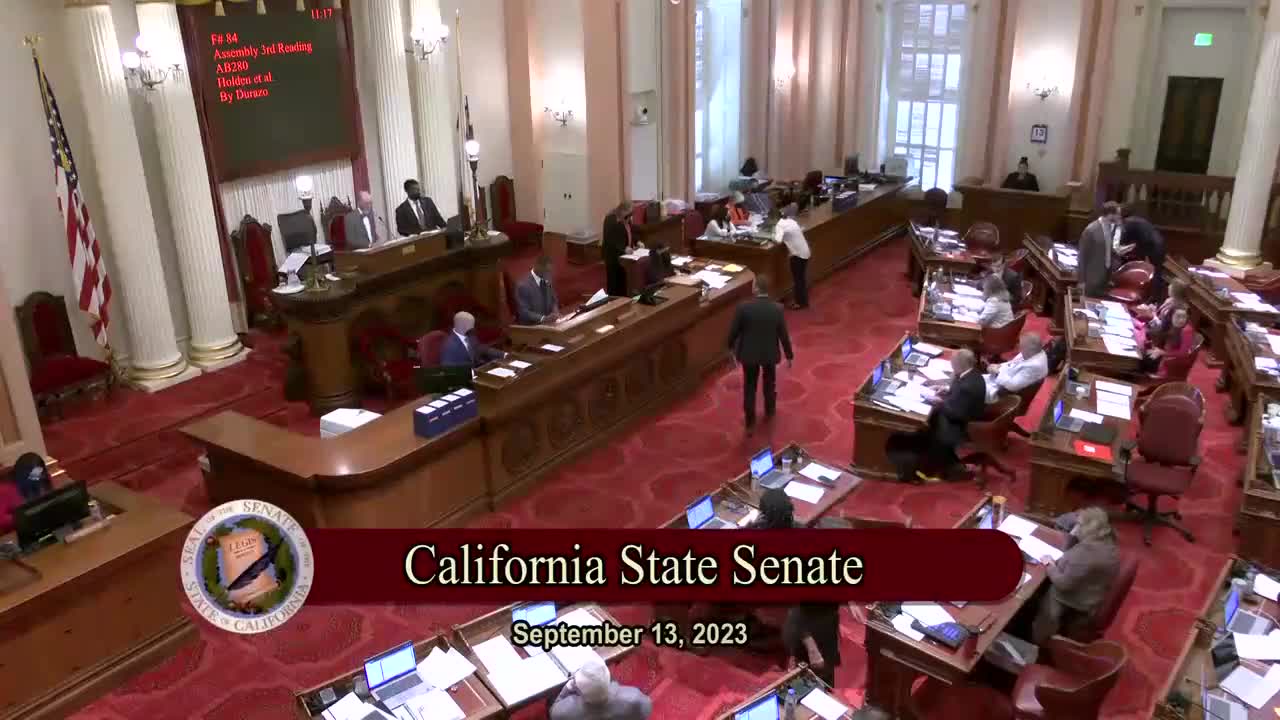 4MIN
Senate Floor
 30SEC
Assembly Floor
 1MIN
Senate Standing Committee on Appropriations
 14MIN
Senate Standing Committee on Public Safety
 3MIN
Assembly Floor
 16MIN
Assembly Standing Committee on Public Safety
 16MIN
Assembly Standing Committee on Public Safety
Bill Author

Bill Co-Author(s):