AB 2690: Pupil safety: parental notification: synthetic drugs.
- Session Year: 2023-2024
- House: Assembly
- Latest Version Date: 2024-09-14
Current Status:
Passed
(2024-09-14: Chaptered by Secretary of State - Chapter 241, Statutes of 2024.)
Introduced
In Committee
First Chamber
In Committee
Second Chamber
Enacted
Existing law requires a school district, county office of education, and charter school to annually inform parents or guardians, at the beginning of the first semester or quarter of the regular school term, of the dangers associated with using synthetic drugs and the possibility that dangerous synthetic drugs can be found in counterfeit pills, as provided. If a local educational agency maintains an internet website, existing law requires the local educational agency to post this information on their internet website, and to ensure that each individual school within the local educational agency that maintains an individual internet website also posts the information on that schools internet website, as provided.
This bill would require a local educational agency to, as part of the above-described annual notification to parents or guardians, also include the risk of social media platforms being used as a way to market and sell synthetic drugs, such as fentanyl. By imposing additional duties on local educational agencies, the bill would impose a state-mandated local program.
The California Constitution requires the state to reimburse local agencies and school districts for certain costs mandated by the state. Statutory provisions establish procedures for making that reimbursement.
This bill would provide that, if the Commission on State Mandates determines that the bill contains costs mandated by the state, reimbursement for those costs shall be made pursuant to the statutory provisions noted above.
Existing law requires a school district, county office of education, and charter school to annually inform parents or guardians, at the beginning of the first semester or quarter of the regular school term, of the dangers associated with using synthetic drugs and the possibility that dangerous synthetic drugs can be found in counterfeit pills, as provided. Existing law requires a local educational agency and each of their schools to post this information on their respective internet websites, as specified.
This bill would require a local educational agency to, as part of the above-described annual notification to parents or guardians, also include the risk of social media platforms being used as a way to market and sell synthetic drugs, such as fentanyl. By imposing additional duties on local educational agencies, the bill would impose a state-mandated local program.
The California Constitution requires the state to reimburse local agencies and school districts for certain costs mandated by the state. Statutory provisions establish procedures for making that reimbursement.
This bill would provide that, if the Commission on State Mandates determines that the bill contains costs mandated by the state, reimbursement for those costs shall be made pursuant to the statutory provisions noted above.
(a)A local educational agency shall inform the parents or guardians of each enrolled pupil about all of the following:
(1)The dangers associated with using synthetic drugs that are not prescribed by a physician, such as fentanyl.
(2)The possibility that dangerous synthetic drugs can be found in counterfeit pills.
(3)The risk of social media platforms being used as a way to market and sell synthetic drugs, such as fentanyl.
(b)(1)The information shall be annually provided to parents or guardians at the beginning of the first semester or quarter of the regular school term.
(2)The information may be provided to parents or guardians pursuant to Section 48980.
(c)If a local educational agency maintains an internet website, the local educational agency shall post the information on their internet website and shall ensure that each individual school within the local educational agency that maintains an individual internet website also posts the information on that schools internet website.
(d)As used in this section, a local educational agency means a school district, county office of education, or charter school.
SEC. 2.If the Commission on State Mandates determines that this act contains costs mandated by the state, reimbursement to local agencies and school districts for those costs shall be made pursuant to Part 7 (commencing with Section 17500) of Division 4 of Title 2 of the Government Code.
(a)A local educational agency shall inform the parents or guardians of each enrolled pupil about the all of the following:
(1)The dangers associated with using synthetic drugs that are not prescribed by a physician, such as fentanyl. Parents or guardians shall also be informed of the
(2)The possibility that dangerous synthetic drugs can be found in counterfeit pills.
(3)The risk of social media platforms being used as a way to market and sell synthetic drugs, such as fentanyl.
(b)(1)The information shall be annually provided to parents or guardians at the beginning of the first semester or quarter of the regular school term.
(2)The information may be provided to parents or guardians pursuant to Section 48980.
(c)If a local educational agency maintains an internet website, the local educational agency shall post the information on their internet website and shall ensure that each individual school within the local educational agency that maintains an individual internet website also posts the information on that schools internet website.
(d)As used in this section, a local educational agency means a school district, county office of education, or charter school.
SEC. 2.If the Commission on State Mandates determines that this act contains costs mandated by the state, reimbursement to local agencies and school districts for those costs shall be made pursuant to Part 7 (commencing with Section 17500) of Division 4 of Title 2 of the Government Code.
|
Date
|
Status
|
|---|---|
| Sep 14, 2024 | Chaptered by Secretary of State - Chapter 241, Statutes of 2024. |
| Sep 14, 2024 | Approved by the Governor. |
| Aug 19, 2024 | Enrolled and presented to the Governor at 3 p.m. |
| Aug 12, 2024 | In Assembly. Ordered to Engrossing and Enrolling. |
| Aug 12, 2024 | Read third time. Passed. Ordered to the Assembly. (Ayes 38. Noes 0. Page 5045.). |
| Aug 6, 2024 | Read second time. Ordered to Consent Calendar. |
| Aug 5, 2024 | From committee: Be ordered to second reading file pursuant to Senate Rule 28.8 and ordered to Consent Calendar. |
| Jun 26, 2024 | From committee: Do pass and re-refer to Com. on APPR with recommendation: To Consent Calendar. (Ayes 7. Noes 0.) (June 26). Re-referred to Com. on APPR. |
| Jun 5, 2024 | Referred to Com. on ED. |
| May 23, 2024 | In Senate. Read first time. To Com. on RLS. for assignment. |
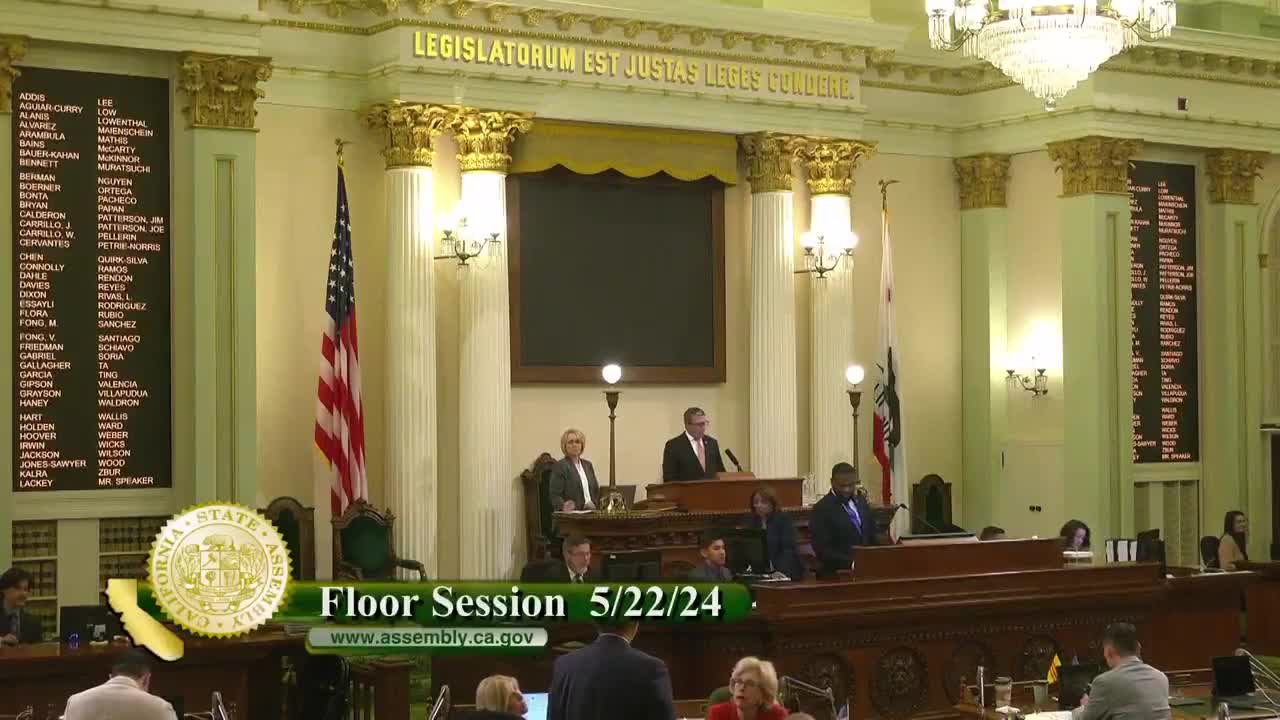
| May 22, 2024 | Read third time. Passed. Ordered to the Senate. (Ayes 65. Noes 0. Page 5498.) |
| May 20, 2024 | Read second time. Ordered to third reading. |
| May 16, 2024 | From committee: Do pass. (Ayes 15. Noes 0.) (May 16). |
| Apr 24, 2024 | In committee: Set, first hearing. Referred to APPR. suspense file. |
| Apr 11, 2024 | From committee: Do pass and re-refer to Com. on APPR. with recommendation: To Consent Calendar. (Ayes 7. Noes 0.) (April 10). Re-referred to Com. on APPR. |
| Mar 4, 2024 | Referred to Com. on ED. |
| Feb 15, 2024 | From printer. May be heard in committee March 16. |
| Feb 14, 2024 | Read first time. To print. |
|
Date
|
Description
|
Location
|
Votes
|
|
|---|---|---|---|---|
| Aug 12, 2024 | Consent Calendar 2nd AB2690 Joe Patterson | Senate Floor |
Passed |
|
| Jun 26, 2024 | Do pass, but first be re-referred to the Committee on [Appropriations] with the recommendation: To Consent Calendar | Senate Standing Committee on Education |
Passed |
|
| May 22, 2024 | AB 2690 Joe Patterson Assembly Third Reading | Assembly Floor |
Passed |
|
| May 16, 2024 | Do pass. | Assembly Standing Committee on Appropriations |
Passed |
|
| Apr 10, 2024 | Do pass and be re-referred to the Committee on [Appropriations] with recommendation: To Consent Calendar | Assembly Standing Committee on Education |
Passed |
This list shows positions taken on this bill by organizations on the date displayed, which is linked to the original source.
Positions by individuals are not included.
|
Organization
|
Position
|
Date
|
|---|---|---|
| California Baptist for Biblical Values | ** Support | |
| California Catholic Conference | ** Support |
SENATE RULES COMMITTEE Office of Senate Floor Analyses (916) 651-1520 Fax: (916) 327-4478 | AB 2690 |
CONSENT
Bill No: AB 2690
Author: Joe Patterson (R)
Introduced: 2/14/24
Vote: 21
SENATE EDUCATION COMMITTEE: 7-0, 6/26/24
AYES: Newman, Ochoa Bogh, Cortese, Glazer, Gonzalez, Smallwood-Cuevas, Wilk
SENATE APPROPRIATIONS COMMITTEE: Senate Rule 28.8
ASSEMBLY FLOOR: 65-0, 5/22/24 - See last page for vote
SUBJECT: Pupil safety: parental notification: synthetic drugs
SOURCE: Author
DIGEST:
This bill adds, to existing requirement for each local educational agency (LEA), county office of education (COE), and charter schools to post information on their website regarding the dangers of fentanyl, the risk of social media platforms being used as a way to market and sell synthetic drugs, such as fentanyl.
ANALYSIS:
Existing law:
- Requires a school district, COE, and charter school inform the parents or guardians of each enrolled pupil about the dangers associated with using synthetic drugs that are not prescribed by a physician, such as fentanyl. Requires parents or guardians to also be informed of the possibility that dangerous synthetic drugs can be found in counterfeit pills. (Education Code (EC) § 48985.5 (a))
- Requires school district governing boards to notify parents and guardians of minor pupils of specified items at the beginning of the first semester or quarter of the regular school term. (EC § 48980)
- Authorizes public and private elementary and secondary schools to voluntarily determine whether or not to make emergency naloxone or another opioid antagonist and trained personnel available at its school. Requires a school to evaluate the emergency medical response time to the school and determine whether initiating emergency medical services is an acceptable alternative to naloxone or another opioid antagonist and trained personnel. Prohibits a private elementary or secondary school from exercising the authority provided by this bill from receiving state funds for this purpose. (EC § 49414.3 (c))
- Authorizes school districts, COEs, and charter schools to provide emergency naloxone or another opioid antagonist to school nurses or trained volunteer personnel to provide emergency medical aid to persons suffering, or reasonably believed to be suffering, from an opioid overdose. (EC § 49414.3 (a))
- Provides that, if a school district, charter school, or private school elects to offer an athletic program, the school district, charter school, or private school shall annually give the Opioid Factsheet for Patients published by the Centers for Disease Control and Prevention to each athlete. The athlete and, if the athlete is 17 years of age or younger, the athlete’s parent or guardian shall sign a document acknowledging receipt of the Opioid Factsheet for Patients and return that document to the school district, charter school, or private school before the athlete initiates practice or competition. The Opioid Factsheet for Patients may be sent and returned through an electronic medium, including, but not limited to, fax or email. (EC § 49476)
This bill adds, to the existing requirement for each LEA, COE, and charter schools to post information on their website regarding the dangers of fentanyl, the risk of social media platforms being used as a way to market and sell synthetic drugs, such as fentanyl.
Comments
- Need for the bill. According to the author, “ While notifying students and parents of the dangers of fentanyl is essential to stopping the drug epidemic in our state, it is of equal importance to educate them on the varying mediums by which fentanyl is sold, specifically concerning the malicious use of social media platforms by illicit drug dealers. With the growth of social media over the past several years, drug dealers have exploited these platforms to sell their deadly products to teens and young adults. Due to the ever-changing illicit drug market, many parents have reported that they were unaware of the fact that dangerous drugs, like fentanyl, were available online. The purpose of this bill is to build on legislation enacted last year to ensure parents have the best available information.”
- Fentanyl Crisis Among California Youth. Fentanyl, a potent synthetic opioid drug, has been approved by the Food and Drug Administration (FDA) for application as both an analgesic and anesthetic. Its strength is estimated to be approximately 50 times greater than heroin and 100 times stronger than morphine. Originating in 1959 and introduced in the 1960s, fentanyl initially served as an intravenous anesthetic. In the United States, legal manufacturing and distribution of fentanyl exist in two forms: pharmaceutical fentanyl and illicitly manufactured fentanyl, both classified as synthetic opioids. Physicians prescribe pharmaceutical fentanyl for the management of severe pain, particularly post-surgery and in advanced-stage cancer cases. Recent incidences of fentanyl-related overdoses have been associated with illicitly manufactured fentanyl, which is disseminated through illicit drug markets due to its heroin-like effect. Moreover, it is frequently combined with other substances to enhance their potency, affordability, addictiveness, and peril. According to the California Department of Public Health (CDPH), fentanyl-related overdose deaths increased 625 percent among ages 10-19 from 2018 to 2020. In 2021, there were 224 fentanyl-related overdose deaths among teens ages 15–19 in California.
FBI and Partners Target Online Drug Markets
The utilization of the Internet as a platform for the trafficking of synthetic drugs through social media, Clearnet websites, and darknet marketplaces has witnessed an increase. The U.S. Department of Justice Drug Enforcement Administration (DEA) has underscored the escalating exploitation of social media by criminal drug networks for the dissemination of dangerous synthetic drugs, notably counterfeit fentanyl and methamphetamine pills. These substances are often marketed to unsuspecting adolescents, young adults, and older individuals who believe they are purchasing authentic products. In the year 2021, the DEA scrutinized upwards of 80 cases relating to drug trafficking on internet applications, establishing a direct correlation between drug sales on social media and fatal overdose incidents. The DEA has issued a Public Safety Alert warning Americans of the alarming increase in the lethality and availability of fake prescription pills containing fentanyl and methamphetamine. The Public Safety Alert coincides with the launch of DEA’s One Pill Can Kill Public Awareness Campaign to educate the public about the dangers of counterfeit pills and urges all Americans to take only medications prescribed by a medical professional and dispensed by a licensed pharmacist.
- How Schools Are Helping To Tackle This Issue. Pursuant to AB 1748 (Mayes, Chapter 557, Statutes of 2016), among other things, requires the Superintendent of Public Instruction to establish minimum training standards for school employees who volunteer to administer naloxone or another opioid antagonist. In addition to setting minimum training standards, the CDE must maintain on its website a clearinghouse for best practices in training nonmedical personnel to administer naloxone or another opioid antagonist to pupils.
The CDE, in conjunction with the CDPH, provides LEAs with resources and information that they can readily share with parents and students to help keep them safe. The shareable Fentanyl Awareness and Prevention toolkit page offers information about the risks of fentanyl and how to prevent teen use and overdoses. In addition to the toolkit, the CDPH’s Substance and Addiction Prevention branch also provides resources for parents, guardians, caretakers, educators, schools, and youth-serving providers.
While schools are authorized but not required to stock naloxone, some LEAs and COEs have also adjusted to address this growing crisis. For example, the Lake County Office of Education and Washington Unified School District in West Sacramento recently implemented a local school naloxone policy consistent with state statutes (which requires school employees who elect to administer naloxone, to be trained in the administration, and to keep the naloxone stocked and stored appropriately). San Diego Unified School District created its naloxone toolkit to aid other LEAs and inform parents and guardians.
Further, the Legislature has adopted a series of legislation such as SB 10 (Cortese, Chapter 856, Statutes of 2023), which requires school safety plans of schools, including charter schools, serving students in grades 7 to 12 to include a protocol for responding to a student's opioid overdose; SB 114 (Committee on Budget and Fiscal Review, Chapter 48, Statutes of 2023) that, among other items, provides $3.5 million ongoing Proposition 98 General Fund to COE to distribute opioid antagonists, with the intent that it complement efforts of the Naloxone Distribution Project; and AB 889 (Joe Patterson, Chapter 123, Statutes of 2023) which required LEA, COE, and charter school to annually inform parents or guardians of the dangers associated with using synthetic drugs and post this information on their respective internet websites.
This bill adds the risk of social media platforms being used as a way to market and sell synthetic drugs, such as fentanyl to AB 889 (Joe Patterson, Chapter 123, Statutes of 2023) which was passed and signed into law last year.
FISCAL EFFECT: Appropriation: No Fiscal Com.: Yes Local: Yes
SUPPORT: (Verified 8/5/24)
None received
OPPOSITION: (Verified 8/5/24)
None received
ASSEMBLY FLOOR: 65-0, 5/22/24
AYES: Addis, Aguiar-Curry, Alanis, Alvarez, Arambula, Bains, Bauer-Kahan, Bennett, Berman, Boerner, Bryan, Juan Carrillo, Wendy Carrillo, Chen, Connolly, Davies, Dixon, Flora, Mike Fong, Vince Fong, Gabriel, Gallagher, Garcia, Grayson, Haney, Hart, Hoover, Irwin, Kalra, Lackey, Lee, Low, Lowenthal, Maienschein, McCarty, Muratsuchi, Stephanie Nguyen, Ortega, Pacheco, Papan, Jim Patterson, Joe Patterson, Pellerin, Petrie-Norris, Quirk-Silva, Ramos, Rendon, Reyes, Rodriguez, Blanca Rubio, Sanchez, Santiago, Schiavo, Soria, Ta, Ting, Valencia, Villapudua, Waldron, Wallis, Ward, Wicks, Wood, Zbur, Robert Rivas
NO VOTE RECORDED: Bonta, Calderon, Cervantes, Megan Dahle, Essayli, Friedman, Gipson, Holden, Jackson, Jones-Sawyer, Mathis, McKinnor, Luz Rivas, Weber, Wilson
Prepared by: Kordell Hampton / ED. / (916) 651-4105
8/7/24 13:38:32
**** END ****
SENATE COMMITTEE ON EDUCATION
Senator Josh Newman, Chair
2023 - 2024 Regular
Bill No: AB 2690 Hearing Date: June 26, 2024
Author: | |||
Version: | February 14, 2024 | ||
Urgency: | No | Fiscal: | Yes |
Consultant: | Kordell Hampton | ||
Subject: Pupil safety: parental notification: synthetic drugs.
SUMMARY
This bill adds, to existing requirement for each local educational agency (LEA), county office of education (COE), and charter schools to post information on their website regarding the dangers of fentanyl, the risk of social media platforms being used as a way to market and sell synthetic drugs, such as fentanyl.
BACKGROUND
Existing Law:
Education Code (EC)
- Requires a school district, COE, and charter school inform the parents or guardians of each enrolled pupil about the dangers associated with using synthetic drugs that are not prescribed by a physician, such as fentanyl. Requires parents or guardians to also be informed of the possibility that dangerous synthetic drugs can be found in counterfeit pills. (EC § 48985.5 (a))
- Requires school district governing boards to notify parents and guardians of minor pupils of specified items at the beginning of the first semester or quarter of the regular school term. (EC § 48980)
- Authorizes public and private elementary and secondary schools to voluntarily determine whether or not to make emergency naloxone or another opioid antagonist and trained personnel available at its school. Requires a school to evaluate the emergency medical response time to the school and determine whether initiating emergency medical services is an acceptable alternative to naloxone or another opioid antagonist and trained personnel. Prohibits a private elementary or secondary school from exercising the authority provided by this bill from receiving state funds for this purpose. (EC § 49414.3 (c))
- Authorizes school districts, COEs, and charter schools to provide emergency naloxone or another opioid antagonist to school nurses or trained volunteer personnel to provide emergency medical aid to persons suffering, or reasonably believed to be suffering, from an opioid overdose. (EC § 49414.3 (a))
- If a school district, charter school, or private school elects to offer an athletic program, the school district, charter school, or private school shall annually give the Opioid Factsheet for Patients published by the Centers for Disease Control and Prevention to each athlete. The athlete and, if the athlete is 17 years of age or younger, the athlete’s parent or guardian shall sign a document acknowledging receipt of the Opioid Factsheet for Patients and return that document to the school district, charter school, or private school before the athlete initiates practice or competition. The Opioid Factsheet for Patients may be sent and returned through an electronic medium, including, but not limited to, fax or email. (EC § 49476)
ANALYSIS
This bill:
- Adds, to the existing requirement for each LEA, COE, and charter schools to post information on their website regarding the dangers of fentanyl, the risk of social media platforms being used as a way to market and sell synthetic drugs, such as fentanyl.
STAFF COMMENTS
- Need for the bill. According to the author, “ While notifying students and parents of the dangers of fentanyl is essential to stopping the drug epidemic in our state, it is of equal importance to educate them on the varying mediums by which fentanyl is sold, specifically concerning the malicious use of social media platforms by illicit drug dealers. With the growth of social media over the past several years, drug dealers have exploited these platforms to sell their deadly products to teens and young adults. Due to the ever-changing illicit drug market, many parents have reported that they were unaware of the fact that dangerous drugs, like fentanyl, were available online. The purpose of this bill is to build on legislation enacted last year to ensure parents have the best available information.”
- Fentanyl Crisis Among California Youth. Fentanyl, a potent synthetic opioid drug, has been approved by the Food and Drug Administration (FDA) for application as both an analgesic and anesthetic. Its strength is estimated to be approximately 50 times greater than heroin and 100 times stronger than morphine. Originating in 1959 and introduced in the 1960s, fentanyl initially served as an intravenous anesthetic. In the United States, legal manufacturing and distribution of fentanyl exist in two forms: pharmaceutical fentanyl and illicitly manufactured fentanyl, both classified as synthetic opioids. Physicians prescribe pharmaceutical fentanyl for the management of severe pain, particularly post-surgery and in advanced-stage cancer cases. Recent incidences of fentanyl-related overdoses have been associated with illicitly manufactured fentanyl, which is disseminated through illicit drug markets due to its heroin-like effect. Moreover, it is frequently combined with other substances to enhance their potency, affordability, addictiveness, and peril. According to the California Department of Public Health (CDPH), fentanyl-related overdose deaths increased 625 percent among ages 10-19 from 2018 to 2020. In 2021, there were 224 fentanyl-related overdose deaths among teens ages 15–19 in California.
FBI and Partners Target Online Drug Markets
The utilization of the Internet as a platform for the trafficking of synthetic drugs through social media, Clearnet websites, and darknet marketplaces has witnessed an increase. The U.S. Department of Justice Drug Enforcement Administration (DEA) has underscored the escalating exploitation of social media by criminal drug networks for the dissemination of dangerous synthetic drugs, notably counterfeit fentanyl and methamphetamine pills. These substances are often marketed to unsuspecting adolescents, young adults, and older individuals who believe they are purchasing authentic products. In the year 2021, the DEA scrutinized upwards of 80 cases relating to drug trafficking on internet applications, establishing a direct correlation between drug sales on social media and fatal overdose incidents. The DEA has issued a Public Safety Alert warning Americans of the alarming increase in the lethality and availability of fake prescription pills containing fentanyl and methamphetamine. The Public Safety Alert coincides with the launch of DEA’s One Pill Can Kill Public Awareness Campaign to educate the public about the dangers of counterfeit pills and urges all Americans to take only medications prescribed by a medical professional and dispensed by a licensed pharmacist.
- How Schools Are Helping To Tackle This Issue. Pursuant to AB 1748 (Mayes, Chapter 557, Statutes of 2016), among other things, requires the Superintendent of Public Instruction to establish minimum training standards for school employees who volunteer to administer naloxone or another opioid antagonist. In addition to setting minimum training standards, the CDE must maintain on its website a clearinghouse for best practices in training nonmedical personnel to administer naloxone or another opioid antagonist to pupils.
The CDE, in conjunction with the CDPH, provides LEAs with resources and information that they can readily share with parents and students to help keep them safe. The shareable Fentanyl Awareness and Prevention toolkit page offers information about the risks of fentanyl and how to prevent teen use and overdoses. In addition to the toolkit, the CDPH’s Substance and Addiction Prevention branch also provides resources for parents, guardians, caretakers, educators, schools, and youth-serving providers.
While schools are authorized but not required to stock naloxone, some LEAs and COEs have also adjusted to address this growing crisis. For example, the Lake County Office of Education and Washington Unified School District in West Sacramento recently implemented a local school naloxone policy consistent with state statutes (which requires school employees who elect to administer naloxone, to be trained in the administration, and to keep the naloxone stocked and stored appropriately). San Diego Unified School District created its naloxone toolkit to aid other LEAs and inform parents and guardians.
Further, the Legislature has adopted a series of legislation such as SB 10 (Cortese, Chapter 856, Statutes of 2023), which requires school safety plans of schools, including charter schools, serving students in grades 7 to 12 to include a protocol for responding to a student's opioid overdose; SB 114 (Committee on Budget and Fiscal Review, Chapter 48, Statutes of 2023) that, among other items, provides $3.5 million ongoing Proposition 98 General Fund to COE to distribute opioid antagonists, with the intent that it complement efforts of the Naloxone Distribution Project; and AB 889 (Joe Patterson, Chapter 123, Statutes of 2023) which required LEA, COE, and charter school to annually inform parents or guardians of the dangers associated with using synthetic drugs and post this information on their respective internet websites.
This bill adds the risk of social media platforms being used as a way to market and sell synthetic drugs, such as fentanyl to AB 889 (Joe Patterson, Chapter 123, Statutes of 2023) which was passed and signed into law last year.
- Related Legislation.
AB 889 (Joe Patterson, Chapter 123, Statutes of 2023) requires a school district, COE, and charter school to annually inform parents or guardians of the dangers associated with using synthetic drugs and post this information on their respective websites.
AB 19 (Joe Patterson, 2023) would have required public schools to maintain at least two doses of naloxone hydrochloride or another opioid antagonist to provide emergency medical aid to a person suffering from an opioid overdose. This bill was held in the Senate Appropriations Committee.
AB 3271 (Joe Patterson, 2024) would have required each public school operated by a school district, COE, or charter school, that has elected to make a school nurse or trained personnel available at the school to use naloxone hydrochloride or another opioid antagonist, to maintain at least 2 units of naloxone hydrochloride or another opioid antagonist for purposes of those authorizations. This bill was held in the Assembly Appropriations Committee.
SB 10 (Cortese, Chapter 856, Statutes of 2023) requires school safety plans of schools, including charter schools, serving students in grades seven to 12 to include a protocol for responding to a student's opioid overdose; requires the CDE to post informational materials on its website on opioid overdose prevention; and encourages COEs to establish working groups on fentanyl education in schools.
SUPPORT
None received
OPPOSITION
None received
-- END --
ASSEMBLY THIRD READING
ATR Bill Id:AB 2690
Author:(Joe Patterson)
As Introduced Ver:February 14, 2024
Majority vote
SUMMARY
Requires a school district, county office of education (COE), and charter school to inform the parents or guardians of each enrolled pupil about the risk of social media platforms being used as a way to market and sell synthetic drugs, such as fentanyl.
Major Provisions
Requires a school district, COE, and charter school to inform the parents or guardians of each enrolled pupil about the risk of social media platforms being used as a way to market and sell synthetic drugs, such as fentanyl.
COMMENTS
Dangers associated with Fentanyl. Fentanyl is a potent synthetic opioid drug approved by the Food and Drug Administration (FDA) for use as an analgesic and anesthetic. It is approximately 50 times stronger than heroin and 100 times stronger than morphine. First developed in 1959, it was introduced in the 1960's as an intravenous anesthetic. Fentanyl is legally manufactured and distributed in the United States; however, there are two types of fentanyl: pharmaceutical fentanyl and illicitly manufactured fentanyl. Both are considered synthetic opioids. Pharmaceutical fentanyl is prescribed by doctors to treat severe pain, especially after surgery and for advanced-stage cancer. Most recently, cases of fentanyl-related overdoses are linked to illicitly manufactured fentanyl that is distributed through illegal drug markets for its heroin-like effect. It is often added to other drugs because of its extreme potency, which makes drugs cheaper, more powerful, more addictive, and more dangerous.
Addressing Fentanyl Among California Youth. According to the California Department of Public Health (CDPH), fentanyl-related overdose deaths increased 625% among ages 10-19 from 2018 to 2020. In 2021, there were 224 fentanyl-related overdose deaths among teenagers aged 15–19 years old in California.
Current law requires the Superintendent of Public Instruction (SPI) to establish minimum training standards for school employees who volunteer to administer naloxone or another opioid antagonist. In addition to setting minimum training standards, the California Department of Education (CDE) must maintain on its website a clearinghouse for best practices in training nonmedical personnel to administer naloxone or another opioid antagonist to pupils.
The CDE, in conjunction with the CDPH, provides local educational agencies (LEAs) with resources and information that they can readily share with parents and students to help keep them safe. The Fentanyl Awareness and Prevention toolkit page offers information about the risks of fentanyl and how to prevent teen use and overdoses. In addition to the toolkit, the CDPH's Substance and Addiction Prevention branch also provides resources for parents, guardians, caretakers, educators, schools, and youth-serving providers.
Purchasing synthetic drugs through social media. According to the U.S. Department of Justice Drug Enforcement Administration (DEA), with the growth of social media and the proliferation of smartphones, a dangerous and deadly new drug threat has emerged: criminal drug networks are abusing social media to expand their reach, create new markets, and target new clientele. This includes selling deadly fake fentanyl and methamphetamine pills, often to unsuspecting teenagers, young adults, and older Americans, who think they are buying the real thing. Adolescents and young adults are particularly susceptible given their high rates of social media usage. In 2021, the DEA investigated more than 80 cases involving drug trafficking on internet apps. The DEA has directly connected social media drug sales to overdose deaths.
Drug traffickers advertise on social media platforms like Facebook, Instagram, Snapchat, TikTok, Twitter and YouTube. These advertisements are in disappearing, 24-hour stories and in posts, which are promptly posted and removed. Posts and stories are often accompanied by known code words and emojis that are used to market and sell illicit and deadly drugs on social media. These code words and emojis are designed to evade detection by law enforcement and by the preset algorithms used by social media platforms.
According to the Author
"While notifying students and parents of the dangers of fentanyl is essential to stopping the drug epidemic in our state, it is of equal importance to educate them on the varying mediums by which fentanyl is sold, specifically concerning the malicious use of social media platforms by illicit drug dealers. With the growth of social media over the past several years, drug dealers have exploited these platforms to sell their deadly products to teens and young adults. Due to the ever-changing illicit drug market, many parents have reported that they were unaware of the fact that dangerous drugs, like fentanyl, were available online. The purpose of this bill is to build on legislation enacted last year to ensure parents have the best available information."
Arguments in Support
The California Catholic Conference states, "The California Catholic Conference supports parents as being partners with educators in safeguarding the well-being of their children. AB 2690 aligns with this principle by equipping parents with the knowledge and resources necessary to identify and address potential threats posed by synthetic drugs. Furthermore, by raising awareness about the dangers of synthetic drugs, this bill has the potential to prevent substance abuse and related tragedies among our youth. Education and proactive parental involvement are key components in combating the spread of drug abuse, and AB 2690 represents a significant stride towards achieving this goal."
Arguments in Opposition
None on file
FISCAL COMMENTS
According to the Assembly Appropriations Committee:
Ongoing Proposition 98 General Fund costs for schools to provide the new parental notification. If schools provide the notification as a printed one-page document, costs would be about $.10 per document. If schools use online messaging systems, as many do, costs would be lower. Statewide costs would depend on the number of schools providing the notification as a printed document versus online. For example, if 25% of the state's approximately six million students in grades seventh through 12 received the notification as a printed one-page document, costs would total $150,000 statewide annually.
If the Commission on State Mandates determines the bill's requirements to be a reimbursable state mandate, the state would need to reimburse these costs to LEAs or provide funding through the K-12 Mandate Block Grant.
VOTES
ASM EDUCATION: 7-0-0
YES: Muratsuchi, Addis, Alvarez, Bonta, Flora, Hoover, McCarty
ASM APPROPRIATIONS: 15-0-0
YES: Wicks, Sanchez, Arambula, Bryan, Calderon, Wendy Carrillo, Dixon, Mike Fong, Grayson, Haney, Hart, Jim Patterson, Pellerin, Ta, Villapudua
UPDATED
VERSION: February 14, 2024
CONSULTANT: Marguerite Ries / ED. / (916) 319-2087 FN: 0003159
Date of Hearing: April 24, 2024
ASSEMBLY COMMITTEE ON APPROPRIATIONS
Buffy Wicks, Chair
ABPCA Bill Id:AB 2690
Author:(Joe Patterson) – As Introduced Ver:February 14, 2024
Policy Committee: | Education | Vote: | 7 - 0 |
|
| ||
|
|
Urgency: No State Mandated Local Program: Yes Reimbursable: Yes
SUMMARY:
This bill requires local educational agencies (LEAs) to inform the parents or guardians of each enrolled pupil about the risk of social media platforms being used as a way to market and sell synthetic drugs, such as fentanyl.
FISCAL EFFECT:
Ongoing Proposition 98 General Fund costs for schools to provide the new parental notification. If schools provide the notification as a printed one-page document, costs would be about $.10 per document. If schools use online messaging systems, as many do, costs would be lower. Statewide costs would depend on the number of schools providing the notification as a printed document versus online. For example, if 25% of the state’s approximately six million students in grades seventh through 12 received the notification as a printed one-page document, costs would total $150,000 statewide annually.
If the Commission on State Mandates determines the bill’s requirements to be a reimbursable state mandate, the state would need to reimburse these costs to LEAs or provide funding through the K-12 Mandate Block Grant.
COMMENTS:
- Background. California Education Code section 48980 requires LEAs to provide numerous notifications to parents or guardians at the beginning of each school year. Notifications range from information about an LEA’s sexual harassment policy to a parent’s ability to access state funds for the costs of Advanced Placement exam fees.
- Related Legislation. This bill is one of several bills that have recently come before this committee that add information to annual parental notifications. While each individual notification may be of a relatively minor cost on its own, the costs of numerous notification requirements can result in more significant costs. Parental notification bills recently introduced include:
AB 659 (Aguiar-Curry), Chapter 809, Statutes of 2023, requires an LEA to include, as part of its annual notification to students advancing to sixth grade, information about human papillomavirus immunization.
AB 889 (Joe Patterson), Chapter 123, Statutes of 2023, requires an LEA to include in its annual notification information about the dangers associated with using synthetic drugs.
AB 1796 (Alanis) requires an LEA to notify, as part of its annual notification process, parents or guardians of students in grades seven through 12 of any dual enrollment and International Baccalaureate courses it offers. The bill is pending on the Assembly floor.
AB 2179 (Davies) requires an LEA to provide information, as part of its annual notification process, to parents or guardians of students in grades 11 and 12 related to local apprenticeship and preapprenticeship programs. The bill is pending on the Assembly floor.
Analysis Prepared by: Natasha Collins / APPR. / (916) 319-2081
Date of Hearing: April 10, 2024
ASSEMBLY COMMITTEE ON EDUCATION
Al Muratsuchi, Chair
ABPCA Bill Id:AB 2690 (
Author:Joe Patterson) – As Introduced Ver:February 14, 2024
SUBJECT: Pupil safety: parental notification: synthetic drugs
SUMMARY: Requires a school district, county office of education (COE), and charter school to inform the parents or guardians of each enrolled pupil about the risk of social media platforms being used as a way to market and sell synthetic drugs, such as fentanyl.
EXISTING LAW:
- Requires a school district, COE, and charter school inform the parents or guardians of each enrolled pupil about the dangers associated with using synthetic drugs that are not prescribed by a physician, such as fentanyl. Requires parents or guardians to also be informed of the possibility that dangerous synthetic drugs can be found in counterfeit pills. (Education Code (EC) 48985.5)
- Requires the information to be annually provided to parents or guardians at the beginning of the first semester or quarter of the regular school term. Authorizes the information to be provided to parents or guardians in the annual notification. (EC 48985.5)
- Requires, if a school district, COE, or charter school maintains a website, the school district, COE, and charter school to post the information on their website and to ensure that each individual school within the school district, COE, and charter school that maintains an individual website also posts the information on that school’s website. (EC 48985.5)
- Requires governing boards of school districts to notify parents and guardians of minor pupils of specified items at the beginning of the first semester or quarter of the regular school term. (EC 48980)
- Authorizes school districts, COEs and charter schools to provide emergency naloxone or another opioid antagonist to school nurses or trained volunteer personnel for the purpose of providing emergency medical aid to persons suffering, or reasonably believed to be suffering, from an opioid overdose. (EC 49414.3)
- Requires the Superintendent of Public Instruction (SPI) to establish, and revise every five years or sooner, minimum standards of training for the administration of naloxone hydrochloride or another opioid antagonist as specified. Requires the California Department of Education (CDE) to maintain a clearinghouse for best practices in training nonmedical personnel to administer naloxone hydrochloride or another opioid antagonist to pupils. (EC 49414.3)
- Requires, if a school district, charter school, or private school that elects to offer an athletic program, the school district, charter school, or private school to annually give the Opioid Factsheet for Patients published by the Centers for Disease Control and Prevention to each athlete. The athlete and, if the athlete is 17 years of age or younger, the athlete’s parent or guardian shall sign a document acknowledging receipt of the Opioid Factsheet for Patients and return that document to the school district, charter school, or private school before the athlete initiates practice or competition. The Opioid Factsheet for Patients may be sent and returned through an electronic medium, including, but not limited to, fax or email. (EC 49476)
FISCAL EFFECT: Unknown
COMMENTS:
Need for the bill. According to the author, “While notifying students and parents of the dangers of fentanyl is essential to stopping the drug epidemic in our state, it is of equal importance to educate them on the varying mediums by which fentanyl is sold, specifically concerning the malicious use of social media platforms by illicit drug dealers. With the growth of social media over the past several years, drug dealers have exploited these platforms to sell their deadly products to teens and young adults. Due to the ever-changing illicit drug market, many parents have reported that they were unaware of the fact that dangerous drugs, like fentanyl, were available online. The purpose of this bill is to build on legislation enacted last year to ensure parents have the best available information.”
Dangers associated with Fentanyl. Fentanyl is a potent synthetic opioid drug approved by the Food and Drug Administration (FDA) for use as an analgesic and anesthetic. It is approximately 50 times stronger than heroin and 100 times stronger than morphine. First developed in 1959, it was introduced in the 1960’s as an intravenous anesthetic. Fentanyl is legally manufactured and distributed in the United States; however, there are two types of fentanyl: pharmaceutical fentanyl and illicitly manufactured fentanyl. Both are considered synthetic opioids. Pharmaceutical fentanyl is prescribed by doctors to treat severe pain, especially after surgery and for advanced-stage cancer. Most recently, cases of fentanyl-related overdoses are linked to illicitly manufactured fentanyl that is distributed through illegal drug markets for its heroin-like effect. It is often added to other drugs because of its extreme potency, which makes drugs cheaper, more powerful, more addictive, and more dangerous.
Addressing Fentanyl Among California Youth. According to the California Department of Public Health (CDPH), fentanyl-related overdose deaths increased 625% among ages 10-19 from 2018 to 2020. In 2021, there were 224 fentanyl-related overdose deaths among teenagers aged 15–19 years old in California.
Current law requires the Superintendent of Public Instruction (SPI) to establish minimum training standards for school employees who volunteer to administer naloxone or another opioid antagonist. In addition to setting minimum training standards, the CDE must maintain on its website a clearinghouse for best practices in training nonmedical personnel to administer naloxone or another opioid antagonist to pupils.
The CDE, in conjunction with the CDPH, provides local educational agencies (LEAs) with resources and information that they can readily share with parents and students to help keep them safe. The Fentanyl Awareness and Prevention toolkit page offers information about the risks of fentanyl and how to prevent teen use and overdoses. In addition to the toolkit, the CDPH’s Substance and Addiction Prevention branch also provides resources for parents, guardians, caretakers, educators, schools, and youth-serving providers.
Purchasing synthetic drugs through social media. According to the U.S. Department of Justice Drug Enforcement Administration (DEA), with the growth of social media and the proliferation of smartphones, a dangerous and deadly new drug threat has emerged: criminal drug networks are abusing social media to expand their reach, create new markets, and target new clientele. This includes selling deadly fake fentanyl and methamphetamine pills, often to unsuspecting teenagers, young adults, and older Americans, who think they are buying the real thing. Adolescents and young adults are particularly susceptible given their highrates of social media usage. In 2021, the DEA investigated more than 80 cases involving drug trafficking on internet apps. The DEA has directly connected social media drug sales to overdose deaths.
Drug traffickers advertise on social media platforms like Facebook, Instagram, Snapchat, TikTok, Twitter and YouTube. These advertisements are in disappearing, 24-hour stories and in posts, which are promptly posted and removed. Posts and stories are often accompanied by known code words and emojis that are used to market and sell illicit and deadly drugs on social media. These code words and emojis are designed to evade detection by law enforcement and by the preset algorithms used by social media platforms.
Related legislation. AB 19 (Joe Patterson) of the 2023-24 Session would have required public schools to maintain at least two doses of naloxone hydrochloride or another opioid antagonist to provide emergency medical aid to a person suffering from an opioid overdose. This bill was held in the Senate Appropriations Committee.
AB 889 (Joe Patterson), Chapter 123, Statutes of 2023, requires a school district, COE, and charter school to annually inform parents or guardians of the dangers associated with using synthetic drugs and post this information on their respective websites.
AB 1915 (Arambula) of the 2023-24 Session would establish a voluntary training program for high school students in how to administer naloxone hydrochloride during an opioid overdose; require the CDPH to develop the training and resource materials in collaboration with specified entities; and require schools that elect to stock naloxone hydrochloride to place it in specified locations.
AB 2429 (Alvarez) of the 2023-24 Session would require that if the governing board of a school district or the governing body of a charter school requires a course in health education for graduation from high school, it include, commencing with the 2026–27 school year, instruction on the dangers associated with fentanyl use, as specified.
AB 3271 (Joe Patterson) of the 2023-24 Session, would require each public school operated by a school district, COE, or charter school, that has elected to make a school nurse or trained personnel available at the school to use naloxone hydrochloride or another opioid antagonist, to maintain at least 2 units of naloxone hydrochloride or another opioid antagonist for purposes of those authorizations.
AB 915 (Arambula) of the 2021-22 Session would have required any school district, county office of education (COE), or charter school that voluntarily determines to make naloxone hydrochloride or another opioid antagonist available on campus to be placed in an appropriate location; and required the CDPH to create an opioid overdose training program and program toolkit to train high school students on how to identify and respond to an opioid overdose, and to make these materials available to public high schools upon request. This bill was held in the Senate Appropriations Committee.
SB 10 (Cortese), Chapter 856, Statutes of 2023, requires school safety plans of schools, including charter schools, serving students in grades seven to 12 to include a protocol for responding to a student's opioid overdose; requires the CDE to post informational materials on its website on opioid overdose prevention; and encourages COEs to establish working groups on fentanyl education in schools.
SB 472 (Hurtado) of the 2023-24 Session would have required each campus of a public school operated by an LEA, COE, or charter school to maintain at least two doses on its campus, and distribute, naloxone hydrochloride or another opioid antagonist pursuant to the standing order for naloxone and requires LEAs, COEs, and charter schools to report to DHCS for failure to distribute naloxone. This bill was held in the Senate Appropriations Committee.
AB 1748 (Mayes) Chapter 557, Statutes of 2016, authorizes school nurses and other trained personnel to use naloxone hydrochloride or another opioid antagonist to provide emergency medical aid to persons suffering, or reasonably believed to be suffering, from an opioid overdose.
Arguments in support. The California Catholic Conference states, “The California Catholic Conference supports parents as being partners with educators in safeguarding the well-being of their children. AB 2690 aligns with this principle by equipping parents with the knowledge and resources necessary to identify and address potential threats posed by synthetic drugs. Furthermore, by raising awareness about the dangers of synthetic drugs, this bill has the potential to prevent substance abuse and related tragedies among our youth. Education and proactive parental involvement are key components in combating the spread of drug abuse, and AB 2690 represents a significant stride towards achieving this goal.”
REGISTERED SUPPORT / OPPOSITION:
Support
California Baptist for Biblical Values
California Catholic Conference
Opposition
None on file
Analysis Prepared by: Marguerite Ries / ED. / (916) 319-2087
Bill Author

Bill Co-Author(s):