AB 274: CalWORKs: CalFresh: eligibility: income exclusions.
- Session Year: 2023-2024
- House: Assembly
- Latest Version Date: 2024-09-03
Current Status:
Failed
(2024-09-30: Vetoed by Governor.)
Introduced
In Committee
First Chamber
In Committee
Second Chamber
Enacted
What does this bill do?
The bill stops counting certain one-time fellowships and any grants, awards, scholarships, or loans received by CalWORKs recipients or household members as income or assets when determining CalWORKs eligibility and cash grant amounts, and treats those funds as excluded resources for 12 months after receipt. It also requires the state, to the extent federal law allows, to use a federal option so CalFresh (food aid) income rules exclude any types of income the state excludes for CalWORKs.
The summary is provided by generative AI which can make mistakes. For original language, please view the details in the table below.
Existing federal law provides for allocation of federal funds to eligible states through the federal Temporary Assistance for Needy Families (TANF) block grant program. Existing state law provides for the California Work Opportunity and Responsibility to Kids (CalWORKs) program under which, through a combination of state and county funds and federal funds received through the TANF program, each county provides cash assistance and other benefits to qualified low-income families. Under existing law, certain types of payments received by recipients of aid under the CalWORKs program, including, among others, an award or scholarship provided by a public or private entity to, or on behalf of, a dependent child are exempt from consideration as income for purposes of determining eligibility and aid amount.
Existing federal law provides for the Supplemental Nutrition Assistance Program (SNAP), known in California as CalFresh, under which supplemental nutrition assistance benefits allocated to the state by the federal government are distributed to eligible individuals by each county. Existing law requires the eligibility of households to be determined to the extent permitted by federal law. Existing federal regulation provides states with the option to exclude, for purposes of calculating a households income under SNAP, any type of income that the state excludes when determining eligibility or benefits for TANF cash assistance.
This bill would exempt any fellowship benefit that is not received monthly, and any grant, award, scholarship, or loan, that is provided to any assistance unit member from consideration as income or resources for purposes of determining CalWORKs eligibility or grant amounts, as specified. The bill would also require, to the extent permitted by federal law, regulation, or guidance, or a waiver thereof, the State Department of Social Services to exercise a federal option to exclude, for purposes of calculating a households income under CalFresh, any type of income that the department excludes when determining eligibility or benefits for CalWORKs. This bill would require the department to implement these provisions through an all-county letter or similar instruction until regulations are adopted. By expanding the scope of eligibility for CalWORKs and CalFresh, the bill would impose a state-mandated local program.
Existing law continuously appropriates moneys from the General Fund to defray a portion of county costs under the CalWORKs program.
This bill would provide that the continuous appropriation would not be made for purposes of implementing the bill.
This bill would incorporate additional changes to Section 11157 of the Welfare and Institutions Code proposed by SB 242 to be operative only if this bill and SB 242 are enacted and this bill is enacted last.
The California Constitution requires the state to reimburse local agencies and school districts for certain costs mandated by the state. Statutory provisions establish procedures for making that reimbursement.
This bill would provide that, if the Commission on State Mandates determines that the bill contains costs mandated by the state, reimbursement for those costs shall be made pursuant to the statutory provisions noted above.
Existing federal law provides for allocation of federal funds to eligible states through the federal Temporary Assistance for Needy Families (TANF) block grant program. Existing state law provides for the California Work Opportunity and Responsibility to Kids (CalWORKs) program under which, through a combination of state and county funds and federal funds received through the TANF program, each county provides cash assistance and other benefits to qualified low-income families. Under existing law, certain types of payments received by recipients of aid under the CalWORKs program, including, among others, an award or scholarship provided by a public or private entity to, or on behalf of, a dependent child are exempt from consideration as income for purposes of determining eligibility and aid amount.
Existing federal law provides for the Supplemental Nutrition Assistance Program (SNAP), known in California as CalFresh, under which supplemental nutrition assistance benefits allocated to the state by the federal government are distributed to eligible individuals by each county. Existing law requires the eligibility of households to be determined to the extent permitted by federal law. Existing federal regulation provides states with the option to exclude, for purposes of calculating a households income under SNAP, any type of income that the state excludes when determining eligibility or benefits for TANF cash assistance.
This bill would exempt any fellowship benefit that is not received monthly, and any grant, award, scholarship, or loan, or fellowship benefit that is provided to any assistance unit member for educational purposes from consideration as income or resources for purposes of determining CalWORKs eligibility or grant amounts, as specified. The bill would also require, to the extent permitted by federal law, regulation, or guidance, or a waiver thereof, the State Department of Social Services to exercise a federal option to exclude, for purposes of calculating a households income under CalFresh, any type of income that the department excludes when determining eligibility or benefits for CalWORKs. This bill would require the department to implement these provisions through an all-county letter or similar instruction until regulations are adopted. By expanding the scope of eligibility for CalWORKs and CalFresh, the bill would impose a state-mandated local program.
Existing law continuously appropriates moneys from the General Fund to defray a portion of county costs under the CalWORKs program.
This bill would provide that the continuous appropriation would not be made for purposes of implementing the bill.
This bill would incorporate additional changes to Section 11157 of the Welfare and Institutions Code proposed by AB 372 SB 242 to be operative only if this bill and AB 372 SB 242 are enacted and this bill is enacted last.
The California Constitution requires the state to reimburse local agencies and school districts for certain costs mandated by the state. Statutory provisions establish procedures for making that reimbursement.
This bill would provide that, if the Commission on State Mandates determines that the bill contains costs mandated by the state, reimbursement for those costs shall be made pursuant to the statutory provisions noted above.
Existing federal law provides for allocation of federal funds to eligible states through the federal Temporary Assistance for Needy Families (TANF) block grant program. Existing state law provides for the California Work Opportunity and Responsibility to Kids (CalWORKs) program under which, through a combination of state and county funds and federal funds received through the TANF program, each county provides cash assistance and other benefits to qualified low-income families. Under existing law, certain types of payments received by recipients of aid under the CalWORKs program, including, among others, an award or scholarship provided by a public or private entity to, or on behalf of, a dependent child are exempt from consideration as income for purposes of determining eligibility and aid amount.
Existing federal law provides for the Supplemental Nutrition Assistance Program (SNAP), known in California as CalFresh, under which supplemental nutrition assistance benefits allocated to the state by the federal government are distributed to eligible individuals by each county. Existing law requires the eligibility of households to be determined to the extent permitted by federal law. Existing federal regulation provides states with the option to exclude, for purposes of calculating a households income under SNAP, any type of income that the state excludes when determining eligibility or benefits for TANF cash assistance.
This bill would exempt any grant, award, scholarship, loan, or fellowship benefit provided to any assistance unit member for educational purposes from consideration as income or resources for purposes of determining CalWORKs eligibility or grant amounts. amounts, as specified. The bill would also require, to the extent permitted by federal law, regulation, or guidance, or a waiver thereof, the State Department of Social Services to exercise a federal option to exclude, for purposes of calculating a households income under CalFresh, any type of income that the department excludes when determining eligibility or benefits for CalWORKs. This bill would require the department to implement these provisions through an all-county letter or similar instruction until regulations are adopted. By expanding the scope of eligibility for CalWORKs and CalFresh, the bill would impose a state-mandated local program.
Existing law continuously appropriates moneys from the General Fund to defray a portion of county costs under the CalWORKs program.
This bill would provide that the continuous appropriation would not be made for purposes of implementing the bill.
This bill would incorporate additional changes to Section 11157 of the Welfare and Institutions Code proposed by AB 372 to be operative only if this bill and AB 372 are enacted and this bill is enacted last.
The California Constitution requires the state to reimburse local agencies and school districts for certain costs mandated by the state. Statutory provisions establish procedures for making that reimbursement.
This bill would provide that, if the Commission on State Mandates determines that the bill contains costs mandated by the state, reimbursement for those costs shall be made pursuant to the statutory provisions noted above.
Existing federal law provides for allocation of federal funds to eligible states through the federal Temporary Assistance for Needy Families (TANF) block grant program. Existing state law provides for the California Work Opportunity and Responsibility to Kids (CalWORKs) program under which, through a combination of state and county funds and federal funds received through the TANF program, each county provides cash assistance and other benefits to qualified low-income families. Under existing law, certain types of payments received by recipients of aid under the CalWORKs program, including, among others, an award or scholarship provided by a public or private entity to, or on behalf of, a dependent child are exempt from consideration as income for purposes of determining eligibility and aid amount.
Existing federal law provides for the Supplemental Nutrition Assistance Program (SNAP), known in California as CalFresh, under which supplemental nutrition assistance benefits allocated to the state by the federal government are distributed to eligible individuals by each county. Existing law requires the eligibility of households to be determined to the extent permitted by federal law. Existing federal regulation provides states with the option to exclude, for purposes of calculating a households income under SNAP, any type of income that the state excludes when determining eligibility or benefits for TANF cash assistance.
This bill would exempt any grant, award, scholarship, loan, or fellowship benefit provided to any assistance unit member for educational purposes from consideration as income for purposes of determining CalWORKs eligibility or grant amounts. The bill would also require require, to the extent permitted by federal law, regulation, or guidance, or a waiver thereof, the State Department of Social Services to exercise a federal option to exclude, for purposes of calculating a households income under CalFresh, any type of income that the department excludes when determining eligibility or benefits for CalWORKs. This bill would require the department to implement these provisions through an all-county letter or similar instruction until regulations are adopted. By expanding the scope of eligibility for CalWORKs and CalFresh, the bill would impose a state-mandated local program.
Existing law continuously appropriates moneys from the General Fund to defray a portion of county costs under the CalWORKs program.
This bill would provide that the continuous appropriation would not be made for purposes of implementing the bill.
The California Constitution requires the state to reimburse local agencies and school districts for certain costs mandated by the state. Statutory provisions establish procedures for making that reimbursement.
This bill would provide that, if the Commission on State Mandates determines that the bill contains costs mandated by the state, reimbursement for those costs shall be made pursuant to the statutory provisions noted above.
Existing federal law provides for allocation of federal funds to eligible states through the federal Temporary Assistance for Needy Families (TANF) block grant program. Existing state law provides for the California Work Opportunity and Responsibility to Kids (CalWORKs) program under which, through a combination of state and county funds and federal funds received through the TANF program, each county provides cash assistance and other benefits to qualified low-income families. Under existing law, certain types of payments received by recipients of aid under the CalWORKs program, including, among others, an award or scholarship provided by a public or private entity to, or on behalf of, a dependent child are exempt from consideration as income for purposes of determining eligibility and aid amount.
Existing federal law provides for the Supplemental Nutrition Assistance Program (SNAP), known in California as CalFresh, under which supplemental nutrition assistance benefits allocated to the state by the federal government are distributed to eligible individuals by each county. Existing law requires the eligibility of households to be determined to the extent permitted by federal law. Existing federal regulation provides states with the option to exclude, for purposes of calculating a households income under SNAP, any type of income that the state excludes when determining eligibility or benefits for TANF cash assistance.
This bill would exempt any grant, award, scholarship, loan, or fellowship benefit provided to any assistance unit member for educational purposes from consideration as income for purposes of determining CalWORKs eligibility or grant amounts. The bill would also require the State Department of Social Services to exercise a federal option to exclude, for purposes of calculating a households income under CalFresh, any type of income that the department excludes when determining eligibility or benefits for CalWORKs. This bill would require the department to implement these provisions through an all-county letter or similar instruction until regulations are adopted. By expanding the scope of eligibility for CalWORKs and CalFresh, the bill would impose a state-mandated local program.
Existing law continuously appropriates moneys from the General Fund to defray a portion of county costs under the CalWORKs program.
This bill would provide that the continuous appropriation would not be made for purposes of implementing the bill.
The California Constitution requires the state to reimburse local agencies and school districts for certain costs mandated by the state. Statutory provisions establish procedures for making that reimbursement.
This bill would provide that, if the Commission on State Mandates determines that the bill contains costs mandated by the state, reimbursement for those costs shall be made pursuant to the statutory provisions noted above.
(a)Notwithstanding Section 11008, all lump-sum income received by an applicant or recipient shall be regarded as income in the month received, except nonrecurring lump-sum social insurance payments, which shall include social security income, railroad retirement benefits, veterans benefits, workers compensation, and disability insurance.
(b)Except as otherwise provided in this part, for purposes of this chapter and Chapter 2 (commencing with Section 11200), income shall be deemed to be the same as applied under the Aid to Families with Dependent Children program on August 21, 1996, except that the following are exempt from consideration as income:
(1)Income that is received too infrequently to be reasonably anticipated, as exempted in federal Supplemental Nutrition Assistance Program (SNAP) regulations.
(2)Income from a college work-study program under Title IV of the federal Higher Education Act or Article 18 (commencing with Section 69950) of Chapter 2 of Part 42 of Division 5 of Title 3 of the Education Code or college work-study program, as established in the annual Budget Act, for individuals receiving aid under Chapter 2 (commencing with Section 11200).
(3)(A)Except as provided for in subparagraph (B), an award or scholarship provided by a public or private entity to or on behalf of a dependent child based on the childs academic or extracurricular achievement or participation in a scholastic, educational, or extracurricular competition.
(B)For purposes of Chapter 2 (commencing with Section 11200), an award or scholarship provided by a public or private entity to or on behalf of a dependent child.
(c)For purposes of Chapter 2 (commencing with Section 11200), notwithstanding any other law, and to the extent permitted by federal law, any fellowship benefit that is not received monthly, and any grant, award, scholarship, or loan, that is provided to any assistance unit member shall be exempt from consideration as income for purposes of determining eligibility for benefits or calculating grant amounts pursuant to Chapter 2 (commencing with Section 11200). The funds described in this subdivision shall also be exempt as resources for purposes of determining eligibility for benefits or calculating grant amounts pursuant to Chapter 2 (commencing with Section 11200) for 12 months following the receipt of the funds.
(d)(1)For purposes of Chapter 2 (commencing with Section 11200), any income or stipend paid by the United States Census Bureau, a governmental entity, or a nonprofit organization for temporary work related to the decennial census shall not be considered income.
(2)Paragraph (1) shall be retroactive and shall apply to any income or stipend paid by the United States Census Bureau, a governmental entity, or a nonprofit organization for temporary work related to the most recent decennial census.
(3)Notwithstanding the rulemaking provisions of the Administrative Procedure Act (Chapter 3.5 (commencing with Section 11340) of Part 1 of Division 3 of Title 2 of the Government Code), the department may implement, interpret, or make specific this subdivision by means of all-county letters or similar instructions from the department until regulations are adopted. These all-county letters or similar written instructions shall have the same force and effect as regulations until the adoption of regulations.
(e)(1)Any federal pandemic unemployment compensation, as described under Subchapter 2 (commencing with Section 9021) of Chapter 116 of Title 15 of the United States Code, is exempt from consideration as income and resources for the purposes of determining initial and continued eligibility and grant amount for the CalWORKs program.
(2)The exemption described under paragraph (1) shall remain in effect so long as federal pandemic unemployment compensation is exempt as income for purposes of establishing eligibility for the CalFresh program (Chapter 10 (commencing with Section 18900) of Part 6), pursuant to the federal Consolidated Appropriations Act of 2021 or any other law.
(f)(1)Notwithstanding any other law, for the purposes of this chapter and Chapter 2 (commencing with Section 11200), guaranteed income payments shall be exempt from consideration as income and resources.
(2)Notwithstanding the rulemaking provisions of the Administrative Procedure Act (Chapter 3.5 (commencing with Section 11340) of Part 1 of Division 3 of Title 2 of the Government Code), the department may implement, interpret, or make specific this subdivision through all-county letters or similar instructions that shall have the same force and effect as regulations until regulations are adopted.
SEC. 1.1.Section 11157 of the Welfare and Institutions Code is amended to read:11157.(a)Notwithstanding Section 11008, all lump-sum income received by an applicant or recipient shall be regarded as income in the month received, except nonrecurring lump-sum social insurance payments, which shall include social security income, railroad retirement benefits, veterans benefits, workers compensation, and disability insurance.
(b)Except as otherwise provided in this part, for purposes of this chapter and Chapter 2 (commencing with Section 11200), income shall be deemed to be the same as applied under the Aid to Families with Dependent Children program on August 21, 1996, except that the following are exempt from consideration as income:
(1)Income that is received too infrequently to be reasonably anticipated, as exempted in federal Supplemental Nutrition Assistance Program (SNAP) regulations.
(2)Income from a college work-study program under Title IV of the federal Higher Education Act or Article 18 (commencing with Section 69950) of Chapter 2 of Part 42 of Division 5 of Title 3 of the Education Code or college work-study program, as established in the annual Budget Act, for individuals receiving aid under Chapter 2 (commencing with Section 11200).
(3)(A)Except as provided for in subparagraph (B), an award or scholarship provided by a public or private entity to or on behalf of a dependent child based on the childs academic or extracurricular achievement or participation in a scholastic, educational, or extracurricular competition.
(B)For purposes of Chapter 2 (commencing with Section 11200), an award or scholarship provided by a public or private entity to or on behalf of a dependent child.
(c)For purposes of Chapter 2 (commencing with Section 11200), notwithstanding any other law, and to the extent permitted by federal law, any fellowship benefit that is not received monthly, and any grant, award, scholarship, or loan, that is provided to any assistance unit member shall be exempt from consideration as income for purposes of determining eligibility for benefits or calculating grant amounts pursuant to Chapter 2 (commencing with Section 11200). The funds described in this subdivision shall also be exempt as resources for purposes of determining eligibility for benefits or calculating grant amounts pursuant to Chapter 2 (commencing with Section 11200) for 12 months following the receipt of the funds.
(d)(1)For purposes of Chapter 2 (commencing with Section 11200), any income or stipend paid by the United States Census Bureau, a governmental entity, or a nonprofit organization for temporary work related to the decennial census shall not be considered income.
(2)Paragraph (1) shall be retroactive and shall apply to any income or stipend paid by the United States Census Bureau, a governmental entity, or a nonprofit organization for temporary work related to the most recent decennial census.
(3)Notwithstanding the rulemaking provisions of the Administrative Procedure Act (Chapter 3.5 (commencing with Section 11340) of Part 1 of Division 3 of Title 2 of the Government Code), the department may implement, interpret, or make specific this subdivision by means of all-county letters or similar instructions from the department until regulations are adopted. These all-county letters or similar written instructions shall have the same force and effect as regulations until the adoption of regulations.
(e)(1)Any federal pandemic unemployment compensation, as described under Subchapter 2 (commencing with Section 9021) of Chapter 116 of Title 15 of the United States Code, is exempt from consideration as income and resources for the purposes of determining initial and continued eligibility and grant amount for the CalWORKs program.
(2)The exemption described under paragraph (1) shall remain in effect so long as federal pandemic unemployment compensation is exempt as income for purposes of establishing eligibility for the CalFresh program (Chapter 10 (commencing with Section 18900) of Part 6), pursuant to the federal Consolidated Appropriations Act of 2021 or any other law.
(f)(1)Notwithstanding any other law, for the purposes of this chapter and Chapter 2 (commencing with Section 11200), guaranteed income payments shall be exempt from consideration as income and resources.
(2)Notwithstanding the rulemaking provisions of the Administrative Procedure Act (Chapter 3.5 (commencing with Section 11340) of Part 1 of Division 3 of Title 2 of the Government Code), the department may implement, interpret, or make specific this subdivision through all-county letters or similar instructions that shall have the same force and effect as regulations until regulations are adopted.
(g)This section shall become inoperative on July 1, 2025, or on the date that the department notifies the Legislature of either of the following, whichever is later, and as of January 1 of the following year, is repealed:
(1)The Statewide Automated Welfare System can perform the necessary automation to implement Section 11157, as added by the act that added this subdivision.
(2)The California Automated Response and Engagement System (CARES) can perform the necessary automation to implement Section 11157, as added by the act that added this subdivision.
SEC. 1.2.Section 11157 is added to the Welfare and Institutions Code, to read:11157.(a)Notwithstanding Section 11008, all lump-sum income received by an applicant or recipient shall be regarded as income in the month received, except nonrecurring lump-sum social insurance payments, which shall include social security income, railroad retirement benefits, veterans benefits, workers compensation, and disability insurance.
(b)Except as otherwise provided in this part, for purposes of this chapter and Chapter 2 (commencing with Section 11200), income shall be deemed to be the same as applied under the Aid to Families with Dependent Children program on August 21, 1996, except that the following are exempt from consideration as income:
(1)Income that is received too infrequently to be reasonably anticipated, as exempted in federal Supplemental Nutrition Assistance Program (SNAP) regulations.
(2)Income from a college work-study program under Title IV of the federal Higher Education Act or Article 18 (commencing with Section 69950) of Chapter 2 of Part 42 of Division 5 of Title 3 of the Education Code or college work-study program, as established in the annual Budget Act, for individuals receiving aid under Chapter 2 (commencing with Section 11200).
(3)(A)Except as provided for in subparagraph (B), an award or scholarship provided by a public or private entity to or on behalf of a dependent child based on the childs academic or extracurricular achievement or participation in a scholastic, educational, or extracurricular competition.
(B)For purposes of Chapter 2 (commencing with Section 11200), an award or scholarship provided by a public or private entity to or on behalf of a dependent child.
(c)For purposes of Chapter 2 (commencing with Section 11200), notwithstanding any other law, and to the extent permitted by federal law, any fellowship benefit that is not received monthly, and any grant, award, scholarship, or loan, that is provided to any assistance unit member shall be exempt from consideration as income for purposes of determining eligibility for benefits or calculating grant amounts pursuant to Chapter 2 (commencing with Section 11200). The funds described in this subdivision shall also be exempt as resources for purposes of determining eligibility for benefits or calculating grant amounts pursuant to Chapter 2 (commencing with Section 11200) for 12 months following the receipt of the funds.
(d)(1)For purposes of Chapter 2 (commencing with Section 11200), any income or stipend paid by the United States Census Bureau, a governmental entity, or a nonprofit organization for temporary work related to the decennial census shall not be considered income.
(2)Paragraph (1) shall be retroactive and shall apply to any income or stipend paid by the United States Census Bureau, a governmental entity, or a nonprofit organization for temporary work related to the most recent decennial census.
(3)Notwithstanding the rulemaking provisions of the Administrative Procedure Act (Chapter 3.5 (commencing with Section 11340) of Part 1 of Division 3 of Title 2 of the Government Code), the department may implement, interpret, or make specific this subdivision by means of all-county letters or similar instructions from the department until regulations are adopted. These all-county letters or similar written instructions shall have the same force and effect as regulations until the adoption of regulations.
(e)(1)Any federal pandemic unemployment compensation, as described under Subchapter 2 (commencing with Section 9021) of Chapter 116 of Title 15 of the United States Code, is exempt from consideration as income and resources for the purposes of determining initial and continued eligibility and grant amount for the CalWORKs program.
(2)The exemption described under paragraph (1) shall remain in effect so long as federal pandemic unemployment compensation is exempt as income for purposes of establishing eligibility for the CalFresh program (Chapter 10 (commencing with Section 18900) of Part 6), pursuant to the federal Consolidated Appropriations Act of 2021 or any other law.
(f)(1)Notwithstanding any other law, for the purposes of this chapter and Chapter 2 (commencing with Section 11200), guaranteed income payments shall be exempt from consideration as income and resources.
(2)Notwithstanding the rulemaking provisions of the Administrative Procedure Act (Chapter 3.5 (commencing with Section 11340) of Part 1 of Division 3 of Title 2 of the Government Code), the department may implement, interpret, or make specific this subdivision through all-county letters or similar instructions that shall have the same force and effect as regulations until regulations are adopted.
(g)For purposes of this chapter and Chapter 2 (commencing with Section 11200), any funds deposited and investment returns accrued in a HOPE trust account established pursuant to Chapter 16.1 (commencing with Section 18997.5) of Part 6 shall be exempt from consideration as income and resources pursuant to Section 18997.56.
(h)This section shall become operative on July 1, 2025, or on the date that the department notifies the Legislature of either of the following, whichever is later:
(1)The Statewide Automated Welfare System can perform the necessary automation to implement this section.
(2)The California Automated Response and Engagement System (CARES) can perform the necessary automation to implement this section.
SEC. 2.Section 18901.09 is added to the Welfare and Institutions Code, to read:18901.09.To the extent permitted by federal law, regulation, or guidance, or a waiver thereof, the department shall exercise the option provided in Section 273.9(c)(19) of Title 7 of the Code of Federal Regulations to exclude, for purposes of calculating a households income under CalFresh, any type of income that the department excludes when determining eligibility or benefits for cash assistance provided with federal Temporary Assistance for Needy Families (TANF) funds.
SEC. 3.Notwithstanding the rulemaking provisions of the Administrative Procedure Act (Chapter 3.5 (commencing with Section 11340) of Part 1 of Division 3 of Title 2 of the Government Code), the State Department of Social Services shall implement this act through an all-county letter or similar instruction on or before March 1, 2025, until regulations are adopted.
SEC. 4.No appropriation pursuant to Section 15200 of the Welfare and Institutions Code shall be made for purposes of implementing this act.
SEC. 5.Sections 1.1 and 1.2 of this bill incorporate amendments to Section 11157 of the Welfare and Institutions Code proposed by both this bill and Senate Bill 242. Those sections shall only become operative if (1) both bills are enacted and become effective on or before January 1, 2025, (2) this bill amends Section 11157 of the Welfare and Institutions Code and Senate Bill 242 amends, repeals, and adds Section 11157 of the Welfare and Institutions Code, and (3) this bill is enacted after Senate Bill 242, in which case Section 1 of this bill shall not become operative.
SEC. 6.If the Commission on State Mandates determines that this act contains costs mandated by the state, reimbursement to local agencies and school districts for those costs shall be made pursuant to Part 7 (commencing with Section 17500) of Division 4 of Title 2 of the Government Code.
(a)Notwithstanding Section 11008, all lump-sum income received by an applicant or recipient shall be regarded as income in the month received, except nonrecurring lump-sum social insurance payments, which shall include social security income, railroad retirement benefits, veterans benefits, workers compensation, and disability insurance.
(b)Except as otherwise provided in this part, for purposes of this chapter and Chapter 2 (commencing with Section 11200), income shall be deemed to be the same as applied under the Aid to Families with Dependent Children program on August 21, 1996, except that the following are exempt from consideration as income:
(1)Income that is received too infrequently to be reasonably anticipated, as exempted in federal Supplemental Nutrition Assistance Program (SNAP) regulations.
(2)Income from a college work-study program under Title IV of the federal Higher Education Act or Article 18 (commencing with Section 69950) of Chapter 2 of Part 42 of Division 5 of Title 3 of the Education Code or college work-study program, as established in the annual Budget Act, for individuals receiving aid under Chapter 2 (commencing with Section 11200).
(3)(A)Except as provided for in subparagraph (B), an award or scholarship provided by a public or private entity to or on behalf of a dependent child based on the childs academic or extracurricular achievement or participation in a scholastic, educational, or extracurricular competition.
(B)For purposes of Chapter 2 (commencing with Section 11200), an award or scholarship provided by a public or private entity to or on behalf of a dependent child.
(c)For purposes of Chapter 2 (commencing with Section 11200) and 11200), notwithstanding any other law, and to the extent permitted by federal law, any fellowship benefit that is not received monthly, and any grant, award, scholarship, or loan, or fellowship benefit that is provided to any assistance unit member for educational purposes shall be exempt from consideration as income for purposes of determining eligibility for benefits or calculating grant amounts pursuant to Chapter 2 (commencing with Section 11200). The funds described in this subdivision shall also be exempt as resources for purposes of determining eligibility for benefits or calculating grant amounts pursuant to Chapter 2 (commencing with Section 11200) for 12 months following the receipt of the funds.
(d)(1)For purposes of Chapter 2 (commencing with Section 11200), any income or stipend paid by the United States Census Bureau, a governmental entity, or a nonprofit organization for temporary work related to the decennial census shall not be considered income.
(2)Paragraph (1) shall be retroactive and shall apply to any income or stipend paid by the United States Census Bureau, a governmental entity, or a nonprofit organization for temporary work related to the most recent decennial census.
(3)Notwithstanding the rulemaking provisions of the Administrative Procedure Act (Chapter 3.5 (commencing with Section 11340) of Part 1 of Division 3 of Title 2 of the Government Code), the department may implement, interpret, or make specific this subdivision by means of all-county letters or similar instructions from the department until regulations are adopted. These all-county letters or similar written instructions shall have the same force and effect as regulations until the adoption of regulations.
(e)(1)Any federal pandemic unemployment compensation, as described under Subchapter 2 (commencing with Section 9021) of Chapter 116 of Title 15 of the United States Code, is exempt from consideration as income and resources for the purposes of determining initial and continued eligibility and grant amount for the CalWORKs program.
(2)The exemption described under paragraph (1) shall remain in effect so long as federal pandemic unemployment compensation is exempt as income for purposes of establishing eligibility for the CalFresh program (Chapter 10 (commencing with Section 18900) of Part 6), pursuant to the federal Consolidated Appropriations Act of 2021 or any other law.
(f)(1)Notwithstanding any other law, for the purposes of this chapter and Chapter 2 (commencing with Section 11200), guaranteed income payments shall be exempt from consideration as income and resources.
(2)Notwithstanding the rulemaking provisions of the Administrative Procedure Act (Chapter 3.5 (commencing with Section 11340) of Part 1 of Division 3 of Title 2 of the Government Code), the department may implement, interpret, or make specific this subdivision through all-county letters or similar instructions that shall have the same force and effect as regulations until regulations are adopted.
SEC. 1.1.Section 11157 of the Welfare and Institutions Code is amended to read:11157.(a)Notwithstanding Section 11008, all lump-sum income received by an applicant or recipient shall be regarded as income in the month received, except nonrecurring lump-sum social insurance payments, which shall include social security income, railroad retirement benefits, veterans benefits, workers compensation, and disability insurance.
(b)Except as otherwise provided in this part, for purposes of this chapter and Chapter 2 (commencing with Section 11200), income shall be deemed to be the same as applied under the Aid to Families with Dependent Children program on August 21, 1996, except that the following are exempt from consideration as income:
(1)Income that is received too infrequently to be reasonably anticipated, as exempted in federal Supplemental Nutrition Assistance Program (SNAP) regulations.
(2)Income from a college work-study program under Title IV of the federal Higher Education Act or Article 18 (commencing with Section 69950) of Chapter 2 of Part 42 of Division 5 of Title 3 of the Education Code or college work-study program, as established in the annual Budget Act, for individuals receiving aid under Chapter 2 (commencing with Section 11200).
(3)(A)Except as provided for in subparagraph (B), an award or scholarship provided by a public or private entity to or on behalf of a dependent child based on the childs academic or extracurricular achievement or participation in a scholastic, educational, or extracurricular competition.
(B)For purposes of Chapter 2 (commencing with Section 11200), an award or scholarship provided by a public or private entity to or on behalf of a dependent child.
(c)For purposes of Chapter 2 (commencing with Section 11200) and 11200), notwithstanding any other law, and to the extent permitted by federal law, any fellowship benefit that is not received monthly, and any grant, award, scholarship, or loan, or fellowship benefit that is provided to any assistance unit member for educational purposes shall be exempt from consideration as income for purposes of determining eligibility for benefits or calculating grant amounts pursuant to Chapter 2 (commencing with Section 11200). The funds described in this subdivision shall also be exempt as resources for purposes of determining eligibility for benefits or calculating grant amounts pursuant to Chapter 2 (commencing with Section 11200) for 12 months following the receipt of the funds.
(d)(1)For purposes of Chapter 2 (commencing with Section 11200), any income or stipend paid by the United States Census Bureau, a governmental entity, or a nonprofit organization for temporary work related to the decennial census shall not be considered income.
(2)Paragraph (1) shall be retroactive and shall apply to any income or stipend paid by the United States Census Bureau, a governmental entity, or a nonprofit organization for temporary work related to the most recent decennial census.
(3)Notwithstanding the rulemaking provisions of the Administrative Procedure Act (Chapter 3.5 (commencing with Section 11340) of Part 1 of Division 3 of Title 2 of the Government Code), the department may implement, interpret, or make specific this subdivision by means of all-county letters or similar instructions from the department until regulations are adopted. These all-county letters or similar written instructions shall have the same force and effect as regulations until the adoption of regulations.
(e)(1)Any federal pandemic unemployment compensation, as described under Subchapter 2 (commencing with Section 9021) of Chapter 116 of Title 15 of the United States Code, is exempt from consideration as income and resources for the purposes of determining initial and continued eligibility and grant amount for the CalWORKs program.
(2)The exemption described under paragraph (1) shall remain in effect so long as federal pandemic unemployment compensation is exempt as income for purposes of establishing eligibility for the CalFresh program (Chapter 10 (commencing with Section 18900) of Part 6), pursuant to the federal Consolidated Appropriations Act of 2021 or any other law.
(f)(1)Notwithstanding any other law, for the purposes of this chapter and Chapter 2 (commencing with Section 11200), guaranteed income payments shall be exempt from consideration as income and resources.
(2)Notwithstanding the rulemaking provisions of the Administrative Procedure Act (Chapter 3.5 (commencing with Section 11340) of Part 1 of Division 3 of Title 2 of the Government Code), the department may implement, interpret, or make specific this subdivision through all-county letters or similar instructions that shall have the same force and effect as regulations until regulations are adopted.
(g)This section shall become inoperative on January 1, 2025, or on the date that the department notifies the Legislature that the California Statewide Automated Welfare System can perform the necessary automation to implement Section 11157, as added by the act that added this
subdivision, whichever date is later, and, as of January 1 of the following year, is repealed. (g)This section shall become inoperative on July 1, 2025, or on the date that the department notifies the Legislature of either of the following, whichever is later, and as of January 1 of the following year, is repealed: (1)The Statewide Automated Welfare System can perform the necessary automation to implement Section 11157, as added by the act that added this subdivision. (2)The California Automated Response and Engagement System (CARES) can perform the necessary automation to implement Section 11157, as added by the act that added this subdivision.
(a)Notwithstanding Section 11008, all lump-sum income received by an applicant or recipient shall be regarded as income in the month received, except nonrecurring lump-sum social insurance payments, which shall include social security income, railroad retirement benefits, veterans benefits, workers compensation, and disability insurance.
(b)Except as otherwise provided in this part, for purposes of this chapter and Chapter 2 (commencing with Section 11200), income shall be deemed to be the same as applied under the Aid to Families with Dependent Children program on August 21, 1996, except that the following are exempt from consideration as income:
(1)Income that is received too infrequently to be reasonably anticipated, as exempted in federal Supplemental Nutrition Assistance Program (SNAP) regulations.
(2)Income from a college work-study program under Title IV of the federal Higher Education Act or Article 18 (commencing with Section 69950) of Chapter 2 of Part 42 of Division 5 of Title 3 of the Education Code or college work-study program, as established in the annual Budget Act, for individuals receiving aid under Chapter 2 (commencing with Section 11200).
(3)(A)Except as provided for in subparagraph (B), an award or scholarship provided by a public or private entity to or on behalf of a dependent child based on the childs academic or extracurricular achievement or participation in a scholastic, educational, or extracurricular competition.
(B)For purposes of Chapter 2 (commencing with Section 11200), an award or scholarship provided by a public or private entity to or on behalf of a dependent child.
(c)For purposes of Chapter 2 (commencing with Section 11200) and 11200), notwithstanding any other law, and to the extent permitted by federal law, any fellowship benefit that is not received monthly, and any grant, award, scholarship, or loan, or fellowship benefit that is provided to any assistance unit member for educational purposes shall be exempt from consideration as income for purposes of determining eligibility for benefits or calculating grant amounts pursuant to Chapter 2 (commencing with Section 11200). The funds described in this subdivision shall also be exempt as resources for purposes of determining eligibility for benefits or calculating grant amounts pursuant to Chapter 2 (commencing with Section 11200) for 12 months following the receipt of the funds.
(d)(1)For purposes of Chapter 2 (commencing with Section 11200), any income or stipend paid by the United States Census Bureau, a governmental entity, or a nonprofit organization for temporary work related to the decennial census shall not be considered income.
(2)Paragraph (1) shall be retroactive and shall apply to any income or stipend paid by the United States Census Bureau, a governmental entity, or a nonprofit organization for temporary work related to the most recent decennial census.
(3)Notwithstanding the rulemaking provisions of the Administrative Procedure Act (Chapter 3.5 (commencing with Section 11340) of Part 1 of Division 3 of Title 2 of the Government Code), the department may implement, interpret, or make specific this subdivision by means of all-county letters or similar instructions from the department until regulations are adopted. These all-county letters or similar written instructions shall have the same force and effect as regulations until the adoption of regulations.
(e)(1)Any federal pandemic unemployment compensation, as described under Subchapter 2 (commencing with Section 9021) of Chapter 116 of Title 15 of the United States Code, is exempt from consideration as income and resources for the purposes of determining initial and continued eligibility and grant amount for the CalWORKs program.
(2)The exemption described under paragraph (1) shall remain in effect so long as federal pandemic unemployment compensation is exempt as income for purposes of establishing eligibility for the CalFresh program (Chapter 10 (commencing with Section 18900) of Part 6), pursuant to the federal Consolidated Appropriations Act of 2021 or any other law.
(f)(1)Notwithstanding any other law, for the purposes of this chapter and Chapter 2 (commencing with Section 11200), guaranteed income payments shall be exempt from consideration as income and resources.
(2)Notwithstanding the rulemaking provisions of the Administrative Procedure Act (Chapter 3.5 (commencing with Section 11340) of Part 1 of Division 3 of Title 2 of the Government Code), the department may implement, interpret, or make specific this subdivision through all-county letters or similar instructions that shall have the same force and effect as regulations until regulations are adopted.
(g)For purposes of Chapter 2 (commencing with Section 11200), income up to 200 percent of the federal poverty level, as updated annually, that is received by an apprentice or preapprentice for performing work as part of an apprenticeship program approved by the Chief of the Division of Apprenticeship Standards or a preapprenticeship program registered with the Division of Apprenticeship Standards is exempt from consideration as income for purposes of determining eligibility or calculating grant amounts under the CalWORKs program.(h)This section shall become operative on January 1, 2025, or on the date that the department notifies the Legislature that the California Statewide Automated Welfare System can perform the necessary automation to implement this section, whichever is later.(g)For purposes of this chapter and Chapter 2 (commencing with Section 11200), any funds deposited and investment returns accrued in a HOPE trust account established pursuant to Chapter 16.1 (commencing with Section 18997.5) of Part 6 shall be exempt from consideration as income and resources pursuant to Section 18997.56.
(h)This section shall become operative on July 1, 2025, or on the date that the department notifies the Legislature of either of the following, whichever is later:
(1)The Statewide Automated Welfare System can perform the necessary automation to implement this section.
(2)The California Automated Response and Engagement System (CARES) can perform the necessary automation to implement this section.
SEC. 2.Section 18901.09 is added to the Welfare and Institutions Code, to read:18901.09.To the extent permitted by federal law, regulation, or guidance, or a waiver thereof, the department shall exercise the option provided in Section 273.9(c)(19) of Title 7 of the Code of Federal Regulations to exclude, for purposes of calculating a households income under CalFresh, any type of income that the department excludes when determining eligibility or benefits for cash assistance provided with federal Temporary Assistance for Needy Families (TANF) funds.
SEC. 3.Notwithstanding the rulemaking provisions of the Administrative Procedure Act (Chapter 3.5 (commencing with Section 11340) of Part 1 of Division 3 of Title 2 of the Government Code), the State Department of Social Services shall implement this act through an all-county letter or similar instruction on or before March 1, 2024, 2025, until regulations are adopted.
SEC. 4.No appropriation pursuant to Section 15200 of the Welfare and Institutions Code shall be made for purposes of implementing this act.
SEC. 5.Sections 1.1 and 1.2 of this bill incorporate amendments to Section 11157 of the Welfare and Institutions Code proposed by both this bill and Assembly Bill 372. Senate Bill 242. Those sections shall only become operative if (1) both bills are enacted and become effective on or before January 1, 2024, 2025, (2) each this bill amends Section 11157 of the Welfare and Institutions Code and Senate Bill 242 amends, repeals, and adds Section 11157 of the Welfare and Institutions Code, and (3) this bill is enacted after Assembly Bill 372, Senate Bill 242, in which case Section 1 of this bill shall not become operative.
SEC. 6.If the Commission on State Mandates determines that this act contains costs mandated by the state, reimbursement to local agencies and school districts for those costs shall be made pursuant to Part 7 (commencing with Section 17500) of Division 4 of Title 2 of the Government Code.
(a)Notwithstanding Section 11008, all lump-sum income received by an applicant or recipient shall be regarded as income in the month received, except nonrecurring lump-sum social insurance payments, which shall include social security income, railroad retirement benefits, veterans benefits, workers compensation, and disability insurance.
(b)Except as otherwise provided in this part, for purposes of this chapter and Chapter 2 (commencing with Section 11200), income shall be deemed to be the same as applied under the Aid to Families with Dependent Children program on August 21, 1996, except that the following are exempt from consideration as income:
(1)Income that is received too infrequently to be reasonably anticipated, as exempted in federal Supplemental Nutrition Assistance Program (SNAP) regulations.
(2)Income from a college work-study program under Title IV of the federal Higher Education Act or Article 18 (commencing with Section 69950) of Chapter 2 of Part 42 of Division 5 of Title 3 of the Education Code or college work-study program, as established in the annual Budget Act, for individuals receiving aid under Chapter 2 (commencing with Section 11200).
(3)(A)Except as provided for in subparagraph (B), an award or scholarship provided by a public or private entity to or on behalf of a dependent child based on the childs academic or extracurricular achievement or participation in a scholastic, educational, or extracurricular competition.
(B)For purposes of Chapter 2 (commencing with Section 11200), an award or scholarship provided by a public or private entity to or on behalf of a dependent child.
(c)For purposes of Chapter 2 (commencing with Section 11200) and notwithstanding any other law, any grant, award, scholarship, loan, or fellowship benefit provided to any assistance unit member for educational purposes shall be exempt from consideration as income for purposes of determining eligibility for benefits or calculating grant amounts pursuant to Chapter 2 (commencing with Section 11200). The funds described in this subdivision shall also be exempt as resources for purposes of determining eligibility for benefits or calculating grant amounts pursuant to Chapter 2 (commencing with Section 11200) for 12 months following the receipt of the funds.
(c)(d)(1)For purposes of Chapter 2 (commencing with Section 11200), any income or stipend paid by the United States Census Bureau, a governmental entity, or a nonprofit organization for temporary work related to the decennial census shall not be considered income.
(2)Paragraph (1) shall be retroactive and shall apply to any income or stipend paid by the United States Census Bureau, a governmental entity, or a nonprofit organization for temporary work related to the most recent decennial census.
(3)Notwithstanding the rulemaking provisions of the Administrative Procedure Act (Chapter 3.5 (commencing with Section 11340) of Part 1 of Division 3 of Title 2 of the Government Code), the department may implement, interpret, or make specific this subdivision by means of all-county letters or similar instructions from the department until regulations are adopted. These all-county letters or similar written instructions shall have the same force and effect as regulations until the adoption of regulations.
(d)(e)(1)Any federal pandemic unemployment compensation, as described under Subchapter 2 (commencing with Section 9021) of Chapter 116 of Title 15 of the United States Code, is exempt from consideration as income and resources for the purposes of determining initial and continued eligibility and grant amount for the CalWORKs program.
(2)The exemption described under paragraph (1) shall remain in effect so long as federal pandemic unemployment compensation is exempt as income for purposes of establishing eligibility for the CalFresh program (Chapter 10 (commencing with Section 18900) of Part 6), pursuant to the federal Consolidated Appropriations Act of 2021 or any other law.
(e)(f)(1)Notwithstanding any other law, for the purposes of this chapter and Chapter 2 (commencing with Section 11200), guaranteed income payments shall be exempt from consideration as income and resources.
(2)Notwithstanding the rulemaking provisions of the Administrative Procedure Act (Chapter 3.5 (commencing with Section 11340) of Part 1 of Division 3 of Title 2 of the Government Code), the department may implement, interpret, or make specific this subdivision through all-county letters or similar instructions that shall have the same force and effect as regulations until regulations are adopted.
SEC. 1.1.Section 11157 of the Welfare and Institutions Code is amended to read:11157.(a)Notwithstanding Section 11008, all lump-sum income received by an applicant or recipient shall be regarded as income in the month received, except nonrecurring lump-sum social insurance payments, which shall include social security income, railroad retirement benefits, veterans benefits, workers compensation, and disability insurance.
(b)Except as otherwise provided in this part, for purposes of this chapter and Chapter 2 (commencing with Section 11200), income shall be deemed to be the same as applied under the Aid to Families with Dependent Children program on August 21, 1996, except that the following are exempt from consideration as income:
(1)Income that is received too infrequently to be reasonably anticipated, as exempted in federal Supplemental Nutrition Assistance Program (SNAP) regulations.
(2)Income from a college work-study program under Title IV of the federal Higher Education Act or Article 18 (commencing with Section 69950) of Chapter 2 of Part 42 of Division 5 of Title 3 of the Education Code or college work-study program, as established in the annual Budget Act, for individuals receiving aid under Chapter 2 (commencing with Section 11200).
(3)(A)Except as provided for in subparagraph (B), an award or scholarship provided by a public or private entity to or on behalf of a dependent child based on the childs academic or extracurricular achievement or participation in a scholastic, educational, or extracurricular competition.
(B)For purposes of Chapter 2 (commencing with Section 11200), an award or scholarship provided by a public or private entity to or on behalf of a dependent child.
(c)For purposes of Chapter 2 (commencing with Section 11200) and notwithstanding any other law, any grant, award, scholarship, loan, or fellowship benefit provided to any assistance unit member for educational purposes shall be exempt from consideration as income for purposes of determining eligibility for benefits or calculating grant amounts pursuant to Chapter 2 (commencing with Section 11200). The funds described in this subdivision shall also be exempt as resources for purposes of determining eligibility for benefits or calculating grant amounts pursuant to Chapter 2 (commencing with Section 11200) for 12 months following the receipt of the funds.
(c)(d)(1)For purposes of Chapter 2 (commencing with Section 11200), any income or stipend paid by the United States Census Bureau, a governmental entity, or a nonprofit organization for temporary work related to the decennial census shall not be considered income.
(2)Paragraph (1) shall be retroactive and shall apply to any income or stipend paid by the United States Census Bureau, a governmental entity, or a nonprofit organization for temporary work related to the most recent decennial census.
(3)Notwithstanding the rulemaking provisions of the Administrative Procedure Act (Chapter 3.5 (commencing with Section 11340) of Part 1 of Division 3 of Title 2 of the Government Code), the department may implement, interpret, or make specific this subdivision by means of all-county letters or similar instructions from the department until regulations are adopted. These all-county letters or similar written instructions shall have the same force and effect as regulations until the adoption of regulations.
(d)(e)(1)Any federal pandemic unemployment compensation, as described under Subchapter 2 (commencing with Section 9021) of Chapter 116 of Title 15 of the United States Code, is exempt from consideration as income and resources for the purposes of determining initial and continued eligibility and grant amount for the CalWORKs program.
(2)The exemption described under paragraph (1) shall remain in effect so long as federal pandemic unemployment compensation is exempt as income for purposes of establishing eligibility for the CalFresh program (Chapter 10 (commencing with Section 18900) of Part 6), pursuant to the federal Consolidated Appropriations Act of 2021 or any other law.
(e)(f)(1)Notwithstanding any other law, for the purposes of this chapter and Chapter 2 (commencing with Section 11200), guaranteed income payments shall be exempt from consideration as income and resources.
(2)Notwithstanding the rulemaking provisions of the Administrative Procedure Act (Chapter 3.5 (commencing with Section 11340) of Part 1 of Division 3 of Title 2 of the Government Code), the department may implement, interpret, or make specific this subdivision through all-county letters or similar instructions that shall have the same force and effect as regulations until regulations are adopted.
(g)This section shall become inoperative on January 1, 2025, or on the date that the department notifies the Legislature that the California Statewide Automated Welfare System can perform the necessary automation to implement Section 11157, as added by the act that added this subdivision, whichever date is later, and, as of January 1 of the following year, is repealed.
SEC. 1.2.Section 11157 is added to the Welfare and Institutions Code, to read:11157.(a)Notwithstanding Section 11008, all lump-sum income received by an applicant or recipient shall be regarded as income in the month received, except nonrecurring lump-sum social insurance payments, which shall include social security income, railroad retirement benefits, veterans benefits, workers compensation, and disability insurance.
(b)Except as otherwise provided in this part, for purposes of this chapter and Chapter 2 (commencing with Section 11200), income shall be deemed to be the same as applied under the Aid to Families with Dependent Children program on August 21, 1996, except that the following are exempt from consideration as income:
(1)Income that is received too infrequently to be reasonably anticipated, as exempted in federal Supplemental Nutrition Assistance Program (SNAP) regulations.
(2)Income from a college work-study program under Title IV of the federal Higher Education Act or Article 18 (commencing with Section 69950) of Chapter 2 of Part 42 of Division 5 of Title 3 of the Education Code or college work-study program, as established in the annual Budget Act, for individuals receiving aid under Chapter 2 (commencing with Section 11200).
(3)(A)Except as provided for in subparagraph (B), an award or scholarship provided by a public or private entity to or on behalf of a dependent child based on the childs academic or extracurricular achievement or participation in a scholastic, educational, or extracurricular competition.
(B)For purposes of Chapter 2 (commencing with Section 11200), an award or scholarship provided by a public or private entity to or on behalf of a dependent child.
(c)For purposes of Chapter 2 (commencing with Section 11200) and notwithstanding any other law, any grant, award, scholarship, loan, or fellowship benefit provided to any assistance unit member for educational purposes shall be exempt from consideration as income for purposes of determining eligibility for benefits or calculating grant amounts pursuant to Chapter 2 (commencing with Section 11200). The funds described in this subdivision shall also be exempt as resources for purposes of determining eligibility for benefits or calculating grant amounts pursuant to Chapter 2 (commencing with Section 11200) for 12 months following the receipt of the funds.
(d)(1)For purposes of Chapter 2 (commencing with Section 11200), any income or stipend paid by the United States Census Bureau, a governmental entity, or a nonprofit organization for temporary work related to the decennial census shall not be considered income.
(2)Paragraph (1) shall be retroactive and shall apply to any income or stipend paid by the United States Census Bureau, a governmental entity, or a nonprofit organization for temporary work related to the most recent decennial census.
(3)Notwithstanding the rulemaking provisions of the Administrative Procedure Act (Chapter 3.5 (commencing with Section 11340) of Part 1 of Division 3 of Title 2 of the Government Code), the department may implement, interpret, or make specific this subdivision by means of all-county letters or similar instructions from the department until regulations are adopted. These all-county letters or similar written instructions shall have the same force and effect as regulations until the adoption of regulations.
(e)(1)Any federal pandemic unemployment compensation, as described under Subchapter 2 (commencing with Section 9021) of Chapter 116 of Title 15 of the United States Code, is exempt from consideration as income and resources for the purposes of determining initial and continued eligibility and grant amount for the CalWORKs program.
(2)The exemption described under paragraph (1) shall remain in effect so long as federal pandemic unemployment compensation is exempt as income for purposes of establishing eligibility for the CalFresh program (Chapter 10 (commencing with Section 18900) of Part 6), pursuant to the federal Consolidated Appropriations Act of 2021 or any other law.
(f)(1)Notwithstanding any other law, for the purposes of this chapter and Chapter 2 (commencing with Section 11200), guaranteed income payments shall be exempt from consideration as income and resources.
(2)Notwithstanding the rulemaking provisions of the Administrative Procedure Act (Chapter 3.5 (commencing with Section 11340) of Part 1 of Division 3 of Title 2 of the Government Code), the department may implement, interpret, or make specific this subdivision through all-county letters or similar instructions that shall have the same force and effect as regulations until regulations are adopted.
(g)For purposes of Chapter 2 (commencing with Section 11200), income up to 200 percent of the federal poverty level, as updated annually, that is received by an apprentice or preapprentice for performing work as part of an apprenticeship program approved by the Chief of the Division of Apprenticeship Standards or a preapprenticeship program registered with the Division of Apprenticeship Standards is exempt from consideration as income for purposes of determining eligibility or calculating grant amounts under the CalWORKs program.
(h)This section shall become operative on January 1, 2025, or on the date that the department notifies the Legislature that the California Statewide Automated Welfare System can perform the necessary automation to implement this section, whichever is later.
SEC. 2.Section 18901.09 is added to the Welfare and Institutions Code, to read:18901.09.To the extent permitted by federal law, regulation, or guidance, or a waiver thereof, the department shall exercise the option provided in Section 273.9(c)(19) of Title 7 of the Code of Federal Regulations to exclude, for purposes of calculating a households income under CalFresh, any type of income that the department excludes when determining eligibility or benefits for cash assistance provided with federal Temporary Assistance for Needy Families (TANF) funds.
SEC. 3.Notwithstanding the rulemaking provisions of the Administrative Procedure Act (Chapter 3.5 (commencing with Section 11340) of Part 1 of Division 3 of Title 2 of the Government Code), the State Department of Social Services shall implement this act through an all-county letter or similar instruction on or before March 1, 2024, until regulations are adopted.
SEC. 4.No appropriation pursuant to Section 15200 of the Welfare and Institutions Code shall be made for purposes of implementing this act.
SEC. 5.Sections 1.1 and 1.2 of this bill incorporate amendments to Section 11157 of the Welfare and Institutions Code proposed by both this bill and Assembly Bill 372. Those sections shall only become operative if (1) both bills are enacted and become effective on or before January 1, 2024, (2) each bill amends Section 11157 of the Welfare and Institutions Code, and (3) this bill is enacted after Assembly Bill 372, in which case Section 1 of this bill shall not become operative.
SEC. 5.SEC. 6.If the Commission on State Mandates determines that this act contains costs mandated by the state, reimbursement to local agencies and school districts for those costs shall be made pursuant to Part 7 (commencing with Section 17500) of Division 4 of Title 2 of the Government Code.
(a)Notwithstanding Section 11008, all lump-sum income received by an applicant or recipient shall be regarded as income in the month received, except nonrecurring lump-sum social insurance payments, which shall include social security income, railroad retirement benefits, veterans benefits, workers compensation, and disability insurance.
(b)Except as otherwise provided in this part, for purposes of this chapter and Chapter 2 (commencing with Section 11200), income shall be deemed to be the same as applied under the Aid to Families with Dependent Children program on August 21, 1996, except that the following are exempt from consideration as income:
(1)Income that is received too infrequently to be reasonably anticipated, as exempted in federal Supplemental Nutrition Assistance Program (SNAP) regulations.
(2)Income from a college work-study program under Title IV of the federal Higher Education Act or Article 18 (commencing with Section 69950) of Chapter 2 of Part 42 of Division 5 of Title 3 of the Education Code or college work-study program, as established in the annual Budget Act, for individuals receiving aid under Chapter 2 (commencing with Section 11200).
(3)(A)Except as provided for in subparagraph (B), an award or scholarship provided by a public or private entity to or on behalf of a dependent child based on the childs academic or extracurricular achievement or participation in a scholastic, educational, or extracurricular competition.
(B)For purposes of Chapter 2 (commencing with Section 11200), an award or scholarship provided by a public or private entity to or on behalf of a dependent child.
(c)For purposes of Chapter 2 (commencing with Section 11200) and notwithstanding any other law, any grant, award, scholarship, loan, or fellowship benefit provided to any assistance unit member for educational purposes shall be exempt from consideration as income for purposes of determining eligibility for benefits or calculating grant amounts pursuant to Chapter 2 (commencing with Section 11200).
(c)(d)(1)For purposes of Chapter 2 (commencing with Section 11200), any income or stipend paid by the United States Census Bureau, a governmental entity, or a nonprofit organization for temporary work related to the decennial census shall not be considered income.
(2)Paragraph (1) shall be retroactive and shall apply to any income or stipend paid by the United States Census Bureau, a governmental entity, or a nonprofit organization for temporary work related to the most recent decennial census.
(3)Notwithstanding the rulemaking provisions of the Administrative Procedure Act (Chapter 3.5 (commencing with Section 11340) of Part 1 of Division 3 of Title 2 of the Government Code), the department may implement, interpret, or make specific this subdivision by means of all-county letters or similar instructions from the department until regulations are adopted. These all-county letters or similar written instructions shall have the same force and effect as regulations until the adoption of regulations.
(d)(e)(1)Any federal pandemic unemployment compensation, as described under Subchapter 2 (commencing with Section 9021) of Chapter 116 of Title 15 of the United States Code, is exempt from consideration as income and resources for the purposes of determining initial and continued eligibility and grant amount for the CalWORKs program.
(2)The exemption described under paragraph (1) shall remain in effect so long as federal pandemic unemployment compensation is exempt as income for purposes of establishing eligibility for the CalFresh program (Chapter 10 (commencing with Section 18900) of Part 6), pursuant to the federal Consolidated Appropriations Act of 2021 or any other law.
SEC. 2.Section 18901.09 is added to the Welfare and Institutions Code, to read:18901.09.The To the extent permitted by federal law, regulation, or guidance, or a waiver thereof, the department shall exercise the option provided in Section 273.9(c)(19) of Title 7 of the Code of Federal Regulations to exclude, for purposes of calculating a households income under CalFresh, any type of income that the department excludes when determining eligibility or benefits for cash assistance provided with federal Temporary Assistance for Needy Families (TANF) funds.
SEC. 3.Notwithstanding the rulemaking provisions of the Administrative Procedure Act (Chapter 3.5 (commencing with Section 11340) of Part 1 of Division 3 of Title 2 of the Government Code), the State Department of Social Services shall implement this act through an all-county letter or similar instruction on or before March 1, 2024, until regulations are adopted.
SEC. 4.No appropriation pursuant to Section 15200 of the Welfare and Institutions Code shall be made for purposes of implementing this act.
SEC. 5.If the Commission on State Mandates determines that this act contains costs mandated by the state, reimbursement to local agencies and school districts for those costs shall be made pursuant to Part 7 (commencing with Section 17500) of Division 4 of Title 2 of the Government Code.
REVISIONS: HeadingLine 1.Notwithstanding any other law, any grant, award, scholarship, loan, or fellowship benefit provided to any assistance unit member for educational purposes shall be exempt from consideration as income for purposes of determining eligibility for benefits or calculating grant amounts pursuant to this chapter.
SEC. 2.Section 18901.09 is added to the Welfare and Institutions Code, to read:18901.09.The department shall exercise the option provided in Section 273.9(c)(19) of Title 7 of the Code of Federal Regulations to exclude, for purposes of calculating a households income under CalFresh, any type of income that the department excludes when determining eligibility or benefits for cash assistance provided with federal Temporary Assistance for Needy Families (TANF) funds.
SEC. 3.Notwithstanding the rulemaking provisions of the Administrative Procedure Act (Chapter 3.5 (commencing with Section 11340) of Part 1 of Division 3 of Title 2 of the Government Code), the State Department of Social Services shall implement this act through an all-county letter or similar instruction on or before March 1, 2024, until regulations are adopted.
SEC. 4.No appropriation pursuant to Section 15200 of the Welfare and Institutions Code shall be made for purposes of implementing this act.
SEC. 5.If the Commission on State Mandates determines that this act contains costs mandated by the state, reimbursement to local agencies and school districts for those costs shall be made pursuant to Part 7 (commencing with Section 17500) of Division 4 of Title 2 of the Government Code.
|
Date
|
Status
|
|---|---|
| Sep 30, 2024 | Vetoed by Governor. |
| Sep 10, 2024 | Enrolled and presented to the Governor at 4:30 p.m. |
| Aug 29, 2024 | Senate amendments concurred in. To Engrossing and Enrolling. (Ayes 76. Noes 0.). |
| Aug 29, 2024 | Assembly Rule 77 suspended. |
| Aug 28, 2024 | In Assembly. Concurrence in Senate amendments pending. May be considered on or after August 30 pursuant to Assembly Rule 77. |
| Aug 28, 2024 | Read third time. Passed. Ordered to the Assembly. (Ayes 38. Noes 0.). |
| Aug 26, 2024 | Read second time. Ordered to third reading. |
| Aug 23, 2024 | Read second time and amended. Ordered returned to second reading. |
| Aug 22, 2024 | Ordered to second reading. |
| Aug 22, 2024 | From inactive file. |
| Sep 12, 2023 | Ordered to inactive file at the request of Senator Ashby. |
| Sep 11, 2023 | Read second time. Ordered to third reading. |
| Sep 8, 2023 | Read third time and amended. Ordered to second reading. |
| Sep 5, 2023 | Read second time. Ordered to third reading. |
| Sep 1, 2023 | From committee: Do pass. (Ayes 7. Noes 0.) (September 1). |
| Jul 10, 2023 | In committee: Referred to APPR. suspense file. |
| Jun 27, 2023 | From committee: Do pass and re-refer to Com. on APPR with recommendation: To Consent Calendar. (Ayes 15. Noes 0.) (June 27). Re-referred to Com. on APPR. |
| Jun 20, 2023 | From committee: Do pass and re-refer to Com. on G.O. with recommendation: To Consent Calendar. (Ayes 5. Noes 0.) (June 19). Re-referred to Com. on G.O. |
| May 31, 2023 | Referred to Coms. on HUMAN S. and G.O. |
| May 23, 2023 | In Senate. Read first time. To Com. on RLS. for assignment. |
| May 22, 2023 | Read third time. Passed. Ordered to the Senate. (Ayes 77. Noes 0. Page 1708.) |
| May 18, 2023 | Read second time. Ordered to third reading. |
| May 18, 2023 | Joint Rule 62(a), file notice suspended. (Page 1580.) |
| May 18, 2023 | From committee: Do pass. (Ayes 15. Noes 0.) (May 18). |
| May 18, 2023 | Coauthors revised. |
| May 17, 2023 | In committee: Set, first hearing. Referred to APPR. suspense file. |
| Apr 24, 2023 | Re-referred to Com. on APPR. |
| Apr 20, 2023 | Read second time and amended. |
| Apr 19, 2023 | From committee: Amend, and do pass as amended and re-refer to Com. on APPR. (Ayes 7. Noes 0.) (April 18). |
| Feb 2, 2023 | Referred to Com. on HUM. S. |
| Jan 24, 2023 | From printer. May be heard in committee February 23. |
| Jan 23, 2023 | Read first time. To print. |
|
Date
|
Description
|
Location
|
Votes
|
|
|---|---|---|---|---|
| Aug 29, 2024 | AB 274 Bryan Concurrence in Senate Amendments | Assembly Floor |
Passed |
|
| Aug 28, 2024 | Assembly 3rd Reading AB274 Bryan By Ashby | Senate Floor |
Passed |
|
| Sep 1, 2023 | Do pass | Senate Standing Committee on Appropriations |
Passed |
|
| Jul 10, 2023 | Placed on suspense file | Senate Standing Committee on Appropriations |
Passed |
|
| Jun 27, 2023 | Do pass, but first be re-referred to the Committee on [Appropriations] with the recommendation: To Consent Calendar | Senate Standing Committee on Governmental Organization |
Passed |
|
| Jun 19, 2023 | Do pass, but first be re-referred to the Committee on [Governmental Organization] with the recommendation: To Consent Calendar | Senate Standing Committee on Human Services |
Passed |
|
| May 22, 2023 | AB 274 Bryan Assembly Third Reading | Assembly Floor |
Passed |
|
| May 18, 2023 | Do pass. | Assembly Standing Committee on Appropriations |
Passed |
|
| Apr 18, 2023 | Do pass as amended and be re-referred to the Committee on [Appropriations] | Assembly Standing Committee on Human Services |
Passed |
This list shows positions taken on this bill by organizations on the date displayed, which is linked to the original source.
Positions by individuals are not included.
|
Organization
|
Position
|
Date
|
|---|---|---|
| Aclu California Action | ** Support | |
| AFSCME | ** Support | |
| Alameda County Food Bank | * Support | Apr 18, 2023 |
| Associated Student of The University of California, Davis | ** Support | |
| Association of Independent California Colleges Universities | ** Support | |
| Cal State Student Association | ** Support | |
| California Alliance Of Child And Family Services | ** Support | |
| California Association Of Food Banks | * Support | Apr 18, 2023 |
| California Catholic Conference | ** Support | |
| California Community Colleges Chancellor's Office | ** Support | |
| California Faculty Association | ** Support | |
| California Family Resource Association | ** Support | |
| California Federation of Teachers, AFL-CIO | ** Support | |
| California Health+advocates, Subsidiary of The California Primary Care Association | ** Support | |
| California Student Aid Commission | ** Support | |
| California Wic Association | * Support | Apr 18, 2023 |
| Center For Public Interest LawChildrenS Advocacy InstituteUniversity Of San Diego | ** Support | |
| Cerritos College | * Support | Apr 18, 2023 |
| Child Abuse Prevention Center | ** Support | |
| Children Now | ** Support | |
| Childrens Advocacy Institute | ** Support | |
| Coalition of California Welfare Rights Organizations | ** Support | |
| County Welfare Directors Association of California | ** Support | |
| Empowering Pacific Islander Communities Fiscally Sponsored by Community Partners | ** Support | |
| Faculty Association Of California Community Colleges | ** Support | |
| Friends Committee On Legislation Of California | ** Support | |
| GENup | ** Support | |
| Go Public Schools | ** Support | |
| GRACE & End Child Poverty in California | * Support | Apr 18, 2023 |
| Health Net | ** Support | |
| Health Net And Its Affiliated Companies | ** Support | |
| Healthnet | * Support | Apr 18, 2023 |
| John Burton Advocates for Youth | ** Support | |
| Los Angeles Regional Food Bank | * Support | Apr 18, 2023 |
| Los Angeles United Methodist Foundation | ** Support | |
| National Association Of Social Workers, California Chapter | ** Support | |
| NextGen California | ** Support | |
| Northern California College Promise Coalition | ** Support | |
| Nourish California | * Support | Apr 18, 2023 |
| San Diego County Of | ** Support | |
| San Diego Hunger Coalition | * Support | Apr 18, 2023 |
| SAN DIEGO; COUNTY OF | ** Support | |
| SBCS Strengthening Communities | ** Support | |
| Silicon Valley Community Foundation | ** Support | |
| Southern California College Attainment Network | ** Support | |
| The Children's Partnership | * Support | Apr 18, 2023 |
| uAspire | ** Support | |
| University Of California Student Association | ** Support | |
| western center on law & poverty | ** Support | |
| Young Invincibles | ** Support |
GOVERNOR'S VETO
GV Bill Id:AB 274
Author:(Bryan)
As Enrolled Ver:September 3, 2024
2/3 vote
SUMMARY
Exempts grants, awards, scholarships, loans, or fellowship benefits used for educational purposes from income or resources considerations when determining eligibility for California Work Opportunity and Responsibility to Kids (CalWORKs); expands, to the extent federal law permits, CalFresh eligibility by requiring California Department of Social Services (CDSS) to use Temporary Assistance for Needy Families (TANF) eligibility requirements to determine CalFresh eligibility.
Senate Amendments
- Exempt resources from consideration for eligibility for CalWORKs.
- Add double-jointing language with SB 242 (Skinner) to avoid chaptering out conflicts.
Governor's Veto Message
This bill would exempt any grant, award, scholarship, loan, or fellowship benefit received from consideration as income for purposes of determining eligibility for California Work Opportunity and Responsibility to Kids (CalWORKs) and CalFresh.
I appreciate the author's intent to support low-income individuals participating in educational programs. However, this bill does not limit the benefits identified to those used for educational purposes, which is out of compliance with federal laws. Further, this bill would result in ongoing costs in the millions of dollars annually, which should be considered in the budget process.
In partnership with the Legislature this year, my Administration has enacted a balanced budget that avoids deep program cuts to vital services and protected investments in education, health care, climate, public safety, housing, and social service programs that millions of Californians rely on. It is important to remain disciplined when considering bills with significant fiscal implications that are not included in the budget, such as this measure.
COMMENTS
CalFresh. In California, SNAP funds are administered through the CalFresh program. SNAP is the federal program that provides states funds to offer nutritional benefits to low-income individuals and families. The United States Department of Agriculture (USDA) sets SNAP eligibility standards and includes income tests, work requirements, and required documentation to apply for the benefit. The benefit is meant to assist with access to food and is distributed through various sources, depending on the state. Formerly known as food stamps, the program provides specific eligibility requirements and funding to states, with implementation at the local level conducted through the county. CalFresh is under the purview of CDSS and is facilitated through the county human services agencies. Federal, state, and local governments share in the financial obligation of the program's administration. Individuals can complete the CalFresh application online, over the phone, in-person at their county CalFresh office, or through the mail. Eligible individuals in the state receive benefits through electronic cards, known as electronic benefit transfer cards, to purchase food items and seeds and plants that can be grown as food at home.
The USDA also sets the gross and net income requirements. As these requirements are set at the federal level, California has little flexibility in setting eligibility criteria for applicants and recipients. If a family passes the gross income test, the net income test is computed, and the amount is determined by deducting certain income from a household's gross income. Currently, the maximum allowable gross income is 200% of the Federal Poverty Level, although households with elderly members or members with disabilities are not subject to gross income criteria. Effective October 1, 2022, through September 30, 2023, the maximum annual gross income for a household size of three is $46,080. Because CalFresh is federally funded, California has some, but limited flexibility, in changing eligibility for CalFresh. When computing income for purposes of determining CalFresh eligibility, certain income is exempt, such as in-kind benefits, meals, clothing, employer-provided housing, vendor payments, or money paid to a third party for a household expense by a person or organization outside of the household, among others. However, eligibility for students is viewed differently.
CalFresh Student Eligibility. A federal law, known commonly as the student eligibility rule, was enacted in 1977 to restrict part-time and full-time students enrolled in higher education from accessing SNAP. CalFresh applies the following definition of "student": an individual must be between the ages of 18 and 49; physically and mentally fit for employment; and enrolled at least "half time," as defined by the institution of higher education. Higher education institutions include: a business, trade, technical, or vocation school at the post-high school level, or a junior, community, two-year, or four-year college, university, or graduate school.
Since implementing the student eligibility rule, the federal government has enacted flexibilities to ensure that more students who struggle with food insecurity have access to the public benefit. There are currently several determining factors that can exempt a student from the eligibility rule, including, but not limited to, if the student meets one of the following criteria:
- Be age 17 or younger;
- Be age 50 or older;
- Be physically or mentally unfit for employment;
- Be receiving TANF, (also known as CalWORKs in California);
- Be enrolled in an institution as a result of participation in the federal Job Opportunities and Basic Skills program or its successor program;
- Be employed for a minimum of 20 hours per week and be paid for that employment; or, if self-employed, be employed for a minimum of 20 hours per week with an income that is at least equal to the federal minimum wage multiplied by 20 hours;
- Be participating in an on-the-job training program;
- Be responsible for the care of a dependent household member under the age of six;
- Be responsible for the care of a dependent household member who has reached the age of six but is under the age of 12 when CDSS has determined that adequate child care is not available to enable the student to attend class and comply with work requirements;
- Be a single parent enrolled in an institution of higher education on a full-time basis, as determined by the institution, and be responsible for the care of a dependent child under age 12;
- Be assigned to, or placed in, an institution of higher education through or in compliance with certain federal programs, including an employment and training program for low-income households that is operated by a state or local government where one or more of the components of such a program is at least equivalent to an acceptable employment and training program component.
- Are eligible to participate in state or federally financed work-study during the school year, as determined by the institution of higher education; or,
- Have an expected family contribution (meaning the amount of money the student can expect to receive from family) of zero dollars in the current academic year.
Using allowed federal flexibility, the state has removed the asset tests, finger-imaging requirement, and increased coordination with other social services to remove barriers to enrollment.
CalWORKs is the state's primary cash assistance program. More specifically, CalWORKs implements the federal TANF program and provides eligible low-income families with cash grants and supportive services aimed at helping them to secure education, training, and employment. Among others, the supportive services include mental health counseling, substance use disorder treatment, or domestic violence services; job skills training; attendance in a secondary school or in a course leading to certificate of general educational development.
Unless deemed exempt or otherwise not required to participate per CalWORKs rules, parents are required to develop and participate in a welfare-to- work (WTW) plan. CalWORKs-approved WTW activities can include public or private sector subsidized or unsubsidized employment; on-the-job training; community service; secondary school, adult basic education, and vocational education and training when the education is needed for the recipient to become employed; specific mental health, substance use disorders, or domestic violence services if they are necessary to obtain or retain employment; and a number of other activities necessary to assist a recipient in obtaining unsubsidized employment. According to the Public Policy Institute of California October 2020 report Supporting Student Parents in Community College CalWORKs Program, students participating in CalWORKs are more likely to have a better course success rate, experience full-time enrollment, and matriculate to a degree than when not enrolled in college CalWORKs programs.
In 2021-22, the maximum monthly grant for a family of three on CalWORKs (one parent and two children), if the family has no other income and lives in a high cost-of-living county, is $925. The same family living in a lower cost-of-living county would be eligible for up to $878 per month. However, the average monthly cash grant for the family is estimated to be $717. Many families earn some income, or live in a lower cost-of-living county, and do not qualify for the maximum grant amount. About 398,400 families are projected to receive CalWORKs benefits in Fiscal Year 2022-23.
Current Income Exclusions for Students. California currently allows for a number of CalWORKs income exclusions to be applied when determining CalFresh eligibility in the CalFresh Manual of Policy and Procedures including, but not limited to specified tax refunds or credits, a portion of disability-based unearned income, and student earned income if the child is under 19 years old and meets specified requirements. Most recently, effective December 1, 2021, all student loans and grants excluded for CalWORKs must also be excluded for CalFresh. CDSS released All County Letter No. 21-137 giving guidance of the below, and specifically clarifying that the money must be used for educational expenses in order for the income to be considered exempt The following is the full list of educational assistance that must be excluded when determining CalFresh or benefits:
- Title IV and Bureau of Indian Affairs educational assistance;
- Grants administered by the Federal Secretary of Education;
- Loans or grants administered by:
- The community college extended opportunity services,
- The California Student Aid Commission, or,
- A college accredited by the Western Association of Schools and Colleges;
- Needs-based grants for undergraduate students;
- Awards and scholarships for dependent children;
- Grants whose proceeds are not available to the student to meet current needs;
- Any other loans which have a written agreement specifying obligation to repay and a repayment plan; and,
- Any other educational assistance when it is used for allowable educational expenses.
Equity Implications. The provisions of this bill attempt to expand access to CalFresh by adding income exemptions to determine eligibility. CalFresh serves some of the most impoverished individuals in the state. It is well-documented that there is a significant number of students struggling with food insecurity. An April 2019 report by the Legislative Analyst's Office found 44% of undergraduates and 26% of graduate students in California experience food insecurity, and data from the University of California demonstrated that students who experience food and/or housing challenges have lower grade point averages (GPA) and graduation rates compared to students who have their basic needs met. Additionally, GPA and graduation gaps were found to be larger for students with intersectional identities across first-generation, LGBT+, underrepresented ethnic minorities, and community college transfers. Benefits from grants, awards, scholarships, loans or fellowships are intended to go for educational expenses. Including these benefits in income calculations exclude students who may need CalFresh benefits
According to the Author
"Despite banning colleges from practicing scholarship displacement, the state still punishes CalWORKs and CalFresh recipients by reducing their state assistance if they earn any merit-based grants and scholarships. CalWORKs students must balance their academic pursuits with providing for their child(ren).
"Parents face the additional barrier of completing their credentials within 24 months; after this period, they are required to work 20 hours or more a week to continue receiving cash aid from the state. By counting merit-based educational funding against their cash aid, the state forces low-income student parents to choose between two vital forms of assistance, neither of which is enough to support both the student and their child(ren). [This bill] will stop the practice of punishing low-income student parents who work hard to qualify for merit-based scholarships and grants."
Arguments in Support
Supporters of the bill that this bill will allow our state's most vulnerable students, CalWORKs and CalFresh recipients, to access the maximum amount of aid available to them.
Arguments in Opposition
No opposition on file.
FISCAL COMMENTS
According to the Senate Appropriations Committee on July 10, 20323,
- Unknown, ongoing General Fund costs for increased CalWORKs benefits due to the changes in eligibility and grant amounts.
- Unknown, ongoing General Fund costs, likely hundreds of thousands, for the California Department of Social Services (CDSS) for state administration.
- Unknown, one-time General Fund costs, likely hundreds of thousands, for automation changes.
- Cost to counties for administration would be potentially reimbursable by the state, subject to a determination by the Commission on State Mandates.
VOTES
ASM HUMAN SERVICES: 7-0-1
YES: Jackson, Sanchez, Alanis, Arambula, Bryan, Calderon, Garcia
ABS, ABST OR NV: Bonta
ASM APPROPRIATIONS: 15-0-1
YES: Holden, Megan Dahle, Bryan, Calderon, Wendy Carrillo, Dixon, Mike Fong, Hart, Lowenthal, Mathis, Papan, Pellerin, Sanchez, Weber, Ortega
ABS, ABST OR NV: Robert Rivas
ASSEMBLY FLOOR: 77-0-3
YES: Addis, Aguiar-Curry, Alanis, Alvarez, Arambula, Bains, Bauer-Kahan, Bennett, Berman, Boerner, Bonta, Bryan, Calderon, Juan Carrillo, Wendy Carrillo, Cervantes, Connolly, Megan Dahle, Davies, Dixon, Essayli, Flora, Mike Fong, Vince Fong, Friedman, Gabriel, Gallagher, Garcia, Gipson, Grayson, Haney, Hart, Holden, Hoover, Irwin, Jackson, Jones-Sawyer, Kalra, Lee, Low, Lowenthal, Maienschein, Mathis, McCarty, McKinnor, Muratsuchi, Stephanie Nguyen, Ortega, Pacheco, Papan, Jim Patterson, Joe Patterson, Pellerin, Petrie-Norris, Ramos, Reyes, Luz Rivas, Robert Rivas, Rodriguez, Blanca Rubio, Sanchez, Santiago, Schiavo, Soria, Ta, Ting, Valencia, Villapudua, Waldron, Wallis, Ward, Weber, Wicks, Wilson, Wood, Zbur, Rendon
ABS, ABST OR NV: Chen, Lackey, Quirk-Silva
SENATE FLOOR: 39-0-1
YES: Allen, Archuleta, Ashby, Atkins, Becker, Blakespear, Bradford, Caballero, Cortese, Dahle, Dodd, Durazo, Eggman, Glazer, Gonzalez, Grove, Hurtado, Jones, Laird, Limón, McGuire, Menjivar, Min, Newman, Nguyen, Niello, Ochoa Bogh, Padilla, Portantino, Roth, Rubio, Seyarto, Skinner, Smallwood-Cuevas, Stern, Umberg, Wahab, Wiener, Wilk
ABS, ABST OR NV: Alvarado-Gil
ASSEMBLY FLOOR: 76-0-3
YES: Addis, Aguiar-Curry, Alanis, Alvarez, Arambula, Bains, Bauer-Kahan, Bennett, Berman, Boerner, Bonta, Bryan, Calderon, Juan Carrillo, Wendy Carrillo, Chen, Connolly, Megan Dahle, Davies, Dixon, Essayli, Flora, Mike Fong, Friedman, Gabriel, Gallagher, Garcia, Gipson, Grayson, Haney, Hart, Holden, Hoover, Irwin, Jackson, Jones-Sawyer, Kalra, Lackey, Lee, Low, Lowenthal, Maienschein, Mathis, McCarty, McKinnor, Muratsuchi, Stephanie Nguyen, Pacheco, Papan, Jim Patterson, Joe Patterson, Pellerin, Petrie-Norris, Quirk-Silva, Ramos, Rendon, Reyes, Luz Rivas, Rodriguez, Blanca Rubio, Sanchez, Santiago, Schiavo, Soria, Ta, Ting, Valencia, Villapudua, Waldron, Wallis, Ward, Weber, Wicks, Wilson, Wood, Robert Rivas
ABS, ABST OR NV: Cervantes, Ortega, Zbur
UPDATED
VERSION: September 3, 2024
CONSULTANT: Alexandria Smith / HUM. S. / (916) 319-2089 FN: 0005169
CONCURRENCE IN SENATE AMENDMENTS
CSA1 Bill Id:AB 274
Author:(Bryan)
As Amended Ver:August 23, 2024
Majority vote
SUMMARY
Exempts grants, awards, scholarships, loans, or fellowship benefits used for educational purposes from income or resources considerations when determining eligibility for California Work Opportunity and Responsibility to Kids (CalWORKs); expands, to the extent federal law permits, CalFresh eligibility by requiring California Department of Social Services (CDSS) to use Temporary Assistance for Needy Families (TANF) eligibility requirements to determine CalFresh eligibility.
Senate Amendments
- Exempt resources from consideration for eligibility for CalWORKs.
- Add double-jointing language with SB 242 (Skinner) to avoid chaptering out conflict.
COMMENTS
CalFresh. In California, SNAP funds are administered through the CalFresh program. SNAP is the federal program that provides states funds to offer nutritional benefits to low-income individuals and families. The United States Department of Agriculture (USDA) sets SNAP eligibility standards and includes income tests, work requirements, and required documentation to apply for the benefit. The benefit is meant to assist with access to food and is distributed through various sources, depending on the state. Formerly known as food stamps, the program provides specific eligibility requirements and funding to states, with implementation at the local level conducted through the county. CalFresh is under the purview of CDSS and is facilitated through the county human services agencies. Federal, state, and local governments share in the financial obligation of the program's administration. Individuals can complete the CalFresh application online, over the phone, in-person at their county CalFresh office, or through the mail. Eligible individuals in the state receive benefits through electronic cards, known as electronic benefit transfer cards, to purchase food items and seeds and plants that can be grown as food at home.
The USDA also sets the gross and net income requirements. As these requirements are set at the federal level, California has little flexibility in setting eligibility criteria for applicants and recipients. If a family passes the gross income test, the net income test is computed, and the amount is determined by deducting certain income from a household's gross income. Currently, the maximum allowable gross income is 200% of the Federal Poverty Level, although households with elderly members or members with disabilities are not subject to gross income criteria. Effective October 1, 2022, through September 30, 2023, the maximum annual gross income for a household size of three is $46,080. Because CalFresh is federally funded, California has some, but limited flexibility, in changing eligibility for CalFresh. When computing income for purposes of determining CalFresh eligibility, certain income is exempt, such as in-kind benefits, meals, clothing, employer-provided housing, vendor payments, or money paid to a third party for a household expense by a person or organization outside of the household, among others. However, eligibility for students is viewed differently.
CalFresh Student Eligibility. A federal law, known commonly as the student eligibility rule, was enacted in 1977 to restrict part-time and full-time students enrolled in higher education from accessing SNAP. CalFresh applies the following definition of "student": an individual must be between the ages of 18 and 49; physically and mentally fit for employment; and enrolled at least "half time," as defined by the institution of higher education. Higher education institutions include: a business, trade, technical, or vocation school at the post-high school level, or a junior, community, two-year, or four-year college, university, or graduate school.
Since implementing the student eligibility rule, the federal government has enacted flexibilities to ensure that more students who struggle with food insecurity have access to the public benefit. There are currently several determining factors that can exempt a student from the eligibility rule, including, but not limited to, if the student meets one of the following criteria:
- Be age 17 or younger;
- Be age 50 or older;
- Be physically or mentally unfit for employment;
- Be receiving TANF, (also known as CalWORKs in California);
- Be enrolled in an institution as a result of participation in the federal Job Opportunities and Basic Skills program or its successor program;
- Be employed for a minimum of 20 hours per week and be paid for that employment; or, if self-employed, be employed for a minimum of 20 hours per week with an income that is at least equal to the federal minimum wage multiplied by 20 hours;
- Be participating in an on-the-job training program;
- Be responsible for the care of a dependent household member under the age of six;
- Be responsible for the care of a dependent household member who has reached the age of six but is under the age of 12 when CDSS has determined that adequate child care is not available to enable the student to attend class and comply with work requirements;
- Be a single parent enrolled in an institution of higher education on a full-time basis, as determined by the institution, and be responsible for the care of a dependent child under age 12;
- Be assigned to, or placed in, an institution of higher education through or in compliance with certain federal programs, including an employment and training program for low-income households that is operated by a state or local government where one or more of the components of such a program is at least equivalent to an acceptable employment and training program component.
- Are eligible to participate in state or federally financed work-study during the school year, as determined by the institution of higher education; or,
- Have an expected family contribution (meaning the amount of money the student can expect to receive from family) of zero dollars in the current academic year.
Using allowed federal flexibility, the state has removed the asset tests, finger-imaging requirement, and increased coordination with other social services to remove barriers to enrollment.
CalWORKs is the state's primary cash assistance program. More specifically, CalWORKs implements the federal TANF program and provides eligible low-income families with cash grants and supportive services aimed at helping them to secure education, training, and employment. Among others, the supportive services include mental health counseling, substance use disorder treatment, or domestic violence services; job skills training; attendance in a secondary school or in a course leading to certificate of general educational development.
Unless deemed exempt or otherwise not required to participate per CalWORKs rules, parents are required to develop and participate in a welfare-to- work (WTW) plan. CalWORKs-approved WTW activities can include public or private sector subsidized or unsubsidized employment; on-the-job training; community service; secondary school, adult basic education, and vocational education and training when the education is needed for the recipient to become employed; specific mental health, substance use disorders, or domestic violence services if they are necessary to obtain or retain employment; and a number of other activities necessary to assist a recipient in obtaining unsubsidized employment. According to the Public Policy Institute of California October 2020 report Supporting Student Parents in Community College CalWORKs Program, students participating in CalWORKs are more likely to have a better course success rate, experience full-time enrollment, and matriculate to a degree than when not enrolled in college CalWORKs programs.
In 2021-22, the maximum monthly grant for a family of three on CalWORKs (one parent and two children), if the family has no other income and lives in a high cost-of-living county, is $925. The same family living in a lower cost-of-living county would be eligible for up to $878 per month. However, the average monthly cash grant for the family is estimated to be $717. Many families earn some income, or live in a lower cost-of-living county, and do not qualify for the maximum grant amount. About 398,400 families are projected to receive CalWORKs benefits in Fiscal Year 2022-23.
Current Income Exclusions for Students. California currently allows for a number of CalWORKs income exclusions to be applied when determining CalFresh eligibility in the CalFresh Manual of Policy and Procedures including, but not limited to specified tax refunds or credits, a portion of disability-based unearned income, and student earned income if the child is under 19 years old and meets specified requirements. Most recently, effective December 1, 2021, all student loans and grants excluded for CalWORKs must also be excluded for CalFresh. CDSS released All County Letter No. 21-137 giving guidance of the below, and specifically clarifying that the money must be used for educational expenses in order for the income to be considered exempt The following is the full list of educational assistance that must be excluded when determining CalFresh or benefits:
- Title IV and Bureau of Indian Affairs educational assistance;
- Grants administered by the Federal Secretary of Education;
- Loans or grants administered by:
- The community college extended opportunity services,
- The California Student Aid Commission, or,
- A college accredited by the Western Association of Schools and Colleges;
- Needs-based grants for undergraduate students;
- Awards and scholarships for dependent children;
- Grants whose proceeds are not available to the student to meet current needs;
- Any other loans which have a written agreement specifying obligation to repay and a repayment plan; and,
- Any other educational assistance when it is used for allowable educational expenses.
Equity Implications. The provisions of this bill attempt to expand access to CalFresh by adding income exemptions to determine eligibility. CalFresh serves some of the most impoverished individuals in the state. It is well-documented that there is a significant number of students struggling with food insecurity. An April 2019 report by the Legislative Analyst's Office found 44% of undergraduates and 26% of graduate students in California experience food insecurity, and data from the University of California demonstrated that students who experience food and/or housing challenges have lower grade point averages (GPA) and graduation rates compared to students who have their basic needs met. Additionally, GPA and graduation gaps were found to be larger for students with intersectional identities across first-generation, LGBT+, underrepresented ethnic minorities, and community college transfers. Benefits from grants, awards, scholarships, loans or fellowships are intended to go for educational expenses. Including these benefits in income calculations exclude students who may need CalFresh benefits.
According to the Author
"Despite banning colleges from practicing scholarship displacement, the state still punishes CalWORKs and CalFresh recipients by reducing their state assistance if they earn any merit-based grants and scholarships. CalWORKs students must balance their academic pursuits with providing for their child(ren).
"Parents face the additional barrier of completing their credentials within 24 months; after this period, they are required to work 20 hours or more a week to continue receiving cash aid from the state. By counting merit-based educational funding against their cash aid, the state forces low-income student parents to choose between two vital forms of assistance, neither of which is enough to support both the student and their child(ren). [This bill] will stop the practice of punishing low-income student parents who work hard to qualify for merit-based scholarships and grants."
Arguments in Support
Supporters of the bill that this bill will allow our state's most vulnerable students, CalWORKs and CalFresh recipients, to access the maximum amount of aid available to them.
Arguments in Opposition
No opposition on file.
FISCAL COMMENTS
According to the Senate Appropriations Committee on July 10, 20323,
- Unknown, ongoing General Fund costs for increased CalWORKs benefits due to the changes in eligibility and grant amounts.
- Unknown, ongoing General Fund costs, likely hundreds of thousands, for the California Department of Social Services (CDSS) for state administration.
- Unknown, one-time General Fund costs, likely hundreds of thousands, for automation changes.
- Cost to counties for administration would be potentially reimbursable by the state, subject to a determination by the Commission on State Mandates.
VOTES:
ASM HUMAN SERVICES: 7-0-1
YES: Jackson, Sanchez, Alanis, Arambula, Bryan, Calderon, Garcia
ABS, ABST OR NV: Bonta
ASM APPROPRIATIONS: 15-0-1
YES: Holden, Megan Dahle, Bryan, Calderon, Wendy Carrillo, Dixon, Mike Fong, Hart, Lowenthal, Mathis, Papan, Pellerin, Sanchez, Weber, Ortega
ABS, ABST OR NV: Robert Rivas
ASSEMBLY FLOOR: 77-0-3
YES: Addis, Aguiar-Curry, Alanis, Alvarez, Arambula, Bains, Bauer-Kahan, Bennett, Berman, Boerner, Bonta, Bryan, Calderon, Juan Carrillo, Wendy Carrillo, Cervantes, Connolly, Megan Dahle, Davies, Dixon, Essayli, Flora, Mike Fong, Vince Fong, Friedman, Gabriel, Gallagher, Garcia, Gipson, Grayson, Haney, Hart, Holden, Hoover, Irwin, Jackson, Jones-Sawyer, Kalra, Lee, Low, Lowenthal, Maienschein, Mathis, McCarty, McKinnor, Muratsuchi, Stephanie Nguyen, Ortega, Pacheco, Papan, Jim Patterson, Joe Patterson, Pellerin, Petrie-Norris, Ramos, Reyes, Luz Rivas, Robert Rivas, Rodriguez, Blanca Rubio, Sanchez, Santiago, Schiavo, Soria, Ta, Ting, Valencia, Villapudua, Waldron, Wallis, Ward, Weber, Wicks, Wilson, Wood, Zbur, Rendon
ABS, ABST OR NV: Chen, Lackey, Quirk-Silva
SENATE FLOOR: 39-0-1
YES: Allen, Archuleta, Ashby, Atkins, Becker, Blakespear, Bradford, Caballero, Cortese, Dahle, Dodd, Durazo, Eggman, Glazer, Gonzalez, Grove, Hurtado, Jones, Laird, Limón, McGuire, Menjivar, Min, Newman, Nguyen, Niello, Ochoa Bogh, Padilla, Portantino, Roth, Rubio, Seyarto, Skinner, Smallwood-Cuevas, Stern, Umberg, Wahab, Wiener, Wilk
ABS, ABST OR NV: Alvarado-Gil
UPDATED
VERSION: August 23, 2024
CONSULTANT: Alexandria Smith / HUM. S. / (916) 319-2089 FN: 0004738
SENATE RULES COMMITTEE Office of Senate Floor Analyses (916) 651-1520 Fax: (916) 327-4478 | AB 274 |
THIRD READING
Bill No: AB 274
Author: Bryan (D)
Amended: 8/23/24 in Senate
Vote: 21
SENATE HUMAN SERVICES COMMITTEE: 5-0, 6/19/23
AYES: Alvarado-Gil, Ochoa Bogh, Hurtado, Menjivar, Wahab
SENATE GOVERNMENTAL ORG. COMMITTEE: 15-0, 6/27/23
AYES: Dodd, Wilk, Alvarado-Gil, Archuleta, Ashby, Bradford, Glazer, Jones, Nguyen, Ochoa Bogh, Padilla, Portantino, Roth, Rubio, Seyarto
SENATE APPROPRIATIONS COMMITTEE: 7-0, 9/1/23
AYES: Portantino, Jones, Ashby, Bradford, Seyarto, Wahab, Wiener
ASSEMBLY FLOOR: 77-0, 5/22/23 - See last page for vote
SUBJECT: CalWORKs: CalFresh: eligibility: income exclusions
SOURCE: Coalition of California Welfare Rights Organizations
DIGEST:
This bill provides that any grant, award, scholarship, loan, or fellowship benefit for education is exempt from consideration as income for purposes of determining eligibility for CalWORKs benefits or calculating grant amounts.
Senate Floor Amendments of 8/23/24 clarifies that any fellowship benefit that is not received monthly shall also be exempt from consideration as income for purposes of determining eligibility for benefits or calculating grant amounts. The amendments also incorporate additional changes to Section 11157 of the Welfare and Institutions Code proposed by SB 242 (Skinner, 2024) to be operative only if this bill and SB 242 are enacted and this bill is enacted last.
ANALYSIS:
Existing law:
- Permits individual states to exclude types of income that the state does not consider when determining eligibility for TANF or Medicaid to determine Supplemental Nutrition Assistance Program (SNAP) eligibility in a state operations plan. (7 Code of Federal Regulations (CFR) 273.9(c)(19))
- Prohibits states from excluding the following from income calculations:
- Wages or salaries;
- Gross income from a self-employment enterprise;
- Benefits under Title I, II, IV, X, XIV or XVI of the Social Security Act, including Supplemental Security Income (SSI) benefits, TANF benefits, and foster care and adoption payments from a government source;
- Regular payments from a government source. Payments or allowances a household receives from an intermediary that are funded from a government source are considered payments from a government source;
- Worker's compensation;
- Child support payments, support or alimony payments made to the household from a non-household member;
- Annuities, pensions, retirement benefits;
- Disability benefits or old age or survivor benefits; and,
- Monies withdrawn or dividends received by a household from trust funds considered to be excludable resources. (7 CFR 273.8(e)(8))
- Exempts the following from consideration as income for purposes of public social services, including CalWORKs, programs, as specified:
- Income that is received too infrequently to be reasonably anticipated, as exempted in federal SNAP regulations;
- Income from college work-study programs;
- An award or scholarship provided by a public or private entity to or on behalf of a dependent child;
- Income or stipend paid by the United States Census Bureau, a governmental entity, or a nonprofit organization for temporary work related to the decennial census; and,
- Any federal pandemic unemployment compensation, so long as the federal pandemic unemployment compensation is exempt as income for purposes of establishing eligibility for the CalFresh program. (WIC 11157(b-d))
- Requires all individuals over 16 years of age, unless they are otherwise exempt, to participate in WTW activities as a condition of eligibility for CalWORKs. (WIC 11320.3)
- Establishes the CalFresh program to administer the provision of federal SNAP benefits to families and individuals meeting certain criteria, as specified. (WIC 18900 et seq.)
This bill:
- Provides that any grant, award, scholarship, loan, or fellowship benefit for education is exempt from consideration as income for purposes of determining eligibility for CalWORKs benefits or calculating grant amounts.
- Requires California Department of Social Services (CDSS), for the purposes of calculating a household’s income for CalFresh, to use the option in federal regulations which allows states to determine TANF eligibility or benefits by excluding specified income within specified restrictions.
- Requires, notwithstanding the rulemaking provisions of the Administrative Procedure Act, CDSS to implement this bill using an all-county letter or similar instruction on or before March 1, 2025, until regulations are adopted.
- Provides that any grant, award, scholarship, loan, or fellowship benefit for education is exempt from consideration as income for purposes of determining eligibility for CalWORKs benefits or calculating grant amounts and for 12 months after receiving such benefit.
Comments
According to the author, “Despite banning colleges from practicing scholarship displacement, the state still punishes CalWORKs and CalFresh recipients by reducing their state assistance if they earn any merit-based grants and scholarships. CalWORKs students must balance their academic pursuits with providing for their child(ren). By counting merit-based educational funding against their cash aid, the state forces low-income student parents to choose between two vital forms of assistance, neither of which is enough to support both the student and their child(ren). AB 274 will stop the practice of punishing low-income student parents who work hard to qualify for merit-based scholarships and grants.”
CalWORKs As the state’s largest anti-poverty program, CalWORKs provides temporary cash assistance aimed at moving children out of poverty and helping qualified low income families meet their basic needs, such as rent, clothing, utility bills, food and other items needed to ensure children are cared for at home and safely remain with their families. In addition to cash assistance, adult CalWORKs recipients are provided education, employment and training services designed to help remove barriers to work and promote self-sufficiency. These services are typically outlined in a Welfare-To-Work (WTW) plan. CDSS is the designated state agency responsible for program supervision at the state level, and counties are responsible for administering the program at the local level.
CalWORKs grant amounts generally are adjusted for family size, income level, and region. Grant amounts are set and adjusted based on assistance unit (AU) size—larger AUs are eligible to receive a larger grant amount—to account for the increased financial needs of these families. The Administration estimates that the average CalWORKs grant amounted to $960 per month across all family sizes and income levels in FY 2022-23. Recipients in high-cost counties receive grants that are 4.9 percent higher than recipients in lower-cost counties. For example, a family of three in a high-cost county that has no other earned income currently receives $925 per month; however, a similar family in a lower-cost county receives $878 per month. These grants are funded through a combination of federal TANF block grant funding, state General Fund, and county dollars. Families enrolled in CalWORKs typically are also eligible for CalFresh and Medi-Cal health coverage.
Exempt Income Under current law, certain types of income are considered exempt in the CalWORKs program, including: income that is received too infrequently to be reasonably anticipated, as specified; income from college work-study programs; an award or scholarship provided by a public or private entity to or on behalf of a dependent child; federal pandemic unemployment compensation, as specified; and, income or stipend paid by the United States Census Bureau, a governmental entity, or a nonprofit organization for temporary work related to improving participation in the decennial census that is earned in the year preceding a decennial census and during the year of the decennial census. This bill would add grants, awards, scholarships, loans or fellowship benefits provided for educational purposes to income exempt from CalWORKs programs.
Disparate Outcomes of Students Receiving CalWORKs The Public Policy Institute of California (PPIC) published a report in October 2020 titled “Supporting Student Parents in Community College CalWORKs Programs.” In that report, PPIC highlighted that few CalWORKs parents attain a degree past high school. The report examined the trajectory of more than 43,000 students receiving CalWORKs and made the following findings:
- On average, CalWORKs students enroll for six terms at a community college and receive support services through college CalWORKs programs for four terms. During this time, CalWORKs students complete a substantial number of credits-earning nearly 40 units on average.
- CalWORKs students have low completion rates. Less than one in four CalWORKs students complete a credential, and far fewer (12 percent) transfer to a four-year college within three years of entering a college CalWORKs program.
- About one-third of CalWORKs students pursue career education pathways based on their course-taking. Most of these students enroll in business (33 percent) and family and consumer sciences (31percent) (predominantly early childhood education). Far fewer students enroll in health (15 percent) or public and protective services (14 percent) programs-the two career education fields that provide the highest economic returns.
- College CalWORKs programs offer a wide range of services. While all programs offer a core set of supports like counseling and case management, colleges vary in offering services like transportation and food assistance, child care, tutoring, and laptop loan programs.
- CalWORKs students do better when they are enrolled in college CalWORKs programs compared to when they are not. Specifically, CalWORKs students are more likely to enroll full-time, successfully complete their coursework, and persist to the next term-all important factors related to college completion-when they are receiving additional services through a college CalWORKs program.
This bill attempts to bridge that gap by allowing students to pursue scholarships without that impacting their CalWORKs grant, providing needy families with more resources to pursue higher education and the better paying jobs that helps secure.
Related/Prior Legislation
SB 242 (Skinner, 2024) revises the California Hope, Opportunity, Perseverance, and Empowerment (HOPE) Trust Account Program to exempt funds in trust accounts from means-tested programs and money judgments, imposes specified verifications, expands the HOPE Trust Account Program Board, and specifies notification requirements. The bill is currently on Assembly Third Reading.
AB 372 (Nguyen, 2023) would have excluded income from apprenticeship or preapprenticeship programs for the purposes of determining CalWORKs eligibility. The bill was vetoed.
AB 1004 (Calderon, Chapter 99, Statutes of 2021) deleted requirements that, in order to be exempt from being considered income under the CalWORKs program, income or stipends related to the decennial census must be earned on the year of or year prior to a census, so that all such income or stipends may be exempted, regardless of when it is earned.
AB 81 (Ting, Chapter 5, Statutes of 2021) implemented statutory provisions related to the budget to allow the State to align state programs requirements to align with COVID-19 federal relief provisions, including the exemption of federal pandemic unemployment compensation from eligibility and grant determination for the CalWORKs program.
FISCAL EFFECT: Appropriation: No Fiscal Com.: Yes Local: Yes
According to the Senate Appropriations Committee:
- Unknown, ongoing General Fund costs for increased CalWORKs benefits due to the changes in eligibility and grant amounts.
- Unknown, ongoing General Fund costs, likely hundreds of thousands, for the California Department of Social Services (CDSS) for state administration.
- Unknown, one-time General Fund costs, likely hundreds of thousands, for automation changes.
- Cost to counties for administration would be potentially reimbursable by the state, subject to a determination by the Commission on State Mandates.
SUPPORT: (Verified 8/26/24)
ACLU California Action
AFSCME
Associated Students of The University of California, Davis
Association of Independent California Colleges & Universities
Cal State Student Association
California Alliance of Child and Family Services
California Catholic Conference
California Community Colleges Chancellor's Office
California Faculty Association
California Family Resource Association
California Federation of Teachers Afl-cio
California Health+advocates, Subsidiary of The California Primary Care Association
California Student Aid Commission
Center for Public Interest Law/children's Advocacy Institute/university of San Diego
Child Abuse Prevention Center
Children Now
Coalition of California Welfare Rights Organizations
County Welfare Directors Association of California
Empowering Pacific Islander Communities (EPIC) Fiscally Sponsored by Community Partners
Faculty Association of California Community Colleges
Friends Committee on Legislation of California
GenUp
Go Public Schools
Health Net
Health Net and Its Affiliated Companies
John Burton Advocates for Youth
Los Angeles United Methodist Foundation
National Association of Social Workers, California Chapter
Nextgen California
Northern California College Promise Coalition
San Diego; County of
Sbcs Strengthening Communities
Silicon Valley Community Foundation
Southern California College Attainment Network
Uaspire
University of California Student Association
Western Center on Law & Poverty
Young Invincibles
OPPOSITION: (Verified 8/26/24)
None received
ASSEMBLY FLOOR: 77-0, 5/22/23
AYES: Addis, Aguiar-Curry, Alanis, Alvarez, Arambula, Bains, Bauer-Kahan, Bennett, Berman, Boerner, Bonta, Bryan, Calderon, Juan Carrillo, Wendy Carrillo, Cervantes, Connolly, Megan Dahle, Davies, Dixon, Essayli, Flora, Mike Fong, Vince Fong, Friedman, Gabriel, Gallagher, Garcia, Gipson, Grayson, Haney, Hart, Holden, Hoover, Irwin, Jackson, Jones-Sawyer, Kalra, Lee, Low, Lowenthal, Maienschein, Mathis, McCarty, McKinnor, Muratsuchi, Stephanie Nguyen, Ortega, Pacheco, Papan, Jim Patterson, Joe Patterson, Pellerin, Petrie-Norris, Ramos, Reyes, Luz Rivas, Robert Rivas, Rodriguez, Blanca Rubio, Sanchez, Santiago, Schiavo, Soria, Ta, Ting, Valencia, Villapudua, Waldron, Wallis, Ward, Weber, Wicks, Wilson, Wood, Zbur, Rendon
NO VOTE RECORDED: Chen, Lackey, Quirk-Silva
Prepared by: Heather Hopkins / HUMAN S. / (916) 651-1524
8/26/24 17:33:55
**** END ****
SENATE RULES COMMITTEE Office of Senate Floor Analyses (916) 651-1520 Fax: (916) 327-4478 | AB 274 |
THIRD READING
Bill No: AB 274
Author: Bryan (D), et al.
Amended: 9/8/23 in Senate
Vote: 21
SENATE HUMAN SERVICES COMMITTEE: 5-0, 6/19/23
AYES: Alvarado-Gil, Ochoa Bogh, Hurtado, Menjivar, Wahab
SENATE GOVERNMENTAL ORG. COMMITTEE: 15-0, 6/27/23
AYES: Dodd, Wilk, Alvarado-Gil, Archuleta, Ashby, Bradford, Glazer, Jones, Nguyen, Ochoa Bogh, Padilla, Portantino, Roth, Rubio, Seyarto
SENATE APPROPRIATIONS COMMITTEE:
ASSEMBLY FLOOR: 77-0, 5/22/23 - See last page for vote
SUBJECT: CalWORKs: CalFresh: eligibility: income exclusions
SOURCE: Coalition of California Welfare Rights Organizations
DIGEST:
This bill provides that any grant, award, scholarship, loan, or fellowship benefit for education is exempt from consideration as income for purposes of determining eligibility for CalWORKs benefits or calculating grant amounts.
Senate Floor Amendments of 9/8/23 incorporate additional changes to Section 11157 of the Welfare and Institutions Code proposed by AB 372 (Nguyen) to be operative only if this bill and AB 372 are enacted and this bill is enacted last.
ANALYSIS:
Existing law:
- Permits individual states to exclude types of income that the state does not consider when determining eligibility for TANF or Medicaid to determine Supplemental Nutrition Assistance Program (SNAP) eligibility in a state operations plan. (7 Code of Federal Regulations (CFR) 273.9(c)(19))
- Prohibits states from excluding the following from income calculations:
- Wages or salaries;
- Gross income from a self-employment enterprise;
- Benefits under Title I, II, IV, X, XIV or XVI of the Social Security Act, including Supplemental Security Income (SSI) benefits, TANF benefits, and foster care and adoption payments from a government source;
- Regular payments from a government source. Payments or allowances a household receives from an intermediary that are funded from a government source are considered payments from a government source;
- Worker's compensation;
- Child support payments, support or alimony payments made to the household from a non-household member;
- Annuities, pensions, retirement benefits;
- Disability benefits or old age or survivor benefits; and,
- Monies withdrawn or dividends received by a household from trust funds considered to be excludable resources. (7 CFR 273.8(e)(8))
- Exempts the following from consideration as income for purposes of public social services, including CalWORKs, programs, as specified:
- Income that is received too infrequently to be reasonably anticipated, as exempted in federal SNAP regulations;
- Income from college work-study programs;
- An award or scholarship provided by a public or private entity to or on behalf of a dependent child;
- Income or stipend paid by the United States Census Bureau, a governmental entity, or a nonprofit organization for temporary work related to the decennial census; and,
- Any federal pandemic unemployment compensation, so long as the federal pandemic unemployment compensation is exempt as income for purposes of establishing eligibility for the CalFresh program. (WIC 11157(b-d))
- Requires all individuals over 16 years of age, unless they are otherwise exempt, to participate in WTW activities as a condition of eligibility for CalWORKs. (WIC 11320.3)
- Establishes the CalFresh program to administer the provision of federal SNAP benefits to families and individuals meeting certain criteria, as specified. (WIC 18900 et seq.)
This Bill:
- Provides that any grant, award, scholarship, loan, or fellowship benefit for education is exempt from consideration as income for purposes of determining eligibility for CalWORKs benefits or calculating grant amounts.
- Requires California Department of Social Services (CDSS), for the purposes of calculating a household’s income for CalFresh, to use the option in federal regulations which allows states to determine TANF eligibility or benefits by excluding specified income within specified restrictions.
- Requires, notwithstanding the rulemaking provisions of the Administrative Procedure Act, CDSS to implement this bill using an all-county letter or similar instruction on or before March 1, 2024, until regulations are adopted.
- Provides that any grant, award, scholarship, loan, or fellowship benefit for education is exempt from consideration as income for purposes of determining eligibility for CalWORKs benefits or calculating grant amounts and for 12 months after receiving such benefit.
Comments
According to the author, “Despite banning colleges from practicing scholarship displacement, the state still punishes CalWORKs and CalFresh recipients by reducing their state assistance if they earn any merit-based grants and scholarships. CalWORKs students must balance their academic pursuits with providing for their child(ren). By counting merit-based educational funding against their cash aid, the state forces low-income student parents to choose between two vital forms of assistance, neither of which is enough to support both the student and their child(ren). AB 274 will stop the practice of punishing low-income student parents who work hard to qualify for merit-based scholarships and grants.”
CalWORKs As the state’s largest anti-poverty program, CalWORKs provides temporary cash assistance aimed at moving children out of poverty and helping qualified low income families meet their basic needs, such as rent, clothing, utility bills, food and other items needed to ensure children are cared for at home and safely remain with their families. In addition to cash assistance, adult CalWORKs recipients are provided education, employment and training services designed to help remove barriers to work and promote self-sufficiency. These services are typically outlined in a Welfare-To-Work (WTW) plan. CDSS is the designated state agency responsible for program supervision at the state level, and counties are responsible for administering the program at the local level.
CalWORKs grant amounts generally are adjusted for family size, income level, and region. Grant amounts are set and adjusted based on assistance unit (AU) size—larger AUs are eligible to receive a larger grant amount—to account for the increased financial needs of these families. The Administration estimates that the average CalWORKs grant amounted to $960 per month across all family sizes and income levels in FY 2022-23. Recipients in high-cost counties receive grants that are 4.9 percent higher than recipients in lower-cost counties. For example, a family of three in a high-cost county that has no other earned income currently receives $925 per month; however, a similar family in a lower-cost county receives $878 per month. These grants are funded through a combination of federal TANF block grant funding, state General Fund, and county dollars. Families enrolled in CalWORKs typically are also eligible for CalFresh and Medi-Cal health coverage.
Exempt Income Under current law, certain types of income are considered exempt in the CalWORKs program, including: income that is received too infrequently to be reasonably anticipated, as specified; income from college work-study programs; an award or scholarship provided by a public or private entity to or on behalf of a dependent child; federal pandemic unemployment compensation, as specified; and, income or stipend paid by the United States Census Bureau, a governmental entity, or a nonprofit organization for temporary work related to improving participation in the decennial census that is earned in the year preceding a decennial census and during the year of the decennial census. This bill would add grants, awards, scholarships, loans or fellowship benefits provided for educational purposes to income exempt from CalWORKs programs.
Disparate Outcomes of Students Receiving CalWORKs The Public Policy Institute of California (PPIC) published a report in October 2020 titled “Supporting Student Parents in Community College CalWORKs Programs.” In that report, PPIC highlighted that few CalWORKs parents attain a degree past high school. The report examined the trajectory of more than 43,000 students receiving CalWORKs and made the following findings:
- On average, CalWORKs students enroll for six terms at a community college and receive support services through college CalWORKs programs for four terms. During this time, CalWORKs students complete a substantial number of credits-earning nearly 40 units on average.
- CalWORKs students have low completion rates. Less than one in four CalWORKs students complete a credential, and far fewer (12 percent) transfer to a four-year college within three years of entering a college CalWORKs program.
- About one-third of CalWORKs students pursue career education pathways based on their course-taking. Most of these students enroll in business (33 percent) and family and consumer sciences (31percent) (predominantly early childhood education). Far fewer students enroll in health (15 percent) or public and protective services (14 percent) programs-the two career education fields that provide the highest economic returns.
- College CalWORKs programs offer a wide range of services. While all programs offer a core set of supports like counseling and case management, colleges vary in offering services like transportation and food assistance, child care, tutoring, and laptop loan programs.
- CalWORKs students do better when they are enrolled in college CalWORKs programs compared to when they are not. Specifically, CalWORKs students are more likely to enroll full-time, successfully complete their coursework, and persist to the next term-all important factors related to college completion-when they are receiving additional services through a college CalWORKs program.
This bill attempts to bridge that gap by allowing students to pursue scholarships without that impacting their CalWORKs grant, providing needy families with more resources to pursue higher education and the better paying jobs that helps secure.
Related/Prior Legislation
AB 372 (Nguyen, 2023) excludes income from apprenticeship or preapprenticeship programs for the purposes of determining CalWORKs eligibility. AB 372 is pending in this committee.
AB 1004 (Calderon, Chapter 99, Statutes of 2021) deleted requirements that, in order to be exempt from being considered income under the CalWORKs program, income or stipends related to the decennial census must be earned on the year of or year prior to a census, so that all such income or stipends may be exempted, regardless of when it is earned.
AB 81 (Ting, Chapter 5, Statutes of 2021) implemented statutory provisions related to the budget to allow the State to align state programs requirements to align with COVID-19 federal relief provisions, including the exemption of federal pandemic unemployment compensation from eligibility and grant determination for the CalWORKs program.
FISCAL EFFECT: Appropriation: No Fiscal Com.: Yes Local: Yes
According to the Senate Appropriations Committee:
- Unknown, ongoing General Fund costs for increased CalWORKs benefits due to the changes in eligibility and grant amounts.
- Unknown, ongoing General Fund costs, likely hundreds of thousands, for the California Department of Social Services (CDSS) for state administration.
- Unknown, one-time General Fund costs, likely hundreds of thousands, for automation changes.
- Cost to counties for administration would be potentially reimbursable by the state, subject to a determination by the Commission on State Mandates.
SUPPORT: (Verified 9/11/23)
Coalition of California Welfare Rights Organizations (source)
ACLU California Action
AFSCME
Associated Student of the University of California, Davis
Association of Independent California Colleges & Universities
Cal State Student Association
California Alliance of Child and Family Services
California Catholic Conference
California Community Colleges Chancellor's Office
California Faculty Association
California Family Resource Association
California Federation of Teachers AFL-CIO
California Health+Advocates, Subsidiary of The California Primary Care Association
California Student Aid Commission
Center for Public Interest Law/children's Advocacy Institute/University of San Diego
Child Abuse Prevention Center
Children Now
County of San Diego
County Welfare Directors Association of California
Empowering Pacific Islander Communities Fiscally Sponsored by Community Partners
Faculty Association of California Community Colleges
Friends Committee on Legislation of California
Genup
Go Public Schools
Health Net
Health Net and Its Affiliated Companies
John Burton Advocates for Youth
Los Angeles United Methodist Foundation
National Association of Social Workers, California Chapter
Nextgen California
Northern California College Promise Coalition
SBCS Strengthening Communities
Silicon Valley Community Foundation
Southern California College Attainment Network
UAspire
University of California Student Association
Western Center on Law & Poverty
Young Invincibles
OPPOSITION: (Verified 9/11/23)
None received
ASSEMBLY FLOOR: 77-0, 5/22/23
AYES: Addis, Aguiar-Curry, Alanis, Alvarez, Arambula, Bains, Bauer-Kahan, Bennett, Berman, Boerner, Bonta, Bryan, Calderon, Juan Carrillo, Wendy Carrillo, Cervantes, Connolly, Megan Dahle, Davies, Dixon, Essayli, Flora, Mike Fong, Vince Fong, Friedman, Gabriel, Gallagher, Garcia, Gipson, Grayson, Haney, Hart, Holden, Hoover, Irwin, Jackson, Jones-Sawyer, Kalra, Lee, Low, Lowenthal, Maienschein, Mathis, McCarty, McKinnor, Muratsuchi, Stephanie Nguyen, Ortega, Pacheco, Papan, Jim Patterson, Joe Patterson, Pellerin, Petrie-Norris, Ramos, Reyes, Luz Rivas, Robert Rivas, Rodriguez, Blanca Rubio, Sanchez, Santiago, Schiavo, Soria, Ta, Ting, Valencia, Villapudua, Waldron, Wallis, Ward, Weber, Wicks, Wilson, Wood, Zbur, Rendon
NO VOTE RECORDED: Chen, Lackey, Quirk-Silva
Prepared by: Heather Hopkins / HUMAN S. / (916) 651-1524
9/11/23 19:11:34
**** END ****
SENATE RULES COMMITTEE Office of Senate Floor Analyses (916) 651-1520 Fax: (916) 327-4478 | AB 274 |
THIRD READING
Bill No: AB 274
Author: Bryan (D) and Calderon (D)
Amended: 4/20/23 in Assembly
Vote: 21
SENATE HUMAN SERVICES COMMITTEE: 5-0, 6/19/23
AYES: Alvarado-Gil, Ochoa Bogh, Hurtado, Menjivar, Wahab
SENATE GOVERNMENTAL ORG. COMMITTEE: 15-0, 6/27/23
AYES: Dodd, Wilk, Alvarado-Gil, Archuleta, Ashby, Bradford, Glazer, Jones, Nguyen, Ochoa Bogh, Padilla, Portantino, Roth, Rubio, Seyarto
SENATE APPROPRIATIONS COMMITTEE: 7-0, 9/1/23
AYES: Portantino, Jones, Ashby, Bradford, Seyarto, Wahab, Wiener
ASSEMBLY FLOOR: 77-0, 5/22/23 - See last page for vote
SUBJECT: CalWORKs: CalFresh: eligibility: income exclusions
SOURCE: Coalition of California Welfare Rights Organizations
DIGEST:
This bill provides that any grant, award, scholarship, loan, or fellowship benefit for education is exempt from consideration as income for purposes of determining eligibility for CalWORKs benefits or calculating grant amounts.
ANALYSIS:
Existing law:
- Permits individual states to exclude types of income that the state does not consider when determining eligibility for TANF or Medicaid to determine Supplemental Nutrition Assistance Program (SNAP) eligibility in a state operations plan. (7 Code of Federal Regulations (CFR) 273.9(c)(19))
- Prohibits states from excluding the following from income calculations:
- Wages or salaries;
- Gross income from a self-employment enterprise;
- Benefits under Title I, II, IV, X, XIV or XVI of the Social Security Act, including Supplemental Security Income (SSI) benefits, TANF benefits, and foster care and adoption payments from a government source;
- Regular payments from a government source. Payments or allowances a household receives from an intermediary that are funded from a government source are considered payments from a government source;
- Worker's compensation;
- Child support payments, support or alimony payments made to the household from a non-household member;
- Annuities, pensions, retirement benefits;
- Disability benefits or old age or survivor benefits; and,
- Monies withdrawn or dividends received by a household from trust funds considered to be excludable resources. (7 CFR 273.8(e)(8))
- Exempts the following from consideration as income for purposes of public social services, including CalWORKs, programs, as specified:
- Income that is received too infrequently to be reasonably anticipated, as exempted in federal SNAP regulations;
- Income from college work-study programs;
- An award or scholarship provided by a public or private entity to or on behalf of a dependent child;
- Income or stipend paid by the United States Census Bureau, a governmental entity, or a nonprofit organization for temporary work related to the decennial census; and,
- Any federal pandemic unemployment compensation, so long as the federal pandemic unemployment compensation is exempt as income for purposes of establishing eligibility for the CalFresh program. (WIC 11157(b-d))
- Requires all individuals over 16 years of age, unless they are otherwise exempt, to participate in WTW activities as a condition of eligibility for CalWORKs. (WIC 11320.3)
- Establishes the CalFresh program to administer the provision of federal SNAP benefits to families and individuals meeting certain criteria, as specified. (WIC 18900 et seq.)
This bill:
- Provides that any grant, award, scholarship, loan, or fellowship benefit for education is exempt from consideration as income for purposes of determining eligibility for CalWORKs benefits or calculating grant amounts.
- Requires California Department of Social Services (CDSS), for the purposes of calculating a household’s income for CalFresh, to use the option in federal regulations which allows states to determine TANF eligibility or benefits by excluding specified income within specified restrictions.
- Requires, notwithstanding the rulemaking provisions of the Administrative Procedure Act, CDSS to implement this bill using an all-county letter or similar instruction on or before March 1, 2024, until regulations are adopted.
Comments
According to the author, “Despite banning colleges from practicing scholarship displacement, the state still punishes CalWORKs and CalFresh recipients by reducing their state assistance if they earn any merit-based grants and scholarships. CalWORKs students must balance their academic pursuits with providing for their child(ren). By counting merit-based educational funding against their cash aid, the state forces low-income student parents to choose between two vital forms of assistance, neither of which is enough to support both the student and their child(ren). AB 274 will stop the practice of punishing low-income student parents who work hard to qualify for merit-based scholarships and grants.”
CalWORKs As the state’s largest anti-poverty program, CalWORKs provides temporary cash assistance aimed at moving children out of poverty and helping qualified low income families meet their basic needs, such as rent, clothing, utility bills, food and other items needed to ensure children are cared for at home and safely remain with their families. In addition to cash assistance, adult CalWORKs recipients are provided education, employment and training services designed to help remove barriers to work and promote self-sufficiency. These services are typically outlined in a Welfare-To-Work (WTW) plan. CDSS is the designated state agency responsible for program supervision at the state level, and counties are responsible for administering the program at the local level.
CalWORKs grant amounts generally are adjusted for family size, income level, and region. Grant amounts are set and adjusted based on assistance unit (AU) size—larger AUs are eligible to receive a larger grant amount—to account for the increased financial needs of these families. The Administration estimates that the average CalWORKs grant amounted to $960 per month across all family sizes and income levels in FY 2022-23. Recipients in high-cost counties receive grants that are 4.9 percent higher than recipients in lower-cost counties. For example, a family of three in a high-cost county that has no other earned income currently receives $925 per month; however, a similar family in a lower-cost county receives $878 per month. These grants are funded through a combination of federal TANF block grant funding, state General Fund, and county dollars. Families enrolled in CalWORKs typically are also eligible for CalFresh and Medi-Cal health coverage.
Exempt Income Under current law, certain types of income are considered exempt in the CalWORKs program, including: income that is received too infrequently to be reasonably anticipated, as specified; income from college work-study programs; an award or scholarship provided by a public or private entity to or on behalf of a dependent child; federal pandemic unemployment compensation, as specified; and, income or stipend paid by the United States Census Bureau, a governmental entity, or a nonprofit organization for temporary work related to improving participation in the decennial census that is earned in the year preceding a decennial census and during the year of the decennial census. This bill would add grants, awards, scholarships, loans or fellowship benefits provided for educational purposes to income exempt from CalWORKs programs.
Disparate Outcomes of Students Receiving CalWORKs The Public Policy Institute of California (PPIC) published a report in October 2020 titled “Supporting Student Parents in Community College CalWORKs Programs.” In that report, PPIC highlighted that few CalWORKs parents attain a degree past high school. The report examined the trajectory of more than 43,000 students receiving CalWORKs and made the following findings:
- On average, CalWORKs students enroll for six terms at a community college and receive support services through college CalWORKs programs for four terms. During this time, CalWORKs students complete a substantial number of credits-earning nearly 40 units on average.
- CalWORKs students have low completion rates. Less than one in four CalWORKs students complete a credential, and far fewer (12 percent) transfer to a four-year college within three years of entering a college CalWORKs program.
- About one-third of CalWORKs students pursue career education pathways based on their course-taking. Most of these students enroll in business (33 percent) and family and consumer sciences (31percent) (predominantly early childhood education). Far fewer students enroll in health (15 percent) or public and protective services (14 percent) programs-the two career education fields that provide the highest economic returns.
- College CalWORKs programs offer a wide range of services. While all programs offer a core set of supports like counseling and case management, colleges vary in offering services like transportation and food assistance, child care, tutoring, and laptop loan programs.
- CalWORKs students do better when they are enrolled in college CalWORKs programs compared to when they are not. Specifically, CalWORKs students are more likely to enroll full-time, successfully complete their coursework, and persist to the next term-all important factors related to college completion-when they are receiving additional services through a college CalWORKs program.
This bill attempts to bridge that gap by allowing students to pursue scholarships without that impacting their CalWORKs grant, providing needy families with more resources to pursue higher education and the better paying jobs that helps secure.
Related/Prior Legislation
AB 372 (Nguyen, 2023) excludes income from apprenticeship or preapprenticeship programs for the purposes of determining CalWORKs eligibility. AB 372 is pending in this committee.
AB 1004 (Calderon, Chapter 99, Statutes of 2021) deleted requirements that, in order to be exempt from being considered income under the CalWORKs program, income or stipends related to the decennial census must be earned on the year of or year prior to a census, so that all such income or stipends may be exempted, regardless of when it is earned.
AB 81 (Ting, Chapter 5, Statutes of 2021) implemented statutory provisions related to the budget to allow the State to align state programs requirements to align with COVID-19 federal relief provisions, including the exemption of federal pandemic unemployment compensation from eligibility and grant determination for the CalWORKs program.
FISCAL EFFECT: Appropriation: No Fiscal Com.: Yes Local: Yes
According to the Senate Appropriations Committee:
- Unknown, ongoing General Fund costs for increased CalWORKs benefits due to the changes in eligibility and grant amounts.
- Unknown, ongoing General Fund costs, likely hundreds of thousands, for the California Department of Social Services (CDSS) for state administration.
- Unknown, one-time General Fund costs, likely hundreds of thousands, for automation changes.
- Cost to counties for administration would be potentially reimbursable by the state, subject to a determination by the Commission on State Mandates.
SUPPORT: (Verified 9/2/23)
Coalition of California Welfare Rights Organizations (source)
ACLU California Action
AFSCME
Associated Student of the University of California, Davis
Association of Independent California Colleges & Universities
Cal State Student Association
California Alliance of Child and Family Services
California Catholic Conference
California Community Colleges Chancellor's Office
California Faculty Association
California Family Resource Association
California Federation of Teachers Afl-cio
California Health+advocates, Subsidiary of The California Primary Care Association
California Student Aid Commission
Center for Public Interest Law/children's Advocacy Institute/university of San Diego
Child Abuse Prevention Center
Children Now
County Welfare Directors Association of California
Empowering Pacific Islander Communities Fiscally Sponsored by Community Partners
Faculty Association of California Community Colleges
Friends Committee on Legislation of California
GenUp
Go Public Schools
Health Net
Health Net and Its Affiliated Companies
John Burton Advocates for Youth
Los Angeles United Methodist Foundation
National Association of Social Workers, California Chapter
Nextgen California
Northern California College Promise Coalition
San Diego; County of
Sbcs Strengthening Communities
Silicon Valley Community Foundation
Southern California College Attainment Network
Uaspire
University of California Student Association
Western Center on Law & Poverty
Young Invincibles
OPPOSITION: (Verified 9/2/23)
None received
ASSEMBLY FLOOR: 77-0, 5/22/23
AYES: Addis, Aguiar-Curry, Alanis, Alvarez, Arambula, Bains, Bauer-Kahan, Bennett, Berman, Boerner, Bonta, Bryan, Calderon, Juan Carrillo, Wendy Carrillo, Cervantes, Connolly, Megan Dahle, Davies, Dixon, Essayli, Flora, Mike Fong, Vince Fong, Friedman, Gabriel, Gallagher, Garcia, Gipson, Grayson, Haney, Hart, Holden, Hoover, Irwin, Jackson, Jones-Sawyer, Kalra, Lee, Low, Lowenthal, Maienschein, Mathis, McCarty, McKinnor, Muratsuchi, Stephanie Nguyen, Ortega, Pacheco, Papan, Jim Patterson, Joe Patterson, Pellerin, Petrie-Norris, Ramos, Reyes, Luz Rivas, Robert Rivas, Rodriguez, Blanca Rubio, Sanchez, Santiago, Schiavo, Soria, Ta, Ting, Valencia, Villapudua, Waldron, Wallis, Ward, Weber, Wicks, Wilson, Wood, Zbur, Rendon
NO VOTE RECORDED: Chen, Lackey, Quirk-Silva
Prepared by: Heather Hopkins / HUMAN S. / (916) 651-1524
9/2/23 16:46:07
**** END ****
SENATE COMMITTEE ON APPROPRIATIONS
Senator Anthony Portantino, Chair
2023 - 2024 Regular Session
AB 274 (Bryan) - CalWORKs: CalFresh: eligibility: income exclusions
Version: April 20, 2023 | Policy Vote: HUMAN S. 5 - 0, G.O. 15 - 0 |
Urgency: No | Mandate: Yes |
Hearing Date: July 10, 2023 | Consultant: Agnes Lee |
Bill Summary:
AB 274 would provide that any grant, award, scholarship, loan, or fellowship benefit for education is exempt from consideration as income for purposes of determining eligibility for CalWORKs benefits or calculating grant amounts.
Fiscal Impact:
- Unknown, ongoing General Fund costs for increased CalWORKs benefits due to the changes in eligibility and grant amounts.
- Unknown, ongoing General Fund costs, likely hundreds of thousands, for the California Department of Social Services (CDSS) for state administration.
- Unknown, one-time General Fund costs, likely hundreds of thousands, for automation changes.
- Cost to counties for administration would be potentially reimbursable by the state, subject to a determination by the Commission on State Mandates.
Background:
The California Work Opportunity and Responsibility to Kids (CalWORKs) program provides temporary cash assistance aimed at moving children out of poverty and helping qualified low-income families meet their basic needs such as rent, clothing, utility bills, food, and other items needed to ensure children are cared for at home and safely remain with their families. In addition to cash assistance, adult CalWORKs recipients participate in welfare-to-work activities and are provided education and employment and training services designed to help remove barriers to work and promote self-sufficiency. CalWORKs is funded through a combination of state and county funds and federal funds received through the federal Temporary Assistance for Needy Families (TANF) program.
Current law exempts the following from consideration as income for purposes of determining eligibility for CalWORKs, as specified:
- Income that is received too infrequently to be reasonably anticipated, as exempted in federal Supplemental Nutrition Assistance Program regulations;
- Income from college work-study programs;
- An award or scholarship provided by a public or private entity to or on behalf of a dependent child;
- Income or stipends paid by the U.S. Census Bureau, a governmental entity, or a non-profit organization for temporary work related to the decennial census; and
- Federal pandemic unemployment compensation, as specified.
Existing federal law provides for the Supplemental Nutrition Assistance Program (SNAP), known in California as CalFresh. Federal SNAP regulations provide states with the option to exclude, for purposes of calculating a household’s income under SNAP, any type of income that the state excludes when determining eligibility or benefits for TANF cash assistance.
Proposed Law:
Specific provisions of the bill would:
- Provide that any grant, award, scholarship, loan, or fellowship benefit for education is exempt from consideration as income for purposes of determining eligibility for CalWORKs benefits or calculating grant amounts.
- Require CDSS to use the option in federal regulations to exclude, for purposes of calculating a household’s income under CalFresh, any type of income that the department excludes when determining eligibility or benefits for cash assistance provided with federal TANF funds.
- Require CDSS to implement the provisions using an all-county letter or similar instruction on or before March 1, 2024, until regulations are adopted.
-- END --
SENATE COMMITTEE ON GOVERNMENTAL ORGANIZATION
Senator Bill Dodd
Chair
2023 - 2024 Regular
Bill No: AB Hearing Date: 6/27/2023
Author: | Bryan, et al. | ||
Version: | Amended | ||
Urgency: | Fiscal: | ||
Consultant: | |||
SUBJECT:
DIGEST: This bill exempts educational grants, awards, scholarships, loans, or fellowship benefits from consideration as income for purposes of determining eligibility for the California Work Opportunity and Responsibility to Kids (CalWORKs) and the Supplemental Nutrition Assistance Program (SNAP) – known as CalFresh – program and aid amount, as specified. Additionally, this bill requires the State Department of Social Services (DSS) to implement these changes through an all-county letter or similar instruction until regulations are adopted.
ANALYSIS:
Existing law:
- Establishes the federal Temporary Assistance for Needy Families (TANF) block grant program and the CalWORKs program under which, through a combination of state and county funds and federal funds received through the TANF program, each county provides cash assistance and other benefits to qualified low-income families, as specified.
- Exempts, for the purposes of determining income eligibility or benefits for TANF cash assistance, certain types of payments received by recipients of aid under the CalWORKS program, including, among others, an award for scholarship provided by a public or private entity.
- Establishes the Supplemental Nutrition Assistance Program (SNAP), known as CalFresh, under which supplemental nutrition assistance benefits allocated to the state by the federal government are distributed to eligible individuals by each county, as specified.
- Establishes the Administrative Procedures Act (APA) with rulemaking procedures and standards for state agencies in California designed to provide the public with a meaningful opportunity to participate in the adoption of state regulations and to ensure that regulations are clear, necessary, and legally valid.
This bill:
- Exempts any grant, award, scholarship, loan, or fellowship benefit provided for educational purposes from consideration as income for purposes of determining eligibility for benefits or calculating grant amounts, as specified.
- Requires, to the extent permitted by federal law, DSS to exclude, for purposes of calculating a household’s income under CalFresh, any type of income that the department excludes when determining eligibility or benefits for cash assistance provided with federal TANF funds, as specified.
- Requires DSS to implement this bill through an all-county letter or similar instruction on or before March 1, 2024, until regulations are adopted.
- Specifies that no appropriation pursuant to existing law shall be made for purposes of implementing this bill.
Background
Author Statement. According to the author’s office, “despite banning colleges from practicing scholarship displacement, the state still punishes CalWORKs and CalFresh recipients by reducing their state assistance if they earn any merit-based grants and scholarships. CalWORKs students must balance their academic pursuits with providing for their child(ren). By counting merit-based educational funding against their cash aid, the state forces low-income student parents to choose between two vital forms of assistance, neither of which is enough to support both the student and their child(ren). AB 274 will stop the practice of punishing low-income student parents who work hard to qualify for merit-based scholarships and grants.”
Opportunity and Responsibility to Kids Program. The CalWORKs program is the state's principal anti-poverty initiative. It offers temporary cash assistance to help low-income families meet basic needs such as rent, clothing, utility bills, food, and other essentials to ensure children are cared for at home and remain safely with their families. In addition to cash assistance, adult CalWORKs recipients receive education, employment, and training services designed to remove barriers to work and promote self-sufficiency. These services are typically outlined in a welfare-to-work (WFW) plan. DSS supervises the program at the state level, while counties administer it locally.
CalWORKs grant amounts are adjusted based on family size, income level, and region. Larger Assistance Units (AUs) are eligible for larger grants to account for their increased financial needs. The average CalWORKs grant in FY 2022-23 was estimated to be $960 per month across all family sizes and income levels. Recipients in high-cost counties receive grants that are 4.9 percent higher than those in lower-cost counties. These grants are funded through a combination of federal TANF block grant funding, state General Fund, and county dollars. Families enrolled in CalWORKs are typically also eligible for state food and health assistance and coverage.
Before the COVID-19 pandemic, the CalWORKs caseload had reached a low of approximately 366,000 cases in 2019-20. However, the caseload has since fluctuated due to the pandemic and the various economic assistance measures provided by the state and federal government. By the end of 2021, the CalWORKs’ caseload started increasing, although it remains below pre-pandemic levels.
CalWORKs Welfare-to-Work Requirements. As of May 1, 2022, adults receiving CalWORKs aid have a lifetime limit of 60 months, aligning with federal limits. Unless exempt, an adult in a one-parent assistance unit is required to participate in Welfare-to-Work (WTW) activities for an average of 30 hours per week, or 20 hours per week if they are pregnant or parenting a child under age six. In a two-parent assistance unit, one or both adults must participate in WTW activities for a combined average of 35 hours per week. WTW activities include participation in subsidized and unsubsidized employment, community service, adult basic education, community college, job skills training, mental health counseling, substance abuse treatment, or other activities necessary to assist recipients in obtaining employment.
CalFresh. Food insecurity, defined as the occasional or constant lack of access to the food needed for a healthy, active life, is a significant issue in California. Factors such as access to local healthy foods, food prices, and the ability to store and prepare food can impact food insecurity. Individuals facing food insecurity often have to choose between maintaining their physical health and other aspects of their lives, such as purchasing necessary medications or paying rent. SNAP, known as CalFresh in California, is a key federal program aimed at addressing this issue.
CalFresh administers federal funds to provide nutritional benefits to low-income individuals and families. The United States Department of Agriculture (USDA) sets SNAP eligibility standards, which include income tests, work requirements, and required documentation to apply for the benefit. The program, formerly known as food stamps, provides specific eligibility requirements and funding to states, with implementation at the local level conducted through the county.
CalFresh falls under the jurisdiction of DSS and is facilitated through county human services agencies. Federal, state, and local governments share the financial obligation of the program’s administration. Eligible individuals in the state receive benefits through electronic benefit transfer cards to purchase food items and seeds and plants that can be grown as food at home.
The USDA also sets the gross and net income requirements for SNAP. As these requirements are set at the federal level, California has limited flexibility in setting eligibility criteria for applicants and recipients. Currently, the maximum allowable gross income is 200% of the Federal Poverty Level. However, households with elderly members or members with disabilities are not subject to gross income criteria. Effective October 1, 2022, through September 30, 2023, the maximum annual gross income for a household size of three is $46,080.
Certain income is exempt when computing income for purposes of determining CalFresh eligibility, such as in-kind benefits, meals, clothing, employer-provided housing, vendor payments, or money paid to a third party for a household expense by a person or organization outside of the household, among others. However, eligibility for students is viewed differently.
The federal student eligibility rule, enacted in 1977, restricts part-time and full-time students enrolled in higher education from accessing SNAP. CalFresh applies the following definition of “student:” an individual must be between the ages of 18 and 49; physically and mentally fit for employment; and enrolled at least “half time,” as defined by the institution, at an institution of higher education. Since implementing the student eligibility rule, the federal government has enacted flexibilities to ensure that more students who struggle with food insecurity have access to the public benefit.
There are several determining factors that can exempt a student from the eligibility rule, including age, physical or mental fitness for employment, receiving CalWORKs, employment status, participation in an on-the-job training program, responsibility for the care of a dependent household member, and more. Using allowed federal flexibility, the state has removed the asset tests, finger-imaging requirement, and increased coordination with other social services to remove barriers to accessing CalFresh.
This bill expands eligibility criteria for receiving assistance by excluding any educational grant, award, scholarship, loan, or fellowship benefit provided for educational purposes from being considered as income when determining income eligibility or grant amounts for CalWORKs. Additionally, this bill directs DSS, to the extent allowed by federal law or regulation, to exclude any type of income that it excludes for the TANF program when calculating a household’s income under CalFresh, expanding the eligibility pool. This bill specifies that no appropriation shall be made for the purpose of implementing this bill.
The California Administrative Procedures Act. The APA, originally established by SB 705 (DeLap, Chapter 867, Statutes of 1945), predates the federal version and is a set of laws and regulations that governs how state agencies in California must conduct administrative rulemaking and adjudicative proceedings. The APA was established in response to concerns that the number of administrative regulations had grown significantly, and that many regulations were written in an unclear and unnecessarily complex manner. The APA aims to ensure that regulations are written in a comprehensible manner, are authorized by statute, and are consistent with other law.
To achieve these goals, the APA established the Office of Administrative Law (OAL) as a central office within state government charged with the orderly review of adopted regulations. The OAL is responsible for reviewing regulations to ensure that they are written in a comprehensible manner, are authorized by statute, and are consistent with other law. The OAL is also tasked with reducing the number of administrative regulations and improving the quality of those regulations that are adopted.
State agencies must actively seek to reduce the unnecessary regulatory burden on private individuals and entities by substituting performance standards for prescriptive standards wherever performance standards can be reasonably expected to be as effective and less burdensome, and that this substitution shall be considered during the course of the agency rulemaking process.
The APA requires that state agencies must give the OAL ready access to their records and full information and reasonable assistance in any matter of research requiring recourse to them or to data within their knowledge or control.
Furthermore, any interested person may petition a state agency requesting the adoption, amendment, or repeal of a regulation as provided in Article 5 of the APA. The state agency must notify the petitioner in writing of the receipt and must within 30 days deny the petition indicating why the agency has reached its decision on the merits of the petition in writing or schedule the matter for public hearing in accordance with the notice and hearing requirements of that article.
The APA was designed to promote transparency, fairness, and public participation in the administrative process. Its main objectives are to ensure that regulations are written in a comprehensible manner, are authorized by statute, and are consistent with other law. The APA established the OAL to review and improve the quality of adopted regulations, and state agencies must actively seek to reduce the unnecessary regulatory burden on private individuals and entities.
This bill requires DSS to implement its provisions through an all-county letter or similar instruction on or before March 1, 2024, until regulations are adopted. During the first five months of 2023, DSS has sent 50 similar all-county letters.
Prior/Related Legislation
SB 225 (Caballero, 2023) creates the Community Anti-Displacement and Preservation Program to fund the acquisition and rehabilitation of unrestricted housing and exempts that certain program requirements from the APA until regulations are adopted, as specified. (Pending in the Assembly Housing and Community Development Committee)
AB 372 (Nguyen, 2023) excludes specified income from apprenticeship or pre-apprenticeship programs for the purposes of determining CalWORKS eligibility. (Pending in the Senate Appropriations Committee)
FISCAL EFFECT: Appropriation: No Fiscal Com.: Yes Local: Yes
SUPPORT:
Western Center on Law & Poverty (Source)
ACLU California Action
AFSCME, AFL-CI)
Associated Students of the University of California, Davis
Association of Independent California Colleges & Universities
Cal State Student Association
California Catholic Conference
California Community Colleges Chancellor’s Office
California Family Resource Association
California Student Aid Commission
Children’s Advocacy Institute
Child Abuse Prevention Center
Children Now
Coalition of California Welfare Rights Organizations
County of San Diego
County Welfare Directors Association of California
Empowering Pacific Islander Communities
Faculty Association of California Community Colleges
Friends Committee on Legislation of California
GO Public Schools
Health Net
John Burton Advocates for Youth
Los Angeles United Methodist Foundation
National Association of Social Workers, California Chapter
NextGen California
SBCS Strengthening Communities
Silicon Valley Community Foundation
Southern California College Attainment Network
uAspire
University of California Student Association
Young Invincibles
OPPOSITION:
None received
ARGUMENTS IN SUPPORT: In support of the bill, the Western Center on Law & Poverty writes that according to the “Public Policy Institute of California (PPIC), only 27% of community college students who receive CalWORKs funding complete a credential program or successfully transfer to a four-year college. In 2019, the California Community College Chancellor’s Office College identified increasing financial aid to cover total costs of college, including living expenses, to boost credential or degree completion. Despite the colleges’ best efforts, the COVID-19 pandemic and rising housing prices have made higher education even more inaccessible, especially for low-income students.”
Further, “federal law gives California the option to exempt any form of income for CalFresh that is already exempt for CalWORKs. It also gives California the ability to exempt all educational funding as income for the purposes of the two programs. In 2022, California Governor Gavin Newsom signed AB 288 (Calderon) into law, which prohibited colleges in California from reducing a low-income student’s financial aid when they earn a private grant, a practice known as scholarship displacement. CalWORKs students must balance their academic pursuits with providing for their child. They face the additional barrier of completing their credentials within 24 months; after this period, they are required to work 20 hours or more a week to continue receiving cash aid from the state. By counting merit-based educational funding against their cash aid, the state forces low-income student parents to choose between two vital forms of assistance, neither of which is enough to support both the student and their dependent(s).”
DUAL REFERRAL: Senate Human Services Committee (5-0) & Senate Governmental Organization Committee
SENATE COMMITTEE ON HUMAN SERVICES
Senator Alvarado-Gil, Chair
2023 - 2024 Regular
Bill No: | AB 274 | ||
Author: | Bryan | ||
Version: | April 20, 2023 | Hearing Date: | June 19, 2023 |
Urgency: | No | Fiscal: | Yes |
Consultant: | Heather Hopkins | ||
Subject: CalWORKs: CalFresh: eligibility: income exclusions
SUMMARY
This bill provides that any grant, award, scholarship, loan, or fellowship benefit for education is exempt from consideration as income for purposes of determining eligibility for CalWORKs benefits or calculating grant amounts.
ABSTRACT
Existing Law:
- Permits individual states to exclude types of income that the state does not consider when determining eligibility for TANF or Medicaid to determine Supplemental Nutrition Assistance Program (SNAP) eligibility in a state operations plan. (7 Code of Federal Regulations (CFR) 273.9(c)(19))
- Prohibits states from excluding the following from income calculations:
- Wages or salaries;
- Gross income from a self-employment enterprise;
- Benefits under Title I, II, IV, X, XIV or XVI of the Social Security Act, including Supplemental Security Income (SSI) benefits, TANF benefits, and foster care and adoption payments from a government source;
- Regular payments from a government source. Payments or allowances a household receives from an intermediary that are funded from a government source are considered payments from a government source;
- Worker's compensation;
- Child support payments, support or alimony payments made to the household from a non-household member;
- Annuities, pensions, retirement benefits;
- Disability benefits or old age or survivor benefits; and,
- Monies withdrawn or dividends received by a household from trust funds considered to be excludable resources. (7 CFR 273.8(e)(8))
- Wages or salaries;
- Provides eligibility requirements and exemptions for students under the CalFresh program. (7 CFR 273.5 et seq.)
- Establishes under federal law SNAP pursuant to the Food Stamp Act of 1964. (7 United States Code [U.S.C.] Section 2011 et seq.)
- Establishes the federal TANF program, which provides block grants to states to develop and implement their own state welfare-to-work (WTW) programs designed to provide cash assistance and other supports and services to low-income families (42 U.S.C. 601 et seq.)
- Establishes in state law the CalWORKs program to provide cash assistance and other social services for low-income families through TANF. Under CalWORKs, each county provides assistance through a combination of state, county and federal TANF funds. (WIC 11120 et seq.)
- Establishes income, asset, and real property limits used to determine eligibility for the CalWORKs program, and CalWORKs grant amounts, based on family size and county of residence. (WIC 11150 - 11160, 11450 et seq.)
- Exempts the following from consideration as income for purposes of public social services, including CalWORKs, programs, as specified:
- Income that is received too infrequently to be reasonably anticipated, as exempted in federal SNAP regulations;
- Income from college work-study programs;
- An award or scholarship provided by a public or private entity to or on behalf of a dependent child;
- Income or stipend paid by the United States Census Bureau, a governmental entity, or a nonprofit organization for temporary work related to the decennial census; and,
- Any federal pandemic unemployment compensation, so long as the federal pandemic unemployment compensation is exempt as income for purposes of establishing eligibility for the CalFresh program. (WIC 11157(b-d))
- Income that is received too infrequently to be reasonably anticipated, as exempted in federal SNAP regulations;
- Requires all individuals over 16 years of age, unless they are otherwise exempt, to participate in WTW activities as a condition of eligibility for CalWORKs. (WIC 11320.3)
- Establishes the CalFresh program to administer the provision of federal SNAP benefits to families and individuals meeting certain criteria, as specified. (WIC 18900 et seq.)
This Bill:
- Provides that any grant, award, scholarship, loan, or fellowship benefit for education is exempt from consideration as income for purposes of determining eligibility for CalWORKs benefits or calculating grant amounts.
- Requires California Department of Social Services (CDSS), for the purposes of calculating a household’s income for CalFresh, to use the option in federal regulations which allows states to determine TANF eligibility or benefits by excluding specified income within specified restrictions.
- Requires, notwithstanding the rulemaking provisions of the Administrative Procedure Act, CDSS to implement this bill using an all-county letter or similar instruction on or before March 1, 2024, until regulations are adopted.
FISCAL IMPACT
According to the Assembly Appropriations Committee, General Fund (GF) costs of an unknown amount to provide grant aid for CalWORKs cases staying on aid longer and from applications no longer denied due to the new income exemptions. While the increase of cases eligible for CalWORKs is unknown, funding of approximately $1.1 million annually for every additional 100 cases would be necessary.
Potential increase in administrative costs dependent on the increase in the number of CalWORKs and CalFresh cases pursuant to the new exemptions. County administrative costs are potentially reimbursable by the state subject to a determination by the Commission on State Mandates, should the county choose to submit a claim.
Estimated one-time GF automation costs of approximately $160,000 for necessary changes to the California Statewide Automated Welfare System (CalSAWS).
BACKGROUND AND DISCUSSION
Purpose of the Bill:
According to the author, “Despite banning colleges from practicing scholarship displacement, the state still punishes CalWORKs and CalFresh recipients by reducing their state assistance if they earn any merit-based grants and scholarships. CalWORKs students must balance their academic pursuits with providing for their child(ren). By counting merit-based educational funding against their cash aid, the state forces low-income student parents to choose between two vital forms of assistance, neither of which is enough to support both the student and their child(ren). AB 274 will stop the practice of punishing low-income student parents who work hard to qualify for merit-based scholarships and grants.”
CalWORKs
As the state’s largest anti-poverty program, CalWORKs provides temporary cash assistance aimed at moving children out of poverty and helping qualified low income families meet their basic needs, such as rent, clothing, utility bills, food and other items needed to ensure children are cared for at home and safely remain with their families. In addition to cash assistance, adult CalWORKs recipients are provided education, employment and training services designed to help remove barriers to work and promote self-sufficiency. These services are typically outlined in a Welfare-To-Work (WTW) plan. CDSS is the designated state agency responsible for program supervision at the state level, and counties are responsible for administering the program at the local level.
CalWORKs grant amounts generally are adjusted for family size, income level, and region. Grant amounts are set and adjusted based on assistance unit (AU) size—larger AUs are eligible to receive a larger grant amount—to account for the increased financial needs of these families. The Administration estimates that the average CalWORKs grant amounted to $960 per month across all family sizes and income levels in FY 2022-23. Recipients in high-cost counties receive grants that are 4.9 percent higher than recipients in lower-cost counties. For example, a family of three in a high-cost county that has no other earned income currently receives $925 per month; however, a similar family in a lower-cost county receives $878 per month. These grants are funded through a combination of federal TANF block grant funding, state General Fund, and county dollars. Families enrolled in CalWORKs typically are also eligible for CalFresh and Medi-Cal health coverage.
Prior to the COVID-19 pandemic, the CalWORKs caseload had reached a low of approximately 366,000 cases in 2019-20. CalWORKs caseload temporarily increased by about 3 percent during March through May of 2020, when Executive Order N-29-20 automatically recertified all recipients whose redeterminations were due during those months. However, CalWORKs then experienced the fastest five-month period of caseload declines since at least 2002. The Legislative Analyst’s office (LAO) suggested that the unprecedented economic assistance provided by the state and federal government, including expanded unemployment insurance benefits, could be a cause for the unexpected decline in the CalWORKs caseload. As the COVID-19 pandemic flexibilities and other increased federal assistance end, recently available data shows that the caseload began to increase again.
In September 2021, the CalWORKs caseload stopped falling, and has increased each month since then, while it still remains about 40,000 families below pre-pandemic levels. CDSS estimates that the final total CalWORKs caseload will increase by approximately 12.5 percent for 2021-22 and 12.6 percent for FY 2022-23, largely due to the impacts of legislative and policy changes, including the expiration of expanded federal unemployment insurance benefits, state CalWORKs time clock and earned income disregard changes.
Exempt Income
Under current law, certain types of income are considered exempt in the CalWORKs program, including: income that is received too infrequently to be reasonably anticipated, as specified; income from college work-study programs; an award or scholarship provided by a public or private entity to or on behalf of a dependent child; federal pandemic unemployment compensation, as specified; and, income or stipend paid by the United States Census Bureau, a governmental entity, or a nonprofit organization for temporary work related to improving participation in the decennial census that is earned in the year preceding a decennial census and during the year of the decennial census. This bill would add grants, awards, scholarships, loans or fellowship benefits provided for educational purposes to income exempt from CalWORKs programs.
Disparate Outcomes of Students Receiving CalWORKs
The Public Policy Institute of California (PPIC) published a report in October 2020 titled “Supporting Student Parents in Community College CalWORKs Programs.” In that report, PPIC highlighted that few CalWORKs parents attain a degree past high school. The report examined the trajectory of more than 43,000 students receiving CalWORKs and made the following findings:
- On average, CalWORKs students enroll for six terms at a community college and receive support services through college CalWORKs programs for four terms. During this time, CalWORKs students complete a substantial number of credits-earning nearly 40 units on average.
- CalWORKs students have low completion rates. Less than one in four CalWORKs students complete a credential, and far fewer (12 percent) transfer to a four-year college within three years of entering a college CalWORKs program.
- About one-third of CalWORKs students pursue career education pathways based on their course-taking. Most of these students enroll in business (33 percent) and family and consumer sciences (31percent) (predominantly early childhood education). Far fewer students enroll in health (15 percent) or public and protective services (14 percent) programs-the two career education fields that provide the highest economic returns.
- College CalWORKs programs offer a wide range of services. While all programs offer a core set of supports like counseling and case management, colleges vary in offering services like transportation and food assistance, child care, tutoring, and laptop loan programs.
- CalWORKs students do better when they are enrolled in college CalWORKs programs compared to when they are not. Specifically, CalWORKs students are more likely to enroll full-time, successfully complete their coursework, and persist to the next term-all important factors related to college completion-when they are receiving additional services through a college CalWORKs program.
This bill attempts to bridge that gap by allowing students to pursue scholarships without that impacting their CalWORKs grant, providing needy families with more resources to pursue higher education and the better paying jobs that helps secure.
Related/Prior Legislation:
AB 372 (Nguyen, 2023) excludes income from apprenticeship or preapprenticeship programs for the purposes of determining CalWORKs eligibility. AB 372 is pending in this committee.
AB 1004 (Calderon, Chapter 99, Statutes of 2021) deleted requirements that, in order to be exempt from being considered income under the CalWORKs program, income or stipends related to the decennial census must be earned on the year of or year prior to a census, so that all such income or stipends may be exempted, regardless of when it is earned.
AB 81 (Ting, Chapter 5, Statutes of 2021) implemented statutory provisions related to the budget to allow the State to align state programs requirements to align with COVID-19 federal relief provisions, including the exemption of federal pandemic unemployment compensation from eligibility and grant determination for the CalWORKs program.
AB 807 (Bauer-Kahan, Chapter 440, Statutes of 2019) exempted certain income, including certain scholarships and income for work on the decennial census, from being counted as income for purposes of determining CalWORKs eligibility and benefit amounts.
COMMENTS
Double Referral: This bill has been double-referred. Should this bill pass out of this Committee, it will be referred to the Senate Committee on Governmental Organization.
California’s safety net is comprised of three main programs: CalFresh, Medi-Cal and CalWORKs. Under current law, various nonrecurring lump-sum payments are excluding from a household’s income for determining eligibility for CalFresh, CalWORKs and Medi-Cal, including Social Security disability, retirement benefits, survivor benefits, income tax refunds, and insurance settlement payments. This bill adds grants, awards, scholarships, loans, or fellowship benefit for education as exempt from consideration as income. This may well lead to more CalWORKs beneficiaries completing their education.
PRIOR VOTES
| |
Assembly Floor: | 77 - 0 |
Assembly Appropriations Committee: | 15 - 0 |
Assembly Human Services Committee: | 7 - 0 |
POSITIONS
Support:
Coalition of California Welfare Rights Organizations (Sponsor)
ACLU California Action
Afscme
Association of Independent California Colleges & Universities
Cal State Student Association
California Alliance of Child and Family Services
California Catholic Conference
California Faculty Association
California Family Resource Association
California Health+Advocates, Subsidiary of the California Primary Care Association
California Student Aid Commission
Child Abuse Prevention Center
Children Now
Faculty Association of California Community Colleges
Go Public Schools
Health Net and Its Affiliated Companies
National Association of Social Workers, California Chapter
San Diego; County of
Silicon Valley Community Foundation
Southern California College Attainment Network
Oppose:
None received
-- END --
ASSEMBLY THIRD READING
ATR Bill Id:AB 274
Author:(Bryan)
As Amended Ver:April 20, 2023
Majority vote
SUMMARY
Exempts grants, awards, scholarships, loans, or fellowship benefits used for educational purposes from income considerations when determining eligibility for California Work Opportunity and Responsibility to Kids (CalWORKs); expands, to the extent federal law permits, CalFresh eligibility by requiring California Department of Social Services (CDSS) to use Temporary Assistance for Needy Families (TANF) eligibility requirements to determine CalFresh eligibility.
Major Provisions
- Exempts, notwithstanding any other law, any grant, award, scholarship, loan, or fellowship benefit provided to any assistance unit member for educational purposes from consideration as income for purposes of determining eligibility for CalWORKs benefits or calculating grant amounts.
- Requires CDSS, for the purposes of calculating a household income for CalFresh and to the extent federal law permits, to use the option in federal regulations allowing states to determine TANF eligibility or benefits by excluding specified income within the restrictions.
- Requires, notwithstanding the rulemaking provisions of the Administrative Procedure Act, CDSS to implement this bill using an all-county letter or similar instruction on or before March 1, 2024, until regulations are adopted.
COMMENTS
CalFresh. In California, SNAP funds are administered through the CalFresh program. SNAP is the federal program that provides states funds to offer nutritional benefits to low-income individuals and families. The United States Department of Agriculture (USDA) sets SNAP eligibility standards and includes income tests, work requirements, and required documentation to apply for the benefit. The benefit is meant to assist with access to food and is distributed through various sources, depending on the state. Formerly known as food stamps, the program provides specific eligibility requirements and funding to states, with implementation at the local level conducted through the county. CalFresh is under the purview of CDSS and is facilitated through the county human services agencies. Federal, state, and local governments share in the financial obligation of the program's administration. Individuals can complete the CalFresh application online, over the phone, in-person at their county CalFresh office, or through the mail. Eligible individuals in the state receive benefits through electronic cards, known as electronic benefit transfer cards, to purchase food items and seeds and plants that can be grown as food at home.
The USDA also sets the gross and net income requirements. As these requirements are set at the federal level, California has little flexibility in setting eligibility criteria for applicants and recipients. If a family passes the gross income test, the net income test is computed, and the amount is determined by deducting certain income from a household's gross income. Currently, the maximum allowable gross income is 200% of the Federal Poverty Level, although households with elderly members or members with disabilities are not subject to gross income criteria. Effective October 1, 2022, through September 30, 2023, the maximum annual gross income for a household size of three is $46,080. Because CalFresh is federally funded, California has some, but limited flexibility, in changing eligibility for CalFresh. When computing income for purposes of determining CalFresh eligibility, certain income is exempt, such as in-kind benefits, meals, clothing, employer-provided housing, vendor payments, or money paid to a third party for a household expense by a person or organization outside of the household, among others. However, eligibility for students is viewed differently.
CalFresh Student Eligibility. A federal law, known commonly as the student eligibility rule, was enacted in 1977 to restrict part-time and full-time students enrolled in higher education from accessing SNAP. CalFresh applies the following definition of "student": an individual must be between the ages of 18 and 49; physically and mentally fit for employment; and enrolled at least "half time," as defined by the institution, at an institution of higher education. Higher education institutions include: a business, trade, technical, or vocation school at the post-high school level, or a junior, community, two-year, or four-year college, university, or graduate school.
Since implementing the student eligibility rule, the federal government has enacted flexibilities to ensure that more students who struggle with food insecurity have access to the public benefit. There are currently several determining factors that can exempt a student from the eligibility rule, including, but not limited to, if the student meets one of the following criteria:
- Be age 17 or younger;
- Be age 50 or older;
- Be physically or mentally unfit for employment;
- Be receiving TANF, (also known as CalWORKs in California);
- Be enrolled in an intuition as a result of participation in the federal Job Opportunities and Basic Skills program or its successor program;
- Be employed for a minimum of 20 hours per week and be paid for that employment; or, if self-employed, be employed for a minimum of 20 hours per week with an income that is at least equal to the federal minimum wage multiplied by 20 hours;
- Be participating in an on-the-job training program;
- Be responsible for the care of a dependent household member under the age of six;
- Be responsible for the care of a dependent household member who has reached the age of six but is under the age of 12 when CDSS has determined that adequate child care is not available to enable the student to attend class and comply with work requirements;
- Be a single parent enrolled in an institution of higher education on a full-time basis, as determined by the institution, and be responsible for the care of a dependent child under age 12;
- Be assigned to, or placed in, an institution of higher education through or in compliance with certain federal programs, including an employment and training program for low-income households that is operated by a state or local government where one or more of the components of such a program is at least equivalent to an acceptable employment and training program component.
- Are eligible to participate in state or federally financed work-study during the school year, as determined by the institution of higher education; or,
- Have an expected family contribution (meaning the amount of money the student can expect to receive from family) of zero dollars in the current academic year.
Using allowed federal flexibility, the state has removed the asset tests, finger-imaging requirement, and increased coordination with other social services to remove barriers to enrollment.
CalWORKs is the state's primary cash assistance program. More specifically, CalWORKs implements the federal TANF program and provides eligible low-income families with cash grants and supportive services aimed at helping them to secure education, training, and employment. Among others, the supportive services include mental health counseling, substance use disorder treatment, or domestic violence services; job skills training; attendance in a secondary school or in a course leading to certificate of general educational development.
Unless deemed exempt or otherwise not required to participate per CalWORKs rules, parents are required to develop and participate in a WTW plan. CalWORKs-approved WTW activities can include public or private sector subsidized or unsubsidized employment; on-the-job training; community service; secondary school, adult basic education and vocational education and training when the education is needed for the recipient to become employed; specific mental health, substance use disorders, or domestic violence services if they are necessary to obtain or retain employment; and a number of other activities necessary to assist a recipient in obtaining unsubsidized employment. According to the Public Policy Institute of California October 2020 report "Supporting Student Parents in Community College CalWORKs Program", students participating in CalWORKs are more likely to have a better course success rate, experience full-time enrollment, and matriculate to a degree than when not enrolled in college CalWORKs programs.
In 2021-22, the maximum monthly grant for a family of three on CalWORKs (one parent and two children), if the family has no other income and lives in a high cost-of-living county, is $925. The same family living in a lower cost-of-living county would be eligible for up to $878 per month. However, the average monthly cash grant for the family is estimated to be $717. Many families earn some income, or live in a lower cost-of-living county, and do not qualify for the maximum grant amount. About 398,400 families are projected to receive CalWORKs benefits in Fiscal Year 2022-23.
Current Income Exclusions for Students. California currently allows for a number of CalWORKs income exclusions to be applied when determining CalFresh eligibility in the CalFresh Manual of Policy and Procedures including, but not limited to specified tax refunds or credits, a portion of disability-based unearned income, and student earned income if the child is under 19 years old and meets specified requirements. Most recently, effective December 1, 2021, all student loans and grants excluded for CalWORKs must also be excluded for CalFresh. CDSS released All County Letter No. 21-137 giving guidance of the below, and specifically clarifying that the money must be used for educational expenses in order for the income to be considered exempt The following is the full list of educational assistance that must be excluded when determining CalFresh or benefits:
- Title IV and Bureau of Indian Affairs educational assistance;
- Grants administered by the Federal Secretary of Education;
- Loans or grants administered by:
- The community college extended opportunity services,
- The California Student Aid Commission, or,
- A college accredited by the Western Association of Schools and Colleges;
- Needs-based grants for undergraduate students;
- Awards and scholarships for dependent children;
- Grants whose proceeds are not available to the student to meet current needs;
- Any other loans which have a written agreement specifying obligation to repay and a repayment plan; and,
- Any other educational assistance when it is used for allowable educational expenses.
Equity Implications: The provisions of this bill attempt to expand access to CalFresh by adding income exemptions to determine eligibility. CalFresh serves some of the most impoverished individuals in the state. It is well-documented that there is a significant number of students struggling with food insecurity. An April 2019 report by the Legislative Analyst's Office found 44% of undergraduates and 26% of graduate students in California experience food insecurity, and data from the UC demonstrated that students who experience food and/or housing challenges have lower grade point averages (GPA) and graduation rates compared to students who have their basic needs met. Additionally, GPA and graduation gaps were found to be larger for students with intersectional identities across first-generation, LGBT+, underrepresented ethnic minorities, and community college transfers. Benefits from grants, awards, scholarships, loans or fellowships are intended to go for educational expenses. Including these benefits in income calculations exclude students who may need CalFresh benefits.
According to the Author
"Despite banning colleges from practicing scholarship displacement, the state still punishes CalWORKs and CalFresh recipients by reducing their state assistance if they earn any merit-based grants and scholarships. CalWORKs students must balance their academic pursuits with providing for their child(ren).
"Parents face the additional barrier of completing their credentials within 24 months; after this period, they are required to work 20 hours or more a week to continue receiving cash aid from the state. By counting merit-based educational funding against their cash aid, the state forces low-income student parents to choose between two vital forms of assistance, neither of which is enough to support both the student and their child(ren). [This bill] will stop the practice of punishing low-income student parents who work hard to qualify for merit-based scholarships and grants."
Arguments in Support
Supporters of the bill that this bill will allow our state's most vulnerable students, CalWORKs and CalFresh recipients, to access the maximum amount of aid available to them.
Arguments in Opposition
No opposition on file.
FISCAL COMMENTS
According to the Assembly Appropriations Committee on May 17, 2023:
- General Fund (GF) costs of an unknown amount to provide grant aid for CalWORKs cases staying on aid longer and from applications no longer denied due to the new income exemptions. While the increase of cases eligible for CalWORKs is unknown, funding of approximately $1.1 million annually for every additional 100 cases would be necessary.
- Potential increase in administrative costs dependent on the increase in the number of CalWORKs and CalFresh cases pursuant to the new exemptions. County administrative costs are potentially reimbursable by the state subject to a determination by the Commission on State Mandates, should the county choose to submit a claim.
- Estimated one-time GF automation costs of approximately $160,000 for necessary changes to the California Statewide Automated Welfare System (CalSAWS).
VOTES
ASM HUMAN SERVICES: 7-0-1
YES: Jackson, Sanchez, Alanis, Arambula, Bryan, Calderon, Garcia
ABS, ABST OR NV: Bonta
UPDATED
VERSION: April 20, 2023
CONSULTANT: Alexandria Smith / HUM. S. / (916) 319-2089 FN: 0000535
Date of Hearing: May 17, 2023
ASSEMBLY COMMITTEE ON APPROPRIATIONS
Chris Holden, Chair
ABPCA Bill Id:AB 274
Author:(Bryan) – As Amended Ver:April 20, 2023
Policy Committee: | Human Services | Vote: | 7 - 0 |
|
| ||
|
|
Urgency: No State Mandated Local Program: Yes Reimbursable: Yes
SUMMARY:
This bill exempts additional types of educational grants and scholarships from income considerations when determining eligibility for the California Work Opportunity and Responsibility to Kids (CalWORKs) program. This bill also requires the California Department of Social Services (CDSS) to exclude from CalFresh eligibility calculations of any type of income excluded under CalWORKs.
Specifically, this bill:
- Exempts any grant, award, scholarship, loan, or fellowship benefit provided to any assistance unit member for educational purposes from being considered as income for purposes of determining eligibility for CalWORKs benefits or calculating grant amounts.
- Requires CDSS to exercise a federal option to exclude, for the purposes of calculating a household’s income under CalFresh, any type of income CDSS excludes when determining eligibility or benefit amounts for CalWORKs.
FISCAL EFFECT:
- General Fund (GF) costs of an unknown amount to provide grant aid for CalWORKs cases staying on aid longer and from applications no longer denied due to the new income exemptions. While the increase of cases eligible for CalWORKs is unknown, funding of approximately $1.1 million annually for every additional 100 cases would be necessary.
- Potential increase in administrative costs dependent on the increase in the number of CalWORKs and CalFresh cases pursuant to the new exemptions. County administrative costs are potentially reimbursable by the state subject to a determination by the Commission on State Mandates, should the county choose to submit a claim.
- Estimated one-time GF automation costs of approximately $160,000 for necessary changes to the California Statewide Automated Welfare System (CalSAWS).
COMMENTS:
- Purpose. According to author:
Despite banning colleges from practicing scholarship displacement, the state still punishes CalWORKs and CalFresh recipients by reducing their state assistance if they earn any merit-based grants and scholarships. CalWORKs students must balance their academic pursuits with providing for their child(ren). By counting merit-based educational funding against their cash aid, the state forces low-income student parents to choose between two vital forms of assistance, neither of which is enough to support both the student and their child(ren). [This bill] will stop the practice of punishing low-income student parents who work hard to qualify for merit-based scholarships and grants.
- Background.
CalWORKs. The CalWORKs program provides eligible low-income families with cash grants and supportive services aimed at helping them secure education, training, and employment. In fiscal year (FY) 2021-22, the average monthly cash grant for a family of three (one parent and two children) was $717. About 398,400 families are projected to receive CalWORKs benefits in FY 2022-23.
Under existing law, certain types of income are exempt from determining CalWORKs grant eligibility and aid amount, including income that is received too infrequently, income from college work-study programs, federal pandemic unemployment compensation, income or a stipend paid by the United States Census Bureau or qualified others for certain temporary work related to the decennial census, as well as an award or scholarship provided by a public or private entity to, or on behalf of, a dependent child.
This bill additionally excludes income from any grant, award, scholarship, loan, or fellowship benefit provided to any assistance unit member for educational purposes, from the income calculation used to determine CalWORKS eligibility.
CalFresh. The CalFresh program is California’s version of the federal Supplemental Nutrition Assistance Program (SNAP), which provides monthly food assistance to qualifying low‑income households. CalFresh benefits are federally funded and national income eligibility standards and benefit levels are established by the federal government. On average, an individual receives approximately $262 per month ($196 per month after all pandemic benefits expire). Families receive more depending on income and household size. As of January 2023, over 5.3 million individuals were receiving CalFresh.
California allows for a number of CalWORKs income exclusions to be applied when determining CalFresh eligibility. Most recently, effective December 1, 2021, all student loans and grants excluded for CalWORKs eligibility determination must also be excluded for CalFresh purposes. CDSS released guidance clarifying that a student loan or grant must be used for educational expenses in order be considered exempt.
Existing federal regulation provides states with the option to exclude, for purposes of calculating a household’s income under CalFresh, any type of income that the state excludes when determining eligibility or benefits for TANF (CalWORKs) cash assistance. This bill requires CDSS to exercise this option thereby including the awards and scholarships given, pursuant to this bill, to any qualified member of a CalWORKs household to be excluded from CalFresh income calculations.
- Related Legislation. AB 372 (Nguyen) excludes income from apprenticeship or pre-apprenticeship programs for the purposes of determining CalWORKs eligibility. AB 372 is pending in this committee.
- Prior Legislation. AB 807 (Bauer-Kahan), Chapter 440, Statutes of 2019, exempted certain income, including certain scholarships and income for work on the decennial census, from being counted as income for purposes of determining CalWORKs eligibility and benefit amounts.
Analysis Prepared by: Jennifer Swenson / APPR. / (916) 319-2081
Date of Hearing: April 18, 2023
ASSEMBLY COMMITTEE ON HUMAN SERVICES
Corey A. Jackson, Chair
ABPCA Bill Id:AB 274 (
Author:Bryan) – As Introduced Ver:January 23, 2023
SUBJECT: CalWORKs: CalFresh: eligibility: income exclusions
SUMMARY: Exempts grants, awards, scholarships, loans, or fellowship benefits used for educational purposes from income considerations when determining eligibility for California Work Opportunity and Responsibility to Kids (CalWORKs); expands CalFresh eligibility by requiring California Department of Social Services (CDSS) to use Temporary Assistance for Needy Families (TANF) eligibility requirements to determine CalFresh eligibility. Specifically, this bill:
- Exempts, notwithstanding any other law, any grant, award, scholarship, loan, or fellowship benefit provided to any assistance unit member for educational purposes from consideration as income for purposes of determining eligibility for CalWORKs benefits or calculating grant amounts.
- Requires CDSS, for the purposes of calculating a household income for CalFresh, to use the option in federal regulations, as further described in 1) of existing law, allowing states to determine TANF eligibility or benefits by excluding specified income within the restrictions described in 2) of existing law.
- Requires, notwithstanding the rulemaking provisions of the Administrative Procedure Act, CDSS to implement this bill using an all-county letter or similar instruction on or before March 1, 2024, until regulations are adopted.
- Clarifies that no appropriation, pursuant to Welfare and Institutions Code Section (WIC) 15200, will be made for purposes of implementing this bill.
EXISTING LAW:
- Permits individual states to exclude types of income that the state does not consider when determining eligibility for TANF or Medicaid to determine Supplemental Nutrition Assistance Program (SNAP) eligibility in a state operations plan. (7 Code of Federal Regulations [CFR] 273.9(c)(19))
- Prohibits states from excluding the following from income calculations:
- Wages or salaries;
- Gross income from a self-employment enterprise;
- Benefits under Title I, II, IV, X, XIV or XVI of the Social Security Act, including Supplemental Security Income (SSI) benefits, TANF benefits, and foster care and adoption payments from a government source;
- Regular payments from a government source. Payments or allowances a household receives from an intermediary that are funded from a government source are considered payments from a government source;
- Worker's compensation;
- Child support payments, support or alimony payments made to the household from a non-household member;
- Annuities, pensions, retirement benefits;
- Disability benefits or old age or survivor benefits; and,
- Monies withdrawn or dividends received by a household from trust funds considered to be excludable resources under 7 CFR 273.8(e)(8).
- Provides eligibility requirements and exemptions for students under the CalFresh program. (7 CFR 273.5 et seq.)
- Establishes under federal law SNAP pursuant to the Food Stamp Act of 1964. (7 United States Code [U.S.C.] Section 2011 et seq.)
- Establishes the federal TANF program, which provides block grants to states to develop and implement their own state welfare-to-work (WTW) programs designed to provide cash assistance and other supports and services to low-income families (42 U.S.C. 601 et seq.)
- Establishes in state law the CalWORKs program to provide cash assistance and other social services for low-income families through TANF. Under CalWORKs, each county provides assistance through a combination of state, county and federal TANF funds. (WIC 11120 et seq.)
- Establishes income, asset, and real property limits used to determine eligibility for the CalWORKs program, and CalWORKs grant amounts, based on family size and county of residence. (WIC 11150 - 11160, 11450 et seq.)
- Exempts the following from consideration as income for purposes of public social services, including CalWORKs, programs, as specified:
- Income that is received too infrequently to be reasonably anticipated, as exempted in federal SNAP regulations;
- Income from college work-study programs;
- An award or scholarship provided by a public or private entity to or on behalf of a dependent child;
- Income or stipend paid by the United States (U.S.) Census Bureau, a governmental entity, or a nonprofit organization for temporary work related to the decennial census; and,
- Any federal pandemic unemployment compensation, so long as the federal pandemic unemployment compensation is exempt as income for purposes of establishing eligibility for the CalFresh program. (WIC 11157(b-d))
- Requires all individuals over 16 years of age, unless they are otherwise exempt, to participate in WTW activities as a condition of eligibility for CalWORKs. (WIC 11320.3)
- Establishes the CalFresh program to administer the provision of federal SNAP benefits to families and individuals meeting certain criteria, as specified. (WIC Section 18900 et seq.)
FISCAL EFFECT: Unknown, this bill has not been analyzed by a fiscal committee.
COMMENTS:
Background: Food insecurity in California. “Food insecurity” is defined as the occasional or constant lack of access to the food that one needs in order to live a healthy, active life. Food insecurity can be impacted by a number of factors, including access to local healthy foods, the price of food, and the ability to store and prepare food. For individuals who face food insecurity, the choice is often between nurturing their physical health or maintaining other aspects of their lives, such as purchasing necessary medications or paying rent to maintain housing. A key federal program aimed at addressing food insecurity is SNAP; in California, SNAP is referred to as CalFresh.
CalFresh. In California, SNAP funds are administered through the CalFresh program. SNAP is the federal program that provides states funds to offer nutritional benefits to low-income individuals and families. The United States Department of Agriculture (USDA) sets SNAP eligibility standards and includes income tests, work requirements, and required documentation to apply for the benefit. The benefit is meant to assist with access to food and is distributed through various sources, depending on the state. Formerly known as food stamps, the program provides specific eligibility requirements and funding to states, with implementation at the local level conducted through the county. CalFresh is under the purview of CDSS and is facilitated through the county human services agencies. Federal, state, and local governments share in the financial obligation of the program’s administration. Individuals can complete the CalFresh application online, over the phone, in-person at their county CalFresh office, or through the mail. Eligible individuals in the state receive benefits through electronic cards, known as electronic benefit transfer cards, to purchase food items and seeds and plants that can be grown as food at home.
The USDA also sets the gross and net income requirements. As these requirements are set at the federal level, California has little flexibility in setting eligibility criteria for applicants and recipients. If a family passes the gross income test, the net income test is computed, and the amount is determined by deducting certain income from a household’s gross income. Currently, the maximum allowable gross income is 200% of the Federal Poverty Level, although households with elderly members or members with disabilities are not subject to gross income criteria. Effective October 1, 2022, through September 30, 2023, the maximum annual gross income for a household size of three is $46,080. Because CalFresh is federally funded, California has some, but limited flexibility, in changing eligibility for CalFresh. When computing income for purposes of determining CalFresh eligibility, certain income is exempt, such as in-kind benefits, meals, clothing, employer-provided housing, vendor payments, or money paid to a third party for a household expense by a person or organization outside of the household, among others. However, eligibility for students is viewed differently.
CalFresh Student Eligibility. A federal law, known commonly as the student eligibility rule, was enacted in 1977 to restrict part-time and full-time students enrolled in higher education from accessing SNAP. CalFresh applies the following definition of “student”: an individual must be between the ages of 18 and 49; physically and mentally fit for employment; and enrolled at least “half time,” as defined by the institution, at an institution of higher education. Higher education institutions include: a business, trade, technical, or vocation school at the post-high school level, or a junior, community, two-year, or four-year college, university, or graduate school.
Since implementing the student eligibility rule, the federal government has enacted flexibilities to ensure that more students who struggle with food insecurity have access to the public benefit. There are currently several determining factors that can exempt a student from the eligibility rule, including, but not limited to, if the student meets one of the following criteria:
- Be age 17 or younger;
- Be age 50 or older;
- Be physically or mentally unfit for employment;
- Be receiving TANF, (also known as CalWORKs in California);
- Be enrolled in an intuition as a result of participation in the federal Job Opportunities and Basic Skills program or its successor program;
- Be employed for a minimum of 20 hours per week and be paid for that employment; or, if self-employed, be employed for a minimum of 20 hours per week with an income that is at least equal to the federal minimum wage multiplied by 20 hours;
- Be participating in an on-the-job training program;
- Be responsible for the care of a dependent household member under the age of six;
- Be responsible for the care of a dependent household member who has reached the age of six but is under the age of 12 when CDSS has determined that adequate child care is not available to enable the student to attend class and comply with work requirements;
- Be a single parent enrolled in an institution of higher education on a full-time basis, as determined by the institution, and be responsible for the care of a dependent child under age 12;
- Be assigned to, or placed in, an institution of higher education through or in compliance with certain federal programs, including an employment and training program for low-income households that is operated by a state or local government where one or more of the components of such a program is at least equivalent to an acceptable employment and training program component.
- Are eligible to participate in state or federally financed work-study during the school year, as determined by the institution of higher education; or,
- Have an expected family contribution (meaning the amount of money the student can expect to receive from family) of zero dollars in the current academic year.
Using allowed federal flexibility, the state has removed the asset tests, finger-imaging requirement, and increased coordination with other social services to remove barriers to enrollment.
CalWORKs is the state’s primary cash assistance program. More specifically, CalWORKs implements the federal TANF program and provides eligible low-income families with cash grants and supportive services aimed at helping them to secure education, training, and employment. Among others, the supportive services include mental health counseling, substance use disorder treatment, or domestic violence services; job skills training; attendance in a secondary school or in a course leading to certificate of general educational development.
Unless deemed exempt or otherwise not required to participate per CalWORKs rules, parents are required to develop and participate in a WTW plan. CalWORKs-approved WTW activities can include public or private sector subsidized or unsubsidized employment; on-the-job training; community service; secondary school, adult basic education and vocational education and training when the education is needed for the recipient to become employed; specific mental health, substance use disorders, or domestic violence services if they are necessary to obtain or retain employment; and a number of other activities necessary to assist a recipient in obtaining unsubsidized employment. According to the Public Policy Institute of California October 2020 report “Supporting Student Parents in Community College CalWORKs Program”, students participating in CalWORKs are more likely to have a better course success rate, experience full-time enrollment, and matriculate to a degree than when not enrolled in college CalWORKs programs.
In 2021-22, the maximum monthly grant for a family of three on CalWORKs (one parent and two children), if the family has no other income and lives in a high cost-of-living county, is $925. The same family living in a lower cost-of-living county would be eligible for up to $878 per month. However, the average monthly cash grant for the family is estimated to be $717. Many families earn some income, or live in a lower cost-of-living county, and do not qualify for the maximum grant amount. About 398,400 families are projected to receive CalWORKs benefits in Fiscal Year 2022-23.
Current Income Exclusions for Students. California currently allows for a number of CalWORKs income exclusions to be applied when determining CalFresh eligibility in the CalFresh Manual of Policy and Procedures including, but not limited to specified tax refunds or credits, a portion of disability-based unearned income, and student earned income if the child is under 19 years old and meets specified requirements. Most recently, effective December 1, 2021, all student loans and grants excluded for CalWORKs must also be excluded for CalFresh. CDSS released All County Letter No. 21-137 giving guidance of the below, and specifically clarifying that the money must be used for educational expenses in order for the income to be considered exempt The following is the full list of educational assistance that must be excluded when determining CalFresh or benefits:
- Title IV and Bureau of Indian Affairs educational assistance;
- Grants administered by the Federal Secretary of Education;
- Loans or grants administered by:
- The community college extended opportunity services,
- The California Student Aid Commission, or,
- A college accredited by the Western Association of Schools and Colleges;
- Needs-based grants for undergraduate students;
- Awards and scholarships for dependent children;
- Grants whose proceeds are not available to the student to meet current needs;
- Any other loans which have a written agreement specifying obligation to repay and a repayment plan; and,
- Any other educational assistance when it is used for allowable educational expenses.
This bill will expand what loans, grants, and scholarships can be used for in order to exempt it from calculating CalWORKs benefits. Specifically, the bill will allow students to spend this money for things such as living expenses.
Author’s Statement: According to Author, “Despite banning colleges from practicing scholarship displacement, the state still punishes CalWORKs and CalFresh recipients by reducing their state assistance if they earn any merit-based grants and scholarships. CalWORKs students must balance their academic pursuits with providing for their child(ren).
“Parents face the additional barrier of completing their credentials within 24 months; after this period, they are required to work 20 hours or more a week to continue receiving cash aid from the state. By counting merit-based educational funding against their cash aid, the state forces low-income student parents to choose between two vital forms of assistance, neither of which is enough to support both the student and their child(ren). [This bill] will stop the practice of punishing low-income student parents who work hard to qualify for merit-based scholarships and grants.”
Need for this bill: The bill has two major provisions: 1) expands grant, award, scholarship, loan, or fellowship eligibility when calculating CalWORKs allowance by allowing these income types to be used for more than educational expenses; and, 2) requiring CDSS to apply CalWORKs income exemptions to CalFresh income exemptions.
This bill continues the conversation about the support individuals seeking education need and expands the eligibility for public services. Additionally, applying CalWORKs income exclusions to CalFresh will also expand those eligible for CalFresh benefits.
Equity Implications: The provisions of this bill attempt to expand access to CalFresh by adding income exemptions to determine eligibility. CalFresh serves some of the most impoverished individuals in the state. It is well-documented that there is a significant number of students struggling with food insecurity. An April 2019 report by the Legislative Analyst’s Office found 44% of undergraduates and 26% of graduate students in California experience food insecurity, and data from the UC demonstrated that students who experience food and/or housing challenges have lower grade point averages (GPA) and graduation rates compared to students who have their basic needs met. Additionally, GPA and graduation gaps were found to be larger for students with intersectional identities across first-generation, LGBT+, underrepresented ethnic minorities, and community college transfers. Benefits from grants, awards, scholarships, loans or fellowships are intended to go for educational expenses. Including these benefits in income calculations exclude students who may need CalFresh benefits.
Policy Considerations: This bill makes CalWORKs exemptions apply to CalFresh applicants; however, CalFresh has stricter federal rules and less flexibilities than CalWORKs. As such, California is able to determine more state-based eligibility requirements that might not be able to apply to CalFresh eligibility. Given these considerations, the author may wish to amend their bill to ensure California is complying with CalFresh federal eligibility for rules.
This bill added a separate code section instead of amending the current code section governing student grant, award, scholarship, and loan exemptions. For continuity and better code section “readability”, the author may wish to move current language into the existing language rather than creating a new and separate code section.
Proposed Committee Amendments: The Committee is proposing the following amendments:
On page 2, in lines 1 through 7, strike out Section 1 and amend code section WIC 11157 to add under paragraph 3 of subdivision (b):
(C) For purposes of Chapter 2 (commencing with Section 11200) and notwithstanding any other law, any grant, award, scholarship, loan, or fellowship benefit provided to any assistance unit member for educational purposes shall be exempt from consideration as income for purposes of determining eligibility for benefits or calculating grant amounts pursuant to this chapter
On page 3, in line 1, strike out “The” and insert:
“To the extent permitted by federal law, regulation, or guidance, or a waiver thereof,
The”
RELATED AND PRIOR LEGISLATION:
AB 372 (Nguyen) of the current legislative session, would exclude specified income from apprenticeship or pre-apprenticeship programs for the purposes of determining CalWORKs eligibility. This bill is pending before this Committee and is set to be heard on April 18, 2023.
AB 1004 (Calderon), Chapter 99, Statutes of 2021, deleted requirements that, in order to be exempt from being considered income under the CalWORKs program, income or stipends related to the decennial census must be earned on the year of or year prior to a census, so that all such income or stipends may be exempted, regardless of when it is earned, and made those changes effective immediately.
AB 807 (Bauer-Kahan), Chapter 440, Statutes of 2019, exempted certain income, including certain scholarships and income for work on the decennial census, from being counted as income for purposes of determining CalWORKs eligibility and benefit amounts
REGISTERED SUPPORT / OPPOSITION:
Support
uAspire (Co-Sponsor)
Western Center on Law & Poverty (Co-Sponsor)
AFSCME AFL-CIO
Associated Student of The University of California, Davis
Association of Independent California Colleges & Universities (AICCU)
Cal State Student Association
California Catholic Conference
California Family Resource Association
California Student Aid Commission
Center for Public Interest Law/Children's Advocacy Institute/University of San Diego
Child Abuse Prevention Center
Children Now
Coalition of California Welfare Rights Organizations
County Welfare Directors Association of California (CWDA)
Empowering Pacific Islander Communities (EPIC) Fiscally Sponsored by Community Partners
Faculty Association of California Community Colleges
Friends Committee on Legislation of California
Go Public Schools
Health Net
Health Net and Its Affiliated Companies
John Burton Advocates for Youth
Los Angeles United Methodist Foundation
SBCS Strengthening Communities
Southern California College Attainment Network
University of California Student Association
Young Invincibles
Opposition
None on file
Analysis Prepared by: Alexandria Smith / HUM. S. / (916) 319-2089
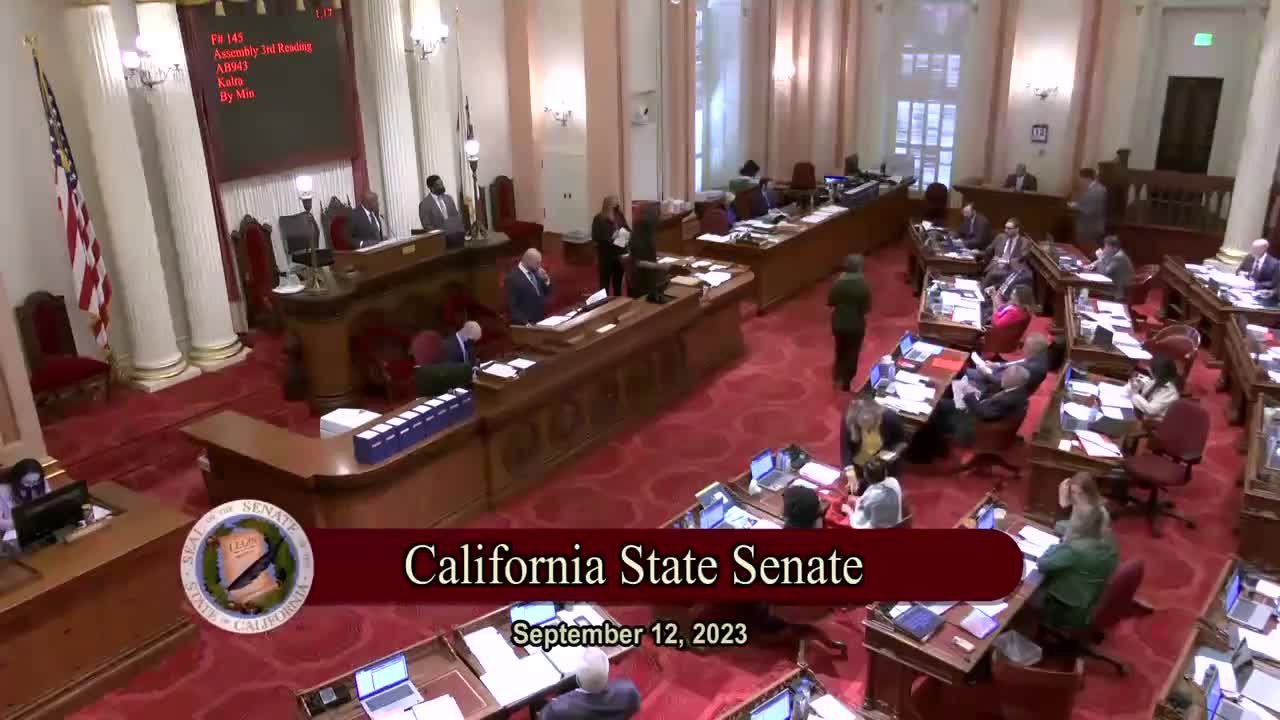
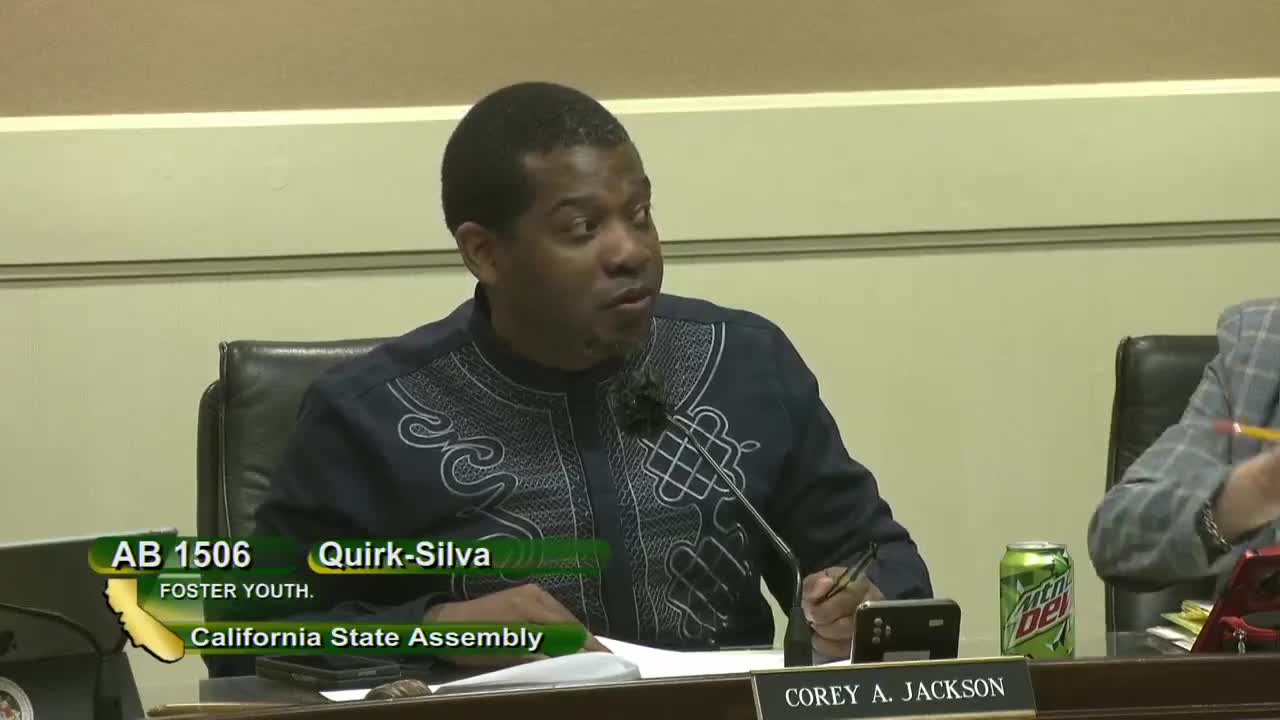


Bill Co-Author(s):