AB 2781: Public contracting: state grants: prohibition.
- Session Year: 2023-2024
- House: Assembly
- Latest Version Date: 2024-04-10
Current Status:
Failed
(2024-05-16: In committee: Held under submission.)
Introduced
In Committee
First Chamber
In Committee
Second Chamber
Enacted
Existing law governs the bidding and awarding of public contracts by public entities, as defined, and imposes additional requirements on state agencies when awarding contracts.
This bill would require a state agency, as defined, to include, when awarding a contract for grant administration services, as defined, in the terms of the contract a provision that prohibits the contractor from awarding the grant to any party that has financially contributed to the contractor within the 5 years prior to the grant award. sets forth standards for resolving actual or perceived conflicts of interest for the contractor.
Existing law governs the bidding and awarding of public contracts by public entities, as defined, and imposes additional requirements on state agencies when awarding contracts.
This bill would require a state agency, as defined, to include, when awarding a contract for grant administration services, as defined, in the terms of the contract a provision that prohibits the contractor from awarding the grant to any party that has financially contributed to the contractor within the 5 years prior to the grant award.
Existing law sets forth various state grant programs, such as the California Competes Grant Program, and sets forth eligibility requirements for applicants.This bill would state the intent of the Legislature to enact legislation that would prevent state agencies from contracting, for the purpose of distributing grants, to an organization that is composed of members that would receive the grants.Existing law sets forth various state grant programs, such as the California Competes Grant Program, and sets forth eligibility requirements for applicants.
This bill would state the intent of the Legislature to enact legislation that would prevent state agencies from contracting, for the purpose of distributing grants, to an organization that is composed of members that would receive the grants.
(a)Notwithstanding any law, a state agency, as defined in Section 10335.7, that is subject to this code, when awarding a contract for grant administration services, shall include in the terms of the contract a provision that prohibits the contractor from awarding the grant to any party that has financially contributed to the contractor within the five years prior to the grant award. sets forth standards for resolving actual or perceived conflicts of interest for the contractor.
(b)For purposes of this section, the following definitions apply: grant administration services means services to administer state moneys in the form of a grant.
(1)Financially contributed means contributed to the contractor in the form of monetary payments.(2)Grant administration services means services to administer state moneys in the form of a grant.(a)Notwithstanding any law, a state agency, as defined in Section 10335.7, that is subject to this code, when awarding a contract for grant administration services, shall include in the terms of the contract a provision that prohibits the contractor from awarding the grant to any party that has financially contributed to the contractor within the five years prior to the grant award.
(b)For purposes of this section, the following definitions apply:
(1)Financially contributed means contributed to the contractor in the form of monetary payments.
(2)Grant administration services means services to administer state moneys in the form of a grant.
SECTION 1.It is the intent of the Legislature to enact legislation that would prevent state agencies from contracting, for the purpose of distributing grants, to an organization that is composed of members that would receive the grants.It is the intent of the Legislature to enact legislation that would prevent state agencies from contracting, for the purpose of distributing grants, to an organization that is composed of members that would receive the grants.
|
Date
|
Status
|
|---|---|
| May 16, 2024 | In committee: Held under submission. |
| May 8, 2024 | In committee: Set, first hearing. Referred to APPR. suspense file. |
| Apr 18, 2024 | From committee: Do pass and re-refer to Com. on APPR. with recommendation: To Consent Calendar. (Ayes 21. Noes 0.) (April 17). Re-referred to Com. on APPR. |
| Apr 11, 2024 | Re-referred to Com. on G.O. |
| Apr 10, 2024 | From committee chair, with author's amendments: Amend, and re-refer to Com. on G.O. Read second time and amended. |
| Apr 1, 2024 | Re-referred to Com. on G.O. |
| Mar 21, 2024 | From committee chair, with author's amendments: Amend, and re-refer to Com. on G.O. Read second time and amended. |
| Mar 21, 2024 | Referred to Com. on G.O. |
| Feb 16, 2024 | From printer. May be heard in committee March 17. |
| Feb 15, 2024 | Read first time. To print. |
|
Date
|
Description
|
Location
|
Votes
|
|
|---|---|---|---|---|
| Apr 17, 2024 | Do pass and be re-referred to the Committee on [Appropriations] with recommendation: To Consent Calendar | Assembly Standing Committee on Governmental Organization |
Passed |
This list shows positions taken on this bill by organizations on the date displayed, which is linked to the original source.
Positions by individuals are not included.
Date of Hearing: May 8, 2024
ASSEMBLY COMMITTEE ON APPROPRIATIONS
Buffy Wicks, Chair
ABPCA Bill Id:AB 2781
Author:(Irwin) – As Amended Ver:April 10, 2024
Policy Committee: | Governmental Organization | Vote: | 21 - 0 |
|
| ||
|
|
Urgency: No State Mandated Local Program: No Reimbursable: No
SUMMARY:
This bill requires a state agency to include, when awarding a contract for grant administration services, terms in the contract prescribing standards for resolving actual or perceived conflicts of interest for the contractor.
FISCAL EFFECT:
Costs of an unknown, but potentially significant, amount across state agencies (General Fund (GF), special fund, or bond funds). Although it is unknown how many state agencies contract out for grant administration services, this bill does not define “actual or perceived conflicts of interest” or suggest how such conflicts may be resolved. Thus, it is unclear whether the Department of General Services or each individual state agency contracting for such services would be responsible for determining the content, scope, and enforcement of the conflict of interest policy. For example, would the contractor have an opportunity to cure a violation?
If identified non-compliance issues are not cured, requiring eventual termination of the contract and a solicitation for new bids, the accompanying administrative and legal workload may be significant. Additionally, to the extent this bill makes grant administration more complex and results in more funds spent on administrative services instead of direct services and programming, this bill may create cost pressures to increase total grant program funding to meet existing program goals. Some contractors may also choose to cease bidding on such contracts, resulting in increased workload for the administering state agency.
According to the Legislative Analyst’s Office, the GF faces a structural deficit in the tens of billions of dollars over the next several fiscal years.
COMMENTS:
- Purpose. According to the author:
While state agencies themselves must adhere to strict requirements around conflicts of interest, these statutory requirements do not extend to independent organizations who administer the grant on behalf of a state agency. AB 2781 addresses this discrepancy by ensuring that state agencies include in grant administration contracts a provision setting out standards for resolving these potential conflicts of interest.
- Conflict of Interest. The Political Reform Act (PRA) prohibits a public official from using their official position to influence a government decision in which they have a financial interest. Every state and local agency must adopt a conflict of interest code that identifies all officials and employees within the agency who make governmental decisions based on the positions they hold. Individuals in designated positions must disclose their financial interests as specified in the agency’s conflict of interest code. The PRA requires designated individuals to report their financial interests on a Statement of Economic Interests form (Form 700).
In recent years, some state agencies have adopted a model where the agency contracts with a third-party organization to administer a grant program. Additionally, some grant programs function by providing a grant to a recipient, with the recipient then required to distribute grant funds to sub-grantees to achieve the program’s purpose. This bill requires a state agency to include conflict of interest provisions in a contract for grant administration services. This bill applies to a state agency awarding a contract pursuant to the Public Contract Code, but the author intends this bill to also cover the sub-grantee program model. Additionally, it is unclear whether conflict of interest provisions would be administered and enforced similar to the PRA or in another manner.
- Related Legislation. AB 2322 (Hart) imposes requirements on the administration of short-term grants of $20,000 or less made by a state agency or third-party contractor using state funds. AB 2322 is pending on this committee’ suspense file.
Analysis Prepared by: Irene Ho / APPR. / (916) 319-2081
Date of Hearing: April 17, 2024
ASSEMBLY COMMITTEE ON GOVERNMENTAL ORGANIZATION
Blanca Rubio, Chair
ABPCA Bill Id:AB 2781 (
Author:Irwin) – As Amended Ver:April 10, 2024
SUBJECT: Public contracting: state grants: prohibition
SUMMARY: This bill would require a state agency, as defined, to include, when awarding a contract for grant administration services, as defined, in the terms of the contract a provision that sets forth standards for resolving actual or perceived conflicts of interest for the contractor. Specifically, this bill:
1) Provides a state agency, as defined that is subject to Public Contract Code, when awarding a contract for grant administration services, shall include in the terms of the contract a provision that sets forth standards for resolving actual or perceived conflicts of interest for the contractor.
2) States for purposes of this bill, “grant administration services” means services to administer state moneys in the form of a grant.
EXISTING LAW:
1) Governs the bidding and awarding of public contracts by public entities, as defined, and imposes additional requirements on state agencies when awarding contracts.
2) Defines “State agency,” as used in the Public Contract Code, to mean every state office, department, division, bureau, board, or commission, but does not include the Legislature, the courts, or any agency in the judicial branch of government.
3) Sets forth various state grant programs, such as the California Competes Grant Program, and sets forth eligibility requirements for applicants.
4) The Public Contract Code is a set of statutes that applies to virtually all public entities in California. It is the basis of contracts between most public entities in the state and their contractors and subcontractors. The code permits award of contracts without competitive bidding in circumstances involving work of an emergency nature or of a limited scope. It also defines public works contracts as agreements for the erection, construction, alteration, repair, or improvement of any public structure, building, road, or other public improvement of any kind.
5) The Political Reform Act requires state and local government agencies to adopt and promulgate conflict of interest codes. (Gov. Code, § 81000 et seq.)
6) The Fair Political Practices Commission has adopted a regulation (Title 2, California Code of Regulations, § 18730) that contains the terms of a standard conflict of interest code, that can be incorporated by reference in an agency’s code.
7) Provides, in part, that “[m]embers of the Legislature, state, county, district, judicial district, and city officers or employees shall not be financially interested in any contract made by them in their official capacity, or by anybody or board of which they are members.” This means that Section 1090 applies to virtually all state and local officers, employees, and multimember bodies, whether elected or appointed, at both the state and local level. It also applies to certain consultants and independent contractors. (Cal. Gov. Code § 1090)
FISCAL EFFECT: This bill is keyed fiscal by Legislative Counsel.
COMMENTS:
Purpose of the bill. According to the author’s office, “California’s grants offer significant financial opportunity for those seeking to advance our policy goals, and the scale of funding offered in these grants leads to many of them being highly competitive. While state agencies themselves must adhere to strict requirements around conflicts of interest, these statutory requirements do not extend to independent organizations who administer the grant on behalf of a state agency. AB 2781 addresses this discrepancy by ensuring that state agencies include in grant administration contracts a provision setting out standards for resolving these potential conflicts of interest.”
Background.
According to information provided by the author’s office, in recent years, some state agencies have adopted a model where they contract with a third-party organization to administer a grant, rather than having the agency administer the grant themselves. The reasoning cited for this shift has generally been an emphasis on administering funds quickly and relying on the community connections a third party grant administrator may have.
The Political Reform Act prevents public officials from making a governmental decision, such as those made when administering grants, if that decision will have a financial impact on their personal finances or other financial interests. This is done to avoid bias or the appearance of improprieties. As different state agencies have adopted this approach, there is nothing in statute governing any potential conflicts of interest that third-party grant administrators may face.
AB 2781 will strengthen the public’s confidence in third-party grant administrators by ensuring that state agencies include in grant administration contracts a provision setting out standards for resolving these potential conflicts of interest.
What is a conflict of interest? It is a common aspect of government operations to seek goods or services from individuals, businesses, nonprofit organizations, and other entities to help achieve the mission of the government. Governments often will engage in formal contracts with outside parties (those not employed by the government) to carry out a public purpose.
A conflict of interest can occur when an individual or organization has a personal or business interest that conflicts with their professional obligations or responsibilities to the organization. Conflict of interest can happen in the form of conflict in fact or conflict in appearance.
The California Grants Portal. The California Grants Portal, a project by the California State Library, serves as a centralized platform an individual can discover all grants and loans offered by California state agencies on a competitive or first-come basis. This portal provides access to various funding opportunities across different sectors for an individual, organization, or business. The Grants Portal only hosts state grants that are offered on a competitive or first-come basis. Some grants may not be offered on a competitive or first-come basis, and those grants are not listed on this website.
Government Agencies Must Adopt a Conflict of Interest Code. The Political Reform Act prohibits a public official from using his or her official position to influence a governmental decision in which an individual has a financial interest. Every state and local agency must adopt a conflict of interest code that identifies all officials and employees within the agency who make governmental decisions based on the positions they hold. To help identify potential conflicts of interest, the law requires public officials and employees in designated positions in a conflict of interest code to report their financial interests on a form called Statement of Economic Interests (Form 700) which is filed with the California Fair Political Practices Commission (FPPC). In order to make sure that public officials are acting in the public interest rather than their own, two essential tools are the conflict of interest codes and Form 700s.
California Government Code § 1090 applies to consultants and independent contractors who have been entrusted to act on the government’s behalf. A consultant may not advise a public entity regarding a contract with a third party if the consultant has a financial interest in the contract. Violations of Gov. Code, § 1090 can result in the voiding of contracts, criminal, civil, and administrative penalties, as well as a ban on holding public office. The FPPC issues advice letters and opinions to persons subject to Gov. Code, § 1090.
Related legislation. AB 2322 (Hart) of 2024. This bill would streamline the process of applying for and receiving small state grants, particularly those not exceeding $20,000 and with a duration of less than 12 months, and requires the creation of a more accessible and equitable grant application process, as specified. The bill also requires the expansion of the California Grants Portal (a project by the California State Library) to include specified information about such grants. (Assembly Committee on Appropriations)
AB 3017 (Hart) of 2024. This bill would authorize a state agency administering a grant program to provide for advance payments to a federally recognized Indian tribe whose territorial boundaries lie wholly or partially within the State of California, and any agencies, entities, or arms of the tribe, as applicable, either together or separately, as specified. (Assembly Committee on Appropriations)
SB 336 (Umberg, 2023). This bill would require a state agency administering a grant program to reimburse a grantee’s indirect costs at one of three specified rates requested by the grantee in its state grant program application. (Assembly Floor Inactive File)
SB 1246 (Limón) of 2024. This bill, for the purposes of the California Prompt Payment Act, would expand the definition of the term “grant” to additionally mean a signed final agreement between any state agency and a nonprofit organization, deletes existing nonprofit penalty exceptions for contracts less than $500,000, and requires a state agency that is disputing an invoice from a nonprofit organization to pay, within 45 calendar days from receipt of the invoice, the undisputed portion of the invoice, as specified. (Senate Committee on Appropriations)
Prior legislation. AB 334 (Blanca Rubio), Chapter 263, Statutes of 2023. Clarified the circumstances under which a public entity that employed an independent contractor for one phase of a project may contract with that same contractor for a subsequent phase of the same project without violating a state law prohibiting conflicts of interests in public contracts.
AB 590 (Hart), Chapter 535, Statutes of 2023. Authorized a state agency administering a grant program to provide for advance payments to a recipient 501(c)(3) nonprofit organization, as specified. The bill ensures the advance payment does not exceed 25% of the total grant or contract amount, unless the state agency determines that the project requires a larger advance and the recipient entity provides sufficient justification and documentation for that larger advance.
AB 696 (Lowenthal) of 2023. Would have established the California State Grants and Contracts Modernization Act, which beginning July 1, 2025, requires a state agency that administers a grant or enters into contracts with eligible entities to provide for and accept electronic signatures and offer electronic payment options, as specified. (Senate Committee on Appropriations - Held under submission)
AB 860 (Valencia) of 2023. Would have imposed new requirements on the administration of short-term grants of $20,000 or less made by a state agency or third-party contractor using state funds. This bill also requires the expansion of the California Grants Portal to include specified information about such grants. (Senate Committee on Appropriations - Held under submission)
AB 885 (L. Rivas) of 2023. This bill would have established the “California Nonprofit Fairness in Contracting Act” which would provide nonprofits preferential treatment when contracting with the state for goods or services or when contracting with a local agency using state funds. (Not heard by the Assembly Committee on Accountability and Administrative Review
SB 336 (Umberg) of 2023. This bill would require a state agency administering a grant program to reimburse a grantee's indirect costs at one of three specified rates requested by the grantee in its state grant program application. (Assembly floor inactive file)
SB 557 (Limon) of 2023. This bill would have expanded the definition of a grant for the purposes of the California Prompt Payment Act requiring timely payments to include nonprofits by changing what is considered a grant and sets a specific monetary threshold of $250 or 5% of the invoiced amount (whichever is lower) for when a state agency can dispute a bill related to property or services delivered. (Vetoed by the Governor)
AB 132 (Committee on Budget), Chapter 144, Statutes of 2021. Required state agencies to provide the State Library post award data for grants by July 1, 2022. Specifies that the data include various information including the number of grants awarded and information about the award recipient and geographic location served.
AB 2252 (Limón), Chapter 318, Statutes of 2018. Enacted the Grant Information Act of 2018, and required the State Library to create a funding opportunities Internet Web portal that provides a centralized location for grant seekers to find state grant opportunities, as specified.
AB 1348 (Irwin), Chapter 444, Statutes of 2016. Established the position of federal grant administrator within the State Clearinghouse, under the Governor's Office of Planning and Research, to serve as the state's primary point of contact for information on federal grants related to community, economic and local development.
AB 1090, Fong, Chapter 650, Statutes of 2013. Authorized the FPPC to bring civil and administrative enforcement actions for violations of Gov. Code, § 1090, dealing with conflicts of interest in contracts, and requires the FPPC to provide opinions and advice with respect to Section 1090.
AB 187 (Hertzberg), Chapter 405, Statutes of 1999. The Grant Information Act of 1999 authorized state agencies to make available on their Internet Web sites a listing of all grants administered by that agency, as specified.
REGISTERED SUPPORT / OPPOSITION:
Support
None on file
Opposition
None on file
Analysis Prepared by: Eric Johnson / G.O. / (916) 319-2531
Bill Author
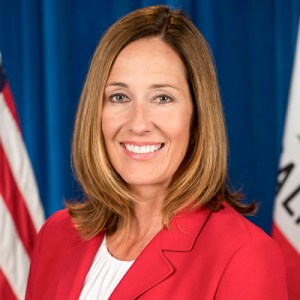
Bill Co-Author(s):